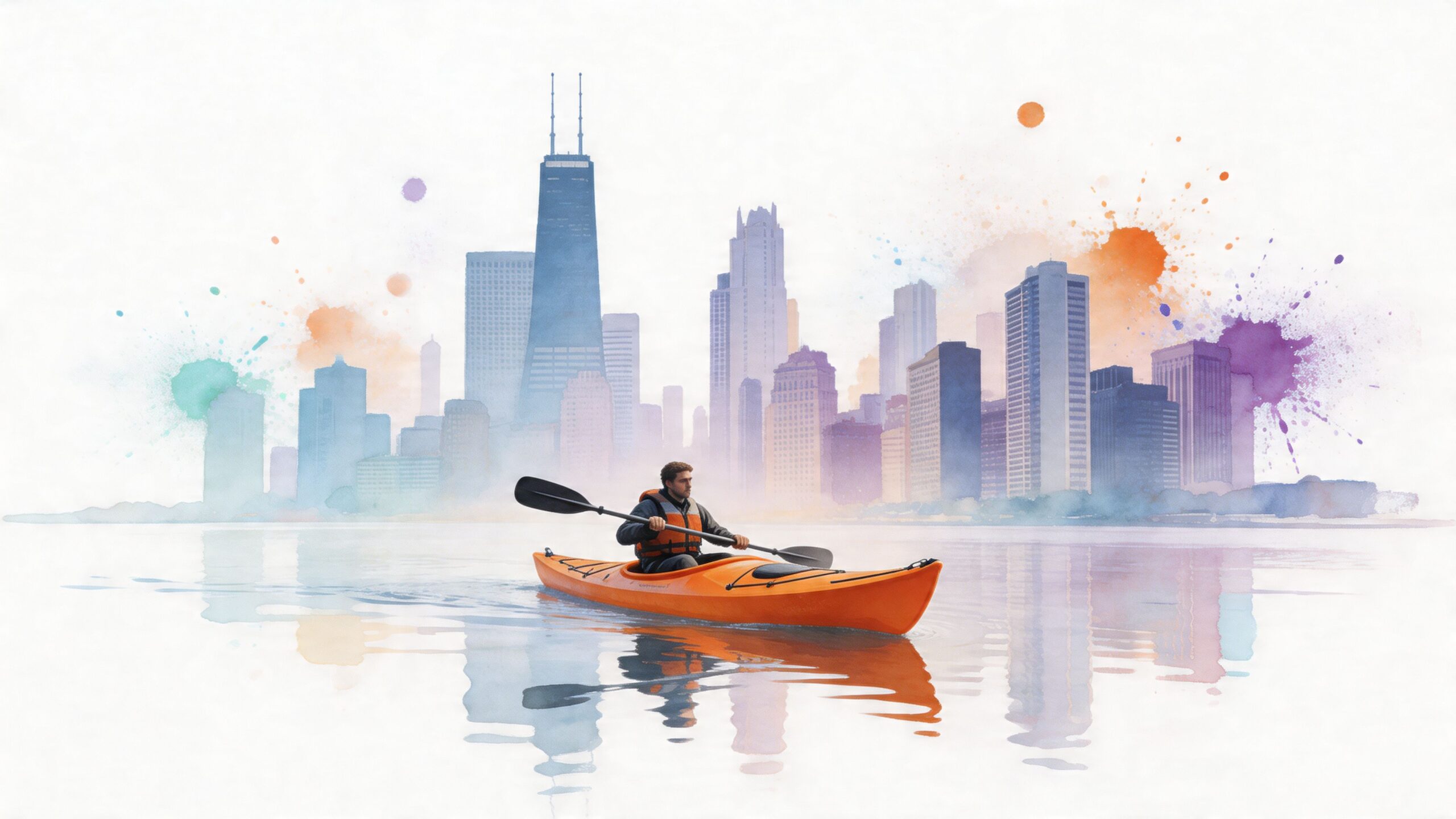
The first time I slipped a kayak into the Chicago River, I expected a fun afternoon. Instead, I got a hard reset. The glass towers looked less like real estate and more like cliffs, and for the first time I felt that this city had a pulse I could touch.
Paddling a Different Path in Chicago
I knew Chicago from sidewalks. I knew it from train platforms, coffee runs, and the long winter trudge with my shoulders up around my ears. Then I saw it from the water.
From that low seat in a kayak, the whole city changed shape. Bridges stopped being traffic funnels and started feeling like gates. The river stopped looking like background scenery and started acting like a main street that had been there all along, waiting for me to notice.
When the city stops being flat
A kayak is a tiny thing. That’s part of the magic.
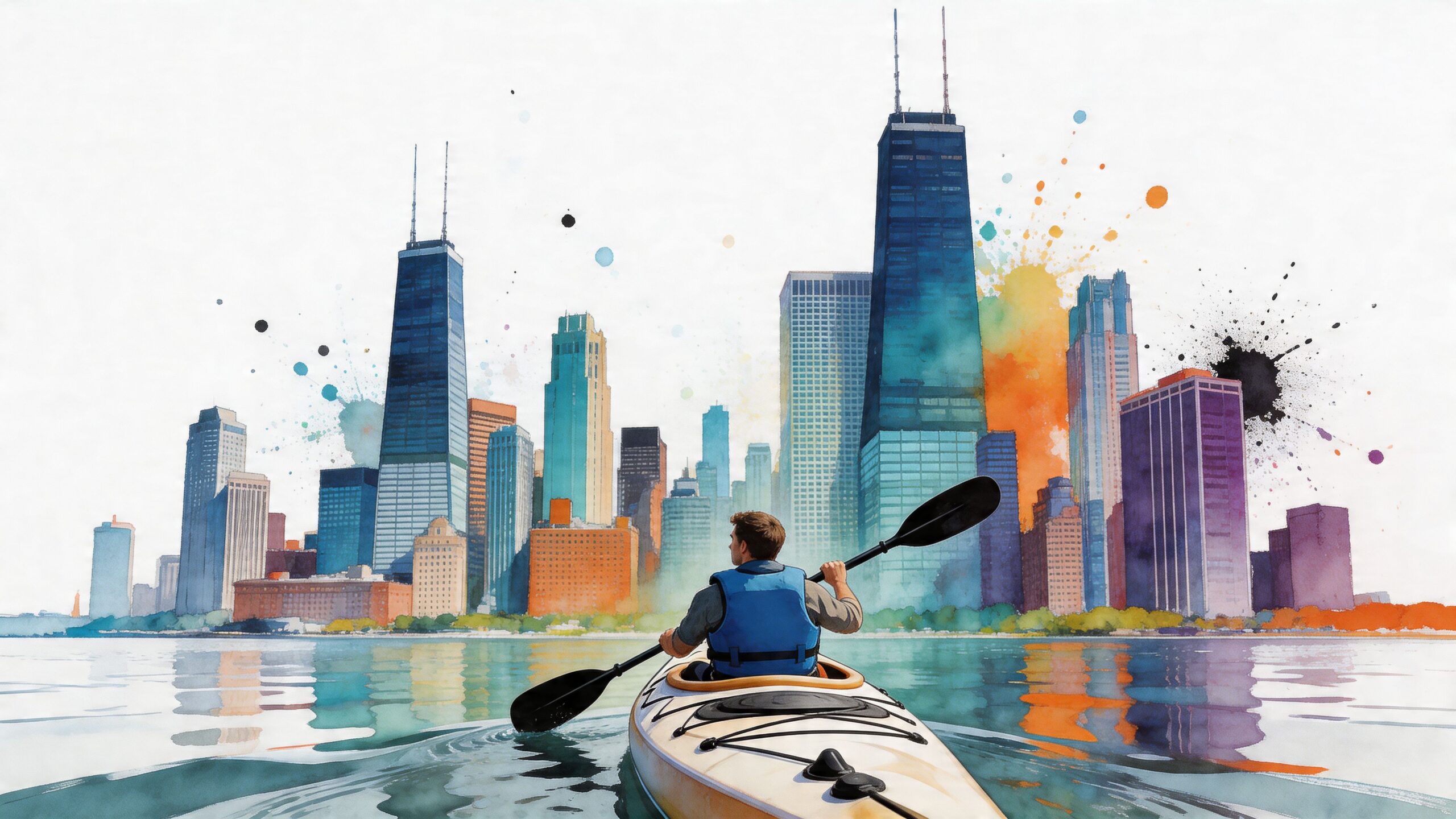
You sit inches above the water, and suddenly Chicago rises around you like a canyon of steel and stone. You hear the slap of paddle blades. You watch sunlight ricochet off windows. You move under buildings that tourists usually photograph from a bridge, not beneath it.
That’s why urban kayaks chicago il matters to me as more than a search phrase. It points to a very specific kind of experience. You’re not leaving the city to find nature. You’re finding a wilder version of the city itself.
Chicago also has the scale to make that experience feel bigger than a novelty. The city welcomed over 55 million visitors in 2023, and water-based activities have become part of that hunger for lived experience, not just sightseeing, according to Urban Kayaks company information on Chicago tourism and operations.
The water gives you a second map of Chicago. Once you see that map, you can't unsee it.
A small boat can start a new story
A lot of people think a paddle is just recreation. I get why. You book a slot, grab a life jacket, and push off.
But something deeper happens when you move through a city under your own power. You notice details you’d otherwise miss. A cormorant on a piling. The texture of old bridge supports. The weird quiet that falls under a span before the downtown noise rushes back in.
That new attention changes you. It’s a lot like cleanup work in that way. You start because you want to do one simple thing. By the end, you realize the simple thing was just the door.
Here’s what I mean:
- At street level, Chicago can feel like a list of errands.
- From the river, Chicago feels layered, built by human ambition and water at the same time.
- From your own kayak, that layered city becomes personal. You’re not watching it. You’re moving through it.
I’ve watched first-timers shove off stiff and nervous, then come back grinning like they discovered a hidden room in their own house. That reaction makes sense. Paddling downtown doesn’t feel like escaping Chicago. It feels like meeting it.
Your First Chicago Paddle Where to Begin
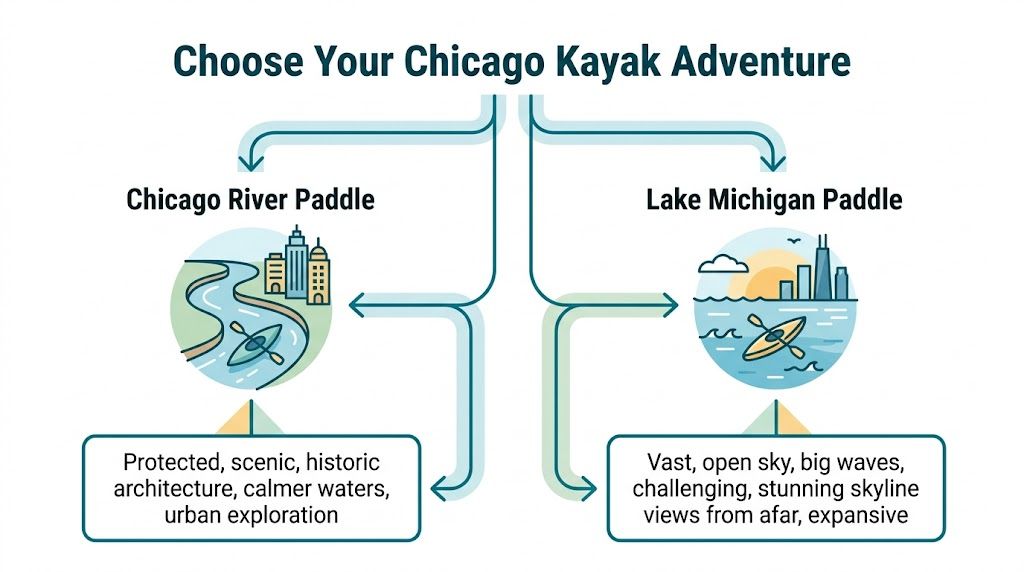
Your first choice is simple. Do you want the city wrapped around you, or do you want the city spread out in front of you?
The river feels like walking into a novel. The lake feels like opening a giant door.
River or lake
I tell beginners to pick the experience, not the bragging rights. If you choose based on mood, you usually choose well.
| Route | What it feels like | Best for |
|---|---|---|
| Chicago River | Close, architectural, protected, busy with stories | First timers, city lovers, people who want a guided feel |
| Lake Michigan | Open, airy, horizon-heavy, more exposed | Paddlers who want space, skyline views, and more weather awareness |
The Chicago River is intimate. You turn a bend and get brick, glass, old infrastructure, reflections, and that feeling that the city is leaning over to inspect you. The water carries history with you.
The lakefront is about scale. You don’t just see the skyline. You measure yourself against it. Some people love that immediately. Some discover they’d rather start on the river and build up.
Launch areas and the vibe they give you
Different parts of the city feel different from a kayak. That matters.
- Riverwalk launches give you the classic urban canyon. You’re close to downtown architecture, bridges, and a steady sense of motion.
- North Branch stretches feel rougher around the edges in a good way. You get more industrial texture, more space to notice birds, and a more local rhythm.
- Lakefront harbors offer calmer access points to bigger open water. You can ease in, get your bearings, and decide how bold you feel that day.
If you’re unsure, pick the route that makes you curious rather than the route that makes you nervous.
Practical rule: If you want your first paddle to feel memorable and manageable, choose the water that helps you relax enough to look around.
A route with proof of recovery
One of my favorite examples of why river paddling in Chicago hits so hard is the Wild Mile. It isn’t just pretty. It shows what a city can repair.
That stretch includes 800 feet of floating gardens, and those habitats have contributed to a 25% increase in fish species, according to Miles Paddled's overview of the Chicago River and Wild Mile. That means your paddle can double as a front-row seat to restoration, not just recreation.
You glide past greenery and realize this isn’t a fantasy version of urban nature. It’s a worked-on, fought-for, actively recovering place. That matters. It gives the trip weight.
If you’re going with friends who want something social and outdoorsy, I’d also think about how your paddle fits into a bigger day. Some people pair it with a walk, coffee, or another active outing. If that’s your style, these outdoor group activities for adults in Chicago can help you build the day around the paddle instead of treating it like a one-off booking.
My honest advice for first-timers
I’d keep your first outing humble.
Pick a route with clear boundaries. Go at a time when you won’t feel rushed. Let the city impress you slowly. The best first paddle isn’t the most dramatic one. It’s the one that makes you want to come back next weekend.
Getting Your Kayak to the Chicago River
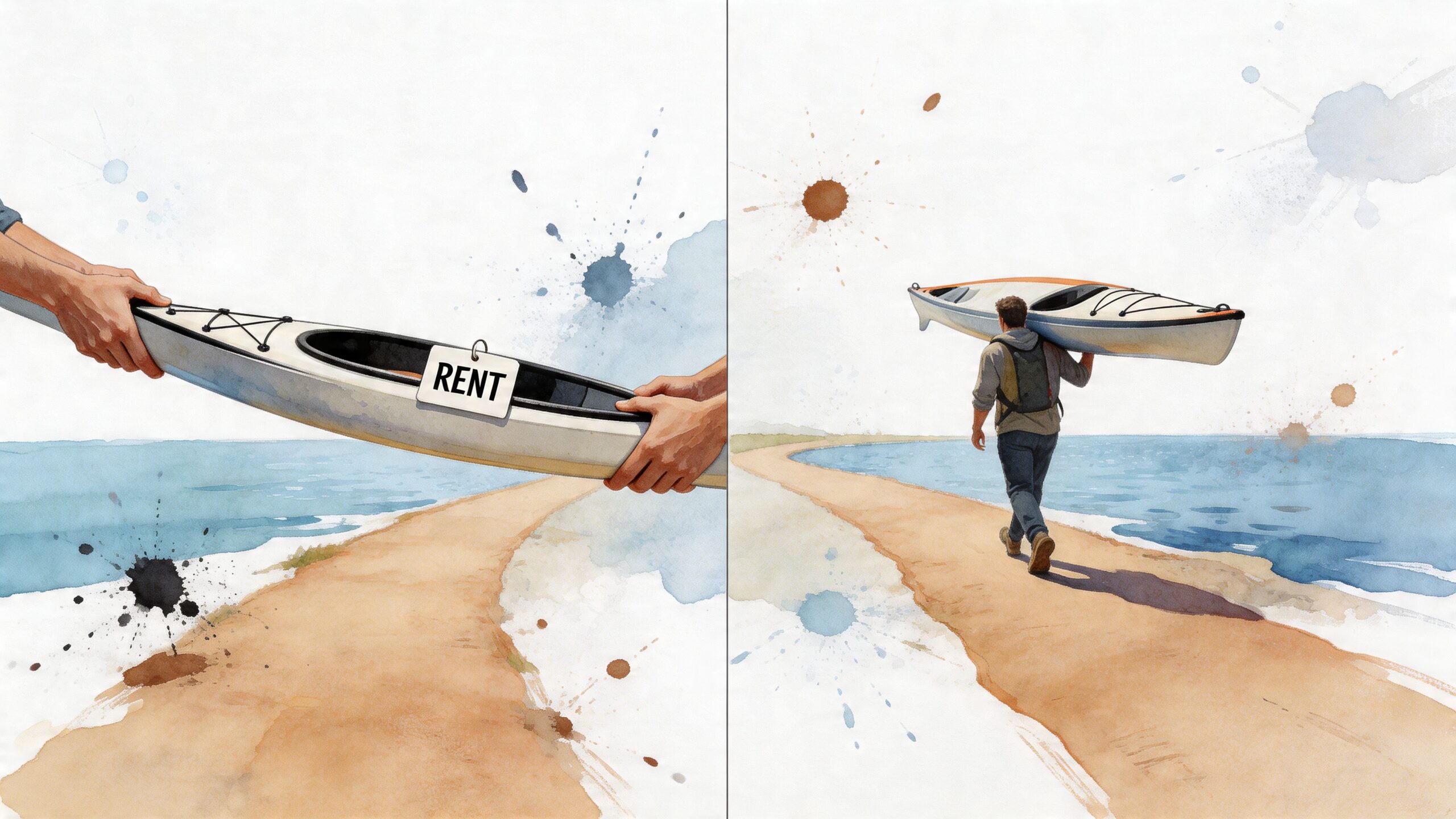
The first logistical question is usually this. Should you rent, or should you bring your own boat?
I’ve done both. Renting feels like borrowing confidence. Bringing your own feels like carrying freedom on your roof.
Rent first if you're still learning the city
If this is your first or second time, rent. It removes friction.
You don’t have to think about storage, straps, loading, unloading, or whether your launch choice makes sense for your skill level. You just show up, listen carefully, wear the gear they give you, and focus on the water.
That’s especially useful in Chicago because many people want lower-barrier entry into paddling. Local meetup interest has shown 40% interest in winter paddling, along with ongoing demand for beginner-friendly guidance, according to Tripadvisor discussion and review context gathered around Urban Kayaks. That tells me a lot of people are hungry for access, not just adrenaline.
Bring your own when you want flexibility
Owning or borrowing your own kayak changes the rhythm of the day. You’re not on anyone else’s schedule.
You can linger. You can launch early. You can build your whole weekend around the trip. But freedom gets expensive in attention. You have to think like a driver, a porter, and a paddler before you ever touch the water.
Here’s the street-smart version of that process:
- Check your carry plan. A kayak is awkward before it is fun. Know how you’re getting it from car to launch.
- Study the launch in advance. Some spots look easy on a map and feel ridiculous when you arrive with a boat on your shoulder.
- Pack before you park. Don’t spread loose gear across a curb and sort it out while everyone watches.
- Assume the wind will humble you. It often does, even before launch.
What the launch actually feels like
The city doesn’t always make paddling obvious. That’s part of its charm and part of its headache.
Some launch points feel polished and intuitive. Others feel like you’ve found a secret loading dock for a very specific subculture. I’ve walked down paths thinking, This can’t be right, only to arrive at exactly the right place.
A few habits help:
- Travel light on your first self-launch. Fewer loose items means fewer chances to fumble.
- Wear the PFD before you start carrying gear. One less task at the water’s edge.
- Pause and watch others launch. You’ll learn more in three minutes than from twenty minutes of guessing.
For people trying to keep the whole outing low-impact, I’d also pay attention to how you get there. If you want ideas for reducing the mess around car-heavy recreation, this guide to eco-friendly transport choices is worth a look.
Launching your kayak in Chicago feels a little like finding the side door to the city. Once you know where it is, everything gets easier.
Make logistics boring on purpose
I want your transport routine to feel boring. That’s a compliment.
The more ordinary your prep becomes, the more energy you’ll have left for the water itself. You don’t want your big memory of the day to be the parking scramble, the dropped paddle, or the soaked phone. You want the memory to be that first clean glide under a bridge when the city opens up.
Staying Safe on Chicago's Waterways
Bravery on the water doesn’t mean acting fearless. It means respecting what can go wrong and preparing so you don’t freeze when conditions change.
Chicago rewards that mindset. It also punishes sloppy confidence.
Treat the river like a working street
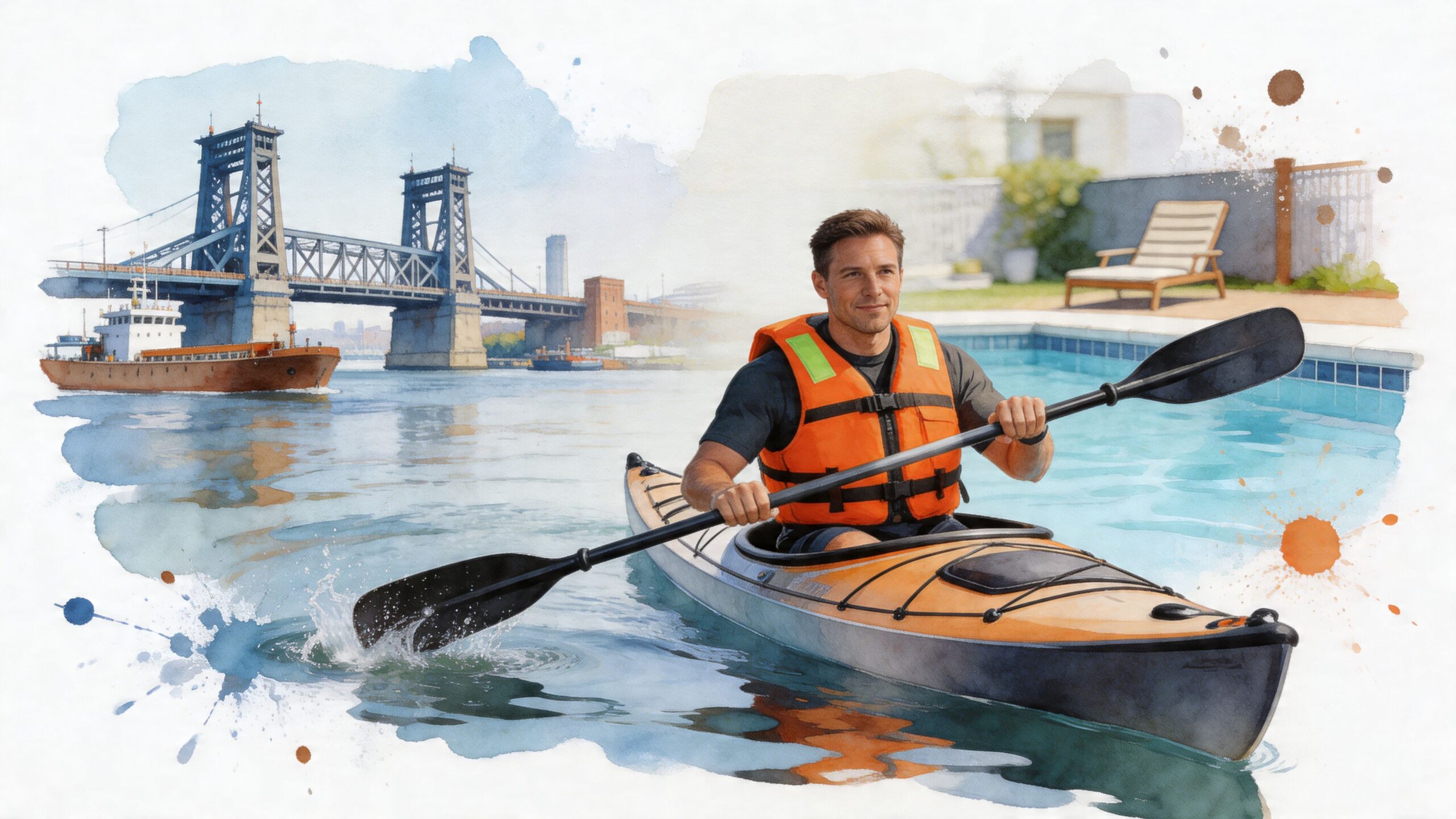
The Chicago River is not a lazy park lagoon. Boats work there. Tours pass through. Currents move around structures and locks in ways you may not expect.
I always tell people to think of a barge like a moving building. Don’t argue with it. Don’t try to prove you can slip past. Give large vessels room early, not late.
Professional instructors train for exactly these urban conditions. ACA-certified training includes hazards like barge traffic and thermal currents from the river locks, and rescue skills such as a bow rescue have to be completed in under 30 seconds in simulated windy conditions, according to Urban Kayaks' ACA Level 2 instructor workshop overview. That should tell you something. The environment is manageable, but it deserves trained respect.
A few rules I never break
I keep these simple because simple rules survive stress.
- Stay visible. Don’t drift where larger craft won’t expect you.
- Cross busy channels decisively. Commit. Hesitation creates confusion.
- Look behind you often. Urban paddlers who only look forward miss half the risk.
- If weather feels off, trust that feeling. The city can turn moody fast.
You don't earn toughness points for ignoring conditions. You earn a better day by reading them early.
Weather and water quality both matter
A blue sky can lie to you. Wind matters. Boat traffic matters. Recent rain matters.
After storms, I get more cautious about the water itself. The Chicago River has improved a lot, but cleaner doesn’t mean clean in every moment. Pay attention to storm timing, runoff, and whether you have open cuts on your hands.
That awareness also changes how you touch the water. I avoid casual splashing. I keep hand sanitizer in my dry bag. If I pick up debris, I think about where my hands go next.
A quick visual refresher can help before you head out:
Confidence comes from habits
Most water fear shrinks when you have a repeatable system.
| Situation | What I do |
|---|---|
| Big boat nearby | Hold line, stay predictable, let it pass |
| Wind picks up | Shorten plans, hug safer water, turn back early |
| Crowded stretch | Slow down and simplify decisions |
| Unsure about conditions | Ask, wait, or skip it |
You can be adventurous and disciplined at the same time. In fact, that’s the only kind of adventure I trust in a city waterway.
Your Chicago Kayaking Gear Checklist
My gear philosophy is plain. Bring what protects the mission. Skip what turns your boat into a junk drawer.
You don’t need to cosplay as an expedition paddler to enjoy urban kayaks chicago il. You need a tight setup that covers safety, comfort, and common sense.
The never-skip items
- PFD you actually wear. Not under a bungee cord. Not behind the seat. On your body.
- Whistle. If your voice disappears in wind or traffic noise, a whistle cuts through.
- Dry bag. Phone, keys, wallet. Water loves loose electronics.
- Water bottle. City paddles can feel deceptively easy until the sun drains you.
- Sun protection. Hat, sunscreen, sunglasses with a retainer if you have one.
The things that make the day smoother
I’ve learned to value small comforts because they prevent dumb problems.
- Paddling gloves help if your hands blister easily.
- Quick-dry clothes beat cotton every time.
- Water shoes or secure sandals make launches less awkward.
- A snack helps if you stay out longer than planned.
Field note: The best gear is the gear you can find quickly when you're tired, wet, and trying not to drop your paddle.
The one extra item I always respect
Bring a small trash bag.
Not because you need to turn every trip into a cleanup mission, but because once you start noticing floating litter, it’s hard to unsee it. Even picking up one bottle or one drifting food container changes your relationship to the river. You stop acting like a visitor and start acting like a steward.
Paddling with Purpose Join a Waterway Cleanup
At some point, almost every regular paddler has the same moment. You’re gliding along, feeling good, and then a chip bag catches on a branch or a plastic bottle spins in an eddy like it belongs there.
That moment can sour the trip. Or it can deepen it.
The river asks you to participate
The Chicago River is cleaner than it used to be, but it still receives over 1,200 tons of litter annually through storm drains, according to Urban Kayaks' river tour page discussing river conditions and cleanup potential. I don’t read that as a depressing fact. I read it as a direct invitation.
A kayak puts you close to problems that people onshore miss. You can reach a bottle wedged against a wall. You can spot debris caught under branches. You can notice patterns, not just isolated trash.
That’s why I love the idea of litter-paddling. It turns an outing into service without draining the joy out of it.
How to do it without being reckless
Don’t try to play hero with every object you see. Smart cleanup matters more than dramatic cleanup.
I’d keep it simple:
- Use a mesh bag or small trash bag for lightweight floating debris.
- Carry a grabber only if it won’t tangle your setup.
- Leave heavy, submerged, or hazardous items alone.
- Work calm edges, not busy traffic lines.
- Wash your hands well after the trip.
The best cleanup paddlers stay conservative. They collect what they can reach safely and leave the rest for a better-equipped effort.
Why this changes the whole experience
Service sharpens your attention. You stop consuming the river and start reading it.
A skyline paddle is beautiful. A skyline paddle where you remove a few pieces of floating trash feels different. You leave with evidence in your bag that you weren’t just entertained. You helped.
If you want a better sense of what river stewardship can look like on the ground and on the water, this piece on cleaning up a river with a volunteer mindset offers a useful frame for thinking beyond one-off action.
A river cleanup doesn't just remove trash. It teaches you to notice what the city has been carrying.
That’s the transformation I keep coming back to. Recreation wakes you up. Responsibility gives that awakening a direction.
Your River, Your City, Your Story
Chicago will always offer easy ways to stay on the surface. You can admire the skyline, snap the photo, eat the meal, and go home with a perfectly fine day.
Or you can get lower to the water.
You can feel the wake hit your hull. You can learn the rhythm of bridges and bends. You can notice beauty and neglect in the same hour, then decide that both belong to you because this city belongs to you.
That’s why I think urban kayaks chicago il is bigger than tourism. A paddle can be a workout, a date, a solo reset, a lesson in courage, or the start of a civic habit. Sometimes it’s all of those at once.
So write a stronger story than “I visited.” Paddle with alertness. Paddle with humility. Paddle with enough heart that when you come back to shore, the city feels less like a backdrop and more like a relationship.
If you want that relationship to keep growing after your paddle, join Litter Caterpillars. It’s a bold Chicago volunteer group built around bravery, friendship, and visible action. Show up on a weekend morning, meet good people, and help clean the city block by block.
Leave a Reply