
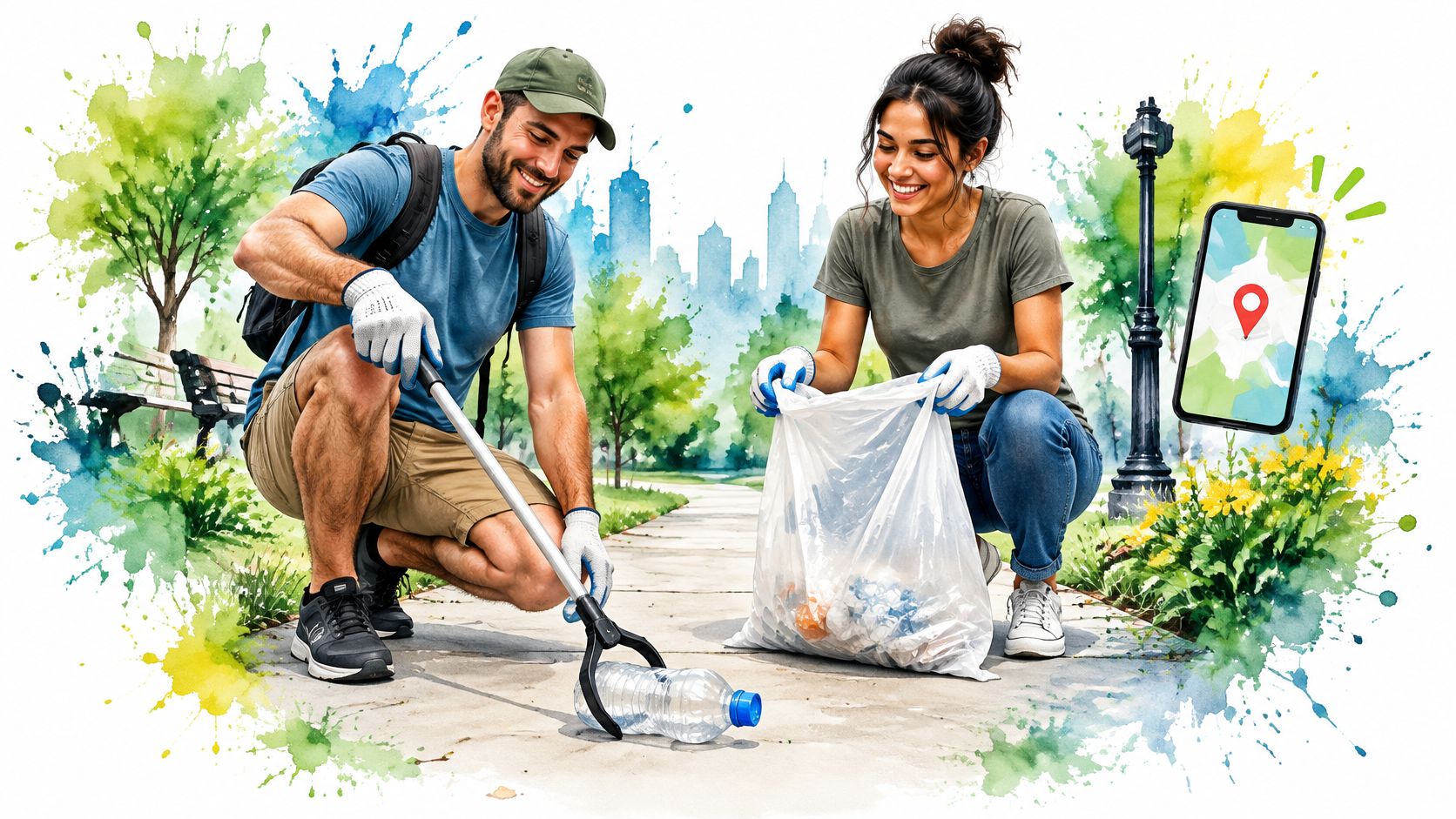
You walk past the same corner every morning. You see cups in the gutter, wrappers in the grass, and a bag split open near the curb. You think, I could help with this on Saturday. Then you type trash cleanup near me and you face five listings, three old posts, and no clear answer about safety, weather, or where the bags go. I wrote this guide for that exact moment.
Why Small Neighborhood Cleanups Add Up
I remember one sidewalk on a quiet Saturday. I saw bottle caps near a bus stop, food wrappers along a fence, and tiny plastic bits in the cracks. I filled half a bag before I reached the next corner. No single item looked big. Together, they covered the whole block.
That small scene matches the national picture. Keep America Beautiful's 2020 National Litter Study findings on litter across roadways and waterways estimated nearly 50 billion pieces of litter along U.S. roadways and waterways, or about 152 pieces for every resident. You can picture that number as a trail of small items that never ends.
Small Pieces Fill Your Bag Fast
The same study estimated roughly 43.6 billion pieces, or 87.9% of the national total, measured four inches or smaller, and it found cigarette butts ranked as the most frequently observed item. I see that pattern on almost every route. You bend for caps, butts, wrappers, and broken plastic far more often than you lift a big object.
You also see why steady work beats one big annual push. Wind moves light items into fences and drains. Rain carries light items toward water. You return next week and you catch the new layer before it spreads. One bag looks modest. Ten neighbors with ten bags change how a block feels when you walk home.
I treat each bag like one cleared shelf in a messy room. You finish one shelf, you see progress, and you want to finish the next one.
One Morning Gives You a Clear Win
The study also found 90% of surveyed Americans considered litter a problem in their state. I hear that concern from people who stop and thank our group. Many of them want a cleaner block. They just don't know where to start, who brings gloves, or whether a group welcomes beginners.
You solve that problem with a short, local pickup. You meet people near home. You learn a route. You fill a bag and you see bare sidewalk behind you. That visible result keeps you coming back, and it turns a search on your phone into a simple Saturday habit.
Where to Search for Trash Cleanups Near Me
You find local pickups in more places than one search result shows. I check four channels because each channel answers a different question. You want the date, the meeting point, a feel for the people, and a fast way to ask about weather.
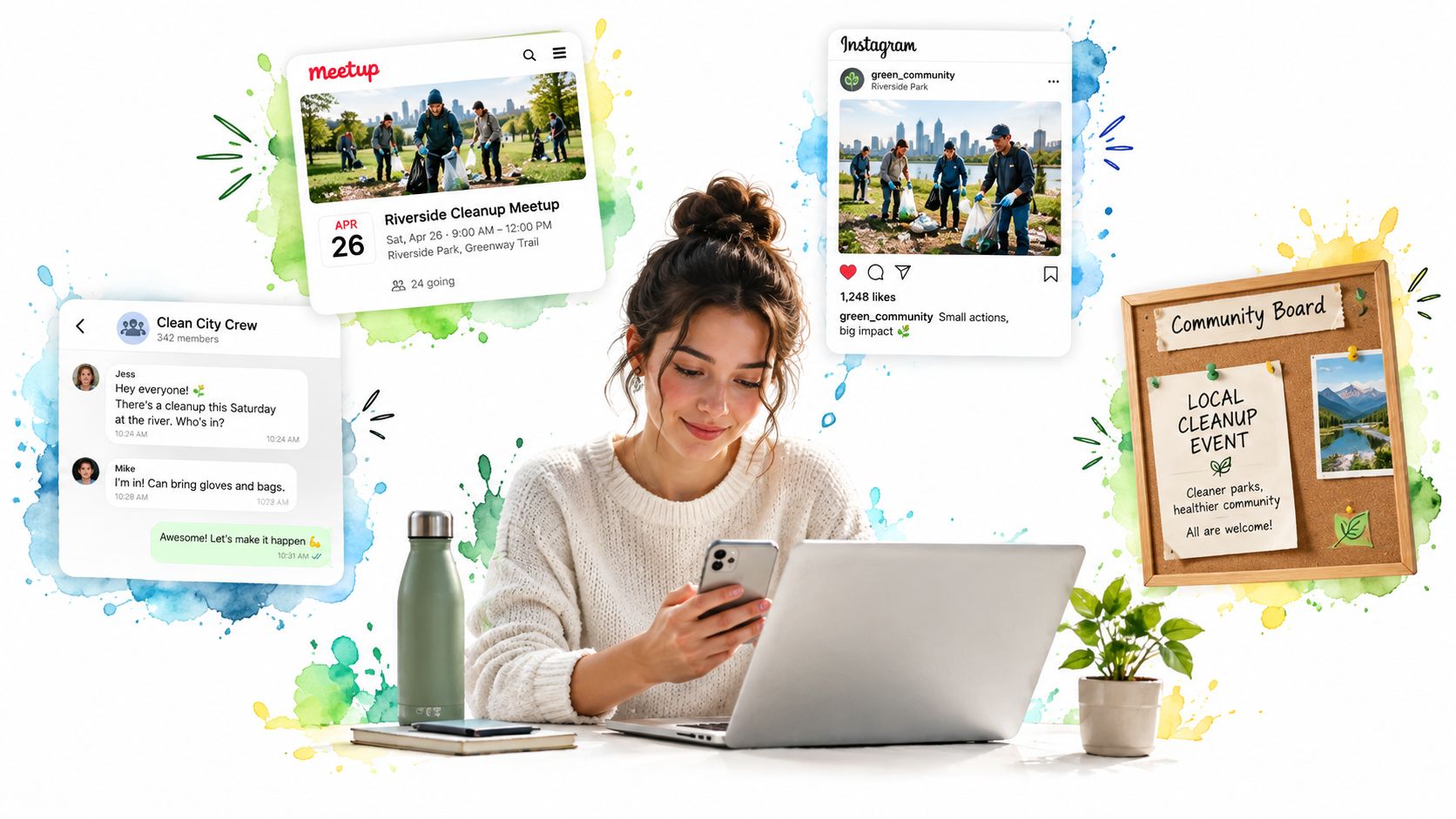
Compare the Four Places You Will See
- Meetup listings: You see the date, start time, meeting spot, and RSVP count in one place. I use Meetup when I plan my weekend early.
- Instagram posts: You see photos from recent pickups, the size of the group, and the mood on the route. I check the post date because old photos can mislead you.
- Open group chats: You get quick answers about rain, parking, and last minute meeting changes. I read the chat on the morning of the pickup.
- Community boards: You find one-time park days and block events that never reach big apps. I check library and park boards when I walk my dog.
Litter Caterpillars gives you one concrete model for this mix. The group runs weekly weekend morning pickups across all 50 Chicago wards, rain or shine, and you can enter through Meetup, Instagram, or open group chats. You can also browse local environmental groups in Chicago when you want options beyond one crew.
Check the Ward Before You Go
Chicago has 50 legislative wards, and each ward has an elected alderperson, according to the City of Chicago council and ward information page. I picture the ward system as 50 neighborhood desks. Each desk handles its own district. You use the city's address lookup, you find the ward for a cleanup spot, and you contact that office about local conditions or public way concerns.
That step saves you guesswork. You confirm the neighborhood. You learn who handles the area. You show up with a real contact in your pocket if you find dumped furniture or a blocked drain.
Crews who work outside every week also think about matching shirts for visibility and quick head counts. If your own crew plans regular outdoor work, custom uniforms for landscaping crews from Power Print gives you one place to compare workwear options before you order for a team.
Search by neighborhood name plus the words trash cleanup. Check the date on every listing. I skip any post that hides the meeting point or never names an organizer you can message.
How to Judge Whether a Cleanup Fits You
I judge a cleanup before I commit my Saturday. I read the listing like I read a trail sign. You want distance, terrain, gear, and weather rules in plain words. A group that writes those details down respects your time and your body.
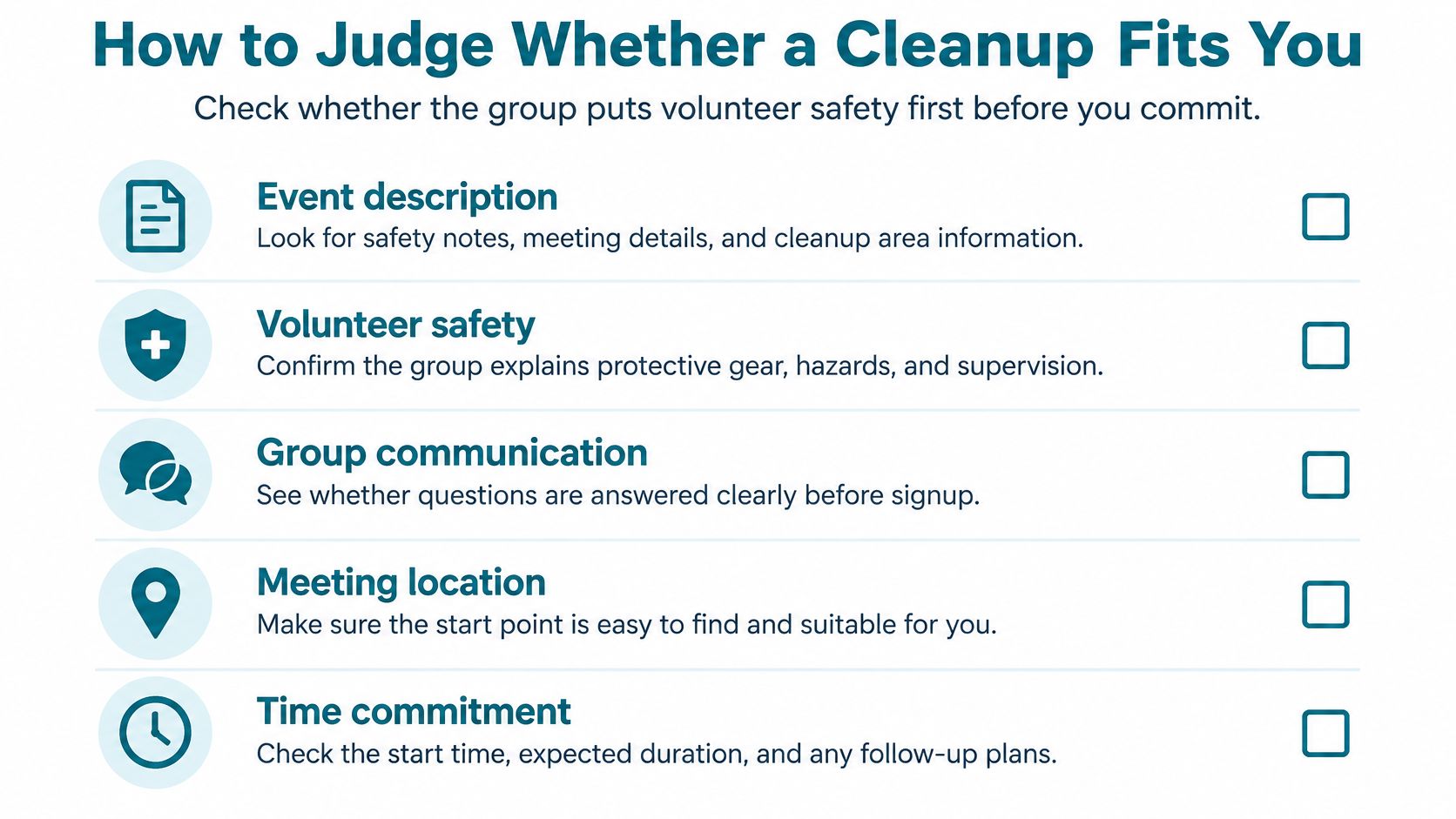
Run This Five Point Check
- Event description: You look for the meeting point, start time, route area, and end time. I pass on listings that only say "meet downtown."
- Volunteer safety: You confirm gloves, grabbers, supervision, and hazard rules. I ask who handles needles and broken glass.
- Group communication: You send one question and you watch the reply. A clear, kind answer tells you a lot.
- Meeting location: You check transit, parking, and a landmark you can spot from the street.
- Time commitment: You confirm the length of the route and any plans after the pickup.
Weekend mornings fit many people who work weekdays. You finish before lunch. You keep the rest of Saturday open. I like that rhythm because service becomes part of my week instead of a fight with my calendar.
Ask About Weather and Access in Plain Words
Rain or shine sounds brave. I respect that spirit. I also know heat, cold, ice, and heavy rain hit people in different ways. You may manage a bad knee, a chronic illness, a child at home, or a long bus ride. A good group publishes cancellation thresholds and offers roles for people who can't bend or lift.
Ask about walking distance and terrain. A flat park path feels different from a steep embankment. Ask about restrooms, shade, water breaks, and a buddy system. Ask whether you can sort bags, carry water, or greet people at check-in. Those jobs keep a cleanup running, and they welcome more neighbors into the morning.
My rule for beginners: You pick the cleanup that answers your safety questions before signup. You skip the cleanup that treats basic questions as a bother.
A 2025 study of 547 adult litter-walkers and their motivations found the activity can combine environmental motivation with physical activity, and its sample had an average age of 51 with 86% female participants. I read that as a simple reminder. Volunteers bring different bodies, ages, and needs. You deserve a group that plans for real people.
What to Bring and What to Expect on Pickup Day
I pack the night before. I set my shoes by the door and I fill my water bottle. That tiny routine kills most morning excuses. You wake up, you grab your gear, and you walk out.
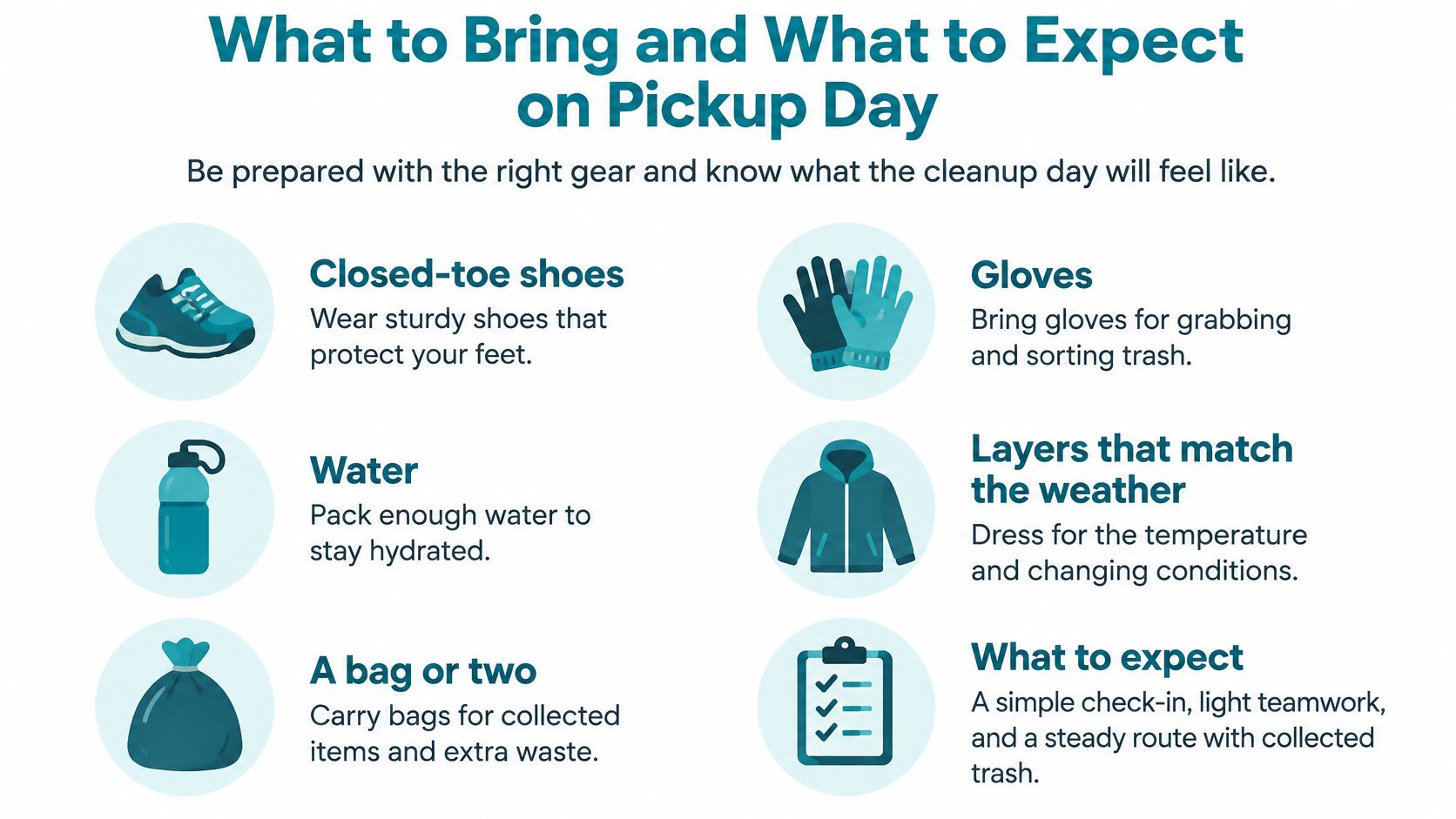
Pack Light and Dress for the Ground
- Closed-toe shoes: You protect your feet from glass, metal, and uneven ground.
- Gloves: You grab and sort items without bare hands.
- Water: You drink before you feel thirsty, especially in heat.
- Layers: You match the temperature and you adjust as you warm up.
- A bag or two: You carry collected items and you keep clean gear separate.
Many groups supply bags, gloves, and grabbers. You confirm that in the chat before you leave. If you want a deeper gear list, this guide to trash pickup equipment walks you through common tools before your first route.
At check-in, you give your name and you grab your supplies. Organizers form small teams and point you toward a route. I like teams of three or four. One person holds the bag, two people pick, and one person watches traffic near curbs.
Sort as You Go and Ask Early
Chicago gives you a clear sorting line. The city's What Goes Where guidance for recycling and special items says Blue Carts should not receive aerosol cans, lithium-ion batteries, hoses, plastic bags, or other film plastic because those items can create safety hazards and disrupt facility operations. You keep those items out of ordinary recycling.
Think of your bags like kitchen drawers. You keep forks with forks. You keep ordinary litter in one bag, clean recyclables in another, and odd items aside for an organizer. You ask before you guess. That one question saves a whole bag from the wrong stream.
You also leave sharp or suspicious items alone. You flag needles, chemicals, leaking paint, and heavy dumped objects for trained crews or city pickup. You take a photo of the spot and you note the address. That record helps the group report repeat dumping instead of hiding the source.
Connecting With Organizers Through Chats and RSVPs
I treat my first message like a handshake at a door. I keep it short. I open the conversation and I step back. You can do the same in about two minutes.
Introduce Yourself in Two Lines
Join the open group chat and read the last few messages first. You learn the tone and you often find your answer already sitting there. Then you write your name, your neighborhood, and one clear question.
Try this shape. "Hi, I'm Maya from Logan Square. Do you supply grabbers on Saturday?" That message gives the organizer everything they need. You avoid a long list of questions. You get a fast answer. You save your other questions for check-in.
I also pin the meeting point in my maps app right after I join. That habit stops the classic Saturday scramble. You know the corner, the train stop, and the walk time before you pour your coffee.
Use Your RSVP Like a Promise
RSVP when you plan to come. Update your status when your plans change. Message early when you expect to run late. Organizers count bags, gloves, and grabbers from that list. A yes that turns into a no leaves the group guessing at the curb.
Your RSVP is a head count for supplies and safety pairs. You change it as soon as you know.
Life happens. A child wakes up sick. A train stalls. You send one short note and nobody holds a grudge. I have sent that note myself. The group thanked me because they could hand my grabber to a walk-in volunteer.
At the meeting point, introduce yourself in person. Say your name and mention the chat. People connect the face to the message fast. That tiny moment turns strangers into teammates before you pick up your first wrapper.
After the route, thank the organizers by name. Tell them one thing you noticed, like a clean stretch near the school or a drain that needs city attention. Specific thanks sticks. It also gives the group useful notes for next week.
If you want to search trash cleanup near me again for a new neighborhood, you now know the drill. You join the chat, you ask one question, and you RSVP with care.
Turning One Pickup Into Ongoing Involvement
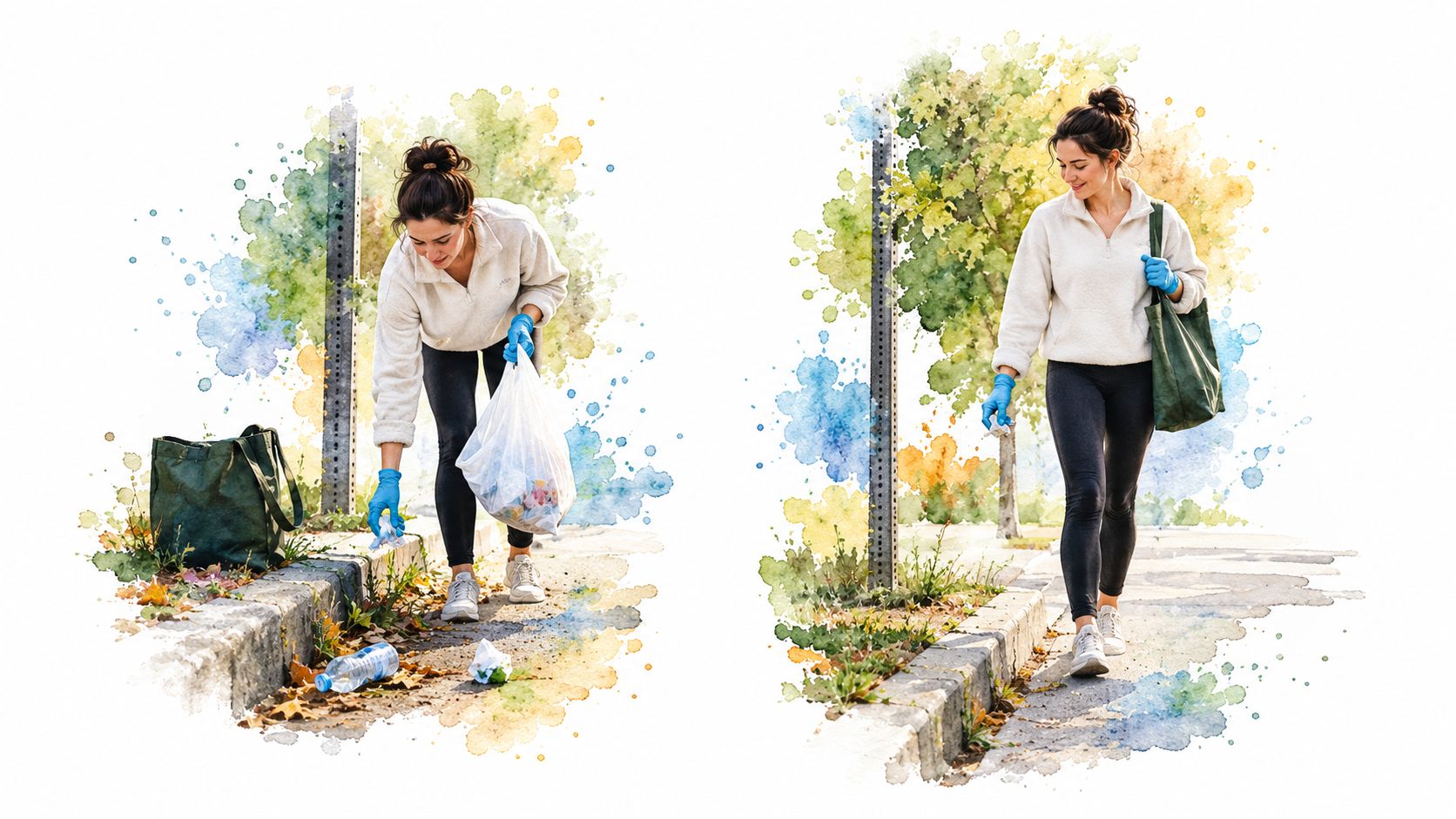
My first pickup on a new route felt awkward. I held my grabber like a new kitchen tool. I forgot names by the second block. By my fifth visit to the same weekend route, I knew who liked corner duty, who carried extra bags, and who always brought a joke for cold mornings.
You can see that kind of morning in motion in the photo below.
Familiar Faces Replace Strangers
Shared work builds friendship in a plain, steady way. You walk the same blocks. You share the same weather. You learn names because you call out hazards and pass bags back and forth. Conversation comes easy when your hands stay busy.
I compare it to a weekly pickup basketball game. You arrive for the activity. You stay for the people. Soon someone saves you a grabber. Someone asks about your week. Someone notices when you miss a Saturday and checks in.
If you want ideas for that social side, these notes on volunteer community connections show how regular service turns into real neighborhood ties.
Symbols and Long Projects Give You Pride
Our group uses flags, a theme song, and badges because symbols help people feel part of a team. Sports fans understand this fast. You wear the colors, you sing the song, and you stand a little taller. Our values of bravery, kindness, and unity give those symbols a reason to exist.
Bravery means you show up in hard weather and in neighborhoods people often avoid. Kindness means you protect volunteer energy and you put safety first. Unity means you walk with people from across the city and you treat every block as your block too.
Long projects deepen that pride. Caterpillar Park in Englewood gives regular volunteers a place to watch grow over seasons. You clear a lot one month. You return and you see progress with your own eyes. That slow change feels different from a one-time haul, and it pulls you back.
You can watch a short cleanup clip here and picture your first route.
Start small this week. RSVP for the next weekend pickup on Meetup. Introduce yourself in the group chat before you arrive. Bring water, wear closed-toe shoes, and give the morning a fair chance. Your second visit will feel easier. Your fifth visit may feel like a standing date with friends.
Looking for trash cleanup near me in Chicago and a weekly weekend morning group that supplies the gear, puts volunteer safety first, and welcomes you by name? Come walk a route with us. Visit Litter Caterpillars to find the next pickup, RSVP, and introduce yourself in the chat before Saturday.
Leave a Reply