Tag: litter caterpillars

  • Canoeing Illinois River: Plan Your 2026 Trip

    Canoeing Illinois River: Plan Your 2026 Trip

    The first time I planned a canoe trip on the Illinois River, my apartment looked like a stalled garage sale. Dirty mugs. Half-packed bags. A chair buried under clothes. I remember tracing a route on my phone and feeling, for the first time in weeks, like one small part of my life could move forward.

    Why a River Trip Can Fix More Than You Think

    I didn't get into canoeing because I had my life together. I got into it because I didn't.

    Back then, every mess in my room felt weirdly heavy. A crumpled receipt had history. An old jar in the fridge had a story. I could walk past the same clutter for months and feel myself shrinking around it. Then one weekend I borrowed a canoe, picked a stretch of river, and started planning food, dry layers, a shuttle, and a launch time. That tiny bit of order felt like opening a stuck window.

    A serene woman canoeing on a calm river with a surreal abstract collection of objects floating above.

    A canoe trip gives your brain one job

    When you go canoeing illinois river routes, your mind stops trying to solve your whole life at once. It starts dealing with simple things.

    • Where do I put in
    • Did I tie down the dry bag
    • Is the wind picking up
    • Can I hold a straight line across this bend
    • Did I leave this shoreline cleaner than I found it

    That's a gift. Real life gets muddy because everything stacks at once. On a river, problems come one at a time.

    I still remember one rough outing when the weather flipped fast and our easy day got teeth. The sky darkened, the water changed color, and every loose item in the canoe suddenly mattered. We laughed because we had to. We worked because we had to. By the take-out, I felt more alive than I had all month.

    Practical rule: A hard day outside often clears your head better than an easy day indoors.

    That's why I'm so drawn to paddling with a cleanup mindset. Cleaning someone else's mess can wake something up in you. It's strange, but true. You pull a bottle from the reeds, tuck it in a bag, and some part of your own mind gets lighter too.

    The river strips life down to truth

    A canoe doesn't care about your excuses. It answers the way truth answers. If you lean wrong, it tells you. If you pack badly, it tells you. If you panic, it tells you. But if you stay calm and adjust, it rewards you fast.

    That's what changed me. Not some huge breakthrough. Just repeated small moments of doing the next brave thing.

    If you feel stuck, plan a river day. Pack your lunch. Text a friend. Choose a launch. Commit to the weather unless it's unsafe. Let the trip be simple. Let it be imperfect.

    You don't need a dramatic reinvention. You might just need a paddle in your hands and a few quiet miles where your only job is to move forward.

    Choosing Your Illinois River Adventure

    The Illinois River has more than one personality. Some stretches feel reflective and roomy. Others feel busier, louder, and more technical because of boat traffic, access gaps, dams, or wind. I like that. A river with only one mood gets flat.

    The Illinois River in Illinois is 273 miles long, and paddling guides describe its average flow as 1 MPH, slow enough that you can paddle upstream without extreme effort, though headwinds can stop you cold and speedboat traffic can swamp an inattentive canoe (Illinois River paddling notes). That tells you a lot before you ever touch the water. This isn't a wild whitewater charge. It's a route that asks for patience, awareness, and honest trip planning.
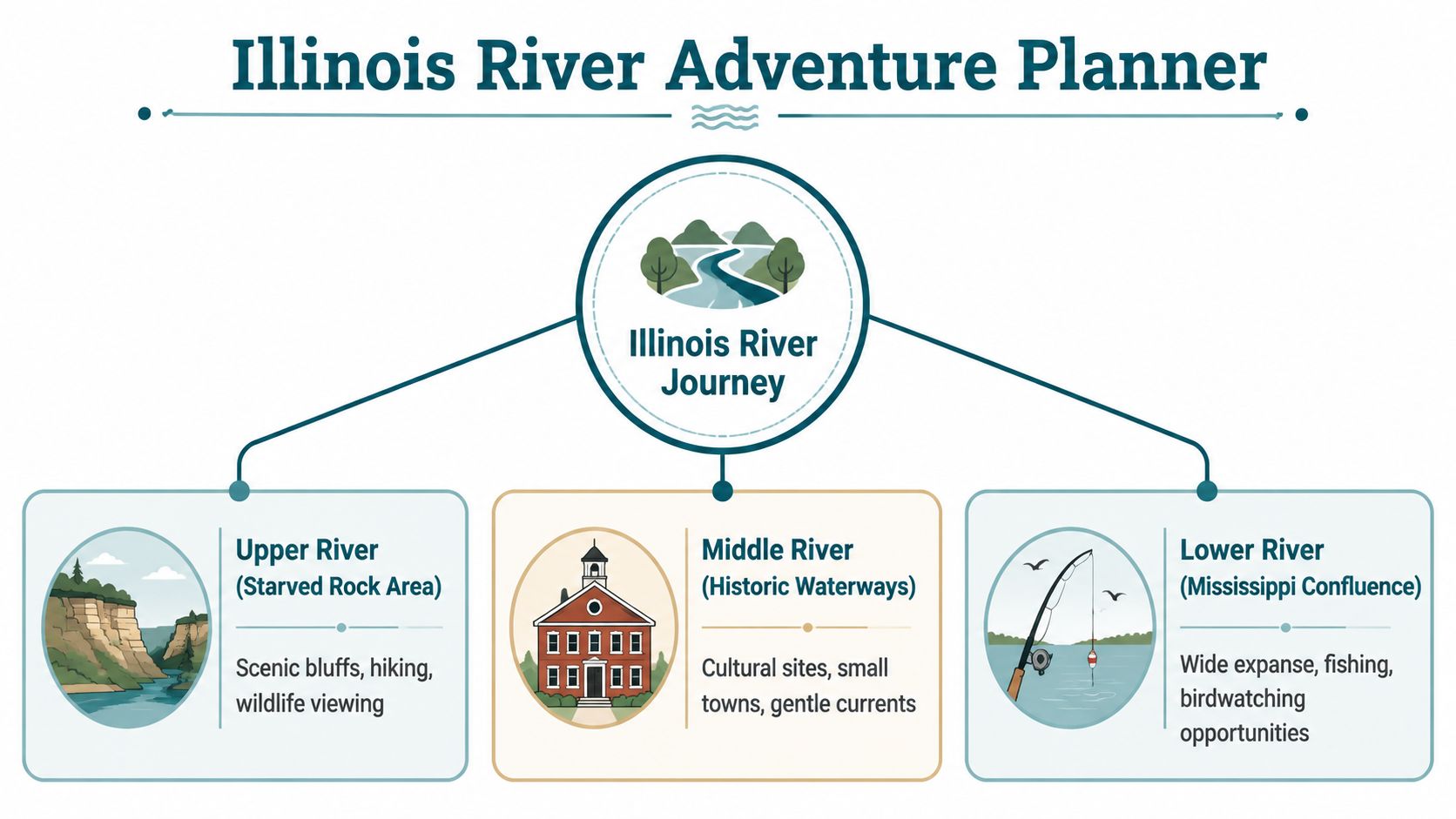
    An infographic titled Illinois River Adventure Planner showing three sections: Upper, Middle, and Lower river areas.

    Upper river mood

    If you want your first canoeing illinois river day to feel like a reset button, I'd start on an upper stretch with easy access and a modest turnaround plan. I like this kind of trip for people who want to hear birds, test their stroke, and still get tacos before dark.

    The upper feel is simple. Launch, settle in, learn your boat, and don't chase mileage. Because the current is slow, an out-and-back can work when the wind is calm. If the breeze stiffens, turn that pride into wisdom and head back early.

    A short day trip works well when you:

    • Need a confidence builder and want time to practice steering
    • Paddle with a new partner and need to learn each other's rhythm
    • Plan to pick up litter along banks and eddies without rushing

    If you want another nearby water-based volunteer idea before committing to a longer river day, I like the spirit behind Fox River Valley cleanup and exploration.

    Middle river feel

    The middle sections have more mixed energy. You may pass marinas, dams, islands, ferry activity, and industrial edges. I don't say that to scare you off. I say it because some paddlers love a river that feels lived-in. You see the working parts, the rough edges, the pretty corners, and the weird transitions all in one day.

    I would recommend this location to an intermediate paddler who wants a fuller story. Not polished. Real.

    The middle river teaches you how to keep your own calm when the water around you gets busy.

    For this kind of run, I plan a one-way shuttle if I can. Slow current doesn't mean no effort. A long upriver grind into headwind can turn a peaceful day into a grumpy march.

    Lower river appetite

    A lower stretch asks for more patience. The river gets wider, the exposure grows, and your margin for sloppy decisions shrinks. You can still have a beautiful trip there, but you need to respect distance, weather, and motor traffic.

    Here's how I choose between trip styles:

    Trip style Best for What it feels like
    Short day float Beginners, mixed groups, cleanup paddles Calm, forgiving, low-pressure
    Medium one-way run Intermediate paddlers Steady work, more variety
    Multi-day expedition Strong planners with self-rescue skills Deep focus, long rhythm, bigger reward

    The old trade-route history of the Illinois River is interesting, but what matters most in your boat is this: choose a stretch that matches your attention span, your partner, and the weather you're getting. Not the weather you hoped for three days ago.

    Gearing Up for Self Reliance on the Water

    I learned the value of good gear the embarrassing way. I once packed like I was going to a picnic near water instead of onto water. Loose snacks. Phone in a cheap pouch. Spare shirt wrapped in a grocery bag. By lunch I had wet sleeves, a damp map, and the kind of regret that sticks to your skin.

    Self-reliance starts before launch. It starts on the floor while you pack.
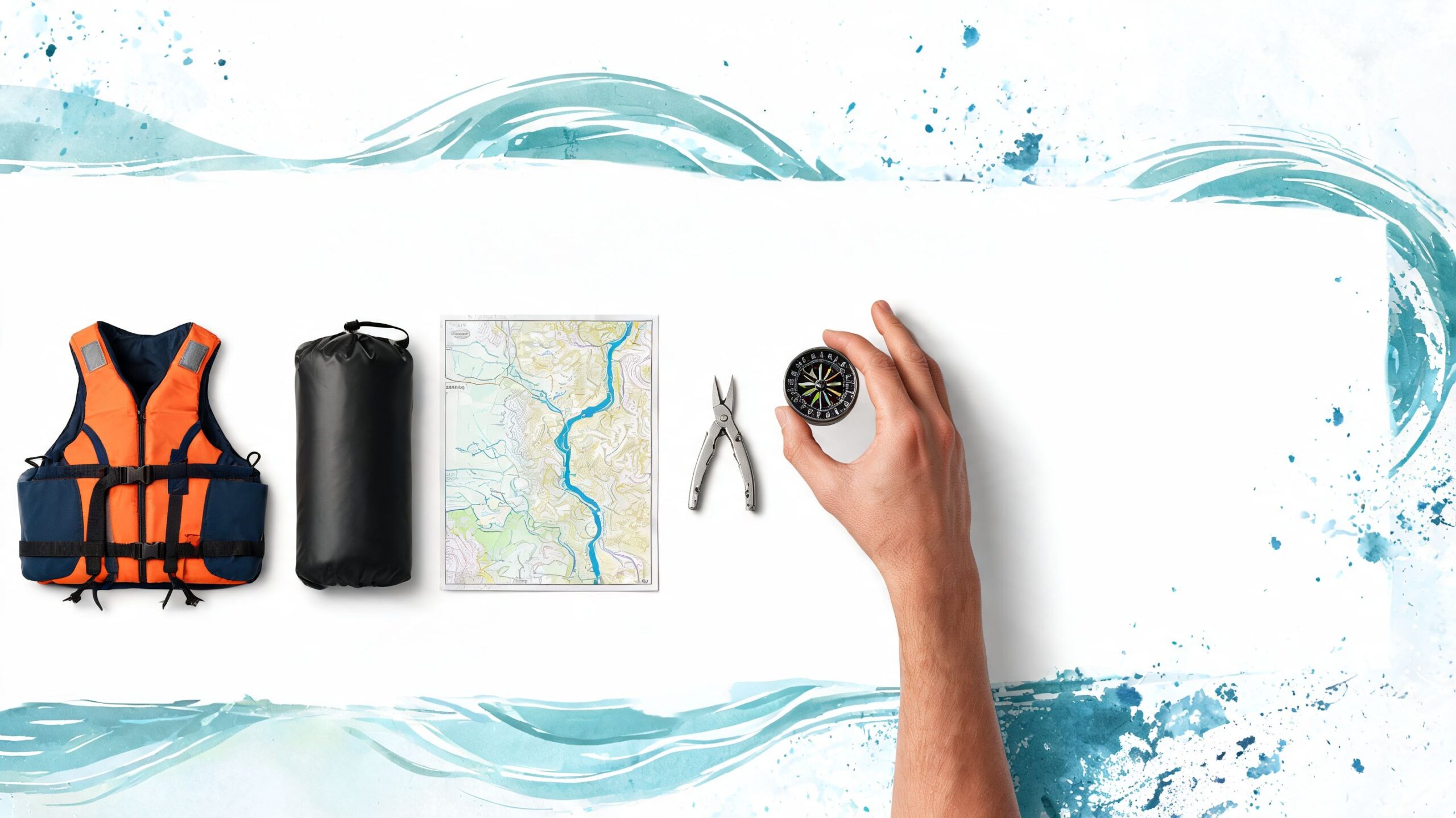
    Canoeing equipment including a life vest, map, multi-tool, and compass held by a hand on white background.

    The gear I won't skip

    I keep my core kit boring on purpose. Fancy gear is fun. Reliable gear gets you home.

    • PFD you will wear. If it rubs your neck raw, fix that before trip day.
    • One good paddle plus a spare if possible. A broken paddle turns a mellow float into a problem.
    • Dry bags for clothes, phone, food, and first-aid items.
    • Throw rope and whistle for basic safety.
    • Water and salty food because bad decisions show up fast when you're thirsty.
    • Sun layer and rain layer because rivers make fools out of weather apps.
    • Work gloves and sturdy trash bags if you plan to do any cleanup.
    • Map screenshot or printed route notes in case your battery dies.

    I'm picky about how I pack. Heavy stuff low. Things I may need fast near the top. Nothing important loose.

    Small systems beat strong intentions

    On some designated scenic rivers, managers require coolers under 52 quarts to be locked to prevent spills, and they provide free trash bags at access points. I think that's smart and worth copying anywhere you paddle, including Illinois River trips (scenic river safety and waste rules).

    That one rule says a lot. Don't trust good intentions. Build a system.

    Here's my simple packing system for canoeing illinois river outings:

    1. Clip it or lose it
      I attach dry bags, water bottles, and small tackle pouches to fixed points. If we tip, I want recovery, not a scavenger hunt.

    2. Separate wet from dry
      Rain jacket and gloves live together. Food and spare clothes stay elsewhere. A soaked granola bar is a sad little lesson.

    3. Give trash its own zone
      If I'm doing a cleanup paddle, I bring one bag for litter and one bag for my own waste. Mixing them gets gross fast.

    After I started using tighter systems, I stopped feeling fragile on the water. That matters. Confidence doesn't come from hype. It comes from knowing where your knife, whistle, and snack are when things get annoying.

    For urban paddlers who want another angle on getting started, Chicago kayak options and city-water perspective can spark ideas.

    Watch someone pack with intention

    Seeing gear laid out well helps more than reading a list. This video is worth a look before your trip.

    Bring less than you want, and secure more than you think you need.

    That's the whole game. Pack so that a surprise swim becomes a story, not a rescue.

    Navigating with Bravery and Awareness

    Fear by itself doesn't keep you safe. Attention does.

    I've seen people freeze up around rivers the same way they freeze up driving downtown in heavy traffic. They stare at every possible problem at once and stop making clean decisions. The better approach is calmer. Read one thing at a time. Current. Wind. Other boats. Shoreline hazards. Your partner's energy.

    Popular recreational rivers can pull in hundreds of thousands of visitors annually, and when each person spends over $50 per trip on average, you know the water can get busy and shared fast (Oklahoma Illinois River management plan). The exact setting differs from Illinois, but the lesson carries well. On a crowded river, awareness is part of courtesy.

    Read the obvious signs first

    You do not need mystical river intuition. You need a checklist and the humility to use it.

    Check Item What to Look For
    Weather Wind direction, storm risk, temperature swing
    Water traffic Speedboats, ferries, anglers, marina zones
    Access point Safe launch footing, parking rules, clear take-out
    Boat trim Weight centered low, gear secured, no loose clutter
    Safety gear PFD on, whistle reachable, phone protected
    Route hazards Dams, bridge pinch points, debris, shallow bars
    Group readiness Everyone knows signals, distance, and turnaround plan

    I run through this before every launch, even on easy days. Especially on easy days. Complacency loves familiar water.

    Boat traffic changes your job

    On the Illinois River in Illinois, speedboats and commercial activity can create a noisy, busy day. Your move is simple. Stay predictable. Cross channels decisively. Don't drift sideways where fast traffic expects a clean line.

    A canoe feels small when a wake rolls at you. That's normal. Point the bow into the wake at an angle you can manage, keep paddling, and avoid turning broadside at the last second. Most trouble comes from hesitation.

    River habit: Be visible, be steady, and don't make mystery moves.

    I treat dams the same way I treat bad intersections in the city. I don't flirt with them. I identify them early, leave space, and decide in advance where I'm going.

    Bravery is calm, not loud

    The brave paddler isn't the one who jokes away every hazard. It's the one who admits the river is real and responds cleanly. If wind starts pushing you off line, say it out loud. If your partner looks tired, stop sooner. If debris fields look messy after rain, back off and choose a simpler lane.

    Submerged logs deserve respect. So does lightning. So does exhaustion.

    I've had days when turning around felt like failure for about five minutes. Then I got back to the car dry, safe, and still interested in paddling next weekend. That's not failure. That's how you build a long life outdoors.

    Turning Your Paddle into a Purpose

    Some of my favorite river moments didn't come from distance. They came from drifting into a quiet pocket behind a bend, spotting a bottle wedged in roots, and deciding to do something about it.

    That small decision changes the whole feel of the trip. You stop being a visitor and start acting like you belong there.
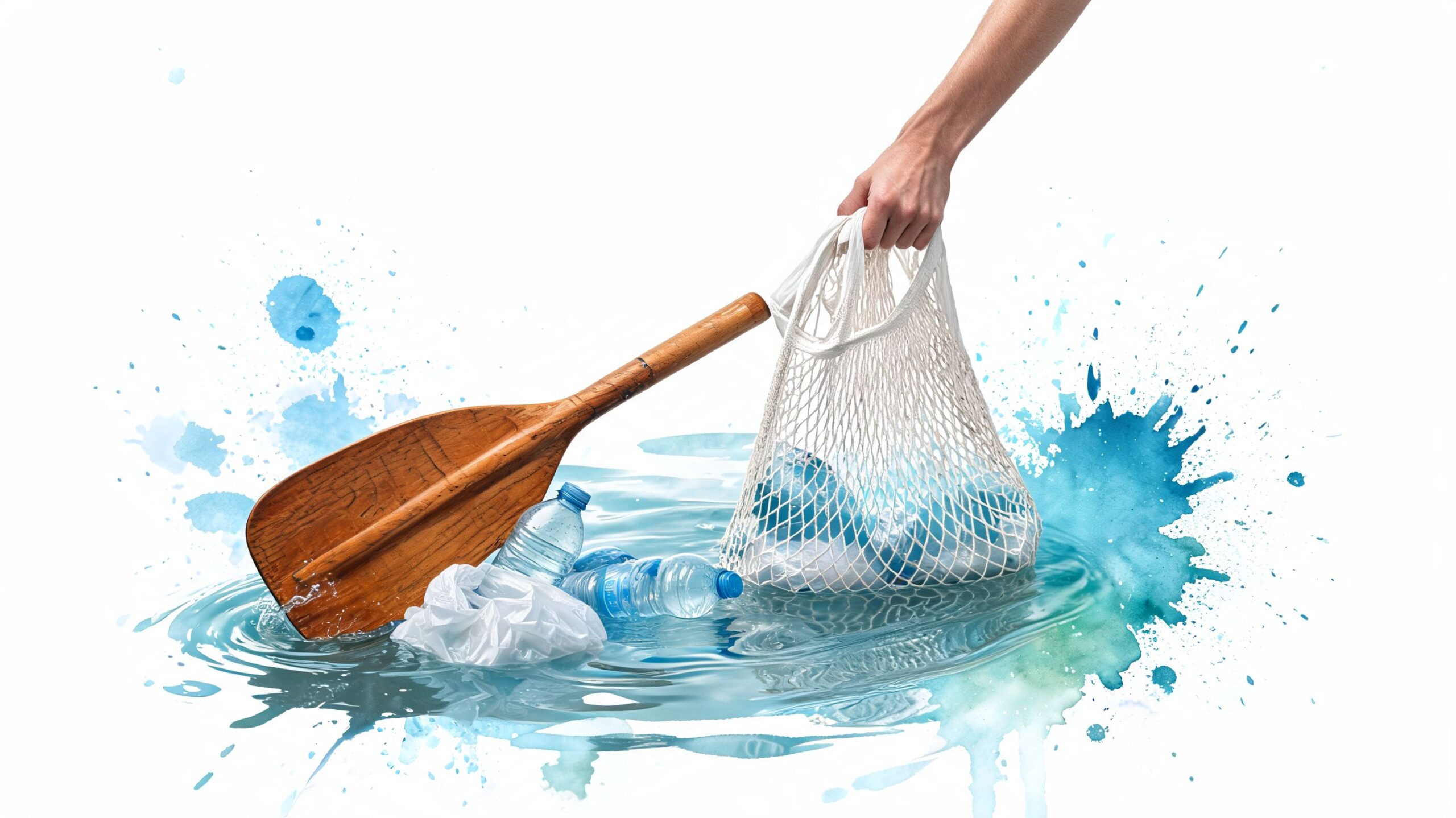
    A hand holds a mesh bag over water filled with plastic waste and a wooden canoe paddle

    Illinois has thousands of miles of waterways affected by urban runoff, and floating trash is an increasing problem. At the same time, there's very little practical guidance for paddlers on safely dealing with submerged or floating litter (Illinois River Watershed Partnership event notes). That gap is where ordinary volunteers can do real, grounded work.

    Start small and stay stable

    A canoe cleanup is not a stunt. It's a slow, careful job.

    I use a simple rule. If collecting the trash will make the boat less stable than leaving it, I leave it. No bottle is worth a swim near debris. No tire is worth pinning a canoe against a log.

    Here's the method I trust:

    • Wear gloves from the start. Don't wait until you see something gross.
    • Use a grabber for reach when an item is near brush or murky edges.
    • Keep one bag open and one bag tied down. The open bag is active. The spare is backup.
    • Collect light trash first like bottles, wrappers, cups, and foam pieces.
    • Skip sharp metal, tangled line, or half-submerged junk unless you can handle it from solid ground.

    That last point matters. River litter lies to you. A floating object may be attached to wire, roots, or something sharp below the surface.

    How to manage trash in a canoe

    The trick isn't picking trash up. The trick is carrying it without turning your boat into a rolling dumpster.

    I like this setup:

    Item Where I keep it Why it works
    Active trash bag Clipped near stern or center Easy to reach, hard to lose
    Gloves Pocket or top hatch Fast access
    Grabber Along gunwale under bungee Doesn't slide around
    Hand sanitizer Small side pouch Quick cleanup before eating
    Heavy finds Low and centered Keeps trim steady

    I also separate recyclables only if the launch or take-out has a clear disposal path. If there's no way to sort it well at the end, I focus on safe removal first.

    You don't need to clean the whole river. You need to leave one stretch better than you found it.

    That mindset keeps people coming back. Overreach burns volunteers out. A modest, repeatable cleanup builds pride.

    If you want a practical companion piece to this approach, I like this river cleanup guide for thinking through what to bring and how to stay useful.

    What to leave alone

    Some things should stay right where they are until a better-equipped crew handles them.

    • Hazardous containers with unknown liquids
    • Needles or broken glass in unstable footing
    • Large tangled loads wrapped around branches
    • Anything that forces you to lean hard outside the boat

    I know the urge. You see a nasty mess and want to attack it. But discipline is part of service. A safe volunteer can come back next week. An injured one can't.

    Bring the River Home With You

    After a good paddle, I always notice the same thing on the drive back. My problems don't disappear. They just shrink back to their real size.

    That's enough.

    You spend a few hours reading water, making decisions, carrying your own gear, maybe hauling a bag of trash to the take-out, and suddenly your regular life feels more manageable. The sink full of dishes looks less like a curse and more like ten minutes of work. The hard text you need to send feels sendable. The neighborhood block you usually hurry past starts to feel like your block again.

    The part that changes you

    The true gift of canoeing illinois river trips is repetition. You launch a little unsure. You adjust. You face wind, clutter, noise, mud, or a sore back. Then you finish anyway.

    That pattern sticks.

    Many urban communities still lack good access to local rivers, and creating inclusive, service-based paddling events can help people build community and become stewards of those places (Illinois River access and recreation discussion). I like that idea because it matches what I've felt firsthand. People get stronger when they do brave, useful things together.

    Keep one river habit in city life

    When I get home from a paddle, I try to keep one habit alive instead of letting the whole experience evaporate. You can do the same.

    • Clean one small mess right away before sitting down
    • Text the friend you paddled with and make the next plan
    • Wash and repack your gear so future you has an easier start
    • Take one neighborhood walk with a trash bag and keep the chain going

    That's how the river comes home with you. Not as a memory only. As a practice.

    I love the caterpillar idea for this. You don't go on one paddle and emerge as some flawless new creature. You just keep showing up. You keep doing honest work. You keep becoming someone you can trust.


    If this kind of day sounds like your kind of people, check out Litter Caterpillars. Join a cleanup, make some friends, and bring that same brave energy from the river into Chicago streets, parks, alleys, and waterways.
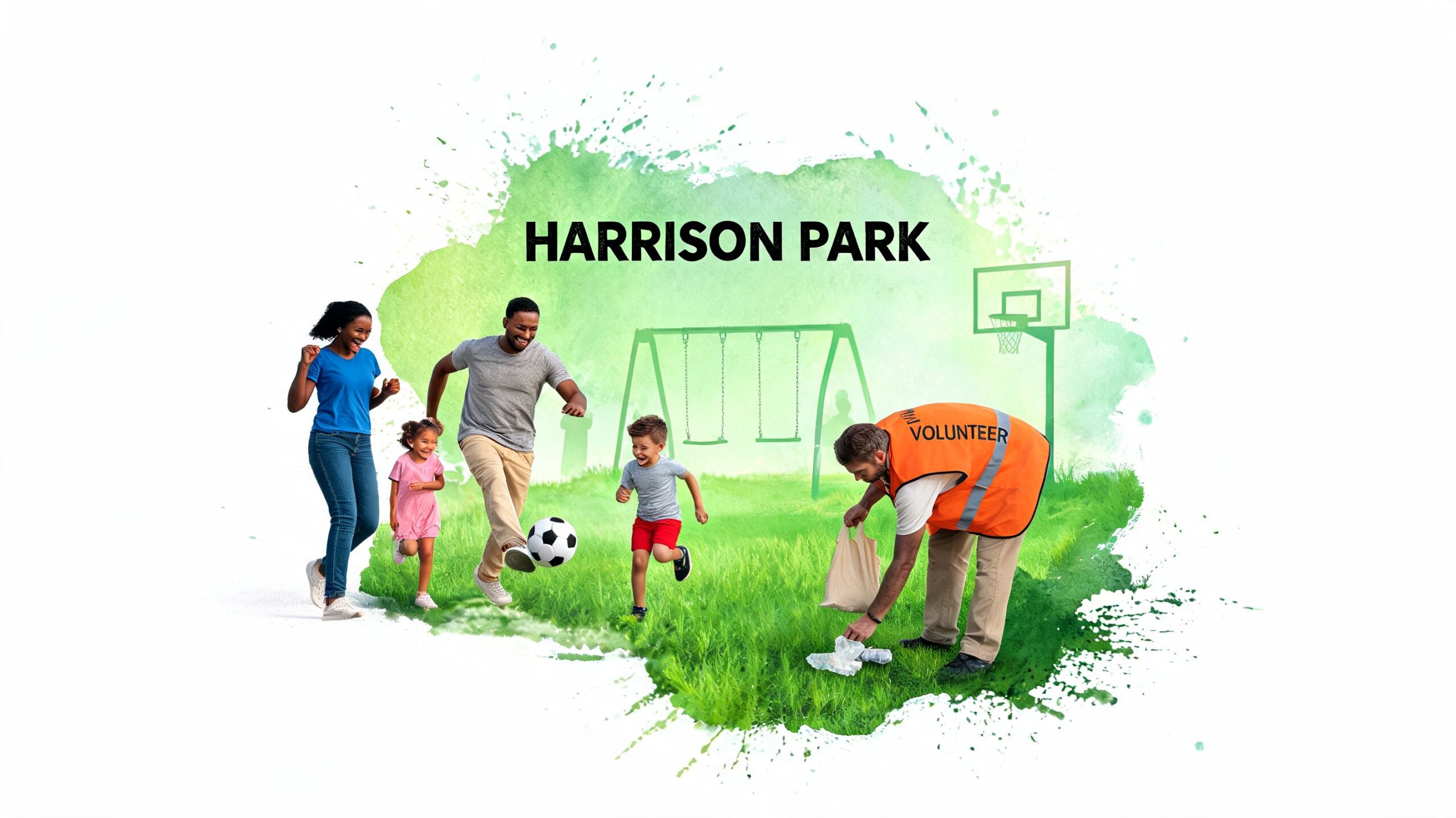
  • Harrison Park in Pilsen: A Guide to Your Next Adventure

    Harrison Park in Pilsen: A Guide to Your Next Adventure

    I remember one cold morning when my gloves were already damp before breakfast. I cut through Pilsen, stepped into Harrison Park, and felt that weird reset you only get when a neighborhood gives you a little room to breathe.

    Finding A New Kind of Fun in Pilsen

    The first time I really paid attention to harrison park in pilsen, I wasn't looking for beauty. I was looking for a place to sit down for five minutes after hauling bags of trash and trying to get my heartbeat back under control.

    I watched a kid race toward the playground like he had somewhere urgent to be. A man moved slowly along the path with his coffee. On the courts, you could hear the ball before you saw the game. That mix hit me hard. Sweat, noise, grass, concrete, laughter. It felt honest.

    Parks tell on us. If people care, you can see it. If people stop caring, you can see that too.

    What I notice when I walk in

    Harrison Park doesn't feel like an escape from the city. It feels like the city taking a full breath. That's why I keep coming back to it in my mind. You don't come here to pretend Chicago disappeared. You come here to remember that people can still make room for each other inside all the pressure.

    A simple morning at the park can turn into a whole emotional weather report:

    • On the basketball side, the energy is sharp and loud. You feel competition, rhythm, and habit.
    • Near the open fields, things loosen up. Families spread out. Kids drift. People stop checking their phones.
    • Around the fieldhouse, you get that public-building feeling I love. Real use. Real wear. Real life.

    What hooked me: I didn't need Harrison Park to impress me. I needed it to feel lived in. It did.

    If you're the kind of person who likes exploring green spaces with purpose, this Chicago parks guide from Litter Caterpillars is a good companion. I like tools that get people out the door instead of trapping them in research mode.

    Why this place sticks with me

    Some fun is flashy. This kind isn't.

    This is the fun of showing up early. The fun of hearing a ball bounce off blacktop. The fun of seeing a public place that people use, and knowing that use is fragile. One rough season, one stretch of neglect, one wave of people deciding "someone else will deal with it," and a park starts to feel different.

    That's why I don't look at Harrison Park like a pin on a map. I look at it like a test. Will we keep this place alive with our presence, our respect, and our effort, or will we just consume it and leave?

    That question follows me every time I walk through the gate.

    The Surprising Story of Harrison Park

    The first time I learned what this ground used to be, I stopped walking.

    A teenager was cutting across the grass with cleats in one hand. A grandfather was posted up on a bench like he'd earned that seat through twenty Chicago winters. Kids were shouting near the path. Then I found out this park began as a limestone quarry, a deep industrial cut in the earth before it became a place where neighbors could breathe.

    That hit me hard.

    Before Harrison Park held pickup games and family routines, this site was worked for dolomite at the old Chicago Union Lime Works. Later, public officials turned the land into park space on the Lower West Side. The park dates back to the early 1900s and became part of the Chicago Park District during the 1930s. I am leaving the official park page for the next section, where it helps more with the on-the-ground details.

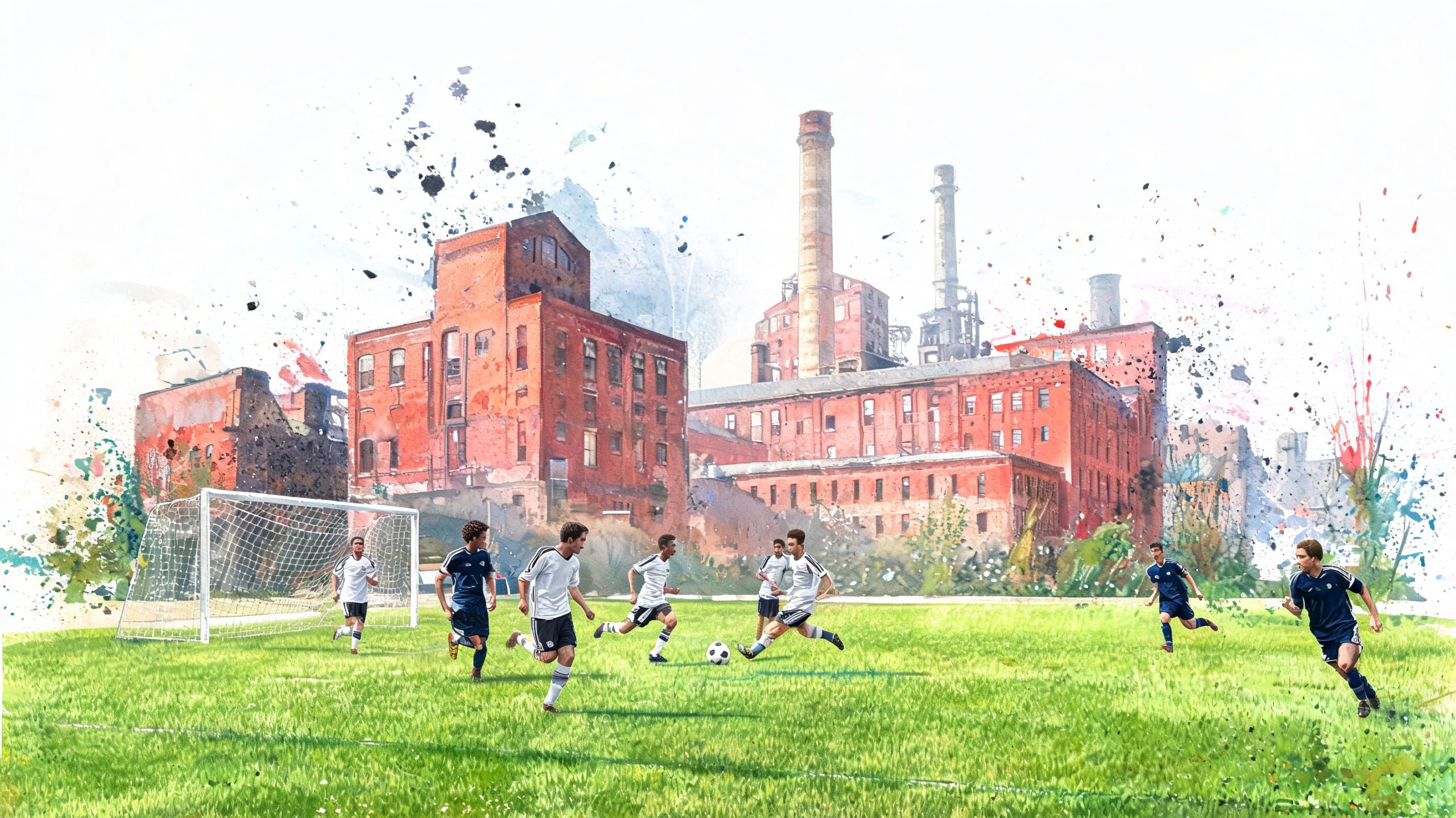
    A watercolor illustration of soccer players competing on a grassy field in front of industrial brick buildings.

    From quarry floor to neighborhood ground

    Our volunteer crew talks a lot about cleanup, repairs, turnout, showing up. We do not talk enough about conversion. Harrison Park is a conversion story.

    Men once blasted and hauled stone here. Then a neighborhood that needed open space got a park instead of a permanent wound in the ground. Somebody had to look at damaged land and say, no, children should run here. Families should gather here. A community should get something back.

    I trust places built from that kind of decision.

    You can feel the older layers if you pay attention. The park carries industry under its grass and public effort over it. Pilsen has always had people making something out of pressure, and this park fits that pattern. It was not handed down clean and easy. It was reshaped.

    That matters to me because I have seen the same thing in people. I have watched volunteers come in late, angry, distracted, burned out, then steady themselves with simple work. Fill bags. Sweep glass. Haul mulch. Check on a neighbor. A rough beginning does not disqualify a place. It does not disqualify a person either.

    Why the history changes the visit

    Once you know the ground was remade, you stop treating the park like background scenery.

    You notice the labor under the ordinary stuff. A path is no longer just a path. A field is proof that a city chose public life over abandonment. Even a worn patch near a busy corner starts to read differently. People kept working on this land until it could hold daily life.

    That is the part of Harrison Park I carry with me. It is not only a park in Pilsen. It is a piece of local stubbornness made visible.

    And around here, stubbornness can become love.

    What You Can Actually Do at the Park

    One Saturday, one of our younger volunteers showed up carrying too much. Bad week. Tight jaw. Would not say much. We handed him a trash grabber, cleaned a stretch near the walkway, and ended up staying for a pickup game after the work was done. An hour later he was laughing, drenched in sweat, arguing about a missed call like the world had given him a little room back.

    That is a real use for Harrison Park.

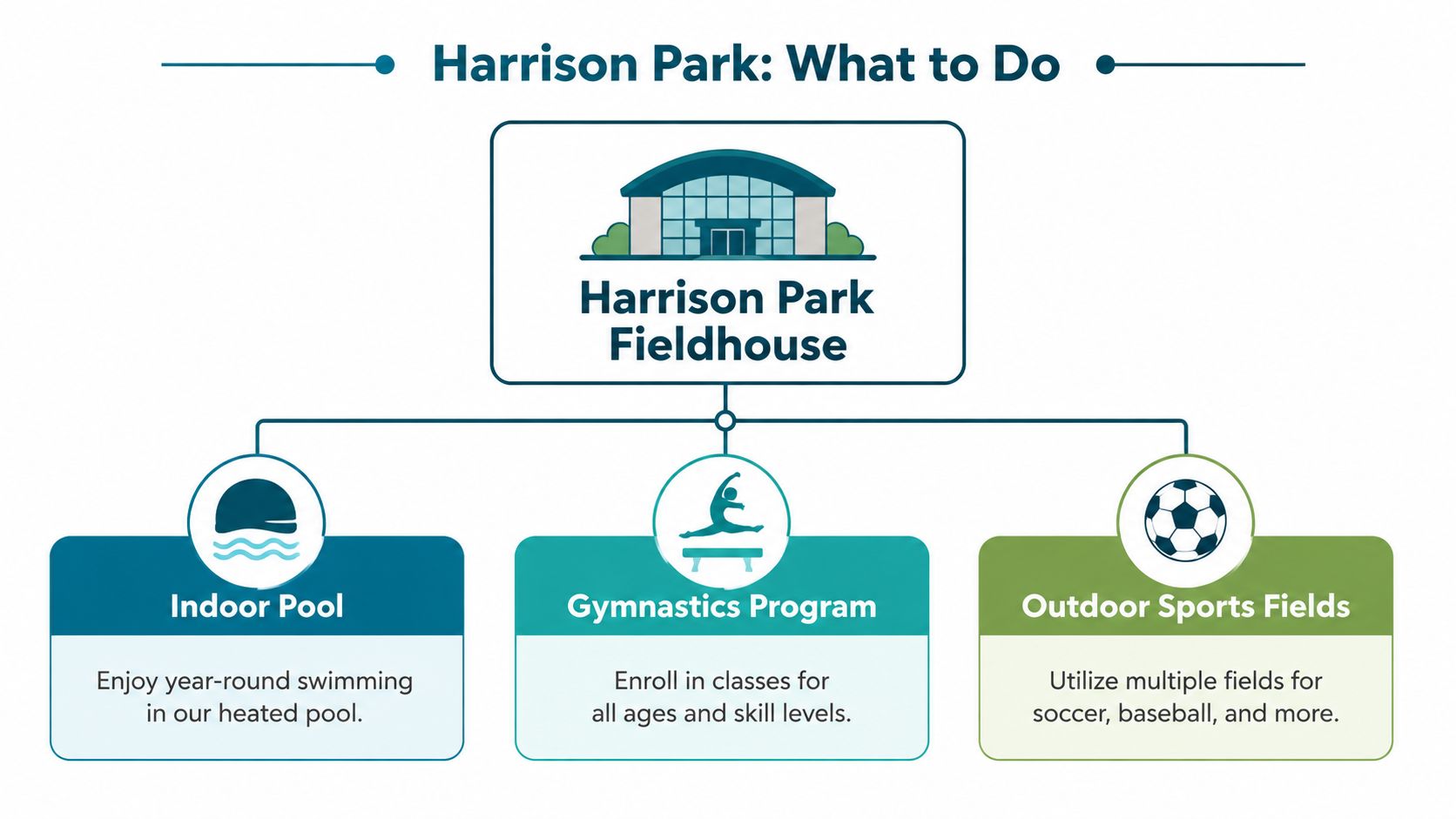
    A diagram outlining amenities at Harrison Park Fieldhouse, including an indoor pool, gymnastics program, and sports fields.

    A park like this earns its keep in small recoveries. Kids burn off chaos on the playground. Neighbors catch up by the courts. Somebody swims laps inside, somebody else sits still long enough to breathe right again. Harrison Park gives you a lot of ways to enter the day, depending on what you need and what you can carry.

    Start with the fieldhouse

    The fieldhouse is the practical center. If you are meeting people, make that your landmark. If the weather turns rude, it keeps the day alive. As noted earlier, it includes an indoor pool, a gymnasium, meeting rooms, a gymnastics center, and a reception rotunda that honors Emiliano Zapata.

    That mix matters. You can come here for organized activity, for a class, for a swim, or just to get oriented before heading outside. I have watched families use it like a base camp, one kid pulled toward the pool, another toward the gym, a parent trying to keep the whole operation from drifting apart.

    Here's a visual overview that helps if you're trying to picture the layout before you go.

    Pick the part of the park that fits your day

    Outside, the park spreads the pressure out. Courts pull in the loud energy first. Fields give people room. The playground keeps its own rhythm, all motion and quick course corrections. If you need structure, go where the games already have rules. If you need air, head for the edges and keep walking until your thoughts stop crowding each other.

    The outdoor setup includes courts, ball fields, a turf field, and a playground, as noted earlier. You do not need a perfect plan to use any of it well.

    Area What happens there Best for
    Courts Fast talk, fast feet, people testing each other Basketball, tennis, meeting up with active friends
    Open field space Room to spread out Soccer, tossing a ball, walking with kids
    Fieldhouse interior More structure, less weather drama Swimming, classes, scheduled activities
    Playground area Constant movement and quick attention shifts Families, short visits, after-school energy

    A better way to spend an afternoon here

    I tell first-timers to stop trying to conquer the whole park.

    Pick one thing that gets your body involved. Shoot for ten minutes. Walk a lap. Stretch near the field. Join a game if somebody waves you in. Then change gears before you wear yourself thin.

    Sit where you can still hear life happening. Near the court fence works. So does a bench with a view of the playground or the field. Let the park do some of the work on you.

    Then end with something small and deliberate. A phone call you have been putting off. A slow walk out. A check-in with the person you came with. We spend a lot of time in this neighborhood teaching people to show up for each other. Parks help when you use them that way.

    Practical rule: Pick one corner and stay with it long enough to notice people, patterns, and your own mood changing.

    What I tell people before their first visit

    If you have kids, start at the playground and stay loose. Children do not care about your itinerary.

    If you want noise and momentum, head toward the courts and see if the energy feels right.

    If you need to clear your head, do not march straight into the busiest section. Walk the perimeter first. Let your nervous system catch up.

    That is the version of Harrison Park I trust most. Not as a checklist of amenities, but as a public place where a rough day can turn into a decent one, and a decent one can turn into a day you remember.

    How to Get Here and Find Your Way

    Getting to a park shouldn't feel like solving a riddle. In Pilsen, it helps to keep your expectations plain. Streets are active, parking can get annoying, and your best move is usually the one that keeps the trip simple.

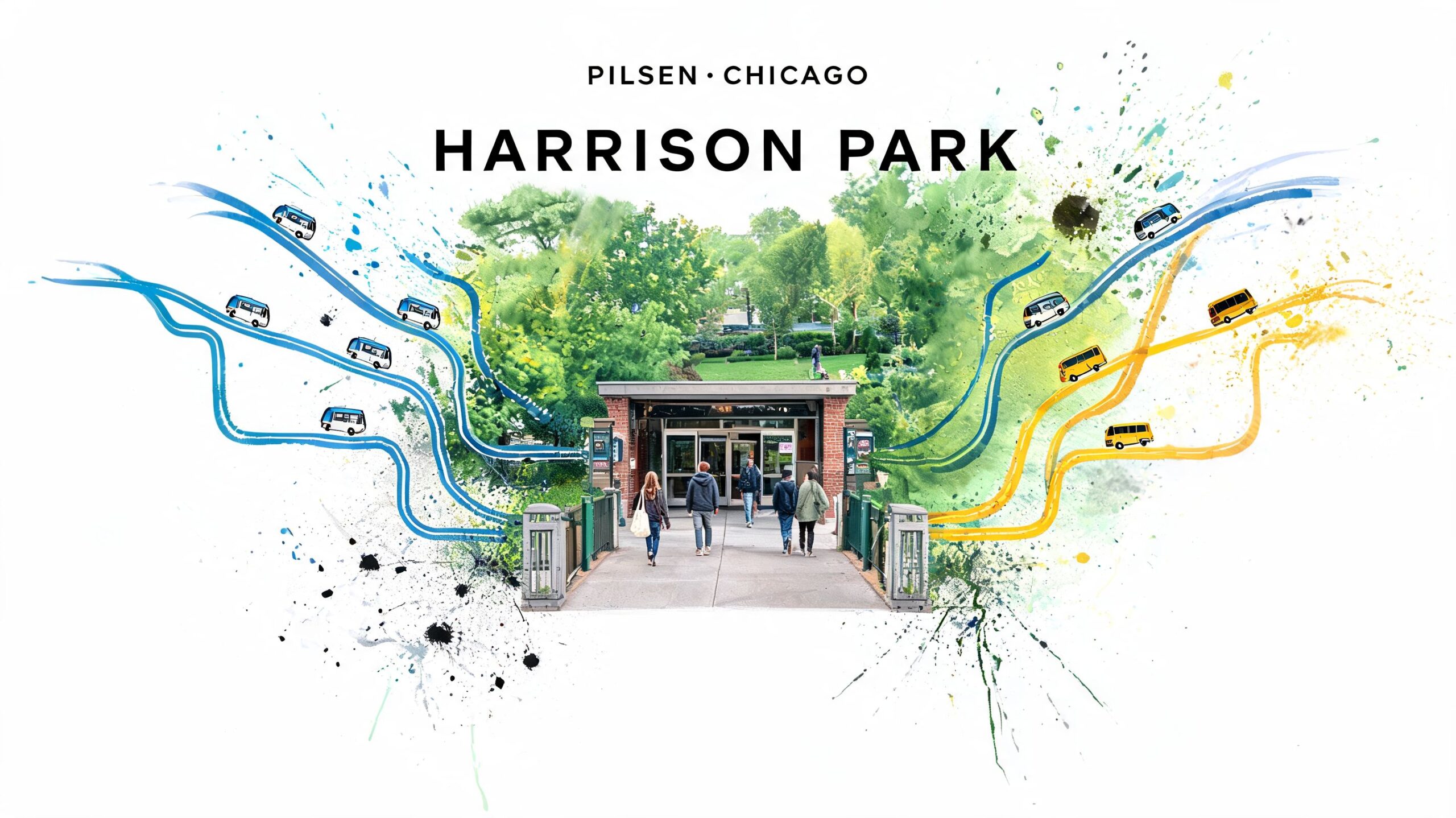
    A creative illustration blending a photo of Harrison Park in Chicago with colorful painted bus transit lines.

    Keep the arrival low drama

    If you're taking transit, I suggest checking your route before you leave and aiming for a short final walk. I won't pretend every trip across Chicago is elegant. Build in a little buffer, wear shoes you don't mind walking in, and don't cut things too close if you're meeting people.

    If you're driving, get there earlier than you think you need to. That's the honest advice. Neighborhood parking can turn a relaxed park visit into a cranky loop around the block if you arrive at the same time as everybody else.

    Once you're there

    The easiest way to orient yourself is to use the fieldhouse as your home base. From there, you can branch outward depending on what you're doing that day. If you're with friends, pick a meeting point before anyone arrives. If you're with kids, identify the bathroom situation and the nearest seating before anyone starts running.

    A few habits make the whole thing smoother:

    • Choose a meetup spot early. "By the fieldhouse" is better than a text thread full of guesswork.
    • Pack for a change in pace. Bring water, a layer, and something to sit on if you like lingering.
    • Walk the edges first. A slow loop gives you a read on the courts, fields, and quieter corners.

    Show up with a loose plan, not a military campaign. Parks are better that way.

    Accessibility and comfort

    I always look for the path of least friction. Paved routes and clear entrances matter, especially if someone in your group has mobility concerns or just doesn't want a chaotic approach. Public places feel friendlier when you can understand them fast.

    That's another thing I like about Harrison Park in Pilsen. Once you enter, the place reads clearly. You don't waste your whole visit trying to decode where life is happening.

    A Smarter Way to Care for Our Park

    One often sees litter and thinks the answer is simple. Grab a bag. Pick it up. Done. I respect that instinct, but Harrison Park asks for a little more brainpower.

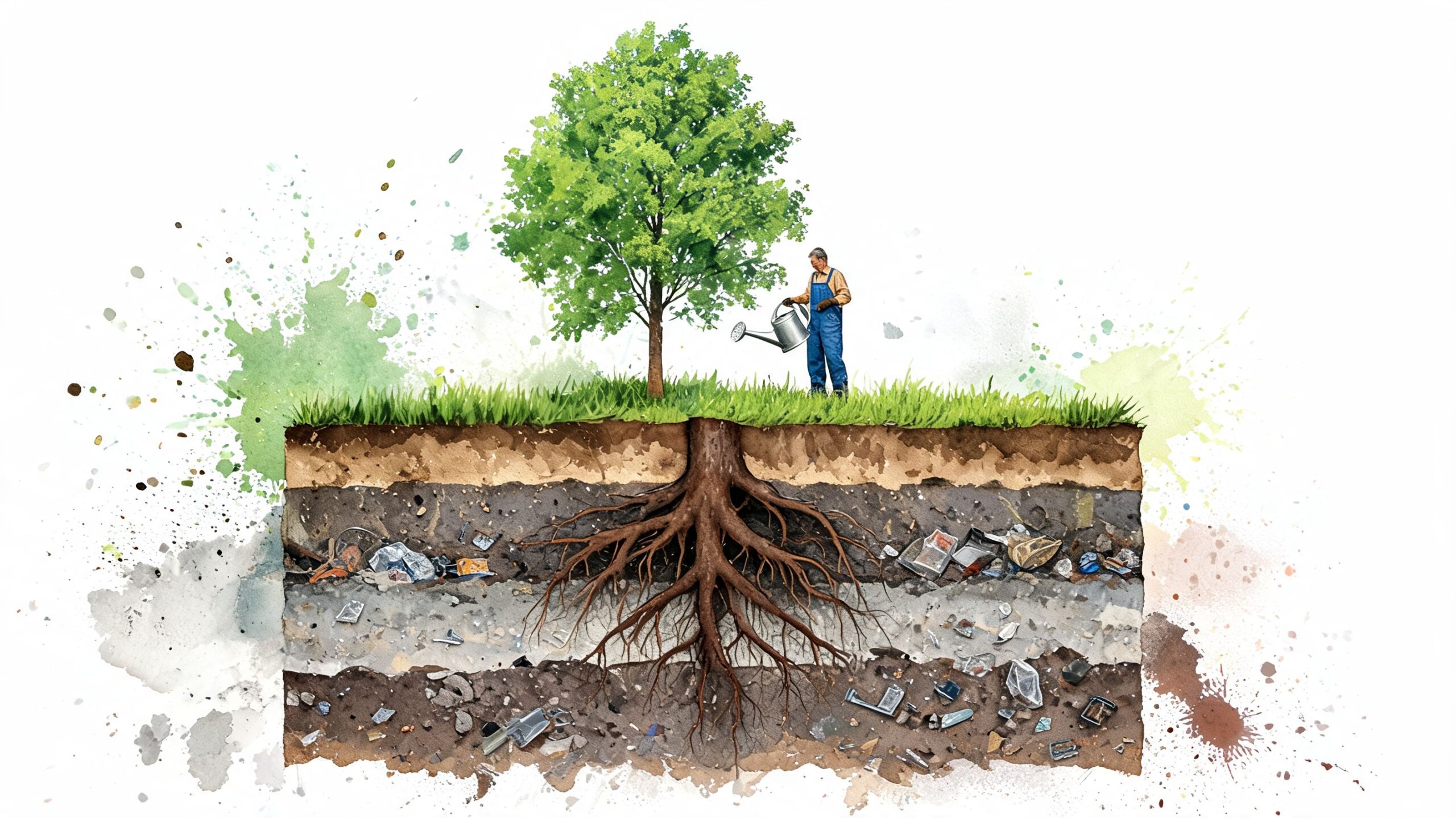
    Its past matters to the cleanup. The park's history as a quarry and its location in an industrial area mean cleanup efforts must be strategic. Post-precipitation debris can collect near old drainage systems, and knowing the site's industrial past helps you tell the difference between surface litter and deeper soil issues. The park's governance under the Chicago Park District since 1934 also gives community groups a way to coordinate with official maintenance cycles, according to the Harrison Park assessment PDF from the Chicago Park District.

    A man waters a tree growing in ground filled with buried plastic waste and trash underground.

    What smart cleanup looks like

    This changes how I think about service in a place like Harrison Park. You don't attack every mess the same way.

    If a storm pushes cups, wrappers, and bottles toward drainage areas, that's a surface-litter job. If you see something in the ground that looks off, or an area that feels more like a soil problem than a trash problem, that's when regular volunteers need to stop pretending they're a remediation crew. Discipline is part of care.

    I like this because it keeps people safe and useful at the same time.

    A simple field mindset

    When I think about park cleanup, I use a rough filter:

    • Surface litter means cans, bottles, food packaging, and loose trash you can remove safely.
    • Drainage choke points deserve extra attention after rain because debris tends to gather there.
    • Ground concerns need caution. If it feels deeper than a pickup job, don't freelance it.

    That last part matters. Pride can make volunteers reckless. I don't admire reckless.

    Field note: The strongest volunteer is the one who knows where the line is.

    If you want a practical framework for organizing your own effort, this guide on how to clean up a park is useful because it keeps the work grounded in planning instead of hero fantasies.

    Why strategy beats intensity

    I've seen people come in hot, grabbers swinging, trying to "win" against trash in an hour. That energy burns out fast. A smart cleanup works more like chess than like a sprint.

    You watch where debris gathers. You protect volunteers. You respect the site. You work with the people who manage the park instead of pretending you can outmuscle history with one Saturday morning.

    That approach isn't less passionate. It's more mature.

    And for a place with layered ground and a long industrial memory, mature beats dramatic every time.

    Become Part of the Park's Next Chapter

    Every park asks a simple question. Are you just passing through, or are you willing to leave the place a little better than you found it?

    Harrison Park gets that question out of me fast because its whole existence came from change. Hard ground became play space. A worked-over site became somewhere people gather, swim, hoop, talk, watch, recover, and start over. When I spend time there, I don't feel pressure to be perfect. I feel pressure to participate.

    Start small and make it real

    You don't need a speech. You need one act.

    Pick up one piece of trash on your way out. Straighten a bench area if you brought food and made a mess. Bring a friend next time instead of always treating public space like a private convenience. That's how care becomes habit.

    A few good entry points:

    • Visit with intention. Don't only consume the park. Pay attention to it.
    • Learn its rhythm. Go in the morning once, then later in the day another time.
    • Join hands with other people. Community work gets lighter when more people carry it.

    The change goes both ways

    This is the strange thing I keep learning. When you take care of a place, the place starts taking care of you back.

    You become less numb. You notice more. You build a better relationship with your own word because you said you'd show up, and then you did. If you want a concrete next step, check out these Chicago volunteer opportunities.

    I think that's the adventure in harrison park in pilsen. It isn't only the courts, the fieldhouse, or the grass under your shoes. It's the chance to practice being the kind of person who doesn't look away.


    If this kind of service calls to you, take the next step with Litter Caterpillars. Join a cleanup, meet people who come out, and turn one Saturday morning into a better story for you and for Chicago.

  • 7 Best Trails in Chicago to Explore in 2026

    7 Best Trails in Chicago to Explore in 2026

    More Than a Trail: A Path to Yourself

    I used to think my life was a mess because my apartment was a mess. Every old jar and forgotten bag of nuts in my kitchen told a story of failure. They were small, but to me they might as well have weighed 500 pounds.

    Then I started picking up trash outside.

    That shift changed me faster than any journal prompt ever did. When I cleaned a sidewalk, a park edge, or the weeds near a trail fence, I could see the story change in real time. One bottle gone. One bag gone. One corner less defeated. It was easier to clean up the city than to clean up myself, and that was exactly why it worked.

    Now when I think about trails in Chicago, I don't think first about cardio or scenery. I think about missions. I think about showing up on a cold morning with gloves on, coffee in hand, and a few people who also want to do something honest with their weekend. I think about how service strips away your excuses. You stop performing. You start doing.

    If you're looking for trails in Chicago, start with a path that can carry both your feet and your conscience. Walk it. Notice it. Clean it. Let the city train you into someone tougher, kinder, and less afraid of hard things.

    1. Chicago Lakefront Trail

    Chicago Lakefront Trail

    One Saturday at sunrise, I filled half a bag before I had walked a single mile. Coffee cups gathered near a bench. A plastic fork hid in the grass by the path. A gull pecked at a crumpled wrapper while runners streamed past the water as if the mess belonged to someone else.

    That morning is why I send new volunteers here first.

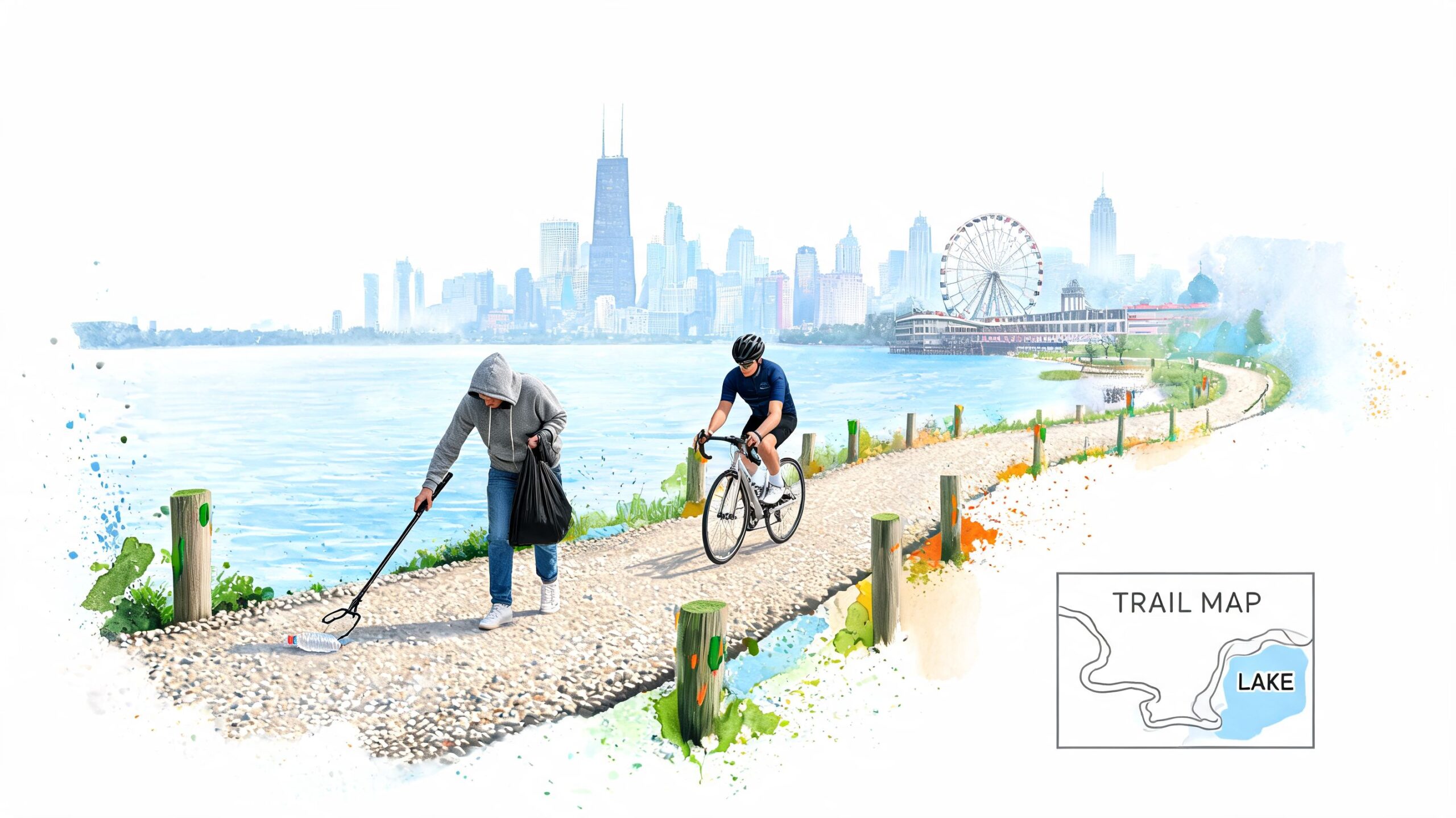
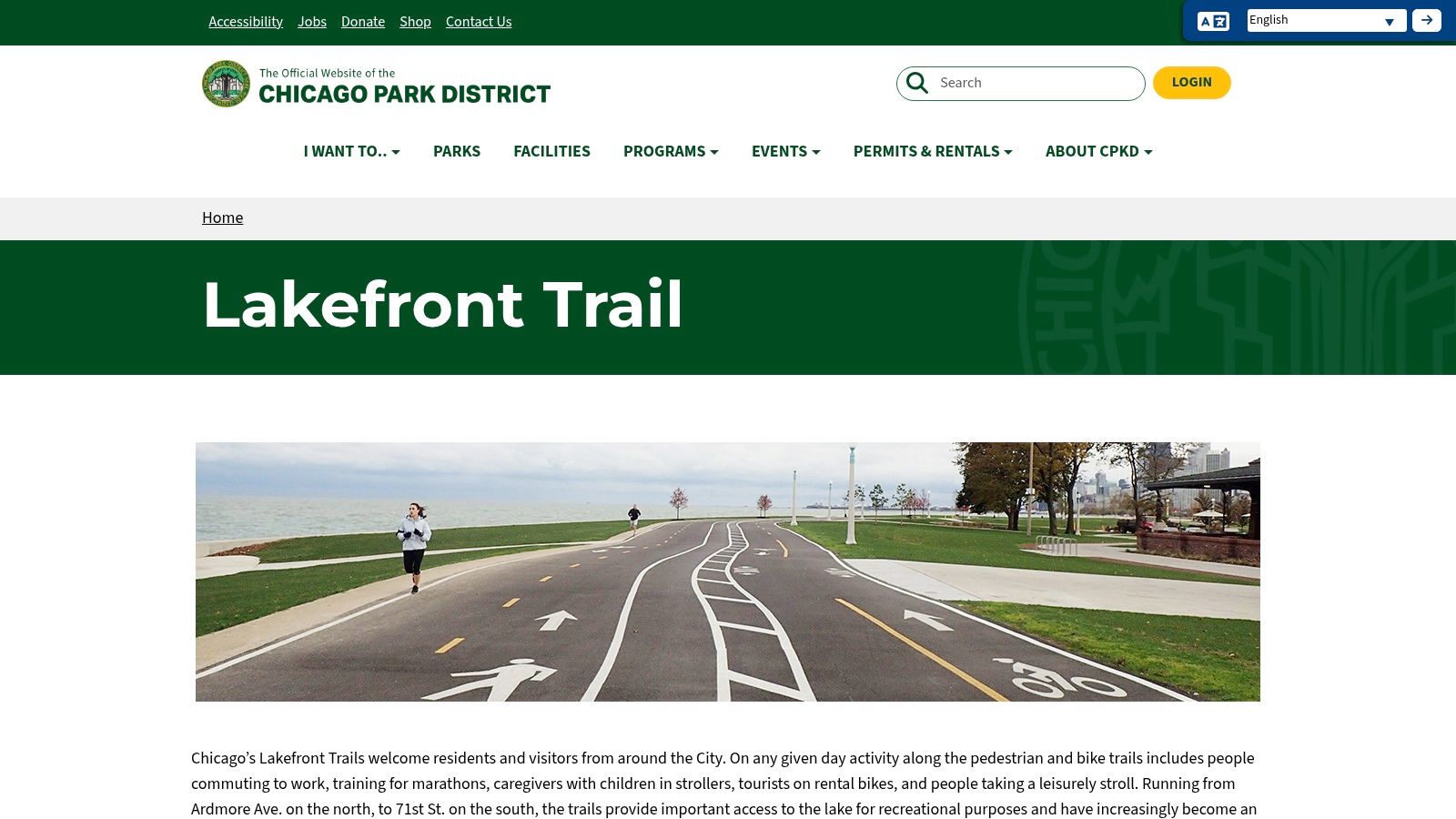
    The Chicago Lakefront Trail puts you face to face with the city you claim to love. It stretches along Lake Michigan and cuts through some of Chicago's best-known park space, including Lincoln Park, Grant Park, Burnham Park, and Jackson Park, as described by the Chicago Park District's Lakefront Trail page. You do not have to guess where to start or wonder whether your work will matter. Pick an access point, grab gloves, and begin.

    I like this trail for first Litter Caterpillars missions because the feedback is immediate. A short cleanup can change the look of a curve, a fence line, or a patch of grass in less than an hour. You see families, cyclists, commuters, and tourists pass through the space you just cleared. Service becomes public. So does your effort.

    That does something to a person.

    On the lakefront, there is nowhere to hide from your own standards. The wind is sharp. The path is open. If you say you care about Chicago, this is a good place to prove it with your hands. I have shown up here tired, distracted, and full of excuses. I have left steadier every time.

    Practical rule: Start with one defined stretch, clean it well, and let visible progress build your momentum.

    This trail also works for people who want a mission and movement in the same morning. Clean for an hour. Then keep walking. Let the shoreline settle your head while your bag gets heavier. If you want to map out nearby green spaces for your next service day, I often use this guide to Chicago parks we can clean next.

    • Best for: First cleanup meetups, visible public service, long post-cleanup walks
    • Watch for: Crowds, lakefront wind, and fast bike traffic in busy areas
    • Start mindset: Do the unglamorous work in front of you

    For me, the Lakefront Trail is not a leisure route first. It is a proving ground. I go there to remember that growth rarely starts with insight alone. Sometimes it starts with bending down, picking up somebody else's mess, and deciding you are strong enough to leave a place better than you found it.

    2. The 606

    The 606 (Bloomingdale Trail)

    The first time I brought a grabber onto The 606, I made the mistake of thinking a raised trail would stay clean on its own. Then I spotted a coffee lid pinned against a bench, a candy wrapper tucked under prairie grass, and a crushed water bottle caught near the fence above somebody's backyard. I filled half a bag before I reached the next ramp.

    That changed how I see this trail.

    The 606 runs through neighborhoods instead of beside them, so every cleanup feels personal. You are not out at the edge of the city. You are inside its daily life, passing murals, apartments, gardens, and people carrying groceries home. For a Litter Caterpillars mission, that matters. Service here is not abstract. You clear a path that your neighbors will use before the hour is over.

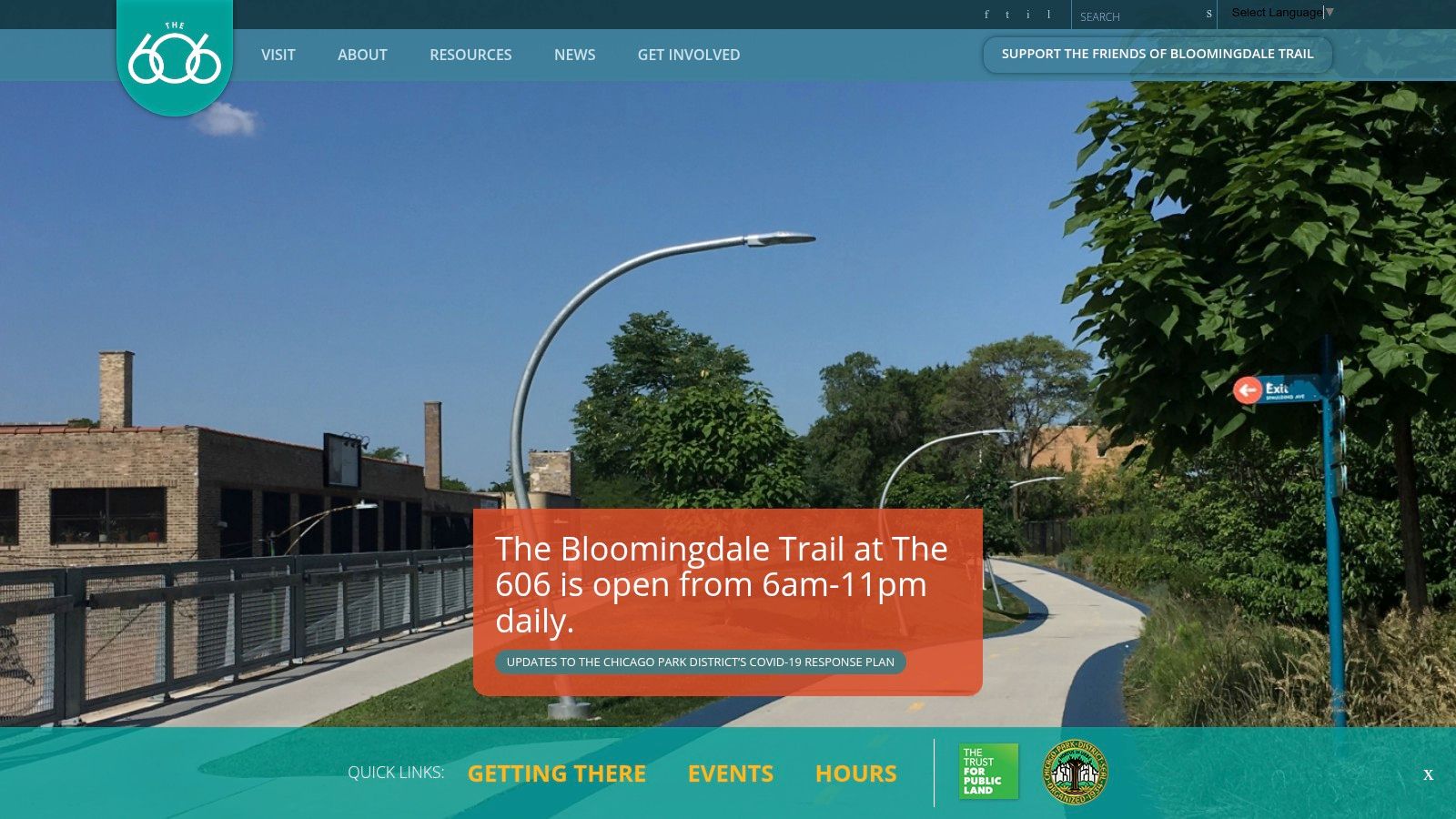
    The Bloomingdale Trail opened in June 2015 as a major elevated rail trail project built from a former rail line. That history gives the place its character. The route sits above the street like a reused piece of muscle, built for movement once, rebuilt for community now.

    I have learned to read this trail by who shows up. Early morning belongs to people trying to get somewhere. Later in the day, the pace softens. Parents stop with strollers. Friends talk while walking side by side. Cyclists cut through. Teenagers linger near the art. A cleanup on The 606 teaches a different kind of discipline than the lakefront. You work with interruptions, foot traffic, and constant reminders that public space survives only if ordinary people treat it like shared responsibility.

    Mission rule: On The 606, pick a short segment, work it thoroughly, and let consistency beat distance.

    That lesson stayed with me after the pandemic closures and reopening changed how people used public paths across Chicago. People returned because this trail does more than move bodies. It stitches neighborhoods together. When I show up with a bag and a picker, I feel that stitch in my own habits too. I stop waiting for perfect conditions. I do the small work in front of me, then the next piece, then the next.

    The service angle is what gives The 606 its weight. This corridor added green space in built-up neighborhoods that need public room to breathe. If I say I care about community, this is one place where I can prove it with my hands.

    • Best for: Short volunteer meetups, repeat cleanup laps, neighborhood-level service
    • Watch for: Crowding, fast bikes, and tight moments near access points
    • Start mindset: Treat every wrapper like it landed on your block

    Check current access and programming on The 606 official site.

    3. Chicago Riverwalk

    Chicago Riverwalk

    Some trails ask you to go long. The Chicago Riverwalk asks you to pay attention.

    I like bringing newer volunteers here because it teaches a lesson fast. You don't need mud, woods, or a giant route to practice stewardship. You just need eyes open and ego down. A wrapper near a stair landing is still a job. A cup wedged by the river wall is still your problem if you decide this city is partly yours.

    Short path, sharp lesson

    The Riverwalk is a pedestrian promenade with architecture, water, public art, and constant movement. It works well for people who want a shorter outing but still want that feeling of being inside the pulse of downtown. You can walk, talk, pick up a few things, and still leave feeling like you did something concrete.

    I think of this place as a white shirt trail. Every stain shows.

    That isn't a bad thing. It means your work is visible. If you're trying to invite a friend into service and they feel intimidated by a huge cleanup, the Riverwalk is a good first rep. It's urban, central, and easy to pair with coffee, conversation, and a little courage.

    Street-level truth: A short cleanup still counts. Stop pretending impact only happens when you're exhausted.

    The downside is obvious. Some segments get tight, and the flow of people can make stop-and-start cleanup awkward. I wouldn't choose it for a hard run or a big bike outing. I would choose it for outreach, reflection, and helping someone understand that civic care isn't abstract. It lives in handrails, corners, planters, and the edge where a city meets its water.

    If that's your style, use the City of Chicago Riverwalk page to plan your visit.

    4. Major Taylor Trail

    Major Taylor Trail

    I trust trails that make me work a little.

    Major Taylor Trail has that feeling. It doesn't flatter you. It asks you to stay alert, notice transitions, and keep your head in the game. That's part of why I respect it as a service trail. When a route isn't spoon-feeding you comfort, you show up with more intention.

    Why this South Side route stays with me

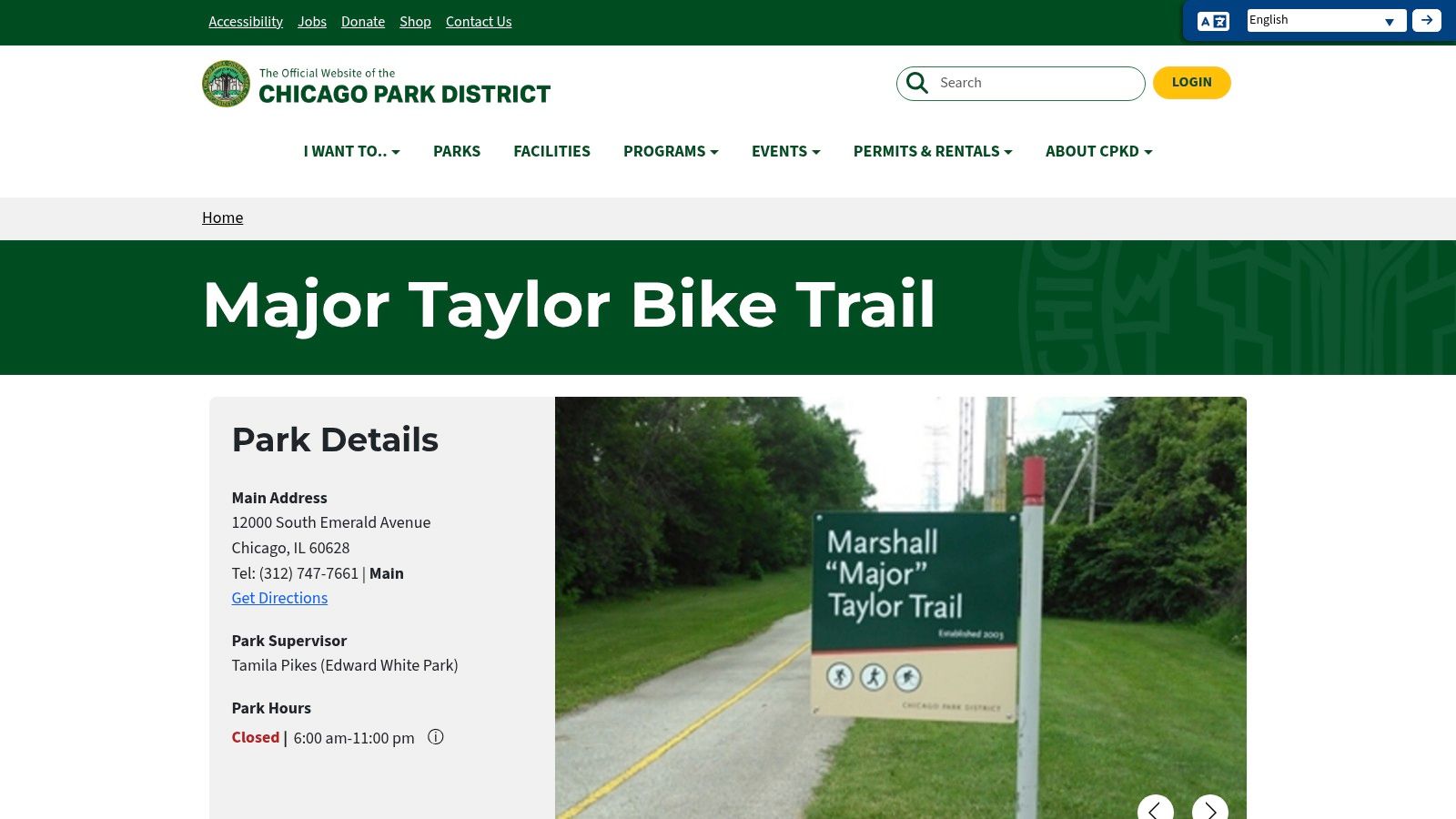
    This trail connects neighborhoods, parks, and preserve space on the South Side. I like it for cleanup rides because it feels less polished than the most famous downtown routes. That means you notice edges, crossings, fencing, brush lines, and all the places where litter can collect and then stay ignored.

    There is a moral lesson in that.

    We all clean the places people already praise. Real character shows when you clean the places people skip.

    • Best for: South Side rides, focused cleanup sessions, volunteers who like a route with texture
    • What I like: More room to think, less tourist energy, stronger sense of local stewardship
    • What to respect: Pay attention at crossings and connectors

    When I walk or ride here, I think about the version of me who once avoided difficult tasks because they felt awkward or unglamorous. Then I think about how much of adulthood is doing the awkward useful thing before someone congratulates you for it.

    This trail helps train that muscle. You don't need applause. You need gloves, patience, and enough pride to care for a route that deserves effort.

    Clean where you are tempted to look away. That's where growth usually lives.

    If you want route details, use the Chicago Park District's Major Taylor Bike Trail page.

    5. North Branch Trail

    North Branch Trail

    When I need to think through my life without staring directly at it, I go somewhere with trees. North Branch Trail gives me that kind of cover. The city noise softens. My thoughts stop shouting. The work becomes simple again.

    Among trails in Chicago, this is one of my favorites for endurance days. You can settle into a rhythm and keep going. For a cleanup crew, that means you need a plan. Long, calmer routes can trick you into thinking litter isn't there. It is. It just hides better.

    The trail for steady people

    North Branch Trail is the one I pick when I want distance without the crush of the lakefront. The shaded feel changes your pace. You stop performing your workout for strangers and start listening to your breathing, your footsteps, your group, your own excuses.

    That matters more than is commonly understood.

    I also like this trail because it invites expansion. One section can become a longer day. A casual walk can become a service mission and then a ride. If you're exploring connected green routes beyond the city core, I often compare it with the ideas in this guide to the Des Plaines River Trail near Chicago.

    • Best for: Long rides, long runs, quiet volunteer mornings
    • What to bring: Water and a little self-discipline
    • What to expect: Fewer built-in amenities than a high-traffic city corridor

    I think of North Branch as the cast-iron pan of Chicago trails. It isn't flashy. It gets better when you use it often. It can handle heat. It can handle neglect. And if you care for it, it pays you back for years.

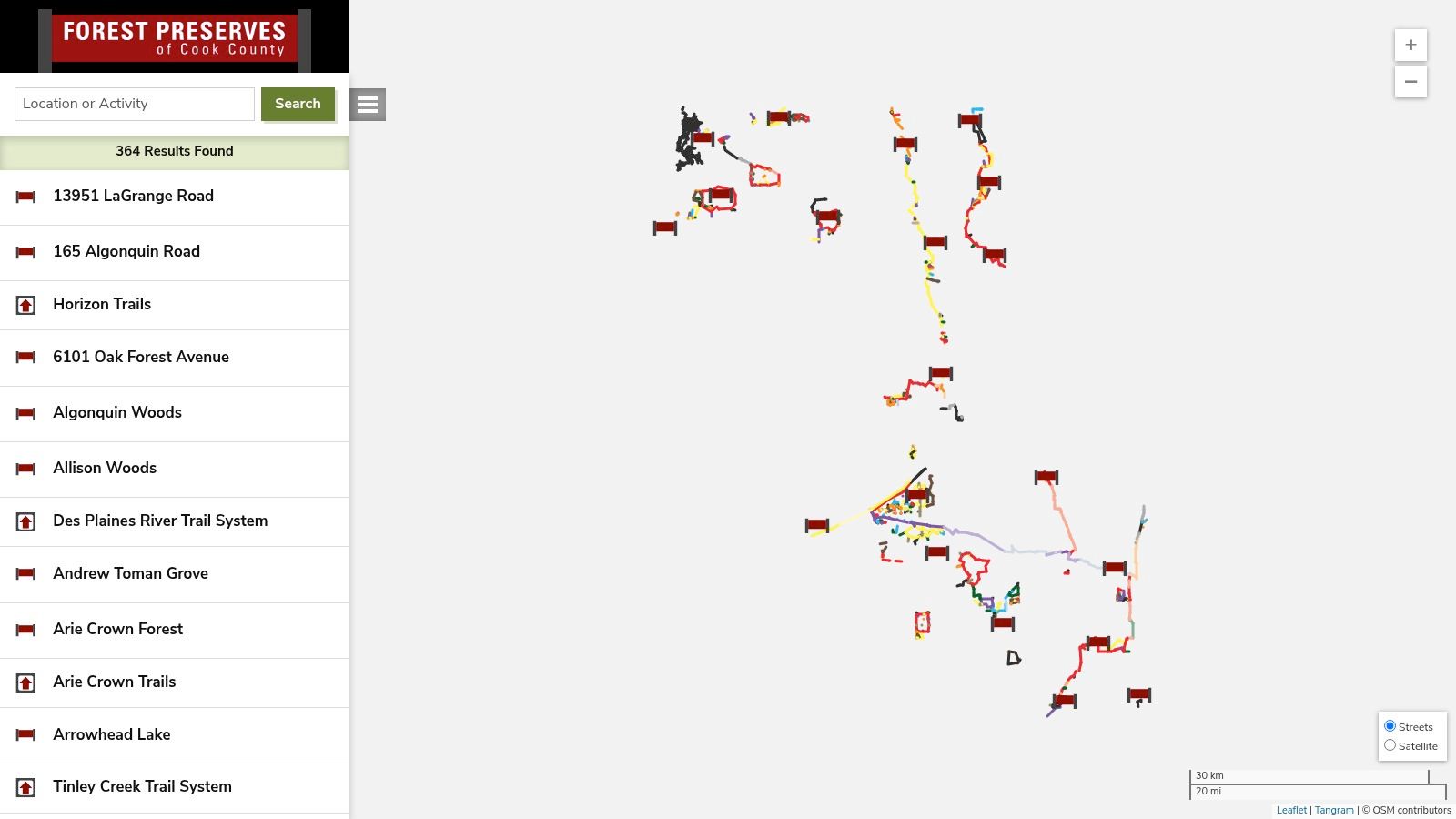
    You can review access points and maps through the Forest Preserves map portal.

    6. Cal-Sag Trail

    Cal-Sag Trail

    Cal-Sag Trail feels like a sentence still being written. I mean that in a good way.

    Some people only want finished things. I don't. A trail with gaps, detours, and active development reminds me of actual self-improvement. You don't become solid all at once. You build in sections. You connect what you can. You keep moving while parts of you are still under construction.

    Why I respect a work-in-progress route

    This trail gives you long flat stretches that are great for steady movement. I like it for rides where the goal is less about speed and more about consistency. Put your head down, keep your cadence honest, and let the miles scrape the nonsense off your brain.

    For service, the route has another draw. Work-in-progress corridors can attract less casual care. People use them, but they don't always feel fully claimed. That creates an opening for volunteers who want to step in early and build a habit of ownership before a place becomes trendy or polished.

    I also keep a data mindset when I think about routes like this. Chicago has neighborhood analytics tools that use 20+ years of demographic, business, and real estate data to model neighborhood types and intervention points. I don't need to copy that exact system to learn from it. If you're planning cleanup efforts, random isn't always noble. Sometimes it just wastes energy. Smarter route choice can help you put volunteer hours where they matter most.

    Field note: Pick a segment, define a turnaround point, and commit. Wandering burns energy. Purpose saves it.

    • Best for: Steady cycling, long service rides, people who like emerging routes
    • Watch for: Gaps, detours, and more spread-out amenities
    • Start mindset: You don't need a perfect corridor to do honest work

    For maps and current route information, check the Cal-Sag Trail website.

    7. Burnham Greenway

    I have a soft spot for places that feel unfinished but full of promise. Burnham Greenway gives me that feeling. It pulls together the Southeast Side, preserves, wetlands, rail history, and a future path that still needs patient people.

    That patience matters. In cleanup work, in friendship, in building a better self, you rarely get the clean uninterrupted route right away.

    A trail that asks for faith

    Burnham Greenway isn't fully continuous today. That's part of the experience. You may need street links and a bit more planning than you would on a simpler route. But I like what that asks of you. It asks you to pay attention instead of drifting through the day.

    This corridor also points toward a service ethic I care about. Mainstream trail chatter often gravitates toward polished destination routes, while underserved neighborhoods with trail assets get less practical attention. One gap analysis on Chicago trail coverage calls out missing discussion around neighborhood-level access, safety, maintenance, and volunteer engagement in places like Englewood, Pilsen, and South Shore, while noting the lack of attention to trails in underserved areas in this review of Chicago day-hike coverage.

    That hit me hard because it's true to what I see on the ground. If you only go where praise already lives, you'll miss where help is needed.

    I also think trails should teach us history, not just mileage. Some of Chicago's present routes and streets trace older Native trade paths created by Ojibwe, Odawa, Potawatomi, and Miami nations. Diagonal routes like Milwaukee, Lincoln, Clark, and Vincennes followed that older network, as described in this discussion of Indigenous trail history in Chicago. When I pick up trash on or near these corridors, I try to remember that stewardship didn't begin with me.

    If you're exploring preserve-linked routes on the Southeast Side, this guide to Chicago forest preserve ideas can help you think bigger than a single segment.

    For route documents, use the Burnham Greenway guide on TrailLink.

    Chicago Trails: 7-Point Comparison

    Trail 🔄 Implementation complexity ⚡ Resource requirements 📊 Expected outcomes 💡 Ideal use cases ⭐ Key advantages
    Chicago Lakefront Trail Moderate, major coordinated upgrades completed (Trail Separation Project) High, frequent maintenance, restrooms, water points, transit integration Very high visibility and heavy year‑round use (weather permitting) Long runs, group meetups, high‑visibility volunteer events, sightseeing Iconic skyline/lake views; continuous separated paved paths; many access points
    The 606 (Bloomingdale Trail) Low–Moderate, adaptive reuse of elevated rail, routine upkeep Moderate, lighting, access ramps, programming, winter plowing Strong neighborhood connector with steady local usage and events Short outings, arts/fitness programming, quick car‑free commutes Elevated, car‑free link with frequent access and regular programming
    Chicago Riverwalk Moderate, urban waterfront infrastructure and seasonal operations High, seasonal concessions, docks, security and crowd management High visibility for outreach; intense short‑stay foot traffic Short urban strolls, tours, concessions, public outreach Central, photogenic riverfront with public art and water access
    Major Taylor Trail Moderate, multi‑jurisdiction coordination; some on‑street transitions Moderate, signage, crossing improvements, community stewardship Good for training miles and community engagement with lower congestion Training rides, community cleanups, South Side connectivity Less crowded, strong local stewardship, regional linkages
    North Branch Trail Moderate, long corridor through preserves; connecting multiple segments Moderate, parking, trail upkeep; fewer on‑trail amenities Excellent for long endurance outings and nature immersion Long runs/rides, customizable distances, nature trips Shaded, long continuous miles; access to Skokie Lagoons and Botanic Garden
    Cal‑Sag Trail High, phased build‑out with gaps and multi‑agency coordination Moderate–High, development of segments, remote amenities, mapping Growing regional spine for steady‑pace training and neighborhood links Long cycling, steady‑pace training, east–west regional connectivity Long, flat sections; less crowded and strong regional potential
    Burnham Greenway High, incomplete today; requires funding, grade separations and connectors High, ongoing construction, coordination across agencies and crossings High potential connectivity and nature access once completed Future regional link and nature‑rich access for Southeast Side communities Planned high‑impact connectivity linking preserves, wetlands and regional networks

    Are You Ready to Walk the Walk?

    You've seen the paths. You know the way. Each trail is a choice.

    I mean that directly, but I also mean it in the way that matters more. You can treat trails in Chicago like content. A backdrop. A fitness box to check. A pretty place to spend two hours before brunch. Or you can treat them like training grounds for your character.

    That's what changed me.

    I didn't become stronger because I had some sudden burst of discipline at home. I became stronger because I kept showing up outside. I met people who were willing to wake up early, carry bags, laugh in bad weather, and do a humble job with real pride. I learned that bravery often looks boring from a distance. It's just consistency with dirt on it.

    These trails each teach something different. The Lakefront Trail teaches scale. The 606 teaches neighborhood care. The Riverwalk teaches attention. Major Taylor teaches respect. North Branch teaches steadiness. Cal-Sag teaches patience with works in progress. Burnham Greenway teaches faith in places that still need love and connection.

    You don't need to master all of them this month. You just need to start.

    Pick one trail. Bring gloves. Bring water. Bring a friend if that helps, or come alone if that's the brave thing for you right now. Walk a section and ask a hard question: when I leave, will this place be better, worse, or exactly the same because I was here?

    Try to become the kind of person who can't tolerate leaving it the same.

    The journey isn't just seeing Chicago's trails. It's changing them, and letting that work change you back. One bottle. One can. One cracked little corner of the city at a time. The next step isn't on a map. It's a decision.

    Find a Litter Caterpillars meetup on one of these trails. Show up. Let's see what story we can write together.


    If you're ready to stop scrolling and start serving, join Litter Caterpillars. We pick up trash across Chicago, make real friends, and build courage the old-fashioned way: by showing up on weekend mornings and doing the work.

  • Nippersink Lake Illinois A Guide for Chicago Adventurers

    Nippersink Lake Illinois A Guide for Chicago Adventurers

    I once stood in my kitchen staring at a takeout container I should've thrown away days earlier, then drove out of Chicago the next morning because I needed a place bigger than my own mess. By the time I reached nippersink lake illinois, the water had done what my apartment couldn't. It gave me something outside myself to pay attention to.

    An Escape from Your Mess

    I know what it feels like when every object in your room seems to carry a whole little biography. A receipt from a date that went nowhere. A cracked mug from a version of you that swore you'd get it together. Sometimes the clutter isn't cardboard and dust. Sometimes it's shame, delay, avoidance, and the dull ache of being tired of your own patterns.

    That's why a place like Nippersink hits differently.

    You leave the city with your head full of static, and then the road loosens its grip. Trees replace brick. The air changes. Your brain, which was acting like a browser with too many tabs open, starts closing a few of them on its own. You aren't fixed. You're just finally quiet enough to hear yourself think.

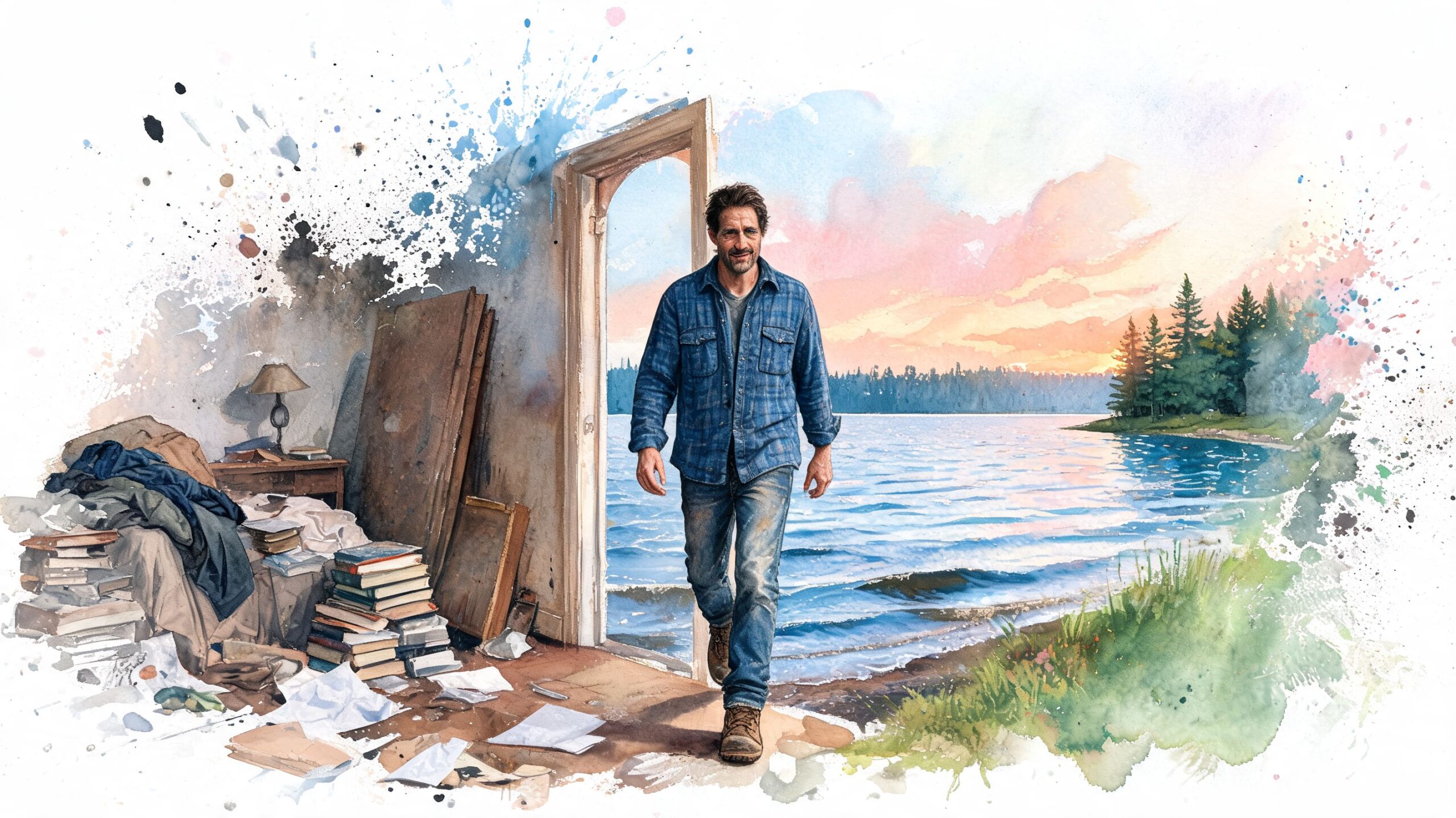
    A man steps through a doorway from a cluttered room out into a beautiful sunset lakeside view.

    Why leaving helps

    I learned something strange a long time ago. I can freeze when I look at my own mess, but when I step outside and care for a place that isn't mine, I wake up. My hands know what to do. My mind follows later.

    Nippersink Lake is good for that kind of reset. It isn't a sterile escape. It has mud, traffic on busy days, weeds, birds, anglers, shifting weather, and the kind of shoreline that makes you want to walk a little farther just to see what turns up next. That mix matters. A perfect place can make you feel like a tourist. A real place asks more from you.

    Practical rule: If your life feels jammed up, don't wait until you feel organized before you go outside. Go first. Let motion do some of the thinking for you.

    A different kind of challenge

    When I talk about getting out to the lake, I don't mean you should chase some polished weekend fantasy. I mean you should treat the trip like practice. Practice showing up. Practice noticing. Practice caring for something without needing applause for it.

    That is what drew me to nippersink lake illinois in the first place. It felt like a place where I could stop performing and start paying attention. Some people go to a lake to consume it. Boat, fish, snack, leave. I think the better trip starts when you ask a harder question.

    What can I give this place while I'm here?

    Your Path from Chicago to the Water

    One Saturday, I left Chicago still carrying a week’s worth of static. Coffee in one hand, work still buzzing in my head, trunk half-packed. By the time I got north of the tightest traffic, something had started to loosen. The buildings thinned out. The roads stopped feeling combative. I rolled the windows down and remembered that a trip to nippersink lake illinois starts before you see water.

    That matters to me.

    If you come out here the same way you move through the city when you are late, irritated, and trying to win every red light, you bring the mess with you. If you treat the drive like part of the work, part of the reset, you arrive ready to notice things. A heron lifting off the reeds. A quiet launch in the morning. A candy wrapper near the parking area that you can pick up before it blows into the water.

    Make the drive part of the service

    I pack the night before now because I have learned what happens when I do not. I show up thirsty, distracted, and annoyed at problems I created myself. A better start is simple. Fill your water bottle. Toss gloves in the bag. Bring a snack, a small trash bag, hand sanitizer, and an extra layer. If you expect to get near the shoreline, pack a towel too.

    Leave early if you can. Morning gives you more patience and more room.

    Route choice changes the tone of the day as much as gear does. Interstates get you there fast, but a quieter approach helps your attention catch up with your body. If getting there with a lighter footprint matters to you, look over these eco-friendly ways to drive less wastefully before you go.

    Pay attention on the way in

    I know people who use GPS like a sleeping pill. Destination in, brain off, memory gone. I used to do that too.

    Now I watch for the shift. Side streets give way to longer stretches of road. Dense rows of buildings break into yards, open patches, and tree lines. The whole trip feels less crowded, then less urgent, then finally honest. That slow change is useful if you let it work on you.

    The road to the lake can train you to arrive calmer than you left.

    Get close without forcing it

    As you near the preserve, use public access points and posted guidance instead of hunting for your own shortcut. A day outdoors turns sour fast when it starts with a bad parking choice, an argument, or a stomp across ground that was never yours to cross.

    I stop trying to beat the clock once I am close. No weaving. No muttering. No turning a day outside into another little contest. By the time the water comes into view, I want to feel like someone prepared to be useful there, not someone who rushed in ready to take.

    What to Do on the Water and Trails

    The first time I got near the water here, I didn't try to conquer the day. I watched a kayaker slide along the edge of the lake like a needle through fabric, quiet and steady, and I realized that was the right speed. Nippersink isn't a place I want to dominate. I want to meet it honestly.

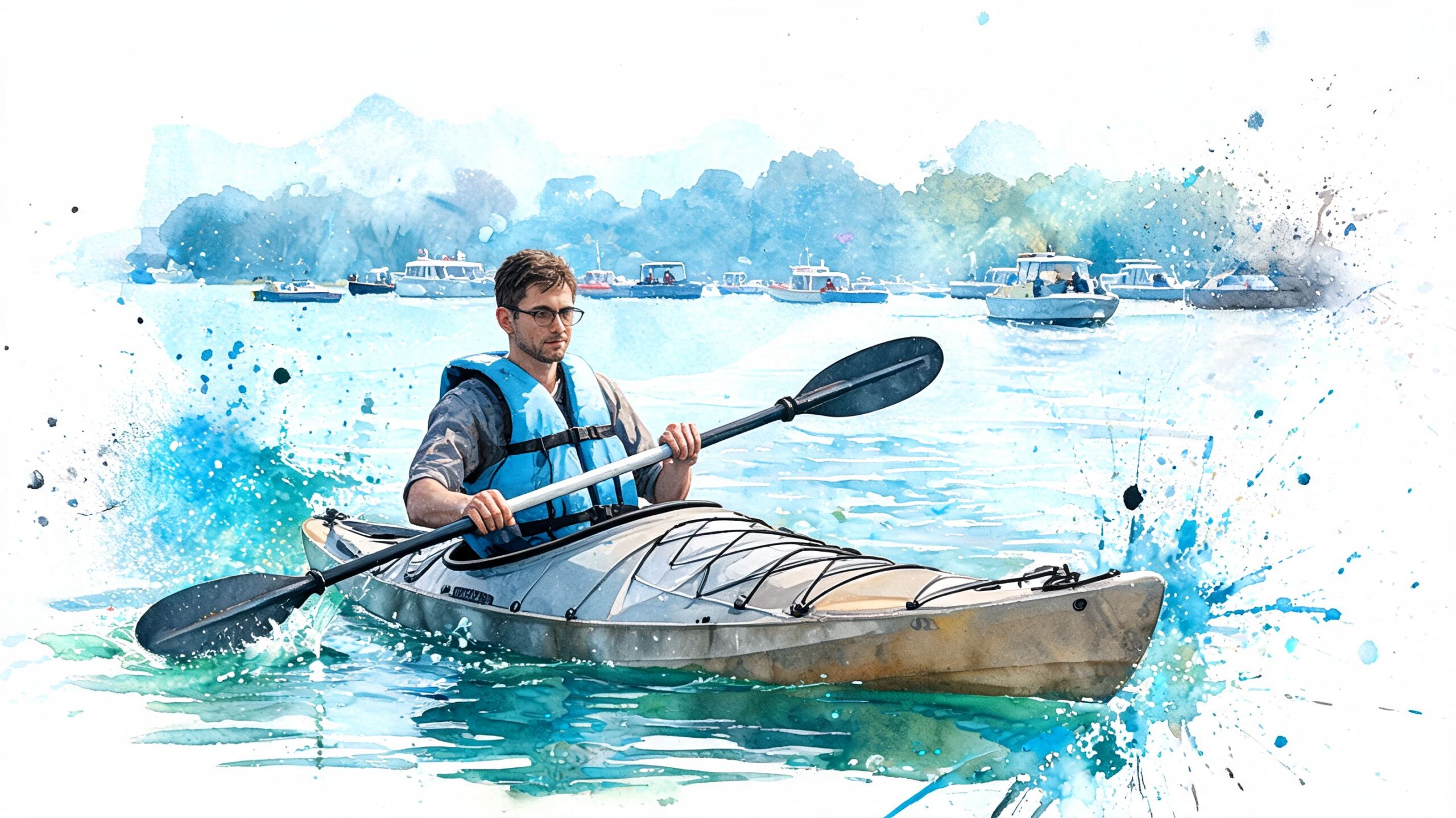
    A man wearing glasses and a life jacket paddling a kayak on Nippersink Lake in Illinois.

    Paddle the edges

    If you bring a kayak or canoe, the shoreline changes the day. You notice reeds, little pockets of calm water, sudden bird movement, and the strange peace that comes from doing one repetitive thing well. Dip, pull, glide. Dip, pull, glide. It's almost like sweeping a floor, except the floor keeps reflecting the sky back at you.

    If you're new to paddling, stay humble. Hug calmer areas. Wear your life jacket. Let the lake teach you its pace. If you need a push to get started, these urban kayaking ideas from Chicago can help you build confidence before your trip out here.

    The bigger Chain can feel busy. Historical reporting on the system says the Fox Chain of Lakes had 4,000 boats in 1915 and later estimates put that number at 35,000 boats moored in these waters, according to the Illinois State Water Survey publication on the Chain of Lakes. That tells you something simple. Go expecting company, especially in the warmer months.

    Fish, sit, or just watch

    You don't need to keep moving all day. Some of my favorite lake hours happen when almost nothing happens.

    You find a spot along the shoreline. You hear tackle clicking against a rod. Somebody farther off laughs. Wind pushes a pattern over the water that disappears before you fully register it. A bird lands and stands there with absurd seriousness, like it has an appointment.

    If you fish, pay attention to local rules and come prepared. If you don't, then practice a rarer skill. Sit still long enough for the place to stop reacting to your arrival.

    Here's a look at the feel of being out on the water:

    Trails and water routes

    The area has shoreline access and a longer water-trail feel if you're up for more time outside. Official material notes 1.7 miles of shoreline near the preserve area and a 16-mile water trail used by canoeists and anglers in the broader Nippersink area, described on the preserve page already mentioned earlier. That's enough room to choose your own level of effort.

    I think of the options like this:

    Activity Best for What it feels like
    Kayaking or canoeing People who want motion and quiet Like your thoughts finally finding a rhythm
    Fishing Patient, observant days Like having a conversation without words
    Trail walking Mixed groups or slower outings Like turning down the volume in your body
    Shoreline sitting Burnt-out people Like doing less, on purpose

    One more detail from that same water-survey history stuck with me. It notes high sand concentrations in the sediment are found in Nippersink Lake, partly because of flow from the Fox River. I like facts like that because they make the lake feel less like a postcard and more like a living system with movement, pressure, and memory.

    The Lake in Sun Hail and Snow

    I don't trust places that only look good in perfect weather. I trust places that still say something when the sky turns weird.

    Nippersink changes with the season, and I think you should let it. If you only go when the forecast is flattering, you'll miss the version of the lake that asks for a little grit. That's often the better visit.

    Summer asks for patience

    Warm months bring energy. More voices, more motion, more people trying to squeeze everything they can out of one day outside. That can be fun if you expect it and irritating if you don't.

    Go in summer if you want activity, but don't demand privacy from a place people love to use. Start earlier. Pick a purpose. If the water feels too crowded, shift to walking, birdwatching, or shoreline time.

    Fall and winter strip things down

    Fall is when the day starts telling the truth faster. The air sharpens. The colors near the water make even a short walk feel earned. You don't have to invent meaning out there. You just have to keep your eyes open.

    Winter is a different teacher. Quiet takes over. The place gets spare and honest. If you've had a noisy month, that kind of silence can feel like someone finally turned off a machine you didn't know was running.

    Go when the conditions are slightly inconvenient. A place reveals more of itself then, and so do you.

    Spring is messy on purpose

    Spring is mud, thaw, surprise wind, wet shoes, and the kind of sky that can look friendly one minute and rude the next. I like that. Real change rarely arrives neat.

    If your own life feels half-finished, spring at the lake will make immediate sense to you. Water rises, ground softens, trails shift, and everything looks like it's in the middle of becoming something else. That's honest terrain. You don't need polished courage to go there. You just need enough courage to leave the house.

    A Guide to Being a Good Guest

    I like simple rules because they reveal character fast. A lake doesn't need your speech about respect. It needs your behavior.

    When you visit nippersink lake illinois, think like a guest in someone's home. If you fish, get the license you need. If you boat, follow the rules for boating. If you walk the trails, stay on them. Small acts of discipline are how people share a place without grinding each other down.

    Respect looks ordinary

    Most good behavior outdoors isn't dramatic. It's boring in the best way.

    • Pack it out: If you brought it in, take it back with you.
    • Keep noise in check: Other people came for air and room, not your speaker.
    • Stay on marked paths: Plants and soft ground don't recover because you wanted a shortcut.
    • Watch where gear ends up: Loose fishing line and random plastic don't become harmless because they're small.

    Safety is kindness

    I don't put safety in a separate category from care. They are the same thing. A person who plans well creates less risk for everyone else.

    Bring a life jacket if you'll be on the water. Check weather before you leave and again when you arrive. Tell somebody where you're going if you'll be out a while. Charge your phone, but don't depend on it to solve every problem after the fact.

    One habit that matters: Prepare enough that nobody has to rescue you from your own carelessness.

    A quick self-check before you head out

    Ask yourself these questions in the parking area or at the launch:

    1. Do I have what I need to leave no trash behind?
    2. Do I know the basic rules for what I'm doing today?
    3. If the weather turns, do I have a backup plan?
    4. Am I acting like this place exists for me alone?

    If the answer to that last one is yes, reset. Good guests leave a place easier to share, not harder.

    The Unseen Story of Nippersinks Health

    The first time I heard someone call Nippersink "clean," we were standing at the water after a volunteer morning with muddy gloves in our back pockets and a half-full trash bag at our feet. The surface looked fine. Sun on the water. Reeds moving. A quiet kind of beauty that makes people assume the whole story is simple.

    It isn't simple.

    The broader Nippersink Creek watershed holds real ecological value. Earlier source material on the watershed describes it as one of Illinois' higher-quality stream systems, with important habitat and protected natural areas woven through it. That matters because Nippersink is not just a pretty stop for an afternoon. It belongs to a living system that still supports things more fragile than our weekend plans.

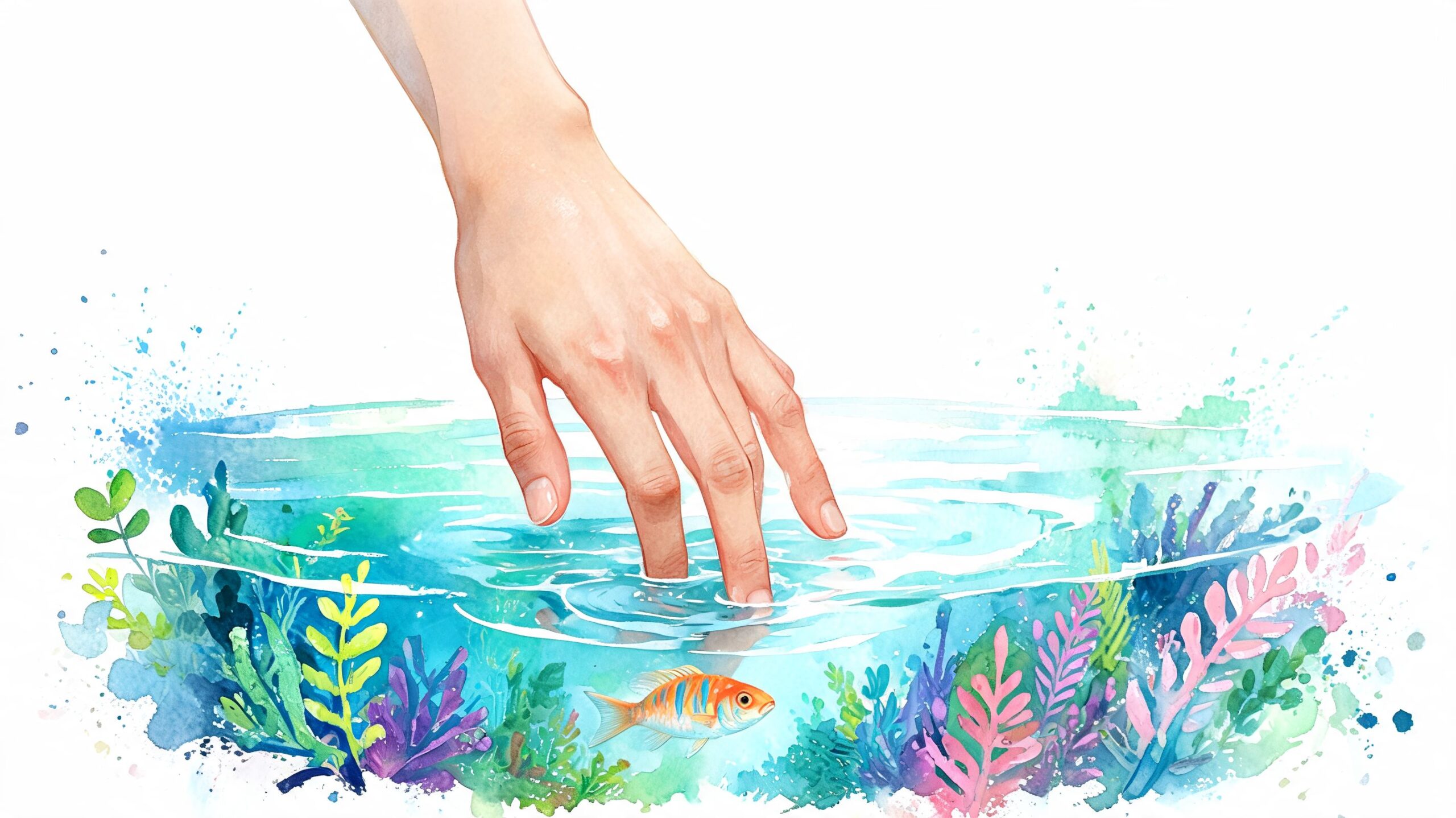
    A gentle hand reaching into clear blue water towards a small, vibrant, orange and blue goldfish.

    The contradiction in plain language

    A place can carry beauty and stress at the same time. Anyone who has tried to rebuild a hard season of life already knows that.

    As noted earlier, parts of the watershed have faced primary-contact concerns tied to fecal coliform and runoff from agricultural activity. That means the story of Nippersink's health is not a clean fairy tale about untouched nature. It is a story about pressure, recovery, and the limits of what water can absorb from the people living around it.

    I relate to that more than I wish I did. In Chicago, you learn fast that a block can have strong bones and still need work. A family can love each other and still leave damage behind. A person can want better and still track in a mess from somewhere upstream. Water systems are no different.

    What pressure looks like in real life

    Pressure rarely arrives as one dramatic event. It shows up as runoff after a storm. Disturbance near habitat that needs stability. Growth from the metro area that brings more pavement, more use, and more strain on natural resources.

    That kind of pressure is easy to miss if you only visit on a good-weather day.

    The watershed includes sensitive species and habitats that react badly to changes in water quality and human activity. Water also moves through this system in ways that spread the effects of what happens upstream. So the hidden story of Nippersink's health is not only about what you see at the launch or from the trail. It is about connection. Farm field to creek. Road to runoff. One careless decision to consequences somewhere else.

    Why that should make you care more

    I don't hear any of this as a reason to back away. I hear a call to show up with more honesty.

    If all you want from a lake is a clean backdrop for your Saturday, you will miss the best thing this place offers. Nippersink can teach you to stop consuming beauty and start protecting it. It can teach you that repair is usually local, ordinary, and done by people without titles.

    That is the unseen story I want you to carry with you. Nippersink Lake Illinois is worth visiting because it is beautiful. It is worth serving because beauty under pressure needs allies.

    Become Part of the Lakes Story

    The first time I brought a cleanup bag to a lake day, a teenager in our group groaned like I had ruined the whole trip. He wanted the kayak launch, the snacks, the photos, the easy part. Twenty minutes later he was knee-deep at the shoreline, pulling tangled fishing line from reeds with two fingers and a look I knew well. It was the face people make when they realize a beautiful place is asking something from them.

    Nippersink does that.

    By the time you reach the water from Chicago, you have already carried a lot with you. Rush hour impatience. Work stress. Family static. The city teaches grit, but it can also leave you restless and raw. A place like this gives you a chance to set some of that weight down by doing one plain, useful thing with your hands.

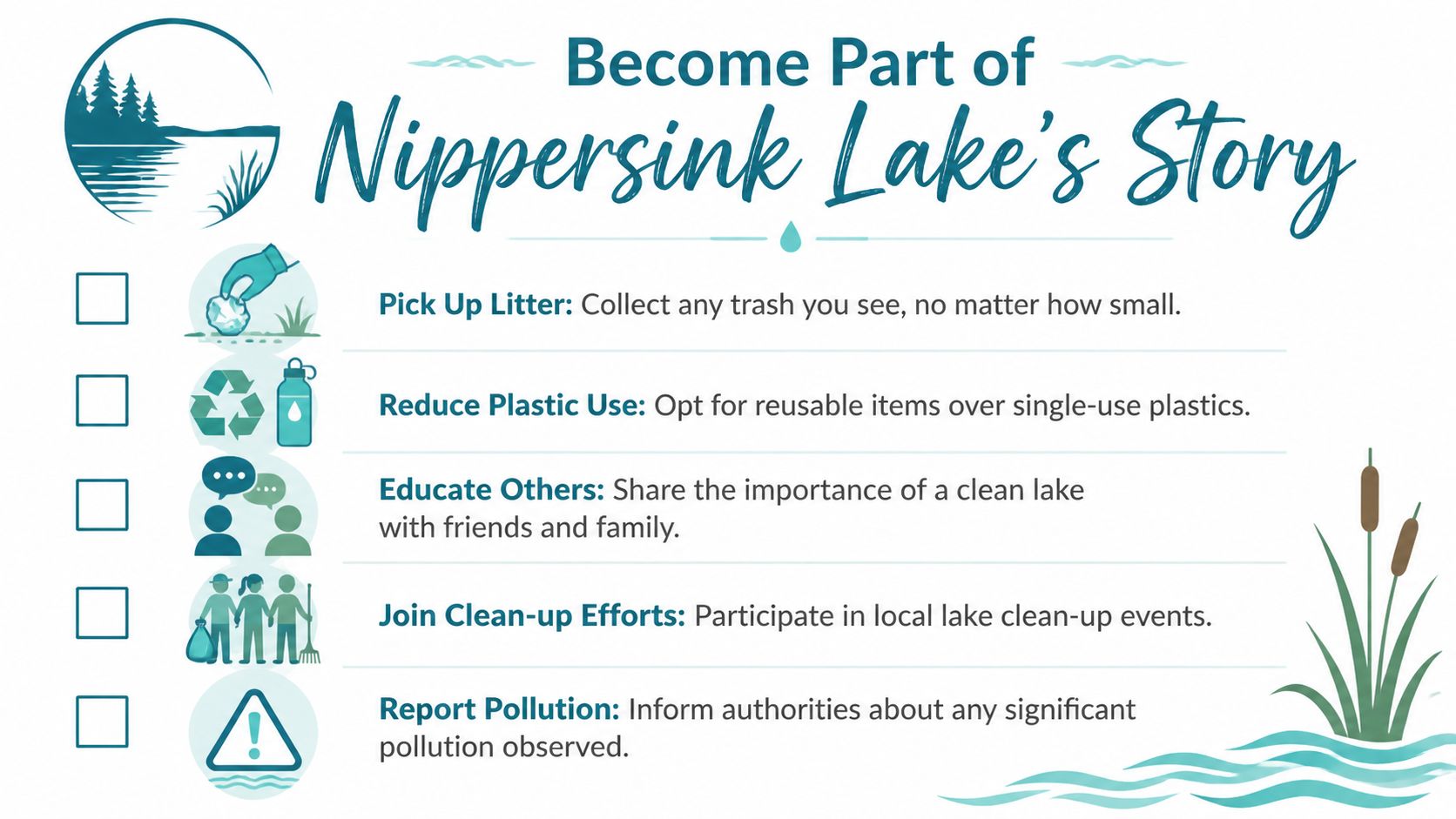
    An infographic list detailing five ways to help keep Nippersink Lake clean and healthy.

    The kind of help that matters

    You do not need to arrive as an expert naturalist or a perfect environmentalist. You need eyes open to the ground, the shoreline, and the little signs of carelessness that wear a place down over time.

    A good day of service at the lake can be simple:

    • Bring a bag on purpose: Treat cleanup as part of the trip, not an afterthought.
    • Grab the small stuff: Bottle caps, line, bait containers, and torn wrappers do real harm when they stay behind.
    • Pack lighter: Fewer disposable items in your bag means fewer chances to leave a mess.
    • Correct gently: If someone in your group gets sloppy, say it with respect and keep the day moving.
    • Report the big problems: Oil, dumping, or dangerous debris need the right local response.

    If you want a steadier way to serve beyond one afternoon, these environmental stewardship programs show what organized care can look like over time.

    What cleanup work gives back

    I have watched volunteers show up carrying private wreckage. A layoff. A breakup. The fog that comes after months of scrolling and postponing your own life. They come because they want fresh air, then they find something harder and better.

    A piece of litter gives you a clear decision. Bend down or keep walking.

    That clarity can change a person for an afternoon. Sometimes longer. You stop performing concern and start practicing it. You notice where your feet go. You notice what other people ignore. You leave with sore legs, dirty gloves, and a steadier mind than the one you brought from the city.

    That is part of the lake's story too. Public repair and personal repair often happen side by side.

    Your invitation

    If you visit nippersink lake illinois, let the day ask more of you than a photo and a quiet paddle. Bring one extra bag. Pick one patch of trail edge. Leave one corner of shoreline cleaner than you found it.

    Start there.

    You do not have to save the whole lake. You do have to decide what kind of guest you want to be. The people I trust most in wild places are not the loudest advocates or the most polished outdoorsmen. They are the ones who kneel in the mud, do the small job in front of them, and head home having added a little order to a world that badly needs it.

    If you want a crew that treats cleanup like an adventure and believes service can change a person from the inside out, join Litter Caterpillars. Come as you are. Bring gloves, courage, and a willingness to help.

  • Your Guide to Greene Valley Forest Preserve

    Your Guide to Greene Valley Forest Preserve

    I once bent down for a crushed soda can at Greene Valley and felt my whole week change shape. The wind moved through the grass, my bag crackled, and for one clean second my mind stopped arguing with itself.

    That’s why I keep coming back to greene valley forest preserve. You go there thinking you need a walk, and sometimes you leave with a reset.

    From Personal Mess to Open Meadows

    I’ll be honest with you. I didn’t come to places like Greene Valley because I had my life together. I came because I didn’t.

    My apartment used to feel like a museum of unfinished decisions. A jar in the fridge meant guilt. A pile by the door meant delay. A torn bag I should’ve thrown away last month somehow carried a whole memory, so I kept it. You might know that strange heaviness. The object weighs almost nothing, but your chest acts like it weighs a truck.

    Then one morning I went out because staying inside felt worse.

    I didn’t need a grand plan. I needed one action I could finish. Pick something up. Put it in a bag. Keep walking.

    When open space does part of the work

    Greene Valley gave me room to think because it didn’t crowd me. The meadows felt like someone had opened a window in my head. The trails asked very little from me. Just move your feet. Breathe. Look down. Look up. Repeat.

    That’s the secret I wish more people knew. Cleaning up someone else’s mess can loosen your grip on your own.

    Practical rule: If your mind is jammed, give your hands a job.

    I remember one stretch of trail where I found a bottle near the edge of the path, then a wrapper, then another piece of plastic caught low in the grass. None of it was dramatic. That was the point. I didn’t need drama. I needed proof that small effort still counts.

    By the time I got back to my car, I wasn’t “fixed.” I was steadier.

    Why this place works

    Some places make you perform. They make you feel like you should be faster, fitter, more outdoorsy, more prepared. Greene Valley doesn’t feel like that to me. It feels like a place where you can show up tired, cluttered, restless, and still belong.

    If you’ve been waiting to become a better version of yourself before you go outside and do something useful, stop waiting. Go as you are.

    Bring your confusion. Bring your overthinking. Bring the version of you that keeps putting things off.

    A meadow doesn’t ask for a polished person. A trail doesn’t care if you’ve had a messy year. You take a step anyway. Then another. That’s how order starts. Not with a perfect system. With movement.

    First Steps into Greene Valley

    The first time you arrive, don’t overcomplicate it. Get there, park, and start walking before your brain talks you back into the car.

    Greene Valley sits in south-central DuPage County between Woodridge and Naperville. The land carries an older story under your shoes. It was once farmland owned by William Briggs Greene, and you can still see part of that past in his 1870s barn on the north end. The county trail system around it is huge too. The Forest Preserve District of DuPage County maintains over 175 miles of trails, and a connector from Greene Valley links to Whalon Lake Forest Preserve, as noted in this DuPage County video overview of Greene Valley.

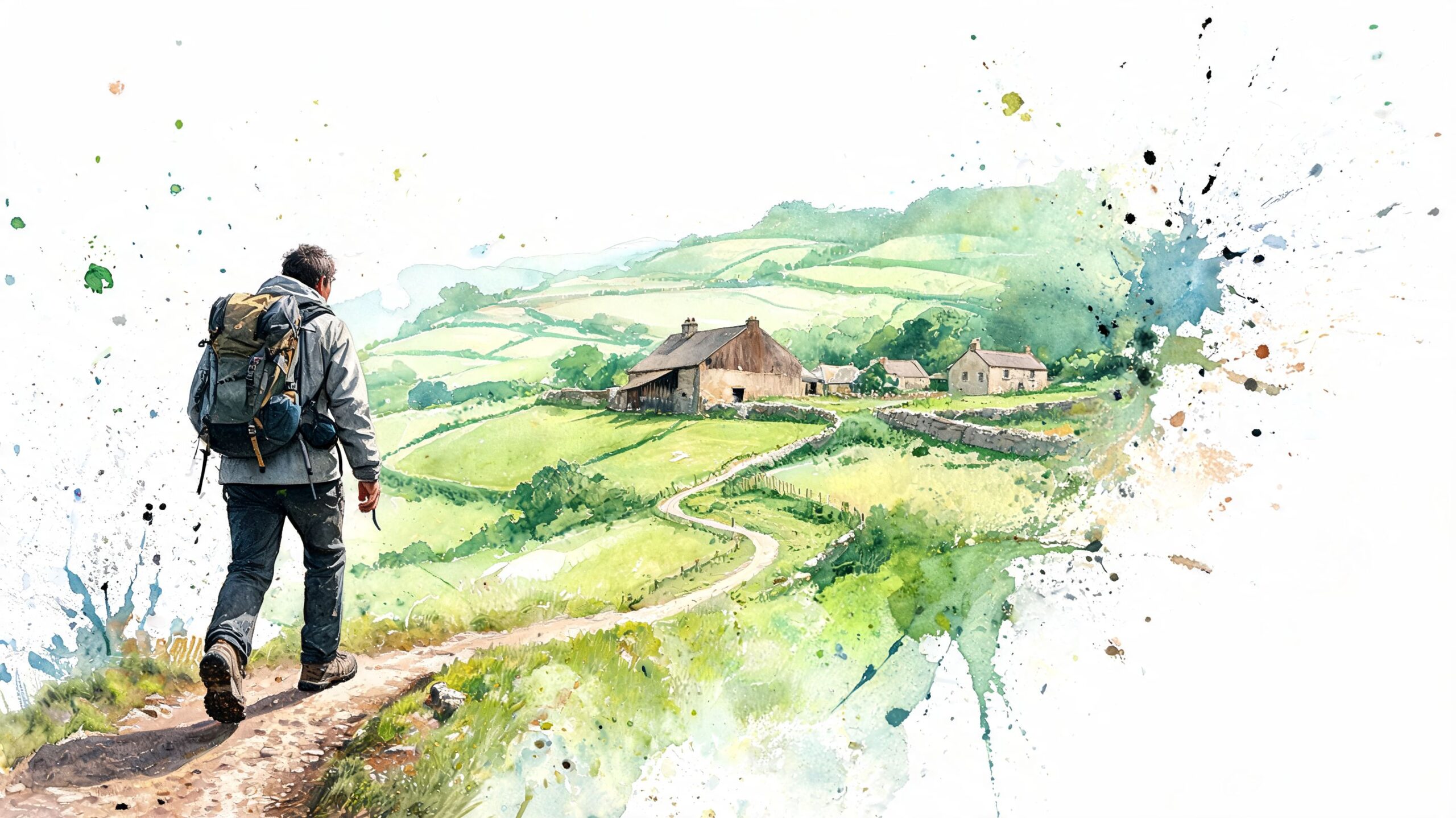
    A hiker with a backpack walks along a dirt path towards a scenic green valley with stone cottages.

    Start simple and start moving

    I think a first visit goes best when you treat it like the beginning of a small expedition, not a test. You don’t need to “see everything.” You need one good hour outside.

    Here’s the approach I’d give a friend:

    • Park and commit fast: Once you arrive, don’t scroll your phone for fifteen minutes. Lock the car and start.
    • Pick a direction, not a masterpiece: Your first route doesn’t need to be perfect. It only needs to get you onto the path.
    • Look for the old bones of the place: Barns, field edges, old tree lines. They remind you this ground had a life before your visit.

    That matters more than people think. When you notice the old farm traces, Greene Valley stops feeling like generic green space. It starts feeling lived-in, changed, worked on, handed forward.

    Use the first visit to build confidence

    If you’re new to forest preserves, this is a good place to practice trust in yourself. Wide paths calm people down. Open views help if dense woods make you uneasy. You can settle into a rhythm without feeling boxed in.

    I also like that Greene Valley plugs into a bigger county system. You can begin here and realize outdoor life isn’t one isolated afternoon. It can become a habit.

    If you want another way to compare nearby preserves before you go, I like this guide to an Illinois forest preserve adventure because it helps you think in terms of experience, not just directions.

    You don’t need wilderness skills to start. You need curiosity, water, decent shoes, and the guts to begin before you feel ready.

    The land itself helps with the rest. You walk. The noise drops. The day gets more honest.

    Finding Your Path on the Trails

    Your shoes tell you a lot at Greene Valley.

    On the crushed limestone, your steps make that steady crunch that sounds like commitment. On the dirt footpaths, the ground softens and your body changes pace without asking permission. That contrast is part of the charm. Greene Valley covers 1,388 acres and has 12 miles of multiuse trails plus 3 miles of footpaths, and it’s one of the county’s most botanically varied places with over 540 native plant species, according to this Greene Valley trail and plant guide.

    Close-up of hiking boots standing on a rocky outcrop in the scenic Greene Valley Forest Preserve.

    Pick a trail by mood, not ego

    I’ve made the mistake of choosing routes to impress myself. That usually ends with me missing what I came for.

    At Greene Valley, I think it’s smarter to choose by state of mind.

    What you need What to choose
    Head-clearing walk A broad limestone route where you can settle into a steady rhythm
    Quiet and texture One of the dirt footpaths where the preserve feels more intimate
    Leg work and momentum A longer loop that keeps you moving without many stops
    Plant watching Slower walking with frequent pauses along varied habitat edges

    That last one matters. If you rush, you miss half the place. A preserve with over 540 native plant species doesn’t reveal itself all at once. It comes in layers. Low flowers near the path. Taller stems catching side light. Leaves with different shapes and tones once you finally slow down enough to notice them.

    The trail can meet you where you are

    One day I needed exertion. I took the wider path and kept a stronger pace until my thoughts stopped repeating themselves. Another day I needed something gentler, so I drifted onto a quieter footpath and let the smaller sounds take over.

    That’s why greene valley forest preserve keeps earning repeat visits. It doesn’t trap you in one style of experience.

    If you want another preserve to compare for a different kind of hiking day, this look at Waterfall Glen Forest Preserve gives you a useful contrast.

    A short video gives a good feel for the terrain and flow before you go:

    Let the place work on you

    You don’t need to conquer all the miles. Let the trail do its quieter job.

    Walk until your shoulders drop. Walk until you stop reaching for your phone every few minutes. Walk until the scale of the preserve helps your problems shrink back down to human size.

    That’s choosing your path in the best sense. Not maximizing distance. Matching the land to the day you have.

    The Wild Inhabitants of the Preserve

    The first real shift happens when you stop treating wildlife like a bonus and start treating it like company.

    At Greene Valley, that shift can happen fast. The preserve’s habitats support over 370 native animal species. Its wetlands are breeding ground for amphibians, and its meadows and forests are home to animals like coyotes, meadowlarks, great horned owls, and white-tailed deer, according to the Greene Valley master plan.

    A watercolor painting featuring a blue jay perched on a branch overlooking a forest with a deer and rabbit.

    Learn to hear before you look

    In spring, the wetlands can erupt with frog and toad calls. If you’ve spent too much time indoors, that sound can almost feel fake at first. Too full. Too alive. Then your ears adjust, and you realize the place has been talking the whole time.

    That’s how I try to walk in preserves now. I listen first.

    • Wet places: Pause and listen for amphibian chorus before you scan the water.
    • Meadows at dawn or dusk: Keep your eyes up and long. Movement often comes before shape.
    • Wooded stretches: Slow down. Owls and deer reward patience more than speed.

    The wild part of a place rarely introduces itself on your schedule.

    A better way to move through the preserve

    I once saw a deer at the edge of the trees because I had stopped to untangle a piece of litter from a branch. If I had kept marching, I would’ve missed it. Service changes your pace. That’s one of the hidden gifts.

    The same goes for birds. Meadowlarks don’t care about your hiking playlist. Coyotes won’t pose because you finally looked up from your map. Greene Valley asks you to become less noisy in every sense.

    Try this on your next visit:

    1. Walk one stretch without talking.
    2. Stop for a full minute when you hear water or birds.
    3. Scan edges, not just open space.
    4. Let one sighting be enough.

    That last one is important. You don’t need to collect wildlife like trophies. One owl heard but not seen can change your whole day. One deer stepping through shadow can make you feel like you entered the preserve for real.

    Be a guest, not an owner

    When you understand that more than 370 native animal species live across these habitats, your posture changes. You stop acting like the place exists for your convenience. You start acting like you’ve been allowed in.

    That’s a better kind of outdoor confidence. Less swagger. More attention.

    Seasonal Rhythms and How to Visit with Respect

    Greene Valley changes its personality every season, and I think that’s part of why people return. You’re never meeting the exact same place twice.

    Spring is restless. The ground softens, birds get louder, and the whole preserve feels like it woke up before you did. Summer has a different mood. The light gets heavier, shade starts to matter, and a walk can feel less like exploration and more like endurance in the best way.

    Let the season choose the lesson

    Autumn sharpens everything. Your footsteps sound cleaner. The air feels direct. You notice distance more.

    Winter strips the preserve down to structure. Paths, trunks, sky, breath. I like winter because it removes excuses. If you go out on a cold day, you usually mean it.

    Here’s how I think about seasonal visits:

    • Spring is for noticing: Watch for small changes, fresh growth, and sound returning.
    • Summer is for discipline: Bring water, start earlier, and respect your limits.
    • Autumn is for longer walks: The air often makes effort feel easier.
    • Winter is for honesty: You find out quickly what kind of mood and gear you brought.

    Respect is a practice, not a slogan

    A lot of people hear “Leave No Trace” and think of a lecture. I don’t hear it that way. I hear basic decency.

    If you borrow a friend’s home, you don’t leave wrappers on the floor. You don’t stomp through what they care for. You don’t turn your convenience into their burden. A preserve deserves the same manners.

    A good visit leaves the place lighter, quieter, and less burdened by your presence.

    That can look simple:

    • Stay aware of where your feet go: Trails exist for a reason.
    • Carry your own trash out: Don’t outsource your mess to the next person.
    • Keep noise down: Sound travels farther than people think.
    • Notice before you act: A photo isn’t worth pushing into sensitive ground.

    Kindness has a physical form

    I think a lot about how respect becomes visible. It’s in the path left unscarred. It’s in the bottle cap you pocket. It’s in the moment when you choose not to force an encounter with wildlife.

    Those tiny acts shape your character because they ask you to do the right thing with no applause waiting. That’s rare. And good for you.

    Greene Valley is a strong place to practice that kind of restraint because it gives a lot. Open room. animal life. quiet. If a place gives you that much, the decent response is to give some care back.

    That’s how a walk turns into stewardship. Not through grand speeches. Through habits.

    Join Us The Litter Caterpillar Cleanup

    There’s a hill at Greene Valley that tells the whole story if you let it.

    The preserve has a 190-foot scenic overlook built on a reclaimed landfill. A place that once held waste now gives people a view. The preserve also has 12 miles of durable trails that help volunteer groups reach litter-heavy and sensitive areas efficiently, according to the DuPage Forest preserve page for Greene Valley.

    I love that. I don’t mean it in a poetic, floaty way. I mean it as a working principle. Trash can become a turning point. A dumped place can become a cared-for place. An ashamed person can become a useful one.

    An infographic titled Become a Litter Caterpillar inviting volunteers to help cleanup Greene Valley Forest Preserve.

    Why a cleanup changes more than the ground

    A cleanup gives you something rare. Visible proof.

    You bend down. You lift the bottle, can, wrapper, or broken plastic. You bag it. The place looks better because you showed up. That’s a very old medicine for the modern mind.

    If you’ve felt stuck, service cuts through the fog because it asks a clear question. Can you help, right here, right now? Usually the answer is yes.

    How to prepare for a cleanup day

    You don’t need elite gear or some rugged identity. You need practical clothes and a willing attitude.

    Here’s the simple version I’d tell any first-timer:

    • Wear clothes that can get dirty: Long pants are smart if you’ll brush past tall grass or work near rough edges.
    • Choose solid shoes: Closed-toe shoes with grip make the day easier.
    • Bring water and basic weather sense: Sun, wind, mud, and chill all change how a cleanup feels.
    • Expect real work: Some stretches are easy. Some ask for patience and grit.

    I think that last part is good for people. Hardship in a meaningful direction feels different from random stress. A full trash bag has weight, but it also has purpose.

    What the day feels like

    Cleanup work has a strange rhythm. At first, people are a little shy. Then someone finds a weird piece of litter, somebody laughs, somebody points out a bird, and the group starts moving like a team.

    You notice the trail in a new way when you’re scanning both beauty and damage. A ditch full of cans stops being background. A clean stretch becomes a small victory. The preserve trains your attention.

    Bring your awkwardness. Bring your uncertainty. Shared work melts both faster than small talk does.

    There’s also relief in the physicality of it. Reach, grab, step, bag, repeat. The body likes a clear assignment. So does the mind.

    How to join without overthinking it

    If you want to volunteer, keep the process plain. Don’t wait for the perfect weekend when your calendar is magically open and your energy is ideal. That weekend doesn’t exist.

    Take these steps instead:

    1. Check the upcoming events through this volunteer trash pickup page.
    2. Sign up for a date that you can realistically make.
    3. Dress for weather, dirt, and movement.
    4. Arrive ready to listen and work with other people.
    5. Let the day be what it is. Muddy, windy, cold, funny, satisfying.

    That’s enough.

    The deeper invitation

    I think a lot of us are hungry for transformation, but we want it to arrive in a dramatic package. New plan. New app. New identity. Cleaner life by next month.

    Usually it’s simpler and less glamorous than that.

    You show up at a preserve. You do a useful task. You get tired for a good reason. You see that your effort changed something outside you, and because of that, something inside you shifts too.

    That’s the true invitation at Greene Valley. It isn’t only to admire open space. It’s to become the kind of person who protects it.

    And maybe, while you’re pulling litter from the edge of a trail or climbing a hill that used to be a landfill, you realize your own messes aren’t permanent either. They can be worked on. They can be faced. They can even become the ground for a better view.


    If that kind of day sounds like your kind of growth, join Litter Caterpillars. Come outside, do hard good work with kind people, and leave greene valley forest preserve better than you found it.

  • 12th Street Beach: A Complete Chicago Guide (2026)

    12th Street Beach: A Complete Chicago Guide (2026)

    I once stood at 12th street beach with a trash bag in one hand and a knot in my chest. The sand was cleaner than my apartment, and somehow picking up a stranger's bottle cap felt easier than throwing away my own old junk at home.

    Discovering 12th Street Beach Through New Eyes

    I didn't come to 12th street beach as a polished beach person. I came as someone who had let too many little messes pile up. Old receipts. Half-dead plans. The kind of clutter that starts on a desk and then creeps into your habits, your friendships, your courage.

    Then I learned something strange. Cleaning up someone else's mess can loosen your grip on your own.

    That first time, I bent down for a tangled scrap of plastic near the shore and felt a small click in my head. The task was simple. See trash. Pick it up. Keep moving. No old memory attached to it. No story. No guilt. Just action.

    A watercolor illustration of a hand picking up tangled plastic debris from a sunny beach shore.

    Why this beach feels different

    At first glance, 12th street beach is easy to read. Sand. Water. Skyline. People spread out on towels, kids darting in and out of the edge of Lake Michigan, cyclists rolling by. You can come here for an easy afternoon and leave happy.

    But if you slow down, the place changes.

    You start noticing the way a public beach asks something from you. Not much. Just attention. A little care. The willingness to leave it better than you found it. That tiny shift changes the whole day. You're not only visiting. You're participating.

    Practical rule: Bring one small bag. If you see a few pieces of litter on your way out, pick them up. That single habit changes how you experience the place.

    A different kind of beach guide

    Most guides tell you where to park, where to sit, and where to buy a snack. I like those guides. I use them too. But 12th street beach gave me something more useful than convenience.

    It gave me a way back into myself.

    When your life feels jammed up, service is like opening a stuck window. The room doesn't become perfect. You just get some air. A beach cleanup can do that. A swim can do that. A quiet walk along the edge of Northerly Island can do that too.

    If you've been here before, I want you to see it again. If you've never been, I want your first trip to mean more than a checklist. Come for the skyline, sure. Come for the sand. But also come because this is a good place to practice being the kind of person who notices things and helps.

    The Story of a Man-Made Oasis

    The first time I helped clean here, a volunteer held up a bottle cap and said, "Somebody had a whole summer day around this." I looked out at the curve of sand, the calm pocket of water, the skyline rising behind it, and remembered that this place did not appear by accident. People argued for it. People built it. People kept coming back until it became part of Chicago's memory.

    12th Street Beach sits on Northerly Island, a man-made piece of the lakefront born from Daniel H. Burnham's 1909 Plan of Chicago. Construction began in 1920, and by 1925 workers had formed the island with a sheet iron wall, landfill, and dredged material. It was the only island from Burnham's chain-of-islands vision that was fully completed, as noted in the 12th Street history project.

    What moves me most is how early Chicagoans fought over what this shoreline should become.

    Some people wanted a landing strip. Women's organizations pushed for a public bathing beach instead, and the beach was established in the early 1920s. That choice still shapes the feeling of the place today. Families got shoreline access. Swimmers got a protected stretch of lake. Ordinary people got room to rest, gather, and belong.

    By the 1930s and 1940s, the island had grown into more than a strip of engineered land. It had paths, grassy areas, trees, and beach space, and later it changed again as the area developed around the World's Fair era and the Adler Planetarium. Then came another chapter. Meigs Field operated here for decades before closing in 2003, and a new beach house followed in 2004.

    So the ground under your towel carries a strange and beautiful history. Public recreation, aviation, civic planning, and reinvention all meet here.

    The beach also holds family memory. A historical image record of Black families enjoying summer at 12th Street Beach ties the shoreline to multigenerational gathering in the 1960s and 1970s, a reminder that this was not only a place to cool off. It was a place to be seen, to celebrate, to claim joy in public, documented in this archival Alamy image listing.

    I think about that whenever our Litter Caterpillars crew heads out with buckets and grabbers. We are not caring for an empty backdrop. We are caring for a place that generations shaped with pressure, presence, and love.

    That is why even the trip here matters. Choosing a lighter-footprint route to the lakefront can be part of the practice. Our guide to eco-friendly ways to get to the beach helps you arrive with that spirit already switched on.

    A man-made oasis sounds like a planning term. Here, it feels personal. Every cleanup, every picnic, every child racing into the shallows adds another layer. The story of 12th Street Beach is still being written, and if you show up with care, you become part of it.

    How to Get to 12th Street Beach

    The first time a new volunteer joined our cleanup at 12th Street Beach, she arrived on a bike with a small backpack, a water bottle clipped to the side, and no idea what to expect. She told me later that the ride down the lakefront had already changed her mood. By the time she rolled past Northerly Island and saw the sand open up beside the skyline, she felt less like she was rushing to an attraction and more like she was arriving for something that mattered.

    That is still how I like to guide people here. Getting to 12th Street Beach is part of the experience. You are heading toward the Museum Campus edge, just south of Adler Planetarium, then following the path toward Northerly Island and the beach.

    The simple way to choose your route

    Pick the route that fits the kind of day you want.

    Method Details Best For
    Walking Walk south from the Museum Campus area toward Northerly Island and follow the path to the beach. Anyone already visiting the lakefront or nearby museums
    Bike Ride the Lakefront Trail, then turn off toward Northerly Island. Solo visitors, couples, and anyone who wants a calm trip along the water
    Car Drive toward the Adler Planetarium and Northerly Island area, then look for nearby parking if available. Families carrying chairs, snacks, and beach gear
    Rideshare or taxi Set your drop-off near Adler Planetarium or Northerly Island. Visitors who want the shortest walk-in
    Bus and train plus walk Take CTA service toward the Loop or Museum Campus area, then finish the trip on foot. Visitors who want a lower-stress city outing

    Driving works best when you are hauling a lot. On bright summer weekends, though, the last stretch can test your patience. Parking fills up fast, and the walk from your spot can still be longer than expected.

    If you are packing light, biking, walking, or transit usually makes the day feel easier from the start. Our guide to eco-friendly ways to get to the beach can help you choose a route that leaves less trash, less traffic, and less stress behind.

    Walking or biking in changes the whole tone.

    You hear the gulls before you hit the sand. The air shifts. The city stays beside you, but it loosens its grip. For a lot of us in Litter Caterpillars, that approach has become a small ritual. We show up more grounded, more observant, and more ready to care for the place once we arrive.

    A few practical habits help:

    • Travel light: A towel, sunscreen, water, and sandals cover most visits.
    • Secure loose items: Lakefront wind grabs hats, wrappers, and napkins in seconds.
    • Give yourself extra time: The final walk can feel longer when you are carrying gear or guiding kids.

    What you'll find when you arrive

    Once you reach the beach, you will find the basic supports that make it easier to stay awhile, regroup, and settle in for a full day. That matters more than people expect. A restroom, a place to rinse off, a spot to pause with older relatives, or a moment out of the sun can be the difference between a rushed visit and one that feels generous.

    I have seen that play out during cleanup days too. Someone comes for an hour, stays for three, then ends up sharing lunch on the sand with people who were strangers that morning. Access and comfort shape whether a beach feels welcoming enough for community to grow.

    If accessibility is part of your planning, check current Chicago Park District conditions before you leave home. Paths, beach equipment, and seasonal operations can change, so a quick check can save you a hard trip.

    Our Lakefront Environment and Its Challenges

    The first time I watched someone pull a handful of chip bags and sticky drink lids from the sand at 12th Street Beach, the water was sparkling. Kids were laughing. The skyline looked polished enough for a postcard. Then one of our Litter Caterpillars volunteers pointed to the gulls circling the snack debris and said, "That is how a beautiful beach starts slipping."

    That moment changed me. I stopped seeing cleanup as cosmetic work. I started seeing cause and effect.

    A scientist standing in water, examining a test tube against a backdrop of a city skyline illustration.

    What the water tests are checking

    At 12th Street Beach, summer water quality checks track Enterococci bacteria, and advisories are posted when levels rise above the safety threshold. The Swim Guide page for 12th Street Beach also notes that the beach often meets standards during peak season, while still facing periodic warnings tied to birds, runoff, and changing conditions.

    For visitors, the lesson is simple. Check the daily status before you swim. A clear, sunny morning can still come with a warning, especially after rough weather or heavy bird activity.

    I treat that habit the same way I treat sunscreen. Part of the trip.

    Why the beach sometimes gets a warning

    The two troublemakers show up again and again. Gull droppings. Stormwater runoff.

    Gulls gather where food scraps and litter collect. Rain washes pollutants from streets and walkways toward the lake. Put those together, and a beach that looked perfect at breakfast can become a poor choice for swimming by noon.

    That is one reason our cleanup work feels personal. Every bottle cap, sandwich wrapper, and abandoned snack bag changes the beach a little. If you want a clearer picture of that chain reaction, this guide to how littering on the beach affects wildlife and cleanup efforts connects the small stuff people leave behind with the bigger problems everyone else has to live with.

    A quick visual can make all of this easier to picture:

    The beach is built, not natural in the simple sense

    I love telling people this because it changes how they stand on the shore. 12th Street Beach is a perched beach, held in place by engineered protection below the waterline. It is public space, yes, but it is also maintained infrastructure, shaped and defended so Chicago can keep a swimmable beach along a hard-working urban lakefront, as reported by WTTW's Ask Geoffrey on the seawall and rail tracks.

    So caring for this beach means caring for something built with intention and kept alive through attention. Sand, water, wildlife, weather, and city use all meet here in one narrow band.

    I have seen people arrive for a cleanup thinking they are just picking up trash. An hour later, they are asking better questions. Where does runoff come from? Why are the gulls clustering here? Who maintains the shore after storms? That shift matters. A beach visit becomes stewardship.

    And that is the invitation 12th Street Beach keeps offering. Come for the swim, the skyline, the soft sand under your feet. Stay long enough to notice what the place needs. A tiny act on shore can ripple outward.

    How to Join a Beach Cleanup

    The first cleanup I ever joined felt less like volunteer work and more like the opening scene of a weird little adventure film. There were only three of us. Then Chicago did what Chicago does. The sky cracked open, hail started flying, and we huddled under a tree while ride after ride canceled on us.

    I was freezing. I was laughing. I also had a thought I still trust. Shared discomfort is strangely good at turning strangers into teammates.

    Why cleanup feels better than you think

    A lot of people hear "beach cleanup" and imagine scolding, drudgery, or a school requirement with bad snacks. My experience is the opposite. Cleanup has a little Tom Sawyer energy in it. The job looks plain from a distance, but once you're in it, the thing changes shape.

    You start spotting weird objects. You trade stories. Someone finds an impossible item half-buried in sand and everybody crowds around. A task becomes a game of attention. Then, after an hour or two, the place looks better because you were there. That feeling is hard to fake.

    Work gets lighter when people do it together and treat it like an outing instead of a punishment.

    A five-step infographic showing how to join and participate in a community beach cleanup event.

    What your first cleanup day usually looks like

    The practical side is simple. Most beach cleanups follow a rhythm that is easy to learn on the spot.

    1. You sign up ahead of time. Look for the event listing, RSVP, and read the notes so you know the meeting point.
    2. You show up in clothes you don't mind getting sandy. Closed-toe shoes help if the cleanup covers paths as well as sand.
    3. You check in and listen. Organizers usually explain the route, the boundaries, and basic safety.
    4. You collect litter with the group. Some people like grabbers. Some just use gloves and bags.
    5. You wrap up together. This is when people compare strange finds, sort what they can, and usually chat longer than expected.

    If you're looking for the setting many volunteers care about most, this page on a public beach on Lake Michigan captures why shoreline cleanups feel different from a random errand.

    How to actually find one

    This part stops a lot of people, even when they want to help. They assume there must be a secret process. There isn't.

    Try this:

    • Search Meetup first: Many volunteer groups post cleanups there because RSVP tools are simple.
    • Check Instagram: Stories and recent posts often have the freshest meeting details.
    • Read the event notes: Look for start time, exact meeting point, and whether supplies are provided.
    • Message if unsure: Organizers usually want you to ask. It helps everyone arrive ready.

    I like weekend morning cleanups best. The mood is better. People come because they mean to come. There is a generous, clear-headed energy to a morning group that you can feel within minutes.

    If you want to organize one yourself

    You don't need to become a superhero. You need a date, a meeting point, bags, gloves, and enough nerve to invite a few people.

    Start small. Three friends is enough. Pick a visible area. Keep the time short. Make safety the first rule and morale the second. If weather turns rough, adjust. Courage isn't acting reckless. Courage is showing up, paying attention, and making good calls.

    A cleanup works a lot like exercise. The hardest part is not the activity itself. It's crossing the distance between "I should" and "I'm here."

    Tips for Your Perfect Beach Day

    The best beach days I have seen at 12th Street Beach did not begin with a perfect forecast. They began with attention.

    One Saturday, a woman joined one of our Litter Caterpillars cleanups with a coffee in one hand and a look that said she had almost talked herself out of coming. We spent an hour picking bottle caps from the sand and snack wrappers from the rocks. Afterward, she stayed. Shoes off. Phone away. She sat near the water longer than anyone else in our group. Before she left, she told me, "I came here tense. I am leaving like my chest finally opened up."

    That is my favorite kind of beach day. You enjoy the place more because you helped care for it.

    What to bring and why

    I have learned to pack for ease, not for a grand production. The people who look most at peace out there are usually carrying a towel, water, and a small bag, not half their apartment.

    Bring a few things that earn their spot:

    • Water and sunscreen: The sun off the lake can sneak up on you.
    • A towel and one extra layer: Even warm afternoons can turn cool when the wind shifts.
    • Snacks in reusable containers: You eat better, and you create less trash that can blow into the water.
    • A small bag for your own waste: It takes almost no effort, and it changes how you leave a place.

    That last one matters more than people think. A good beach setup is not only about comfort. It is about leaving your patch of sand cleaner than you found it.

    Best timing for a calmer visit

    Early hours feel different here. The water looks steadier. The path is quieter. You hear gulls, bike wheels, and the soft slap of waves against the rocks before the bigger crowds arrive.

    Late afternoon has its own kind of magic. The skyline starts to glow, people settle down, and the beach feels less like a rush and more like a long exhale.

    If swimming is the heart of your day, check conditions before you go. If your plan is to read, talk, walk, or sit near the water, you still have plenty of room for a beautiful visit even when the lake is not inviting you in.

    A young man wearing sunglasses relaxes on a striped beach towel at 12th Street Beach.

    Make the day mean more

    One reason I keep returning to 12th Street Beach is that it can hold two truths at once. It is easy fun. It is also a place that asks something small and good of us.

    You can swim, stretch out on the sand, then wander toward Museum Campus and keep the day going on foot. You can come for the skyline, the water, and the relief of being outdoors in the middle of the city. You can also notice the corners where litter gathers after a busy weekend, pick up a few stray pieces on your way out, and leave the shoreline a little better for the next family, the next solo swimmer, the next tired person who comes looking for peace.

    My rule for a perfect beach day is simple.

    Leave with less than you brought. Less stress, less trash, less hurry.

    That is how a visit becomes something larger than a visit. It becomes practice for the kind of city we want to live in.

    Your Questions Answered

    Do I need to bring supplies for a cleanup

    Usually, no. Many cleanup groups provide bags, gloves, and grabbers. Still, read the event listing before you go. If you already own work gloves or a reusable water bottle, bring them.

    What if the weather turns bad

    Chicago weather likes drama. A little rain doesn't always stop a cleanup, but safety comes first. If conditions become risky, organizers usually adjust, pause, or cancel. Check the event page the morning of.

    Can I come alone

    Yes. In fact, coming alone is often the easiest way to meet people. You already have a built-in activity, which removes a lot of the awkwardness. You don't need a partner to belong there.

    Do I have to stay the whole time

    Usually not. Many groups appreciate any time you can give. If you can only stay for part of the event, say so at check-in and help for the time you have.

    What should I wear

    Wear clothes you can move in and don't mind getting dirty. Closed-toe shoes are a smart choice when the cleanup reaches paths, rocks, or hidden debris.


    If this stirred something in you, come meet the Litter Caterpillars. We're a Chicago volunteer group that picks up trash, builds friendships, and turns ordinary mornings into small adventures. If you want a way to care for the city while changing your own habits from the outside in, you'll fit right in.

  • Winding Creek Park: A Guide for Chicago Adventurers

    Winding Creek Park: A Guide for Chicago Adventurers

    I remember standing at the edge of Winding Creek Park with a trash bag in one hand and a brain full of noise. The pond looked calm. I wasn’t.

    Years ago, when my own room felt impossible to clean, I learned a strange truth outside: picking up one bottle from the grass felt easier than throwing away one useless thing from my apartment. That small act gave me a grip on myself again. If you’ve ever felt stuck, you already understand this park better than you think.

    A Park Can Be More Than a Park

    I didn’t start caring about places like winding creek park because I was some polished outdoors person. I started because my life was messy, and I needed a job simple enough to do with my hands. See trash. Pick it up. Put it in the bag. Repeat.

    That rhythm helped me when my head wouldn’t slow down.

    My own clutter used to carry emotional weight that made no sense on paper. An old jar in the fridge, a half-dead receipt, a shirt I never wore. Each thing felt loaded. Outside, though, a crushed can in the weeds had no story I needed to protect. It was just trash. I could move it. And once I moved it, I felt a tiny shift inside myself too.

    That’s why I want you to think about winding creek park as more than a spot for a walk. It’s a place where you can practice becoming the kind of person you want to be. Patient. Useful. Awake.

    The first honest step

    The park won’t fix your whole life. I won’t insult you with that kind of promise. But it can give you a place to start.

    Practical rule: If your life feels too big to repair, choose something small enough to finish before lunch.

    At a park, “small enough” might mean carrying out a few pieces of litter. It might mean walking slowly enough to notice where the water meets the reeds. It might mean showing up with a friend and keeping your phone in your pocket for one hour.

    I think of personal change the way I think of trail work. You don’t rebuild the whole path in a single burst. You clear one blocked patch, then the next.

    A challenge for you

    Before you read another section, ask yourself one blunt question. What is one physical thing you can do with your body, in a real place, this week?

    • Pick up litter for ten minutes
    • Walk the pond edge and notice what needs care
    • Bring a kid and turn cleanup into a game
    • Take a photo of one damaged corner and one hopeful one

    That’s enough. Real change usually starts with something that looks too small to matter.

    Finding Your Way to Winding Creek Park

    The first time I headed out to winding creek park in Crystal Lake, I liked the drive because it felt like my mind was slowly unclenching. Chicago’s hard edges gave way to quieter streets, then more open space, then that little pulse of anticipation you get when you’re close to somewhere you haven’t met yet.

    You don’t need a dramatic expedition mindset. You just need a plan.

    A young man holding a map showing a path between Crystal Lake and Winding Creek Park.

    Getting there by car

    If you drive, use your map app and search for Winding Creek Park in Crystal Lake, Illinois. I’m keeping this plain on purpose. Addresses and parking access can change, and your phone will do a better job with current turn-by-turn directions than any static paragraph I could write here.

    What matters more is the arrival pattern. When you pull in, don’t rush out of the car. Sit for a minute. Look around. Let your body catch up to where you are.

    I like to do this:

    • First minute: turn off music and just listen
    • Second minute: spot the water line or tree line
    • Third minute: decide whether this visit is for walking, cleanup, photos, or all three

    That pause changes the whole day.

    Getting there from Chicago without a car

    Public transit takes more patience, but I think that’s part of the charm. Start with Metra service toward Crystal Lake, then use a rideshare, local taxi, or a short bike ride for the last stretch if needed. Before you leave, check current train schedules and station connections so you’re not making guesses on the platform.

    The trip out has its own mood. You watch the city thin out. Buildings get shorter. Your shoulders drop a little.

    Going by train turns the visit into a transition ritual. You leave your usual speed behind before you even touch the trail.

    What arrival feels like

    Some parks announce themselves with giant signs and noise. This one feels quieter. You reach it, step out, and sense that the day could go in a gentler direction if you let it.

    That matters. A lot of us don’t need more stimulation. We need a place where we can hear our own thoughts without being trapped inside them.

    Navigating the Trails and Waterways

    When I walk a new park, I need a simple mental map. Winding creek park is best understood as a body. The ponds are the heart. The paths are veins. The brushy edges are the skin, where much ecological drama unfolds.

    If you start with that image, you won’t feel lost.

    An infographic titled Navigating Winding Creek Park outlining three outdoor recreation areas including trails and water access.

    Start with the water

    The north and south pond areas pull your eye first. That’s fine. Let them. Water gives you orientation fast, and it slows people down in a good way. If you walk the edge at an easy pace, you’ll start noticing the layers. Open water. Margin plants. Muddy ground. Shrubs. Trees.

    That edge zone is where I tell people to be patient.

    If you stand still, you may catch bird movement, insect skims over the surface, ripples from fish, or the kind of sudden little splash that makes a kid stop talking mid-sentence. Those moments are easy to miss if you charge through the park like you’re trying to complete an errand.

    Three ways to move through the park

    You don’t need trail names memorized to have a good day. You just need to choose your mood.

    Approach Best for What it feels like
    Pond-edge loop First visits, families, reflection Slow, open, observant
    Tree-line path Shade, quiet, texture, birdwatching Closer, softer, more enclosed
    Creek-facing wander Curiosity, photography, sitting still Loose, exploratory, less rushed

    I usually tell first-time visitors to walk one full loop near the water before trying side paths. That gives you a center point in your head. After that, you can improvise.

    If you want movement

    If your body wants more action than a calm stroll, bring that energy with intention. A paddle day changes how you read a place, and if you like mixing water time with city adventure, I’d point you toward urban kayaking ideas in Chicago for inspiration you can carry into your next outing.

    That said, winding creek park isn’t a place I treat like a race course. I treat it like a conversation.

    Walk the first ten minutes without trying to “get somewhere.” A park usually tells you how to move through it if you stop bossing it around.

    What to look for with your eyes low

    A lot of people scan only at head height. I try to look lower.

    • Muddy margins: tracks, bent reeds, little signs of recent life
    • Roots near the path: erosion, texture, patterns worth photographing
    • Shoreline debris: where cleanup work often matters most
    • Young plants after clearing: the first signs that land is trying to recover

    That last one is important. You don’t always see healing in a dramatic form. Sometimes healing looks like a small green comeback in a place that used to be choked.

    Healing the Land A Deeper Purpose

    A park can look fine from ten feet away and still be struggling. I’ve learned that the hard way in a lot of green spaces. You see leaves, water, birds, maybe a nice reflection, and you think nature is handling itself. Then you get closer and realize one aggressive plant has started acting like a neighborhood bully.

    That’s part of the story at winding creek park in Crystal Lake.

    According to the Crystal Lake Park District project update on Winding Creek Park, the park is going through invasive species control focused on plants like European black alder and common buckthorn. Those plants form dense thickets, smother native habitats, and European black alder can consume up to 30% more water than native plants. The work includes mechanical cutting and herbicide application, and it creates chances for volunteers to help with native replanting.

    A watercolor illustration of volunteers planting saplings at Winding Creek Park near the shores of Crystal Lake.

    What invasive plants actually do

    I want to make this concrete. Think about a good conversation in a group. Different people speak. Different people listen. There’s room. Native habitat works like that.

    Invasive thickets wreck that balance. They crowd light. They crowd water. They crowd physical space. Soon, the weaker plants don’t get a turn at all.

    That’s why cutting back invasives isn’t cosmetic work. It’s intervention.

    Why this work changes you too

    I’ve always found it easier to face damage outside myself first. Pulling trash. Clearing a patch. Carrying brush. Those tasks are blunt in a helpful way. They don’t ask me to have perfect feelings before I begin.

    Land restoration works like that too.

    When you help remove what’s choking a place, you start asking sharper questions about your own life. What have I let overgrow? What keeps taking more than it gives back? What am I avoiding because the fix looks ugly at first?

    If you want a grounded explanation of that mindset, I like this plain guide to environmental restoration and what the work involves.

    Healing land often starts with an unpleasant phase. Cutting. Hauling. Dirt. Sweat. Temporary ugliness. That doesn’t mean the process is wrong. It means the process is real.

    Ways you can help without pretending to be an expert

    You don’t need to arrive as a botanist. You need humility and willingness.

    • Learn the target species: know what European black alder and buckthorn look like before you touch anything.
    • Respect active management work: if staff are using cutting and herbicide methods, stay coordinated with them.
    • Help after removal: native replanting is where hope becomes visible.
    • Stay curious: ask why a cleared area looks rough. It may be in the middle of recovery, not abandonment.

    That’s the deeper purpose I want you to feel here. You aren’t only visiting winding creek park. You’re choosing whether to leave it as scenery or meet it as responsibility.

    Planning Your Visit Tips for Families and Photographers

    Some park days fall apart because people don’t match the plan to the people. I’ve done that enough times to know better. If you bring little kids, you need rhythm, snacks, and a mission. If you bring a camera, you need patience, decent shoes, and a willingness to wait for light instead of forcing it.

    Here’s the version of winding creek park I’d recommend for both.

    A split image showing a family having a picnic and a man photographing a bird at Winding Creek Park.

    If you’re bringing family

    Keep the day simple. Don’t try to squeeze every corner of the park into one outing. Start near the easiest walking area by the water, pick a picnic spot with a clear line of sight, and let the kids “collect” observations instead of objects.

    I like turning a walk into a scavenger hunt with no pressure.

    • Find a leaf with a strange edge
    • Spot two different bark textures
    • Listen for three bird calls
    • Look for a place where land meets water in a new way

    Kids usually care more when they’re given a mission that feels like detective work.

    If you’re carrying a camera

    Go early if you want softer light on the pond and less visual clutter from other visitors moving through your frame. Work the edges first. Reflections, reeds, bark, and low plants tell a fuller story than a wide shot alone.

    Don’t only chase the obvious scenic image. Photograph the details that show a place is alive and changing.

    Field note: The best park photos often come from kneeling down, not from standing taller.

    That means muddy boots. It’s worth it.

    A quick visual can help you think about the park in motion before you head out:

    A practical split plan

    If one person wants family time and another wants photos, don’t fight over the pace. Divide the visit in half.

    Part of visit Family focus Photo focus
    First half Short walk, snacks, easy discoveries Establishing shots, water light, path scenes
    Second half Rest, play, quiet looking Texture studies, wildlife patience, detail work

    That approach saves the day. Nobody feels dragged around.

    And if you’re on your own, borrow this same structure anyway. Spend the first half observing. Spend the second half making something, whether that’s photos, notes, sketches, or a cleanup bag.

    Join the Movement From Visitor to Volunteer

    The weirdest part of any cleanup is the first few minutes. You show up, maybe a little unsure, maybe wondering if you’ll know anyone, maybe asking yourself why you agreed to spend part of your weekend doing manual labor in public.

    Then somebody hands you a bag.

    That helps. A lot.

    Action cuts through awkwardness faster than small talk does. Once your hands are busy, people relax. You start pointing things out. Someone makes a joke about the strangest object on the ground. Someone else helps hold a bag open. An hour later, the place looks better and you feel less like a stranger.

    Why weekend mornings work

    I’m biased toward morning service because it sets the tone for the whole day. You do one brave, useful thing early, and the rest of your Saturday feels less slippery. You trust yourself more.

    Consistency matters more than intensity here. I’d rather see someone help in a modest, steady way than arrive once with a huge burst of guilt and disappear.

    You build courage the same way you fill a trash bag. Piece by piece.

    What a volunteer morning feels like

    A real volunteer morning is rarely glamorous. Sometimes it’s cold. Sometimes the ground is wet. Sometimes you find gross stuff and wish you hadn’t. Sometimes you get quiet because the work touches something emotional in you.

    And still, by the end, there’s pride.

    Not fake pride. The earned kind. The kind that comes from looking back at a stretch of land and knowing your body changed it for the better.

    How to take the first step

    If you want to stop reading about service and do it, keep your first move simple:

    1. Pick a date you can keep. Don’t wait for a perfect weekend.
    2. Wear clothes you can dirty. Old shoes beat stylish hesitation.
    3. Bring water and gloves if you have them.
    4. Invite one person if that helps you show up.
    5. Find a real event list. A practical place to start is these Chicago volunteer opportunities.

    You don’t need a dramatic personal backstory to volunteer. You just need willingness. In my experience, willingness changes people faster than self-analysis does.

    Exploring Further Other Local Gems and Good Works

    One lesson I keep relearning is that every park asks for a different kind of care. At one place, the work is litter removal. At another, it’s invasive species control. Somewhere else, care looks like following fishing rules so the water doesn’t get loved to death.

    That’s why I like comparing Crystal Lake’s winding creek park with the one in Naperville. Same name. Different job for the visitor.

    A different kind of stewardship in Naperville

    The Naperville Park District page for Winding Creek Park notes that the park supports regulated freshwater fishing for species like bluegill and largemouth bass. It also states that the Illinois Department of Natural Resources sets catch limits, including 6 largemouth bass per day with a 14-inch minimum, and that following those rules helps sustain fish populations.

    I like that because it turns conservation into something ordinary and disciplined. You don’t need a dramatic rescue moment. You need restraint.

    Parks teach different virtues

    Crystal Lake asks you to notice habitat struggle and recovery work. Naperville asks anglers to practice limits and patience. Both ask the same deeper thing from you in the end. Respect the place enough to adjust your behavior.

    I see it this way:

    • At a restoration site: your job is to help land breathe again
    • At a fishing pond: your job is to enjoy the resource without draining it
    • At a cleanup event: your job is to leave no excuse for neglect behind you

    That’s a useful way to see the whole region. Not as a list of destinations to consume, but as a series of relationships. Each place has its own terms.

    Keep going after one good visit

    One park visit can wake something up in you. The trick is not letting that feeling stay isolated.

    Make a habit of exploring local spaces with a service mindset. Bring a bag. Learn one rule. Notice one problem. Respect one boundary. That’s how ordinary people become steady caretakers without needing a title for it.

    Become the Butterfly

    I keep coming back to the caterpillar idea because it’s honest. A caterpillar isn’t finished. It doesn’t glide. It inches forward. It does the unglamorous stage first.

    That’s how change has felt in my life too.

    I didn’t become stronger because I had a beautiful breakthrough in perfect weather. I changed because I kept doing small physical acts of care when I didn’t feel sorted out yet. A bag of trash. A rough trail walk. A hard conversation with myself while looking at water. Winding creek park fits that kind of growth. It gives you somewhere to practice.

    You don’t need to arrive polished. You can arrive confused, restless, tired, hopeful, or all four at once. The park can hold that. The work can too.

    And if you return enough times, something subtle happens. The place stops being a backdrop. It becomes part of your personal code. You don’t walk through it asking only what you can get from it. You start asking what you can give.

    That’s the shift I want for you.

    So here’s the question. When you get your next free morning, will you use it to consume a place, or to care for one?


    If you want a group that turns that question into action, join Litter Caterpillars. We clean, explore, and grow through service, one neighborhood and one morning at a time.

  • 7 Places to Donate Cardboard Boxes in Chicago

    7 Places to Donate Cardboard Boxes in Chicago

    The move is over, but the test now is sitting by the wall in a lopsided stack of cardboard. A neighbor of mine in Chicago once kept hers for so long that her toddler started using the biggest box as a reading chair. Funny for a week. Depressing by month two.

    I know that feeling. I started Litter Caterpillars when my own mess felt bigger than my energy, and every pile seemed to say something about who I was. What changed me was not some perfect cleaning routine. It was realizing that giving useful stuff away can break the spell. A box stops being evidence of chaos the minute it helps somebody else pack up a studio apartment, ship donated clothes, or move out of a bad situation.

    So here’s the tough-love version. Those boxes are making a decision for you if you let them stay. Act today, and they become useful again. People need boxes, and they keep needing them.

    That is the part I love most. Donating cardboard boxes in Chicago is not just a tidy little errand. It is one of those ordinary acts that ties a city together. Your leftovers become someone else’s fresh start. Your post-move clutter becomes a small favor for a student, a family, a reseller, a nonprofit, or a neighbor trying to get through a hard week without buying one more thing.

    Chicago gives you plenty of ways to do it, from hyperlocal swap groups to reuse programs that put boxes straight back into circulation. Some options are fast. Some take a little coordination. One gives your box one last useful job before it leaves your life. All of them beat letting that stack slump in the corner while you keep calling it temporary.

    1. U-Haul Take a Box, Leave a Box plus U-Haul Exchange

    A friend of mine finished a move in Lakeview at 9 p.m., sat on the floor, looked at the wall of empty boxes, and almost left them there for another month. Instead, she tossed the clean ones in her trunk the next morning, stopped at a U-Haul on the way to work, and was done with the whole thing before her coffee got cold. Somebody else picked them up for a move that same week. That is the kind of win I trust.

    You do not need a perfect system here. You need a practical one. U-Haul gives you two paths. You can bring reusable boxes to a participating location with a Take a Box, Leave a Box shelf, or post them through the U-Haul website so someone nearby can claim them.

    U-Haul “Take a Box, Leave a Box” + U-Haul Exchange

    I like this option because it meets you where you usually are after a move. Tired. Busy. A little sick of making choices. Boxes go back to a place where people already need them, and that cuts out a lot of friction.

    Why it works when your energy is gone

    The best donation habits are the ones you will follow through on. U-Haul works well for that.

    A few reasons:

    • Simple drop-off: Many locations accept clean, sturdy boxes without turning it into a long back-and-forth.
    • Right audience: The people coming through the door are already packing, moving, or hunting for supplies.
    • Another option online: If the shelf is full or your nearest store does not participate, the Exchange listing gives your boxes another shot at reuse.

    Practical rule: Call before you load the car. Some locations run out of room fast, and a 60-second call can save you a wasted trip.

    I have a soft spot for systems like this because they remind me what service often looks like in real life. It is rarely dramatic. It is a useful thing left in the right place at the right time. That same idea sits at the heart of community engagement through repeated small actions. One person clears a corner of their apartment. Another person gets through move-in day without spending extra money. A city gets a little more connected.

    Best fit

    Choose U-Haul if your boxes are still in good shape, you want them gone fast, and you would rather avoid a flood of messages from strangers.

    The tradeoff is consistency. One location may have an active reuse shelf, while another has no space that day. Still, if you want a direct way to donate cardboard boxes to people who will use them soon, U-Haul is one of the strongest first stops in Chicago.

    2. The Freecycle Network

    Freecycle feels like a neighborhood corkboard that never got replaced by something worse.

    You post an Offer. Somebody nearby says, “I’ll take them.” Your boxes move a few blocks instead of drifting into a vague recycling future. If you care about local reuse, that’s a good feeling, and you can start on the Freecycle website.

    The Freecycle Network

    When I think about service, I don’t think only about big organized acts. I think about small transfers of effort. You saved someone time, they saved money, and a decent box stayed in use. That’s real community. It’s the same logic behind community engagement that grows through repeated small actions.

    The local gift-economy angle

    Freecycle is good when you want your boxes to stay close to home. The groups are local and moderated, so the exchange feels more neighborly than random.

    What I like most:

    • Local reach: Your boxes usually go to someone nearby, which keeps pickup simple.
    • Clear intent: People search Freecycle because they want free useful stuff, not because they want to browse.
    • Easy porch pickup: You can set a time window and keep the whole thing low-stress.

    Put the box sizes and count in the post title if you can. “Small and medium moving boxes, flattened, porch pickup” gets better replies than “free boxes.”

    Here’s the honest part. Some neighborhood groups are lively. Some feel half asleep. If your first post doesn’t move, repost it at a better time and use a cleaner photo. Boxes are common, but common things still need a little packaging to leave your house.

    Best fit

    Choose Freecycle if you like the idea of helping a nearby stranger and you don’t mind coordinating one pickup window.

    I’d use it for clean moving boxes, packing paper, and odd extras like wardrobe boxes or bubble wrap. It feels less like disposal and more like passing the baton.

    3. Buy Nothing Project App plus Facebook Groups

    Buy Nothing is where cardboard stops being cardboard for a second and becomes a human story.

    You post a photo of your stack in the Buy Nothing Project, or in your local Buy Nothing Facebook group, and suddenly the person picking it up isn’t abstract anymore. It might be a new tenant around the corner. It might be someone helping a sibling move. It might be a neighbor trying to leave a rough situation and start over without spending extra money.

    Buy Nothing Project (App + Facebook Groups)

    That’s why I like this one. It has more heart.

    Where speed meets connection

    In active neighborhoods, boxes can disappear quickly. The app and local groups make photos, comments, and pickup details easy to manage.

    This setup has a few strengths:

    • Hyperlocal focus: You’re usually dealing with neighbors, not someone across town.
    • Fast visibility: Photo posts help people claim boxes quickly.
    • Reuse-first culture: People come there to give and receive, not flip everything for cash.

    I’ve seen this kind of exchange change the mood of a block. You stop feeling like a stranger in your own building. That matters more than people admit.

    “I’ve got moving boxes, clean and flattened, and I’d love them to help someone else.” That kind of post gets better energy than a cold one-liner.

    The downside is the same thing that makes it personal. If your neighborhood group is busy, your phone may light up fast. You need a simple pickup rule. First confirmed pickup gets them. Porch pickup only. No holds till next week unless you really mean it.

    Best fit

    Use Buy Nothing if you want to donate cardboard boxes and feel like you connected directly with your neighborhood instead of just posting into the void.

    It’s less transactional than Craigslist and often warmer than a general marketplace. Sometimes that extra bit of humanity is exactly what helps you let go of clutter you’ve been weirdly attached to.

    4. Nextdoor Free Finds

    Nextdoor is practical in the way a sturdy pair of boots is practical. It isn’t romantic. It just gets you there.

    If you already have a neighborhood-based account, the Nextdoor website and its Free Finds section give you a direct line to people close enough for an easy pickup. That distance matters when you’re trying to clear space before your patience runs out.

    Good for quick neighborhood handoff

    I’d use Nextdoor when I want the boxes gone without inviting the whole city into the process. Posts stay tied to your area, and in-app messaging makes pickup coordination simple.

    Why people like it:

    • Neighborhood visibility: Your post reaches nearby residents first.
    • Free-only browsing: People can search specifically for items that cost nothing.
    • Built-in messaging: You can sort out porch pickup details without sharing much.

    This one works well for the classic move-aftershock moment. You’ve unpacked enough to function, but your entryway still looks like a warehouse. Nextdoor helps because the person who wants your boxes may be on your block, not across Chicago.

    A little caution goes a long way

    You still need boundaries. Keep your listing clear. Say whether the boxes are flattened, whether they’re clean, and whether you’ll leave them outside.

    Leave pickup instructions only after you confirm a time. That one habit cuts down on confusion.

    The weak spot is familiar. Busy feeds bury posts. Some people reply and vanish. That’s not a moral crisis. That’s just the internet being the internet. If someone flakes, move to the next person and keep going.

    For people who just moved and want their first useful connection in a new neighborhood, Nextdoor is solid. It’s close, quick, and usually low drama.

    5. Craigslist Free Section

    A friend of mine in Logan Square once had moving boxes stacked to his ceiling like a second rent payment. He posted one blurry photo on Craigslist, wrote "free boxes, porch pickup," and by dinner the pile was gone. No speeches. No complicated app. Just one Chicago stranger helping another person get ready for a move.

    The Craigslist website still does that job well. It is plain, a little rough around the edges, and surprisingly effective when you want to donate cardboard boxes fast.

    Craigslist “Free” Section

    I respect tools that let you act before your motivation fades. Take a clear photo. Write a title that says what you have. Mention your neighborhood. Tell people if the boxes are flattened and whether pickup is from the porch or lobby.

    Why this old workhorse still matters

    Craigslist reaches beyond your immediate block, which helps when your boxes need to leave today and your own circle has already said no. People still search there for moving supplies because paying for boxes feels painful when free ones are sitting in someone else's hallway.

    A useful post usually includes:

    • Condition first: Clean, dry, sturdy, flattened if possible
    • Box types: Small, medium, large, banker boxes, wardrobe boxes
    • Pickup details: Neighborhood in the listing, full address only after you confirm

    What I like most about Craigslist is the attitude it encourages. You stop treating the boxes like trash and start treating them like something with one more job to do. That small shift matters. It is part of environmental stewardship in everyday life. A used box can still carry books into a first apartment, winter coats into storage, or pantry items into a community food drive.

    Best fit

    Use Craigslist when reach matters more than polish. It works well for bigger batches, odd-size boxes, or those moments when you want the stack gone before it starts taking over the room again.

    Use normal caution. Keep your public post light on personal details. Choose porch pickup if you can. If one person disappears, post stays up, someone else usually comes along, and the boxes keep moving through the city instead of stopping in your apartment.

    6. Give Back Box

    Give Back Box is different, and that’s why I wanted it here.

    You’re not handing off empty boxes to another mover. You’re giving those boxes one last assignment. You fill them with clothes or household goods you don’t need, follow the instructions on the Give Back Box website, and send them on to charity partners using an available label option.

    I love this because it turns one annoying pile into two solved problems. The box leaves, and extra stuff leaves with it.

    Your box gets a final mission

    This route makes sense when your move revealed more than cardboard. Maybe you also found kitchen tools you never use, shirts you don’t wear, or decor that never really belonged in your life.

    That’s where Give Back Box helps:

    • Home-based process: You can act without setting up a stranger meetup.
    • Charitable direction: The used box becomes a container for donated goods.
    • Clear guidelines: The platform explains what items are acceptable.

    There’s a mindset shift here that matters to me. Environmental stewardship isn’t only about picking up litter or sorting recycling correctly. It’s also about using what you already have to move useful things to useful places.

    If the box is clean and sturdy, ask yourself one more question before recycling it. “Can this carry help?”

    The limitation is obvious. This option is less about donating empty moving boxes to the next mover. It’s about repurposing your used boxes into shipping containers for other donated items. Also, some label options may involve a fee depending on the partner setup, so check before you commit.

    Best fit

    Choose Give Back Box if your apartment cleanout turned into a bigger honesty session. If you’re already donating clothes or household goods, your cardboard can help finish the job.

    7. EcoShip Chicago

    A friend in Avondale once stacked moving boxes in her hallway for three weeks, telling herself she would deal with them later. Then she found EcoShip Chicago, loaded the clean ones into her car, and dropped them off on a rainy Saturday. What changed was small on paper. A pile disappeared. What changed in her head was bigger. She stopped treating leftover materials like dead weight and started treating them like supplies someone else could still use.

    EcoShip Chicago works for that kind of handoff. They collect clean, reusable shipping materials and keep them in circulation around the city, including boxes that still have solid corners and good seams. In a place like Chicago, where packages, moves, side hustles, and small businesses all churn through cardboard, a local reuse hub makes practical sense.

    A local route with standards

    Groups that know the difference between help and dumping save everyone time.

    EcoShip has collection points around the city and a headquarters drop-off in Avondale. They screen for condition, size, and whether a box is usable again. That matters. If you show up with soggy, greasy, half-collapsed cardboard, you are not donating. You are passing your cleanup job to someone else.

    Here’s the quick gut check before you go:

    • Clean only: No food stains, water damage, or smoke smell.
    • Still sturdy: Good seams, intact flaps, no crushed corners.
    • Worth reusing: Bring boxes you would hand to a neighbor who runs an online shop.

    That last point is the primary standard I come back to. If a box would embarrass you in a direct handoff, it does not belong in a reuse stream.

    I like EcoShip because it keeps the act local. Your boxes do not just vanish into a vague system. They stay in Chicago, where another resident, seller, or organization can put them back to work. That is the part people miss when they rush to clear clutter. Giving something away well builds a habit. You get better at sorting what is useful, better at respecting other people’s time, and better at seeing waste as a chance to serve.

    If your boxes are too worn for reuse, send them to recycling instead of forcing a bad donation. For a local look at that route, this guide to Mid America Paper Recycling Co. in Chicago helps explain what happens next.

    Best fit

    Use EcoShip Chicago if you want your boxes to stay in a neighborhood reuse loop and you do not mind following clear rules.

    The tradeoff is simple. This only works for Chicago-area drop-offs, and their details can change, so check before you head out. But if your boxes are clean and sturdy, EcoShip is one of the strongest local options for donating cardboard boxes without turning your good intention into somebody else’s burden.

    Cardboard Box Donation: 7-Option Comparison

    Option 🔄 Complexity ⚡ Resources required ⭐📊 Expected outcomes 💡 Ideal use cases Key advantages
    U-Haul “Take a Box, Leave a Box” + U-Haul Exchange Low, walk-in drop-off + simple listing Minimal, drive to location or post online ⭐⭐⭐, high chance boxes are picked up by movers/local users Donors near U-Haul centers or during moving season Built-in audience for moving boxes; combines physical and online channels
    The Freecycle Network Low, post and coordinate pickup Minimal, create offer, arrange pickup ⭐⭐, good local reuse; activity varies by neighborhood Keeping materials local; neighborhoods with active groups Nonprofit, locally moderated groups; keeps items in neighborhood loops
    Buy Nothing Project (App + Facebook Groups) Low, app or group posting; quick replies Minimal, smartphone + photos; manage notifications ⭐⭐⭐⭐, very fast pickups in active communities Hyperlocal gifting and community-building; urgent pickups Extremely fast claims in active areas; builds neighbor connections
    Nextdoor “Free Finds” Low, account + post in neighborhood feed Minimal, Nextdoor account; in-app coordination ⭐⭐⭐, strong neighborhood visibility and quick responses Neighborhood-specific offers where users are verified Verified neighborhood members; integrated messaging for coordination
    Craigslist “Free” Section Low, create listing with photos Minimal, post online; arrange safe meetup ⭐⭐⭐, wide reach; often same-day pickups but variable trust Quick clearance when you want many potential takers Very large local audience; simple, no-frills process
    Give Back Box Medium, pack donations and print/mail label Moderate, fill box, label, possible fee, postal drop-off ⭐⭐, repurposes boxes into charitable shipments (not empty-box reuse) Donors who want to donate goods and reuse boxes as mailers Convenient home-based option; supports charities and reduces waste
    EcoShip Chicago Medium, meet cleanliness/size standards; drop-off Low–Moderate, transport to drop-off point; follow guidelines ⭐⭐⭐⭐, high likelihood of true reuse; supports local small biz Chicago residents wanting mission-aligned, circular reuse Local nonprofit pipeline; ensures boxes are reused (not downcycled)

    From Clutter to Connection

    The last time I moved in Chicago, I left a tower of flattened boxes by the radiator for nine days.
    Every morning I stepped around them like they were part of the apartment now. The move was done, the lease was signed, the bed was built, and still those boxes kept whispering the same thing. You are not finished. It had nothing to do with cardboard. It had everything to do with whether I was going to close the loop on a hard season or keep living in the mess of it.

    That is why this matters more than it should.

    Useful boxes carry a choice. You can let them sag in a corner until they turn into clutter, or you can send them back into the city to help the next person pack a studio in Rogers Park, ship donations, stock a small business, or survive a move they did not fully budget for. In a place like Chicago, that second life is not abstract. It looks like a porch pickup before sunset. It looks like a neighbor replying in five minutes. It looks like a reuse nonprofit stacking clean boxes for somebody who needs them tomorrow.
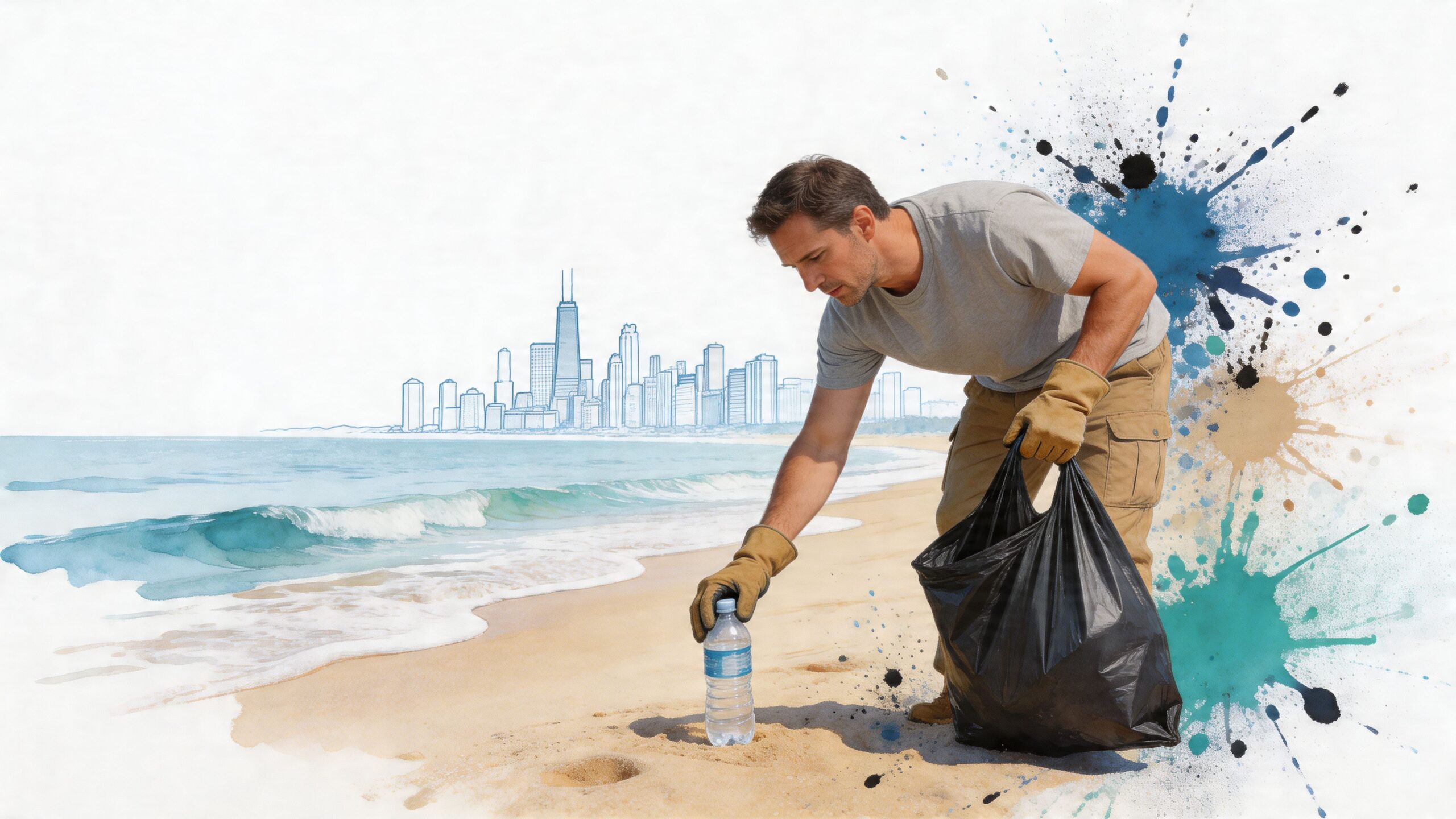

    I learned this the hard way. Letting go of things was never about the lifting for me. It was about the stories attached to every object, the little excuses that made me wait another day. Giving away something useful broke that habit. It taught me I could finish a task, even when it felt boring, emotional, or weirdly heavy for such a small job.

    That lesson sticks.

    As noted earlier, cardboard is one of the rare materials with a strong reuse and recovery story when people take the time to pass it along. You're moving a valuable resource in the right direction. That sounds small until you realize how many acts of community care work exactly like this. One person decides not to waste what could still help someone else.

    So be honest about your pile. Save the sturdy boxes you will use soon. Recycle the ripped, damp, or food-stained ones. Give the clean ones to U-Haul, Freecycle, Buy Nothing, Nextdoor, Craigslist, Give Back Box, or EcoShip Chicago, based on what you can handle today. Pick the option that matches your real energy, not the imaginary version of you who has a free afternoon and perfect follow-through.

    Your boxes need a next use.

    And you need proof that you can turn leftovers into service.

    If that kind of gritty, ordinary generosity means something to you, come meet Litter Caterpillars. We are a Chicago volunteer group that picks up trash, makes friends, and builds courage one weekend morning at a time. Giving away boxes is a quiet start. Cleaning a block with other people who care takes that same instinct and makes it visible.

  • MrBeast Ocean Cleanup: Your Guide to Local Action

    MrBeast Ocean Cleanup: Your Guide to Local Action

    I once stared at a jar of old jam in my fridge like it was a boulder. Then I walked outside, picked up one crushed bottle on the sidewalk, and felt lighter than I had in months.

    That’s why the mrbeast ocean cleanup story hits me so hard. A giant mess can freeze you. One small action can unfreeze you.

    That One Mess You Can't Clean

    I didn’t start by caring about ocean policy or plastic systems. I started because my own mess beat me.

    A bag of stale nuts from some failed health kick. A container from a trip I didn’t want to forget. That old jam jar in the back of the fridge. None of it weighed much, but to me each item felt welded in place. I’d look at it, feel shame, close the door, and tell myself I’d deal with it tomorrow.

    Tomorrow kept losing.

    A stressed man sitting at a messy wooden table with a large jar labeled jam.

    When a tiny mess feels huge

    That feeling is why people freeze when they hear about plastic in the ocean. The problem sounds too big, too far away, too ugly. You hear about trash in rivers, on beaches, tangled in weeds, lodged under docks, and your brain does what mine did with that jam jar.

    It says, “Nope. Too much.”

    I get that. I really do.

    Because paralysis doesn’t care about scale. A messy room can break your spirit the same way a polluted shoreline can break your hope. Different size, same feeling. You don’t move because you think your effort won’t matter.

    Sometimes the hardest trash to pick up is the first piece.

    What changed me wasn’t some grand plan. It was one outing, one bag, one miserable stretch of weather, one moment where I realized cleaning other people’s mess felt easier than facing my own. Strange, right? But that’s how a lot of us start. We borrow momentum from service.

    Why this story matters to regular people

    That’s what makes the mrbeast ocean cleanup story useful. I don’t mean useful as internet entertainment. I mean useful in your body, in your Saturday morning, in that stuck part of your life that needs a shove.

    MrBeast looked at an absurdly large mess and started anyway. He didn’t wait for the perfect emotional state. He didn’t solve the whole thing alone. He picked a direction and moved.

    That’s the part I want you to keep.

    If your room is a wreck, wash one cup. If your block is filthy, fill one bag. If the ocean problem makes you feel powerless, remember this. Every giant cleanup begins with somebody willing to look silly for doing something small.

    We love the dramatic before-and-after photos. But the miracle itself is more boring than that. Somebody bends down. Somebody gets their hands dirty. Somebody starts.

    What Was the MrBeast Ocean Cleanup

    The simplest way to explain #TeamSeas is this. Two creators asked the internet to help pay for trash removal, and they made the math easy enough for anyone to understand.

    MrBeast and Mark Rober launched #TeamSeas in October 2021. They set a goal to raise $30 million to remove 30 million pounds of trash. The campaign raised $30 million in 65 days from over 400,000 donors, and by July 2024 it had removed 34,080,191 pounds of trash from oceans, beaches, and rivers worldwide, according to Ocean Conservancy’s campaign wrap-up.

    The genius was the simplicity

    A lot of environmental messaging gets muddy fast. You hear a dozen terms, five organizations, three conflicting solutions, and your brain checks out.

    This campaign cut through that.

    • One dollar, one pound: You didn’t need a lecture to understand what your money did.
    • A clear finish line: People could see the target and rally around it.
    • Familiar faces: MrBeast and Mark Rober made a heavy topic feel approachable.

    It worked like a neighborhood potluck. One person doesn’t bring the whole meal. One person brings chips, another brings fruit, another brings a tray of pasta. Suddenly the table is full. That’s what happened here, except the table was global and the shared dish was cleanup.

    Why people joined so fast

    I think people responded because the ask felt clean.

    No maze. No vague promise. No “support awareness.” You give a dollar, a pound of trash gets removed. That kind of clarity is rare, and people trust clarity.

    Practical rule: If you want people to act, give them a mission they can repeat in one sentence.

    That’s true online, and it’s true on your block. If your cleanup pitch needs five minutes of explanation, people drift. If your pitch is “come help us fill bags and leave this place better than we found it,” people get it right away.

    The mrbeast ocean cleanup campaign was huge, but the engine was simple. That’s why it traveled.

    The Two-Pronged Attack on Trash

    A good cleanup plan doesn’t swing blindly. It picks targets.

    #TeamSeas used two very different tools for the same problem. I think of it like a two-front fight. One front tried to stop trash before it drifted farther downstream. The other front sent people out to remove what was already choking beaches and coastal areas.

    An infographic showing two organizations, The Ocean Cleanup and Ocean Conservancy, working towards clean oceans.

    The engineering side

    Part of the campaign’s money went to The Ocean Cleanup. Their job focused on rivers.

    The Ocean Cleanup deployed its Interceptor technology, autonomous and solar-powered river barriers with conveyor systems, in high-pollution rivers of the Dominican Republic, Guatemala, Jamaica, and Malaysia. The technology is designed to remove plastic from rivers before it can enter the ocean, as described in The Ocean Cleanup’s #TeamSeas partnership update.

    That matters because rivers are like conveyor belts for litter. If you’ve ever watched trash slide along a curb during hard rain, you already understand the logic. Water carries our laziness farther than we think. A bottle dropped inland doesn’t stay “local” for long.

    So this side of the mrbeast ocean cleanup effort acted like a gatekeeper. Catch the stuff while it’s still moving through a narrower channel. Don’t wait for it to scatter into a much larger body of water.

    The human side

    The other half went to Ocean Conservancy, which worked in a very different way. Less machine, more boots, gloves, grit.

    They organized volunteers for cleanups on beaches and in marine environments. They also went after ghost gear, which means abandoned or lost fishing gear that keeps causing harm long after people leave it behind.

    Here’s the cleanest way to see the difference:

    Partner Main approach What it looked like
    The Ocean Cleanup River interception with technology Interceptor systems catching plastic before it reaches the ocean
    Ocean Conservancy Volunteer-led removal in coastal and marine areas Organized cleanups, gear recovery, direct hands-on work

    I like this split because it mirrors real life. When we clean our homes, we need both. We need a trash can by the door so wrappers don’t pile up again. We also need one painful afternoon to clear the junk already covering the floor.

    Why both approaches mattered

    A lot of people want one perfect answer. There usually isn’t one.

    You need systems that prevent future buildup. You also need people willing to deal with the mess that already exists. If you only build machines, you miss the human labor. If you only send volunteers, you miss the value of intercepting trash upstream.

    A cleanup gets stronger when it combines prevention with removal.

    That’s a lesson you can steal for your own group. Don’t just host pickups. Learn the path trash travels in your area. Which alley dumps into which gutter? Which storm drain carries bottles into the river? Which corner keeps trapping cups and wrappers because the wind circles there?

    The smartest cleanup isn’t always the biggest one. It’s the one that understands the map.

    Lessons for Your Local Cleanup Crew

    The best thing about the mrbeast ocean cleanup isn’t that most of us can copy its scale. We can’t.

    The best thing is that we can copy its design.

    A family working together on an environmental map project with cleanup and park notes on a table.

    When I’ve seen local cleanup groups stall out, it usually isn’t because people are lazy. It’s because the mission feels fuzzy. Nobody knows where to go, what to bring, or whether the work mattered after it ended. Energy leaks out.

    A strong group fixes that with three moves.

    Make the mission stupid simple

    #TeamSeas had one sentence people could remember. Your group needs one too.

    Don’t say, “We are cultivating civic responsibility through sustainable environmental stewardship.” Nobody talks like that. Say, “We meet, we pick up trash, we leave with full bags.”

    That’s it.

    If you want volunteers, make joining feel light. A page like this guide to volunteer trash pickup events works because it answers the basic human questions fast. Where do I go? What do I bring? Will I feel awkward if I show up alone?

    Those are the actual barriers.

    Give people pride they can wear

    People return to groups that make them feel brave, useful, and seen.

    That doesn’t require celebrity. It requires texture. A group photo. A goofy tradition. A flag. A running joke. A nickname for the route. A ritual coffee stop after the work. These things sound small, but they keep people coming back when the weather turns bad and the novelty wears off.

    Here’s a simple comparison:

    • Weak cleanup group: “Please assist with litter abatement.”
    • Strong cleanup group: “Meet us Saturday. Gloves on at 9. We’re taking this block back.”

    The second one has pulse.

    Field note: Celebration is not fluff. It is how a cleanup becomes a habit.

    Show proof fast

    People need to see what changed.

    Post the bag pile. Take the before shot and the after shot. Keep a simple running log. If somebody spent their morning pulling soggy wrappers from weeds, don’t make them guess whether that effort mattered.

    A short video can help more than a long explanation, especially when people can watch the work happen in real time.

    You don’t need a viral campaign. You need repeatable trust. When people can see a place get cleaner, they start believing they can change other places too.

    And once they believe that, your crew stops feeling like a random volunteer event. It starts feeling like a team.

    Beyond the Stunt The Real Impact

    Some people hear “MrBeast” and roll their eyes. I understand why. Big internet campaigns can feel loud, polished, and a little unreal.

    But if you strip away the thumbnails and chatter, you still have to answer one plain question. Did trash get removed or not?

    In this case, yes.

    Results are stubborn things

    Ocean Conservancy, as #TeamSeas’ beaches and ocean partner, mobilized more than 172,000 volunteers across 73 countries for about 2,000 cleanups targeting ghost gear and other debris, according to The Ocean Cleanup’s #TeamSeas overview.

    That’s not abstract. That’s people waking up, traveling to a cleanup point, bending down, hauling waste, and going home tired.

    And if you care about ocean trash in practical terms, this kind of work is easy to connect to daily life. Fewer nets left drifting. Less debris sitting in coastal habitats. Fewer piles of plastic riding currents and tides.

    Don’t get trapped in motive debates

    I’ve wasted too much of my life waiting for perfect motives, mine and everyone else’s.

    Perfect motives are slippery. Results are easier to inspect.

    If somebody films a cleanup and the place is cleaner after, I care about the cleaner place. If your neighbor thinks your Saturday trash pickup is weird, but the corner stops looking like a dumpster, the corner wins the argument for you.

    That’s one reason I like practical guides on solutions for pollution in the oceans. They pull you away from online sniping and back toward the thing in front of you. Trash has mass. Bags have weight. A cleaner shoreline is visible.

    People can debate style all day. A filled trash bag is hard to argue with.

    The local lesson is simple. Don’t wait for everyone to admire your method. Work first. Let the cleaned space speak.

    Bringing It Home to Chicago

    Chicago will test your sincerity fast.

    You’ll get wind off the lake, slush in your shoes, broken glass near curbs, weird smells in the alleys, and that special kind of cold that makes your fingers feel like borrowed objects. If you still want to show up after that, you’re ready.

    A man picking up a plastic bottle on a beach in front of the Chicago skyline.

    Start safe and stay boring about it

    I mean “boring” as a compliment. Safe cleanup habits should feel repetitive.

    • Wear gloves: Don’t raw-dog street trash. Use sturdy gloves every time.
    • Dress for layers: Chicago weather lies. Start with layers you can remove.
    • Use a grabber if you have one: It saves your back and keeps your hands farther from sharp junk.
    • Work with a buddy: Streets move fast. So do bikes, scooters, and distracted drivers.
    • Skip dangerous items: If you find needles, leaking containers, or anything that feels off, leave it and report it through the right city channel.

    You don’t get extra points for being reckless. You just get hurt.

    Pick a route that sets you up to win

    Don’t begin with the nastiest stretch you can find. That sounds brave, but it often burns people out.

    Start with a route you can realistically finish. A park edge. One commercial block. A bus stop corridor. The strip near a school fence. You want a visible before-and-after. You want volunteers to leave feeling, “We did that.”

    That’s how people build appetite.

    A simple local education page on ocean plastic pollution and connected waterways can also help people see why inland litter matters. Chicago trash doesn’t stay neatly where it started. Wind and rain move it.

    What to bring on your first morning

    I like a short list better than a giant checklist.

    Bring this Why it matters
    Gloves Protects your hands from grime and sharp edges
    Trash bags Gives the outing a clear finish line
    Water You’ll feel better and stay out longer
    Closed-toe shoes Streets and shorelines both bite
    A friend Keeps things safer and less awkward

    If you can, go early. Weekend mornings are underrated. The city feels softer then. You can hear birds between traffic bursts. You can talk while you work.

    And when you finish, don’t rush off. Stand there for a second. Look at the ground you just changed. That moment matters more than people think.

    Start With Your Own Fence

    I keep coming back to Tom Sawyer and that fence.

    He got handed a chore and turned it into something other people wanted to join. That story sticks because it reveals a strange truth. A burden can change shape when you carry it with pride.

    That’s how I see the mrbeast ocean cleanup. A giant ugly task became a shared mission people wanted to take part in. Not because trash is glamorous. It isn’t. Because action feels better than helplessness.

    Your fence might not be an ocean. It might be the alley behind your building. It might be the block where bottles collect by the bus bench. It might be the pile in your own room that you’ve avoided for months because each object feels heavy with memory.

    Start there.

    A small brave act changes the mood

    You do not need a huge platform to begin. You need one bag, one hour, one friend, one route. That’s enough to change the temperature of a day.

    And often that’s enough to change you, too.

    Find the mess that keeps staring at you. Then make it your project, your ritual, your weird little badge of honor.

    That’s the whole thing. Clean your fence. Then invite somebody else to help paint.


    If you want a real-world place to start, join Litter Caterpillars. We pick up trash in Chicago, make room for friendship, and turn ordinary weekend mornings into something you can feel proud of. If you’ve been waiting to become the kind of person who shows up, this is a good place to begin.

  • Humboldt Park in Chicago: Culture, Green Spaces & More

    Humboldt Park in Chicago: Culture, Green Spaces & More

    I once stood in Humboldt Park with a trash bag in one hand and a mind full of static, and I remember thinking that the path in front of me looked a lot like my apartment floor. Leaves, cups, bottle caps, wrappers. Nothing dramatic. Just enough scattered mess to make a person feel tired before they even began.

    That morning changed how I think about humboldt park in chicago. Not because I suddenly became a park expert, but because I stopped moving through the neighborhood like a consumer and started moving through it like a neighbor.

    More Than a Park It Is a Feeling

    For a long time, my life felt like a room I couldn't reset. Papers piled up. Cables knotted themselves into little accusations. A coffee mug sat too long on a table because moving it felt heavier than it should have. I know how irrational that sounds. I also know some of you understand it immediately.

    A stressed man sitting on the floor surrounded by disorganized papers and cables near a window.

    Then I started spending time in Humboldt Park, and the neighborhood met me in a way polished places never do. It didn't pretend to be neat. It felt layered, busy, proud, weathered, musical, green, and sometimes frayed at the edges. That honesty helped me breathe.

    The place that mirrors you back

    When you walk through Humboldt Park, you feel contradiction in the best way. Water and traffic. Gardens and basketball courts. Quiet corners and loud joy. History in stone, movement on sidewalks, families cooking, kids playing, people arguing, laughing, resting, surviving.

    That mix matters to me because growth rarely looks clean when you're inside it.

    You don't need a perfect life to love a place well. You just need to show up with open eyes.

    I learned that exploring a neighborhood can become a form of service. You notice more when you care. You slow down. You ask who built this, who protects it, who gets pushed out, who still holds the line with music and food and memory. Humboldt Park invites those questions.

    Why this neighborhood stays with you

    Some places are easy to admire and easy to forget. Humboldt Park doesn't work like that. It sticks.

    A few things make it linger in your chest:

    • Its scale: You can feel the breadth of the green space and still sense the city pressing around it.
    • Its personality: The neighborhood doesn't flatten itself for outsiders.
    • Its stakes: Beauty lives here, but so do pressure, change, and struggle.
    • Its invitation: You can come to look, but the place implicitly asks whether you'll help.

    I think that's why Humboldt Park caught me at the right time. I needed somewhere that didn't sell escape. I needed somewhere that showed me that care is a practice. Pick up one piece. Walk one path. Learn one story. Return next week.

    That is a different kind of travel. It changes the traveler too.

    The Roots of Humboldt Park From Marshes to Metropolis

    One Saturday morning, I watched a volunteer with a grabber and a five gallon bucket stop beside a carved monument, pick up a crushed juice pouch, and say, "Somebody wanted this place to matter." That stayed with me. If you follow the spirit behind the Litter Caterpillars' work in Chicago parks, you start to read a neighborhood differently. A path is never just a path. It is evidence that people kept showing up.

    Land before identity

    Long before families circled the lagoon or children raced toward the playgrounds, this ground was marshland. Humboldt Park entered Chicago's West Park System in 1869, and development picked up after the Great Chicago Fire of 1871, according to the history of Humboldt Park collected by the Humboldt Park Portal.

    I come back to that beginning often because it carries a lesson the neighborhood still teaches. Cities do not rise from blank slates. They rise from wet ground, disruption, argument, labor, and hope. People saw rough land at the edge of the city and decided it could hold public life.

    That choice still echoes.

    A park built for relief

    Early planners shaped the park as a refuge from crowding and industrial pressure. You can feel that intention even now if you slow your walk and pay attention to how open space changes your breathing.

    The homes around the park multiplied as the area grew. Transit widened access. Apartments, bungalows, and two flats gathered around the green space until the park became part of daily survival, not a pretty extra pinned onto a map.

    I love that history because it makes service feel practical. Relief is not abstract. Relief is shade, room, clean paths, water, benches, and a place where your mind can settle for a minute. When neighbors protect a park, they protect that relief for strangers too.

    What monuments really say

    The statues and monuments around Humboldt Park are records in stone. Immigrant communities, including German, Scandinavian, Polish, Italian, Ukrainian, and Russian Jewish residents, left visible marks on the neighborhood. The Alexander von Humboldt statue went up in 1892, and other cultural monuments followed, as noted in that same historical record.

    I do not see those works as decoration. I see families insisting that memory deserved public space. A monument says that the people who placed it wanted their children to grow up with lineage, not just an address.

    That matters in Humboldt Park because each generation inherited more than property lines. It inherited symbols, rituals, and the question of how to care for what someone else carried here first.

    Built in waves, changed by people

    By the 1930s and 1940s, the surrounding community had reached a peak population of 80,835 in 1930 and 79,329 in 1940, according to the same historical account. I picture crowded kitchens, workers on porches after dark, kids cutting through blocks they knew by sound as much as sight.

    Here is the shape of that transformation:

    Era What changed
    Marshland period The area existed as wetter open ground before formal park development
    After 1869 Chicago established the park and gave the area a civic center
    After 1871 Development sped up as people moved outward and built homes
    Immigrant decades Communities added monuments, institutions, parades, and public identity

    Later, Humboldt Park became firmly tied to Puerto Rican life, activism, and cultural defense in Chicago. That chapter did not wipe away the earlier ones. It joined them. That layering is the defining story. A neighborhood becomes itself through arrivals, losses, organizing, and return.

    Why these roots matter now

    When I walk through Humboldt Park, I do not just see old design choices or a sequence of historic eras. I see generations practicing the same stubborn act. They made room for community, then fought to keep that room meaningful.

    That is why history here feels personal. If you come only to consume the neighborhood, you miss its strongest invitation. Humboldt Park asks you to notice what was built for public good, who kept it alive, and what kind of neighbor you want to become once you know the story.

    Memory carries work inside it.

    Discovering the Crown Jewel The Park and Its Treasures

    The first time I tried to understand Humboldt Park, I made the mistake a lot of visitors make. I looked for the prettiest view first. Then I watched a parent steady a bike near the fieldhouse, a teenager cut across the path with a basketball under one arm, and an older man pause to pull a stray bottle away from the curb before it rolled into the grass. That small act changed my route. I stopped chasing scenery and started following use.

    An infographic titled Humboldt Park: A Walk Through Its Treasures highlighting four main park features.

    Start where people gather

    I still begin near the fieldhouse because it gives me the truth of the park right away. Humboldt Park spans 197.26 acres and includes 32 facilities, with spaces that range from an inland beach to sports fields and renovated playgrounds, according to the Chicago Park District page for Humboldt Park.

    A park that large holds more than one version of public life. You can feel that within minutes. One path carries people heading somewhere specific. Another holds strollers, slow conversations, and kids zigzagging wider than the sidewalk was built for. If you want to know what a neighborhood values, watch where people return without being told.

    That is where the Litter Caterpillars spirit makes sense to me. Service starts with attention. You notice who is using the space, what they need from it, and what kind of care keeps that use possible.

    Follow the pressure points

    Once I leave the fieldhouse area, I pay attention to the zones that absorb the most activity. Courts, benches, play areas, and the edges of fields collect the leftovers of a busy day. The Park District also notes active recreation areas such as sports courts and play spaces, and those are often the first places where wear shows up.

    I do not read that as a flaw. I read it as a map.

    If you have ever joined a cleanup, you know this already. A candy wrapper caught at a fence line, cups near a bench, bottles along a path curve. These are tiny signs of human traffic. They show you where joy happened, where people lingered, where maintenance needs backup from the people who love the place.

    Practical rule: Start care where use is heaviest. Paths, benches, court edges, and playground perimeters usually need the first pass.

    Walk the water slowly

    Then I head for the lagoon and boathouse. My pace always changes there.

    The water gives the park another language. The fieldhouse and courts speak in motion. The lagoon speaks in reflection, light, and patience. I have watched kids lean over the railing to look for fish, couples stop talking long enough to hear birds in the reeds, and solo walkers soften their shoulders without realizing it.

    The boathouse carries real presence. It anchors the scene without asking for attention. You do not need a formal lesson to feel that this part of Humboldt Park has held memory for a long time.

    When I reach the water, I usually go quiet for a minute. That pause matters. It reminds me that public space is not only for activity. It is also for repair.

    Let the surprises teach you

    One reason I keep bringing people here is that Humboldt Park refuses the flat version of what an urban park is supposed to be. You can find the inland beach, open green stretches, athletic spaces, play areas, formal structures, and tucked-away moments of calm in one visit, as noted by the Park District.

    That variety changes how you move through the place.

    • If your body needs motion, head toward the courts and fields.
    • If your mind needs settling, stay near the lagoon and bridges.
    • If you are with kids, let the playground energy shape the route.
    • If you want to serve, scan the busiest edges first and carry a bag and gloves.

    I keep this guide to Chicago parks for service-minded exploring bookmarked for that reason. It helps me treat green space as more than a backdrop. It becomes a place where a walk can turn into care.

    A visit can become a practice

    My favorite walks in Humboldt Park follow a simple rhythm. I begin where the neighborhood is most visible. I move toward the water when I need to listen better. I circle back through the active areas with sharper eyes than I had at the start. By the end, I am not only admiring the park. I am asking what I can do for it.

    That question is indeed the treasure here.

    Humboldt Park gives you beauty, room, history, and relief. It also gives you a chance to practice belonging in public. If you accept that invitation, even in a small way, your walk changes. You leave with more than photos or a pleasant hour. You leave a little more useful than when you arrived.

    The Cultural Heartbeat of Paseo Boricua and Beyond

    The first time I walked east from the park toward Division Street, the neighborhood stopped being scenery and started speaking directly. Not politely. Not softly. Clearly.

    A watercolor illustration of the Humboldt Park neighborhood in Chicago featuring Puerto Rican flags and shops.

    The steel Puerto Rican flags don't whisper. They announce. They arch over the street like guardians, and when you pass beneath them, you understand that identity here is public on purpose. It has been defended. It has been fought for. It refuses to shrink itself for anyone's comfort.

    A street that remembers out loud

    Paseo Boricua feels alive in a way that goes beyond commerce. Murals carry memory. Storefronts hold continuity. Music leaks from somewhere even when you can't locate the speaker. You can grab a coffee, a pastry, a hot meal, and if you're paying attention, you also pick up a lesson in what community looks like when people insist on staying visible.

    I love places like this because they teach without lecturing. You learn by walking. You learn by eating. You learn by noticing who greets whom by name.

    If you're new to Chicago and trying to build real community instead of collecting shallow experiences, I think this kind of neighborhood teaches the right instinct. It teaches you to return. It teaches you to listen. It teaches you to move slowly enough to make room for other people. That's also why guides on how to make friends in Chicago through shared activities feel more useful to me than any list of trendy spots.

    Pride and pressure live on the same block

    I don't think it's honest to talk about Humboldt Park's beauty without talking about strain. The neighborhood carries strong Puerto Rican cultural identity, and that identity exists under pressure.

    The challenge isn't abstract. The Night Ministry's Humboldt Park community spotlight notes that gentrification is displacing longtime Puerto Rican residents, with rising rents correlating with increased litter from construction and tourism along Paseo Boricua. That burden falls hardest on lower-income parts of the community.

    That sentence holds a lot. Housing pressure. Cultural pressure. Environmental pressure. They don't arrive one at a time.

    A wrapper on the curb can look small until you ask why a block feels less cared for than it used to. Then you start seeing systems, not just trash.

    What care looks like on a changing street

    When a neighborhood changes fast, people often talk about aesthetics first. Cleaner storefronts. New paint. New menus. I think that's the shallow reading. The deeper question is who gets to remain, who gets heard, and who shoulders the mess left behind by investment that wasn't designed with them in mind.

    That mess can take a few forms:

    • Construction spillover: Debris and disorder around active redevelopment
    • Tourism leftovers: Extra foot traffic that treats a cultural corridor like a backdrop
    • Neglect by uneven attention: Some blocks get polished while others absorb the burden

    I don't say that to shame visitors. I say it because I am one, too, every time I enter a place I didn't build. The point isn't guilt. The point is responsibility.

    Here is a quick look at the tension I feel on Paseo Boricua:

    What you feel What you should also notice
    Celebration The neighborhood protects cultural identity in public space
    Warmth Longtime residents have built that warmth over years of care
    Excitement New attention can bring pressure as well as visibility
    Beauty Beauty needs maintenance, advocacy, and respect

    This short video gives a better feel for that street-level energy and pride than a paragraph ever could.

    Eat, look, and act accordingly

    When I spend time in this part of Humboldt Park, I try to let my choices match my values. I eat local. I look at murals long enough to understand they were made by somebody, not produced for my feed. I throw things away properly. I notice corners that need care. I try to be the kind of visitor whose presence lightens a place, not one whose presence extracts from it.

    That mindset changed my whole relationship with the neighborhood. Humboldt Park in Chicago stopped being a destination. It became a relationship.

    And relationships ask something from you.

    Finding Your Place How to Truly Connect and Contribute

    I think a lot of us know how to consume a neighborhood. We know how to find the photo spot, the meal, the walk, the quick recommendation. Fewer of us know how to join a place without taking from it.

    That shift matters most in a neighborhood like Humboldt Park, where beauty and pressure live side by side. If you care about the place, eventually you have to move from admiration to participation.

    Service changes the angle of the whole day

    I learned this the hard way. Cleaning my own mess at home often felt impossible. Cleaning a block with other people felt doable, even weirdly joyful. The task didn't shrink. My isolation did.

    That is the strange gift of outdoor service. You stop spiraling in your own head because your hands have something clear to do. Bend down. Pick it up. Bag it. Keep walking. Say hi to the person next to you. Repeat.

    A diverse group of people gardening and painting outdoors together in a sunny, watercolor-style community scene.

    I often think of Tom Sawyer and the fence. He took a chore and turned it into shared meaning. Community cleanup can work like that. Not because we pretend hard work is easy, but because we discover that courage gets lighter in company.

    Why Humboldt Park needs people who return

    A lot of neighborhood guides stop at where to walk or eat. They don't say much about environmental upkeep, green space stress, or what regular people can do about the everyday wear a beloved place absorbs.

    That's one reason I take seriously the point made in the Wikipedia overview of Humboldt Park, Chicago, which notes that recent environmental health trends like air quality, green space maintenance, and climate resilience are often overlooked in typical guides, and that community-led cleanups during extreme weather can help address litter and erosion risks tied to gentrification and park overuse.

    I like that idea because it gives ordinary people a real role. You don't need a title to help the park hold. You need gloves, attention, and the willingness to come back.

    If a neighborhood gives you shade, beauty, memory, and gathering space, returning the favor is not complicated. It is a practice.

    Ways to join without overthinking it

    People often hesitate because they think service has to become a giant identity shift overnight. It doesn't. You can begin small and still begin honestly.

    Try one of these:

    1. Walk with a bag once. Take a slow lap through the area and pick up what you can safely reach.
    2. Choose one repeat corner. Stewardship gets real when you notice change over time.
    3. Bring one friend. Conversation turns a task into a ritual.
    4. Join an organized cleanup. Structure helps if you're new and don't want to figure everything out alone.

    If you want that last option, one practical route is to browse Chicago volunteer opportunities with cleanup events. Organized groups can make the first step easier because the supplies, timing, and social awkwardness are already handled.

    What to bring and how to show up

    You don't need much, but a little preparation changes everything.

    • Wear clothes you can move in: Comfort matters more than style on a cleanup morning.
    • Use sturdy gloves: Your hands will thank you.
    • Bring water: Care for the neighborhood also means care for yourself.
    • Stay observant: You are not there to prove toughness. You are there to help safely.
    • Keep your expectations humble: One morning won't fix everything. It will still matter.

    I also think the emotional posture matters. Don't arrive as a savior. Arrive as a participant. The neighborhood already has history, leaders, protectors, and rhythms. Your job is to contribute, not take over.

    The deeper reason to do it

    People ask me why community cleanup feels so different from private self-improvement. I think it's because public service breaks the loop of self-obsession. Your anxieties don't disappear, but they stop being the only thing in the room.

    Humboldt Park in Chicago is a strong place to learn that lesson because the neighborhood gives you immediate feedback. A path looks better. A corner feels lighter. A conversation starts. You remember what your body can do when your heart has a purpose.

    That kind of morning doesn't just improve a park. It trains a person.

    Your Invitation to Transformation Starts Here

    So what is Humboldt Park?

    It is a historic green space shaped by long memory. It is a neighborhood where culture stands in public and refuses to apologize. It is water, fieldhouses, statues, play areas, murals, food, struggle, laughter, and the stubborn dignity of people who keep showing up for where they live.

    But if I leave it there, I miss the part that changed me.

    A place that asks more from you

    Humboldt Park in Chicago asks a better question than most destinations ask. Not just, did you enjoy yourself. It asks, how did you arrive, and what did you leave behind.

    That question can sting a little. I think that's good. We need places that interrupt our habit of moving through the world as if every beautiful thing exists for our consumption. Humboldt Park pushes back against that mindset by being real. It has too much history to become a prop. It has too much community to become a fantasy.

    Transformation isn't abstract here

    You can see transformation everywhere in this neighborhood if you know where to look. Marshland became a major urban park. Immigrant groups turned unfamiliar ground into home. Puerto Rican Chicago turned cultural pressure into visible pride. A visitor bends down to pick up a single bottle and suddenly understands that service can reorganize the inside of a life.

    That last transformation may sound small. I don't think it is.

    I think many of us are waiting for a dramatic breakthrough when what we really need is a faithful practice. One walk. One returned visit. One conversation. One cleanup morning. One choice to act like a neighbor instead of a spectator.

    The first honest act of care is often tiny. Its effect on your character isn't.

    Why I keep coming back

    I keep coming back because this neighborhood reminds me that hope is not a mood. It is maintenance. It is memory plus effort. It is people refusing to let a place become disposable.

    And on a personal level, I keep coming back because I need that reminder myself. I still know what it feels like to be overwhelmed by clutter, avoidance, and the heavy little objects of daily life. Service doesn't erase that struggle. It gives it direction.

    Sunlight helps. Fresh air helps. Friendship helps. Work that matters helps most.

    Your next step can be simple

    You do not need to master Humboldt Park. You do not need the perfect itinerary, the perfect language, the perfect volunteer résumé, or the perfect understanding of Chicago history before you begin.

    You just need to start with respect.

    Walk the park slowly. Look at what people built there. Eat in the neighborhood with gratitude. Learn why the flags matter. Notice what pressure looks like on the ground. And when you're ready, help carry a tiny piece of the load.

    That is how a place becomes part of you. That is how you become useful to a place in return.


    If this stirred something in you, take the next step with Litter Caterpillars. Join a cleanup, meet people who like doing hard good things together, and let one weekend morning in Chicago become the start of your own transformation.