Tag: litter caterpillars

  • 10 Transformative Adventures at a Forest Preserve in IL You Can’t Miss in 2026

    10 Transformative Adventures at a Forest Preserve in IL You Can’t Miss in 2026

    I know what it’s like to feel stuck. Imagine your life is a refrigerator full of old jam and bags from failed health kicks. That was me. Each piece of trash felt like a 500-pound weight, a story I couldn't move past. I had to end a bad relationship to finally see it. I realized I needed to face the things that terrified me: cleanliness, consistency, and being brave enough to start over.

    So, I started picking up trash. It's a strange hobby, I know. But cleaning up other people's messes felt so much easier than tackling my own. And you know what? I found a weird kind of fun in it, especially when things got tough. I remember my very first cleanup, huddled under a tree with two friends during a freak Chicago hailstorm. We were shivering. Ubers were canceling. But in that moment, I realized something powerful. Suffering together adds flavor to the story. It moves the plot forward.

    That’s how I started Litter Caterpillars. We believe in showing up—for our city, for our parks, and for ourselves. The spaces in this guide, from a sprawling forest preserve in IL to a dense city park, are not just land. Think of them as canvases for your own transformation. Let me show you 10 places where you can find that for yourself.

    1. Schiller Woods Forest Preserve: A Gateway to the Des Plaines River Trail

    You step into Schiller Woods and feel it instantly. The city's hum fades away, replaced by the rustle of ancient oak trees. This classic forest preserve in IL is more than just green space; it's a living portal, a doorway to the vast Des Plaines River Trail. For me and my crew, it’s a frontline where we protect a vital waterway.

    Cleaning along the riverbanks here feels incredibly direct. It’s like being a goalie for the environment. I remember one Saturday morning, we were pulling out forgotten fishing lines, picnic leftovers, and all the usual city debris from the water's edge. Each piece I grabbed was one less item that could float downstream and pollute the river. It's a powerful act of interception.

    Why You Should Go

    Schiller Woods is a perfect spot whether you're new to this or a seasoned pro. The trails are mostly flat and easy, so you can cover a lot of ground. Plus, its connection to the Des Plaines River means your work sends ripples of positive change through an entire ecosystem.

    "When you tackle the litter here, you feel like you're healing a small part of something much larger. You watch the river flow on, relentless and steady, and you know you helped it stay clean."

    Get Involved:

    • Your Mission: Focus on the riverbanks. That's where trash gets stuck before the water can sweep it away.
    • Actionable Tip: You should bring waders or waterproof boots. This lets you safely grab the litter tangled just offshore that other people can't reach.
    • Learn More: Find details on parking and trail maps on the Forest Preserves of Cook County website.

    2. The Chicago Botanic Garden (Glencoe)

    When you walk into the Chicago Botanic Garden, you don't feel like you're in a typical forest preserve. It's more like a perfectly curated masterpiece of nature. This 385-acre living museum isn’t just for looking at beautiful flowers; it’s a powerhouse for restoring native habitats. For us, it offers a unique chance to protect delicate ecosystems where manicured gardens and wild nature meet.

    I once volunteered during a prairie cleanup here, working right alongside their expert staff. We weren't just picking up stray wrappers. No. We were learning to identify and remove invasive plants that were choking out the native grasses. Pulling each invasive thistle felt like a direct action, a way to help the local ecosystem flourish. It was a hands-on lesson in ecological stewardship.

    Why You Should Go

    The Garden is an amazing place if you want a deeper, more educational cleanup experience. The work here is about precision and care, like a surgeon protecting sensitive plant life while removing litter. Your effort supports the conservation of rare and beautiful native Illinois flora in a truly world-class setting.

    "Working here is like being a surgeon for the prairie. You’re not just clearing debris; you are making careful, intentional moves to help a beautiful, complex system heal and thrive."

    Get Involved:

    • Your Mission: You should focus on the edges of the naturalized areas, like the Skokie River Corridor and the Dixon Prairie. That’s where litter and invasive species often sneak in.
    • Actionable Tip: Partner up with the Garden’s volunteer coordinator. They can align our cleanup efforts with their seasonal needs, like seed collecting or invasive species removal days.
    • Learn More: Discover volunteer opportunities and plan your visit on the Chicago Botanic Garden website.

    3. Lincoln Park: Urban Oasis, Crucial Cleanup Zone

    You might not think of Lincoln Park when you hear “forest preserve in IL,” but don't be fooled. This sprawling urban oasis is a critical ecosystem on the front lines of our city. It stretches for miles along Lake Michigan, a mosaic of beaches, gardens, and wooded paths right in the heart of Chicago. For us, its high visibility and heavy foot traffic make it a top priority for litter interception.

    I remember leading a cleanup at North Avenue Beach right after a big storm. The sheer amount of plastic debris washed ashore was jarring. It was a plastic graveyard. But as my group and I worked, clearing section by section, we saw the immediate difference. We weren't just cleaning sand; we were stopping that pollution from going back into the lake, protecting a vital source of fresh water for millions of people.

    Why You Should Go

    Lincoln Park's incredible diversity makes it an ideal spot for any kind of cleanup. You can tackle high-traffic picnic areas one day and feel like you're in a remote nature sanctuary the next. Its location makes it super accessible, letting you organize focused, neighborhood-based efforts that have a massive impact.

    "Cleaning Lincoln Park is a direct act of service to the city itself. You’re protecting a shared space that brings joy to so many, and you can see the immediate, positive result of your work right before your eyes."

    Get Involved:

    • Your Mission: Focus on areas right after big events or storms. That's when debris is most concentrated, especially along the lakefront.
    • Actionable Tip: You should divide and conquer. Split the park's six-mile stretch into zones and assign a team to each. This systematic approach ensures no area gets missed.
    • Learn More: Connect with the Lincoln Park Conservancy for resources and to coordinate your cleanup efforts with their ongoing work.

    4. Humboldt Park: Urban Preservation and Community Power

    Humboldt Park stands as a testament to the power of a community green space. This 207-acre park on Chicago's West Side isn't just a bunch of trees and fields; it's the vibrant, breathing heart of its neighborhoods. It’s an urban forest preserve in IL where our mission goes beyond just picking up litter and into building real, human connections.

    I’ll never forget a cleanup we organized around the lagoon. We partnered with a local neighborhood group, and what I thought would be a small event blossomed into a full-on community gathering. We shared stories, we shared donuts, and we shared a common goal. Removing bags of storm debris and picnic trash from the water's edge felt like we were restoring a community landmark, not just cleaning a park.

    Why You Should Go

    Humboldt Park is where our work feels most connected to people. It's the perfect spot if you want to see your efforts build community pride. The mix of manicured parkland, natural wooded areas, and the iconic lagoon presents a unique set of challenges and incredibly rewarding moments.

    "Cleaning here is about more than the environment; it’s about showing love for a neighborhood. You can see the 'before and after' in the landscape and in the smiles of the people who call this park their own."

    Get Involved:

    • Your Mission: You should concentrate on the lagoon edges and the natural wooded sections where trash often gets hidden from view.
    • Actionable Tip: Schedule cleanups for early weekend mornings, between 8 and 10 AM. This is a sweet spot for safety and attracting the most community volunteers before the park gets too busy.
    • Learn More: Discover more about this historic park on the Chicago Park District website.

    5. Grant Park: Restoring Chicago's Iconic Front Yard

    While it's not a traditional forest preserve in IL, Grant Park is Chicago's public heart. It's our sprawling front yard along Lake Michigan. For us, cleaning here is an act of pure civic pride, a high-visibility effort that shows thousands of people what community care looks like in action. It’s about protecting the city's most iconic gathering space.

    I’ll never forget a post-festival cleanup we organized. The sheer volume of discarded items was overwhelming. It looked like a party had exploded. But as we worked, dozens of passersby stopped to thank us, and a few even jumped in to help. We weren't just picking up trash; we were inspiring a sense of collective ownership over this incredible public asset.

    Why You Should Go

    Grant Park is the ultimate stage for showing what we do. The high foot traffic means your efforts are seen by everyone, creating a powerful recruiting opportunity. By partnering with the Grant Park Conservancy or joining post-event cleanups, you can directly support Chicago’s cultural backbone and keep its most famous park beautiful.

    "Cleaning in Grant Park feels different. You’re not hidden away in the woods; you are on full display, restoring a space that belongs to everyone. Each piece of litter you grab is a direct contribution to the city's spirit."

    Get Involved:

    • Your Mission: Focus on the less-maintained borders of Millennium Park and Museum Campus, where trash often piles up.
    • Actionable Tip: You can schedule your cleanup to coincide with a major cultural event. You’ll find more volunteers and create opportunities to partner with event organizers.
    • Learn More: Connect with the Grant Park Conservancy to find official volunteer events and coordinate your own group cleanup.

    6. Busse Woods Forest Preserve (Rolling Meadows/Des Plaines)

    Busse Woods feels like you've stepped into a completely different world. With over 3,000 acres, it’s a vast expanse of woodlands and wetlands that shows what a dedicated forest preserve in IL can truly protect. This isn't just a park; it's a genuine ecosystem where our work feels less like tidying up and more like real habitat restoration.
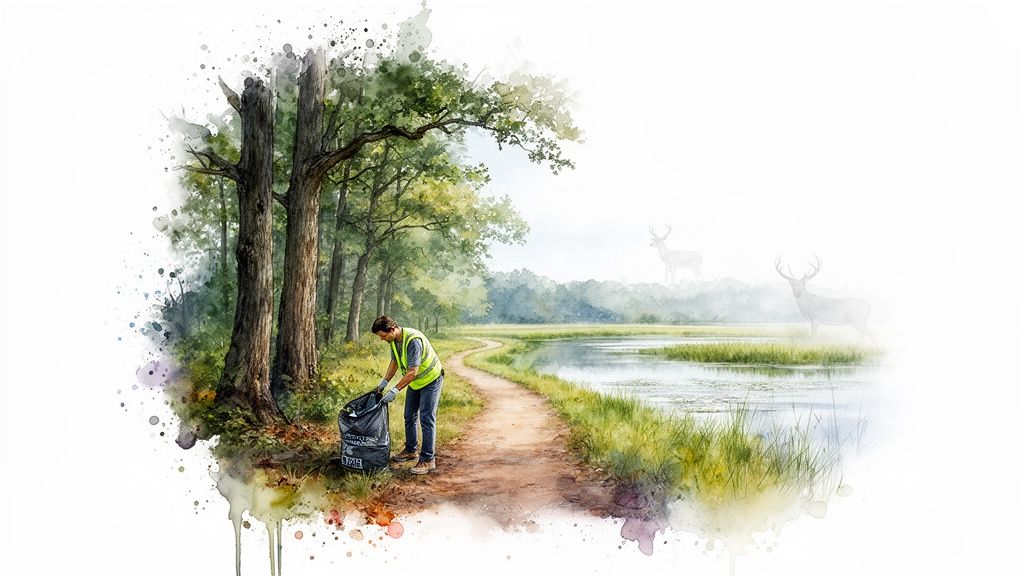
    A person in a high-visibility vest cleans a forest path beside a lake, with two deer in the misty background.

    Our first volunteer day trip here was an eye-opener for me. We partnered with the Forest Preserve District and focused on a section of trail near the elk pasture. Instead of just picking up wrappers, we were learning to identify and remove invasive garlic mustard. It felt like we were giving the native wildflowers a fighting chance, directly contributing to the health of the entire forest understory.

    Why You Should Go

    Busse Woods is perfect for you if you want to go deeper than just a surface-level cleanup. It’s an opportunity to learn about habitat restoration and see the direct impact of removing invasive species. The sheer scale of the preserve means our efforts are crucial for maintaining its wild character for both wildlife and visitors.

    "Working in Busse Woods is like being a gardener for a giant, wild forest. You're not just picking up trash; you're helping native plants thrive and protecting the homes of countless animals. It’s a powerful feeling."

    Get Involved:

    • Your Mission: Focus on trail edges and undergrowth for invasive species removal and accumulated litter. Its immense size means there's always a new area to restore.
    • Actionable Tip: You should organize a carpool day trip. Since it’s a bit of a drive from the city, making it a group event with shared transport builds community and makes it easier for everyone to participate.
    • Learn More: Explore volunteer opportunities and preserve details on the Forest Preserves of Cook County website.

    7. Garfield Park (Douglas Park Historic District): A Partnership in Urban Renewal

    Garfield Park isn't just a park; it's the heart of a community. Spanning 185 acres on the West Side, its historic lagoons, formal gardens, and the stunning Garfield Park Conservatory act as a vital green haven. For us, this isn't a typical forest preserve in IL; it's a chance to build deep community partnerships and restore a piece of Chicago's legacy.

    I'll never forget a cleanup we did near the lagoon. We worked alongside a neighborhood group that had been caring for the park for years. We weren’t just picking up litter. No, we were sharing stories, learning about the area’s history, and becoming part of a local movement. It showed me that our work here is about more than just trash; it's about solidarity.

    Why You Should Go

    Garfield Park is where you can make a profound, visible impact. The need is significant, but the potential for collaboration with groups like the Garfield Park Conservancy is even greater. This is a place to invest your energy where it will be seen, felt, and celebrated by the people who call this park their home.

    "Cleaning up here is an act of respect. You're showing the community that you see their efforts and want to stand with them. It’s about building trust, one piece of litter at a time."

    Get Involved:

    • Your Mission: Your first goal should be to build relationships. You need to connect with local organizations before you even plan a cleanup.
    • Actionable Tip: Schedule early morning cleanups (7-9 AM) with clear safety protocols. This respects the park's daily rhythm and ensures your volunteers feel comfortable.
    • Learn More: Discover the incredible community work happening and see how you can join in by exploring our guide to Garfield Park.

    8. Navy Pier Lakefront & Easternmost Edge

    While not a traditional forest preserve in IL, the public lakefront surrounding Navy Pier offers a unique and vital urban cleanup frontier. The pier itself is private, but the surrounding pedestrian paths and shoreline are where the city’s energy meets Lake Michigan’s vastness. This intersection creates a high-impact zone for our cleanup efforts, protecting a world-renowned waterfront.

    I’ll never forget an early morning cleanup we organized here. The city was just waking up, and we patrolled the eastern edge, collecting countless plastic bottles, food wrappers, and windblown debris. With the iconic skyline behind us, every bag we filled felt like a direct gift back to the city and the lake. It was like giving Chicago a thank-you note.

    Why You Should Go

    The Navy Pier lakefront is an incredible spot to show the power of community action in a highly visible area. The constant foot traffic means there is always work to be done, and the urban setting allows us to engage with tourists and locals alike, spreading awareness about litter prevention.

    "Cleaning here is a powerful statement. You’re standing at the edge of one of the world's great cities, physically stopping pollution from entering one of the world's great lakes."

    Get Involved:

    • Your Mission: You need to target the water’s edge and the rocky revetments along the easternmost point where trash gets trapped by the waves.
    • Actionable Tip: Schedule your cleanups for early mornings or weekdays to avoid the largest crowds. This gives you better access and makes the work much more efficient.
    • Learn More: Coordinate with the Navy Pier sustainability team for access and to see how your efforts can support their larger environmental initiatives.

    9. Des Plaines River Corridor & Restoration Areas

    The Des Plaines River isn't just one forest preserve in IL; it's a vital artery flowing through dozens of them. It snakes over 80 miles, a long, winding corridor connecting communities and ecosystems. For us, this isn't a single site but a massive, linear opportunity to defend an entire watershed from pollution.
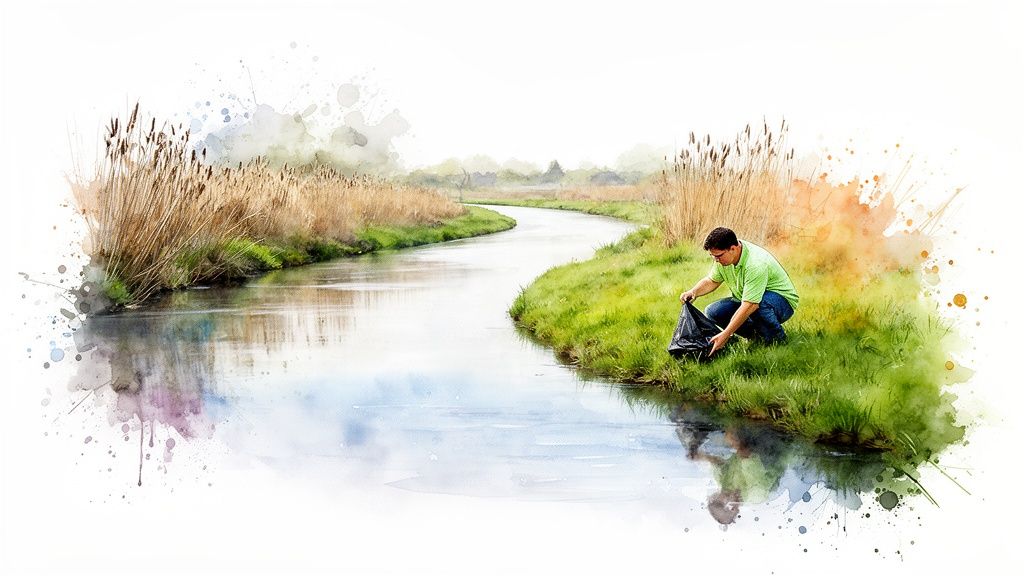
    A man in a green shirt cleans up litter by a winding river with reeds in watercolor.

    I think of the river as a story that we can help rewrite. We've worked at access points from the Salt Creek confluence all the way north, and the mission is always the same: stop trash before it travels. A single plastic bottle you remove here won't end up miles downstream, and that’s a victory you can see and feel in real-time.

    Why You Should Go

    The Des Plaines River Corridor is perfect for you if you want to see your impact scale up. Cleaning just one section contributes to the health of the entire river system. It’s an ideal setting for ongoing projects, where you can "adopt" an access point and witness its transformation week after week.

    "Working along the river feels like you're part of a relay race for conservation. Every cleanup event passes the baton of a cleaner waterway to the next community downstream."

    Get Involved:

    • Your Mission: You should focus on the riparian zone—that critical area where land meets water. This is where litter gets snagged in reeds and roots.
    • Actionable Tip: You can partner with a group like the Des Plaines River Watershed Group for larger, coordinated cleanups that will amplify your impact.
    • Learn More: Discover more about the many access points by exploring our guide to the Des Plaines River Trail.

    10. Cantigny Park & Neighboring Woods (Wheaton/DuPage): A Fusion of History and Habitat

    Cantigny Park offers something different. It’s a beautifully curated estate where manicured gardens meet authentic woodland habitat. While not a traditional forest preserve in IL, its 500 acres in Wheaton represent a significant commitment to preserving natural spaces. For us, it’s an opportunity to blend our cleanup mission with history, education, and community partnership.

    I think of it as a destination cleanup. We once organized a day-trip here. We started the morning by clearing debris from the edges of the woodland trails, where nature meets the more formal park areas. After our work, we explored the museums and gardens. It turned a simple cleanup into a rich, rewarding experience for everyone, showing that stewardship can be part of a larger, wonderful day out.

    Why You Should Go

    Cantigny is ideal for a more structured volunteer event. The park is well-maintained, but the borders between the wilder sections and curated landscapes are prime spots for stray litter. It’s a perfect place to introduce new volunteers to our work in a setting that feels safe, inspiring, and full of other activities.

    "Cleaning up at Cantigny feels like you’re protecting a living museum. You’re not just picking up trash; you’re helping preserve a piece of Illinois history and its natural legacy for families and visitors."

    Get Involved:

    • Your Mission: Focus on the woodland trail edges and the borders of the native plant gardens. These transitional zones are where litter often gets overlooked.
    • Actionable Tip: You must contact the park’s volunteer office beforehand to coordinate your group's visit. This can open doors for partnerships and ensure you’re helping in the most impactful way.
    • Learn More: Plan your trip and explore partnership opportunities on the Cantigny Park website.

    Top 10 Illinois Forest Preserves & Parks Comparison

    Site 🔄 Implementation Complexity ⚡ Resource Requirements 📊 Expected Outcomes (⭐) 💡 Ideal Use Cases ⭐ Key Advantages
    Millennium Park & AT&T Plaza High — permit coordination & crowd management Medium — volunteer teams, early-morning staffing, park coordination ⭐⭐⭐⭐ — immediate visible improvement & media attention Urban volunteer recruitment; high-visibility campaigns Partnerships with city/cultural institutions; strong media appeal
    Chicago Botanic Garden (Glencoe) Medium — sensitive habitats require coordination with staff Medium — trained volunteers, transport for urban groups, educational materials ⭐⭐⭐⭐ — habitat restoration & volunteer retention Ecology-focused cleanups and educational workshops Established volunteer network; strong education potential
    Lincoln Park High — large geographic scope and multi-agency logistics High — many volunteers, equipment, ongoing scheduling ⭐⭐⭐⭐ — sustained lakefront and neighborhood impact Rotating weekly zones; large-group lake/beach cleanups Diverse ecosystems for varied volunteer experiences; strong recruitment
    Humboldt Park Medium — safety planning and community trust-building Medium — consistent volunteer commitment, local partnerships ⭐⭐⭐⭐ — neighborhood pride and meaningful environmental justice impact Building community relationships in underserved areas Strong local engagement; visible neighborhood benefits
    Grant Park High — event schedules, permits, dense crowds High — large volunteer drives, coordination with institutions ⭐⭐⭐⭐⭐ — maximum visibility and media/social reach Media-focused recruitment; post-event cleanups Iconic location; high volunteer influx and partnership potential
    Busse Woods Forest Preserve Medium — transportation logistics to suburban site Medium — trail tools, day-trip coordination, fewer volunteers needed ⭐⭐⭐⭐ — strong habitat and trail preservation outcomes Authentic forest preservation and trail maintenance trips True natural preserve experience; safer, less-crowded work
    Garfield Park (Douglas Park Historic District) Medium–High — community engagement and safety protocols Medium — regular volunteer cadence, conservatory coordination ⭐⭐⭐⭐ — deep community impact and restoration gains Long-term neighborhood partnership projects Conservatory partnerships; multigenerational volunteer potential
    Navy Pier Lakefront & Easternmost Edge High — intense crowds, commercial coordination, water safety High — strict timing, safety gear, coordination with Navy Pier ⭐⭐⭐⭐⭐ — high social-media impact and visible litter removal Tourist engagement; photo-driven volunteer recruitment Iconic skyline/backdrop; exceptional social visibility
    Des Plaines River Corridor & Restoration Areas Medium — dispersed sites require transport planning Medium — trail/river gear, partner coordination, variable access ⭐⭐⭐⭐ — measurable watershed and riparian habitat benefits Sequential ward-by-ward or watershed restoration campaigns Linear coverage enables consistent weekly presence; educational value
    Cantigny Park & Neighboring Woods Low–Medium — coordinate with institutional staff, smaller scale Medium — transport, small-group tools, museum coordination ⭐⭐⭐⭐ — combined preservation and educational outcomes Day-trip volunteer experiences blending history and ecology Strong educational partnerships; intimate woodland stewardship

    Your Story Is Waiting in the Woods

    We’ve walked together, virtually, through ten incredible green spaces. From the sculpted gardens of the Chicago Botanic Garden to the wild, sprawling trails of the Des Plaines River Corridor, each place offers you more than just scenery. They are invitations. They are blank pages waiting for your story.

    I remember my first real cleanup. It was a cold, drizzly Saturday at Busse Woods. Honestly, I didn't want to go. I was tired, feeling a little lost in my own life, and the idea of picking up soggy fast-food wrappers felt anything but inspiring. But I showed up. And within an hour, something inside me shifted. Working alongside strangers, sharing a thermos of hot coffee, and watching a patch of woodland slowly return to its natural state changed me. It wasn't about the trash. It was about the shared effort. It was about taking a small, messy corner of the world and making it whole again.

    That simple act became my lifeline. I found that every piece of litter I picked up felt like I was clearing away a piece of my own internal clutter. Every restored prairie I saw was a metaphor for my own potential to grow. These places, these beautiful examples of a forest preserve in IL, are not just for you to look at. They are dynamic arenas for action and connection.

    You don't need a grand plan to start. Your journey can begin with a single step onto a trail at Cantigny Park or a quiet moment watching the birds in Humboldt Park. Let the peace of the woods settle your mind.

    But if you feel a deeper calling, a pull to do more, then that’s where the real story begins.

    • Your Next Step: You should choose one location from this list that speaks to you. Don't overthink it. Just pick one and make a plan to visit within the next week.
    • Your First Action: Go for a walk. That's it. No pressure. Just observe. Notice the light filtering through the trees, the sound of your own footsteps, the feel of the air. See what feelings come up for you.
    • Your Community: If you feel that spark, that desire to protect these spaces, then you know where to find us. You know there’s a community waiting for you with open arms, a trash bag, and a shared purpose.

    This is your story. It might start with a simple walk in a park, but it can lead you to discover your own strength, find your people, and realize you have the power to create real, tangible change. Your transformation is waiting for you. It might just be under a piece of litter in a forest preserve in IL.


    Ready to turn your inspiration into action? Join Litter Caterpillars and become part of a community dedicated to restoring the beauty of our local parks and preserves. We provide the gear and the camaraderie; you provide the heart. Find your next cleanup event and start your story with us at Litter Caterpillars.

  • How Chicago Fights Ocean Plastic Pollution Globally

    How Chicago Fights Ocean Plastic Pollution Globally

    Let's be real—the vast blue ocean can feel a million miles away from my life here in Chicago. But the crisis of ocean plastic pollution is closer than you think. It's a problem that connects our city streets directly to the heart of the planet. I want to show you how, through an invisible, relentless river of waste.

    The Story That Connects Our Streets to the Sea

    I started Litter Caterpillars because my whole life I've had trouble cleaning and organizing my things. As my own living space became more of a mess, my life became more of a mess, too. It felt like our planet was in a similar state, buried under a mountain of plastic that tells a story of fleeting convenience with a disastrous, suffocating ending. I want to tell you how that personal struggle connects our local lives to this massive global challenge.

    My own apartment was a disaster. Every piece of trash had its own sentimental story. An old jar of jam from a trip to Michigan four years ago, a bag of nuts from that time I tried to eat healthy but failed—each item was a monument to a past I couldn’t clean up. Each one weighed less than a pound, but to me, it might as well have weighed 500 pounds.

    This personal chaos reached a breaking point, and I knew I had to change. I resolved that I would finally tackle the things that have always been the most difficult for me: cleanliness, consistency, and bravery. That’s when I had a powerful realization on a freezing Chicago day.

    It’s often much, much easier to clean up a mess that isn’t yours.

    This simple idea sparked everything. It turns out that tackling someone else's litter—the anonymous trash on our streets—can be a profound act of self-care. It builds a strange, new form of fun. It turns a chore into an adventure.

    The Scale of the Problem We Face

    My personal struggle with a messy room is a small-scale version of what our entire planet is up against. The numbers behind the ocean plastic crisis are staggering and can make anyone, even you, feel small.

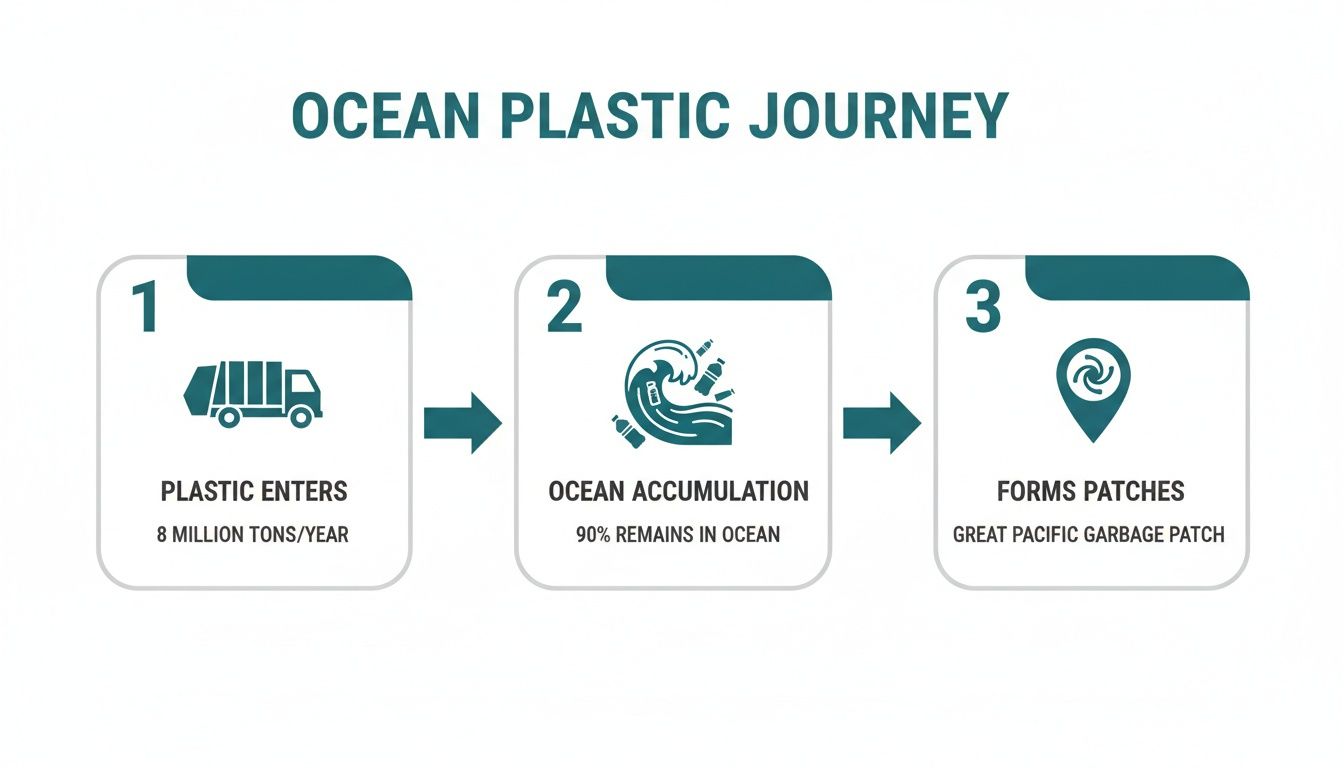
    Imagine standing on a beach, anywhere in the world, and knowing that right now, between 75 and 199 million tonnes of plastic waste are choking our oceans. Every single year, another 8 to 10 million metric tons flood in. It’s like a garbage truck dumping its entire load into the sea every single minute. This relentless influx has birthed five massive garbage patches, with the Great Pacific Garbage Patch now spanning an area three times the size of France. You can discover more insights about the state of the plastic crisis on 4ocean.com.

    But I'm here to tell you that these numbers don't have to paralyze us. They can inspire us. This guide will show you how this problem is immediate, personal, and surprisingly solvable, starting right here in our own neighborhoods. We can fight back.

    The Unseen River That Connects Your Street to the Sea

    You're probably thinking, 'I'm in Chicago, a thousand miles from any ocean. How does my litter possibly end up there?' It’s a fair question, one I've asked myself. But I want you to follow me on a journey.

    Picture a single plastic bottle dropped on a street in Logan Square. It just sits there until a heavy rain comes. That downpour washes it into a storm drain, a dark, hidden channel right under our feet. From there, it’s a quick trip into the Chicago River.

    From Our River to the World’s Oceans

    This is where our local story goes global. Thanks to a massive, century-old engineering project, my city reversed the Chicago River's flow. Instead of flowing into Lake Michigan, it now runs away from it, connecting to a vast system that feeds the mighty Mississippi River.

    That one plastic bottle from Logan Square is now on a thousand-mile voyage south. It will drift past St. Louis, Memphis, and New Orleans, eventually spilling into the Gulf of Mexico. And from the Gulf, it’s a straight shot into the Atlantic.

    This is the unseen river of trash that connects us all. It flows from our city blocks, through our local waterways, and directly into the heart of the world’s oceans. You aren't separate from this problem; you are a source.

    This infographic breaks down the simple, grim journey our plastic takes from land to sea.

    A three-step infographic illustrates the journey of plastic from entering oceans to forming large patches.

    This visual drives home a critical point: once plastic gets into our waterways, it inevitably collects in the ocean, creating the infamous garbage patches we hear so much about.

    To see just how local this global problem is, let's trace the path step-by-step.

    The Journey of a Plastic Bottle from Chicago

    Stage Location Mechanism Impact
    1. The Drop Chicago Street Littered by a person Visual blight, potential hazard for local wildlife.
    2. The Wash Storm Drain System Rainwater runoff Enters the urban water system, unseen and unmanaged.
    3. River Entry Chicago River Drain outfall Becomes river pollution, threatening aquatic life.
    4. The Long Drift Mississippi River River currents Travels hundreds of miles, breaking down into microplastics.
    5. Ocean Entry Gulf of Mexico River delta Contributes to a massive concentration of marine debris.
    6. Global Drift Atlantic Ocean Gyre Ocean currents Joins a "garbage patch," harming marine ecosystems for centuries.

    That's how a single piece of trash from your neighborhood becomes part of a planetary crisis. The connection is direct, and it starts right here.

    A Global Problem with a Local Source

    We often hear about major international rivers like the Ganges contributing massively to this crisis—and they do—but it's a mistake to think we're disconnected. I know that an estimated 80% of ocean plastic comes from land-based sources, carried to the sea by rivers just like ours.

    Our local waterways act as superhighways for this pollution. Every piece of litter you see has the potential to start this exact journey. The problem isn't just "over there" in some distant country; it starts right here, on our streets, in our parks, and along our riverbanks.

    We can’t fix the global issue without tackling our local contribution first. If you're ready to get your hands dirty and stop this problem at the source, you can learn more by checking out our guide on cleaning up a river. It’s where our work truly begins. That bottle's story doesn't have to end in the ocean.

    The True Cost of Our Plastic Habit

    A vibrant watercolor painting shows a sea turtle and a fish surrounded by colorful plastic debris, highlighting marine pollution.

    So, what happens to that plastic bottle we followed from Chicago? It doesn't just vanish when it hits the Gulf of Mexico. No, it starts a second, much darker life, leaving behind a trail of destruction that’s almost hard for me to wrap my head around.

    For marine animals, it's a horror show.

    Picture a sea turtle, just doing its thing, gliding through the water. It spots something that looks exactly like a jellyfish—its favorite meal. But it's not. It’s a plastic bag. Once swallowed, that bag is a one-way ticket to a slow, miserable death from starvation. It just sits there, clogging its stomach. A gut full of trash it can't ever digest.

    A Death Sentence for Marine Life

    This isn't some rare, freak accident. This is the daily reality for countless animals out there. I've read that an estimated 100,000 marine mammals die from our plastic trash every single year. Scientists have confirmed that at least 81 out of 123 marine mammal species have either eaten plastic or gotten tangled up in it.

    The danger comes in two brutal forms:

    • Ingestion: Like that poor turtle, animals mistake our junk for food. A plastic bag looks like a squid. A tiny shard of hard plastic looks like a small fish. It's a fatal mistake you or I could never imagine making.
    • Entanglement: This is a special kind of cruel. Imagine old fishing nets—what I call "ghost nets"—just drifting around for decades, trapping and killing everything in their path. Seals, dolphins, and whales get caught. They can't surface for air. They simply drown.

    It's a world gone mad. A world where a sperm whale can wash up on a beach with nearly 30 kilograms of plastic junk in its stomach—a nightmare collection of shopping bags, ropes, and even a jerry can. I feel like we've created a situation where an animal's natural instincts have become a fatal flaw.

    From Toxic Confetti to Our Dinner Plates

    But the nightmare doesn't stop there. As that bottle from Chicago floats in the ocean, the sun and salt water start to break it apart. It doesn't biodegrade. It just shatters into smaller and smaller pieces until it becomes microplastics.

    Think of it like toxic confetti.

    These tiny fragments, most smaller than a grain of rice, are everywhere. They get eaten by the smallest creatures, like plankton. Then, a small fish eats the plankton. A bigger fish eats the small fish. And eventually, that same fish ends up on a dinner plate. Maybe even yours.

    We made this mess, and now it’s coming right back to us. I've found that microplastics have been found in our drinking water, the air we breathe, and even the salt we use to season our food. This isn't just about saving the whales anymore. It's about saving ourselves.

    The future looks grim if we don't act. I've seen projections that the amount of plastic pouring into our oceans could nearly triple by 2040. We are on a collision course with a future where there’s more plastic than fish in the ocean by 2050. That’s not a sci-fi movie plot; it's a real projection based on the path we're on now.

    We have to change. The stories of the victims, animal and human, make the stakes painfully clear. If you’re ready to start fighting back, our guide on how to reduce plastic pollution is a good place to begin.


    How Tom Sawyer Taught Us to Fight Pollution

    Remember when Tom Sawyer got punished and had to paint that giant fence? He could have sulked. He could have complained. But he didn't. Instead, he made that chore look like the most fun, most exclusive privilege in the entire world—and pretty soon, his friends were literally paying him for the chance to help.

    That’s exactly what I'm doing at Litter Caterpillars. I'm taking the “chore” of cleaning up Chicago and turning it into an adventure. It’s not a punishment; it's a mission. It’s how you and I can build something real and beautiful together.

    This simple flip in how you think about the work is the key to solving a problem as massive as ocean plastic pollution. You have to find the joy in it. You have to find the story, the community, and the fun.

    Turning a Global Problem into Your Personal Mission

    It’s so easy for me to get crushed by the weight of the plastic crisis. You see those pictures of garbage patches the size of a country and just feel… helpless. But what if you and I stopped trying to look at the whole giant mess at once? What if we just focused on our one little piece of it?

    I’ll never forget our very first cleanup. There were only three of us, and we got caught in one of those classic Chicago hailstorms, huddled under a tree, shivering. Every Uber kept canceling on us. In that moment of pure, shared misery, I realized something. Suffering together like that, it adds flavor to the adventure. It advances the plot of your story.

    This is our theme song. It’s a fun little tune that captures that spirit of adventure.
    This song reminds us that what we’re doing isn't just about picking up trash. We're building a powerful, positive identity around service.

    Just like Tom Sawyer convinced his friends that painting a fence was an honor, you and I can convince ourselves—and our communities—that cleaning our planet is one of the most rewarding things we can do. It’s not a punishment; it’s a privilege.

    This is how a scary global issue becomes your personal mission. The real solution to ocean plastic pollution isn't just about some high-level policy or fancy new tech. It starts the moment you and I decide to find the joy in the work. The moment we make the chore an adventure.

    From Mindset to Action

    So, how do we take this Tom Sawyer idea and make it bigger? We look at all the big-picture solutions, but we ground them in that same core belief: finding purpose and fun in what we do. It means we can get behind both the huge strategies and the tiny grassroots efforts, because they all come from the same place of inspired action.

    Here’s what that actually looks like:

    • Global Policy: You and I can fight for international agreements that treat plastic pollution seriously. It's not a boring policy debate—it's a thrilling global quest to save our oceans.
    • Innovative Product Design: We can get behind companies creating amazing plastic-free products. Every dollar you spend becomes a vote for the future you want to live in.
    • Smarter Waste Management: I want us to push our cities for better recycling and composting systems that are so easy and satisfying, they become a natural part of our day.

    Every single one of these solutions starts with the simple decision to act. It starts when you stop seeing it as "someone else's mess" and start seeing it as "our shared adventure." That is how we begin to turn the tide.

    Alright, you're fired up. You get it now. You see the straight line from that plastic bag snagged on a fence in your neighborhood all the way to the middle of the ocean. And you're ready to do something about it. Right now.

    This isn't your grandpa's "reduce, reuse, recycle" lecture. I know we're past that. This is your playbook for making a real, visible dent in the problem, right here on the streets of Chicago. This is how you turn that feeling in your gut into action that you can see and feel.

    This is about more than just picking up trash. It's about finding your people, taking back your community, and starting your own story of transformation.

    Find Your Crew

    Honestly? The most powerful thing you can do is just show up. When you join a group like mine, a weekend morning stops being a chore. It becomes a mission. An adventure.

    Cleaning with a crew means you're not just some person picking up litter alone. You're building something. You’re making friends, exploring parts of the city you've never seen, and creating a story you'll actually be proud to tell. I know some of our best memories were made shivering in a freak hailstorm or laughing under the summer sun, all of us there for the same reason.

    Use Your Voice

    You don't need to be a lobbyist to make a difference. Your voice is a weapon. It can be as simple as a conversation or a quick email.

    • Hit Up Your Alderperson: Find out who represents your ward and send them a personal message. Don't be shy. Ask for more trash cans on your block. Ask why your neighborhood doesn't have a community composting program. I promise your story as a resident matters more than you think.
    • Talk to Local Shops: Next time you grab coffee, just ask the owner if they've ever thought about a discount for people who bring their own mugs. I find that a friendly nudge from a regular customer can be the spark that gets things moving.

    This isn't about picket signs and protests—it's about starting conversations. It's about showing the people in charge that you actually care about how your community looks and feels. You're a voter. A customer. A neighbor. They need to listen.

    Your Weekend Warrior Action Plan

    Ready to jump in this weekend? Here’s a simple checklist of things you can do to get your hands dirty, the Litter Caterpillar way.

    Action Step Why It Matters Litter Caterpillar Pro-Tip
    Go on a "Trash Hunt" Every single piece of plastic you grab is one less piece on its long journey to the ocean. I want you to make it an adventure. Pick a neighborhood you’ve never really explored. Throw on a great playlist and see what you can find in an hour. It's a treasure hunt for a cleaner city.
    Support a Zero-Waste Shop "Voting with your wallet" sounds cliché, but it's real. It shows businesses there's a demand for stuff that isn't wrapped in pointless plastic. I say start small. Don't try to change your whole life overnight. Just switch one thing. Go for bar soap instead of a plastic bottle. Get one reusable produce bag. Easy.
    "Adopt" a Local Park Clean spaces create pride. When a place is clean, people are less likely to trash it. You're starting a positive feedback loop. Find a small patch of a park near your home and make it yours. Spend 15 minutes there each week. You'll be shocked at the difference one person can make.

    I'm not just dreaming about change; we're making it happen.

    Be Part of Something Bigger

    I'll never forget the time we got permission to clean an entire stretch of highway while it was shut down for a bike event. Dozens of us swarmed it. We turned this dangerous, disgusting eyesore into something clean. That's what happens when a few brave, kind people like you and me decide to stop waiting and start acting.

    Every small win builds on the last. It creates momentum. It proves what's possible when we stop feeling helpless and start getting our hands dirty. This is your invitation to join the fight against ocean plastic pollution, starting right here on your block.

    If you need some inspiration, check out what a real cleanup looks like in our guide to a public beach cleanup on Lake Michigan.

    Why Becoming a Caterpillar Will Change Your Life

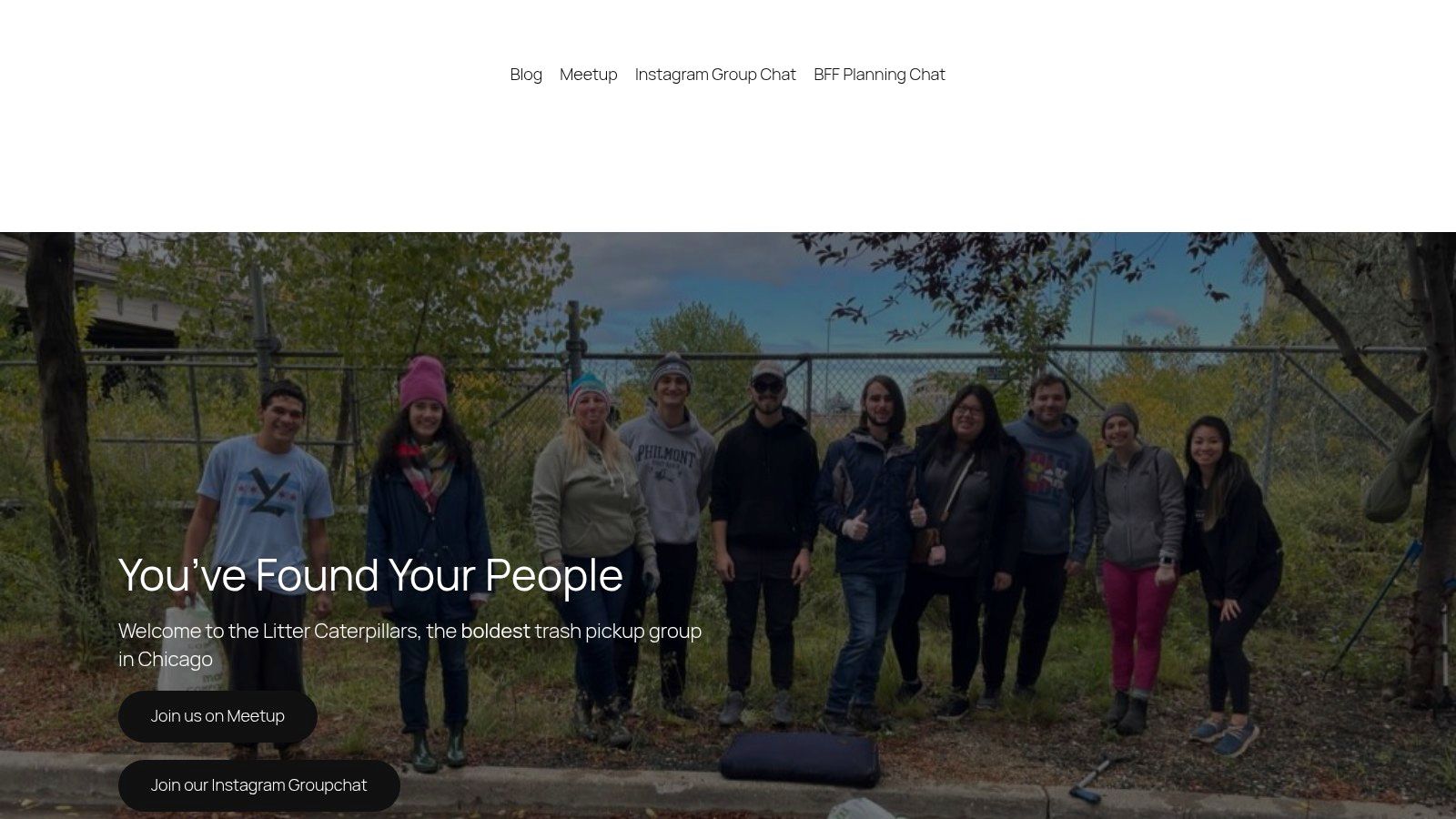
    A diverse group of people, the 'Litter Caterpillars,' stand under a tree with bags for environmental cleanup.

    Let me be honest. I started Litter Caterpillars because I had to clean up my own life. Seriously. My living space was a mess, and my life was an even bigger mess. I was looking for consistency, a bit of bravery, and a group of people who just wanted to give back—not take.

    What I found was that serving others is the fastest way to serve yourself. It can completely transform you from the inside out. That’s the entire reason I call us Caterpillars. We’re all imperfect, kind of messy, and maybe a little lost. But we’re all committed to growing into something better.

    Joining us isn't just about picking up trash, even though we do a lot of that. It’s about the simple, powerful act of showing up when it's hard. It’s about making a real friend while you're both shivering under a tree during a classic Chicago hailstorm. It's about earning a deep sense of pride with your own two hands—a pride we symbolize with the flags we fly and the badges we earn.

    The Power of Simple, Honest Work

    For me, it became a way to forgive myself. I learned to trust myself again through the simple, honest work of cleaning up a small patch of the earth. When my own world felt chaotic, just tidying up a single block brought a weird and wonderful kind of clarity.

    I want you to feel that. This is your personal invitation to join a movement built on bravery, kindness, and unity. The fight against ocean plastic pollution can feel impossibly huge. It can make you feel completely helpless.

    But I promise you this: the moment you decide to show up, the second you pick up that first piece of trash with us, that feeling of helplessness starts to disappear. It gets replaced by something much better. It gets replaced by purpose.

    This is your chance to stop being overwhelmed by the problem and start becoming the solution. Right here, right now. You can start with just one morning and see where it takes you.

    What It Means to Be a Caterpillar

    Being a Caterpillar isn't about being perfect. It's about being present. It means you're willing to put on a pair of gloves and do something real about the mess we’re all in.

    • It’s an act of bravery. Just showing up, especially if you’re new or not sure what to expect, is courage.
    • It’s an act of kindness. You aren't just cleaning for you; you’re doing it for your neighbors and for the planet.
    • It’s an act of unity. You'll be side-by-side with people from every corner of Chicago who believe we're stronger when we work together.

    This is how you change your own life. You start by helping to clean up the world around you. You start by becoming a Caterpillar.

    A Few Questions I Get Asked A Lot

    You probably have questions. I know I did. The whole problem of ocean plastic pollution is so huge it can make you feel powerless, like what you do doesn't matter. I want to give you some real answers, the kind that got me started and keep me going.

    How Does Cleaning a Chicago Street Actually Help the Ocean?

    I hear this one all the time, and it’s a fair question. The way I see it, if your bathtub is overflowing, you don’t just grab a mop—you run to turn off the tap. That's what we're doing.

    Every single wrapper or bottle you or I pick up on a street in Chicago is one less piece that gets swept into a storm drain. It’s one less piece that travels down the Chicago River, into the Mississippi, and ultimately into the Gulf of Mexico. It’s a direct interception. But it’s more than that. When your neighbors see you out there, it plants a seed. It makes them think, and that’s how we start to change the culture around trash, building the pressure that leads to bigger things.

    I’m Not Brave or Super Outgoing. Is This for Me?

    Yes. Absolutely. Let me tell you something: bravery isn't about not being scared. It's about showing up even when you are. Many of our regulars started out feeling the exact same way.

    Some people come, put in their headphones, and just get lost in the work. It's satisfying. Others end up making lifelong friends. There's zero pressure. You can be as quiet or as social as you feel that day.

    We’re here to create a place where the simple act of working together builds you up. Just being here is an act of bravery. We see that, and we respect it.

    This is a space for you to grow at your own speed. By just showing up, you’re doing something real for the city and, more importantly, for yourself.

    Besides a Cleanup, What’s the Most Impactful Thing I Can Do?

    Pick one thing you use, change it, and then talk about it. It’s that simple.

    Don’t try to fix everything at once. Just find one single-use plastic you rely on—maybe it's your daily coffee cup, those plastic water bottles, or takeout containers. Find a reusable version you actually like and use it until it’s second nature.

    Then, tell people about it. When someone at work asks about your cool new travel mug, tell them your story. That’s how you make this stuff feel normal. I believe it’s a personal, powerful act that ripples out to your friends and family, and eventually, brands and politicians have to listen. That's how a movement starts in your own kitchen.


    Ready to do something real? Join Litter Caterpillars. Become part of a group that’s cleaning our city, building friendships, and proving that every single one of us can make a difference. Find our next event and start your own story at https://www.littercaterpillars.com.

  • A Guide to Waterfall Glen Forest and Its Hidden Wonders

    A Guide to Waterfall Glen Forest and Its Hidden Wonders

    I need to tell you about a place, a secret really, tucked just beyond Chicago's reach. Imagine a forest where ancient oak trees stand like giants and a genuine waterfall whispers secrets that shift with every season. This is Waterfall Glen Forest Preserve, and for me, it's so much more than just a park.

    This Isn't Just a Map, It's My Story

    I want to pull you into this world with me. I need you to see why Waterfall Glen transcends being a mere collection of trails. It's the very place where my volunteer crew, the Litter Caterpillars, stumbled upon a mission that goes deeper than just clearing away trash. We unearthed something vital out here.

    For years, my own apartment mirrored the chaos in my life—cluttered, overwhelming. I talk about this constantly, how sorting through my own stuff felt like an impossible climb. Every single object held a story, a weight that pinned me down. The thought of cleaning up an entire forest? That was a mountain a thousand times taller. But then, I started coming here.

    I discovered something profound: cleaning a public space feels like scrubbing your own soul clean. It's a liberation. You're tidying a small fragment of the world, and in doing so, you mend something fractured inside yourself.

    How I Found My Way in the Woods

    This preserve became my personal reset button. I remember reading the poet Donna Vorreyer, who described this place as a living character in her work, existing in a "constant state of change and cycles." Her words struck me like lightning. That was it. That was exactly the feeling. The forest doesn’t judge your messy life; it simply persists. The waterfall thunders with life in the spring, only to transform into silent, crystalline sculptures when winter arrives.

    It's the very same journey we all embark on with Litter Caterpillars. We show up intending to clean, but we always leave with something more profound.

    • You get this visceral sense of accomplishment, watching a tangled mess untangle into pristine beauty right before your eyes.
    • You forge real friendships, bonds tempered by the shared fire of doing something that truly matters.
    • You connect with nature in a way that feels utterly impossible anywhere else near the city's hum.

    This guide is my story. It’s pieced together from all the hours I've spent wandering these trails, sometimes alone with my thoughts, other times with my crew. Just as we guide people through the nooks and crannies of the city in our tour of Chicago's parks, I want to help you discover the raw magic pulsating within Waterfall Glen. Let’s dive in. This place is for anyone who just needs to take a deep, cleansing breath and feel new again.

    Navigating the Trails of Waterfall Glen

    So, you’re ready to find your own path. The lifeblood of Waterfall Glen is its sprawling 9.5-mile main loop. Picture this incredible ribbon of crushed limestone weaving through sun-drenched prairies, ancient savannas, and woods so deep they feel like another time. The first time I walked it, every single bend in the trail felt like opening a door to a new room in a vast, secret mansion.

    It’s an analogy for life’s own journey, isn't it? It's long, presenting you with smooth, easy stretches and a few challenging climbs, but the feeling of completion you get at the end makes every step worthwhile. This main trail is your personal canvas. It’s perfect for a long, soul-searching hike, a heart-pounding run, or just a breezy bike ride to blow the cobwebs out of your mind.

    Let me break down how you can conquer this place, whether you have just one precious hour or an entire day to get beautifully lost in the soul of Waterfall Glen.

    The Main Loop: Your Grand Adventure

    The 9.5-mile main trail is the preserve's central artery. It’s a wide, meticulously maintained path that's surprisingly gentle underfoot, making it a dream for hikers, runners, and cyclists. I love that it’s a loop; there’s something deeply satisfying about circling back to your starting point, yet feeling like a completely different person after the miles you've traveled.

    This trail is your companion, marked with posts every half-mile like little friends cheering you onward. You’re never truly lost. The path meanders through a breathtaking tapestry of landscapes. One moment you're bathing in the warm sun of an open prairie; the next, you're plunged into the cool, dark sanctuary of an old oak forest.

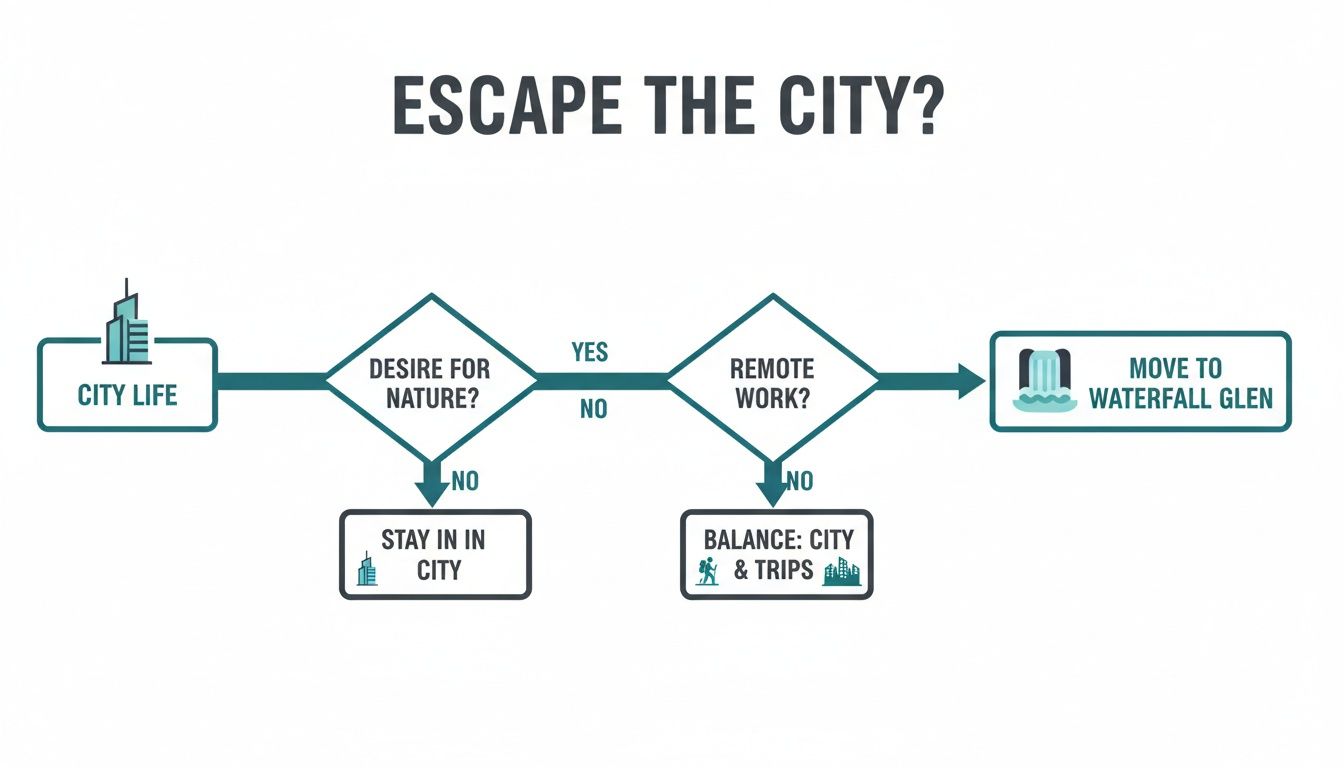
    Sometimes the biggest hurdle is just making the decision to walk out the door. This little flowchart says it all—when that primal pull for nature strikes, the path leads directly here.

    Flowchart illustrating decisions to escape city life, considering desire for nature and remote work.

    It really is that simple. When you need nature, this is your sanctuary.

    Shorter Routes for Quick Escapes

    Don’t have the time to commit to the full 9.5 miles? Don't even worry about it. Waterfall Glen is a beautiful web of smaller, intersecting trails that empower you to craft your own adventure. You can carve out a short, potent walk that slots perfectly into a crammed schedule.

    These shorter paths are my secret weapon for a quick, potent dose of nature. They feel more intimate, like you’re stumbling upon a hidden corner of the woods that no one else knows, a secret shared just between you and the trees.

    Here's a quick rundown of the main options to help you choose your own journey.

    Waterfall Glen Trail Options at a Glance

    This table offers a quick snapshot of the main loop and a couple of my favorite shorter routes to help you plan your escape.

    Trail Name Distance (Miles) Surface Type Best For
    Main Loop 9.5 Crushed Limestone Long Hikes, Running, Biking
    Waterfall Dash < 1 Crushed Limestone Families, Quick Visits, Photos
    Prairie Meander 1 – 2 Dirt & Limestone Open Views, Bird Watching

    Whether you choose a marathon or a sprint, you're guaranteed an incredible experience. Here are a couple of my go-to ways to leverage the shorter trails:

    • The Waterfall Dash: This is your quickest victory. Park at the main lot on Northgate Road and just follow the short spur trail directly to the waterfall. It’s a simple, immensely rewarding walk, less than a mile round-trip, that delivers you straight to the preserve’s crown jewel.
    • The Prairie Meander: For a completely different flavor, start from the trailhead on Cass Avenue and lose yourself in the paths winding through the Bluff Savanna. You'll be met with these vast, sweeping views that feel like a world away from the dense, intimate woods.

    These routes are your lifeline when you just need to breathe. They prove you don’t need an entire day to connect with the wild, untamed spirit of Waterfall Glen. You just need to show up.

    Alright, let's talk about the main event—the waterfall. This is the reason most people make the pilgrimage out to Waterfall Glen in the first place.

    But let me frame your expectations correctly. This isn’t some colossal, thundering cascade you’d find plastered on a national park brochure. It's smaller, more personal. It feels like a secret you stumble upon, a tiered masterpiece on Sawmill Creek that rewards your effort for getting out there.

    A person on a bridge admires a beautiful multi-tiered waterfall amidst colorful autumn trees.

    Finding it is a breeze. If you use the main lot on Northgate Road, it’s just a quick stroll down the southern spur trail. I promise, you’ll hear its whisper before you see its face.

    So, When Should You Go?

    Honestly, when you visit is more critical than how you get there. The waterfall’s personality undergoes a complete metamorphosis with the seasons. It’s like the forest’s own mood ring, and each color tells a unique and compelling story.

    After a heavy spring rain, that thing is a beast. The water churns, powerful and alive, feeling like it’s washing the entire world clean. It reminds me of the catharsis we feel at a Litter Caterpillars cleanup—purging the old junk to make space for something new and vibrant.

    I truly believe a forest is the ultimate classroom for watching change unfold. It’s a relentless cycle of death and rebirth, a kind of reinvention that mirrors the transformations we all navigate in our own lives.

    Summer arrives, and the entirety of Waterfall Glen Forest is draped in this deep, heavy blanket of green. The air by the falls grows cool and misty—a perfect little pocket to escape the city’s oppressive heat and just breathe for a moment. It becomes a quiet, contemplative sanctuary.

    My Favorite Time at the Falls

    But if you’re asking for my personal favorite, it’s autumn. Hands down. The entire forest simply detonates in a riot of reds, golds, and oranges. The waterfall, framed by that blaze of color, is something surreal. It’s the kind of beauty that forces you to stop, to just stand and stare, completely humbled.

    Even winter offers its own stark magic. The waterfall frequently freezes solid into a wild, otherworldly ice sculpture. A profound quiet descends. You can see the very bones of the forest. Every season is a new chapter in its story, and I think you owe it to yourself to experience every single one.

    Getting There and Getting Started

    A little foresight will take you a long way. Think of this as the essential intel you need before you even think about lacing up your hiking boots. Getting to Waterfall Glen Forest is the easy part; where you park, however, can literally make or break your entire day, especially on a gorgeous weekend morning.

    The main parking lot off Northgate Road is popular for a very good reason—it’s your most direct line to the waterfall. But it fills up with astonishing speed. My advice? Get there early. And I mean early. Show up before 9 a.m. on a Saturday or Sunday, or you'll find yourself in a frustrating loop, circling for a spot that may never appear.

    The Weekend Morning Filter

    We use this very same strategy for our Litter Caterpillar meetups. There’s a certain magic to showing up on a weekend morning with a shared purpose. We've discovered it acts as a filter, attracting a specific kind of person: a giver. Someone who is willing to trade a little extra sleep for an experience that resonates with meaning. It sets a powerful, positive frequency for the entire day.

    If you’re not an early riser or if the main lot is a complete circus, pivot and try the parking area off Cass Avenue. It’s almost always less crowded and drops you right near the Bluff Savanna and the prairie sections. Starting your hike here offers a completely different, and equally beautiful, flavor of the preserve.

    Think of your visit to Waterfall Glen as a story you are writing. The trail is the main plot, absolutely. But the details—where you park, when you arrive, what you pack—that’s the stuff that adds texture and transforms a simple walk into a genuine adventure.

    The Bare Necessities

    Okay, let's talk gear. While the trails are remarkably well-maintained, you must remember this is still a wild space. You will find restrooms at the main parking areas, but they are just pit toilets, and they become scarce once you're deep in the woods. Plan accordingly.

    Most importantly: bring your own water. I cannot stress this enough. There are absolutely zero drinking fountains along the entire 9.5-mile loop. Dehydration is no joke; it’s a silent predator that can turn a beautiful hike into a miserable, even dangerous, ordeal. Do not get caught without it.

    Finally, a quick word on trail etiquette. The path is a shared space, a beautiful mix of hikers, runners, and bikers. It’s a community. So, I need you to act like it.

    • Stay to the Right: This is the golden rule. It’s just like driving. This allows faster people to pass you safely on your left.
    • Announce Yourself: If you're approaching someone from behind, a simple, friendly "On your left!" works miracles. Nobody enjoys being startled.
    • Keep Your Ears Open: This one is huge, especially if you listen to music. Keep the volume low or leave one earbud out. You have to be able to hear a cyclist or runner coming up behind you.

    Sharing the trail with a little kindness and awareness ensures everyone’s visit to the magnificent waterfall glen forest is a happy one.

    Join Us and Transform With the Litter Caterpillars

    This is where the story of the waterfall glen forest becomes our story. I started Litter Caterpillars because my own life felt like an unmanageable mess, and I discovered a strange kind of therapy in cleaning up our shared parks. It actually all began right here, in this very preserve.

    Something just clicked for me when I figured out how to reframe a chore as a mission. It’s like that old story of Tom Sawyer, who brilliantly convinced his friends that painting a fence wasn't work at all, but a privilege. What looked like a tedious job transformed into a shared adventure—something people were eager to be a part of.

    That’s precisely what we do. We take the simple act of picking up trash and we elevate it into something powerful and deeply enjoyable. We aren't just cleaning; we are forging a real community and changing ourselves, one small, deliberate act of service at a time. This is my personal invitation for you to join us.

    What We Stand For

    Our group is built on a few core beliefs that we live and breathe every single time we gather, especially here at Waterfall Glen. These aren't just empty words on a website; this is the real, tangible ethos of our crew.

    • Bravery: We show up. No matter what. Rain, snow, or blazing sun. Facing a little discomfort together is precisely what builds grit and turns a simple morning into a story you’ll actually want to tell later.
    • Kindness: We look out for each other on the trail. Kindness means we create a safe, welcoming space where every single person feels like they belong from the very second they arrive.
    • Unity: We bring people together from every walk of life, every background. The philosophy is simple: if you want to go fast, go alone. If you want to go far, go together.

    These values are the very bedrock of our group. They are the reason a weekend morning spent picking up litter feels more like a celebration than a task. It's about discovering your own strength through service.

    When you join us, you’re not just helping clean the waterfall glen forest. You’re making a powerful statement that you believe in the transformative power of showing up—for your community, and more importantly, for yourself.

    Your First Cleanup: What to Expect

    Joining us couldn’t be easier. The most important thing for you to bring is just your positive energy and a willingness to meet some new, like-minded people. We handle everything else.

    We provide all the necessary supplies for every single event:

    • Gloves to keep your hands clean and safe.
    • Trash bags for collecting all the litter we uncover.
    • Hand sanitizer because, well, it’s just a smart move.

    You don't need any special gear or prior experience. All you have to do is show up. We make our events easy to find and incredibly welcoming for newcomers. You can check out all of our volunteer opportunities in Chicago and see exactly where we'll be next.

    This isn’t about achieving perfection; it’s about making progress. It’s about taking one small step alongside a group of people who believe that together, we can make a real, visible, and lasting difference. We are the Litter Caterpillars, and I truly hope to see you on the trail.

    The Hidden Life of the Forest

    A watercolor painting of a deer, surrounded by colorful wildflowers, green oak leaves, and two small birds.

    Look, Waterfall Glen is so much more than just a place to burn off miles on a trail. It’s an entire living, breathing world, and most people just blast right past it, totally oblivious. I was guilty of that myself. For years, I just came here to hike, obsessing over my pace, and I completely missed the point.

    But once you force yourself to slow down, the place truly begins to speak to you. I want to show you how to see the waterfall glen forest for what it truly is. Imagine the towering oak and hickory trees as the skeleton. They're the first thing you notice, the massive structure holding it all together.

    The Forest Floor and Its Secrets

    But the real magic, the real story, is in the details. You have to get down low. In the spring, the forest floor is carpeted with these delicate wildflowers—trout lilies, spring beauties, wild ginger. They're called ephemerals because they don't linger. They erupt, live their beautiful, brief lives, and then vanish. Spotting them feels like you’ve been let in on a precious secret. You can learn more about the incredible trees you'll see in our guide on trees found throughout Illinois.

    It’s just like our Litter Caterpillars cleanups. Every single piece of discarded trash tells a dumb, meaningless story, but every plant and animal here is part of a much larger, more beautiful narrative. It’s all interconnected.

    I’m telling you, the best parts of this preserve only reveal themselves when you’re moving slowly. This isn’t a race. It’s a conversation with nature, and you have to shut up for a minute to actually hear what it’s trying to tell you.

    If you’re quiet and just a little bit patient, you’ll get lucky. The real show, after all, happens at the edges of the day.

    My Favorite Sights and Photo Spots

    I love coming here when the sun is just beginning its ascent or descent. That’s when the white-tailed deer grow bold, stepping out from the cover of the woods to graze. Seeing them is a stark reminder that you are a guest in their home. So, act like one.

    And listen! Just stop what you’re doing and listen. The air is thick with birdsong, this wild, ever-changing chorus. It’s the forest's own personal soundtrack.

    Here are a few spots I always hit for photos:

    • The Bridge over Sawmill Creek: It’s a perfect, natural frame for the woods and the creek. You simply can't take a bad picture here.
    • The Prairie Vistas: That enormous, wide-open sky set against the tall grasses is just breathtaking.
    • The Waterfall Itself: Yes, it’s the main attraction, but for a very good reason. Don't just take the standard head-on shot. Get low, get high, and capture the intricate way the water spills and dances down the tiers.

    Connecting with this hidden life is what makes Waterfall Glen truly special. It elevates a simple walk into something more. It turns it into a discovery.

    Your Questions About Waterfall Glen Answered

    People ask me a lot of the same questions before they head out to waterfall glen forest for the first time. I get it. After all our cleanups and hikes here, I've learned a thing or two. Let me get you ready.

    Are dogs allowed? Yes. But they must be on a leash, without exception. This isn't just some arbitrary rule; it's about respect. We are guests in the home of deer, coyotes, and countless other creatures. Keeping your dog on a leash protects them and ensures everyone feels safe and comfortable on the trail.

    What About Ticks and Bugs?

    Look, it's a forest. Of course there are bugs. Mosquitoes can be a nuisance in the summer, especially down by the water. The real thing you need to be smart about is ticks. They are a fact of life in the Illinois woods.

    But fear is not our way. Fear keeps you trapped inside. Bravery gets you out there.

    We don't let a little challenge stop us, whether it's a blizzard during a cleanup or a few bugs on a hike. Just be smart: stay in the middle of the trail, wear light-colored clothing so you can easily spot any stowaways, and give yourself a quick check when you get back to your car. It’s a simple, powerful habit.

    Is the waterfall always flowing? Nope. And that’s what makes it so interesting. After a heavy rain, it’s a roaring spectacle. During a dry spell, it might diminish to a mere trickle. It's a humbling reminder that nature is in charge, not us. You never get the same view twice.


    At Litter Caterpillars, being prepared is everything. It's the first courageous step in showing up for yourself and for your community. We’re all about transformation, one brave act at a time. Come see what we're about at https://www.littercaterpillars.com.

  • Reducing Plastic Usage: 8 Practical Tips for Home and Community

    Reducing Plastic Usage: 8 Practical Tips for Home and Community

    I know what it’s like to feel stuck. My apartment used to be a fortress of things I couldn't let go of. A four-year-old jar of jam wasn't just old food; it was a trip to Michigan, a ghost of a past me. The jar weighed less than a pound, but emotionally, it was a 500-pound anchor. My life was a landfill of my own making, an impossible mess. I felt completely overwhelmed.

    The change came after a brutal breakup. I decided I had to tackle the hardest things first: cleanliness, consistency, bravery. It’s like learning to swim by jumping into the deep end. I figured if cleaning my own mess felt impossible, maybe cleaning someone else's would be easier. That simple, desperate idea became Litter Caterpillars. What started with three of us shivering in a Chicago hailstorm has grown into a weekly mission. We found a strange, powerful joy in just showing up, facing the elements, and doing something hard together.

    That’s the secret. It’s the secret to transformation, and it’s also the secret to reducing plastic usage in a way that actually sticks. You aren't just swapping a bottle or a bag. You're facing the mess, one piece at a time, and discovering you have the strength to change things, starting with yourself. This guide is your map for that journey. You'll find real strategies here, from personal swaps to community action, that will empower you to tackle plastic waste and, in the process, transform a lot more than just your trash can.

    1. Switch to Reusable Shopping Bags and Containers

    Imagine you're building a new habit. Swapping out flimsy, single-use plastic bags for durable, reusable ones is your cornerstone. It's one of the most powerful first steps you can take in reducing plastic usage. Think of it as your gateway to a more sustainable life. A simple change with a massive ripple effect. You’ll prevent thousands of plastic bags from polluting our streets, our parks, our waterways. When my Litter Caterpillars crew and I head out for a neighborhood cleanup, guess what we find tangled in bushes and fences? Those exact plastic bags. It’s a constant, ugly reminder.

    A hand holds a reusable tote bag with groceries, next to folded burlap reusable produce bags, against a colorful watercolor background.

    This isn't just you. It's a movement. San Francisco banned plastic bags way back in 2007, and even our own Chicago has seen dramatic decreases in litter after similar policies. Retailers like Trader Joe's and Whole Foods now reward you for bringing your own bags. Each time you shop with a reusable bag, you're casting a vote for a cleaner, healthier planet. You’re telling them what you want.

    Key Insight: Bringing your own bag isn't just about avoiding a single piece of plastic. It's a message. You’re sending a clear signal to retailers and policymakers that you demand sustainable options.

    How to Make It a Habit

    Making the switch permanent is all about building a system that works for you. The biggest hurdle? Forgetting. You can beat it.

    • Stash Them Everywhere: I keep a few foldable bags in my car's glove compartment, my work backpack, and my purse. I have a designated "bag hook" right by my front door next to my keys. You can’t miss it.
    • Set Digital Nudges: Create a recurring reminder on your phone. If you usually shop on Saturdays, set an alert: "Got your bags?" It makes all the difference.
    • Think Beyond the Grocery Store: Don't just bring them to the supermarket. Use them for trips to the pharmacy, the library, or the farmer's market. Every single plastic bag you avoid is a win.
    • Lead by Example: When you show up to a Litter Caterpillars event with your snacks in a reusable tote, you inspire others. Your actions are contagious, but in the best way.

    2. Eliminate Single-Use Water Bottles with a Refillable Alternative

    Ditching single-use water bottles is like breaking up with a toxic friend. It’s a commitment to cleaner communities. Each plastic bottle you refuse is one less that could end up on the shores of Lake Michigan or rotting in a landfill for centuries. When my Litter Caterpillars volunteers and I comb through Chicago parks after a hot summer weekend, what do we find? A sea of these disposable bottles. A landscape of unnecessary waste. It’s heartbreaking.

    Hand holding a reusable stainless steel water bottle with a green eco-sticker near a water dispenser.

    This idea is gaining powerful momentum. Programs like Chicago's "Drink Tap" and the explosion of refill stations at universities like Northwestern and UIC make it easier than ever to stay hydrated without the waste. This simple act of reducing plastic usage has a compounding effect. You save resources, cut pollution, and inspire others to join a culture of reuse. Every refill you make is a small act of defiance against our throwaway world.

    Key Insight: Carrying a reusable bottle is a visible statement. It shows everyone around you that there is a better, more responsible way to live. You're normalizing sustainability.

    How to Make It a Habit

    The key to never buying a plastic water bottle again is making your reusable bottle feel as essential as your phone or keys. You have to weave it into your routine.

    • Invest in Your Perfect Bottle: Find one you love. For me, an insulated bottle from Hydro Flask or S'well is a game-changer. It keeps my water cold on a scorching Chicago summer day, making it a joy to use.
    • Find Your Refill Spots: I use a fountain-finder app to locate free water sources when I’m out exploring the city. You'd be surprised how many public refill stations are hiding in plain sight.
    • Make It Your Cleanup Companion: I bring my reusable bottle to every Litter Caterpillars event. It keeps me hydrated while I work and serves as a powerful, practical example for fellow volunteers.
    • Create a "Hydration Station": I set up a dedicated spot at home with my clean bottle, ready to grab and go. I also keep one at my desk at work so it's always within reach.

    3. Refuse Plastic Straws and Use Alternatives

    Saying "no straw, please" is one of the simplest yet most symbolic things you can do. It's a small phrase with a huge impact. You make a daily choice that prevents a piece of plastic from potentially harming wildlife for centuries. When my Litter Caterpillars team cleans along the Chicago Riverwalk, we find countless plastic straws. They were used for a few minutes, but they'll pollute our water for generations. This is a classic story of how a tiny habit can cause a massive problem. But it also shows how a tiny change can be part of the solution.

    A diverse collection of reusable straws made from metal, bamboo, silicone, and glass, promoting sustainability.

    This idea has caught fire globally. It went from a niche activist plea to mainstream policy. Seattle's 2018 ban sparked a nationwide movement. Big chains like Starbucks are phasing them out, and many Chicago restaurants now offer paper or reusable options. This proves that when you demand less plastic, it works. Every time you politely refuse a straw or pull out your own reusable one, you're not just sipping a drink. You’re making a statement that convenience shouldn't cost our planet its health.

    Key Insight: Refusing a plastic straw is more than a personal win. It’s a powerful public signal. It drives corporate and legislative change and makes sustainable choices normal for everyone.

    How to Make It a Habit

    Making the switch from disposable to durable is about being prepared. You have to make your reusable straw just as convenient as the plastic one you’re refusing.

    • Carry It Everywhere: I invested in a compact, collapsible straw set with a cleaning brush and case. I keep it in my purse so I'm never caught without it. You can even find ones that fit on your keychain.
    • Be Proactive When Ordering: Don't wait for the straw to arrive. I always say, "No straw, please," as I order my drink. This prevents the server from bringing one out of habit.
    • Normalize It for Others: When I’m out with friends, I use my reusable straw proudly. My simple action can spark conversations and inspire them to make the switch, too.
    • Gift the Change: I think reusable straw sets make fantastic, affordable gifts. It's a thoughtful way to introduce friends and family to a more sustainable lifestyle and grow the movement for reducing plastic usage.

    4. Choose Plastic-Free Packaging When Shopping

    Your real power isn't just the shopping bag. It's the choices you make down every single aisle. You can actively prioritize products sold in glass, aluminum, or cardboard over plastic. It's a crucial strategy for reducing plastic usage right at the source. Imagine you're voting with your wallet. You're choosing a future where our shelves aren't lined with disposable plastic that clogs our landfills and our beautiful Chicago parks. When my team and I sort through the litter we collect, we see the story of our consumption written in branded plastic wrappers and bottles.

    A watercolor illustration of a jar of grains, an aluminum can, a cardboard box, and an apple.

    This shift is happening everywhere. You see it in zero-waste pioneers like Package Free Shop and in the expanding bulk bin sections at stores like Whole Foods. Brands are even getting creative with services like Loop, which partners with major companies to offer products in durable, returnable containers. When you choose these alternatives, you’re not just buying a product. You’re fueling a market revolution that demands more responsible options for everyone.

    Key Insight: Every time you pick pasta in a cardboard box over a plastic bag, or salsa in a glass jar over a plastic tub, you're directly shaping supply and demand. You’re helping build a less plastic-dependent world.

    How to Make It a Habit

    Turning this into an everyday practice is like going on a treasure hunt. You train your eyes to spot the better alternatives. The prize is a cleaner planet.

    • Go for Glass, Cans, and Cardboard: When you have a choice, pick the option in more easily recyclable materials. I always choose the glass bottle of juice, the canned tomatoes, or the oats in a paper canister. Understanding the basics helps you make better decisions. You can learn more about Chicago's recycling guidelines to see what’s most effective where you live.
    • Embrace the Bulk Bins: I bring my own jars and bags to stores with bulk sections for things like rice, nuts, spices, and grains. It feels incredibly satisfying to walk away with groceries that have absolutely no new packaging.
    • Shop the Perimeter: I focus my shopping on the outer edges of the grocery store. That's where you'll usually find fresh, unpackaged produce, meat, and bakery items.
    • Support Local Markets: You should visit your neighborhood farmers market. I find that produce there often comes with zero packaging, and I get the bonus of supporting local growers directly.

    5. Practice Mindful Consumption and Buy Less

    Here it is. The most effective way to reduce plastic waste is to attack its source: our own consumption habits. When you practice mindful consumption and simply buy less, you cut off the demand for new plastic products before they're even made. This isn't about depriving yourself. It's about being intentional. It's choosing quality over quantity, a philosophy that directly fights the throwaway culture responsible for so much pollution. When I'm picking up litter along the Chicago River, it’s not just bottles and bags I find. It's countless broken toys and cheap plastic junk that were used once and tossed.

    This shift in mindset is gaining ground. You see it in movements like minimalism and with advocates like The Minimalists and Marie Kondo. You also see it in the rise of thrift culture and programs like Patagonia's "Worn Wear," which celebrate durability and repair. In Chicago, local "Buy Nothing" groups in neighborhoods from Lincoln Park to Hyde Park are powerful examples of this. My neighbors and I share and gift items instead of buying new. Each time you borrow a tool or find a treasure secondhand, you prevent a new plastic-packaged item from ever entering the waste stream.

    Key Insight: Reducing plastic usage starts before you even walk into a store. The most sustainable product is the one you don't buy. The second most sustainable is the one that already exists.

    How to Make It a Habit

    Embracing mindful consumption is a gradual process. You learn to question what you need and discover the joy of having just enough. It’s about being a conscious consumer, not an automatic one.

    • Implement the 30-Day Rule: Before I make a non-essential purchase, I wait 30 days. If I still feel I truly need it after a month, I go for it. This simple pause helps me distinguish between a fleeting want and a genuine need.
    • Shop Secondhand First: Make thrift stores, Facebook Marketplace, and local consignment shops your first stop. I look there first for everything from clothing to furniture. You’ll save money, find unique items, and give existing goods a second life.
    • Join a Sharing Community: You can tap into your local Chicago Buy Nothing Project group or community swap events. Need a power drill for a weekend project? A serving dish for a party? Someone nearby is probably happy to lend you one.
    • Embrace Repair: Instead of tossing a broken item, learn a new skill. I’ve learned to mend a torn shirt. You can take your shoes to a cobbler or visit a local repair cafe. Repairing what you own deepens your connection to your belongings and keeps them out of the landfill.

    6. Transition to Plastic-Free Personal Care and Household Products

    Your bathroom and kitchen sink might be the sneakiest sources of single-use plastic in your entire home. It’s a battlefield. Shampoo bottles, liquid soap dispensers, tubes of toothpaste, spray cleaners. These areas are often overflowing with plastic containers that are destined for the landfill. If you make the switch to plastic-free alternatives, it's a game-changer for reducing plastic usage right where you live. You can transform your daily routines into powerful acts of sustainability.

    This isn't about giving up quality. It’s about discovering innovative, effective products that are kinder to the planet. Brands like Lush and Ethique have perfected solid shampoo and conditioner bars that work wonders for your hair without the plastic bottle. Just think about the countless plastic pump bottles my Litter Caterpillars crew and I pick up from the banks of the Chicago River. When you choose a simple bar of soap, you help eliminate that exact type of waste, one household at a time.

    Key Insight: Your daily self-care and cleaning routines are a major frontier in the fight against plastic. By choosing solid, refillable, or package-free options, you directly reduce the flow of plastic waste from your home.

    How to Make It a Habit

    Transitioning your personal and household products doesn't have to be an expensive or overwhelming overhaul. The key is to start small. You just replace items as you run out. You make the change gradual and sustainable for your lifestyle and your budget.

    • Start with One Swap: Don't try to replace everything at once. When your current toothbrush wears out, buy a bamboo one. When your liquid soap is gone, try a classic bar of soap. I use this “one-in, one-out” method. It makes reducing plastic usage feel effortless.
    • Explore Refill Options: You can look for local Chicago stores that offer refill stations for products like laundry detergent, dish soap, and hand soap. Bringing your own container is a fantastic way to eliminate packaging entirely.
    • Embrace DIY Cleaners: For a simple, effective, and plastic-free all-purpose cleaner, I mix equal parts white vinegar and water in a reusable glass spray bottle. It’s a trick many of us at Litter Caterpillars use in our own homes.
    • Share Your Finds: Found a brand of toothpaste tablets or a deodorant bar you absolutely love? You should share your recommendation in the Litter Caterpillars community forum. Your experience can inspire and help someone else make a successful switch.

    7. Reduce Food Packaging Waste Through Strategic Meal Planning

    Your kitchen can be a plastic minefield, but it doesn't have to be. Strategic meal planning is your secret weapon. It will transform how you shop, cook, and eat, and it will significantly cut down on plastic packaging. You stop grabbing pre-packaged meals and plastic-wrapped produce. Instead, you're making conscious choices that reduce waste and often lead to healthier, more delicious meals. It’s about being intentional with your food. That's a powerful way of reducing plastic usage in your daily life.

    This approach connects you more deeply with your food and your community. When you plan your meals around what's available at a Chicago farmers market, like the one in Logan Square on a Sunday morning, you're not just avoiding plastic. You're supporting local farmers. I love that. Similarly, joining a Community Supported Agriculture (CSA) program delivers a weekly box of fresh, seasonal produce with minimal to no packaging. It turns your grocery routine into a sustainable adventure.

    Key Insight: Meal planning isn’t just about organization. It's a proactive strategy. You design plastic out of your diet and support a more local, sustainable food system.

    How to Make It a Habit

    Integrating meal planning is about creating a new weekly rhythm. A little forethought goes a long way. It will stop plastic from ever entering your home.

    • Plan Your Plate: Before I even think about shopping, I sketch out my meals for the week. Knowing exactly what I need prevents me from making impulse buys of over-packaged convenience foods.
    • Embrace the Bulk Bins: You should seek out stores with bulk sections for items like grains, nuts, and spices. I bring my own jars and containers to create a truly zero-waste shopping experience for my pantry staples.
    • Shop the Perimeter (and the Market): I focus my shopping on whole foods like loose fruits and vegetables. You can make a weekly trip to a local farmers market your new ritual. Just don't forget your reusable produce bags.
    • Rethink Your Storage: You have to ditch the plastic wrap and single-use sandwich bags. I invested in a set of glass containers, beeswax wraps, and silicone pouches for storing leftovers and packing lunches. My food stays fresher, and my conscience is clearer.

    8. Support and Advocate for Plastic Reduction Policies and Legislation

    Your individual actions are the foundation of change. But to create lasting impact in reducing plastic usage, you have to think bigger. Supporting and advocating for policies that tackle plastic pollution at its source is how we turn our personal habits into community-wide standards. It's the difference between you picking up a single plastic bottle and you preventing millions of them from ever being produced in the first place. When my Litter Caterpillars volunteers and I find the same branded wrappers week after week, it’s a clear signal. The problem needs a systemic solution, not just a cleanup crew.

    This is about using your voice to create a ripple effect that benefits everyone. Policies like plastic bag bans, Extended Producer Responsibility (EPR) programs, and restrictions on single-use foam containers are game-changers. Seattle's comprehensive ordinances and California's bold EPR program prove that when communities demand change, governments listen. These laws shift the responsibility from you, the consumer, back to the corporations that profit from single-use plastics.

    Key Insight: Your individual actions are powerful, but your voice as a citizen is your superpower. Advocacy turns your personal passion into public policy. It creates a cleaner future for an entire city, not just for your household.

    How to Make It a Habit

    Becoming an advocate might sound intimidating. It's more accessible than you think. You can integrate it into your life just like any other sustainable practice.

    • Start Local and Stay Informed: Your local alderperson's office is your most direct line to change in Chicago. I signed up for their newsletter to stay informed about environmental proposals and town halls. A five-minute phone call or a short, personal email can have a huge impact.
    • Amplify Your Efforts: You can join forces with established environmental groups like the Sierra Club or local Chicago organizations. They provide scripts, petitions, and organized advocacy days, making it easy for you to participate effectively.
    • Use Your Cleanup as Evidence: The next time you're at a Litter Caterpillars event, snap a photo of the litter you collect. Share it on social media and tag your local representatives. For me, a picture of a park fence tangled with plastic bags is powerful evidence they can't ignore.
    • Show Up and Speak Up: Attending a city council meeting or a public hearing is one of the most direct ways to be heard. Even if you don't speak, your presence shows officials that their constituents care deeply about reducing plastic usage.

    9. Community Engagement: Education, Visible Modeling, and Organized Cleanups

    Reducing plastic usage becomes exponentially more powerful when it transforms from your personal habit into a community movement. This is about making sustainability visible. It’s about making it educational and collaborative. When you share your journey, organize cleanups, and educate others, you create a powerful feedback loop. You inspire widespread change. You move beyond your own actions to shift cultural norms and even policy. This is how you and I turn personal conviction into collective impact.

    When you join a Litter Caterpillars cleanup, you’re doing more than just picking up trash. You’re becoming a visible advocate for a cleaner Chicago. You’re showing your neighbors that you care. This tangible action, combined with sharing your experiences online or with friends, creates social proof. It shows this is a cause worth fighting for. Organizations like Ocean Cleanup document the massive scale of the problem. Grassroots groups like mine bring the reality of it right to our own doorsteps. We generate data that can drive real change.

    Key Insight: Visible action is the most powerful form of education. When people see you making a difference, they are far more likely to believe they can make a difference, too.

    How to Make It a Habit

    Engaging your community doesn't require a bullhorn. It starts with authentic connection and you leading by example. Your personal story is your most powerful tool for inspiring others.

    • Share Your Swaps: I post pictures of my reusable coffee cup or my new solid shampoo bar on social media. You never know who you’ll inspire to make their first switch.
    • Start a Conversation: When a friend compliments your reusable produce bags, share why you made the change. I frame it as a positive choice, not a judgment.
    • Invite, Don't Preach: The best way to show someone the impact of plastic litter is to let them see it firsthand. You should invite a friend to a weekend cleanup. The experience will speak for itself. You can find everything you need to know about how to start a volunteer trash pickup and lead your own event.
    • Celebrate Others: When you see a local coffee shop offer a discount for reusable cups or a neighbor composting, celebrate it! Positive reinforcement builds a stronger, more motivated community.

    10. Challenge the Convenience Culture and Embrace Intentional Living

    This might be the most profound step. Shifting your entire mindset. Modern culture screams at us to value convenience above all else. This message directly fuels the demand for single-use plastics. You can embrace intentional living. That means you consciously reject that script. You choose durability over disposability. You find joy in the process, not just the instant result. When you stop chasing the fastest, easiest option, you naturally sidestep the plastic traps that come with it.

    This philosophy is the heart of movements like Slow Food and Minimalism. It's also at the core of what we do at Litter Caterpillars. I started this organization from a place of personal chaos. The consistent, sometimes difficult, act of showing up to clean our Chicago neighborhoods transformed me. The real change wasn't just cleaner streets. I found profound meaning in the deliberate effort itself. This is the essence of environmental stewardship: a commitment that goes deeper than a simple action.
    Key Insight: Reducing plastic isn't about adding inconvenient tasks to your life. It's about discovering a more meaningful and connected way of living. A life where your daily actions align with your deepest values.

    How to Make It a Habit

    Rewiring your brain to prioritize intention over convenience is a practice. It's not a perfect science. It’s about you building resilience and finding fulfillment in the journey.

    • Reframe the "Inconvenience": Instead of groaning about washing a reusable container, I see it as a two-minute mindful practice. Instead of viewing meal prep as a chore, I see it as an act of self-care that nourishes me all week.
    • Practice Gratitude: You should take a moment to appreciate the durable items you already own. Your favorite coffee mug. Your sturdy water bottle. Your well-loved tote bag. Commit to using them fully and caring for them. It builds a stronger connection to your belongings.
    • Embrace the Power of "No": I politely decline the free plastic pen, the single-use sample, and the unnecessary bag for a single item. Every "no" from you is a quiet vote for a world with less waste.
    • Celebrate the Process: Find joy in making your own coffee, packing your own lunch, or carrying your own bags. These small rituals are powerful anchors to a more intentional, plastic-free life. They remind you that you are in control of your consumption.

    10-Point Plastic Reduction Strategy Comparison

    Item Implementation Complexity 🔄 Resource Requirements ⚡ Expected Outcomes 📊 Ideal Use Cases ⭐ Key Advantages 💡
    Switch to Reusable Shopping Bags and Containers Low — habit change and storage management Low — one‑time purchase, occasional washing Medium–High — noticeably reduces plastic bag litter Grocery trips, everyday shopping, city with bag bans Cost-effective long-term; visible sustainability; keep bags in car/near door
    Eliminate Single‑Use Water Bottles with a Refillable Alternative Low — buy bottle and adopt refill habit Low–Medium — initial purchase, access to clean water High — removes a top littered item type Commuting, outdoor activities, cleanup events Large cost savings and hydration benefits; use insulated bottles
    Refuse Plastic Straws and Use Alternatives Very Low — decline or carry reusable straw Very Low — inexpensive sets, small carry case Medium — prevents iconic, long‑lasting litter pieces Restaurants, cafes, bars, events Conversation‑starting action; carry collapsible straw in pouch
    Choose Plastic‑Free Packaging When Shopping Medium — requires planning and product choice Medium — possible higher prices and travel to bulk/eco stores High — reduces packaging entering homes and streets Grocery shopping, pantry restocking, bulk shoppers Supports circular economy; favor glass/aluminum/bulk bins
    Practice Mindful Consumption and Buy Less High — sustained mindset and behavioral change Low–Medium — time to source secondhand and plan purchases Very High — reduces waste at source and production impacts Major purchases, wardrobe, household goods Saves money and waste; try 30‑day rule and cost‑per‑use analysis
    Transition to Plastic‑Free Personal Care & Household Products Medium — product testing and gradual swaps Medium — research and sometimes higher prices High — eliminates many common single‑use containers Daily personal care routines, travel, household cleaning Longer‑lasting formats and less chemical runoff; transition gradually
    Reduce Food Packaging Waste Through Strategic Meal Planning Medium — weekly planning and prep required Medium — time for meal prep; upfront container cost High — cuts food packaging and spoilage, saves money Families, weekly shoppers, CSA/bulk buyers Supports local food systems; use glass containers and compost
    Support and Advocate for Plastic Reduction Policies & Legislation High — organize, lobby, and sustain campaigns Low–Medium — volunteer time, coalition building Very High — systemic, long‑term reduction of plastic use Community organizers, civic groups, long‑term strategy Scales impact beyond individuals; document litter to support policy
    Community Engagement: Education, Modeling & Organized Cleanups Medium — coordination and ongoing outreach Medium — volunteers, equipment, communication channels High — immediate litter removal plus behavior and policy influence Neighborhoods, schools, nonprofits, public events Builds social proof and data for advocacy; share authentic stories
    Challenge the Convenience Culture and Embrace Intentional Living High — deep cultural and personal transformation Low — mostly time and practice, social support helpful High — addresses root causes of overconsumption Individuals, community leaders, cultural change efforts Fosters resilience and meaning; join supportive groups and celebrate progress

    From Caterpillar to Something More

    We’ve walked through a whole landscape of possibilities together in this guide. We went from the simple swap of a reusable bag to the more profound challenge of reshaping our daily habits and advocating for systemic change. I know it can feel like a lot. When you look at the sheer scale of the plastic problem, it's easy to feel like you, a single person with a single canvas tote bag, are just a tiny, insignificant drop in a vast, polluted ocean. But I want to tell you something my friends and I learned on a stormy Saturday morning in Chicago.

    We were just a handful of volunteers. We huddled under a big oak tree as a freak hail storm came out of nowhere. We were soaked. Cold. And honestly, we were wondering if we had made a huge mistake showing up. But as we stood there, laughing at how absurd it all was, a weird kind of magic happened. Doing something difficult, something that mattered, with other people who cared… it forged a bond. It built a trust not just in each other, but in our own ability to show up and do the hard thing.

    The Practice of Transformation

    That’s what this journey of reducing plastic usage is really about. It's not a quest for perfection. You're not trying to meet some impossible standard. You don't have to beat yourself up when you forget your reusable cup or have to grab a plastic-wrapped snack. It's a practice.

    This isn't about guilt. It's about grace. It's about you choosing, again and again, to align your actions with your values. It’s about forgiving yourself when you fall short. Each small choice you make is like a workout, strengthening your resolve.

    Think of it like this: every single time you refuse a plastic straw, you’re not just saving one piece of plastic. You are casting a vote for a different kind of world. You are sending a signal to businesses that you demand better options. You are reminding yourself that you have power. When you plan your meals to avoid takeout containers or choose the apples that aren't shrink-wrapped, you are practicing bravery over convenience. You are choosing connection to your food and your planet over the hollow ease of just consuming.

    From Individual Acts to Collective Impact

    This is the very heart of the Caterpillar philosophy. We start small, like a caterpillar inching along a leaf. We focus on one piece of litter, one plastic bottle, one small, consistent act.

    • You start with your own choices: The reusable water bottle, the bamboo toothbrush, the bulk bin shopping. These are your foundational steps.
    • You inspire your circle: Your friends see your cool travel mug. Your family gets used to the cloth napkins. Your actions become a quiet, powerful form of advocacy.
    • You join a larger movement: You sign a petition. You show up for a community cleanup. You realize you are not alone in this fight.

    This progression, from your personal habits to community action, is where the real transformation happens. It’s where you and I move from feeling helpless to feeling hopeful. We learn to trust ourselves. We start to believe in our own capacity for change. We see how our individual efforts ripple outward, creating waves we could never have imagined. We start as one, but we become part of something so much bigger, something powerful enough to reshape the world around us. Your own transformation is waiting for you, right inside these small, intentional choices.


    Ready to turn your intention into action and connect with a community that gets it? Join Litter Caterpillars for a neighborhood cleanup event in Chicago and see for yourself how small acts create massive change. Find your next opportunity to make a difference and meet incredible people at Litter Caterpillars.
  • 10 Unforgettable Chicago Neighborhoods to Explore and Transform in 2026

    10 Unforgettable Chicago Neighborhoods to Explore and Transform in 2026

    I get it. You've seen the bean, you've walked the Mag Mile. But what if I told you the real soul of this city isn't in the landmarks, but in its stories, its quiet corners, and the people who show up for it? My own life was once a cluttered room, packed with old memories and things I just couldn't release. Imagine a four-year-old jar of jam, not just as a condiment, but as a story that weighed a thousand pounds.

    I discovered a strange truth: cleaning up someone else’s mess is infinitely easier than sorting through your own. It’s a start. This isn’t just another list of places to see; consider it an invitation to explore Chicago in a way that actually remakes you. You find real friendship not in some dimly lit bar, but huddled under a tree during a freak hailstorm, laughing because you’re doing something brave and a little bit crazy together.

    This guide is your map. It’s for discovering the authentic, thrumming pulse of the city, block by block, one piece of litter at a time. These are the Chicago neighborhoods to explore if you want to find the real city, and maybe, just maybe, a stronger, kinder version of yourself along the way.

    1. Englewood: From Neglected Lots to Community Green Spaces

    When you explore Englewood, you don't just visit a place on a map; you step directly into a story of incredible, community-led alchemy. This South Side neighborhood is a potent testament to how people can reclaim their streets and literally build beauty from the ground up. We looked upon vacant lots, those stark symbols of neglect, and envisioned them as vibrant hubs for human connection.

    This isn't some abstract theory. We, at Litter Caterpillars, experienced this raw and unfiltered by winning an empty lot at auction. With the help of countless volunteers like you, we transformed that forgotten space into Caterpillar Park. It’s now a green oasis where neighbors gather and children play. This is what makes Englewood one of the most inspiring Chicago neighborhoods to explore: you can see and feel the direct, tangible impact of your service.

    Watercolor illustration of three diverse people gardening in Caterpillar Park, planting a tree and flowers.

    Why Volunteer in Englewood?

    Volunteering here offers a unique chance to bridge divides. You work alongside residents who are passionately, fiercely invested in their community's future. It’s about more than just picking up litter; it’s about forging relationships and supporting a genuine grassroots movement.

    Actionable Tips for Your Visit:

    • Connect First: Before starting any cleanup, you have to introduce yourself to residents. Building that initial bridge of trust is the most crucial step you'll take.
    • Safety in Numbers: I invite you to join our scheduled weekly cleanups, which we always hold during daylight hours for everyone's comfort and safety.
    • Celebrate Progress: We make a point to take before-and-after photos. It’s a fantastic way to boost morale and show the palpable difference you are making.
    • Long-Term Vision: This isn't a one-and-done effort. We partner with established neighborhood groups to ensure spaces like Caterpillar Park are maintained for years to come.

    Englewood’s journey from disinvestment to vibrant community gardens shows me that with consistent effort, real change is not just possible; it's inevitable. To see more stories of urban greening, you can learn more about Chicago's community gardens and witness how they are changing the city, one plot at a time.

    2. Pilsen: Vibrant Arts District with Street-Level Stewardship

    Exploring Pilsen is like walking through a living art gallery. This historic Mexican-American neighborhood bursts with color, culture, and a profound sense of community pride. The vibrant murals that adorn the buildings aren't just decorations; they are the neighborhood's very soul, telling stories of heritage, struggle, and resilience. I see our role here as helping to protect this incredible outdoor museum.

    Our work in Pilsen is about more than just tidiness; it’s an act of cultural preservation. When we organize cleanups along the 18th Street corridor, we're ensuring that the stunning artwork remains the main attraction. This is what makes Pilsen one of the most unique Chicago neighborhoods to explore: you get to be a guardian of public art, helping to keep the community’s visual story bright and clean for everyone to enjoy.

    A vibrant watercolor mural of diverse faces, with a man sweeping and another standing nearby.

    Why Volunteer in Pilsen?

    Volunteering in Pilsen gives you the chance to connect directly with the artistic heart of Chicago. You’ll work alongside residents and artists who pour their souls into their streets, and your efforts directly support the cultural fabric that makes this neighborhood so special. It’s a beautiful synthesis of environmental service and cultural appreciation.

    Actionable Tips for Your Visit:

    • Connect with Artists: I always start by connecting with local galleries and cultural centers to understand their needs and show our respect for their work.
    • Time It Right: You should schedule cleanups before big community events like art walks or festivals to help the neighborhood put its best foot forward.
    • Focus on Preservation: Our messaging for these events highlights mural preservation, framing the cleanup as an act of celebrating and protecting local art.
    • Build Diverse Teams: We intentionally build volunteer groups that reflect the diversity of Pilsen itself, creating a welcoming space for all.

    Pilsen teaches us that cleaning can be a form of stewardship, a way to honor the creativity and history that make a place truly alive. By keeping the streets clean, you help ensure the neighborhood’s powerful art continues to inspire.

    3. Rogers Park: Diverse, Student-Friendly North Shore Hub

    The first time we organized a cleanup in Rogers Park, I was struck by the incredible energy. This far North Side neighborhood is a true mosaic, home to Loyola University students, young professionals, and vibrant immigrant communities from every corner of the globe. The constant foot traffic and density present unique cleanup challenges, but they also offer a powerful opportunity for us to build one of our most diverse volunteer teams.

    Exploring Rogers Park means seeing this diversity in action. It's where different cultures, languages, and life experiences converge. For me at Litter Caterpillars, this neighborhood embodies our mission of connection. I’ve seen firsthand how a simple weekend beach cleanup can unite students looking for service hours with longtime residents passionate about their shoreline, creating friendships that bridge generational and cultural divides.

    Why Volunteer in Rogers Park?

    Volunteering here is a chance to tap into the neighborhood's youthful energy and progressive spirit. You’ll work alongside a dynamic mix of people, from university students to established community leaders, all dedicated to preserving the beauty of their shared home.

    Actionable Tips for Your Visit:

    • Partner with Students: We actively recruit through Loyola and other local student organizations, tapping into their passion for service.
    • Build Weekend Habits: Join our weekend morning cleanups. I designed them to be a consistent, accessible way for students and professionals to start their weekend with purpose.
    • Create Buddy Systems: We often pair new volunteers with experienced ones. This helps everyone feel welcome and builds stronger, more inclusive teams.
    • Celebrate Diversity: I believe our strength is in our differences. Our Rogers Park cleanups are a fantastic way for you to build friendships across different ethnic and cultural backgrounds.

    4. Lakeview: East-West Divide and Neighborhood Consciousness

    When you explore Lakeview, you encounter a neighborhood of powerful contrasts. It's home to both affluent, pristine lakefront areas and more transitional blocks further west that often get overlooked. This diversity makes it a fascinating case study in how cleanup efforts can bridge economic divides and foster a unified sense of neighborhood pride. I see this as an opportunity to connect residents who might not otherwise interact.

    The sheer number of young professionals here presents a huge opportunity for volunteer recruitment. Our challenge, and our goal, is to channel that energy strategically, focusing our efforts on the blocks that need the most attention. Lakeview is one of the essential Chicago neighborhoods to explore because it shows how visible, consistent service can shift a community's consciousness toward collective responsibility, connecting people across different streets and backgrounds.

    Why Volunteer in Lakeview?

    Volunteering in Lakeview allows you to be part of an intentional effort to unite a diverse community. It’s about more than just cleaning; it’s about demonstrating that every block deserves care and attention. You can help build those bridges and show that neighborhood pride has no boundaries.

    Actionable Tips for Your Visit:

    • Focus West: We often concentrate our cleanups on the blocks west of Broadway, where I know our efforts can make a more visible impact.
    • Build Bridges: We intentionally create mixed volunteer teams, bringing together people from different parts of the neighborhood to foster new friendships.
    • Inspire Action: We use the cleanliness of the lakefront as a positive example, inspiring a broader effort to bring that same level of care to every street.
    • Partner Locally: We coordinate with Lakeview neighborhood associations and local groups to support their ongoing efforts and ensure our work is aligned with community needs.

    Lakeview’s dynamic landscape offers a powerful lesson in unity. By working together, we can ensure the entire neighborhood shines, proving that community care can connect us all.

    5. Logan Square: Creative Community and Gentrification Frontline

    When you explore Logan Square, you feel its vibrant, creative pulse. It's a place where thriving murals, artist collectives, and historic boulevards converge. But this neighborhood is also a frontline where long-time Latino residents and new arrivals navigate the complex, often painful, realities of rapid gentrification. This is what makes Logan Square one of the most vital Chicago neighborhoods to explore through service.

    Our work here isn't just about cleaning streets; it's about showing up as allies. I’ve learned that true community stewardship means building trust, not just picking up trash. By partnering with established Latino organizations and centering the voices of those who have called this neighborhood home for generations, we practice a form of service rooted in deep respect and solidarity. This is how we ensure our efforts strengthen the community fabric, rather than contributing to displacement.

    Why Volunteer in Logan Square?

    Volunteering here is a powerful lesson in conscious community engagement. It’s an opportunity for you to support the cultural heart of Logan Square while actively practicing anti-gentrification values. You're not just cleaning; you're helping preserve the very soul of a neighborhood.

    Actionable Tips for Your Visit:

    • Build Authentic Relationships: Before organizing a cleanup, we first connect with Latino-serving organizations to understand their needs and priorities.
    • Communicate with Intention: We are always explicit in our messaging. Our goal is community stewardship and support, not paving the way for developers.
    • Center Long-Time Residents: Cleanup planning and execution are guided by the voices of those who know the community best. Their leadership is essential.
    • Strengthen Existing Networks: We use our events as opportunities to connect neighbors and reinforce the strong social bonds that already exist in Logan Square.

    Logan Square teaches me that meaningful service requires deep listening and profound respect for a community's history and future. To understand more about how we approach these complex dynamics, you can read about our commitment to responsible volunteering.

    6. Wicker Park: Neighborhood Transformation Through Consistent Presence

    Wicker Park shows us what happens when people commit to showing up, week after week, rain or shine. This neighborhood’s story isn’t about a single grand event; it's about the powerful, cumulative impact of consistent presence. I’ve seen how this steady effort, from residents and volunteers alike, has been central to its revitalization, transforming it into the vibrant community it is today.

    Exploring Wicker Park with us isn't just a visit; it's a lesson in the long game of community care. When we commit to being there every week, we do more than clean the streets. We become a familiar, trusted presence, building the relationships that are the true foundation of a strong neighborhood. This is why Wicker Park is one of the most rewarding Chicago neighborhoods to explore: you get to witness how persistence truly pays off.

    Why Volunteer in Wicker Park?

    Volunteering here is an opportunity for you to see long-term change unfold before your very eyes. It’s about being part of a sustained effort that honors the neighborhood's history while contributing to its future, proving that small, repeated actions create massive, tectonic shifts.

    Actionable Tips for Your Visit:

    • Be Consistent: Join us for our regularly scheduled cleanups. Showing up at the same time and place builds momentum and deepens our community connections.
    • Document the Journey: I love capturing the long-term transformation with photos. It's a powerful way to celebrate our collective progress and inspire others.
    • Partner with Purpose: We actively build relationships with local institutions like the Wicker Park Bucktown Chamber of Commerce to amplify our impact.
    • Listen First: We prioritize the voices of longtime residents in our planning to ensure our efforts serve the people who call Wicker Park home.

    Wicker Park’s journey teaches us that real change is a marathon, not a sprint. To dive deeper into building these kinds of lasting connections, you can explore our proven community engagement strategies and see how you can apply them.

    7. Uptown: Overlooked Gem with Highest Need for Consistent Service

    When you explore Uptown, you witness a neighborhood rich in history and bursting with a diversity that few other places can claim. Home to vibrant Vietnamese, Cambodian, LGBTQ, and Native American communities, this area is a true cultural mosaic. I saw beyond the outdated stigmas and recognized a community with the highest need for consistent service, a place where showing up truly, deeply matters.

    This isn't just about picking up litter on a Saturday. We, at Litter Caterpillars, see our work in Uptown as an act of solidarity. By committing to weekly cleanups along the historic Broadway corridor and lakefront, we build trust with residents and honor the neighborhood's resilience. This is what makes Uptown one of the most rewarding Chicago neighborhoods to explore: you become part of a story of compassion and unwavering commitment.

    Why Volunteer in Uptown?

    Volunteering here is an opportunity to practice our core value of serving overlooked communities. It's a chance to build deep, meaningful friendships and learn from residents who are fiercely proud of their home, while addressing real challenges with compassion.

    Actionable Tips for Your Visit:

    • Lead with Compassion: We train our volunteers on how to engage with individuals experiencing homelessness and addiction with respect and kindness, sometimes even inviting them to join our efforts.
    • Build Partnerships: We actively collaborate with cultural centers and social service providers to ensure our work supports their long-term community goals.
    • Reframe the Narrative: Our efforts focus on celebrating Uptown's diversity and strength, not on "fixing" a "bad" neighborhood. I use our platform to share positive stories.
    • Show Up Consistently: Our presence every week, rain or shine, demonstrates a reliable commitment that builds trust and encourages residents to join in.

    Uptown’s spirit teaches me that true service is about consistent presence and genuine connection. To see how we support diverse communities across the city, you can learn more about our neighborhood initiatives and find a cleanup that speaks to you.

    8. Bridgeport: Industrial History and Community Pride in Cleanup Work

    Stepping into Bridgeport feels like connecting with the very heart of Chicago's industrial soul. This is a neighborhood built on hard work and deep-rooted pride, a place where generations of families have forged a tough, authentic community. I see its working-class heritage not just in the architecture, but in the residents' incredible commitment to their home.

    The proximity to the Chicago River offers a unique challenge and a powerful opportunity. I envision transforming the waterfront from an industrial remnant into a cherished community space. This makes Bridgeport one of the most rewarding Chicago neighborhoods to explore; you’re not just cleaning a street, you’re helping to reclaim a vital natural artery for the people who live here.

    Why Volunteer in Bridgeport?

    Volunteering in Bridgeport is an exercise in respect and partnership. It’s about showing up consistently and working shoulder-to-shoulder with residents who have a fierce love for their neighborhood. Here, your effort directly supports the pride that has defined this community for decades.

    Actionable Tips for Your Visit:

    • Partner First: You must always connect with established groups like local churches or community organizations before you start. Their trust is essential.
    • Show Up Consistently: Bridgeport residents value commitment. A consistent weekly presence on the same blocks builds familiarity and trust over time.
    • Respect the Identity: You should acknowledge and celebrate the neighborhood's working-class and immigrant heritage in all your interactions.
    • Empower Residents: We make it a priority to include longtime residents in our volunteer leadership teams. Their guidance is invaluable.

    Bridgeport teaches us that community stewardship is built on a foundation of mutual respect and consistent effort. To join a team that values this approach, you can find a volunteer trash pickup event near you and become part of the story.

    9. Humboldt Park: Historical Community Hub with New Volunteer Energy

    When we bring our cleanup efforts to Humboldt Park, I feel the immense pride of a community rich in history and culture. This neighborhood, a long-standing heart of Chicago's Puerto Rican community, is a vibrant tapestry of art, music, and activism. Exploring Humboldt Park isn’t just about seeing the sights; it’s about engaging with a legacy of resilience and profound community strength.

    I see our role here as supporting, not leading. Our work is to amplify the efforts of the incredible people and cultural institutions that have nurtured this neighborhood for generations. It’s a chance to build diverse teams that honor and center the voices of longtime residents, ensuring our service is rooted in respect and genuine partnership.

    Volunteers clean a park near a lake, reflecting the Puerto Rican flag with watercolor effects.

    Why Volunteer in Humboldt Park?

    Volunteering in Humboldt Park gives you a front-row seat to the power of cultural preservation and community action. It's an opportunity to learn, serve, and connect with the activists, artists, and families who are the backbone of this neighborhood. You get to be part of a mission that celebrates history while building a cleaner future.

    Actionable Tips for Your Visit:

    • Partner with Cultural Anchors: We always connect with historic institutions like the National Museum of Puerto Rican Arts & Culture to guide our efforts.
    • Center Local Leadership: Our first step is to listen. We ensure longtime residents and community leaders are at the forefront of planning and decision-making.
    • Use the Park as a Focal Point: The iconic park itself is a source of immense neighborhood pride. Our cleanups here are celebrations of this beloved green space.
    • Be Clear About Your Intentions: We openly communicate our commitment to supporting the community without contributing to displacement, building trust through transparency and action.

    Humboldt Park teaches me that the most meaningful service happens when we honor the cultural fabric of a place. To dive deeper into how community and culture intersect, you can explore our guide to local Chicago arts and culture and see how creativity fuels change.

    10. All 50 Wards Systematic Rotation: The Litter Caterpillars Philosophy of Equitable Service

    This final "neighborhood" isn't one place but our core philosophy for how we explore them all: a systematic rotation through all 50 Chicago wards. Instead of staying in well-resourced areas, I believe in equitable service. This commitment means we show up everywhere, from the South Side to the West Side to the North Side, rain, snow, or shine. It’s our promise to every single community.

    We practice true citywide service. One week, you’ll find us clearing a highway ramp during a bike event in Uptown; the next, we’re nurturing Caterpillar Park in Englewood. This rotation isn't just about logistics; it’s about a deeply held belief that every neighborhood deserves care and attention. By visiting all 50 wards, we get to know the true fabric of Chicago and ensure our volunteer energy is distributed fairly, not just concentrated in a few popular spots.

    Why Volunteer Across All 50 Wards?

    Volunteering with this philosophy allows you to see the entire city and understand its intricate interconnectedness. It’s an opportunity to break out of your bubble and contribute to a unified vision of a cleaner, more connected Chicago, proving that consistent effort across all communities creates the most profound impact.

    Actionable Tips for Your Visit:

    • Follow the Schedule: Check our public rotation schedule to see which ward we're visiting next. It's the best way for you to explore new Chicago neighborhoods.
    • Embrace the Journey: You should use the rotation to learn the city's geography. Each cleanup is a mini-adventure into a new part of Chicago.
    • Share Stories Widely: Help us document and celebrate our work in every community. Your photos and stories highlight the equal importance of all 50 wards.
    • Be Consistent: True transformation happens through consistency, not by picking and choosing the "easy" spots. Show up, and you’ll be part of building something citywide.

    This approach is the foundation of everything we do. To see our philosophy in action and find our next cleanup location, you can view our upcoming events and join us in serving every corner of this great city.

    10 Chicago Neighborhoods: Community & Service Comparison

    Neighborhood / Program 🔄 Implementation complexity ⚡ Resource requirements 📊 Expected outcomes 💡 Ideal use cases ⭐ Key advantages
    Englewood: From Neglected Lots to Community Green Spaces High — safety planning, long-term stewardship Medium‑High — volunteers, maintenance, partnerships Reclaimed lots, visible pride, community gardens Volunteers seeking max environmental impact in underserved areas High visible impact and strong community relationships
    Pilsen: Vibrant Arts District with Street-Level Stewardship Medium — coordinate with cultural orgs and event timing Medium — frequent cleanups due to foot traffic, artist liaisons Preserved murals, cleaner commercial corridors, cultural protection Culturally‑minded volunteers supporting arts districts Protects visual identity; strong local buy‑in
    Rogers Park: Diverse, Student-Friendly North Shore Hub Low‑Medium — student recruitment and scheduling Low — easy campus recruitment, institutional partners Diverse volunteer cohorts, improved lakefront/blocks Students and young professionals seeking regular service High recruitment potential and institutional partnerships
    Lakeview: East‑West Divide and Neighborhood Consciousness Medium — strategic targeting across affluent/transitional blocks Medium — large volunteer pool but targeted deployment Bridges economic divides; shifts neighborhood responsibility Volunteers aiming to bridge socioeconomic gaps Access to resources and broad volunteer base
    Logan Square: Creative Community and Gentrification Frontline High — requires culturally sensitive, anti‑displacement approach Medium — partnerships with resident groups and artists Cultural stewardship when resident‑centered; reduced displacement risk Volunteers committed to anti‑displacement, resident‑centered work Strong cultural engagement when led by community
    Wicker Park: Neighborhood Transformation Through Consistent Presence Low‑Medium — routine scheduling & documentation Medium — sustained weekly commitment Cumulative visible transformation and maintained revitalization Volunteers seeking long‑term impact through consistency Demonstrated long‑term results and established partners
    Uptown: Overlooked Gem with Highest Need for Consistent Service High — anti‑stigma training, safety, sensitive engagement High — ongoing presence, training, social‑service coordination High‑need impact, trust building, cross‑cultural friendships Volunteers prepared for challenging, high‑impact service Deep community appreciation and transformative impact
    Bridgeport: Industrial History and Community Pride in Cleanup Work Medium — respectful outreach, waterfront logistics Medium — some physical demands, community liaisons Authentic resident relationships; waterfront improvements Volunteers seeking authentic working‑class community ties Strong neighborhood pride and fewer competing orgs
    Humboldt Park: Historical Community Hub with New Volunteer Energy Medium‑High — center Puerto Rican leadership; anti‑displacement care Medium — park/event coordination, cultural partnerships Park stewardship, cultural preservation, inclusive teams Volunteers serving culturally‑rooted communities Strong institutional partnerships and cultural relevance
    All 50 Wards Systematic Rotation: Equitable Citywide Service Very High — complex logistics, scheduling, communication High — transportation, coordination, documentation Equitable coverage, citywide visible impact, volunteer growth Volunteers wanting democratic, citywide service experience Ensures equity and comprehensive impact across the city

    Your Turn to Write the Next Page

    You’ve just journeyed through a handful of Chicago’s most dynamic communities, from the artistic streets of Pilsen to the industrial heart of Bridgeport. We've seen how Englewood is reclaiming its green spaces and how Rogers Park thrives on its diverse, student-led energy. Each neighborhood I’ve highlighted isn't just a dot on a map; it's a living, breathing story of resilience, creativity, and change.

    This guide was never meant to be a static list. Think of it as a book of short stories, where each chapter gives you a glimpse into a different world. But here's the secret: the most important chapter is the one that hasn't been written yet. It’s the one you’re about to write.

    More Than Just a Cleanup

    Remember how I mentioned that suffering through hail adds flavor to the story? It’s true. It advances the plot. You can't just read about a city; you have to become a character in its narrative. Every piece of trash you pick up, every new street you walk down in Uptown or Humboldt Park, every conversation you have with a neighbor—that's you, advancing the plot for Chicago.

    I’m not pretending we're perfect saviors. We’re caterpillars, all of us, in a constant state of trying to transform our city and ourselves. This mission was never about one heroic, picture-perfect cleanup. It’s about the small, consistent, sometimes-unseen act of showing up, week after week. It’s about building a new kind of community pride, one rooted in service instead of spectacle.

    Find Your Place in the Story

    Our bright flags, our theme song, our matching gear—they aren't silly distractions. They are symbols. They are our jersey, a reminder that kind people can and should have power. They remind us that we are a team, united in a shared purpose to make our city a little brighter. I believe that caring for our streets is a powerful act of love and defiance against neglect.

    So, I ask you: which of these Chicago neighborhoods to explore will be your first chapter? Will you join us in Lakeview to bridge the east-west divide, or will you help us bring new energy to the historic parks of Humboldt? The invitation is open. The story is waiting for a new hero. And that hero is you. Let’s go far, together.


    Ready to turn your curiosity into action? Join Litter Caterpillars this weekend and explore a new part of the city while making a real difference. Visit our website at Litter Caterpillars to see our schedule and find your next adventure.

  • Your Guide to Becoming a Trash pickup Volunteer in Chicago

    Your Guide to Becoming a Trash pickup Volunteer in Chicago

    Becoming a trash pickup volunteer does more than just clean up the streets. It's a real, hands-on way for you to reclaim your community and, weirdly enough, find a little piece of yourself you didn't know was missing. This simple act connects you with people who actually care. It creates an immediate, visible impact you can point to and say, "I did that."

    How Volunteering Transforms More Than Just the Streets

    Let's be real. When you picture a life-changing experience, picking up soggy fast-food wrappers on a Saturday morning probably doesn’t come to mind. I get it. Three years ago, my apartment was a mess, my mind was a mess, and my life felt completely stuck. The last thing I thought I needed was to clean up someone else's disaster.

    But I was so wrong.

    I stumbled onto something incredible: tackling the clutter on the streets was way easier than facing the chaos in my own home and my own head. It was a first step. Each piece of litter I bagged felt like a small win, a tiny bit of order I could create in a world that felt out of control. Think of it like organizing one bookshelf before you try to tackle the entire library of your life. That small action gave me the momentum I desperately needed.

    This journey from my messy apartment to founding Litter Caterpillars showed me a surprising truth. The simple act of cleaning, of serving, of just showing up for your city, builds a unique kind of resilience. It's an adventure in self-discovery disguised as community service.

    The Ripple Effect of Showing Up

    This isn't just my story; it's a movement. Since it kicked off, National Cleanup Day has sparked over 10 million volunteer hours across the country, turning neglected lots into points of pride. The impact is huge: these events boost environmental awareness by 70% and strengthen community ties for 72% of participants, forging real connections block by block.

    This infographic breaks down some of the awesome stats behind what happens when people like you decide to show up.

    Infographic showing the impact of volunteer cleanup: 10M+ hours, 72% community boost, and 70% environmental awareness.

    The numbers don't lie. Your time and effort add up to a massive collective impact, building stronger neighborhoods and a greater understanding of our environment. For more practical advice on getting started, you should check out our guide on cleaning up trash effectively.

    Finding Your First Cleanup Event

    So, you're feeling that urge to get out there and actually do something. Awesome. That's the most important part—that little spark that gets you off the couch. Finding your first event can feel like trying to find the start of a hidden trail, but once you know where to look, it’s a piece of cake.

    Most of our new crew members find us through simple platforms like Meetup and Instagram. Seriously, a quick search for hashtags like #ChicagoCleanup or #VolunteerChicago will drop you right into the middle of the action. It's how you find your people.

    Two happy volunteers picking up trash in the rain, holding bags and grabber tools.

    What to Expect on Your First Day

    Your first cleanup will probably be on a weekend morning. You’ll show up, maybe a little nervous, and see a bunch of us in bright vests, armed with grabbers and trash bags. There's this immediate feeling of, "Okay, we're all here for the same reason." We do a quick welcome, go over the game plan, and then we’re off.

    I’ll never forget our first-ever cleanup. It was just three of us. A classic Chicago spring day decided to hit us with a hailstorm out of nowhere. We were huddled under a tree, shivering, watching Ubers cancel on us one by one. It was equal parts miserable and hilarious.

    In that moment, freezing our butts off, we figured something out: cleaning up someone else’s mess is way easier than cleaning your own. And that shared struggle? It builds friendships faster than any sunny, easy day ever could.

    That memory is the core of what Litter Caterpillars is all about. It’s not about waiting for perfect weather. It’s about you showing up, laughing at the absurdity of it all, and knowing the person next to you is in it with you. You'll go home with tired arms, muddy shoes, and a feeling of accomplishment that’s hard to beat.

    Locating Groups in Your Area

    Finding a group is easier than you’d think. Social media is great, but don't forget to check with local environmental organizations or even your park district—they often have scheduled cleanups that are perfect for first-timers.

    • Meetup.com: You can just search for "litter pickup," "environmental volunteer," or "community cleanup." This is where we post all our events.
    • Local Community Pages: Your neighborhood Facebook group is a goldmine for grassroots cleanups organized by passionate locals.
    • Environmental Non-Profits: Groups like the Alliance for the Great Lakes or Friends of the Parks host massive, impactful events.

    My best advice? Just pick one and show up. Don't overthink it. If you're in our neck of the woods, you can check out our upcoming volunteer opportunities in Chicago to find one that fits your schedule. Just bring yourself—we'll handle the rest.

    Essential Gear and Your Safety Checklist

    Before you charge into your first cleanup, let's talk about what to bring to the battle. You don’t need a superhero’s utility belt, but a few simple items can make the difference between a great morning and a frustrating one.

    It all starts with the basics. We’re out there in Chicago weather, which means we see it all—rain, sun, and even snow. Dressing in layers is your best strategy. And good, sturdy, closed-toe shoes are a must. You’ll be walking on uneven ground, and the last thing anyone wants is a twisted ankle or something sharp poking through a flimsy sneaker.

    A flat lay of volunteer cleanup essentials: gloves, vest, trash bag, grabber, first-aid kit, and shoes.

    Most importantly, we bring thick, sturdy gloves for everyone. They are your first and best line of defense. This isn't about being reckless; it’s about being prepared so we can be brave and effective together.

    Our Volunteer-First Philosophy

    Here’s something you need to know about us: your safety and well-being are everything. That's our volunteer-first philosophy.

    We will never ask you for money. Your time, your energy, your positive spirit—that’s the real currency that powers this whole operation. We take safety seriously so you can focus on the fun and the impact. This means we always stick together, we stay aware of our surroundings, and we have a simple protocol for anything that looks tricky.

    We teach everyone how to handle potentially sharp objects—like broken glass or metal—by clearing the area and using tools, never bare hands. It's common sense, but it’s a rule we live by. Your hands are precious; we protect them.

    We also stress staying hydrated, even on cool days. You're moving your body, and that requires fuel. Simple acts of preparation are what allow us to be bold and tackle the tough spots nobody else will touch.

    Your Trash Pickup Go-Bag Checklist

    I keep a simple "go-bag" ready for every event. It makes getting out the door on a Saturday morning that much easier. Here's a quick look at what I recommend you bring along to stay comfortable and ready for anything.

    Item Category Essential Items Why It's Important
    Hydration & Fuel Reusable Water Bottle, Snack (granola bar, fruit) You'll be surprised how much you sweat! A quick snack is a game-changer when your energy dips.
    Protection Sunscreen, Hat/Beanie, Layers You need to protect your skin from the sun (even on cloudy days) and stay warm or cool as needed.
    Personal Hand Sanitizer, Small First-Aid Kit For a quick clean-up before you grab that snack or head home. You should be prepared for minor scrapes.
    Footwear Sturdy, Closed-Toe Shoes (boots, sneakers) This is crucial for protecting your feet from sharp objects and navigating uneven terrain safely.

    We provide the main gear like bags, grabbers, and safety vests, but having these personal items will make your day so much more comfortable.

    Finally, for the stuff we can't pick up—like batteries, chemicals, or other weird finds—it helps to know the rules. You can learn more from our guide on hazardous waste disposal in Chicago. It's all about being smart, safe, and ready for action.

    The Unspoken Rules of Community Cleanups

    Every crew has its own vibe, and we're no different. When you show up to a Litter Caterpillars event, you’re joining a group that’s built on respect and a shared mission. I’ve always loved that old saying: "If you want to go fast, go alone. If you want to go far, go together." We’re all about going far.

    This is about more than just trash bags. It's about bringing together people from every corner of Chicago—all different backgrounds, all walks of life—to do something good. It’s a simple act, but it creates this incredible sense of unity.

    Four diverse volunteers in blue shirts high-fiving over a trash bag with colorful splashes.

    And it’s not just us feeling this. This is a global thing. During the 2023 International Coastal Cleanup, nearly 470,000 volunteers got together across 97 countries. The results? 72% of them felt more connected to their local community. Almost half were brand new to volunteering. You can read more about the powerful impact of these cleanups to see just how big this movement really is.

    How to Be a Great Team Member

    Being a great trash pickup volunteer isn't about how much you can carry. It’s about how you show up for the people next to you.

    • Talk it out. If you see a really nasty spot that needs backup, yell it out. If your bag is getting too heavy, ask for a hand. We're a team, not a bunch of solo acts.
    • Celebrate the little things. Give someone a high-five after clearing a gnarly corner. A simple "nice job!" makes a huge difference, especially on those cold Chicago mornings. That’s the energy that keeps us going.
    • Be patient. Some people are sprinters, others are methodical. There's no "right" way for you to do this. Just be kind, be supportive, and remember we're all here for the same reason.

    Why We Own Our Weekend Mornings

    Our schedule isn't random. There’s a reason we meet on Saturday or Sunday mornings. It attracts a certain kind of person: a giver.

    When you choose to get up early on a weekend to serve your community, you’re making a statement. You’re showing you’re serious about making a difference. It’s a built-in filter for people who are truly dedicated.

    That simple decision helps us build a core group of kind, brave, and consistent people. It creates an environment where real friendships start. You’ll find yourself surrounded by folks who inspire you, and honestly, that’s a powerful way to kick off a weekend. You’re not just cleaning a street; you’re finding your people.

    How to Turn Volunteering Into a Habit

    Showing up for one cleanup is awesome, but the real change happens when you keep coming back. That's how you really become a caterpillar—slowly, steadily transforming yourself through the simple act of service. It’s about turning a one-time thing into a habit that actually gives back to you.

    At Litter Caterpillars, we have what I call our "Tom Sawyer" philosophy. If you know the story, Tom gets stuck with the punishment of painting a fence. But instead of moping, he flips the script. He convinces all his friends that painting the fence is an amazing, exclusive privilege. Before you know it, they're literally paying him for a turn with the brush.

    That’s exactly what this is. The work is tough, no doubt. But it's your perspective that makes it fun. Think of it as an adventure, not a chore.

    Building Pride in Your Service

    So, how do you drag yourself out of bed when it's freezing cold or you'd rather be doing anything else? You build an identity around it. You make it a part of who you are. We borrow from the best—sports teams, countries, social movements—to give our crew a powerful sense of pride.

    Think about it. A flag isn't just a piece of fabric. A theme song isn't just a catchy tune. They are powerful symbols of belonging and shared purpose.

    • Our Flag: When we plant our Litter Caterpillars flag at a cleanup, we’re making a statement. It says, "We are here. We care about this place."
    • Our Badges: We give out badges for hitting milestones. It might seem like a small thing, but it’s a tangible symbol of your commitment and your bravery.
    • Our Theme Song: Yep, we have a theme song! It's a little goofy, totally heartfelt, and it instantly connects us. It’s a reminder that we're all part of something bigger than just picking up trash.

    You can check out our official theme song, created by the amazing Ella Duke, on SoundCloud. It perfectly captures our spirit: turning hard work into a joyful adventure.

    This isn't just about cleaning up the streets. It's about building a culture where service is celebrated. A culture where you can be proud of the dirt under your fingernails.

    The Power of Showing Up for Yourself

    Ultimately, making volunteering a habit is an act of self-care. Every time you show up, you're doing more than cleaning a park; you're building trust with yourself. You're proving to yourself that you can be consistent, brave, and kind—even when it's hard.

    I know this firsthand. My own life was a mess, and the idea of being consistent at anything felt impossible. But each cleanup was a small promise I kept to myself. One cleanup at a time, I learned to forgive myself for my past messes and started to believe I could build something better—one full trash bag at a time. This is your chance to do the same.

    Alright, you're ready to jump in. You get the mission, you understand the "why," and you know that just showing up is half the battle. So, what's next?

    This is your official invitation to roll with us, the Litter Caterpillars.
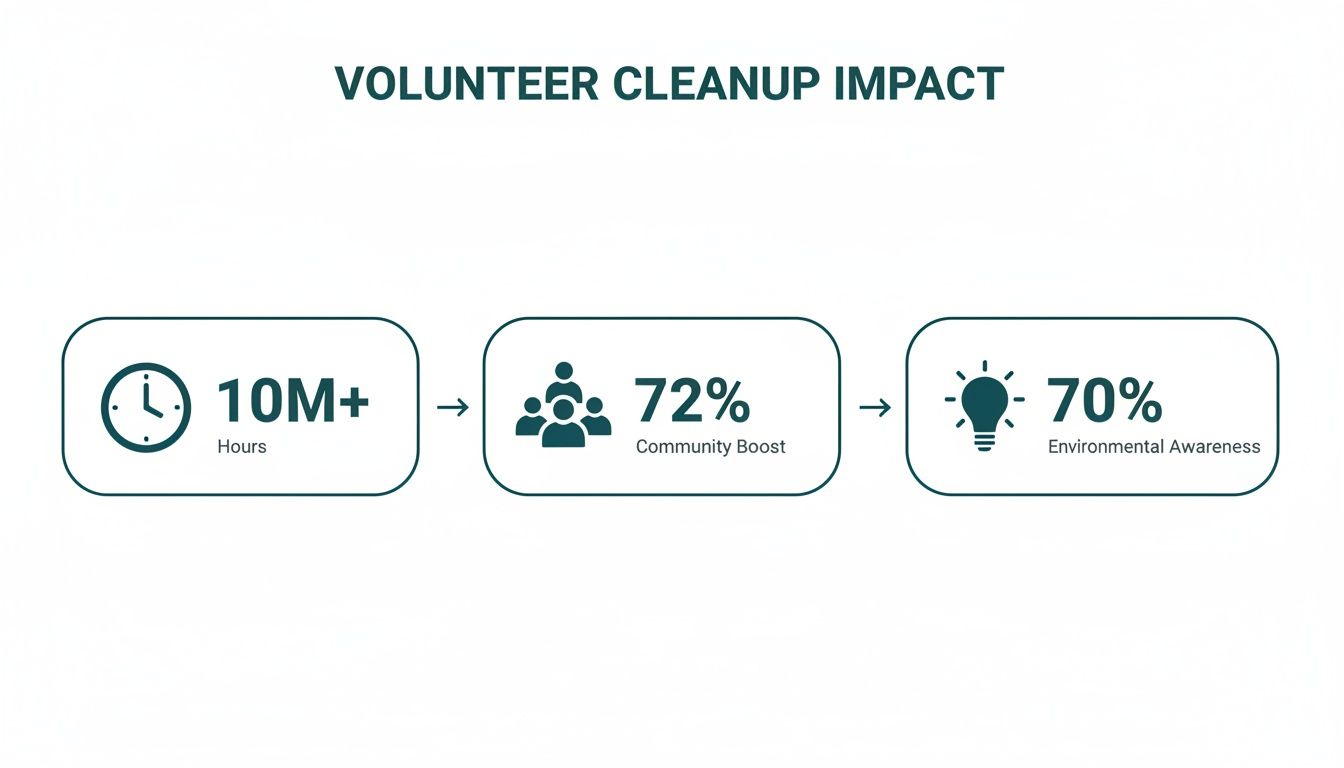
    Look, we’re not perfect. We’re just a bunch of regular, brave, and kind people who got tired of waiting for someone else to clean up our city. We’re out there every single week, no matter what Chicago decides to throw at us—blizzards, heatwaves, you name it. We do it to make our home a little better and, honestly, to make ourselves a little stronger.

    And this isn't just some small Chicago thing. We're part of a massive global pulse. In 2023, World Cleanup Day got an insane 19.1 million volunteers on the streets in over 91% of the world's countries. Together, they collected a mind-blowing 205,000 tons of trash. Think about that. From a 101-year-old in Curaçao to moms with their babies in Estonia, people are proving that anyone, anywhere, can be part of the fix. You can read the full story on this global effort and see the scale of what we're all a part of.

    So, How Do You Find Us?

    Joining is easy. No complicated applications, no membership fees. Just show up with an open mind and be ready to get your hands a little dirty. We post all our events in two main spots to make it simple for you to find us.

    • Our Meetup Group: This is home base. Every cleanup, every special event, and any last-minute plans get posted here first. It's the most reliable way for you to see what's coming up and RSVP.
    • Our Instagram Page: Want a preview of the action? Our Instagram is where we post the pictures, the stories, and the real-life vibe of our cleanups. It’s the perfect way for you to see the impact we’re making week after week.

    This isn't just a call to action; it’s a call to adventure. It’s an invitation to find your people, to fall in love with Chicago all over again, and to discover what you’re capable of when you decide to serve something bigger than yourself. We’re out there. Come find us.

    Got Questions? We've Got Answers.

    Jumping into something new always brings up a million questions. I get it. When I first started this, I had plenty of my own. So let's tackle a few of the most common things people ask before their first trash pickup volunteer event.

    "What If I Can't Come Every Week?"

    This is probably the biggest one. Life is chaotic, schedules change, and sometimes you just need a weekend to sleep in.

    Let me be clear: this isn't a job. There's no time clock for you to punch. You should show up when you can, and don't sweat it when you can't. We're just happy to have you when you're here. Every single person who shows up, even just once, makes a real difference.

    "Do I Need to Bring My Own Gear?"

    Nope! We’ve got you covered. We bring all the gloves, bags, and those super-clutch trash grabbers.

    You just show up dressed for the weather—and you know how Chicago weather is. Layers are your friend. We'll handle the rest.

    "Is It Safe to Go Into All These Neighborhoods?"

    Absolutely. Your safety is our number one priority, full stop. We never go it alone. We always work in groups, we stay aware of our surroundings, and we have experienced leaders at every single event.

    Look, we're on a mission to clean up all 50 wards of Chicago. All of them. That includes the ones some people might tell you to avoid. Why? Because we believe breaking down those invisible walls is the only way to build real unity in this city.

    It’s about showing up for all of our neighbors and discovering the true fabric of Chicago, from Rogers Park to Englewood. It's an adventure, and we always, always do it together.


    Ready to join the adventure? Come find your people and discover your city with Litter Caterpillars. All our events are posted on our Meetup page.
  • My Top 7 Picks for the Best Volunteer Opportunities in Chicago for 2026

    My Top 7 Picks for the Best Volunteer Opportunities in Chicago for 2026

    I know what it’s like to feel stuck. My own life felt like a room I couldn’t clean. Every little piece of clutter, every old jar in the fridge, was a monument to a past I couldn't move. It weighed me down, like a 500-pound weight on my chest. It wasn’t until I hit a breaking point, ending a chaotic relationship and facing my own mess, that I decided to change.

    I resolved to build a new life, one based on cleanliness, consistency, and bravery. The funny thing is, I found that path not by cleaning my own space, but by cleaning Chicago's. Picking up trash for someone else was… easy. Liberating, even. It taught me that sometimes the way to fix what's broken inside you is to start by fixing something outside of you.

    If you’re feeling that pull to do more, to connect with your city and maybe even reconnect with yourself, you're in the right place. I’ve walked this path, and I've found some truly incredible ways to give back. I’ve put everything I learned into this guide to the best volunteer opportunities in Chicago.

    This isn't just a generic list. It’s a curated collection of platforms and organizations that solve the problem of finding meaningful, actionable volunteer work. I'll walk you through exactly what each one offers, who it's best for, and the real-world impact you can make. Let's explore the best volunteer opportunities in Chicago together, and I'll show you how you can find your own transformation.

    1. Litter Caterpillars

    If you’re looking for a way to create immediate, visible change in Chicago while making genuine friendships, look no further than Litter Caterpillars. I see this group as more than just a cleanup crew; it’s a citywide movement built on grit, consistency, and a powerful sense of community. This isn't your average, once-a-year volunteer event. This is a weekly commitment to making our city better, one block at a time, side-by-side with people who quickly start to feel like family.

    Kevin Tao, the founder, built this on a simple but profound idea: show up and clean up. They meet every single weekend morning, no matter what. I'm talking blizzards, rain, or sweltering heat. This relentless dedication has led them to clean in all 50 of Chicago's wards, including neighborhoods often overlooked by other organizations. It's a testament to their belief that every corner of our city deserves care and pride.

    A group of Litter Caterpillars volunteers smiling and holding trash bags after a neighborhood cleanup event in Chicago.

    Why It Stands Out: A Movement You Can Join

    What truly makes Litter Caterpillars one of the best volunteer opportunities in Chicago is its "volunteer-first" culture. You don't have to donate money. Your time and energy are what matter. I've always felt that safety and happiness are the top priorities, creating a welcoming space where you can just show up and contribute.

    Their story is incredibly inspiring. It started with just three people in a hailstorm and has grown into a powerful force for good. They've made headlines for their bold actions, like cleaning a highway during a shutdown and, most impressively, winning an empty-lot auction to create Caterpillar Park in Englewood. This isn't just picking up trash; this is reclaiming and transforming public spaces for the community.

    The culture is vibrant and engaging. Think of it like a team, complete with flags, a theme song, and even achievement badges. I find the open group chats and regular social meetups make it easy to connect, so you're not just volunteering, you're building a real social circle. Their social media on Instagram and TikTok is filled with authentic clips of volunteers having a great time, which has helped their community grow exponentially. For more details, explore the various environmental volunteer opportunities in Chicago with Litter Caterpillars.
    Getting Involved: Your First Cleanup

    Joining is refreshingly simple and low-friction. You don't need to fill out lengthy applications or sit through formal orientations. You just find an upcoming event and show up.

    • Who It’s Best For: Anyone who wants hands-on, tangible impact. It's perfect if you're new to Chicago and want to make friends, or if you're a longtime resident looking to explore different neighborhoods and foster local pride.
    • Time Commitment: Events are consistently held on weekend mornings. This structure helps you build a positive, consistent habit of service.
    • How & Where to Sign Up: The easiest way is through their official website or by joining their group on the Meetup app. You can also follow their Instagram for event announcements.
    • Eligibility & Safety: All you need is a positive attitude. The group provides all the necessary equipment (gloves, bags, grabbers) and starts each event with a safety briefing.

    Quick Tip for Your First Time: Don't be shy! Introduce yourself to the event leader and a few other volunteers. The community is incredibly welcoming, and people are eager to connect. Wear comfortable, closed-toe shoes, and just be ready to have a surprisingly fun time making a difference.

    2. Idealist – Chicago Volunteer Opportunities

    If you’re ready to find your perfect match in the world of volunteering, think of Idealist as your ultimate connector. Imagine a massive, bustling city square where every nonprofit, mutual aid group, and community organization in Chicago has set up a booth. That’s what Idealist feels like to me—an incredible, one-stop hub teeming with possibilities to make a difference. After joining forces with VolunteerMatch, it has become one of the most comprehensive platforms available, aggregating thousands of the best volunteer opportunities in Chicago into one dynamic, searchable feed.

    Idealist – Chicago Volunteer Opportunities

    This platform shines because it puts the power of choice directly in your hands. You aren’t just scrolling endlessly; you're actively filtering for what truly matters to you.

    What It's Best For

    I think Idealist is for the volunteer who wants options—lots of them. It’s perfect if you're exploring different causes, from animal welfare in Lincoln Park to food justice initiatives in Englewood. Whether you have one afternoon to spare or are looking for a long-term commitment, the platform’s powerful filters help you narrow down the search. You can sort by on-site or remote work, find opportunities that are family-friendly, or even search for skills-based roles where you can lend your professional expertise.

    How to Get Started

    Getting involved is straightforward. You can browse listings without an account, but I recommend creating a free profile to unlock the platform’s best features.

    1. Visit the Website: Go to Idealist.org/en/volunteer-in-chicago.
    2. Use the Filters: On the left-hand side, start tailoring your search. Filter by cause area (like "Children & Youth" or "Environment"), date, or type of work.
    3. Find an Opportunity: Click on a listing to get the full details, including responsibilities, time commitment, and location.
    4. Apply: Follow the instructions to sign up. Some organizations let you apply directly on Idealist, while others may link you to their own volunteer portal.

    First-Time Volunteer Tip: Create an account and "follow" a few organizations that catch your eye. You'll get email alerts when they post new opportunities, so you never miss a chance to contribute to a cause you care about.

    Pros and Cons

    Pros Cons
    Massive Selection: The sheer volume of listings from across Chicago is unmatched. Varying Quality: Since anyone can post, some listings are more detailed and professional than others.
    Powerful Filters: Easily find exactly what you’re looking for, from one-day events to recurring roles. Redirects: You might have to leave Idealist to complete your application on an organization's site.
    Organization Alerts: Following your favorite nonprofits keeps you in the loop about their latest needs. Can Be Overwhelming: The number of options can feel like a lot to sort through at first.

    Idealist empowers you to be the architect of your own volunteer journey. It’s a tool for discovering the incredible work being done in every corner of our city and finding precisely where your unique spark can make the biggest impact. If you want to dive deeper into navigating these large platforms, you can find more tips on how to find the perfect volunteer work.

    3. Points of Light Engage

    If you've ever wanted a global perspective on local impact, I see Points of Light Engage as your window to the world of service, right here in Chicago. Think of it as a satellite view of volunteering; it doesn't just show you one city block, it reveals the entire landscape. It pulls in opportunities from a vast network of partner sites and local affiliates, presenting a rich, diverse collection of ways to give back. I’ve found it connects you to both well-known and hidden-gem nonprofits across the city and its suburbs.

    Points of Light Engage

    This platform excels by casting a wide net. You'll discover chances to contribute that you might have otherwise missed. It’s a powerful tool for seeing the full spectrum of need and opportunity in our community.

    What It's Best For

    Points of Light Engage is ideal for the curious volunteer who wants to explore beyond the usual suspects. You’ll find it particularly useful if you're looking for unique roles or want to find opportunities in Chicago's surrounding suburbs. Because it aggregates from so many sources, you might find a posting for a small, local food pantry in Rogers Park right next to a virtual mentorship program with a national organization. I appreciate how it clearly labels opportunities as "recruiting" or "ongoing," so you know exactly which needs are most current. It’s also great for finding group-friendly projects and at-home volunteer work.

    How to Get Started

    Diving in and finding your next role is simple and intuitive. The platform is designed to get you connected to a cause quickly.

    1. Visit the Website: Navigate to the Chicago-specific portal at engage.pointsoflight.org/.
    2. Filter Your Search: Use the search bar and filters to look for keywords (like "environment" or "animals"), specify your location, and choose between in-person or virtual roles.
    3. Explore the Listings: Each post gives you a snapshot of the organization and the role. Look for the green "Recruiting" tag to see active needs.
    4. Express Interest: Click on an opportunity to read the full details. From there, you will be guided on how to sign up, which often involves being redirected to the partner organization’s website.

    First-Time Volunteer Tip: Use the "Virtual" filter to find at-home opportunities. This is a great way to ease into volunteering by lending your skills- like writing, graphic design, or data entry- on your own schedule.

    Pros and Cons

    Pros Cons
    Discover Hidden Gems: Excellent for finding lesser-known nonprofits and suburban organizations. Occasional Duplicates: The aggregated feed can sometimes show the same opportunity more than once.
    Aggregated Listings: Pulls opportunities from multiple networks into one convenient place. External Sign-Ups: You'll often need to complete your application on an external partner's website.
    Clear Status Labels: Easily see which organizations are actively seeking help right now. Interface Can Be Basic: The design is functional but less modern than some other platforms.

    Points of Light Engage acts as your trusted guide, helping you navigate the vast ecosystem of service to find where you belong. It broadens your horizons, connecting your desire to help with the countless organizations working to build a better Chicago, one act of service at a time.

    4. Chicago Cares

    If larger platforms like Idealist are the massive city squares of volunteering, think of Chicago Cares as your friendly neighborhood block party. It’s a deeply local, hands-on platform that feels like it was built by Chicagoans, for Chicagoans. For decades, they have been the city's premier matchmaker, connecting energetic volunteers like you with impactful, on-the-ground projects, particularly on the South and West Sides. They don’t just list opportunities; they curate and often lead them, ensuring every event is organized, meaningful, and ready for you to make a real difference.

    Chicago Cares

    This platform stands out because it removes the guesswork. You show up, and the project is ready to go, complete with a trained leader and all the supplies you need. It’s pure, direct action.

    What It's Best For

    Chicago Cares is perfect for the volunteer who wants to just show up and get to work. I think it's ideal if you’re looking for well-structured, staff-led weekend projects like beautifying a school playground in Austin or packing food at a pantry in Pilsen. Because of its local focus, it's one of the best volunteer opportunities in Chicago for discovering neighborhoods you've never explored. It’s also fantastic for corporate teams or anyone new to volunteering who appreciates a bit more guidance and organization.

    How to Get Started

    Signing up is your ticket to a calendar full of curated projects. They’ve made the process simple to get you into the community quickly.

    1. Visit the Website: Head over to ChicagoCares.org.
    2. Create Your Profile: You'll need to create a free account to view and register for projects. This helps them manage event capacity and communicate details.
    3. Browse the Calendar: Explore their "Find a Project" calendar. You can filter by date, cause area (like "Hunger" or "Education"), or neighborhood.
    4. Sign Up: Once you find a project that inspires you, click "Sign Up." You’ll receive a confirmation email with all the details, including the meeting spot, what to wear, and your project leader's contact info.

    First-Time Volunteer Tip: Look for the "New Volunteers" filter on their project calendar. I’ve found these opportunities are specifically designed to be welcoming and provide a great introduction to the Chicago Cares model.

    Pros and Cons

    Pros Cons
    Local Expertise: Deep relationships with community partners mean projects address real, stated needs. Account Required: You must create a login before you can see full project details or register.
    Well-Organized: Staff-led projects ensure you have a great experience without logistical headaches. Fewer Niche Roles: You'll find fewer highly specific or skill-based roles than on a national aggregator.
    Consistent Weekend Options: The calendar is always populated with great Saturday and Sunday events. Popular Events Fill Up: The best projects can fill up fast, so it's good to check the calendar regularly.

    Chicago Cares is your gateway to becoming an active participant in the city's story. It’s less about endless searching and more about immediate, tangible action, connecting you directly to the heartbeat of Chicago’s communities, one project at a time.

    5. United Way of Metro Chicago – Volunteer Portal

    If you’re looking to join a powerful, coordinated effort to uplift Chicago communities, think of the United Way of Metro Chicago’s portal as your mission control. This isn't just a list of random opportunities; it’s a curated collection of impactful projects from a network of trusted, vetted partner agencies. For me, it feels like being invited to a city-wide collaboration where every project is a crucial piece of a larger strategy to build stronger neighborhoods across Cook County.

    United Way of Metro Chicago – Volunteer Portal

    What makes this platform special is its focus on structured, group-oriented action. I believe it’s built not just for individual volunteers but for teams who want to make a collective impact, turning good intentions into organized, meaningful work.

    What It's Best For

    The United Way portal is the perfect resource for corporate teams, friend groups, or families looking for a seamless way to volunteer together. If you've ever tried to organize a group outing, you know the logistical headaches. United Way simplifies this by offering curated team projects and large-scale "Days of Action" where all the planning is handled for you. It's also fantastic for anyone who values accountability and wants to see the cumulative effect of their service, as the portal allows you to track your volunteer hours and measure your impact over time. From assembling hygiene kits at your office to participating in neighborhood revitalization projects, it excels at providing organized, accessible opportunities.

    How to Get Started

    Engaging with United Way's network is designed to be straightforward and rewarding. Here’s how you can jump in and find some of the best volunteer opportunities in Chicago:

    1. Visit the Website: Head over to liveunitedchicago.org/get-involved/volunteers/.
    2. Browse Opportunities: Explore the listings for individual, group, or even remote volunteer roles. You’ll find everything from skills-based virtual help to hands-on outdoor projects.
    3. Sign Up for an Account: Create a free account to register for projects, join a team, and begin tracking your hours.
    4. Register and Show Up: Once you find a project that inspires you, follow the simple registration steps and get ready to make a difference with other dedicated Chicagoans.

    First-Time Volunteer Tip: Look out for United Way’s seasonal drives and "Days of Action." These are large, high-energy events that are incredibly welcoming to newcomers and provide a fantastic introduction to the spirit of community service in Chicago.

    Pros and Cons

    Pros Cons
    Trusted Network: All opportunities are with vetted, reputable nonprofit partners. Inventory Varies: The number of available spots can ebb and flow depending on partner needs and season.
    Group-Friendly: The platform is expertly designed for organizing corporate or large group volunteer days. Corporate Priority: Some popular listings may reserve spots for corporate partners first.
    Impact Tracking: Easily log your hours and see the collective impact of your contributions. Less Spontaneous: The structured nature means fewer last-minute or drop-in style opportunities.

    United Way’s portal transforms the search for a volunteer role into a clear path toward community-building. It provides the structure and support to ensure your time and energy are channeled effectively, making you a vital part of a unified force for good across our city.

    6. Greater Chicago Food Depository – Volunteer

    If you want to feel the immediate, tangible result of your efforts, volunteering at the Greater Chicago Food Depository is an experience like no other. This isn't just about sorting cans; it's about being a crucial link in the chain that feeds our neighbors across Chicago and Cook County. The energy in their massive warehouse is palpable—a vibrant, organized hum of people coming together for one powerful mission: ending hunger. It's one of the most hands-on, high-impact, and best volunteer opportunities in Chicago, where a few hours of your time directly translates into meals on families' tables.

    Greater Chicago Food Depository – Volunteer

    The platform is designed for action. With a real-time calendar and clear instructions, they make it incredibly easy for you to jump in and start making a difference right away. You leave your shift knowing exactly how many pounds of food you helped pack and how many people you helped feed.

    What It's Best For

    The Food Depository is perfect for the volunteer who thrives on physical activity and teamwork. If you enjoy working with your hands and seeing a direct outcome, this is for you. I think it’s ideal for individuals looking for consistent, scheduled shifts, as well as for families, corporate teams, and students seeking meaningful group activities. With roles like repacking bulk food into family-sized portions, sorting fresh produce, or helping at mobile distributions, there is a constant need for your support. They even offer pathways for court-ordered community service, making it an accessible option for many.

    How to Get Started

    Signing up for a shift is simple and you manage it entirely through their online portal. The system is efficient and user-friendly, letting you see what’s available at a glance.

    1. Visit the Website: Go to chicagosfoodbank.org/get-involved/volunteer/.
    2. Create an Account: You'll need to create a quick volunteer profile to access the calendar.
    3. View the Calendar: Browse the real-time calendar for available shifts, which are typically held Tuesday through Saturday.
    4. Sign Up: Choose a date and time that works for you and register. You will receive a confirmation email with all the details you need for your shift, including directions and what to wear.

    First-Time Volunteer Tip: Wear comfortable, closed-toe shoes and dress in layers. The warehouse can be cool, but you’ll warm up quickly once you get moving. I suggest arriving a few minutes early for the orientation—it's quick, informative, and gets everyone energized for the work ahead.

    Pros and Cons

    Pros Cons
    Consistent Availability: A reliable schedule of shifts is posted weekly. Popular Shifts Fill Quickly: The most convenient spots, especially on Saturdays, get booked up fast.
    Immediate Impact: You see the direct results of your labor in real-time. Limited Sunday Options: If your only free day is Sunday, it can be difficult to find an available session.
    Easy Online Signup: The real-time calendar makes it simple to find a spot. Physically Demanding: Most roles require you to be on your feet and may involve some light lifting.

    Volunteering here is more than just a task; it’s an empowering way to stand against hunger in our community. You become part of a massive, coordinated effort, working shoulder-to-shoulder with fellow Chicagoans to ensure no one goes without a meal.

    7. Chicago Park District – Volunteer

    If you've ever walked through one of Chicago's beautiful parks and felt a surge of gratitude, here is your chance to give back directly to the green spaces that make our city breathe. I see the Chicago Park District’s volunteer portal as your gateway to becoming a hands-on steward of your neighborhood's natural treasures. It’s less like a job board and more like a community calendar, inviting you to roll up your sleeves and leave a visible, lasting mark on the parks you love. This is where you connect with the earth, meet your neighbors, and become part of the city's living ecosystem.

    Chicago Park District – Volunteer

    This platform stands out because it focuses on tangible, hyperlocal impact. You won't just be helping an organization; you'll be mulching trees, planting flowers, and removing invasive species in the park right down your street.

    What It's Best For

    The Chicago Park District is perfect for the volunteer who loves being outdoors and seeing immediate results from their work. If your ideal Saturday involves fresh air, a bit of physical activity, and a strong sense of community, this is for you. I find it’s fantastic for one-day commitments, group service projects, and family outings. From neighborhood cleanups to ongoing stewardship days in natural areas, you’ll find opportunities to get your hands dirty in all 77 community areas.

    How to Get Started

    Signing up for a park event is simple and connects you directly with the people leading the charge on the ground.

    1. Visit the Website: Head over to chicagoparkdistrict.com/volunteer.
    2. Explore Opportunities: Browse the listings for one-day events, Natural Areas Community Stewardship Days, or garden projects. The opportunities are often organized by park location.
    3. Find Your Event: Click on an event to see the details, including the tasks involved (like planting or weeding), time, and location.
    4. RSVP: Follow the instructions to sign up. Many listings will ask you to RSVP directly with a site steward via email or phone, creating a more personal connection from the start.

    First-Time Volunteer Tip: Dress for the weather and wear clothes you don’t mind getting dirty. Most events run rain or shine, and bringing your own water bottle and work gloves is always a good idea. It’s a simple way to stay comfortable while you work.

    Pros and Cons

    Pros Cons
    Visible Local Results: Your work directly improves a specific neighborhood park you can visit and enjoy. Direct RSVP Required: Some events require contacting a site steward directly by phone or email.
    Easy Weekend Plug-In: Many events are one-day commitments, making it simple to fit volunteering into your schedule. Extra Onboarding: Long-term roles, like a Community Steward, require a background check and more training.
    Outdoor, Hands-On Service: Perfect for those who want to be active and connect with nature. Weather Dependent: As events are outdoors, they can sometimes be impacted by severe weather conditions.

    Volunteering with the Park District is a powerful way to claim ownership of your community's green spaces and make them better for everyone. If you’re inspired by this work, you can discover more ways to get involved by exploring a guide to community gardens in Chicago.

    Top 7 Chicago Volunteer Opportunities Comparison

    Organization 🔄 Implementation complexity ⚡ Resource requirements 📊 Expected outcomes 💡 Ideal use cases ⭐ Key advantages
    Litter Caterpillars Low — volunteer-run weekly meetups, informal coordination Low — volunteer time, basic cleanup supplies, social channels High visible local impact (ward cleanups, new park); ⭐⭐⭐⭐ Hands-on neighborhood cleanups, community-building volunteers Strong volunteer-first culture and consistent on‑the‑ground results
    Idealist – Chicago Volunteer Opportunities Medium — large platform with self‑service listings Low‑medium — account + internet; varied org processes Broad discovery across causes; quality varies by poster; ⭐⭐⭐ Searching many roles (one‑day, skills‑based, remote) across Chicago Very large inventory and detailed filters for targeted searches
    Points of Light Engage Medium — aggregated search across partners Low — online access; may require external signups Good for uncovering varied partners/suburban options; duplicates possible; ⭐⭐⭐ Finding partner‑affiliate opportunities and less‑visible nonprofits Aggregated feed from multiple networks with clear recruiting labels
    Chicago Cares Medium‑High — staff‑led calendar and project coordination Medium — account signup, staff-organized events, onboarding Reliable neighborhood impact and volunteer onboarding; ⭐⭐⭐⭐ First‑time volunteers, recurring projects, corporate service days Local expertise and consistent, well‑organized projects
    United Way of Metro Chicago – Volunteer Portal Medium — central portal coordinating vetted partners Medium — portal use, group coordination, hour tracking Vetted partner opportunities and coordinated Days of Action; ⭐⭐⭐⭐ Corporate/group volunteering, tracking impact and hours Trusted network with tools for organizing teams and tracking service
    Greater Chicago Food Depository – Volunteer Low‑Medium — scheduled, logistics‑heavy shifts Medium — in‑person shifts, orientation; physical capacity Immediate, measurable impact distributing food; very consistent; ⭐⭐⭐⭐ Warehouse repacks, mobile distributions, family shifts High frequency of shifts and clear, visible outcomes
    Chicago Park District – Volunteer Medium — site stewardship and one‑day events; some roles need checks Medium — volunteer time, site stewards; background checks for long‑term roles Visible local park and stewardship improvements; ⭐⭐⭐ Outdoor stewardship, plantings, neighborhood cleanups City‑run, neighborhood reach across all community areas

    You've Seen the Options, Now It's Time to Show Up

    I’ve walked you through seven incredible pathways to making a tangible impact in Chicago. You’ve seen the sprawling volunteer search engines like Idealist and Points of Light, which are like giant libraries where every book is a chance to help. You’ve explored community-focused powerhouses like Chicago Cares and United Way, the established pillars that have been connecting good people to good work for decades.

    You’ve even looked at hyper-specific, powerful missions, from sorting life-sustaining food at the Greater Chicago Food Depository to restoring natural beauty with the Chicago Park District. Each one is a different door. Behind one, you might find yourself laughing with new friends while packing boxes of produce. Behind another, you could be on your knees in the dirt, planting the seeds of a greener, more beautiful park for everyone to enjoy. And of course, there's my personal favorite: grabbing a picker and joining the grassroots energy of Litter Caterpillars, turning forgotten streets into sources of neighborhood pride.

    But reading about these opportunities is like looking at a travel brochure. You can admire the pictures of the beautiful destinations, read about all the amazing things you can do there, but you don't actually get the experience until you book the ticket and get on the plane. The map isn't the territory. This article is your map, but the real adventure begins the moment you close this tab and take your first step.

    Choosing Your First Adventure

    So, how do you pick just one? Don't let the paradox of choice freeze you. Think of it less like a lifelong commitment and more like choosing what to have for dinner tonight. You aren’t marrying the first organization you volunteer with.

    • Craving direct, visible results? If you’re someone who needs to see the change you’re making, look at the Greater Chicago Food Depository or Litter Caterpillars. At the end of a few hours, you can point to a pallet of sorted food or a clean city block and say, “I did that.” The feedback is immediate and deeply satisfying.
    • Want flexibility and variety? If your schedule is a beautiful, chaotic mess, portals like Chicago Cares and Idealist are your best friends. They are built for people like you, offering one-off events, weekend projects, and opportunities that fit into the nooks and crannies of a busy life.

    • Looking for community and connection? If your primary goal is to meet like-minded people and build your Chicago tribe, focus on team-based activities. The Chicago Park District’s restoration days and, again, the almost party-like atmosphere of a Litter Caterpillars cleanup are fantastic for forging genuine connections while you work.

    The truth is, your perfect fit might change from month to month, and that’s okay. The most important factor isn't finding the "one perfect" opportunity forever. It's finding the right opportunity for you, right now.

    The Real Reason We Show Up

    Let me tell you something I’ve learned from countless hours picking up trash in every kind of Chicago weather imaginable. Volunteering isn't just about giving. It's about what you get back, often in ways you never expect.

    I’ve had my most profound moments of clarity not in a quiet room, but on a noisy street corner with a garbage bag in hand. I’ve built stronger friendships while sweating through a park cleanup than I have over a dozen brunches. Facing the small challenges, the early mornings, the unexpected rain, the sheer volume of work, it doesn't break you. It builds you. It adds color, texture, and meaning to your own story.

    You’ve seen the options. You have the tools. You know where to go and what to do. The only question left is the one you have to ask yourself: What kind of character do you want to be in Chicago’s story? The one who saw a need and kept walking, or the one who saw a need and decided to show up?

    Pick one. Just one. Sign up for that first shift. I promise you, the city will be better for it. But more importantly, so will you.


    Ready to skip the search and jump straight into action with a crew that’s all heart? Join us at Litter Caterpillars for a weekend cleanup. We provide the gear and the good vibes; you just bring yourself and a desire to make our neighborhoods shine. Find your next event and see what we're all about at Litter Caterpillars.
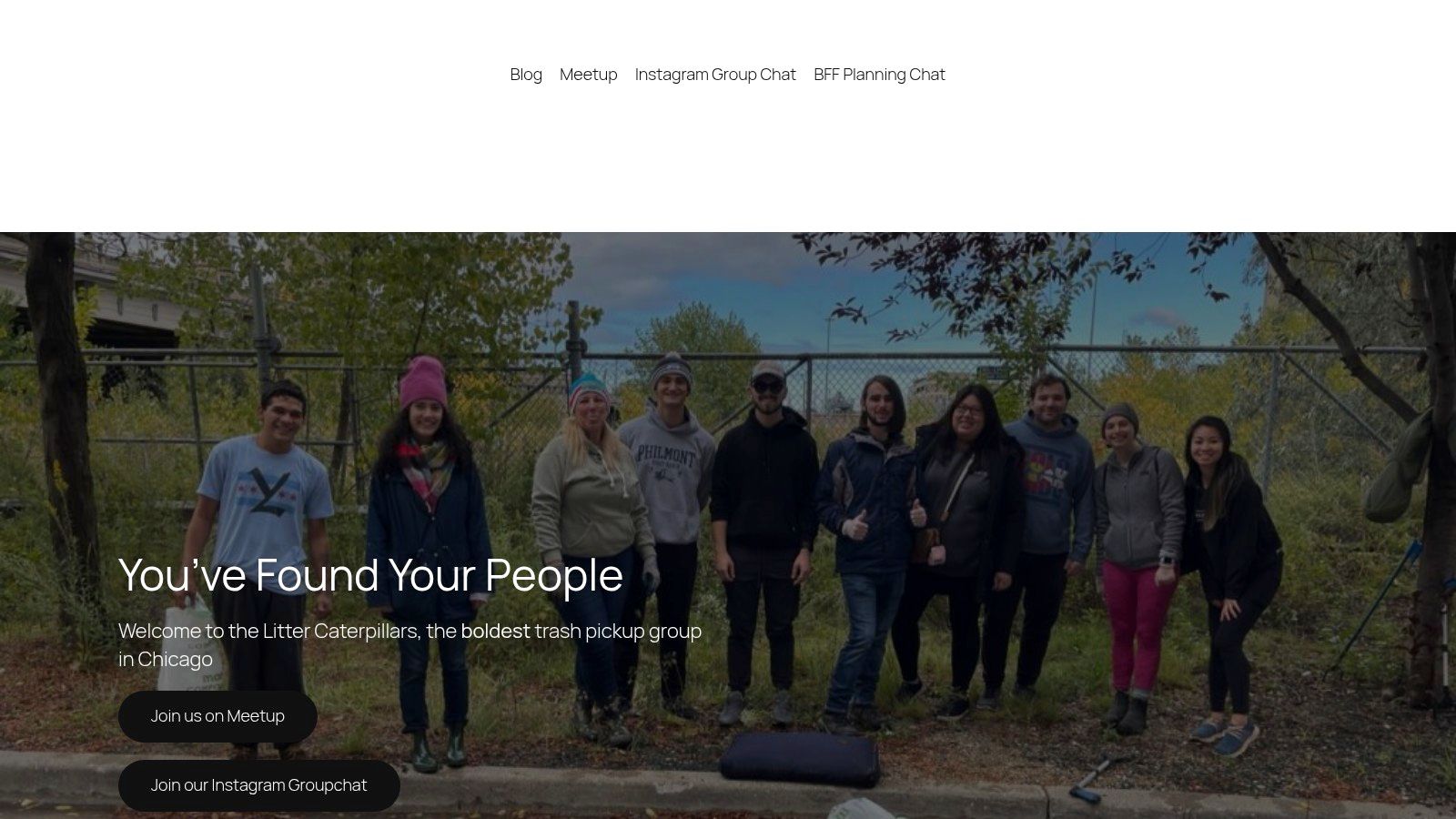
  • 7 Ways to Dig into Community Gardens Chicago IL and Grow with Your City

    7 Ways to Dig into Community Gardens Chicago IL and Grow with Your City

    Imagine turning a forgotten patch of dirt into a place that pulses with life. A quiet corner of your neighborhood, once just dust and maybe a ghost of a plastic bag, is now exploding with tomatoes, sunflowers, and the sound of neighbors laughing. This isn't a dream. It's the real, dirt-under-your-fingernails magic happening every day across the incredible network of community gardens in Chicago, IL.

    Getting involved is a lot less complicated than you think. It's not about being a perfect gardener with a flawless green thumb; it’s about the simple, brave act of showing up. It’s a lot like when we started Litter Caterpillars, shivering in a hailstorm with only three people. We discovered a powerful secret that day: tackling a big mess together is infinitely easier, and way more fun, than facing your own alone. Each weed you pull, each seed you plant, is a small act of defiance against apathy. It’s a way of telling your block, your city, and yourself: ‘I’m here. I care. Let’s grow something beautiful.’

    This guide is your map to that feeling. It’s not just a list of places; it's a treasure map to finding your own power to transform things, one plot at a time. We've gathered the best platforms and resources to help you find a green space to call your own, whether you want to volunteer for a day, adopt a plot for a season, or even claim a city lot to start something brand new. Forget getting lost in a jungle of search results. Here, you’ll find direct links, screenshots, and clear, actionable steps for each resource. Let’s dig in and find your garden.

    1. Litter Caterpillars

    Imagine a different kind of garden. Instead of tending to seeds in soil, you are cultivating change on the sidewalks, streets, and forgotten lots of Chicago. This is the groundbreaking work of Litter Caterpillars, a citywide volunteer collective that transforms the act of picking up trash into an inspiring, community-building adventure. While not a traditional garden with plots for rent, this organization is a foundational partner for anyone invested in creating cleaner, greener, and more vibrant public spaces, making it an essential resource for the community gardens Chicago IL movement.

    Litter Caterpillars is your entry point to hands-on neighborhood transformation, a way to reclaim public spaces and prepare the ground, often literally, for future greening projects. Founded by the tireless Kevin Tao, this group meets every single weekend, regardless of rain, snow, or summer heat, to clean one of Chicago's 50 wards. Their ethos is built on a powerful, simple idea: show up, be kind, and make a visible difference together.

    Why Litter Caterpillars Stands Out

    What makes this group exceptional is its "volunteer-first" philosophy. Joining is completely free, and the culture is intentionally low-pressure. You won’t be solicited for donations or pressured into commitments. The focus is squarely on your safety, your happiness, and the profound sense of accomplishment that comes from collaborative effort. This isn't just about cleaning; it's about building a citywide family.

    The group fosters a unique and powerful identity through shared symbols like flags, badges, and even a theme song. It feels less like a chore and more like joining a team on a mission. This sense of belonging is the secret sauce that turns a one-time volunteer into a dedicated member who finds friendship and personal growth while beautifying the city.

    Key Features and How You Can Get Involved

    • Citywide Impact: From cleaning a shut-down highway during a bike event to winning an empty lot at auction to create Caterpillar Park in Englewood, their projects are bold and impactful. You can be part of efforts that make headlines and inspire citywide change.
    • Zero-Barrier Entry: Getting involved is incredibly easy. Find their next event on Meetup, follow their journey on Instagram, or join one of their open group chats. It’s designed for anyone to jump in, whether you're a student, a newcomer, or a lifelong Chicagoan.
    • Direct Support for Garden Spaces: A clean neighborhood is the first step toward a thriving garden. By clearing litter and debris from surrounding areas, Litter Caterpillars creates healthier environments for existing community gardens Chicago IL and paves the way for new ones to flourish. Their work directly combats blight and fosters a sense of stewardship that is vital for any green space.
    • Adventurous Community Service: Each weekend offers a chance to explore a new corner of Chicago, from neighborhoods you know and love to areas you’ve never visited. It’s an urban adventure with a purpose.

    A Note on Their Unique Model: Litter Caterpillars operates as a passionate grassroots collective. While they may not offer the formal infrastructure of a traditional nonprofit (like tax-deductible receipts), their agility and volunteer-centric model allow them to be incredibly responsive and authentic.

    Practical Tips for Joining the Mission

    1. Check the Schedule: Visit their website or Meetup page to find the next cleanup location. They are always somewhere in the city every weekend.
    2. Just Show Up: No pre-registration is required for most events. Simply arrive with a positive attitude; they provide the gear (gloves, bags, grabbers).
    3. Dress for the Weather: Their commitment is year-round. Layer up in the winter and bring water in the summer. Being prepared ensures you can focus on the fun and the impact.

    Litter Caterpillars is more than a cleanup crew; it's a movement of bravery, kindness, and unity. It’s proof that you don't need a grand plan or a lot of money to start making a monumental difference. You just need to show up.

    Website: https://www.littercaterpillars.com

    2. Chicago Urban Agriculture Mapping Project (CUAMP)

    Imagine having a satellite view of every single sprout of community effort across Chicago, a living map that pulses with green energy. That's precisely what the Chicago Urban Agriculture Mapping Project (CUAMP) offers. It’s not a garden itself, but rather your indispensable treasure map to finding the perfect plot of soil to call your own. Think of it as the central nervous system for community gardens in Chicago, IL, connecting eager hands with open land.

    Chicago Urban Agriculture Mapping Project (CUAMP)

    This powerful, free tool is your first and best stop for navigating the city's vast urban agriculture landscape. It’s a dynamic, interactive directory that lets you zoom into your neighborhood, search by ward, or even filter by specific needs, like finding a garden that composts. Each pin on the map is a story waiting to unfold, a community waiting to welcome you.

    How to Use CUAMP to Find Your Garden

    Getting started with CUAMP is as simple as dropping a pin on a map. The platform is designed for discovery, making it easy to turn your curiosity into action.

    • Search Near You: Pop in your address and watch as nearby gardens appear like stars in a clear night sky. It’s the fastest way to see what’s growing just around the corner.
    • Filter Your Search: Looking for something specific? Use the filters to find food-producing sites, gardens with active composting, or even identify which gardens are open versus locked. This helps you target your outreach effectively.
    • Explore Site Profiles: Click on a garden pin to open its profile. Here, you’ll find contact information for the garden manager, its operational status (active, dormant), and other crucial details.

    Key Insight: CUAMP empowers you to be a proactive community builder. It’s not just about finding a garden; it’s about understanding the city's green infrastructure and identifying where you can make the biggest impact.

    Why It Deserves a Top Spot

    CUAMP stands out because it's a collaborative, data-driven resource maintained by trusted local partners. While some listings might have slightly outdated contact info (a common challenge with volunteer-run projects), its citywide scope is unparalleled. It’s a tool built for everyone: the individual looking for a plot, the community organizer planning a cleanup, and even city planners analyzing green space.

    For a group like Litter Caterpillars, CUAMP is a strategic goldmine. You can download the data to identify clusters of gardens in a specific ward, helping you plan a targeted outreach day or a neighborhood-wide cleanup event that supports multiple green spaces at once. It transforms your passion from a single act of kindness into a coordinated wave of positive change.

    Website: https://cuamp.org/

    3. NeighborSpace (Chicago’s community‑garden land trust)

    What if a garden could last forever? Imagine a green space protected from development, a community hub guaranteed to be there for your children and your children’s children. This isn't a fantasy; it's the mission of NeighborSpace, the guardian angel for many community gardens in Chicago, IL. This organization acts as a land trust, essentially putting a permanent protective shield around community-managed gardens, ensuring they remain vibrant green spaces for generations.

    NeighborSpace (Chicago’s community‑garden land trust)

    NeighborSpace is the foundational support system that lets gardeners focus on what they do best: growing. By taking on the heavy lifting of land ownership, insurance, and even water access, they remove the biggest hurdles that can cause a community project to wither. They are the soil in which stable, long-term community gardens can firmly take root and flourish without fear.

    How NeighborSpace Supports the Green Community

    While you won't use NeighborSpace to sign up for an individual plot, their website is a vital resource for understanding the ecosystem of protected gardens and for groups looking to secure their future.

    • Find Protected Gardens: While they don't have an interactive map like CUAMP, their site profiles the gardens they protect. This is a great way to discover established, long-term gardens with strong community ties.
    • Access Resources: The site provides guidance for existing gardens on everything from planning and maintenance to becoming a protected site themselves. They offer tool lending and educational resources to their member gardens.
    • Understand the Trust Model: For anyone dreaming of starting a new garden, exploring NeighborSpace’s process is a masterclass in sustainability. It shows you how to build something that lasts.

    Key Insight: NeighborSpace isn’t about the "how" of finding a plot today; it's about the "why" these gardens will still be here tomorrow. Supporting a NeighborSpace garden means investing in a permanent piece of your neighborhood’s green legacy.

    Why It Deserves a Top Spot

    NeighborSpace provides the invisible architecture that makes a thriving urban garden scene possible. They are the backbone, the quiet partner ensuring that a community’s hard work doesn’t disappear with a new property development. Their work increases garden stability, reduces overwhelming administrative burdens for volunteer leaders, and provides practical, essential support like liability insurance.

    The major difference is that they don't manage the gardens directly. Each site has its own rules and plot assignment process, so you’ll still need to contact the garden managers individually. For a group like Litter Caterpillars, partnering with a NeighborSpace garden means you're helping a site that is deeply rooted and committed to its community for the long haul. Your cleanup efforts aren’t just a one-day boost; they are a contribution to an enduring local landmark.

    Website: https://neighbor-space.org/

    4. Chicago Park District – Community Gardens in the Parks

    What if the heart of your neighborhood park, the place you already love for picnics and playgrounds, also held a space for you to grow your own food? The Chicago Park District makes this a reality, weaving edible landscapes directly into the fabric of our city’s public green spaces. This initiative isn't just a list of gardens; it's a testament to the idea that community and nature can flourish together, right in our own backyards.

    Chicago Park District – Community Gardens in the Parks

    The Park District's directory lists nearly 100 gardens nestled within parks across the city, each managed by dedicated neighborhood groups. These aren't just plots of land; they are vibrant hubs of activity, learning, and connection. Think of them as open-air community centers where the price of admission is simply a willingness to get your hands dirty and share in the harvest.

    How to Get Involved with Park Gardens

    Navigating the Park District's system is your first step toward claiming a piece of public land for your private passion. It's about connecting with the local stewards who make these gardens bloom.

    • Find a Park Near You: The website features a comprehensive list of all parks with community gardens. Browse the directory to pinpoint the green space closest to you.
    • Contact the Garden Leader: Each park garden is run by a local volunteer group. The Park District page provides staff contacts who can connect you with the specific garden's coordinator to inquire about plot availability and volunteer days.
    • Explore Educational Programs: Many of these park gardens host free workshops and educational events. Keep an eye on the schedule to learn new skills, from composting basics to advanced planting techniques.

    Key Insight: Gardening in a public park elevates your efforts. Your work becomes a visible, inspiring part of the neighborhood, encouraging passersby to think about food, nature, and what's possible when a community comes together.

    Why It Deserves a Top Spot

    The Chicago Park District’s program stands out because it leverages our most accessible public assets: our parks. It removes the barrier of finding private land and provides an existing infrastructure of staff support and public visibility. While individual plot availability can be limited and requires connecting with local garden managers, the network is robust and deeply integrated into neighborhood life.

    For a group like Litter Caterpillars, these park-based community gardens in Chicago, IL are perfect partners. You can organize a cleanup that not only beautifies the park but also directly supports the gardeners who are growing food for their community. By clearing away litter from the garden's perimeter, you're helping protect their hard work from pests and pollution. It’s a powerful way to contribute to a park cleanup and amplify the positive impact happening there.

    Website: https://www.chicagoparkdistrict.com/node/132841

    5. Urban Growers Collective – Community Garden Plots

    If you're ready to stop dreaming and start digging, the Urban Growers Collective (UGC) provides a clear, direct path to claiming your own piece of Chicago's fertile ground. This isn't just about finding a garden; it's about joining a movement. UGC offers a structured, supportive way to rent a personal plot for a full growing season, turning your vision of fresh, homegrown produce into a delicious reality. Think of it as your personal launchpad into the world of urban farming, backed by one of the city's most respected food-justice organizations.

    Urban Growers Collective – Community Garden Plots

    This program is perfect for those who crave a dedicated space to cultivate. With standardized plots, a defined season from April to October, and transparent pricing, UGC removes the guesswork so you can focus on the joy of growing. Their community gardens, primarily located on the South Side, are more than just soil; they are vibrant hubs of connection, learning, and nourishment.

    How to Secure Your UGC Plot

    Getting started with a UGC plot is a straightforward process designed to set you up for success. They ensure every gardener has the foundational knowledge to thrive.

    • Check Availability: Head to their website to see which of their farm locations are offering plots for the upcoming season. Applications typically open in early spring and close quickly.
    • Submit an Application: The application process is simple and outlines the costs and expectations. UGC is committed to accessibility, offering a sliding scale for those with financial need.
    • Attend Orientation: All new plot holders are required to attend an orientation. This is where you’ll meet fellow gardeners, learn the rules, and get invaluable tips for a successful harvest.

    Key Insight: UGC’s approach is about empowerment through structure. By providing clear guidelines and a supportive community, they make it incredibly easy for beginners to gain confidence and for experienced gardeners to flourish.

    Why It Deserves a Top Spot

    Urban Growers Collective stands out for its deep commitment to community and food justice. Renting a plot here means you’re not just growing food for yourself; you're investing in an ecosystem that nourishes entire neighborhoods. The process is transparent, beginner-friendly, and rooted in the mission of a powerful local nonprofit.

    While plot availability is limited and highly sought after, the opportunity is transformative. For a group like Litter Caterpillars, partnering with a UGC garden for a cleanup day is a perfect fit. You can help beautify a space that is a vital source of fresh food and community pride. Beyond the garden plots, UGC offers incredible volunteer opportunities in Chicago at their larger farms and markets, allowing you to support their mission even if you don't have a plot. It's a way to connect your passion for a cleaner city with the powerful work of growing a healthier one.

    Website: https://www.urbangrowerscollective.org/community-gardens

    6. Chicago Public Library – Seed Libraries (multiple branches)

    Before a garden can grow, there must be a seed. Imagine a library not just for books, but for the very potential of life itself, a place where the beginnings of a thousand gardens are nestled in tiny paper packets, free for the taking. This is the magic of the Seed Libraries at select Chicago Public Library branches, a quiet but powerful force supporting community gardens in Chicago, IL. It’s the starting line for your gardening adventure, whether you have a backyard, a balcony box, or a freshly claimed plot in a community space.

    Chicago Public Library – Seed Libraries (multiple branches)

    This initiative transforms your local library into an essential hub for urban agriculture. It's a completely free, grassroots resource that democratizes gardening, removing the initial cost barrier and empowering anyone to start growing. The concept is beautifully simple: take seeds to plant, and if you can, bring back seeds from your harvest to share with others next season. It's a cycle of giving that nourishes both the soil and the community spirit.

    How to Use the Seed Library to Get Growing

    Tapping into this resource is as easy as checking out a book. The library has made it incredibly accessible, ensuring nothing stands between you and the joy of planting.

    • Visit a Participating Branch: Check the Chicago Public Library website for the list of branches with active seed libraries. Availability is seasonal, so it's a good idea to call ahead.
    • Browse and Borrow: The seeds are typically displayed in old card catalogs or special cases. You can simply take the packets you need; there are no library cards required or due dates to worry about.
    • Learn and Grow: While you're there, explore the library's collection of gardening books. You can also ask about related workshops or programs, like hydroponic kit giveaways, that can expand your skills.
    • Share the Harvest: At the end of the season, consider saving seeds from your strongest plants to return to the library, continuing the cycle for the next wave of gardeners.

    Key Insight: The Seed Library is more than just free supplies; it's an investment in a resilient, food-sovereign community. By encouraging seed saving, it helps cultivate plants that are uniquely adapted to Chicago's microclimates.

    Why It Deserves a Top Spot

    The Seed Library is a fundamental resource that complements every other tool on this list. While it doesn't provide land, it provides the spark of life that turns a patch of dirt into a source of food and beauty. Its zero-cost, open-access model makes it the ultimate entry point for new gardeners, school projects, and community plots operating on a shoestring budget. The selection varies, but that's part of its charm; you might discover a new variety of tomato or a beautiful native flower you'd never have thought to plant.

    For a group like Litter Caterpillars, this is an incredible asset. After a big neighborhood cleanup, you can empower residents to keep the momentum going by providing them with free seed packets from the library. It's a simple, tangible way to transition a space from clean to vibrantly alive, leaving behind a legacy of growth that lasts long after the cleanup day is over.

    Website: https://www.chipublib.org/news/seed-libraries-at-select-chicago-public-library-branches/

    7. City of Chicago – ChiBlockBuilder (city-owned lot sales)

    What if you didn't just join a garden, but created one from the ground up? Imagine transforming a forgotten, overgrown city lot into a vibrant hub of life, a permanent sanctuary for your neighborhood. That’s the powerful promise of ChiBlockBuilder, the City of Chicago's official portal for purchasing city-owned vacant land. It's more than a website; it's a doorway to lasting impact, the blueprint for building a green legacy.

    City of Chicago – ChiBlockBuilder (city-owned lot sales)

    This platform isn't about finding an existing plot; it's about claiming the land to start new community gardens in Chicago, IL. It’s the direct, official channel for acquiring long-term land control, turning a dream of a permanent green space into a deed-in-hand reality. Think of it as the ultimate tool for community builders ready to put down permanent roots.

    How to Use ChiBlockBuilder to Build a Legacy

    Navigating the path to land ownership might seem daunting, but ChiBlockBuilder streamlines the process, making it transparent and accessible for dedicated groups. It’s your first step toward transforming forgotten land.

    • Explore the Map: Use the interactive map to scout for city-owned vacant lots in your neighborhood. You can see which parcels are available, which are under review, and which might open up soon.
    • Express Your Interest: Found the perfect spot, but it’s not for sale yet? Use the “I’m Interested” feature. This signals your intent to the city and ensures you're notified the moment the application window opens.
    • Follow the Application Process: When a lot is available, the site provides a clear, step-by-step application guide. This formal process ensures your project is recognized and supported at the city level.

    Key Insight: Owning the land is a game-changer. It provides the stability to invest in long-term infrastructure like fruit trees, perennial beds, and community structures, ensuring your garden becomes a permanent fixture for generations to come.

    Why It Deserves a Top Spot

    ChiBlockBuilder is fundamentally different from other resources. It empowers communities to move beyond temporary agreements and achieve land security. While the process requires commitment, including purchase costs and navigating eligibility rules, the payoff is unparalleled: a permanent asset for your neighborhood. The platform's direct-from-the-source information and transparent mapping tools demystify what was once a complex bureaucratic maze.

    For a group like Litter Caterpillars, this tool offers a visionary path. You can identify a blighted lot during a cleanup event, then use ChiBlockBuilder to rally neighbors and begin the official process of transforming it forever. It's the ultimate evolution from cleaning a space to owning and cultivating it, turning a single day of service into a lifetime of community growth.

    Website: https://chiblockbuilder.com/

    Chicago Community Gardens — 7-Point Comparison

    Item Implementation Complexity 🔄 Resource Requirements ⚡ Expected Outcomes 📊 Ideal Use Cases 💡 Key Advantages ⭐
    Litter Caterpillars 🔄 Low — volunteer coordination and recurring events ⚡ Low — volunteers, basic cleanup gear 📊 High visible neighborhood cleanup and increased social cohesion Residents/newcomers seeking hands‑on, low‑barrier civic action ⭐️⭐️⭐️⭐️ Bold citywide impact, strong culture and easy joining
    CUAMP (Chicago Urban Agriculture Mapping Project) 🔄 Medium — data curation and map maintenance ⚡ Medium — data partners and web hosting 📊 High discovery value; supports planning and analysis Garden seekers, planners, researchers needing site data ⭐️⭐️⭐️ Comprehensive searchable map with downloadable data
    NeighborSpace (land trust) 🔄 Medium — legal and stewardship onboarding ⚡ Medium — staff, insurance, tool programs 📊 High site stability and long‑term protection for gardens Groups needing land protection, insurance, operational support ⭐️⭐️⭐️⭐️ Trusted land‑trust backbone with practical supports
    Chicago Park District – Community Gardens 🔄 Medium — park policies + garden group management ⚡ Medium — park infrastructure and staff time 📊 Moderate — public access gardens with variable availability Neighborhood groups wanting park‑based plots and staff support ⭐️⭐️⭐️ Public‑land visibility and municipal support
    Urban Growers Collective – Community Garden Plots 🔄 Low — standardized seasonal application process ⚡ Medium — plot fees, orientations, nonprofit operations 📊 High for individual plot access during season Individuals wanting a guaranteed seasonal plot with guidance ⭐️⭐️⭐️ Transparent pricing, nonprofit support, sliding scale access
    Chicago Public Library – Seed Libraries 🔄 Very low — borrow/return seed system ⚡ Very low — free seeds, modest program support 📊 Moderate — seed access and education for new gardeners New gardeners or community plots needing low‑cost seed stock ⭐️⭐️⭐️ Zero‑cost entry to seeds and related educational resources
    ChiBlockBuilder (City lot sales) 🔄 High — formal applications, eligibility windows ⚡ High — purchase costs, site prep, long‑term maintenance 📊 High long‑term land control enabling permanent gardens Organizations/groups pursuing land acquisition for new gardens ⭐️⭐️⭐️⭐️ Direct, official path to long‑term land ownership and development

    Final Thoughts

    We’ve journeyed through a landscape bursting with green possibilities, from the sprawling digital map of CUAMP to the hyper-local seed packets at your neighborhood library. This guide wasn't just a list; it was an invitation. An invitation to see the forgotten corners of Chicago not as problems to be solved, but as canvases awaiting a brave first stroke of a paintbrush, or in this case, a shovel. The world of community gardens chicago il is a vibrant, living ecosystem of tools and people, and you are now holding the key to unlock its gates.

    Think of this journey like learning to cook. At first, a well-stocked kitchen can feel overwhelming. You have spices (the seed libraries), appliances (NeighborSpace’s land trust), and recipes (the park district programs). You might feel like you can only follow one recipe perfectly. But the real magic happens when you start to combine them. You grab some seeds from the library, find a nearby lot on ChiBlockBuilder, and get land-use guidance from NeighborSpace. Suddenly, you're not just a cook; you're a chef. You’re creating something new.

    Your Path to Impact: From Seed to Harvest

    The tools we've explored are designed to work together, to weave a safety net of support beneath your ambition. Don't fall into the trap of thinking you need to choose just one. The most successful urban gardeners are resourceful connectors, building a toolkit that fits their specific vision.

    • For the Data-Driven Planner: Start with the Chicago Urban Agriculture Mapping Project (CUAMP). Use its bird's-eye view to identify food deserts or areas with a high concentration of vacant lots. Let this data tell a story and guide your first steps.
    • For the Community Organizer: NeighborSpace is your first call. They are the guardians of green space, the experts in turning a passionate idea into a legally protected, community-owned reality. They understand the human element better than anyone.
    • For the Hands-On Grower: If you just want to get your hands dirty now, look to the Chicago Park District or the Urban Growers Collective. Their existing plots offer a lower barrier to entry, letting you learn the ropes and connect with veteran gardeners immediately.

    The most profound takeaway is this: the gap between the city you see and the city you dream of is not as wide as you think. It's the width of a single raised garden bed. It’s the length of a conversation with a neighbor. It’s the effort it takes to fill one bag with litter, clearing the way for something beautiful to grow.

    "To plant a garden is to believe in tomorrow." – Audrey Hepburn

    This belief is the true currency of community change. It’s a quiet act of rebellion against cynicism, a bold declaration that you are willing to invest your time and energy into a future you can’t yet see. Every weed pulled, every seed planted, every harvest shared is a vote for a greener, kinder, more connected Chicago. The tools are here. The land is waiting. The community is ready. The only remaining question is, what will you grow?


    Ready to take that very first step? A clean space is the first chapter of any community garden story. Join a Litter Caterpillars event to help clear a future garden site or organize your own neighborhood cleanup. Find your next adventure in making a difference at Litter Caterpillars.
  • Discover weekend volunteer opportunities near me and Start Giving Back Today

    Discover weekend volunteer opportunities near me and Start Giving Back Today

    Imagine your Saturday morning as the opening scene of your own hero’s journey—gloves in hand, determination in your heart, ready to transform a littered block into a piece of art. If you’re searching for weekend volunteer opportunities near me, juggling life’s demands can feel daunting. But just like planting a seed, a small act of service blossoms into confidence, friendships, and cleaner streets—and it’s a LOT easier to make impact than you think! And it’s FUN!

    Here’s what you’ll find in this listicle:

    • A curated set of 7 platforms for weekend volunteer opportunities near me, each with screenshots and direct links
    • Step-by-step join instructions to help you sign up in under five minutes
    • Practical tips on gear essentials, safety checks and easy transit routes
    • A featured profile of Litter Caterpillars so you can launch your first cleanup with courage
    • Fresh ideas to connect with new friends and boost your personal growth

    Ready to dive in and unlock your volunteer superpower? Let’s go.

    1. Litter Caterpillars

    Litter Caterpillars turns a regular weekend into an urban adventure. Imagine you’re Indiana Jones of city streets—except your treasure is cleaner sidewalks and new friendships. On my first cleanup, I knocked on doors in Englewood with a buddy and discovered how one block can feel brand new.

    Litter Caterpillars

    Why It Stands Out

    • Volunteer-first philosophy
      No donation pressure—just pure community service and camaraderie
    • Consistent weekend meetups
      Rain or shine, Saturday and Sunday mornings become your new ritual
    • Citywide reach
      From Lincoln Park to Little Village, every ward counts
    • Identity and rituals
      Bright green flags, catchy chants, and matching badges unite the crew
    • Safety and happiness focus
      Buddy systems, pre-event checklists, and volunteer-led coordination

    Learn more about Litter Caterpillars on domain.com

    Feature Comparison Table

    Feature Benefit
    Free to join Zero cost—just bring gloves and water
    All-weather commitment Builds resilience and consistency
    Nonprofit-like impact Cleansed 50 wards, won auction for Caterpillar Park
    Social channels Real-time updates, event photos and stories

    How to Get Started

    1. Visit littercaterpillars.com and click “Join a Cleanup”
    2. RSVP on Meetup or send a DM on Instagram
    3. Bring gloves, sturdy shoes and reusable bag
    4. Arrive 10 minutes early for safety briefing

    Insider Tips

    • Arrive caffeinated and with a snack to keep energy high
    • Team up with a friend and share a “before and after” photo
    • Look for the bright green flags—they mark your cleanup zone

    Pros and Cons

    Pros

    • Proven impact across all Chicago wards
    • Strong social network builds friendships
    • Completely free with no fundraising pressure

    Cons

    • Not a registered 501(c)(3), so donations aren’t tax-deductible
    • Physically demanding in extreme weather or challenging neighborhoods

    Litter Caterpillars shows that making an impact can be as effortless as stepping outside on a Saturday morning. It’s a fun, fearless way to transform your community and yourself.

    2. Idealist (Volunteer Opportunities)

    Idealist is like a treasure map of good deeds—your X marks the spot for a park cleanup one weekend, a literacy session the next. Scrolling feels as easy as browsing your favorite shopping app, but instead of adding sneakers to your cart, you add volunteer slots that light you up.

    Idealist (Volunteer Opportunities)

    Why Idealist Shines

    • Massive selection: thousands of listings updated daily
    • Location flexibility: radius, on-site, hybrid or remote roles
    • Free and easy to browse and apply
    • Aggregates partner and direct nonprofit posts for variety

    Key Features

    1. Date filter: pinpoint roles on specific weekends or days
    2. Saved searches: store filters and keywords for quick access
    3. Email alerts: get notified when new weekend events appear
    4. Cause categories: dive into environment, education, health and more

    Feature Comparison

    Feature Benefit
    Date Filter Zero in on weekend openings
    Location Radius Find roles near your neighborhood
    Email Alerts Stay ahead of fresh listings
    Cause Filters Match passion with purpose

    Tips for Using Idealist Effectively

    • Use specific keywords like Chicago park cleanup
    • Adjust radius to 5–10 miles for neighborhood impact
    • Subscribe to email alerts for weekend slots
    • Check listing dates frequently to avoid stale posts

    Pros and Cons

    Pros

    • Huge inventory across the US
    • Free to browse and apply
    • Alerts catch newly posted events

    Cons

    • Response times vary by nonprofit
    • Occasional outdated listings remain live

    Ready to dive in? Save time and make a real difference every weekend. Learn more about Idealist (Volunteer Opportunities) on LitterCaterpillars.com and start your next adventure.

    3. Points of Light Engage (formerly All for Good)

    Points of Light Engage is browsing Instagram for good deeds—swipe to find your next park cleanup or virtual mentoring slot. When I dove in, I earned my first badge within an hour, and that digital star felt like a gold medal.

    Points of Light Engage (formerly All for Good)

    Why Points of Light Engage Shines

    • Broad coverage: thousands of local weekend events updated daily
    • One-day focus: perfect for spontaneous Saturday or Sunday service
    • Affiliate perks: earn badges, unlock certificates, join recognition programs
    • Hybrid roles: on-site park pickups or virtual youth tutoring
    • Zip code search: zero in on Lincoln Park or Hyde Park projects

    Key Features

    1. Location-based search: filter by city or ZIP code for “weekend volunteer opportunities near me”
    2. Aggregated listings: pulls opportunities from Points of Light affiliates and partners
    3. Recognition engine: track hours, earn awards, share your impact on social media
    4. Flexible filters: choose in-person, virtual, date range, or cause type

    Feature Comparison

    Feature Benefit
    Zip Code Filter Pinpoint weekend events steps from your doorstep
    Aggregation Engine One-stop hub—no more juggling multiple sites
    Recognition Badges Stay motivated by earning local and national awards
    Date Range Selector Schedule service around busy life commitments

    Tips for Using Points of Light Engage Effectively

    • Set the date filter to “This Weekend” to skip weekday listings
    • Bookmark 2–3 projects to compare time commitments and travel
    • Opt into recognition programs to rally friends and spark friendly challenges
    • Use specific keywords (for example “Riverwalk cleanup Chicago”)

    Pros and Cons

    Pros

    • Massive, free database backed by a respected national nonprofit
    • Easy city/ZIP lookup delivers immediate weekend options
    • Gamified badges and certificates drive engagement

    Cons

    • Some listings redirect to partner sites for final signup
    • Filtering depth varies by source—expect occasional detours

    Ready to spark joy and accelerate your personal growth through weekend service? Discover your next adventure on Points of Light Engage and watch real impact bloom.

    4. JustServe

    JustServe is like a friendly map drawn by neighbors—click and you see a pizza-box cleanup two blocks away. Boom, instant hero status. It’s clean, it’s quick, and it’s open to everyone, making weekend volunteering feel as easy as ordering a snack.

    JustServe

    Why JustServe Shines

    • Wide range of one-day and ongoing projects for flexible schedules
    • Family-friendly events that let you bring kids or friends along
    • No subscription barriers or hidden fees, making volunteering accessible
    • Instant visibility of community needs across neighborhoods

    Key Features

    1. Location filters: search by ZIP code or city to pinpoint nearby projects
    2. Availability tags: instantly spot weekend-only or multi-day shifts
    3. In-person and remote options: join a park cleanup or support an online tutoring session
    4. Quick signup flow: register and commit in under two minutes

    Feature Comparison

    Feature Benefit
    ZIP/City Search Drill down to your neighborhood with precision
    Availability Filter Focus on weekend slots without scrolling weekdays
    Project Variety Choose between one-off cleanups or long-term roles
    Quick Signup Flow Stay spontaneous with last-minute registrations

    Tips for Using JustServe Effectively

    • Set filters for “weekend” and your preferred cause to see relevant shifts immediately
    • Bookmark saved searches in your profile for fast access on Friday evenings
    • Check new postings early in the morning for last-minute openings
    • Pack essentials like gloves, water, snacks, and a sun hat for outdoor work

    Pros and Cons

    Pros

    • Completely free platform with no paywalls
    • Family-friendly and community-led projects
    • Easy, last-minute signups

    Cons

    • Listing density varies by city and ZIP code
    • Requires an account to track and manage signups

    Ready to dive in? Find your next last-minute weekend opportunity and see how easy it is to make an impact. Visit JustServe. Learn more about JustServe park cleanups on LitterCaterpillars.com.

    5. United Way Volunteer Portals (national network)

    United Way’s portals feel like a well-stocked market—each affiliate curates fresh events like a chef choosing seasonal produce. Want a Saturday park restoration or a Sunday school supply drive? It’s on the shelf, ready for your cart.

    Why United Way Shines

    • Local focus: affiliates vet partners and update listings weekly
    • Weekend-ready: built-in Sat/Sun calendar filters highlight shifts
    • Group-friendly: sign up teams for Days of Caring and drives
    • Seamless signup: integrates directly with nonprofit registration

    Key Features

    1. Day-of-week filters: view only Saturday or Sunday slots
    2. Time-of-day options: morning, afternoon or evening shifts
    3. Local inventories: hundreds of events per metro region
    4. Direct integrations: register on the nonprofit’s own system

    Feature Comparison

    Feature Benefit
    Weekend Calendar Zero in on Saturday/Sunday availability
    Affiliate Curation Reliable events vetted by local experts
    Group Signup Organize friends or corporate teams easily
    Nonprofit Integration Streamlined registration and hour tracking

    Tips for Using United Way Portals Effectively

    • Bookmark your city portal for quick access each weekend
    • Set filters to “Saturday” and “Sunday” before browsing
    • Invite friends directly through group signup links
    • Check back monthly for seasonal drives and big events

    Pros and Cons

    Pros

    • Strong local curation means higher-quality events
    • Many community-wide Days of Caring bring big impact

    Cons

    • Activity level varies by city affiliate
    • You must create an account to apply

    Ready to turn a free weekend into a force for good? Learn more about United Way Volunteer Portals and discover hundreds of weekend volunteer opportunities near me at https://volunteer.unitedway.org. Start your next adventure and watch your neighborhood blossom.

    6. GivePulse

    GivePulse is like a Spotify playlist for service—you filter by date and distance, hit play on a weekend cleanup, and track your hours as if they were tracks on your favorite album.

    Why GivePulse Shines

    • Versatile access: university hubs, city programs and nonprofits all in one place
    • Real-time filters for date, cause and distance
    • Instant impact logs so you track verified hours without hassle
    • Peer-to-peer and group sign-ups encourage friends to join

    Key Features

    1. Date and availability filters: lock in Saturday or Sunday slots
    2. Distance radius: find cleanup events a short walk or bus ride away
    3. One-click registration: save your profile and RSVP in seconds
    4. Built-in hour tracking: log your service as soon as you finish

    Feature Comparison

    Feature Benefit
    Date Filter Zero in on specific weekend windows
    Distance Radius Scope to your neighborhood radius
    One-Click Registration Instant RSVPs without extra forms
    Hour Tracking Automatic logs for resumes and reports

    Tips for Using GivePulse Effectively

    • Set date filters to “This Weekend” to catch fresh events
    • Pin your home city radius to avoid long commutes
    • Sync with peers by sharing event links in group chats
    • Export hour logs monthly to celebrate your impact

    Pros and Cons

    Pros

    • Robust, layered filters for fine-tuned searches
    • Strong presence at universities and in city-run hubs
    • Instant tracking ideal for students and professionals

    Cons

    • Varies by region; smaller towns have fewer listings
    • Requires an account to unlock full features

    Ready to transform your free time into community impact? Visit GivePulse now and discover weekend volunteer opportunities near me in your neighborhood.

    7. AARP Create the Good

    AARP Create the Good is like a personalized event chef—matches you to projects based on your skills, stirs in curated guides, and serves up weekend volunteer opportunities near me on a welcome platter.

    AARP Create the Good

    Why AARP Create the Good Shines

    • Tailored matches: uses your skills, interests, and location to surface ideal roles every weekend
    • US-only focus: filters for in-person Chicago events and at-home service projects
    • DIY project guides: thorough checklists, sample outreach templates, and safety tips
    • Aggregated listings: pulls roles from Engage, VolunteerMatch, and local partners

    Key Features

    1. Location and remote filters: switch between neighborhood cleanups and at-home phone banking
    2. Profile-driven suggestions: AI-backed matches highlight weekend volunteer opportunities near me
    3. Project guides: customizable plans with timelines, supplies lists, and outreach email templates
    4. Aggregated listings: find events syndicated from partner sites to maximize weekend options

    Feature Comparison

    Feature Benefit
    Profile Suggestions Matches you to roles based on experience and interests
    Local + Remote Filters Zero in on Chicago neighborhoods or at-home opportunities
    DIY Project Guides Plans, checklists, and templates simplify event organization
    Aggregated Listings Broader weekend options via partner platform syndication

    Tips for Using AARP Create the Good Effectively

    • Fill out your profile fully, including skills and availability, to unlock precise matches
    • Use neighborhood keywords like “South Loop park” or “Wicker Park mural” for pinpoint weekend searches
    • Bookmark project guides on Thursday to gather supplies and volunteer buddies in time
    • Check the Trending Projects section each Friday morning for brand-new weekend slots

    Pros and Cons

    Pros

    • Free and intuitive interface perfect for skill-based and first-time volunteers
    • Comprehensive guides help small groups launch their own weekend service projects

    Cons

    • Some Chicago ZIP codes show fewer listings than giants like VolunteerMatch
    • You may need to broaden your search radius beyond city center for more weekend roles

    Ready to spark change on your next weekend? Learn more and start your journey with AARP Create the Good.

    7-Platform Comparison: Weekend Volunteer Opportunities

    Program 🔄 Implementation complexity ⚡ Resource requirements ⭐ Expected outcomes 💡 Ideal use cases 📊 Key advantages
    Litter Caterpillars Medium — recurring weekend logistics Low monetary, high volunteer time & effort ⭐⭐⭐ — visible cleanup + social cohesion Hands-on weekend volunteers seeking community & identity Strong local presence, consistent meetups, volunteer-first culture
    Idealist (Volunteer Opportunities) Low — search/filters; few barriers Low user time; no fees to browse/apply ⭐⭐ — broad options; match quality varies One-off or recurring weekend roles across causes Very large inventory, date filters, saved searches & alerts
    Points of Light Engage Low–Medium — aggregated listings Low user effort; occasional external signups ⭐⭐ — good for one-day projects; recognition Quick weekend sign-ups and civic volunteer events Backed by national nonprofit, wide aggregated coverage
    JustServe Low — minimal interface, quick signup Low time investment; account required ⭐⭐ — family-friendly, short-term projects Last-minute weekend volunteering and family groups Clean UX, quick browsing, community partner projects
    United Way Volunteer Portals Medium — varies by affiliate Moderate — account needed; local coordination ⭐⭐⭐ — reliable local events and drives Metro-area weekend shifts, group or corporate teams Strong local curation, links to trusted community partners
    GivePulse Medium — robust platform Moderate — account needed; integrated tracking ⭐⭐⭐ — verified hours and campus/municipal events Students, universities, clubs needing hour verification Powerful filters, one-click registration, verified impact logs
    AARP Create the Good Low — profile-driven suggestions Low — best for experienced/skills-based volunteers ⭐⭐ — curated matches for older adults Adults 50+ or volunteers seeking guided, skill-based projects Project guides, profile suggestions, resources for DIY service

    Your Next Steps to Weekend Impact

    As you close this roundup of weekend volunteer opportunities near me, you have all the ingredients to make a real difference. Below are the key takeaways and actionable steps to turn inspiration into impact.

    Key Insights to Remember

    Volunteering is like planting seeds in different neighborhoods—each effort blossoms into cleaner streets, stronger communities, and new friendships.

    • Litter Caterpillars offers hands-on cleanup meetups in Chicago’s parks and streets
    • Idealist and Points of Light Engage connect you with thousands of local projects
    • JustServe and United Way Volunteer Portals streamline sign-ups for causes you care about
    • GivePulse tracks your service hours and helps build your volunteer resume
    • AARP Create the Good welcomes all ages for community improvement events

    Choosing Your Perfect Volunteer Match

    1. Reflect on what excites you—environmental cleanup, neighborhood beautification, or social services
    2. Compare meetup times and locations to fit your weekend schedule
    3. Read real volunteer stories and profiles to feel confident about joining
    4. Sign up on the platform that best fits your style—app-based ease or email reminders

    Factors to Consider Before You Dive In

    • Equipment and attire: sturdy shoes, gloves, and a refillable water bottle
    • Safety and accessibility: check public transit routes or carpool with new friends
    • Group dynamics: small crews feel cozy; large groups create big visual impact
    • Event flexibility: look for drop-in events or sign up in advance to secure your spot

    Bringing It All Together

    • Plan your weekend volunteer like a mini adventure
    • Treat each meetup as an opportunity to meet neighbors, explore new areas, and build skills
    • Use the tools above to track your progress and share stories on social media
    • Celebrate small victories—a clean block, a revived park, or a new friend

    Remember, making impact starts with a single step out your door. Whether you choose a 90-minute park pickup or a multi-hour neighborhood paint day, your courage and kindness will inspire others.

    Keep this list handy, revisit it before each weekend, and watch how small actions add up. The community is waiting for someone just like you to bring energy, ideas, and heart to Chicago’s streets. Your next weekend volunteer adventure is closer than you think.


    Ready to start cleaning up your corner of Chicago? Check out Litter Caterpillars for guided, friendly cleanups, expert gear tips, and a welcoming crew. Join us and discover why local volunteers choose Litter Caterpillars for the best weekend volunteer opportunities near me.

  • 7 Unforgettable Volunteer Opportunities Chicago Offers in 2026

    7 Unforgettable Volunteer Opportunities Chicago Offers in 2026

    Feeling that itch to do something more? To connect with your city in a way that’s real, raw, and leaves a visible mark? You’re not alone. The truth is, making an impact in Chicago is a lot easier, and a lot more fun, than you think. It's not just about grand gestures; it's about showing up, finding your people, and embracing a little grit to transform not just a neighborhood, but yourself.

    This isn't your grandpa's charity bake sale. This is about finding bravery in the unexpected, kindness in shared work, and discovering the incredible power you hold to build a better city, one weekend at a time. My own journey started when I realized cleaning up other people's messes was way easier than cleaning up my own. That simple act, picking up litter with a few friends in a freak hailstorm, sparked a movement and taught me that a little suffering can make life interesting. It "advanced the plot" of my life, and it can do the same for yours.

    We believe in the redeeming and transforming power of service, sunlight, and friendship. We are all caterpillars trying to transform ourselves. This guide is your starting point. We've cut through the noise to bring you a comprehensive roundup of the best groups and platforms to find volunteer opportunities in Chicago. From gritty, all-weather cleanup crews like the Litter Caterpillars to city-wide platforms connecting you with hundreds of nonprofits, we’ll show you exactly where to look. Each entry includes details on how to join, what to expect, and direct links to get you started immediately. Ready to find your crew and start your transformation? Let's dive in.

    1. Litter Caterpillars

    WARNING: We're not your Grandpa's trash pickup group! For those searching for truly impactful volunteer opportunities in Chicago, Litter Caterpillars offers an experience that is as unconventional as it is transformative. We're the toughest trash pickup group in Chicago—we pick up trash rain or shine, in the coldest days of winter and the hottest days of summer. This is for the brave, the kind, and anyone ready to turn a simple act of service into a powerful engine for personal and community growth.

    We're the first and only trash pickup group to clean up all 50 wards of Chicago, including the ones you've been told to stay away from. And we're the first and only trash pickup group that has won an empty lot at auction—we're currently building Caterpillar Park in Englewood! Our central vision is simple: We believe in the redeeming power of service, outdoors, sunlight, and friendship. That’s why we are Caterpillars. We are not perfect, but we are all trying to transform ourselves.
    A group of Litter Caterpillars volunteers posing with trash bags and pickup tools after a successful neighborhood cleanup event in Chicago.

    What Makes Litter Caterpillars a Standout Choice?

    Litter Caterpillars stands apart with its fierce, volunteer-first philosophy. Volunteer energy is the force with which the world changes. It is fragile and must be protected above all else. That's why the safety and happiness of our volunteers always come first. Unlike other 501c3s, we will never pump our volunteers for money. We do everything we can to encourage the growth of friendships. We believe that fear, failure, and even suffering are good—they lead to growth.

    Sports teams and countries have long realized the power of giving people pride and identity; it’s time that kind people step into our power too. We borrow flags, badges, and even a theme song to give people pride. This approach transforms volunteering from a chore into an adventure, fostering a community of "givers" who are committed to consistency, kindness, and bravery. So here's our question for you: Are you tough enough?

    How to Get Involved and What to Expect

    Joining the Litter Caterpillars is refreshingly simple and designed for immediate action. There are no lengthy applications or formal orientations. The best way to jump in is through our active online communities.

    • Find Your Crew: Connect instantly by joining our Instagram group chat or our community on Geneva. Event details, locations, and updates are shared here. You can also follow our journey on Meetup and Instagram.
    • What to Bring: Just bring yourself and a positive attitude. The group provides all necessary supplies like gloves, bags, and trash grabbers. Dress for the weather, be it sun, rain, or snow.
    • The Vibe: Expect high energy, friendly faces, and a powerful sense of accomplishment. Weekend morning meetups are intentionally scheduled to attract service-minded individuals and filter out selfishness, making it a fantastic way to build a social circle rooted in shared values.

    This organization is perfect for anyone seeking a low-commitment but high-impact way to make friends, improve Chicago’s neighborhoods, and challenge themselves.


    Feature Breakdown How Litter Caterpillars Delivers
    Accessibility Extremely High. No formal sign-up needed. Join via Instagram or Geneva group chats and just show up.
    Commitment Level Flexible. Come once or become a weekly regular. The consistent schedule makes it easy to build a habit.
    Community & Social Central Focus. Culture is built around forming friendships, mutual support, and shared pride in the work.
    Impact Citywide & Tangible. Cleaned all 50 wards, building a park from an auctioned lot. You see the results of your work immediately.

    Pros and Cons for the Aspiring Volunteer

    Pros:

    • Unmatched Citywide Impact: A proven track record of cleaning every single Chicago ward and creating a permanent community green space.
    • Strong, Welcoming Community: A "volunteer-first" culture that prioritizes safety, happiness, and building genuine friendships over fundraising.
    • Consistent and Reliable Schedule: Weekly weekend morning events create a dependable outlet for service and help foster commitment.
    • High-Energy and Inspirational: Documented cleanups and popular social media presence create momentum and make it easy to see the group’s impact. You can learn more about our mission and recent projects on the Litter Caterpillars blog.

    Cons:

    • Physically Demanding: The work involves being outdoors in all weather conditions, which may not be suitable for everyone.
    • Non-Traditional Structure: As it's not a standard 501(c)(3), there is no formal fundraising arm or promise of tax-deductible donations.

    Ultimately, Litter Caterpillars asks a simple question: Are you tough enough? If you’re ready to prove that kindness and bravery can change a city, you’ll find your people here.

    Visit the Litter Caterpillars Website

    2. Idealist (includes VolunteerMatch listings)

    If you’re looking for the most comprehensive, one-stop shop for volunteer opportunities in Chicago, Idealist is the digital equivalent of Grand Central Station for social impact. It’s a massive, trusted marketplace where countless nonprofits, grassroots groups, and community organizations post their needs. What makes it especially powerful today is its integration with VolunteerMatch, effectively combining two of the largest volunteer databases into a single, searchable platform. This means you get an unparalleled breadth of options, from one-time event help at a neighborhood festival to long-term board service for a major cultural institution.

    Idealist (includes VolunteerMatch listings)

    The platform is designed for discovery. You can start with a broad search for "Chicago" and then use its robust filtering system to narrow down the perfect role. This isn't just about finding something to do; it's about finding the right something. You can filter by cause area (like environmental work or youth mentoring), skills you want to use (like graphic design or event planning), and even commitment level. This precision helps transform what could be an overwhelming firehose of listings into a manageable, personalized list of possibilities.

    Key Insight: The true power of Idealist lies in its consolidation. By bringing VolunteerMatch into its fold, it saves you from having to search multiple sites. This efficiency is crucial, allowing you to spend less time searching and more time doing what matters: making a difference.

    What to Expect When You Use Idealist

    The user experience is straightforward. Each listing typically includes a detailed role description, the organization's mission, time commitment, and application instructions. This clarity is a huge advantage, as it helps you understand exactly what you're signing up for before you even click "apply." While some listings redirect to an organization's own website to complete an application, many allow you to express interest directly through the Idealist platform.

    The sheer volume is both a strength and a potential challenge. For every polished listing from a large nonprofit, you might find a sparser one from a smaller, all-volunteer group. This is where your bravery and kindness come in. Don't dismiss an opportunity just because the posting isn't perfect. That small group might be doing incredible work and just needs someone with your spirit to jump in. Like us Litter Caterpillars, they might be small but mighty, focused on the real work of transformation.

    How to Find Your Perfect Match on Idealist

    To get the most out of the platform, follow these simple steps:

    1. Start Broad, Then Filter: Begin with a general search for "volunteer opportunities Chicago" to see the full scope.
    2. Use Keywords: Search for specific interests like "park cleanup," "tutoring," or "food pantry."
    3. Filter with Intention: Use the filters on the left-hand side to specify your availability (e.g., "Good for Weekends"), whether you want an in-person or remote role, and the type of work you'd like to do.
    4. Save Your Search: Create an account to save your search parameters and receive email alerts when new opportunities that match your criteria are posted.

    Website: https://www.idealist.org/en/volunteer-in-chicago/

    3. Points of Light Engage (formerly All for Good)

    If you’re the type of person who thrives on concrete action, Points of Light’s Engage platform is where you’ll find your rhythm. This national powerhouse, which absorbed the popular All for Good site, is dedicated to mobilizing volunteers for hands-on service. It’s less about abstract roles and more about tangible, shift-based work. For those looking for volunteer opportunities in Chicago that involve rolling up your sleeves, this is a go-to resource for food banks, health organizations, and event-based service.

    Points of Light Engage (formerly All for Good)

    The platform excels at logistics. Its listings often include specific shift times, locations, and the exact tasks you’ll be performing, like sorting donations at a warehouse or serving meals at a shelter. This clarity makes it incredibly easy to plan and commit, whether you’re organizing a corporate service day or just looking to fill a free Saturday morning with meaningful work. It cuts through the ambiguity and gets straight to the action, connecting you directly with the frontline needs of Chicago communities.

    Key Insight: The strength of Points of Light Engage lies in its focus on structured, in-person service. This makes it an invaluable tool for groups and individuals who want to show up, do the work, and see an immediate impact without a lengthy onboarding process.

    What to Expect When You Use Points of Light Engage

    The platform feels like a straightforward, no-nonsense directory. You search by location, and it presents you with a list of time-sensitive needs. Each posting details the what, when, and where, often with a direct link to sign up on the organization's own calendar. This direct pipeline to organizations like the Greater Chicago Food Depository or local marathon organizers is highly efficient.

    Because it aggregates posts from many different partners, the level of detail can vary. Some listings are incredibly thorough, while others might be more basic. This is where your bravery comes into play. A simple posting might be from an organization that puts all its energy into service, not marketing. These are often the places where your help is needed most, places that value doing over talking, just like we do when we're out cleaning a forgotten lot, rain or shine.

    How to Find Your Perfect Match on Points of Light Engage

    To navigate the site effectively and find an opportunity that energizes you, try these steps:

    1. Use the Map and Location Search: Start by entering "Chicago, IL" to see all local listings. Use the map view to find opportunities in your neighborhood or an area you want to support.
    2. Filter by "Good For": The filters are your best friend here. You can select "Good for Groups," "Good for Kids," or "Good for 55+" to find roles suited to your specific situation.
    3. Look for Specific Tasks: Search for keywords related to hands-on work, such as "food pantry," "sorting," "event staff," or "warehouse."
    4. Check the Calendar: Pay close attention to the dates and times listed. Many opportunities are for specific, one-time events, making it easy to drop in and make a difference.

    Website: https://engage.pointsoflight.org/

    4. Chicago Cares

    If you're looking for a curated, hyper-local gateway into the heart of Chicago’s volunteer scene, Chicago Cares is your answer. For decades, this organization has been the city's premier volunteer connector, building deep relationships with community partners and creating hands-on projects that address real, neighborhood-driven needs. It's less of a massive, open marketplace and more of a guided tour, making it an incredible on-ramp for anyone new to volunteering or seeking structured, staff-supported experiences. This is where you can truly show up and make an immediate, tangible impact.

    Chicago Cares

    The platform specializes in translating community needs, particularly on the South and West Sides, into accessible service projects. You'll find a centralized calendar packed with everything from sorting donations at a food pantry to revitalizing a community garden or helping students with their homework. Their focus on providing orientation and support makes it easy for first-timers to dive in without feeling intimidated. It’s about building a city where everyone can be a part of the solution, fostering kindness and unity through shared action.

    Key Insight: Chicago Cares excels at removing the friction for new volunteers. Their structured, pre-planned projects mean you don't have to coordinate logistics; you just sign up, show up, and contribute. This managed approach makes it one of the best places to start your journey of giving back in Chicago.

    What to Expect When You Use Chicago Cares

    The user experience is built around a project calendar. Each listing clearly outlines the project's goal, the community partner you'll be serving, the time and location, and any specific requirements. The registration process is simple and handled directly through their site. Because they vet and organize these events, you can trust that your time will be used effectively.

    This focus on well-organized projects is a huge benefit, but it also means that popular events can fill up quickly. This isn't a flaw; it's a sign of a vibrant, engaged community. It teaches a valuable lesson in bravery and persistence. If you miss one opportunity, another is always around the corner. Like us at Litter Caterpillars, the goal is consistent action. We know that showing up, week after week, is how true transformation happens.

    How to Find Your Perfect Match on Chicago Cares

    To make the most of what Chicago Cares offers, try these steps:

    1. Explore the Volunteer Calendar: Browse the calendar to get a feel for the types of projects available and see what sparks your interest.
    2. Filter by Cause or Community: Use the filters to find opportunities aligned with your passions, whether it's education, hunger, or the environment. You can also search for projects in specific neighborhoods.
    3. Sign Up for an Orientation: If you're new to the platform, consider attending a new volunteer orientation to learn more about their work and how to get involved.
    4. Register for a Project: Don't hesitate! When you find a project that excites you, sign up. These spots are valuable because they represent a real commitment to a community partner.

    Website: https://www.chicagocares.org/

    5. United Way of Metro Chicago – Volunteer Portal

    If you’re looking for curated, high-impact volunteer opportunities in Chicago with trusted, pre-vetted nonprofits, the United Way of Metro Chicago’s portal is a fantastic, focused resource. Unlike massive, open-ended search engines, United Way acts as a guide, connecting you directly with its network of community partners. This creates a sense of trust and quality control, ensuring that your time and energy are channeled into well-organized, meaningful projects that address critical needs across the city and suburbs.

    This portal is particularly powerful for those who appreciate structure. Whether you're an individual looking to help out for a day or a corporate team seeking a large-scale service event, United Way offers a clear path. You’ll find everything from on-site roles like supporting a food pantry in Rogers Park or gardening at a community center in Englewood to virtual opportunities like conducting mock interviews for job seekers. It’s a direct line to the heartbeat of Chicago’s established social good network.

    Key Insight: United Way excels at creating organized, turnkey volunteer experiences. By focusing on its partner agencies, it removes the guesswork and connects you with reputable organizations that are deeply embedded in their communities, making it an excellent starting point for both individuals and corporate groups.

    What to Expect When You Use the United Way Portal

    The experience is built around a self-service portal that is clean and easy to navigate. Each opportunity is clearly detailed, outlining the specific tasks, the partner organization's mission, the time commitment, and the location. This clarity helps you feel confident and prepared before you even sign up. The platform also allows you to track your volunteer hours, follow your favorite agencies, and easily coordinate sign-ups for small groups.

    The portal's strength is its connection to United Way's annual campaigns and "Days of Action," which mobilize hundreds of volunteers for concentrated, one-day service blitzes. While the overall inventory of opportunities might be smaller than a national platform, the quality and organization are top-notch. It’s a reminder that sometimes the most powerful acts of service come from joining an established, coordinated effort. It’s about bravely stepping into a structured role where your kindness can have an immediate and visible impact.

    How to Find Your Perfect Match on the Portal

    To get the most out of the United Way platform, try these steps:

    1. Browse Current Opportunities: Start by exploring the main volunteer page to see what's available right now, from kit-packing drives to seasonal events.
    2. Filter by Interest and Location: Use the portal's search functions to narrow down roles by cause area (like education or health) and location across Cook County.
    3. Look for "Days of Action": Keep an eye out for their large-scale annual service events, which are a great way to meet fellow volunteers and make a big impact in a single day.
    4. Explore Corporate & Group Options: If you're organizing a team, check out their specific offerings for corporate groups, which often include tailored events.

    Website: https://liveunitedchicago.org/volunteers/

    6. Serve Illinois (State of Illinois volunteer portal)

    For those drawn to civic duty and state-supported initiatives, Serve Illinois acts as the official gateway. This isn't just another search engine; it's the portal from the Serve Illinois Commission, part of the Department of Human Services. Think of it as the state government's handshake, inviting you to take part in everything from large-scale disaster response training to hyper-local service day events. It’s a credible, official starting point for finding volunteer opportunities in Chicago that are connected to public service and community resilience.

    Serve Illinois (State of Illinois volunteer portal)

    Unlike a traditional volunteer marketplace, Serve Illinois is more of a central hub that connects you to other resources. It shines by providing clear pathways into national service programs like AmeriCorps and VISTA, which are incredible opportunities for deep, transformative experiences. It also serves as a directory, pointing you toward vetted partner organizations (like Chicago Cares) that manage the on-the-ground sign-ups. This approach positions it as a trusted guide rather than an all-in-one platform.

    Key Insight: Serve Illinois is your best bet for finding volunteer roles that align with state and national service priorities. It’s less about sifting through hundreds of grassroots listings and more about stepping into structured, often impactful, programs that have government backing and a wide-reaching vision.

    What to Expect When You Use Serve Illinois

    The user experience is more informational than interactive. You won't find thousands of filterable listings directly on the site. Instead, you'll find resources, program descriptions, and links that direct you to the right place. For example, you might discover a statewide call for volunteers for a specific service day or find a direct link to the AmeriCorps application portal.

    This structure requires a bit of bravery and an extra click or two. You’re navigating a system, not just a website. But this is where kindness to yourself comes in handy. Be patient. The opportunities it uncovers are often unique, providing a different flavor of service compared to other platforms. It’s about finding a role that fits into a larger, coordinated effort to uplift communities across the entire state, starting right here in Chicago.

    How to Find Your Perfect Match on Serve Illinois

    To effectively use this state-level resource, adjust your approach:

    1. Explore the Programs: Start by reading about the major initiatives like AmeriCorps, Senior Corps, and the Governor's Volunteer Service Awards to see what inspires you.
    2. Use the Directory: Look for the "Volunteer Connector Organizations" to find local partners in Chicago and Cook County that have their own databases of opportunities.
    3. Check for Service Days: Keep an eye out for announcements about major events like MLK Day of Service, where the state coordinates widespread volunteer efforts.
    4. Follow the Links: Don't be afraid to click through to partner websites. Serve Illinois has done the work of vetting these organizations for you.

    Website: https://serve.illinois.gov/

    7. Chicago Park District – Volunteer Programs

    If your idea of making a difference involves fresh air, green spaces, and the satisfying feeling of dirt under your fingernails, the Chicago Park District is your direct portal to hands-on environmental action. This isn't just a website; it's an invitation to become a guardian of the city's lungs. From the sandy shores of Lake Michigan to the quiet nature sanctuaries tucked away in neighborhoods, the Park District offers a structured way to connect with the land and leave it better than you found it. It’s the perfect place for those who want to see the immediate, tangible results of their kindness.

    Chicago Park District – Volunteer Programs

    The platform is designed for direct engagement with Chicago's natural beauty. It provides clear pathways for every level of commitment, whether you're looking to join a one-day park cleanup with your friends or want to dive deeper into long-term ecological stewardship. You can help mulch trees, remove invasive species, assist with community garden projects, or support a massive city-wide event. This variety ensures you can find a role that fits your schedule, interests, and desire to work outdoors.

    Key Insight: The true value here is hyper-local impact. You aren't just volunteering in Chicago; you are nurturing the specific park down the street where kids play and neighbors gather. This direct connection to your own community's green space makes the work deeply personal and rewarding.

    What to Expect When You Use the Park District Portal

    The experience is straightforward and geared toward getting you on-site. One-day events and community stewardship workdays often have minimal barriers to entry; you can typically sign up, fill out a waiver, and show up ready to work. For longer-term or specialized roles, especially those involving coaching youth sports or acting as a docent, expect a more formal application process that includes a background check. This layered approach ensures both accessibility for casual volunteers and safety for dedicated programs.

    The opportunities are incredibly diverse but can be seasonal and weather-dependent, which requires a bit of flexibility and bravery. Like us at Litter Caterpillars, we know that a little rain (or even a Chicago-style blizzard) can’t stop a determined heart. That’s the spirit you’ll find among fellow park volunteers, people who aren’t afraid to get a little muddy for a great cause.

    How to Find Your Perfect Match with the Park District

    To find the right role for your outdoor spirit, follow these steps:

    1. Explore the Main Volunteer Page: Start by visiting the central volunteer hub to see the main categories, like "Natural Areas," "One-Day Service Projects," and "Long-Term Volunteers."
    2. Check the Events Calendar: The Park District often lists large-scale cleanup events and workdays on their main events calendar.
    3. Identify Your Local Park Advisory Council (PAC): Many individual parks have their own PACs that organize local volunteer efforts. Find your local PAC to get involved right in your neighborhood.
    4. Be Prepared for the Elements: Once you sign up, dress for the weather. True transformation happens when you show up, rain or shine, ready to contribute.

    Website: https://www.chicagoparkdistrict.com/volunteer

    7-Way Comparison of Chicago Volunteer Opportunities

    Program Implementation Complexity 🔄 Resource Requirements ⚡ Expected Outcomes 📊 Ideal Use Cases 💡 Key Advantages ⭐
    Litter Caterpillars Low formal admin; volunteer-led weekly meetups Minimal funds; supplies (bags/gloves) and volunteer time Visible neighborhood cleanups and a built community park Weekend neighborhood cleanups; low-commitment social volunteering High local visibility and consistent turnout; strong community culture
    Idealist (inc. VolunteerMatch) Moderate — centralized marketplace with many listings Internet access; time to search/filter and apply Broad selection of roles with mixed quality/detail Searching many causes, remote/hybrid or specific skills Very large inventory; trusted brand and aggregated listings
    Points of Light Engage Moderate — searchable portal with shift calendars Web access; ability to sign up for scheduled shifts Reliable shift-based placements (one-day and recurring) Group logistics, event staffing, and hands-on service days Strong pipeline for warehousing/meal service; clear shift times
    Chicago Cares Low–Moderate — staff-curated local projects and support Volunteer time; orientation provided for newcomers Staff-supported neighborhood projects and youth-friendly roles First-time volunteers, groups, and neighborhood partnership work Local curation and strong community partner relationships
    United Way of Metro Chicago – Volunteer Portal Moderate — portal with group coordination features Portal access; scheduling and group-signup tools Structured, partner-driven events and volunteer-hour tracking Corporate teams, organized group events, seasonal drives Quality control via United Way partners; solid group tools
    Serve Illinois (state portal) Low — informational hub linking to partners Web access; follow-through on partner sites for sign-up Access to state initiatives, disaster response, AmeriCorps pathways Public-sector/aligned volunteering and service-day events Official state-backed credibility and national service pathways
    Chicago Park District – Volunteer Programs Moderate — site-specific scheduling; screening for long roles Outdoor gear; occasional background checks for youth roles Recurring park stewardship, events, and long-term docent roles Environmental stewardship, youth sports, park event support Hyper-local impact, frequent workdays, clear stewardship paths

    So, Are You Tough Enough to Be Kind?

    We’ve journeyed through a landscape of opportunities, a map of Chicago drawn not by streets and L stops, but by the potential for impact. From the city-wide reach of Chicago Cares to the specific environmental missions of the Chicago Park District, the tools and platforms are laid out before you. The path to making a difference has never been clearer or more accessible. You've seen how platforms like Idealist and Points of Light Engage can act as your personal compass, pointing you toward a cause that resonates with your soul.

    But knowing where to go is only the first step. The real question isn't about the tools, it's about the will. Finding the right volunteer opportunity is a lot like mindfully engineering your social circle. It’s a deliberate act of filtering for what truly matters: kindness, consistency, and a healthy dose of bravery. It’s about deciding who you want to be and surrounding yourself with the people and experiences that will help you become that person. This isn't just about giving your time; it's about investing in your own transformation.

    Choosing Your Path to Impact

    Remember, the goal isn't to find the "perfect" opportunity. The goal is to start. Each platform we’ve explored serves a unique purpose, just as each act of service creates a unique ripple.

    • For the Connector: If you thrive on options and want to survey the entire landscape, portals like Idealist and Serve Illinois are your go-to. They are vast libraries of need, waiting for you to find your chapter.
    • For the Team Player: If you're looking to join a structured, team-based project, especially for corporate groups or those new to volunteering, Chicago Cares and the United Way of Metro Chicago offer curated, well-organized experiences that make it easy to jump in.
    • For the Nature Lover: If your heart calls you outdoors, the Chicago Park District’s programs offer a direct line to preserving the green spaces that are the lungs of our city.

    The most important takeaway is this: action is the antidote to apathy. Every piece of trash has a story, a weight. For me, it used to feel like 500 pounds. But I learned a powerful secret: cleaning up someone else's mess is infinitely easier than cleaning up our own. In that simple act, you discover a strange and wonderful kind of fun. You prove to yourself that you can face a challenge, endure a little discomfort, and come out stronger on the other side.

    Advancing Your Own Plot

    Life isn't a straight line. It’s a story filled with unexpected hailstorms, canceled Ubers, and moments of doubt. But suffering, failing, and trying again? That’s not the end of the story. That’s the flavor. That’s what advances the plot.

    Whether you're braving a Chicago blizzard to clean a neglected lot or mentoring a student on a quiet Saturday, you are writing your next chapter. You are building the muscle of bravery. You are choosing kindness. You are showing up for yourself by showing up for your community. Don't wait for the perfect moment or for the fear to disappear. It won’t. But you can act anyway. Pick one opportunity from this list. Just one. Show up. And discover just how tough, how kind, and how powerful you truly are.

    Chicago isn't just a place on a map. It’s a community, a living entity that thrives on the collective energy of its people. It's waiting for you to add your verse.


    Ready to prove you're tough enough to be kind? Join the Litter Caterpillars for a Chicago volunteer opportunity where bravery, friendship, and service collide. We’re out there every single week, rain or shine, transforming ourselves and our city, one piece of trash at a time. Learn more and sign up for our next event at Litter Caterpillars.
    Article created using Outrank