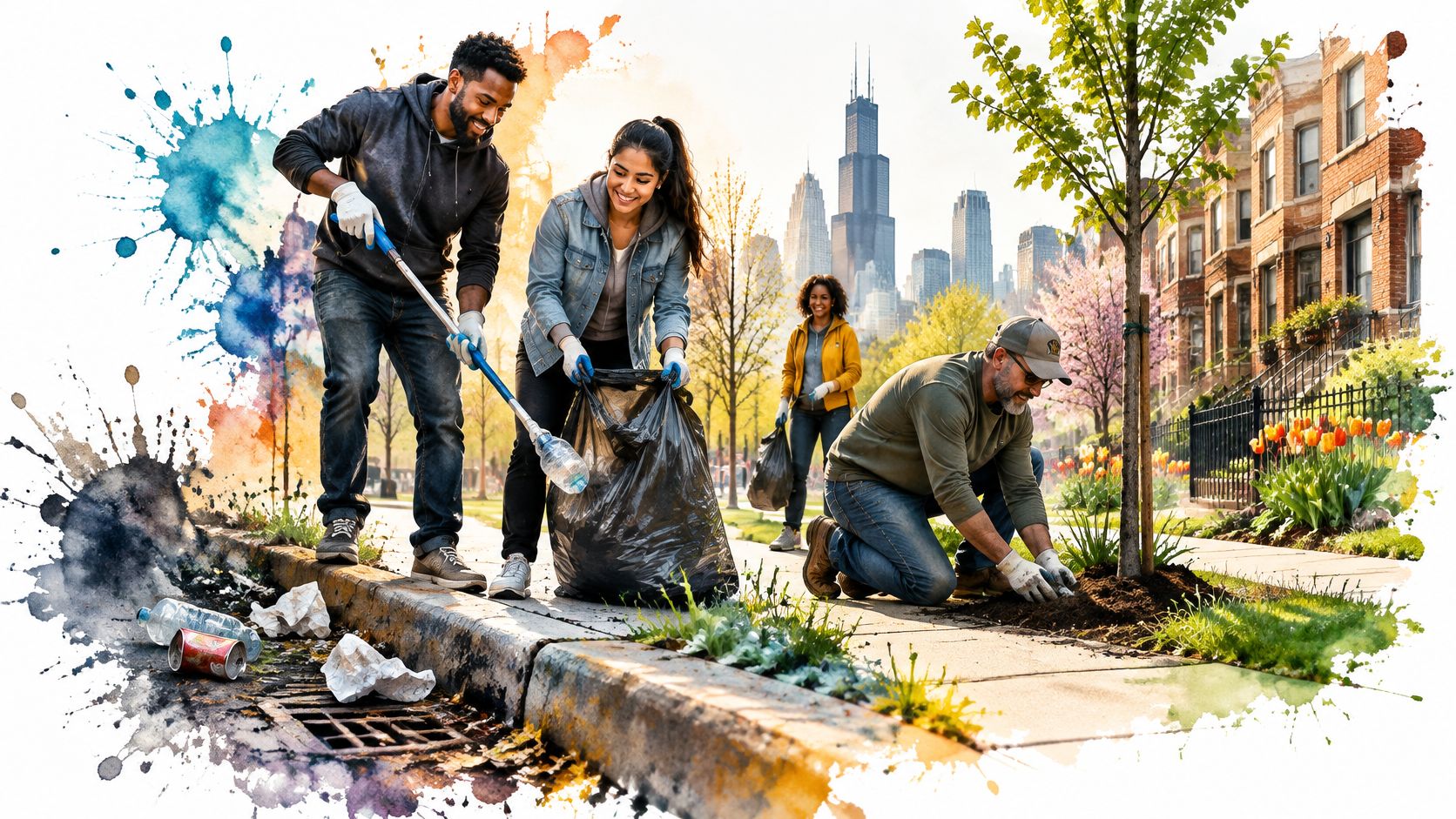
The hail came in sideways. Three of us stood under a linden tree on a Chicago side street, bags half full, watching Uber after Uber blink out on the map. Kevin looked down at the frozen mess we'd collected and said the thing that started this whole group: cleaning other people's messes is way easier than cleaning up your own.
He was right, and I've had three years to test it. Every week since that storm, a crew of us has walked a few blocks with grabbers and bags, in blizzards, in negative wind chills, in heat that makes the asphalt smell like tar. The trash keeps coming. So do we.
What you get out of it goes a lot further than a tidier corner. Below are eight community clean up benefits, each one tied to something that happens on a Chicago block. Nothing abstract here. These are the things you can feel by Sunday afternoon, plus the ones you'll only notice three months in when a neighbor hands you a coffee and knows your name.
1. Cleaner Streets and Fewer Hazards
A storm drain on a windy Chicago afternoon is a vacuum with no off switch. Wrappers, bottle caps, and receipts skitter across the asphalt, drop through the grate, and jam against the bars. Water backs up, the corner floods, and the sidewalk turns into a skating rink for anyone on a bike, a walker, or unsteady legs.
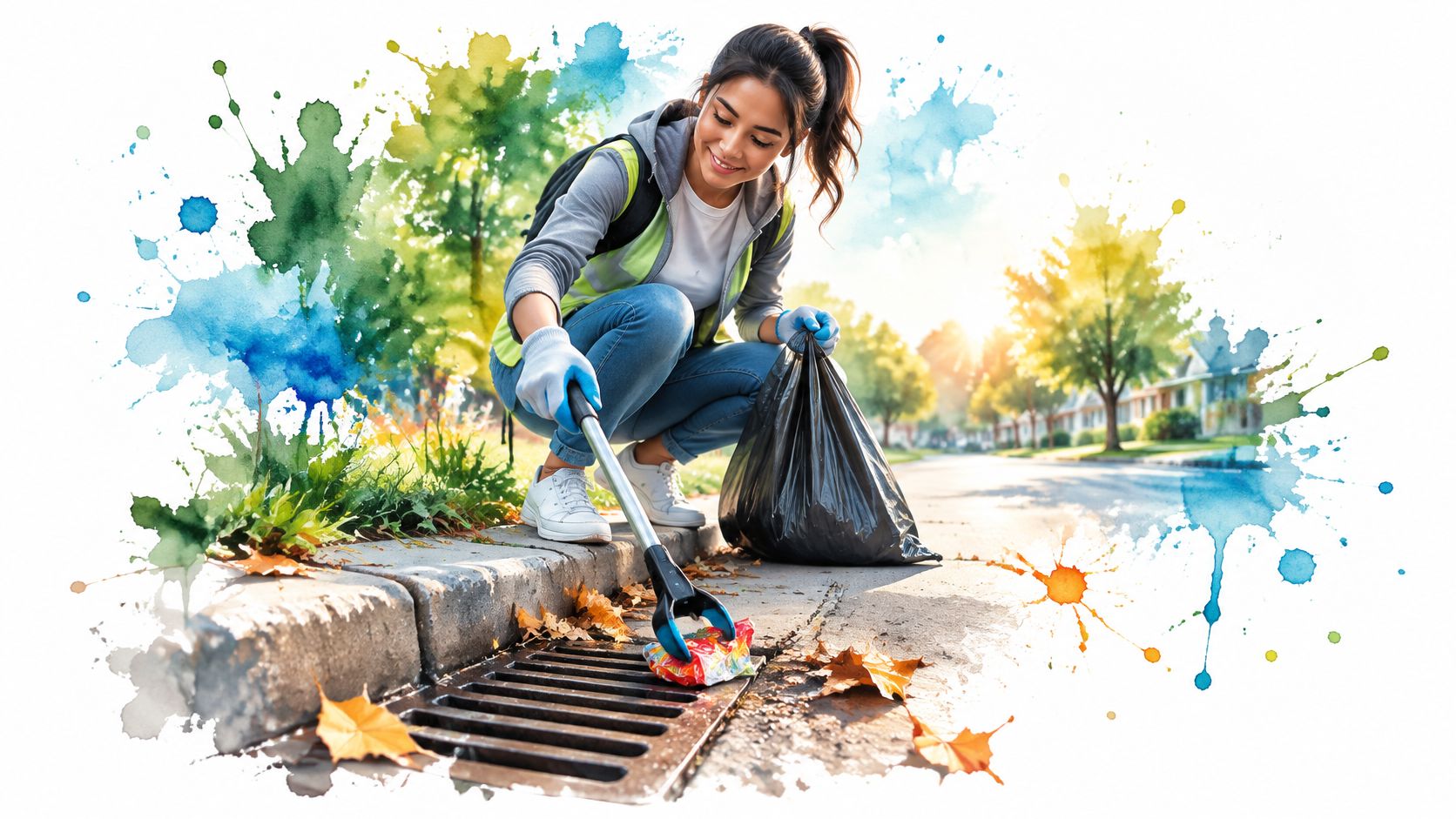
Picking that litter up before the next rain keeps the water moving. It also keeps a block from turning into a landfill nobody scheduled.
What's Actually Down There
A common guess is a few cups and one sad bag. The EPA's Wichita litter study put 70 volunteers into 12 municipal parks, where they counted and sorted 1,765 litter pieces larger than 4 inches, then gathered more than 30 gallons of smaller debris. Picture emptying a junk drawer onto a table and sorting it with tongs.
That second layer is the part that hurts people. Glass in the parkway grass, a half-buried can lid at the crosswalk, a bottle that rolls under a stroller wheel.
Route choice matters more than muscle. Pick a line that hits the hot spots: transit stops, corner storefronts, the alley mouth where wind dumps everything. Wear gloves and bring a grabber, because wet trash tears thin plastic and you don't want to be the person chasing a soggy wrapper barehanded.
Why the Weekly Part Counts
Litter doesn't arrive once. It arrives daily, from every direction, forever. One heroic Saturday is a nice story. A standing appointment is what keeps a block clean, which is why Litter Caterpillars meets every week, rain or shine, and works across all 50 wards.
2. Stronger Friendships Across the Neighborhood
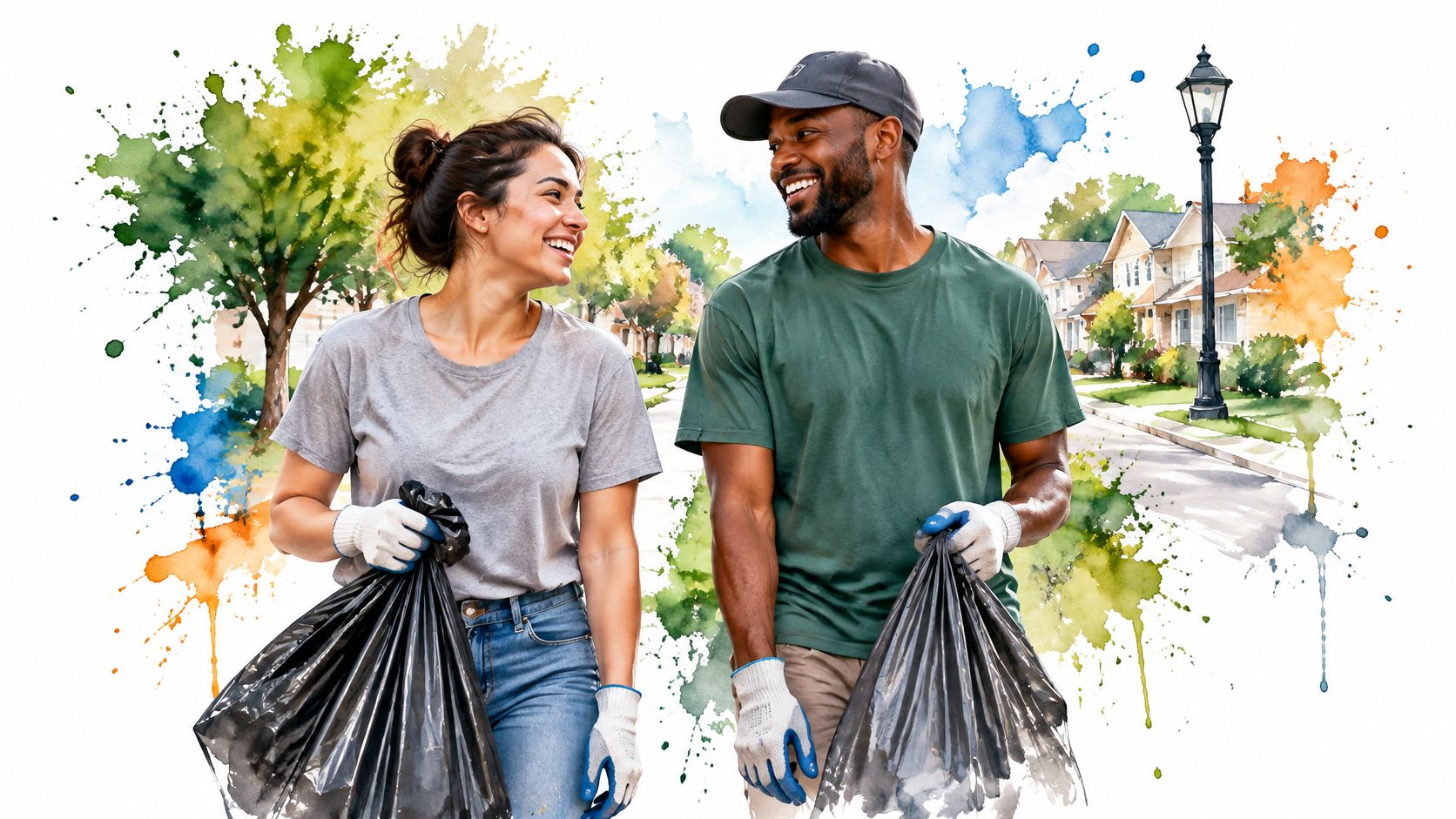
Think about a potluck. Nobody assigns seats, nobody runs an agenda, and somehow you leave knowing three people better than you did at breakfast. A cleanup runs on the same fuel. Everyone carries something, everyone works beside someone, and the small talk has a job attached to it, which is exactly why it becomes a real conversation.
Say two strangers on a Tuesday route in Logan Square argue about the best way to free a wrapper from a fence, laugh about it, and swap numbers by the end of the block. That's not unusual. Shared work builds trust faster than a mixer with name tags.
What the Evidence Actually Shows
The social payoff isn't wishful thinking. A 2023 umbrella review of volunteering and health drew on 21 prior reviews selected from an initial pool of 8,325 articles, and found that volunteering generally increased social support from fellow volunteers, friends, and neighbors, with extra friendships tied to greater social integration.
That review is also honest about limits. In one study it cites, fewer than half of volunteers reported forming connections with other volunteers. So the benefit is real, and it isn't automatic. Structure helps.
Show up ten minutes early. That's when the greetings happen. Arrive at the stroke of nine and you'll spend the first block catching up instead of meeting anyone.
- Rotate partners each loop. You learn the neighborhood and the people in it at the same speed.
- Plan the after. Coffee or a slice gives the group a second place to talk without a grabber in hand.
Kevin Tao started this with three people under a tree. Today the group meets through Meetup and open group chats, so a newcomer can find a route without knowing a soul. If you're building this inside a company instead, these CSR volunteering ideas for staff cover the logistics of getting a team out the door.
3. Lower Costs for Your City and Local Groups
A city crew assigned to one block has less time for another. Volunteers can add hands to a cleanup, helping local groups cover more ground without relying on municipal crews for every task. That leaves organizers room to focus their budget on supplies or other neighborhood projects.
A highway cleanup shows how the work can fit around local needs. Litter Caterpillars cleaned up a highway while it was shut down for a bike-riding event. With the road closed to traffic, the group could tackle a stretch that would be harder to clean during an ordinary day.
What Free Labor Adds Up To
Tennessee's No Trash November campaign in 2024 brought together 2,412 volunteers for 175 cleanups. They removed 69,776 pounds of litter in 3,207 bags, according to the American Association of State Highway and Transportation Officials. The scale came from many people contributing time across a month.
Before a large cleanup, call your ward office or park district and ask where the filled bags should go. A clear disposal plan helps organizers avoid collecting more trash than they can handle.
- Ask about supplies. Check with nearby hardware stores or grocery managers to see whether they can donate bags or gloves.
- Keep a volunteer-hour count. A record of each event gives you concrete information to share when requesting supplies, permits, or a dumpster.
- Divide the route. Smaller crews can cover separate areas and finish their sections without stretching one group across the whole cleanup.
4. Less Trash Reaching Rivers and Lakes
Stand on a Chicago sidewalk during a hard rain and watch the water. It runs to the curb, finds the drain, and disappears. Whatever lies in its path goes along: the bottle cap, the cigarette butt, the wrapper you meant to grab and didn't.
That's the chain. Street to drain, drain to pipe, pipe to river, river to lake. A bottle you pick up on Saturday morning never makes that trip.
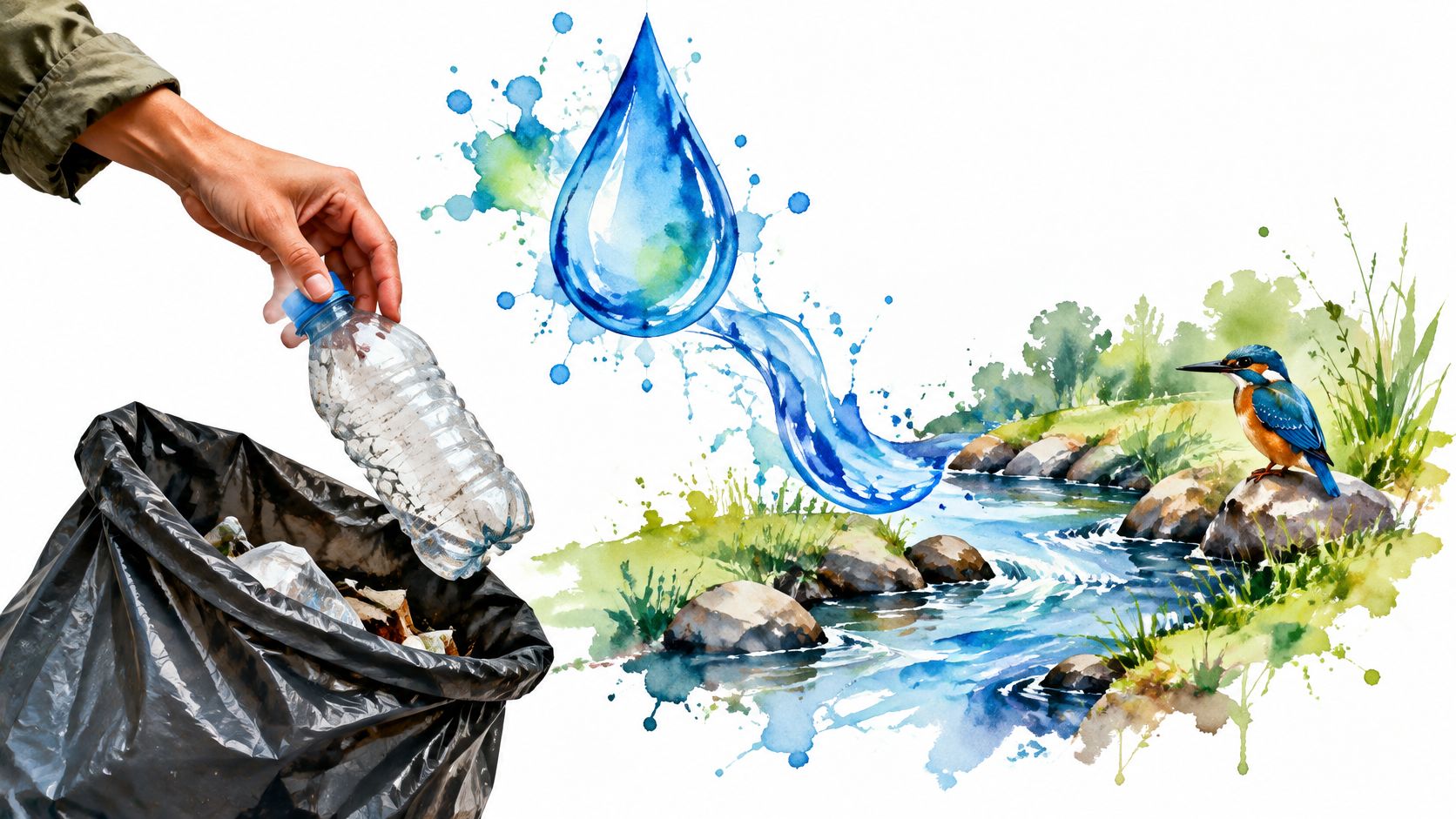
The volume surprises people. Volunteers recovered more than 9 million kilograms of human-made debris through the International Coastal Cleanup in 2019, according to a peer-reviewed study of volunteer litter removal. One bag feels like nothing. Thousands of bags in one weekend is a mountain.
The Small Stuff Is the Real Story
Plastic dominates by count, and count is how it reaches fish and birds. A 2025 study of river trash traps recorded 150,750 litter items removed by Waterkeeper organizations and volunteers from 21 traps. Within a detailed subset of 114,086 items collected during 184 cleanouts at 17 traps, plastic made up 96 percent of the captured litter by count.
That number changed how I work. A bag of wrappers and foam looks light and feels like a wasted morning. It isn't. It's hundreds of pieces that would have broken into thousands.
Go for the small stuff first. Cigarette butts and bottle caps sit right at the curb, one rain away from the drain. Sort as you go, film, hard plastic, foam, metal, glass, and you'll hand a watershed group data it can use. If you want a riverbank day instead of a block, start with our guide to cleaning up a river. Groups like PADL run paddle cleanups if you'd rather work from the water.
5. Pride and a Shared Identity
Say a café owner joins a cleanup before opening. A flag, a shared name, or a familiar song can make that morning feel like joining a group, not just picking up a bag.
Litter Caterpillars uses flags, a theme song, and badges to celebrate pride in service and the personal transformation that comes from showing up. Those symbols give volunteers something to share, along with the work itself.
Pride Puts More Hands on a Bag
A University of Georgia report on environmental volunteering describes two surveys of more than 1,000 U.S. adults in coastal regions from Georgia to California. Respondents were more willing to join a litter cleanup when the invitation highlighted personal benefits such as fitness, less stress, belonging, or pride than when it focused only on marine debris. Less physically active respondents valued belonging and pride most.
For an organizer, that's a useful reminder: an invitation can show both the practical work and the human reason to join. A clean street matters. So does having a crew beside you.
Explain what the group offers, then show the work it does.
- Choose a simple shared symbol. A patch, flag, or sticker can make participation feel recognizable and communal.
- Give volunteers a say. Let the group help choose a chant, flag design, or route nickname. Shared choices can build a sense of ownership.
Tom Sawyer made a fence-painting chore appealing by turning it into something people wanted to join. A cleanup can offer that same sense of shared purpose.
6. Personal Growth and Confidence
Say you're staring at a cluttered closet. Each object seems to come with a story, a reason to keep it, a little weight of its own. Kevin Tao knew that feeling: he started Litter Caterpillars because cleaning and organizing his things was difficult, and as his living space grew messier, so did his life.
At the group's first pickup, Kevin noticed a difference. Cleaning up other people's messes felt much easier than cleaning up his own. A bottle on the sidewalk has no personal history attached. Pick it up, put it in the bag, move on. That small act can make a hard task feel manageable.
Small Wins Compound
A 2025 longitudinal study of 9,800 people found that people who volunteered in early adulthood tended to report more optimism and sociability, higher perceived social status, and fewer stress and depressive symptoms. The researchers point to time outdoors, physical activity, and social contact as possible mechanisms. A cleanup brings all three together.
- Set a route goal, not a weight goal. One bag per loop gives you a clear finish line.
- Say the count out loud. “Two bags, three cigarette packs, one hubcap” gives the crew a concrete way to recognize the work.
- Close every event the same way. Take a photo, count the bags, and walk back together. A simple routine helps the effort stick in your memory.
After a chaotic relationship ended, Kevin resolved to choose his social circle more mindfully and work on the things he found hardest: cleanliness, consistency, and bravery. Litter Caterpillars has picked up trash every week for about three years. Confidence can grow gradually, one manageable act at a time.
7. Turning Empty Lots Into Something Useful
Every Chicagoan knows the lot. Chain-link, weeds, a tire, glass in the dirt, a mattress somebody dragged there in the dark. Walk past it twice a day and it starts setting the tone for the whole block.
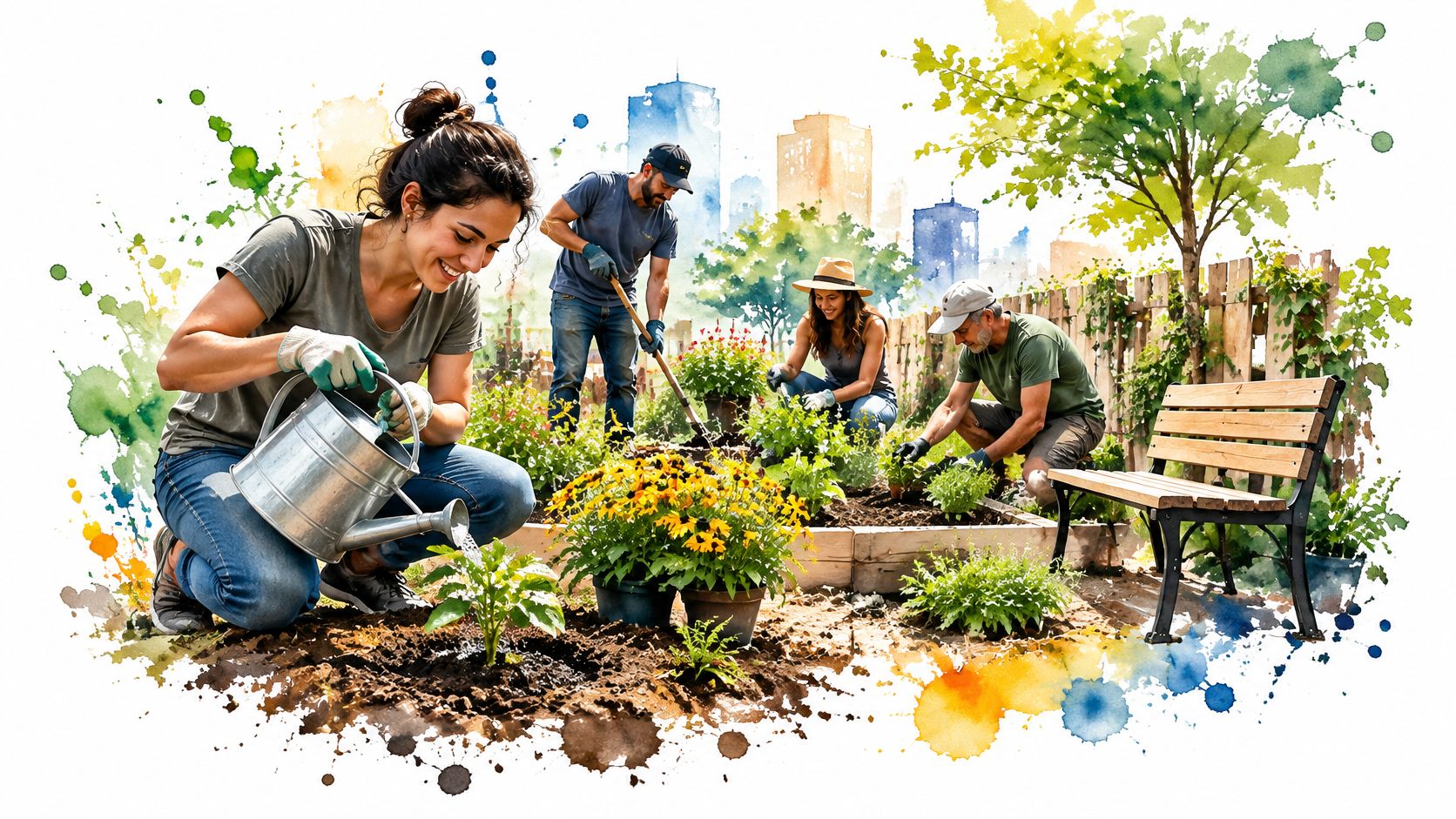
It changes when a crew shows up, fills bags, hauls them out, and comes back the next weekend. Then plants go in. Then a bench. Then paint. A porch light tells you someone lives here; a tidy lot tells you someone is watching.
Cleaning Is Step One, Not the Whole Job
I'd rather be straight with you than sell a fantasy. Removal alone doesn't fix a place. The EPA's trash research projects trained 70 citizen scientists across 24 cleanup events at 12 parks in Wichita and found that six weeks later, overall litter counts and volume had gone up, even though some parks improved. Trash piled up in gathering spots like picnic areas and parking lots, right beside the bins.
The same body of work found that flowers, lighting, mowing, and cleaning together cut riverside litter, and some of those effects held after the work stopped. That's the pattern to copy: pair the bags with something that makes a place feel cared for.
A lot changes when a crew keeps coming back.
We took the long version of that lesson. Litter Caterpillars won an empty lot at auction and is turning it into Caterpillar Park in Englewood, and the messy story of how that happened is in the tale of the vacant lot. If you're planning a mural or a sculpture for a space like that, these temporary public art ideas for event organizers will get you thinking about walls.
Before you touch a vacant lot: check the property records, find the owner, get a written yes. Then ask the neighbors who'll mow it in August.
- Bring a broom and a magnet. Nails and glass come out faster with the right tool.
- Plant for low maintenance. Native perennials survive a Chicago winter and a volunteer schedule.
- Sign a simple upkeep agreement. Names and tasks beat good intentions.
8. Building Steady Habits and Teaching Kids
Brushing your teeth doesn't require motivation. It requires a time and a sink. A cleanup works the same way once it lands on the same weekend morning, at the same corner, with the same people.
Kids pick that up faster than we do. Hand a seven-year-old a bag and one corner of the park, and watch them spot wrappers on the walk home. They're learning to sort, to look after a shared space, and to finish a job that isn't fun for the first ten minutes.
Repetition Beats Intensity
The outdoor part matters as much as the habit. A 2026 review of community environment and health projects found health improvements in 9 of 10 projects with high nature contact, compared with 2 of 8 with low nature contact. In that same evidence base, 94 percent of participants became more willing to join future community activities.
Cities that run cleanups as a series see it in the totals. Seattle's All Hands Neighborhood Cleanup Series in 2024 brought together more than 350 volunteers across 10 events, and 1,600 residents helped remove more than 250,000 pounds of trash, according to Seattle Public Utilities.
Set the day and defend it. Sunday, nine sharp, same corner. A recurring slot in a group chat beats a perfectly planned one-off.
- Give kids a job with a finish line. Cups in this corner, cans in that one. Then they're done and proud.
- Post the next date before this one ends. Momentum dies in the gap between events.
- Track who comes back. First-timers who return are your real metric.
We schedule on weekend mornings for exactly this reason. Students, young professionals, and families give two hours and still have the rest of the day.
8 Community Clean Up Benefits at a Glance
| Benefit | Who Gains Most | What You Need to Start | How Fast You See Results |
|---|---|---|---|
| Cleaner Streets and Fewer Hazards | Pedestrians, cyclists, and neighbors near litter hotspots | Gloves, a grabber tool, sturdy bags, and a cleanup route | Visible improvements in a single morning |
| Stronger Friendships Across the Neighborhood | Newcomers and neighbors seeking connection | A welcoming group and regular cleanup meetups | Connections can begin at the first event and grow over repeat meetups |
| Lower Costs for Your City and Local Groups | Neighborhood groups and local governments with limited budgets | Basic supplies and coordination with city offices | Savings can build as volunteers contribute work |
| Less Trash Reaching Rivers and Lakes | Local wildlife, waterways, and nearby communities | A cleanup route near drains or waterways; item tracking is helpful | Litter is removed right away; broader water-quality effects take time |
| Pride and a Shared Identity | Volunteers who value belonging and group recognition | A group name and simple badges, flags, or other symbols | Pride and recognition can develop as the group takes shape |
| Personal Growth and Confidence | People seeking confidence, routine, or comfort with public activities | A small, achievable cleanup goal and a supportive group | Confidence can grow with each completed route |
| Turning Empty Lots Into Something Useful | Residents seeking welcoming shared spaces | Property-owner information, permits, volunteers, and basic tools | Cleanup can show progress early; permits and transformation may take longer |
| Building Steady Habits and Teaching Kids | Families and children learning environmental care | A recurring schedule and age-appropriate tasks | Habits can become more automatic after a few weeks |
Your First Bag Is Waiting
Say a café owner steps outside on Sunday morning and spots litter along the block. A quick cleanup makes the sidewalk more inviting, and the first bag gives someone else a reason to join in. Starting can feel awkward for a few minutes. Then the work gives you something easy to talk about.
A neighbor might ask what you're doing. Someone else may point out a corner that needs attention. Each visit gives you a clearer sense of what your block needs and what you can do about it.
The first bag doesn't need to be a grand gesture. Bring shoes you don't mind scuffing, choose a manageable stretch of sidewalk, and get started.
Where to Start in Chicago
If you'd rather join a crew than organize a cleanup yourself, Litter Caterpillars meets on weekend mornings. The group has picked up trash in all 50 Chicago wards, including areas people have been told to avoid. It also won an empty lot at auction and is building Caterpillar Park in Englewood.
The work happens rain or shine, in winter cold and summer heat. Safety comes first, and volunteer happiness comes second. A volunteer described the cleanup as a great way to start a Sunday and said they had the best time volunteering with Litter Caterpillars.
Bring shoes you don't mind scuffing and a willingness to work. Find a weekend cleanup with Litter Caterpillars and claim your first bag.
Leave a Reply