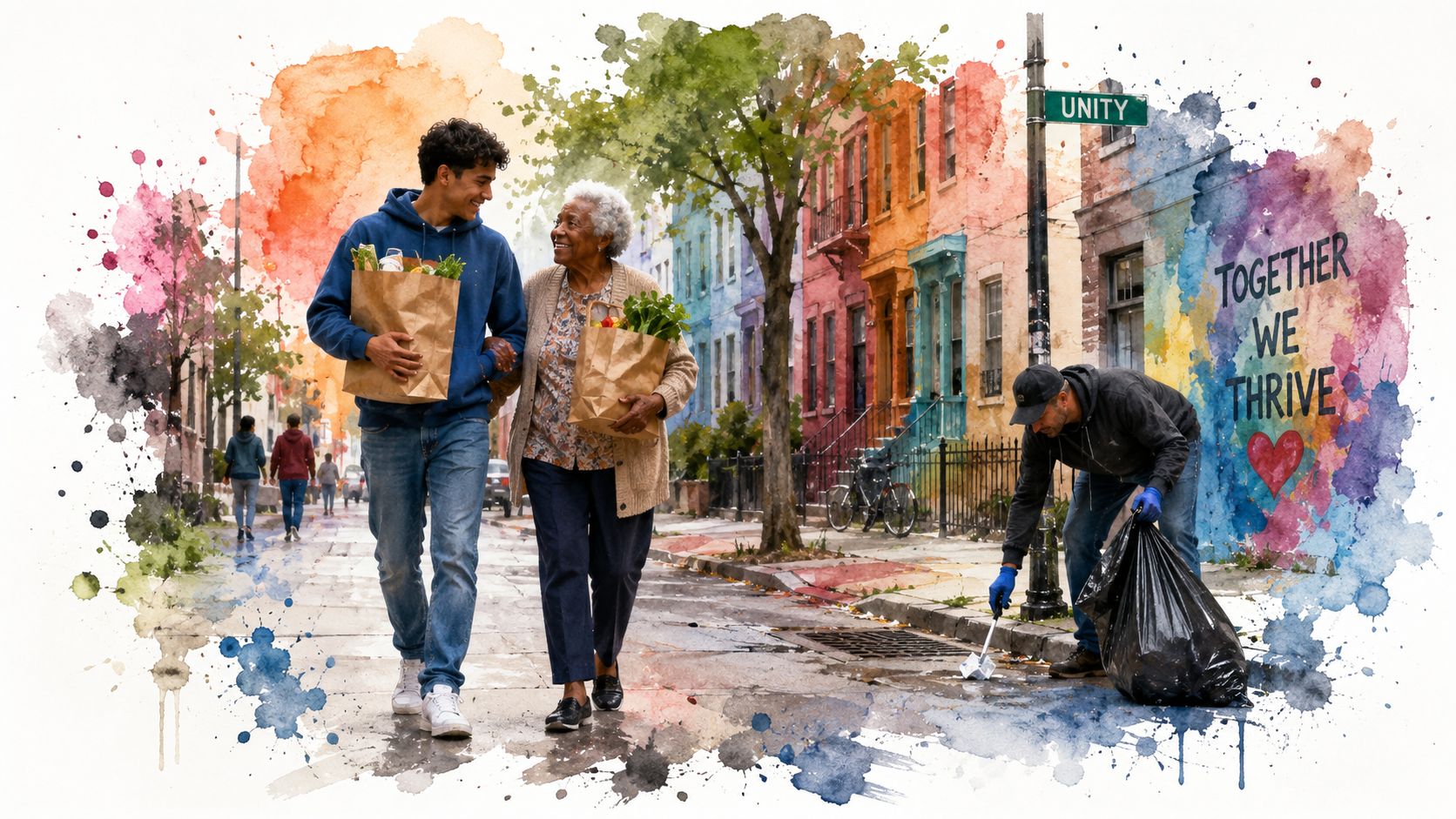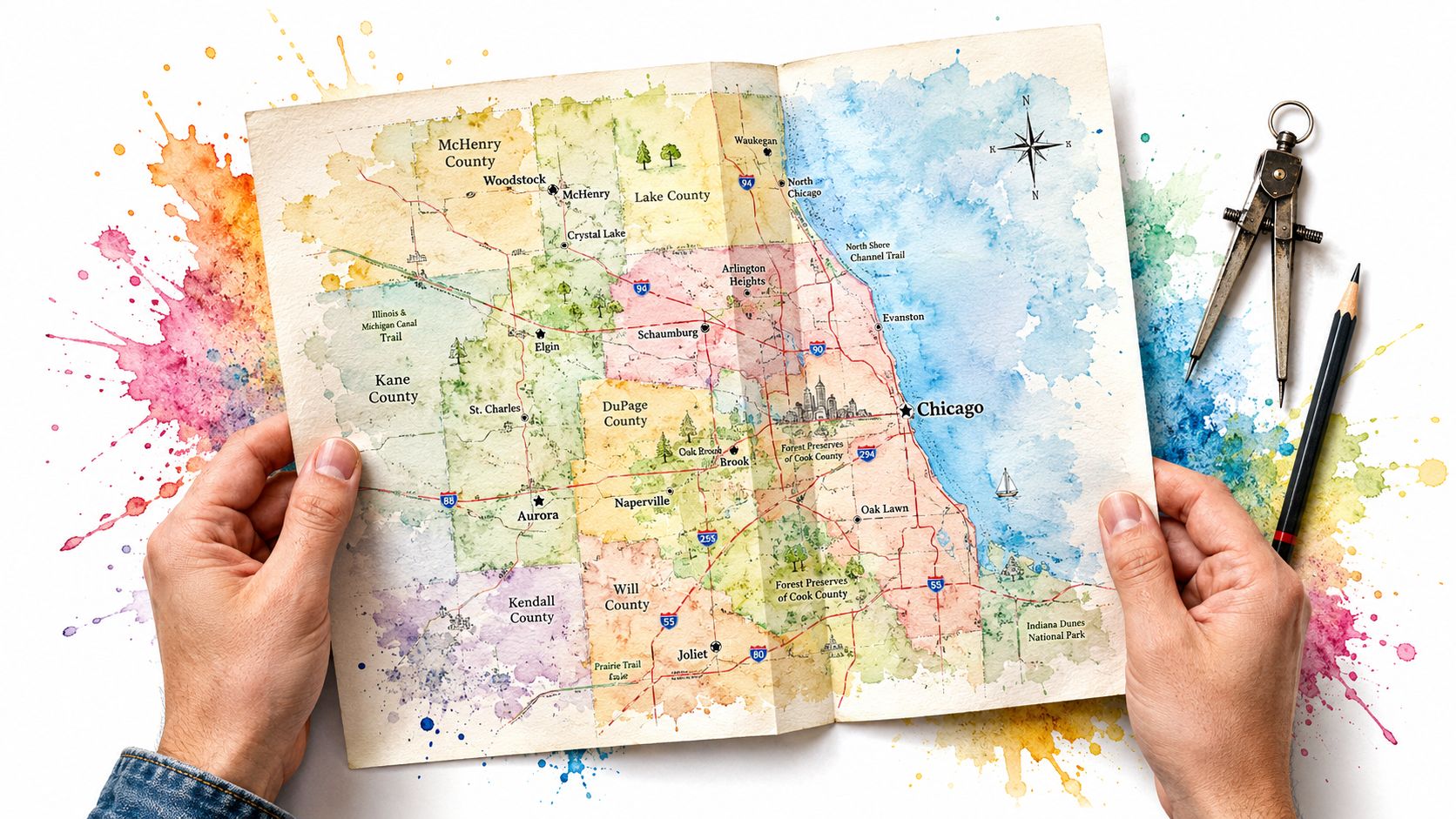
I once watched somebody show up to a cleanup in Chicago thinking they were headed to a park with a pool in Ohio. We laughed, handed them gloves, and by the end of the morning they said they were glad they got lost.
Which Harrison Smith Park Are You Looking For
You probably typed Harrison Smith Park because the name feels clear enough. It isn't. That name sends people in a few different directions, and I get why.
One path takes you to Harrison Smith Park in Upper Sandusky, Ohio, at 525 E Wyandot Ave, Upper Sandusky, OH 43351, and it has a public swimming pool as its primary amenity according to the Harrison Smith Park listing in Upper Sandusky. If you wanted flip-flops, summer chlorine, and a pool deck, that's your place.
The Chicago mix-up
Then Chicago enters the chat and makes everything messier.
Some people mean Harrison Park in Pilsen. Some mean Smith Park on the West Side. Some mash the names together and search for Harrison Smith Park as if the city fused them overnight. I like that confusion. It feels human. We do this with places the same way we do it with memories. We blur names, but we remember the feeling.
If you're trying to sort out the Chicago side of this, start with this guide to Harrison Park in Pilsen. It helps if you're looking for the park by the museum, the courts, the fields, the neighborhood rhythm.
A park name matters less than what your hands do when you get there.
Why the confusion matters less than you think
I care about this mix-up for a simple reason. Searchers aren't really searching for a noun. They're searching for a place to go, something to do, and maybe a reason to get out of their own head for a few hours.
I've seen that search look a hundred different ways. One person wants a calm walk. One wants a place to volunteer. One wants to feel useful after a rough week. One just wants to be around decent people without needing to explain their whole life story first.
So yes, there is a real Ohio park with a pool. Yes, there is a Harrison Park in Chicago. Yes, there is a Smith Park in Chicago that gets mixed into this too.
Here's the simple version:
| Search phrase | What you may mean | What it has |
|---|---|---|
| Harrison Smith Park | Upper Sandusky, Ohio | Public swimming pool |
| Harrison Park | Pilsen, Chicago | Fields, courts, playground, garden |
| Smith Park | West Side, Chicago | Historic park on former quarry and landfill land |
If you're in Chicago and you're looking for a park with grit in its story, dirt under its fingernails, and the kind of energy that makes you want to do more than stare at grass, you're probably looking for one of the Chicago parks. That's where this story really starts.
A Chicago Park's Surprising History
I love places with ugly beginnings. Maybe because I trust them more.
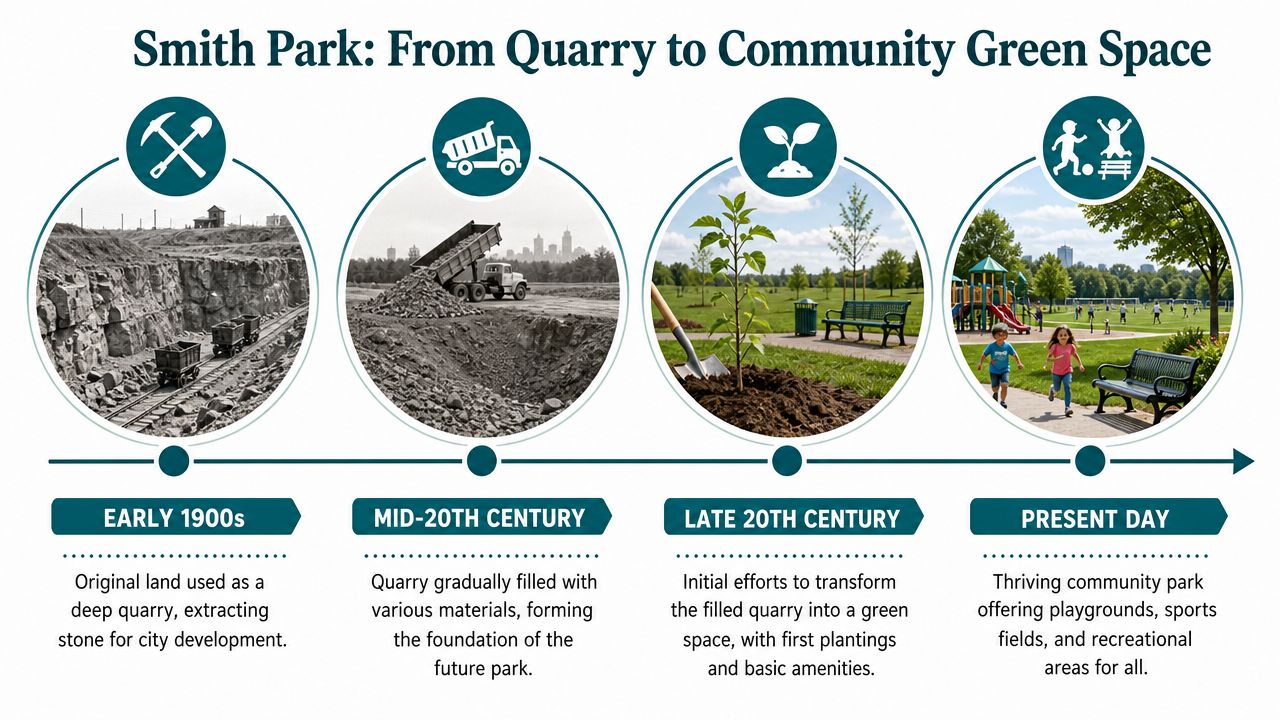
Smith Park didn't begin as the kind of place where you'd toss a ball around or sit on a bench with a coffee. Smith (Joseph Higgins) Park in Chicago was founded in 1929 after a former quarry and landfill was filled to the brim by the mid-1940s, with the site transferred to the Bureau of Parks and Recreation in 1929, as described in this history of Chicago's West Side quarries.
From hole to home ground
Start there for a second. A quarry is a wound in the ground. People cut stone out of it. They take and take until the land looks like a giant missing tooth. Then people start dumping into it. Layer by layer, the city hides its mess in the same place it once carved for material.
That story hits me hard because it feels familiar. I know what it's like to look at a mess and think, this thing is too old, too tangled, too embarrassing to fix. I know what it's like when every piece of junk has a memory attached to it, and moving one tiny thing feels like lifting a refrigerator with your bare hands.
Then you look at a place like Smith Park and realize land can recover enough to become useful again. Not magically. Not cleanly. But well enough that kids run around there and neighbors gather there and life keeps happening on top of old damage.
Why I can't stop thinking about that story
A lot of us carry quarry years. Then landfill years. Then maybe, if we're stubborn, we build something decent over the top.
That doesn't erase what came first. It just means the old mess doesn't get the final word.
Some places make sense only after you know what used to sit under your feet.
When I walk through a park with that kind of past, I don't feel discouraged. I feel challenged. If a city can take a scar in the earth and turn it into a place where people meet, play, and breathe for a while, then you and I can probably face our own pile of wreckage too.
Smith Park's history is earthy and blunt. That's why I like it. No fake perfection. Just dirt, trash, labor, time, and another chance.
Exploring Chicago's Community Green Spaces
If you want the practical version, here it is. Chicago gives you different flavors of public space, and the two parks tangled up in the Harrison Smith Park search each pull people in for different reasons.

Harrison Park in Pilsen
Harrison Park is the one many Chicago searchers want. You can find it at 1824 S Wood St, Chicago, IL 60608, right next to the National Museum of Mexican Art in Pilsen, according to the Harrison Park page on Tripadvisor.
And the park itself gives you room to move. Harrison Park's nearly 18 acres include tennis courts, basketball courts, baseball fields, athletic fields for football or soccer, plus a playground and community garden, as noted in Time Out's Harrison Park overview.
That list matters because it tells you how to use the place.
- If you want motion: Hit the courts or fields. This is the park for people who don't want to sit still.
- If you want family time: The playground gives kids something immediate to do while adults breathe for a minute.
- If you want neighborhood texture: Walk by the garden, circle the edges, and look at who's using the place.
I like parks more when they have jobs. Harrison Park has jobs. It hosts games, walks, rest, noise, waiting, and small daily rituals.
Smith Park on the West Side
Smith Park feels different. The history changes the way I move through it. I pay more attention to edges, low spots, and the way built structures sit in relation to the ground.
Here's a little street-level look before you go further.
How to use these parks like a local
Locals don't overcomplicate it. They pick a reason and go.
| Your mood | Better fit | Why |
|---|---|---|
| You want activity all around you | Harrison Park | Courts, fields, and steady movement |
| You want to think about place differently | Smith Park | The ground itself has a story |
| You want to explore Pilsen on foot | Harrison Park | It's next to the museum and easy to pair with a neighborhood walk |
Practical rule: Don't arrive asking, "What's the perfect park?" Ask, "What kind of day am I trying to have?"
That's a better question. It gets you out the door faster.
How We Safely Clean Our Parks
Good intentions aren't enough when you're cleaning ground with a complicated past. You need judgment. You need discipline. You need to know when a trash grabber and a bag are enough, and when they aren't.
One hard truth sits underneath this work. Parks built on historic landfills in Chicago can have 3–5x higher concentrations of legacy contaminants such as lead, asbestos, and hydrocarbons than naturally formed parks, and that risk can be higher in zones like drainage ditches, as noted in this post about landfill-built park risks in Chicago.
Brave doesn't mean reckless
I hate the fake version of courage. The version where somebody acts fearless because they don't know enough to be careful. That's not courage. That's ego wearing work boots.
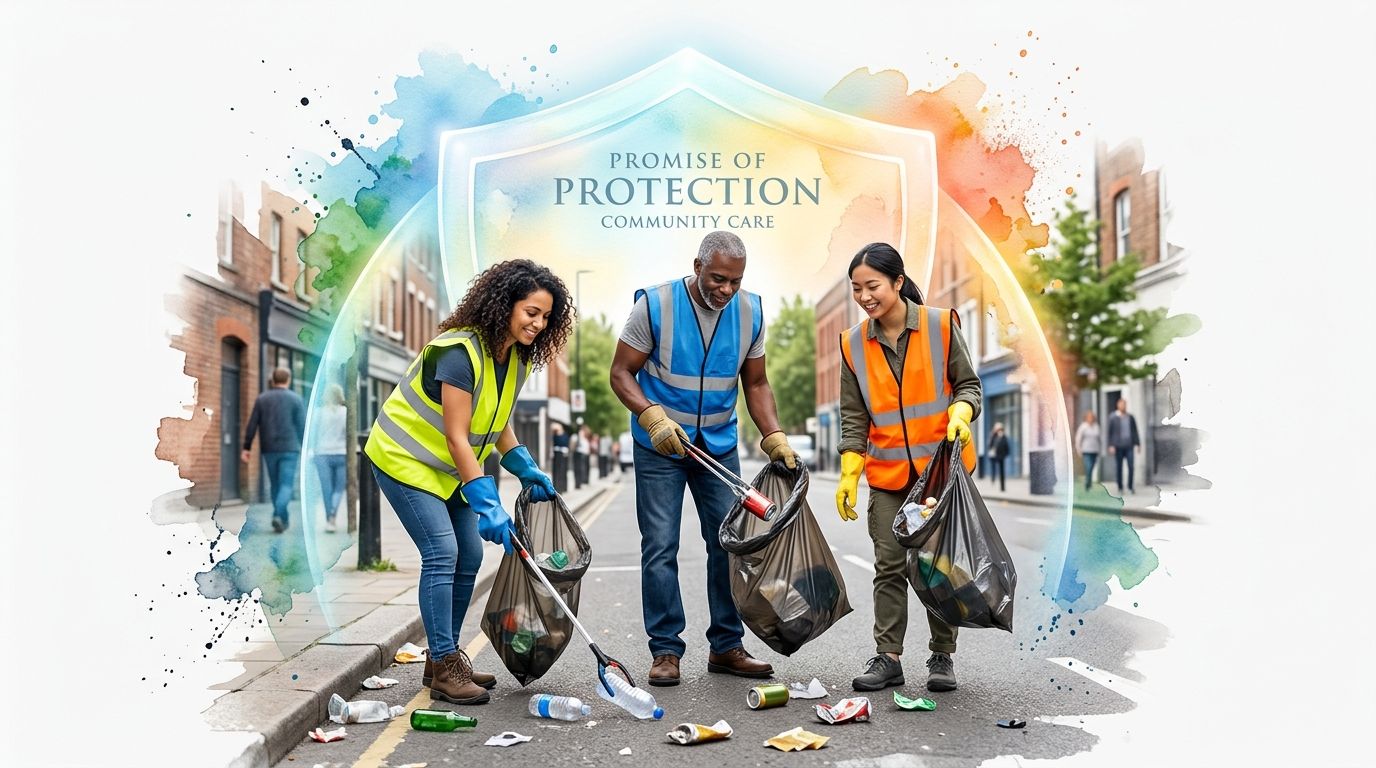
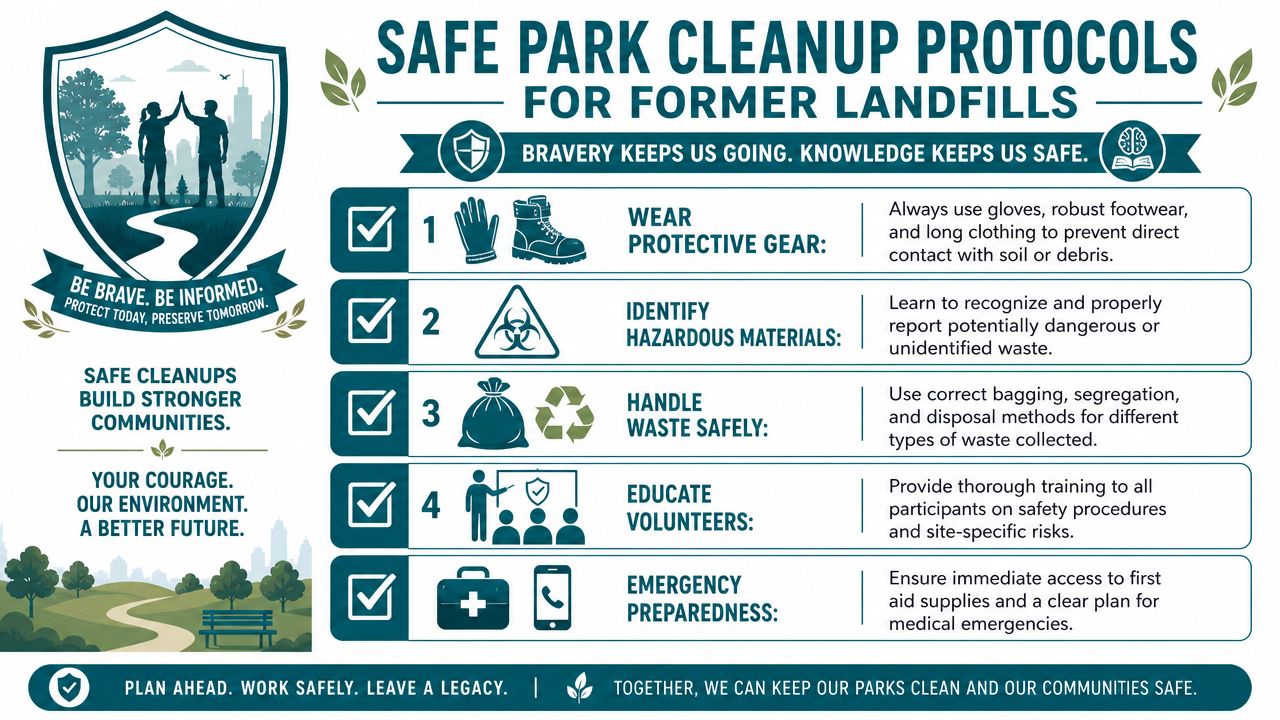
Real courage looks more boring. It looks like gloves. It looks like long pants. It looks like stopping to assess a weird material instead of poking it with your hand. It looks like telling a volunteer, "Leave that one. We're not touching it today."
The method I trust
When I clean a park with old industrial or landfill history, I keep the approach simple and strict.
- Dress for contact: Wear protective gear that covers skin and keeps your footing steady.
- Respect the weird stuff: If an item looks sharp, chemical, dusty, sealed, or unfamiliar, don't improvise.
- Watch the edges: Drainage paths, fence lines, and ditch areas collect trash and can collect risk too.
- Train before heroics: A volunteer who knows what not to touch is more useful than a volunteer trying to prove something.
- Have backup plans: First aid, communication, and clear roles matter before the first bag gets filled.
A lot of volunteer groups skip this because safety sounds less exciting than action shots. I think that's backwards. Safety is what lets good people keep showing up week after week instead of getting burned out, hurt, or scared off.
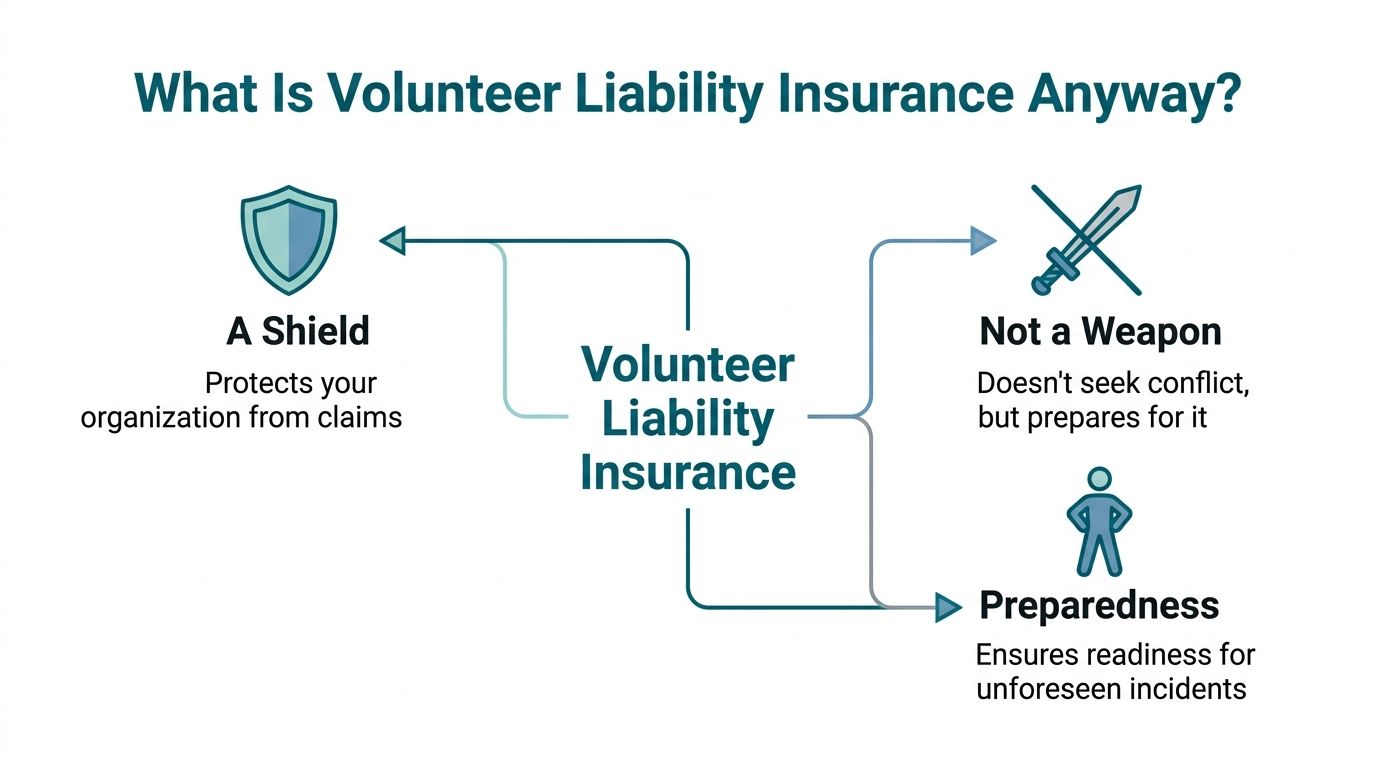
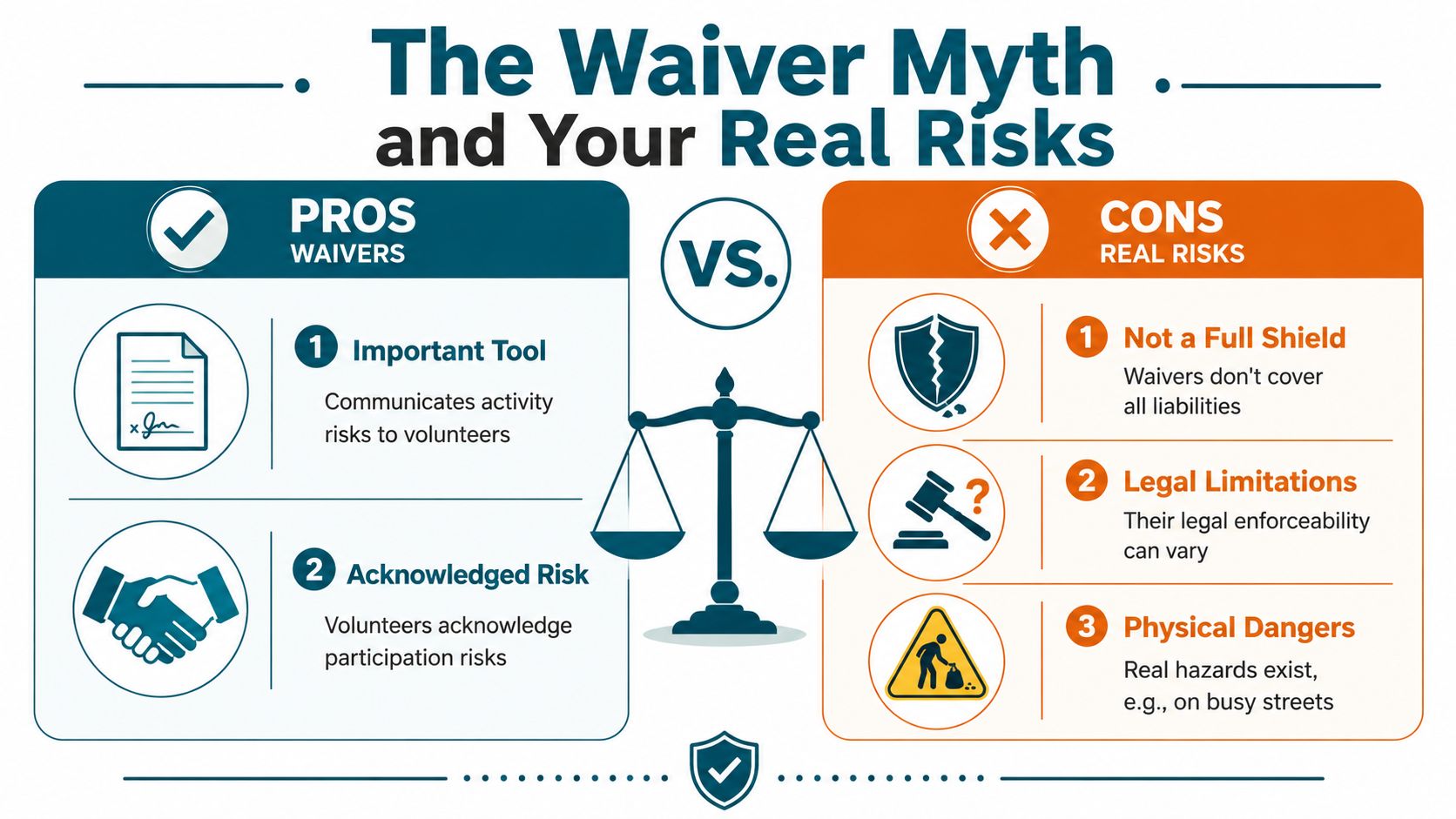
If you want to think through the legal and planning side before you organize your own effort, read up on volunteer liability insurance for community cleanups. It helps you understand why structure protects generosity.
If a park has a rough history, your cleanup plan needs a backbone.
That isn't fear talking. That's respect.
Join Us for a Weekend Cleanup
Weekend mornings have a special energy. The city is quieter, the air feels less chewed up, and the people who show up that early for unpaid work usually have something good inside them.
I think about Tom Sawyer a lot. He got stuck painting a fence and turned the punishment into an invitation. That's part of the fun here. Work changes shape when you stop treating it like humiliation and start treating it like a dare.
What your first cleanup feels like
You arrive a little unsure. Maybe you wonder if everyone already knows each other. Maybe you worry you'll be awkward, underdressed, too quiet, too late, too soft for the job.
Then somebody hands you a bag.
That moment matters. Holding a trash bag in a park is strangely clarifying. You stop performing. You stop trying to look interesting. You just start scanning the ground, picking targets, moving forward. Cup. Wrapper. Bottle cap. Broken toy. Fast-food bag snagged under a bush like it was trying to disappear.
And the weird thing is, your brain starts to quiet down.
Why the work feels good
Smith Park got major upgrades in the late 1930s, including a field house with a gymnasium and meeting rooms, according to the Chicago Park District's Smith Park page. I love that detail because it reminds me that parks aren't abstract ideas. They are places where bodies gather, sweat, talk, rest, and return.
That's why cleanups matter in a practical way. You're not cleaning some symbol. You're clearing a path for an actual person. A kid running near a field. A neighbor walking past. Somebody heading toward a meeting room. Somebody trying to have one decent hour outside.
If you want a way in, check out weekend volunteer opportunities near you.
What to expect when you say yes
Your first cleanup usually includes a few things:
- A small moment of hesitation when you realize you're doing real physical work.
- A rhythm shift once your hands get busy and conversation starts to happen naturally.
- A quiet hit of satisfaction when the pile of full bags grows and a messy patch looks human again.
Hard work with good people is one of the cleanest pleasures left.
That's the pitch. No fake glamour. Just a better Saturday morning than doomscrolling.
Building Friendships One Bag of Trash at a Time
The first time I went out with a tiny cleanup crew, Chicago threw hail at us like the city was testing our sincerity. We huddled under a tree, freezing, phones out, watching ride after ride cancel. It should have been miserable.
It was miserable. And it was funny.
That combination changes people. When you shiver through something dumb and difficult with strangers, they stop feeling like strangers way faster than they would at a bar or a networking event or some polished little mixer where everybody is trying to seem effortless.
Shared discomfort is glue
I learned something that day. Cleaning somebody else's mess is often easier than cleaning your own. Maybe because there isn't any shame in it. The ground doesn't judge you. The bottle in the weeds doesn't ask why your apartment is a mess or why your last relationship blew up or why you've been avoiding your own life.
You just pick it up.
And when somebody next to you is doing the same thing in cold rain or sharp wind, you trust them a little. They've already shown you one thing that matters. They came.
Why people keep coming back
Friendship doesn't always begin with deep conversation. Sometimes it begins with shared labor, an inside joke, and that look people exchange when a heavy bag finally gets tied shut.
A cleanup group becomes social in sideways ways:
- You earn trust fast: People see whether you help, drift off, complain, or stay steady.
- You get stories immediately: Rain, weird finds, busted grabbers, lost gloves, surprise laughter.
- You build identity through repetition: Same mission, different block, same people returning.
I also think service scrubs away a lot of fake hierarchy. Out there, nobody cares who has the best resume. The wind doesn't care either. Trash equalizes people. That's one reason this kind of friendship feels less brittle.
"We suffered a little together" is a stronger beginning than most small talk.
If you've been lonely in a crowded city, this matters. You don't need a brilliant opening line. You need a reason to stand next to other people while doing something honest.
Your Questions About Park Cleanups Answered
People usually ask the practical stuff first. Good. Practical questions keep everybody safer and calmer.
Is it actually safe to clean a park with a rough past
It can be, if you respect the site and don't freeload on optimism. Use protective gear, avoid suspicious material, and treat certain areas with extra caution. If something looks off, leave it and report it through the right channel instead of trying to be a hero.
What should you bring
Keep it plain.
- Wear sturdy clothes: Closed-toe shoes, long pants, and gloves are the baseline.
- Bring water: Even short cleanups can sneak up on you.
- Pack light: You don't need a whole expedition setup. You need mobility and common sense.
Can you come alone
Yes. A lot of people do. In fact, coming alone is often easier than dragging a half-interested friend who wants credit for almost showing up.
The work gives you something to do with your hands right away, which takes pressure off conversation. That helps shy people more than they expect.
What if you're nervous about not knowing anyone
Then you're normal.
It's common to feel that way before the first cleanup. The trick is to let the task carry the social weight for a while. You don't need to charm anybody. You just need to participate.
Can you organize your own cleanup somewhere else
Yes, including in a place like the Ohio park that comes up in the Harrison Smith Park search. Start small. Learn the site. Ask what risks are unique to that area. Keep your plan tighter than your ambition on day one.
A simple checklist helps:
| Question | Why it matters |
|---|---|
| What kind of site is this | Park history changes cleanup risk |
| Who is coming | Group size changes supervision needs |
| What will you avoid | Boundaries keep volunteers safe |
| What happens if something looks hazardous | You need a clear answer before you begin |
What mindset should you bring
Bring humility. Bring energy. Bring a willingness to do unglamorous work.
Don't bring the fantasy that one cleanup fixes everything. It won't. But one cleanup can fix one morning, one patch of ground, one conversation, one corner of your own drifting life. That's plenty.
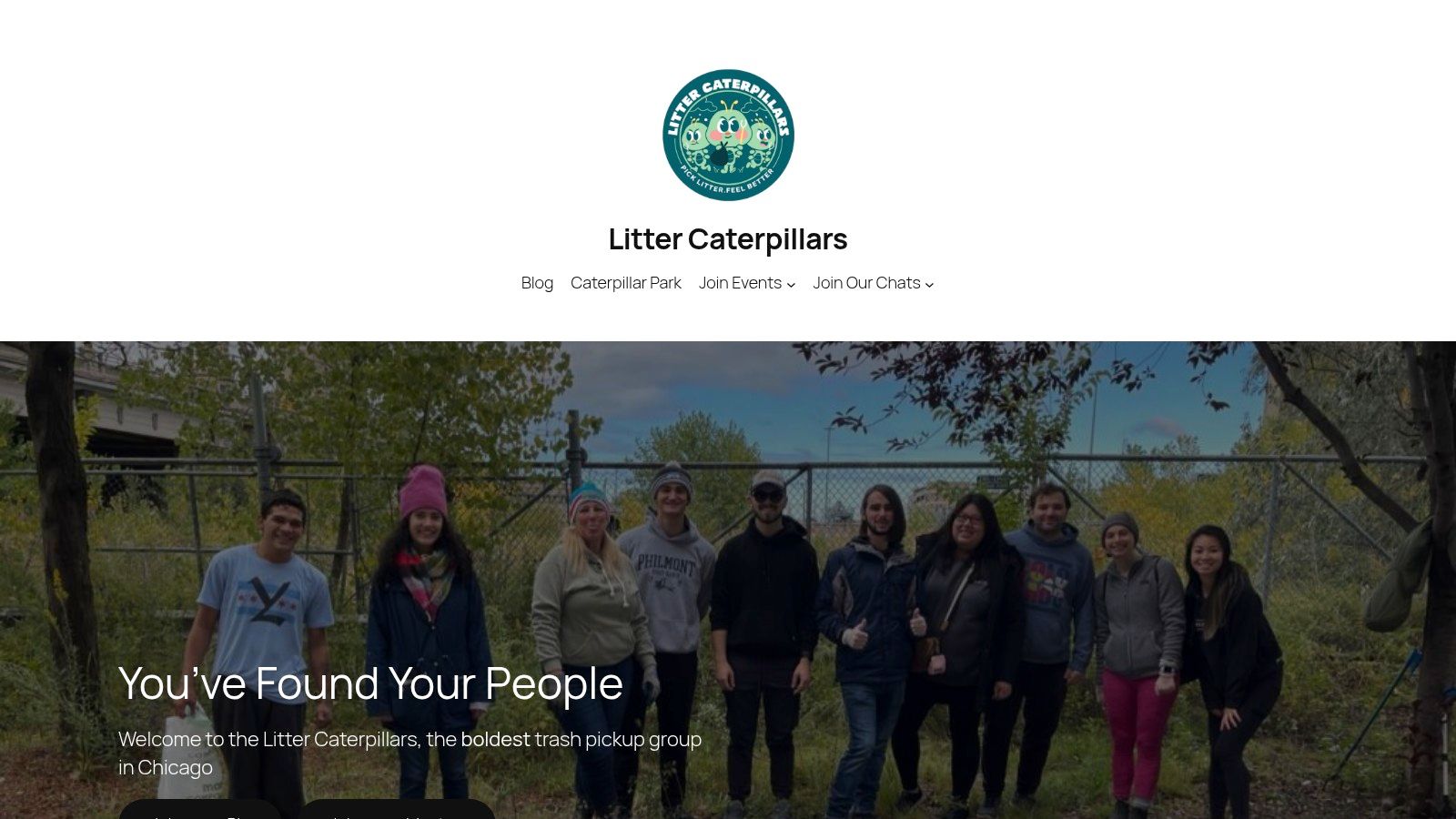
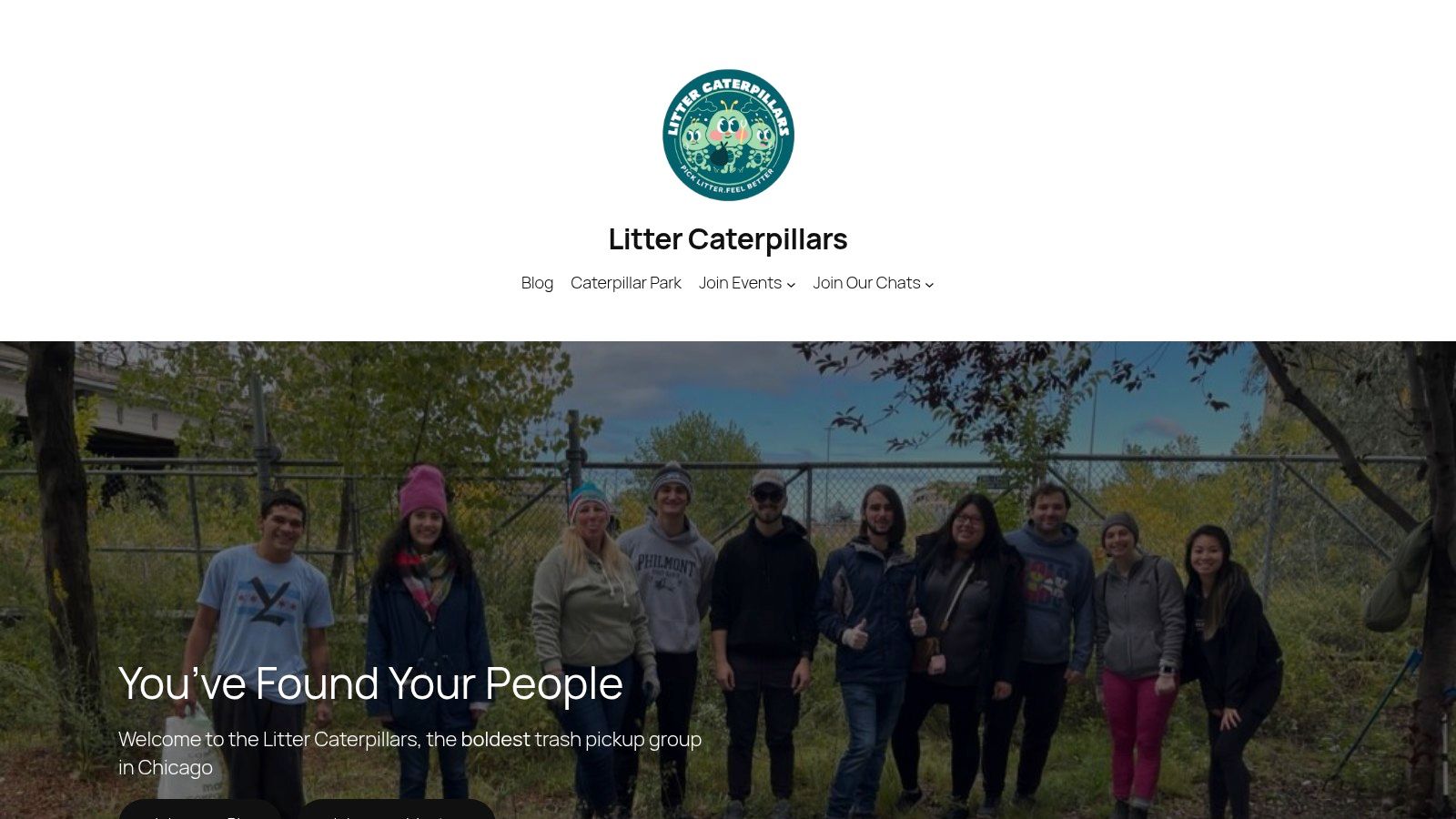
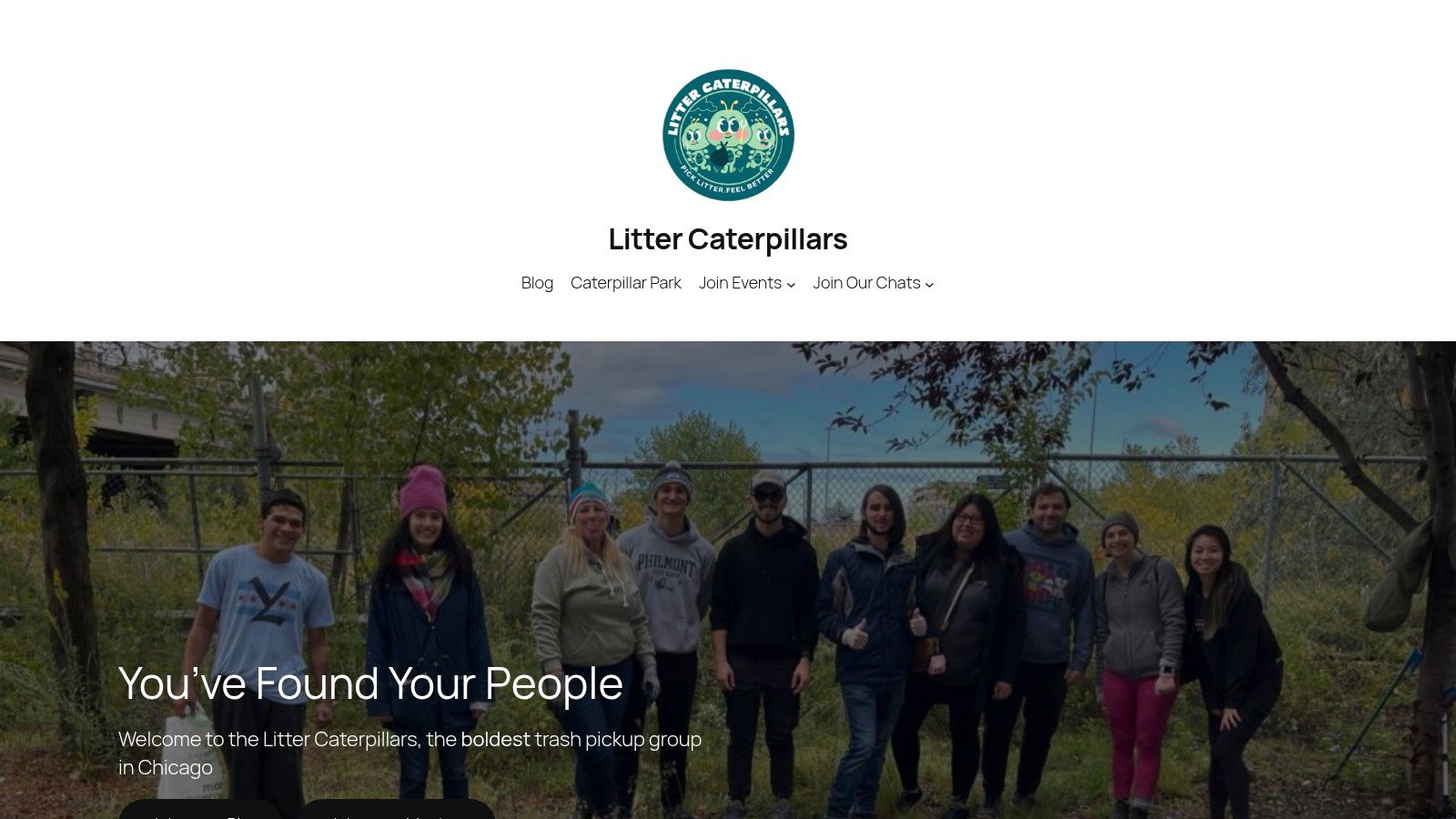
If you want a group that cleans Chicago with courage, humor, and actual care for the people doing the work, visit Litter Caterpillars. You'll find a crew that shows up on weekend mornings, takes safety seriously, and turns trash pickup into friendship, purpose, and a pretty wild kind of fun.