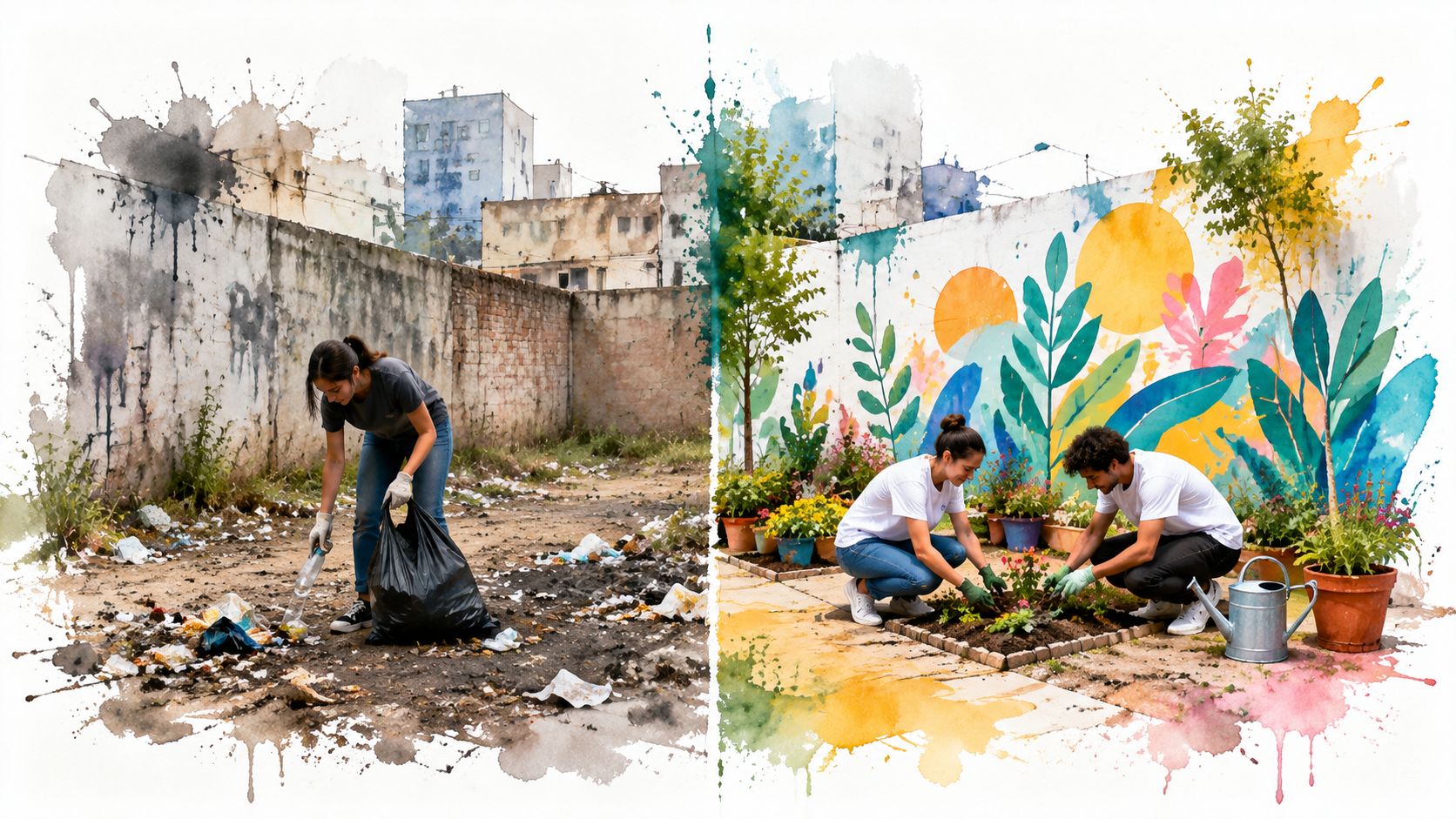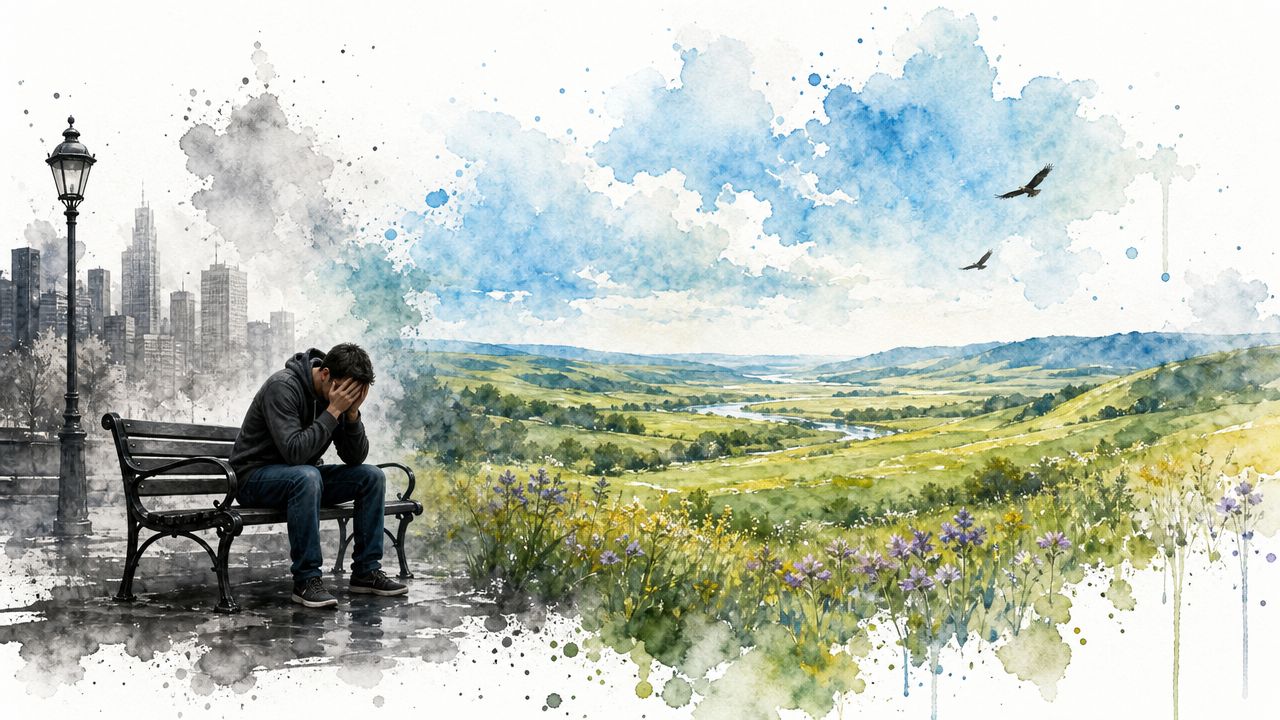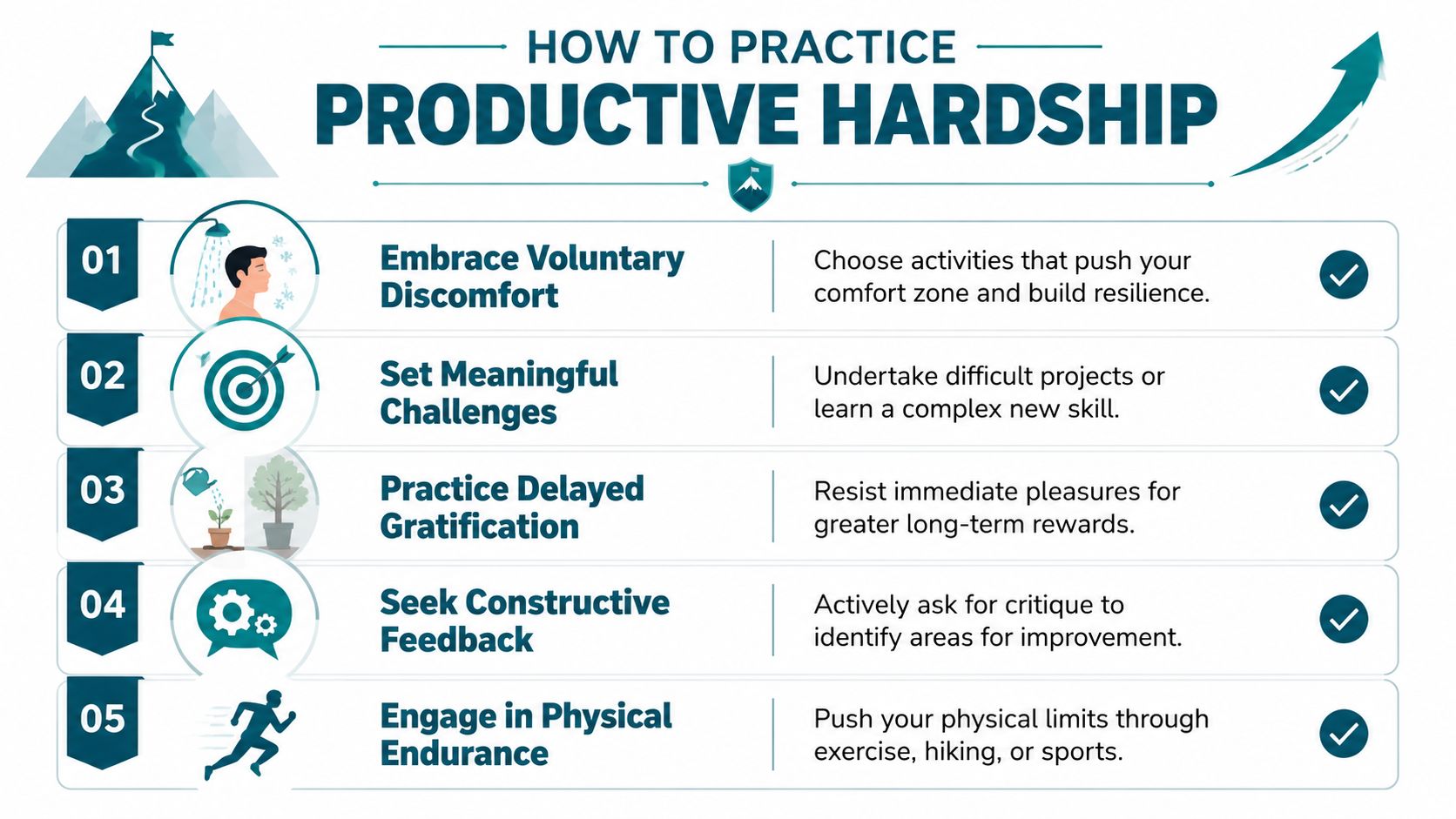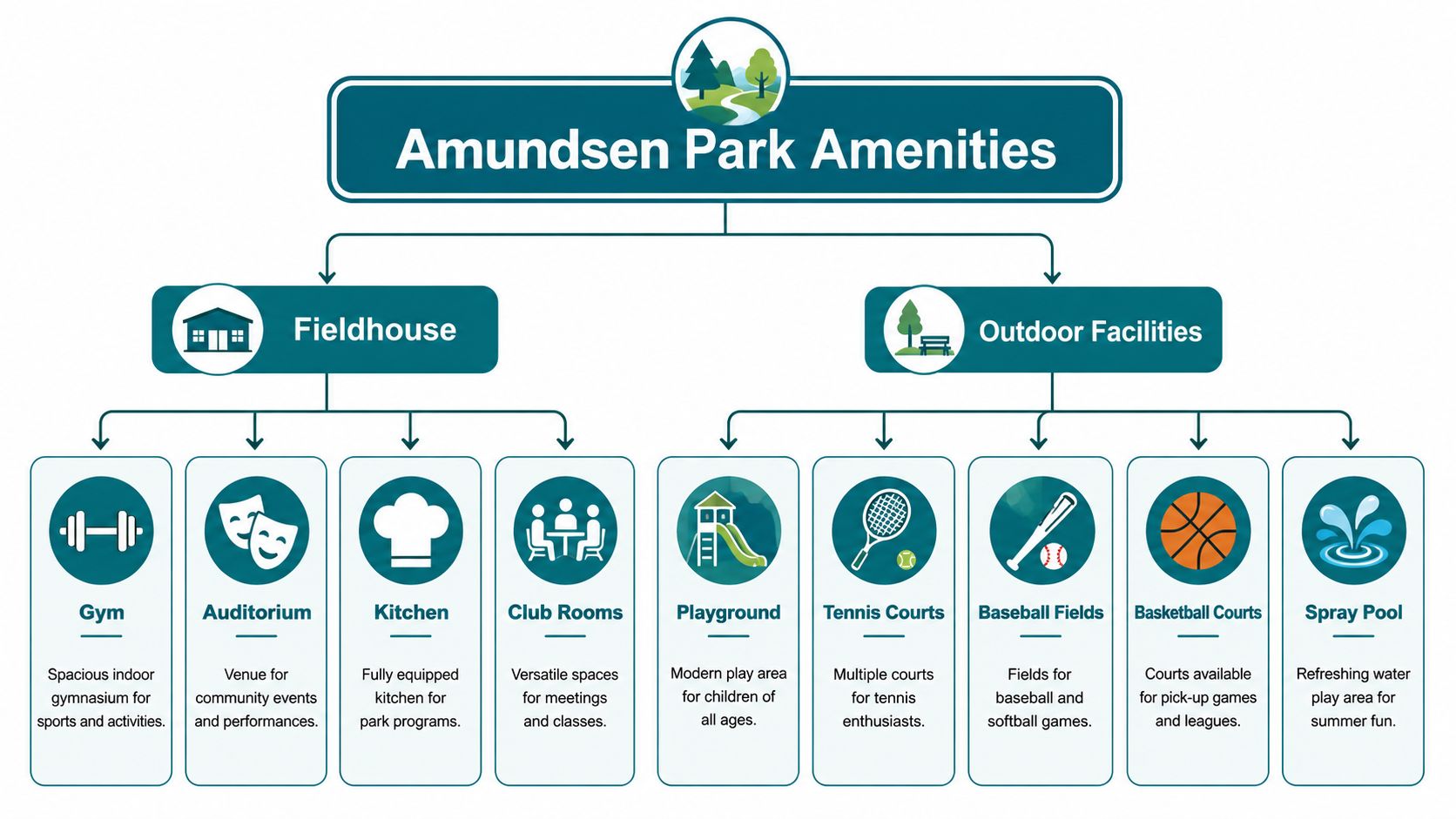
I still remember staring at a moldy jar in my fridge like it was a boulder. I couldn't throw out my own trash, but one cold day I went outside and picked up litter in a park with other people, and somehow that felt easy.
What Service Learning Really Means
The first cleanup I joined did not feel noble. I was standing beside a chain-link fence behind a grocery store, pulling wet flyers out of weeds, trying not to think about the mess waiting for me back home. One of the volunteers handed me a spare trash bag and said, "Start with what's in front of you."
I did.
Ten minutes later, my head was quieter. An hour later, I had a strange new feeling. I could affect a place. I could leave something better than I found it. For someone who felt stuck in every other part of life, that mattered.
That is what service learning programs can do at their best. They bring together useful work, intentional learning, and reflection, so the volunteer is changed by the act of showing up.
The moment service becomes learning
A one-time good deed can be generous. Service learning asks for a little more structure and a little more honesty. You serve because a community has an actual need. You connect that work to a question, a skill, or a subject you are trying to understand. Then you stop long enough to ask what happened, why it happened, and what it changed in you.
I saw this click with one of our newer volunteers, a college student who joined because she needed hours for a class. On paper, she was there for credit. In practice, she spent a morning logging the kinds of trash we found near a bus stop, then used that pattern in a public health assignment about access, maintenance, and who carries the burden when public spaces are ignored. She came for a requirement. She left talking about bus infrastructure, city responsibility, and the neighbors she had met by name.
That line between volunteerism and service learning matters. One gives you a task. The other gives you a task, a reason, and a chance to make meaning from it.
You can study courage in theory. You understand it differently after you show up tired, embarrassed, uncertain, and still do the work.
Service has a way of teaching from the inside. A cleanup can sharpen observation. A tutoring shift can expose your assumptions. A community garden can teach patience faster than any lecture ever will. If you want a wider view of how that everyday participation connects to public life, this guide to civic engagement in everyday life does a good job of putting language around it.
Why it changes the volunteer
The part people miss is how often service learning rebuilds the person doing it.
You start small. You carry water. You sort gloves. You ask a resident where the illegal dumping usually happens. You notice that you are less afraid to speak to strangers than you were last month. You notice that you keep your commitment even when the weather is bad. You notice that your confidence is no longer built on self-talk alone. It is built on evidence.
That is why I care so much about this model. It gives people a place to practice being useful before they feel impressive. It lets them belong before they feel fully ready. In a grassroots volunteer group, that sequence changes lives. People arrive isolated, scattered, or unsure of themselves. Then they find a role. Then they find rhythm. Then, somewhere along the way, they find each other.
Service learning is not just about helping a neighborhood or meeting a class goal. It is also a way to become steadier, braver, and more connected by doing work that matters outside your own head.
More Than Just Picking Up Trash
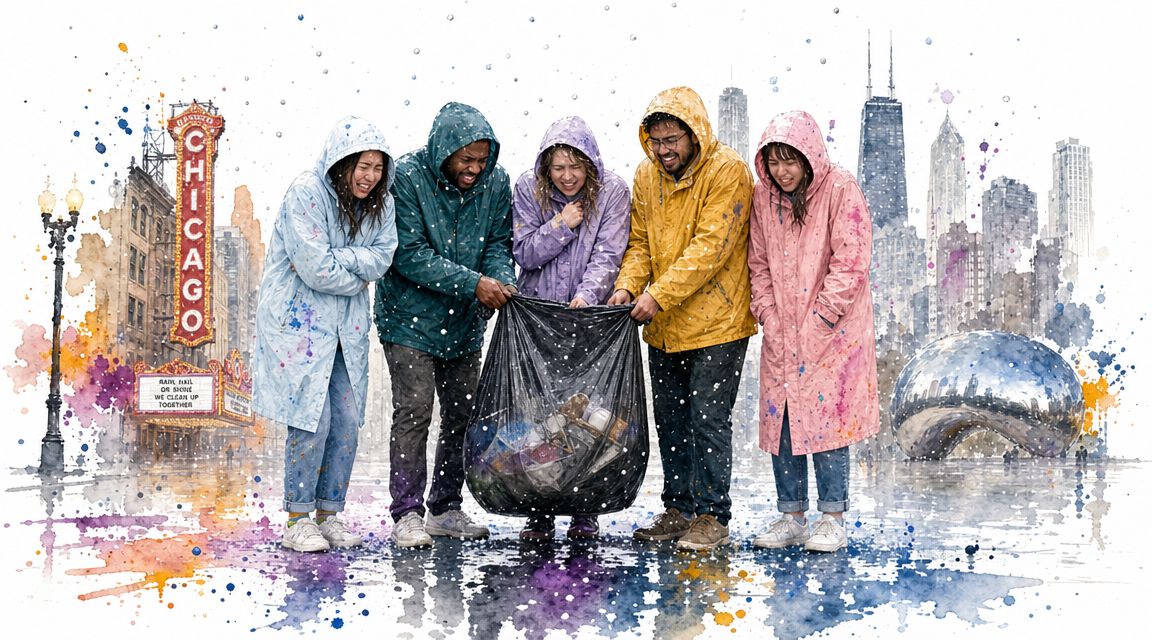
One winter morning in Chicago, the wind hurt my face before we even started. The sidewalks were half buried, our gloves got stiff, and every normal part of my brain said, "Skip it. Nobody will know."
But the group was there. So we worked.
That day taught me more than a motivational book ever could. It taught me that consistency is a muscle. You build it by using it when conditions are bad, not when they're pleasant.
Structure is what makes it stick
Service learning has power when you repeat it, shape it, and think about it afterward. If you only do one dramatic event, you might get a memory. If you build a rhythm, you get growth.
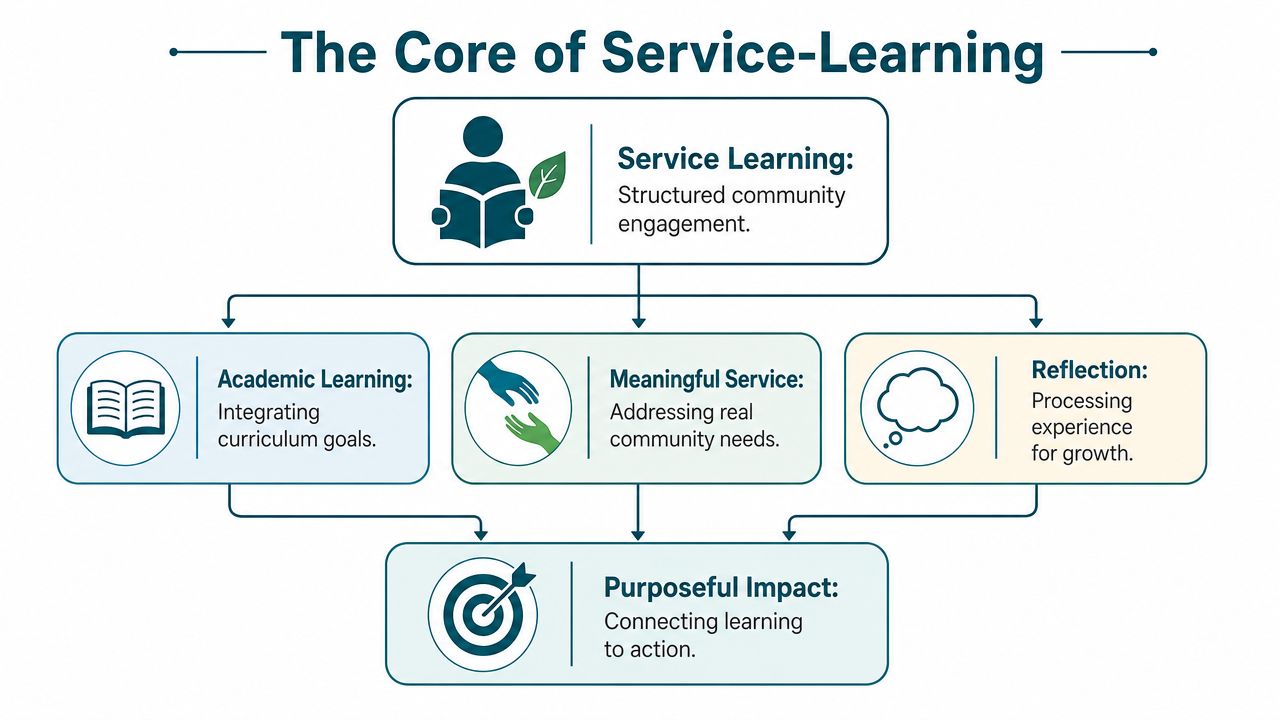
I like to think of it as four moving parts working together:
- A real need: The problem has to exist in the world, not just on paper.
- A learning goal: You need a question, skill, or subject you're trying to understand.
- Repeated action: One-off effort can inspire you. Ongoing effort changes your habits.
- Reflection: You stop and ask what happened, why it happened, and what it changed in you.
When those parts line up, a trash pickup stops being "just picking up trash." A student can connect it to environmental science, public policy, writing, mapping, public health, or neighborhood history. A volunteer can connect it to discipline, fear, teamwork, and self-trust.
What the evidence says
This isn't only a feeling I have from being out there. A meta-analysis covering 11,837 students across 62 studies found that service-learning produced significant gains in self-esteem, self-efficacy, educational engagement, and academic achievement compared with control groups, according to the National Youth Leadership Council summary of service-learning research.
That lands with me because the words match what I've seen in real life. People arrive shy. They don't know anybody. They worry they'll do it wrong. Then they spend a few mornings working alongside strangers, and their posture changes. They start greeting others first. They start volunteering for the less pleasant jobs. They trust themselves more.
Practical rule: If you want service to teach something, give it a schedule, a purpose, and a debrief.
There's academic upside too when programs are designed well, but I don't think the grade benefit is the whole story. The deeper story is this. When you ask someone to matter in a visible way, they often rise to meet that role.
The lessons that don't fit neatly on a worksheet
On hard cleanup days, I watch people learn things nobody can fake:
| Experience | What you learn |
|---|---|
| Cold weather turnout | You can act before you feel ready |
| Working with strangers | You can belong without performing |
| Finishing a dirty block | Effort creates visible proof |
| Returning next week | Identity grows from repetition |
A lot of education stays trapped in abstraction. Service breaks that trap. You don't merely discuss responsibility. You carry it.
Finding Your Service Learning Model
The first time one of our volunteers, Marcus, brought his little sister to a cleanup, he kept apologizing for how quiet she was. She stayed near the supply table for the first half hour, twisting a pair of gloves in her hands. Then an older neighbor asked if she could help sort recyclables, and something shifted. By the end of the morning, she was directing people toward the right bags like she'd been part of the crew for months.
That day reminded me that the model matters because it shapes who people get to become inside the work. Some people need a short, winnable first step. Others grow through repetition. Others come alive when the work is public, shared, and a little unpredictable.
Three models I see over and over
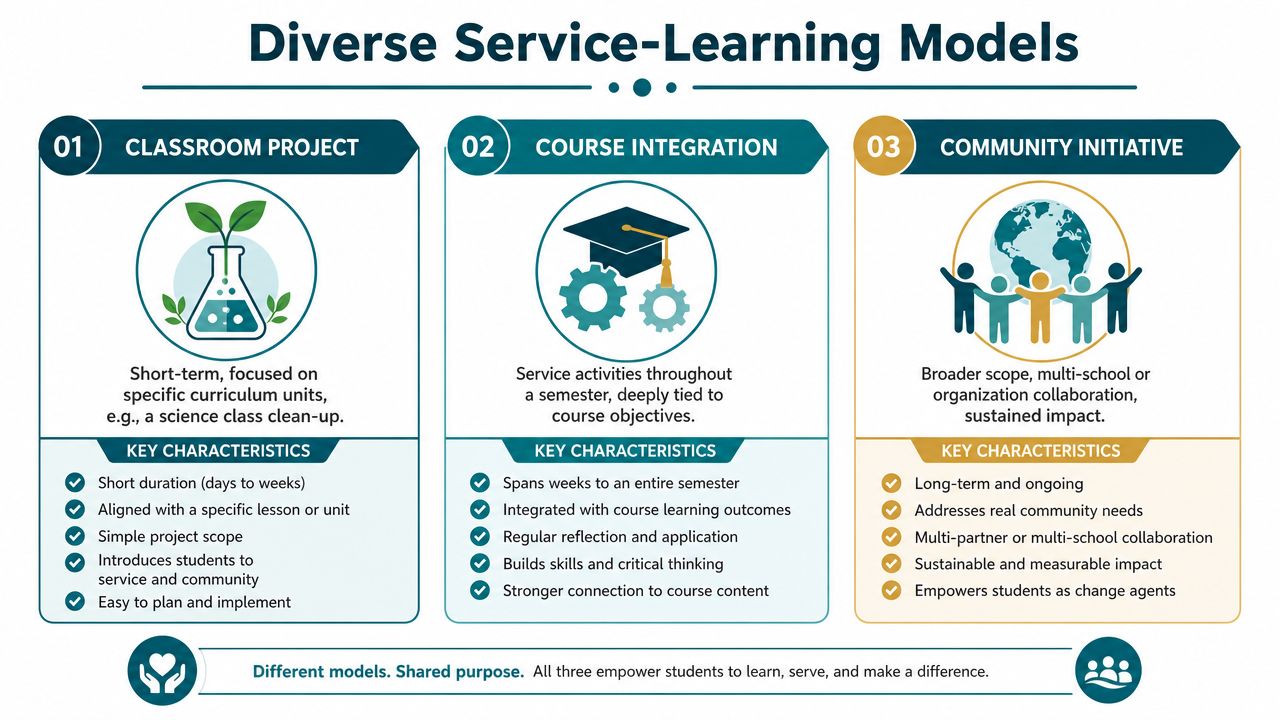
Here is the comparison I come back to when someone asks, "What should we start with?"
| Model | What it looks like | Where it shines |
|---|---|---|
| Classroom project | A single unit or short project tied to one subject | Good for a first win and a clear beginning |
| Course integration | Service work spread across a term with reflection built in | Good for confidence, consistency, and skill growth |
| Community initiative | A school or class works with an outside group on an ongoing local need | Good for belonging, responsibility, and real-world problem solving |
Classroom project
A science class testing creek water can learn a lot in a short span. Students gather samples, compare findings, and connect what they saw to lessons on pollution and public health. The experience is contained, which helps nervous participants try something new without feeling overwhelmed.
I like this model for people who need proof that they can contribute. A short project gives them a finish line they can see. They leave with a memory of doing real work, and that memory often matters more than adults expect.
Course integration
This model changes people more slowly, and often more profoundly.
A writing class might spend a full term helping a neighborhood group create flyers, interview residents, or draft event materials. The students do the work, talk about what felt awkward or difficult, then come back and try again the next week. That return matters. Confidence usually does not arrive in one dramatic moment. It grows through repetition, through small recoveries, through realizing you can improve after a shaky first attempt.
I trust this model when the goal is identity. By the fifth or sixth round, people stop saying, "I helped out once." They start saying, "I'm part of this."
Community initiative
This one feels the most alive because the classroom is no longer the only place where learning happens. A civics class might join a neighborhood cleanup team, log where illegal dumping keeps showing up, and turn those observations into letters, public comments, or student presentations. A group could also study how an ongoing volunteer effort works by looking at a community cleanup project that combines service with local environmental learning.
I have a soft spot for this model because it asks people to show up as neighbors, not just students. The work has rough edges. Plans change. Weather gets in the way. A partner needs something different than you expected. That friction teaches resilience fast. It also teaches humility, which is one of the least celebrated and most useful lessons service can offer.
As noted earlier, schools have used service-learning for a long time. You do not need to treat it like a strange experiment. You need to choose a version that fits your people and the kind of growth you want to make possible.
How I choose between them
I usually ask three questions.
- How much time do you really have? A short window calls for a smaller commitment with a clear endpoint.
- How much uncertainty can your group handle? New volunteers often do better with structure before they take on a messier community partnership.
- What do you want people to carry with them afterward? A one-time project can create pride. A longer model can build steadiness, trust, and a sense of belonging.
Start with the model your group can sustain. A small success gives people courage. Then you can build from there.
How to Start Your Own Program
The first program I ever trusted was tiny. No fancy packet. No polished slogan. Just a real problem, a few people, and enough stubbornness to begin.
Later, that same mindset helped turn an empty lot into a new idea for a neighborhood park. What looked impossible from far away became manageable when broken into steps. That's how I think you should start too.
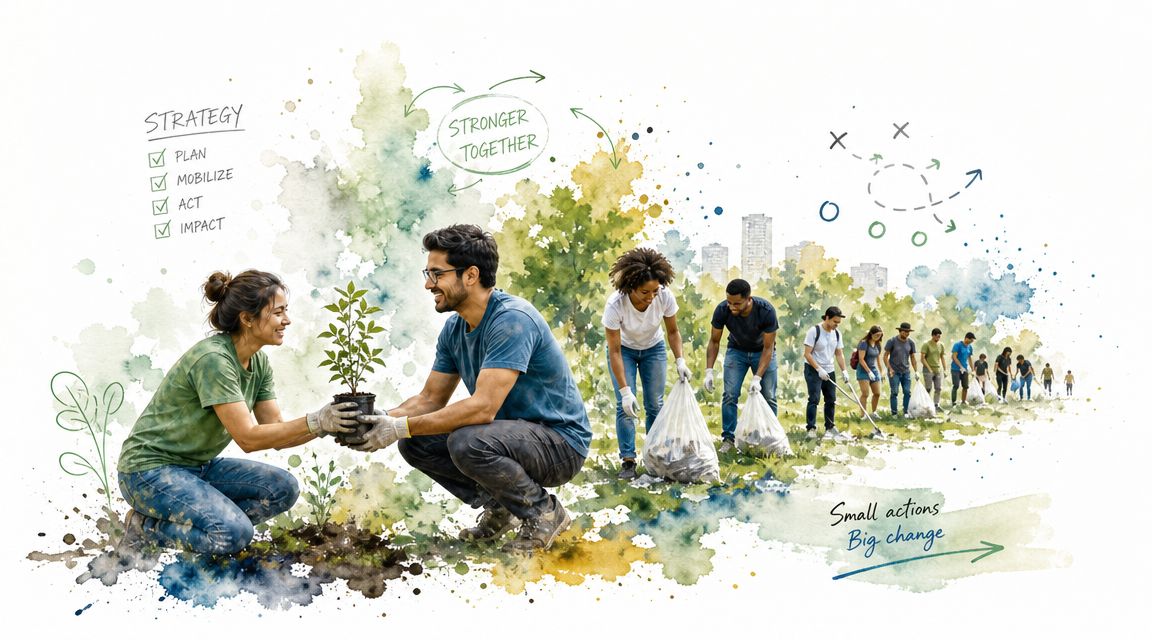
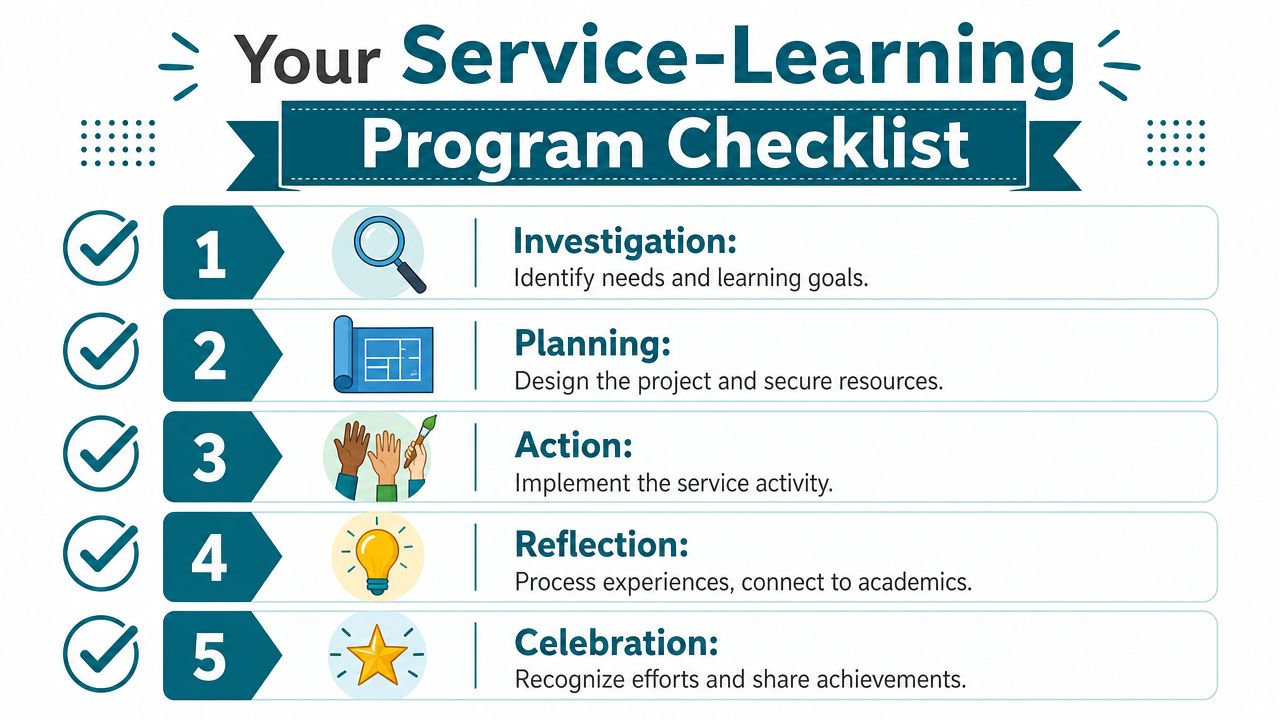
Right before you sketch your own plan, it helps to see the cycle in one glance.
Start with the need in front of you
High-quality service-learning follows a sequence of investigation, planning, action, reflection, demonstration, and celebration, according to the Service-Learning in Maine guide. I love that sequence because it sounds formal, but in practice it's very human.
First, look around and ask what bothers you enough that you'll keep caring after the first burst of excitement fades. Maybe it's litter around a school. Maybe it's an empty lot. Maybe it's seniors who need help with technology, or younger students who need reading support.
Write down two things side by side:
- The community need
- The learning goal
If students clean a block, what are they learning? Observation? Data collection? Public speaking? Environmental science? Local government? Keep it plain.
Make a plan you can actually survive
Bad plans die from ambition. Good plans fit into real life.
I keep planning simple:
- Pick the site: One block, one hallway, one garden bed, one riverbank.
- Set the time: Put it on a calendar people can keep.
- Gather tools: Gloves, bags, clipboards, water, first-aid basics.
- Think about safety: Permissions, weather, hazards, check-in points.
- Assign roles: Who leads, who photographs, who tracks observations, who handles cleanup supplies.
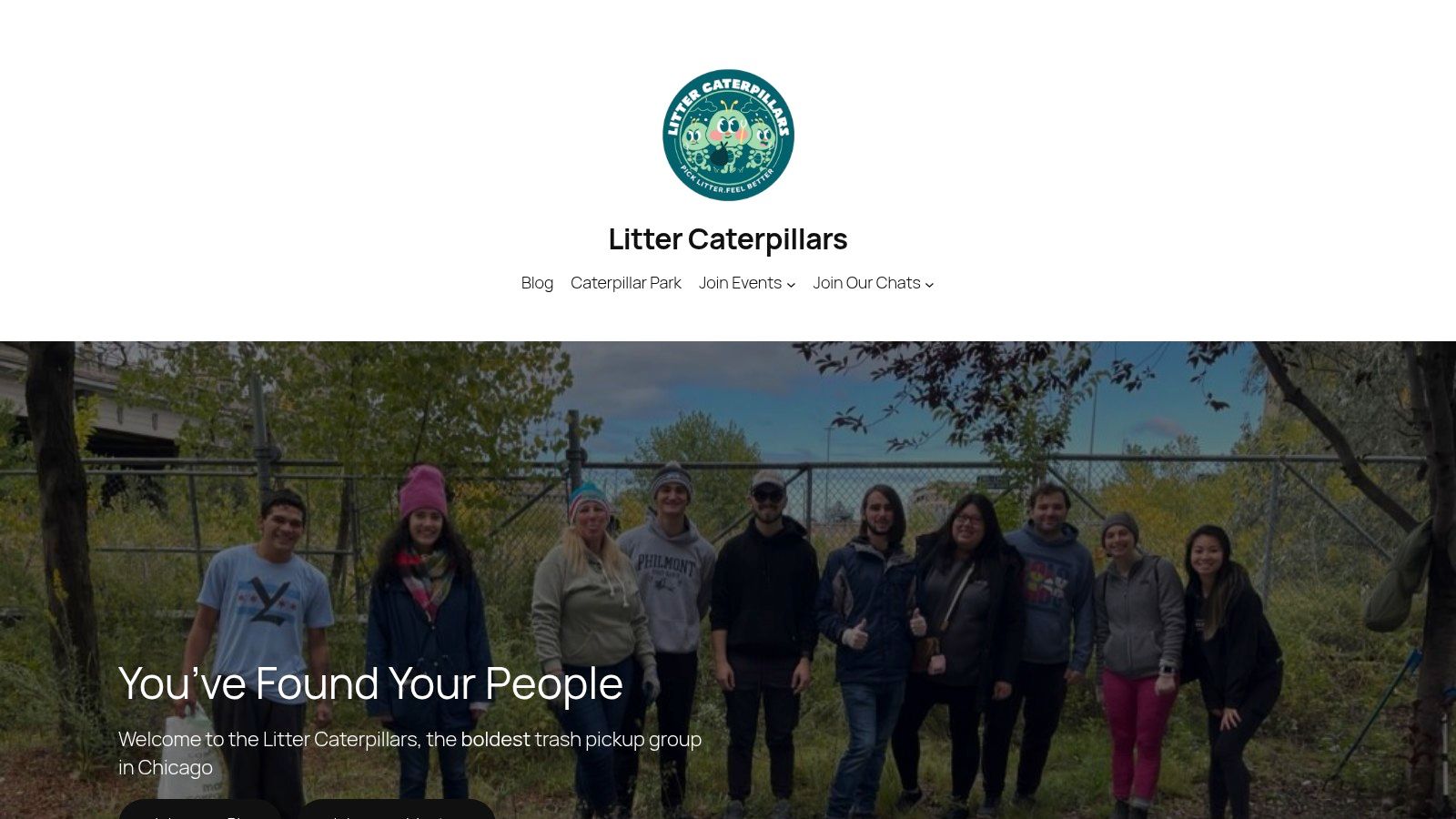
If you want one concrete example of a grassroots project growing into something larger, look at the Green City Project from Litter Caterpillars. It shows how a local cleanup idea can connect service with visible place-making.
A short video can help people grasp the flow before they join.
Do the work, then talk about what it did to you
Action is the part people romanticize. Reflection is the part that changes them.
After the project, don't just ask, "Did we finish?" Ask better questions:
- What surprised you
- What felt awkward
- What did you notice that you missed at first
- What did this work teach you about the place
- What did it teach you about yourself
A good reflection question: What felt heavy before you began, and what felt lighter after you finished?
For me, that question has come up again and again. An empty lot can feel like a symbol of neglect. Once people start touching it, clearing it, imagining it, it stops being dead space. It becomes a shared sentence waiting for the rest of the words.
End by showing and celebrating
Demonstration can be a class presentation, a photo board, a short essay, a map, or a community conversation. Celebration can be as simple as thanking people by name and sharing a snack.
Don't skip that part. People need to feel completion. Service learning programs ask for effort, and effort deserves acknowledgment.
Finding Partners and Measuring What Matters
I've watched partnerships fail for one simple reason. One side wanted help. The other side wanted a photo.
People can feel that imbalance right away.
A school might approach a neighborhood group as if the group is just a convenient site for student experience. A community group might treat students like free labor. Both approaches break trust. Good partnerships feel more like a handshake than a transaction.
Find partners who help shape the work
Authentic service-learning is built on reciprocal partnerships where community members help define needs and solutions, with attention to measuring community benefit over time, as described in this guidance on community-based service-learning relationships.
That means you should ask practical questions early:
- What problem are we solving together
- Who decided that this is the problem
- What does success look like for each side
- What burden are we creating for the partner
- What will continue after the event ends
This kind of relationship takes more listening than selling.
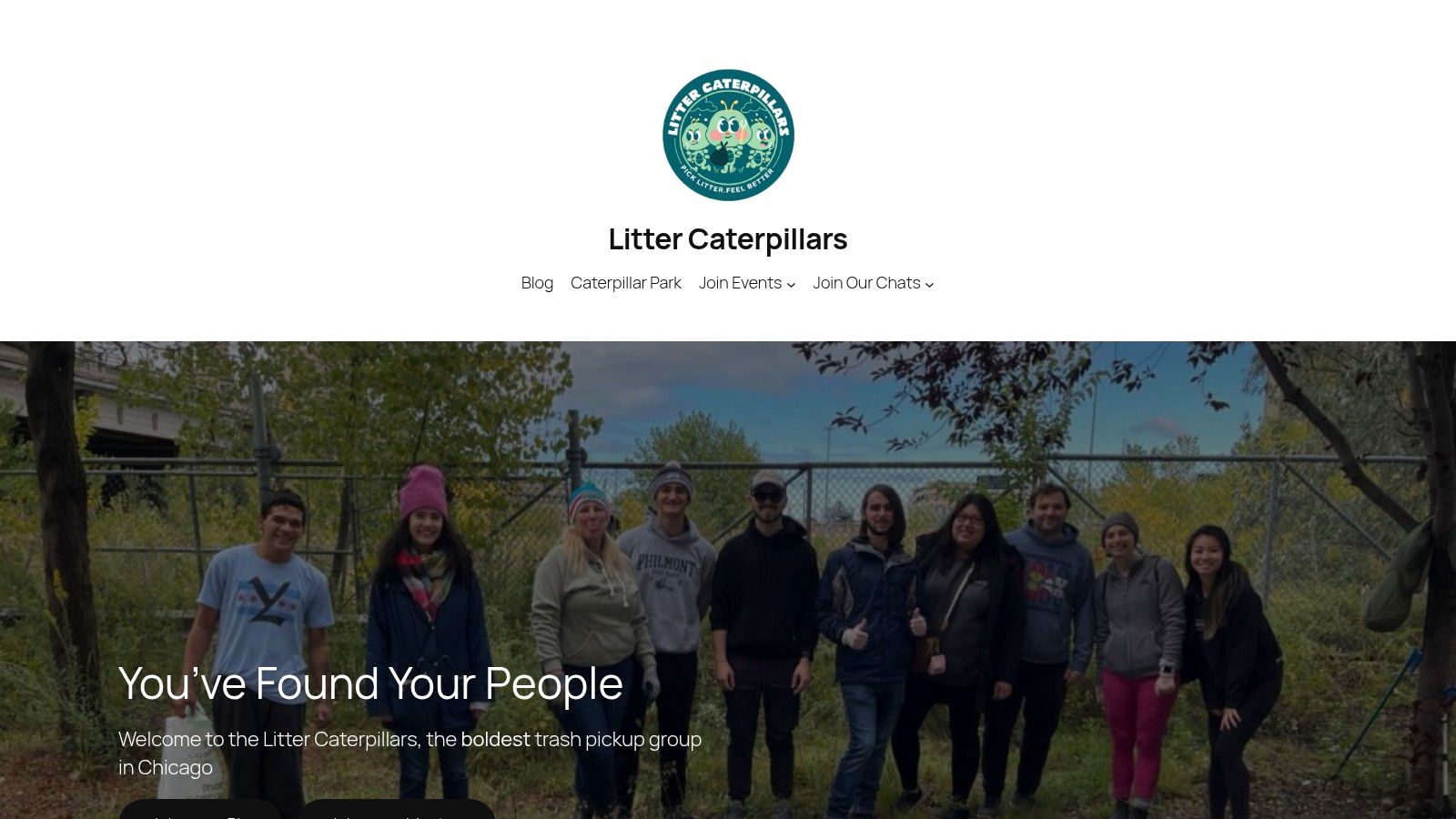
One useful way to think about this is through stories of actual change. The community service impact examples collected here show the kind of visible, place-based outcomes that help people understand what happened beyond attendance.
Stop worshipping volunteer hours
Hours are easy to count. They are not the whole truth.
I care more about questions like these:
| Weak measure | Better measure |
|---|---|
| Hours logged | What people learned and noticed |
| Bags collected | What changed in the space afterward |
| Headcount | Whether people came back |
| Social posts | Whether the partner felt helped |
I still track practical basics. You need some logistics. But if you only count hours, you miss the person who arrived withdrawn and left feeling useful. You miss the student who finally understood how policy shows up on a sidewalk. You miss the neighbor who said, "I thought nobody cared about this block."
What to document: reflection journals, short group debriefs, before-and-after photos, partner feedback, and stories people tell unprompted a week later.
Those details carry more truth than a spreadsheet by itself. They show whether the work was mutual and whether it stayed with people after the gloves came off.
Your First Step to Making a Difference
I keep coming back to that old story about Tom Sawyer painting the fence. He got handed a chore and turned it into something other people wanted to join. I don't love the manipulation part, but I do love the deeper lesson. Meaning changes effort.
If service feels like punishment, you'll quit. If service feels like adventure, training, friendship, or proof that you can do hard things, you'll come back.
That's one reason service learning programs can shape people. Reviews of the research have found stronger cognitive engagement, motivation, self-efficacy, collaborative skills, and resilience when people connect theory to practice in authentic settings, according to this review of service-learning impacts on students.
Start smaller than your ego wants
You don't need a perfect plan. You need one honest step.
Try one of these:
- Pick up one piece of trash on your walk home.
- Ask one teacher or organizer what local need keeps getting ignored.
- Join one service day and stay for the reflection part.
- Invite one friend who wants community more than entertainment.
- Write down one question about your neighborhood that only action can answer.
That last one matters. Action gives you information that thought alone can't give.
Let the work reshape you
I started because I couldn't manage the mess in my own life. Service gave me a side door into change. It taught me consistency before I felt consistent. It taught me bravery before I felt brave. It gave me people to stand next to while I practiced becoming the sort of person I wanted to be.
You might begin with a class project. You might begin with a campus cleanup. You might begin with a Saturday morning and a pair of gloves.
That's enough.
You don't have to feel ready to begin. You begin, and readiness catches up later.
If you're waiting for some giant moment of certainty, you'll wait a long time. Start with one small act that is real. Then do it again. The person you become will meet you on the path.
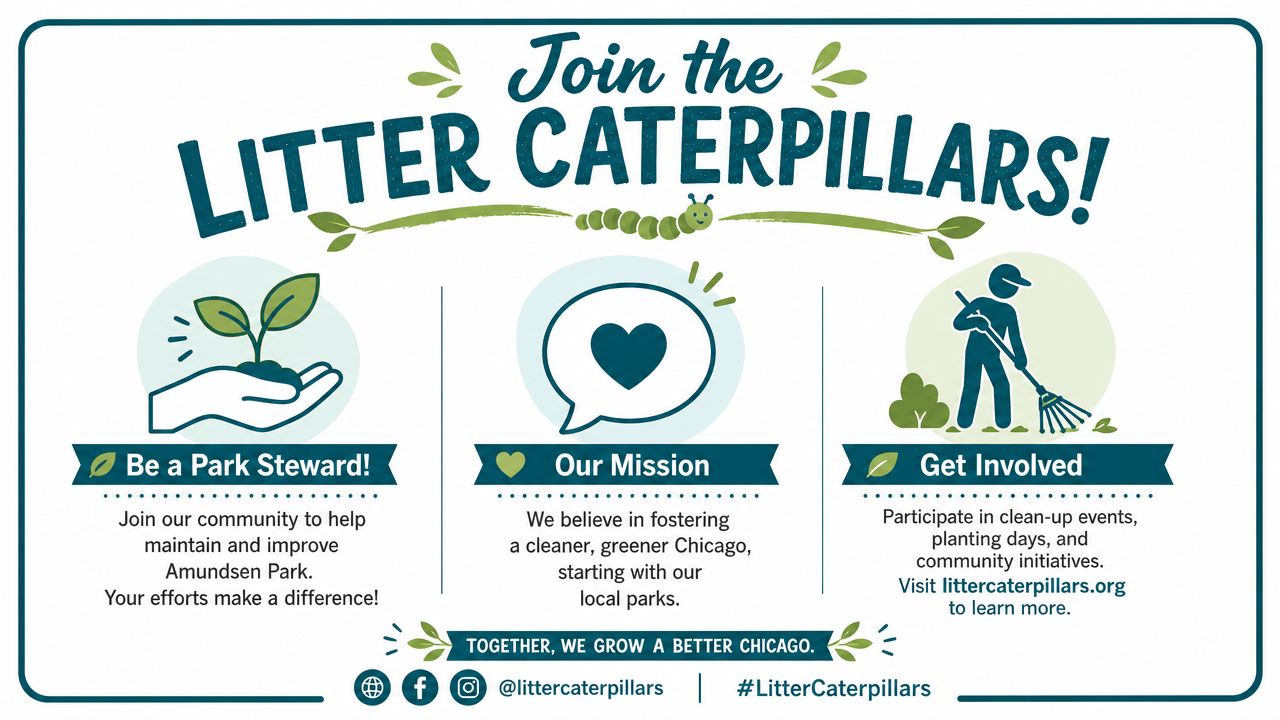
If you want a simple place to begin, Litter Caterpillars has weekly volunteer cleanups in Chicago that give you a concrete way to practice service, meet people, and see visible change block by block.