
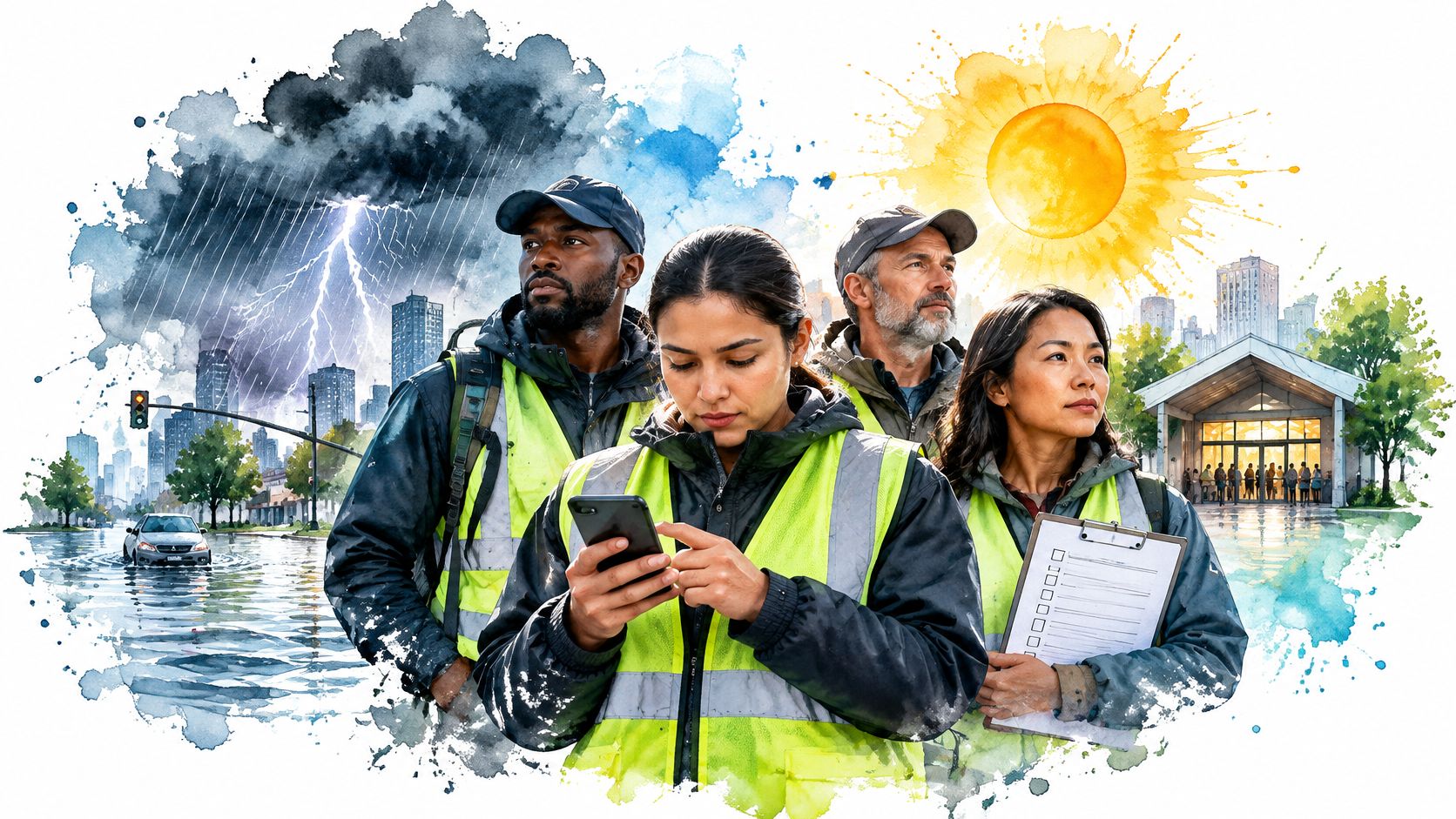
At our first pickup, we huddled under a tree while a springtime hailstorm turned into a blizzard, and every Uber we called cancelled on us. We shivered, watched our phones, and discovered that getting home deserved as much thought as showing up.
Why I Stop Calling Rain or Shine a Safety Plan
I still treasure that strange beginning. I don't recommend the shelter choice. A tree gave us a place to gather, but we needed a real exit plan.
Cold hands and cancelled rides can make a memorable story. They don't give me permission to gamble with your safety the next time we carry bags down a Chicago block.
When I say rain or shine, I mean that I won't abandon useful work because the morning feels uncomfortable. I don't mean that you owe the crew your body when conditions turn dangerous.
Pride can get you out the door. Your safety plan needs to get you home.
Give the morning an exit
Say you reach the meeting corner with gloves, a grabber, and enough enthusiasm to clean the whole avenue. You spot dark clouds beyond the train tracks. Before you open a trash bag, I want you to know where you'll go if the weather changes.
Name the building. Check the entrance. Find the person who can stop the work without asking the whole group to vote.
For another practical perspective on organizing outdoor work, TP Training's on-site safety for civil works is a useful companion. I bring the same planning questions to a volunteer cleanup: what can hurt you, where can you retreat, and who makes the call?
- Before you arrive: Know whether the event can proceed safely.
- Before you spread out: Know your shelter and your buddy.
- Before you leave: Make sure someone knows you've reached a safe destination.
I want this severe weather safety guide to help you make those decisions without embarrassment. You can love a hard morning and still call it off. I want you back next weekend, with dry socks and another story to tell.
Deaths by Hazard and the First Move
Hazard death averages and your first move
| Hazard | Yearly US deaths | Your first move | Shelter that counts |
|---|---|---|---|
| Flooding | 88, NOAA 30-year average | Get to higher ground and stay out of moving water | High ground, never an underpass |
| Extreme heat | 180, NWS 30-year comparison | Shorten the work, add water and shade, or cancel | Shade, a cooled vehicle, or a building |
| Tornadoes | 68, NOAA 30-year average | On a warning, move immediately | Lowest interior room of a sturdy building |
| Lightning | 41, NOAA 30-year average | Stop at the first thunder and complete the shelter wait | Substantial building or a closed metal-topped vehicle |
For the flood, tornado, and lightning rows, I use NOAA's flood safety comparison, which gives US annual averages over 30 years of 88 flood deaths, 68 tornado deaths, and 41 lightning deaths.
For heat, I use the National Weather Service comparison cited by NOAA's Science Council: its 30-year averages include 180 heat deaths, 94 flood deaths, and 73 tornado deaths.
Read the table as a work order
I don't blend those comparisons into a new average. You can see that they give different flood and tornado figures. I use each comparison as stated, and I keep heat and flooding near the front of my planning.
Say you check your phone and see a dramatic tornado video from another state. Meanwhile, your own crew plans to haul heavy bags along a sunny route with no cool recovery spot. I want you to solve the hazard on your block, rather than organize around the most frightening video.
The same applies to water. You might feel more nervous about an approaching cloud than a flooded alley, but you can step away from the alley now. Don't test it with your boot.
Watch the route beneath your feet
Flash flooding can reach your route even when you don't see rain overhead. Say you plan to return through a viaduct. On the outward walk, you see dry pavement; later, you find water across the road. You need another route, not a debate about whether you can hurry through.
I inspect the low points before a crew spreads out:
- Underpasses: Choose an alternate return route that stays higher.
- Alleys and lots: Notice slopes, pooled water, and exits.
- Shelter approaches: Check whether you can reach the door without crossing a low stretch.
- Transit connections: Avoid a plan that leaves volunteers stranded beyond a flooded crossing.
For winter outings, I pair that route check with our blizzard safety tips. You still need to think about visibility, footing, and the journey home when snow replaces rain.
You don't need to memorize a death table to lead well. You need to turn each row into a decision before anyone shoulders a heavy bag.
How You Make the Go or No Go Call
Say the forecast looks uncertain on Friday evening. You could send a cheerful message and hope for the best. I'd rather send a clear decision, with permission to change it when we meet.
At Litter Caterpillars, we put volunteer safety first and volunteer happiness second. I won't reverse that order to protect a turnout photo.
Use this decision flow to organize the people before you organize the bags.
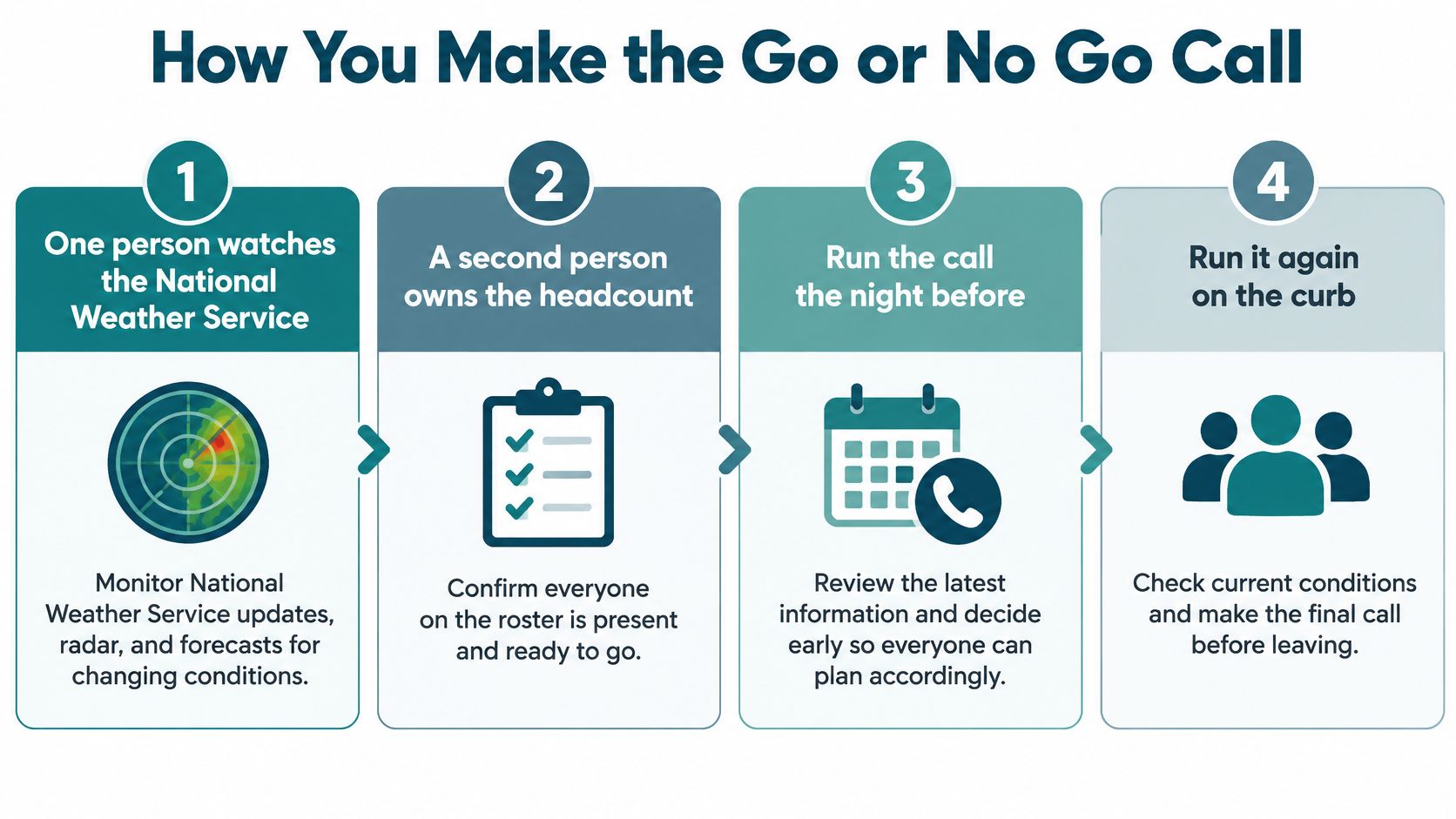
Make the call before the curbside debate
I use the National Weather Service safety guidance as the basis for a conservative stop-work protocol, including staying sheltered for at least 30 minutes after the last thunder.
Assign the watcher and the headcount lead. Give someone responsibility for monitoring National Weather Service alerts for the cleanup location. Give someone else the roster, so the weather watcher doesn't have to juggle names while reading a warning.
Name the shelter and its backup. Check access, opening hours, and the walking route. A locked building across a broad road won't help you just because you can see it.
Cancel or relocate when you can't protect the crew. If a warning affects your work area, or you can't reach suitable shelter promptly, don't start the outdoor route. Tell volunteers before they travel whenever you can.
Stop when you hear thunder. Don't let clear pavement or fading rain talk you into finishing the block. Give the stop command and move.
Complete the shelter wait, then inspect the route. Let the watcher manage the thunder clock. Before restarting, check for rising water, damaged trees, blocked paths, and fresh alerts.
Reject pretend shelter. Don't approve a tree, bus stop, small shed, or open vehicle because someone wants a convenient place to wait. Choose protection for the hazard you actually face.
Give people permission to leave
I want a first-time volunteer to hear the decision without having to challenge a confident regular. Say someone has travelled across the city and wants to keep going because they already made the trip. Thank them for coming, then hold the boundary.
Crew rule: You don't have to earn your place here by staying outdoors when I call the work off.
Write the decision in the group chat before departure. Include the meeting status, the responsible leader, and what volunteers should do if they miss an update.
On the curb, check again. A forecast from home doesn't replace the conditions in front of you.
Rain alone may allow a comfortable cleanup with suitable clothing and footing. Thunder, rising water, and inaccessible shelter call for a different decision. You don't need unanimous agreement to stop exposing volunteers to danger.
Shelter Rules for Lightning and Tornadoes
You hear thunder while you hold a bag open for your buddy. Put the work down and head for shelter together. Don't send someone back for a grabber or let an eager volunteer finish the opposite sidewalk.
I want the headcount lead watching people, not equipment.
Use the safe-action column below to plan your movement. Put conductive tools down without delaying your retreat.
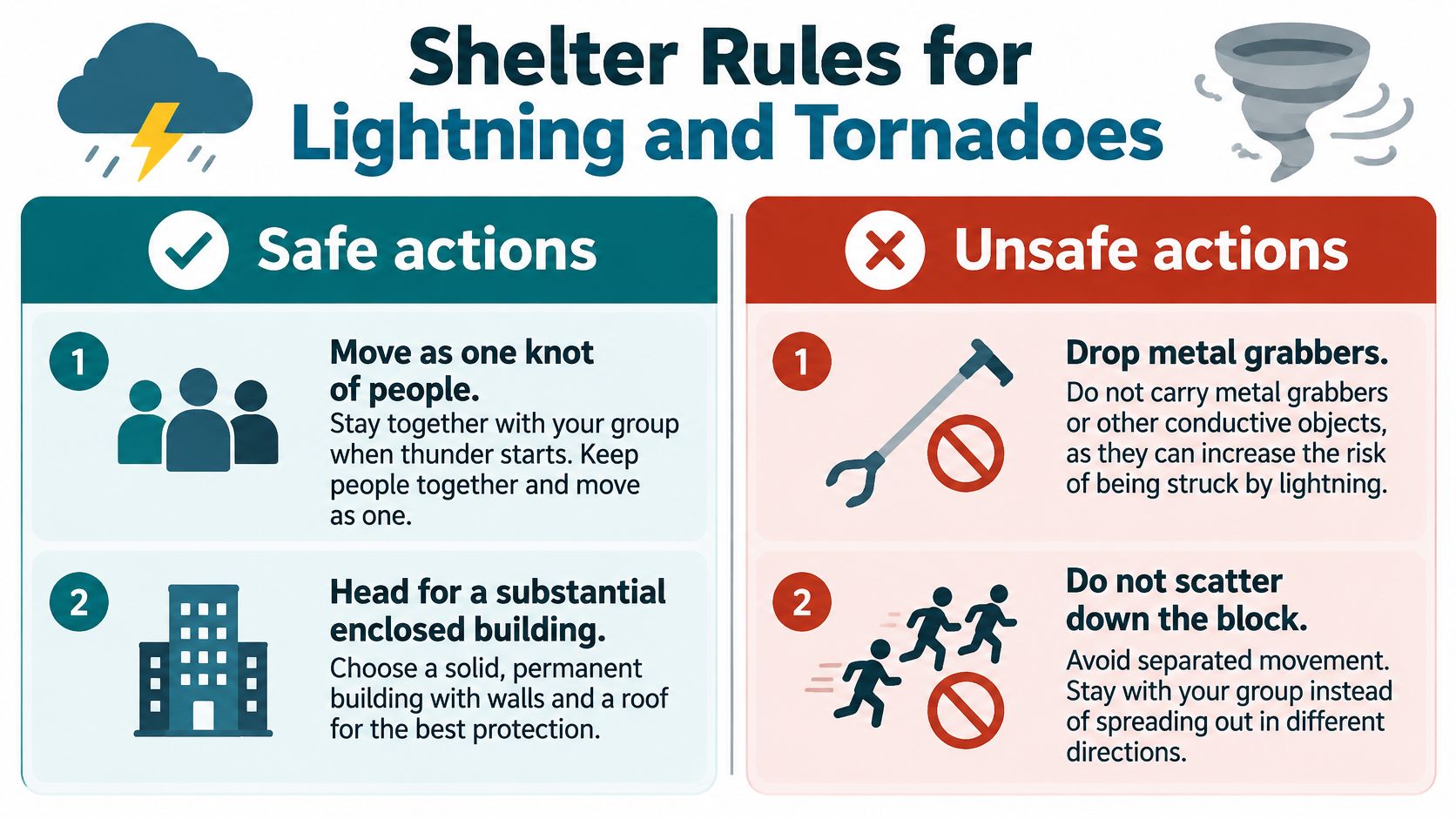
Choose lightning shelter you can enter
NOAA's lightning safety guidance says hearing thunder means lightning threatens you and directs you to remain sheltered for at least 30 minutes after the last thunderclap.
Choose a substantial enclosed building or a fully enclosed, metal-topped vehicle. Close the vehicle windows. Don't mistake a pavilion, porch, open garage, tent, or tree for equivalent protection.
Your metal grabber conducts electricity, but dropping it doesn't make an exposed sidewalk safe. Keep moving toward shelter. Don't stop outdoors to sort equipment.
Say your planned entrance won't open. Use the backup immediately rather than crowding beneath an awning while you search for a phone number. This is why I want you to check doors before work begins.
Choose a tornado room before the warning
For a house, follow the National Weather Service's tornado shelter advice: move into the basement's interior area, or choose a small, windowless room on the lowest floor if you have no basement.
Put as many walls as you can between yourself and the outdoors. Use a bathroom, closet, or central hallway. Crouch beneath a nearby sturdy table or workbench, and protect your head and body with a coat, blanket, mattress, or your arms.
Don't spend your escape time opening windows. You won't protect the building, and you may expose yourself to broken glass.
For a large public building, use the designated shelter area and follow the site's tornado procedure. The National Weather Service's tornado guidance directs you away from wide-span rooms, including gyms, cafeterias, auditoriums, and warehouses.
- Inside: Choose a low interior room or hallway away from glass.
- Outside: Enter a sturdy enclosed building immediately.
- Without dependable shelter: Don't count on a shed, tent, storage unit, or mobile home.
A closed metal-topped vehicle can protect you from lightning. I don't choose it as the crew's tornado shelter.
If a tornado traps you in a vehicle with no reachable building, get low inside and cover your head, or use a nearby lower area only when you can reach it safely. Don't choose a ditch with water, and don't mistake any last-resort position for a dependable event plan.
Heat Breaks and Floodwater You Never Enter
Say you start on a hot block with cool water beside the supplies. Then you move down the avenue, haul full bags, and leave the drinks behind. You haven't maintained a water plan if you make volunteers walk back through the heat to use it.
We pick up trash rain or shine, including on the coldest days of winter and the hottest days of summer. I still adjust the work to the people and conditions in front of me.
Use this checklist before you commit to a long route.
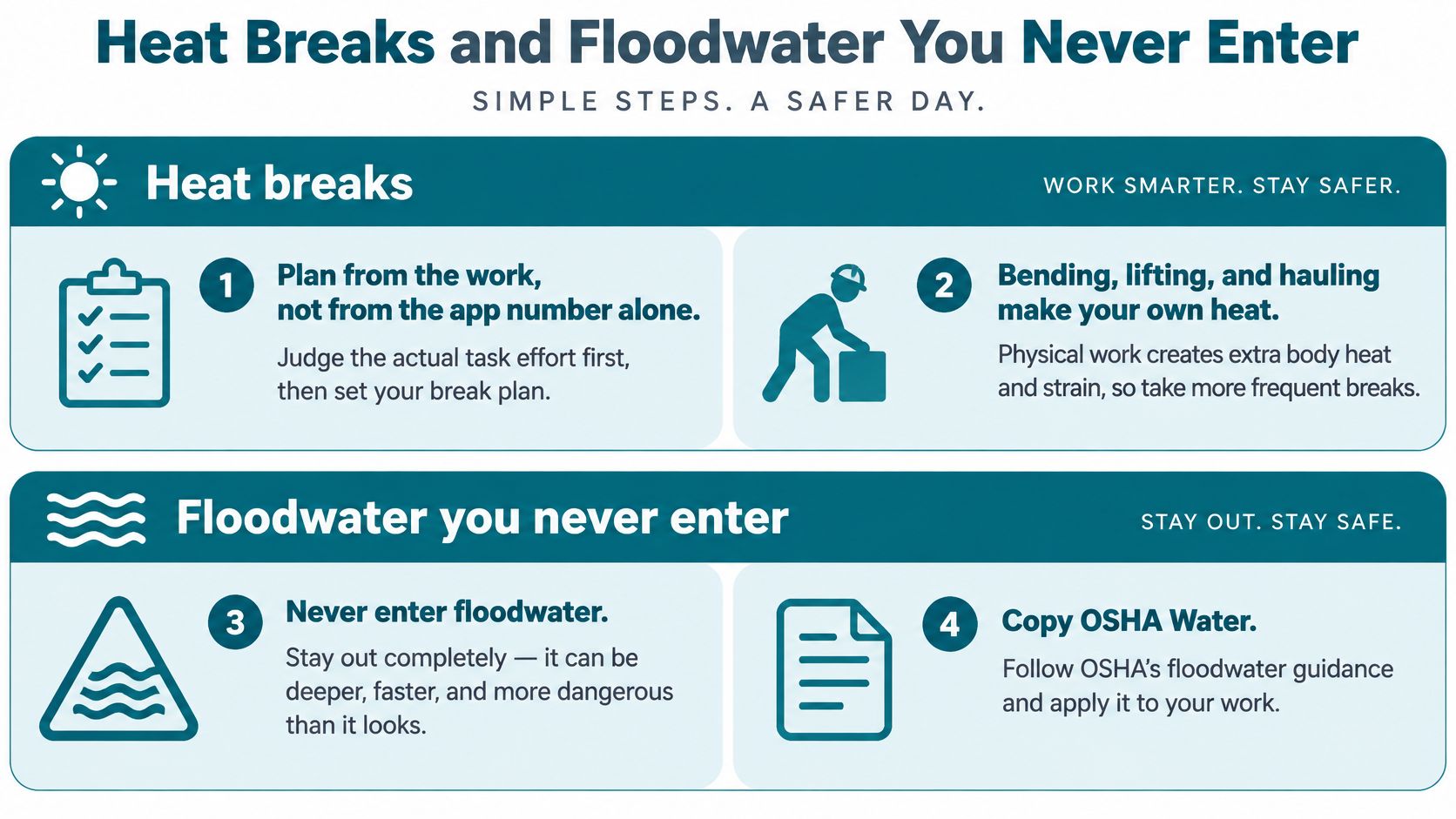
Work from water, rest, and shade
OSHA's Water.Rest.Shade guidance recommends frequent drinking rather than waiting for thirst, electrolyte-containing fluids alongside water for work lasting more than two hours, and generally hourly breaks when heat stress exceeds applicable limits.
I don't treat that as permission to push through until a scheduled break. Shorten work intervals as strain increases. Rotate lifting and walking tasks, move drinks with the crew, and choose a genuinely cooler recovery spot.
Your clothing, health, workload, and familiarity with hot conditions all affect what you can manage. Use our heat exhaustion prevention tips when planning your personal precautions, and tell the leader early if you feel unwell.
Read your buddy and the block
Heat and flood signs and what you do
| What you see | What I think | What you do |
|---|---|---|
| Headache or dizziness while hauling | Heat stress is building | Stop, sip water if alert, and rest in real shade |
| Unusual fatigue, nausea, or weakness | Heat illness may be starting | End that person's shift and cool them |
| Confusion, fainting, or vomiting | This is an emergency | Call for emergency help, cool the person fast, and stay with them |
| About six inches of moving water | It can take your feet | Stay out and don't walk through it |
| A foot or two of water | It can push a car | Don't drive in |
| Moving water in a street or viaduct | A flood you can't out-muscle | Turn the group toward higher ground |
Don't give drinks to someone who can't swallow safely. If you see confusion or collapse, get emergency help and start cooling rather than debating whether the person needs another break.
I won't use a water-depth estimate as permission to cross. Stay out of floodwater, including water that looks shallow or still; you can't inspect the pavement beneath it from the curb.
For clothing considerations, Refinery Work Wear Canada's guide to rain protection for oilfield workers gives you a workwear reference. Keep clothing choices separate from your go decision: a rain jacket doesn't protect you from floodwater.
If I can't maintain drinking water and a cooler recovery place, I cancel or relocate. You can leave the bags. You can't leave your buddy struggling on the block.
Getting Everyone Home When Phones Fail
Say you and your buddy reach a dark viaduct after the rain stops. Your calls won't connect, and you can't tell whether the rest of the crew has returned. Don't enter the underpass to search for a shortcut.
Check the hazards before you move through a damaged block.
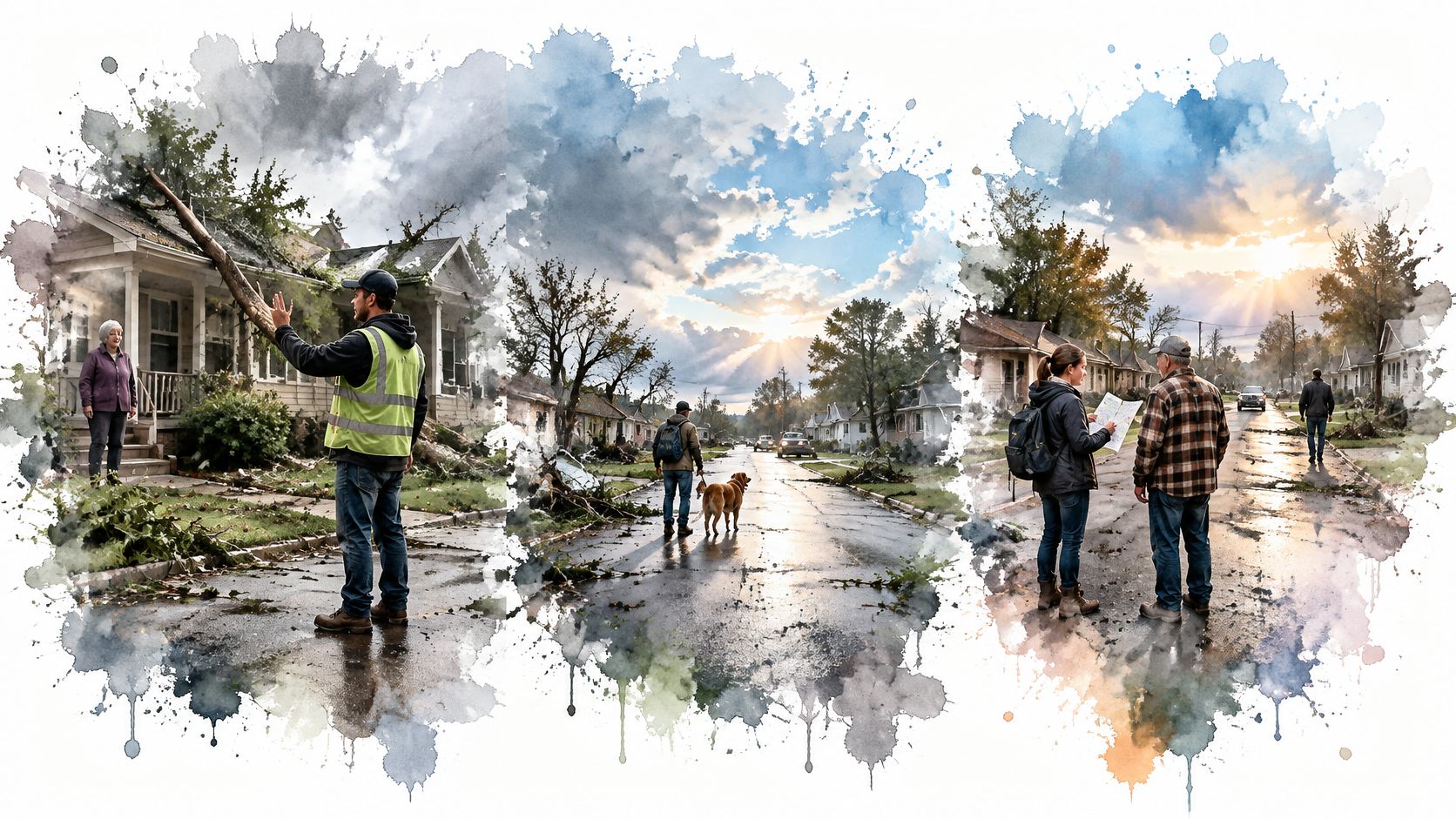
FEMA's severe-weather preparedness guidance explains that outages disrupt communications, transportation, and utilities, and warns you to avoid downed lines, indoor generator use, and driving around flood barricades.
I want you to have a way home that doesn't depend on a working group chat. Your phone can help you coordinate, but you still need a written plan when you can't reach anyone.
Carry the reunite plan
Before departure, put these details on paper and share them with the crew:
- Roster and contact: Record each volunteer's name and emergency contact, and protect that personal information.
- Meeting place: Choose a safe location and an alternate that doesn't depend on the same building or power supply.
- Buddy assignment: Know whom you'll return with and who'll notice if you don't arrive.
- Return trigger: Stop work when you lose alerts or crew communication, and follow the agreed safe return route.
- Transport: Confirm how volunteers without cars can leave, without assuming a rideshare will arrive.
- Final check: Give a named person responsibility for confirming everyone's safe departure.
Pack the paper copy alongside the supplies in your severe-weather safety kit. Agree on a return time before dispersing, and carry a watch or another way to track it.
Use the video below as a pause for a crew discussion about what you'll do when normal arrangements fail.
Close the roster before you go home
If someone doesn't arrive, don't send volunteers into floodwater or past downed wires to search. Give emergency responders the last known location and the information you have.
A quiet phone doesn't confirm a safe departure. Close the loop with a person.
Plan a cooling or warming destination too. Check whether a nearby library, store, or other suitable building can accept you, and keep an alternate if it closes or loses power.
At that dark viaduct, you and your buddy can turn toward the meeting point you already know. You don't need to improvise while wet, tired, and worried.
Write Your Cancel Line Before Saturday
I want you to feel proud when you show up prepared and equally proud when you make a careful cancellation. You haven't failed the neighborhood because you left a bag unfilled.
A short plan helps you act before social pressure takes over. You can read it on the train, share it with a new volunteer, or hand it to the person taking over the crew.
Keep a pocket card
Write these lines in plain language:
- Watcher: Name the person who checks official weather updates before departure and at the meeting point.
- Headcount: Name the person who owns the roster and closes it.
- Shelter: Record the sturdy building, entrance, and backup.
- Water stop: Identify where you'll keep drinks and recover from heat.
- Meeting point: Choose the reunite location and alternate.
- Cancel sentence: Write words you can say without negotiating.
Try this sentence aloud:
We're calling it. Thunder, rising water, or no real shelter means we stop the outdoor work.
You don't need an impressive speech. You need words that a volunteer can hear over traffic and understand while carrying a bag.
Leave room for another morning
I started Litter Caterpillars to practice cleanliness, consistency, and bravery with other people. I don't want bravery to turn into pressure to ignore your own limits.
We meet on weekend mornings in Chicago. You can join through Meetup or our open group chat, meet people, and put your hands to useful work without proving how much discomfort you can take.
Today, choose a shelter on your usual route. Check its entrance, then send the location to the person who would notice if you didn't come back.
At Litter Caterpillars, we bring Chicago neighbors together for weekend trash pickups and friendship, with volunteer safety ahead of the cleanup. Visit us to find a gathering, bring closed shoes and a charged phone, and help us care for the block and each other.
Leave a Reply