Author: Kevin Tao

  • What Is Servant Leadership? It’s About Flipping the Pyramid Upside Down

    What Is Servant Leadership? It’s About Flipping the Pyramid Upside Down

    Have you ever worked for someone who felt less like a boss and more like a champion? Someone whose first instinct was always to ask, “What do you need to fly?” If you’ve been that lucky, you’ve felt servant leadership—a philosophy that grabs the old top-down power structure and flips it completely on its head.

    So, What Is Servant Leadership, Really?

    Forget that classic corporate pyramid, you know the one, with the CEO perched at the very top. I want you to imagine grabbing that pyramid and turning it upside down. Now, the leader is at the bottom, a solid base, holding everyone else up.

    Their primary role isn’t to sit in a corner office and dictate strategy. It's to serve. That means you'll find them right there in the trenches with the team, clearing roadblocks, finding resources, and unlocking each person's potential. It's a gut-level shift from the old world of 'power over' people to a new reality of 'power with' them.

    This is what it looks like in practice—the leader becomes the support system for the whole team.

    An inverted servant leadership hierarchy pyramid showing leader at the bottom supporting the team.

    The team's success becomes the leader's victory, and it’s all built on a foundation of unwavering support.

    My Own Stumble into Servant Leadership

    When I started Litter Caterpillars, the last thing on my mind was being "in charge." I just wanted to build a little tribe, a community where people felt they belonged and their effort actually mattered. My job, as I saw it, was just to make sure our volunteers had what they needed—sometimes that was trash bags and gloves, other times it was just a shared sense of purpose to keep them moving in the brutal Chicago wind.

    This isn’t about you serving your leader; it’s about your leader genuinely serving you.

    I think of it like this: a traditional boss is like a person standing on their porch, shouting at the garden to grow faster. A servant leader? They're the ones with their hands in the dirt. They're testing the soil, making sure the plants get enough sun and water, and yanking out the weeds that could choke out new life.

    The gardener’s success isn’t measured by how loud they can shout. It's measured by the vibrancy and health of the garden itself.

    The Big Mindset Shift

    This way of leading fundamentally rewires a group’s DNA. The dynamic shifts from a series of transactions—"you do this for me, I pay you"—to relationships built on a bedrock of trust and mutual respect.

    The servant-leader is servant first… It begins with the natural feeling that one wants to serve, to serve first. Then conscious choice brings one to aspire to lead.

    That idea, so simple it's almost jarring, changes everything. It pulls in people who are motivated by a deep desire to contribute, not just to climb a corporate ladder. For a group like ours, it fosters an environment where people feel safe enough to take risks, to share wild ideas, and to bring their whole, messy, wonderful selves to the mission.

    This entire philosophy is about weaving stronger communities. It connects directly to the heart of what is civic engagement—people choosing to come together, to take collective action for the good of everyone.

    Servant Leadership vs Traditional Leadership

    To really get what makes this so different, it helps to put the two models side-by-side. The contrast isn't just in their actions, but in their entire worldview.

    Characteristic Servant Leadership Approach Traditional Leadership Approach
    Primary Focus "How can I help you grow and succeed?" "How can you help me meet my goals?"
    Decision-Making Collaborative and inclusive. Seeks team input. Top-down. Leader makes decisions alone.
    Source of Power Trust, respect, and influence earned. Authority, title, and position held.
    Communication Listening first, then speaking. Open dialogue. Directing and telling. Information flows down.
    Success Metric Team growth, well-being, and shared achievement. Leader's results and personal achievements.
    Team Dynamic A community working together. A hierarchy of command and control.

    When you see it laid out like that, the picture becomes starkly clear. One approach is about lifting others up; the other is about maintaining a position of power. For any mission that relies on heart and soul, the choice isn’t really a choice at all.

    Where Did This Crazy Idea Come From?

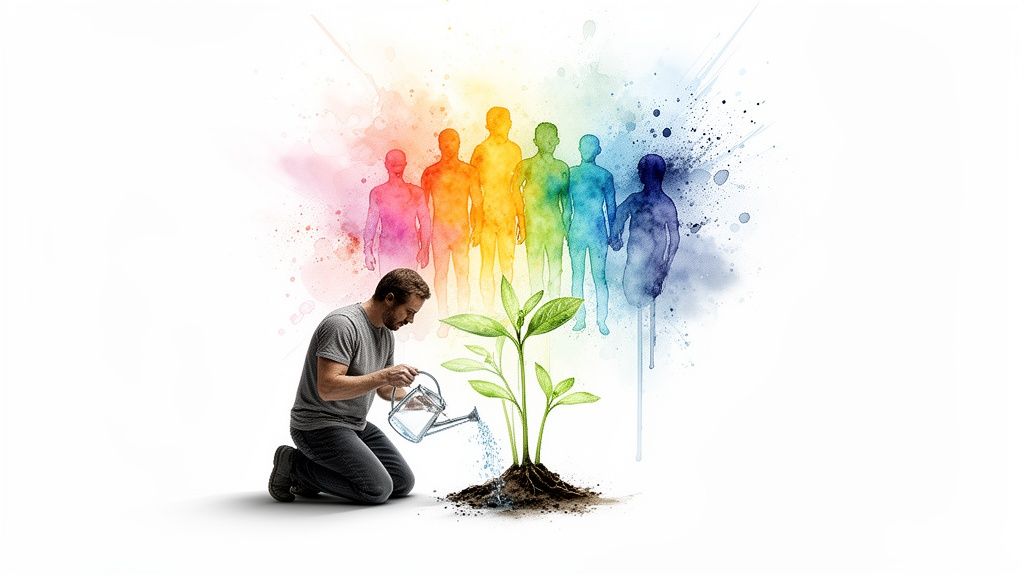
    Five diverse, smiling individuals with open hands presenting, one man kneeling, on a watercolor backdrop.

    This whole concept of putting people first feels revolutionary, doesn't it? But it’s not some trendy new management fad. The idea's heart is ancient, but the modern term servant leadership was actually coined back in 1970 by a man named Robert K. Greenleaf. And it all started because he read a story.

    The book was Hermann Hesse’s Journey to the East. It tells the tale of a group of travelers on a mythical quest, accompanied by their servant, a man named Leo.

    Leo, on the surface, was just the guy who handled the daily grind. He carried the baggage, he cooked the meals, he tended to everyone’s needs. But his true role was something much deeper—he was the group's spiritual center. His boundless energy and his songs kept their spirits high. He was their glue.

    The Servant Who Was Actually the Leader

    Then, one day, Leo vanishes. And the group completely disintegrates. Almost overnight, their journey descends into bickering and chaos. The grand mission that once felt so important falls to pieces, and they abandon the quest entirely. It was a total collapse.

    Years later, the narrator stumbles upon Leo again, only to discover a shocking truth. Leo wasn't just a servant. He was the head of the very organization that had sponsored their journey. He was their great and noble leader, who had chosen to lead by serving his people directly.

    This story flipped a switch in Greenleaf’s mind. It sparked the one question that cuts to the very core of what servant leadership is.

    Does the leader start out wanting to serve, or do they chase power first and then decide to be helpful?

    Greenleaf's answer was profound in its simplicity. A true servant leader is a servant first. Their path to leadership begins with a deep, innate desire to help others—not a hunger for a title or the corner office. It’s the polar opposite of the classic power-hungry boss.

    This is the bedrock of what we do at Litter Caterpillars. I'm always looking for the Leos of the world—the givers. The people who show up because they genuinely want to make things better, not because they’re chasing applause. They lead with their hands and their hearts, and that is what inspires everyone else to follow.

    Putting Core Principles into Action

    So, how do you take this beautiful idea and make it breathe? Knowing what servant leadership is means absolutely nothing if you don't live it. This isn't about good intentions; it’s about intentional, consistent action. The entire philosophy is built on practices like deep listening, empathy, healing, and fostering a true sense of community.

    It’s one thing to read about these concepts in a book. It’s another thing entirely to put them into practice when it’s freezing cold, dark, and you’re wondering if anyone is even going to show up for your cleanup. I want to share how these principles become real for us at Litter Caterpillars.

    Turning Concepts into Community

    Some of these principles can sound a little abstract, a little… fuzzy. Take 'healing,' for instance. What on earth does that mean for a volunteer group picking up trash? For me, it was deeply personal. I started Litter Caterpillars as a way to heal from a messy chapter in my own life. By trying to bring some order to the world outside, I was slowly learning how to organize my world inside.

    The act of service can be a powerful medicine, not just for the community, but for the person serving.

    Then you have 'building community.' This is so much more than a buzzword you slap on a website. It’s about deliberately carving out space for real human connections to take root. You can find it in our pre-cleanup rituals, the silly theme songs we sing, and the group chats where genuine friendships are forged long after the last piece of trash is collected. It's about knowing, deep in your bones, that you’re part of something bigger than yourself.

    True community is built not on proximity, but on shared purpose and mutual care. When people feel safe and supported, they can achieve incredible things together.

    This approach creates an ecosystem where people feel seen and valued, which is exactly the fuel you need when you're trying to motivate volunteers to face a Chicago blizzard for a cleanup. And this isn't just a feeling I have; the data tells the same story.

    Scientific research shows a direct, powerful link between servant leadership and a team's engagement. One compelling study found this leadership style positively correlates with work engagement and significantly boosts both employee resilience and feelings of organizational support. In fact, resilience becomes a key pathway through which a servant leader strengthens the entire team. You can read the full research about these compelling findings here.

    From Principles to Practical Steps

    So how do you begin? You don't need some grand, complex strategy. You just need to pick a principle and start.

    • Practice Deep Listening: Instead of just waiting for your turn to talk, truly hear what someone is saying. Ask questions that show you're engaged. Make them feel like they're the only person in the world at that moment.
    • Empathize Actively: Try to understand someone's perspective, especially if you don't agree with it. Acknowledge their feelings before you offer your own thoughts.
    • Focus on Others' Growth: Ask your teammates or volunteers, "What are your goals?" and then actively look for ways you can help them get there.
    • Build Deliberate Connections: Create small rituals. Celebrate wins—big and small. Introduce people you think would hit it off.

    These small, consistent actions are the molecules that build a servant-led culture. When you're working with volunteers, these actions are everything. If you're looking for more ideas, check out our guide on volunteer management best practices for more insights.

    It all starts with a single, intentional choice to put another person first.

    Why People-First Leadership Delivers Better Results

    It feels completely backward, doesn't it? This idea that to achieve audacious goals, you should focus less on the goals themselves and more on the people chasing them. In a world that screams for results, for metrics, for the bottom line, this approach quietly demonstrates that genuine human connection is the ultimate secret weapon for getting things done.

    Think of it like building a huge bonfire to light up a dark field. A traditional leader might just keep heaving logs onto the pile, demanding a bigger flame. But a servant leader? They're the one on their knees, carefully arranging the kindling, making sure there’s enough airflow, and shielding the fragile embers from the wind.

    They understand a fundamental truth: if you take care of the core of the fire, the blaze will take care of itself.

    A man and a woman in a watercolor style, engaged in a focused conversation.

    This isn't just some feel-good platitude; the data is shockingly clear. When you lead in a way that makes people feel seen, trusted, and genuinely cared for, they stop just clocking in and out. They become partners in the mission.

    The Science of Serving First

    You might think this "people-first" stuff is soft, but the results are hard as steel. The research reveals a stunning impact when organizations truly commit to this model.

    Organizations that put servant leadership into practice see 77% higher employee engagement compared to traditional top-down models. At the same time, they achieve 50% lower turnover rates.

    That's a staggering difference. When you build your house on a foundation of trust, your team becomes capable of weathering any storm. They stick around, they invest more of themselves, and they bring their best energy to the work.

    Our Mission Is People

    At Litter Caterpillars, if you ask me what our mission is, I'll say it's cleaning up Chicago. But our real mission? It's our volunteers. They are not tools we use to pick up trash; they are the entire point. Their energy, their passion, their well-being—that is our most precious resource.

    My job is to be the guardian of that resource. By putting the needs of our volunteers first, I'm ensuring their energy is constantly renewed, not depleted. This approach transforms a scattered group of individuals into a powerful, committed force that feels like they can take on the world, one city block at a time. It’s how you build a real movement.

    If you’re curious how this people-first mindset can create ripples far beyond your immediate team, check out these corporate social responsibility examples that show how service can redefine what success even means.

    How We Live Servant Leadership at Litter Caterpillars

    This is where the theory gets its hands dirty. I want to show you how these big ideas about serving others aren't just abstract concepts for us—they are the practical, real-world actions we take every single week.

    At Litter Caterpillars, servant leadership isn't a poster on a wall; it’s a thousand tiny choices. It’s choosing to clean a neighborhood that truly needs our help, not just the one that’s easiest to park in. It’s a culture, a feeling, a promise.

    It’s me, personally, making sure every single volunteer has water, knows how much they are appreciated, and understands their time is the most valuable gift they could possibly give us. It's our absolute 'no-pressure' rule for everything we do, because a person’s well-being is infinitely more important than their output.

    Forged in a Hailstorm

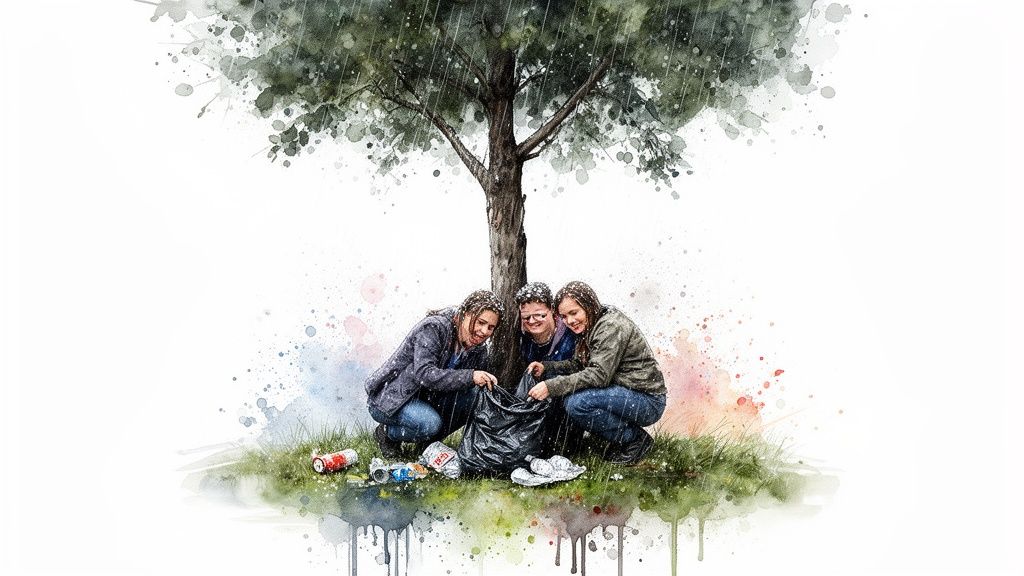
    I will never forget our very first cleanup. There were only three of us, huddled under a little tree as a freak Chicago hailstorm came roaring out of nowhere. It was miserable. It was cold. And it was the exact moment that forged our entire identity.

    In that shared struggle, we discovered something real. Facing a ridiculous, unexpected challenge together builds bonds that simply don't break. I realized my role wasn't to be the "boss" of the cleanup; my job was to serve my tiny, freezing team by turning a wretched experience into an adventure we would never forget.

    My leadership became about one thing: protecting the spirit of the team, no matter what the world threw at us. That’s the core of servant leadership—you serve the people, and the people will serve the mission.

    This servant-first focus is proven to work. When you genuinely place your team's well-being at the forefront, it has a seismic impact on their morale and performance. Research demonstrates that servant leadership can explain an additional 41% of the variance in satisfaction with leaders—a huge leap that shows just how powerful this approach is. You can discover more insights about these findings on Regent.edu.

    It creates a virtuous cycle of trust and commitment. It’s a powerful, generative force.

    Our Values as Actions

    Every decision we make, big or small, gets filtered through our core values. Each one is a direct expression of putting our people first.

    • Bravery: For us, bravery means showing up when it’s hard. It’s serving a community even when you feel out of your comfort zone. My role is to lead by example—to be the first one out in the freezing rain, proving that we’re all in this together.
    • Kindness: This is our volunteer-first policy, plain and simple. We protect our volunteers’ energy above all else. We celebrate them, we support them, and we will never, ever pressure them for anything.
    • Unity: We build community on purpose. We create rituals, we share stories, and we make space for real friendships to blossom. My job is to be the gardener of that community, tending to the connections that make us resilient.

    These aren't just pretty words on a website. They are the practical application of serving first. By living these values, we’re not just picking up litter; we're building a joyful, powerful community from the ground up, one small act of service at a time.

    Answering Your Questions About Servant Leadership
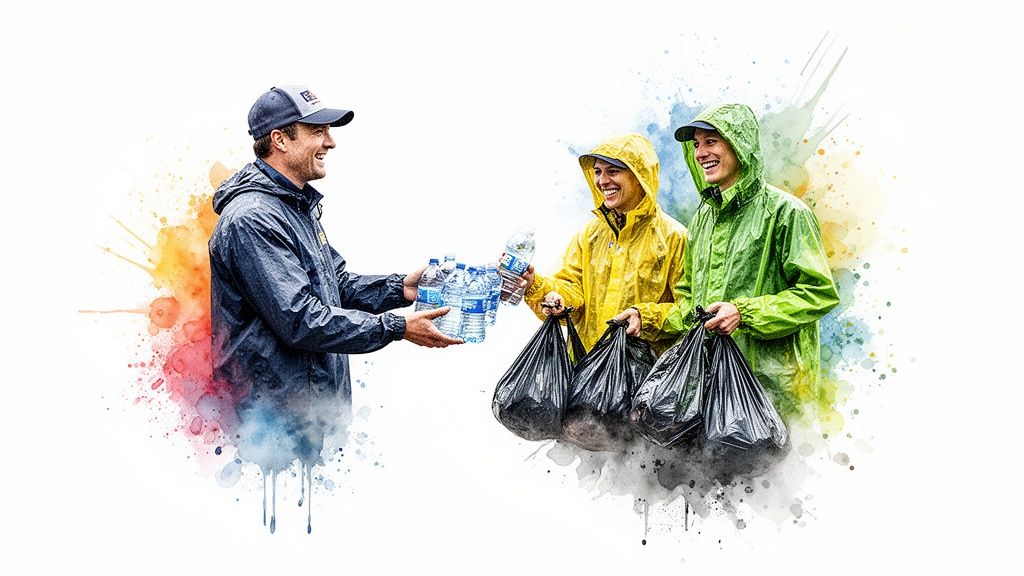
    Three people in raincoats, one offering water bottles to two holding trash bags after a cleanup.

    Alright, you’ve stuck with me this far, which tells me you probably have some questions kicking around in your head. That’s a good thing. It means you’re already thinking beyond the textbook definitions and wondering how this all holds up in the messy reality of life.

    Let's tackle some of the questions I get asked all the time. No theory, just straight talk from the trenches.

    Can I Be a Strong Leader and a Servant Leader?

    Yes. One hundred percent. In fact, I don't believe you can be a truly strong leader without it. This is probably the biggest myth we need to demolish right now: the idea that serving your team makes you a pushover. It is the absolute opposite. It takes profound courage and confidence to put your team's needs ahead of your own ego.

    A servant leader still has a clear vision. They still hold people to high standards. And you better believe they make the tough calls when nobody else wants to. The difference isn't in the action; it's in the why. Every single decision gets filtered through one simple question: "What is best for my people and our mission?"

    Think about a ship's captain steering through a brutal storm. They are in complete command, decisive, and unwavering. But every order they bark is for one single purpose: to get their crew home safely. That's strength through service.

    How Can I Start If I Don't Have a Title?

    You do not need "manager" or "team lead" on a business card to be a leader. Leadership is an action, not a position. You can start being a servant leader today, right where you are, with your coworkers, your family, or your fellow volunteers.

    Here’s how you can start small:

    • Actually listen: Don’t just wait for your turn to talk. Hear people out. Understand what they’re trying to say underneath the words.
    • Offer real help: See a teammate swamped? Jump in and help them, even if it’s not "your job."
    • Amplify others: When someone does something amazing, tell them. Then tell everyone else.
    • Ask better questions: Try things like, "What’s the biggest obstacle in your way right now?" or "What do you need from me to make this happen?"

    Some of the most incredible leaders we have at Litter Caterpillars are simply volunteers who have been with us for a while. They take it upon themselves to make the new folks feel like they belong from the moment they arrive, and that act of service is immeasurably powerful.

    What Are the Big Mistakes to Avoid?

    This is a journey, and you're going to stumble. I know I have, many times. But there are a couple of common traps to watch out for. The biggest one is confusing serving with pleasing. Your job is not to make everyone happy all the time. It's to help them grow and succeed, and sometimes that means delivering tough feedback or saying no to a bad idea. A people-pleaser avoids conflict at all costs; a servant leader walks toward what's right for the team.

    Another massive pitfall is running yourself into the ground. You cannot pour from an empty cup. If you are burned out, you are of no use to anyone. Taking care of yourself isn't selfish; it’s the prerequisite for being able to keep showing up for others.

    And finally, watch out for false humility. Servant leadership is about genuine service, not about pretending you're not in charge. You can own your authority while using it to lift others up instead of holding it over their heads.


    At Litter Caterpillars, we're figuring this out together, one cleanup at a time. If you're ready to see what servant leadership looks like in the wild and want to do some real good for Chicago, we’d love to have you. Find our next event at https://www.littercaterpillars.com.


  • Discover how to find corporate sponsors: A practical guide

    Discover how to find corporate sponsors: A practical guide

    Let me tell you something about learning how to find corporate sponsors: it's not about groveling for cash. You're not passing a hat around. You're inviting someone—a real, breathing company—into an adventure. A story. It’s a narrative of pure grit, of neighbors banding together, of making a tangible difference—a story they can’t just buy off a shelf or cook up in some sterile boardroom. The sponsorships that last? They're forged in the fire of a shared mission, not in the cold, hard calculus of metrics.

    Your Sponsorship Journey Begins With Your Story

    Before you dare to dream about sponsorship tiers or see their logo splashed across a banner, you have to excavate your "why." Why did you even begin this crazy thing? What was that single, crystallizing moment when everything shifted? Corporate partners aren't swayed by your immaculate spreadsheets. They're moved by your fire. They need to feel the heat.

    I didn’t kick off Litter Caterpillars with some grand, laminated business plan. I started it because I was suffocating in my own mess, both literally and metaphorically. My apartment was a disaster zone, my life felt like it was stuck in park. A sudden, sharp realization hit me: I couldn't possibly clean up my own life until I started cleaning up for others. That was my escape hatch.

    Unearthing Your Origin Story

    Every truly great group has an origin story. It’s that singular moment, that one vivid memory that perfectly encapsulates the soul of what you do. It’s the anecdote that makes someone stop their mindless scrolling, lean in closer to the screen, and actually listen.

    For me and my crew, it wasn't some polished, strategic summit. It was just three of us, shivering violently under a lone tree during a freak Chicago hailstorm on our very first cleanup. Every. Single. Uber. Canceled. We were drenched, freezing our tails off, and frankly, it was miserable. But right there, in that moment of shared suffering, I had an epiphany. Cleaning up someone else’s mess was profoundly easier than confronting my own, and the struggle, shared, transformed into an adventure.

    That hailstorm didn't crush us; it forged us. It became the beating heart of our story. It’s the raw, unfiltered evidence of our commitment. Your story doesn’t need a Hollywood polish; it just needs to be brutally true.

    Think about your own defining moment. Was it:

    • A specific, electric conversation that ignited the entire idea?
    • A gnawing, frustrating problem that you just knew you were the one to solve?
    • A moment of pure, unexpected euphoria during your very first event?

    This is the nucleus of your pitch. It’s the emotional grappling hook that makes a potential sponsor see you not as just another nonprofit with its hand out, but as a tribe of passionate humans they desperately want to join.

    Translating Your 'Why' Into a Mission

    Once you’ve gripped that core story, you need to sculpt it into a mission and a set of values a company can actually understand and support. Your story forges the emotional bond; your mission shows them the destination.

    Our values—bravery, kindness, and unity—bloomed directly from that hailstorm and all the grueling weekend cleanups that followed.

    • Bravery: Showing up in a blizzard to pick up someone else's trash? That’s bravery.
    • Kindness: Helping to heal a neighborhood that isn't even yours is an act of profound kindness.
    • Unity: Huddling together under a tree, united against the elements, creates a bond that no corporate trust-fall exercise ever could.

    Your mission isn't just a slick sentence you slap on your website header. It's your North Star. And it’s the real thing you’re offering a sponsor: a chance to become part of something that stands for real, admirable ideals. When you build powerful community engagement strategies, you give them a clear, illuminated path to participate in that mission.

    You’re not just seeking funds. You are offering a company the chance to become the hero in a real, unfolding story. And that, my friend, is the bedrock for finding partners who won't just write you a check once, but will march alongside you for the long haul.

    Finding the Right Corporate Partners—Not Just Any Sponsor

    Two smiling professionals shaking hands over a table with a magnifying glass showing 'CSR aligned values'.

    Okay, you've got your story locked and loaded. Now you need to find the right audience for it.

    Forget the shotgun approach—blasting your pitch into the void and praying something hits. Learning how to find corporate sponsors is more like spearfishing in a clear lagoon than casting a giant, indiscriminate net. You're not looking for a hundred tepid "maybes"; you are hunting for that one perfect partner.

    This is a game of intelligent, focused searching to find companies whose very soul resonates with yours. It’s exactly like trying to make a new friend—you don’t just accost random strangers on the street. You look for people who share your weird hobbies and see the world through a similar lens. It's the same principle.

    Start Your Search in Your Own Backyard

    The most potent partnerships almost always bubble up from local soil. These are the companies that witness the direct shockwaves of your work every single day. They’re your neighbors.

    I started my hunt by zeroing in on businesses right in the Chicago neighborhoods where we were doing the most work. Who was already investing their money and, more importantly, their time into these communities? Who had a real, tangible stake in seeing places like Englewood or Pilsen not just survive, but thrive? That’s ground zero.

    Here's how you can assemble your initial hit list:

    • Local Business Journals: Publications like Crain's Chicago Business are absolute treasure troves. They are constantly profiling companies making community investments, launching new local initiatives, or celebrating homegrown leaders.
    • Chamber of Commerce Websites: These directories are a fantastic way to identify the key economic players in your area who are already actively engaged in civic life.
    • Event Sponsorship Lists: Go look at the sponsor pages for local festivals, charity 5Ks, or community block parties. This is literally a list of companies that are already saying "yes" to community involvement.

    Your first list doesn't need to be some epic tome. Just aim for a "dream list" of 10 to 15 companies that feel like a natural, intuitive fit. Quality over quantity is everything.

    Digging Deeper for True Alignment

    A list is just a starting point. Now, the real detective work begins. You must peer beyond the glossy marketing slogans and find concrete, irrefutable proof that a company actually walks its talk.

    This is my exact research ritual. I dedicate about 30 minutes to each potential partner, plunging into their digital footprint to really get a feel for their soul. I’m not just looking for a "Corporate Social Responsibility" (CSR) page—any intern can write one of those. I'm hunting for evidence.

    You are searching for the company's story. Does their story rhyme with yours? You want a partner who doesn't just see a logo placement, but sees a chance to be part of an adventure that truly matters.

    I use a simple mental checklist. Do they speak openly and often about their core values? Can I find actual photos or blog posts about their employee volunteer days? Does their CEO post about community service on LinkedIn? These are the breadcrumbs that tell you their commitment is real.

    Using Digital Tools for Smart Prospecting

    LinkedIn is your absolute best friend during this phase. It’s so much more than a digital Rolodex for job hunters; it’s an incredibly potent intelligence-gathering weapon.

    Here’s a specific tactic I use constantly:

    1. Navigate to the LinkedIn page of a company you’re targeting.
    2. Click on the "People" tab.
    3. In the employee search bar, type in keywords like "Community," "Social Impact," or "Foundation."

    Boom. This instantly reveals the exact people whose job it is to build these very kinds of partnerships. These are your people. You’re not trying to breach the fortress of the general marketing inbox or the CEO’s executive assistant. You're looking for the person who gets a genuine jolt of excitement from the kind of work you do.

    This focused approach is how you transmute a cold email into a warm introduction—because you’re speaking directly to the person who already shares your sacred mission.

    Crafting Sponsorship Packages That Offer Real Value

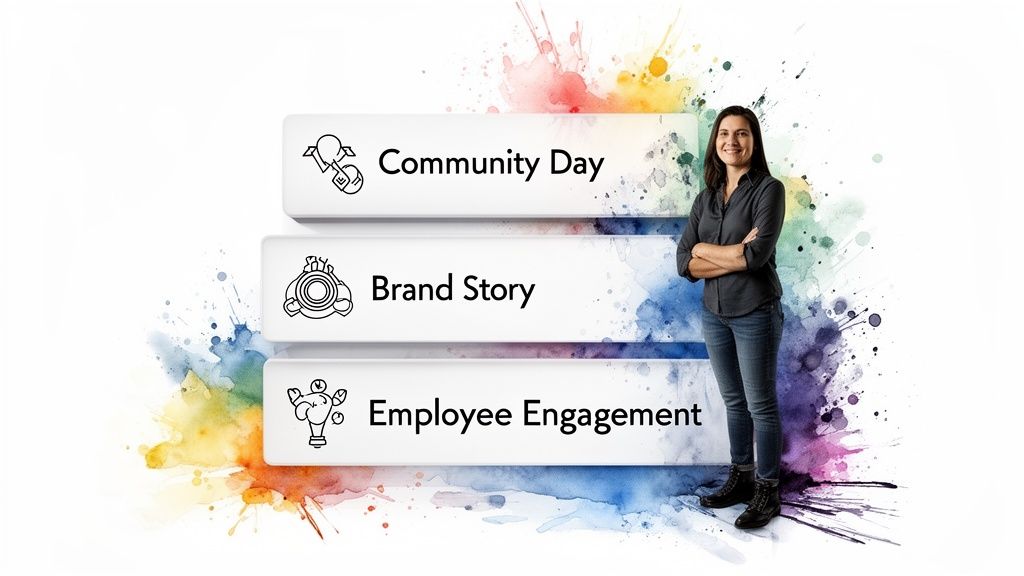
    Smiling woman next to infographic boxes for community, brand, and employee engagement strategies.

    Your sponsorship proposal is not a collection plate you're passing around. Think of it more like an invitation to an exclusive, unforgettable party—one where everyone leaves feeling profoundly inspired. This is your moment to show a company how they can step into the hero role of your story.

    You’re not just asking for money. You are offering a partnership that feels like a powerful, resonant investment in something you both deeply believe in.

    So, let's just toss those tired, generic "Bronze, Silver, Gold" tiers right into the garbage. They’re offensively boring. They make the whole exchange feel like you're just hawking ad space on a bus stop bench. We're going to build packages that offer tangible, thrilling benefits that connect directly to your mission and their strategic goals.

    Beyond Logos To Real, Tangible Benefits

    A logo on a banner is fine, I suppose. But it’s utterly forgettable.

    What a company truly craves is to create a memory. They want their employees to feel a surge of pride and their customers to see them as a genuine force for good. That's the electrifying value you bring to the table.

    When I first started creating packages for Litter Caterpillars, I fixated on experiences. Instead of just offering a logo, I offered them a story they could tell.

    • Brand Visibility with Heart: We don’t offer a generic ad. Instead, we offer them logo placement on our cleanup flags—the very ones our volunteers proudly carry through Chicago's neighborhoods every single weekend.
    • Employee Engagement That Matters: We create dedicated volunteer days where their team can get their hands dirty right alongside us. This isn't some stuffy, awkward corporate retreat; it's a genuine team-building crucible that boosts morale and forges real bonds.
    • Authentic Social Media Content: We capture their team in action—sweating, laughing, winning—and share those powerful, unscripted moments on our Instagram, telling the story of their impact to our deeply engaged community.

    You're giving them something their own marketing department can't manufacture on its own: authenticity. This approach transforms a simple sponsorship into a vibrant, living partnership. To see what this looks like in the wild, check out these powerful corporate social responsibility examples.

    The Psychology Of A Great Ask

    Now, let's talk about the competition. Globally, corporate philanthropic funding swelled to about $71 billion in 2022, yet less than a paltry 5% of that found its way to climate and nature initiatives.

    This means you must be a signal in the noise. You do that by framing your work as a transformative service that builds community resilience and deep, lasting friendships.

    In the U.S., a staggering 65% of Fortune 500 companies offer matching gift programs and 40% provide grants for volunteering. This is enormous. It makes it incredibly smart to pitch sponsorships that directly involve their employees joining your events.

    Your sponsorship packages must tell a crystal-clear story of value. Think of it like a menu at a Michelin-star restaurant. Each dish—or tier—should sound absolutely delicious and promise a unique, unforgettable experience.

    You're not just selling a meal; you're selling the feeling of a perfect night out. Frame your sponsorship ROI not in clicks or impressions, but in brand love, employee pride, and genuine community connection—which is priceless.

    A great way to structure this is with a simple, elegant table that clearly lays out the value at each level. It helps potential sponsors immediately grasp what they get and how they can jump in.

    Sample Sponsorship Tiers

    Here's a template you can adapt. Notice the relentless focus on engagement and storytelling, not just logos.

    Tier Level Contribution Brand Recognition Benefits Employee Engagement Opportunity
    Neighborhood Guardian $2,500 Logo on cleanup flags for one month; social media shoutout with team photos. One sponsored volunteer day for up to 20 employees.
    Community Champion $5,000 Logo on all event materials for a quarter; featured story on our blog. Two sponsored volunteer days; priority scheduling.
    City-Wide Hero $10,000 Premier logo placement on our website for a year; co-branded social media campaign. Four sponsored volunteer days; custom team-building activities.

    Giving your tiers evocative names that reflect your mission—like "Neighborhood Guardian" or "Community Champion"—transforms the entire conversation from a cold transaction into a thrilling collaboration.

    Remember, you’re inviting them to join an adventure. Your sponsorship package is the treasure map that shows them exactly how they can become part of something truly special. It’s an invitation to share in the grit, the joy, and the victory of making your community better, one piece of trash at a time.

    Mastering the Outreach and First Connection

    Okay, you’ve got your story, your dream list of companies, and your killer sponsorship packages. Now for the part that requires a deep, centering breath and a little bit of raw courage.

    I get it. Hitting "send" on that first email feels like stepping off a cliff. I’ve been there, stomach in knots.

    But I need you to completely reframe this moment. You aren't bothering anyone. You're not a salesperson or some charity case begging for a handout. You are offering a golden ticket—an invitation for a company to become a main character in a real, unfolding story of impact. This is your moment to be brave.

    Finding the Right Person to Email

    Before you even dream of writing a single word, you have to find the right inbox. Sending your beautiful, heartfelt proposal to a generic [email protected] address is like throwing a message in a bottle into Lake Michigan. Good luck with that.

    And forget the CEO. They’re swimming in a sea of emails. You need to find the person whose actual job it is to care about what you're doing.

    Like I said before, LinkedIn is your secret weapon here. You're hunting for titles that include words like:

    • Community Relations
    • Social Impact
    • Corporate Citizenship
    • Foundation Manager

    These people are the gatekeepers, but more importantly, they are the champions. Their entire professional life revolves around finding inspiring stories just like yours and connecting their company to them. When you email them, you're not interrupting their day; you're actually helping them do their job.

    Crafting an Email That Actually Gets Read

    The perfect first email is short, deeply personal, and hits them right in the heart. It needs to sound like a human being wrote it, not some soulless copy-and-paste bot. Remember, the goal isn't to close the deal in one email; it's just to start a conversation.

    I use a simple, three-part structure for every single outreach email I send.

    1. The Personal Hook: Start with a genuine, specific compliment about their company. Did you see a recent article about their volunteer work? Do you actually use and love one of their products? Show them you’ve done your homework and aren't just spamming a random list.
    2. The Story: In just two or three powerful sentences, share the beating heart of your mission. Don't you dare talk about sponsorship levels or benefits yet. Talk about that hailstorm, or whatever your defining moment is. Make them feel something.
    3. The Easy Ask: End with one simple, low-pressure question. "Would you be open to a quick 15-minute chat next week to hear more about how we're bringing communities together in Chicago?" That's it.

    This isn't about memorizing a script. It's about being devastatingly genuine. Your passion is your superpower. Let it blaze through in your words.

    This approach respects their time and piques their curiosity. You're not overwhelming them with attachments or a daunting wall of text. You're just gently opening a door.

    Nailing the First Meeting

    When you get that "yes" for a meeting—celebrate! Then, it's showtime. But "showtime" doesn't mean you put on some slick performance. It just means showing up as your real, passionate, slightly messy self.

    Forget a memorized 20-page slide deck. I never use one. Instead, I bring our story to life. I show them photos from our cleanups—real people, smiling, covered in a little bit of honest dirt. I tell them about the improbable friendships that have formed during our weekend events.

    The most crucial part of this first meeting is to listen more than you talk. I am dead serious. Kick off the conversation by asking them questions:

    • "What are some of your company's big community goals for this year?"
    • "From your perspective, what does a really successful, knock-your-socks-off partnership look like?"
    • "What kind of stories or projects get your team the most fired up?"

    Their answers are your roadmap. They will literally tell you how to frame your proposal as the perfect, tailor-made solution to their needs.

    You’re not just trying to get a check; you're trying to build a real relationship. And the best way to do that is by showing you care about their world as much as you want them to care about yours. This is how you find the kind of corporate sponsors who stick around for the long haul.

    Turning a Yes into a Lasting Partnership

    Man and woman smiling, exchanging a wooden coin, with a smartphone and watercolor effects.

    That handshake, that signed agreement, that first check—it feels like the finish line, doesn't it? I remember that euphoric feeling. But I learned very quickly that getting a "yes" isn't the end of the race. It's the starting gun.

    The real magic, the part that separates a one-time donation from a true, lasting, soul-deep partnership, happens after the deal is signed. This next phase is all about stewardship. It's about making your sponsors feel like the heroes they are, every single step of the way.

    Beyond the Logo A New Kind of Recognition

    Anyone can slap a logo on a website. It's easy, it's expected, and if I'm being honest, it's a little bit boring. Your partners deserve more. They deserve recognition that feels as real and heartfelt as the work you do together.

    Think of it like giving a gift. You could give someone a generic gift card, or you could give them something thoughtful and specific that shows you truly see them. Stewardship is the thoughtful gift.

    For Litter Caterpillars, we brainstormed ways to make our partners feel like they were truly part of the crew.

    • Custom Badges: We designed a special "Litter Caterpillars Hero" digital badge for their entire team, something they could proudly share internally to celebrate their collective impact. It’s a small gesture, but it builds immense pride.
    • Instagram Story Takeovers: We’ll feature a heartfelt, emotional story on our Instagram, not just about the company, but about their people who showed up for a volunteer day. We share pictures of them smiling, working hard, and making a visible difference.
    • Personalized Impact Videos: I'll sometimes record a quick, raw video on my phone right from a cleanup site and send it directly to our contact. "Hey, just wanted to show you the huge, undeniable impact your support is having in Englewood today. The team is absolutely buzzing."

    These things don't cost a lot of money, but they are incredibly rich in meaning. They show that you see your sponsors as human beings, not just as a line item in your budget.

    Keeping Them in the Loop with Impact Stories

    Nobody likes feeling like an ATM. A sponsor gives you money, and then they hear nothing but radio silence for a year until it's time to ask again. That’s a terrible feeling, and it’s a surefire way to lose a fantastic partner.

    Communication is the very lifeblood of your partnership. It doesn't have to be some complicated, 20-page impact report filled with mind-numbing charts and graphs. In fact, it's better if it isn't.

    Your updates should be simple, wildly inspiring, and direct. They should tell a story, not just list data. You're not just reporting on metrics; you're sharing the adventure.

    I send our partners short, regular updates that get straight to the heart of the matter. Something like, "Quick update! Your support this month helped us clear 50 bags of trash and two abandoned mattresses from the streets around Caterpillar Park. Here’s a photo of the team celebrating."

    It’s simple. It’s visual. It connects their investment directly to a tangible, feel-good result. This consistent storytelling keeps them emotionally invested in your mission, making the renewal conversation at the end of the year feel like a natural, obvious next step.

    Building a Partnership That Renews Itself

    When you treat your sponsors like true, indispensable partners, you’re not just securing funding for one year. You’re laying the foundation for years to come. The goal is to make their decision to renew a complete and utter no-brainer.

    And this matters now more than ever. A game-changing fact is that 94% of major U.S. corporations plan to maintain or even increase their charitable giving. With 76% of U.S. employees preferring to work for companies that positively impact the world, corporate partnerships are a top strategy for sustained revenue. This reveals a growing, fertile pipeline for those who know how to find corporate sponsors and nurture those precious relationships.

    By the end of the year, your sponsor shouldn't just have a folder of your impact reports. They should have a collection of vivid memories.

    They should remember the feeling of their team laughing together on a cold volunteer day. They should remember the surge of pride they felt seeing their company’s name on your cleanup flags, marching through a neighborhood they helped heal. They should remember the personal, unscripted thank-you video you sent them. Our guide to volunteer management best practices can help you craft those unforgettable experiences.

    When you deliver this kind of profound value, you transform the relationship. You're no longer just an organization they support. You become a part of their story, a key player in how they demonstrate their commitment to the community. You become an indispensable part of their mission, just as they have become a part of yours.

    This is how you turn a one-time sponsor into a lifelong champion.

    Common Questions on Finding Sponsors

    When you're just starting out, the questions can feel like a tangled, chaotic mess. It’s like staring at a giant, knotted ball of yarn and having no idea where to even start pulling. I get it. Here are some of the most common questions people throw at me about getting sponsors, with straight-up, honest answers forged in the fires of building Litter Caterpillars from absolutely nothing.

    How Much Should I Ask For From a First-Time Sponsor?

    Start smaller than you think. I'm serious. Your goal with that first ask isn't to hit a grand slam out of the park; it's just to get on base. You want a confident, easy "yes," not a drawn-out, hesitant "maybe" that eventually withers into a no.

    For a first-time local partner, a range of $500 to $2,500 is a perfect, unintimidating starting point. Think of it as a low-risk trial run for them. It’s an amount they can often approve without needing ten layers of management to sign off on it.

    Once you deliver an absolutely amazing experience, show them their tangible impact, and build that real human connection, you can confidently and boldly ask for more next year. The first ask is all about getting them onto your team.

    Don't let your ambition get in the way of building a solid foundation. That first sponsorship is a seed. Your job is just to get it planted; then you can worry about helping it grow into a mighty oak.

    What if a Company Does Not Respond or Says No?

    Rejection is not a judgment on your mission. It is just data. I cannot possibly tell you how many times I've poured my entire soul into a pitch only to be met with deafening silence or a polite, sterile "not at this time." It stings for a second, but then you have to shake it off and remember why you started this whole crazy thing in the first place.

    A "no" could mean a million different things that have absolutely nothing to do with you. Awful timing. Sudden budget freezes. A recent, chaotic change in who's in charge. It’s rarely, if ever, personal.

    My process is brutally simple:

    1. Thank them for their time. Always, always be gracious.
    2. Ask if it's okay to keep them in the loop on your progress. This leaves the door cracked open for the future.
    3. Move on. Your energy is your most precious and finite asset. Spend it on the prospects who are genuinely, electrically excited about what you're building.

    Remember our Litter Caterpillars value of bravery. Getting a "no" just means you're in the arena, swinging the bat. That, in itself, is something to be incredibly proud of.

    Do I Need to Be a Formal 501c3 Nonprofit?

    This is a big one, and it paralyzes so many people with fear. While being a registered 501(c)(3) is definitely helpful because it makes their contribution tax-deductible, it is absolutely not a deal-breaker.

    Many companies have separate, distinct budgets for marketing or community outreach that don't require that 501(c)(3) status. This is especially true if you can offer them incredible brand visibility and a meaningful way for their employees to get involved. You're not just a charity case; you're a marketing opportunity with a soul.

    You can also explore working with a fiscal sponsor—an established nonprofit that can receive the funds on your behalf for a small administrative fee. Don't let paperwork paralyze you before you even start. Focus on building a powerful story and strong, authentic relationships first. The formal structure can and will follow the momentum you create.


    At Litter Caterpillars, we believe in the raw power of showing up and taking that first brave step. If our story of transforming ourselves and our city inspires you, come join us for a weekend cleanup. Learn more and find your next event at https://www.littercaterpillars.com.
  • A Real Guide to How We Recycle in Chicago

    A Real Guide to How We Recycle in Chicago

    Let's be real for a second. Figuring out how to recycle in Chicago can feel like you're trying to solve a puzzle with half the pieces missing. You think you’re doing the right thing, but the rules seem to change with every block. I’m here to cut through that noise and give you a simple, straightforward guide to finally mastering that blue cart.

    Mastering the Blue Cart: Chicago Recycling Basics

    I get it. You’re standing in your kitchen, holding an empty yogurt container, and you just… pause. Blue cart or trash? It’s a tiny moment, but it’s a moment we all face.

    Imagine it this way: every bottle you rinse, every box you flatten, is a small victory for our neighborhoods. It feels insignificant, but those little actions create a ripple. The good news is, you really only need to focus on five main things: paper, plastics, glass, metal, and cartons. That’s it.

    Keeping It Clean and Simple

    The biggest hurdle we face isn't just knowing what to recycle, but how. Contamination is the single greatest villain in this story. It’s like trying to bake a cake and accidentally spilling salt in the sugar bowl; one mistake ruins the whole batch. One greasy pizza box can contaminate an entire bin of otherwise perfect recyclables, sending it all straight to a landfill.

    So, how do you make sure your stuff actually gets a second life? It boils down to a simple rhythm.

    Infographic illustrating the Chicago recycling process: rinse, dry, and toss in a blue bin, emphasizing clean, dry, recyclable items.

    This simple flow—Rinse, Dry, Toss—is the absolute key. A quick rinse to get food residue off and a shake to dry is usually all it takes to make your efforts count.

    Here’s a quick-and-dirty guide to help you sort like a pro.

    Your Quick Chicago Recycling Cheat Sheet

    This table breaks down what goes in your blue cart and what definitely needs to stay out to avoid contaminating the whole load.

    Recyclable Category Yes Please (Clean & Dry) No Thank You (Keep These Out)
    Plastics Bottles, jugs, tubs & jars (#1, #2, #5) Plastic bags, film, bubble wrap, Styrofoam
    Glass Bottles & jars (all colors) Drinking glasses, mirrors, light bulbs
    Paper Newspapers, junk mail, magazines, cardboard Greasy pizza boxes, used paper towels, receipts
    Metal Aluminum cans, tin cans, empty aerosol cans Pots & pans, electronics, batteries, hangers
    Cartons Milk, juice, and soup cartons "Tetra Pak" pouches, waxy paper cups

    Keep this list handy, and you'll be well on your way to becoming a recycling expert.

    The Reality of Our Recycling Efforts

    Making this small effort is more important than you might think. Chicago's recycling rates have been stubbornly low for years, clocking in at a mere 9.4% waste diversion rate recently. It’s a sad story compared to cities like San Francisco, which pushes toward 50% or more.

    A huge culprit is contamination, with some studies finding that up to 30% of items in our blue bins are just plain wrong. You can explore the full data behind Chicago's recycling challenges to get a deeper sense of why our city struggles.

    This isn't just about sorting trash; it's about reclaiming our neighborhoods, one clean container at a time. It’s a mindful act that ripples outward, creating a cleaner, more vibrant city for all of us.

    When you nail the basics of the blue cart, you’re not just following rules. You're taking an active role in a larger story and building a habit of mindfulness that extends beyond your doorstep. And if you're looking to take it a step further, you might be interested in my guide on how you can reduce plastic use in your daily life.

    Why Our Recycling Past Still Matters

    Ever wonder why recycling in Chicago feels so… complicated? It’s not just you. There’s a history here, a ghost story that explains a lot of the confusion and, frankly, the skepticism that many of us feel. It all traces back to the city’s infamous 'Blue Bag' program that kicked off in 1995 and left a pretty deep scar on our collective trust.

    Picture this: You spend years carefully sorting your recyclables, stuffing them into those special blue bags, and putting them out with the trash, just like the city told you to. You think you’re doing your part. We all did.

    A Tale of Two Realities

    The whole idea behind the Blue Bag program was simple. Toss everything in together, and they'd sort it out later. City officials even threw out some huge numbers, claiming the program diverted 2 million tons of material from landfills by 2006. Sounds amazing, right?

    Except it was a fairy tale. An independent study blew the lid off the whole thing, revealing the actual recycling rate was a pathetic 13.3%. That’s less than a third of what they were telling us. Most of those blue bags we all so diligently filled? They were just getting dumped in a landfill right alongside the regular trash. You can read the full, frustrating story behind the Blue Bag program's numbers to see just how bad it was.

    This wasn't just a policy failure; it was a betrayal. It’s like tending a garden for months only to find out the seeds were duds. That kind of thing sticks with you. It created a lingering doubt about recycling in Chicago that we’re still fighting today.

    This history isn't about pointing fingers. It's about understanding why our own hands-on efforts are so ridiculously important. When the big systems fail us, the best way to make a real change is to just grab a bag and clean up our own block.

    Rebuilding Trust from the Ground Up

    This history is exactly why I started Litter Caterpillars. I saw firsthand how big, top-down systems could fail the very people they were supposed to serve. But I also saw the undeniable power of just doing the work yourself.

    When you get together with a few neighbors to clean up a park or a stretch of sidewalk, you completely bypass the bureaucracy. The change you make is immediate. It’s visible. No one can spin the story or fudge the numbers.

    You see the bags of trash you collected with your own eyes. You feel that sense of pride from looking at a clean street. This is how we start to fix that broken trust—not by waiting for a perfect system, but by building our own momentum, one cleanup at a time. We’re proving to ourselves, and to our city, that what we do matters. We're writing a new story.

    Beyond the Blue Cart: Where to Recycle Everything Else

    Okay, so you've mastered the blue cart. Your cardboard is flat, your plastics are rinsed, you're a curbside recycling champion. But then you look around your home… and see the other stuff.

    That old laptop gathering dust in the closet. The bag of dead batteries shoved in a junk drawer. That half-can of paint from a project you finished three years ago. These are the ghosts of projects past, and they can't just be tossed in with your bottles and cans. These tricky items need their own game plan.

    Think of it as finding the right home for everything, even at the end of its life. We’re just trying to make sure we don't move a problem from our garage into the environment.

    Tackling E-Waste and Hazardous Materials

    Your old electronics—phones, computers, TVs—are a double-edged sword. They're packed with valuable stuff like gold and copper, but they also contain toxic materials like lead and mercury. Trashing them is a huge waste and a real environmental hazard.

    Even huge companies are getting in on this. Microsoft, for instance, has a Circular Center right here in Chicago to reuse and recycle server parts from their massive data centers. We can apply that same thinking to our own gadgets.

    • Electronics: Many big-box electronics stores have take-back programs. The city also hosts collection events for this "e-waste" every so often. Don't let that old tech haunt your drawers!
    • Household Chemicals: Things like paint, harsh cleaning products, and automotive fluids are considered Household Hazardous Waste (HHW). They require special handling and absolutely must be taken to a designated facility.

    It all comes down to taking responsibility for the full life of our stuff. Just because something is out of sight doesn't mean it magically disappears. Finding the right drop-off spot is the final, crucial step in this whole journey.

    Beyond the Usual Suspects

    What about all those other awkward items? Plastic bags are a big one. They are notorious for tangling up the machinery at recycling plants like a python strangling its prey, and should never go in your blue cart. Seriously.

    The good news is, most grocery stores have collection bins for plastic bags and film wrap right by the entrance. Just make it a habit to bring them with you on your next shopping trip. For a complete list of where to take these harder-to-recycle items, check out my detailed guide on Chicago recycling centers and drop-off points.

    Even your food scraps have a better destiny than the landfill. Composting is an amazing way to turn kitchen waste into "black gold" for gardens. The city now has 33 free food scrap drop-off sites, making it way easier to keep organic waste out of landfills where it just sits and produces harmful methane gas. It’s a beautiful way to complete the circle—turning yesterday’s leftovers into tomorrow’s soil.

    From Bystander to Changemaker: How to Join the Movement

    Sorting your recycling is a great first step. Seriously. But what happens when you want to do more? When you want to feel that connection to the city in a bigger, more tangible way?

    That's where the real fun begins. It's the difference between tidying your own room and helping repaint a community center. One is just maintenance; the other is about creating something new. That's exactly the feeling that led me to start Litter Caterpillars. I was drowning in my own personal mess, and funny enough, the easiest way for me to start cleaning it up was to go clean up someone else's.

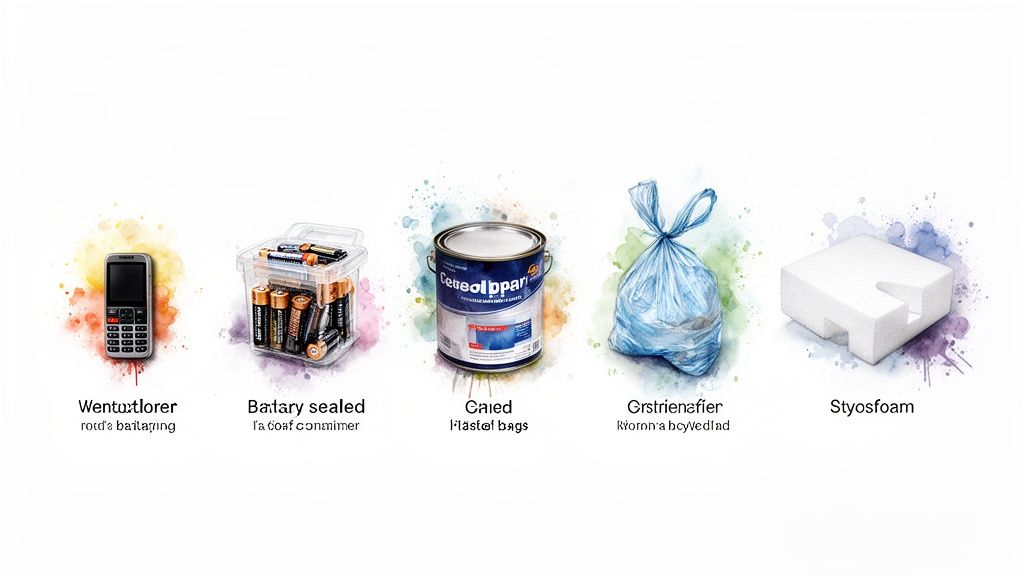
    Various items depicted for recycling and waste disposal: a mobile phone, batteries, a paint can, a trash bag, and styrofoam.

    It turned out to be a lot more interesting, especially when things got a little rough. I’ll never forget the time three of us got caught in a freak hailstorm. As we huddled under a tree, totally soaked and shivering, something clicked. Shared struggle is an incredible glue.

    Finding Your Crew

    That day taught me that real change is built on three things: service, friendship, and a little shared suffering to build resilience. You don't have to start your own group to find that. Dozens of awesome organizations are already out there making a difference every single day.

    Here are a few ways for you to jump in:

    • Join a Community Cleanup: Groups like Litter Caterpillars meet every single week, rain or shine, to clean up neighborhoods across all 50 wards. You just show up, grab a bag, and start making friends.
    • Adopt a Park: The Chicago Park District has programs where you can help take care of your local green space, from planting gardens to yanking out invasive species.
    • Transform Vacant Lots: Some organizations focus on turning neglected empty lots into community gardens or beautiful little parks. They’re creating green oases where there was once just concrete and weeds.

    It’s not just about picking up trash. It’s about taking ownership of your corner of the world.

    It’s About More Than Just Cleanup

    When you join a movement to recycle in Chicago and make its streets cleaner, you’re doing something much bigger than just picking up litter. You are weaving yourself into the very fabric of the city. You are building relationships with people you might never have met otherwise, all united by a common goal.

    It’s the incredible feeling of seeing a street transform because you and a team of new friends showed up. You’re not just removing litter; you’re injecting hope and care back into the community.

    You start to see the city differently. An overflowing bin isn’t just an eyesore anymore; it’s a call to action. An empty lot isn’t a blight; it’s potential. You become an active character in Chicago’s story, not just a bystander watching it happen.

    And the best part? It changes you, too. You become more resilient, more connected, and more hopeful. You prove to yourself, one bag of trash at a time, that you have the power to create the city you want to live in. And that feeling is something you can’t put in a blue cart.

    Meet the People Who Paved the Way

    Change doesn't just happen overnight. Long before blue carts lined our alleys, a bunch of passionate Chicagoans were fighting tooth and nail for a cleaner city. When you and I choose to recycle, we’re walking a path they blazed for us through pure stubbornness and will. That's a powerful legacy.

    It’s easy for me to feel like my own small actions don't add up to much, but their story is proof that they do. Groups like the Chicago Recycling Coalition were laying the groundwork for decades, brick by brick.

    Illustrated volunteers in orange and blue shirts and gloves participate in a joyful community cleanup, collecting litter.

    The Fight for a Better System

    This wasn't just a few meetings here and there; this was a real fight. Kicking off in 1985 as the Coalition for Appropriate Waste Disposal, they actually rallied neighborhoods to shut down the city's last municipal waste incinerator. Think about that. These weren't politicians; they were people like you and me.

    Later, they were the ones who held the city’s feet to the fire over the failed Blue Bag program. They used studies and relentless pressure to get it phased out and pushed for the system we have today. You can actually read the full history of their activist roots and see how much they shaped our city.

    Their story is an incredible lesson in persistence. They refused to accept a broken system and organized until something finally changed.

    This reminds me that our collective voice matters. When we join together, we become part of a legacy of people who refuse to accept the status quo. We are the next chapter in that story.

    We Are the Next Chapter

    When I started Litter Caterpillars, I didn't think of myself as an activist. Honestly, I just wanted to clean up my own life by cleaning up the city around me. But every time we gather for a cleanup, we’re doing more than just picking up trash—we’re honoring that same spirit.

    We are literally continuing their work. We’re the next wave of people who believe in a cleaner Chicago and are willing to show up and do something about it.

    Whether you’re meticulously sorting recyclables in your kitchen or joining us on a Saturday morning with a trash grabber in hand, you're part of this. The people who came before us gave us a foundation to build on. They proved a small group of determined citizens can change the direction of a major city. Now it's our turn to take that legacy and run with it.

    Common Questions About Chicago Recycling

    Look, if you have questions, that's a fantastic sign. It means you’re actually thinking about this and want to get it right. Let's tackle some of the most common things people ask me about trying to recycle in Chicago.

    What Is the Biggest Recycling Mistake People Make

    Hands down, the single biggest mistake I see is "wish-cycling." It’s that moment you stand over the blue cart with something in your hand, not totally sure if it's recyclable, and you toss it in anyway hoping for the best. We've all been there. I have. But that good intention can seriously mess things up.

    Things like plastic bags, greasy food containers, and old electronics are huge contaminants. Plastic bags are the absolute worst—they get tangled in the giant sorting machines, forcing the entire facility to shut down for hours just to cut them out. Even one greasy pizza box can ruin an entire bale of otherwise clean paper.

    It feels totally wrong, I know, but when in doubt, it’s actually better for you to throw the item in the trash. Focusing on recycling the "big five" categories correctly makes a way bigger positive impact than trying to recycle everything and contaminating the whole stream.

    And if you're wrestling with something that feels like it might be hazardous, you should probably check out my guide on how to handle hazardous waste disposal in Chicago.

    My Blue Cart Was Missed What Should I Do

    It’s so frustrating to see your cart is still full long after the truck should have come. The very first thing you should do is walk out there and look for a bright orange "Contamination" sticker. If you see one, it means they spotted something non-recyclable. You'll have to pull it out before your next scheduled pickup.

    No sticker? Then it was probably just a missed pickup. Don't just let it sit there! The best thing you can do is report it right away.

    • Call 311 and tell them about the missed pickup.
    • Use the 311 CHI app on your phone to submit a service request.

    Have your address ready when you report it. Being proactive is the only way to get them to send a truck back out. Your persistence helps keep our alleys clean and holds the system accountable.

    How Can I Recycle in an Apartment Building

    This is a massive challenge for so many of us. The good news is that large apartment buildings are actually required by city ordinance to provide recycling through a private company. The not-so-good news? Many of them just… don't.

    If your building is one of them, your first move should be to talk directly with your landlord or property management. A polite conversation mentioning the city ordinance can sometimes be the nudge they need to get the ball rolling.

    If they blow you off, you can report the building to 311 for non-compliance. In the meantime, you aren't totally stuck. You can find public recycling drop-off centers to take your materials to. It’s definitely an extra effort, but that kind of commitment is what actually inspires change in our communities.


    At Litter Caterpillars, we believe every small act adds up to a city we can all be proud of. Join one of our weekly cleanups to meet some amazing people and make a real, visible difference. Find your next event at https://www.littercaterpillars.com.

  • Litter Clean Up: Plan a Community-Driven Effort That Sparks Change

    Litter Clean Up: Plan a Community-Driven Effort That Sparks Change

    Picking up litter is about so much more than just, well, picking up litter. It’s a way to take back your neighborhood and find a little bit of clarity for yourself. It’s how you turn a trashed-out street corner into something you're proud of, proving that small, steady actions can make a huge, visible difference. I wrote this guide as your playbook for turning that simple idea into a movement.

    Find Your Why and a Place to Start

    I know the feeling. Life gets messy, and the very idea of cleaning up your own space feels like trying to climb a mountain. I've been there. The dishes are piled high, the laundry basket is a monster, and every single piece of clutter seems attached to some memory or emotion that makes it impossible to touch.

    But I stumbled on a secret, a kind of life hack for the soul: cleaning up someone else's mess is a thousand times easier. There’s a strange freedom in it.

    Two women in coats clean litter around a tree, one bagging trash, the other using a grabber.

    From Personal Chaos to Community Action

    My whole journey with Litter Caterpillars kicked off when my own life felt like a total train wreck. The mess in my apartment was a perfect reflection of the chaos in my head. A physical manifestation of my internal static. So, instead of trying to tackle my own disaster, I decided to go after the mess in my neighborhood. It just felt more manageable, something with a clear beginning and end.

    That one decision led me to organize a tiny cleanup with just two friends. Of course, this is Chicago, so a freak hailstorm decided to crash our party. We ended up huddled under a tree, absolutely freezing, watching Ubers cancel on us one by one. And right there, in that moment of shared, ridiculous misery picking up soggy chip bags, we found something real.

    We found clarity.

    That's the unexpected magic of a litter cleanup. You go out thinking you’re going to fix a little piece of the world, and you end up fixing a little piece of yourself. It cuts through the noise. It gives you a real, tangible win in a world that often feels way too complicated.

    You're Not the Only One Who Feels This Way

    This urge to do something, to make a real impact, is a global thing. It’s universal. Look at World Cleanup Day—it shattered records by getting 25 million volunteers on the streets worldwide, with the story reaching a staggering 2.4 billion people through media. That’s a massive wave of regular people deciding to roll up their sleeves and create change, block by block.

    It's the same fire that gets our group out there every single week, hitting all 50 wards of Chicago, even the spots people tell you to avoid. You can read more about this incredible global effort and see how your own cleanup connects to a much bigger story.

    That small act of leaning into a little chaos on a stormy day was the first step in turning my own life around. It taught me that sometimes, the best way to move your own story forward is to step outside of it for a minute and serve something bigger than yourself. A litter cleanup can be that perfect first chapter for you, too.

    Assemble Your Crew and Scout a Location

    First things first: you can’t do this alone. And honestly, you wouldn't want to. The real magic of a cleanup isn’t just the trash you bag; it’s the stories you swap and the friendships you build doing something that actually matters.

    Trying to tackle a big mess by yourself is like trying to move a piano solo. You might budge it an inch, but you'll just end up wiped out and frustrated. Bring a few friends, and suddenly it’s not just doable—it’s an adventure.

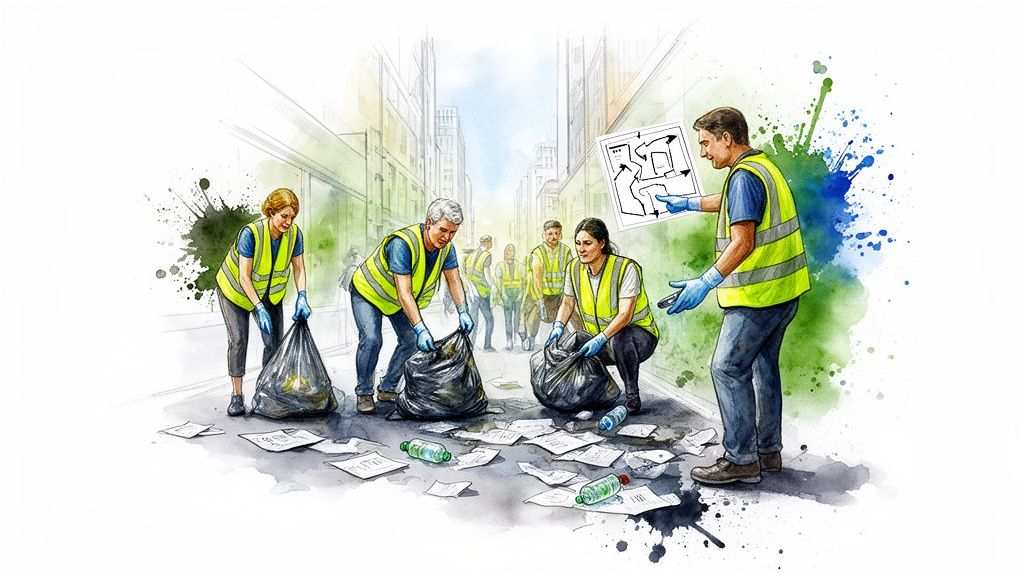
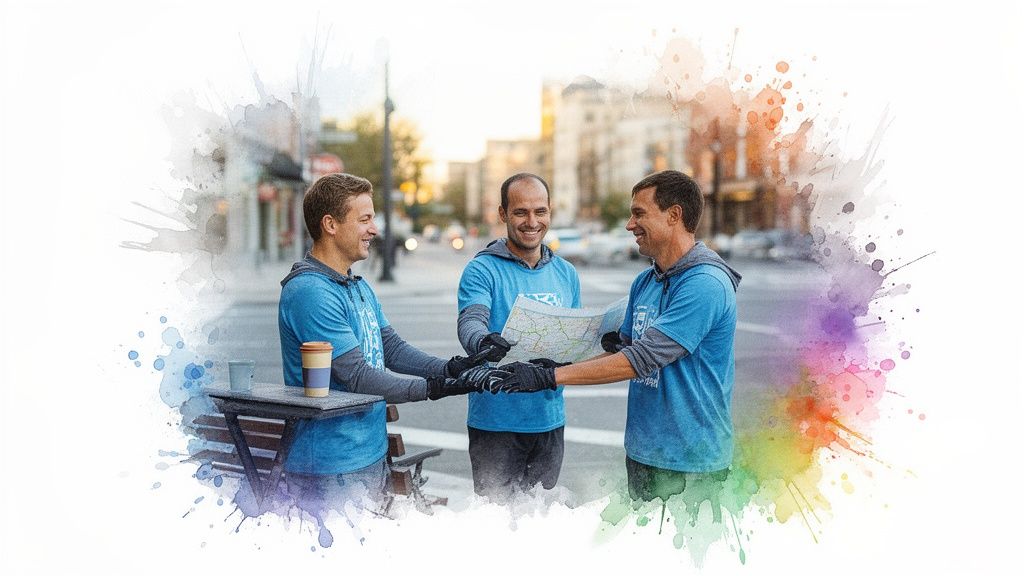
    Three smiling men in blue shirts and gloves discuss a map outdoors during a community event.

    Finding Your First Volunteers

    Let's get one thing straight: recruiting doesn't have to be some awkward, salesy pitch. You don’t need to be a charismatic leader or a social media guru. You just have to be real and make the ask simple. Your goal is to find the 'givers'—the kind of people who are just naturally wired to show up.

    I’ve found the best filter for finding these people is scheduling cleanups on weekend mornings. It’s a natural barrier. The ones who drag themselves out of bed at 9 AM on a Saturday are the ones you can build a movement with. They're your people.

    Here are a few low-pressure ways to get your first crew together:

    • The Personal Text: Shoot a message to a couple of friends you know care about the neighborhood. "Hey, I'm doing a quick litter blitz on Saturday morning at [Park Name]. Want to join? No pressure, but it'd be cool to do it together."
    • The Social Media Post: Snap a picture of a spot that's been bugging you and throw it on your Instagram story. Keep it simple: "This corner needs some love. I’m going to clean it up this weekend. DM me if you want to help!"
    • The Group Chat Invite: Drop a line in a group chat—coworkers, neighbors, whatever. You’ll be surprised who raises their hand when given the chance.

    If you want to go deeper on building your team, check out our guide on how to find volunteers who are genuinely committed. It’s full of strategies that have worked for us time and time again.

    How to Scout the Perfect Location

    Once you have a few people saying "I'm in," it's time to choose your battlefield. This is one of my favorite parts. It’s where you start seeing your city with new eyes—not just looking for dirty streets, but for opportunities to make a huge, visible dent.

    A great location is like a good story; it needs a clear beginning, middle, and a satisfying end. I don’t just pick a random block. I look for what I call high-impact zones. These are places that are super visible but constantly ignored. Think about spots like:

    • The grassy medians along a busy road.
    • The forgotten corners of a neighborhood park.
    • The alleys behind local shops.

    These spots are perfect because the transformation you create is immediately obvious to hundreds, if not thousands, of people every single day. It sends a powerful message that someone cares.

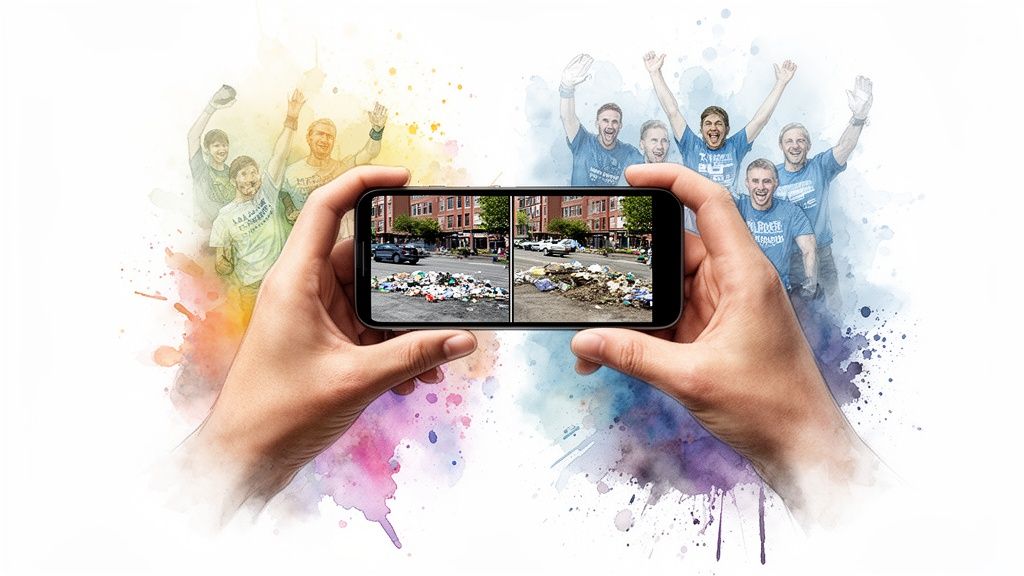
    The best cleanups aren't about covering the most ground. They're about creating the most dramatic "before and after" picture in a place that people see every day. That’s how you inspire others to join in.

    When you're out scouting, look for a route that's both safe and satisfying. A good route is usually just a few city blocks long, letting your team focus their energy and see a tangible result in an hour or two. Steer clear of areas with dangerously high-speed traffic or no sidewalk. Your crew's safety is everything.

    Remember, up to 40% of roadside litter comes from unsecured loads falling off trucks. This means hitting major roads can deliver that massive visual payoff you're after. Choosing your spot is where your vision starts to take shape. You're not just picking up trash; you're curating an experience that leaves everyone feeling proud and accomplished.

    Gather Your Gear for a Safe and Effective Cleanup

    Think of it this way: you wouldn't head out for a hike in the woods without water, good shoes, and a map, right? Showing up to a cleanup unprepared is the same deal. It's not just less effective; it can be risky. The energy and enthusiasm of your volunteers is everything, and your number one job is to keep them safe so they can focus on the mission.

    Having the right gear isn't about being fancy—it's about being smart. Good equipment is the armor that protects your crew from the unexpected. It’s the shield.

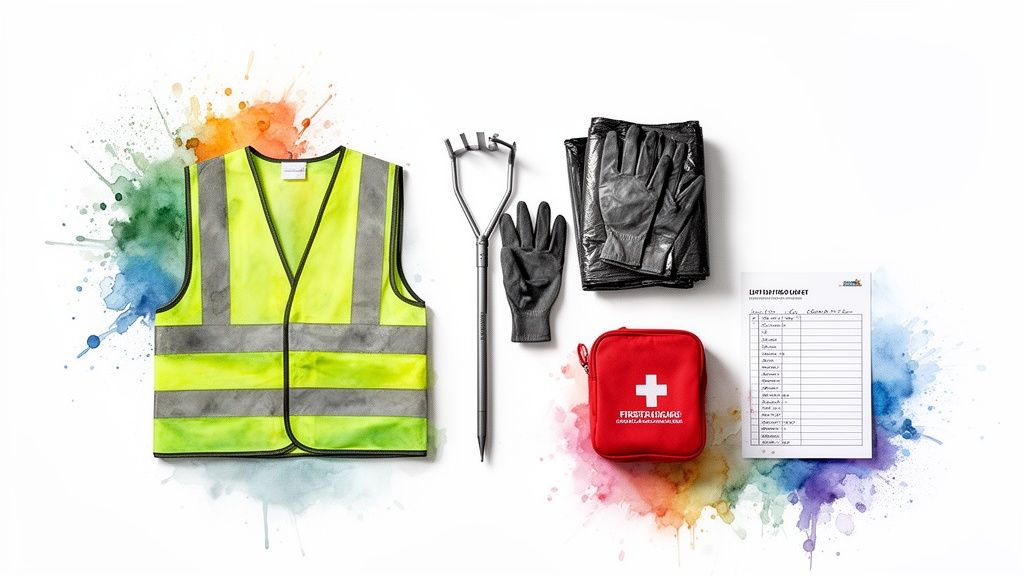
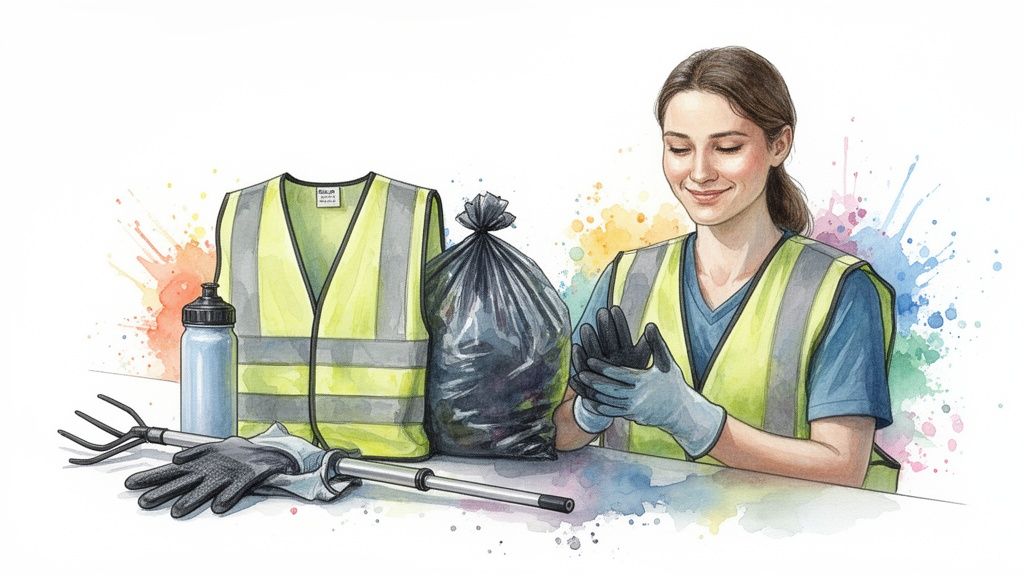
    A flat lay of safety and clean-up equipment, including a vest, picker, gloves, and first aid kit on a watercolor background.

    The Essentials Your Cleanup Crew Needs

    After three years of weekly cleanups in every kind of Chicago weather, I've learned what you absolutely can't skip. You don’t need a massive budget, but you can’t skimp on the basics. I keep a simple "go-kit" that's ready for every single event.

    Here are the non-negotiables for your kit:

    • Heavy-Duty Gloves: Forget those flimsy, disposable things. You need thick, puncture-resistant work gloves for every single person. This is your first line of defense against broken glass and sharp objects.
    • Durable Trash Bags: Spring for the contractor-grade bags. Yeah, they cost a bit more, but they won't bust open and spill a morning's hard work all over the sidewalk. Trust me, you don't want to learn that lesson the hard way.
    • Litter Grabbers: These are total game-changers. They save your back from bending over a hundred times and create a safe buffer between you and whatever you're picking up.
    • High-Visibility Vests: If you're cleaning anywhere near a street, these are a must. They make your team impossible to miss, which is crucial for staying safe around traffic.

    A great pro-tip: check with your local government. Many cities have programs to support volunteer groups. Your local sanitation or public works department might hook you up with bags, gloves, and even vests for free. All you have to do is ask!

    Your Essential Cleanup Gear Checklist

    Here's a quick reference guide to make sure you have all the must-have supplies before you head out.

    Category Essential Items Pro Tips
    Personal Safety Thick work gloves, high-visibility vests, closed-toe shoes Bring a few extra pairs of gloves. Someone always forgets!
    Cleanup Tools Litter grabbers/pickers, heavy-duty trash bags Bring a few buckets for collecting sharp items like glass or needles separately.
    Health & Comfort First-aid kit, hand sanitizer, water bottles, sunscreen Pack extra water, especially on hot days. Hydration is key.
    Waste Disposal Designated bags for recycling vs. trash, sharps container (optional) Know your local disposal plan in advance. Don't just leave bags by a can.

    Having this stuff ready to go makes everything run smoother and shows your volunteers that you've got their back.

    The Safety Briefing That People Actually Hear

    Before anyone picks up a single piece of trash, you have to run through the safety rules. I know, it sounds like a boring lecture. But it’s all in how you frame it. Don't just read a list of rules; tell a story and connect with your crew.

    I start every event with a quick, five-minute huddle. I make eye contact, keep the energy positive, and focus on the why behind the rules. It's not about being bossy; it's about making sure we can all come back and do this again next week.

    A safety briefing isn't a lecture; it's a pact. It's the moment you all agree to look out for each other. You’re building a team, not just handing out assignments.

    Here’s what I always cover in my briefing:

    1. "If You Don't Know, Don't Touch": This is my golden rule. Needles, sketchy-looking chemical containers, or anything that feels off gets left alone. We mark the spot and report it.
    2. The "Buddy System" on Busy Streets: No one cleans along a busy road by themselves. Period. One person works while a spotter keeps an eye on traffic.
    3. Hydration and Breaks: I always remind everyone that this isn't a race. Listen to your body, take breaks, and drink water. Burnout is the enemy of any long-term movement.

    Dealing with potentially dangerous items is a real part of this work. To get the full rundown, you can learn more about how to handle hazardous waste disposal from our city partners. This knowledge gives your team the confidence to make smart, safe decisions.

    Leading the Cleanup and Making It Fun

    Alright, the moment is here. Your volunteers are rolling in, the sun is out (or maybe it’s hailing, Chicago-style), and it’s time to kick this thing off. This is where all that prep work pays off and the real fun begins.

    You’re not just managing a crew; you’re leading an experience. It’s on you to set the tone from the very first minute. I call this the "Tom Sawyer" principle. Remember how he tricked his friends into believing that painting a fence wasn't a punishment, but a privilege they should pay him for? That's our cleanup. It’s an adventure, not a chore.

    Kicking Things Off with Energy

    As your first volunteers arrive, greet them with real excitement. A simple "I'm so glad you're here!" makes a huge difference. This isn't some corporate meeting; it's a gathering of people who decided to do something awesome together.

    Once everyone’s there, I pull them into a quick huddle. I keep the intro short, hit the safety basics we covered earlier, and then I crank up my portable speaker. A killer playlist is non-negotiable. It instantly changes the vibe from "work" to a block party.

    Another thing I always bring is our Litter Caterpillars flag. The second we finish a particularly nasty stretch, we plant it. It might sound goofy, but it's a powerful symbol of victory. It screams, "We were here, and we made this place better." These little rituals build a shared pride that keeps everyone going.

    This is more than just picking up litter; it's a collective transformation. You're creating a space where people feel connected, powerful, and proud of what they can do together. Never underestimate the power of that feeling.

    The whole point is to create an environment where people feel energized and comfortable enough to connect. You can find more ideas for building this kind of atmosphere in our guide on volunteer team-building activities.

    Managing the Trash Haul

    As the bags start piling up, you’ve got a new problem to solve: where does it all go? A successful cleanup doesn't end when the last wrapper is bagged. It ends when every single bag is properly disposed of. Dropping the ball here is a rookie mistake that can undo all your hard work.

    Here’s my system for handling the haul:

    1. Consolidate Everything: Don't leave a trail of half-full bags scattered everywhere. Pick a single collection point along your route—a spot that’s easy for a truck to get to but won’t block the sidewalk.
    2. Stack with a System: I stack the bags neatly, almost like building a monument to our hard work. It makes for an epic "after" photo and keeps the area tidy while you wait for the pickup. It shows you’re organized and respect the space you just cleaned.
    3. Coordinate the Pickup: This is the most important part. Never assume the city will just find and collect your bags. You need a plan before the event even starts.

    Most cities have a specific process for this. For my cleanups, I call Chicago’s 311 service ahead of time and schedule a bulk pickup for our designated spot. I just give them the address and a rough bag count. It’s a simple phone call that makes all the difference.

    You absolutely cannot skip this step. The scale of our waste problem is insane; global plastic pollution has already hit 130 million tonnes a year, and that's projected to more than double by 2040. When you organize a proper pickup, you make sure your effort is part of the solution, not just moving the problem a few feet down the street. You can learn more about the state of the ocean plastic crisis from 4ocean.com.

    As you finish up, bring everyone together for one last huddle. Thank them genuinely, celebrate the mountain of trash you collected, and, most importantly, snap that final group photo. It’s proof of that moment when a bunch of strangers became a team and left a corner of their city better than they found it.

    Telling Your Story to Build a Movement

    Think your cleanup is done when you tie off that last trash bag? Not even close. That's just the halfway point.

    The real magic happens afterward. The story you tell is the engine that turns one morning of hard work into a movement that actually grows. It’s how you bottle up that amazing energy from the day and share it with everyone else, making them feel what you felt and want to be a part of it.

    You did something real. Something tangible. You took a space someone forgot about and you filled it with care. Now, you’ve got to show people that transformation.

    Hands holding a phone showing street litter, flanked by cheering people in watercolor style.

    Capture the Transformation

    You don't need some fancy camera rig. Your phone is all you need. The trick is to think like you're making a mini-movie—you need a beginning, a middle, and a triumphant finale.

    Before anyone even picks up a grabber, get that "before" shot. I mean really get in there. Get low to the ground and capture the mess in all its chaotic glory. This isn't just a photo of trash; it’s the villain of your story.

    Then, as your crew gets going, snap photos of them in action. People laughing, working side-by-side, those candid moments of teamwork. These are your heroes.

    Finally, the grand finale: the "after" shot. Go back to the exact same spot where you took your "before" photo and frame it the same way. This creates an undeniable, side-by-side visual of the impact you just made. Trust me, it’s the most satisfying photo you’ll ever post online.

    Craft an Inspiring Story

    When you post on social media, your job isn't to lecture or shame people. It's to celebrate. Every single time. Your story should hit these three points, no exceptions:

    • Celebrate the Heroes: This is non-negotiable. Tag your volunteers. Thank them by name. Your post is a tribute to the awesome people who showed up and put in the work.
    • Showcase the Impact: Put that "before" shot right next to the "after." Let the pictures do the heavy lifting. Then, throw in a fun, punchy stat like "25 bags of trash GONE in just one hour!"
    • Extend the Invitation: End with a warm, no-pressure invitation to the next cleanup. Frame it as what it is: a chance to be part of something positive and make new friends.

    This simple formula transforms your social media from a boring report into an ongoing story of a community that cares. It pulls people in.

    Your story isn't just about cleaning up litter. It's about what happens when people decide to show up for each other and for their city. That’s a story everyone wants to be a part of.

    And this isn't just something we feel in our own neighborhood; it's a global current. Just look at the recent Global Ocean Cleanup initiative. It brought together 54 cleanups across 25 countries, pulling a mind-blowing 47.4 tons of waste out of the ocean.

    One person who took part said it was incredible seeing people worldwide give up their weekend just to clean up trash. When you share your story, you’re tapping into that exact same powerful energy. You can learn more about this amazing global effort at Oceanic Society.

    By sharing these small victories, week after week, you're building a library of proof that change is possible. Every post is a seed you plant. Over time, those seeds grow into a forest of givers, making sure your impact gets bigger and stronger with every single cleanup.

    Common Questions I Get About Organizing a Cleanup

    When you start talking about organizing a litter cleanup, the same questions always seem to pop up. After three years of running these events every single week—through Chicago hailstorms, blistering summer heat, and everything in between—I’ve heard them all.

    These aren't just hypotheticals; they're the real worries that can stop good people from starting something amazing. So, let's tackle them head-on. This is me sharing what I’ve learned from being out there on the streets, so you can start your own journey with a little more confidence and a lot less guesswork.

    What If Only a Few People Show Up?

    This is the number one fear I hear. My answer is always the same: that's perfect.

    My very first event had only three people, and it remains one of the most powerful and memorable cleanups I've ever done. We got caught in a freak hailstorm, huddled under a tree, and realized we were onto something special. There's a certain magic in a small crew.

    Small groups are fast. They’re nimble. And you actually get to know each other. You can make an absolutely massive visual impact on a single city block that will blow your mind. Don't fall into the trap of measuring success by the size of the crowd, especially not at first.

    Instead, measure it by the feeling. Did you have a good time? Did you leave a space cleaner than you found it? If the answer is yes, your event was a roaring success. The crowds will come later if you stay consistent and tell your story well.

    How Do You Handle People Who Are Negative?

    Honestly, this happens way less than you'd think. I’ve found that 99% of the interactions you'll have are incredibly positive. People will honk their horns in support, bring you water, or just shout a "Thank you!" from their window. It's amazing.

    But for that rare 1% who might be skeptical or even a little hostile, my strategy is simple: lead with unwavering bravery and kindness. Just smile, keep a friendly posture, and explain what you're doing. "We're just a group of neighbors who love this community and want to help tidy up."

    Kindness is your superpower. It disarms suspicion and turns potential conflict into a non-event. Your positive actions will always, always speak louder than any negative comment.

    When people see you showing up week after week with a great attitude, their curiosity eventually wins out over their skepticism. I've seen it happen time and time again. Your consistency is the most convincing argument you have.

    I'm Worried About the Cost of Supplies

    You can absolutely do this on a shoestring budget. Don't let the thought of expensive gear stop you from getting started. Your passion and willingness to show up are the only tools you really need.

    For your very first litter cleanup, you can get everything you need for less than the price of a pizza. A box of contractor trash bags and a few pairs of sturdy work gloves from the dollar store are more than enough to make a real difference.

    But you might not even have to spend that. Here’s a little secret I've learned:

    • Call your city: Many sanitation or public works departments have programs specifically to support volunteer groups. They often provide free bags, gloves, and sometimes even litter grabbers. Just ask!
    • Talk to local businesses: Walk into your local hardware store and tell them what you're planning. You’d be surprised how many are willing to donate a box of bags or a few pairs of gloves to a good community cause.

    Your most valuable resource isn't money; it's the energy of people who care. Focus on gathering that, and the physical supplies will follow. The goal is just to start.

    What Is the Best Way to Keep Volunteers Coming Back?

    Making a place clean is great, but making people feel seen and valued is what builds a movement. If you want people to come back, you have to make the experience about more than just trash. It has to be about connection.

    This is where you shift from being an organizer to a community builder. I make it a point to learn everyone's name. I introduce people to each other, pointing out shared interests. After the cleanup, we always hang out for a bit—grab coffee, sit in the park we just cleaned, and just talk.

    These moments are just as important as the cleanup itself. People don't just come back to pick up litter. They come back for the friendships, for the feeling of being part of a team, for that sense of shared purpose that is so hard to find. You're not just offering a chance to volunteer; you're offering a chance to belong.


    At Litter Caterpillars, we've built our entire community around this idea of service, friendship, and personal growth. If you’re in Chicago and ready to see the city, make new friends, and be part of a team that shows up no matter what, we’d love for you to join us.

    Find our next event at https://www.littercaterpillars.com.
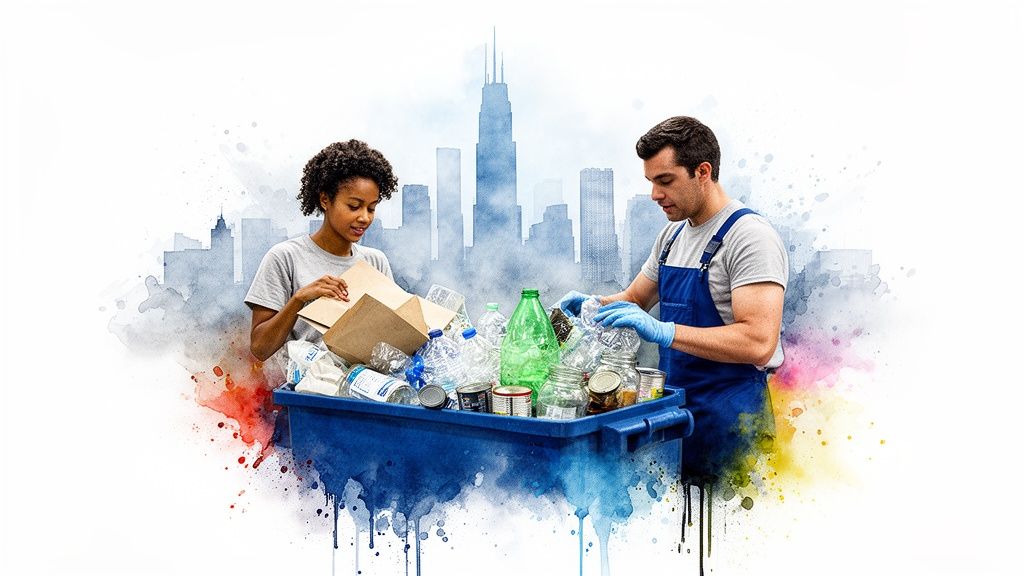
  • Care For Real: Why Showing Up Is The Only Thing That Matters

    Care For Real: Why Showing Up Is The Only Thing That Matters

    When I talk about care for real, I'm not picturing some caped crusader swooping in to save the day. It’s not about that at all. It’s about the quiet, consistent, often invisible work of just showing up. Especially when it’s hard.

    It’s you, looking at a mess—maybe it’s in your own life, maybe it’s the garbage strewn across your block—and deciding, right then and there, to do something about it. That simple, personal choice? It changes everything.

    Finding Purpose in the Mess

    My life was a dumpster fire. Seriously. My apartment looked like a tornado had a party in it, a perfect, chaotic mirror of the storm raging inside me after a brutal breakup.

    Every cluttered corner mocked me. Every pile of forgotten stuff screamed back at me, reflecting the emotional mess I’d become. I knew I had to build a new life from scratch, one founded on things I was starving for: consistency, real courage, and a tribe of people who actually showed up for each other. But I was paralyzed. It felt like trying to move a mountain of emotional junk, one tiny pebble at a time. It was just too much.

    Then, something clicked. I started thinking, what does it mean to care for real? It isn’t posting a cheesy quote on social media or just talking a big game about making a difference. It’s the opposite. It’s you, pulling on a pair of gloves on a freezing Saturday morning to clean up a mess you didn’t even make. It’s the gritty, unglamorous work nobody else wants to touch.

    To care for real is to dive headfirst into the difficult, the dirty, and the inconvenient, because that’s where you truly grow. It’s choosing service over your couch and real connection over being alone.

    This shift in perspective was my lifeline. I realized that tackling the physical clutter on the streets could be my way of starting to clear the clutter in my own heart. The act of cleaning became my metaphor for rebuilding my life. Every single piece of trash I picked up felt like a tiny victory against the chaos that had consumed me.

    That idea sparked Litter Caterpillars. I wanted to build a community around this one simple rule: show up, especially when it sucks. It's about creating a place where you can find purpose not by dodging the mess, but by wading right into it—together.

    It’s where you and I learn that the best connections aren’t made when life is easy. They’re forged in shared struggle and a common goal. This is how we begin to care, for real.

    Confronting The Overwhelming Mess Around Us

    Let’s get real. It’s so easy to feel completely powerless when you look at the sheer mountain of trash around us. The numbers are staggering, almost numbing.

    I see it every single day on the streets of Chicago, from the gorgeous lakefront to the quiet side streets in my neighborhood. It feels like an endless tide of wrappers, bottles, and plastic bags. It’s the kind of problem that makes you want to just throw your hands up and say, "What can I even do?"

    From Numbers to Neighbors

    The statistics paint a grim picture. The United States is a global champion in trash production. A 2025 report, the Global Waste Index, found that I, you, the average American, now churn out a mind-boggling 951 kilograms of municipal waste each year. Picture this: that's enough trash to fill almost three standard dumpsters every year—for just one person. You can see the full research on the world's biggest waste polluters on waste-management-world.com if you want the stark, unfiltered truth.

    We are just 4% of the world's population, yet we generate 12% of its garbage. This isn’t some abstract number; it’s a reality we live in, and honestly, it’s overwhelming.

    This is exactly where the idea to care for real becomes your superpower. It’s not about you trying to solve the entire global waste crisis by Sunday. That’s impossible. Thinking that way just leads you to burnout and giving up.

    Instead, you shrink the problem. Bring it down to a human scale. You look at the single city block right in front of your feet and decide, "This patch of ground matters. This is my home."

    This infographic shows you the mindset you need to turn that overwhelming feeling into action that actually means something.

    Infographic showing real care metrics: 95% consistency, 80% emergency response, and 10,000+ lives supported.

    These icons for consistency, bravery, and community aren't just feel-good graphics. They are the tools you and I use to transform a massive, terrifying problem into something we can physically touch and solve.

    Taking Back Your Power

    You seize your power not by trying to fix the whole world at once, but by taking direct, visible action in your own small corner of it. Caring for real is about turning those suffocating statistics into a specific problem you can physically solve, one piece of trash at a time. It’s your act of defiance against that feeling of helplessness.

    When you choose to pick up that first bottle, you’re not just cleaning a street. You are making a powerful statement that you refuse to be a bystander in your own community.

    This is the very essence of environmental stewardship. By focusing on what’s right in front of us, you and I create a ripple effect that builds momentum and inspires others to join. It’s a practical approach that turns a global crisis into a local mission. And that is where real change begins. If this idea clicks with you, you might be interested in our guide on what environmental stewardship truly means.

    How We Put Real Care Into Action

    Our very first cleanup was a trial by fire. Or, more accurately, a trial by ice.

    Picture this: just three of us, ambushed by one of those freak Chicago hailstorms that drops out of a perfectly blue sky. We were huddled under a pathetic, flimsy tree, soaked to the bone and shivering uncontrollably.

    And in that moment of pure misery, something happened. It hit me like a ton of bricks. Facing a stranger’s garbage—no matter how disgusting—was a thousand times easier than facing my own. That shared struggle, that freezing moment under the tree, wasn't just a bad day. It was the beginning of our story.

    This is the beating heart of the Litter Caterpillars philosophy. We show up in blizzards. We show up in brutal heatwaves. You and I believe the hard parts are what make the work real. It's not about being comfortable; it's about being committed. This is what it means to care for real.

    Three smiling volunteers in winter clothing and blue gloves pick up trash under a bare tree.

    Living Our Values Every Single Weekend

    Talk is cheap. Real care is showing up. It’s about building a system where our values aren't just pretty words on a website but are lived out by you and me, every single weekend, on the streets of Chicago.

    We protect our volunteers above all else. Your safety and happiness are my number one priority. I will never pressure you to do more than you're comfortable with or to come out when you can't. I will also never ask you for a dime. Your time and energy are the only currency that matters here.

    Real community isn’t a transaction. It’s built on a shared commitment to showing up for one another and for the city we all call home. It’s about creating a space where you feel valued, not just used.

    There's a reason we meet on weekend mornings. It’s like a natural filter. It brings out people like you who are wired to give—the ones who find genuine joy in service and want to kick off their weekend with a sense of purpose. We're building a community of givers, one tough but incredibly rewarding morning at a time. The bonds we forge are sealed in that shared effort. To see more on how this works, check out our community engagement strategies that build real connection.

    The Litter Caterpillars Philosophy

    Putting these ideas into practice is how we turn a simple cleanup into something more. It's how you find transformation in the trash. Here’s a breakdown of our core values and how we put them into practice every week.

    Our Value What It Means To Us How We Live It
    Bravery Embracing fear, failure, and suffering as your tools for growth. Cleaning in all weather—blizzards, rain, or heat. Taking pride in our work with flags and theme songs.
    Kindness Putting our volunteers' well-being first and building unity. Prioritizing your safety and happiness. Never asking for donations. Fostering real friendships between people like us.
    Service The act of giving transforms you, me, and our environment. Meeting every weekend morning to attract givers. Cleaning all 50 wards, especially neglected areas.

    This isn't just a mission statement. It’s a promise you and I make to ourselves, to each other, and to Chicago every time we grab a trash bag.

    Finding Beauty In The Unwanted

    Hands hold a plastic bottle from which a vibrant plant with flowers grows amidst colorful watercolor splashes, symbolizing growth and care.

    Do you remember that story about Tom Sawyer tricking his friends into painting a fence? A brilliant move. He took a mind-numbing chore and, with a spark of genius, turned it into a privilege—something so special that kids actually paid him for the chance to do the work.

    That’s exactly how I see what you and I do with trash.

    Picking up litter isn't some miserable punishment for living in a messy world. For us, it’s a huge opportunity to transform ourselves. Every bottle cap, every forgotten plastic bag, every crushed can is a chance for you to practice bravery, build real friendships, and find beauty where other people only see garbage. This is the heart of what it means to care for real.

    The Plastic Tide and Our Personal Stand

    This mindset really hits home when you think about plastic. It feels like an unstoppable, suffocating tide washing over our cities, parks, and oceans. While politicians and corporations debate policies and global agreements, you and I choose to take action. Right here. Right now.

    The global numbers are staggering, telling a story of deep inequality. The United States leads the world in plastic production per person, but other countries are drowning in waste with far fewer resources to fight back. Imagine Brazil—it generates over 10 million tons of plastic trash every year but only recycles a tiny 1.28%. The rest just clogs their land and oceans. For us Chicagoans, these global stats aren't abstract; we see the consequences firsthand in our own neighborhoods. You can dig deeper into the global plastic pollution numbers on worldpopulationreview.com.

    This is where our mission gets crystal clear. While the world debates, we believe real change starts with small, consistent work done by people like you who care enough to show up. We make a real dent in a problem that feels impossibly big.

    We are Litter Caterpillars because we know that through service, we can transform not just our city, but ourselves. We are finding profound growth in the grit.

    Finding Growth in the Grit

    Think of it like gardening. You can’t just toss seeds on the ground and hope for a miracle. You have to get your hands dirty.

    You pull weeds, you work the soil, you nurture the ground. It’s tough, messy work, but the reward is seeing something beautiful and alive grow from your effort. That's exactly what you and I are doing every single weekend.

    Here’s how we flip the script on what it means to clean up:

    • The Unwanted Becomes an Opportunity: A trashed-out park isn’t a sign of defeat; for us, it’s a blank canvas for our community to create something amazing.
    • A Chore Becomes a Connection: Picking up trash side-by-side with a stranger builds a bond way faster than small talk ever could. I've seen it happen.
    • Suffering Becomes a Story: Facing a challenge together—like cleaning in the pouring rain—doesn’t just build your resilience. It creates a shared memory, a story that makes our community stronger.

    We aren't just cleaning up. We are actively choosing to find value and potential in the things our society has thrown away. And in doing that, you and I discover a stronger, more connected version of ourselves.

    How You Can Start Caring For Real Today

    So, how do you take this big idea of "caring for real" and actually make it part of your life? It’s not about launching some massive city-wide movement overnight. It starts with one small, consistent action. Just one.

    The first step—and honestly, the most important one—is deciding to show up for something bigger than yourself. It's that choice you make to get off the sidelines and into the game.

    Maybe picking up litter isn't your thing, and that's totally cool. Maybe your heart sings when you're walking dogs at a local shelter. Or maybe it's as simple as spending an hour a week with an elderly neighbor who could use a friend. The what isn't nearly as important as the why and your commitment behind it.

    The Power of Consistent Action

    Something wild happens when you commit to showing up, week after week. It’s like you’ve turned on a homing beacon for other givers.

    Your consistency acts as a magnet. It naturally draws in people who share your values and that same itch to make a difference. These are the people who become your tribe. Your community.

    True belonging isn’t found in what you believe, but in what you do together. Consistent, shared action is the glue that builds the strongest communities.

    This is exactly why we do things at Litter Caterpillars that might look a little silly from the outside. We wave flags. We have a theme song. We celebrate our work with a ton of pride because I believe kind people deserve to feel powerful in the good they do. This is about more than just cleaning up trash; it's about building an identity around service.

    From Small Actions to Big Impact

    Your small, steady efforts ripple out in ways you can't even imagine. It’s easy to feel hopeless. Many developed countries bury over half their waste in landfills. But then you see places like Switzerland, which sends zero waste to landfills, or Estonia, which shot up to be a top-three performer globally.

    Estonia is the perfect story of how committed, small-scale actions can snowball into massive, nationwide change. You can see how different countries stack up at Sensoneo.com. By building a proud identity around service—the same way a sports team does—you and I prove we can redeem both our environment and ourselves.

    So, I’m inviting you to find your thing. Whatever it is that lights a fire in you, commit to it. Show up for it, even when you don't feel like it. And just watch how that one steady act of purpose starts to change not just your neighborhood, but everything inside of you, too.

    Ready to see what that feels like with us? We’ve got a great guide on how to get started with volunteer trash pickup.

    A Few Questions I Hear a Lot

    People often have questions before they join, and I get it. Here are some of the most common things people ask me about Litter Caterpillars and what it really means to show up for your community.

    Do I Have To Be Brave Or Physically Fit To Join

    Absolutely not. When I talk about bravery, I'm not talking about being some fearless superhero or a gym rat. Real bravery is just showing up, especially when you feel nervous or a little out of your element.

    Think of it this way: your bravery is a muscle. You build it over time, and you build it with us. Our cleanups are for everybody, no matter your fitness level. Some people go fast and fill a ton of bags. Others take it slow. Both are exactly what we need from you.

    The biggest thing you can give is just your presence. I put your safety and comfort first, always. You can contribute in whatever way feels right for you.

    What If I Can Only Volunteer Occasionally

    That’s totally fine. The whole point of caring for real is being authentic, not being perfect.

    Look, consistency is what forges those deep bonds in a community, but I know your life gets in the way. It's messy and unpredictable. Showing up even once is infinitely better than never showing up at all.

    There's zero pressure here from me. Every single person who comes out, even if it's just for an hour, makes a difference you can actually see on our streets. Just follow us online, see where we’ll be next, and come when you can. I'll be happy to have you.

    The real work isn't just cleaning the streets; it's about building a resilient, kind, and connected community, one person at a time, whenever you can show up.

    Is This Really Just About Picking Up Trash

    On the surface? Yeah, we pick up trash. But that’s just the beginning. The trash is just the excuse we use to do something much deeper.

    For me, it’s a form of active meditation, a way to clear your head while you clear the sidewalks. It’s a workout that gets you outside. It's an adventure into neighborhoods you've never seen before, showing you a side of the city you've never noticed.

    But more than anything, it's a hell of a filter for finding your people. When you decide to tackle a challenge together—even something as simple as cleaning a park—you build connections that go way deeper than anything you'd find at a bar.

    The trash is just the catalyst. The real change happens inside of you, and between us.


    Ready to see what it feels like to care for real? Join a Litter Caterpillars cleanup and find out what happens when you show up for your city, and for yourself. Find our next event at https://www.littercaterpillars.com.
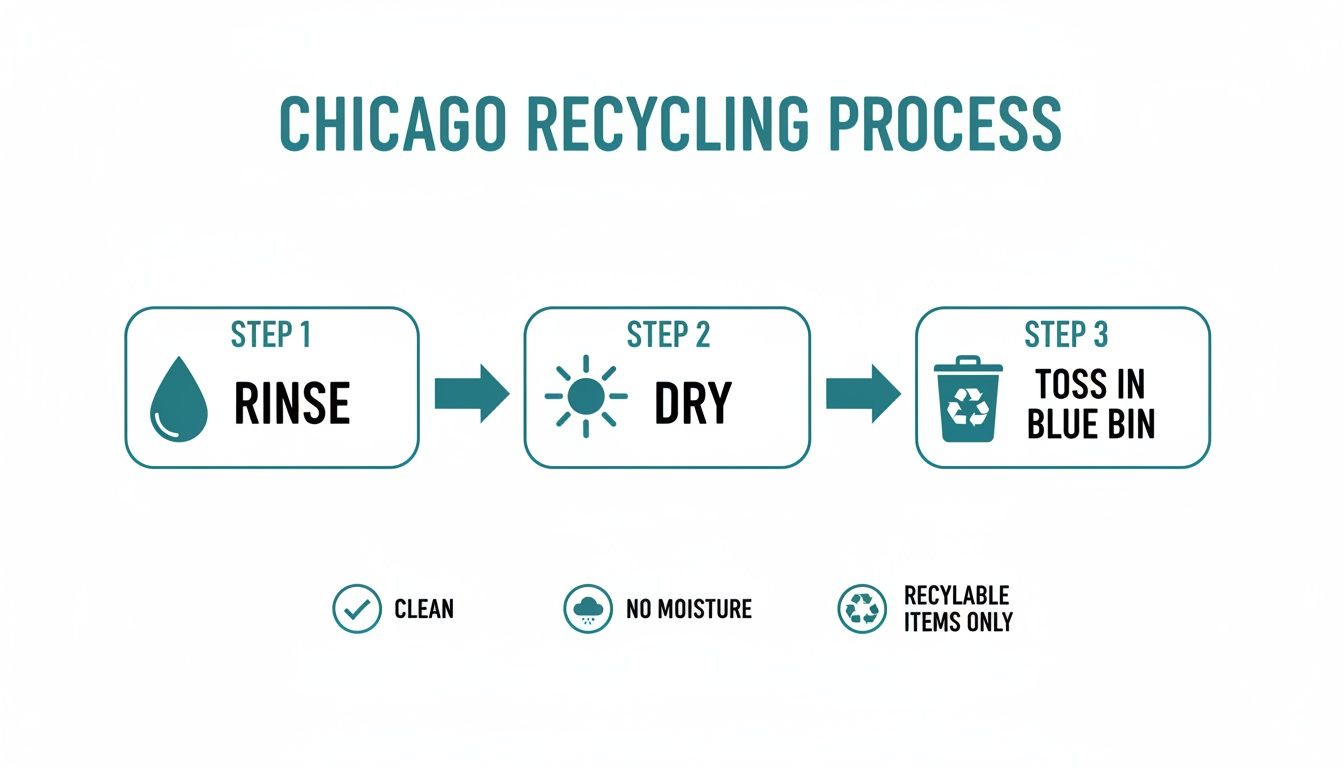
  • 7 Ways to Find a Volunteer Trash Pickup Near Me in 2026

    7 Ways to Find a Volunteer Trash Pickup Near Me in 2026

    You see it. That rogue plastic bag tangled in a tree branch. That faded fast-food cup just sitting there, silent, in the gutter. It’s an eyesore. A little papercut on the face of your neighborhood. I used to look at it and think, 'Someone should really get that.' My life changed when I decided 'someone' was me. It all started in my own messy apartment. Every old jam jar and bag of stale nuts felt like it weighed 500 pounds. My own life felt impossible to clean. But someone else's mess? That was different. It was… easy. It felt good. It was like I flipped a switch inside my head.

    Suddenly, I wasn’t just looking at a problem anymore. I was doing something about it. If you’re here, searching for a volunteer trash pickup near me, you’ve already felt that same little tug. You’re ready to stop waiting and start doing. I promise you, this isn’t just about picking up trash. This is about taking back a little piece of control. It's about meeting other people who also decided to be 'someone.'

    This guide is your map. It’s the straightest line I can draw for you to find them. I've gathered the best local crews, city programs, and online platforms that connect you with cleanups happening right where you are, focusing on my hometown of Chicago. For each one, I’ll tell you exactly what they offer, how you can join, and give you the direct links to get started right now. Let me show you how to find your people.

    1. Litter Caterpillars

    If you're in Chicago and your search for a volunteer trash pickup near me is about finding something that feels less like a chore and more like a heroic quest, then you need to know about Litter Caterpillars. This is your definitive choice. This isn’t just about picking up litter. It’s a full-blown movement. A movement built on guts, on community, and on the truly radical idea that a small group of people can absolutely transform a city, one block at a time. I see it as a weekly invitation to become part of something so much bigger than yourself, creating change you can literally point to and say, "I helped build that."

    Litter Caterpillars

    Kevin Tao, the founder, runs Litter Caterpillars with a bold, volunteer-first heart. I mean it. They meet every single weekend. No matter what the weather decides to do. They tackle neighborhoods across all 50 city wards. This relentless, almost stubborn consistency has led to some amazing stories, like the time they cleaned an entire highway during a bike event. Or, even more incredible, when they won an empty lot at auction and built the vibrant Caterpillar Park in Englewood from the ground up.

    What Makes Litter Caterpillars a Standout Choice?

    What really makes this group different is its culture. It’s so intentional. You’re not just a volunteer; you're a Caterpillar. When you're new, they welcome you with open arms, hand you a picker and a bag, and boom—you’re part of the team. The group has its own flags, its own badges, even its own theme song. They turn every cleanup into a celebration of doing something that matters, together.

    The whole thing is designed to protect your energy. Your spirit. There are no mandatory fees or pressures to donate. The focus is purely on the work and the friendships you build while you’re doing it. This creates this incredibly authentic, no-pressure space where people just connect. Communication is a dream, with active communities on Meetup, Instagram, and private group chats that keep everyone in the loop.

    How to Get Involved

    Getting started is so simple it's almost funny. All you have to do is show up.

    • Find an Event: Check their Meetup page or their Instagram to see where the next weekend cleanup is happening.
    • Just Arrive: They usually meet on weekend mornings, a time chosen to bring out people who are really dedicated to service.
    • Gear Up: They provide everything you need. Trash pickers, bags, gloves. You just bring yourself.

    Our Take: If you’re looking for a high-impact, deeply social way to make a real difference in Chicago, I don't think you can find anything like Litter Caterpillars. It’s a chance to build your own resilience, explore every corner of this city, and make genuine friends while you create a cleaner, more beautiful community for everyone.

    Feature Analysis Litter Caterpillars' Approach
    Accessibility Excellent. No fees, no sign-up barriers. Just show up.
    Community Exceptional. A strong, identity-driven culture with social events and active communication channels.
    Impact High and Visible. Completed cleanups in all 50 wards and built a community park.
    Schedule Consistent but Specific. Reliable weekend morning events may not fit all schedules.

    Website: littercaterpillars.com

    2. Idealist (includes VolunteerMatch)

    I want you to think of Idealist as the Grand Central Station for doing good. After it absorbed VolunteerMatch, it became this absolute powerhouse directory, connecting passionate people like you with organizations that desperately need your help. It’s not just some boring list. It’s a launchpad for your next big act of kindness. When you’re hunting for a volunteer trash pickup near me, this should be one of the first doors you knock on.

    Its sheer size is inspiring to me. You’re tapping into a massive network of change with over 100,000 opportunities listed all over the country. You're not just looking for an event here; you're feeling the very heartbeat of community service right in your own area.

    How to Find Your Perfect Cleanup

    Using the platform is like a walk in the park. You just type in your location and a few keywords. Let me give you some pro tips to help you find what you’re looking for faster:

    • Be Specific with Keywords: Try searching for things like "litter cleanup," "park beautification," "river cleanup," or even "environmental stewardship." The more specific you are, the better your results.
    • Use the Filters: The real magic is in the filters. You can sort by date, which is perfect for finding something to do this weekend. My favorite is the "Good for Groups" filter. It’s a lifesaver when I’m trying to organize a service day with my friends or coworkers.
    • Set Up Alerts: If you don't find the perfect thing right away, don't sweat it. You can set up alerts, and they’ll send you an email whenever a new trash pickup opportunity gets posted in your area.

    The platform is totally free to use, and you'll find listings from all kinds of groups, from tiny neighborhood associations to big city-run park districts. While some places might have fewer listings than others, its national reach means you can almost always find something happening year-round. It's a tool that really empowers you, putting the chance to make a difference right at your fingertips. And hey, if you feel inspired to take the next step and organize your own event, I’ve got some great advice on how to start your own volunteer trash pickup.

    Find your next opportunity at: www.idealist.org/volunteermatch

    3. Keep America Beautiful (KAB) Volunteer Portal

    Keep America Beautiful (KAB) is like the nationwide conductor for an orchestra of neighborhood pride. This legendary organization runs the Great American Cleanup and supports a huge network of over 600 local affiliates. When you search for a volunteer trash pickup near me, their portal connects you directly to the action, to the real boots-on-the-ground work in your community.

    I love that KAB empowers these local "Keep [Your City] Beautiful" chapters. It feels like you aren't just signing up for some random event. You're joining a dedicated, local team that often gives you the tools, coordinates the trash disposal, and really understands your neighborhood’s specific problems. It’s like joining a movement that has these deep, strong roots.

    How to Find Your Perfect Cleanup

    The KAB volunteer portal is built to get you involved fast. You put in your zip code, and it brings up a map and a calendar with nearby opportunities. Here are some of my tips to make the most of it:

    • Look for Affiliate Pages: Don't just look at the main calendar. Find your local "Keep [City/County] Beautiful" affiliate. They often have their own websites with more detailed event schedules, special projects, and contact info.
    • Time Your Search: This portal is just buzzing with activity during the Great American Cleanup (which is usually March to May). If you’re looking for a big, high-energy event, that's the absolute best time to get involved.
    • Register in Advance: Many KAB events will ask you to pre-register. This just helps the organizers plan for supplies like gloves, bags, and grabbers, making sure there's enough gear for everyone who shows up.

    The portal is totally free for you as a volunteer, and the resources you get from local affiliates are priceless. While the number of events can change depending on how active your city's affiliate is, the sheer scale of their national network means there's almost always a way for you to contribute. It’s an amazing resource that not only helps you find an event but also plugs you into the ongoing story of community care in your own hometown. For more tips on what to expect, you should check out my guide on what happens when you're cleaning up trash.

    Find your next opportunity at: https://volunteer.kab.org

    4. Eventbrite

    If you think Eventbrite is just for concerts and food festivals, you are missing out on a hidden treasure for community action. I see it as a bustling town square. A place where anyone, from a city parks department to a tiny group of passionate neighbors, can post their call to arms. It’s an incredibly direct and easy way to find a volunteer trash pickup near me, especially for those one-off or pop-up events that just appear.

    I love how immediate it feels. You're not just signing up for a mailing list; you're grabbing a "ticket" (usually a free one) to a specific event on a specific day. It makes your commitment feel real, almost exciting. It turns a simple cleanup into something you can really look forward to.

    A screenshot showing Eventbrite's event discovery page for volunteer trash pickups, highlighting search filters and event listings.

    How to Find Your Perfect Cleanup

    Finding your way around Eventbrite is as easy as searching for a movie. You just type in your city and what you're looking for, and the opportunities magically appear. Here’s how you can make your search even better:

    • Cast a Wide Net with Keywords: Start with broad words like "cleanup," "beautification," or "volunteer day." Then you can try more specific phrases like "beach cleanup" or "park cleanup" to see what comes up.
    • Filter by Date and Price: The "Today," "This Weekend," and "Free" filters are your best friends. I use them constantly to find a last-minute chance to get outside and do some good without any hassle.
    • Read the Event Details Carefully: Each event page is like a mini-guidebook. The organizers often list exactly what you should bring (like water or sunscreen) and, most importantly, whether they provide supplies like gloves, bags, and grabbers. This little detail can save you from showing up unprepared.

    The platform is totally free for you to use, and the mobile app is fantastic for getting reminders and having your ticket ready. While the number of events can really vary depending on how active the local organizers are in your city, the quality of listings from groups like Keep America Beautiful affiliates is often top-notch. It’s a dynamic and straightforward way to find and commit to making a difference, one event at a time.

    Find your next opportunity at: https://www.eventbrite.com

    5. Meetup

    Meetup is where community action really springs to life. It's not just a directory. It's a platform built for creating and keeping local groups going. It’s less about finding a one-time thing and more about finding your tribe. Your tribe of like-minded neighbors who are committed to making a difference, week after week. If you're looking for a volunteer trash pickup near me that feels like you're joining a team, Meetup is where you need to go.

    I love Meetup because it’s so grassroots. It's real. These aren't just listings; they are personal invitations from passionate local organizers who are out there every single month, rain or shine. You're not just picking up litter; you're building friendships and changing your own neighborhood, one cleanup at a time.

    A screenshot of the Meetup homepage showing various groups and events, highlighting its community-focused interface.

    How to Find Your Perfect Cleanup

    The whole platform is designed around groups, so your first step is to find your local crew. It's incredibly simple to get started and connect with people who are already making an impact right where you live.

    • Search for Groups, Not Just Events: Use terms like "litter picking," "environmental cleanup," "neighborhood cleanup," or "community service" to find groups that are dedicated to this cause. When you join a group, you get notifications for all their future events.
    • Check the Event Details: Organizers on Meetup are usually great at giving you the specifics. They’ll often tell you if they provide bags, gloves, and pickers. My favorite part is that many groups will schedule a social hour at a local coffee shop or pub afterward. It's perfect for connecting with new people.
    • Don't See a Group? Start One! This is what makes Meetup truly special. If your neighborhood doesn't have a cleanup crew, the platform gives you the power to become the organizer. It gives you the tools to schedule events and rally your neighbors.

    Meetup is free for you to join groups and attend events. While coverage can be a little spotty in smaller towns, major cities often have several active groups. The real strength of Meetup is in its consistency; many of these groups meet every week or every month, which helps you build a positive, powerful habit. If you want to take the initiative and become a local hero, I have some great resources on how to start your own volunteer trash pickup.

    Find your next opportunity at: https://www.meetup.com

    6. National Park Service – Volunteers-In-Parks

    There’s something truly special about protecting our nation’s treasures. It just feels different. The National Park Service (NPS) offers you a chance to do exactly that through its Volunteers-In-Parks program. This isn't just about picking up trash; it's about becoming a temporary guardian of America's most beautiful and historic places. When your search for a volunteer trash pickup near me leads you to a national park, I promise you're in for an inspiring day.

    I love that this connects your local action to this grand, national mission. You might be cleaning a trail you hike every weekend or a shoreline you love, all while supporting a system that preserves these amazing spaces for generations to come. It transforms a simple cleanup into an act of national service.

    National Park Service – Volunteers-In-Parks

    How to Find Your Perfect Cleanup

    Getting around the NPS site is pretty easy. You can search by state or by park to find opportunities right in your backyard, whether it’s an urban historical site or a vast wilderness area. Here are a few tips to help you get started:

    • Go Directly to Your Park's Website: The best way to do it is to find the website for the national park closest to you. Look for a "Get Involved" or "Volunteer" section, which will list their current needs and any upcoming events.
    • Search for Key Events: Look for specific event titles like "National Public Lands Day," "Earth Day Cleanup," or "River Cleanup Day." Parks often organize huge volunteer drives on these dates.
    • Plan a Group Event: The NPS is fantastic for groups. I find that parks are often really welcoming for schools, scout troops, or corporate volunteer days. Their volunteer coordinators can help you set up a structured and impactful project, and they often provide all the tools and safety briefings you need.

    The opportunities are completely free, but some might need you to register in advance because they are so popular and well-structured. While the events are tied to the park's schedules, the experience of contributing to a national landmark is something you will never forget. You’re not just cleaning a space; you’re preserving a piece of America’s story.

    Find your next opportunity at: www.nps.gov/getinvolved/volunteer.htm

    7. Alliance for the Great Lakes – Adopt-a-Beach

    For those of us who live near the stunning shores of the Great Lakes, this platform is a total game-changer. The Alliance for the Great Lakes’ Adopt-a-Beach program isn't just a cleanup initiative. It's a massive, coordinated effort to protect one of the world's most vital freshwater resources. It connects you directly with the coastline, turning your simple search for a volunteer trash pickup near me into a mission to save a natural wonder.

    I see it as becoming a guardian for our waters. Every single cleanup is more than just picking up litter; it's an act of collecting data. The information you gather helps scientists and policymakers understand where the pollution is coming from and fight for stronger protections. You're not just cleaning; you're contributing to real, lasting change.

    Alliance for the Great Lakes – Adopt-a-Beach

    How to Find Your Perfect Cleanup

    Navigating their site is incredibly easy; it gets you right where you need to be. It’s built for action. Here’s how you can dive in and make a difference:

    • Use the “Find a Cleanup” Map: This is where you start. The interactive map shows you all the upcoming cleanups along the lakeshores. You can easily find an event near you and register in just a few clicks.
    • Become a Team Leader: Feeling inspired? The program provides excellent training and resources for you to lead your own cleanup. They give you the tools, the safety guidelines, and the support to host a successful event.
    • Focus on the Data: Remember that your work contributes to a huge regional database. After your cleanup, you'll enter the data you collected, which directly informs conservation efforts. It adds this powerful layer of purpose to your work.

    Joining a cleanup is free, though you'll need to create a quick account to register for an event or to lead one. While its strength is its laser focus on the Great Lakes region, that also means it won’t be the right tool if you live somewhere else. But for anyone in the area, it's an unparalleled chance to protect the incredible coastlines that define our region, especially those precious spots like the public beaches along Lake Michigan.

    Find your next opportunity at: https://greatlakes.org/get-involved/adopt-a-beach/

    Volunteer Trash Pickup Near Me — 7-Platform Comparison

    Item 🔄 Implementation complexity ⚡ Resource requirements 📊 Expected outcomes 💡 Ideal use cases ⭐ Key advantages
    Litter Caterpillars 🔄 Low — volunteer-led, simple weekend logistics ⚡ Low — volunteers + basic tools; no membership fees 📊⭐ High — visible neighborhood transformation; citywide coverage (50 wards) 💡 Neighborhood-building, regular weekend cleanups, high-visibility actions ⭐ Strong volunteer culture, consistency, local ownership
    Idealist (includes VolunteerMatch) 🔄 Low — search/listing platform; dependent on org postings ⚡ Minimal — web access and time to search 📊 Variable — many opportunities nationally but depends on local listings 💡 Finding one-off or recurring cleanups across regions ⭐ Large national directory with robust filters
    Keep America Beautiful (KAB) Volunteer Portal 🔄 Moderate — affiliate coordination and seasonal campaigns ⚡ Moderate — affiliates may supply kits and logistics 📊 Good — strong participation during Great American Cleanup 💡 Seasonal, affiliate-run community cleanups ⭐ Wide U.S. affiliate network and local support
    Eventbrite 🔄 Low — event discovery and RSVP platform ⚡ Low for volunteers; organizer-dependent supplies 📊 Variable — quick discovery for pop-ups; impact varies by organizer 💡 Pop-up or scheduled community cleanups requiring RSVPs ⭐ Easy discovery, ticketing, and reminders
    Meetup 🔄 Low–Moderate — group-centric event organization ⚡ Low — community-driven; organizers often provide basics 📊 High for community-building — consistent turnout and habits 💡 Regular neighborhood meetups and recurring crews ⭐ Builds habits, friendships, and repeat volunteers
    National Park Service – Volunteers-In-Parks 🔄 Moderate — park coordination, safety briefings, occasional permits ⚡ Moderate — NPS often provides supplies and structure 📊 Reliable — well-organized events suitable for service hours 💡 Structured group service (schools, scouts, companies) in parks ⭐ Safety-focused, organized, nationwide park access
    Alliance for the Great Lakes – Adopt-a-Beach 🔄 Moderate — registration, team-leader tools, data submission ⚡ Moderate — training, materials, and account required 📊 Regionally strong — shoreline cleanup impact + data for research 💡 Great Lakes shoreline events and data-driven cleanups ⭐ Regional expertise, data portal, strong host support

    Your Neighborhood Is Waiting For You

    It's easy to scroll through a list like this one, seeing all the different groups and platforms, and feel a little overwhelmed. So many choices. So many ways to start. But I want you to forget about all the options for a second and just focus on one simple, powerful idea: just show up. Once.

    I remember my very first cleanup. There were only three of us. We were standing on a street corner, and a freak Chicago hailstorm just rolled in out of nowhere. We were shivering under this flimsy little tree, getting pelted with ice, and I had this crazy thought: "This suffering is actually kind of interesting. It's making a story." That moment taught me that bravery isn't about being fearless; it's about doing the thing anyway, even when you're uncomfortable or scared.

    Turning Inspiration into Action

    That's what this is all about. Each piece of litter you pick up is a small act of bravery. It's a vote for the kind of neighborhood you want to live in. You're not just cleaning a street; you are transforming your relationship with your city and with yourself. You are proving, piece by piece, that you have the power to create visible, tangible change.

    So, let's make this simple. Look back at the tools I showed you:

    • For the social butterfly: If you want to meet new people and build friendships, Meetup and Eventbrite are your best bet. They are built around community and shared interests.
    • For the big-picture thinker: If you want to plug into a national movement, you should check out the Keep America Beautiful portal or the Alliance for the Great Lakes Adopt-a-Beach program. You’ll be part of a much larger, coordinated effort.
    • For the nature lover: If you feel most alive when you're surrounded by trees and water, the National Park Service volunteer opportunities will put you right where you want to be.
    • For the dedicated local: If you’re ready to dive deep into a passionate, neighborhood-focused community right here in Chicago, Litter Caterpillars is where you will find your people.

    Your First Step is the Hardest and Most Important

    Pick one. Just one. Don't overthink it. Go to their website, find an event that fits your schedule, and sign up. I promise you, that's the hardest part. The moment you click that button, you’ve already won.

    Then, you show up. You’ll feel the sun (or maybe the hail!) on your face. You'll meet people who just get it, who share your desire to make things a little better. You will see, with your own two eyes, the immediate impact of your work. The world doesn't need a handful of perfect environmentalists. It needs millions of us, imperfectly trying our best. You are the 'someone' your neighborhood has been waiting for. You are the change.


    Ready to join a group that combines community, impact, and a whole lot of Chicago pride? Check out Litter Caterpillars to find a "volunteer trash pickup near me" event and meet your new cleanup crew. Let’s make our neighborhoods beautiful, together.

  • How to meet like minded people: Find your tribe and thrive

    How to meet like minded people: Find your tribe and thrive

    Before you can find your people, you have to know what you're even looking for. I'm not talking about some rigid checklist for the perfect friend. It’s about you figuring out your own internal compass—the core values that guide you—so you can naturally find people who just get it.

    The Search for Your People Begins with You

    A person meditating in lotus position, holding a golden compass, surrounded by colorful watercolor splashes.

    I get it. You can be in a room full of people and feel totally, completely alone. For a long time, my social life felt like I'd shown up to a costume party and everyone else got the memo on the theme except me. It was exhausting. And you know what? I felt more lonely in a crowd than I ever did by myself.

    This isn't some rare, weird feeling you have. As we get older, finding a real tribe gets way, way harder. School was like a built-in petri dish for friendships, a constant, swirling experiment. But adult life? It often leaves us trying to force connections that just don’t click, like trying to fit a square peg into a round hole. It never works.

    The hard truth is that you don’t just stumble into meaningful relationships. You have to build them with intention. That's why your first move isn't joining another club or suffering through another awkward happy hour. It's looking in the mirror.

    Your Values Are Your Compass

    Before you can spot your people out in the wild, you need a crystal-clear picture of who you are and what really matters to you. "Like-minded" is just a vague buzzword until you define it for yourself. This isn't about finding your clones; it's about connecting with people whose fundamental values vibrate on the same frequency as yours.

    Think of your values as an internal compass. This compass doesn’t point to a specific person. It steers you toward environments and interactions that feel energizing and authentic, and away from the ones that leave you feeling drained, hollowed out. When you let your values lead, you stop desperately searching for friends and you start effortlessly attracting them.

    So, how do you find this compass? Start by figuring out your non-negotiables.

    • Radical Kindness: Do you absolutely need people who lead with empathy?
    • Unwavering Consistency: Is it critical for you to have reliable friends who show up, time and time again?
    • Bold Creativity: Do you find yourself drawn to the artists, the innovators, the weirdos who see the world in a different color?
    • Unfiltered Honesty: Do you need friends who will tell you the hard truth, even when it’s uncomfortable?

    These aren't just personality quirks; they're the bedrock of who you are. So make a list. Be brutally honest with yourself. This isn’t a wishlist for a "perfect friend"—it’s a reflection of your own soul.

    The most powerful magnet for the right people is your own authentic self. When you know what you stand for, you naturally draw in others who stand for the same things.

    Turning Your Struggles into Strengths

    My own journey to building a community—the very one that became Litter Caterpillars—was born from a real messy place. I was inconsistent, disorganized, and pretty lost after a chaotic relationship ended. I knew I had to change, not just for me, but to attract the kind of solid, good-hearted people I wanted in my life.

    I realized I craved people who were brave, kind, and committed. People who weren't afraid to get their hands dirty. So instead of just hoping to find them, I decided I had to become one of them.

    This is the secret sauce. Your biggest challenges are often the most powerful magnets for your people. The very things you've overcome, or are still working through, create a deep, unspoken bond with others walking a similar path. It’s a shared language.

    When you're open about your journey—the good, the bad, and the ugly—you give other people permission to be real, too. That vulnerability is the shortcut to genuine connection. It filters out all the superficial fluff and leaves you with people who see you, respect your fight, and want to cheer you on. Your story, with all its messy, beautiful parts, is your greatest asset.

    Find Your People Where Passion and Purpose Intersect

    Three smiling people plant seedlings together in a raised urban garden bed, city skyline in background.

    Alright, you’ve done the internal work. You know what you stand for. You're ready. So… where are these people?

    Telling you to "just get out there more" is useless advice. It's like telling a sailor to "just sail." You need a map. A destination. You need a reason to even leave the shore in the first place.

    This is your map. We're skipping the awkward networking events and the forced small talk. Instead, we’re going straight to the places where passion and purpose are alive and kicking—the fertile ground where real connections actually grow.

    The ultimate shortcut to finding your people is through shared activities. Think about it. When you're totally absorbed in something you love—whether it's learning a new skill, fighting for a cause, or tending a garden—you stop trying to be someone. You just are. And that raw authenticity? It's a magnet for the right people.

    Beyond the Usual Suspects

    Let's move past the generic advice of "join a book club." While those can be great, the real magic happens in the niches. The goal here is to find environments that naturally filter for the kind of people you want in your life.

    Imagine you join a pottery class. You're not just learning to shape clay; you’re sharing a space with people who value creativity, patience, and aren't afraid to get their hands dirty. Or picture a coding bootcamp. You’re suddenly surrounded by problem-solvers, logical thinkers, and builders who are all in on their own growth.

    These activities are like a secret handshake. They broadcast your interests and your values without you having to say a single word. You automatically have a built-in topic of conversation, a shared struggle, and a common goal. It’s all right there.

    When your hands are busy with a shared task, your heart has a funny way of opening up. Shared purpose is the soil where the strongest friendships take root.

    So, where do you find these places?

    • Skill-Building Workshops: Look for classes on things you've always wanted to learn. Woodworking, public speaking, digital photography—these attract lifelong learners and curious minds.
    • Niche Hobby Groups: Get specific. Don't just look for a "hiking group"; find the "weekend trail maintenance crew." Instead of a generic "gardening club," find the "urban rooftop beekeeping collective." The more specific the interest, the more passionate the people.
    • Platforms with a Pulse: Use tools like Meetup or Eventbrite, but you need to learn to read between the lines. Look for groups with consistent events and photos of people genuinely interacting, not just posing. A group that meets weekly for a Dungeons & Dragons campaign is a community; a monthly "Young Professionals Mixer" is often just a transaction.

    My Goldmine: The Power of Volunteering

    I’ll be honest with you. Of all the paths you can take, my personal favorite—and the one I believe is a true goldmine for connection—is volunteering.

    When you give your time to a cause you believe in, you're showing up with your heart. Service-oriented groups naturally attract doers, givers, and people with a deep sense of purpose. There's a shared understanding that you're all there for something bigger than yourselves. That mutual respect is an incredible foundation for a real friendship.

    And it's not just a niche thing. The global volunteering movement has exploded. Approximately 862 million people worldwide volunteer at least once a month—that's nearly 15% of the global population. Data from the UN Volunteers website shows that dedicating time to service has become one of the most powerful and accessible ways to meet people who share your values.

    I see this every single weekend at Litter Caterpillars. People don't show up on a chilly Saturday morning to pick up trash because it's glamorous. They show up because they care. They're consistent. They're kind. They're exactly the kind of people I want in my corner, and we all found each other by choosing to serve. If this sounds like you, check out my guide on how to find the right volunteer work for you.

    Turn a Shared Interest into a Real Conversation

    Watercolor illustration of a man and woman conversing across a table with a vibrant painted rock.

    So you did it. You showed up. You’re in the room, surrounded by people who nerd out about the same stuff you do.

    And then it hits you. That awkward silence. The internal panic of, "Okay, now what?" This is the moment where so many of us freeze up, retreat into our phones, and completely miss the very connection we came for.

    Let's just throw that entire script out the window. Your goal isn’t to be clever or smooth. It's to be genuinely curious. That’s it. Here’s how you turn that shared interest into a real, human conversation that feels natural, not forced.

    My Simple Rule: Observe, Question, Share

    I’ve learned that the best conversations ignite from the simplest things. Forget about witty one-liners. Instead, I use a dead-simple, three-part method that has never failed me: Observe, Question, Share.

    It’s like building a little bridge between you and someone else. You just start with what’s right there in front of you.

    • Observe: Notice something in your shared environment. It can be anything at all.
    • Question: Ask a genuine, open-ended question about what you saw.
    • Share: Offer a tiny piece of your own story related to their answer.

    I remember being at a cleanup once, and someone pulled a perfectly intact, ridiculously old-looking toy car out of the mud. I just laughed and said, "Wow, I wonder what that car's story is." The other person smiled and replied, "Probably a better story than my actual car." We ended up chatting for 20 minutes about life, purpose, and the weird things we hold onto. All from a piece of trash.

    The most interesting people aren't the ones with the best lines; they're the ones who are the best listeners. Genuine curiosity is the ultimate conversation starter.

    Breaking the Ice Without Feeling Awkward

    Your body language screams louder than your words ever will. Before you even say a thing, make sure your posture is open and inviting. Uncross your arms, put your phone away, and make gentle eye contact. It’s a non-verbal signal that says you’re present and ready to connect.

    Then, when you do speak, focus on asking questions that invite stories, not just "yes" or "no" answers. Instead of asking, "Did you have a good weekend?" try something like, "What was the best part of your weekend?" See the difference? One is a dead end; the other is an open door.

    The key is to really listen to the answer. Don’t just wait for your turn to talk. Active listening means you pick up on the little details and ask follow-up questions that show you’re actually engaged. It makes the other person feel seen and valued—and that's the foundation of any real connection.

    Reaching Out in the Digital World

    Starting conversations online can feel even more daunting. How do you slide into someone's DMs in a group without coming across as creepy or weird? The secret is exactly the same: shared context and sincere interest.

    Never, ever send a generic "Hey." Instead, reference something specific. Maybe they posted a great photo from a recent hike or asked a thoughtful question in a forum. Your opening message should be a direct, respectful response to that.

    Conversation Starters That Actually Work

    Use these simple, adaptable scripts to start conversations in person or online without feeling awkward. They're grounded in your shared environment, which is what makes them work.

    Scenario What You Can Say
    In a Facebook group for a shared hobby "Hey [Name], I saw your post about [specific topic] and was so impressed by [specific detail]. I'm also trying to learn more about that—do you have any tips for a beginner?"
    After a volunteer event "It was great meeting you today at the [event name]! I was really inspired by what you said about [their comment]. Hope to see you at the next one!"
    In a Meetup group chat "Hi [Name], that picture you posted from the [last event] was amazing. I was thinking of checking out that spot myself. Was it as cool as it looks?"

    Notice the pattern? Each message is specific, complimentary, and ends with a low-pressure question. You aren't demanding their time; you're inviting them to continue a conversation that has, in a way, already started. It's about being you, being kind, and showing that you were paying attention.

    Build the Bridge from Acquaintance to True Friend

    Making that first connection is a huge win. You found your people, started a conversation, and felt that little spark. Awesome. But that's just the start.

    The real work—the real magic—is in the follow-through. It's about fanning that spark until it becomes the warm, steady glow of a real friendship. This is where a little bit of guts and consistency change everything. It’s about being the one who makes the next move.

    Friendship is built on a series of "small yeses." Each small agreement to connect again adds another plank to the bridge you're building between your world and theirs. You don't need grand gestures. Just an invitation.

    The Gentle Art of the Next Step

    Think of it like a middle school dance. The music is playing, everyone's standing around, and someone has to have the courage to ask someone else to dance. If you just wait for them to ask, you'll be standing on the sidelines all night.

    You have to be the one who suggests the next step. It doesn't need to be intense or scary. The trick is to keep it super casual and low-pressure. You have to make it incredibly easy for them to say yes.

    I see this happen all the time in our Litter Caterpillars group chats. A conversation about a cool pair of hiking boots turns into someone saying, "Hey, a few of us are checking out the trails at Starved Rock next Saturday. Anyone want to join?"

    It’s not some formal, engraved invitation. It’s an open door. That’s how you turn a shared interest into a shared experience. And shared experiences? That's the glue that holds friendships together.

    From Cleanup Crew to Family

    I've had the privilege of watching these small invitations blossom into the most incredible relationships. Seriously. I know volunteers who met picking up soggy pizza boxes and are now each other’s emergency contacts.

    One little crew started a side-chat about their favorite fantasy novels, and now they have a monthly book club that’s been running for over a year. Another pair discovered they both loved board games and now host a game night that’s become legendary in our circles.

    These friendships didn't just happen. They happened because one person was brave enough to say, "Hey, I like talking to you. Let's do it again, but over here." It’s such a simple act, but it signals something profound: I see you, I value you, and I want more of your energy in my life.

    Don't wait for an invitation to the community you crave. Be the one who creates it. The simplest gathering can become the anchor for a whole network of friendships.

    Become the Community Hub

    You don't have to wait for someone else to organize the fun. You have the power to become a community hub yourself. This sounds like a big deal, but it's really not. Hosting doesn’t mean throwing some elaborate, stressful party.

    It can be as simple as this:

    • Host a "Co-Working" Session: Send a message in a group chat: "I'm working from Dollop Coffee on Thursday morning if anyone wants to join for some focused work and good coffee."
    • Organize a Simple Potluck: Find a park and tell people, "Let's all bring a dish and hang out at Horner Park on Sunday. No pressure, just good food and good company."
    • Start the Group Chat: Create a group for people from your volunteer event or workshop to share photos and keep in touch.

    By creating the gathering, you are showing people that you value their company and want to build something real. You can find more inspiration for this in our list of community-building activities for adults that go beyond the basics.

    The most magnetic people are the ones who create spaces for others to connect. You can be that person. All it takes is that first, small invitation.

    How a Chicago Cleanup Crew Became a Community

    A joyful group of muddy people holding a blank banner under a bridge in the rain, with watercolor effects.

    Let me tell you how all this theory actually plays out in the messy, real world. I want to take you back to the very first Litter Caterpillars event. There were just three of us, completely soaked in a freak Chicago hailstorm, huddled under a bridge for our lives.

    That moment of shared misery should have been the end of it. But it wasn't.

    Freezing together, watching Ubers cancel on us one by one, didn’t break us. It bonded us. It was the moment I realized that shared challenges are the ultimate superglue for friendships. This is the story of how a simple idea—picking up trash—became a blueprint for building a tribe from scratch.

    The Power of Showing Up When It’s Hard

    We figured out pretty quickly that our best filter for finding the right people wasn't a questionnaire; it was the Chicago weather. We meet every single weekend, rain or shine. Blizzards. Scorching heat. It doesn’t matter.

    Why? Because anyone who voluntarily shows up on a freezing Saturday morning to pick up other people's garbage is, by definition, a giver. They're consistent. They’re kind. They're exactly the kind of people you want in your corner.

    This self-selecting process is powerful. It filters for heart. We don’t have to guess if someone shares our values of consistency and service—their presence on a cold morning says it all. You can easily apply this logic if you're looking for ways on how to make friends in Chicago, no matter what you're into.

    And this isn't just some niche idea. Between September 2022 and September 2023, over 75.7 million Americans formally volunteered. That’s a massive wave of people actively seeking connection and purpose. It creates millions of opportunities for friendships to form between people united by a shared mission. You can check out more volunteering statistics at ActivateGood.org.

    Creating a Culture of Belonging

    From day one, I knew Litter Caterpillars had to feel less like an organization and more like a team—a family. We needed symbols. We needed an identity.

    So, we got a flag. It sounds silly, but that simple flag became a powerful symbol. When a new person shows up and we hand them the flag to hold for a photo, their whole posture changes. They stand a little taller. They're not just a volunteer anymore; they're one of us.

    We built our entire culture around one core philosophy: volunteer-first.

    This means a few key things:

    • We protect your energy. Your time and happiness are everything. We will never, ever hound you for money.
    • We celebrate your presence. Just showing up is the victory. We make sure every single person feels seen and appreciated.
    • We engineer for friendship. Our open group chats and social media are designed to make newcomers feel like old friends from the minute they join.

    Building a community isn't about throwing a party and hoping people show up. It's about building a home and handing people the key. You have to make them feel not just welcome, but wanted.

    The Digital Campfire

    Our community doesn't just exist on the sidewalks of Chicago; it thrives online. We use group chats and Instagram not just for logistics, but as a digital campfire where people share stories, jokes, and support.

    When someone posts a picture of a funny piece of trash they found, the group chat lights up. When someone’s having a rough week, there's an instant flood of encouragement. We intentionally foster this environment so the connection doesn't stop when the cleanup does.

    This constant, low-stakes interaction is the bedrock of our community. It keeps the fire warm between events, ensuring that when we finally meet in person, it feels less like a reunion of strangers and more like a gathering of old friends.

    The Stuff That Freaks You Out (And Why It Shouldn't)

    Putting yourself out there is scary. I know, because I've been there. I still remember huddling under a bridge during that first cleanup, freezing in a hailstorm, wondering if I was crazy and if anyone would ever show up again. So believe me, I get the questions and the fear.

    You're not alone in feeling this way. Being brave enough to seek connection is a huge step, and it's totally normal to have doubts. The trick is to feel them, nod at them, and then do the thing anyway. Here are the big ones I hear all the time.

    “But I’m Too Shy/Introverted…”

    This is the biggest myth out there—that you have to be some bubbly, life-of-the-party extrovert to make friends. It's just not true.

    Friendship isn't a performance. Being an introvert is actually a superpower in this mission. You're naturally observant. You're a great listener. Those are two of the most magnetic qualities a person can have.

    So, forget trying to command the room. Your goal isn't to talk to 20 people; it's to have one meaningful conversation. Focus on one-on-one connections and let your natural curiosity do the heavy lifting.
    Real connection isn’t about being the loudest person in the room. It’s about being present. Your ability to listen—really listen—is more powerful than any witty one-liner.
    How Do I Handle Rejection?

    It’s gonna happen. You'll invite someone to hang out and they'll say no. Or worse, you'll get ghosted. It stings. There's no way around that. Let yourself feel it for a minute, then let it go.

    Think about it like this: not every seed you plant is going to grow. That doesn't mean you're a bad gardener. Some seeds are duds. Some soil just isn't the right fit. It’s not personal.

    Rejection isn't a verdict on your worth. It’s just incompatibility. Every "no" is a filter, saving you time and energy that you can now spend on the people who will be a "hell yes!" It’s just data, not a disaster.

    Am I Too Old to Make New Friends?

    No. Absolutely not. It might feel harder as we get older, but the friendships we make later in life are often deeper and more real. Why? Because you finally know who you are.

    You’re not desperately trying to fit in like you were in high school. You’re looking for genuine alignment with people who get you.

    Your age and life experience are your greatest assets. They give you stories to share and wisdom to offer. Own where you are in life. I promise you, there are people in your exact same boat, right now, looking for someone just like you.

    • Look for shared life stages: Find groups for new parents, recent empty-nesters, or people who just moved to the city.
    • Share what you know: Your experience is valuable. Offer to mentor someone, lead a workshop, or just share your perspective.

    Finding your people is one of the most important things you can do. It's not about finding perfect people. It's about finding your people—the ones who see you, celebrate you, and are willing to stand with you in a freak Chicago hailstorm. You deserve that. Go find them.


    Ready to stop searching and start connecting? The fastest way to find your tribe is by taking action together. At Litter Caterpillars, we build our community one block at a time, every single weekend. Join us for a cleanup and see how service, sunshine, and a little bit of grit can forge the strongest friendships.

    Find your next event here: https://www.littercaterpillars.com

  • What is civic pride? How it strengthens neighborhoods – what is civic pride

    What is civic pride? How it strengthens neighborhoods – what is civic pride

    So, what is civic pride? Let me break it down for you. At its heart, it’s choosing to treat your neighborhood—your block, your city—like an extension of your own home. It’s that deep feeling of ownership and responsibility for the spaces we all share, not just what’s inside your four walls.

    Finding Pride Beyond Your Front Door

    For my whole life, I’ve had a secret struggle: I couldn't keep my own apartment clean. It was a mess. And as the clutter grew, my life felt messier, too. Every piece of trash told a story I couldn't let go of. A four-year-old jar of jam from a trip to Michigan. A bag of nuts from a failed health kick. Each item might as well have weighed 500 pounds because I felt paralyzed, unable to move it.

    My own space was a mess, and honestly, so was my head.

    It took hitting a personal rock bottom for me to stumble upon something wild. While I couldn't clean up my own life, I found this incredible surge of purpose cleaning up someone else's mess. This is what civic pride means to me. It's not some abstract, patriotic slogan you see on a billboard; it’s a hands-on, get-your-boots-dirty commitment to the world right outside your door.

    The Shift from 'Me' to 'We'

    That journey from personal chaos to collective action is where real civic pride is born. It's that click in your brain when you stop seeing a trashed-out park as "the city's problem" and start seeing it as our park. You start to believe, really believe, that your small actions can ripple outward, sparking a powerful change for everyone.

    Civic pride is the radical belief that your individual effort matters to the collective whole. It’s the decision to show up for your community, even when no one is watching, because you feel a genuine stake in its success and well-being.

    It all boils down to this:

    A conceptual framework illustrating how responsibility fosters civic pride, which then leads to ownership.

    The idea is simple. When you take responsibility for the shared spaces around you, you naturally build a powerful sense of ownership. That feeling of ownership is the engine that drives true civic pride.

    The Four Pillars of Civic Pride

    You can build civic pride on four core actions—things anyone can do in their own community.

    Pillar What It Looks Like in Action
    Responsibility You see a piece of trash on the sidewalk and you pick it up instead of walking past it.
    Connection You get to know your neighbors by name and actually check in on them.
    Contribution You volunteer for a local cleanup or join a community garden.
    Celebration You go to a neighborhood block party or cheer for a local sports team.

    These pillars aren't just concepts; they are tangible actions. When you practice them together, you create a strong, vibrant community spirit.

    More Than Just a Feeling

    Civic pride is something you do, not just something you feel. It's about actively building something better, together.

    Imagine a sports team. Their success isn't just about raw talent. It's about players who feel a deep pride in their jersey, their city, and each other. They grind it out together because they share a common identity and a common goal. This is exactly what we’re building with projects like Litter Caterpillars all across Chicago.

    This idea is closely related to a bigger concept. You can learn more about how all these individual actions add up in our article on what is civic engagement. It's the practical, real-world application of the pride we all feel for our home.

    The Surprising Power of a Shared Mess

    Let me tell you the story of how our group, Litter Caterpillars, was truly born. It wasn't in some sterile meeting room with a whiteboard. Nope. It was under a soggy tree during a freak Chicago hailstorm.

    A few of us were out picking up trash when the sky just opened up and dumped on us. Ice pellets hammered down, forcing us to huddle together, shivering. I remember watching as Uber after Uber canceled, leaving us stranded, cold, clutching bags of strangers' garbage. Right there, in that moment of shared misery, something clicked.

    There’s a strange kind of magic in cleaning up a mess that isn't yours. It's often way more satisfying than finally tackling the disaster in your own room. But facing that challenge together? That turns a chore into a real adventure. It adds a "flavor" to the story that makes you feel connected and alive.

    From Chore to Adventure

    This gets to the real psychology behind civic pride. It’s like a modern-day Tom Sawyer convincing his friends that painting a fence is the coolest adventure they could possibly have. He didn't just get a fence painted; he created an experience. He turned a punishment into a game, a solo job into a community event.

    That's exactly what happens when we team up to tackle a shared problem. We aren't just picking up litter; we're writing a story of resilience together.

    The shared struggle is a powerful glue. It forges bonds that simple, pleasant interactions never could. Overcoming a small bit of chaos together creates a profound sense of "us."

    This collective effort taps into a deep human need to belong and to contribute to something bigger than ourselves. Study after study on group dynamics shows that teams who face and overcome obstacles together have way higher levels of trust and cohesion. Each piece of trash you pick up becomes a tiny victory, a visible trophy of your collective power. For more practical tips, check out our blog on cleaning up trash effectively.

    Why Shared Suffering Builds Stronger Bonds

    It might sound crazy, but that hailstorm was one of the best things to ever happen to our group. It bonded us in a way a sunny, easy day never could have. Facing that unexpected hardship created a unique, shared memory that’s now part of our origin story.

    Psychologically, this makes total sense. Enduring a challenge with other people triggers a release of hormones linked to bonding and cooperation. It creates an instant camaraderie. You’ve been through something together.

    You can see this principle everywhere in community efforts:

    • Community Gardens: You aren't just planting vegetables; you're fighting off weeds, droughts, and pests as a unit.
    • Neighborhood Watch: You're not just looking out a window; you're collectively standing against uncertainty to create a safer block for everyone.
    • Barn Raising: The classic example where an entire community shows up to build something essential, knowing that many hands make light work of a huge task.

    In every case, the effort is the point. The struggle becomes the story, and that story becomes the foundation of your shared pride. You look at what you’ve built, and you don’t just see a clean park or a new shed—you see the strength of your connection. You see what you can accomplish when you do it together.

    Discovering the Real Benefits of Community Care

    Five volunteers cleaning up litter in a park, placing trash into black bags under a tree.

    When you start to actually care for the spaces around you, something incredible happens. I’ve seen it time and again, from Rogers Park all the way to Englewood—picking up litter is never just about the trash. It’s about forging a community that’s more connected, more resilient, and way more beautiful for every single one of us.

    The payoffs go so much deeper than just a clean street. They hit you personally and then spread through the whole neighborhood like wildfire.

    The Psychological Boost of Visible Impact

    You feel this powerful surge of self-respect when you see the immediate result of your work. You can literally stand back, look at a park that was just a mess of debris, and think, "I did that." This isn't just about feeling good for a moment; it's about proving to yourself that you have the power to make a real, positive change.

    That feeling of purpose is a potent antidote to the helplessness we all feel sometimes. It's a tangible win. You're not just wishing for a better neighborhood; you're physically building it, one piece of trash at a time. This kind of direct action beefs up your sense of agency. And what is civic pride if not believing in your own power to make a difference?

    Seeing the immediate impact of your work creates a positive feedback loop. The more you do, the more you believe you can do, which fuels even greater action and deeper community investment.

    Forging Friendships Through Shared Action

    The social side of this is just as huge. When you're working side-by-side with your neighbors, you stop being just acquaintances. You become teammates. You’ve got a common goal, you’re sweating together, and you're celebrating the wins together.

    Honestly, I’ve met some of my best friends while hauling bags of junk. These aren't the kinds of bonds you form over small talk; they're forged over a shared commitment to our city. These relationships strengthen the very fabric of a neighborhood, turning a collection of houses into a real community where people actually look out for each other.

    And this kind of engagement is happening everywhere. In fact, a recent study found 58% of LGBTQ young people got involved in at least one form of civic action last year, from community service to contacting officials. You can check out the full research on youth civic engagement from The Trevor Project.

    Environmental Wins That Build Momentum

    Of course, the environmental perks are obvious—cleaner parks, safer streets, and healthier local ecosystems. But the ripple effect is even bigger than that. A clean space sends a clear message: "This place is cared for."

    This visibility alone discourages more littering and vandalism, sparking a cycle of positive reinforcement. When people see that a space is respected, they’re far more likely to respect it themselves. Your small act of picking up a few bottles can inspire an entire block to keep things tidy, leading to lasting environmental improvements that make your community a better place to live for everyone.

    See How Civic Pride Transforms a Community

    It’s one thing to talk about civic pride. It’s another thing entirely to watch it explode into reality. Let me tell you about Caterpillar Park—our biggest, boldest, and most heart-filling project yet. This is where you can see what civic pride looks like when it stops being a feeling and becomes a physical place you can stand in.

    It all started with a forgotten, trash-filled lot in Englewood. You know the kind of space I'm talking about. The ones you walk past and try not to look at, a glaring symbol of neglect. But we saw something else. We saw potential.

    So, we did something that felt a little crazy. A bunch of us dedicated volunteers pooled our energy, fought through the bureaucracy, and actually won that lot at a city auction. It was ours. Suddenly, this wasn't just another cleanup; this was about reclaiming a piece of our city for our city.

    From Dirt to Determination

    This project was never just about planting a few flowers or putting in a bench. It was an act of defiance against apathy. It was us, a group of ordinary Chicagoans, pouring our souls into a patch of dirt because we believed, truly believed, it could be beautiful.

    We ran into every challenge you can imagine. Hauling away decades of illegally dumped junk. Dealing with skeptical looks from passersby. Figuring out how to turn hard, compacted soil into something that could actually grow life. There were days I thought we’d bitten off way more than we could chew.

    Caterpillar Park is our proof. It's living evidence that when a community is brave enough to care, they can create something beautiful and lasting from nothing more than dirt and determination.

    Small Wins and a Shared Vision

    But the real magic wasn't in the big, dramatic moments. It was in the small victories that kept us going. The day the very first seedling poked through the soil. The afternoon a neighbor, who’d been watching us for weeks, finally came over with a cold bottle of water and stayed to help pull weeds. The sound of kids laughing on the grass where there had only been broken glass before.

    Each tiny win fueled our energy. You could literally feel the shift on the block. The park became a magnet for positive connection, a rallying point for a vision we all started to share.

    This transformation shows the true power of civic pride. It moves from an abstract idea into a tangible reality you can touch, see, and feel. It’s a place built by love.

    Simple Ways to Cultivate Civic Pride Where You Live

    A group of smiling people collaboratively planting colorful flowers in a raised garden bed.

    So you’ve got that fire in your belly. Good. You don't need a huge, elaborate plan or a fully-funded nonprofit to start making a real difference. The truth is, the most powerful movements begin small. You already have everything you need to spark a change, right now, on your own block.

    Civic pride isn’t born in a city council meeting. It’s grown in the soil of our neighborhoods through small, consistent acts of care. It’s about taking that abstract feeling of pride and making it something you can actually see and touch.

    Make Your Care Visible

    The first step is often the simplest: create visible signs that scream, "this place is loved." It could be as easy as putting a colorful planter on your porch or as bold as organizing a mural on a wall that's been a graffiti magnet for years. Visible care is contagious. When one person starts, others notice.

    Think about these simple, but powerful, moves:

    • Organize a Weekend Cleanup: Just pick a Saturday. Grab some trash bags and gloves, and text a few neighbors. You’ll be floored by what you can get done in just a couple of hours.
    • Start a Community Garden: Find a forgotten patch of dirt, get permission, and plant something beautiful. A garden is a living, breathing symbol of shared investment and hope.
    • Create Public Art: Even small art installations can completely shift the energy of a place. They can turn an overlooked corner into a spot that makes people stop, smile, and feel a little spark of pride.

    These actions do way more than just make a space look nice. They send a powerful signal to every single person who walks by.

    Turn Chores into Celebrations

    Let’s be real: picking up trash isn't exactly glamorous. Here at Litter Caterpillars, we stumbled upon a secret early on: you have to turn it into an event. We transformed our cleanups into celebrations by creating little rituals that built a shared identity and a real connection between us.

    It's an art form. We have theme songs. We give out badges for hitting milestones. Our weekly meetups have become a social gathering people actually look forward to. By layering in fun and ceremony, we took a chore and turned it into a ritual we all cherish. You can do this, too. Make a playlist for your cleanup day, have a potluck afterward, or design a simple t-shirt for your block’s "Green Team." You can check out more of our community engagement strategies that have worked for us.

    The key is to inject the work with joy and a sense of shared mission. When people feel like they’re part of a team, their motivation goes through the roof.

    Foster Visibility and Connection

    Creating chances for people to feel seen and connected is the absolute core of building civic pride. This can look like a lot of different things—from a classic neighborhood block party to bigger initiatives that celebrate a community’s identity. Just look at Pride events globally. A recent report showed events were held in at least 101 out of 193 UN member states. These gatherings are powerful. They build awareness, connect people who might feel isolated, and send a clear message about a community's presence and strength. You can learn more about how Pride builds community worldwide in this awesome report.

    The lesson here is huge: when you make your community’s spirit visible, you strengthen the bonds that hold it all together. You don't need a parade. You just need to create spaces where people can show up, be themselves, and feel like they’re part of something good.

    Your Questions About Civic Pride Answered

    I know what you're thinking. You're feeling that fire in your belly, but there's a little voice of doubt whispering in your ear. What if I'm the only one who cares? What if people are just negative? What if I burn out?

    These are real questions. Let's tackle them head-on.

    The fear of being the lone weirdo picking up trash while everyone else walks by is a big one. And yeah, sometimes that happens. You might even get a cynical comment or two.

    But here’s the thing: you’re not doing it for them. You’re doing it because you know a better neighborhood is possible. Your actions, week after week, become a quiet, steady force. You’d be surprised how many people you inspire without ever knowing it.

    Pride vs. Nationalism: This Is a Big One

    It’s really important we get this straight. Healthy civic pride is not the same as blind nationalism. Not even close.

    Think of it like this: True civic pride is like loving your family. You see their flaws, you want to help them grow, and you're committed to them, warts and all. Nationalism is like insisting your family is perfect and better than every other family, and refusing to see any problems.

    Civic pride says, "I love this place, and I’m all in on making it better for everyone." Nationalism often says, "My place is the best, and I will ignore its problems to prove it." One builds community; the other builds walls.

    Knowing the difference keeps your work pure. Your motivation comes from a place of genuine care, not ego.

    Why Your Small Effort Is Actually Huge

    Look, staying motivated is tough. I get it. The secret is to see how your small actions connect to a much bigger picture. We're all more connected than we think.

    A global survey found that 1 in 2 adults knows someone who is gay or lesbian, and it showed huge generational shifts in how we see each other. You can read more about these community connections at Ipsos.

    What does that have to do with picking up litter? Everything. It shows that individual lives and experiences ripple out and change the consciousness of the whole community. Your small act of care does the exact same thing. You’re part of a massive, unspoken network of people who believe in showing up. That’s why this work matters so much.


    At Litter Caterpillars, we turn that belief into action every single week. If you're ready to stop wondering and start doing, join us. Find an event and see for yourself how good it feels to build a better Chicago, together. https://www.littercaterpillars.com

  • Discover community service options chicago il that fit your schedule

    Discover community service options chicago il that fit your schedule

    You know Chicago. It’s not just a grid on a map. It’s the deep rumble of the ‘L’ train under your feet, the sweet, buttery scent of Garrett Popcorn that grabs you on Michigan Avenue, the collective roar when the Cubs finally, finally win. But I bet you've felt it, too. That feeling of being a spectator in your own city, watching this incredible story unfold from the sidelines. You see the gaps, the quiet needs, the spots where just a little bit of help could change everything, and you think to yourself, "I want in. I want to be part of that."

    This is your invitation. Your call to jump off the bench and get in the game. You're holding the pen now. Think of this guide as your playbook, designed to get you straight into the action. I’ve sliced through the noise to hand you the most effective, inspiring, and direct community service options Chicago IL offers. Forget the black hole of endless searching and confusing sign-up forms. What you have in your hands is a curated map to making a real, tangible impact, whether you've got a single Saturday morning or you're ready to go all-in for a cause that sets your soul on fire.

    I'm giving you the direct lines to organizations that are actively reshaping this city. We're talking about everything from rolling up your sleeves for neighborhood cleanups with a powerhouse group like Litter Caterpillars to plugging into city-wide initiatives through platforms like Chicago Cares and VolunteerMatch. Every entry I've listed is a clear, actionable starting point with direct links, inside tips on scheduling, and exactly what you need to know to get started this week. This isn't just about finding a volunteer gig. It’s about finding your place in Chicago’s story. It's about finding your way to leave a mark and discovering your community within this incredible, sprawling city. Your chapter starts now.

    1. Litter Caterpillars

    If you're hunting for community service options in Chicago that give you that immediate, see-it-with-your-own-eyes satisfaction and a powerful sense of tribe, then your search starts and ends with Litter Caterpillars. Let me tell you, this is not just another neighborhood cleanup. It's a city-wide movement, a force of nature built by volunteers, for volunteers. Picture this: a guy named Kevin Tao, overflowing with dedication, starts a group that transforms sleepy weekend mornings into vibrant, crackling displays of community action and real connection. They prove, weekend after weekend, that a few hours of our time can radically change the face of a street and the spirit of a city.

    Litter Caterpillars is the living definition of "showing up." You'll find them out there every single weekend. It doesn't matter if it's a perfect, sun-drenched day or a brutal Chicago blizzard that has everyone else hiding indoors. This relentless, beautiful consistency is how they achieved something truly legendary: they have cleaned every single one of Chicago's 50 wards. They don't just hit the easy spots, either. They go where the need is greatest, showing a kind of courage and commitment that lights a fire in everyone who joins them.

    A group of Litter Caterpillars volunteers in high-visibility vests posing with trash bags and pickup tools on a Chicago street, showcasing their community cleanup efforts.

    Why Litter Caterpillars Stands Out

    What makes this group so magnetic isn't just the mountains of trash they bag up; it's the community they forge in the process. Imagine you start your Saturday not just with a chore, but with a mission. You show up and you're suddenly part of this energetic crew of like-minded people. You grab a picker, a bag, and set off. As you work, you talk, you laugh, and you build these incredible friendships born from shared effort. The group makes it fun, too. It’s like a game. They have flags, a theme song, and even achievement badges, turning a simple cleanup into a source of immense personal pride.

    Their impact echoes far beyond clean streets. In a move that still blows my mind, Litter Caterpillars won an empty lot at a city auction. Now, they're transforming it into Caterpillar Park in Englewood. This is a real, lasting legacy that you can be a part of. You can literally point to a park and say to your friends, "I helped build that."

    Getting Plugged In: Your First Cleanup

    Joining them is refreshingly simple. It’s like walking into a party where you’re instantly welcome. There are no fees, and the group is fiercely protective of its rule: they never, ever pressure you for money. Your time and your energy are the only currency that matters here.

    1. Find an Event: Just check their website, Meetup page, or Instagram for the next weekend cleanup. They post schedules and locations so clearly you can't miss them.
    2. Just Show Up: I mean it. They provide everything you need—gloves, bags, trash pickers. You just wear comfortable clothes that fit the weather.
    3. Join the Community: After your first event, you can jump into their open group chats to stay connected, share stories, and make plans with the new friends you just met.

    This straightforward, no-barriers approach makes it one of the most accessible and deeply rewarding community service options Chicago IL has to offer.

    A Closer Look: The Experience

    Feature What It Means For You
    Volunteer-First Model It's truly free. I love this. You can show up and give your time without ever feeling like you're going to be hit up for a donation. The focus stays pure: action and community.
    All 50 Wards Covered You get to explore your city. You'll discover neighborhoods you never knew existed, all while making this beautiful, visible difference.
    Caterpillar Park Project You can build something permanent. This is such a rare chance to contribute to a lasting community asset from the ground up.
    Weekend Consistency It becomes a reliable habit. You can count on an event being there every single weekend, making it easy to build volunteering into your life.
    Bold & Adventurous You go where you're needed most. I admire their courage. The group’s willingness to work in all areas ensures your efforts have the biggest possible impact.

    Pros:

    • High-Impact & Visible: Your work creates cleaner streets and community projects you can literally see and touch.
    • Strong Community: You'll build real, solid friendships through shared, consistent effort.
    • Completely Free: No fees or donation pressure means the environment is always welcoming.
    • Consistent & Reliable: Events happen every weekend, no matter what.

    Cons:

    • Physically Demanding: The work is active, and you'll be out there in all kinds of weather.
    • Informal Structure: Since it's not a formal 501(c)(3), it might lack things like official volunteer hour tracking or tax-deductible donation options.

    If you are ready to make a difference you can see, explore Chicago's incredible neighborhoods, and find a community that values action above all else, Litter Caterpillars is waiting for you.

    Get Started: Visit the Litter Caterpillars website or find them on Meetup and Instagram.

    2. Chicago Cares

    If you're searching for the North Star of Chicago volunteering, you’ve found it. I think of Chicago Cares as my personal concierge for making a difference. For over 30 years, this organization has been the bridge connecting compassionate Chicagoans like you with the local nonprofits that are the city's very backbone. They’ve spent decades building deep, trusted relationships, so when you sign up, you're not just finding a task to do; you're plugging directly into the heartbeat of a community.

    What I love most about them is how they smash the barriers that so often stop us from taking that first leap. Their website is like a dynamic, citywide calendar, bursting with diverse, meaningful projects. It feels less like a sterile directory and more like a curated menu of opportunities to connect with your city and its people on a human level.

    A group of diverse volunteers working together outdoors on a community service project in Chicago.

    Why It's a Go-To Resource

    The real magic of Chicago Cares, in my opinion, is its laser focus on accessible, high-impact engagement. They are masters of the "done-in-a-day" event. This is perfect if your schedule is a chaotic beast or if you're just dipping your toes into community service for the first time. One weekend, you could find yourself sorting donations at a food pantry in Pilsen, and the next, you might be helping seniors get the hang of new technology in Lincoln Park.

    They also offer these fantastic orientations, like the "Power of Service," which help you understand the why behind your work. It's not just about showing up and doing a task; it's about understanding the bigger picture and why your presence truly matters.

    Getting Started: A Quick Guide

    Using their platform is a breeze, but let me give you a couple of tips to make the most of it:

    1. Create Your Profile: You'll need a free account to sign up for projects. It's a quick process and it lets you track your impact and manage your schedule all in one place.
    2. Filter and Find: Use their calendar filters. They're powerful. You can sort by your passion (like hunger, education, or the environment), your neighborhood, the date, and even whether it's family-friendly. This helps you find the perfect fit, fast.
    3. Sign Up Early: I've learned this the hard way. Popular projects, especially on weekends, can fill up in a flash. If you see something that sparks your interest, don't wait!

    Pro Tip: Set up alerts for your favorite causes or neighborhoods. The system will ping you when new opportunities pop up, giving you a head start on registration.

    Chicago Cares excels at providing a diverse range of community service options Chicago IL residents can easily access, making it a cornerstone for both new and experienced volunteers.

    Feature Breakdown My Take
    Project Variety Excellent. From environmental cleanups to serving meals, the options feel limitless.
    Ease of Use The user portal is intuitive. I find signing up and tracking my hours to be simple and clean.
    Commitment Level Perfect for me as a one-time volunteer, but they also have recurring options if you want to go deeper.
    Cost & Access Free to use. The only thing you have to do is create an online account.

    The Bottom Line: Chicago Cares is an essential, user-friendly hub that makes finding and participating in local service projects feel both inspiring and totally achievable.

    Find your next project: https://www.chicagocares.org

    3. VolunteerMatch (Chicago)

    If Chicago Cares is your personal concierge, then I want you to think of VolunteerMatch as the city’s massive, bustling marketplace for doing good. It's a national platform, but it has this powerful local focus that presents a sprawling, almost overwhelming inventory of ways for you to connect and contribute. It feels like wandering through an open-air market where hundreds of grassroots organizations, big-name nonprofits, and tiny community groups have all set up their stalls, each calling out with a unique mission and a specific need.

    What I find so empowering about VolunteerMatch is its sheer, unadulterated scope. You get this incredible bird's-eye view of the entire nonprofit landscape. This isn't just a curated list of a few dozen partners; it's a comprehensive database that lets you be the architect of your own volunteer journey. It connects you with these amazing opportunities you might never have discovered otherwise.

    Why It's a Go-To Resource

    The power of VolunteerMatch is hidden in its robust search and filter capabilities. It’s built for you, the volunteer who either knows exactly what you want or wants to explore every single possibility. Are you a graphic designer who wants to offer your skills remotely to an animal shelter? There's a filter for that. Are you looking for a family-friendly opportunity in Rogers Park this Saturday? You can drill down to that specific need.

    The platform is a champion of skills-based volunteering. It connects your professional talents directly with organizations that desperately need them but often can't afford them. This transforms your volunteering from just lending a hand to leveraging your unique expertise for maximum impact. You're not just helping; you're empowering.

    Getting Started: A Quick Guide

    Navigating the ocean of options is easy once you know how to use the platform's tools to your advantage:

    1. Set Your Location: Start by making sure your search is centered on Chicago. This simple step ensures you see all the local results first.
    2. Use Advanced Filters: Don’t just scroll. Click into the filters to sort by cause area, your specific skills (like marketing or event planning), in-person vs. virtual, and even "Great For" tags (kids, teens, groups, 55+).
    3. Read the Listings Carefully: Remember, any nonprofit can post here. Pay attention to the details. I always look for clear role descriptions, specific time commitments, and good contact information. A well-written listing is usually a good sign of a well-organized group.

    Pro Tip: Use the "Save Opportunity" feature to create a shortlist. This lets you compare a few options side-by-side before you commit, helping you make the most informed decision for you.

    This site is an absolute powerhouse for anyone exploring the full spectrum of community service options Chicago IL has to offer. For more great advice on connecting with the right role, check out this guide on how to find volunteer work.

    Feature Breakdown My Take
    Project Variety Unbeatable. The sheer volume of listings from countless organizations is its biggest strength. You can find anything here.
    Ease of Use The search filters are powerful and intuitive. I find it easy to narrow down the vast selection to exactly what I'm looking for.
    Commitment Level It caters to everyone. I've found one-off events, remote projects, and even long-term board positions listed here.
    Cost & Access Free for me, the volunteer, to search and apply for opportunities.

    The Bottom Line: VolunteerMatch is an essential tool for the proactive volunteer, offering an unparalleled database to find niche, skills-based, and diverse opportunities all across Chicago.

    Find your next project: https://www.volunteermatch.org/city/Chicago

    4. Idealist (Chicago volunteer listings)

    I want you to think of Idealist as the wise, well-connected librarian of the volunteering world. It’s a global platform, yes, but its Chicago-specific section is a genuine treasure trove for anyone like me who's looking to connect their skills and passions with a real cause. While some platforms feel like a chaotic bulletin board, Idealist feels more like a professional network for people who want to be changemakers. It skillfully bridges the gap between grassroots needs and the people who have the heart to help, offering you a direct line to established, reputable nonprofits.

    What I truly appreciate is the platform's depth. It goes beyond simple one-day tasks to showcase roles that might require a specific skill you have or a more regular commitment. This is where I go when I’m ready to find a role that not only fills a need but also helps me grow, both personally and professionally. It’s a resource built on the beautiful belief that every single one of us has something unique and valuable to offer.

    Idealist (Chicago volunteer listings)

    Why It's a Go-To Resource

    The power of Idealist is in its professional, mission-driven approach. The listings often provide these wonderfully detailed descriptions of the organization's goals and the specific impact you’ll have, which helps you feel connected before you even apply. It's a fantastic place to find roles that are a bit more structured, like becoming a tutor for an after-school program in Logan Square or a grant-writing assistant for a housing advocacy group down in Hyde Park.

    You'll find a healthy mix of on-site, remote, and flexible opportunities. This variety makes it an invaluable tool for finding community service options Chicago IL that align with your lifestyle, whether you're a student with a tricky class schedule or a professional like me looking to lend expertise from home.

    Getting Started: A Quick Guide

    Navigating Idealist is all about using its powerful search tools to your advantage:

    1. Target Your Search: I recommend you head straight to the Chicago volunteer page. From there, you can immediately start filtering to narrow your results.
    2. Use Keywords: Don't just browse aimlessly. Search for keywords that connect to your interests, like "mentoring," "food justice," or "arts." This will help you surface more specific and relevant roles.
    3. Filter by Commitment: Be honest with yourself about your availability. Use the filters for "one-day event," "short-term," or "ongoing" to find a match that you can actually sustain.

    Pro Tip: Create a profile and set up alerts for specific keywords or organizations you're interested in. Idealist will email you when a new opportunity that matches your criteria is posted, so you can be among the first to apply.

    Idealist excels at connecting you with substantive, often skill-based volunteer roles at established nonprofits across the city.

    Feature Breakdown My Take
    Project Variety Great mix of professional, administrative, and direct-service roles. I always find something interesting.
    Ease of Use The search and filter functions are powerful and easy for me to master.
    Commitment Level Excellent for both one-time events and deeper, ongoing commitments.
    Cost & Access Free for you to browse and apply for volunteer opportunities.

    The Bottom Line: Idealist is the perfect resource when you're looking for a volunteer role that feels less like a task and more like a meaningful position within an organization.

    Find your next project: https://www.idealist.org/en/volunteer-in-chicago/

    5. Chicago Park District — Volunteer

    If your idea of community service involves rolling up your sleeves under an open sky, then let me tell you, the Chicago Park District's volunteer portal is your playground. This isn't just about picking up litter; it's about you becoming a guardian of your neighborhood's green soul. Imagine you transforming the very park you walk through every day, making it a more vibrant and welcoming place for your neighbors, your family, for everyone. This platform connects you directly to that tangible, see-it-with-your-own-eyes kind of impact.

    The Chicago Park District manages hundreds of parks, from those tiny, hidden pocket parks to the sprawling, magnificent lakefront. When you volunteer with them, you're investing your time right where you live. You're not just a resident anymore; you become an active steward of your community’s natural treasures. It’s a chance for you to literally put down roots and watch your efforts grow.

    Volunteers working together in a Chicago park, tending to a community garden.

    Why It's a Go-To Resource

    The beauty of this resource is its hyper-local focus. You can find opportunities to beautify the very park your kids play in or the garden you admire on your morning jog. I love that. The Park District regularly hosts "Pitch In for the Parks" events, which are these fantastic one-day commitments perfect for groups, families, or just you. These events bring neighbors together for everything from mulching trees and planting flowers to sprucing up pathways.

    For those of you looking for a deeper connection, there are long-term stewardship roles where you can "adopt" a specific natural area or help out with youth programs. This lets you truly see the seasonal changes and the long-term results of your dedication, fostering a profound sense of ownership and pride in your work.

    Getting Started: A Quick Guide

    Navigating the opportunities is simple, but here’s how I'd suggest you get involved effectively:

    1. Explore the Opportunities: Start by visiting their main volunteer page. They list one-day events, group projects, and long-term roles separately, so you can easily find what fits your commitment level.
    2. Contact the Park Supervisor: For many neighborhood-specific projects, your first step is to get in touch with the local park supervisor. Their contact info is often listed, making it easy to coordinate a group cleanup or pitch a new project.
    3. Complete the Waiver: For most one-day events, all you need to do is sign a volunteer waiver, either online or on-site. For more involved roles, like working with children, you should expect a more formal application and a background check.

    Pro Tip: Follow your local park's advisory council (PAC) on social media. They often post the most up-to-date calls for volunteers for park-specific events that you might not find on the main district site.

    This platform provides some of the most hands-on community service options Chicago IL offers, connecting you directly to the environment right in your own backyard.

    Feature Breakdown My Take
    Project Variety Good. There's a strong focus on environmental and beautification projects, with some youth support roles mixed in.
    Ease of Use The website can feel a bit decentralized; I've found that finding my specific park's needs sometimes requires a direct call.
    Commitment Level Excellent range, from single-day cleanups you can just drop into, to long-term stewardship.
    Cost & Access Free to volunteer. Just know that long-term roles might require you to go through a background check process.

    The Bottom Line: The Chicago Park District is the perfect choice for you if you want to make a visible, lasting impact on your immediate neighborhood and connect with nature.

    Find your next project: https://www.chicagoparkdistrict.com/volunteer

    6. Friends of the Forest Preserves (Cook County) — Volunteer

    If you feel that deep, primal pull to trade the city's concrete jungle for a quiet canopy of green, then Friends of the Forest Preserves is your calling. Let me be clear: this isn't just about planting a single tree. This is about you becoming a hands-on steward of the vast, wild landscapes that ring our city like a green embrace. They are the essential link, the bridge between people like me who want to protect our local wilderness and the sprawling 70,000 acres of Cook County forest preserves that desperately need our help to thrive.

    What truly resonates with me is the direct, tangible impact of the work you do with them. You can literally see the difference you make in a single morning. One day you're clearing invasive buckthorn that chokes out our beautiful native plants, and the next you might be collecting precious seeds that will grow into the next generation of mighty oaks. It’s your chance to get your hands dirty for a cause you can stand on.

    A group of volunteers clearing brush and invasive species in a Cook County forest preserve as part of an environmental community service project.

    Why It's a Go-To Resource

    The beauty of their program is its powerful simplicity. They organize these year-round "stewardship workdays" that are perfect for both seasoned ecologists and first-time volunteers like me. You don't need any special knowledge or gear; they provide all the tools, gloves, and expert guidance you'll need right on-site. You just need to bring your energy and a willingness to connect with nature.

    This is such a fantastic way for you to explore parts of the county you may have never seen before, from the incredible Palos Trail System to the North Branch of the Chicago River. Each event I've attended feels like a mini-adventure and a powerful act of conservation all rolled into one. If you're passionate about local ecology, they offer a wide range of environmental volunteer opportunities in Chicago that directly benefit our region's biodiversity.

    Getting Started: A Quick Guide

    Jumping into a workday is easy, but I've found a little prep goes a long way:

    1. Check the Calendar: Head to their volunteer page to see a full calendar of upcoming workdays across the county. They list events by date and location, making it super simple.
    2. Find a Workday: Look for an event at a preserve near you or one you’d like to explore. Each listing details the type of work you’ll be doing.
    3. RSVP and Prepare: While some events let you just drop in, it's always best to RSVP so the site steward knows you're coming. And please, dress for the weather in sturdy, closed-toe shoes and clothes you don’t mind getting dirty.

    Pro Tip: Bring a reusable water bottle and a snack. The work can be physical, and staying hydrated is key. I've also found that many regular volunteers are incredibly knowledgeable about local plants and animals, so don't be shy about asking questions!

    Friends of the Forest Preserves provides some of the most rewarding community service options Chicago IL has for nature lovers like me.

    Feature Breakdown My Take
    Project Variety Excellent. A deep focus on ecological restoration, including invasive species removal, trail maintenance, and planting.
    Ease of Use The online calendar is crystal clear and makes finding and signing up for events totally straightforward.
    Commitment Level Mostly one-off workdays. It's perfect for weekend volunteering with no long-term commitment required.
    Cost & Access Free to participate. Events are located throughout Cook County, accessible by car and sometimes public transit.

    The Bottom Line: For a truly grounding and impactful volunteer experience that gets you outdoors and connecting with the earth, Friends of the Forest Preserves is an unparalleled choice.

    Find your next workday: https://fotfp.org/get-involved/volunteer/

    7. Chicago Animal Care & Control — Official Volunteer Portal

    For those of you whose hearts beat a little faster at the sight of a wagging tail or the sound of a gentle purr, this is your call to action. The Chicago Animal Care & Control (CACC) volunteer portal is your direct gateway to making a profound, hands-on difference in the lives of our city's most vulnerable animals. Let me be clear: this isn't just about petting puppies. It's about you providing essential care, comfort, and socialization that helps these beautiful animals find their forever homes.

    What I find so powerful about this platform is its clarity and its purpose. It's a structured, real-time system that shows you exactly where and when you're needed most. You’re not just sending a general interest email into the void; you’re signing up for a specific shift to walk dogs, comfort cats, or help with an adoption event. You become a crucial part of the CACC's daily mission to save lives.

    Chicago Animal Care & Control — Official Volunteer Portal

    Why It's a Go-To Resource

    The CACC portal’s strength is in its direct, tangible impact. The tasks you sign up for—like dog walking or cat enrichment—directly improve an animal’s well-being and its chances of being adopted. This structured approach ensures that both you, the volunteer, and the animals are in a safe and productive environment. Yes, there's an onboarding process, but it's there for a good reason: to prepare you to handle animals confidently and correctly.

    They also offer group and corporate volunteer days, often coordinated with partners like Safe Humane Chicago, which I think is a fantastic option for team-building. The experience gives you a unique perspective on civic responsibility and compassion, and for younger people, there are so many benefits of volunteering for students that go far beyond the classroom.

    Getting Started: A Quick Guide

    The process is designed to make sure everyone is prepared for the important work ahead. Here's how you can join the team:

    1. Create Your Volunteer Profile: You start by registering on their portal. This will be your hub for waivers, training materials, and all your shift sign-ups.
    2. Complete the Onboarding: This is a multi-step process. You'll watch orientation videos and complete online training modules. It’s absolutely essential for understanding shelter protocols and animal handling basics.
    3. Find Your Shift: Once you're approved, you get access to the live calendar. You can filter by the role you want (e.g., Dog Walker, Cat Socializer) and sign up for an available time slot.

    Pro Tip: New volunteer orientations and certain high-demand shifts can fill up fast. I'd recommend you check the portal regularly and be ready to sign up as soon as new training dates or shifts are posted.

    The CACC portal is one of the most hands-on community service options Chicago IL has for animal lovers, offering you a clear path to making a real, life-saving difference.

    Feature Breakdown My Take
    Project Variety Good. It's focused on animal care, but that includes dog walking, cat care, and event support.
    Ease of Use The portal itself is clear, but I'll be honest, the multi-step onboarding requires some initial dedication.
    Commitment Level Structured. It's best for you if you can commit to scheduled shifts after you complete the training.
    Cost & Access Free to volunteer. It just requires you to complete the mandatory online onboarding process.

    The Bottom Line: If you're passionate about animal welfare and ready to follow a structured process, the CACC offers an incredibly rewarding way for you to give back.

    Find your next shift: https://volunteer.chicagoanimals.org/

    7 Chicago Community Service Options — Quick Comparison

    Initiative Implementation complexity 🔄 Resource needs ⚡ Expected outcomes 📊 Ideal use cases 💡 Key advantages ⭐
    Litter Caterpillars Low — volunteer-run, informal logistics Low financial; high volunteer time & physical effort High visible neighborhood cleanup; community-built park Hands-on street/park cleanups; social volunteers seeking fast friendships Free, high-impact, consistent weekend events
    Chicago Cares Medium — coordinated nonprofit operations and onboarding Moderate staff/partnership support; platform administration Broad citywide matches; frequent one-day impacts and trainings First-time volunteers, groups, short-term commitments Deep local partnerships; variety of projects
    VolunteerMatch (Chicago) Low for users; listings vary in organization Low personal cost; time to search; relies on many orgs Large, varied opportunity set; mixed listing quality Comparing many nonprofits; skills-based or remote roles Huge inventory; advanced search filters
    Idealist (Chicago) Low–Medium — platform-curated listings and filters Low personal cost; platform curation and updates Reputable, frequently updated postings across causes Those seeking vetted nonprofits and varied time commitments Trusted global platform with diverse roles
    Chicago Park District — Volunteer Medium — seasonal scheduling; some role screening Moderate: park staff coordination; waivers; occasional background checks Local park improvements; seasonal and group-friendly projects Neighborhood stewardship, school or corporate groups Direct neighborhood impact; structured group options
    Friends of the Forest Preserves Low–Medium — recurring stewardship days and training Low (tools/guidance provided); physically demanding Clear ecological impact: trails, invasive removal, planting Outdoor conservation volunteers; weekend morning availability Hands-on ecological work; leadership training
    Chicago Animal Care & Control — Official Volunteer Portal Medium–High — multi-step onboarding and prerequisites Moderate: trainings, scheduled shifts, facility needs Tangible animal care support; reliable shelter operations Animal lovers seeking scheduled, hands-on shifts Clear shift calendar and reservation system; direct shelter impact

    Your Story Is Waiting—Just Turn the Page

    We've just walked through a city brimming with possibility, haven't we? A Chicago that isn't just a collection of stunning skyscrapers and sprawling parks, but a living, breathing mosaic of communities waiting for your touch. I want you to think of this article as your personal map. You started with a destination in mind—finding meaningful community service options Chicago IL—and now you have seven distinct paths laid out right in front of you. Each one leads to a different version of the same incredible reward: a deeper, more profound connection to this city and the people you share it with.

    I know it’s easy to feel like a single drop in the vast, shimmering expanse of Lake Michigan. You might ask yourself, "Can my one afternoon of pulling weeds or walking a shelter dog really make a difference?" Let me tell you, the answer is a resounding yes. Every single action you take creates a ripple. The bag of litter you collect with Litter Caterpillars is one less piece of plastic harming wildlife. The hour you spend with Chicago Cares is an hour of genuine connection for someone who might have felt utterly isolated. The trail you help maintain with the Friends of the Forest Preserves becomes a safe haven for both people and nature.

    Finding Your Chapter in Chicago's Story

    Choosing where to start can feel like standing in front of a massive library. Do you pick a short story for a quick, satisfying experience, or do you dive headfirst into an epic novel? Let's break it down, just you and me.

    • For the Spontaneous Adventurer: If your schedule is unpredictable and you thrive on flexibility, then tools like VolunteerMatch and Chicago Cares are your best friends. They are the "choose your own adventure" books of volunteering. They let you filter by date, cause, and neighborhood to find that perfect one-off event that fits into your weekend.
    • For the Nature Lover: If you find your peace under a canopy of trees or along the wind-swept lakefront, your path is clear. The Chicago Park District and Friends of the Forest Preserves are calling your name. This isn't just about service; it's about stewardship. It's about you protecting the green and blue spaces that are the very lungs of our city.
    • For the Animal Advocate: If your heart just melts for furry faces, your story begins at Chicago Animal Care & Control. This is a commitment, a recurring role where you become a vital part of an animal's journey toward a forever home. You provide them comfort, socialization, and hope.
    • For the Career-Driven Changemaker: Are you looking to blend your professional skills with a real sense of purpose? Idealist is your resource. It's where you can find roles that not only do good but also build your resume, connecting your passion with your profession.

    The most important thing I want you to remember is that there's no "wrong" choice here. This isn't a test. It's an invitation. Your first volunteer day doesn't have to be a lifelong commitment. Think of it as a first date. See if the cause speaks to you. See if the work energizes you. If it does, great! If not, you’ve still made a positive impact, and now you know more about what you're looking for.

    "The beauty of community service in Chicago is its diversity. You can spend one Saturday morning cleaning up a beach in Rogers Park and the next helping sort donations in Pilsen. Each experience adds another layer to your understanding and love for the city."

    Your journey into Chicago's community service landscape is a story that's just waiting for you to write it. You are the author. You hold the pen. The blank pages are the weekend mornings, the free afternoons, the moments you decide to turn your good intentions into real action. Will your story be one of environmental revival, of animal compassion, of neighborhood pride? It’s entirely up to you. Don't wait for the perfect moment. The perfect moment is now. Pick a path, take that first step, and start writing.


    Ready to write your first, most colorful chapter? Join a Litter Caterpillars event to transform a neighborhood cleanup into a fun, social, and impactful art project. We make finding and participating in community service options chicago il easy and beautiful; visit us at Litter Caterpillars to find your next adventure

  • Volunteer Trash Pick Up Guide to Transforming Your Community

    Volunteer Trash Pick Up Guide to Transforming Your Community

    I'll tell you a secret. A volunteer trash pick up isn't just about cleaning a street. It’s a strange and powerful way to find your courage, build friendships with incredible people, and start cleaning up the chaos inside your own head.

    How Picking Up Trash Can Change Your Life

    I didn't start picking up trash to save the world. Not even close. I started because my own life was a complete disaster.

    I was stuck. Trapped. I felt suffocated by the clutter of past failures and a chaotic relationship that had just imploded. It was like living in a house where every surface was covered in junk. That old jar of jam in the back of my fridge wasn't just jam anymore; it was a monument to a trip that felt like a lifetime ago. Every piece of trash I couldn't bring myself to throw away felt like it weighed 500 pounds.

    I’d hit a breaking point. I knew something had to change, and I decided to mindfully engineer my social circle, filtering out selfishness and forcing myself to embrace things that terrified me: consistency, cleanliness, and bravery. And I learned something fast—cleaning up other people's messes is way easier than cleaning up your own.

    Three young people in a watercolor style, collecting litter under a tree during a rainy cleanup.

    A Hailstorm and a Beginning

    My very first cleanup? I remember it like it was yesterday. It was just me and two friends. And, of course, a freak Chicago hailstorm decided to join us. We were huddled under a tree, shivering, watching Uber after Uber cancel on us. It was cold. It was absurd. It was, honestly, pretty miserable.

    But in that moment, something clicked. Shared struggle doesn't just build character; it forges unbreakable bonds. That freezing, bizarre experience taught me that facing a challenge together, no matter how small, adds a certain "flavor" to life. It moves the plot forward. It showed me that service is one of the most powerful tools for personal transformation.

    I realized that picking up trash wasn't a punishment. It was an adventure. A way to turn a personal low point into a powerful mission for a cleaner city and a clearer mind.

    Finding Your People and Your Purpose

    This simple act connects you to something so much bigger than yourself. It's not just about what you remove from the environment; it’s about what you build in its place. Every cleanup becomes a chance to meet people who share a fundamental kindness—people who just show up.

    You start to see your city not as a backdrop, but as a home you're actively tending to. It’s a journey where you find both your courage and your community.

    • You prove you can be consistent. Showing up week after week, rain or shine, builds a new level of self-trust. A promise you keep to yourself.
    • You find real connection. Working alongside someone toward a shared goal is one of the most natural ways to form friendships.
    • You see immediate impact. An hour of work results in a visibly cleaner park. A sidewalk transformed. It’s a tangible reward that’s incredibly satisfying.

    And this feeling isn't just happening in Chicago. It’s a global movement. Imagine millions of us banding together—that's the magic of World Cleanup Day. Since 2018, this initiative has rallied over 114 million volunteers across 211 countries to remove more than 708,000 tonnes of waste.

    Groups like ours, the Litter Caterpillars, embody this spirit right here at home, showing up every single week to prove that small actions create huge ripples.

    This guide is about helping you start that same journey. You can learn more about my philosophy on cleaning up trash in other articles. Think of this as your first step toward transforming not only your neighborhood, but yourself.

    Finding Your Cleanup Crew

    So, you feel that fire in your belly. The urge to get out there and actually do something. That’s the hardest part, and you've already done it. But then the big question hits: where do I find my people? It can feel like you’re trying to find a secret club, but I promise, the doors are wide open if you know where to knock.

    Finding the right group for a volunteer trash pick up is more than just plugging a time into your calendar. It's like finding a good coffee shop—some are quiet and intense, others are loud and full of energy. You have to find your spot. You're looking for a vibe, a crew you actually want to hang out with.

    Digital Campfires Where Communities Gather

    When I was just starting out, I hit the internet to find my real-world crew. It felt a bit weird at first, but platforms like Meetup and even Instagram are basically the modern town square where we connect over things we care about. They are powerful.

    I found out pretty fast that Meetup is perfect for this. Just search for "trash pickup" or "community cleanup" and you'll probably find a bunch of groups right in your city that you never knew existed. It's how a ton of people found us, the Litter Caterpillars. They saw a post, felt a connection to our mission of being brave and kind, and just showed up.

    Instagram is another place that's surprisingly good for finding your people. Search hashtags like #chicagocleanup, #trashtag, or #volunteertrashpickup. You’ll see pictures and stories from groups out in the wild, which gives you a real feel for their energy before you even commit.

    A great event post tells you a lot more than just the time and place. It shows you the group's heart. Look for posts that talk about community, safety, and making sure volunteers have a good time—not just getting a job done.

    How to Spot a Great Group

    Okay, so you’ve found a few potential crews. How do you pick one? It’s all about reading between the lines. I’ve learned that a group’s true character really comes through in how they talk about their events. A great group doesn't just want your time; they want you to have a positive, safe experience.

    Here’s the mental checklist I use when I’m checking out a new group:

    • Do they talk about safety? Look for mentions of them providing gloves, bags, and doing a quick safety talk. It shows they put you, the volunteer, first. Always.
    • Is the vibe welcoming? Read their event descriptions. Do they sound friendly? Are they encouraging to newbies? Green flags are phrases like "first-timers welcome" or "come alone and leave with friends."
    • Are they consistent? A group that meets regularly—say, every weekend—is usually more organized and has a solid community. It shows they’re in it for the long haul.

    I’ll never forget one of our regulars telling me he was super nervous to come to his first event alone. He saw our photos on Instagram—just a bunch of people smiling in a blizzard, holding trash bags like they were trophies—and said he knew this was a group that found joy in the work. He showed up. He’s been with us ever since.

    That's the feeling you're looking for. The journey of how to find volunteer work is really about finding that sense of belonging. Your crew is out there. Waiting.

    Your First Volunteer Trash Pick Up

    Showing up to your first volunteer trash pick up can feel a bit like the first day of school. You're excited, maybe a little nervous, and you definitely don't want to show up unprepared. Let’s walk through what you can expect. Think of this as your pre-game pep talk, designed to make your first cleanup so awesome you’ll be hooked.

    A smiling woman in a high-visibility vest and gloves, with a trash bag and cleanup tools.

    From my experience, the biggest hurdle isn't the trash itself—it's the uncertainty. You’re putting yourself out there, meeting new people, and diving into something new. That takes real courage. Give yourself credit for even considering it.

    Dressing for the Adventure

    Your outfit is your first line of defense. Remember that hailstorm I mentioned? It taught me a vital lesson: nature doesn’t care about your plans. Comfort and safety are everything. This isn't a fashion show; it's a mission.

    • Closed-toe shoes are non-negotiable. You’ll be walking on uneven ground and encountering things you can't see. Sturdy boots or old sneakers are your best friend.
    • Wear layers you can move in. The weather can turn on a dime, especially in Chicago. A t-shirt, a hoodie, and a light jacket give you options.
    • Choose bright colors if you can. Especially if you're cleaning up near a road, being visible is key to staying safe. Think of yourself as a friendly, helpful traffic cone.

    Think of it like dressing for a hike. Forget fashion; this is all about function. You need to be ready for anything, from a sudden downpour to a surprisingly sunny day.

    What to Bring and What to Expect

    A good organizer will handle the core supplies, but being personally prepared makes the whole experience smoother. It’s the difference between just getting through it and actually having a great time.

    Here's a quick reference for what to bring versus what a great organizer should provide, ensuring you're prepared and safe.

    Your Essential Cleanup Day Checklist

    What You Should Bring What the Group Should Provide
    A reusable water bottle to stay hydrated Heavy-duty, puncture-resistant gloves
    Sunscreen and a hat for sun protection Durable trash bags
    Your phone for photos and emergencies Trash grabbers or "pickers"
    An open mind and a positive attitude Hand sanitizer and a first-aid kit

    Being prepared helps you focus on what really matters: the people and the mission.

    The most important thing you can bring is a willingness to connect. This isn't just a chore; it’s a social event disguised as community service. The trash is just the icebreaker.

    Embracing the Mindset

    Okay, you’re dressed, you’re packed, and you've arrived. Now what? Your first instinct might be to grab a bag and furiously start picking. My advice? Slow down.

    Pace yourself. This is a marathon, not a sprint. Take a moment to look around and introduce yourself to the person next to you. A simple "Hey, I'm new here" is the perfect opener. Every single person here was a first-timer once. We all remember that feeling.

    You will find weird stuff. It’s part of the fun. I’ve found everything from a single high heel to a perfectly preserved (and unopened) can of peas from the 1980s. When you do, share it! It's a great way to start a conversation and get a laugh with your fellow volunteers.

    Focus on the shared mission. You're all there for the same reason—you care. That common ground is a powerful foundation for friendship. By the end of the day, you’ll leave with more than just a full trash bag; you’ll leave with a sense of accomplishment and a few new friends.

    Leading Your Own Community Cleanup

    Do you feel that fire to start your own crew? That's a huge step. A monumental one. When I first started this, I wasn't trying to lead anyone. I was just trying to show up for myself and fix my own life. But leadership is what happens when you keep showing up. If you're feeling that pull, it means you're ready to build something real.

    So, I’m opening up my personal playbook. This is how we plan and run a cleanup that's safe, effective, and honestly, a strange new form of "fun." You're not just picking a spot on a map; you're crafting an experience. Think of yourself as an event planner, but your main guests are your neighbors and the guest of honor is your community. You’re building something from scratch.

    Scouting Your Mission

    First thing's first: you must become a scout. Before you can lead a volunteer trash pick up, you need a location. This is more art than science. I like to just walk or bike through neighborhoods, keeping my eyes peeled for the spots that look forgotten—but are still safe for a group to work in.

    Look for a place that tells a story. Is there a park that’s become an unofficial dumping ground? An underpass people just avoid? These are perfect. Why? Because the "before and after" will be so dramatic it gives your volunteers that incredible feeling of victory.

    I always make sure my route has:

    • Safe access: No one should be dodging fast-moving traffic or climbing over sketchy terrain. The safety of your volunteers is everything. It comes first, always.
    • A clear start and end point: This keeps the group together and makes your life a million times easier. I’ve found a one-mile loop or a half-mile down a single street works perfectly.
    • A "trash hotspot": You want a concentrated mess. A dragon to slay. It gives the crew a clear, satisfying challenge and a visible win at the end.

    Once you think you have a spot, you have to walk the route yourself. Take notes. See some broken glass? Overgrown thorns? Make a mental note. Knowing the territory gives you the confidence to lead everyone else through it.

    Scheduling for Success

    Timing is everything. You might think any weekend afternoon will work, but I’ve found that weekend mornings are pure magic. We intentionally schedule our events for Saturday or Sunday mornings because it filters for a certain kind of person: the giver.

    People who drag themselves out of bed early on a weekend aren't looking for a party. They are there to serve. They’re the ones who are ready to build consistent, positive habits. Kicking off your day with service just sets a powerful tone for the whole weekend.

    The goal isn’t just to get people to show up once. It's to create an experience so positive and fulfilling that it becomes a cherished part of their routine. A weekend morning cleanup can be that anchor.

    This one small choice says a lot about your group's identity. It signals that you're about purpose and connection, not just killing time. It’s a quiet way of saying, "We’re here to do the hard work, together."

    The Unspoken Contract: The Safety Briefing

    This is the most important part of your job. Before a single piece of trash gets picked up, you deliver a safety briefing. Every. Single. Time. It doesn’t need to be some long, dramatic speech, but it is absolutely non-negotiable.

    Your safety talk is an unspoken contract with your volunteers. It tells them, "I see you, I value your time, and I will do everything in my power to keep you from getting hurt."

    I always cover these key points:

    • Point out known hazards: "Watch out for the broken glass over by that fence." I mention what I saw on my scout walk.
    • Explain the "don'ts": No sharp objects (especially needles), no trying to lift heavy furniture by yourself, and no wandering off into sketchy areas alone.
    • Set the boundaries: I clearly define the cleanup zone so nobody gets lost. "We're cleaning from this corner down to the blue building."
    • Have a communication plan: "If you need anything, find me. I’ll be the one in the bright green hat."

    This briefing does more than just keep people safe—it builds trust. It shows you’re a leader who actually cares about their team, not just the task. And that trust is the foundation of any real community. My leadership isn’t measured by how much trash we collect, but by how well I take care of the people who show up to help. You're not just cleaning a street; you are building a movement, one small, safe, and powerful event at a time.

    Building a Community That Lasts

    Let me tell you a secret: a volunteer trash pick up is almost never about the trash. It’s the perfect excuse. The stage we set to build friendships and community, using the shared task as the glue that brings us all together. The real victory isn't a clean street; it's the tough, supportive crew you build along the way.

    But this doesn't just happen. You can't just hope a community forms; you have to intentionally build the container for it. My whole philosophy is “volunteer-first.” This means protecting the energy of the people who show up is your most sacred duty as an organizer. Their time and spirit are the fuel for this whole mission. You must guard it.

    This also means you never, ever pressure people for money. Their presence is the donation.

    The Volunteer-First Philosophy

    When someone decides to spend their Saturday morning with you instead of sleeping in, they’re giving you something incredibly precious. Your job is to honor that gift. This isn't a transaction; it's a relationship built on mutual respect and a shared desire to do some good.

    Think of your volunteer group like a garden. You can't just throw seeds on the ground and expect a harvest. You have to nurture it. This means prioritizing safety, but it also means prioritizing joy. It's about creating an environment where people feel seen, valued, and actually want to come back.

    The goal isn’t just to get people to show up once. It’s to create an experience so positive and fulfilling that it becomes a cherished part of their routine. A weekend morning cleanup can be that anchor.

    This volunteer-first mindset changes everything. When people feel safe and appreciated, they relax. They open up. They stop being just a group of individuals picking up litter and start becoming a team, a family. This is how you build a movement that lasts. If you want to dive deeper, you can check out my guide on effective volunteer retention strategies.

    Fostering Connection Beyond the Cleanup

    So, how do you actually do it? You create spaces for connection that exist outside the two hours you’re filling trash bags. The work itself is a great icebreaker, but the real bonds form when people can just be themselves.

    I use a group chat, not just for event logistics, but for casual conversation. People share photos of their pets, talk about their week, or ask for recommendations. It keeps the community spirit alive long after the gloves come off.

    This process chart shows the basic flow for leading a cleanup, but the real work—the community building—happens between these steps.

    Flowchart illustrating the three steps to lead a cleanup process: scout, schedule, and safety.

    While scouting, scheduling, and safety are the skeleton of an event, the community is its heart.

    We also celebrate milestones. We have badges for attending a certain number of cleanups or for braving a blizzard. It’s a simple, fun way to acknowledge dedication and create a shared identity. It’s like getting a merit badge for being a good human, and it makes people proud to be a part of something.

    • Create a shared identity. We have flags and a theme song. It sounds a little goofy, I know, but it works. It gives people pride and a sense of belonging.
    • Encourage casual hangouts. After a cleanup, a few of us might grab coffee. It’s not an official part of the event, but it’s where real friendships solidify.
    • Tell your group's story. I share photos and celebrate our wins on social media. I want people to see the impact they’re making and the fun they’re having.

    The power of this is immense. Look at beach cleanups. The Surfrider Foundation shattered records last year, removing 365,000 pounds of trash thanks to 40,000 dedicated volunteers nationwide. Those are huge numbers, but they’re driven by the same spirit we have. It all comes back to prioritizing volunteer joy and safety above everything else.

    From Empty Lot to Community Park

    Let me tell you a story. A few years ago, my little group of friends noticed a forgotten, trash-filled empty lot in Englewood. So we cleaned it. And then we cleaned it again. We started dreaming about what it could be.

    So we did something crazy. We pooled our money, we entered a city auction, and we won. We bought that empty lot. Today, it’s no longer a dumping ground; it's on its way to becoming Caterpillar Park, a green space for the whole neighborhood.

    That’s what a dedicated community can do. It starts with a few people who decide to show up, and it grows into a force that can literally reshape a city, block by block. It was never just about the trash. It was about building something that would last.

    Common Questions We Get All The Time

    You've got questions, and I've got answers. After years of running these cleanups every single week, in every kind of Chicago weather imaginable, I've heard them all. It's totally normal to wonder about the little details before you dive into your first volunteer trash pick up. Honestly, the fact you're even asking shows you care, and that’s what matters most.

    Here are some of the things people often ask before they grab a bag and join us for the first time.

    What If the Weather Is Terrible?

    I’ll let you in on a little secret: we kind of love it when the weather gets weird. We go out rain or shine, in blizzards and heatwaves. Why? Because suffering and freezing together actually makes things interesting. It gives the day "flavor." It advances the plot!

    Of course, your safety is my number one priority. I’ll absolutely cancel for truly dangerous conditions like lightning or extreme winds. But a little rain or snow? That just makes us feel that much more accomplished at the end. It's a badge of honor.

    A good organizer will always communicate clearly about any weather plans. My advice? Just dress in layers, bring a great attitude, and be ready for an adventure. You might be surprised by how much fun you have when things get a little crazy.

    Do I Have to Bring My Own Bags and Gloves?

    Nope, you shouldn't have to. Any well-run cleanup will provide the essentials to keep you safe and effective. We always show up with heavy-duty trash bags, puncture-resistant gloves, and plenty of hand sanitizer for everyone.

    Protecting my volunteers is the most important job I have as an organizer, and that starts with having the right gear ready to go. You’re giving me your time; the least I can do is give you the tools. That said, if you have a favorite pair of work gloves or your own trusty trash grabber, by all means, bring them along! Just check the event description, but expect the basics to be covered.

    I'm Coming Alone and I'm a Little Nervous.

    First off, it's incredibly brave to show up to something new by yourself. Be proud of that. Seriously. You are taking a step that most people are too afraid to take. Second, I can almost guarantee you won't be the only one. So many of our most dedicated regulars came alone their very first time.

    My best advice is to just focus on the task at hand. The simple, shared act of working alongside someone is a wonderfully low-pressure way to start a conversation. You can just point to some bizarre piece of trash and ask, "Wow, have you ever seen anything like that before?"

    The shared mission does all the hard work for you. You're all there for the same reason, and that creates an instant connection. Just show up. I promise, the community will find you.

    At our events, I try to create a welcoming vibe from the very start. We have a theme song. We introduce new people. You've already done the hardest part by deciding to come out.

    How Can I Convince My Friends to Join Me?

    Don't frame it as a chore. You have to be like Tom Sawyer painting the fence—make it sound like the coolest, most exclusive club in town. Tell them it’s a weird, fun adventure, a way to explore a new neighborhood you'd never see otherwise and get some fresh air.

    Talk about the deep satisfaction of seeing a tangible result—a clean street that was filthy an hour ago. And definitely highlight the social side: it's a chance to meet other cool, kind people who actually care.

    Be honest about the challenge, too. Say something like, "It might be tough, and the weather might be crazy, but it'll be a story to tell." That sense of shared purpose and adventure is way more compelling than just asking, "Hey, want to pick up garbage with me?"


    Ready to start your own transformation? Join Litter Caterpillars at our next cleanup and see how service, friendship, and a little bravery can change everything. Find our next event and become part of our story at https://www.littercaterpillars.com.