
That spring hailstorm in Chicago was cold enough to sting my face, and it cancelled every Uber one after another. Three of us still stayed under the tree, laughed through it, and picked up trash anyway. That's the feeling I keep chasing when I look at environmental volunteer groups, because the right one makes showing up feel simple.
1. Litter Caterpillars
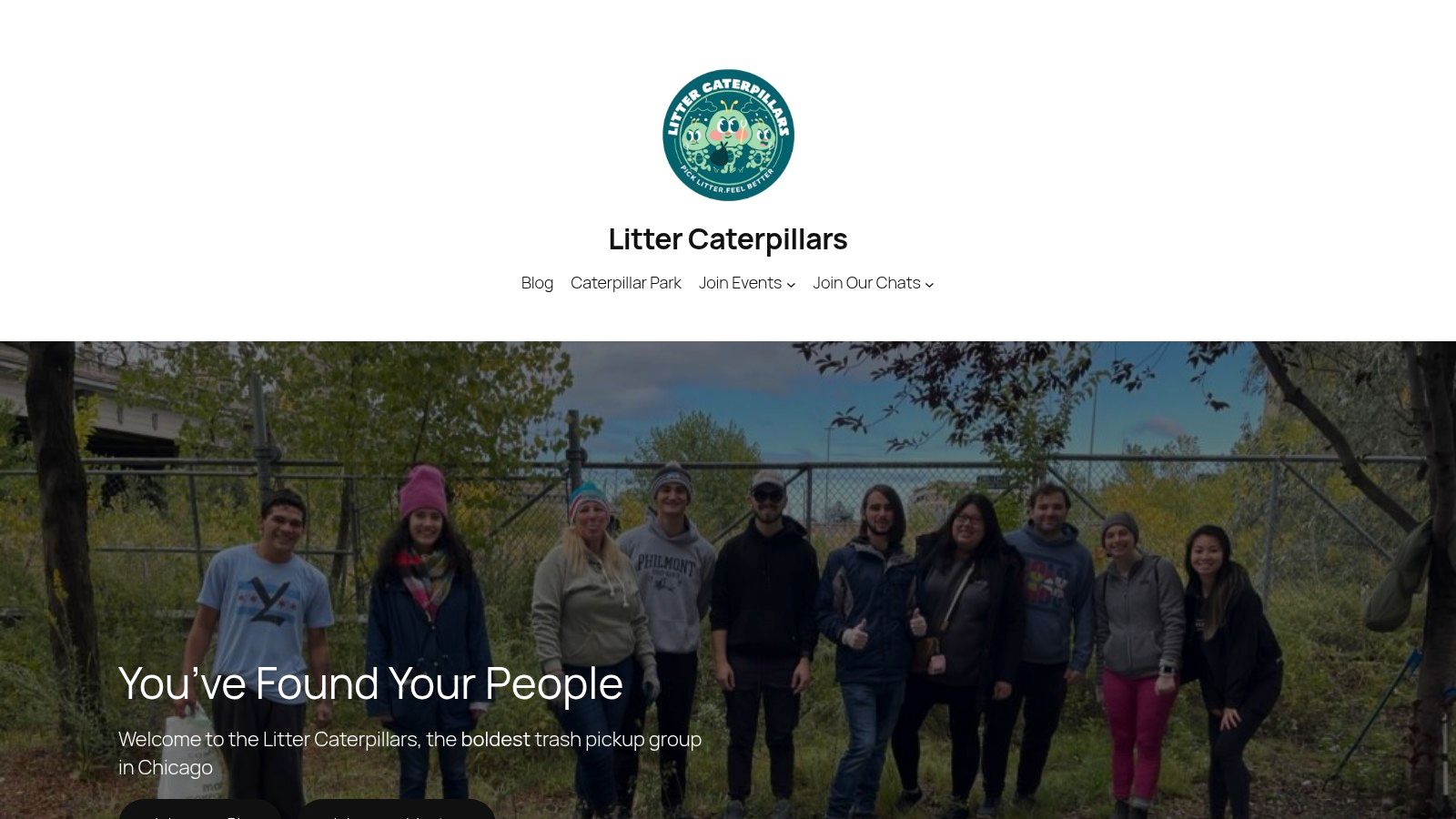
I start here because it welcomes people who are new to volunteering. On weekend mornings, Litter Caterpillars keeps things free and simple. You bring your hands, your shoes, and some grit, then head to a Chicago ward where the cleanup needs help. Because the group works across all 50 Chicago wards, you are not stuck in one polished stretch of the city. You can show up where the trash is, including blocks other crews may pass over.
One cleanup can turn a block you avoid into a block you know. That is the appeal for me. The crew uses Meetup, Pie, Instagram, and open group chats, so finding a first event is easy. The tone stays social without feeling forced, and nobody pushes donations at you. That matters when someone is still deciding whether volunteering fits their week. Even cleanup crews can think beyond the street, and brands can use sustainable production tips for apparel brands when they cut packaging and reuse materials.
Practical rule: if a group makes you feel judged before you arrive, you probably will not come back.
The crew's flags, badges, and theme song add a little color to the work. They also give people a shared language, which helps if you are shy or new in town. I would call this a good fit for students, new Chicagoans, young professionals, and anyone who wants hands-on cleanup without fundraising talk. For more details, you can read the Litter Caterpillars Meetup event page.
Pros
- Weekly rhythm: you do not have to guess when to show up.
- Citywide reach: you can clean blocks in many parts of Chicago.
- Friendly tone: the group centers friendships, not formalities.
Cons
- Outdoor effort: you deal with weather, uneven ground, and basic lifting.
- Lean structure: it feels scrappy, not like a big nonprofit with layers of staff.
2. Alliance for the Great Lakes Adopt-a-Beach
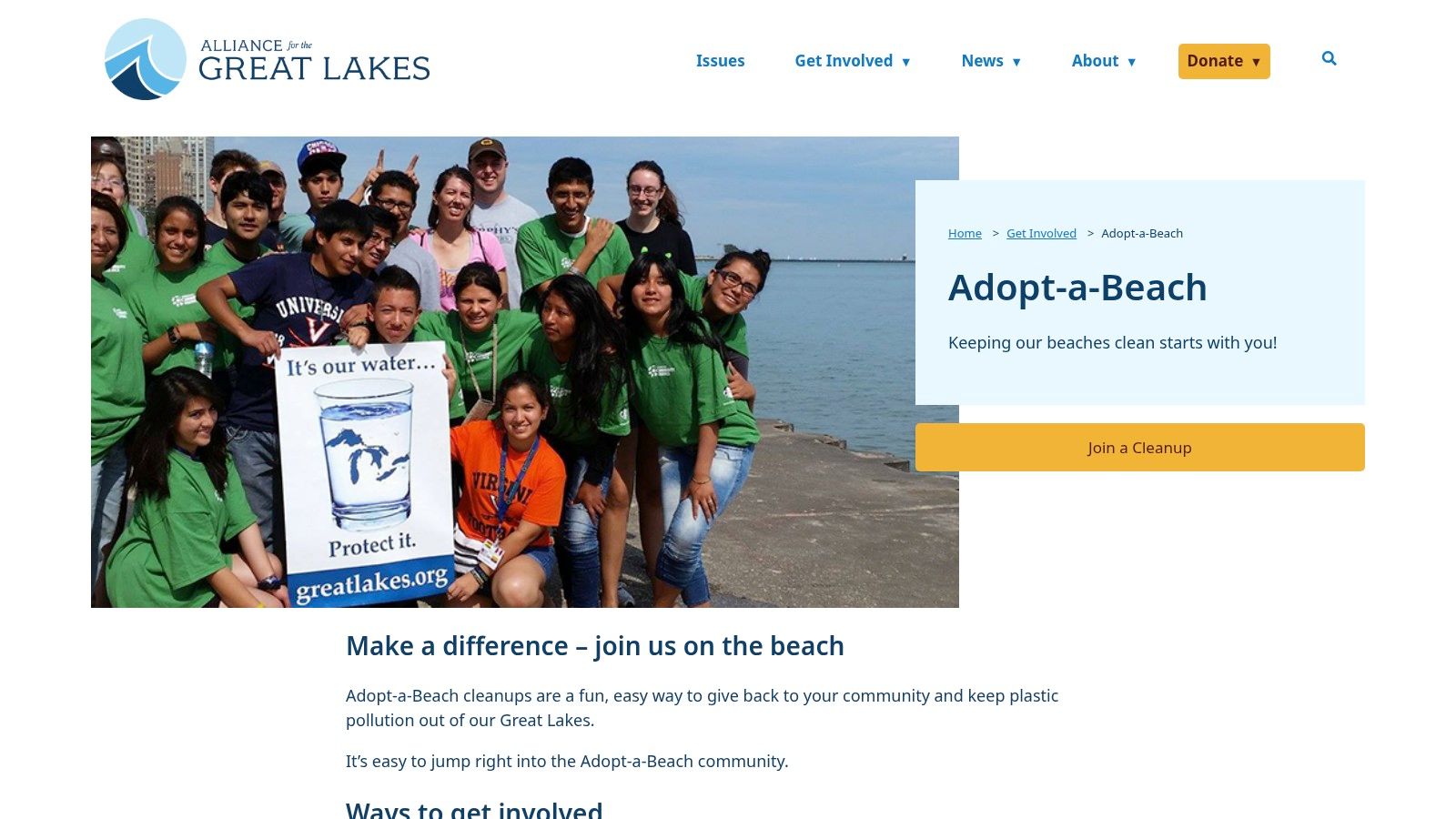
The first time I joined a shoreline cleanup, I thought I'd be picking up a few bottles and going home. Instead, I kept finding tiny bits of plastic in the sand, like someone had shaken a pepper shaker over the beach. That's why I like the Adopt-a-Beach program. It turns a regular cleanup into a clear, repeatable job with a simple goal, clean the shoreline and log what you find.
The setup is easy for groups, classrooms, and companies that want a day out on the lakefront. You can join public events or step in as a Team Leader, and the same shoreline can turn into a familiar route over time. If you want a steadier read on your work, this program gives you that. You leave with bags full, but you also leave with a record of what showed up on the beach.
Bring gloves you trust, and if you're leading a group, check your supply pile the night before. A beach cleanup feels smooth when the basics are already in your car.
The Litter Caterpillars beach cleanup page is a good nearby reference point if you're thinking about lakefront work in the same spirit. For the main program itself, use the Alliance for the Great Lakes Adopt-a-Beach page. It's a clean fit if you want a turnout-friendly event with a clear task and a shoreline you can return to again.
Pros
- Simple setup: it works well for first-time leaders.
- Public turnout: busy urban beaches make it easy to rally a group.
- Data habit: the cleanup includes standardized litter logging.
Cons
- Weather sensitivity: shoreline events depend on conditions.
- Bring your own basics: team leaders may need to supply bags and gloves.
3. Friends of the Chicago River
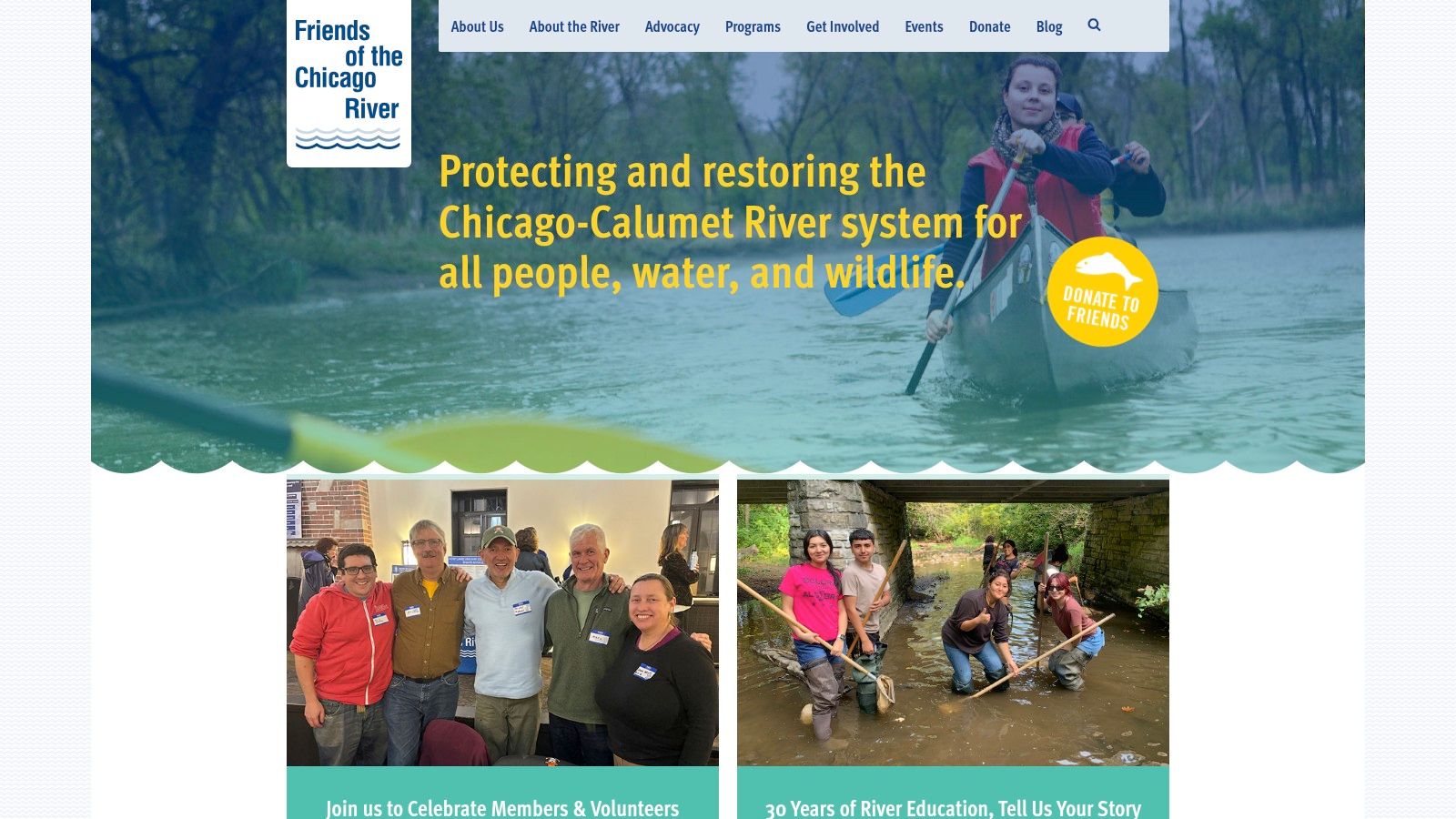
River work feels different from street work. On a sidewalk cleanup, I can see the route all at once. On the river, the water keeps moving and the job feels more like tending a line of dominoes before they fall. Friends of the Chicago River gives you that mix of riverbank cleanup, year-round stewardship, and more structured roles if you want to go deeper.
I like that the group has paths beyond trash pickup. Some volunteers join event support, some monitor wildlife, and some work through canoe-based stewardship with guides. That makes it easier to match your energy to the day. If you want to learn the river instead of just clean beside it, this one gives you that door.
The Litter Caterpillars Chicago River cleanup page is a useful complement if you want a scrappier block-by-block feel before or after trying a river group. For the main nonprofit, start at the Friends of the Chicago River website. It's a strong pick for people who like organized cleanups with a little structure and a few ways to grow into the work.
Pros
- Multiple paths: cleanup, education, monitoring, and canoe support all sit in one place.
- Good for return visits: you can build familiarity with the river over time.
- Welcoming to pairs and groups: the events don't require you to come alone.
Cons
- Some roles need training: canoe guiding and monitoring aren't instant sign-up jobs.
- Popular events fill fast: River Day attracts a lot of interest.
4. Openlands TreePlanters Grant and TreeKeepers
Tree work has a different pace from litter pickup. You don't finish in one tidy sweep. You water, mulch, prune, and then you come back later like you're checking on a friend after surgery. Openlands gives volunteers two useful paths here, a neighborhood planting route through TreePlanters grants and a more formal TreeKeepers track for people who want practical tree-care skills.
That split matters. If you want a block or parkway to look better fast, the grant route helps you plant with support. If you want to learn how to keep a tree alive through Chicago weather, TreeKeepers gives you that deeper lane. I like this model because it respects both the casual helper and the person who wants to become the neighborhood tree person.
A good way to think about it is this. Litter cleanup is a sprint. Tree care is a long walk with water bags. Both matter, but they ask different things from your schedule and your knees. You can start at the Openlands website, and if trees are your thing, the Litter Caterpillars trees in Illinois page is a handy companion read.
Pros
- Visible results: a planted tree changes a block right away.
- Skill-building: TreeKeepers gives you hands-on stewardship know-how.
- City links: the work connects with forestry partners.
Cons
- More time: certification means classes plus volunteer hours.
- Possible fee: TreeKeepers has had a tuition cost in the past.
If you like work that pays off slowly, tree care can feel surprisingly satisfying. You notice shade, leaves, and trunk size before most people do.
5. Shedd Aquarium Action Days
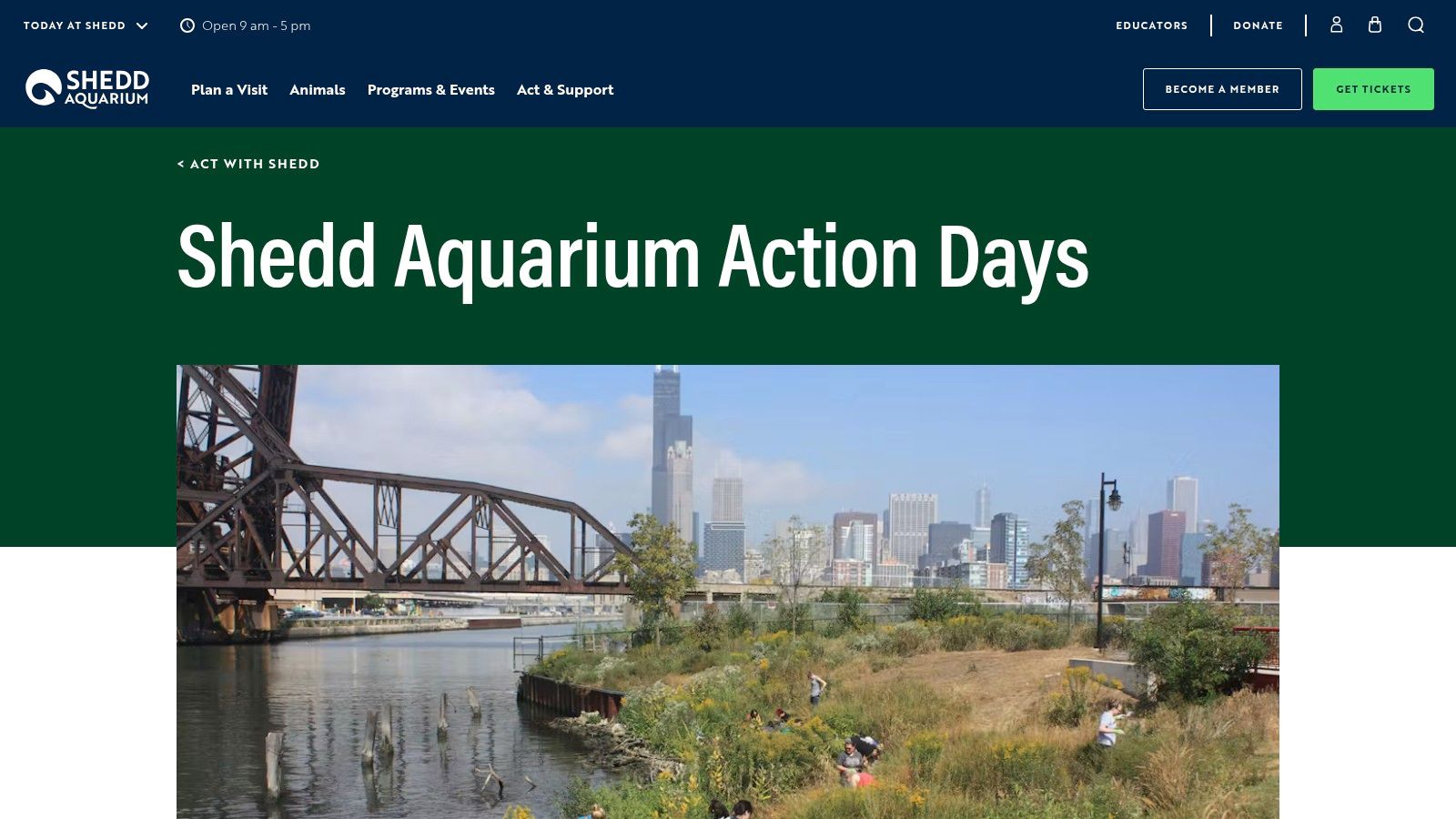
Shedd Aquarium's Action Days feel a lot like having a field guide walk beside you while you work. I like that for first-time volunteers. You're not guessing why a plant has to come out or what the habitat task is for. Staff lead the day, tools show up, and you get the ecological context without having to decode it on your own.
That setup works well if you want a cleaner landing into fieldwork. It also helps if you're the kind of person who likes a little learning mixed into the task. Some days happen along Lake Michigan, some along the Chicago River, and the youth pathway gives teens a way in too. I'd send a nervous beginner here before I sent them to a more open-ended restoration project.
The pace is more scheduled than spontaneous, which is a fair trade if you want guidance. If you like to decide on Wednesday and volunteer on Saturday, you may need to plan a little earlier than with a street cleanup. Start with the Shedd Aquarium Action Days page. The structure makes it a solid choice for people who want a guided day instead of a loose meetup.
Pros
- Staff-led: you get instruction while you work.
- Beginner-friendly: tools and direction are built into the event.
- Youth access: teens have their own pathway.
Cons
- Fixed dates: you can't always drop in on short notice.
- Popular sign-ups: spots can go fast.
6. Friends of the Parks
This is the group I think about when someone tells me they want to help, but they don't want a hard technical job. Friends of the Parks puts a lot of people to work on simple, useful tasks like litter pickup and mulching, and that can be the perfect fit for a family, a school group, or a company crew that just wants to start somewhere.
The scale is easy to feel. You can move from one park to another, and the city keeps opening up new corners for volunteers who prefer practical work over talk. I like that because a park cleanup doesn't ask you to know botany or water chemistry on day one. You just show up, grab a bag, and follow the lead of the site team.
If your schedule runs tight and your energy is better for straightforward tasks, this is one of the easiest entry points on the list. The Friends of the Parks website gives you the route in. If you want the softest on-ramp into environmental volunteer groups in Chicago, this one is hard to beat.
Pros
- Easy entry: little gear or skill is needed.
- Good for groups: families, schools, and corporate teams can all fit.
- Clear tasks: litter pickup and mulching are easy to understand.
Cons
- Less technical: if you want deep restoration work, this may feel light.
- Spring-heavy: the biggest pushes cluster around Earth Day.
I'd pick this if I wanted to bring a friend who's curious but cautious. The work is simple enough that the conversation can keep flowing.
7. Audubon Great Lakes
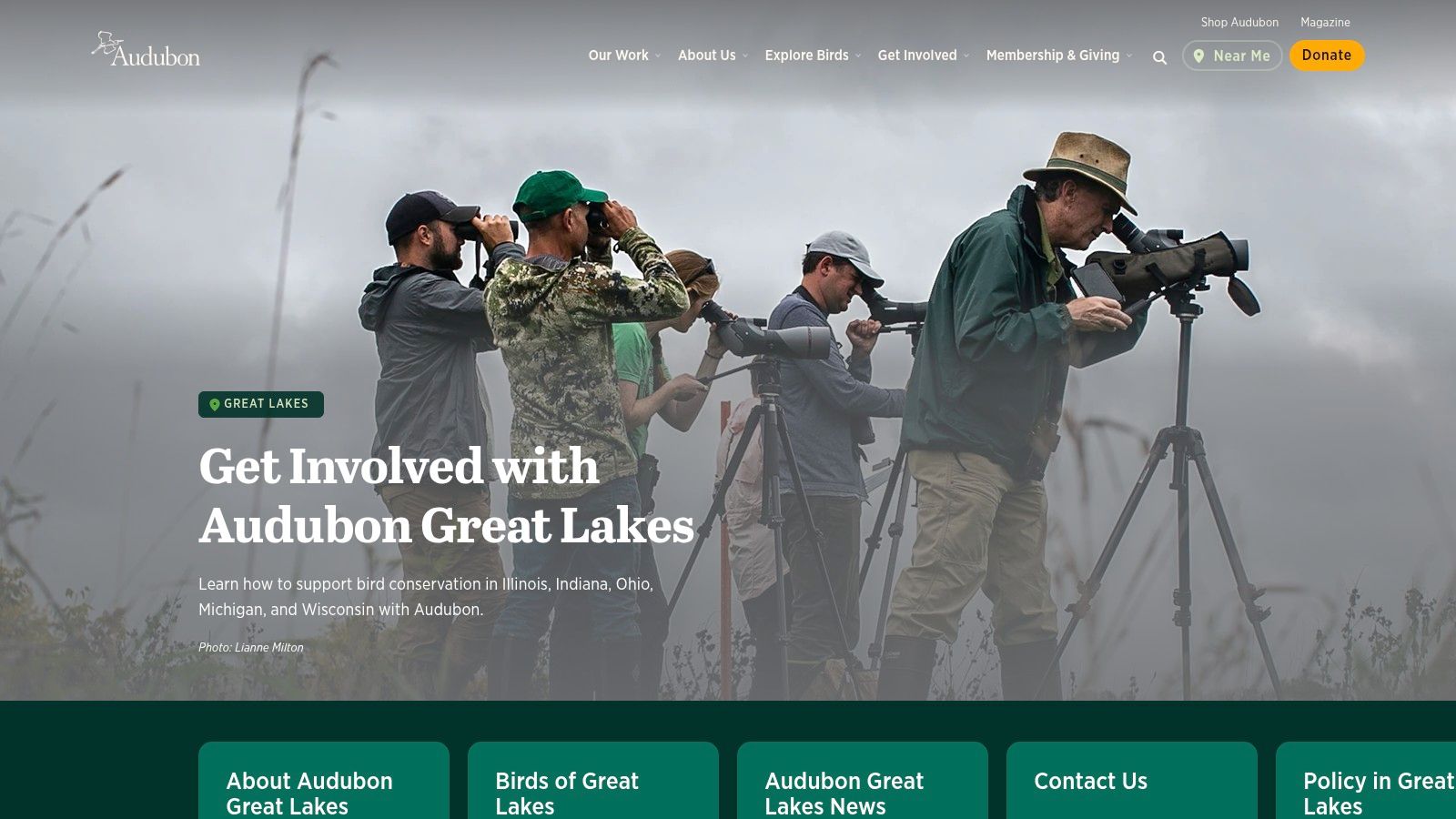
Bird work feels a little like listening for a song in a noisy room. Once you start paying attention, the whole place changes. Audubon Great Lakes gives you that kind of volunteer path, with habitat restoration, community science, and seasonal monitoring across the Great Lakes region and around Chicago.
I'd send someone here if they care about species as much as spaces. Some people want to pick up trash. Others want to know which birds use the wetland, what changes after habitat work, and where monitoring fits into the picture. This group fits that second mood well. It also gives you weekend restoration days, so you don't need a science degree to take part.
The tradeoff is travel. Some events sit outside central Chicago, so you may need to plan a ride or set aside extra time. But if your idea of a good volunteer day includes mud on your shoes and a reason to scan the marsh, this one has the right tone. The Audubon Great Lakes volunteer page is where I'd start.
Pros
- Species focus: good for bird lovers and habitat-minded volunteers.
- Different roles: you can help in the field or with monitoring.
- Seasonal rhythm: weekend restoration days are part of the mix.
Cons
- Travel can be involved: not every site sits in central Chicago.
- Fewer casual trash-only events: this is less of a quick pickup group.
Comparison of 7 Environmental Volunteer Groups
| Item | Implementation complexity 🔄 | Resource requirements ⚡ | Expected outcomes 📊 | Ideal use cases 💡 | Key advantages ⭐ |
|---|---|---|---|---|---|
| Litter Caterpillars | Low–Medium, grassroots coordination, weekly meetups | Low, basic supplies + volunteer time | High visible block-level cleanups; community building | Regular hands‑on neighborhood cleanups; social volunteering | Consistent cadence, citywide reach, volunteer-first culture |
| Alliance for the Great Lakes, Adopt-a-Beach | Low, standardized protocols, turnkey events | Medium, data sheets, gloves/bags; seasonal support | Measurable litter data feeding regional policy and cleaner shorelines | Classroom/citizen‑science projects, group or corporate cleanups | Data-driven impact; regionwide dataset for researchers/policymakers |
| Friends of the Chicago River | Medium, organized programs, some required training | Medium, equipment for on‑water work; training time | River restoration, monitoring data, habitat improvements | Waterway stewardship, volunteers wanting structured pathways | Specialized river focus; on‑water opportunities and training |
| Openlands, TreePlanters & TreeKeepers | Medium, grant application + certification steps | Medium–High, tools, training, possible tuition | Long-term canopy gains, block‑level greening, steward skills | Neighborhood tree plantings, civic forestry leadership | Formal training, city forestry partnerships, visible long-term impact |
| Shedd Aquarium, Action Days | Low, staff‑led, scheduled events with clear sign‑up | Low, supplies/instruction provided; travel may be needed | Educational restoration and cleanup with ecological context | First‑time volunteers, youth programs, expert‑led experiences | Professional guidance, strong learning component, youth access |
| Friends of the Parks (Chicago) | Low, large event coordination, simple tasks | Low, minimal gear; Park District logistics often provided | Broad park improvements and community mobilization | Family‑friendly cleanups, corporate teams, Earth Day events | Highly accessible, large volunteer mobilizations, strong community visibility |
| Audubon Great Lakes | Medium, restoration + monitoring protocols | Medium, travel to sites; monitoring tools | Species/habitat restoration and community science data | Bird/nature enthusiasts, monitoring projects, habitat work | Species-focused expertise, monitoring opportunities, conservation depth |
Pick One Group and Show Up Next Weekend
Choose one group this week and sign up for a single event. Pick the one that fits your weekend schedule, your fitness, and the kind of work you enjoy. Go once before you promise yourself anything bigger. A first shift tells you more than a month of scrolling ever will.
If none of these feel right, start tiny. Find a few friends, pick a block, a park, a shoreline, or a tree pit, and agree on a safety plan before you go out. You don't need a big launch to make a real habit. You need a place to stand, a bag, and a time on the calendar.
I keep coming back to Litter Caterpillars because it feels welcoming without being soft. The weekly routine, the free sign-up, and the friend-first energy make it easy to start and easy to return. If you want that kind of Chicago cleanup crew, visit Litter Caterpillars and pick your first weekend event.
If you want a Chicago cleanup crew that feels social, free, and easy to join, Litter Caterpillars is built for that. I'd start there if you want weekly trash pickup, real neighborhood work, and a group that cares about safety and friendship too. Visit Litter Caterpillars and take the first step next weekend.
Leave a Reply