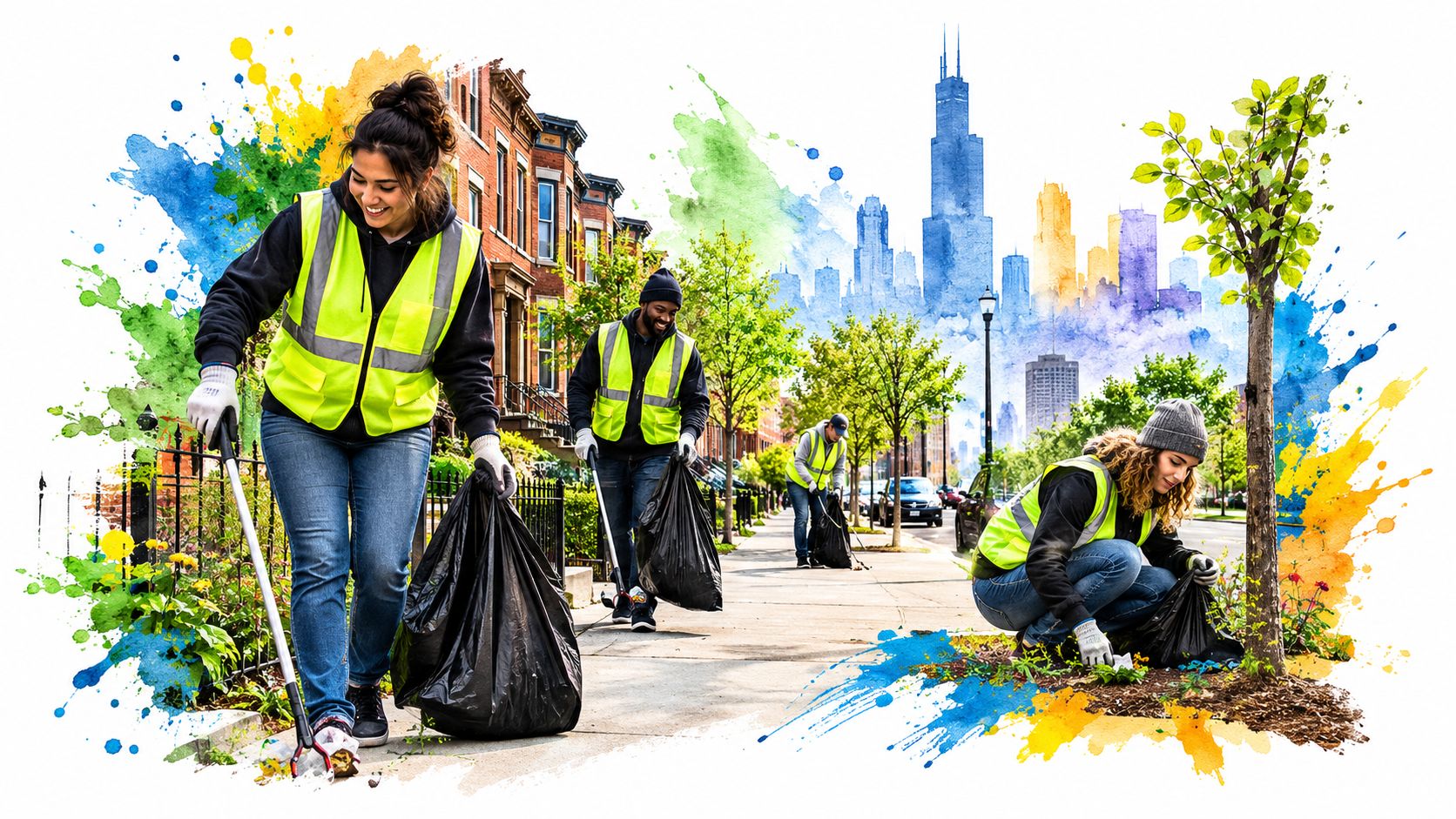
Chicago doesn't have a single city-wide adopt-a-block application. You'll need to contact your local alderman or neighborhood organization to start or join one, then agree on a defined area and a recurring cleanup schedule.
At dawn, I've stood on a Chicago sidewalk with frozen fingers, a reacher in one hand, and a black bag dragging behind me. The wind cut through my coat. The trash still waited.
Why I Pick Up Trash in a Blizzard
Our first Litter Caterpillars cleanup began with three people under a tree during a spring hailstorm. Every Uber kept canceling. We shook from the cold, laughed because the situation had become ridiculous, and waited for the sky to calm down.
Then we went back to the sidewalk.
That day taught me something strange. Picking up somebody else's mess felt easier than facing my own. A wrapper has no argument. A bottle doesn't ask you to explain your past. You grab it, carry it, and put it where it belongs.

An adopt a block program turns that small act into a promise. You choose a piece of ground. You learn its corners, alleys, storm grates, bus stops, and trouble spots. You return often enough that the place stops feeling random.
A sidewalk becomes personal
I started the group while my own life felt cluttered and disorganized. I had trouble cleaning my apartment. I held on to objects because each one carried a story. A jar of blueberry jam reminded me of Michigan. A bag of nuts reminded me of an abandoned attempt to eat better.
Those objects weighed almost nothing. To me, they felt impossible to move.
Street cleanup gave me a different kind of practice. I learned to act before I felt ready. I learned that bravery doesn't mean feeling calm. It means showing up with cold hands, bad weather, and a little fear, then doing the next useful thing.
A group doesn't need a large budget to begin. It needs a boundary, a meeting point, bags, tools, and people who will return. The District of Columbia's documented model asks each group to adopt at least two residential blocks, include alleys and both sides of the streets, clean up at least once every three months, and stay involved for two years. The DC program document gives a practical shape to the promise.
My rule: Pick a block you can keep visiting. A heroic first day means little if nobody comes back.
What You Actually Gain From Stewardship
At first, you see wrappers. Then you see patterns.
You notice the broken streetlight near the corner. You learn which alley fills with fast-food containers after the weekend. You meet the person who walks a dog before work. You start recognizing the neighbor who waves from the porch.
That attention creates useful information. Washington, D.C.'s Office of the Clean City asks organizers to record volunteer turnout, cleanup date, block coordinates, and total trash bags through its reporting application. Approved results can populate a public cleanup map through the Office of the Clean City. A volunteer event becomes a field record instead of a vague memory.
Repetition changes what people see
Durham's cost-benefit analysis reported a 15% self-reported littering rate on adopted streets, compared with 33% on non-adopted streets, a difference of 18 percentage points. The analysis doesn't prove adoption alone caused the change. Neighborhood motivation, income, enforcement, and existing conditions may differ. Still, the numbers support a clear working idea: repeated, visible care can influence local habits. Durham's Adopt-a-Street analysis explains both the service value and the limits of the comparison.
I don't clean because I expect every passerby to change overnight. I clean because a cared-for corner tells people somebody notices. That message can make careless behavior feel less anonymous.
You also gain a record of what your group needs. Count bags. Sort cigarette waste from food packaging. Note broken glass, bulky debris, and dumping. Use the same route each time. With consistent records, you can compare a block with its own earlier condition and ask for better bins, lighting, removal, or enforcement.
For a wider view of everyday habits, HYDAWAY's guide to sustainable living gives useful context around reducing waste and making practical choices. I also keep returning to Litter Caterpillars' explanation of environmental stewardship because stewardship starts with repeated behavior, not a single dramatic gesture.
The human return
You meet people while your hands smell like old coffee and wet cardboard. That helps. Conversation comes easier when everyone has a task.
You don't need to perform charity. You need to carry a bag, pass a grabber, and keep your word. In a cold city, a block can become a warm spot because people make it one.
How to Find or Start a Program in Chicago
Chicago doesn't have one central page where you click a button and receive a block. Start with the people who already work in your ward.
Begin with your alderman's office
Call or email your local alderman and say you want to start or join an adopt a block program. Ask who handles sanitation coordination, neighborhood cleanup requests, permits, and bag collection. Your ward office may connect you with a neighborhood association, community group, or local advisory body.
Bring a simple proposal:
- Choose a boundary: Name the streets, alleys, sidewalks, or public space you want to maintain.
- Set a rhythm: Pick a recurring day and decide who coordinates each visit.
- Clarify disposal: Ask where filled bags should go and who will collect them.
- List hazards: Note traffic, illegal dumping, broken glass, sharps, or difficult access.
- Invite residents: Let people living nearby decide what improvement should come first.
The Chicago Department of Streets and Sanitation can help you confirm city contacts and disposal details. Don't promise volunteers a smooth process until you know what happens after the bags leave their hands.
Start small, then make it real
If no group exists, ask a few friends to join you. Walk the proposed route before the first cleanup. Take notes. Find the nearest safe meeting point. Decide who carries supplies and who reports hazards.
You can use a simple paper sheet or phone form. Record the date, names or headcount, route, time spent, bag count, approximate volume, and litter categories. The goal isn't paperwork for its own sake. The goal is to know whether your effort reaches the same places and whether conditions change.
This volunteer trash pickup guide can help a new group think through turnout, tools, and event flow. Be direct with your invitation. Tell people where to meet, how long the work may take, what to wear, and what your group won't touch.
Trust grows when nobody has to guess.
Staying Safe While You Serve
A volunteer who gets hurt may never return. I care more about that than a full bag count.
Charleston's program requires at least four cleanups per year, asks groups to report results, bans alcohol and intoxicated participants, and tells volunteers to wear gloves, sunscreen, long pants, and long sleeves. It also calls for a nearby first-aid kit and warns people away from syringes, condoms, broken glass, insects, snakes, fire ants, and poisonous plants. Charleston's Adopt-A-Block rules give a useful baseline for group leaders.
Build a stop-work culture
The National Environmental Education Foundation recommends using the heat index, not temperature alone, when planning outdoor events. At an 80°F heat index, its guidance calls for slower work, frequent breaks, hydration, shade, sunscreen, and consideration of a cooler time or postponement. The NEEF outdoor-event guidance also recommends activity assessment and risk-mitigation policies.
I apply the same judgment in winter. A blizzard can make a cleanup unsafe. High wind can turn loose material into a hazard. Ice can send a volunteer into traffic. Canceling protects the group's future.
Practical rule: “Too dangerous today” is a complete reason to stop.
Use grabbers instead of bare hands. Wear high-visibility clothing near roads. Pair volunteers so nobody works alone in an isolated alley. Keep water, first aid, charged phones, and emergency contacts available. For route decisions after dark or in unfamiliar places, this practical route planning guide gives useful considerations.
Give every person a safe job
Not everyone needs to lift bags. One person can record data. Another can photograph dumping without touching it. Someone else can greet residents, watch the route, or sort clean equipment.
Teach children to stay with an adult. Tell everyone to leave sharps, chemicals, unknown liquids, and suspicious containers alone. Mark the location and report it through the right city channel.
Before each event, review the Litter Caterpillars volunteer safety checklist. Your volunteers should leave tired, maybe dirty, and still willing to come back.
What Real Commitment Looks Like
A one-day cleanup clears a surface. A recurring crew learns what returns.
Minneapolis asks volunteers to maintain all four sides of a block, plus the alley when one exists. The work includes public sidewalks, curbs, and boulevards on both street and alley sides. Volunteers stay for two years and clean at least four times each year. The city supplies bags and cotton gloves, and volunteers place bagged litter beside their garbage cart for collection. Minneapolis' Adopt-a-Block rules make the work feel like tending a small outdoor garden.
Washington, D.C. uses a larger service area in its program materials. Groups adopt at least two square blocks, cover alleys and both sides of every street, hold a community cleanup at least once every three months for two years, and may also handle weekly litter pickup. The DC Adopt-A-Block program document shows how a program can combine light maintenance with a larger quarterly day.
Minimum Commitment Requirements in Major Cities
| City | Area Requirement | Frequency | Duration |
|---|---|---|---|
| Minneapolis | Entire block, all four sides, plus alley when present | At least four cleanups each year | Two years |
| Charleston | Adopted area defined by the group and city agreement | At least four cleanups each year, with results reported | Two years |
| Washington, D.C. | At least two square blocks, including alleys and both sides of every street | Weekly litter pickup described in program materials, plus a cleanup at least every three months | Two years |
| Vancouver | Adopted blocks and cleanup sites within the city program | Recurring cleanups paired with annual litter audits | Program reporting period |
Vancouver's audits tracked litter type and quantity. The city reported a 31% reduction in cigarette butts and other debris as a share of total small-litter items compared with its 2015 baseline survey. Vancouver's zero-waste report connects recurring cleanup work with measurement.
The point isn't to copy one city's rules exactly. It is to stop calling a single Saturday a long-term program.
How Litter Caterpillars Changed Our Blocks
We began with three people under a tree, soaked by hail and watching ride after ride disappear. We could have gone home. Instead, we picked up trash as soon as the weather gave us a little room.
Since then, we've met every week. Rain, heat, snow, and ugly wind. We work across Chicago's 50 wards, and we take on streets, alleys, parks, highways during event shutdowns, and places where illegal dumping has piled up. The work can feel rough. The laughter keeps it moving.
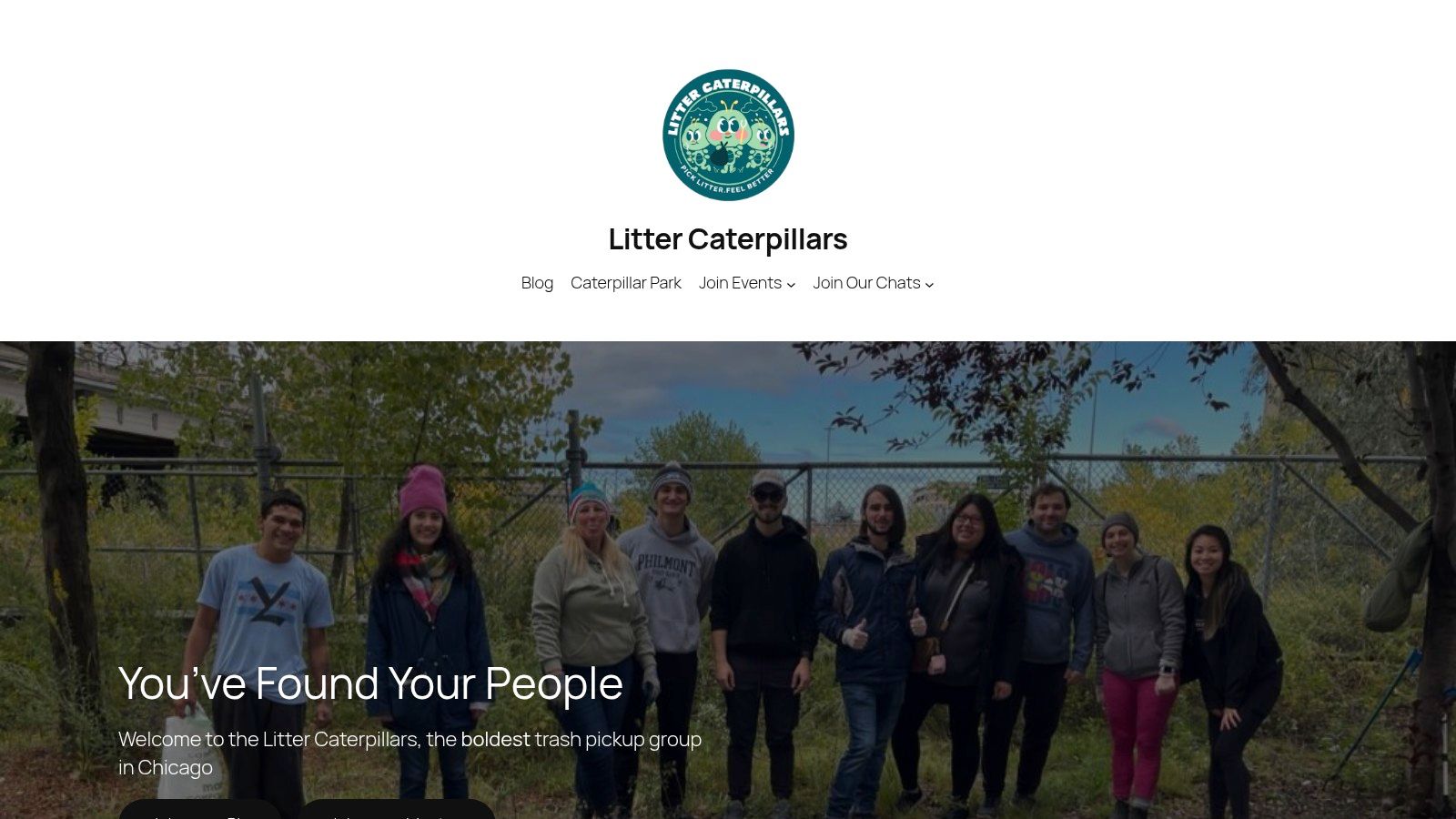
We don't ask new volunteers to solve the whole city. We ask them to arrive, learn the route, and help with the next bag. Weekend mornings work well for us. People come ready to give, and the group has time to talk before the day gets loud.
From empty lot to Caterpillar Park
We won an empty lot at auction in Englewood. Now we're building Caterpillar Park from the ground up.
That work changed how I think about block adoption. A cleanup can become a park project. A park project can become a place where neighbors recognize each other. The first step still looks ordinary. Someone picks up a bottle near a curb.
We use flags, badges, and a theme song because service can carry joy. Pride helps people return. Friendship does the rest.
A good group records the work too. Washington, D.C.'s reporting model tracks turnout, dates, coordinates, and bags. We can adapt that idea to Chicago by recording route coverage, crew size, time, volume, and material types. EPA-supported fieldwork in Wichita documented 1,765 litter items larger than four inches across 12 municipal parks and separately collected 30 gallons of smaller material. Those categories show why one bag count can't tell the whole story.
Here's a look at the spirit that keeps us moving:
You can start with one corner. Bring one friend. Keep coming back until the block knows your footsteps.
Cleaning Fairly in an Unequal City
The easiest block isn't always the right block.
If I only clean near my own home, I may polish the places with the most visibility while other residents keep living beside illegal dumping, weak lighting, overflowing bins, or heavy traffic. Equal hours can preserve unequal conditions when some blocks carry a much heavier burden.
Chicago's Environmental Justice Index and Cumulative Impact Assessment combine pollution exposure, sensitive populations, and socioeconomic conditions. The city's Environmental Justice and cumulative impact information gives groups a stronger starting point than convenience or a good photo backdrop.
Let residents define the work
Use several signals when choosing a location:
- Resident requests: Ask people who live on the block what they see each day.
- Litter observations: Record repeated dumping, cigarette waste, food packaging, and bulky debris.
- Public data: Review sanitation concerns, transit access, school proximity, and environmental justice indicators.
- Local partnerships: Work with block clubs, schools, churches, businesses, and tenant groups.
- Clear reasons: Publish why you selected the block and what the group plans to measure.
A resident may ask for cleanup. Another may ask for better bins or lighting. Someone else may want illegal-dumping documentation rather than a volunteer crew arriving once and leaving.
Chicago's planned trash-trap work also points toward prevention. Researchers report that 85% of collected waterway garbage is consumer-based plastic, much of it food packaging, bottles, wrappers, and takeout containers. That kind of finding can change what you do next. You may need outreach near a food corridor, better disposal points, or a city service request instead of endless pickup.
I want residents to decide what “clean” means on their own block. Volunteers bring labor and attention. Neighbors bring lived knowledge. Put those together before you choose a route.
A fair adopt a block program doesn't spread identical service everywhere. It sends more help where conditions demand more help, then measures whether residents feel the difference.
Litter Caterpillars organizes recurring weekend cleanups across Chicago, including block-by-block work in all 50 wards, with a focus on safety, friendship, and steady service. Visit Litter Caterpillars to join a cleanup, meet the group, or find out how to turn your own block into a place people care for together.
Leave a Reply