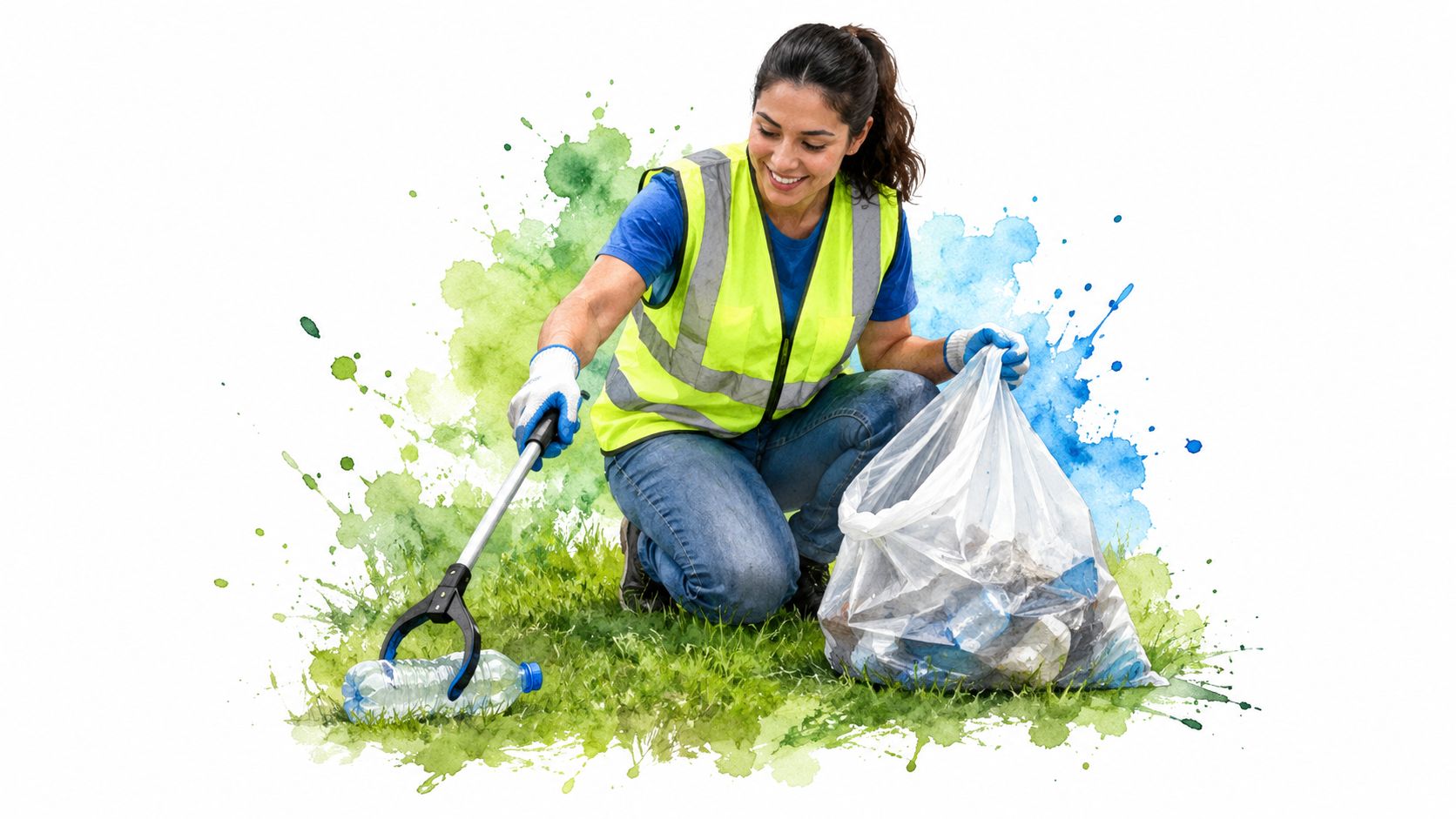
You've probably seen the same scene on your last walk through a local park: a drink container under a bench, snack wrappers caught in the grass, and a plastic bag pressed against a fence. You think, “Someone should clean this up,” then keep walking because you don't know who organizes the work or what you'd need to bring. Becoming a park cleanup volunteer is simpler than many expect, but a good experience depends on more than showing up with a trash bag.
You need the right event, clear instructions, suitable clothing, and a plan for hazards that don't belong in a volunteer's hands. The work can be muddy, repetitive, and occasionally unpleasant. It can also give you a practical way to improve a place you use, meet people who care about the same streets and trails, and see exactly what your time accomplishes.
Why You Want to Volunteer for Park Cleanups
A park cleanup often begins with a small irritation. You notice litter beside the walking path, then spot more around the playground or picnic tables. One person may start by picking up a few pieces during a walk. Another may sign up for a Saturday event because they want outdoor service hours. Someone else may want to spend a morning with neighbors instead of staring at a screen.
Those reasons don't need to sound heroic. They need to get you out the door.
Keep America Beautiful reports that more than 400,000 volunteers logged over 2.9 million volunteer hours across more than 64,000 events last year. Its latest litter study also found 35 billion pieces of litter on the ground in the United States, about 96 pieces per American. You can read the organization's current litter and cleanup information for the full context. A local crew may collect only what fits in its assigned area, yet that work still answers a problem people can see immediately.
What you actually gain from showing up
The first benefit is practical. A clean path is easier to use, a clear drainage area handles fewer obstructions, and a park feels easier to care for when people can move through it without stepping over waste. You also learn how public spaces work. You begin to notice where litter gathers, which bins overflow, and which edges need repeated attention.
The second benefit is personal. A cleanup gives you a defined task with a visible finish. You fill a bag, walk a route, and leave with evidence of what you did. For more ideas about the personal side of service, explore these health benefits of volunteering outdoors.
Practical rule: Choose a reason you can repeat. One pleasant cleanup feels good, but a manageable routine changes how you relate to the park.
A cleanup won't fix every cause of litter, and it won't always feel rewarding while you're doing it. You may spend twenty minutes pulling small scraps from wet grass while a fresh wrapper blows into the area behind you. I still find the work worthwhile because the task stays honest. You pick up what you can reach, record what you collect, and leave the next crew a cleaner starting point.
How to Find and Sign Up for a Park Cleanup Event
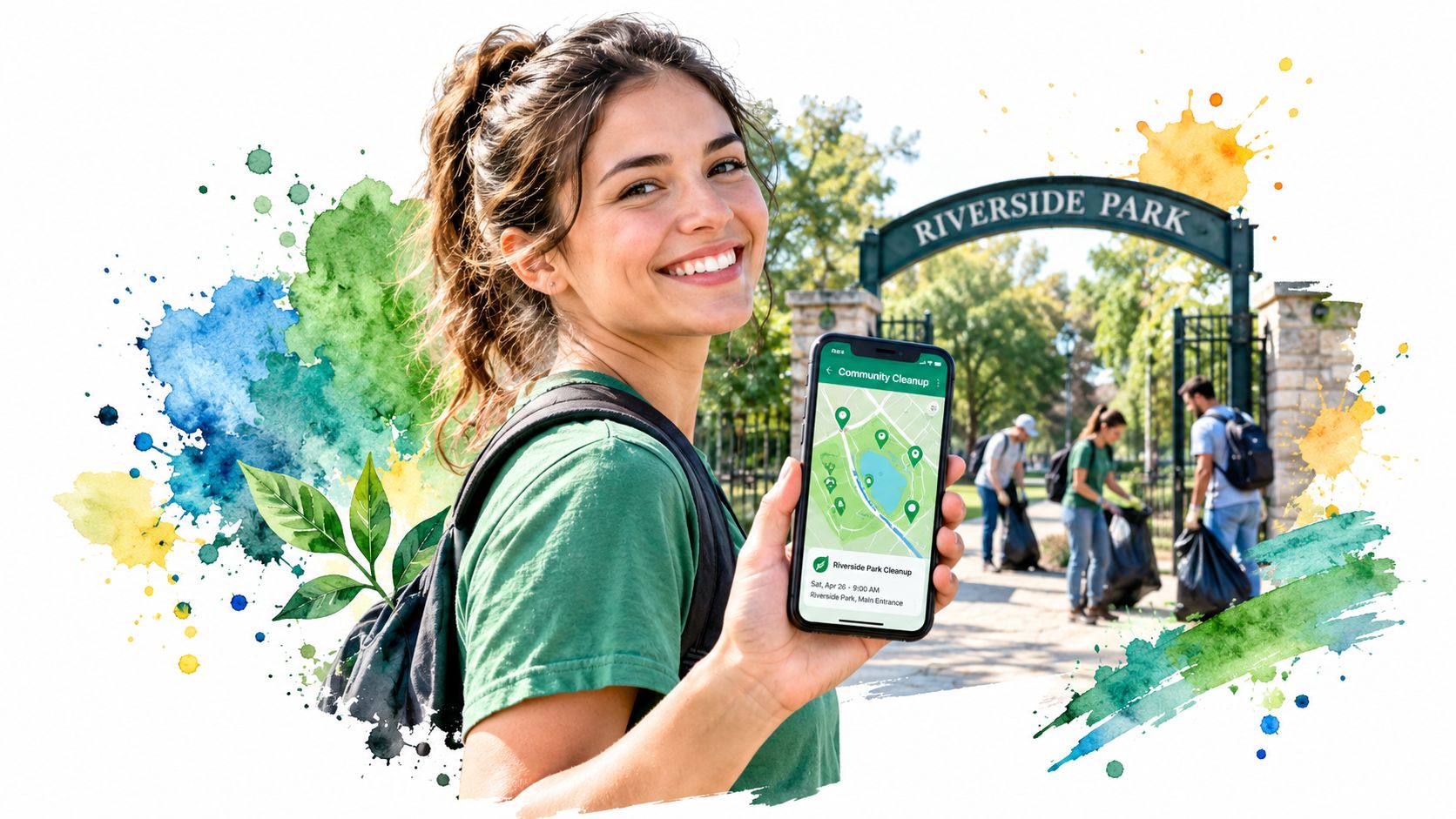
Start with the organization that manages the place you want to clean. Search the local park district, municipal parks department, neighborhood association, or “friends of” group. These organizations usually publish the meeting point, date, duration, age rules, task list, and registration instructions. You can also search environmental volunteering opportunities near you when you want several options in one place.
Check the event before you register
Read the event page carefully. A park cleanup may involve litter pickup, raking, trail clearing, planting, or invasive plant removal. Choose a task you can handle physically and a location you can reach without rushing. If you need service-hour documentation, ask the organizer before the event whether they provide sign-in records or completion confirmation.
Registration helps organizers plan supplies and crew assignments. Some events provide gloves, bags, grabbers, or rakes, while others expect you to bring personal protective equipment. A Chicago Park District Earth Day page says materials are provided and welcomes all ages, but conditions vary by organizer, so check the specific event rather than assuming every cleanup works the same way.
Before you submit your name, look for:
- Meeting details: Confirm the exact entrance, not only the park name. Large parks may have several access points.
- Weather policy: Find out whether the group cancels for storms, high heat, or unsafe ground conditions.
- Safety contact: Save the coordinator's contact information in case you arrive late or cannot find the crew.
- Task boundaries: Ask whether volunteers will work near roads, water, steep slopes, or areas with restricted access.
- Supply information: Check whether the organizer supplies bags, gloves, tools, water, and first aid.
Make attendance easy
Put the event on your calendar as soon as you register. Set out long pants and closed shoes the night before, check the forecast, and plan your route with extra time for parking or public transit. If you can't attend, cancel promptly so another person can take the place and the organizer can adjust the crew list.
Your first event should feel manageable. A short, clearly organized cleanup close to home is often a better starting point than a remote site with uncertain access and complicated terrain.
What Different Volunteer Groups Offer
Volunteer groups differ in the amount of structure they provide. A municipal parks department may assign a coordinator, provide tools, and direct you to a specific trail segment. A neighborhood group may meet at a familiar corner, divide into pairs, and rely on members to bring gloves and bags. A formal nonprofit may schedule recurring workdays, track hours, and train volunteers for more specialized tasks.
Choose based on the work you want and the support you need.
| Group Type | Focus Area | Structure | Notable Features |
|---|---|---|---|
| Municipal parks program | Parks, trails, playgrounds, and public grounds | Registration, assigned meeting points, staff or site coordinators | Public equipment, defined tasks, and access to park staff |
| Neighborhood cleanup group | Local streets, pocket parks, and shared spaces | Informal or recurring meetups | Flexible attendance and close knowledge of local problem areas |
| Highway or roadside program | Roadsides and routes near vehicle traffic | Route assignments and stricter visibility rules | Safety vests, bright clothing, and traffic-aware boundaries |
| Park friends group | One park or a small group of nearby parks | Volunteer-led planning with recurring workdays | Local relationships, seasonal maintenance, and park-specific knowledge |
| Chicago volunteer-led group | Parks and public spaces across city neighborhoods | Recurring weekend events and open group communication | Supplies for cleanup work, neighborhood coverage, and social connection |
A highway group may suit someone who wants a defined route and doesn't mind wearing high-visibility clothing. A park friends group may suit a parent who wants to help at the same playground each season. A neighborhood crew can work well for someone who wants flexibility and already knows where litter collects.
Ask what “organized” means
A polished registration page doesn't always mean the event has strong field coordination. Ask who gives the safety briefing, how the group handles full bags, and what happens when someone finds a sharp object. A casual group can run an excellent cleanup if one person accepts responsibility for boundaries, supplies, and final collection.
An organization may also use identity and social activities to help people return. Some crews include badges, flags, songs, outdoor games, or informal meals after the work. Those extras don't replace safety or planning, but they can make a cold morning easier to remember.
The right fit comes down to clear expectations, reasonable risk, and a task you can repeat. You don't need the largest group in town. You need a group that treats volunteers like people rather than free labor.
What to Bring and Wear on Cleanup Day
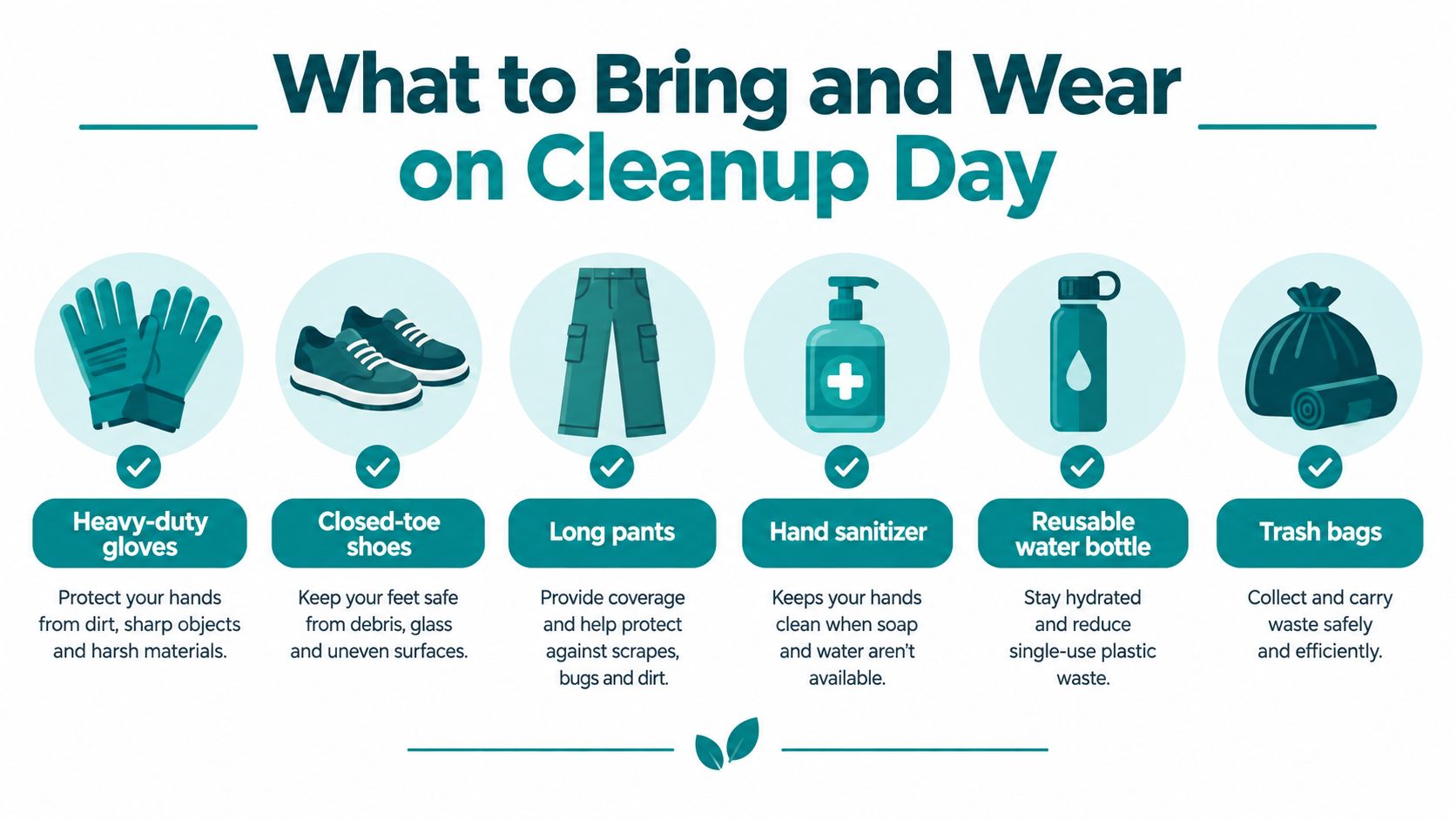
Wear clothing you can kneel in, wash easily, and sacrifice if the ground is wet. Published park cleanup guidance recommends gloves, thick-soled closed shoes, long pants, and long-sleeved shirts. Bright colors or a safety vest matter when the work takes place near a roadside, where drivers may not expect people on foot. You can review a detailed park cleanup clothing and equipment guide before you attend.
Pack for ordinary problems
Bring water, weather protection, and a small personal first-aid kit if the organizer doesn't provide one. Hand sanitizer helps when you finish a section, though it doesn't replace proper handwashing. A hat, sunscreen, rain shell, and spare socks can make the difference between finishing comfortably and leaving early.
Use sturdy gloves that fit your hands. If you want a coordinated option for a group, a promotional work gloves pair can help organizers identify volunteers while providing hand protection. Ask the organizer whether gloves are supplied before buying anything, because some events provide all basic gear.
Pack only what you can carry without getting in the way. A phone in a sealed pocket, water, tissues, and a small snack usually matter more than a large collection of tools. For a broader equipment checklist, use this guide to trash pickup equipment.
Know what stays on the ground
You should pick up ordinary litter only when you can identify it and handle it safely. Don't touch syringes, needles, jagged glass, dead animals, urine bottles, suspected toxic material, or anything extremely heavy. A safety guide for park maintenance volunteers gives the same basic limit: leave suspected hazardous or unclear objects for trained staff.
Stop work and tell the coordinator when you find a hazard. Keep other volunteers away from the area, remember its location, and let the organizer contact parks staff or sanitation workers. Don't carry an unknown item to the nearest bin because the group needs to finish the route.
Work with a partner whenever possible, stay within park hours, drink regularly, and don't fill bags beyond a manageable level. One county safety guide recommends filling bags no more than two-thirds full so volunteers can tie and move them without straining. Weather also sets a boundary. Leave when lightning, dangerous heat, flooding, or severe conditions make the site unsafe.
What Happens During a Park Cleanup Event
Most well-run events begin with a short briefing. The coordinator explains the site, assigns boundaries, reviews protective equipment, identifies hazards, and tells you where to place filled bags. Listen even if you've cleaned parks before. Every location has different slopes, water edges, traffic patterns, and disposal rules.
The EPA-backed Wichita park study provides a useful operating model. Across 24 volunteer data-collection events at 12 municipal parks, volunteers removed 1,765 pieces of litter larger than 4 inches and 30 gallons of smaller material. The site coordinator handled safety instructions, boundary control, and confirmation that volunteers completed a final removal check. See the Wichita litter study report for the study details.
Follow the site instead of wandering
A coordinator may divide the park into sectors and assign one person or pair to each area. Walk the boundary first, then work inward so you don't leave a strip untouched. Keep bags at a collection point when they become awkward to carry, and record counts or weights when the organizer asks for them.
Standardized logging makes one event easier to compare with the next. Write down the sector, number of bags, weight if available, and unusual hazards. The point isn't to turn a Saturday cleanup into paperwork. It helps the organizer see which areas need another visit and whether the crew cleared its assigned ground.
Field habit: Finish with a slow sweep. Fast picking fills bags, but a final walk catches the small wrappers and bottle caps people miss while looking down.
At the end, return tools, report hazards, and confirm that every assigned sector has received its final pass. If the group has time for social activities afterward, a few outdoor games for families at the park can give children something to do while adults finish sorting supplies.
The Bigger Picture Do Cleanups Actually Help
Yes, cleanups help. They remove litter people can trip over, touch, or carry into waterways. They also give park managers better information about recurring problem areas. The honest limit is that a cleanup treats visible waste after it appears. It doesn't automatically change bin placement, product packaging, enforcement, dumping behavior, or collection schedules.
The scale of volunteer work makes that limit easier to understand. Keep America Beautiful reported more than 2.3 million volunteers, 621,000 acres improved, and 18 million pounds of litter collected across over 60,000 cleanup events in a 2025 summary. The same summary said litter declined from 152 pieces per person in 2020 to 96 pieces per person in 2026. Review the published cleanup summary and litter-study discussion for those figures.
Measure the work without pretending it solves everything
A full bag can feel like proof that the problem is getting smaller. It proves that your crew removed that bag. Those are different statements. A park may look clean after Saturday's event and collect more waste before the next weekend, especially near entrances, food areas, transit stops, or overflowing bins.
Recurring work gives you a clearer picture than a one-time photo. Track the same route, use the same categories, and record weights when possible. North Carolina's 2024 litter report recorded 1,053,495 pounds from Adopt-A-Highway volunteers, 154,890 pounds from other volunteers, and 12,656,160 pounds across all litter programs. In Washington, the Department of Ecology estimates that parks, recreation areas, and rest areas collect 11.6 million pounds of litter each year statewide. Those figures show why a volunteer group needs a repeat schedule rather than a single annual push.
Performance can change even when attendance looks similar. Burlington County reported 340 volunteers and 1,020 hours removing 2,160 pounds in 2023, compared with 351 volunteers and 1,053 hours removing 4,780 pounds in 2022. The difference can come from site conditions, litter density, weather, access, and bag handling. Count the work, then use the record to decide where to return.
Your cleanup matters most when you pair it with a practical request. Tell the parks department where bins overflow, ask for safer disposal systems near problem areas, report illegal dumping, and return to sites that collect litter quickly. Volunteers can remove what sits on the ground today. Public agencies, businesses, and residents must also reduce what reaches the ground tomorrow.
If you want a free, hands-on way to clean parks and public spaces in Chicago, Litter Caterpillars organizes volunteer workdays across all 50 wards, with cleanup gear such as bags, gloves, and trash grabbers supplied for participants. Visit the group to find an upcoming event, meet other volunteers, and help clean or build up Caterpillar Park.
Leave a Reply