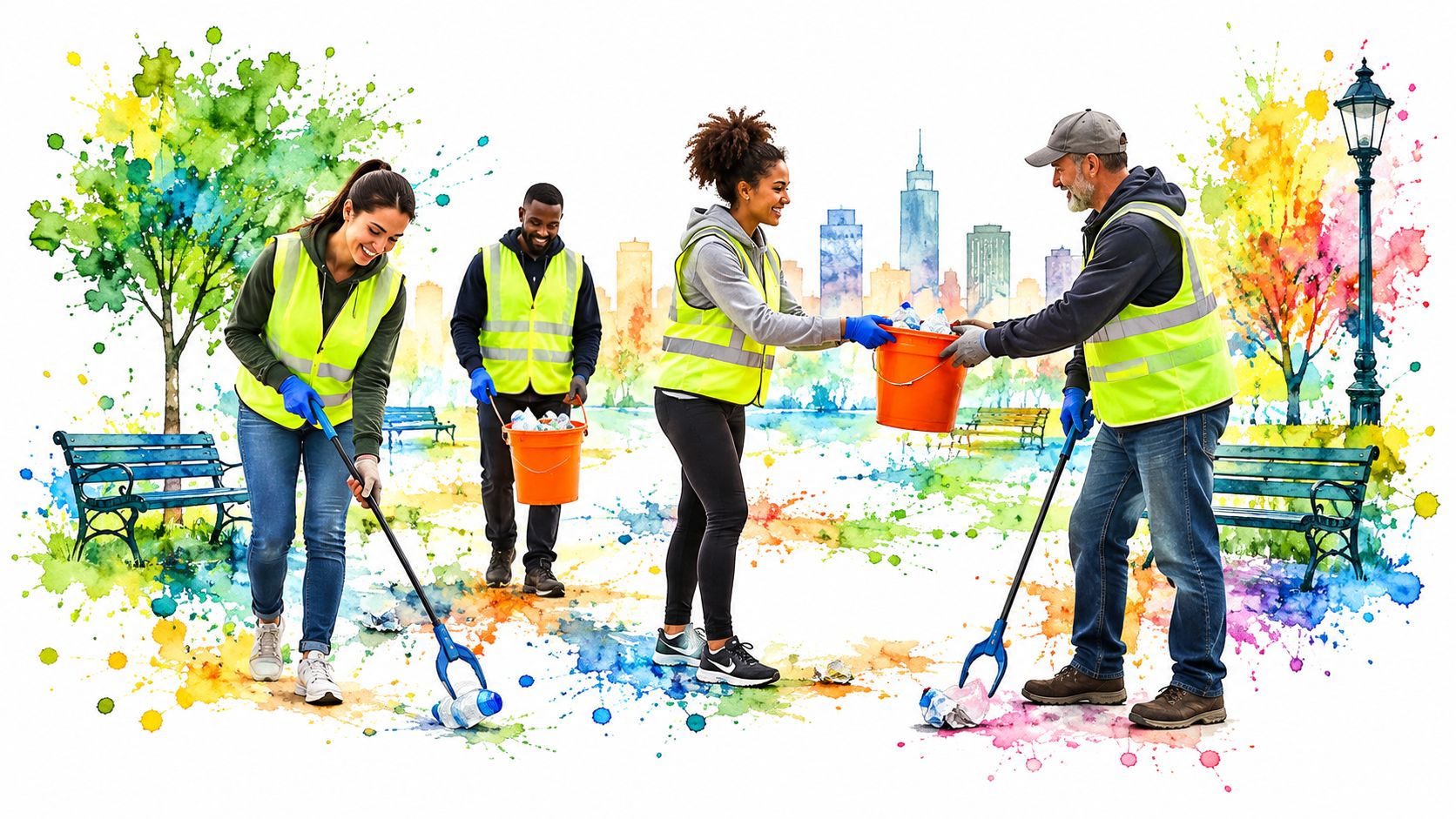
At 7:30 on a Chicago Saturday morning, I hand an orange bucket to a new volunteer, point toward the alley, and watch the group split into pairs. By 10, the pop-up tent holds full bags, dusty grabbers, and a crew already asking where we're cleaning next.
What a Weekly Cleanup Looks Like Before You Build One
The first arrivals gather at a familiar corner. Someone brings coffee. Someone else checks the weather and counts gloves. I pass out orange buckets, grabbers, bags, and safety vests while people trade quick introductions.
Then we move.
Two volunteers take the alley on the east side of the block. Two head west. The grabbers make a light scraping sound against the pavement as they catch bottle caps, wrappers, food containers, and scraps of plastic tucked beneath parked cars. The work has a rhythm. Bend, pinch, lift, bag. Talk, laugh, point, keep moving.
A homeowner opens the front door and offers lemonade. One volunteer switches to a smaller bag because the large one keeps dragging through the narrow passage. A child watches us sort the pile and asks why we leave recyclables on the curb. I explain that our disposal plan depends on the city and the site, so we separate what we can and never make promises we can't keep.
At 10, we meet beneath the pop-up tent. We count bags, record the route, photograph the pile, and check that nobody has a cut, sore back, or overheated face. The numbers matter, though they never tell the whole story. The same corner looks different when people see us return every week.
Our Chicago group cleans across all 50 wards every week, and we've learned that consistency carries more weight than a dramatic one-day push. The International Coastal Cleanup shows how far volunteer action can reach. In its 2023 report, nearly 470,000 volunteers across 97 countries collected more than 4,000 tons of trash and plastics, recording 15,519,392 items across 15,508 miles of coastline and waterways (Ocean Conservancy report).
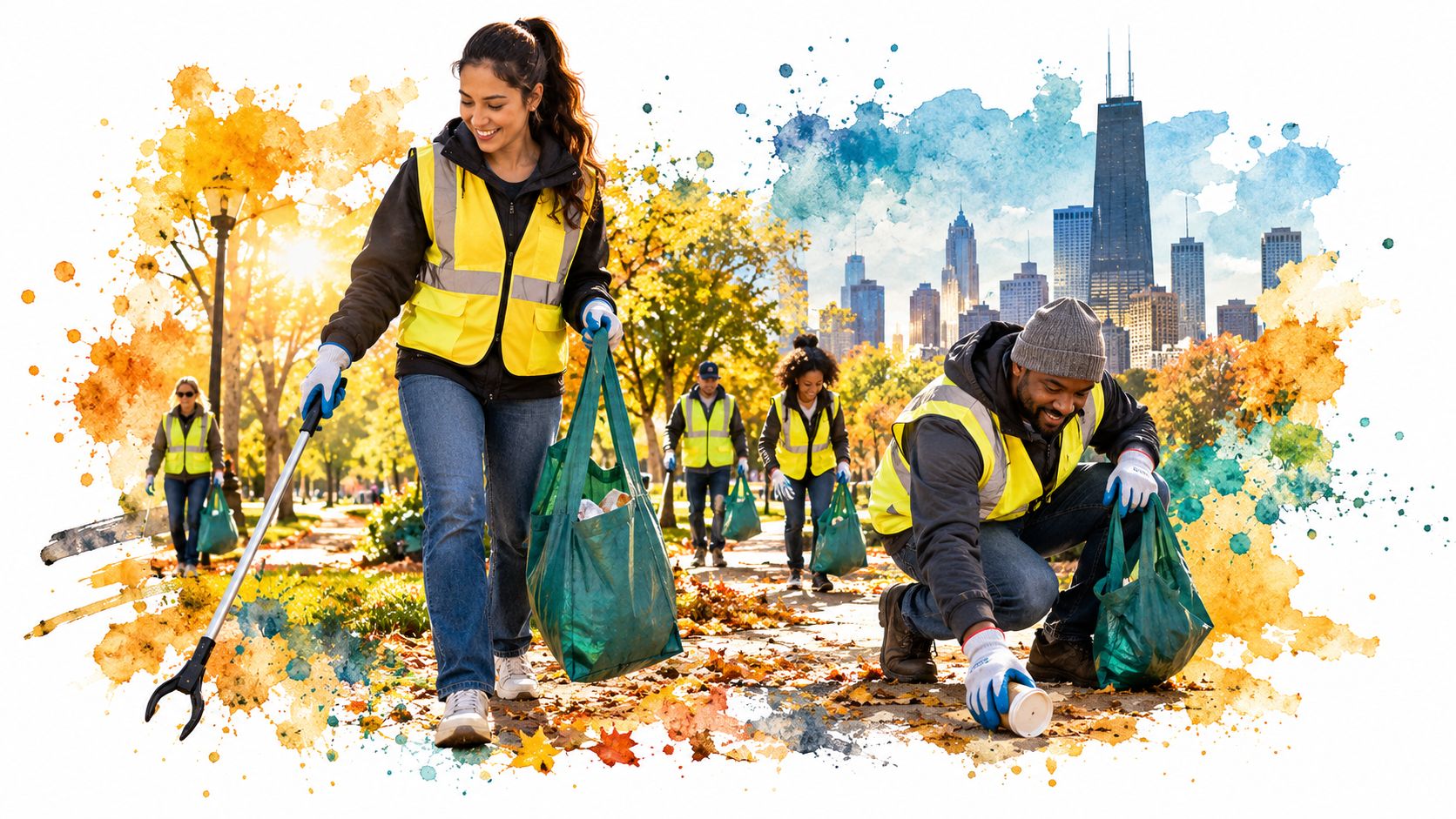
That scene contains the whole machine in miniature: a meeting point, supplies, routes, captains, safety rules, records, and a reason to return. The rest of this guide breaks down the choices behind it.
What a Community Litter Cleanup Program Actually Is
A community litter cleanup program is a recurring volunteer group that removes litter from defined neighborhoods on a fixed schedule. The schedule matters because a one-time event can clear a place, while a recurring crew can notice what returns, who needs help, and which routes demand attention.
I think of the program as a kitchen.
The captains are the head chefs. They choose the site, brief the crew, assign routes, and stop work when conditions turn unsafe. Volunteers are the line cooks. They arrive ready to work, follow the site plan, and tell the captain when a task or object creates a problem. Routes are the menu, because they tell everyone where to go and what the crew can finish during that morning.
Supplies are the pantry staples. Keep gloves, closed-toe shoes guidance, grabbers, bags, water, first aid supplies, and high-visibility vests ready before people arrive. A shared group chat is the open kitchen line. Volunteers use it to find the meeting point, report a blocked route, ask about disposal, and invite a friend.
The basic operating pieces
A small group can begin with a notebook and a phone. I'd still build these parts from the start:
- Recurring time: Pick a day and hour people can remember.
- Defined zone: Use a block, park edge, alley network, shoreline, or ward route.
- Sign-in process: Record names, emergency contacts, and waivers where required.
- Supply kit: Store gear in labeled bins so setup doesn't depend on one person's memory.
- Data log: Track bags, weight when available, hours, location, and unusual hazards.
- Newcomer path: Give people one simple page or group-chat message that shows the next event.
Wollongong's Rise and Shine program began in 1986 and recorded 99 community volunteer events, 1,436 participants, and 44.58 tonnes of waste in 2025 (Mirage News). A program can start with three people on one block and grow into a citywide operation when every new site uses the same basic recipe.
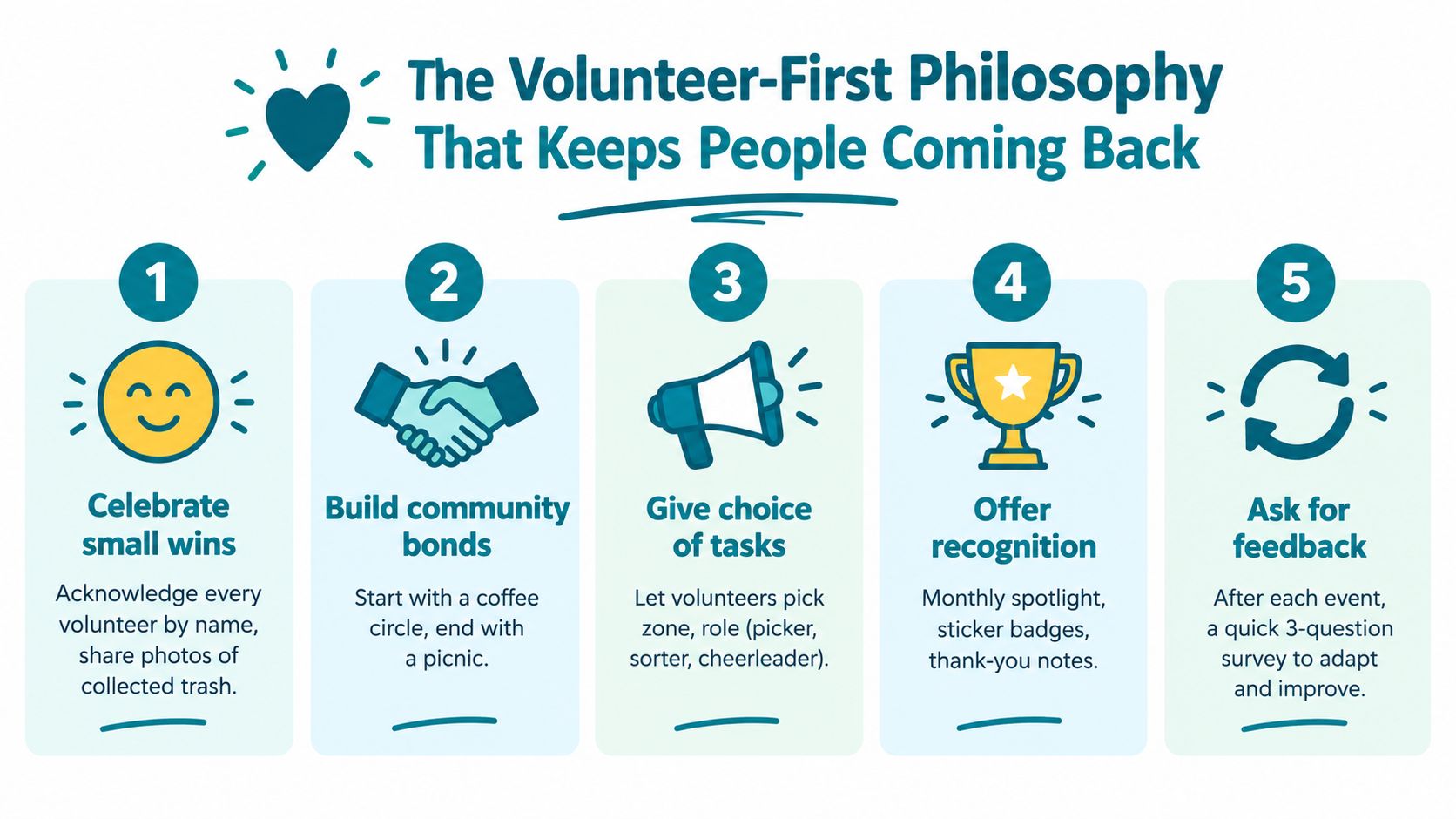
The Volunteer-First Philosophy That Keeps People Coming Back
I keep our values in the group chat because volunteers need to know what kind of room they're walking into. We talk about bravery, kindness, unity, and service. Those words only matter when they guide an uncomfortable decision.
We schedule pickups on weekend mornings because working people need a real chance to attend. A volunteer shouldn't have to choose between earning a living and helping clean a block. Weekend timing also gives newcomers a predictable habit. They can bring a friend, learn the route, and return without asking when the next event will happen.
Safety outranks donations. Happiness outranks publicity. We never pressure volunteers for money, and we won't ask anyone to touch a sharp object to make a photo look better.
What the rule looks like on the pavement
A new volunteer shadows a captain during the first session. The captain demonstrates how to use a grabber, where to place a bag, and when to step away. If someone finds glass, a needle, a suspicious container, or anything they can't identify, they call the captain instead of reaching in.
Captains can cancel a site or change the route when weather, traffic, harassment, flooding, or unstable ground creates too much risk. That authority protects the crew from the quiet pressure to finish a route at any cost.
Our working rule: A full bag never matters more than a volunteer going home safe and willing to return.
Groups that chase sponsorship money before they protect volunteer energy often create the wrong bargain. They add meetings, branding demands, reporting tasks, or public appearances until the people doing the cleanup feel like unpaid marketing staff. Money can buy bags. It can't replace trust after a volunteer feels ignored or pushed into danger.
We've used volunteer retention strategies to keep the focus on belonging, clear roles, and a reason to come back. If you're planning a cleanup with activities, polls, or team challenges, designing an interactive event can help you shape participation without turning the morning into a performance.
The discipline compounds. First-timers learn the route. Regulars learn to lead. Captains learn to train someone else. That chain gives a community litter cleanup program a future beyond its founder.
Safety and Legal Basics Every Cleanup Group Needs
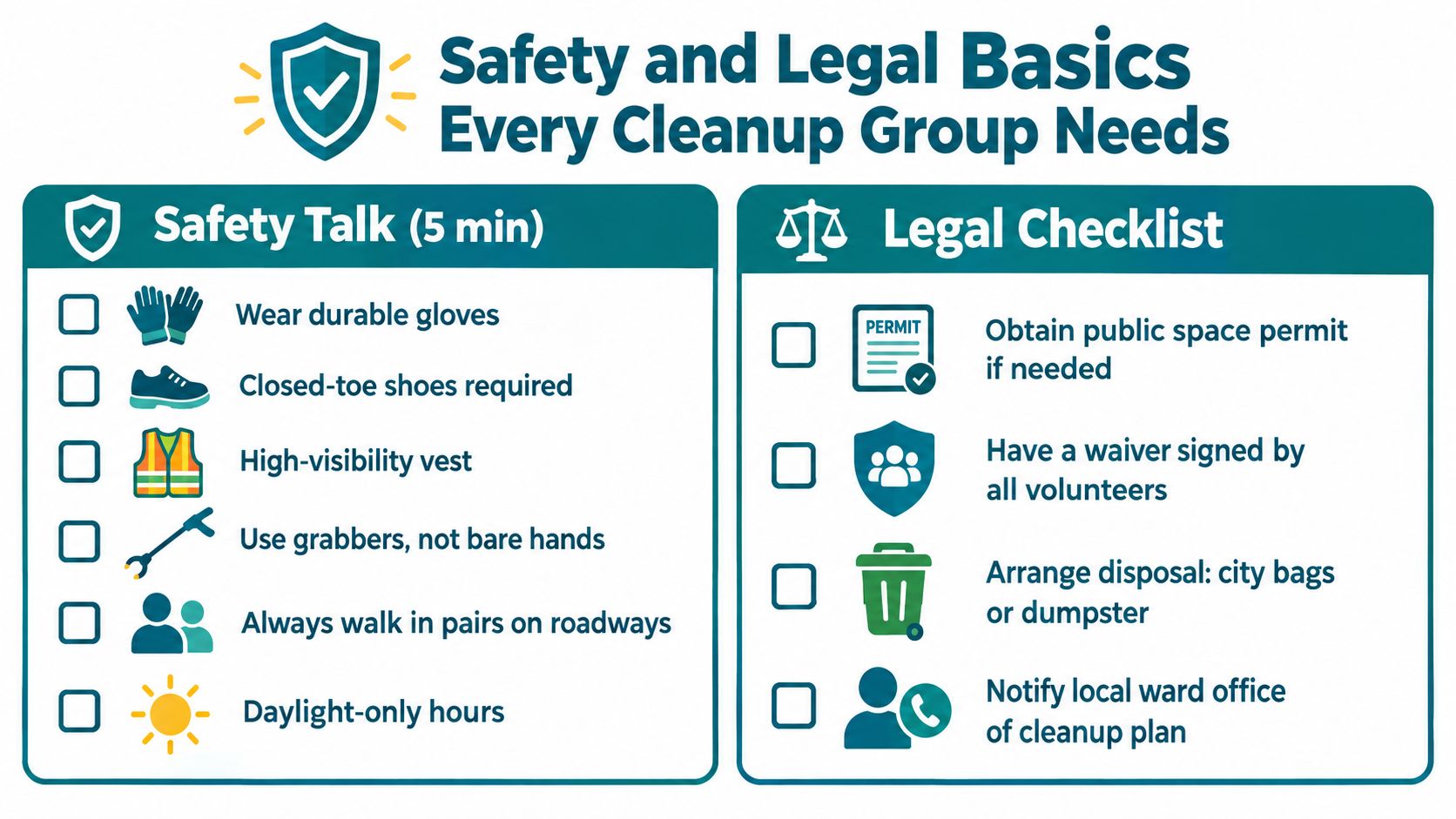
I start with a five-minute safety talk, even when half the crew has attended before. Repetition catches the person who arrived late, the volunteer who forgot gloves, and the captain who assumes everyone understands roadside risk.
Everyone needs durable gloves and closed-toe shoes. Give volunteers grabbers so they can keep bare hands away from the ground. Use high-visibility vests near traffic, keep work in daylight, and have people walk in pairs or groups of three instead of working alone. A volunteer safety briefing also warns against direct contact with broken glass, fish hooks, and hypodermic needles (Litter Free Dorset safety briefing).
Match the plan to the site
Parks need attention around play areas, benches, drainage points, and brush. Keep volunteers away from unstable branches, wildlife, steep slopes, and areas where children could encounter hidden sharps.
Alleys require careful footing and awareness of vehicles, gates, dogs, and private property. Stay on approved public space, leave blocked or unsafe sections alone, and never enter a yard or building to reach litter.
Roadways create the highest exposure to moving traffic. Stay off medians, bridges, roundabouts, rail tracks, construction zones, steep slopes, and high-traffic edges. One city guide limits adopt-a-street work to public property, daylight hours, and lower-risk locations (Seattle Public Utilities safety guidance).
Waterways add slippery banks, hooks, changing water levels, and wildlife. Wear suitable footwear, keep a safe distance from the waterline, and stop when the bank becomes unstable.
Never pick up needles, weapons, ammunition, car batteries, chemicals, dead wildlife, or unknown containers. Put distance between the item and the crew, keep children away, photograph the location if you can do so safely, and contact the responsible city department or trained responder. Public guidance draws this boundary clearly for hazardous litter (Cobb County volunteer guide).
Handle the paperwork before people arrive
Ask the parks, sanitation, transportation, or ward office whether your route needs a permit. Use a waiver suited to your location and group. Set an age policy, require adult supervision where appropriate, and keep emergency contacts with the captain.
Bring water, a light snack, sunscreen, and a first aid kit. Hardware stores, municipal solid-waste departments, and neighborhood businesses may donate gloves, bags, vests, or grabbers. One cleanup guide lists garden gloves, closed-toe shoes, water, snacks, and grabbers as basic preparation (North Central Texas Council of Governments guidelines).
If something goes wrong, the captain stops the route, moves volunteers away from danger, calls emergency services when needed, contacts the program lead, and records the time, place, object, weather, witnesses, and action taken. Keep the report factual. Don't hide a minor injury because you fear paperwork.
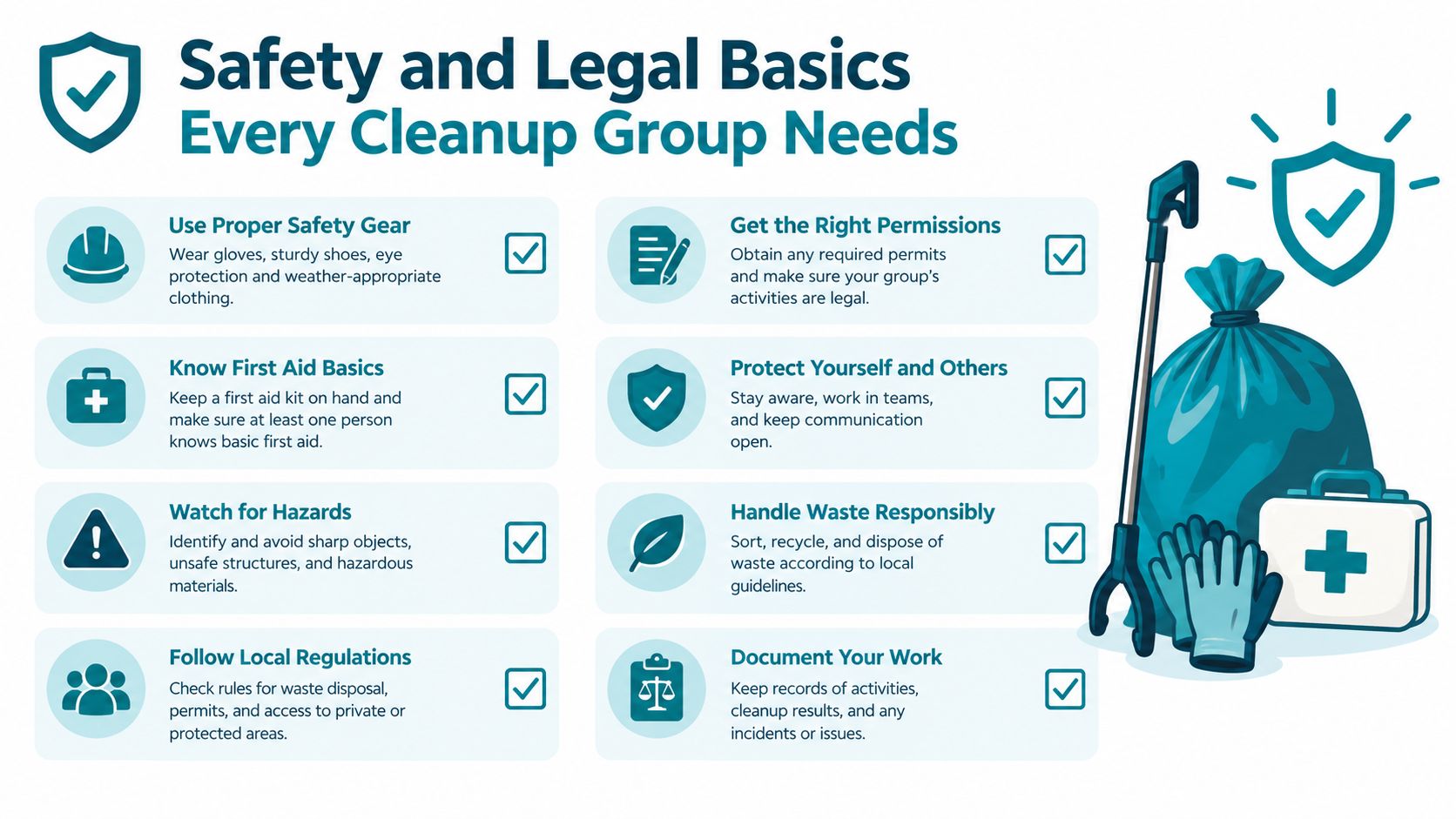
For a printable preparation list, use this volunteer safety checklist.
Partnerships and Funding Without Losing Your Independence
I divide outside support into three lanes: in-kind donations, local sponsorships, and grants. Each lane can help, and each can change how your Saturday works.
In-kind support usually creates the least paperwork. A hardware store might provide gloves, bags, or grabbers. A café might provide water. The trade is simple, though you still need to track what you receive and avoid promising public promotion you can't maintain.
Local sponsorships can pay for shirts, storage, printing, or disposal. They also can bring logo requests, exclusive access demands, or pressure to post branded content. A sponsor should make the route easier. If the sponsor wants to approve every photo or claim ownership of a public space, the cost exceeds the check.
Grants can support planning, equipment, and larger site work. They usually demand a clear proposal, a budget, progress records, and a final report. When I prepare a short inquiry, I explain the route, the volunteer need, the safety plan, the disposal plan, and the records we already keep. A resource on using Grantlas for grant letters can help organize that first written ask.
| Funding Type | What You Get | What It Costs You | Best Fit For |
|---|---|---|---|
| In-kind donations | Bags, gloves, water, grabbers, printing | Pickup coordination and basic thanks | New groups and regular routes |
| Local sponsorships | Supplies, shirts, storage, disposal support | Branding requests and relationship management | Established neighborhood crews |
| Grants | Project funding and equipment | Applications, budgets, reports, and deadlines | Programs with records and a defined project |
Write a one-page ask
Use a named location instead of a broad promise. Show a route photo, your schedule, the number of regular volunteers qualitatively, your safety controls, and the exact item or expense you need covered. Sponsors and funders want to see that their help will reach the pavement.
I also avoid exclusive cleanup rights, mandatory logos on every shirt, and social-post quotas. Those terms can turn volunteers into a promotional channel.
My partnership test: If the deal creates more Saturday work than it removes, I decline it.
The International Coastal Cleanup tracks individual items as well as collected trash, which shows why a simple data log can make a volunteer program easier to explain to partners (Ocean Conservancy annual report). Your partner doesn't need a glossy presentation. They need a clear request, a safe plan, and honest evidence.
Measuring Impact and Turning Cleanup Into a Park
For years, I watched people count bags and stop there. Bags are easy to see, but they can hide the difference between a light route and a heavy one. They also say nothing about whether the same corner stays cleaner after the crew leaves.
Our sheet now records the location, date, volunteer hours, bag count, weight when available, unusual litter categories, and a quick cleanliness score for repeat sites. We take a photo from the same position whenever possible. That turns a vague memory into a comparison.
The five-minute field sheet
At the end of each pickup, one person records:
- Where: Street, alley, park edge, or waterway section.
- Who: Volunteer count and total hours.
- What: Bags, weight, and notable items.
- Condition: A simple clean-to-heavy-litter rating.
- Follow-up: Disposal completed, hazard reported, or return visit needed.
The monthly summary should fit on one screen. List the locations, show the photos, name the volunteers who led routes, and explain what changed. People read records when the records help them see their own street.
The data also gives you a way to ask harder questions. A route that produces fewer bags may have improved. A route with repeated heavy litter may need a bin, enforcement, better collection, or a conversation with the property owner. Cleanup removes the symptom. Source control and waste infrastructure still determine what returns.
A major Australian litter report counted plastics at 80.8% of litter items in its reported litter stream (Clean Up Australia litter report). That kind of category record helps a group discuss prevention rather than treating every pickup as an isolated chore.
From an empty lot to Caterpillar Park
We photographed the same empty lot in Englewood during weekly pickups. The images showed the broken glass, wrappers, dumped material, and weeds, but they also showed people returning with a plan. Neighbors could point to a named place instead of describing a general problem.
Those photos and route records helped us speak with the alderman, neighbors, and a land-bank partner. We won the empty lot at auction and turned it into Caterpillar Park. The park didn't appear because we had one heroic cleanup. It grew from repeated visits, visible care, and records that made the request concrete.
The strongest measure remains simple: does the place we cleaned last month still look clean this month? This community impact measurement guide can help you build a record that people can understand and use.
Your First 30 Days of Running a Cleanup Program
Start small enough that you can keep your promise. Choose one neighborhood block and one recurring time slot. Don't begin by claiming an entire city if you haven't tested your supplies, route, waiver, disposal plan, and captain coverage.
Week one, choose the ground
Walk the block during daylight. Note traffic, alleys, vacant lots, drainage areas, steep sections, private property, and places where volunteers could step into danger. Contact the local parks or sanitation department and ask about permits, bags, disposal, and public-space rules.
Pick a meeting point that people can find without guessing. Write the address, time, route boundary, weather policy, and contact person in one short message.
Week two, recruit a small regular crew
Print a flyer for the block. Publish one social post with the same details. Ask directly for five regulars, and give each person a role. One person can manage supplies, another can lead the route, another can record data, and another can welcome newcomers.
Keep the invitation honest. Tell people how long the pickup lasts, what gear they need, what the group won't handle, and where the bags will go. People trust a clear boundary more than a grand promise.
Week three, run the first cleanup
Bring printed waivers, gloves, closed-toe footwear reminders, grabbers, bags, water, first aid supplies, and a phone with emergency contacts. Start with the safety talk. Keep people in pairs where traffic creates risk, stay in daylight, and stop for heat, cold, broken glass, needles, wildlife, harassment, or unsafe footing.
Take a before photo. Record the route, volunteer hours, bags, weight if available, and unusual litter. Take an after photo from the same position. Dispose of the bags through the arrangement you confirmed before the event.
Week four, return and review
Repeat the same route at the same time. Ask each volunteer what felt smooth, what felt confusing, and what would make the next pickup easier. Store the answers with the field sheet instead of letting them vanish in conversation.
At day 30, success looks modest and real:
- A returning crew: People came back without needing a new sales pitch.
- A shared calendar link: Everyone can find the next event.
- A safer route: You removed or changed tasks that created risk.
- A before-and-after pair: You can show one named place and what changed.
- A usable record: You know what to repeat, revise, or stop.
On Monday, walk one block and choose the first Saturday time. Then invite five people before you buy anything fancy. A community litter cleanup program becomes durable when the first promise stays small enough to keep.
Litter Caterpillars organizes weekly volunteer trash pickups across Chicago, with supplies such as grabbers, bags, and gloves available for participants. Visit Litter Caterpillars to find a cleanup, meet the group, and turn your first route into a steady community practice.
Leave a Reply