I started Litter Caterpillars because my own room was a wreck, and my life felt like it was sinking under the same junk. Then three of us went out to pick up trash, got hit by hail, and somehow that made the whole thing click, cleaning other people's mess is easier than cleaning your own, and it can even be fun.
If you've ever tried to recruit volunteers and heard crickets, I've got a guess, you're asking for help when people want a place to stand. A good volunteer job description gives them a name, a lane, and a reason to show up again. It makes the work feel real, like grabbing gloves, meeting a block captain, or learning how to run a cleanup when the weather turns ugly. The groups that write roles clearly aren't just filling shifts, they're building crews.
The part that is often missed is that volunteering is not some tiny side hobby. The International Labour Organization treats volunteer work as unpaid voluntary activity, and U.S. labor data shows the scale is huge. In the year ending September 2023, 75.7 million Americans formally volunteered through an organization, or 28.3 percent of people age 16 and older, and on an average day in 2022 more than 11 million people volunteered, including about 4.7 million in administrative and support work and 470,000 in indoor or outdoor maintenance and cleanup activities, according to the ILO volunteer work overview. That's why the best role descriptions feel specific, grounded, and easy to step into.
1. Community Cleanup Crew Lead
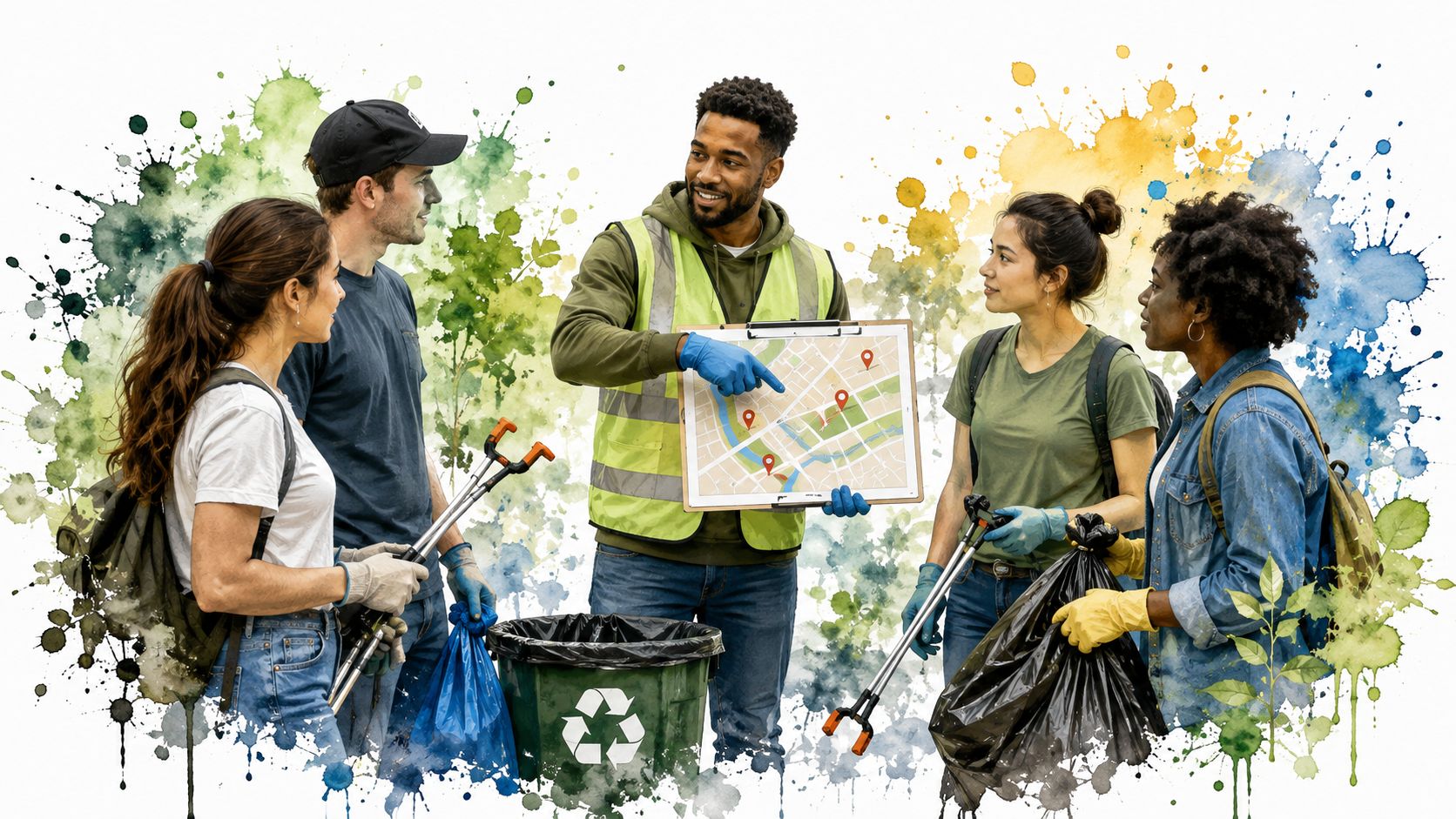
The first role I'd write is the one I wish I had when I was trying to keep our early cleanups from turning into a free-for-all. A Community Cleanup Crew Lead takes one neighborhood and owns the morning, the route, the vibe, and the handoff. You are not dragging every bag yourself. You are keeping the crew moving like a captain on a field where everybody has a job.
I learned fast that people don't all show up for the same kind of task. A federal volunteering survey shows the rate shifts a lot by occupation, with some groups stepping into service more often than others. That tells me volunteers bring different instincts with them. If you want someone to lead an Englewood cleanup or rally a downtown business district, spell out the turf, the pace, and the result you want.
Practical rule: write the role like you're handing someone the keys to one block, not the whole city.
That framing matters because the lead is part organizer, part steady hand. One volunteer can build relationships with longtime residents in Englewood, another can get shop owners on a business strip to join in, and both can feel like they're carrying real weight. I've seen crews settle down the second someone says, “I've got this block,” and then means it.
- Pick a neighborhood you care about: People show up harder when they feel a block in their bones.
- Start small and expand: One park or corridor is easier to run than a giant stretch of city.
- Track the rough spots: Keep a list of the messiest corners so your routes have a plan.
- Use before and after photos: People like seeing the difference they made with their own hands.
A clear role description turns a vague ask into a real invitation, something people can step into without guessing what comes next.
2. New Volunteer Onboarding Buddy
The best volunteer I ever met at the door wasn't the loudest one, it was the one who noticed a nervous newcomer standing alone and walked over first. That's what a New Volunteer Onboarding Buddy does. You greet people like they belong before they've proven anything, and you turn that first awkward hour into a real welcome.
This role needs warmth, but it also needs structure. A good buddy points out the grabbers, the gloves, the sharp-object rules, and the tricky blocks. The point is simple, people stick around when they know they won't get lost on day one.
I like this role because it turns a first-timer into a regular without making a big speech about it. One nervous person realizes trash pickup is weirdly fun and keeps coming back, another gets connected with a few other volunteers in Chicago and starts carpooling with them. That's how crews grow, one human connection at a time.
The old-school volunteer templates that just list duties miss this. A stronger description says who the buddy is for, what they explain, and how they make the new person feel seen. That's the whole game.
- Remember your first day: If you felt confused, don't pretend the next person won't.
- Share one or two neighborhood stories: A little local context makes the route feel alive.
- Text them later that night: A quick message can make a stranger feel remembered.
- Say the hard part out loud: Showing up is the hardest step, then the rest starts moving.
If you want to shape this role with more confidence, I'd point people to volunteer coordinator training and build the buddy description around welcome, safety, and follow-up. That keeps the role human and useful at the same time.
3. Safety and Supplies Coordinator
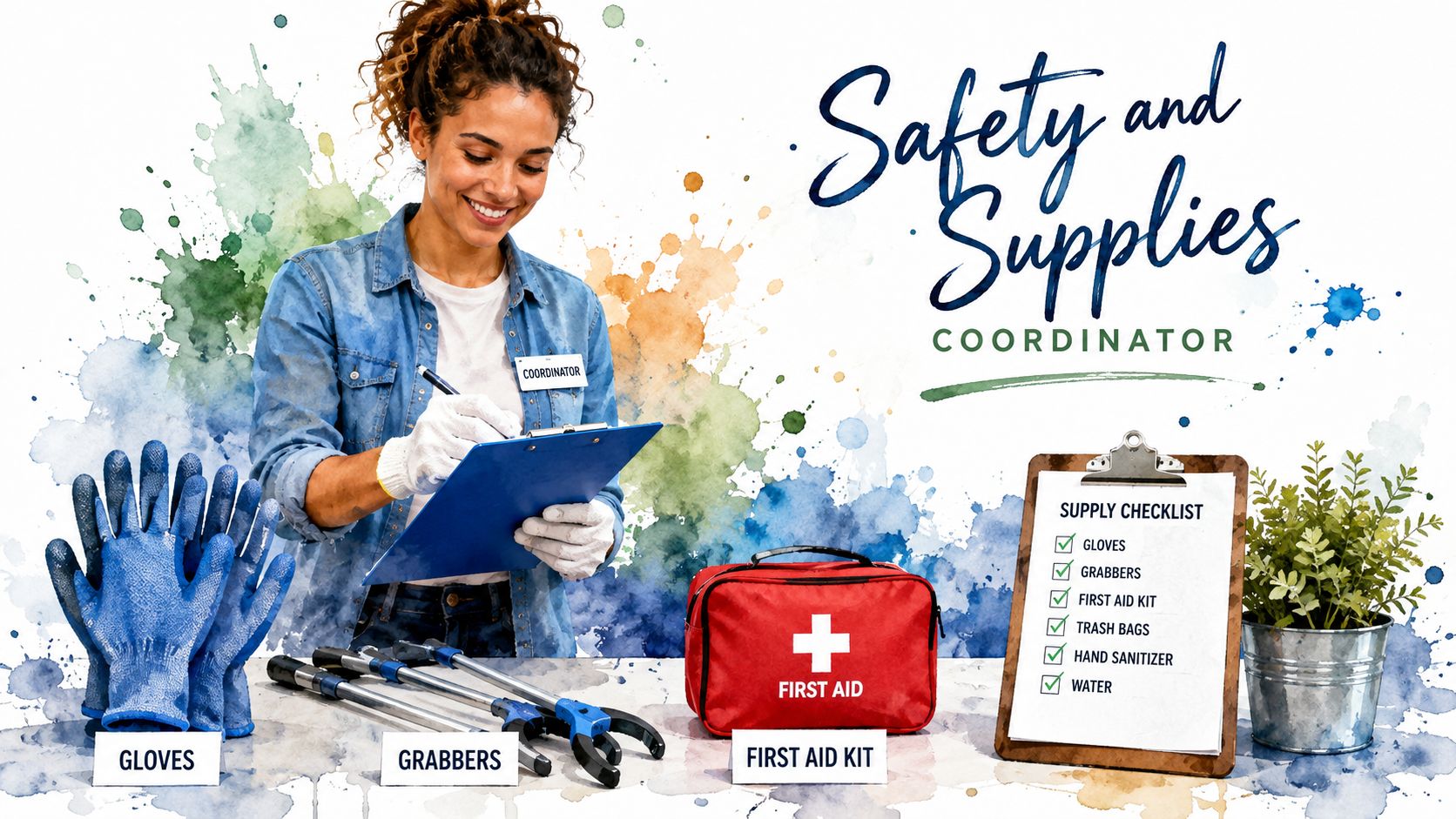
I've learned the hard way that a cleanup can fall apart over tiny gear problems. One broken grabber, one missing glove size, one empty first aid kit, and suddenly the morning feels sloppy. A Safety and Supplies Coordinator keeps that from happening.
This role isn't glamorous, and that's exactly why it matters. You're checking equipment before someone gets hurt, stocking the right glove sizes, keeping the first aid kit ready, and making sure people know what to do around hazards. The crew can focus on service because somebody solid handled the boring, gritty parts first.
A good volunteer description for this job should spell out the rhythm. Say what gets checked before the event, what gets logged after, and who gets told when something breaks. If the volunteer knows the checklist, the event runs smoother.
Here's the kind of language I'd use:
- Inspect grabbers and bins: Catch damage before the team heads out.
- Track glove inventory: Make sure smaller and larger hands both get a fit.
- Restock first aid supplies: Keep the kit ready, not half-empty.
- Log near-misses: Write down the stuff that almost went wrong so the crew learns from it.
Keep this role open to somebody detail-oriented who wants flexible hours, because a person like that often loves the quiet responsibility of it.
This is also the spot where I'd talk plainly about support, supervision, and escalation. If a tool breaks or a route looks unsafe, the coordinator needs a clear way to flag it and move fast. On cleanup crews, that kind of role can save a whole Saturday.
I'd also tell applicants exactly what the gear room looks like, what gets stored where, and what “done” means. The clearer you make it, the less you'll spend untangling messes later.
Later in the day, I'd add a short training video like this event safety clip if you're building a role guide that people can absorb fast.
4. Social Media and Event Storyteller
The right post can do what a flyer never will, it can make someone feel the mood of a cleanup before they've even shown up. A Social Media and Event Storyteller doesn't just snap pictures. You catch faces, muddy shoes, laughter in bad weather, and the tiny moments that make people think, I want in.
I've seen this in real time. A volunteer shares a hail-storm photo with a caption about finding joy in discomfort, and people who didn't know us suddenly care. That's because stories travel farther than task lists do.
Write like a person, not a flyer rack
If I were writing this role description, I'd ask for a few very concrete things. Post cleanup photos. Write event announcements. Ask volunteers why they came. Share block-by-block wins. The goal is to make the work feel like a living crew, not a pile of trash bags.
This role also works best when it has boundaries. Don't make the storyteller guess what to post or who approves it. Give them a simple rhythm, maybe one pre-event post, one day-of story, and one wrap-up recap.
- Shoot faces, not just debris: People connect to people.
- Use short captions: Write like you're texting a friend who missed the event.
- Ask for quick quotes: A volunteer's own words make the post feel real.
- Tell before-and-after stories: The Caterpillar Park transformation is the kind of thing people remember.
A lot of groups think social media is fluff. I don't. It's how somebody sees a muddy crew in motion and decides they want to join next week. That's not vanity, that's recruitment with a heartbeat.
5. Partnership and Sponsorship Developer
I like this role because it sounds fancy, but the job is simple, you walk into local spaces and make the cleanup feel like something worth joining. A Partnership and Sponsorship Developer talks to coffee shops, breweries, neighborhood groups, nonprofits, and companies, then finds a fit that feels mutual instead of pushy.
The best version of this role keeps the volunteer-first spirit intact. You're not shaking people down for money. You're finding places that want to back the work with supplies, a venue, a team turnout, or a cleanup in their own neighborhood.
One brewery might give cleanup kits and send a few volunteers once a month. Another partner might sponsor equipment because they want a team volunteer day. The point is to build relationships that help the crew without turning the crew into a sales pitch.
If you want stronger partner conversations, lead with the story, the pictures, and the neighborhood, then ask for a fit.
I'd write the role description so it sounds like an invitation to connect, not a cold outreach assignment. Someone in this role should know the tone of the group, the kinds of asks that feel right, and the kinds that don't. That's how you protect the culture while still bringing in support.
I'd also keep the role flexible. Some people are better at walking into a room, others are better at follow-up emails and thank-yous. Both can work if the description says what success looks like.
6. Route Planner and City Mapper
Some people see a map. I see a puzzle with trash, timing, traffic, and tired legs all mixed together. A Route Planner and City Mapper studies the city like a chessboard, then chooses routes that make sense for safety, energy, and reach.
This role matters when you're trying to cover a lot of ground without wearing people out. On a crew like mine, I'd want someone who looks at roads, parks, business strips, and neighborhood feedback, then says, “Next week, we're hitting this area because it needs us and it won't burn the team out.”
The best role description names the tools and the rhythm. Google Maps helps, sure, but local knowledge matters too. Cleanup leads know which blocks get skipped, which corners get messy fast, and which routes feel bad on a hot day or after a storm.
Build routes like a real person will walk them
I'd ask the mapper to think about access, transit, and variety. Mix easy wins with harder stretches so the work doesn't turn into a grind. Keep one eye on where volunteers can park, where they can meet, and where they can safely cross streets.
This job also benefits from feedback loops. If a cleanup lead says a route dragged or a corner felt dangerous, the mapper needs to hear it and adjust. That's not bureaucracy, that's respect for the people doing the walking.
A good route plan keeps the crew moving without making them feel like they got sent into a bad bet.
If you've ever watched a group lose energy because the route was clumsy, you know why this role belongs in a serious volunteer description. People don't just need places to go, they need routes that make sense to their bodies and their weekends.
7. Event Day Operations Manager
Saturday morning hits fast. Coffee, gloves, boxes, weather apps, greetings, and a dozen small decisions land at once, and the Event Day Operations Manager carries that whole pile without making it feel heavy.
I'd write this role for the person who likes being early and hates chaos. You open the meeting spot, greet volunteers as they arrive, make the safety announcement, hand out tools, and keep the plan alive when weather or street closures mess with it. When the day shifts, you shift with it.
If the earlier roles are the engine and the wheels, this one is the driver who keeps everyone pointed the same way. A good ops manager doesn't need to do every task, but they do need to notice when the event starts wobbling.
I'd make the description concrete. Say how early they arrive, who they report to, and what they do if turnout is low or equipment fails. People relax when they know there's a calm person in charge of the flow.
- Set up the meeting spot: Keep tools, water, and signs ready before the crowd arrives.
- Give the day's briefing: Safety, mission, route, done.
- Watch the weather and the street: Adjust before the crew gets stuck.
- Ask for help early: A strong manager knows when to hand off.
The old volunteer templates that only list “event support” don't cut it here. This role is about presence, timing, and the ability to keep people from feeling lost. A clear job description does that work before the first volunteer even shows up.
I'd also link this one to volunteer event planning so people can see the event rhythm before they say yes.
8. Community Connection and Neighbor Engagement
Some cleanup crews talk about neighborhoods. I want crews that talk to neighborhoods. A Community Connection and Neighbor Engagement volunteer knocks on doors, chats with residents, and lets people know the cleanup is happening on their block, not around them.
That difference matters. When a neighbor feels heard, the cleanup stops being a drive-by service and starts feeling like a shared project. One shop owner becomes a regular volunteer, another resident points to a park that keeps getting ignored, and suddenly your route gets smarter because people on the ground spoke up.
This role needs a friendly face and a steady ear. You ask more questions than you answer. You listen for the corners that need attention, the litter patterns that keep coming back, and the places where people want to help but don't know how.
I'd write the description so it gives a volunteer room to be human. Tell them to smile, talk naturally, and avoid pressure. You're planting seeds, not closing a deal.
A clean version of the role might sound like this:
- Introduce the crew respectfully: Tell residents who you are and why you're there.
- Ask what people notice: Residents know the block better than any map.
- Share proof of work: Before and after examples make the effort concrete.
- Invite, don't push: Leave space for people to join when they're ready.
This role works especially well for people who like talking to strangers but don't want a loud, salesy job. It's about care, presence, and basic follow-through. If you write it right, the right people will feel that tone right away.
9. Volunteer Experience Designer
This is the role for somebody who notices the vibe before the trash pile. A Volunteer Experience Designer thinks about how the cleanup feels from the second people arrive to the second they head home. Songs, flags, badges, welcome language, celebration, all of it matters.
I know that can sound extra until you watch people light up because they got a badge after their first cleanup. Pride changes behavior. Identity changes behavior. When you give service a little ceremony, people feel like they joined something with a face.
That's why I'd write this description around atmosphere and ritual. Maybe you want a theme song. Maybe you want a small tradition for first-timers. Maybe you want people to carry a flag or earn badges for different neighborhoods. These aren't gimmicks if they help people feel they belong.
Keep the role playful, but not vague
The best volunteer experience designer listens first. Ask people what keeps them coming back. Watch when the energy rises and when it drops. Borrow what works from sports teams, military units, or any group that knows how to create pride without making it corny.
- Test one idea at a time: Start small before you roll out a full system.
- Use symbols people can hold: Flags, badges, or shirts can give a crew identity.
- Celebrate consistency: People like being noticed for showing up.
- Make the day feel like a win: Even a dirty morning can end with a little ceremony.
I've seen crews get stronger when the experience feels intentional. Not fancy, just intentional. If the role description says that clearly, people who love culture design will find it fast.
10. Data Tracker and Impact Documenter
Spreadsheets don't look exciting until you realize they tell the story of the work. A Data Tracker and Impact Documenter keeps count of volunteers, routes, trash collected, and neighborhood coverage, then turns that into something the crew can use.
This role got easier for me once I stopped treating numbers like homework and started treating them like memory. If you know which blocks you cleaned, which items showed up most, and how many people came back, you can make smarter decisions next month. You can also tell a clearer story to new volunteers.
I'd keep the system simple. Use Google Sheets. Keep the categories easy. If the form feels too heavy, nobody will fill it out after a long cleanup, and then the story gets fuzzy.
A good description for this role should point to the output, not just the task. Maybe the volunteer creates a report, a map, or a simple summary for the crew. That kind of artifact helps people see what they built, and it helps leaders plan the next route with their eyes open.
Simple tracking works better than fancy tracking nobody finishes.
I'd also tell the volunteer why the data matters in plain language. When you can show which neighborhoods got covered or what trash keeps showing up, you can recruit better and route better. If the role fits, it usually means the person loves patterns, clean records, and a little quiet order after a loud morning.
Top 10 Volunteer Role Comparison
| Role | Complexity 🔄 | Resources & Time ⚡ | Expected Impact ⭐📊 | Ideal Use Cases | Advantages / Tips 💡 |
|---|---|---|---|---|---|
| Community Cleanup Crew Lead | Intermediate 🔄🔄 | Moderate; weekly mornings, coordination ⚡⚡ | High ⭐⭐⭐; visible neighborhood improvements 📊 | Lead recurring neighborhood cleanups; build local teams | Builds leadership; start small and use before/after photos 💡 |
| New Volunteer Onboarding Buddy | Beginner 🔄 | Low; event-start presence + follow-ups ⚡⚡⚡ | Moderate ⭐⭐; improves retention and newcomer comfort 📊 | Welcome first-timers and convert them to regulars | Greet warmly, collect contact info, follow up that night 💡 |
| Safety and Supplies Coordinator | Intermediate 🔄🔄 | Moderate; inventory, procurement, occasional repairs ⚡⚡ | High ⭐⭐⭐; prevents injuries and enables smooth events 📊 | Maintain gear, brief hazards, manage first aid | Use checklists, track near-misses, plan common replacements 💡 |
| Social Media and Event Storyteller | Intermediate 🔄🔄 | Low–Moderate; flexible content work, occasional event presence ⚡⚡⚡ | High ⭐⭐⭐; attracts volunteers and documents impact 📊 | Recruitment, event promotion, storytelling | Capture faces/emotion, write casually, use before/after visuals 💡 |
| Partnership and Sponsorship Developer | Advanced 🔄🔄🔄 | Moderate–High; meetings, pitches, relationship follow-up ⚡ | Very high ⭐⭐⭐; secures resources and expands capacity 📊 | Secure sponsorships, in-kind donations, organizational partners | Start with familiar businesses; lead with volunteer-first ethos 💡 |
| Route Planner and City Mapper | Advanced 🔄🔄🔄 | Low–Moderate; map/data work plus occasional site visits ⚡⚡ | High ⭐⭐⭐; maximizes citywide coverage and safety 📊 | Strategic coverage, risk-aware routing across wards | Use maps and feedback, mix easy wins with challenging areas 💡 |
| Event Day Operations Manager | Intermediate 🔄🔄 | Moderate; early arrival, on-site coordination ⚡⚡ | High ⭐⭐⭐; improves volunteer experience and efficiency 📊 | Run on-site logistics, troubleshoot, maintain morale | Keep a setup checklist and backup plans for weather/equipment 💡 |
| Community Connection and Neighbor Engagement | Intermediate 🔄🔄 | Moderate; door-knocking, follow-ups, relationship building ⚡ | High ⭐⭐⭐; builds trust and local volunteer recruitment 📊 | Engage residents, recruit neighbors, gather local priorities | Be authentic, ask more than tell, avoid pressuring residents 💡 |
| Volunteer Experience Designer | Beginner–Intermediate 🔄🔄 | Low–Moderate; project-based, creative experiments ⚡⚡⚡ | Moderate ⭐⭐; improves morale and retention over time 📊 | Design rituals, recognition, and event culture | Test small ideas, gather feedback, borrow proven traditions 💡 |
| Data Tracker and Impact Documenter | Beginner–Intermediate 🔄🔄 | Low–Moderate; regular reporting and visualization ⚡⚡ | High ⭐⭐⭐; informs strategy and supports fundraising 📊 | Track volunteers, trash, locations; produce reports/maps | Keep data simple, use shared sheets, create visual stories 💡 |
Your Turn to Find Your Givers
These aren't just descriptions, they're filters. They pull in the people who want to show up on a Saturday morning because the work is hard and it matters. When you stop asking for “help” and start naming leaders, storytellers, planners, and neighbors, you give the right people something real to grab.
I've watched that happen in my own crew. Litter Caterpillars started with three people, a hailstorm, and a messy stretch of city, and it kept growing because the roles made it easier for people to see themselves in the work. One person wanted to lead, one wanted to welcome, one wanted to map, and each one found a place to belong.
Take these ideas and write them in your own voice. Don't copy a template that sounds like it came from a filing cabinet. Write the kind of role description that makes a giver nod and think, yeah, I can do that. The right words don't just fill a shift, they build a crew.
If you're building volunteer roles for a cleanup group, a neighborhood project, or a brand-new crew, I'd love for you to see how Litter Caterpillars writes the work in a way people can feel. Visit Litter Caterpillars and borrow what fits, then shape it into your own story so the right volunteers know exactly where to plug in.
Leave a Reply