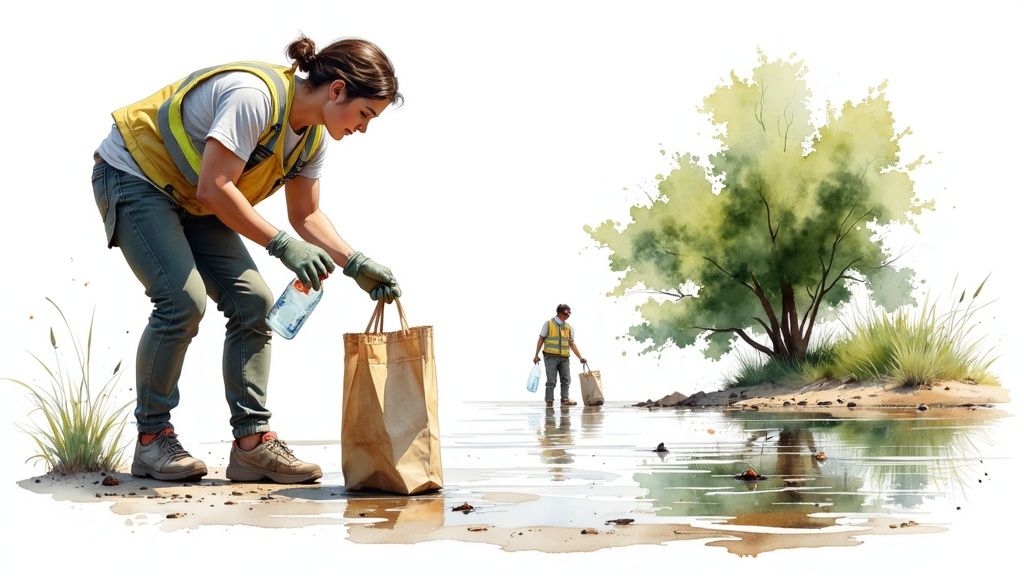
It all starts with one person and one trash bag.
Seriously. That’s it. That’s the secret to sparking massive, positive change in your community. Forget needing some grand, complicated plan or a massive team. You just have to be brave enough to start.
The Unbelievable Power of a Single Trash Bag
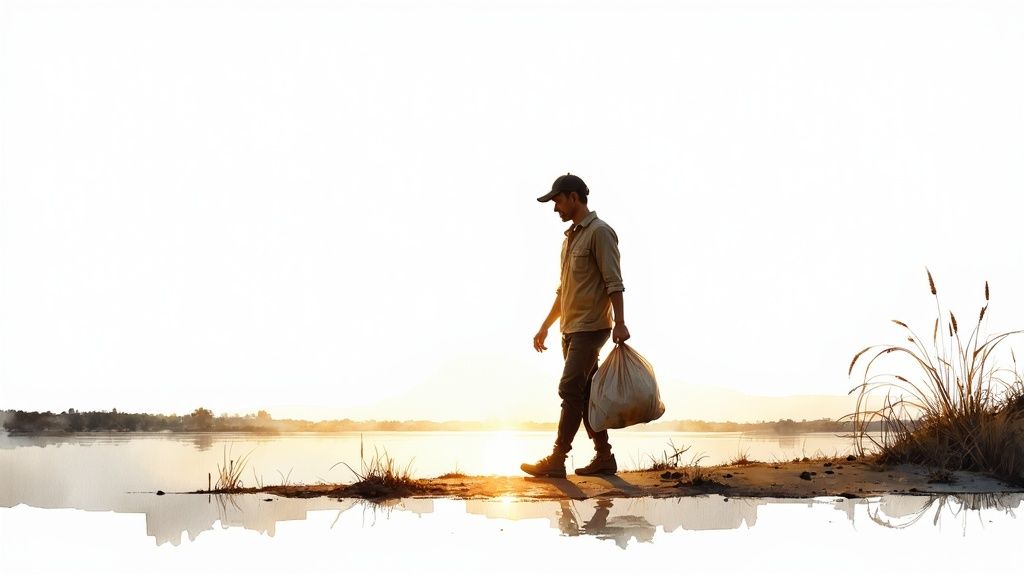
You know that feeling, right? You're walking along the river, and you see plastic bottles and old bags tangled in the reeds. Your heart sinks. It's that familiar pang of sadness mixed with a heavy dose of helplessness, the sense that the problem is just too big for one person to tackle.
We're here to tell you that’s a lie. The real magic isn't in some massive, top-down initiative. It's in the simple, brave act of just starting.
This whole guide is built on one core belief: you have the power to create incredible change.
We’ve seen it happen. I remember a few friends who were just fed up with seeing the same stretch of their local river choked with trash. One Saturday, armed with nothing more than gloves, trash bags, and a shared feeling of "enough is enough," they just started cleaning. That one small act of bravery snowballed into a community-wide movement that made the whole town proud.
From Helpless to Hopeful
This isn't about being some credentialed environmental expert. It's about being a neighbor who gives a damn. We want to help you shift your mindset from "someone should really do something about this" to "I can actually do something amazing."
The journey of cleaning up a river isn't just about the impact—it's deeply rewarding and, believe it or not, a ton of fun. You meet people who care as much as you do. You get to see the direct result of your work. It's pure, simple, and good.
Sure, the scale of the problem can feel overwhelming. Globally, it’s estimated that 1.95 million metric tonnes of plastic flows down our rivers every single year. But that number isn’t a reason for despair; it's a call to action. Small, dedicated groups are already making a huge dent in it, one kind act at a time.
"Think of a river cleanup like Tom Sawyer painting the fence. He didn't see it as a chore; he made it an adventure so compelling that his friends literally paid him for the chance to help. That’s the spirit we’re channeling here—turning service into something joyful and magnetic."
This guide is your playbook for turning that spark of inspiration into a real, tangible, and fun event. It’s as much about your personal growth as it is about community service. You'll find that the tools you need for both are way simpler than you think. In fact, you can apply these same principles anywhere—you might even check out our guide on cleaning up trash in your neighborhood.
Let's get one thing straight: it’s a LOT easier to make an impact than you think. Let's show you how.
How to Plan Your First Cleanup Adventure
That little spark you're feeling? Let's turn it into a full-blown bonfire. This is where your good intentions start growing legs, where your kindness gets an action plan. But hold off on the complicated spreadsheets and dry logistics for now. The real adventure of cleaning up a river starts with something much simpler: a walk.
The very first step is just about getting out there and being a curious explorer in your own backyard. Lace up some comfy shoes and go scout a stretch of your local river. What do you actually see? Is it a minefield of plastic bottles tangled in tree branches? A sad graveyard of old tires half-sunk in the mud? Or is it maybe just a light dusting of everyday trash that feels totally doable for a small crew?
I'll never forget a story I heard about a group out in the Midwest. They were scouting a park that looked pretty clean on the surface. But one person, with a bit of a brave streak, spotted a faint trail of old construction debris leading into the woods. They followed it. Not even 50 yards off the main path, they discovered a massive illegal dumping site, completely hidden from sight. That one curious walk turned their small litter pickup into a major restoration project. That’s the power of looking a little closer.
Become a River Detective
Think of this first walk as a recon mission. You’re gathering intel. You're not just spotting trash; you're getting a feel for the terrain, understanding the challenges, and seeing the opportunities. It's like mapping out a hiking trail before you lead a group on it. A little prep work here builds a ton of confidence for the main event.
Before you start planning anything, you need to know what you're up against. Your initial scouting trip is all about gathering the on-the-ground facts that will shape your entire event.
Use this checklist as your guide when you first walk the site. It’ll help you spot the critical details that make the difference between a chaotic day and a smooth, successful cleanup.
Your Initial River Scouting Checklist
| Area to Assess | What to Look For (Examples) | Why It Matters |
|---|---|---|
| Volunteer Access | Are there official parking lots? Paved or unpaved trails? Public boat ramps or easy-to-walk-down banks? | You need safe, clear entry points for your crew. Kindness means not making people scramble down a treacherous, muddy hill to help out. |
| Trash Hotspots | Look for eddies where trash collects, areas under bridges, or sections near storm drains. | This helps you focus your energy. You can direct teams to the highest-impact zones right away instead of having them wander aimlessly. |
| Safety Hazards | Steep, slippery banks? Patches of poison ivy? Areas with fast-moving water or hidden drop-offs? | Volunteer safety is everything. Identifying hazards beforehand lets you warn everyone and mark off any no-go zones on the day of the event. Being brave doesn't mean being reckless. |
| The "Big Stuff" | Discarded furniture, shopping carts, tires, appliances, or anything that looks like it might contain chemicals. | These items often require special equipment, more people, or specific disposal methods. You need to know about them early to plan properly. |
This scouting trip does more than just give you data; it gives you a story. It transforms your mission from a vague "let's clean the river" into a powerful, concrete goal: "We're going to clear that huge pile of styrofoam from under the old bridge." That’s something people can rally behind.
Starting the Conversation with Your City
Alright, now for the part that sometimes makes people nervous: talking to local officials. Let's reframe this. This isn't some bureaucratic chore; it's a conversation with a potential partner. You're the one bravely stepping up to improve a public space—most city and park departments will be thrilled to have your help.
Your first call should probably be to your local Parks and Recreation Department. When you connect, be direct, friendly, and fearless.
Instead of asking, "Am I allowed to do this?" try framing it this way: "Hi! I'm leading a group of neighbors who are excited to help clean up the riverbank at Lincoln Park. What’s the best way we can coordinate with you to make sure our event is safe and successful?"
That small shift in language changes the entire dynamic. You’re not a kid asking for permission; you’re an organized leader asking for a partnership. It shows you’re serious and that you respect the process.
This one conversation can be a goldmine. They can give you crucial info on waste disposal, flag any sensitive wildlife areas to avoid, and sometimes even provide supplies like bags and gloves. Building this relationship from the start makes your event solid, safe, and way more impactful.
How to Rally Your Crew of River Champions
A river cleanup is a team sport. Its magic doesn’t come from a perfectly executed plan; it comes from people showing up for each other and for a piece of earth they care about. This is where we gather your crew, but let’s throw out the idea of a boring, formal volunteer call.
Think of this as inviting friends to a party with a purpose. Your passion is the real invitation.
This isn’t about begging for help. It’s about sharing an opportunity to do something that feels good, something that connects us to our community and to each other. It’s a chance to spend a few hours outside, get our hands a little dirty, and see a tangible, beautiful result at the end of it.
The real power of cleaning up a river is that it’s a shared victory.
Finding Your First Believers
Forget mass emails and generic flyers, at least for now. Your first champions are probably already in your life.
Start with the people who get you. The friend you go hiking with, the person you grab coffee with every week, the neighbor who also complains about the trash in the park. Your invitation can be as simple as: “Hey, I’m putting together a small group to clean up that messy spot by the old bridge next Saturday morning. Want to join me? We’ll grab pizza after.”
That’s it. It’s personal, it’s kind, and it’s brave. You’re stepping up and inviting others into your vision.
The goal isn't to recruit an army overnight. It's to find your first few "yeses." Those first few people are like the kindling for a campfire; their energy and belief will attract others and help the movement grow.
From there, the circle widens. Think about the natural gathering spots in your community. Where do people who care about local spaces already hang out?
- Local Coffee Shops: Chat with the owner or manager. Ask if you can leave a small, story-driven postcard at the counter.
- Outdoor & Hobby Groups: Connect with local hiking clubs, bird-watching societies, or even book groups. Their members already value community and the outdoors.
- Neighborhood Social Media Pages: Craft a post that tells a story, not just a call for volunteers. Instead of "Volunteers Needed," try something like, "Felt heartbroken seeing all the plastic along our river this morning. I’m going out with a few friends on Saturday at 10 AM to do something about it. Anyone want to be a hero with us?"
Telling a simple, authentic story connects with people on an emotional level. It transforms a task into a mission. And if you’re looking for more creative ways to spread the word, our guide on how to find volunteers offers even more ideas for building your team.
The Gentle Art of Asking for Help
Now let’s talk about partnerships. Asking a local business for support can feel intimidating, but it’s just another conversation. You’re not asking for a handout; you’re offering them a chance to be a hero in their own community story.
People want to help—they often just need a clear and kind invitation. When you walk into that local hardware store or pizzeria, go in with a smile and a simple, direct request.
Scenario: Asking a Hardware Store for Supplies
- Don't say: "Can you donate something to my event?"
- Do say: "Hi, I’m Sarah. A few of us neighbors are cleaning up the riverbank behind the library this weekend. We're so excited, but we're short on work gloves for everyone. Would you be willing to help us out by donating a few pairs? We’d be sure to give your store a huge thank you on our social media page."
Scenario: Asking a Pizzeria for Post-Cleanup Food
- Don't say: "We need food for our volunteers."
- Do say: "Hi, I’m Mike. Our community group is spending Saturday morning cleaning up trash along Miller Creek. We’re expecting about 20 people to come out. We’d love to celebrate their hard work afterward and were wondering if you might be able to help us with a couple of pizzas? It would mean the world to our crew."
This approach is kind, specific, and honors their contribution. You are inviting them to be part of the celebration.
Building these small, local partnerships is how a one-day event starts to feel like a true community movement. You’re not just cleaning up a river; you’re weaving a stronger, more connected neighborhood, one brave and kind conversation at a time.
Your Game Plan for a Safe and Unforgettable Cleanup Day
The big day is finally here. This is the moment it all pays off. What follows is your playbook for turning a great idea into a lasting memory—an event that’s not just effective, but safe, fun, and genuinely empowering for every single person who shows up.
Forget the dry, boring safety manuals. Today, you're not just an organizer; you're an expedition leader. Your job is to make safety feel like empowerment, not a list of restrictive rules. It’s about creating an atmosphere where everyone feels looked after, confident, and ready to make a real difference.
Crafting a Safety Briefing That Actually Connects
Think of the pre-cleanup huddle as a campfire gathering, not a lecture. This is your chance to set the tone for the whole day. Get everyone in a circle, make eye contact, and speak from the heart. This is where a group of strangers becomes a unified, caring team.
A good briefing is the foundation of a safe event. Keep it engaging, clear, and kind.
- Talk About the Hazards Honestly: Be upfront about the real risks. Mention slippery banks, poison ivy, and the potential for sharp objects. You're not trying to scare people; you're equipping them. Frame it like, "We're going to be brave and smart out there today, and that means looking out for each other."
- Show, Don't Just Tell: Demonstrate how to do things right. The most important one? Show everyone the proper way to lift a heavy bag—bend with your knees, not your back. It’s a simple move that prevents a world of hurt.
- Make the Buddy System Mandatory: This one is non-negotiable. Pair people up and tell them their main job is to keep an eye on their partner. This instantly builds camaraderie and creates a web of safety across the entire group.
The story of the Citarum River in Indonesia really puts this in perspective. Cleanup crews there pulled a staggering 3,200 tons of waste from the river in a single year. That same river has mercury levels 100 times above safety standards. It’s a stark reminder of why safety has to be number one—you never know what’s lurking in the water.
Your Essential Gear Checklist
Having the right equipment is an act of care for your volunteers. It tells them you’ve thought about their well-being from the start. You don't need a warehouse full of gear, just the smart essentials.
Here’s a simple, can't-skip list:
- Puncture-Proof Gloves: This is your #1 priority. Hands need to be protected from glass, metal, and whatever else is hiding in the mud.
- Sturdy Trash Bags: Get the heavy-duty kind. The last thing you want are bags ripping open when they're full of wet, jagged debris.
- A Well-Stocked First-Aid Kit: Make sure it's easy to find and at least one other person knows where it is. Stock it with bandages, antiseptic wipes, pain relievers, and anything else you might need.
- Hand Sanitizer and Wipes: An absolute must for a quick clean-up before grabbing a snack or after handling particularly grimy trash.
- Buckets or Tubs: These are surprisingly useful for carrying smaller bits of trash or consolidating half-full bags, which makes the whole process way more efficient.
These principles for a safe event apply everywhere, from riverbanks to city squares. For more tips on group safety and logistics, check out our guide on how to clean up a park.
Building Your Base Camp and Logistics Flow
Every great expedition needs a base camp. For your cleanup, this is the heart of the operation—a central spot where people check in, grab supplies, take a break, and connect. It doesn't have to be fancy. A pop-up tent or a couple of folding tables under a shady tree works perfectly.
This graphic shows the simple journey that got you and your team to this point.
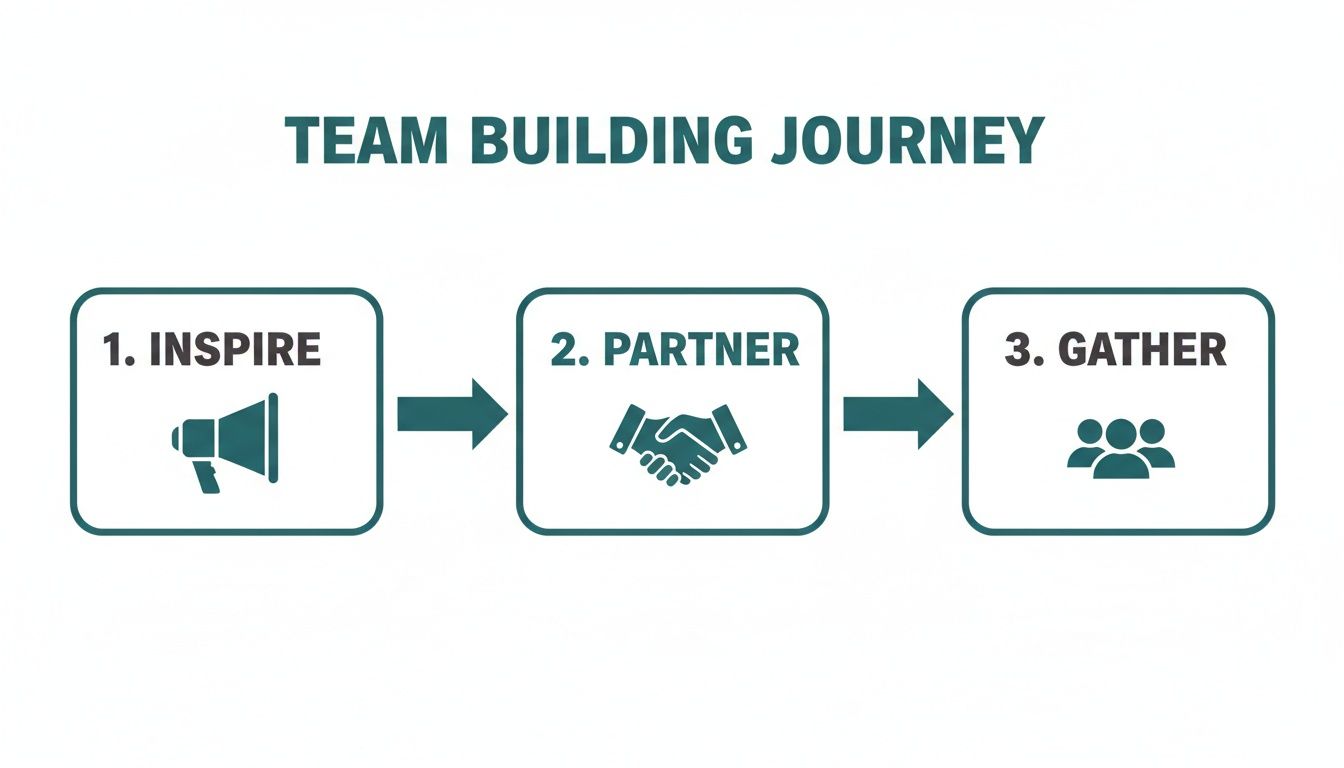
Each step—inspiring others, partnering with your community, and gathering your crew—is what makes a successful and safe cleanup day possible.
"A well-organized base camp is a message to your volunteers: 'You are valued here. Your comfort and safety matter.' It turns a tough job into a supported mission."
Set up clear stations for water, snacks, and sorting the trash. A simple system—one pile for recycling, one for general trash—makes the final disposal so much easier. This central hub ensures nobody gets lost, everyone stays hydrated, and the day runs like a well-oiled machine. Make sure you've coordinated your waste pickup ahead of time so the fruits of your labor don't just become a new eyesore.
Finally, designate a photographer. Capturing the smiles, the teamwork, and the triumphant moments will tell the story of your success long after the last bag is gone.
How to Turn One Great Day into a Lasting Movement
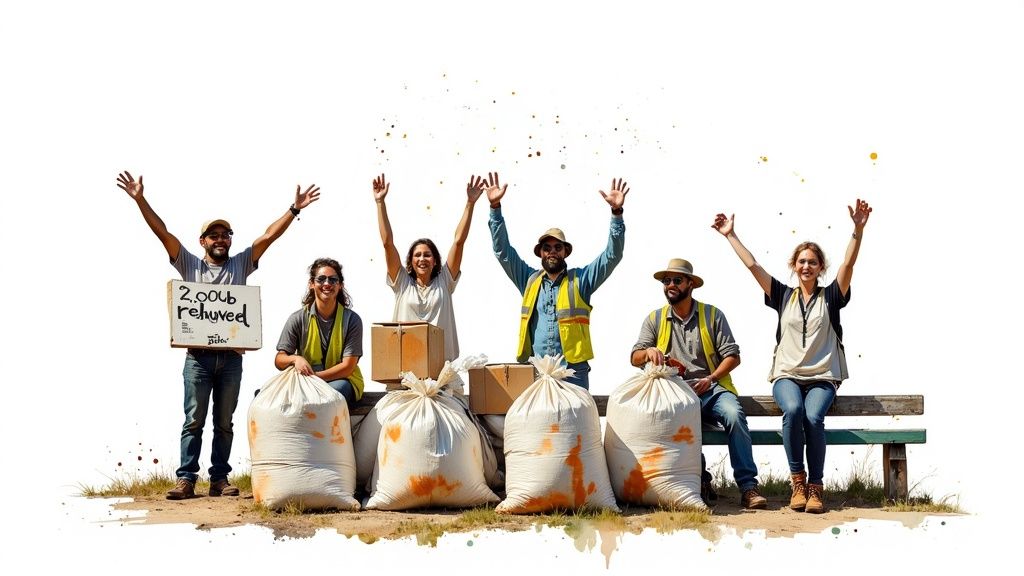
The last bag of trash is tied off, and that quiet sense of victory settles over your crew. This feeling right here? This is the most important part of your entire river cleanup. It's the spark that can ignite a lasting movement, but only if you tend to it.
Don't let this incredible energy just fizzle out as people head home. The work isn't truly over until you’ve honored the effort. This is your victory lap, and it's where a one-day event transforms into a real community of river champions.
Celebrate Your Champions
Think of your cleanup as a championship game. You wouldn't win the Super Bowl and then just quietly walk off the field, right? You celebrate! Your volunteers are the MVPs, and they absolutely deserve to feel like it.
A celebration doesn't need to be fancy or expensive. Its only job is to be genuine.
- Host an immediate after-party. This could be as simple as pizzas and sodas at a nearby park or moving the crew to a local cafe that offered you a discount. The goal is to give everyone a chance to connect as friends, not just as fellow workers.
- Give a heartfelt thank you speech. Before everyone scatters, get them together. Look them in the eye and tell them what their effort means. Share a specific, memorable moment from the day—maybe someone pulling a particularly gnarly tire from the mud.
- Share the glory. Get photos up on your social media pages within 24 hours. Tag anyone you can, and shower praise on your team and community partners. Make your volunteers the heroes of the story, because they are.
This simple act of celebration tells every single person that their time and sweat were seen, valued, and deeply appreciated. That feeling is what brings them back.
The Power of Cold, Hard Data
Now, let's give all that hard work a voice that can speak to city councils, potential sponsors, and future volunteers. The most powerful way to do that is with data. Numbers tell a story that's impossible to ignore.
Before the trash is hauled away, take a few minutes for this crucial step: weigh the collected trash. A simple bathroom scale or a luggage scale can do the trick. Tally up the total weight and count the number of bags you filled.
Imagine telling your town, "Today, our team of 50 neighbors removed 2,000 pounds of plastic, tires, and debris from our river in just three hours." That’s not just a feel-good story; it’s a headline that demands attention and inspires action.
This data becomes your proof of impact. It’s the evidence you can use in grant applications, partnership proposals, and media outreach. It quantifies your effort and turns a day of cleaning up into a measurable community achievement.
Keeping the Campfire Burning
Your event created a powerful burst of positive energy. The final piece of the puzzle is to capture that energy and keep it glowing. Don't let the community you just built fade away.
This is about creating a real legacy for your river.
- Follow Up Fast: Send a thank-you email to all participants within 48 hours. Share the final stats (pounds of trash collected!), include a link to the photo gallery, and give a shout-out to your partners.
- Create a Hub: Start a simple Facebook group or an email newsletter. This gives your river champions a place to stay connected, share ideas, and hear about future events. It’s their community space.
- Plant the Seed for Next Time: In your follow-up, mention that you're already thinking about the next cleanup. This simple act turns a single event into the beginning of a sustained effort.
This data-driven approach is critical on a global scale, too. We know that ten major rivers are responsible for an astonishing 90% of all plastic that flows into the world's oceans. Reporting your local data contributes to a bigger picture, showing how targeted cleanups can make a massive difference. You can read more about these global pollution statistics and discover why every piece of data matters.
By celebrating your people, measuring your impact, and building a community, you turn one great day into an unstoppable force for good. You’ve shown everyone just how easy—and fun—it is to make a real difference.
Your Questions About River Cleanups Answered
So, you feel that pull. You're ready to do something brave and kind for your river. But then the questions start creeping in, the little "what ifs" that can stop you cold if you let them.
Let's drag those questions out into the sunlight and tackle them head-on. These aren't roadblocks; they're just the last few turns you need to figure out before the real adventure begins. We've been there, and we've got the answers to help you lead with confidence.
What If I Can't Get Official Permission?
This is a classic fear, but don't let it kill your momentum. It's almost never a hard "no." It's usually just a matter of finding the right person to talk to.
Your first stop should be your local parks and recreation department. When you call, don't frame it as asking for permission. Frame it as offering a gift. You're a community leader bringing a team of passionate people to beautify a public space they're in charge of—for free.
If that’s a dead end, look up a local environmental nonprofit. These folks often have relationships with city officials already baked in. They might partner with you or just give you the right name to call.
"Sometimes, the kindest path is the simplest one. Grab a few friends for a 'plogging' walk—jogging and picking up litter. This small, brave act often requires no permits and shows you're serious. It builds the foundation for something much bigger."
How Do We Handle Large or Hazardous Items?
Your crew's safety is everything. This is where your kindness as a leader has to be fierce. Their job is the everyday stuff—plastic bottles, foam cups, chip bags. For anything else, the rule is simple and absolute.
If you come across big items like tires or furniture, or anything that looks sketchy like sealed drums or chemical containers, the rule is: Do Not Touch.
In this situation, your team's job is to become expert witnesses.
- Flag it: Have volunteers mark the spot so it's easy to find again.
- Document it: Snap a quick photo on a phone.
- Report it: Mark the location on a map and call it in to the right people, like your city’s public works or environmental protection agency.
You're their eyes on the ground. Reporting these bigger problems is a huge part of the mission. It’s an act of bravery that protects your people and the river.
How Can I Keep Volunteers Motivated for Future Events?
The trick to turning first-timers into a loyal crew isn't complicated: make them feel seen, valued, and part of a team that wins. You’re not just filling a roster; you're building a community.
It all starts on cleanup day. Be organized. Be positive. Thank everyone, out loud, for their hard work. Let them stand back and see the massive pile of trash they collected together. Let them feel their impact.
Then, follow up within 48 hours. Send an email celebrating what you all accomplished. Use the numbers: “Together, we pulled 800 pounds of trash out of our river!” Fill it with pictures of people smiling, working, and looking proud.
The real magic, though, is giving that energy a home. Start a simple Facebook group or an email list to share updates and celebrate the wins. When you focus on the shared passion, the cleanup stops being a one-time chore and becomes a joyful, ongoing movement they can't wait to join again.
At Litter Caterpillars, we believe in showing up for our city and each other, one piece of trash at a time. If you’re in Chicago and ready to find friendship and purpose through service, join our next adventure. Learn more about our mission and find an event at https://www.littercaterpillars.com.
Leave a Reply