
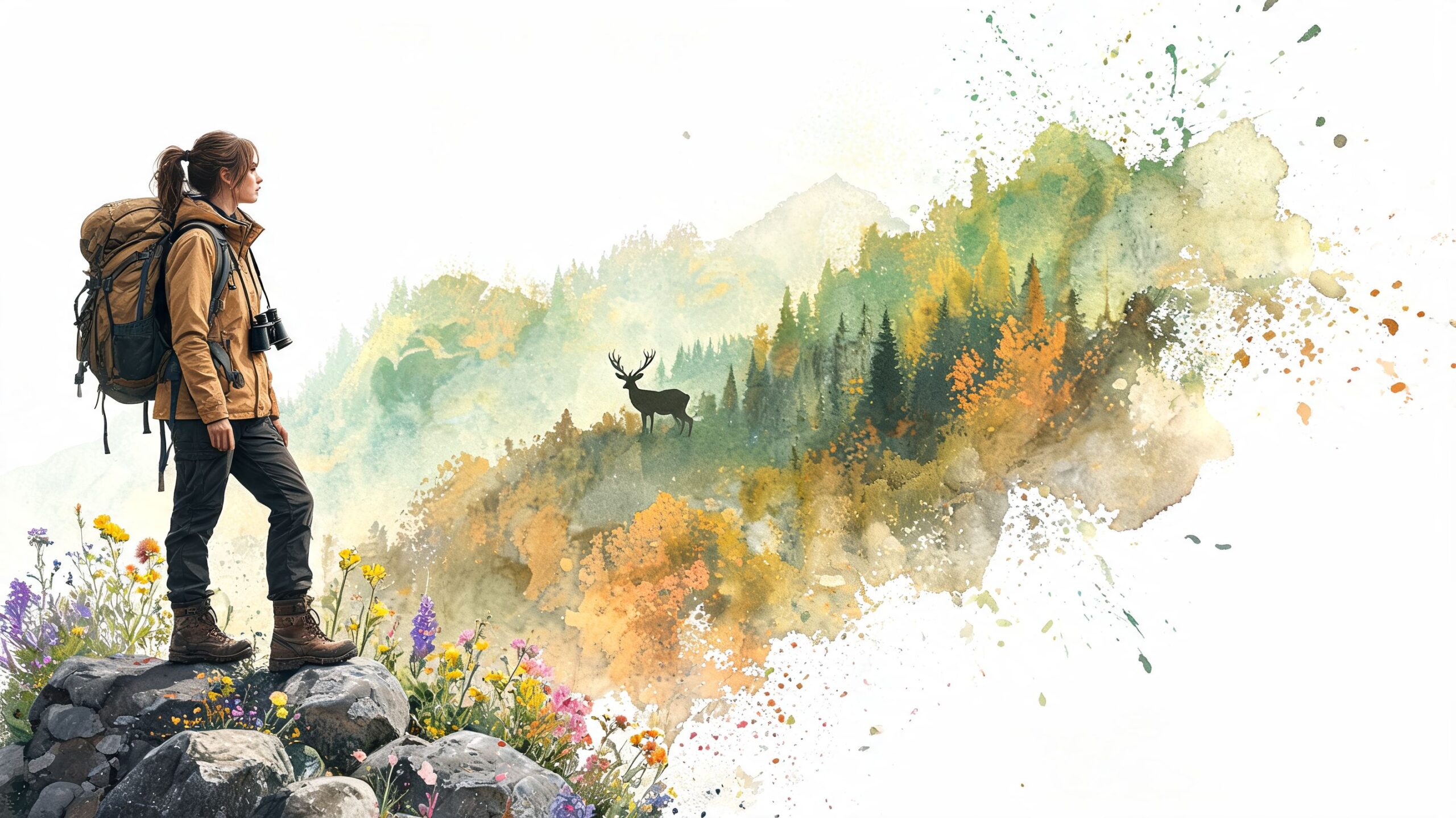
I once bent down for a crushed soda can at Greene Valley and felt my whole week change shape. The wind moved through the grass, my bag crackled, and for one clean second my mind stopped arguing with itself.
That’s why I keep coming back to greene valley forest preserve. You go there thinking you need a walk, and sometimes you leave with a reset.
From Personal Mess to Open Meadows
I’ll be honest with you. I didn’t come to places like Greene Valley because I had my life together. I came because I didn’t.
My apartment used to feel like a museum of unfinished decisions. A jar in the fridge meant guilt. A pile by the door meant delay. A torn bag I should’ve thrown away last month somehow carried a whole memory, so I kept it. You might know that strange heaviness. The object weighs almost nothing, but your chest acts like it weighs a truck.
Then one morning I went out because staying inside felt worse.
I didn’t need a grand plan. I needed one action I could finish. Pick something up. Put it in a bag. Keep walking.
When open space does part of the work
Greene Valley gave me room to think because it didn’t crowd me. The meadows felt like someone had opened a window in my head. The trails asked very little from me. Just move your feet. Breathe. Look down. Look up. Repeat.
That’s the secret I wish more people knew. Cleaning up someone else’s mess can loosen your grip on your own.
Practical rule: If your mind is jammed, give your hands a job.
I remember one stretch of trail where I found a bottle near the edge of the path, then a wrapper, then another piece of plastic caught low in the grass. None of it was dramatic. That was the point. I didn’t need drama. I needed proof that small effort still counts.
By the time I got back to my car, I wasn’t “fixed.” I was steadier.
Why this place works
Some places make you perform. They make you feel like you should be faster, fitter, more outdoorsy, more prepared. Greene Valley doesn’t feel like that to me. It feels like a place where you can show up tired, cluttered, restless, and still belong.
If you’ve been waiting to become a better version of yourself before you go outside and do something useful, stop waiting. Go as you are.
Bring your confusion. Bring your overthinking. Bring the version of you that keeps putting things off.
A meadow doesn’t ask for a polished person. A trail doesn’t care if you’ve had a messy year. You take a step anyway. Then another. That’s how order starts. Not with a perfect system. With movement.
First Steps into Greene Valley
The first time you arrive, don’t overcomplicate it. Get there, park, and start walking before your brain talks you back into the car.
Greene Valley sits in south-central DuPage County between Woodridge and Naperville. The land carries an older story under your shoes. It was once farmland owned by William Briggs Greene, and you can still see part of that past in his 1870s barn on the north end. The county trail system around it is huge too. The Forest Preserve District of DuPage County maintains over 175 miles of trails, and a connector from Greene Valley links to Whalon Lake Forest Preserve, as noted in this DuPage County video overview of Greene Valley.
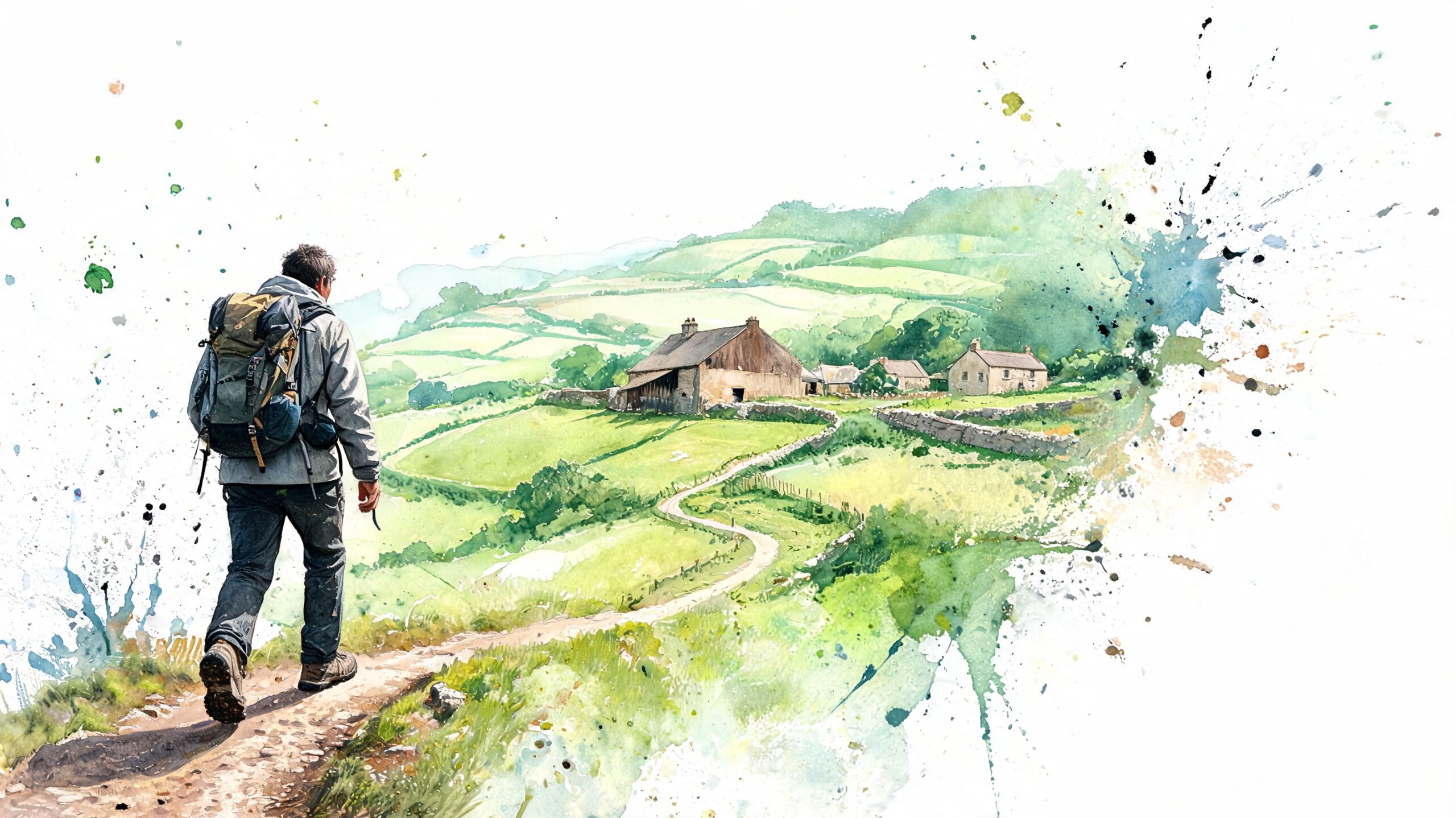
Start simple and start moving
I think a first visit goes best when you treat it like the beginning of a small expedition, not a test. You don’t need to “see everything.” You need one good hour outside.
Here’s the approach I’d give a friend:
- Park and commit fast: Once you arrive, don’t scroll your phone for fifteen minutes. Lock the car and start.
- Pick a direction, not a masterpiece: Your first route doesn’t need to be perfect. It only needs to get you onto the path.
- Look for the old bones of the place: Barns, field edges, old tree lines. They remind you this ground had a life before your visit.
That matters more than people think. When you notice the old farm traces, Greene Valley stops feeling like generic green space. It starts feeling lived-in, changed, worked on, handed forward.
Use the first visit to build confidence
If you’re new to forest preserves, this is a good place to practice trust in yourself. Wide paths calm people down. Open views help if dense woods make you uneasy. You can settle into a rhythm without feeling boxed in.
I also like that Greene Valley plugs into a bigger county system. You can begin here and realize outdoor life isn’t one isolated afternoon. It can become a habit.
If you want another way to compare nearby preserves before you go, I like this guide to an Illinois forest preserve adventure because it helps you think in terms of experience, not just directions.
You don’t need wilderness skills to start. You need curiosity, water, decent shoes, and the guts to begin before you feel ready.
The land itself helps with the rest. You walk. The noise drops. The day gets more honest.
Finding Your Path on the Trails
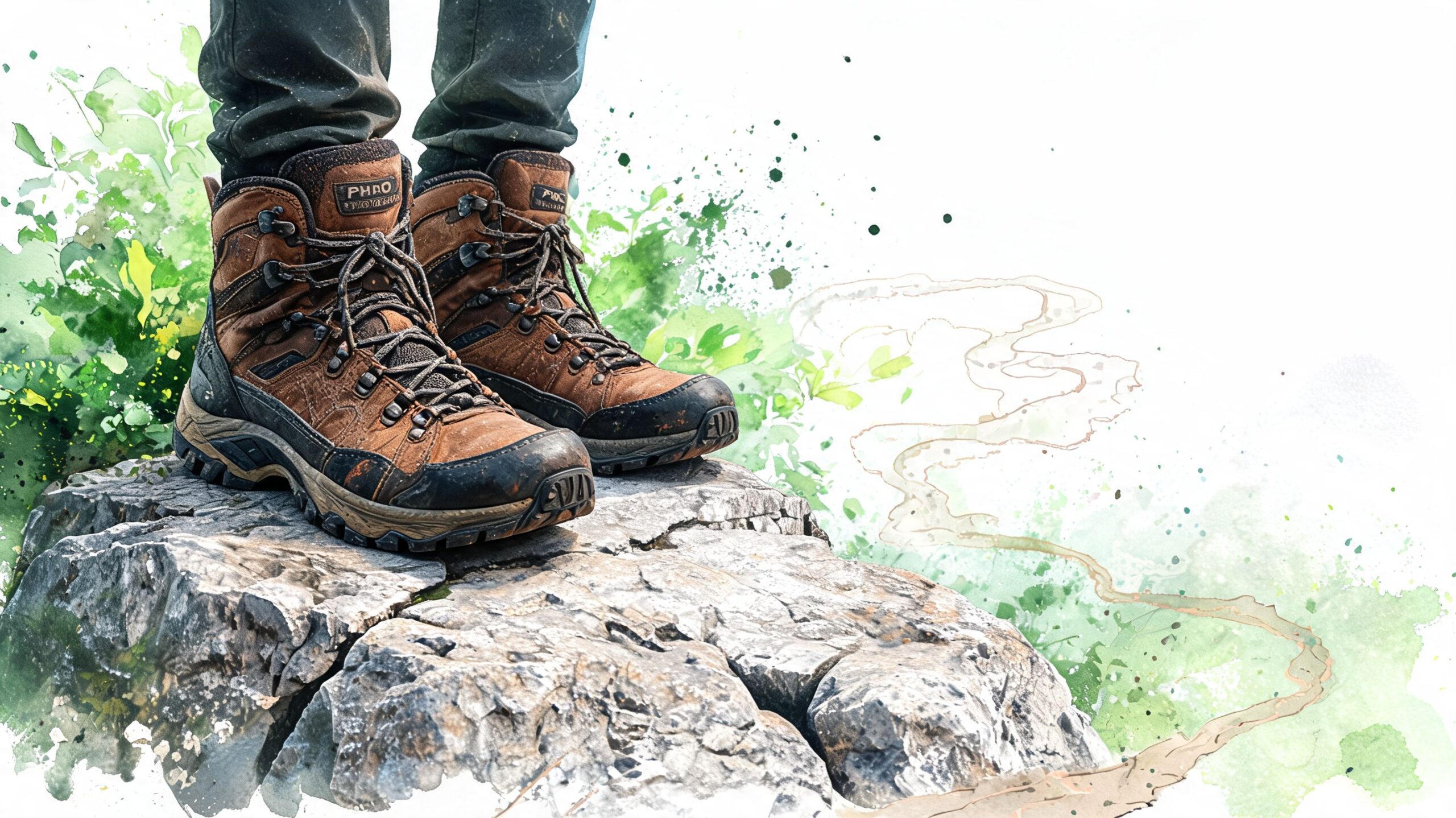
Your shoes tell you a lot at Greene Valley.
On the crushed limestone, your steps make that steady crunch that sounds like commitment. On the dirt footpaths, the ground softens and your body changes pace without asking permission. That contrast is part of the charm. Greene Valley covers 1,388 acres and has 12 miles of multiuse trails plus 3 miles of footpaths, and it’s one of the county’s most botanically varied places with over 540 native plant species, according to this Greene Valley trail and plant guide.
Pick a trail by mood, not ego
I’ve made the mistake of choosing routes to impress myself. That usually ends with me missing what I came for.
At Greene Valley, I think it’s smarter to choose by state of mind.
| What you need | What to choose |
|---|---|
| Head-clearing walk | A broad limestone route where you can settle into a steady rhythm |
| Quiet and texture | One of the dirt footpaths where the preserve feels more intimate |
| Leg work and momentum | A longer loop that keeps you moving without many stops |
| Plant watching | Slower walking with frequent pauses along varied habitat edges |
That last one matters. If you rush, you miss half the place. A preserve with over 540 native plant species doesn’t reveal itself all at once. It comes in layers. Low flowers near the path. Taller stems catching side light. Leaves with different shapes and tones once you finally slow down enough to notice them.
The trail can meet you where you are
One day I needed exertion. I took the wider path and kept a stronger pace until my thoughts stopped repeating themselves. Another day I needed something gentler, so I drifted onto a quieter footpath and let the smaller sounds take over.
That’s why greene valley forest preserve keeps earning repeat visits. It doesn’t trap you in one style of experience.
If you want another preserve to compare for a different kind of hiking day, this look at Waterfall Glen Forest Preserve gives you a useful contrast.
A short video gives a good feel for the terrain and flow before you go:
Let the place work on you
You don’t need to conquer all the miles. Let the trail do its quieter job.
Walk until your shoulders drop. Walk until you stop reaching for your phone every few minutes. Walk until the scale of the preserve helps your problems shrink back down to human size.
That’s choosing your path in the best sense. Not maximizing distance. Matching the land to the day you have.
The Wild Inhabitants of the Preserve
The first real shift happens when you stop treating wildlife like a bonus and start treating it like company.
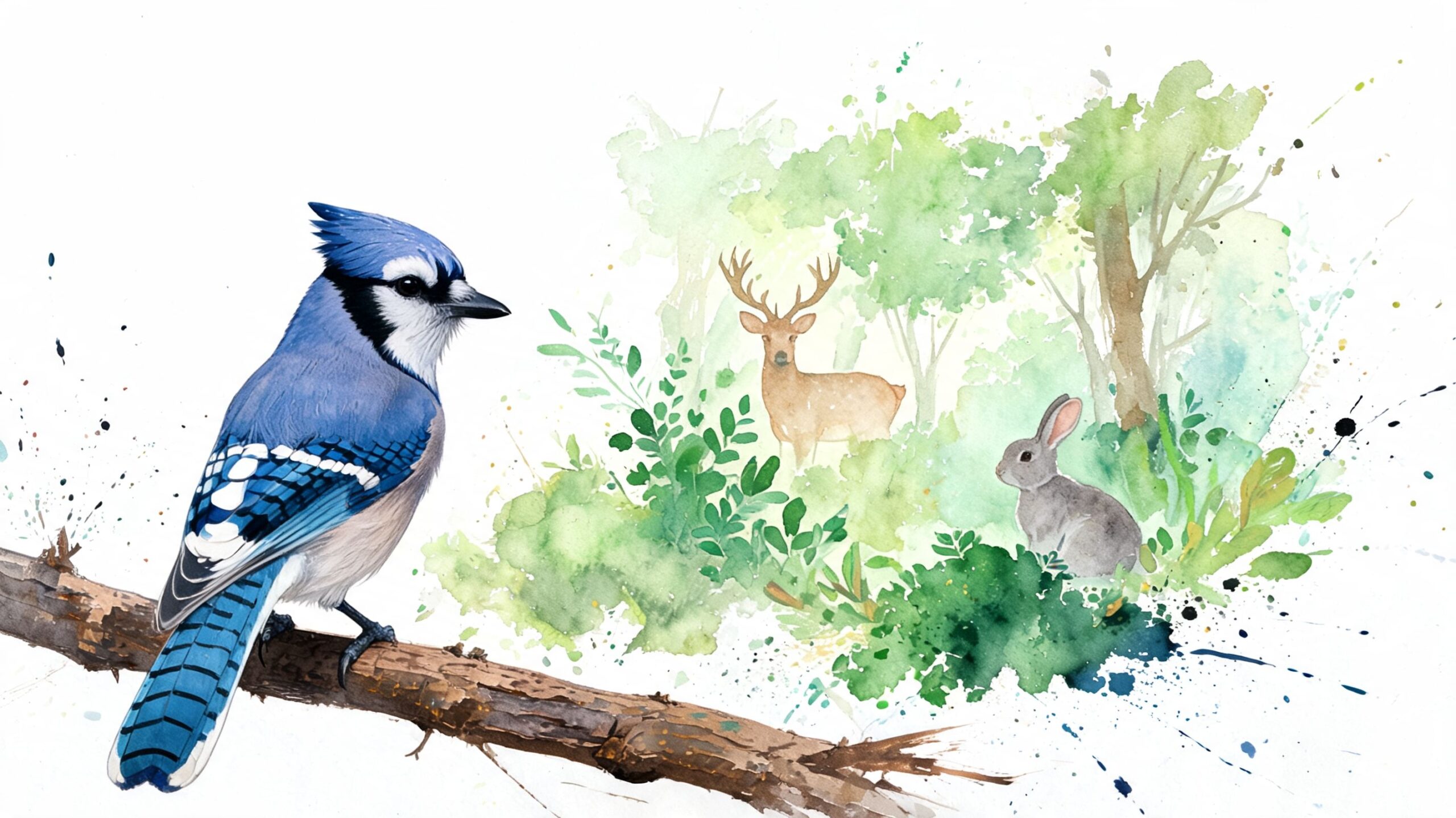
At Greene Valley, that shift can happen fast. The preserve’s habitats support over 370 native animal species. Its wetlands are breeding ground for amphibians, and its meadows and forests are home to animals like coyotes, meadowlarks, great horned owls, and white-tailed deer, according to the Greene Valley master plan.
Learn to hear before you look
In spring, the wetlands can erupt with frog and toad calls. If you’ve spent too much time indoors, that sound can almost feel fake at first. Too full. Too alive. Then your ears adjust, and you realize the place has been talking the whole time.
That’s how I try to walk in preserves now. I listen first.
- Wet places: Pause and listen for amphibian chorus before you scan the water.
- Meadows at dawn or dusk: Keep your eyes up and long. Movement often comes before shape.
- Wooded stretches: Slow down. Owls and deer reward patience more than speed.
The wild part of a place rarely introduces itself on your schedule.
A better way to move through the preserve
I once saw a deer at the edge of the trees because I had stopped to untangle a piece of litter from a branch. If I had kept marching, I would’ve missed it. Service changes your pace. That’s one of the hidden gifts.
The same goes for birds. Meadowlarks don’t care about your hiking playlist. Coyotes won’t pose because you finally looked up from your map. Greene Valley asks you to become less noisy in every sense.
Try this on your next visit:
- Walk one stretch without talking.
- Stop for a full minute when you hear water or birds.
- Scan edges, not just open space.
- Let one sighting be enough.
That last one is important. You don’t need to collect wildlife like trophies. One owl heard but not seen can change your whole day. One deer stepping through shadow can make you feel like you entered the preserve for real.
Be a guest, not an owner
When you understand that more than 370 native animal species live across these habitats, your posture changes. You stop acting like the place exists for your convenience. You start acting like you’ve been allowed in.
That’s a better kind of outdoor confidence. Less swagger. More attention.
Seasonal Rhythms and How to Visit with Respect
Greene Valley changes its personality every season, and I think that’s part of why people return. You’re never meeting the exact same place twice.
Spring is restless. The ground softens, birds get louder, and the whole preserve feels like it woke up before you did. Summer has a different mood. The light gets heavier, shade starts to matter, and a walk can feel less like exploration and more like endurance in the best way.
Let the season choose the lesson
Autumn sharpens everything. Your footsteps sound cleaner. The air feels direct. You notice distance more.
Winter strips the preserve down to structure. Paths, trunks, sky, breath. I like winter because it removes excuses. If you go out on a cold day, you usually mean it.
Here’s how I think about seasonal visits:
- Spring is for noticing: Watch for small changes, fresh growth, and sound returning.
- Summer is for discipline: Bring water, start earlier, and respect your limits.
- Autumn is for longer walks: The air often makes effort feel easier.
- Winter is for honesty: You find out quickly what kind of mood and gear you brought.
Respect is a practice, not a slogan
A lot of people hear “Leave No Trace” and think of a lecture. I don’t hear it that way. I hear basic decency.
If you borrow a friend’s home, you don’t leave wrappers on the floor. You don’t stomp through what they care for. You don’t turn your convenience into their burden. A preserve deserves the same manners.
A good visit leaves the place lighter, quieter, and less burdened by your presence.
That can look simple:
- Stay aware of where your feet go: Trails exist for a reason.
- Carry your own trash out: Don’t outsource your mess to the next person.
- Keep noise down: Sound travels farther than people think.
- Notice before you act: A photo isn’t worth pushing into sensitive ground.
Kindness has a physical form
I think a lot about how respect becomes visible. It’s in the path left unscarred. It’s in the bottle cap you pocket. It’s in the moment when you choose not to force an encounter with wildlife.
Those tiny acts shape your character because they ask you to do the right thing with no applause waiting. That’s rare. And good for you.
Greene Valley is a strong place to practice that kind of restraint because it gives a lot. Open room. animal life. quiet. If a place gives you that much, the decent response is to give some care back.
That’s how a walk turns into stewardship. Not through grand speeches. Through habits.
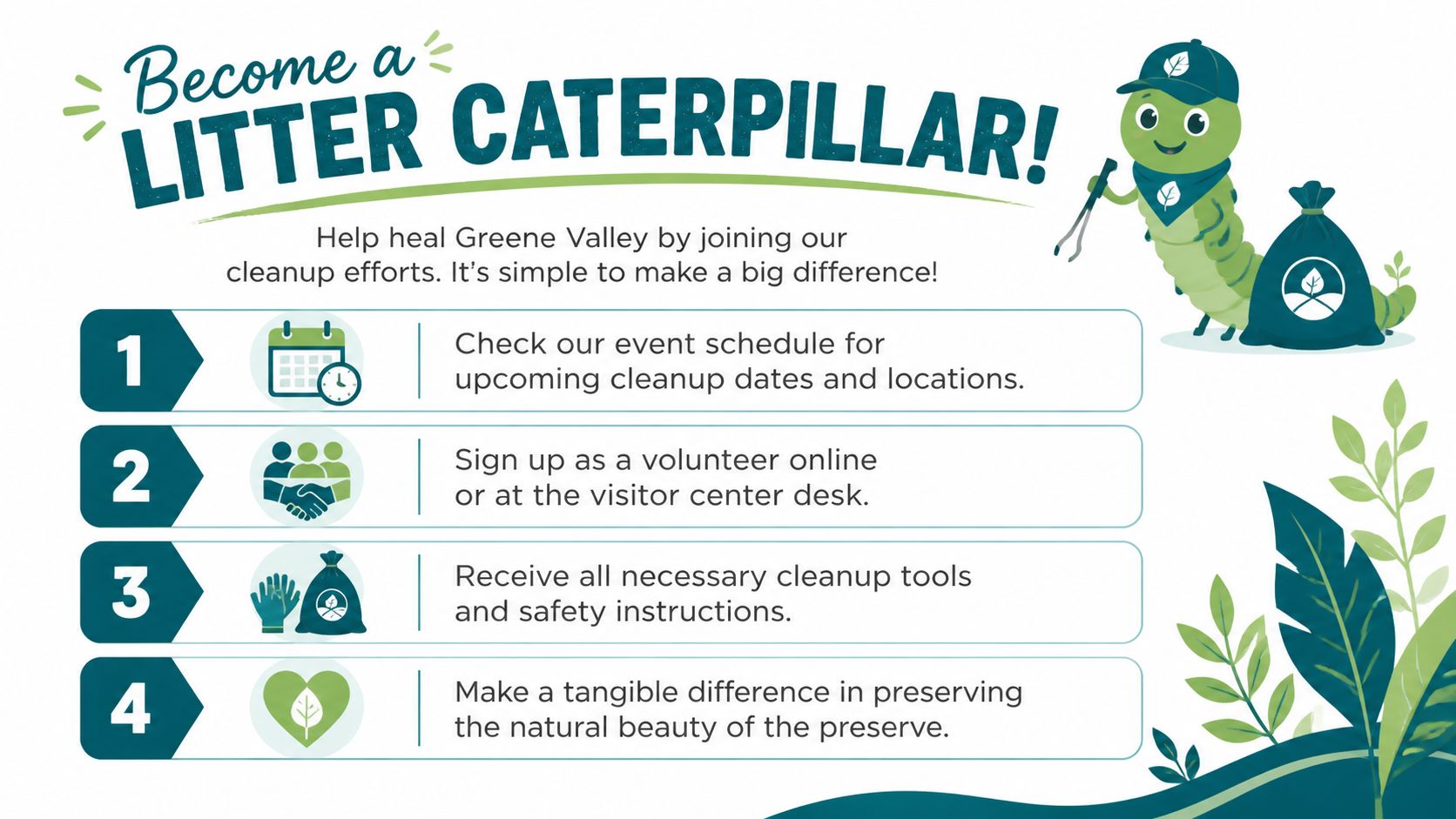
Join Us The Litter Caterpillar Cleanup
There’s a hill at Greene Valley that tells the whole story if you let it.
The preserve has a 190-foot scenic overlook built on a reclaimed landfill. A place that once held waste now gives people a view. The preserve also has 12 miles of durable trails that help volunteer groups reach litter-heavy and sensitive areas efficiently, according to the DuPage Forest preserve page for Greene Valley.
I love that. I don’t mean it in a poetic, floaty way. I mean it as a working principle. Trash can become a turning point. A dumped place can become a cared-for place. An ashamed person can become a useful one.
Why a cleanup changes more than the ground
A cleanup gives you something rare. Visible proof.
You bend down. You lift the bottle, can, wrapper, or broken plastic. You bag it. The place looks better because you showed up. That’s a very old medicine for the modern mind.
If you’ve felt stuck, service cuts through the fog because it asks a clear question. Can you help, right here, right now? Usually the answer is yes.
How to prepare for a cleanup day
You don’t need elite gear or some rugged identity. You need practical clothes and a willing attitude.
Here’s the simple version I’d tell any first-timer:
- Wear clothes that can get dirty: Long pants are smart if you’ll brush past tall grass or work near rough edges.
- Choose solid shoes: Closed-toe shoes with grip make the day easier.
- Bring water and basic weather sense: Sun, wind, mud, and chill all change how a cleanup feels.
- Expect real work: Some stretches are easy. Some ask for patience and grit.
I think that last part is good for people. Hardship in a meaningful direction feels different from random stress. A full trash bag has weight, but it also has purpose.
What the day feels like
Cleanup work has a strange rhythm. At first, people are a little shy. Then someone finds a weird piece of litter, somebody laughs, somebody points out a bird, and the group starts moving like a team.
You notice the trail in a new way when you’re scanning both beauty and damage. A ditch full of cans stops being background. A clean stretch becomes a small victory. The preserve trains your attention.
Bring your awkwardness. Bring your uncertainty. Shared work melts both faster than small talk does.
There’s also relief in the physicality of it. Reach, grab, step, bag, repeat. The body likes a clear assignment. So does the mind.
How to join without overthinking it
If you want to volunteer, keep the process plain. Don’t wait for the perfect weekend when your calendar is magically open and your energy is ideal. That weekend doesn’t exist.
Take these steps instead:
- Check the upcoming events through this volunteer trash pickup page.
- Sign up for a date that you can realistically make.
- Dress for weather, dirt, and movement.
- Arrive ready to listen and work with other people.
- Let the day be what it is. Muddy, windy, cold, funny, satisfying.
That’s enough.
The deeper invitation
I think a lot of us are hungry for transformation, but we want it to arrive in a dramatic package. New plan. New app. New identity. Cleaner life by next month.
Usually it’s simpler and less glamorous than that.
You show up at a preserve. You do a useful task. You get tired for a good reason. You see that your effort changed something outside you, and because of that, something inside you shifts too.
That’s the true invitation at Greene Valley. It isn’t only to admire open space. It’s to become the kind of person who protects it.
And maybe, while you’re pulling litter from the edge of a trail or climbing a hill that used to be a landfill, you realize your own messes aren’t permanent either. They can be worked on. They can be faced. They can even become the ground for a better view.
If that kind of day sounds like your kind of growth, join Litter Caterpillars. Come outside, do hard good work with kind people, and leave greene valley forest preserve better than you found it.