You walk your dog past the same park bench every morning, and you see the same wrappers under it. You pick up one cup on Monday. You find three more on Friday. You want to clean up parks with neighbors, but you don't want chaos, injuries, or a one-time burst that fades. I run cleanups like small field operations. You set a boundary, you give people clear jobs, and you record what you find so your next visit works better.
Start With the Park You Can Use
You arrive, and I watch bags pop open before anyone agrees on a plan. One volunteer races toward the playground. Another volunteer drifts toward the parking lot. A third volunteer reaches into a hedge because she spots a bottle. I stop the group, smile, and ask everyone to keep bags closed for two minutes.
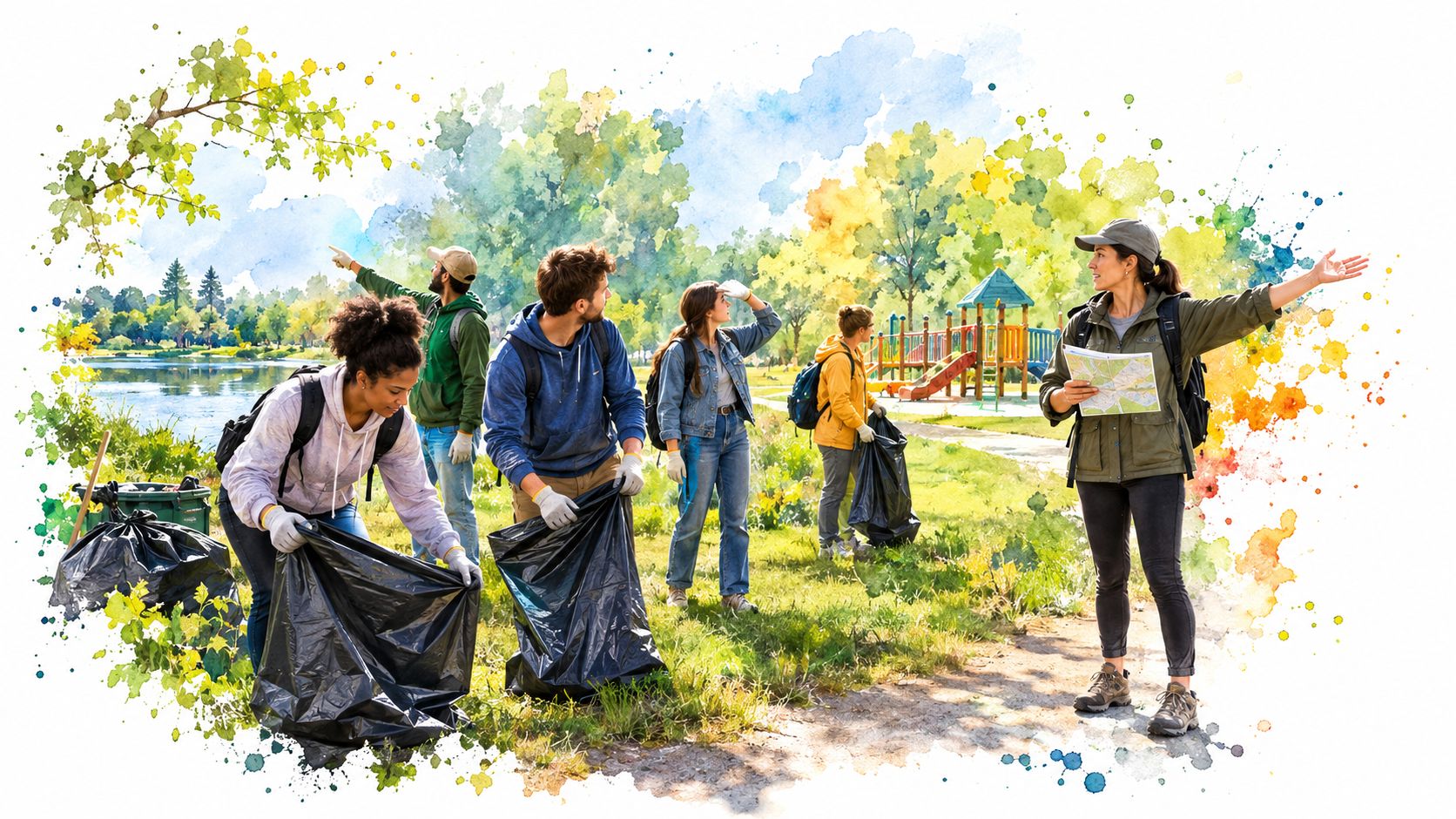
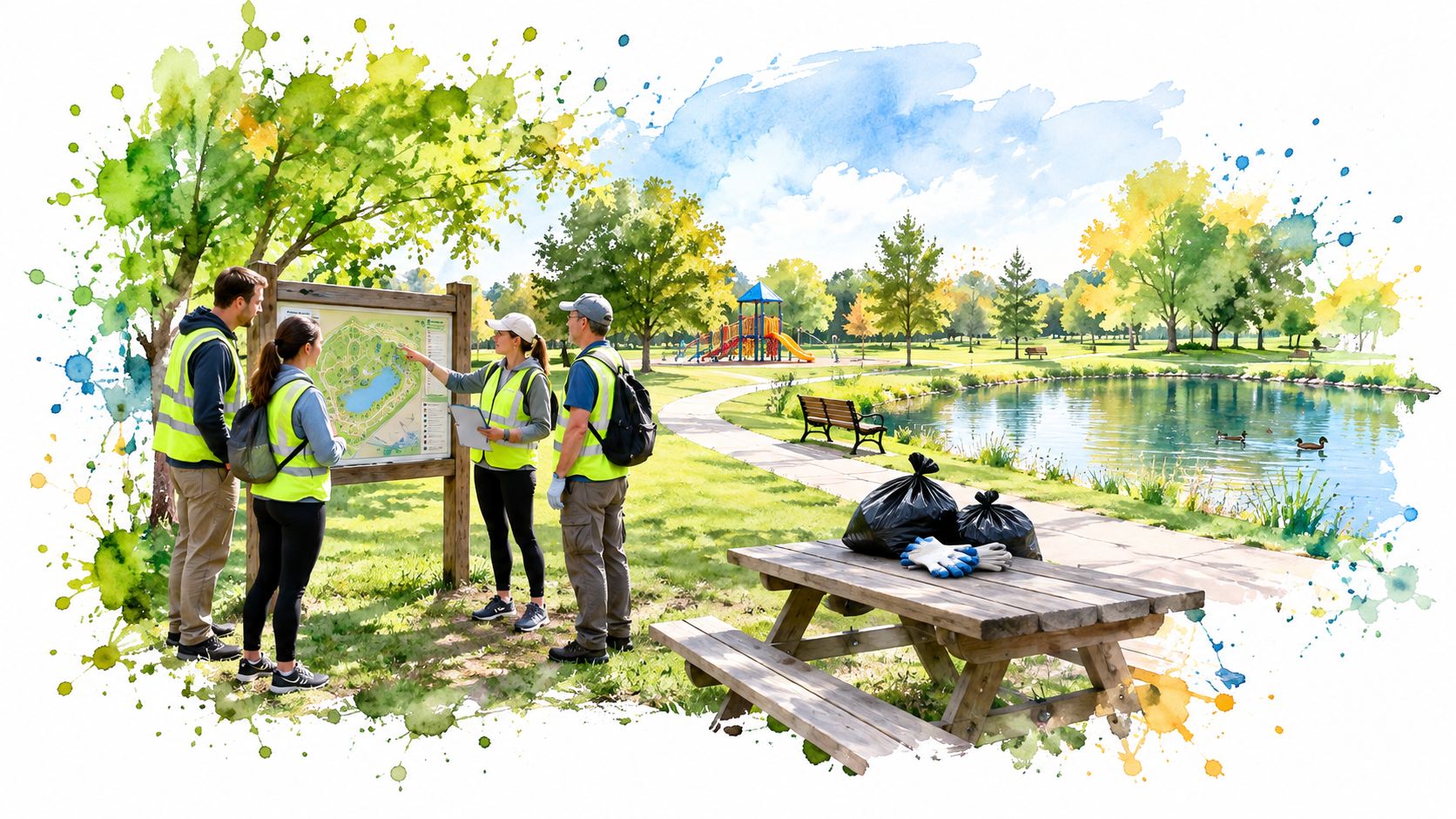
I point to the meeting point first, usually a bench or sign you can see from the paths. I walk your eyes around the boundary next, from one corner to the next, and I name places you won't enter. Think of the park like a kitchen before you cook. You check the counters, you find the sink, and you put knives where kids can't grab them.
Make a New Volunteer Useful Fast
I hand a first-timer a grabber, gloves, and one simple job. I say, you walk the path edge with your buddy, and you call me if you see anything sharp or sealed. You feel useful in minutes because you know your lane, your partner, and your stop point.
Bring: You bring closed-toe shoes, water, weather layers, and a phone with charge.
Leave behind: You leave headphones, loose sandals, and any urge to reach into brush you can't see through.
You don't need a huge park to learn this rhythm. If you travel and want ideas for smaller, well-marked sites, you can browse Texas state parks and study how clear trailheads and meeting points help groups start calmly. I choose a park you can cover completely, because a finished small park teaches you more than a half-finished big one.
Start slow for two minutes, and you save twenty minutes of confusion later.
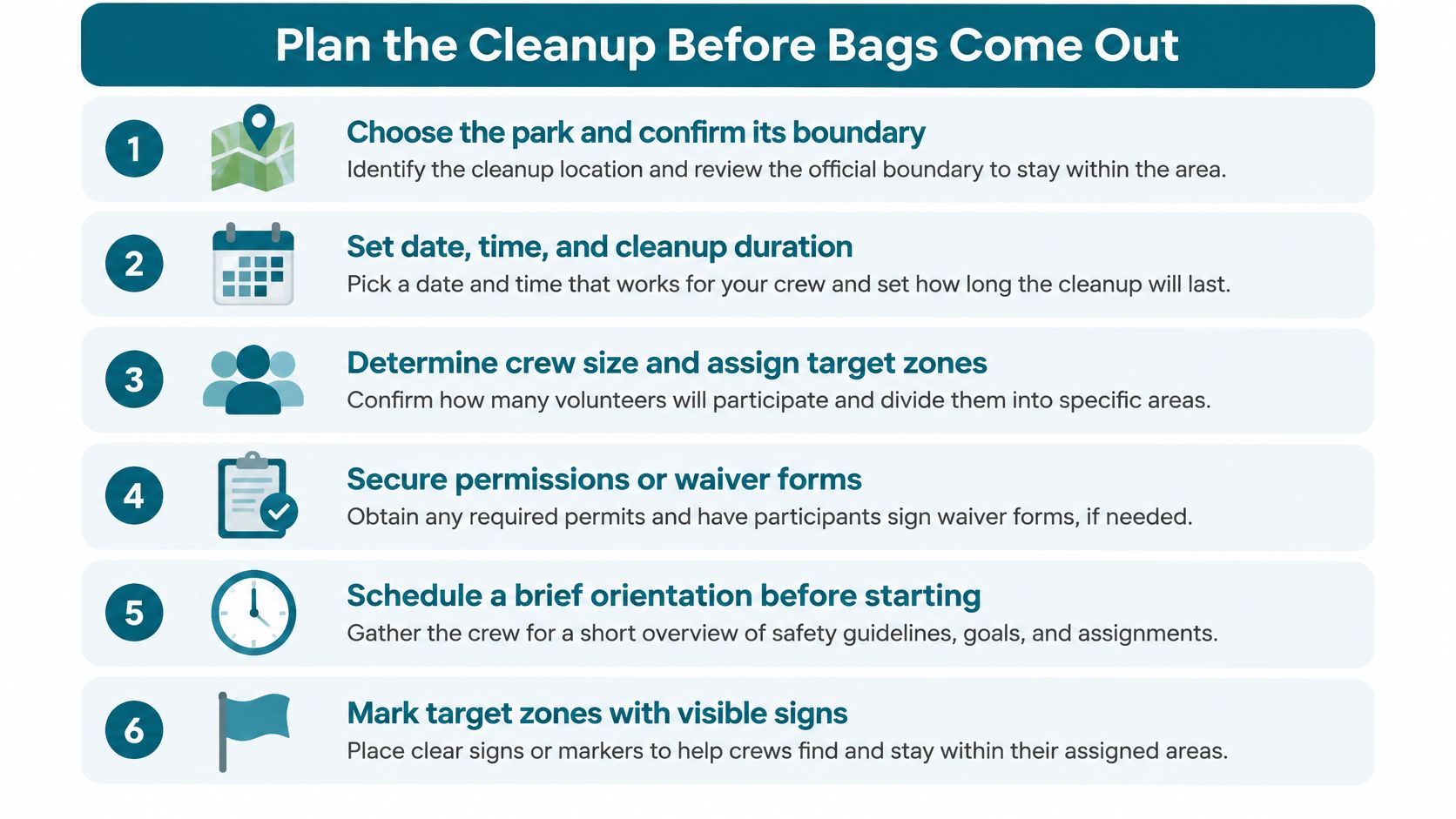
The curb is the worst place to make decisions. Volunteers stand around waiting, bags stay in the trunk, and the one person with answers is still circling for parking. I make every call on paper days earlier, and the whole plan fits on a single page you can tape to a cooler.
That page holds the date, start time, end time, meeting point, and a zone map drawn from paths, fences, and landmarks. Zones let me send small teams out and bring them back without shouting across the grass. Next to each zone I pencil an empty count column, because planning is where I decide the sweep will produce a litter tally. A tally improvised at the curb never survives the first hour.
Roles go on the page too, matched to what people want to do:
Role
What the person handles
Team leader and backup
Zone assignments, headcounts, timing calls
Route walkers
Litter pickup with grabbers inside a set zone
Recorder
Item counts, before and after photos
Supply carrier
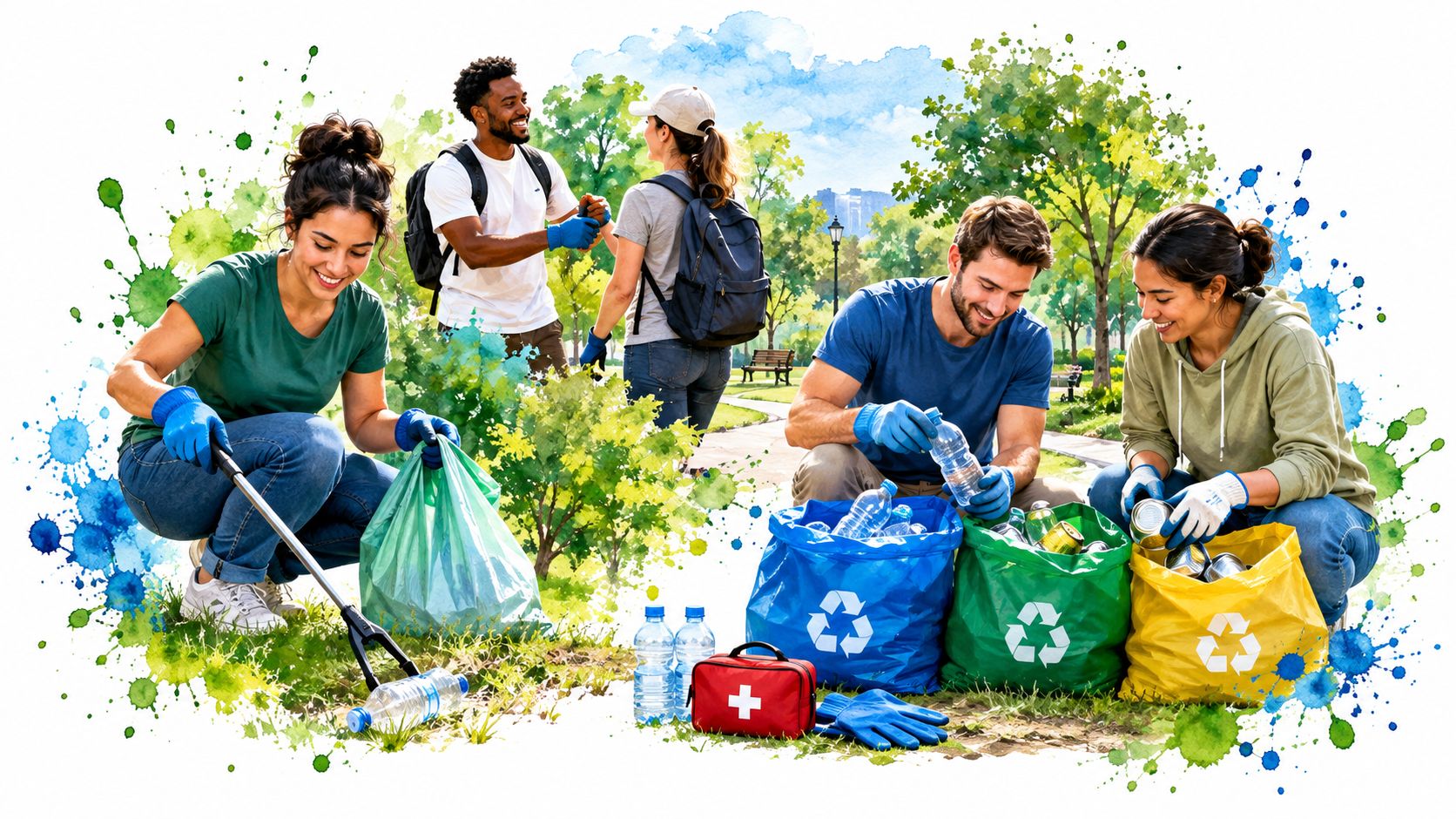
Spare gloves, bags, water, first aid kit
Greeter
Late arrivals, waivers, parking and bathroom notes
I ask the supply carrier to keep everything in one packed tote, and if your group wants matching supply totes you can buy custom cotton tote bag options and keep one ready as a grab-and-go kit.
Two small decisions finish the plan. I set a weather call the night before and again at dawn, and I tell people exactly when the go or no-go message arrives so parents, older volunteers, and anyone managing transit or medication can plan around it. I cap the event at a focused one to two hours rather than a vague all-morning promise, because full attention is easier to ask for when people know they will still have energy for lunch. Then I write a short orientation script and deliver the same lines every single time.
Engineer Safety Into Every Sweep
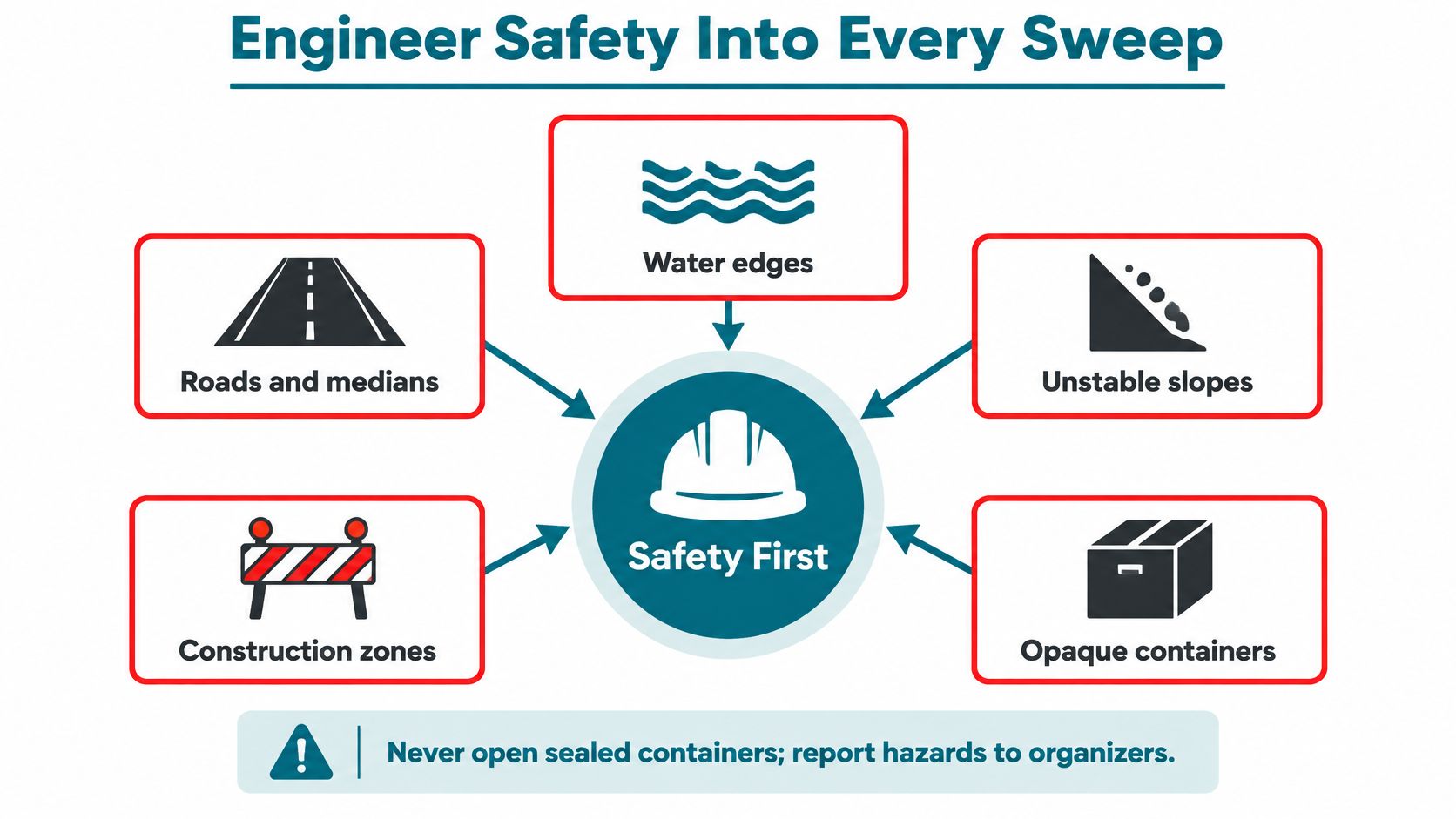
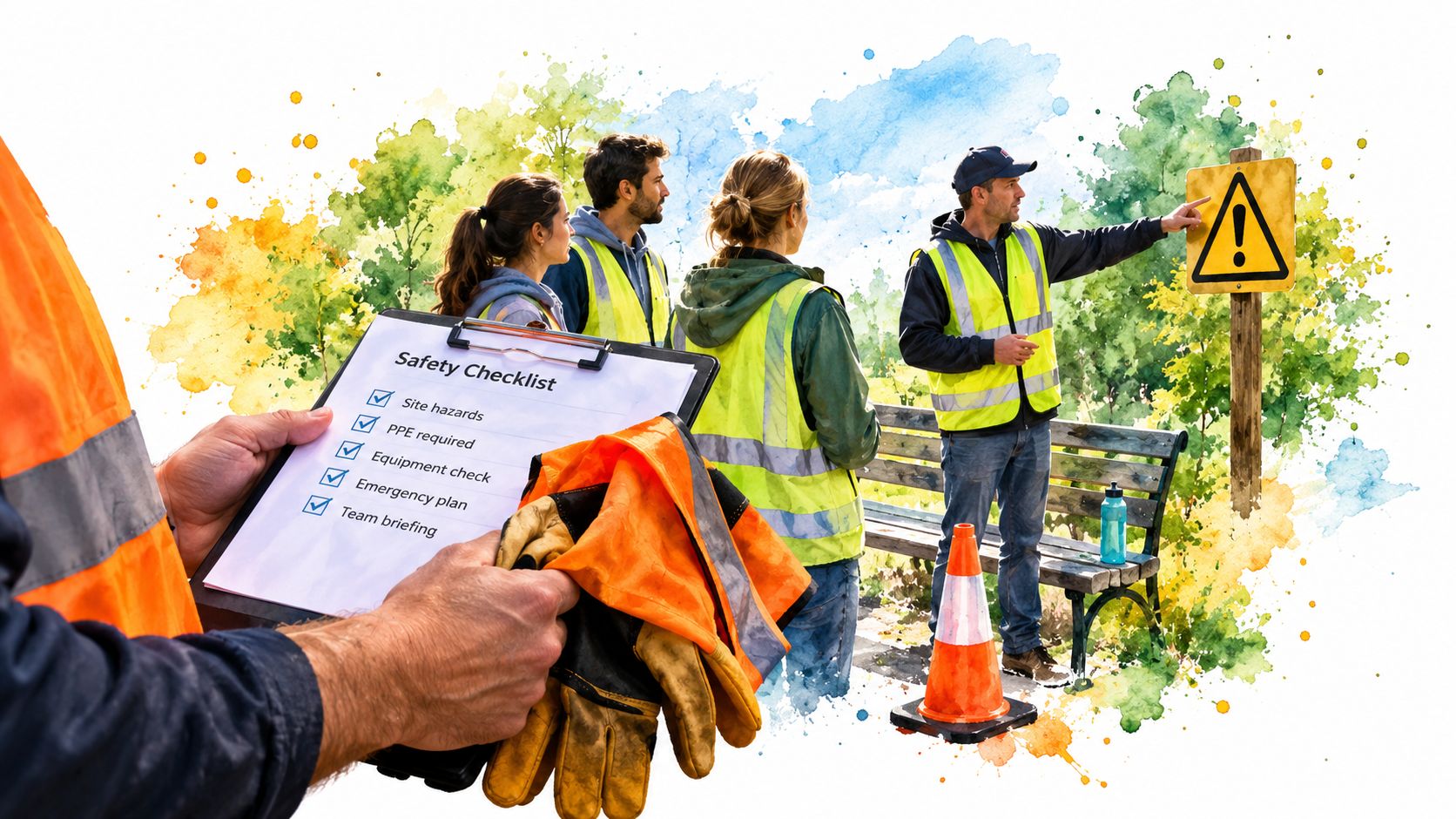
A narrow path beside a road can look like an easy pickup zone until a volunteer steps into traffic to reach a bottle. Set boundaries before anyone starts. Pair volunteers, assign each pair a defined area, and give one named lead authority to pause or end the sweep.
Walk the site first and mark roads and medians, water edges, unstable slopes, and construction zones as off-limits. Volunteers should not open opaque containers or reach into places they cannot see. Pittsburgh's volunteer safety guidance advises leaders to identify safe and unsafe pickup areas and exclude hazards such as syringes and car batteries. Put those boundaries on the route map and repeat them at the start.
Give One Person Stop-Work Authority
Name the stop-work lead during the huddle, and make sure every volunteer knows they can report a concern without being asked to prove it is dangerous. Take a headcount before and after the sweep. Schedule work in daylight, identify a shaded rest point, and make water available.
Pause for lightning, flooding, poor visibility, or signs of heat illness such as dizziness or confusion. If someone finds a syringe, chemicals, a battery, an unknown powder, or an object too heavy to lift safely, stop nearby work and report its location rather than approaching it. Mapping, photography, supply coordination, and recording observations give people lower-risk ways to contribute.
Practical rule: If you cannot identify an object, do not touch it.
Safety also shapes who feels welcome. A 2025 national cleanup campaign report found that 90% of Americans believed their communities had too much litter, while 44% said they regularly acted to remove it. Clear boundaries, flexible roles, and an ordinary, no-blame cancellation process make it easier for people to take part without pressure to prove their commitment.
Collect Litter Without Making New Risks
A wrapper on open grass and a sharp object half-hidden beside a bench call for different responses. Build that judgment into the sweep: inspect each item before reaching, use a grabber for ordinary litter, and leave anything uncertain for the cleanup lead to assess.
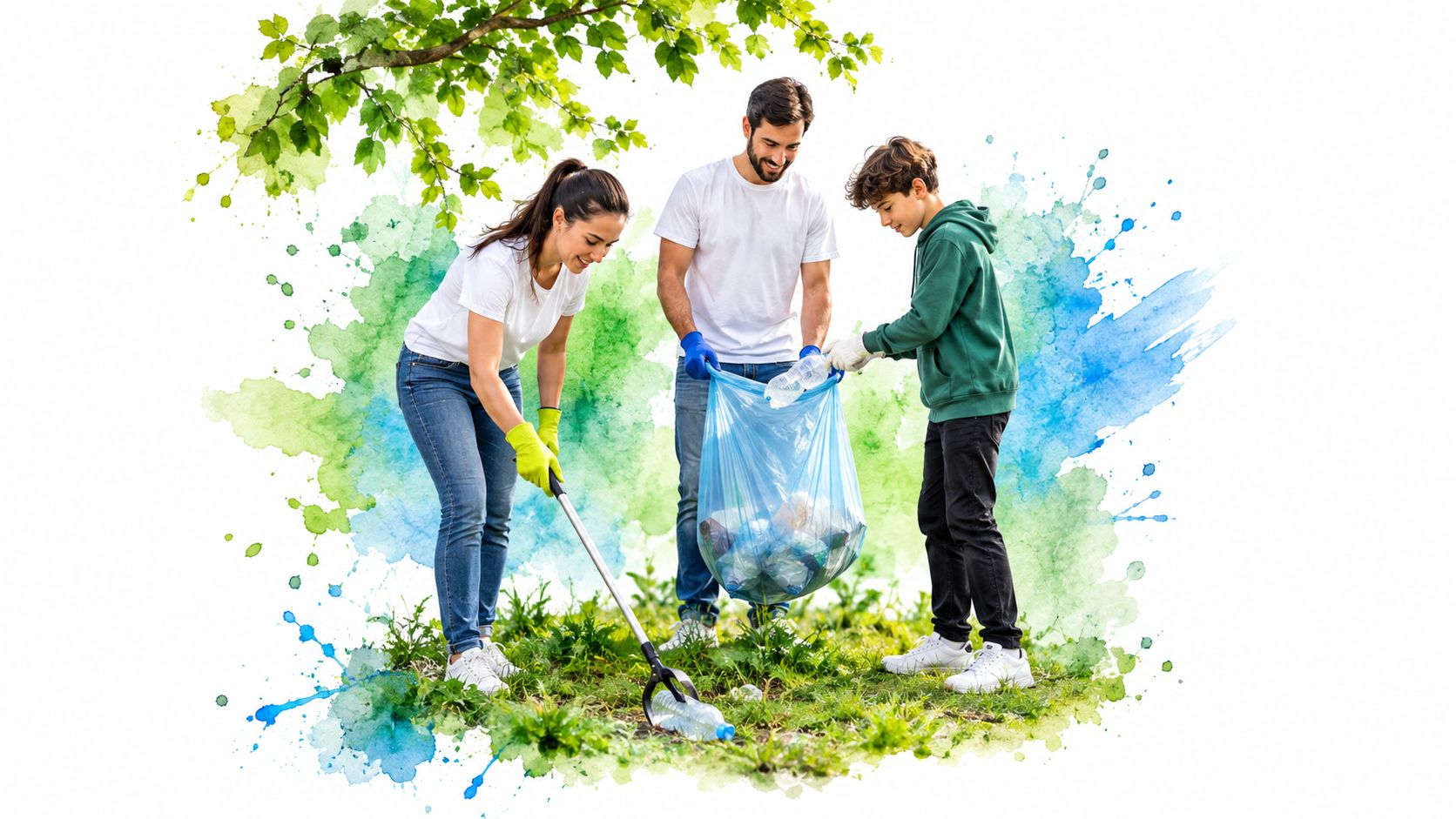
For routine pickups, work in a steady sequence: scan the ground, grasp the item with a tool, then place it in the bag. Keep the tool between your hand and anything dirty, torn, or partly buried. Bag ordinary litter by zone so the crew can track where it came from.
Near a fence or planting bed, slow down and watch where you place your feet. On open grass, volunteers can move in steady lines. Adjust the pace to the footing and visibility rather than trying to keep every person moving at the same speed.
A torn glove means stop and replace it before continuing. If lifting an item strains your back or wrist, leave it and record its location for follow-up. At the end of each zone, turn around and scan the area from another angle. Bench legs and signposts can hide small pieces on the first pass.
Turn the Sweep Into a Litter Audit
I love a full bag, but I don't trust bag counts alone. A bag can hide wet leaves, loose packing, or a few heavy items, and you learn almost nothing about what keeps coming back. When you clean up parks and record what you find, you turn service into civic intelligence you can use next week.
You start with a fixed boundary and repeatable zones, and you keep both stable across visits. You record date, weather, crew size, volunteer-hours, and starting conditions, and you photograph the same points each time. If you change the boundary or the counting rules, you can't tell real improvement from a new ruler.
I keep the audit short enough that you'll repeat it. You use one page, one photo set, and the same zone names, and you review the page before you leave the park. You write what surprised you while the park still sits in front of you.
Use Data to Improve the Next Visit
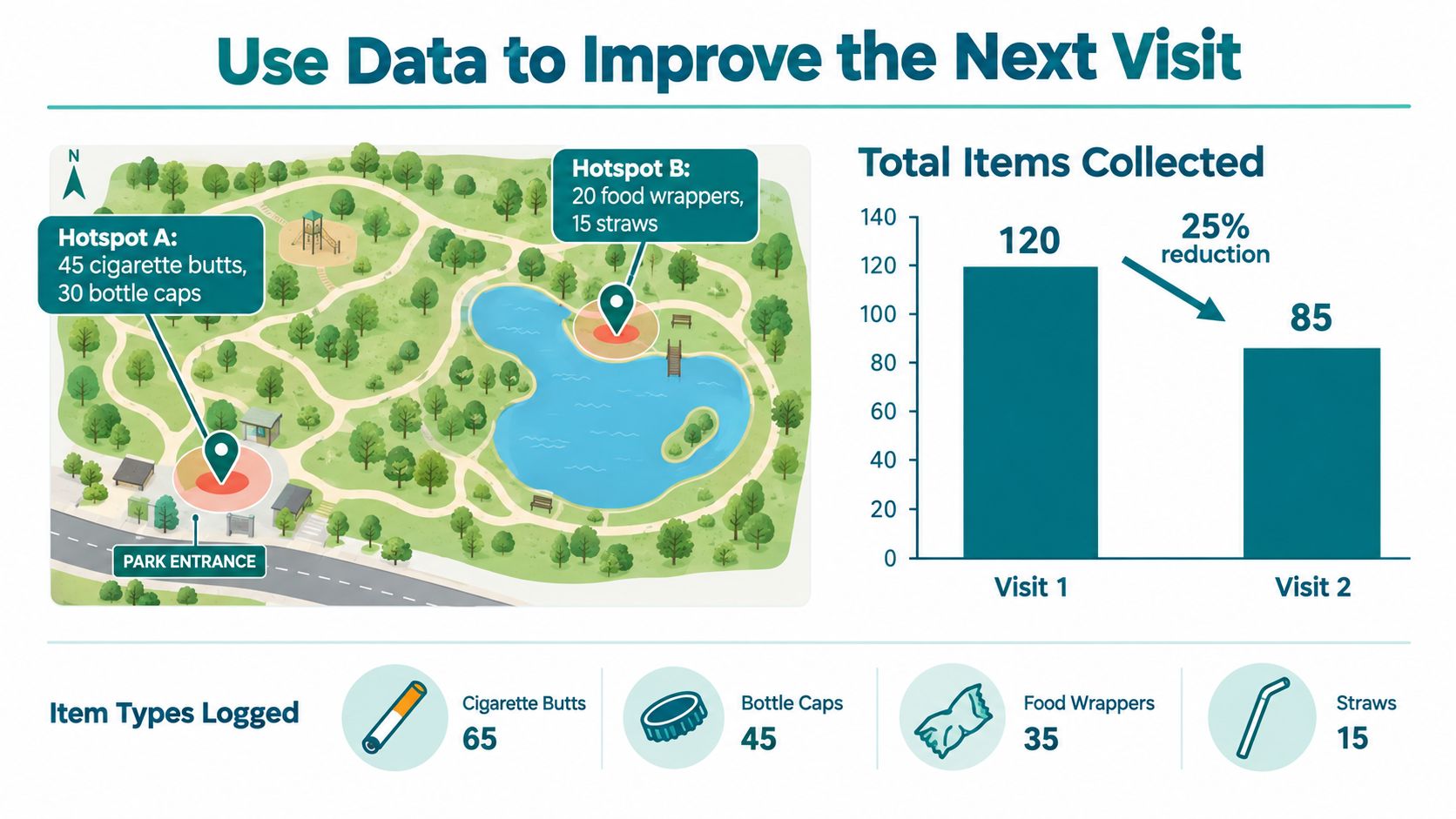
At the picnic table, last visit's map shows the same small litter concentrated near the entrance. That pattern gives the crew a practical choice: repeat the same sweep, or test a change and see whether the litter returns.
Mark hotspots by zone and litter category, then record visible conditions nearby. Note overflowing bins, missing receptacles, broken lids, wind-exposed corners, bus stops, and entrances where people pause. Separate a one-time party mess from litter that returns week after week. The likely cause, and the response, may differ.
Pick One Test You Can Finish
For the next few visits, request a bin repair, ask whether a bin can be moved, or focus on cigarette litter near one entrance. Keep zone boundaries and counting rules steady so the crew can compare results after the change. The guide to measuring community cleanup impact can help you keep that comparison consistent.
Clean the park, track what returns, address one cause, and measure again.
Your bags help care for the park people can reach today. Cities still need to invest in parks, bins, pickup, and repairs. Both truths belong in the plan.
Build a Recurring Park Care Routine
I measure success by whether you come back with energy two weeks later. A single heroic morning feels good, but a calm routine changes a park and changes your habits. You publish the next date before you leave, and you confirm the site, waiver, supplies, and lead while the group still stands together.
Before you leave: You share photos, zone notes, and the next date.
Between visits: You rotate supply duty and send one reminder with waiver and weather details.
At the next visit: You greet returners by name and pair each newcomer with a buddy.
I keep the invitation simple. You showed up, you learned the park, and you left it cleaner and safer. Come back, bring one friend, and let's see what the audit tells us next time.
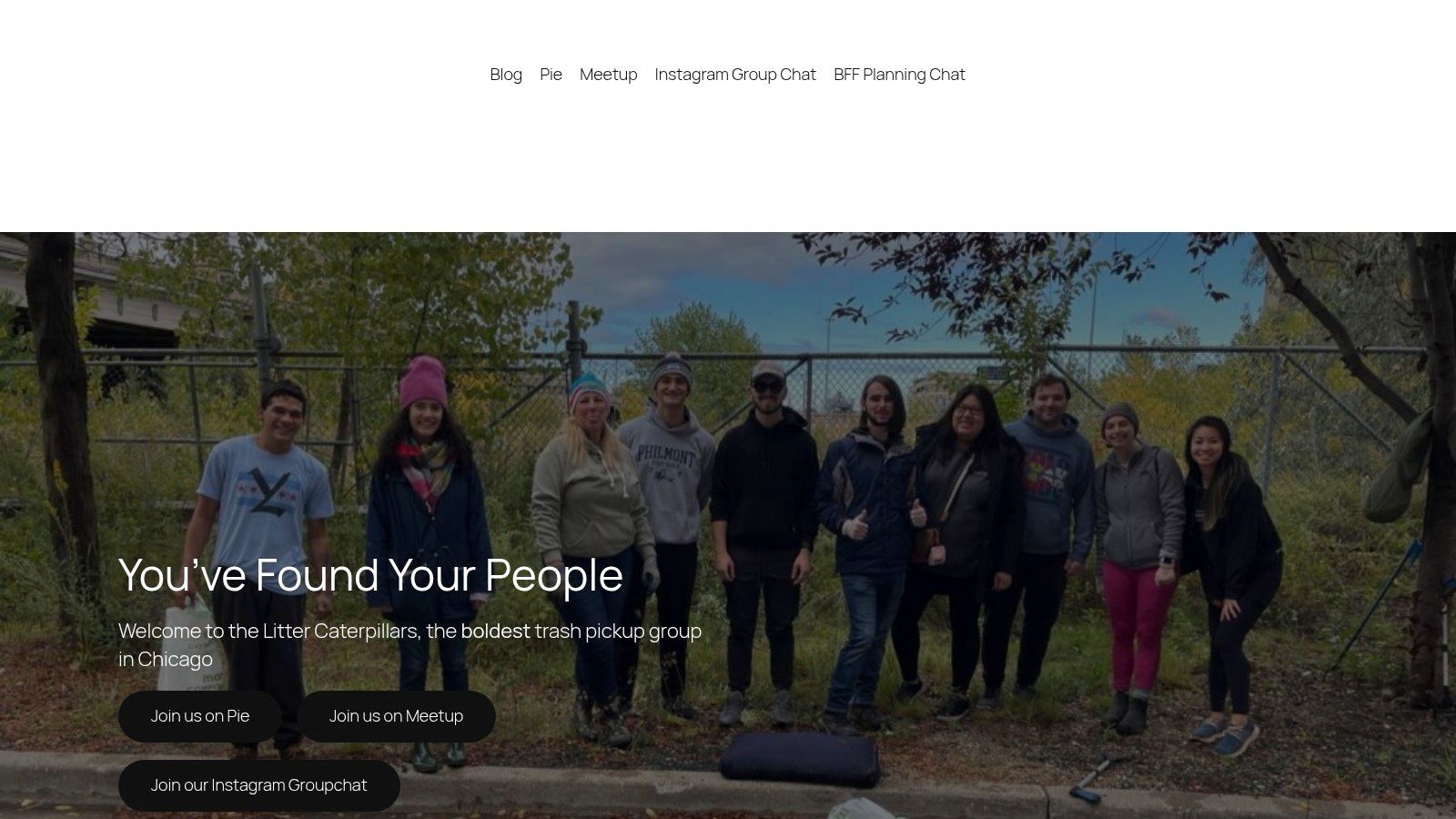
If you're ready to clean up parks across Chicago with a weekly, volunteer-led crew that brings supplies and gives you a clear role on day one, visit Litter Caterpillars and pick your next weekend morning with us. You bring your shoes and your curiosity, and we'll help you turn a single sweep into a habit you can keep.
You arrive at the park on a sunny morning, ready to help. Cups sit beside a bench, wrappers cling to the grass near the playground, and a line of litter follows the path toward the parking area. It's tempting to grab a bag and start walking. Take a moment first. A calm plan helps you protect the crew, cover the right ground, and leave the park ready for the next visit.
Cleaning up the park works best as a small field operation. You don't need complicated equipment, but you do need clear boundaries, safe roles, a collection method, and a plan for what happens to the waste afterward.
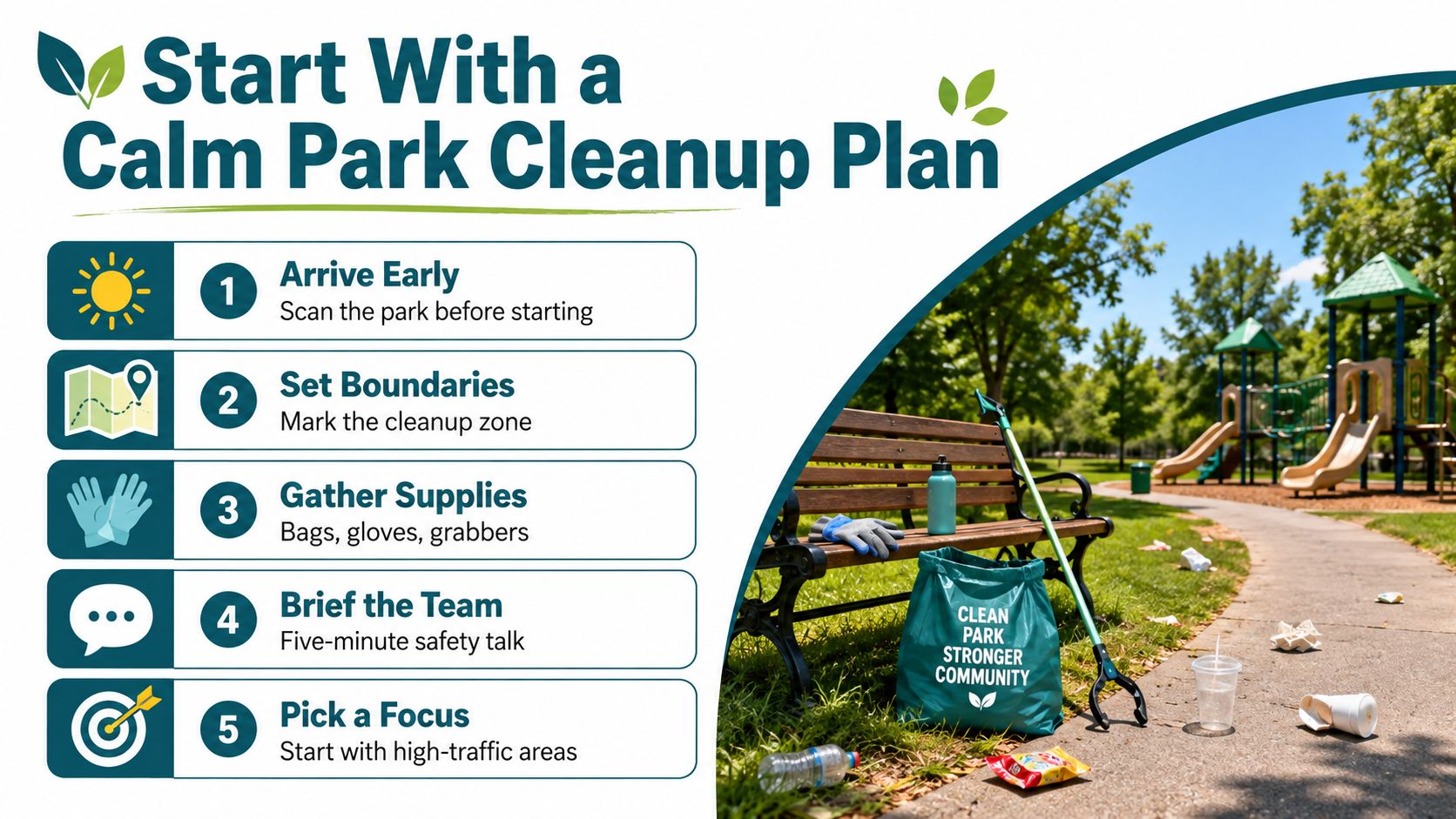
Start With a Calm Park Cleanup Plan
I would walk the site before I ask anyone to pick up anything. The first few minutes should settle the basics: where the group meets, what area you'll cover, who watches for hazards, and what nobody should touch. Treat it like setting up a campsite. You choose a safe place to gather, mark the edges, assign simple jobs, and make sure everyone knows where to go for help.
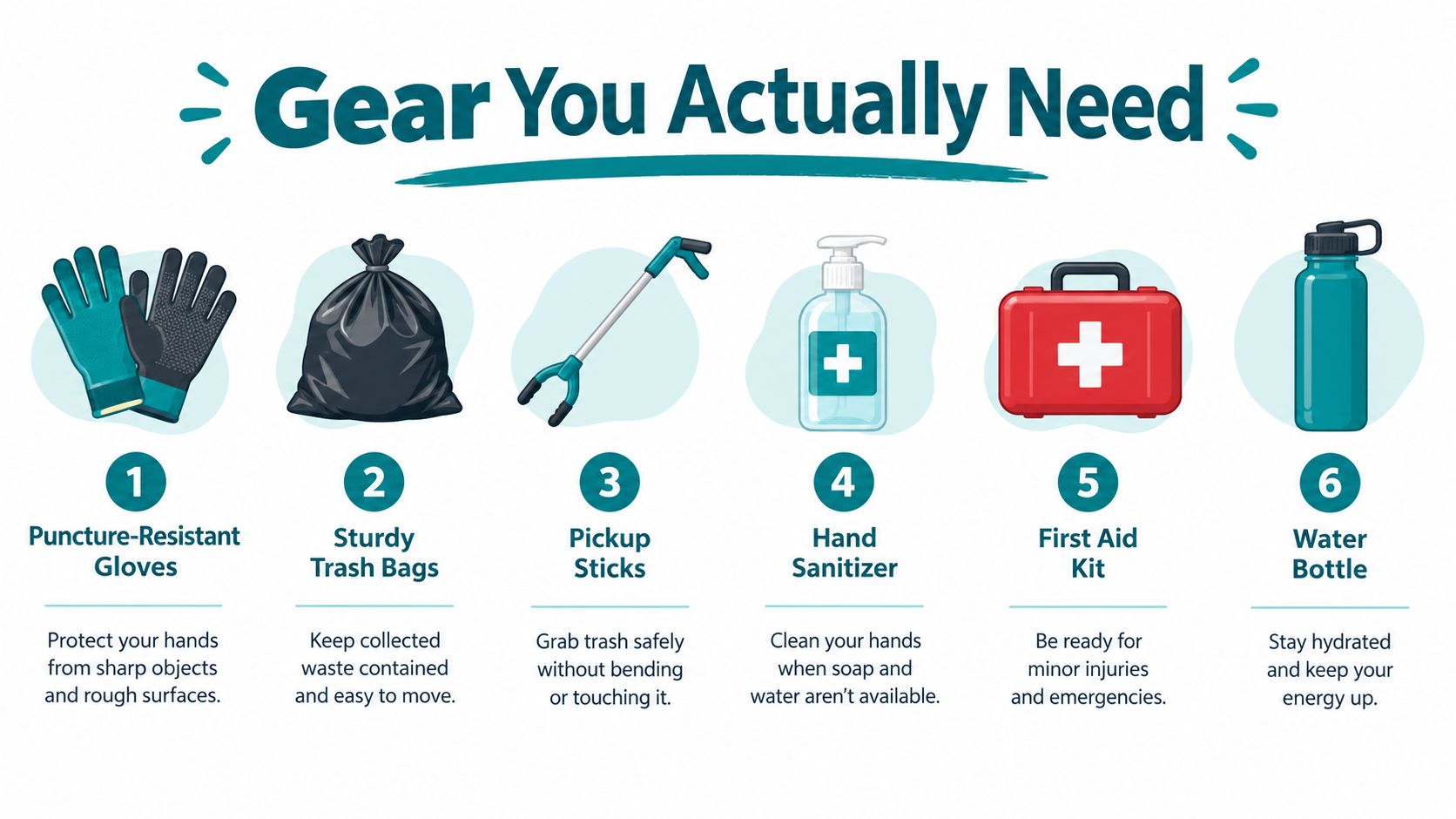
Bring sturdy bags or buckets, grabbers, gloves, drinking water, a first-aid kit, and a phone or other way to contact the right local service. Before you invite beginners, check that the route avoids unsafe slopes, active traffic, and areas where you can't see what lies underfoot. If the site includes hazards that need trained handling, change the route or wait for the proper response. A cleanup isn't a race, and nobody needs to prove their dedication by taking a risk.
For seasonal property work, Prestonwood Commercial Services has Prestonwood's 2026 landscape cleanup advice, which can help you think about how a cleanup fits alongside broader outdoor maintenance. For a volunteer event, keep your own scope modest and specific.
Before-You-Start Cleanup Checklist
Planning item
What to confirm
Why it matters
Meeting point
Choose a visible, easy-to-find spot
The group can gather without blocking paths
Cleanup boundary
Name the path, lawn, or park segment
Volunteers know where to work and when to stop
Crew roles
Assign a lead, hazard watcher, and note-taker
People can ask the right person for help
Supplies
Check bags, gloves, grabbers, water, and first aid
The crew can work without sharing unsuitable gear
Stop-work rule
Agree that anyone can call a pause
Volunteers can step back from a hazard without debate
Use one simple mental model from the start: inspect, brief, collect, sort, dispose, and check. That sequence keeps the morning steady, even when the park is busy.
Prepare the Site and the Crew
An open park can feel straightforward until volunteers spread out in different directions. Walk the perimeter first, then choose a route that keeps the crew together and away from risky edges. Note entrances, benches, playground edges, parking interfaces, picnic areas, waterways, and any spot where trash gathers. A quick sketch or written boundary is enough. Mark the place where everyone can rest and regroup.
Give each volunteer a job that fits the work and the person. One person can collect ordinary litter, another can watch for hazards, and a sorting lead can keep the drop-off point organized. A first-aid contact should know where the kit is and how to reach the event lead. Ask someone to record the route, weather, crew size, and anything the group needs to report.
Cleanup Role Map
Role
Main responsibility
Example decision
Crew lead
Keep the group on the planned route
Pause work when volunteers drift toward a risky edge
Collector
Pick up ordinary litter with tools or suitable gloves
Leave an unknown bag untouched
Hazard watcher
Scan ahead and alert the crew
Ask everyone to avoid a suspicious pile
Sorting lead
Separate ordinary waste from items needing another route
Keep clean recyclables apart if local rules allow
First-aid contact
Carry or locate the kit and help coordinate a response
Call for help if someone feels unwell
Note-taker
Record conditions, work, and follow-up needs
Photograph a recurring dumping spot
Keep the briefing short and practical. Point out traffic, water, uneven ground, sharp objects, private property, and the rest area. Tell the crew how to contact local services and say plainly that anyone can stop work if something feels unsafe.
Pack puncture-resistant gloves, closed-toe shoes, grabbers, buckets, liners, water, shade, and a first-aid kit. Near roads or bike paths, add high-visibility clothing. Check the forecast and the ground conditions before volunteers arrive. Rain, heat, cold, or strong wind may call for a shorter route or a postponement. Nobody should feel pressured to keep working through conditions they can't manage.
Collect Litter Without Spreading the Mess
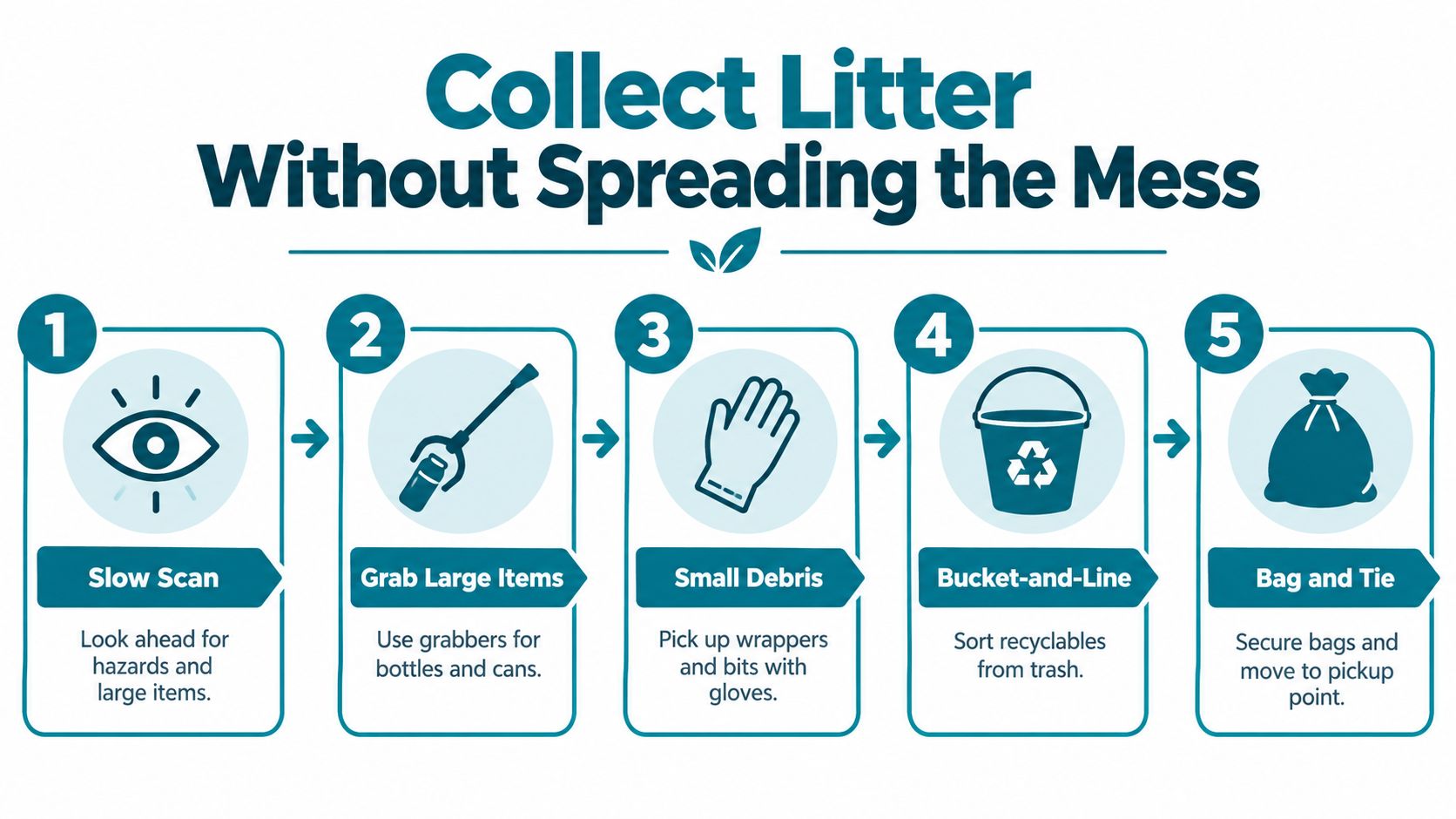
Start with a slow scan. Look ahead for sharp objects, unknown containers, traffic, and places where litter has gathered. Pick up ordinary items with grabbers, gloves, or a bucket-and-line setup. Keep your hands away from debris when a tool can do the job, and leave sealed or opaque bags alone.
Work in pairs when you approach a roadside edge or a water boundary. One person can collect from the safe side while the other keeps an eye on passing bikes, cars, and changing conditions. Don't cross into traffic or unstable ground to reach a stray bottle. If you can't retrieve it safely, mark its location and pass the information to the right service.
Make Two Passes
Use the same route twice when the site and crew can support it. On the first pass, collect larger visible items such as bottles, cans, and food containers. On the second, look for wrappers and fragments that blend into grass, mulch, and drainage edges. A second pass helps, but it doesn't make a risky spot safe to enter.
Keep the sorting simple. Separate ordinary litter from bulky objects and anything that needs special handling. Never hand-sort an opaque bag, compress waste, or squeeze a container to make it fit. If a sharp, chemical, biological, or unknown item appears, stop nearby work, mark the location from a safe distance, and contact the appropriate local service.
Take short work periods and pause for water and shade. A rest point gives volunteers a place to regroup, check their condition, and hand off full bags without wandering across the park. Let people switch tasks if they're tired. A steady crew can work safely without asking everyone to do the same job.
The flow below gives first-time volunteers a clear sequence to follow.
Field Collection Sequence
Stage
What the crew does
Safety check
Slow scan
Look ahead and note hazards or hotspots
Stay on the agreed route
Large items
Use grabbers for bottles, cans, and other ordinary litter
Don't reach into hidden spaces
Small debris
Pick up suitable wrappers and bits
Use gloves and avoid sharp fragments
Sort
Separate ordinary waste from items needing another response
Don't open unknown bags or containers
Handoff
Secure ordinary waste and move it to the agreed collection point
Keep the route clear and bags uncompressed
Protect Volunteers and Leave Hazardous Waste Alone
A volunteer doesn't need to collect every object to help the cleanup. Some materials need trained handling, and refusing to touch them is part of a safe field plan. Before work starts, hold a short briefing on boundaries, buddy assignments, traffic and water hazards, sharps, emergency contacts, hand hygiene, and everyone's authority to stop work.
Wear puncture-resistant gloves and closed-toe footwear. Use high-visibility clothing near roads or bike paths, and choose grabbers or other tools that keep hands away from debris. Don't hand-sort opaque bags, press down on waste, or squeeze containers. Pressure can shift or release contents you can't see.
Do Not Collect by Hand
Material or situation
Volunteer action
Reporting or disposal route
Needles or suspected sharps
Keep the group back and mark the location
Contact the municipality or an approved trained responder
Unknown chemicals or leaking containers
Don't move or open them
Report the location for professional guidance
Propane cylinders or batteries
Leave them in place
Ask the municipality which approved route applies
Human waste or dead animals
Don't handle or bag them
Contact the appropriate municipal service
Suspected asbestos-like materials
Keep people away
Request professional assessment and handling
Traffic, water, or unstable ground
Stop collection in that area
Redirect the crew or ask the responsible authority for help
If a questionable item appears, step back and hand off the location. A clear report helps the trained responder find the problem without sending volunteers into it. Chicago volunteers can review the city hazardous-waste disposal guidance when they need to understand how to route materials that don't belong in an ordinary cleanup bag.
Plan for the weather as carefully as you plan for equipment. Schedule strenuous work during cooler morning hours when possible, provide water and shade, and check on one another. Heat, cold, dizziness, or confusion are reasons to pause and get help. A volunteer who says “I'm stopping” should never have to argue their case.
Field rule: If you can't identify it, don't handle it. Mark the location, keep others away, and call the proper service.
Handle Bulky Waste and Recyclables Correctly
Different waste needs different handoffs. A clean beverage container may fit a local recycling route, while a container with liquid can leak through a collection bag. Broken glass needs careful handling, and tangled cords, wet waste, oversized furniture, or a bag with unknown contents may fall outside an ordinary volunteer pickup.
Keep clean, dry recyclables separate only when local rules accept them. Identify what you've found, record where it is, and confirm the receiving route before moving anything unusual. Volunteers can sort and report. The municipality or approved facility decides how to handle the material after handoff.
Waste Handoff Decision Guide
Waste type
What volunteers should do
What happens next
Ordinary litter
Collect with tools or suitable gloves
Dispose through the agreed park or municipal route
Clean recyclables
Keep separate if local rules allow
Follow local recycling instructions
Broken glass
Don't reach in by hand
Use an approved method or report it
Bulky furniture
Record the location and identify the item
Request an appropriate pickup
Unknown or hazardous material
Leave it untouched and mark the area
Contact a municipal or professional responder
Potential donation
Ask before moving or transporting it
Confirm the organization accepts the item
For Chicago reporting, document illegal dumping or recurring vacant-lot conditions with a location and clear description. The city says owners of vacant and unimproved lots must remove litter, debris, and abandoned vehicles, and weeds can't grow higher than 10 inches. Garbage-container lids must stay tightly closed, and raw garbage can't sit outside containers. Volunteers can use Chicago's alderman and ward lookup to identify where a report belongs.
If you need background on equipment used for moving or spreading bulk material, this truck manure spreaders guide provides a point of comparison for specialized hauling equipment. For ordinary community cleanup, keep the practical handoff simple. Check Chicago recycling center information before directing collected materials to a facility.
Measure the Cleanup and Plan the Return
When the bags leave, walk the same route again. Check the places where litter gathered, look for items the crew missed, and record what remains. A cleanup needs a clear finish, but it also needs a way to see whether litter comes back.
The EPA's Wichita project gives a useful reason to measure small debris as well as larger items: citizen scientists collected and categorized 1,765 pieces larger than four inches across park cleanup events, along with an additional 30 gallons of smaller material. Plastic made up 47% of the recorded litter, and 75% of that plastic came from food and beverage wrappers or containers. The study also found that litter clustered around places people gather, including picnic areas, pavilions, and parking lots, even when bins were present. You can read the EPA Wichita litter study for its standardized approach to collecting, classifying, and documenting litter.
Before and After Cleanup Audit
Measurement
Record it as
Use it to decide
Site boundary
A fixed path segment or mapped area
Keep future surveys comparable
Starting and ending litter
Counts by category and survey route
See what the crew removed and what remains
Work performed
Crew size and volunteer-hours
Understand the effort behind the result
Waste removed
Bags or kilograms, when you can measure them
Plan disposal capacity
Hotspots
Notes, map marks, and photographs
Decide where to focus the next visit
Follow-up
Repeat checks at 7-, 30-, and 90-day intervals when practical
See whether litter returns and where
Record the date, weather, starting conditions, and route. Take photographs from fixed points so the next crew can compare the same locations instead of relying on memory. If litter counts rise later, look for a practical cause: a busy weekend, bins that can't keep up, rain moving debris toward drains, or a nearby source that keeps adding wrappers. The measure is useful only if it helps you decide what to change.
Chicago's Pitch In for the Parks program shows how repeated cleanup events can involve people across many sites. The Chicago Parks Foundation reported that its 2021 season engaged over 4,000 volunteers in more than 600 cleanup events between June and October, with participants collecting more than 6,400 trash bags; its volunteer program history also describes later seasons and work through host groups and Green Teams. Use that example to support a repeatable method, not to rank crews by bags collected.
Ask nearby residents which spots trouble them and invite them to choose the next route. A map can help a Chicago group track visits across the city's 50 wards, using official boundaries and lookup tools described on the City of Chicago facts page. If your group tracks waste costs or handoffs, this chart of accounts for waste firms can help explain how waste-related categories get organized. For a simple community record, a guide to measuring community impact can help you decide what to track. End the visit with a safer route, a documented result, and a date to return.
Run an Inclusive and Repeatable Cleanup
A cleanup reaches more people when it gives them more than one way to take part. Offer short shifts, clear transit and accessibility information, and instructions in the languages neighbors use. A volunteer who can't lift a full bag can map the route, take photographs, translate, coordinate sorting, speak with residents, or monitor the rest area.
Ask local residents and neighborhood leaders what needs attention before the crew arrives. Then invite feedback after the cleanup and during follow-up visits. A group that works across Chicago's wards should pair geographic reach with neighborhood input, so residents help set priorities rather than just receiving visitors.
Ways to Make the Cleanup More Welcoming
Barrier
Practical adjustment
Who can help
Limited time
Offer a short shift or a defined route
Event lead
Lifting or mobility needs
Provide mapping, photography, or rest-area roles
Role coordinator
Unclear travel plans
Publish transit and accessibility details
Resident liaison
Language barriers
Share translated instructions and a briefing
Translator or local partner
First-time nerves
Explain the route, tools, and stop-work rule
Experienced volunteer
I would make the first event small enough that newcomers can see the whole process and still feel useful. Track who returns and what residents say alongside the waste collected. Choose one park boundary, one safe morning, one documented route, and one return date. Then invite a neighbor to help decide what the crew should tackle next.
Litter Caterpillars organizes volunteer-led trash pickups in Chicago parks and public spaces, with supplies such as bags, gloves, and grabbers for participants. If you want a practical, volunteer-driven example of cleaning up the park and building a repeatable neighborhood routine, visit Litter Caterpillars to learn about its cleanups.
Three of us hid under one thin tree while hail bounced off our bags and our phones lit up with cancelled rides. I laughed, I shivered, and I kept picking up cups after the storm passed because the wet grass made every white wrapper easy to spot.
"The First Time We Got Caught in the Hail"
I still remember the sound first. Hail hit the metal bench, hit our buckets, hit the brim of my cap, and we squeezed under a tree that gave us almost no cover at all.
You learn a lot about people in ten cold minutes. Nobody ran for the bus. Nobody hid behind a complaint. We passed around a soggy granola bar, we joked about Chicago spring, and we watched the park turn white around the playground.
What the storm taught me
I learned that I clean another person's mess faster than I clean my own kitchen. At home, I move a jar from one shelf to another and call it progress. In a park, I grab a bottle, I drop it in the bag, and I see clean grass right away.
I also learned that hard weather gives you a story you repeat. A perfect morning fades. A hailstorm sticks in your head, and you tell a new volunteer about it while you tie your first full bag.
Cold hands and good company beat a clean living room I never start.
That morning changed how I plan. I check the sky before I check the signup list. I ask who has a car, who needs a ride, and who lives near a train stop. I also build in a warm drink stop after we finish, because people return for the people as much as they return for the park.
You build a habit the same way you build a route. You pick a place. You show up again. You bring a friend who brings another friend.
You need that mindset when you clean up the park the right way. You lead with care for your crew. You make the work simple. You leave the ground cleaner and you leave each other in a better mood than you found.
"Map the Park Before Anyone Picks Up a Bag"
I walk the park alone before the crew arrives. I take photos at the entrance, the playground edge, the benches, and the low spot where water drags wrappers after rain.
You need a picture of the whole job before you hand out grabbers. Without a map, five people crowd the same path and nobody touches the fence line.
Chicago gives you a lot of ground to learn. The system began in 1837 with 20 acres of public parkland and now covers roughly 8,900 acres across more than 600 parks. I don't try to hold that scale in my head. I shrink the day down to one park, four zones, and one clear finish point.
Draw zones people can finish
I sketch the park on paper or I mark a phone map. I use landmarks a first timer can find without asking me twice.
Zone A entrances: You sweep the gates, the sign, and the first stretch of path where cups pile up.
Zone B play and seating: You work around benches, tables, and playground borders while you keep bags away from kids.
Zone C paths and drainage: You follow the walking loop and you check the low lines where wind pins trash against grass.
Zone D perimeter: You walk the fence, the alley edge, and the street curb with a buddy near traffic.
I give each team a one way route. You start at the far end and you walk back toward the bag staging spot. You skip the backtracking that wastes energy and makes clean ground dirty again under muddy shoes.
I set the meeting spot near transit, a restroom if the park has one, and a hard surface where bags won't tip into mud. I note the start time, the weather, and any hazard I spot on my first walk. I take the same photos again at the end so you can prove what changed.
Watch how a simple site walk turns a loose group into a crew with a shared plan.
You save time with five quiet minutes up front. I promise you feel the difference when every team knows its corner, its route, and its way back.
"Gear You Actually Need and Where to Borrow It"
I overbought on my first solo cleanup. I carried too many bags, two kinds of gloves, and a grabber with a weak jaw that dropped every wet can.
You need less gear than you think. You need the right basics in good shape, and you need backups for the items people forget.
Pack the short list
Puncture resistant gloves: You protect your hands from thorns, rough metal edges, and mystery grime.
Sturdy grabber: You reach into bushes without putting your face or fingers near hidden trash.
Strong bags and a bucket: You carry sharp cans in the bucket and you keep light wrappers in the bag.
Water and a snack: You keep your energy steady and you share with the person who forgot breakfast.
First aid kit: You clean a small scrape on the spot and you record anything bigger for the lead.
High visibility layer: You help drivers and cyclists spot you near a street or bike path.
I add a marker, tape, hand sanitizer, sunscreen, and a portable phone charger. I write the zone letter on each full bag. I also print two paper maps because one phone always dies at the worst moment.
Borrow first: You learn what your crew actually uses before you spend money on a dozen tools.
Compare your shopping list with our guide to trash pickup equipment for regular crews before you order anything fancy. I buy gloves and bags first because we use them every time. I borrow extra grabbers for big days and I replace one tool at a time when a handle cracks or a jaw bends.
Leave cologne, open toe shoes, and thin grocery bags at home. You want closed shoes, clothes you can wash, and a bag that survives a wet bottle. Simple gear keeps the morning simple.
"The Pickup Flow Bag by Bag"
I like a rhythm you can learn in two minutes. One person scans ahead, one person grabs, one person holds the bag, and everyone rotates before shoulders get sore.
You move like a slow caterpillar across the grass. You inch forward, you clear a strip, and you don't leap around chasing the one bright wrapper fifty feet away.
Work your strip from far to near
Start at the far edge of your zone. Walk a straight line back toward the staging spot and keep your eyes on a lane about as wide as your outstretched arms. You catch more small trash that way than you catch with random wandering.
Call out what you see. I say can, bottle, wrapper, butt, and my partner knows where to aim the grabber. It sounds silly for one minute and then it feels like a game, and the bag fills faster than you expect.
Sort with care and with local rules in mind. I put clean cans and bottles aside only when I know the park or a nearby facility accepts them. I bag food soaked paper, dirty plastic, and mixed trash together as landfill waste so I don't ruin a recycling load with good intentions.
Tie a bag before it tears. I stop at a weight I can lift without twisting, I squeeze out loose air, and I carry the bag away from my legs. You save your back and you keep mystery liquid off your pants.
Know what you leave alone
This part matters more than speed. I want you proud at lunch, and I want you unhurt.
Ordinary litter: You pick up wrappers, cups, cans, bottles, cardboard, and food packaging with gloves and a grabber.
Sharp or suspect items: You step back from needles, broken glass piles, and sanitary waste and you call the lead.
Chemical or pressurized items: You leave unknown liquids, spray cans under pressure, batteries, and paint containers for trained handlers.
Oversized debris: You photograph dumped furniture, tires, or construction waste and you report the exact location.
Never reach into a bush, a drain, or a closed container with your hand. Use the grabber, tap the area first, and stop if you can't see the object clearly. I use a simple script with new folks. I say, flag it, photo it, tell the lead, and move on with zero shame.
Your job is litter. Hazard work belongs to people with training, tools, and a disposal plan.
Keep full bags on a hard surface near the route the pickup crew uses. I line bags up by zone so we can count them fast at closeout. I keep them away from play areas, picnic tables, and storm drains.
Rotate jobs every fifteen or twenty minutes. The scanner grabs, the grabber bags, and the bag holder scans. You rest different muscles, you keep eyes fresh, and you give quiet people a natural way to join the conversation.
When you clean up the park with this flow, you feel calm instead of frantic. You hear birds again between the jokes. You watch a dirty corner turn back into a place where a kid can drop a backpack and run.
"When Rain or Shine Becomes a Real Decision"
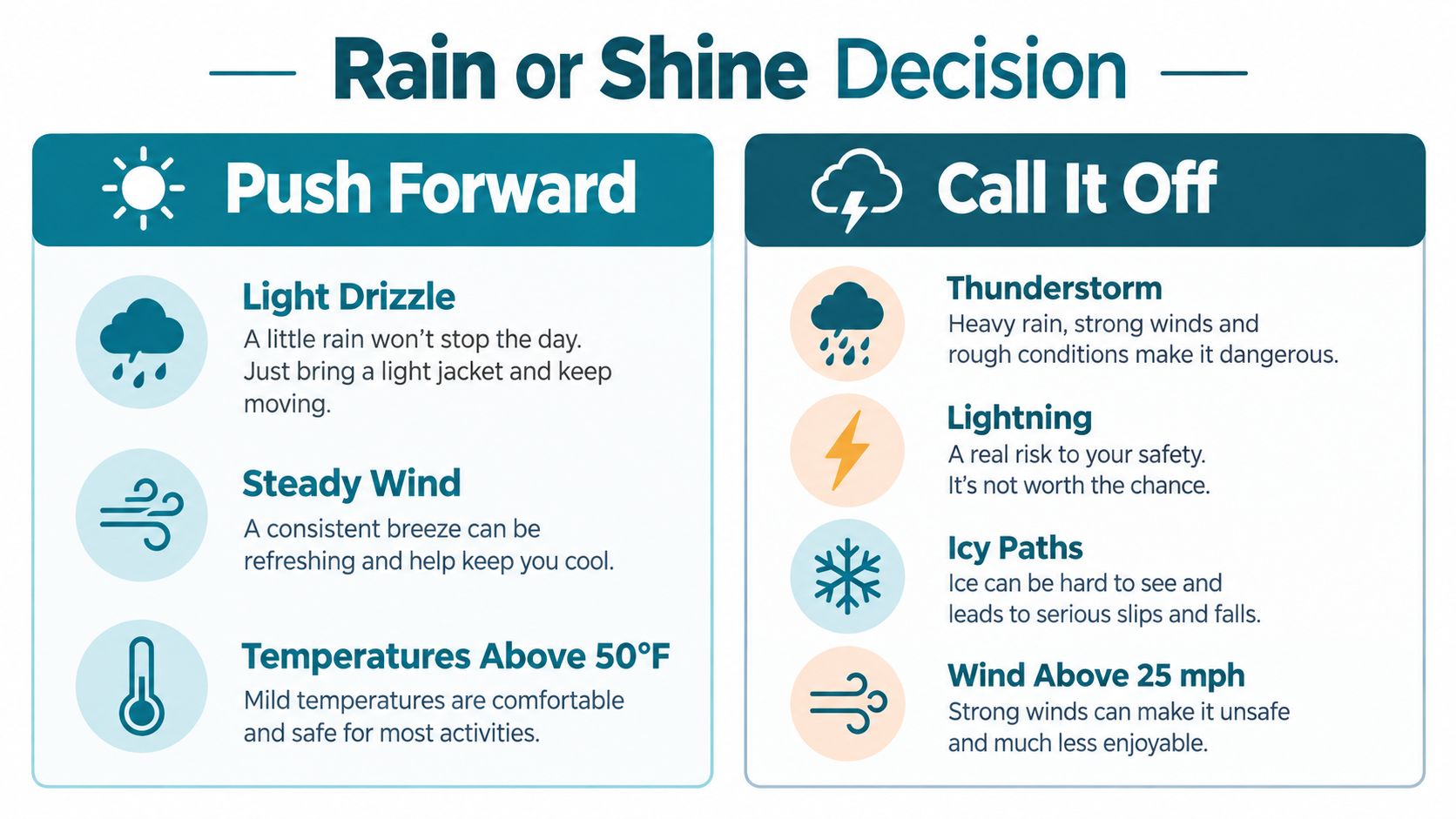
I love our rain or shine spirit. I also cancel a cleanup when the sky tells me to cancel, and I say it early so nobody rides across town for nothing.
Bravery means you show up for hard work. Bravery also means you tell a friend, we stop now, and you walk everyone to shelter without a debate.
Use a simple go or no go check
I check the forecast the night before and again at dawn. I look for lightning, flooding, high wind, ice, extreme heat, bitter cold, and poor air quality. I name one lead who can stop the event, and I back that person in front of the group.
Signal I See
Move I Make
Light drizzle and steady footing
I shorten routes and I hand out extra bags for wet trash
Thunder, lightning, or flooded paths
I cancel or I move everyone to shelter and end the pickup
Run through our volunteer safety checklist before you leave home and share it in the group chat. I include a no penalty cancellation rule in every invite. You can stay home, you can leave early, and you still belong with us next week.
Older volunteers, first timers, and anyone with a health concern deserve that freedom. I protect the crew first and the bag count second. A park can wait one week. A person who faints on hot pavement remembers that day for the wrong reason.
"Closeout, Audit, and Why You Come Back"
I end every cleanup with a slow final walk. I carry one last bag, I revisit each zone, and I take photos from the same spots I used at the start.
You catch the cup under the bench on that walk. You also see the win with fresh eyes, and that view pulls you back next Saturday.
Run a fifteen minute closeout
Gather the bags by zone and count them out loud. Weigh bags if you carry a small scale, or record bag size and fullness in plain notes. I write down volunteer hours, weather, and any hazard reports we sent during the morning.
Sectors cleared: You mark each zone done, partial, or still dirty.
Material tally: You note cans, bottles, food packaging, and other repeat items.
Hotspots: You pin the fence corner or drain line where trash built up again.
People notes: You record near misses, small injuries, and one good moment worth repeating.
A photo shows a moment. A repeat count shows a trend you can act on.
Share the results with neighbors in plain language. I post the before and after photos, the bag count, the zones we cleared, and the problems we reported for follow up. I thank people by name and I name the next date while the feeling is still warm.
Ask residents what improvement means to them. A parent may care about glass near the swings. A dog owner may care about the gate area. You earn trust when you listen first, return on schedule, and report what still needs city help.
One cleanup gives you a good morning. Repeat visits give a park a new normal, and they give you friends who know your coffee order and your worst hail story.
You can join a weekly Chicago cleanup, meet kind neighbors, and help clean up the park in a ward you have never explored. Visit Litter Caterpillars to find the next weekend meetup, grab a bag and a grabber, and start your own story with us on the grass.
At our first Chicago pickup, three of us huddled under a tree while spring hail rattled around us and Uber drivers kept canceling. I'd started a trash crew to practice cleanliness, consistency, and bravery, and Chicago apparently wanted to administer the final exam immediately.
Why Cleaning Up Park Work Matters More Than Bags of Trash
I remember the shivering more clearly than the litter. We'd shown up to clean somebody else's mess, and suddenly we had a shared problem, a ridiculous story, and a reason to look after each other.
That tree wasn't a sensible severe-weather shelter. I wouldn't repeat that decision today. Showing up matters, but getting everybody home safely matters more.
The mess I could finally move
Before I started the crew, I struggled to clean my own home. Old food and forgotten bags carried sentimental stories, so I kept postponing decisions about them.
A wrapper beside a park bench didn't have that emotional luggage. I could grab it, bag it, and finish something. That small, complete action felt good.
Doing it beside another person felt better. Conversation didn't require a clever introduction or an impressive job title. We had a task between us, which made meeting people feel less like an audition.
I don't need you to arrive as a perfectly organized person. I need you to arrive willing to help, and willing to let somebody help you.
Give people a reason to return
I think of cleaning up park spaces as friendship with a practical assignment. You learn who checks on a cold volunteer, who carries spare supplies, and who can make a soggy morning funny without making anyone miserable.
Our weekly outings have taken us through heat and blizzards. We've also cleaned a highway during a bike-event shutdown, an unusual opportunity that doesn't turn an ordinary active highway into volunteer territory.
A corporate service day can introduce people to cleanup work. A recurring crew gives those introductions somewhere to go.
Remember people: Learn names and ask about the conversation you started last time.
Share responsibility: Let newcomers choose manageable tasks instead of handing them the ugliest corner.
Protect the atmosphere: Welcome late arrivals, respect early departures, and keep donation pressure out of the morning.
I want volunteers to leave with less trash on the ground and another person they're glad to see next weekend. The bag gives us something to carry. The friendship gives us a reason to come back.
Planning Your First Park Cleanup Event
Pick a site you can understand on foot. For a new crew, I'd choose a compact park edge with a clear entrance over an enormous stretch of lakefront that requires a search party to find the organizer.
Chicago has more than 600 parks and approximately 8,800 acres of green space, according to the Chicago Public Library's Park District history. You don't need to solve that whole map on your opening morning.
Make the invitation easy to accept
I choose weekend mornings because I want to build a service-minded routine. That's my organizing preference, not a personality test for anybody who works weekends or enjoys going out.
Give people an exact meeting point: a named entrance, a fieldhouse doorway, or a recognizable intersection. Add an address and a description of how they'll recognize you. “Meet somewhere near the playground” invites confusion before anybody touches a grabber.
Call or email the park supervisor before you recruit widely. Explain your proposed area, attendance expectations, equipment, and disposal plan; ask about competing events, access, approvals, and any tasks volunteers should avoid.
Park staff: Ask where collected waste should go and which maintenance concerns need staff attention.
Aldermanic office: Request help identifying the appropriate city contact or coordinating neighborhood outreach.
Nearby businesses: Ask for a specific contribution, like water, snacks, or an agreed disposal arrangement, rather than an undefined partnership.
For the event-organizing side, EventUploader's resource on planning conferences and retreats is a related reference. I'd keep a park cleanup lighter than a corporate event, with clear responsibilities and fewer moving parts.
Build a small safety net
Use a sign-up form to collect contact information, accessibility needs, and an emergency contact with consent. Keep private information out of the public volunteer chat.
Create a WhatsApp or other group chat for changes, and explain your buddy system before arrival. Choose an accessible route and a nearby substantial shelter; cancel or shorten the outing when conditions become unsafe.
A copyable pre-event timeline
Before announcing: Walk the site, contact its manager, and settle disposal.
When inviting: Publish the meeting point, expected finish, clothing advice, and contact method.
The evening before: Check weather and closures, prepare supplies, and confirm who'll lead.
Before leaving home: Send a clear go, change, or cancellation message.
I'd rather send an unglamorous update than make a newcomer stand alone beside a locked gate.
What to Bring to a Park Cleanup
Pack your kit the night before. Morning-you deserves better than a frantic search for gloves while somebody waits at the park.
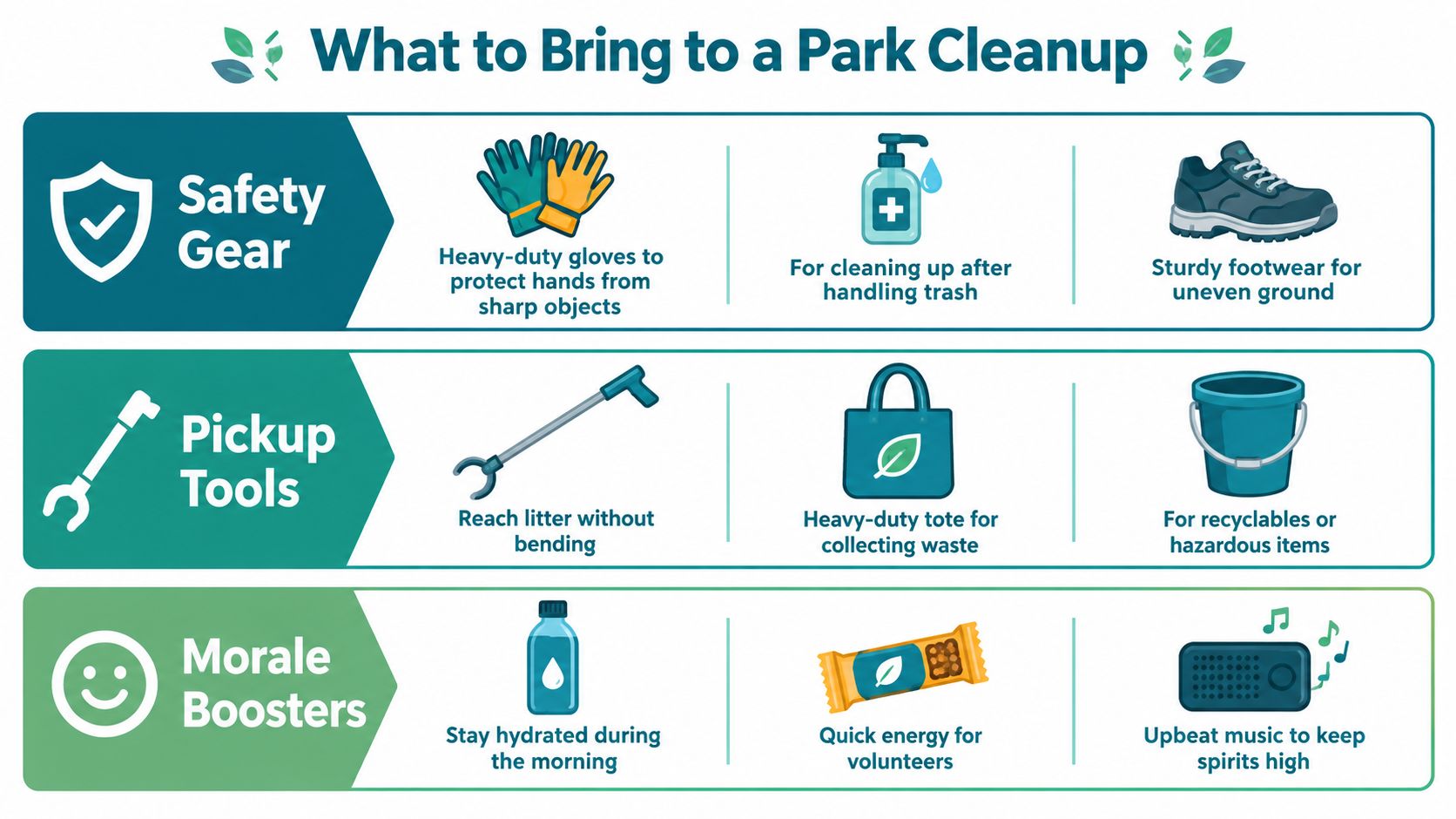
I divide supplies into safety gear, pickup tools, and morale boosters. Use this trash pickup equipment guide as a starting point, then match the kit to your site and weather.
Protect hands, feet, and attention
I prefer reusable, heavy-duty nitrile-coated work gloves over thin cotton gloves for routine litter pickup. Check the manufacturer's protection rating, and don't confuse a coated glove with permission to handle needles or sharp glass.
Wear closed-toe shoes with useful tread. In cold weather, bring layers that let you move; near road edges, choose bright outerwear or a visibility vest and stay out of traffic.
Work gloves: Bring spare sizes, and replace damaged pairs.
Hand hygiene supplies: Carry sanitizer for the outing, then wash your hands when you can.
First-aid basics: Include simple supplies and identify who'll respond if someone gets hurt.
Weather protection: Pack suitable layers, sun protection, and extra drinking water.
A grabber keeps your hands away from ordinary litter and reduces repeated bending. Try its trigger before the event, especially if you'll wear bulky gloves.
Carry tools without carrying trouble
Use sturdy bags in different sizes, a reusable tote for equipment, and a small bucket for ordinary recyclables when your disposal arrangement accepts them. Don't use that bucket to collect hazardous items, even if a checklist illustration suggests otherwise.
Leave needles, unknown chemicals, suspicious containers, and heavy dumped objects alone. Record their locations and ask the responsible agency or site manager to arrange removal.
Packing rule: If I can't explain how we'll handle an item safely and dispose of it properly, it stays out of the volunteer bag.
Bring a notebook or small trash scale if you want to record findings. Keep bags manageable rather than packing them until somebody has to wrestle them.
Snacks belong in a separate clean container. A little music, perhaps our theme song by Ella Duke, can make the morning cheerful, but keep the volume low enough to hear teammates, bikes, and park users.
Running the Cleanup Hour by Hour
Start with names, not marching orders. A newcomer should know who leads the outing, where to return, and how to stop without feeling that they've disappointed the group.
I'd use the following schedule as a sample plan, then shorten it for weather, mobility needs, or a smaller site. Nobody earns extra kindness points by staying exhausted.
Start together, then spread out
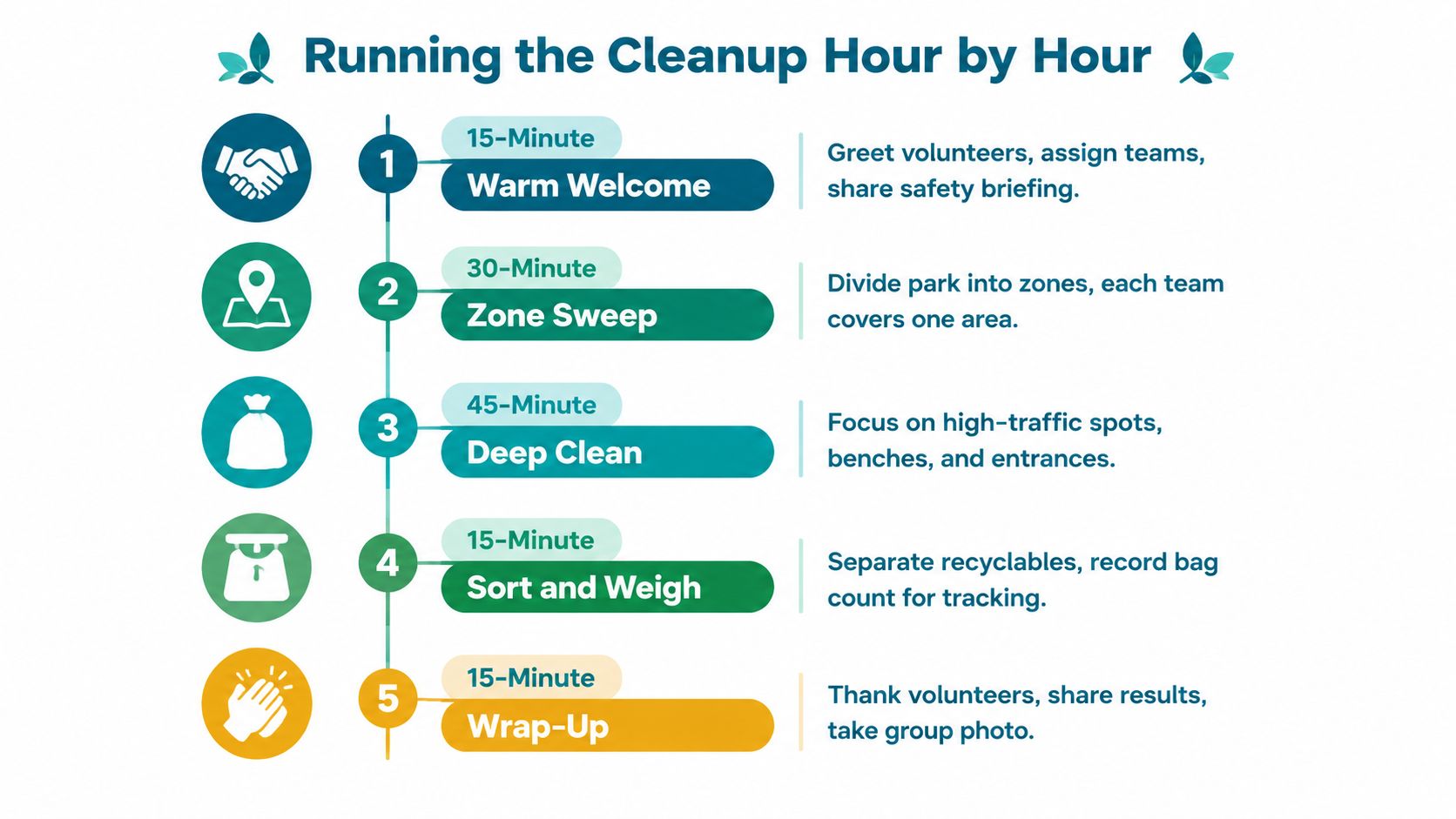
Use the opening 15 minutes for introductions, name tags, and a safety briefing. Show the boundaries, explain the disposal arrangement, identify shelter, and tell volunteers which items to leave alone.
Pair people up and give each pair a recognizable zone. Use paths, entrances, or benches as boundaries rather than vague gestures toward “over there.”
Opening zone sweep, 30 minutes: Walk your assigned area and collect ordinary, accessible litter. Keep paths open for other park users.
Focused cleanup, 45 minutes: Return to busy entrances, benches, and gathering areas. Don't reach into hidden spaces or pull apart dumped piles.
Sort and record, 15 minutes: Separate accepted recyclables during collection where practical, then record bags, weights, or material categories without reopening mixed waste.
Wrap-up, 15 minutes: Confirm disposal, retrieve equipment, and close together.
During active work, schedule water and check-ins about every 30 minutes. Treat those intervals as organizer reminders, not limits on when someone can rest.
Finish the job you started
Ask pairs to collect and carry bags without dragging them across paths. If you weigh bags, use a consistent method and record what you measured; don't guess at a result because it sounds impressive.
Take before-and-after photographs from the same position. Ask permission before photographing volunteers, and avoid turning nearby residents into background props.
You can always tell me you're tired, uncomfortable, or ready to leave. You don't owe the crew an explanation.
Use 10 minutes of the wrap-up for a short debrief. Ask what people found, what surprised them, and which spot needs another visit or professional attention.
Leave the remaining wrap-up time for thanks, an optional group photo, and equipment checks. Before everyone scatters, confirm that no bags, tools, or volunteers remain out in the work zones.
Picking the Right Ward and Reading City Rules
I don't choose a cleanup site by zooming out until Chicago looks manageable. I choose an address, understand the surrounding blocks, and find out who already handles maintenance there.
Chicago has 50 wards, and the city organizes street sweeping by ward and ward section; the City Services by Address dashboard lets you look up an address's ward, community area, and applicable sweeping information. Use that information to coordinate your outing rather than assuming the municipal schedule follows your volunteer calendar.
Choose a workable patch
Use this Chicago ward boundaries guide to orient yourself, then check the specific address. A ward gives you a starting area; it doesn't tell you who owns every nearby parcel.
Look separately at park property, sidewalks, road edges, and vacant lots. Ask permission before entering private property, and avoid moving a cleanup onto a busy roadway because the adjacent grass looks tidy.
The Chicago Park District Code prohibits bringing material into a park and leaving or dumping it unless you remove it or use an approved receptacle, limits access from 11:00 p.m. to 6:00 a.m., and requires permits for tents, canopies, or other structures. Confirm where your collected waste can go before anybody fills a bag.
I don't assume a park bin can accept the entire crew's haul. Ask the supervisor about capacity and approved disposal arrangements, especially if you expect bulky litter.
Know when the owner needs to act
Chicago's sanitation ordinance guidance requires owners of vacant and unimproved lots to remove litter, debris, and abandoned vehicles and keep weeds from growing above 10 inches. Document those conditions separately rather than treating everything as volunteer work.
Our crew won an empty lot at auction to develop Caterpillar Park in Englewood. Taking ownership is a different undertaking from organizing a public-park pickup; you shouldn't inherit somebody else's maintenance duties by showing up with gloves.
Chicago Cleanup Rules and What They Mean for Volunteers
Rule
What It Says
Volunteer Takeaway
Park waste disposal
Remove material or use an approved receptacle.
Confirm the final destination before collecting.
Park access
The code limits overnight access.
Plan within permitted hours.
Structures
Tents, canopies, and other structures require permits.
Ask before bringing event infrastructure.
Vacant-lot upkeep
Owners must address litter, debris, vehicles, and excessive weeds.
Document conditions and contact the responsible party.
Choose a place where you can finish responsibly. An abandoned bag beside an overflowing bin isn't the ending I want.
What Success Looks Like Beyond Bags Collected
A clean bench can still sit beneath a broken light. I can remove the wrapper beside it, but I can't promise that a resident will feel comfortable sitting there after dark.
In a 2025 randomized controlled trial in Montevideo public squares, researchers estimated that removing trash bins reduced measured litter by 43.5%, yet found no significant change in people's perceptions of cleanliness, according to the public-space intervention study. I wouldn't use that result to recommend removing Chicago's bins; I'd use it to question whether our bag count tells us enough.
Record what you find and what people experience
An EPA-supported Wichita study involved 70 citizen scientists at 24 cleanup events across 12 parks, who categorized 1,765 larger litter items and collected 30 gallons of smaller litter; plastic accounted for 47% of categorized items, and food-and-beverage litter accounted for 49% of the total, as documented in the EPA's litter research projects. For our crew, that's a practical reason to record materials and locations, rather than only bags.
Use a notebook entry that takes roughly 60 seconds as a suggested habit. This community impact measurement guide is another starting point for choosing what to track.
Use: Note return visits and whether children and older adults use the space, without collecting identifying details.
Comfort: Ask willing residents how the park feels at different times of day.
Aftercare: Record broken lights, blocked sightlines, graffiti, overflowing bins, and damaged play equipment.
Report conditions without blaming neighbors
In an underserved neighborhood, I want our photographs to document maintenance needs, not imply that residents failed a housekeeping inspection. Volunteers can remove ordinary litter while asking municipal agencies and property owners to handle their responsibilities.
Send a plain report: location, observed condition, date, photograph if appropriate, requested action, and safe contact information. Describe an abandoned vehicle or damaged fixture without investigating it yourself, and keep the report reference for follow-up.
Ask residents what they want addressed. Their answer may have very little to do with the bag you're holding.
Show Up Next Week and Bring a Friend
I started with personal struggles and a willingness to try something uncomfortable. You can start with a park you already walk past and a friend who'll answer your message.
Keep your starter plan small enough to carry out. Choose a ward, a park, and a Saturday morning; confirm permission and disposal, then prepare gloves and grabbers.
Make your next move
Find a crew: Check Meetup, Instagram, or neighborhood organizations for an upcoming outing.
Start your own: Invite someone you know and give them a clear meeting point.
Keep it kind: Respect people's limits, share easy tasks, and change plans when safety requires it.
A weekly practice gives you another chance when a morning goes sideways. I want people to return because they felt welcome, useful, and cared for, not because I talked them into ignoring the cold.
Litter Caterpillars organizes weekly volunteer trash pickups across Chicago, with bags, gloves, grabbers, and a volunteer-first approach to safety and friendship. Visit Litter Caterpillars to find an upcoming cleanup and join the group chat, then bring a friend or come ready to meet one.
I used to live in a mess. A beautiful, sentimental, story-filled mess, but a mess. Every old jam jar or bag of stale nuts in my apartment was a chapter I couldn't close. Each piece of trash, though weighing less than a pound, felt like it carried the weight of my past, pinning me down.
Then a chaotic breakup happened. I realized I needed to clean house—literally and figuratively. I had to build a life around giving. Around consistency. Around being brave. And that's how I started Litter Caterpillars. I discovered that cleaning up someone else's mess was surprisingly easier than tackling my own. Doing it with others, even shivering in a freak Chicago hailstorm, sparked this weird joy. It moved my life's plot forward.
I want you to feel that. This isn't just another list of the best Chicago IL parks. It’s an invitation. Think of it as a map to find your own story, your own transformation, in the green spaces that help this city breathe. Each park is a blank page. Waiting for you.
Together, we’ll explore these incredible places not just for their beauty, but for what they can become. You’ll find everything you need: the best playgrounds, hidden dog-friendly spots, and how to get there on the 'L'. More importantly, you'll discover how you can become part of their story. How you can fill the blank pages of Chicago's parks and, in the process, write a braver chapter for yourself.
1. Litter Caterpillars
What if you could do more than just visit the beautiful Chicago IL parks? What if you became part of the very fabric that keeps them alive? Litter Caterpillars isn't just a group. It’s a movement. A weekly ritual. It invites you to put your hands to work creating a cleaner city, one park at a time. It’s for you, if you’ve ever walked through a park and wished you could do something about the trash, turning that fleeting thought into a powerful habit.
I founded this crew on a simple, profound idea: showing up. Every single weekend, without fail, we gather. It doesn't matter if it's a perfect sunny morning or a biting blizzard. Our commitment is absolute. This isn't your occasional cleanup. This is a lifestyle. A way to build friendships and see the direct result of your effort in neighborhoods across all 50 wards.
Why Litter Caterpillars Stands Out
I've seen many volunteer groups, but Litter Caterpillars has a unique energy. It’s less about obligation and more about a shared identity. We have flags, a theme song, even merit badges. Quirky? Maybe. But it works. It builds a genuine camaraderie. You’re not just picking up litter; you’re a Caterpillar, part of a team making a visible dent in the city's upkeep.
Our impact goes beyond just cleaning parks. We’ve cleaned a major highway during a bike event. Most impressively, we won an empty lot at a city auction to create "Caterpillar Park" in Englewood. This shows our grit and vision, turning grassroots energy into something permanent.
"We are the crazy ones who show up in a blizzard. We are the ones who clean where no one else will. We do it because we believe in bravery, kindness, and unity-and because it’s how we make friends and build the city we want to live in."
Getting Involved and Making an Impact
Joining us is simple. No dues. No long applications. You just show up.
How to Join: Find our next event on Meetup or follow our Instagram for real-time updates. We have open group chats, making it easy to connect and ask questions before your first time.
What to Expect: We provide all the supplies: bags, gloves, and trash grabbers. Your job is to bring a positive attitude. The atmosphere is welcoming. We focus on your happiness and safety above all else. You’ll never be pressured for donations.
Best For: This is perfect for you if you're looking for a consistent weekend activity, want to explore different Chicago neighborhoods, and are eager to meet like-minded people. It’s a way to turn a desire for change into a concrete, social, and deeply rewarding practice.
Key Details at a Glance
Feature
Details
Primary Focus
Hands-on, volunteer-led cleanups of parks and public spaces across Chicago.
Cost to Participate
Free. All supplies are provided.
Frequency
Weekly meetups, every weekend, year-round, rain or shine.
Pros
Consistent & Reliable: Builds a real habit of service. Community-Focused: Excellent for making friends. High-Impact: Tangible results you can see.
Cons
Physically Demanding: Requires being outdoors in all weather conditions. Informal Structure: Not a formal 501(c)(3), limiting some large-scale funding options.
If you want to be part of the solution and help maintain the Chicago IL parks you love, Litter Caterpillars offers an inspiring and effective way to get involved.
2. Millennium Park
Millennium Park isn't just a park. It's the city's living room. A vibrant stage where art, nature, and community collide. Imagine standing before "The Bean" (officially Cloud Gate), its polished surface mirroring the iconic Chicago skyline and the smiling faces of people from every corner of the world. This is a place that reminds you that you are part of something bigger, a pulsating urban heart in the middle of downtown.
This park is a testament to what a city can achieve when it dreams big. From the whimsical faces of Crown Fountain that surprise you to the serene pathways of Lurie Garden, every corner invites exploration. It feels less like a traditional park and more like an open-air museum where you are part of the exhibit.
What You'll Find Here
The park's website, millenniumpark.org, is your guide to this dynamic space. It’s simple to use. It clearly lays out all the free events, from summer film series to morning yoga on the Great Lawn. You can quickly check schedules, find accessibility information, and see what's blooming in the Lurie Garden.
Key Features: Jay Pritzker Pavilion, Cloud Gate ("The Bean"), Crown Fountain, Lurie Garden.
Best For: First-time visitors, iconic photo ops, free concerts, and large community gatherings.
Family & Dog Friendliness: Incredibly family-friendly, but dogs are only allowed on the perimeter paths. They aren't permitted on the Great Lawn, in Lurie Garden, or near Cloud Gate.
Plan Your Perfect Visit
My ideal day here starts with a morning stroll through the Lurie Garden before the crowds arrive. Then, I’d grab a coffee and find a spot near the Pritzker Pavilion, just listening to the city wake up. In the summer, the real magic happens during the free concerts and movies. It’s a shared experience that unites thousands of strangers under the stars. The park is free to enter, though some special events might have a fee.
Pro Tip: Use the BP Pedestrian Bridge to cross over to Maggie Daley Park. You get an incredible, elevated view of the skyline and connect to even more adventure without ever crossing a busy street.
A Stage for Community Action
Millennium Park is Chicago’s most visible public space. That makes it a powerful spot for making a statement. Organizing a volunteer meetup here sends a clear message about civic pride. The high foot traffic means your group’s efforts will be seen by thousands, inspiring others. This visibility is perfect for groups like Litter Caterpillars that want to raise awareness. If you want to learn how to organize a community-focused cleanup in a high-profile location like this, we have resources to help you get started with your own event.
Lincoln Park is where Chicago exhales. It’s not just one of the best Chicago, IL parks; it's an enormous, sprawling sanctuary. A green ribbon stretching for miles along the lakefront, tying together beaches, prairies, ponds, and even a world-class zoo. Standing on the Nature Boardwalk, with the honeycombed pavilion arching over you and the city skyline rising behind a serene pond, feels like you've found a secret intersection of human ingenuity and natural wonder. You can lose track of time here. You can just be.
This park is a living ecosystem. A constant reminder of the wildness that can thrive even in the heart of a metropolis. From the sandy dunes at Osterman Beach to the quiet trails around North Pond, you can watch seasons change and witness nature’s resilience. It feels less like a manicured garden and more like an invitation to explore the diverse landscapes of the Great Lakes region.
What You'll Find Here
The Chicago Park District website for Lincoln Park is your starting point for navigating this massive space. It's a standard city government page, but it provides essential details like hours for the conservatory, locations for natural areas, and contact info. For day-to-day happenings, you'll want to check the sites for individual attractions like the Lincoln Park Zoo or the Conservatory.
Key Features: Lincoln Park Zoo, Lincoln Park Conservatory, Nature Boardwalk, North Pond Nature Sanctuary, North Avenue Beach, Alfred Caldwell Lily Pool.
Best For: Nature lovers, families looking for free activities, bird watching, and long walks or bike rides with lake views.
Family & Dog Friendliness: Extremely family-friendly, especially with the free zoo. Dogs are welcome on most paths but must stay on-leash. They're not allowed in the zoo, conservatory, or designated nature sanctuaries like the Lily Pool.
Plan Your Perfect Visit
My perfect day in Lincoln Park begins with an early morning walk around the North Pond to see what birds have stopped by. From there, I’ll head to the Lincoln Park Conservatory to escape into a tropical paradise before the crowds arrive. The best part is that the park’s main attractions are free. This makes it an accessible adventure for everyone. Just know that parking near the zoo and conservatory fills up incredibly fast on weekends. Public transit or arriving early is your best bet.
Pro Tip: Pack a picnic and find a spot on the lawn south of the Nature Boardwalk. You get a perfect, unobstructed view of the skyline over the South Pond. It's one of the most iconic and peaceful photo spots in the entire city.
A Stage for Community Action
The sheer diversity of habitats in Lincoln Park makes it an incredible place for community action with a real educational impact. Organizing a volunteer day here isn't just about picking up litter. It's a chance to protect delicate prairie ecosystems or preserve the shoreline for migratory birds. The park’s blend of high-traffic attractions and quiet natural areas means a group like Litter Caterpillars can make a huge difference. You can clean a popular beach one day and restore a quiet sanctuary the next. To learn how to organize an event that blends community service with nature education, you can find resources to help you get started with your own event.
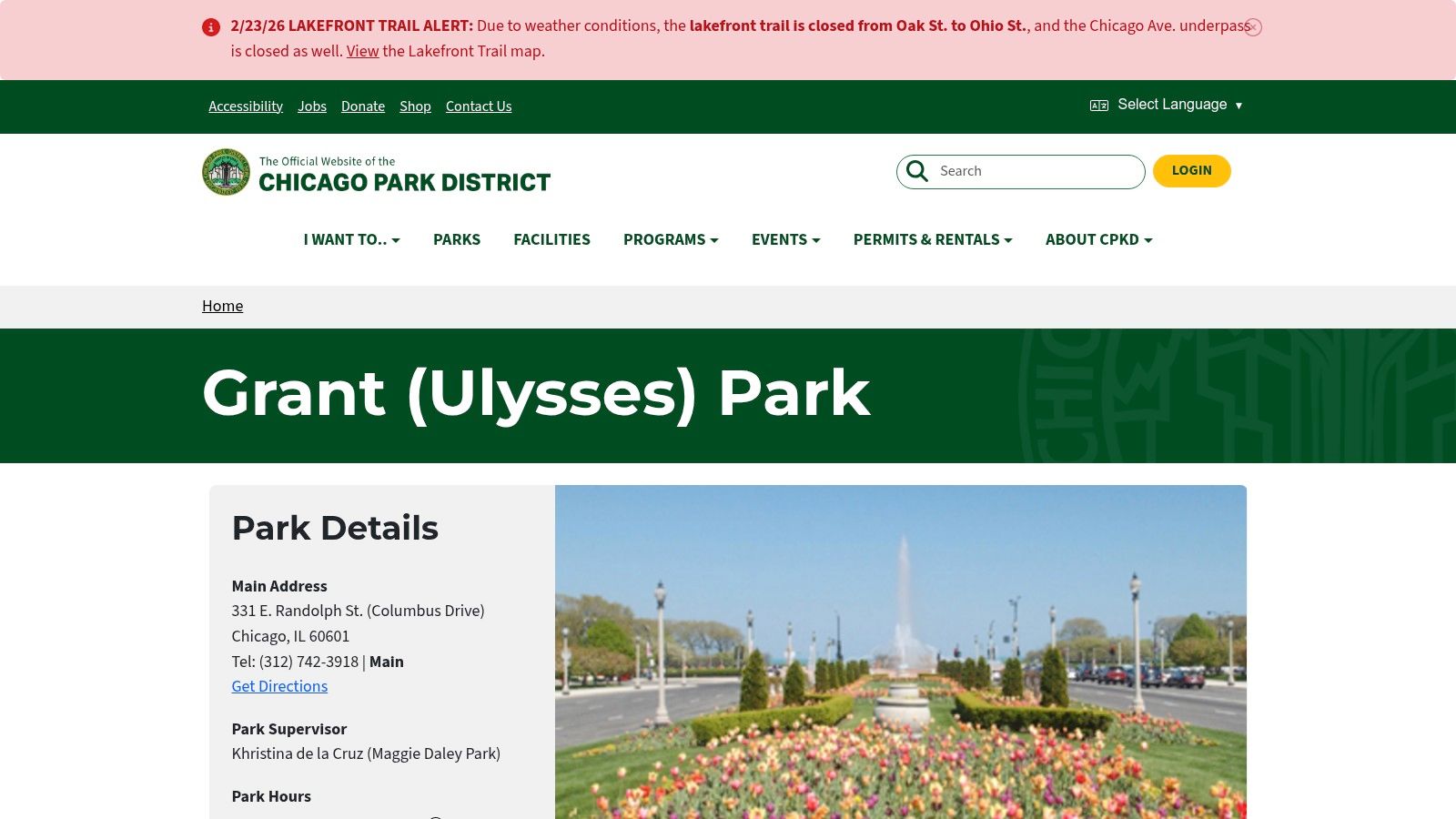
People call Grant Park "Chicago's front yard," and it truly feels that way. It's a grand, sprawling expanse. It connects the city's towering architecture to the calming presence of Lake Michigan. Standing near Buckingham Fountain as it erupts into its majestic water show, you feel the city’s historic pulse. A sense of timelessness. You remember Chicago's enduring spirit and ambition.
This isn't just a park; it's a massive canvas where Chicago hosts its biggest moments, from music festivals to marathons. Yet, even on a quiet day, you can find a peaceful corner in one of its formal gardens or watch skaters perfect their craft at the skate park. It’s a place of both epic scale and personal reflection, offering a different experience every time you visit.
What You'll Find Here
The Chicago Park District website for Grant Park is your starting point. While it's a standard park district page, it gives you crucial info on event permits, field conditions, and a general map to get your bearings. It’s the official source for knowing which parts of the park might be closed for a major event like Lollapalooza.
Key Features: Buckingham Fountain, Museum Campus access, Grant Park Skate Park, Rose Gardens, Butler Field, Hutchinson Field.
Best For: Iconic Chicago views, major city festivals, museum hopping, and long walks along the lakefront.
Family & Dog Friendliness: Very family-friendly, with plenty of open space. Dogs are welcome on-leash throughout the park, making it a great place for a scenic walk with your furry friend.
Plan Your Perfect Visit
My favorite way to experience Grant Park is to start at the Museum Campus. I take in the incredible skyline view, then walk north through the gardens toward Buckingham Fountain. I try to time my visit for the top of the hour to catch the water display. In the summer, packing a picnic and finding a spot on the grass with the fountain in the background feels like a classic Chicago moment. The park is always free to enter.
Pro Tip: Don't miss the smaller, more intimate gardens tucked away from the main paths. The Court of Presidents and the Abraham Lincoln statue area offer beautiful, quieter spots for reflection away from the crowds.
A Stage for Community Action
The sheer scale and visibility of Grant Park make it an unparalleled location for a high-impact community cleanup. Hosting a volunteer event here is a bold statement about your group's commitment to preserving Chicago's most celebrated public spaces. The constant flow of tourists and locals means your cleanup crew will be seen. This creates a ripple effect of inspiration. It’s an ideal spot for organizations like Litter Caterpillars to demonstrate civic pride on a grand scale. If you’re inspired by these large-scale efforts but want to see how to make a difference in a cozier neighborhood setting, you can read the story of Fulton River Park.
Stepping into Jackson Park feels like entering a living history book. This is a place crafted by visionaries for the 1893 World’s Columbian Exposition. You can still feel that grand ambition in its sweeping meadows and tranquil lagoons. It’s a park that asks you to slow down. To watch the herons on Wooded Island. To remember the layers of stories that have unfolded right where you stand. It’s not just a South Side gem; it’s a cornerstone of Chicago’s identity.
This immense park offers a sense of escape that’s hard to find elsewhere in the city. One moment you can be walking through the serene, Japanese-style Garden of the Phoenix. The next you can be feeling the lake breeze on the 63rd Street Beach. It’s this incredible diversity that makes Jackson Park a constant source of discovery, a place where every visit feels completely new.
What You'll Find Here
The website jacksonpark.cpdgolf.com focuses on one of the park's core assets: the golf course. The site is straightforward. It provides essential information on tee times, course layout, and community programs. It’s a great starting point for understanding how recreation and history merge here. For broader park information, the Chicago Park District site is your companion.
Key Features: Wooded Island and the Garden of the Phoenix, 63rd Street Beach, Jackson Park Golf Course, multiple lagoons.
Best For: History buffs, bird watchers, golfers, and anyone seeking a peaceful escape with diverse scenery.
Family & Dog Friendliness: Very family-friendly with lots of open space. Dogs are welcome on leashes on the paths but should be kept out of sensitive natural areas like the Garden of the Phoenix.
Plan Your Perfect Visit
My perfect day in Jackson Park begins with an early morning bird-watching session on Wooded Island. The spot feels miles away from urban life. Afterwards, a walk through the Garden of the Phoenix is a must for its calming atmosphere. In the afternoon, hitting a few balls at the driving range or just relaxing by the lagoons makes for a perfect, unhurried day. The park is free to enter, though activities like golf have fees.
Pro Tip: Pack a picnic. Find a spot near the Statue of The Republic. It’s a powerful historical marker from the World's Fair and offers a stunning, wide-open view of the park's landscape.
A Stage for Community Action
The sheer scale and variety of Jackson Park make it an incredible canvas for community-focused environmental work. You can organize a shoreline cleanup along the lagoons, a trail maintenance day on Wooded Island, or a beautification project in the meadows. The strong South Side community pride here creates a welcoming environment for volunteers. An organized event in this historic park honors its legacy and shows a deep commitment to one of Chicago’s most important green spaces. To learn how to structure a cleanup in such a large, diverse park, we have resources to help you get started with your own event.
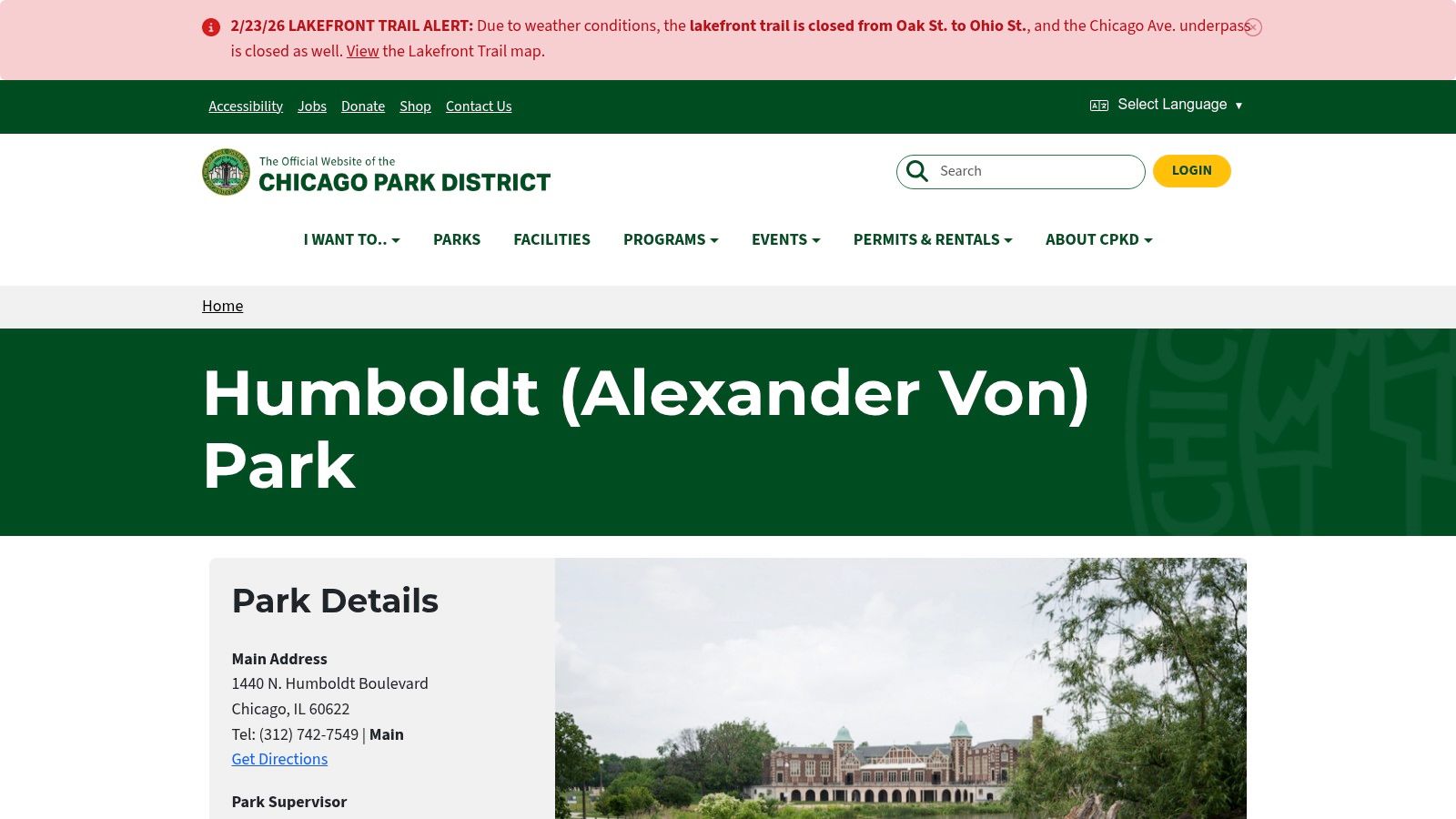
Humboldt Park is more than just green space. It's the cultural soul of its neighborhood. A place where history, nature, and vibrant community spirit blend into something truly special. Walking its paths feels like stepping into a story. The historic boathouse reflecting in the lagoon. The striking architecture of the old stables, now a museum, standing proudly. This isn't just a park you visit; it's a park you experience. A living celebration of Puerto Rican culture and Chicago's rich West Side heritage.
This nearly 200-acre park invites you to slow down and connect. From the surprising sight of an inland beach in the summer to the quiet lagoons perfect for a paddle, every corner offers a different rhythm. It feels authentic and deeply rooted. A place where families have gathered for generations and where new memories are made every single day.
What You'll Find Here
The Chicago Park District website for Humboldt Park is your starting point for navigating this massive space. It's a practical resource where you can find hours for the fieldhouse, check on sports league sign-ups, and get details on renting a community room. The site gives you all the core information you need to plan a visit or an event.
Key Features: Historic fieldhouse and boathouse, lagoons with an inland beach, National Museum of Puerto Rican Arts & Culture, multiple athletic fields and courts.
Best For: Cultural immersion, neighborhood festivals, family picnics, and enjoying a unique, non-downtown park experience.
Family & Dog Friendliness: Very family-friendly with lots of open space. Leashed dogs are welcome on the paths, but be sure to check specific rules for buildings and the beach area.
Plan Your Perfect Visit
My perfect day here involves grabbing some food from a restaurant on nearby Paseo Boricua and having a picnic near the lagoon. Afterward, I'd visit the National Museum of Puerto Rican Arts & Culture to see the latest exhibit. The park is free to enter, and the sense of community you'll find here is priceless. It's a place that shows you a different, yet equally essential, side of the Chicago park system.
Pro Tip: The park is huge. If you're meeting friends or attending an event, be specific about your meeting spot. Using the boathouse or the museum as a landmark is much clearer than just saying "meet me in Humboldt Park."
A Stage for Community Action
The deep-seated community pride here makes Humboldt Park an incredible location for a volunteer event. Organizing a cleanup isn't just about picking up litter. It’s about honoring the space and the culture it represents. The park’s large size is a challenge, but it’s also an opportunity. You can assign teams to specific zones—like the lagoons, the playground, or the garden beds—to make a significant, visible impact. Because this park is a true community hub, your group’s work will be noticed and appreciated by the residents who cherish it most. To learn how you can effectively organize a cleanup in a large, culturally significant space like this, we have great advice to help you get started with your own event.
Stepping into the Garfield Park Conservatory is like leaving Chicago. You enter a lush, green world where it’s always summer. It's a living museum. A glass palace where ancient ferns unfurl and tropical palms reach for the sky, no matter the season outside. This isn’t just a place to see plants. It’s a place to breathe differently. To feel the warm, humid air on your skin and remember our deep connection to the natural world. It’s an escape and an education all in one.
This historic conservatory, one of the largest in the country, offers a year-round sanctuary that feels both grand and deeply personal. Whether you're wandering through the cacti in the Desert House or marveling at the vibrant colors of a seasonal flower show, you feel a sense of wonder. The sheer scale of the Palm House makes you feel small in the best way possible. It reminds you of nature's enduring power and beauty.
What You'll Find Here
The conservatory's website, garfieldconservatory.org, is your portal to this botanical wonderland. It's essential for planning your visit, as you must make a free, timed reservation online before you go. The site clearly lists current hours, special exhibits like the seasonal flower shows, and educational programs. It's also where you can find accessibility details for navigating the historic glass houses and grounds.
Key Features: Eight indoor display gardens (Palm House, Fern Room, Desert House), seasonal flower shows, more than 10 acres of outdoor gardens, and a nature play space.
Best For: Year-round nature lovers, educational outings, a peaceful escape from the city, and anyone seeking a tropical vibe in the winter.
Family & Dog Friendliness: Very family-friendly with dedicated play areas. Dogs are not permitted inside the conservatory buildings but are welcome on the outdoor grounds on a leash.
Plan Your Perfect Visit
My perfect day here involves booking an early morning slot to enjoy the quiet solitude of the Fern Room, which feels like stepping back into prehistoric times. After exploring the indoor gardens, I love to wander the outdoor grounds to see what’s in bloom. Because admission is free (though donations are encouraged), it’s one of the most accessible and inspiring among the many chicago il parks. Just remember to book your reservation online ahead of time, as walk-ins are not guaranteed.
Pro Tip: Don't miss the smaller, more intimate rooms like the Aroid House or the Show House. They often contain some of the most unique and beautiful specimens and are less crowded than the main Palm House.
A Stage for Community Action
The Conservatory's mission of education and conservation makes it a perfect backdrop for community-focused events. Organizing a volunteer day to help tend the outdoor gardens connects your group directly to the mission of this cherished Chicago institution. It's a hands-on way to contribute to a space that gives so much back to the community. The educational focus also provides a great tie-in for groups like Litter Caterpillars who want to teach about local ecosystems. To get a better sense of the area and its potential, you can learn more about Garfield Park and its community and see how your efforts can make a real difference.
⭐⭐⭐⭐ — indoor/outdoor flexibility and robust educational offerings
Your Turn to Write the Next Chapter
So there you have it. A glimpse into Chicago's soul, told through its sprawling, breathing green spaces. We've journeyed from the iconic gleam of Millennium Park's "Bean" to the quiet, historic lagoons of Jackson Park. We've seen how each of the great chicago il parks offers more than just grass; they are vibrant ecosystems of community, history, and personal discovery.
Think of this guide not as a finished map, but as a blank journal. Its pages are filled with starting points. The winding paths of Lincoln Park. The lush, tropical air inside the Garfield Park Conservatory. But the real story isn't written yet. That part is up to you.
From Observer to Participant
It’s one thing to read about these places. To see their pictures. It’s another thing entirely to feel the cool Lake Michigan breeze at Grant Park or hear the vibrant sounds of a festival at Humboldt Park. The magic happens when you stop being a visitor and start becoming part of the park's story.
This is where service comes in. Not as a chore, but as an invitation. Do you remember Tom Sawyer painting his fence? He could have seen it as a punishment, a miserable task. Instead, he reframed it. He turned it into an adventure so compelling, so full of purpose and fun, that his friends actually paid him for the privilege of helping.
That’s the power you have. Picking up a stray bottle, joining a group to clear a trail, or simply showing up with a positive attitude isn't just about cleaning. It's about connection. It's about taking ownership and saying, "This is my city. This is my park. I am part of its future."
“We, the Litter Caterpillars, are all trying to transform. Through service, sunlight, and friendship, we learn to trust and forgive ourselves. These parks are our training grounds.”
Choosing Your Starting Line
Where do you begin? Look back at the places we've explored.
Feeling reflective? Maybe a quiet morning walk through Jackson Park's Garden of the Phoenix is your first step.
Craving energy and art? Start with Millennium Park and see the city's ambition reflected back at you.
Want to get your hands dirty with us? Find a Litter Caterpillars meetup and see how a few hours of shared effort can completely change your perspective on a place, and maybe even on yourself.
The most important thing is to simply start. Pick a park that calls to you. Go there with intention, not just to pass through, but to truly be there. Notice the details. Feel the ground beneath your feet.
These parks are not static monuments. They are living, breathing entities shaped by every person who walks their paths. Your presence, your care, and your story add a new layer to their rich history. Now it's your move. Pick a park, show up, and start writing your own story of transformation. We’ll be out there, rain or shine, ready to welcome you.
Ready to turn your love for chicago il parks into meaningful action and community? Join Litter Caterpillars at one of our next cleanup events. We provide the gear and the good vibes; you just bring yourself and a willingness to make a difference. Find your first event and become part of our story at Litter Caterpillars.