
I bent down to grab a soaked fast-food cup near the river on a cold morning, and my fingers went numb before I filled half a bag. That was the moment the fox river valley stopped being a pretty backdrop to me and became a place where I had a job to do.
Many visitors visit the fox river valley with a camera brain. I think you should come with work gloves, trail shoes, and a little more courage than comfort.
My Fox River Valley Story
The first time I really paid attention to the fox river valley, I wasn't chasing some perfect day. The weather was ugly. The riverbank was messy. My plan had already fallen apart before breakfast.
That helped.
When a place meets you on a polished day, you can stay shallow. You snap a few photos, eat something decent, walk a trail, and leave feeling pleased with yourself. But when a place catches you tired, cold, and a little annoyed, you find out whether you're there to consume it or join it.
I started joining it.
The fox river valley stretches over 80 miles in Northern Illinois and is home to around 1 million people, with communities that include Aurora and Elgin according to Fox River Valley facts. That means this isn't some tiny hidden pocket you can romanticize from a distance. People live here. Kids grow up here. Trash blows here. Water rises here. Work needs doing here.
What changed in me
I used to think connection came from knowing facts, names, and local trivia. I don't think that anymore. I think connection comes from effort.
You learn a river differently when you walk beside it with a bag in your hand. You learn a town differently when you don't just buy coffee there but stay long enough to notice which block gets ignored. You learn yourself differently when you choose a hard morning over an easy excuse.
Practical rule: If you want to know the fox river valley, don't start with "What's the best photo spot?" Start with "Where can I help, walk, paddle, and pay attention?"
That shift changed how I move through places. I stopped acting like a spectator and started acting like a neighbor, even when I was only there for a day.
Your story won't look like mine
Maybe you'll find your way into the valley through a bike ride. Maybe through a kayak. Maybe you'll sit on a bench in Geneva or St. Charles and just watch the water until your head finally goes quiet. Good. That's a real entry point.
But I want to push you a little. Don't let your whole relationship with the fox river valley stay soft and observational.
Try one of these instead:
- Walk with purpose: Pick a stretch of trail and carry a small bag. If you see litter, grab it.
- Stay after the fun: If you paddle, don't rush home. Walk the launch area and leave it cleaner.
- Talk to people: Ask someone who lives nearby what part of the river gets ignored.
- Choose discomfort on purpose: Go on a gray day, not only a sunny one. You'll notice more.
The valley gave me a strange kind of peace. Not the lazy kind. The earned kind. The kind you get after doing something small and physical and useful with your own hands.
That's the kind I'm inviting you into.
Get to Know the Valley's Towns
Some towns in the fox river valley feel like old boots. Some feel like a sketchbook. Some feel like a place where you should slow down before you miss what's right in front of you.
Don't try to "do it all." Pick the town that fits your mood, then let the river pull you to the next one another day.

Aurora for energy
Aurora has movement in it. You feel it fast. Bigger streets, bigger civic bones, more reasons to linger if you like a place with some muscle and some grit.
I like Aurora when I don't want my day to feel precious. It has the kind of presence that lets you mix your day. Walk by the river. Find a place to eat. Sit for a while. Keep moving. If you're the kind of person who gets bored in places that feel too polished, start here.
Elgin for texture
Elgin has that layered feeling I always trust. You can sense history, daily life, and change all sitting in the same frame. I like towns that don't feel scrubbed clean of personality, and Elgin gives me that.
If you're curious by nature, Elgin rewards wandering. Don't over-plan it. Walk, stop, look up, cross the bridge, double back. Let your attention lead.
Some places ask you to spend money. Better towns ask you to notice things.
Geneva and St. Charles for slowing down
These are the towns I recommend when someone's nervous, overstimulated, or carrying too much noise in their head. Geneva and St. Charles are good for recovery. You can walk downtown, find the river, and exhale without trying too hard.
That doesn't mean they're sleepy. It means they give you room.
I think a lot of people need that more than they admit. They don't need another packed itinerary. They need one honest afternoon with water, sidewalks, and enough quiet to hear their own thoughts again.
Batavia for people who like the in-between
Batavia feels good to me because it doesn't beg for attention. Some places perform. Batavia doesn't need to. That makes it a strong stop for walkers, cyclists, and anyone who likes to stitch together a day instead of consuming it in chunks.
Here's how I think about the towns:
| Town | Best for | My advice |
|---|---|---|
| Aurora | Energy and variety | Stay loose. Let the day build as you go. |
| Elgin | Wandering and observation | Walk without a strict destination. |
| Geneva | Quiet reset | Go when you need your shoulders to drop. |
| St. Charles | Riverfront strolling | Give yourself extra time to sit and watch. |
| Batavia | A steady, grounded day | Pair it with trail time or a bike ride. |
Pick a town like you pick a friend
This is my blunt advice. Don't ask which town is "best." Ask which one you're ready for.
- If you're restless: Go to Aurora.
- If you're curious: Go to Elgin.
- If you're worn out: Go to Geneva.
- If you need a gentle day: Go to St. Charles.
- If you want calm without fuss: Go to Batavia.
The fox river valley gets better when you stop treating towns like checklist items. Let one place get under your skin a little. That's when you start coming back for the right reasons.
Find Your Path on the Trails and Parks
A trail tells the truth on you. If your mind is scattered, you'll feel it in the first mile. If you're carrying too much, the walk starts scraping it loose.
That's why I keep coming back.
The fox river valley has the kind of outdoor rhythm that works for both hard chargers and people who just need a reason to get off their phone. I think trails are one of the best ways to meet the area honestly. No ticket booth. No polished script. Just your feet, your breath, and whatever the day gives you.
The trail that clears your head
When I need to think, I want a path that doesn't demand too much. I want to move forward and let my brain stop clawing at itself. River trails do that well because the water gives your attention a place to rest.
If you're biking, pick a stretch where you can settle into a pace and stop whenever something catches your eye. If you're walking, don't rush to rack up distance. A slow walk with your head up beats a fast walk with your mind somewhere else.
I also like mixing a walk with a cleanup mindset. Even one glove and a small bag changes how you move. You stop floating through the place and start noticing edges, corners, benches, and brush lines.
If you want a practical jumping-off point for nearby outdoor planning, take a look at this guide to the Aurora forest preserve.
Parks are for more than exercise
A lot of people treat parks like outdoor gyms. I think that's too narrow. Parks are where you practice attention.
Sit near the river and watch how long it takes for your body to settle. Notice who's using the space. Families. Solo walkers. Cyclists. Anglers. People escaping something for an hour. You start realizing public space isn't abstract. It's personal.
A good park doesn't ask you to perform. It lets you arrive as you are and leave a little better.
That matters more than people admit.
Here's a look at the kind of mood the trails can put you in:
How I choose where to go
I don't use the same trail mindset every time. I pick based on what I need.
- For clarity: Choose a simple route along the river and walk alone for a while.
- For momentum: Bring a bike and cover more ground. Speed can shake you loose.
- For recovery: Find a quieter park section and sit before you move.
- For service: Bring gloves and collect what you can safely reach.
The mistake people make is thinking they need the perfect plan before they go. You don't. You need a water bottle, decent shoes, and enough honesty to admit what kind of day you're having.
A better way to use the valley
Don't race through three parks in one day. That's consumption disguised as adventure. Pick one trail, one park, one stretch of river. Learn its mood.
Come back in different weather. Come back in a different season. Come back when you're happy, and come back when you're a mess.
The same path will meet you differently every time. That's why it's worth returning to.
The River's Story of Power and People
I love rivers that don't feel decorative. The Fox doesn't feel decorative to me. It feels like a force that people tried to harness, reroute, build around, and profit from.
You can still feel that argument between water and people if you pay attention.
Water that moved industry
The Fox River drops about 167 feet in just 39 miles, and that descent helped create the highest concentration of pulp and paper mills in the world, with companies like Charmin and Quilted Northern starting along it, as described in the Fox River background on Wikipedia). I don't bring that up as trivia. I bring it up because it explains why the river has such a charged feeling in places shaped by work, machinery, and control.
A river with that kind of drop isn't passive. People saw motion and turned it into mills, jobs, noise, wealth, and damage. That's the bargain they made.
And you can still see the leftovers of that bargain. Old industrial bones. Dammed stretches. Buildings that started in one era and got dragged into another.
Transformation isn't always pretty
People love clean redemption stories. River history isn't one. The Fox gave power. People took it. Towns grew. Industry expanded. Then the consequences stuck around.
That's a human story too.
I've changed my own life in ugly stages. Not graceful stages. Ugly ones. Pick something up. Slip. Come back. Clean one corner. Ignore another. Try again next week. The river's story feels closer to that than to some polished before-and-after fantasy.
Hard truth: Transformation usually leaves scars you can still see.
I trust places more when they don't hide that.
What to look for when you walk
When you're near the river, stop looking only for scenic views. Look for evidence. Look for what people built to control water. Look for what got repurposed. Look for where the natural line of the river and the built line of the city rub against each other.
That tension is part of the fox river valley's personality.
Try this the next time you're out:
- Pause near older infrastructure: Ask yourself what problem it was built to solve.
- Notice reused buildings: A place can change function without erasing its past.
- Watch the current: Even where people shaped the river, water still tells its own story.
- Read the banks: Neat edges and rough edges both reveal human choices.
I think that makes the valley more interesting, not less. A flawless place is easy to admire and easy to forget. A place shaped by effort, greed, ingenuity, and repair sticks with you.
The river changed towns. Towns changed the river. Now it's our turn to decide what kind of relationship we want with it.
How to Join the Action on the Water
If you've been standing on the bank thinking, "Maybe someday I'll get on the river," I want to push back. Someday is a soft word. Pick a date.
Getting on the water is one of the fastest ways to stop being a spectator in the fox river valley. The river changes when you're inside it. Distances feel different. Noise shifts. Your body starts paying attention.
Start simple and start local
Don't make your first outing a giant production. That's how people talk themselves out of it. Choose a short paddling day, wear clothes you don't mind getting wet, and keep your plan humble.
For beginners, I always prefer a calm, low-drama outing over an ambitious route. You want your first trip to build confidence, not ego. The point is to learn how the boat feels, how your shoulders settle, and how the river asks you to move.
If you're nervous about the whole idea, browsing a practical beginner-friendly paddling guide like this one on Urban Kayaks in Chicago can help you think through gear, comfort, and the basics before you commit.
What to bring and why
A sloppy prep job ruins good outings. I keep it simple.
- Water and a snack: Hunger sneaks up on people fast outdoors.
- Dry bag or sealed pouch: Phones and keys don't need heroics.
- Gloves for before or after: Shorelines and launch spots often need a quick cleanup.
- Sun and weather gear: Dress for exposure, not for your car ride.
- A buddy if you're new: Confidence grows faster with company.
I also think you should tell someone where you're going if you're heading out alone. That's not paranoia. That's just adult behavior.
Use the day well
A river day gets better when you stop treating paddling as the only event. Build a full day around it. Walk before you launch. Sit somewhere after. Eat somewhere local. Do a quick litter pass at the access point if you see obvious debris.
That little extra effort changes the spirit of the day. You're no longer just taking recreation from a place. You're entering a relationship with it.
If you leave the launch cleaner than you found it, the day lands differently in your chest.
Good judgment beats bravado
Let me be blunt. Don't act tough around water. Water doesn't care.
If conditions feel off to you, listen to that feeling. If you're too tired, simplify the plan. If you don't know the stretch, ask questions before you go. The coolest person on the river is the one who gets home safely and wants to come back next week.
A solid first outing looks like this:
- Pick an easy time of day when you won't feel rushed.
- Keep your route manageable so you can enjoy it instead of surviving it.
- Launch with intention and pay attention to how your body responds.
- End before you're exhausted because that's how good habits stick.
The fox river valley is better from the water. But it's best when you approach it with humility, not swagger.
Protect the Fox River and Get Your Hands Dirty
This is the part where I stop being polite.
If you love the fox river valley, prove it with your hands.
A lot of people say they care about rivers. Fewer people bend down for the bottle in the weeds, the plastic jammed in brush after rain, or the junk stranded near a rough access point. Caring that never leaves the mouth doesn't do much for a river.
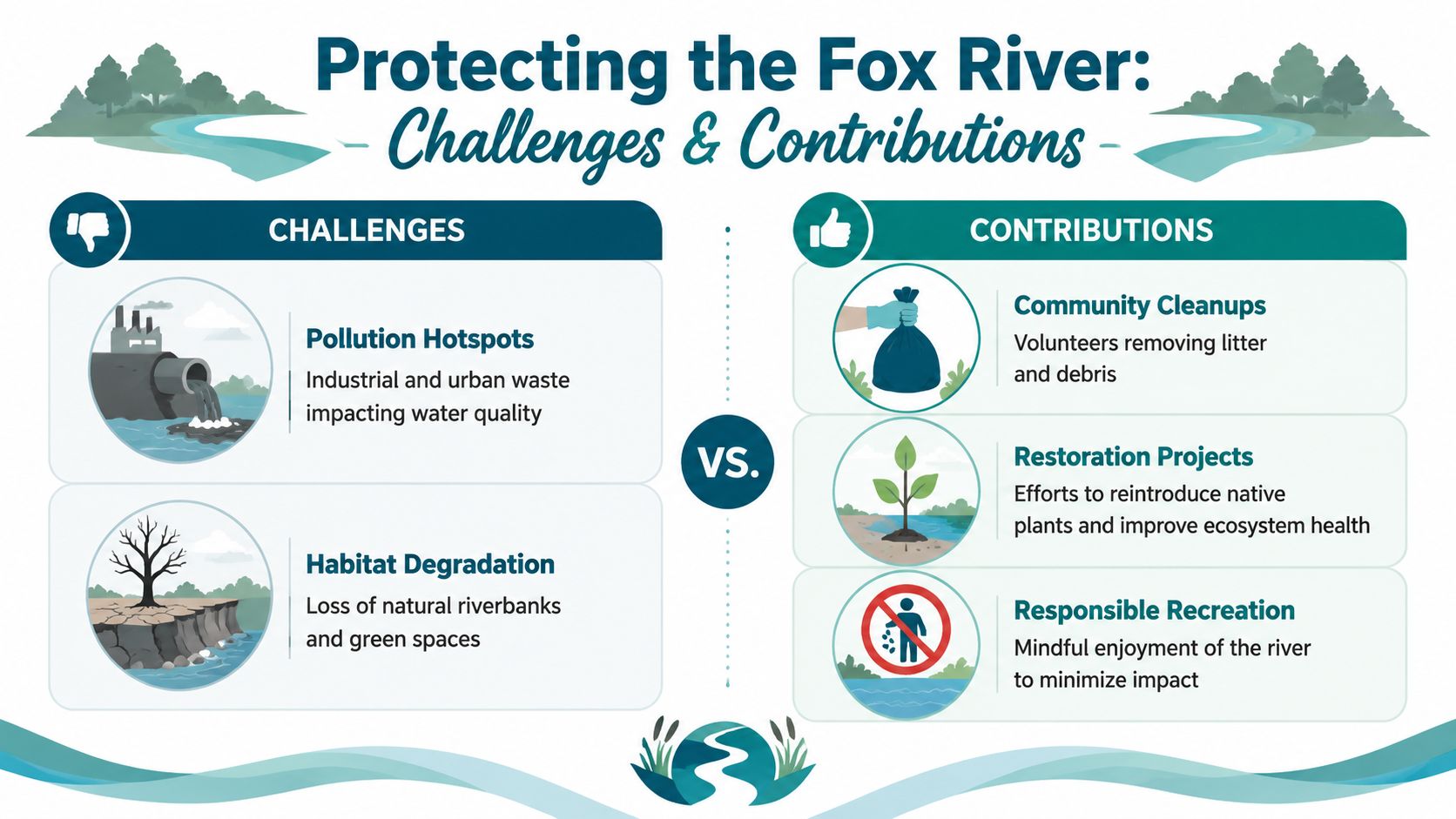
The river has real problems
Parts of the Fox River watershed in northeastern Wisconsin face water quality problems tied to legacy industrial pollution and agricultural runoff, with public information noting suspended solids, high-flow spikes, and heavy metal concerns in monitored areas, according to Fox Valley Technical College watershed context. I don't use that to scare you. I use it because vague environmental talk makes people sleepy.
Concrete problems wake people up.
The same background material also points to combined sewer overflow pressure in 15+ municipalities, and it describes green infrastructure and trash-trap style interventions as practical responses in this watershed context. That means cleanup work isn't random. It can be targeted. It can be smarter after storms. It can focus on the places where litter moves and piles up.
Go where help is thinner
I care a lot about this part. Some areas east of the Fox River have less access to cleanup resources and green infrastructure, which creates a real opening for volunteer action in neglected neighborhoods, as noted in the St. Charles active river opportunity analysis.
That matters.
If you only clean the easy, photogenic, already-loved places, you're doing maintenance. If you show up where resources are thinner, you're doing justice.
I think more volunteer groups should admit that. The map is not neutral. Some blocks get attention. Some don't. Some shorelines get regular love. Some get shrugged at until the mess becomes normal.
The place that needs your help most is often the place people talk about least.
My advice for direct action
Don't wait for the perfect event. Start with one clean, focused act.
Here is how I'd approach the fox river valley if I wanted my effort to matter:
- After storms, move fast: Water shifts debris. Fresh litter lines and snag points are easier to spot then.
- Target access points and tributary edges: People drop trash where they enter, exit, park, or pause.
- Bring basic sorting habits: Separate obvious recyclables when practical, and handle hazardous items carefully by reporting them if needed.
- Keep notes: Write down what you saw. Which bank? What kind of trash? Was it repeat litter or flood-carried debris?
- Return to the same place: One cleanup feels good. Repeated cleanups teach you the pattern.
If you want a broader volunteer model for this kind of work, this page on how to clean up rivers is a useful place to start.
Don't outsource your conscience
People often act like environmental repair belongs to agencies, boards, or somebody with a title. I don't buy that. Formal work matters, sure. But ordinary people can remove real trash from real ground this weekend.
And once you do that, something changes in you.
You stop seeing litter as background. You stop seeing neglected places as somebody else's problem. You stop waiting for permission to care in a practical way.
Here's the simplest version of the job:
| What you see | What you do |
|---|---|
| Trash after rain | Show up quickly with gloves and bags |
| Neglected bank edges | Work in pairs and clear visible debris |
| Repeated litter at access points | Return often and track the pattern |
| Uneven resource access | Choose underserved areas on purpose |
I think the fox river valley needs more people who are willing to get a little dirty, a little tired, and a little less self-conscious. That's where real belonging starts.
Your Fox River Valley Itineraries
Some people freeze because they have too many options. So I'm going to make this plain. Pick one of these day plans and go.
A good day in the fox river valley doesn't need to be expensive, elaborate, or optimized. It needs only a shape.
Solo reset day
This is for the person who's burned out, over-socialized, or stuck in their own head.
Start in one town, not three. Walk near the river in the morning before the day gets noisy. Find a bench or quiet stretch and stay there longer than feels productive. Then take a trail walk with no pressure to go far.
Bring a notebook if that helps, but don't force insight. Let the place do some work on you.
Best use of the day
- Morning: Slow river walk
- Midday: Simple lunch and zero rush
- Afternoon: Trail time or a park sit
- Before leaving: Pick up a few pieces of litter if you safely can
Family day with movement
Families don't need a perfect outing. They need a forgiving one.
Choose a riverfront area where kids can move, adults can breathe, and nobody has to pretend to enjoy a packed schedule. Keep snacks easy. Keep expectations lower than your Pinterest brain wants them to be. Mix one active thing with one restful thing.
A family day works best when adults stop trying to control every minute. Let the river be part of the entertainment.
Cleanup crew day
This is my favorite because it leaves a mark.
Pick one target area. A shoreline edge, trail entrance, launch point, or park border. Meet in the morning while energy is still high. Work in gloves, bring enough bags, and decide your boundaries before you start. After the cleanup, wash up, eat together, and take a walk somewhere nearby.
That sequence matters. Service first. Joy second. That's a powerful rhythm.
Field note: Small groups win when they stay focused. One area cleaned well beats a scattered day of half-effort.
Adventure day on purpose
This is for people who need a little more adrenaline to feel awake. Pair paddling with walking, or biking with a river stop. Keep the route realistic and the gear simple.
The mistake adventurous people make is turning every outing into a test. Don't test yourself all day. Leave room for play. Leave room for a detour. Leave room for the kind of moment you couldn't have scheduled anyway.
The safety rules I want you to actually follow
I don't believe in fear-heavy safety talk. I believe in preparation.
- Check conditions: If weather or water feels wrong, change the plan.
- Dress for the day's conditions: Sun, wind, mud, and wet shoes count.
- Know your limits: Pride is heavy. Leave it in the car.
- Bring water and charge your phone: Basic things prevent dumb problems.
- Use gloves for cleanup: Your hands are not trash tools.
- Leave if something feels off: You don't need to win against discomfort every time.
The fox river valley is better when you stop waiting for the ideal day and start building honest ones. Go there to move, breathe, notice, paddle, walk, sit, clean, and come home different than you arrived.
If you're ready to stop admiring from a distance and start doing the work, join Litter Caterpillars. It's a volunteer group built for people who want friendship, service, bravery, and real impact. Show up, grab a bag, and help clean the places people forget.