Tag: community cleanup

  • Your Northeastern Illinois Map for Action

    Your Northeastern Illinois Map for Action

    I once followed a clean-looking map to a park edge on Chicago's northwest side and found the mess fifty feet off the path, hidden behind a fence where the map showed nothing. We filled bag after bag in a place no pin had named.

    Starting Your Journey on the Map

    The first time I stared at a Northeastern Illinois map, I felt dwarfed by it. Streets stacked on streets. Forest preserves. industrial strips. River bends. Rail lines. Neighborhoods I hadn't walked and places I couldn't pronounce yet. It looked less like guidance and more like a dare.

    That feeling is normal. You open a map of the Chicago region and your brain starts bargaining with you. Stay local. Keep it easy. Pick one block you already know. Don't wander into the unknown. I've heard that voice in my own head plenty of times.

    Then I learned to look at the map like a scavenger hunt.

    A park isn't just green space. It's where cups collect at the edge of a parking lot after a windy weekend. A commercial corridor isn't just a strip of stores. It's where receipts, scratch-offs, and takeout bags tumble toward a storm drain. A dead-end street isn't boring. It's where dumped furniture and busted contractor bags like to hide.

    Maps don't tell you where courage begins. They just get you close enough to step out of the car.

    That's the shift. A map is not there to comfort you. It's there to get you moving. When you stop treating it like a sterile tool and start treating it like a field notebook, the whole region changes shape.

    The first real lesson

    I've had mornings where I picked a spot because it looked simple on the screen and then spent hours finding weird pockets the map never warned me about. A sidewalk ended. A service road curved behind warehouses. A patch of brush swallowed cans, bottles, and fast-food wrappers like a magnet. The map got me to the block. My eyes did the rest.

    So when you start, don't ask, “Can I master all of northeastern Illinois?” Ask something smaller and better.

    • What can I learn in one morning: One ward, one trail entrance, one ugly strip behind one shopping center.
    • What can I carry: Gloves, bags, water, and enough humility to change plans when the ground tells you more than the screen.
    • What am I willing to notice: Overflowing bins, no bins, desire paths, bus stops, fence lines, creek edges.

    A good journey on the map starts with one honest act. You go. You look. You do the work.

    Defining Our Territory

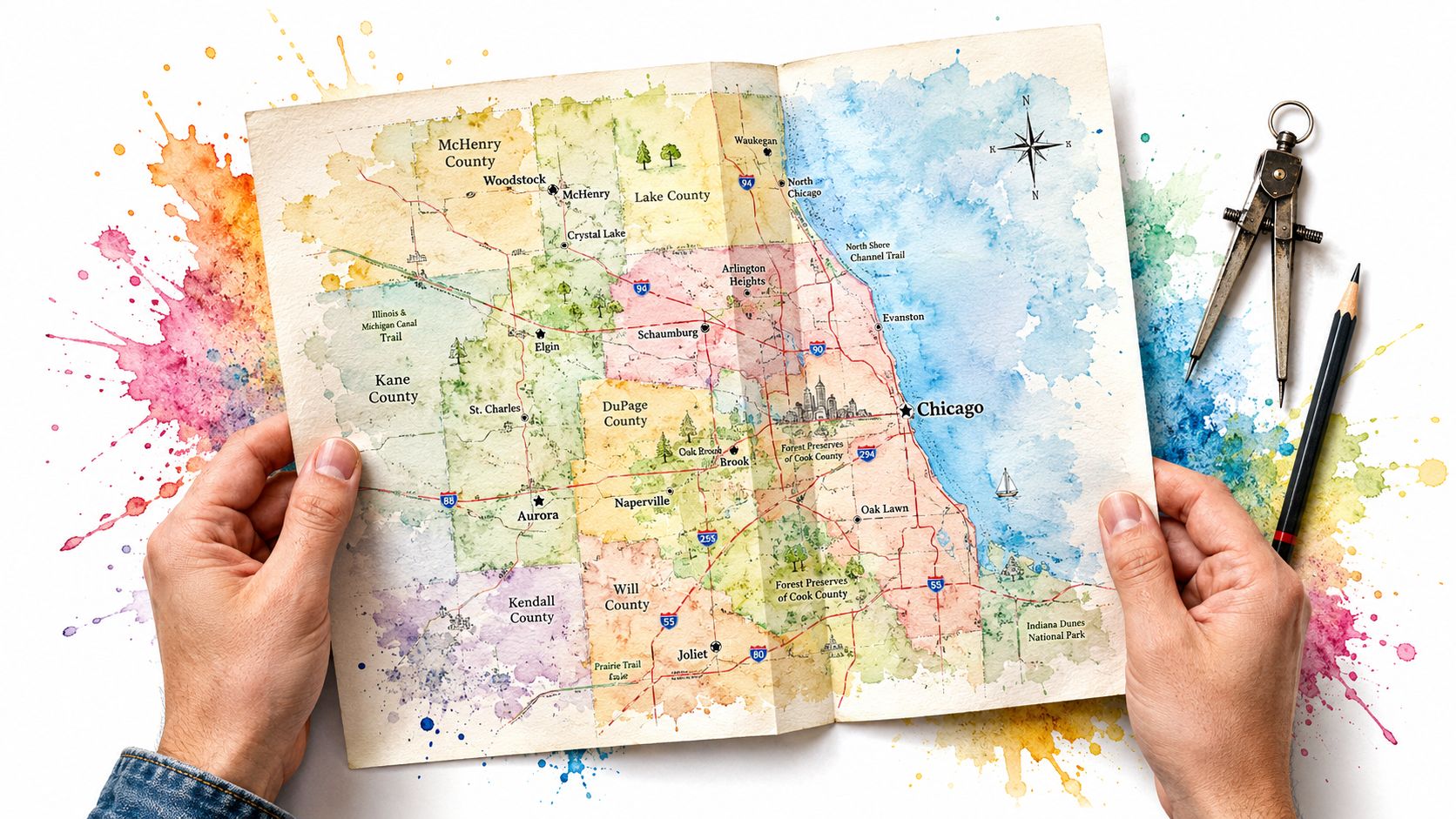
    When I say northeastern Illinois, I don't mean some vague blob around Chicago. I mean a real operating zone. Cook, DuPage, Kane, Kendall, Lake, McHenry, and Will. Big city blocks. Quiet cul-de-sacs. Forest preserve trails. Warehouse belts. Old downtowns. New subdivisions.
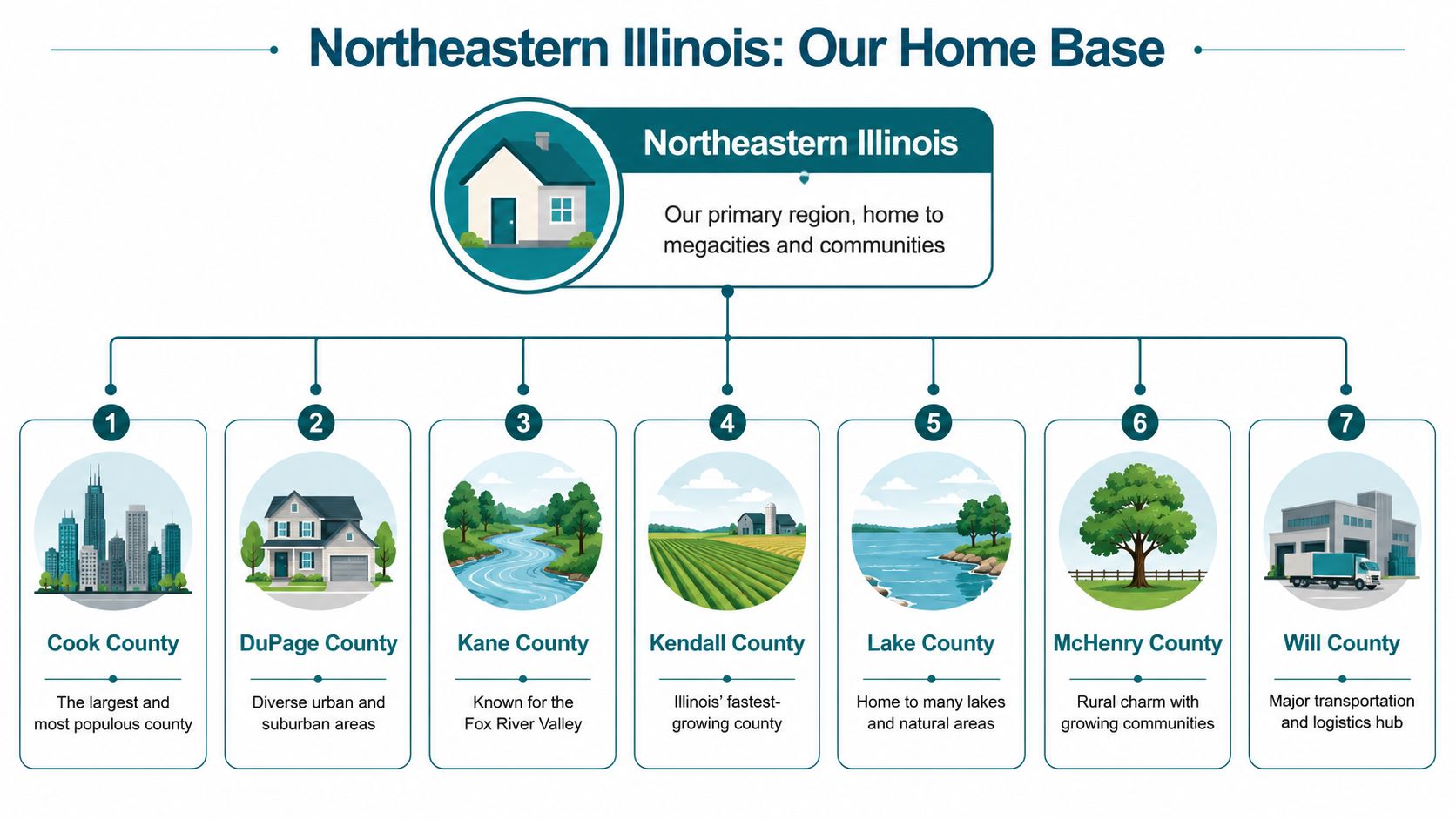
    A diagram illustrating the seven counties of Northeastern Illinois with descriptions for each of the regions.

    When you look at the region that way, the map stops feeling abstract. It becomes a work area. You can see where pressure builds. More people, more roads, more parking lots, more edges where litter gets trapped and forgotten.

    The scale matters. Northeastern Illinois, specifically the region containing Chicago, accounts for 84 percent of the entire state's population growth, and the seven fastest-growing municipalities, Chicago, Aurora, Naperville, Joliet, Waukegan, Cicero, and Elgin, are all clustered here, according to the Chicago Metropolitan Agency for Planning archive.

    What that means on the ground

    I don't read that fact like a planner sitting in an office. I read it like somebody holding a trash grabber. Growth means traffic at curbs. Packaging in parking lots. More use of trails and preserves. More pressure on public bins. More corners that look fine on a county map and ugly when you walk them.

    If you want to understand your territory, break it down like this:

    • Cook County: Dense blocks, alleys, transit stops, commercial corridors, and endless little trouble spots.
    • Collar counties: Big roads, retail clusters, creek edges, trailheads, and suburban spaces where people assume somebody else will clean it.
    • Outer edges of the region: Places that look open on a map but still collect roadside dumping and windblown trash.

    How I read the region fast

    I start with a simple scan.

    What I look for Why it matters
    Major roads and interchanges Trash gathers where cars stop, merge, and idle
    Preserves and trails Beautiful places still catch bottles, cans, and snack waste
    Retail strips High turnover means high litter risk
    Borders between land uses The seam between businesses, roads, and green space is often rough

    When I want a reset from city blocks, I spend time studying nearby preserves too. A page like forest preserve paths around Chicago reminds me that “territory” isn't only concrete. It's also woods, water, and the places people use to breathe.

    Field rule: If a map shows connection, look for neglect at the edges of that connection.

    That's the territory. Not glamorous. Real.

    Choosing the Right Map for the Mission

    A road map is fine if all you want is directions. It's weak if you're trying to solve a mess. For cleanup work, I need different maps for different jobs, the way a mechanic needs more than one wrench.
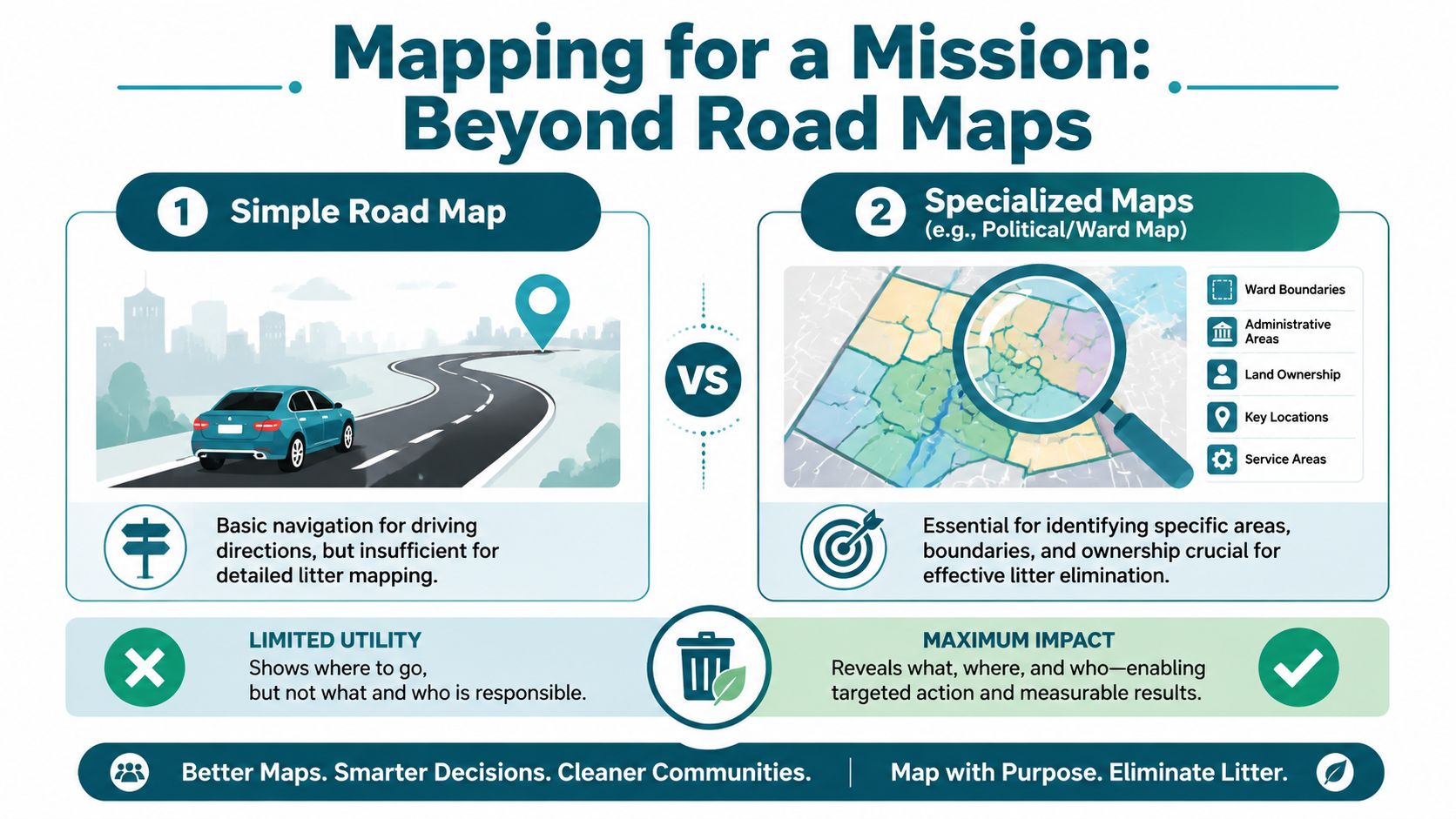
    An infographic comparing simple road maps to specialized maps for effective community litter management and environmental planning.

    The easiest mistake is trusting one map to answer every question. It won't. One map gets you there. Another tells you whose boundary you're crossing. Another hints at why trash keeps showing up in the same ugly pocket after every rain.

    The side by side test

    Here's how I compare map types when I'm planning a mission.

    Map type What it helps me do Where it falls short
    Road map Reach a site fast It hides ownership, terrain, and odd dead spaces
    Ward or political map Track cleanup coverage by area It doesn't show slope, dumping pockets, or trail cut-throughs
    Trail map Find entrances, paths, and hidden access points It may skip nearby commercial spillover
    Historical map Expose old corridors and forgotten uses of land It needs current ground truth to matter

    A ward map can turn a giant city into a checklist. A trail map can show a hidden entrance where volunteers can safely walk in. A historical map can explain why one strange strip behind businesses keeps attracting dumping. Old patterns linger.

    That last part matters in northeastern Illinois. The region's settlement pattern was largely determined in the 1830s by federal surveys that mapped and sold “Canal Lands” to private interests, drastically redrawing where new towns and farms would spring up, as described by the Encyclopedia of Chicago entry on northeastern Illinois. You can still feel that old carving-up of land when you run into awkward corridors, industrial leftovers, and disconnected spaces where nobody quite feels responsible.

    Map choice changes your behavior

    I've learned to match the map to the problem.

    • For block cleanups: I want ward boundaries and street grids.
    • For river or trail days: I want path maps and entry points first.
    • For weird dumping zones: I want old land-use clues and current satellite views.
    • For volunteer planning: I want transit access, parking, bathrooms, and a sane walking route.

    Sometimes I'll study a route before heading toward a trail system like the Des Plaines River Trail near Chicago, because linear spaces fool people. They look simple. Then you arrive and realize the actual work is at the trailhead, under the bridge, beside the lot, and in the brush off the curve.

    The wrong map wastes your legs before you even start.

    If you want a Northeastern Illinois map that helps you act, stop asking which map is best. Ask which map matches the mess in front of you.

    Finding and Using Digital Maps

    Paper maps still have charm, but digital maps are where planning gets sharp. I use them before I leave the house because I'd rather spend my energy cleaning than wandering in circles.

    A hand holding a smartphone showing wildfire risk data next to a computer displaying complex environmental maps.

    The phrase GIS scares people off, but it shouldn't. Geographic Information Systems just means layered maps with useful information. You click around, turn layers on and off, and start seeing a place in context instead of as one flat picture.

    A simple way to scout from home

    One tool worth knowing is the northeastern IL Development Database Web Map. It is an interactive platform built on ArcGIS Online that lets users click on map shapes to get detailed information about development projects, helping groups target areas with high potential for litter and community impact.

    That kind of map is practical. New construction can mean debris on edges, disrupted foot traffic, temporary fencing, and all the little spillover messes that show up when a place is in transition.

    Here's how I use digital maps before a cleanup:

    1. Start broad: Find the zone, then zoom in to the blocks or parcels that look active.
    2. Check access: Parking, sidewalks, trailheads, transit stops, and whether volunteers can move safely.
    3. Look for tension points: Construction near retail, open lots near busy roads, green space near commuter routes.
    4. Save notes: Mark likely hotspots so you're not relying on memory in the field.

    Use the map, then test it

    A screen can save you time, but it can also lie by omission. That's why I like planning digitally and confirming physically. I might spot a development area online, then pair it with a real-world route through a place like the Fox River Valley where public use, natural edges, and commercial activity can overlap in messy ways.

    This quick video helps if you want to think more visually about map-based environmental planning.

    Practical rule: Digital maps are for reducing guesswork, not replacing your judgment.

    The shift is mental. You stop acting like a random person showing up with gloves and start acting like somebody who studied the terrain. That confidence matters. It gets more people to say yes, because your plan sounds real and feels safe.

    Reading Between the Lines What Maps Miss

    The most honest thing I can tell you is this. A map is never the whole truth.

    I've cleaned spots that sat a few yards away from clean lines on a screen and looked like a different universe in person. The official map had roads, parcels, and green patches. What it didn't have was the strip behind the business where cups and mini liquor bottles had piled into wet leaves. It didn't show the shoulder by an event route where people tossed trash fast because they thought nobody would come back for it.

    A hand pointing to a blank space on a colorful watercolor map illustrating urban city planning.

    That blind spot is more extensive than generally perceived. Public maps often define “underserved areas” too broadly for targeted action, and research shows many high-litter zones are in micro-locations like unmarked vacant lots or commercial blocks without bins that standard GIS layers don't capture, according to the CMAP Data Hub material on persistent poverty areas in northeastern Illinois.

    The block is not the block

    A census tract can look like one thing on paper and feel totally different from corner to corner. One side has a bus stop, no public bin, and a stream of foot traffic. The next side has a fence line where wind pins every wrapper. Across the alley, there's an empty lot nobody claims with any pride.

    If you're trying to help a place, broad labels don't save you. Specific observation does.

    • Look behind the front face: Retail strips often hide their worst mess behind the building, not in front.
    • Check the edges of movement: Bus stops, corner stores, trail entrances, and parking lot exits are repeat offenders.
    • Notice what's missing: No trash can is a map detail too. You feel its absence when you're standing there.

    Bravery starts where the map gets fuzzy

    Here, people either level up or stay comfortable. It's easy to clean the obvious park path. It takes a little nerve to inspect the unnamed cut-through, the weedy curb behind the loading dock, or the blank patch beside a highway ramp where the map turns vague.

    Trust your eyes when the map gets quiet.

    I don't mean be reckless. I mean be awake. Go with a buddy. Stay aware. Respect property and safety. But don't let a polished map trick you into thinking the worst problems come with neat labels.

    The true work often lives in the margins. That's why the best Northeastern Illinois map is half official tool and half memory. You build it by walking, noticing, returning, and refusing to avert your eyes.

    Drawing Your Own Map of Impact

    After enough mornings outside, your map changes. So do you.

    You start by thinking you're learning streets, wards, preserves, and counties. Then you notice something else. You're learning your own habits. You're teaching yourself to show up in the cold. To do work that doesn't get applause. To stay cheerful when the corner is worse than you expected.

    That's why I keep coming back to the old Tom Sawyer idea. He turned fence painting into an adventure. I think cleanup work can work the same way, if you choose to see it that way. A hard job gets lighter when you bring curiosity, grit, and a little play into it.

    What your own map starts to include

    • Places you no longer avoid: The weird block doesn't scare you once you've served it.
    • People you know by effort: Friends made while hauling bags feel different from casual acquaintances.
    • Proof that you can change: Every return trip to a cleaner corner teaches your brain that action beats despair.

    You don't need to know every inch of the region before you begin. You just need to claim one piece of it with your own hands. Then another. Then another.

    A Northeastern Illinois map can guide your route. It can't supply your courage. That part is yours.


    If you want to turn Saturday morning into something bold, join Litter Caterpillars. We clean Chicago block by block, make real friends, and go where others usually keep driving. Show up, grab a bag, and help us leave the city better than we found it.
  • Launch Powerful Environmental Education Programs: Your 2026

    Launch Powerful Environmental Education Programs: Your 2026

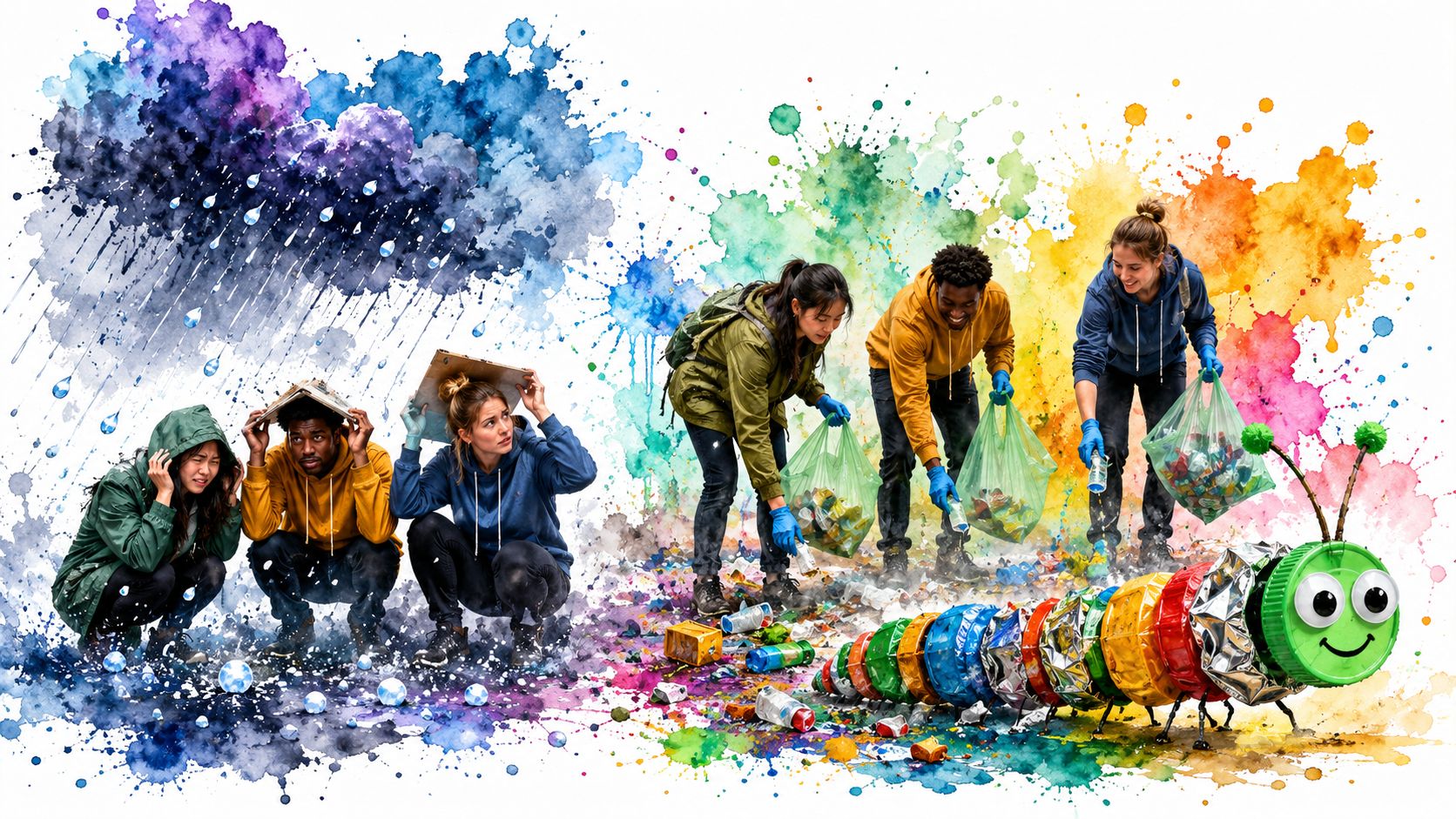
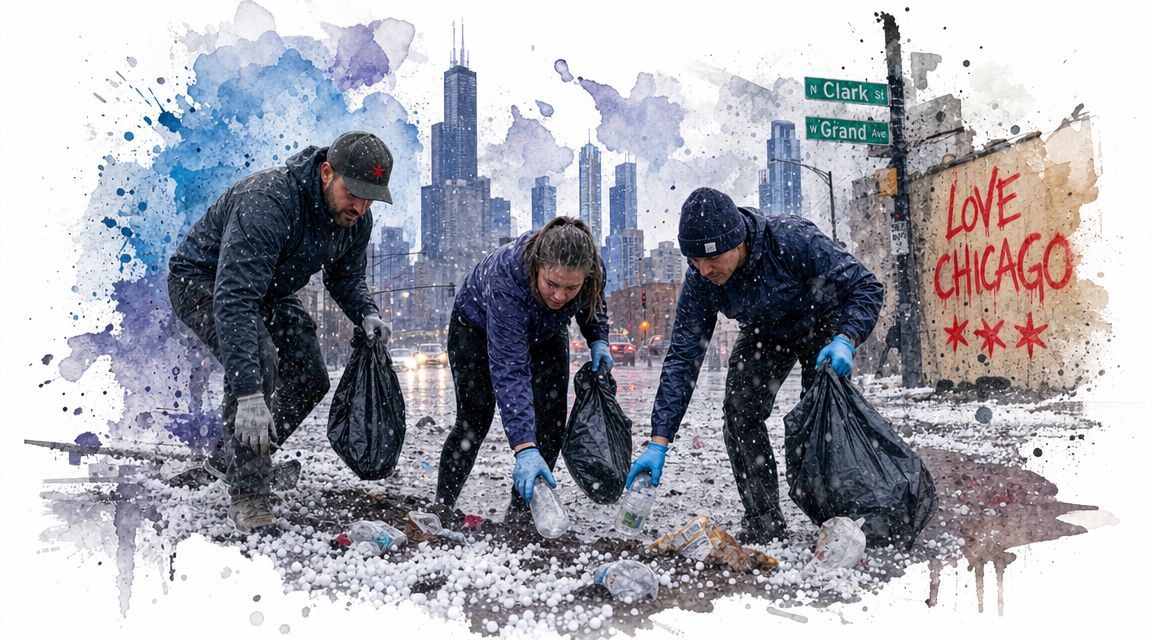
    Three of us stood under a tree in Chicago, getting pelted by spring hail with trash grabbers in our hands and no ride home. Every Uber canceled. I was freezing, miserable, and weirdly happy, because for the first time in a long time, I was doing something that made my life feel cleaner.

    Your Mess Is Your Message

    For years, my room looked like a losing fight.

    An old jar in the fridge. A ripped bag in the corner. Random objects I kept because each one came with a memory I couldn't let go of. If you've ever stared at your own mess and felt your chest tighten, you know what I mean. The stuff isn't heavy in your hands. It's heavy in your mind.

    I hit a point where I knew I had to change something. I had just gotten out of a chaotic relationship. My routines were shot. My space looked like proof that I couldn't get it together. I kept trying to fix my own life head-on, and I kept stalling.

    Then I learned a strange trick. It was easier to clean up someone else's mess than my own.

    That sounds backward, but it's true. When I bent down to pick up a bottle on the sidewalk, there was no sentimental story attached to it. No guilt. No old identity. It was just trash. I could act. I could move. I could finish one small thing.

    Cleaning one block gave me a kind of courage that cleaning my room never gave me.

    That was the doorway into environmental education programs for me. Not the polished version with clipboards and matching shirts. The rough version. The one where you show up on a cold morning with gloves, bags, and a little shame, and somehow leave with pride.

    Why public mess can wake you up

    Street trash is honest. It doesn't pretend.

    A block tells you what people ignore. An alley tells you what systems miss. A vacant lot tells you where care has gone missing for a long time. When you clean those places, you learn fast. You learn where water pools. You learn which businesses sweep and which don't. You learn where people dump because they think nobody's watching.

    You also learn about yourself.

    I started seeing that bravery isn't a personality trait. It's a habit. You build it by doing slightly uncomfortable things on purpose. Going outside early. Meeting strangers. Picking up gross stuff. Coming back next week.

    A different kind of self-help

    A lot of self-improvement advice tells you to fix your inner life first. I think service can lead.

    When you spend a morning making a street better, your mind gets quieter. You stop circling your own problems for a while. Your body moves. You get sun. You talk to people. You do one clear, useful thing. That matters.

    If your life feels cluttered, start there. Don't wait until you feel organized enough, confident enough, or qualified enough. Your mess might be the very thing that makes you good at this. You know what overwhelm feels like. That means you'll recognize it in a neighborhood too.

    What These Programs Are Really About

    The first time a teenager at one of our cleanups stopped mid-grab and asked, "Why is all the trash stuck on this side of the fence?" I knew we had the right kind of program.

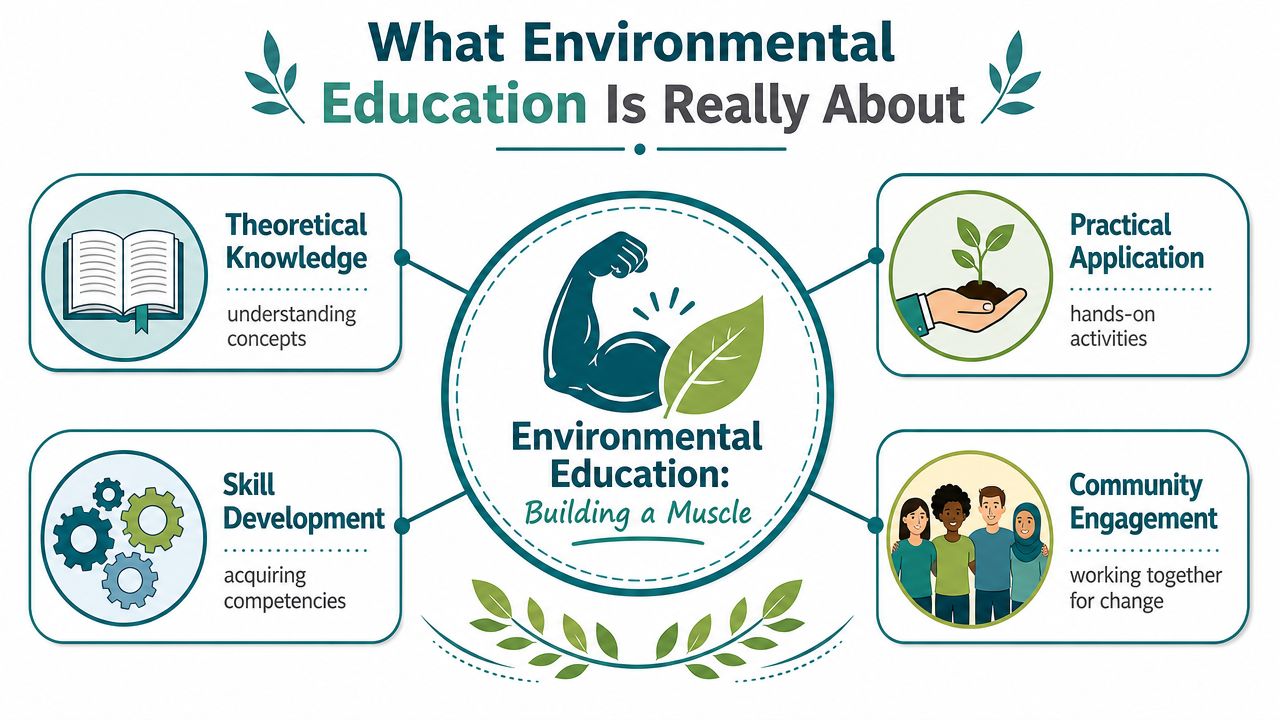
    Nobody had handed him a worksheet. Nobody had opened with definitions. He had spent twenty minutes pulling plastic cups out of wet grass, noticed a pattern, and gotten curious. That is the heartbeat of environmental education. Repeated action that trains people to see what they used to walk past.

    A diagram explaining environmental education through theoretical knowledge, practical application, skill development, and community engagement.

    Action gives the lesson weight

    The strongest programs I have seen start with a job that matters to a real place. Pick up litter along a storm drain. Test creek water after rain. Pull invasive vines off a trail sign. Walk an alley and mark where illegal dumping keeps returning. Plant a tree, then come back in August and see what survived the heat.

    People learn faster when their hands are busy.

    A volunteer who spends an hour clearing bottles from a curb starts noticing slope, wind, foot traffic, and which businesses keep their sidewalks clean. A parent helping a child water seedlings starts asking better questions about soil, shade, and neglect. The lesson has weight because it is attached to effort.

    I learned my city that way. Bent over, gloves dirty, eyes open. One block taught me how wrappers collect where the curb dips. Another taught me that a bus stop without a trash can becomes a dumping zone by Friday. You remember what your body had to work for.

    Questions rise out of the work

    Good programs do not force curiosity. They give it something solid to grab onto.

    Once people have done the task, the questions come on their own. Why does this corner flood every time it rains? Why do cigarette butts collect outside one storefront and not the next? Why did the tomatoes in the school garden fail on one side of the bed? Why does one street get care and the next one get excuses?

    That is the kind of learning that sticks. It belongs to a place. It has a smell, a texture, and usually a little frustration in it too.

    The programs that keep people coming back usually include three parts:

    • A real task people can finish and feel in their shoulders afterward
    • A useful explanation tied to what they just saw
    • A group experience that makes the work feel shared, not lonely

    You do not need a fancy curriculum to create that. Litter Caterpillars grew because we kept putting people in front of honest work, then talking about what the work revealed.

    Community changes people too

    One wet cleanup taught me more about program design than a stack of planning notes ever did. Half the volunteers showed up late because the weather looked miserable. The ones who came stayed longer than usual. By the end, a retired neighbor was trading stories with a college student, and a kid who barely spoke at the start was calling out every recyclables mistake the adults made.

    Shared effort speeds up trust.

    Cold hands, heavy bags, muddy shoes. Those things strip away performance fast. People stop worrying about sounding smart and start helping each other. That is part of the education too. Environmental care becomes a lived experience instead of an opinion.

    Practical rule: If your program feels forgettable, add more real work and cut some talking.

    A strong cleanup, garden shift, or creek walk teaches more than facts about waste or habitat. It teaches attention. It teaches follow-through. It teaches people that they can face a worn-down place and leave it better than they found it.
    That is what these programs are really about. They help ordinary people practice care until care becomes part of who they are.

    Four Paths You Can Take

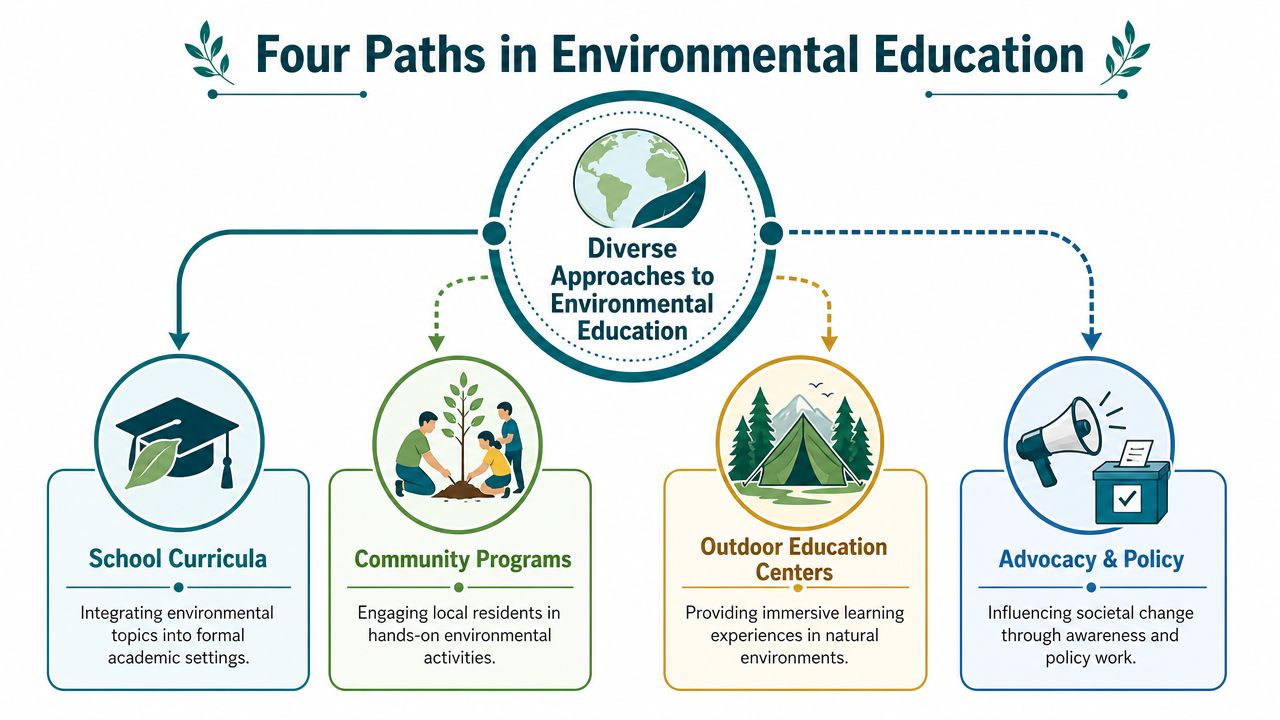
    When people hear environmental education programs, they often imagine one model. A teacher in front of a room. A nature center trail. A workshop with a handout. Those are real paths, but they aren't the only ones.

    I think of this work like four roads that all head toward the same town.

    A diagram illustrating four different approaches to environmental education, including schools, community programs, outdoor centers, and advocacy.

    A quick look side by side

    Path What it feels like Best for Hard part
    School curricula Structured and repeatable Reaching students consistently Slow approvals
    Community workshops Flexible and local Adults, families, neighbors Attendance can swing
    Outdoor centers and field experiences Immersive and memorable Deep place-based learning Access and transport
    Stewardship cleanups Direct and visible Starting fast with little money Weather, morale, consistency

    School and workshop paths

    School-based work has reach. It can put environmental ideas into a student's week again and again. Community workshops have a different energy. They're looser, more conversational, and often easier to tailor to one neighborhood problem.

    I respect both. There's real institutional support behind this field too. Since 1992, the EPA has awarded 3,960 environmental education grants nationwide for a cumulative $95,104,287, according to EPA environmental education grant statistics. That tells you organized programs have had backing for a long time.

    But a lot of people reading this don't need a grant history lesson. You need a path you can start before your courage cools off.

    Outdoor centers and advocacy

    Outdoor education centers can change a person fast because they remove people from routine. Trails, farms, rivers, and forests have a way of making lessons stick. Advocacy and policy work matter too. Some people are built for public comment, coalition building, and pushing systems to change.

    If that's you, go there.

    But if you want the fastest route from intention to impact, I still come back to stewardship.

    Why I love the stewardship path

    Stewardship is simple. You see a mess. You bring people. You clean it.

    I spent the most time there because it gives beginners a clean starting line. You don't need a formal curriculum on day one. The curb is the curriculum. The alley is the lesson plan. The conversation happens while you work.

    With a volunteer-first cleanup, people learn by contact. They handle the problem. They notice patterns. They talk to residents. They see before and after with their own eyes. That visible change matters. It keeps people from drifting into abstract guilt.

    If you want a program that teaches fast, start with a place where the result is visible by noon.

    That's why our group kept returning to this path. Bags, gloves, grabbers, a meeting spot, and a brave mood. That's enough to begin. You can always layer in workshops, youth training, or advocacy later. First, give people a win they can carry home.

    The Core Ingredients of Your Program

    One Saturday, a new volunteer showed up in clean white sneakers. By the end of the morning, they were muddy, scuffed, and streaked with something from the gutter none of us could identify. She looked down, laughed, and said, "I get it now."

    That sentence has stayed with me. A good program gives people a moment like that. Something shifts. The work stops being a nice idea and becomes part of their body.

    I learned to build around three questions. Who are you calling in. What change are you trying to grow. What will people practice together. Get those right, and your program can survive bad weather, low turnout, and the thousand small problems that kill fragile projects.

    Ingredient one is your audience

    I do not mean a tidy profile in a grant application. I mean the actual people who will stand with you on a curb at 9 a.m.

    For us, the time of day did a lot of the sorting. Weekend mornings brought people who wanted structure, service, and a reason to get out of bed. That shaped everything. The pace was steadier. Parents brought kids for an hour. Students came looking for purpose. Neighbors came because they were tired of seeing the same corner trashed every week.

    Choose with that level of honesty.

    • Families need short wins, clear boundaries, and a rhythm children can follow.
    • Students often want a role they can grow into, not just a bag to hold.
    • Neighbors usually care about one place they pass every day.
    • Hardy volunteers will come back for rough weather, awkward jobs, and repeat effort.

    The wrong audience fit can wear a group out fast. I learned that the hard way. If people arrive wanting a festival and you built a work crew, everyone leaves a little disappointed.

    Ingredient two is your goal

    Trash bags are not a goal. They are evidence.

    The central question is what kind of person your program is helping to form. In our case, I cared about courage, reliability, and fellowship. I wanted people to become the sort of neighbors who do useful things without being begged, praised, or paid.

    That changed how I led. A rainy cleanup was no longer a failed sunny event. It was training. A shy volunteer giving the welcome talk was no longer filler. It was growth happening in public.

    Aim wider than facts. A cleanup can teach attention. A garden can teach patience. A creek walk can teach reverence. If all people take home is information, they may nod and forget it. If they leave with a stronger spine, they come back different.

    Ingredient three is your curriculum

    The word scares people because it sounds expensive. Ours was built from habits.

    We greeted each person by name. We started on time. We noticed what kept showing up on the ground. We compared one street to the next. We let different volunteers speak. We ended with a short circle so people could say what surprised them. Over time, those repeated actions became a culture people could feel.

    That people side matters as much as the litter side. If you want a practical model for running a steady crew, these volunteer management best practices are useful.

    A small-budget curriculum can include:

    • Observation practice by asking what people notice first and what they missed at the start
    • Pattern reading by comparing litter hotspots, foot traffic, and neglect from block to block
    • Leadership reps by rotating the welcome, safety talk, or photo check-in
    • Reflection through one closing question that helps people connect the work to their own lives

    Keep it plain. Keep it repeatable. The best programs are built from actions volunteers can do again next week.

    How to Start When You Have Nothing

    We started with almost nothing.

    No office. No fancy setup. No giant budget. Just three people, a rough patch of weather, and enough stubbornness to go outside anyway.

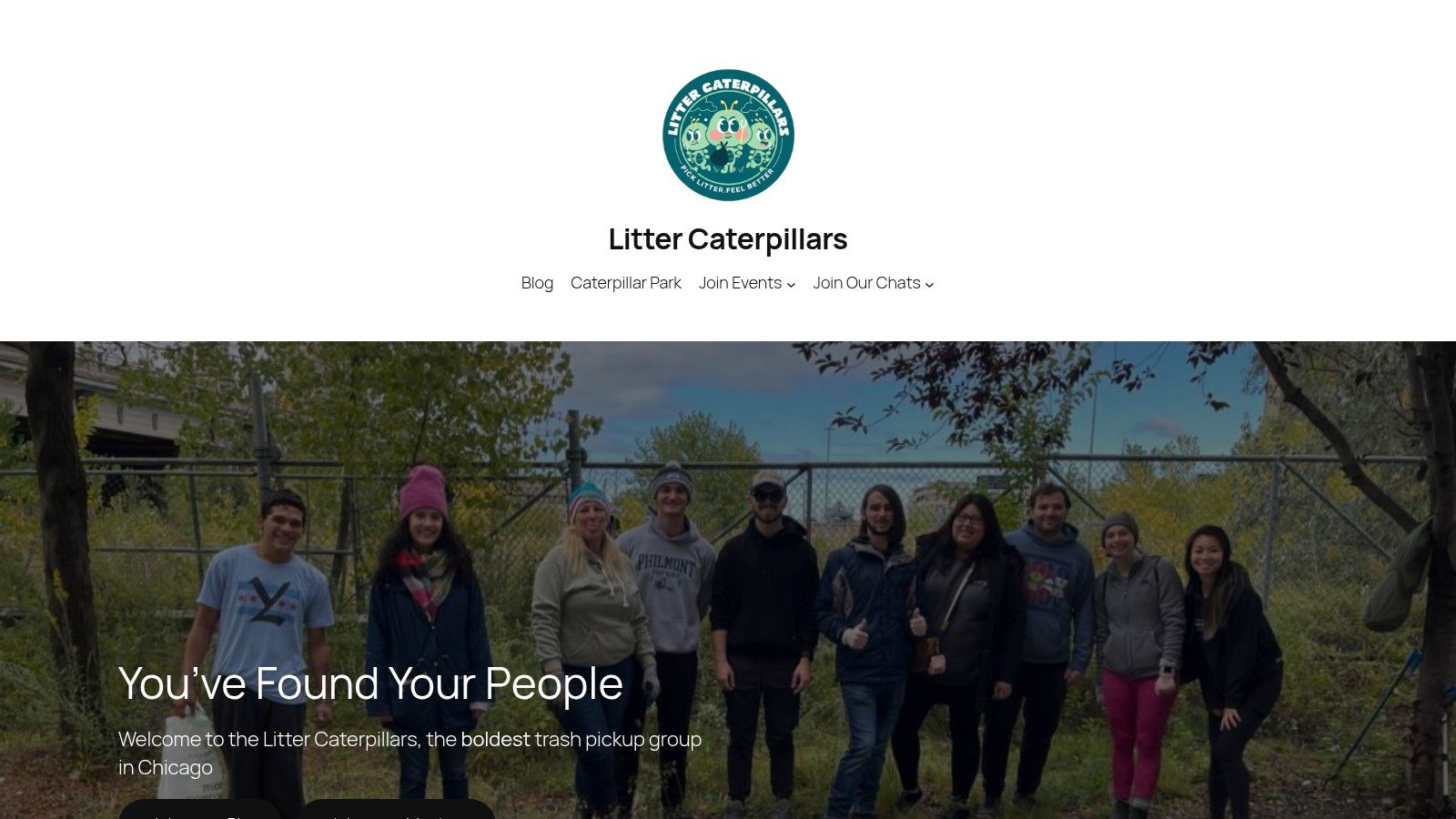
    Screenshot from https://www.littercaterpillars.com

    That first cleanup still lives in my body. I remember the sting of the hail. I remember us huddling under a tree. I remember thinking, this is ridiculous, and then realizing I wanted to do it again. There was a sharp kind of joy in it. We were doing something useful, and the hard conditions made the story better.

    If you're waiting for perfect conditions, you'll wait forever.

    Pick one place and one time

    Don't launch with a citywide vision. Launch with one block.

    Choose a place that bothers you. Maybe it's the bus stop with bottles in the weeds. Maybe it's the dead-end street everyone ignores. Maybe it's the edge of a park where the wrappers collect after every weekend. The place should create an emotional reaction in you. That's what will get you out of bed.

    Then choose a time that fits the kind of culture you want. I like weekend mornings because they pull in steady people. Early hours create a certain seriousness.

    Start with this short checklist:

    1. Choose a compact zone you can improve in one session.
    2. Set a simple meeting point like a corner, gate, or storefront.
    3. Bring basic gear such as gloves, bags, and grabbers if you have them.
    4. Tell people how long you'll stay so the event feels manageable.
    5. End on time so volunteers trust you.

    Go where the need is obvious

    A lot of new organizers think they should begin in the most polished, visible place. I don't.

    I think there's power in starting where care has gone thin. Research on access to informal learning found 48 U.S. counties with no informal learning institutions at all, leaving more than 327,000 people without adequate access, according to Colorado State University reporting on underserved communities and STEM access. I read that as a practical challenge. Don't only build programs where people already have easy options.

    The same principle works at the block level. Go where people assume nobody will bother.

    That choice tells volunteers something. It says this isn't about performing goodness in a pretty place. It's about showing up where help is thin.

    Make your first event easy to join

    Your early problem isn't scale. It's friction.

    People need a clear invitation. Tell them what to wear. Tell them whether you'll supply bags. Tell them whether they can arrive late. Tell them what kind of work they'll do. Ambiguity scares people more than hard labor.

    A simple format works best:

    • Short welcome
    • Safety note
    • Work in pairs or trios
    • Quick group photo if people want it
    • Close with thanks and a casual hangout option

    If you want a real example of a hands-on local model, the Green City Project shows how a place-based cleanup effort can be framed around visible neighborhood care.

    Here is a glimpse of the kind of energy that keeps a volunteer cleanup alive over time.

    Protect the mood at all costs

    People come back because of how the event feels.

    That doesn't mean fake cheerfulness. It means you take volunteer energy seriously. Keep people safe. Don't guilt them. Don't spring surprise obligations on them. Thank them like you mean it. If someone only stays a short time, treat that as a win.

    A volunteer who leaves feeling proud is more useful than a volunteer who leaves exhausted and resentful.

    That's one reason I care so much about culture. A trash bag is cheap. A good volunteer is not. If your group creates friendship, courage, and a little bit of adventure, people will start inviting other people.

    And then your tiny thing isn't tiny anymore.

    Knowing if You Are Making a Difference

    A lot of people measure success by the bag count. I get it. Bags are visible. You can stack them up, take a photo, and feel that the morning meant something.

    But if that's your only scorecard, you'll miss half the story.

    What I look for first

    I watch for human signs.

    Do people come back in bad weather? Do they start bringing friends? Do they talk more easily with strangers by the end of the event than at the start? Does someone who looked nervous begin leading a small group a month later? Those are serious indicators. They tell you the program is changing behavior and identity, not just removing debris.

    One simple way to track that is with a notebook or shared sheet after each event. Write down who came, who returned, who took initiative, what conversations kept coming up, and whether the group energy rose or sagged.

    On-the-ground test: If people start acting like caretakers between events, your program is working.

    If you want cleaner data

    You don't need a giant evaluation system, but you do need honesty.

    Penn State Extension recommends collecting data from at least half of participants when the total population is under 500, notes that a 50% sample rate is often estimated to yield a 95% confidence interval with a 5% margin of error, and advises at least 30 observations for each key subgroup so your claims aren't skewed toward the easiest volunteers to reach, according to Penn State Extension guidance on measuring impact in environmental education and outreach.

    That's useful because grassroots groups often overread a few enthusiastic voices. If you want to say your program changed people, ask enough people, and ask consistently.

    A simple post-event form can ask:

    • What did you notice about the site today
    • What did you learn that you didn't know before
    • Would you return and why
    • Do you feel more confident doing this work again

    Tangible change still matters

    I also believe in physical proof.

    An empty lot can become a community space. A neglected corner can become a spot people respect again. Those bigger wins usually grow out of boring consistency. One cleanup, then another, then another. People start trusting that you're serious. The neighborhood notices. Doors open.

    That kind of change is easier to believe when you've already seen small victories stack up.

    And don't ignore wellbeing. A study of nature-based environmental education with low-income Black and Hispanic youth found significantly higher scores in health-related quality-of-life and STEM capacity after the intervention, as reported by Children and Nature Network's research summary. I think that's a big clue. Sometimes the deepest impact is that people feel better, stronger, and more capable after spending time outdoors doing purposeful work.

    If you want a grounded way to think about those outcomes in service settings, this page on community service impact is worth reading.

    The World Is Changed by Your Example

    I don't think individuals need more guilt. I think they need a first brave act.

    That's why I care about environmental education programs that start with service. You don't have to wait until you're polished. You don't have to become an expert first. You can grab a bag, walk outside, and let the work teach you who you are.

    I've seen what happens when people do that. They become steadier. They laugh more. They trust themselves more. A street gets cleaner, yes, but a person also gets less afraid of effort, weather, awkwardness, and failure.

    That's a good trade.

    Start smaller than your fear

    You do not need to save the whole city.

    Clean one block. Invite one friend. Show up one morning when you'd rather stay in bed. If the event is messy, good. If only a few people come, good. If it rains, that might become the part of the story you remember most.

    Your example gives other people permission to begin before they feel ready.

    I like the caterpillar idea because it keeps me humble. We aren't finished creatures. We are trying. We are changing through repeated acts of service, sunlight, and friendship. That's enough.

    If you feel the pull to begin, trust it. Don't wait for a grant, a logo, a committee, or the perfect plan. Start with a place that hurts your heart a little. Clean it. Come back. Teach by doing.

    The world changes that way. Subtly at first. Then all at once, because people saw you go first.


    If you want a real-world example of a volunteer-first cleanup group in motion, take a look at Litter Caterpillars. You can use their model to study how consistent neighborhood service, simple rituals, and low-budget organizing turn ordinary weekend mornings into environmental education in action.

  • How to Get Free Recycle Bins: A 2026 Field Guide

    How to Get Free Recycle Bins: A 2026 Field Guide

    I still remember staring at a trash bag in my apartment like it had a biography. The old jar, the takeout container, the paper bag from a better week. When I started cleaning up my own life, I learned that every piece of trash had a story, and if I could organize my room, I could start organizing my head too.

    That same lesson followed me onto the sidewalk when we started Litter Caterpillars. A recycling bin looks simple, but in real life it changes how people act. It gives your hands somewhere to put the bottle you just picked up. It gives volunteers a clear target. It tells a neighbor, “someone expects this block to do better.” Getting free recycle bins for your home, cleanup, school, or event can feel bigger than it is. I've spent enough mornings making those calls, dragging carts, and explaining labels to volunteers that I can save you some time.

    1. City of Chicago Blue Cart

    City of Chicago Blue Cart (311 request for eligible homes)

    If you live in Chicago, this is the first place I'd check. I've had neighbors assume they need to buy a bin, hunt Facebook Marketplace, or ask their alderman, when the answer was sitting in the City system the whole time.

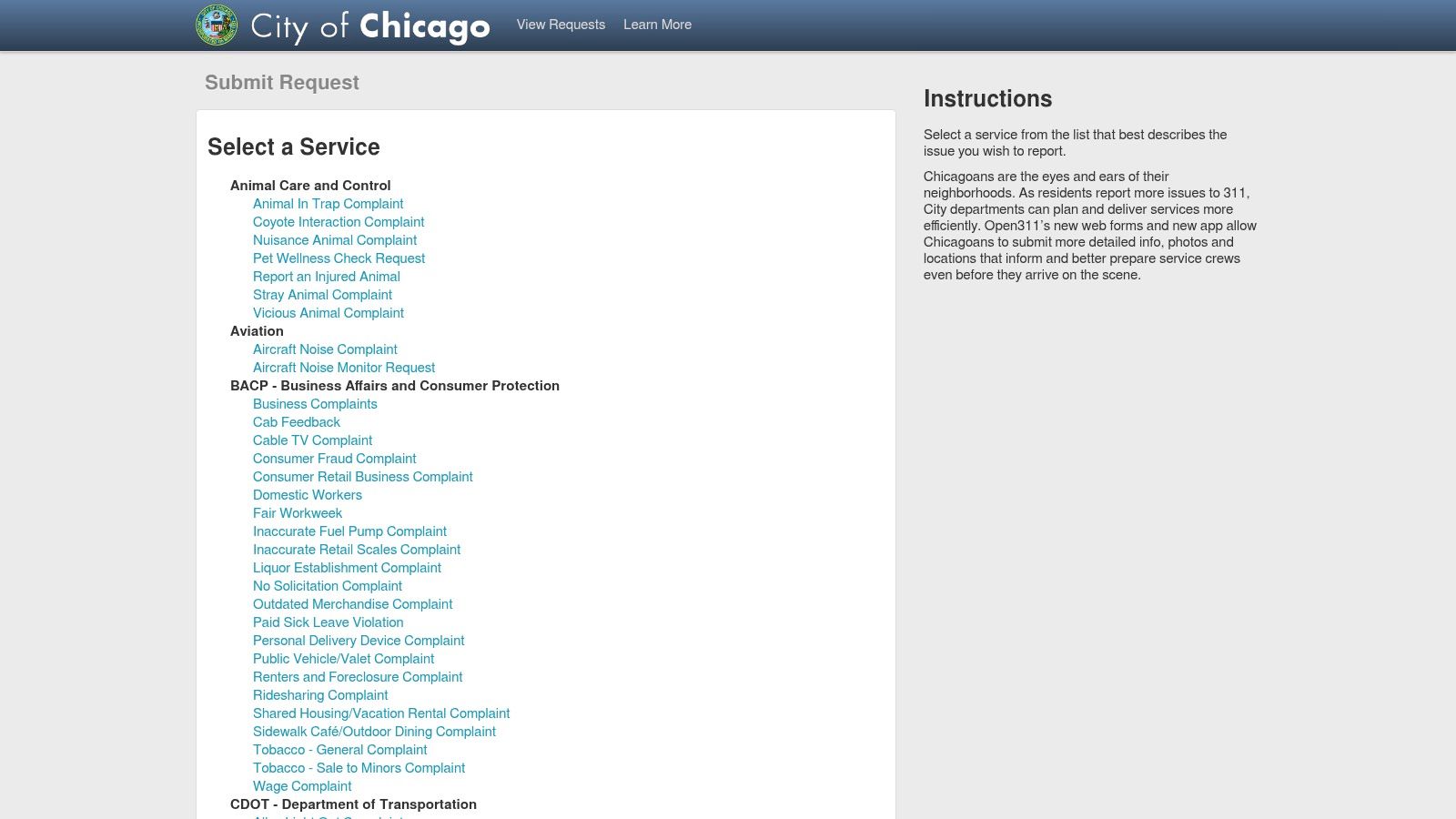
    The City of Chicago 311 service portal is where eligible residents can request a Blue Cart or deal with a damaged or missing one. For a cleanup organizer like me, this matters because home recycling works better when people already have the cart before you start preaching good habits on the block.

    What I like about it

    Chicago's Blue Cart setup is straightforward for the homes that qualify. Single-family houses and small buildings have a clear lane, and that makes it easier to recruit people into neighborhood cleanup work because they already have a place to bring the material after the event.

    • Best fit for houses and small buildings: It works for eligible one-to-four-unit homes served by the City.
    • Good replacement path: If a cart gets damaged or disappears, 311 gives you a clean way to ask for another one.
    • Useful for block-level organizing: When I help people recycle in Chicago, I always start with what they can get through their own address.

    Practical rule: Before you ask where to get free recycle bins, ask whether your address is eligible for the City service. That one question saves a lot of dead-end searching.

    The catch is simple. Bigger buildings have to look elsewhere, and bi-weekly pickup can feel slow if your household flies through cardboard. Still, for eligible Chicago homes, this is the cleanest free option I know.

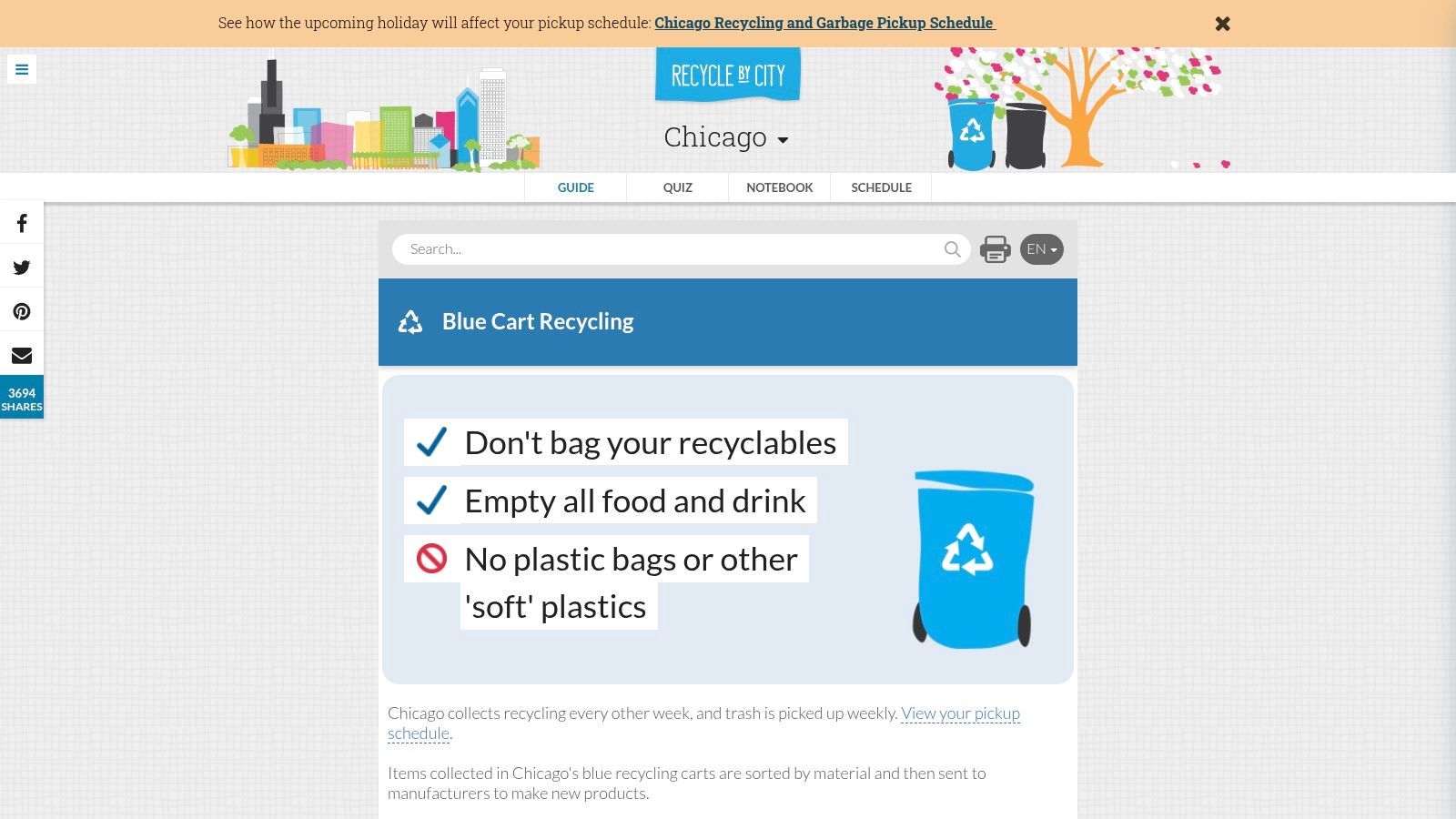
    2. Recycle By City Chicago

    Recycle By City Chicago

    A bin with bad instructions is like a toolbox with no labels. People guess. Then they guess wrong.

    That's why I keep Recycle By City Chicago bookmarked. It doesn't hand you a cart itself, but it does something I care about just as much during a cleanup. It tells people what belongs in the cart.

    Why I send volunteers here

    When I'm running a cleanup, I don't need twenty speeches about sustainability. I need one person to stop putting random trash into the recycling stream. This guide helps with that because it gives a clear visual “what goes in” reference and points people toward the right City request forms.

    I've learned that free recycle bins don't fix confusion by themselves. In a controlled recycling study, moving bins closer to where people used bottles pushed recycling rates to 64%, 47%, and 71% in three buildings, while adding more bins to common areas led to 40%, 12%, and 33% in those same settings, and the researchers found people placed more than twice as many plastic bottles in recycling receptacles when bins were closer to the point of consumption (controlled recycling bin placement study). That matches what I see in the field. Close bin, clear label, better result.

    • Best use: Train new volunteers before an event.
    • Big win: Cut down contamination arguments on the spot.
    • Limitation: You still need the City or a hauler to provide the actual cart.

    I treat this site like the map and the Blue Cart like the vehicle. You need both.

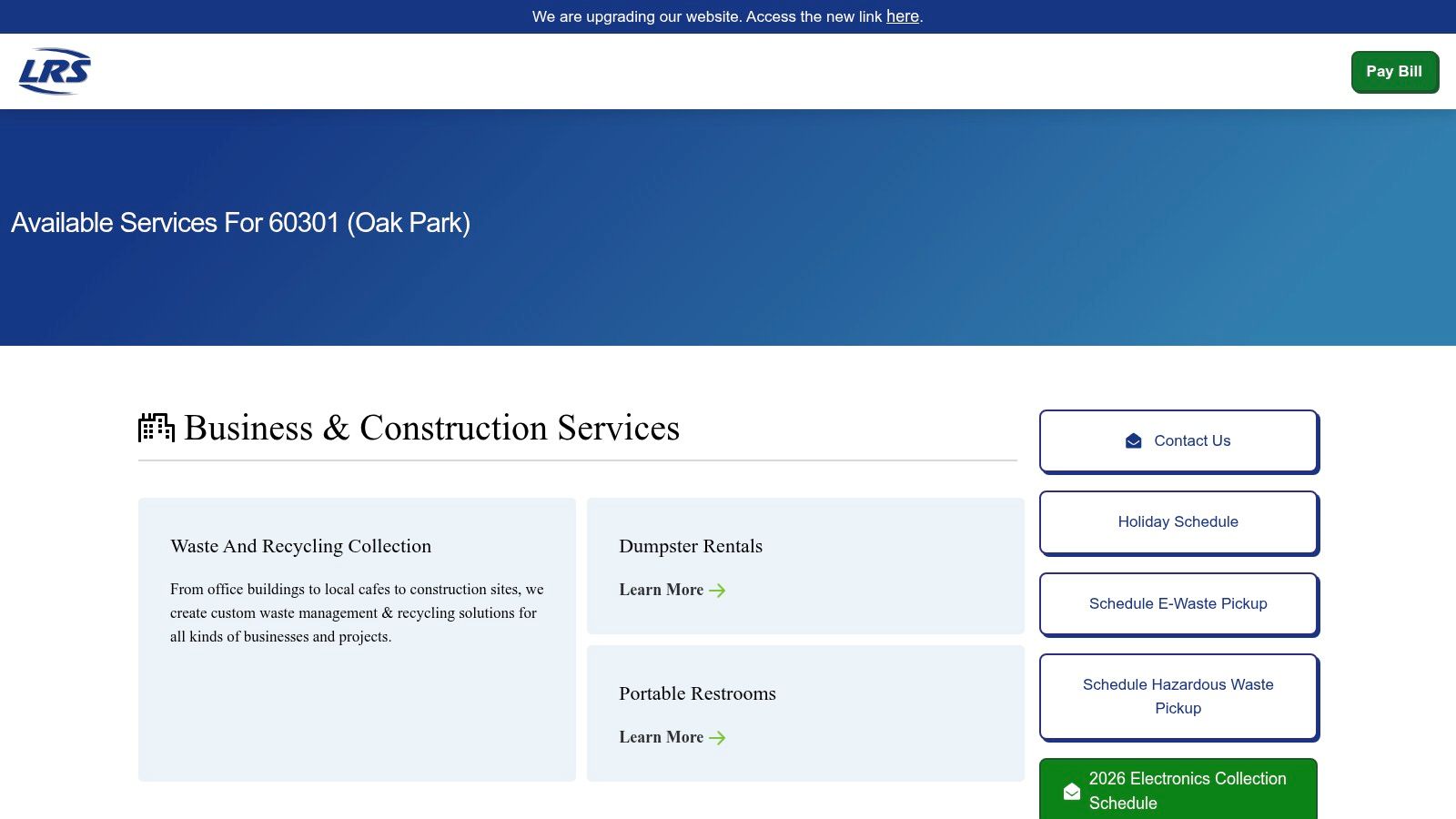
    3. Lakeshore Recycling Systems

    Lakeshore Recycling Systems (LRS)

    I've had this conversation a lot in Chicago. Someone says, “The City won't give us a Blue Cart.” Then I ask one question. “How many units are in your building?” That's usually when we find out they were aiming at the wrong door.

    Lakeshore Recycling Systems is the kind of option I think about for buildings that sit outside the City Blue Cart lane. If your property is in an LRS-served town or under an LRS contract, the recycling cart is often folded into the service itself.

    Where LRS makes sense

    For cleanup work, LRS matters because neighborhood action doesn't stop at single-family homes. We pick up trash around apartment corridors, courtyards, alleys, and condo blocks too. If those residents can't use the City system, they still need a practical path.

    Here's my no-nonsense read:

    • Strong fit for multi-unit properties: For such properties, City-run home programs often stop helping.
    • Direct replacement path: If service crews damage a cart, the hauler usually handles the fix.
    • Less useful for random one-off seekers: If you're not in an LRS service area or contract, this won't feel free.

    What I like is the scale. LRS thinks in terms of routes, buildings, and municipal systems, which is exactly how cleanup organizers have to think when one block has three kinds of housing on it. It's not a universal free recycle bin source. It's a service-based one. That distinction matters.

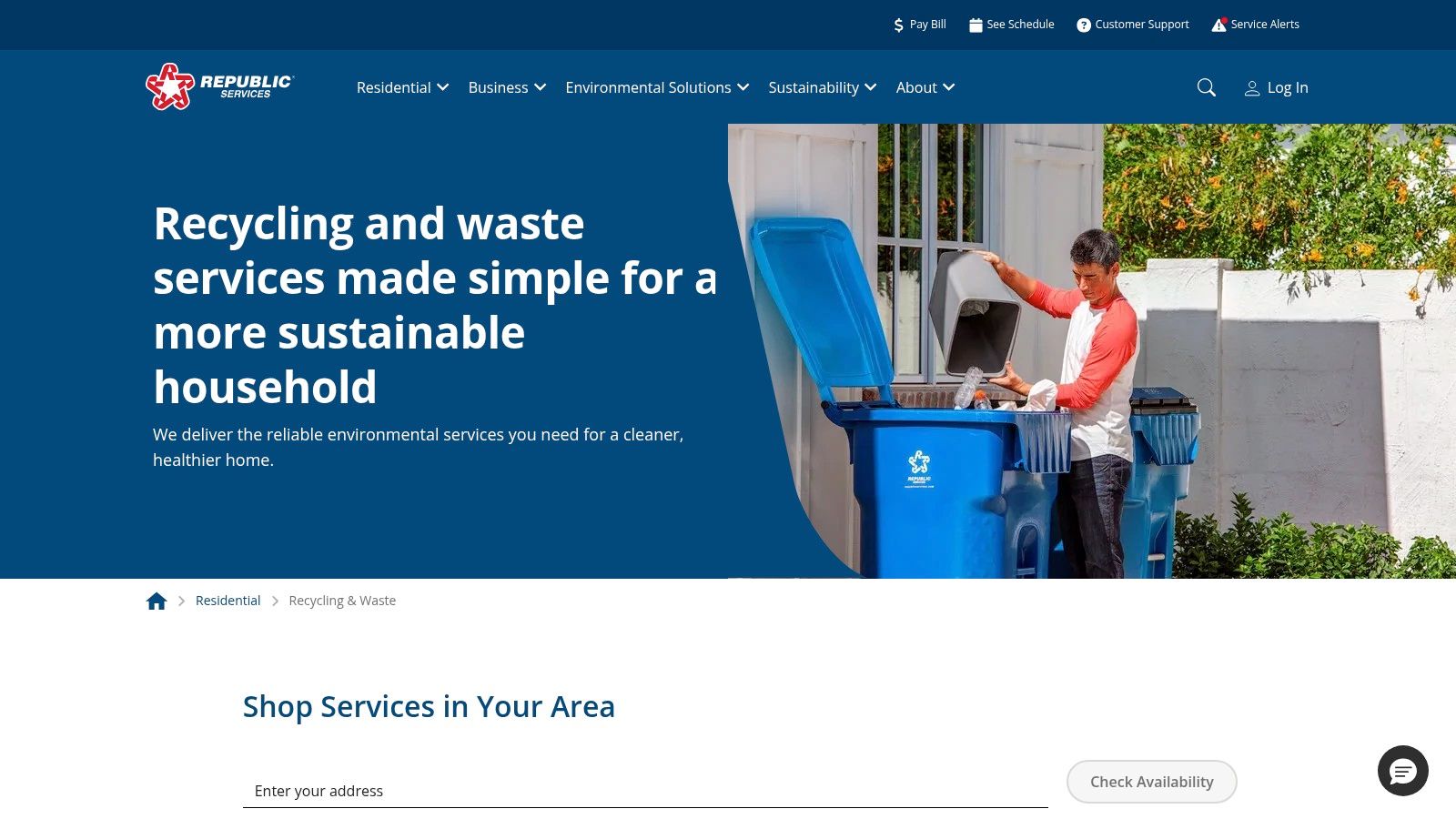
    4. Republic Services

    Republic Services

    Republic is the option I put in the “check your account before you buy anything” category. I've seen people spend money on spare bins because they assumed the hauler wouldn't help, when the answer was already inside their service setup.

    If Republic serves your area, the Republic Services recycling page is the place to start. For many customers, the cart comes with the residential service package, and account tools make it easier to request or manage carts.

    My field note on Republic

    This one is less romantic than a nonprofit grant. It's more practical. If you already pay for service, or your town does through a contract, then the “free” part often means no separate line item for the cart itself.

    I like Republic for a few reasons:

    • Standardized carts: That helps curbside pickup run smoothly.
    • Online account tools: Good when you're helping a resident solve the problem fast.
    • Broad reach: Handy if your cleanup crew has volunteers outside Chicago asking for advice.

    Put the house number, service address, and account status together before you call the hauler. Most delays happen because people start with “I need a bin” instead of “I'm at this address and already in your service area.”

    The weakness is local variation. One town handles extras one way, another town handles them another way. So I don't treat Republic as a universal source of free recycle bins. I treat it like a utility. First check whether you're already in the system.

    5. Waste Management

    Waste Management is another one people forget to check because the trucks become background scenery. You see the brand so often that you stop thinking of it as a place to solve a specific problem.

    The WM residential recycling page is useful if WM handles service where you live. In many communities, the cart comes with residential service, and some local contracts allow extra recycling capacity or handle replacements through customer service.

    How I use WM in real conversations

    When someone from outside Chicago asks me where to get free recycle bins, I usually ask three things. Who picks up your trash? Are you in a house or a larger building? Did you already ask your hauler for the base cart or a replacement?

    WM often makes sense in that sequence because its footprint is broad and the process is legible. The details still depend on the local contract, but at least you know where to start. And if you're sorting more than you can fit at home, it helps to pair the curbside answer with a bigger picture on where you can recycle near you.

    • Best for: Residents already under WM service.
    • Good backup question: Ask whether your municipality allows an additional recycling cart.
    • Chicago note: For single-family City recycling, Chicago runs its own setup, so don't assume WM is your path if your address is under the City program.

    I think of WM like a hardware store clerk. It may not solve every problem, but it usually tells you which aisle to walk down next.

    6. The Recycling Partnership Cart Grants

    This one isn't for the person who wants one bin by Friday. It's for the person who's tired of seeing an entire city limp along with weak recycling access.

    The Residential Curbside Recycling Cart Grant program from The Recycling Partnership is where I'd look if I were pushing change through a municipality, county, or public partner. I care about this kind of program because local cleanup work teaches you fast that people can't recycle what their system never captures.

    The Partnership reported that only 21% of residential recyclables were recycled in the United States, and 76% of recyclables were lost to trash in homes. The same report said seven out of ten cardboard boxes, three out of four milk jugs, and four out of five steel cans were still discarded instead of captured for recycling (The Recycling Partnership report on residential recyclables capture).

    Why I respect this route

    Those numbers line up with what a cleanup organizer sees on the ground. People don't need more lectures. They need a system that gives them the cart, the outreach, and the follow-through.

    • Best fit: Cities, counties, and public partners.
    • Big strength: It pairs cart funding with education support.
    • Big weakness: Individuals can't just apply and get a household bin.

    If you're a resident, this won't feel immediate. If you're an organizer with a city contact, it can be the lever that moves the whole block instead of one porch.

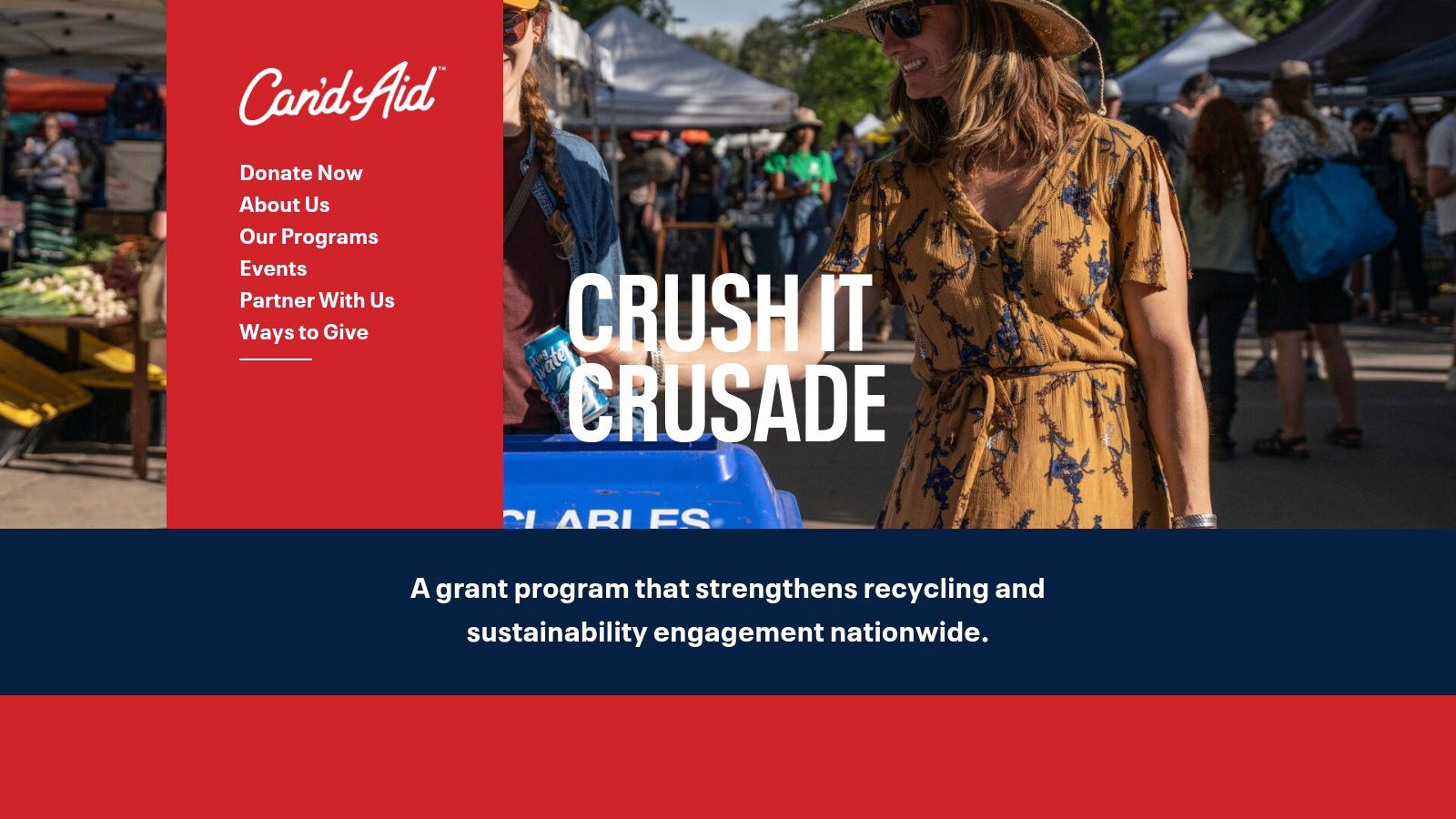
    7. Can'd Aid Crush It Crusade

    Can'd Aid – Crush It Crusade

    I like this one because it thinks like an event organizer. A lot of programs assume you want a household cart. Sometimes you don't. Sometimes you're trying to stop a park cleanup or summer festival from becoming a sea of crushed cans and sticky cups.

    Can'd Aid's Crush It Crusade is built for community groups, nonprofits, and public events that want visible collection bins and a simple beverage-container program. That's much closer to the way I work on the ground.

    Why it clicks for cleanup groups

    When we run a cleanup, volunteers don't need a graduate seminar in waste policy. They need clear stations and a short script. Can'd Aid leans into that. Bins, support, training, and a narrow material focus make life easier.

    That narrow focus is also the tradeoff. If you want one program that handles every messy material stream, this isn't it. If you want to collect cans at a cleanup, concert, or community day without reinventing the wheel, it's a smart route.

    A focused bin stream usually beats an “everything goes here” setup. Volunteers make fewer mistakes when the target is obvious.

    I'd use Can'd Aid when I want quick, visible wins in public spaces. It's the recycling version of setting out a basketball hoop instead of asking people to build a gym.

    8. Keep America Beautiful Public Space Grants

    Keep America Beautiful – Public Space Recycling Grants

    Some bins are for the kitchen. Some are for the curb. Some are for the place where everyone drops the bottle because there's nowhere else to put it.

    That last problem is where Keep America Beautiful has often been useful. Its public-space recycling grants have historically helped place outdoor bins in parks, campuses, and downtown areas, depending on funding rounds and partners.

    When public-space bins are the right answer

    I've cleaned enough sidewalks to know that a resident can do everything right at home and still walk into a trash-only public space the second they leave the house. That's why I don't treat free recycle bins as just a household issue.

    This route works best when you have a shared place with constant foot traffic and a group ready to maintain it. A public bin nobody empties is just a future headache.

    • Good fit: Nonprofits, municipalities, schools, campuses.
    • What I like: Outdoor-oriented infrastructure for places people already gather.
    • Watch out for: Grant timing. Some rounds open, some don't, and competition is real.

    If your neighborhood has a park fieldhouse, plaza, or event strip that always ends up littered after busy weekends, this is the kind of lead I'd chase.

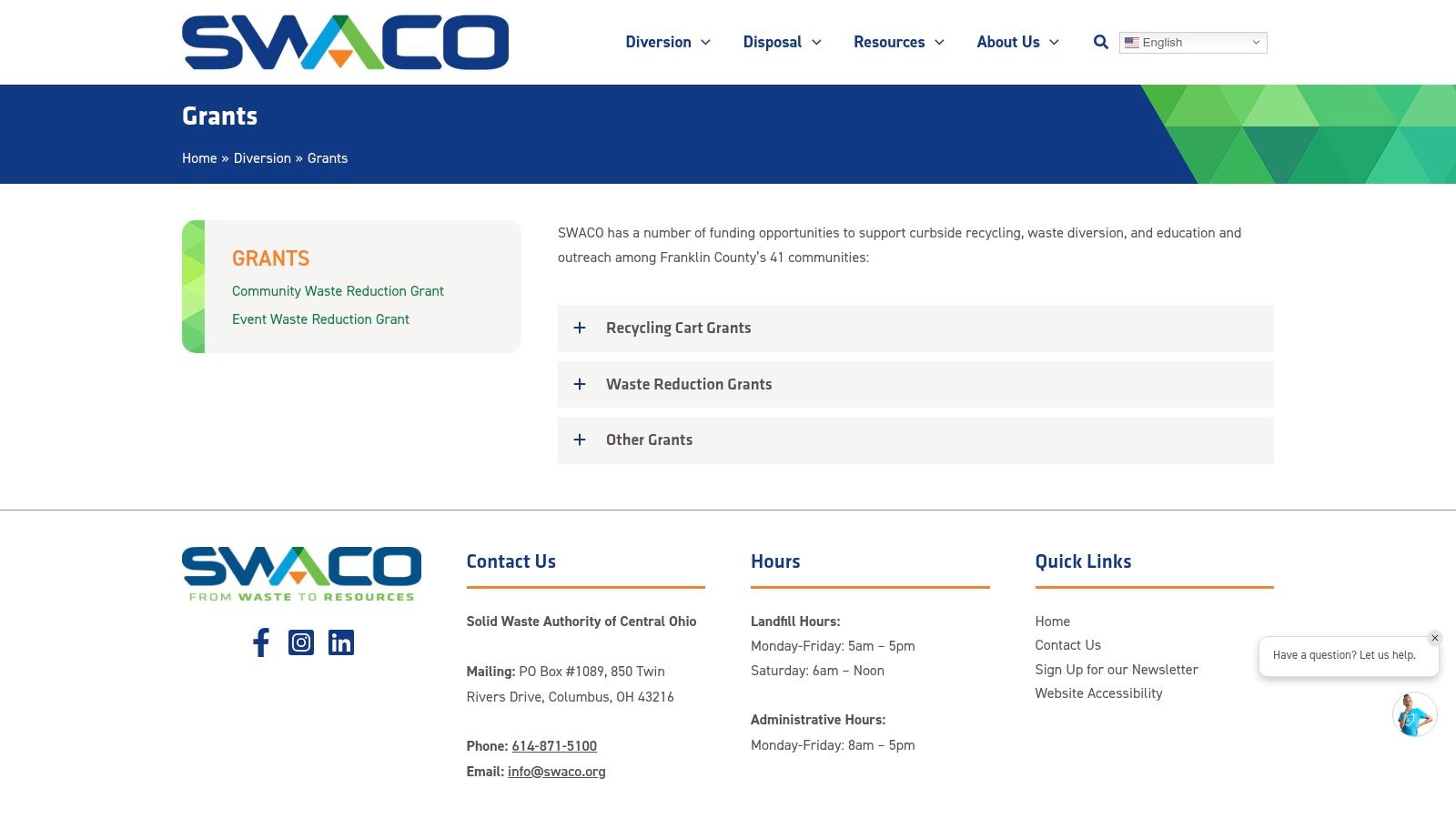
    9. SWACO Recycling Cart Grants

    SWACO – Recycling Cart Grants (Franklin County, OH model)

    I'm based in Chicago, but I pay attention to programs in other places because good ideas travel. SWACO is one of those examples I keep in my back pocket when someone asks, “Could our county build something like this?”

    The SWACO grants page shows a regional model where public support helps communities roll out carts and education. I don't recommend it because every reader can use it directly. I recommend it because it gives local advocates a real template.

    Why a model matters

    If you're trying to convince a town, ward office, or county board to think bigger, examples help. They give your pitch some bones. You can point to a live program and say, “This is the kind of structure I mean.”

    The market backdrop also tells me these systems aren't niche anymore. The global recycling bins market was valued at USD 1.9 billion in 2023 and is projected to reach about USD 3.8 billion by 2033, with a projected 7.3% CAGR from 2024 to 2033 (global recycling bins market projection). I read that less as trivia and more as proof that procurement and replacement are ongoing, normal parts of public systems.

    For a resident, SWACO may be too far away to matter directly. For an organizer pushing policy or local funding, it's a useful example of how free-to-resident carts can happen through municipal backing.

    10. Community Reuse Platforms

    Community Reuse Platforms (Freecycle, Buy Nothing, Craigslist Free)

    Sometimes the best free recycle bins are sitting in a garage five blocks away.

    I've found extra bins, office containers, and weirdly sturdy event tubs through neighbor-to-neighbor channels long before a formal program came through. That's why I still check Freecycle and similar local reuse spaces when I need fast backup.

    My scrappy method

    This route is messier than a city portal. You have to watch listings, message people, and move quickly. But for a cleanup crew, that can be fine. We're used to improvising.

    Here's how I do it:

    • Search with multiple terms: Try “recycle bin,” “recycling cart,” “blue bin,” and “office recycling bin.”
    • Ask about condition early: Cracked lids and broken wheels matter more than faded paint.
    • Think in event terms: Small office bins are great for volunteer stations, pop-ups, and sorting tables.

    I also like that this keeps material in use. If you're trying to build cleaner habits, reuse should stay in the conversation, and don't trash it if someone nearby can still use it.

    One warning. A free bin from a neighbor won't change weak local service. Washington County, Utah leans hard on 24/7 “binnie” drop-off access across more than 20 locations, and Nevada's recycling guidance shows that some communities have curbside service, some have drop-off, and some have only limited access or material acceptance (Washington County recycling access page). I've learned the same lesson over and over. The container matters, but the collection system matters too.

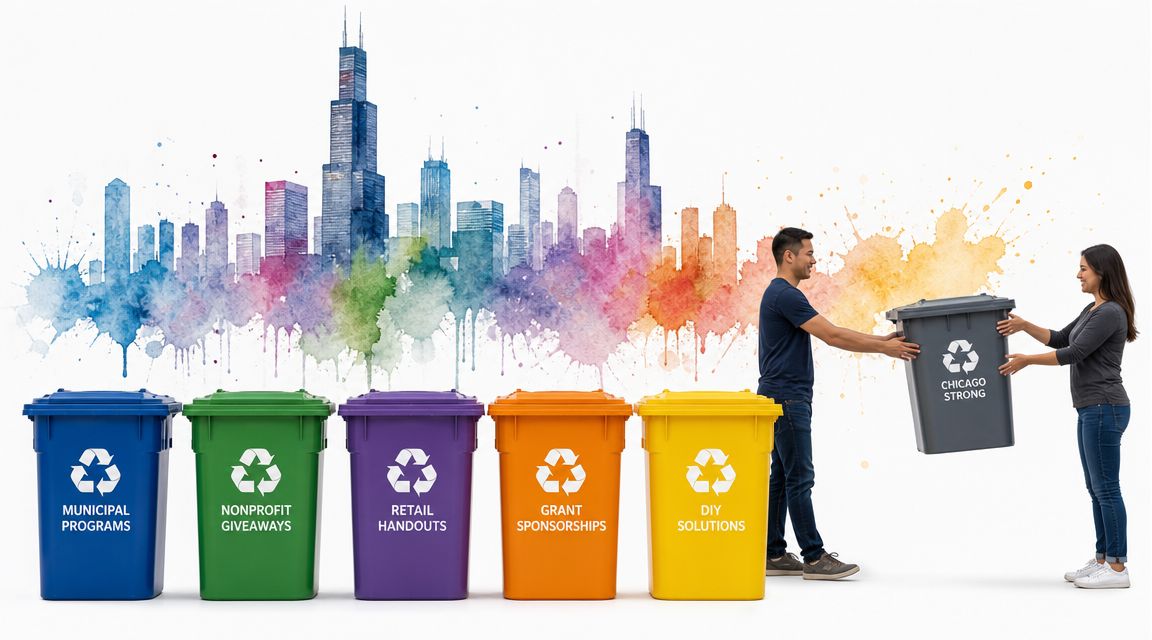
    Top 10 Free Recycling Bin Resources

    Provider Core offering ✨ Accessibility & cost 💰 Best for 👥 Reliability & impact ★🏆
    City of Chicago Blue Cart (311) Free blue recycling cart + bi‑weekly curbside pickup; 311 requests 💰 Free for eligible 1–4 unit homes; 5+ units ineligible 👥 Single‑family & small multi‑unit residents, neighborhood cleanups in eligible wards ★★★★ Municipal service with published schedules; reliable within eligibility
    Recycle By City Chicago "What goes in" visual guide + direct 311 links and schedules 💰 Free resource (no bins provided) 👥 Volunteers, residents & educators reducing contamination ★★★★ Strong education tool; lowers rejected loads
    Lakeshore Recycling Systems (LRS) Hauler‑provided carts via municipal contracts; local replacements by crews 💰 Included with service/contract; not free for non‑customers 👥 Multi‑unit buildings & neighborhoods served by LRS ★★★★ Local responsiveness; scalable for buildings
    Republic Services Standardized curbside carts; online account/cart requests 💰 Part of paid service or municipal contract; policies vary 👥 Residents in Republic territories; property managers ★★★★ Convenient online tools; consistent bin standards
    Waste Management (WM) Carts with residential service; customer service replacements; extra cart options in some areas 💰 Contract‑based; city specifics determine cost/availability 👥 Communities with WM contracts; advocates for extra capacity ★★★★ Wide footprint; local terms drive outcomes
    The Recycling Partnership (Grants) Grants & technical assistance to fund citywide carts + education 💰 Grant‑funded (no resident cost) but requires municipal applicant 👥 Municipalities, counties, nonprofit partners pursuing large rollouts ★★★★★ High‑impact city programs when awarded 🏆
    Can'd Aid – Crush It Crusade Donated bins, event equipment & training focused on aluminum containers 💰 Free to selected nonprofits; competitive application 👥 Community clean‑up groups & event organizers collecting cans ★★★★ Rapid event setup; excellent for beverage‑container streams
    Keep America Beautiful (Public Space Grants) Grants for outdoor‑rated public bins + best‑practice guidance 💰 Competitive grants; awarded bin infrastructure at no cost to recipients 👥 Nonprofits, municipalities, campuses seeking public‑space bins ★★★★ Durable public infrastructure; raises program visibility
    SWACO (Model Grants) Discounted/free carts + TA as a municipal model for rollouts 💰 Grant/discount model for member communities; requires municipal buy‑in 👥 Municipal planners & advocates seeking funding templates ★★★★ Proven scalable approach; geographic limits to model
    Community Reuse Platforms (Freecycle, Buy Nothing) Hyperlocal free listings for used carts & office/event bins; pickup coordination 💰 Free but availability is hit‑or‑miss 👥 Grassroots organizers, volunteers needing spare/event bins quickly ★★★ Variable condition & supply; great free option when available ✨

    Now, Go Make a Difference

    Getting a bin is the easy part. Using it well is where the story starts.

    That's true in my apartment, and it's true on a Chicago sidewalk at eight in the morning when the wind is rude and half the group is still waking up. Back when we started Litter Caterpillars, we got caught in a spring hailstorm and huddled under a tree while rides kept canceling. We were cold, annoyed, and laughing anyway. That day taught me something I still believe. Cleaning up a mess, even in bad conditions, changes you.

    A free recycle bin won't save a neighborhood by itself. It won't fix bad pickup schedules. It won't solve confusion about what goes where. It won't magically make people care. But it gives caring people a tool they can use, and that matters.

    I've also learned that “free” is slippery. Sometimes it means your address qualifies. Sometimes it means your building doesn't. Sometimes it means the bin costs nothing but the service rules themselves are the obstacle. Los Angeles County says its free bins go to County departments based on availability and funds, with different request paths for facilities, businesses, and schools in unincorporated areas, and that's the kind of detail people usually find out too late (Los Angeles County department bins information). The same thing happens all over. Eligibility decides a lot.

    Service quality decides a lot too. The commercial recycling bins market is estimated at USD 1.5 billion in 2025 and projected to reach USD 2.7 billion by 2035 at a 5.9% CAGR, with growth tied to mandatory waste segregation rules and newer deployments using RFID monitoring and sensor-based fill-level alerts (commercial recycling bins market outlook). That tells me systems are getting smarter, but smarter equipment still has to meet real people where they live, walk, and throw things away.

    So start small, but start. Request the Blue Cart. Ask your hauler. Apply for a grant. Borrow office bins for a cleanup. Pull a used bin off a neighborhood reuse platform. Put one at your block party. Put one at your church picnic. Put one where the bottles always pile up after the game.

    You don't need a perfect plan. You need one next move.


    If you want more than a bin, come join Litter Caterpillars. We clean Chicago block by block, make friends while doing it, and prove to ourselves that service can change a day, a street, and sometimes a whole season of your life.

  • A 2026 Guide to Life: Dont Trash It

    A 2026 Guide to Life: Dont Trash It

    I found a four-year-old jar of blueberry jam in the back of my fridge and stared at it like it was a family heirloom. It was sticky, expired, ridiculous, and somehow harder to move than a couch.

    That Thing You Can't Throw Away

    My apartment used to tell on me.

    You could walk in and see every abandoned version of myself sitting out in the open. A bag of nuts from the month I tried to become healthy. Old receipts from days I swore I was going to get my money together. A shirt I never wore but kept because I wanted to be the kind of guy who would wear it. Then there was the jam. Michigan trip. Good memory. Dead relationship. Better time. I kept the jar because I thought I was keeping the story.

    I wasn't keeping the story. The story was keeping me.

    That Thing You Can't Throw Away

    Every piece of trash had some weird emotional gravity. It weighed less than a pound, but to me it felt like 500 pounds because of what it meant. I know that feeling sounds irrational. I also know a lot of you know exactly what I mean.

    The mess wasn't random

    My life got messier as my room got messier. I stayed in a chaotic relationship too long. I made excuses too long. I let clutter become a museum of hesitation.

    Then things broke. That part hurt. It also helped.

    I made a few rules for myself. They were blunt. They had to be.

    • Forgive yourself first: Shame makes people freeze. Forgiveness gets your hands moving.
    • Touch the hard thing early: If the grossest item is the jam jar, start there.
    • Stop worshipping old versions of you: You don't owe shelf space to a failed phase.
    • Trade sentiment for action: Keep one photo if you need it. Then let the object go.

    Some things look like stuff, but they're really unfinished emotions wearing plastic and dust.

    That was the start of my own Don't Trash It mindset. People hear that phrase and think it means "save everything." I mean the opposite. I mean don't trash your chance to become lighter. Don't trash useful things by letting them rot in a closet. Don't trash your block by pretending the mess outside has nothing to do with the mess inside.

    When I finally started clearing my place, I needed simple answers, not more guilt. That's why I leaned on practical guides like this one on where you can recycle different materials. When you're overwhelmed, one clear next step is better than ten beautiful intentions.

    Start with the one item that annoys you most

    Don't begin with your whole apartment. That's how people lose steam.

    Begin with one object that makes you feel weak every time you see it. The moldy container. The broken lamp. The drawer full of cables from ancient devices. Pick the thing that has been defeating you in small ways. Throw it out, fix it, donate it, or repurpose it. Just don't walk past it again like you're powerless.

    You're not.

    How to Assess Your Stuff Without Getting Stuck

    Individuals often get trapped by a bad question. They ask, "Should I keep this or throw it away?"

    That's too blunt. That's why you freeze.

    I use a different chain of questions. It turns drama into triage. You stop acting like every object is sacred and start treating each one like a small assignment.

    The five-question filter

    Pick up one item. Then ask:

    Practical rule: Is it broken? Can I fix it in 15 minutes? If I won't fix it this week, can someone else use it? If nobody can use it, can the material become something else? If not, where does it go safely?

    That sequence matters. It keeps you from jumping straight to the blue bin and hoping the system sorts it out for you.

    That hope is shaky. Globally, only about 9% of plastic waste has ever been recycled, and in the U.S. residential recyclable-material recovery is just 21%, which is why alternatives to the bin matter so much, as noted in this recycling facts summary.

    So when you're staring at a pile of old hangers, cracked storage bins, tangled cords, half-used notebooks, and chipped mugs, don't ask one giant emotional question. Ask a series of small practical ones.

    A fast way to sort a messy pile

    I like four zones on the floor:

    • Fix now: Things that need glue, a screw, a wash, a battery, or a stitch.
    • Pass along: Things you don't want but another person can use today.
    • Rebuild into something else: Materials with a second life.
    • Last stop: Items that are ruined, unsafe, or done.

    That floor method is simple because your body needs movement when your brain is spiraling. Standing there holding an object too long is how clutter wins.

    Item Quick Fix Potential Upcycle Idea Best Donation Route
    T-shirt with small stain Wash or cut around stain Cleaning rag or tote bag Friend, textile reuse box
    Glass jar Remove label and clean Pantry storage or pencil cup Neighbor, teacher, community pantry
    Wooden chair with loose leg Tighten screw or glue joint Plant stand Buy Nothing group or local reuse shop
    Plastic container Match with lid and wash Planter or drawer organizer Local school, craft group
    Lamp with dead bulb Replace bulb, test cord Desk light in garage or workshop Thrift store if working
    Mug with chip Don't donate for drinking use Pen holder Keep as storage or repurpose at home

    Sentiment needs a boundary

    A lot of us lie to ourselves with the phrase "I might need it."

    Sometimes that's true. A lot of the time, it means "I don't want to feel the feeling that comes with deciding." If the item has emotional value, give it a container and a limit. One memory bin. One shelf. One folder for photos of things you let go.

    You don't need a giant house to honor your past. You need honesty.

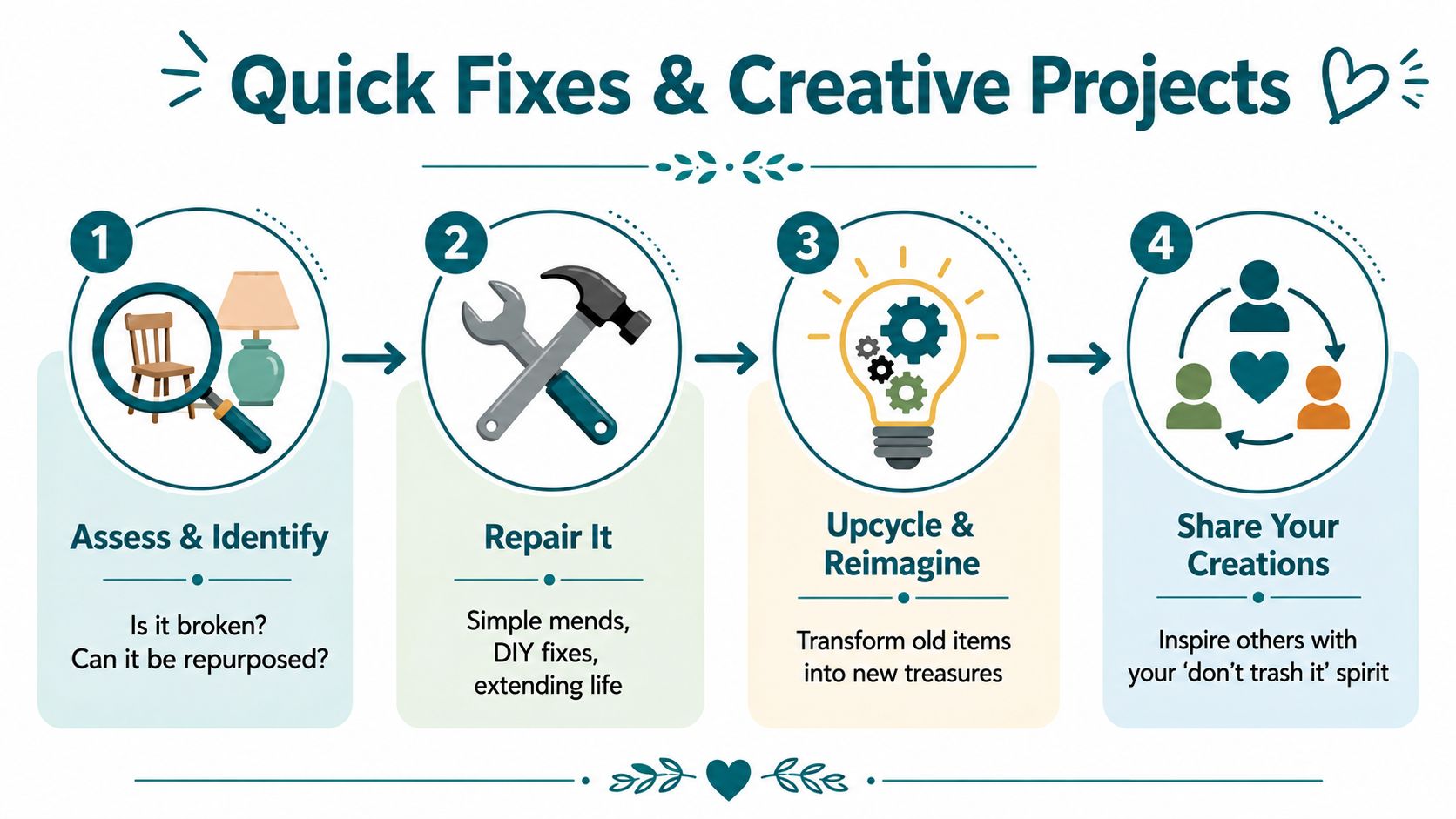
    Quick Fixes and Creative Projects

    I love repair because it changes your posture. Five minutes earlier, you were the person avoiding the mess. Then you tighten one screw, cut one shirt, wash one jar, and suddenly you're a builder.

    That shift matters.

    When Tom Sawyer got stuck painting a fence, he changed the mood of the job. That's part of bravery. You don't wait for work to become fun. You put some pride into it and make it fun with your own hands.

    Quick Fixes and Creative Projects

    Old T-shirts into rags or a tote

    You probably have at least one shirt that lost its social life. Good. It can still work.

    For cleaning rags, lay the shirt flat, cut off the seams, then cut squares or rectangles. Toss them in a basket under the sink. Now you have wipe cloths for mirrors, shoes, spills, and bike grease.

    For a no-sew tote, cut off the sleeves, widen the neck hole, turn the shirt inside out, and cut fringe strips at the bottom. Tie the strips together in knots. Turn it right side out. Done. It's ugly in a charming way and great for groceries or carrying cleanup supplies.

    Plastic containers into planters

    This works with yogurt tubs, takeout containers, and sturdy bottles.

    1. Wash the container.
    2. Poke drainage holes in the bottom.
    3. Add a little gravel or broken ceramic piece if you have it.
    4. Fill with soil.
    5. Plant herbs, flowers, or a cutting from another plant.

    If the container looks rough, wrap it with twine, paint it, or slide it into a nicer outer pot. I like keeping these on windowsills because they remind me that second chances can look good.

    Repair doesn't have to be elegant. It just has to keep something useful in motion.

    Glass jars into actual storage you'll use

    Jars are the easiest win in the house.

    Peel off labels with warm water and soap. If the glue fights back, keep scrubbing or soak longer. Then use the jars for rice, screws, coins, pens, rubber bands, tea bags, or bathroom items.

    If you want them to look cleaner, keep the lids one color. Black, white, whatever. Suddenly the shelf feels intentional instead of random. You didn't buy "storage solutions." You cleaned a jar.

    A few rules for beginner upcyclers

    • Start small: One shirt, one jar, one tub. Don't launch twelve projects.
    • Use basic tools: Scissors, glue, soap, needle and thread, a marker.
    • Choose useful over pretty: If it solves a daily annoyance, you'll keep doing it.
    • Quit while you're ahead: Stop after one finished object and enjoy the win.

    That last one matters. People trash momentum by turning one project into a whole personality. Just make the tote.

    Donate Swap and Sell It Forward

    A lot of your stuff still has life in it. It just doesn't have life with you.

    That difference is everything.

    I've seen people try to "donate" stained pillows, broken toys, and kitchen junk with missing parts. That's not generosity. That's outsourcing guilt. If you wouldn't hand it to a friend face to face, don't drop it in a donation box and call yourself noble.

    Donate like you respect the next person

    Before you pass anything along, do three things.

    • Clean it: Wipe it down, wash it, fold it, pair the parts.
    • Test it: Plug in the lamp. Zip the jacket. Make sure the game box has the pieces.
    • Label the weird stuff: If a bag has hardware, cords, or manuals, keep them together.

    That little bit of effort changes the whole exchange. A usable item feels like care. A half-broken item feels like a burden.

    Run a swap before you donate

    My favorite move is a tiny swap party. It doesn't need a permit, a banner, or some fake corporate energy. Text a few friends, neighbors, or people in your building. Tell them to bring clean items they no longer want. Clothes, mugs, books, tools, storage bins, unopened toiletries, extra plants.

    Put things on tables or blankets. Let people browse. Make tea. Talk.

    You'd be shocked how often one person's "why do I still own this?" becomes another person's perfect find. A colander. A side table. A jacket that never fit you right but somehow fits your neighbor like it was made for them.

    Give away dignity, not chores.

    If you want to sell, keep it simple

    Some items are worth listing. A working desk chair, a decent lamp, unopened supplies, hobby gear you never touched. Take clear photos in daylight. Be honest about flaws. Price it to move, not to avenge your original purchase.

    A quick sale feels better than a month of haggling with strangers while the item still blocks your hallway.

    If nobody wants it after a fair try, that's information. Pass it on another way or move on.

    Good places to send useful things

    • Friends and family: Start close. Direct handoff is easiest.
    • Neighbors: Building chats and local groups move everyday items fast.
    • Schools and teachers: Storage containers, jars, supplies, and furniture can help.
    • Mutual aid and community fridges: Household basics often find a home quickly.
    • Thrift and reuse shops: Good for clean, functional items in solid shape.

    Stuff gets lighter when it starts moving. So do people.

    Handle Hazardous Waste Responsibly

    Some items don't belong in your home, your curbside bin, or your donation pile. They need a clean exit.

    Creativity stops. Safety wins.

    What needs special handling

    Watch for items like these:

    • Batteries: Loose batteries can leak or create fire risk.
    • Old paint and chemicals: Keep lids sealed. Don't dump contents.
    • Electronics: Phones, cords, laptops, printers, and small devices need dedicated handling.
    • Light bulbs and similar items: Some need more care than regular trash.
    • Cleaning products and automotive fluids: Keep them in original containers if you can.

    If you're in Chicago, use city guidance instead of guessing. This page on Chicago hazardous waste disposal options is the kind of practical lookup I want people to use before they toss something dangerous in a cart or alley bin.

    The rule I follow

    Don't mix chemicals. Don't pour mystery liquids down drains. Don't leave old batteries rolling around in drawers for another year because "I'll deal with it later."

    Later is how people create bigger problems in tiny apartments.

    If you aren't sure what an item is, keep it contained and look it up before moving it. Gloves help. Common sense helps more. The right disposal route might take a little extra time, but the wrong route can hurt sanitation workers, neighbors, pets, and your own block.

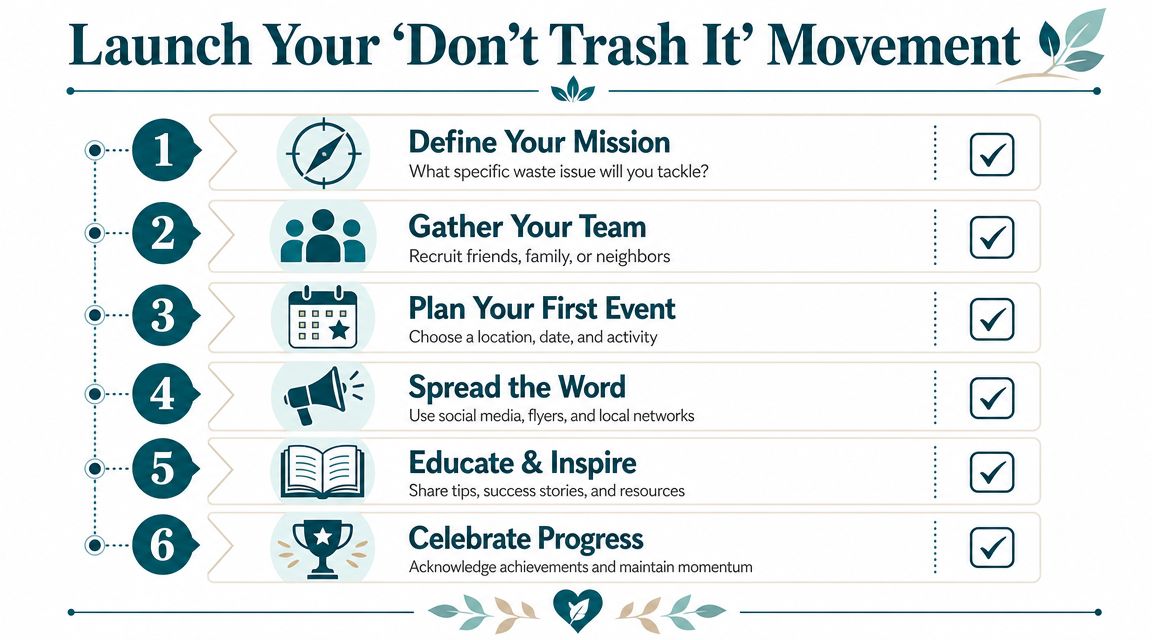
    Start Your Own 'Don't Trash It' Movement

    If you can clear one shelf, you can organize one corner of a block. The jump isn't as big as it looks.

    People think a movement starts with a giant crowd. It usually starts with one person getting tired of stepping around the same problem. A trash-strewn alley. A lobby stacked with abandoned junk. A basement full of mystery items nobody claims. You don't need a nonprofit mood board. You need a mission small enough to finish.

    Begin with a baseline

    The smartest cleanup work starts by paying attention. A practical zero-waste method begins with a baseline audit, then uses what people find in the trash to identify the biggest problem materials and improve the system over time, as explained in this Zero Waste Europe methodology guide.

    For a neighborhood effort, your audit can stay simple:

    • Walk the area: One block, one alley, one building.
    • Write down repeats: Bottles by the bus stop. Food wrappers near the corner store. Dumped furniture near the garage.
    • Notice patterns: Is the problem overflow, bad habits, missing bins, or a neglected lot?
    • Pick one target: Don't solve the whole city on day one.

    That loop matters. If you never measure what keeps coming back, you'll rely on slogans and frustration.

    Start Your Own 'Don't Trash It' Movement

    Make it social and visible

    People join energy before they join plans.

    Give your action a name. Pick a time people can remember. Bring extra gloves and bags. Put one person in charge of photos, one in charge of supplies, one in charge of talking to newcomers. Keep the first event short enough that people leave feeling strong instead of drained.

    If you want a model for the logistics, this guide on how to start a volunteer trash pickup is one practical option.

    Try this format for a first event:

    1. Meet in one obvious spot: Corner, lobby, courtyard, park entrance.
    2. Explain the mission in one minute: "We're clearing this alley and sorting reusable items from trash."
    3. Give people tiny jobs: Pickup, sorting, donation runner, photo taker.
    4. End with a visible pile of progress: People need to see what changed.

    Let bravery be contagious

    A lot of neighbors want permission more than instruction. They want to know someone else is willing to care out loud.

    When you host a swap table, clean a problem corner, or remove litter from the same stretch every week, you give people a way in. A shy person can carry one bag. A busy person can bring coffee. A skeptical person can watch for a while and join next time.

    You don't need to be polished. You need to be consistent.

    Join the Transformation with Litter Caterpillars

    Three of us got caught in a spring hailstorm on one of our first trash pickups. We huddled under a tree, freezing, while ride after ride canceled on us. It was awful. It was funny. It was one of the clearest moments of my life.

    Join the Transformation with Litter Caterpillars

    Standing there, shivering, I realized something that changed me. Cleaning up other people's messes was way easier than cleaning up my own. It also had a strange kind of fun to it. The cold, the chaos, the canceled rides, the absurdity of being out there in bad weather with grabbers and bags. It gave the day flavor. It moved the plot forward.

    So we kept going.

    Weekend after weekend, rain or shine, people showed up. Some came because they cared about litter. Some came because they needed friends. Some came because they were trying to rebuild themselves and didn't want to do it alone. Those are my favorite people, because I know that feeling in my bones.

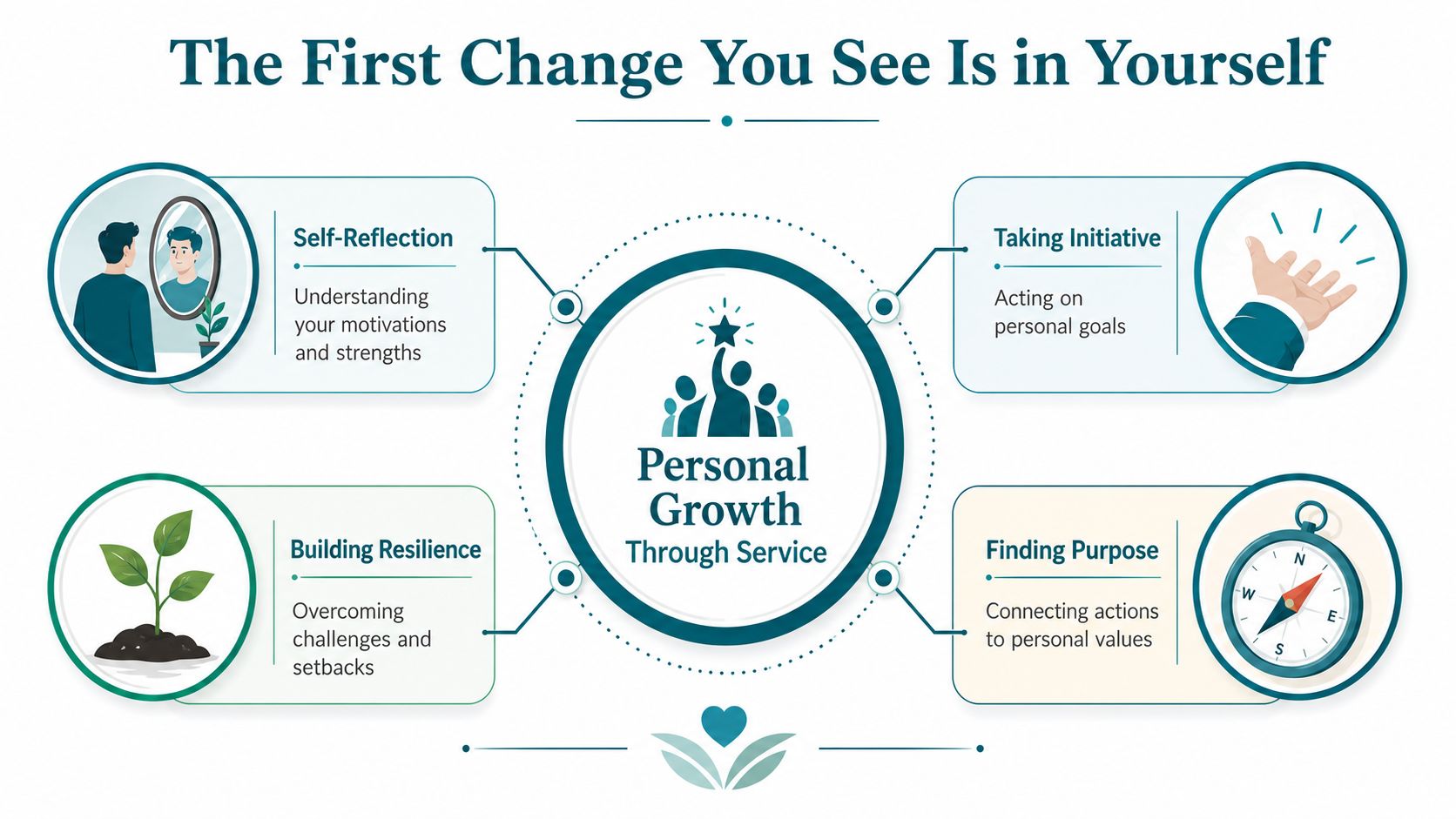
    Service changes the person doing it

    I've always believed bravery grows through use. You don't wait to become confident and then act. You act while feeling awkward, uncertain, underprepared, and maybe a little embarrassed. Then your nervous system learns that you can survive service. More than that, you can enjoy it.

    That's part of why weekend mornings matter to me. They attract a certain kind of spirit. People who are willing to wake up and do something useful. People who want sunlight, effort, and honest company more than another night of drifting.

    The work also changes how you see a city. A vacant lot stops being "just an empty lot." A neglected corner stops being "someone else's problem." The conversation about waste often misses underused space. A Don't Waste Buildings way of thinking argues for reusing neglected assets, not just materials, and treats waste as a land-use problem too, as described on the Don't Waste Buildings about page.

    That idea hits home for me because cleanup can grow into stewardship. If a group keeps showing up for a place, that place starts to answer back.

    From picking up trash to building a place

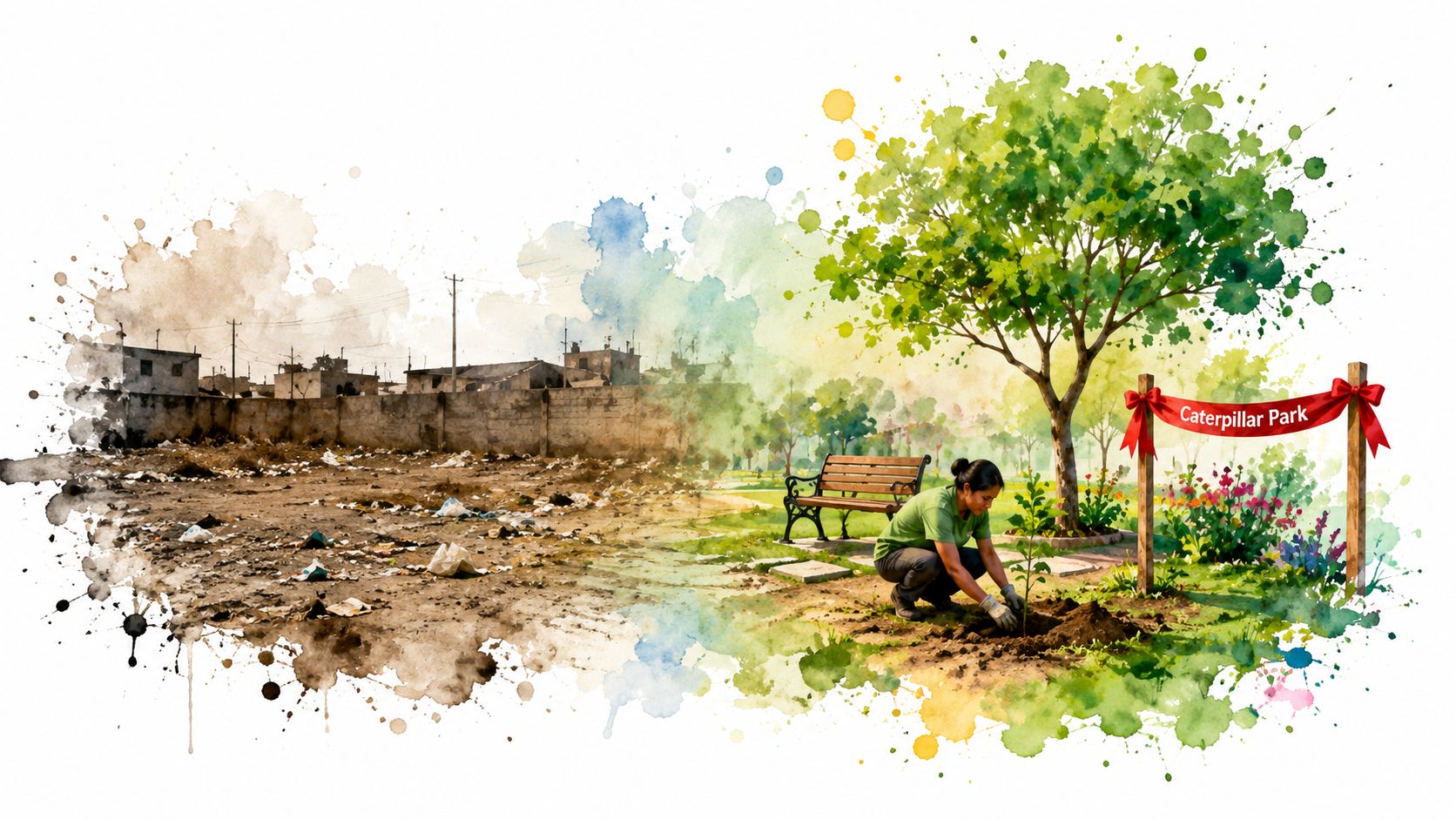
    That's part of the story behind Caterpillar Park. You pick up enough litter, meet enough neighbors, and spend enough mornings caring for places other people ignore, and your standards rise. You stop asking, "How do we clean this?" and start asking, "What should this become?"

    That second question changes everything.

    A cleanup group can become a friend group. A friend group can become a force. A force can take a neglected patch of land and imagine benches, plants, paths, gatherings, and shared pride instead of broken glass and dumping.

    Here's a look at that spirit in motion.

    I started with a jam jar I couldn't throw away. Now I believe the same courage it takes to clear a fridge shelf can help clear a block, reclaim a lot, and build trust between strangers. That, to me, is the Don't Trash It idea. Don't trash your chance to become someone stronger through service. Don't trash useful things. Don't trash places that still have a future. Don't trash yourself by staying stuck in the same old mess.


    If you want a place to practice that kind of bravery, join Litter Caterpillars. Show up on a weekend morning. Bring gloves if you have them. If you don't, come anyway. You'll meet people, do real work, and leave lighter than you arrived.

  • Reconnect with Nature Without Leaving the City

    Reconnect with Nature Without Leaving the City

    The first trash bag I filled felt lighter than the moldy jam jar in the back of my fridge. I could haul other people's mess through an alley in Chicago, but I couldn't throw out my own old stories.

    My Life Was a Mess So I Started Cleaning Up Other People's

    My apartment used to look like a storage unit for broken promises. Old jars, stale bags of nuts, half-finished projects, clothes I meant to donate, dishes I let sit too long. None of it was heavy in a physical way. But every object had a little story attached to it, and that story made it feel impossible to move.

    That was my real mess. Not the clutter itself. The attachment.

    The blueberry jam in the fridge was from some trip I took years ago. The health food in the cabinet came from a phase where I swore I was about to become disciplined. Even trash had emotional weight. A bag clip could carry shame. A receipt could carry regret. My place was packed with sentimental trash, and if I'm honest, so was my life.

    Then a chaotic relationship ended, and I hit that ugly quiet after the storm. No more noise. No more excuses. Just me, my apartment, and the fact that I had built a life I didn't trust.

    A man sits pensively by a window looking out at lush green trees and city buildings.

    The first honest thing I did

    I made a short list of the things that scared me most. Cleanliness. Consistency. Bravery. I didn't pick those words because they sounded noble. I picked them because I was bad at them.

    So I did something strange. I started picking up litter outside.

    I noticed right away that cleaning other people's mess felt easier than cleaning my own. A bottle in the gutter didn't come with a sad memory. A fast-food wrapper on the sidewalk didn't argue back. I could grab it, bag it, and see progress fast. For once, my hands knew what to do.

    Practical rule: If your own life feels jammed up, do one physical act of service outside your front door.

    That simple act changed the texture of my week. I'd walk out tense and noisy in my head. I'd come back sweaty, dirty, and calmer. The city stopped feeling like a machine I was trapped inside. It started feeling like a place I could touch.

    One bag at a time

    I didn't start with some polished mission. I started because I needed a way to stop drowning in my own excuses. Trash pickup gave me that. It also gave me a path back into the world, the world of sidewalks, trees fighting through fence lines, wind on my face, and neighbors who would stop and talk.

    If you're stuck right now, I get it. If your room is a wreck, your routine is weak, and your brain feels like a junk drawer, I get that too. Sometimes the first clean thing you do isn't inside your own apartment.

    Sometimes it's one bottle cap, one chip bag, one alley.

    And if being around people feels hard too, I wrote more about that in this piece on how to overcome social anxiety.

    Shift Your Mindset from Escape to Engagement

    A lot of people think they'll reconnect with nature when they finally leave the city. They imagine some clean break. Cabin, mountain, forest, silence. Until then, they treat daily life like a waiting room.

    I think that idea traps people.

    If you believe nature only counts when you're far away from traffic and brick, then your own neighborhood becomes spiritually invisible. You stop looking. You stop noticing. You stop caring. Then the city feels dead, even when life is crawling all over it.

    Stop waiting for a perfect setting

    I learned this the hard way while walking blocks commonly considered ugly. Cracked sidewalks. Fly-dumped lots. Chain-link fence. Graffiti. Broken glass. But once I kept showing up, I started seeing more than damage.

    I saw weeds forcing their way through concrete seams like they had a personal grudge. I saw pigeons doing their weird little strut under train tracks. I saw the same sparrow on the same wire at the same hour. I saw sunset turn a brick wall gold for about three minutes before the light slipped away.

    That's where the shift happens. You stop asking, “How do I escape this place?” and start asking, “What is alive here, and what is my relationship to it?”

    More than 100 studies have found that being in nature, living near nature, or even viewing nature in paintings and videos can improve brains, bodies, feelings, thought processes, and social interactions, according to the Greater Good Science Center's summary of nature research. That matters to me because it takes the pressure off the fantasy of the big wilderness trip. Repeated contact counts.

    The city has living edges if you train your eyes

    Your block might not have a waterfall. Fine. Mine doesn't either.

    But it has signs of life if you stop walking through it like a hostage.

    • Look low: Watch the weeds, moss, tree roots, and tiny flowers pushing up along curbs and fences.
    • Look up: Pay attention to birds on wires, clouds between buildings, and branches hanging over alleys.
    • Look twice: A trash-strewn lot and a future garden can be the same place at different stages of attention.

    Sentimental trash keeps us stuck because we keep assigning old meaning to dead objects. The same thing happens with neighborhoods. You decide a place is dirty, ugly, dangerous, boring, or beneath notice, and then you only collect evidence for that story. Your eyes become lazy. Your heart follows.

    Sometimes reconnecting with nature starts when you stop insulting the patch of earth you already live on.

    Engagement beats fantasy

    I'm not against leaving town. Go hike. Go camp. Go stare at a lake if you can. But don't build your whole spiritual life around rare escapes. That's like saying you'll only nourish a friendship once every six months.

    Nature connection in a city starts with engagement. Attention. Repetition. Responsibility.

    Here's the mindset I had to learn:

    Old mindset Better mindset
    Nature is somewhere else Nature is scattered all around me
    I need a trip I need a practice
    My neighborhood is the problem My neighborhood is where I begin
    I'll care when it looks better I help it look better by caring

    Once I saw the city that way, the work changed too. A cleanup wasn't just sanitation. It was relationship repair. Between me and the place. Between me and myself.

    Start with Daily Micro-Doses of Urban Nature

    If your schedule is packed, your money is tight, or your energy is low, good. You don't need a dramatic plan. You need one you'll do on a Wednesday.

    The American Psychological Association says even a stroll through a city park can improve attention and lower stress, and it suggests a simple tiered rhythm: start with 10 to 20 minutes daily in nearby green space, then add longer weekly sessions as the habit gets stronger, as noted in the APA's article on being nurtured by nature.

    That's practical. It also matches what I've seen on the ground. Big promises die fast. Small rituals stick.

    The daily floor

    Don't ask yourself for a complete lifestyle overhaul. Ask for a tiny daily contact with the living world. Make it so easy you'd feel sillier skipping it than doing it.

    A checklist featuring four simple daily activities to incorporate urban nature into a busy lifestyle.

    Here are a few that work in real city life:

    1. Stand by a window for one minute and look at the nearest tree, patch of ivy, cloud cover, or even the light moving across a wall.
    2. Take the long route past a park on your way home, even if you only get a few extra minutes.
    3. Eat one meal outside on a stoop, bench, patch of grass, or under a street tree.
    4. Listen on purpose for birds, wind, leaves, rain, or the hum that comes after traffic dies down.
    5. Touch something living. Bark, dirt, leaves, herbs in a pot, grass if you've got access to it.

    None of this is glamorous. Good. Your nervous system doesn't need glamorous. It needs contact.

    Add one weekly ritual

    Daily contact is the spark. A weekly ritual is what turns it into identity.

    Mine often looked rough and ordinary. A long walk through a neighborhood with a grabber in hand. Sitting in a small park after cleanup. Visiting a different green space and noticing how each one has its own mood. You can do your version without gear and without drama.

    Try one of these:

    • A weekend park lap: Walk one full loop and leave your headphones off.
    • A bench ritual: Sit in the same place every week and notice what changes.
    • A windowsill garden: Grow herbs, a succulent, or anything small enough that you can't overcomplicate it.
    • A cleanup walk: Bring a bag and gloves, pick up a few things, then wash up and head home.

    Small test: If your plan needs perfect weather, free hours, and high motivation, the plan is too big.

    Make it easy enough to repeat

    Individuals often fail because they make nature connection feel like a production. Special clothes. Special travel. Special mood. Then life gets busy and the whole thing collapses.

    I'd rather see you spend ten minutes under one stubborn tree every day than chase a giant outing you never take. Reconnect with nature by lowering the bar so far that your routine can step over it half asleep.

    That's how habits become part of your body. Subtly. Without applause.

    Find Nature by Actively Making It

    The deepest connection I've found in a city didn't come from staring at nature. It came from helping make it possible.

    A neglected lot isn't just ugly. It's interrupted potential. Same with a trash-choked parkway, a weedy curb, a corner where people have given up. Once you clean it, even a little, the whole place changes mood. People slow down. They look. They talk. You start to feel that land wake up under your hands.

    That feeling is hard to explain if you haven't done it. It's half labor, half magic.

    The Tom Sawyer trick is real

    As a kid, I thought the Tom Sawyer fence scene was funny. As an adult, I realized it was a strategy. Work changes when you change the story around it.
    If you call trash pickup punishment, your body drags. If you call it a mission, an adventure, a shared act of reclaiming ground, people show up differently. They laugh more. They notice more. They carry themselves with a little more pride.

    That's what happened with us. We'd head out with bags, grabbers, gloves, and some dumb optimism. The block would look rough. Then an hour later there'd be piled bags on the curb and this clean line where chaos used to be. It felt like drawing order with your own hands.

    A four-step infographic showing how to clean and revitalize neglected urban spaces with a community group.

    Service fixes the access problem in a real way

    A lot of advice about reconnecting with nature implicitly assumes you have time, transport, money, and easy access to decent green space. Plenty of people don't. Economic limits, lack of transportation, and living in underserved areas can block access. The Environmental Science Center's piece on access to nature in underserved communities points out those barriers and notes that community-led cleanups and park stewardship are practical ways to improve environmental access while building social connection.

    That matches what I've seen block by block.

    If your neighborhood has poor access to healthy outdoor space, waiting for someone else to fix it can turn into a long sentence. But a cleanup crew, a garden crew, or a stewardship group can change the immediate conditions around you. Not perfectly. Not all at once. But for real.

    Here's what active nature-making can look like in a city:

    • Clean a neglected edge: Alleys, fence lines, vacant lots, bus stop areas, and park borders all shape how a place feels.
    • Adopt one recurring zone: Repetition matters. The second and third cleanup are where trust starts.
    • Plant something small: A tree bed, native flowers, herbs in containers, or a little pollinator patch.
    • Join a group instead of waiting for motivation: Shared calendars beat private intentions.

    One option is community gardens in Chicago, which can give you a physical place to put your hands in soil and meet neighbors who care about the same block you do.

    From one bag to a future park

    Our own path kept widening. What started as simple litter pickup turned into a different relationship with land itself. We stopped seeing empty lots as dead zones. We saw them as unfinished sentences.

    That shift matters. If you only consume nature, you wait for access. If you help build it, you become part of access.

    I've watched people show up shy, guarded, and tired. Then they spend a morning pulling trash from grass, clearing a path, talking to strangers, noticing birds, feeling sun on their arms, and suddenly the city doesn't feel so numb. They didn't leave for the woods. They repaired a piece of their environment and got repaired a little in the process.

    You can reconnect with nature by protecting the scraps of it that still exist, and by helping create more.

    That's the strongest form of urban nature connection I know. Responsibility turns scenery into relationship.

    Build Your Tribe and Embrace the Adventure

    Our first cleanup had three people and terrible weather. We got caught in a freak spring hailstorm, huddled under a tree, shivering while ride after ride canceled on us. It was miserable in the normal sense. It was also one of the most fun mornings I'd had in a long time.

    Shared discomfort does something coffee never will. You see who complains, who laughs, who checks on the others, who keeps moving, who makes the day lighter. Weather strips people down to something honest.

    A diverse group of volunteers cleaning up litter in a park, fostering community and environmental stewardship.

    The right people want a shared mission

    I've become very picky about how I build community. I'd rather know a few people who will show up on a cold morning than a crowd who only wants easy fun. Weekend morning service has a filtering effect. It tends to attract givers.

    That doesn't mean people need to be intense. It means they're willing. Willing to get dirty. Willing to be awkward at first. Willing to care about a block that doesn't belong to them alone.

    True nature connectedness is more than just being outside. It involves emotional attachment, attention, and sensory engagement. Building that connection through social, repeatable rituals can have stronger mental-health effects than occasional solitary trips, as discussed in this video on nature connectedness and the way we build it.

    That word ritual matters. Same people. Same kind of effort. Same kind of care. Week after week.

    What you actually need

    People overpack for outdoor service all the time. You don't need to dress like you're summiting a mountain.

    A basic setup is enough:

    • Gloves: Cheap work gloves beat bare hands every time.
    • A grabber and bags: Simple tools, no mystery.
    • Closed-toe shoes: Leave the sandals at home.
    • Water and layers: City weather flips fast.
    • Common sense: If something looks dangerous, leave it for trained crews or proper city services.

    Safety comes first. Pride doesn't mean doing reckless things. Bravery is staying useful while respecting limits.

    If you want help finding people who are built for this kind of friendship, I wrote this guide on how to meet like-minded people.

    Here's a look at the vibe in motion:

    Adventure fixes the dead feeling

    A lot of adults are bored because they only socialize in predictable boxes. Drinks. Brunch. Small talk. Repeat. Then they wonder why they feel lonely.

    Try this instead. Carry bags through an alley with two strangers while the wind is slapping you in the face. Find an old tire in weeds. Pull glass from mud. Laugh when someone's hood flies off. Watch a block look better by noon because you were there.

    That's a real day. Your body knows the difference.

    Measure Your Transformation Not Your Miles

    I don't think the best measure of reconnecting with nature is how far you hiked, how wild the setting was, or how pretty the photo looked after. Those are travel metrics. They're not transformation metrics.

    The city taught me to track different things.

    Better scoreboards

    Ask yourself harder questions.

    Did you learn the shape of your own neighborhood with your feet? Did you notice one tree enough times that it started to feel familiar? Did you make one real friend through shared work? Did you help one dirty patch of ground look cared for again?

    That's the stuff I trust.

    Old metric Better metric
    Miles traveled Blocks cared for
    Remote location Repeated relationship
    Great photo Real memory
    Solo escape Shared effort
    One big day Steady habit

    A better measure: Count the ways your attention changed, your courage changed, and your neighborhood changed under your hands.

    The caterpillar part

    We call ourselves caterpillars because transformation is slow, awkward, and not always pretty. You show up carrying some mess. You keep serving anyway. Over time, that service changes what you believe about yourself.

    You start to trust your own follow-through. You forgive yourself a little. You stop needing every act to be dramatic. A filled trash bag counts. A cleaner corner counts. A morning spent outside with good people counts.

    That's how I'd tell you to reconnect with nature in a city. Don't chase a fantasy version of the outdoors while ignoring the ground beneath your shoes. Put your hands on the place you live. Care for it. Let it change you back.


    If you want a concrete way to start, Litter Caterpillars organizes volunteer trash pickups in Chicago that give you a simple job, outdoor time, and a chance to meet people through shared service. Show up, grab a bag, and start with one block.

  • 10 Environmental Services Examples That Build Community

    10 Environmental Services Examples That Build Community

    Cleaning up my life started with a trash bag.

    My room used to feel like a museum of stalled decisions. Old jam jars, half-finished snacks, random paper piles. After a messy breakup, I hit a point where even throwing away one useless thing felt heavy. So I tried a strange workaround. I went outside and picked up other people's trash first.

    That worked better than I expected. Street litter didn't carry the same emotional weight as the junk in my apartment, but it still asked something from me: consistency, courage, and a willingness to be seen doing awkward work. That's when I started to understand environmental services examples in a very human way. They aren't only contracts, trucks, and policy terms. They're also real acts you and I can do with our hands, our weekends, and our friends.

    The phrase itself can confuse people. Sometimes it means ecosystem services, like water purification or flood control in nature, as the U.S. EPA's ecosystem services overview explains. Other times it means operational work like sewage treatment, recycling, landfill management, and remediation. I've learned you usually need the second meaning when you're standing on a block with gloves on, staring at bottles in a storm drain.

    Here are 10 environmental services examples that feel real to me because they change streets and people at the same time.

    1. Community-Based Litter Cleanup Programs

    The simplest example is still my favorite. A few people meet on a sidewalk, grab bags and pickers, and clear a block, a park edge, or a bus stop corridor. It sounds small until you do it. Then you feel how fast one clean stretch of sidewalk changes the mood of a morning.

    I've seen how a cleanup becomes a friendship machine when it repeats. Same day, same time, same spirit. That rhythm matters more than fancy branding, though I'll admit that flags, badges, and a goofy team identity help people feel brave enough to come back. If you want one real model, I like the way Litter Caterpillars organizes neighborhood litter cleanups around weekly volunteer action in Chicago.

    Why this feels bigger than a trash bag

    A cleanup group gives shy people a script. You don't need perfect social skills because the task carries you. You walk, you pick up litter, you talk when you want, and silence never feels strange because everyone is working.

    In the broader economy, this kind of work connects to a much larger operational field. The U.S. waste management and remediation services industry grew from $47.8 billion in 2010 to $65.5 billion in 2021, according to the USITC working paper. That helped me realize I wasn't stepping into a quirky hobby. I was touching one visible edge of a real service world.

    Practical rule: Start with one block and one recurring time. Consistency recruits better than hype.

    • Pick an easy meeting point: A train stop, school corner, or park gate makes first-time volunteers less nervous.
    • Keep tools simple: Gloves, bags, grabbers, and a clear route beat overplanning.
    • End with something social: Coffee, tacos, or just chatting on the curb helps people attach good memories to the work.

    2. Environmental Remediation of Vacant Lots and Public Spaces

    Some places don't need a quick cleanup. They need a second life.

    I remember the first time I looked at a vacant lot and stopped seeing “empty.” I saw dumped debris, hard soil, weeds, maybe broken fencing. But I also saw a future bench, a few trees, kids cutting across safely, neighbors pausing to talk. That's environmental remediation in a form you can feel with your body.

    A cleanup group can grow into land stewardship if it stays patient. Litter Caterpillars has a story like that in Englewood, where an empty lot became a community project. You can read that journey in their vacant lot story. I like examples like this because they show that environmental work isn't only removal. It's repair.

    From neglected ground to shared ground

    The hard part is staying with the site after the first burst of excitement. A lot can look good for one Saturday and then slide backward if nobody owns the follow-through. I've learned that maintenance is where trust gets built. Watering a tree in July doesn't look glamorous, but it changes whether a place lives or dies.

    International policy descriptions also help explain why this work branches into different specialties. ESCAP describes environmental services as a broad mix that commonly includes sewage, refuse disposal, sanitation, and related pollution-control and remediation activities, with infrastructure services often being capital-intensive and non-infrastructure work often more competitive and business-to-business in nature, according to its environmental services and GATS paper. That distinction matches what I see on the ground. Some fixes need a few volunteers. Others need permits, engineering, hauling, and long-term care.

    If you want a visual dose of courage for this kind of work, this story helps:

    • Start with a site visit: Walk the whole perimeter and notice drainage, dumping patterns, and who already uses the space.
    • Ask neighbors what they want: A garden, seating, open play space, or just a cleaner lot can lead to very different choices.
    • Plan the boring stuff early: Water access, trash pickup, tools, and mowing schedules matter more than inspirational sketches.

    3. Microplastics and Urban Litter Source Identification

    One day I picked up the same snack wrapper brand five times near one storm drain and finally thought, “This trash has a route.” That changed how I saw cleanup work. I stopped seeing random mess and started seeing patterns.

    That's where source identification comes in. This environmental service asks where litter starts, how it travels, and where it breaks down into smaller fragments. In cities, storm drains, curbs, convenience store corners, bus stops, and construction edges often tell the story better than a speech ever could.

    A magnifying glass inspecting microplastics in urban runoff water near a storm drain with a sample log.

    I like pairing cleanup with simple audits. Count cigarette butts, cups, mini liquor bottles, plastic film, and food packaging. Note wind direction, drain location, and nearby businesses. If you want a jumping-off point for thinking about plastic pollution, this Litter Caterpillars page on 5 Gyres is a useful community-facing entry.

    What real-time monitoring changes

    When groups add sensors and continuous monitoring, they can react faster than manual inspection allows. A case study on IoT environmental monitoring describes how real-time, high-frequency data can replace sporadic sampling and support earlier detection, threshold-based alerts, and better crew prioritization in places where conditions change quickly, as explained in Ignitec's environmental monitoring technology case study.

    You don't need a full sensor network to learn from that lesson. The mindset is the gift. Check often. Watch flows. Notice timing. Look for cause, not only aftermath.

    Trash usually tells on itself if you return to the same drain after rain.

    • Use one shared template: Keep categories short so volunteers fill them out.
    • Photograph repeat trouble spots: Visual evidence helps when you talk to local businesses or city staff.
    • Track seasons: Leaves, snowmelt, and summer storms move litter in different ways.

    4. Neighborhood Beautification Through Strategic Litter Prevention

    Cleanup feels good. Prevention feels smarter.

    I learned that after clearing the same corner again and again. If a spot looks abandoned, people treat it that way. If it looks cared for, many people hesitate before dropping the first cup. So beautification is a real environmental service example because it changes behavior before the next mess lands.

    Small design choices that change the block

    Fresh mulch around a tree bed, a painted planter, a maintained fence line, a visible trash can, or a tidy storefront edge can interrupt the feeling of neglect. I've watched one swept sidewalk pull the rest of the block upward like a zipper.

    This work blends aesthetic judgment with routine labor. You don't need grand plans. You need repetition and visible care. Community gardens, adopted streets, and local merchant corridors all use this logic.

    • Choose a short stretch first: Two or three blocks are enough to prove a concept.
    • Make the change obvious: Before-and-after photos help neighbors believe maintenance is possible.
    • Give residents a way in: Ask who wants to water flowers, report overflow, or sweep one storefront edge.

    A clean block often starts to police itself in a gentle way. Neighbors notice. Kids notice. You notice too. And once you've felt that, it's hard to walk past a collapsing corner without imagining how little it might take to steady it.

    5. Social Cohesion Building Through Environmental Volunteerism

    This one surprised me the most. I thought I was joining cleanup work to fix streets. Really, I was also learning how to belong to people again.

    Environmental volunteerism is one of the few social spaces where nobody has to impress anybody. You don't need polished networking lines. You can meet while doing something useful, which lowers the temperature for everyone. That's why cleanup groups, trail crews, park stewardship teams, and beach volunteers often form fast friendships.

    Why hard mornings make better friends

    A weekend morning cleanup filters for a certain type of person. You're meeting people who chose service over sleeping in, brunch, or scrolling in bed. I don't mean that in a smug way. I mean it in a practical way. Shared inconvenience creates trust fast.

    My favorite moments haven't always been the cleanest ones. Sometimes it's the cold day, the weird weather, or the muddy shoes that make the memory stick. That's the social chemistry. You do uncomfortable work together and leave feeling less alone than when you arrived.

    Shared effort is one of the fastest ways I know to turn strangers into teammates.

    • Welcome first-timers by name: People come back when they feel expected.
    • Build simple rituals: Group photos, coffee after, or a theme song create continuity.
    • Protect volunteer energy: Don't make people feel used. Let the experience stay generous.

    In healthcare settings, the same human truth appears in a different form. Recent healthcare-focused coverage describes EVS as frontline infection-prevention work that includes disinfecting patient rooms, high-touch surfaces, and biohazard disposal in addition to cleaning tasks, as noted in SoFi's overview of the environmental services sector. Different setting, same lesson. Care work creates bonds because people can feel when others take responsibility for shared space.

    6. Environmental Justice and Equitable Neighborhood Coverage

    I used to notice how some blocks got cleaned fast while others seemed invisible. Once you see that pattern, you can't unsee it.

    Environmental justice in cleanup work means you don't chase only the pretty, central, or easy locations. You go where neglect has piled up and where residents have had to carry too much of the burden for too long. That takes humility. You can't arrive acting like a savior. You have to listen first.

    What fairness looks like on the ground

    Fair coverage starts with a map and a conscience. Which neighborhoods have overflowing corners, illegal dumping, broken sidewalks, poor trash infrastructure, or chronically littered commercial strips? Which places get volunteer love only when a camera appears?

    The answer isn't guilt. The answer is repetition in overlooked places. I've found that when a group returns regularly, people stop reading it as charity and start reading it as respect.

    • Talk to local residents first: Ask what cleanup would be most effective instead of guessing.
    • Return more than once: One visit can feel like a stunt. Repeated visits feel sincere.
    • Share leadership: Let people from the neighborhood shape the route and priorities.

    This is one of the clearest environmental services examples because it deals with the lived reality of who gets a clean environment and who doesn't. You don't need a policy paper to understand that. You just need to walk across a few different neighborhoods with your eyes open.

    7. Youth and Newcomer Integration Through Environmental Engagement

    When you're new to a city, loneliness can make even a crowded street feel empty. I know that feeling. You want a way in, but bars, apps, and random events can feel slippery or performative.

    Cleanup gives newcomers and younger people a cleaner entry point. You show up, get a task, learn a neighborhood, and meet people without having to invent a social persona. That's why I think environmental service is one of the best low-pressure ways to get attached to a place.

    A city tour with a purpose

    Every cleanup is also a geography lesson. You learn which blocks flood, where litter collects, which parks feel loved, and which corners need help. That knowledge makes a city feel less abstract. It becomes yours.

    For students and young professionals, that matters a lot. Service work can turn a strange city into a map of memories. “That's the alley we cleared in the rain.” “That's the park where I met my now-best friend.” Those memories root you faster than small talk does.

    • Give newcomers a buddy: One friendly face can calm first-day nerves.
    • Keep instructions plain: New volunteers shouldn't have to decode jargon.
    • Make room for fun: Photos, inside jokes, and post-cleanup snacks help people attach joy to service.

    I've seen people arrive unsure and leave with dirt on their gloves, a few names in their phone, and a stronger reason to stay in the city.

    8. Seasonal and Weather-Responsive Environmental Cleanup

    Some of my favorite cleanup memories are objectively miserable. Cold fingers. Wet socks. Wind that turns a trash bag into a kite. That sounds awful on paper. In real life, it can be weirdly bonding.

    Weather-responsive environmental service means you don't treat the outdoors like a fair-weather hobby. You adapt the route, gear, timing, and safety plan to the season. Winter has salt-stained curbs and windblown packaging. Spring has storm drain blockages. Summer has heat, smell, and overgrown lots. Fall has leaves hiding broken glass and litter.

    Bravery needs a forecast

    I'm not romantic about danger. Safety comes first. But I do think there's something healthy about learning you can function in discomfort without falling apart. A rainy cleanup taught me that better than any self-help book ever did.

    The practical side matters too. Gloves change with temperature. Water breaks matter more in heat. Bright gear matters when days are short. A nearby café, field house, or library can save the day if weather turns ugly.

    The goal isn't to suffer for style. The goal is to keep showing up without being careless.

    • Scale the route to conditions: Shorter routes can be smarter in heat or deep cold.
    • Bring backup gear: Extra gloves, hand warmers, ponchos, and water solve small crises fast.
    • Offer alternate roles: Some people can sort supplies or greet volunteers even if they can't work the whole route.

    Bad weather has a way of stripping away excuses. If you and I can laugh while freezing under a tree, we can probably handle more of life than we thought.

    9. Community-Driven Urban Parks and Green Space Development

    The first time I watched a bare, tired lot start to feel like a park, it happened before a single bench went in. A few of us were pulling trash from the edges, talking about where shade would matter most, where kids might run, where an older neighbor could sit without feeling exposed to traffic. By the end of that morning, the land looked only slightly cleaner. But it felt different. You could sense that people had started claiming it together.

    Diverse volunteers planting a tree in Riverdale Community Park with a child flying a kite nearby.

    That is why this belongs on a real list of environmental services examples. Community-driven green space work includes clearing neglected land, planting trees, building small paths, adding seating, caring for garden beds, and returning week after week so the place stays alive. It is physical work, yes, but it is also relationship work.

    I keep thinking about what groups like the Litter Caterpillars model so well. They do not wait for a polished master plan or a perfect grant cycle to make a place matter. They start with care, with cleanup, with showing up long enough for a forgotten patch of ground to become familiar. Then familiar becomes shared. Shared becomes protected.

    A park changes the way people meet

    The change I notice first is rarely visual. It is social.

    Someone lingers instead of hurrying through. Two neighbors who used to nod from a distance start talking near a planting bed. A child treats the path like it has always been there. Those moments are small, but they are the fundamental infrastructure. The green space starts teaching people that this block can hold more than neglect.

    The best community parks grow from local choices. One block may want raised beds for food and flowers. Another may need open grass, shade trees, and a simple bench where grandparents can rest. A space people helped shape carries a different kind of loyalty. You can feel it in how gently people treat it.

    • Start with one visible improvement: A planted tree, a cleaned gathering spot, or a bench area gives the project a center of gravity.
    • Ask who will care for it in July and November: Watering, litter pickup, and weeding matter more than a flashy launch day.
    • Use the space right away: A picnic, reading circle, or kids' nature activity helps the area become part of daily life.

    I love this kind of environmental service because it asks for courage without making a speech about courage. You bend down, clear space, plant something, and trust that other people will meet you there. Sometimes they do. Sometimes they surprise you. And sometimes a patch of land changes because a few friends decided the neighborhood deserved somewhere soft to land.

    10. Digital Community Organizing and Volunteer Coordination for Environmental Action

    A lot of environmental work still starts on a screen. One post, one group chat, one event page, one friend tagging another. I used to dismiss that as shallow. I don't anymore. Digital organizing is often the bridge between caring privately and acting publicly.

    This form of environmental service includes recruiting volunteers, sharing route details, posting weather updates, celebrating participants, and documenting changes over time. Meetup, Instagram, WhatsApp, Nextdoor, and text threads all have their place if you use them clearly.

    Online tools that lead back to real sidewalks

    The best digital organizing doesn't replace in-person community. It feeds it. A good event page tells me where to meet, what to bring, how long we'll be out, and whether I'll feel awkward arriving alone. A good post after the event helps the next shy person believe they can come too.

    I also like when groups share the whole texture of the day, not only polished after shots. Muddy gloves, funny moments, weird finds, and ordinary volunteers matter. People join people, not perfect graphics.

    • Post clear logistics: Time, meeting point, duration, and gear should be easy to find.
    • Show real volunteers: Faces and stories make groups feel reachable.
    • Keep the invitation simple: “Come for one hour” works better than giant commitments.

    Digital coordination also mirrors what larger environmental service systems do in a more technical way. Sensors, alerting systems, and real-time communication help teams respond faster. At the neighborhood level, your version might be much simpler: a weather text, a route map, and a photo album that proves the work is real.

    10-Point Comparison: Community Environmental Services

    Initiative Complexity 🔄 Resources ⚡ Expected outcomes ⭐📊 Ideal use cases 💡 Key advantages ⭐
    Community-Based Litter Cleanup Programs Low–Moderate: volunteer coordination and scheduling Low: basic tools, volunteer time, social channels Immediate visible cleanliness; stronger local social ties Quick neighborhood cleanups; engaging diverse volunteers Low cost; scalable; builds social capital
    Environmental Remediation of Vacant Lots and Public Spaces High: land acquisition, permitting, remediation planning High: capital, professional remediation, long-term maintenance Permanent community assets; higher property values; improved health Transforming blight into parks/gardens; long-term investment projects Durable impact; attracts funding and media attention
    Microplastics and Urban Litter Source Identification Moderate–High: consistent methodology and analysis Moderate: sampling tools, apps, research partnerships Evidence-based prevention strategies; policy recommendations Informing policy; targeting systemic litter sources High diagnostic value; supports grants and advocacy
    Neighborhood Beautification Through Strategic Litter Prevention Moderate: infrastructure placement and agency coordination Moderate: receptacles, street furniture, maintenance budgets Sustained litter reduction; improved perception and safety High-visibility corridors, BIDs, pilot block interventions Cost-effective prevention; creates positive feedback loops
    Social Cohesion Building Through Environmental Volunteerism Moderate: intentional facilitation and leadership Low–Moderate: social programming, volunteer support Strong friendships, reduced isolation, higher retention Newcomer integration; community resilience efforts High volunteer retention; mental-health and leadership gains
    Environmental Justice and Equitable Neighborhood Coverage High: sustained outreach, cultural humility, trust-building Moderate–High: targeted investment, partnerships, safety measures Reduced environmental inequities; local leadership development Prioritizing underserved areas; justice-driven campaigns Promotes equity; builds political will for systemic change
    Youth and Newcomer Integration Through Environmental Engagement Low–Moderate: onboarding, mentorship, adaptable schedules Low–Moderate: training, outreach, social events Faster social integration; youth leadership pipelines Cities with high newcomer/student populations; campus programs Attracts diverse volunteers; builds long-term engagement
    Seasonal and Weather-Responsive Environmental Cleanup Moderate: season‑specific planning, safety protocols Moderate: specialized gear, contingency plans, insurance Year‑round cleanliness; resilient volunteer culture Regions with extreme seasons; identity‑building groups Demonstrates commitment; addresses seasonal litter peaks
    Community-Driven Urban Parks and Green Space Development High: design, permitting, construction, stewardship High: capital, design expertise, ongoing maintenance Multifunctional green spaces; health, stormwater and habitat benefits Neighborhood revitalization; long-term placemaking Multiple co‑benefits (health, environment, social)
    Digital Community Organizing & Volunteer Coordination Low–Moderate: content, moderation, platform management Low: platforms, staff time, content tools Scalable recruitment; higher participation and visibility Rapid scaling; targeting young/newcomer demographics Low-cost amplification; easy onboarding; real-time coordination

    Are You Brave Enough to Start?

    I learned that cleaning up someone else's mess is way easier than cleaning up your own. It's a strange kind of fun. I also learned that suffering through a hailstorm with new friends adds flavor to life. It advances the plot.

    That's why I keep coming back to these environmental services examples. They aren't only about waste streams, public-space maintenance, remediation categories, or volunteer logistics. They're also about what happens inside you when you decide to stop waiting for motivation and just pick up one piece of trash. Then another. Then a whole bag. Then a habit. Then maybe a friendship.

    You don't have to be organized to begin. I wasn't. You don't have to be fearless either. Fear is often a good sign. It means you're close to something honest. Maybe you're scared of looking silly with a grabber on a busy street. Maybe you're scared nobody will join you. Maybe you're scared you'll start strong and then disappear. I get all of that.

    But I've found that service is a forgiving teacher. It doesn't ask you to arrive polished. It asks you to arrive. If you keep doing that, your confidence changes shape. It stops being loud and starts being dependable. You trust yourself more because you've watched yourself show up in cold weather, on sleepy mornings, on awkward first days, and on blocks that need more love than applause.

    If you live in Chicago, Litter Caterpillars is one real option for that kind of practice. If you don't, you can still borrow the blueprint. Pick a block. Pick a park edge. Pick a vacant lot perimeter, a trail segment, a creek bank, or a bus stop corridor. Bring a friend if you can. Go alone if you must. Keep it small enough that you'll do it again.

    We are all caterpillars in some way. We're all trying to transform while carrying old messes, old fears, and old stories. Sometimes the first honest step isn't inward. Sometimes it's outward. A trash bag in your hand. Morning air on your face. A tiny act of order in a chaotic week.

    So here's my question for you. What are you afraid of?

    Good. Start there.


    If you want a simple place to begin in Chicago, Litter Caterpillars organizes volunteer trash pickups that make it easy to show up, meet people, and help clean a block.

  • Volunteer Engagement Strategies: 10 Ways to Build a Tribe

    Volunteer Engagement Strategies: 10 Ways to Build a Tribe

    More Than Picking Up Trash

    I used to have trouble cleaning my own room. An old jar of blueberry jam in the back of my fridge could stop me cold because it carried a memory, and a bag of nuts from some failed health kick felt weirdly heavy. My place was a mess, and my life was too.

    Then I found out that cleaning up other people's messes felt easier. I started Litter Caterpillars with a tiny crew, and on our first day Chicago hit us with hail and slush. We hid under a tree, freezing, laughing, and watching our rides cancel one after another. That was the day I learned something strange. Hard service can be fun if people feel like they belong inside the story.

    A lot of volunteer engagement strategies sound clean on paper. Better onboarding. Better reminders. Better appreciation. Sure. Use all that. But if you've ever tried to get people out of bed on a cold Saturday morning to do wet, dirty, unglamorous work, you know the truth. People don't return because your signup form looks nice. They return because something in the group grabs them by the heart.

    The country has had a real drop in formal volunteering. The Council of Nonprofits points to research showing it fell more than 23% between 2019 and 2021, from 30.0% of the public to 23.2%, and nearly half of nonprofit CEOs surveyed in mid-2022 still said recruiting enough volunteers was a “big problem” (Council of Nonprofits on new volunteer data). So I stopped building for vague goodwill. I started building for identity, grit, friendship, and repeat attendance.

    These are the ten moves that helped us build a tribe.

    1. Community Identity and Pride Building

    The first time I realized this mattered, we were still a tiny cleanup crew with trash grabbers and bad weather luck. We didn't have money. We didn't have polish. We had a hail-storm origin story, a name people remembered, and eventually a theme song by Ella Duke that made the whole thing feel real.

    That changed everything. A volunteer stopped feeling like a random helper and started feeling like a Caterpillar.

    Three happy diverse volunteers in white shirts smiling against a watercolor background with musical notes symbols.

    Make people proud to join

    Sports teams know this. AmeriCorps knows this. Rotary clubs know this. Badges, uniforms, songs, rituals, and little symbols look small from the outside, but they tell a person, “You're part of something.”

    If you want better volunteer engagement strategies, give people a name they can wear in their own head. “I'm helping out” is weak. “I'm one of us” is strong.

    Here's what I'd build early:

    • A story-rich symbol: Our logo matters because it came from that first frozen cleanup. People remember stories better than graphics.
    • A simple ritual: Start every event the same way. Short welcome. Safety note. Group photo. Cheer. Repetition builds belonging.
    • Something people can earn: A badge, patch, glove color, or silly title can mean more than you'd think when it marks effort.
    • Shared language: We call people Caterpillars because transformation is the point.

    Practical rule: Don't buy identity off a shelf. Let volunteers help create it.

    If you want a deeper feel for why this works, I'd read our piece on civic pride and what it does to a neighborhood. Pride gets a bad rap because people confuse it with ego. I don't mean ego. I mean the healthy kind of pride that makes you stand taller with a trash bag in your hand.

    When someone says, “I'm proud to be part of this,” your retention problem gets lighter.

    2. Strategic Timing and Schedule Filtering

    We clean on weekend mornings on purpose. I didn't land there by accident. I wanted a schedule that attracted people who like giving more than drifting.

    That choice filtered our culture before I ever said a word.

    Your calendar recruits your people

    CrossFit gyms understand this. Dawn running clubs understand this too. If you meet early, consistently, and without apology, you gather people who like discipline, service, and rhythm. If your event moves around constantly, your culture moves around too.

    I've learned that schedule is moral architecture. It shapes who walks through the door.

    A few things happen when you lock in a repeat time:

    • Habits form faster: People stop negotiating with themselves every week.
    • Expectation gets simpler: “Saturday morning” becomes part of life, not a special event.
    • Values become visible: You demonstrate, “This is who we are.”
    • Drama drops: Fewer last-minute debates, fewer mixed signals.

    Be consistent enough to become part of someone's identity

    If you cancel often, people stop trusting the rhythm. If you move the time every other week, attendance becomes a gamble. I'd rather have a harder time slot with stronger consistency than an easier time slot with chaos.

    One of my favorite sights is a volunteer showing up sleepy, coffee in hand, because they've done it enough times that the choice is already made. That's when your group stops being an activity and starts becoming a practice.

    Some people won't like your time. Good. You're not trying to attract everybody.

    A lot of volunteer engagement strategies chase maximum convenience. I get why. But convenience alone doesn't build a tribe. Sometimes a little friction is useful if it filters for people who mean it.

    3. Low-Barrier Entry With Multiple Access Platforms

    A person sees your cleanup on Instagram. Another finds you on Meetup. Someone else joins because a friend dropped them into a group chat the night before. Good. That's how real life works.

    I don't want a future volunteer to solve a puzzle just to find us.

    Make the first yes easy

    For us, Meetup works well as a clean public doorway. Instagram helps us show the spirit of the crew. Group chats help with real-time coordination, jokes, weather updates, and “I'm running five minutes late” honesty.

    Different people need different doors. The shy person may lurk on Instagram first. The organized person may want a proper event page. The social one may trust a friend's text more than any website you build.

    Recent guidance on volunteer communication keeps pointing toward email, text, portals, segmented communication, and online communities, but the primary challenge is turning digital discovery into real belonging (Momentive Software on increasing volunteer engagement). I've felt that gap myself. The channel matters less than what happens after the first click.

    Use each platform for its real job

    Don't force every platform to do everything.

    • Meetup for discoverability: Let strangers find a clear date, time, and place.
    • Instagram for feeling: Show faces, muddy gloves, weird weather, neighborhood wins.
    • Group chat for momentum: Reminders, quick updates, and post-cleanup banter keep the pulse alive.
    • Email for substance: Put details, safety notes, and recaps somewhere people can find later.

    A lot of volunteer engagement strategies fail right here because they make newcomers feel dumb. “Fill out this form, wait for approval, read this packet, create a password, then maybe come next month.” No thanks.

    I want first-timers to feel like they can just show up. If they don't know the drill, I teach the drill on the sidewalk in two minutes. That's how you lower fear. That's how you grow.

    4. Volunteer-First and Never Monetize Volunteers

    I have a rule I value. I won't squeeze volunteers for money.

    If somebody gave me their Saturday morning, their body, their attention, and their goodwill, I'm not going to turn around and shake them upside down for a donation.

    Protect the energy people give you

    Volunteer energy is fragile. Once people feel used, it's hard to get the trust back. I'd rather build grants, sponsorships, and donor support somewhere else than muddy the relationship with the people doing the work.

    That rule has become part of our culture. It tells volunteers, “You are not a wallet with legs. You are a person.”

    The broader field keeps moving toward treating volunteer engagement as a formal management function instead of an extra chore. In a national survey of 1,210 nonprofit CEOs, the median Volunteer Engagement Professional in 2022 spent 40 to 50% of their time on volunteer engagement, compared with about 30% in 2003, and the share of organizations with no dedicated volunteer engagement specialist was cut roughly in half after the pandemic (The State of Volunteer Engagement report PDF). That matches what I've lived. Trust, follow-up, scheduling, recognition, and care take real work.

    Put the rule in writing

    I'd make this plain to your team:

    • Volunteers are there to serve, not to fundraise.
    • Safety comes first.
    • Happiness comes right after safety.
    • Recognition should be generous and non-monetary.

    If you want to build better repeat attendance, protect people from the feeling of being harvested. I wrote more about that in our guide to volunteer retention strategies.

    If a volunteer leaves feeling drained, guilty, or pitched at, you've taken more than you gave.

    A volunteer-first culture sounds soft. It isn't. It's disciplined. It forces you to build a real operating model instead of leaning on the easiest people in the room.

    5. Embracing Challenge and Reframing Difficulty as Growth

    I don't hide the hard part of cleanup work. Cold fingers. Wet shoes. Strange smells. Wind in your face. Blocks that look forgotten. I talk about all of it openly.

    Then I frame it the right way. This is the flavor.

    Hard days become the stories people carry home

    That first hail storm taught me something. Suffering, within safe limits, can bond people fast. You remember the day your gloves soaked through. You remember the sudden laugh when a trash bag turns into a sail in the wind. You remember the block that looked impossible until it didn't.

    Outward Bound figured this out long ago. Tough experiences, handled well, wake people up. I'm not running wilderness expeditions, but I do know this. Easy service is forgettable. A little hardship can turn a cleanup into a chapter in someone's life.

    The trick is balance. You never gamble with safety. You do tell the truth about the work.

    Sell the transformation, not the comfort

    When I recruit, I don't pretend every day is sunny and cinematic. I tell people Chicago has teeth. I tell them that's part of the fun. Some will opt out. Fine. The right people lean in.

    A few ways to handle challenge well:

    • Name the conditions clearly: Cold, heat, mud, and distance should never be a surprise.
    • Prepare people: Gloves, layers, water, and route expectations matter.
    • Celebrate resilience: After a rough day, say it out loud. “You did something hard.”
    • Tell the stories later: Hard days become folklore. Folklore builds culture.

    The weather is part of the event. It isn't always the enemy.

    Many volunteer engagement strategies try to remove every ounce of discomfort. I think that misses something human. A challenge can make people feel alive. It can also make service feel earned, and earned memories last longer than comfortable ones.

    6. Hyperlocal Neighborhood Coverage and Geographic Equity

    A city can tell when you only love its pretty parts.

    If you keep cleaning the same polished blocks because they photograph well, people notice. I wanted our crew to go where the mess was, even when those places were less convenient, less trendy, or farther from where volunteers lived.

    A hand placing a pin on a colorful watercolor city map representing location targeting and engagement.

    Make a map and mean it

    Litter Caterpillars works across all 50 wards in Chicago. That changes how volunteers see the city. It also changes how the city sees us. We're not just cleaning where it's easy to get brunch after. We're building a relationship with the whole place.

    That kind of coverage creates a different kind of pride. A volunteer who has served in many neighborhoods starts to feel stitched into the city itself.

    Here's what helps:

    • Map your territory: Put your service area where volunteers can see it.
    • Rotate neighborhoods on purpose: Don't let convenience narrow your mission.
    • Treat every area with equal respect: A block in Englewood deserves the same enthusiasm as a block downtown.
    • Build local ties: Residents, block clubs, and nearby groups can tell you what matters most.

    Repetition changes what people believe

    One cleanup can feel symbolic. Repeated presence feels real. If you return often enough, residents learn your name, volunteers learn the streets, and the work stops feeling like charity tourism.

    Place-based service is emotional. A person remembers where they worked. They remember the alley, the vacant lot, the corner store owner who waved, the kid who asked for a grabber. Geography turns abstract service into lived memory.

    I've found that some of the strongest friendships in our crew grew on blocks people had never visited before. Shared unfamiliar ground does that. It wakes up curiosity. It knocks loose assumptions. It gives people something real to talk about on the ride home.

    7. Friendship and Relationship Building as Primary Outcome

    If all you give volunteers is a task, they'll compare you to every other task in town. If you give them friends, that's different.

    Some people come to pick up trash. A lot of them stay because they start caring about the people next to them.

    Three smiling diverse volunteers sitting on a bench resting and holding coffee cups after a cleanup project.

    Build room for connection

    Habitat for Humanity crews often bond because they're side by side for long stretches. Running clubs do this too. The workout matters, but the talk before and after often matters more.

    Cleanup groups can copy that. Pair people up. Walk in small clusters. Get breakfast after. Let a new person carry a bag with someone who knows the ropes instead of leaving them alone with their thoughts.

    A few habits help a lot:

    • Do introductions every time: Even regulars forget names.
    • Create repeat pairings: Familiarity grows trust.
    • Celebrate personal moments: New job, birthday, breakup survived, exam finished. All of it counts.
    • Keep talking after the event: Group chats shouldn't die when the bags hit the dumpster.

    Treat belonging like part of the mission

    One practitioner guide I like points volunteer teams toward four core KPIs: New Volunteer Conversion Rate, Annual Volunteer Retention Rate, Annual Event Participation Rate, and Monthly Churn Rate. The same framework also recommends tracking average engagement per volunteer as total hours served divided by unique volunteers, and it suggests monthly reviews, quarterly deeper reviews, and annual year-over-year evaluations (VolPro on outcome metrics for volunteer programs). I like that because friendship is beautiful, but you still need to watch whether people return.

    If I saw event participation sagging or churn rising, I wouldn't only tweak reminders. I'd ask a human question. Do people have friends here yet?

    People rarely say, “I'm returning for the retention architecture.” They come back because somebody will notice if they don't.

    A lot of volunteer engagement strategies talk about appreciation. Good. But friendship beats appreciation for long-term staying power. A thank-you note is nice. A friend texting “you coming Saturday?” is stronger.

    8. Visible, Transformative Impact Projects

    Routine cleanups keep your muscles warm. Big visible projects light a fire in people.

    I learned that when our work started stretching past bags of litter and into places where you could see a whole space change character.

    A person planting a tree in a park transformation from a barren field to a green space.

    Give people something they can point at

    An empty lot turned into Caterpillar Park in Englewood is different from a single cleanup route. Cleaning a highway during a bike-event shutdown feels different too. People can tell the story later with a beginning, middle, and end.

    That kind of work changes volunteer psychology. Instead of “we helped a bit,” the feeling becomes “we built this.” That sentence has power.

    Big projects also pull in different kinds of volunteers. Some love weekly rhythm. Others wake up when there's a flagship challenge with a visible finish line.

    A few ways I consider this:

    • Start with one project people can see clearly.
    • Document the process, not only the finish.
    • Invite neighbors into the story.
    • Celebrate completion in public.

    Show the process so people can feel progress

    Photos and short videos matter here because transformation is easier to believe when people can see before and after. A muddy lot becoming a usable space lands in the gut.

    This kind of project also creates better recruitment material than a generic mission statement ever will. A newcomer can look at the work and think, “Oh, you do things.”

    Here's one example of a transformation story in motion:

    A person who spends one morning picking up loose bottles may feel helpful. A person who helps reshape a whole lot or corridor feels changed. That's a different level of ownership, and ownership is one of the strongest volunteer engagement strategies I know.

    9. Personal Transformation and Self-Leadership Development

    I didn't start this group because I had my life perfectly together. I started it because I didn't.

    That matters. People can smell fake perfection from a mile away.

    Let service change the volunteer too

    A lot of us come to volunteer work carrying something. Shame. Restlessness. Loneliness. Grief. A bad breakup. A sense that we've been drifting too long. I know that territory well.

    When I tell volunteers I used to struggle to throw away obvious trash in my own home, I'm not trying to be dramatic. I'm telling the truth. Service became a way for me to practice consistency, bravery, and self-respect in public.

    That honesty opens a door. It tells people they don't need to arrive polished.

    Some groups already understand this logic. Recovery communities often use service as part of healing. Teaching and mentoring programs often become growth experiences for the volunteers themselves. Cleanup work can do the same if you let it.

    Give people small chances to lead themselves

    Self-leadership doesn't need a workshop. It needs reps.

    • Ask someone to lead a warm welcome.
    • Let a regular choose the route.
    • Invite a quiet volunteer to bring a friend next time.
    • Trust people with simple responsibility before big responsibility.

    One underserved truth in volunteer engagement is that retention after the novelty fades is often an operating problem, not just a messaging problem. Independent Sector argues for strategic volunteer engagement that is resourced, reported on, and built into leadership decisions (Independent Sector on strategic volunteer engagement). I agree. If you want people to grow through service, you can't treat them like interchangeable labor.

    I've watched volunteers become steadier, kinder, and more confident because they kept showing up. I've seen people who felt awkward at first become the ones greeting everyone else. That's one of my favorite things in this work. Trash leaves the block, sure. But fear leaves the body too, little by little.

    10. Strategic Partnership Development and Community Cohort Recruitment

    You can build a strong crew alone for a while. Then you hit a ceiling.

    At some point, if you want more tools, more reach, better project support, and a steadier flow of new people, you need partners and you need cohorts.

    Recruit groups, not only individuals

    A university club can bring a whole pod of students. A neighborhood association can bring residents who already care about a corridor. A business can send a team that likes working together outside the office. A church group can show up with built-in trust.

    That changes the vibe fast. When people arrive with at least one familiar face, anxiety drops. New volunteers blend in faster. Attendance feels less brittle.

    I also like cohort recruiting because it sharpens your message. Students want one thing. Young professionals may want another. Neighbors want something else. If you speak to everyone the same way, your invitation gets mushy.

    Keep partnerships simple and active

    You don't need fancy memorandums full of legal fog for every relationship. You need clarity.

    Try this:

    • Pick a few natural partners: Neighborhood groups, schools, businesses, local nonprofits.
    • State the exchange plainly: Volunteers, tools, food, space, promotion, project support.
    • Make one person own the relationship: Drift kills partnerships.
    • Celebrate partners in public: People like being appreciated when it's sincere.

    The software side of this work is growing too. One market report projects the volunteer management platform market at a CAGR of 8.6%, growing from USD 1.25 billion in 2024 to USD 2.419 billion by 2032, and ties that growth to centralized databases, automation, mobile access, real-time updates, and analytics (Credence Research on volunteer management platforms). I don't bring that up to sound fancy. I bring it up because if you start building partnerships and cohorts, your coordination load jumps. You need systems that keep the human part alive instead of drowning you in manual follow-up.

    If you're trying to widen the top of the funnel, our guide on volunteer recruitment strategies has ideas that work well with this approach.

    The best partnerships don't feel transactional. They feel like a shared mission with names attached.

    Volunteer Engagement: 10-Point Strategy Comparison

    Strategy 🔄 Implementation Complexity ⚡ Resource Requirements 📊 Expected Outcomes (⭐) Ideal Use Cases 💡 Key Advantages / Tips
    Community Identity and Pride Building Medium, requires creative coordination and authenticity Design time, modest budget for badges/merch, volunteer input Strong retention, morale, organic recruitment ⭐⭐⭐ Groups seeking loyalty, brand differentiation, long-term volunteers Involve volunteers in design; keep symbols meaningful and authentic
    Strategic Timing and Schedule Filtering Low–Medium, planning + rigorous consistency Low financial cost, high scheduling discipline Reliable, values‑aligned participation; lower churn ⭐⭐⭐ Programs needing committed habitual volunteers (weekend/AM) Be consistent; communicate intentional timing as culture
    Low-Barrier Entry with Multiple Access Platforms Medium, multi-channel coordination Time for platform management, basic tools High recruitment and reach but lower initial commitment ⭐⭐ Rapid growth, diverse urban communities, discovery-focused recruitment Use Meetup for discoverability; ensure consistent messaging
    Volunteer-First and Never Monetize Volunteers Low, policy implementation + leadership discipline Needs alternative fundraising resources (grants/sponsors) Deep trust and volunteer loyalty; possible short-term revenue limits ⭐⭐⭐ Mission-driven groups prioritizing volunteer goodwill Put policy in writing; train leaders to redirect donation asks
    Embracing Challenge and Reframing Difficulty as Growth Medium, narrative work + safety management Safety protocols, staff oversight, storytelling effort Strong psychological commitment and memorable experiences ⭐⭐ Organizations aiming for transformational, resilient volunteers Prioritize safety; clearly signal this approach isn't for everyone
    Hyperlocal Neighborhood Coverage and Geographic Equity High, complex logistics and coordination Travel, scheduling, local partnerships, mapping tools Tangible equitable impact and community trust ⭐⭐⭐ Citywide equity initiatives and underserved-area outreach Map coverage publicly; build local leader relationships
    Friendship and Relationship Building as Primary Outcome Medium, needs social facilitation skills Time for social events, facilitators, small-team coordination Very high retention and wellbeing benefits ⭐⭐⭐ Retention-focused groups and community‑building missions Schedule social time; use consistent small teams for bonding
    Visible, Transformative Impact Projects High, planning, permits, specialized skills Significant capital, expert partners, project management Major media attention, funding, and visible legacy ⭐⭐⭐ Flagship projects to attract partners and prove impact Start small, document progress, involve community in design
    Personal Transformation and Self-Leadership Development Medium–High, requires vulnerable leadership & structures Mentorship programs, leader training, safe spaces Deep volunteer investment and leadership pipeline ⭐⭐⭐ Programs attracting personal-growth seekers and leaders Share founder stories, provide mentorship, set clear boundaries
    Strategic Partnership Development & Cohort Recruitment High, relationship management and negotiation Staff time, formal agreements, partner coordination Multiplied resources, credibility, expanded recruitment ⭐⭐⭐ Scaling organizations seeking funding, cohorts, or municipal support Choose 3–5 aligned partners, formalize simply, track partnership ROI

    Start Your Own Transformation

    That messy room I started with is still a work in progress, and so am I. I think that's healthy. I don't trust the kind of service story where the founder acts like he climbed a mountain, planted a flag, and solved himself forever. Real life is messier than that. Some mornings I still fight resistance. Some weeks I still need the group as much as the group needs me.

    That's part of why these volunteer engagement strategies matter to me. They aren't tricks for squeezing more labor out of people. They are ways to build a place where people can become stronger, kinder, and more alive together. If you've ever felt stuck, lonely, scattered, or scared of your own inconsistency, a good volunteer crew can help. Mine did.

    I'd start smaller than you think. Don't try to build the whole machine in one weekend. Pick one move from this list and make it real. Create a stronger identity. Lock in a consistent time. Open a second signup channel. Protect volunteers from being monetized. Add breakfast after the cleanup. Map your neighborhoods. Build one project people can point at. Any one of those can change the feel of your group.

    Keep your eye on returning faces. That is the test. A person coming once is interest. A person coming back is trust. If you're running a volunteer group, I'd watch the whole volunteer journey with care, because vague participation counts won't tell you enough. The strongest programs track things like conversion, retention, event participation, and churn so they can see where people are dropping off and fix the experience before drift turns into loss. You don't need to become a spreadsheet robot. You do need to pay attention.

    I also wouldn't wait for perfect conditions. We didn't get perfect conditions. We got hail, cold hands, and canceled rides. We got a weird little origin story and built from there. A lot of the best community work starts that way. You act before you feel ready. You learn in public. You laugh when things go sideways. You keep going.

    If you're in Chicago, Litter Caterpillars is one place to do that. We clean weekly, rain or shine, and we care a lot about friendship, safety, and showing up for every part of the city. If you're somewhere else, build your own version. Steal the spirit and make it fit your block, your weather, your people.

    The hardest part is starting. The best part is seeing who you become when you do.


    If you want a crew to join, Litter Caterpillars organizes volunteer-driven cleanups across Chicago and makes it easy to plug in through weekly events, neighborhood service, and a community built around friendship and resilience.

  • Community Service Impact: A Guide to Real Change

    Community Service Impact: A Guide to Real Change

    I once stared at a jar of blueberry jam in the back of my fridge and felt defeated. It was old, sticky, useless, and somehow too heavy for me to throw away because it carried a memory from a trip to Michigan.

    Your Impact Starts with One Piece of Trash

    I didn't start cleaning streets because I had my life together. I started because I didn't.

    My apartment had its own archaeology. Old food. Half-used bags of nuts from some failed health kick. Receipts. Clothes on chairs. Every item had a tiny emotional hook in it. I knew each thing weighed almost nothing, but in my body it felt like 500 pounds. I could walk past a mess for weeks and feel my energy drain every time I saw it.

    Then one day I picked up trash outside.

    That sounds small. It didn't feel small to me. It felt like cheating my own broken wiring. Cleaning my own room came with shame, history, self-judgment. Cleaning a sidewalk came with none of that. A bottle in the gutter didn't ask me to relive an old mistake. A fast-food cup in the grass didn't remind me who I used to be. I could just bend down, grab it, and put it in a bag.

    A rustic kitchen scene featuring a jar of raspberry jam, toast, and a person cooking in background.

    That was the first lesson I learned about community service impact. It starts before the neighborhood notices. It starts in your nervous system. It starts in the moment when you do one useful thing and your brain finally goes quiet for a second.

    Why one small act matters

    I think a lot of us carry private chaos. You might hide it better than I did, but you know the feeling. You avoid a drawer, a phone call, a bill, a hard conversation. Then you do one clean action in public, and something unclenches.

    Practical rule: If your own mess feels impossible, start with a mess that isn't yours.

    That's part of why service pulls people in. It gives your hands a job before your mind can argue with you. If you want to see that in action on the ground, I've written more about cleaning up trash in a simple, direct way.

    You are not doing something tiny

    It can feel silly to talk about one person with one bag on one block. I get that. But single acts stack up fast when enough people keep showing up.

    In the United States, about 60.7 million people, or over 23% of people age 16 and up, formally volunteered through an organization between 2020 and 2021. Their work added up to more than 4.1 billion hours with an estimated economic value of $122.9 billion, according to the U.S. Census Bureau and AmeriCorps volunteering data.

    That number helped me stop treating service like a sentimental side hobby. People are out there doing real work. They're feeding neighbors, coaching kids, cleaning blocks, moving supplies, and checking on each other.

    • Formal service matters: It creates visible labor that communities would otherwise need to pay for or go without.
    • Informal help matters too: The same Census story says nearly 51% of Americans, or 124.7 million people, informally helped neighbors during that period.
    • Your first act counts: You don't need a nonprofit title or a polished mission statement to join that current.

    I learned that one piece of trash is never just one piece of trash. It's a vote. It says, “I still believe this place is worth caring for.” Sometimes that sentence is the first honest thing you've said to yourself all week.

    The First Change You See Is in Yourself

    After a chaotic relationship ended, I made a private decision. I was done waiting to become disciplined. I was going to practice it.

    I picked three traits that had always scared me because I lacked them: cleanliness, consistency, and bravery. Street cleanup became my training ground. If it was cold, I went anyway. If it was awkward, I went anyway. If I felt embarrassed carrying a grabber and a trash bag in public, I went anyway.

    That's why the caterpillar idea hit me so hard. A caterpillar is not glamorous. It crawls. It eats leaves. It looks unfinished. I loved that. I felt unfinished too.

    A diagram illustrating the four key components of personal growth through service: reflection, initiative, resilience, and purpose.

    Service gives you a mirror

    When you volunteer outside, the street reflects you back to yourself. Rain asks if you're still coming. A filthy alley asks whether you quit when a job is ugly. An empty morning asks whether your values are real or just good intentions.

    Here's the pattern I noticed in my own life:

    1. Reflection came first. I had to admit what I kept avoiding.
    2. Action came next. I needed a repeatable behavior, not a dramatic speech.
    3. Resilience grew slowly. You don't become brave in one big movie scene. You become brave by keeping promises on ordinary weekends.
    4. Purpose followed. Meaning arrived after the work, not before it.

    If motivation is hard for you, I think it helps to understand what intrinsic motivation looks like in daily life. External praise fades fast. Internal alignment lasts longer.

    Your body keeps score, and so does your mind

    I used to think volunteering was morally nice but psychologically optional. I don't think that anymore.

    A peer-reviewed study in PMC found that consistent community service from ages 18 to 30 was associated with lower substance use and higher psychological well-being in adulthood. The same paper says other studies linked youth volunteering to improved cardiovascular health and fewer depressive symptoms later in life, as described in this PMC review of community service and health outcomes.

    That matches what I've felt in a plain, human way. When I spend a morning cleaning a block, I breathe deeper that afternoon. My thoughts stop looping so much. I trust myself more because I did something hard on purpose.

    You don't need to feel transformed before you begin. You begin, and then you notice you're changing.

    Four things service taught me

    • It taught me honesty. If I said I'd show up at a certain time, I had to meet myself there.
    • It taught me courage. Public service can feel exposed. People stare. Some people laugh. You keep going.
    • It taught me steadiness. Repeating a simple good act each week is its own kind of therapy.
    • It taught me self-forgiveness. I stopped demanding perfection from myself and started asking for effort.

    That is the first visible layer of community service impact. Before the block changes, you do.

    Watching Your Neighborhood Transform with You

    A clean block has a different sound to it. I don't mean that poetically. I mean you can hear your own footsteps again instead of wrappers scraping along the curb in the wind.

    I've watched this happen over and over. A place starts as “that corner” people avoid. Then a few people show up with gloves and bags. The work is dirty, repetitive, and kind of absurd. A little later, the sidewalk opens up. The lot looks breathable. People slow down and ask what's going on. Someone waves. Someone joins. Someone says, “I've been wanting to do this.”

    That is where “me” turns into “we.”

    Small acts accumulate into a place people can feel

    I've seen volunteers arrive shy and leave with new friends. I've seen strangers compare weird things they found in bushes like they were kids collecting artifacts. I've seen people take photos of a cleaned stretch of sidewalk because they needed proof that effort can leave a mark.

    Neighborhood change rarely arrives as one dramatic event. It's more like brushing your teeth. Miss it for long enough and the damage creeps in. Keep doing it and the results become normal.

    A cleanup group can do more than remove trash. It can help people trust public space again. It can make a block feel cared for. It can turn a vacant lot from a symbol of neglect into a place where people can imagine something better.

    What I look for after a cleanup

    I don't judge impact only by what fits in a trash bag. I look for signs that the place itself is reacting.

    • Resident response: Do people stop to talk, thank us, or ask when we'll be back?
    • Social spillover: Do volunteers exchange numbers, make plans, or return with a friend?
    • Behavior changes on the block: Does the area stay cleaner for a while, or does litter rush back fast?
    • Sense of ownership: Does the space feel anonymous, or does it feel like somebody cares now?

    A neighborhood doesn't change because people talk about civic pride. It changes because somebody bends down and picks something up, then comes back again.

    For organizers, this is where resilience matters. You can't clean one corner once and declare victory. You have to learn what holds. Which spots relapse. Which spots invite conversation. Which routes are safe, visible, and easy for newcomers to join. I think that is the heart of building resilient communities through repeated public action.

    I've learned to love visible progress. I don't apologize for that. A cleaned street is honest. You can see it. You can point to it. You can tell yourself, “We did that this morning.” In a world full of vague effort and endless scrolling, that kind of proof matters.

    How to Measure the Impact You Create

    A lot of people stop at feelings. I don't. Feelings matter, but if you want to understand community service impact, you need a scoreboard.

    I use a gym analogy because it's simple. Your outputs are the reps, sets, and visits. Your outcomes are the strength, energy, and health that show up because you kept training. Cleanup work works the same way.

    Count what you did

    Outputs are the easiest things to track because they are concrete. You can write them down right after an event.

    Metric Type What It Measures Example
    Output Activity completed Volunteer hours logged
    Output Participation Number of returning volunteers
    Output Physical service Bags of trash collected
    Output Reach Blocks, parks, or lots cleaned
    Outcome Change in conditions A previously littered area stays cleaner
    Outcome Human response Residents say the space feels better to use
    Outcome Volunteer development A shy first-timer becomes a regular
    Outcome Experience quality Volunteers report that the work felt meaningful

    That split matters because a lot of organizations overrate hours. Hours can look impressive on paper while the actual place stays the same.

    The guidance I trust says the best way to measure volunteer impact is to pair outputs like hours and retention with outcomes like changes in conditions, beneficiary satisfaction, and volunteer growth. It also recommends using surveys, interviews, and testimonials alongside counts, as explained in VolunteerHub's volunteer impact measurement framework.

    Translate time into a language people understand

    Money is not the soul of service. I still think it helps to know the replacement value of labor.

    According to Independent Sector's 2026 estimate, one volunteer hour is valued at $34.79, which means 1,000 volunteer hours can be valued at $34,790 in service before you even add avoided municipal costs, as noted in Independent Sector's volunteer hour value update.

    That number is useful for one reason. It helps you explain the scale of work to people who think in budgets.

    My simple scorecard

    I keep measurement practical. If you're a solo volunteer or a small group, start with this:

    • Track the effort: Write down hours, people, locations, and the kind of cleanup done.
    • Track the result: Note what changed on the ground by the end of the event.
    • Track the after-effect: Return later and observe whether the area held up.
    • Track the human side: Ask volunteers one question. “How did this feel, and would you come back?”

    If you want a tool-based option, Litter Caterpillars is one example of a volunteer cleanup group that organizes recurring trash pickup events people can join in Chicago. You can also build your own system with a spreadsheet, a shared note, or a group chat check-in after each cleanup.

    Don't confuse activity with impact

    I've made this mistake myself. I used to think more effort automatically meant more good. It doesn't.

    Field note: If you only count bags and hours, you're measuring motion. If you also track cleaner conditions and returning people, you're measuring change.

    When your numbers and your observations agree, you can speak clearly. You know what happened, and you know why it mattered.

    The True Story of Our First Cleanup

    There were three of us.

    That is the whole glamorous founding myth. No crowd. No banners at the start. No neat launch photo with perfect weather. Just three people in Chicago trying to pick up litter, and then the sky turned on us.

    Spring in Chicago can act like a prank. We got hit with a hailstorm that felt halfway to a blizzard. We were underdressed, freezing, and huddled under a tree while trying to keep trash bags from whipping around. We kept checking our phones for a ride. Ubers kept canceling.

    Three volunteers in winter clothing picking up litter during a snowy day in downtown Chicago.

    I should have been miserable. I was miserable. But I was also laughing.

    What the hail taught me

    Standing there, shivering, I realized three things at once.

    First, cleaning other people's messes felt easier than cleaning my own. I think it was because the emotional knots were gone. The work stayed physical. Pick up. Bag it. Move on.

    Second, shared suffering has a weird power. When a hard thing is chosen and mutual, it can become fun in a way comfort never is. You remember it. You bond through it. It gives the day a pulse.

    Third, hardship advances the plot of your life. That phrase came to me because the whole scene felt so absurd that it couldn't be meaningless. It felt like a page turning.

    Why bravery needs identity

    I care a lot about bravery, and not in the macho sense. I mean the courage to do a humble thing in public and keep doing it when it's inconvenient.

    That is where the Tom Sawyer idea helps me. If you can turn a chore into a mission people feel proud of, everything changes. A boring task becomes a shared badge. A rough morning becomes a story.

    So I stopped pretending service had to look plain and serious all the time. I like flags. I like theme songs. I like badges and group identity. I think kind people deserve symbols too. Sports teams understand this. Countries understand this. Why shouldn't people cleaning a sidewalk understand it?

    We don't become brave because the work is easy. We become brave because we give the hard thing a meaning we can carry together.

    Our first cleanup never really ended

    That first stormy cleanup still shapes how I think. If a volunteer event is too polished, too controlled, too obsessed with appearances, it loses some life. I'm not chasing misery. I care about safety first. But I also think people are hungry for real experiences.

    Here's what I took from that day:

    • Discomfort can wake you up. You stop performing and start living.
    • Shared work builds trust fast. People reveal who they are when plans go sideways.
    • Meaning grows in motion. You don't wait until life feels stable to begin. You begin, and stability grows around the action.

    That day in the hail gave me more than an origin story. It gave me a standard. If service can still feel alive in bad weather, it can survive almost anything.

    Strategies to Keep Your Spark Alive

    The fastest way to lose a good volunteer is to treat their energy like an infinite resource. It isn't. Your energy is fragile. Mine is too. If you don't protect it, service turns into resentment.

    I believe in a volunteer-first approach. Safety comes first. Happiness comes second. Pride in sacrifice sounds noble until people burn out and disappear.

    An infographic titled Strategies to Keep Your Spark Alive, featuring four tips for personal well-being.

    What keeps people coming back

    Volunteering can reduce loneliness, but retention is still hard. The design of the experience matters. Social bonds, visible wins, and a low-pressure environment help people return, while repetitive or demanding work can push people toward burnout, as discussed in this article on volunteering, connection, and retention.

    I've found a few habits that keep the spark alive:

    • Make the win visible. People need to see the before and after with their own eyes.
    • Protect the vibe. Don't guilt people. Don't pressure them for money. Let service stay generous.
    • Choose human-friendly timing. Weekend mornings change the whole tone. People arrive clear-headed and ready to give.
    • Build friendship on purpose. A cleanup should feel like work with people, not work near people.

    Burnout often starts quietly

    Burnout rarely announces itself. It usually enters as dread. You start bargaining with yourself. You stop replying. You tell yourself you need a break, then the break becomes a disappearance.

    That's why I think organizers should normalize rest. Let people skip a week. Rotate hard tasks. Keep things simple. End on time. Thank people without making them feel owned.

    If you want service to last, make it something people can love, not just endure.

    Your Questions Answered

    Do I need to be tough to start

    No. I wasn't tough when I started. I was overwhelmed. Toughness grows through repetition. Start with one bag, one block, one hour. Let your confidence catch up later.

    How do I see my impact if I volunteer alone

    Take a before photo in your mind. Then look again when you finish. Notice what changed in the space and in your body. Keep a small log of where you went, what you did, and how you felt after. Over time, that record becomes proof.

    Should I give money or give time

    Give the resource you can give honestly. Money helps many causes. Time changes you while it helps others. If your life feels numb, scattered, or disconnected, time may do more for you than a donation because it puts your body back into the world.

    What if I start and then lose momentum

    That's normal. Don't turn one missed week into a moral failure. Return fast. Momentum is easier to rebuild when you don't waste energy on shame.


    If you want a place to start, join Litter Caterpillars. We organize volunteer trash pickups in Chicago and make it easy to show up, meet people, and do visible good with your hands.

  • Green City Project: A Practical Guide to Local Success

    Green City Project: A Practical Guide to Local Success

    The first time I went out to pick up trash, there were three of us, cold hands, cheap gloves, and sky that looked like trouble. Then Chicago threw hail at us, every Uber canceled, and I remember thinking, weirdly, that this was the most alive I'd felt in a long time.

    That's where a green city project can begin. Not with a grant. Not with a board meeting. With one ugly corner, one honest reason, and one day when you decide you're tired of walking past the mess.

    Finding Your 'Why' Behind the Project

    I didn't start outside because I had my life together. I started outside because I didn't.

    My apartment was a museum of stalled decisions. Old jars in the fridge. Half-used bags of food from failed health kicks. Random objects with sentimental stories attached to them like little anchors. Any normal piece of trash weighed almost nothing, but to me it felt like it weighed a truckload. I could see the mess. I hated the mess. I still couldn't move it.

    Then one relationship in my life blew up in the way bad relationships do. Chaos, selfishness, too much noise, too little honesty. After that, I made a promise to myself. I'd build a life around cleanliness, consistency, and bravery, even if I had to do it in a crooked, awkward way at first.

    So I tried something sideways. If I couldn't clean my own mess, maybe I could clean up someone else's.

    A young woman reflecting on a green city project with sustainable home and business ideas sketched around her.

    Start with the pain you can feel

    That first reason matters more than people think. If your reason is thin, your project dies the first time it rains. If your reason is personal, you'll keep going when it gets annoying, lonely, or embarrassing.

    Maybe your why is simple:

    • Your block embarrasses you: You're tired of guests stepping around fast-food wrappers.
    • Your kid noticed the litter: That kind of comment gets under your skin.
    • You need better friends: You want to meet people who wake up to give, not just to consume.
    • You need a reset: Service is sometimes the fastest way to stop obsessing over yourself.

    A lot of people wait for a polished mission statement. I think that's backward. Your first why can be rough. It can be selfish in the healthiest sense. You want to feel stronger. You want to trust yourself again. Good. Use that.

    Practical rule: Don't start by asking, “What citywide plan should I create?” Start by asking, “What corner am I willing to care about every week?”

    Big institutions usually think about green cities from high above. The term itself has often been used in large benchmark projects. The Siemens Green City Index summary evaluated over 120 cities worldwide, and the North American edition rated 27 cities across the U.S. and Canada using indicators like CO2 emissions, water, waste, transport, and energy use.

    That kind of work is useful. It helps cities compare real systems instead of just slapping a green label on themselves.

    Your small start is an advantage

    But you and I don't need to begin at that altitude.

    You can begin with a bus stop full of cups. An alley behind your building. A vacant lot everyone has given up on. Large systems matter, but local courage matters too. You can move faster than a committee because your project has a heartbeat.

    If you need a push because you're still circling the idea, look at this guide on how to find volunteer work that actually fits your life. Don't overthink your identity before you act. Action is what reveals identity.

    I've learned that a good green city project doesn't begin when you feel ready. It begins when your discomfort finally gets a direction.

    From Idea to Your First Cleanup

    Our first cleanup was half joke, half dare, half spiritual experiment. Yes, that's three halves. That's what it felt like.

    There were only three of us. We picked a spot, showed up, and then got hit by a freak spring hailstorm. We hid under a tree, shaking, laughing, checking our phones while ride after ride disappeared. It was miserable in the way a camping trip can be miserable. You're wet, your plans are broken, and later it becomes the only story anyone wants to hear.

    That day taught me something useful. You don't need an elegant launch. You need a start.

    A four-step infographic illustrating a simple guide for launching a local green cleanup project.

    Pick a target you can finish

    Your first cleanup should be almost embarrassingly manageable. Don't announce a mission to transform your entire city. Pick one place where success is visible.

    I like spots with a clear border:

    1. A single block
    2. One park edge
    3. One alley
    4. A bus stop corridor
    5. A lot line near a fence

    When you finish a defined area, people feel the win in their body. They can see before and after without needing a chart.

    The logic here matches how bigger planning methods often work. The Cambodian Green City Strategic Planning Methodology starts by defining goals and priority actions before trying to tackle everything at once. That's not city-hall-only advice. That's street-level advice too.

    Use the ugly simple plan

    You can launch your first cleanup inside a week if you do this:

    • Choose the place: Walk it first. Make sure you know where people can meet.
    • Set a date: Weekend mornings work well because people show up fresh and less distracted.
    • Invite one friend: One reliable person beats ten vague maybes.
    • Bring basic gear: Gloves, trash bags, hand sanitizer, water.
    • Decide your finish line: One hour, ninety minutes, or “until this block is clear.”

    That's enough.

    I've seen people spend more time designing a logo than choosing a corner. Don't do that. A green city project lives or dies on repeated action, not on branding at the start.

    If you can put a date on a calendar and a pin on a map, you're already farther along than most people with “big ideas.”

    Make the first event easy to join

    Your invitation should sound like a human wrote it.

    Try something like this:

    What to say Why it works
    “I'm cleaning this block Saturday morning. Want to join?” It's direct and casual.
    “No experience needed. I'll bring supplies.” It removes friction.
    “We're only out for an hour.” It respects people's time.
    “Come even if you're shy.” It gives nervous people permission.

    You don't need to impress people. You need to lower the emotional cost of showing up.

    If you want a model for organizing a first event in a simple, public way, look at a live example of a volunteer trash pickup listing. Notice what matters. Date. place. expectation. That's the skeleton.

    Let the first cleanup be a little imperfect

    Rain might come. Someone might cancel. You might bring the wrong gloves or forget water or realize the lot is nastier than you thought.

    Good.

    Your first event should leave you with three things:

    • A visible result
    • A story
    • A reason to do it again

    The hailstorm gave us all three. It was cold and ridiculous, but it proved the idea had teeth. If people are willing to freeze a little and still laugh, then you've found something stronger than convenience.

    Building Your Crew and Keeping Them Safe

    A cleanup group is only as healthy as the people inside it. If volunteers feel unsafe, confused, or used, they won't come back. If they feel protected and welcomed, they bring their friends.

    I learned early that I had to treat volunteer energy like a flame in high wind. It can light a whole block. It can also go out fast.

    A group of diverse volunteers in high-visibility vests picking up litter in a green city park.

    Safety first means real scouting

    Before I ask anyone to join me at a site, I try to walk it myself. I'm looking for the obvious stuff and the annoying stuff.

    Here's what I check:

    • Traffic risk: Fast corners, blind turns, bad shoulders, aggressive merging.
    • Ground risk: Broken glass, needles, metal, deep mud, unstable surfaces.
    • Weather exposure: Not just rain, but heat, wind, icy patches, and poor shade.
    • Exit options: Where can people stop, rest, or leave if something goes wrong?

    Formal green city planning often uses broad criteria like water, waste, transport, climate impacts, and disaster frequency. The Global Green Growth Institute guidelines frame green city work through systems and local risk awareness. At our scale, I translate that into one basic rule. Know the environment you're bringing people into.

    That means you don't just ask, “Is there trash there?” You ask, “Can I bring people here and keep them safe?”

    Protect people before you try to inspire them

    I keep my volunteer-first philosophy simple.

    Priority What it means on the ground
    Safety I won't run a cleanup in conditions that feel reckless.
    Happiness I want people to leave lighter than they arrived.
    Dignity I don't pressure volunteers for money or guilt them into more.

    Many groups inadvertently burn out the very people they depend on. They ask too much, communicate poorly, and act like sacrifice is endless. It isn't.

    If you're building your own crew, read through these volunteer management best practices. Even if your group is tiny, habits form early.

    Build a crew, not a roster

    A list of names isn't a community. A community is what happens when people remember each other's stories.

    I like weekend mornings for a reason. The people who come out then are usually ready to give something of themselves. That creates a different kind of group chemistry. Less flaky. Less performative. More grounded.

    Ways to turn strangers into teammates:

    • Use a group chat: It keeps momentum between events.
    • Learn names fast: Nothing warms a group quicker.
    • Give people jobs: One person hands out gloves. One tracks bags. One watches traffic.
    • End with a small ritual: Coffee, snacks, a group photo, even a goofy cheer.

    Here's a look at the kind of spirit that helps a crew stick together over time.

    Field note: People return when the work feels meaningful and the atmosphere feels safe. They don't return because your signup form was impressive.

    You also need to be honest about your limits. If a site feels sketchy, skip it or redesign the event. If the weather is nasty in a dangerous way, cancel. Bravery is real. So is common sense.

    I'd rather have a group that lasts than one dramatic day that scares everyone off.

    Creating an Identity People Are Proud Of

    Trash pickup can feel like punishment if you frame it badly. That's why identity matters.

    I think about Tom Sawyer and the fence all the time. He turned boring labor into something people wanted to join. I'm not interested in tricking anybody, but I am interested in the same human truth. People want to belong to something that feels honorable, brave, and alive.

    Give the work a flag

    Most volunteer groups stop at logistics. Date, time, supplies, done. That gets bodies to a site, but it doesn't always build pride.

    Pride is useful when it's tied to service.

    A strong green city project has cultural signals. Maybe that's a flag. Maybe it's a phrase you repeat. Maybe it's a shared playlist on the drive home. In our case, flags, badges, and a theme song helped turn “I picked up trash once” into “I'm part of something.”

    That sounds small until the work gets hard. Identity is what gets people out of bed when novelty has worn off.

    Use symbols honestly

    You don't need to fake intensity. You just need to make goodness feel bold.

    Try a few things:

    • A name people can wear proudly: It should feel alive in conversation.
    • A simple visual marker: Pins, patches, stickers, gloves in one color.
    • A repeatable ritual: Group photo, chant, snack stop, post-cleanup walk.
    • Language with backbone: Words like bravery, kindness, unity, grit.

    Sports teams do this. Countries do this. Clubs do this. Human beings like banners. We like songs. We like the feeling that our effort belongs to a story bigger than one Saturday morning.

    A broom in your hand feels different when you think, “I'm helping out,” versus “This is who I am.”

    Make service feel like a privilege

    At this point, a lot of leaders get squeamish. They worry that making volunteer work feel special somehow cheapens it.

    I think the opposite is true.

    If your group treats cleanup like a sad obligation, people will feel that. If your group treats service like a proud act of courage, people rise to it. They stand taller. They invite friends. They wear the shirt.

    You don't need hype. You need meaning that people can feel in their chest.

    And the best part is that identity doesn't cost much. A handwritten sign, a shared joke, a song on someone's phone, a nickname for your regulars. Those things create glue. Once your group has glue, the work stops feeling like random labor and starts feeling like a mission people chose with open eyes.

    Expanding Your Impact Beyond Trash Pickup

    At some point, the cleanup ends and you keep staring at the space.

    That's when your project starts changing shape.

    I've felt that shift on blocks where we came back again and again. At first you notice the litter. Then you notice the busted fence, the dead corner, the empty lot, the way everybody walks past like the place is already lost. If you keep showing up, your eyes change. You stop asking, “How do we clean this?” and start asking, “What could this become?”

    Consistency earns bigger chances

    We grew by doing the unglamorous thing over and over. Weekly cleanups. Rain. Heat. Bitter cold. The city started to feel less like a set of separate neighborhoods and more like one giant body with sore spots.

    Then odd opportunities appeared.

    A bigger event needed cleanup help along a major route. We said yes. Later, an empty lot became more than an eyesore in our minds. It became a possible future park. That kind of leap sounds huge when you say it fast, but it doesn't feel huge when it grows out of regular work. It feels like the next honest step.

    An infographic showing four steps for expanding green impact: litter cleanups, community gardens, tree planting, and policy advocacy.

    Think in layers, not in leaps

    A local green city project often grows best in this order:

    Layer What it looks like
    Cleanup Repeated litter removal in one area
    Stewardship Returning, monitoring, reporting, caring
    Transformation Planting, beautifying, repairing, reusing land
    Partnership Working with neighbors, businesses, event organizers, or city staff

    People get stuck because they jump from “one cleanup” to “citywide movement” in their head. That gap is too wide. Layers are easier.

    One lot. Then repeated care. Then a small physical improvement. Then a larger ask.

    Ask for the next thing, not the final thing

    When you approach a partner, don't pitch a fantasy. Pitch the next visible step.

    That might mean:

    • Borrowing tools
    • Getting permission to access a site
    • Finding a place for bag disposal
    • Asking a nearby business for water or storage
    • Raising support for one specific lot improvement

    Many projects often drift into vague mission language. I try to avoid that. Many green initiatives have big ideals but weak outcome reporting. The current Green City Project site leaves a real opening for clearer, tangible results, and that's the lesson I take from it. If you want people to believe in you, show them a changed place they can point to.

    One solid lot transformed beats a thousand dreamy sentences about change.

    That's how you expand without getting fake. You let the ground itself make the argument.

    If you want examples of different cleanup formats, neighborhood actions, and recurring volunteer work, Litter Caterpillars is one group that organizes public trash pickup events in Chicago through open signups and recurring meetups. That kind of repeated public action is one workable model. It isn't the only model, but it shows how consistency can build enough trust for bigger projects later.

    Measuring What Matters and Sustaining Momentum

    People love asking for one clean metric. How many bags? How many pounds? How many blocks? I understand the urge. Numbers feel solid.

    But if you run a green city project long enough, you learn that one metric can lie to you.

    A rough site can produce lots of trash one week and less the next. A smaller cleanup can be harder and more useful than a big easy one. A volunteer who comes once and then changes their whole weekend routine has experienced a real victory, even if your spreadsheet barely notices.

    Don't worship a single score

    Project success is slippery because local conditions change everything. Culture changes it. Money changes it. Weather changes it. Capacity changes it. One commentary on project outcomes says it is almost impossible to measure success accurately with a single global metric because local conditions shape results so heavily. The same piece points to a smart-sustainable-cities report where 60% of surveyed initiatives focused on planning, while 25% emphasized Smart Living and 21% Smart Environment, and it also notes bottlenecks like interoperability, mixed data sources, and low capacity to connect data to analytical models in implementation work, as discussed in this project success commentary.

    That lands with me because I've seen groups become obsessed with planning and image while the ground stays dirty.

    Track what keeps the project alive

    I care about a different set of questions.

    • Did we show up again?
    • Did people feel safe?
    • Did anyone make a friend?
    • Did someone become braver because they came?
    • Did we leave the place better than we found it?

    Those aren't soft questions to me. They are survival questions.

    The project lasts when it gives people energy back. If every cleanup drains your crew, the calendar will eventually go blank.

    You can still keep simple records. Attendance notes. Photos. Repeated locations. Specific site changes. Those things help. But don't confuse easy-to-count with most important.

    Momentum comes from rhythm

    Burnout usually doesn't arrive with a trumpet. It creeps in subtly. One skipped week. Then two. Then the group chat gets stale. Then the project becomes a memory everyone still “cares about.”

    Rhythm fights that.

    A few ways I protect momentum:

    1. Keep the schedule predictable. Same general time pattern beats constant rescheduling.
    2. Make the events finite. Leave people wanting a little more.
    3. Let people rest without shame. Guilt is a bad fuel source.
    4. Celebrate tiny wins. Clean curb line. New regular. A volunteer who smiled all morning.

    The true measure of a green city project is whether it keeps changing both the place and the people. If the street gets cleaner while your volunteers get steadier, kinder, and more connected, that's success I can trust.


    If you want a real-world place to plug in, Litter Caterpillars runs volunteer-driven Chicago cleanups built around bravery, kindness, unity, and a volunteer-first approach. Join an event, meet good people, and start building your own version of a green city project one block at a time.

  • Your Guide to the Fox River Valley: Adventure & Action

    Your Guide to the Fox River Valley: Adventure & Action

    I bent down to grab a soaked fast-food cup near the river on a cold morning, and my fingers went numb before I filled half a bag. That was the moment the fox river valley stopped being a pretty backdrop to me and became a place where I had a job to do.

    Many visitors visit the fox river valley with a camera brain. I think you should come with work gloves, trail shoes, and a little more courage than comfort.

    My Fox River Valley Story

    The first time I really paid attention to the fox river valley, I wasn't chasing some perfect day. The weather was ugly. The riverbank was messy. My plan had already fallen apart before breakfast.

    That helped.

    When a place meets you on a polished day, you can stay shallow. You snap a few photos, eat something decent, walk a trail, and leave feeling pleased with yourself. But when a place catches you tired, cold, and a little annoyed, you find out whether you're there to consume it or join it.

    I started joining it.

    The fox river valley stretches over 80 miles in Northern Illinois and is home to around 1 million people, with communities that include Aurora and Elgin according to Fox River Valley facts. That means this isn't some tiny hidden pocket you can romanticize from a distance. People live here. Kids grow up here. Trash blows here. Water rises here. Work needs doing here.

    What changed in me

    I used to think connection came from knowing facts, names, and local trivia. I don't think that anymore. I think connection comes from effort.

    You learn a river differently when you walk beside it with a bag in your hand. You learn a town differently when you don't just buy coffee there but stay long enough to notice which block gets ignored. You learn yourself differently when you choose a hard morning over an easy excuse.

    Practical rule: If you want to know the fox river valley, don't start with "What's the best photo spot?" Start with "Where can I help, walk, paddle, and pay attention?"

    That shift changed how I move through places. I stopped acting like a spectator and started acting like a neighbor, even when I was only there for a day.

    Your story won't look like mine

    Maybe you'll find your way into the valley through a bike ride. Maybe through a kayak. Maybe you'll sit on a bench in Geneva or St. Charles and just watch the water until your head finally goes quiet. Good. That's a real entry point.

    But I want to push you a little. Don't let your whole relationship with the fox river valley stay soft and observational.

    Try one of these instead:

    • Walk with purpose: Pick a stretch of trail and carry a small bag. If you see litter, grab it.
    • Stay after the fun: If you paddle, don't rush home. Walk the launch area and leave it cleaner.
    • Talk to people: Ask someone who lives nearby what part of the river gets ignored.
    • Choose discomfort on purpose: Go on a gray day, not only a sunny one. You'll notice more.

    The valley gave me a strange kind of peace. Not the lazy kind. The earned kind. The kind you get after doing something small and physical and useful with your own hands.

    That's the kind I'm inviting you into.

    Get to Know the Valley's Towns

    Some towns in the fox river valley feel like old boots. Some feel like a sketchbook. Some feel like a place where you should slow down before you miss what's right in front of you.

    Don't try to "do it all." Pick the town that fits your mood, then let the river pull you to the next one another day.

    A watercolor-style illustration of an Aurora landmark building with a violinist, people, and a pottery artisan.

    Aurora for energy

    Aurora has movement in it. You feel it fast. Bigger streets, bigger civic bones, more reasons to linger if you like a place with some muscle and some grit.

    I like Aurora when I don't want my day to feel precious. It has the kind of presence that lets you mix your day. Walk by the river. Find a place to eat. Sit for a while. Keep moving. If you're the kind of person who gets bored in places that feel too polished, start here.

    Elgin for texture

    Elgin has that layered feeling I always trust. You can sense history, daily life, and change all sitting in the same frame. I like towns that don't feel scrubbed clean of personality, and Elgin gives me that.

    If you're curious by nature, Elgin rewards wandering. Don't over-plan it. Walk, stop, look up, cross the bridge, double back. Let your attention lead.

    Some places ask you to spend money. Better towns ask you to notice things.

    Geneva and St. Charles for slowing down

    These are the towns I recommend when someone's nervous, overstimulated, or carrying too much noise in their head. Geneva and St. Charles are good for recovery. You can walk downtown, find the river, and exhale without trying too hard.

    That doesn't mean they're sleepy. It means they give you room.

    I think a lot of people need that more than they admit. They don't need another packed itinerary. They need one honest afternoon with water, sidewalks, and enough quiet to hear their own thoughts again.

    Batavia for people who like the in-between

    Batavia feels good to me because it doesn't beg for attention. Some places perform. Batavia doesn't need to. That makes it a strong stop for walkers, cyclists, and anyone who likes to stitch together a day instead of consuming it in chunks.

    Here's how I think about the towns:

    Town Best for My advice
    Aurora Energy and variety Stay loose. Let the day build as you go.
    Elgin Wandering and observation Walk without a strict destination.
    Geneva Quiet reset Go when you need your shoulders to drop.
    St. Charles Riverfront strolling Give yourself extra time to sit and watch.
    Batavia A steady, grounded day Pair it with trail time or a bike ride.

    Pick a town like you pick a friend

    This is my blunt advice. Don't ask which town is "best." Ask which one you're ready for.

    • If you're restless: Go to Aurora.
    • If you're curious: Go to Elgin.
    • If you're worn out: Go to Geneva.
    • If you need a gentle day: Go to St. Charles.
    • If you want calm without fuss: Go to Batavia.

    The fox river valley gets better when you stop treating towns like checklist items. Let one place get under your skin a little. That's when you start coming back for the right reasons.

    Find Your Path on the Trails and Parks

    A trail tells the truth on you. If your mind is scattered, you'll feel it in the first mile. If you're carrying too much, the walk starts scraping it loose.

    That's why I keep coming back.

    A hiker with a backpack walks along a scenic trail overlooking the Fox River valley.

    The fox river valley has the kind of outdoor rhythm that works for both hard chargers and people who just need a reason to get off their phone. I think trails are one of the best ways to meet the area honestly. No ticket booth. No polished script. Just your feet, your breath, and whatever the day gives you.

    The trail that clears your head

    When I need to think, I want a path that doesn't demand too much. I want to move forward and let my brain stop clawing at itself. River trails do that well because the water gives your attention a place to rest.

    If you're biking, pick a stretch where you can settle into a pace and stop whenever something catches your eye. If you're walking, don't rush to rack up distance. A slow walk with your head up beats a fast walk with your mind somewhere else.

    I also like mixing a walk with a cleanup mindset. Even one glove and a small bag changes how you move. You stop floating through the place and start noticing edges, corners, benches, and brush lines.

    If you want a practical jumping-off point for nearby outdoor planning, take a look at this guide to the Aurora forest preserve.

    Parks are for more than exercise

    A lot of people treat parks like outdoor gyms. I think that's too narrow. Parks are where you practice attention.

    Sit near the river and watch how long it takes for your body to settle. Notice who's using the space. Families. Solo walkers. Cyclists. Anglers. People escaping something for an hour. You start realizing public space isn't abstract. It's personal.

    A good park doesn't ask you to perform. It lets you arrive as you are and leave a little better.

    That matters more than people admit.

    Here's a look at the kind of mood the trails can put you in:

    How I choose where to go

    I don't use the same trail mindset every time. I pick based on what I need.

    • For clarity: Choose a simple route along the river and walk alone for a while.
    • For momentum: Bring a bike and cover more ground. Speed can shake you loose.
    • For recovery: Find a quieter park section and sit before you move.
    • For service: Bring gloves and collect what you can safely reach.

    The mistake people make is thinking they need the perfect plan before they go. You don't. You need a water bottle, decent shoes, and enough honesty to admit what kind of day you're having.

    A better way to use the valley

    Don't race through three parks in one day. That's consumption disguised as adventure. Pick one trail, one park, one stretch of river. Learn its mood.

    Come back in different weather. Come back in a different season. Come back when you're happy, and come back when you're a mess.

    The same path will meet you differently every time. That's why it's worth returning to.

    The River's Story of Power and People

    I love rivers that don't feel decorative. The Fox doesn't feel decorative to me. It feels like a force that people tried to harness, reroute, build around, and profit from.

    You can still feel that argument between water and people if you pay attention.

    Water that moved industry

    The Fox River drops about 167 feet in just 39 miles, and that descent helped create the highest concentration of pulp and paper mills in the world, with companies like Charmin and Quilted Northern starting along it, as described in the Fox River background on Wikipedia). I don't bring that up as trivia. I bring it up because it explains why the river has such a charged feeling in places shaped by work, machinery, and control.

    A river with that kind of drop isn't passive. People saw motion and turned it into mills, jobs, noise, wealth, and damage. That's the bargain they made.

    And you can still see the leftovers of that bargain. Old industrial bones. Dammed stretches. Buildings that started in one era and got dragged into another.

    Transformation isn't always pretty

    People love clean redemption stories. River history isn't one. The Fox gave power. People took it. Towns grew. Industry expanded. Then the consequences stuck around.

    That's a human story too.

    I've changed my own life in ugly stages. Not graceful stages. Ugly ones. Pick something up. Slip. Come back. Clean one corner. Ignore another. Try again next week. The river's story feels closer to that than to some polished before-and-after fantasy.

    Hard truth: Transformation usually leaves scars you can still see.

    I trust places more when they don't hide that.

    What to look for when you walk

    When you're near the river, stop looking only for scenic views. Look for evidence. Look for what people built to control water. Look for what got repurposed. Look for where the natural line of the river and the built line of the city rub against each other.

    That tension is part of the fox river valley's personality.

    Try this the next time you're out:

    • Pause near older infrastructure: Ask yourself what problem it was built to solve.
    • Notice reused buildings: A place can change function without erasing its past.
    • Watch the current: Even where people shaped the river, water still tells its own story.
    • Read the banks: Neat edges and rough edges both reveal human choices.

    I think that makes the valley more interesting, not less. A flawless place is easy to admire and easy to forget. A place shaped by effort, greed, ingenuity, and repair sticks with you.

    The river changed towns. Towns changed the river. Now it's our turn to decide what kind of relationship we want with it.

    How to Join the Action on the Water

    If you've been standing on the bank thinking, "Maybe someday I'll get on the river," I want to push back. Someday is a soft word. Pick a date.

    Getting on the water is one of the fastest ways to stop being a spectator in the fox river valley. The river changes when you're inside it. Distances feel different. Noise shifts. Your body starts paying attention.

    Start simple and start local

    Don't make your first outing a giant production. That's how people talk themselves out of it. Choose a short paddling day, wear clothes you don't mind getting wet, and keep your plan humble.

    For beginners, I always prefer a calm, low-drama outing over an ambitious route. You want your first trip to build confidence, not ego. The point is to learn how the boat feels, how your shoulders settle, and how the river asks you to move.

    If you're nervous about the whole idea, browsing a practical beginner-friendly paddling guide like this one on Urban Kayaks in Chicago can help you think through gear, comfort, and the basics before you commit.

    What to bring and why

    A sloppy prep job ruins good outings. I keep it simple.

    • Water and a snack: Hunger sneaks up on people fast outdoors.
    • Dry bag or sealed pouch: Phones and keys don't need heroics.
    • Gloves for before or after: Shorelines and launch spots often need a quick cleanup.
    • Sun and weather gear: Dress for exposure, not for your car ride.
    • A buddy if you're new: Confidence grows faster with company.

    I also think you should tell someone where you're going if you're heading out alone. That's not paranoia. That's just adult behavior.

    Use the day well

    A river day gets better when you stop treating paddling as the only event. Build a full day around it. Walk before you launch. Sit somewhere after. Eat somewhere local. Do a quick litter pass at the access point if you see obvious debris.

    That little extra effort changes the spirit of the day. You're no longer just taking recreation from a place. You're entering a relationship with it.
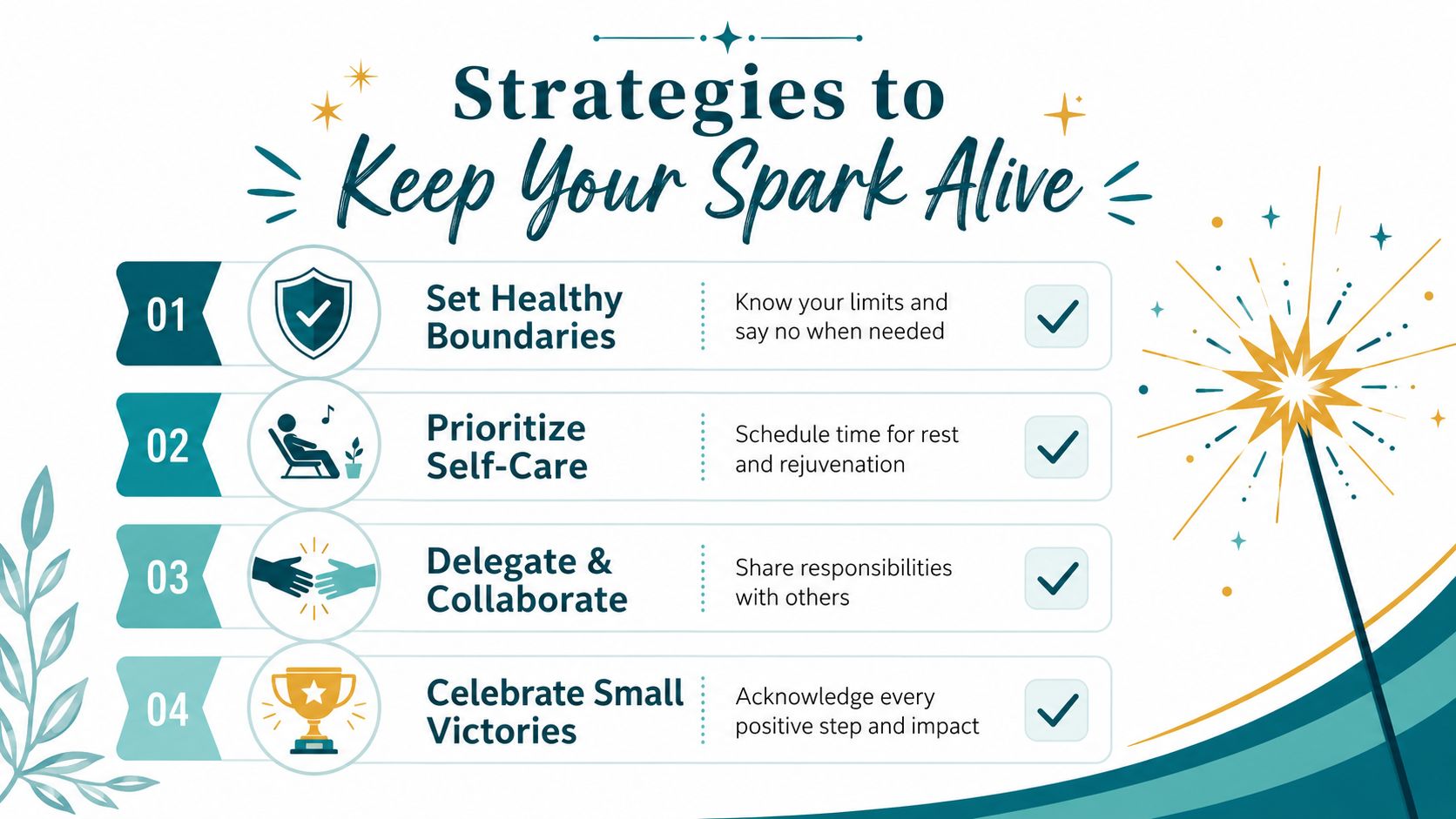
    If you leave the launch cleaner than you found it, the day lands differently in your chest.

    Good judgment beats bravado

    Let me be blunt. Don't act tough around water. Water doesn't care.

    If conditions feel off to you, listen to that feeling. If you're too tired, simplify the plan. If you don't know the stretch, ask questions before you go. The coolest person on the river is the one who gets home safely and wants to come back next week.

    A solid first outing looks like this:

    1. Pick an easy time of day when you won't feel rushed.
    2. Keep your route manageable so you can enjoy it instead of surviving it.
    3. Launch with intention and pay attention to how your body responds.
    4. End before you're exhausted because that's how good habits stick.

    The fox river valley is better from the water. But it's best when you approach it with humility, not swagger.

    Protect the Fox River and Get Your Hands Dirty

    This is the part where I stop being polite.

    If you love the fox river valley, prove it with your hands.

    A lot of people say they care about rivers. Fewer people bend down for the bottle in the weeds, the plastic jammed in brush after rain, or the junk stranded near a rough access point. Caring that never leaves the mouth doesn't do much for a river.

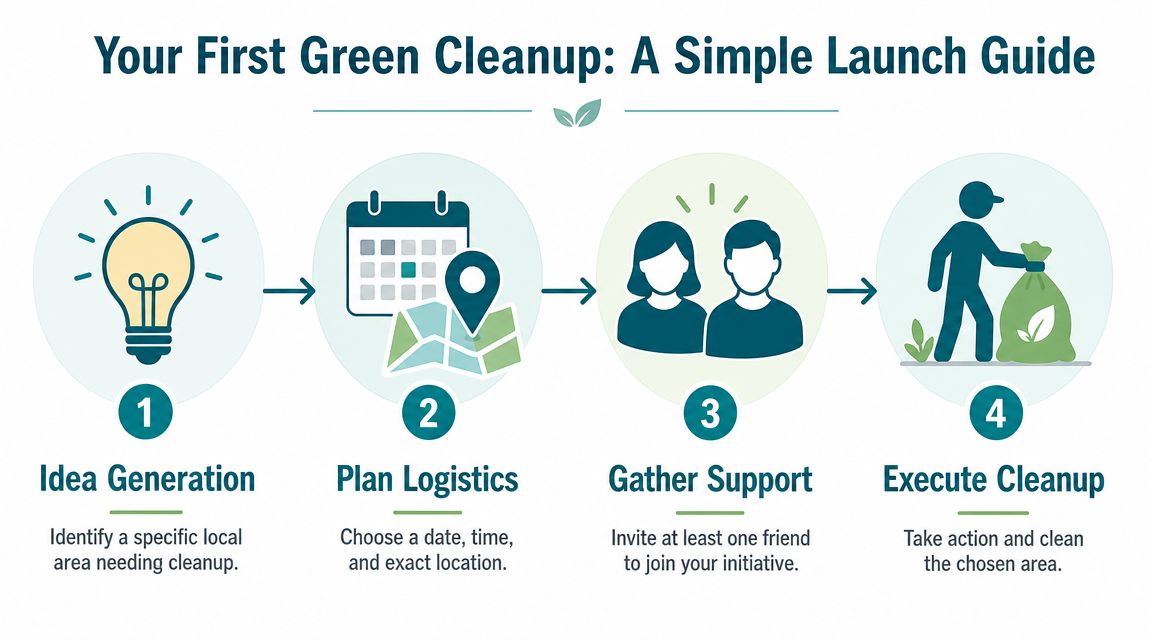
    An infographic comparing environmental challenges and positive community contributions to the health of the Fox River.

    The river has real problems

    Parts of the Fox River watershed in northeastern Wisconsin face water quality problems tied to legacy industrial pollution and agricultural runoff, with public information noting suspended solids, high-flow spikes, and heavy metal concerns in monitored areas, according to Fox Valley Technical College watershed context. I don't use that to scare you. I use it because vague environmental talk makes people sleepy.

    Concrete problems wake people up.

    The same background material also points to combined sewer overflow pressure in 15+ municipalities, and it describes green infrastructure and trash-trap style interventions as practical responses in this watershed context. That means cleanup work isn't random. It can be targeted. It can be smarter after storms. It can focus on the places where litter moves and piles up.

    Go where help is thinner

    I care a lot about this part. Some areas east of the Fox River have less access to cleanup resources and green infrastructure, which creates a real opening for volunteer action in neglected neighborhoods, as noted in the St. Charles active river opportunity analysis.

    That matters.

    If you only clean the easy, photogenic, already-loved places, you're doing maintenance. If you show up where resources are thinner, you're doing justice.

    I think more volunteer groups should admit that. The map is not neutral. Some blocks get attention. Some don't. Some shorelines get regular love. Some get shrugged at until the mess becomes normal.

    The place that needs your help most is often the place people talk about least.

    My advice for direct action

    Don't wait for the perfect event. Start with one clean, focused act.

    Here is how I'd approach the fox river valley if I wanted my effort to matter:

    • After storms, move fast: Water shifts debris. Fresh litter lines and snag points are easier to spot then.
    • Target access points and tributary edges: People drop trash where they enter, exit, park, or pause.
    • Bring basic sorting habits: Separate obvious recyclables when practical, and handle hazardous items carefully by reporting them if needed.
    • Keep notes: Write down what you saw. Which bank? What kind of trash? Was it repeat litter or flood-carried debris?
    • Return to the same place: One cleanup feels good. Repeated cleanups teach you the pattern.

    If you want a broader volunteer model for this kind of work, this page on how to clean up rivers is a useful place to start.

    Don't outsource your conscience

    People often act like environmental repair belongs to agencies, boards, or somebody with a title. I don't buy that. Formal work matters, sure. But ordinary people can remove real trash from real ground this weekend.

    And once you do that, something changes in you.

    You stop seeing litter as background. You stop seeing neglected places as somebody else's problem. You stop waiting for permission to care in a practical way.

    Here's the simplest version of the job:

    What you see What you do
    Trash after rain Show up quickly with gloves and bags
    Neglected bank edges Work in pairs and clear visible debris
    Repeated litter at access points Return often and track the pattern
    Uneven resource access Choose underserved areas on purpose

    I think the fox river valley needs more people who are willing to get a little dirty, a little tired, and a little less self-conscious. That's where real belonging starts.

    Your Fox River Valley Itineraries

    Some people freeze because they have too many options. So I'm going to make this plain. Pick one of these day plans and go.

    A good day in the fox river valley doesn't need to be expensive, elaborate, or optimized. It needs only a shape.

    A watercolor illustration of the Fox River featuring people picnicking, kayaking, and cycling along a trail.

    Solo reset day

    This is for the person who's burned out, over-socialized, or stuck in their own head.

    Start in one town, not three. Walk near the river in the morning before the day gets noisy. Find a bench or quiet stretch and stay there longer than feels productive. Then take a trail walk with no pressure to go far.

    Bring a notebook if that helps, but don't force insight. Let the place do some work on you.

    Best use of the day

    • Morning: Slow river walk
    • Midday: Simple lunch and zero rush
    • Afternoon: Trail time or a park sit
    • Before leaving: Pick up a few pieces of litter if you safely can

    Family day with movement

    Families don't need a perfect outing. They need a forgiving one.

    Choose a riverfront area where kids can move, adults can breathe, and nobody has to pretend to enjoy a packed schedule. Keep snacks easy. Keep expectations lower than your Pinterest brain wants them to be. Mix one active thing with one restful thing.

    A family day works best when adults stop trying to control every minute. Let the river be part of the entertainment.

    Cleanup crew day

    This is my favorite because it leaves a mark.

    Pick one target area. A shoreline edge, trail entrance, launch point, or park border. Meet in the morning while energy is still high. Work in gloves, bring enough bags, and decide your boundaries before you start. After the cleanup, wash up, eat together, and take a walk somewhere nearby.

    That sequence matters. Service first. Joy second. That's a powerful rhythm.

    Field note: Small groups win when they stay focused. One area cleaned well beats a scattered day of half-effort.

    Adventure day on purpose

    This is for people who need a little more adrenaline to feel awake. Pair paddling with walking, or biking with a river stop. Keep the route realistic and the gear simple.

    The mistake adventurous people make is turning every outing into a test. Don't test yourself all day. Leave room for play. Leave room for a detour. Leave room for the kind of moment you couldn't have scheduled anyway.

    The safety rules I want you to actually follow

    I don't believe in fear-heavy safety talk. I believe in preparation.

    • Check conditions: If weather or water feels wrong, change the plan.
    • Dress for the day's conditions: Sun, wind, mud, and wet shoes count.
    • Know your limits: Pride is heavy. Leave it in the car.
    • Bring water and charge your phone: Basic things prevent dumb problems.
    • Use gloves for cleanup: Your hands are not trash tools.
    • Leave if something feels off: You don't need to win against discomfort every time.

    The fox river valley is better when you stop waiting for the ideal day and start building honest ones. Go there to move, breathe, notice, paddle, walk, sit, clean, and come home different than you arrived.


    If you're ready to stop admiring from a distance and start doing the work, join Litter Caterpillars. It's a volunteer group built for people who want friendship, service, bravery, and real impact. Show up, grab a bag, and help clean the places people forget.