Tag: chicago volunteering

  • Discover what is environmental justice and how you create change

    Discover what is environmental justice and how you create change

    Forget the dry, academic stuff. I want to tell you what environmental justice really is. It’s a simple, ferocious idea: everyone, and I mean everyone, deserves to live in a healthy, clean place, no matter who you are, how much you make, or where you live.

    It's about fairness. It’s that simple.

    What Is Environmental Justice Really About?
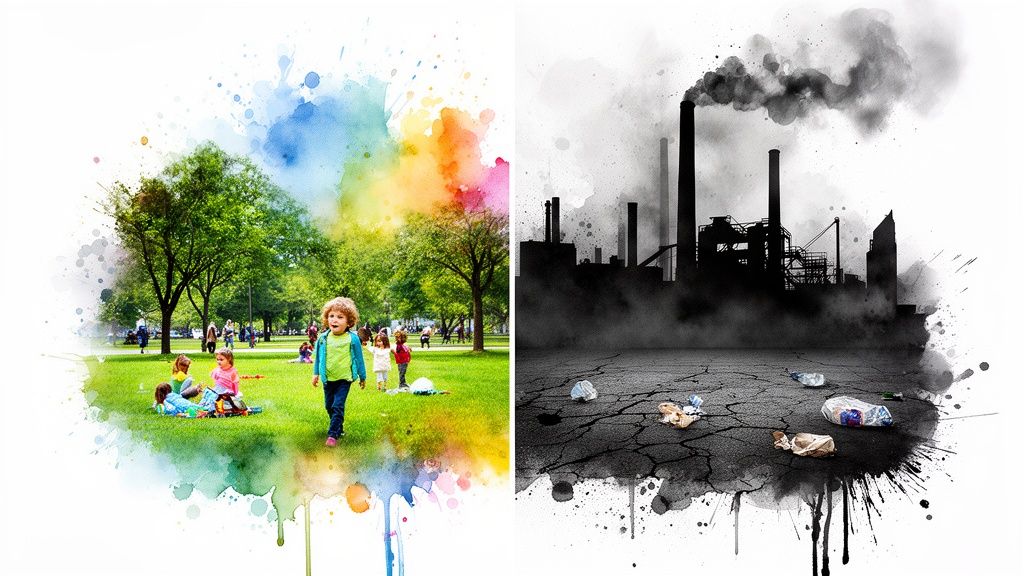
    Vibrant park with children playing contrasts with a dark, polluted industrial landscape.

    Have you ever driven across town and noticed how things just… change? In one part of town, you’ll find yourself surrounded by big, beautiful parks where kids laugh and the air feels crisp. But then, just a few miles away, the story is completely different. Maybe a factory looms over homes, spewing smoke, or the streets are littered with trash, and you wouldn't dream of letting your kids play outside.

    I promise you, that's not a coincidence. That’s injustice.

    Imagine your city is one giant house. For decades, all the trash, all the pollution, all the gross, unwanted stuff gets dumped into the same few rooms, over and over again. The people living in those rooms? They'd get sick. They couldn’t sleep. You’re telling them their health, their dignity, doesn’t matter. It’s fundamentally wrong.

    The fight for environmental justice is you standing up and shouting, "Enough. Everyone deserves a clean room." It's about demanding basic human dignity.

    The Four Pillars of This Fight

    At its core, this whole battle for environmental justice comes down to a few key ideas. These aren’t just words on a page; they're the roadmap I use to fight for a fairer world, and they explain why we do what we do at Litter Caterpillars.

    When you look at it this way, a huge, complicated problem suddenly becomes something you and I can actually tackle.

    The Four Pillars of Environmental Justice

    These core principles break down the environmental justice movement into clear, actionable ideas for building a fairer world.

    Principle What It Means for You and Me
    Distributive Justice This is all about where we put the bad stuff. It means one neighborhood shouldn't be the designated dumping ground for landfills, polluting factories, or highways just because of the race or income of the people who live there. You spread the burden fairly.
    Procedural Justice You get a seat at the table. This means you have a real, powerful voice in any decision that affects your environment—from where a new plant gets built to how your local parks are taken care of. No more backroom deals.
    Corrective Justice This is about cleaning up old messes. If your community has been choked by pollution for decades, you deserve to have that damage undone. We clean up the old sites and make things right for the people who have suffered.
    Recognitional Justice This means we see you, we hear you, and we respect you. It’s about finally admitting that different people and cultures have unique connections to the environment and that your knowledge and traditions are valuable.

    These principles show you that cleaning a street isn’t just cleaning a street. It’s a bold act of justice. It’s my way of showing up and fighting for your right to a healthy, safe home.

    This is what I’m all about at Litter Caterpillars. When we clean up a neglected lot or haul bags of junk off a forgotten street, we're not just picking up litter. We’re taking a stand. We're screaming, "This community matters. You matter."

    It connects directly to a much bigger picture, something you can read about in my guide on what is environmental activism. This whole fight isn't some distant political game; it’s about you and me showing up for each other, right here, and making our world better one piece of trash at a time.

    My Journey From Personal Mess to Public Mission

    Split image: a man in a dark, messy room contrasted with him smiling in a clean, colorful room, holding a trash bag.

    Long before I ever thought about big ideas like "environmental justice" for Chicago, I had to face the chaos in my own apartment. It was a disaster, buried under a mountain of stuff I couldn't let go of. Each old takeout box, every forgotten gadget, felt like a tiny anchor holding me down.

    That clutter was a mirror for my life. A long, turbulent relationship had just ended, and my world felt just as messy, just as stuck. I knew I needed a complete reset, not just a quick fix.

    I had to build a new life from the ground up, and I wanted it to be filled with kind, giving people. That meant I had to confront the things I was worst at: cleanliness, consistency, and bravery. That's the little seed from which Litter Caterpillars sprouted.

    From Personal Cleanup to Public Action

    My journey started with a selfish need to fix my own life. It’s strange, but cleaning up someone else’s mess felt so much easier than tackling my own. Picking up trash in a park didn't have the emotional weight of, say, finally tossing a four-year-old jar of jam from my own fridge.

    Doing something for you, for others, for a whole community… it was liberating. By showing up for a neighborhood, I was also, unexpectedly, showing up for myself. I was building that consistency and bravery I so desperately needed.

    The lesson hit me like a ton of bricks: Transforming your immediate world gives you the strength and vision to help transform the community around you. You find this incredible power in serving others, a power that helps you clean up your own life in the process.

    This is the bridge from your own struggle to a public mission. You start by cleaning your own room, so to speak, and before you know it, you’re looking at the whole city. That’s how a simple act of tidying up can blossom into an act of environmental justice.

    The Uncomfortable Truth About Environmental Injustice

    This idea of environmental justice didn't just appear out of nowhere. Its story is woven into the fabric of the Civil Rights movement of the 1960s. For decades, activists on the ground just knew something was deeply wrong. By the 1980s, they started connecting the dots with data, and the picture that emerged was horrifying.

    What they uncovered wasn't an accident. It was a brutal, intentional pattern.

    I saw how communities of color and low-income neighborhoods were systematically chosen to be the city’s dumping grounds. The landfills nobody wanted, the toxic waste sites, the factories spewing poison into the air—they all ended up in the same kinds of places. This wasn’t bad luck. It was policy.

    A Pattern Proven by Numbers

    The real bombshell dropped in 1987. A groundbreaking study, "Toxic Wastes and Race," exposed the entire rotten system. It proved, with cold, hard facts, that race was the single biggest factor in deciding where a hazardous waste facility was built. It mattered more than how much money you made, the value of your home, or anything else.

    And this isn't some ghost story from the past. I see it happening right now, in our own backyards. The numbers just punch you in the gut.

    The disparity is shocking: today, more than half of the people living within just one mile of America's most hazardous waste sites—the ones the EPA has targeted for cleanup—are people of color.

    This tells you everything you need to know. Environmental injustice isn’t a series of unfortunate events. It's a system. It's a machine built over generations that sorts people by the color of their skin and decides who gets clean air and who gets a toxic inheritance.

    From History to Action

    When you understand this history, it changes everything. It shows you that when we fight for a clean park or push back against a new polluting factory, we're not just talking about trees and trash. We are fighting for racial justice. We are trying to dismantle a system that has always treated certain lives as disposable.

    This is where the real work begins—right here, where you and I live. When we get together to clean up a street, we are directly defying that history of neglect. To see how you can turn this anger and understanding into real power, check out my guide on what is community organizing. It’s the next logical step after you see the problem: you do something about it.

    Bringing the Fight for Justice to Chicago's Backyards

    Environmental injustice isn't some abstract idea you read about. It's right here, in Chicago's own neighborhoods. You and I see it every single day. It's stitched into the very fabric of our city, a place where the air you breathe can change with your zip code.

    For years, people in our own communities have been fighting battles they shouldn't have to. I think about Little Village, a proud, majority-Latino neighborhood on the Southwest Side. For decades, the people there lived under the smokestacks of the Crawford and Fisk coal plants, fighting for every clean breath against a constant rain of soot that was making their families sick.

    They organized, they protested, they refused to give up. And they won. But then, the fight just changed its costume.

    New Battles, Old Wounds

    Soon after the plants shut down, a new giant moved in—a massive warehouse for Target. This brought endless fleets of diesel trucks rumbling down their residential streets, trading one kind of poison for another. This is exactly what environmental injustice feels like when you live it. It’s a suffocating cycle of having to fight for the basic right to be safe in your own home.

    Or I think about Englewood on the South Side. For years, you could look out your window there and see nothing but vacant lots and crumbling buildings. These aren't just ugly; they're open wounds, physical signs that say, "This place has been forgotten."

    But these aren't just stories of struggle. They're stories of unbelievable strength. When you stand up to a polluting company or fight to turn a derelict lot into a park, you are practicing environmental justice. It’s about looking at your home and refusing to let it be a sacrifice zone.

    This is the entire reason I started Litter Caterpillars. When we show up to clear a trash-filled lot in Englewood, we’re doing so much more than picking up garbage. We’re sending a message, loud and clear: this neighborhood is not forgotten. The people here deserve beauty, safety, and respect.

    A Small Park, A Big Victory

    I saw this power with my own eyes. A small group of us volunteers decided to bid on an empty, junk-filled lot at a city auction. We scraped together what little money we had and, honestly, against all odds, we won it. That little piece of land is now becoming Caterpillar Park—a green space for the community, built by the community.

    That one small act—taking back one forgotten lot—was a direct punch against the story of neglect. It was environmental justice in action, born from my simple idea of bringing something good to a place that deserved it. Our weekly cleanups are a continuation of that same fight. We show up, week after week, with our bags and gloves to prove that every single backyard in Chicago matters to me.

    How Picking Up Trash Becomes an Act of Justice

    You’re probably thinking, “It’s just litter. How is picking up a potato chip bag going to fix a massive, complicated problem?” I get it. I’ve thought it too. But the line from that chip bag to real justice is deeper than you can imagine. It's everything.

    Think about it with me. Which neighborhoods have the most trash blowing down the street? Where do you see dumpsters overflowing for weeks on end? It’s almost always the same communities already choked by industrial pollution and ignored for decades.

    Litter is the most in-your-face symptom of systemic neglect. It’s a daily, soul-crushing reminder that someone with power decided this place, and the people in it, weren't worth the effort to keep clean. When garbage piles up, it screams a message: this community is disposable.

    From Neglect To Action

    So when we, the Litter Caterpillars, show up every single week—rain, shine, blizzard, or heatwave—we're screaming a different message. We are shouting from the sidewalks, "This neighborhood matters! You who live here matter!"

    Our work is an act of pure defiance. It’s my direct challenge to the quiet apathy that let the mess grow in the first place.

    This is the simple, powerful process we live by. We interrupt neglect and we transform it into real, tangible justice.
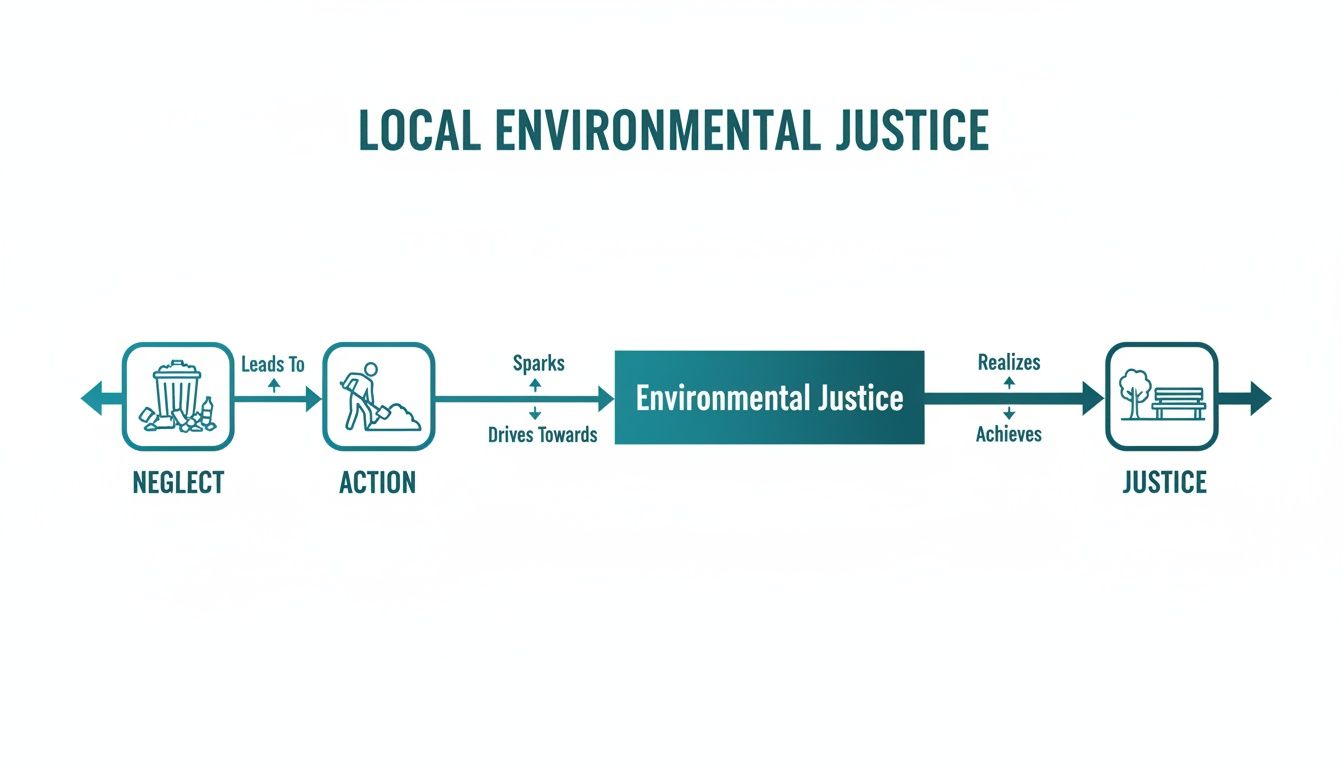
    A process diagram showing Neglect (trash) leading to Action (shoveling), which sparks Environmental Justice and achieves Justice (park bench).

    This image tells the whole story. A simple, direct action shatters the cycle of neglect. It’s the very first step toward justice and restoring a community’s spirit.

    Cleaning messes someone else made is how you and I give a place its dignity back. It’s an immediate, hands-on way to fight. We’re showing up with bravery and kindness, together. Every single bag of trash we haul away is a small victory, a piece of reclaimed pride for a neighborhood that deserves it.

    This is how we answer the big questions with our own two hands.

    It’s a powerful statement. We are physically mending the tears in our social fabric, one fast-food container at a time. We're not just cleaning a street; we are healing a small part of our city.

    And that’s the beautiful thing about this work. It isn’t some abstract idea. You can see the impact right away.

    If you feel that fire and want to take this kind of direct action yourself, check out my guide on how to start a volunteer trash pickup in your own neighborhood. It always starts with one person, you, deciding to show up.

    You Can Join This Movement Today

    Are you feeling that fire in your gut right now? That little spark that says, “This isn’t right, and I want to do something about it”? I know that feeling intimately. It’s what started this whole crazy journey for me, and I’m personally inviting you to join us.

    You don’t have to be a policy wizard or a seasoned activist to make a real, lasting difference. Real change starts small. It starts with the simplest and bravest step you can take: just show up.

    Your First Step Is Showing Up

    Every weekend morning, we gather to build a real community of givers. I’m not asking for your money; I’m asking for your time and your energy. We provide the gloves, the bags, the grabbers, and the great company—you just have to bring yourself.

    This is how we put the big ideas of environmental justice into action. For us Chicagoans, this is personal. Our weekly cleanups across all the city's wards, from highways to the future Caterpillar Park in Englewood, are my way of fighting back. We intentionally go to the neglected spaces where low-income and minority residents live surrounded by litter-choked streets, showing you that you are seen and valued. Read more about these climate inequality findings to see how this work makes equity visible.

    What to Expect at Your First Cleanup

    Throw away any idea you have about volunteering being a boring chore. This is different. Your first cleanup with us is more than just picking up trash; it’s an adventure. You’ll meet people from every walk of life, all connected by a shared desire to do something good.

    You’ll probably get a little sweaty, share some laughs, and feel an incredible sense of purpose. We make it fun with music, our iconic flags, and a genuine spirit of teamwork that’s hard to find anywhere else.

    The real magic isn't in the trash we take away; it's in the friendships we forge and the personal strength we discover. By investing your time to transform your city, you end up transforming yourself.

    This is how we fight back against the idea that some neighborhoods are disposable. We prove it wrong with our actions, our bravery in blizzards and heat waves, and our shared pride. Come find our next event, show up, and see for yourself how good it feels to be part of the solution.

    Your Questions Answered

    When you start digging into this stuff, questions pop up. That’s good. It means you’re paying attention. I get asked these all the time, so let me tell you what I think.

    Isn't Cleaning up Litter the City's Job?

    Yes. Of course it is. But have you ever noticed how some neighborhoods seem to be consistently skipped over? I see it all the time. Our work isn't about replacing city services; it's about forcing the issue.

    When we show up and clean a neglected block, we're planting a flag. We're saying, "This place matters. These people matter." It's our way of taking pride back into our own hands, and it puts friendly pressure on the city to spread its resources more fairly. You and I lead by example.

    I'm Just One Person. Can I Really Make a Difference?

    Yes. I'm going to say it again: yes. This whole group started with me, one person, feeling totally crushed by my own mess. Now, we're a community of hundreds, changing the face of Chicago.

    It’s all about momentum. One person picking up trash is a start. But 50 people showing up together, week after week, doesn't just clean a street—it transforms a neighborhood. You build a wave that's impossible to ignore. Your presence alone gives someone else the courage to join you.

    You are never just one person. When you show up, you are a symbol of hope and an invitation for others to join. You are the spark.

    What if I'm Not in Chicago? How Can I Help?

    Environmental justice isn't just a Chicago problem, so the solution can't be just in Chicago. If you're not here with me, I challenge you: find a group doing this work in your town. And if you can't find one? Start your own.

    Seriously, my model couldn't be simpler:

    1. Find a spot in your community that everyone else ignores.
    2. Grab a few friends who want to do some good.
    3. Start cleaning. And don't forget to have some fun with it—that part's crucial.

    Post what you're doing online. Tell people your story. That positive energy is what builds a community and gives you the power to push for real change. The Litter Caterpillars spirit can and should exist everywhere.

    Does This Work Actually Change Policy?

    It can, and it does. I’ve learned there's almost nothing more powerful than a community that consistently shows up. When we clean a forgotten alley and I share its story, we're not just picking up junk. We're creating public proof that a problem exists, and we're putting firm, friendly pressure on officials to act.

    My work has directly led to more city services in overlooked spots. I’ve seen community gardens pop up in lots that used to be filled with trash. I've seen residents find their voice and speak with confidence at local meetings. We clean with our hands, and we advocate with our voices. It’s a one-two punch for justice.


    Ready to stop asking and start doing? At Litter Caterpillars, I know that service changes us and our city. Come to our next cleanup. It’s time for you to show up, make some real friends, and be the change.

    Learn more and find your place with us at https://www.littercaterpillars.com.
  • 10 Transformative Ways to Give Back to Community in 2026

    10 Transformative Ways to Give Back to Community in 2026

    I’ll let you in on a secret. My life used to be a wreck. A total mess. My apartment was a disaster, and if I'm being honest, so was my head. Every piece of trash had a story, a weight I just couldn't seem to lift. I felt stuck, completely paralyzed. Then, one day, something inside me just snapped. I decided I had to change. I needed to find people who were givers, not takers. So I started by cleaning up someone else's mess—the litter scattered across Chicago's streets.

    Huddled under a tree during a freak hailstorm with two new friends, shivering and laughing hysterically, I had an epiphany. Facing a little hardship together wasn't just fun; it was electric. It was transformative. That’s how my group, Litter Caterpillars, was born. You see, the most powerful ways to give back to community aren't just about changing the world out there; they're about rewiring the world inside you. It's about finding your strength. Your people. Your purpose. One small, brave act at a time.

    This guide is for you, for anyone who feels that same pull. We're going to skip the vague, fluffy advice and dive straight into things you can do today. This weekend. This year. Whether you have 30 minutes or want to lead a movement, I promise there’s a place for you here. Let’s find it together.

    1. Neighborhood Litter Cleanup Drives

    Imagine walking down your street and seeing it completely clean. No discarded wrappers. No bottles. No debris. This isn't a fantasy. It’s what happens when you organize a neighborhood litter cleanup, one of the most direct ways you can give back to your community. It’s a grassroots lightning strike. This effort pulls neighbors together, transforming shared spaces through pure collective action. You don't just clean up trash; you build relationships and shout from the rooftops that you care about your home.

    How It Works & Why It Matters

    A litter cleanup is simple yet profound. You and a group of volunteers gather on a specific day, armed with bags, gloves, and grabbers, and you systematically clear an area. The impact is immediate. It’s inspiring. You are reclaiming your environment, one block at a time. The real magic happens when people see you out there. They get inspired. Maybe they join in, or maybe they just think twice before dropping something. That ripple effect strengthens community pride and weaves a culture of shared responsibility.

    Getting Started: Actionable Tips

    • Rally Your Troops: I use tools like Meetup or Instagram to get the word out. Schedule your cleanups for weekend mornings; that's when you'll get the most people.
    • Equip for Success: You should provide all the necessary supplies, like gloves and trash bags, so anyone can join without a second thought. I've found that partnerships with local waste management can help with getting rid of the trash afterward.
    • Build a Brand: My group, Chicago's own Litter Caterpillars, created a strong identity that now spans all 50 city wards. Think about a fun name. A flag. Even team T-shirts. You need something that builds camaraderie.
    • Celebrate Your Impact: You should always track how many bags of trash you collect and share those numbers with your volunteers. Celebrating these wins builds momentum and keeps everyone fired up.

    Ready to make a visible difference in your neighborhood? Starting your own group is easier than you think. For a step-by-step guide, check out this fantastic resource on how to start a volunteer trash pickup and bring this incredible community-building activity to your own streets.

    2. Community Garden and Green Space Development

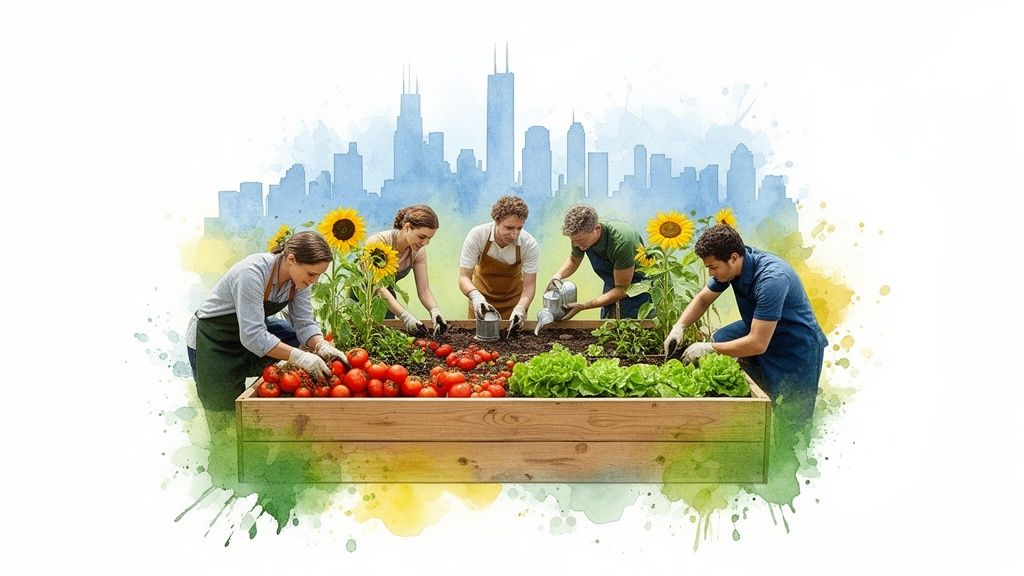
    Picture this: an overgrown, forgotten lot in your neighborhood transforms into a vibrant hub of life. I'm talking raised garden beds overflowing with vegetables and neighbors laughing together. This is the reality of community gardening, one of the most powerful ways you can give back to your community. You aren't just planting seeds in the ground; you're planting seeds of connection, improving local food access, and creating beautiful, shared spaces where friendships can bloom. It's like building a living room for your entire neighborhood.

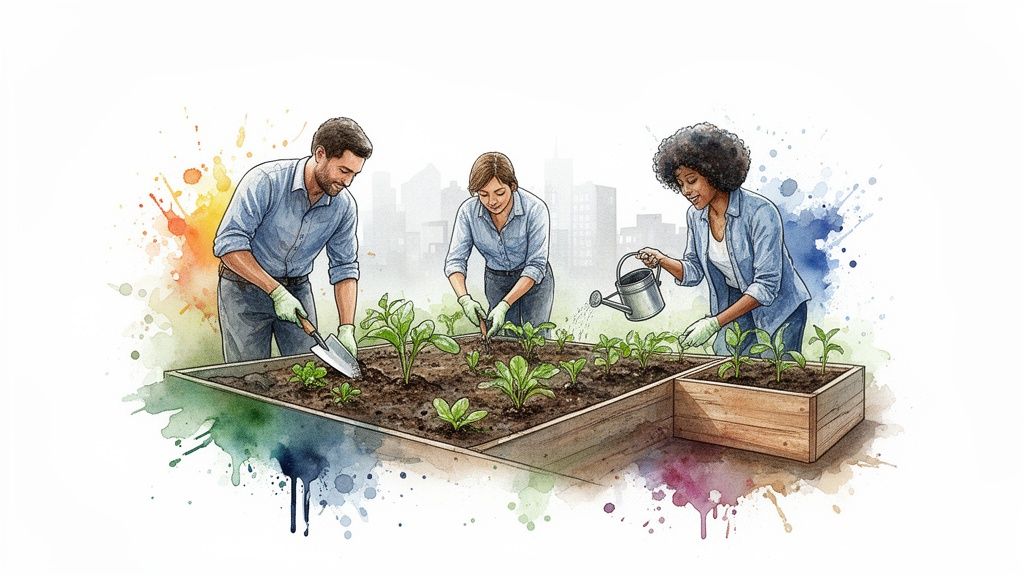
    Three diverse people gardening in raised beds with a city skyline, in a vibrant watercolor style.

    How It Works & Why It Matters

    A community garden is a metamorphosis. It takes underused land and turns it into a productive green space where you and your neighbors can grow your own food or simply enjoy nature. The process builds a deep sense of ownership and pride. By working the soil side-by-side, you create more than just a garden; you weave a stronger social fabric. This effort directly tackles issues like food deserts, beautifies the neighborhood, and provides a peaceful sanctuary for everyone to enjoy. It’s a living testament to what you and your neighbors can achieve together.

    Getting Started: Actionable Tips

    • Build Your Team: Before you even touch a shovel, you need to gather neighbors who share your vision. I suggest using social media or flyers to host an initial interest meeting.
    • Secure the Land: You'll have to identify a vacant lot and work with your local government or the landowners to get permission. Organizations like the Trust for Public Land can be invaluable partners in this process.
    • Create a Plan: Sketch out your garden layout and create a sustainable maintenance plan. You should establish volunteer rotations for watering and weeding to ensure it succeeds long-term.
    • Engage Everyone: Host workshops, potlucks, and planting days in the garden. This keeps the community involved. And make sure you celebrate your first harvest together to build momentum.

    Ready to bring a green oasis to your block? Learn from pioneers like Ron Finley and see how you can start your own urban gardening movement. This is more than just a project; it's a legacy of health and community.

    3. Youth and Student Volunteer Programs

    Imagine taking the raw energy and idealism of students and aiming it directly at your community's challenges. That's the heart of youth and student volunteer programs, one of the most potent ways to give back to community. These initiatives create structured pathways for you and other young people to contribute your skills, learn about civic responsibility, and build a lifelong habit of service. It’s not just about getting a task done. It's about investing in the next generation of leaders and seeing your city through their fresh, determined eyes.

    How It Works & Why It Matters

    Think of it like a matchmaking service. Youth volunteer programs connect students with vetted opportunities that fit their schedules and interests. They often partner with schools, universities, and local nonprofits to address real community needs, from mentoring younger kids to restoring local parks. This matters because it provides a crucial doorway into civic life. For many of us, it's our first taste of meaningful community work, building confidence, leadership skills, and a network of peers who believe in making a difference.

    Getting Started: Actionable Tips

    • Connect with Campuses: If you want to recruit passionate students, partner with local high schools and university service centers, like those at Northwestern or the University of Chicago.
    • Offer Flexibility: You have to provide evening and weekend opportunities to accommodate academic schedules. Be ready to document service hours for school requirements or resumes.
    • Create Peer Leadership: Empower dedicated student volunteers with leadership roles. Let them help manage events and recruit friends. This fosters a deeper sense of ownership.
    • Build Community: You should host social events after service projects to help volunteers connect and build friendships. This transforms a one-time activity into a lasting community.
    • Leverage Social Media: I use platforms like Instagram to share our stories, post opportunities, and celebrate the impact my young volunteers are making.

    Ready to engage the next generation? Look into programs like Chicago ServiceCorps for inspiration on how structured service can empower young adults and transform neighborhoods.

    4. Environmental Education and Awareness Campaigns

    Picking up trash is powerful, I know. But what if you could stop it from ever being dropped in the first place? This is where education becomes one of the most transformative ways to give back to community. When you create awareness campaigns, you move beyond treating the symptoms and start attacking the cause. You’re not just cleaning a park; you’re planting seeds of consciousness that grow into lasting, sustainable change for everyone. You're changing hearts and minds.

    How It Works & Why It Matters

    An awareness campaign is like translating passion into knowledge. You use storytelling, data, and compelling visuals to inform your neighbors about environmental issues and inspire them to act. The goal is to shift mindsets from passive coexistence to active stewardship. When I understand why a plastic bottle harms local wildlife or how my actions contribute to a larger problem, my behavior changes. This creates a powerful, self-sustaining cycle of care that multiplies the impact of every single cleanup event.

    Getting Started: Actionable Tips

    • Tell a Visual Story: You should use social media platforms like Instagram to share dramatic before-and-after photos of cleaned areas. I create short, engaging Reels that show the process and the impact.
    • Partner with Schools: Connect with your local schools to develop simple, age-appropriate presentations or activities. If you educate the next generation, you build a foundation for a cleaner future.
    • Share Shocking Stats: You can create simple, shareable infographics about local environmental data. Something like, "Did you know our neighborhood produces X tons of single-use plastic waste each month?" can be a real eye-opener.
    • Host Community Workshops: Try organizing monthly info sessions at a local library or community center on topics like composting, recycling best practices, or reducing household waste.

    Ready to inspire your neighbors and create a ripple effect of change? You can learn from the masters of environmental storytelling at organizations like the Ocean Conservancy and adapt their powerful techniques to your own local campaigns.

    5. Neighborhood Friendship and Social Connection Networks

    What if volunteering wasn’t just about the task, but about the people I do it with? Giving back to the community can be the most powerful antidote to loneliness. You can create genuine friendships and social bonds that last long after the work is done. This approach recognizes that when we serve together, we don't just transform our environment; we transform ourselves. We build resilience, a sense of belonging, and real, human connections. It's like finding your tribe while changing the world.

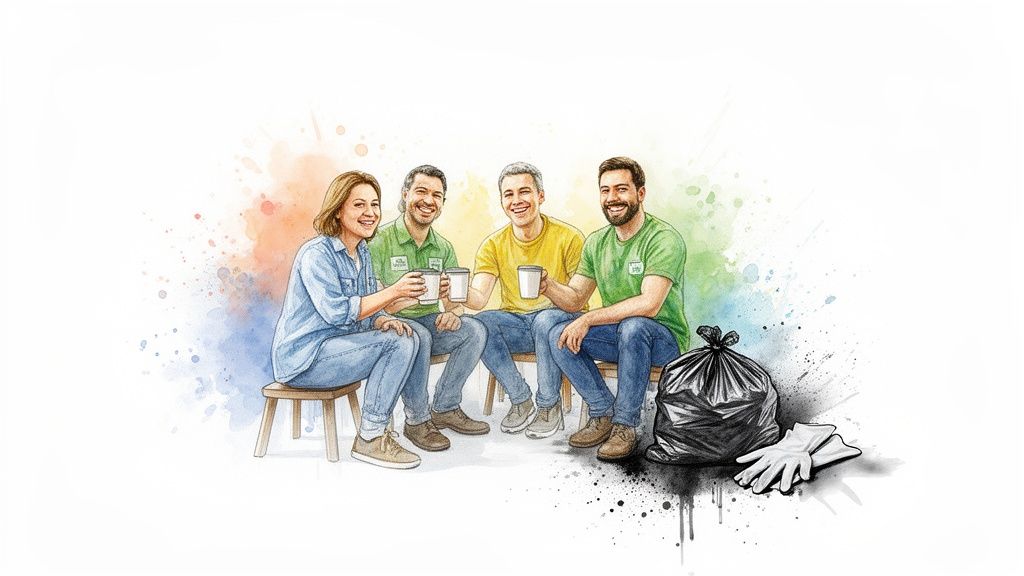
    Four smiling volunteers, three men and one woman, enjoy a coffee break after a community cleanup.

    How It Works & Why It Matters

    A friendship network built on service intentionally carves out space for connection beyond the task at hand. Your goal becomes twofold: make a tangible impact and build a supportive "tribe." It's about seeing the same faces each week, learning their stories, and celebrating shared accomplishments. The magic here is simple but profound: a shared purpose forges unbreakable bonds. Organizations like Rotary Clubs and my own Litter Caterpillars prove that when you put people first, the mission becomes even more meaningful and sustainable.

    Getting Started: Actionable Tips

    • Create Social Rituals: Don't let the event end with the cleanup. I always schedule a post-service coffee or meal to let people unwind and connect on a personal level.
    • Build a Buddy System: You should pair new volunteers with experienced members. This mentorship helps newcomers feel welcome and integrated from day one.
    • Celebrate People, Not Just Stats: I make a point to acknowledge volunteer anniversaries and personal milestones. You have to make everyone feel seen and valued as an individual, not just a helper.
    • Foster Group Identity: Create a fun name, a group chat for non-event chatter, or even team T-shirts. This builds a shared sense of pride and belonging.

    Ready to find your community while making a difference? Explore some proven community building activities for adults to see how service and friendship can create an unstoppable force for good in your neighborhood.

    6. Corporate and Business Partnership Programs

    Imagine your grassroots volunteer group suddenly having the resources of a local company behind it. That's the power of corporate and business partnerships. It’s a strategic way for you to amplify your impact. Think of it as a collaboration where businesses offer support—funding, supplies, or employee volunteers—and in return, they boost their community presence and engage their teams. You’re not just asking for a handout; you’re building a symbiotic relationship that fuels positive change for everyone involved.

    How It Works & Why It Matters

    A corporate partnership is like a perfect marriage. You align your community initiative with a business that shares your values. The company might sponsor your cleanup event, provide professional services, or offer matching grants for employee donations. This collaboration gives your project credibility and provides the resources you need to scale up. The magic is in finding that perfect match, where a business’s brand mission and your community goals overlap, creating a powerful story of shared purpose. It’s one of the most effective ways to give back to your community.

    Getting Started: Actionable Tips

    • Find Your Match: You should look for businesses whose mission aligns with yours. For my environmental group, a partnership with a company like Patagonia or Seventh Generation makes perfect sense.
    • Create a Clear Proposal: Outline exactly what you need and what the business gets in return, such as brand visibility or structured volunteer events for their staff. You have to make it a win-win.
    • Offer Turnkey Opportunities: Businesses are busy. You should design volunteer-ready projects that are easy for their employees to join, like a pre-organized park cleanup or a donation sorting day.
    • Showcase the Impact: I always share success stories, photos, and metrics with my partners. Host appreciation events to celebrate your joint achievements and strengthen the relationship.

    Ready to find a business ally for your cause? Building these connections can be a game-changer. For inspiration on how companies integrate giving back, explore how B Corporations are redefining business success to include social and environmental performance.

    7. Accessibility and Inclusive Volunteering Models

    What if everyone who wanted to help their community actually could? This powerful idea is the heart of inclusive volunteering. It’s a model that intentionally designs opportunities to welcome people of all abilities, backgrounds, and life circumstances. It’s about you moving beyond a one-size-fits-all approach and asking, "How can we remove the barriers?" When we do this, we don't just expand our volunteer pool; we create a richer, more representative, and truly unified community effort.

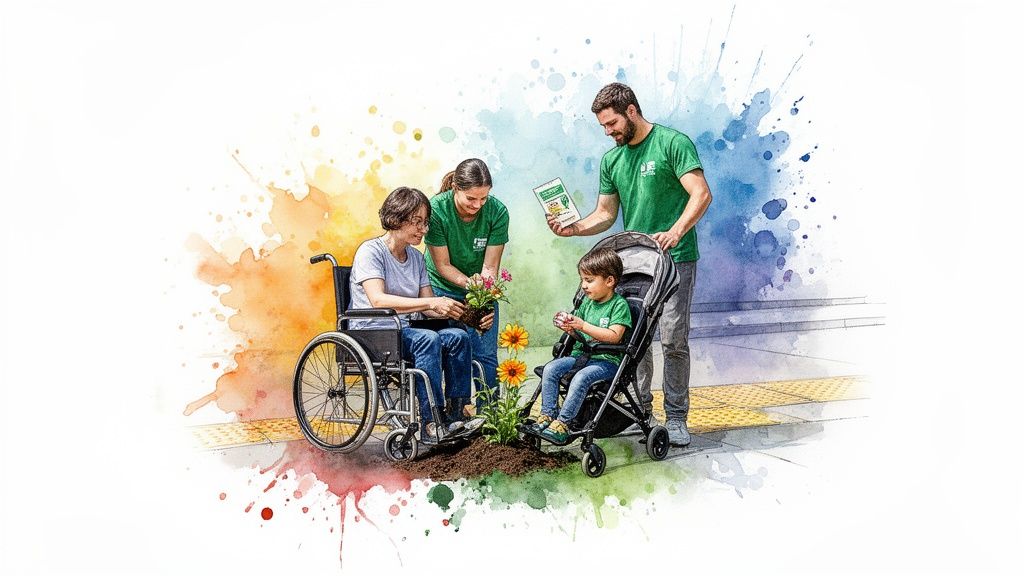
    A diverse group, including a woman in a wheelchair, adults, and a child, plants flowers as community service.

    How It Works & Why It Matters

    Inclusive volunteering means you build flexibility into your program from the ground up. It could look like offering virtual roles for me if I have mobility challenges, providing childcare so parents can participate, or ensuring event instructions are available in multiple languages. This isn't just about being nice; it’s about recognizing that diverse life experiences are a community's greatest asset. By making volunteering accessible, you unlock untapped potential and ensure that the solutions you create are truly for everyone.

    Getting Started: Actionable Tips

    • Audit Your Events: Before you plan, think about accessibility. Is the location wheelchair accessible? Are there clear paths? Is it near public transportation?
    • Offer Flexible Roles: You should create both in-person and virtual tasks. Not everyone can show up on a Saturday morning, but they might be able to help with online outreach or data entry from home.
    • Provide Support: Consider offering childcare or a quiet space for volunteers who may need a sensory break. You should ask volunteers what they need to succeed when they sign up.
    • Use Inclusive Language: Ensure your recruitment materials speak to everyone. A simple phrase like, "We are committed to creating an accessible event; please let us know your needs," makes a huge difference.

    Making your volunteer efforts more inclusive is one of the most powerful ways to give back to your community because it multiplies your impact. To learn more about universal design principles that can guide you, explore the resources from the National Center on Accessibility.

    8. Neighborhood Exploration and City Discovery Initiatives

    Imagine giving back to your community not just in one place, but across every single unique corner of your city. This is the soul of neighborhood exploration initiatives. It's a powerful model that combines volunteer service with intentional city discovery. You get to help clean, build, or support different neighborhoods while connecting with the diverse cultures and people that make your city vibrant. You break out of your bubble, build city-wide relationships, and truly understand the fabric of your home. It’s like being a tourist in your own town, but with a purpose.

    How It Works & Why It Matters

    These initiatives are about purposeful movement. Instead of focusing on a single location, you and your volunteer group systematically plan events in different neighborhoods, often with a goal to visit every single one. This approach turns giving back into an adventure. It combats the geographic and social divisions that can exist in a large city. It’s a profound way to foster a sense of shared identity and responsibility, showing that every community, from the quietest residential street to the busiest downtown corridor, matters equally.

    Getting Started: Actionable Tips

    • Map Your Mission: You should set a clear goal, like visiting all 50 of Chicago’s wards, as we did with the Litter Caterpillars. I use a map to track our progress and build excitement around the journey.
    • Partner with Locals: Before you visit a new neighborhood, connect with local community organizations or long-time residents. Ask them to share stories or highlight specific areas of need.
    • Create Discovery Guides: Develop simple "neighborhood cards" with interesting historical facts, local landmarks, or fun trivia. You can share these with your volunteers and deepen their connection to the area.
    • Document and Share: I use photos and social media to chronicle our journey through the city. This not only celebrates our impact but also inspires others to explore and appreciate the diversity of their own city.

    Ready to see your city in a whole new light while making a tangible difference? For inspiration on city-wide exploration, check out local groups like Chicago Detours to see how they bring neighborhood stories to life.

    9. Resilience Building and Personal Transformation Through Service

    What if giving back to your community could also be a profound journey of self-discovery? This approach to service isn't just about the outcome; it's about what you become in the process. It's you, volunteering with the intentional goal of building your own resilience, courage, and self-compassion by embracing challenges. Whether that’s facing harsh weather, navigating difficult tasks, or overcoming personal fears. This is where service transforms you as much as you transform your community.

    How It Works & Why It Matters

    This isn't your average volunteer gig. It's a framework where I see challenges as opportunities for growth. Think of my Litter Caterpillars crew showing up in a blizzard, not just to clean, but to prove we can. It’s the same transformative spirit you find in military service or Outward Bound programs. When you intentionally step into discomfort for a greater cause, you rewire your brain. You build mental toughness. You discover a strength you never knew you had. It’s a powerful way to give back that also gives you an unshakable sense of purpose.

    Getting Started: Actionable Tips

    • Frame the Challenge: Don't just announce a cleanup; frame it as an opportunity. “Let’s show this heatwave what we’re made of!” I use storytelling to reframe difficulty as an adventure.
    • Create Rituals: You should start with a team huddle or end with a moment of reflection. Celebrate perseverance with group photos, or even create unique team badges for conquering tough conditions.
    • Embrace Vulnerability: Create a safe space where you and other volunteers can share your struggles and triumphs. Brené Brown's research taught me that vulnerability is the birthplace of courage and connection.
    • Build Peer Support: Encourage mentorship and a strong team bond. Knowing you’re facing a challenge together makes it far less daunting and builds lasting friendships.

    Ready to see what you're made of while improving your neighborhood? Explore how groups like the Litter Caterpillars turn tough days into transformative experiences and join a movement that builds stronger communities and stronger people.

    10. Volunteer-Led Advocacy and Policy Change Initiatives

    Picking up a piece of litter is a powerful act, but what if you could stop it from ever hitting the ground? This is where your volunteer efforts can evolve into something even bigger: advocacy. By using the data, stories, and networks from your service work, you can influence systemic change at the city level. This approach transforms you from a volunteer into a community organizer. You start tackling the root causes of problems and not just the symptoms. You become the change.

    How It Works & Why It Matters

    Volunteer-led advocacy turns your on-the-ground experience into a powerful weapon for change. When my cleanup group documents that a certain intersection is always full of trash from an overflowing public can, we have evidence. When I share that evidence with a local alderperson, I’m no longer just cleaning; I’m advocating for better waste management services. This is one of the most impactful ways to give back to your community because it creates lasting solutions that benefit everyone, long after a cleanup event ends.

    Getting Started: Actionable Tips

    • Document Everything: You must take photos and notes during your volunteer activities. Track the types and sources of litter you find. Data is your most persuasive ally.
    • Collect and Share Stories: The human element is powerful. I share my volunteers' firsthand accounts of what they see and how it affects them. You can use these stories on social media and in meetings with officials.
    • Build Relationships: Get to know your city council members and their staff. I attend local meetings and introduce myself. A familiar face is more likely to be heard.
    • Create Clear Asks: Don't just present a problem; you have to propose a solution. Advocate for specific policy changes, like more public bins, better recycling programs, or stronger anti-littering enforcement.

    Ready to take your community service to the next level? You can multiply your impact by organizing for policy change. To get started, learn more about the fundamentals with this great overview of what community organizing is and how you can use its principles to create a better neighborhood.

    10 Ways to Give Back — Comparison

    🔄 Implementation complexity ⚡ Resource requirements & speed 📊 Expected outcomes & ⭐ Ideal use cases 💡 Key advantages / Tips
    Neighborhood Litter Cleanup Drives — Low to Moderate (volunteer coordination, scheduling) ⚡ Low cost; basic supplies; rapid visible results Improved streetscape, recurring volunteer habits — ⭐⭐⭐⭐ Urban blocks, quick wins, community engagement 💡 Weekend mornings; supply provision; partner with waste services
    Community Garden & Green Space Development — High (land, legal, long-term maintenance) ⚡ High upfront capital and labor; slow-to-mature benefits Long-term assets, food access, property value uplift — ⭐⭐⭐⭐ Vacant lots, food-security projects, neighborhood revitalization 💡 Partner with city, clear maintenance plan, diversify funding
    Youth & Student Volunteer Programs — Moderate (supervision, calendar alignment) ⚡ Moderate resources; fast mobilization during term times Leadership development, energetic turnout, networks — ⭐⭐⭐⭐ Universities, high schools, recruitment and skill-building 💡 Offer service-hour docs, peer leaders, social events
    Environmental Education & Awareness Campaigns — Low to Moderate (content, outreach) ⚡ Low cost and highly scalable; behavior change is gradual Increased knowledge and motivation; broader reach — ⭐⭐⭐ Schools, city-wide outreach, digital audiences 💡 Use compelling visuals, school partnerships, shareable infographics
    Neighborhood Friendship & Social Connection Networks — Moderate (facilitation, inclusion) ⚡ Low–medium cost; impact on retention builds over time Strong social cohesion and volunteer retention — ⭐⭐⭐⭐ Newcomer integration, loneliness reduction, retention-focused efforts 💡 Host post-service socials, assign buddies, celebrate milestones
    Corporate & Business Partnership Programs — Moderate to High (relationship mgmt, agreements) ⚡ High resource potential (funding, skills); can scale rapidly Major resource boost, professional expertise; expanded capacity — ⭐⭐⭐⭐ Scaling initiatives, sponsorship needs, skilled pro support 💡 Align missions, clear agreements, protect volunteer-first ethos
    Accessibility & Inclusive Volunteering Models — Moderate to High (accommodations, training) ⚡ Medium resources to implement accommodations; expands pool quickly More diverse participation and equitable access — ⭐⭐⭐⭐ Programs serving diverse abilities, parents, multilingual communities 💡 Audit accessibility, offer multiple roles, provide childcare/transport
    Neighborhood Exploration & City Discovery Initiatives — Moderate (logistics, routing) ⚡ Medium resources (transport, coordination); novelty drives quick engagement Broadened city knowledge and cross-neighborhood ties — ⭐⭐⭐ New residents, adventurous volunteers, city-wide coverage goals 💡 Plan routes, partner with local groups, document stories/photos
    Resilience Building & Personal Transformation — High (skilled facilitation, support) ⚡ Medium–high resources for training and mentorship; outcomes long-term Deep personal growth, resilience, mental-health benefits — ⭐⭐⭐⭐ Cohort programs, leadership development, healing-through-service 💡 Frame challenges as growth, build peer support, share transformation stories
    Volunteer-Led Advocacy & Policy Change Initiatives — High (data, coalition building) ⚡ Medium resources; slower timeline but systemic impact Policy and structural change; scalable long-term improvements — ⭐⭐⭐⭐ Addressing root causes, municipal budget/policy influence 💡 Collect systematic data, train citizen advocates, build official relationships

    Go Far, Go Together

    We've walked through so many different avenues in this guide. We've seen everything from quick, impactful acts of kindness to deep, recurring commitments that reshape our neighborhoods. You've seen how a simple litter cleanup can blossom into a city-wide movement. How a community garden can nourish more than just our bodies. How your voice can spark real policy change. The core lesson isn't just about the what or the how, but the who you become along the way.

    Finding ways to give back to community is like planting a tree. You might not see the full-grown oak overnight, but every single act, every bag of trash I collect, every seed you plant, is a commitment to a future you believe in. It’s a declaration. A statement that you see the potential in your surroundings and, more importantly, in yourself. The journey we've explored is about transforming passive hope into active participation.

    Your Path is Your Own, But You Don't Have to Walk It Alone

    Think about the paths we've covered:

    • The Spark of Connection: You can build friendship networks and simply check on a neighbor.
    • The Power of Green: We can nurture community gardens and reclaim public spaces.
    • The Voice of Change: You can engage in advocacy and shape a more inclusive, accessible community.

    Each of these isn't a separate, isolated task. They are threads in a larger tapestry. When you pick up litter, you're not just cleaning; you're making a space more welcoming for a community gathering. When I teach a child about recycling, I'm not just sharing facts; I'm investing in a more sustainable future. Every action you take creates ripples that you may never fully see, but their effects are undeniable.

    The most crucial takeaway is this: you don't need a grand plan or a perfect moment to start. You just need to take a single step. The old saying is true: if you want to go fast, go alone, but if you want to go far, go together. Finding ways to give back to community is never just about the task. It's about the 'together.' It’s about realizing you’re not the only one who cares.

    It's about building the kind of friendships that can withstand a hailstorm and showing up for each other, week after week. We are Caterpillars because we know we're not perfect, but we are all trying to transform.

    Through service, sunlight, and friendship, you learn to trust and forgive yourself. You find your pride. So find your people, grab a flag, and start your own story. The community, and the person you're becoming, is waiting for you.


    If you're ready to take that first step and find your people in Chicago, join us at Litter Caterpillars. We make giving back to the community fun, social, and deeply rewarding, exploring a new neighborhood every weekend. Find your next adventure and your new friends at Litter Caterpillars.

  • 7 Ways to Dig into Community Gardens Chicago IL and Grow with Your City

    7 Ways to Dig into Community Gardens Chicago IL and Grow with Your City

    Imagine turning a forgotten patch of dirt into a place that pulses with life. A quiet corner of your neighborhood, once just dust and maybe a ghost of a plastic bag, is now exploding with tomatoes, sunflowers, and the sound of neighbors laughing. This isn't a dream. It's the real, dirt-under-your-fingernails magic happening every day across the incredible network of community gardens in Chicago, IL.

    Getting involved is a lot less complicated than you think. It's not about being a perfect gardener with a flawless green thumb; it’s about the simple, brave act of showing up. It’s a lot like when we started Litter Caterpillars, shivering in a hailstorm with only three people. We discovered a powerful secret that day: tackling a big mess together is infinitely easier, and way more fun, than facing your own alone. Each weed you pull, each seed you plant, is a small act of defiance against apathy. It’s a way of telling your block, your city, and yourself: ‘I’m here. I care. Let’s grow something beautiful.’

    This guide is your map to that feeling. It’s not just a list of places; it's a treasure map to finding your own power to transform things, one plot at a time. We've gathered the best platforms and resources to help you find a green space to call your own, whether you want to volunteer for a day, adopt a plot for a season, or even claim a city lot to start something brand new. Forget getting lost in a jungle of search results. Here, you’ll find direct links, screenshots, and clear, actionable steps for each resource. Let’s dig in and find your garden.

    1. Litter Caterpillars

    Imagine a different kind of garden. Instead of tending to seeds in soil, you are cultivating change on the sidewalks, streets, and forgotten lots of Chicago. This is the groundbreaking work of Litter Caterpillars, a citywide volunteer collective that transforms the act of picking up trash into an inspiring, community-building adventure. While not a traditional garden with plots for rent, this organization is a foundational partner for anyone invested in creating cleaner, greener, and more vibrant public spaces, making it an essential resource for the community gardens Chicago IL movement.

    Litter Caterpillars is your entry point to hands-on neighborhood transformation, a way to reclaim public spaces and prepare the ground, often literally, for future greening projects. Founded by the tireless Kevin Tao, this group meets every single weekend, regardless of rain, snow, or summer heat, to clean one of Chicago's 50 wards. Their ethos is built on a powerful, simple idea: show up, be kind, and make a visible difference together.

    Why Litter Caterpillars Stands Out

    What makes this group exceptional is its "volunteer-first" philosophy. Joining is completely free, and the culture is intentionally low-pressure. You won’t be solicited for donations or pressured into commitments. The focus is squarely on your safety, your happiness, and the profound sense of accomplishment that comes from collaborative effort. This isn't just about cleaning; it's about building a citywide family.

    The group fosters a unique and powerful identity through shared symbols like flags, badges, and even a theme song. It feels less like a chore and more like joining a team on a mission. This sense of belonging is the secret sauce that turns a one-time volunteer into a dedicated member who finds friendship and personal growth while beautifying the city.

    Key Features and How You Can Get Involved

    • Citywide Impact: From cleaning a shut-down highway during a bike event to winning an empty lot at auction to create Caterpillar Park in Englewood, their projects are bold and impactful. You can be part of efforts that make headlines and inspire citywide change.
    • Zero-Barrier Entry: Getting involved is incredibly easy. Find their next event on Meetup, follow their journey on Instagram, or join one of their open group chats. It’s designed for anyone to jump in, whether you're a student, a newcomer, or a lifelong Chicagoan.
    • Direct Support for Garden Spaces: A clean neighborhood is the first step toward a thriving garden. By clearing litter and debris from surrounding areas, Litter Caterpillars creates healthier environments for existing community gardens Chicago IL and paves the way for new ones to flourish. Their work directly combats blight and fosters a sense of stewardship that is vital for any green space.
    • Adventurous Community Service: Each weekend offers a chance to explore a new corner of Chicago, from neighborhoods you know and love to areas you’ve never visited. It’s an urban adventure with a purpose.

    A Note on Their Unique Model: Litter Caterpillars operates as a passionate grassroots collective. While they may not offer the formal infrastructure of a traditional nonprofit (like tax-deductible receipts), their agility and volunteer-centric model allow them to be incredibly responsive and authentic.

    Practical Tips for Joining the Mission

    1. Check the Schedule: Visit their website or Meetup page to find the next cleanup location. They are always somewhere in the city every weekend.
    2. Just Show Up: No pre-registration is required for most events. Simply arrive with a positive attitude; they provide the gear (gloves, bags, grabbers).
    3. Dress for the Weather: Their commitment is year-round. Layer up in the winter and bring water in the summer. Being prepared ensures you can focus on the fun and the impact.

    Litter Caterpillars is more than a cleanup crew; it's a movement of bravery, kindness, and unity. It’s proof that you don't need a grand plan or a lot of money to start making a monumental difference. You just need to show up.

    Website: https://www.littercaterpillars.com

    2. Chicago Urban Agriculture Mapping Project (CUAMP)

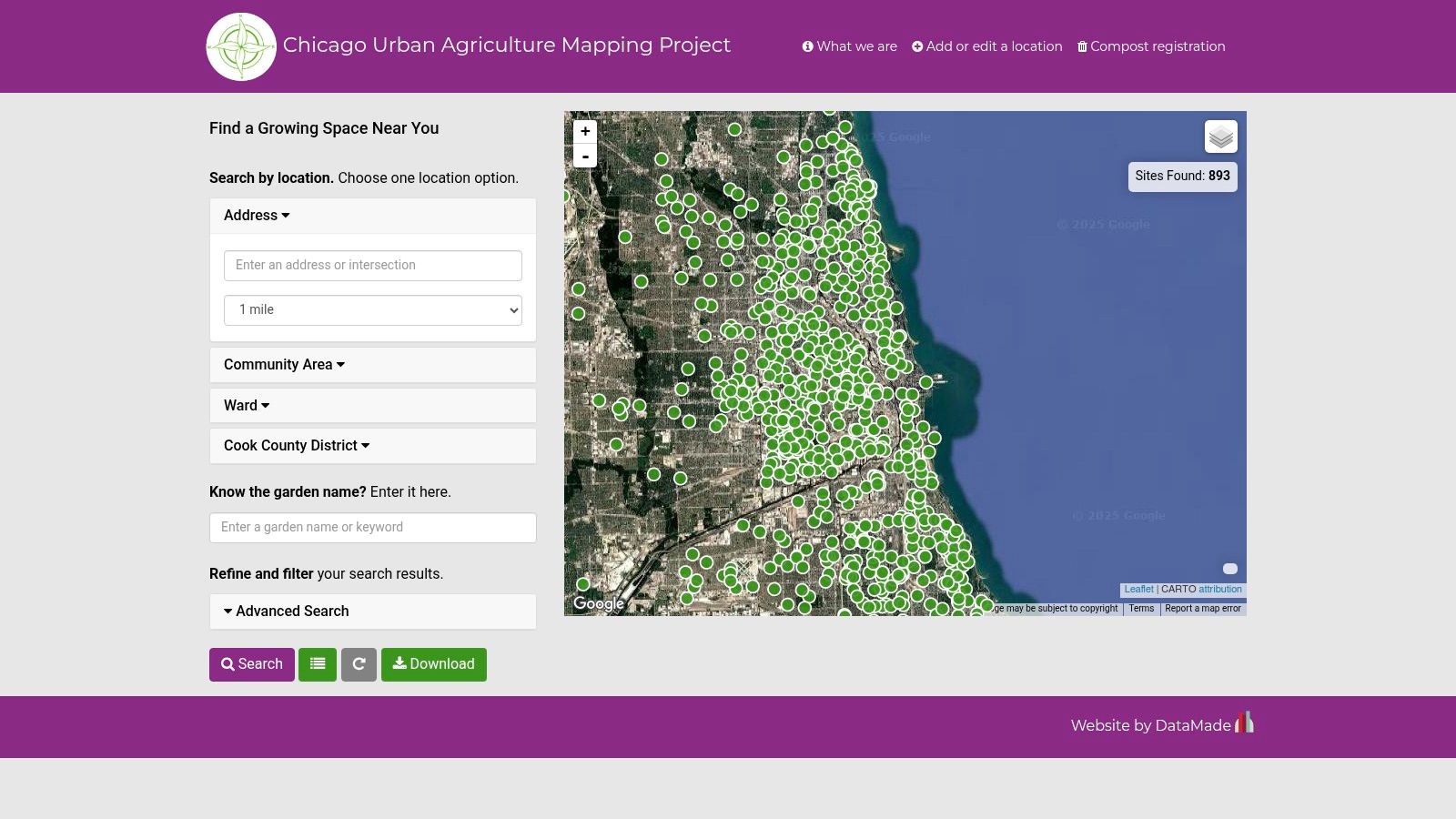
    Imagine having a satellite view of every single sprout of community effort across Chicago, a living map that pulses with green energy. That's precisely what the Chicago Urban Agriculture Mapping Project (CUAMP) offers. It’s not a garden itself, but rather your indispensable treasure map to finding the perfect plot of soil to call your own. Think of it as the central nervous system for community gardens in Chicago, IL, connecting eager hands with open land.

    Chicago Urban Agriculture Mapping Project (CUAMP)

    This powerful, free tool is your first and best stop for navigating the city's vast urban agriculture landscape. It’s a dynamic, interactive directory that lets you zoom into your neighborhood, search by ward, or even filter by specific needs, like finding a garden that composts. Each pin on the map is a story waiting to unfold, a community waiting to welcome you.

    How to Use CUAMP to Find Your Garden

    Getting started with CUAMP is as simple as dropping a pin on a map. The platform is designed for discovery, making it easy to turn your curiosity into action.

    • Search Near You: Pop in your address and watch as nearby gardens appear like stars in a clear night sky. It’s the fastest way to see what’s growing just around the corner.
    • Filter Your Search: Looking for something specific? Use the filters to find food-producing sites, gardens with active composting, or even identify which gardens are open versus locked. This helps you target your outreach effectively.
    • Explore Site Profiles: Click on a garden pin to open its profile. Here, you’ll find contact information for the garden manager, its operational status (active, dormant), and other crucial details.

    Key Insight: CUAMP empowers you to be a proactive community builder. It’s not just about finding a garden; it’s about understanding the city's green infrastructure and identifying where you can make the biggest impact.

    Why It Deserves a Top Spot

    CUAMP stands out because it's a collaborative, data-driven resource maintained by trusted local partners. While some listings might have slightly outdated contact info (a common challenge with volunteer-run projects), its citywide scope is unparalleled. It’s a tool built for everyone: the individual looking for a plot, the community organizer planning a cleanup, and even city planners analyzing green space.

    For a group like Litter Caterpillars, CUAMP is a strategic goldmine. You can download the data to identify clusters of gardens in a specific ward, helping you plan a targeted outreach day or a neighborhood-wide cleanup event that supports multiple green spaces at once. It transforms your passion from a single act of kindness into a coordinated wave of positive change.

    Website: https://cuamp.org/

    3. NeighborSpace (Chicago’s community‑garden land trust)

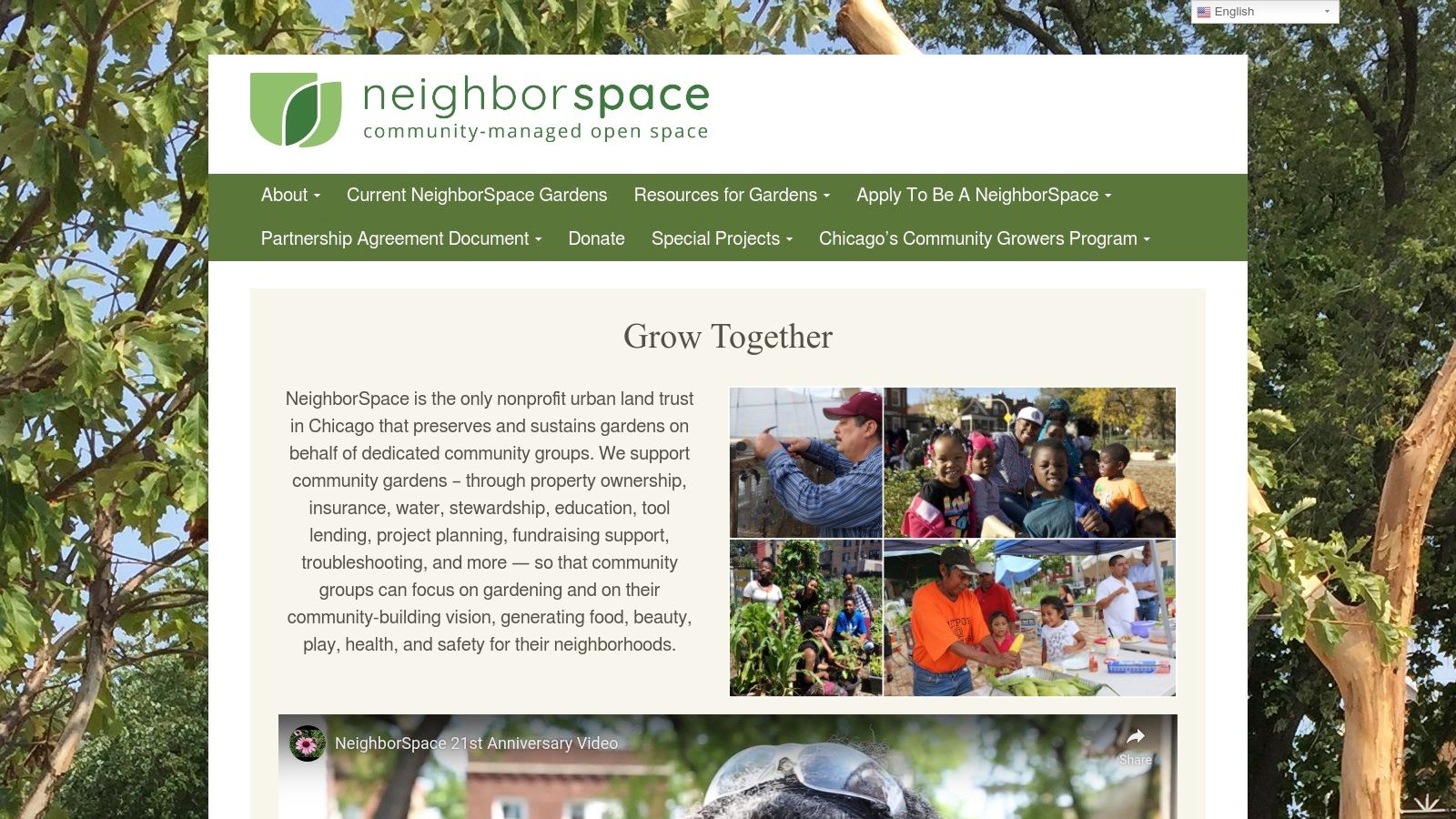
    What if a garden could last forever? Imagine a green space protected from development, a community hub guaranteed to be there for your children and your children’s children. This isn't a fantasy; it's the mission of NeighborSpace, the guardian angel for many community gardens in Chicago, IL. This organization acts as a land trust, essentially putting a permanent protective shield around community-managed gardens, ensuring they remain vibrant green spaces for generations.

    NeighborSpace (Chicago’s community‑garden land trust)

    NeighborSpace is the foundational support system that lets gardeners focus on what they do best: growing. By taking on the heavy lifting of land ownership, insurance, and even water access, they remove the biggest hurdles that can cause a community project to wither. They are the soil in which stable, long-term community gardens can firmly take root and flourish without fear.

    How NeighborSpace Supports the Green Community

    While you won't use NeighborSpace to sign up for an individual plot, their website is a vital resource for understanding the ecosystem of protected gardens and for groups looking to secure their future.

    • Find Protected Gardens: While they don't have an interactive map like CUAMP, their site profiles the gardens they protect. This is a great way to discover established, long-term gardens with strong community ties.
    • Access Resources: The site provides guidance for existing gardens on everything from planning and maintenance to becoming a protected site themselves. They offer tool lending and educational resources to their member gardens.
    • Understand the Trust Model: For anyone dreaming of starting a new garden, exploring NeighborSpace’s process is a masterclass in sustainability. It shows you how to build something that lasts.

    Key Insight: NeighborSpace isn’t about the "how" of finding a plot today; it's about the "why" these gardens will still be here tomorrow. Supporting a NeighborSpace garden means investing in a permanent piece of your neighborhood’s green legacy.

    Why It Deserves a Top Spot

    NeighborSpace provides the invisible architecture that makes a thriving urban garden scene possible. They are the backbone, the quiet partner ensuring that a community’s hard work doesn’t disappear with a new property development. Their work increases garden stability, reduces overwhelming administrative burdens for volunteer leaders, and provides practical, essential support like liability insurance.

    The major difference is that they don't manage the gardens directly. Each site has its own rules and plot assignment process, so you’ll still need to contact the garden managers individually. For a group like Litter Caterpillars, partnering with a NeighborSpace garden means you're helping a site that is deeply rooted and committed to its community for the long haul. Your cleanup efforts aren’t just a one-day boost; they are a contribution to an enduring local landmark.

    Website: https://neighbor-space.org/

    4. Chicago Park District – Community Gardens in the Parks

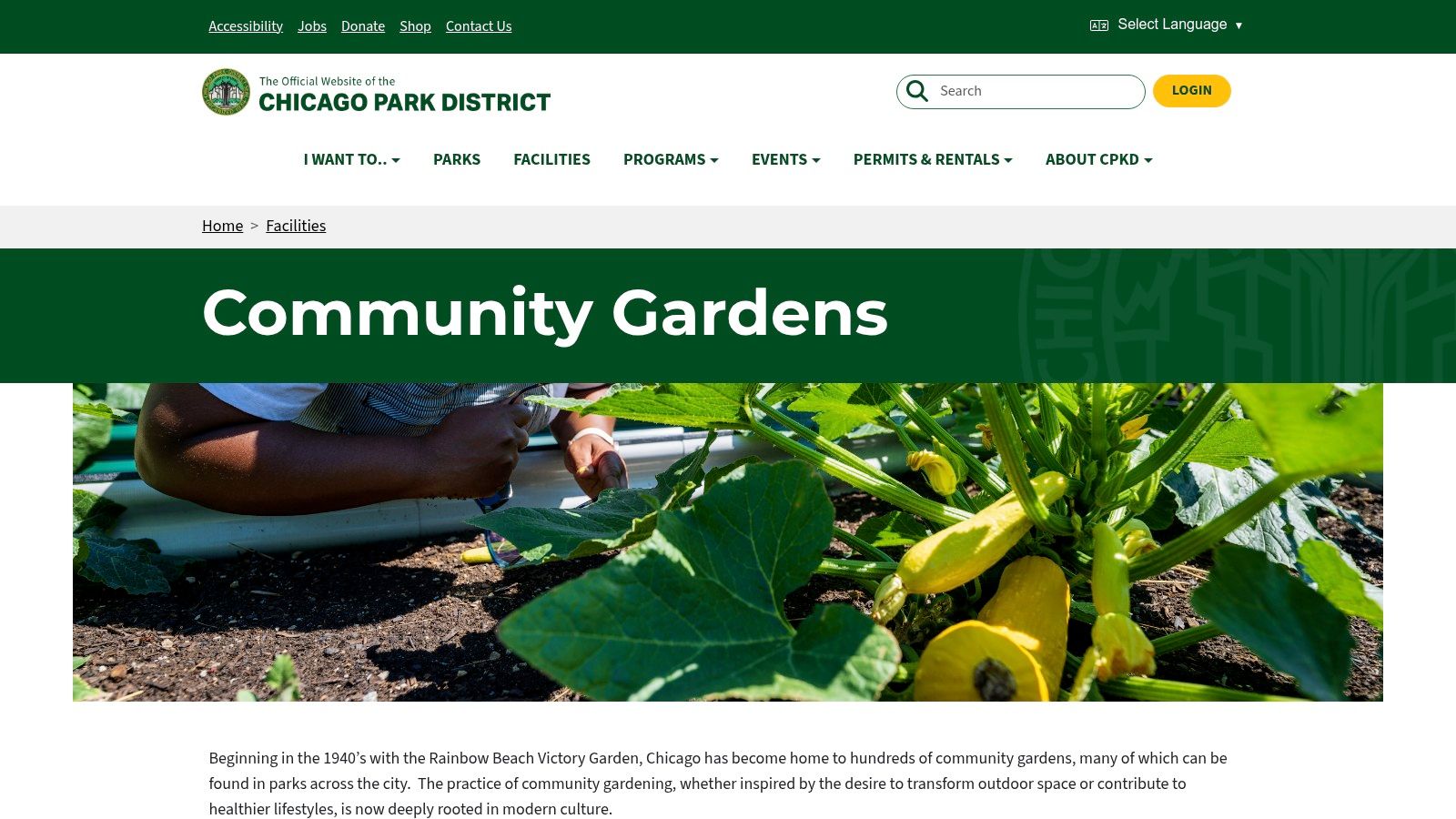
    What if the heart of your neighborhood park, the place you already love for picnics and playgrounds, also held a space for you to grow your own food? The Chicago Park District makes this a reality, weaving edible landscapes directly into the fabric of our city’s public green spaces. This initiative isn't just a list of gardens; it's a testament to the idea that community and nature can flourish together, right in our own backyards.

    Chicago Park District – Community Gardens in the Parks

    The Park District's directory lists nearly 100 gardens nestled within parks across the city, each managed by dedicated neighborhood groups. These aren't just plots of land; they are vibrant hubs of activity, learning, and connection. Think of them as open-air community centers where the price of admission is simply a willingness to get your hands dirty and share in the harvest.

    How to Get Involved with Park Gardens

    Navigating the Park District's system is your first step toward claiming a piece of public land for your private passion. It's about connecting with the local stewards who make these gardens bloom.

    • Find a Park Near You: The website features a comprehensive list of all parks with community gardens. Browse the directory to pinpoint the green space closest to you.
    • Contact the Garden Leader: Each park garden is run by a local volunteer group. The Park District page provides staff contacts who can connect you with the specific garden's coordinator to inquire about plot availability and volunteer days.
    • Explore Educational Programs: Many of these park gardens host free workshops and educational events. Keep an eye on the schedule to learn new skills, from composting basics to advanced planting techniques.

    Key Insight: Gardening in a public park elevates your efforts. Your work becomes a visible, inspiring part of the neighborhood, encouraging passersby to think about food, nature, and what's possible when a community comes together.

    Why It Deserves a Top Spot

    The Chicago Park District’s program stands out because it leverages our most accessible public assets: our parks. It removes the barrier of finding private land and provides an existing infrastructure of staff support and public visibility. While individual plot availability can be limited and requires connecting with local garden managers, the network is robust and deeply integrated into neighborhood life.

    For a group like Litter Caterpillars, these park-based community gardens in Chicago, IL are perfect partners. You can organize a cleanup that not only beautifies the park but also directly supports the gardeners who are growing food for their community. By clearing away litter from the garden's perimeter, you're helping protect their hard work from pests and pollution. It’s a powerful way to contribute to a park cleanup and amplify the positive impact happening there.

    Website: https://www.chicagoparkdistrict.com/node/132841

    5. Urban Growers Collective – Community Garden Plots

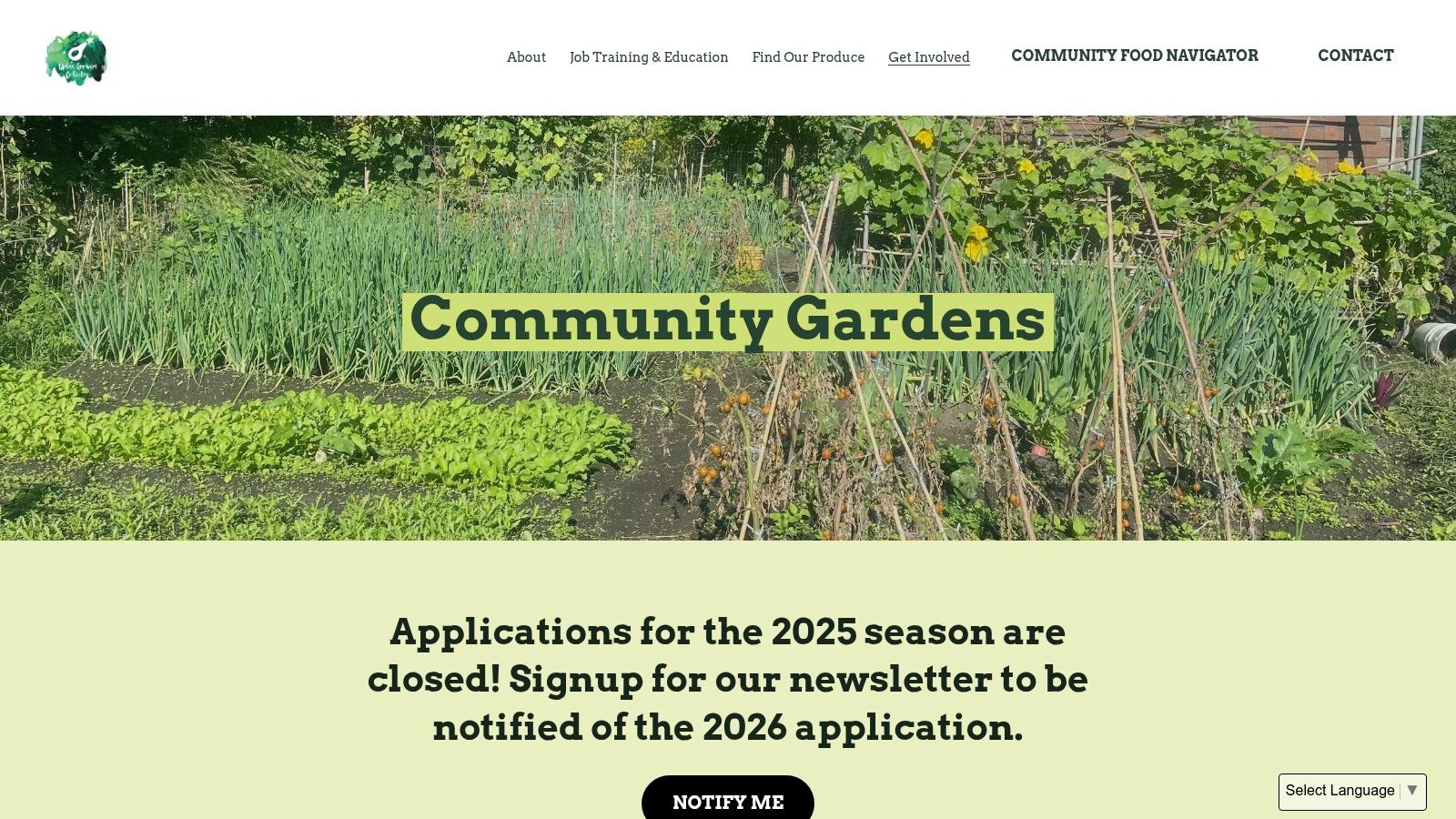
    If you're ready to stop dreaming and start digging, the Urban Growers Collective (UGC) provides a clear, direct path to claiming your own piece of Chicago's fertile ground. This isn't just about finding a garden; it's about joining a movement. UGC offers a structured, supportive way to rent a personal plot for a full growing season, turning your vision of fresh, homegrown produce into a delicious reality. Think of it as your personal launchpad into the world of urban farming, backed by one of the city's most respected food-justice organizations.

    Urban Growers Collective – Community Garden Plots

    This program is perfect for those who crave a dedicated space to cultivate. With standardized plots, a defined season from April to October, and transparent pricing, UGC removes the guesswork so you can focus on the joy of growing. Their community gardens, primarily located on the South Side, are more than just soil; they are vibrant hubs of connection, learning, and nourishment.

    How to Secure Your UGC Plot

    Getting started with a UGC plot is a straightforward process designed to set you up for success. They ensure every gardener has the foundational knowledge to thrive.

    • Check Availability: Head to their website to see which of their farm locations are offering plots for the upcoming season. Applications typically open in early spring and close quickly.
    • Submit an Application: The application process is simple and outlines the costs and expectations. UGC is committed to accessibility, offering a sliding scale for those with financial need.
    • Attend Orientation: All new plot holders are required to attend an orientation. This is where you’ll meet fellow gardeners, learn the rules, and get invaluable tips for a successful harvest.

    Key Insight: UGC’s approach is about empowerment through structure. By providing clear guidelines and a supportive community, they make it incredibly easy for beginners to gain confidence and for experienced gardeners to flourish.

    Why It Deserves a Top Spot

    Urban Growers Collective stands out for its deep commitment to community and food justice. Renting a plot here means you’re not just growing food for yourself; you're investing in an ecosystem that nourishes entire neighborhoods. The process is transparent, beginner-friendly, and rooted in the mission of a powerful local nonprofit.

    While plot availability is limited and highly sought after, the opportunity is transformative. For a group like Litter Caterpillars, partnering with a UGC garden for a cleanup day is a perfect fit. You can help beautify a space that is a vital source of fresh food and community pride. Beyond the garden plots, UGC offers incredible volunteer opportunities in Chicago at their larger farms and markets, allowing you to support their mission even if you don't have a plot. It's a way to connect your passion for a cleaner city with the powerful work of growing a healthier one.

    Website: https://www.urbangrowerscollective.org/community-gardens

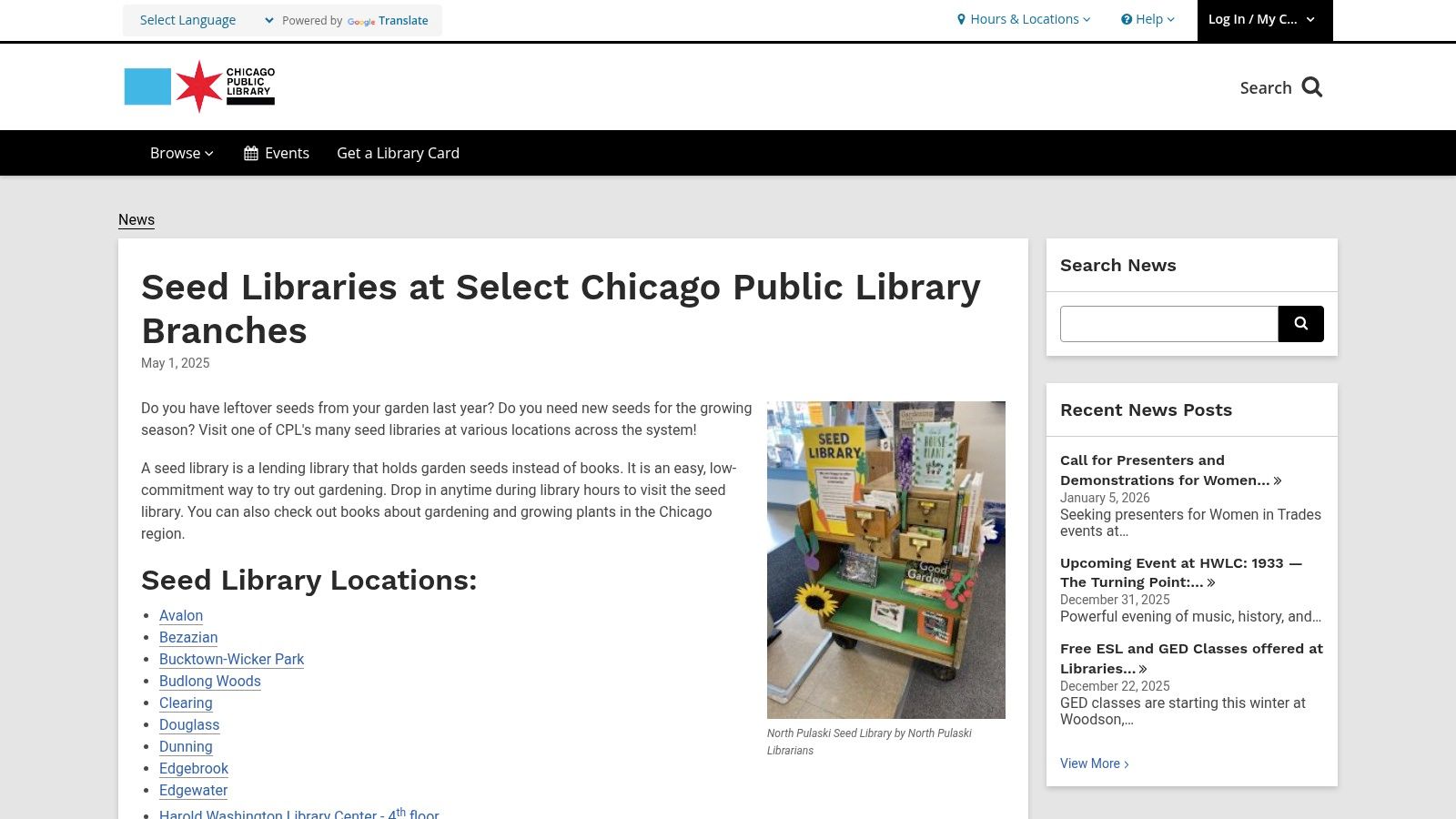
    6. Chicago Public Library – Seed Libraries (multiple branches)

    Before a garden can grow, there must be a seed. Imagine a library not just for books, but for the very potential of life itself, a place where the beginnings of a thousand gardens are nestled in tiny paper packets, free for the taking. This is the magic of the Seed Libraries at select Chicago Public Library branches, a quiet but powerful force supporting community gardens in Chicago, IL. It’s the starting line for your gardening adventure, whether you have a backyard, a balcony box, or a freshly claimed plot in a community space.

    Chicago Public Library – Seed Libraries (multiple branches)

    This initiative transforms your local library into an essential hub for urban agriculture. It's a completely free, grassroots resource that democratizes gardening, removing the initial cost barrier and empowering anyone to start growing. The concept is beautifully simple: take seeds to plant, and if you can, bring back seeds from your harvest to share with others next season. It's a cycle of giving that nourishes both the soil and the community spirit.

    How to Use the Seed Library to Get Growing

    Tapping into this resource is as easy as checking out a book. The library has made it incredibly accessible, ensuring nothing stands between you and the joy of planting.

    • Visit a Participating Branch: Check the Chicago Public Library website for the list of branches with active seed libraries. Availability is seasonal, so it's a good idea to call ahead.
    • Browse and Borrow: The seeds are typically displayed in old card catalogs or special cases. You can simply take the packets you need; there are no library cards required or due dates to worry about.
    • Learn and Grow: While you're there, explore the library's collection of gardening books. You can also ask about related workshops or programs, like hydroponic kit giveaways, that can expand your skills.
    • Share the Harvest: At the end of the season, consider saving seeds from your strongest plants to return to the library, continuing the cycle for the next wave of gardeners.

    Key Insight: The Seed Library is more than just free supplies; it's an investment in a resilient, food-sovereign community. By encouraging seed saving, it helps cultivate plants that are uniquely adapted to Chicago's microclimates.

    Why It Deserves a Top Spot

    The Seed Library is a fundamental resource that complements every other tool on this list. While it doesn't provide land, it provides the spark of life that turns a patch of dirt into a source of food and beauty. Its zero-cost, open-access model makes it the ultimate entry point for new gardeners, school projects, and community plots operating on a shoestring budget. The selection varies, but that's part of its charm; you might discover a new variety of tomato or a beautiful native flower you'd never have thought to plant.

    For a group like Litter Caterpillars, this is an incredible asset. After a big neighborhood cleanup, you can empower residents to keep the momentum going by providing them with free seed packets from the library. It's a simple, tangible way to transition a space from clean to vibrantly alive, leaving behind a legacy of growth that lasts long after the cleanup day is over.

    Website: https://www.chipublib.org/news/seed-libraries-at-select-chicago-public-library-branches/

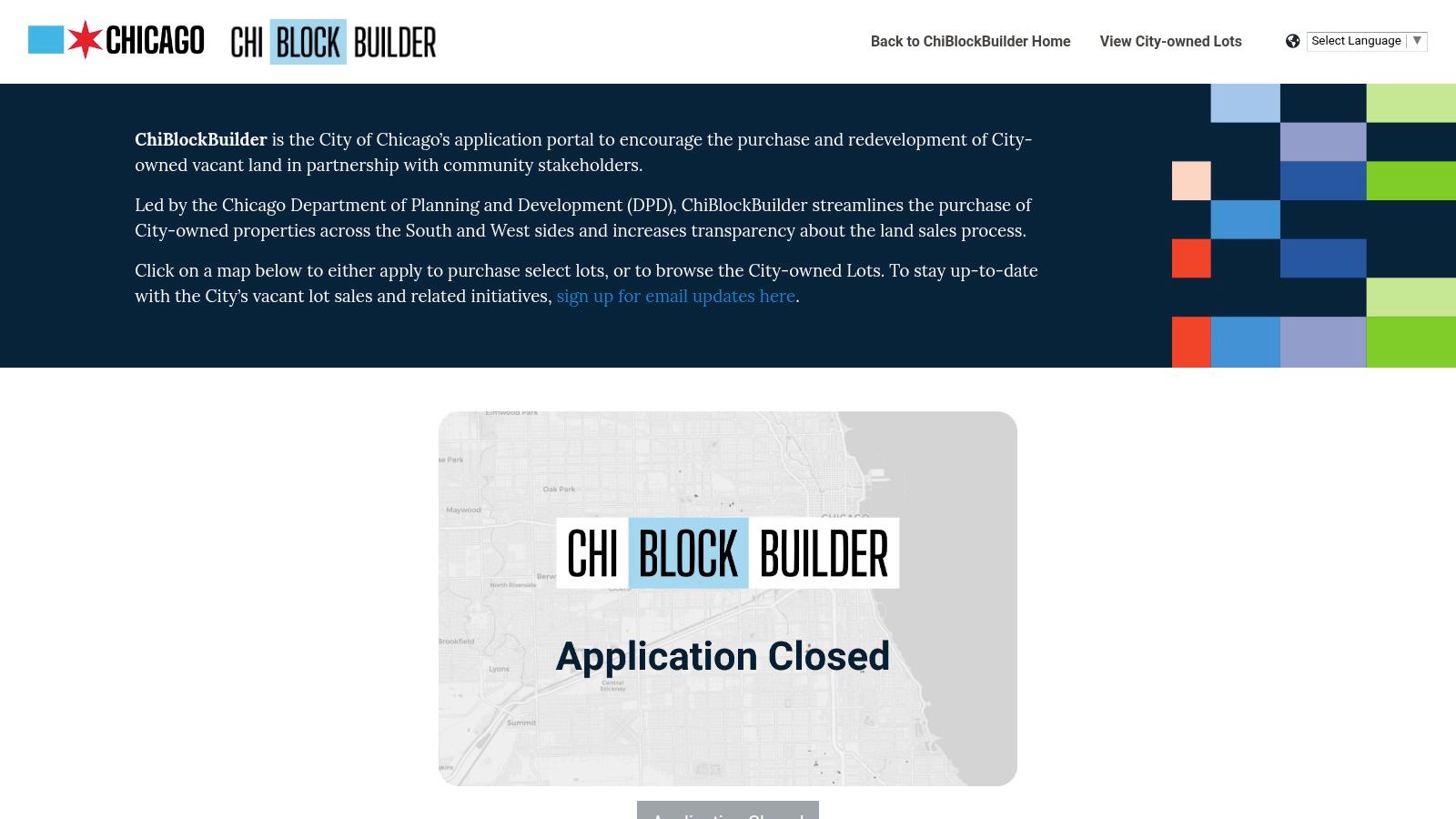
    7. City of Chicago – ChiBlockBuilder (city-owned lot sales)

    What if you didn't just join a garden, but created one from the ground up? Imagine transforming a forgotten, overgrown city lot into a vibrant hub of life, a permanent sanctuary for your neighborhood. That’s the powerful promise of ChiBlockBuilder, the City of Chicago's official portal for purchasing city-owned vacant land. It's more than a website; it's a doorway to lasting impact, the blueprint for building a green legacy.

    City of Chicago – ChiBlockBuilder (city-owned lot sales)

    This platform isn't about finding an existing plot; it's about claiming the land to start new community gardens in Chicago, IL. It’s the direct, official channel for acquiring long-term land control, turning a dream of a permanent green space into a deed-in-hand reality. Think of it as the ultimate tool for community builders ready to put down permanent roots.

    How to Use ChiBlockBuilder to Build a Legacy

    Navigating the path to land ownership might seem daunting, but ChiBlockBuilder streamlines the process, making it transparent and accessible for dedicated groups. It’s your first step toward transforming forgotten land.

    • Explore the Map: Use the interactive map to scout for city-owned vacant lots in your neighborhood. You can see which parcels are available, which are under review, and which might open up soon.
    • Express Your Interest: Found the perfect spot, but it’s not for sale yet? Use the “I’m Interested” feature. This signals your intent to the city and ensures you're notified the moment the application window opens.
    • Follow the Application Process: When a lot is available, the site provides a clear, step-by-step application guide. This formal process ensures your project is recognized and supported at the city level.

    Key Insight: Owning the land is a game-changer. It provides the stability to invest in long-term infrastructure like fruit trees, perennial beds, and community structures, ensuring your garden becomes a permanent fixture for generations to come.

    Why It Deserves a Top Spot

    ChiBlockBuilder is fundamentally different from other resources. It empowers communities to move beyond temporary agreements and achieve land security. While the process requires commitment, including purchase costs and navigating eligibility rules, the payoff is unparalleled: a permanent asset for your neighborhood. The platform's direct-from-the-source information and transparent mapping tools demystify what was once a complex bureaucratic maze.

    For a group like Litter Caterpillars, this tool offers a visionary path. You can identify a blighted lot during a cleanup event, then use ChiBlockBuilder to rally neighbors and begin the official process of transforming it forever. It's the ultimate evolution from cleaning a space to owning and cultivating it, turning a single day of service into a lifetime of community growth.

    Website: https://chiblockbuilder.com/

    Chicago Community Gardens — 7-Point Comparison

    Item Implementation Complexity 🔄 Resource Requirements ⚡ Expected Outcomes 📊 Ideal Use Cases 💡 Key Advantages ⭐
    Litter Caterpillars 🔄 Low — volunteer coordination and recurring events ⚡ Low — volunteers, basic cleanup gear 📊 High visible neighborhood cleanup and increased social cohesion Residents/newcomers seeking hands‑on, low‑barrier civic action ⭐️⭐️⭐️⭐️ Bold citywide impact, strong culture and easy joining
    CUAMP (Chicago Urban Agriculture Mapping Project) 🔄 Medium — data curation and map maintenance ⚡ Medium — data partners and web hosting 📊 High discovery value; supports planning and analysis Garden seekers, planners, researchers needing site data ⭐️⭐️⭐️ Comprehensive searchable map with downloadable data
    NeighborSpace (land trust) 🔄 Medium — legal and stewardship onboarding ⚡ Medium — staff, insurance, tool programs 📊 High site stability and long‑term protection for gardens Groups needing land protection, insurance, operational support ⭐️⭐️⭐️⭐️ Trusted land‑trust backbone with practical supports
    Chicago Park District – Community Gardens 🔄 Medium — park policies + garden group management ⚡ Medium — park infrastructure and staff time 📊 Moderate — public access gardens with variable availability Neighborhood groups wanting park‑based plots and staff support ⭐️⭐️⭐️ Public‑land visibility and municipal support
    Urban Growers Collective – Community Garden Plots 🔄 Low — standardized seasonal application process ⚡ Medium — plot fees, orientations, nonprofit operations 📊 High for individual plot access during season Individuals wanting a guaranteed seasonal plot with guidance ⭐️⭐️⭐️ Transparent pricing, nonprofit support, sliding scale access
    Chicago Public Library – Seed Libraries 🔄 Very low — borrow/return seed system ⚡ Very low — free seeds, modest program support 📊 Moderate — seed access and education for new gardeners New gardeners or community plots needing low‑cost seed stock ⭐️⭐️⭐️ Zero‑cost entry to seeds and related educational resources
    ChiBlockBuilder (City lot sales) 🔄 High — formal applications, eligibility windows ⚡ High — purchase costs, site prep, long‑term maintenance 📊 High long‑term land control enabling permanent gardens Organizations/groups pursuing land acquisition for new gardens ⭐️⭐️⭐️⭐️ Direct, official path to long‑term land ownership and development

    Final Thoughts

    We’ve journeyed through a landscape bursting with green possibilities, from the sprawling digital map of CUAMP to the hyper-local seed packets at your neighborhood library. This guide wasn't just a list; it was an invitation. An invitation to see the forgotten corners of Chicago not as problems to be solved, but as canvases awaiting a brave first stroke of a paintbrush, or in this case, a shovel. The world of community gardens chicago il is a vibrant, living ecosystem of tools and people, and you are now holding the key to unlock its gates.

    Think of this journey like learning to cook. At first, a well-stocked kitchen can feel overwhelming. You have spices (the seed libraries), appliances (NeighborSpace’s land trust), and recipes (the park district programs). You might feel like you can only follow one recipe perfectly. But the real magic happens when you start to combine them. You grab some seeds from the library, find a nearby lot on ChiBlockBuilder, and get land-use guidance from NeighborSpace. Suddenly, you're not just a cook; you're a chef. You’re creating something new.

    Your Path to Impact: From Seed to Harvest

    The tools we've explored are designed to work together, to weave a safety net of support beneath your ambition. Don't fall into the trap of thinking you need to choose just one. The most successful urban gardeners are resourceful connectors, building a toolkit that fits their specific vision.

    • For the Data-Driven Planner: Start with the Chicago Urban Agriculture Mapping Project (CUAMP). Use its bird's-eye view to identify food deserts or areas with a high concentration of vacant lots. Let this data tell a story and guide your first steps.
    • For the Community Organizer: NeighborSpace is your first call. They are the guardians of green space, the experts in turning a passionate idea into a legally protected, community-owned reality. They understand the human element better than anyone.
    • For the Hands-On Grower: If you just want to get your hands dirty now, look to the Chicago Park District or the Urban Growers Collective. Their existing plots offer a lower barrier to entry, letting you learn the ropes and connect with veteran gardeners immediately.

    The most profound takeaway is this: the gap between the city you see and the city you dream of is not as wide as you think. It's the width of a single raised garden bed. It’s the length of a conversation with a neighbor. It’s the effort it takes to fill one bag with litter, clearing the way for something beautiful to grow.

    "To plant a garden is to believe in tomorrow." – Audrey Hepburn

    This belief is the true currency of community change. It’s a quiet act of rebellion against cynicism, a bold declaration that you are willing to invest your time and energy into a future you can’t yet see. Every weed pulled, every seed planted, every harvest shared is a vote for a greener, kinder, more connected Chicago. The tools are here. The land is waiting. The community is ready. The only remaining question is, what will you grow?


    Ready to take that very first step? A clean space is the first chapter of any community garden story. Join a Litter Caterpillars event to help clear a future garden site or organize your own neighborhood cleanup. Find your next adventure in making a difference at Litter Caterpillars.

  • Community Building Activities for Adults: 10 Fearless Ways to Build Real Friends

    Community Building Activities for Adults: 10 Fearless Ways to Build Real Friends

    It can feel like a secret, but cleaning up other people’s messes is way easier than cleaning up our own. And somewhere between a plastic bottle and a forgotten shopping bag, a strange, new kind of fun is born, the kind that builds real friendships.

    For three years, every single week, the Litter Caterpillars have shown up in Chicago. Rain, shine, blizzard, or heatwave. We discovered that suffering through a little hail together isn't a bug; it's a feature. It adds flavor. It advances the plot of your life. This isn't just a list of 'nice' ideas. This is a fearless guide to community building activities for adults that forge the kind of bonds that last, proving that changing your world (and finding your people) is a lot easier, and way more fun, than you think.

    Making friends as an adult often feels like a puzzle with missing pieces. We wait for the perfect moment or the right group to appear, but the truth is simpler and more profound: shared purpose is the shortcut. It’s the powerful, magnetic force that pulls people together, transforming strangers into a team. When you work side-by-side to make something better, you skip the small talk and get straight to what matters.

    This guide is our blueprint, built from thousands of hours spent on Chicago’s streets. We’ll show you how to turn a simple cleanup into a neighborhood celebration, how to build skills that empower you and your neighbors, and how to create a support system that feels like family. These aren't just theories; they are field-tested strategies for creating connection, sparking joy, and making a tangible impact. Let’s get started.

    1. Weekly Themed Group Cleanups with Identity & Pride Elements

    Imagine transforming a simple, solitary act like picking up litter into a weekly celebration of community, connection, and shared purpose. This is the magic behind consistent, themed group cleanups. It's more than just tidying up a neighborhood; it's about creating a reliable rhythm where people know they can show up, belong, and make a tangible difference together. By establishing a fixed day and time, you build a dependable social anchor in people’s lives, turning strangers into a true team.

    Four smiling volunteers in safety vests with cleanup tools, trash bags, and a flag.

    The secret sauce is identity. Think of it like a sports team. A logo, a team song, or even just matching vests gives everyone a visual cue that they are part of something bigger. Chicago's own Litter Caterpillars mastered this by creating a vibrant, consistent presence across the city's 50 wards for over three years. Their flag isn't just fabric; it's a beacon of hope and a symbol of unity.

    How to Make It Happen

    This approach is one of the most powerful community building activities for adults because it combines purpose with predictability. It’s perfect for new groups wanting to establish a strong foundation or existing organizations aiming to deepen member engagement.

    • Set a Rhythm: Lock in a consistent day and time (e.g., every Saturday at 10 AM). This removes the mental load of scheduling and builds a powerful habit for your members.
    • Build an Identity: Invest in simple, visible branding. This could be a shared theme song played at the start, custom-designed badges, or a group flag. These small symbols create immense pride and a sense of belonging.
    • Rotate Locations: To build a city-wide community, rotate cleanup locations. This demonstrates an equitable commitment to all neighborhoods and keeps the experience fresh and adventurous for your volunteers.
    • Celebrate People, Not Just Pounds: Focus on celebrating individual contributions and personal growth. Acknowledge a new volunteer’s first event or a regular’s 10th cleanup. The real victory is the community you build, not just the trash you collect.

    2. Neighborhood Exploration & Friendship-First Service Outings

    What if a community event felt less like a chore and more like an urban adventure with new friends? This is the heart of a "friendship-first" service outing, where the main goal isn't just cleaning a street, but discovering the soul of a neighborhood and forging genuine connections. It transforms service into a vehicle for exploration and belonging, making it perfect for newcomers or anyone looking to deepen their relationship with their city. The service activity becomes the perfect excuse to explore, ask questions, and meet people.

    Four smiling adults walk down a vibrant street, holding books and connecting.

    This approach shifts the focus from task to experience. Instead of just picking up litter, you’re on a guided tour of a community's hidden gems, led by the very people who live there. It’s an invitation to see the city not as a map, but as a collection of stories. Organizations like Litter Caterpillars use this model to explore Chicago's 50 wards, turning each event into a unique expedition. This method makes making an impact feel fun and effortless, proving you can build friendships and a better city at the same time.

    How to Make It Happen

    This is one of the most welcoming community building activities for adults because it lowers the barrier to entry and prioritizes human connection over output. It’s ideal for groups aiming to attract new members or those wanting to foster a more inclusive and adventurous culture.

    • Frame it as an Adventure: Market your events as neighborhood tours or "service safaris." This sparks curiosity and appeals to people's desire for new experiences, not just their sense of duty.
    • Create a "Passport": Design a simple booklet or digital tracker where volunteers can get a stamp for each new neighborhood they serve in. This gamifies the experience and encourages consistent participation across different areas.
    • Invite Local Storytellers: Partner with long-time residents or local historians to share stories about the neighborhood's landmarks, history, and culture during the event. This adds incredible depth and value.
    • Plan a "Third Place": Always schedule a post-event gathering at a local coffee shop, brewery, or park. This designated social time is where the real bonding happens, allowing conversations to continue naturally.

    3. Skill-Building Workshops & Personal Transformation Circles

    Community service is often a powerful catalyst for personal change. Imagine a space where cleaning up a neighborhood and cleaning up your own life happen side-by-side, supported by a group that understands both struggles. This is the heart of a skill-building workshop or personal transformation circle. It’s a brave space built on the truth that many of us, even those leading the charge, grapple with messiness, inconsistency, or disorganization in our own homes and habits.

    These gatherings merge the accountability of recovery programs with the vulnerability of Brené Brown’s courage-building groups. It’s a profound acknowledgment that showing up for the community is an act of showing up for yourself. The weekly cleanup becomes more than a civic duty; it becomes the hands-on practice for the personal goals we set together, proving that small, consistent actions create massive change both inside and out.

    How to Make It Happen

    This is one of the most transformative community building activities for adults because it directly links external action with internal growth. It’s ideal for groups who want to foster deep, authentic connections and support members holistically.

    • Lead with Vulnerability: Start by sharing a personal story. The Litter Caterpillars founder often talks about how her own journey from personal messiness to community service sparked the entire movement. This creates a foundation of trust and authenticity.
    • Create Consent Structures: Make it clear that sharing is always optional. Use phrases like, "I'd like to open the floor for anyone who feels called to share." This ensures the circle remains a safe space, not a pressure cooker.
    • Link Service to Personal Goals: Frame the cleanup as the "lab" for personal development. If someone’s goal is consistency, their accountability is simply showing up to the next event. The action reinforces the habit.
    • Celebrate Personal Wins: Acknowledge personal victories with the same energy as community milestones. Cheer for someone who organized their closet for the first time just as loud as you would for collecting 10 bags of trash. This shows you value the whole person.

    4. Community Land Transformation & Place-Making Projects

    What if you could turn a forgotten patch of earth into a vibrant testament to your community's love and resilience? This is the heart of place-making. It’s a journey that moves beyond temporary cleanups into creating permanent, cherished assets, transforming neglected dumping grounds into beautiful, functional spaces that reflect the soul of the neighborhood. This isn't just about planting flowers; it's about planting roots of ownership and pride that will grow for years.

    This deeper level of engagement forges an unbreakable bond among volunteers. When a group collectively dreams, plans, and builds something tangible, like Litter Caterpillars' Caterpillar Park in Englewood, they create a shared legacy. They turn an eyesore into a landmark, a symbol of what’s possible when people refuse to accept blight and instead choose to build beauty.

    How to Make It Happen

    This is one of the most profound community building activities for adults because it creates a permanent, positive footprint. It’s ideal for established groups ready to take their commitment to the next level, cementing their impact and inspiring long-term neighborhood investment.

    • Listen First, Build Second: Begin by asking neighbors what they truly want for the space, not what you think they need. Host listening sessions to ensure the project reflects the community's desires and dreams.
    • Document the Transformation: Capture every step of the journey with photos and videos. This creates a powerful story to share on social media, demonstrating your impact and inspiring others to join or donate.
    • Create Diverse Roles: A transformation project needs more than just muscle. Create volunteer roles for designers, fundraisers, event planners, and maintenance crew leaders. This allows people with different skills to contribute meaningfully.
    • Plan for the Future: Before the grand opening, establish a clear maintenance plan. Create rotating volunteer schedules or an "adopt-a-plot" system to ensure the space remains beautiful and cared for long after the initial build.
    • Celebrate the Victory: Host a grand opening celebration to honor the volunteers and officially gift the space to the neighborhood. This event cements the feeling of shared ownership and marks a powerful moment of collective achievement.

    5. Adversity Bonding Challenges & 'Flavor-Adding' Events

    Most groups cancel events when the weather turns bad. We lean into it. This approach transforms potential setbacks like a sudden downpour, biting wind, or even a hailstorm into the very catalyst for your community's strongest bonds. It's founded on a simple, powerful truth: shared struggle creates unshakable connection. By intentionally embracing difficulty, you reframe hardship not as something to be avoided, but as an ingredient that “adds flavor” to the experience and “advances the plot” of your group’s story.

    This philosophy is baked into the DNA of Litter Caterpillars. Our very first event was hit by an unexpected, freezing hailstorm. We could have scattered, but we stayed, laughing and working through the chaos. That single moment became our origin myth, a legendary tale of resilience that bonded the founding members instantly. It taught us that overcoming a challenge together is a far more potent community glue than a perfect, sunny day ever could be.

    How to Make It Happen

    This strategy is one of the most profound community building activities for adults because it builds not just camaraderie, but deep psychological resilience. It’s perfect for groups ready to move beyond surface-level connections and forge a core identity rooted in shared strength and memorable stories.

    • Frame the Narrative: Use language that transforms difficulty into adventure. Talk about "adding flavor" or "advancing the plot." Lead with your own stories of overcoming challenges, like our founding hailstorm, to set an inspirational tone.
    • Prioritize Safety Invisibly: Have robust safety protocols in place, but don't make them the focus. Volunteers should feel an exhilarating sense of challenge while knowing, implicitly, that their well-being is guaranteed.
    • Capture the Moment: Document everything. Photos and videos of people smiling, laughing, and working together through tough conditions are powerful proof of your community's spirit. These images become legendary.
    • Create a Ritual of Celebration: After a challenging event, immediately create a space for connection and reflection. Sharing warm drinks after a cold cleanup or celebrating in a dry spot after a rainy one allows the group to bond over their shared accomplishment.

    6. Social Accountability Partnerships & Volunteer Matching

    The biggest barrier to consistent action isn't a lack of desire; it's the quiet battle we fight alone to just show up. An Accountability Partnership transforms this solo struggle into a shared journey. It pairs two people together with one simple, powerful mission: help each other get out the door. This isn't about pressure; it's about mutual encouragement, turning the intimidating act of joining a group into an exciting pact between friends.

    Think of the proven power behind an AA sponsor, a marathon training buddy, or a Peloton partner. These systems work because they build a direct, personal link of support. A simple text message like, “Hey, you still coming Saturday?” can be the difference between a volunteer staying home and them showing up to make an impact. It forges deep, meaningful friendships within the larger community, creating a resilient network of people who genuinely care for one another.

    How to Make It Happen

    This is one of the most effective community building activities for adults because it tackles the universal challenge of inertia head-on. It’s perfect for groups looking to boost attendance, reduce volunteer drop-off, and cultivate a culture of unwavering support. It also provides a structured way to find new volunteers by offering an immediate support system.

    • Host "Partner Pairing" Events: Dedicate specific meetups for new and existing members to connect. Use simple icebreakers focused on shared goals or neighborhoods to help people find a good match.
    • Match Strategically: When pairing people manually, consider proximity (can they commute together?), shared personal goals, and personality. The goal is to create a natural, easy connection.
    • Keep Check-ins Simple: Create a simple text message template for partners to use (e.g., "See you Saturday at 10?"). Simplicity is key to making the system stick.
    • Celebrate the Partnerships: Publicly celebrate partner milestones and share their stories on social media. This reinforces the value of the system and inspires others to join in. Framing it as mutual support, not judgment, is crucial.

    7. Volunteer Recognition & Celebration Ceremonies

    True community isn't built on tasks completed; it's forged in shared moments of acknowledgment and celebration. A recognition ceremony transforms volunteering from a transactional activity into a journey of personal evolution. It’s a powerful ritual that publicly honors the bravery, kindness, and growth of individuals, reminding everyone that their personal transformation is just as important as the physical work they do. This is how you build a culture where people feel seen, valued, and inspired.

    The power lies in celebrating the story behind the contribution. Think of the military’s use of medals and ranks or even TED Talks elevating speakers to a global stage. These systems aren't just about rewarding effort; they are about creating symbols of identity and shared values. When you award a badge for consistency or a certificate for kindness, you’re not just giving paper or fabric. You’re giving someone a tangible piece of their own inspiring story, a symbol that says, “You showed up, you grew, and you made us all better.”

    How to Make It Happen

    This is one of the most profound community building activities for adults because it reinforces the human element of your mission. It's perfect for groups looking to deepen bonds, reduce volunteer burnout, and create a legacy of positive role models.

    • Celebrate Transformation, Not Just Tasks: Frame recognition around personal growth. Did someone overcome their shyness to lead a small group? Did a volunteer invent a new, more efficient way to work? Share these stories to show that the real impact is personal.
    • Create Meaningful Symbols: Develop simple, inexpensive but meaningful symbols of recognition like custom badges, certificates, or even special titles. Link each symbol to a core value, such as “The Kindness Captain” or “The Consistency Champion.”
    • Empower Peer-to-Peer Recognition: Don't let recognition be a top-down process. Create a simple system, like a "shout-out jar" or a dedicated Slack channel, where members can publicly acknowledge and celebrate each other’s acts of kindness and bravery.
    • Focus on Inspiration: When presenting an award, frame it as, “You inspire us because…” This shifts the focus from competition to collective inspiration. Feature recognized volunteers and their stories on social media to amplify their impact and motivate others.

    8. Barrier-Free Volunteer Accessibility & Inclusive Participation Tracks

    True community is a circle where everyone has a space, regardless of their physical ability, schedule, or life circumstances. This principle transforms volunteering from a simple task into a profound act of inclusion. By intentionally designing multiple ways to contribute, you’re not just getting more done; you’re sending a powerful message that every person’s contribution is valued and necessary. It’s about recognizing that strength isn’t just about lifting heavy bags, it’s also about coordinating logistics, offering a ride, or providing a warm smile.

    This approach dismantles the hidden barriers that keep willing hearts on the sidelines. Think of organizations like Move for Hunger, which offers diverse roles from packing boxes and driving to coordinating events and virtual advocacy. They understand that the collective power of a community comes from embracing its diverse talents. By creating different "tracks" for participation, you ensure that anyone who wants to help can find a meaningful way to do so, fostering a genuinely welcoming environment.

    How to Make It Happen

    This is one of the most vital community building activities for adults because it prioritizes kindness and ensures your group’s growth is sustainable and equitable. It's perfect for any organization that wants to authentically live its values and attract a wider, more diverse group of members.

    • Offer Diverse Roles: Create and clearly define roles that don't require physical labor. This could include a "Welcome Captain" to greet new volunteers, a "Social Media Ambassador" to document the event, or a "Logistics Guru" to manage supplies.
    • Ask, Don't Assume: Proactively and kindly ask about accessibility needs in your sign-up forms or welcome emails. Frame it as a way to ensure everyone has a great experience, not as a burden.
    • Make Accessibility the Default: Design your events with inclusivity in mind from the start. Choose locations that are wheelchair accessible and close to public transit. Consider offering childcare or creating family-friendly roles.
    • Celebrate All Contributions: Shine an equal spotlight on every type of volunteer. Feature the person who coordinated transportation on social media with the same enthusiasm as the person who collected the most litter. This reinforces that every role is heroic.

    9. Partnership & Sponsorship Development for Volunteer Support

    Imagine your volunteer group is a well-loved local sports team. While the players' passion is the heart of the game, the support from the community, like local shops providing water or a restaurant offering post-game meals, makes the season possible. Strategic partnerships are that essential support system. This isn't about chasing corporate dollars; it's about building genuine relationships with businesses and institutions that believe in your mission and want to help your volunteers thrive.

    This approach creates a powerful win-win scenario. Partners gain a meaningful association with dedicated community members, and your group gets the tools, spaces, or resources needed to create exceptional experiences. Litter Caterpillars, for example, partners with local Chicago businesses not for cash, but for tangible support like providing supplies or hosting events. It’s about creating a true ecosystem of community care where everyone contributes what they can.

    How to Make It Happen

    This is one of the most sustainable community building activities for adults because it amplifies your impact without compromising your volunteer-first philosophy. It’s perfect for groups ready to scale their operations or enhance the quality of their events.

    • Start with Specific Asks: Instead of a vague request for "sponsorship," approach a potential partner with a concrete need. Ask a hardware store for 20 pairs of gloves or a local café for coffee for a chilly morning event. These small, tangible requests are easy to say "yes" to.
    • Align Your Values: Seek out partners who genuinely share your community's ethos. A partnership with a local, eco-conscious business will feel more authentic and meaningful than one with a random corporation.
    • Create "Partner Volunteer Days": Invite your partners to step away from the sidelines and join the action. When their employees volunteer alongside your members, it transforms a transactional relationship into a personal, shared experience.
    • Celebrate, Don't Advertise: Visibly thank your partners on social media, at events, and in newsletters. Frame their contribution as support for the volunteers, ensuring the focus remains on the people doing the work, not just the brand providing the supplies.

    10. Neighborhood-Based Micro-Communities & Ward Captains Leadership Structure

    True, lasting change doesn't come from a single hero at the top; it grows from empowered leaders on every block. This is the heart of a decentralized, ward-based model. Instead of relying on a central command, you cultivate a network of passionate, local "Ward Captains" who become the champions for their own neighborhoods. This structure transforms a city-wide movement into a deeply personal, hyper-local mission, creating ownership and a sense of place.

    This approach turns your organization into a living, breathing ecosystem. Each micro-community, led by its Ward Captain, can adapt to the unique needs, culture, and rhythm of its specific area while staying connected to the larger group's identity and mission. It's like a franchise model for doing good, where the core values are shared, but the local flavor is celebrated. This is how you build a resilient, scalable community that can make a genuine, lasting impact across an entire city.

    How to Make It Happen

    This is one of the most advanced community building activities for adults, perfect for established groups ready to scale their impact and empower their members. It’s about building leaders, not just followers.

    • Identify Natural Leaders: Look for volunteers who consistently show initiative, welcome newcomers, and embody your group's spirit. These are your future Ward Captains.
    • Define the Role Clearly: Create a clear, manageable role description for Ward Captains. Outline their responsibilities, like organizing local events and communicating with their ward's volunteers, so they know exactly how to succeed.
    • Invest in Training: Develop a robust onboarding process and offer monthly training sessions. Equip your captains with the skills they need for leadership, conflict resolution, and effective outreach. For more ideas on this, explore our guide on community engagement strategies.
    • Foster Peer Support: Create a dedicated communication channel (like a group chat) for all Ward Captains. This allows them to share victories, solve problems together, and build a powerful support network. The best mentors are often their peers on the same journey.
    • Celebrate Your Captains: Your Ward Captains are the backbone of your organization. Acknowledge their hard work publicly, feature them in communications, and create pathways for their continued growth. They are the living proof that anyone can step up and make a difference.

    10-Point Comparison: Adult Community-Building Activities

    Option Implementation Complexity 🔄 Resource Requirements ⚡ Expected Outcomes 📊 Ideal Use Cases 💡 Key Advantages ⭐
    Weekly Themed Group Cleanups with Identity & Pride Elements 🔄🔄 — scheduled leadership, branding upkeep ⚡⚡ — basic supplies, apparel, comms Predictable attendance; community cohesion; measurable cleanup impact; ⭐⭐⭐⭐ Build regular volunteer base; newcomers seeking belonging; weekend engagement Predictable touchpoints; strong identity/pride; easy impact tracking
    Neighborhood Exploration & Friendship-First Service Outings 🔄🔄🔄 — route planning, neighborhood research ⚡⚡ — route guides, light refreshments, comms Deep friendships; neighborhood knowledge; higher retention; ⭐⭐⭐⭐ Newcomers, explorers, young professionals wanting social-first service Service feels like adventure; natural conversation starters; local investment
    Skill-Building Workshops & Personal Transformation Circles 🔄🔄🔄 — facilitator training; psychological safety needs ⚡⚡ — facilitator time, materials, small-group space Faster vulnerability and retention; habit change; personal transformation; ⭐⭐⭐⭐ People seeking growth, habit-change, and consistent accountability Addresses root motivation; strong word-of-mouth via transformations
    Community Land Transformation & Place‑Making Projects 🔄🔄🔄 — permits, long planning, multi-stakeholder coordination ⚡⚡⚡⚡ — funding, materials, partner support, maintenance plans Permanent visible legacy; media attention; long-term ownership; ⭐⭐⭐⭐⭐ Long-term volunteers; neighborhood revitalization projects; fundraising cases Tangible lasting impact; attracts partners; inspires community pride
    Adversity Bonding Challenges & "Flavor-Adding" Events 🔄🔄 — safety protocols and messaging required ⚡⚡ — gear, documentation, post-event hospitality Intense bonding; resilience-building; compelling stories; ⭐⭐⭐⭐ Adventurous volunteers seeking growth and memorable experiences Creates memorable narratives; filters for values-aligned volunteers
    Social Accountability Partnerships & Volunteer Matching 🔄🔄 — matching logistics and check-in systems ⚡⚡ — coordination time, simple templates/tools Increased attendance and consistency; intimate friendships; ⭐⭐⭐⭐ Introverts, newcomers, people needing accountability Boosts show-up rates; fosters deep one-on-one support
    Volunteer Recognition & Celebration Ceremonies 🔄🔄 — event planning, inclusive design ⚡⚡ — badges, certificates, events, social content Reinforced pride and identity; role modeling; retention boost; ⭐⭐⭐ All volunteers, especially those seeking validation and inspiration Makes emotional work visible; creates aspirational volunteers
    Barrier‑Free Volunteer Accessibility & Inclusive Tracks 🔄🔄🔄 — program design for multiple tracks and accommodations ⚡⚡⚡ — adaptive equipment, training, support services Broader participation; diverse skills leveraged; stronger inclusion; ⭐⭐⭐⭐ People with disabilities, caregivers, remote contributors Expands volunteer base; honors inclusion; increases resilience
    Partnership & Sponsorship Development for Volunteer Support 🔄🔄 — relationship building and alignment management ⚡⚡⚡ — staff time to cultivate partners, logistics coordination Improved volunteer experience; reduced costs; expanded capacity; ⭐⭐⭐⭐ Scaling operations; corporate engagement; supply/resource needs In‑kind support, enhanced credibility, volunteer-first resourcing
    Neighborhood-Based Micro‑Communities & Ward Captains Leadership Structure 🔄🔄🔄 — distributed leadership training and governance ⚡⚡⚡ — onboarding, regular training, coordination systems Distributed ownership; leadership pipeline; sustainable scale; ⭐⭐⭐⭐⭐ City-wide growth; building local leaders and deep neighborhood trust Scalable, resilient model; hyperlocal customization and pride

    You’re Not Alone in This. Now, Go Advance the Plot.

    We've just walked through a whole universe of community building activities for adults, from themed cleanups that spark neighborhood pride to personal transformation circles that build deep, resilient bonds. We’ve talked about turning forgotten lots into vibrant gardens, celebrating every small victory, and designing events where every single person feels not just welcome, but truly needed. But let’s be honest. This isn't just a list of things to do. It’s a map to a different way of living.

    Think of your life as a story. Are you a background character, waiting for something to happen? Or are you the protagonist, the one who decides to turn the page? For a long time, many of us feel like we’re waiting. Waiting for the right friends, the right moment, the right feeling of belonging. The secret we've discovered, picking up litter on a Saturday morning with strangers, is that belonging isn’t something you find. It’s something you build, one brave and kind act at a time.

    The Real Takeaway: From Ideas to Identity

    The true power behind every activity we discussed isn’t the activity itself. It’s the shift in mindset that comes with it.

    • Action Creates Connection: You don't make friends by thinking about making friends. You make them by doing things alongside them. Shared purpose is the most powerful social glue on the planet. When you work together to clean a park or plant a garden, the conversations flow naturally. The shared accomplishment forges a bond much stronger than small talk ever could.
    • Vulnerability is a Superpower: Showing up to a volunteer event, especially for the first time, is an act of courage. It says, "I care, and I'm willing to be seen caring." This vulnerability is magnetic. It attracts other people who also care, creating a space where authenticity isn't just allowed; it's the entire point.
    • You Are More Capable Than You Think: Many of our volunteers arrive thinking they're just there to pick up trash. They leave realizing they can lead a team, organize a project, or inspire a stranger. Service reveals the strength you never knew you had. It’s a direct path to personal growth disguised as a neighborhood cleanup.

    The Tom Sawyer Effect in Real Life

    Remember the story of Tom Sawyer tricking his friends into whitewashing a fence? He made the chore look so desirable, so exclusive, that everyone was begging to take a turn. That’s the magic we’ve tapped into. The "chore" of cleaning our city isn't a punishment; it's an invitation. It's a chance to be part of something bigger, to reclaim our public spaces, and to find our people while doing it.

    We’ve seen it happen hundreds of times. A person shows up, quiet and hesitant, holding a trash grabber for the first time. By the end of the day, they're laughing with new friends, taking a proud selfie in front of 20 bags of collected litter, and already planning which event they’ll attend next week. They didn't just clean a street; they advanced the plot of their own lives. They chose to become a main character.

    This is your invitation. Stop waiting for the community you crave to appear out of thin air. Grab a bucket, extend a hand, and start building it. The world is desperate for more kind people to step into their power and prove that making a massive impact is easier, and a lot more fun, than anyone imagines. Be brave. Be kind. And watch how beautifully your world, and your story, begins to change.


    Ready to stop reading about community and start building it? Litter Caterpillars is your launchpad for meaningful community building activities for adults right here in Chicago. Join one of our upcoming events and discover how simple acts of service can lead to profound friendships and personal transformation.

  • Discover environmental volunteer opportunities in chicago today

    Discover environmental volunteer opportunities in chicago today

    Let's be real. It's easy to feel like your living space, and your life, is a mess. I know I did. My fridge was a museum of old jam and failed health kicks. The old blueberry jam in the back of my fridge I got 4 years ago from that one trip to Michigan. The bag of nuts from that time I tried to eat healthy but failed. Each piece of trash felt like it weighed 500 pounds, a tiny monument to something I couldn't move past. My life was stuck.

    Then, I ended a long and chaotic relationship and decided to tackle the hardest things I could think of: consistency, cleanliness, and bravery. I started picking up trash. Not my trash, but everyone's. And a funny thing happened. It was easier than cleaning my own mess. It was fun.

    Even when three of us got caught in a Chicago spring hailstorm, huddled under a tree as Ubers canceled on us, we weren't miserable. We were in a story. We were advancing the plot. That's how the Litter Caterpillars were born. We believe service transforms you. It's not about being perfect; it's about trying, together.

    This list isn't just a directory; it's an invitation to find your own "hailstorm moment" and discover that making an impact is simpler and more rewarding than you've ever been told. Here are the best environmental volunteer opportunities Chicago has to offer, from recurring cleanups to habitat restoration, all with direct links and details to get you started. This guide solves the problem of not knowing where to begin by putting the city's most effective and inspiring programs right at your fingertips. Let’s find your crew.

    1. Litter Caterpillars

    WARNING: We're not your Grandpa's trash pickup group!

    Are you tough enough? We're the toughest trash pickup group in Chicago—we pick up trash rain or shine, in the coldest days of winter and the hottest days of summer! We're the first and only trash pickup group to clean up all 50 wards of Chicago, including the ones you've been told to stay away from! And we're the first and only trash pickup group that has won an empty lot at auction to build a park. Help us build Caterpillar Park in Englewood!

    The Litter Caterpillars were born from a personal breaking point. My own living space was a mess, and so was my life. After ending a chaotic relationship, I resolved to engineer my social circle to filter out selfish people and to tackle the things that have always been difficult for me: cleanliness, consistency, and bravery. Our logo represents our very first cleanup. There were only three of us, and we got caught in a springtime hailstorm. Huddled under a tree, shivering, I realized something: cleaning other people's messes is WAY easier than cleaning our own. And suffering in the hail actually makes things interesting. It adds "flavor." It advances the plot.

    Why It's a Top Choice for Environmental Volunteering in Chicago

    For three years, every single week, we’ve picked up trash. Our central vision is the redeeming and transforming power of service, outdoors, sunlight, and friendship. That’s why we are Caterpillars. We are not perfect, but we are all trying to transform! We believe in two core values: Bravery and Kindness. Bravery means embracing fear and failure as tools for growth. Kindness means building unity and putting our volunteers first—their energy, safety, and happiness are what matter most.

    This group is a standout choice for anyone looking for consistent, high-impact environmental volunteer opportunities in Chicago where you can forge genuine connections and see the difference you're making.

    "Fear is good. Failure is good. Suffering is good. It’s what leads to growth. When Tom Sawyer was punished by his aunt and was forced to paint a fence, he could have wallowed and complained. Instead he convinced his friends that painting the fence was actually extremely fun."

    How to Get Involved

    Joining is designed to be effortless. We intentionally avoid bureaucracy to focus on direct action and community. We meet on weekend mornings to filter for givers. We'll never pump our volunteers for money. The only requirement is your willingness to show up.

    This structure makes it incredibly accessible for students, young professionals, and anyone new to Chicago looking to make friends while making a difference.

    The Details

    • Cost: Free. All events are volunteer-organized and supplies are provided.

    • Schedule: Every weekend morning, year-round, in various locations across Chicago's 50 wards.

    • Vibe: Brave, kind, unified, and tough. A welcoming community built on shared effort and mutual respect.

    • Website: littercaterpillars.com

    2. Idealist (includes VolunteerMatch)

    Think of Idealist as the Grand Central Station for Chicago’s entire volunteer world. It’s not just one organization; it's a massive, searchable hub where hundreds of nonprofits post their needs. Following its merger with VolunteerMatch, it has become the single largest, most comprehensive platform for finding ways to give back, making it an essential first stop for anyone looking to find environmental volunteer opportunities in Chicago.

    A screenshot of the Idealist website showing a search for environmental volunteer opportunities in Chicago, with multiple listings displayed.

    This platform isn't about one specific mission. It’s about choice and access. Whether you want to plant trees with Openlands, restore a prairie with the Chicago Park District, or help an advocacy group with data entry from your couch, you’ll find it here. The sheer volume can feel overwhelming, but its power lies in its detailed filters. You can instantly narrow your search to find the perfect fit for your schedule, location, and passion.

    How to Find Your Perfect Environmental Role

    Navigating the site is straightforward. You create a free account, which allows you to save opportunities and receive updates when new roles that match your interests are posted.

    Here’s a simple strategy to get started:

    1. Go to the Chicago volunteer page.

    2. Use the search bar and filters immediately. Type in keywords like "environment," "sustainability," "gardening," or "conservation."

    3. Filter by "Environment & Sustainability" under the "Cause Area" to see only relevant listings.

    4. Adjust the location radius. You can search for opportunities within a specific distance of your home or work.

    5. Sort by "Most Recent" to see the newest postings, as popular events can fill up quickly.

    Pro-Tip: Don't just look for "cleanups." Broaden your search with terms like "stewardship," "habitat," or "advocacy." You might discover unique roles like monitoring local wildlife populations or helping organize a sustainability fair.

    Why Idealist Stands Out

    The biggest advantage is efficiency. Instead of visiting dozens of individual nonprofit websites, you get a bird's-eye view of what’s happening across the city. The merger with VolunteerMatch has only amplified this, creating an unparalleled marketplace of opportunities. This makes it an invaluable tool for exploring the diverse landscape of Chicago-based volunteering.

    Pros:

    • Massive Selection: The single largest database of volunteer roles, covering everything from hands-on restoration to administrative support.

    • Powerful Filters: Easily narrow down options by cause, location, date, and whether the role is on-site or virtual.

    • User-Friendly: Simple to sign up, search, and apply directly through the platform or linked organizational sites.

    Cons:

    • Variable Quality: As an aggregator, the detail and quality of each listing depend on the organization that posted it.

    • Time-Sensitive: Many listings are for one-time events, so you need to check back frequently for new opportunities.

    Website: https://www.idealist.org/en/volunteer-in-chicago

    3. Chicago Park District — Natural Areas Community Stewardship Days

    If you want to feel the earth in your hands and see the direct results of your work on Chicago’s beautiful natural landscapes, this is where you start. The Chicago Park District’s Community Stewardship program is your ticket to becoming a hands-on guardian of the city’s precious prairies, dunes, wetlands, and woodlands. This isn't just about picking up trash; it's about deep ecological healing, one workday at a time.

    A screenshot of the Chicago Park District's Community Stewardship Days webpage, showing a calendar of events and information for volunteers.

    The program is incredibly well-run and offers a tangible way to connect with the nature right in your neighborhood. Volunteers get involved in essential restoration tasks like removing invasive plant species, planting native wildflowers and grasses, collecting seeds, and mulching trails. It’s a powerful way to learn about local ecosystems while making a visible, lasting impact. I've personally volunteered with this program and can vouch for how rewarding and well-organized it is.

    How to Find Your Perfect Environmental Role

    Getting started is simple, as the Park District provides a clear calendar and all the necessary support for newcomers. They want you to succeed and feel welcome.

    Here’s a simple strategy to get started:

    1. Visit the Stewardship Days calendar page. This is your main hub for all upcoming events.

    2. Browse by location or date. You can find a workday at a park near you, whether it’s a lakefront dune or a riverbank woodland.

    3. Find an event and RSVP. Each listing includes the site steward’s contact information. A quick email is usually all that’s needed to confirm your spot.

    4. Complete the online waiver before you go to save time.

    5. Show up ready to work! Tools and guidance are always provided, so no prior experience is necessary.

    Pro-Tip: Don't be shy about asking questions! The site stewards are passionate experts who love sharing their knowledge about local ecology. This is one of the best environmental volunteer opportunities in Chicago to learn about native plants and restoration techniques.

    Why The Park District Program Stands Out

    The biggest advantage here is authenticity and direct impact. You are working on land owned and managed for the public good, contributing to a legacy of conservation. You can return to the same spot months or years later and see the native garden you planted now thriving. The program also offers a clear path for growth, from a one-day helper to a certified Lead Steward, for those who want a deeper commitment. For a deeper dive into their offerings, learn more about the Chicago Park District — Natural Areas Community Stewardship Days.

    Pros:

    • Direct Ecological Impact: Your work directly restores and protects vital local habitats.

    • Accessible to All: Frequent events across the city make it easy to find an opportunity near you. It’s perfect for beginners, families, and groups.

    • All Tools Provided: No need to bring anything but yourself, water, and weather-appropriate clothes.

    Cons:

    • Weather-Dependent: Events can be canceled due to extreme weather, so always check before you go.

    • Amenities Vary: Some natural areas are more rustic than others and may have limited access to restrooms or water fountains.

    Website: https://www.chicagoparkdistrict.com/get-involved/volunteer/natural-areas-community-stewardship-days

    4. Friends of the Chicago River

    If you’ve ever admired the Chicago River and felt a pull to protect it, Friends of the Chicago River is your direct connection to its restoration. This organization is laser-focused on the health and vitality of the Chicago-Calumet River system. They don’t just advocate for the river; they get their hands dirty improving it, offering some of the most impactful and unique environmental volunteer opportunities Chicago has to offer.

    A screenshot of the Friends of the Chicago River volunteer page, showing clear calls to action and images of volunteers at work.

    This is where passion for our city's iconic waterway transforms into action. Opportunities range from clearing invasive species along the riverbanks to planting native vegetation from a canoe. Their flagship event, Chicago River Day, is a massive city-wide cleanup that personally inspired the creation of the Litter Caterpillars. We owe our first trash grabber claws to Brian Pesta and the incredible team at Friends of the Chicago River.

    How to Find Your Perfect Environmental Role

    The website’s event calendar is the central hub for finding and signing up for activities. It’s organized, up-to-date, and makes getting involved straightforward.

    Here’s a simple strategy to get started:

    1. Visit the volunteer page. This is your starting point for all opportunities.

    2. Sign up to be a “Chicago River Eco-Warrior.” This gets you on their monthly CREW email list, which delivers tailored opportunities directly to your inbox.

    3. Browse the Events Calendar. This is where you’ll find one-time events like Chicago River Day and recurring stewardship workdays.

    4. Look for Specialized Training. Keep an eye out for unique roles like Volunteer Canoe Guides, which require training but offer an incredible way to experience the river.

    5. Follow the signup instructions for your chosen event, which are clearly listed for each posting.

    Pro-Tip: Don’t be intimidated by specialized roles like becoming a canoe guide. Friends of the Chicago River provides all the necessary training. It’s a fantastic way to develop new skills, deepen your knowledge, and become a leader in the river’s restoration movement.

    Why Friends of the Chicago River Stands Out

    The biggest advantage is the direct, tangible impact on a single, vital ecosystem. While other platforms offer broad choices, this organization provides a deep dive into watershed health. You aren't just cleaning a park; you're restoring a living river system that is central to Chicago's identity. This focused mission creates a strong sense of purpose and community among its volunteers.

    Pros:

    • Mission-Focused: Every activity directly contributes to the health of the Chicago River, with clear ecological goals.

    • Variety of Roles: Offers a mix of hands-on fieldwork, educational outreach, and major events to fit different skills and interests.

    • Skill-Building Opportunities: Provides specialized training for unique roles like canoe guides and habitat restoration leaders.

    Cons:

    • Seasonal Limitations: Many on-the-water and planting activities are concentrated in the spring, summer, and fall.

    • Potential for Weather Cancellations: River-edge work is dependent on safe weather and water level conditions.

    Website: https://www.chicagoriver.org/get_involved/volunteer/

    5. Forest Preserves of Cook County (FPDCC)

    If you're ready to get your hands dirty and truly connect with the wild heart of Chicagoland, the Forest Preserves of Cook County (FPDCC) is your destination. Managing a breathtaking 69,000 acres of prairies, woodlands, and wetlands, this is where you can step out of the urban grind and into the essential work of habitat restoration. The FPDCC offers some of the most impactful and structured environmental volunteer opportunities in Chicago and its surrounding suburbs.

    Volunteers working together during an event with the Forest Preserves of Cook County (FPDCC).

    Volunteering here is about more than just picking up litter; it’s about becoming a steward of the land. You could be clearing invasive buckthorn to let native oaks breathe, collecting precious prairie seeds for future growth, or maintaining trails that allow thousands to enjoy these natural treasures. The FPDCC provides the tools, training, and guidance, making it accessible for everyone from seasoned ecologists to first-time volunteers.

    How to Find Your Perfect Environmental Role

    The FPDCC's volunteer portal is organized to help you find an opportunity that matches your commitment level and interests. They offer multiple pathways to get involved, from one-day events to ongoing leadership roles.

    Here’s a simple strategy to get started:

    1. Explore the Volunteer Portal. Visit the main volunteer page to see the different programs available.

    2. Check the Public Workday Calendar. This is the fastest way to join a scheduled event. You can find stewardship days focused on specific tasks like brush removal or seed harvesting.

    3. Consider a Program. Look into structured opportunities like becoming a Trail Watch monitor, joining the Master Naturalist program, or leading an "Adopt-A-Site" cleanup group.

    4. Sign Up for an Event. Most public workdays require a simple online registration and waiver, which helps the organizers plan for tools and supervision.

    Pro-Tip: Don’t be intimidated by terms like “brush pile burns” or “invasive removal.” These activities are supervised by trained staff and are incredibly satisfying. It’s a powerful feeling to physically remove a threat to the ecosystem and see the immediate positive impact.

    Why FPDCC Stands Out

    The sheer scale and diversity of the Forest Preserves make it a unique and vital resource. Volunteering here connects you to a county-wide conservation effort, providing a deep sense of purpose and a direct link to the region's ecological health. The organization's commitment to training and safety also makes it an excellent environment for learning new skills and for group volunteering.

    Pros:

    • High Availability: A packed calendar of restoration days and events runs year-round across a huge diversity of habitats.

    • Structured Support: The county provides excellent coordination, safety protocols, tools, and training, making it ideal for groups and new volunteers.

    • Meaningful Impact: The work directly contributes to the long-term health of local ecosystems, from prairies to wetlands.

    Cons:

    • Travel Required: Many of the preserves are located in the suburbs, so access may require a car or significant public transit time.

    • Registration Needed: Some roles and all public workdays require advance registration and waivers, and leadership positions involve dedicated training.

    Website: https://fpdcc.com/volunteer/

    6. Openlands — TreeKeepers

    If you’ve ever walked through a Chicago neighborhood and admired its leafy canopy, you have organizations like Openlands to thank. This isn’t just about scattering seeds; it's about building a living, breathing urban forest. The TreeKeepers program is their flagship initiative that transforms passionate residents into certified, skilled stewards of Chicago’s most vital green infrastructure: our trees.

    A volunteer from the Openlands TreeKeepers program carefully planting a new tree in a Chicago parkway.

    This program offers a deeper level of engagement than a typical one-day event. It’s an immersive educational course that teaches you everything from tree identification and biology to proper planting, pruning, and care. I have personally volunteered with Openlands' tree planting opportunities and can attest to the amazing work they do. Once certified, you join a dedicated network of alumni who lead and participate in tree-planting and care events across the region, making a tangible, long-lasting impact on our city’s health and beauty.

    How to Find Your Perfect Environmental Role

    Becoming a TreeKeeper involves a structured certification course, but once you're in, a world of specialized volunteer events opens up. The training itself is one of the most rewarding environmental volunteer opportunities in Chicago.

    Here’s a simple strategy to get started:

    1. Visit the TreeKeepers Program Page. Start here to learn about the course curriculum, schedules, and registration details.

    2. Enroll in the Certification Course. The English course typically costs around $150 (scholarships are often available), and a Spanish-language version is offered for free when available.

    3. Complete Your Training. The course involves both classroom learning and hands-on fieldwork, taught by forestry experts.

    4. Join the Alumni Network. After certification, you’ll gain access to the volunteer events calendar.

    5. Sign Up for Workdays. Browse opportunities for planting, pruning, and tree-care events and sign up for those that fit your schedule.

    Pro-Tip: Even if you can't commit to the full course right away, check the main Openlands volunteer page. They sometimes have general planting days that are open to the public and don't require certification, giving you a taste of the great work they do.

    Why Openlands Stands Out

    Openlands provides an unparalleled depth of knowledge. You don't just plant a tree; you learn why you're planting it there, how it will thrive, and what it needs to live for generations. This focus on education and skill-building empowers volunteers to become true community leaders and advocates for the urban canopy. The program’s impact is visible in thousands of healthy trees that cool our streets, clean our air, and beautify our neighborhoods. You can learn more about other impactful environmental volunteering opportunities that build a greener Chicago.

    Pros:

    • High-Quality Training: Gain expert-level skills in urban forestry, a valuable and empowering experience.

    • Significant Impact: Well-organized events directly contribute to increasing the city's tree canopy and improving neighborhood health.

    • Strong Community: The alumni network provides a sense of camaraderie and ongoing opportunities for leadership.

    Cons:

    • Time and Cost Commitment: The certification course requires a fee and a significant time investment.

    • Niche Focus: Opportunities are almost exclusively centered on tree planting and care, offering less variety than aggregator sites.

    Website: https://openlands.org/programs/treekeepers-certification-and-program/

    7. More Awesome Chicago Environmental Groups

    The spirit of service in Chicago is huge! Here are some other incredible organizations that I've either personally volunteered with or highly recommend. They all offer fantastic ways to get involved and make a difference.

    • Wild Mile Chicago: This is my favorite place in Chicago. Help build and maintain the amazing floating gardens on the Chicago River. A huge shoutout to Nick Wesley and the whole team there. You can even kayak for free!

    • Cleanup Club Chicago & Garbage Gals: Two more fantastic, grassroots cleanup groups making a visible impact on our city's streets. I haven't volunteered with them yet, but they are highly recommended.

    • Urban Gardening: Get your hands in the soil with groups like Cedillos in Englewood or Just Roots Chicago (https://justrootschicago.org/get-involved/).

    • Westlawn Conservation Club: A great local group focused on conservation efforts on the Southwest Side.

    • Alliance for the Great Lakes: Join their Adopt-a-Beach™ program to lead or join cleanups along our beautiful lakefront (https://adopt.greatlakes.org/s/find-a-cleanup).

    • Shedd Aquarium Action Days: Join Shedd Aquarium staff for science-led restoration and cleanup events along the lakefront and river.

      Shedd Aquarium — Action Days

    Website: https://www.sheddaquarium.org/care-and-conservation/take-action-for-animals/shedd-aquarium-action-days

    Stop Thinking, Start Doing: Your Next Chapter Awaits

    You’ve reached the end of this guide, but you’re standing at the beginning of something much more exciting: your own story of impact. We’ve journeyed through a landscape rich with environmental volunteer opportunities in Chicago, from the quiet dedication of the Chicago Park District’s stewardship days to the ambitious habitat restoration projects of the Forest Preserves of Cook County. Each path offers a different kind of adventure.

    Maybe you felt a pull towards the methodical, rewarding work of planting a forest of tomorrow with Openlands, or the innovative spirit of building floating gardens with the team at Wild Mile. Perhaps the idea of becoming a guardian of our city's vital waterway with the Friends of the Chicago River, the very group that inspired our own beginnings, sparked something in you.

    Each opportunity is more than just a task; it's a doorway. It's a chance to step outside your routine, to meet people who share your values, and to see your city not just as a place you live, but as a place you help shape.

    Finding Your "Tom Sawyer" Moment

    Remember the story of Tom Sawyer? He was given a punishment, a chore to paint a fence. He could have complained. He could have seen it as a burden. Instead, he reframed it as the most exciting, exclusive activity in town. Soon, his friends were literally paying him with an apple for the privilege of helping.

    That’s the secret we’ve discovered. The hard work, the challenges, even the discomfort, they aren't obstacles. They are the “flavor” of the experience. They are what makes the story interesting. When we started Litter Caterpillars, we got caught in a freak hailstorm on our very first cleanup. Huddled under a tree, shivering, we realized that suffering together wasn't suffering at all, it was an adventure. It advanced the plot.

    Every organization on this list offers you a chance to find your own "Tom Sawyer" moment. It’s the moment you stop seeing service as a chore and start seeing it as a powerful, transformative, and genuinely fun part of your life.

    Which Path is Yours? Your Action Plan.

    Don't let analysis paralysis stop you. The best way to choose is to simply choose. Here’s how to take that first brave step:

    • If you crave consistency and community: Find a recurring event. The Park District stewardship days, a regular meetup with Garbage Gals, or our weekly Litter Caterpillars cleanups offer a chance to build real friendships while making a visible difference.

    • If you want to learn a specific skill: Look into the Openlands TreeKeepers program to become a certified tree expert or join a Shedd Aquarium Action Day to learn about coastal habitat restoration.

    • If you have just one day to give: Mark your calendar for a big annual event like Chicago River Day. It's an incredible introduction to the city's environmental community and a powerful way to make an immediate impact.

    • If you feel a bit lost and overwhelmed: Start where I did. My life was a mess, and cleaning up someone else’s mess was strangely easier than facing my own. It gave me the strength to tackle the bigger things. Just show up to one event. That’s it.

    The most important takeaway is this: you are more powerful than you think. Your hands can plant a tree that will provide shade for generations. Your time can help restore a riverbank, making it a home for wildlife once more. Your presence can turn a neglected lot into a vibrant community park, just as we are doing with Caterpillar Park in Englewood.

    You don't need to be perfect. You just need to be willing. We are the Caterpillars, after all. We aren’t butterflies yet, but we are all committed to the transformation. It’s time to stop thinking and start doing. Your next chapter is waiting for you to write it.


    Ready to find your strength, your community, and your next adventure? Join the Litter Caterpillars as we transform ourselves and our city, one piece of trash at a time. Visit the official Litter Caterpillars website to find our next event and become part of the story. 🌿🐛

  • 7 Unforgettable Volunteer Opportunities Chicago Offers in 2026

    7 Unforgettable Volunteer Opportunities Chicago Offers in 2026

    Feeling that itch to do something more? To connect with your city in a way that’s real, raw, and leaves a visible mark? You’re not alone. The truth is, making an impact in Chicago is a lot easier, and a lot more fun, than you think. It's not just about grand gestures; it's about showing up, finding your people, and embracing a little grit to transform not just a neighborhood, but yourself.

    This isn't your grandpa's charity bake sale. This is about finding bravery in the unexpected, kindness in shared work, and discovering the incredible power you hold to build a better city, one weekend at a time. My own journey started when I realized cleaning up other people's messes was way easier than cleaning up my own. That simple act, picking up litter with a few friends in a freak hailstorm, sparked a movement and taught me that a little suffering can make life interesting. It "advanced the plot" of my life, and it can do the same for yours.

    We believe in the redeeming and transforming power of service, sunlight, and friendship. We are all caterpillars trying to transform ourselves. This guide is your starting point. We've cut through the noise to bring you a comprehensive roundup of the best groups and platforms to find volunteer opportunities in Chicago. From gritty, all-weather cleanup crews like the Litter Caterpillars to city-wide platforms connecting you with hundreds of nonprofits, we’ll show you exactly where to look. Each entry includes details on how to join, what to expect, and direct links to get you started immediately. Ready to find your crew and start your transformation? Let's dive in.

    1. Litter Caterpillars

    WARNING: We're not your Grandpa's trash pickup group! For those searching for truly impactful volunteer opportunities in Chicago, Litter Caterpillars offers an experience that is as unconventional as it is transformative. We're the toughest trash pickup group in Chicago—we pick up trash rain or shine, in the coldest days of winter and the hottest days of summer. This is for the brave, the kind, and anyone ready to turn a simple act of service into a powerful engine for personal and community growth.

    We're the first and only trash pickup group to clean up all 50 wards of Chicago, including the ones you've been told to stay away from. And we're the first and only trash pickup group that has won an empty lot at auction—we're currently building Caterpillar Park in Englewood! Our central vision is simple: We believe in the redeeming power of service, outdoors, sunlight, and friendship. That’s why we are Caterpillars. We are not perfect, but we are all trying to transform ourselves.

    A group of Litter Caterpillars volunteers posing with trash bags and pickup tools after a successful neighborhood cleanup event in Chicago.

    What Makes Litter Caterpillars a Standout Choice?

    Litter Caterpillars stands apart with its fierce, volunteer-first philosophy. Volunteer energy is the force with which the world changes. It is fragile and must be protected above all else. That's why the safety and happiness of our volunteers always come first. Unlike other 501c3s, we will never pump our volunteers for money. We do everything we can to encourage the growth of friendships. We believe that fear, failure, and even suffering are good—they lead to growth.

    Sports teams and countries have long realized the power of giving people pride and identity; it’s time that kind people step into our power too. We borrow flags, badges, and even a theme song to give people pride. This approach transforms volunteering from a chore into an adventure, fostering a community of "givers" who are committed to consistency, kindness, and bravery. So here's our question for you: Are you tough enough?

    How to Get Involved and What to Expect

    Joining the Litter Caterpillars is refreshingly simple and designed for immediate action. There are no lengthy applications or formal orientations. The best way to jump in is through our active online communities.

    • Find Your Crew: Connect instantly by joining our Instagram group chat or our community on Geneva. Event details, locations, and updates are shared here. You can also follow our journey on Meetup and Instagram.
    • What to Bring: Just bring yourself and a positive attitude. The group provides all necessary supplies like gloves, bags, and trash grabbers. Dress for the weather, be it sun, rain, or snow.
    • The Vibe: Expect high energy, friendly faces, and a powerful sense of accomplishment. Weekend morning meetups are intentionally scheduled to attract service-minded individuals and filter out selfishness, making it a fantastic way to build a social circle rooted in shared values.

    This organization is perfect for anyone seeking a low-commitment but high-impact way to make friends, improve Chicago’s neighborhoods, and challenge themselves.


    Feature Breakdown How Litter Caterpillars Delivers
    Accessibility Extremely High. No formal sign-up needed. Join via Instagram or Geneva group chats and just show up.
    Commitment Level Flexible. Come once or become a weekly regular. The consistent schedule makes it easy to build a habit.
    Community & Social Central Focus. Culture is built around forming friendships, mutual support, and shared pride in the work.
    Impact Citywide & Tangible. Cleaned all 50 wards, building a park from an auctioned lot. You see the results of your work immediately.

    Pros and Cons for the Aspiring Volunteer

    Pros:

    • Unmatched Citywide Impact: A proven track record of cleaning every single Chicago ward and creating a permanent community green space.
    • Strong, Welcoming Community: A "volunteer-first" culture that prioritizes safety, happiness, and building genuine friendships over fundraising.
    • Consistent and Reliable Schedule: Weekly weekend morning events create a dependable outlet for service and help foster commitment.
    • High-Energy and Inspirational: Documented cleanups and popular social media presence create momentum and make it easy to see the group’s impact. You can learn more about our mission and recent projects on the Litter Caterpillars blog.

    Cons:

    • Physically Demanding: The work involves being outdoors in all weather conditions, which may not be suitable for everyone.
    • Non-Traditional Structure: As it's not a standard 501(c)(3), there is no formal fundraising arm or promise of tax-deductible donations.

    Ultimately, Litter Caterpillars asks a simple question: Are you tough enough? If you’re ready to prove that kindness and bravery can change a city, you’ll find your people here.

    Visit the Litter Caterpillars Website

    2. Idealist (includes VolunteerMatch listings)

    If you’re looking for the most comprehensive, one-stop shop for volunteer opportunities in Chicago, Idealist is the digital equivalent of Grand Central Station for social impact. It’s a massive, trusted marketplace where countless nonprofits, grassroots groups, and community organizations post their needs. What makes it especially powerful today is its integration with VolunteerMatch, effectively combining two of the largest volunteer databases into a single, searchable platform. This means you get an unparalleled breadth of options, from one-time event help at a neighborhood festival to long-term board service for a major cultural institution.

    Idealist (includes VolunteerMatch listings)

    The platform is designed for discovery. You can start with a broad search for "Chicago" and then use its robust filtering system to narrow down the perfect role. This isn't just about finding something to do; it's about finding the right something. You can filter by cause area (like environmental work or youth mentoring), skills you want to use (like graphic design or event planning), and even commitment level. This precision helps transform what could be an overwhelming firehose of listings into a manageable, personalized list of possibilities.

    Key Insight: The true power of Idealist lies in its consolidation. By bringing VolunteerMatch into its fold, it saves you from having to search multiple sites. This efficiency is crucial, allowing you to spend less time searching and more time doing what matters: making a difference.

    What to Expect When You Use Idealist

    The user experience is straightforward. Each listing typically includes a detailed role description, the organization's mission, time commitment, and application instructions. This clarity is a huge advantage, as it helps you understand exactly what you're signing up for before you even click "apply." While some listings redirect to an organization's own website to complete an application, many allow you to express interest directly through the Idealist platform.

    The sheer volume is both a strength and a potential challenge. For every polished listing from a large nonprofit, you might find a sparser one from a smaller, all-volunteer group. This is where your bravery and kindness come in. Don't dismiss an opportunity just because the posting isn't perfect. That small group might be doing incredible work and just needs someone with your spirit to jump in. Like us Litter Caterpillars, they might be small but mighty, focused on the real work of transformation.

    How to Find Your Perfect Match on Idealist

    To get the most out of the platform, follow these simple steps:

    1. Start Broad, Then Filter: Begin with a general search for "volunteer opportunities Chicago" to see the full scope.
    2. Use Keywords: Search for specific interests like "park cleanup," "tutoring," or "food pantry."
    3. Filter with Intention: Use the filters on the left-hand side to specify your availability (e.g., "Good for Weekends"), whether you want an in-person or remote role, and the type of work you'd like to do.
    4. Save Your Search: Create an account to save your search parameters and receive email alerts when new opportunities that match your criteria are posted.

    Website: https://www.idealist.org/en/volunteer-in-chicago/

    3. Points of Light Engage (formerly All for Good)

    If you’re the type of person who thrives on concrete action, Points of Light’s Engage platform is where you’ll find your rhythm. This national powerhouse, which absorbed the popular All for Good site, is dedicated to mobilizing volunteers for hands-on service. It’s less about abstract roles and more about tangible, shift-based work. For those looking for volunteer opportunities in Chicago that involve rolling up your sleeves, this is a go-to resource for food banks, health organizations, and event-based service.

    Points of Light Engage (formerly All for Good)

    The platform excels at logistics. Its listings often include specific shift times, locations, and the exact tasks you’ll be performing, like sorting donations at a warehouse or serving meals at a shelter. This clarity makes it incredibly easy to plan and commit, whether you’re organizing a corporate service day or just looking to fill a free Saturday morning with meaningful work. It cuts through the ambiguity and gets straight to the action, connecting you directly with the frontline needs of Chicago communities.

    Key Insight: The strength of Points of Light Engage lies in its focus on structured, in-person service. This makes it an invaluable tool for groups and individuals who want to show up, do the work, and see an immediate impact without a lengthy onboarding process.

    What to Expect When You Use Points of Light Engage

    The platform feels like a straightforward, no-nonsense directory. You search by location, and it presents you with a list of time-sensitive needs. Each posting details the what, when, and where, often with a direct link to sign up on the organization's own calendar. This direct pipeline to organizations like the Greater Chicago Food Depository or local marathon organizers is highly efficient.

    Because it aggregates posts from many different partners, the level of detail can vary. Some listings are incredibly thorough, while others might be more basic. This is where your bravery comes into play. A simple posting might be from an organization that puts all its energy into service, not marketing. These are often the places where your help is needed most, places that value doing over talking, just like we do when we're out cleaning a forgotten lot, rain or shine.

    How to Find Your Perfect Match on Points of Light Engage

    To navigate the site effectively and find an opportunity that energizes you, try these steps:

    1. Use the Map and Location Search: Start by entering "Chicago, IL" to see all local listings. Use the map view to find opportunities in your neighborhood or an area you want to support.
    2. Filter by "Good For": The filters are your best friend here. You can select "Good for Groups," "Good for Kids," or "Good for 55+" to find roles suited to your specific situation.
    3. Look for Specific Tasks: Search for keywords related to hands-on work, such as "food pantry," "sorting," "event staff," or "warehouse."
    4. Check the Calendar: Pay close attention to the dates and times listed. Many opportunities are for specific, one-time events, making it easy to drop in and make a difference.

    Website: https://engage.pointsoflight.org/

    4. Chicago Cares

    If you're looking for a curated, hyper-local gateway into the heart of Chicago’s volunteer scene, Chicago Cares is your answer. For decades, this organization has been the city's premier volunteer connector, building deep relationships with community partners and creating hands-on projects that address real, neighborhood-driven needs. It's less of a massive, open marketplace and more of a guided tour, making it an incredible on-ramp for anyone new to volunteering or seeking structured, staff-supported experiences. This is where you can truly show up and make an immediate, tangible impact.

    Chicago Cares

    The platform specializes in translating community needs, particularly on the South and West Sides, into accessible service projects. You'll find a centralized calendar packed with everything from sorting donations at a food pantry to revitalizing a community garden or helping students with their homework. Their focus on providing orientation and support makes it easy for first-timers to dive in without feeling intimidated. It’s about building a city where everyone can be a part of the solution, fostering kindness and unity through shared action.

    Key Insight: Chicago Cares excels at removing the friction for new volunteers. Their structured, pre-planned projects mean you don't have to coordinate logistics; you just sign up, show up, and contribute. This managed approach makes it one of the best places to start your journey of giving back in Chicago.

    What to Expect When You Use Chicago Cares

    The user experience is built around a project calendar. Each listing clearly outlines the project's goal, the community partner you'll be serving, the time and location, and any specific requirements. The registration process is simple and handled directly through their site. Because they vet and organize these events, you can trust that your time will be used effectively.

    This focus on well-organized projects is a huge benefit, but it also means that popular events can fill up quickly. This isn't a flaw; it's a sign of a vibrant, engaged community. It teaches a valuable lesson in bravery and persistence. If you miss one opportunity, another is always around the corner. Like us at Litter Caterpillars, the goal is consistent action. We know that showing up, week after week, is how true transformation happens.

    How to Find Your Perfect Match on Chicago Cares

    To make the most of what Chicago Cares offers, try these steps:

    1. Explore the Volunteer Calendar: Browse the calendar to get a feel for the types of projects available and see what sparks your interest.
    2. Filter by Cause or Community: Use the filters to find opportunities aligned with your passions, whether it's education, hunger, or the environment. You can also search for projects in specific neighborhoods.
    3. Sign Up for an Orientation: If you're new to the platform, consider attending a new volunteer orientation to learn more about their work and how to get involved.
    4. Register for a Project: Don't hesitate! When you find a project that excites you, sign up. These spots are valuable because they represent a real commitment to a community partner.

    Website: https://www.chicagocares.org/

    5. United Way of Metro Chicago – Volunteer Portal

    If you’re looking for curated, high-impact volunteer opportunities in Chicago with trusted, pre-vetted nonprofits, the United Way of Metro Chicago’s portal is a fantastic, focused resource. Unlike massive, open-ended search engines, United Way acts as a guide, connecting you directly with its network of community partners. This creates a sense of trust and quality control, ensuring that your time and energy are channeled into well-organized, meaningful projects that address critical needs across the city and suburbs.

    This portal is particularly powerful for those who appreciate structure. Whether you're an individual looking to help out for a day or a corporate team seeking a large-scale service event, United Way offers a clear path. You’ll find everything from on-site roles like supporting a food pantry in Rogers Park or gardening at a community center in Englewood to virtual opportunities like conducting mock interviews for job seekers. It’s a direct line to the heartbeat of Chicago’s established social good network.

    Key Insight: United Way excels at creating organized, turnkey volunteer experiences. By focusing on its partner agencies, it removes the guesswork and connects you with reputable organizations that are deeply embedded in their communities, making it an excellent starting point for both individuals and corporate groups.

    What to Expect When You Use the United Way Portal

    The experience is built around a self-service portal that is clean and easy to navigate. Each opportunity is clearly detailed, outlining the specific tasks, the partner organization's mission, the time commitment, and the location. This clarity helps you feel confident and prepared before you even sign up. The platform also allows you to track your volunteer hours, follow your favorite agencies, and easily coordinate sign-ups for small groups.

    The portal's strength is its connection to United Way's annual campaigns and "Days of Action," which mobilize hundreds of volunteers for concentrated, one-day service blitzes. While the overall inventory of opportunities might be smaller than a national platform, the quality and organization are top-notch. It’s a reminder that sometimes the most powerful acts of service come from joining an established, coordinated effort. It’s about bravely stepping into a structured role where your kindness can have an immediate and visible impact.

    How to Find Your Perfect Match on the Portal

    To get the most out of the United Way platform, try these steps:

    1. Browse Current Opportunities: Start by exploring the main volunteer page to see what's available right now, from kit-packing drives to seasonal events.
    2. Filter by Interest and Location: Use the portal's search functions to narrow down roles by cause area (like education or health) and location across Cook County.
    3. Look for "Days of Action": Keep an eye out for their large-scale annual service events, which are a great way to meet fellow volunteers and make a big impact in a single day.
    4. Explore Corporate & Group Options: If you're organizing a team, check out their specific offerings for corporate groups, which often include tailored events.

    Website: https://liveunitedchicago.org/volunteers/

    6. Serve Illinois (State of Illinois volunteer portal)

    For those drawn to civic duty and state-supported initiatives, Serve Illinois acts as the official gateway. This isn't just another search engine; it's the portal from the Serve Illinois Commission, part of the Department of Human Services. Think of it as the state government's handshake, inviting you to take part in everything from large-scale disaster response training to hyper-local service day events. It’s a credible, official starting point for finding volunteer opportunities in Chicago that are connected to public service and community resilience.

    Serve Illinois (State of Illinois volunteer portal)

    Unlike a traditional volunteer marketplace, Serve Illinois is more of a central hub that connects you to other resources. It shines by providing clear pathways into national service programs like AmeriCorps and VISTA, which are incredible opportunities for deep, transformative experiences. It also serves as a directory, pointing you toward vetted partner organizations (like Chicago Cares) that manage the on-the-ground sign-ups. This approach positions it as a trusted guide rather than an all-in-one platform.

    Key Insight: Serve Illinois is your best bet for finding volunteer roles that align with state and national service priorities. It’s less about sifting through hundreds of grassroots listings and more about stepping into structured, often impactful, programs that have government backing and a wide-reaching vision.

    What to Expect When You Use Serve Illinois

    The user experience is more informational than interactive. You won't find thousands of filterable listings directly on the site. Instead, you'll find resources, program descriptions, and links that direct you to the right place. For example, you might discover a statewide call for volunteers for a specific service day or find a direct link to the AmeriCorps application portal.

    This structure requires a bit of bravery and an extra click or two. You’re navigating a system, not just a website. But this is where kindness to yourself comes in handy. Be patient. The opportunities it uncovers are often unique, providing a different flavor of service compared to other platforms. It’s about finding a role that fits into a larger, coordinated effort to uplift communities across the entire state, starting right here in Chicago.

    How to Find Your Perfect Match on Serve Illinois

    To effectively use this state-level resource, adjust your approach:

    1. Explore the Programs: Start by reading about the major initiatives like AmeriCorps, Senior Corps, and the Governor's Volunteer Service Awards to see what inspires you.
    2. Use the Directory: Look for the "Volunteer Connector Organizations" to find local partners in Chicago and Cook County that have their own databases of opportunities.
    3. Check for Service Days: Keep an eye out for announcements about major events like MLK Day of Service, where the state coordinates widespread volunteer efforts.
    4. Follow the Links: Don't be afraid to click through to partner websites. Serve Illinois has done the work of vetting these organizations for you.

    Website: https://serve.illinois.gov/

    7. Chicago Park District – Volunteer Programs

    If your idea of making a difference involves fresh air, green spaces, and the satisfying feeling of dirt under your fingernails, the Chicago Park District is your direct portal to hands-on environmental action. This isn't just a website; it's an invitation to become a guardian of the city's lungs. From the sandy shores of Lake Michigan to the quiet nature sanctuaries tucked away in neighborhoods, the Park District offers a structured way to connect with the land and leave it better than you found it. It’s the perfect place for those who want to see the immediate, tangible results of their kindness.

    Chicago Park District – Volunteer Programs

    The platform is designed for direct engagement with Chicago's natural beauty. It provides clear pathways for every level of commitment, whether you're looking to join a one-day park cleanup with your friends or want to dive deeper into long-term ecological stewardship. You can help mulch trees, remove invasive species, assist with community garden projects, or support a massive city-wide event. This variety ensures you can find a role that fits your schedule, interests, and desire to work outdoors.

    Key Insight: The true value here is hyper-local impact. You aren't just volunteering in Chicago; you are nurturing the specific park down the street where kids play and neighbors gather. This direct connection to your own community's green space makes the work deeply personal and rewarding.

    What to Expect When You Use the Park District Portal

    The experience is straightforward and geared toward getting you on-site. One-day events and community stewardship workdays often have minimal barriers to entry; you can typically sign up, fill out a waiver, and show up ready to work. For longer-term or specialized roles, especially those involving coaching youth sports or acting as a docent, expect a more formal application process that includes a background check. This layered approach ensures both accessibility for casual volunteers and safety for dedicated programs.

    The opportunities are incredibly diverse but can be seasonal and weather-dependent, which requires a bit of flexibility and bravery. Like us at Litter Caterpillars, we know that a little rain (or even a Chicago-style blizzard) can’t stop a determined heart. That’s the spirit you’ll find among fellow park volunteers, people who aren’t afraid to get a little muddy for a great cause.

    How to Find Your Perfect Match with the Park District

    To find the right role for your outdoor spirit, follow these steps:

    1. Explore the Main Volunteer Page: Start by visiting the central volunteer hub to see the main categories, like "Natural Areas," "One-Day Service Projects," and "Long-Term Volunteers."
    2. Check the Events Calendar: The Park District often lists large-scale cleanup events and workdays on their main events calendar.
    3. Identify Your Local Park Advisory Council (PAC): Many individual parks have their own PACs that organize local volunteer efforts. Find your local PAC to get involved right in your neighborhood.
    4. Be Prepared for the Elements: Once you sign up, dress for the weather. True transformation happens when you show up, rain or shine, ready to contribute.

    Website: https://www.chicagoparkdistrict.com/volunteer

    7-Way Comparison of Chicago Volunteer Opportunities

    Program Implementation Complexity 🔄 Resource Requirements ⚡ Expected Outcomes 📊 Ideal Use Cases 💡 Key Advantages ⭐
    Litter Caterpillars Low formal admin; volunteer-led weekly meetups Minimal funds; supplies (bags/gloves) and volunteer time Visible neighborhood cleanups and a built community park Weekend neighborhood cleanups; low-commitment social volunteering High local visibility and consistent turnout; strong community culture
    Idealist (inc. VolunteerMatch) Moderate — centralized marketplace with many listings Internet access; time to search/filter and apply Broad selection of roles with mixed quality/detail Searching many causes, remote/hybrid or specific skills Very large inventory; trusted brand and aggregated listings
    Points of Light Engage Moderate — searchable portal with shift calendars Web access; ability to sign up for scheduled shifts Reliable shift-based placements (one-day and recurring) Group logistics, event staffing, and hands-on service days Strong pipeline for warehousing/meal service; clear shift times
    Chicago Cares Low–Moderate — staff-curated local projects and support Volunteer time; orientation provided for newcomers Staff-supported neighborhood projects and youth-friendly roles First-time volunteers, groups, and neighborhood partnership work Local curation and strong community partner relationships
    United Way of Metro Chicago – Volunteer Portal Moderate — portal with group coordination features Portal access; scheduling and group-signup tools Structured, partner-driven events and volunteer-hour tracking Corporate teams, organized group events, seasonal drives Quality control via United Way partners; solid group tools
    Serve Illinois (state portal) Low — informational hub linking to partners Web access; follow-through on partner sites for sign-up Access to state initiatives, disaster response, AmeriCorps pathways Public-sector/aligned volunteering and service-day events Official state-backed credibility and national service pathways
    Chicago Park District – Volunteer Programs Moderate — site-specific scheduling; screening for long roles Outdoor gear; occasional background checks for youth roles Recurring park stewardship, events, and long-term docent roles Environmental stewardship, youth sports, park event support Hyper-local impact, frequent workdays, clear stewardship paths

    So, Are You Tough Enough to Be Kind?

    We’ve journeyed through a landscape of opportunities, a map of Chicago drawn not by streets and L stops, but by the potential for impact. From the city-wide reach of Chicago Cares to the specific environmental missions of the Chicago Park District, the tools and platforms are laid out before you. The path to making a difference has never been clearer or more accessible. You've seen how platforms like Idealist and Points of Light Engage can act as your personal compass, pointing you toward a cause that resonates with your soul.

    But knowing where to go is only the first step. The real question isn't about the tools, it's about the will. Finding the right volunteer opportunity is a lot like mindfully engineering your social circle. It’s a deliberate act of filtering for what truly matters: kindness, consistency, and a healthy dose of bravery. It’s about deciding who you want to be and surrounding yourself with the people and experiences that will help you become that person. This isn't just about giving your time; it's about investing in your own transformation.

    Choosing Your Path to Impact

    Remember, the goal isn't to find the "perfect" opportunity. The goal is to start. Each platform we’ve explored serves a unique purpose, just as each act of service creates a unique ripple.

    • For the Connector: If you thrive on options and want to survey the entire landscape, portals like Idealist and Serve Illinois are your go-to. They are vast libraries of need, waiting for you to find your chapter.
    • For the Team Player: If you're looking to join a structured, team-based project, especially for corporate groups or those new to volunteering, Chicago Cares and the United Way of Metro Chicago offer curated, well-organized experiences that make it easy to jump in.
    • For the Nature Lover: If your heart calls you outdoors, the Chicago Park District’s programs offer a direct line to preserving the green spaces that are the lungs of our city.

    The most important takeaway is this: action is the antidote to apathy. Every piece of trash has a story, a weight. For me, it used to feel like 500 pounds. But I learned a powerful secret: cleaning up someone else's mess is infinitely easier than cleaning up our own. In that simple act, you discover a strange and wonderful kind of fun. You prove to yourself that you can face a challenge, endure a little discomfort, and come out stronger on the other side.

    Advancing Your Own Plot

    Life isn't a straight line. It’s a story filled with unexpected hailstorms, canceled Ubers, and moments of doubt. But suffering, failing, and trying again? That’s not the end of the story. That’s the flavor. That’s what advances the plot.

    Whether you're braving a Chicago blizzard to clean a neglected lot or mentoring a student on a quiet Saturday, you are writing your next chapter. You are building the muscle of bravery. You are choosing kindness. You are showing up for yourself by showing up for your community. Don't wait for the perfect moment or for the fear to disappear. It won’t. But you can act anyway. Pick one opportunity from this list. Just one. Show up. And discover just how tough, how kind, and how powerful you truly are.

    Chicago isn't just a place on a map. It’s a community, a living entity that thrives on the collective energy of its people. It's waiting for you to add your verse.


    Ready to prove you're tough enough to be kind? Join the Litter Caterpillars for a Chicago volunteer opportunity where bravery, friendship, and service collide. We’re out there every single week, rain or shine, transforming ourselves and our city, one piece of trash at a time. Learn more and sign up for our next event at Litter Caterpillars.

    Article created using Outrank