
I remember standing at the edge of Winding Creek Park with a trash bag in one hand and a brain full of noise. The pond looked calm. I wasn’t.
Years ago, when my own room felt impossible to clean, I learned a strange truth outside: picking up one bottle from the grass felt easier than throwing away one useless thing from my apartment. That small act gave me a grip on myself again. If you’ve ever felt stuck, you already understand this park better than you think.
A Park Can Be More Than a Park
I didn’t start caring about places like winding creek park because I was some polished outdoors person. I started because my life was messy, and I needed a job simple enough to do with my hands. See trash. Pick it up. Put it in the bag. Repeat.
That rhythm helped me when my head wouldn’t slow down.
My own clutter used to carry emotional weight that made no sense on paper. An old jar in the fridge, a half-dead receipt, a shirt I never wore. Each thing felt loaded. Outside, though, a crushed can in the weeds had no story I needed to protect. It was just trash. I could move it. And once I moved it, I felt a tiny shift inside myself too.
That’s why I want you to think about winding creek park as more than a spot for a walk. It’s a place where you can practice becoming the kind of person you want to be. Patient. Useful. Awake.
The first honest step
The park won’t fix your whole life. I won’t insult you with that kind of promise. But it can give you a place to start.
Practical rule: If your life feels too big to repair, choose something small enough to finish before lunch.
At a park, “small enough” might mean carrying out a few pieces of litter. It might mean walking slowly enough to notice where the water meets the reeds. It might mean showing up with a friend and keeping your phone in your pocket for one hour.
I think of personal change the way I think of trail work. You don’t rebuild the whole path in a single burst. You clear one blocked patch, then the next.
A challenge for you
Before you read another section, ask yourself one blunt question. What is one physical thing you can do with your body, in a real place, this week?
- Pick up litter for ten minutes
- Walk the pond edge and notice what needs care
- Bring a kid and turn cleanup into a game
- Take a photo of one damaged corner and one hopeful one
That’s enough. Real change usually starts with something that looks too small to matter.
Finding Your Way to Winding Creek Park
The first time I headed out to winding creek park in Crystal Lake, I liked the drive because it felt like my mind was slowly unclenching. Chicago’s hard edges gave way to quieter streets, then more open space, then that little pulse of anticipation you get when you’re close to somewhere you haven’t met yet.
You don’t need a dramatic expedition mindset. You just need a plan.
Getting there by car
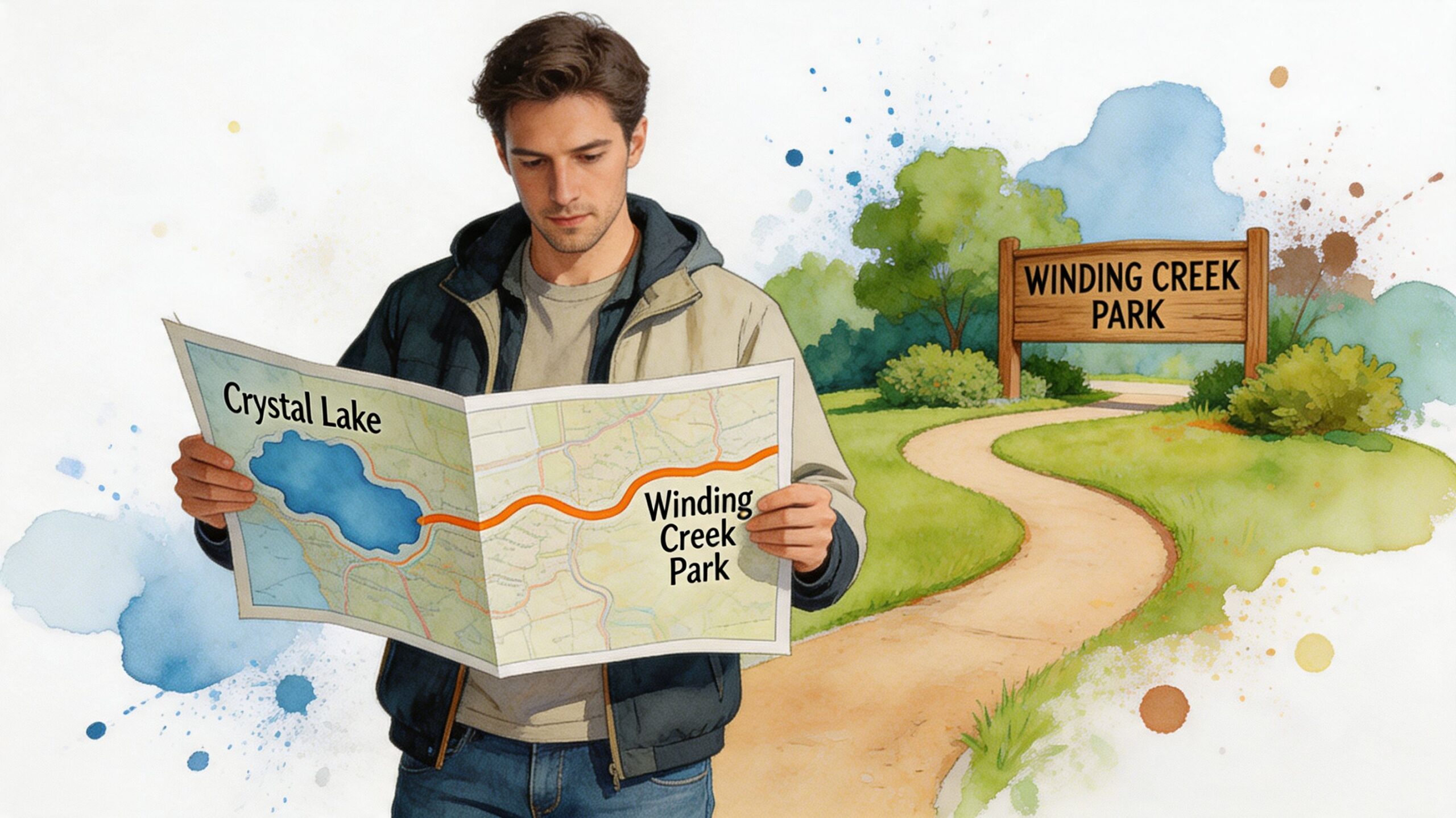
If you drive, use your map app and search for Winding Creek Park in Crystal Lake, Illinois. I’m keeping this plain on purpose. Addresses and parking access can change, and your phone will do a better job with current turn-by-turn directions than any static paragraph I could write here.
What matters more is the arrival pattern. When you pull in, don’t rush out of the car. Sit for a minute. Look around. Let your body catch up to where you are.
I like to do this:
- First minute: turn off music and just listen
- Second minute: spot the water line or tree line
- Third minute: decide whether this visit is for walking, cleanup, photos, or all three
That pause changes the whole day.
Getting there from Chicago without a car
Public transit takes more patience, but I think that’s part of the charm. Start with Metra service toward Crystal Lake, then use a rideshare, local taxi, or a short bike ride for the last stretch if needed. Before you leave, check current train schedules and station connections so you’re not making guesses on the platform.
The trip out has its own mood. You watch the city thin out. Buildings get shorter. Your shoulders drop a little.
Going by train turns the visit into a transition ritual. You leave your usual speed behind before you even touch the trail.
What arrival feels like
Some parks announce themselves with giant signs and noise. This one feels quieter. You reach it, step out, and sense that the day could go in a gentler direction if you let it.
That matters. A lot of us don’t need more stimulation. We need a place where we can hear our own thoughts without being trapped inside them.
Navigating the Trails and Waterways
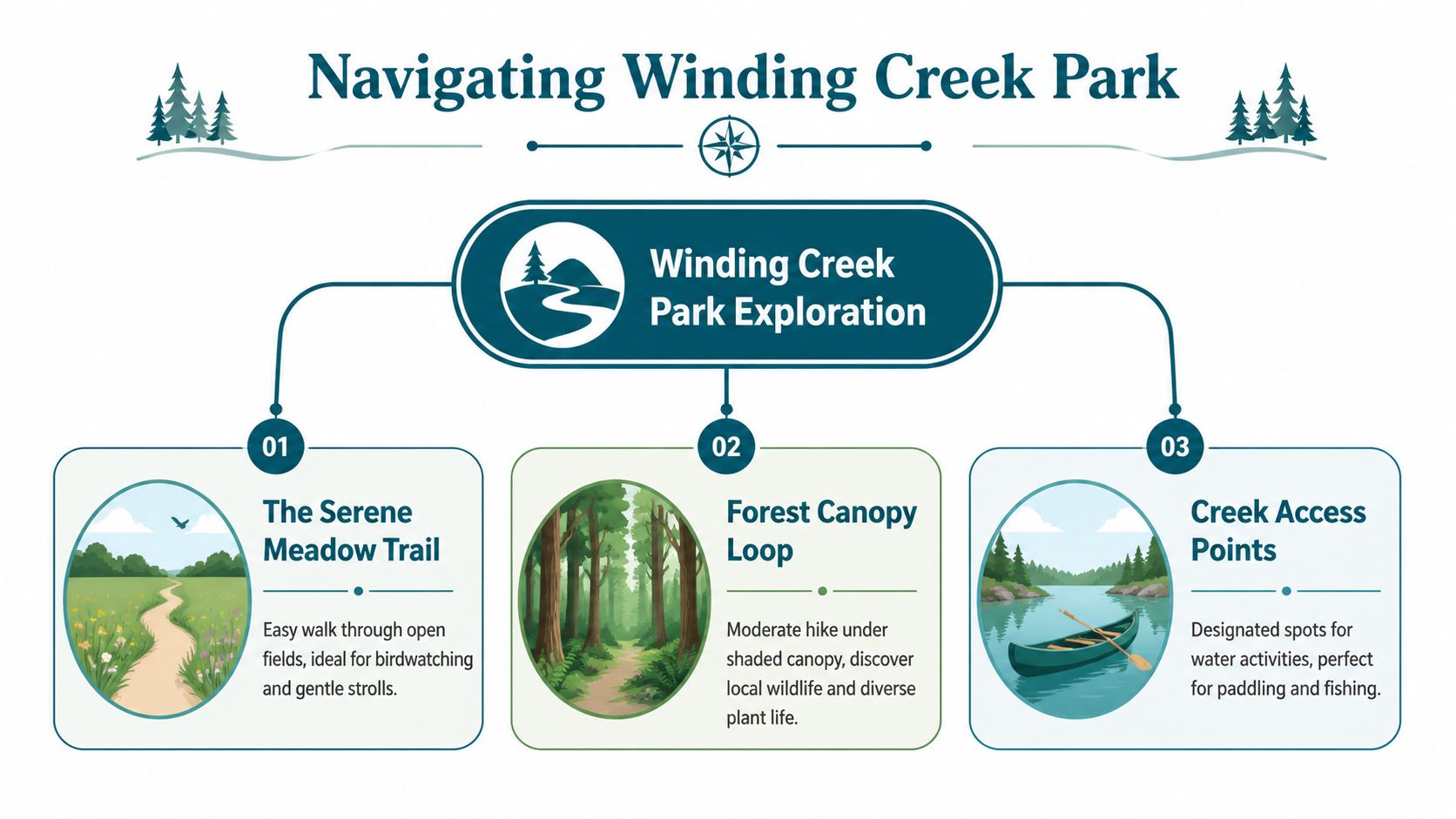
When I walk a new park, I need a simple mental map. Winding creek park is best understood as a body. The ponds are the heart. The paths are veins. The brushy edges are the skin, where much ecological drama unfolds.
If you start with that image, you won’t feel lost.
Start with the water
The north and south pond areas pull your eye first. That’s fine. Let them. Water gives you orientation fast, and it slows people down in a good way. If you walk the edge at an easy pace, you’ll start noticing the layers. Open water. Margin plants. Muddy ground. Shrubs. Trees.
That edge zone is where I tell people to be patient.
If you stand still, you may catch bird movement, insect skims over the surface, ripples from fish, or the kind of sudden little splash that makes a kid stop talking mid-sentence. Those moments are easy to miss if you charge through the park like you’re trying to complete an errand.
Three ways to move through the park
You don’t need trail names memorized to have a good day. You just need to choose your mood.
| Approach | Best for | What it feels like |
|---|---|---|
| Pond-edge loop | First visits, families, reflection | Slow, open, observant |
| Tree-line path | Shade, quiet, texture, birdwatching | Closer, softer, more enclosed |
| Creek-facing wander | Curiosity, photography, sitting still | Loose, exploratory, less rushed |
I usually tell first-time visitors to walk one full loop near the water before trying side paths. That gives you a center point in your head. After that, you can improvise.
If you want movement
If your body wants more action than a calm stroll, bring that energy with intention. A paddle day changes how you read a place, and if you like mixing water time with city adventure, I’d point you toward urban kayaking ideas in Chicago for inspiration you can carry into your next outing.
That said, winding creek park isn’t a place I treat like a race course. I treat it like a conversation.
Walk the first ten minutes without trying to “get somewhere.” A park usually tells you how to move through it if you stop bossing it around.
What to look for with your eyes low
A lot of people scan only at head height. I try to look lower.
- Muddy margins: tracks, bent reeds, little signs of recent life
- Roots near the path: erosion, texture, patterns worth photographing
- Shoreline debris: where cleanup work often matters most
- Young plants after clearing: the first signs that land is trying to recover
That last one is important. You don’t always see healing in a dramatic form. Sometimes healing looks like a small green comeback in a place that used to be choked.
Healing the Land A Deeper Purpose
A park can look fine from ten feet away and still be struggling. I’ve learned that the hard way in a lot of green spaces. You see leaves, water, birds, maybe a nice reflection, and you think nature is handling itself. Then you get closer and realize one aggressive plant has started acting like a neighborhood bully.
That’s part of the story at winding creek park in Crystal Lake.
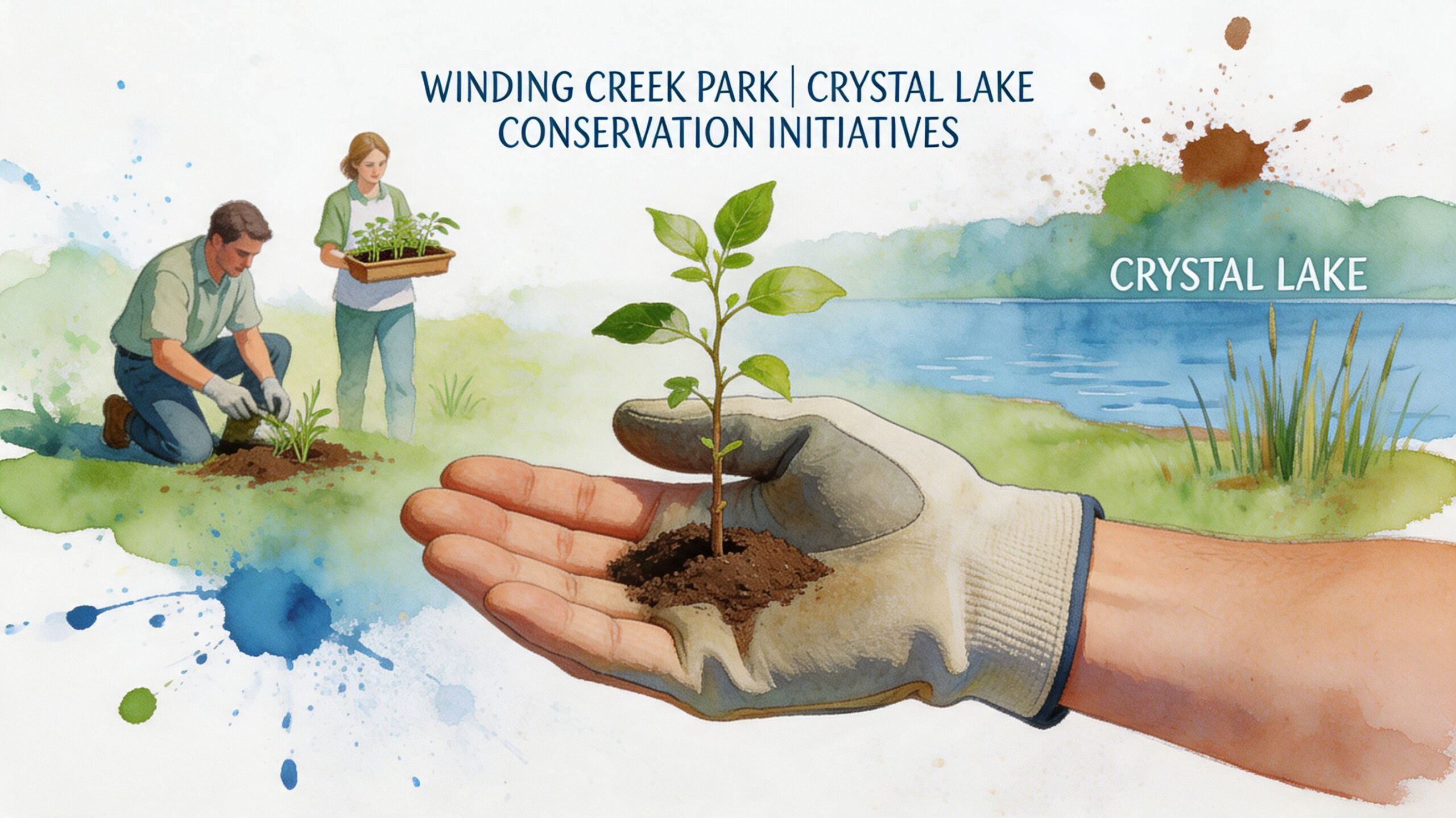
According to the Crystal Lake Park District project update on Winding Creek Park, the park is going through invasive species control focused on plants like European black alder and common buckthorn. Those plants form dense thickets, smother native habitats, and European black alder can consume up to 30% more water than native plants. The work includes mechanical cutting and herbicide application, and it creates chances for volunteers to help with native replanting.
What invasive plants actually do
I want to make this concrete. Think about a good conversation in a group. Different people speak. Different people listen. There’s room. Native habitat works like that.
Invasive thickets wreck that balance. They crowd light. They crowd water. They crowd physical space. Soon, the weaker plants don’t get a turn at all.
That’s why cutting back invasives isn’t cosmetic work. It’s intervention.
Why this work changes you too
I’ve always found it easier to face damage outside myself first. Pulling trash. Clearing a patch. Carrying brush. Those tasks are blunt in a helpful way. They don’t ask me to have perfect feelings before I begin.
Land restoration works like that too.
When you help remove what’s choking a place, you start asking sharper questions about your own life. What have I let overgrow? What keeps taking more than it gives back? What am I avoiding because the fix looks ugly at first?
If you want a grounded explanation of that mindset, I like this plain guide to environmental restoration and what the work involves.
Healing land often starts with an unpleasant phase. Cutting. Hauling. Dirt. Sweat. Temporary ugliness. That doesn’t mean the process is wrong. It means the process is real.
Ways you can help without pretending to be an expert
You don’t need to arrive as a botanist. You need humility and willingness.
- Learn the target species: know what European black alder and buckthorn look like before you touch anything.
- Respect active management work: if staff are using cutting and herbicide methods, stay coordinated with them.
- Help after removal: native replanting is where hope becomes visible.
- Stay curious: ask why a cleared area looks rough. It may be in the middle of recovery, not abandonment.
That’s the deeper purpose I want you to feel here. You aren’t only visiting winding creek park. You’re choosing whether to leave it as scenery or meet it as responsibility.
Planning Your Visit Tips for Families and Photographers
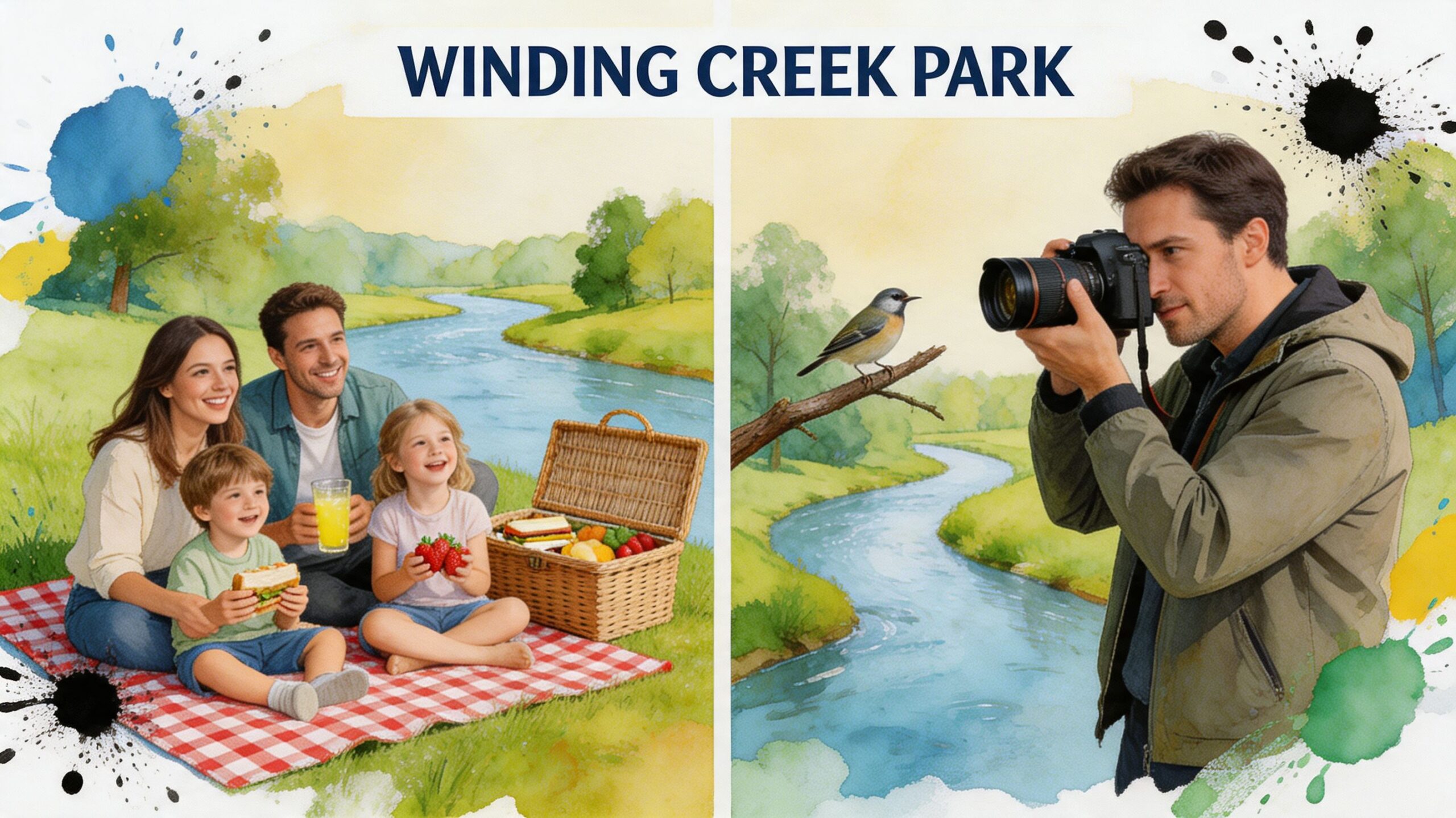
Some park days fall apart because people don’t match the plan to the people. I’ve done that enough times to know better. If you bring little kids, you need rhythm, snacks, and a mission. If you bring a camera, you need patience, decent shoes, and a willingness to wait for light instead of forcing it.
Here’s the version of winding creek park I’d recommend for both.
If you’re bringing family
Keep the day simple. Don’t try to squeeze every corner of the park into one outing. Start near the easiest walking area by the water, pick a picnic spot with a clear line of sight, and let the kids “collect” observations instead of objects.
I like turning a walk into a scavenger hunt with no pressure.
- Find a leaf with a strange edge
- Spot two different bark textures
- Listen for three bird calls
- Look for a place where land meets water in a new way
Kids usually care more when they’re given a mission that feels like detective work.
If you’re carrying a camera
Go early if you want softer light on the pond and less visual clutter from other visitors moving through your frame. Work the edges first. Reflections, reeds, bark, and low plants tell a fuller story than a wide shot alone.
Don’t only chase the obvious scenic image. Photograph the details that show a place is alive and changing.
Field note: The best park photos often come from kneeling down, not from standing taller.
That means muddy boots. It’s worth it.
A quick visual can help you think about the park in motion before you head out:
A practical split plan
If one person wants family time and another wants photos, don’t fight over the pace. Divide the visit in half.
| Part of visit | Family focus | Photo focus |
|---|---|---|
| First half | Short walk, snacks, easy discoveries | Establishing shots, water light, path scenes |
| Second half | Rest, play, quiet looking | Texture studies, wildlife patience, detail work |
That approach saves the day. Nobody feels dragged around.
And if you’re on your own, borrow this same structure anyway. Spend the first half observing. Spend the second half making something, whether that’s photos, notes, sketches, or a cleanup bag.
Join the Movement From Visitor to Volunteer
The weirdest part of any cleanup is the first few minutes. You show up, maybe a little unsure, maybe wondering if you’ll know anyone, maybe asking yourself why you agreed to spend part of your weekend doing manual labor in public.
Then somebody hands you a bag.
That helps. A lot.
Action cuts through awkwardness faster than small talk does. Once your hands are busy, people relax. You start pointing things out. Someone makes a joke about the strangest object on the ground. Someone else helps hold a bag open. An hour later, the place looks better and you feel less like a stranger.
Why weekend mornings work
I’m biased toward morning service because it sets the tone for the whole day. You do one brave, useful thing early, and the rest of your Saturday feels less slippery. You trust yourself more.
Consistency matters more than intensity here. I’d rather see someone help in a modest, steady way than arrive once with a huge burst of guilt and disappear.
You build courage the same way you fill a trash bag. Piece by piece.
What a volunteer morning feels like
A real volunteer morning is rarely glamorous. Sometimes it’s cold. Sometimes the ground is wet. Sometimes you find gross stuff and wish you hadn’t. Sometimes you get quiet because the work touches something emotional in you.
And still, by the end, there’s pride.
Not fake pride. The earned kind. The kind that comes from looking back at a stretch of land and knowing your body changed it for the better.
How to take the first step
If you want to stop reading about service and do it, keep your first move simple:
- Pick a date you can keep. Don’t wait for a perfect weekend.
- Wear clothes you can dirty. Old shoes beat stylish hesitation.
- Bring water and gloves if you have them.
- Invite one person if that helps you show up.
- Find a real event list. A practical place to start is these Chicago volunteer opportunities.
You don’t need a dramatic personal backstory to volunteer. You just need willingness. In my experience, willingness changes people faster than self-analysis does.
Exploring Further Other Local Gems and Good Works
One lesson I keep relearning is that every park asks for a different kind of care. At one place, the work is litter removal. At another, it’s invasive species control. Somewhere else, care looks like following fishing rules so the water doesn’t get loved to death.
That’s why I like comparing Crystal Lake’s winding creek park with the one in Naperville. Same name. Different job for the visitor.
A different kind of stewardship in Naperville
The Naperville Park District page for Winding Creek Park notes that the park supports regulated freshwater fishing for species like bluegill and largemouth bass. It also states that the Illinois Department of Natural Resources sets catch limits, including 6 largemouth bass per day with a 14-inch minimum, and that following those rules helps sustain fish populations.
I like that because it turns conservation into something ordinary and disciplined. You don’t need a dramatic rescue moment. You need restraint.
Parks teach different virtues
Crystal Lake asks you to notice habitat struggle and recovery work. Naperville asks anglers to practice limits and patience. Both ask the same deeper thing from you in the end. Respect the place enough to adjust your behavior.
I see it this way:
- At a restoration site: your job is to help land breathe again
- At a fishing pond: your job is to enjoy the resource without draining it
- At a cleanup event: your job is to leave no excuse for neglect behind you
That’s a useful way to see the whole region. Not as a list of destinations to consume, but as a series of relationships. Each place has its own terms.
Keep going after one good visit
One park visit can wake something up in you. The trick is not letting that feeling stay isolated.
Make a habit of exploring local spaces with a service mindset. Bring a bag. Learn one rule. Notice one problem. Respect one boundary. That’s how ordinary people become steady caretakers without needing a title for it.
Become the Butterfly
I keep coming back to the caterpillar idea because it’s honest. A caterpillar isn’t finished. It doesn’t glide. It inches forward. It does the unglamorous stage first.
That’s how change has felt in my life too.
I didn’t become stronger because I had a beautiful breakthrough in perfect weather. I changed because I kept doing small physical acts of care when I didn’t feel sorted out yet. A bag of trash. A rough trail walk. A hard conversation with myself while looking at water. Winding creek park fits that kind of growth. It gives you somewhere to practice.
You don’t need to arrive polished. You can arrive confused, restless, tired, hopeful, or all four at once. The park can hold that. The work can too.
And if you return enough times, something subtle happens. The place stops being a backdrop. It becomes part of your personal code. You don’t walk through it asking only what you can get from it. You start asking what you can give.
That’s the shift I want for you.
So here’s the question. When you get your next free morning, will you use it to consume a place, or to care for one?
If you want a group that turns that question into action, join Litter Caterpillars. We clean, explore, and grow through service, one neighborhood and one morning at a time.