Tag: chicago day trips

  • Lake Renwick IL: Your Guide to Birds, Trails, and Action

    Lake Renwick IL: Your Guide to Birds, Trails, and Action

    I once pulled a plastic bag out of the weeds near a pond edge and looked up just in time to catch a heron lifting off over the water. That's Lake Renwick to me. You bend down for the mess, then the place makes you look up.

    A Place Where You Can Transform

    Some places clean you out a little.

    Lake Renwick in Illinois has that effect on people who show up ready to pay attention. You come for birds, water, quiet, a walk, maybe a reset after a rough week. Then you start noticing the smaller things. A snagged fishing line. A crushed bottle by the grass. A trail edge that stays better when people act like they belong there instead of passing through like consumers.

    That's why I keep coming back to places like this. I don't only want scenery. I want a place that asks something from me.

    Beauty after damage

    Lake Renwick works on me because it didn't begin as some perfect postcard. It came out of hard use, disturbance, and time. I like places with that kind of honesty. They remind me of people who had messy years and still learned how to become steady.

    You don't have to start pure to become useful. A place can recover. So can a person.

    When you walk around Lake Renwick IL, keep that in mind. Don't rush straight into checklist mode. Let the place tell on itself a little. Watch the water. Watch the edges. Notice how care shows up in ordinary forms, from trail rules to seasonal closures to the simple fact that some areas stay cleaner because somebody bothered to pick up what didn't belong.

    Visit with your eyes open

    If you need a reset, this is the kind of outing that can change the day without pretending to solve your life. Go outside. Slow your pace. Bring binoculars if you have them. Bring a trash bag if you're that kind of person. If you need a nudge toward that mindset, spend a little time with this idea of reconnecting with nature through direct action.

    That's the mood I'd bring here. Curious, grateful, and ready to leave the place a little better than I found it.

    From Gravel Pit to Heron Haven

    The first time you learn what this place used to be, the quiet hits differently.

    Waterbirds now nest where machines once tore into the ground for gravel. Lake Renwick did not begin as a protected refuge. It came out of extraction, abandonment, and a long stretch of patient recovery. The preserve grew through land acquisition by the Forest Preserve District of Will County between 1989 and 2010, and today it covers 836 acres. A 320-acre portion with the heron rookery became an Illinois Nature Preserve in 1992. The lake itself took shape after a gravel quarry stopped operating in 1983, and the pits filled with water from an underground spring, according to the Lake Renwick Preserve entry.

    A worker in safety gear watches heavy mining machinery operating at a construction site near a scenic lake.

    The ground remembers

    You can still feel that history if you walk with your eyes open. The lake has a worked look to it. The edges, the depth, the open water, even the way the habitat lays out, all carry the mark of what happened here first.

    That matters.

    People often want nature stories to be tidy. Lake Renwick gives you the harder and better version. Damage happened. Recovery followed. Protection had to be chosen, then enforced, then maintained. Anyone who has spent a morning hauling bottles and bait containers off a shoreline knows the pattern. A place improves because somebody does the unglamorous work and keeps doing it.

    The gravel base helped create conditions that now support colonial nesting birds. That is one of the trade-offs written into this preserve. Industry altered the land. Time, water, habitat management, and restraint turned that altered land into something worth defending.

    If you care about reclaimed wild places, Hackmatack National Wildlife Refuge shows a similar kind of restoration work in action.

    Recovery needs protection

    The rookery now supports nesting by Black-crowned Night-Herons, Great Blue Herons, Great Egrets, and Double-crested Cormorants. That fact matters less as trivia than as responsibility. Birds returned because the site became usable for them. They stay because people are willing to limit access, respect closures, and keep pressure off sensitive areas during nesting season.

    That is the part visitors miss if they only chase the pretty view.

    The Litter Caterpillars mindset fits here perfectly. First remove what harms. Then protect what can grow. Then come back often enough that your care counts for something. Lake Renwick is one of the clearest examples I know of a place that rewards that attitude.

    Practical rule: If a landscape recovered from heavy use, treat every trail, overlook, and closure sign as part of the restoration work, not as a suggestion.

    Why this history stays with people

    A lot of preserves feel pleasant. Lake Renwick feels earned.

    You stand beside calm water, but the calm came after digging, truck traffic, and disruption. You watch herons lift over the rookery, and that sight carries more weight once you know what the ground had to become for them to use it. I have seen the same truth on cleanup days all over northern Illinois. People change when they help repair a place. Places change when enough people stop treating them like somebody else will handle it.

    That is why this preserve sticks with people who pay attention. It proves that restoration is real, but it also proves restoration is never finished.

    The Birds You Will Meet

    The first thing many people notice at Lake Renwick is sound. Wingbeats. Sharp calls. Rustling reeds. A sudden burst of motion over water that looked still a second earlier.

    The preserve has around 200 documented bird species, and the Heron Rookery Nature Preserve closes from March 1 to August 15 to protect nesting waterbirds during breeding season, according to this guide on visiting Lake Renwick Preserve and the Heron rookery.

    A woman sits on a wooden dock overlooking a lake with various birds and abstract colorful patterns.

    Start with your ears

    If you're new to birding, don't force yourself to identify everything at once. Start with contrast.

    Listen for the place where the sound gets busy. Then stop moving. Let your eyes work after your ears do. That one habit will get you more sightings than stomping around with your binoculars already raised.

    The birds people talk about most here are the big, memorable ones. Great Blue Herons have that tall, patient look. They can seem like they're carved out of driftwood until they shift one leg or spear forward. Great Egrets carry themselves differently. Cleaner lines. Brighter presence. They catch light fast. Black-crowned Night-Herons feel stranger to me, almost secretive, the kind of bird you appreciate more each time you see one.

    If you like places where waterbirds dominate the mood, you'd probably also enjoy reading about Hackmatack National Wildlife Refuge, another spot where slowing down pays off.

    What to watch for

    Try this on your first visit:

    • At the shoreline: Scan slowly for still shapes before you look for movement. Herons often beat you by freezing.
    • In open water views: Watch for flight paths. Big birds announce themselves with spacing and rhythm.
    • Near morning or evening light: Look at silhouettes first. Size and posture often tell you more than color.
    • When the place feels quiet: Stay put. Quiet often means birds are active but you haven't tuned in yet.

    The best birdwatchers I know don't chase every sound. They let the place come toward them.

    The nesting season matters because these birds need room. Human pressure changes behavior fast. That's why access gets tighter when breeding activity ramps up. You may want the closer view. The birds need distance more.

    A little motion helps if you want to get the feel before you go.

    You are entering their schedule

    That's the mindset that makes a trip to Lake Renwick IL better. You are not arriving at a performance made for you. You are stepping into a living place already in progress.

    When people understand that, they stop asking, “How close can I get?” and start asking, “How respectfully can I be here?” That second question is the right one.

    How to Explore Lake Renwick

    Some people visit once, walk a little, stare at the water, and leave thinking they “did” Lake Renwick. You can do better than that.

    This preserve rewards intention. If you know why you came, you'll move differently. Birdwatchers should hunt for sightlines and patience. Walkers should treat bends, edges, and pauses as part of the route. Anyone who likes a useful outing should bring one small bag for litter and grab what's safe on the way out.

    If you came for birds

    Don't start by marching as far as possible. Start by finding a clean view and staying there longer than feels normal. Waterbirds punish impatience. The first few minutes can look dead, then a neck lifts from the reeds, a wing opens, and the whole scene wakes up.

    My own rule is simple:

    1. Stop early: Your first decent overlook may be all you need.
    2. Scan left to right: Don't jerk your binoculars around.
    3. Wait after movement: Birds often settle and reappear.
    4. Keep your voice low: Even when other visitors don't.

    If you want a more active trail day after a quieter preserve visit, the Des Plaines River Trail near Chicago scratches a different itch.

    If you came to walk

    Walk Lake Renwick like you're reading margin notes, not speed-running a route. The good stuff sits at the edges. Wind on cattails. Ripples changing the light. Mud tracks. Feathers caught in grass. Those details give the preserve its character.

    Here's what works well on foot:

    • Travel light: Water, decent shoes, binoculars if you have them.
    • Leave your pace loose: Fast miles are for other trails.
    • Take the side glance seriously: Some of the best sightings happen off your main line of sight.
    • Respect barriers and closures: If an area is blocked off, treat that as part of the care plan, not a suggestion.

    What doesn't work is treating the preserve like a gym loop. You miss too much when every minute is about distance.

    If you want a fuller outing

    Lake Renwick has different access areas, and each creates a different mood. One visit might be mostly birding. Another might be more about a calm walk with a few stops to watch the water. Another might center on Turtle Lake and whatever pace that part of the preserve invites.

    I like to think of the place like a conversation. Some days it talks back fast. Some days you have to sit through the silence first.

    Field note: A good visit usually has one moment where you stop because something small caught your eye. Trust that moment. Don't rush past it trying to get to the “main attraction.”

    One more thing. If you carry out your snack wrapper and one extra piece of trash, your trip changes from recreation to stewardship. That switch matters. It changes how you remember the day.

    Planning Your Visit The Right Way

    The first mistake I see is simple. People pull into Lake Renwick assuming every entrance works the same, then they spend the first part of the day correcting avoidable problems instead of settling into the preserve.

    A little planning changes that.

    Lake Renwick Preserve has three public access points in Plainfield. Copley Nature Park and Turtle Lake Access are open year-round from 8 a.m. to sunset. Heron Rookery Nature Preserve is open from August 16 to February 28, with limited access during public programs from March 1 to August 15, according to the Forest Preserve access page for Lake Renwick.

    Read the rules like a caretaker

    If you want the preserve at its best, treat posted rules as part of the habitat management plan, not as obstacles between you and a good outing.

    The rookery has tighter seasonal controls for a reason. Nesting birds need distance and predictability. Extra noise, close approach, dogs, and bikes add pressure fast, especially in breeding areas. People who care about wildlife behavior should be the first ones to respect those limits.

    That is the trade-off here. Access gets narrower so the living part of the place stays strong.

    Access points and what to expect

    Access Point Open Season Key Rules
    Copley Nature Park Year-round, 8 a.m. to sunset Stay on marked areas, keep noise down, and give wildlife space.
    Heron Rookery Nature Preserve August 16 to February 28. Limited public programs during March 1 to August 15 Seasonal restrictions apply. No dogs or bicycles. Respect all closures.
    Turtle Lake Access Year-round, 8 a.m. to sunset Quieter entry point for a slower visit. Follow posted rules and pack out everything you bring in.

    Before you leave home

    Good visits usually come from four smart choices:

    • Check which access point fits your day: Birding, a quiet walk, and a short stop all call for different entry plans.
    • Confirm seasonal access before you drive: The rookery schedule can change what is possible.
    • Dress for waiting, not just walking: You may spend more time standing still than covering ground.
    • Bring one small stewardship item: A glove or spare bag is enough if you want to pick up safe litter on the way out.

    That last habit matters more than it sounds.

    I've seen people arrive ready to consume a place. I've also seen people arrive ready to notice, protect, and leave a trail edge cleaner than they found it. The second group gets more out of Lake Renwick. They pay closer attention. They act with more restraint. They start to understand that appreciation and responsibility belong together.

    Lake Renwick rewards that kind of visitor.

    Become Part of the Story

    The best visits change your role.

    You arrive as a watcher. You leave wanting to help. That shift matters more than any species list you jot down in your phone. A place like Lake Renwick doesn't need one more person treating it like a backdrop. It needs people who notice when a trail edge is cleaner, when litter near the water is dangerous, and when their own habits either add stress or reduce it.

    Service changes the outing

    I've learned something simple from cleanup work. It's often easier to pick up someone else's mess than your own. That sounds backward until you live it. Public service can train parts of you that private life keeps avoiding. You practice consistency. You build stomach for discomfort. You stop waiting for the perfect mood.

    That same ethic belongs at outdoor spaces. If you carry a small bag and pick up what's safe, you start seeing the preserve as shared responsibility. If you join a cleanup, even better. You meet people who act instead of only admire.
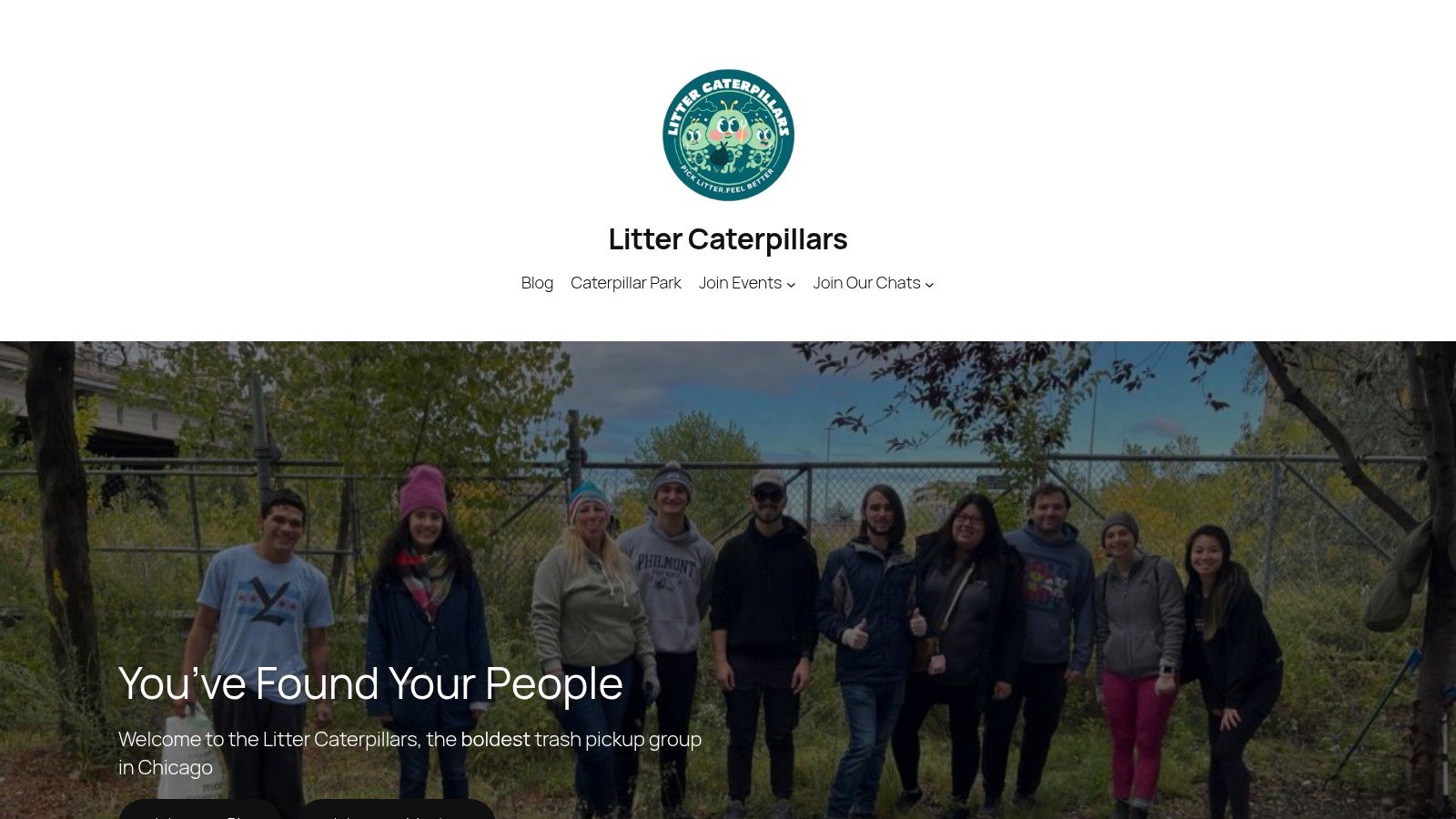
    Screenshot from https://www.littercaterpillars.com

    What that looks like in practice

    You don't need a grand plan. Start small and stay real.

    • Bring a glove and a bag: Pick up easy litter on your walk out, not on the way in when your hands and attention are full.
    • Model the tone: Keep your volume down, follow closures, and make that behavior normal for whoever comes with you.
    • Join local efforts when you find them: Cleanup groups build momentum because people see immediate results.
    • Leave one corner better: That's enough for a day. You don't need to fix the whole world before lunch.

    A public place becomes yours in the healthiest way when you care for it, not when you claim it.

    Growth is part of the work

    This is the piece people don't always say out loud. Service toughens you up in a good way. You get less precious. Less passive. You stop needing every outing to entertain you. Sometimes the meaningful part of the day is the muddy shoe, the full trash bag, the extra few minutes spent doing the boring thing that helps.

    Lake Renwick gives you plenty to admire. Birds. Water. Quiet. Recovery. But admiration alone is thin. Action sticks.

    So go. Walk slowly. Watch carefully. Respect the rules. Pick up one thing that shouldn't be there. Bring someone who needs fresh air and a better habit. That's how a preserve gets woven into your life. Not through slogans. Through repetition, attention, and a little earned pride.


    If you want a service-minded way to get outside, make friends, and leave places cleaner than you found them, check out Litter Caterpillars. It's a practical way to turn appreciation into action.


  • 7 Best Spots for Water Tubing Illinois: 2026 Guide

    7 Best Spots for Water Tubing Illinois: 2026 Guide

    I learned something useful while picking up trash in a Chicago hailstorm. The best stories usually start when the day stops going according to plan.

    A perfect blue-sky float is great, sure. But the afternoon when you drift into a surprise shower, tuck your snacks under your shirt, and laugh with your friends under a bridge for ten minutes? That day sticks. Summer is short, and I don't want to spend it scrolling, waiting for a better plan.

    If you're looking for water tubing in Illinois, I think the core question is simpler. What kind of story do you want to live? Do you want the easy one, where somebody hands you the tube and tells you where to stand? Do you want the social one, with a cooler tube and a long lazy ride? Do you want the rougher, more DIY version where you feel a little more like you earned the sunset?

    I like all of them for different reasons. Some days I want clean logistics and obvious parking. Other days I want the river to feel a little scrappier. Either way, the point is the same. Get outside. Get on the water. Come home tired, sun-warmed, and carrying one more memory than you had that morning.

    1. Plainfield River Tubing

    The first time I plan a river day for a mixed group, I do not chase the wildest option. I pick the one that gets everybody in the water before the texts about parking, carpools, and "wait, where are we meeting?" start flying. That is the story Plainfield River Tubing fits.

    At Plainfield River Tubing, the appeal is simple. You show up, check in, grab your tube, and let the operation handle the logistics that usually eat up the first hour of a DIY float. I have a soft spot for that kind of day. Sometimes the memory you want is not heroic survival of a messy plan. It is your friend laughing five minutes after arrival because nobody had to play shuttle driver.

    Their posted season runs from May 23 to September 7, 2026, with half-hour departures from 10:00 a.m. to 2:30 p.m. on weekends and select holiday dates. That kind of structure helps when you are organizing first-timers, parents with kids, or a group that wants river time without turning the morning into project management.

    The Story This Spot Fits

    Plainfield works for the easy summer chapter.

    You are close enough to the southwest suburbs to make it feel like a real outing, but not such a production that the day needs military planning. The float is marketed as a 3-mile ride on the DuPage River, which gives the trip a nice shape. Long enough to settle in, short enough that beginners usually stay excited the whole way.

    I would send a first-date group here. I would send the cousin who says they want "outdoorsy" but still wants clear instructions. I would send the friends who are free at the last minute and need a plan that feels fun, not fussy.

    A few things stand out:

    • Easy start: Clear check-in and scheduled departures remove a lot of guesswork.
    • Good fit for beginners: Staff support and a defined route make the day feel approachable.
    • Convenient day-trip option: It is reachable from the Chicago area without making the trip feel like a haul.

    There is also something nice about choosing the lighter, easier version of adventure on purpose. Not every good river story has to involve a chaotic launch or a lost flip-flop hunt in knee-deep mud. Sometimes the win is that everybody relaxes fast enough to notice the trees, the current, and the way a summer afternoon opens up once the planning stops. If that part matters to you too, I like pairing a float with stories about cleaning up a river after the fun is over.

    The tradeoff is straightforward. You are floating on their schedule, not building your own. Pricing also tends to show up during the booking process instead of in one clean public list, so you may need a few extra clicks before you decide.

    2. C&M Canoe Rental

    Some tubing spots feel like a neatly packed picnic. C&M feels more like an old summer habit. You call, reserve your tube, throw a towel in the car, and head toward the Fox River with the kind of energy that says the day doesn't need to be fancy to be good.

    C&M Canoe Rental

    At C&M Canoe Rental, the appeal is straightforward. Tube rentals are on the menu. Cooler tubes are too. The whole thing leans social in the best way, like somebody turned a lazy Saturday into a tradition years ago and never saw a reason to complicate it.

    Why I Like the Fox River Mood

    The Fox River has a classic float-trip personality. It feels easygoing. You can picture a group of friends tying tubes together, arguing about snacks, then drifting into one of those slow conversations that only seem to happen on water.

    That mood is why C&M works so well if you're planning a broader outdoor day around the area. A tubing trip here can pair naturally with a hike, a roadside lunch, or a wander near Starved Rock country. If you're curious about that corridor, I like this read on canoeing the Illinois River, because it captures that same "get out and see where the day goes" feeling.

    C&M is better for people who don't mind a little old-school friction. You may need to call instead of relying on a polished online booking flow. That's not a flaw to me. It just means the day starts with a phone conversation instead of an app.

    Bring cash, confirm your reservation by phone, and expect company on peak summer weekends.

    A few reasons people tend to like it:

    • Social-day setup: Cooler tube rentals make the float feel built for groups.
    • Simple process: You can make a plan without learning a complicated system.
    • Good pairing with a weekend trip: It fits naturally into a bigger outdoor day.

    The downside is the same thing that gives it charm. It's less polished. If you want a highly structured experience, you'll probably like Plainfield more. If you want a float that feels like a summer ritual, C&M has that energy.

    3. Fox Hollow River Tubing

    Some days you don't need bells and whistles. You just need a tube, a river, and a reservation that holds. That's the lane Fox Hollow River Tubing stays in, and I respect that.

    Fox Hollow River Tubing

    This spot is tubing-focused, which I think is part of its appeal. It doesn't feel like tubing got squeezed into the edge of another business. It feels like the main event.

    Best for a Budget-Friendly River Day

    Fox Hollow works well when you want choices but don't want the plan to sprawl. A shorter float can fit into a half-day. A longer float gives you more room to drift, stop talking, then start talking again. That's a useful split for mixed groups, especially when one friend wants "quick and easy" and another wants "let's stay out all afternoon."

    The Fox River setting helps too. Earlier, I talked about that relaxed Fox River mood. Here, you get another version of it, a little leaner and more practical. If you like river towns and that broader region, this guide to the Fox River Valley pairs well with the kind of day Fox Hollow tends to create.

    What I especially like is the honesty of the setup. Reservations are required. Water shoes matter. Safety rules are stated clearly. That tells me you're not showing up to guess your way through the basics.

    "The simpler the website, the more I double-check by phone." That's a good rule for summer outfitters in general.

    Here is where Fox Hollow fits best:

    • Short-window planners: Good if you want a float without giving up the whole day.
    • Price-conscious groups: It has a reputation for being straightforward and accessible.
    • People who like sandbar energy: You get that laid-back, stop-and-soak-it-in kind of river mood.

    The trade-off is polish. The website is basic, and cash-only policies can catch people off guard if they're used to tapping a card for everything. But if you care more about getting on the water than looking at a fancy booking page, that's easy to live with.

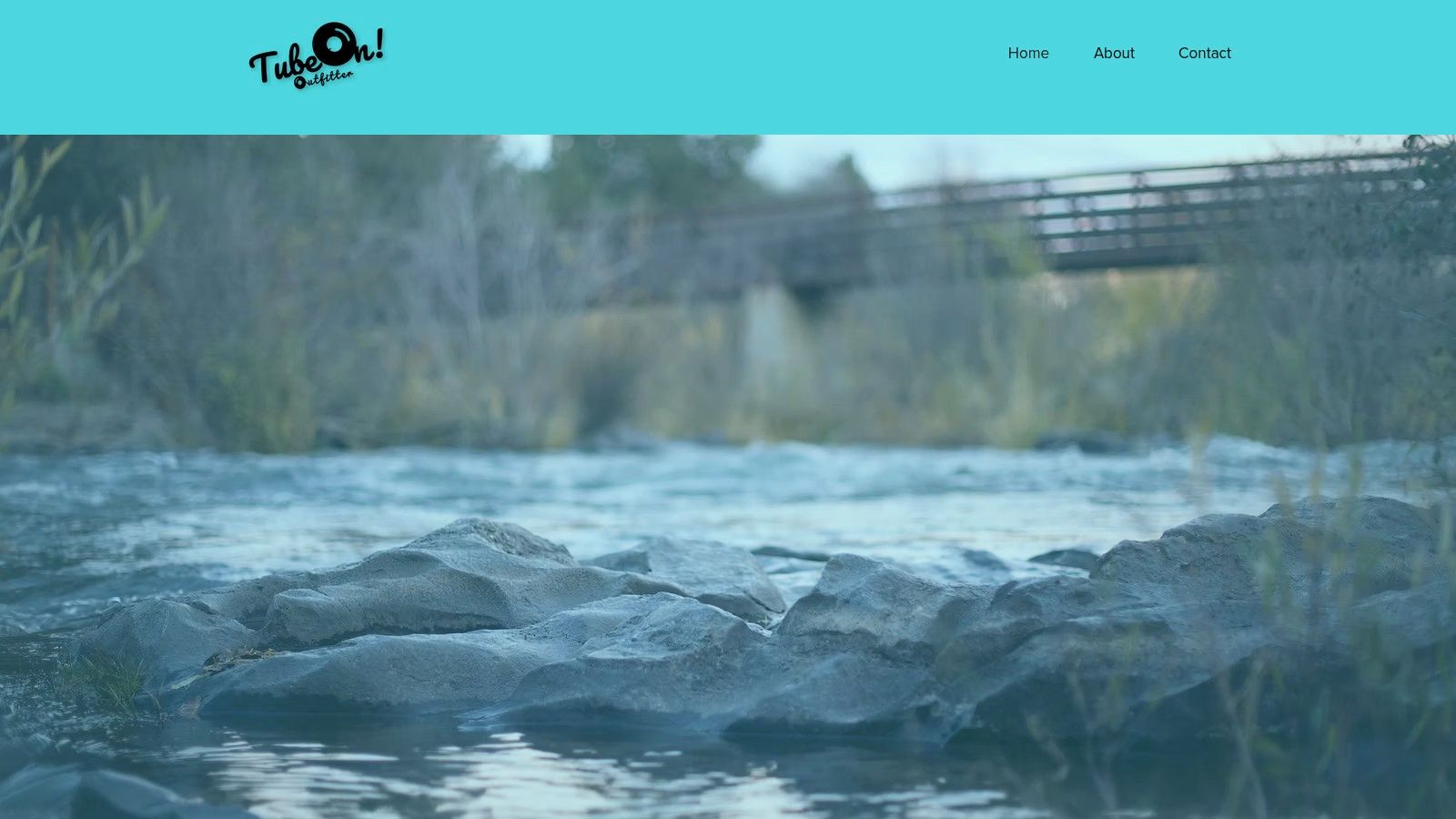
    4. Tube On!! Outfitters

    Tube On!! Outfitters feels like the friend who says, "I know a spot," and they do. If you want a more local, less manicured tubing day, Tube On!! Outfitters is worth a look.

    Tube On!! Outfitters

    This one leans into the Kishwaukee River, and I like that because the story changes when the setup gets a little less packaged. You still have shuttle support available, but the vibe is more flexible. It feels closer to building your own day than joining a preset one.

    For the Person Who Likes a Little More Freedom

    I think of Tube On!! as the "choose your own chapter" option. Maybe your group wants a longer lazy drift. Maybe you want to piece together a route with a bit more input from the outfitter. Maybe you just like the idea of heading northwest of Chicago and doing something that feels more local than trendy.

    That freedom has a cost. You need to pay more attention. Water conditions matter. Availability may be less obvious online, so calling or texting first is the smart move. But that little bit of effort is part of the charm for the right person.

    A few reasons this place can win people over:

    • Flexible trip planning: Good for groups that don't all want the exact same day.
    • Kishwaukee focus: The river itself gives the outing a different flavor from the more common Fox River picks.
    • Value mindset: It appeals to people who want a solid float without a lot of extra packaging.

    If your ideal summer memory includes a little uncertainty, a little improvising, and a lot of water time, this is a strong fit. It reminds me of cleanup mornings when the weather looks questionable and somebody says, "Let's go anyway." Those are often the best ones.

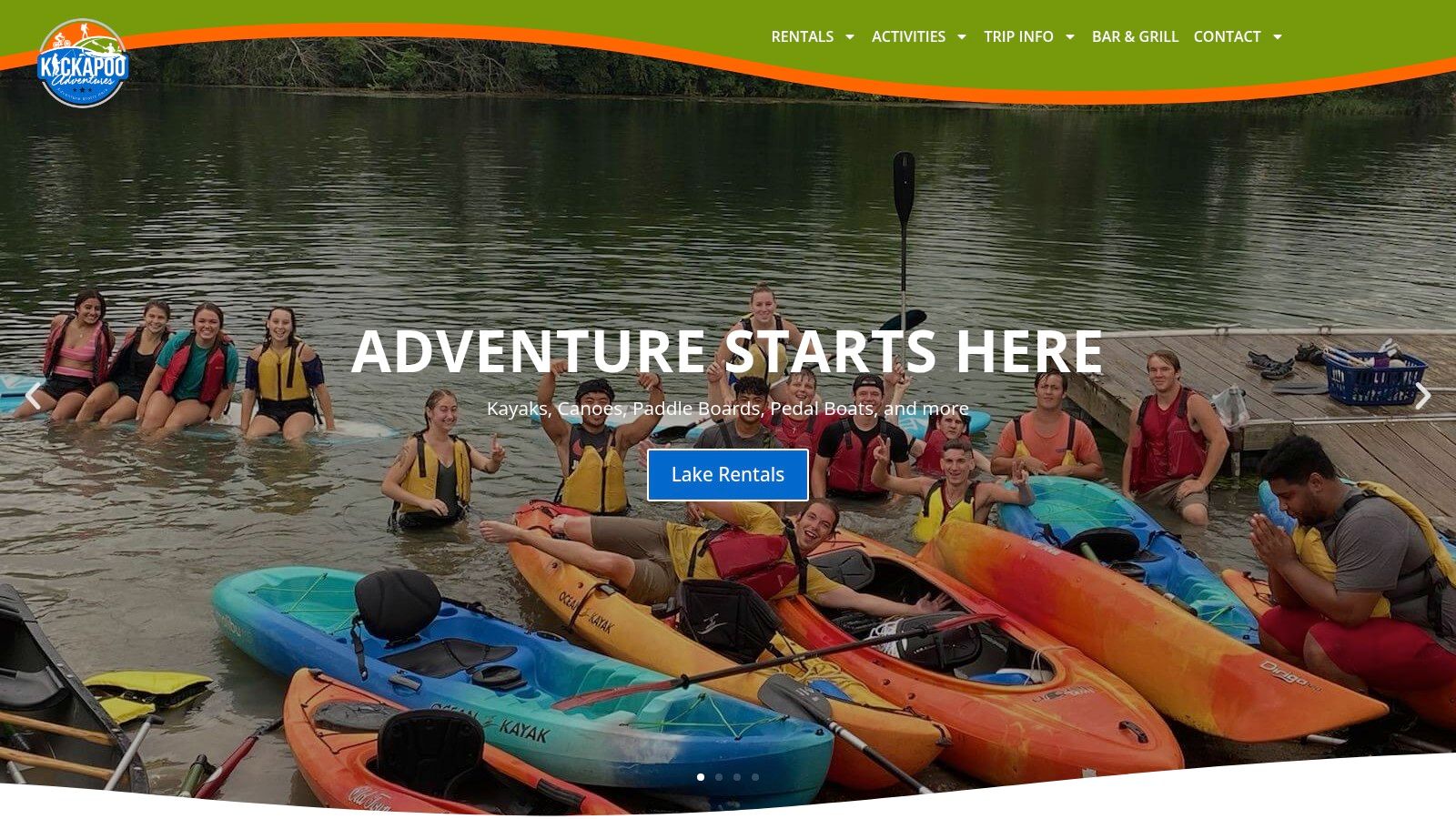
    5. Kickapoo Adventures

    Sometimes I don't want the tubing day to feel like a party. I want it to feel like a long exhale. That's where Kickapoo Adventures comes in.

    Kickapoo Adventures

    Set in Kickapoo State Recreation Area, this pick is better for the person who wants a quieter day. The tubing is still fun, still social, still very much a summer outing. But the mood shifts. You notice trees more. You notice the water more. You talk less for stretches, and somehow that feels good.

    When You Want Nature to Do Some of the Work

    This is the place I'd suggest if your perfect tubing day includes hiking shoes in the trunk and a picnic that isn't rushed. You can build a slower day around it. Float first. Eat after. Walk a trail. Sit around longer than you planned.

    I also like this spot for people who get tired of making every summer outing perform. You don't need the loudest soundtrack or the biggest crew to enjoy it. You just need a little openness.

    Water tubing in Illinois doesn't always have to feel like a group event. Sometimes the best version is quiet and simple.

    What makes Kickapoo stand out for me:

    • Calmer atmosphere: Better for conversation, nature, and a slower rhythm.
    • Multi-activity day: Easy to pair with hiking, picnics, or just hanging around outdoors.
    • Scenic setting: The route feels more tucked away from suburban routine.

    The obvious drawback is distance if you're coming from Chicago. It asks more of your morning. Weather and water conditions also shape the feel of the float. Still, if you want tubing to feel restorative instead of busy, the extra drive can be worth it.

    6. Ayers Landing Canoe Rental

    Ayers Landing has the kind of name that sounds inherited, like somebody's family kept showing up to the river long enough that the place took on their rhythm. That's part of why Ayers Landing Canoe Rental works for me.

    This is a good pick for mixed groups. One person wants a tube. Another wants a kayak. Somebody else wants to make the whole thing into an overnight with camping. Ayers Landing leaves room for that without making the plan feel scattered.

    Best for a Float That Turns Into a Weekend

    I think of Ayers Landing as a "don't rush home" option. You can build more than one kind of memory here. Maybe the float is the main event. Maybe it's the thing you do before camp chairs come out and the evening slows down.

    That flexibility matters because not every group travels the same way. Some people want a tube and a shuttle and that's it. Some people want to make a whole trip out of one stretch of river. Ayers Landing is good at meeting that second type of energy.

    A few reasons I'd put it on the shortlist:

    • Mixed-rental appeal: Easier when tubers and paddlers want to stay in one plan.
    • Camping tie-in: Great if the story you want includes sleeping nearby and stretching the day into night.
    • Fox River familiarity: Comfortable for people who like established river-trip territory.

    The downside is practical. Payment policies can feel a little behind the times, and busy weekends can fill fast. If you're the least organized person in your group, this is the moment to prove everybody wrong and reserve early.

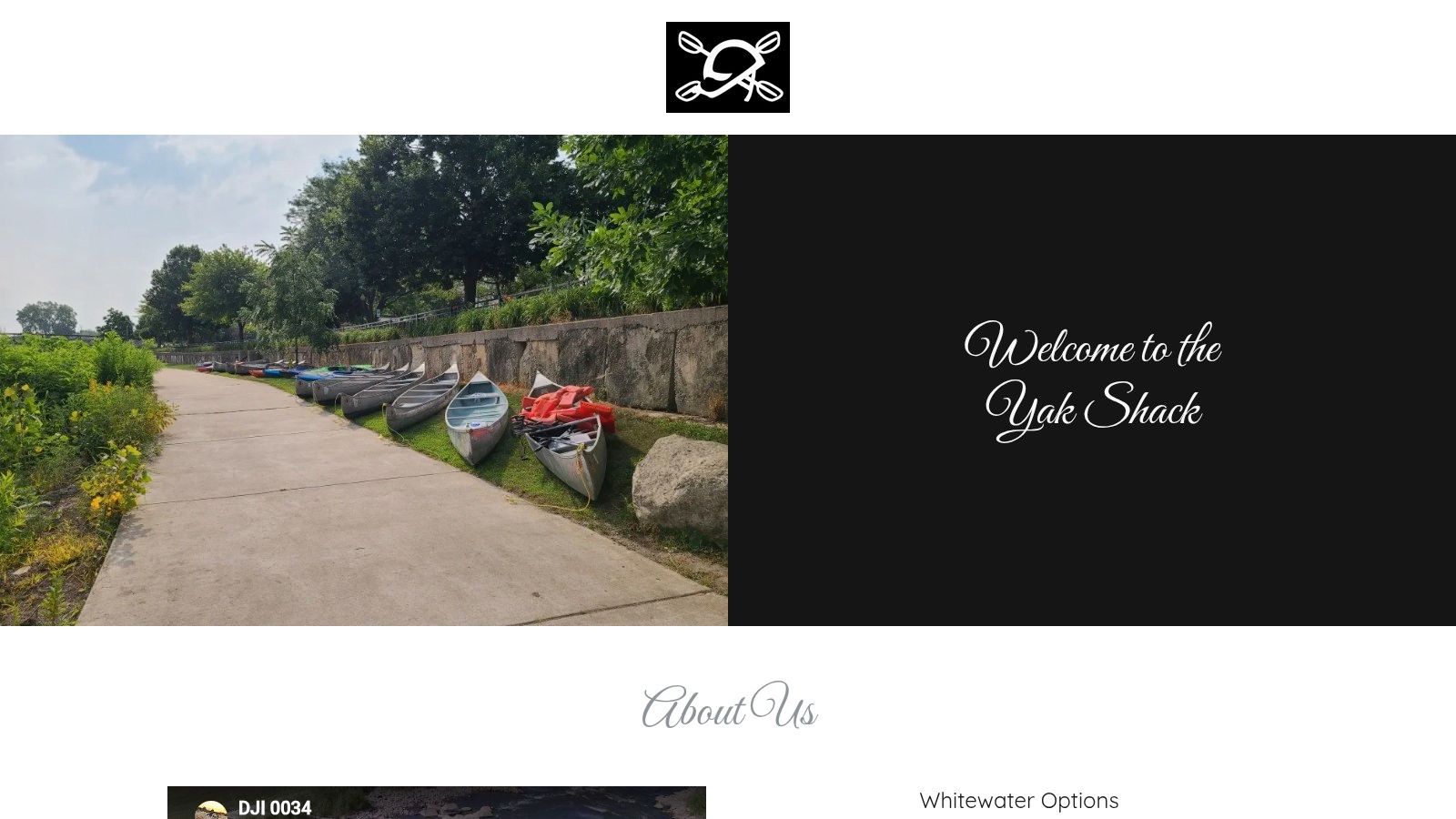
    7. Yak Shack at the Marge Cline Whitewater Course

    The first time I looked at Yak Shack, I knew it was a different kind of summer story. I wasn't picturing a cooler drifting beside me for three quiet hours. I was picturing a shorter, splashier session where the fun starts fast and keeps resetting every time you go again.

    Yak Shack (Marge Cline Whitewater Course)

    Yak Shack works for the group that wants action without turning the whole day into a long river expedition. The setup at the Marge Cline Whitewater Course in Yorkville gives you a more active outing, built around shorter runs and repeat laps instead of one downstream float. That changes the mood right away. You show up ready to play, not just drift.

    The Best Pick for a Short, Energetic Session

    I like this spot for people who want tubing in Illinois to feel a little more hands-on. You rent the right gear for the course, get on the water, and spend your time chasing the lively part of the day instead of waiting for it.

    Illinois Paddle notes on its DuPage River overview that the DuPage River is a 28.3-mile tributary of the Des Plaines River, that water on the trip moves at roughly 1 to 4 mph and averages about 2 mph, and that Yorkville's Marge Cline Whitewater Course includes a 1,100-foot bypass chute. I like having that context in mind because it gives the place shape. You're not picking a random rental. You're choosing a very specific backdrop for a summer story that feels more playful than peaceful.

    A few reasons I'd keep Yak Shack on the list:

    • Fast payoff: Good for people who want the fun part early and don't need a long float to feel like the trip was worth it.
    • Western suburb convenience: Easier to pull off when your group wants an adventure but still has dinner plans later.
    • Built-for-the-course gear: Helpful if you want an active water day without sorting out your own setup.

    The trade-off is simple. Yak Shack fits the friend who comes back laughing and soaked, not the one hoping to zone out on a lazy current. If the story you want includes quick runs, repeat tries, and a little chaos in the best way, this is your spot.

    7 Illinois Water Tubing Outfitters Compared

    I've found that picking a tubing spot in Illinois feels a lot like picking the kind of story you want to come home with.

    Some days call for the easy version. You want a place where the parking makes sense, the check-in is clear, the tube is waiting, and the group spends its energy joking around instead of figuring out logistics. Plainfield River Tubing fits that mood. It feels like the friend who already made the plan and texted everyone the details. Fox Hollow can land in that lane too, especially if you want a shorter float and a price that keeps the day light.

    Other days feel looser. You want a cooler, river shoes, a little patience, and a group that does not mind cash-only counters or a less polished rhythm. C&M Canoe Rental and Tube On!! Outfitters suit that version well. Those trips feel more local, more improvised, and a little more likely to produce the story about the wrong snack bag, the extra-long float, or the stop afterward that turns into the best part of the afternoon.

    Kickapoo Adventures and Ayers Landing Canoe Rental fit the longer-memory kind of day. I'd choose those when tubing is only part of the plan and the primary goal is to give the whole day room to breathe. You float, you hang around, maybe you pair it with camping, hiking, or a slow dinner on the way home. Those are the places that make the trip feel bigger than a rental window.

    Then there's Yak Shack at the Marge Cline Whitewater Course.

    That one changes the script.

    Instead of drifting into a lazy afternoon, you get a shorter, more active session that leaves people wet, laughing, and ready to go again. It works best for the group that wants quick energy and repeat runs, not the group hoping to disappear into a long, quiet float.

    So if I were choosing by story, I'd put them this way: Plainfield for the easiest group win, C&M for a social river day, Fox Hollow for a budget-friendly float with options, Tube On!! for the more DIY crowd, Kickapoo for scenery, Ayers Landing for a float that can grow into a weekend, and Yak Shack for a short burst of splashy fun. None of them is the single right answer. The right pick is the one that matches the day you want to remember.

    Now, Go Write Your Story

    Last summer, the part I remember best was not the clean launch, the perfect weather, or the moment we finally got on the water. It was watching a friend climb out at the end of the float with one sandal, wet hair plastered to his forehead, laughing about how the missing sandal had somehow made the day better. That is how these trips usually work. You plan the route, pack the cooler, pick the outfitter, and then the river adds the details you could not have scripted.

    So I'd choose your tubing day the same way I'd choose any good story. Start with the ending you want.

    If you want the easy group photo, the low-stress check-in, and the kind of day that still leaves room for dinner after, go with the polished version. If you want a little more drift in the plan, a few rough edges, and the chance that the best moment happens somewhere you did not expect, pick one of the looser, more local-feeling trips. If you want the float to be only one chapter in a longer day, choose the spot that gives you room to linger.

    That is the part I like most. Water tubing in Illinois can be simple, but it rarely feels empty. A day on the river has texture. Someone forgets sunscreen. Someone overpacks. A tube gets bumped sideways. The quiet stretch turns into a shouting match over whose speaker has the worst playlist. You come home sun-tired, slightly scraped up, hungry, and happier than you were that morning.

    I know that feeling from cleanup days with Litter Caterpillars, too. You show up expecting a task. Then the day grows into something else because people start talking, helping, joking, and making memories out of small inconveniences. Tubing works the same way. The plan gets you there. The little messes give the day its personality.

    There is also a bigger story under all of this. In the same Current water cluster report, analysts valued Illinois's water cluster at $16.7 billion and estimated 186,000 jobs in 2020. I bring that up because every float depends on real people doing real work behind the scenes, from maintaining access points to running outfitters and caring for the waterways that make these trips possible.

    Pick your backdrop. Pack the snacks. Accept that something small will go wrong.

    Then go make the kind of summer story you'll still be telling when the towels are finally dry.

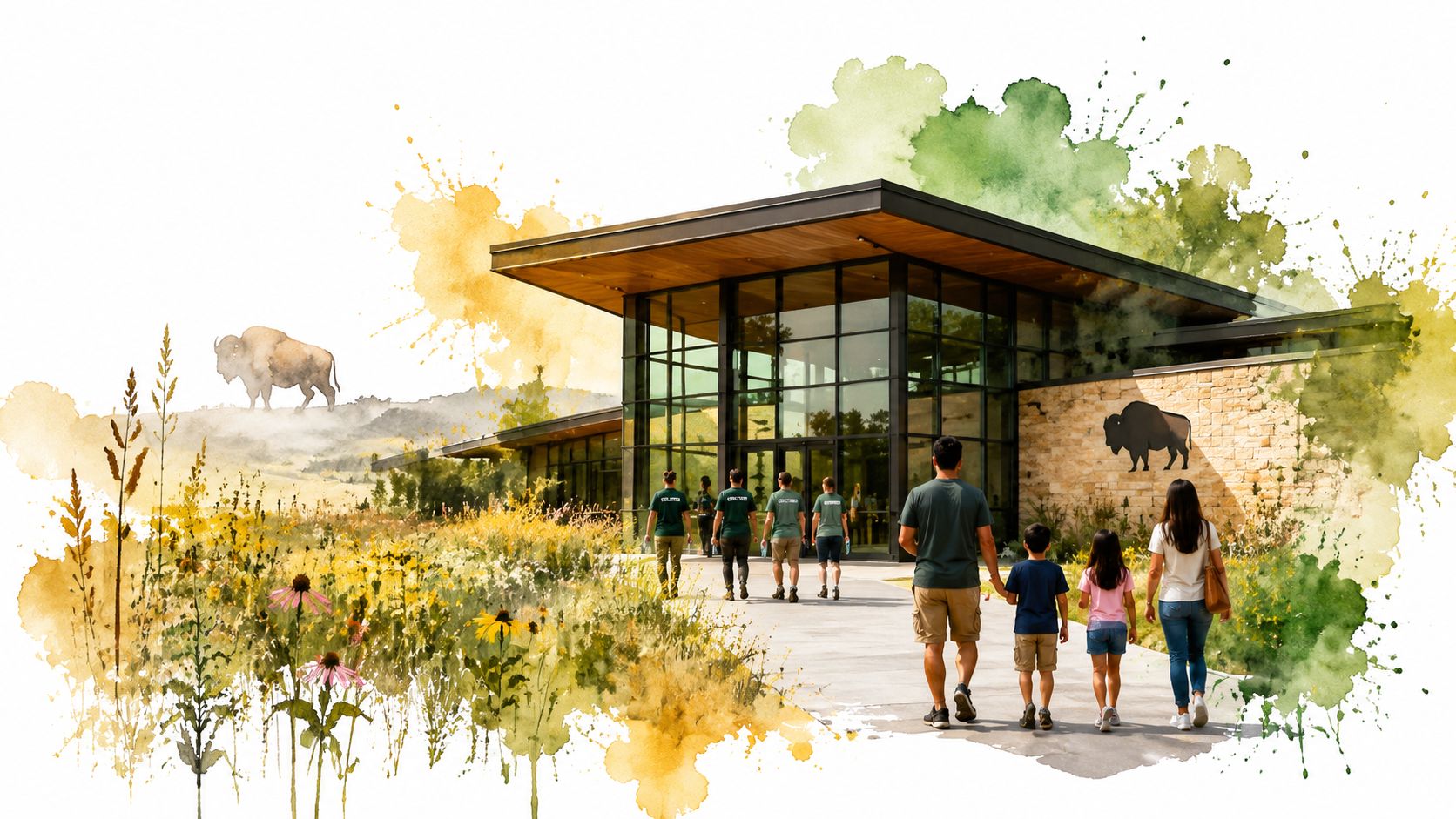
  • Midewin Welcome Center: Gateway to the Prairie

    Midewin Welcome Center: Gateway to the Prairie

    I once left a Chicago cleanup with black gloves, a full trash bag, and that familiar feeling that I had only shaved a corner off a much bigger mess. A few days later I drove out to Midewin, walked into the Midewin Welcome Center, and felt that same feeling again, except this time it came with wind, grass, and hope.

    Finding a Bigger Mess to Clean

    The first time I drove south after a city cleanup, my gloves were still on the passenger seat. They smelled like wet cardboard and old coffee. At a stoplight, I looked at that crumpled pair of gloves and had the oddest thought. Street litter was not the only mess I wanted to help with anymore.

    Midewin pulled me for that reason.

    It was once the site of the Joliet Army Ammunition Plant. Now people come there to witness a long repair job in progress, the kind that takes patience, public will, and a willingness to keep showing up after the novelty wears off. That made sense to me right away. Litter Caterpillars know that feeling. You clear one block, then come back next week and clear it again, and somewhere in that repetition your own habits start changing too.

    Why this place hit me

    A restored prairie sounds romantic from far away. Up close, it feels more honest than romantic. You are standing near ground that carries a heavy history, and you are also standing in a place where people chose not to leave the damage as the final story.

    That landed hard for me.

    In the city, our work can feel small. One bottle. One fast-food bag. One storm drain pulled clear before the rain comes. At Midewin, the scale gets bigger, but the lesson stays the same. Repair happens through repeated care. People remove what harms, protect what can return, and make room for life to come back slowly.

    Practical rule: Go to Midewin when you need proof that slow work still counts.

    A trip for people who like sleeves rolled up

    I would not call Midewin a polished attraction. I liked that. The place feels like a public invitation to witness recovery while it is still underway.

    That is why the Welcome Center matters before you ever set foot on a trail. It gives you a way to enter the prairie with the right frame of mind. You are not arriving to consume a pretty view and leave. You are arriving to learn how damaged ground gets another chance, and what your part in that story can be.

    For me, that changed the whole drive. I was not heading out for a break from cleanup work. I was heading toward a bigger version of the same calling. Restore what has been neglected. Respect the time it takes. Come back. Bring others. Let the work outside you shape the work inside you too.

    Your First Step into the Prairie

    The first time I drove down from the city, I felt that familiar cleanup-day doubt. Did I pack enough water. Was I leaving too late. Was this going to be one of those trips where I spend more time in the car than on the ground. Then the roads opened up, the buildings fell back, and the whole day started to loosen its grip on me.

    That shift matters.

    For Litter Caterpillars people, the drive to Midewin can feel like going to meet an older cousin of the work we already do. In the city, we clear a block, a curb line, a patch of weeds behind a fence. Out here, you arrive at a place trying to recover at prairie scale. The Welcome Center gives that feeling a place to land before your feet hit the trail.

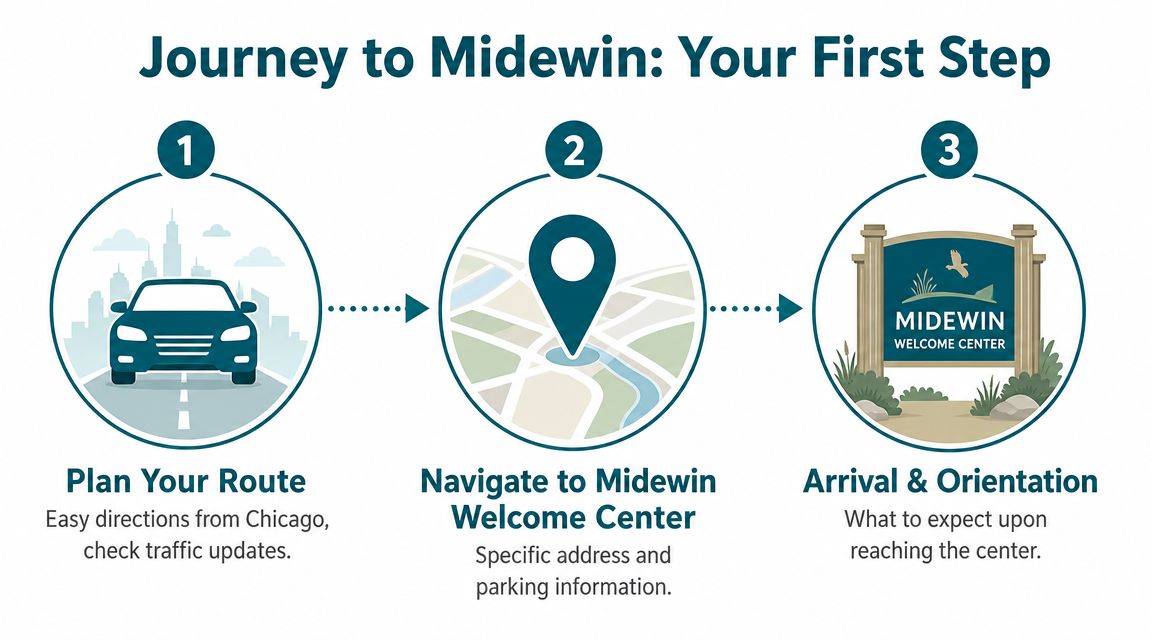
    A three-step infographic showing how to plan a visit to the Midewin Welcome Center.

    The part that makes the day go better

    Keep the plan simple. Pick a morning when you are not already depleted. Leave early enough that you do not turn the whole trip into a rushed errand. Bring what you would bring for a long, open walk instead of a quick stop.

    I have learned that prairie time punishes sloppy city habits. A late start feels later. Sun feels bigger. Wind has opinions. If you roll in hungry, underdressed, or irritated, you will notice all of that before you notice anything beautiful.

    A few things earn their place in the car every time:

    • Water and a snack
    • Good walking shoes
    • One extra layer
    • A notebook, or your phone notes app, if quiet places tend to pull thoughts out of you

    If you have ever visited Goose Lake Prairie State Natural Area and watched your pace change once the horizon opened up, you already know the rhythm I mean.

    Why the Welcome Center comes first

    The Welcome Center works like a reset point. You stop being a driver passing through and become a visitor who is paying attention.

    I would not skip it, even on a day when you feel eager to get straight outside. Starting here helps you settle your mind, use the restroom, look over the layout, and shake off that city habit of treating every destination like something to conquer quickly. That small pause changes the visit. You arrive less like a consumer and more like a participant.

    That distinction stayed with me. Restoration asks for a different kind of presence. It asks you to notice what has returned, what is still missing, and how much care sits behind ground that looks calm.

    What it feels like when you pull in

    You are not arriving at a flashy attraction. You are arriving at a working threshold.

    I like that. It fits the place.

    The Welcome Center is the point where scattered intentions become an actual day in the prairie. You get your bearings. You slow down enough to be teachable. You remember that healing land, like healing a neighborhood or your own habits, starts with one honest step taken on purpose.

    What You Will Discover Inside

    The first time I stepped into the Midewin Welcome Center, I expected something plain and procedural. A counter. A brochure rack. Maybe a map and a quick restroom stop. Instead, I felt the day slow down in a good way.

    Inside, the story of the land starts taking shape. The Forest Service says the center has exhibit clusters on glaciers, wetlands, prairies, wildlife, and the site's restoration timeline, and it has trail maps, program guides, and brochures that help you plan your way through the large trail system on the Midewin Welcome Center page from the Forest Service.

    The room changes what you see outside

    That matters more than it sounds. Before you go in, you may think you're driving out to see “some grass.” After you spend a little time with the exhibits, the prairie gets sharper. The ground has a past. The water has a story. The animals stop feeling random. Even the flatness starts to read differently.

    I had that same shift at Goose Lake Prairie State Natural Area. Once you learn how a prairie works, your eyes stop sliding over it. You notice textures, little changes in height, wet areas, bird movement, and the strange power of a place that doesn't scream for attention.

    What stayed with me

    The restoration timeline hit hardest. I'm drawn to any place that admits, openly, that repair takes a long time. In a city, we often want proof fast. We want the before-and-after photo. We want the cleaned lot, the organized room, the redeemed week.

    Midewin doesn't let you think that way for long. Inside the Welcome Center, you start to understand that renewal is a chain of ordinary acts. Someone studies. Someone plants. Someone monitors. Someone explains. Someone comes back.

    A map is useful, but context is better. Once you know what you're walking through, every mile feels less like exercise and more like attention.

    Don't rush this part

    If you're anything like me, your instinct might be to hurry outside. Fight that instinct. Spend a little time with the exhibits. Ask questions if staff are available. Take the brochure. Study the trail map.

    That indoor pause is like sorting your cleanup supplies before hitting the street. It doesn't look dramatic, but it changes the whole day. You leave the building carrying more than paper. You leave with a way of seeing.

    From the Center to the Trails

    The first time I walked out of the Welcome Center, I stopped after maybe twenty steps.

    Nothing dramatic happened. No bison crossed the road. No hawk swooped overhead on cue. I just felt the city pace fall off my body. The building had given me names, history, and a map. Outside, all of that turned into a real place with wind in it.

    What struck me most was the room. Midewin gives you space to settle down and pay attention. You stop checking how fast you are going. You start noticing where the ground holds water, where the grasses shift, where a bird keeps returning to the same patch. For Litter Caterpillars people, that change feels familiar. It is the same shift that happens on a cleanup when you stop rushing for a full bag and begin seeing the block clearly.

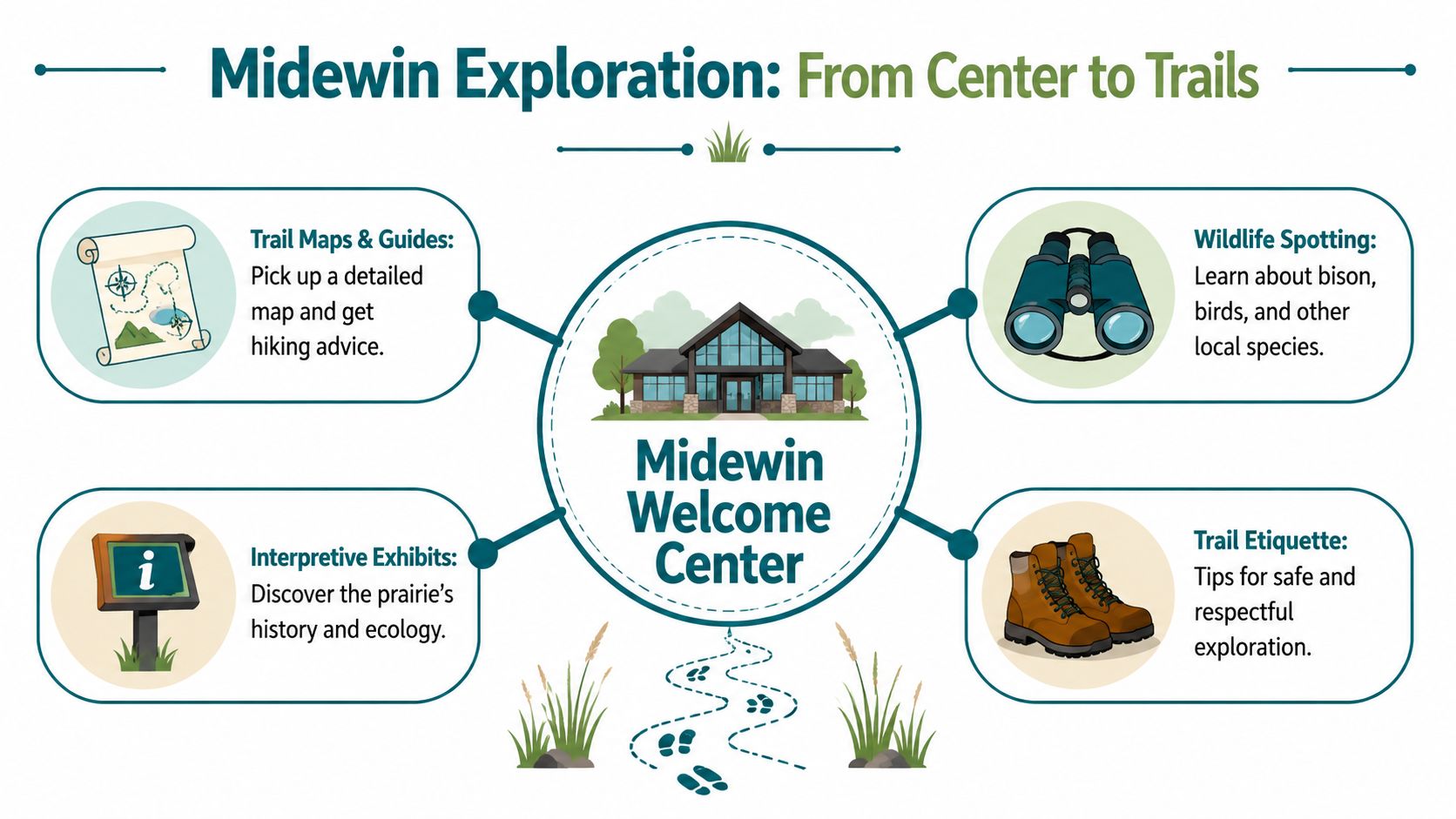
    An infographic titled Midewin Exploration showcasing resources like maps, wildlife spotting, exhibits, and trail etiquette tips.

    How I choose a trail day

    I do better here when I choose the day before I choose the route.

    Day you want What I'd do
    Quiet reset Take a shorter walk and stop often. Let the place slow you down.
    Longer effort Use the map from the center and commit to a fuller hike. Bring more water than you expect to need.
    Learning day Match your walk to one or two things you noticed inside. Watch for wetlands, birds, and plant changes rather than trying to see everything.

    That little decision saves me from turning a prairie visit into another city habit where I chase completion instead of paying attention.

    Start with a basecamp mindset

    The Welcome Center works best as a place to gather yourself, then head out with purpose. A prairie can look simple from a distance, but openness asks something from you. It asks for patience, water, and a little humility.

    I learned that same lesson at Springbrook Prairie Pavilion. Wide ground is not empty ground. It rewards people who slow down enough to catch small signs of life and recovery.

    Trail etiquette that feels close to cleanup ethics

    A first visit goes better when you carry the same respect you would bring to a neighborhood cleanup.

    • Keep the map with you so you can stay oriented without guessing.
    • Walk carefully because restoration is ongoing and the place is still being tended.
    • Pause longer than feels normal. The prairie reveals itself in layers.
    • Leave with care in your body. Even when you take nothing and change nothing physically, your attention matters.

    That last part stays with me. In the city, we pick up what was dropped and try to leave a corner better than we found it. At Midewin, the service is quieter. You practice restraint. You let the prairie be what it is. You learn that restoration is not always about doing more. Sometimes it is about moving through a recovering place without adding to the mess.

    How We Can Partner with the Prairie

    A few steps outside the Welcome Center, I watched a kid crouch beside the path and study a plant like it was giving instructions. His dad stood over him with the map folded wrong, smiling anyway. Nobody looked polished. They looked the way our cleanup crews look at the start of a Saturday morning. Ready to help, not fully sure how yet.

    That is the spirit I would bring to Midewin.

    A conceptual illustration of hands planting a sapling at Midewin National Tallgrass Prairie featuring diverse community involvement.

    Service changes the day

    As noted earlier, the Welcome Center offers different ways to learn through the year, including guided programs in the warmer season and educational events in colder months. I love that rhythm. It lets your first visit be simple. You show up, listen, walk, and let the place work on you a little.

    That pattern feels familiar to me because it matches the way restoration usually starts in the city. We do not begin with mastery. We begin by noticing what has been neglected, then returning with more care the next time.

    If you want language for that shift, this guide on what environmental restoration means in practice puts clear words to it. Repairing land and repairing ourselves often follow the same motions. Show up. Remove what harms. Protect what can grow. Repeat.

    A few ways to show up well

    One good day at Midewin can start a longer habit. Here are a few honest ways to make the visit feel like participation instead of consumption:

    • Join a program or tour if one is available. A guided walk can help you notice signs of recovery you would pass right by on your own.
    • Bring one person who has been tired in the city kind of way. The prairie has a way of stretching out your thoughts until they stop bumping into each other.
    • Make it a service-minded outing with a community group. Litter Caterpillars does that through volunteer trash pickups across Chicago, and a prairie visit can carry the same spirit of care into a different kind of environment.

    Here's a good video to watch if you want the mood before the drive:

    Stewardship starts smaller than you think

    I do not think stewardship begins with a title.

    It begins the moment you stop asking, “What can I get from this place?” and start asking, “How can I move through this place without making recovery harder?” At Midewin, that may mean staying on the trail, paying attention during a program, or bringing home a steadier idea of what care looks like. Quiet service still counts.

    That is why a trip here can feel bigger than a day trip. You leave with more than prairie photos. You leave with a sharper standard for your own life. The grasslands are being restored over time, through patience and repeated care. Our blocks, our habits, and our own worn-out parts usually heal the same way. One return. One better choice. One piece of trash, or one careful step, at a time.

    Your Midewin Field Guide Questions Answered

    I've found that most hesitation about a first trip has less to do with desire and more to do with tiny practical questions. So here are the answers I'd give a friend the night before we go.

    What should I wear

    Wear clothes you can walk in for a while without fussing. I'd choose comfortable shoes, light layers, and something you don't mind getting a little dusty. Prairie weather can feel open and direct, so I'd rather have one extra layer in the car than wish I'd packed it.

    If it's sunny, act like you're going to spend time with very little shade. If it's cooler, don't let the city fool you into thinking the open ground will feel the same.

    What should I bring

    Keep it simple.

    • Water because open trails can dry you out fast.
    • Snacks if you think you'll stay longer than planned.
    • Your phone or a paper note with your basic plan for the day.
    • Curiosity. I know that sounds corny, but this place gets better when you slow your eyes down.

    Is it good for a first-time prairie visitor

    Yes. In fact, I think the Midewin Welcome Center makes it easier for first-timers because you can orient yourself inside before you head out. You don't need to pretend you already understand what you're seeing. Start with the exhibits. Get a map. Ask a question.

    Is it good for kids

    I think so, especially if you frame the trip the right way. Don't sell it as a forced march through educational content. Sell it as a discovery day. Let kids look for birds, notice water, compare grasses, and learn that restoration is real work done by real people.

    What if the weather shifts

    Treat weather as part of the day, not a betrayal. Still, use judgment. If conditions look rough, adjust your walk, spend more time inside, or save the longer trail for another visit. There's no prize for pretending discomfort is wisdom.

    Field note: The best prairie days usually come from flexibility. A shorter walk with full attention beats a stubborn epic hike every time.

    Should I plan around programs

    If you like structure, yes. Educational programming and tours are especially available from April to October, so that's a good window if you want your visit to include more guided learning. If you prefer a quieter day, just use the center for orientation and head out on your own path.

    What mindset should I bring

    Bring the same mindset you'd bring to service. Be useful. Be observant. Don't rush the process. Let scale humble you a little.

    That's really why I keep thinking about this place. The Midewin Welcome Center isn't just where you pick up a map. It's where a regular person from a messy city life can remember that repair is possible, even when it happens slowly, even when it happens over years, even when the work looks plain from the outside.


    If you want more days like this, and more chances to turn service into friendship and self-respect, take a look at Litter Caterpillars. We organize volunteer cleanups around Chicago for people who want to show up, do good work, and grow through it.

  • Nippersink Lake Illinois A Guide for Chicago Adventurers

    Nippersink Lake Illinois A Guide for Chicago Adventurers

    I once stood in my kitchen staring at a takeout container I should've thrown away days earlier, then drove out of Chicago the next morning because I needed a place bigger than my own mess. By the time I reached nippersink lake illinois, the water had done what my apartment couldn't. It gave me something outside myself to pay attention to.

    An Escape from Your Mess

    I know what it feels like when every object in your room seems to carry a whole little biography. A receipt from a date that went nowhere. A cracked mug from a version of you that swore you'd get it together. Sometimes the clutter isn't cardboard and dust. Sometimes it's shame, delay, avoidance, and the dull ache of being tired of your own patterns.

    That's why a place like Nippersink hits differently.

    You leave the city with your head full of static, and then the road loosens its grip. Trees replace brick. The air changes. Your brain, which was acting like a browser with too many tabs open, starts closing a few of them on its own. You aren't fixed. You're just finally quiet enough to hear yourself think.

    A man steps through a doorway from a cluttered room out into a beautiful sunset lakeside view.

    Why leaving helps

    I learned something strange a long time ago. I can freeze when I look at my own mess, but when I step outside and care for a place that isn't mine, I wake up. My hands know what to do. My mind follows later.

    Nippersink Lake is good for that kind of reset. It isn't a sterile escape. It has mud, traffic on busy days, weeds, birds, anglers, shifting weather, and the kind of shoreline that makes you want to walk a little farther just to see what turns up next. That mix matters. A perfect place can make you feel like a tourist. A real place asks more from you.

    Practical rule: If your life feels jammed up, don't wait until you feel organized before you go outside. Go first. Let motion do some of the thinking for you.

    A different kind of challenge

    When I talk about getting out to the lake, I don't mean you should chase some polished weekend fantasy. I mean you should treat the trip like practice. Practice showing up. Practice noticing. Practice caring for something without needing applause for it.

    That is what drew me to nippersink lake illinois in the first place. It felt like a place where I could stop performing and start paying attention. Some people go to a lake to consume it. Boat, fish, snack, leave. I think the better trip starts when you ask a harder question.

    What can I give this place while I'm here?

    Your Path from Chicago to the Water

    One Saturday, I left Chicago still carrying a week’s worth of static. Coffee in one hand, work still buzzing in my head, trunk half-packed. By the time I got north of the tightest traffic, something had started to loosen. The buildings thinned out. The roads stopped feeling combative. I rolled the windows down and remembered that a trip to nippersink lake illinois starts before you see water.

    That matters to me.

    If you come out here the same way you move through the city when you are late, irritated, and trying to win every red light, you bring the mess with you. If you treat the drive like part of the work, part of the reset, you arrive ready to notice things. A heron lifting off the reeds. A quiet launch in the morning. A candy wrapper near the parking area that you can pick up before it blows into the water.

    Make the drive part of the service

    I pack the night before now because I have learned what happens when I do not. I show up thirsty, distracted, and annoyed at problems I created myself. A better start is simple. Fill your water bottle. Toss gloves in the bag. Bring a snack, a small trash bag, hand sanitizer, and an extra layer. If you expect to get near the shoreline, pack a towel too.

    Leave early if you can. Morning gives you more patience and more room.

    Route choice changes the tone of the day as much as gear does. Interstates get you there fast, but a quieter approach helps your attention catch up with your body. If getting there with a lighter footprint matters to you, look over these eco-friendly ways to drive less wastefully before you go.

    Pay attention on the way in

    I know people who use GPS like a sleeping pill. Destination in, brain off, memory gone. I used to do that too.

    Now I watch for the shift. Side streets give way to longer stretches of road. Dense rows of buildings break into yards, open patches, and tree lines. The whole trip feels less crowded, then less urgent, then finally honest. That slow change is useful if you let it work on you.

    The road to the lake can train you to arrive calmer than you left.

    Get close without forcing it

    As you near the preserve, use public access points and posted guidance instead of hunting for your own shortcut. A day outdoors turns sour fast when it starts with a bad parking choice, an argument, or a stomp across ground that was never yours to cross.

    I stop trying to beat the clock once I am close. No weaving. No muttering. No turning a day outside into another little contest. By the time the water comes into view, I want to feel like someone prepared to be useful there, not someone who rushed in ready to take.

    What to Do on the Water and Trails

    The first time I got near the water here, I didn't try to conquer the day. I watched a kayaker slide along the edge of the lake like a needle through fabric, quiet and steady, and I realized that was the right speed. Nippersink isn't a place I want to dominate. I want to meet it honestly.

    A man wearing glasses and a life jacket paddling a kayak on Nippersink Lake in Illinois.

    Paddle the edges

    If you bring a kayak or canoe, the shoreline changes the day. You notice reeds, little pockets of calm water, sudden bird movement, and the strange peace that comes from doing one repetitive thing well. Dip, pull, glide. Dip, pull, glide. It's almost like sweeping a floor, except the floor keeps reflecting the sky back at you.

    If you're new to paddling, stay humble. Hug calmer areas. Wear your life jacket. Let the lake teach you its pace. If you need a push to get started, these urban kayaking ideas from Chicago can help you build confidence before your trip out here.

    The bigger Chain can feel busy. Historical reporting on the system says the Fox Chain of Lakes had 4,000 boats in 1915 and later estimates put that number at 35,000 boats moored in these waters, according to the Illinois State Water Survey publication on the Chain of Lakes. That tells you something simple. Go expecting company, especially in the warmer months.

    Fish, sit, or just watch

    You don't need to keep moving all day. Some of my favorite lake hours happen when almost nothing happens.

    You find a spot along the shoreline. You hear tackle clicking against a rod. Somebody farther off laughs. Wind pushes a pattern over the water that disappears before you fully register it. A bird lands and stands there with absurd seriousness, like it has an appointment.

    If you fish, pay attention to local rules and come prepared. If you don't, then practice a rarer skill. Sit still long enough for the place to stop reacting to your arrival.

    Here's a look at the feel of being out on the water:

    Trails and water routes

    The area has shoreline access and a longer water-trail feel if you're up for more time outside. Official material notes 1.7 miles of shoreline near the preserve area and a 16-mile water trail used by canoeists and anglers in the broader Nippersink area, described on the preserve page already mentioned earlier. That's enough room to choose your own level of effort.

    I think of the options like this:

    Activity Best for What it feels like
    Kayaking or canoeing People who want motion and quiet Like your thoughts finally finding a rhythm
    Fishing Patient, observant days Like having a conversation without words
    Trail walking Mixed groups or slower outings Like turning down the volume in your body
    Shoreline sitting Burnt-out people Like doing less, on purpose

    One more detail from that same water-survey history stuck with me. It notes high sand concentrations in the sediment are found in Nippersink Lake, partly because of flow from the Fox River. I like facts like that because they make the lake feel less like a postcard and more like a living system with movement, pressure, and memory.

    The Lake in Sun Hail and Snow

    I don't trust places that only look good in perfect weather. I trust places that still say something when the sky turns weird.

    Nippersink changes with the season, and I think you should let it. If you only go when the forecast is flattering, you'll miss the version of the lake that asks for a little grit. That's often the better visit.

    Summer asks for patience

    Warm months bring energy. More voices, more motion, more people trying to squeeze everything they can out of one day outside. That can be fun if you expect it and irritating if you don't.

    Go in summer if you want activity, but don't demand privacy from a place people love to use. Start earlier. Pick a purpose. If the water feels too crowded, shift to walking, birdwatching, or shoreline time.

    Fall and winter strip things down

    Fall is when the day starts telling the truth faster. The air sharpens. The colors near the water make even a short walk feel earned. You don't have to invent meaning out there. You just have to keep your eyes open.

    Winter is a different teacher. Quiet takes over. The place gets spare and honest. If you've had a noisy month, that kind of silence can feel like someone finally turned off a machine you didn't know was running.

    Go when the conditions are slightly inconvenient. A place reveals more of itself then, and so do you.

    Spring is messy on purpose

    Spring is mud, thaw, surprise wind, wet shoes, and the kind of sky that can look friendly one minute and rude the next. I like that. Real change rarely arrives neat.

    If your own life feels half-finished, spring at the lake will make immediate sense to you. Water rises, ground softens, trails shift, and everything looks like it's in the middle of becoming something else. That's honest terrain. You don't need polished courage to go there. You just need enough courage to leave the house.

    A Guide to Being a Good Guest

    I like simple rules because they reveal character fast. A lake doesn't need your speech about respect. It needs your behavior.

    When you visit nippersink lake illinois, think like a guest in someone's home. If you fish, get the license you need. If you boat, follow the rules for boating. If you walk the trails, stay on them. Small acts of discipline are how people share a place without grinding each other down.

    Respect looks ordinary

    Most good behavior outdoors isn't dramatic. It's boring in the best way.

    • Pack it out: If you brought it in, take it back with you.
    • Keep noise in check: Other people came for air and room, not your speaker.
    • Stay on marked paths: Plants and soft ground don't recover because you wanted a shortcut.
    • Watch where gear ends up: Loose fishing line and random plastic don't become harmless because they're small.

    Safety is kindness

    I don't put safety in a separate category from care. They are the same thing. A person who plans well creates less risk for everyone else.

    Bring a life jacket if you'll be on the water. Check weather before you leave and again when you arrive. Tell somebody where you're going if you'll be out a while. Charge your phone, but don't depend on it to solve every problem after the fact.

    One habit that matters: Prepare enough that nobody has to rescue you from your own carelessness.

    A quick self-check before you head out

    Ask yourself these questions in the parking area or at the launch:

    1. Do I have what I need to leave no trash behind?
    2. Do I know the basic rules for what I'm doing today?
    3. If the weather turns, do I have a backup plan?
    4. Am I acting like this place exists for me alone?

    If the answer to that last one is yes, reset. Good guests leave a place easier to share, not harder.

    The Unseen Story of Nippersinks Health

    The first time I heard someone call Nippersink "clean," we were standing at the water after a volunteer morning with muddy gloves in our back pockets and a half-full trash bag at our feet. The surface looked fine. Sun on the water. Reeds moving. A quiet kind of beauty that makes people assume the whole story is simple.

    It isn't simple.

    The broader Nippersink Creek watershed holds real ecological value. Earlier source material on the watershed describes it as one of Illinois' higher-quality stream systems, with important habitat and protected natural areas woven through it. That matters because Nippersink is not just a pretty stop for an afternoon. It belongs to a living system that still supports things more fragile than our weekend plans.

    A gentle hand reaching into clear blue water towards a small, vibrant, orange and blue goldfish.

    The contradiction in plain language

    A place can carry beauty and stress at the same time. Anyone who has tried to rebuild a hard season of life already knows that.

    As noted earlier, parts of the watershed have faced primary-contact concerns tied to fecal coliform and runoff from agricultural activity. That means the story of Nippersink's health is not a clean fairy tale about untouched nature. It is a story about pressure, recovery, and the limits of what water can absorb from the people living around it.

    I relate to that more than I wish I did. In Chicago, you learn fast that a block can have strong bones and still need work. A family can love each other and still leave damage behind. A person can want better and still track in a mess from somewhere upstream. Water systems are no different.

    What pressure looks like in real life

    Pressure rarely arrives as one dramatic event. It shows up as runoff after a storm. Disturbance near habitat that needs stability. Growth from the metro area that brings more pavement, more use, and more strain on natural resources.

    That kind of pressure is easy to miss if you only visit on a good-weather day.

    The watershed includes sensitive species and habitats that react badly to changes in water quality and human activity. Water also moves through this system in ways that spread the effects of what happens upstream. So the hidden story of Nippersink's health is not only about what you see at the launch or from the trail. It is about connection. Farm field to creek. Road to runoff. One careless decision to consequences somewhere else.

    Why that should make you care more

    I don't hear any of this as a reason to back away. I hear a call to show up with more honesty.

    If all you want from a lake is a clean backdrop for your Saturday, you will miss the best thing this place offers. Nippersink can teach you to stop consuming beauty and start protecting it. It can teach you that repair is usually local, ordinary, and done by people without titles.

    That is the unseen story I want you to carry with you. Nippersink Lake Illinois is worth visiting because it is beautiful. It is worth serving because beauty under pressure needs allies.

    Become Part of the Lakes Story

    The first time I brought a cleanup bag to a lake day, a teenager in our group groaned like I had ruined the whole trip. He wanted the kayak launch, the snacks, the photos, the easy part. Twenty minutes later he was knee-deep at the shoreline, pulling tangled fishing line from reeds with two fingers and a look I knew well. It was the face people make when they realize a beautiful place is asking something from them.

    Nippersink does that.

    By the time you reach the water from Chicago, you have already carried a lot with you. Rush hour impatience. Work stress. Family static. The city teaches grit, but it can also leave you restless and raw. A place like this gives you a chance to set some of that weight down by doing one plain, useful thing with your hands.

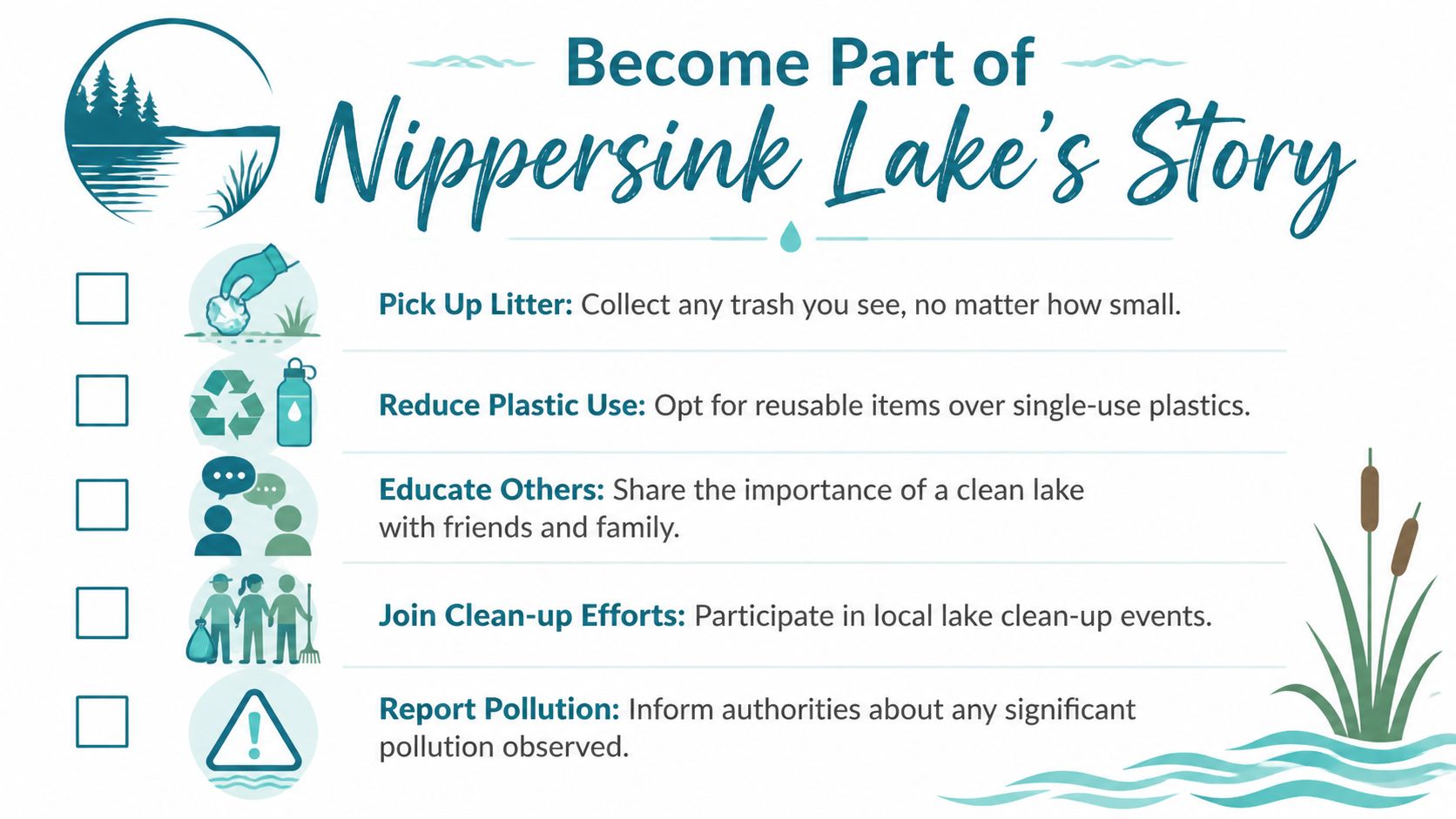
    An infographic list detailing five ways to help keep Nippersink Lake clean and healthy.

    The kind of help that matters

    You do not need to arrive as an expert naturalist or a perfect environmentalist. You need eyes open to the ground, the shoreline, and the little signs of carelessness that wear a place down over time.

    A good day of service at the lake can be simple:

    • Bring a bag on purpose: Treat cleanup as part of the trip, not an afterthought.
    • Grab the small stuff: Bottle caps, line, bait containers, and torn wrappers do real harm when they stay behind.
    • Pack lighter: Fewer disposable items in your bag means fewer chances to leave a mess.
    • Correct gently: If someone in your group gets sloppy, say it with respect and keep the day moving.
    • Report the big problems: Oil, dumping, or dangerous debris need the right local response.

    If you want a steadier way to serve beyond one afternoon, these environmental stewardship programs show what organized care can look like over time.

    What cleanup work gives back

    I have watched volunteers show up carrying private wreckage. A layoff. A breakup. The fog that comes after months of scrolling and postponing your own life. They come because they want fresh air, then they find something harder and better.

    A piece of litter gives you a clear decision. Bend down or keep walking.

    That clarity can change a person for an afternoon. Sometimes longer. You stop performing concern and start practicing it. You notice where your feet go. You notice what other people ignore. You leave with sore legs, dirty gloves, and a steadier mind than the one you brought from the city.

    That is part of the lake's story too. Public repair and personal repair often happen side by side.

    Your invitation

    If you visit nippersink lake illinois, let the day ask more of you than a photo and a quiet paddle. Bring one extra bag. Pick one patch of trail edge. Leave one corner of shoreline cleaner than you found it.

    Start there.

    You do not have to save the whole lake. You do have to decide what kind of guest you want to be. The people I trust most in wild places are not the loudest advocates or the most polished outdoorsmen. They are the ones who kneel in the mud, do the small job in front of them, and head home having added a little order to a world that badly needs it.

    If you want a crew that treats cleanup like an adventure and believes service can change a person from the inside out, join Litter Caterpillars. Come as you are. Bring gloves, courage, and a willingness to help.

  • 7 Best State Park in Illinois Near Chicago (2026 Guide)

    7 Best State Park in Illinois Near Chicago (2026 Guide)

    I remember staring at a moldy jar in my fridge like it was a moral failure. Then I went outside, picked up trash with other people, and felt lighter before the bag was even full.

    Your mess is heavier than any trash bag. The mail pile. The stale relationship. The habits you keep stepping around. I know that weight because I built Litter Caterpillars out of it. My own life was chaotic, and I learned something weirdly hopeful. Cleaning up someone else’s mess is way easier than cleaning up your own. That’s not avoidance. It’s a doorway. You grab a bag, step onto a trail, and your body learns a lesson your mind has been refusing. You can show up. You can do hard things. You can leave a place better than you found it. If you’re hunting for the best state park in Illinois near Chicago, don’t just ask where the prettiest overlook is. Ask where you’ll finally breathe. Ask where your hands can help your head catch up. Start there.

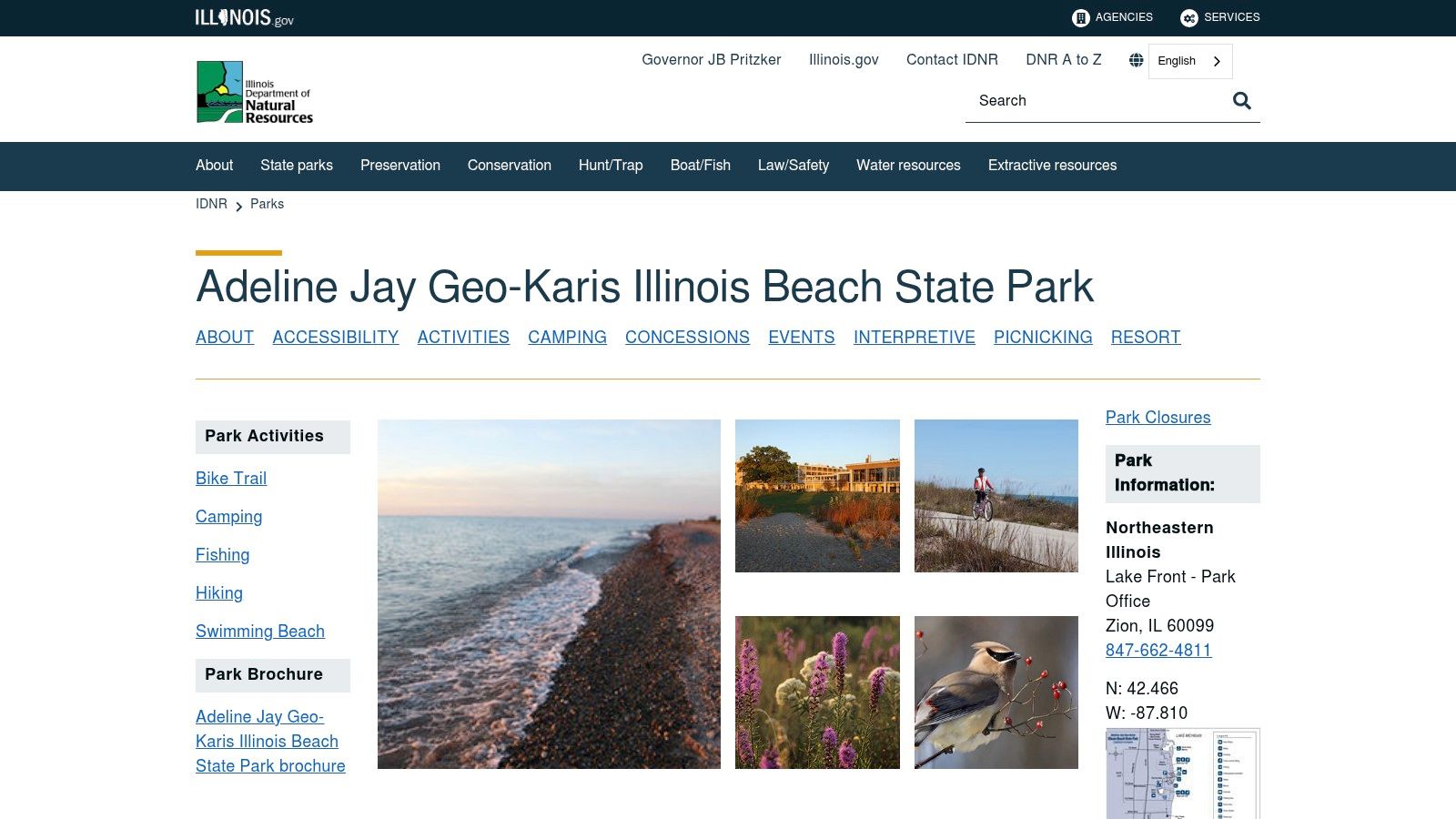
    1. Adeline Jay Geo-Karis Illinois Beach State Park

    Adeline Jay Geo-Karis Illinois Beach State Park

    When Chicago starts feeling like concrete stacked on top of stress, I want water. Not a decorative fountain. Not a riverwalk with traffic humming behind me. I want a real shoreline and enough wind to blow the stale thoughts out of my skull.

    That’s why Illinois Beach hits hard. It gives you Lake Michigan in a state park setting, which feels different from a city beach. Wilder. Less managed. More honest.

    If you want the official park page, use the Adeline Jay Geo-Karis Illinois Beach State Park website.

    Why this one works

    This park is a strong first answer to the question “what’s the best state park in Illinois near Chicago if I need a reset fast?” because it’s built for simple wins.

    • Water changes your mood: Shoreline walks force your brain to stop clenching.
    • You can keep it easy: Beach access and paved areas make this less intimidating for beginners.
    • You can stay longer: Camping and on-site lodging make it easy to turn a shaky day trip into a real weekend.

    I also like it for cleanup-minded people. Beaches make litter visible. You don’t need some grand environmental theory to understand a bottle cap in the sand. You see it. You pick it up. The place looks better immediately. So do you, on the inside.

    If you spend a lot of time closer to the city, you might also like these ideas for a forest preserve in IL. Sometimes the right first step is the closest one.

    Practical rule: Go early if you want the healing version of the lake, not the crowded version.

    The tradeoff is real. Summer can get busy. Lake conditions can change what areas are pleasant or accessible. That doesn’t ruin the park. It just means you should go with a little humility and check conditions before you drive.

    Illinois Beach is for the person who wants nature without a huge commitment. You can walk, breathe, touch the water, and remember you still belong to the physical world. That matters more than people admit.

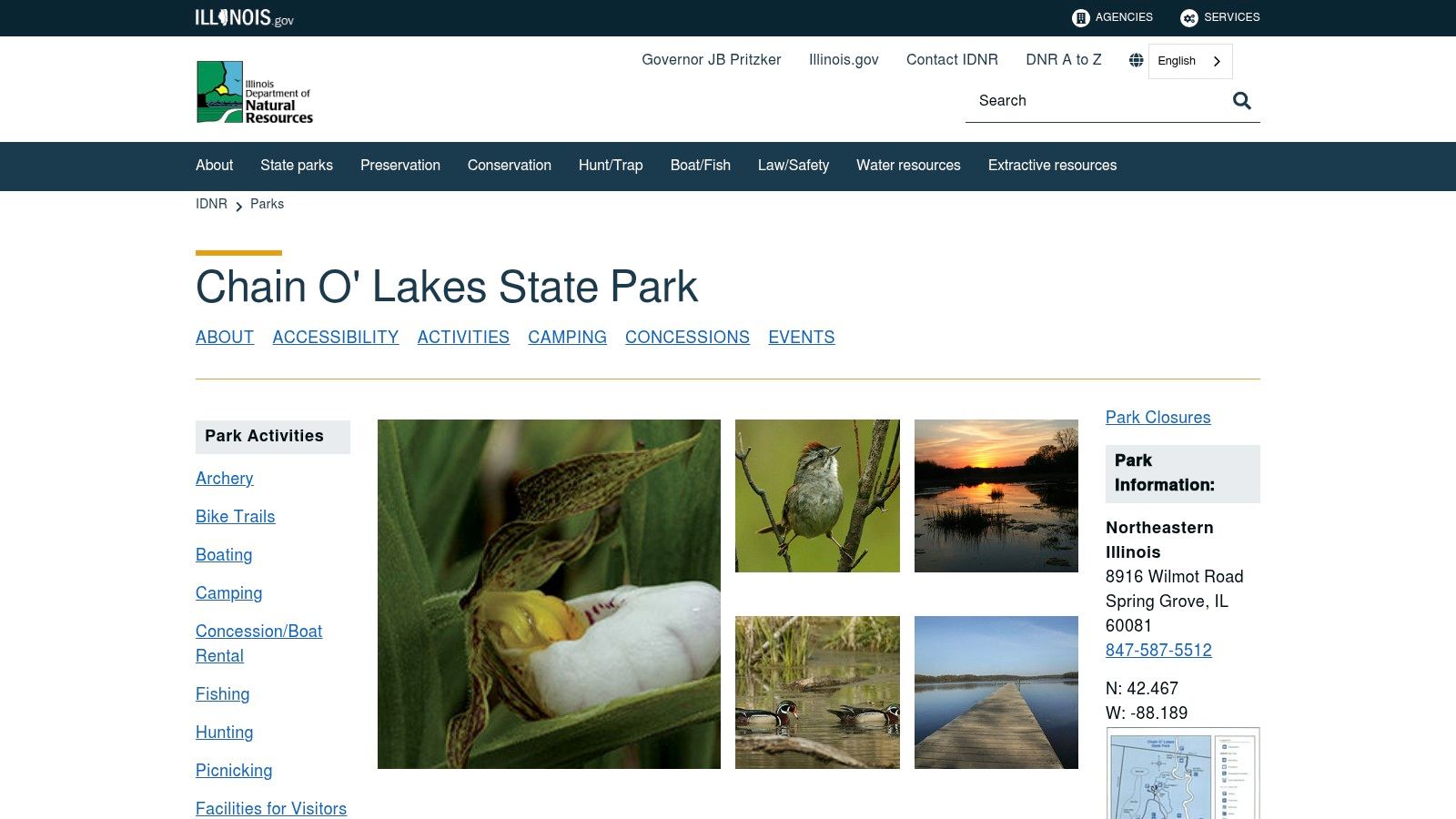
    2. Chain O' Lakes State Park

    Chain O' Lakes State Park

    Some parks ask you to hike. This one asks you to move with water.

    Chain O’ Lakes feels social in the best way. Boats. Launches. Camp spots. Trails. People cooking breakfast outside. Kids learning to paddle badly. Adults pretending they know how to tie things down. It has energy. If Starved Rock is drama, Chain O’ Lakes is motion.

    You can check details on the Chain O’ Lakes State Park website.

    Best for people who need momentum

    I recommend this park to people who say they’re “stuck.” Not sad, exactly. Not broken. Just spiritually parked in neutral.

    Water systems teach a blunt lesson. You’re not supposed to sit still forever.

    Here’s what I like about it:

    • You get options: Paddling, boating, fishing, trails, camping. That matters when your group can’t agree on one thing.
    • It works for friend-building: Shared activity kills awkwardness fast.
    • It rewards a full day: You don’t show up, take one photo, and leave. You settle in.

    And that’s the deeper point. A good state park in Illinois near Chicago shouldn’t just entertain you. It should interrupt you. Chain O’ Lakes does that because it makes idleness inconvenient. Once you’re there, you start doing things.

    Some people need silence to reset. Other people need motion. Be honest about which one you are.

    The downside is obvious. Busy water brings busy people. Peak season can feel crowded, and marshy areas can come with mosquitoes. Late-season activity changes can also affect what parts of the park feel open or quiet. None of that is a dealbreaker. It just means this park rewards planning more than spontaneity.

    I’d bring friends here when I want service and fun to sit in the same day. Paddle in the morning. Clean a shoreline edge if you’re doing your own informal stewardship. Eat lunch tired. Laugh harder than you expected. That’s not small. That’s how people start becoming useful to each other.

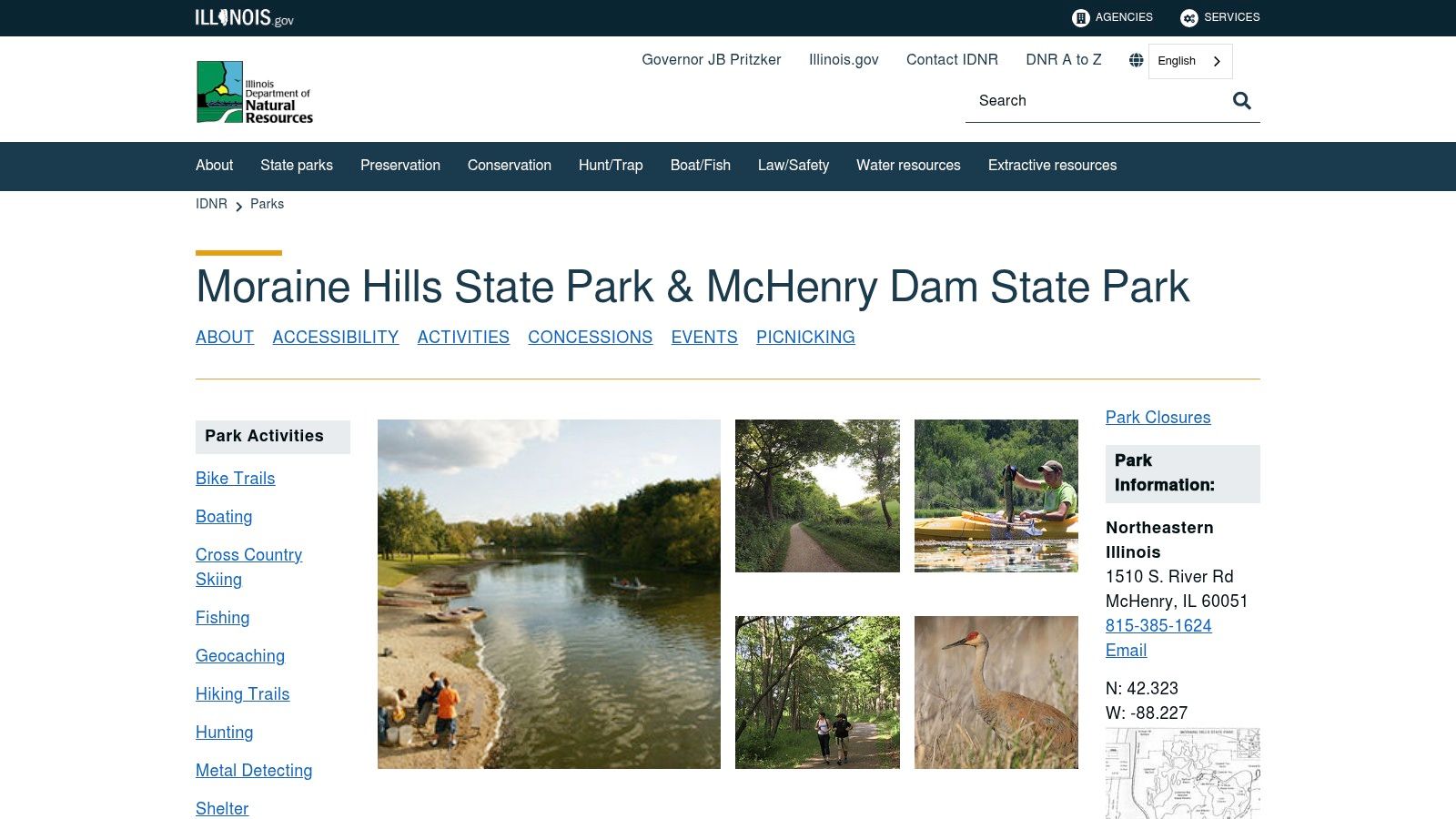
    3. Moraine Hills State Park & McHenry Dam State Park

    Moraine Hills State Park & McHenry Dam State Park

    This is the pair I’d hand to a beginner.

    Not everyone needs the grand canyon version of Illinois. Some of you need a place where you can show up without pressure, walk without performance, and leave feeling steadier than when you arrived. Moraine Hills and nearby McHenry Dam do that well.

    Use the Moraine Hills State Park website for current park info.

    Easy doesn’t mean weak

    I get annoyed when people act like only the dramatic parks count. That’s ego talking. If your life is messy, the best park is the one you’ll visit.

    Moraine Hills gives you trails, wetlands, lake views, river edges, and bird-heavy quiet without demanding some rugged identity. McHenry Dam adds more river access and fishing energy. Together they create a day that feels full but not punishing.

    A few reasons I’d send a mixed group here:

    • Low-friction day trip: Good if half your group is enthusiastic and the other half almost canceled.
    • Different trail vibes: Helpful when fitness levels don’t match.
    • No camping pressure at Moraine Hills: That makes planning simpler for people who just need a clean morning outdoors.

    I also like this area for volunteer-minded walks. Day-use parks create a psychological boundary. You come, you do the thing, you leave. That can be perfect for someone rebuilding consistency. No overthinking. No giant production. Just a date on the calendar and shoes by the door.

    The real gift

    This place teaches gentleness without laziness. That’s rare.

    A lot of us swing between two bad modes. We either avoid hard things or make everything harder than it has to be so we can feel heroic. Moraine Hills rejects both. It says, take the walk. Notice the water. Pick up the wrapper. Be normal and decent. Repeat.

    The main limitation is also the strength. This is not an overnight adventure base in the same way some other parks are. It’s better for a half-day or full day reset. If that sounds too plain, good. Plain saves lives. Ordinary habits rescue people more often than dramatic breakthroughs do.

    4. Kankakee River State Park

    Kankakee River State Park

    Kankakee River State Park feels like a place where you go to get your head knocked straight.

    Not by cruelty. By clarity.

    There’s something about a rocky river corridor that strips away self-pity. You hear current. You see stone. You understand, very quickly, that nature is not your therapist. It’s better. It doesn’t flatter you.

    You can plan through the Kankakee River State Park website.

    For people who need edge, not comfort

    This park works when you want more than a stroll. The river, the canyon trail, the bike path, the shelters, the campgrounds. It gives you ways to spend your energy on something real.

    That’s why I like it for groups. A park like this lets people spread out across activities and still share one story together.

    If you already love linear trail systems and riverside miles, you might also enjoy the Des Plaines River Trail near Chicago. It scratches a similar itch in a different way.

    Don’t come here to drift around indecisively. Pick the trail. Pick the shelter. Pick the plan.

    I respect Kankakee because it has rules that force respect back. You can’t swim in the park because of the currents and rocky bottom. Good. Not every place should bend to what you feel like doing that day. Sometimes growth starts when you accept the terrain instead of arguing with it.

    Why it sticks with you

    This is one of the better answers if you want a state park in Illinois near Chicago that can hold both activity and reflection. Bike for a while. Sit by the river. Cook something simple. Pick up trash along a corridor where litter looks especially insulting against the natural setting. That contrast wakes people up.

    The caution is straightforward. Check park notices before you go. Infrastructure or area access can shift. If your whole trip depends on one access point being open, you’re planning too tightly anyway.

    Kankakee is a park for rebuilding backbone. Not with motivational speeches. With motion, rock, current, and a day that asks something from you.

    5. Starved Rock State Park

    Starved Rock State Park

    I watched a family spill out of an SUV at Starved Rock like they had been holding their breath since Joliet. Kids sprinted toward the overlook. Dad was still checking his phone. Mom was already pointing at the trees like she needed proof that the world was bigger than errands and bills.

    That’s Starved Rock.

    You drive down from Chicago carrying your own noise, then a canyon wall, a waterfall, or a sweep of the Illinois River cuts straight through it. The park is famous for good reason. It pulls huge crowds, and Time Out Chicago’s report on the Google Maps ranking points to just how many people keep showing up. Use the official Starved Rock State Park website before you go.

    The beauty is real. So is the test.

    A place this loved gets worn down.

    You’ll feel that tension fast. One minute you’re staring into a sandstone canyon, the next you’re stepping around mud, noise, and the leftovers people were too lazy to carry out. Good. Let that bother you. That irritation is useful. It means you still know the difference between a gift and a mess.

    This is why Starved Rock matters to me more than some quieter park with easier logistics. It puts the whole Litter Caterpillars idea right in front of your face. You came out here to clear your head. Fine. Now prove it by helping clear the trail. If you want to turn that impulse into action, start with this guide on how to clean up a park.

    Come for the canyon. Leave with dirt on your hands and a better reason for being there.

    You also need to plan like an adult. High traffic changes the day. Closures change the day too. Enjoy Illinois notes that Starved Rock’s Trail Project Phase 1 is scheduled to run from late March through June 2026, with closures affecting areas including French Canyon and Tonti Bridge, so your route and meetup plan may need to change according to this Enjoy Illinois overview of state parks and forests.

    Who should go

    Go if you need scale.

    Go if your mind has been shrinking to the size of your inbox, your rent, your grudges, your excuses. Starved Rock is big enough to interrupt that. It gives you overlooks, canyon trails, river views, and enough human traffic to remind you that beauty does not stay beautiful by accident.

    I would not send you here for quiet on a busy weekend. I would send you here if you need a first honest step. Show up early. Walk hard. Pick up what somebody else dropped. Sometimes the way out of your internal mess starts with kneeling down in a famous park and doing one unglamorous thing well.

    6. Matthiessen State Park

    Matthiessen State Park

    Matthiessen is the friend of the famous guy.

    It sits near Starved Rock, and that’s exactly why some people overlook it. Big mistake. If you want canyons, bridges, and that sudden feeling that Illinois has more drama in it than outsiders assume, Matthiessen delivers. Sometimes the side character is the one with the better soul.

    You can get official details at the Matthiessen State Park website.

    Smaller stage, sharp payoff

    I love parks like this because they expose a common flaw in people. We chase the place with the giant reputation, then act surprised when everyone else had the same idea.

    Matthiessen often feels like the smarter move. You still get sandstone scenery and waterfall energy, but the experience can feel more compact and manageable. It’s easier to combine with a bigger trip. It’s easier to recommend to someone who wants beauty without spending the whole day in one famous funnel of people.

    That makes it a great “prove it” park.

    • Prove you’ll wake up early: Pair it with another stop.
    • Prove you’ll keep moving: Take the stairs and trails seriously.
    • Prove you don’t need hype: Let the park speak for itself.

    I especially like this park for people who are learning to choose substance over prestige. That sounds dramatic for a park recommendation, but it’s true. Life gets better when you stop outsourcing your judgment to popularity.

    A good test of your honesty

    If you say you want nature, Matthiessen asks whether you mean actual nature or just recognizable nature.

    The tradeoff is simple. Services are more limited than at a larger destination with a lodge and broader built amenities. Capacity can also become a problem on popular weekends. So show up with a little discipline. Bring what you need. Respect closures and access limits. Don’t act shocked that a beautiful place attracts people.

    For me, Matthiessen feels like the park version of quiet confidence. Less chest-thumping. More depth. If your inner life has been noisy lately, that’s a good match.

    7. Buffalo Rock State Park & Effigy Tumuli

    Buffalo Rock State Park & Effigy Tumuli

    Buffalo Rock doesn’t win by size. It wins by surprise.

    You walk short trails. You get river overlooks. You move through prairie restoration space. Then you encounter the Effigy Tumuli, giant earthwork forms shaped into animals and land-based imagination. It’s quieter than the headline parks nearby, and that quiet gives it teeth.

    The official page is the Buffalo Rock State Park website.

    This one is for people who need softness

    Not every breakthrough comes from exhaustion. Some come from walking gently through a place that asks you to pay attention.

    Buffalo Rock is a good choice if your group has mixed abilities, mixed energy, or mixed willingness. It doesn’t demand a huge day. It invites one.

    That invitation matters. A lot of people won’t start if the first step looks too heroic. They’ll start if the day feels possible.

    I also like Buffalo Rock as a counterweight to tourism brain. You don’t need a giant checklist to have a meaningful outdoor day. You need place, time, and enough openness to be affected.

    Quiet parks can still change you

    Illinois state parks as a whole saw 41 million visits in 2024, the highest annual total in 15 years, and the nine parks with more than 1 million annual visitors accounted for 14.2 million visits, about 35% of total traffic. That concentration near accessible corridors tells me something simple. Big parks absorb attention. Smaller parks can absorb you according to NPR Illinois reporting on statewide visitation.

    Buffalo Rock benefits from that contrast. It can feel like a side road off the louder story.

    Its limitations are real. Fewer facilities. Less trail mileage. Less room for large, complicated plans. But if what you want is a humane day outdoors, those limits can become strengths. You don’t need abundance to be transformed. You need contact. With land. With friends. With your better self, the one that’s been waiting for less noise.

    Comparison of 7 Illinois State Parks Near Chicago

    Park (Location) 🔄 Access & ⚡ Travel time Resource requirements (permits / gear) ⭐ Experience quality / Key advantages 📊 Expected activities / Outcomes 💡 Ideal use cases / Tips
    Adeline Jay Geo‑Karis Illinois Beach State Park (Zion, ~50 mi N of Chicago) Easy–moderate access; ~1–1.5 hr from Chicago; seasonal closures possible Campground reservations via ExploreMoreIL; basic beach/swim gear; check erosion/beach advisories ⭐⭐⭐, best for natural Lake Michigan shoreline, dunes & unique plant communities Shoreline walks, swimming (seasonal), camping, trail biking/hiking Visit weekdays or shoulder seasons to avoid crowds; monitor lake/erosion advisories
    Chain O' Lakes State Park (Spring Grove, ~60 mi NW) Moderate access; ~1–1.25 hr; peak boat traffic on busy weekends Extensive camping (230+ sites), boat rentals/concessions; boating/fishing gear recommended ⭐⭐⭐, versatile water‑recreation hub with many launch/trail options Boating, paddling, fishing, family camping, equestrian trails Reserve campsites/boat rentals in advance for summer weekends; expect mosquitoes in marsh areas
    Moraine Hills & McHenry Dam State Park (McHenry, ~50 mi NW) Easy access; ~1 hr; day‑use focused with straightforward parking No camping at Moraine Hills; boat rentals at McHenry Dam; binoculars for birding ⭐⭐, strong for short day outings, birding and mixed‑ability trails Birdwatching (200+ species), short hikes, fishing, half‑day visits Good for short trips from suburbs; bring birding/fishing gear and plan half‑day routes
    Kankakee River State Park (Bourbonnais/Bradley, ~60 mi S) Moderate access; ~1–1.5 hr; linear river corridors with some closures possible Multiple campgrounds (reservable), bike & fishing gear; no swimming due to currents ⭐⭐⭐, excellent river scenery and fishing/biking opportunities Riverfront biking, smallmouth bass/walleye fishing, group picnics, equestrian camping Bring sturdy footwear for rocky trails; check bridge/area closure notices before visiting
    Starved Rock State Park (Utica/Oglesby, ~95 mi SW) Moderate–high access effort; ~1.5–2 hr; very high visitor impact on peak days Campground/resort/lodge reservations available; visitor center; permit for large groups ⭐⭐⭐⭐, iconic canyons & waterfalls with robust visitor services Canyon hikes, waterfall viewing, guided programs, overnight lodge or campground stays Arrive early on weekends or visit off‑peak; verify phased trail closures before travel
    Matthiessen State Park (Oglesby, ~95 mi SW) Moderate access; adjacent to Starved Rock; possible weekend capacity limits No lodge; multi‑use trails (hike/mtb/equestrian); picnic gear ⭐⭐⭐, dramatic canyons with fewer crowds than Starved Rock Canyon photography, hiking, mountain biking, equestrian rides Pair with Starved Rock on the same trip; expect limited services and weekend capacity closures
    Buffalo Rock State Park & Effigy Tumuli (Ottawa, ~85 mi SW) Easy access; ~1.5 hr; small park with short loops and overlooks Minimal facilities; good for educational groups and casual hikers ⭐⭐, quiet river overlooks and unique effigy earthworks Short, flat hikes, river overlooks, educational/nature programs Ideal for mixed‑ability groups, school visits, or as a quieter alternative to nearby canyon parks

    Go Far by Going Together

    You’ve seen the parks. Good. Now I want to challenge you.

    Don’t turn this into content consumption. Don’t just forward this list to a friend, save three tabs, and keep living exactly the same way. That’s what people do when they want the feeling of change without the cost of change.

    Go outside.

    Pick one state park in Illinois near Chicago and commit. Not someday. Not when your apartment is cleaner. Not when your schedule is magically less annoying. Go while your life still feels imperfect. Especially then.

    Because that’s the secret I keep relearning. Nature doesn’t require you to arrive polished. Service doesn’t require you to be fixed. You get fixed by showing up. Slowly. Through repetition. Through weather. Through carrying a bag. Through walking a trail with people who also want to become a little better than they were last month.

    I started Litter Caterpillars because I was losing to my own mess. I’m serious. Old food, clutter, emotional chaos, bad social patterns. It all felt fused together. Then one day I learned that picking up trash outside gave me access to a version of myself I couldn’t reach alone in my room. A braver version. A cleaner version. A kinder version. Not perfect. Just moving.

    That’s why I care about these parks as more than destinations. Illinois Beach can wake you up. Chain O’ Lakes can get you moving. Moraine Hills can make starting feel possible. Kankakee can toughen your spine. Starved Rock can humble you. Matthiessen can teach you to value substance over hype. Buffalo Rock can quiet you enough to hear your own conscience again.

    And the transformation gets bigger when you do it with others.

    I still think about that first hailstorm cleanup. We were cold, stuck, half-laughing, half-miserable, trying to get home while every ride seemed to vanish. It should’ve been awful. Instead it became a story. That’s what shared effort does. It turns discomfort into meaning. It gives your life texture. Suffering together, in the right spirit, stops being pointless. It becomes glue.

    We believe service, sunlight, and friendship can change everything. We are the Litter Caterpillars. We aren’t perfect, but we’re all trying to grow. When you’re ready to stop just visiting beautiful places and start helping heal them, come with us on a Saturday morning. You’ll find out fast that it was never really about the trash. It was about becoming someone who shows up.


    If this stirred something in you, don’t let it die in another open tab. Join Litter Caterpillars and come pick up trash with us in Chicago. You’ll get sunlight, movement, real people, and a chance to build courage the physical way. One bag. One block. One park. One Saturday at a time.

  • Your Guide to MacArthur Woods Forest Preserve

    Your Guide to MacArthur Woods Forest Preserve

    Have you ever felt so tangled up in your own head that you can't see the way out? That was me. City life, deadlines, the constant noise—it all just becomes a mess. Then I found MacArthur Woods Forest Preserve.

    This place isn't some manicured park with a playground. It's wild. It's real. And I think it's the perfect place for you to untangle your life, one step at a time.

    A Wild Escape for the Brave and Kind

    I want to show you this place. Not just as a guide, but as someone who found a piece of myself on these trails. Imagine a sanctuary where you can finally hear yourself think. It’s a place that asks you to be brave enough to get a little lost, and kind enough to leave it better than you found it.

    The first time I came here, I was just looking to escape. What I found was a place that puts everything in perspective. The sheer size of the trees, the profound quiet—it’s like the forest doesn't care about your problems, and in a weird way, that’s exactly what you need to hear. It forces you to just be.

    Step Into a Living Piece of History

    This isn't just a patch of woods. It’s a genuine window, a portal, into what Illinois looked like centuries ago. I discovered that MacArthur Woods is a massive 491-acre remnant of the original forests that grew along the Des Plaines River Valley. It was officially dedicated as a state nature preserve way back in July 1981 because it’s just that special. You can dig into the specifics of its unique ecology on the state's official profile, which details its special status and biodiversity.

    What makes it so incredible is the mix of different forest communities, each with its own vibe:

    • Dry-Mesic Upland Forests: Here, you find the old guard. Think ancient, sturdy white oaks and a more open canopy letting sunlight splash on the ground.
    • Mesic Floodplain Forests: Closer to the river, things get lush with silver maples and bur oaks. You can feel the life in the damp air.
    • Northern Flatwoods: Swamp white oaks rule these unique, wet patches of forest, creating a world all their own.

    This variety is why MacArthur Woods is a hotspot for wildlife, especially for forest birds that need deep, unbroken woods to breed. You should keep your eyes peeled for the elusive brown creeper, the powerful red-shouldered hawk, or even hear the crazy, echoing call of a pileated woodpecker.

    This Isn't Just a Walk

    Coming here is a chance for you to practice paying attention. To notice the little things—the way the sun cuts through the leaves like a spotlight, a chipmunk scrambling over a log, the feel of bark on a tree that's older than your great-grandparents. It pulls you out of your head and into the real world.

    I see the preserve as a partner in an adventure. It provides the rugged, stunning backdrop. You bring your curiosity and a promise to be respectful. It’s a place to feel small, but in the best way possible; humbled by something so old and resilient. Let's dig in and see what makes this place a refuge for both rare animals and anyone like you or me just needing to get away.

    Navigating the Trails of MacArthur Woods

    So, you're ready to hit the trails? Good. Getting your boots muddy is the first step. The paths at MacArthur Woods aren't just dirt tracks; they're more like a ‘choose your own adventure’ book, and I’ve found that every choice leads to a different kind of magic.

    I’ll never forget one crisp autumn day, I took a path I'd never noticed before, just following the late afternoon sun. The air was sharp, and the ground was a thick carpet of gold and orange leaves. It led me to this tiny, hidden clearing, a perfect circle of silence where the only thing I could hear was my own breath. That’s this place. You find what you need, even when you aren't looking for it.

    Your Path, Your Journey

    Picking a trail here isn't about getting from Point A to Point B. It’s about what you’re looking for today. Do you need a quiet walk to clear your head? Or are you itching to push deeper into the wild and get your heart pumping?

    This isn't a map, it's a guide to help you find the experience you're craving.

    A flowchart presenting the MacArthur Woods Exploration Guide, outlining paths for quiet mind and wild discovery.

    Think of it as a way to match your mood to the woods. It’s all about you deciding if you’re out for a moment of peace or a day of discovery.

    A Quick Guide to the Trails

    To help you choose, here's a quick look at the main loops you'll find at MacArthur Woods.

    Trail Name/Loop Approx. Length (Miles) Difficulty What You'll See
    River Overlook Trail 1.0 Easy Gentle path on the bluff, peeks of the Des Plaines River
    Upland Forest Loop 1.5 Moderate Rugged trail, ancient white oaks, gentle inclines
    Floodplain Path Varies Easy-Moderate Soft, damp ground, silver maples, deer and songbirds

    These are just starting points. The real fun for you begins when you start combining them to make your own adventure.

    The Main Loops: A Hiker's Primer

    Forget perfectly paved sidewalks. The trails here are the real deal—unpaved, natural paths that wind through the preserve. You’ll find uneven ground, exposed tree roots, and some mud after a good rain. It’s what makes it feel like a true escape for you.

    The best part is that the main loops are all interconnected. You can easily create a hike that’s as short or as long as you want.

    Here’s a breakdown of what you can expect from my favorite spots:

    • The River Overlook Trail: This is my go-to for a quick hike that still feels like a full dose of nature. The path is pretty gentle and follows the bluffs over the Des Plaines River. You get these incredible, stark views of the water through the trees, especially in fall and winter when the leaves are gone.
    • The Upland Forest Loop: If you want to feel small next to something ancient and powerful, this is your trail. It takes you right through the heart of the upland forest, where you’ll walk among towering white oaks that have been here for hundreds of years. The path gets a little more rugged, with some hills that will definitely get your blood moving.
    • The Floodplain Path: For a totally different feel, you can follow the trails that dip down into the floodplain. The air gets cooler and damper, and the ground feels softer under your feet. It's a great spot for spotting deer and just listening to the songbirds calling from the dense silver maples.

    Walking these trails is like learning the forest’s language. You start to recognize the drumming of a woodpecker, the rustle of a squirrel in the leaves, the smell of damp earth after a rain. It's a conversation that connects you right to the land.

    The way the paths weave together at MacArthur Woods reminds me a lot of Waterfall Glen, another incredible place where the trails offer so much diversity. If you love exploring different kinds of terrain, you should check out our guide to the best trails at Waterfall Glen Forest Preserve for your next trip.

    Honestly, the best advice I can give you is to just start walking and let your curiosity take over. You can’t really get lost here—you can only discover something new.

    Get to Know the Living History of the Preserve

    Walking into MacArthur Woods is like time-traveling. Seriously. You're not just stepping into another forest; you're entering a living, breathing timeline of what Illinois was long before we were here. I want to introduce you to the old-timers, the ones who hold the real history of this land in their roots and feathers.

    Watercolor illustration of a vibrant tree with a red-headed woodpecker and colorful splashes at the base.

    This place isn't just a bunch of trees—it's a community with its own stories. If you learn to shut up and listen for a minute, it’ll tell you everything.

    The Silent Witnesses

    The first thing that always gets me are the white oaks. These aren’t just trees; they’re silent giants who have witnessed centuries of change. Some of them were already ancient when the first European settlers showed up.

    Putting your hand on the deep, grooved bark of one of these guys is something else. It feels like you’re shaking hands with history itself. I find myself just standing there, feeling the resilience these trees give off. They’ve survived everything—brutal storms, droughts, and a changing world—and they're still here. I think they teach you a thing or two about strength without saying a word.

    This deep sense of history is why the place is protected. Back in July 1981, MacArthur Woods was officially named a dedicated nature preserve. It’s a 491-acre slice of the nearly-vanished forests of the Northeastern Morainal Natural Division. It's raw, it's real, and it’s a mix of different worlds like dry uplands, green floodplains, and boggy flatwoods. You can dig into its conservation story and the mission to protect these habitats on the Forest Preserves of Cook County website.

    Learning the Language of the Forest

    Beyond the old trees, there's a whole world of wildlife living out their own dramas. I’ve found that learning to spot them is like picking up a new language—one that connects you right to the pulse of the land.

    I’ve spent a ton of time trying to get fluent in it. At first, I only saw the obvious stuff, like a deer peeking through the brush at dawn, its ears twitching at my every move. But then I started to notice the smaller stories.

    It's in the flash of a white tail as a rabbit bolts, the frantic scratching of a chipmunk hiding nuts, or the nearly invisible spiderweb catching the morning dew. Each one is a character playing its part.

    The real kick for me, though, was when I started to listen. The forest has its own soundtrack. If you can quiet the noise in your own head, you’ll hear it. It’s the sharp, piercing scream of a hawk circling overhead, a sound that puts the whole woods on alert. It’s a language of survival.

    The Punk-Rock Birds and Winged Hunters

    My absolute favorites here are the pileated woodpeckers. These birds are the punk rockers of the forest—they’re huge, have these fiery red crests, and make a call that sounds almost like a crazy laugh. The first time I saw one, I couldn't believe it was real.

    It was just hammering away at a dead tree, sending massive chips of wood flying everywhere. The sound was this deep, echoing thump-thump-thump. Seeing one feels like a real reward for being patient and paying attention.

    This isn't an accident. The preserve is a refuge for sensitive species that just can't make it in places chopped up by human activity. That makes it a goldmine for you if you're a birdwatcher looking for rare warblers or the awesome red-shouldered hawk.

    • Pileated Woodpeckers: Listen for that loud drumming and look for big, rectangular holes in dead trees. They're hard to miss.
    • Red-Shouldered Hawks: You’ll often hear their sharp "kee-yar" call before you spot them soaring over the treetops.
    • White-Tailed Deer: Your best chance to see them is early in the morning or around dusk at the edge of clearings.
    • Rare Warblers: These little guys are flashes of color that pass through during spring and fall migration, zipping through the lower branches.

    This kind of wild experience reminds me of other amazing preserves nearby. If you dig the untamed vibe of MacArthur Woods, you should check out our guide to the diverse ecosystems at Blackwell Forest Preserve. It's another fantastic place to get lost in nature's stories. I believe every visit to MacArthur Woods is a chance for you to add a new page to your own story, one tied to a history way bigger than any of us.

    The Nitty-Gritty: Parking, Amenities, and What You Need to Know

    Look, before you can get lost in the beauty of the woods, you have to actually get there. So let’s cover the practical stuff first. I’ve learned that getting the boring details right means you can spend your time worrying about which trail to take, not where to park.

    The first thing you need to know is that MacArthur Woods Forest Preserve is beautifully secluded. It's in Mettawa, Illinois, just off St. Mary's Road, but it feels a hundred miles away from any suburb. That quiet is exactly why I love it, but it also means you can’t just stumble upon it. You have to know where you’re going.

    Finding the Trailhead

    The main entrance is your mission control. It’s where you’ll park and where the trails begin. But it's not a giant, sprawling lot. It’s small. On a perfect fall Saturday, it will fill up, and it will fill up fast. My advice? Get there early. Beat the crowds and get the woods all to yourself for a little while. It's a totally different, more peaceful experience.

    This map shows you the only public parking lot, right on St. Mary's Road. This is your way in.

    As you can see, the lot drops you right at the trailhead. No long walks to get to the good stuff. You park, you step out of your car, and you’re immediately in it.

    What to Expect (and What NOT to Expect)

    Let’s be real about the amenities here. This is a true nature preserve, not a city park with manicured lawns and snack bars. The whole point is to keep it wild and untouched. So here’s the honest truth for you:

    • Parking: One simple gravel lot. It does the job, but it’s basic.
    • Restrooms: There's a portable toilet at the trailhead. It’s there if you need it, but don't expect a fancy restroom building. You should plan ahead.
    • Accessibility: The trails are dirt, roots, and sometimes mud. They're amazing for a good hike, but they're not built for wheelchairs or most strollers.

    Here's the deal: The preserve offers you an escape into raw nature, not a list of conveniences. You’re trading a paved path for a real one. It’s a trade I’ll make every single time.

    This stripped-down, "nature-first" approach is exactly what makes this place special. It forces you to be a little more self-reliant. You’re not just visiting; you're exploring.

    Because of this, I never show up empty-handed. I bring a small "go-kit" and you should too. At a minimum, pack plenty of water, a few snacks, your phone (with a full battery), and maybe a little first-aid kit. A little preparation goes a long way to making sure your day is about the adventure, not about what you forgot.

    Become a Guardian of the Woods

    If this place makes you feel something, I get it. And if you're looking to do more than just walk through it, you've found the right people. This is where my personal mission, a group I started called Litter Caterpillars, finds its purpose in a place like MacArthur Woods Forest Preserve.

    Four smiling volunteers are cleaning up plastic bottles and waste in a forest.

    I started this group because cleaning up messes—my own, mostly—felt impossible. Imagine trying to lift something that weighs 500 pounds. A single piece of trash could feel like that, bolted to the ground by some story or failure I couldn't let go of. But I found a secret: cleaning up other people's messes, for a place we all love, changes everything.

    The work stops being a chore. It becomes something that builds you, connects you, and, weirdly enough, is actually a lot of fun.

    A Mission of Brave Kindness

    At Litter Caterpillars, we believe service is an act of bravery and kindness. Showing up to clean MacArthur Woods isn't just about bagging up soggy chip bags and forgotten plastic bottles. It’s about you choosing to be a giver, to face a problem without flinching, and building real friendships while you do it.

    It’s about deciding to be the kind of person who shows up. You're building a community of people who look out for each other and the world around them.

    And this hands-on work really, truly matters. I've learned that it directly supports the massive restoration efforts happening across Lake County. In a recent two-year period, crews planted 204 trees and 326 shrubs at sites like Fort Sheridan. In fall 2022 alone, they got 831 trees and 1,723 shrubs into the ground. Our small acts of cleaning up make it possible for this new life to thrive.

    What to Expect at Your First Cleanup

    Joining us is simple. No complicated sign-ups, no fees. We bring the gloves, bags, and trash grabbers. You just bring yourself.

    At Litter Caterpillars, our mindset is volunteer-first. Your safety and happiness are the top priority. This isn't about pressure. It's about positive action and connection.

    Here’s the basic flow of our mornings:

    1. The Welcome: We circle up for quick intros, a safety chat, and the plan for the day. You won't be a stranger here for long.
    2. The Gear-Up: We hand out all the supplies. All you need is a can-do attitude (and maybe a water bottle).
    3. The Cleanup: We spread out and get to work. It’s surprisingly peaceful. You can chat with new friends or just pop in headphones and find your focus.
    4. The Wrap-Up: We gather the bags, take a group photo to admire our work, and appreciate the visible difference we just made together.

    I started this group over three years ago with just three of us shivering under a tree in a freak hailstorm. That wild day taught me that getting through a challenge together builds some serious resilience and friendship. Now, MacArthur Woods is calling for new guardians—for brave people like you, ready to filter out the world's selfishness and build something good.

    This is a direct path to growing as a person while connecting with others. You can see how we apply these ideas across all our projects by checking out our environmental stewardship programs. It’s a journey of transforming ourselves right alongside the places we care for.

    Your Questions Answered

    Got a question about MacArthur Woods? Or maybe you’re curious about joining a cleanup? Good. Curiosity leads to growth. Here are the things I get asked all the time.

    Can I Bring My Dog?

    Yes, you can bring your furry friend. But—and this is a big but—you have to keep them on a leash, and it can’t be longer than 10 feet. No exceptions.

    This isn’t just some random rule. It's about protecting what makes this place special. Lots of birds build their nests right on the forest floor, and even the friendliest dog can accidentally cause a ton of harm. I see it as your act of service to the wildlife. Oh, and you must always, always clean up after them.

    When’s the Best Time for Wildflowers?

    You want to see the real magic? You should come in the spring. It’s like the forest floor decides to throw a wild, colorful party before the big trees get all the attention.

    That sweet spot, usually from late April through May, is when the sunlight still hits the ground. It triggers an explosion of spring beauties, trout lilies, and trilliums. It’s a show that doesn't last long, but man, it is absolutely worth it for you to see.

    Do I Need Experience to Volunteer with Litter Caterpillars?

    Absolutely not! In fact, having no experience is perfect. I want you to know that every single one of us started exactly where you are. I started this group because my own life was a mess, and I found that cleaning up someone else's mess was way easier.

    We bring all the gear—gloves, bags, and those fun grabber-claw things. We start every event with a quick safety chat and a chance to connect. This isn't about being a perfect volunteer; it's about showing up and trying. It's about bravery. You just need to bring yourself.

    Are the Trails Any Good in the Winter?

    Winter is my secret favorite season here. The trails are unpaved, which means they get snowy and icy. And honestly? That's what makes it an adventure.

    Get yourself a good pair of boots with traction, maybe some microspikes, and you'll see a whole different side of the woods. The snow makes everything quiet, and you can see all the animal tracks you miss in the summer. It's peaceful and raw. I think it teaches you something.


    Ready to stop thinking and start doing? I hope you’ll join us at Litter Caterpillars and help us protect beautiful places like MacArthur Woods. You can find out about our next cleanup and become part of the story at https://www.littercaterpillars.com.