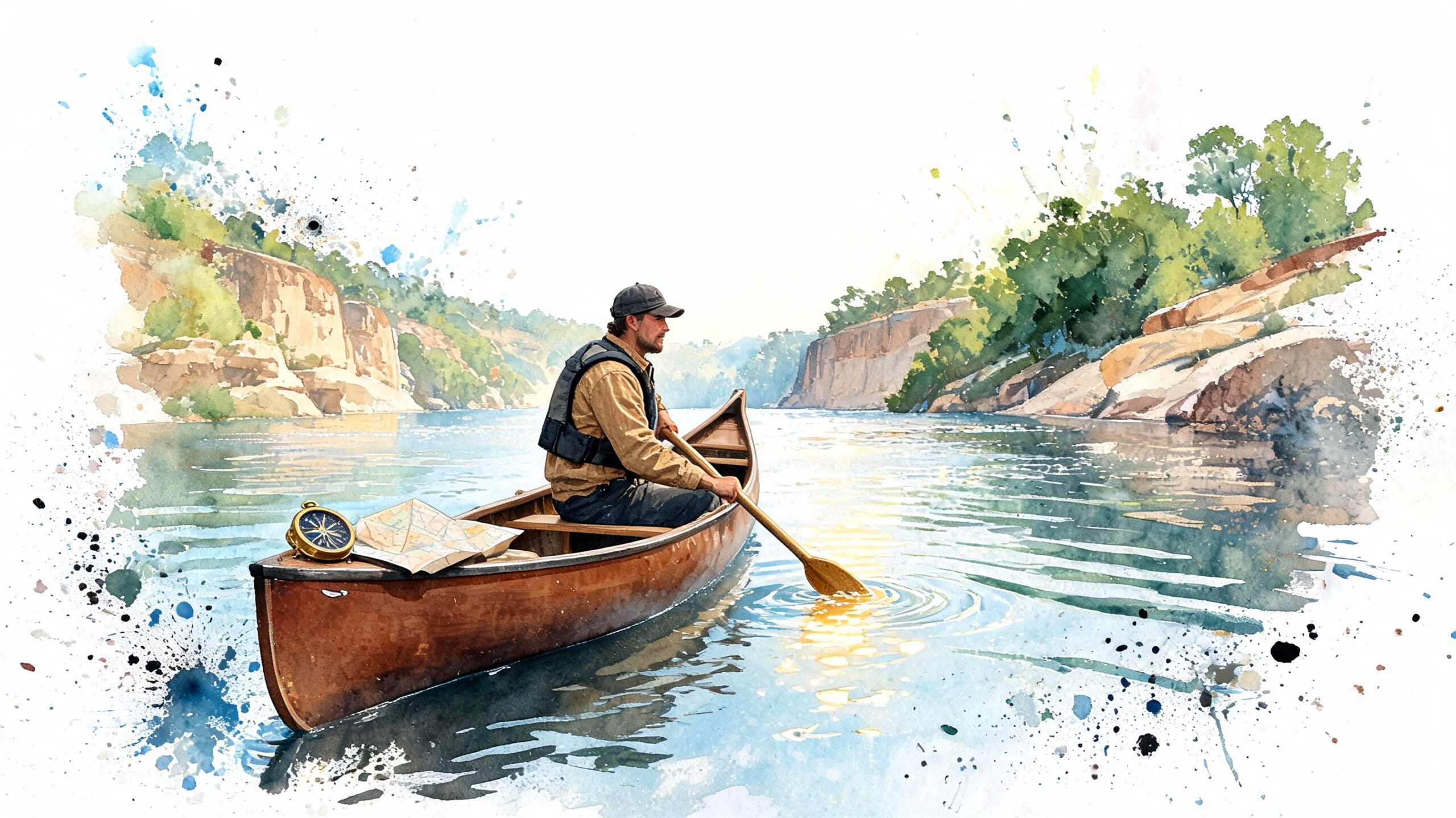
The first time I planned a canoe trip on the Illinois River, my apartment looked like a stalled garage sale. Dirty mugs. Half-packed bags. A chair buried under clothes. I remember tracing a route on my phone and feeling, for the first time in weeks, like one small part of my life could move forward.
Why a River Trip Can Fix More Than You Think
I didn't get into canoeing because I had my life together. I got into it because I didn't.
Back then, every mess in my room felt weirdly heavy. A crumpled receipt had history. An old jar in the fridge had a story. I could walk past the same clutter for months and feel myself shrinking around it. Then one weekend I borrowed a canoe, picked a stretch of river, and started planning food, dry layers, a shuttle, and a launch time. That tiny bit of order felt like opening a stuck window.
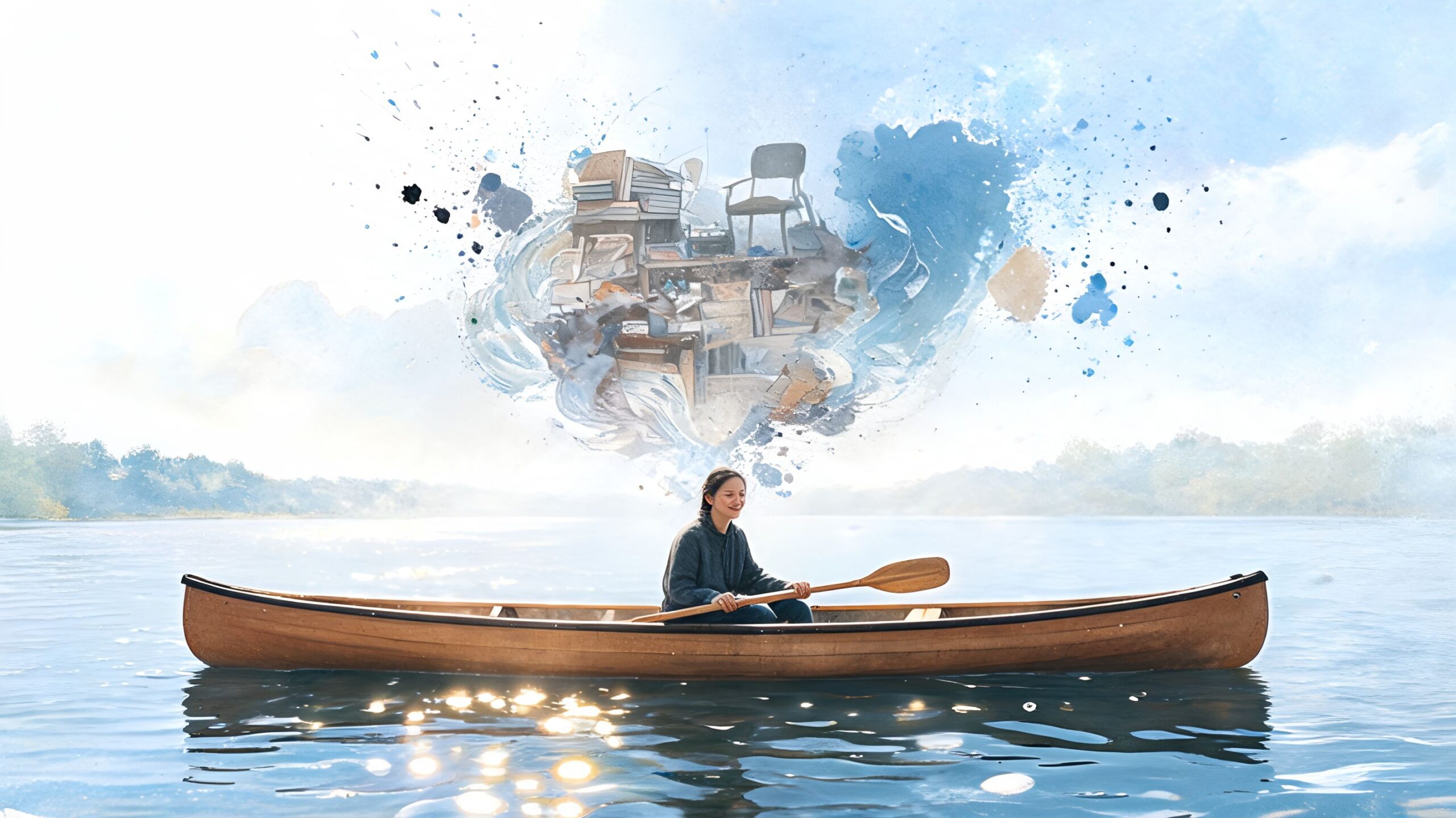
A canoe trip gives your brain one job
When you go canoeing illinois river routes, your mind stops trying to solve your whole life at once. It starts dealing with simple things.
- Where do I put in
- Did I tie down the dry bag
- Is the wind picking up
- Can I hold a straight line across this bend
- Did I leave this shoreline cleaner than I found it
That's a gift. Real life gets muddy because everything stacks at once. On a river, problems come one at a time.
I still remember one rough outing when the weather flipped fast and our easy day got teeth. The sky darkened, the water changed color, and every loose item in the canoe suddenly mattered. We laughed because we had to. We worked because we had to. By the take-out, I felt more alive than I had all month.
Practical rule: A hard day outside often clears your head better than an easy day indoors.
That's why I'm so drawn to paddling with a cleanup mindset. Cleaning someone else's mess can wake something up in you. It's strange, but true. You pull a bottle from the reeds, tuck it in a bag, and some part of your own mind gets lighter too.
The river strips life down to truth
A canoe doesn't care about your excuses. It answers the way truth answers. If you lean wrong, it tells you. If you pack badly, it tells you. If you panic, it tells you. But if you stay calm and adjust, it rewards you fast.
That's what changed me. Not some huge breakthrough. Just repeated small moments of doing the next brave thing.
If you feel stuck, plan a river day. Pack your lunch. Text a friend. Choose a launch. Commit to the weather unless it's unsafe. Let the trip be simple. Let it be imperfect.
You don't need a dramatic reinvention. You might just need a paddle in your hands and a few quiet miles where your only job is to move forward.
Choosing Your Illinois River Adventure
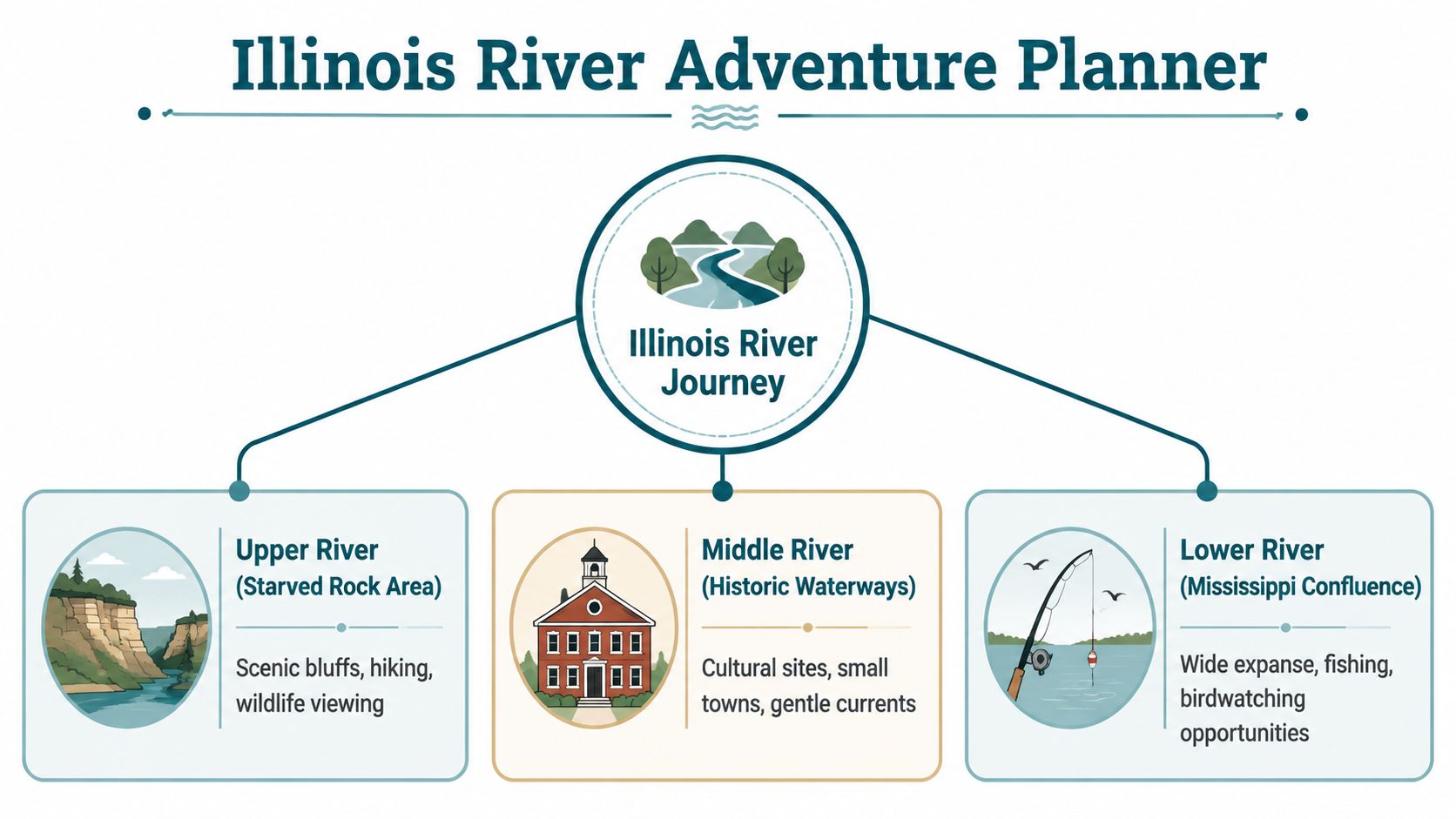
The Illinois River has more than one personality. Some stretches feel reflective and roomy. Others feel busier, louder, and more technical because of boat traffic, access gaps, dams, or wind. I like that. A river with only one mood gets flat.
The Illinois River in Illinois is 273 miles long, and paddling guides describe its average flow as 1 MPH, slow enough that you can paddle upstream without extreme effort, though headwinds can stop you cold and speedboat traffic can swamp an inattentive canoe (Illinois River paddling notes). That tells you a lot before you ever touch the water. This isn't a wild whitewater charge. It's a route that asks for patience, awareness, and honest trip planning.
Upper river mood
If you want your first canoeing illinois river day to feel like a reset button, I'd start on an upper stretch with easy access and a modest turnaround plan. I like this kind of trip for people who want to hear birds, test their stroke, and still get tacos before dark.
The upper feel is simple. Launch, settle in, learn your boat, and don't chase mileage. Because the current is slow, an out-and-back can work when the wind is calm. If the breeze stiffens, turn that pride into wisdom and head back early.
A short day trip works well when you:
- Need a confidence builder and want time to practice steering
- Paddle with a new partner and need to learn each other's rhythm
- Plan to pick up litter along banks and eddies without rushing
If you want another nearby water-based volunteer idea before committing to a longer river day, I like the spirit behind Fox River Valley cleanup and exploration.
Middle river feel
The middle sections have more mixed energy. You may pass marinas, dams, islands, ferry activity, and industrial edges. I don't say that to scare you off. I say it because some paddlers love a river that feels lived-in. You see the working parts, the rough edges, the pretty corners, and the weird transitions all in one day.
I would recommend this location to an intermediate paddler who wants a fuller story. Not polished. Real.
The middle river teaches you how to keep your own calm when the water around you gets busy.
For this kind of run, I plan a one-way shuttle if I can. Slow current doesn't mean no effort. A long upriver grind into headwind can turn a peaceful day into a grumpy march.
Lower river appetite
A lower stretch asks for more patience. The river gets wider, the exposure grows, and your margin for sloppy decisions shrinks. You can still have a beautiful trip there, but you need to respect distance, weather, and motor traffic.
Here's how I choose between trip styles:
| Trip style | Best for | What it feels like |
|---|---|---|
| Short day float | Beginners, mixed groups, cleanup paddles | Calm, forgiving, low-pressure |
| Medium one-way run | Intermediate paddlers | Steady work, more variety |
| Multi-day expedition | Strong planners with self-rescue skills | Deep focus, long rhythm, bigger reward |
The old trade-route history of the Illinois River is interesting, but what matters most in your boat is this: choose a stretch that matches your attention span, your partner, and the weather you're getting. Not the weather you hoped for three days ago.
Gearing Up for Self Reliance on the Water
I learned the value of good gear the embarrassing way. I once packed like I was going to a picnic near water instead of onto water. Loose snacks. Phone in a cheap pouch. Spare shirt wrapped in a grocery bag. By lunch I had wet sleeves, a damp map, and the kind of regret that sticks to your skin.
Self-reliance starts before launch. It starts on the floor while you pack.
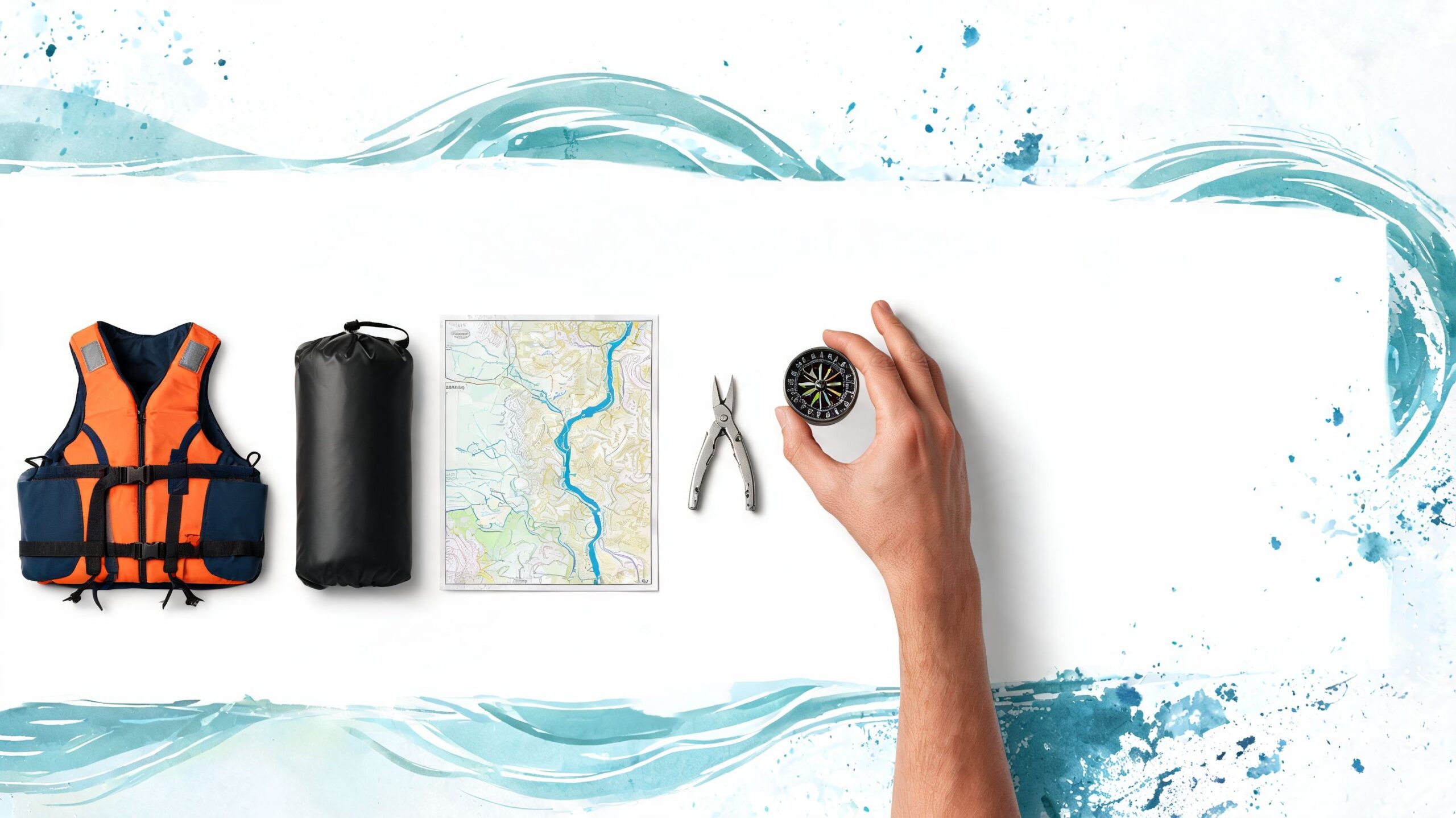
The gear I won't skip
I keep my core kit boring on purpose. Fancy gear is fun. Reliable gear gets you home.
- PFD you will wear. If it rubs your neck raw, fix that before trip day.
- One good paddle plus a spare if possible. A broken paddle turns a mellow float into a problem.
- Dry bags for clothes, phone, food, and first-aid items.
- Throw rope and whistle for basic safety.
- Water and salty food because bad decisions show up fast when you're thirsty.
- Sun layer and rain layer because rivers make fools out of weather apps.
- Work gloves and sturdy trash bags if you plan to do any cleanup.
- Map screenshot or printed route notes in case your battery dies.
I'm picky about how I pack. Heavy stuff low. Things I may need fast near the top. Nothing important loose.
Small systems beat strong intentions
On some designated scenic rivers, managers require coolers under 52 quarts to be locked to prevent spills, and they provide free trash bags at access points. I think that's smart and worth copying anywhere you paddle, including Illinois River trips (scenic river safety and waste rules).
That one rule says a lot. Don't trust good intentions. Build a system.
Here's my simple packing system for canoeing illinois river outings:
Clip it or lose it
I attach dry bags, water bottles, and small tackle pouches to fixed points. If we tip, I want recovery, not a scavenger hunt.Separate wet from dry
Rain jacket and gloves live together. Food and spare clothes stay elsewhere. A soaked granola bar is a sad little lesson.Give trash its own zone
If I'm doing a cleanup paddle, I bring one bag for litter and one bag for my own waste. Mixing them gets gross fast.
After I started using tighter systems, I stopped feeling fragile on the water. That matters. Confidence doesn't come from hype. It comes from knowing where your knife, whistle, and snack are when things get annoying.
For urban paddlers who want another angle on getting started, Chicago kayak options and city-water perspective can spark ideas.
Watch someone pack with intention
Seeing gear laid out well helps more than reading a list. This video is worth a look before your trip.
Bring less than you want, and secure more than you think you need.
That's the whole game. Pack so that a surprise swim becomes a story, not a rescue.
Navigating with Bravery and Awareness
Fear by itself doesn't keep you safe. Attention does.
I've seen people freeze up around rivers the same way they freeze up driving downtown in heavy traffic. They stare at every possible problem at once and stop making clean decisions. The better approach is calmer. Read one thing at a time. Current. Wind. Other boats. Shoreline hazards. Your partner's energy.
Popular recreational rivers can pull in hundreds of thousands of visitors annually, and when each person spends over $50 per trip on average, you know the water can get busy and shared fast (Oklahoma Illinois River management plan). The exact setting differs from Illinois, but the lesson carries well. On a crowded river, awareness is part of courtesy.
Read the obvious signs first
You do not need mystical river intuition. You need a checklist and the humility to use it.
| Check Item | What to Look For |
|---|---|
| Weather | Wind direction, storm risk, temperature swing |
| Water traffic | Speedboats, ferries, anglers, marina zones |
| Access point | Safe launch footing, parking rules, clear take-out |
| Boat trim | Weight centered low, gear secured, no loose clutter |
| Safety gear | PFD on, whistle reachable, phone protected |
| Route hazards | Dams, bridge pinch points, debris, shallow bars |
| Group readiness | Everyone knows signals, distance, and turnaround plan |
I run through this before every launch, even on easy days. Especially on easy days. Complacency loves familiar water.
Boat traffic changes your job
On the Illinois River in Illinois, speedboats and commercial activity can create a noisy, busy day. Your move is simple. Stay predictable. Cross channels decisively. Don't drift sideways where fast traffic expects a clean line.
A canoe feels small when a wake rolls at you. That's normal. Point the bow into the wake at an angle you can manage, keep paddling, and avoid turning broadside at the last second. Most trouble comes from hesitation.
River habit: Be visible, be steady, and don't make mystery moves.
I treat dams the same way I treat bad intersections in the city. I don't flirt with them. I identify them early, leave space, and decide in advance where I'm going.
Bravery is calm, not loud
The brave paddler isn't the one who jokes away every hazard. It's the one who admits the river is real and responds cleanly. If wind starts pushing you off line, say it out loud. If your partner looks tired, stop sooner. If debris fields look messy after rain, back off and choose a simpler lane.
Submerged logs deserve respect. So does lightning. So does exhaustion.
I've had days when turning around felt like failure for about five minutes. Then I got back to the car dry, safe, and still interested in paddling next weekend. That's not failure. That's how you build a long life outdoors.
Turning Your Paddle into a Purpose
Some of my favorite river moments didn't come from distance. They came from drifting into a quiet pocket behind a bend, spotting a bottle wedged in roots, and deciding to do something about it.
That small decision changes the whole feel of the trip. You stop being a visitor and start acting like you belong there.
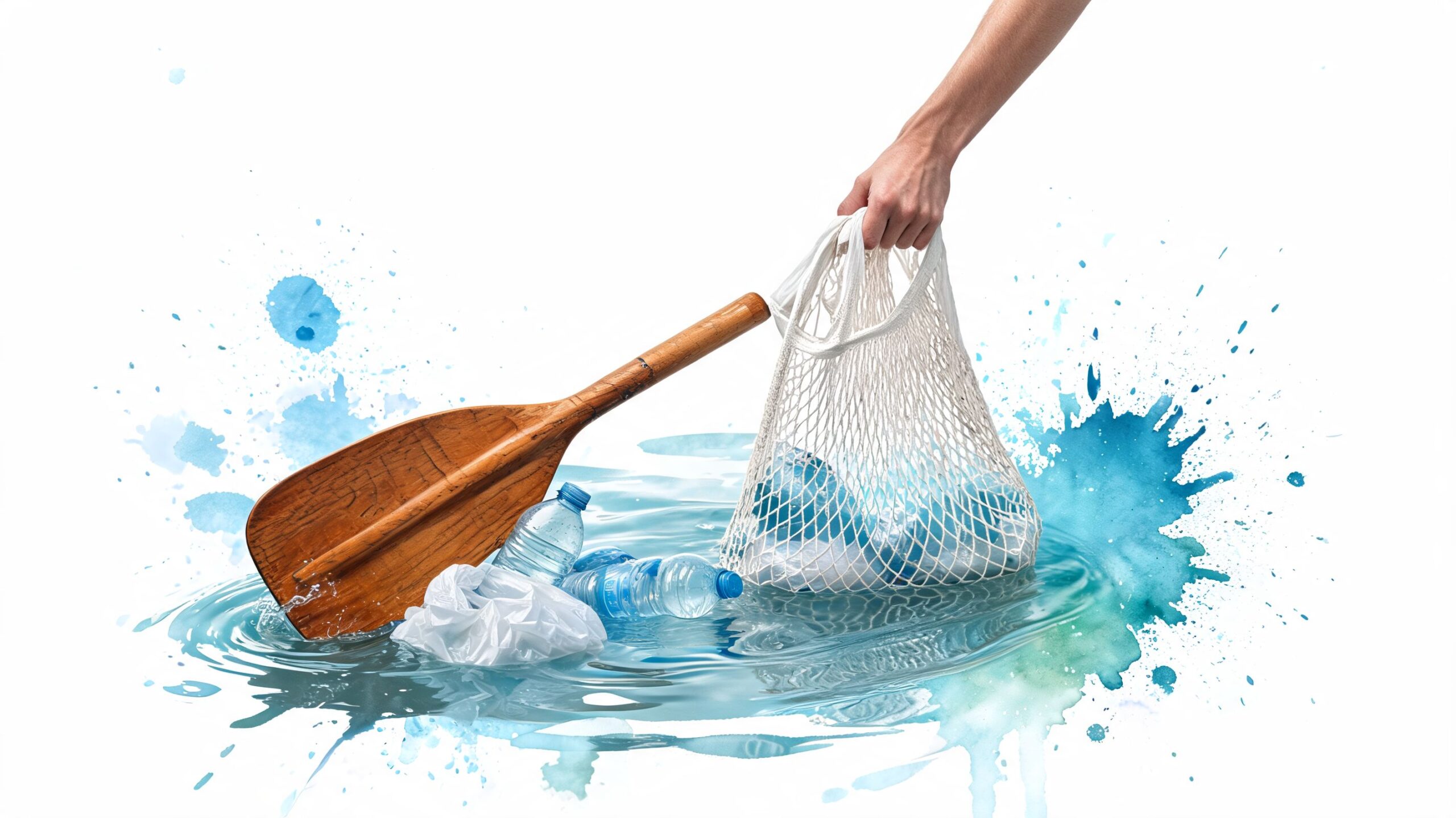
Illinois has thousands of miles of waterways affected by urban runoff, and floating trash is an increasing problem. At the same time, there's very little practical guidance for paddlers on safely dealing with submerged or floating litter (Illinois River Watershed Partnership event notes). That gap is where ordinary volunteers can do real, grounded work.
Start small and stay stable
A canoe cleanup is not a stunt. It's a slow, careful job.
I use a simple rule. If collecting the trash will make the boat less stable than leaving it, I leave it. No bottle is worth a swim near debris. No tire is worth pinning a canoe against a log.
Here's the method I trust:
- Wear gloves from the start. Don't wait until you see something gross.
- Use a grabber for reach when an item is near brush or murky edges.
- Keep one bag open and one bag tied down. The open bag is active. The spare is backup.
- Collect light trash first like bottles, wrappers, cups, and foam pieces.
- Skip sharp metal, tangled line, or half-submerged junk unless you can handle it from solid ground.
That last point matters. River litter lies to you. A floating object may be attached to wire, roots, or something sharp below the surface.
How to manage trash in a canoe
The trick isn't picking trash up. The trick is carrying it without turning your boat into a rolling dumpster.
I like this setup:
| Item | Where I keep it | Why it works |
|---|---|---|
| Active trash bag | Clipped near stern or center | Easy to reach, hard to lose |
| Gloves | Pocket or top hatch | Fast access |
| Grabber | Along gunwale under bungee | Doesn't slide around |
| Hand sanitizer | Small side pouch | Quick cleanup before eating |
| Heavy finds | Low and centered | Keeps trim steady |
I also separate recyclables only if the launch or take-out has a clear disposal path. If there's no way to sort it well at the end, I focus on safe removal first.
You don't need to clean the whole river. You need to leave one stretch better than you found it.
That mindset keeps people coming back. Overreach burns volunteers out. A modest, repeatable cleanup builds pride.
If you want a practical companion piece to this approach, I like this river cleanup guide for thinking through what to bring and how to stay useful.
What to leave alone
Some things should stay right where they are until a better-equipped crew handles them.
- Hazardous containers with unknown liquids
- Needles or broken glass in unstable footing
- Large tangled loads wrapped around branches
- Anything that forces you to lean hard outside the boat
I know the urge. You see a nasty mess and want to attack it. But discipline is part of service. A safe volunteer can come back next week. An injured one can't.
Bring the River Home With You
After a good paddle, I always notice the same thing on the drive back. My problems don't disappear. They just shrink back to their real size.
That's enough.
You spend a few hours reading water, making decisions, carrying your own gear, maybe hauling a bag of trash to the take-out, and suddenly your regular life feels more manageable. The sink full of dishes looks less like a curse and more like ten minutes of work. The hard text you need to send feels sendable. The neighborhood block you usually hurry past starts to feel like your block again.
The part that changes you
The true gift of canoeing illinois river trips is repetition. You launch a little unsure. You adjust. You face wind, clutter, noise, mud, or a sore back. Then you finish anyway.
That pattern sticks.
Many urban communities still lack good access to local rivers, and creating inclusive, service-based paddling events can help people build community and become stewards of those places (Illinois River access and recreation discussion). I like that idea because it matches what I've felt firsthand. People get stronger when they do brave, useful things together.
Keep one river habit in city life
When I get home from a paddle, I try to keep one habit alive instead of letting the whole experience evaporate. You can do the same.
- Clean one small mess right away before sitting down
- Text the friend you paddled with and make the next plan
- Wash and repack your gear so future you has an easier start
- Take one neighborhood walk with a trash bag and keep the chain going
That's how the river comes home with you. Not as a memory only. As a practice.
I love the caterpillar idea for this. You don't go on one paddle and emerge as some flawless new creature. You just keep showing up. You keep doing honest work. You keep becoming someone you can trust.
If this kind of day sounds like your kind of people, check out Litter Caterpillars. Join a cleanup, make some friends, and bring that same brave energy from the river into Chicago streets, parks, alleys, and waterways.