
Author: Kevin Tao

  • Solutions for Pollution in the Oceans: Quick Actions for 2026

    Solutions for Pollution in the Oceans: Quick Actions for 2026

    Have you ever stood on a beach, looked out at the vastness of the water, and felt a pit in your stomach thinking about all the trash out there? I have. It's easy to feel overwhelmed. You might think one person can't possibly make a difference against such a massive problem. I know that feeling because I used to let messes pile up in my own life, in my own apartment. Each little piece of clutter felt like it weighed 500 pounds. It was tied to a memory, a failure, a past I couldn't move on from.

    Then I realized something powerful. Sometimes, cleaning up someone else's mess is way easier than cleaning up your own. It connects you to something bigger. It gives you a sense of control, of purpose, that you can bring back into your own world. This journey isn't about guilt. It’s not about impossible perfection. I want you to find your power, with me, and realize that every piece of litter we pick up in our neighborhood is a direct action. It's an action toward protecting the oceans we all depend on.

    In this guide, we're not just going to stare at the problem. We are going to dive headfirst into 10 real, tangible solutions for pollution in the oceans. We'll explore everything from massive technological projects cleaning the high seas to the simple, brave act of showing up with a trash bag in your own community. This is your playbook. It’s for making a real, measurable impact, starting today. Let's get to work.

    1. Ocean Cleanup Technology & Autonomous Collection Systems

    Imagine a giant, robotic arm. It reaches out into the vast ocean, gently sweeping up the plastic waste that chokes our marine ecosystems. This isn't science fiction. It's the reality of large-scale ocean cleanup technology. Visionaries like Boyan Slat and The Ocean Cleanup have developed massive, floating systems designed to navigate the ocean's great garbage patches. They use natural currents to concentrate and capture debris without harming wildlife.

    These innovative systems are one of the most direct and ambitious solutions for pollution in the oceans. They act like a large-scale filter, passively collecting everything. Big fishing nets (ghost gear). Tiny microplastics. All of it, accumulated for decades in oceanic gyres. The captured plastic is then returned to shore, where we can recycle and repurpose it. We can turn a global problem into a potential resource.

    Watercolor illustration of an ocean cleanup crescent device full of plastic, a worker, and a robotic rover.

    Why It's a Game-Changer

    This approach tackles the pollution that's already out there. It’s the "legacy" plastic that has escaped our coastlines and rivers. While prevention is crucial, you and I can't ignore the millions of tons of plastic already swirling in our seas. These technologies represent a powerful cleanup crew. They work 24/7 in the most remote parts of the world where manual cleanup is impossible.

    The technology isn't just for the high seas. Scaled-down versions like The Ocean Cleanup's Interceptor™ are deployed in major rivers in Jakarta and Bangkok. Think of these autonomous barges as sentinels. They stand guard, catching plastic waste in rivers before it can ever reach the ocean.

    How You Can Get Involved

    You don't need to build your own ocean-sweeping robot to make a difference. Here’s how you can support this technological wave:

    • Support & Advocate: I want you to follow and donate to organizations like The Ocean Cleanup. Your support helps fund research, deployment, and operations.
    • Focus Upstream: Advocate for interceptor technology in your local rivers. Most ocean plastic starts in a river, so stopping it at the source is incredibly effective.
    • Volunteer for Data: You can connect with local environmental groups that partner with research initiatives. Help collect and document plastic waste data from local waterways. You'll provide valuable information that guides where these technologies are needed most.

    2. Single-Use Plastic Bans & Extended Producer Responsibility (EPR) Policies

    Imagine your bathtub is overflowing. You wouldn't just keep mopping up the floor forever, would you? Of course not. You'd turn off the tap. That's the power of strong environmental policy. Banning single-use plastics and implementing Extended Producer Responsibility (EPR) are two of the most effective ways we can stop ocean pollution at its source. We shift the responsibility from us, the consumers, to the corporations that create the waste in the first place.

    These policies are powerful solutions for pollution in the oceans because they fundamentally change the system. EPR makes manufacturers financially and logistically accountable for their products from creation to disposal. When companies have to pay for the cleanup of their plastic packaging, a funny thing happens. Suddenly, they are motivated to design less wasteful, more recyclable, and ocean-friendly alternatives. This is prevention on a massive, global scale.

    Why It's a Game-Changer

    While cleanup tech is crucial for what's already out there, policy changes prevent the problem from getting worse. We see this in action globally. The European Union's Single-Use Plastics Directive has phased out items like plastic cutlery and straws. California's bold EPR laws are forcing producers to rethink packaging. It’s a systemic fix. It reduces the amount of plastic produced, which means less can ever find its way into our rivers and seas.

    This isn't about taking away convenience; it’s about inspiring innovation. When a city or country bans plastic bags, it creates a market for reusable totes. When a corporation is responsible for its plastic bottles, it invests in better recycling systems or plant-based materials. I see policy creating a ripple effect of positive change that protects our blue planet for generations.

    How You Can Get Involved

    Your voice is more powerful than you think. You can champion these policies right in your own community and help turn off the plastic tap for good.

    • Champion Local Legislation: I want you to organize or join a letter-writing campaign to your local and state representatives. Advocate for specific policies like bag bans, foam container restrictions, or comprehensive EPR frameworks.
    • Educate Your Community: Host an event at a local library or community center. Explain the direct link between the litter in your neighborhood and the health of the world's oceans. Show people how their actions and advocacy can make a global impact.
    • Support Responsible Businesses: Use your purchasing power. I encourage you to support and promote local businesses that have already ditched single-use plastics. When others see their success, it builds momentum for wider change.

    3. Wastewater Treatment & Microplastic Filtration Systems

    Think about the water that goes down your drain. Every time you do laundry or wash your face. It seems to just disappear, right? But it carries an invisible threat: microplastics. These tiny fibers from our synthetic clothing and microbeads from cosmetics flow straight into our water systems. Eventually, they reach the ocean. But what if we could stop them at the source?

    Advanced wastewater treatment and filtration systems are one of the most powerful frontline solutions for pollution in the oceans. They act like a city-sized sieve. They catch these microscopic plastic particles before they ever enter our rivers and seas. These facilities use cutting-edge technologies. Ceramic membrane filtration. Activated carbon. UV treatment. All to remove particles smaller than the width of a human hair.

    Why It's a Game-Changer

    This solution tackles the invisible, insidious flow of microplastics that traditional systems miss. Beach cleanups are vital, I know, but they can’t catch particles this small. By upgrading our municipal water treatment plants, we can shut off a massive, continuous source of plastic pollution. Cities like Amsterdam and Stockholm are pioneering these efforts. They're integrating microplastic capture into their public infrastructure. Germany's advanced wastewater standards and Singapore's NEWater facilities prove that this level of filtration isn't just possible. It's scalable.

    This upstream approach prevents the problem from ever reaching the ocean. It protects everything from plankton to whales from ingesting plastic. It’s a systemic fix that works silently in the background, 24/7, safeguarding marine life on a massive scale.

    How You Can Get Involved

    You don’t need an engineering degree to push for cleaner water in your community. Here’s how you can make an impact:

    • Advocate for Upgrades: I suggest you partner with local environmental groups to lobby your municipal water department. Ask about their current microplastic filtration capabilities. Advocate for adopting new technologies.
    • Raise Awareness: Host community events or create online campaigns focused on microplastic sources like synthetic clothing and cosmetics. Many people I talk to don't know the connection between their fleece jacket and ocean pollution.
    • Host a Clothing Swap: Organize a clothing swap event in your neighborhood. This encourages reusing clothes and reduces the demand for new synthetic textiles, which are a primary source of microplastic fibers.

    4. Marine Protected Areas (MPAs) & Ocean Sanctuary Policies

    Picture a national park. But instead of mountains and forests, it’s a vast, underwater world teeming with life. This is the vision behind Marine Protected Areas (MPAs) and ocean sanctuaries. We designate these zones to give fragile marine ecosystems a chance to heal, free from the pressures of human activity. Championed by legends like Sylvia Earle, these "hope spots" are a powerful tool you and I can use to shield our oceans from further harm.

    Establishing these sanctuaries is one of the most vital solutions for pollution in the oceans. How do they work? They restrict or prohibit activities like commercial fishing, oil drilling, and shipping. This prevents new pollutants from entering and allows damaged habitats, from coral reefs to kelp forests, to recover. By creating these safe havens, we give marine life the breathing room it needs to bounce back. We create more resilient ecosystems that are better equipped to handle global stressors.

    Why It's a Game-Changer

    While cleanup technologies remove existing trash, MPAs are about prevention and recovery on a massive scale. They are a promise I make to future generations that some parts of our blue planet will remain wild and pristine. These protected areas, like the massive Palau National Marine Sanctuary or Australia's Great Barrier Reef Marine Park, become living laboratories. They become vibrant nurseries for countless species, with benefits that spill over into surrounding waters.

    This isn't just a far-off concept for remote oceans. I believe protecting our local waterways, like the Chicago River or Lake Michigan, is directly connected to the health of the global ocean. By safeguarding our freshwater sources, we prevent pollution from ever starting its journey downstream.

    How You Can Get Involved

    You can become a guardian for these underwater parks, no matter where you live. Your voice and your actions can help create and expand these critical sanctuaries.

    • Champion Local Waters: Advocate for stronger protections for your local rivers and lakes. I urge you to connect with groups working to preserve freshwater ecosystems, emphasizing that all water is connected.
    • Support the Protectors: Follow and donate to organizations like The Nature Conservancy or the World Wildlife Fund (WWF). They lead the charge in establishing and managing MPAs worldwide.
    • Host an Awareness Event: You can organize a film screening of a documentary about ocean sanctuaries or partner with a local aquarium for an educational event. Highlighting the beauty of what we stand to lose is a powerful motivator for change.

    5. Beach & Coastal Cleanup Programs with Data Collection

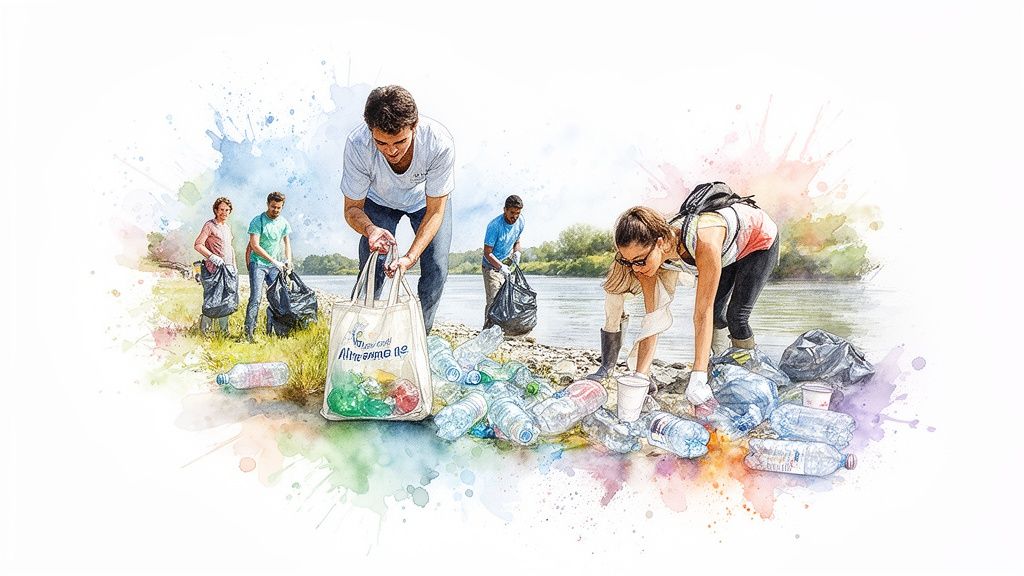
    Picture a shoreline. Not littered with plastic bottles and discarded fishing gear. Instead, imagine it lined with volunteers of all ages working together. They aren't just picking up trash. They are environmental detectives. They document every single item they find. This powerful combination of community action and citizen science is the heart of modern beach and coastal cleanup programs.

    These initiatives are one of the most hands-on and impactful solutions for pollution in the oceans. Organizations like the Surfrider Foundation and global events like Coastal Cleanup Day transform a simple act of tidying up into a massive data-gathering operation. Using apps and standardized protocols from groups like the NOAA Marine Debris Program, you and I can record the types and quantities of waste. We can create a clear picture of what's washing ashore and where it's coming from.

    Why It's a Game-Changer

    This approach does more than just clean a beach for a day. It builds a powerful case for long-term change. The data collected by thousands of volunteers like you provides undeniable evidence for policymakers and corporations. It shows which companies produce the most frequently found items. It identifies local pollution hotspots. This leads to targeted policies like plastic bag bans or improved waste management systems.

    This blend of action and information empowers us. When you see charts showing the tons of waste your group has removed, you feel a real sense of accomplishment. I know I do. It turns the overwhelming problem of ocean pollution into a tangible, local fight you can win, one piece of data at a time. It’s a ground-up movement creating top-down change.

    How You Can Get Involved

    Joining a cleanup is one of the most direct ways I know to protect our oceans. You can see the immediate difference you make while contributing to a global cause.

    • Join a Local Chapter: Find a local chapter of an organization like the Surfrider Foundation or look for events on Coastal Cleanup Day. They provide the supplies and training you need.
    • Turn Your Walk into Data: Use an app like Clean Swell® to log the trash you collect on any beach walk. You become a citizen scientist every time you head to the coast.
    • Organize Your Own Event: You don't need a huge organization to start. I want you to gather some friends, grab some bags, and get to work. Learn more about how to start your own volunteer trash pickup in our guide.

    6. Circular Economy & Plastic Recycling Infrastructure Development

    What if we stopped thinking of plastic as “waste”? Imagine a world where every bottle, container, and wrapper has a future life. It circles back endlessly into useful products instead of ending up in the ocean. This is the heart of a circular economy. It’s a system I believe in, designed to eliminate waste by keeping materials in a continuous loop of use and reuse. It’s one of the most fundamental solutions for pollution in the oceans because it tackles the problem at its very source: our throwaway culture.

    This model is about more than just your recycling bin. It involves redesigning products so we can easily disassemble and recycle them. It means investing in advanced sorting technologies like those from TOMRA that use AI to separate plastics. It's about creating strong markets for recycled materials. Pioneers like the Ellen MacArthur Foundation are championing this global shift, proving that we can decouple economic growth from resource consumption.

    Why It's a Game-Changer

    A circular economy is the ultimate preventative measure. By designing waste out of the system, we drastically reduce the volume of new plastic being produced. We reduce the amount that can leak into the environment. When a company like Patagonia creates jackets from recycled bottles or Interface manufactures carpet from old fishing nets, they’re not just cleaning up. They’re building a new, sustainable economic model that makes pollution obsolete. It closes the loop. It turns a linear path to the landfill or ocean into a circle of value.

    This systemic approach requires big thinking. National policies like Kenya's plastic bag ban. City-level roadmaps like those in Amsterdam. It challenges you and me to see every piece of plastic not as trash, but as a valuable resource waiting for its next chapter.

    How You Can Get Involved

    You can become an architect of the circular economy right in your own community. Here’s how you can help build this regenerative future:

    • Champion Repair & Upcycling: I want you to organize or attend community repair workshops. Teach others how to fix electronics, mend clothes, or upcycle old furniture. You can extend the life of products and reduce waste.
    • Advocate for Better Infrastructure: Urge your local representatives to invest in modern recycling facilities. Ask for more transparency about where your city's recycling actually goes. Support policies that improve sorting and processing.
    • Vote with Your Wallet: You should support businesses that use recycled materials and design for circularity. Look for products made from post-consumer content and celebrate brands that take responsibility for their products' end-of-life.

    7. Fishing Net Recovery & Ghost Gear Removal Programs

    Picture a silent, invisible killer lurking beneath the waves. It’s not some mythical sea monster. It's a lost or abandoned fishing net, which I call "ghost gear." These nets drift for decades. They mindlessly trap and kill dolphins, turtles, seals, and countless fish. Thankfully, a dedicated fleet of modern-day ghost hunters is tackling this deadly problem head-on.

    These specialized programs are one of the most critical solutions for pollution in the oceans because they target the deadliest form of plastic pollution. Ghost gear makes up around 10% of all ocean plastic, and it's designed to catch and kill. Organizations like Healthy Seas and Ghost Fishing deploy teams of skilled volunteer divers. They locate, document, and carefully remove these tangled webs of death from reefs and shipwrecks, restoring safety to fragile marine habitats.
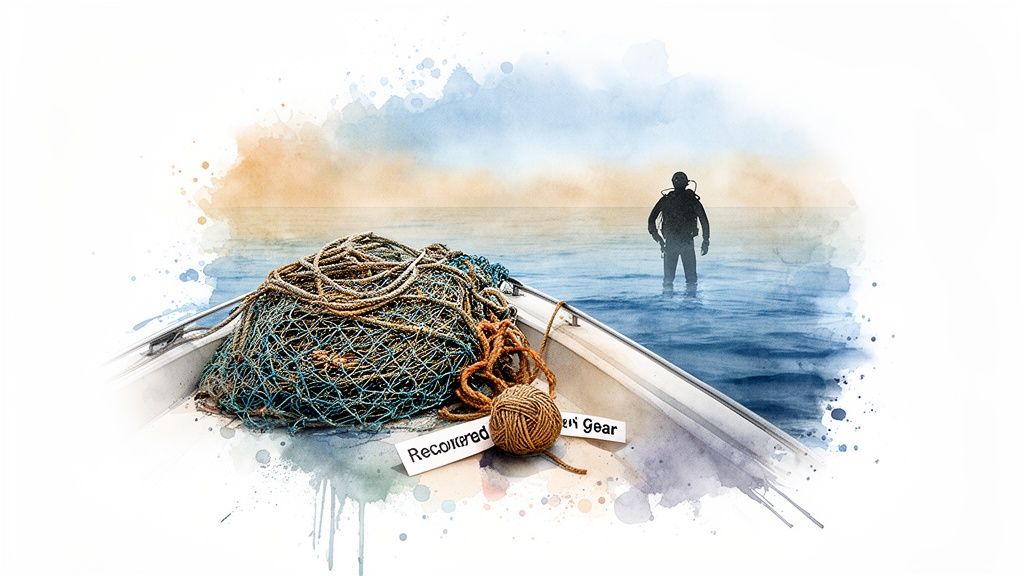
    A watercolor image depicting a boat with recovered fishing gear and a diver in the ocean.

    Why It's a Game-Changer

    This approach is about more than just cleanup; I see it as an underwater rescue mission. By removing a single large net, you can save thousands of marine animals over many years. It directly addresses a lethal threat that continues to harm wildlife long after it has been lost. These initiatives also close the loop. They partner with companies to recycle the recovered nylon nets into new products like swimwear, carpets, and socks. They transform waste into value.

    The impact is immediate and visible. When you see a ghost net pulled from a coral reef, the ecosystem can begin to recover almost instantly. Groups like Sea Shepherd Conservation Society document these removals, showing us the tangible difference that focused, direct action can make.

    How You Can Get Involved

    You don't have to be a deep-sea diver to join the hunt for ghost gear. Your support on land is just as vital to the success of these underwater operations.

    • Support the Divers: Donate to organizations like Ghost Fishing or Healthy Seas. Your contributions help fund dive missions, purchase specialized equipment, and cover logistical costs.
    • Raise Your Voice: I want you to share documentaries and stories about ghost gear on social media. The more people understand the problem, the greater the pressure on the fishing industry to adopt better gear tracking and recovery practices.
    • Choose Consciously: When you buy seafood, ask about the fishing methods used. Support fisheries that are actively working to prevent gear loss and participate in recovery programs. Your consumer choices can drive industry-wide change.

    8. Corporate Accountability & Supply Chain Sustainability Initiatives

    Imagine a world where the price tag on a product told its whole story. Not just the cost in dollars, but its cost to our planet. This is the core idea behind corporate accountability. It’s about shifting responsibility for ocean pollution from just us, the consumers, to the companies that design, produce, and sell the goods that too often end up in our waterways.

    These initiatives are one of the most fundamental solutions for pollution in the oceans because they tackle the problem at its source. By demanding transparency and sustainability throughout a product's entire life cycle—from sourcing raw materials to its final disposal—we can prevent pollution from ever being created. Programs like B-Corp certification or standards set by organizations like Ocean Wise hold companies to a higher standard. They reward those who I see prioritizing planetary health over pure profit.

    Why It's a Game-Changer

    This approach turns the entire system on its head. Instead of just cleaning up the mess, it stops the mess from being made. When a company like Patagonia invests in Fair Trade Certified practices or Unilever commits to a Sustainable Living Plan, it creates a ripple effect. It forces competitors to reconsider their own environmental impact. It empowers you and me to vote with our wallets for a healthier ocean.

    Accountability initiatives are not just about shaming bad actors. They are about celebrating and supporting the leaders. They provide a clear roadmap for businesses to do better. They give us, the public, the tools to see who is genuinely committed. You can explore a wide range of inspiring corporate social responsibility examples on littercaterpillars.com to see how this looks in action.

    How You Can Get Involved

    You hold immense power as a consumer and a citizen. You can directly influence the corporations that shape our world. Here’s how you can put that power to work:

    • Shop Your Values: Support businesses with certifications like B-Corp or those transparent about their supply chains. I want you to read labels and ask questions before you buy.
    • Use Your Voice: Join consumer campaigns led by groups like Greenpeace that target major polluters. A simple tweet, an email, a signature on a petition—these can be part of a massive wave of public pressure.
    • Celebrate the Good Guys: Organize a "sustainable business spotlight" in your community. When you find a local shop or brand doing things right, share their story on social media and with your friends. I believe positive reinforcement encourages more businesses to follow suit.

    9. Education & Behavioral Change Programs (School & Community-Based)

    Picture a classroom of children. Their eyes are wide as they learn about the journey of a sea turtle. Or imagine a community coming together to transform a local park into an "Ocean Friendly Garden." These aren't just feel-good activities; they are powerful engines of change. I believe comprehensive educational initiatives are designed to reshape our understanding of ocean health and inspire the behavioral shifts necessary to protect it.

    These programs are foundational solutions for pollution in the oceans because they tackle the problem at its root: human behavior. By weaving compelling stories and hands-on experiences into school curricula and community workshops, they move you and me from passive awareness to active environmental stewardship. Organizations like National Geographic and programs such as Ocean Wise are bringing the ocean's story into our daily lives, making the distant problem of marine pollution a personal and local one.

    Why It's a Game-Changer

    While technology cleans up existing messes, education prevents future ones. It's the difference between constantly bailing water out of a sinking boat and teaching everyone how to fix the leak. When a child learns how a single plastic bag can harm marine life, they become a lifelong advocate for reusable bags. When a neighborhood participates in a Plastic-Free July challenge, it creates a ripple effect of conscious consumption that reduces waste at the source.

    These programs don't just lecture; they empower. The Surfrider Foundation’s Ocean Friendly Gardens program, for example, teaches communities how to create landscapes that reduce urban runoff, a major source of ocean pollution. I see this transforming abstract knowledge into tangible, local action, proving that protecting the ocean can start right in your own backyard.

    How You Can Get Involved

    You can become a powerful catalyst for change by bringing ocean education into your community. Here’s how you can start:

    • Bring the Ocean to School: I encourage you to partner with local schools to integrate environmental curriculums like Project WILD or Project Learning Tree. You can volunteer to lead a session or help teachers find resources.
    • Start a Community Challenge: Launch a "plastic-free" challenge in your neighborhood or workplace. Use social media and short videos to share tips, celebrate successes, and build a sense of collective achievement.
    • Host an Event: Organize a family-friendly educational event. A documentary screening (think David Attenborough!) followed by a discussion, or a workshop on creating zero-waste home products. I want you to make learning fun and accessible for all ages.

    10. Plastic Reduction & Prevention at Source (Industrial Design & Materials Innovation)

    What if we could stop plastic pollution before a single wrapper or bottle is even made? This is the powerful idea behind redesigning our products and materials at their source. Instead of just cleaning up the mess, brilliant designers and scientists are changing the game. They create products that don't need plastic in the first place. They invent entirely new, ocean-safe materials.

    These forward-thinking approaches are among the most profound solutions for pollution in the oceans because they tackle the problem at its root. Imagine edible water pods made from seaweed, like those from Notpla. Or stylish accessories crafted from mushroom leather by innovators like Ecovative Design. This isn't about compromise. It's about innovating our way to a cleaner future by making waste obsolete from the very beginning.

    An illustration featuring seaweed in a bubble, a brown wallet, and a water bottle, representing zero waste design solutions.

    Why It's a Game-Changer

    Source reduction is the ultimate form of prevention. Every product redesigned to eliminate plastic is one less potential piece of litter that you or I need to collect from a beach or river. Companies like Unilever and P&G are embracing this with refillable product lines. Pioneers like Patagonia have long championed sustainable materials. This systemic shift turns off the plastic tap, rather than just mopping up the floor.

    This isn't just about the stuff you buy. It's happening in tech, with companies like HP reducing plastic in printer cartridges. Even in automotive manufacturing. The core principle, which I see championed by organizations like the Ellen MacArthur Foundation, is a move toward a circular economy. A world where we reuse, repurpose, or safely return materials to nature, ensuring they never become pollution.

    How You Can Get Involved

    You can be a powerful force for change. Use your consumer voice and creativity to champion smart design. Here's how you can start:

    • Vote with Your Wallet: Choose products from companies committed to reducing plastic. I want you to support businesses that use innovative, sustainable packaging and tell them why you chose them.
    • Host an "Innovation Spotlight": Organize a small local event or a social media campaign highlighting businesses that are getting it right. Showcase products that use alternative materials and celebrate their commitment.
    • Advocate for Better Design: Encourage your favorite brands to adopt plastic-free alternatives. A single, thoughtful email or social media post from you can spark a conversation within a company's design team. Explore more strategies for how to reduce plastic pollution on littercaterpillars.com.

    10-Point Comparison: Ocean Pollution Solutions

    Solution 🔄 Implementation complexity ⚡ Resource requirements 📊 Expected outcomes 💡 Ideal use cases ⭐ Key advantages
    Ocean Cleanup Technology & Autonomous Collection Systems High — advanced engineering, deployment & maintenance Very high — capital, vessels, AI & skilled ops High for concentrated macro-debris; limited for finest microplastics 📊 ⭐⭐ Ocean gyres, river mouths, port/marina interceptors Autonomous large-scale removal; continuous monitoring; public visibility
    Single-Use Plastic Bans & Extended Producer Responsibility (EPR) Policies Medium–High — legislative design, stakeholder negotiation Moderate — administrative, enforcement, compliance support ⚡ Very high long-term source reduction and systemic change 📊 ⭐⭐⭐⭐ National/state legislation, municipal ordinances, upstream prevention Prevents pollution at source; drives material innovation; reduces cleanup burden
    Wastewater Treatment & Microplastic Filtration Systems High — infrastructure upgrades, retrofitting & monitoring 🔄 High — treatment plants, filters, operation & maintenance High for removing microplastics pre-release; reduces ecosystem exposure 📊 ⭐⭐⭐ Municipal and industrial wastewater systems; household retrofits Targets invisible microplastics early; retrofit-compatible; protects biota
    Marine Protected Areas (MPAs) & Ocean Sanctuary Policies Medium — legal designation, multi-stakeholder coordination Moderate — enforcement, monitoring, governance resources High for biodiversity recovery and resilience; not direct debris removal 📊 ⭐⭐⭐ Biodiversity hotspots, fisheries management, conservation planning Protects ecosystems; measurable ecological recovery; promotes research
    Beach & Coastal Cleanup Programs with Data Collection Low–Medium — volunteer coordination, training & protocols 🔄 Low — volunteers, basic supplies, simple data tools ⚡ Moderate immediate debris removal + actionable data for research 📊 ⭐⭐⭐ Local community engagement, awareness campaigns, citizen science Visible impact; low cost; builds community and credible datasets
    Circular Economy & Plastic Recycling Infrastructure Development High — system redesign, tech integration, market creation High — sorting plants, processing tech, market-building ⚡ High long-term diversion from landfills/oceans; economic benefits 📊 ⭐⭐⭐⭐ Municipal systems, industry partnerships, product redesign programs Keeps materials in use; creates jobs; reduces virgin plastic demand
    Fishing Net Recovery & Ghost Gear Removal Programs High — specialized diving, mapping, safety protocols 🔄 High — trained divers, vessels, sonar & recovery gear High local ecological benefit by removing lethal gear 📊 ⭐⭐⭐ Coastal fisheries, known ghost-gear hotspots, post-storm cleanups Removes high-impact debris; immediate marine-life protection; material recovery
    Corporate Accountability & Supply Chain Sustainability Initiatives Medium — audits, transparency systems, stakeholder engagement Moderate — auditing, certification, advocacy campaigns ⚡ High systemic potential if widely adopted; risk of greenwashing 📊 ⭐⭐⭐ Major brands, suppliers, procurement policies, consumer-facing companies Leverages market forces; increases transparency; incentivizes reduction
    Education & Behavioral Change Programs (School & Community-Based) Low–Medium — curriculum design, outreach consistency 🔄 Low — educators, materials, community partnerships ⚡ High long-term cultural/behavioral shift though slow to manifest 📊 ⭐⭐⭐⭐ Schools, community centers, youth programs, family outreach Cost-effective; builds stewardship; multiplies volunteer impact over time
    Plastic Reduction & Prevention at Source (Industrial Design & Materials Innovation) High — R&D, redesign, regulatory alignment 🔄 High — R&D investment, manufacturing change, scale-up resources ⚡ Very high long-term prevention of pollution and systemic change 📊 ⭐⭐⭐⭐ Product design, packaging industry, manufacturers, material startups Eliminates source of pollution; spurs innovation; creates sustainable markets

    Your Next Chapter Starts Now

    Remember that feeling of being overwhelmed I told you about? That feeling of helplessness. Sometimes it’s easier to just stand by and watch things happen. But I’ve learned something. Showing up, even when it's hard, even when you're suffering a bit, is what adds flavor to life. It’s what advances the plot.

    You stop being a bystander. You become the hero of your own story. The ten solutions we've walked through in this article are more than just a list. They are invitations. Invitations for you to be brave. To connect with others. To be a force for transformation.

    We've seen the sheer power of human ingenuity. I see it in the form of autonomous collection systems and microplastic filtration technologies. These aren't just gadgets. They are humanity’s response to a crisis, a testament to our ability to innovate our way out of problems we created. But I know technology alone is not a silver bullet. It's one thread in a much larger tapestry.

    That's where systemic change comes in. We explored the game-changing potential of policies like Single-Use Plastic Bans and Extended Producer Responsibility (EPR). Imagine a world where the companies producing plastic are also responsible for its end-of-life. That's not a fantasy. It's a structural shift that rewrites the rules of production and consumption. It turns waste from an afterthought into a primary design consideration.

    But what can you do? Where does your personal story intersect with this massive global challenge?

    It intersects on the ground. In your hands. With your voice. It starts with a simple beach cleanup where you don't just pick up trash, you also collect data. It continues when you support a local business committed to a circular economy. It gains momentum when you advocate for Marine Protected Areas, giving our oceans the breathing room they need to heal.

    You don't have to be a scientist or a politician to be a part of these incredible solutions for pollution in the oceans. You just have to be willing to start.

    Picking up a piece of litter. Asking your favorite cafe to switch to sustainable packaging. Supporting a company that takes its supply chain seriously. These are all ways you can write a new page in your story. You are not just one person against a tidal wave of pollution. You are a part of a global current of change, and every action you take adds to its force.

    Just like a caterpillar, none of us are perfect. I'm certainly not. We're all a bit messy, still figuring things out. But every single one of us is capable of incredible, beautiful change. The journey from a neighborhood street to the vast blue ocean seems impossibly long. But it’s a journey that starts with a single step, a single piece of plastic you pick up from the curb.

    So, what's your next move? You don't have to solve everything at once. Just start. Show up. Find your people. The ocean, and your future self, will thank you for it.


    Ready to write your first chapter? Join Litter Caterpillars and connect with a community of changemakers turning local action into global impact, one Chicago neighborhood at a time. Find your next cleanup event and start your story with us at Litter Caterpillars.
  • How to Reduce Plastic pollution: Your First Brave Step

    How to Reduce Plastic pollution: Your First Brave Step

    I’m going to tell you a secret: you can absolutely make a dent in plastic pollution. I know, I know. It feels like this giant, overwhelming global crisis. But forget that for a second. It all starts when you decide to take direct, local action—even if it’s just picking up a single, lonely piece of trash. That one small act, that tiny decision, builds a momentum that can ripple out and change your entire community.

    Your Mess Is Your Superpower

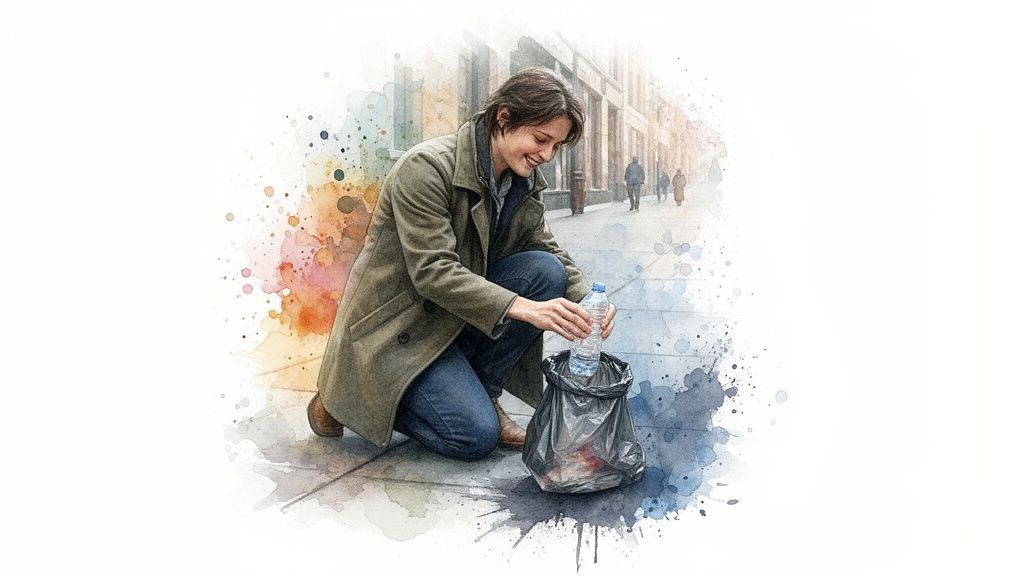
    A smiling person crouches on a city street, placing a plastic bottle into a black trash bag, watercolor art.

    I know that feeling. The paralysis that comes from staring at a mess so big you don't know where to start. It could be the plastic containers overflowing in your kitchen, a silent monument to takeout dinners past. Or maybe it’s the litter you have to sidestep on your daily walk, a constant, nagging reminder of collective neglect. For me, it was both.

    My apartment used to be a fortress of clutter. Every single item felt like it held a story I couldn't bear to part with. An old jar of blueberry jam from a trip four years ago, a bag of nuts from a health kick that lasted all of a week—each thing was tiny, but together, their weight felt impossibly heavy. The chaos inside my home was a perfect, suffocating mirror for the chaos I felt in my life.

    The Turning Point in a Hailstorm

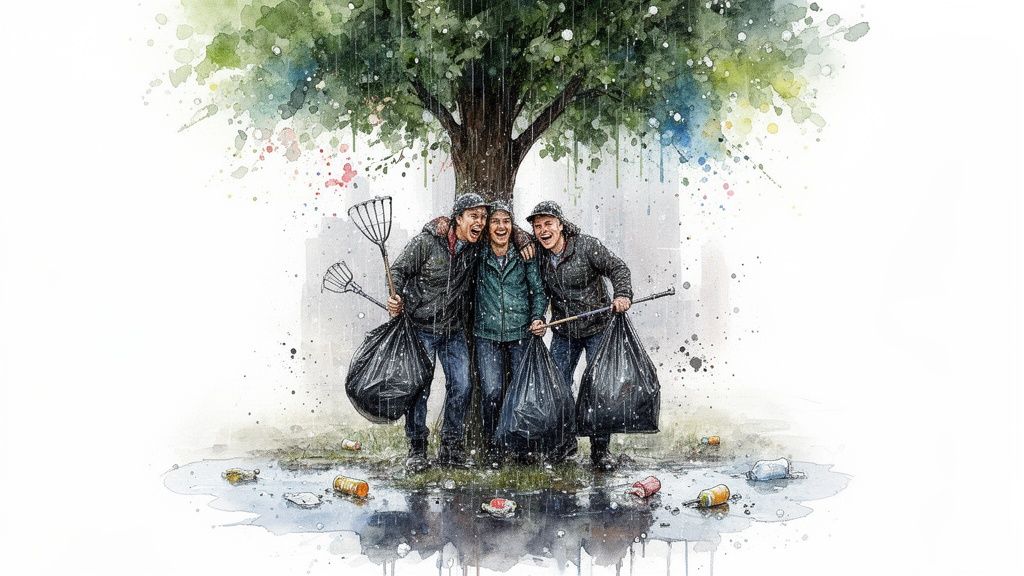
    Then, one day, something snapped. A shift in the universe, or maybe just in me. I found myself standing in a Chicago hailstorm with just two other souls. Our mission was profoundly simple: pick up trash. It was cold. It was ridiculous. And frankly, a little miserable.

    But as our hands grew numb and our bags slowly filled, I had this lightning bolt of an insight. Cleaning up someone else’s mess, this public, anonymous mess, was a thousand times easier than facing my own. And the weirdest part? It was fun.

    That one small, defiant act of service lit a fire in me. A pilot light I didn't even know had gone out. It was the spark that eventually grew into Litter Caterpillars, our volunteer cleanup group. This is the story of how that happened, but it's also your invitation. I want to show you how tackling the very real, very tangible problem of plastic in your neighborhood can become the key that unlocks the bigger, messier challenges in your own life.

    It’s about discovering you have the power to create order, both in your community and within yourself, one piece of trash at a time. It’s a strange but powerful truth: your mess can become your superpower.

    This isn't just another guide on how to reduce plastic pollution on some grand, impersonal scale. It's about you finding your strength through action and connection. Together, we're going to walk through how you can:

    • Build Personal Momentum: I'll show you how tiny, consistent actions create an unstoppable force for change in your own life.
    • Inspire Your Community: You'll learn the practical, no-nonsense steps to turn a solo effort into a thriving group of volunteers who show up, rain or shine.
    • Drive Real-World Impact: We'll move beyond cleanups to push for policies and partnerships that tackle plastic waste at its source.

    You don't need all the answers. You just need to be willing to take that first step—to bend down and pick up that first bottle. I promise you, the journey from there is more rewarding than you can possibly imagine.

    Winning Your First Fight Against Plastic Waste

    Starting to cut down on plastic can feel like staring up at a mountain, lost in the clouds. It’s overwhelming. But like any grand journey, it doesn’t start with a perfect, color-coded plan. It starts with one small, brave step. This is your no-fluff guide to what actually works.

    Forget about being perfect. We're aiming for progress, one simple swap at a time. I’ve found the best place to begin is with what I call the 'Big Four' of single-use plastics—the stuff you see everywhere, clogging storm drains, tangling in trees, and messing up our parks.

    • Plastic Bags: Those flimsy, floating villains of the grocery store.
    • Water Bottles: The single-sip containers that stick around for centuries.
    • Straws: The tiny plastic tubes we barely even think about, yet use by the millions.
    • Disposable Cups: Your daily coffee's temporary, landfill-bound home.

    Taking on these four is your first big win. It’s like beating the first-level bosses in a video game; you build up your strength and confidence for the bigger challenges that wait. You don't need expensive gear, just a few smart, easy swaps.

    Become a Plastic Detective in Your Own Home

    Before you can change anything, you’ve got to know your enemy. Honestly, this part can be kind of fun. Think of yourself as a detective on a mission: I want you to conduct a 'trash audit' in your own home for one week. Just pay attention to every single piece of plastic you throw away.

    No judgment. Just observe. Keep a little notepad on the counter or a running list on your phone. Three yogurt cups today? The plastic wrap from a block of cheese? The goal isn't to shame yourself; it's to figure out where the bulk of your plastic is actually coming from.

    You might be surprised by what you find. I certainly was. I assumed my biggest issue was takeout containers, but my audit revealed a shocking number of plastic-wrapped snack bars. That simple, clear-eyed observation gave me a target. It turned the huge, vague problem of "plastic pollution" into something specific I could actually solve: "find a better way to buy snacks."

    This isn't just about swapping products. It’s about shifting your entire mindset from being a passive consumer to an active participant in your own life. You’re taking back control.

    You'll quickly discover that reducing plastic use isn't about deprivation. It's about empowerment. It's the daily practice of choosing what kind of world you want to live in, one small decision at a time.

    Building Your Plastic-Fighting Superpowers

    Once you know where your plastic is coming from, you can start building new habits. This is where you gain your superpowers. It feels a little clumsy at first, like learning any new skill, but I promise it gets easier until it's second nature.

    Just start with one thing. Maybe it's just remembering to bring your reusable tote bags to the grocery store. I used to forget mine all the time. My trick was simple: I started hanging them on the doorknob the night before I planned to go shopping. Now, I feel naked leaving the house without them.

    Next, get a reusable water bottle that you actually like. Make it your sidekick. Take it everywhere. You’ll be stunned how quickly you stop even considering buying bottled water. It’s a simple change, but the numbers add up—the average American goes through 156 plastic bottles a year. Imagine wiping that number out completely, just like that.

    These aren't just little eco-tips. They are acts of personal empowerment that build an unstoppable momentum. You can find more targeted strategies in our comprehensive guide on how to reduce plastic use in your daily life. Each successful swap, each time you remember your reusable cup, is a small victory. These wins stack up, building the confidence you need to take on the bigger battles ahead.

    Understanding Our Staggering Plastic Problem

    It’s easy to pick up a single plastic bottle and feel like it’s just one drop in an overflowing ocean. And you know what? You're right—but that's exactly why we have to act. To really get why your effort matters, you have to look the staggering reality of the numbers right in the eye.

    This isn’t about scaring you into inaction. I want these stats to be your fuel. They're the "why" behind every cleanup, every reusable cup, every small act of defiance. When you understand the massive, terrifying gap between how much plastic we make and our ability to actually manage the waste, you realize your action isn't just helpful—it's essential.

    The Scale of the Plastic Flood

    Picture our planet as a bathtub. For decades, we've had the plastic faucet turned on full blast, pouring out a torrent of packaging, gadgets, and containers. The problem? We never built a big enough drain. Now, the tub is overflowing, and the mess is spilling into every corner of our world.

    That overflow is happening in real-time. Right now, an estimated 130 million metric tons of new plastic pollution enters our environment every single year. This isn't just floating in the oceans; it’s buried in our soil and even floating in the air we breathe.

    Without a massive global shift, that number is set to more than double by 2040. Imagine this: it's like dumping nearly a garbage truck's worth of plastic waste into our environment every single second. You can dig into the full, eye-opening data in the Breaking the Plastic Wave report from Pew.

    The numbers below paint a stark picture of where we're headed if we don't change course.

    Metric 2025 (Annual) 2040 (Projected Annual) Change
    Plastic Production 460 million metric tons 850 million metric tons +85%
    Plastic Pollution Leakage 130 million metric tons 280 million metric tons +115%
    Mismanaged Waste 90 million metric tons 200 million metric tons +122%

    These projections show that our current waste management systems are nowhere near equipped to handle the flood of new plastic being produced. The gap is only getting wider.

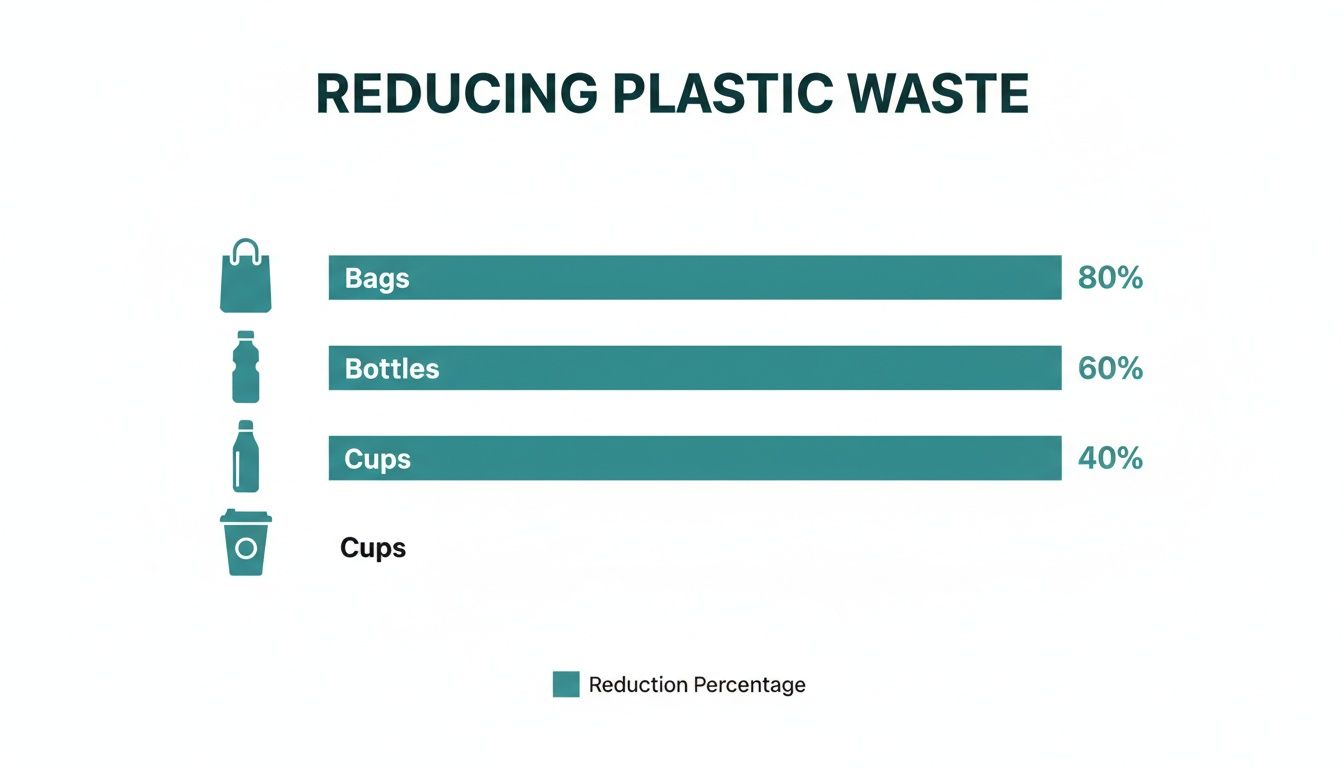
    Bar chart titled 'Reducing Plastic Waste' showing reduction percentages: Bags 80%, Bottles 60%, and Cups 40%.

    This simple chart really drives the point home: tackling the most common everyday items, especially single-use bags, gives us the biggest bang for our buck. It's an immediate and substantial way to cut down on plastic.

    Why Recycling Isn't a Magic Fix

    I used to believe that if I just tossed something in the blue bin, I'd done my part. The truth is a lot messier. Globally, a shockingly low percentage of plastic is ever actually recycled—the most common figure you'll see is less than 10%.

    The system just isn't built for the sheer volume and variety of plastics we crank out. Many items you might think are recyclable, like flimsy plastic bags or certain food containers, can actually jam up the machinery at recycling facilities, bringing the whole process to a screeching halt.

    This is a hard truth to swallow, but it’s also a liberating one. It means we can't just recycle our way out of this crisis. We have to stop the flood at its source.

    This knowledge transforms the act of picking up a piece of litter. It's no longer just a chore; it becomes a powerful statement—a vote against a broken system and a vote for a cleaner world.

    Your Action as an Antidote

    So, what can you do when faced with numbers this big? You anchor yourself in what you can actually control. You start right where you are, in your own community.

    • Focus on the "Big Four": We've said it before, but it bears repeating. Targeting plastic bags, bottles, straws, and cups is your most effective starting point. These are the low-hanging fruit of plastic pollution.
    • See Waste as a Resource: Every piece of plastic you pick up tells a story. Is it a bottle from a specific brand? A wrapper from a local store? This information is gold.
    • Share Your "Why": When people see you cleaning up, they don't just see someone picking up trash. They see someone who cares. That inspiration is contagious. It’s what turns one person with a trash bag into a community movement.

    When you internalize the scale of the problem, you realize your individual actions are not just drops in the ocean. They are ripples. Each bottle you refuse and each cleanup you join sends a message that you demand better—from companies, from policymakers, and from each other. That’s how we begin to turn off the faucet.

    The Litter Caterpillars Community Playbook

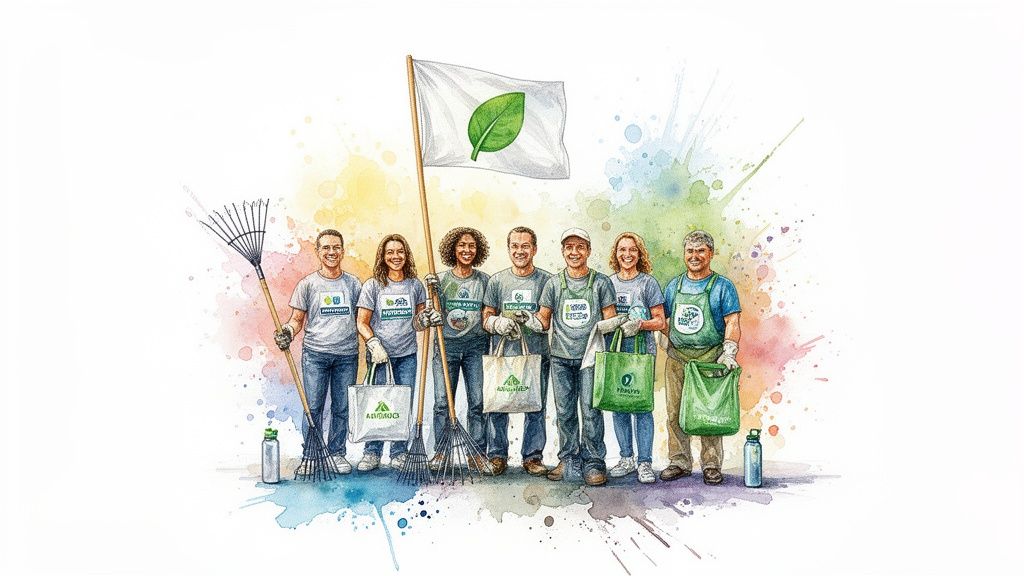
    Watercolor illustration of seven diverse volunteers holding rakes and reusable bags for an environmental clean-up.

    So, you're doing the work. You're refusing the plastic straws, carrying that reusable water bottle everywhere, and getting funny looks from cashiers when you whip out your own shopping bags. That’s awesome. But now you feel it, don't you? That pull to do something bigger.

    You want to know how you go from one person picking up trash on a lonely walk to leading a small army that shows up every weekend, ready to get their hands dirty.

    This is our playbook. It’s how Litter Caterpillars went from three people shivering under a tree in a freak hailstorm to a city-wide movement. I’m giving you the real story, the stuff that actually works, so you can turn a chore into something people are proud to be a part of.

    Laying the Groundwork for Your First Cleanup

    First rule: keep it simple. Seriously. You don’t need to file for non-profit status or build a fancy website. All you need is a place, a time, and a handful of people who care. That's it.

    Start by picking a spot that personally bugs you. You know the one. That local park with overflowing bins, the street corner on your way to work that’s always a disaster. A visible spot is gold because it sends a message to the whole neighborhood: someone cares enough to do something about this.

    Next, pick a time. We intentionally schedule our events on weekend mornings. It's a filter. The folks who show up at 10 AM on a Saturday are the givers, the builders. They aren't there to take; they’re there to contribute.

    Getting the word out doesn’t have to be complicated. Use what’s free and easy:

    • Social Media: Slap together a quick event on Facebook. Post an Instagram story with the details.
    • Neighborhood Groups: Drop a friendly, personal note in the local Nextdoor group or on a community subreddit.
    • Old-School Flyers: Never underestimate the raw power of a piece of paper taped to a telephone pole or pinned to a coffee shop bulletin board.

    Don't you dare obsess about numbers for your first event. If three people show up, you’ve won. That’s exactly how we started.

    Building a Culture People Want to Join

    Here’s the secret no one tells you: the trash is almost beside the point. Your real job is to build a culture of bravery, kindness, and connection. People don’t come back for the litter; they come back for the feeling.

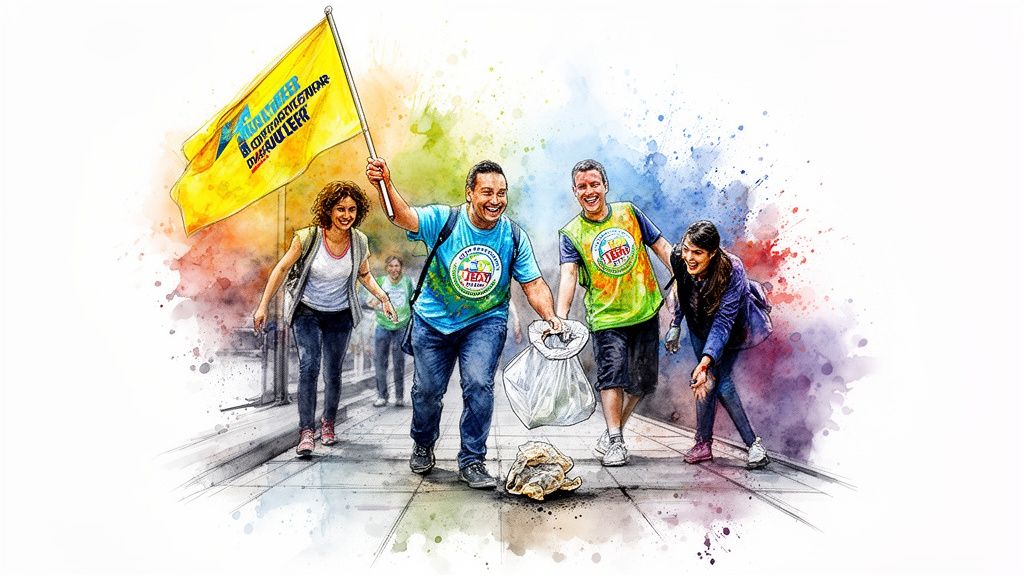
    At Litter Caterpillars, we lean into what makes us weird. We have flags. We have a theme song. I know it sounds a little silly, but think about it—sports teams and entire countries use these very things to create identity and pride. Why can’t kind people step into their power, too?

    You're not just organizing a trash pickup; you're creating a team. Give that team an identity. A story. A reason to feel proud of what you're building together.

    We also give out little badges for hitting milestones, like showing up to your fifth cleanup or braving a cleanup in the snow. It’s a tiny thing that says, “I see you. Your effort matters.” This is how you build a community, not just a volunteer group. If you want to see it in action, check if there's a volunteer trash pickup event near you and come experience it for yourself.

    The Nuts and Bolts of Cleanup Day

    Alright, let's talk gear. You need way less than you think. Don't let a lack of equipment become an excuse not to start.

    Here’s your bare-bones kit. The absolute essentials:

    1. Trash Bags: The one non-negotiable. Get the sturdy kind.
    2. Gloves: Any thick work or gardening gloves will do. This is a must for safety.
    3. A Positive Attitude: This is your most powerful tool. As the organizer, your energy sets the tone for the entire event.

    Later, as you grow, you can add things like litter grabbers, buckets, and a first-aid kit. But for now, bags and gloves are plenty. I always encourage people to bring their own if they can; it creates a sense of shared responsibility right from the start.

    On event day, get there early. Be the first one to arrive and the last to leave. Greet every single person with a real smile. Before you start, pull everyone into a quick huddle. Thank them for being there, give a one-minute rundown of the plan, and mention a couple of safety tips (e.g., “Don’t touch anything sharp”).

    Then, turn them loose. Trust your volunteers. You don’t have to micromanage them. The real magic happens when they start talking to each other, building friendships while they work. That’s the good stuff. That’s the win.

    Driving Change Beyond the Cleanup


    Picking up trash is powerful. I mean that. It’s a real, tangible, hands-on way to reclaim a piece of your community.

    But after a few cleanups, you start to feel it. That nagging sense that you're bailing out a sinking boat with a teaspoon while someone left the hose on full blast. You’re dealing with the mess, but you’re not stopping what's making the mess in the first place.

    To really make a dent in plastic pollution, you have to go bigger. You have to take the fight to the source. This is how you and your crew can start pushing for real change that actually turns off that hose. It starts with a simple shift in your thinking: stop seeing trash as just trash. Start seeing it as evidence.

    Turning Trash into Evidence

    Next time you’re out on a cleanup, I want you to try something new. It’s called a brand audit.

    Instead of just chucking everything into a bag, pause for a second. Look at what you’re finding. Who made this junk?

    Grab a clipboard or just use the notes app on your phone and start a simple tally. How many Coke bottles? How many McDonald's containers? How many Dunkin' cups? Just like that, your cleanup transforms from a community service project into a research mission.

    You're no longer just a bunch of well-meaning volunteers. You're citizen scientists, gathering cold, hard proof of who is trashing your streets. This data is your new superpower. It’s the concrete evidence you can slap on the table in front of local businesses and politicians to demand they do something about it.

    The scale of this is insane. We know that since the 1950s, a mind-boggling 8.3 billion metric tons of plastic have been created. A whopping 79% of it is now clogging up landfills or choking our environment. Your brand audit creates a hyperlocal snapshot of this global disaster.

    From Data to Dialogue

    Once you have that data, you’re not just showing up with a complaint. You’re showing up with a story backed by facts. This is where you can start making things happen, right in your own backyard.

    Look at the businesses behind the trash you're collecting. If you're constantly picking up coffee cups from that one cafe down the street, your data is the perfect conversation starter. It’s your ticket in the door.

    I want you to walk in and say, "Hey, we're a local cleanup group and we love your coffee! We just wanted to let you know we're finding tons of your cups in the park. Have you ever thought about offering a small discount for people who bring their own mugs?"

    It's not about pointing fingers or getting aggressive. It's about being a helpful neighbor. You're offering a solution, not just bitching about a problem. You’d be shocked how many small business owners actually want to do the right thing but are just too swamped to think about it.

    This approach builds bridges instead of burning them. A lot of businesses want to be seen as good community partners. By talking to them like a human, you can check out their options for more sustainable practices and see how your group might even help them through different corporate social responsibility programs.

    Taking Your Voice to City Hall

    Sometimes, the problem is bigger than one shop. Maybe there aren't enough public recycling bins in a busy area, or the city's waste collection is a joke. This is when you take your data and your story to the next level: your local government.

    Going to a city council meeting can sound intimidating, but trust me, you don’t need to be a slick lobbyist. You are an expert on your own neighborhood. Your real-world, on-the-ground experience is worth more than any fancy PowerPoint presentation.

    Here’s how you get them to listen:

    • Tell Your Story: Keep it short, personal, and to the point. Start with who you are and why you give a damn. "My name is Sarah, I live on Elm Street, and every weekend my friends and I pick up trash at the park."
    • Show Them the Data: This is where your brand audit becomes your weapon. "In the last month alone, we picked up over 500 single-use plastic bottles from that park. A couple of recycling bins would make a huge difference."
    • Give Them a Clear Ask: Don’t just complain. Give them a specific, doable solution. "We're here tonight to ask the council to install two new recycling bins near the park entrance."

    This is how you go from just cleaning up the symptoms to fixing the disease. You use your voice, your experience, and your data to demand a cleaner world, starting right where you live.

    Your Toughest Questions, Answered

    After every cleanup, standing there with bags of trash, surrounded by people who chose to show up, the same questions always surface. They come from a place of frustration, but also from a deep well of hope. I hear you. I've asked them all myself.

    Let’s get into the real talk. No fluff, just the straight answers I've learned from being out there, week after week, in the rain, sun, and snow.

    Is It Even Worth It If Big Companies Don't Change?

    I hear this one all the time. It feels like you're trying to mop up a flood while someone else has the firehose cranked to full blast. And you know what? You're not wrong to feel that way. Corporate pollution is the elephant in the room.

    But here’s the thing we see on the ground: it's not an "either/or" fight. Thinking that way is a trap, a clever illusion that leads to doing nothing.

    Your actions—showing up, cleaning a park, talking to your neighbors—create a visible, undeniable demand for change. You're showing your local businesses and city council members what kind of community you're willing to fight for. Your "small" actions create the social pressure that makes it impossible for them to ignore the problem. You are the force that makes the big players uncomfortable enough to act.

    What About the Health Impacts on People?

    This question gets to the very core of why this work matters. This isn't just about making a park look pretty. It's a public health crisis hiding in plain sight.

    The danger starts way before a plastic bottle ever gets tossed on the ground. The communities living near plastic production plants often bear the worst of the health consequences. And the numbers are just staggering. It's predicted that in 2025 alone, the world will lose 5.6 million years of healthy life due to plastic pollution. By 2040, that number is expected to jump by 75% to 9.8 million years. If you want to dig deeper, this report on plastic pollution's health impacts lays it all out.

    When you join a cleanup, you're not just picking up litter. You are fighting for the health of your family, your neighbors, and people in communities you'll never meet. It's a profound act of care.

    Am I a Hypocrite if I'm Not Perfectly Zero-Waste?

    No. Full stop. Let me say it again: absolutely not.

    Perfection is a myth. Chasing it is the fastest way to burn out and give up. This isn't a purity contest; it's about showing up and making progress.

    I still use plastic. We all do. We live in the modern world. The goal isn't to become a plastic-free saint—that's basically impossible and will drive you crazy. The goal is to be more mindful, to make a better choice when you can, and to not beat yourself up when you can't.

    Your power isn't in being perfect. It's in being persistent. It's in the grit of showing up when you don't feel like it. That consistency is a thousand times more powerful than one person's flawless, Instagram-perfect zero-waste life.

    Forgot your reusable bags? It happens. The real win is building the habit, not getting a perfect score every single time.

    How Do I Stay Motivated When It Feels Hopeless?

    Oh, I know this feeling. It can be soul-crushing. You spend a Saturday making a place beautiful, and two weeks later, it’s trashed again. Some days, it feels like you're losing.

    The antidote isn't more optimism. It's people.

    You cannot do this alone. Don't even try. The secret is to find your crew. When you're standing shoulder-to-shoulder with someone else who cares, the weight is lighter. You can laugh together about the weird stuff you find. You can share the satisfaction of a full trash bag.

    Your community will carry you on the hard days. And you’ll carry them on theirs. That shared struggle, that human connection—that’s the fuel. That's how we keep going.


    At Litter Caterpillars, we believe service, friendship, and a little bit of bravery can transform you and your city. If you're ready to find your people and get in the fight, we're ready for you.

    Find your community and your purpose with us at https://www.littercaterpillars.com.

  • Environmental Stewardship Programs: How to Transform Your Community Today

    Environmental Stewardship Programs: How to Transform Your Community Today

    You might think environmental stewardship programs are just about picking up trash. But you’d be missing the best part. They’re really about personal transformation and community building. I’m telling you, these programs take the simple act of caring for your neighborhood and turn it into a journey. It’s a journey that can change your whole outlook, introduce you to lifelong friends, and build a stronger, tougher you.

    The Day I Declared War On My Own Clutter

    Let me tell you a story. For the longest time, my apartment was a perfect reflection of my life—cluttered, chaotic, completely weighed down by the past. Every single thing held a story I couldn't seem to let go of. Four-year-old jam in the back of the fridge. Snacks from a health kick I’d already abandoned. Each item felt like it weighed 500 pounds, a heavy anchor holding me in place.

    Things finally hit a breaking point after a really tough breakup. I knew I needed a radical change. I decided I was going to build a life surrounded by givers, not takers. It was time to finally stare down the things I was most afraid of: consistency, cleanliness, and bravery.

    From Inner Chaos to Outer Action

    That’s when it hit me. The battle wasn't just inside my own four walls; it was happening right outside my front door. All over my neighborhood. The same feelings of neglect and being completely overwhelmed were visible on the streets, in the overflowing bins and forgotten lots. This realization sparked an idea, something that would grow into something much bigger than I ever imagined: Litter Caterpillars.

    It all started with a simple truth I stumbled upon by accident.

    Cleaning up other people's messes is way easier than cleaning up your own. It creates a strange, new kind of fun, and facing a little adversity together—like a freak hailstorm—just makes the story that much better.

    This pivot, this jump from an internal struggle to external action, changed everything for me. My focus shifted away from my own clutter and onto a shared mission. It became less about what was wrong with me and more about what we could all make right, together.

    The Unexpected Start of a Movement

    Our very first cleanup was just three of us. We were ready to go, but Chicago, of course, had other plans. Out of nowhere, a bizarre spring hailstorm erupted. It forced us to huddle under a tree, shivering, as a string of Ubers canceled on us one by one. But in that moment of shared misery, something clicked. We weren't just picking up trash. We were building resilience. Forging a bond.

    That day taught me that environmental stewardship isn't a chore. It’s a transformative act that can literally rewire your brain. It proves that you can show up, face down discomfort, and create a visible, positive impact with your own two hands. This is the foundation of all effective environmental stewardship programs: they start with a simple decision to act, turning personal frustration into collective power and creating friendships in the most unexpected places.

    What Are Environmental Stewardship Programs, Really?

    Forget the dry, academic definitions. Let's get real.

    Imagine our planet is a huge, beautiful, and kinda neglected community garden. An environmental stewardship program is just you deciding to roll up your sleeves and start weeding your patch. It’s that simple, powerful act of taking responsibility for the world right outside your door.

    Some of these programs are massive, like global initiatives steering billions of dollars to protect entire ecosystems. Others? As pure and simple as three friends meeting up on a Saturday morning to pick up trash on their street. There's no single "right" way to do it.

    From Global Giants to Neighborhood Heroes

    The scale can be wild. On one end, you have behemoths like the World Bank's Global Program on Sustainability. In fiscal year 2023 alone, they influenced over $4.2 billion in investments for sustainable land use, expanding their work to 26 countries. This is stewardship at the highest level—shaping national policies, directing huge sums of money.

    But here’s the secret: that global impact starts with the exact same spark we felt huddled under a tree in a hailstorm. It's the decision to act. You don’t need a billion-dollar budget. You just need to care enough to show up.

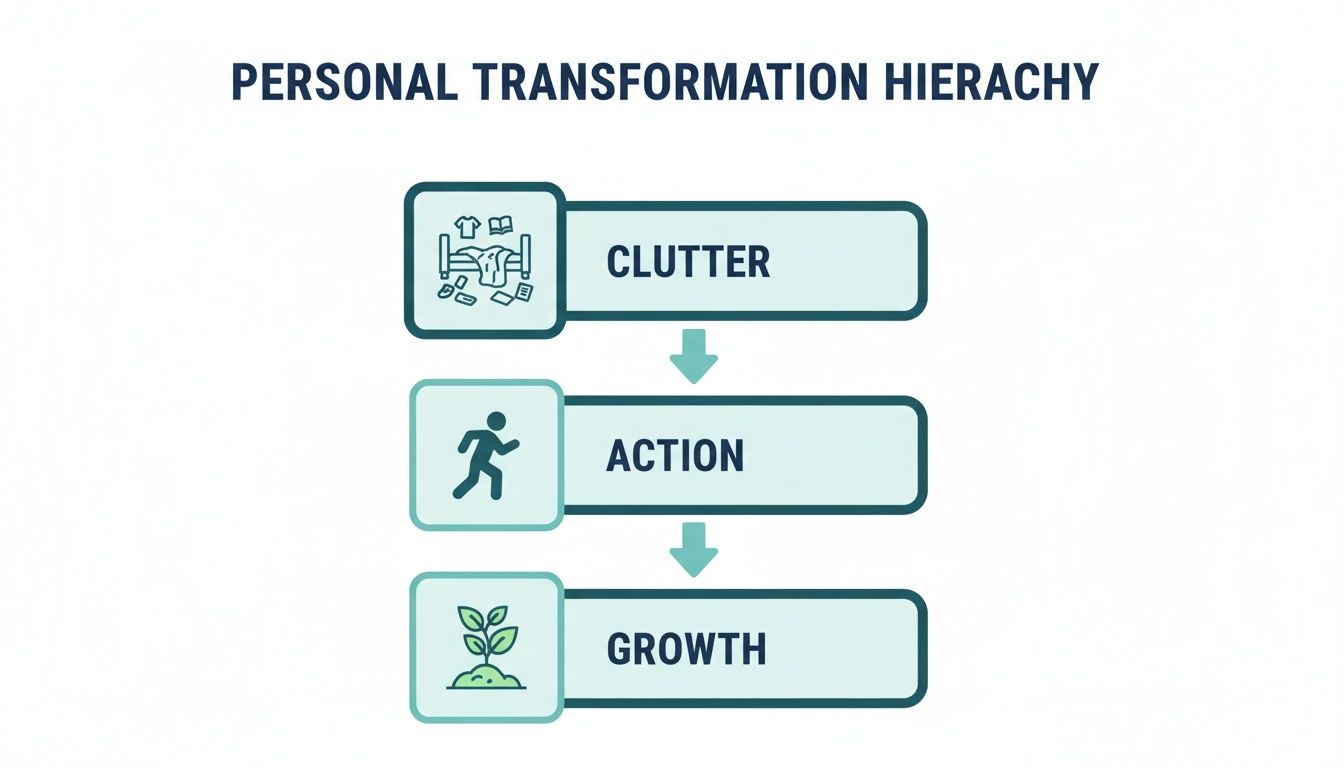
    The journey from feeling overwhelmed by a mess to taking real action is a powerful one. It’s a simple but profound path from chaos to growth that lies at the very heart of stewardship. I’ve lived it.

    Hierarchy diagram showing personal transformation: Clutter leads to Action, which leads to Growth.

    This process—moving from clutter to action and finally to growth—is exactly what stewardship is all about. It changes our environment. And it changes us, too.

    The Different Flavors of Stewardship

    Think of these programs like different kinds of teams. They all have their own playbook and goals, but we're all playing the same game: caring for our shared home.

    To give you a better sense of the landscape, here's a quick look at the different ways people like you and me organize to care for our environment, from global organizations to neighborhood groups.

    Program Type Who Runs It Example Best For
    Government-Led City, state, or national environmental agencies. A city parks department's "Adopt-a-Park" program. Structured, large-scale projects with official backing.
    Corporate-Sponsored Companies, as part of their CSR (Corporate Social Responsibility). An annual company-wide volunteer day at a local beach. Mobilizing lots of people for a single, high-impact event.
    Nonprofit/NGO Mission-driven 501(c)(3) organizations. The Ocean Conservancy or The Nature Conservancy. Focused, long-term campaigns on specific issues (e.g., ocean plastic).
    Grassroots Community Passionate local volunteers (like us!). Litter Caterpillars, a neighborhood garden club. Hyper-local, flexible action built on community passion.

    Each model has its own strengths, and there’s a place for everyone.

    You might start by joining a city-wide cleanup and then realize you want to create something more personal, more consistent, right in your own neighborhood. That’s the beauty of it.

    Stewardship isn't an academic term—it’s a choice you make. A community you build. A power you claim for yourself.

    The Unexpected Rewards of Showing Up

    When you first sign up for an environmental stewardship program, you probably think you know what you're getting into. You show up. You pick up some bottles and wrappers. You go home. But let me tell you, you walk away with so much more than a cleaner park. You walk away changed.

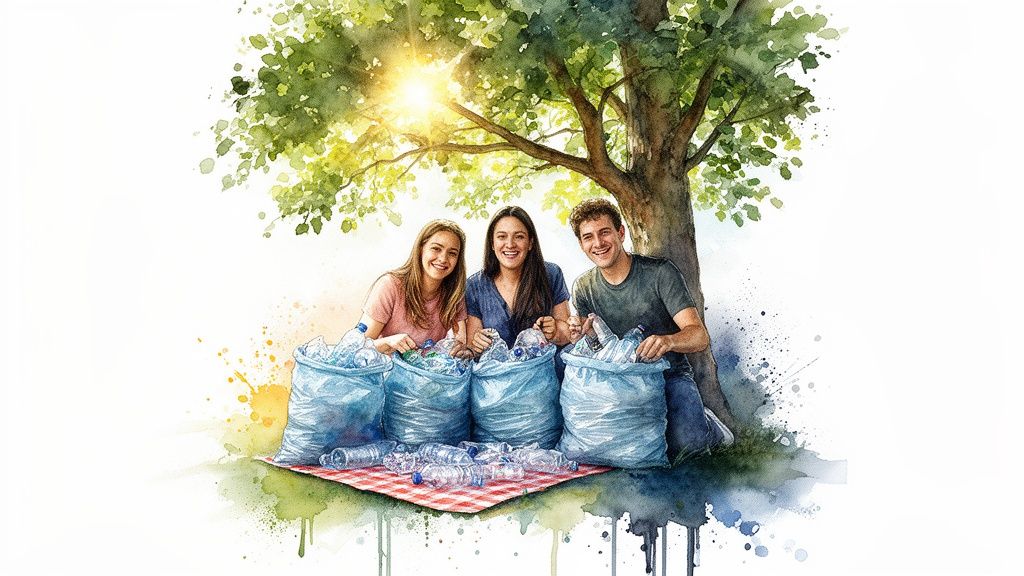
    Three smiling young people collect plastic bottles for recycling under a tree in a watercolor style.

    It’s about turning a chore into a shared mission. It's like the 'Tom Sawyer effect.' Remember that? When Tom was stuck painting a fence, he didn't complain. No, he made it seem like the most exciting, exclusive activity in the world. Pretty soon his friends were paying him for the privilege of helping out.

    That's the magic. That's what happens when you turn individual work into a collective goal. Suddenly, sorting recycling or clearing an overgrown lot isn't a burden; it's an adventure.

    From Strangers to a Tight-Knit Crew

    I’ve seen the most incredible friendships forged in the middle of a cleanup. You're working side-by-side, united by a simple, tangible purpose. The usual social barriers? They just melt away.

    You bond over the weirdest things you find. You celebrate filling another bag. And you get to know people on a level that just doesn't happen at a bar or a networking event. This shared effort creates a unique kind of connection, built on action rather than just words.

    It’s in facing a little adversity—a sudden downpour, a scorching summer day—that the real camaraderie is built. Those are the moments that become stories, the shared experiences that turn a group of volunteers into a team.

    You build a unique kind of toughness together. When you’ve survived a surprise Chicago blizzard just to clean a small patch of land, you know you can count on the people shivering next to you.

    More Than Just a Clean Street

    The benefits go far deeper than just community bonds. There's a powerful mental shift that happens when you're outside, working with your hands. Science tells us that spending time in nature reduces stress and improves mood, and I see it happen in real-time every single weekend.

    The mix of sunlight, fresh air, and physical activity is a potent remedy for feeling stuck or powerless. You’re not just passively consuming nature; you are actively healing it.

    Here’s what I’ve personally noticed:

    • A Shift from Powerless to Powerful: Seeing a street go from trash-strewn to pristine in just a couple of hours is incredibly satisfying. It’s tangible proof that your actions matter. It fights those feelings of helplessness about bigger environmental issues.
    • A Boost in Confidence: Consistently showing up and doing something hard builds self-respect. You prove to yourself that you are someone who follows through, someone who contributes.
    • A Deeper Connection to Your City: When you’ve cleaned a place, you feel a sense of ownership and pride. It's no longer just a random block; it’s your block.

    This is the real reward of getting involved in environmental stewardship programs. You might start by exploring the best ways for cleaning up trash in your community, but you end up discovering a new version of yourself—stronger, more connected, and filled with a quiet pride that can only come from making a real difference.

    You don’t just clean a park. You reclaim a piece of your world and a piece of yourself.

    How We Built a Movement From Nothing

    Let me tell you about one of our proudest moments—a story that gets right to the heart of who we are. In Englewood, there was this abandoned lot. Overflowing with trash. It was a total eyesore, the kind of place you’d cross the street to avoid. But we didn't see neglect. We saw potential.

    After months of sheer persistence—I’m talking endless calls, meetings, paperwork—we won that lot at a city auction. It was a massive win for us. Now, we're in the middle of turning that forgotten space into 'Caterpillar Park,' a green oasis built by and for the community.

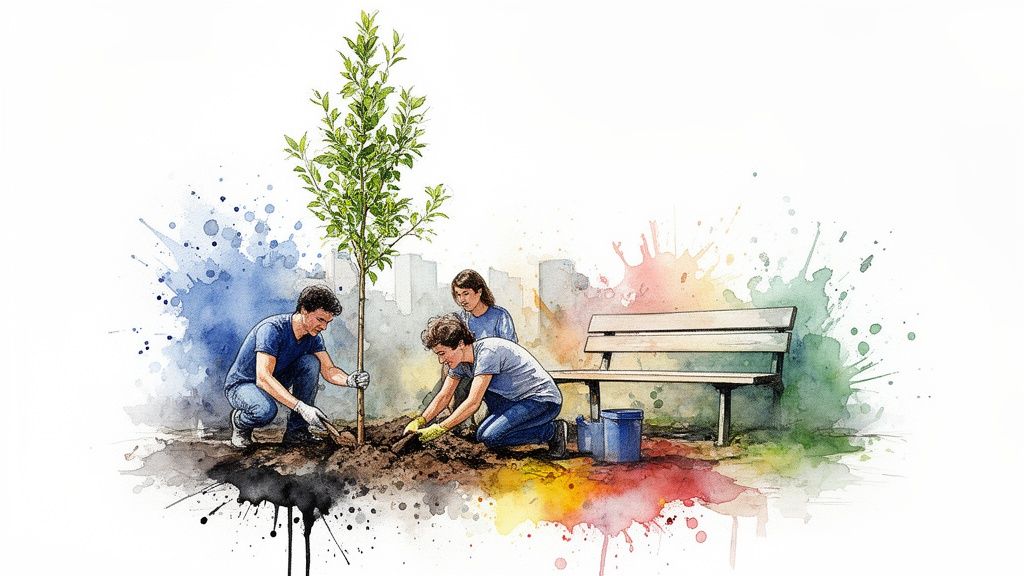
    Watercolor illustration of three people planting a tree in a park, symbolizing environmental stewardship.

    This isn't just one story; it's a whole collection of them, full of highs and lows. It’s the story of how we built a tough, impactful movement from absolutely nothing.

    Living Our Values Out Loud

    Every decision we make, every cleanup we host, is guided by a few core values. These aren't just pretty words on a website. They’re the compass that keeps us pointed in the right direction, especially when things get hard.

    Our values are simple but they're everything to me:

    • Bravery: Showing up when it’s cold, wet, or just plain miserable. It’s cleaning a highway during a bike race or tackling a lot that’s been ignored for decades.
    • Kindness: Always looking out for each other. Our volunteer-first philosophy means we protect your energy and well-being above all else. That’s our golden rule.
    • Unity: Bringing people together from every corner of the city. We know the mission is stronger when everyone has a place in it.

    These principles shape our environmental stewardship programs and build a culture where people don't just volunteer—they belong. I've learned that building a movement is less about logistics and more about creating a shared identity rooted in real, actionable values.

    The Power of Identity and Pride

    Ever notice how sports teams have flags, songs, and mascots? It’s all about building pride. A sense of shared purpose. We thought, why can't service have that same energy? Kind people deserve to feel powerful, too.

    So, we gave ourselves an identity. We fly our own flags proudly at every single event. We even have an official theme song that captures our spirit of joyful grit.

    Pride is a crucial, natural emotion. When you give people a banner to rally under and a song to sing, you turn a simple act of service into a powerful statement. You make it feel like you're part of something much bigger than yourself.

    We also created badges for our volunteers. These aren't just little trinkets; they're symbols of commitment, marking milestones. They celebrate the consistency and bravery it takes to show up week after week, rain or shine, across all 50 Chicago wards.

    Creating this strong identity was a turning point. It transformed our cleanups from quiet acts of service into vibrant, inspiring events that pull people in. It made volunteering feel less like a duty and more like joining a team you’re damn proud of.

    A Blueprint for Your Own Movement

    This story isn't just about us. I'm sharing it because it's a blueprint. It's proof that you don't need a huge budget or some formal organization to start making a real difference.

    You just need a clear 'why' and the guts to start. You have to believe in the power of showing up, even when you're the only one there. Our journey, my journey, from a few friends shivering under a tree to a city-wide movement was built one small, consistent step at a time.

    It started with seeing potential where others only saw trash. It grew by creating a culture of bravery and kindness. And it became a movement by giving people a reason to feel proud of the work they were doing. This is how you build something that not only cleans a city but also changes lives—including your own.

    Your Guide to Starting a Stewardship Movement

    Got that fire in your belly? You don’t need a fancy nonprofit status or a truckload of cash to actually change things. All you need is a couple of friends and a rock-solid answer to one simple question: Why am I doing this?

    This is your no-fluff guide to getting your own environmental stewardship thing off the ground. Forget the complicated fundraising plans for now. You start by just doing the work.

    Getting Into the Arena

    First things first: pick your battlefield. Is it that local park where the trash cans are always puking out garbage? That forgotten, weed-choked lot on your block? Pick a spot that means something to you, a place where winning a small battle will feel like winning a war.

    Next, get your gear. Seriously. All you need to start are some tough trash bags and a good pair of gloves for everybody. Don't get hung up on the details. The whole point is to tear down the excuses and just begin.

    Then, pick a time and carve it in stone. We do our cleanups on weekend mornings. That's not an accident. It's a filter. It selects for a certain type of person: the giver. These are the folks who will pick service over sleeping in, and that kind of heart is the foundation you build a real community on.

    Finding Your People

    Getting the right kind of volunteers is everything. You're not just looking for warm bodies to fill bags; you’re building an army. You want the people who show up for the mission, not just a selfie for their Instagram.

    Here’s how I built our crew of givers:

    • Be a Rock: Show up. Same time, same place, every single week. When people see you out there, sweating and committed, they start to believe. Then they join.
    • Keep It Simple: Focus on one thing: the work. Don't bury your first events under a pile of sign-up sheets or long, boring speeches. Just say hi, hand them a bag, and get to it.
    • Make It Fun: Your energy sets the tone. Make it a good time, high-five over a particularly gross find, and let people connect. Friendships will bloom in the dirt.

    Our entire volunteer-first philosophy is built on this. We guard your energy and your time because we know that’s the most precious thing we have. If you need some more ideas, check out our guide on how to organize an effective volunteer trash pickup. It's packed with simple, straight-to-the-point tips.

    Get ready for a hard truth: this won't always be easy. Some days, only two people will show up. Some days, it'll pour rain. You have to be relentless. This isn't about one heroic cleanup; it's about building something that doesn't quit.

    The Bigger Picture

    It’s easy to feel defeated. I get it. You look at the global picture and it's bleak. In 2022, the world lost 5.8 million hectares of forest. That's an area bigger than Croatia, and farming is behind almost 90% of it. We've got 41 out of 42 major climate indicators flashing red, nowhere near our goals. It can feel like we’re losing.

    But that’s exactly why what you’re doing matters so damn much.

    Every bag of trash you pull out of a ditch is an act of defiance. It’s a middle finger to apathy. It's in these moments—getting your hands dirty, facing a little bit of discomfort together—that we build the grit and the bond we need to even think about bigger change. Your small movement is a shockwave. It proves that change starts right where you stand.

    Finding Your People and Growing Your Impact

    A movement is just a good idea until people start showing up. But where do you find them? And maybe more importantly, how do you convince them to stick around? This is the human side of environmental stewardship programs, and if I'm being honest, it's the only part that really matters. You can have the best plan in the world, but without your people, you’re just one person picking up trash by yourself.

    Think of it like tending a garden. You're not just yanking out weeds; you're cultivating a whole ecosystem. We use simple stuff like Meetup and Instagram to spread the word. The secret isn't some slick marketing campaign—it's showing the real, unfiltered grit and joy of what we do. People are starving for authenticity. They want to see the smiling, muddy faces and know they’re joining something genuine.

    Building a Crew That Lasts

    Getting people to show up once is just the first step. Getting them to come back is where you build real power. Why do people stay? It's not for the free trash bags, I can tell you that. They stay because they feel like they belong.

    This is where communication becomes our secret weapon. We run open group chats where we make plans, share stupid jokes, and build friendships that go way beyond cleanup day. It turns a weekend chore into a real part of your social life. That constant, easy connection is the glue holding our community together. If you're stuck on this, our team put together a no-nonsense guide on how to find volunteers for your cleanup that cuts right to the chase.

    Measuring What Actually Matters

    So, how do you know if you're winning? Forget just counting the pounds of trash you collect. That’s a decent start, but it misses the entire point. The real signs of a healthy movement are human.

    We measure our impact by the number of volunteers who come back again and again. I measure it by the laughter I hear during a tough cleanup. We measure it in the visible change of a neighborhood, week after week, because a dedicated crew just refuses to give up on it.

    This is where the real magic happens. A recent UN report on the Sustainable Development Goals pointed out something huge: while global progress is stalling, small, focused stewardship programs driven by local passion are making incredible waves. Public trust in ethical stewardship is on the rise, hitting 45%, because people are seeing the results with their own eyes. When you transform your own block, it's a small-scale version of how bigger programs change policy on a national level. You can read the full 2023 SDG report from UN DESA to see how the dots connect.

    The goal isn't just to clean a street. It's to build a culture so positive and welcoming that people don’t just want to join—they feel like they've finally found their people. That's how you build something that lasts.

    Your Questions Answered

    Got questions? Good. It means you’re really thinking about this. About taking that first brave step. Let's get into some of the common worries I hear from people who are right where you are now, ready to join or start one of these environmental stewardship programs.

    What If I Am Not Physically Fit Enough For a Cleanup?

    This is a totally fair question, but let me put your mind at ease. Any program worth its salt is inclusive. At Litter Caterpillars, our first and most important rule is always: "go at your own pace."

    You don’t have to be a superhero. Seriously. There are so many ways you can be part of the mission. Some of our volunteers focus on a small, manageable patch. Others help by organizing supplies, taking incredible photos, or just being there to cheer everyone on. The real magic is in the collective effort, not individual heroics. Your presence alone is a huge contribution.

    How Do I Find a Good Group Near Me?

    Start by thinking local. Platforms like Meetup.com are a great place to look—that’s how a ton of our own volunteers find us. You can also search social media for hashtags like #[YourCity]Cleanup or #[YourNeighborhood]Volunteers.

    Keep an eye out for a few signs of a healthy group:

    • They show up: A consistent schedule shows they’re serious, not just a flash in the pan.
    • They communicate: It should be easy for you to find out when and where to be.
    • They're volunteer-first: The focus is on taking care of their people, not just fundraising or getting good press.

    Don't be afraid to try out a few different crews. You'll know when you find the right one.

    The right group won't feel like an obligation; it will feel like coming home. You'll know it when you find it because the focus will be on the shared mission and the friendships you build along the way.

    I Want to Start a Group, But I'm Worried About Safety.

    That concern is not just valid—it's the most important thing to get right. Safety is, and always will be, priority number one for me. No exceptions.

    For your first few events, pick a public spot with plenty of visibility. Always have the essential gear on hand: good gloves, bright safety vests, and a solid first-aid kit. Before every single cleanup, gather everyone for a quick safety huddle. Remind people to watch for traffic, steer clear of hazardous materials, and stick together. The goal is to build a culture where everyone looks out for everyone else.

    What’s the Most Important Thing for Making a New Program Successful?

    Consistency. Hands down, it’s consistency.

    It's not about that one massive cleanup that gets all the attention. It’s about you showing up, week after week, even when it’s raining, even when it’s cold, and even when only a few people make it out. That's what builds trust in the community. That's what creates real momentum. Most importantly, it forges a habit of service in you and your core team. When people know you’ll be there, rain or shine, they will eventually join you.


    Ready to find your people and start making a difference? Join Litter Caterpillars at our next cleanup. We’re out there every weekend, building friendships, and making Chicago a little brighter, one piece of trash at a time. Find our next event at https://www.littercaterpillars.com.

  • What Is Environmental Stewardship: A Practical Guide to Caring for Our Planet

    What Is Environmental Stewardship: A Practical Guide to Caring for Our Planet

    Let me tell you what environmental stewardship really is. It’s about taking care of this place we all call home. It’s a simple, yet wildly powerful idea: you and I have a personal responsibility to look after our natural world. We do this through smart, sustainable choices, ensuring this planet stays healthy and vibrant for the people who come after us.

    What Is Environmental Stewardship, Really?

    I used to hear the term "environmental stewardship" and, I'll be honest, my mind would conjure images of scientists in sterile lab coats or maybe activists chaining themselves to ancient trees. It felt… distant. Definitely not for an everyday person like me.

    But the real meaning hits much closer to home. Imagine you’re a good neighbor. Now, imagine your neighborhood is the entire planet. See? It’s not about grand, impossible gestures that feel out of reach. It starts with a single, quiet decision you make to take ownership of your small corner of the world.

    This feeling of ownership can start anywhere. Maybe for you, it's finally decluttering that one chaotic drawer in your kitchen or figuring out, once and for all, what actually goes in the blue recycling bin. For me, it started with cleaning up my own wildly messy apartment. That small act of bringing order to my personal space somehow, almost magically, spilled out onto the streets of Chicago.

    Stewardship is a mindset that grows. It’s a seed. It starts small and transforms you from the inside out.

    The Three Levels of Stewardship

    This journey of care isn't just one big, monolithic thing; it unfolds in layers, like an onion. It starts with you, expands to your community, and ultimately impacts the entire planet.

    As you can see, huge planetary change isn't a top-down mandate. It’s built on a foundation of your choices and our collective community action. It all starts with you.

    This mindset isn’t about following a rigid set of rules someone else made up. I want you to ask yourself one simple question in everything you do: "Am I leaving this place better than I found it?"

    This applies to everything—from a picnic spot in Lincoln Park to the global climate crisis. Your answer to that question, followed by your action, is the very soul of environmental stewardship.

    Stewardship is the active expression of responsibility. It’s turning that passive, nagging feeling of “someone should do something” into the active decision, “I will do something.”

    This active decision is where the magic happens. It's where you discover that strange, surprising joy that comes from service. For a lot of us, the simple act of cleaning up trash is the perfect first step. It's visible. It's immediate. It connects you directly to your environment, showing you the real, tangible difference one person can make.

    Finding Purpose in a Hailstorm

    My journey into this whole environmental stewardship thing didn’t kick off with some grand, planet-saving vision. It actually started with my messy apartment. My life was chaotic, and my living space was a perfect mirror—every forgotten takeout container and pile of clothes a monument to my own indecision.

    It took a pretty brutal breakup to finally jolt me awake. I looked at the life I had and knew I had to build something new, something centered around giving instead of just taking. It was time for me to finally face the things that terrified me: cleanliness, consistency, and just showing up for something bigger than myself.

    So, I started small. I decided to try cleaning up a public space.

    The First Cleanup

    Our very first cleanup was… not glamorous. At all. There were only three of us. We met on a spring day in Chicago that decided to turn on us, unleashing a freak hailstorm that felt more like a blizzard than a spring shower. The sky went dark. Ice pellets hammered down on us.

    We huddled under a tree, totally soaked, shivering, watching as every single Uber we called canceled on us. In that miserable, freezing moment, something just clicked. An epiphany hit me as hard as the hail.

    Cleaning up someone else’s mess is surprisingly more joyful than facing your own. It pulls you out of your head and plugs you into a tangible, immediate purpose.

    That shared struggle forged an unbreakable bond between the three of us. It gave our little mission a soul. We weren’t just picking up trash anymore; we were weathering a storm together, both literally and figuratively.

    From Personal Chaos to Collective Action

    That hailstorm taught me what environmental stewardship really feels like. It’s not about being perfect or having all the answers. It’s about showing up, especially when it’s hard, and finding a weird kind of fun in the suffering. It adds a little flavor to the story, you know?

    That one experience completely shifted my perspective. Creating order in a public park was a direct extension of the order I was trying to create in my own life. It proved that my own personal transformation could spark change in the community. By facing my own fears—of mess, of inconsistency—I stumbled into a mission that was more rewarding than I ever could have imagined.

    Your journey can start the same way. It doesn’t begin with a global plan. It begins with the simple, brave decision to clean up the space right in front of you.

    How One Small Act Can Ignite a Movement

    Do you ever wonder if picking up one piece of trash actually makes a difference? I’m here to tell you it’s the only thing that ever has. That one small, repeated act is the seed of every great movement. It’s the spark. The tiny little flame that ignites a wildfire of change.

    Three smiling people in the rain clean up litter with rakes and trash bags under a tree.

    For three years, we've shown up every single week at Litter Caterpillars. Every. Single. Week. We’ve picked up trash through Chicago blizzards, suffocating heatwaves, and pouring rain. That kind of consistency creates a visible ripple effect, and you can feel it spreading through a neighborhood. It shows people someone cares, which gives them permission to care, too.

    The Tom Sawyer Effect

    You know the story of Tom Sawyer, right? It’s a simple but powerful analogy from Mark Twain's classic. When Tom had to whitewash a fence as punishment, he didn’t mope. He attacked the chore with so much infectious joy and pride that his friends started begging—they even paid him—for a chance to help.

    That’s exactly what we do. We bring that same energy to our cleanups. We treat the work like an adventure, not a chore.

    When you treat service like a privilege instead of a punishment, people can't help but want to join in. Joy is contagious, and a shared purpose is one of the most powerful forces on Earth.

    This is the heart of our approach to environmental stewardship. We aren't just cleaning streets; we're building a community around the joyful act of giving back. My whole mission is to make service so appealing that it becomes irresistible.

    Building a Team for Change

    We use bright yellow flags, a theme song, and team badges. It’s not just me being silly—it’s about building a real identity around service. When you feel like you belong to something bigger than yourself, when you're part of a team, the work completely transforms. It stops being about picking up litter and becomes a shared mission. A quest.

    This isn’t just about making our streets look better for a day. It’s about so much more:

    • Reclaiming our public spaces and sending a loud, clear message that these places are loved and protected.
    • Forging real friendships built on shared effort and a common goal, not just casual chit-chat.
    • Proving that a handful of determined people can absolutely spark a city-wide transformation.

    Every piece of trash you pick up is a vote for the kind of world you want to live in. It's a small act of defiance against apathy and a testament to the power of just showing up. One person, one bag, one block at a time—that's how we change the world.

    A Global Chorus Demanding Change

    When we're out on Chicago’s streets, picking up litter one piece at a time, it's easy to feel small. You might look at the bag in your hand and wonder if you're just a drop in an ocean of problems. I'm here to tell you that your small act is actually a local verse in a massive global song—a chorus of voices demanding a better world.

    If you feel that deep, unshakable desire for a healthier planet, you are not alone. You are part of an overwhelming, powerful majority.

    A group of cheerful volunteers cleans up litter, holding a flag and trash bags, in a vibrant watercolor style.

    A Unified Global Voice

    Let's be real, sometimes it can feel like apathy or greed are winning. But the data tells a very different, much more hopeful story. People everywhere are waking up.

    A groundbreaking study, the Global Green Attitudes Survey, found something stunning: an incredible 84% of people worldwide would choose stronger environmental protections, even if it meant slower economic growth. Think about that. This isn't just a sentiment in wealthy countries. The passion for action is actually strongest in developing nations, with huge numbers of people in places like India (82%), China (79%), and Nigeria (79%) saying they're taking more personal action now than they did last year. You can read the full research about these powerful global attitudes.

    This isn't just a trend; it's a fundamental shift in human values. People are sending a clear, unambiguous message to our leaders: environmental stewardship is no longer a niche hobby for a few. It is a non-negotiable demand from the citizens of Earth.

    Your choice to act locally—whether you join a cleanup, plant a garden, or simply consume more mindfully—is an echo of this powerful, worldwide chorus. You aren’t just one person; you are a vital voice in a global movement calling for a better future.

    Your Action Is Your Voice

    This global perspective reframes everything. When you pick up that discarded coffee cup on your block, you aren’t just cleaning a sidewalk in Chicago. You are standing in solidarity with a farmer in Nigeria planting trees and a student in India choosing to recycle.

    Your actions are your vote for the future you want. They're a tangible expression of a shared human value that transcends borders, cultures, and languages. The desire to care for our home, to be a good steward, is a fundamental part of who we are.

    So, the next time you feel small, remember this global chorus. You are part of something immense. Your individual effort is what gives this global movement its power, proving that the answer to "what is environmental stewardship?" is found in the collective heartbeat of humanity demanding change.

    Stewardship from the Streets to the Boardroom

    That little decision you make to just own your space and pick up some trash? It’s not just happening on street corners anymore. The same spirit that gets us out there on a Saturday morning is finally starting to echo in the world’s biggest corporate boardrooms.

    It’s the same core idea, whether you’re cleaning a park or running a Fortune 500 company: you have to take responsibility for your impact.

    For a long time, it felt like a battle between everyday people like you and me and these giant, faceless corporations. But the tide is turning. That grassroots mindset is scaling up, and companies are finally starting to listen. This isn't just fluffy PR, either.

    The biggest companies in the world are setting real carbon targets, hiring VPs of sustainability, and even tying executive bonuses to hitting green goals. Investors are now pouring trillions of dollars into businesses that can actually prove they're serious about this stuff.

    The Proof Is in the Numbers

    The demand for corporate transparency is massive, and it’s not going away. A recent report found that an incredible 95% of the world's 250 largest companies now publish their carbon targets. On top of that, over 22,100 companies—representing half the world's market cap—are sharing their environmental data through platforms like CDP. You can see for yourself just how widespread this movement is and dig into the numbers.

    This shift isn't happening in a bubble. It lines up with the same accountability frameworks used by global groups like the United Nations to track our progress toward a healthier planet. It’s a powerful validation of the work you and I do every single weekend.

    The core principle is the same everywhere: we are all responsible for the mark we leave on this world. The spirit of stewardship connects a neighborhood cleanup directly to a corporate sustainability report.

    This link proves that what you do locally is perfectly aligned with a global movement. When a company adopts greener practices, it's following the lead set by people like you. You can learn more about how businesses are stepping up by exploring different corporate social responsibility programs that are making a real difference.

    Your time spent volunteering is part of a much bigger story—one that’s reshaping our world from the ground up.

    How to Start Your Stewardship Journey Today

    Feeling that spark? Good. Let's turn that inspiration into action, right now.

    You don't need a special degree, a bunch of free time, or any expensive gear to become an environmental steward. You just need to show up.

    This is your personal invitation. It’s your no-fluff, practical guide to getting involved with Litter Caterpillars this weekend. We host events every single Saturday and Sunday, hitting all of Chicago's 50 wards. There's always a place for you.

    What to Expect at Your First Cleanup

    Joining us is simple. I know the first step is always the hardest, but I promise it's worth it. When you come to an event, you’ll find a group of the kindest, most welcoming people you’ve ever met. We bring everything you need—gloves, bags, and trash grabbers.

    Our entire philosophy is "volunteer-first." Your safety and your happiness are my only real priorities. We're not here to hit you up for money or pressure you into anything. We’re here to build a genuine community of givers who find real joy in service.

    Showing up is the most powerful thing you can do. It’s a vote for the world you want to live in—a world where people care for their spaces and for each other.

    Our meetups are designed to let you find your own rhythm. You might be the quiet type who puts on headphones and gets in the zone. You might be the social butterfly making new friends. Both are perfect.

    This is your chance to make a visible difference right where you live, connect with some amazing people, and discover that strange, wonderful joy that comes from leaving a place better than you found it.

    You can see our upcoming events and easily sign up to volunteer for a trash pickup on our website. It’s the easiest, most rewarding decision you'll make all week. I can't wait to meet you.

    Common Questions About Getting Started

    Watercolor illustration of smiling volunteers with cleaning supplies, ready for an environmental clean-up.

    You’ve got questions, and that’s a fantastic sign. It means you're already thinking like a steward, ready to take that next step. Here are a few things people like you often ask me before jumping in.

    Do I Need Any Special Gear?

    Nope, not a thing! We live by a "volunteer-first" philosophy, which means I make sure we provide everything you need to make an impact: gloves, bags, and trash grabbers.

    Your only job is to show up with a good attitude, ready to meet some amazing people. We handle all the logistics so you can focus on the community and the pure joy of service.

    What If I Can't Make It Every Weekend?

    That is completely okay! We're here to create opportunities, not obligations.

    We show up every single weekend so you can join us whenever it fits your life—whether that’s once a week or once a season. Every single hour you put in makes a visible difference you can actually see and feel.

    The strength of our community comes from our collective consistency, not from placing heavy demands on any one person. Your presence is always a gift.

    Is Stewardship Only About Picking Up Litter?

    Picking up litter is a powerful and visible start, but trust me, it’s just the beginning. True environmental stewardship is a mindset you carry into every part of your life.

    It’s about consuming less, conserving resources, and advocating for a healthier world for everyone. Our cleanups are the gateway—the first step to building habits of service and awareness that will empower you to make a positive impact everywhere you go.


    Ready to turn inspiration into action? Join the Litter Caterpillars community and discover the joy of making a real difference, one block at a time. Find your next cleanup event here!

  • How to Start a Volunteer Trash Pickup in Your Community

    How to Start a Volunteer Trash Pickup in Your Community

    You hear “volunteer trash pickup,” and I bet you’re not picturing the highlight of your weekend. But stick with me. This is way more than tidying up a street corner. I’m talking about building a real community, finding your own grit, and taking direct, powerful action for the planet. It’s about you showing up for your neighborhood and, in a strange way, showing up for yourself.

    This is the real story behind what I do—the incredible personal shift that happens when a simple act of service turns into something that changes you.

    The Unexpected Joy of Picking Up Trash

    Three diverse volunteers smiling and happily picking up trash, putting it into black garbage bags.

    I get it. A "volunteer trash pickup" doesn't exactly scream 'fun times.' But what if I told you it could be one of the most fulfilling things you’ll ever do?

    I started Litter Caterpillars when my own life felt like a total mess. And I stumbled upon something wild: cleaning up someone else's discarded junk actually helped me sort through my own. Every bottle cap I grabbed, every plastic bag I stuffed into a sack, it felt like untangling a knot inside of me. It was like a strange, unexpected therapy session with nothing but a sidewalk and a garbage bag.

    More Than Just Cleaning Streets

    This isn't just about making your block look better, though that’s a fantastic perk. It’s about forging real connections. Building resilience. It's you and a few other people, feeling that raw, unfiltered energy of working together for a common cause.

    I’ve learned nothing builds a friendship faster than going through a little bit of hell together. Imagine this: I'm standing with two other people under a flimsy tree, shivering, as a freak Chicago hailstorm turns our very first cleanup into a chaotic blizzard. Every Uber driver cancels on us. You're soaked, you're freezing… but you're also laughing your head off.

    That moment under the tree, I realized something profound. Suffering together, even in a small way, doesn't just create a story—it creates a bond. It advances the plot of your life.

    That hailstorm didn't stop us. If anything, it lit a fire under me. It proved that showing up, especially when it’s hard, is where the real magic happens.

    Finding Yourself in Service

    This work acts like an incredible filter. It weeds out selfishness, plain and simple. When you commit to waking up on a weekend morning to serve your city, you automatically surround yourself with givers. You find people who are brave, kind, and ready to actually do something.

    This is the real story behind Litter Caterpillars and every volunteer trash pickup out there. It’s about the personal transformation that happens when a simple task becomes a powerful purpose. You might show up just wanting to clean a park, but I promise you’ll walk away having discovered a stronger, more connected version of yourself.

    It's all about you showing up for your city as the first step toward showing up for yourself.

    How to Find Your Cleanup Crew

    There’s that old saying: if you want to go fast, go alone. If you want to go far, go together. The real power of a volunteer trash pickup isn’t just about the number of bags you fill—it's about the people you fill them with. It’s like joining a team sport where your only opponent is apathy, and the whole city wins. So, how do you find your team?

    Finding a group is way easier than you might think. Places like Meetup and Instagram are basically the new town squares for communities like ours. A quick search for "trash pickup" or "community cleanup" in your area will probably pop up a few options. I'm always on there connecting with new people who share our passion for service right here in Chicago.

    Finding the Right Vibe

    Look, not every group is going to feel like home, and that’s perfectly fine. Your goal is to find one whose energy just clicks with yours. Ask yourself what you’re really looking for. A flexible schedule? A super-specific mission? Or is it just about the general energy of the people?

    For us at Litter Caterpillars, our weekend morning meetups are very intentional. They tend to attract givers and naturally filter for people who are serious about showing up. We’ve found this consistency builds more than just clean streets—it builds a reliable, supportive community. You can dive deeper into what makes a great volunteer gig in our guide on how to find volunteer work.

    This is about you finding a community where you don't just fit in, but where you actually belong.

    Tapping into a Global Movement

    Sometimes, finding your local crew starts by thinking bigger. It’s powerful to realize you’re part of a massive, worldwide wave of people taking action. Imagine millions of people, just like you, all rolling up their sleeves on the same day to tackle the trash problem—that’s the magic of World Cleanup Day. Between 2018 and 2024, more than 114 million volunteers across 211 countries picked up over 708,000 tonnes of waste. That’s an incredible scale of global unity, and you can learn more about its impact on the World Cleanup Day website.

    This global momentum is built one neighborhood at a time, by people just like you. The same energy that fuels a worldwide event is present every weekend in parks and on sidewalks across your city.

    Keep an eye out for local events tied to these larger movements, like National Public Lands Day or a local river cleanup. These are often awesome entry points for you to find the dedicated groups that are out there year-round. All it takes is showing up once to find your people.

    Gearing Up for Your First Cleanup Day

    Various items for a volunteer trash cleanup including gloves, rake, trash bag, water bottle, and first-aid kit.

    Alright, you're fired up and ready to join your first volunteer trash pickup. What do you actually need to bring? I'll give you a hint: not much. Honestly, the most important thing you can bring is yourself. Your willingness to show up and get a little dirty is the real secret weapon.

    Everything else is just about making the job easier and, more importantly, safer.

    Think of it like getting ready for a team sport. You wouldn't play soccer barefoot, right? Same idea here. It's not about you buying a bunch of expensive, high-tech tools. It’s about being smart and prepared so you can focus on the good stuff—cleaning up our neighborhoods and connecting with the awesome people doing it alongside you.

    Your Essential Cleanup Starter Kit

    Here at Litter Caterpillars, volunteer safety is everything. I say it all the time: a prepared volunteer is a happy volunteer, and happy volunteers are the ones who come back and build the movement.

    This is the go-to gear list that I swear by. It’s simple, but it gets the job done.

    Gear Item Why You Need It My Pro-Tip
    Puncture-Resistant Gloves This is your non-negotiable. It's your first line of defense against sharp stuff, germs, and just general grossness. Forget the flimsy disposable ones. You should grab a pair of thick, reusable work gloves from a hardware store. They're worth it.
    Closed-Toe Shoes Protects your feet from all the fun things you can't see hiding in the grass—broken glass, sharp metal, you name it. I find that old hiking boots or sturdy sneakers work perfectly. Comfort is key because you'll be on your feet for a bit.
    Thick Trash Bags You need bags that won't explode the second you shove a soggy pizza box or a gnarly branch inside. I'm a big fan of contractor-grade bags. They’re way tougher than your average kitchen bag and can handle heavy, sharp junk.
    A Trash Grabber (Optional) This simple tool is a lifesaver for your back and keeps you from having to touch anything… questionable. A grabber is awesome, but don't let not having one stop you from coming out. Good gloves are the real must-have.

    Beyond that, just use common sense. You should wear clothes you don’t mind getting dirty, bring a reusable water bottle to stay hydrated, and maybe some sunscreen if you're lucky enough to get a sunny day. That’s really it. You’re ready to roll.

    Getting geared up isn't a barrier to entry; it's the first step of the ritual. It’s you telling yourself, "I'm ready to make an impact today."

    This simple prep work changes everything. You’re not just picking up litter; you’re an urban explorer, a community builder, an environmental steward. Your gear is your uniform, and it shows you’re part of a team that's out here making Chicago shine.

    Organizing Your Own Volunteer Trash Pickup

    Smiling team of volunteers with a white flag pointing towards a neighborhood of homes.

    So, you feel that pull? The one that says it's time for you to lead your own volunteer trash pickup? Good. This is where the real adventure begins. It’s a lot like you being Tom Sawyer, convincing your friends that painting a fence isn't a chore, but the coolest thing they could possibly do with their Saturday. Because you genuinely believe it is.

    I'm going to walk you through exactly how to bring your own event to life, based on what I’ve learned from organizing hundreds of cleanups. It’s all about turning a simple task into a community gathering that people actually want to be a part of.

    Find Your Spot And Set The Time

    First things first, you need to go on a trash treasure hunt. Seriously. Scout out a location in your neighborhood that could use some love—a forgotten alleyway, a park that's looking a little rough, or that busy street corner that’s always overflowing.

    Got your location? Now pick a time. I’ve found that weekend mornings are magic. They attract the givers, the people who are ready to start their day with service instead of brunch. And here's the secret sauce: consistency.

    You pick a day and time and stick to it, whether it's every week or every month. This creates a rhythm, a reliable beat that people can count on. It transforms from a one-off event into a community ritual.

    You’re not just cleaning a street; you’re claiming it. You’re sending a message that this place matters and that people are willing to show up for it. This visible action creates a powerful ripple effect.

    Get The Word Out And Make It Fun

    Now you need your crew. Spreading the word is easier than you think. Post in local Facebook groups, tag your neighborhood on Instagram, or just tell your friends. Your key is to be relentlessly positive and inviting.

    But how do you keep them coming back? You make it an experience.

    • Give your group an identity. We have a flag and a theme song. It sounds a little goofy, but it builds real pride and a sense of belonging for me and everyone else.
    • Celebrate your wins. That group photo you take with all the trash bags at the end? That’s your trophy. It’s tangible proof of what you accomplished together.
    • Make it easy. You should have all the supplies ready to go. Don't make people think too hard—just let them show up and start making a difference.

    If you’re scratching your head wondering where to begin, don't worry. I put together a whole guide on how to find volunteers who are just as ready to jump in as you are.

    Embrace The Global Connection

    When you lead a volunteer trash pickup, you're joining a legacy. For 40 years, the International Coastal Cleanup (ICC) has been mobilizing everyday heroes to protect our beaches and waterways. Just last year, over 486,000 volunteers collected more than 7.4 million pounds of trash across the globe.

    Since 1986, this movement has rallied nearly 19 million people who have removed over 400 million pounds of waste. That's about 10,000 garbage trucks full. You can read the whole incredible story of this decades-long effort on the Ocean Conservancy website.

    Your local effort, no matter how small it might feel, is a part of this massive, worldwide current of change. You’re not alone; you’re leading a local chapter in a global story of hope.

    Staying Safe While Making an Impact

    Bravery is one of our core values, but so is kindness—and that starts with you being kind to yourself by staying safe. A volunteer trash pickup can throw some curveballs, from sharp objects hiding in the grass to you navigating busy Chicago streets. This isn’t just about feeling good; it's about doing good, safely.

    I want you to come back every week, full of energy and ready for the next adventure. That can only happen if you feel secure and protected. Think of safety not as a set of restrictive rules, but as the foundation that makes our brave work possible. It's the sturdy ground we stand on so we can reach higher.

    Your Safety Checklist

    Before you even touch your first piece of trash, run through this mental checklist. It becomes second nature after a while. I see our regulars do it without thinking, like a musician tuning their instrument before a show. It’s all about preparation.

    • Scan Your Area: You must always know what’s going on around you. Are you near a busy road? Is the ground uneven? A quick look around can prevent most accidents before they even have a chance to happen.
    • Work with a Buddy: The buddy system isn't just for summer camp. I insist we always work in teams, looking out for each other. It’s way more fun and infinitely safer.
    • Hydrate and Rest: Especially on those surprisingly hot Chicago days, you need to listen to your body. Take breaks when you need them. Being a hero doesn't mean ignoring your own limits.

    What Not To Touch

    This part is simple and non-negotiable. If you see something that makes you pause, even for a second, leave it. Your gut instinct is your best safety guide. We have a clear rule: when in doubt, don't touch it.

    Your goal is to remove everyday litter, not to become a hazardous waste specialist. Leave the dangerous stuff to the professionals. Your well-being is always more important than one extra piece of trash.

    Here’s a quick list of items I absolutely never let anyone touch with their bare hands—and often, we leave them for city services entirely:

    • Anything Sharp: This includes broken glass, needles, or jagged pieces of metal.
    • Medical Waste: You should report syringes or any other medical equipment but never, ever touch them.
    • Suspicious Containers: If you don't know what’s inside a container, leave it sealed. Don't play detective.
    • Heavy Objects: Don't try to be a strongman. I've seen people try. Lifting something too heavy is a quick way to injure yourself and ruin your weekend.

    Remember, my goal isn't just to clean a street; it's to build resilience and trust. And that can only happen when we all look out for one another and put our own safety first.

    The Lasting Impact of Your Efforts

    So, you’ve filled a few bags with other people's garbage. What's the big deal? Think of it like a stone you toss into a pond—the ripples just keep spreading, reaching shores you never even thought about.

    Every single piece of litter you grab is one less plastic shard for a bird to mistake for food, one less chemical-leaching wrapper poisoning our waterways. But the change goes so much deeper than that. It’s about you taking ownership of your community, a defiant act of kindness that declares, "This place matters. I matter."

    A Ripple Effect of Pride

    When people see you out there, week after week, something shifts. Visible action is contagious. I’ve seen it happen. It inspires neighbors to sweep their own sidewalks, encourages local businesses to support the cause, and sparks a powerful sense of community pride that was just waiting for a chance to ignite.

    This infographic shows just how much our focus on safety and teamwork pays off, making our cleanups not just effective, but sustainable.

    Infographic showing trash pickup safety improvements: 30% fewer incidents, 45% teamwork improvement, 25% fewer cuts.

    Drilling down on teamwork, proper gear, and hazard awareness doesn't just keep us safe; it makes every single cleanup stronger and more impactful.

    I’ve seen these small, weekly efforts create massive, lasting change right here in Chicago. It’s the story of how we won an empty lot at auction to create Caterpillar Park, turning a forgotten, trash-strewn space into a community hub. You can read more about how we approach these transformations by checking out our philosophy on cleaning up trash.

    You’re not just picking up someone else’s mess; you’re building a better world, one candy wrapper at a time. It’s an investment in the future of your city and in the collective spirit of its people.

    This local passion can absolutely scale to a planetary level. Just look at the 2025 Global Ocean Cleanup, where 1,984 volunteers across 25 countries united for 54 events. Together, they removed a staggering 47.4 tons of marine debris. These efforts, detailed in these powerful ocean cleanup marketing statistics, prove that what we do on our streets can combat global pollution.

    Your consistent effort is a beacon. It shows what’s possible when you decide to show up for each other and for the place you call home.

    Got Questions? I've Got Answers.

    Jumping into your first cleanup can bring up a few questions. That’s a good thing! It means you're thoughtful and ready to do this right.

    I get asked a lot of the same things by first-timers, so let me clear the air on the most common ones right now.

    What If I Can’t Make It Every Week?

    No problem at all. This isn't your job, and I’m not punching a time clock. We're a volunteer-first crew. That means your energy and your time are precious, and I respect that.

    The whole point is for you to show up when you can. Life is busy. I get it.

    Come when it feels good and sustainable for you. Honestly, even joining us just once a month makes a huge difference on the streets and in our community. You're part of the team, no matter what.

    Do I Need to Bring My Own Supplies?

    Usually, no. I bring the essentials for everyone: bags, gloves, and those super-handy trash grabbers. But it's always smart for you to double-check the event description just in case.

    No matter what, though, always bring these two things for yourself:

    • Closed-toe shoes are a must. They’ll protect your feet from anything unexpected.
    • Clothes you don’t mind getting dirty. Because, let's be real, you're gonna be around trash!

    Is It Safe to Join a Volunteer Trash Pickup?

    Absolutely. Safety is everything to me—it's my priority number one, always. We stick together in groups, stay aware of what's going on around us, and I have clear rules about what to pick up and what to leave for the pros.

    I’m proud that we serve every part of this city, including neighborhoods some people might shy away from. We do it by being smart, by being prepared, and by always looking out for each other. You should think of it as a safe, rewarding adventure.


    Ready to start your own adventure and make a real difference in Chicago? Join Litter Caterpillars and find your crew. Visit us at https://www.littercaterpillars.com to see our next event.

  • 7 Life-Changing Community Service Options in Chicago for 2026

    7 Life-Changing Community Service Options in Chicago for 2026

    I remember my apartment. It was a mirror of my life: cluttered, chaotic, stuck. Every old jam jar and forgotten bag of health food was a tiny monument to a past I just couldn't shake. It felt like trying to swim through molasses. Then came the messy breakup. I knew I needed a change, a real one, not just in who I dated but in who I was. I had to face the things that always felt impossible for me: being clean, being consistent, being brave.

    And that's how I started Litter Caterpillars. The first cleanup? A disaster. Just three of us, caught in a freak Chicago hailstorm, huddled under a tree as Ubers canceled on us one by one. It was miserable. And yet, something clicked. It was fun. It was a story we were writing together. I realized cleaning up someone else’s mess is so much easier than tackling your own. It gives you this weird, wonderful sense of purpose.

    This whole journey isn't just about picking up trash. It's a metaphor for living. You're taking action. You're finding your crew. You're transforming yourself one small, brave step at a time. If you're looking for that same feeling, that spark of connection and the pride of making a real, visible difference, you're in the right place. I've put together a list of some of the best community service options in Chicago, starting with my own story, to help you find where you belong. Let's find your 'why'.

    1. Litter Caterpillars

    You probably think cleaning up trash is a chore, right? A thankless, boring task. But what if it were an adventure? What if picking up litter was your ticket to discovering every corner of Chicago, making real friends, and joining a city-wide movement that turns forgotten spaces into points of pride? That's what we do at Litter Caterpillars. We're a volunteer crew that has turned street cleaning into an inspiring, unstoppable force for good.

    I founded this group, and we're anything but ordinary. We show up. Every single weekend. Rain, shine, blizzard, or heatwave, we're out there cleaning a different neighborhood. For us, this isn't just about tidying up; it's about reclaiming our public spaces with joy and a little bit of grit. We've become one of the most reliable and impactful community service options in Chicago for anyone who wants to see an immediate, tangible difference from their work.

    A group of volunteers from Litter Caterpillars posing with their cleanup tools and collected trash bags in a Chicago neighborhood, smiling and demonstrating community spirit.

    Why It’s a Standout Choice

    We built a powerful community around the simple act of showing up. We don't just clean; we connect. We have our own theme song, flags, and even merit badges that turn each cleanup into a shared mission. It's a celebration. This identity transforms a civic duty into a social movement where values like bravery, kindness, and unity are everything.

    Our impact goes way beyond tidy streets. We dream big and pull off some ambitious, creative projects that catch the city's imagination.

    • Caterpillar Park: We found an empty lot in Englewood, advocated for it, and transformed it into a vibrant community park. It's a lasting symbol of what you can achieve when you just decide to do something.
    • Highway Cleanup: In a bold move, we organized a massive cleanup along a highway during a bike event shutdown. We saw an opportunity and we took it.

    A Fresh Perspective: "Litter Caterpillars proves that community service doesn't have to be a quiet, solemn act. It can be loud, joyful, and adventurous. It’s about building the city you want to live in, one block and one friendship at a time."

    Getting Involved: How It Works

    Joining us is incredibly easy. I designed it to be as welcoming as possible. You won't find any complicated applications or fees here. Our philosophy is volunteer-first. That means I prioritize your safety and happiness above everything else. We will never pressure you for donations; your time and your good energy are the only things that matter.

    • How to Join: Find our upcoming events on Meetup or follow our journey and get announcements on Instagram. We also have open group chats to help you connect with other volunteers before you even show up.
    • Who It’s For: This is perfect for you if you're new to the city and want to make friends, if you're a student who needs service hours, or if you're a long-time resident who wants to explore new neighborhoods while making a difference. It’s for the adventurous at heart.
    • A Quick Reality Check: Remember, this is a grassroots, volunteer-run organization. Our strength comes from our dedicated members, not a big budget. Our weekend morning schedule might not fit everyone's calendar, but that consistency is also what makes us so reliable.

    Feature Analysis Description
    Consistency & Reach Weekly cleanups are held across all 50 city wards, ensuring a reliable and widespread presence.
    Community Culture Strong identity with a theme song, flags, and badges fosters camaraderie and a sense of belonging.
    Impactful Projects Proven ability to execute high-visibility projects like creating a park and organizing a highway cleanup.
    Accessibility No fees or formal applications required. Joining is as simple as showing up to an event.

    Litter Caterpillars offers more than just a volunteer opportunity; it's my invitation to you to become an active, positive force in your city.

    Ready to join the movement? Visit littercaterpillars.com to learn more and find your first cleanup.

    2. Chicago Cares

    Have you ever felt that spark to help but got lost wondering where to even start? Think of Chicago Cares as your personal guide to giving back. It's one of the biggest volunteer hubs in the city, acting like a skilled matchmaker between your desire to do good and the grassroots organizations that desperately need you. Instead of drowning you in an endless sea of listings, they hand-pick high-impact, staff-led projects that are ready for you to join.

    The platform is designed to remove all the guesswork. Imagine you want to help with food insecurity but have no idea which pantry actually needs people this Saturday. Chicago Cares vets these opportunities for you, partners directly with neighborhood groups, and lays it all out in an easy-to-use portal. You can filter by cause, location, or skill, making it simple to find something that feels right for you.

    A diverse group of Chicago Cares volunteers working together at an event, smiling and engaged in community service.

    Why It Stands Out

    What makes Chicago Cares so unique is its focus on creating structured, meaningful experiences. They don't just post a link and walk away. They often have a trained volunteer leader right there with you, guiding the project, making sure your time is used effectively, and helping you feel connected to the mission. This is a huge help if you're a first-time volunteer or maybe feel a bit shy about jumping in alone.

    Their seasonal "Serve-a-thons" and "Find Your Cause" events are another highlight. These are massive, citywide days of service that bring hundreds of people like you together for a day of concentrated impact. It's an incredible way to feel the collective energy of our city uniting for good.

    Getting Started with Chicago Cares

    Using the platform is simple. Your first step is to create a free account, which unlocks the full details of all their projects and lets you register. This personal account also helps you track your volunteer hours and save the organizations you really connect with.

    • Access: Free to create an account and sign up for projects.
    • Commitment Level: Varies widely, from one-time two-hour shifts to recurring weekly roles and even board service opportunities.
    • Project Types: Hands-on (serving meals, park cleanups), skills-based (resume building, marketing support), and leadership roles.
    • Best For: Individuals, corporate groups, and anyone seeking well-organized, staff-supported community service options in Chicago.

    Feature What You Get
    Curated Projects Vetted, high-impact opportunities with trusted neighborhood partners.
    Volunteer Leaders On-site guidance at many events to ensure a smooth and meaningful experience.
    • Pros: Highly organized, great for beginners, citywide coverage, group-friendly.
    • Cons: Requires account creation to see full details, popular weekend spots can fill up quickly.

    Ready to find your cause? Visit Chicago Cares

    3. Chicago Park District — Volunteer Programs

    If your idea of giving back involves fresh air, sunshine, and maybe getting your hands a little dirty, then the Chicago Park District’s volunteer portal is your gateway. You can make a real impact on the green spaces you love. This isn't just about picking up litter; it’s about becoming a guardian of your neighborhood park, whether that’s for a single morning or as a long-term steward. The platform connects you directly to the lungs of our city, giving you a chance to watch your efforts bloom right in front of you.

    Imagine the satisfaction you'll feel mulching trees at your local playground. Or removing invasive plants to help native wildflowers thrive. The Park District's website makes finding these opportunities simple. It cuts through the noise and offers clear paths for everyone, from families looking for a weekend activity to dedicated environmentalists ready to adopt a natural area. You can easily find one-day cleanups, special event support, and ongoing stewardship projects all across the city.

    A group of volunteers with the Chicago Park District smiling as they work together on a park cleanup project.

    Why It Stands Out

    What makes the Chicago Park District program so special is its intense local focus and accessibility. You’re not just volunteering for some big, faceless entity; you’re investing your time in the park down your street, the one where you walk your dog or take your kids. The Community Stewardship Program is a powerful example of this, empowering dedicated volunteers like you across more than 30 natural area sites to lead conservation efforts. It creates a deep sense of ownership. A community.

    This direct connection to nature offers a refreshing change from other service projects. Instead of being stuck indoors, you're out there helping restore prairies, woodlands, and wetlands. It's an amazing way to learn about our local ecology while making the city more beautiful. This hands-on work perfectly complements the efforts of people involved in community gardens in Chicago, all contributing to a greener, healthier city. This focus on tangible, local improvement makes it one of the most rewarding community service options in Chicago.

    Getting Started with the Park District

    Jumping in is easy, especially for casual workdays. For most one-day events, you just need to show up, sign a waiver, and get to work. If you're looking for something deeper, the process is a bit more structured to make sure it's a great fit for you.

    • Access: Free. One-day events are open to all; longer-term roles may require an application and background check.
    • Commitment Level: Extremely flexible, from one-off two-hour cleanups to regular participation as a Community Steward or Nature Ambassador.
    • Project Types: Hands-on environmental work (planting, mulching, invasive species removal), park cleanups, and special event support.
    • Best For: Nature lovers, families, and anyone who wants to see an immediate, physical impact in their own neighborhood.

    Feature What You Get
    Hyperlocal Impact Volunteer opportunities directly in your neighborhood park or a nearby natural area.
    Stewardship Program A pathway to take on a leadership role in restoring and maintaining specific sites.
    • Pros: Direct impact on your neighborhood, great for families, clear options for both casual and dedicated volunteers.
    • Cons: Long-term roles require a screening process, workday schedules can sometimes change due to weather.

    Ready to get your hands dirty? Visit Chicago Park District Volunteer Programs

    4. Chicago Parks Foundation — Volunteer

    If you believe that a great city is built on great public spaces, then the Chicago Parks Foundation is your direct line to making that happen. Think of them as the ultimate enabler for anyone who wants to roll up their sleeves and beautify our shared backyards. They're the nonprofit partner to the Park District, and their whole mission is to empower you, your friends, or your company to become stewards of the parks you love.

    They specialize in taking the logistical headache out of organizing a cleanup. Instead of you having to figure out where to get supplies or how to coordinate with the city, the Foundation provides a ready-made solution. They offer everything from a seasonal calendar of citywide events like "It’s Your Park Day" to providing free cleanup kits directly to groups like yours that want to host their own events. It's all about making park stewardship accessible to everyone.

    A group of volunteers with the Chicago Parks Foundation smiles for a photo while holding trash bags and tools after a park cleanup event.

    Why It Stands Out

    What makes the Chicago Parks Foundation so effective is its focus on empowerment. They remove the barriers. Their "Pitch In for the Parks" program is a perfect example. You can get your friends together, pick a park, and they will literally deliver the supplies you need to make it happen. This is a game-changer for schools, faith groups, and neighborhood associations that have the passion but not always the resources.

    Their corporate Green Team events are another highlight. They provide a structured, staff-led experience for companies that want to give back. They handle all the on-site logistics, turning a simple day of service into a powerful team-building activity that leaves a visible, lasting mark on a local park. It’s one of the most direct and rewarding community service options in Chicago for those of us who love the outdoors.

    Getting Started with the Chicago Parks Foundation

    Engaging with the Foundation is designed to be as simple as possible. You can browse their seasonal calendar to join an existing public event or fill out a simple form to request support for your own group cleanup. Their website clearly outlines the steps for each path you might want to take.

    • Access: Free to join public events or request supplies for your own cleanup. Corporate events request a donation.
    • Commitment Level: Flexible, ranging from a single-day event like "It's Your Park Day" to organizing a recurring cleanup for your local park.
    • Project Types: Primarily hands-on park beautification, including litter cleanup, mulching, planting, and invasive species removal.
    • Best For: Environmental groups, schools, corporate teams, and anyone who wants a turnkey solution for organizing a group service day.

    Feature What You Get
    Turnkey Group Support Logistics, planning, and on-site leadership for corporate and community groups.
    Complimentary Supplies Free cleanup kits delivered to registered groups, removing a key barrier.
    • Pros: Turnkey group service is incredibly easy to organize, supplies are included, strong citywide presence.
    • Cons: Most programming is seasonal (June–October), corporate events require a donation and minimum group size.

    Ready to beautify your park? Visit the Chicago Parks Foundation

    5. Friends of the Forest Preserves (Cook County)

    Do you feel a pull toward nature? Do you want your service to have a lasting ecological impact? Friends of the Forest Preserves (FOTFP) is your gateway to the wild side of Chicago. This is not just about picking up litter; it's about actively healing our local ecosystems. I want you to think of it as joining a countywide team of environmental medics, dedicated to restoring the prairies, woodlands, and wetlands that make our region unique.

    This organization connects you directly with hands-on conservation work. Instead of just reading about environmental issues, you get to be part of the solution. You'll remove invasive species, plant native seeds, and maintain trails. Their website is a constantly updated calendar of restoration workdays, making it simple for you to find a weekend event where you can roll up your sleeves, get your hands dirty, and breathe some fresh air.

    A group of volunteers with Friends of the Forest Preserves (Cook County) working in a natural area, restoring the environment.

    Why It Stands Out

    What truly sets FOTFP apart is its focus on deep, meaningful stewardship and the clear paths it offers for your growth. You can start as a first-timer at a weekend workday and, if you catch the conservation bug, grow into trained leadership roles like becoming a Trailblazer. They give you the training and certifications you need to take on more responsibility, empowering you to lead your own volunteer groups.

    Their work is also incredibly real. At the end of the day, you can look back at a patch of woodland cleared of invasive buckthorn or a prairie where you've sown native seeds and see the immediate difference you've made. It’s a powerful feeling. A connection to the land. This kind of focused effort is a fantastic example of the different ways you can get involved with cleaning up trash and restoring natural spaces.

    Getting Started with Friends of the Forest Preserves

    Jumping in is easy, and you don't need any prior experience. The website's calendar is your main tool. You can see all the upcoming workdays and register for an event that fits your schedule and location. All you need is a willingness to learn and a love for the outdoors.

    • Access: Free to sign up for all public workdays and events.
    • Commitment Level: Flexible, with single-day events perfect for beginners, as well as recurring opportunities and formal leadership programs for those who want to commit more time.
    • Project Types: Ecological restoration (invasive species removal, seed collection), trail maintenance, litter cleanups, and stewardship training.
    • Best For: Nature lovers, environmental advocates, and anyone seeking physical, outdoor community service options in Chicago.

    Feature What You Get
    Year-Round Events Consistent restoration workdays available every season, including weekends.
    Leadership Pathways Opportunities to gain skills and certifications to become a trained steward.
    • Pros: Meaningful outdoor restoration work, consistent weekend options, clear learning and leadership pathways for dedicated volunteers.
    • Cons: Many sites are in the preserves and may require travel from the city center, tasks can be physical and events are weather-dependent.

    Ready to restore our natural treasures? Visit Friends of the Forest Preserves

    6. My Block My Hood My City (M3)

    If you believe that change starts right on your own street corner, My Block My Hood My City (M3) is the organization that puts that belief into powerful action. M3 was founded on the simple idea that every block matters. They focus on providing care and support to under-resourced neighborhoods, especially on the South and West Sides. This isn't about some abstract, city-wide campaign; this is about you showing up, tools in hand, to make a tangible, visible difference where it's needed most.

    M3 is your direct connection to the heartbeat of Chicago's communities. Imagine you get an alert that seniors in Englewood need their sidewalks shoveled after a blizzard. You can join a group to clean up a specific block in North Lawndale ahead of a community festival. The organization mobilizes volunteers for these hyper-local, high-impact initiatives, ensuring that your energy directly serves residents and strengthens neighborhood pride.

    Why It Stands Out

    What makes M3 so special is its radical focus on direct, neighborhood-level action. This is volunteering you can see and feel. You don't just sign up for a cause; you join a movement that's actively transforming blocks one by one. Their entire model is built on listening to community leaders and block clubs, then sending in resources and people to meet those specific, expressed needs.

    Their seasonal initiatives are incredibly powerful. The "Snow Crew" gets hundreds of volunteers like you to shovel for seniors during Chicago's brutal winters, while summer efforts might mean delivering water and setting up cooling centers during heat waves. For corporate groups, M3 provides fully staffed and equipped block cleanups, turning a team-building day into a meaningful contribution to a local community. This is one of the most hands-on community service options in Chicago you can possibly find.

    Getting Started with M3

    Joining an M3 event is simple. The website clearly lists upcoming public volunteer opportunities, and you can sign up for their email list to get alerts for new initiatives. There's no complex application, just your desire to show up and work.

    • Access: Free for individual volunteers to sign up for public events. Corporate cleanups have a participation fee.
    • Commitment Level: Primarily single-day events, often just a few hours on a weekend.
    • Project Types: Block cleanups, senior snow shoveling, holiday light installations, heat-relief efforts, and other direct-action neighborhood projects.
    • Best For: Anyone wanting to see an immediate impact, corporate teams, and volunteers passionate about supporting South and West Side communities.

    Feature What You Get
    Hyper-Local Focus Directly support specific blocks and neighborhoods with visible, tangible results.
    Structured Group Events Offers fully managed, staffed, and equipped cleanup events perfect for corporate and community groups.
    • Pros: Highly tangible and visible impact, strong focus on under-resourced neighborhoods, handles large corporate groups effectively.
    • Cons: Corporate cleanups have a significant fee, public event frequency can vary based on season and community requests.

    Ready to hit the block? Visit My Block My Hood My City

    7. Idealist — Chicago Volunteer Hub

    If you’re the kind of person who wants to see all your options laid out on the table, Idealist is your digital bulletin board for good deeds in Chicago. Think of it less like a guided tour and more like a massive, open market, overflowing with opportunities. It’s an aggregator. It pulls in hundreds of current volunteer roles from nonprofits big and small across every single corner of our city.

    You go to this platform when you have a specific idea in mind or when you just want to cast a wide net. Are you looking for a family-friendly activity this weekend? A remote project you can do from your couch? Or a recurring role at an animal shelter in your neighborhood? Idealist’s powerful search filters are its superpower. They let you slice and dice the possibilities until you find the perfect match for your schedule, your skills, and your passion.

    A person's hands planting a small green sprout in the soil, symbolizing growth and community service.

    Why It Stands Out

    What makes Idealist so valuable is its sheer volume and variety. While other platforms might hand-pick a few opportunities for you, Idealist gives you a direct, unfiltered look into the immediate needs of the entire nonprofit community. This makes it an incredible resource for spontaneity. You can often find a last-minute event to join if you suddenly find yourself with a free Saturday.

    The breadth of listings is another huge draw. You'll find everything from one-day festival support and park cleanups to long-term mentorship programs and specialized roles needing legal or tech expertise. It empowers you to explore different types of service, discover new organizations you've never even heard of, and truly customize your journey of giving back.

    Getting Started with Idealist

    Diving into Idealist is as simple as visiting the website and starting your search. You can browse freely without an account, but creating one lets you save opportunities and streamline your applications. Just be prepared that some listings will send you to the nonprofit's own website to finish the sign-up process.

    • Access: Free to search and apply for volunteer positions.
    • Commitment Level: Extremely varied, from single-day events to ongoing weekly or monthly roles.
    • Project Types: A massive mix including hands-on work, administrative help, skills-based projects (tech, marketing, legal), board service, and remote tasks.
    • Best For: Self-starters, experienced volunteers, and anyone looking for a wide variety of community service options in Chicago.

    Feature What You Get
    Robust Filters Narrow your search by cause, skills, location, schedule, and even language needs.
    Direct Postings Continuously updated listings straight from hundreds of local nonprofits.
    • Pros: Huge selection of diverse opportunities, great filters for specific needs, good for last-minute plans.
    • Cons: Quality of postings can vary, requires you to vet each organization, application process sometimes redirects to external sites.

    Ready to explore the marketplace of opportunities? Visit Idealist

    Chicago Community Service — 7-Option Comparison

    Program Implementation complexity 🔄 Resources & logistics ⚡ Expected impact 📊 Ideal use cases 💡 Key advantages ⭐
    Litter Caterpillars Low 🔄 grassroots coordination, volunteer-led Low ⚡ minimal supplies; volunteer time High 📊 ⭐⭐⭐⭐ visible weekly cleanups; occasional high‑visibility wins Community bonding, regular weekend pick‑ups, reclaiming neglected lots Consistent weekly presence; strong identity; creative, bold projects
    Chicago Cares Medium 🔄 staff‑curated programs and partner coordination Medium ⚡ staff support, account system for registration High 📊 ⭐⭐⭐⭐ curated citywide activations; reliable turnout Individuals or groups wanting staff‑led, curated volunteer experiences Curated listings; activation weeks; good for groups and first‑timers
    Chicago Park District — Volunteer Programs Medium 🔄 formal steps for casual and long‑term roles Medium ⚡ park tools, waivers; background checks for long‑term roles Medium‑High 📊 ⭐⭐⭐ direct neighborhood park improvements Family‑friendly park workdays, longer stewardship roles Direct impact on local parks; clear pathways for long‑term engagement
    Chicago Parks Foundation — Volunteer Low–Medium 🔄 turnkey event support with seasonal schedule High ⚡ supplies delivered; staff‑led corporate/hosted events High 📊 ⭐⭐⭐⭐ large seasonal reach; many organized cleanups Schools, faith groups, companies seeking turnkey cleanups Supplies included; turnkey logistics; strong large‑group support
    Friends of the Forest Preserves Medium 🔄 organized restoration with training pathways Medium ⚡ expert guidance; travel to preserves may be required High 📊 ⭐⭐⭐⭐ meaningful ecological restoration and stewardship Outdoor restoration, training, leadership development Year‑round stewardship; training/certifications; expert‑led workdays
    My Block My Hood My City (M3) Medium 🔄 staffed block events and seasonal initiatives Medium‑High ⚡ staffed events with tools; corporate fee for large groups High 📊 ⭐⭐⭐ tangible neighborhood results, visible changes South/West Side block cleanups, corporate volunteer days Staffed block cleanups; structured corporate events; strong local partnerships
    Idealist — Chicago Volunteer Hub Low 🔄 aggregator marketplace, user‑driven searches Low ⚡ online filters and listings; users apply directly Variable 📊 ⭐⭐–⭐⭐⭐⭐ depends on host organization Quick search for many opportunities; last‑minute or niche causes Large, frequently updated listings; robust filtering across causes

    Your Turn to Write the Next Chapter

    So here we are. We've walked through this landscape of possibilities together. From the grassroots energy of My Block My Hood My City to the structured projects with Chicago Cares, you've seen the incredible diversity of community service options in Chicago. It’s like standing in front of a giant mural of the city, a mosaic made of a thousand different pieces. Each one is a chance for you to add your own color, your own touch.

    I remember my first cleanup. I was nervous. I felt out of place, clutching a trash grabber like it was my lifeline. But then something amazing happened. A woman with kind eyes and paint-splattered jeans showed me how to tie the garbage bag just right. A few minutes later, a college kid and I were laughing as we tried to untangle a kite from a tree branch. By the end of the day, my anxiety was gone. It was replaced by a warm, buzzing feeling of connection. I wasn't just a person living in the city anymore; I was part of its pulse.

    That feeling is what this is all about. It’s not just about picking up litter or planting trees. It’s about rewriting the story of your relationship with this city.

    How to Choose Your Starting Point

    So, where do you begin? It’s not about finding the "perfect" fit. It's about taking that first, brave step. Think of it like choosing a path in a forest preserve. You don’t need to know where every trail leads. You just need to pick one and start walking.

    • If you crave connection and a team vibe: You should look at a Litter Caterpillar event or a Chicago Cares project. I designed these for you to just show up, meet people, and immediately become part of a group working toward a common goal. It’s the fastest way to turn strangers into teammates.
    • If you love nature and want to get your hands dirty: The Chicago Park District, the Parks Foundation, or Friends of the Forest Preserves are calling your name. This is your chance to feel the earth, to see the direct results of your labor in a blooming garden or a cleaner shoreline, and to reconnect with the wilder side of Cook County.
    • If you have a specific passion and want a deeper dive: You need to use a resource like Idealist. It's your compass for navigating the vast world of nonprofits to find a mission that truly speaks to your heart, whether it's tutoring, animal welfare, or social justice advocacy.

    The most important thing I want you to take away isn't this list; it’s the realization that you have the power to create change. Your two hands, your Saturday morning, your willingness to show up—that’s the real tool. You are the missing piece someone’s project is waiting for. You are the friendly face that will make another first-time volunteer feel welcome.

    Don’t get stuck staring at the options. Just pick one. Show up. See how it feels to be part of the solution. You might discover that the community you were trying to serve was also the community you were searching for all along. This isn't just about making Chicago better; it’s about letting Chicago make you better. Your next chapter is waiting. Go write it.


    Ready to turn inspiration into action with a fun, social, and high-impact event? Join us at Litter Caterpillars for a neighborhood cleanup where you can immediately see your effect and meet amazing people. Find your first event and sign up in seconds at Litter Caterpillars.

  • My Top 7 Picks for the Best Volunteer Opportunities in Chicago for 2026

    My Top 7 Picks for the Best Volunteer Opportunities in Chicago for 2026

    I know what it’s like to feel stuck. My own life felt like a room I couldn’t clean. Every little piece of clutter, every old jar in the fridge, was a monument to a past I couldn't move. It weighed me down, like a 500-pound weight on my chest. It wasn’t until I hit a breaking point, ending a chaotic relationship and facing my own mess, that I decided to change.

    I resolved to build a new life, one based on cleanliness, consistency, and bravery. The funny thing is, I found that path not by cleaning my own space, but by cleaning Chicago's. Picking up trash for someone else was… easy. Liberating, even. It taught me that sometimes the way to fix what's broken inside you is to start by fixing something outside of you.

    If you’re feeling that pull to do more, to connect with your city and maybe even reconnect with yourself, you're in the right place. I’ve walked this path, and I've found some truly incredible ways to give back. I’ve put everything I learned into this guide to the best volunteer opportunities in Chicago.

    This isn't just a generic list. It’s a curated collection of platforms and organizations that solve the problem of finding meaningful, actionable volunteer work. I'll walk you through exactly what each one offers, who it's best for, and the real-world impact you can make. Let's explore the best volunteer opportunities in Chicago together, and I'll show you how you can find your own transformation.

    1. Litter Caterpillars

    If you’re looking for a way to create immediate, visible change in Chicago while making genuine friendships, look no further than Litter Caterpillars. I see this group as more than just a cleanup crew; it’s a citywide movement built on grit, consistency, and a powerful sense of community. This isn't your average, once-a-year volunteer event. This is a weekly commitment to making our city better, one block at a time, side-by-side with people who quickly start to feel like family.

    Kevin Tao, the founder, built this on a simple but profound idea: show up and clean up. They meet every single weekend morning, no matter what. I'm talking blizzards, rain, or sweltering heat. This relentless dedication has led them to clean in all 50 of Chicago's wards, including neighborhoods often overlooked by other organizations. It's a testament to their belief that every corner of our city deserves care and pride.

    A group of Litter Caterpillars volunteers smiling and holding trash bags after a neighborhood cleanup event in Chicago.

    Why It Stands Out: A Movement You Can Join

    What truly makes Litter Caterpillars one of the best volunteer opportunities in Chicago is its "volunteer-first" culture. You don't have to donate money. Your time and energy are what matter. I've always felt that safety and happiness are the top priorities, creating a welcoming space where you can just show up and contribute.

    Their story is incredibly inspiring. It started with just three people in a hailstorm and has grown into a powerful force for good. They've made headlines for their bold actions, like cleaning a highway during a shutdown and, most impressively, winning an empty-lot auction to create Caterpillar Park in Englewood. This isn't just picking up trash; this is reclaiming and transforming public spaces for the community.

    The culture is vibrant and engaging. Think of it like a team, complete with flags, a theme song, and even achievement badges. I find the open group chats and regular social meetups make it easy to connect, so you're not just volunteering, you're building a real social circle. Their social media on Instagram and TikTok is filled with authentic clips of volunteers having a great time, which has helped their community grow exponentially. For more details, explore the various environmental volunteer opportunities in Chicago with Litter Caterpillars.

    Getting Involved: Your First Cleanup

    Joining is refreshingly simple and low-friction. You don't need to fill out lengthy applications or sit through formal orientations. You just find an upcoming event and show up.

    • Who It’s Best For: Anyone who wants hands-on, tangible impact. It's perfect if you're new to Chicago and want to make friends, or if you're a longtime resident looking to explore different neighborhoods and foster local pride.
    • Time Commitment: Events are consistently held on weekend mornings. This structure helps you build a positive, consistent habit of service.
    • How & Where to Sign Up: The easiest way is through their official website or by joining their group on the Meetup app. You can also follow their Instagram for event announcements.
    • Eligibility & Safety: All you need is a positive attitude. The group provides all the necessary equipment (gloves, bags, grabbers) and starts each event with a safety briefing.

    Quick Tip for Your First Time: Don't be shy! Introduce yourself to the event leader and a few other volunteers. The community is incredibly welcoming, and people are eager to connect. Wear comfortable, closed-toe shoes, and just be ready to have a surprisingly fun time making a difference.

    2. Idealist – Chicago Volunteer Opportunities

    If you’re ready to find your perfect match in the world of volunteering, think of Idealist as your ultimate connector. Imagine a massive, bustling city square where every nonprofit, mutual aid group, and community organization in Chicago has set up a booth. That’s what Idealist feels like to me—an incredible, one-stop hub teeming with possibilities to make a difference. After joining forces with VolunteerMatch, it has become one of the most comprehensive platforms available, aggregating thousands of the best volunteer opportunities in Chicago into one dynamic, searchable feed.

    Idealist – Chicago Volunteer Opportunities

    This platform shines because it puts the power of choice directly in your hands. You aren’t just scrolling endlessly; you're actively filtering for what truly matters to you.

    What It's Best For

    I think Idealist is for the volunteer who wants options—lots of them. It’s perfect if you're exploring different causes, from animal welfare in Lincoln Park to food justice initiatives in Englewood. Whether you have one afternoon to spare or are looking for a long-term commitment, the platform’s powerful filters help you narrow down the search. You can sort by on-site or remote work, find opportunities that are family-friendly, or even search for skills-based roles where you can lend your professional expertise.

    How to Get Started

    Getting involved is straightforward. You can browse listings without an account, but I recommend creating a free profile to unlock the platform’s best features.

    1. Visit the Website: Go to Idealist.org/en/volunteer-in-chicago.
    2. Use the Filters: On the left-hand side, start tailoring your search. Filter by cause area (like "Children & Youth" or "Environment"), date, or type of work.
    3. Find an Opportunity: Click on a listing to get the full details, including responsibilities, time commitment, and location.
    4. Apply: Follow the instructions to sign up. Some organizations let you apply directly on Idealist, while others may link you to their own volunteer portal.

    First-Time Volunteer Tip: Create an account and "follow" a few organizations that catch your eye. You'll get email alerts when they post new opportunities, so you never miss a chance to contribute to a cause you care about.

    Pros and Cons

    Pros Cons
    Massive Selection: The sheer volume of listings from across Chicago is unmatched. Varying Quality: Since anyone can post, some listings are more detailed and professional than others.
    Powerful Filters: Easily find exactly what you’re looking for, from one-day events to recurring roles. Redirects: You might have to leave Idealist to complete your application on an organization's site.
    Organization Alerts: Following your favorite nonprofits keeps you in the loop about their latest needs. Can Be Overwhelming: The number of options can feel like a lot to sort through at first.

    Idealist empowers you to be the architect of your own volunteer journey. It’s a tool for discovering the incredible work being done in every corner of our city and finding precisely where your unique spark can make the biggest impact. If you want to dive deeper into navigating these large platforms, you can find more tips on how to find the perfect volunteer work.

    3. Points of Light Engage

    If you've ever wanted a global perspective on local impact, I see Points of Light Engage as your window to the world of service, right here in Chicago. Think of it as a satellite view of volunteering; it doesn't just show you one city block, it reveals the entire landscape. It pulls in opportunities from a vast network of partner sites and local affiliates, presenting a rich, diverse collection of ways to give back. I’ve found it connects you to both well-known and hidden-gem nonprofits across the city and its suburbs.

    Points of Light Engage

    This platform excels by casting a wide net. You'll discover chances to contribute that you might have otherwise missed. It’s a powerful tool for seeing the full spectrum of need and opportunity in our community.

    What It's Best For

    Points of Light Engage is ideal for the curious volunteer who wants to explore beyond the usual suspects. You’ll find it particularly useful if you're looking for unique roles or want to find opportunities in Chicago's surrounding suburbs. Because it aggregates from so many sources, you might find a posting for a small, local food pantry in Rogers Park right next to a virtual mentorship program with a national organization. I appreciate how it clearly labels opportunities as "recruiting" or "ongoing," so you know exactly which needs are most current. It’s also great for finding group-friendly projects and at-home volunteer work.

    How to Get Started

    Diving in and finding your next role is simple and intuitive. The platform is designed to get you connected to a cause quickly.

    1. Visit the Website: Navigate to the Chicago-specific portal at engage.pointsoflight.org/.
    2. Filter Your Search: Use the search bar and filters to look for keywords (like "environment" or "animals"), specify your location, and choose between in-person or virtual roles.
    3. Explore the Listings: Each post gives you a snapshot of the organization and the role. Look for the green "Recruiting" tag to see active needs.
    4. Express Interest: Click on an opportunity to read the full details. From there, you will be guided on how to sign up, which often involves being redirected to the partner organization’s website.

    First-Time Volunteer Tip: Use the "Virtual" filter to find at-home opportunities. This is a great way to ease into volunteering by lending your skills- like writing, graphic design, or data entry- on your own schedule.

    Pros and Cons

    Pros Cons
    Discover Hidden Gems: Excellent for finding lesser-known nonprofits and suburban organizations. Occasional Duplicates: The aggregated feed can sometimes show the same opportunity more than once.
    Aggregated Listings: Pulls opportunities from multiple networks into one convenient place. External Sign-Ups: You'll often need to complete your application on an external partner's website.
    Clear Status Labels: Easily see which organizations are actively seeking help right now. Interface Can Be Basic: The design is functional but less modern than some other platforms.

    Points of Light Engage acts as your trusted guide, helping you navigate the vast ecosystem of service to find where you belong. It broadens your horizons, connecting your desire to help with the countless organizations working to build a better Chicago, one act of service at a time.

    4. Chicago Cares

    If larger platforms like Idealist are the massive city squares of volunteering, think of Chicago Cares as your friendly neighborhood block party. It’s a deeply local, hands-on platform that feels like it was built by Chicagoans, for Chicagoans. For decades, they have been the city's premier matchmaker, connecting energetic volunteers like you with impactful, on-the-ground projects, particularly on the South and West Sides. They don’t just list opportunities; they curate and often lead them, ensuring every event is organized, meaningful, and ready for you to make a real difference.

    Chicago Cares

    This platform stands out because it removes the guesswork. You show up, and the project is ready to go, complete with a trained leader and all the supplies you need. It’s pure, direct action.

    What It's Best For

    Chicago Cares is perfect for the volunteer who wants to just show up and get to work. I think it's ideal if you’re looking for well-structured, staff-led weekend projects like beautifying a school playground in Austin or packing food at a pantry in Pilsen. Because of its local focus, it's one of the best volunteer opportunities in Chicago for discovering neighborhoods you've never explored. It’s also fantastic for corporate teams or anyone new to volunteering who appreciates a bit more guidance and organization.

    How to Get Started

    Signing up is your ticket to a calendar full of curated projects. They’ve made the process simple to get you into the community quickly.

    1. Visit the Website: Head over to ChicagoCares.org.
    2. Create Your Profile: You'll need to create a free account to view and register for projects. This helps them manage event capacity and communicate details.
    3. Browse the Calendar: Explore their "Find a Project" calendar. You can filter by date, cause area (like "Hunger" or "Education"), or neighborhood.
    4. Sign Up: Once you find a project that inspires you, click "Sign Up." You’ll receive a confirmation email with all the details, including the meeting spot, what to wear, and your project leader's contact info.

    First-Time Volunteer Tip: Look for the "New Volunteers" filter on their project calendar. I’ve found these opportunities are specifically designed to be welcoming and provide a great introduction to the Chicago Cares model.

    Pros and Cons

    Pros Cons
    Local Expertise: Deep relationships with community partners mean projects address real, stated needs. Account Required: You must create a login before you can see full project details or register.
    Well-Organized: Staff-led projects ensure you have a great experience without logistical headaches. Fewer Niche Roles: You'll find fewer highly specific or skill-based roles than on a national aggregator.
    Consistent Weekend Options: The calendar is always populated with great Saturday and Sunday events. Popular Events Fill Up: The best projects can fill up fast, so it's good to check the calendar regularly.

    Chicago Cares is your gateway to becoming an active participant in the city's story. It’s less about endless searching and more about immediate, tangible action, connecting you directly to the heartbeat of Chicago’s communities, one project at a time.

    5. United Way of Metro Chicago – Volunteer Portal

    If you’re looking to join a powerful, coordinated effort to uplift Chicago communities, think of the United Way of Metro Chicago’s portal as your mission control. This isn't just a list of random opportunities; it’s a curated collection of impactful projects from a network of trusted, vetted partner agencies. For me, it feels like being invited to a city-wide collaboration where every project is a crucial piece of a larger strategy to build stronger neighborhoods across Cook County.

    United Way of Metro Chicago – Volunteer Portal

    What makes this platform special is its focus on structured, group-oriented action. I believe it’s built not just for individual volunteers but for teams who want to make a collective impact, turning good intentions into organized, meaningful work.

    What It's Best For

    The United Way portal is the perfect resource for corporate teams, friend groups, or families looking for a seamless way to volunteer together. If you've ever tried to organize a group outing, you know the logistical headaches. United Way simplifies this by offering curated team projects and large-scale "Days of Action" where all the planning is handled for you. It's also fantastic for anyone who values accountability and wants to see the cumulative effect of their service, as the portal allows you to track your volunteer hours and measure your impact over time. From assembling hygiene kits at your office to participating in neighborhood revitalization projects, it excels at providing organized, accessible opportunities.

    How to Get Started

    Engaging with United Way's network is designed to be straightforward and rewarding. Here’s how you can jump in and find some of the best volunteer opportunities in Chicago:

    1. Visit the Website: Head over to liveunitedchicago.org/get-involved/volunteers/.
    2. Browse Opportunities: Explore the listings for individual, group, or even remote volunteer roles. You’ll find everything from skills-based virtual help to hands-on outdoor projects.
    3. Sign Up for an Account: Create a free account to register for projects, join a team, and begin tracking your hours.
    4. Register and Show Up: Once you find a project that inspires you, follow the simple registration steps and get ready to make a difference with other dedicated Chicagoans.

    First-Time Volunteer Tip: Look out for United Way’s seasonal drives and "Days of Action." These are large, high-energy events that are incredibly welcoming to newcomers and provide a fantastic introduction to the spirit of community service in Chicago.

    Pros and Cons

    Pros Cons
    Trusted Network: All opportunities are with vetted, reputable nonprofit partners. Inventory Varies: The number of available spots can ebb and flow depending on partner needs and season.
    Group-Friendly: The platform is expertly designed for organizing corporate or large group volunteer days. Corporate Priority: Some popular listings may reserve spots for corporate partners first.
    Impact Tracking: Easily log your hours and see the collective impact of your contributions. Less Spontaneous: The structured nature means fewer last-minute or drop-in style opportunities.

    United Way’s portal transforms the search for a volunteer role into a clear path toward community-building. It provides the structure and support to ensure your time and energy are channeled effectively, making you a vital part of a unified force for good across our city.

    6. Greater Chicago Food Depository – Volunteer

    If you want to feel the immediate, tangible result of your efforts, volunteering at the Greater Chicago Food Depository is an experience like no other. This isn't just about sorting cans; it's about being a crucial link in the chain that feeds our neighbors across Chicago and Cook County. The energy in their massive warehouse is palpable—a vibrant, organized hum of people coming together for one powerful mission: ending hunger. It's one of the most hands-on, high-impact, and best volunteer opportunities in Chicago, where a few hours of your time directly translates into meals on families' tables.

    Greater Chicago Food Depository – Volunteer

    The platform is designed for action. With a real-time calendar and clear instructions, they make it incredibly easy for you to jump in and start making a difference right away. You leave your shift knowing exactly how many pounds of food you helped pack and how many people you helped feed.

    What It's Best For

    The Food Depository is perfect for the volunteer who thrives on physical activity and teamwork. If you enjoy working with your hands and seeing a direct outcome, this is for you. I think it’s ideal for individuals looking for consistent, scheduled shifts, as well as for families, corporate teams, and students seeking meaningful group activities. With roles like repacking bulk food into family-sized portions, sorting fresh produce, or helping at mobile distributions, there is a constant need for your support. They even offer pathways for court-ordered community service, making it an accessible option for many.

    How to Get Started

    Signing up for a shift is simple and you manage it entirely through their online portal. The system is efficient and user-friendly, letting you see what’s available at a glance.

    1. Visit the Website: Go to chicagosfoodbank.org/get-involved/volunteer/.
    2. Create an Account: You'll need to create a quick volunteer profile to access the calendar.
    3. View the Calendar: Browse the real-time calendar for available shifts, which are typically held Tuesday through Saturday.
    4. Sign Up: Choose a date and time that works for you and register. You will receive a confirmation email with all the details you need for your shift, including directions and what to wear.

    First-Time Volunteer Tip: Wear comfortable, closed-toe shoes and dress in layers. The warehouse can be cool, but you’ll warm up quickly once you get moving. I suggest arriving a few minutes early for the orientation—it's quick, informative, and gets everyone energized for the work ahead.

    Pros and Cons

    Pros Cons
    Consistent Availability: A reliable schedule of shifts is posted weekly. Popular Shifts Fill Quickly: The most convenient spots, especially on Saturdays, get booked up fast.
    Immediate Impact: You see the direct results of your labor in real-time. Limited Sunday Options: If your only free day is Sunday, it can be difficult to find an available session.
    Easy Online Signup: The real-time calendar makes it simple to find a spot. Physically Demanding: Most roles require you to be on your feet and may involve some light lifting.

    Volunteering here is more than just a task; it’s an empowering way to stand against hunger in our community. You become part of a massive, coordinated effort, working shoulder-to-shoulder with fellow Chicagoans to ensure no one goes without a meal.

    7. Chicago Park District – Volunteer

    If you've ever walked through one of Chicago's beautiful parks and felt a surge of gratitude, here is your chance to give back directly to the green spaces that make our city breathe. I see the Chicago Park District’s volunteer portal as your gateway to becoming a hands-on steward of your neighborhood's natural treasures. It’s less like a job board and more like a community calendar, inviting you to roll up your sleeves and leave a visible, lasting mark on the parks you love. This is where you connect with the earth, meet your neighbors, and become part of the city's living ecosystem.

    Chicago Park District – Volunteer

    This platform stands out because it focuses on tangible, hyperlocal impact. You won't just be helping an organization; you'll be mulching trees, planting flowers, and removing invasive species in the park right down your street.

    What It's Best For

    The Chicago Park District is perfect for the volunteer who loves being outdoors and seeing immediate results from their work. If your ideal Saturday involves fresh air, a bit of physical activity, and a strong sense of community, this is for you. I find it’s fantastic for one-day commitments, group service projects, and family outings. From neighborhood cleanups to ongoing stewardship days in natural areas, you’ll find opportunities to get your hands dirty in all 77 community areas.

    How to Get Started

    Signing up for a park event is simple and connects you directly with the people leading the charge on the ground.

    1. Visit the Website: Head over to chicagoparkdistrict.com/volunteer.
    2. Explore Opportunities: Browse the listings for one-day events, Natural Areas Community Stewardship Days, or garden projects. The opportunities are often organized by park location.
    3. Find Your Event: Click on an event to see the details, including the tasks involved (like planting or weeding), time, and location.
    4. RSVP: Follow the instructions to sign up. Many listings will ask you to RSVP directly with a site steward via email or phone, creating a more personal connection from the start.

    First-Time Volunteer Tip: Dress for the weather and wear clothes you don’t mind getting dirty. Most events run rain or shine, and bringing your own water bottle and work gloves is always a good idea. It’s a simple way to stay comfortable while you work.

    Pros and Cons

    Pros Cons
    Visible Local Results: Your work directly improves a specific neighborhood park you can visit and enjoy. Direct RSVP Required: Some events require contacting a site steward directly by phone or email.
    Easy Weekend Plug-In: Many events are one-day commitments, making it simple to fit volunteering into your schedule. Extra Onboarding: Long-term roles, like a Community Steward, require a background check and more training.
    Outdoor, Hands-On Service: Perfect for those who want to be active and connect with nature. Weather Dependent: As events are outdoors, they can sometimes be impacted by severe weather conditions.

    Volunteering with the Park District is a powerful way to claim ownership of your community's green spaces and make them better for everyone. If you’re inspired by this work, you can discover more ways to get involved by exploring a guide to community gardens in Chicago.

    Top 7 Chicago Volunteer Opportunities Comparison

    Organization 🔄 Implementation complexity ⚡ Resource requirements 📊 Expected outcomes 💡 Ideal use cases ⭐ Key advantages
    Litter Caterpillars Low — volunteer-run weekly meetups, informal coordination Low — volunteer time, basic cleanup supplies, social channels High visible local impact (ward cleanups, new park); ⭐⭐⭐⭐ Hands-on neighborhood cleanups, community-building volunteers Strong volunteer-first culture and consistent on‑the‑ground results
    Idealist – Chicago Volunteer Opportunities Medium — large platform with self‑service listings Low‑medium — account + internet; varied org processes Broad discovery across causes; quality varies by poster; ⭐⭐⭐ Searching many roles (one‑day, skills‑based, remote) across Chicago Very large inventory and detailed filters for targeted searches
    Points of Light Engage Medium — aggregated search across partners Low — online access; may require external signups Good for uncovering varied partners/suburban options; duplicates possible; ⭐⭐⭐ Finding partner‑affiliate opportunities and less‑visible nonprofits Aggregated feed from multiple networks with clear recruiting labels
    Chicago Cares Medium‑High — staff‑led calendar and project coordination Medium — account signup, staff-organized events, onboarding Reliable neighborhood impact and volunteer onboarding; ⭐⭐⭐⭐ First‑time volunteers, recurring projects, corporate service days Local expertise and consistent, well‑organized projects
    United Way of Metro Chicago – Volunteer Portal Medium — central portal coordinating vetted partners Medium — portal use, group coordination, hour tracking Vetted partner opportunities and coordinated Days of Action; ⭐⭐⭐⭐ Corporate/group volunteering, tracking impact and hours Trusted network with tools for organizing teams and tracking service
    Greater Chicago Food Depository – Volunteer Low‑Medium — scheduled, logistics‑heavy shifts Medium — in‑person shifts, orientation; physical capacity Immediate, measurable impact distributing food; very consistent; ⭐⭐⭐⭐ Warehouse repacks, mobile distributions, family shifts High frequency of shifts and clear, visible outcomes
    Chicago Park District – Volunteer Medium — site stewardship and one‑day events; some roles need checks Medium — volunteer time, site stewards; background checks for long‑term roles Visible local park and stewardship improvements; ⭐⭐⭐ Outdoor stewardship, plantings, neighborhood cleanups City‑run, neighborhood reach across all community areas

    You've Seen the Options, Now It's Time to Show Up

    I’ve walked you through seven incredible pathways to making a tangible impact in Chicago. You’ve seen the sprawling volunteer search engines like Idealist and Points of Light, which are like giant libraries where every book is a chance to help. You’ve explored community-focused powerhouses like Chicago Cares and United Way, the established pillars that have been connecting good people to good work for decades.

    You’ve even looked at hyper-specific, powerful missions, from sorting life-sustaining food at the Greater Chicago Food Depository to restoring natural beauty with the Chicago Park District. Each one is a different door. Behind one, you might find yourself laughing with new friends while packing boxes of produce. Behind another, you could be on your knees in the dirt, planting the seeds of a greener, more beautiful park for everyone to enjoy. And of course, there's my personal favorite: grabbing a picker and joining the grassroots energy of Litter Caterpillars, turning forgotten streets into sources of neighborhood pride.

    But reading about these opportunities is like looking at a travel brochure. You can admire the pictures of the beautiful destinations, read about all the amazing things you can do there, but you don't actually get the experience until you book the ticket and get on the plane. The map isn't the territory. This article is your map, but the real adventure begins the moment you close this tab and take your first step.

    Choosing Your First Adventure

    So, how do you pick just one? Don't let the paradox of choice freeze you. Think of it less like a lifelong commitment and more like choosing what to have for dinner tonight. You aren’t marrying the first organization you volunteer with.

    • Craving direct, visible results? If you’re someone who needs to see the change you’re making, look at the Greater Chicago Food Depository or Litter Caterpillars. At the end of a few hours, you can point to a pallet of sorted food or a clean city block and say, “I did that.” The feedback is immediate and deeply satisfying.

    • Want flexibility and variety? If your schedule is a beautiful, chaotic mess, portals like Chicago Cares and Idealist are your best friends. They are built for people like you, offering one-off events, weekend projects, and opportunities that fit into the nooks and crannies of a busy life.

    • Looking for community and connection? If your primary goal is to meet like-minded people and build your Chicago tribe, focus on team-based activities. The Chicago Park District’s restoration days and, again, the almost party-like atmosphere of a Litter Caterpillars cleanup are fantastic for forging genuine connections while you work.

    The truth is, your perfect fit might change from month to month, and that’s okay. The most important factor isn't finding the "one perfect" opportunity forever. It's finding the right opportunity for you, right now.

    The Real Reason We Show Up

    Let me tell you something I’ve learned from countless hours picking up trash in every kind of Chicago weather imaginable. Volunteering isn't just about giving. It's about what you get back, often in ways you never expect.

    I’ve had my most profound moments of clarity not in a quiet room, but on a noisy street corner with a garbage bag in hand. I’ve built stronger friendships while sweating through a park cleanup than I have over a dozen brunches. Facing the small challenges, the early mornings, the unexpected rain, the sheer volume of work, it doesn't break you. It builds you. It adds color, texture, and meaning to your own story.

    You’ve seen the options. You have the tools. You know where to go and what to do. The only question left is the one you have to ask yourself: What kind of character do you want to be in Chicago’s story? The one who saw a need and kept walking, or the one who saw a need and decided to show up?

    Pick one. Just one. Sign up for that first shift. I promise you, the city will be better for it. But more importantly, so will you.


    Ready to skip the search and jump straight into action with a crew that’s all heart? Join us at Litter Caterpillars for a weekend cleanup. We provide the gear and the good vibes; you just bring yourself and a desire to make our neighborhoods shine. Find your next event and see what we're all about at Litter Caterpillars.
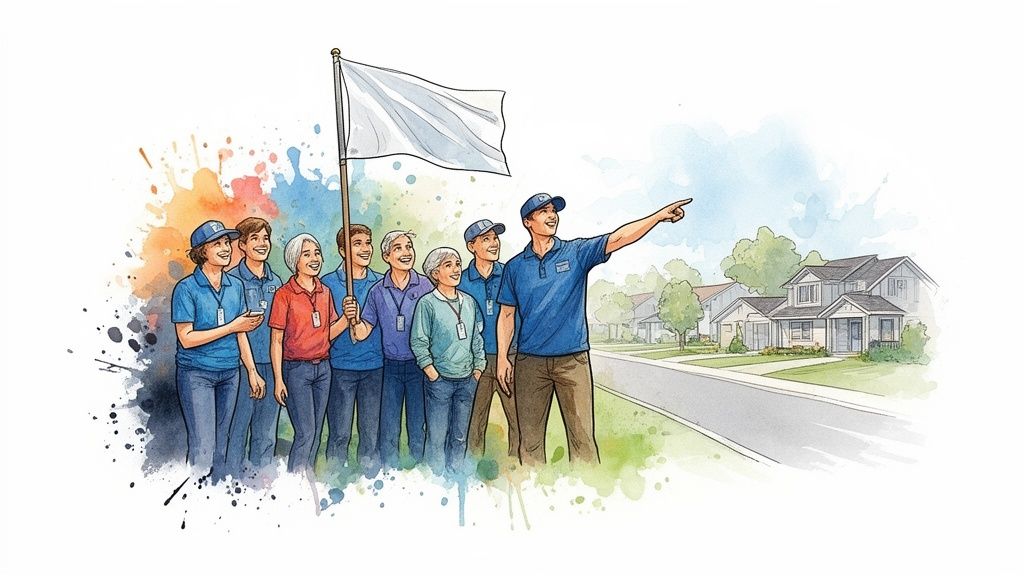
  • Volunteer tips for volunteer work on saturdays to start a weekend habit

    Volunteer tips for volunteer work on saturdays to start a weekend habit

    Finding meaningful volunteer work on saturdays can feel like the perfect cure for a chaotic work week. I know you're looking for a way to trade a few hours of your weekend for a feeling of purpose, of real connection, of making a dent in a problem you can actually see. This guide is all about helping you find that perfect fit, a place where you belong.

    Your Weekend Can Be More Than Just An Escape

    I know how it feels. The work week is a frantic blur of deadlines and demands, and Saturday is your one sacred day to just breathe. To escape. But what if I told you that giving away just a couple of hours on a Saturday morning could actually give you more energy back than sleeping in ever could?

    Let me tell you my story. A few years ago, I hit a wall. My life felt like a cluttered room I just couldn't figure out how to clean. A long, draining relationship had just cratered, leaving me feeling… well, stuck. I knew I needed to change something fundamental about how I spent my time. I had to build consistency, find some courage, and surround myself with genuinely good people who showed up.

    So, on a whim, I did something that felt totally radical to me then. I signed up for a Saturday morning trash pickup.

    A Surprising Discovery in the Rain

    That first day, it was just me and two other souls. And within an hour, a classic Chicago storm rolled in—a bizarre, biting mix of freezing rain and hail. We were huddled under a tree, shivering, watching Ubers cancel on us one by one. It was miserable. But in that misery, something incredible happened. I realized that cleaning up someone else’s mess was a lot simpler, a lot more direct, than trying to untangle my own.

    That shared struggle, that moment of absurd "fun," became a turning point for me. It taught me a few things pretty quickly:

    • Action Creates Clarity: Focusing on a simple, physical task cleared my head in a way that just thinking about my problems never could. It was like meditation, but with a trash grabber.
    • Shared Hardship Builds Bonds: The freezing rain was a better icebreaker than any forced small talk. It created an instant "we're in this together" feeling that was raw and real.
    • Purpose Is Energizing: I went home cold and wet, but I felt more alive than I had in months. I had turned my weekend into something that mattered.

    That day, I learned that a Saturday morning doesn't have to be an escape from your week. It can be the foundation for a better one. It’s about building a life you don't need to escape from.

    This isn’t just about picking up litter. It’s about you finding a rhythm of service that grounds you. It’s a way to meet people who show up, who care, and who, like you, want to make things a little bit better.

    If you're ready to start this journey, learning how to find volunteer work is the essential first step. This guide will help you discover that perfect opportunity to make your weekend mean something more.

    Finding Your Volunteer Tribe

    So, you’re ready. You've decided to trade a lazy Saturday morning for a meaningful one, but that big question is hanging in the air: where do you even start? It can feel like searching for a specific book in a library with no catalog. I get it. When I first started, I felt the exact same way.

    The good news is, you’re looking at the perfect time. The world has shifted, and organizations finally understand that you need flexibility. Short, predictable shifts—like a couple of hours on a Saturday—are becoming the new normal for volunteering. It’s no surprise that formal volunteering in the U.S. shot up by a massive 22.1% between 2022 and 2023. This boom is happening because groups are finally offering these manageable, weekend-friendly roles that actually fit into your life.

    My own group, Litter Caterpillars, was born on Meetup. I think it's a fantastic place to start because it’s built around shared interests and community, not just tasks. You get a real feel for a group's personality before you even show up. But don't sleep on the old-school approach, either.

    Where To Find Your People

    Finding the right group is like finding a good pair of shoes; they have to fit your style and your energy. To help you zero in on your perfect match, here's a quick rundown of the most effective places I've found to look.

    Where To Find Your Saturday Volunteer Crew

    Platform Best For What to Look For
    Online Platforms Niche interests & city-wide groups Use filters for "Saturday" or "weekend" on Meetup, VolunteerMatch, and local Facebook groups.
    Community Boards Hyper-local neighborhood projects Check the bulletin boards at your local library, coffee shop, or community center for flyers.
    Nonprofit Websites Supporting a cause you already love Look for a "Volunteer" or "Get Involved" page on the websites of your favorite animal shelters or food banks.

    These are the big three, and mixing and matching them is usually the fastest way you'll find a group that clicks. You might find a big park cleanup on Meetup one week and then spot a flyer for a small community garden project the next. Keep your eyes open!

    This image really captures the three core elements that make Saturday volunteering so powerful.

    A graphic about Saturday volunteering, highlighting consistency, courage, and community themes.

    It’s all about consistency, courage, and community coming together. When you find a group that nurtures all three, you’ve hit the jackpot.

    Spotting Red Flags and Green Lights

    As you start exploring, you have to be a bit of a detective. Not all groups are created equal, and the vibe matters more than you think. A great organization makes you feel valued from the first email; a bad one makes you feel like just another cog in a machine.

    A huge green light is a group that puts its volunteers' happiness and safety first. If their first message is an ask for a donation, or they seem disorganized and never reply, that’s a big red flag. You're giving your most valuable asset—your time. It should be respected.

    Look for a crew with a clear mission and a welcoming vibe. Do they post photos of smiling volunteers? Do they share stories about their impact? These are signs of a healthy, thriving community where you won't just be volunteering—you'll feel like you belong.

    If you want to see some concrete examples, we’ve put together a list of great weekend volunteer opportunities near me.

    Navigating Your First Day With Confidence

    Walking into a group of total strangers can be terrifying. I still get flashbacks to my first time—that awkward hesitation, the internal debate about whether I’d know anyone, or if I’d just end up glued to my phone to avoid eye contact. It’s basically the first day of school all over again, but for adults.

    Let’s walk through it together. My goal here is to get you so prepped that you can show up feeling less like a nervous newcomer and more like you actually belong. This isn't just about showing up; it's about owning it.

    A smiling young man, a volunteer, in a safety vest and gloves holding a bottle and can, amidst colorful watercolor splashes.

    What To Bring And Wear

    First, let's get the practical stuff out of the way. Think of this as your personal adventure kit. For any volunteer work on Saturdays, especially somewhere like Chicago where the weather has a personality of its own, layers are your best friend. Seriously.

    A comfy t-shirt, a hoodie or fleece, and maybe a light jacket will let you adapt to whatever the morning decides to do. You’ll be moving, bending, and lifting, so wear clothes you don’t mind getting a little dirt on.

    Here’s a quick-and-dirty checklist for your bag:

    • A reusable water bottle. You’ll be surprised how thirsty you get.
    • A small snack, like a granola bar. A little fuel goes a long, long way.
    • Your phone, fully charged. For directions, photos, and swapping numbers with new friends.
    • An open mind. Honestly, this is the most important thing on the list.

    Breaking The Social Ice

    Okay, now for the part that trips most people up: talking to strangers. Here's the secret—the beauty of volunteering is that the work itself is the ultimate icebreaker. You don’t need some clever opening line when you can just turn to the person next to you and ask, "Hey, have you seen any other plastic bottles over here?"

    The shared task completely removes the social pressure. I've seen the shyest people I know absolutely blossom when they’re focused on a common goal right alongside someone else. The minute you put on your gloves, you’re already a team.

    It's completely okay to just listen at first. You’re there to contribute, not to perform. Your presence alone says you care, and that’s the only introduction you really need.

    And remember this: every single person there was new once. The volunteer working next to you probably felt the exact same way on their first Saturday. They aren’t judging you; they’re just happy to have another set of hands. You’ve already done the hardest part by stepping out of your comfort zone.

    How To Turn One Saturday Into A Lasting Habit

    One awesome Saturday of volunteering feels great. But a real habit of showing up? That's life-changing. Let’s be real, though—how do you make it stick when your calendar is a mess and your bed is screaming your name?

    It’s not about having some kind of superhuman willpower. It's about building a system so simple and rewarding that showing up feels way easier than staying home. Think of it like learning to play guitar. You don't start by shredding a crazy solo; you start with basic chords until it becomes muscle memory.

    Building Your System For Showing Up

    Your first few Saturdays are all about laying down the tracks. You want to make the path to volunteering so ridiculously smooth that you just glide right into it. The whole point is to kill every little bit of friction that could give you an excuse to bail.

    Here’s the simple system I stumbled into:

    • Prep The Night Before: I lay out my "volunteer uniform"—old jeans, a comfy shirt, sturdy boots—before I even think about going to bed. This one tiny step saves my groggy Saturday morning brain from having to make a single decision.
    • Link It To A Reward: My post-cleanup ritual is grabbing a coffee from a favorite local spot. This anchors the whole experience with something I genuinely look forward to, turning the morning into a positive feedback loop.
    • Put It In Your Calendar: Seriously, treat it like a doctor's appointment you can't miss. That little block on your digital calendar is a promise you’re making to yourself and your community.

    The Power Of A Shared Struggle

    Consistency isn't just about showing up on the sunny days. It’s forged in those moments when you’d rather be literally anywhere else.

    I'll never forget our first "official" Litter Caterpillars event. It was a classic Chicago spring day that turned on a dime—one minute it was cloudy, the next we were getting pelted with actual hail.

    There were only three of us, huddled under a tree, just laughing at how absurd it all was. We were cold, soaked, and pretty miserable. But that shared struggle bonded us more than a hundred perfect, sunny days ever could have. We had a story.

    That’s the secret sauce. When you show up on the hard days—the rainy, cold, or just plain "I don't feel like it" days—you’re not just picking up trash. You’re building resilience and a deep, unspoken trust with the people right there next to you.

    This is why volunteer work on saturdays becomes such a huge deal globally. Big international networks often mobilize thousands of people for city-wide service campaigns on specific Saturdays to maximize this shared energy. For instance, some groups coordinate an annual Global Volunteer Day on a Saturday in May, getting people in dozens of cities to serve their communities all at once.

    Finding Your Accountability Partner

    Somewhere in your new volunteer tribe, find one person who makes you want to show up. This doesn't have to be some formal thing. Just find someone whose energy you vibe with and make a point to check in. A simple "See you Saturday?" text can be the nudge you both need.

    This person becomes your anchor. They're living proof that you’re part of something real. Celebrate the small wins together—a ridiculously clean block, a hilarious story from the morning. These little moments are the glue that holds the habit together.

    And for those of you leading groups, we have a whole guide on volunteer retention strategies that digs way deeper into this idea.

    The Unexpected Rewards Of Showing Up Consistently

    You might sign up for your first Saturday morning volunteer gig thinking it’s about cleaning up a park or planting a tree. That’s what I thought, too. But after years of doing this, I can tell you that the real payoff has almost nothing to do with the task itself.

    The magic is in the consistency. It’s what happens when you show up again and again, especially on the days you really don't feel like it.

    Happy man and woman smiling while planting a small green tree, hands in the soil.

    You Build Real Resilience

    Something powerful happens when you willingly face a little discomfort. Dragging yourself out of bed on a drizzly, gray Saturday morning to do something for someone else builds a kind of inner strength that spills over into every other part of your life.

    It's like a workout for your soul.

    That project you’ve been avoiding at work? Suddenly, it doesn’t seem so bad compared to picking up trash in 40-degree rain. You learn that a little hardship won’t break you. In fact, it makes you stronger, more capable, and a whole lot less likely to quit when things get tough anywhere else.

    You Find Your People, Not Your Network

    Forget those awkward networking events. The friendships you forge while doing volunteer work on Saturdays are different. They're built on a foundation of shared action and shared values, not on what you can do for each other professionally.

    These are the people who see you at your most authentic—sleepy-eyed, wearing old clothes, and totally focused on a common goal. This shared purpose strips away all the pretense. You’re not trying to impress anyone; you’re just trying to get the job done, together.

    This isn’t networking; it's community. It’s the kind of genuine connection we’re all starving for, found not over cocktails, but over a shared pair of work gloves and a desire to make things a little bit better.

    You Take Ownership Of Your City

    Finally, there’s an incredible sense of pride that comes from consistently caring for your community. You start to see the city not just as a place you live, but as your place. That park isn’t just some random patch of green; it’s the park you helped clean.

    This feeling connects you to something much bigger than yourself. It’s a powerful antidote to feeling small or helpless in a huge city.

    And this is why Saturday volunteering is so widespread. In just one year, about 75.7 million U.S. adults volunteered, with a huge chunk of them giving up a slice of their weekend. Organizations know that scheduling recurring Saturday shifts is a strategic choice—it attracts people willing to sacrifice leisure time, which is a strong predictor of long-term commitment. You can check out some fascinating volunteer statistics on ActivateGood.org that show just how much this time is valued.

    You’re not just a resident anymore. You become a guardian, a caretaker, and an active participant in the story of your neighborhood.

    Answering Your Questions About Saturday Volunteering

    Got questions spinning around in your head? Good. That means you’re actually thinking about this. It means you’re on the verge of doing something incredible.

    I’ve heard a lot of the same worries pop up over the years, so let’s just tackle them head-on, right now. Think of this as our little pre-game huddle. Once we get these out of the way, you’ll be ready to jump in.

    What If I Can’t Commit To Every Single Saturday?

    This is the big one. And the answer is simple: don’t. That’s totally fine.

    Any group worth your time will never, ever pressure you to show up. My whole philosophy is "come when you can." Your time is a gift, not a contract. Honestly, showing up just one Saturday a month is huge. It all adds up.

    The goal isn't perfect attendance; it's finding a crew that gets it. A place that’s just happy to have you when you can make it. It’s about contribution, not checking a box.

    I’m Shy And Awkward Around New People. Is This Really For Me?

    Yes. Absolutely. In fact, volunteering might just be the best place for introverts.

    This isn’t some loud party where you have to force small talk. Here, we have a job to do. We have a shared mission. You can just focus on the task—picking up the trash, pulling the weeds, whatever it is—and the conversation just… happens. It grows naturally out of the work.

    There's zero pressure to be "on." Some of our most dedicated people are the quiet ones who just love getting in the zone and making a difference.

    The task is the icebreaker. When you're working side-by-side toward a common goal, the connection builds itself. You don’t have to force a thing.

    Do I Need Special Skills Or My Own Equipment?

    For the kind of volunteer work on saturdays we do, like a neighborhood cleanup, you need zero special skills. I'm serious. If you can show up, you’re qualified.

    We’ve got all the gear you’ll need: gloves, bags, grabbers, the works. Just bring a good attitude. That’s the real beauty of this—it’s simple, direct, and you can see the impact you’ve made by the end of the morning. No experience necessary.

    What If The Weather Is Bad On Saturday Morning?

    Ah, my favorite question. This is where the real magic happens.

    We go out rain or shine, cold or heat. I’m telling you, pushing through a little bad weather together is what forges the strongest bonds. It gives the group a story. You’ll be laughing about that time it hailed on you in May for years to come.

    Of course, safety is always priority number one. We’ll cancel for anything truly dangerous like lightning. But overcoming a little discomfort? That shows you what you’re made of. Those are the days you remember.


    At Litter Caterpillars, we live these principles every single weekend. We’re the volunteer crew out there cleaning up Chicago, building a community of brave, kind people who aren’t afraid of a little hard work.

    If you’re ready to see what your Saturdays can really be, we’d love for you to join us. Find our next event and become part of the story at https://www.littercaterpillars.com.

  • Corporate Social Responsibility Examples That Drive Real Impact

    Corporate Social Responsibility Examples That Drive Real Impact

    You've seen them, right? The glossy photos. A dozen employees in matching t-shirts, awkwardly planting a single, sad-looking tree. It all feels a bit… staged. Like a box-checking exercise built for a press release. But what if corporate social responsibility wasn't about looking good? What if it was about actually being good? What if it could change not just a community, but your team, your brand, and maybe even you?

    I know it can. I’ve lived it.

    For a long time, my own life was a mess, literally and figuratively. I started a small trash pickup group right here in Chicago—we call ourselves Litter Caterpillars now—mostly to get a handle on my own issues with consistency and keeping things clean. What happened next blew my mind. We found this strange, unexpected joy in doing hard things together, even freezing our butts off in a Chicago hailstorm. I discovered that cleaning up somebody else's mess was often way easier than facing my own. That simple act of service started changing us. From the inside out.

    So this article isn't another boring list of forgettable photo-ops. I want to take you on a deep dive into 12 powerful corporate social responsibility examples, many of them inspired by the raw, real lessons we learned out on the streets. I’ll share stories from my own journey, break down exactly what makes these ideas tick, and give you stuff you can actually use to build a program with a real heart and soul. Forget the empty gestures. It's time to build something that actually matters.

    1. Community-Led Environmental Cleanup Programs

    Picture this. You’re turning a neglected, trash-strewn street corner—a place you usually hurry past—into a spot that fills the whole neighborhood with pride. That’s the magic of these community-led cleanup programs. They aren't just about picking up litter. They are potent examples of corporate social responsibility that build a tangible, visible impact right where you live. When you sponsor or join one of these events, you're directly investing in the well-being of the communities you serve.

    This is how CSR stops being some abstract idea and becomes a hands-on, team-building adventure. It’s more than just cutting a check. It’s about you, showing up. Getting your hands dirty. And creating immediate, visible change right alongside your neighbors and your team.

    Strategic Insights & Actionable Takeaways

    This whole model is like a campfire. It needs consistent fuel—that’s the community spirit—to keep burning bright. The goal isn't a one-off event. It’s a sustainable movement that makes people feel connected and gives them a sense of ownership.

    • Build a Habit: You have to be consistent. It's everything. Our Litter Caterpillars group in Chicago hosts cleanups every single week. This makes it a regular, easy-to-join thing, not some rare, special occasion. That’s how you build momentum and a crew of dedicated volunteers.
    • Create Team Identity: You need to inspire pride. A feeling of belonging. Use branded gear like t-shirts, come up with team chants, or offer little achievement badges. This transforms a simple cleanup into a shared mission.
    • Focus on Underserved Areas: You can maximize your impact by going where help is needed the most. This shows you’re genuinely committed to equity and caring for the community, not just chasing easy PR wins.
    • Prioritize People: The best programs I've seen put their volunteers' safety and happiness first. If you create a positive, supportive vibe, people will come back. They’ll become your biggest advocates.

    By partnering with a program like this, your company can grow deep community roots and show a powerful commitment to local environmental health. You can see how this all works and find ways to get involved with local cleanup events.

    2. Land Acquisition and Community Space Development

    Imagine an abandoned, overgrown lot. Now, imagine it transforming into a vibrant hub where neighbors meet, kids play, and fresh food grows right out of the ground. This is what land acquisition and community space development can do. It's one of the most lasting corporate social responsibility examples I can think of. When your organization buys and redevelops a neglected property, you’re making a permanent, physical investment in a neighborhood’s future.

    This kind of project isn't just a temporary fix. You're creating lasting assets—community gardens, little pocket parks, maybe even food forests—that become a part of the local fabric. When you help create a place like Caterpillar Park in Englewood, you're not just cleaning up a space; you're building a legacy of community health, connection, and pride.

    Strategic Insights & Actionable Takeaways

    This kind of thing is like planting a redwood. It needs a long-term vision and you have to work deeply with the community. Your goal is to create a self-sustaining space that the residents truly own and love.

    • Co-Create with the Community: The best spaces are designed with residents, not just for them. You have to host design workshops and planning sessions from day one. This makes sure the final space actually meets what people in the community need and want.
    • Plan for Longevity: A beautiful park is useless if it gets overrun with weeds a year later. You need a sustainable maintenance plan with a dedicated volunteer crew or partnerships with local groups before you even break ground.
    • Document the Journey: You have to tell the story of the transformation. Use photos and videos to show the whole process, from neglected lot to vibrant community hub. This creates amazing marketing content and shows your tangible impact.
    • Activate the Space: A park is just land until people use it. Partner with local groups to host regular events—farmers' markets, outdoor movie nights, gardening workshops. You have to make sure the space becomes a lively center of activity.

    When you invest in land, you invest in people. You can learn more about how a small group turned an auctioned lot into a beloved community asset and find inspiration by exploring the story of Caterpillar Park.

    3. Friendship, Social Connection, and Branded Identity

    What if your corporate social responsibility initiative felt less like a chore and more like joining your favorite team? That's the power you get when you build a program around friendship and a shared identity. These initiatives intentionally create deep social bonds. They turn volunteering from a one-time act into a core part of someone's community life. It's about making people feel like they belong to something bigger than themselves.

    This approach gets that the strongest movements are built on relationships, not just tasks. By fostering real connections and a proud, branded identity—with symbols like flags or team songs—you create an environment where people want to show up. It becomes a source of joy and belonging that fuels long-term engagement and turns your volunteers into passionate advocates for the mission.

    Two diverse young adults laughing, holding flags, against a vibrant watercolor splash background.

    Strategic Insights & Actionable Takeaways

    Think of social connection as your main goal, not just a nice side effect. You're trying to build a resilient community that sustains itself through a shared purpose and real friendship.

    • Create a Shared Identity: You have to go beyond just a logo. Develop traditions, symbols, and celebrations that bond your team. At Litter Caterpillars, we use a theme song, unique flags, and achievement badges to forge a powerful group identity.
    • Facilitate Social Time: You have to intentionally build in time for people to connect. Always schedule some informal social time before or after your events so relationships can form naturally.
    • Build Consistent Teams: Assign your volunteers to small, consistent groups. When people work with the same crew regularly, trust builds way faster. Acquaintances turn into real friends.
    • Celebrate People, Not Just Metrics: You have to publicly recognize personal milestones, volunteer stories, and individual growth. This shows you value the people behind the work, and that fosters deep loyalty and a positive culture.

    When you focus on building a community, you create a self-sustaining volunteer movement that is resilient, joyful, and deeply impactful. You can explore how to apply these community-building activities for adults to your own CSR programs.

    4. Volunteer-First Fundraising Model

    Imagine you join a cause you believe in. You're ready to give your time and energy, but then you're hit with constant pressure to donate money. That feeling can turn your inspiration into a sense of obligation. The volunteer-first fundraising model flips this whole script. It's one of the most powerful and authentic corporate social responsibility examples because it protects the volunteer experience by separating the act of service from the act of fundraising.

    This model is like building a great band. You find passionate musicians first, and then you find a record label to support them. You build a passionate community first. Instead of asking volunteers to open their wallets, you get your funding through corporate sponsorships, grants, and major donors. This lets everyone, no matter their financial situation, contribute in a meaningful way. For a company like yours, supporting this model means you're funding pure, uncompromised community action.

    Strategic Insights & Actionable Takeaways

    This approach is about valuing human energy as your most precious resource. Your role as a corporate partner is to fuel that energy, not to extract value from it.

    • Build Diverse Revenue Streams: Don't put all your eggs in one basket. We actively seek a mix of corporate sponsors, apply for grants, and develop partnerships to make sure our operations are sustainable without ever asking our volunteers for a dime.
    • Create Clear Sponsorship Tiers: You need to develop attractive sponsorship packages that offer clear value to businesses. This could be brand visibility on gear, social media shout-outs, or dedicated cleanup events for your employees.
    • Prioritize Transparency: You have to be open with your volunteers about how you're funded. When they know that corporate partners and grants make their work possible, it builds trust and shows them how valuable their contribution truly is.
    • Focus on Impact Metrics: Track and publicize the results of what your volunteers are doing—pounds of litter collected, number of community members engaged. These metrics are powerful tools for attracting and keeping high-impact funders who want to see real results.

    By sponsoring a volunteer-first model, your company shows a profound respect for the community and empowers people to give their best. You can see how this philosophy creates an incredible volunteer culture and explore sponsorship opportunities.

    5. All-Weather, Year-Round Service Commitment

    What does real commitment look like? I'll tell you. It’s showing up when it’s inconvenient. It’s facing a snowstorm or a heatwave and choosing to serve anyway. This is the heart of an all-weather, year-round service commitment. It's a powerful model of corporate social responsibility that proves your dedication isn't just for the sunny days. It shows that community needs don’t take a break for bad weather, and neither do you.

    This approach builds incredible credibility. It creates a culture of resilience. When your team braves the elements together, you’re not just cleaning a park; you’re forging a bond built on shared hardship and unwavering purpose. This sends a clear signal to your community, employees, and customers that your values are non-negotiable.

    Strategic Insights & Actionable Takeaways

    This model is like being a lighthouse keeper. It's built on a foundation of safety, preparation, and a culture that finds strength in adversity. It’s about being stubborn for the right reasons.

    • Embrace the Elements: You have to make resilience a core part of your identity. At Litter Caterpillars, we operate in rain, snow, and extreme heat. We never cancel an event. This unwavering consistency proves our commitment is absolute.
    • Safety Is Non-Negotiable: Create clear, weather-specific safety protocols. This could mean providing hand warmers in winter, extra water in summer, or changing routes during storms. The goal is to show up, but to do it safely.
    • Communicate and Prepare: Let your volunteers know what to expect and how to prepare. When you're transparent, you build trust and make sure everyone shows up with the right gear and the right mindset.
    • Celebrate the Grit: You have to acknowledge and honor the effort. Share photos of your team working through tough weather on social media. Frame the challenge not as a problem, but as a source of shared pride and accomplishment.

    Adopting an all-weather philosophy shows your company’s character. Your grit. It’s a tangible way to demonstrate that your commitment to the community is truly unconditional. You can see this dedication firsthand and find ways to join a mission that never stops.

    6. Neighborhood-Specific and Equity-Focused Service

    Think about your city. Think about the neighborhoods that get all the resources and the ones that are often forgotten. True corporate social responsibility examples don't just pop up in the most convenient places; they go where the need is greatest. This approach intentionally focuses on underserved and marginalized communities. It makes sure that efforts toward beautification and environmental health are distributed equitably.

    A young man helps an elderly woman on a street with houses and a vibrant mural.

    It’s about moving beyond photo ops and tackling environmental justice head-on. When you commit to showing up in all neighborhoods, not just the ones with the best PR value, you build genuine trust. You prove your commitment is about people, not just perception. This is how you transform a volunteer program into a real force for systemic change.

    Strategic Insights & Actionable Takeaways

    This model is like being a good neighbor. It's built on trust, respect, and a long-term vision. The goal is to become a reliable partner, not just a temporary visitor. You do that by empowering the residents you serve.

    • Map for Equity: Don't just go where it's easy. You need a systematic plan to cover all neighborhoods, prioritizing those with the highest need. We're trying to do this at Litter Caterpillars by working to serve all 50 city wards, including places like Englewood that are often overlooked.
    • Hire from the Community: The most powerful leaders are the ones with lived experience. You have to hire and develop team leaders from the neighborhoods you serve to make sure your efforts are authentic and culturally resonant.
    • Listen First: When you first go into a new neighborhood, your most important job is to listen. Partner with community organizations that are already there. Let their wisdom guide your actions. Building relationships is the foundation for everything else.
    • Commit for the Long Haul: Avoid one-off events. A sustained presence shows a real investment in the community's future and helps address the root causes of neglect, not just the symptoms.

    By adopting an equity-focused strategy, your company can move beyond surface-level CSR and contribute to meaningful, lasting change where it matters most. You can see how this philosophy drives impact and find ways to join a mission-driven cleanup.

    7. Personal Transformation and Resilience Building

    What if volunteering could do more than just clean a park? What if it could help you rebuild a life? This is the core idea behind CSR programs that focus on personal transformation. These initiatives frame service not just as an act of giving, but as a journey of healing, growth, and resilience. By creating a safe and supportive space, you offer a place where overcoming challenges becomes a shared experience.

    This model elevates corporate social responsibility from a PR effort into something deeply human. It's about recognizing that your volunteers and employees come with their own stories, their own struggles. When you facilitate mentorship and create opportunities for real connection, you invest in their personal well-being just as much as you invest in the community. It’s a powerful way to show you care about people, not just productivity.

    Strategic Insights & Actionable Takeaways

    This approach is like building a support group. It's built on vulnerability, trust, and celebrating personal wins. The goal is to create a community where people feel safe enough to grow through their service.

    • Lead with Your Story: Authenticity builds trust. I openly share my personal journey of transformation as the founder of Litter Caterpillars. Sharing your own "why" creates a foundation for other people to feel safe sharing theirs.
    • Focus on Growth Milestones: Shift your focus from just service metrics to personal progress. Celebrate a volunteer's courage to lead a team for the first time or their consistency in showing up.
    • Create Spaces for Reflection: Meaningful service requires you to process it. Dedicate time after events for volunteers to reflect and share what the experience meant to them. This turns a simple cleanup into a lesson in resilience.
    • Train for Emotional Intelligence: You have to equip your leaders with skills like active listening and empathy. The goal is to create a supportive network, not just manage a task list. A leader who knows how to listen is more valuable than one who only knows how to delegate.

    By building a program that honors the journey of each individual, your company can foster profound loyalty and create an impact that goes far beyond clean streets. You can learn more about how Litter Caterpillars uses service for personal growth.

    8. Demographic-Specific Volunteer Recruitment

    What if you could design a volunteer program that speaks directly to the heart of a specific community? That’s what demographic-specific volunteer recruitment does. Instead of a one-size-fits-all approach, this strategy tailors its message, its timing, and its activities to connect with the unique motivations of a particular group. This makes it one of the most effective corporate social responsibility examples for deep engagement.

    This approach turns your CSR initiative from a generic call for help into a personal invitation. It acknowledges that different people volunteer for different reasons. Some are looking for career skills, others want friendship, and many are just seeking a sense of purpose. When you understand and address these specific desires, you create a program that feels not just welcoming, but like it was truly made for them.

    Strategic Insights & Actionable Takeaways

    This model succeeds when you move beyond assumptions and genuinely get to know your audience. The goal is to build an authentic connection that makes people feel seen, valued, and essential to your mission.

    • Understand Motivations: Don’t guess what people want. For example, we successfully engage a lot of young women by focusing on empowerment, community, and creating visible, inspiring change. You need to research what drives your target group.
    • Recruit in Their Spaces: You have to go where your audience already is. If you're targeting new professionals, connect through LinkedIn or company resource groups. For students, focus on campus events and the social media platforms they actually use.
    • Design for Their Lives: Respect their constraints. Offer weekend events for people who work 9-to-5, or flexible scheduling for parents. Your logistics should remove barriers to joining, not create new ones.
    • Center Their Voices: Feature testimonials and leaders from within the target demographic. When people see others who look like them in leadership roles, it builds trust and shows them a clear path for involvement and growth.

    By tailoring your outreach, you can build a more diverse, dedicated, and passionate volunteer base. You can find more targeted strategies and learn how to find volunteers who are a perfect fit for your cause.

    9. Digital-First Community Building and Accessibility

    What if your company’s impact wasn't limited by your physical presence? That's the power of digital-first community building. These initiatives use online platforms not just for promotion, but as the central hub for organizing, connecting, and making volunteerism accessible to everyone, no matter their schedule or social comfort level. It’s about meeting people right where they are—online—and guiding them toward real-world impact.

    This strategy transforms corporate social responsibility into an ongoing conversation. Instead of just announcing an event, you’re creating a space for questions, sharing stories, and fostering connections long before and after the work is done. It removes barriers. It makes it easy for someone just scrolling on their phone to find a purpose and a community.

    Strategic Insights & Actionable Takeaways

    A strong digital presence turns passive interest into active participation. It's like having a friendly greeter at your front door, 24/7. Your goal is to create a seamless, welcoming journey from online discovery to offline engagement.

    • Be Where Your People Are: Don't expect people to find you; you have to go to them. Groups like ours use a multi-platform approach, leveraging Instagram for visual storytelling, Meetup for event logistics, and Reddit for grassroots outreach. This ensures you reach all sorts of different people.
    • Create a Clear Path to Action: Your digital channels should make it incredibly easy to get involved. A clear link to sign up, a visible schedule, and a friendly FAQ can be the difference between a "like" and a new volunteer showing up.
    • Foster a Digital Community: Engagement shouldn't stop when an event ends. Use your platforms to celebrate volunteers, share photos, and ask for feedback. This builds a sense of belonging and keeps your mission top-of-mind.
    • Prioritize Responsiveness: In a digital world, speed matters. When you respond quickly and warmly to messages and comments, it shows you value your community’s time and interest. It builds trust and encourages people to participate.

    By adopting a digital-first mindset, your company can build a more inclusive, dynamic, and resilient volunteer program. You can see how this works and explore digital organizing in action to inspire your own strategy.

    10. Strategic Partnerships with Local Nonprofits and Institutions

    Imagine trying to build a house all by yourself versus with a team of expert carpenters, plumbers, and electricians. That's the difference between going it alone and forming strategic partnerships. This approach to corporate social responsibility is all about teaming up with established local nonprofits and institutions to amplify your impact. By joining forces, you tap into existing community trust, resources, and expertise. You turn your good intentions into powerful, coordinated action.

    This model is all about synergy. It transforms CSR from an isolated corporate project into a deeply integrated community effort. Instead of reinventing the wheel, you align with partners who already know the neighborhood, understand the needs, and have the infrastructure to make things happen. It’s about lending your unique strengths—whether it's funding, volunteers, or skills—to a mission that’s bigger than any single one of you.

    Strategic Insights & Actionable Takeaways

    A successful partnership is a two-way street. It's built on shared goals and mutual respect. Your objective is to create a combined force that achieves more than either of you could on your own.

    • Align Your Missions: Seek partners whose values mirror your own. Our partnerships with Chicago-area nonprofits and government agencies are effective because we all share a common goal: a cleaner, healthier community for everyone.
    • Formalize Expectations: Don't leave things to chance. You need to create clear agreements that outline roles, resources, and goals. This makes sure both sides are on the same page and accountable.
    • Amplify Your Story, Together: Develop a joint communications strategy. Co-branded materials and shared social media campaigns celebrate the partnership and show a united front. This strengthens both of your brands.
    • Celebrate Your Partners Publicly: You have to give credit where it's due. Highlighting your partners’ contributions builds goodwill and shows a genuine commitment to collaboration over competition.

    By forming strategic alliances, your company can move from simply funding causes to co-creating lasting community solutions. You can explore how groups like Litter Caterpillars build these powerful local partnerships to maximize their positive impact.

    11. Adventure and Exploration Through Service

    What if volunteering felt less like a chore and more like an urban expedition? This approach reframes community service as an exciting adventure. It turns a simple cleanup into a journey of discovery. By tapping into our natural curiosity, programs that blend service with exploration motivate people who are drawn to novelty and challenge. This makes your corporate social responsibility examples feel fresh and dynamic.

    This model transforms civic duty into a compelling quest. It’s not just about giving back; it's about exploring new neighborhoods, uncovering hidden gems, and seeing your city through a whole new lens. Your team gets to connect with different communities and each other, all while leaving a positive, tangible mark on every place you visit.

    Strategic Insights & Actionable Takeaways

    This strategy is like a treasure hunt. It's built on curiosity and purpose. The goal is to make every service event a unique experience that combines genuine community benefit with the thrill of exploration.

    • Map Your Adventure: Treat your service plan like an expedition map. At Litter Caterpillars, for instance, we have a goal to clean in all 50 of Chicago's wards. This turns our mission into a city-wide exploration. You can create a rotation plan to visit unique and diverse neighborhoods.
    • Narrate the Journey: Frame your work through a story of adventure. Use your recruitment messages to highlight the exploration element. Share photos and stories from each location to build excitement for the next "mission."
    • Balance Adventure with Impact: The adventure is the hook, but the service is the heart. You have to make sure the community benefit is clear and genuine. Partner with local community members or historians to deepen your team's understanding and connection to the area.
    • Equip Your Explorers: Provide tools that enhance both the service and the adventure. Think branded gear, neighborhood fact sheets, or even photo challenges. This adds a layer of fun and identity to the experience.

    By adopting an adventure-based model, your company can attract a wider range of volunteers and transform your CSR program into an ongoing story of discovery and impact. You can see how this works by following the Litter Caterpillars’ journey across Chicago.

    12. Transparent Communication of Organizational Values and Decision-Making

    Imagine knowing not just what your favorite company does, but why they do it. This is the heart of transparent communication. It's a powerful form of corporate social responsibility. It’s about pulling back the curtain and sharing the values, the motivations, and even the struggles behind your decisions. This practice builds unshakable trust with your customers, your employees, and your community partners.

    When you openly share your journey, you invite people to become part of the story, not just spectators. It transforms a business transaction into a relationship built on shared principles and mutual respect. This isn't just about public relations; it's about creating a culture of accountability and authenticity that resonates deeply with people who want to support businesses that truly stand for something.

    Strategic Insights & Actionable Takeaways

    This approach is like having an honest conversation. It's rooted in vulnerability and consistency. Your goal is to build a community that feels heard, valued, and connected to your mission because they understand the "why" behind your actions.

    • Share Your Origin Story: People connect with people. I openly share my own story and personal motivations for starting Litter Caterpillars. This creates an immediate human connection and makes the core values driving the organization crystal clear.
    • Explain the 'Why,' Not Just the 'What': When you make a decision, communicate the reasoning behind it. This invites understanding and shows respect for your stakeholders, even if they don’t agree with the outcome.
    • Embrace Imperfection: Be honest about your challenges, your failures, and what you’ve learned. Transparency isn't about being perfect; it's about being real. This builds credibility far more effectively than a flawless facade ever could.
    • Create Feedback Loops: Actively ask for input and, crucially, show how that feedback influences your decisions. This demonstrates that you don’t just listen; you act on what you hear. It makes your community a true partner.

    By embedding transparency into your company’s DNA, you can cultivate a loyal following and prove that your commitment to social responsibility is more than just a marketing slogan. It’s a core part of who you are and how you operate.

    Comparison of 12 CSR Initiatives

    Approach 🔄 Implementation Complexity ⚡ Resource Requirements 📊 Expected Outcomes 💡 Ideal Use Cases ⭐ Key Advantages
    Community-Led Environmental Cleanup Programs 🔄 Medium — recurring coordination, scheduling, permits ⚡ Low–Medium: volunteers, basic supplies, modest branding 📊 Visible local remediation, social cohesion, behavior change 💡 Neighborhood engagement, low-cost civic action, pilot projects ⭐ Strong social bonds, measurable local impact, low barrier to entry
    Land Acquisition and Community Space Development 🔄 High — legal, zoning, long-term planning ⚡ High: land purchase, construction, ongoing maintenance 📊 Lasting public assets, property value increase, long-term revitalization 💡 Legacy projects, neighborhood redevelopment, multi-stakeholder partnerships ⭐ Durable community assets, attracts investment and permanence
    Friendship, Social Connection, and Branded Identity 🔄 Medium — facilitation, cohort management, branding ⚡ Low–Medium: design materials, events, small budgets 📊 High retention, movement-building, mental-health benefits 💡 Volunteer retention, community-building, identity-driven programs ⭐ Deep volunteer loyalty and public visibility
    Volunteer-First Fundraising Model 🔄 Medium — fundraising strategy, sponsor cultivation ⚡ Medium–High: grant writing, donor relations, sponsorships 📊 Inclusive participation, sustained volunteer engagement, authenticity 💡 Programs prioritizing accessibility and volunteer experience ⭐ Protects volunteer energy; increases inclusivity
    All-Weather, Year-Round Service Commitment 🔄 Medium — safety protocols, weather adaptations ⚡ Low–Medium: PPE, insurance, training, communication 📊 Consistent service, organizational credibility, resilient volunteers 💡 Organizations valuing reliability and strong identity ⭐ Signals commitment; builds resilience and respect
    Neighborhood-Specific and Equity-Focused Service 🔄 Medium–High — cultural competency, trust-building ⚡ Medium: partnerships, training, safety planning 📊 Environmental equity, community trust, targeted impact 💡 Environmental justice work, underserved neighborhoods ⭐ Targets greatest need; fosters long-term trust
    Personal Transformation and Resilience Building 🔄 High — mentorship, reflection processes, skilled facilitation ⚡ Medium: leader training, program design time 📊 Deep personal growth, leadership development, high retention 💡 Recovery, personal-development-focused volunteering ⭐ Produces authentic leaders and durable commitment
    Demographic-Specific Volunteer Recruitment 🔄 Medium — tailored outreach, cultural nuance ⚡ Low–Medium: targeted marketing, representative leadership 📊 Efficient recruitment, peer networks, improved fit 💡 Recruiting underrepresented or affinity groups ⭐ Higher recruitment efficiency and aligned retention
    Digital-First Community Building and Accessibility 🔄 Low–Medium — platform management and moderation ⚡ Low: social platforms, content creation, coordination tools 📊 Greater accessibility, steady recruitment, persistent community 💡 Scaling outreach, remote coordination, younger audiences ⭐ Low barrier to entry; real-time coordination and documentation
    Strategic Partnerships with Local Nonprofits and Institutions 🔄 Medium — formal agreements, shared governance ⚡ Medium: partner management, joint programming resources 📊 Amplified impact, legitimacy, resource efficiency 💡 Expanding reach, accessing institutional resources ⭐ Leverages credibility and shared resources for scale
    Adventure and Exploration Through Service 🔄 Low–Medium — route planning, novelty management ⚡ Low: logistics for varied sites, storytelling resources 📊 High engagement, memorable experiences, broad geographic reach 💡 Recruiting adventurous volunteers; novelty-driven campaigns ⭐ Attracts explorers and younger demographics; high engagement
    Transparent Communication of Organizational Values and Decision-Making 🔄 Medium — reporting systems, feedback loops ⚡ Low–Medium: communications, impact reporting tools 📊 Increased trust, aligned volunteers, accountability 💡 Building credibility, value-aligned recruitment, partnership development ⭐ Builds trust, reduces conflict, attracts aligned supporters

    Your Turn to Be Brave: How to Start Small and Create Real Change

    Reading a long list of corporate social responsibility examples is the easy part. It’s inspiring. You see what companies like Patagonia, Lego, and even local Chicago heroes are doing. But inspiration without action is just a pleasant daydream. The hard part is taking that first step. I know this because I’ve lived it.

    For me, that step was picking up a single piece of trash on my block. It wasn't some grand, world-saving gesture. It was about saving myself from a cycle of frustration and inaction. It was about looking at a problem and not feeling so powerless. What I learned from that one small act, and the thousands that followed, is that bravery isn't what you see in the movies. It’s not about one single, heroic moment.

    Real bravery is quiet. It’s showing up when it's cold, rainy, and inconvenient. It's embracing a little bit of discomfort because you know that's where growth happens. It's choosing connection over comfort, purpose over passivity.

    From Ideas to Impact: Your First Brave Step

    You've seen how diverse CSR can be. It's not just about writing a check. It’s about building something real.

    • It’s about showing up consistently. Just like that all-weather commitment I talked about, your company’s impact grows from reliability, not from a single, splashy event.
    • It's about deep listening. True change comes from understanding a neighborhood's specific needs, not from imposing your own top-down solution.
    • It’s about building community. The strongest initiatives create social connection and a shared identity, turning isolated individuals into a unified force for good.

    You don't need a massive budget or a C-suite sign-off to start this journey. The most powerful movements start small. Think of it like planting a seed. You don't just throw it on the ground and expect a forest to appear. You find good soil. You plant it. You water it. You protect it. Day by day, it grows.

    Your Actionable Starting Point

    So, what’s your first step? Let's make it real. Forget about crafting the perfect press release or designing a flawless, multi-year strategy right now. Start with one simple, tangible action.

    1. Find Your People: Identify a local group already doing the work you admire. Here in Chicago, organizations like ours are on the ground every single weekend, building community through environmental cleanup. Don’t reinvent the wheel; join the people already pushing it forward.
    2. Ask, "How Can We Help?": Instead of telling them what you want to do, ask them what they need. Is it sponsoring their cleanup equipment? Is it providing snacks and coffee for their volunteers on a cold morning? Is it using your marketing skills to amplify their message?
    3. Show Up: Commit to one event. Bring a small team. Rain or shine. Experience the work firsthand. Feel the energy of the community. See the direct impact of your time and effort.

    This is how real change begins. Not with a boardroom decision. It begins with a human connection. It's built on a foundation of small, brave, consistent actions that ripple outward. The world doesn't need another perfectly polished corporate photo-op. It needs your heart. It needs your hands. It needs you.


    Ready to take that first brave step? You can see these corporate social responsibility examples in action by connecting with a grassroots movement making a real difference. Join or support Litter Caterpillars to help build cleaner, kinder, and more connected communities across Chicago. Litter Caterpillars

  • 10 Community Engagement Best Practices to Transform Your Neighborhood in 2026

    10 Community Engagement Best Practices to Transform Your Neighborhood in 2026

    From My Messy Fridge to a Citywide Movement: Let's Talk Real Community Engagement

    I want to tell you a story. It starts with old blueberry jam and a bad breakup. My apartment was a disaster, and honestly, so was my life. I remember looking at a piece of trash, this monument to some past failure, and it felt like it weighed 500 pounds. Impossible. How could I ever clean up my own mess, let alone anyone else's?

    Then something shifted. I found myself huddled under a tree during a freak Chicago hailstorm with two friends after our very first trash pickup. We were freezing, soaked, miserable. But cleaning up someone else's mess? It was fun. The suffering, the freezing cold—it wasn't a punishment anymore. It became a story. A beginning. That was the moment I knew the Litter Caterpillars were truly born. This isn't just about picking up litter; it's about the kind of radical transformation that happens when you decide to show up for your city, for each other, no matter what.

    What you're about to read isn't theory. I’m giving you the hard-won lessons, the secrets to our success, the community engagement best practices we’ve learned from the front lines. I figured this out not from a textbook, but from three years of cleaning every single week, in blizzards and heatwaves, across all 50 of Chicago's wards. We went from three shivering friends to a citywide movement with thousands of volunteers, corporate sponsors, and even our own piece of land.

    This guide is for you. It’s for you if you've ever looked around and felt that small, persistent ache to do something more. I want to show you how to turn a small idea into a genuine force for good, a community that changes you as much as it changes your neighborhood. Let's get started.

    1. Identity and Pride Through Symbols (Flags, Badges, Theme Songs)

    Imagine you're turning a simple neighborhood cleanup into something that feels like a city-wide movement. You aren't just picking up litter; you are part of an inspired team with its own soul. That's the power of symbols. When I created a distinctive visual and auditory identity using flags, badges, and even a theme song, I watched us foster a deep sense of pride and belonging among our volunteers. This simple act turns routine work into a mission. A culture.

    Smiling man holding a 'VOUNEVA' flag next to four detailed recognition badges.

    This is one of the most effective community engagement best practices because it taps into something primal inside all of us: the need to belong to something bigger than ourselves. When one of my volunteers carries our group's flag through a park or earns a special badge, they are no longer just an individual helping out. They become an ambassador. A hero for a shared cause.

    How to Build Your Group's Symbolic Identity

    Chicago's own Litter Caterpillars provide a brilliant blueprint. I didn’t just create a logo; I commissioned a custom theme song by artist Ella Duke that gets everyone energized. Our vibrant, recognizable flags make our cleanup events feel like a celebratory parade through the neighborhood. This isn't just branding. It's world-building.

    Here’s how you can do it too:

    • Co-Create Your Symbols: Don't impose a design from the top down. You should hold a workshop where volunteers brainstorm ideas for a flag, logo, or mascot. When they help you create it, they will feel a much deeper connection to it.
    • Design Meaningful Badges: Think like the Boy Scouts or Girl Scouts. You can create achievement badges for milestones like "First Cleanup," "Recruited a Friend," or "Cleaned Up 10 Parks." This gamifies participation and gives you a way to provide tangible recognition for dedication.
    • Feature Symbols Everywhere: Splash your logo and colors across your social media, your recruitment flyers, and your event pages. When people see your flag in a photo, they’ll instantly recognize your group's positive energy and impact.

    "A flag isn't just a piece of cloth. For us, it’s a story, a rallying cry, and a promise we make to our community. When you see it, you know we're here to make a difference, together."

    Ultimately, these symbols transform volunteering from a task into an identity. They help you build a powerful culture that attracts new members and keeps dedicated volunteers coming back, united under a banner of shared purpose and pride.

    2. Strategic Time Scheduling to Filter for Values Alignment

    Let me tell you about two volunteer groups. One meets whenever it's convenient, with inconsistent times that change weekly. The other meets every single Saturday at 9 AM, rain or shine. Which group do you think builds a more dedicated, core team? The answer, I’ve found, lies in the power of intentional scheduling. By deliberately choosing specific, consistent times, you communicate your group's values and attract members who share that same level of commitment.

    This is one of the most underrated community engagement best practices because it goes beyond simple logistics. Scheduling becomes a filter. It self-selects for people who prioritize service over sleeping in, turning a simple time slot into a statement about your mission. It’s a quiet signal I use that says, "We are serious about this, and we are looking for others who are too."

    How to Use Scheduling to Build a Committed Core

    Litter Caterpillars founder Kevin Tao built his group's culture around this very principle. By consistently scheduling cleanups on weekend mornings, he attracted a community that values discipline and consistency. It’s a philosophy I see in high-commitment cultures everywhere, from CrossFit gyms with their 5 AM classes to meditation groups that meet at dawn. The barrier to entry creates a bond among those of us who choose to cross it.

    Here’s how you can do it too:

    • Be Transparent About the 'Why': When you announce your schedule, explain your reasoning. Say something like, "We meet every Saturday morning because we believe starting the weekend with service sets a powerful tone for our community."
    • Celebrate the Commitment: I make a point to acknowledge the dedication it takes to show up. Publicly praise volunteers who have a consistent attendance record, reinforcing that you see and value their discipline.
    • Use It in Your Narrative: You should weave your schedule into your group's story. It's not just a time; it's a ritual. This transforms the act of showing up from a choice into a shared habit that strengthens your community's identity.

    "Our schedule isn't an accident; it's a declaration. It says we are willing to dedicate the best part of our weekend to our neighborhood. The people who join us feel the same way, and that's how we build a family."

    Ultimately, a strategic schedule does more than just organize your events. It builds a tribe of the willing, a dedicated core of individuals whose actions align perfectly with the values you want your community to embody.

    3. Vulnerability and Transformational Storytelling

    Think about the stories that truly move you. They aren't the ones about perfect people having perfect days. They are the stories of struggle, of overcoming adversity, and of finding meaning in the mess. This is the heart of vulnerability. When I share the real, unpolished origin story of my group, including the struggles and doubts, I invite people into a mission that feels human, authentic, and deeply meaningful.

    A man speaks, with a watercolor cloud illustrating sun, growth, darkness, and diverse human silhouettes.

    This approach is one of the most powerful community engagement best practices because it builds trust on a profound level. When I share my own moment of difficulty that sparked action, it gives others permission to be imperfect. It allows them to see their own challenges not as weaknesses, but as potential sources of strength and purpose. It reframes suffering as a catalyst. A superpower.

    How to Share Your Transformational Story

    The origin of Chicago's Litter Caterpillars wasn't born from a strategic plan; it was sparked by a blizzard. Founder Kevin Tao saw the beauty of his neighborhood vanish under a storm of trash and felt a deep sense of despair, which then transformed into a resolute call to action. Sharing this full emotional arc, from frustration to mobilization, makes the mission relatable. It makes it real.

    Here’s how you can do it too:

    • Share the Full Arc: Don’t just share the victory. You have to talk about the specific moment of struggle that led to a realization, which then fueled your action. This struggle → realization → action → transformation narrative is what I’ve found resonates with people.
    • Be Specific, Not Vague: Instead of saying "I was frustrated," describe the specific scene, feeling, or event that triggered your motivation. Specificity makes your story feel real and allows others to connect their own experiences to yours.
    • Invite Shared Stories: I always create space during events for others to share their "why." Ask them what brought them out and what challenges in the community they feel passionate about. This turns your personal narrative into a collective one.

    "Your story of overcoming a challenge isn't just about you. It's an invitation. You’re inviting others to see the hero in themselves and believe that they, too, can turn a moment of difficulty into a movement of change."

    Ultimately, vulnerability is a bridge. It closes the distance between you and a volunteer, transforming a group of participants into a deeply connected community united by shared experiences and a powerful, authentic mission.

    4. Multi-Platform Community Connectivity (Meetup, Social Media, Group Chats)

    Think about how you connect with different friends. You might plan big events over email. Share exciting moments on Instagram. Have rapid-fire chats in a group text. Your community group should be just as dynamic and accessible. By using a mix of platforms like Meetup for official events, Instagram for visual storytelling, and a group chat for real-time updates, you meet your volunteers where they are and empower them to connect in the ways they prefer.

    A hand holds a smartphone displaying a meetup app, surrounded by watercolor icons of Instagram, community, and a calendar.

    This approach is one of the most vital community engagement best practices because it recognizes that a one-size-fits-all communication strategy just doesn’t work anymore. Some of my volunteers thrive on seeing beautiful photos of our impact, while others need the logistical clarity of an event calendar. When you offer multiple touchpoints, you ensure no one feels left out and keep the energy flowing between your cleanup events.

    How to Weave Your Digital Community Together

    Litter Caterpillars in Chicago is a masterclass in this. We use Meetup as our "source of truth" for event details, Instagram to share inspiring photos and reels that attract new members, and group chats to handle day-of logistics like "I'm running five minutes late!" or "Look at this cool thing I found!" Each platform has a distinct job, yet they all work together to build a vibrant, connected community. Want to dive deeper? I suggest you explore how to leverage these connections with more community building activities for adults.

    Here’s how you can create your own connected ecosystem:

    • Assign Each Platform a Job: You need to define a clear role for each channel. For example: Meetup is for RSVPs and event details. Instagram is for celebrating wins and recruitment. A WhatsApp or Signal chat is for immediate, on-the-ground communication during events.
    • Create a Simple Onboarding Guide: When a new member joins, give them a quick rundown of your platforms and what each one is for. This prevents confusion and helps them plug into your community fabric from day one.
    • Synchronize, Don't Duplicate: Let your platforms talk to each other. Your Instagram story can remind people to RSVP on Meetup. Your Meetup event description can link to the group chat. I make sure the content feels complementary, not just copied and pasted.

    "Your community doesn't just exist during your events. It lives in the DMs, the photo tags, and the quick messages in between. If you nurture those digital spaces, you’ll build a movement that never sleeps."

    By creating a multi-platform strategy, you’re building a resilient and accessible network. You’re giving your volunteers the power to engage on their own terms, transforming your group from a series of events into a constant, supportive, and active community.

    5. Service-First Fundraising (No Volunteer Pressure, Sponsor-Based Model)

    Imagine you show up to a volunteer event, excited to contribute your time, only to be hit with a request for money. It can feel transactional and awkward, shifting the focus from collective action to individual financial capacity. A service-first fundraising model protects your volunteers from this pressure entirely. When I committed to never soliciting donations from my volunteers, I created a space where their time and energy are the most valued contributions.

    This approach is one of the most critical community engagement best practices because it builds psychological safety and trust. When people know they can participate fully without facing a financial ask, it lowers the barrier to entry and reinforces that their presence is the true gift. It sends a clear message from me to you: you are here to serve, not to be a source of revenue.

    How to Fund Your Mission Without Asking Volunteers

    The key is shifting your fundraising focus from individuals within your group to external partners who align with your mission. Chicago’s Litter Caterpillars again sets a powerful standard with our explicit "volunteer-first" policy. I secure funding through corporate sponsorships and grants, allowing us to provide all necessary supplies and support without ever asking volunteers to open their wallets.

    Here’s how you can adopt this model:

    • Be Explicit About Your Policy: I announced our "no-ask" commitment publicly on our website, social media, and at events. This transparency builds immediate trust and sets a welcoming tone for newcomers.
    • Create Compelling Sponsorship Tiers: You can develop attractive packages for local businesses. Offer them tangible benefits like logo placement on your gear, social media shout-outs, and opportunities for their employees to volunteer as a team.
    • Frame Sponsorship as Protecting Volunteers: When you pitch to potential sponsors, tell them their contribution does more than buy supplies; it protects the volunteer experience. Explain how their support allows you to maintain a purely service-focused, high-retention community.
    • Offer Non-Monetary Support Options: For community members who want to give more, create alternative avenues. I ask for in-kind donations like gloves, trash bags, or snacks for events. This allows people to contribute tangibly without financial pressure.

    "When we decided to never ask our volunteers for money, everything changed. People relaxed. They invited more friends. They knew their presence was what we valued most, and that trust is the foundation of our entire community."

    This model transforms your group’s financial strategy from an internal obligation into an external partnership. It ensures your community remains centered on service, camaraderie, and shared impact, fostering a culture where you feel valued for who you are and what you do, not for what you can donate.

    6. Inclusive Geographic Coverage (All 50 Wards, Including 'Avoided' Areas)

    Imagine your group’s positive impact being felt not just in a few familiar neighborhoods, but rippling across every corner of your city. You aren't just cleaning up parks you know; you are building bridges and demonstrating a city-wide commitment to equity. This is the power of inclusive geographic coverage. By deliberately and systematically serving all areas, especially those often overlooked, you dismantle barriers and build trust where it's needed most.

    This is one of the most powerful community engagement best practices because it proves your mission isn't just about convenience; it's about justice. When I see volunteers from different parts of the city working side-by-side in a neighborhood they've never visited, it confronts biases and builds a truly unified community. You're not just a North Side or a South Side group; you become a Chicago group.

    How to Broaden Your Impact Equitably

    The Litter Caterpillars embody this philosophy with their ambitious goal to host cleanups in all 50 of Chicago's wards. By creating a transparent rotation, we ensure no community is left behind. This isn’t just about logistics. It’s a profound statement that every neighborhood deserves care, attention, and investment. I've watched our work inspire volunteers to see and appreciate the entire city, not just their own block.

    Here’s how you can do it too:

    • Publish a Rotation Schedule: You should create a calendar that clearly shows which wards or neighborhoods you plan to visit and when. This transparency holds you accountable and lets residents know you’re coming.
    • Build Local Bridges: Before you arrive in a new area, connect with local leaders, community groups, or aldermanic offices. I always ask them what their needs are and how we can best support their existing efforts.
    • Share Stories from Everywhere: Use your social media and newsletters to highlight the unique beauty, challenges, and amazing people from every neighborhood you serve. This combats negative stereotypes and celebrates your city’s true diversity.

    "True community isn't built in comfort zones. It's built by showing up, everywhere, for everyone. When we commit to all 50 wards, we're saying that every single Chicagoan matters."

    Ultimately, this strategy transforms your group from a localized project into a unifying civic force. It challenges your volunteers to grow, forges unlikely connections, and sends a clear message that your commitment to a better city has no boundaries.

    7. Authentic Partnership and Real Impact (Owned Land, Not Just Events)

    Imagine your volunteers returning to a spot they once cleaned, not to find it littered again, but to see a thriving community garden or a vibrant pocket park they helped build. This is the difference between a one-off event and a lasting legacy. Moving beyond temporary cleanups to create permanent, tangible change is a powerful way to supercharge volunteer motivation. I give them a real sense of ownership and a visible monument to their hard work.

    A man wearing gloves kneels to plant a small tree with a shovel in a vibrant community garden.

    This is one of the most profound community engagement best practices because it transforms volunteering from a fleeting activity into a permanent investment in the neighborhood's future. When you can literally point to a park and say, "I helped build that," your connection to the cause and the community deepens immensely. It becomes a source of pride you can revisit for years.

    How to Create a Lasting Legacy

    Chicago’s Litter Caterpillars exemplify this perfectly with our Caterpillar Park project. We didn't just clean a vacant lot; we organized, raised funds, and won it at auction. Now, we are transforming it into a permanent public space for everyone to enjoy. This is placemaking in action. This is turning overlooked land into a community asset.

    Here’s how you can achieve real impact:

    • Scout for Opportunities: Start by identifying neglected spaces in your neighborhood. I look for vacant lots, overlooked public land, or forgotten corners that have potential for transformation.
    • Build Strategic Partnerships: You can't do it alone. You have to connect with city agencies, local alderpersons, and property owners. These partnerships are crucial for gaining permission, resources, and support for your vision.
    • Create Roles for Stewardship: A project doesn't end when the construction is done. You must plan for the long term by creating volunteer roles for ongoing maintenance, gardening, or event planning to keep the space vibrant and cared for.
    • Start Small to Build Momentum: Your first project doesn’t have to be a full park. I suggest you begin with an "Adopt-a-Highway" commitment or a small community garden to build your group's capacity and prove your reliability.

    "Don't just clean a space; claim it. When you turn a forgotten lot into a living garden, you're not just planting flowers—you're planting hope, ownership, and a legacy that will outlive us all."

    Ultimately, creating tangible, lasting outcomes gives your volunteers a powerful answer to the question, "What did we accomplish?" They can see, touch, and experience the change they made, inspiring them and others to invest even more deeply in their community.

    8. Selective Recruitment: Targeting Intrinsically Motivated Segments

    Trying to be everything to everyone often means you end up being nothing special to anyone. Instead of casting a wide, generic net, imagine focusing your energy on finding the people who are already looking for exactly what your group offers. This is the core of selective recruitment: I identify and connect with specific groups who are intrinsically motivated to join my cause.

    This approach is one of the most powerful community engagement best practices because it builds a stronger, more cohesive team from day one. When members share underlying values or life stages—a passion for sustainability, a desire for new friendships, a need for community—they connect faster and stay longer. You aren't just filling slots. You are gathering a tribe.

    How to Find Your People

    The key is to move beyond generic calls for "volunteers" and speak directly to the hearts of specific communities. Kevin Tao of Litter Caterpillars mastered this by targeting newcomers to Chicago, young professionals, and women seeking a safe and inspiring community space. The messaging wasn't just "help clean up"; it was "new in town? meet great people while making a real impact."

    Here’s how you can do it too:

    • Create Volunteer Personas: I ask, who is my ideal volunteer? Is it a young professional eager to network? A recent transplant looking to plant roots? A parent wanting to model civic duty? I define 2-3 key personas to guide my outreach.
    • Tailor Your Message: Craft different messages for each persona. For the sustainability advocate, I talk about environmental impact. For the newcomer, I emphasize friendship and neighborhood exploration. You have to speak to their unique motivations.
    • Partner Strategically: You must go where your target segments are. I partner with co-working spaces to reach young professionals, or with newcomer welcome groups on social media. This puts my message directly in front of the right people. Learn more about how to find the right volunteers for your group.

    "When you stop trying to recruit everyone, you start attracting the right one. Your group's energy becomes magnetic because it's built on a foundation of shared purpose and genuine connection."

    Ultimately, selective recruitment ensures your group is filled with people who aren’t just there to do a task, but are there because they truly believe in the mission and feel a sense of belonging. This focus creates a self-sustaining culture of high engagement and low turnover.

    9. Peer-to-Peer Leadership Development and Distributed Ownership

    Imagine your volunteer group not as a pyramid with you at the top, but as a thriving ecosystem where leadership grows naturally. When you empower dedicated volunteers to step up, take ownership, and guide their own small teams, you aren't just delegating tasks. You are cultivating the next generation of community leaders. This creates a resilient, sustainable movement that can outlast any single founder. Me included.

    This is one of the most powerful community engagement best practices because it directly counters volunteer burnout and creates deep, lasting investment. When my members feel a true sense of ownership, they bring more creativity, energy, and commitment to the cause. I've watched it transform their role from simply showing up to actively shaping our group's future and success.

    How to Cultivate Homegrown Leaders

    The core idea I use is to create clear pathways for growth. Instead of one person organizing everything, you can have neighborhood "captains" or "team leads" who manage events in their specific area. This distributed model is exactly how many successful mutual aid networks and grassroots organizations thrive, ensuring the work is shared and localized.

    Here’s how you can do it too:

    • Create Clear Leadership Roles: You need to define what it means to be a "Team Lead" or "Neighborhood Captain." Outline their responsibilities, like coordinating a monthly cleanup or welcoming new members, so people know exactly what they are signing up for.
    • Mentor, Don't Just Assign: I pair an aspiring leader with someone more experienced. This mentorship provides them with the support and confidence they need to succeed, creating a powerful cycle of knowledge-sharing.
    • Provide Simple Training: You don't need a corporate seminar. A one-page guide on how to lead a small group, facilitate a quick pre-cleanup huddle, or resolve minor conflicts can make a huge difference. Documenting your process helps everyone stay aligned.

    "True community power isn't held by one person; it's shared among many. When you give someone responsibility, you're not just giving them a task, you're telling them, 'I believe in you.'"

    Ultimately, by developing leaders from within, you build a stronger, more resilient organization. You’re not just cleaning up a park; you’re building a network of capable, passionate advocates for your community. For a deeper dive into this concept, you can learn more about building resilient communities and sharing leadership.

    10. Values-Driven Risk-Taking and Boundary-Pushing (Adventure as Service)

    Imagine the difference between picking up litter in a quiet park and cleaning an entire stretch of a normally bustling highway during a temporary shutdown. One is helpful. The other is an adventure. By deliberately undertaking ambitious, challenging projects in overlooked or difficult spaces, you can transform community service into an exhilarating mission that attracts dedicated, brave volunteers. This is about you pushing boundaries and expanding your impact beyond the expected.

    This is one of the most powerful community engagement best practices because it injects a sense of purpose and excitement into your work. When my volunteers feel they are part of something bold, something that requires courage and teamwork, their commitment deepens. They aren't just cleaning up. They are reclaiming spaces, making a statement, and proving what is possible when people come together.

    How to Embrace Adventure as Service

    Chicago’s Litter Caterpillars embody this spirit perfectly. We've organized cleanups on highway entrance ramps during bike-event shutdowns, a high-impact, high-visibility action that required meticulous planning and courage. This isn't just about picking up trash; it's about me showing up where no one else will and demonstrating a profound level of care for our city.

    Here’s how you can do it too:

    • Create Opt-In Challenges: Never force anyone into a high-risk situation. I frame ambitious projects as special, opt-in "missions" for volunteers who are ready for a challenge. I clearly communicate the risks and the safety protocols in place.
    • Lead from the Front: As a leader, you must be the first one to step up. When your team sees you taking on the toughest jobs, it builds trust and inspires them to join you. Your bravery sets the tone for the entire group.
    • Build a Safety Net: I partner with organizations that can provide safety support, like local authorities for traffic control or nonprofits for insurance guidance. Meticulously plan for every contingency to mitigate liability and ensure everyone's well-being.
    • Debrief and Learn: After every ambitious project, I hold a debriefing session. We discuss what went well, what could be improved, and how the experience felt. This extracts valuable lessons and reinforces the sense of shared accomplishment.

    "When you take on a challenge that feels a little scary, you're not just cleaning a street. You're building courage, trust, and an unbreakable bond with the people standing beside you. That’s where the real magic happens."

    Ultimately, pushing boundaries in a calculated way demonstrates your group's unwavering commitment. It attracts adventurous spirits and proves that your mission isn't about easy wins but about creating profound, lasting change wherever it's needed most.

    10-Point Comparison of Community Engagement Best Practices

    Initiative 🔄 Implementation Complexity ⚡ Resource Requirements 📊 Expected Outcomes Ideal Use Cases ⭐ Key Advantages / 💡 Quick Tip
    Identity and Pride Through Symbols (Flags, Badges, Theme Songs) 🔄 Medium — creative design, brand consistency required ⚡ Medium — designers, audio, production budget, upkeep 📊 High cultural impact; improved retention & visibility Teams seeking strong culture, recruitment, social campaigns ⭐ Boosts pride & differentiation. 💡 Co-create symbols with volunteers for authenticity.
    Strategic Time Scheduling to Filter for Values Alignment 🔄 Low — scheduling policy and consistency ⚡ Low — calendar management, communication 📊 Moderate — higher commitment, lower churn Groups prioritizing reliability and habit-forming volunteers ⭐ Filters for committed volunteers. 💡 Publish schedule in advance and explain rationale.
    Vulnerability and Transformational Storytelling 🔄 Medium — ongoing narrative work and emotional labor ⚡ Low–Medium — storytelling channels, time investment 📊 High emotional connection and trust; deeper engagement Organizations led by strong founders or seeking deep donor/volunteer bonds ⭐ Builds authenticity and psychological safety. 💡 Share full narrative arc and set boundaries for wellbeing.
    Multi-Platform Community Connectivity (Meetup, Social Media, Group Chats) 🔄 Medium — cross-platform coordination and moderation ⚡ Medium — platform tools, moderators, content calendar 📊 High reach and retention across demographics Groups serving diverse audiences with varied communication preferences ⭐ Meets people where they are. 💡 Assign platform owners and use Meetup as source-of-truth.
    Service-First Fundraising (No Volunteer Pressure, Sponsor-Based Model) 🔄 Medium — policy + sponsor development ⚡ Medium–High — business relations, sponsorship materials 📊 Moderate — stronger volunteer trust; funding concentrated in sponsors Organizations prioritizing volunteer experience and long-term partnerships ⭐ Protects volunteer psychological safety. 💡 Publish a clear no-ask policy and offer sponsor tiers.
    Inclusive Geographic Coverage (All 50 Wards, Including 'Avoided' Areas) 🔄 High — complex logistics and safety planning ⚡ High — transportation, coordination, community outreach 📊 Moderate — equitable relationships, broader trust-building Missions focused on equity and citywide presence ⭐ Demonstrates equity and builds diverse relationships. 💡 Publish rotation schedule and partner locally.
    Authentic Partnership and Real Impact (Owned Land, Not Just Events) 🔄 High — long-term planning, legal/steer resources ⚡ High — capital, partnerships, maintenance commitments 📊 High lasting impact and visible legacy (slower ROI) Groups aiming for permanent community assets and stewardship ⭐ Creates tangible, lasting change. 💡 Start with small projects to build capacity and partners.
    Selective Recruitment: Targeting Intrinsically Motivated Segments 🔄 Medium — audience research and tailored messaging ⚡ Low–Medium — targeted outreach channels and partnerships 📊 High retention and cohesion; smaller but aligned volunteer base Organizations seeking cultural fit and high retention among specific demographics ⭐ Efficient engagement and stronger culture. 💡 Use persona profiles and measure retention by segment.
    Peer-to-Peer Leadership Development and Distributed Ownership 🔄 Medium–High — governance redesign and training ⚡ Medium — curricula, mentorship time, documentation 📊 High sustainability and shared responsibility long-term Groups scaling leadership capacity and preventing founder burnout ⭐ Builds resilience and succession. 💡 Create clear role descriptions and mentorship pairings.
    Values-Driven Risk-Taking and Boundary-Pushing (Adventure as Service) 🔄 High — risk management and specialized planning ⚡ Medium–High — training, safety gear, insurance 📊 Variable — high visibility and narrative impact; greater liability Organizations seeking bold differentiation and memorable impact ⭐ Generates strong brand stories and attracts adventurous volunteers. 💡 Start with calculated risks and strict opt-in/safety protocols.

    Your Turn to Paint the Fence

    Do you remember the story of Tom Sawyer? He was handed a punishment, a dreaded chore: paint a massive fence. But Tom didn't see it as a burden. Instead, he reframed the entire narrative. He turned that tedious task into a coveted privilege, an exclusive event so compelling that his friends actually paid him for the chance to take part.

    That, right there, is the heart of what I’ve been exploring with you. These strategies, these tactics I've laid out, they aren't just a manual for running a volunteer group. They are your toolkit for "painting the fence." They are the methods you can use to transform the hard, often thankless work of community building into a joyful, magnetic, and pride-filled adventure. Each practice I've shared, from designing a flag that instills a sense of shared identity to strategically scheduling events that filter for commitment, is about changing the story. You’re not just picking up litter; you're on a mission to reclaim your neighborhood. You’re not just meeting strangers; you're building a chosen family.

    From Chore to Calling

    The most powerful community engagement best practices recognize a fundamental human truth: service isn't a sacrifice you make for others. It’s a gift you give yourself. It's the alchemy of turning external action into internal transformation. When you clean up a neglected park, you're also clearing out the clutter in your own mind. When you show up for a community you've been told to avoid, you're confronting your own biases and expanding your capacity for empathy.

    I’ve shown you a lot of ground:

    • Building an Identity: It starts with symbols like flags and theme songs that turn a group into a tribe.
    • Telling Your Story: Vulnerability isn't a weakness; it's the glue that connects us and inspires others to join the narrative.
    • Creating True Ownership: By distributing leadership and empowering others, you build a resilient movement, not a top-down organization.
    • Making it an Adventure: Infusing service with risk, exploration, and a bit of boundary-pushing makes the work irresistible.

    The secret ingredient binding all these ideas together is authenticity. You don't need a perfectly polished plan, a nonprofit status, or a huge budget to start. You just need to be real. You need to care, deeply and openly, and then invite others to care with you.

    Your Story Starts Now

    I know the journey from a passive resident to an active community builder can feel intimidating. It’s easy to look at this list of best practices and feel overwhelmed, thinking you need to implement everything at once. You don't.

    Your next step isn't to master all ten principles. Your next step is to pick one.

    • Could you design a simple logo for your block club?
    • Could you share a personal story on social media about why you love your neighborhood?
    • Could you schedule one single cleanup event on a Saturday morning and invite three friends?

    Bravery isn't the absence of fear; it’s feeling the uncertainty and showing up anyway. It’s taking that first, small, imperfect step. Your city isn’t a static backdrop; it's a living story, and you are one of its authors. What I've shared here are the tools. Now, it's your turn to pick up the brush, advance the plot, and start painting.


    If you're looking for a living example of these community engagement best practices in action, or if you're ready to jump into a pre-built adventure, check out Litter Caterpillars. I’ve built our entire model on turning service into a shared, city-wide quest, and you can see how we apply these principles every weekend. Find your next mission and join the story at Litter Caterpillars.