
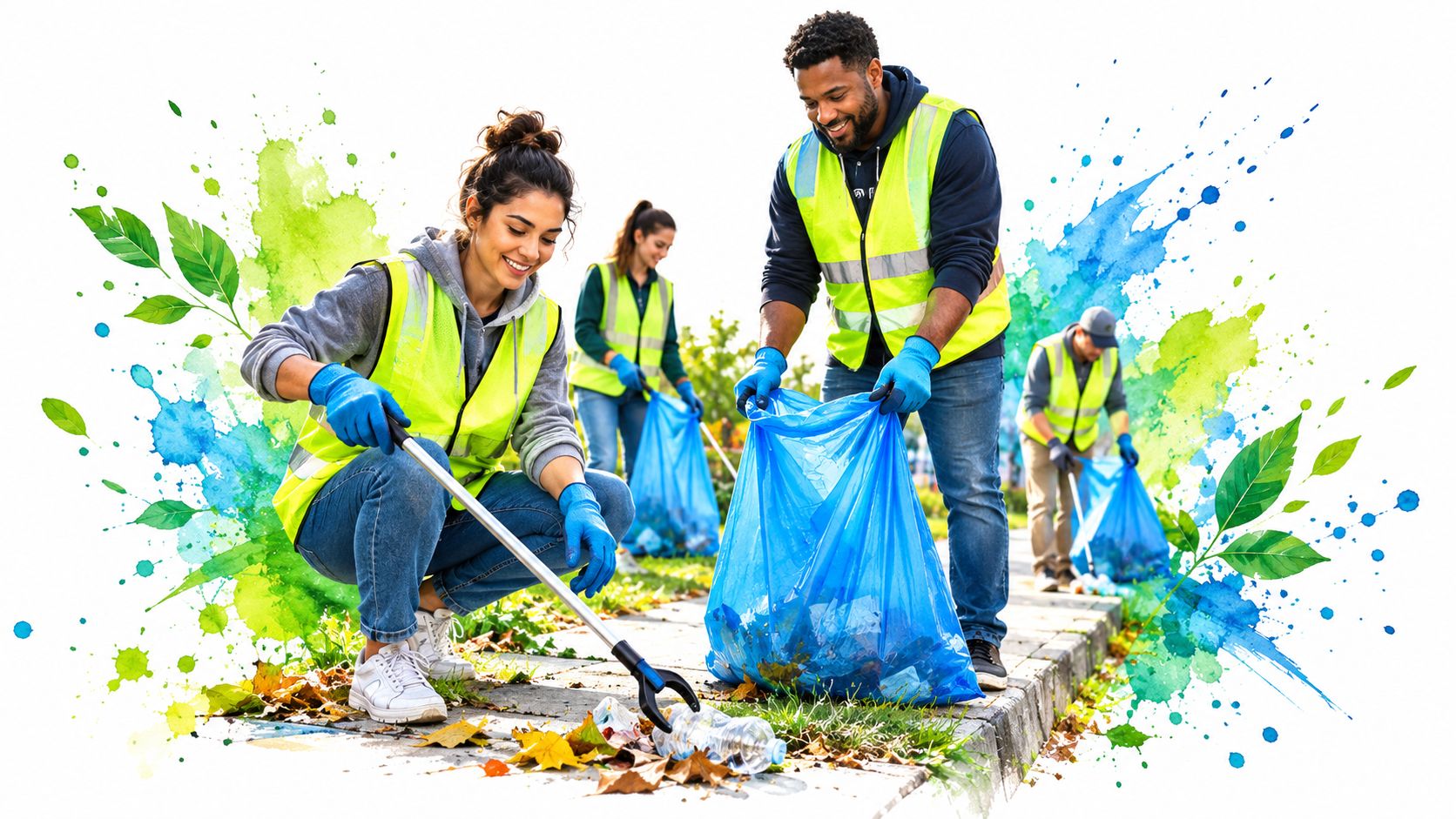
At sunrise on a Chicago curb, I once watched cigarette butts freeze into gray slush while a broken bottle glittered under the streetlights. Three volunteers laughed through numb fingers, and by 9 a.m. that ugly corner had become our meeting place.
Why Your Neighborhood Trash Cleanup Starts with a Story
People rarely join a neighborhood trash cleanup because they want another item on a civic calendar. They join because a place has become personal. Maybe your child found glass beside the playground. Maybe the alley behind your apartment collects fast-food wrappers after every windy night. Maybe you walk one block to the train each morning and finally decide you're done stepping around the same mess.
I learned to lead with that honest reason. I don't announce a grand campaign to clean an entire city. I say, “We're clearing the alley behind the school because kids use it every day.” That sentence gives neighbors something they can see, understand, and remember.
A small starting point also protects your crew from exhaustion. Choose one block, one alley, or one park strip. Set a defined radius, a two-hour window, and a volunteer cap that lets everyone talk to one another. A sprawling route creates confusion, weakens safety, and leaves new volunteers wondering whether their effort changed anything.
Give the cleanup a shape
Before you post an invitation, write down:
- The place: Name the cross streets, entrance, or alley.
- The reason: Explain who uses the space and what keeps bothering you.
- The promise: Describe what volunteers can finish during the event.
- The limit: State where the route ends and when everyone goes home.
That boundary matters for the work and for the story. A cleanup guide from A Rocha's litter cleanup manual recommends fixing the cleanup area before anyone starts, recording litter inside that agreed space, and noting hazards that need later attention. When you keep the boundary clear, you can compare one event with the next instead of relying on a vague feeling that the block looked better.
Let the first story recruit the second crew
At the end, take one group photo at the same landmark. Tell people how many volunteers came, how long they worked, and what they collected, if you counted or weighed it. Then post the story in plain language.
“Three people cleared the curb where the bus stop meets the viaduct. We found broken glass, food containers, and a tire. Next Saturday, we're taking the next block.”
That message feels reachable. It also filters out people who want a grand gesture without showing up for ordinary work. A tight first event gives committed neighbors a place to return, and it gives you a real story to share when you recruit again.
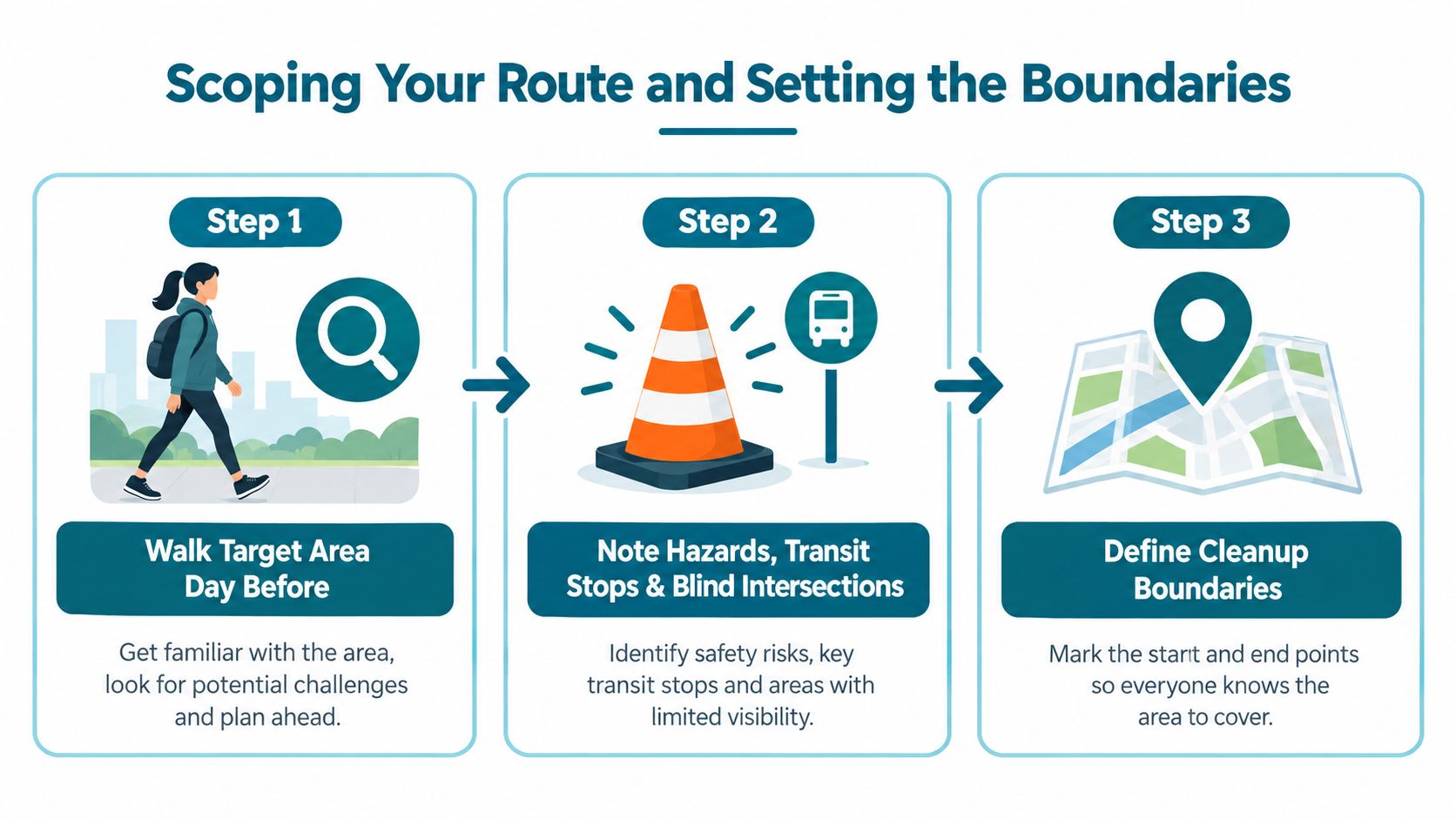
Scoping Your Route and Setting the Boundaries
Walk the target area the day before. I carry my phone, a small notebook, and a pair of work gloves because I want to see the route as a volunteer will see it, not as a map suggests. I note bus stops, alleys, drainage grates, steep curbs, blind intersections, broken pavement, and spots where cars move quickly.
Choose a meeting point that reduces friction. A library entrance, church lot, park shelter, or corner near legal parking can work. Look for shade in warm weather, shelter during rain, and restroom access when possible. Tell volunteers exactly where to meet, then send a map pin and the nearest cross streets in every announcement.
Build a route people can finish
A Saturday morning window between 8:00 and 10:00 a.m. gives people a clear commitment. Write the start and end time in the title, not buried in the description. I also divide the route into zones, then give each zone a color, a name, and a leader.
You can mark zones with colored tape on bags, a shared map, or simple cards:
- Red zone: the alley behind the apartments
- Blue zone: the park edge and nearby sidewalk
- Green zone: the bus stop and drainage line
A fixed boundary keeps your records useful. The cleanup manual linked above recommends counting items or weighing them, photographing the site, and preventing collected litter from spreading again through wind or animals. You can use a bathroom scale for bag weight, a tally app for item counts, and before-and-after photos from the same camera position.
Measure what you can repeat
Pick one measurement system before the event. Record volunteer count, volunteer hours, route length or area, bags, pounds, tires, and the exact boundary when those measures fit your event. Washington State reports about 38 million pounds, or 7 billion pieces, of litter each year, and its funded programs removed more than 5.2 million pounds while cleaning more than 18,000 roadway miles in 2024, according to Washington's litter prevention program. You don't need to copy a state program. You do need a record that lets you compare your own route.
For help thinking about how clear visual records can attract attention, review this real Instagram growth case study and borrow the discipline of consistent images, locations, and captions. Your cleanup numbers and photos can give city partners a reason to return your call.
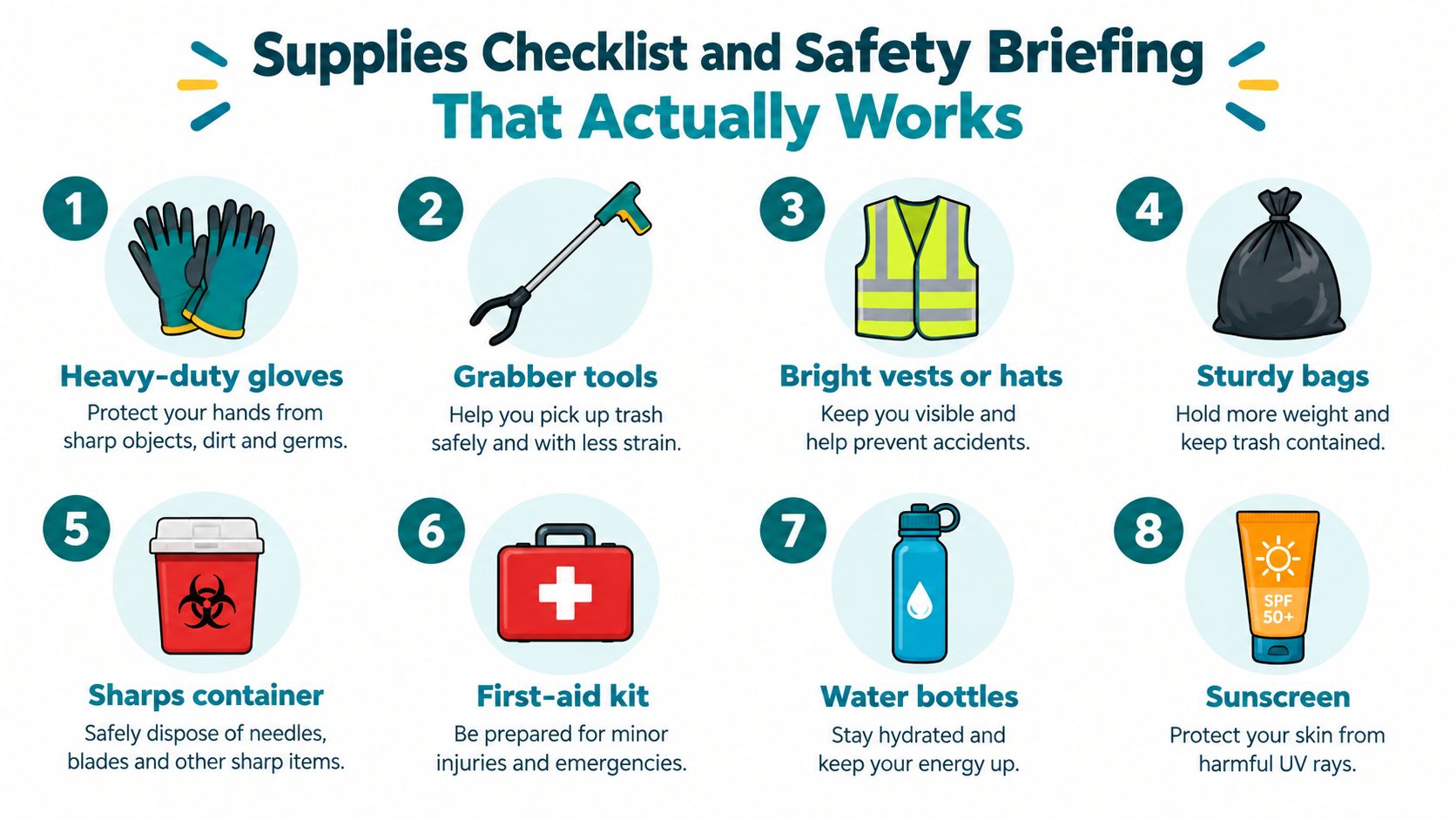
Supplies Checklist and Safety Briefing That Actually Works
I've seen a fun cleanup turn tense in seconds because someone reached toward a dark pile without looking. Pack for the strange object, the changing weather, and the volunteer who gets dizzy halfway through the route.
Bring heavy-duty gloves, grabber tools, bright vests or hats, sturdy bags, a sharps container, a first-aid kit, water, snacks, sunscreen, and a printed safety sheet. I also bring tape or flags for hazards, a marker, hand sanitizer, and a phone charger. If you need dependable stock for a larger event, compare in-stock trash bags before pickup day.
Keep the supply table where every volunteer can see it. A host guide from the Sanitation Foundation recommends arriving with tools and a first-aid kit, then giving a safety briefing before collection begins. That small pause changes the mood. People start with a shared plan instead of grabbing whatever sits closest.
Run the same five-minute talk
I use five plain rules:
- Use tools first: Pick up litter with grabbers or gloved hands only when you can see and control it.
- Leave danger alone: Don't touch needles, broken glass, propane tanks, leaking containers, odd-colored liquids, sanitary products, dead animals, or anything that may contain hazardous waste.
- Mark the location: Flag or photograph dangerous objects, then contact 311 or your local sanitation partner.
- Work with a buddy: Stay within sight of another volunteer, especially near traffic, ice, heat, slopes, or isolated lots.
- Stop early when needed: Send anyone who feels unwell back to the meeting point, offer water, and keep the first-aid kit there.
The Cobb County volunteer best practices guide advises safety vests, traffic awareness, grabbers or gloves, keeping hands away from the face, and placing waste in closable bags or containers with secure lids. A neighborhood trash pickup equipment guide can help you fill gaps in your equipment list before you invite people.
Tell volunteers what to do with bulky items too. They should photograph and flag mattresses, appliances, tires, and dumping piles instead of trying to move them. The briefing may feel repetitive after a few events. Repetition helps people react correctly when they uncover something dangerous.
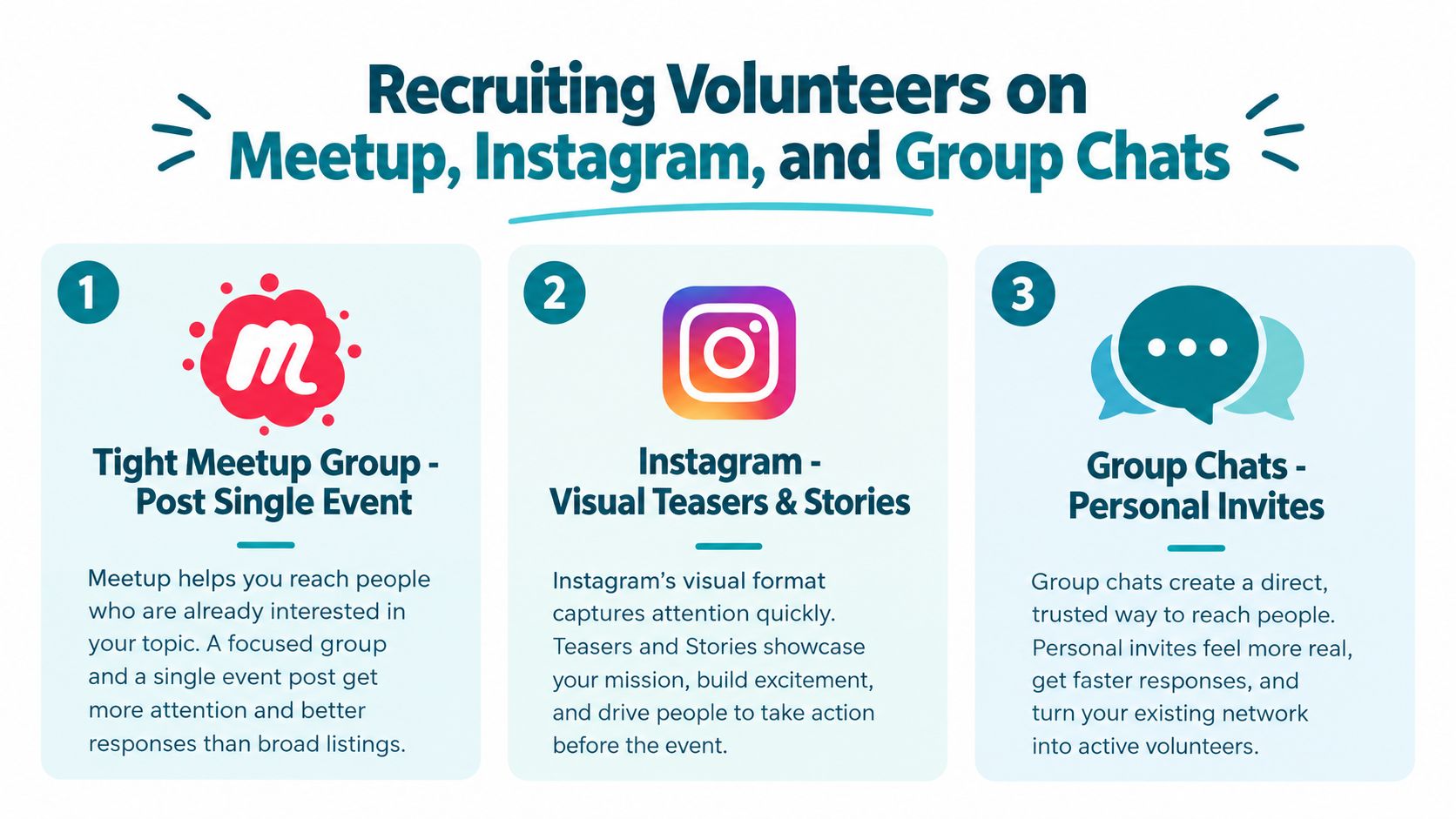
Recruiting Volunteers on Meetup, Instagram, and Group Chats
Your recruitment message should feel like a calendar entry from a friend, not a city press release. I use one recurring title, one meeting point, and one short promise. “Saturday 9 a.m. cleanup at 47th and Ashland, two hours, gloves provided” tells people enough to decide.
Meetup works when you build a tight group around a repeatable event. Keep the title consistent so returning volunteers recognize it immediately. Instagram works through contrast. Post the ugly curb, the half-filled bags, and the clean finish. Use short captions, tag the cross streets, and keep the same cover photo style so the event remains recognizable in a crowded feed.
Group chats fill the last spots fastest because a personal invitation creates accountability. I send the meeting pin, the weather note, and one direct question: “Can you take the blue zone this Saturday?” People answer faster when they know what you need from them.
Use the start time as a filter
I schedule weekend mornings because the time attracts people who want to give part of their weekend to the block. A 9:00 a.m. Saturday start also creates a useful rhythm. People can work, see family, or run errands afterward, while the crew gets the cooler air and the first light.
Ask for two hours, not an entire day. A small promise feels manageable, and volunteers can test the group without giving up every weekend. People who enjoy the work will return because they remember names, routes, and the breakfast stop.
Use the same details everywhere:
- Meeting pin: Place it at the exact entrance, not a general neighborhood label.
- Cross streets: Include them in the first sentence.
- Route limit: Tell people what you will cover.
- Weather rule: State whether you postpone or work in light rain.
- Reply method: Give one way to confirm attendance.
For more ideas on turning posts into direct volunteer invitations, use this guide to social media for volunteer recruitment. The aim isn't a giant list. You want a dependable group chat with people who answer, arrive, and help welcome the next person.
Partnering with Local Groups Without Losing Your Voice
Partnerships can give you supplies, permission, tables, coffee, disposal help, or access to a school and its families. They can also pull a simple Saturday cleanup into meetings, committees, logos, and approval chains. I decide based on the missing piece, not the partner's name.
A church basement may provide coffee and tables. A hardware store may trade gloves for a logo on your flyer. A city steward may arrange bags and a pickup route. A local nonprofit may help you reach a school. Each offer has a practical use, and each one needs a clear limit.
| Factor | Fully Independent | Partnered with Local Group |
|---|---|---|
| Decision speed | You choose the route and timing | You may need shared approval |
| Supplies | You buy, borrow, or collect them | A partner may provide equipment |
| Public access | You recruit through your own channels | A partner may open schools or lots |
| Disposal | You arrange pickup yourself | A city or sanitation partner may coordinate it |
| Voice | Your tone stays intact | Branding rules may shape the message |
| Attendance | You build the list gradually | A partner can bring an existing audience |
| Responsibility | You carry the planning load | You share tasks and expectations |
Use a short decision test
Partner when you need scale, permission, or disposal support. Stay independent when the work belongs to one block, one group of neighbors, and a weekly rhythm that already runs smoothly.
I once declined a sponsor that wanted a large logo but no one willing to arrive at 7 a.m. That deal would have added design work without adding hands. A business that supplies gloves, a nonprofit that sends volunteers, or a city contact who confirms pickup gives you something you can use on the curb.
Before you ask, write one page with the route, date, volunteer target, supplies needed, pickup plan, partner contribution, and recognition you'll provide. Say what you won't change. A partner should know whether you'll use its logo, invite its staff to speak, or just thank it in the recap. These local business support tips can help you frame a request around a real exchange rather than a vague sponsorship pitch. For a deeper planning framework, use this guide to community partnership development.
Turning Cleanup Day Into a Weekly Crew
A parent named Maya came to one cleanup because her child found broken glass near a playground. She planned to stay for a short while, finish the dangerous patch, and leave. The following Saturday, one volunteer remembered her name, another saved her a grabber, and someone handed her the coffee thermos before she asked.
Maya returned. She didn't return because the route got easier. She returned because the group made room for her.
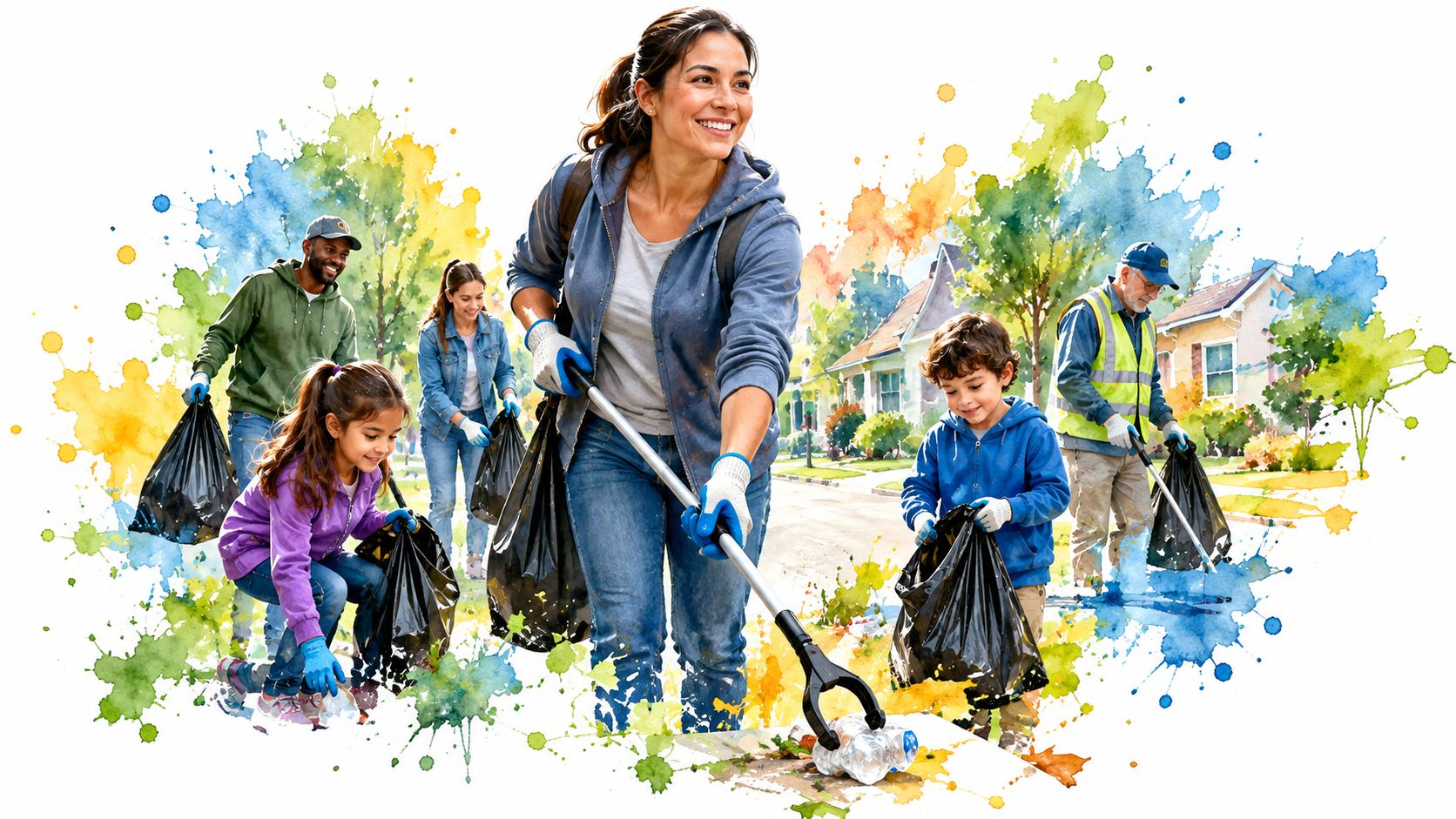
That small exchange taught me more about retention than any polished flyer. A weekly crew needs rituals that make people feel expected. We start at the same time, gather at the same landmark, and finish with a group photo. Someone brings a speaker. Someone chooses a theme song. Someone posts the haul in the chat like a scoreboard update.
Design belonging on purpose
Give the crew a name people can say easily. Use a flag on the pickup truck, matching shirts or armbands, and a shared playlist. These details may look playful, but they help strangers recognize one another when they arrive cold, tired, or unsure.
Practical rule: Remember one personal detail about every new volunteer, then use it at the next cleanup.
Choose a post-cleanup breakfast spot and treat it as part of the route. The meal doesn't need ceremony. The point is the conversation after the gloves come off. That's where a newcomer learns who lives nearby, who has a spare grabber, and who will answer the group chat during the next snowstorm.
The Litter Caterpillars group in Chicago uses weekly weekend cleanups, shared identity, and open communication through Meetup, Instagram, and group chats to help volunteers join neighborhood trash pickup across the city. You can copy the structure without copying the name. Your crew might be the Ashland Sweepers, the Blue Line Brush-Off, or six neighbors who meet beside the same bench every Saturday.
Friendship keeps people coming when the weather turns harsh. Pride helps them carry the bags when the route feels repetitive. A simple identity gives volunteers a reason to show up through blizzards, heat, and slow Sundays.
Your First Cleanup Weekend and What Comes Next
Your first Saturday should feel calm because you've already made the decisions that usually create confusion. Arrive 30 minutes early. Put the supply table at the meeting point, place bags and grabbers where people can reach them, mark the zones, and keep water and the first-aid kit visible.
The New York City volunteer cleanup guide recommends bagging collected trash and placing it at an intersection or address along the route. Another cleanup workflow asks volunteers to meet at a pre-arranged spot, review safety points, sign a waiver, return with bags, and weigh them before disposal. Use that simple sequence so the event has a clean beginning and finish.
Run the morning by the clock
| Time | Action |
|---|---|
| 8:00 a.m. | Set out supplies, confirm the route, and check the meeting point |
| 8:10 a.m. | Welcome volunteers and collect contact details or waivers |
| 8:15 a.m. | Give the five-minute safety talk |
| 8:20 a.m. | Send zone teams to their assigned areas |
| 9:20 a.m. | Check zones, replace full bags, and flag hazards |
| 10:00 a.m. | Bring bags to the pickup point and weigh or count them |
| 10:15 a.m. | Take the group photo and thank everyone |
| 10:30 a.m. | Wrap up, confirm disposal, and leave the site clear |
Record the number of volunteers, the time they worked, the bags collected, and the weight when you can measure it. Photograph the same landmark before and after. Keep your notes in one shared file so next week's leader can see which zone filled fastest and where litter returned.
Build the next four Saturdays
Week one establishes the route and teaches your crew the safety rhythm. Week two invites a local nonprofit to join one zone. Week three asks a coffee shop to sponsor donuts or provide a meeting point. Week four adds a second route only if the first one still feels manageable.
Keep the rules quiet and consistent. Start at the same time, finish at the same place, credit every volunteer by name when appropriate, and post the recap by evening. Your neighborhood trash cleanup becomes a habit when people know where to stand, who will greet them, and what happens after the last bag closes.
Litter Caterpillars helps volunteers find and join hands-on trash pickup events across Chicago, with weekend morning cleanups and supplies provided for neighborhood routes. Visit Litter Caterpillars to find the next cleanup, meet a crew, or bring your own block into the weekly rhythm.
Leave a Reply