
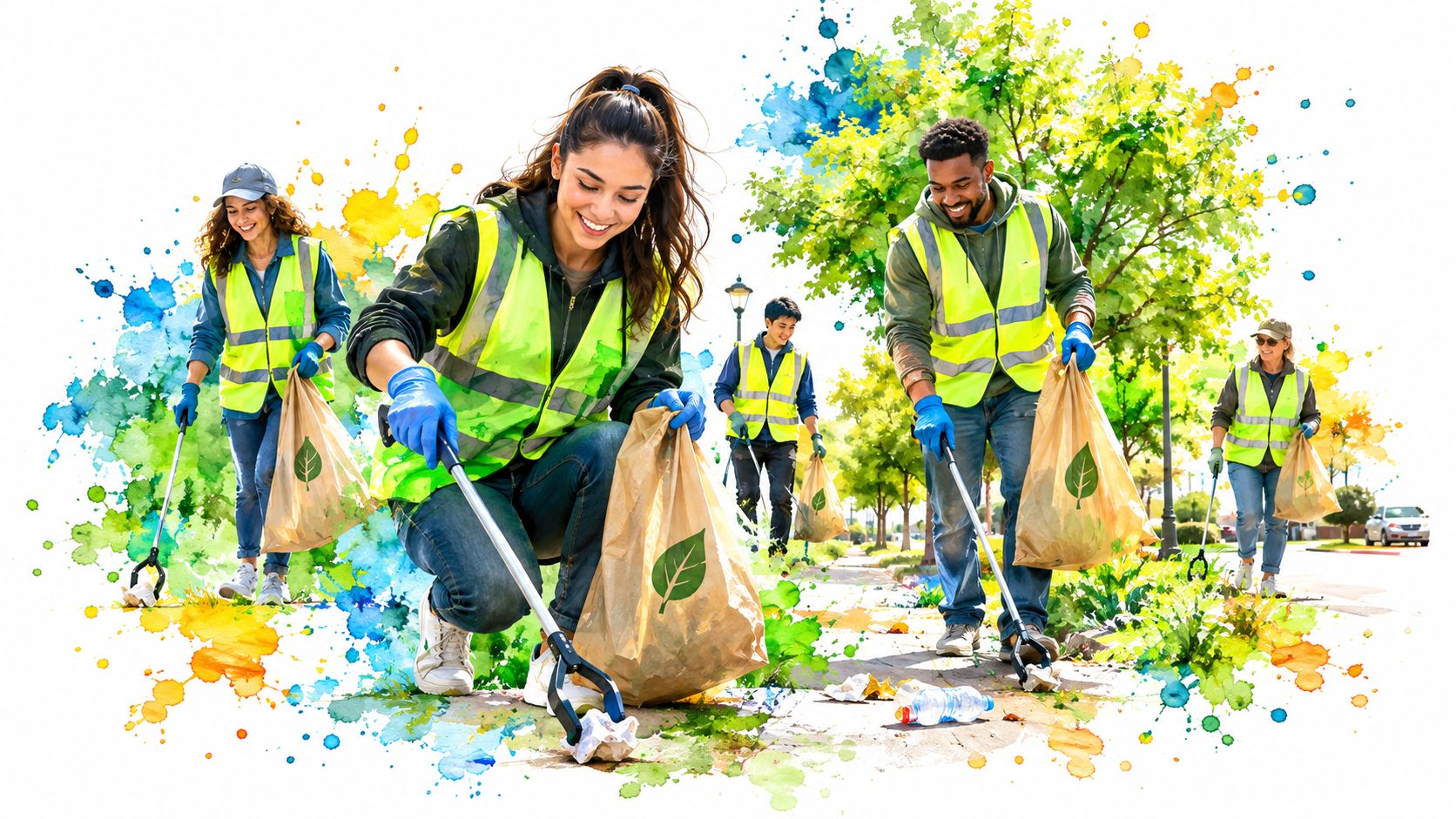
At our first cleanup, three people huddled under a tree while hail struck the sidewalk and every Uber canceled. We were cold, soaked, and laughing anyway. By the time we left, the street looked different, and so did we.
The Transformative Power of Picking Up Trash
A neighborhood cleanup day can begin with an awkward silence. People arrive carrying coffee, gloves, and the private worry that nobody will talk to them. Then someone reaches for the first bottle near the curb. Another person holds open a bag. A stranger points toward a tangled patch of weeds and says, “I'll take that side.”
The distance between neighbors shrinks through small acts. You don't need a clever introduction when you're both trying to pull a plastic wrapper from a fence. You don't need to perform confidence when a teammate hands you a litter grabber and says, “Try this.” The mess gives everyone a shared problem, and shared problems make conversation easier.
I learned that cleaning other people's messes can feel lighter than facing my own. The trash still looks ugly, but the work has motion. You bend, reach, laugh, and keep moving. A quiet volunteer may become the person who spots the sharp glass. Someone who arrived alone may leave with a new group chat full of weekend plans.
A neighborhood cleanup day should feel like a brave team adventure with bags, grabbers, and a common mission.
Give the group an identity before the event starts. Pick a name. Bring a flag. Choose a song for the opening huddle. Hand out simple badges or colored tape for team leaders. These details may look playful, but they help people step out of the role of “person who showed up” and into the role of teammate.
Turn a chore into a shared story
Tell volunteers what kind of day you're building. Say, “We'll take on one block together, look after one another, and leave with a story.” That sentence attracts people who want to give time and meet others, while it makes the expected mood clear.
You can borrow ideas from cleaning up trash guides, then make the event your own. Add a theme, a team photo, or a closing ritual. Ask every group to share one surprising object they found, one neighbor they met, or one moment when they chose courage over convenience.
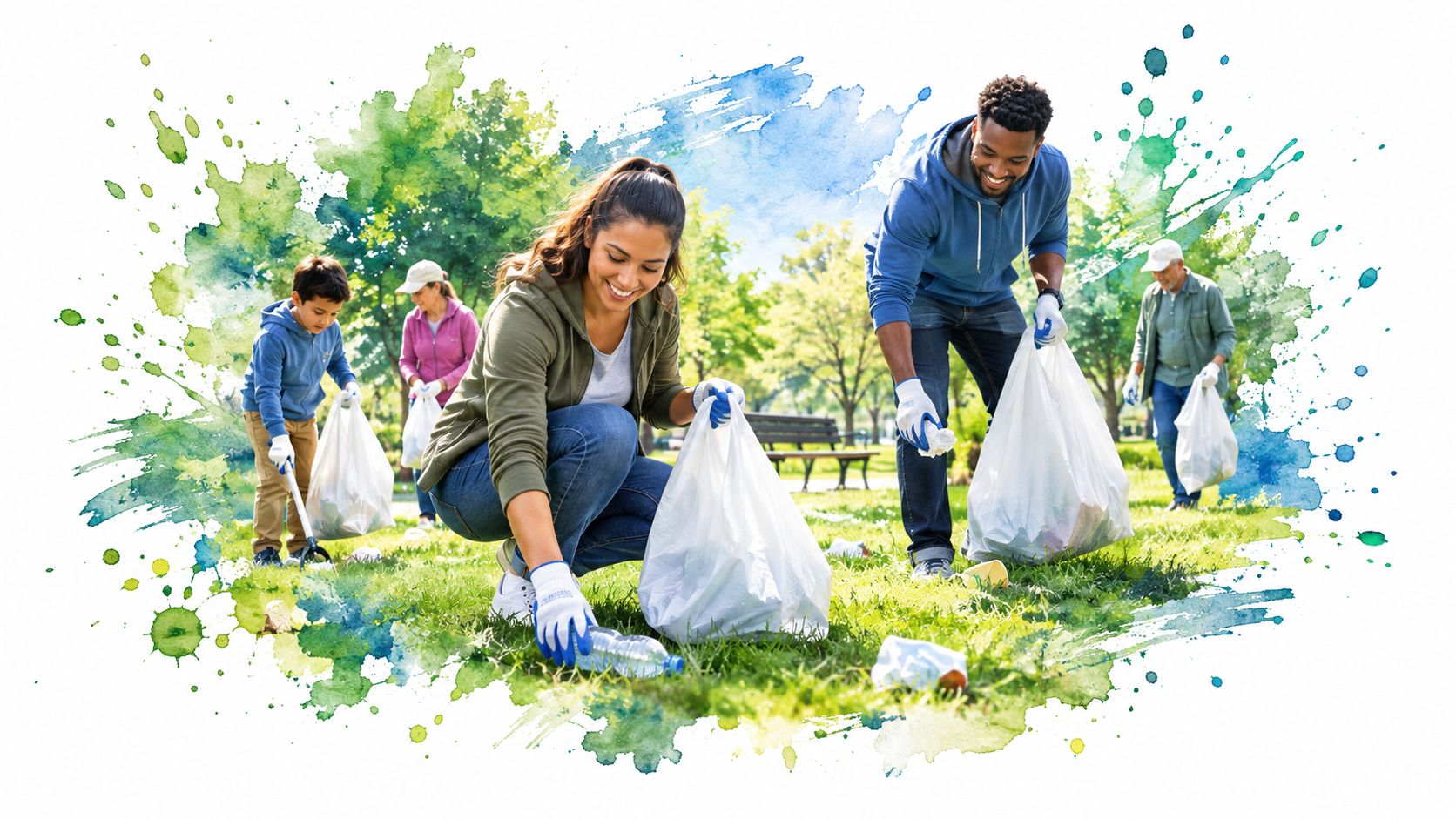
Estonia showed how a local cleanup can grow far beyond one street. In 2008, organizers set a goal to clear the entire country in five hours, mobilized 50,000 volunteers, and removed 10,000 tons of rubbish in one day. In 2019, the model reached more than 20 million people during the largest single cleanup day ever, as documented by End Plastic Waste.
Your event doesn't need that scale. It needs a first brave reach toward the bottle in the grass. Once people make that reach together, they often discover they can trust one another with harder things too.
Mapping Your Route and Gathering Gear
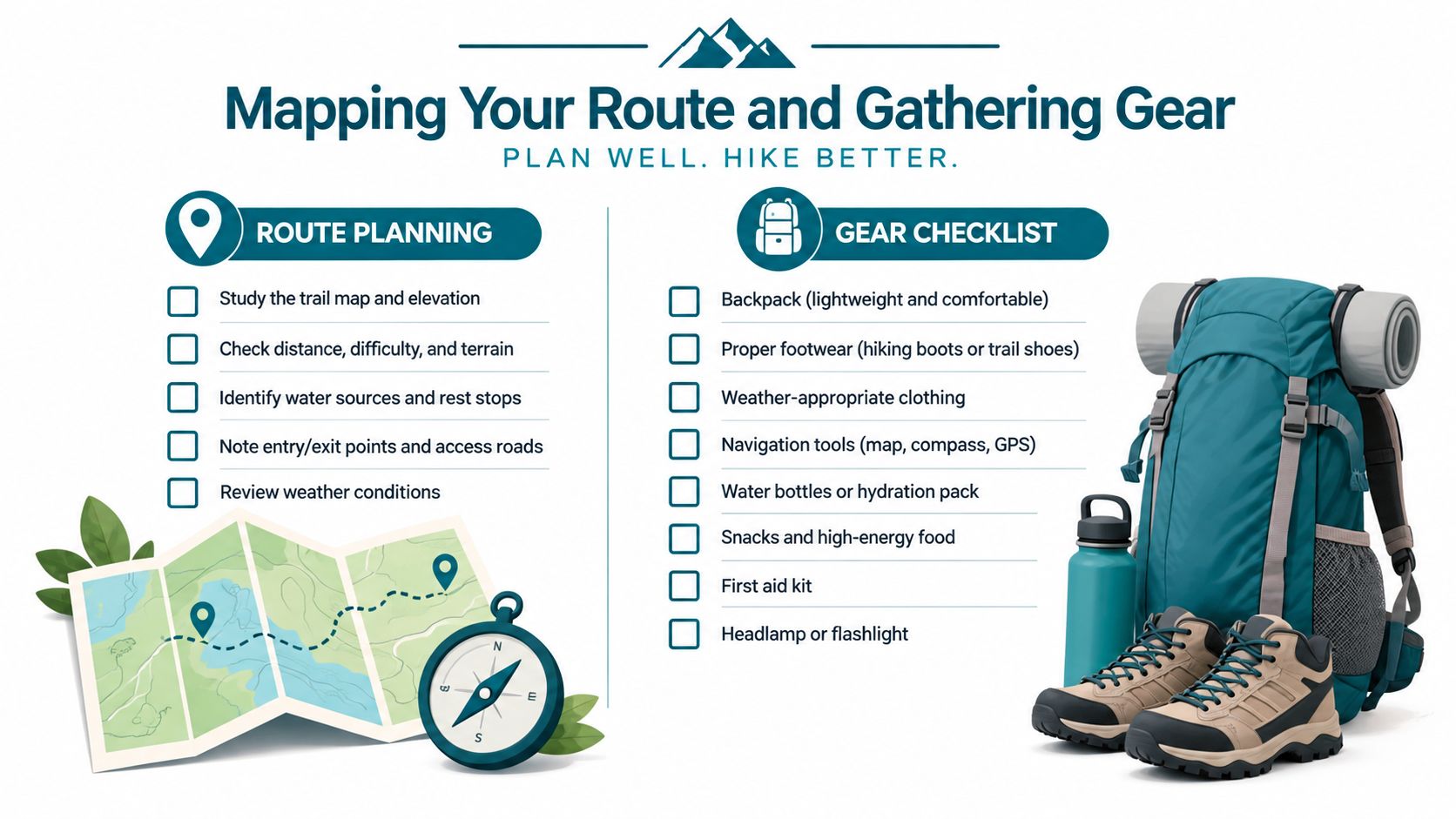
I never send volunteers into a cleanup area without a map. A map turns good intentions into a safe assignment. It shows where the work begins, where it ends, where people can gather, and which strips you'll leave alone.
Walk the route before you announce the event. Look for broken pavement, steep slopes, traffic, construction, utility equipment, private property, and places where volunteers might need to cross a road. Choose a zone that matches the age, mobility, and experience of your group. Keep each assignment short enough that people can understand it at a glance.
Contact the city, property owner, park office, or sanitation department before the morning arrives. Ask whether you need permission, where filled bags should go, and whether the city can collect them. Put the answers in writing and share them with your team leaders.
Build a route that protects energy
Assign short segments instead of handing everyone a huge area. A pair can cover one sidewalk, one park edge, or one defined block. Route planning also reduces needless walking between supply points and work zones. If you're coordinating vehicles or moving equipment, this practical guide to lower fuel costs field operations can help you think through efficient movement.
Use a simple supply station. Set out bags, gloves, grabbers, vests, water, first-aid materials, and a clipboard. Label bags for ordinary litter and separate containers for items that need special handling. Keep a phone list for the event leader, route captains, and the person handling disposal.
The night before, place every item beside the door or load it into the vehicle. Count supplies twice. Put maps into clear sleeves if rain threatens. Review trash pickup equipment before buying or borrowing tools, especially if you're building a reusable kit.
Pack the field kit
- Visibility: Give each participant a high-visibility vest when the route brings them near moving vehicles.
- Hand protection: Use sturdy gloves that fit well and keep a spare supply at the check-in point.
- Reach tools: Provide litter grabbers so volunteers can lift debris without placing hands into hidden weeds.
- Collection bags: Bring more bags than your first estimate, then keep full bags away from walking paths.
- Route materials: Carry printed maps, markers, tape, a phone, and a first-aid kit.
- Weather supplies: Add water, sun protection, rain layers, and a clear cancellation plan.
A clean route makes volunteers feel cared for before they pick up anything. They see boundaries, tools, and a leader who prepared. That confidence frees them to talk, work, and look after the person beside them.
Recruiting Dedicated Volunteers and Setting Rules
Your invitation should tell the truth about the work. Say where people will meet, what they'll carry, what they should wear, how long the activity will last, and what happens when the weather turns unpleasant. A vague invitation attracts vague expectations. A clear one attracts people who can make a real promise.
Weekend mornings work well for this kind of group because they create a calm start and ask volunteers to choose service before other plans. I use language that filters for reliability without shaming anyone:
“Bring clothes you can work in, closed shoes, water, and a willingness to stay with your team. We'll clean a defined route, follow safety rules, and leave together.”
Send that message in the group chat, event listing, and reminder. Ask people to confirm their attendance. The signup list helps you assign teams, prepare gear, and contact anyone who hasn't checked in.
Create a culture before the first bag
Use a simple welcome script:
“Thanks for coming. Today we protect people first, then we collect litter. Stay with your partner, follow your route, and ask before you touch anything unusual. We'll work hard, talk to one another, and stop when a leader calls us back.”
That script makes kindness practical. A volunteer who feels tired can say so. A new arrival gets a clear place to stand. A team leader knows that keeping people safe matters more than filling another bag.
A community engagement system can help you organize invitations, reminders, attendance, and follow-up without letting the human part disappear. Keep one open channel for questions and one message thread for event logistics.
Set youth rules in plain language
Follow the rules that govern your route and partner organization. North Carolina DOT says participants must be 12 years old to join a cleanup, and groups with participants ages 12 to 17 need one or more adults age 21 or older supervising them, according to its safety rules and guidelines. The same guidance calls for daylight work and small groups.
Tell parents exactly where children will work. Keep youth away from major traffic areas and intersections. Give every young volunteer an adult contact and a partner, then keep the assignment narrow enough for steady supervision.
For more recruiting ideas, see how to find volunteers. The best volunteer roster isn't the longest one. It's the group that arrives ready to give, listens when you call a pause, and leaves with enough energy to return.
Running a Safe and Disciplined Event Day
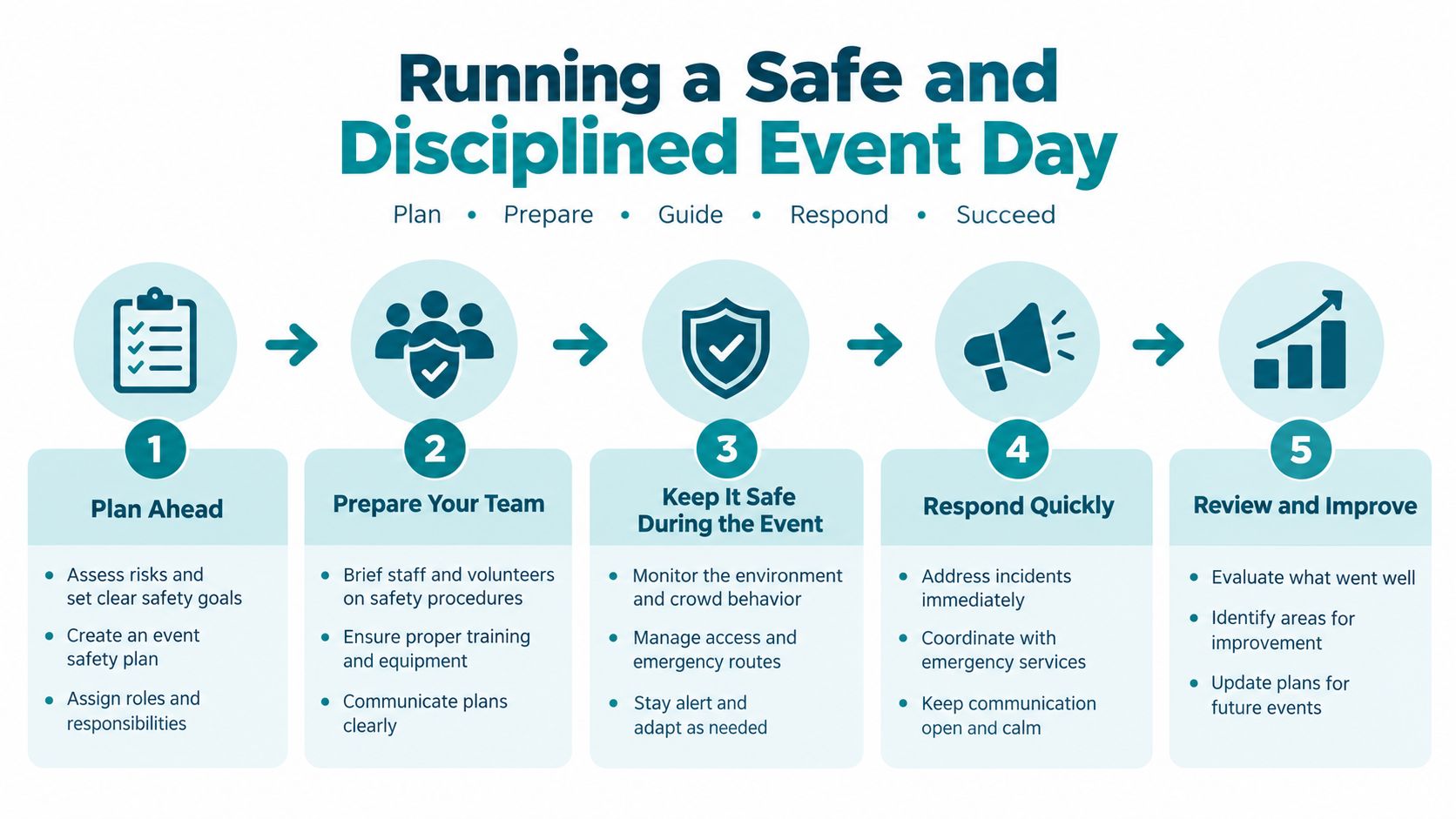
The first ten minutes shape the entire morning. I check everyone in, hand out gear, show the route map, and run the safety briefing before anyone touches litter. Then I place volunteers into pairs or small teams and send them out only after each person knows where to work.
A safe cleanup zone has a hard edge. Seattle's volunteer guide says to avoid the roadway, median, roundabout, bridges, steep slopes, guardrails, construction sites, and utility sites, while staying on public property. If reaching a wrapper requires crossing traffic or stepping onto an unstable edge, leave the wrapper and choose another spot.
The rule may feel strict until you see how quickly a simple task can pull someone toward danger. A volunteer notices a bottle near a guardrail, then leans farther, then steps onto loose ground. A map and a firm boundary stop that sequence early.
If you need to cross traffic or enter risky ground, stop. The litter can wait.
Use a clear hazard decision tree
Ask volunteers to sort what they see into three groups:
- Ordinary litter: Use a grabber or gloved hand for safe items that sit clearly on stable ground. Place them in the correct bag.
- Sharp or broken items: Use tongs, a broom, and a dustpan when your local rules allow it. Annapolis advises those tools for broken glass and razor blades, and it recommends working in pairs through its checklist and safety tips.
- Unknown or hazardous items: Leave needles, batteries, dead animals, and unknown materials alone. Crystal Lake's guidance also says to stop during extreme weather and avoid high-traffic areas during peak traffic hours.
Never compress a bag with your hands. Greenville County's rules require orange safety vests and gloves, discourage headphones because they block traffic sounds, and tell volunteers to face oncoming traffic while working on one side of a road at a time. The same volunteer safety guidelines ban horseplay and knives, machetes, or similar tools.
Keep a leader at the supply station and have route captains check in at set points. If weather worsens, traffic rises, or a volunteer feels unwell, the captain pauses the team and calls you. You can also study the planning habits used in collaborative tree removal workshops, where teams coordinate tools and people around outdoor hazards.
Discipline doesn't make the morning cold. It lets people relax because they know someone is watching the edges.
Tracking Impact and Celebrating the Win
When the bags reach the collection point, I don't end the event. I gather the story while it's still fresh. A pile of bags tells you that volunteers worked. A simple record tells you where they worked, what they found, and what the neighborhood needs next.
Keep the form short. One route captain can collect the information while another person manages disposal. Ask each team to report its route, volunteer count, work time, bag count, unusual litter, and any location that needs city attention.
Essential Cleanup Day Metrics
| Metric | Why It Matters | How to Collect It |
|---|---|---|
| Route or site | Shows where volunteers worked and where litter gathers | Mark the assigned segment on a printed map |
| Volunteer count | Records participation for reports and future planning | Check people in and confirm team rosters |
| Volunteer hours | Shows the labor your group contributed | Record team size and start and finish times |
| Litter categories | Shows what keeps appearing | Use simple labels, then tally items at the station |
| Bag count and disposal point | Confirms what your team moved and where it went | Count filled bags and record the handoff location |
| Hazard locations | Gives city staff a precise follow-up list | Note the address or map point without touching the item |
| Before-and-after views | Helps neighbors understand the change | Take photos from the same position and angle |
Keep the categories usable. If a volunteer needs a long explanation to log an item, the form has too many fields. The data should move quickly from a clipboard to a shared sheet.
Turn records into a neighborhood conversation
Cleanup guidance increasingly asks organizers to track what they collect, where they find it, and how many people participate. Those records can support grant applications, city coordination, and repeat-event planning, as described in guidelines for cleanup events.
The scale of cleanup work in the United States shows why usable records matter. Keep America Beautiful reports that over 60,000 community cleanup events took place nationwide in 2025, with volunteers cleaning more than 94,000 public spaces. Its prior-year dataset records over 400,000 volunteers, more than 2.9 million volunteer hours, and more than 64,000 events, all from Keep America Beautiful's litter data.
After the final count, serve food, play your theme song, and let volunteers tell their stories. Thank the person who came alone. Thank the child who stayed focused. Thank the route captain who noticed the broken glass. Pride grows when you name the work people did.
Building a Lasting Community Habit
A single cleanup can give people a good morning. A regular rhythm gives them a place to return. I've watched friendships form through repeated routes, shared gloves, bad weather, and the small jokes that only make sense after a team has carried full bags together.
Choose a recurring day and keep the meeting point familiar. You don't need a new concept every time. People return because they know who will be there, what the work feels like, and how to join without explaining their whole story.
Let the group carry the group
Rotate the jobs. One person can lead the safety talk, another can map the route, another can manage supplies, and another can record the results. Give new volunteers a small responsibility early, such as welcoming arrivals or marking completed segments.
Open group chats help people stay connected between events. Use them for route ideas, weather updates, photos, and practical questions. Keep the tone warm and direct. A message like “We're meeting by the library Saturday morning, bring gloves and a layer” does more than a polished announcement because it sounds like a friend making a plan.
Litter Caterpillars organizes volunteer trash pickup events around a meeting location and shared neighborhood work. That model can help you build a group where service and friendship grow beside each other.
Protect the people who keep showing up
Burnout often begins when one organizer carries every task. Watch for the person who arrives early, stays late, answers every question, and never asks for help. Hand them a role with a clear limit, then give that role to someone else at the next event.
Weather also tests the group. Set a cancellation rule before the forecast turns difficult. You can work in suitable conditions, but you don't need to prove courage through unsafe exposure. Bravery means respecting the boundary and returning when the route is safe.
Keep celebrations modest and consistent. Share a before-and-after photo. Post the route record. Ask volunteers what they want to tackle next. Give people a reason to remember the morning as a chapter in their own lives, not as another task they completed.
A neighborhood cleanup day becomes a habit when people associate it with trust. They know the leader will protect them, the team will notice them, and the work will leave a visible trace. Set the next date before everyone leaves, then send the invitation while the gloves are still drying.
Litter Caterpillars helps volunteers gather at a designated meeting place, clean neighborhoods together, and build friendships through recurring trash pickup events. Visit Litter Caterpillars to find a cleanup, learn how to start one in your area, and take your first shared step toward a cleaner block.
Leave a Reply