At 9 a.m. on a Saturday, three strangers huddled under a picnic shelter while hail rattled off the roof. Their trash bags were half full, their Uber kept canceling, and by lunchtime they had exchanged numbers, shared a poncho, and made plans to meet again.
The Hail Storm That Started a Friend Group
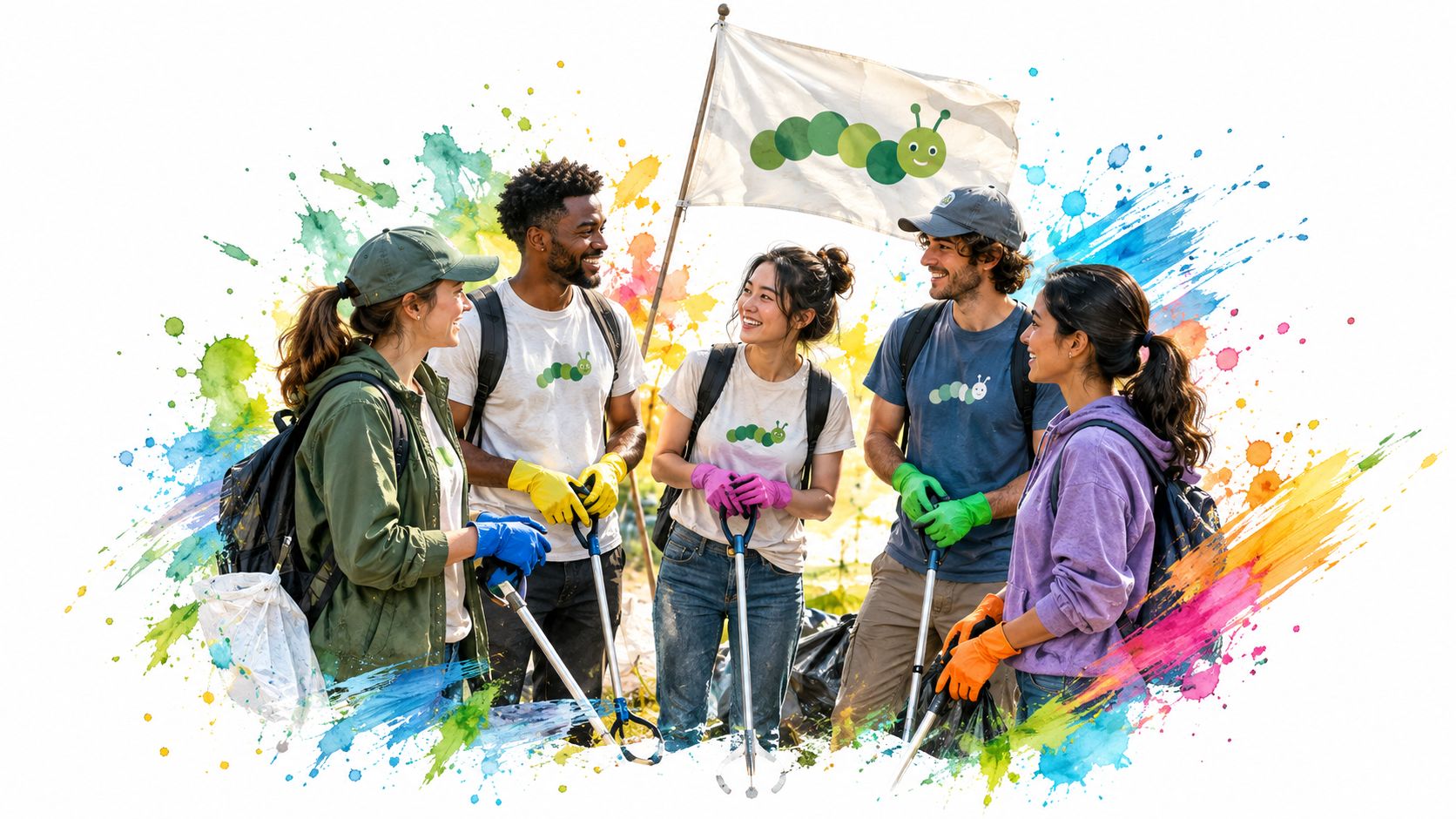
The first cleanup had all the polish of a bad adventure. Three people arrived at a park, found a flag with a caterpillar on it, and started collecting bottle caps, food wrappers, and damp cardboard. Nobody knew each other. The morning felt ordinary until the sky turned white.
Hail hit the path hard enough to make everyone run for the picnic shelter. Three newcomers squeezed onto one bench. One person held the grabbers, another tried to keep the bags from blowing away, and a third stared at a phone while an Uber driver canceled again.
The problem gave them something to solve together. They compared ride options, messaged people in the group chat, and called someone who might drive over. Someone passed around a poncho. Someone else started humming the Litter Caterpillars theme song, which made no practical sense and somehow made the storm easier to take.
Twenty minutes earlier, these people had been strangers. Under the shelter, they became a small crew with a shared problem, a shared joke, and a reason to keep talking after the weather cleared. They swapped phone numbers so nobody would get stranded. Later, they drank coffee and retold the story with exaggerated sound effects.
That pattern explains why volunteer community connections often last longer when the event gives people room to meet before they work. The trash creates an excuse. The flag gives people a place to find one another. A Saturday morning gives the group a repeatable rhythm. The friendships grow in the gaps between tasks, during the walk to the next block, and while somebody searches for a missing glove.
The scale of volunteering supports this local, relationship-based view. The United Nations Volunteers analysis summarized by NCVO reports that more than 1 billion people volunteer worldwide, with work equal to about 109 million full-time workers. Roughly 70% of volunteer activity happens informally, between people in their communities rather than through organizations. Women perform 57% of all volunteer work and 59% of informal volunteering, which connects volunteering closely to everyday neighborhood and care networks.
The flip: Design the event so connection leads and cleanup follows. People may arrive for the litter, but they return for the people.
Finding Your Volunteer Group Without Wasting Saturdays
You don't need to spend every weekend testing random events. Use a short search path that tells you whether a group values repeat attendance, easy entry, and conversation.
Start with the schedule
Open Meetup and Eventbrite and search for “park cleanup,” “neighborhood beautification,” and “volunteer community connections.” Filter for weekend morning slots within a 20-minute drive of your home. A nearby event lowers the small friction that turns good intentions into a missed Saturday.
Read the listing twice. Look for a recurring schedule, a clear meeting point, a named organizer, and a signup form that doesn't make you feel as if you need to justify your interest. The Litter Caterpillars Saturday volunteer page is an example of the kind of recurring weekend information that helps a newcomer decide quickly.
Check the group before you arrive
Search Instagram and TikTok for local handles posting trash-bag selfies, flags, park photos, and short clips from actual meetups. Comment on a recent post before you attend. Write something simple, such as, “I'm planning to join Saturday. Is the blue flag near the north entrance?”
That comment does two jobs. It tells the organizer you're real, and it gives you a familiar name to look for when you arrive. You don't need a polished introduction. A small online exchange can make the first in-person greeting less awkward.
Read the signals
| Marker | Strong Signal | Red Flag |
|---|---|---|
| Schedule | Recurring weekend mornings with a clear start time | Vague dates or frequent last-minute changes |
| Signup | A short, low-pressure form | Donation asks before you can attend |
| Communication | Open group chat for weather and ride updates | No contact method after registration |
| Welcome | Instructions for newcomers and families | Assumption that everyone already knows the route |
| Equipment | Clear notes about gloves, grabbers, and bags | Volunteers expected to guess what to bring |
Look for an open group chat and join it the morning of the event. Groups with a Litter Caterpillars-style setup use chat to post cancellations, weather calls, ride-share options, and coffee plans. That last detail matters. A cleanup can end when the bags reach the pickup point, or it can continue at a nearby table.
Copy and send this DM:
Hi, I'd like to join your next cleanup. What's your rain policy, and do you provide gloves, grabbers, and bags? Are families welcome, and where should I meet the group?
A good answer should make the first visit feel manageable. If the response sounds annoyed by basic questions, keep searching. Your Saturday should buy you a useful morning and a chance to meet people, not a guessing game.
First Meetup Moves That Turn Strangers Into Friends
A newcomer can stand in a group of twenty people and still feel invisible. I prevent that with visible signals and short, repeatable introductions.
Before people arrive, I choose something that helps us spot new faces. Colored gloves work well. So do bright grabbers, name stickers, or a small marker beside the signup sheet. When a newcomer walks up, a returning volunteer should greet them by name within two minutes.
Pair people before assigning tasks
Don't send a first-timer down a path alone with a trash bag. Pair them with a returning volunteer for the first 15 minutes. The returning person can explain the route, show where sharp objects go, and keep the conversation moving while both people work.
Use the two-question handoff:
- Ask where the person lives.
- Ask what brought them out today.
- Introduce them to one other person by name.
The questions stay easy, but they open doors. Someone might live three blocks away, study at a nearby college, care for a parent, or know a coffee shop nobody else has tried. You don't need a forced icebreaker. You need a path from one name to another.
Try this organizer script:
“Hey, this is Maya. She's new and loves trail running. Can you show her the creekside loop?”
The returning volunteer now has a clear job, and Maya has a person to follow. The introduction also gives the second volunteer a useful detail to remember.
Make contact exchange feel normal
Many people want to continue the conversation but hesitate to ask. Give them a natural line:
“Can I grab your number? Our crew sometimes gets tacos after. Want in?”
A phone number isn't a friendship contract. It keeps the door open for the next cleanup, a ride-share, or a quick coffee. If someone prefers the group chat, let that work too.
At the end, take a same-day group photo and post it in the chat with names attached. “Saturday crew, Maya, Luis, Priya, and Devon” gives faces a second chance to stick. Then start a standing Tuesday lunch thread. It can survive a rainy weekend and keep the group from disappearing between events.
Volunteer participation already creates repeated contact for many people. In NCVO's Time Well Spent findings, 89% of volunteers said they had met new people through volunteering, 78% had come into contact with people from different backgrounds, and 68% said volunteering helped them feel less isolated. The same survey reports that 77% said volunteering improved their mental health and wellbeing. Your job as an organizer is to turn those possible encounters into actual introductions.
Safety and Logistics as the Retention Engine
A soaked volunteer once arrived at our cleanup with no gloves, no clear meeting point, and no idea when the morning would end. She left after twenty minutes. People remember whether an organizer respected their time, explained the plan, and helped them get home. Those details turn a first cleanup into a second RSVP.
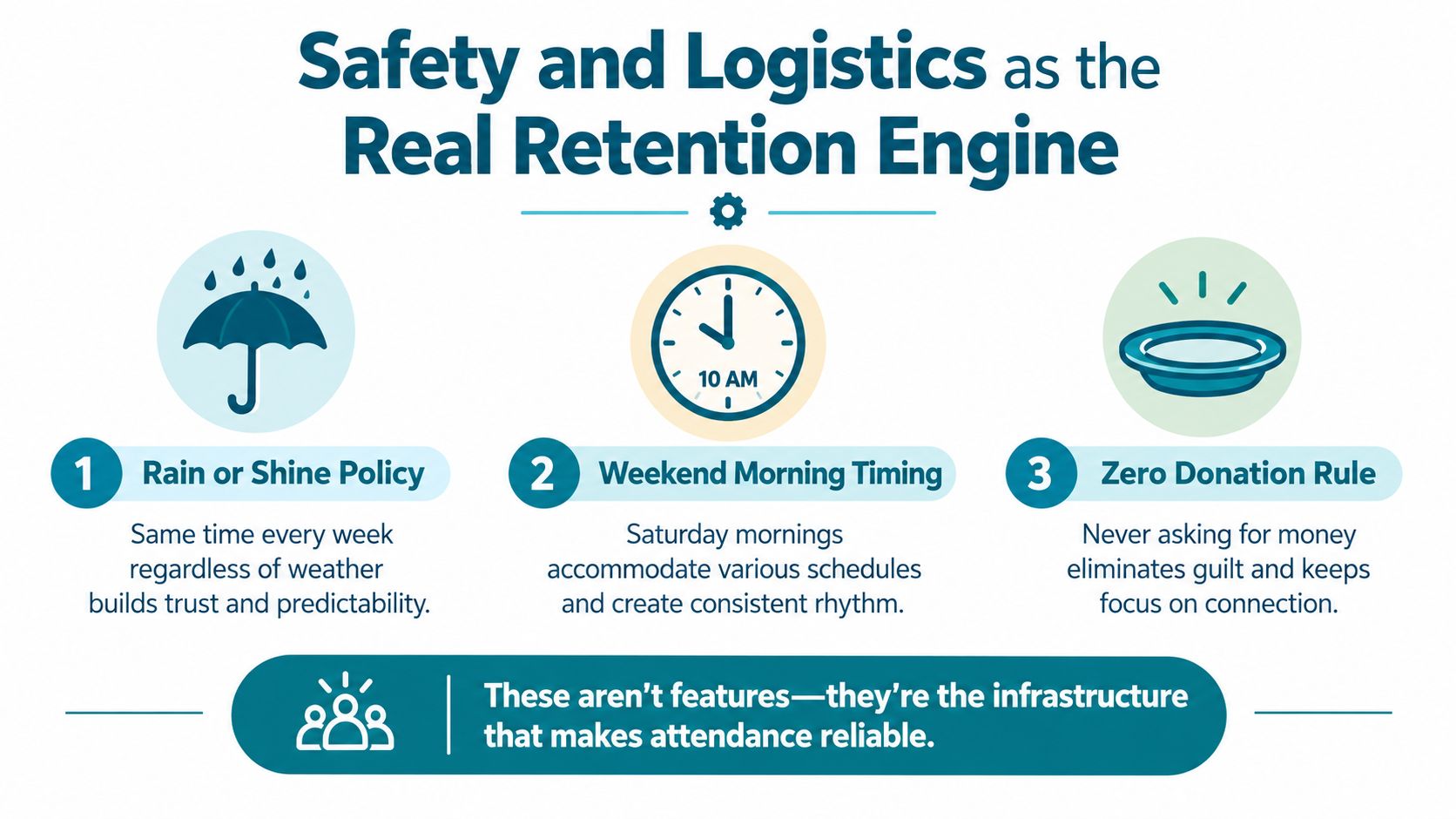
Litter Caterpillars keeps its weekend-morning rhythm, flags, and theme songs, while leaving room for judgment when weather turns unsafe. A rain-or-shine promise should never mean standing outside through dangerous conditions. Weekend mornings also leave the rest of the day open for family duties, classes, shifts, or evening plans. A zero-donation rule removes the awkward question of whether a college student or gig worker is expected to pay to attend.
The neighborhood cleanup guidance from STOHub recommends planning around weekend schedules and setting a backup date for weather changes. People can plan when the rhythm stays predictable. They also trust the organizer more when a clear weather decision arrives before they are left waiting.
Build the morning before the morning
Send a meetup pin 24 hours ahead. Include the nearest entrance, transit stop, and a landmark people can recognize from the street. State whether volunteers need gloves, water, closed shoes, or a reflective layer.
Use the group chat for ride-shares, weather calls, and late arrivals. Assign every newcomer a buddy before the first bag fills. If someone arrives alone, a volunteer should walk over and bring them to the group, rather than pointing from across the park.
The hailstorm crew showed why these choices matter. Uber drivers kept canceling, and nobody asked for money. Volunteers shared what they had, searched for rides home, and stayed together until each person had a safe option. The weather made the morning difficult, but the group did not leave one person to solve the problem alone.
The Urban Institute volunteer management paper points to recognition, training, screening, professional development, and task matching as support for retention. Put that into practice by assigning a safe task that fits the volunteer, explaining it clearly, and recognizing the effort before departure.
Retention test: If a newcomer can find you, understand the plan, get home safely, and know how to join again, your logistics are doing social work.
Designing Events So Connection Comes Before the Task
I've watched volunteers arrive early, work hard, and leave without learning a single name. The bags looked good at the end, but the group felt temporary. Pride changes that. When people feel they belong to a crew, they carry the memory of the morning with them.
Start the social part before cleanup. Put the flags where people can see them from the path. Play a shared theme song from a Bluetooth speaker at the welcome circle. Take the group photo before anyone picks up a grabber. Recognize first-timers by name, then give them a small job that lets them participate immediately.
Put the welcome before the work
Use a two-minute pair-up. Ask each person to share why they came, then have partners introduce each other to the circle. Keep the prompt practical: “What brought you here today?” and “What part of the neighborhood do you know best?”
A theme song can feel silly until you see what it does. People hum while they work. They laugh when someone misses a lyric. The cleanup stops feeling like a silent chore and starts feeling like a shared activity with its own identity.
Give first-timers a named recognition moment:
“Before we split up, let's welcome Maya, Luis, and Priya. They're joining us for the first time, and they're taking the creekside loop.”
That sentence doesn't flatter people with vague praise. It gives them a place in the story of the day.
Let coffee carry the friendship
Choose a nearby coffee shop before the event and mention it during the welcome. The destination gives people a simple reason to stay after the work ends. Over coffee, conversations move away from litter and toward jobs, hobbies, neighborhoods, food, and plans.
A rotating host keeps the same three people from carrying every introduction and every mood lift. One week, the photo lead welcomes arrivals. The next week, the supply runner brings the coffee list. Another volunteer picks the song and takes the group photo.
The friendship-building activities from Litter Caterpillars can help organizers turn a cleanup into a social event with simple shared rituals. The point isn't to pack the morning with games. It's to create enough structure that people don't have to manufacture connection from nothing.
The evidence supports this design choice. A 2025 study on volunteering and social connection describes low-formality social activities where relationships can form spontaneously and on more equal footing. A cleanup already has shared work. Add a welcome circle, a partner task, and a post-event table, and you give those relationships places to begin.
Your 30 60 90 Day Plan for a Volunteer Circle That Lasts
Friendship usually needs a rhythm before it needs a grand gesture. I use a 30, 60, 90-day plan because it turns a hopeful first visit into a series of small actions.
Days 1 through 30
Attend the first three events you can manage, and aim to show up at least twice. Learn two names beyond your own. Exchange contact information with one or two people through the group chat, then use it for something concrete, such as a ride-share, coffee plan, or reminder about the next route.
Don't wait until you feel fully included. Return while the first names still feel fresh. Repetition makes the greeting easier for everyone.
Days 31 through 60
Deepen the connection by proposing a side hangout. Suggest coffee, tacos, a walk, or a shared lunch after cleanup. Join a small role, such as the photo team, supply runner, welcome host, or route checker.
Attend one social event that isn't a cleanup. That change of setting helps you see people as more than task partners. You may discover that the person who sorts gloves also knows every independent bookstore nearby.
The volunteer retention strategies from Litter Caterpillars give organizers a practical place to build this rhythm into their events.
Days 61 through 90
Anchor yourself by co-hosting an event. Bring a friend, welcome a newcomer, or mentor someone through their first meetup. Take ownership of one small responsibility, not the entire morning.
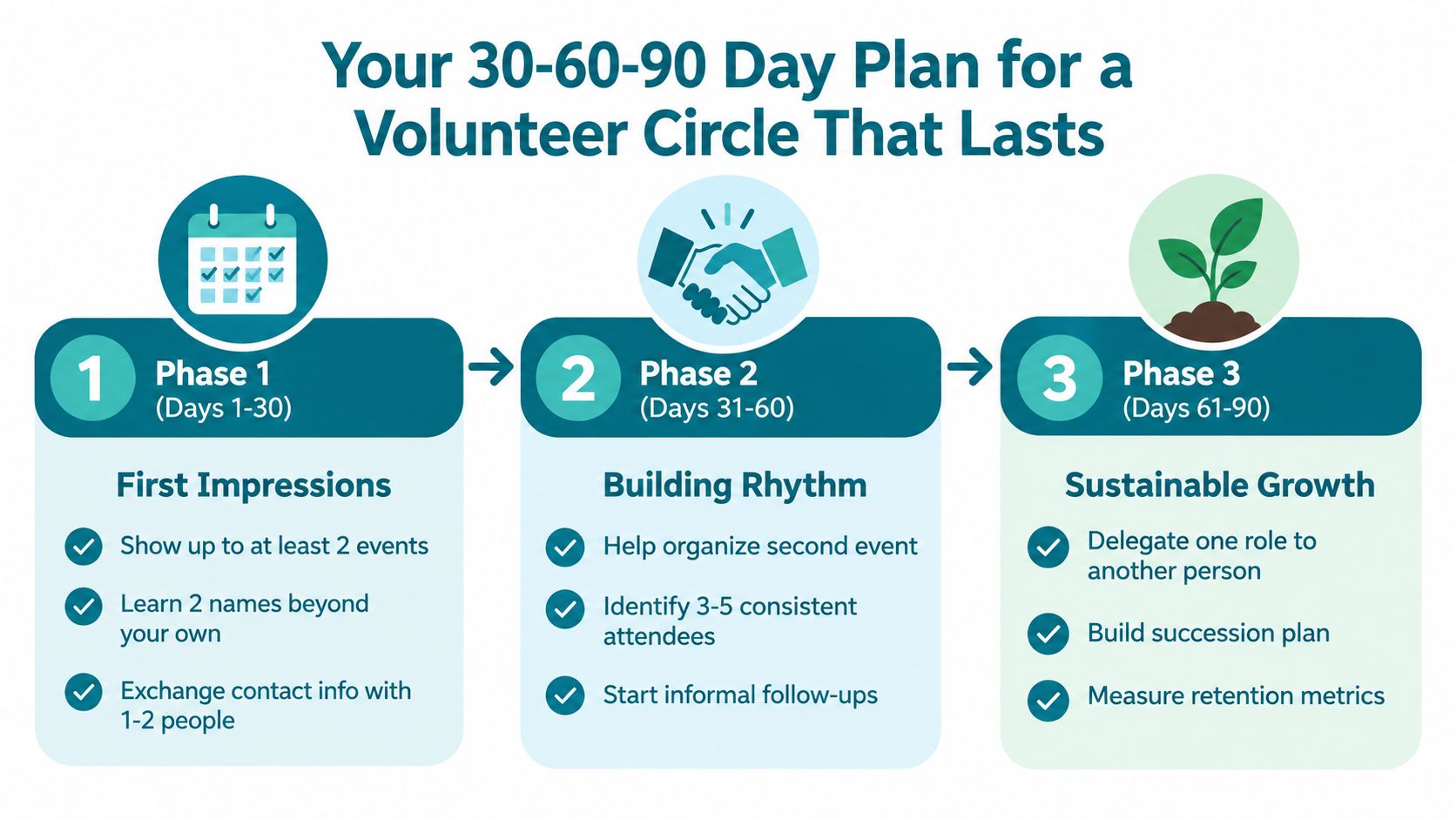
The plan works because it moves you from guest to participant to host. It also gives organizers a simple way to notice whether people return, take a role, and bring someone new. Those are useful retention signals, even when nobody tracks a formal scorecard.
Here's the failure mode I trust most because I've watched it happen. One person organizes every route, buys every supply, answers every message, takes every photo, and keeps every newcomer comfortable. By month four, that person burns out, and the circle feels hollow because nobody else learned how to carry it.
Hand off one task at every event. Ask someone else to choose the coffee spot, welcome the next newcomer, post the photo, or make the weather call. A volunteer circle lasts when people share the work of connection, not when one generous organizer performs it alone.
If you're in Chicago and want a free weekend trash pickup where flags, group chats, shared work, and friendship all have a place, visit Litter Caterpillars. Choose an upcoming morning, join the conversation, and bring one person who could use a reason to meet the neighborhood.
Leave a Reply