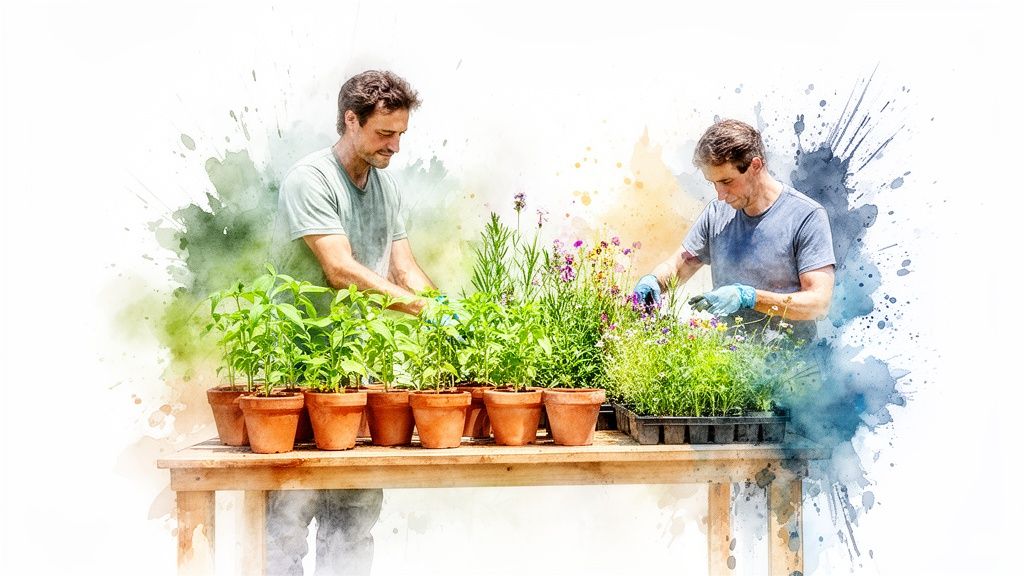
A community plant sale isn't just about selling a few flowers. It’s an act of creation. It's your group's chance to bring a forgotten corner of your city back to life, and I want to show you how it can get people excited about a mission they can actually see and touch.
Turn Your Passion Into a Community Movement
Think about that neglected patch of land in your neighborhood. It's an eyesore, right? A wound. You and your friends have cleared the trash, and now you’re looking at a blank canvas of soil. This, right here, is where I live. This is where the real magic happens.
I learned this the hard way. My own journey started with a simple, personal mission to clean up my messy life. That small goal somehow spiraled outward, a tiny whirlpool growing into a storm, leading me to clean up my city with the Litter Caterpillars. I quickly discovered that after the litter is gone, the real work—and the real joy—is in bringing nature back, one plant at a time. A native plant sale is the perfect way you can do that.
From Blank Canvas to Living Ecosystem
This isn’t just about making a little money. For me, it was never about that. It’s about inviting your neighbors to be part of the story. Cleaning up the trash is chapter one, but planting? Planting is where the plot thickens. You're not just putting plants in the ground; you're creating a home base for your group, a living, breathing testament to your hard work.
I built this guide from my own experience turning personal messes into thriving ecosystems. It’s your playbook for a plant sale that does more than raise funds—it will grow your group, bring in new friends, and make a real, lasting mark on your neighborhood.
Your sale becomes a magnet for people who care. It’s an easy "yes" for someone who's never volunteered before. They might just buy one little coneflower, but in that moment, they’ve bought into your entire mission. They've become one of us.
Why This Idea Is Exploding Everywhere
And guess what? You’re not the only one thinking this way. The excitement around native plants is surging, like a wave you can feel before you see it. The native plant nursery market was valued at $1.80 billion in 2024 and is expected to rocket to $3.31 billion by 2033.
This isn't just a fleeting trend. It's a huge shift in how people see their local environment. You can read more about these market trends and see how North America is leading the charge. This momentum makes it the perfect time for groups like yours to jump in.
A native plant sale is a no-brainer for any group looking to make a bigger impact.
Why a Native Plant Sale Is Your Next Big Move
I made this quick chart to show you how a plant sale is a direct line to your community service goals.
| Benefit for Your Group | Real-World Impact |
|---|---|
| Visible Progress | Creates a tangible, green space that shows off your group's work. |
| New Volunteer Magnet | Attracts plant lovers, gardeners, and families looking for a positive activity. |
| Fundraising with a Purpose | Money raised goes directly back into your projects, funding more cleanups and plantings. |
| Builds Your Reputation | Positions your group as the local experts in community restoration. |
Each plant you sell isn't just a transaction; it's a tiny new habitat for pollinators and a small win for your neighborhood.
This guide will walk you through my story of turning challenges into ecosystems, and I'm offering you a complete, no-fluff playbook for success. Let's get started.
Drawing Up Your Battle Plan
Alright, so you're ready to make this happen. I get it. It can feel huge. But every massive thing we've ever done—from cleaning a single block to buying a whole lot to build Caterpillar Park—started with a simple, crystal-clear 'why.'
Your 'why' is everything. It’s the story you'll tell the business owner when you ask to use their parking lot. It’s the reason you give a new volunteer who asks what the money is for. Are you running this native plant sale to fund new grabbers and bags? To get the cash for a new community garden? Or is it just about getting more people fired up about your mission?
I’ve learned the hard way that a strong mission is the fuel that keeps you going when you hit a wall. It’s the story that keeps your crew inspired when they're exhausted. Before you do another thing, you need to get real with yourself and write down your core purpose.
What's Your Mission? Set Your Targets.
Think of it like this: your mission is the big dream, and your goals are the actual steps you take to get there. It's like navigating by a star. The mission can be broad, like, “We’re going to make Englewood green.” But the goals? They have to be things you can actually count. Footprints in the sand.
Let me spitball a few real-world examples for your sale:
- Fundraising Target: We need to raise $500 for a new fleet of grabbers and a handful of tough-as-nails safety vests.
- Community Target: We want to talk to enough people to sign up 20 new volunteers who are ready to get their hands dirty with us.
- Ecology Target: We’re going to get 150 native plants into the ground in our neighborhood, giving our local pollinators a fighting chance.
These targets give you something to aim for. They turn a fuzzy idea into a real plan. "Let's raise $500" is a mission you can build a strategy around. "Let's make some money" is just a wish whispered into the wind.
Having a clear purpose is like having a map. You might still take a wrong turn, but you’ll always know which way is north. I promise you, every single choice—from the plants you pick to the price you set—gets a thousand times easier when you can ask, "Does this actually help our mission?"
Once you've got this locked down, you can start tackling the real-world stuff.
This is the flow we live by. It shows how cleaning up the mess is just the first step. The real magic happens when you start planting and growing.
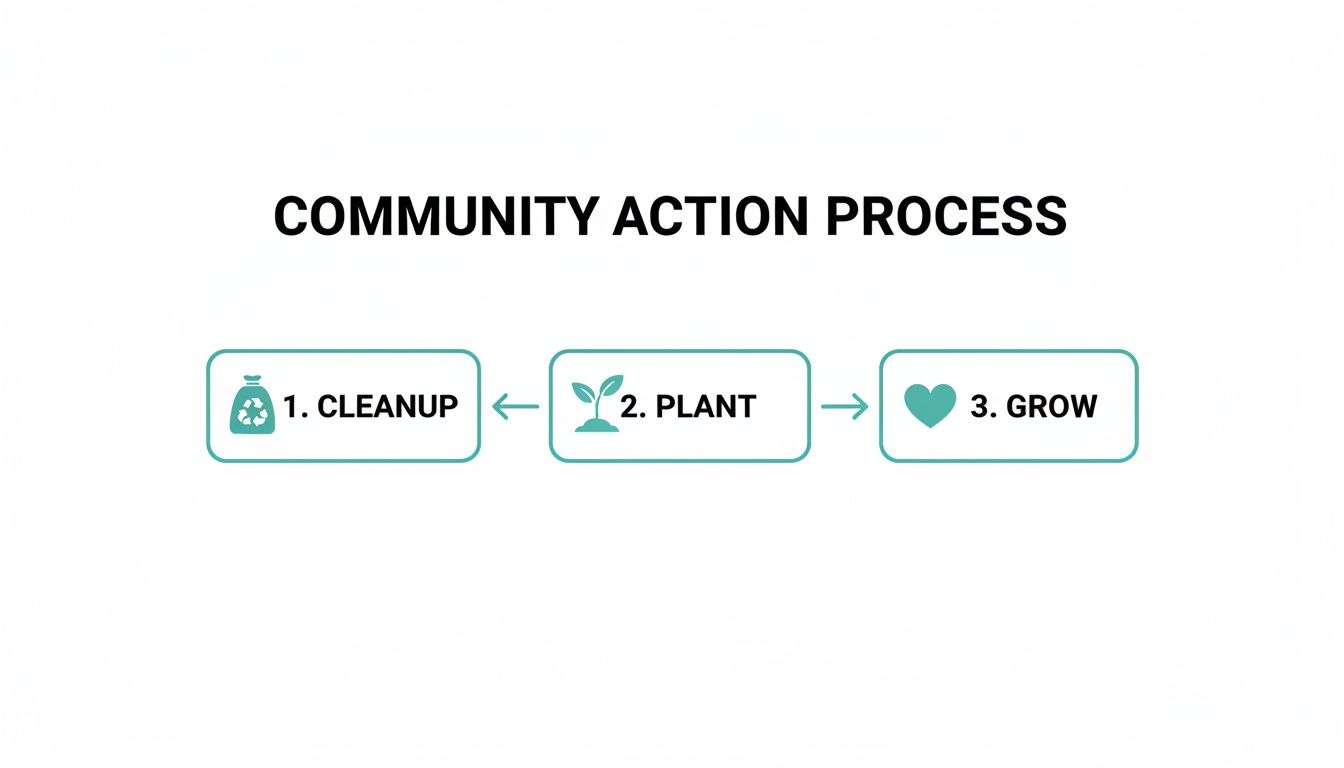
A native plant sale is the perfect bridge between cleaning up what’s broken and building something beautiful and alive that lasts.
Scout Your Turf and Handle the Paperwork
Now for the part that sounds like a headache: finding a spot and dealing with permits. Don't sweat it. I've learned it’s almost never as bad as you think.
Your location is your stage, so you want somewhere with good energy and people walking by. Think about places where you already have a connection, a story.
- That corner of a park you've basically adopted.
- The parking lot of a local business that likes you (coffee shops and hardware stores are gold).
- A friendly community center or church with some outdoor space.
- The empty lot you’ve been cleaning for months! What better way to show the neighborhood what's possible?
When I was starting out, I learned you just have to ask. Walk in, find the manager, and tell them your story. Tell them your why. The worst they can do is say no, and you’d be shocked how many people are eager to help a good cause.
Okay, permits. I know, it sounds awful. But just start with a simple call or email. Find your local park district contact or your alderman’s office and just tell them what you're up to: a small, community native plant sale run by volunteers. Their job is to help people like you.
Honestly, for a small event like this, they might just have you fill out a one-page form. The key is to ask early. Don’t be the person scrambling a week before your sale. This is the boring, foundational stuff that lets the amazing, fun part happen. Get this done, and you’ll have a solid foundation to build on.
Find the Perfect Plants for Your Sale
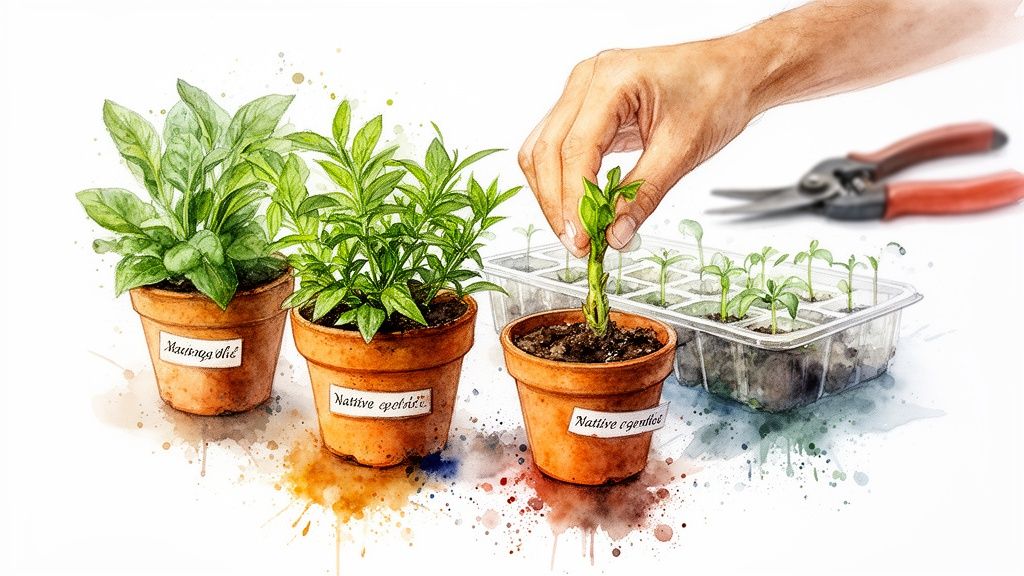
Let's be real—the plants are the rockstars of this whole show. They're why people will show up, get excited, and open their wallets for your cause. Finding the right ones is everything. Luckily, you’ve got a couple of solid ways to go about it.
Your most direct path is to team up with a local native plant nursery. These aren't just big-box stores; they're run by people who live and breathe this stuff. They're your allies, and you need to treat them that way.
The other route? You grow the plants yourself. This is the long game, no doubt. It takes a saint's patience. But the payoff is immense. Imagine the pride of selling plants that your own crew grew from tiny seeds or cuttings. It builds a story that no one can compete with.
Partner with a Local Nursery
I used to be terrified of walking into a nursery to ask for a deal. It felt like asking for a handout. But I was looking at it all wrong. You're not just asking for cheap plants; you’re offering them a direct line to a whole new crowd of local, passionate customers. You're giving them an opportunity.
So when you approach a nursery, don't lead by asking for a discount. You tell them your story. Show them photos of your cleanups. Get them excited about what you’re building and what this native plant sale will fund.
You're not just another customer; you're a community partner. Frame the conversation that way. You can usually work out one of two deals:
- Bulk Discount: This one’s straightforward. You commit to buying a ton of plants, they give you a wholesale price. It’s a great option if you have some cash on hand and feel good about your ability to sell out.
- Consignment: This is my personal favorite, especially for your first sale. The nursery gives you the plants with zero upfront cost. After the event, you just pay them for what sold and return the rest. This completely removes the financial risk from your shoulders.
A consignment deal is a game-changer. It means you can host a huge, professional-looking sale without needing a big bank account. It lets you go big without the risk of getting stuck with hundreds of unsold plants.
Finding the right nursery is about finding the right people. I look for the small, independent growers—the ones with dirt under their fingernails and a genuine sparkle in their eye when they talk about pollinators. They’re the ones who will immediately get what you're trying to do.
The Ultimate List of Crowd-Pleaser Plants
When you're picking your inventory, you want plants that are basically guaranteed to fly off the tables. Think like a first-time native plant buyer. They want something pretty, something tough, and something that helps the bees and butterflies.
You're not just selling plants; you're selling people a success story for their own garden. This is exactly why the native plant market is exploding across the U.S. People want the eco-benefits—the pollinators, the biodiversity—and perennials are leading the charge. You're tapping into a massive movement, which you can discover more about this skyrocketing demand in the 2025 Native Plant Market Report.
Here are some absolute winners that I've seen work time and again, they're easy for beginners and adored by wildlife:
- Purple Coneflower (Echinacea purpurea): This is the celebrity. Everyone knows it, it's gorgeous, and it’s a magnet for goldfinches and butterflies. A total must-have for you.
- Black-Eyed Susan (Rudbeckia hirta): A ridiculously cheerful and tough-as-nails flower. It adds a splash of gold to any spot and seems to bloom forever.
- Wild Bergamot (Monarda fistulosa): Those fuzzy, lavender flowers are a favorite of hummingbirds and giant bumblebees. Plus, it smells incredible.
- Butterfly Weed (Asclepias tuberosa): With its bright orange flowers, this is non-negotiable for anyone who wants to see monarch butterflies. This is the only thing their caterpillars eat! It's a miracle plant.
- Little Bluestem (Schizachyrium scoparium): Don't sleep on the grasses! This one has beautiful blue-green blades in the summer that turn a stunning reddish-bronze in the fall. It also provides critical shelter for insects over the winter.
By focusing on these popular, resilient plants, you're making it easy for your customers to win. When their garden thrives, they'll trust you, and they'll be back for your next native plant sale with even more excitement. You're giving them a garden that isn't just beautiful—it's buzzing with life.
Market Your Sale by Telling a Great Story
Forget everything you think you know about marketing. You’re not selling a product. You’re not even really “selling” anything. You’re telling a story—your story—and inviting people to become a part of it. This is your chance to show everyone the why behind all your sweat and hard work.
I’ve learned that the most powerful tool you have isn't a big budget; it’s your passion. You're not just running a native plant sale; you’re building a movement. Your job is to stop saying "buy this plant" and start saying "help us build this future." That’s what gets people to show up.
Frame It as an Invitation, Not an Ad
When you post on Meetup or Instagram, don't just throw up a date and time. Start with the problem. I always hit them with a gritty "before" picture of that trashed-out lot or forgotten parkway you’ve been fighting to reclaim.
Then, show them the "after"—your team, covered in dirt, smiling, standing on clean ground. That visual punch tells a story of change faster than any words can. It’s a story they can now join just by showing up to your sale.
They aren't just buying a plant; they're buying into that transformation. They’re casting a vote for a greener, better neighborhood.
Use Free Tools to Build Real Excitement
You don’t need a fancy marketing agency. You have a phone and a hell of a story. I use these free tools to build a genuine buzz around my events. Your raw authenticity is your biggest strength.
- Social Media Stories: Get on Instagram or Facebook Stories and show the raw, behind-the-scenes chaos. Post quick videos of your volunteers potting plants, laughing while making signs, or hauling tables. These unpolished moments are real, and they show the heart of your group.
- Meetup as a Story Hub: Your Meetup event page is more than a calendar entry. Write a powerful description. Explain exactly what the money from the sale will do. Will it buy you new shovels? Help you finally acquire the land for that park? Tell people exactly where their donation is going.
- Email Newsletters: If you have an email list, you must use it to build the hype. A week out, send an email highlighting a "plant of the week" and talk about the specific butterflies or birds it’ll bring back. Make it personal and exciting.
The goal isn't just to inform; it's to inspire. When people feel your passion and see the real impact you're making, they won't just come to buy a plant—they'll come to support you.
This is how you build a following, not just a customer list. You're creating a community of believers who are invested in seeing you win.
Give Every Plant a Story
Every single plant has a story. Don't you dare just slap a scientific name on a tag and call it a day. You have to tell their tales. I make little signs or social media posts that bring them to life.
For Butterfly Weed, you could write: "This isn't just a pretty orange flower. It's the only food source for monarch caterpillars. By planting this, you are personally helping bring butterflies back to our city."
Suddenly, it’s not a plant; it's a heroic act. For something like Little Bluestem, I explain how its grassy clumps provide critical shelter for bees and other insects through our brutal Chicago winters.
You're giving people a much deeper reason to care. This simple shift connects their small purchase to a massive ecological impact, and it’s a powerful way to make your native plant sale unforgettable. You’re turning your customers into heroes in their own backyards. And when they look at that plant, they'll remember the story and feel that pride all over again.
It's Go Time: Making Your Plant Sale a Community Celebration
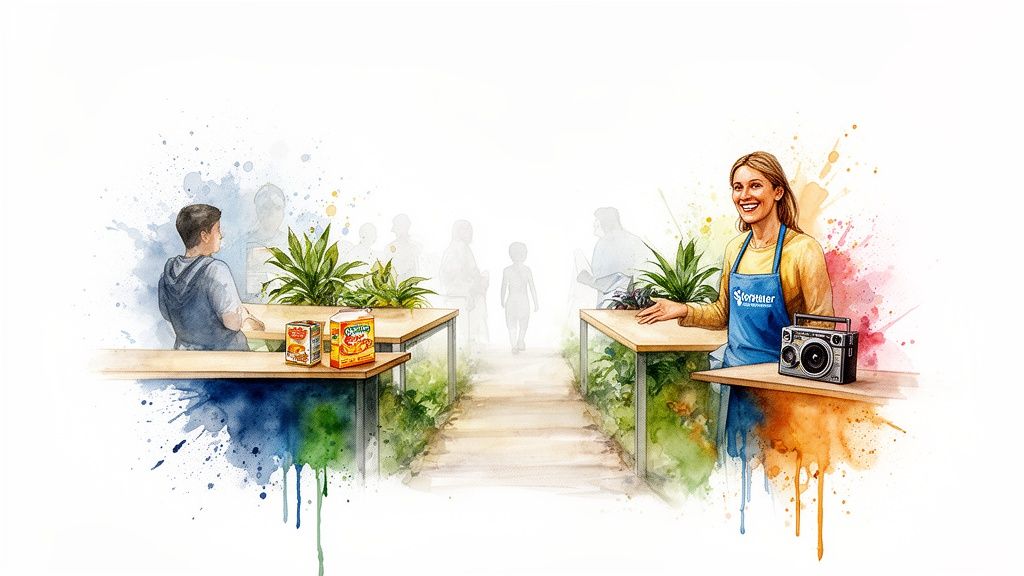
This is it. The day you’ve been working toward. After all the planning, potting, and promoting, your event has finally arrived. This is your chance to shine, not just as organizers, but as hosts of a real community party.
I’ve learned that a successful native plant sale isn’t about retail. It’s about creating a joyful, human experience that leaves everyone feeling energized and connected. It’s all in the choreography, the flow of the event.
You have to think of your site as a story you’re telling. You want to guide people on a journey that feels natural and welcoming. I’ve seen sales where people look lost, wandering aimlessly, and it just kills the vibe. Your goal is to make it so easy and fun that they can focus on what matters: the plants and your mission.
That journey starts the second they arrive.
Think Like a First-Time Visitor
Put yourself in their shoes. What do they see? Where do they go first? You need to map out the physical and emotional journey from start to finish. Let me walk you through the layout that has worked best for us.
The Three Key Stations
- The Welcome Mat: This is your front door, your first impression. Station your friendliest, most outgoing volunteer here. Their only job is to greet people with a huge smile, hand them a box for their plants, and tell them the story of your group in 30 seconds. No selling, just welcoming.
- The Plant Zone: This is the heart of your sale. Don't just scatter plants everywhere—that leads to chaos. You must organize them in a way that actually helps people. Simple, clear signs are your best friends. I always organize by sunlight needs: Full Sun, Part Shade, and Full Shade. It’s the number one question gardeners ask.
- The Gratitude Station: This is your donation and checkout table, placed right at the end of the plant path. Make it obvious but not pushy. You’ll need another warm, friendly face here to handle payments and, most importantly, thank every single person for their support.
This simple flow turns a potentially confusing event into something smooth and enjoyable. I promise you it keeps the energy positive and makes everyone—customers and volunteers alike—feel totally at ease.
Your Volunteers Are The Soul of The Event
Your volunteers are everything. I give them specific, fun-sounding roles so they feel essential. Think of it like you're casting a play—everyone gets a part that fits their personality.
These are the roles I can't live without:
- The Storyteller: Stationed at the entrance, this person’s only job is to welcome people and share the "why" behind your sale. They are the keeper of your mission.
- The Plant Guru: You need a couple of these folks roaming the plant section. They answer questions, offer advice, and help people find their perfect plant match. They don’t need to be professional botanists—just passionate and helpful.
- The Donation Captain: This person manages the payment station with a smile. They should be comfortable with cash or a card reader and great at thanking everyone who contributes.
- The Floater: This is your MVP. They restock plants, bring water to other volunteers, and jump in wherever a need pops up. They are the glue that holds the day together.
The most important thing? You have to make it a celebration for your team. Bring snacks and a big cooler of water. Play some upbeat music. Your joy is infectious. When your volunteers are having a genuinely good time, your customers will feel that energy and want to be part of it.
You are creating a feeling, not just a transaction. People show up because they believe in what you do. And they're ready to invest! In 2021, native plant buyers spent an average of $178 per person. People are drawn to natives because they see them as pollinator magnets (80%), desirable (76%), and a perfect fit for their yards (74%). You can read more about why customers are flocking to native plant sales on Greenhouse Grower.
This is your day to bring your group's story to life. Make it fun, make it meaningful, and you’ll create an unforgettable experience that plants seeds of goodwill all over your community.
The "What Ifs" of Your First Plant Sale
Okay, I get it. Your head is probably spinning with a million "what ifs" right now. That's a good sign. It means you care. When I first started, I had the same fears. What if nobody comes? What if we don't make any money? What if I fail and it's a total disaster?
Let me tell you something I've learned from doing the hard stuff, from cleaning up in blizzards to building a park from scratch: Fear is good. It means you're growing. Let's tackle those fears head-on, based on the messy, real lessons I've learned along the way.
What If We Don’t Make Any Money?
First off, breathe. Now, I want you to ask yourself why you started this. Was it really just to make a pile of cash? I seriously doubt it.
Think about what you've actually accomplished. You got your community together. You started conversations about native plants. You gave your amazing volunteers a new way to make a difference. You created a buzz. That’s huge.
I've run events that, on paper, looked like they lost money. But then I’d see two volunteers who just met making plans to hang out later. Or I’d watch a kid's eyes go wide when they learn that one little plant is a whole world for monarch caterpillars. That’s the real profit. That's the treasure.
The success of your first native plant sale is never just about dollars. It’s in the new friendships, the spark of passion you ignite in someone, and the community you build. A low-profit sale isn’t a failure; it’s a lesson in how to do it even better next time.
How Should We Price the Plants?
This one trips people up. It feels weird and corporate to slap a fixed price on a plant you grew with love. Fixed prices can feel like a transaction, and that's not what we're about. I've found a much better way.
I'm a huge believer in the "suggested donation" model. It completely changes the vibe. People aren't just "buying" something; they're "contributing" to a mission. It lets everyone participate, whether they can give a little or a lot.
Just make some friendly, handwritten signs. No pressure, just guidance.
- "Small pots, suggested donation: $8"
- "Larger pots, suggested donation: $15"
- "Your support helps us turn forgotten lots into living parks!"
This gives people a number to start with but leaves the door wide open for generosity. It frames the whole thing around a shared goal. You'll be shocked at how many people give more than the suggestion because they believe in what you're doing.
How Many Volunteers Do We Really Need?
Don't get stuck thinking you need a giant army. You don't. For your first sale, a core team of 5 to 8 dedicated volunteers is perfect. It's not about the number of people; it's about making sure everyone has a clear role.
Think of it like our cleanup crews: a small, scrappy team where everyone has a job.
- The Greeter: One person at the entrance. Their job is to welcome people and tell your story with passion.
- The Plant Experts: Two people floating around the plants, answering questions and helping people find the right match for their yard.
- The Donation Captain: One person at the checkout table to handle donations with a smile.
- The Floater: Your MVP who can restock plants, give others a break, and jump in wherever there's a need.
This is a community project. It should be fun. Keep it simple, focus on creating a great experience, and trust that the right people will show up. It will be enough. I know it will.
This guide is built on the real-world experiences of the Litter Caterpillars. We believe that cleaning up is just the beginning; bringing nature back is how we truly transform our city. Join our movement and help us turn Chicago's forgotten corners into vibrant ecosystems, one cleanup and one plant at a time. Learn more and volunteer with us at LitterCaterpillars.com.
Leave a Reply