Month: August 2026

  • Chicago River Cleanup: Join or Organize Your Own Event

    Chicago River Cleanup: Join or Organize Your Own Event

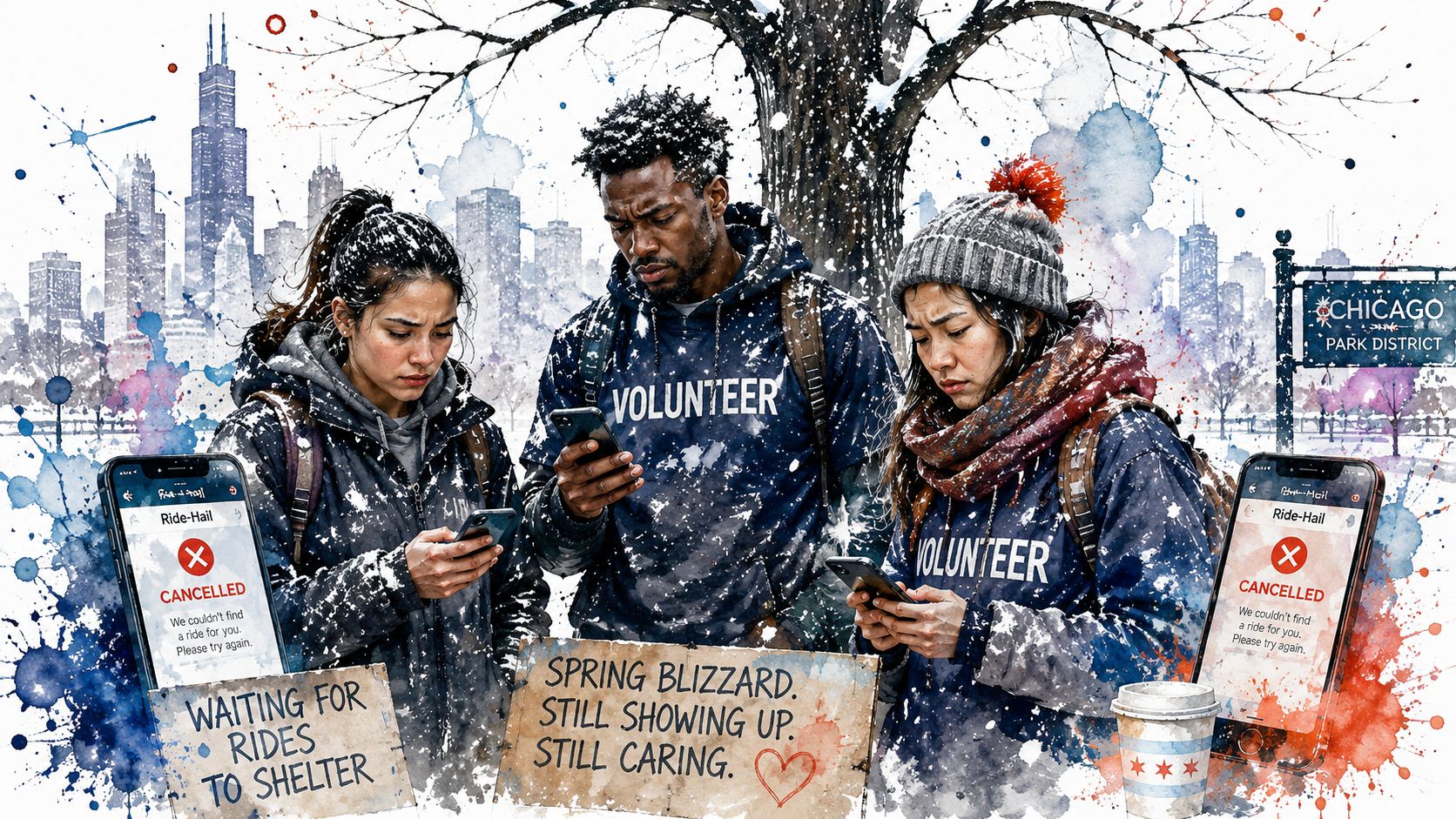
    The first time I hauled trash off the Chicago River bank, a spring hail storm rolled in so hard it felt like somebody was throwing ice cubes at my face. Three of us crouched under a tree, wet through, while every Uber canceled one by one, and we laughed anyway because the river had finally found a way to humble us together.

    That day taught me something I still believe. A Chicago River cleanup is never only about the trash in your bag, it's about the person who shows up beside you when the weather turns rude and the work gets real.

    Why Showing Up Matters More Than You Think

    The weird truth about river cleanup is that the messy part isn't the litter. It's your own excuses, your own comfort, your own habit of saying “next weekend” when the bag is already in your hand. When I think about that hail-storm day, I don't remember the trash pile as much as I remember who stayed cheerful, who helped, and who turned a miserable afternoon into a story we still tell.

    What a rough cleanup day reveals

    You learn fast that cleanup work filters people. The ones who arrive on a freezing Saturday morning and still smile usually bring that same energy to friendship, work, and life. That matters because a cleanup group isn't built on one heroic day, it's built on repeated small acts, the kind that make strangers recognizable and then familiar.

    Practical rule: if someone only shows up when the weather is perfect, they're a visitor. If they show up in sleet, they're part of the crew.

    The culture around the river gets better when people treat service like a habit instead of a performance. That's why weekend mornings work so well for groups that want steady, service-minded volunteers. You're not just collecting trash, you're building a circle of people who don't flinch when the work gets uncomfortable.
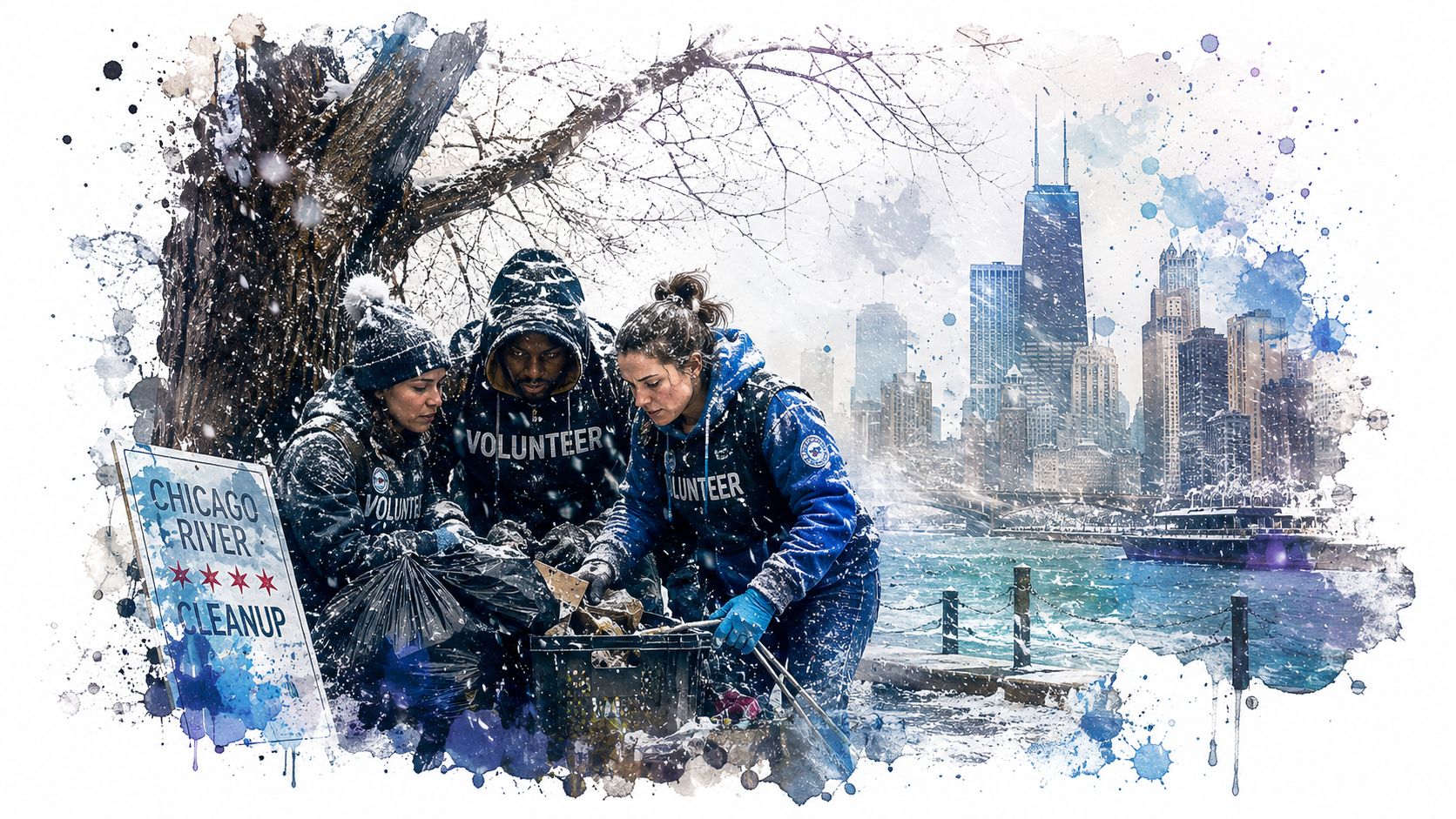
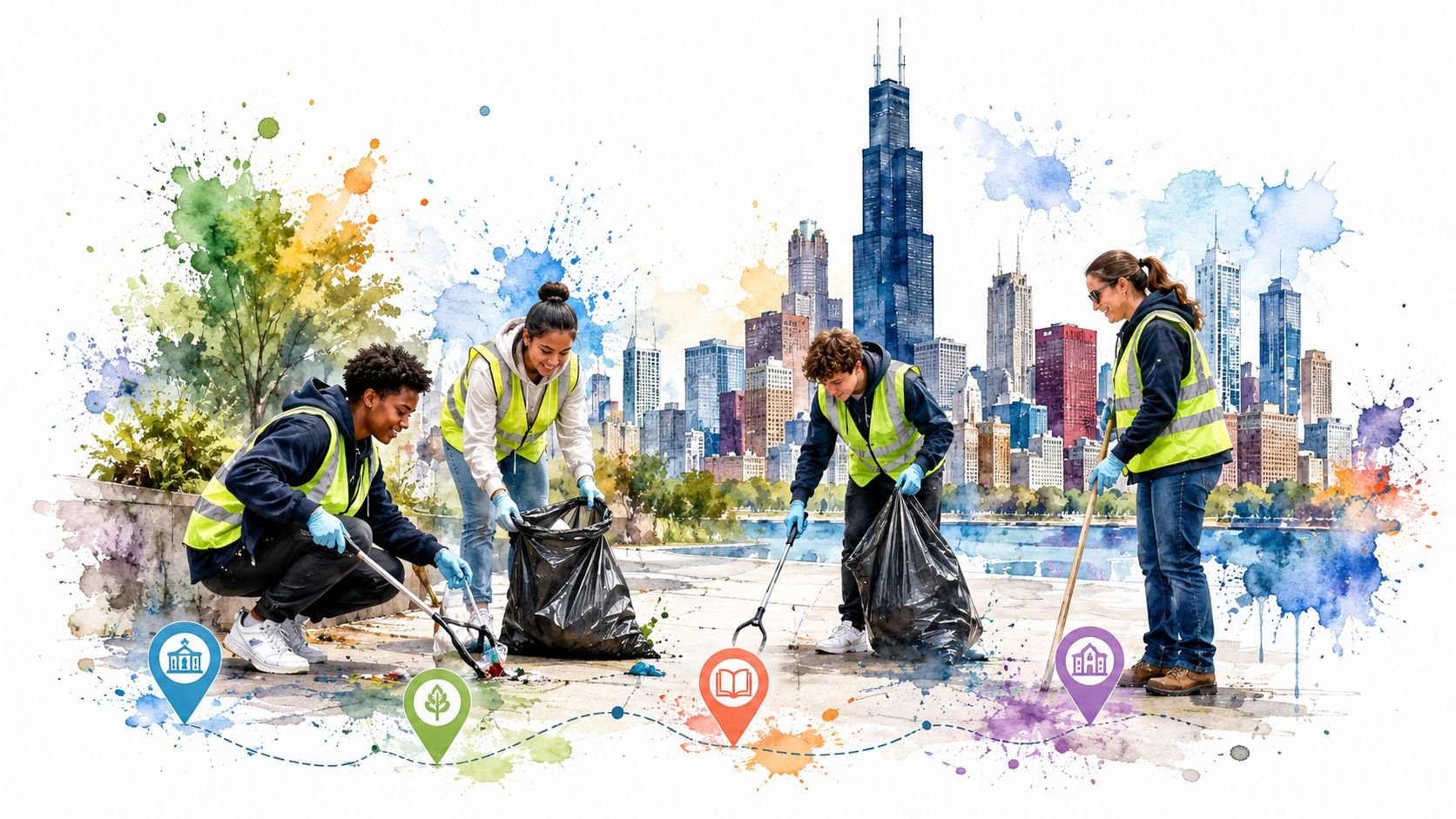
    Three volunteers cleaning trash from the Chicago River bank during a snowy winter day in the city.

    Why the best groups feel like a team

    The strongest crews I've seen have a simple rhythm. They greet each other, they divide the load, and they laugh at the absurdity of pulling soda cups and snack wrappers out of cattails while their fingers go numb. That shared grit builds trust faster than small talk ever could.

    Litter Caterpillars talks about bravery, kindness, and unity, and that language makes sense to me because service changes how you carry yourself. You stop asking, “How little can I do?” and start asking, “Who can I help stand up a little straighter today?”

    Planning Your Cleanup From Permits to Site Selection

    A good cleanup starts before the first glove goes on. I've watched eager crews waste half a morning because nobody checked who owned the bank, where people could enter, or whether the ground near the water would hold a boot. The Chicago Rivers Demonstration Program handbook says strong projects begin with an in-depth understanding of ownership, permits, bank condition, wildlife use, access, vegetation, and public safety What's Working on Working Rivers.

    Start with the riverbank, not the trash bag

    I always tell people to stand on the site first and look around like they're new to the city. Who controls this stretch of bank? Can volunteers safely reach the edge? Is the ground muddy, steep, fenced, or packed with roots? If you can't answer those questions, you don't have a cleanup site yet, you have a problem in search of a plan.

    A smart organizer also maps where trash keeps coming from. Street runoff, storm drains, and access points often matter more than the single pile of litter you can see from the path. The city's guidance on cleanup work says debris washed from streets can enter the river, which is why street sweeping, source control, and proper trash disposal all belong in the same conversation Chicago River Agenda.

    Practical rule: don't chase every piece of visible litter if the same runoff path keeps feeding the river tomorrow.

    That mindset changes how you choose between a bank cleanup and a boat cleanup. Bank work is great for access points, embankments, and public-facing stretches. Boat work makes sense where litter gathers in the channel or where shore access is poor. I've seen crews get better results when they match the tool to the leak, instead of forcing one method onto every site.

    Use a simple planning checklist

    Before I invite volunteers, I want these questions answered.

    • Permits and permission: Who approves the work, and what limits apply to the site?
    • Access and exits: How do people get in safely, and how do they get out fast if weather shifts?
    • Bank condition: Is the ground stable, slippery, or cluttered with hazards?
    • Wildlife and vegetation: Are there nesting areas, sensitive plants, or protected habitat zones?
    • Waste handling: Where does the collected trash go after the event?

    If you want a practical planning template, I'd point you to Litter Caterpillars' volunteer event planning page, because the right prep makes the day feel calm instead of chaotic.
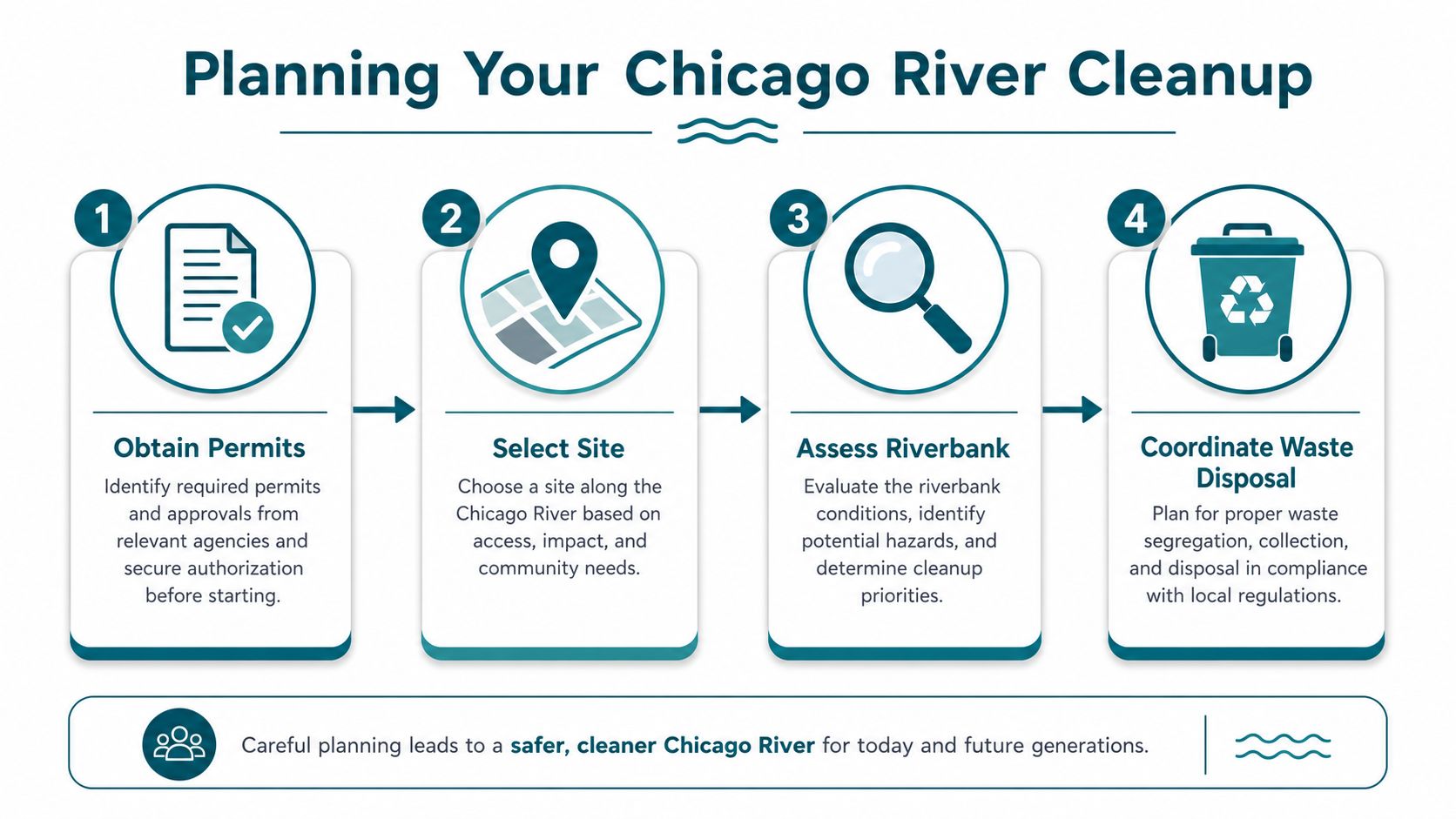
    An infographic showing four steps for planning a Chicago River cleanup, including permits, site selection, assessment, and disposal.

    If you want the organizing side of cleanup to feel less like guesswork, use the same method every time. Pick the site, walk it, note the leaks, then choose the cleanup style that fits the river instead of the one that looks best in a group photo.

    Safety Protocols for Bank and Boat Cleanups

    I've cleaned the river in scorching heat, in damp cold, and in wind so sharp it made my ears hurt. The day always starts the same way for me. A small crowd gathers, gloves on, coffee in hand, and somebody asks where the worst trash will be hiding. Then I give the same answer, the spots that look ordinary until you bend down and find glass, metal, or something nobody wants to name out loud.

    Safety comes first, then volunteer happiness, because once people feel rushed or exposed, the day goes sideways fast. That is why I never start an event without a briefing, even if everybody looks eager and ready to sprint. The point is to send people home tired, dirty, and proud, not limping back with a story nobody wants.

    What to cover before anyone touches trash

    A good safety talk should be short, direct, and specific. Tell people where sharp objects are likely to hide, how to handle anything that looks like medical waste or chemical waste, and where to go if they need help. Put the emergency contacts in everyone's phone before the event starts, not after someone loses a shoe in mud.

    For bank cleanups, I want gloves, sturdy boots, and a clear rule about staying away from unstable edges. Loose gravel, slick algae, hidden drop-offs, and half-buried rebar can turn a cheerful morning into a bad scene quickly. For boat cleanups, I want life vests, a calm operator, and an honest read on water conditions before launch. If weather changes, I'd rather stop early than pretend grit can cancel lightning, icy wind, or rising water.

    If the forecast looks ugly and the site feels worse, call it early. Volunteers remember that you protected them.

    Build a buddy system and respect the weather

    I like cleanup crews to move in pairs. One person scans the ground, the other watches the surroundings. That simple habit cuts down on missed hazards and keeps nobody isolated if something goes wrong.

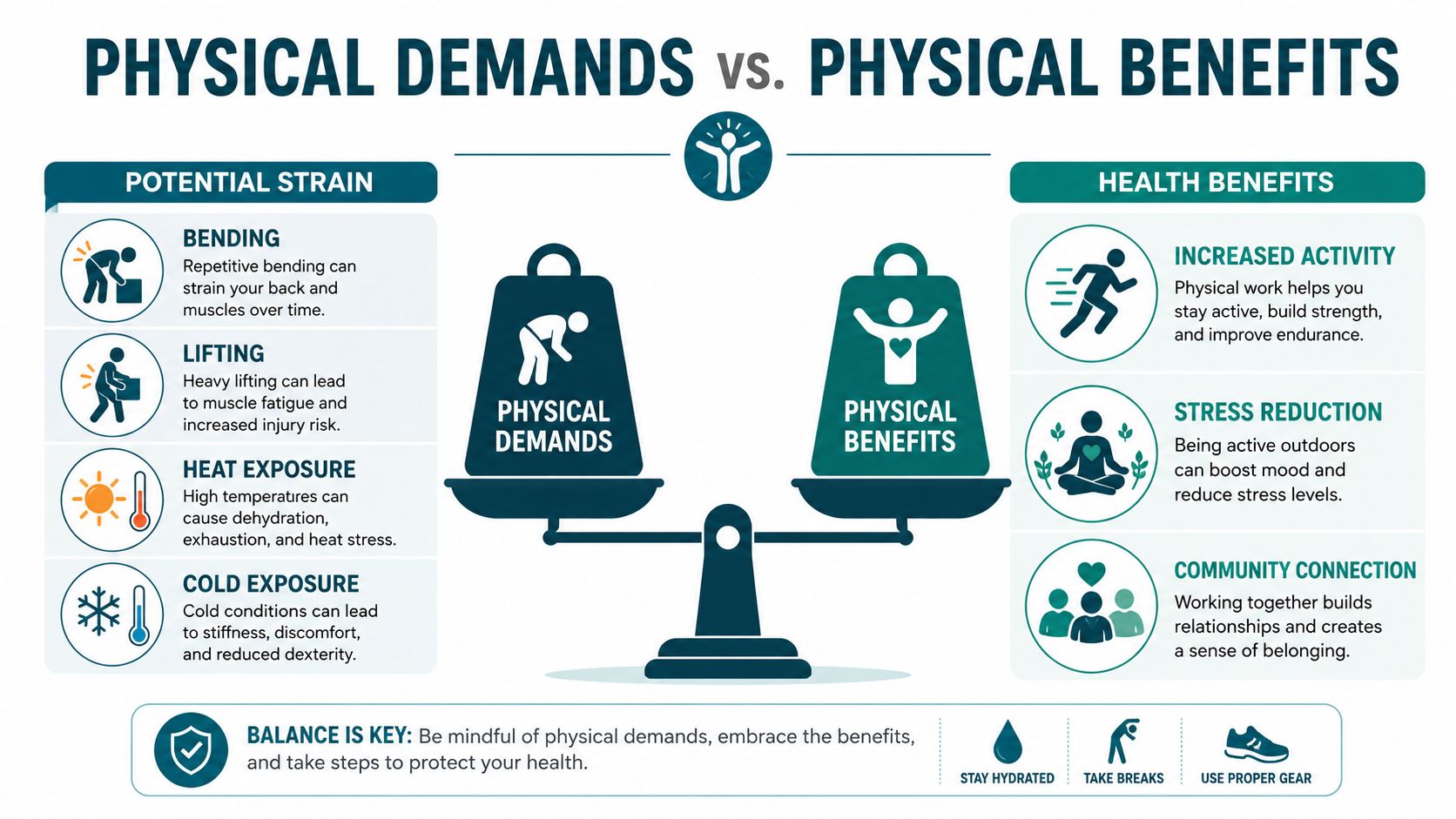
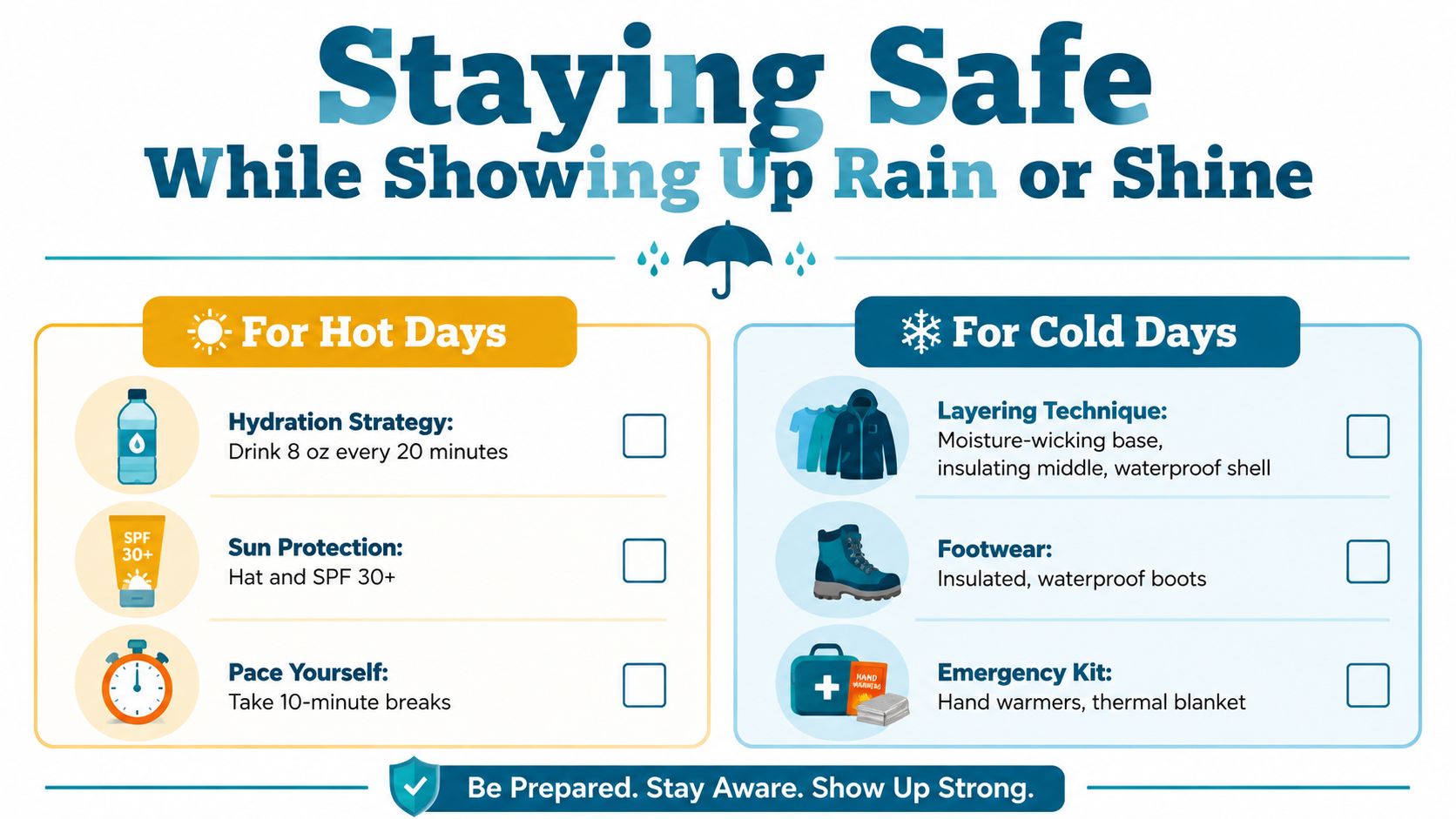
    The same goes for temperature. On hot days, you need shade, water, and a pace that doesn't turn volunteers into fried extras in a riverbank movie. On bitter days, you need warm-up breaks and a hard line on frostbite risk. Volunteer-first groups get this right because they treat energy as fragile, not infinite.

    If you're organizing with boats, I'd also look at Litter Caterpillars' urban kayaks page for another example of how people approach water-based work and access.
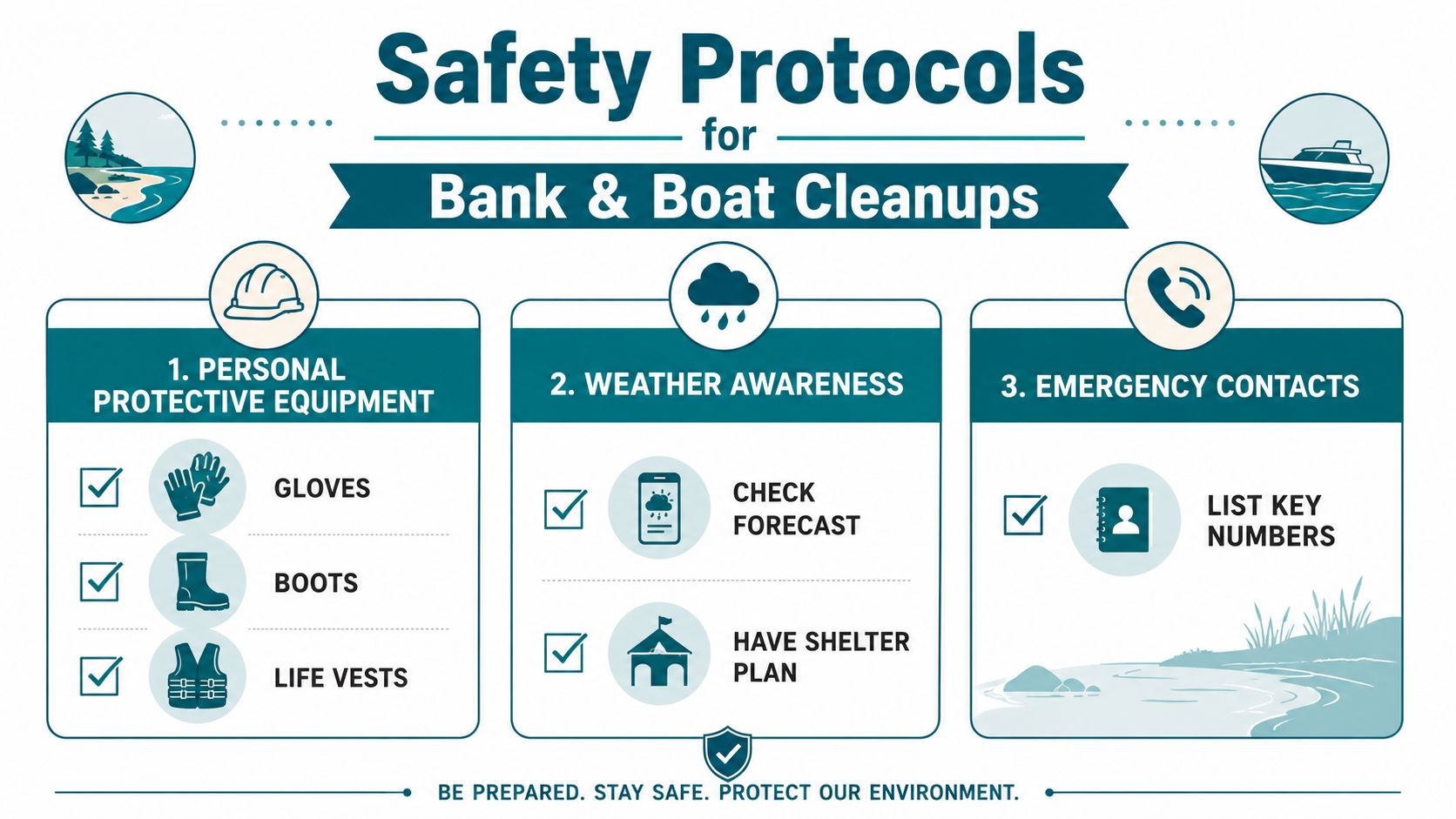
    A safety infographic for bank and boat cleanups covering protective gear, weather awareness, and emergency contact procedures.

    The best safety culture I've seen is calm, not dramatic. Nobody gets praised for pushing through a bad call. People get praised for saying, “Hold up, this doesn't feel right,” and saving the group from a stupid mistake.

    Supplies, Disposal, and Partner Organizations

    A cleanup starts to feel real the moment the gloves come out of the bin and the trash bags stop looking symbolic. I've seen crews stall because nobody brought a grabber, and I've seen crews finish strong because one neighbor showed up with a box of extra work gloves and a steady hand for the sharp stuff. Good supplies keep the day moving, and good disposal plans keep the river from becoming a temporary storage unit for everything we just pulled out.

    What I pack and why it matters

    For a typical crew, I want gloves, grabbers, heavy-duty bags, and a first aid kit at minimum. I also want a way to separate sharp trash from regular trash, because nobody enjoys fishing a broken bottle out of a sagging sack with their elbow. The city asks residents to report dumping through 311, which helps teams respond where the litter keeps coming from. For hazardous items, I send people to Chicago hazardous waste disposal guidance so they know what belongs in a cleanup bag and what needs a different route.

    Essential Cleanup Supplies and Sources Quantity per 10 Volunteers Where to Source
    Work gloves 10 to 12 pairs Hardware stores, community donations
    Grabbers 4 to 6 Cleanup supply vendors, borrowed gear
    Heavy-duty bags 15 to 20 City supplies, bulk retailers
    First aid kit 1 Pharmacy, outdoor store
    Hand sanitizer 2 bottles Grocery store, pharmacy
    Sharps container or rigid box 1 Medical supply source or approved disposal partner

    How disposal and partnership work together

    The City of Chicago and the Metropolitan Water Reclamation District already run boats that clean the river and respond to citizen complaints. Their work matters because cleanup doesn't stop at the shoreline. It keeps moving through the system, from the street to the storm drain to the channel.

    Friends of the Chicago River keeps that reality in view. The group says the Chicago and Calumet system still gets an average of 3,095 cubic yards of trash a year from the Metropolitan Water Reclamation District and the City of Chicago, and it cites the 2020 National Litter Study showing U.S. litter cleanup costs at $11.5 billion each year, with 80% of that cost paid by businesses, plus property values can drop by over 7% in communities with heavy litter Friends of the Chicago River.

    That's why I like to think in partnerships, not just supplies. A local café can sponsor water. A neighborhood group can recruit hands. A city contact can help with disposal. A cleanup works better when each partner owns one piece of the job and nobody tries to carry the whole river alone.

    The newer floating-trash systems and skimmer boats point in the same direction. City and MWRD boats have pulled about 3,400 cubic yards of debris over two years from the river, and that kind of output comes from routine, not luck.

    Building a Volunteer Culture That Lasts

    A cleanup group can't run on guilt. It runs on belonging. People come back when they feel seen, when the work feels meaningful, and when the room has enough warmth to make a cold morning worth it.

    Identity beats obligation

    I've watched groups grow faster when they give people a shared identity. Flags, theme songs, badges, and inside jokes sound silly until you see them work. They turn “I helped once” into “I'm one of us.”

    That matters because service gets easier when it feels like home. Weekend morning events help with that, because they sort out people who want to give from people who want applause. The result is a crew that feels less like a sign-up sheet and more like a team.

    People don't stay for the trash bags. They stay for the friend who remembers their name and saves them a pair of dry gloves.

    Make joining easy, then protect the energy

    I like simple entry points. Meetup helps people find the event. Instagram helps them see the culture before they arrive. An open group chat helps the first-timer ask, “Where do I park?” without feeling awkward. That low-friction welcome is how strangers become regulars.

    A volunteer-first group also has to guard its tone. Don't pressure people for money. Don't make every conversation about output. Don't treat burnout like a badge of honor. When people trust that their energy won't get squeezed, they come back with friends.

    Litter Caterpillars fits naturally for me as one option among many. It runs cleanup events, uses a volunteer-first approach, and builds social glue around the work, which is exactly what a lot of river cleanup efforts need when they want people to return week after week.

    I've learned that a crew with good chemistry can survive bad weather, ugly debris, and long walks back to the car with soggy bags. A crew without that culture usually falls apart the first time the weather acts like Chicago.

    Your Event Timeline and Day-Of Checklist

    The best cleanup days feel smooth because somebody did the unglamorous prep early. I like a simple timeline that keeps people calm and gets the trash off the ground without turning the event into a circus.

    A timeline you can actually use

    • Two weeks before: lock the site, confirm permissions, recruit volunteers, and line up disposal.
    • One day before: check the forecast, prep supplies, and message the team with the meeting spot.
    • Day-of morning: do check-in, give the safety briefing, split people into zones, and hand out gear.
    • Event wrap-up: count heads, bag the last load, confirm waste removal, and thank the crew.

    A checklist that keeps the day on rails

    Use this before every event.

    • Permits and site access: confirmed
    • Supplies: gloves, bags, grabbers, first aid kit, water
    • Volunteer communication: meeting time, address, weather note
    • Safety plan: buddy system, emergency contacts, hazard rules
    • Weather watch: forecast checked one last time
    • Disposal plan: pickup or drop-off confirmed
    • Wrap-up plan: headcount, photos, partner updates
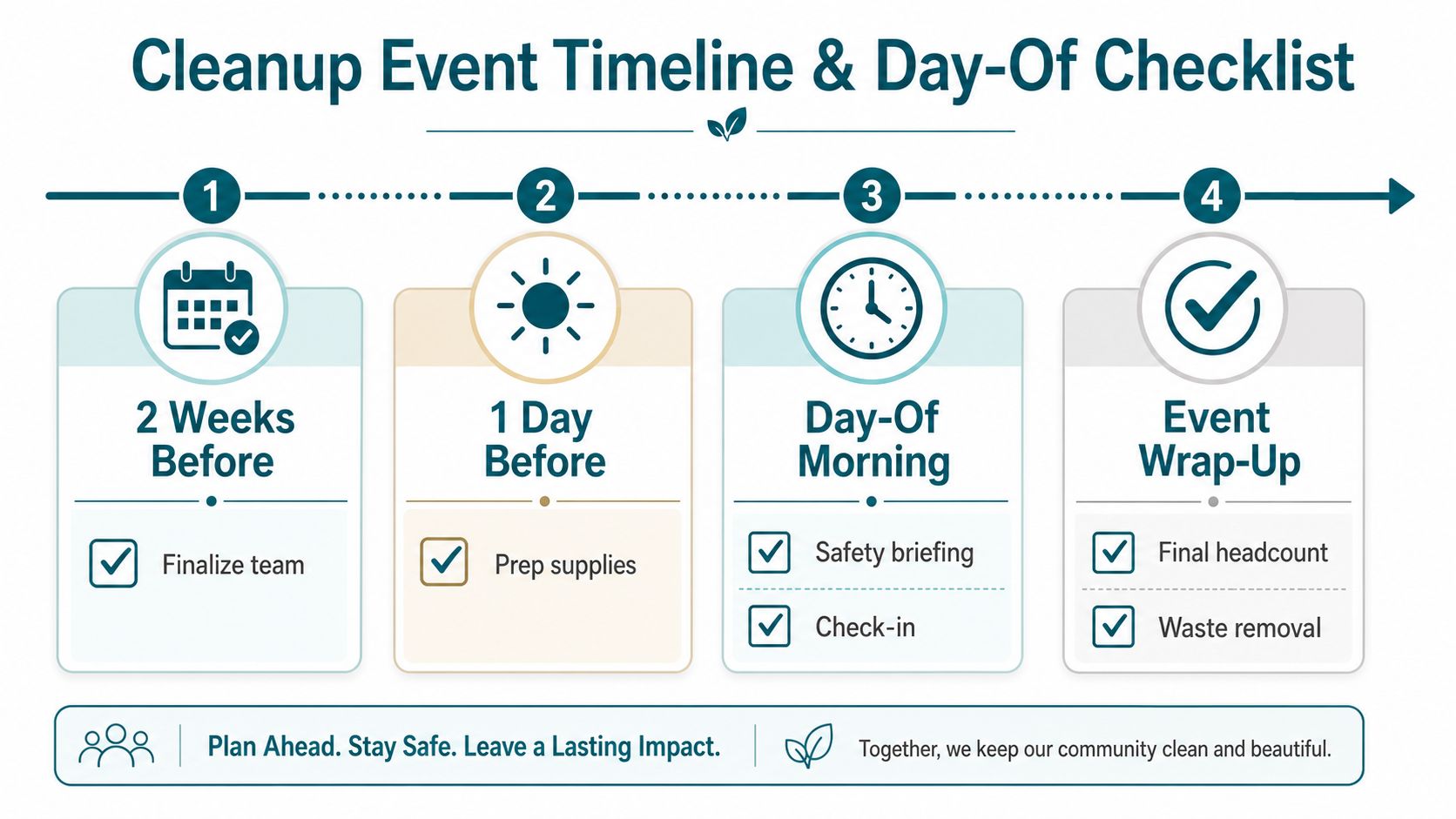
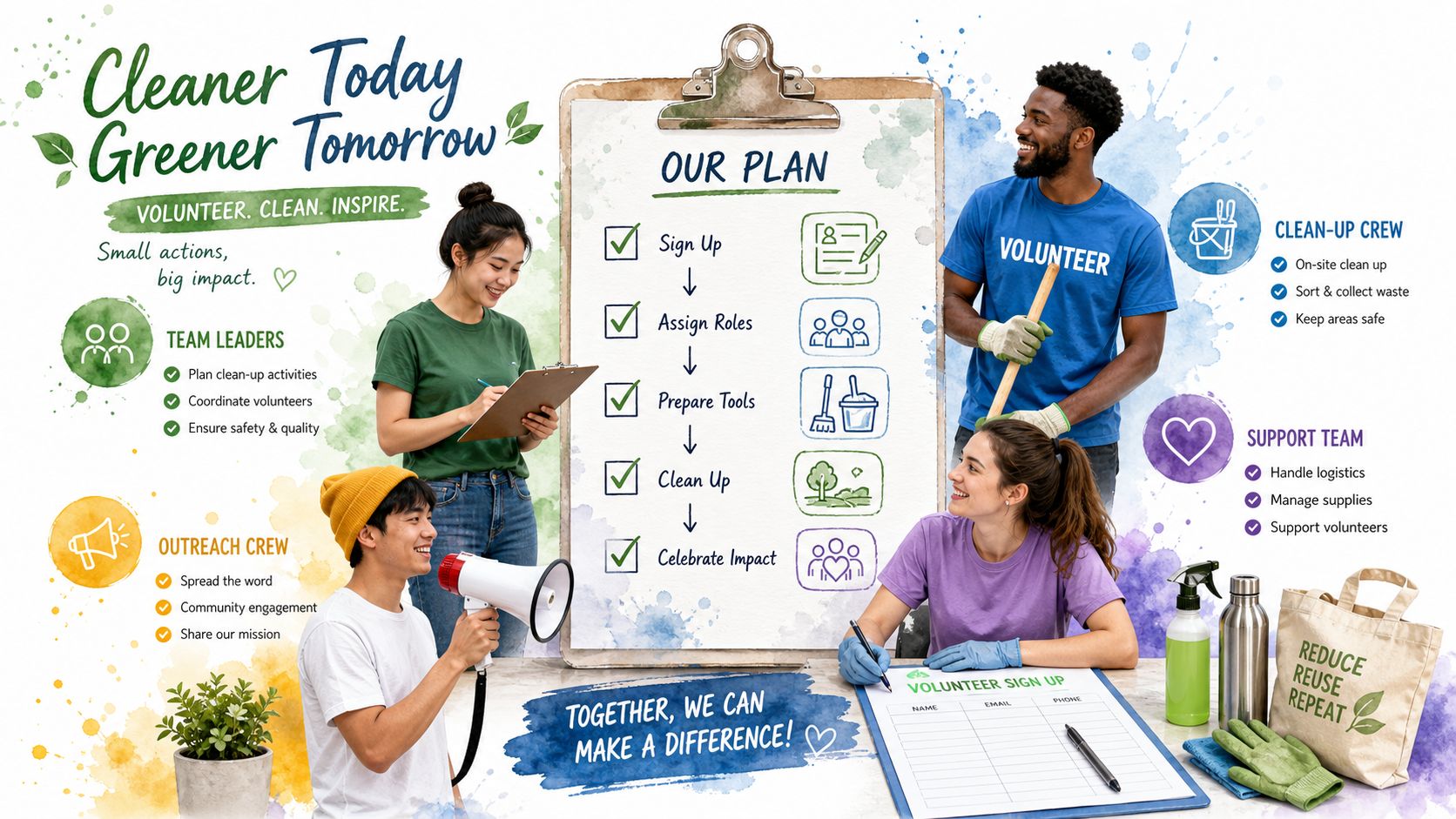
    A four-step cleanup event timeline and day-of checklist infographic to organize community cleaning activities successfully.

    A good wrap-up matters because it gives people closure. Send the photos, thank the volunteers, and tell them what changed block by block. That little habit turns one Saturday into the next one, and that's how a cleanup becomes a habit instead of a one-off.


    If you want to turn river cleanup into a real weekend rhythm, Litter Caterpillars runs volunteer-driven cleanup events in Chicago and keeps the focus on safety, friendship, and getting out there together. Visit the site, pick a date, and bring a friend who doesn't mind a little mud, because the river always has room for one more person willing to show up.

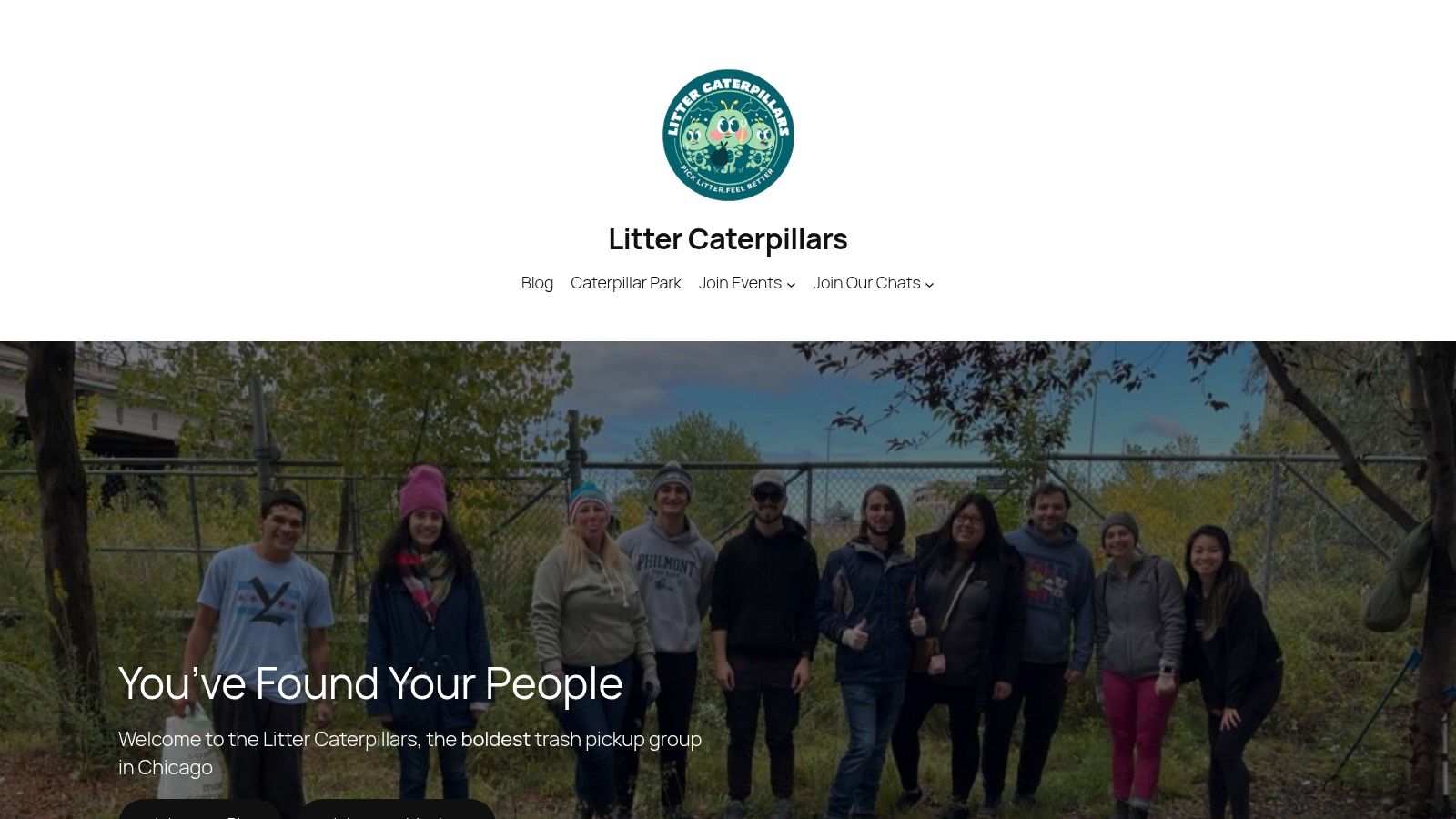
  • 7 Chicago Social Groups to Find Your People

    7 Chicago Social Groups to Find Your People

    I remember stepping off the train with two bags, a dead phone battery, and no clue where I'd find my people. Chicago felt huge, loud, and already in motion, like everybody had a lane except me. Then I started doing one thing each week, and the city stopped feeling like a wall and started feeling like a room full of open doors.

    1. Litter Caterpillars

    The first time I joined a cleanup, I didn't feel like I was “networking.” I felt like I was picking up one stubborn wrapper at a time with strangers who got weirdly excited about the same block I'd just walked past a hundred times. That's what makes Litter Caterpillars different from a lot of Chicago social groups, it turns service into the thing that makes people talk, laugh, and come back. You're not standing around trying to force conversation. You're moving, hauling, sweating, and noticing who shows up when the weather gets ugly and the work gets real.

    Litter Caterpillars

    The group's weekly rhythm matters. Chicago's South and West Sides often get left out of easy digital-first outreach because broadband adoption varies sharply by community area, from 58% in Fuller Park to 93% in Beverly in a 2022 analysis using ACS 2016-2020 data (study on Chicago's digital divide). So if you want a group that doesn't assume everyone lives online, this one makes sense in a very practical way. You can find people through Meetup, Instagram, and open group chats, then meet in person and do real work together.

    Practical rule: If you want friends in a city this spread out, pick a group that gives you a repeated reason to return. One Saturday cleanup can feel nice. A weekly habit starts to feel like your life.

    I also like that Litter Caterpillars protects volunteer energy. The group says it never pressures volunteers for donations, keeps safety and happiness first, and centers weekend mornings so people show up ready to give, not half-baked after a long night. That's a better filter than small talk. You learn fast who's there to help and who's there to disappear.

    Pros

    • Citywide reach: The group cleans across all 50 wards and goes where some groups won't.
    • Volunteer-first culture: No pressure to donate, and the rhythm stays focused on showing up.
    • Real-world payoff: Clean streets, cleared lots, and visible progress you can point to.
    • Identity built into the group: Flags, badges, and a theme song make the work feel shared, not lonely.

    Cons

    • Less formal structure: A volunteer-driven model can feel looser than a registered nonprofit.
    • Harder conditions: Some cleanups happen in rough weather or high-need areas, which can feel intense if you're new.

    If you want the direct path, visit Litter Caterpillars and look for the next cleanup. I'd start there if you want your first Chicago social group to feel like action, not awkwardness.

    2. Chicago Cares

    I like groups that hand you a plan when your week already feels messy. Chicago Cares does that well, because you can make a free account, browse a calendar, and jump into a project without hunting through ten different nonprofit pages. That's a relief when you want connection, but you don't want the entire social side of it to depend on luck.

    Chicago Cares

    The best part is how low-friction it feels for a newcomer. You can show up for schools, parks, shelters, and other projects, then let the work do the social heavy lifting. If you're the kind of person who talks more easily while handing out supplies or planting something in the ground, this kind of structure helps.

    For people comparing Chicago social groups, Chicago Cares is the steady, organized option. It's less about becoming a regular at one tiny circle and more about getting into the habit of being useful alongside other people. That's how a lot of friendships start for adults anyway, not with a perfect icebreaker, but with repetition and a shared task.

    You don't need a dramatic personality to make friends here. You need a calendar slot, a willingness to help, and enough curiosity to talk to the person next to you while the work gets done.

    The site's workflow makes that easier, too. The volunteer portal keeps the rules clear, and the mix of one-off and recurring opportunities lets you try a project once before you commit to it. If you're new in town, that matters. You can test the fit before you start building your Saturday around it.

    One practical note, the popular shifts can fill quickly, so don't wait until the last minute if you want a better shot at the project you want. If you like knowing exactly where to go and what to do, this is a solid place to start.

    Here's the internal guide that pairs well with this kind of volunteering, best volunteer opportunities in Chicago. It's useful if you want to keep your search focused on hands-on groups that get you around the city.

    Pros

    • Easy sign-up: Free account, clear portal, simple path into projects.
    • Good for solo joiners: You can arrive alone and still have a reason to talk to people.
    • Reliable logistics: The structure helps reduce guesswork.
    • Flexible commitment: One-off and recurring options let you move at your own pace.

    Cons

    • Projects fill fast: Popular times can disappear before you decide.
    • Social time is secondary: The mission comes first, so don't expect a built-in hangout vibe.

    3. Volunteering Untapped Chicago

    Some groups feel like a shift. Volunteering Untapped Chicago, or VU Chicago, feels more like a monthly ritual you can build around. It usually runs free volunteer events on the second Saturday of the month, then leaves room for an optional after-party if you want to keep talking after the work ends. That's a good setup if you want your social life to grow out of action instead of small talk in a noisy bar.

    Volunteering Untapped Chicago (VU Chicago)

    The rhythm is the selling point. When you know events are coming up on a predictable schedule, it gets easier to say yes, and saying yes more than once is how people start remembering your face. VU Chicago also adds carpools, which helps if you live farther out or don't want the trip itself to feel like a barrier.

    You'll also notice the group keeps the experience social without making it forced. Snacks and water are provided, leaders are on site, and the events are organized around different themes and nonprofit partners. That means you can spend the day building a habit and still have something to talk about afterward besides the weather.

    If you're comparing Chicago social groups by how easy they are to keep doing, this one lands in a sweet spot. It has enough structure to feel dependable and enough looseness to keep it friendly. The optional gathering after the event is a nice move because it gives shy people a natural exit and outgoing people a reason to stay.

    Useful rule of thumb: Pick a group that makes the next visit easier than the first one. Familiar timing and familiar faces lower the friction every single month.

    The main drawback is simple. Tickets can sell out, and waitlists happen. If you know you want in, don't treat it like a maybe. Check early, claim your spot, and treat it like something you plan to do.

    Pros

    • Predictable cadence: The second-Saturday rhythm helps you build a habit.
    • Built-in social layer: You can stay after for the optional gathering.
    • Access help: Carpools make attendance easier.
    • Beginner-friendly: Free events and on-site leadership make it easy to try.

    Cons

    • Capacity limits: Tickets can go fast and waitlists are common.
    • After-party limits: Some venues have age restrictions.

    Website: Volunteering Untapped Chicago

    4. Chicago Sport and Social Club

    The first time I joined a rec league, I learned something fast. A team gives you a reason to text people again next week without feeling weird about it. Chicago Sport and Social Club is built for that exact kind of repetition, with leagues and tournaments across sports like volleyball, soccer, softball, kickball, dodgeball, and ping-pong.

    Chicago Sport and Social Club (CSSC)

    This is one of the easiest Chicago social groups to use if you want structure. You can sign up with a team or as a free agent, which helps if you moved here without a built-in roster. That free-agent path matters more than people think, because it lets you show up alone without feeling like a spare part.

    The social side grows out of the season itself. You see the same faces, you learn who takes wins too seriously, and you figure out who's there for the game and who's there for the postgame hangout. That repeated contact changes the feel of the city. Instead of always starting over, you start recognizing people on purpose.

    Here's where the fit gets personal. If you like a little competition, this group gives you that. If you want something lighter, you can still find leagues and locations that feel more casual. The mix of sports and social events gives you a built-in excuse to keep showing up even on weeks when your motivation dips.

    For a lot of people, the hard part isn't the game itself. It's the first text, the first signup, the first Tuesday night when you walk into a gym or field with nobody waiting on you. This group handles that awkward middle well, and the published FAQs help make deposits and team rules feel less mysterious.

    If you want another practical route into the city, how to make friends in Chicago pairs nicely with this kind of league-based plan. I'd use both if you're rebuilding your routine from scratch.

    Pros

    • Strong repeat structure: Seasons make it easier to stay connected.
    • Solo-friendly entry: Free-agent placement helps if you don't have a team.
    • Lots of sport choices: You can match the league to your energy.
    • Social extension: Events tied to leagues keep the circle from ending at the final whistle.

    Cons

    • Fees can add up: League and team costs vary.
    • Not every league takes individuals: Some signups need a full team.
    • Energy varies: Some divisions lean more competitive than social.

    5. November Project Chicago

    I've always trusted groups that don't wait for perfect conditions. November Project Chicago meets early, moves hard, and keeps the whole thing free. The regular schedule is part of the charm, with meetings commonly on Wednesdays and Fridays at 6:06 am at rotating city locations shared through social channels.

    That early start does a lot of social work by itself. People who show up before sunrise tend to remember each other quickly, because nobody is pretending to be polished at that hour. You're just there, sweating, laughing, and trying to keep up. That creates a kind of honesty you don't always get in later-day social plans.

    The group also keeps the entry barrier low. It's free, open to all fitness levels, and built around the simple idea that you show up. That matters if you've ever felt intimidated by the gym scene or too out of shape to join a more performance-driven fitness group.

    Practical rule: If you want accountability, go where attendance matters more than looking impressive. A group that welcomes your messy first week is easier to stick with than one that rewards only the already-fit.

    The downside is obvious, the time. Not everybody wants to wake up that early, and weather can make outdoor workouts rough. But if mornings sharpen you instead of draining you, this group can become a steady anchor in your week. The after-workout social time also helps, because people usually stick around long enough to talk before the city fully wakes up.

    For a similar outdoors-first mindset, I'd also look at outdoor group activities for adults. It's a good companion idea if you want your social life to happen outside, not just online.

    Pros

    • Always free: No registration barrier.
    • Clear routine: Two weekly meetups make it easier to keep going.
    • Welcoming pace: It's open to all fitness levels.
    • Real accountability: Early start times keep the habit honest.

    Cons

    • Very early: 6:06 am is a dealbreaker for plenty of people.
    • Weather matters: Rain, snow, and heat all count.

    6. Chi Hack Night

    If your version of fun involves making something useful with other smart people, Chi Hack Night can feel like a good home base. It's a free weekly civic-tech night where technologists, designers, organizers, students, and public-interest folks come together to learn, prototype, and talk through projects that help the public. That mix matters, because you don't have to arrive as a polished coder to belong here.

    I like that the format gives people a reason to participate without forcing instant expertise. Talks open the door, breakout groups move the conversation forward, and project time lets people build together. That's a nice model if you want to meet people through ideas instead of just hobbies.

    The group also works well if you're trying to build a professional-social circle with some purpose behind it. You'll meet people who care about data, design, policy, and public interest work, which can be a relief if you're tired of shallow event chatter. Chicago social groups like this one can make you feel less like a visitor and more like a contributor.

    There's a practical upside too. Weekly meetings make it easier to recognize the same faces, and recognition is where a lot of adult friendships begin. You stop being “the new person” and start being the person who always shows up for the talk on transit, housing, or a community project.

    The main limitation is simple. If civic tech isn't your thing, the topics may not click. But if you like solving problems with other people and you're comfortable around tech or data talk, this is an easy place to plug in.

    Pros

    • Weekly rhythm: Regular meetings make it easier to build familiarity.
    • Open entry: You don't need a narrow background to join.
    • Collaborative format: Talks and hands-on sessions create real interaction.
    • Good for civic-minded networking: You meet people who like building useful things.

    Cons

    • Topic-specific: It leans toward civic tech, data, and related work.
    • Formats can change: You'll want to check event pages before you go.

    Website: Chi Hack Night

    7. Out Our Front Door

    Some people make friends over coffee. Some do it over a long bike ride with a lake breeze and a shared map. Out Our Front Door gives you that second path. It brings people together through guided bike adventures, including day rides, bike-camping overnights for adults and families, adaptive rides, and route resources around the Lake Michigan region.

    What I like here is the combination of movement and learning. You're riding, but you're also hearing local history, ecology, and culture as you go. That gives the day some texture. You're not just covering miles, you're noticing where you are with other people who want to notice too.

    This group works well if you're the type who relaxes when someone else handles the planning. The guides and volunteers take on the structure, and you get to show up ready to ride. That can be a huge relief if you want outdoor community without becoming the trip organizer.

    If you're thinking about Chicago social groups as a way to change your own habits, this one is remarkably powerful. You learn the city by moving through it, and you get more comfortable talking to people while your body is doing something useful. That's a good combination when you're trying to make friends without forcing it.

    The limits are real, though. Most guided trips are ticketed, weather can matter, and you need a working bike plus basic gear. Beginners can still find a place here, but you'll be happier if you come prepared and know your comfort level before the ride starts.

    Pros

    • Guided adventure: The trip structure keeps the planning light for you.
    • Inclusive options: Adaptive rides widen access.
    • Learning built in: You get history, ecology, and culture along the route.
    • Good for outdoors people: A natural fit if you like moving while you talk.

    Cons

    • Ticketed trips: Many rides cost money and can sell out.
    • Gear matters: You need a functioning bike and basic equipment.
    • Weather and distance: Some trips can feel demanding for beginners.

    Comparison of 7 Chicago Social Groups

    Organization 🔄 Implementation complexity ⚡ Resource requirements 📊 Expected outcomes 💡 Ideal use cases ⭐ Key advantages
    Litter Caterpillars Medium, volunteer-run coordination with flexible, on-the-ground logistics Low–Medium, volunteers, basic cleanup supplies; occasional larger project funding Visible, neighborhood-level cleanup; occasional large wins (e.g., park creation) Regular weekend volunteers seeking hands‑on, community-driven cleanup Citywide reach; strong volunteer culture; tangible, local impact
    Chicago Cares Low, structured nonprofit operations and streamlined sign-up portal Medium, staff, partner nonprofits, volunteer-management systems Consistent, scalable volunteer placements across many causes Newcomers or busy people wanting reliable, one‑off or recurring projects Large calendar; reliable logistics; clear safety and participation policies
    Volunteering Untapped Chicago Low–Medium, monthly themed events coordinating multiple partners Low, volunteer leaders, event coordination, carpools, modest supplies Social-first volunteer events that build habit and small-scale impact People who want social volunteering with optional after-parties Regular cadence; built-in social element; improved access via carpools
    Chicago Sport and Social Club (CSSC) Medium, season scheduling, team placement, and rule enforcement Medium, venue rentals, staff/referees, equipment and team fees Recurring social connections and fitness through league play Adults seeking organized recreational sports and seasonal social groups Wide sport variety; solo-friendly placements; structured seasons for consistency
    November Project Chicago Low, volunteer-led, no-registration meetups on a fixed schedule Very low, volunteer leaders and public meeting spaces High consistency in fitness, accountability, and peer connections Early-morning fitness seekers who value routine and community Free and inclusive; strong accountability and camaraderie
    Chi Hack Night Medium, weekly events with talks, breakout groups, and project coordination Low–Medium, venue/tech support, volunteer organizers, contributor time Networking, skill development, and civic‑tech project prototypes Technologists, designers, and civic-minded collaborators Newcomer-friendly civic‑tech community with project continuity
    Out Our Front Door (OOFD) Medium, trip logistics, guide coordination, and safety planning Medium, bikes/gear, trained guides, ticketing for guided trips Improved cycling skills, outdoor stewardship, and strong rider community Outdoor enthusiasts wanting guided rides, overnight trips, and learning Guided, education-forward routes; inclusive and adaptive programming

    Your First Step Is the Best One

    Looking at a list like this can feel a little overwhelming, like you've opened a map of a city you still barely know. I've been there. The fix isn't to plan the perfect social life from scratch. The fix is to pick one place, show up once, and let the second visit happen only if the first one feels right.

    I'd keep it simple. If you want movement and purpose, try Litter Caterpillars or Chicago Cares. If you want repeat contact and built-in conversation, go for Chicago Sport and Social Club, November Project Chicago, or Volunteering Untapped Chicago. If you want your brain engaged too, Chi Hack Night and Out Our Front Door give you people, rhythm, and something to do with your hands or your legs.

    The city gets a lot smaller after that first hello. You learn names. You learn faces. You start to recognize who laughs at the same joke, who stays for cleanup, who comes back the next week. That's how Chicago social groups start to feel less like listings and more like your life.

    All you need is one move. Pick the group that feels easiest to try, put it on your calendar, and go.


    If you want the shortest path into a real Chicago social group, start with Litter Caterpillars. It's weekly, hands-on, and built for people who want friendships to grow out of doing something useful together. Visit the site, pick a cleanup, and give yourself one good reason to show up this weekend.

  • How to Run Community Cleanup Events That Actually Work

    How to Run Community Cleanup Events That Actually Work

    The first time I ran a cleanup in Chicago, three of us showed up under a sky that couldn't decide between hail and snow. My gloves got wet, one Uber kept canceling, and I remember laughing because we were freezing while hauling bags of someone else's mess, like we'd stumbled into the strangest team-building exercise in the city.

    A few weeks later, I realized I wanted that feeling again. Not the cold part, obviously. The part where a block looks worse before it looks better, and then the whole crew walks away a little taller.

    Why I Started Picking Up Trash Every Weekend

    I used to think I was the kind of person who just couldn't keep order. My apartment had the usual pile-up of half-finished intentions, old takeout containers, and things I meant to deal with later. Cleaning someone else's sidewalk felt easier than cleaning my own room, and that felt weirdly honest.

    Then my life got messy in a bigger way, and I started making choices on purpose about who I let around me. I wanted more people who showed up, more people who gave, more people who didn't make every plan turn into a drain. So I kept the cleanup going, because it let me practice exactly that.

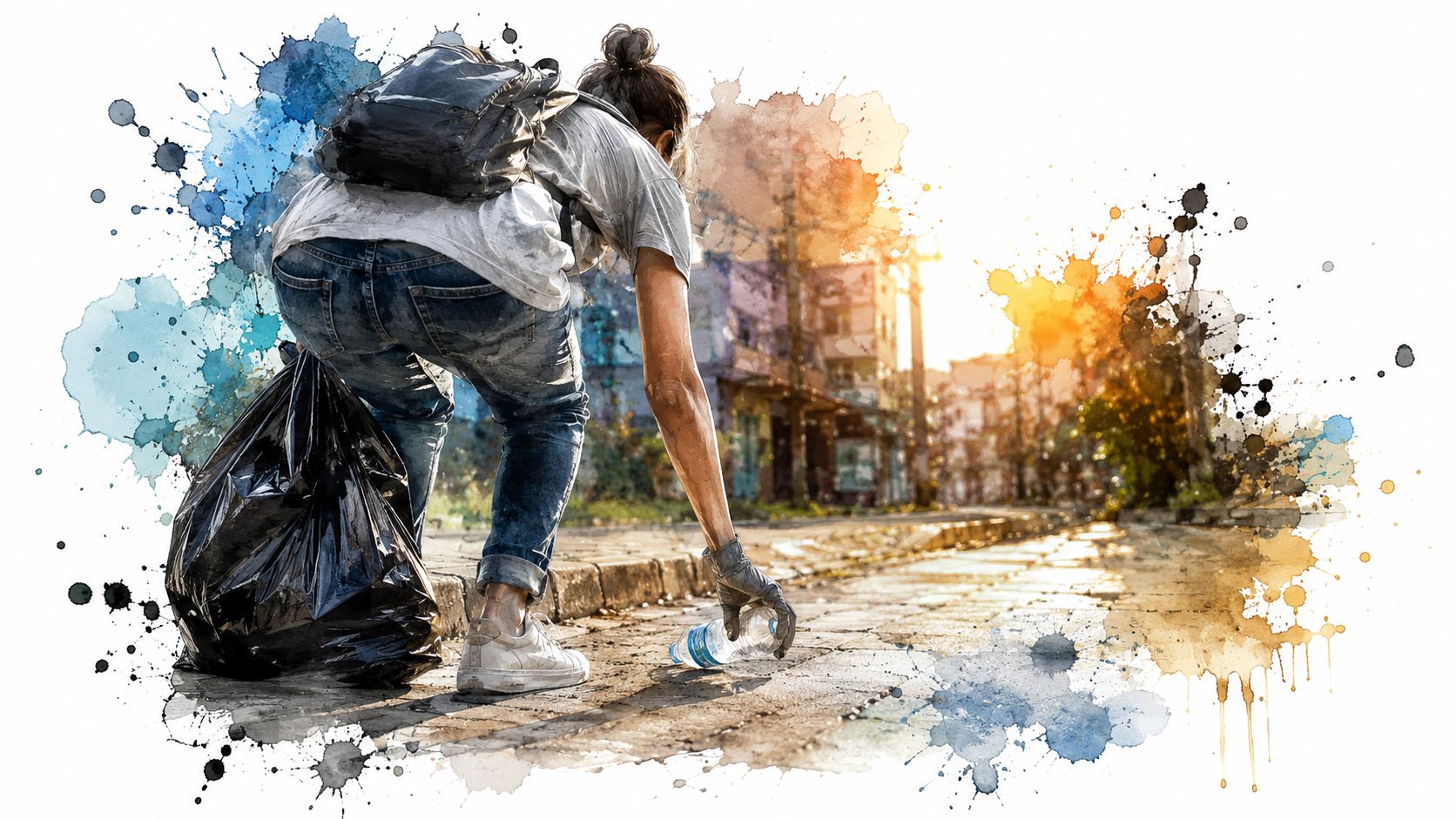
    A person collecting trash in a plastic bag on a city street during a community cleanup event.

    The first rule I learned the hard way

    The trash is never the whole point. A cleanup can begin with two friends and a bad-weather forecast, but the thing that keeps people coming back is the feeling that they're part of a crew with a shared rhythm. That's why I stopped treating it like a one-off chore and started treating it like a weekly practice.

    I've seen that same pattern in bigger cleanup movements too. World Cleanup Day and National Cleanup Day pulled in 25 million people across 190 countries and territories in 2025, which is 86% of UN member states, and earlier reporting put participation at over 20 million volunteers across 179 countries and territories, with more than 2 million volunteers in the United States alone and events in all 50 states (World Cleanup Day, Earth Day's 2024 cleanup reporting). That scale doesn't matter to me because it sounds impressive. It matters because it tells me weekend trash pickup is a normal civic habit, not some weird hobby.

    Practical rule: if the event feels like a punishment, people won't return. If it feels like a shared ritual, they will.

    The playbook I wish I'd had on day one is simple. Pick a place, get a few steady people, protect their energy, and make the whole thing feel like service with a pulse. That's how a cleanup starts changing the volunteers too.

    Planning Your First Cleanup From Scratch

    I start every event by walking the site before I ask anyone else to show up. I look for broken glass, thorny weeds, traffic noise, blind corners, and spots where people toss bags because they think nobody's watching. A park, an alley, and a highway shoulder all demand different judgment, and if you treat them the same, you'll feel it by minute twenty.
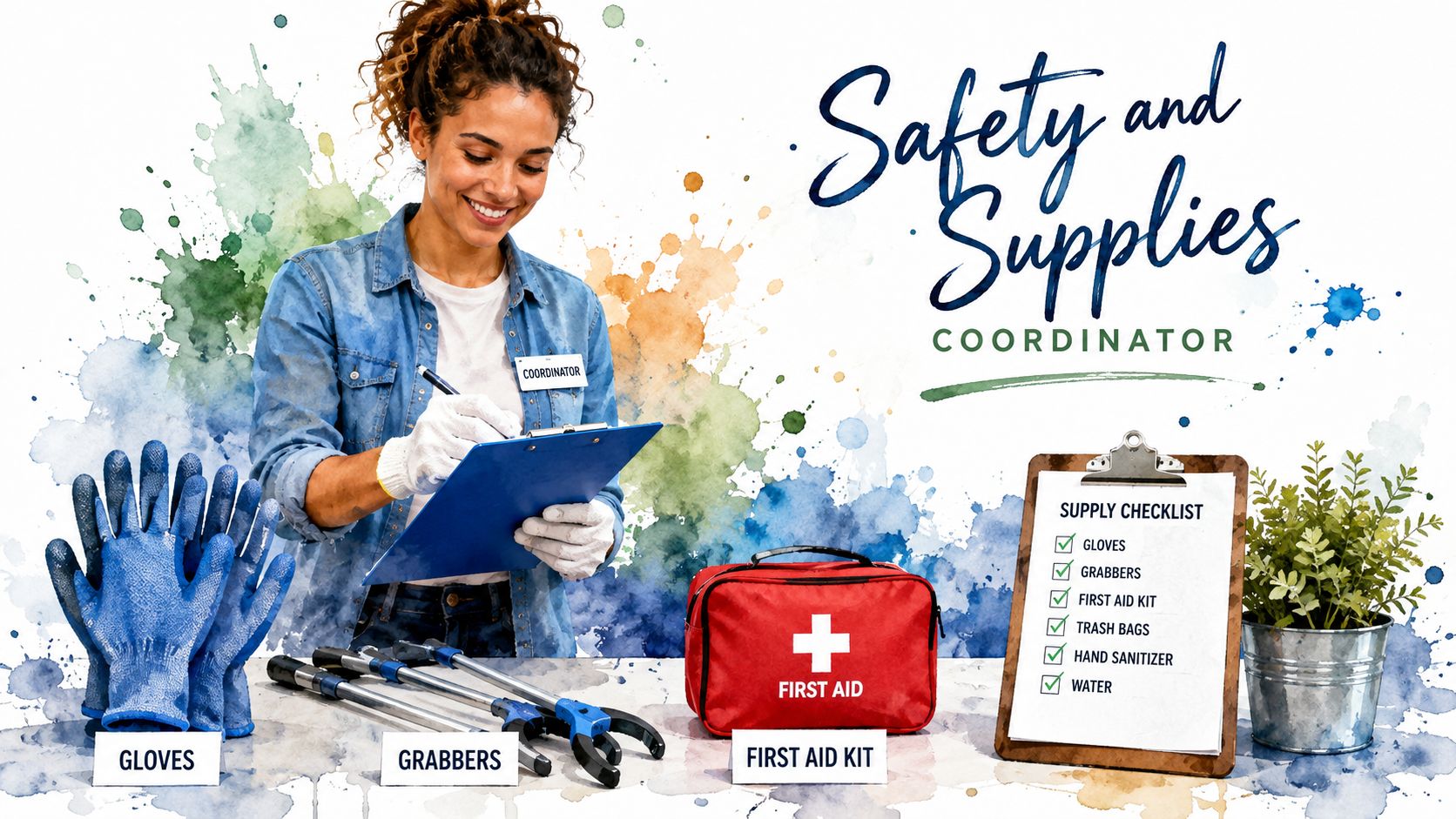
    Before the first volunteer arrives, I want four things clear in my head. Where are we cleaning, who controls the space, what can go wrong, and how do we get out if the day turns sideways? That simple discipline saves more chaos than any fancy flyer.

    I write the plan like I'm handing it to a friend

    A one-page plan is enough if it's honest. I put the site name, the date window, the lead organizer, the supply list, the pickup or haul-off plan, and the exit route in plain language. I also write down the obvious hazards, because forgetting a busy street or a hidden dump pile is how a “quick cleanup” turns into a bad afternoon.

    Here's the rhythm I use:

    • Scope the site first. Walk it in daylight and note where the trash collects, where cars move fast, and where shoes might catch on broken material.
    • Check ownership next. City land, private land, and roadside areas don't all work the same way, and each one changes what you can do.
    • Set the date with weather in mind. Weekend mornings work well for me because they filter for people who want to give their time, not just squeeze in a photo.
    • Handle permits and permissions early. If a space needs approval, I'd rather know before I invite anybody.
    • Gather supplies with an exit in mind. Gloves, bags, grabbers, water, and a place for the debris to go matter more than decorations.

    The volunteer event planning guide is one place I'd send anyone who wants a clean planning checklist without the fluff. I still keep my own version on paper because I don't want my phone to become the single point of failure.

    Practical rule: if you can't explain the plan in one minute, the plan is too big for your first cleanup.

    I also learned to respect shade and timing. Summer heat drains people faster than they expect, and a site that looks manageable at 8 a.m. can feel punishing by noon. I'd rather run a short, sharp cleanup and leave people wanting more than push them until they swear they're done forever.

    Recruiting and Keeping the Right Volunteers

    I stopped thinking of recruitment as a flyer problem. It's a design problem. If I want people who show up with a giving spirit, I make the event easy to say yes to, and I set it on a morning that already fits that kind of person's life.

    The first filter is the schedule. Weekend mornings work because they ask for a real choice. The person who shows up then usually isn't there by accident, and that matters when the work gets uncomfortable halfway through.

    Make the first touch easy

    I don't ask people to commit through a giant form. I let them tap in, ask a quick question, and get the basics fast. Meetup, Instagram, and a simple message thread all help when the tone is clear and the ask is small.

    The volunteer recruitment guide can help if you're trying to build that first wave without sounding needy. I've also found that the event description should respect time. Say what neighborhood you're cleaning, how long people will be out, what they should wear, and what kind of energy you expect.

    To keep people past week three, I do a few things on purpose:

    • Pair new people with a returning buddy. Nobody should spend the first twenty minutes feeling lost.
    • Use names fast. I try to learn every name in the first ten minutes, because people stay warmer when they feel seen.
    • End with a group photo. It gives the day a clean finish and gives people something to share.
    • Never ask for donations on site. My volunteers came to give labor and attention, not to get a fundraising pitch.

    That last part matters more than most organizers admit. People can feel when their energy is being respected. If you protect it, they come back.

    I also keep the tone friendly without making it sloppy. A simple reminder the night before, a clear arrival spot, and a real welcome at the curb all do more than a long motivational message. People don't need hype. They need to know they won't be stranded.

    Building Pride With Flags, Songs, and Badges

    The first time I brought a flag to a cleanup, it changed the mood right away. People walked up faster. Strangers asked who we were. The crew looked like a crew instead of a loose pile of individuals with trash bags.

    That's when I understood that pride is practical. A cleanup group needs a symbol the same way a sports team does. It gives people something to gather under before the first bag gets filled.

    Small rituals turn a crowd into a team

    A theme song helps too. It doesn't need to be perfect, and it definitely doesn't need to be slick. It just has to be ours. Once people hear it enough times, the song starts to mean “we're here again, we're doing the work.”

    Badges and stickers do a different job. They tell returning volunteers that the group noticed them. A thank-you email disappears into a crowded inbox, but a small badge on a jacket gets seen again and again.

    I borrowed this from the way teams and big civic movements build identity, then I made it cheap enough for a neighborhood crew. A simple logo, a two-line chant, and a named route can change the feel of the whole morning. You don't need a branding agency. You need a few visible signs that say, “We belong here together.”

    Here's what I'd do first if I were starting over:

    • Print one simple logo. Put it on a flag, a shirt, or a sticker.
    • Pick one short chant. Two lines are enough.
    • Name the route. People remember “the south block run” better than “today's cleanup.”
    • Hand out small markers of return. A badge, a sticker, or a pin is enough to make repeat help feel noticed.

    When a cleanup has culture, people relax into it. They stop asking whether they'll have fun and start acting like they already know the answer.

    Running the Day So People Come Back

    I learned to watch the first ten minutes closely. If people arrive to a table that is obvious, a check-in that moves fast, and a crew that already looks ready, they settle in faster. In Chicago weather, that matters. A windy morning off the lake, a sticky summer block, or a gray day when everyone is half-braced for rain can turn small delays into lost momentum.

    The welcome table is where the day either feels organized or feels improvised. I set gloves, bags, grabbers, and water where people can reach them without asking, and I greet each volunteer like I expected them. Then I keep the safety huddle short and specific, because nobody wants a lecture while they are standing in damp socks.

    My run-of-show stays tight

    1. Staging and sign-in. People check in, pick up supplies, and know where to leave coats, backpacks, or car keys.
    2. Five-minute safety huddle. I cover traffic, broken glass, needles, and the rule that nobody reaches into anything sharp or unknown.
    3. Site split and team assign. I divide the area into zones so nobody wanders without a purpose.
    4. Cleanup hour. People work in pairs or small groups, and I keep the route short enough that nobody feels stuck on one block too long.
    5. Wrap and thank. We bring in the bags, note what changed, and end somewhere warm if I can manage it.

    The short route rule is the one I protect most. A crew that finishes one block with energy will come back more reliably than a crew that gets dragged through an overambitious plan. If a route starts to swell, I trim it before people start dragging their feet. That habit is part of the volunteer coordinator training I point new leaders to at volunteer coordinator training, because the same lesson shows up in every season, keep the day doable and people trust the next one.

    I also build in a water break before people ask for one. That sounds minor, but it keeps the tone steady and keeps complaints from stacking up. When the route ends, I want the crew to feel like they finished a job, not like they survived a test.

    I learned another thing the hard way. A coffee shop, a church basement, or even a corner with folding chairs beats a parking lot where everyone is already peeling away. The last fifteen minutes shape whether people remember the cleanup as a one-off chore or as a place they fit into. If they leave talking to each other instead of checking the time, they are more likely to show up again.

    Measuring Impact and Following Through

    Most cleanup days feel finished the moment the bags leave the curb. I used to think that too. Then I realized the cleanup only becomes real when I check what changed afterward and write it down before memory gets lazy.

    A good report doesn't need fancy software. It needs a habit. I log what kind of trash I found, where it piled up, how long the crew worked, and what the site looked like right after we left. The field guidance I trust says to set the evaluation framework before the event and then check the area soon after, then again later, so you can tell whether the spot stayed clean or bounced back with fresh litter (field guidance on cleanup evaluation).

    What I track and why

    Metric What it tells you Example value
    Volunteers present Whether your recruitment worked 12 people
    Hours worked How much effort the crew gave 18 volunteer hours
    Bags or piles collected Whether the route was manageable 9 bags
    Trash types found What keeps returning to the site Bottles, food wrappers, broken plastic
    Problem spots Where the site needs follow-up Corner lot, bus stop, alley mouth
    Same-day site condition What changed immediately Clearer sidewalk and fewer visible piles
    Later site check Whether the area held up Still clean after a return visit

    Field results help me set my expectations. One published cleanup model removed nearly 50 kg of trash across 0.75 miles of beach coastline and 0.3 miles of trail in 1.5 hours at each site, which works out to roughly 33 kg per hour per site and about 22 kg per mile over the combined route (published model cleanup). I don't use that as a goal for every block in Chicago, because every site is different. I use it as a reminder that real cleanup output can be measured, not just felt.

    I also photograph the items we can't safely collect and write them down. Then I send a short note to whoever controls the block, because data only matters if somebody sees it. If I let the spreadsheet sit untouched, I've just turned effort into clutter.

    Scaling a Cleanup Into a Long-Term Habit

    The thing that separates a group that fades from one that lasts is boring in the best way. We show up on the same day, in bad weather, with enough familiar faces that the ritual feels intact even when the sky is ugly. That kind of repetition builds trust faster than any one heroic day ever could.

    I've watched small crews grow without turning into something stiff. The trick is to add help without losing the feel of a neighborhood job. Once a group gets too crowded to move easily, I stop adding bodies and start adding structure.

    Grow slow, keep the pulse

    If I were starting from zero, I'd keep these reminders in my head:

    • Week one. Make it easy to join, keep the route short, and end on time.
    • Week twelve. Notice who keeps returning, and give them real responsibility.
    • Week fifty-two. Protect the culture before you chase scale.

    I also say no to some expansion ideas. A bigger event isn't always better if it strips out the warmth that keeps volunteers coming back. I'd rather have a small crew that knows each other's names than a crowd that feels like a line at a festival.

    That's the honest part nobody tells you on day one. A cleanup group can become a habit, a friendship engine, and a local ritual all at once, but only if you keep the work human. If the people stay glad to show up, the blocks get cleaner too.


    If you want help turning a first cleanup into something people return to, Litter Caterpillars runs Chicago volunteer cleanups with weekend mornings, clear roles, and a volunteer-first style that keeps the focus on the crew. I'd start there if you want a real group to plug into, learn from, or model your own cleanup after.

  • Why Pick Up Litter: The Real Reasons It Matters

    Why Pick Up Litter: The Real Reasons It Matters

    Three of us stood under a tree in a Chicago hailstorm, laughing like fools while Uber kept canceling. My gloves were soaked, the chips bags were stuck to the curb, and somehow I felt better than I had in weeks.

    The First Time I Picked Up Litter in a Chicago Hailstorm

    That first night with Litter Caterpillars changed how I think about a Saturday. We started with three people, a spring storm, and the kind of cold that makes you hunch your shoulders and question your own ideas. We were huddled under a tree, watching ride after ride disappear from our phones, and I remember thinking that cleaning up other people's messes felt strangely easier than cleaning up my own life.

    The weird part was the fun

    Nobody told me pickup would feel this alive. I expected duty, maybe a little pride, then a trip home with numb fingers. Instead I got the simple rush that comes when you and two other people decide to stay outside anyway, even when the sky turns mean.

    The work was small and obvious. A wrapper in the grass, a bottle cap by the curb, a paper cup flattened in a puddle. Each piece made the block look a little less abandoned, and each bend to the ground made me feel a little less stuck in my own head.

    Practical rule: if a job makes you notice your hands, your breath, and the people beside you, it's doing more than cleaning a street.

    That night gave me the core answer to why pick up litter. It's not because I woke up one day and turned into a saint. It's because the act itself changes the person holding the bag. You feel agency again. You stop waiting for perfect weather, perfect neighbors, or perfect motivation.

    The rest of this piece is just the reasoning behind that feeling.

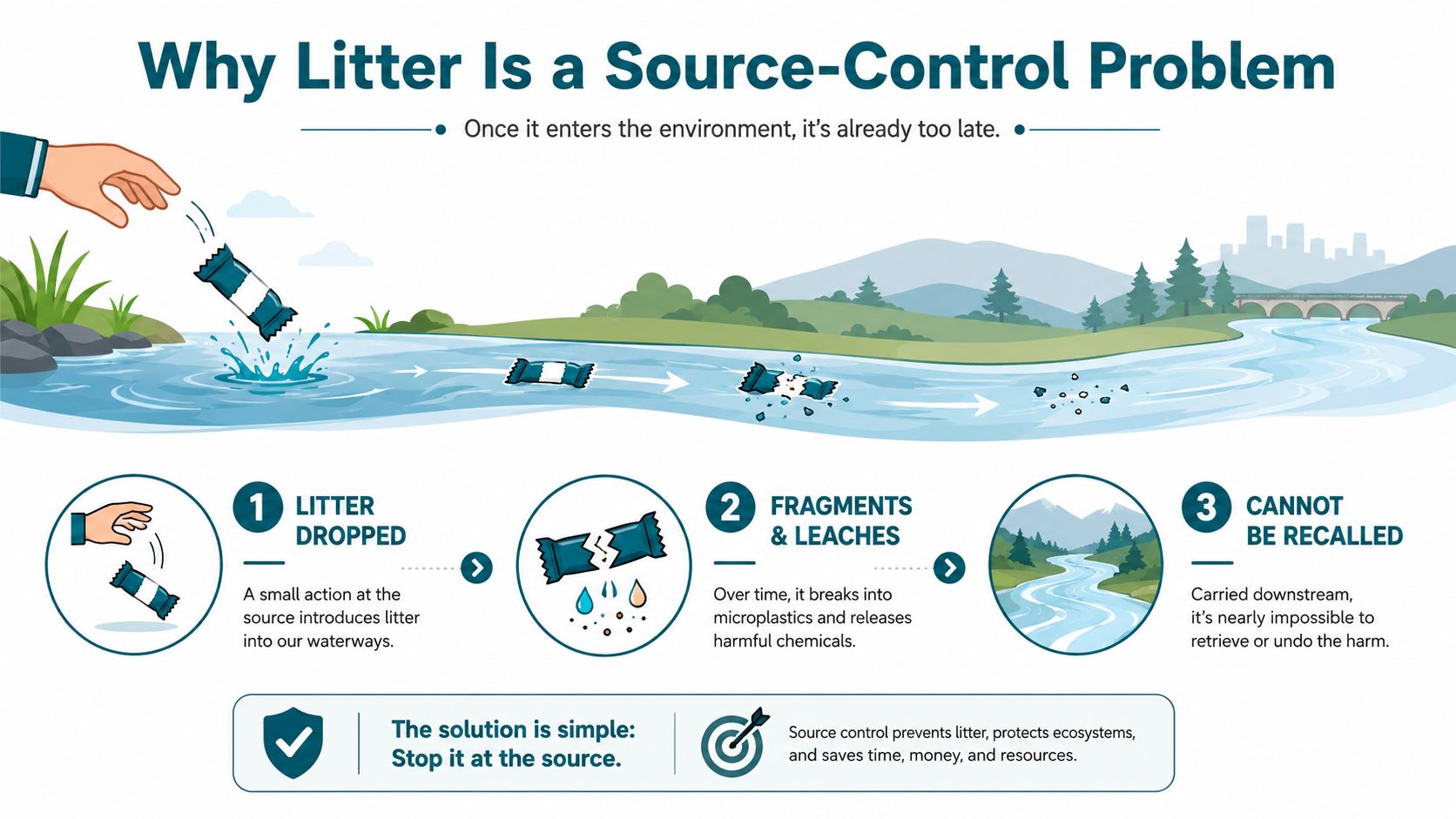
    Why Litter Is Really a Source-Control Problem

    A candy wrapper in a gutter is like a dropped receipt in a river. Once it leaves your hand and starts moving, you can't call it back. That's the part people miss when they treat pickup like sidewalk decoration.

    Once trash moves, it gets harder to stop

    A chip bag on a parking lot doesn't stay a chip bag forever. Wind tears it, rain pushes it, and the pieces slide toward a storm drain. From there, the mess can move downstream, break apart, and keep going. That's why I think of litter pickup as source control, not cleanup for show.

    If I see a bottle cap near a curb, I don't see one cap. I see something that can bounce, roll, and end up where a dog drinks or a drain catches debris. If I see glass by a bike path, I know the risk goes up the longer I leave it there. The best move is simple, remove the trash before it disperses.

    An infographic illustrating how litter dropped into waterways breaks down into microplastics, highlighting the importance of source control.

    The highest-value habit is early removal

    That's why I care so much about crews who hit the same blocks, drains, and edges again and again. A wrapper near a storm drain is the kind of thing you can grab in two seconds. If you wait, it becomes fragments, mess, and then a harder problem for the next rain.

    I use the same logic when I talk with new volunteers about litter prevention programs. Start where trash collects. Pick up the loose stuff before it travels. Do it before the block gets another round of weather.

    The point isn't to pretend cleanup solves everything. The point is that pickup can stop a small problem from becoming a spread-out one. That's a real job, and it's one a person can do with gloves and a bag.

    What Pickup Actually Saves Wildlife, Water, and Public Money

    When I walk a block in Chicago, I'm looking at more than a messy corner. I'm looking at where birds peck, where rain runs, and where city crews come back again and again. Litter doesn't sit still, and the bill for it doesn't stay small.

    The mess is bigger than the block in front of you

    Keep America Beautiful's 2020 National Litter Study estimated about 49.6 billion pieces of litter near U.S. roadways and waterways, including 25.9 billion near waterways and 23.7 billion near roadways, or 152 littered items per U.S. resident and more than 2,000 pieces per mile. The same study said if everyone in the U.S. picked up just 152 pieces of litter, the country would effectively clear the existing load until new litter showed up. A later update said litter was down 34%, yet 35 billion pieces still remained in parks, waterways, and public spaces. Keep America Beautiful's litter study summary

    That's why a small crew can do something visible fast. A few bags of trash taken off one stretch of sidewalk can feel tiny in the hand and huge to the block. The ratio matters.

    The old numbers still tell a useful story

    A 2009 Keep America Beautiful study found more than 51 billion pieces of litter on U.S. roadways each year, or 6,729 items per mile annually, with 91% smaller than 4 inches. It also estimated cleanup costs of more than $11 billion per year and found 38% of roadway litter was tobacco-related, with paper at 21.9% and plastic at 19.3%. Keep America Beautiful litter research summary

    That mix matters on the ground. If most of what I'm picking up is small, then a gloved hand, a grabber, and a bucket can remove a lot of it without fancy gear. If tobacco bits keep showing up, I know where to look. If plastic and paper keep collecting in the same gutter, I know the wind and the curb are doing predictable work.

    On a Saturday route, I'm not solving the whole city. I'm taking away the pieces that would have kept moving.

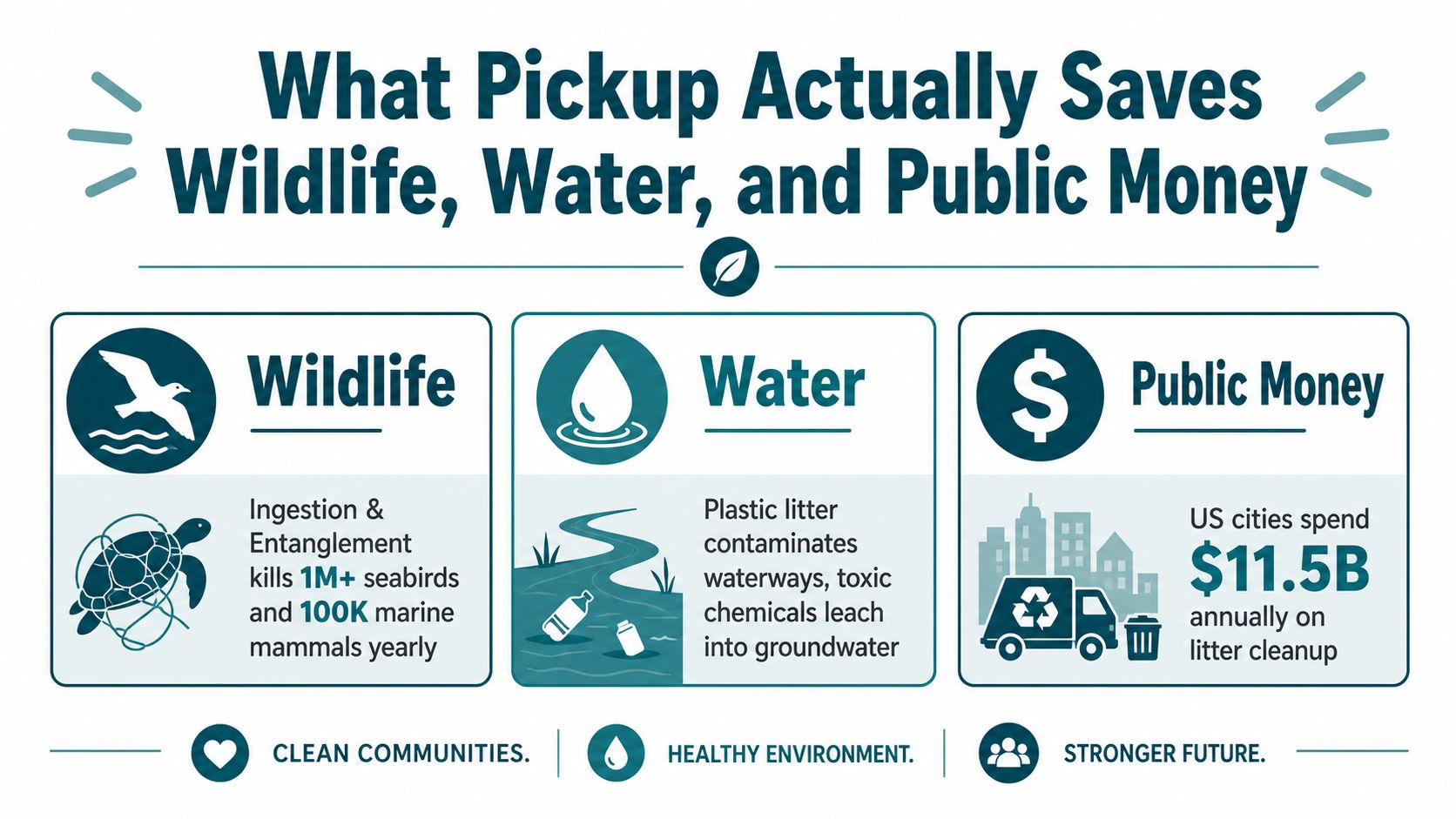
    If you want the blunt version, pickup saves wildlife from ingestion and entanglement, keeps trash from leaching into soil and water, and cuts down on repeated cleanup work. I like that kind of math because it's plain. You can see the bag fill up, and you can see the block improve.

    The cleanup side of this is also why I keep sending people to cleaning up a river. Water carries everything farther than people think.

    An infographic showing the benefits of picking up litter for wildlife, water safety, and public money savings.

    Why Cleanup Is Only One Piece of the Puzzle

    I hear the objection all the time. If trash keeps coming back, why bother? That question is fair. I'd ask it too if I hadn't spent years watching the same blocks fill up again after a storm or a busy weekend.

    Cleanup helps now, prevention helps later

    Pickup gives immediate relief. It protects a bird from one plastic scrap, keeps a drain from clogging, and makes a corner feel cared for. But the long game is prevention, better packaging, fewer escape points from waste systems, and a city where people don't treat the sidewalk like a bin.

    A clean block also changes the mood of a place. When a street looks cared for, people notice. They're less likely to toss the next wrapper. I've seen that happen on blocks where volunteers return often, because care is visible before a single word gets said.

    The British litter guidance from Keep Britain Tidy puts this plainly, cleanup matters, but it should sit inside a broader prevention effort. Why do we need to pick litter

    I don't ask people to pick up litter because it fixes everything

    I ask because it fixes something real, right now. It removes a mess that would otherwise spread. It shows your block that someone is paying attention. It gives you a job you can finish on a Saturday morning.

    That's enough for me. It should be enough for you, too, if you want to do the part that belongs to a regular person.

    The Real Reasons People Don't Pick Up Litter and How to Get Past Them

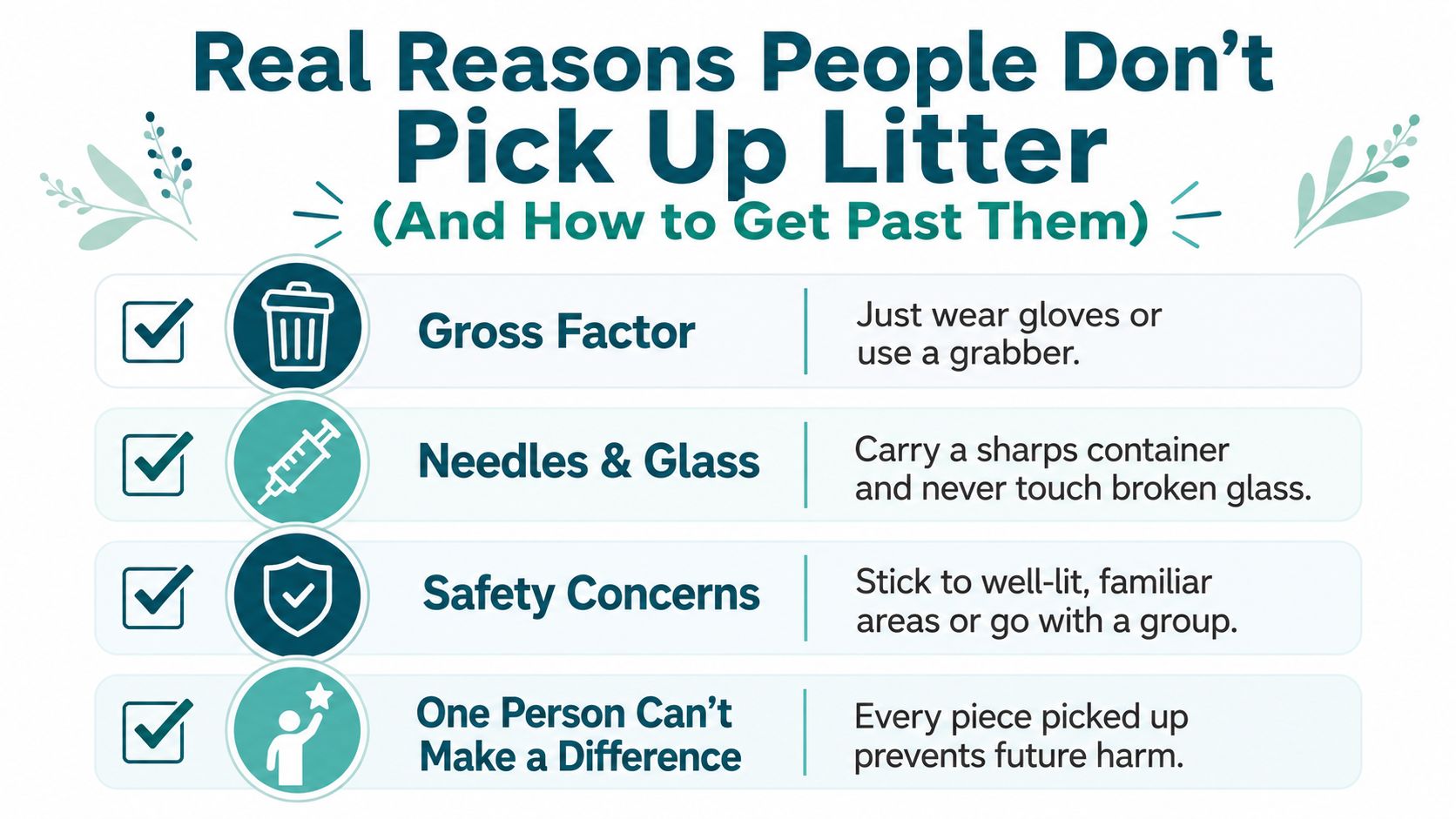
    People don't avoid pickup because they're lazy. They avoid it because the task feels gross, risky, or pointless. I respect all three of those reactions, because I've had them myself.

    The gross factor is real

    Nobody enjoys reaching toward mystery sludge with bare hands. That's why I never go out without thick gloves and a grabber. If something looks slimy, sharp, or weird, I leave it alone and move on.

    Needles, broken glass, and other unsafe items need a different response. I teach people to carry a sharps container when it makes sense, and to skip anything they shouldn't touch. I'd rather someone pick up ten safe items than hurt themselves on one dangerous one.

    Safety and futility need simple rules

    If you're worried about safety, stay in familiar, well-lit spots or go with a group. I like the buddy system because it lowers stress and makes the hour feel lighter. You talk, you work, you keep an eye on each other.

    If you think one person can't make a difference, use a smaller target. One block. One bag. One curb line. I've seen the mood on a street change after one clean sweep.

    Practical rule: make the goal small enough that you can finish it before your brain starts negotiating.

    The second half of this comes from the people who keep showing up. Keep Nature Wild says that if every person picked up just one piece of trash today, the world would have over 300 million fewer pieces of litter, and if every person picked up 10 pieces, that would mean 3 billion fewer pieces. That's a simple mechanic, not a pep talk.

    An infographic listing common barriers to picking up litter and practical tips to overcome them safely.

    The point is not that everyone should love trash pickup. The point is that the common objections all have workarounds. Once you name the barrier, the job gets less mysterious.

    What Weekly Cleanup Actually Does to a Neighborhood and Its People

    I think about one cold Saturday on a Chicago block where the trash had been building for weeks. Nothing looked dramatic at first. A few cups near a fence, wrappers in the grass, bottles by the curb, the usual stuff you stop seeing until someone points at it.

    Before, during, after

    Before the cleanup, people walked fast and kept their eyes forward. During the cleanup, strangers started talking while they bent down for the same pile of debris. After an hour, the block looked open again, and people who had never met were joking like they'd known each other for months.

    That's the part I didn't expect when I started. The work brings people together because it gives everyone a simple shared task. Nobody needs a speech. Nobody needs to agree on politics or style or anything else. You just fill bags and keep moving.

    The regular-participation research on litter walking says 80% of participants did it regularly at least 1 to 3 times per week, and regular participation was significantly associated with previous cleanup experience, physical-activity motivation, and middle age. Litter walking research

    That matches what I see in Chicago. People stick with the habit when it feels like a walk they already know how to do. They come back because the work fits into life instead of taking over life.

    The friendships are part of the outcome

    I've watched people start with a bag in one hand and leave with a new group chat. I've watched shy first-timers relax after the first curb. I've watched regulars become the people who notice who's missing and text them before the next event.

    That matters to me as much as the cleaner block. A neighborhood that lets strangers become helpers gets stronger in ways you can feel right away. The trash leaves, sure. The bigger change is that people stop acting alone.

    How to Plug In If You Live in Chicago

    If you're in the city and you want to try it, keep it simple. Litter Caterpillars runs weekend mornings, in all 50 wards, rain or shine. The group uses Meetup and Instagram as the main doors in, and nobody gets pushed for money when they show up.
    What a first event looks like

    Wear shoes you don't mind dirtying. Bring water, gloves if you have them, and a jacket if the forecast looks ugly. Show up early enough to hear the route plan, then stick with the group until the bags are done.

    I'd also say this. Don't wait until you feel like a seasoned volunteer. The first time is enough. People come back because the work is direct and the mood stays human.

    Screenshot from https://www.littercaterpillars.com

    What grew from one pickup

    Caterpillar Park in Englewood is proof that a first cleanup can lead somewhere bigger for a neighborhood. I like that story because it starts with ordinary hands and ends with people taking ownership of a place they used to pass by.

    If you want the direct route, check the trash pickup volunteer page and pick a Saturday morning that works for you. That's all it takes to find out whether this kind of work fits you.

    The Question Behind the Question

    The question isn't whether one wrapper matters. It's what kind of person you want to be on a Saturday morning when nobody's grading you and nobody's forcing your hand.

    I go back to that hailstorm a lot. Three of us under a tree, cold, half-laughing, watching Uber cancel again and again. We stayed anyway, and that choice taught me more than any lecture ever could.

    So when people ask me why pick up litter, I give them the honest answer. Because it's good for the block. Because it's good for the water. Because it's good for the person who bends down and decides to care in public.


    Litter Caterpillars runs Chicago trash pickup events that put you on a real block with real people, and the whole point is to make the work feel doable, social, and steady. If you want to try one Saturday morning, visit Litter Caterpillars, see what's coming up, and come find out what it feels like to leave a place better than you found it.

  • 10 Outdoor Volunteer Opportunities to Change Your Life

    10 Outdoor Volunteer Opportunities to Change Your Life

    Old jam in the fridge, a dead houseplant on the windowsill, a pile of unopened mail. I know what it feels like when your own space starts looking like a warning label. Then I found out that hauling trash out of a park, a riverbank, or a vacant lot can feel easier than fixing your own mess, and sometimes that's exactly the first honest step.

    The best outdoor volunteer opportunities don't ask you to become a saint. They ask you to show up, wear gloves, and keep moving. You sweep leaves off a path, pull weeds from a garden bed, or drag bags of litter to a truck, and somewhere in that simple work you start rebuilding your nerve. You meet people who also chose to leave the couch, the spiral, and the excuses behind.

    A lot of people think volunteering outdoors means one thing. It doesn't. You can spend an hour on a neighborhood cleanup, spend a season restoring prairie, or spend a Saturday morning helping a park group that knows every cracked sidewalk in the area. The point isn't to perform goodness. The point is to get outside, do useful work, and come home a little harder to shake.

    1. Find Your Crew on VolunteerMatch and Meetup

    The easiest first move is often the one people skip. Open a platform, search your area, and stop waiting for a perfect invitation that may never come. If you want a weekend beach cleanup, a garden workday, or a trail crew that meets before brunch, you can usually find it by searching the word you already care about and then reading the event details like you mean it.

    That matters because the fit matters. The National Environmental Education Foundation says volunteers should identify their skills, decide how often they can give time, and get the details before they commit, because outdoor work ranges from light cleanup to harder land work NEEF guidance on finding outdoor volunteer opportunities. If you want a low-risk, low-pressure start, look for a short cleanup in a city park or a community garden shift.

    I'd start with a narrow search and then get picky about the vibe. A group that sounds casual on paper can still be organized, friendly, and serious about showing up. If you want one concrete place to start looking for volunteer work, this guide can help you sort the options fast, how to find volunteer work.

    Practical rule: send the organizer a short message before you go. Ask what to wear, how long the work lasts, and whether the group welcomes first-timers.

    • Search by task, not just location: Try “cleanup,” “trail,” “garden,” or “park” in your area.
    • Check the commitment level: One-time events work well if you're nervous. Recurring groups work better if you want routine.
    • Read the description for tone: You can tell a lot from how a group talks about safety, tools, and new volunteers.

    2. Join a Hyper-Local Group Like Litter Caterpillars

    I learned fast that one block can change you. You carry one bag of trash, you meet the same people again and again, and the street starts to feel like yours in a way it never did before. Hyper-local groups do that. They turn a random Saturday into a place where you can prove something to yourself.

    I started Litter Caterpillars because my own life felt scattered, and I wanted a place to practice consistency, cleanliness, and bravery without pretending I already had them. We show up every week, rain or shine, and that repeat rhythm matters. Cold wind, wet snow, summer heat, all of it becomes part of the deal. After a while, you stop using discomfort as an excuse.

    That's the point. You are not just picking up what other people left behind. You are building the habit of staying present when the work is dull, muddy, or embarrassing. A local cleanup group can do that faster than a polished volunteer program because the feedback is immediate. You can see the curb, the lot, or the sidewalk change right in front of you.

    One of the strongest parts of a hyper-local crew is the pride it creates. In Chicago, volunteers have cleaned a highway during a bike-event shutdown, and Litter Caterpillars won an empty lot at auction to build Caterpillar Park in Englewood. Those moves did not start with a huge plan. They started with people who looked at one neglected place and decided it deserved care.

    Suffering together in the hail makes for a great story, and a better crew.

    • Look for weekend-morning events: They are easier to keep showing up for when you want a steady habit.
    • Start small if needed: Grab a bag, text a friend, and go once.
    • Stay with one group long enough to matter: Familiar people make hard work feel less awkward and more human.

    3. American Rivers

    A river cleanup changes the way you read a city. I've watched people arrive thinking they're signing up for a simple trash pickup, then notice how bottles, wrappers, and broken plastic travel with current, rain, and runoff. After that, the river stops feeling like scenery. It feels like a system, and your own habits start to look different too.

    American Rivers runs cleanup work along waterways, and the job is clear the moment you arrive. You pick up debris, sort what can be handled safely, and pay attention to where litter collects after storms and high water. For a local example of that kind of work, this page gives a direct entry point, cleaning up a river.

    What I'd bring to a river day

    • Waterproof boots: Mud and wet ground show up fast.
    • Extra gloves: Wet gloves turn a good shift into a miserable one.
    • A strong trash bag mindset: You'll see a lot of odd junk, and you need to keep moving.

    Chicago-area volunteers have removed debris from the Chicago River and its tributaries, and spring restoration season can bring multi-day events. I like river work because it teaches patience without asking for perfect strength. You learn to step carefully, work steadily, and trust your hands.

    4. The Trust for Public Land

    A vacant lot can feel like a sentence. Then a crew arrives, clears the weeds, lays out beds, and turns the place into something kids want to cross on the way home. I like that kind of work because it makes change visible before lunch.

    The Trust for Public Land builds parks in neighborhoods that need them, and volunteers help make that happen by clearing land, planting, and shaping spaces people can use. You might spend one weekend hauling brush, then return later to help set raised beds or prep a community garden opening. If you want a model of that kind of park work, start here, clean up a park.

    The work feels physical because it is physical. You drag, lift, sort, and plant. Then you step back and see the space breathe again. That moment can hit hard if you've spent a long time feeling stuck in your own life.

    Simple test: if you want a project that shows results in the same season, choose one site and keep going back.

    Chicago-area lot cleanups that became community gardens show how much a piece of land can change when neighbors keep returning. That repeat presence matters. You don't just help build a park. You become one of the people who knows how it got there.

    5. Illinois Department of Natural Resources Volunteer Programs

    State land work feels different from a one-off cleanup. You're not just collecting trash. You're walking into forests, prairies, wetlands, and other places that need hands, eyes, and patience. If you live in the city, that can feel like stepping into another state without leaving Illinois.

    The Illinois Department of Natural Resources connects volunteers to that work across the state. One day you might help with prairie restoration at Midewin National Tallgrass Prairie. Another day you might tackle trail building, trail maintenance, or invasive garlic mustard removal in spring. Over time, you start to understand why one patch of ground looks healthy and another doesn't.

    The best part is that newcomers can learn alongside people who already know the land. You don't need to walk in pretending to be a naturalist. You need layers, sturdy shoes, and enough humility to ask what the tool is called before you use it.

    A few ways to make your first field day easier

    • Wear layers: Field temperatures swing more than city sidewalks.
    • Ask about tools first: Every site has its own gear and habits.
    • Bring a friend: New volunteers relax faster when they know one person.

    There's something brave about stepping into wild space when your usual world is concrete and routine. You stop being a visitor to the city's edge and start learning how the land works.

    6. Openlands

    Openlands asks volunteers to protect green space in the Chicago region with real hands-on work. That can mean restoring oak savannas, pulling buckthorn, or helping habitat recover around rare plants. You won't just be tidying a space. You'll be helping it breathe again.

    I like this kind of work because it rewards attention. Once you've spent a morning dragging buckthorn out of a preserved area, you start noticing how invasive plants crowd out native growth. You also start seeing the region as a set of living places rather than a list of neighborhoods.

    A small field note before you go

    Wear pants and closed-toe shoes. Thorns don't care how optimistic you feel.

    Openlands work can take you across the collar counties and into nearby natural areas, which means you get to know the region through actual ground under your boots. Volunteers often return season after season, and that repetition helps you see recovery in real time. A patch that looked rough in spring can look steadier later, and your own habits can start to follow that same pattern.

    There's another benefit too. You begin to talk like someone who knows the land. You learn what buckthorn is, why native wildflowers matter, and how one site connects to another. That kind of knowledge can pull you out of your head fast.

    7. Chicago Park District Community Service Programs

    A neighborhood park tells the truth. If the grass is cut, the trash is gone, and the beds are cared for, people feel it the second they walk in. If the place is ignored, people feel that too. Chicago Park District community service events let you put your hands on that truth.

    The work is straightforward, and that's why it works. You pick up trash, remove graffiti, help with landscaping, or clean up garden beds in parks your neighbors use. If you want a park day that feels local from the first minute, it usually helps to focus on one place and return to it again and again.

    I like the repetition because it turns strangers into familiar faces. You start to know the regular walkers, the kids who cut across the grass, and the other volunteers who keep coming back. A park stops feeling anonymous, and that changes the way you treat it.

    There's also a practical side. Bring your own gloves and bags if the event asks for them, and check in with park staff before you begin. That tiny bit of coordination saves time and keeps the day moving. It also shows that you're there to help, not to improvise your own show.

    The park you work on becomes part of your routine. That's when you stop visiting and start belonging.

    8. Habitat for Humanity Chicago Volunteer Build Days

    Build days hit a different nerve than cleanup days. You're not only clearing space, you're helping create a home. That changes the mood from “I helped” to “I helped make this possible,” and I think people feel that difference in their chest.

    At Habitat for Humanity Chicago volunteer build days, you might paint, do carpentry, handle landscaping, or help with demolition and rehab work. The job can get messy, but the result has a longer shadow. You watch a house move from rough to ready, and you know that every measured cut and painted wall matters to a family waiting to move in.

    You should arrive early, listen closely, and ask questions. Mistakes on a build site can slow people down and create extra work, so humility helps more than swagger. Heavy shoes and work clothes matter too, because this is the kind of volunteer day that asks you to respect the space.

    Chicago build days also tend to pull in groups, which changes the energy. You meet people who came for a church group, a company outing, or a weekend with friends. Then you all spend the day learning how to move wood, paint straight lines, or clear debris without getting in each other's way.

    When you leave, your body will know it did real work. That feeling is honest, and I trust it.

    9. Chicago Audubon Society Habitat Restoration and Bird Monitoring

    Bird work pulls your attention upward. You start with your hands in dirt, then you catch yourself watching a warbler move through a tree line or listening for a call you can't name yet. That small shift can change the whole day.

    Chicago Audubon Society projects often involve native plant restoration, bird monitoring, and invasive species removal in places like parks and forest preserves. If you help restore the right plants, birds come back through the space with more reason to stop. That's the kind of outdoor service that makes you slower in a good way, because you have to look, wait, and listen.

    Why this work hooks people

    • You learn a real skill: Bird identification gets easier with repetition.
    • You see seasonal change: The same place looks and sounds different as birds move through.
    • You work with purpose: Every cut vine and planted native gives wildlife more room.

    I've known volunteers who began as casual helpers and ended up paying attention to migration patterns, nesting habits, and the difference between a quick glance and a real sighting. That kind of learning feels rewarding because it starts in the body, not in a textbook. Show up early if you can. Birds move early, and people who care about birds usually do too.

    10. Active Transportation Alliance Chicago Greenway and Street Cleanup Projects

    If you've ever walked a dirty bike lane or pushed a stroller through debris, you already know why street and greenway work matters. This kind of volunteer day doesn't stay in the park. It reaches the paths people use to move through the city.

    Active Transportation Alliance projects can include litter cleanup, debris removal, bike lane cleanup, and small improvements on greenways and pedestrian routes. You might help clear the Lakefront Trail, handle winter debris in the Chicago Pedway, or clean up a neighborhood route that gets ignored until someone decides it shouldn't be. That directness is part of the appeal.

    I like this work because it has a commuter's honesty. You see how people travel, where the trash piles up, and which corners need attention before someone gets hurt or frustrated. It also puts you near active streets, so bright clothing and extra gloves make sense.

    The first time you help with a route cleanup, you may think you're only picking up cans and wrappers. Then you realize you've made a lane easier to use for a parent, a rider, or a person walking home after dark. That's a good feeling, but I don't want you to romanticize it. It's work, and the work matters because it changes what people meet on their way through the city.

    Keep your eyes open. The clean line you leave behind is part of somebody else's daily life.

    Top 10 Outdoor Volunteer Opportunities Comparison

    Option Core features Experience & Impact ★ Value & access 💰 Target audience 👥 Unique selling points ✨
    Find Your Crew on VolunteerMatch & Meetup Search filters, RSVPs, organizer contact, mobile apps ★★★☆☆, wide variety; quality varies 💰 Free to join; trial-friendly 👥 Casual starters, flexible schedules ✨ Discover hyper-local groups; easy to try different causes
    🏆 Litter Caterpillars Weekly rain‑or‑shine cleanups; volunteer‑first; flags, songs, badges ★★★★★, consistent neighborhood transformation 💰 Free; no donation pressure; high social payoff 👥 Service‑minded locals building friendship & resilience ✨ Builds bravery, pride, lasting habits; grassroots park projects
    American Rivers River/stream cleanups, watershed training, tools provided ★★★★☆, visible water quality + education 💰 Free; training adds long‑term value 👥 Waterway stewards, eco‑learners ✨ Watershed science training; regional chapter network
    The Trust for Public Land Park creation, design workshops, long‑term stewardship ★★★★☆, tangible park and lot transformations 💰 Free; requires seasonal commitment 👥 Community builders, planners, long‑term volunteers ✨ Turn vacant lots into parks; influence design
    Illinois DNR Volunteer Programs Trail maintenance, invasive removal, habitat restoration, training ★★★★☆, structured ecological stewardship 💰 Free; some travel/time required 👥 Nature volunteers, learners seeking structure ✨ Work in state parks; hands‑on ecosystem training
    Openlands Ecological restoration, habitat monitoring, invasive control ★★★★☆, science‑driven conservation outcomes 💰 Free; high educational benefit 👥 Conservation‑focused volunteers, serious stewards ✨ Oak savanna & prairie restoration; ecologist collaboration
    Chicago Park District Community Service Park cleanups, graffiti removal, landscaping, facility support ★★★☆☆, immediate visible neighborhood impact 💰 Free; easy for organized groups 👥 Neighborhood teams, families, local groups ✨ Work across 50 wards; direct local park improvements
    Habitat for Humanity Chicago Build Days Home construction/renovation, skill workshops, homeowner engagement ★★★★★, permanent impact on families 💰 Free; higher time/skill commitment 👥 Skilled volunteers, team builders, trades learners ✨ Build homes, meet residents, learn construction skills
    Chicago Audubon Society Bird habitat restoration, nesting monitoring, education ★★★★☆, seasonal wildlife benefits; educational 💰 Free; niche appeal for birders 👥 Birders, native‑plant enthusiasts, monitors ✨ Combine habitat work with birdwatching & monitoring
    Active Transportation Alliance Greenway/street cleanups, bike/ped path work, advocacy training ★★★★☆, improves mobility and safety 💰 Free; civic engagement opportunities 👥 Cyclists, urban advocates, community organizers ✨ Pair cleanup with advocacy to reshape city infrastructure

    Your First Day

    You've seen the options. Now go do the awkward part. Fear is normal. So is feeling clumsy the first time you show up. I still think Tom Sawyer got something right when he made painting look like fun, because attitude changes everything once the work starts.

    Before you go, keep this simple.

    Safety first. Know where you're going. Tell someone your plan. Wear bright clothing near roads. Don't pick up anything that feels unsafe.

    Gear up. Sturdy, closed-toe shoes matter. Gloves matter. A reusable water bottle matters. Dress in layers because weather changes fast.

    Be social. Say your name. Ask questions. Offer to help carry something. The people beside you are part of the point.

    Make it stick. Go more than once if you can. A few steady weekends can do more for your confidence than one perfect afternoon ever will.

    If you want a group that meets weekly in Chicago and keeps the work simple, direct, and social, Litter Caterpillars is one option to try. I'd love for you to test that first brave step and see what changes when you trade a free afternoon for a bag, some gloves, and a street that needs you.


    If you want a place to start in Chicago, Litter Caterpillars runs weekly trash pickup events and keeps the focus on showing up, meeting people, and making visible change block by block. Visit the site, pick a morning, and come see how outdoor service can turn a rough week into your next strong habit.

  • Volunteer Health Benefits: How Trash Picking Boosts Wellness

    Volunteer Health Benefits: How Trash Picking Boosts Wellness

    On a cold Chicago morning, I stood with three volunteers under a tree while hail slapped the sidewalk and every ride share canceled one after another. We laughed anyway, grabbed the last bag of trash, and kept going, because the mess on the block felt easier to carry than the mess some of us had been carrying inside.

    The Day Everything Changed in a Hail Storm

    I still remember that first cleanup like it had weather stuck to it. The sky turned mean, the wind cut through our gloves, and we huddled under a bare tree while our phones lit up with more canceled rides. Nobody called it heroic. We were just cold, muddy, and stubborn.

    Three volunteers standing in a snowy Chicago blizzard looking at cancelled ride-share apps on their smartphones.

    What surprised me wasn't the trash. It was how fast the cleanup turned into something we wanted to keep doing. The founder of Litter Caterpillars talks about that same moment as the first time he felt cleaning other people's messes could feel easier than cleaning his own. I understand that now. When your hands are busy, the same painful thoughts lose some of their grip for a while.

    Movement makes the day feel different

    Outdoor service changes the texture of a day. You bend, lift, walk, look up, and scan the curb, and all that motion gives your mind somewhere to go. That is part of why volunteers keep showing up even when the weather gets ugly, because the work has a pulse to it.

    I have watched people arrive tense and leave lighter, not because the block got perfect, but because they made something cleaner with their own hands. That visible change matters. You can point to the bag, the sidewalk, the cleared patch of grass, and say, “I helped that happen.”

    Practical rule: If the work leaves you smiling while your hands are dirty and your legs are tired, you are probably feeling the kind of strain that can still be good for you.

    The health piece does not live only in feelings. A major 2020 study of U.S. adults age 50+ found that people who volunteered at least 100 hours per year, about 2 hours per week, had a 44% lower risk of mortality and a 17% lower risk of physical functioning limitations over 4 years compared with people who volunteered 0 hours per year. That is not a vague mood boost. That is a real, concrete dose tied to health outcomes in a longitudinal study of older adults.

    The same kind of steady service is part of what people look for in service learning benefits, because the work reaches beyond the curb and into how people carry themselves afterward.

    What the Research Shows About Volunteer Longevity

    I think about the men I've seen show up for cleanup after a long week on the South Side, gloves on, coffee in hand, quiet at first. By the time the bags start filling and the block looks different under their feet, they are standing a little taller. That kind of change is hard to fake, and the research points in the same direction, steady service seems to matter more than a single burst of effort.

    The health effect is not built around one heroic day. It comes from showing up often enough that volunteering starts to feel like part of ordinary life, the way walking to the train or making dinner does.

    The minimum dose looks smaller than people expect

    A source cited by the American Heart Association says about 2 hours a week may be the point where health benefits start to appear, and Carnegie Mellon research in that same report found that older adults who volunteered at least 200 hours per year cut their risk of high blood pressure by 40% AHA-cited report. That gives people something practical to work with. You do not need a perfect schedule. You need a repeatable one.

    Other reviews point in the same direction. A systematic review and meta-analysis of volunteering outcomes found that volunteers had a 22% lower mortality risk than non-volunteers after adjustment, with a risk ratio of 0.78 and 95% CI 0.66-0.90. Another review of older-adult volunteering found a 24% adjusted mortality reduction and a 47% reduction in unadjusted analyses meta-analysis. The pattern is clearer than any single number. Service seems to help most when it becomes part of the week, not a rare event.

    A practical way to see it is through routine. If volunteering fits beside walking, cooking, or church, the body appears to notice. If you want a place to build that habit around cleanup work, the routines described in service-learning benefits from group volunteer work offer a useful starting point.

    Why Cleaning Other People's Messes Heals Your Own

    I've watched people show up to a cleanup carrying more than gloves and grabbers. A man in Pilsen once worked a whole stretch of sidewalk after losing a job, saying almost nothing until the bag at his feet started filling up. A mother from the South Side told me she came for the litter pickup after a rough week at home, then admitted the first hour of picking up bottles gave her enough distance to breathe again. The trash did not erase what they were carrying, but the work gave their minds a smaller, concrete problem to hold.

    Emotional weight feels lighter when your hands move

    That is the part people miss. A candy wrapper on the curb is simple to grab, even when the rest of life feels stuck in place. You bend, reach, bag, and keep moving. That sequence gives your brain proof that at least one thing can change right now.

    Research supports that feeling without flattening it into a slogan. The major 2020 study reported better self-rated health and higher physical activity among volunteers. A systematic review of volunteering and mental health also found favorable effects on depression, life satisfaction, and wellbeing.

    Clean a block for an hour, and your mind gets a moving target instead of a closed loop.

    Sunlight matters when you are outside instead of stuck in a room with your own thoughts. Movement matters because your body has something to do besides sit in worry. Visible progress matters because you can watch a curb shift from ugly to usable right in front of you.

    Purpose grows from visible repair

    Outdoor cleanup feels different from a lot of other good deeds because the change is right there in your hands. The bag gets heavier, the sidewalk gets clearer, and the work leaves a mark you can point to before you go home.

    That visible repair changes the inner rhythm too. When you spend an hour sorting through bottles, wrappers, and fast-food boxes, your attention has to stay with the next grab, the next step, the next bag tie. A review on volunteering and physical health outcomes says the strongest gains show up when service increases physical activity, functioning, and social support. That matches what I have seen on Chicago streets, where the body stays busy, the group keeps pace together, and the mind gets a break from its usual replay mode.

    Physical Demands Versus Physical Benefits

    I still remember a cleanup crew on a windy Chicago morning, each person working a little differently because each body brought something different to the block. One volunteer bent to grab cans from the curb, another filled bags and tied them off, and a third took the slower path along the alley because a sore knee made fast steps a bad idea. Outdoor cleanup can be rough on the body, and I do not want to gloss over that part.

    An infographic comparing physical demands like strain with health benefits from physical activity and community work.

    The benefit grows when the task fits the body

    A volunteer shift pays off most when the work matches what people can safely do that day. Lifting bags, gripping grabbers, walking blocks, and standing in the sun all ask something real of the body, so the gain comes from good task design, not from pushing everyone through the same pace. A review on volunteering and multidimensional health outcomes found benefits across mental, physical, and social health, which fits the fact that outdoor service works best when the movement, the role, and the group rhythm all line up.

    I have seen crews get that right on the street. One person handled the heavier bags, one stayed on a shorter route, and another rotated in after a rest break so nobody had to fight through pain just to stay useful. That kind of setup keeps the work moving without asking a volunteer with joint pain, high blood pressure, or mobility limits to carry a load that does not belong to them.

    A cleanup can also help the body in a quieter way. It gets people bending, walking, reaching, and carrying, but it should never turn into a strain contest. When the route is too long, the bags are too heavy, or the heat and cold are ignored, the body stops getting the upside and starts paying the cost.

    Good service design keeps the work humane

    The body notices details that a flyer never mentions. Uneven sidewalks, wet grass, broken glass, icy curbs, and long stretches without a break all change what a volunteer can do safely, so the event plan should account for those conditions before anyone starts. Park restoration, street cleanup, and alley pickups each ask for different kinds of effort, and role rotation helps crews keep going without wearing one person down.

    I've watched a small crew split a litter pickup into pieces that made sense. One volunteer packed bags, one used tongs near traffic, and one handled the slow lane for anyone who needed less bending or less walking. That is the sort of planning that lets service stay active without turning into punishment.

    The volunteer event planning guide is useful here because it keeps the focus on roles, pacing, and the kind of setup that lets people contribute without overreaching. When the task matches the body, the work feels steady instead of punishing, and people leave with enough strength to come back again.

    Staying Safe While Showing Up Rain or Shine

    Chicago weather doesn't care about your good intentions. Hot pavement will drain you, cold wind will cut through a wet hoodie, and a long cleanup can go bad if nobody pays attention to simple signals. I treat safety like part of the volunteer kit, right next to the grabber and gloves.

    A safety infographic outlining hydration, sun protection, and cold weather clothing tips for volunteers working outdoors.

    Hot days need pacing, water, and shade

    Drink before you feel thirsty, and keep water close enough that you use it. On scorching days, I want volunteers to slow down early, not after they've already gotten shaky. If someone looks confused, stops sweating, or gets a pounding headache, I stop the work and move them to shade.

    • Hydration strategy: Carry water and sip regularly.
    • Sun protection: Wear a hat and SPF 30+.
    • Pace yourself: Take short breaks before you feel wiped out.

    Cold days need layers and a backup plan

    Cold cleanup can feel fine for ten minutes and then turn sharp fast. I tell people to dress in layers that pull moisture away from the skin, then trap warmth, then block wind and rain. Insulated, waterproof boots matter more than style, and hand warmers or a thermal blanket belong in the car or event bag.

    If you want help planning an event that doesn't push people past their limits, the volunteer planning guide at Litter Caterpillars' event planning page is a practical place to start. The point is simple. You can still show up in rough weather, just don't pretend rough weather is free.

    Building Friendships That Keep You Coming Back

    The best cleanup crews feel less like errands and more like a team you want to see again. I've watched people arrive alone, take a flag, learn a theme song, earn a badge, and leave with a group chat full of new names. That social glue matters because people don't keep doing hard things just for abstract goodwill. They return for the people.

    Belonging turns service into habit

    Litter Caterpillars leans into that on purpose. The group schedules events on weekend mornings, which helps attract people who want to give their time with a clear head and a steady rhythm. It also filters out the kind of chaos that can turn a volunteer event into a drain.

    That idea lines up with what we already know from the health data. Volunteers show better mental and physical health, lower depression and anxiety, and lower mortality in older adults even after researchers control for age, gender, and physical health Mayo Clinic Health System summary. Social connection is part of why that happens. When you keep seeing the same faces, you build trust before the work even starts.

    Small rituals make people stay

    Flags, songs, and badges may sound playful, but they do serious work. They give people a shared identity, and that identity helps them show up again when the weather is bad or the street looks worse than expected. I've seen the same thing in sports and neighborhood groups. People want to feel like they belong to something that knows their name.

    Open group chats and consistent meetups help too. They make it easy to say yes on a random Thursday and still feel like part of the circle on Saturday morning. That's how friendship grows in real life, through repeated contact, shared strain, and a little bit of joy after the trash bags are tied off.

    If you want the health benefits to stick, keep the people close, keep the schedule predictable, and keep the work human.

    That's the part I trust most. Not the hype. Not the speeches. Just the simple truth that when people clean a block together, they often leave with stronger legs, clearer minds, and friends they didn't have before.


    If you want a volunteer crew that treats safety, friendship, and visible neighborhood change as part of the same job, join Litter Caterpillars. You'll find Chicago cleanup events that make it easy to show up, move your body, and build a habit that feels good on the street and in your own head.

  • Les Arends Forest Preserve: The Ultimate Visitor Guide

    Les Arends Forest Preserve: The Ultimate Visitor Guide

    I pulled off Route 31, killed the engine, and heard the Fox River before I saw it. A few steps later, the trees opened, and Les Arends Forest Preserve felt a lot bigger than its 60 acres should've allowed.

    A car side mirror reflecting an autumn forest landscape view next to a scenic river, watercolor style.

    Why This Small Preserve Deserves Your Attention

    The first time I came here, I expected a quick lap and a quiet drive home. What I got was a trail system that keeps folding back toward the river, then slipping into woods, then opening again where the water talks louder than the traffic on Route 31.

    That's the trick with Les Arends Forest Preserve. On paper, 60 acres and 2.48 miles of total trail mileage sound modest, almost easy to dismiss, but the place doesn't walk like a spreadsheet. It walks like a little puzzle box, with an 0.08-mile entry trail, a 0.52-mile interior trail, a 0.38-mile river trail, and the Fox River Regional Bike Trail running through the site, plus over 3,600 feet of Fox River shoreline to keep your attention trail map.

    I like this preserve on days when I want a break that still feels alive. You can hear the river, watch bikes roll by, and step into a pocket of oak woods without making a big production out of it.

    Practical rule: If you want a place that feels calm without being sleepy, this is your kind of stop.

    If you're trying to decide whether to keep it on your weekend list, you'll get the useful stuff here, trail logic, access notes, seasonal ideas, and a way to plug into stewardship once you've walked it. For a broader look at nearby preserve outings, I also point people to this forest preserve guide for Chicago-area day trips.

    The Story Behind the Name and the Land

    Les Arends wasn't a plaque on a wall. He was an Illinois congressman who, according to a county-produced video, helped push the forest preserve district to buy this property in the 1970s county video. That matters because this preserve didn't just appear as leftover green space. People wanted this strip of the Fox River protected, and they got the paperwork done.

    I think that story shows up when you walk the site. The preserve has white oak and chinkapin oak, floodplain islands, dolomite bedrock outcrops, and Mill Creek entering the Fox River in the southern part of the property site description. The land still feels like a river corridor that was left to keep doing river things.

    What you notice on the ground

    You don't need a history lecture to feel the point. You see the woods, the river edge, the mixed terrain, and you can tell people made a choice to keep this stretch open to the public instead of letting it vanish behind fences and cul-de-sacs.

    That's why the name sticks. Not because of ceremony, but because the site still behaves like the land somebody fought to save.

    Where the Preserve Sits and How to Get There

    Les Arends Forest Preserve sits along Route 31 in Batavia, Illinois, and that location makes the trip easy enough to manage if you're driving from most of Kane County. The same road can also back up fast, so I always tell people to treat the approach like a normal suburban errand, not a scenic back-road cruise.

    The preserve is open daily from sunrise to sunset trail map. That's the simple part. The slightly annoying part is that the parking lot, roadway work, and non-ADA-compliant routes are still on the county's radar in the 2024 master plan update, which says staff want to address those issues and bring the site into full ADA compliance master plan update.

    A map showing directions for reaching the Les Arends Forest Preserve by car and hiking trail.

    A simple way to approach the visit

    1. Drive Route 31 with patience. The preserve sits right off the corridor, so you don't need a maze of side streets.
    2. Look for the preserve entrance and parking area near the trail access. That keeps the first part of your walk short and clean.
    3. Plan for a daylight visit. Sunrise to sunset is the operating window, so don't build a late-evening outing around it.
    4. If you use a wheelchair, stroller, or mobility aid, check the current route conditions first. The county's own master plan language tells you access work is ongoing, not finished.

    The smartest visit is the one you don't have to improvise.

    If you're coming without a car, you'll want to do more homework than most preserve pages ask from you. The public materials don't give a tidy transit answer, and that's exactly why I'd treat this as a car-friendly stop until you verify your route and the current site conditions yourself.

    The Trail System and What Each Route Offers

    The trail network here is compact, but it doesn't feel flat or repetitive. I'd think of it as four ways to meet the same river, each with its own mood and its own reason to bother.

    Start with the entry trail

    The 0.08-mile entry trail is the shortest piece of the puzzle, and it's the one I'd use if I wanted a fast look without committing to a full outing trail map. It gets you from the access point into the preserve without wasting time.

    If you're meeting friends, wrangling a kid who hates “long walks,” or just checking whether the place works for your day, this is your low-drama option.

    Move into the interior and river paths

    The 0.52-mile interior trail pulls you farther into the woods, where the pace drops and the river sound gets less obvious for a minute trail map. The 0.38-mile river trail gives you the more direct shoreline feel, with the Fox River close enough to keep you looking sideways trail map.

    For a casual hike, I'd pair those two and give myself enough time to stop and look around. For a quick stop, I'd stay on the shortest loop and save the longer meander for another day.

    Use the bike trail for longer movement

    The Fox River Regional Bike Trail runs through the site trail map. That matters if you want to stitch your visit into a longer ride or you just like the feel of a shared corridor where walkers and cyclists both keep moving.

    Trail choice in plain English: quick errand, use the entry trail. Quiet loop, use the interior and river paths. Longer movement, follow the bike trail connection.

    I'd be straight with you about the surface question. The preserve page gives the mileage and route layout, but it doesn't hand you a neat promise for every stroller, chair, or shoe type, so I'd plan conservatively and expect a mix of conditions until you see the route in person site page.

    A map diagram of the Les Arends Trail System, illustrating four trails connecting to a central overlook.

    Seasonal Highlights and What to Look For

    Spring is the season when I start watching the river trail a little closer. The woods wake up, birds move through fast, and the place feels like it's shaking off winter without making a speech about it.

    Summer changes the preserve into a green tunnel. If you go, go early, because the shade helps, the river edge feels cooler, and the whole route gets quieter before the day gets busy.

    Fall is when the white oak and chinkapin oak stands start to do their best work county video. The leaves shift, the light gets lower, and the preserve turns into one of those places where you keep pretending you're “just taking one more photo.”

    What each season gives you

    • Spring: better bird movement and fresher riverbank color.
    • Summer: early-morning shade and a longer, slower walk.
    • Fall: stronger color in the oak woods and easier photo days.
    • Winter: fewer distractions, more structure, and a louder river.

    Winter is my favorite for hearing the place. The trees strip down, the shoreline looks harder, and the Fox River takes over the soundscape in a way you don't notice when leaves are up.

    The preserve's floodplain islands, 3,600-plus feet of shoreline, Mill Creek entrance in the south, and dolomite bedrock outcrops give different corners of the site their own feel site description. If you like birding, plant spotting, or just a walk that doesn't feel identical every time, those details matter.

    Rules, Safety, and the Accessibility Reality

    The basics are simple. The preserve is open daily from sunrise to sunset trail map, and you should plan your visit inside those hours. I'd also keep your usual riverfront common sense with you, because shoreline trails mean wet spots, quick changes in footing, and more temptation than usual to wander too close to the edge.

    What I'd keep in my bag

    • Water: You'll want it, even on a short walk.
    • Bug protection: Ticks and bugs don't care that you came for a peaceful stroll.
    • Good shoes: The trail mix is short, but you still want traction.
    • A backup plan: If the river level or weather looks rough, come back another day.

    The accessibility picture needs honesty. The county's 2024 master plan update says staff want to deal with the parking lot, roadway conditions, and non-ADA-compliant routes, and it says they want to bring the preserve into full ADA compliance master plan update. That reads like active work, not a finished fix.

    If you use a wheelchair, push a stroller, or visit with limited mobility, I'd treat the site as a maybe until you confirm current conditions. The trail mileage is real, but mileage alone doesn't tell you where the rough patches, grades, or temporary construction issues sit.

    Plain truth: The preserve is worth your time, but you should check access details before you leave home if mobility matters to you.

    Nearby Attractions to Extend Your Visit

    If you're already in Batavia, it makes sense to keep the day moving. I usually think in simple pairings, a trail walk, a coffee stop, a riverfront stroll, maybe one more scenic bit before I head out.

    Downtown Batavia works well after Les Arends because the city already leans into the Fox River rhythm. You can slide from the preserve into a meal, a drink, or a slower walk without feeling like you changed worlds.

    The Batavia Riverwalk pairs nicely if you want a flatter, more urban river view after the preserve's quieter shoreline energy Batavia visit guide. If you want a longer preserve day, another Kane County stop along the Fox River can keep your legs happy without making the trip feel random.

    For a simple route, I'd do preserve first, food second, then one more river stop if daylight still looks good. If you want a fuller outing, this forest preserve adventure guide gives you more ideas for building a day around trail time.

    How to Give Back and Protect the Preserve

    I care about the volunteer side of a place like this because a clean trail doesn't stay clean by accident. People show up, pick up trash, pull invasives, and keep doing it when the weather gets annoying. That's the part of park life most visitors never see, and it's the part that keeps a preserve from turning into a shrug with a parking lot.

    The preserve already hosts hands-on stewardship through “Knockout the Noxious” on Saturday, Sept. 6, from 9:30 a.m. to noon. The Batavia public-works notice says participants take a riverside stroll while learning how to identify native and non-native plants and how invasive species affect the site Batavia notice. That's the kind of event I like, because you leave with dirt on your shoes and a little more respect for what grows where.

    Why volunteer work matters here

    The Fox River corridor keeps pressure on the land. Floodplain edges invite trash, invasives, and the kind of wear that comes from lots of people trying to enjoy the same stretch of shoreline. Infrastructure work matters, sure, but so does a person with gloves and a bag.

    That's where volunteer groups like Litter Caterpillars come in. Kevin Tao started the group after a rough personal stretch, and the crew now shows up weekly, rain or shine, to pick up trash across Chicago and build a habit of service that feels stubborn in the best way. They also keep public stewardship simple, which is the whole point if you want real people to keep coming back.

    If you want to go beyond a single visit, the group's environmental stewardship programs are a clean place to start. You can also follow the same energy at the preserve itself by showing up for cleanup and invasive-plant work when events are posted.

    Screenshot from https://www.littercaterpillars.com

    If you love Les Arends Forest Preserve for the river, the woods, and the easy trail time, give a little back and keep it that way. Litter Caterpillars puts people in the field with gloves on, trash bags in hand, and a no-nonsense habit of showing up. Join them, get your hands dirty, and help make sure your next walk at Les Arends feels just as good as the first one.

  • 7 Volunteer Events This Weekend in Chicago

    7 Volunteer Events This Weekend in Chicago

    Want to Change Your Life? Start by Picking Up Trash. Do you ever feel stuck, like the mess in your apartment follows you around all day? I've been there, and I found out something hard and useful, cleaning other people's messes can teach you how to face your own. If you're searching for volunteer events this weekend that give you a real job to do and a real story to walk away with, start here.

    1. Litter Caterpillars

    Litter Caterpillars

    The first time I heard about Litter Caterpillars, I thought of my own life in piles. One pile was trash, another was fear, another was the kind of inconsistency that makes you avoid your own calendar. Kevin Tao built this Chicago group around a simple idea, if you can keep showing up for the city, you can learn how to show up for yourself.

    What makes me trust this group is the rhythm. It meets every week, rain or shine, and it goes into all 50 wards, including places other people skip. That makes it feel less like a one-off service project and more like training for your character. You don't just pick up litter, you practice bravery, kindness, and unity with your hands in the work.

    Why I'd put this at the top of your list

    Litter Caterpillars has a volunteer-first culture. It puts safety and happiness before fundraising, never pressures people for money, and builds friendship into the event itself. The group's theme song, badges, flags, and group chats give the work a pulse that most cleanups never get.

    Show up tired anyway. That's usually where the change starts.

    It also has a story you can point to. The team won an empty lot at auction and is turning it into Caterpillar Park in Englewood, and it has taken on visible work like a highway cleanup during a bike-event shutdown. If you want to plug in, the group has a clear path through its volunteer pickup page, plus Meetup, Pie, Instagram, and open chats.

    I like that it doesn't pretend service is soft. It treats cleanup like a workout for your habits. You leave with sore arms, a clearer head, and maybe a new friend who gets why you showed up in the first place.

    2. Chicago Chinatown Monthly Cleanup

    Chicago Chinatown Monthly Cleanup

    If Litter Caterpillars feels like a hard reset, the Chicago Chinatown Monthly Cleanup feels like a steady walk home. I like events like this because they don't ask you to become a new person overnight. They ask you to bring your hands, your shoes, and a little patience.

    The Chicago Chinatown Chamber of Commerce runs this cleanup as a recurring neighborhood effort. You show up in the morning, pick up litter, and help keep the business corridors welcoming. That sounds simple, and that's the point. Simple service can still change how a block feels when you pass through it.

    What to expect when you go

    • Clear rhythm: It runs on a monthly cadence, so you can build a habit instead of chasing a random one-time slot.
    • Family-friendly setting: The work stays outdoors and works well for first-timers and small friend groups.
    • Fast visual payoff: You can see the difference in a short stretch of time, which helps if you need momentum to keep going.
    • Low-friction signup: You don't have to wade through a long onboarding maze before you help.

    The Chicago Chinatown site keeps the format practical, which matters more than people admit. When an event is easy to understand, I'm more likely to show up, and you probably are too. If your weekend needs a clean starting point, this is one of the easiest places to begin.

    3. Trash People of Ravenswood Community Clean-Up

    Some cleanups feel like chores. This one feels like a neighborhood walk with purpose. Trash People of Ravenswood, with The Eco Flamingo, pulls together volunteers who want to improve streetscapes without turning the morning into a stiff, formal commitment.

    The thing I'd tell you is this, if you want a social volunteer shift, don't look for ceremony. Look for momentum. A small crew, a walkable route, and a clear task can do more for your Saturday than another hour of scrolling ever will.

    Why it works for first-timers

    The event runs in a two-hour morning window from 10:00 a.m. to 12:00 p.m., which makes it easier to fit into a weekend that's already crowded. Supplies are usually available, so you're not spending your Friday night assembling gear like you're going on a wilderness expedition.

    Bring energy, not excuses. The route will do the rest.

    I also like the neighborhood scale. Ravenswood gives you enough room to work, but not so much that you feel lost in a crowd. If you're trying to meet neighbors without forcing small talk, this is a good setup. You can sweep a block, trade a few words, and leave with the odd satisfaction that your morning mattered.

    4. ChiTownBio August Beach Cleanup

    A beach cleanup changes the mood fast. The water opens up the day, and the trash you collect feels immediate and visible. ChiTownBio organizes this Lake Michigan shoreline cleanup with a community-science energy that draws students, young professionals, and people who like the idea of doing useful work in a place that doesn't feel boxed in.

    The shift runs for two hours on Saturday morning, which is perfect if you want a compact service block. You can still have the rest of your day, but you won't waste the early part of it. That balance matters more than people think, because the easiest volunteer plans are the ones you can keep.

    The part I'd prepare for

    The shoreline can be hot, sandy, and bright, so sunscreen and water matter. Weather and lakefront conditions can also change plans, which is part of the deal when you volunteer outdoors. I've learned that the best volunteers don't wait for perfect conditions, they learn how to work inside imperfect ones.

    ChiTownBio's format is friendly for recruiting a friend, too. You can go with someone who wants something light but meaningful, then spend the ride home comparing what you found. If you want a beach cleanup with a direct, hands-on feel, this one has the right mix of structure and ease.

    For anyone who wants to pair lakefront cleanup with another citywide habit, I'd point back to Litter Caterpillars' public beach focus, because the lesson is the same. Pick the mess you can face, then face it.

    5. Radical Generosity Chicago Back to School Block Party Volunteer

    This one has a different energy from a cleanup, and that's why I like it. A back-to-school block party asks you to serve in the middle of joy, noise, movement, and family life. Radical Generosity Chicago uses volunteers for setup, check-in, supplies, kids' activities, and cleanup, so you can fit into the event wherever your comfort level lands.

    That matters if you want to help but don't want to overthink your role. Some people like logistics. Some people like talking to families. Some people want to carry boxes and keep moving. This event gives you room to do that without pretending everyone should love the same job.

    How I'd read this one

    • Setup work: Good if you like arriving early and getting the space ready.
    • Check-in help: Good if you're calm, organized, and comfortable greeting people.
    • Kids' activities: Good if you want a lively, family-centered role.
    • Cleanup: Good if you prefer closing the loop after the noise settles.

    A block party can do something a quiet cleanup can't. It lets you see how service feels when people are smiling, kids are running around, and your job helps the whole thing hold together. If your weekend needs both heart and motion, this is a strong pick.

    6. Greater Chicago Food Depository Saturday Volunteer Shifts

    I keep coming back to food bank work because it asks for something simple and hard at the same time. You sort, repack, lift, stand, and keep moving because someone else's dinner depends on the boxes you handle well. The Greater Chicago Food Depository offers Saturday volunteer shifts that fit that rhythm, including warehouse repack work and help at partner pantries, and you can read more about the wider Chicago food bank volunteering path through Litter Caterpillars' food bank volunteer guide.

    That kind of shift suits people who want clear direction. You get instructions, orientation, and on-site guidance, so you can show up ready to work instead of guessing your way through the morning. It also works well for groups, which makes the invite easier if you've been trying to get a friend or two to commit with you.

    If you want meaning, don't chase a feeling. Chase a shift that needs your hands.

    The warehouse setting does require closed-toe shoes and some lifting or standing, so treat this like a real work block. Popular shifts can fill quickly, and that tells you something plain, people want in once they know where to start.

    For me, food bank volunteering has the same emotional shape as a hard workout. You may not feel graceful while you're doing it, but you feel straighter afterward. If you want your Saturday to end with a clear sense that you helped real neighbors, this is one of the strongest choices.

    7. Care for Real Saturday Pantry Volunteer

    Care for Real feels personal in a way that stays with you. The Saturday pantry shifts at its Edgewater and Rogers Park locations put you face-to-face with food and clothing support for neighbors who need it right now. You may distribute items, restock shelves, or support clients as they move through the space.

    I like this kind of volunteering because the distance between you and the work stays short. You're not guessing whether your effort matters. You can see the interaction, hear the thank-you, and keep going. That kind of direct service can change how you carry the rest of your day.

    Good reasons to pick this one

    The schedule has multiple shifts and locations, which helps if your weekend is already crowded. Many first-time volunteers can fit in here without a huge learning curve, and return visits make it easier to build real relationships with staff and neighbors. That repeat contact matters, because consistency often feels better than chasing novelty.

    The work can require standing and lifting, so you should go in ready to move. Holiday periods and back-to-school time can fill slots fast, which tells you the community already treats this as a place to show up when things get busy. If you want neighbor-facing service with a practical setup, this one belongs near the top of your list.

    7 Weekend Volunteer Events Comparison

    Item Implementation complexity 🔄 Resource requirements ⚡ Expected outcomes 📊/⭐ Ideal use cases 💡 Key advantages ⭐
    Litter Caterpillars Moderate–High, weekly citywide coordination, volunteer safety protocols Low monetary cost, high volunteer time and logistics (tools provided by group) High visible neighborhood change (ward coverage, park project) ⭐⭐⭐⭐ Regular, social volunteers who want bold, consistent civic action Consistent presence, volunteer-first culture, high visibility
    Chicago Chinatown Monthly Cleanup Low, monthly scheduled meetups with simple coordination Low, tools/supplies typically provided, family‑friendly Local corridor cleanliness with fast visible results ⭐⭐ First‑time volunteers, families, small groups looking for easy commitment Easy signup, strong local business engagement
    Trash People of Ravenswood Low, small neighborhood event with short time window Low, supplies usually available; walkable routes Modest streetscape improvement and neighbor connections ⭐⭐ North Side volunteers seeking casual, social cleanups Small social crews, walkable routes, neighborly atmosphere
    ChiTownBio: August Beach Cleanup Low–Moderate, one-off shore event with environmental focus Low, basic supplies; bring sun/sand gear; weather dependent Immediate shoreline debris removal and ecosystem benefit ⭐⭐⭐ Students, young professionals, science‑minded volunteers Scenic site, photo‑friendly, strong morale and recruitment appeal
    Radical Generosity, Back to School Block Party Moderate, one‑day event logistics and role coordination Moderate, supplies, setup/cleanup crews, child‑friendly materials Direct support for students and families; high community impact ⭐⭐⭐ Volunteers who want family engagement and varied roles Varied tasks, direct benefit to families, high energy event
    Greater Chicago Food Depository, Saturday Shifts Moderate, orientation, scheduling, and operational protocols Moderate–High, warehouse space, training, group slots High operational impact feeding many neighbors across Cook County ⭐⭐⭐⭐ Teams, corporate groups, volunteers seeking structured, repeatable shifts Large scale impact, polished operations, clear guidance
    Care for Real, Saturday Pantry Volunteer Low–Moderate, site distribution with routine procedures Moderate, distribution supplies, some lifting/standing Immediate person‑to‑person assistance and food security impact ⭐⭐⭐ Volunteers wanting direct client interaction and repeat shifts Direct neighbor-facing service, scheduling flexibility, relationship building

    Your Weekend Story Starts Now

    You have seven chances this weekend to write a new page for yourself and for Chicago. Don't wait until you feel more organized, more confident, or more “ready.” I've learned that readiness often shows up after the first hard step, not before it.

    Bring water. Wear comfortable shoes. Introduce yourself to one person you don't know. If you pick the right kind of service, you'll leave with more than a good deed on your record. You'll leave with proof that you can do hard things on purpose.

    I keep coming back to that because it changed me. My life didn't get cleaner by accident, and my mind didn't get clearer by wishing for it. I had to practice the same way you do in service, with repetition, discomfort, and a willingness to keep going when the first impulse is to stay home.

    So pick one event, sign up, and go. Don't turn the weekend into another plan you admire from a distance. Put your name down, show up, and let the work meet you where you are.


    If you want a place that treats volunteering like a habit, not a slogan, Litter Caterpillars is built for that. You can join a Chicago trash pickup crew that meets on weekend mornings, makes room for new people, and turns service into friendship, pride, and real neighborhood change.

  • Volunteer Job Descriptions: 10 Templates for Nonprofits

    Volunteer Job Descriptions: 10 Templates for Nonprofits

    I started Litter Caterpillars because my own room was a wreck, and my life felt like it was sinking under the same junk. Then three of us went out to pick up trash, got hit by hail, and somehow that made the whole thing click, cleaning other people's mess is easier than cleaning your own, and it can even be fun.

    If you've ever tried to recruit volunteers and heard crickets, I've got a guess, you're asking for help when people want a place to stand. A good volunteer job description gives them a name, a lane, and a reason to show up again. It makes the work feel real, like grabbing gloves, meeting a block captain, or learning how to run a cleanup when the weather turns ugly. The groups that write roles clearly aren't just filling shifts, they're building crews.

    The part that is often missed is that volunteering is not some tiny side hobby. The International Labour Organization treats volunteer work as unpaid voluntary activity, and U.S. labor data shows the scale is huge. In the year ending September 2023, 75.7 million Americans formally volunteered through an organization, or 28.3 percent of people age 16 and older, and on an average day in 2022 more than 11 million people volunteered, including about 4.7 million in administrative and support work and 470,000 in indoor or outdoor maintenance and cleanup activities, according to the ILO volunteer work overview. That's why the best role descriptions feel specific, grounded, and easy to step into.

    1. Community Cleanup Crew Lead

    The first role I'd write is the one I wish I had when I was trying to keep our early cleanups from turning into a free-for-all. A Community Cleanup Crew Lead takes one neighborhood and owns the morning, the route, the vibe, and the handoff. You are not dragging every bag yourself. You are keeping the crew moving like a captain on a field where everybody has a job.

    I learned fast that people don't all show up for the same kind of task. A federal volunteering survey shows the rate shifts a lot by occupation, with some groups stepping into service more often than others. That tells me volunteers bring different instincts with them. If you want someone to lead an Englewood cleanup or rally a downtown business district, spell out the turf, the pace, and the result you want.

    Practical rule: write the role like you're handing someone the keys to one block, not the whole city.

    That framing matters because the lead is part organizer, part steady hand. One volunteer can build relationships with longtime residents in Englewood, another can get shop owners on a business strip to join in, and both can feel like they're carrying real weight. I've seen crews settle down the second someone says, “I've got this block,” and then means it.

    • Pick a neighborhood you care about: People show up harder when they feel a block in their bones.
    • Start small and expand: One park or corridor is easier to run than a giant stretch of city.
    • Track the rough spots: Keep a list of the messiest corners so your routes have a plan.
    • Use before and after photos: People like seeing the difference they made with their own hands.

    A clear role description turns a vague ask into a real invitation, something people can step into without guessing what comes next.

    A diverse group of volunteers planning a community cleanup project with a map in a park.

    2. New Volunteer Onboarding Buddy

    The best volunteer I ever met at the door wasn't the loudest one, it was the one who noticed a nervous newcomer standing alone and walked over first. That's what a New Volunteer Onboarding Buddy does. You greet people like they belong before they've proven anything, and you turn that first awkward hour into a real welcome.

    This role needs warmth, but it also needs structure. A good buddy points out the grabbers, the gloves, the sharp-object rules, and the tricky blocks. The point is simple, people stick around when they know they won't get lost on day one.

    I like this role because it turns a first-timer into a regular without making a big speech about it. One nervous person realizes trash pickup is weirdly fun and keeps coming back, another gets connected with a few other volunteers in Chicago and starts carpooling with them. That's how crews grow, one human connection at a time.

    The old-school volunteer templates that just list duties miss this. A stronger description says who the buddy is for, what they explain, and how they make the new person feel seen. That's the whole game.

    • Remember your first day: If you felt confused, don't pretend the next person won't.
    • Share one or two neighborhood stories: A little local context makes the route feel alive.
    • Text them later that night: A quick message can make a stranger feel remembered.
    • Say the hard part out loud: Showing up is the hardest step, then the rest starts moving.

    If you want to shape this role with more confidence, I'd point people to volunteer coordinator training and build the buddy description around welcome, safety, and follow-up. That keeps the role human and useful at the same time.

    3. Safety and Supplies Coordinator

    I've learned the hard way that a cleanup can fall apart over tiny gear problems. One broken grabber, one missing glove size, one empty first aid kit, and suddenly the morning feels sloppy. A Safety and Supplies Coordinator keeps that from happening.

    This role isn't glamorous, and that's exactly why it matters. You're checking equipment before someone gets hurt, stocking the right glove sizes, keeping the first aid kit ready, and making sure people know what to do around hazards. The crew can focus on service because somebody solid handled the boring, gritty parts first.

    A good volunteer description for this job should spell out the rhythm. Say what gets checked before the event, what gets logged after, and who gets told when something breaks. If the volunteer knows the checklist, the event runs smoother.

    Here's the kind of language I'd use:

    • Inspect grabbers and bins: Catch damage before the team heads out.
    • Track glove inventory: Make sure smaller and larger hands both get a fit.
    • Restock first aid supplies: Keep the kit ready, not half-empty.
    • Log near-misses: Write down the stuff that almost went wrong so the crew learns from it.

    Keep this role open to somebody detail-oriented who wants flexible hours, because a person like that often loves the quiet responsibility of it.

    This is also the spot where I'd talk plainly about support, supervision, and escalation. If a tool breaks or a route looks unsafe, the coordinator needs a clear way to flag it and move fast. On cleanup crews, that kind of role can save a whole Saturday.

    I'd also tell applicants exactly what the gear room looks like, what gets stored where, and what “done” means. The clearer you make it, the less you'll spend untangling messes later.

    Later in the day, I'd add a short training video like this event safety clip if you're building a role guide that people can absorb fast.

    4. Social Media and Event Storyteller

    The right post can do what a flyer never will, it can make someone feel the mood of a cleanup before they've even shown up. A Social Media and Event Storyteller doesn't just snap pictures. You catch faces, muddy shoes, laughter in bad weather, and the tiny moments that make people think, I want in.

    I've seen this in real time. A volunteer shares a hail-storm photo with a caption about finding joy in discomfort, and people who didn't know us suddenly care. That's because stories travel farther than task lists do.

    Write like a person, not a flyer rack

    If I were writing this role description, I'd ask for a few very concrete things. Post cleanup photos. Write event announcements. Ask volunteers why they came. Share block-by-block wins. The goal is to make the work feel like a living crew, not a pile of trash bags.

    This role also works best when it has boundaries. Don't make the storyteller guess what to post or who approves it. Give them a simple rhythm, maybe one pre-event post, one day-of story, and one wrap-up recap.

    • Shoot faces, not just debris: People connect to people.
    • Use short captions: Write like you're texting a friend who missed the event.
    • Ask for quick quotes: A volunteer's own words make the post feel real.
    • Tell before-and-after stories: The Caterpillar Park transformation is the kind of thing people remember.

    A lot of groups think social media is fluff. I don't. It's how somebody sees a muddy crew in motion and decides they want to join next week. That's not vanity, that's recruitment with a heartbeat.

    5. Partnership and Sponsorship Developer

    I like this role because it sounds fancy, but the job is simple, you walk into local spaces and make the cleanup feel like something worth joining. A Partnership and Sponsorship Developer talks to coffee shops, breweries, neighborhood groups, nonprofits, and companies, then finds a fit that feels mutual instead of pushy.

    The best version of this role keeps the volunteer-first spirit intact. You're not shaking people down for money. You're finding places that want to back the work with supplies, a venue, a team turnout, or a cleanup in their own neighborhood.

    One brewery might give cleanup kits and send a few volunteers once a month. Another partner might sponsor equipment because they want a team volunteer day. The point is to build relationships that help the crew without turning the crew into a sales pitch.

    If you want stronger partner conversations, lead with the story, the pictures, and the neighborhood, then ask for a fit.

    I'd write the role description so it sounds like an invitation to connect, not a cold outreach assignment. Someone in this role should know the tone of the group, the kinds of asks that feel right, and the kinds that don't. That's how you protect the culture while still bringing in support.

    I'd also keep the role flexible. Some people are better at walking into a room, others are better at follow-up emails and thank-yous. Both can work if the description says what success looks like.

    6. Route Planner and City Mapper

    Some people see a map. I see a puzzle with trash, timing, traffic, and tired legs all mixed together. A Route Planner and City Mapper studies the city like a chessboard, then chooses routes that make sense for safety, energy, and reach.

    This role matters when you're trying to cover a lot of ground without wearing people out. On a crew like mine, I'd want someone who looks at roads, parks, business strips, and neighborhood feedback, then says, “Next week, we're hitting this area because it needs us and it won't burn the team out.”

    The best role description names the tools and the rhythm. Google Maps helps, sure, but local knowledge matters too. Cleanup leads know which blocks get skipped, which corners get messy fast, and which routes feel bad on a hot day or after a storm.

    Build routes like a real person will walk them

    I'd ask the mapper to think about access, transit, and variety. Mix easy wins with harder stretches so the work doesn't turn into a grind. Keep one eye on where volunteers can park, where they can meet, and where they can safely cross streets.

    This job also benefits from feedback loops. If a cleanup lead says a route dragged or a corner felt dangerous, the mapper needs to hear it and adjust. That's not bureaucracy, that's respect for the people doing the walking.

    A good route plan keeps the crew moving without making them feel like they got sent into a bad bet.

    If you've ever watched a group lose energy because the route was clumsy, you know why this role belongs in a serious volunteer description. People don't just need places to go, they need routes that make sense to their bodies and their weekends.

    7. Event Day Operations Manager

    Saturday morning hits fast. Coffee, gloves, boxes, weather apps, greetings, and a dozen small decisions land at once, and the Event Day Operations Manager carries that whole pile without making it feel heavy.

    I'd write this role for the person who likes being early and hates chaos. You open the meeting spot, greet volunteers as they arrive, make the safety announcement, hand out tools, and keep the plan alive when weather or street closures mess with it. When the day shifts, you shift with it.

    If the earlier roles are the engine and the wheels, this one is the driver who keeps everyone pointed the same way. A good ops manager doesn't need to do every task, but they do need to notice when the event starts wobbling.

    I'd make the description concrete. Say how early they arrive, who they report to, and what they do if turnout is low or equipment fails. People relax when they know there's a calm person in charge of the flow.

    • Set up the meeting spot: Keep tools, water, and signs ready before the crowd arrives.
    • Give the day's briefing: Safety, mission, route, done.
    • Watch the weather and the street: Adjust before the crew gets stuck.
    • Ask for help early: A strong manager knows when to hand off.

    The old volunteer templates that only list “event support” don't cut it here. This role is about presence, timing, and the ability to keep people from feeling lost. A clear job description does that work before the first volunteer even shows up.

    I'd also link this one to volunteer event planning so people can see the event rhythm before they say yes.

    A smiling coordinator wearing gloves and holding a clipboard next to organized safety and volunteer supplies.

    8. Community Connection and Neighbor Engagement

    Some cleanup crews talk about neighborhoods. I want crews that talk to neighborhoods. A Community Connection and Neighbor Engagement volunteer knocks on doors, chats with residents, and lets people know the cleanup is happening on their block, not around them.

    That difference matters. When a neighbor feels heard, the cleanup stops being a drive-by service and starts feeling like a shared project. One shop owner becomes a regular volunteer, another resident points to a park that keeps getting ignored, and suddenly your route gets smarter because people on the ground spoke up.

    This role needs a friendly face and a steady ear. You ask more questions than you answer. You listen for the corners that need attention, the litter patterns that keep coming back, and the places where people want to help but don't know how.

    I'd write the description so it gives a volunteer room to be human. Tell them to smile, talk naturally, and avoid pressure. You're planting seeds, not closing a deal.

    A clean version of the role might sound like this:

    • Introduce the crew respectfully: Tell residents who you are and why you're there.
    • Ask what people notice: Residents know the block better than any map.
    • Share proof of work: Before and after examples make the effort concrete.
    • Invite, don't push: Leave space for people to join when they're ready.

    This role works especially well for people who like talking to strangers but don't want a loud, salesy job. It's about care, presence, and basic follow-through. If you write it right, the right people will feel that tone right away.

    9. Volunteer Experience Designer

    This is the role for somebody who notices the vibe before the trash pile. A Volunteer Experience Designer thinks about how the cleanup feels from the second people arrive to the second they head home. Songs, flags, badges, welcome language, celebration, all of it matters.

    I know that can sound extra until you watch people light up because they got a badge after their first cleanup. Pride changes behavior. Identity changes behavior. When you give service a little ceremony, people feel like they joined something with a face.

    That's why I'd write this description around atmosphere and ritual. Maybe you want a theme song. Maybe you want a small tradition for first-timers. Maybe you want people to carry a flag or earn badges for different neighborhoods. These aren't gimmicks if they help people feel they belong.

    Keep the role playful, but not vague

    The best volunteer experience designer listens first. Ask people what keeps them coming back. Watch when the energy rises and when it drops. Borrow what works from sports teams, military units, or any group that knows how to create pride without making it corny.

    • Test one idea at a time: Start small before you roll out a full system.
    • Use symbols people can hold: Flags, badges, or shirts can give a crew identity.
    • Celebrate consistency: People like being noticed for showing up.
    • Make the day feel like a win: Even a dirty morning can end with a little ceremony.

    I've seen crews get stronger when the experience feels intentional. Not fancy, just intentional. If the role description says that clearly, people who love culture design will find it fast.

    10. Data Tracker and Impact Documenter

    Spreadsheets don't look exciting until you realize they tell the story of the work. A Data Tracker and Impact Documenter keeps count of volunteers, routes, trash collected, and neighborhood coverage, then turns that into something the crew can use.

    This role got easier for me once I stopped treating numbers like homework and started treating them like memory. If you know which blocks you cleaned, which items showed up most, and how many people came back, you can make smarter decisions next month. You can also tell a clearer story to new volunteers.

    I'd keep the system simple. Use Google Sheets. Keep the categories easy. If the form feels too heavy, nobody will fill it out after a long cleanup, and then the story gets fuzzy.

    A good description for this role should point to the output, not just the task. Maybe the volunteer creates a report, a map, or a simple summary for the crew. That kind of artifact helps people see what they built, and it helps leaders plan the next route with their eyes open.

    Simple tracking works better than fancy tracking nobody finishes.

    I'd also tell the volunteer why the data matters in plain language. When you can show which neighborhoods got covered or what trash keeps showing up, you can recruit better and route better. If the role fits, it usually means the person loves patterns, clean records, and a little quiet order after a loud morning.

    Top 10 Volunteer Role Comparison

    Role Complexity 🔄 Resources & Time ⚡ Expected Impact ⭐📊 Ideal Use Cases Advantages / Tips 💡
    Community Cleanup Crew Lead Intermediate 🔄🔄 Moderate; weekly mornings, coordination ⚡⚡ High ⭐⭐⭐; visible neighborhood improvements 📊 Lead recurring neighborhood cleanups; build local teams Builds leadership; start small and use before/after photos 💡
    New Volunteer Onboarding Buddy Beginner 🔄 Low; event-start presence + follow-ups ⚡⚡⚡ Moderate ⭐⭐; improves retention and newcomer comfort 📊 Welcome first-timers and convert them to regulars Greet warmly, collect contact info, follow up that night 💡
    Safety and Supplies Coordinator Intermediate 🔄🔄 Moderate; inventory, procurement, occasional repairs ⚡⚡ High ⭐⭐⭐; prevents injuries and enables smooth events 📊 Maintain gear, brief hazards, manage first aid Use checklists, track near-misses, plan common replacements 💡
    Social Media and Event Storyteller Intermediate 🔄🔄 Low–Moderate; flexible content work, occasional event presence ⚡⚡⚡ High ⭐⭐⭐; attracts volunteers and documents impact 📊 Recruitment, event promotion, storytelling Capture faces/emotion, write casually, use before/after visuals 💡
    Partnership and Sponsorship Developer Advanced 🔄🔄🔄 Moderate–High; meetings, pitches, relationship follow-up ⚡ Very high ⭐⭐⭐; secures resources and expands capacity 📊 Secure sponsorships, in-kind donations, organizational partners Start with familiar businesses; lead with volunteer-first ethos 💡
    Route Planner and City Mapper Advanced 🔄🔄🔄 Low–Moderate; map/data work plus occasional site visits ⚡⚡ High ⭐⭐⭐; maximizes citywide coverage and safety 📊 Strategic coverage, risk-aware routing across wards Use maps and feedback, mix easy wins with challenging areas 💡
    Event Day Operations Manager Intermediate 🔄🔄 Moderate; early arrival, on-site coordination ⚡⚡ High ⭐⭐⭐; improves volunteer experience and efficiency 📊 Run on-site logistics, troubleshoot, maintain morale Keep a setup checklist and backup plans for weather/equipment 💡
    Community Connection and Neighbor Engagement Intermediate 🔄🔄 Moderate; door-knocking, follow-ups, relationship building ⚡ High ⭐⭐⭐; builds trust and local volunteer recruitment 📊 Engage residents, recruit neighbors, gather local priorities Be authentic, ask more than tell, avoid pressuring residents 💡
    Volunteer Experience Designer Beginner–Intermediate 🔄🔄 Low–Moderate; project-based, creative experiments ⚡⚡⚡ Moderate ⭐⭐; improves morale and retention over time 📊 Design rituals, recognition, and event culture Test small ideas, gather feedback, borrow proven traditions 💡
    Data Tracker and Impact Documenter Beginner–Intermediate 🔄🔄 Low–Moderate; regular reporting and visualization ⚡⚡ High ⭐⭐⭐; informs strategy and supports fundraising 📊 Track volunteers, trash, locations; produce reports/maps Keep data simple, use shared sheets, create visual stories 💡

    Your Turn to Find Your Givers

    These aren't just descriptions, they're filters. They pull in the people who want to show up on a Saturday morning because the work is hard and it matters. When you stop asking for “help” and start naming leaders, storytellers, planners, and neighbors, you give the right people something real to grab.

    I've watched that happen in my own crew. Litter Caterpillars started with three people, a hailstorm, and a messy stretch of city, and it kept growing because the roles made it easier for people to see themselves in the work. One person wanted to lead, one wanted to welcome, one wanted to map, and each one found a place to belong.

    Take these ideas and write them in your own voice. Don't copy a template that sounds like it came from a filing cabinet. Write the kind of role description that makes a giver nod and think, yeah, I can do that. The right words don't just fill a shift, they build a crew.


    If you're building volunteer roles for a cleanup group, a neighborhood project, or a brand-new crew, I'd love for you to see how Litter Caterpillars writes the work in a way people can feel. Visit Litter Caterpillars and borrow what fits, then shape it into your own story so the right volunteers know exactly where to plug in.

  • Service Learning Chicago: A Complete Guide

    Service Learning Chicago: A Complete Guide

    Three of us stood under a tree in a spring hailstorm, laughing while our Uber kept canceling and a strip of trash sat in the gutter like it had nowhere else to go. I remember thinking that cleaning up Chicago can feel weirdly human, messy, cold, a little funny, and a lot more social than people expect. If you want the sidewalk version of service learning Chicago, start right there, not in a worksheet.

    Why Service Learning in Chicago Starts on the Sidewalk

    The first time I really got service learning, I wasn't in a classroom. I was outside, hands cold, shoes damp, trying to grab wrappers before the wind pushed them under parked cars. The whole thing felt less like a school task and more like a small act of paying attention to the block in front of me.

    That's why I like to think of service learning as something you do with your body first. You show up, you notice what's there, and you work with other people who care enough to keep going when the weather turns stupid. If you want a cleaner, more practical way to think about neighborhood action, I've put together a simple guide on how to clean sidewalks, because the details matter when you're on concrete, not in theory.

    What the sidewalk teaches

    The sidewalk tells the truth fast. You learn where the trash gathers, which corners need gloves, and how much easier it is to keep moving when someone next to you is doing the same work. That's the part most guides skip, the human rhythm of service.

    Service learning in Chicago makes the city feel like a classroom without walls. You still need planning, but the lesson changes once you're outside. You see how a weekend cleanup, a school project, or a neighborhood partnership can start with one block and end with a better habit.

    I'd rather talk to you about that than give you a polished slogan. If you've ever wanted to do something useful with a Saturday morning, this is the lane.

    What Service Learning Actually Means

    Service learning isn't just volunteering with a nicer label. I can donate a few hours, take a photo, and leave, and that's still volunteer work. Service learning asks for more structure than that, because it ties the work to learning, reflection, and a real question about the world around you.

    Think of ordinary volunteering like running a race without a coach. You move, you sweat, you finish, and you might feel good. Service learning is more like training with someone who helps you study the route, run the miles, and then look at the splits afterward.

    The three parts that make it learning

    The structure is simple, even if people skip it all the time.

    • Preparation: You learn the issue, the site, the people involved, and what the work asks of you.
    • Action: You do the service in the world, not just in a classroom discussion.
    • Reflection: You write, talk, or think through what happened and what changed.

    That last part matters more than many admit. Without reflection, service can turn into motion with no meaning attached. With reflection, the student starts making sense of the work, the neighborhood, and their own assumptions.

    Chicago's school framing leans hard into classroom integration, which is why this feels different from a one-off volunteer shift. The work gets tied to what students are already studying, so service sits inside the curriculum instead of hanging off the side like an optional extra.

    An infographic explaining the definition, key components, and beneficial results of a service learning educational approach.

    Practical rule: if nobody asks what you learned, who benefited, and what you'd change next time, you're probably looking at volunteering, not service learning.

    That's the cleanest way I know to separate the three. Community service is useful. Volunteer work is useful. Service learning turns the usefulness into a learning loop.

    How Chicago Public Schools Built Service Learning at City Scale

    I keep coming back to Chicago Public Schools because the district did something most systems only talk about. A student could finish school and have real neighborhood work attached to the transcript, not just a line about good citizenship. Beginning with the class of 2001, CPS made 40 hours of community service part of the graduation requirement, and by June 4, 2001, the district reported 82,224 students involved, 96.27% of seniors meeting the requirement, 1,719,747 service hours delivered to city recipients, and 188 agency partners (CPS report). That is a lot of clipboard work, bus rides, phone calls, and Saturday mornings stitched together across the city.

    From hours to projects

    The early model focused on time, which made sense for getting a citywide habit off the ground. Later, CPS pushed the work toward finished projects instead of raw hours. By the 2015-2016 school year, students completed 947 service-learning projects (CPS Ready to Engage). The district then shifted the graduation model in 2016-2017 from 40 service-learning hours to two service-learning projects (CPS service learning page).

    That change matters because it asks for more than attendance. A student has to identify a need, connect it to classwork, and finish something that leaves a mark beyond the day of service. CPS describes the current setup as two classroom-integrated service-learning projects, with one in Civics or AP U.S. Government and the other in a different course (CPS service learning). The district also frames the work around preparation, action, and reflection, along with student voice and curriculum links. That keeps service inside schoolwork, where teachers can connect it to what students are studying.

    A timeline infographic detailing the evolution of the service learning program at Chicago Public Schools since 2001.

    The broader context helps explain why Chicago stands out. CPS pointed to NCES survey data showing that only 32% of public schools nationwide had service-learning at all, including 46% of high schools, 38% of middle schools, and 25% of elementary schools (CPS Ready to Engage). Chicago chose a harder path than most districts, and it made that choice visible at scale.

    When I read the district's materials, I also think about how that structure lines up with the kind of weekend cleanup work I see around the city. A project only feels real when someone has to plan the route, show up, pick up the trash, and explain what changed afterward. That is the same logic behind how service learning benefits students and neighborhoods, even when the work starts with a broom instead of a classroom handout.

    Chicago moved from asking students to count service time to asking them to complete work tied to class, community, and reflection. That change feels concrete because it is concrete.

    The Benefits Students and Communities Feel

    I keep coming back to the same scene: a Saturday morning in Chicago, gloves on, grabbers in hand, and a few students trying to solve a sidewalk problem before the coffee gets cold. That is where service learning stops feeling like a school requirement and starts looking like real work. CPS names collaboration, communication, critical thinking/problem solving, and creativity as part of the learning around service, and those skills show up fast when the route changes, the bags fill up, and the group has to decide what to do next (CPS project-based service learning).

    What students gain and what partners need

    Students usually notice the shift first in their own bodies. They stop treating the day like a performance and start paying attention to the people beside them, the block in front of them, and the problem they are trying to solve together. I've watched that happen when a crew realizes that cleanup takes more than enthusiasm, it takes pacing, communication, and a little patience when one person misses a turn and the work slows down.

    Partner sites feel that difference too. When students show up as learners, they ask better questions, listen before they act, and leave space for the people already doing the work.

    For communities, the harder question sits underneath all of it. Does the project leave anything behind after the semester ends, or does it disappear when the last sign-in sheet gets packed away? A PubMed study on a culturally relevant, community-based service-learning health curriculum found gains for Latinx sixth graders' health knowledge and for nursing students who learned in ways classroom and clinical practicum could not. That tells me service learning can do more than fill a schedule, while also leaving the neighborhood question in place.

    That is why partnership-based work matters so much. Residents need a say in what gets done, how it gets done, and what success looks like once the work is over.

    If you want a plain-language breakdown of the payoff for students, organizers, and neighborhoods, I've also put together an overview of service learning benefits in practice.

    A Chicago Case Study in Service Learning Through Action

    Kevin Tao built Litter Caterpillars out of personal mess, and that matters to me because it keeps the whole thing grounded. He's said he struggled to clean and organize his own space, then decided to engineer his social circle around people who gave a damn about cleanup, consistency, and bravery. That's a very Chicago kind of origin story, blunt and practical, with no fake polish on it.

    The hailstorm that became a logo

    The first cleanup had only three volunteers. They got caught in a spring hailstorm, huddled under a tree, and watched Uber cancel after Uber cancel while trash sat there waiting for them. That moment became the logo story, and I love it because it sounds exactly like service in real life, inconvenient, a little absurd, and somehow fun once you're already in it.

    From there, the group kept going every week, rain or shine, in blizzards, negative wind chills, and scorching heat. They reached all 50 wards, including places other people warned against. That detail matters because it says the work didn't stay in easy neighborhoods or easy weather.

    The group also cleaned a highway during a bike-event shutdown and won an empty lot at auction to turn it into Caterpillar Park in Englewood. That's the part that makes the story feel less like a cleanup club and more like a habit that keeps finding new ground.

    The values that hold the group together

    Litter Caterpillars runs on bravery, kindness, unity, and volunteer-first values. The weekend-morning schedule filters out the energy they don't want, and the group protects volunteer safety and happiness before anything else. I respect that. It's a clean rule.

    Practical rule: if a service group treats people like free labor, I back away. If it treats people like humans who need safety, friendship, and clear expectations, I pay attention.

    The whole setup feels like service learning after the bell rings and after the syllabus closes. You can join, sweat, laugh, and leave with a story that sticks.

    How to Set Up or Join a Service Learning Project in Chicago

    I usually tell students to start with the shape of the class before they start hunting for a site. At CPS, service learning now centers on two service-learning projects, not hours alone, and the work has to connect to curriculum, student voice, and reflection. That means the cleanest projects usually begin with a teacher who already knows what the class is trying to learn, then find a neighborhood need that fits.

    A real example makes this easier. If your school already has an approved partner, use that. If it lets you propose a site, bring a contact person who can answer the phone, and explain why the site belongs in the class instead of just sounding charitable on paper. I've seen projects stall because the match looked good in a slide deck and fell apart once someone needed gloves, a meeting spot, or a backup plan for weather.

    A simple path for students, educators, and nonprofits

    For students, I'd keep the first move practical.

    1. Choose a partner or propose one. Make sure the site can host you and that someone there knows you're coming.
    2. Get the forms approved. Start with permission, not with a surprise.
    3. Do the work with a buddy system. Gloves, high-visibility vests, and weather planning are basics, not extras.
    4. Log what you did. Hours matter in some programs, projects matter in others.
    5. Write the reflection while the work is still fresh. That's where the learning lands.

    I've watched a Saturday cleanup go from awkward to useful once students knew exactly who was leading, what block they were covering, and where trash bags were going at the end. The job gets easier when the rules are plain.

    For educators, I'd build from the community need first, then map the class content onto it. Don't invent a fake problem so the lesson looks tidy. Start with something residents already care about, then build checkpoints for preparation, action, and reflection so the class can see its own progress without losing the neighborhood in the process.

    For nonprofits, the first job is to define the kind of learner you want in the space. Set a point of contact, write down the safety rules, and say what good behavior looks like before the day starts. If you want a model that keeps volunteers organized around repeated neighborhood work, Litter Caterpillars is one option I'd point to, and its service learning programs show how weekend cleanup events, open group chats, and clear social norms can keep people moving in the same direction.

    At the University of Chicago Laboratory Schools, the process gets more formal. Students start service learning in sophomore year, commit to 30 hours of service over the year, submit approved forms before they begin, turn in signed timesheets each quarter, and complete written reflections during and after the service (U-High service learning). It feels like a checkpoint trail, with each form opening the next gate.

    If a school or nonprofit wants a clearer picture of how a volunteer-led project gets organized from the ground up, that structure matters more than a polished slogan.

    Building Service Habits That Outlast a Semester

    One cleanup can feel good for a day. A weekly habit changes how you respond to discomfort, other people's mess, and your own excuses. That's why I keep coming back to repetition, because the first Saturday is about courage, and the twentieth Saturday is about identity.

    Tom Sawyer tricked his friends into painting a fence by making the work look like privilege instead of punishment. I think about that a lot in service learning. Pride changes behavior, and when people feel like they belong to something, hard work stops looking like a chore they have to survive.

    Chicago works the same way block by block. One ward at a time, one Saturday at a time, one pickup bag at a time, and you start seeing a city built out of ordinary people who kept showing up. That's not a slogan to me. That's a pattern you can join.

    Show up this weekend. Bring a friend. Let the habit do what it does.

    Service Learning Chicago Questions You Might Still Have

    I still get questions on Saturday mornings, usually while people are pulling gloves on, checking trash grabbers, or looking at the block and asking what service learning really means once you step outside the classroom. The quick version is this. It is structured work tied to learning, reflection, and community need, and in Chicago that can look a lot like a cleanup crew meeting before the city wakes up.

    How many hours do Loyola students need? Loyola University Chicago sets a minimum of 20 hours per semester for service-learning courses, and undergraduates also need at least one Engaged Learning course totaling at least 3 credit hours before graduation (Loyola service-learning courses).

    How does U-High handle it? At the University of Chicago Laboratory Schools, students begin in sophomore year, complete 30 hours over the year, get service forms approved before they begin, submit signed timesheets each quarter, and write reflections during and after the work.

    Is this the same as a club requirement? A club can ask for attendance. Service learning asks for preparation, action, and reflection tied to learning, so the work has to connect back to the experience, not just the calendar.

    Can adults outside universities join? Yes. Chicago neighborhood groups and volunteer projects often welcome adults, especially when they follow the site's safety rules and expectations. A weekend cleanup usually needs hands, attention, and people who will stay until the last bag is tied off.

    Litter Caterpillars is one Chicago option if you want weekend cleanup, real neighborhood work, and a group that treats service like a habit, not a performance. If you want to plug into that kind of Saturday morning action, visit Litter Caterpillars and find a way in that fits your schedule.