Category: Uncategorized

  • Your Guide to St. Teresa of Avila Chicago

    Your Guide to St. Teresa of Avila Chicago

    I once walked down Armitage half-distracted, coffee in hand, thinking about my own mess of a week, and I looked up at St. Teresa of Avila Church like I was seeing it for the first time. It stopped being background and started feeling like a door.

    More Than Just a Building on Armitage

    Some places in Chicago hide in plain sight. You pass them on your way to class, work, brunch, a bad date, a better date, the train, the grocery store. Then one day your life feels a little scraped up, and the same old building suddenly looks like a place where you could breathe.

    That's how I think about St. Teresa of Avila Chicago.

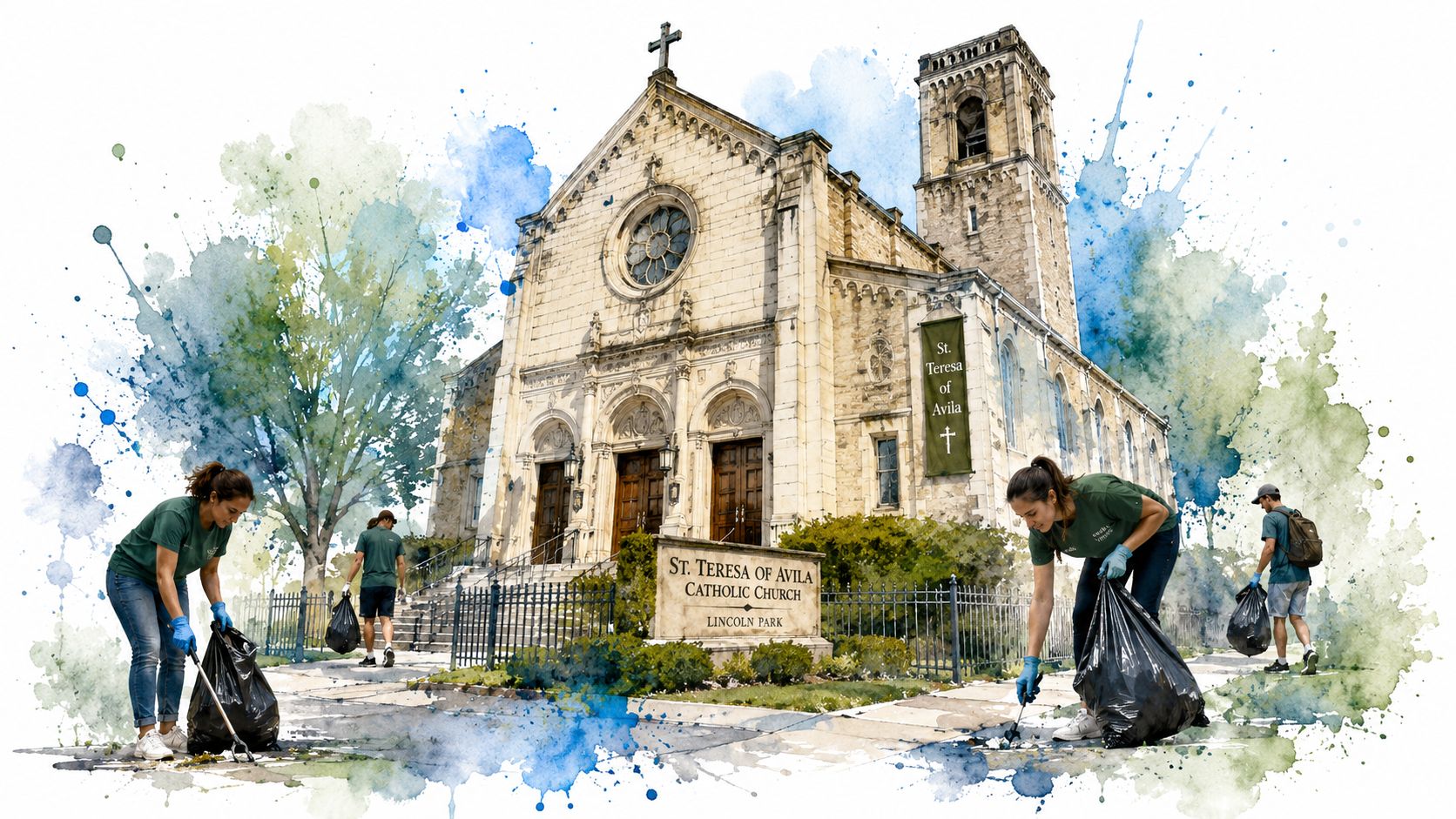
    It sits at 1037 W Armitage Ave, Chicago, IL 60614, right in the DePaul and Lincoln Park orbit, where people are always arriving and leaving, starting over, trying on new versions of themselves. In a city like this, that matters. You can feel surrounded all day and still feel unknown.
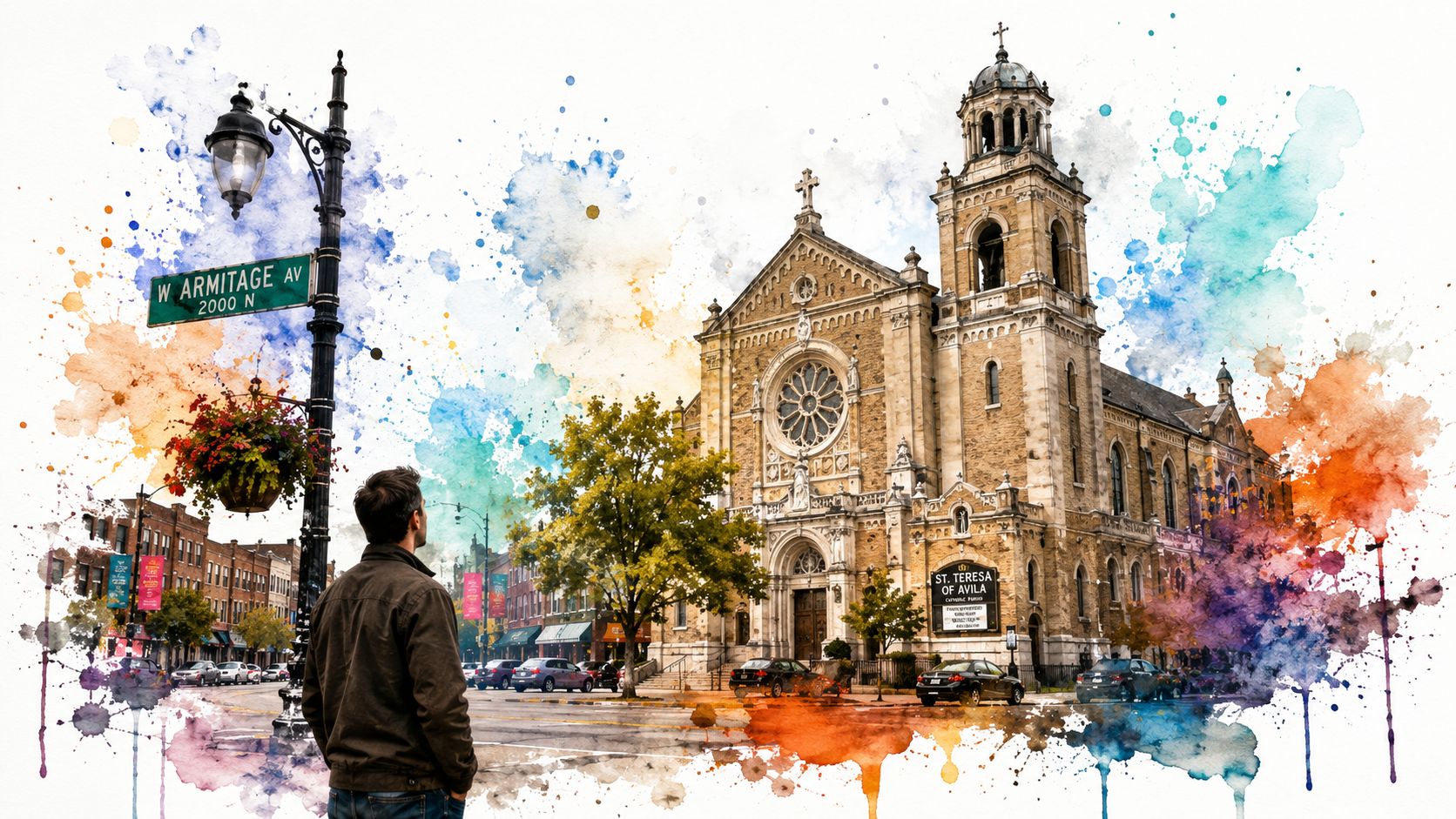
    A man stands on a street corner looking at the historic St. Teresa of Avila Church in Chicago.

    When a familiar place turns personal

    I've learned that neighborhoods are a lot like bookshelves. Most of us only pull down the titles we already know. We keep walking past the rest.

    Then something shifts. Maybe you're new to Chicago. Maybe you've lived here for years but your people moved away, your schedule changed, your faith got quieter, or your habits got too small. A church you ignored can start to look less like an old landmark and more like a bench after a long walk.

    St. Teresa's has that kind of pull. The parish says it welcomes everyone without exception, and that line lands differently when you're the one wondering where you fit. I like places that don't make you audition for belonging.

    Practical rule: If you keep passing a place and thinking, “I should go in sometime,” go in. Curiosity is often your better self trying to get your attention.

    What I notice on this block

    Armitage is busy, but the church changes the tempo. You feel it. The street still moves, but your eyes slow down.

    That's useful in Chicago. We rush so much here. We optimize, schedule, commute, swipe, compare. We can treat the whole city like a vending machine and then wonder why we feel hollow. A parish like this gives you another option. You can show up with no big speech ready. You can sit down. You can listen. You can let a neighborhood become more than a map.

    A church isn't magic. Bricks don't fix loneliness by themselves. But a real place with real people can interrupt the drift.

    How to see your own neighborhood differently

    If you're curious about St. Teresa of Avila Chicago, or any place like it, I'd start simple:

    • Walk slower: Don't arrive with headphones and your head down. Look at the doors, the bulletin boards, the people lingering after Mass.
    • Notice repeated life: A place becomes a community when you see the same faces doing ordinary things again and again.
    • Ask one small question: “When should I visit?” works better than waiting until you've solved your whole spiritual biography.
    • Let place shape you: You don't need a dramatic conversion story. Sometimes change starts with learning one corner of your neighborhood by heart.

    That's the first gift of a place like this. It reminds you that your life in the city doesn't have to stay scattered.

    The Story of This Chicago Parish

    Before you visit a church, it helps to know whose name is on the door. In this case, the story starts far from Lincoln Park.

    Saint Teresa of Ávila was born on March 28, 1515, in Ávila, Spain, and died on October 4, 1582, at 67. She was the first woman named a Doctor of the Church, an honor Pope Paul VI gave her in 1970, and Britannica's biography of Saint Teresa of Ávila notes that she founded 14 new Discalced Carmelite convents and played a major part in the Carmelite Reform despite years of ill health.

    Keep the two stories separate

    I think it helps to hold two facts in your head at once.

    First, the saint and the Chicago parish are not the same thing. The woman lived in 1500s Spain. The church on Armitage is a neighborhood parish in modern Chicago that carries her name.

    Second, names matter. When a parish takes the name of someone like Teresa, it borrows a kind of tone. Teresa's life had grit. She kept traveling, organizing, writing, and rebuilding even when her body made things hard. That doesn't mean a church named after her automatically becomes brave. It means the name itself is a challenge.

    A short way to understand the namesake

    If church history usually makes your eyes glaze over, think of Teresa this way. She was like the friend who walks into a cluttered room, opens the windows, and says, “We can live better than this.” Then she gets to work.

    Her major books include The Interior Castle, written in 1577 and published in 1588, and The Way of Perfection, both named by Britannica as major works of Spanish Renaissance literature and Christian mysticism. She was canonized on March 12, 1622, and her feast day is October 15, but what grabs me most isn't the list of honors. It's the stubbornness.

    Teresa's story feels less like a museum plaque and more like a hand on your shoulder saying, “Start with what you can repair today.”

    The parish in Chicago

    The Chicago church has its own long life. A multimedia book marks 125 years of parish history, and that tells me this isn't a pop-up community or a trendy experiment. People have been gathering here through different city eras, different neighborhood moods, different family stories.

    That matters in Lincoln Park, where so much can feel temporary. Apartments turn over. Students graduate. People move after a lease, a breakup, a job switch. A parish with that much local memory can become a steadying place for people who feel like they're always in transit.

    I wouldn't romanticize that history. Old institutions can get sleepy. But they can also become useful when they keep opening the door to the next wave of people who need a place to land.

    Planning Your Visit to St. Teresa of Avila

    If you want to visit, keep it easy. Don't turn it into a research project that never leaves your notes app.

    The basic facts are enough to get you out the door. According to the St. Teresa of Avila Catholic Church listing on Yelp, the church is at 1037 W Armitage Ave, Chicago, IL 60614, and Mass times include Saturday at 5:00 pm and Sunday at 9:00 am, 10:30 am (Spanish), 12:00 pm, and 6:00 pm.

    Parish details at a glance

    Service/Info Details
    Church name St. Teresa of Avila Catholic Church
    Address 1037 W Armitage Ave, Chicago, IL 60614
    Saturday Mass 5:00 pm
    Sunday Mass 9:00 am
    Sunday Spanish Mass 10:30 am
    Sunday Mass 12:00 pm
    Sunday Mass 6:00 pm

    How I'd choose a time

    If you're nervous, I'd pick the time that creates the least friction.

    • For families: The 9:00 am Sunday Mass is listed as the family Mass in the parish details noted earlier in the article.
    • For Spanish speakers: The 10:30 am Sunday Mass is in Spanish.
    • For a lower-pressure first step: A Saturday evening visit can feel easier if your Sunday mornings are chaos.
    • For students and working adults: The 6:00 pm Sunday Mass may fit better if weekends get swallowed by errands and recovery.

    If you're trying to build a fuller weekend around neighborhood connection, I'd also keep an eye on Chicago community events from Litter Caterpillars. Even if you're only browsing, it helps to think of a visit as part of a real life in the city, not an isolated errand.

    A few practical tips

    Lincoln Park can feel easy until you're circling the block. Give yourself extra time. Chicago punishes the person who leaves “just enough” buffer.

    Wear shoes you can walk in, arrive a little early, and let yourself sit for a minute before deciding what the place means to you.

    You don't need a perfect outfit, a polished prayer life, or insider knowledge. You just need to show up.

    Finding Community Inside and Out

    The most interesting thing about a parish usually isn't the building. It's the kind of human temperature you feel once you get close.

    At St. Teresa's, the language of welcome matters. The parish presents itself as open to everyone without exception, and that kind of sentence is easy to print and harder to live. In Lincoln Park, where people can sort themselves into tiny islands by age, income, politics, school, or comfort level, a church has to make welcome concrete or the words go flat.

    What welcome feels like

    I think real welcome has texture. It sounds like hearing different languages in the same place. It looks like a young person who doesn't know the routine standing next to someone who does. It feels like not being treated as a problem to solve.

    St. Teresa's has that possibility because of where it is and who passes by it every day. Students. longtime residents. people raising kids. people carrying grief. people who like church. people who haven't trusted church in a while but still miss the smell of candles and the rhythm of prayer.

    That mix can be awkward. Good. Awkward means real humans are in the room.

    Inside the walls and beyond them

    The church's modern identity is centered on caring for each other, faith, and community. I like that because it pulls faith out of the abstract. Caring for each other is concrete. It's casseroles, phone calls, names remembered, rides arranged, kids wrangled, prayers said for somebody who looks exhausted.

    But neighborhood community shouldn't end at the door. If you live near Armitage, then the sidewalk, the curb, the bus stop, and the park bench are all part of your moral life too. A parish that talks about social justice has a chance to make that visible in the everyday fabric of the block.

    If you're someone who wants friendship and service to grow together, I'd also read this guide on how to make friends in Chicago. I like advice that treats friendship as something you practice, not something that magically appears.

    Community gets real when people do ordinary work together often enough to stop being strangers.

    A simple test

    When I'm trying to understand whether a place could become part of my life, I ask three plain questions:

    • Do people seem reachable? Not polished. Reachable.
    • Is there room for my actual life? My schedule, my doubts, my energy level.
    • Can this place move from talk to action? Even small action counts.

    That last question matters most to me. Warmth is good. Shared work is better. That's where a neighborhood starts feeling less like rented space and more like home.

    A New Way to Serve the Neighborhood

    I keep thinking about a simple mismatch.

    St. Teresa's has language around social justice and service. It also has a neighborhood right outside its doors that needs care in ordinary, physical ways. Yet one documented gap keeps hanging in the air: while 72% of urban social-justice Catholics in Chicago prefer hands-on environmental service, St. Teresa's volunteer page focuses on indoor roles and shows no public collaboration with grassroots cleanup groups in the last year, according to this documented critique of the parish's public-facing service gap.

    That doesn't mean nobody at the parish cares about the street. It means the public path from belief to visible neighborhood cleanup is hard to see.
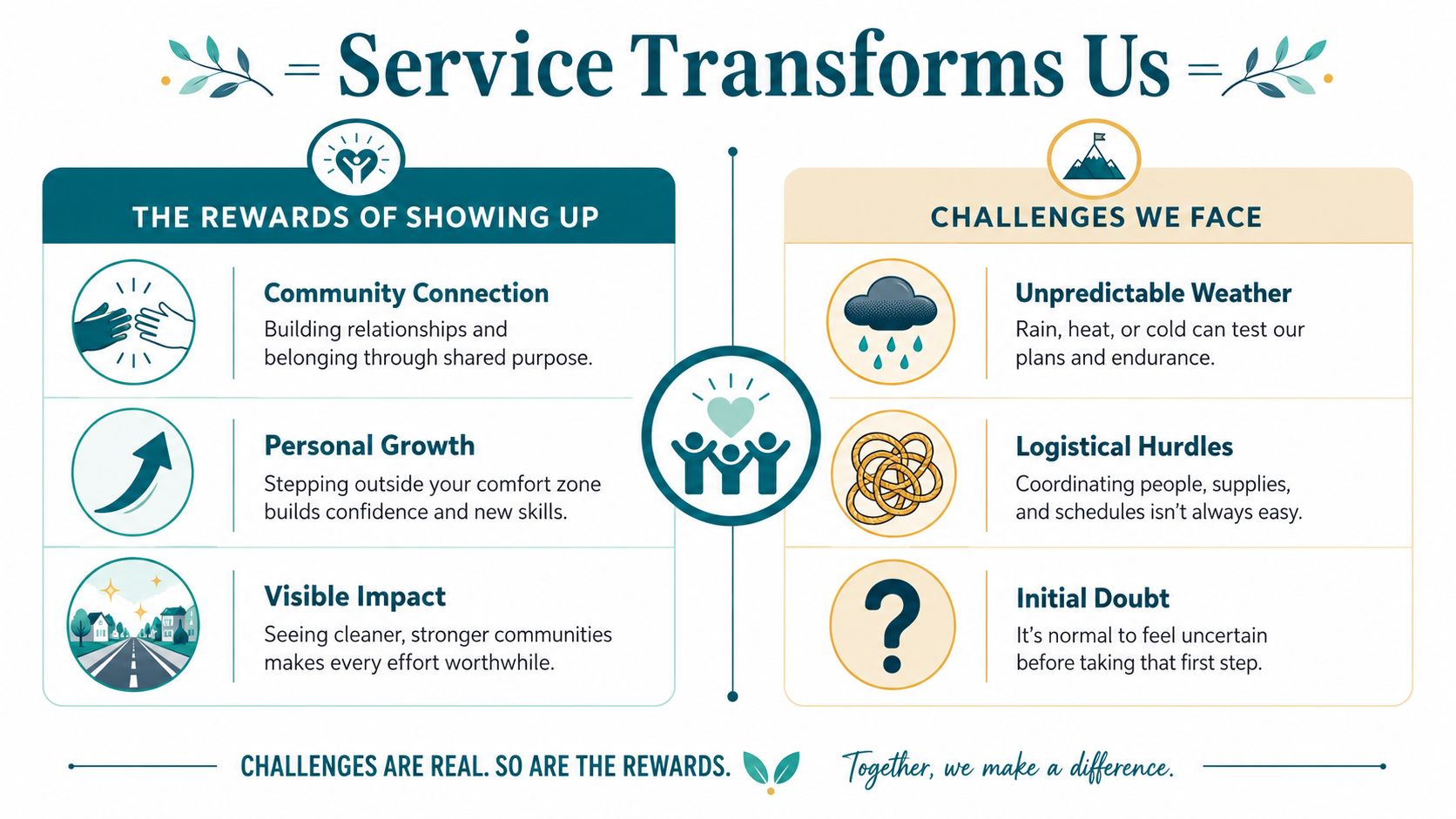
    An infographic titled Service Transforms Us, contrasting the rewards of volunteering with the challenges faced.

    Why outdoor service changes people

    Indoor volunteer work matters. Meals, hospitality, setup, administration, all of that counts. But outdoor service has a different feeling.

    You can't fake it on a sidewalk. A bag fills up or it doesn't. A block looks cleaner or it doesn't. You meet weather, mess, inconvenience, and your own resistance all at once. Then you work anyway.

    That kind of service strips away a lot of fluff. It gets you out of the “I support good things” posture and into “I bent down and picked that up with my own hand.” For people who are restless, skeptical, young, new to the city, or tired of talk, that matters.

    What this could look like near Armitage

    If I were sketching a practical model for St. Teresa of Avila Chicago, I wouldn't start with a giant program. I'd start small and visible.

    • A monthly neighborhood cleanup after Mass: One hour. Gloves, bags, simple route, clear meeting point.
    • A student-and-neighbor team: DePaul students and longtime parishioners working side by side changes the social chemistry fast.
    • A prayer-to-action rhythm: Gather, receive a short blessing, head outside, clean the block.
    • A recurring invitation for newcomers: The easiest way to meet people is to have a job together.

    You don't need complicated branding for that. You need consistency.

    A church says what it believes with its calendar almost as much as with its sermons.

    Why this fits the parish better than people might assume

    The namesake of the parish was a reformer. The parish itself talks about care, faith, and welcome. A neighborhood cleanup is one of the simplest ways to make those words solid.

    I'm not talking about replacing worship with activism. I'm talking about letting worship spill onto the sidewalk. If a church says “serve the Poor,” then cleaner streets, safer paths, and shared labor in public view are one honest way to say it with your body.

    And there's another gift in it. Outdoor service creates friendships with less awkwardness. People who hate small talk often do great with a trash grabber in hand because the work gives the conversation somewhere to stand. You don't have to invent connection from scratch. The task does part of the work for you.

    The courage piece

    Every service project has a small wall at the beginning. Weather might be bad. Turnout might be uneven. Somebody might feel silly. Somebody always does.

    But neighborhoods rarely change because everyone felt perfectly ready. They change because a few people decided that visible care was better than private approval.

    That's why this question matters to me: if St. Teresa of Avila in Chicago wants social justice to feel tangible, what would happen if the parish treated the block outside as part of its ministry?

    I think a lot of people are waiting for someone to ask that out loud.

    Show Up and Transform Yourself

    I've seen people change when they stop waiting for the perfect mood and just show up. You can watch it happen in tiny ways. A stiff face relaxes. A shy person starts joking. Someone who came alone leaves with plans for coffee.

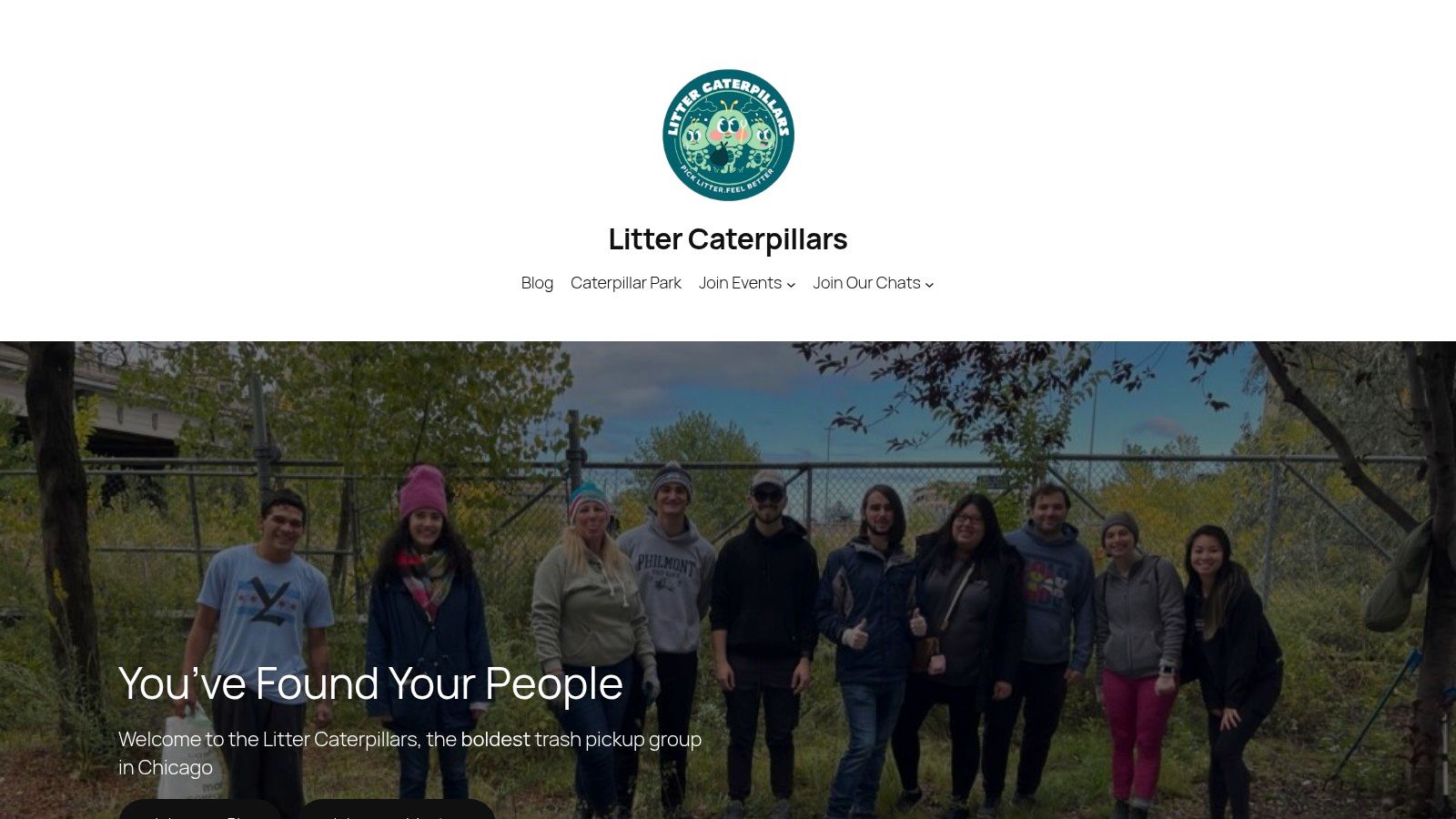
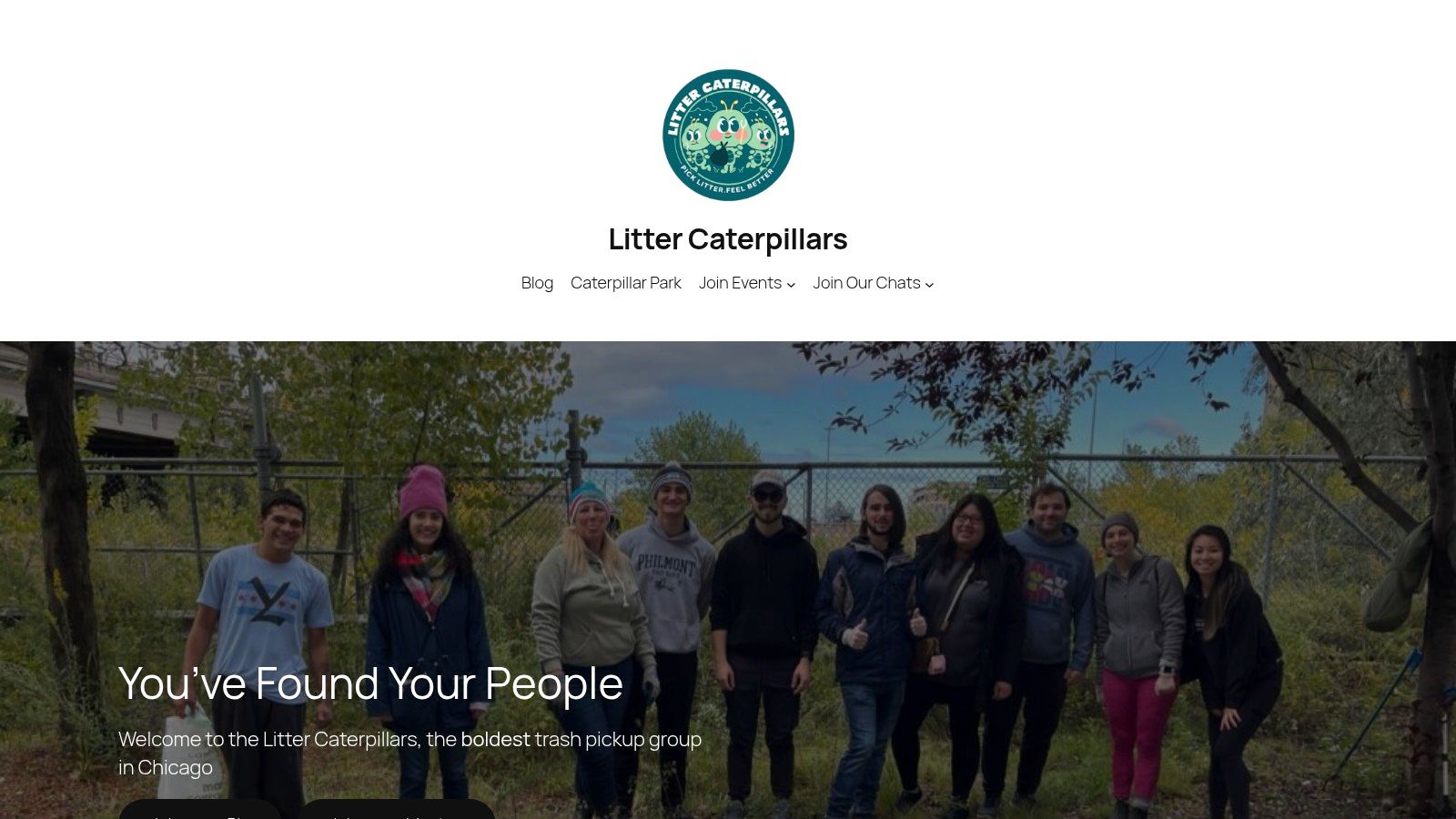
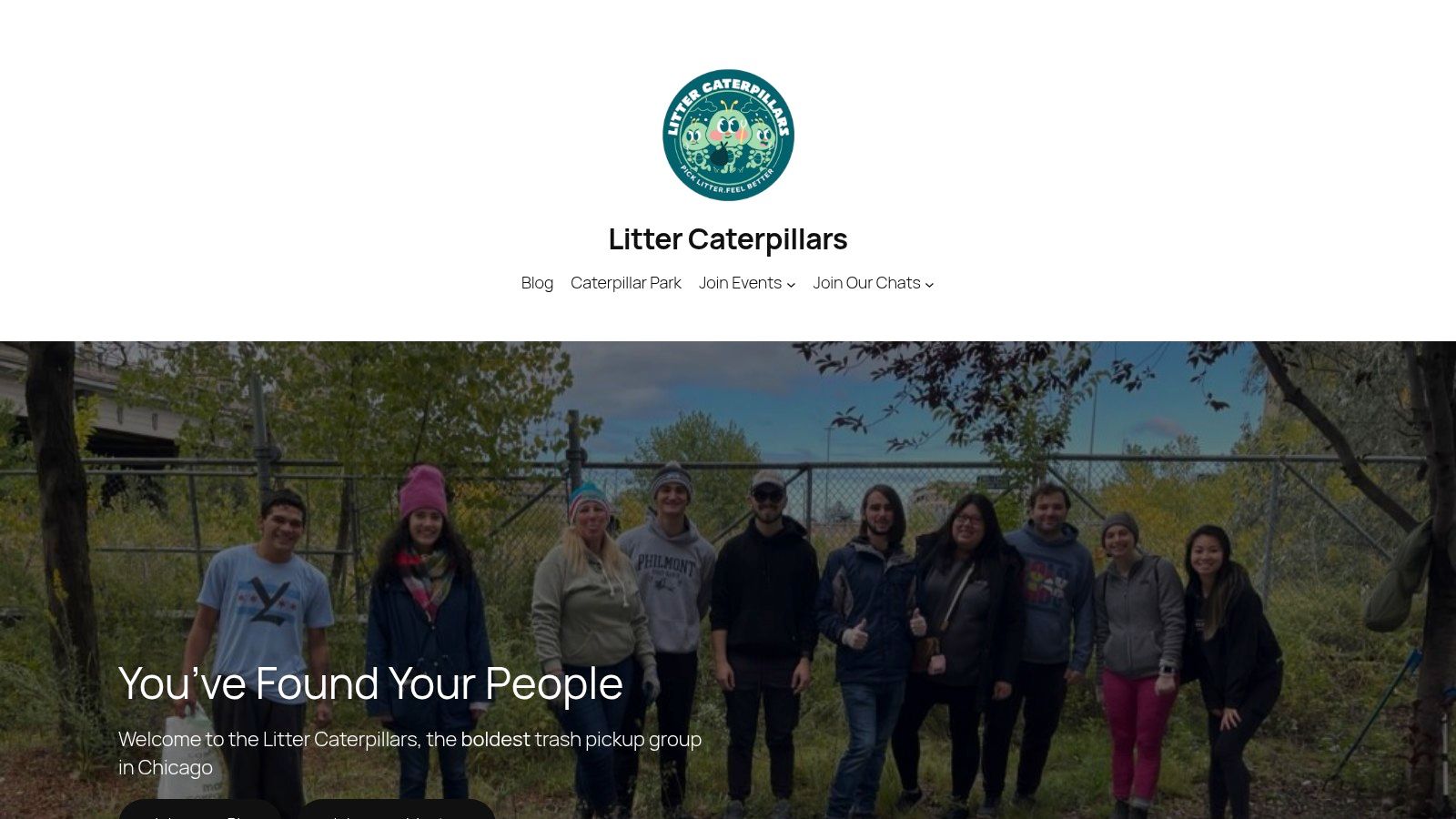
    That's why I keep coming back to the power of a weekend habit. According to Litter Caterpillars' own explanation of its volunteer schedule, the group intentionally places events on Saturday or Sunday mornings to attract “givers” and build a community around service, kindness, and friendship. I like the bluntness of that. Your calendar is a filter. It shapes who you become.
    Screenshot from https://www.littercaterpillars.com

    Start smaller than your excuses

    Maybe your version of showing up is simple. Visit St. Teresa's one weekend. Sit in the back if you want. Stay for a few minutes after. Learn the feel of the room.

    Maybe your next move is service. If that's you, this guide on how to start volunteering is a good nudge because it treats action like a thing you can begin before you feel fully ready.

    I think of Tom Sawyer and the fence. Work changes when you stop treating it like punishment and start treating it like participation in a story. The block needs care. Your life probably does too. Sometimes the best way to begin fixing your own scattered heart is to help clean one corner of your city.

    You don't need a grand plan. You need one honest morning.


    If you want a simple way to meet kind people and do visible good in Chicago, check out Litter Caterpillars. Show up for one cleanup, bring gloves if you have them, and let the city introduce you to a better version of yourself.

  • How to Organize a Neighborhood Cleanup: The Giver’s Guide

    How to Organize a Neighborhood Cleanup: The Giver’s Guide

    I remember standing on a sidewalk with two trash bags, frozen fingers, and no idea if anyone else would come back next week. By the end of that morning, the block looked better, but the stranger thing was this. I did too.

    The Mess That Started It All

    I didn't start cleaning streets because I had my life together. I started because I didn't.

    My apartment was a disaster. Not movie-disaster. Real disaster. The kind where every object had a little emotional hook in it. An old jar of blueberry jam in the back of the fridge from a trip years ago. A stale bag of almonds from the month I tried to become a healthy person. A shirt on the chair that belonged to some version of me I didn't even like anymore.

    A man looking distressed while sitting in a very cluttered, messy, and disorganized apartment living room.

    Why someone else's trash feels lighter

    Here's the weird part. I could barely throw out my own junk, but I could pick up a stranger's burger wrapper all day.

    That wrapper didn't come with memory. It didn't come with guilt. It didn't whisper, “Remember who you were when you bought me?” It was just trash. Easy. Clean decision. In the same way cleaning an old fridge at home can feel like opening a time capsule of your own mistakes, cleaning a sidewalk feels like mercy. You see the problem, you remove it, you move on.

    That's why I tell people this isn't really about trash. Trash is just the handle.

    A cleanup gives you a simple win when the rest of life feels tangled. You bend down. You pick something up. The block changes. You change a little with it.

    Cleaning a public space can feel easier than cleaning your own room because the emotional weight is different. You're not sorting your past. You're practicing action.

    I learned that during a rough stretch after a chaotic relationship ended. I looked around and realized I had let too many selfish patterns into my life. Mess in my home. Mess in my habits. Mess in my relationships. So I made a stubborn decision. I'd start building a life around cleanliness, consistency, and brave acts.

    A neighborhood cleanup is perfect for that. It asks for your body before it asks for your biography. You don't need a polished origin story. You need gloves, a bag, and the willingness to show up.

    The real reason to start a cleanup group

    If you're learning how to organize a neighborhood cleanup, start with the part most guides skip. Ask yourself why you want this.

    Maybe you're angry that your block gets ignored. Maybe you want to meet people who keep their word. Maybe you need a ritual that gets you out of the apartment and back into your body. All of those reasons are good.

    I've found that cleanup groups become a filter. The people who show up to do hard, unglamorous work on a weekend morning tend to bring a certain energy. They're usually generous. They're usually game. They know how to laugh while carrying gross things to a pile.

    That's the weird magic. The bags matter. The friendships matter more.

    • A cleanup gives you motion: When life feels stuck, physical work breaks the spell.
    • A cleanup reveals character: You find out fast who complains, who helps, and who sticks around.
    • A cleanup builds trust: People believe what they can see. A cleaner block is visible proof.

    It's akin to clearing a path through overgrowth. You start by removing litter from a curb. Then you notice you're also removing excuses, stale habits, and a few people who never planned to grow with you anyway.

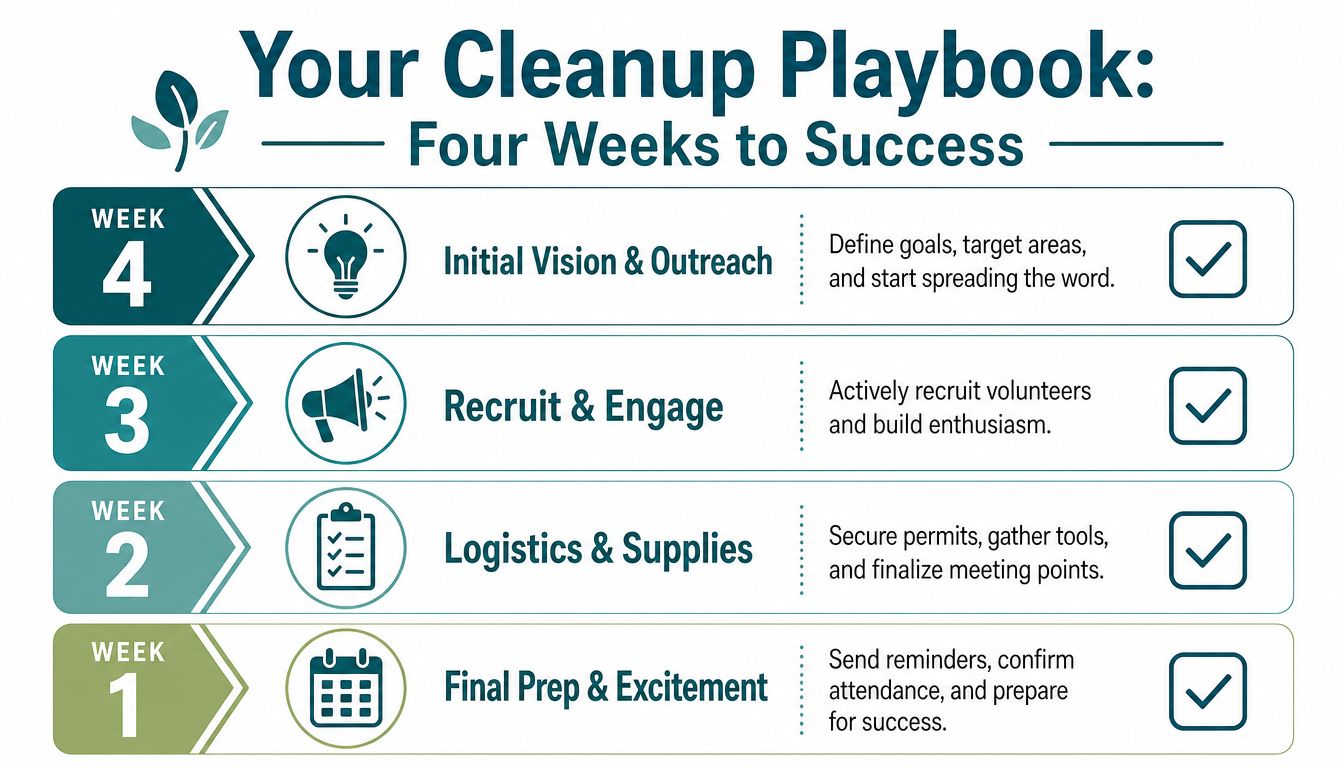
    Your First Four Weeks The Cleanup Playbook

    The first cleanup I ever ran taught me this fast. Good intentions are cheap. Saturday at 9 a.m. is where the truth lives.

    I had a volunteer named Denise show up early with coffee and work gloves from her garage. I had another guy text me at 8:47 asking if we were still on because it looked “a little cloudy.” By 11, Denise had recruited two neighbors on the spot, and Cloudy Guy never appeared. That morning gave me a better blueprint than any tidy checklist ever could. A cleanup group lasts when you build for real humans, real weather, and real follow-through.

    A four-week roadmap infographic for organizing a successful community cleanup event, from vision to final preparation.

    Week four, walk the ground until the block starts talking

    Do not plan your route from a couch.

    Walk the area at the same time of day you want to clean it. A block can look calm on Tuesday afternoon and turn into a traffic mess on Saturday morning. I learned that after choosing a “perfect” meetup corner that became a parking circus the minute a youth game let out nearby.

    Bring your phone, take notes, and get specific. “The park is dirty” is useless. “South fence line has bottles and chip bags, alley behind the deli has dumped furniture, bus stop has broken glass” gives you something you can act on.

    I break the route into plain chunks:

    • Corner one: cups, wrappers, loose paper
    • Alley stretch: dumped bags, bulky trash
    • Fence line: cans, bottles, food containers
    • Busy curb: experienced volunteers only, bright clothing only

    That walk does more than help you estimate supplies. It starts a relationship with the place. You stop seeing “the neighborhood” as an abstract cause and start seeing Mrs. Alvarez's stoop, the corner kids' snack wrappers, the lot everybody complains about but nobody claims. That shift matters. People return for places they feel connected to.

    Week three, make the city useful and make your plan smaller

    This is phone call week.

    Call sanitation. Call the council office. Call the neighborhood association. Call whoever answers and ask for one clear thing. Bag pickup. Trash collection. A dumpster. Extra gloves. You are giving them a chance to say yes to something concrete, not sending a vague plea into the void.

    Keep your message simple. Date. Rain date. Target area. Estimated turnout. What you need. Then write down the name of the person you spoke with, because nothing tests your patience like hearing, “We never got that request.”

    Also pick your meetup point now, not three days before. Choose a spot people can find without twenty text messages. If there's shade, parking, or a bathroom nearby, even better. Small comforts change the mood. A confused volunteer drifts. A grounded volunteer stays and helps stack bags at the end.

    Week two, gather gear that earns its place

    People get seduced by nonsense.

    You do not need custom banners before you have enough gloves. You do not need branded merch before you have water. A cleanup group gets stronger when people trust that the basics will be there every time.

    Bring what gets the job done:

    Item Worth bringing Why
    Trash bags Yes You always need more than you guessed
    Gloves Yes New people forget, or bring the wrong kind
    Grabbers Yes They help with sharp or gross litter
    Folding table Yes Check-in feels calmer and more organized
    Fancy branded gear No Basics beat aesthetics every time

    Assign a few simple roles before the day arrives. One person handles check-in. One person carries backup supplies. One person tracks full bags and bulky items. One person takes photos if you want them. Order lowers stress, and lower stress makes people kinder to each other.

    If you need a practical guide for finding reliable cleanup volunteers, use it here, before you start sending frantic messages the night before.

    Week one, invite people into a ritual, not just an event

    This week is about tone.

    A flat post that says “community cleanup this Saturday, all welcome” gets casual interest. A better message tells people who this is for and why it matters. I've had stronger turnout from a plain text message that said, “We're cleaning the three blocks around the elementary school because kids deserve better than broken glass on the walk in,” than from polished graphics that looked like they came from a marketing team.

    Put the date, time, rain date, meetup point, and what to bring in every message. Then repeat yourself. Send a reminder a few days before. Send one the night before. Confirm your key helpers directly, one by one. People are busy. Good groups survive because somebody cared enough to follow up.

    By this point, the cleanup is already bigger than trash bags and grabbers. You are building a tiny culture. People are learning whether this group is flaky or steady, warm or cold, all talk or all hands. Four good weeks set that tone. Then Saturday shows you who's ready to build something real.

    Finding Your People Who Shows Up on a Saturday Morning

    A cleanup can get bodies pretty easily. A free Saturday event, a few nice graphics, some feel-good copy, and people click “interested.”

    That's not enough.

    You don't need a crowd that vanishes after one sweaty hour. You need people who like giving more than performing. I'm picky about that now. I'd rather have eight steady volunteers than thirty tourists collecting content for their stories.

    Screenshot from https://www.littercaterpillars.com

    Why Saturday morning works

    There's a reason I like weekend mornings. They act like a filter.

    The NYLCVEF community cleanup guide says the most effective volunteer recruitment strategy is scheduling events on weekend mornings, which yields 45 to 50% higher turnout than other time slots. The same guide says social media with before-and-after photos can boost repeat participation by about 38%.

    That matches real life. Morning volunteers arrive clearer, kinder, and more ready to work. The event starts before the day gets crowded with excuses. You also get the tiny secret reward of being done by lunch, which makes people feel weirdly heroic.

    Recruit for identity, not attendance

    Most volunteer posts read like dentist reminders.

    “Join us this Saturday to beautify the neighborhood.” Fine. Dead. Nobody feels anything.

    Instead, write like you're inviting people into a crew. People return when they feel they belong to something. If you want more ideas on that side of outreach, I like this guide on how to find volunteers who actually stick.

    Here are two templates I'd use.

    Instagram caption

    • Opening line: Saturday morning. Gloves on. We're cleaning this block because someone should, and that someone is us.
    • Details: Meet at 9:00 AM. Wear closed-toe shoes. We'll bring bags and gloves.
    • Tone: Come if you're tired of complaining and ready to help.
    • Closer: Bring a friend who likes doing hard things with kind people.

    Meetup description

    • First sentence: This is for people who want a cleaner neighborhood and better friends.
    • Middle: We'll split into teams, clean a defined route, and take before-and-after photos.
    • Expectation: Show up on time, ready to work, and ready to talk to strangers.
    • Finish: Rain date is listed. If the weather turns, we adapt.

    You're not recruiting “volunteers.” You're recruiting future regulars, future captains, future friends.

    How to ask local businesses for help

    Ask like a partner, not a charity case.

    Walk into the coffee shop, hardware store, or corner market and say: “We're organizing a neighborhood cleanup nearby. We're bringing people to this block. Would you be up for donating water, gloves, or a meetup space?”

    Keep the ask narrow. One business might give bottled water. Another might let you post a flyer. Another might chip in contractor bags. Make it easy to say yes.

    Three things matter here:

    • Specific ask: “Can you donate cases of water for Saturday morning?”
    • Visible connection: “We're cleaning the blocks around your business.”
    • Low drama: “No long sponsorship deck. Just direct neighborhood help.”

    The right people will respond to that. And those right people are the whole game.

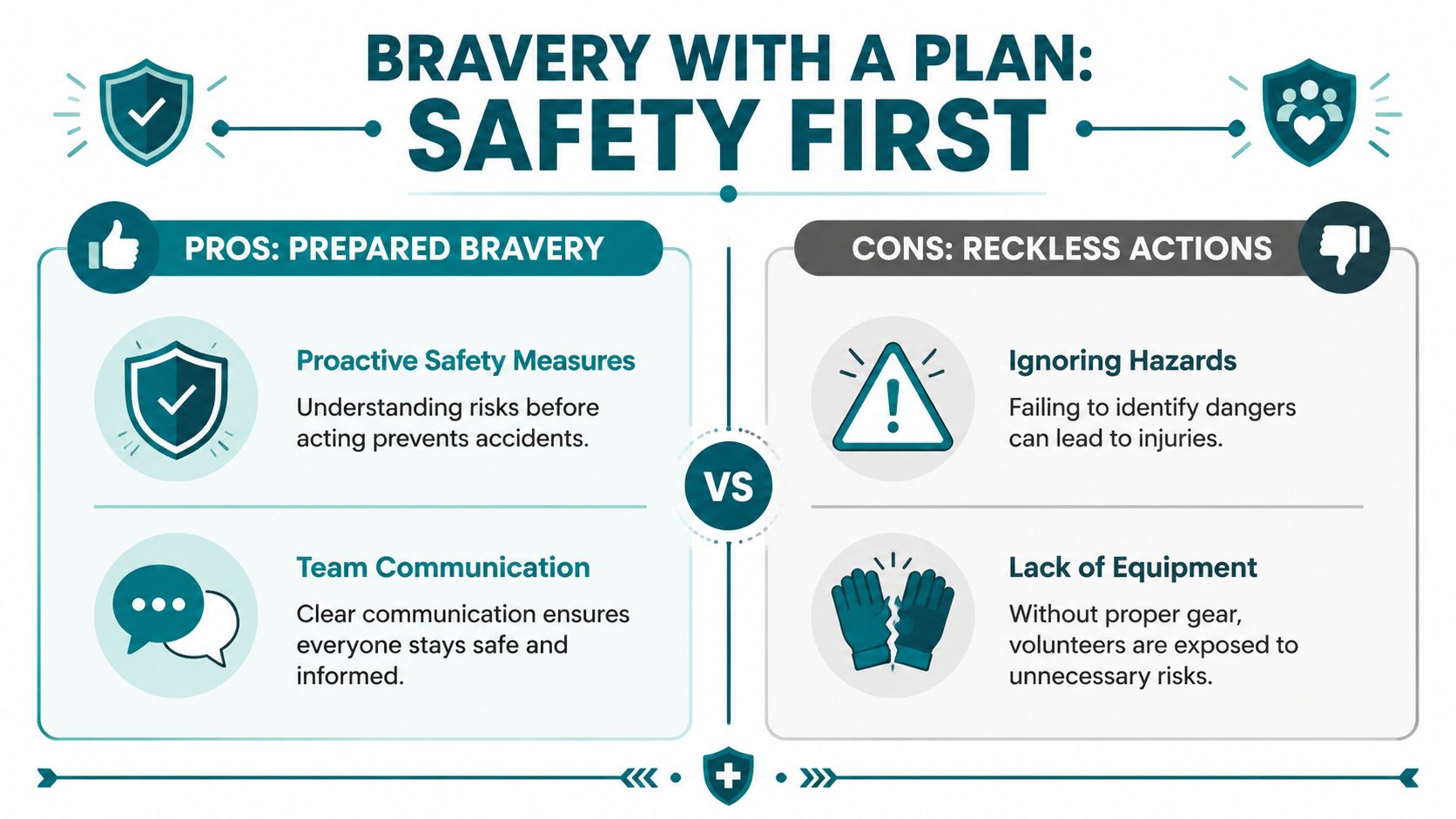
    Bravery with a Plan Safety and Handling the Unexpected

    The day I learned this for real, one of our volunteers held up a trash bag with one hand and pointed at a syringe with the other. Nobody panicked. Nobody tried to play hero. We backed the group up, marked the spot, texted the safety lead, and kept moving on the rest of the block. Ten minutes later, people were laughing again and hauling out bottles from the weeds.

    That is what good safety feels like. Calm, clear, a little boring. Boring keeps your group coming back.

    That matters most on the rougher sites. Busy roads. Dumped lots. Broken glass in the grass where kids cut through after school. Those places can pull people into proving something. I'd rather build a crew that knows when to stop, ask for help, and protect each other.

    An infographic comparing prepared bravery through safety measures against the dangers of reckless, unplanned volunteer actions.

    Scout first, assign second

    The strongest safety decision happens before anybody puts on gloves.

    I walk the route ahead of time and make notes like a slightly paranoid neighbor. Where does traffic move fast. Which alley has illegal dumping. Which corner floods. Which lot has thorny brush, busted furniture, or the kind of debris that needs city pickup instead of volunteer enthusiasm.

    Analysts cited on Litter Caterpillars found volunteer injuries rise when organizers skip hazard scouting and clear team assignments. That matches what I've seen on the ground. If people arrive to a vague plan, they start making their own. That is when somebody wanders too close to traffic or grabs something they should have left alone.

    So I sort the route before the event. General litter goes to newer volunteers. Road edges go to trusted people in high-visibility gear. Dump sites get a separate plan, or they wait for the city if the risk is wrong for our crew.

    If you want the insurance side spelled out in plain English, this guide on volunteer liability insurance is worth reading before your first big event.

    The small command center

    A cleanup does better with a tiny core team than with a crowd of half-leaders.

    The Community Tool Box guidance on neighborhood cleanup programs recommends clear coordination roles, and I'm with them. On our best days, three people hold the whole thing steady. One person owns route changes and city calls. One person handles safety questions. One person floats, bringing supplies, helping late arrivals, and solving the weird little problems that pop up every hour.

    Three calm people can settle fifty excited ones.

    If a volunteer has to guess what to do with a hazard, the organizer failed them.

    What volunteers should never touch

    Some finds are trash. Some are a report.

    You need that line clear before the day starts. Needles, suspicious containers, heavy debris, unstable piles, dead animals, and anything that could cut, poke, leak, or trap somebody stays where it is until the right service handles it. I have watched good-hearted people drift toward bad decisions because they wanted to be useful. That instinct needs guardrails.

    Our field rule is short and easy to remember:

    1. Mark the spot.
    2. Take a photo if it helps.
    3. Contact the safety lead.
    4. Keep everybody back.
    5. Report it to the city, property owner, or sanitation contact.

    A group lasts when people feel safe enough to return next month. That is the deeper win here. Cleaning the block matters. Building trust matters more. Every time you protect a volunteer from a dumb injury or an avoidable scare, you are teaching the group something bigger than litter pickup. You are teaching them that this community takes care of its own.

    Running the Big Day From Chaos to Clean

    At our third cleanup, a guy named Marcus showed up in church shoes, holding a gas station coffee and asking, “So what exactly do I do?”

    Ten minutes later he was tying full bags like he'd done it for years, joking with a teenager from two blocks over, and pointing newcomers toward the right team before I could even open my mouth. That is how these mornings usually go. They start scattered. Then, if you run them well, the whole thing clicks and the block starts feeling like a crew instead of a crowd.

    The job on cleanup day is not to control every person. The job is to create enough structure that people can relax, work, and surprise you.

    Check-in should feel like a welcome, not a clipboard ambush

    Your sign-in table sets the tone fast.

    If people walk up and nobody looks at them, they turn into free-floating confusion. If somebody greets them by name, hands them gloves, and says, “Glad you made it, you're with the alley team,” they settle down right away. They stop feeling like extras in somebody else's project.

    I keep the setup plain and easy:

    • Sign-in sheet: name, phone, email
    • Team sheet: captain name and cleanup zone
    • Supply spot: gloves, bags, grabbers, vests
    • One warm human: the person who answers the obvious questions without making anybody feel stupid

    That last part matters more than organizers admit. A lot of people arrive alone. They are wondering whether they belong there. Your check-in table answers that question before the cleanup even starts.

    Give a tight briefing, then get people moving

    Nobody came for a lecture at 9:15 on a Saturday.

    I gather everyone in a half-circle, thank them for showing up, point to the team captains, explain where the full bags go, and remind them what gets reported instead of picked up. Then I send them out while the energy is still high.

    My version usually sounds like this:

    Good morning. We're cleaning this stretch, these alleys, and the park edge. Stay with your team. If you find something sharp, leaking, heavy, or sketchy, call your captain and leave it alone. Full bags go to the pickup point by the table. Take photos if you see a wild before shot. We'll meet back here at the end for the count and a group picture.

    That is enough.

    People remember short instructions. They forget the fancy stuff the second somebody cracks a joke or spots the first tire in the bushes.

    Give each team a piece of the map and a clear win

    A cleanup falls apart when everybody drifts toward the same visible corner and nobody touches the awkward spots.

    Split the area before the start. Put one team on the commercial strip, one on the fence line, one in the alley cluster, one in the park edges. I like captains to have their zone written down on paper or in a text thread, because spoken directions evaporate fast in a parking lot.

    You also need a home base that people can find without thinking. Extra bags, water, first aid, and the growing mountain of filled trash should all land in one obvious place. If someone has to wander three blocks for supplies, you lose momentum and people start peeling off early.

    A simple run sheet keeps the whole morning steady:

    Time What happens
    8:30 AM Setup table, supplies, signs
    9:00 AM Volunteer check-in
    9:15 AM Briefing and team launch
    Mid-event Captain check-in by phone or in person
    End Bag count, group photo, final sweep

    Keep the story of the day, not just the trash count

    I learned this the hard way. If you forget the before photos, people clean half the block and later swear it “wasn't even that bad.”

    Take the photos early, from the exact spots you can return to later. Count the bags. Snap the funny moments too. The kid holding a grabber like a knight's sword. The neighbor who came out “just to say hi” and ended up filling two bags. The retired guy who suddenly becomes your unofficial tire expert.

    Those details do real work for you. They help with future recruiting, they give the city or property owner a clear record, and they remind volunteers that they changed something visible. If your crew pulls recyclable material aside, make sure it goes to the right place. If people ask where they can keep that habit going after the event, send them to local options like these Chicago recycling centers for drop-off and reuse.

    End with a strong finish, not a slow fade

    The last half hour matters more than organizers think.

    This is when people get tired, routes blur, and half-full bags start appearing in random places. I bring captains back in, confirm each zone got covered, stack bags in the pickup area, and do one final pass for the weird leftovers. Then we count what came out of the neighborhood and get the group photo before people disappear.

    A good ending gives the morning a shape. People leave seeing the pile they conquered, the street they changed, and the faces of the strangers who did it with them.

    That is how chaos turns clean. More important, it is how a cleanup starts turning into a community people want to come back to.

    After the Cleanup. Building a Lasting Crew

    Two hours after one of our early cleanups, my phone buzzed with a photo from a volunteer named Marcus. He had dragged an old chair frame out of an alley that morning, laughed about it with three strangers, then gone home and started a group text with them. A week later, they were back out together with coffee, gloves, and one extra friend each.

    That is the part people miss.

    The bags matter. The cleaner block matters. But if everyone heads home with nothing except sore backs and a nice photo, the energy leaks out by Monday. What keeps a cleanup alive is the follow-up, the small rituals, and the feeling that people just joined something bigger than a trash pickup.

    Send proof before the spell breaks

    I send a message the same day, while people still have dirty shoes by the door.

    It is simple. Thank everybody by name if you can. Share the before-and-after shots. Show the pile of bags. Toss in the candid photo where somebody is grinning like they just won a prize fight. People want to see that their morning changed something they can point to.

    Then give them one next move. One. Too many options and the whole thing goes soft. Invite them to the next cleanup, a post-event coffee, or point them toward practical ways to keep going between meetups, like these Chicago recycling centers for drop-off and reuse.

    Give the group a pulse

    I learned this the slow way.

    At first, I thought good organizing meant clipboards, routes, and enough grabbers for everybody. That stuff matters, sure. It just does not make people come back. People return because they remember who teased them for finding a traffic cone in a bush, who handed them water at the right moment, who cheered when the worst corner on the block finally looked human again.

    So build that on purpose.

    • Name the crew: even if it is a little ridiculous
    • Repeat a few rituals: same photo pose, same snack stop, same victory shout
    • Notice people out loud: who hauled the strangest item, who brought a nervous friend, who kept the mood up when everyone got tired
    • Make introductions normal: help the shy person meet someone before they drift out

    The cleanup is the excuse. The community is the thing you're building.

    Turn turnout into habit

    The best sign that your group is working has nothing to do with bag counts.

    It is when somebody starts shaping their week around showing up. They go to bed earlier on Friday. They text a neighbor to come with them. They start recognizing the guy from three buildings down and the teenager who always finds bottle caps under parked cars. A public space gets cleaner, yes. A person gets steadier too.

    That is how a Saturday event becomes part of the neighborhood's rhythm.

    So close the loop. Send the photos. Tell the stories. Keep the jokes alive. Give people a reason to return that goes deeper than civic duty. A clean street feels good for a day. A crew that keeps showing up for one another can change a block for years.

  • Open Arms Ministry: A Guide to Finding Help and Hope

    Open Arms Ministry: A Guide to Finding Help and Hope

    I watched a woman at a library computer open three tabs for Open Arms Ministry, then close two of them with a tired sigh. She wasn't confused because she wasn't trying hard enough. She was confused because the name is real, welcoming, and used by many different groups.

    Your Search for Open Arms Ministry Starts Here

    If you've ever typed Open Arms Ministry into your phone while your stomach was tight and your battery was low, I get it. You might need groceries. You might need a place where your teenager can stay safe after school. You might be trying to help a brother, son, or friend come home after jail and start over. Then the search results start piling up, and suddenly one name points in several directions.

    A watercolor illustration of a person holding a smartphone displaying the Open Arms Ministry support app.

    Imagine walking down a block where three doors all say “welcome,” but each one leads to a different room. One room has pantry shelves. One room has youth staff and a Wi-Fi password on the wall. One room has church volunteers talking about reentry and second chances. The sign over the door sounds the same. The help inside does not.

    Why the name feels confusing

    A lot of people search for one thing and land on another. A parent may hope for counseling for a teen and find pantry hours instead. A person coming home from incarceration may hope for job help and find a soup kitchen listing. A neighbor who wants to donate may assume there's one national office when there often isn't.

    You're not lost because you missed something. The map is messy.

    That's why I'm writing this in a plain way. I want you to find the right door faster.

    What you'll want to pin down first

    Before you call or visit, ask yourself one simple question: What kind of help do I need today?

    • Food for this week: look for pantry hours, meal times, and address details.
    • Youth support: look for age range, drop-in hours, classes, or mentoring.
    • Reentry help: look for language about jail ministry, church welcome teams, housing, or community support.
    • A place to give help: look for volunteer contacts, donation needs, and local service schedules.

    Once you know your need, the search gets easier. The name “Open Arms Ministry” is warm. Your next step is making it specific.

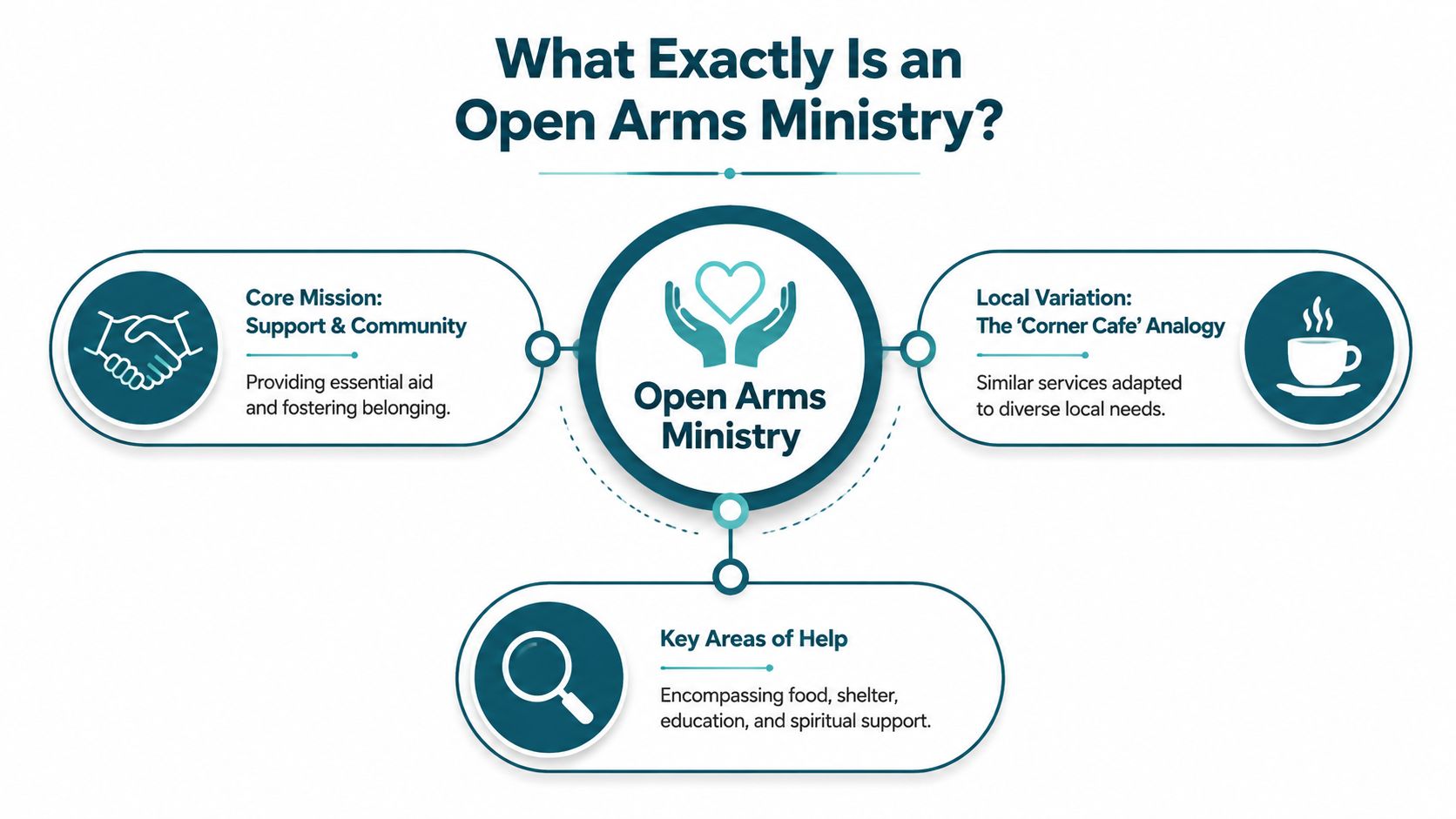
    What Exactly Is an Open Arms Ministry

    Think about a place called Corner Cafe. You could find a Corner Cafe in one city that sells pancakes, another that sells tacos, and another that closes before lunch. Same name. Different owners, different habits, different purpose. Open Arms Ministry works a lot like that.

    An infographic titled What Exactly Is an Open Arms Ministry outlining its core mission and local variations.

    When I say Open Arms Ministry, I'm usually talking about a local faith-based group using that name to welcome people and meet needs in its own way. That's the common thread. The structure, programs, and daily work can change a lot from one city to another.

    Same spirit, different missions

    Some groups using this name focus on the basics first. Food. Clothing. A hot meal. A short conversation that helps a person breathe again.

    Others build their whole identity around children and family care. For example, Open Arms Christian Ministries has worked for over 40 years on child welfare by providing safe homes and a structured community to help minors recover from trauma, as described on the Open Arms Christian Ministries website. That's very different from a pantry model, even though the name feels familiar.

    Here's the simplest way I sort it out:

    Type of group What you may find
    Pantry-based ministry Grocery pickup, meal service, basic needs
    Youth-centered ministry Drop-in support, snacks, classes, trusted adults
    Family or child welfare ministry Safe homes, structured care, long-term support
    Reentry-focused ministry Church connection, support after release, community welcome

    What the name does and doesn't tell you

    The name tells you something about tone. It tells you the group likely wants to receive people warmly. It does not tell you exactly what services exist, what hours they keep, or who they serve.

    That's where people get tripped up.

    Practical rule: Treat “Open Arms Ministry” as a starting clue, not a full description.

    If you're searching online, don't stop at the homepage name. Look for these details right away:

    1. Street address
      That helps you tell one ministry from another.

    2. Service type
      Pantry, youth center, housing, church ministry, or another model.

    3. Hours and days
      A kind mission statement won't help if you arrive on the wrong day.

    4. Who they serve
      Families, teens, adults, returning citizens, or children in care.

    Once you start looking at the name this way, the confusion eases. You stop asking, “What is Open Arms Ministry?” and start asking, “Which Open Arms Ministry is this?”

    Finding Food and Immediate Help

    The first time I walked into a pantry years ago, I kept rehearsing what I'd say. I thought I needed the right words. I thought I had to explain myself. Then a volunteer looked up, smiled, and asked if I needed a bag.

    That's what immediate help often feels like at its best. Simple. Human. No speech required.

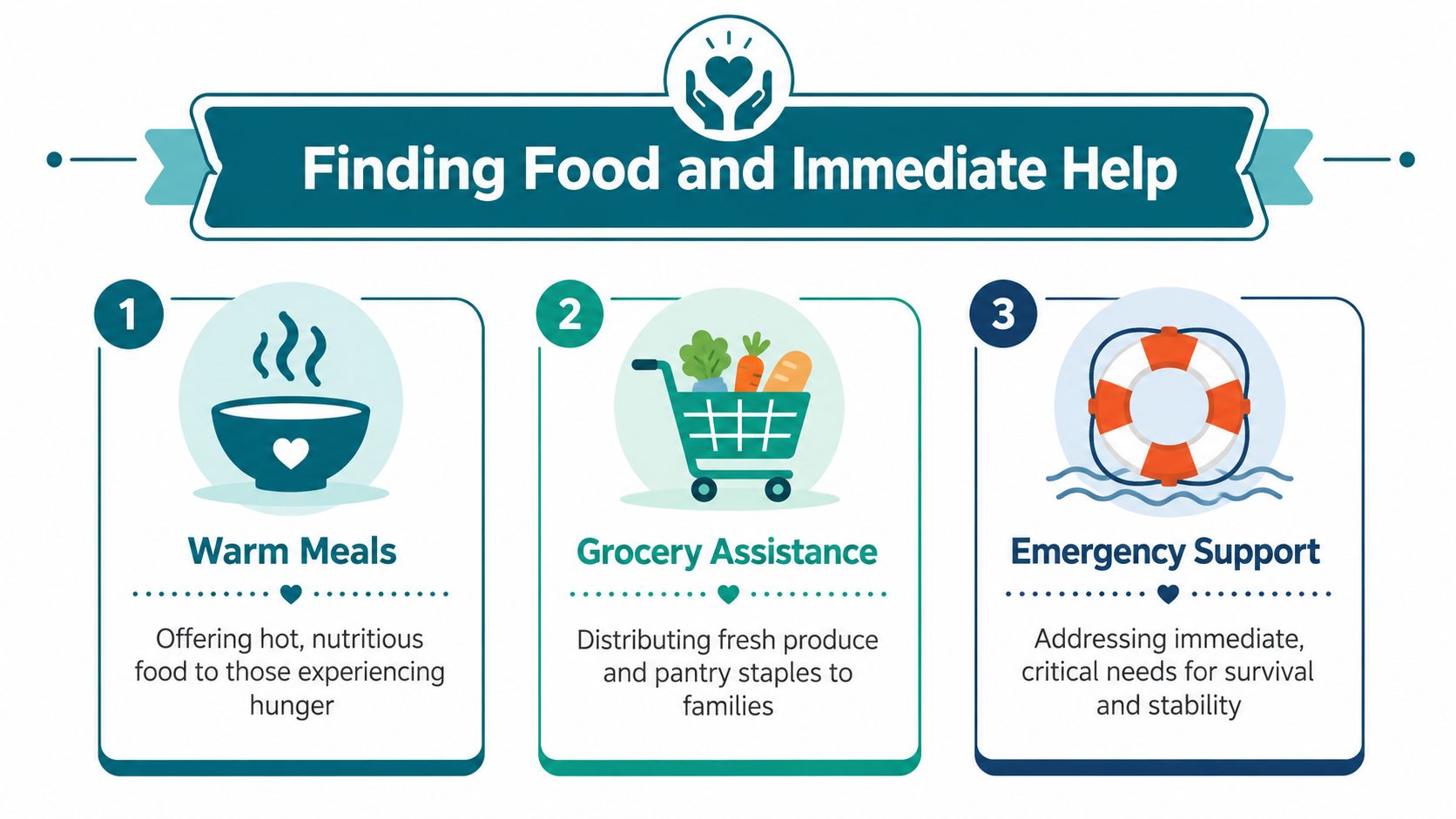
    An infographic titled Finding Food and Immediate Help, detailing three services: Warm Meals, Grocery Assistance, and Emergency Support.

    Many ministries using the Open Arms name are closest to this model. They deal with the need that can't wait. Empty cupboards. Thin paychecks. A week that went off the rails.

    A real Chicago example

    In Chicago, Open Arms Ministry at 2649 N Francisco Ave is a verified food pantry in the Greater Chicago Food Depository network, and it serves residents every Wednesday from 4:00 PM to 6:00 PM, according to the Greater Chicago Food Depository location listing for Open Arms Ministry.

    That kind of detail matters. Address. Day. Time. Those are the facts that turn a vague search into an actual trip.

    A lot of people need that kind of certainty. If you're juggling work, the bus, kids, or plain exhaustion, “Wednesday from 4:00 PM to 6:00 PM” is better than a paragraph full of warm words.

    Here's a short visual that may help if you're trying to picture what food support can look like:

    What a first visit usually feels like

    A parent heading into a pantry for the first time often carries two bags. One is for food. The other is invisible. Shame, nerves, pride, fear of being judged.

    Most of the time, the room gets lighter once the first hello happens.

    You may see folding tables, canned goods, produce boxes, or volunteers directing people into a line. You may need to sign in. You may be asked basic questions. Every pantry runs a little differently, so call first if you can.

    Here's a practical checklist:

    • Bring basic documents if you have them: some sites may ask for ID or proof of address, and some may not.
    • Bring a cart or sturdy bags: food gets heavy fast.
    • Arrive early if possible: lines can form before opening time.
    • Ask what else they know nearby: pantry volunteers often know meal sites, clothing closets, and other neighborhood help.

    If you're in Chicago and comparing options, this local guide to the Casa Catalina Food Pantry in Chicago can also help you think through what to expect from a neighborhood pantry visit.

    What to look for in search results

    Don't trust the name alone. Look for signs that a listing is current.

    • A clear address
    • Current pantry hours
    • Connection to a food network or local directory
    • Phone contact or location notes

    If your need is food tonight or groceries this week, search for hours before mission statements.

    That one habit saves time, gas, and heartache.

    Support and Safe Spaces for Youth

    A teen doesn't always say, “I need help.” Sometimes it comes out as hanging around too late, skipping home, or asking where the Wi-Fi is and pretending that's the only reason they came.

    That's why youth support matters so much when it exists. A safe room can change the shape of an afternoon.

    When an Open Arms name means youth support

    Some ministries using the Open Arms name are built for young people. One example is the San Bernardino Open Arms drop-in center, which caters to youth ages 14 to 24, while many ministry websites still don't make youth services clear, as described on the Open Arms youth center page from Family Assistance Program.

    That contrast is what makes searching hard. One site may plainly describe youth ages, snacks, classes, and hygiene support. Another may say almost nothing beyond a name and a church address.

    So if you're a parent, aunt, uncle, teacher, or teen, don't assume. Ask.

    What youth help can look like on the ground

    I think of a teenager walking in after school with a dead phone and a face that says, “I'm fine,” when they aren't. In a good youth space, nobody rushes them. Someone points to snacks. Someone knows their name by the second visit. Homework happens at one table. Quiet conversation happens at another.

    That kind of place has rhythm. A fridge humming in the corner. A charger basket. A staff person who notices when a kid gets quieter than usual. It may not look dramatic from the outside. But inside, it can feel like a railing on a steep staircase.

    If you're trying to locate youth-friendly community support in Chicago, this page about the Friendship Center in Chicago may help you compare what a service-oriented neighborhood resource can look like.

    Questions I'd ask before showing up

    Call or message first and keep it simple. You don't need to perform. You just need answers.

    • What ages do you serve
    • Do teens need a parent with them
    • Do you have after-school hours
    • Do you provide snacks, hygiene items, or help with schoolwork
    • Is there someone my child can talk to one-on-one

    Ask direct questions. A vague website usually means you need a real conversation.

    If the person answering sounds unsure, that tells you something too.

    If the website says almost nothing

    That doesn't always mean the ministry is uncaring. Sometimes small groups are busy doing the work and bad at explaining it online. But if you're in a moment of need, missing details still create a real barrier.

    So trust clarity. If one ministry says who it serves and when, and another gives only a logo and a verse, start with the place that gives you usable information.

    A young person looking for safety shouldn't have to solve a puzzle first.

    A New Start After Being Behind Bars

    When someone comes home from jail or prison, people around them often say, “Just stay out of trouble.” That line is cheap. It asks for a new life without naming what a new life needs.

    A new life needs people. It needs a place to land. It needs someone who doesn't flinch at your past and then leave you alone with your paperwork, fear, and empty pockets.

    Why many searches hit the wrong kind of help

    A lot of people assume an Open Arms Ministry will have reentry support built in. That would make sense. The name sounds like the place you'd go when the world has shut its doors.

    But the situation is more uneven. A major gap exists because most public-facing Open Arms Ministry locations focus on food, not the specialized reentry support needed by the 640,000 people released from state prisons annually, and specialized jail ministry programs are not always integrated with local food pantries, according to the Open Arms jail ministry page.

    That means a person may search for one kind of welcome and find another. Pantry help matters. It just isn't the same as reentry support.

    What reentry help usually needs

    If I were helping someone home after incarceration, I wouldn't stop at “Do they give out food?” I'd ask deeper questions.

    Need What to ask
    Community Do you have a mentor, church contact, or welcome team?
    Stability Can you point me toward housing or practical support?
    Next steps Do you help people reconnect with work, family, or local services?

    A reentry ministry often works more like a bridge than a pantry shelf. It may connect churches to people coming home. It may build relationship first and services second. It may involve listening, consistency, and lots of small steps.

    What I'd say to someone searching tonight

    If you or someone you love is coming home, don't assume every local ministry with a warm name is prepared for reentry. Call and ask plainly:

    1. Do you have specific support for people returning from jail or prison?
    2. Is this a pantry ministry, or do you also help with reentry needs?
    3. Do you partner with a jail ministry or church reentry team?

    Food support can steady a week. Reentry support helps steady a life.

    That difference matters. You're not asking for too much by wanting the right kind of help. You're asking the right question.

    How You Can Be the Open Arms for Someone Else

    Sometimes the person reading this isn't looking for food, youth help, or reentry support. Sometimes you're reading because you feel that tug in your chest that says, “I need to do something.”

    Good. Hold onto that.

    Local ministries with names like Open Arms often need help that is humble and specific. Not grand speeches. Not rescue fantasies. They need the kind of help that shows up on time and asks what's useful.

    Start local and stay practical

    Because these ministries are often independent, the best move is direct contact. Find the one in your town. Call. Send a short email. Ask what they need this month, not what you assume they need.

    Here are the questions I'd use:

    • Where are you short right now
    • Do you need volunteers, donated goods, or both
    • What days are hardest to staff
    • What should I avoid dropping off
    • Who should I talk to before I show up

    That last question matters. Good intentions can still create extra work if you arrive with the wrong items or at the wrong time.

    Ways to help that people often overlook

    Some ministries need cash. Some need canned food. But many also need plain, unglamorous labor.

    One person sorting donations for two hours can save staff energy. One driver with room in a car can move supplies. One calm adult who greets guests kindly can change how a room feels.

    If you're new to service work, this guide on how to start volunteering is a useful way to think through consistency, attitude, and showing up in a way that helps.

    The best volunteer is often the one who asks, listens, and comes back.

    Give in a way that fits the place

    A pantry may need grocery staples and sturdy bags. A youth space may need snacks, hygiene items, chargers, or art supplies. A reentry ministry may need mentors, rides, and people willing to build trust slowly.

    That's why I don't like one-size-fits-all advice here. The name may be shared. The need is local.

    If you have money, give locally and ask what fills a real gap. If you have time, offer a small repeatable block instead of one dramatic burst. If you don't have much of either, be the person who spreads accurate information. That counts too.

    People find help faster when one neighbor says, “I called them. Here's what they do.”

    Your Questions About Local Ministries Answered

    A lot of last-minute questions come up right before someone makes the call or walks through the door. I hear that hesitation all the time. It usually sounds practical on the surface, but underneath it is fear of being turned away.

    Do I have to be religious to receive help

    Usually, people look for help because they need help. If a ministry has food, youth support, or other aid open to the public, start by calling and asking about eligibility and hours. You don't need to sound polished. Just say what you need and ask if they can help.

    If you're thinking about volunteering, ask what their expectations are for volunteers. Some ministries are church-based and some roles may fit their faith setting more directly than others.

    Will I need an ID or paperwork

    Sometimes yes, sometimes no. Pantry rules, sign-in practices, and intake steps vary by location. That's why I always tell people to call before going if they can, and ask, “What should I bring with me?”

    If you don't have documents handy, still call. Don't disqualify yourself in your head before a real person answers.

    How do I know I found the right Open Arms Ministry

    Match the name with the details. Check the address, days, service type, and who they serve. If the listing is vague, call and ask direct questions like, “Are you a food pantry?” or “Do you work with youth?” or “Do you help people after incarceration?”

    You are allowed to be specific. In fact, being specific is the fastest path to actual help.

    If one place can't meet your need, ask them if they know a nearby group that can. People doing community work often know each other better than websites do.


    If reading about open hands and local help makes you want to step outside and do some good close to home, take a look at Litter Caterpillars. It's a Chicago volunteer group that meets weekly and has cleaned all 50 wards of the city over about three years, including through the 50 Ward Challenge and in hard-hit places that need steady care, as their Meetup page describes. If you want a human way to help your city, meet people, and build a habit of service, it's a good place to start.

  • Chicago Trash Pickup Schedule: Your Guide to a Cleaner Alley

    Chicago Trash Pickup Schedule: Your Guide to a Cleaner Alley

    I once missed trash day by ten minutes, then spent the whole week staring at one swollen black bin and a raccoon-torn bag by the alley gate. By Friday, it felt less like garbage and more like a running commentary on my life.

    Your Trash Tells a Story What's Yours

    I know how dramatic that sounds. But if you've ever stood in your kitchen holding an old jar of blueberry jam you should've thrown out years ago, you know what I mean.

    I used to look at ordinary trash and feel stuck. The jam jar wasn't just a jam jar. It was a memory from a trip. A bag of stale nuts wasn't just stale nuts. It was evidence of one more health kick I didn't keep. Each item weighed almost nothing in my hand, but in my mind it felt like a brick.

    That feeling spilled outward. My room got cluttered. Then my routines got loose. Then even simple chores started to feel like moral exams I was failing. Taking out the trash wasn't about taking out the trash anymore. It was about whether I could face one small mess without flinching.

    Trash is strange like that. It sits quietly until it starts talking back.

    Then I started noticing the same thing outside. A broken bag in the alley. A mattress leaning by a fence. Loose cups skittering down the curb after a windy night. A messy block can make you feel helpless fast. You tell yourself someone should do something, then you walk inside and carry that low-grade irritation with you.

    The Smallest Move Counts

    What changed for me wasn't a grand life reset. It was smaller and less glamorous.

    I learned that order starts with one unheroic act. Tie the bag. Roll the cart out. Put the lid down. Learn your pickup day. Do it again next week.

    The funny part is that a city chore can act like a handrail. When life feels slippery, a handrail matters. You grab it, and for a second you stop sliding.

    So if your alley feels chaotic, or your building always has one corner that looks defeated, you're not weird for feeling bothered by it. You're reading a story written in wrappers, bins, and missed routines. The good news is that stories can change. Sometimes the first edit is as plain as figuring out the Chicago trash pickup schedule and trusting yourself to follow it.

    How to Find Your Official Pickup Day

    The week I finally stopped missing trash day, nothing dramatic happened. No marching band. No perfect sunrise over the alley. I just stood in my kitchen, coffee in one hand, phone in the other, and looked up my address instead of trusting my tired brain. By that night, the cart was out on time, the back steps were clear, and one small corner of life felt steadier.

    That kind of steadiness matters on a Chicago block. One missed pickup can turn into split bags, extra clutter by the fence, and the quiet neighborhood shrug of "someone else will deal with it." Learning your day is a small act of self-respect. It is also a small act of respect for everybody sharing the alley with you.

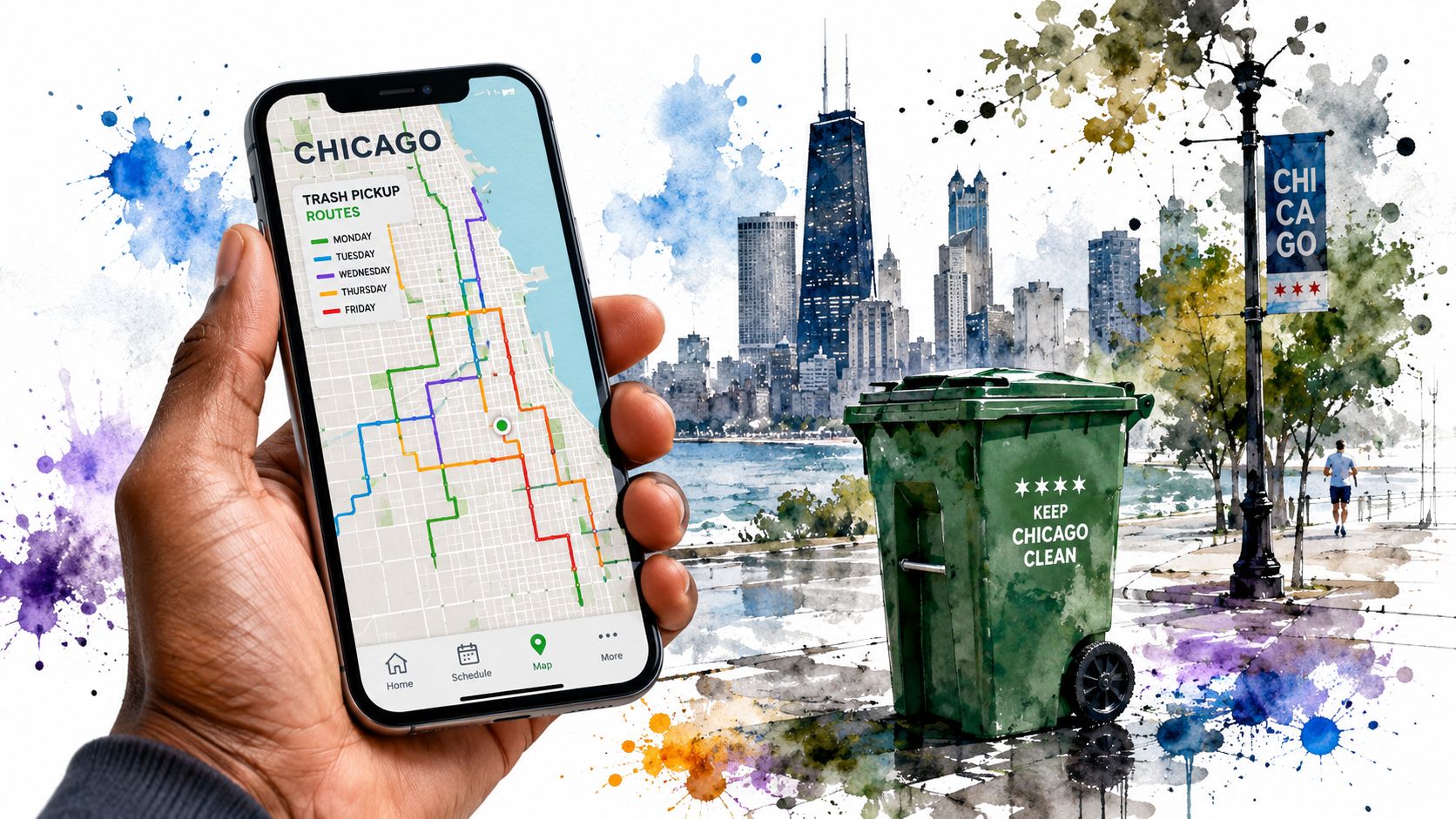
    A person holding a smartphone displaying a Chicago trash pickup schedule map with a green trash bin nearby.

    Chicago's recycling rate is still low, and confusion about pickup timing does not help. The city offers online schedule tools, and WTTW reported that only 35% of residents use the digital reminder system in its coverage of Chicago's online garbage and recycling schedules: https://news.wttw.com/2018/01/04/chicago-recycling-garbage-pickup-schedules-now-available-online.

    Start with the address lookup

    Use the city's schedule lookup tool tied to the collection system described by Chicago trash schedule guidance. Enter your full street address carefully. The result shows your collection day for trash, recycling, and organics where that service applies, plus upcoming pickup dates.

    I always save a screenshot right away.

    Your future self will appreciate that move when it is cold, late, and you cannot remember whether pickup is Thursday or Friday.

    A few habits make the lookup more useful:

    1. Enter the complete address so the route matches the right building.
    2. Check trash and recycling separately because the schedule may differ.
    3. Save the result somewhere visible like your phone, fridge, or calendar.

    The city schedule information also notes that you can add service dates to your calendar with an .ics file download, and residents who need to start service can call 312-744-4420 between 8:30 AM and 4:30 PM, Monday through Friday, according to the 2026 Citywide Collection notice. For missed pickups or general city service help, call 311.

    Keep a backup when life gets loud

    Phones die. Weeks blur together. Rain hits sideways. The alley light flickers and suddenly a simple chore feels harder than it should.

    So give yourself a backup. Put the day on the fridge. Set a recurring reminder. Text it to the group chat for your building if that helps. Pride in a block rarely starts with grand speeches. It starts with ordinary people remembering the ordinary thing.

    If you want help with the next step after pickup day, this guide on how to recycle in Chicago makes the sorting part much easier.

    Decoding the Rules of the Curb

    One Tuesday night, I watched a neighbor stand in the alley holding three things like they were trick questions on a test. A pizza box with one greasy corner. A dead battery from a toy truck. A clear plastic berry container. Her kid asked, "Which one goes in blue?" and that is the moment this whole system becomes real. Not on a city webpage. In the cold, beside a cart, with raccoons somewhere nearby and tomorrow's pickup hanging over your head.

    That little pause matters more than people think. A clean cart says somebody on this block is paying attention. A sloppy one invites spills, smells, and one more excuse for the alley to look neglected.

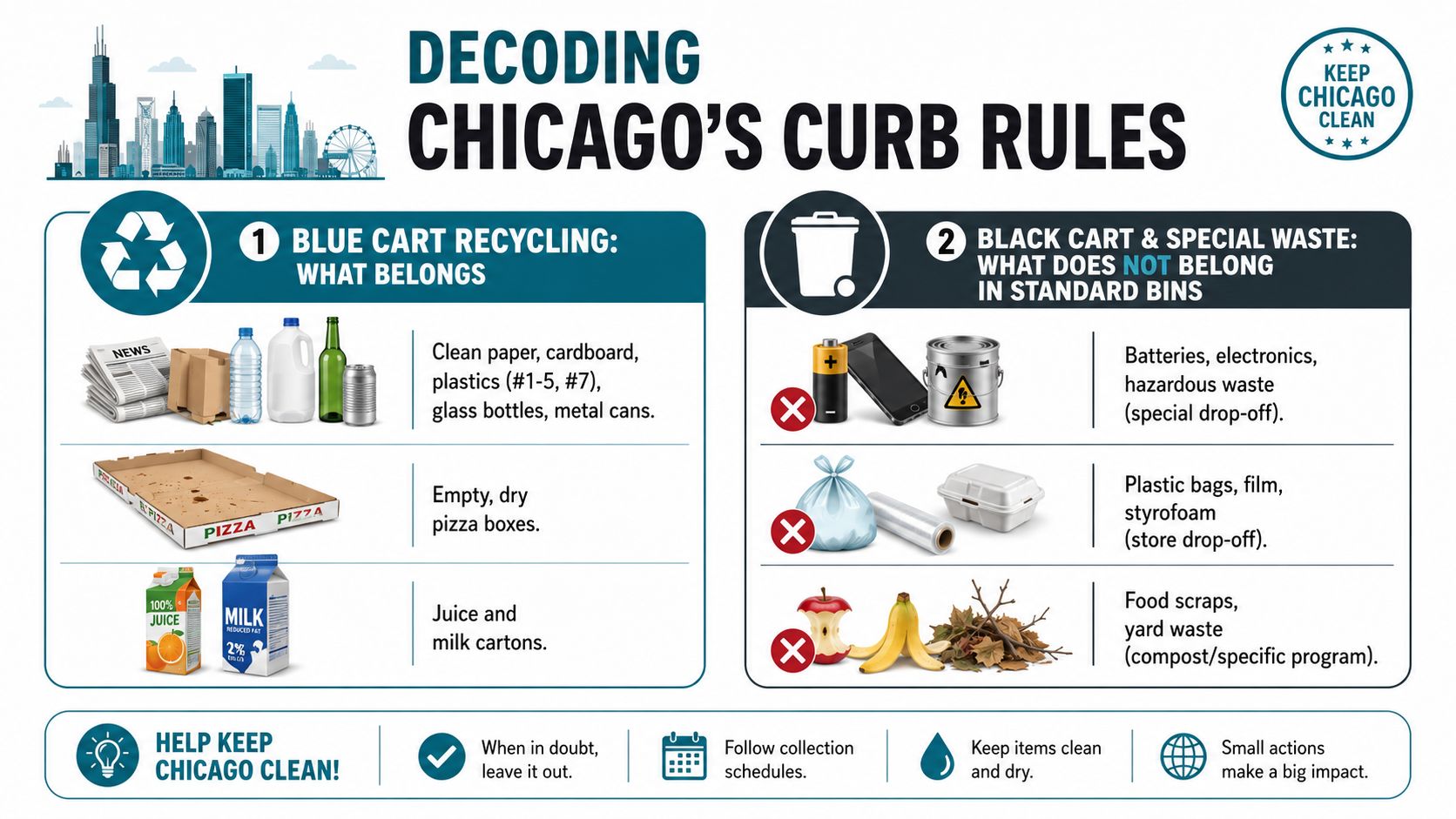
    An infographic titled Decoding Chicago's Curb Rules, showing items that belong in blue recycling carts versus black bins.

    What your bins want

    I keep it simple at home.

    The blue cart takes the everyday recyclables that are empty and reasonably clean. Paper, cardboard, bottles, cans, cartons, and accepted plastic containers usually belong there. The black cart takes the regular leftovers of life, the stuff that does not fit the standard recycling stream. Batteries, electronics, paint, and household chemicals belong in neither one.

    A pizza box is a perfect Chicago argument. If it is dry and mostly clean, recycle it. If the bottom looks like it survived a cheese flood, toss it in the trash. The same goes for yogurt cups and takeout containers. Empty and rinse them first. Plastic bags are another common alley mistake. They do not belong in the blue cart, even when everything else in your hand does.

    Ten extra seconds at the bin can save a whole load from getting dirtier than it needs to be.

    For the oddball items, use a real drop-off option instead of guessing. This guide to City of Chicago hazardous waste disposal helps with the items that need special handling.

    The curb has rules too

    Sorting is only half the job. Placement and timing shape whether pickup goes smoothly or your cart sits there all day like a missed cue.

    As noted earlier, city service follows a regular pattern for eligible homes, with trash collected weekly and recycling on alternating weeks. On pickup morning, get carts out early, keep the lid closed, and face the cart the right way for collection. Leave enough space so crews can grab it without wrestling it away from a fence, garage, or another cart. Then bring it back in that evening instead of letting it live at the curb for two more days.

    Holiday weeks are where solid routines wobble. One city holiday can push the remaining pickups later that week, and that single shift is enough to leave bags stacking up behind a three-flat by Friday night. I have seen one missed adjustment turn a tidy alley into a string of overfilled cans by the weekend.

    That is the bigger lesson here. The curb is not just a drop zone. It is one of the smallest places where pride shows up first.

    The System's Blind Spots and Your Alley

    One Tuesday morning, my own cart was perfect and the alley still looked wrecked. Tied bags. Closed lid. Nothing loose on my side. Twenty feet away, a dumpster behind a larger building was coughing trash into the lane, and by noon the wind had carried napkins, takeout lids, and one lonely pizza box halfway down the block.

    That was the morning I stopped treating every mess like a personal moral failure.

    A green City of Chicago dumpster overflowing with trash in an urban alleyway with city skyline background.

    The four-unit line nobody talks about enough

    Official Chicago collection is for single-family homes and buildings with four units or less, according to Recycle by City's explanation of Chicago trash and recycling collection. Cross that line, and the routine often changes completely.

    You can feel that split in the alley before you ever read a rule. A two-flat puts carts out and waits for the city truck. A bigger building depends on private hauling, a landlord's contract, a maintenance routine, or sometimes a system so loose that no one really knows who is supposed to fix what. When pickup slips, the alley pays first.

    That is the trash gap official guides tend to glide past. A resident in a six-unit building can follow every household habit perfectly and still live beside an overflowing dumpster that belongs to a setup they do not control.

    I have seen neighbors blame themselves for conditions that were bigger than one household. Then one person talks to the building manager, another files a complaint, somebody else starts picking up the spillover, and the problem finally gets named for what it is. Shared neglect. Shared responsibility too.

    What to do when pickup goes wrong

    If your home qualifies for city service and your trash is missed, report it quickly through 311 or Chi311, as noted earlier. Fast reporting matters more than angry guessing from the back porch.

    A simple response works best:

    • Snap a photo if the missed pickup or overflow is visible.
    • Check your own setup so you know whether placement or timing played a part.
    • File the complaint right away through 311 or Chi311.
    • Talk to the landlord or building manager if the mess is tied to a larger building or private dumpster.

    One clean cart cannot fix an alley shaped by bad contracts, absent management, or too few hands. People can.

    If your block keeps fighting the same mess, join neighbors who already treat cleanup as an act of pride. Our Chicago trash pickup volunteer crew was built for exactly that kind of alley. Bold enough to show up, brave enough to care, and kind enough to keep going when the system leaves a gap.

    Join a Crew That Cleans with Pride

    The first time I joined a block cleanup, I almost stayed home.

    My alley had worn me down that week. Overflow near the bins. Loose trash skating along the curb. The kind of mess that makes you feel like nobody is in charge, so why bother. Then I spent one Saturday morning with a few neighbors, a pair of gloves, and a trash bag, and the whole block felt different by noon. Cleaner, yes. Lighter too. People waved. Somebody brought coffee. A kid pointed at a cleared corner like we had fixed something much bigger than litter.

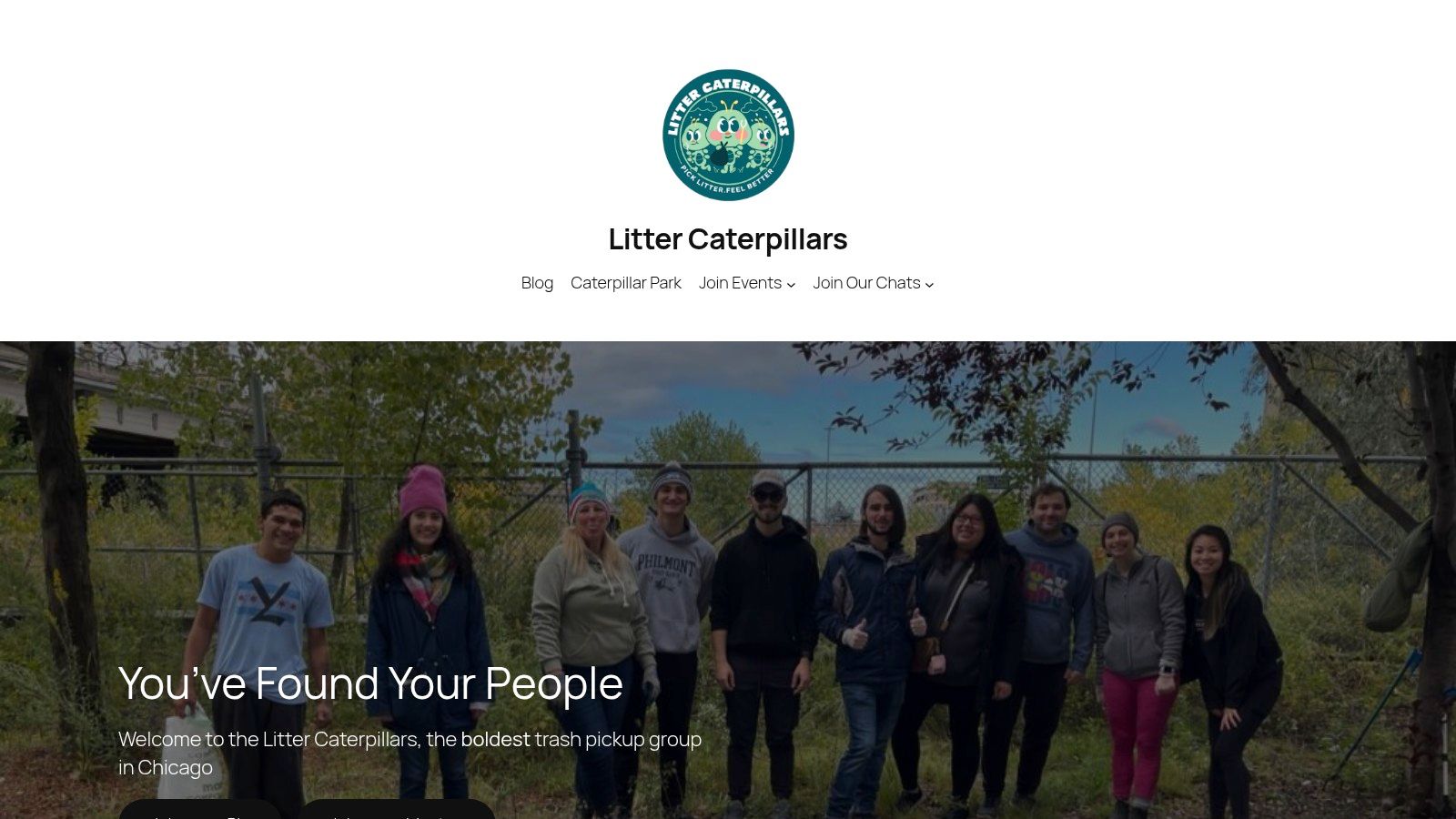
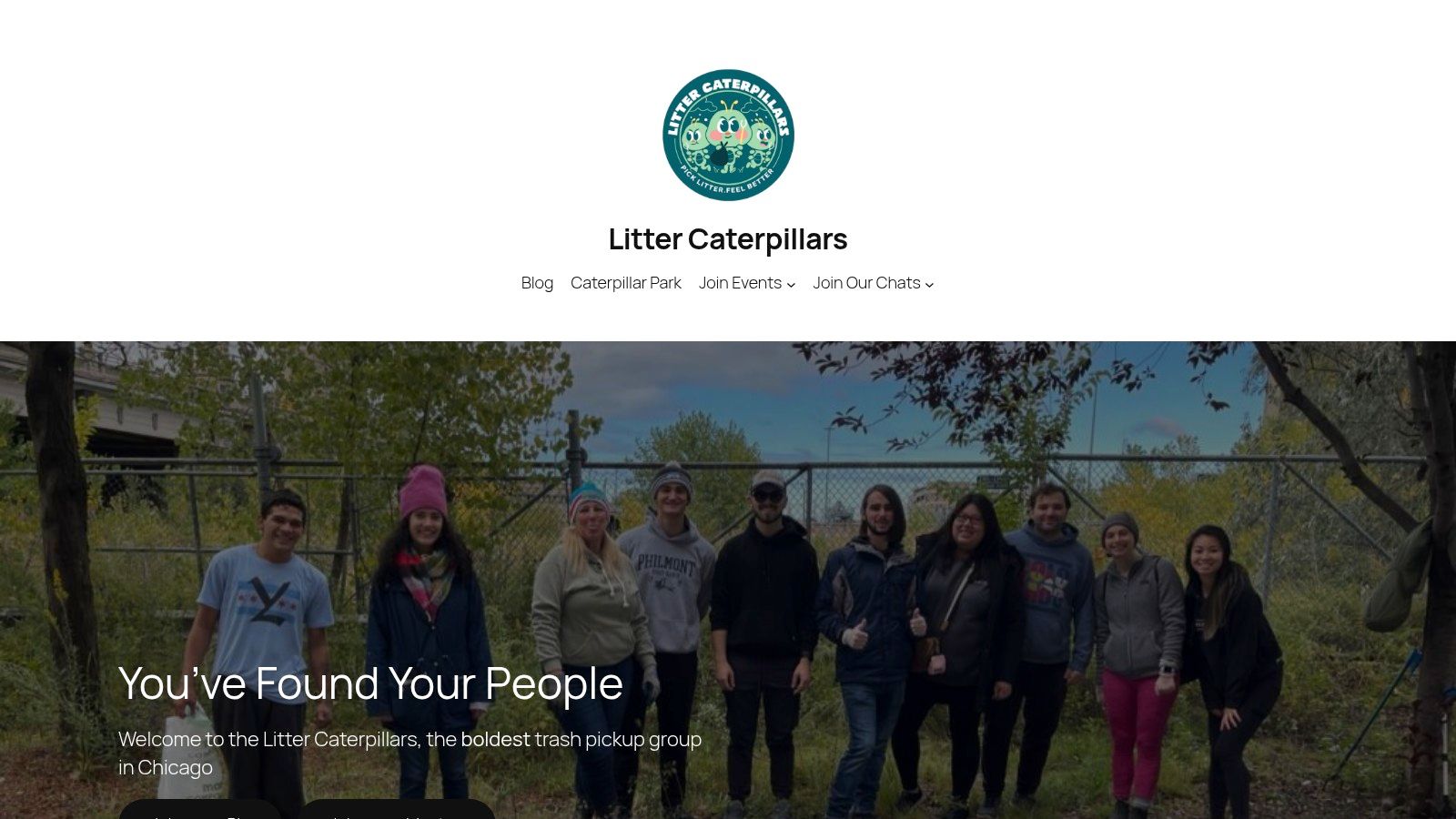
    Screenshot from https://www.littercaterpillars.com

    Why group cleanup feels different

    Inside your apartment, a pile of junk can carry old stress with it. Out on the sidewalk, the work gets simpler. A bottle goes in the bag. Broken cardboard gets stacked. The alley starts to look like a place people still believe in.

    That shift matters.

    The official pickup day handles part of the job. A proud block finishes the rest. This is especially true in the four-unit gap, where one property may follow the rules and still sit beside a mess created by a larger building, a private hauler, or weak management. In those spots, cleanup becomes more than tidying up. It becomes a way to say, we see the problem clearly, and we are not leaving it here.

    I have watched rough mornings turn into good ones fast. Neighbors who never spoke before start swapping stories over full bags. Someone points out a trouble spot behind the garage. Someone else knows who to call. By the end, you have cleaner pavement and a few more people who care what happens on your block.

    If you're tired of stepping around the same mess

    A cleanup crew changes your role. You stop being the person who winces at the litter from across the street. You become the person who showed up, did the work, and helped your alley feel claimed again.

    If that sounds like your kind of Saturday, check out trash pickup volunteer opportunities with Litter Caterpillars.

    People keep coming back for a few simple reasons:

    • You get a visible win. One full bag proves the morning counted.
    • You build a steadier routine. Showing up for your block can steady other parts of life too.
    • You meet neighbors who act with care. That changes the feel of a street faster than complaints alone.

    Cleaning up with other people can feel easier than cleaning up alone. Sometimes that is how pride comes back.

    Frequently Asked Questions

    What if I have paint, chemicals, or old electronics

    Don't put them in your regular bins. Those items need special disposal, not curbside guessing. If something feels like it could leak, spark, or poison, stop and look up the proper drop-off route before you touch the cart.

    How do I know if city pickup even applies to my address

    If you live in a single-family home or a building with up to four units, city collection may apply. If you live in a larger building, ask your landlord or building manager who handles hauling and what the pickup routine is.

    What if my bin didn't get picked up

    Move fast. If your household is covered by city service, report the missed pickup through 311 or Chi311 within the required window rather than waiting a few days and hoping it fixes itself.

    Can I get reminders so I don't forget again

    Yes. If you use the city schedule lookup, save a screenshot and use the calendar file if that works for you. A phone reminder the night before helps too, especially on holiday weeks when normal rhythm gets weird.

    What about large items that don't fit the usual week

    Watch for special collection events and city notices. Those limited windows can save you a lot of alley frustration.


    If you're ready to turn one small act into a better Saturday, visit Litter Caterpillars. You'll find a crew that picks up trash with guts, kindness, and a little swagger. Show up, grab a bag, and help make your block feel like somebody loves it.

  • A Bold Guide to Litter Prevention Programs

    A Bold Guide to Litter Prevention Programs

    The first time I picked up litter with friends, hail hit us so hard we had to hide under a tree. Our rides kept canceling, our hands went numb, and somehow that miserable little cleanup became one of my favorite memories.

    Start Where You Are With What You Have

    I'll tell you something awkward. Cleaning up a sidewalk was easier for me than cleaning my own apartment.

    For years, I let junk pile up around me. An old jar in the fridge had a memory attached to it. A broken bag had a story. Every useless object felt heavy. Not physically heavy. Soul heavy. I could step over the mess for months and still not move it.

    Then my life cracked open. I got out of a chaotic relationship, looked around at the room I had built around myself, and realized I couldn't keep living like that. I needed practice doing hard things. I needed to train consistency the way some people train for a marathon. I needed one simple act I could repeat.

    So I picked up one piece of trash outside.

    That sounds tiny because it is tiny. But tiny actions are like the first tooth on a zipper. Once it catches, the whole thing can move.

    A woman holding a trash bag standing in a messy living room needing cleaning and organizing.

    Your first cleanup is personal

    Litter prevention programs are often discussed as if they start with a plan, a committee, or a grant. Mine started with shame, then stubbornness, then a trash bag.

    You don't need a polished origin story. You need a corner that bothers you enough to act. Maybe it's the bus stop with fast-food wrappers pinned against the curb. Maybe it's the alley behind your building where the wind keeps making the same joke with the same plastic bag. Maybe it's the park path you walk every morning and complain about every morning.

    Pick that spot.

    Then do something so small your excuses look silly next to it. Fill one bag. Walk one block. Spend twenty minutes.

    Practical rule: Start before you feel ready. Motivation usually arrives after your hands start moving.

    There's another reason I like this beginning. It changes the shape of the problem in your mind. A giant issue can freeze you. A single cup in the gutter can't.

    According to the Keep America Beautiful 2026 National Litter Study, approximately 35 billion pieces of litter still remain across public spaces in the United States, and the country spends about $11.5 billion annually dealing with it. That number is huge, but I take comfort from it too. Every piece you pick up is part of a real collective effort, even if nobody claps for you.

    Inertia is the real enemy

    Trash looks like the obstacle. It usually isn't.

    A significant obstacle is that sticky feeling in your chest that says, “Someone else should handle this.” Or, “It's too far gone.” Or, “One person can't do much.” I've heard every version because I've said every version.

    Litter prevention programs work best when they break that spell. The first win is not a clean block. The first win is proving to yourself that you're a person who shows up.

    I've seen this happen in weird little flashes. Someone bends down for one bottle and then notices five more. A person who felt useless all week goes home sweaty, tired, and proud. A street that looked abandoned starts to look claimed.

    That's how it begins. Not with perfection. With contact.

    A simple first-day playbook

    If you're stuck, do this:

    • Choose one visible spot: Pick a place you already pass often. Repetition matters more than drama.
    • Bring basic gear: Gloves, a bag, and closed-toe shoes are enough for day one.
    • Set a short timer: Twenty or thirty minutes keeps the task from turning into a mental monster.
    • Leave one note for yourself: Take a photo, or write down how you felt before and after. You're building proof.

    I didn't know any of this would change my life when I started. I just knew I needed to stop waiting for a different personality to arrive and save me.

    You might be waiting for that too. Don't. Start where you are. Use what you have. Grab the first piece.

    Find Your First Three People

    My first group was tiny. Three people, a bad weather forecast, and the kind of optimism that looks a lot like poor planning.

    We got caught in a spring hailstorm. We huddled under a tree, laughing and shivering while our phones lit up with canceled rides. I remember thinking that this should feel like failure. Instead it felt like the beginning of a team. Shared discomfort has a way of cutting through small talk fast. You find out who can laugh. You find out who stays calm. You find out who says, “Same time next week?”

    That's what your first cleanup is really for.

    Screenshot from https://www.littercaterpillars.com

    Look for givers, not spectators

    You don't need a crowd. A crowd can make the first day worse. Too many strangers, too much drift, too much pressure to perform.

    You need your first three people. I like three because it has balance. If one person cancels, the cleanup still happens. If one person is shy, two others can carry the conversation. Three people can make a rough morning feel alive.

    Find them in places where people already lean toward service and curiosity. Community chats. School groups. Neighborhood forums. Weekend clubs. Friends of friends who always say yes to helping someone move a couch.

    When I want to explain how to do this clearly, I point people to a practical guide on how to find volunteers for neighborhood cleanup work.

    Don't recruit with polish. Recruit with honesty. “I'm cleaning this block Saturday morning. Want to join me?” beats a fancy pitch most of the time.

    Make the first ask small and clear

    People say yes when the shape of the ask is obvious.

    Compare these two invitations:

    • “I'm starting a citywide anti-litter initiative.”
    • “I'll be at the corner of Ashland and 18th at 9 a.m. Saturday with gloves and bags. We'll clean for an hour.”

    The first one sounds like homework. The second one sounds real.

    A strong first invite has a few simple parts:

    • Time: Weekend mornings work well because they attract people who want to give part of their day.
    • Place: Choose somewhere easy to find.
    • Length: Keep it short enough that people don't fear getting trapped.
    • Tone: Make it human. “Come help” is better than “Join our mission-driven engagement effort.”

    Let the story do the recruiting

    After that first stormy cleanup, I didn't have to sell the experience very hard. The story did the work.

    “Three of us got stuck in hail, picked up trash anyway, and laughed the whole time.”

    That kind of story has a pulse. People can feel it. It tells them this isn't a sterile volunteer shift where everyone signs a form, poses for a photo, and vanishes. It tells them there's room for grit, humor, and a little absurdity.

    Litter prevention programs live or die on repeat attendance. Repeat attendance grows when the first day gives people a memory, not just a task.

    So if something goes wrong on day one, don't panic. Rain starts. Fine. Someone's late. Fine. The route is rougher than expected. Fine. If the group stays kind and keeps moving, the mess-up becomes flavor. People remember flavor.

    Your Simple Plan for Safety and Supplies

    The fastest way I ever lost a volunteer was not boredom. It was a blackberry thorn.

    We were cleaning an alley behind a row of garages, the kind with busted fencing, dumped fast-food bags, and weeds tall enough to hide trouble. A new guy reached into the brush with bare hands before I could stop him. He came back with a scratched wrist and a look that said, "You people do this for fun?" He never returned.

    That morning taught me something plain. Safety is how you prove this group takes care of its own.

    A safety infographic showing six essential items for volunteer litter prevention teams including protective gear and supplies.

    Pack like you're taking care of friends

    I stopped treating supplies like extras after that. Now I pack for the person who showed up eager, underprepared, and trusting me more than they should.

    My kit stays simple. Sturdy gloves. Litter grabbers. Bright vests. Contractor bags. Hand sanitizer. Sunscreen. Water. A basic first aid kit. Closed-toe shoes are required, and if we are anywhere near traffic, I hand out vests before the first bag comes open.

    None of that is glamorous. That is the point.

    Cheap gloves tear. Thin bags split at the bottom and baptize somebody's shins in old coffee. Short grabbers turn a one-hour cleanup into a lesson in lower-back pain. Good gear changes the mood of the day because people stop bracing for irritation and start paying attention to each other, the street, and the small wins.

    Give the same safety talk every time

    I keep the briefing short enough that nobody zones out and clear enough that nobody has to guess.

    Here's the version I use:

    1. Watch for cars, bikes, loose gravel, and broken pavement.
    2. Do not touch needles, broken glass, or anything suspicious with bare hands.
    3. Stay where someone can see you.
    4. Drink water early, not after you feel lousy.
    5. If a spot feels wrong, leave it and call me over.

    The talk takes about a minute. The effect lasts all morning. It tells people they are not disposable labor. They are teammates.

    If you run public cleanups often, insurance matters too. This guide to volunteer liability insurance for cleanup groups is a good place to sort out the practical side before your group grows.

    A cleanup should send people home tired, proud, and ready to return.

    Pick routes with your eyes open

    I learned route planning from a bad Saturday on a four-lane road.

    On paper, the block looked perfect. Heavy litter, easy parking, visible impact. In real life, it had speeding traffic, no shoulder, nowhere safe to stack full bags, and a bus stop that kept spilling people into our work zone. We spent more energy watching our backs than cleaning. The volunteers were polite about it, but I could feel the trust drain out of the group.

    Now I scout with three questions in mind.

    • Can people enter and leave the area without playing frogger
    • Where do full bags go before pickup
    • What hazards are waiting for us before we even start

    Those questions do more than prevent a rough day. They help match the route to the crew. Families and first-timers get parks, sidewalks, trailheads, and quiet side streets. Experienced volunteers can handle the ugly corners with steeper banks, illegal dumping, or heavier traffic.

    You also start to see the deeper story of a place. A block with constant litter and no working trash can does not have a volunteer problem. It has an infrastructure problem.

    A simple field checklist

    Before I leave home, I run through the same checklist every time:

    Item Why I bring it
    Gloves Protect hands from grime and sharp edges
    Grabbers Save backs and reduce direct contact
    Bright vests Help drivers and cyclists see us
    Water Keeps energy steady
    First aid kit Handles small scrapes fast
    Extra bags Gives the route breathing room

    That list looks almost too plain to matter. Plain works.

    People come back when the day feels cared for. They remember that somebody had extra water. Somebody noticed the blind corner before they stepped into it. Somebody brought enough gloves for the friend who showed up empty-handed. That is how a cleanup stops being a one-off good deed and starts becoming a place where people trust each other.

    Make It an Adventure Not a Chore

    Tom Sawyer understood something a lot of organizers miss. If work feels like punishment, people flee. If work feels like a game with pride attached to it, people lean in.

    That's how I think about retention. You can hand people a grabber and a trash bag, but that alone won't build a team. A team needs flavor. It needs a little theater. It needs something people can belong to.

    A diverse group of volunteers cleaning up trash on a beach to promote environmental conservation efforts.

    Pride keeps people coming back

    I've watched the same basic cleanup feel dead in one group and electric in another. The difference usually isn't the amount of trash. It's the mood.

    When people have symbols, rituals, and inside jokes, they stop feeling like random individuals doing civic homework. They start feeling like they're on a mission together. That can be as simple as a group photo pose, a running joke about the weirdest item found that day, or a song you always play after the last bag is tied.

    Texas A&M found that sustained educational campaigns can reduce litter by up to 50%, according to its review of litter control programs and regulations. I take that personally. Culture is education with a pulse. When you build a cleanup group people want to join, you aren't only removing trash. You're teaching a different way to move through public space.

    People return for the feeling. The bags of trash are proof that the feeling had somewhere to go.

    Give the group a personality

    This part is fun, and it matters.

    You can create identity without spending much money. Pick a color. Make a goofy tradition. Give out homemade badges. Name your routes. Celebrate ridiculous wins. “We cleared the wind tunnel block again.” “We found the cursed alley spoon.” That stuff sounds silly until you watch it work.

    Here are a few ideas that tend to stick:

    • Route names: A cleanup with a nickname is easier to remember than one with only an address.
    • Micro-awards: Best attitude. Sharpest eyes. Strongest hill climb. Keep it light.
    • After-action ritual: Tea, coffee, tacos, or just a ten-minute sidewalk debrief.
    • Weather pride: Cold day? Hot day? Let people feel they did something a little hard together.

    For more ideas, I like practical roundups of volunteer team building activities because they remind you that morale doesn't happen by accident.

    A short video can help spark the right energy before a cleanup:

    Fun is not fluff

    Some people get suspicious when service becomes playful. They think seriousness proves sincerity. I don't buy that.

    If you want people to come back through heat, wind, awkward mornings, and blocks that look rough, you need joy in the engine. Adventure is what makes hard things repeatable. It turns “I have to” into “I was there.”

    Litter prevention programs that feel cold and dutiful often stall out. The ones with personality have legs. People bring friends. They wear the same hat every week. They tell stories afterward. That's the fuel.

    Build Bridges and Find Treasure

    Once you start showing up regularly, the city starts talking back.

    I don't mean that in a mystical way. I mean the cashier notices your gloves. The store owner asks why you're carrying bags at 8 a.m. A neighbor points at an illegal dump site behind a fence. A parks worker tells you when the bins overflow. A person who ignored you for three weeks suddenly waves.

    That's how bridges start. You don't build them with a pitch deck first. You build them by becoming familiar.

    Ask for help in ways people can say yes to

    A lot of groups ask for support too vaguely. “Can you sponsor us?” is a big, mushy request. People freeze when they don't know the shape of the favor.

    I prefer smaller asks. “Can your hardware store knock a little off gloves?” “Can your café save cardboard boxes for sorting supplies?” “Can the alderman's office tell us where bagged trash should go after a cleanup?” Those are answerable.

    When you've been visible for a while, those conversations get easier. People trust movement more than ideas. If they've seen you out there week after week, they know you're not daydreaming. You're already in motion.

    Consistency is social proof in work boots.

    Treasure doesn't always look like money

    One of the best things that can happen to a cleanup group is learning that support has many forms. A business might hand over extra bags. A neighbor might provide a hose. A city worker might explain the pickup schedule. Someone might introduce you to someone else, and that second introduction changes everything.

    I've seen an empty lot stop looking like a liability and start looking like possibility. Places the city had mentally written off can change when a few stubborn people keep returning. Sometimes treasure is literal land. Sometimes it's access. Sometimes it's one brave person inside a system saying, “I can help you with that.”

    Protect volunteer energy from money stress

    I'm stubborn on this point. I don't like putting financial pressure on volunteers.

    Research tied to grant-dependent community models notes that volunteer retention can drop by 40% when financial pressure is introduced, and it also points to a real gap in long-term data on purely volunteer-driven groups, as shown in the Georgia rules tied to clean community funding structures. That tracks with what I've felt on the ground. The second people start worrying that showing up means getting squeezed for cash, the emotional temperature changes.

    So I treat volunteer energy like a rare fuel. I want people to bring their time, their jokes, their muscles, their courage. That's already a lot. I'd rather build external partnerships than pass the burden back onto the people doing the work.

    If you stay open-eyed, your city has hidden doors everywhere. The trick is to keep knocking without sounding desperate, and to remember that your group's reliability is a form of currency all its own.

    Measure What Matters and Keep Going

    One Saturday, we cleaned a block that had beaten us before.

    Wind kept dragging fast-food wrappers out of a busted hedge. A guy across the street watched us like we were wasting our time. One volunteer, brand new, barely said a word for the first half hour. Then she found a child's red scooter half-buried behind a fence, laughed, and called three people over like she had discovered pirate gold. By the end of the morning, the man across the street had brought out his own broom, and the quiet volunteer was trading numbers with two strangers she had met in gloves and safety glasses.

    I still count the bags. I still take before-and-after photos. You need proof of work, especially on the days when the street looks rough again by Tuesday.

    But the score I trust most lives in moments like that one.

    The signs I look for after the bags are tied

    As noted earlier, formal litter programs usually track a baseline, make a plan, and check results. That matters. A volunteer-first group needs that discipline too. I just keep a second scorecard in my head, because a true win is not only a cleaner curb. It is a stronger crew.

    I watch for the person who showed up anxious and leaves standing taller.

    I watch for the first-timer who says, “I didn't know this part of town was like this,” and means it in a good way.

    I watch for the shop owner who starts picking up around their own door because our presence changed the mood of the block.

    Those are not soft extras. Those are signs the cleanup is taking root.

    My favorite scorecard

    After a cleanup, I usually ask myself a handful of plain questions:

    • Did people feel safe? If they did not, that gets fixed first.
    • Did anyone connect with someone new? Friendship keeps people coming back.
    • Did the block feel more settled? Cleaner is good. Cared for is better.
    • Did a new volunteer gain confidence? That person may become your future route leader.
    • Did we return when we said we would? Reliability changes how a neighborhood reads you.

    A neighborhood notices patterns before it trusts promises.

    Staying power beats the big heroic day

    I love a dramatic haul as much as anyone. A mountain of tires or a truck bed full of dumped debris makes for a great photo. It also fades fast if nobody comes back.

    What changes a place is rhythm. Saturday at nine. Gloves on. Quick safety talk. One block, then the next, then the next again a month later. Repetition turns strangers into teammates and teammates into the kind of friends who will help each other move a couch, find a job lead, or talk through a hard week after cleanup is over.

    That part surprised me when I first started. I thought we were building a trash crew. We were really building people who keep promises in public.

    So yes, measure the bags. Measure the hot spots that stay cleaner longer. Measure turnout if that helps you plan. Then ask the harder questions too. Are people becoming steadier? Are they braver than they were last season? Does the street feel less abandoned when your group is around?

    If the answer is yes, keep showing up.

    If you want a real-world example of a volunteer-first cleanup group that mixes grit, friendship, and weekly action, take a look at Litter Caterpillars. It's a Chicago group built around brave mornings, safer cleanups, and the idea that picking up trash can also help people rebuild trust in themselves and each other.

  • Local Environmental Groups: Chicago Impact 2026

    Local Environmental Groups: Chicago Impact 2026

    I used to stare at trash in my own apartment like it was haunted. A jar of blueberry jam from a trip years ago. A bag of nuts from the week I swore I'd become healthy and then didn't. I couldn't throw them out. They felt heavier than they were, like every wrapper and expired thing had a memory glued to it.

    Then I ended a bad relationship and got honest with myself. I wanted to build a life around givers, not takers. I wanted to train the parts of me that were weak: cleanliness, consistency, and bravery. So I started with something strange but simple. I picked up trash outside.

    I learned fast that cleaning up someone else's mess is easier than cleaning up your own. It can even be fun. I showed up for a neighborhood cleanup to challenge myself, and I walked away with new friends, a lighter mind, and a reason to get out of bed on a weekend morning. If you've felt that pull too, this is for you. These local environmental groups can help you find a mission, but more than that, they can help you find your people.

    1. Litter Caterpillars

    Litter Caterpillars

    One cold weekend morning, a few people in gloves filled bag after bag while the rest of the block stayed quiet. By the end, the sidewalk looked different, but so did the group. Strangers were teasing each other, comparing the weirdest things they had found, and making plans for the next cleanup. That is why I keep coming back to Litter Caterpillars in my head. It is not only about trash. It is about what happens to you when you keep showing up.

    Litter Caterpillars is the group I would point you toward if you want action fast and you do better with movement than meetings. They gather on weekend mornings, head out in rough weather, and make it easy to join. You do not need a background in activism. You need shoes you can get dirty and enough curiosity to try one morning outside with other people who care.

    Their style is simple. Show up, clean a block, talk to the people beside you, come back next time. For some personalities, that rhythm works better than formal committees or polished events. If you have been lonely, stuck, or tired of living too much in your head, this kind of work can reset you.

    Why this group stays with people

    Litter Caterpillars has cleaned in all 50 wards of Chicago, including places volunteers are often told to avoid, according to the group's Meetup page for Litter Caterpillars. That says a lot about their character. They do not chase easy wins or pretty backdrops. They go where the mess is real and keep coming back.

    One of the clearest examples is Caterpillar Park in Englewood. The group won a vacant lot at public auction, turned it into a community space, and still has to fight illegal dumping there, as reported in the Chicago Tribune's story on Caterpillar Park. I find that weirdly comforting. The work repeats. You clean a place, life happens, and you return. If you are trying to build resilience in your own life, that lesson lands hard.

    Practical rule: Join this group if you want to see a result before lunch. Carrying a full trash bag back to the meeting point changes your mood more than another hour of scrolling.

    I also like how openly they treat cleanup as community, not just service hours. The flags, badges, songs, group chats, and inside jokes might sound small. They are not. They give shy people a way in. They help new volunteers feel known. They turn a hard, dirty task into something closer to belonging.

    If river work interests you too, their guide to cleaning up rivers in Chicago gives a good sense of how street litter and water pollution connect.

    • Best for grit: A good fit if you like physical work, repetition, and neighborhoods that feel lived in.
    • Best for friendship: A strong choice if you want a group with personality and rituals that help people connect.
    • Best for new habits: Weekend cleanup can anchor your week and make consistency feel natural.

    The tradeoff

    Litter Caterpillars feels hands-on, improvised, and human. If you want a more formal nonprofit structure, another group on this list may suit you better.

    But if you are looking for a place where service can change your city and also change you, this one has a strong pull. You come for the cleanup. You stay because you start to recognize faces, trust yourself more, and feel a little less alone.

    2. Friends of the Chicago River

    Friends of the Chicago River

    If street litter makes you angry, river litter hits differently. It feels like the city's bloodstream is clogged. Friends of the Chicago River is a good fit when you want your volunteer time tied to water, habitat, and a long-running civic rhythm.

    Their home base is the Friends of the Chicago River website, and they run recurring stewardship work tied to the Chicago-Calumet River system. If you're curious how river cleanups connect to broader trash work, I also like this piece on cleaning up rivers in Chicago.

    Who I think should join

    This is the group for people who like structure. You sign up, get clear guidance, and plug into a larger machine. If Litter Caterpillars feels like a scrappy pickup basketball game, Friends of the Chicago River feels more like joining a league with refs and a schedule.

    I also think it's good for students, companies, and neighborhood groups that want a shared project with a clear setting. Water gives people a focal point. When you're standing by the river with gloves on, it's easier to feel what you're protecting.

    The river gives your effort a shape. You can point to a bank, a path, a canoe launch, and say, "I helped right there."

    Where it fits in your life

    The work can be seasonal and weather-sensitive, so you may need to plan ahead. Popular volunteer dates can fill quickly. But if you want logistics, recurring stewardship, and a mission that feels bigger than one block, this is a solid place to start.

    I wouldn't choose this one because it's trendy. I'd choose it if your brain likes order and your heart likes water.

    3. Urban Rivers (The Wild Mile)

    Urban Rivers (The Wild Mile)

    Urban Rivers is for the person who wants an environmental group that feels a little weird in the best way. Floating wetlands. Kayaks. Habitat work in the middle of the city. The whole thing feels like a science project built by people who refused to accept that an urban river has to stay dead-looking.

    You can browse projects and volunteer options on the Urban Rivers website. The Wild Mile is the sort of place that makes a skeptic stop walking and ask questions.

    Why this one feels different

    Some local environmental groups ask you to clean. Urban Rivers lets you clean and build. That mix changes the experience. You aren't only removing damage. You're helping put something living back into place.

    Their River Ranger training also makes this a nice fit for people who want to learn while they volunteer. If your personality leans curious, if you like being taught how systems work, this one can scratch that itch.

    • Best for visual thinkers: You can see the floating habitat and understand the idea fast.
    • Best for hands-on learners: Training adds depth that simple litter pickup sometimes doesn't.
    • Best for people who want a story to tell: Friends will ask what you did, and you'll have an answer better than "I stood around at a fundraiser."

    What to know before you go

    Some roles need planning, training, and comfort on the water. That can be a plus or a barrier, depending on who you are. If you want a fast drop-in volunteer option, another group may be easier.

    Still, I love that Urban Rivers makes environmental work feel inventive. It reminds me that some people heal themselves by restoring order, and some heal themselves by helping build something new.

    4. Alliance for the Great Lakes (Adopt-a-Beach)

    Alliance for the Great Lakes (Adopt‑a‑Beach)

    The first time I joined a beach cleanup, I thought it would feel like a prettier version of picking up trash on a sidewalk. It did not. I filled one bag, looked up, and saw the lake stretching out like it had all the time in the world. The work felt small and big at once. Small in my hands. Big in my chest.

    That is the mood of the Alliance for the Great Lakes. Their Alliance for the Great Lakes site is where you can find the Adopt-a-Beach program and sign-up options for shoreline cleanups. If you end up liking this kind of work, this guide to cleaning up a Chicago park or public green space can help you keep the habit going closer to home too.

    Why some people click with beach cleanups fast

    This one suits people who like patterns. You are not only picking up cups, wrappers, and bottle caps. You are noticing where trash collects, what keeps washing back, and how a place that looks peaceful can still carry a steady stream of human mess.

    That rhythm changes the experience. A beach cleanup can feel less like a chore and more like paying close attention. If you are the kind of person who likes sorting, spotting, and seeing what other people miss, you may feel useful here right away.

    It is also one of the easier groups to bring someone into. A sibling. A date. Your kids. A coworker who says they want to help but never knows where to start. The lakefront does part of the social work for you because people already want to be there.

    What I tell first-timers: If you want your first volunteer day to feel open, calm, and easy to share with other people, start at the beach.

    The honest tradeoff

    This is a seasonal fit for a lot of volunteers. Chicago weather decides a lot for you, and shoreline work is not always the thing you will want in January.

    Still, some personalities need that horizon. They need wind, water, and a task simple enough to quiet the noise in their head for two hours. If that sounds like you, Adopt-a-Beach is more than civic duty. It is a way to find your people while you clear space in yourself too.

    5. Friends of the Parks

    Friends of the Parks

    Some people don't want the edge of alley cleanup or the planning of habitat work. They want a park. Trees, fieldhouses, paths, playgrounds, and a task they can explain to a friend in one sentence. Friends of the Parks is good for that.

    Their Friends of the Parks website is a good place to find citywide park stewardship and major volunteer days. If you're already thinking in neighborhood-park terms, this page on how to clean up a park in Chicago pairs well with it.

    Why parks are emotionally easier

    A park is where city life softens. Kids play there. Grandparents sit there. Dogs drag people there before sunrise. When you clean a park, you get immediate emotional feedback because you can picture who uses it.

    That makes this a great first step for shy people. You're still doing public work, but the setting feels familiar. It doesn't demand a new identity from you on day one.

    • Best for first-timers: Parks are accessible and easy to understand.
    • Best for neighborhood pride: You can return later and see the same bench, path, or ballfield.
    • Best for people who want broad coverage: Citywide park networks give you lots of entry points.

    One honest downside

    The biggest mobilizations cluster around annual events, so if you're chasing frequent large-scale action, you may need to combine this with another group. Still, I think Friends of the Parks is one of the easiest ramps into local environmental groups because the mission feels close to daily life.

    6. Friends of the Forest Preserves (Cook County)

    Friends of the Forest Preserves (Cook County)

    If the city noise is frying your nerves, go farther out. Friends of the Forest Preserves gives you a different kind of volunteer day. Less concrete. More brush, trails, invasive removal, and work that feels slower and deeper.

    You can check current programs and stewardship options on the Friends of the Forest Preserves website. I think this group works well for people who want environmental service to double as recovery time.

    When this is the right fit

    Some local environmental groups meet your need for action. This one can meet your need for quiet. You still sweat, carry, cut, and clear, but the mood is different. It feels less like battling the city and more like caring for a place that can still surprise you.

    I also like this path for people who want to build practical outdoor skills over time. Brush work, stewardship habits, and guided workdays can teach patience. You're not just grabbing obvious trash. You're learning to notice what doesn't belong and what needs room to grow.

    Sometimes the best volunteer choice isn't the loudest one. It's the one that calms you down enough to come back next week.

    What might frustrate you

    Some preserve sites take more travel. If you live in a dense neighborhood and don't drive, getting there can be harder than joining a local block cleanup. And on certain days, the work leans more toward habitat care than simple litter pickup.

    That said, I think this is one of the best options for people who want service without constant urban intensity.

    7. Cleanup Club Chicago (Chicago Environmentalists)

    Cleanup Club Chicago (Chicago Environmentalists)

    A lot of people want to help their city. Fewer people know what kind of group will keep them coming back.

    Cleanup Club Chicago feels like the answer for the person who does better with a text thread than a formal orientation. You show up, grab gloves and a bag, and spend a morning doing something clear and useful with other people who also wanted a reason to get outside. That low-pressure setup matters more than it sounds. For some volunteers, this is the kind of group that turns good intentions into an actual habit.

    You can find them through Cleanup Club Chicago at Chicago Environmentalists. I like this option for people who want environmental service to fit into real life instead of taking it over.

    The kind of person who thrives here

    This group makes sense if your energy comes in waves. Maybe one week you want a scheduled cleanup with other people. Maybe the next week you want to do your own pickup close to home and still feel connected to something bigger. Cleanup Club Chicago leaves room for both.

    It also works well if you are looking for community first and a perfect volunteer identity second. That is part of what made Litter Caterpillars stand out earlier in this article too. Sometimes you do not find your purpose and then join a group. Sometimes you join a group, pick up one bag of trash, meet two good people, and realize your life feels a little less stuck.

    The work itself is simple, which is part of the appeal. You are not trying to learn a complicated system before you can help. You are cleaning a street, a park edge, a sidewalk, or a problem corner that everybody has walked past. That simplicity gives you room to talk, joke, and build friendships while your hands stay busy.

    • Best for flexibility: Easy to join and easy to fit around a changing schedule.
    • Best for social motivation: Good for people who stay committed when service also helps them meet people.
    • Best for straightforward impact: You can see the difference by the end of the cleanup.

    The limitation

    The same loose, grassroots energy that makes this group inviting can also make it less predictable. Some weeks will feel bigger than others. Some cleanup days will depend on who shows up and what the weather does.

    If you want a highly structured program with formal training and a fixed path, another group may fit you better. If you want a welcoming entry point, visible results, and a community that can grow with you, Cleanup Club Chicago is a strong choice.

    Comparison of 7 Local Environmental Groups

    Organization 🔄 Implementation complexity ⚡ Resource requirements 📊 Expected outcomes Ideal use cases ⭐ Key advantages / 💡 Tips
    Litter Caterpillars Low, volunteer‑first, recurring weekly meetups Low, volunteer time, basic tools; limited centralized funding High local visibility and steady neighborhood litter removal Low‑barrier volunteer engagement, neighborhood/lot cleanups, regular weekend volunteers ⭐ Strong community bonds and relentlessness; 💡 Expect physical outdoor work and minimal formal infrastructure
    Friends of the Chicago River Medium, structured nonprofit programs and event coordination Moderate, staff, logistics, water‑safety gear Reliable multi‑site river cleanups and advocacy outcomes Waterway stewardship, corporate/team days, media‑friendly events ⭐ Established reputation and logistics; 💡 Seasonal work, register early
    Urban Rivers (The Wild Mile) Medium‑High, specialized habitat projects and training High, kayaks, floating wetland materials, trained staff High‑visibility habitat restoration and biodiversity monitoring Innovative habitat restoration, storytelling events, trained volunteer roles ⭐ Distinctive site and skills development; 💡 Requires training and water comfort
    Alliance for the Great Lakes (Adopt‑a‑Beach) Medium, standardized shoreline program with protocols Moderate, volunteers, data collection tools, beach supplies Consistent shoreline cleanup with standardized data for advocacy Beach/adopt‑a‑beach programs, corporate beach days, citizen‑science events ⭐ Credible data and family‑friendly events; 💡 Best spring–fall, weather‑dependent
    Friends of the Parks Medium, large annual mobilizations plus year‑round support Variable, major event logistics and steady volunteer base Large‑scale park cleanups and broad community engagement Earth Day mass cleanups, neighborhood park stewardship, volunteer onboarding ⭐ Broad geographic reach and clear logistics; 💡 Peak activity in spring, site work may depend on PACs
    Friends of the Forest Preserves Medium, hands‑on land management with trained leaders Moderate, tools, trained leaders; may require travel to preserves Strong habitat restoration and volunteer skill building Preserve stewardship, teams wanting hands‑on conservation skills ⭐ Strong safety/training culture; 💡 Sites often require driving and can be physically demanding
    Cleanup Club Chicago (Chicago Environmentalists) Low, grassroots, flexible pop‑up cleanups Low, minimal supplies and social media coordination Frequent neighborhood cleanups and campaign amplification DIY pop‑ups, quick partner activations, neighborhood street/park cleanups ⭐ Flexible and fast to mobilize; 💡 Less formal training, best for straightforward litter work

    The Work Is Never Done. That Is the Good Part.

    One Saturday, you fill a trash bag and head home tired, a little sore, and oddly lighter. The next week, there is a fresh fast-food cup in the curb, two bottles by the bus stop, and a torn bag caught in the fence again. For a second, it can feel pointless. Then you realize the ultimate win was never a perfectly clean block. It was becoming the kind of person who comes back.

    That is what Litter Caterpillars made clear earlier in this piece. The bags matter. The cleaner sidewalk matters. But the deeper change happens in repetition. You keep showing up, and somewhere along the way, your weekends gain shape, your body gets stronger, and a few familiar faces turn into friends.

    This field is bigger than any one cleanup crew. Cause IQ's directory of U.S. environmental organizations lists 33,649 environmental organizations employing 154,254 people, generating over $32 billion in annual revenue, and holding $96 billion in assets. Still, almost nobody joins because they studied the numbers first. People join because they are restless, grieving, angry, lonely, or ready to stop scrolling and do something with their hands.

    And people stay for reasons that surprise them.

    A Saturday morning by the river can clear your head better than sleeping in. A park cleanup can introduce you to the neighbor whose name you should have learned three years ago. A beach pickup can give a teenager their first taste of being counted on. Service changes the city a little. It changes the volunteer, too.

    The environmental world also has real blind spots. The American Sociological Association article "Race, Diversity, and Transparency in Environmental Organizations" reports that a 2015 analysis of 324 organizations found people of color made up about 16% of the workforce, while 31.4% of organizations collected diversity data internally and only 4.5% reported it publicly. That matters on the ground. If you join a group, notice who gets welcomed, who makes decisions, and whether the room reflects the neighborhood it wants to serve.

    Trust matters just as much as good intentions. Duke University's Nicholas Institute report, "Understanding Rural Attitudes Toward the Environment and Conservation in America," found that some rural communities trust farmers, ranchers, and scientists more than environmental advocacy groups. City volunteers can learn from that. Listen before proposing fixes. Ask what people need. Help without performing expertise.

    So choose the group that fits your temperament and your season of life. If you like grit, early mornings, and visible results, start where the trash is. If water calms you, go to the river. If you need a gentler entry point, try a park day with families and regulars.

    You do not need to save everything.

    You just need to find your people, pick a corner of the city, and return often enough that the work starts building you back.

  • What Is Community Service: Your Guide to Impact

    What Is Community Service: Your Guide to Impact

    Trash clung to my life before it ever clung to my grabber. I could stare at an old jar in my fridge for months, not because it was heavy, but because every useless thing carried a memory, and every memory made my room feel impossible.

    Then one cold day, I went outside and picked up someone else's litter. Somehow that was easier. It was even fun.

    My Messy Room and the Start of an Adventure

    I started to understand what community service is when I failed, over and over, at cleaning my own room.

    I'm serious. My place used to feel like a museum of unfinished versions of me. The bag of nuts from the week I swore I'd get healthy. The old blueberry jam from a trip I didn't want to forget. Random papers, boxes, wrappers, half-plans, half-dreams. Every item looked small, but each one felt like it weighed five hundred pounds in my mind.

    Then my life cracked open. I got out of a chaotic relationship that drained me. I looked around and saw mess everywhere. My room was messy. My habits were messy. My social circle was messy. I felt stuck in the kind of way that makes even tiny tasks feel impossible.

    An artistic illustration featuring a human hand reaching toward a single flower growing from scattered items

    Why someone else's mess felt lighter

    So I tried something strange. Instead of fixing my whole life in one dramatic sweep, I went outside to pick up trash in my neighborhood.

    That first cleanup had only a few of us. We got caught in a Chicago spring hailstorm that felt more like a prank than weather. We huddled under a tree, freezing, while ride after ride canceled on us. I should've hated it.

    I didn't.

    I laughed. I felt awake. I realized that cleaning other people's messes was easier than cleaning my own, and that mattered more than I expected. A candy wrapper on the sidewalk didn't come with guilt. A bottle in the gutter didn't ask me to revisit an old regret. I could just bend down, grab it, and make the block a little better.

    Sometimes the first honest step in fixing your life is doing one small useful thing outside your own head.

    The plot started moving again

    That day gave me a weird kind of relief. Service didn't feel like punishment. It felt like motion.

    When you're stuck, motion is gold. You don't need a perfect plan. You need a task you can finish. Pick up the cup. Tie the bag. Walk to the next corner. Say hi to the person next to you. Survive the hail. Tell the story later.

    That's why I still think community service is one of the best ways to restart yourself. It gives you a simple job when your inner life feels too tangled. You don't have to solve everything. You just have to show up and carry one piece of the load.

    What Community Service Really Means

    Community service is simple. You give your time and energy to improve the shared world around you.

    That's it. It's being a good neighbor at a bigger scale. Maybe you clean a sidewalk, stock a pantry shelf, tutor a kid, plant flowers, or help at a library. The action changes, but the heartbeat is the same. You see a need, and you answer it with your time.

    A city is just a giant block party

    I like to think of a neighborhood as one big apartment building. If the hallway is dirty, the lights are broken, and nobody checks on each other, everyone feels it. Community service is what happens when you stop walking past the mess and decide, “I live here too.”

    That choice is common all over the world. About 862.4 million volunteers aged 15 and older take part each month worldwide, or roughly one out of every seven working-age people, according to Better Impact's volunteer facts roundup.

    That number doesn't mean you need to be heroic. It means ordinary people help all the time. Repeatedly. In ways that often look small up close.

    What counts and what doesn't

    A lot of people overcomplicate this. They think service has to be dramatic, formal, or impressive. It doesn't.

    Here's a better way to judge it:

    • Does it help other people or a shared place? Then it's probably service.
    • Does it cost you time, effort, attention, or comfort? Then it's probably real.
    • Does it make life a little easier, cleaner, safer, or kinder for someone else? Then you're in the right lane.

    If you want another angle on public participation, this guide on civic engagement and community action connects the dots between personal effort and shared life.

    Practical rule: If you can point to what got better because you showed up, you're probably doing community service.

    The cleanest definition I know is this: community service is love made visible through action. Nothing fancy. Just hands, time, and follow-through.

    The Three Main Paths of Service

    People use the phrase community service to mean different things. That's why confusion happens.

    I've seen one person say it after a joyful weekend cleanup, another say it about a court requirement, and a student say it about a class project. All three can fit under the same umbrella, but the reason behind the work changes the experience.

    An infographic detailing the three main paths of service: direct aid, environmental stewardship, and advocacy and awareness.

    Voluntary service

    This is the kind I know best. You choose it.

    Nobody sentences you to it. Nobody grades you on it. You wake up early on a Saturday, pull on your gloves, and go because you want your block, your river, your school, or your neighbors to feel more cared for. Voluntary service has a certain spark because choice changes the mood. You're there on purpose.

    You also learn fast that your reason can be mixed. Maybe you want to help. Maybe you want friends. Maybe you need structure. Maybe you're trying to become braver. That still counts.

    Court-ordered service and service-learning

    Court-ordered service is different. A person does work for the community because the legal system requires it. The task might look similar on the surface, but the starting point is obligation.

    Service-learning has another flavor. A school or training program ties service to reflection and education. You serve, then think about what happened, what you learned, and how the experience connects to a larger lesson.

    Here's a quick comparison:

    Path Why you do it What it often feels like
    Voluntary service Personal choice Freer, social, self-directed
    Court-ordered service Legal requirement Structured, mandatory
    Service-learning Educational goal Reflective, guided, tied to study

    Why motivation matters

    This matters a lot for students. Many people confuse general volunteering with the stricter meaning of community service in academic or professional settings. In medical school prep, direct work with underserved populations often matters most, and 78% of pre-med students overlook that distinction, according to GHL Foundation's discussion of underserved community service.

    So if you're asking what community service is, the full answer is this: the action matters, and the context matters too. Picking up litter, mentoring youth, visiting elders, helping with food distribution, or teaching health basics can all fit. The question is why you're there, who you're helping, and what kind of service the situation calls for.

    The Unexpected Gift You Get from Giving

    I started serving because I wanted to clean streets. I kept serving because it started cleaning up parts of me.

    That sounds dramatic, but I mean it in a plain, practical way. When you keep showing up to help other people, you build traits that are hard to fake. You become steadier. You get less fragile. You stop panicking every time conditions aren't perfect.

    You practice being the person you want to be

    I didn't become brave by reading about bravery. I became brave by standing outside when it was cold, awkward, inconvenient, and a little uncomfortable. I became more reliable by showing up again the next week. Then the week after that.

    Service works like a gym for character. One cleanup won't change your life. Repeated cleanups might.

    Here's what I got from it:

    • Bravery in small doses. Going to unfamiliar blocks, meeting strangers, and doing visible public work trained me to move before I felt fully ready.
    • Consistency I could feel. Weekend after weekend, the habit got stronger than my excuses.
    • Better friendships. Shared work is a great filter. People who wake up to help others usually have something solid in them.

    You find out who you are when the weather gets bad and you stay anyway.

    Volunteer-first groups change the experience

    Group culture matters. A lot.

    The healthiest service spaces I've seen protect the people doing the work. They care about safety. They care about morale. They don't treat volunteers like a wallet with legs. Volunteer-first groups that put safety and happiness ahead of pressure for money create a more sustainable experience, and that changes whether people come back.

    If you want a deeper look at what real results can look like over time, this page on measuring community service impact has a useful framework.

    The caterpillar idea is real to me

    I love the caterpillar image because nobody expects a caterpillar to stay a caterpillar.

    That's how service felt for me. I wasn't trying to become flawless. I was trying to become less afraid, less selfish, less flaky, less trapped in my own head. Service gave me a place to practice that transformation in public, one bag of trash at a time.

    And there's something else. Hard days become good stories. The freezing cleanup. The long walk. The muddy shoes. The weird conversation that turned into a real friendship. Service gives your life texture. It gives the plot somewhere to go.

    Watching Your Neighborhood Come Alive

    The first thing you notice after a cleanup is visual. A block looks calmer. A curb line appears again. Grass comes back into view. The street breathes a little easier.

    Screenshot from https://www.littercaterpillars.com

    But the deeper change is emotional. People walking by start talking. Someone thanks you from a porch. A kid stares like you're doing magic with a trash bag and a grabber. Another neighbor starts picking up around their own building a few days later. Service spreads because people copy what they can see.

    Block by block is how a city changes

    I've learned to trust repeated action more than grand speeches. One corner today. Another next week. A rough alley nobody wanted to deal with. A commercial strip full of bottles and wrappers. An empty lot that looked forgotten.

    That kind of work gets especially real in places people avoid. Community service grows when you stop treating some neighborhoods as disposable. Litter Caterpillars has cleaned all 50 Chicago wards, including neighborhoods others often avoid. I love that example because it refuses the lazy map in people's heads, the one that says some areas count more than others.

    There's also a direct environmental side to this work. Litter cleanup helps stop trash from washing into rivers, and the Chicago-Calumet River litter prevention effort shows how local cleanup connects to cleaner waterways.

    A short clip tells that story better than I can:

    You start seeing possibility where you used to see blight

    One of my favorite shifts is internal. You stop looking at an ugly space and thinking, “That's a shame.” You start thinking, “We can do something about that.”

    That mindset changes a neighborhood because it changes the people in it. Cleanup is rarely about making things look cute. It's about telling the truth with your hands. This place matters. These people matter. We're not waiting for someone else.

    A cared-for block invites more care. A neglected block teaches people to give up.

    That's why community service feels alive to me. You can watch the before and after happen in real time.

    Your First Steps to Making a Difference

    Individuals don't need more inspiration. They need a first move.

    The good news is that starting is much easier than performing some giant act of goodness. You don't need a full life mission. You need one cause you can stick with long enough to build a habit.

    A four-step infographic illustrating how to start contributing to community service and making a difference.

    Start with fit, then build consistency

    Pick something that pulls at you. If you care about litter, join a cleanup. If you care about hunger, find a pantry. If you care about reading, help at a library. Your odds of staying committed go way up when the work feels personal.

    Then make the commitment small enough that you'll keep it.

    • Choose one lane. Don't sign up for five causes at once. Pick one and learn its rhythm.
    • Check the group culture. Look for clear meeting details, safety norms, and respectful communication.
    • Use a simple schedule. One steady hour each week can change you more than one giant burst once a year.
    • Reflect after each shift. Ask yourself what felt energizing, awkward, useful, or meaningful.

    If you want a practical starting point, this guide to starting volunteering gives a straightforward way to begin. One factual option is Litter Caterpillars, which organizes volunteer trash pickups in Chicago and provides cleanup tools for participants.

    If you need service for school or applications

    Consistency matters even more when service connects to admissions or career goals.

    For academic or professional applications, longitudinal service over 6+ months is prioritized over one-day events by AMCAS and AAMC, according to this PMC article on service learning and sustained engagement. That tracks with what I've seen in real life too. A single service day can be nice. Ongoing service changes how you think, who you know, and what you notice.

    A good starting checklist looks like this:

    1. Pick a cause you can talk about without forcing it.
    2. Find a group that feels safe and grounded.
    3. Commit to a repeat schedule, even if it's modest.
    4. Keep showing up long enough for your presence to mean something.

    You don't have to become a saint. You just have to become dependable. That's where the change begins.


    If you want a simple way to try community service in Chicago, join Litter Caterpillars. You'll spend a morning cleaning a block, meeting other people who like to help, and finding out how much lighter life can feel when you carry one bag of trash at a time.

  • How to Clean Sidewalks and Find Your Bravery

    How to Clean Sidewalks and Find Your Bravery

    I stood on a filthy stretch of sidewalk with a broom in my hand and the same resistance I used to feel when I looked at my bedroom floor. The stains looked small, but in my chest they felt huge.

    Your Sidewalk Your Story

    I used to live with a kind of mess that didn't stay in the room. It spread into my head. An old container in the fridge wasn't just an old container. It was a memory, a failed plan, a little guilt token. A bag of stale snacks wasn't trash to me. It was proof that I had tried and slipped. Every object felt like it weighed far more than it should.

    A dirty sidewalk can hit you the same way.

    You pass the same patch of dark grime every morning. You step over the weeds pushing through the crack. You see the mystery stain near the curb and tell yourself you'll deal with it later. After a while, the sidewalk stops feeling like concrete. It starts feeling like an accusation.

    A person standing over a concrete slab filled with dark, abstract watercolor imagery representing emotional struggles.

    I learned something strange when I started helping clean outdoor spaces. Other people's messes felt easier to face than my own. Outside, I could move. I could act. I didn't have to untangle every emotion before I picked up a brush. I just had to start.

    That first lesson changed me. It also connects to how I fought my social anxiety. Bravery didn't arrive in some shining burst. It came in small, awkward motions. Walk outside. Put on gloves. Sweep one section. Scrub one square. Keep going.

    The weight of a small task

    If you're looking up how to clean sidewalks, maybe you want cleaner concrete. Good. Clean concrete feels better under your feet. But I think you might want something else too. You might want the relief of finally facing a task that's been staring at you.

    Practical rule: Treat the sidewalk like a tiny dragon. Don't negotiate with it for six months. Walk up and poke it with a broom.

    I remember staring at a stretch of pavement that had leaves mashed into the surface, gum flattened into black coins, and a green film near a shady edge. Nothing dramatic. Just enough neglect to create that heavy feeling. I told myself I'd do ten minutes.

    Ten minutes became momentum.

    One square at a time

    That's the trick. You don't clean a whole sidewalk first. You clean the patch right in front of your shoes. Then the next one. Courage works the same way. You don't become brave in theory. You do one mildly annoying thing you were avoiding. Then another.

    Your sidewalk has a story because you do. When you clean it, you're not fixing your whole life. You're proving to yourself that stuck isn't permanent.

    Gearing Up for the Grime

    I love good gear, but I don't mean expensive gear. I mean gear that lets you work safely, comfortably, and with some dignity. If you go outside in flimsy sandals and bare hands, the sidewalk will bully you. If you gear up right, you show up ready.

    First comes safety. Always.

    An infographic titled Gearing Up For The Grime listing six essential tools for cleaning sidewalks safely.

    I want you in thick gloves, safety glasses, and sturdy closed-toe shoes. Concrete scraps, grit, bits of glass, and splashes from cleaning mixes don't care whether you're trying to have a noble little self-improvement morning. Protect your hands. Protect your eyes. Protect your toes.

    Then bring the simple workhorses:

    • Push broom: Use a stiff-bristled push broom to move loose dirt, leaves, grit, and broken-down plant matter before you add water.
    • Long-handled scrub brush: This is your close-combat tool for stains, algae, and packed grime.
    • Bucket: Mix cleaning solution, carry water, or dunk the brush when you need more bite.
    • Garden hose with spray nozzle: A hose helps you wet the surface, rinse soap away, and see what dirt remains after the first pass.

    The quiet heroes from your kitchen

    You don't need to open with harsh chemicals. I often reach for white vinegar and baking soda first. Vinegar helps with organic film and green growth. Baking soda gives you mild grit and odor control. Dish soap can help loosen greasy residue on the surface before you scrub.

    Use these with common sense. Test any cleaner on a small spot first, especially if the concrete is old, stained, sealed, or cracked.

    Gear changes your mood. Gloves tell your brain it's time to work. Shoes tell your body you're staying in the fight.

    If you want to get a feel for the mindset of group cleanup work, I like the spirit behind this trash pickup volunteer page. You prepare first, then you move.

    A basic loadout that works

    Here is the simple sidewalk kit I trust:

    1. Safety glasses for flying grit and splashback
    2. Work gloves for rough surfaces and dirty debris
    3. Closed-toe shoes with grip for wet concrete
    4. Push broom for the dry sweep
    5. Scrub brush for focused stain work
    6. Bucket and hose for mixing and rinsing
    7. Vinegar, baking soda, and dish soap for everyday grime

    A short visual helps if you want to see the rhythm of it before you start.

    Put your uniform on. It sounds silly, but it matters. Half of cleaning is physical. The other half is getting your mind to stop flinching.

    The Two Paths to a Clean Path

    Some days I want the express train. Some days I want the scenic route. Sidewalk cleaning works the same way. You usually have two main options. You can pressure wash, or you can scrub by hand.

    Neither choice is morally superior. You're picking the right boot for the trail in front of you.

    Pressure washing when you want speed

    Pressure washing is fast, loud, and satisfying. It can strip off broad layers of dirt, brighten a large section, and clear shallow organic buildup without making you scrub every inch yourself. If your sidewalk has a wide coat of general filth, pressure washing can save your back and your patience.

    But it has a personality. It can be rough. Older concrete, damaged edges, loose joints, and fragile areas don't always enjoy being blasted. Debris can kick up. Water can carry grime onto nearby walls, shoes, pants, and plants. You need control, not just force.

    Manual scrubbing when you want control

    Manual scrubbing is slower, but it gives you precision. You can work one stain without soaking the whole area. You can ease up around cracks. You can stay quiet on an early morning without sounding like a machine is chewing through the block.

    I like hand scrubbing for targeted messes, smaller sections, and days when I want the work to feel more personal. There is something grounding about seeing the brush move in circles and watching a problem shrink because your arms kept going.

    Factor Pressure Washing Manual Scrubbing
    Speed Faster for large areas Slower, especially on long stretches
    Control Less precise around delicate spots More precise on stains and edges
    Noise Loud Quiet
    Effort on your body Less scrubbing, more equipment handling More elbow grease
    Risk to old concrete Higher if you use too much force Lower because you control pressure
    Best use Broad dirt, general surface cleaning Spot treatment, delicate sections, small jobs

    How I choose in real life

    I ask myself a few direct questions:

    • Is the mess spread out? If dirt coats the whole walkway, pressure washing may make sense.
    • Is the sidewalk old or flaky? If yes, I lean toward brushing.
    • Do I need quiet? If neighbors are close and the morning is still, I scrub.
    • Is the stain local? One ugly patch doesn't need a machine sermon.

    Choose force for broad dirt. Choose patience for specific trouble.

    If you're learning how to clean sidewalks, this choice matters more than people think. A lot of frustration comes from using the wrong method for the mess. People try to blast out one stubborn stain that needed soaking and scrubbing. Or they hand-scrub an entire long path that would have cleaned up faster with a pressure washer.

    I use both. You probably will too. The sidewalk isn't asking for ideology. It wants the right move on the right day.

    Tackling the Toughest Sidewalk Stains

    Every stain has its own attitude. Some cling like an old bad habit. Some sink deep and act innocent. Some spread subtly in the shade until the whole slab looks tired. If you learn the personality of the stain, the fix gets simpler.

    Gum, the sidewalk barnacle

    Chewing gum is clingy. It flattens into the concrete and dares you to attack it the wrong way.

    Start by hardening it. Press an ice cube or a bag of ice against the gum until it stiffens up. Then use a dull scraper or the edge of a sturdy putty knife to lift it. After that, scrub the area with warm water and a little dish soap.

    A lot of people rush straight to scraping soft gum. That usually smears it and turns a small gross circle into a larger gross circle. Freeze first. Then pry.

    Oil, the greedy stain

    Oil is greedy. It doesn't just sit on top. It seeps down and settles in.

    If you catch an oily patch early, cover it with cat litter or cornstarch and let it sit so it can absorb the grease. Sweep that up, then scrub with dish soap and hot water using a stiff brush. You may need more than one round, especially if the stain has been there long enough to get comfortable.

    For stubborn spots, I like to work in stages:

    1. Blot and absorb first with cat litter or cornstarch
    2. Scrub with soap and a stiff brush
    3. Rinse and inspect once the concrete dries a bit
    4. Repeat if needed instead of dumping stronger stuff immediately

    That sequence keeps you from wasting effort. If the oil is still lounging deep in the pores, a single quick scrub won't evict it.

    Some stains don't need violence. They need extraction.

    Algae and green film, the unwelcome guest

    Green growth likes shade, moisture, and neglect. It creeps in, then the sidewalk gets slick and sour-looking.

    Mix white vinegar with water in a bucket or spray bottle. Wet the affected area, apply the vinegar mix, let it sit for a bit, then scrub with a long-handled brush. Rinse well. If the green comes back often, trim back whatever is keeping that area damp and shaded if you can.

    Algae isn't just ugly. It can get slippery. Take your time with it.

    Graffiti, the unwanted tattoo

    Graffiti asks for restraint. I know the urge is to go hard and erase it instantly, but concrete can punish impatience.

    Use a graffiti remover made for masonry or concrete, and test it on a small hidden patch first. Follow the product directions. Apply, wait, scrub, and rinse. You may need several rounds rather than one aggressive attack.

    If the sidewalk has decorative finish, color treatment, or older surface wear, testing first matters even more. You want to remove the mark, not create a pale scar around it.

    Snow and ice, the winter trap

    Winter grime is different. You're not just cleaning. You're trying to prevent slips and protect the concrete.

    A good shovel is your first tool. Get snow off early before footsteps pack it down. For traction, I prefer sand over harsh salts when possible. Sand gives grip. Strong de-icers can be hard on concrete over time, especially if the surface already has cracks.

    When ice locks itself to the sidewalk, chip carefully. Don't swing like you're trying to split firewood. Concrete remembers abuse.

    A simple stain map

    Use this quick guide when you don't want to overthink it:

    • Black gum spots: Freeze, scrape, wash
    • Fresh oil: Absorb, scrub, rinse
    • Green slime: Vinegar mix, wait, scrub
    • Graffiti: Specialized remover, test first
    • Snow and ice: Shovel early, use sand for grip

    I like this part of the job because it reminds me that ugly things aren't all the same. You don't solve every life problem with one tool, and you don't solve every sidewalk stain with one cleaner. Learn the language of the mess in front of you. Then answer it directly.

    Keeping Your Sidewalk Clean for Good

    The dramatic deep clean feels amazing. The quieter win is maintenance. That part took me longer to learn because I used to treat cleaning like a single heroic act. I wanted redemption in one sweep. Life usually doesn't work like that.

    A sidewalk stays clean when you build a rhythm around it.

    The boring habit that saves you

    Sweep once a week. Pull weeds when they're small. Rinse off spills before the sun cooks them into the surface. Check shady corners after damp weather. None of this is glamorous. That's why it works.

    If you ignore a sidewalk for long stretches, dirt layers up and tiny problems become projects. If you keep showing up, the work gets lighter.

    Cleanliness gets easier when you stop treating it like punishment.

    My maintenance loop

    I like a simple loop instead of a big perfect plan:

    • Quick sweep: Move leaves, dirt, and trash before they grind into the concrete
    • Fast weed pull: Grab new growth while the roots are still weak
    • Spot scrub: Handle a fresh stain while it still has manners
    • Small check-in: Look at the edges, cracks, and damp spots before they get weird

    This is one reason I care about how to clean sidewalks as a repeat practice, not a one-time stunt. Consistency changes your relationship to the task. You stop dreading it. You start trusting yourself.

    Stewardship feels different

    There is a special kind of pride in maintaining a space. It isn't loud. It doesn't need applause. You just look down one morning and realize the path is clear because you kept showing up.

    That does something good inside you. It tells your nervous system, "I can handle things before they become chaos." That's useful on concrete, and it's useful everywhere else.

    From a Clean Sidewalk to a Clean Block

    I found out that cleaning gets lighter when other people are there. Someone cracks a joke. Someone brings coffee. Someone points at a stain and says, "I bet I can beat that thing." Suddenly the job has energy.

    Tom Sawyer understood this better than most adults. He turned fence painting into a prize. That's not manipulation at its worst. At its best, it's an invitation. People often want a reason to join something wholesome and a little ridiculous.

    How to invite people without making it weird

    Keep it simple. Knock on a door or send a text. Say you're cleaning your sidewalk on Saturday morning and ask if they want to do theirs at the same time. Tell them you'll bring coffee, music, or donuts. Make the invitation easy to accept.

    Don't make it sound like a committee meeting. Make it sound like a small adventure.

    An infographic titled From a Clean Sidewalk to a Clean Block with five steps for neighborhood cleaning.

    The block changes in ordinary ways

    When people clean side by side, they talk. They learn names. They trade stories about the tree roots wrecking the pavement, the old dog that barks at mail carriers, the best time to catch the morning shade. Friendship doesn't always start with deep confession. Sometimes it starts with two people scrubbing gum off concrete.

    Here are a few ways to make it stick:

    • Keep it short: An hour feels doable.
    • Make it visible: Start where neighbors can see the action.
    • Add one fun thing: Coffee, a playlist, cold fruit, anything.
    • Celebrate the tiny win: Take a look at the block when you're done and actually enjoy it.

    If you want a path into that kind of shared work, this volunteer trash pickup page has the same spirit I believe in. Show up, do good work, meet people who are trying.

    Bravery spreads by contact

    You clean your sidewalk. Then your neighbor notices. Then one more person joins. Soon the block feels less anonymous. That's how community often starts. Not with a speech. With a visible act that tells other people, "I'm willing to care first."

    A clean sidewalk is nice. A block where people know each other because they worked next to each other is better. That's the part I keep coming back to. Concrete gets brighter, sure. But so do people.


    If you want to turn that energy into real-world action, check out Litter Caterpillars. It's a Chicago volunteer group built around bravery, friendship, and the strange fun of cleaning up together. If you've been waiting for a sign to get outside and do something good with other people, this is it.

  • 7 Outdoor Volunteer Opportunities Near Me to Try in 2026

    7 Outdoor Volunteer Opportunities Near Me to Try in 2026

    I still remember staring at a half-frozen coffee cup on the curb and feeling weirdly relieved. Picking that up was easier than dealing with the mess in my own life. That's why outdoor volunteer opportunities near me stopped feeling like a search term and started feeling like a rope.

    “More Than Just Picking Up Trash”
    I get it. Sometimes life feels like a room that's just too messy to clean. Every little thing feels heavy. You want to make a change, but you don't know where to start. I've been there. The secret I found was that cleaning up someone else's mess is way easier than cleaning up my own. Getting outside, moving my body, and working with other people started a change in me. This isn't just about making a park look nice. It's about finding your strength, your people, and your own story of transformation, one piece of litter or one planted tree at a time.

    Making your search for outdoor volunteer opportunities simple, here are seven Chicago-area options I'd recommend to a friend, and each one gives you a different kind of day, a different kind of dirt under your nails, and a different story to take home.

    1. Litter Caterpillars

    Litter Caterpillars

    The first time I heard about Litter Caterpillars, what got me wasn't the cleanup itself. It was the honesty. A guy was struggling, started picking up trash, and found that one small act gave him something solid to hold onto. I know how real that is. Sometimes you don't need a grand plan. You need gloves, a bag, and a reason to get out the door.

    Litter Caterpillars turns that feeling into a weekly habit. You show up on a Chicago morning, meet strangers who are oddly cheerful about cold weather and dirty work, and head into blocks that have been ignored for too long. Then you watch the place change in your own hands. A sidewalk looks cared for again. An alley stops feeling abandoned. You go home tired, a little gross, and more alive than when you arrived.

    That's why this group sticks with people.

    Founded by Kevin Tao and powered by volunteers, Litter Caterpillars meets week after week, rain or shine, across Chicago. The group has worked in every ward, including corners of the city that rarely get the polished version of civic love. If you want the clearest explanation of why this kind of work matters, their piece on environmental stewardship in everyday language puts it well.

    Why it stays with you

    There's a weird magic in the group's rituals. Flags. Songs. Badges. On paper, it sounds playful. Out on a freezing morning, it gives people courage. Shared rituals turn a cleanup into a crew, and a crew makes it easier to do hard things.

    Kevin's story is a big part of the pull. He started by cleaning up outside because the inside of life felt harder to face. That hit me in the chest when I first learned it. Volunteering can start as service, but sometimes it becomes recovery, confidence, and proof that you can still change something.

    “Suffering and freezing makes things interesting.”

    I love that line because it refuses to dress this up. Some days are uncomfortable. Some sites are messy. You may be hauling bags through wind, heat, or slush. Then someone cracks a joke, you clear a stretch of street that looked hopeless an hour earlier, and suddenly the whole thing feels less like a chore and more like the kind of adventure that changes your posture.

    What you'll probably love, and what might test you

    • Best part: The impact is immediate. You can point to a block, lot, or alley and say, “I helped change that.”
    • Culture: Volunteers come first. Safety matters. The vibe is welcoming, informal, and built for people who want to help instead of perform helping.
    • Community: It's easy to return and get to know people, which matters more than you think when you're trying to build a better life, not just fill a Saturday.
    • Challenge: The work can be physical, and Chicago weather has zero interest in your comfort.
    • Less ideal for: Anyone looking for a polished, corporate-style volunteer program centered on fundraising.

    The stories that come out of this group are part of the appeal too. People don't just pick up litter and disappear. They end up cleaning unusual sites, showing up for neighborhoods that deserve better, and helping create projects big enough to retell later. If you want outdoor volunteer opportunities near me to mean more than a list of places to sign up, start here. Litter Caterpillars makes service feel like the first brave thing you do before the rest of your life catches up.

    2. Chicago Park District Natural Areas Community Stewardship Days

    Chicago Park District – Natural Areas Community Stewardship Days

    Maybe you don't want a big identity shift on day one. Maybe you want to start close to home, in a park you already pass on your dog walk or your commute. That's where Chicago Park District volunteer opportunities make sense.

    These stewardship days focus on natural areas across the city. The work can include beach and dune care, prairie and woodland restoration, trail work, and seasonal cleanups. I like this option for people who want to test the waters without overcomplicating the search for outdoor volunteer opportunities near me.

    Start where you already are

    There's something powerful about helping in a place that already belongs to your weekly life. You stop seeing “the park” as background. You start noticing paths, weeds, shorelines, and the small signs that a place is either cared for or left to slide.

    If you want a better feel for the idea behind this kind of work, I'd read this plain-English take on environmental stewardship. It puts words to the instinct a lot of us already have when we pick up litter or pull invasive growth from a trail edge.

    Practical rule: Pick the site with the easiest commute first. Convenience is underrated. A short trip makes it easier to come back.

    Why you might choose it

    • Near-home access: It's easier to find neighborhood-based service.
    • Flexible rhythm: You can join once or come back regularly.
    • Good for groups: Families, friends, and coworkers can sign up together.
    • Tradeoff: Event timing changes by site, and some tasks depend on the season or the weather.

    This one feels like learning to cook with simple ingredients. Nothing flashy. Just repeated, local action until your hands know what to do.

    3. Friends of the Chicago River Volunteer Stewardship and Chicago River Day

    Friends of the Chicago River – Volunteer Stewardship & Chicago River Day

    The river has a way of making human neglect visible. Trash catches in reeds. Plastic snags against stone. You can't unsee it once you notice. That's why Friends of the Chicago River volunteer programs feel so direct.

    Their stewardship work includes habitat restoration, litter removal, and invasive species work along the Chicago-Calumet river system. If your brain likes the idea of cleaning a place where water, wildlife, and the city all crash into each other, this is a strong choice.

    River work feels immediate

    A river cleanup has a different emotional texture than a park cleanup. Water carries things. It also reveals things. You start thinking about what washes downstream and what gets stuck right where kids walk, birds feed, or plants try to grow.

    If that part of the work pulls you in, this piece on cleaning up a river is worth a read before your first event. It gives you a better sense of why river edges get messy so fast and why regular effort matters.

    One specific route into this world is the Chicago River Eco-Warriors Crew. Their Wildlife Monitor role lets volunteers monitor osprey nesting poles and submit fillable observation sheets monthly to [email protected], according to the CREW Wildlife Monitors page.

    Some days you haul trash. Some days you watch for life returning. Both feel good.

    Good fit for you if

    • You want water-focused work: Riverbanks make impact easy to see.
    • You like options: There are smaller stewardship days and the larger Chicago River Day event.
    • You appreciate guidance: Training and tools are provided on site.
    • You should know: Some sites may be farther from your neighborhood, and popular annual events can fill fast.

    I'd send first-timers here if they want a day that feels earthy and civic at the same time.

    4. Alliance for the Great Lakes Adopt-a-Beach

    The first time I joined a beach cleanup, a kid a few yards away held up a plastic fork like he'd found evidence at a crime scene. He looked at the water, looked at the fork, and just said, “Why is this here?”

    That question stays with you.

    A beach has a way of making the problem feel personal. You're standing where people come to breathe, to swim, to bring their families, and the trash is right there at your feet. That's why Alliance for the Great Lakes volunteer opportunities hit differently for me. The work is simple to understand, and the impact shows up fast.

    Adopt-a-Beach gives you two ways in. You can join a cleanup that already exists, or you can lead one yourself. I love that setup because it meets you where you are. Some people need a low-pressure first step. Some people are ready to text three friends, pick a date, and become the reason a stretch of shoreline looks better by noon.

    That second path matters more than it sounds. A lot of us are waiting to feel qualified before we lead anything. Beach cleanups are a good place to get over that. You show up, learn the system, collect the trash, log what you found, and suddenly you're not just helping. You're becoming the kind of person who starts things.

    For people who want proof their morning mattered

    This program doesn't stop at filling bags. Volunteers also collect standardized litter data, which gives the cleanup a second life after you leave the sand. Your hands do the work. The record of what you found helps show patterns over time.

    The software side of volunteer work has grown with that need. The global volunteer management platforms market was valued at about USD 1.3 billion back in 2024 and is projected to reach USD 3.1 billion by 2033, according to DataHorizzon Research on volunteer management platforms. That makes sense to me. Groups need practical ways to organize people, track events, and keep volunteers coming back.

    Why this one sticks

    • Easy entry point: You can join a local cleanup without taking on a big commitment.
    • Room to grow: If you want more ownership, captain roles let you organize your own site.
    • Clear visual payoff: A dirty beach can look dramatically better in one morning.
    • A little more responsibility: Captaining means handling coordination and reporting, and the busiest months can fill up fast.

    If the Litter Caterpillars story speaks to you, this is one of those places where that spark can turn into courage. You don't have to arrive as an organizer. You can become one by starting here.

    5. Shedd Aquarium Action Days

    Sometimes you want a volunteer day that has a little more scaffolding. You want staff. You want orientation. You want somebody to tell you where the gloves are, what the plan is, and why this patch of shoreline matters. Shedd Aquarium volunteer programs are great for that.

    Action Days include beach and shoreline cleanups, habitat restoration, and citizen-science activities around the Great Lakes. For first-timers, that mix can feel reassuring. You get the outdoor work, but you also get a learning layer that helps the day stick in your mind.

    A good first chapter

    I often think of this option as hiking with a guide your first time on a new trail. Could you stumble through alone? Maybe. But a good guide changes your confidence. They name things. They answer the awkward questions. They make the whole experience less intimidating.

    That's what Shedd does well. If you're nervous about showing up alone, unsure what to wear, or worried you'll do something wrong, this kind of organized day smooths out the fear.

    Small truth: A lot of people don't need more motivation. They need a calmer first experience.

    Best for

    • Beginners: Staff-led events lower the friction.
    • Groups: Classes and companies usually like organized logistics.
    • Curious people: The educational part gives context to the physical work.
    • Limitation: Dates can be limited, events can fill, and some activities may have age requirements.

    I'd also point parents, teachers, and team leaders here. When you're bringing other people, order helps.

    6. Friends of the Forest Preserves Habitat Restoration Workdays

    Friends of the Forest Preserves – Habitat Restoration Workdays (Cook County)

    If city volunteering feels like the shallow end of the pool, Friends of the Forest Preserves volunteer workdays offer an opportunity to swim farther out. These workdays place you in prairies, savannas, wetlands, and woodlands across Cook County. The tasks can include brush cutting, seed collection, trail maintenance, and litter removal.

    I like this option for people who want a routine. Forest work has a rhythm to it. You return to a site and start to recognize what changed since last time, what grew back, what got cleared, what still needs your hands.

    The routine is the point

    A lot of volunteer content treats service like a one-off date. Show up once, smile for a photo, go home. But regular work changes you differently. According to National Environmental Education Foundation guidance on finding outdoor volunteer opportunities, 78% of outdoor volunteers join single-day events, while only 12% take part in weekly recurring programs. That gap is real, and I think it matters.

    Weekly or recurring service gets under your skin in a good way. It becomes less like attending an event and more like becoming the sort of person who shows up.

    If you want language for the bigger project behind this work, this introduction to environmental restoration is useful without getting too academic.

    Why people stick with it

    • Year-round schedule: You can build a habit instead of chasing random dates.
    • Skill growth: Stewardship leaders provide training and tools.
    • Community: You start seeing familiar faces, which changes everything.
    • Tradeoff: Some sites take more travel, and weather exposure is part of the deal.

    This one is for the people who secretly want a harder thing because they know harder things wake them up.

    7. Urban Rivers Wild Mile Chicago Floating Park Volunteers

    Urban Rivers – Wild Mile Chicago (Floating Park) Volunteers

    If you want your volunteer day to feel a little strange in the best way, look at Urban Rivers and the Wild Mile volunteer page. This is floating-park work on the North Branch Canal. You may help maintain floating wetlands, care for shoreline and native plants, remove trash by foot or kayak, or support eco-tours and public events.

    I love that this one feels a little futuristic and handmade at the same time. It's a city project, but it doesn't feel corporate. It feels like a group of people looked at a hard urban edge and said, “We can make this weirder, greener, and more alive.”

    For people who want a memorable first story

    Some volunteer gigs are useful. This one is useful and cinematic. You can end the day having planted on floating habitat or worked beside the water in a place that doesn't look like the Chicago many envision initially.

    There are entry-level roles and leadership paths like Event Facilitator and River Rangers. That range matters if you want to start small and grow into more responsibility later.

    The Forest Preserves of Cook County also has broad outdoor options, including opportunities at nature centers and wooded areas, and even ways to volunteer with a friend instead of alone, according to the Forest Preserves volunteer page. I mention that because some people need a buddy system before they try a more unusual setting like on-water work.

    The Nature Conservancy in Illinois also has outdoor roles that include removing invasive species, collecting native plant seeds, monitoring birds, and tending community gardens, with a zip-code search to find nearby options, according to The Nature Conservancy in Illinois volunteer page. Garfield Park Conservatory has volunteer roles in beekeeping, gardening, composting, and family programs, and notes that most positions have a minimum time commitment while staying flexible for busy adults, according to the Garfield Park Conservatory volunteer page.

    Keep in mind

    • Cool factor: On-water and floating-park work is memorable.
    • Growth path: You can move into leadership if you want more.
    • Good fit: Great for people who like unusual urban nature projects.
    • Watchout: Some roles need comfort near water, and weather can change plans.

    7 Local Outdoor Volunteer Opportunities Comparison

    Program 🔄 Implementation Complexity ⚡ Resource Requirements 📊 Expected Outcomes 💡 Ideal Use Cases ⭐ Key Advantages
    Litter Caterpillars Low coordination overhead; volunteer-led weekly meets Basic cleanup gear; minimal travel; volunteer time Visible neighborhood cleanup; community projects (e.g., park) Residents, students, young professionals seeking social, hands-on work ⭐⭐⭐ Bold identity; strong volunteer retention; easy to join
    Chicago Park District – Natural Areas Stewardship Days Moderate: partner-run schedules vary by site Tools & on-site guidance provided; local travel Native habitat restoration across many parks Hyper-local volunteers, families, recurring stewards ⭐⭐ Neighborhood-scale impact; family/group-friendly
    Friends of the Chicago River – Stewardship & River Day Moderate: site coordination + annual large event Training and tools provided; possible travel to river sites Waterway cleanup, habitat restoration; watershed mobilization Volunteers focused on aquatic ecosystems or large events ⭐⭐⭐ Clear waterway impact; mix of small and large events
    Alliance for the Great Lakes – Adopt-a-Beach Moderate: captain-led or join-a-team options Cleanup supplies; optional data collection/reporting Shoreline litter removal + standardized data for advocacy Flexible volunteers; groups wanting policy-linked data ⭐⭐ Regional reach; data-driven advocacy; flexible scheduling
    Shedd Aquarium – Action Days Higher complexity: staff-led logistics and education Staff supervision, materials, possible age limits Educational restoration and citizen science outcomes First-time volunteers, school groups, corporate teams ⭐⭐ Strong orientation and safety; educational value
    Friends of the Forest Preserves – Habitat Workdays Moderate: recurring calendar with steward leadership Tools, training provided; may require driving Prairie/woodland restoration; year-round opportunities Regular volunteers wanting skills and routine ⭐⭐ Robust schedule; strong restoration community
    Urban Rivers – Wild Mile (Floating Park) Higher: project-based, some on-water coordination Specialized on-water gear; kayak comfort; training High‑visibility urban habitat creation; maintenance of floating wetlands Volunteers seeking unique, skills-building on-water work ⭐⭐⭐ Signature project impact; memorable skill-building experiences

    Your Adventure Starts Now

    The first time I showed up to something like this, I almost bailed. It was early, my shoes were wrong, and part of me still thought volunteering was the kind of thing good people did while the rest of us kept making excuses. Then I spent a morning outside with strangers, picking up trash and talking about life between handfuls of broken glass and coffee cups. I went home tired, muddy, and steadier than I'd felt in months.

    That's the part nobody says clearly enough. These outdoor volunteer opportunities near me gave me more than a cleaner trail or riverbank. They gave me a place to put my restlessness. They gave me proof that I could show up, do something hard, and leave a place better than I found it. For me, that was the start of becoming braver.

    A lot of people already help in informal ways, while fewer connect with organized groups. The same U.S. Census Bureau civic engagement summary notes both that gap and the estimated value of a volunteer hour. I don't bring that up to make kindness sound like bookkeeping. I bring it up because your time matters in both human and practical terms. A few hours on a cold Saturday can clean a shoreline, restore habitat, and change the story you tell yourself about who you are.

    Pick the one that feels alive to you.

    Maybe that's the quick, gritty satisfaction of a neighborhood cleanup. Maybe it's a Park District stewardship day close to home, where you can learn the ropes without feeling overwhelmed. Maybe the river pulls at you, or the lake, or the preserves, or that strange beautiful floating park that makes the city feel new again. Each one gives you a different way in. None of them ask you to arrive as some finished, flawless version of yourself.
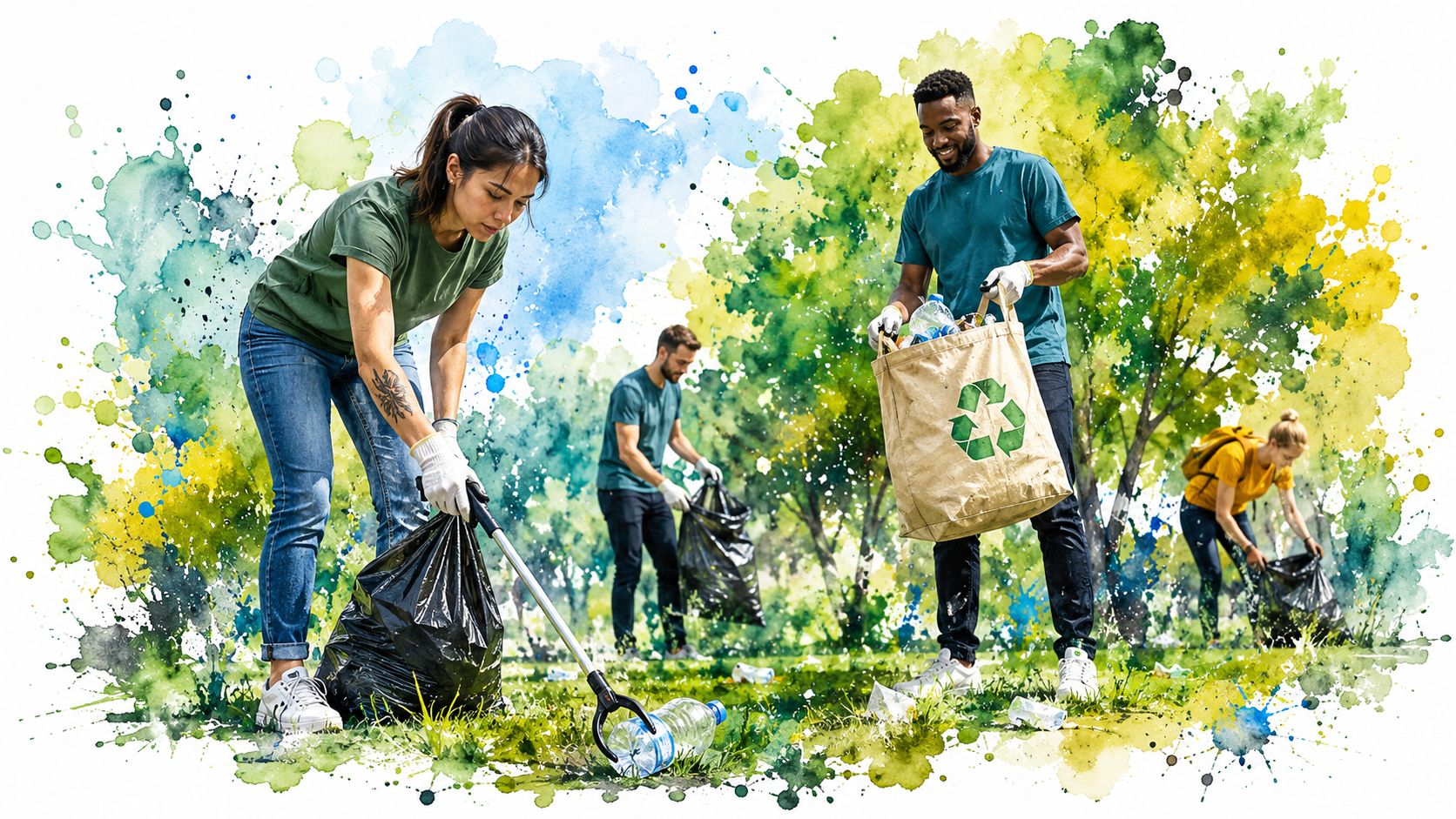
    You just have to show up.
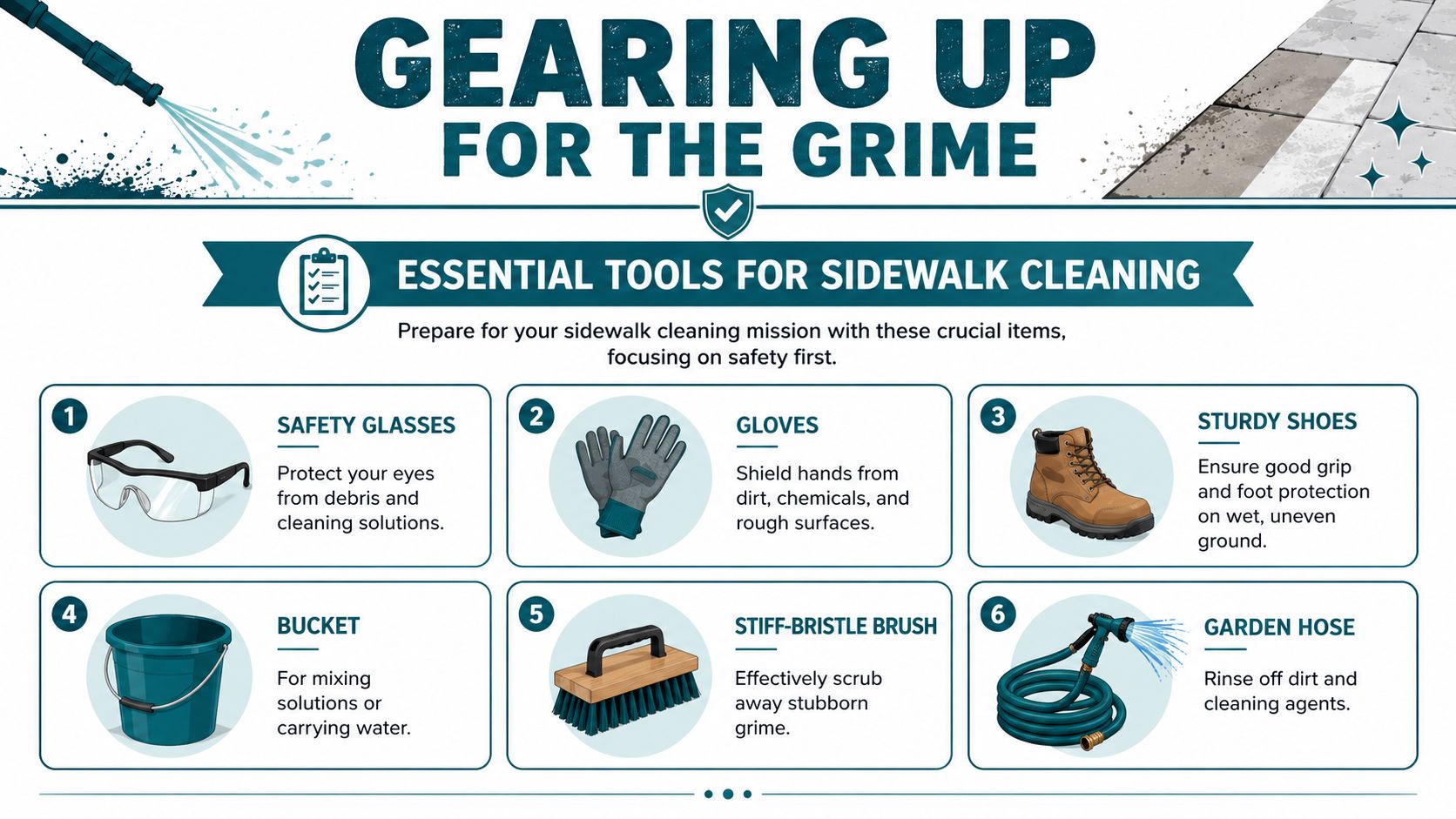
    That's why this list matters. It isn't a directory you skim and forget. It's a trailhead. The Litter Caterpillars story carries that spirit. One small act, repeated with other people, can grow into a habit, a community, even a new identity. You start by grabbing a picker or pulling invasive plants. Then one day you notice you've become the person who says yes to hard mornings, fresh air, and work that leaves something real behind.

    If your life feels cramped right now, go outside and help somewhere real. Let the weather be annoying. Let your legs ache. Let your phone stay in your pocket for a few hours.

    You may come home with dirty shoes and a clearer head. You may come home trusting yourself more. Sometimes that's where the whole adventure begins.