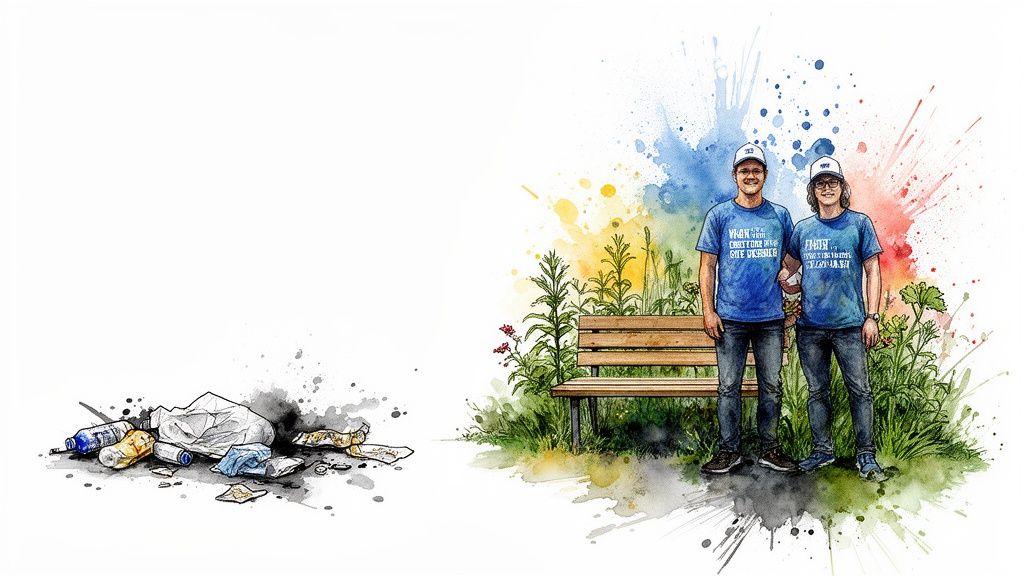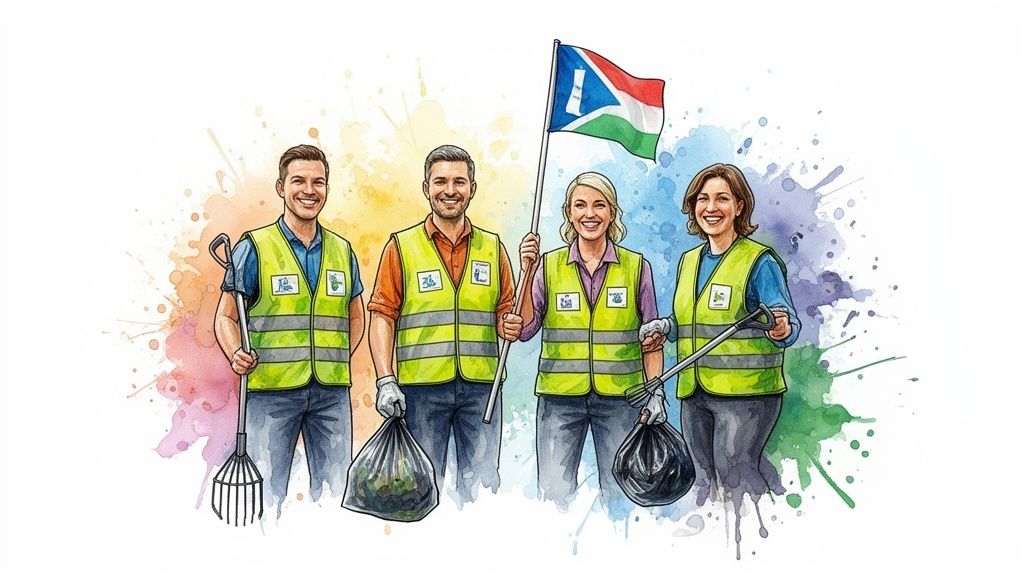

The first step feels like a leap of faith, but it’s surprisingly simple: you have to show up somewhere new, on purpose. That’s it. That’s the entire secret. The whole winding road from stranger to friend is paved with shared moments, with the intentional act of putting yourself in the same room with the same people, over and over again. It’s how you transform a cold map of unfamiliar streets into a place that finally feels like home.
Why This Adventure Feels So Damn Hard
Moving to a new city like Chicago is supposed to be this grand, cinematic montage, isn't it? You cram your entire existence into cardboard boxes, a current of excitement buzzing under your skin for the glittering skyline, the new job, the blank-slate beginning.
But then, the quiet arrives. An uninvited guest. It’s the echo in your empty apartment on a Friday night. It’s the ocean of anonymous faces flowing past you on the train. Suddenly, that grand "adventure" begins to feel a lot more like simple, stark solitude.
If this is you, you’re not failing. Not even close. Forging friendships as an adult is just plain difficult. The built-in social scaffolding we had in school—orientation week, dorm life, those mandatory group projects we all complained about—has been dismantled. We're left to navigate the wilderness without a map.
The Campfire Analogy
Building a social circle from scratch is like trying to start a campfire in a cold, steady drizzle. You have the spark, that innate human desire for warmth and connection, but the world around you feels damp. Unresponsive. Every unanswered text, every solo weekend, feels like another wet log tossed onto the pile, making it harder and harder to coax a real flame into existence.
This isn’t a personal failing; it’s a modern phenomenon. The architecture of our lives has changed, and with it, the very mechanics of how we connect. The truth is, millions of people are in your exact same boat. In the US, about 27–30 million people move every year, a huge number of them landing in totally new cities, blinking in the unfamiliar light.
Yet, our collective muscle for friendship is atrophying. Surveys reveal a startling trend: the share of adults with no close friends has quadrupled since 1990. Meanwhile, Americans now spend a mere 4 hours per week with friends, a precipitous drop from over 6.5 hours in the past. If this stings with familiarity, you can discover more about this friendship recession and the lost art of connecting.
Shifting Your Mindset
So, what does this mean for you, standing in the middle of a bustling new city feeling utterly alone? It means passively hoping for connection is like waiting for rain in a desert. The strategy has to change from passive to active.
The data itself points to a clear path forward:
- About 35% of people meet friends right in their neighborhood.
- Around 40% connect through the branches of existing friendships.
- A crucial 19% find their people through clubs or organizations.
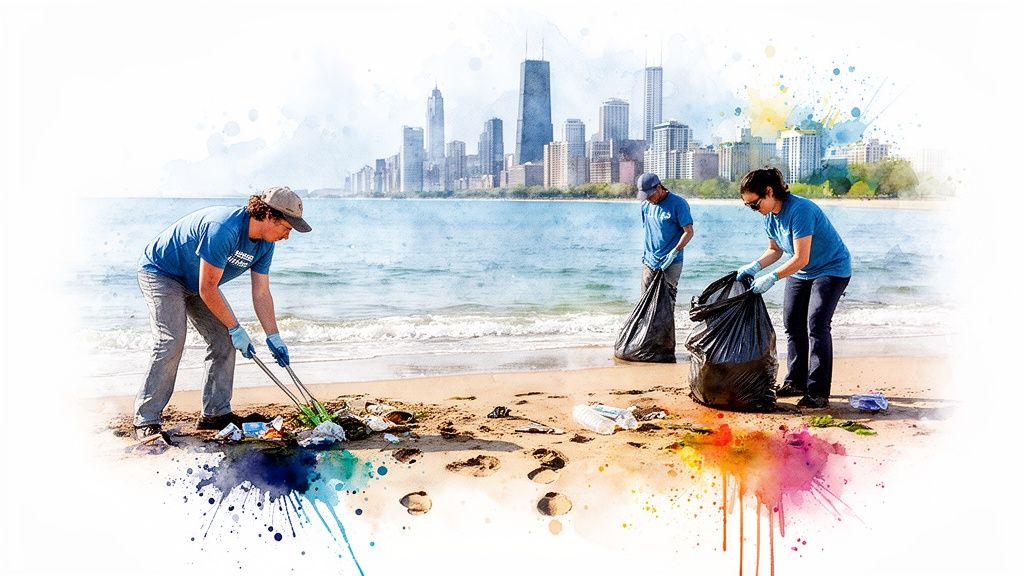
That last one? That’s where the magic is hidden. You have to intentionally embed yourself in groups that revolve around a shared purpose. Think of a weekly cleanup crew that meets across all 50 of Chicago's wards, a book club wrestling with the same story, or a sports league striving for a common goal. This is how you plug directly into the most reliable circuit for building a new social life.
It creates the perfect conditions for that soggy campfire to finally roar to life, turning the cold isolation into a warm, crackling community.
Find Your People Through a Shared Purpose
Real friendships, the kind with deep roots, aren't constructed from the flimsy material of small talk. They are forged in the trenches of shared experiences, built while working side-by-side with people who genuinely care about the same things you do.
So, instead of just showing up to another random happy hour, think about finding a mission.
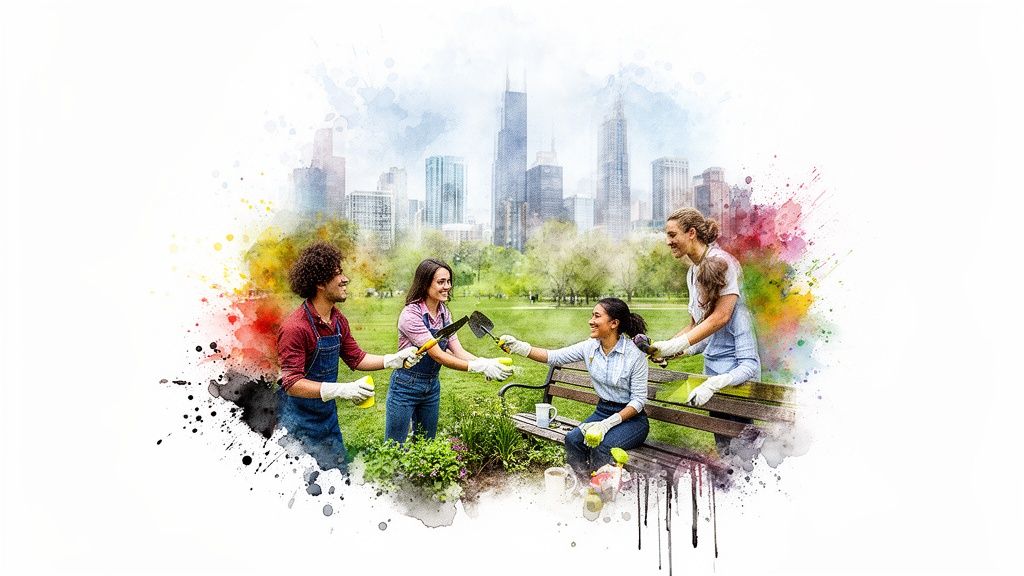
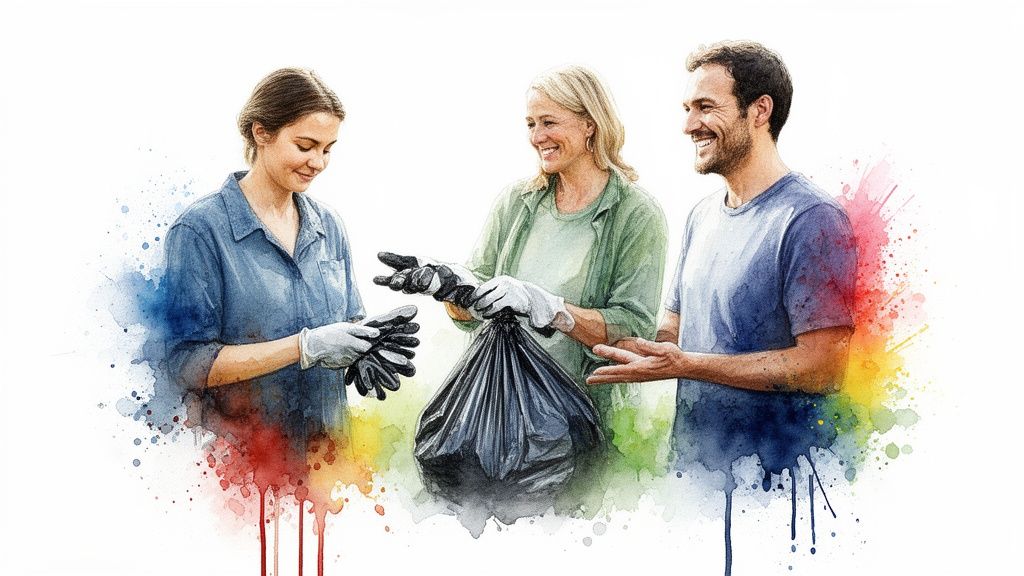
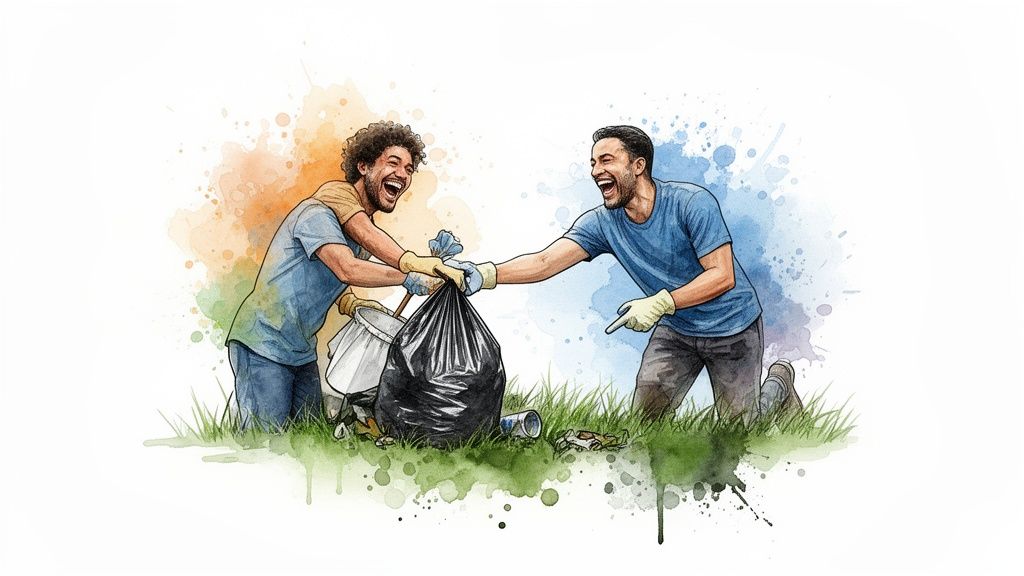
Imagine this: you join a crew to clean up a neglected park on a Saturday morning. You're both picking up discarded coffee cups, you share a laugh over a bizarre piece of trash, and suddenly, you’re not just strangers anymore. You’re teammates. This is the simple, profound alchemy of a shared purpose.
Why a Mission Matters More Than a Mixer
Activities built around a common goal create a low-pressure greenhouse where connection just happens. You're not there with the slightly desperate, awkward goal of "making friends." You’re there to do something that matters, and friendship becomes the beautiful byproduct of that shared effort.
Volunteering, for example, acts as a natural filter. It attracts people who are kind, community-minded, and willing to give their time to something beyond themselves. These are precisely the qualities you want in a new friend.
It’s an incredible shortcut. You get to bypass all the superficial interview questions and see someone’s character in action. You see who shows up when it’s cold, who encourages others when the work gets tough, and who finds joy in the simple act of contribution. These are the real, solid building blocks of trust.
"A shared purpose is like a compass for your social life. When you follow what you care about, it doesn't just lead you to interesting activities; it guides you to interesting people who are walking the same path."
The Data Backs It Up
This isn't just a feel-good idea—it’s a strategically sound approach. National surveys show that about 19–21% of Americans met a close friend through an organization or club, which is exactly what a recurring volunteer group feels like.
In fact, over 50% of people who made a new friend last year did it through in-person situations like work, school, or organizations. In contrast, only 5–8% met online. Committing to a visible, city-wide effort like a cleanup in Chicago puts you right in the heart of where real, in-person ties are being built.
If you're wondering where to start, check out our guide on how to find volunteer work that actually clicks with your passions. This approach works because you’re joining the small group of people who are actively forming friendships through organizations—in a city already known for its strong sense of community. You can discover more insights about the state of American friendship here.
The Unspoken Power of Just Showing Up
A great conversation over coffee is a spark. But it’s not the fire. The fire is built through the quiet, unglamorous act of just showing up, week after week after week.
This is the exact point where most people’s efforts to make friends in a new city completely fall apart. Not in the first hello, but in the silent follow-through.
Think of it like tending a garden. You can't just toss a seed on the ground, walk away, and hope a beautiful flower appears. It needs consistent watering, patient attention. Showing up to your book club, your volunteer group, your running club—that's the watering. It's the simple, powerful signal that communicates you’re invested, you’re reliable, you’re here to stay.
I’ll never forget the story a friend told me about her volunteer group that met during a freak Chicago blizzard. The entire city had ground to a halt. Roads were impassable. Yet, a handful of them still showed up, huddled together in the shared absurdity of it all. That moment of collective struggle became a foundational memory, a story they would retell for years. It deepened their bond in a way a sunny, easy day never could.
The Art of a Steady Presence
When you're new and the loneliness bites, the urge to try everything at once is a powerful siren song. A book club one week, a pottery class the next, a hiking group after that. But this "group-hopping" rarely leads to anything deep. You just become a familiar face to many but a true friend to none.
The real move is to commit. Pick one or two core activities and just stick with them for a few months. This steady, reliable presence does something magical: it moves you from being a guest in the room to being part of the fabric of the group.
This consistency is especially vital for adults. Research shows that as we get older, our routines become more rigid, and we take longer to grant our trust to new people. While little kids form bonds in an instant on the playground, we're more like cautious teenagers, sticking to the friends we already have.
In fact, a staggering 22% of Americans say it’s been five years or more since they last made a new friend. Passively waiting for serendipity in a new city will likely land you in that exact same spot. You can learn more about how friendship patterns change as we age.
From Familiar Faces to Your People
By repeatedly showing up, you create the high-frequency contact that friendship needs to germinate and grow. It’s the slow, steady process that transforms "that person from the cleanup group" into the friend who checks in when you’re sick.
It’s about choosing an active strategy over a passive one. So many people wait for friendship to happen to them, but the ones who succeed are the ones who go out and build it, brick by patient brick.
Friendship Building Methods: A Comparison
| Approach | Passive Method (Low Success) | Active Method (High Success) |
|---|---|---|
| Consistency | Hops between different groups and events weekly. | Commits to 1-2 recurring activities for several months. |
| Effort | Waits for others to initiate conversation and plans. | Actively participates and becomes a reliable presence. |
| Outcome | Meets many people but forms few lasting bonds. | Builds trust and familiarity, turning acquaintances into friends. |
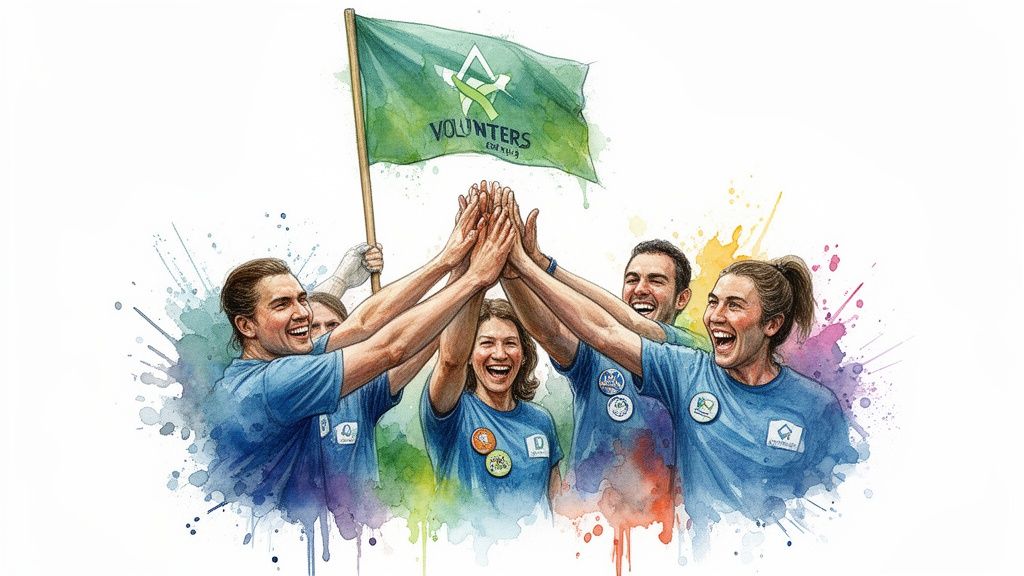
The active method isn't about being the loudest person in the room. It’s about being a quiet constant. It’s hauling trash bags in the subzero wind or sweating together in the thick July humidity. This shared effort, this simple commitment to showing up, is the raw material for building the kind of friendships that finally make a new city feel like home.
How to Turn Acquaintances Into Friends
So you did it. You found a group, you've been showing up, and now you’re starting to see the same faces every week. This is where the real work—and the real fun—begins. But it's also the chasm where a lot of us get stuck, staring at the other side.
Making the leap from a friendly "see you next week" acquaintance to a real-deal friend comes down to one small, brave move: you have to be the one to initiate.
You have to be the one to send that first text. I know, it feels like a test. A pop quiz on your own social value. But it’s not a test of your coolness or popularity; it’s a test of your courage. Every single time you put yourself out there and ask, you're planting a seed. Trust me, most people are just as nervous and hopeful as you are about taking that next step.
That fear of rejection is a monster. It whispers, "What if they say no?" "What if it's super awkward?" Let's reframe this. The "win" isn't getting a "yes." The win is in the asking. The victory is in being brave enough to try, no matter the outcome. You're showing you're interested, and that simple act is what propels a relationship forward.
From Shared Activity to Shared Lives
Here’s the thing: if you only ever see your book club friends at the monthly meeting, they'll always just be your book club friends. The goal is to move the connection outside of the place where you first met. You have to create a new, shared context for your budding friendship.
Your consistency up to this point is the launchpad that makes this next move possible.
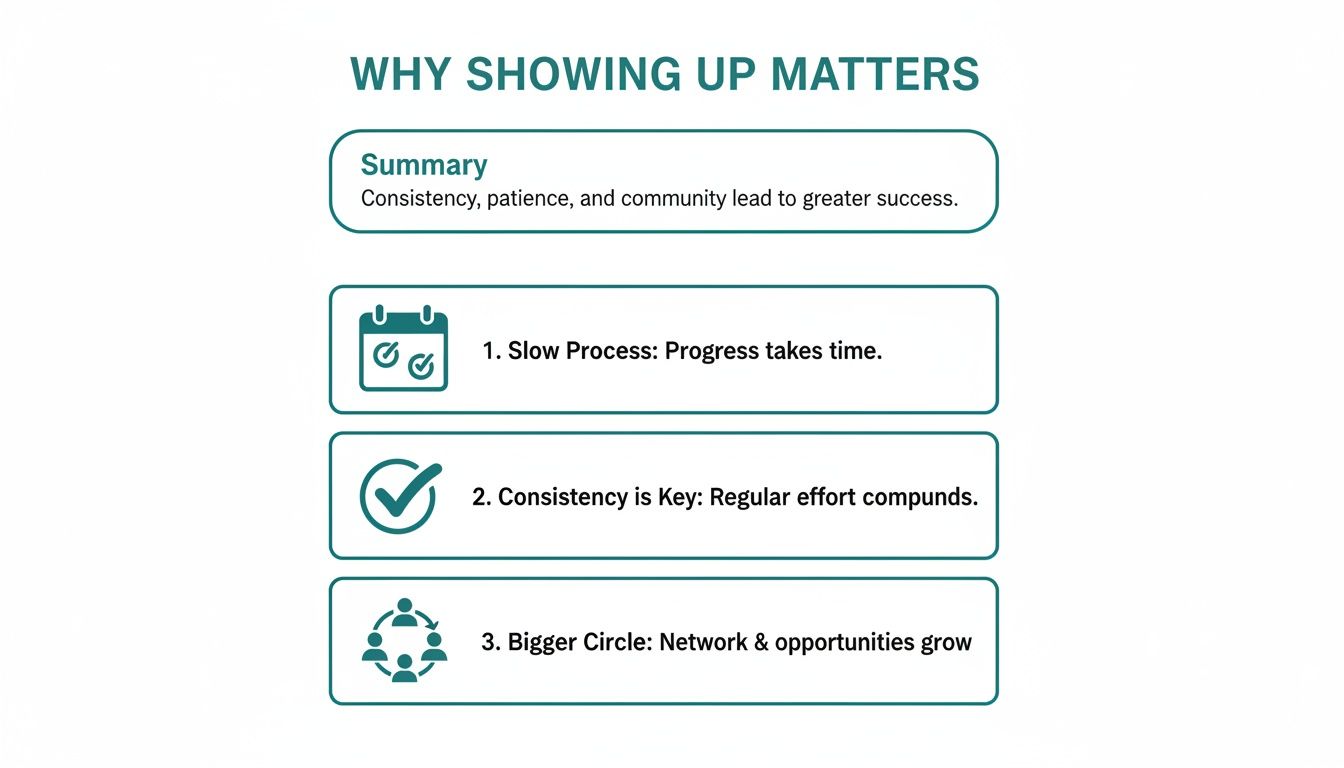
As you can see, just showing up consistently builds the foundation. Now, you’re ready to build the house on top of it.
Your Script for Taking the Leap
You don't need some grand, perfectly-planned event. Small, low-stakes invitations are your secret weapon. The whole idea is to make it casual and incredibly easy for them to say yes.
Give these a shot. They're simple, direct, and they work:
- The Group Invite: "Hey, a few of us are grabbing coffee after this, want to join?" This is my go-to. It's low-pressure because it’s not a one-on-one spotlight.
- The Callback: "I loved hearing about your hiking trips. I'm checking out a new trail next weekend if you're free." This is powerful. It demonstrates that you were actually listening and remembered something specific about them.
- The Neighborhood Connection: "You mentioned you live in Logan Square too, right? There’s this amazing taco spot I’ve been meaning to try if you’re around next week." This uses shared geography to make a get-together feel super convenient and organic.
Each of these lines is a bridge. It takes your connection from the "public square" of your group activity to a more personal space. If you're looking for more inspiration, checking out different community building activities for adults can spark some great ideas. It's all about turning a shared moment into a real friendship, one small invitation at a time.
Embracing Your New City and Your New Self
Landing in a new city feels like you've been given a blank social calendar to fill, but it’s so much bigger than that. It’s an invitation to meet a new version of yourself—someone who’s a little braver, more resilient, and deeply connected to the world around them.
This whole journey isn't just about finding people. It's about becoming someone you’re actually proud to be.
Picture your new city like a giant, unfinished sculpture, and you've just been handed the chisel. Every time you show up for your community, you’re not just carving out a spot for yourself; you’re literally shaping the city itself. When you join a group to clean up a neglected park, you're not just picking up trash. You're making a statement: "I care. I am part of this place now."
From Stranger to Stakeholder
That mindset shift—from a passive bystander to an active participant—changes everything. Suddenly, the city isn't just a backdrop anymore. It's yours. That sense of ownership is an incredibly potent force. It’s the difference between renting a life and truly building one.
By pouring your time and energy into your new home, you're also investing in yourself. You’re teaching yourself that you can show up, even when it’s uncomfortable, and proving that your actions have a tangible, visible impact.
"The friendships you build will be a direct reflection of this newfound confidence and resilience. They're not just a reward for your effort; they are the evidence of your growth."
The discomfort of being new isn't a red flag; it's the raw material for transformation. Every awkward conversation, every solo outing, every pang of uncertainty is an opportunity. It’s a chance to shed old habits and step into a more courageous version of yourself.
The Real Reward of Showing Up
The real goal here isn’t just to have people to call on a Friday night. It's about building a life that feels meaningful from the inside out. The kindness you show your city, you learn to show yourself. The consistency you bring to a volunteer group, you learn to bring to your own goals.
The friendships that grow from this kind of fertile ground are just different. They’re rooted in shared values, mutual respect, and the quiet understanding that comes from working side-by-side on something bigger than yourselves.
- You learn resilience when you show up on a cold morning you’d rather spend in bed.
- You build confidence every time you start a conversation with a stranger.
- You discover kindness by doing something for a community that is now yours.
This entire process is about more than just finding your people. It’s about becoming one of them. It's about looking at the map of intimidating streets and finally seeing a home, filled with faces you know and stories you helped write. If you're ready to dive deeper, exploring different community engagement strategies can give you a powerful roadmap.
Questions Everyone Asks About Making Friends
Trying to build a social circle in a new city feels a lot like fumbling through a foreign language. You know what you want to connect about, but everything feels awkward and clunky at first. That's totally normal. Here are a few things people always wonder about.
How Long Does This Actually Take?
Let's be real: there’s no magic number here. Think in terms of seasons, not weeks. Building the kind of trust and inside jokes that friendships are made of takes real, consistent effort. It's a slow burn, not a house fire.
Commit to one weekly group for at least 3-6 months. That's a realistic runway. It gives you enough time to get past the initial "hello, what do you do?" phase and lets some real roots grow. It's way slower than it was in school or college, and that’s okay. The goal isn't speed; it's finding your people.
What if I'm an Introvert?
If the thought of non-stop socializing makes you want to curl up and hide, I get it. The trick is to focus on activity-based groups where the shared task is the main event, not the conversation.
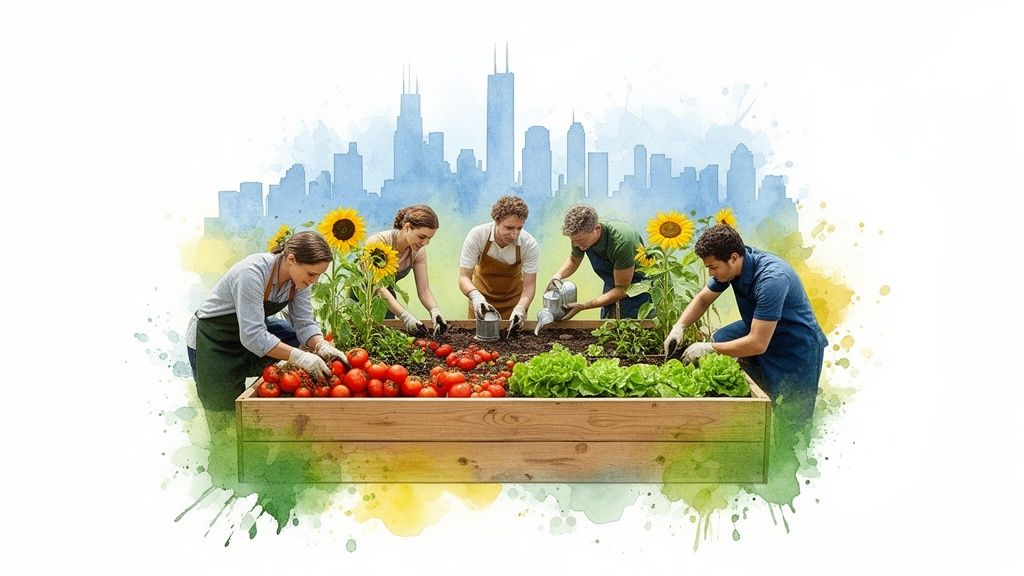
When you're all focused on gardening, cleaning up a park, or building something, the pressure to be "on" just melts away. You can chat about the task at hand, have short, natural conversations, and then step back when your social battery is low—without anyone thinking you're being rude. You'll leave feeling energized by what you accomplished together, not drained by small talk. A shared purpose is an introvert's secret weapon.
"Reframe the act of asking as a victory in itself—it's an act of courage. One 'no' is just a data point, not a verdict on your worth. Consistency and bravery will always win out over time."
What if They Say No?
Rejection stings. It just does. But it's almost never as personal as it feels in that gut-punch moment. People have messy, complicated lives. A "no" is usually about their own chaotic schedule, a bad day, or a prior commitment they can't break. It's about their life, not about you.
Don't let it throw you off your game. Keep showing up. Keep being that friendly, reliable person in the group. And then, extend another small, low-pressure invitation to someone else. You can even try asking the same person again in a few weeks! Each time you ask, you're practicing courage. You're building resilience. And you're getting one step closer to the "yes" that's definitely on its way.
At Litter Caterpillars, we know that showing up for your city is the best way to find your people. Our weekly cleanups are about so much more than trash. They’re about building real connections, practicing bravery, and creating a community where everyone belongs. Come see how picking up litter can completely change your social life.
Learn more and sign up for a weekend event at https://www.littercaterpillars.com.