

Plogging is jogging or walking while picking up litter, and the word blends the Swedish phrase plocka upp, meaning “pick up,” with the English word jogging. Say you're heading out along a familiar street and spot a plastic bottle by the curb: you slow down, collect it, and carry on.
The route changes in small ways. You jog when the sidewalk's clear, pause to pick up a wrapper, then find your rhythm again. By the time you get home, you've moved your body and left the path a little cleaner. You don't need a race, special gear, or a perfect plan to try it.
Plogging Defined in Plain Words
Plogging combines jogging with picking up litter. The name joins the Swedish phrase plocka upp, meaning “pick up,” with the English word *jogging,” as Merriam-Webster's explanation of plogging describes.
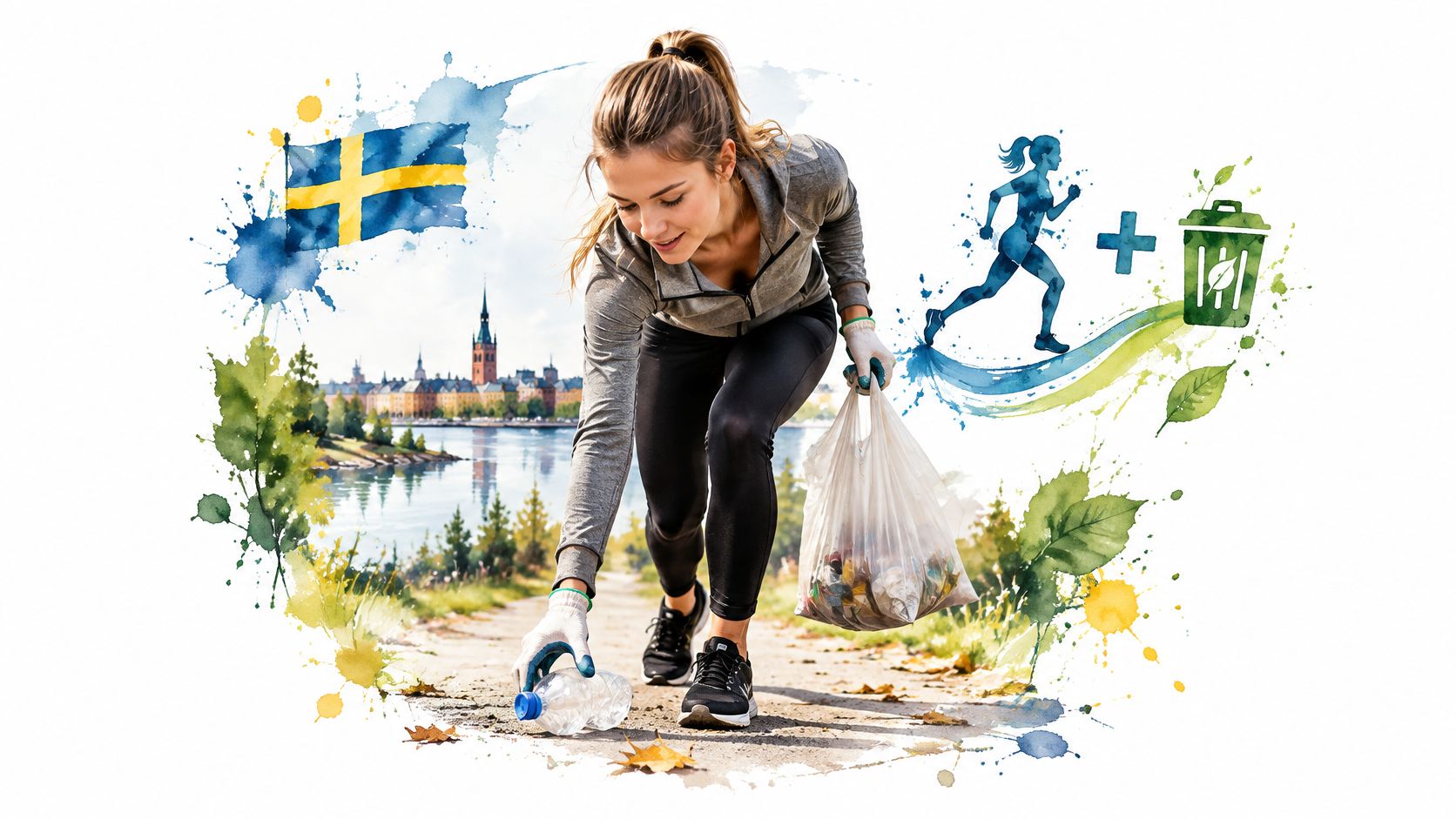
Think of your route as a moving cleanup. You run while the path is clear, slow down when you see a bottle or wrapper, crouch to grab it, drop it into a bag, and keep going. The pickup is part of the trip, not a separate stop that turns the outing into a stationary park cleanup.
That stop-and-go rhythm gives the activity its own feel. Your pace breaks for a few seconds as you bend or squat, then you set off again. A jog becomes a string of short movements stitched together along the route.
The strict definition uses jogging, but you don't have to run to take part. Walkers and hikers can collect litter as they go, too. People sometimes call the walking version plalking and the cycling version pliking.
If you move and pick up litter during the same outing, you're plogging.
That simple test works on a sidewalk, park path, or familiar neighborhood loop. Choose a pace that feels comfortable, carry a bag, and treat each safe pickup as one more part of your route.
Where Plogging Started and How It Spread
Say you're heading along a familiar street and spot litter on the way. Erik Ahlström, a Swedish trail runner, began picking up trash during his regular runs. Accounts place those early pickups in different settings: Reuters' report on plogging places the practice's start in Åre, a Swedish town known for Alpine skiing events, while other accounts describe Ahlström noticing trash on his Stockholm commute and adding pickups to his runs.
The route was ordinary. The habit caught on. Other people joined Ahlström, and organized plogging runs spread within Sweden before the idea traveled beyond Scandinavia as concern about plastic pollution grew.
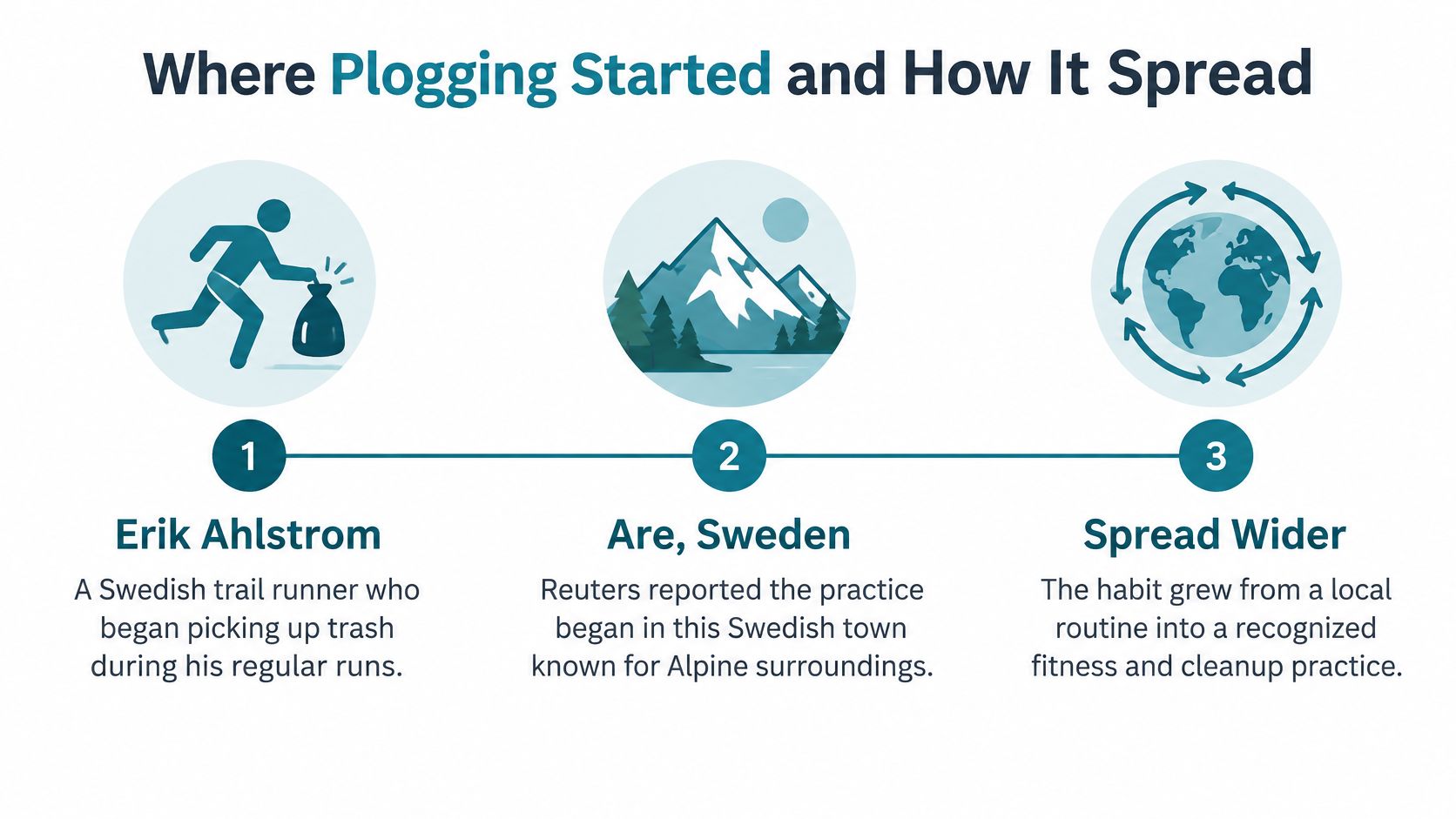
Plogging has since reached people around the world. In 2024, the American Marketing Association's account of plogging described an estimate of 2 million people plogging daily across more than 100 countries. The estimate gives a sense of the activity's reach.
A familiar street can be the starting point. Add a bag to your next outing, and a routine route becomes part of a wider habit.
Here's a short video about the activity:
How to Plog on Your Own Route
You don't need a race, a venue, or a fixed course to start. The United Nations Environment Programme's guide to plogging describes how an individual habit can grow into group outings, but the first version can be as simple as a walk on a street you already know.
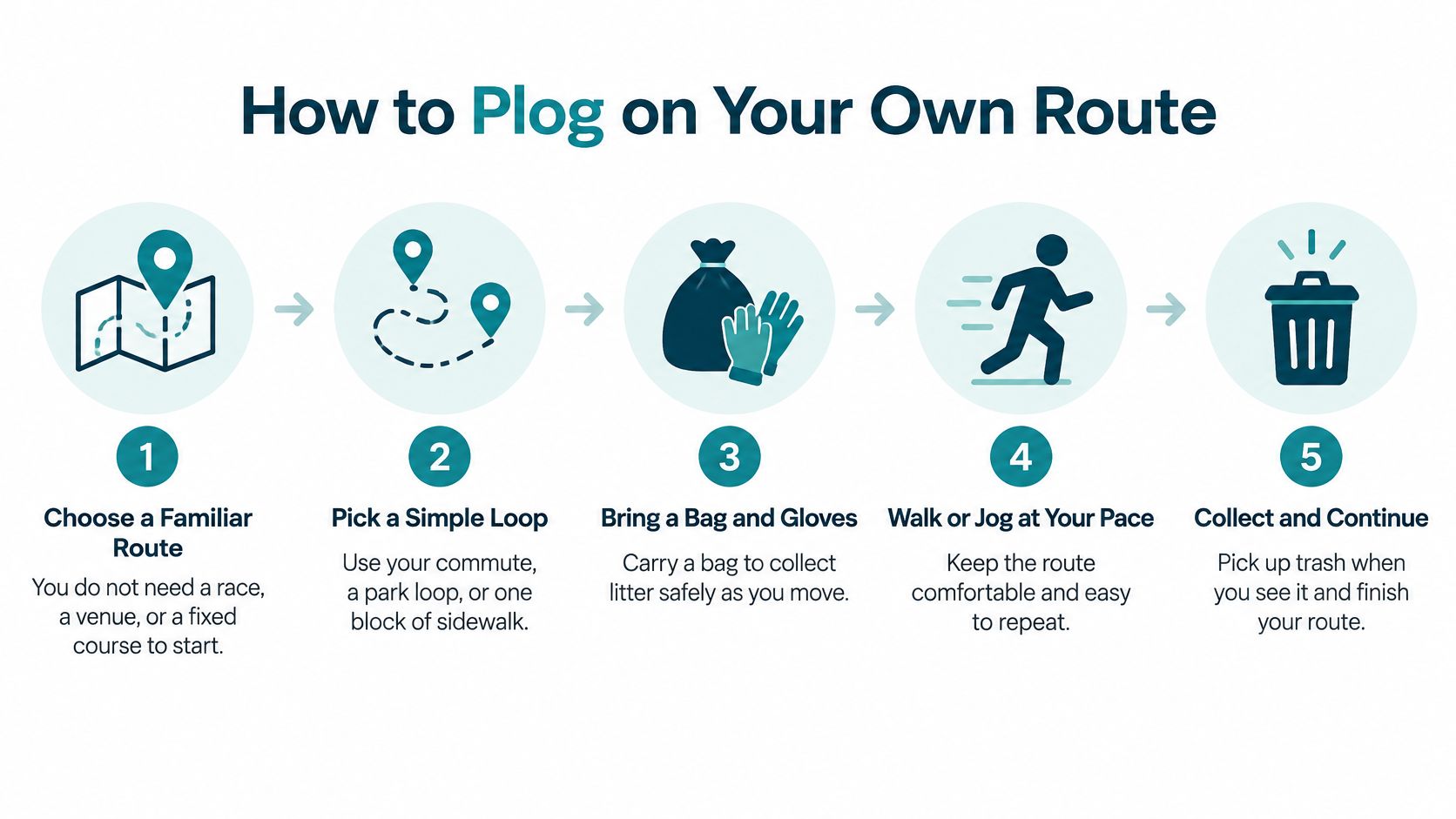
Choose a route you know well. Use your commute, a park loop, or one block of sidewalk. Familiar turns let you watch for traffic and uneven ground rather than figuring out where to go.
Bring a bag. A reusable shopping bag or a small cleanup bag gives you somewhere to put what you collect. Keep it manageable so it doesn't swing into your legs as you move.
Start at an easy pace. Walk or jog at a speed that lets you notice what's on the ground. You can pick up litter without rushing or turning the route into a race.
Slow down for a safe pickup. When you spot a bottle, can, or wrapper, pause and bend or squat to collect it. A brief change in pace gives you time to check your footing and handle the item carefully.
Bag it, keep moving, and finish at a bin. Place the item in your bag and continue along your route. Take the filled bag to a proper bin at the end rather than leaving it beside the curb.
Each pickup changes the mechanics of your outing. You stop, bend, squat, reach, and carry, then settle back into a walk or jog. The result can feel like a set of brief body-weight movements stitched into a route. Start with a short outing so you can learn how the bag feels and choose a pace you'll want to repeat.
Safety and Gear for Your First Plog
Bring a bag or bucket, gloves you trust, comfortable shoes, water, and a phone tucked securely in a pocket. Gloves help protect your hands from sharp edges and dirty surfaces, but they don't make every object safe to handle. If you want a small snack before heading out, this guide to what to snack on before running can help you choose something that feels right for your routine.
Keep the route and the pickups simple. Stay on sidewalks where you can, and don't reach into a pile, hole, or space you can't see. Leave broken glass, needles, heavy objects, and car parts for a city or group pickup with the right equipment. You can find more practical guidance in this guide to picking up trash safely.
Leave it if you can't handle it safely. A plogging route isn't the place to test whether an unknown object is harmless.
Watch for traffic as carefully as you watch for litter. If you must walk along a road without a sidewalk, keep well away from vehicles and face oncoming traffic; choose another route if you can't do that safely. Wear bright clothing when visibility is low, such as around dawn or dusk.
Take the full bag to a bin when you finish. Don't leave it on the curb, where it can spill or block the way. Warm up gently before you start, drink water, and stop if you feel dizzy or experience sharp pain.
Save this checklist before you leave:
- Pack: Bag, gloves, water, phone, and comfortable shoes.
- Choose: A familiar route away from busy traffic.
- Skip: Anything sharp, heavy, hidden, or unsafe to handle.
- Finish: Carry the bag to a bin, then check how you feel.
Health and Environmental Benefits of Plogging
Say you have a familiar street and a free half hour tomorrow. A brisk walk with a bag gives you a chance to move and clear litter from the route at the same time.
| Activity | Intensity | Reference value | What it means for you |
|---|---|---|---|
| Walking with litter pickup | Moderate | About 4 to 5 METs | Counts toward the 150 minutes of moderate activity WHO advises each week |
| Running or cycling with litter pickup | Vigorous | More than 6 METs | Reaches the vigorous range during pickup runs |
A MET compares an activity's effort with sitting still. A 2024 review of cleanup activities places walking while picking up litter at about 4 to 5 METs, within the moderate-intensity range. Running or cycling while collecting litter can exceed 6 METs, in the vigorous range.
The review also references the World Health Organization's recommendation of at least 150 minutes of moderate physical activity per week. A plogging walk can count toward that total, at a pace that suits your fitness. The rhythm differs from an uninterrupted jog: walk, bend, squat, reach, carry, then pick up the pace again.
The environmental benefit is visible along the route. Each safe pickup removes litter from the street or path. In a six-week intervention with 143 students, researchers reported significant improvements in environmental awareness and motivation among participants who took part in plogging, according to the published study record. The finding offers an early indication, not a promise of the same results for every group or adult population.
Many people make litter pickup a regular part of outdoor walks. Starting with a manageable route can help turn an occasional outing into a routine. For ideas on how to make walking a daily habit, consider what makes a walk easy to repeat. If you'd rather join others, read about volunteering and health benefits.
Who Plogs and Why They Keep Coming Back
Kevin Tao started Litter Caterpillars because he struggled to clean and organize his things. His living space had become messy, and he felt that mess spilling into the rest of his life. Starting with trash outdoors gave him a different problem to work on: one piece at a time, without the personal memories attached to things at home.
The first pickup had only three people. They got caught in a spring hailstorm, huddled under a tree as their rideshares kept canceling. Tao realized that cleaning other people's messes felt much easier than cleaning up his own. The group's logo represents that first pickup, with its three volunteers and unexpectedly rough weather.
That scene gives a clue to the mix of people you might meet. A Chicago resident may want a cleaner block; an environmental volunteer may want a hands-on way to help; a student or young professional may be looking for a weekend service activity. Someone new to the city may want to meet people, while an adventurous neighbor may want to explore parts of Chicago they haven't seen.
People keep returning for simple, visible reasons. You can look down the street and see what changed. You can share the work with a crew, then head home knowing everyone carried a piece of the task. Over time, familiar faces and regular mornings can turn a cleanup into a social routine.
Plogging can also prompt useful conversations while you walk: which items appear again and again, where a route needs attention, or what kind of pickup requires a city crew. In a student intervention involving 143 participants over six weeks, researchers reported improved environmental awareness and motivation among those who plogged. The finding is early evidence, but the activity gives people a direct way to connect a visible problem with an action they can take.
Which part sounds most like you: the neighborhood cleanup, the outdoor exercise, the chance to meet people, or the urge to explore a new route?
Start Plogging in Chicago This Weekend
Litter Caterpillars holds events on weekend mornings and works across Chicago. The group has picked up trash in all 50 wards, including areas people were told to stay away from. Check the weekend volunteer event schedule for current meeting spots and times.
Joining is straightforward:
- Pick a weekend morning. Choose an event from the schedule and sign up.
- Bring the basics. Wear comfortable shoes and bring gloves and water.
- Walk or jog your route. Follow the assigned route and bag safe litter as you go.
- Stay to wrap up. Meet the crew at the end and bring your collected bags to the drop-off point.
You can also join through Meetup, Pie, an Instagram group chat, or a planning group chat. We put volunteer safety first, and we never ask volunteers for donations.
You don't need to wait for a perfect day or a special event to try plogging. Step outside this weekend, pick a familiar route, bring a bag, and see how it feels to clean up with a crew.
Litter Caterpillars brings Chicago volunteers together for weekend trash pickups, where you can turn a familiar walk or jog into a shared cleanup. Visit Litter Caterpillars to find a weekend event and join the crew.