
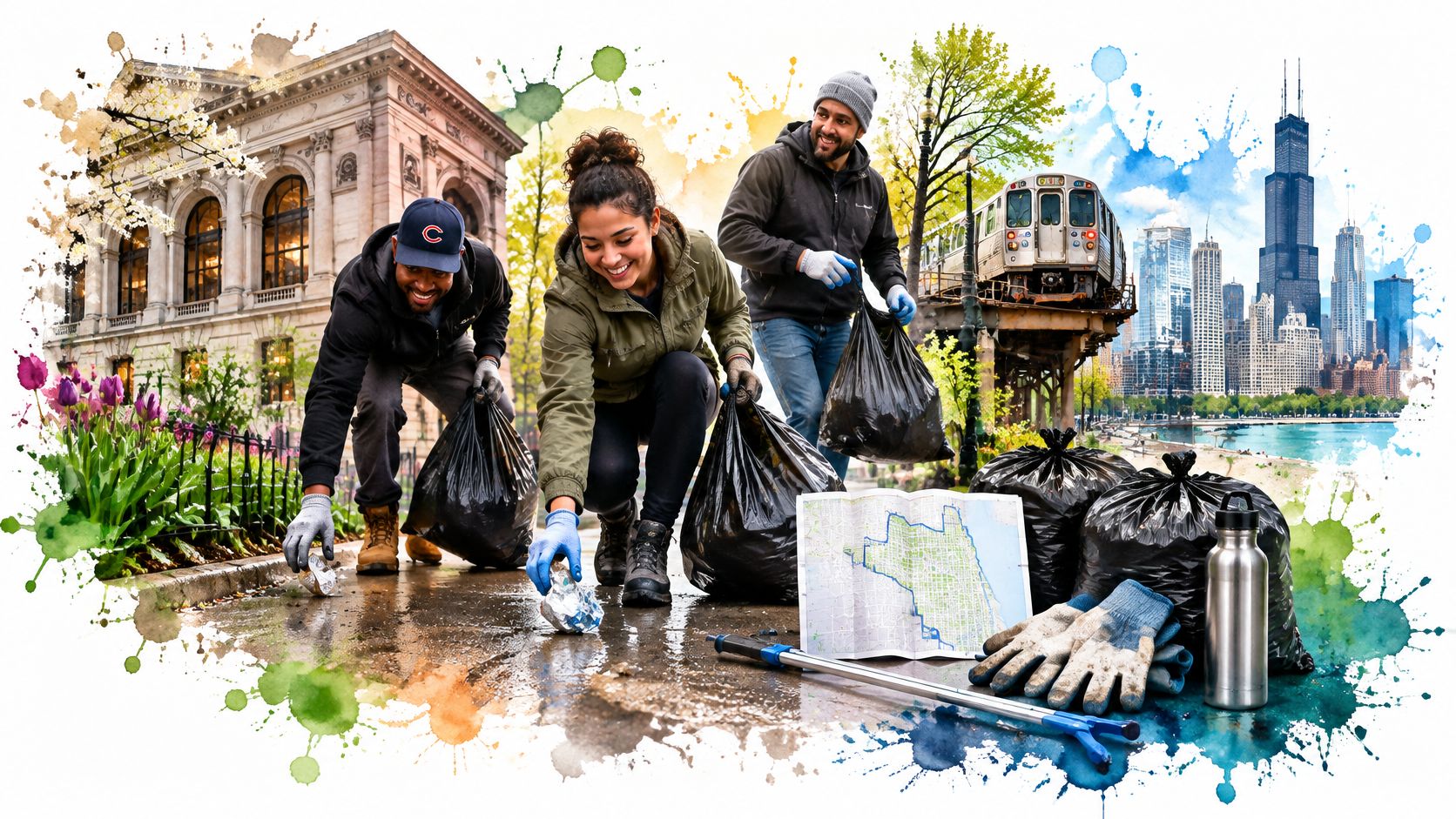
Say you're on a wet April sidewalk, three people already have bags, and you're still holding your coffee. You want to help, but you'd like someone to tell you where to start and what to leave alone.
Your Spring Cleanup Week on the Chicago Map
I mean a short spring stretch, not a forever pledge. You choose a manageable patch of public ground, arrange the disposal handoff, and give your hands a clear job.
Start on Monday with geography. Chicago has 50 wards, each with an elected alderperson, and the city's ward maps come in groups of 1–10, 11–20, 21–30, 31–40, and 41–50. You can find firehouses, libraries, police stations, schools, post offices, CTA rail lines, parks, and cemeteries on those maps.
Choose a landmark you can explain without waving both arms. A library entrance works better than somewhere near the big intersection. Check the current city map before you publish your meeting spot, because ward boundaries can change after a census.
Give Each Day a Small Job
By Tuesday, choose a route you already walk. You'll know where the sidewalk narrows, where cars enter an alley, and where your group can gather without blocking anyone.
Wednesday belongs to preparation. Thursday belongs to the invitation. On Friday, read the leave-it list before anyone starts treating a grabber like permission to touch everything.
A Chicago spring cleanup week at a glance
| Day | Your job | Chicago detail |
|---|---|---|
| Monday | Open the ward maps and pick one ward | Use the map groups above; check current boundaries before posting |
| Tuesday | Choose outdoor public ground you already visit | Pick a sidewalk, right-of-way, or park near a mapped library, school, park, or CTA stop |
| Wednesday | Pack gloves, sturdy shoes, water, and a first-aid plan | Watch the forecast for hail, heat, lightning, or flooding |
| Thursday | Invite one friend and name the meetup landmark | Choose a weekend morning and make the time commitment clear |
| Friday | Read the leave-it list out loud | Leave needles, chemicals, tires, and dead animals untouched; avoid swift water and private property |
| Saturday | Pick up, sort what the site accepts, check out | Keep the public site bounded and confirm the bag-disposal handoff |
| Sunday | Log bags or weight, item types, and a return date | Put a 30-day walk-back on your calendar to check whether the block refills |
Treat that return date as your own planning choice, not a city requirement. You're making an appointment to look again.
Pick a Place You Can Return To
Use our Northeastern Illinois cleanup map while you narrow your options. Then write down the actual meeting landmark, route edges, and person responsible for disposal.
We're the first and only trash pickup group to clean up all 50 wards of Chicago, including the ones people were told to stay away from. That experience doesn't turn every location into an appropriate volunteer route. You still choose safe access and a site your team can manage.
The table is enough to begin this week. Circle a ward, name a landmark, and send your friend a specific invitation.
The Stuff You Photograph and Leave
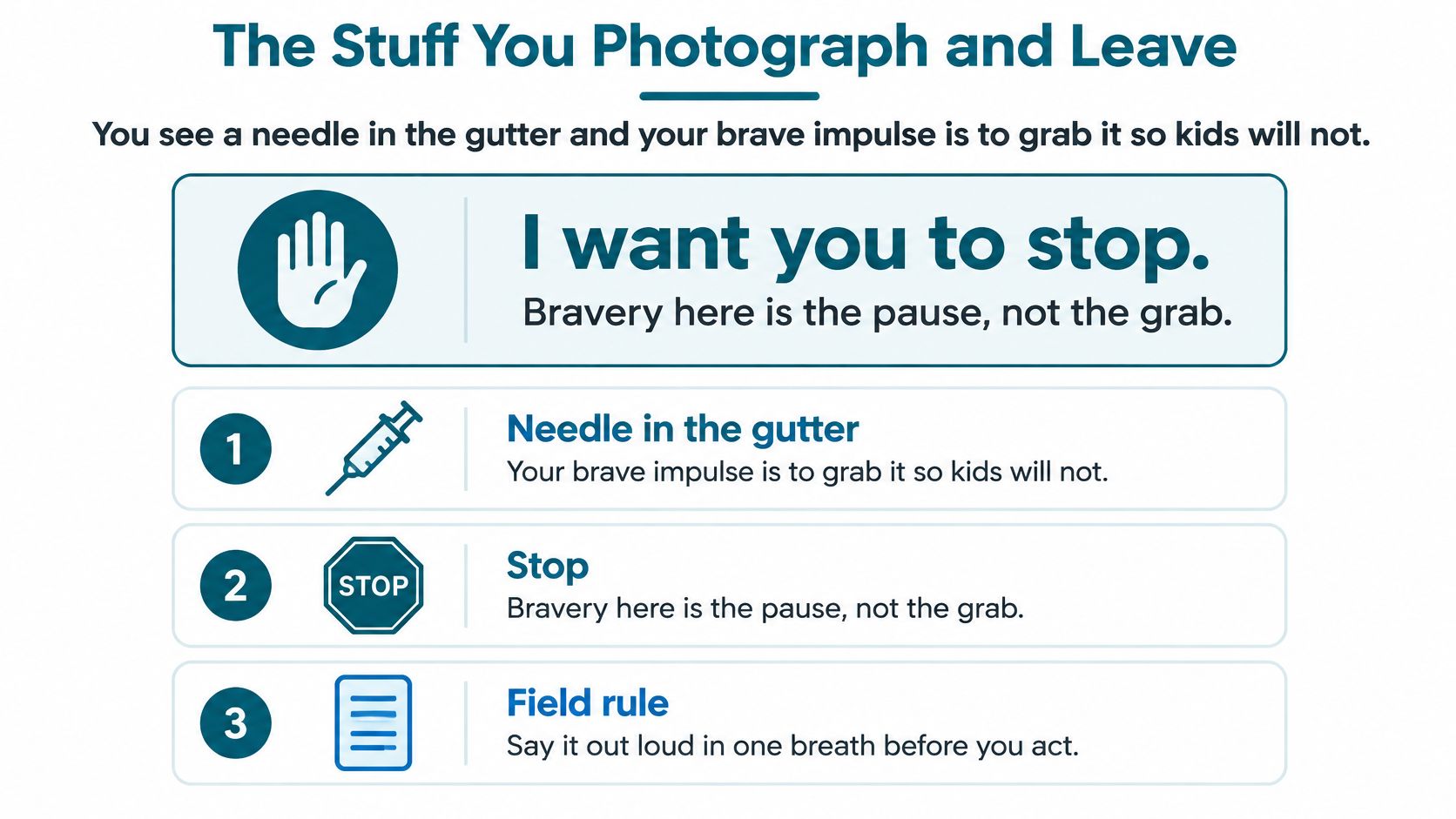
You see a needle in the gutter. Your first impulse is to grab it before a child does.
I want you to stop. Bravery here is the pause, not the grab. Gloves and good intentions don't make an unknown object safe.
Keep this warning where you can see it before the pickup.
Make the Decision Before You Reach
The EPA's Escaped Trash Assessment Protocol calls for trained leaders, a volunteer safety plan, first-aid availability, protective gear, weather monitoring, and a site assessment. It directs volunteers away from hazardous materials, unstable banks, swift water, and objects they can't handle safely.
My field rule is simple: When you can't identify an item or collect it safely, leave it, record its location from a safe distance, and tell the lead.
What you leave and who you tell
| You find | You do | Next hands |
|---|---|---|
| Needles or other sharps | Stop, photograph and geotag from a safe position, don't touch | Safety lead and the municipal sharps service |
| Chemicals, sealed containers, suspected asbestos, ammunition | Keep people back and isolate the spot without approaching | Proper city authority |
| Large broken glass, heavy objects, submerged objects | Mark the location in your notes and skip them | A crew with the right gear |
| Tires | Count and note the spot; don't haul alone | Bulk-waste or dumping-report service |
| Dead animals | Leave them and step back | Animal control |
| Unstable banks, swift water, private property | Stay off and reroute the team | Safety lead chooses a public edge |
| Live wires | Stop work nearby and keep away | Safety lead reports to the proper city authority |
| Lightning, hail, flooding, unsafe traffic | Anyone calls stop-work | Lead ends or moves the pickup safely |
Don't walk closer to improve a photograph. Don't touch a suspicious container to read its label. Get permission before entering private property, even when you can see an easy shortcut.
Give the Lead Useful Information
Record the nearest address or landmark and describe what you can see without guessing at the contents. If you use a shared photo-reporting form, EventUploader's QR code signage tips for hosts can help you make the upload instructions readable at the meeting point. Keep sensitive location reports with the lead rather than encouraging people to approach a hazard.
The lead should choose safe parking, carry accessible first aid, and record near misses alongside collected waste.
Stop-work rule: You don't need seniority to say the conditions feel unsafe.
There's plenty to collect without gambling on the gutter. The 2020 Keep America Beautiful National Litter Study summary estimates nearly 50 billion litter items along U.S. roads and waterways, with more than 2,000 items per mile, and identifies cigarette butts as the most prevalent item. Care about the drain. Keep your hands intact.
How You Pack and Show Up on Saturday
You can rehearse the morning on the train. Pack, check, meet, sign in, take your tools, collect, hand off, check out.
Before you leave, look over the gear and the sky.
Before You Touch a Bag
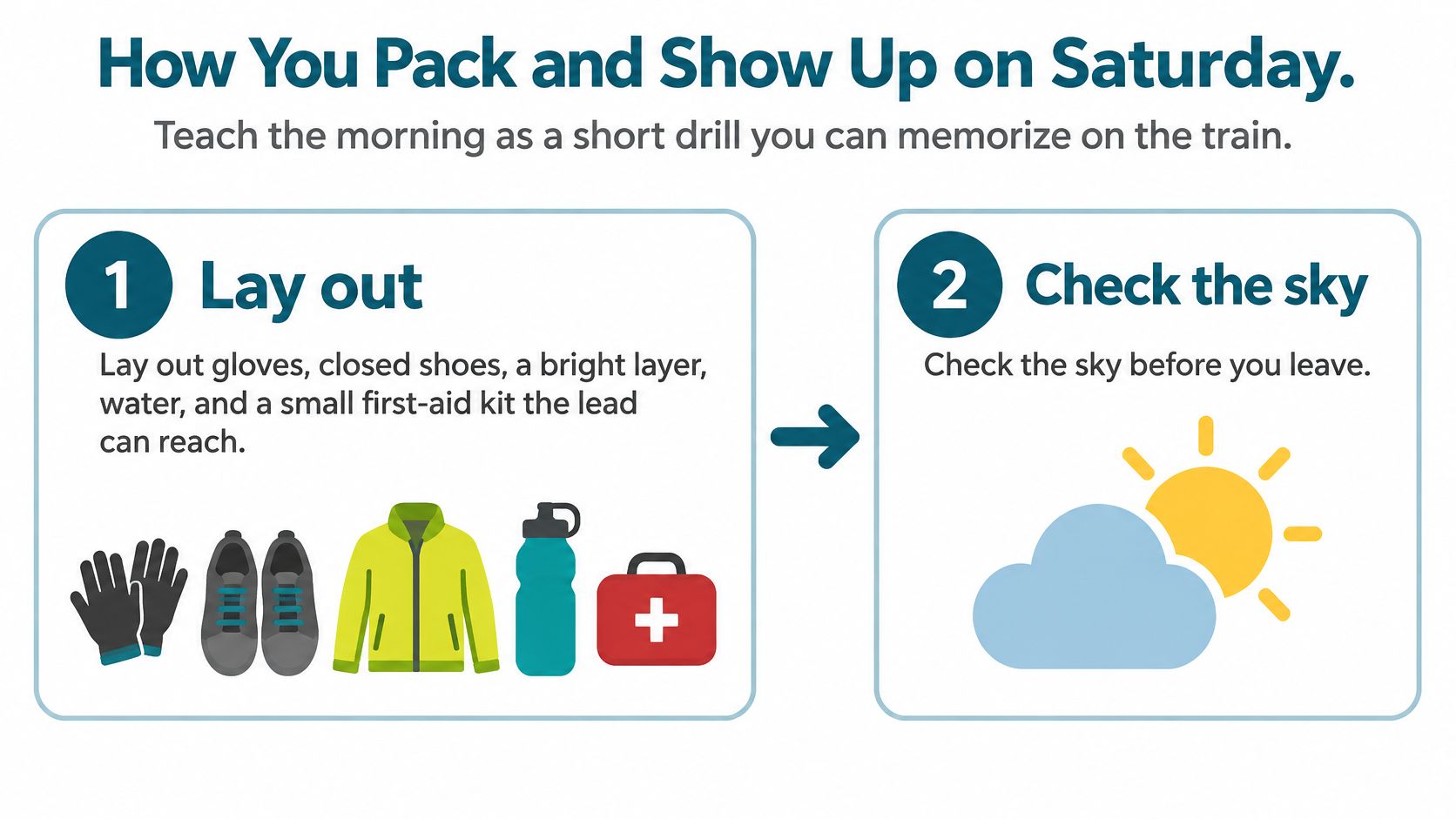
Lay out your gear. Bring gloves, sturdy closed shoes, a bright outer layer, and water. The lead needs a small first-aid kit within reach, not buried under everyone's belongings. Check our trash pickup equipment guide while you pack, rather than discovering a missing tool at the curb.
Check the sky before you leave. Look at the forecast and the conditions outside your door. Dress for the work, but don't confuse weather-resistant clothing with protection from lightning, hail, or flooding.
Meet at the named landmark. Stay on the agreed public site and leave entrances clear. If your friend arrives late, give them the actual meeting point instead of sending them to wander after the group.
Check in and identify the safety lead. Give your name and a way to reach you, then listen to the route boundaries and finish arrangements. If you're organizing attendance, the Express Text event RSVP guide can help you think through confirmations and reminders. Don't substitute an RSVP list for knowing who arrived.
On the Route and at the Finish
Take the agreed kit and follow the familiar route. Borrow equipment when the program makes it available. For a useful municipal example, Bellingham's volunteer litter-cleanup guidelines cover outdoor public sidewalks, rights-of-way, and parks, recommend familiar places, and describe borrowed kits and city collection of filled bags. That's Bellingham's arrangement, not an automatic Chicago disposal promise.
Collect and sort only into accepted streams. Keep cigarette butts, plastic film, glass, and containers apart when the receiving program accepts those materials. Don't put a clean-looking wrapper into recycling on appearance alone. Ask the lead where it goes.
Close bags and complete the agreed handoff. Think of a relay: you run the visible pickup lap, then the authorized disposal crew takes the material onward. Confirm the handoff location before collection starts. Don't leave bags beside a public bin and assume someone expects them.
Check out before leaving. Tell the lead you're off the route, even if you need to leave early. Return borrowed tools so the next volunteer can find them.
We hold Litter Caterpillars events on weekend mornings, and we've picked up trash every single week through about three years of showing up. We work rain or shine, while keeping volunteer safety ahead of the pickup.
You don't have to match anyone's pace. Take the manageable stretch, ask the question, and stop when you need to. Dirty gloves and an orderly finish make a better morning than an overfilled bag you can't carry.
Bags Are Not the Whole Score
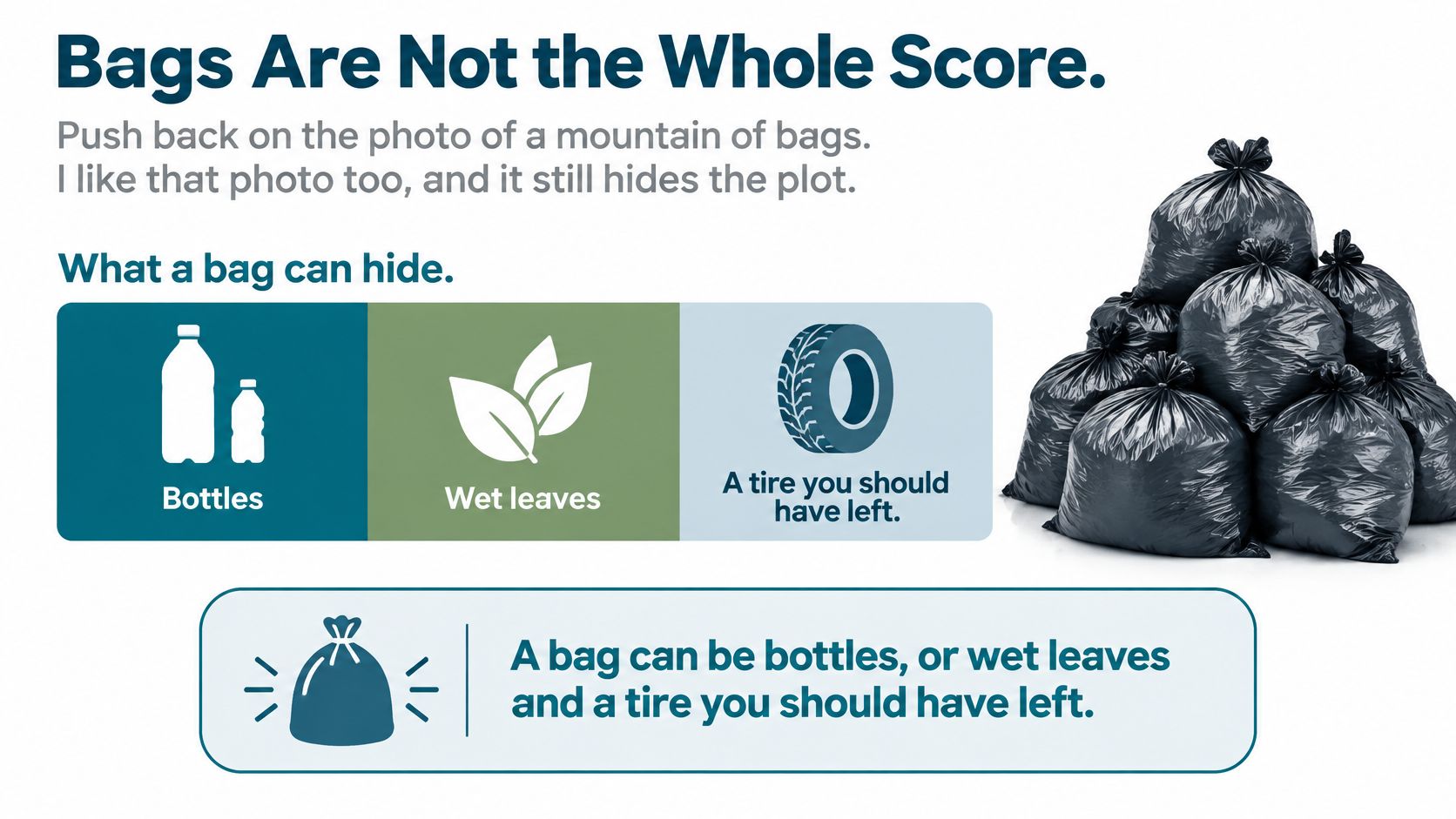
I like the photo of a mountain of bags too. I still want to know what's inside them.
A bag of bottles and a bag of wet leaves tell different stories. A tire someone dragged into the frame may tell me the team took a risk it should've avoided.
Keep a Pocket Card
Write these fields on a card or a shared form before the pickup. You'll remember more when you record observations along the route instead of reconstructing the morning afterward.
- Site edges and water nearby. Name the starting point, finishing point, storm drains, and nearby water. Make the route specific enough that someone else could walk it again.
- Volunteer-hours. Record time people spend collecting. Keep setup and social time separate if you want to compare collection effort.
- Bags or weight and destination. Note your measurement method and where the material went. Don't switch between loose bags and tightly packed bags.
- Item categories. Track cigarette butts, food packaging and film, glass, tires, textiles, and e-waste. Record hazardous or bulky items you leave separately from material you remove.
- A return appointment. Choose a 30-day walk-back, then a 90-day check if the block refills. Those are proposed follow-up intervals, not municipal deadlines.
- Items or kilograms per person-hour. Compare similar site types. Give a park its own row rather than ranking it against a highway shoulder.
Say your team clears a park path and another team covers a commercial sidewalk. The sidewalk team collects more packaging, while the park team spends longer separating small fragments from grass.
A heavier total doesn't tell you who worked harder. Your route description and item categories help you explain the difference without turning volunteering into a contest.
Keep the bag-photo warning beside your recording card.
Read Totals Without Turning Them Into Targets
We once cleaned a highway while officials had shut it down for a bike riding event. The closure gave us a very different working environment from an ordinary road shoulder.
I'd still give that cleanup the same recording card. I'd label the site clearly and note the traffic closure, so nobody mistakes the result for permission to collect beside moving highway traffic.
The following municipal and community totals give you examples of what organizers count. Borrow their reporting categories, not their scale.
2026 cleanup totals you can borrow as a yardstick
| Place | People | Waste | Extra mark |
|---|---|---|---|
| Salzgitter | 7,457 volunteers | 6.41 tons | The municipal waste company's results cover City Cleanup Day and spring cleanup week in 2026 |
| Suffolk | 1,662 volunteers | 58,025 pounds | The City of Suffolk reports 1,775 bags and 635 tires for its 2026 cleanup |
| Toronto | City crews before the public campaign | 35,000 kilograms | The City of Toronto reports collection from public spaces before Clean Toronto Together in 2026 |
| Connecticut shoreline and community spaces | Volunteers, headcount not stated | More than 1,057 pounds | Save the Sound reports 29,130 items across approximately 16.75 miles during the 2026 spring season |
Notice what each row lets you ask. Suffolk counts tires separately, so you can see a bulky-waste category that a bag total would conceal. Connecticut records items and distance, which gives you more detail about the work area.
Don't convert all those totals into a league table. Different organizers cover different spaces, use different collection methods, and arrange different disposal services.
Count what you removed, describe what you left, and record what you find when you return.
Separate Recovery From Collection
Cyprus's 2026 campaign reported 1,816,248 litres collected, including 605,416 litres of recyclable PMD material and 1,210,832 litres of mixed waste, according to Kathimerini's campaign report. That split answers a question a single volume total can't: how much material entered the reported recyclable stream?
Your own sheet can use simpler language. Write the accepted recycling category, the amount, and the receiving destination. If you don't know where something went, record that uncertainty instead of calling it recovered.
Keep personal equipment separate from collected litter too. Urban Totes' reusable tote facts for busy commuters can help you think about a reusable carry bag for clean supplies, but don't use your everyday grocery tote for loose glass or questionable waste.
Portland's reporting example includes 403 projects, more than 8,000 volunteers, and 99,800 pounds for July 2025 through June 2026. Because that reporting window extends beyond this spring, don't treat the full-period figures as completed spring results or use them as a current comparison.
Write Your Own Ward Row
Leave space beside the outside examples for your actual site. Enter the ward, route edges, effort, collection measure, item mix, and disposal destination.
On the return walk, look at the same edges. If food packaging has gathered around the same corner again, photograph the location and note nearby bins and pedestrian routes without assigning blame.
You might finish with fewer bags next time. If you covered the same ground with the same method and found less litter, write that plainly. Your most useful result is a ward row another volunteer can understand and repeat.
Three People and a Hailstorm
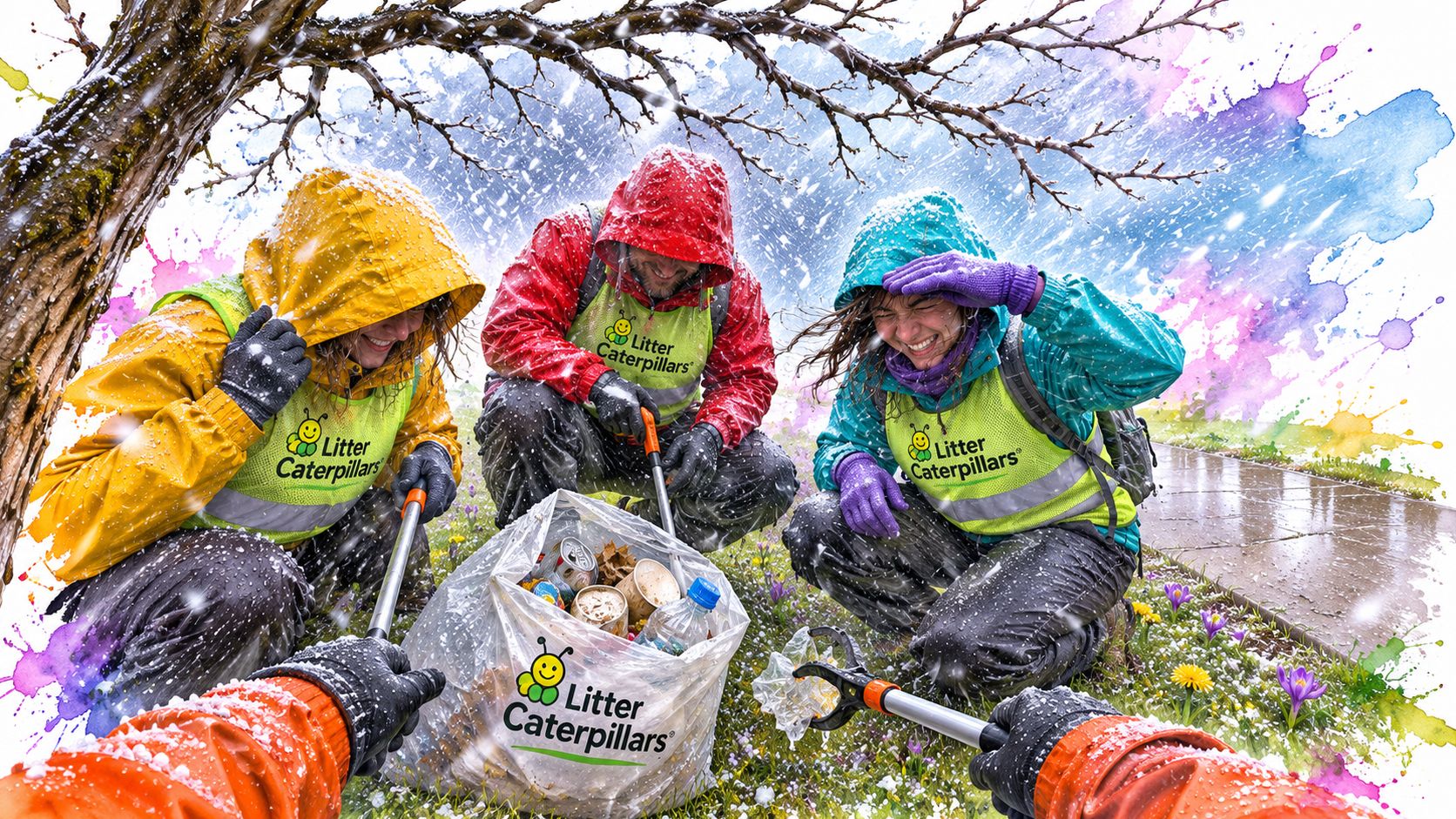
At our first Litter Caterpillars pickup, only three of us stood under a tree while spring hail came down like a blizzard. We shivered, watched our rides cancel, and waited for a way home.
Our logo represents that first pickup. I'm Kevin Tao, and I started the group because I struggled to clean and organize my own things; as my living space grew messier, my life did too.
The work still starts with people willing to show up for each other.
What I Took From That Morning
Other people's litter felt easier to move. I realized during that first pickup that cleaning someone else's mess was much easier than cleaning my own. I didn't have a personal history attached to the wrapper in front of me.
I found a strange kind of fun. Once my hands had a clear task, I could work beside someone without needing a polished introduction. We could talk, collect, and let a friendship begin between ordinary sentences.
Cold added a story, within limits. I remember the weather because it made the morning unusual. I wouldn't ask you to repeat the exposure, and sheltering under a tree isn't a lightning-safety plan.
Keep the Story and Keep Your Judgment
I don't call enduring hail a volunteer achievement. I want the lead to pause, find appropriate shelter, and end the work when conditions demand it.
Our rain-or-shine weather approach belongs beside that judgment. You can enjoy an unpredictable Chicago morning without treating discomfort as an entry requirement.
Watch the group in motion, then decide what a manageable first morning looks like for you.
You don't need a tidy life before you can hold a bag. You can arrive with unfinished chores, a nervous introduction, and sturdy shoes.
Bring the friend you invited and find the landmark you chose. When you leave, tell the lead. That's a complete first Saturday, even if you never fill a whole bag.
Come Out This Weekend Morning
If you live in Chicago and want to spend a morning doing something you can point to afterward, come out with us. You can meet people while your hands have a task, without having to turn the whole morning into a performance.
I won't ask you to prove yourself through a heavy haul or a donation. We'll never pressure our volunteers for money. Your time is the point, and your safety comes before any collection total.
Make the Invitation Concrete
- Find the current meetup. Meet us through Meetup, Instagram, or our open group chats, and confirm the location before you travel.
- Bring your local knowledge. Keep the ward and landmark you circled handy. A library, school, park, or CTA stop makes a useful place to orient yourself, but follow the event's actual meeting instructions.
- Arrive ready to work comfortably. Wear sturdy shoes and bring water. Confirm what equipment you can borrow if you don't own a set.
- Meet the lead. Know who's coordinating the route and tell them when you leave.
A volunteer described the experience as a great way to start a Sunday and said they had the best time volunteering with Litter Caterpillars. I like that description because it leaves room for a simple morning: useful work, good company, then the rest of your day.
See What We're Building
If you want to see another part of our work, walk by Caterpillar Park in Englewood. We're turning an empty lot we won at auction into a park.
You don't have to take on a project that size. Start with the weekend morning you can attend. Let the lead finish the disposal handoff, head home, and decide whether you'd like to return.
Litter Caterpillars brings people together for weekly weekend-morning trash pickups across Chicago, with volunteer safety ahead of bag totals. Visit Litter Caterpillars to find your next meetup and turn your spring cleanup week into a morning you can repeat.