Tag: volunteer recruitment

  • 6 Community Cleanup Flyer Examples That Get Volunteers

    6 Community Cleanup Flyer Examples That Get Volunteers

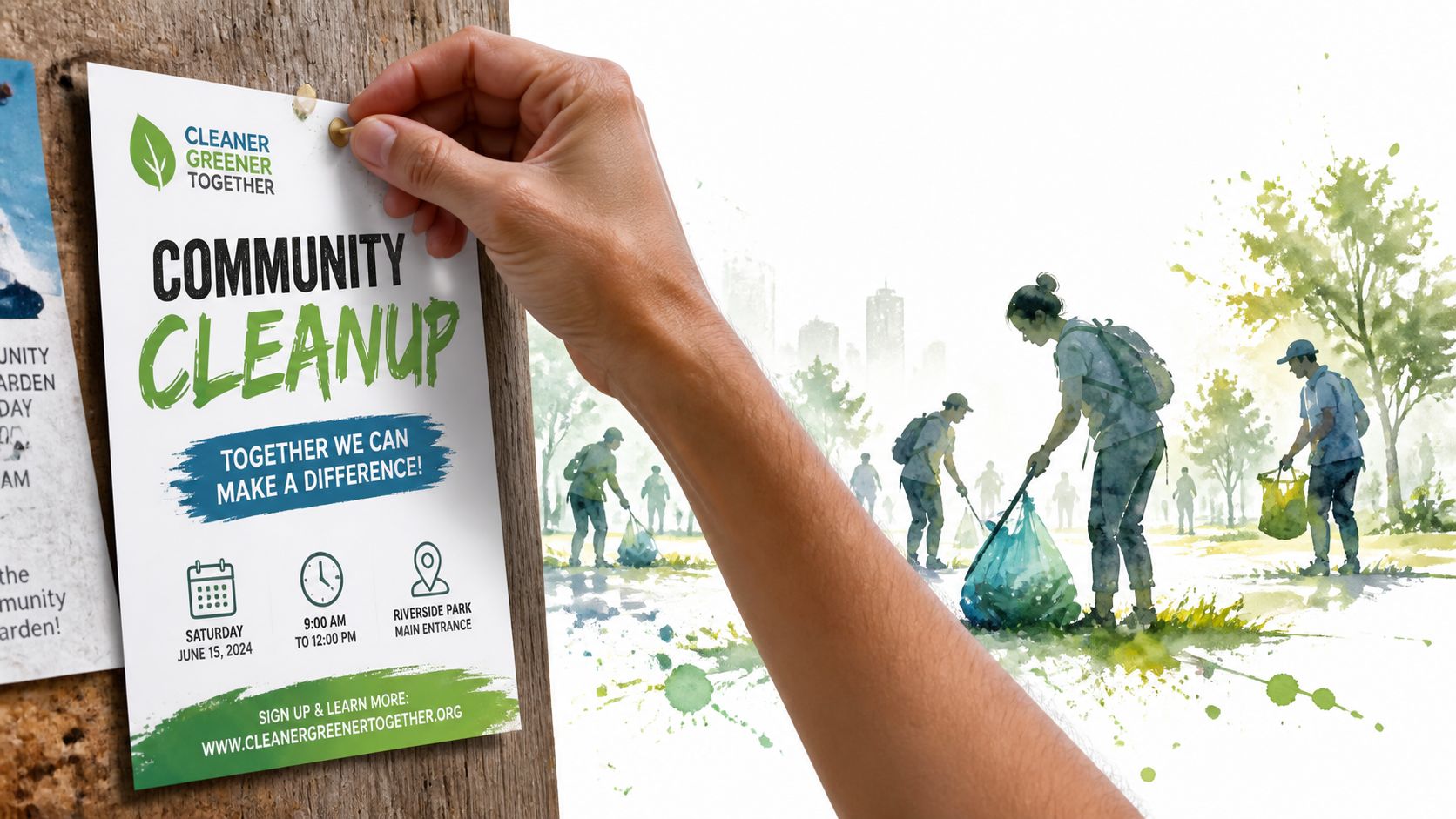
    A woman walks past a crowded bulletin board, catches one bold line, and slows down. Saturday morning. Bring a friend. Clean our block. She can keep walking, or she can scan the code and join. The strongest community cleanup flyer gives her one reason to care, one simple action, and enough detail to feel safe showing up. I'll walk through six formats built around bravery, friendship, clear logistics, neighborhood pride, and visible progress, then connect them to Litter Caterpillars' volunteer-first weekend mornings in Chicago. The group meets rain or shine, builds friendships through service, and never pressures volunteers for donations. Your flyer should create that same feeling before anyone reaches the first trash bag.

    1. Bold Call-to-Action Header with High-Contrast Colors

    A passerby has only a moment to notice your flyer. Give that moment a job.

    Put the action at the top in large type. JOIN US. CLEAN WITH US. TRANSFORM WITH US. Bright colors can pop against a dark background, while a bold font can make the message readable from a distance. Chicago volunteer groups could place this format near L stations, coffee shops, libraries, and busy neighborhood entrances. A flyer for a Lincoln Square cleanup should say Lincoln Square early. A Pilsen event should name Pilsen before a reader has to hunt for it.
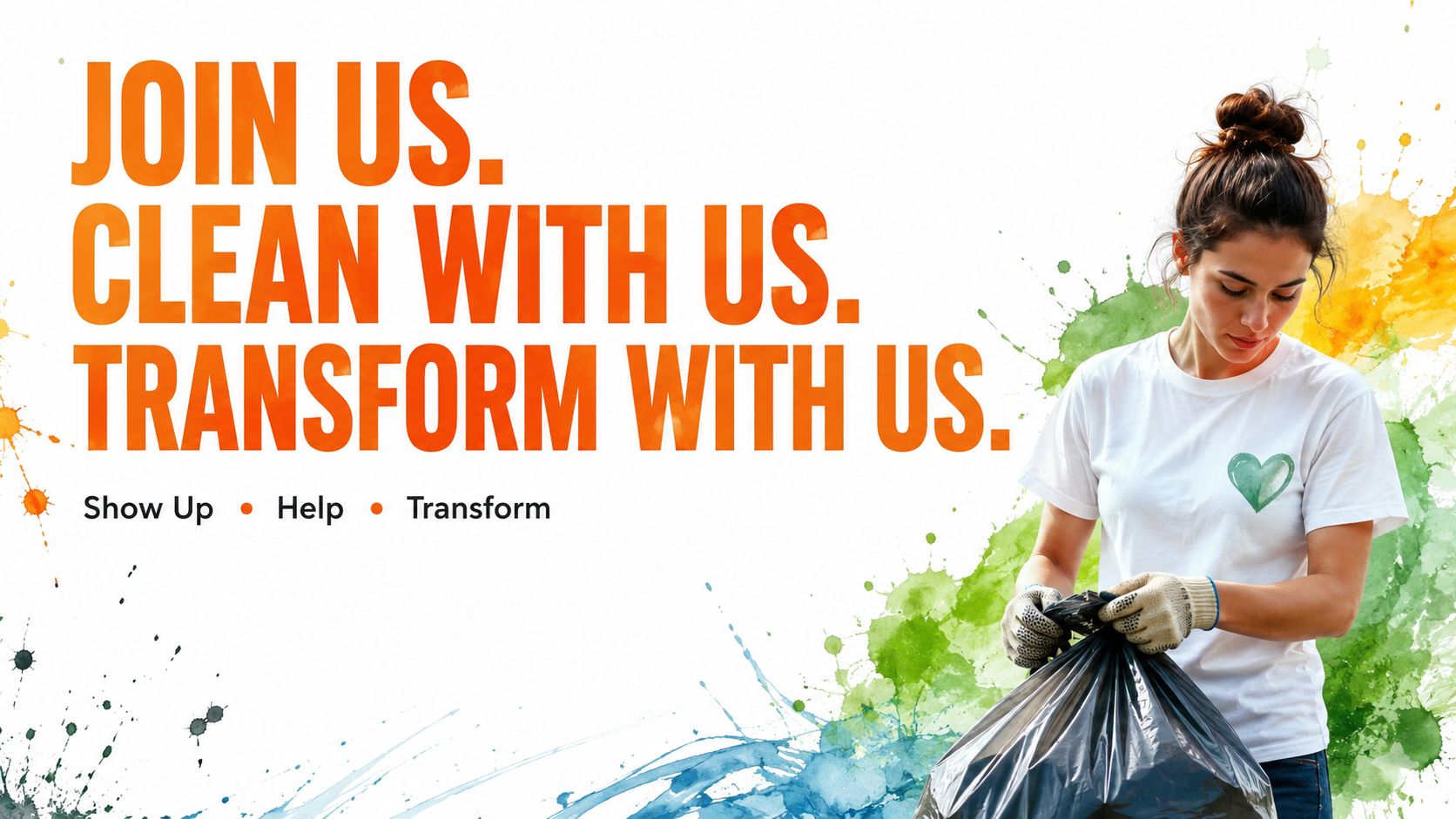
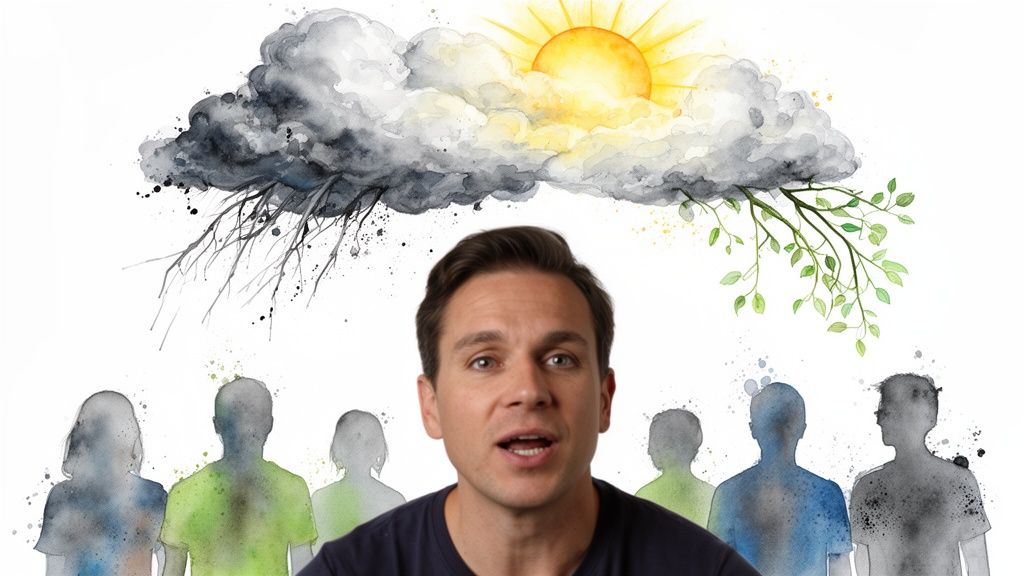
    A woman wearing a volunteer shirt picks up trash, with text encouraging community involvement and environmental action.

    Use your group's own colors when you have them. Litter Caterpillars could adapt the headline to SHOW UP. CLEAN UP. TRANSFORM UP. The words should sound like the group, while the next line should tell people exactly what happens next.

    Practical rule: Test the flyer from about fifteen feet away. If you can't read the main action, neither can someone hurrying past.

    Keep the lower half calm. Add the date, weekend-morning time, meeting place, and a QR code without competing with the headline. Use social media for volunteer recruitment to repeat the same short invitation online, then ask volunteers to share it with a friend.

    Your photo should show a real person doing the work. A gloved hand holding a grabber, a full bag beside a cleared sidewalk, or a smiling volunteer in a group shirt gives the headline a human landing place. Avoid turning the flyer into a donation appeal. The action is simple, show up and clean together.

    2. Story-Driven Personal Narrative Layout

    Three people huddle under a tree while hail hits the pavement. Their Ubers keep canceling. The bags stay empty for a moment, then someone laughs, steps back into the storm, and grabs the first piece of litter.

    That moment can carry an entire flyer. Litter Caterpillars began with three people caught in a springtime hailstorm, and the group's story turns bad weather into a scene with tension, humor, and friendship. A reader doesn't need a broad promise about community improvement. The reader needs a reason to enter the story.
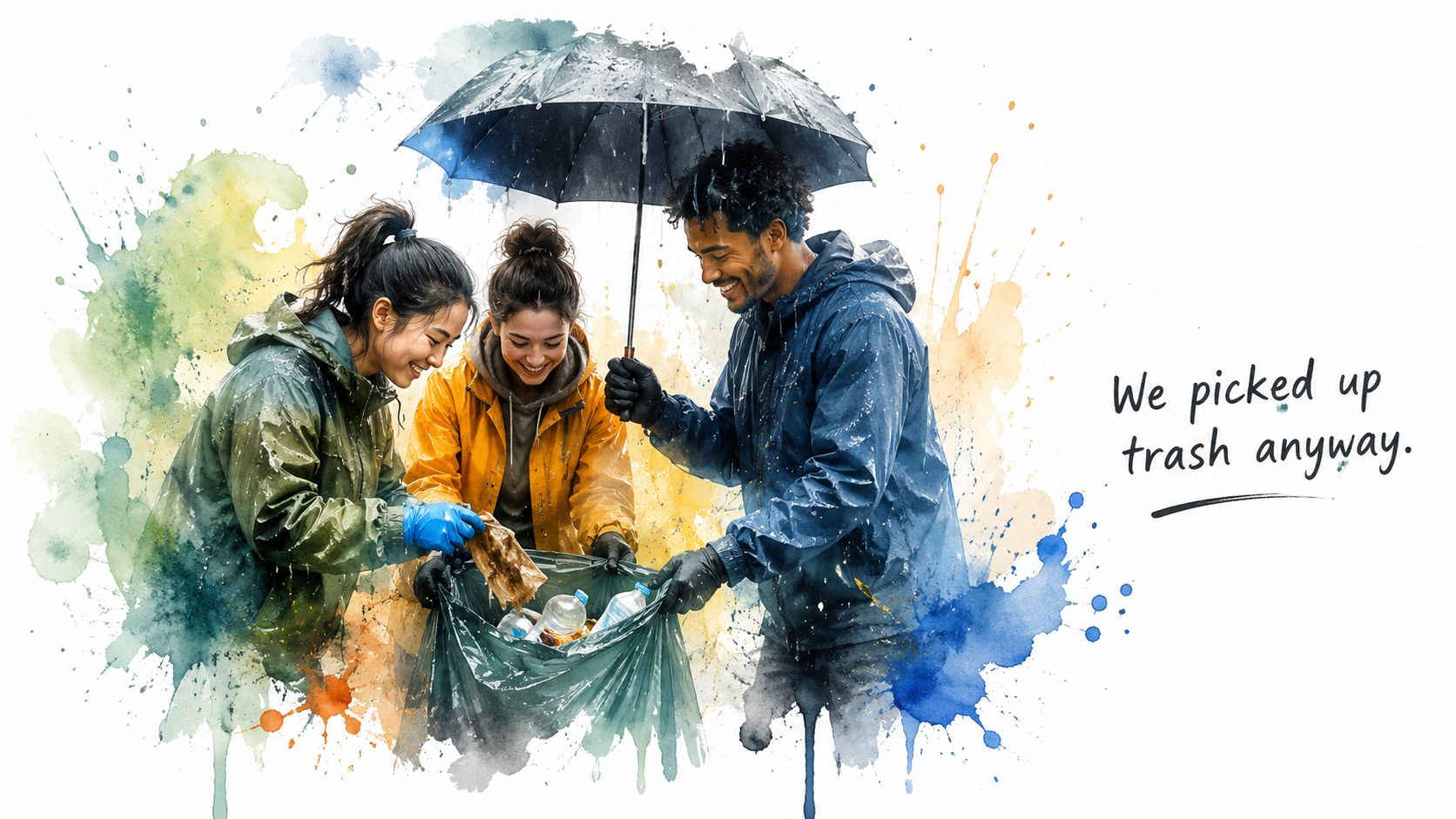
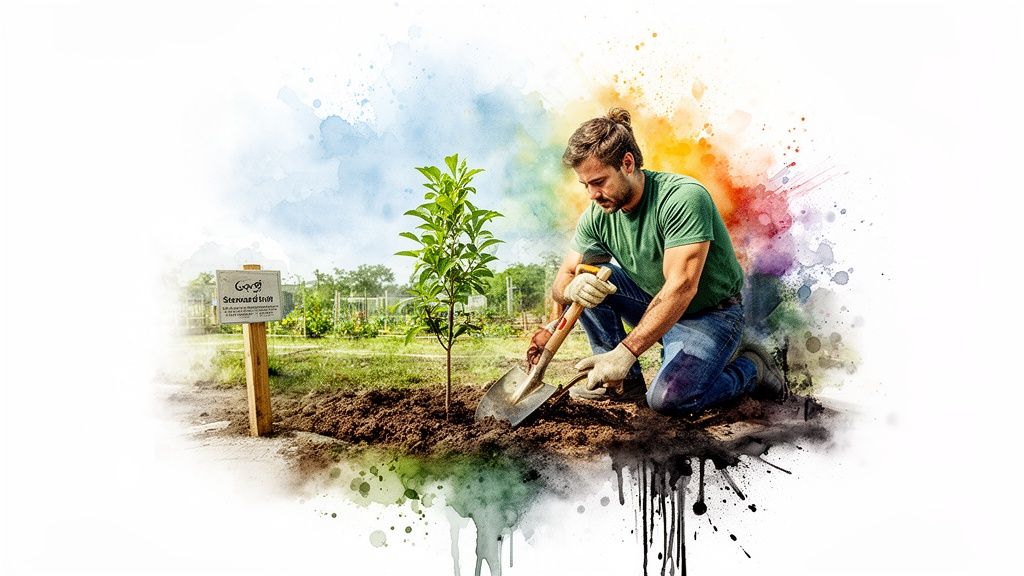
    Three volunteers in raincoats smiling while cleaning up litter in a bag during a rainy day.

    Write the opening like a real memory:

    • Start with a physical detail: hail on a jacket, wet gloves, a bus arriving, or the sharp smell after rain.
    • Give the reader a small problem: nobody knows whether the weather will break, the bags keep sliding, or the block looks worse than expected.
    • End with an invitation: “Come write the next part with us Saturday morning.”

    Use one strong photograph and plenty of white space. The story should remain readable beside the image. If a volunteer gave you permission to use a real quote, include that person's exact words and name. Otherwise, write in your own voice and label the moment accurately.

    “Cleaning someone else's mess felt easier than cleaning my own.”

    That line connects to the group's personal story without asking readers to pretend cleanup feels easy. The flyer can say that first-time volunteers may arrive alone, work beside others, and leave with a new friend. It can name Englewood, Rogers Park, or another specific neighborhood instead of hiding behind a generic city image.

    The final line should turn emotion into movement: Meet us at the listed location. Wear clothes you can work in. No experience needed.

    3. Visual Timeline with Impact Snapshots

    A volunteer sees the first bag fill and realizes the block can change before lunch. A timeline lets someone feel that progression before arriving.

    Divide the flyer into clear stages. Use First 30 Minutes, Middle Hour, and Last 30 Minutes as visual anchors, then place a small photo or icon beside each stage. The first panel might show the team meeting, putting on gloves, and hearing the safety briefing. The middle panel might show volunteers sorting tasks, carrying bags, or logging litter. The final panel might show the cleared block and a team photo.

    Use actual photos from your own cleanups. A rainy-day beginning can lead into a row of full bags, then a bright group portrait. That sequence gives the reader a role in the story. They can see where they enter and what they'll do after they arrive.

    The timeline can also make room for different kinds of volunteers:

    • Trash pickup: Walk a defined area with gloves and a litter picker.
    • Data logging: Record what the group finds.
    • Traffic watch: Keep eyes on nearby movement and alert the team.
    • Photo support: Capture the work and the finished space.
    • Short-shift help: Join for one segment when a full event won't fit your schedule.

    Add small badges at the end of each segment if your group uses a badge system. A first badge might represent courage, another teamwork, and another a finished block. Keep the language honest. Say what volunteers did, rather than promising a dramatic result you can't document.

    The Great American Cleanup gives organizers a sense of the scale that a simple event can reach. In 2025, more than 60,000 community events took place in the United States, and participants cleaned more than 94,000 public spaces, according to Keep America Beautiful's Great American Cleanup details. Your flyer doesn't need giant numbers. It needs a visible sequence that makes the first step feel manageable.

    4. Community Map Highlighting Neighborhood Coverage

    A Chicago map can turn a flyer into a personal question: Do you see your block?

    Place the city map in the center, then mark the next cleanup with a bright color. Add the ward number and neighborhood name beside it. A legend should explain every symbol. One color can show completed areas, another can show upcoming events, and a third can invite people to suggest a new location. Keep the map readable. A dense outline with tiny labels will make people walk away.

    Litter Caterpillars can use this Northeastern Illinois map as a reference point for geographic communication, then build a Chicago version around its own events. The publisher describes a goal of cleaning across all 50 Chicago wards, so a map can show the next three scheduled cleanups while leaving room for neighbors to point toward another area.

    Add a recognizable landmark when it helps. A park, train station, school, or major intersection can answer the question people ask first: “Is this near me?” Use the meeting point in plain language underneath the map. A bright pin should never replace a street address.

    The map also works well for neighborhood-specific handouts. A flyer for one ward can show the current area in strong color, then use lighter marks for adjacent neighborhoods. That approach speaks to a resident who wants to help nearby without making the whole city feel abstract.

    Clean Up Australia's FY24 report records 1,077,127 registered volunteers at 16,320 cleanup sites, with about 2,154,254 hours contributed, according to its litter report. You don't need to copy that scale onto a local flyer. The useful lesson is simpler: show where people act, name the site, and give the next volunteer a clear place to join.
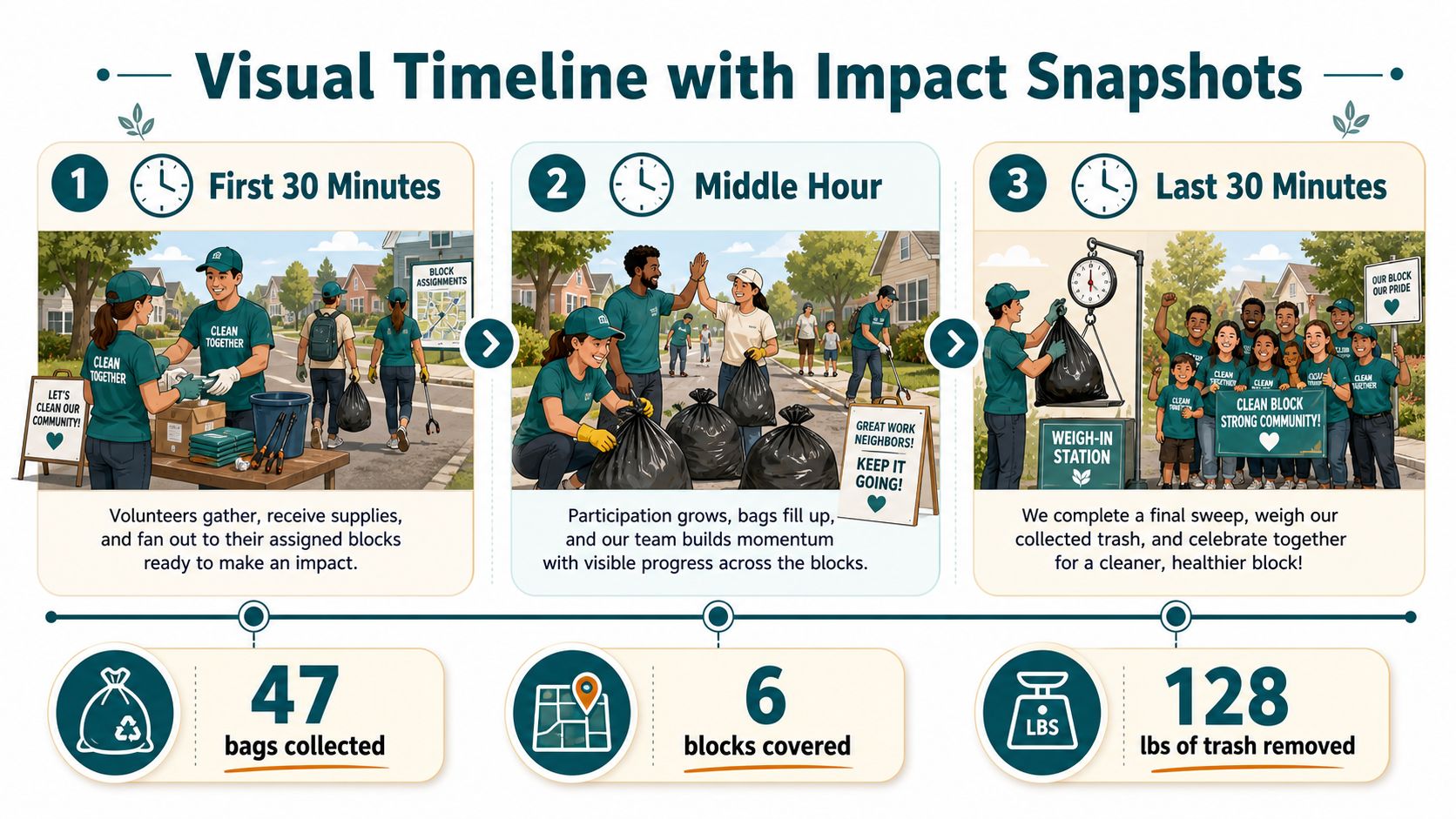
    A visual timeline infographic illustrating a successful community cleanup event with three stages and final impact results.

    5. Identity and Pride-Focused Design with Badges and Symbols

    A volunteer arrives wearing the same green shirt as someone they've never met. They spot the caterpillar logo, exchange a grin, and start filling bags together. Identity can make that first meeting less awkward.

    Build the flyer around a recognizable logo, mascot, color pair, or symbol. Litter Caterpillars can use its caterpillar transformation logo, green and orange colors, flags, theme songs, and badges. A group without a mascot can choose a simple neighborhood mark, an illustrated glove, or a symbol tied to the local park.

    Keep the visual system consistent across flyers, shirts, signs, and social posts. A person should recognize the group before reading every word. Use three to five badge designs only when the group can explain what each one means. Possible badges might represent a first cleanup, a new neighborhood, a safety role, or bringing a friend. Avoid making badges feel like a contest. Let them celebrate participation rather than rank people.

    Give the symbol a human story

    The logo can show the original three-person hailstorm, followed by a larger group holding flags. That image gives the flyer a beginning and a present-day invitation. A small music-note icon can point readers toward the group's theme song, if the song fits the event's tone.

    A pride-focused flyer still needs practical information. Place the identity artwork near the top, then reserve a clean section for date, meeting place, clothing, and safety. A beautiful badge won't tell someone whether they can bring a child, take a short shift, or avoid heavy lifting.

    Use language that welcomes newcomers:

    You don't need a uniform, a history with the group, or cleanup experience. Bring yourself, and we'll show you the first step.

    The design should make friendship visible without promising instant closeness. Show volunteers greeting each other, carrying bags side by side, or posing with flags after the work. Kindness, unity, and bravery can appear in the copy through specific actions. “We check on new volunteers before we start” feels more useful than a vague statement about values.

    6. Practical Details-First Template with Scannable Information Architecture

    A student finds your flyer outside a coffee shop. She has ten seconds before her bus arrives. She needs the date, place, time, and answer to one private question: “What do I need to bring?”

    Put logistics first. Use the largest type for When, Where, and How to Join. Divide the rest into short blocks:

    • When: Weekend morning, with the exact date and start time.
    • Where: Neighborhood, ward, meeting point, and a clear landmark.
    • What to wear: Closed-toe shoes, work clothes, gloves if the group asks volunteers to bring them, and weather-ready layers.
    • What we provide: Bags, litter pickers, briefing, and role choices when available.
    • Who you'll meet: Organizers, neighbors, first-time volunteers, and returning members.
    • How to join: QR code, Meetup, email, text, Instagram, or an open group chat.

    A QR code should lead directly to the signup page. Test it with more than one phone before printing. Put a short readable URL under it for anyone who prefers typing. For planning support, use volunteer event planning guidance from Litter Caterpillars, then adapt the wording to your actual event.

    Safety needs room on the page. Cleanup guidance says organizers should keep sites away from roadsides when possible, brief volunteers on local hazards, and provide gloves, high-visibility clothing, sensible footwear, and weather-appropriate clothing, as described in this community litter-picking safety guide. Another volunteer safety briefing says people should never use bare hands, should use litter pickers, and should leave weapons or medical waste for local officials.

    Add one friendly line: No experience needed. No donations asked. Just show up. Then check the print size with this marketing flyer size reference. A practical layout should help someone decide quickly, without forcing them to decode a crowded design.

    Community Cleanup Flyer Designs, 6-Point Comparison

    Template 🔄 Implementation complexity ⚡ Resource requirements 📊 Expected outcomes 💡 Ideal use cases ⭐ Key advantages
    Bold Call-to-Action Header with High-Contrast Colors Moderate, strong typography and color contrast skills required Low–Moderate, designer time, bold inks or bright digital assets; quick turnaround High visibility and immediate attention; fast responses from passersby High-traffic poles, bulletin boards, short-term recruitment drives Grabs attention from distance; very clear CTA; concise
    Story-Driven Personal Narrative Layout High, needs skilled writing and careful image selection Moderate, real photos or commissioned imagery and copy editing Strong emotional engagement and memory; attracts committed volunteers Recruiting committed volunteers, storytelling campaigns, newsletters Builds authenticity and belonging; filters for aligned volunteers
    Visual Timeline with Impact Snapshots Moderate, infographic/layout design with sequential flow Moderate, quality photos from events, metric collection, designer time Clear expectations and perceived progress; motivates repeat attendance Structured events, visual learners, recurring weekly cleanups Conveys concrete impact and satisfying progression
    Community Map Highlighting Neighborhood Coverage Moderate, map design and accurate geodata required Moderate, map assets, up-to-date location data, designer work Communicates scale and momentum; attracts geographically motivated helpers City-wide outreach, ward-based recruitment, expansion campaigns Shows organized reach and where help is needed; easy to update
    Identity and Pride-Focused Design with Badges and Symbols High, requires cohesive brand system and visual consistency High, logo/badge design, brand guidelines, possible merch production Strong retention and group identification; increased repeat participation Long-term community building, retention programs, brand-led events Creates pride/affiliation; differentiates group; encourages repeat turnout
    Practical Details-First Template with Scannable Information Architecture Low, straightforward hierarchy and clear sections Low, QR codes, clear type, basic layout; easy to update Reduces friction; quick decisions and higher sign-up conversions Coffee shops, community centers, posters where people need logistics fast Maximizes clarity and actionability; fast to scan and update

    Turn a Good Flyer Into a Show-Up Moment

    Choose one format that fits your group's real personality. A brave group may use the hailstorm story. A neighborhood network may need the map. A busy weekly cleanup may work best with the details-first layout. You can combine parts, too. Use the bold headline from the first format, the personal photo from the second, and the safety block from the sixth.

    Run a small print test before you cover every bulletin board. Ask someone who has never attended the cleanup to read the flyer from a distance. Ask them to find the meeting point, start time, clothing guidance, and signup link without help. Watch where their eyes go. If they miss the action, change the hierarchy.

    Check every date and location twice. Walk the route yourself. Confirm that the QR code opens the right page. If the event sits near traffic, rewrite the plan before you print. Road-cleanup guidance says volunteers should face oncoming traffic, wear high-visibility vests, work on one side at a time, and stay out of carriageways and restricted areas, as described in this community cleanup guide. A flyer should describe the conditions, not a safer version that exists only on paper.

    Place copies where volunteers already spend time. Try coffee shops, libraries, community centers, workplace boards, apartment entrances, and partner locations. Add a reminder online several days before the event, then ask a few people to invite someone directly. A Tunis neighborhood cleanup experiment found that flyer recruitment alone produced only 3% participation among initially recruited heads of household, and neighbor-to-neighbor pressure didn't meaningfully raise turnout, according to the study record. That result gives you a practical lesson: a flyer starts the conversation, while personal welcomes and reminders help people finish the decision.

    Your final print should feel like a handshake. Choose readable type and suitable stock, using this guide to paper choice for business flyers as a reference. Make the action easy, make the welcome clear, and give people a reason to show up together.


    Litter Caterpillars publishes Chicago cleanup events with a meeting time, an agenda, and a volunteer-first approach built around safety, friendship, and service. Visit Litter Caterpillars to find an event, see how the group organizes neighborhood cleanups, and join the next weekend morning.
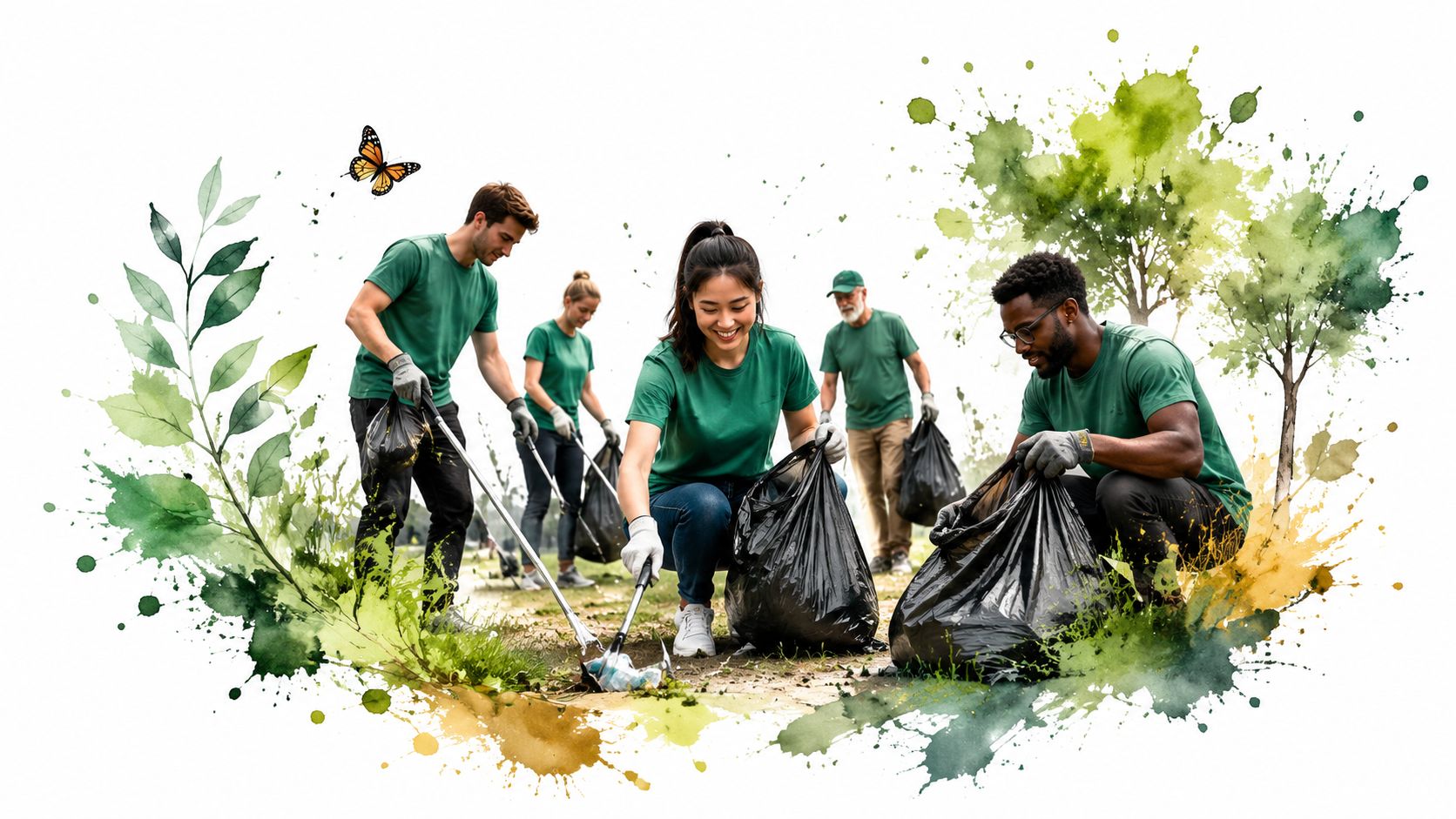
  • How to Organize Volunteers for Cleanup Events

    How to Organize Volunteers for Cleanup Events

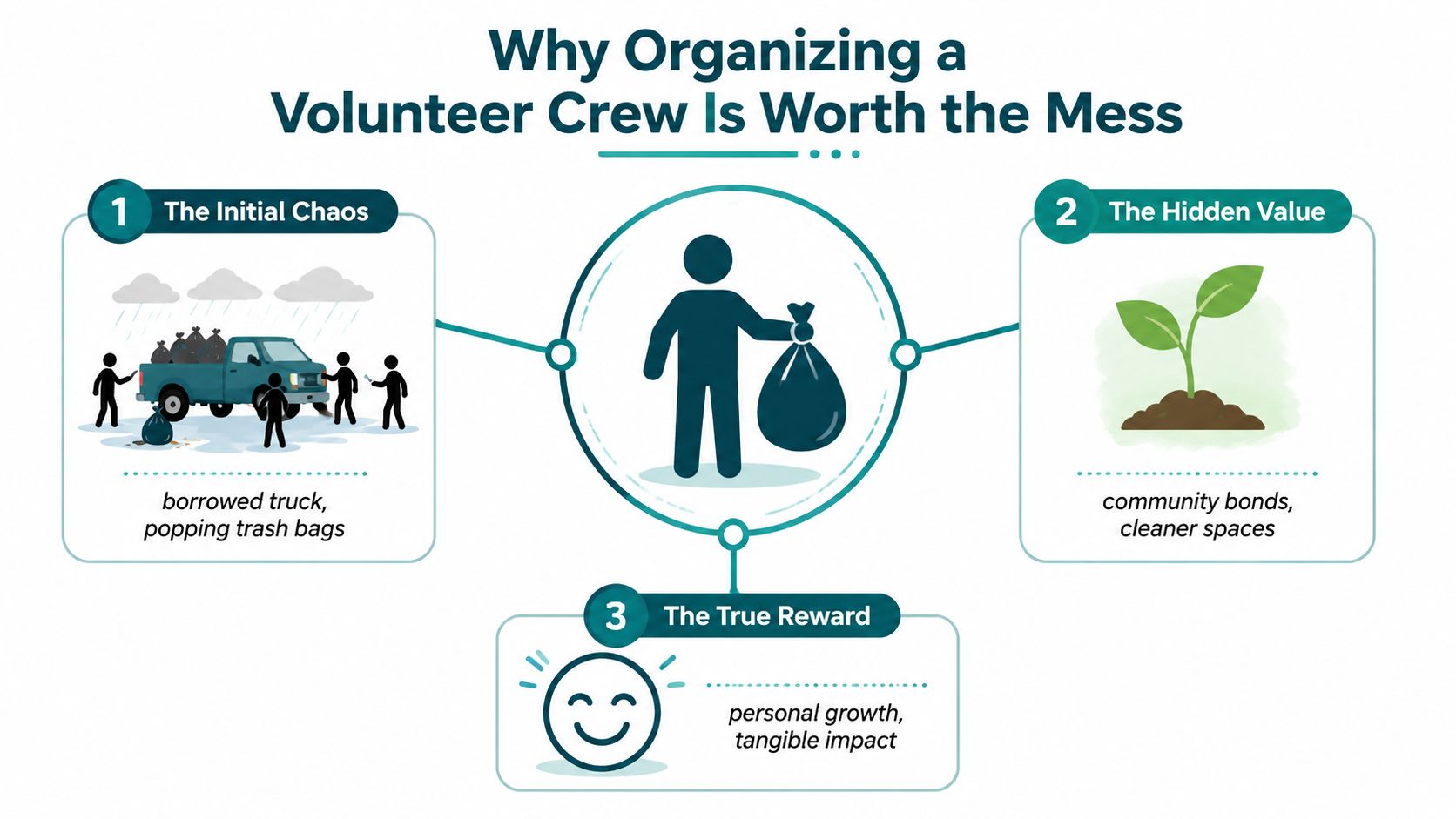
    The first Litter Caterpillars cleanup had three people, one borrowed truck, and trash bags that kept popping open in the rain. We huddled under a tree while Chicago threw hail at us, then went back to picking up cans.

    Three years later, we still meet every week, through heat, rain, blizzards, and the kind of wind that makes a trash grabber feel like a fishing rod. I've learned that how to organize volunteers has less to do with perfect plans and more to do with making the next Saturday easy to understand, safe to join, and worth remembering.

    Why Organizing a Volunteer Crew Is Worth the Mess

    That first pickup looked ridiculous. Water ran down the street, the truck bed filled with soggy bags, and every Uber seemed to cancel while we stood there shivering. Yet nobody wanted to leave empty-handed. We finished the block, loaded what we could, and took a photo that looked less like a nonprofit campaign and more like evidence from a minor weather disaster.

    That's the strange wealth a cleanup crew can build. You collect cleaner sidewalks, familiar faces, small jokes, and friendships that survive bad forecasts. You also get the quiet satisfaction of seeing a filthy stretch of Chicago become walkable again. The work stays physical and ordinary. That's exactly why people remember it.

    A recurring cleanup needs more structure than a casual “who wants to help?” message. A major 2023 volunteer-management survey found that 63% of nonprofits involving volunteers had a paid staff member or volunteer engagement professional managing volunteers, compared with 62% in 2003 and 65.2% in 2019. The median engagement professional spent 40% to 50% of their time on volunteer engagement in 2022, compared with about 30% in 2003. (The State of Volunteer Engagement)

    That doesn't mean you need a full-time coordinator for a Saturday cleanup. It means someone needs to own the details. A named person should know who signed up, where supplies are, what the weather looks like, and who can lead a new group.

    An infographic illustrating the challenges and rewards of organizing a volunteer trash cleanup crew.

    The mess teaches you what the spreadsheet misses

    You'll learn why vague meeting points create wandering volunteers. You'll learn why one experienced person can calm an entire first-timer group. You'll learn why a hot drink in November can matter more than a polished slogan.

    This field-tested playbook moves through the practical pieces:

    • Finding the first people: Where I post, what I say, and how I lower the ask.
    • Building one shift: Roles, time blocks, supplies, zones, and a clean ending.
    • Protecting the crew: Safety rules, waivers, emergency contacts, and incident notes.
    • Turning helpers into regulars: Onboarding, recognition, rituals, and shift leads.
    • Saving your evenings: Tools, templates, and a weekly rhythm that doesn't eat your life.

    If you want shirts, flags, or other identity pieces for a fundraiser, the 2026 nonprofit fundraising apparel guide from T-Shirt Envy can help you think through apparel without making it the center of the operation. Start with people, give them a clear job, and let the branding follow the friendships.

    Finding Your First Volunteers and Getting Them to Show Up

    Recruiting starts with a specific invitation. “Help clean Chicago” sounds noble, but it gives a stranger too many unanswered questions. Which neighborhood? What time? How long? Do I need equipment? Can I leave early?

    I use Meetup for the public event page, Instagram for photos and reach, and an open group chat for last-minute details. Litter Caterpillars also describes its approach to finding and coordinating participants through a Meetup page and group chat in its guide to finding volunteers.

    Give people a small first step

    My event copy usually names the exact place, the exact time, and the smallest reasonable commitment. You can adapt these examples:

    Meetup description

    Join us at McKinley Park near the fieldhouse on Saturday at 10 a.m. We'll clean the paths and nearby sidewalk for two hours. Bring water if you have it, and come for thirty minutes if that's all you can manage. We'll provide bags, grabbers, and gloves.

    Instagram caption

    Saturday cleanup at McKinley Park. Meet by the fieldhouse at 10 a.m. We're picking up litter, meeting neighbors, and heading home before lunch. Come for thirty minutes or stay for the full shift. First-timers are welcome.

    Neighborhood group-chat message

    Hey neighbors, I'm taking a small crew to clean the corner of 47th and Wolcott this Saturday at 9:30 a.m. We'll work for about two hours, but come for thirty minutes if you can. I'll bring bags and grabbers. Reply “in” and I'll send the meeting pin.

    Post early enough for people to see the invitation before their weekend fills up. Then send a direct reminder the day before. A reminder should repeat the meeting point, start time, expected duration, weather plan, and what you'll supply.

    The first event may feel like shouting into a canyon. Design the event so a small turnout can still finish a real patch of ground. One volunteer with a grabber can make a morning useful. Ten volunteers can make it lively.

    Screenshot from https://example.com/meetup-event-screenshot.png

    Invite by motivation, not by résumé

    People join for different reasons. One person wants a cleaner park. Another wants weekend friends. A student needs service hours. A newcomer wants to learn the city block by block. Your message should give each person a doorway.

    A 2025 volunteer-management survey identified role matching as a problem for 11.7% of organizations, alongside recruitment at 26.4% and retention at 9%. (Insight into Volunteering) I take that as a warning against one giant signup labeled “volunteer.” Write separate tasks instead: route scout, supply runner, photo helper, bag carrier, or zone captain.

    Designing One Cleanup Shift From Start to Finish

    A first-timer should know where to stand, what to carry, and when the work ends. If people need to decode the event while cars pass and bags blow down the sidewalk, you've already made the morning harder than it needs to be.

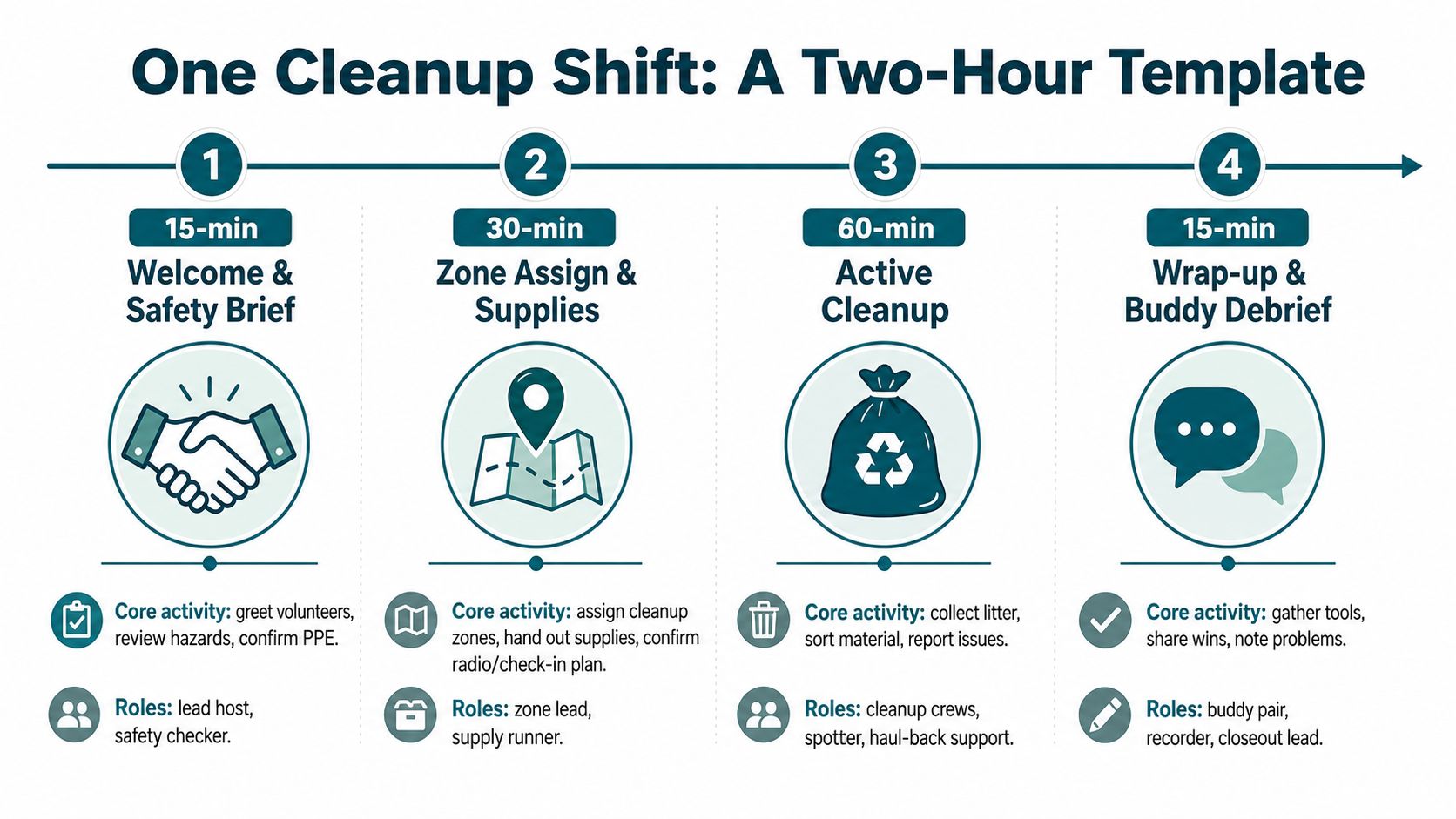
    I use a two-hour shape. It gives the shift a beginning, a middle, and a finish people can remember.

    An infographic titled One Cleanup Shift detailing a two-hour volunteer event schedule broken into four main phases.

    A simple two-hour template

    The exact breakdown can flex, but I plan the morning like this:

    1. 15 minutes for sign-in and safety: Welcome people, collect waivers, explain the route, point out the restrooms, and name the person handling questions.
    2. 75 minutes for pickup: Divide the area into assigned zones. Keep each group small enough for the captain to see everyone.
    3. 30 minutes for sorting and closing: Bring bags back, separate anything your local disposal plan requires, weigh bags if you track that, take a group photo, and finish with a cheer.

    A source on volunteer shifts recommends defining the task, location, and duration before anyone signs up. It also recommends immediate confirmation and reminders 48 to 72 hours before a shift, with day-of nudges for critical roles. (How to Schedule Volunteers) For a recurring crew, I split the schedule by area instead of dumping every assignment into one long list.

    Give every responsibility a name

    Keep the core crew roles to four:

    • Zone Captain: Explains the boundary, watches the group, and reports hazards.
    • Supply Chief: Carries bags, grabbers, gloves, sanitizer, water, and the sharps container.
    • Photo Lead: Takes the opening and closing photos, with permission from participants.
    • Waiver Wrangler: Checks forms, tracks attendance, and knows the emergency contact process.

    Here's my printable supply checklist:

    • Heavy-duty trash bags
    • Pickup grabbers
    • Work gloves in several sizes
    • Closed-toe footwear reminder
    • High-vis vests for roadside work
    • Sharps container
    • Hand sanitizer and wipes
    • Water and weather supplies
    • First-aid kit
    • Phone charger
    • Printed route map
    • Photo-release and emergency-contact records

    Draw the zone map like a child explaining a treasure hunt. Mark the meeting point with a star, the supply station with a square, and each boundary with a thick line. Write “return here” near the finish. Nobody should wonder whether the east side of the park belongs to them.

    The volunteer event planning guide can help you turn that outline into a repeatable event plan.

    Practical rule: Give people a clear job, a visible boundary, and a known ending. Confusion burns energy faster than trash pickup.

    Keeping the Crew Safe, Happy, and Protected From Liability

    Safety comes before fun, photos, and group identity. I'd rather have one untouched pile of litter than one volunteer walking away with an injury because I rushed the briefing.

    Start with rules people can understand without a legal dictionary. Closed-toe shoes stay on. Gloves stay on during pickup. High-vis vests go on near roads. Nobody reaches into a hidden pile. Nobody picks up needles, broken glass, or another sharp object by hand. The Zone Captain calls over the Supply Chief and uses the sharps container.

    A volunteer policy source says people should learn about foreseeable hazardous materials, equipment, and processes before they do the work. (Volunteer safety policy guidance) I explain the hazards before the first bag leaves the supply station.

    Build protection into the signup

    A short Google Form can collect:

    • Assumption of risk
    • Emergency contact
    • Photo release
    • Medical information the volunteer chooses to share
    • Agreement to follow the safety briefing
    • Permission to receive event updates

    Digital forms work better than a clipboard when rain turns paper into oatmeal. Keep the form readable, explain what volunteers should expect, and tell them how to ask questions before arrival. You can use these volunteer agreement templates from Closer Innovation Labs Corp. as a starting point, then ask a qualified professional to review language for your group and location.

    A cleanup group also needs a liability plan. You might arrange volunteer insurance, work with a sponsor nonprofit, or ask a local partner to review the activity before you invite the public. The Litter Caterpillars volunteer liability insurance guide gives organizers a place to begin that conversation.

    Make comfort part of safety

    Chicago weather doesn't care about your event calendar. I keep a stash of high-vis vests, watch heat and storms, and give people permission to stop. If someone feels unsafe stepping into the street, that person sits out. No debate, no guilt.

    In summer, shade matters. In November, hot cocoa can rescue the mood. At the end, I hold a short safety debrief and ask what felt unclear or risky. If an injury happens, I record it the same day with the date, location, people involved, what happened, and what action followed.

    Turning First-Timers Into Regulars Through Onboarding and Identity

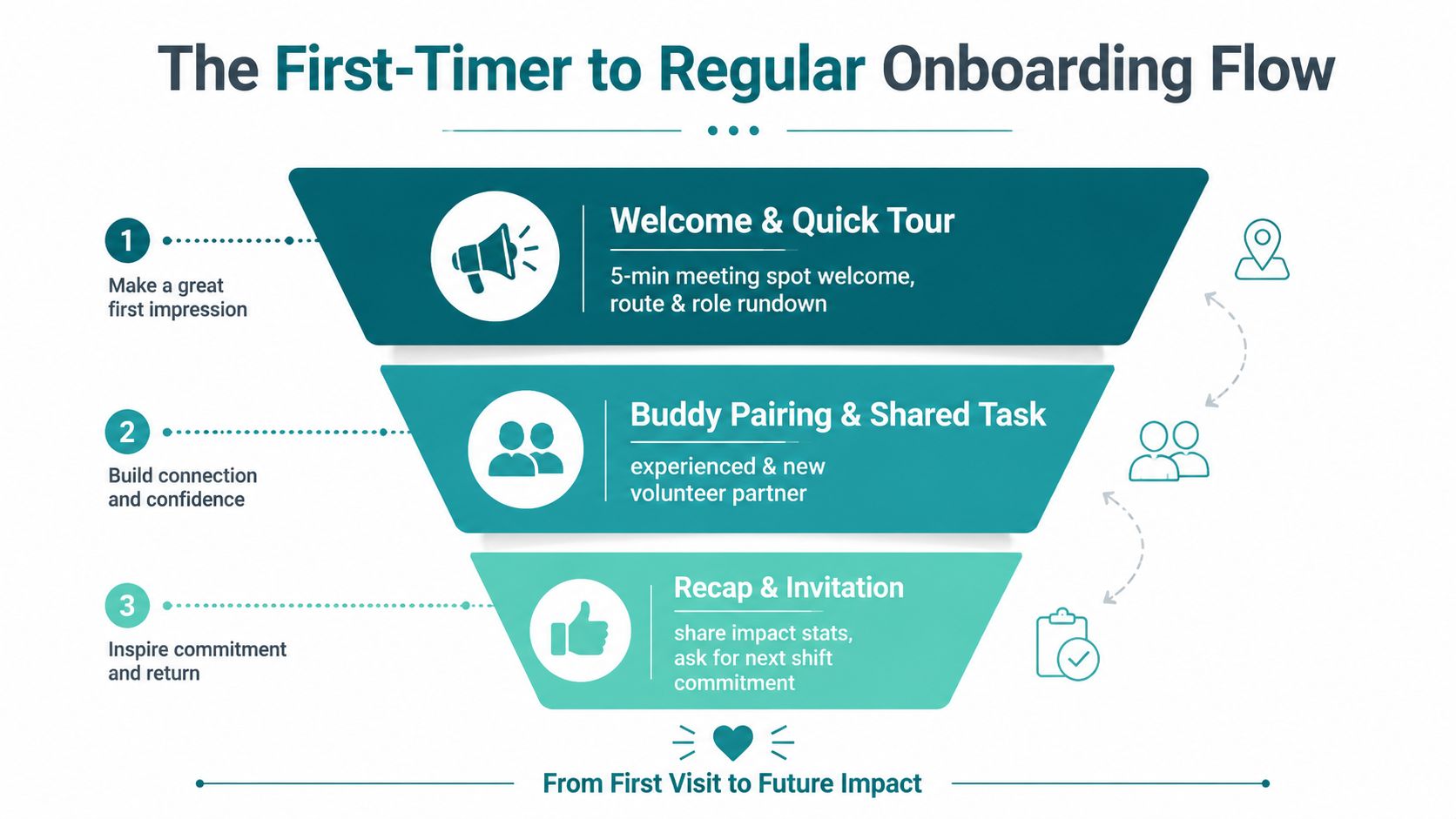
    The first shift decides whether someone sees your cleanup as a friendly invitation or a confusing errand. I try to make the first five minutes feel like entering a small club with the doors already open.

    I greet the new person by name, point out the meeting spot, explain the route, and give them one job they can finish quickly. Then I pair them with someone who has done a cleanup before. A new volunteer shouldn't spend the morning guessing which bag to use or wondering whether the group will notice if they fall behind.

    A systematic review and meta-analysis connected volunteer turnover with job satisfaction, affective commitment, engagement, organizational commitment, communication, organizational support, and leader-member relationships. (Volunteer turnover meta-analysis) A separate study found that appropriate training increased the odds of a volunteer becoming an organizational promoter by more than eight times, with an odds ratio of 8.457, in its original survey data. (Volunteer training and promotion study) I read that plainly: teach people what to do, answer them quickly, and let them feel useful.

    A three-step funnel infographic explaining the onboarding process for new volunteers to become regular contributors.

    Give the crew a vocabulary

    Names create memory. We have regulars, Zone Captains, the supply stash, the traveling flag, and the final cheer. A signature flag moves from park to park. A goofy theme song comes out of a Bluetooth speaker when the crew needs a lift. Stickers or photo badges can recognize five, ten, or twenty-five events.

    Recognition works because people want to know that someone noticed. A UK national volunteer-retention survey found that 80% of volunteers said they were likely to continue with their main organization over the next twelve months, while 53% said they were very likely. Attachment to the organization reached 52%, attachment to the cause reached 49%, and changing circumstances ranked as the most common reason for leaving at 33%. (Volunteer retention survey)

    That's why I'd choose a monthly Instagram shoutout, a Crew Member of the Month post, or a tiny trophy before I'd spend the whole budget on free pizza. Food is nice. Being known lasts longer.

    At the end of each shift, we form a recap circle. Each person shares one strange thing they found. Someone finds a garden gnome head. Someone else finds a receipt from a restaurant that closed years ago. The stories turn a pile of trash into a shared morning.

    Here's the handoff that keeps the founder from becoming a permanent bottleneck:

    1. Ask a reliable volunteer to lead one zone.
    2. Give that person the map, safety notes, contact list, and supply checklist.
    3. Let them run the briefing while you watch.
    4. Debrief privately afterward.
    5. Invite them to lead the next shift.

    A recent study found that experienced volunteers on a shift increased new volunteer retention by 52%, and by 125% for group volunteers. (Volunteer experience and retention study) Pairing people does more than make the work smoother. It gives a first-timer a human reason to return.

    Tools, Templates, and Weekly Rhythms That Save Your Sanity

    I don't need a complicated volunteer-management system for a Saturday cleanup. I need a few tools that each do one job and don't make me hunt through six apps for a phone number.

    • Meetup: Public event page, RSVPs, meeting details, and first-time discovery.
    • Instagram: Photos, volunteer stories, reminders, and repostable updates.
    • WhatsApp or GroupMe: Day-of logistics, weather calls, directions, and quick questions.
    • Google Forms: Waivers, emergency contacts, attendance, and post-event feedback.
    • Shared calendar: Recurring events, supply reminders, and leader assignments.

    The schedule below protects my Tuesday evening because I don't rebuild the event from scratch each week.

    Day Core Task Tool Used
    Sunday night Post the next cleanup Meetup and Instagram
    Tuesday Send an RSVP reminder Meetup and group chat
    Thursday Check the forecast and route Weather app and shared calendar
    Friday Confirm headcount and leaders Group chat and Google Forms
    Saturday morning Run the cleanup Printed map and supply checklist
    Sunday Post photos and thank-yous Instagram and group chat

    Keep four templates ready

    RSVP confirmation

    You're on the list for Saturday at [time] near [meeting spot]. We'll work for [duration]. I'll bring bags, grabbers, and gloves. Please wear closed-toe shoes. Reply here if you need directions or can't make it.

    Waiver form

    I understand the cleanup may include walking near roads, lifting bags, uneven ground, and contact with discarded materials. I'll follow the safety briefing, ask for help, and report hazards immediately. Emergency contact: [name and phone]. Photo preference: [choice].

    Shift-leader handoff

    Route: [area]. Meeting point: [location]. Supply location: [location]. Zone boundaries: [description]. Volunteers assigned: [names]. Weather plan: [plan]. Incident contact: [name and phone]. Closing task: [task].

    Recap post

    Today we cleaned [place] with [crew description]. We found [odd item], met [community detail], and left the route ready for the next walkers. Thanks to everyone who showed up. Next cleanup: [date, time, place].

    Set the event to repeat on your calendar. Save a weather-cancellation message. Keep one shared checklist for bags, gloves, grabbers, vests, water, first aid, and the sharps container. Your future self will thank you while drinking coffee instead of rebuilding a spreadsheet at midnight.

    Showing Up Is the Whole Point

    I used to think a successful cleanup needed a big crowd and a perfect result. Chicago corrected me. One volunteer, one Saturday, and one filled trash bag can start a habit that lasts longer than a grand plan sitting in a draft folder.

    The people matter more than the pound count. A first-timer who learns a neighbor's name may return next week. A regular who becomes a Zone Captain may bring someone who never would have come alone. A person who shows up in the rain learns that service can feel like a real part of life, not an item waiting for a convenient day.

    Build the smallest event you can repeat. Name the meeting spot. Bring enough gear. Give everyone a buddy. End with a cheer, a photo, or one ridiculous story from the sidewalk.

    My mantra is simple: make Saturday easy to join, useful to finish, and warm enough to remember.

    Post your next cleanup before the weekend ends. Choose one Chicago block, invite your group chat, and ask people to come for thirty minutes. Then show up, even if the forecast looks rude.


    Litter Caterpillars organizes weekly Chicago trash pickups where volunteers meet, learn the route, share gear, and clean together across the city's neighborhoods. If you want a practical place to start building your own crew, visit Litter Caterpillars, find an upcoming cleanup, and come see how a clear plan turns strangers into Saturday regulars.

  • Volunteer Event Planning That Actually Works

    Volunteer Event Planning That Actually Works

    Three of us showed up for that first Chicago pickup with gloves, trash bags, and too much optimism. The sky flipped from spring to hail to blizzard, Ubers kept canceling, and we ended up huddled under a tree like a bad weather cartoon.

    The First Pickup That Started Everything

    I remember looking at the street, the slush, and the mess on the curb and thinking one weird thing at once. Cleaning other people's trash was easier than cleaning up my own life, and somehow it was also more fun.

    That first outing taught me what most volunteer event planning guides miss. People do come for the task, but they come back for how the task feels, who they met, and whether the day had a pulse. If your event feels like a chore with a clipboard, people vanish. If it feels like a small crew with a shared mission, a little chaos, and a good reason to laugh, they return next week.

    I didn't know the terms for any of that then. I just knew I wanted a group where people could show up, do something real, and leave with a story worth telling. In Chicago, that story might involve hail, wind, heat, or a bike lane closed at the last second. That's fine. The plan only works if it can hold a little weather and a little personality.

    Volunteer event planning gets better when you stop treating it like a one-time cleanup and start treating it like a hangout people respect. The trash matters. The people matter more. The best events I've run have had both pieces in the right order.

    Define the Event Before You Recruit Anyone

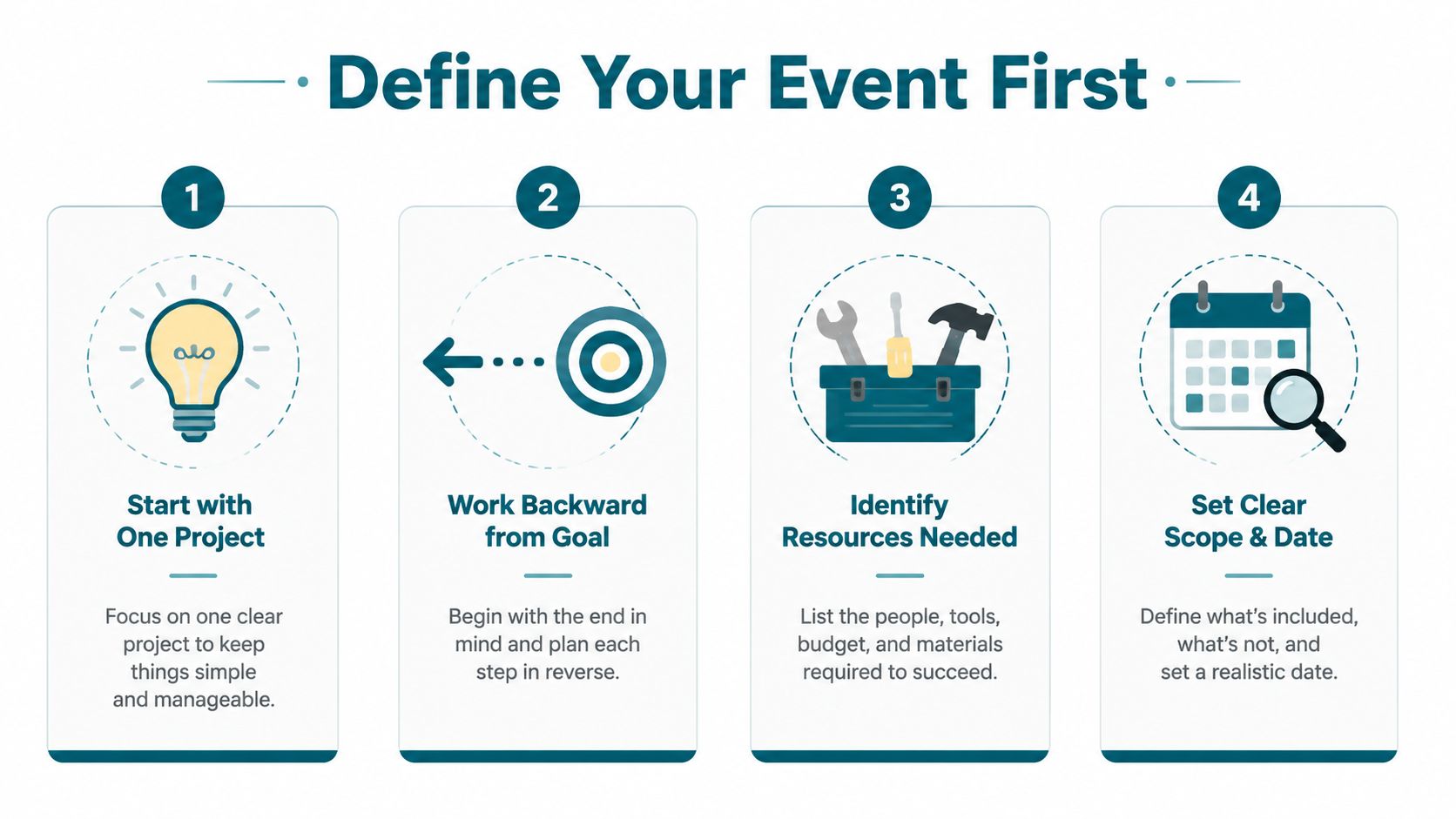
    Start with one project, not a pile of them. That rule saves you from vague planning, and it keeps the event easy to explain when someone asks what you're doing, where you're doing it, and why they should care.

    Pick the scope first

    For a neighborhood cleanup, I start with a block, a park edge, or a route I can describe in one breath. Then I write the purpose in plain language, like cleaning litter from a specific stretch, helping a partner site, or testing a new volunteer route. After that, I choose the date and time around the people I want to recruit, the neighborhood's access, and how much daylight I can count on.

    A one-page brief is enough if it answers the basics. What is the project, where does it happen, who is coming, what do they need, and what permission do I need before anyone touches the site? The UK government's voluntary-event guide pushes planners to define the purpose, size, safety and access needs, budget, publicity, day-of schedule, and cleanup before anything else, and that sequence keeps me from recruiting into a foggy plan. I've found that same order works when I'm emailing a park office, a business group, or an alderman's office, because nobody wants a soft answer about scope.

    Practical rule: lock the event before you ask for help. Volunteers forgive a lot, but they don't forgive confusion.

    Build the timeline with slack

    The planning calendar needs room for real life. A simple event-volunteer checklist recommends adding a 15 to 20 percent time buffer, and that fits the way cleanup events go, with weather shifts, last-minute cancellations, and gear delays. I use that buffer whenever I know the site has road access, tricky parking, or a partner who needs extra lead time.

    If you want a reference point for what a cleaner signup flow looks like, I also keep a plain internal guide on how to find volunteers, because recruitment works better when the event brief and the outreach message are built together. The brief tells people what they're walking into, and the message tells them why the day is worth their Saturday morning.
    A four-step infographic illustrating a process for defining an event with clear planning and project goals.

    Fill the page in under an hour

    If I can't write the event brief fast, the scope is too wide. I want a short document that names the goal, the site, the minimum permissions, the rough headcount, the budget, and the backup date logic. That is enough to move forward and still flexible enough to survive a rainy forecast.

    The trick is simple. Decide what the event is, then decide who needs to know, then ask for volunteers. When I reverse that order, I get no-shows, mixed expectations, and extra cleanup on the back end.

    Recruit Volunteers and Design Real Roles

    A signup sheet is not a plan. It's a pile of names with no shape, and that's where volunteer events start to wobble.

    Give every person a job that feels real

    I recruit where people already gather, on Meetup, Instagram, neighborhood Facebook pages, university service boards, corporate volunteer leads, and group chats that already have trust. Then I write the post like a person, not a flyer. I say what the cleanup is, where we're meeting, what kind of shoes people should wear, and what kind of energy the group has. If the post sounds like a county form, it attracts nobody.

    Then I split the work into roles. A check-in lead greets people and confirms names. A supplies lead hands out bags, gloves, and grabbers. A route lead keeps people moving through the block or park zone. A safety lead watches road edges, weather, and strain. A photo and storytelling lead gets consent and captures what the day looked like. A social lead keeps the chat alive before and after the event. Each role needs a backup, because one sick text can leave a hole.

    Keep the roles small enough that a new volunteer can say yes without guessing what the day will feel like.

    Match the role to the person

    Some people walk in talking to everybody. Put them near check-in, the welcome loop, or the route lead slot. Detail-oriented people do well on supplies or roster work. Calm, steady communicators work as team leads because they can answer questions without turning every question into a lecture.

    Role Core Responsibility Time Commitment Who Fits
    Check-In Lead Greet arrivals and confirm names Arrive early, stay through the opening huddle Friendly, fast with names
    Supplies Lead Hand out gear and track extras Early setup and end-of-day count Organized, practical
    Route Lead Keep the cleanup moving through assigned zones Full event block Clear communicator, good at pacing
    Safety Lead Watch weather, road edges, and buddy checks Full event block Calm, observant, steady under pressure
    Photo and Storytelling Lead Capture moments and note consent Flexible, part of the day Social, quick with a phone
    Social Lead Run the chat and reminders before and after Before, during, after Responsive, warm, consistent
    Backup Lead Step in if a lead drops out On call Reliable, nearby, easy to brief

    I keep a waitlist, too. If someone cancels, I don't leave the hole open and hope. I move the next person in and send a short message that tells them where to show up and who will meet them. Recruiting is a pipeline, not a post, and follow-up messages are part of the job.

    The best recruiting language sounds like an invitation, not a pitch. It should tell people they'll do something useful, meet people who care, and leave without getting trapped in a huge commitment. That's how you get first-timers to say yes.

    Build a Safety and Weather Plan You Will Actually Use

    Chicago weather has taught me not to trust optimism. I've cleaned in snow, heat, wind, rain, and the kind of cold that makes a phone battery give up before the volunteer does.

    Write the weather rules before the day

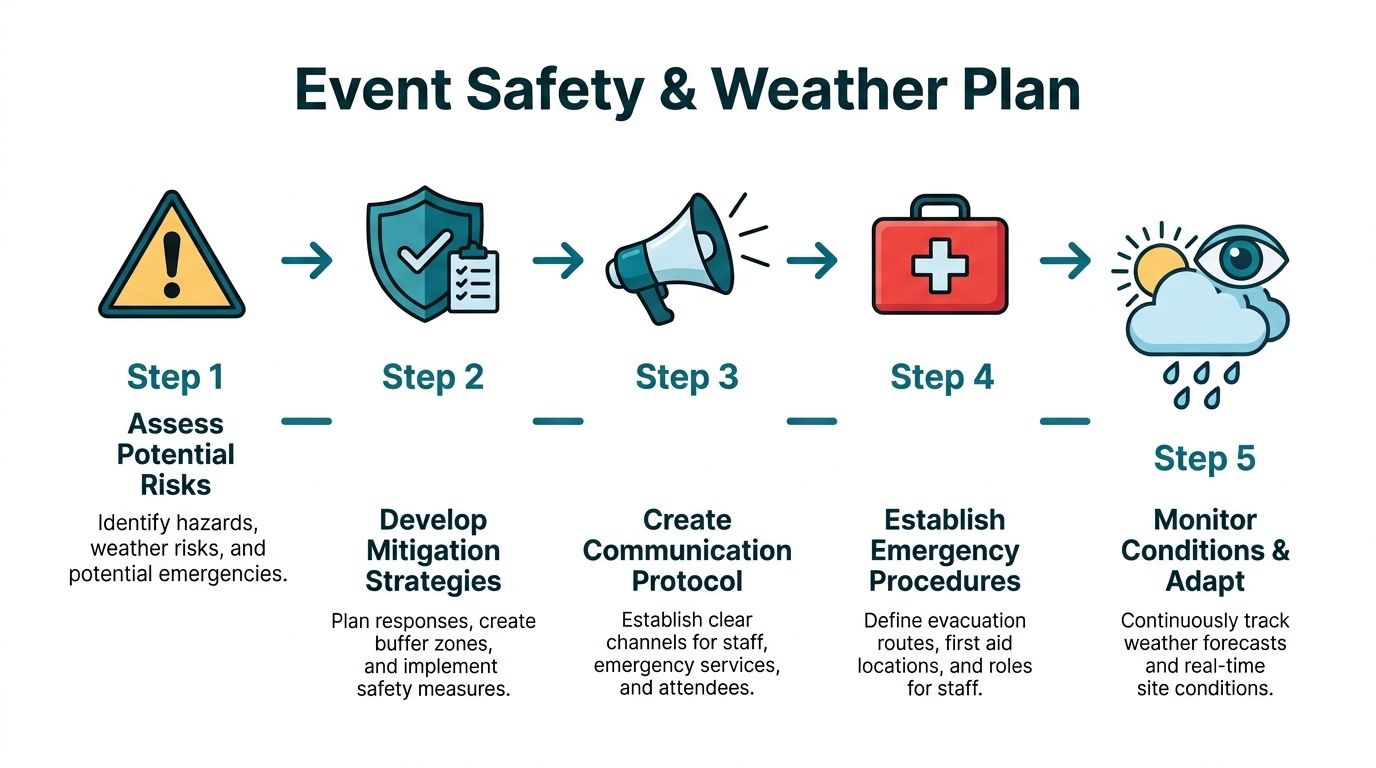
    A safety plan works when it is short enough to read at 6 a.m. I split mine into three parts. First, I write the weather thresholds for heat, cold, lightning, and rain. Second, I list the on-site rules for hydration, gloves, eye protection, sunscreen, and buddy checks. Third, I write the cancellation or pivot rule so nobody has to improvise when the forecast turns ugly.

    That matters even more for outdoor cleanup work near roads. If anyone steps onto a shoulder, I want cones, a spotter, clear permissions, and bright gear. During one highway shoulder cleanup tied to a bike-event shutdown, reflective vests and cones did more to keep people safe than any speech I could've given. The point was simple, the edge was dangerous, and everyone knew it.

    If you want a wider planning reference, the volunteer liability insurance guidance is a useful place to think through risk, because insurance, permissions, and a written safety plan belong in the same conversation.

    Use the weather to make the fallback, not to make the decision later

    One snowy cleanup ended with us huddled under a tree, cold and laughing while the cars kept sliding past. That day taught me to build a pivot into the plan, so I can move a crew to a covered park, switch to an indoor service task with a partner nonprofit, or defer to a new date with a message that goes out fast.

    The same logic helps in summer. On a hot day, gloves and water stop being optional. People tire sooner, tempers get shorter, and the day gets sloppy if I pretend the heat is a small thing. I'd rather shorten the route, add shade breaks, and keep the group moving than watch people fade halfway through.

    A five-step infographic titled Event Safety and Weather Plan outlining the process for emergency preparation.

    Keep the rules visible

    A one-page safety sheet at check-in solves more problems than a long speech. I want people to know where to meet, what to do if someone gets hurt, who carries the first aid kit, and who makes the call if the sky turns. That sheet keeps me from repeating the same instructions ten times.

    The best weather plan is the one you can use without thinking too hard. If it feels fancy, it will fail when the wind picks up.

    Run the Day With a Simple Operating System

    The event day gets easier when I treat it like a small operating system instead of a scramble.

    Use a clean sequence from arrival to closeout

    I ask the lead team to arrive 15 minutes early for gear check and setup. The check-in table gets a printed roster, name tags, and a visible place to stand so new people don't wander around wondering if they're late. Then I open with a short huddle, a route map, a safety reminder, and a clear answer to the two questions every volunteer has, where do I go and what do I do now.

    The event itself runs in short shifts, and I keep them at no more than three hours when I can, because people stay sharper when the work block feels human. That schedule also gives me room for a water break, a snack pause, and a quick correction if a route gets messy or a bag pile grows too fast. DAV's guidance on short shifts fits what I've seen in the field, because nobody volunteers for a cleanup to get trapped all day with no structure.

    The day ends with a closing huddle, a fast feedback question, a group photo if people want one, and a clear handoff of supplies. That closing rhythm matters more than people think, because it tells everyone the day had a beginning, a middle, and a clean finish.

    Keep one channel, one map, one table

    I use one group chat for the day so updates don't scatter. I print a map with zone assignments so people can move without checking their phone every two minutes. I keep one check-in table visible so nobody has to guess where to start.

    For a basic scheduling setup, I keep a simple system in free volunteer scheduling software, because any tool is better than a dozen text threads when people are arriving at different times.

    Opening huddle script: “I'm [name]. We're cleaning [site]. Your role is [role]. Stay in your zone, wear your gear, check in with your buddy, and come to me if you see a hazard or get hurt.”

    Avoid the failures that sink cleanup days

    The worst day-of failures are easy to spot. No check-in table, no printed roster, and no backup lead will turn a decent morning into a mess. I also watch for vague route calls, because people need a clear start point more than they need a motivational speech.

    A clean operating system keeps volunteers calm. Calm volunteers work longer, ask better questions, and leave with enough energy to come back.

    Turn First-Timers Into a Crew That Comes Back

    The bags are only part of the work. A cleanup becomes a group when people leave with a reason to return, and that usually comes down to how they were treated after the trash was picked up.

    Make the follow-up feel immediate and human

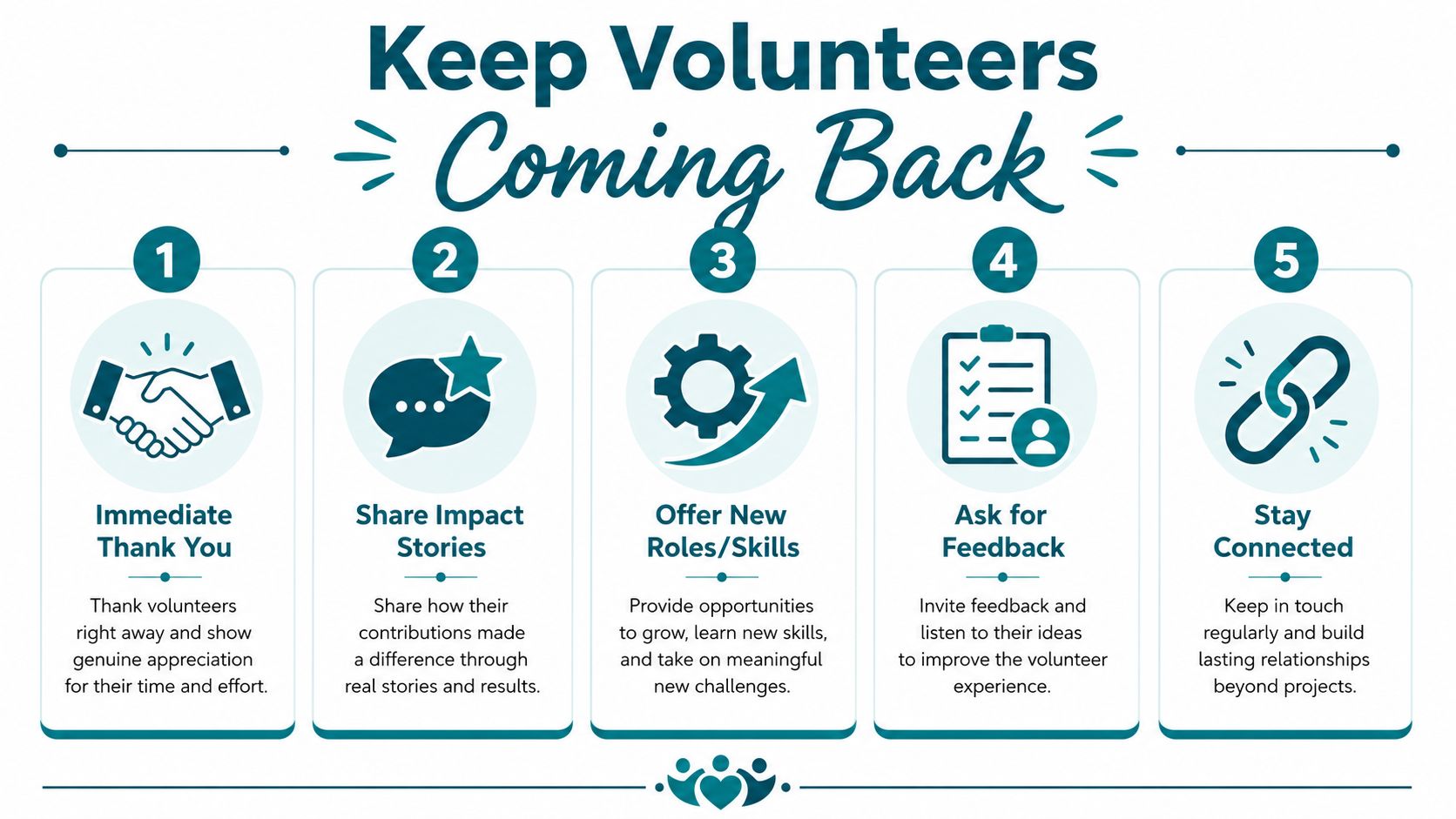
    I send a same-day thank-you in the chat while the day still feels fresh. On Monday, I post a recap photo and tag everyone who said yes to being tagged. Then I send a one-question survey that asks what was clear, what was confusing, and what would have made the day easier. Short surveys get replies because they respect people's time.

    Small rituals help here too. A flag, a badge, a theme song, or one weekly habit people recognize right away gives the crew a shared marker to come back to. That is not decoration. It gives people an identity they can carry home, and identity is what kept me showing up when the weather got ugly and my mood did the same.

    Build the social layer on purpose

    Group chats, planning threads, and quick meetups are the social scaffolding that holds the work together. They let first-timers hear from regulars before the event, and they give new people a low-pressure place to ask what to wear, where to park, and whether they need to bring anything. Public recognition helps here too, as long as it never turns into a donation ask.

    Retention habit What I do What it changes
    Same-day thank-you Send a message right after cleanup People feel seen before the day fades
    Monday recap Post photos and tag opt-ins The event stays alive in memory
    Quick survey Ask one useful question I learn what confused people
    Small ritual Use a badge, flag, or theme song People start to feel like part of a crew
    Ongoing chat Keep one open thread New volunteers have a place to return

    What holds true across volunteer programs is simple. People do not volunteer once and disappear for no reason. They return when the day feels social, clear, and worth repeating. If sponsors ask for metrics, I track recurring participation and referral rate, even if I do it in a simple spreadsheet.

    An infographic titled Keep Volunteers Coming Back outlining five tips for volunteer retention and engagement.

    Make belonging visible

    People come back when they feel known. A volunteer who gets a thank-you, a photo tag, and a place in the chat is much more likely to become a regular than someone who only gets a sign-up link and silence afterward.

    That is the part most guides skip. The cleanup is real, but the crew is the reason the cleanup survives winter.

    Your Pre-Event Checklist and a Call to Show Up

    I keep my pre-event check simple enough to screenshot.

    Category Check Before Event Day
    Scope and date One project, one site, one time
    Permissions Park, business, or city contact confirmed
    Roles and backups Every role filled, backup names set
    Supplies and gear Bags, gloves, grabbers, name tags, water
    Safety and weather Heat, cold, rain, lightning, and pivot rule written
    Communication One chat, one roster, one map
    Check-in system Table, printed list, clear arrival spot
    Follow-up plan Thank-you, recap, survey, next invite

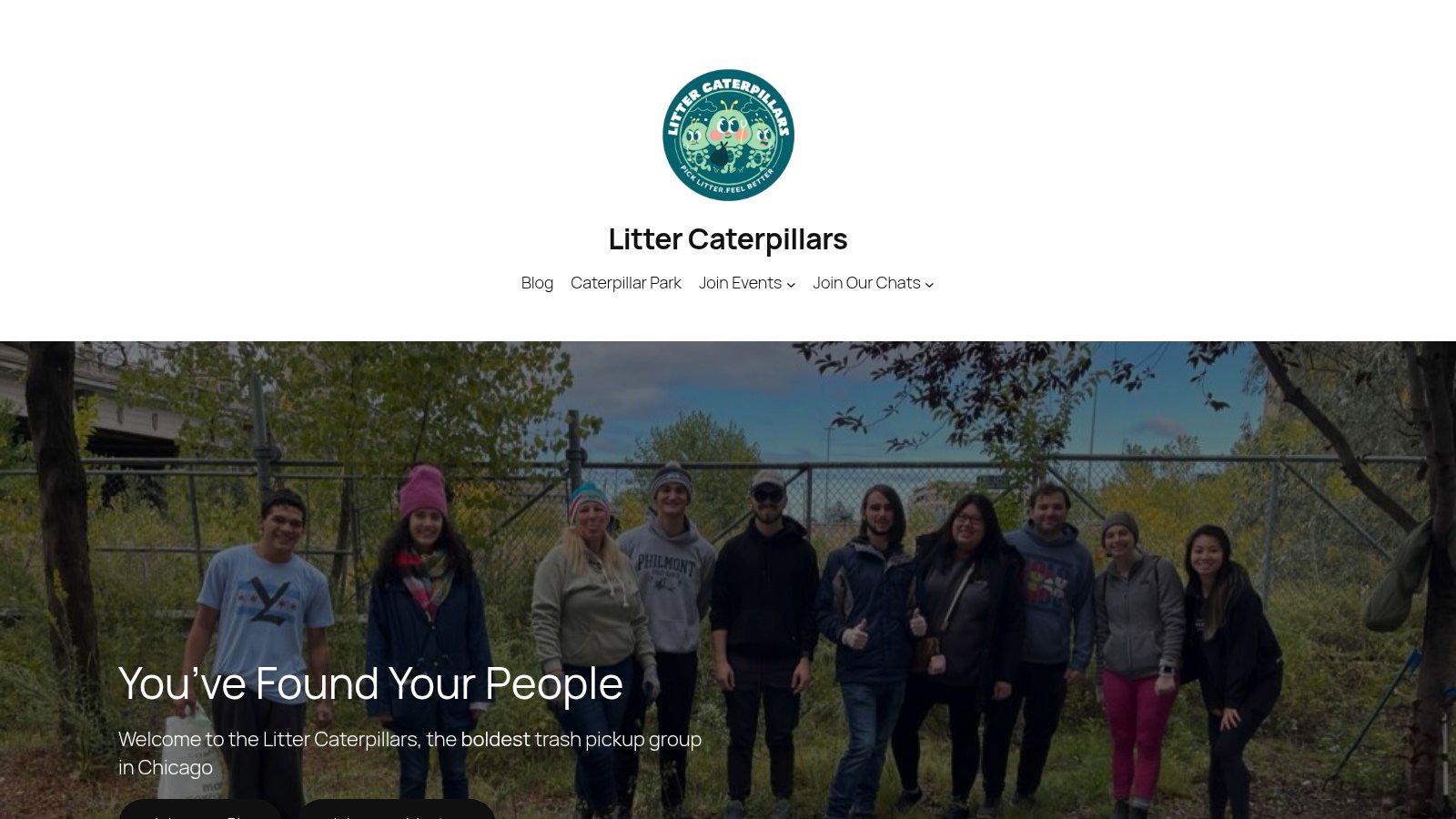
    Screenshot from https://www.littercaterpillars.com

    If you want a real Chicago example of this playbook in action, Litter Caterpillars uses weekly weekend morning cleanups, open group chats, Meetup, and Instagram to help people plug in and stay connected. Pick one project, pick one date, recruit eight people, and run it. Then fix the next one based on what happened.


    If you want a living example of volunteer event planning that puts people first, visit Litter Caterpillars. You'll see how a cleanup group can mix safety, structure, and friendship without turning the day into a boring form. If you're in Chicago and want a place to start, that's where I'd send you.

  • How to Start a Volunteer Group: Your 2026 Playbook

    How to Start a Volunteer Group: Your 2026 Playbook

    Three of us stood under a tree in a spring hail storm, shaking, waiting for Ubers that kept canceling. We had trash bags in our hands, numb fingers, and one weird thought that changed everything: cleaning other people's messes felt easier than cleaning our own.

    The Spark That Starts the Cleanup

    I didn't start with a grand plan. I started with a mess.

    My apartment was a mess, but that wasn't the hard part. The hard part was that every useless object had a little emotional hook in it. An old jar of blueberry jam from a trip years ago. A stale bag of nuts from one of those short-lived healthy phases. None of it weighed much, but in my head it was all heavy.

    Then my life blew up a bit. A chaotic relationship ended. I looked around and realized I didn't trust myself much. I wasn't consistent. I avoided hard things. I let clutter win.

    So I tried something sideways. I went outside and picked up litter.

    A woman sitting on the floor surrounded by messy paperwork with a bright lightbulb icon above.

    Why other people's messes feel lighter

    This is the part most guides miss. Service isn't only about output. It changes you while you do it.

    When you clean your own mess, shame gets involved. Memory gets involved. Regret gets involved. When you clean a sidewalk, a vacant lot, or an alley, the task is cleaner in your mind. There's a bottle on the ground. You pick it up. The story ends there.

    That simplicity matters.

    I learned a strange truth fast: cleaning other people's messes is way easier than cleaning up our own. And because it's easier, you do it. Then you finish. Then you feel useful. Then your brain starts collecting proof that you can show up and make things better.

    Cleaning public messes gave me a way to practice self-respect without staring directly at my own failures.

    That's a solid starting point for how to start a volunteer group. Your first spark doesn't need to sound noble. It just needs to be honest. Maybe you're lonely. Maybe you're angry at what you keep seeing in your neighborhood. Maybe you need structure. Maybe you need sunlight and better friends.

    Any of those reasons can work.

    Find the part that hits you in the chest

    Your group's early energy comes from one thing: a real motive. People can feel the difference between borrowed language and a lived reason.

    Ask yourself:

    • What problem makes you stop walking? Trash on your block, seniors who need rides, a park nobody uses because it feels neglected.
    • What kind of action gives instant proof? Tangible work helps. You can see a clean street, a painted fence, a stocked pantry.
    • What personal wound does this work bypass? Sometimes service opens a back door into healing.

    A volunteer group gets stronger when the founder knows why they're doing it. Not the polished answer. The true one.

    Mine was simple. I wanted to become cleaner, braver, and more consistent. I wanted to build a social circle around giving instead of taking. Picking up litter gave me a practice field.

    And weirdly, the hardship helped. The cold. The rain. The hail. Shared discomfort gave the day flavor. It turned a chore into a story.

    That story is often where your group begins.

    Find Your Mission Before You Find Your People

    A lot of people start backwards. They make an Instagram page, brainstorm names, invite friends, and only then ask what the group is for.

    That's how you end up with vague energy and weak turnout.

    If you want to learn how to start a volunteer group that lasts, get specific before you recruit. The first real move is a needs assessment. Before you write a mission statement, you must conduct a thorough needs assessment to identify what your community lacks. Given that 6.5% of the global working-age population engages in formal volunteering, your group has to prove why your use of people's time is worth choosing.

    Start with the block, not the brand

    Don't ask, “What kind of organization should I build?”

    Ask, “What is broken near me, and what can I fix with a small crew?”

    Walk your area. Take notes. Talk to the people who already live with the problem. If you care about litter, don't just say, “The city is dirty.” That's too broad. Find the repeated pain points.

    A simple needs assessment can be ugly and still work:

    1. Walk three to five target areas and write down what you see.
    2. Look for repeated patterns like overflowing corners, illegal dumping spots, or neglected park edges.
    3. Ask locals one direct question. What do you wish somebody would fix around here?
    4. Check what already exists so you don't duplicate someone else's effort.
    5. Pick one visible win your group can own.

    That's enough to start.

    Choose a problem people can feel

    Some missions are worthy but fuzzy. Fuzzy missions are harder to recruit for.

    Visible problems have an advantage. If a volunteer shows up for two hours and can see the before and after, the work lands deeper. People feel the shift in their body. The street looks different. Their hands did that.

    Practical rule: Pick a mission that a stranger can understand in one sentence and spot from across the street.

    That's one reason cleanup groups are sticky. The result is concrete. The bag fills up. The lot opens up. The curb stops looking abandoned.

    Filter for the right people

    Focus is your friend. If you try to attract everyone, you attract almost no one.

    Weekend mornings, for example, create a quiet filter. People who show up then usually want to give. They chose service over sleeping in, brunch, or a late night. That doesn't make them better. It just means they fit the culture you're trying to build.

    Your mission needs three clean edges:

    • The problem you solve
    • The kind of person you want beside you
    • The kind of energy you won't build around

    Write your mission after that.

    Keep it plain. “We clean neglected blocks every Saturday morning.” “We visit shut-ins with groceries and conversation.” “We restore neighborhood gardens one bed at a time.” Short beats fancy. Direct beats broad.

    People don't join blur. They join clarity.

    Build an Identity People Want to Join

    Plenty of groups can get a volunteer to show up once. The hard part is getting them to feel like they belong.

    Identity does that job better than logistics ever will.

    My favorite example is still that first cleanup in the hail storm. Three people. Cold hands. No easy exit. It should have been miserable. Instead, it became funny, memorable, and weirdly bonding. We suffered a little together, and the day stopped being a task. It became an origin story.

    A group needs flavor

    Most volunteer groups stop at the practical layer. Gloves, sign-up form, safety talk, group photo. Fine. You need those.

    But if you stop there, your group feels like an errand.

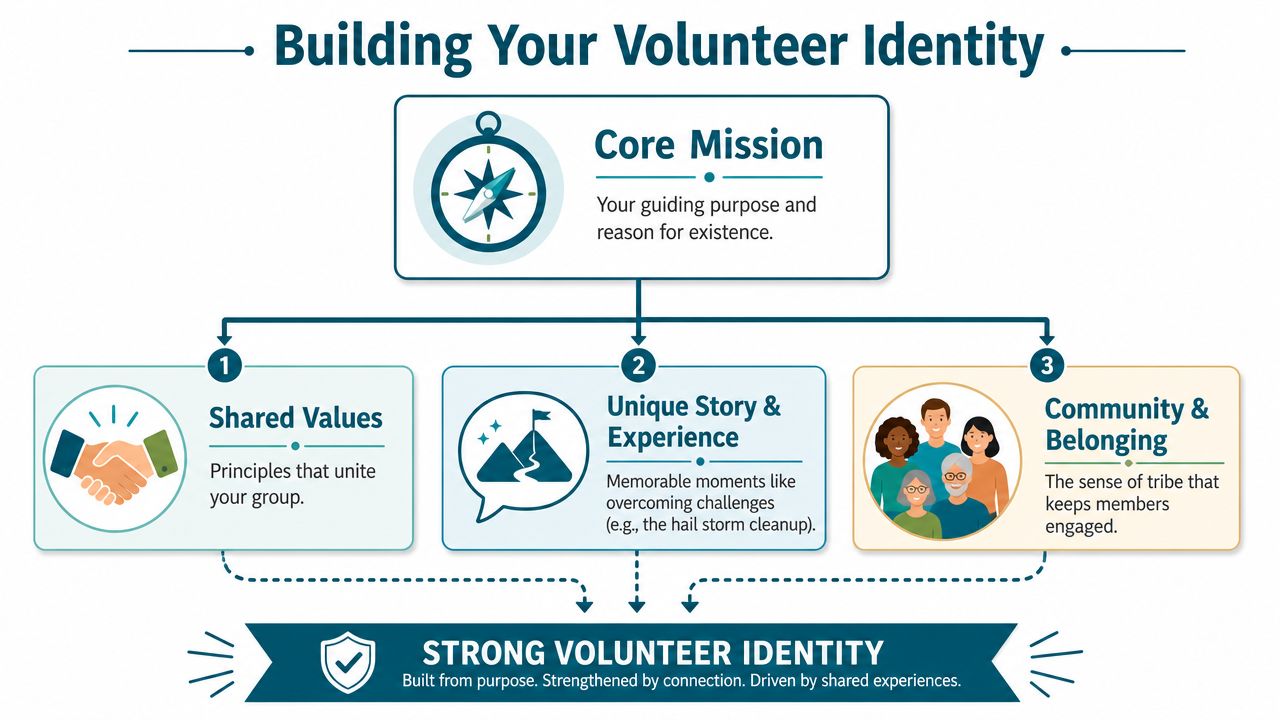
    People stay when the group has flavor. I mean a real shared feel. A logo that means something. A phrase people repeat. A song. A flag. A ritual after the event. Even a running joke. These things sound small until you watch them work.

    An infographic titled Building Your Volunteer Identity, showing the core mission supported by values, stories, and community.

    Pride rituals matter because volunteering is not only labor. It is identity. According to Stand Together's volunteering piece, groups that use badges, theme songs, and flags retain 3.4 times more participants and report 68% higher happiness scores. The same source says 79% of volunteers report higher emotional fulfillment when they tackle visible, tangible problems like litter.

    That tracks with what I've seen. People don't only want to help. They want to feel part of a story worth repeating.

    Borrow from sports, not from office culture

    Sports teams understand something volunteer groups often ignore. People love symbols.

    A jersey, chant, flag, and mascot can turn strangers into a unit fast. You don't need to become corny, but you do need to give your people something to rally around. Office culture gives people name tags and stale muffins. Teams give people colors and songs.

    Use the team model.

    Here are a few identity tools that work:

    • A repeating symbol: A patch, sticker, button, or badge gives people a visible marker.
    • A ritual start: A short huddle, motto, or group photo at the same point each event builds rhythm.
    • A hardship story: Your hail storm, flat tire, muddy cleanup, or freezing morning becomes shared folklore.
    • A playful language: Little phrases and inside jokes make the group feel lived in.

    Pride is not vanity. Pride tells volunteers, “I'm the kind of person who does this.”

    Make volunteers the heroes

    A bad group identity makes the founder the main character. A good one makes the volunteers feel like they joined a crew with a mission.

    That changes how you speak. Don't build your story around your personal sacrifice. Build it around the kind of person your volunteers become when they keep showing up.

    You want someone to leave an event thinking:

    • I'm braver than I thought.
    • I can do hard things with other people.
    • This is my kind of crowd.
    • I want the next chapter.

    That's the deeper answer to how to start a volunteer group people remember. Give the work shape. Give the group a soul. Give the hard days a story people will laugh about later.

    Gather Your First Crew and Get to Work

    Your first crew doesn't need to be big. Mine wasn't. Three people is enough to start a story.

    What matters is that people can say yes fast. If your invite reads like homework, they'll scroll past. If it feels simple, safe, and concrete, you've got a shot.

    Screenshot from https://www.littercaterpillars.com

    Start with direct invitations

    Don't hide behind branding. Text people.

    A first invite should answer five things in plain English: what, where, when, why, and what to bring. Meetup, Instagram, and group chats are enough at the start. You don't need a polished funnel. You need clear words and a real event.

    Here's the shape I like:

    • What we're doing: “Neighborhood trash pickup”
    • Where we're meeting: “Corner of X and Y”
    • When: “Saturday at 9 a.m.”
    • Why it matters: “This block keeps getting ignored”
    • What to bring: “Closed-toe shoes, water, clothes you don't mind getting dirty”

    That's it.

    If you want more ideas on messaging and channels, this guide on volunteer recruitment strategies is a useful place to compare outreach approaches.

    Recruit by role, not by vague enthusiasm

    People respond better when they know the lane they're stepping into.

    That's especially true across age groups. When recruiting, know your audience. 27.2% of Gen X leads in formal volunteering, which makes them a strong fit for structured roles, while 58.7% of Baby Boomers lead in informal helping, which makes them a strong fit for flexible, ad-hoc actions.

    So don't post one mushy invitation and hope for the best. Match the ask to the person.

    A practical split looks like this:

    Group Better ask Example
    Gen X Structured roles Weekly route lead, supply organizer, check-in helper
    Baby Boomers Flexible actions Drop-in cleanup, snack support, one-off neighborhood push
    Students and young professionals Social plus visible work Morning cleanup followed by coffee
    Existing friends Starter roles with low friction Bring gloves, invite one person, help collect bags

    Plan day one like a small field operation

    The first event should feel easy to enter. I like a short script.

    1. Meet at a location people can find without confusion.
    2. Greet everyone by name.
    3. Hand out supplies fast.
    4. Give a short safety talk.
    5. Split into pairs or small teams.
    6. Set a clear end time.
    7. Take one group photo.
    8. End with a quick recap and casual hangout if people want it.

    You don't need to impress people. You need to remove uncertainty.

    If volunteers spend the first twenty minutes wondering what's happening, you've already lost energy you may not get back.

    A good first event also has a visible finish line. Don't try to clean an entire neighborhood on day one. Pick one stretch, one lot, one alley, one park edge. Let people experience completion.

    Here's a look at the kind of field energy that gets people moving:

    Keep the ask honest

    I've learned to avoid overpromising. Don't tell people they're joining a movement if you've never run a cleanup before. Tell them the truth.

    “We're starting small.”
    “We're trying this consistently.”
    “We're building a good crew.”
    “We want this to be useful and fun.”

    That honesty helps the right people trust you.

    And one more thing. End on time.

    A volunteer who gives you two clean hours and leaves smiling is more likely to come back than a volunteer trapped in a sloppy four-hour marathon. Respect the edge of people's energy. That's one of the oldest rules in the game.

    Create a Safe and Simple Structure

    A volunteer group falls apart in boring ways. Confusing sign-ups. Missing waivers. No safety rules. No one knows who is in charge. A new person arrives and just sort of stands there.

    That's avoidable.

    The structure you build is not bureaucracy. It is care. It tells people, “Your time matters. Your body matters. We thought about your first day before you got here.”

    Make joining easy

    The front door matters more than people think. A registration process that takes more than 3 minutes increases volunteer dropout by 45%, and 32% of early volunteer burnout comes from people feeling their role is meaningless according to CivicPlus on creating an effective volunteer program.

    That means your sign-up should feel almost frictionless.

    Use a simple mobile-friendly form. Ask only what you need. Name, contact info, emergency contact if relevant, and anything tied to safety. Don't bury people in fields and legal language before they've even met you.

    Then follow fast with a clear message:
    where to go, what to wear, what to expect, who to contact if they're lost.

    Give every person a role with edges

    A volunteer burns out faster when the role feels foggy. “Come help however” sounds relaxed, but it often creates confusion.

    People feel better when they know where they fit. Keep roles simple:

    • Greeter: Welcomes people and checks names
    • Safety lead: Reviews hazards and watches pace
    • Supply runner: Manages gloves, bags, grabbers, water
    • Route lead: Knows the area and keeps the team together

    That doesn't mean you need a huge hierarchy. It means each person can answer one question: what am I doing today?

    If your work carries physical risk, get smart about it. Review your legal setup, waivers, and coverage early. This overview of volunteer liability insurance is a practical starting point for thinking through protection.

    Your First Cleanup Event Checklist

    Category Item Notes
    Planning Meeting point Pick a place that is easy to find and easy to leave from
    Planning End time Tell people when the event ends before work starts
    Safety Gloves Bring extras in multiple sizes
    Safety Closed-toe shoe reminder Send this before the event, not at the event
    Safety Hazard policy Tell volunteers what they should never pick up
    Supplies Trash bags Bring more than you think you need
    Supplies Grabbers or pickers Helpful, but not required for a first event
    Supplies Water Keep extra on hand
    Communication Group chat or text thread Use one channel so updates don't scatter
    Onboarding Quick briefing Explain the route, the goal, and who to ask for help
    Onboarding New volunteer buddy Pair first-timers with someone calm and friendly
    Wrap-up Disposal plan Know where the collected trash goes before you start

    Field rule: If a first-timer doesn't know where to stand, what to do, or what matters, your system is too loose.

    Written policies calm people down

    Written policies sound formal, but they remove tension. Put basic rules in one place. Weather policy. Safety boundaries. Photo consent. Conduct expectations. What happens if someone finds a needle or other dangerous item. What to do if a volunteer feels sick or unsafe.

    Keep the tone human. Short sentences. Real examples.

    A simple structure lowers anxiety. And lower anxiety gives you more energy for the work itself.

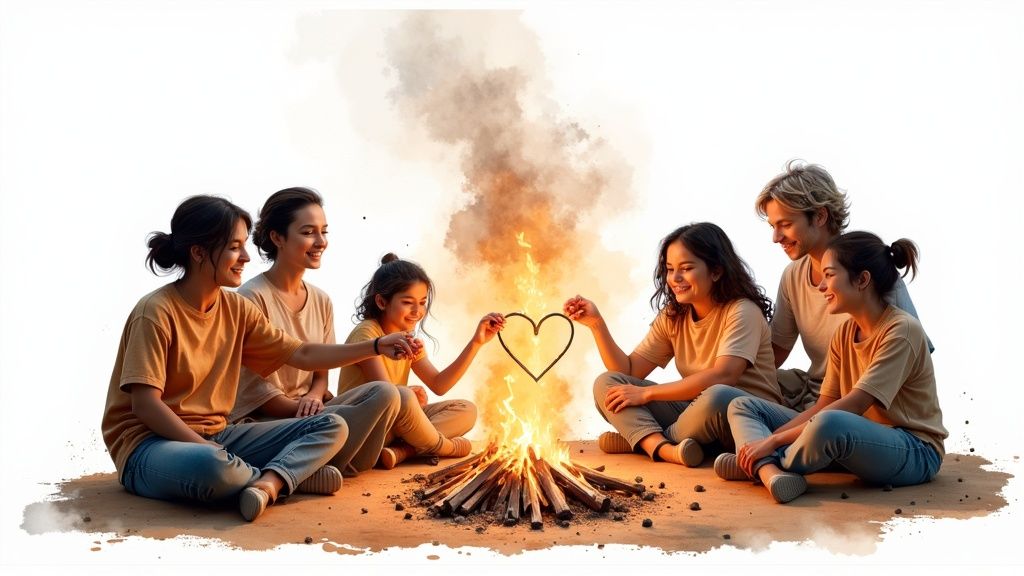
    Keep the Fire Burning with Friendship and Purpose

    Starting is exciting. Staying steady is harder.

    A group lasts because people build habits and relationships around the mission. If your volunteers only feel useful, they may drift away. If they feel useful and connected, they start protecting the group with their own effort.

    Consistency beats intensity

    I like weekly rhythms. Same morning. Same general pattern. People begin to build their life around it.
    That consistency creates trust. It also lowers the mental cost of showing up. Nobody has to wonder when the next chance is. They already know.

    To keep that rhythm healthy, you must develop written policies for safety and consistency, and prepare training that gives volunteers space to ask questions and hear the rules clearly, as explained by VolunteerMatters on starting a volunteer program.

    That kind of structure doesn't make a group stiff. It makes the group dependable.

    Friendship is retention in human form

    I don't think money is the main fuel in volunteer work. Energy is. Attention is. Trust is. Friendship is.

    People come back when they know somebody will smile when they arrive. They come back when there's a shared joke, a post-cleanup coffee, a familiar walking partner, a sense that they'd be missed.

    If you want practical ways to keep people engaged over time, these volunteer retention strategies are worth reading alongside your own observations.

    Try a few simple habits:

    • Celebrate small wins: Name the block you finished, the lot you cleared, or the story from the day.
    • Protect volunteer energy: Don't guilt people. Don't pressure them for money. Don't treat goodwill like an unlimited resource.
    • Leave room for conversation: A few unhurried minutes before or after the event often matters more than one more bag of trash.

    A volunteer group becomes durable when people join for the mission and stay for the friendships.

    Keep reminding people who they are becoming

    The work changes people slowly. That's one of my favorite parts.

    Someone who felt shy starts greeting new volunteers. Someone who never woke up early starts protecting Saturday morning. Someone who felt stuck starts trusting themselves because they kept one promise over and over.

    That's the deeper reward. You clean a street, sure. But you also practice courage, consistency, and care in public with other people. Done long enough, that starts to spill into the rest of life.

    If you're thinking about how to start a volunteer group, start smaller than your ego wants and with more heart than your spreadsheet wants. Then keep showing up. The group will teach you what it needs next.


    If you want a real-world example of this kind of work in motion, visit Litter Caterpillars. You'll find a volunteer-driven cleanup group built on bravery, kindness, friendship, and the belief that service can change a block and the person holding the trash bag.

  • Social Media for Volunteer Recruitment: A Practical Guide

    Social Media for Volunteer Recruitment: A Practical Guide

    Three of us stood under a tree in a Chicago hailstorm, holding trash bags and laughing because every Uber kept canceling. We were cold, soaked, and weirdly happy. That day taught me more about social media for volunteer recruitment than any polished marketing advice ever could.

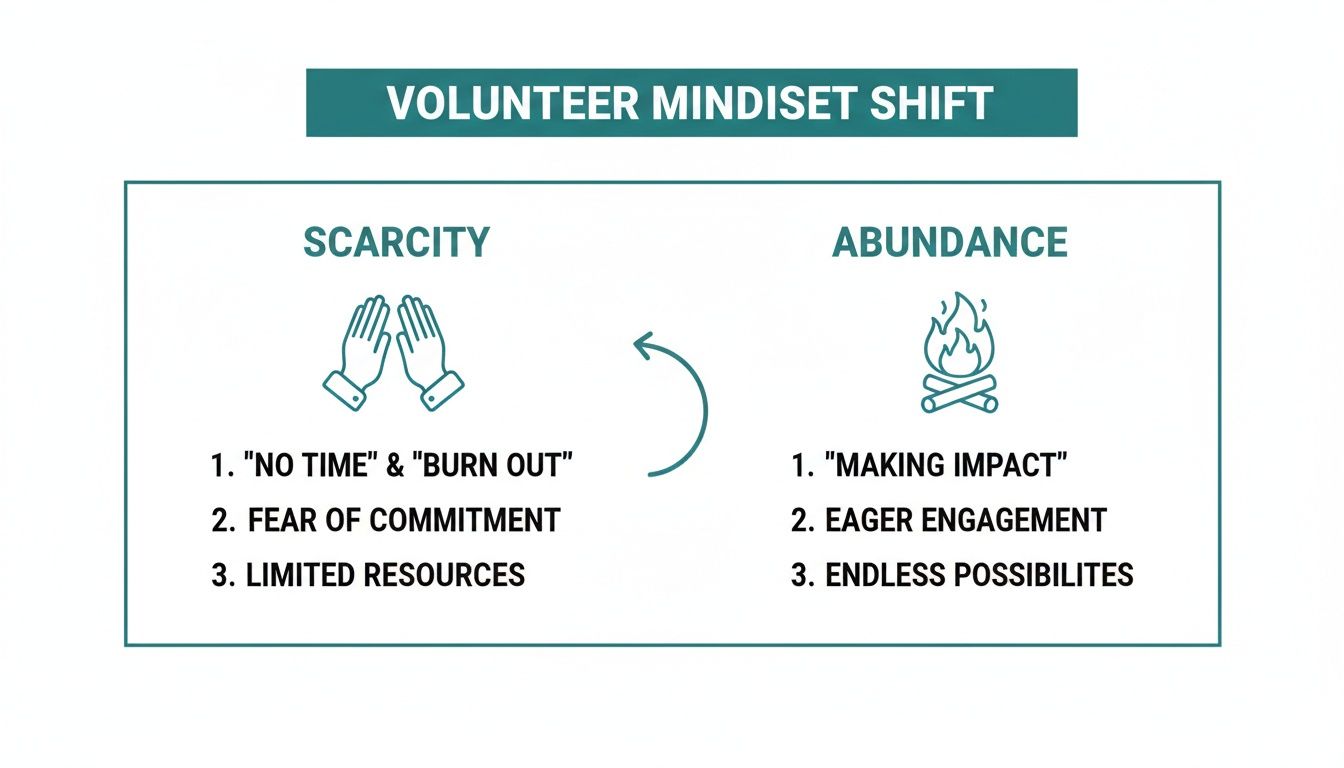
    Your Cause Is a Campfire Not a Help Wanted Ad

    I started cleaning the city because I couldn't clean my own life.

    My apartment had turned into a museum of stalled intentions. Old food in the fridge. Forgotten bags from abandoned health kicks. Random junk with too much emotional weight attached to it. A piece of trash can weigh almost nothing in your hand and still feel impossible to move.

    Then I picked up litter on a sidewalk, and it felt easy.

    That shocked me. Cleaning my own mess felt loaded with shame, memory, and self-judgment. Cleaning the city's mess felt clear. It felt useful. It even felt playful. I wasn't trying to become some perfect person. I was just outside, doing one good thing with other people.

    That's the first lesson I want to hand you. People don't join a volunteer group because your flyer says you need help. They join because your cause gives them a way to become someone they want to be.

    Stop posting jobs and start telling a story

    A lot of volunteer posts sound like this:

    • Need-focused: We need ten people Saturday
    • Task-focused: Bring gloves, arrive at nine, cleanup is two hours
    • Organization-focused: Our group is doing important work

    That isn't wrong. It's just thin.

    If I had posted only that, I would've attracted people looking for an errand, not people looking for belonging. And errands are easy to skip.

    A campfire works differently. A campfire gives people warmth, light, and a circle to step into. Your social media has to feel like that. It has to say, "Come stand with us. This is what kind of people we are when things get hard."

    Practical rule: Show your mission through a human moment. Wet shoes. Muddy gloves. A new friend. A before-and-after curb. That's what people remember.

    People want transformation more than instructions

    I care about bags, grabbers, timing, and logistics. You should too. But none of that is the true draw.

    This is the draw: service lets people bring order to chaos. It gives shape to a drifting week. It lets someone who feels stuck do one brave thing before noon.

    That matters right now because the old ways of recruiting aren't enough. Formal volunteering in the U.S. fell from 30% in 2019 to 23.2% in 2021, and almost half of nonprofits say finding enough volunteers is a big problem, according to the Council of Nonprofits volunteer data summary.

    So yes, use social media. Use it hard. That's where people already are.

    But don't use it like a digital bulletin board. Use it like a fire signal.

    The post I'd write now

    If I wanted strangers to feel what we are about, I wouldn't start with "seeking volunteers."

    I'd post a photo of a small group in bad weather, smiling anyway. Then I'd write something like this:

    We got pelted by hail, our rides bailed, and the street still got cleaner. If your week has felt heavy, come help us carry something simple. One bag at a time.

    That's different from recruitment copy. It has a pulse.

    Your cause isn't a help wanted ad. It's a place where people come to practice courage, friendship, and usefulness. If your social media doesn't show that, you'll keep attracting weak interest from people who were never going to stay.

    Find Your People Before You Post Anything

    Weekend mornings tell the truth.

    If you schedule your events for a sleepy Sunday morning, you're saying something about the kind of culture you want. You're choosing people who wake up and give. You're filtering for steadiness. You're telling the world, without saying a word, "This group is for builders."

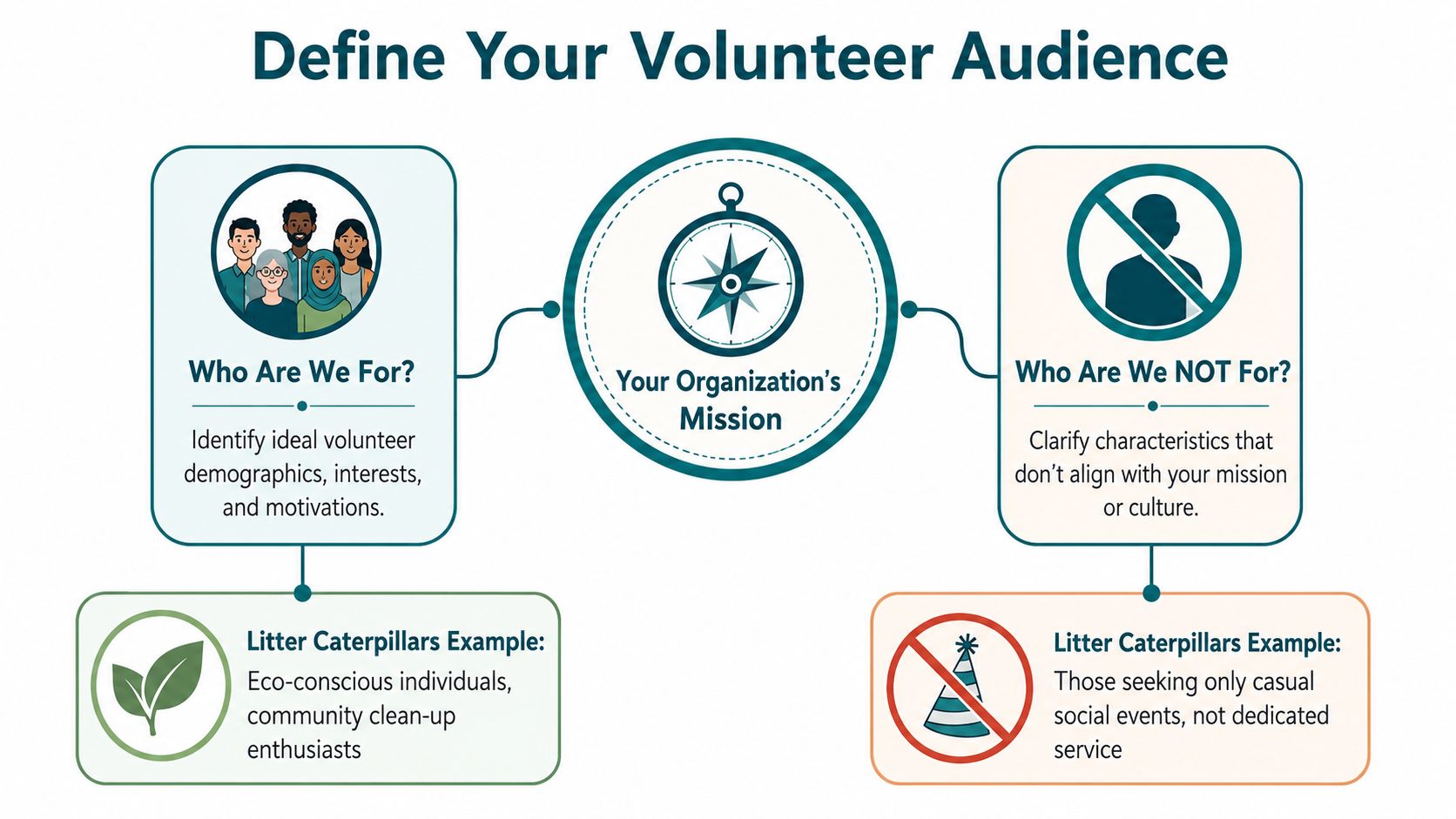
    That's how I think about volunteer recruitment. Before captions, hashtags, or platform choice, I ask one harder question. Who are you trying to call in, and who are you willing to leave out?

    A diagram illustrating how to define a volunteer audience by aligning with an organization's mission and goals.

    Your audience is a values decision

    Most groups define volunteers by age, neighborhood, or free time. That helps a little. It doesn't go deep enough.

    I want to know what someone is hungry for.

    Do they want fresh air? Structure? New friends? A reason to put their phone away? A chance to be useful? A safer way to meet kind people than a loud bar or a random networking event?

    When you know that, your social media changes. Your words sharpen. Your photos get better. Your event format gets cleaner.

    Here is the filter I like:

    • People I want more of: generous, curious, a little adventurous, willing to wake up, willing to help
    • People who probably won't fit yet: people looking only for entertainment, clout, or a casual drop-in with no real interest in service
    • People on the edge: shy followers, new residents, students, young professionals, people who want community but need a gentle door in

    That last group matters. They may never respond to a cold "volunteer now" post. But they may watch your Stories for weeks. They may like every group photo. They may send one small reply like, "This looks fun." That's not nothing. That's the beginning.

    Social media warms the room

    A lot of people treat social media for volunteer recruitment like a vending machine. Insert post, receive volunteer.

    That isn't how it usually works.

    One piece of guidance I keep coming back to says the true power of social media may be in trust-building before the ask, and asks a better question: which content sequence turns passive followers into dedicated community members? You can read that framing in this VolunteerHub piece on recruiting volunteers on social media.

    That matches what I've felt on the ground. Individuals rarely become volunteers because one graphic told them to sign up. They become volunteers because your account keeps showing them a world they want to enter.

    Your page should feel like a front porch. People linger there before they walk inside.

    Make your message volunteer-first

    Volunteer-first means I don't treat people as labor inventory. I treat them as the mission's living core.

    That changes the message.

    Instead of saying, "We need people to fill spots," say:

    • Identity-driven: We clean together every week, rain or shine
    • Feeling-driven: You'll meet grounded people and leave with your head clearer
    • Safety-driven: We make it easy to join, ask questions, and know what to expect

    If you need help shaping that kind of message, this guide on how to find volunteers is a useful place to compare your own approach against a volunteer-first frame.

    A sharp audience creates sharp content

    If your group is for brave, kind, service-minded people, your content should repel the wrong fit a little.

    That's healthy.

    You do not need everyone. You need your people. The ones who feel relief when they see a Saturday morning cleanup instead of another empty invitation to consume, scroll, and disappear.

    A Social Media Playbook for Finding Volunteers

    If you try to post everywhere, you'll burn out and your pages will feel hollow.

    I would rather see one strong Instagram account and one reliable event home than five neglected platforms. For most volunteer groups, Instagram and Facebook are the power players, and guidance recommends focusing on one or two platforms well, with short-form video and volunteer-created visuals beating text-only posts. That advice appears in this VolunteerHub article on high-impact marketing channels for recruiting volunteers.

    For a local group, I like this setup:

    • Instagram: emotion, proof, group personality
    • Meetup or your event page: logistics, dates, sign-up path
    • Facebook: local reach, resharing, community visibility

    Build your content around values

    At Litter Caterpillars, the strongest posts aren't random updates. They're expressions of values. Bravery. Kindness. Unity.

    That gives you a simple system.

    Bravery posts

    These are your rain posts, cold posts, awkward-first-time posts, and "we showed up anyway" posts.

    Examples:

    • A Reel of volunteers cleaning in ugly weather
    • A photo of a tough block before cleanup with a caption about courage
    • A short clip from the walk to the site, with someone saying they almost didn't come

    These posts work because they show that service has texture. It isn't sterile. It asks something of you.

    Kindness posts

    These are quieter. A newcomer being welcomed. Shared snacks after the event. Someone lending gloves. A caption about how a volunteer had a rough week and felt better after being outside with the crew.

    Kindness content tells shy people, "You will be safe here."

    Unity posts

    Use these when the group itself is the story.

    Try a big post-cleanup photo. Try a carousel where each slide introduces one volunteer. Try a clip of everyone hauling filled bags together. If you work across neighborhoods, show that too. Different blocks, same spirit.

    Field note: The more your content centers volunteers instead of the organization, the easier it is for a stranger to imagine joining.

    What to post on Instagram versus your event page

    Instagram is where people feel your vibe.

    Meetup or your event listing is where they answer practical questions without stress.

    Don't mix those jobs too much.

    Day Content Pillar Post Idea (Instagram) Platform
    Monday Bravery Reel from a tough-weather cleanup with a caption about showing up Instagram
    Tuesday Kindness Volunteer photo and short story about a first-timer feeling welcome Instagram Stories
    Wednesday Unity Group photo with faces, names, and a simple invite for the weekend Instagram
    Thursday Logistics Event post with meeting point, what to bring, and what to expect Meetup
    Friday Credibility Volunteer-generated photo repost with their own caption Instagram Stories
    Saturday Live energy Short clips from the cleanup, bags filled, smiles, neighborhood scenes Instagram Stories
    Sunday Reflection Before-and-after carousel and next event reminder Instagram and Facebook

    On Instagram, use the feed for identity and memory. Use Stories for immediacy. Stories can answer common questions, repost volunteer tags, run a poll, or show weather conditions on the morning of the event.

    On your event page, write like a calm host. Tell people where to meet, what they'll do, what gear is provided, how long it lasts, and what the social vibe is like. If the event has a little adventure in it, say so. If beginners are welcome, say so plainly.

    If you want more ideas for structuring the whole system, this roundup of volunteer recruitment strategies gives a broader menu of approaches beyond social content alone.

    Use volunteer-made content whenever you can

    Your own posts matter. Posts from volunteers matter more.

    Ask people to send one photo, one quick reaction, or one clip after each event. Repost them. That's the social proof that doesn't smell like marketing.

    A volunteer saying, "I came alone and left with friends" beats ten polished graphics.

    Keep the call to action light and clear

    Every post doesn't need a hard ask.

    Some posts should build trust. Others should point to the next step. When you do ask, make it simple:

    • Soft ask: Want to come next time? Reply and I'll send details.
    • Direct ask: Join us Saturday morning. Sign up in the event page.

    • Friend ask: Bring one friend who needs fresh air and a reset.

    That mix matters. If every post shouts, people tune out. If no post invites action, people stay spectators.

    Turning a Like into a Lifelong Volunteer

    The first time someone from Litter Caterpillars showed up after weeks of observing our posts, she told me something I never forgot.

    "I liked three photos, opened the event page twice, and almost talked myself out of coming."

    She did come. She arrived early, stood near the edge of the group, and kept looking like she might bolt. One of our regulars handed her a grabber, asked what part of town she was from, and stayed with her for the first ten minutes. By the end of the cleanup, she was laughing over coffee with people she had met that morning. A month later, she brought her brother. A season later, she was welcoming new people herself.

    That is what social media is for. It is not just a billboard. It is a trailhead.

    Screenshot from https://www.littercaterpillars.com/

    Start with a real conversation

    A like is small, but it is still a signal. Someone is leaning closer.

    Treat that moment with respect. If a person replies to a Story with "this looks awesome," answer the way a good host answers at the front door. Warm, clear, and relaxed.

    I usually send something like this:

    "Glad it caught your eye. We meet on weekend mornings, and first-timers are common. If you want, I'll send the next event details and tell you what the morning usually feels like."

    That works because it answers the question under the question. People are rarely asking only about time and place. They are asking if they will feel stupid, alone, underprepared, or out of place.

    So answer that part too.

    Give nervous people a quieter way in

    Public commitment scares people off. A comment on a post can feel exposed. Showing up alone can feel bigger than the task itself.

    A message thread, an Instagram chat, or a small event group gives people a place to test the waters before they dive in. That is where significant conversion often happens. Someone asks if they need gloves. Someone else asks whether it is okay to come late. Another person admits they have never done anything like this before.

    Good. Those questions mean they are picturing themselves there.

    If a person has to choose between mild embarrassment and staying home, staying home usually wins.

    Remove friction from the handoff

    A lot of groups lose people in the gap between interest and attendance. The post works. The follow-up fails.

    At Litter Caterpillars, we learned to keep the handoff boring in the best possible way. No maze of forms. No five-paragraph reply. No mystery about what the day will feel like. The job is to carry the spark from the screen to the sidewalk before life interrupts.

    Keep that path clean:

    1. Reply while the interest is fresh
    2. Send one clear next step
    3. Say what first-timers should expect
    4. Tell them a real person will greet them
    5. Send a short reminder the day before

    Short beats impressive here. Clarity beats polish.

    The first shift is the real recruitment moment

    Signing up does not make someone part of your community. Their first experience does.

    I have watched this go right, and I have watched it go wrong. When a new volunteer arrives and nobody notices for five minutes, you can almost see the door closing in their mind. When someone greets them by name, introduces them to two steady people, gives them an easy first win, and checks in halfway through, their shoulders drop. They start acting like they belong because, for that morning, they do.

    That first shift needs shape. Greet them fast. Pair them with someone kind. Give them a task that lets them succeed early. Thank them before they leave. If your group hangs around afterward for coffee or a chat on the curb, invite them into that too. A lot of people decide whether to return during the informal twenty minutes after the official work ends.

    This is the volunteer-first philosophy in practice. You are not filling a slot. You are helping a person cross from observer to participant, from participant to regular, from regular to someone who brings others along.

    That is how a movement grows. One human welcome at a time.

    Create a Tribe People Want to Join

    Tom Sawyer got other kids excited about painting a fence because he turned a chore into identity.

    That's not manipulation when the thing is good. That's leadership. If service feels dead, people avoid it. If service feels alive, people wear it proudly.

    A diverse group of cheerful volunteers painting a vibrant mural featuring the text Stronger Together outdoors.

    Symbols matter because people matter

    Flags. Badges. Group photos. Running jokes. A theme song. Shared phrases. These are not fluff.

    They give people a way to say, "I belong here."

    When a volunteer posts a photo holding your flag or wearing something tied to the group, they're doing more than sharing an event. They're trying on an identity. That identity spreads faster on social media than any formal recruitment message.

    A tribe has signs of life. You should build them on purpose.

    • Visible symbols: shirts, stickers, badges, flags, repeated visual motifs
    • Shared rituals: same meetup rhythm, group photo, coffee after, a recurring sign-off phrase
    • Retellable stories: the freezing cleanup, the muddy shoes, the impossible block that looked different by noon

    Partnership posts widen the circle

    A tribe gets stronger when the city can see it.

    Tag the coffee shop near your cleanup. Thank the alderman's office if they supported access. Repost local businesses that share your event. Invite neighborhood groups into the frame. Social media for volunteer recruitment gets more believable when people see your group woven into real streets and real relationships.

    That kind of outreach doesn't need corporate polish. It needs sincerity and consistency.

    If you want a broader framework for keeping people involved after they show up, this guide on volunteer engagement strategies is worth a look.

    A simple video can help push that identity further:

    Pride isn't vanity

    A lot of good-hearted groups are afraid of pride. I think that's a mistake.

    Pride is what makes people invite friends. Pride is what makes someone post after a long morning with sore hands and say, "I did this." Pride is what turns a volunteer from an occasional helper into a carrier of the culture.

    If you want people to join, build something worth identifying with.

    Measure What Matters Growth and Guts

    One Saturday, a cleanup photo from Litter Caterpillars took off.

    Comments poured in. Shares climbed. A dozen people sent heart emojis and wrote, "Love this." It felt like the page had caught fire. Then Sunday came, and only two new volunteers showed up.

    That was a useful bruise.

    Social media can make noise feel like progress. Movements grow on something harder. People who register. People who arrive. People who come back with a friend.

    An infographic showing a funnel diagram illustrating the stages of a volunteer recruitment process on social media.

    Track the full journey

    A post is only the first footstep.

    What matters is the path after that. Did someone click the event page? Did they sign up? Did they stand on the corner at 9 a.m. in old shoes, wondering if they knew anyone yet? Did they leave feeling more like a stranger, or more like they had found their people?

    You do not need a fancy dashboard to see the truth. Start with one plain measure: the share of applicants who show up. As noted earlier, volunteer programs often compare that conversion point because it exposes where the drop happens.

    Then go one step further and follow the full chain.

    If plenty of people view the event but few sign up, the invitation is weak or unclear. If people sign up but disappear before the event, the follow-up is weak. If they attend once and vanish, the problem is not your captions. The experience itself did not give them a reason to return.

    The scoreboard I care about

    I keep coming back to four numbers.

    Metric Why it matters
    First-time volunteers Shows whether your stories and invites are bringing in new people
    Showed up for first shift Shows whether registration, reminders, and logistics are clear
    Returned again Shows whether the experience felt meaningful enough to repeat
    Brought a friend Shows whether the culture is strong enough to spread

    The last two matter most.

    A volunteer list can grow and still stay fragile. A tribe gets stronger when people return without being chased, then pull someone else into the circle. That is how a neighborhood group starts to feel less like an event calendar and more like a living thing.

    Count the people who came back. Count the people who invited someone. That is where the guts of your community live.

    Face the hard answer

    Sometimes your social media is not the problem.

    Sometimes the meeting point is confusing. Sometimes new people arrive and nobody greets them. Sometimes the work feels so transactional that people leave with a full trash bag and an empty heart. I have seen all three. None of them get fixed by posting more often.

    That is the hard part of measurement. It asks for courage, not vanity.

    Use whatever event hub you already have, whether that is Meetup, Facebook Events, or another community platform. Then check whether a first-timer can find three things in seconds: what this is, how to join, and what to expect when they arrive.

    Growth matters. Guts matter more.

    Follower counts can impress outsiders for a minute. Return volunteers build the culture, carry the story, and keep the campfire burning when the algorithm moves on.

  • 10 Volunteer Management Best Practices That Actually Build Community in 2026

    10 Volunteer Management Best Practices That Actually Build Community in 2026

    I'll tell you a secret. The hardest mess I ever cleaned wasn't on some grimy Chicago street corner. It was inside my own apartment, inside my own life. My refrigerator was a grotesque museum of expired dreams, my social life just as chaotic. Every piece of trash I couldn’t toss out held a story, a weight I couldn't seem to shift. It took the painful end of a draining relationship for me to finally see it: I had to change everything.

    I decided to build a life around givers, not takers. To face the things that terrified me most—cleanliness, consistency, bravery. So I started Litter Caterpillars. Just me and two friends in a freak Chicago hailstorm. As we shivered under a tree, a thought struck me like lightning. Cleaning up other people's messes is so much easier than cleaning up our own. And suffering together? It creates an unbreakable bond. It pushes the plot of your life forward.

    That's the real heart of what we do. It’s not about trash. It’s about transformation. Most volunteer programs feel like a cold transaction, a chore you just check off a list. They get it so wrong because they miss the human part, the deep craving for connection and purpose that drives every single one of us. They manage tasks. We lead people.

    This article isn't some dry, corporate checklist. It's our playbook. It was forged in blizzards and brutal heatwaves, a guide for building a volunteer movement that people are genuinely proud to join. We'll dive deep into the 10 volunteer management best practices that turned my personal mess into a city-wide mission. These aren’t just theories. They are the exact strategies I used to grow a tiny group of friends into a powerful community force, creating a space where people find friendship, purpose, and a renewed sense of who they are. Let's get it right, together.

    1. Clear Mission and Values Alignment

    Before you dare post a single sign-up sheet or send one email, you have to answer a powerful, one-word question: Why? I’m not talking about what you do, like picking up litter. I’m talking about the heart thumping behind the work. One of the most critical volunteer management best practices I know is forging a crystal-clear mission and aligning every single action with your core values. This is your organization's soul. It's the magnetic force that pulls the right people straight to you. It’s the difference between asking someone to fill a garbage bag and inviting them to reclaim a neighborhood's spirit.

    At Litter Caterpillars, my mission isn't just "clean Chicago." It’s about transformation. I believe that by cleaning our streets, we transform ourselves and our communities, fueled by values of service, bravery, and kindness. This "why" is a magnet for volunteers who aren’t just looking for a task but for a purpose. They want to be part of a story, a movement that changes how we see our city and each other.

    Man holding a white flag with a heart and leaf logo, standing before a colorful watercolor splash.

    How I Build My "Why"

    So, how do you put this into practice? You have to start with intentional communication. Your mission should feel like an emotional anchor, not some corporate slogan you cooked up in a boardroom.

    • Tell a Human Story: I often share my own story, my personal journey from feeling disconnected to finding purpose by cleaning one block. Stories connect far more deeply than any statistic ever will.
    • Weave Values Everywhere: Your values shouldn't just live on an "About Us" page. You should mention them in your volunteer orientation, your social media posts, your thank-you notes. When I recognize a volunteer, I praise their bravery for showing up in a new neighborhood or their kindness for helping a newcomer.
    • Live It from the Top: As a leader, you are the living, breathing embodiment of your values. Your decisions, your words, and your actions must reflect what you claim to believe. This consistency builds trust and inspires your volunteers to follow your lead.

    When your "why" is clear, you stop recruiting hands and you start attracting hearts. People show up not because you need them, but because they need the mission.

    2. Volunteer Identity and Pride Building

    Once you’ve captured their hearts with your "why," how do you keep them all beating together as one? The answer is creating a shared identity. I’m not talking about uniforms or a bunch of rigid rules. I’m talking about building a tribe. A real tribe, with its own symbols, its own rituals, and a powerful sense of collective spirit. One of the most potent volunteer management best practices is to forge a tangible group identity that makes people feel they belong to something special, something bigger than themselves. It's like turning an individual act of service into a team sport.

    At Litter Caterpillars, we aren’t just a random group of people picking up trash. We are a team, and we have the gear to prove it. Our custom flags wave proudly at every cleanup, our theme song (written by the incredible Ella Duke) gets us fired up, and our volunteers earn badges that celebrate their commitment. These aren’t just trinkets. They are symbols of our shared mission and the pride we take in our work. They turn a simple Saturday morning into a celebrated event.

    Three branded items: a button, a pin, and a flag, displayed on colorful watercolor splashes.

    How You Can Build Your Identity

    So, how can you create these powerful symbols of belonging? You have to make your culture visible. You have to make it felt.

    • Co-Create Your Symbols: Don't just hand down a logo from on high. Involve your volunteers in the creative process. You could host a contest to design a t-shirt or write a group cheer. When they help create it, their sense of ownership deepens immensely.
    • Make Your Presence Known: Use flags or banners at every single event. These aren't just for marketing; they are rallying points. They signal to your volunteers, "We are here," and they tell the community, "We are proud of what we do."
    • Celebrate with Rituals: Start each event by playing your theme song. End with a group photo where everyone holds up their earned badges. These simple, repeated actions reinforce your group identity and create powerful shared memories.
    • Give Wearable Pride: Buttons, patches, and wristbands are small but mighty tools. They let volunteers carry a piece of the mission with them, sparking conversations and strengthening their connection to the group long after the event is over.

    When people feel like part of a team, their commitment just skyrockets. They don't just show up to volunteer; they show up to represent.

    3. Strategic Scheduling for Volunteer Accessibility

    When should you schedule your events? The easy answer is "whenever." But the best answer, one of the most overlooked volunteer management best practices, is far more intentional. When you meet is just as important as why you meet. Your schedule isn't just a logistical detail; it’s a powerful filter and a magnet. It communicates your priorities, shapes your entire culture, and ultimately determines who shows up.

    At Litter Caterpillars, I deliberately chose Saturday mornings. This wasn't some random guess. I wanted to attract people who were ready to start their weekend with purpose, not people looking to end their Friday night with us. The 9 a.m. start time attracts committed, service-minded individuals who see this work as a real priority. That simple choice cultivates a community of givers, not just socializers, and it builds a reliable, consistent core of volunteers who return week after week.

    How You Can Schedule with Purpose

    Building a schedule that works for you and your ideal volunteers requires discipline and a clear vision. It’s less about accommodating everyone and more about serving your mission effectively.

    • Choose a Time that Reflects Your Values: Think about your target volunteer. Is it a student? A working professional? A retiree? Think of it like a CrossFit gym’s 6 a.m. class—it builds a very specific community of dedicated athletes. Your time slot will build your unique volunteer community.
    • Embrace Radical Consistency: Pick a day and time and stick to it. Habitat for Humanity’s predictable Saturday builds and the Rotary Club’s weekly meetings create a powerful habit. Your volunteers don't have to wonder, "Are they meeting this week?" They just know.
    • Communicate Your Commitment: I make it clear that we meet rain, shine, or even snow. This isn't about being tough; it's about being dependable. When volunteers see your unwavering commitment, it inspires theirs. It shows them the work is too important to be derailed by a little bad weather.

    Your schedule is a promise. By keeping it consistently, you build trust and create a reliable rhythm that becomes the very heartbeat of your volunteer program.

    4. Volunteer-First Organizational Philosophy

    What if your most valuable resource isn’t your budget, but your volunteers' goodwill? A true volunteer-first philosophy flips the traditional model completely on its head. It’s a radical commitment you make to prioritize the well-being, the happiness, and the experience of your volunteers above all else—above organizational convenience, above external metrics, and especially, above revenue generation. It's the ultimate expression of respect, treating volunteer energy not as a commodity to be exploited, but as a fragile, precious gift that you must protect.

    At Litter Caterpillars, I have a hard and fast rule: we will never, ever pressure a volunteer for a donation. Their time and their energy are the most valuable contributions they can possibly make. This isn't just a policy; it’s a promise. This approach builds a fortress of trust. It attracts people who are here for the mission, not because they feel obligated. It creates a community where people feel safe, seen, and valued for who they are, not for what they can give.

    How You Can Prioritize Your People

    Adopting this philosophy requires you to make a conscious shift in your organizational mindset. It’s about putting your people at the center of every single decision.

    • Publish a "Volunteer Bill of Rights": Create and publicly share a document that explicitly states your commitments. You should include a no-pressure donation policy, a guarantee of a safe and respectful environment, and a promise to listen to and act on their feedback.
    • Separate Giving from Serving: Develop entirely separate channels for fundraising, like grants, corporate sponsorships, or a dedicated donor circle. This ensures that your communications with volunteers are purely about the mission and their experience, completely free from any financial asks.
    • Prioritize Safety Above All: Your first duty is to protect your volunteers. This means comprehensive safety protocols, thorough training, and never asking someone to do something that makes them feel unsafe, no matter how important the task seems.
    • Celebrate Their Choice to Be There: You must constantly acknowledge that their presence is a choice. Thank them not just for what they do, but for choosing to spend their precious free time with you. This simple act of recognition reinforces that they are valued partners, not just free labor.

    When you truly put your volunteers first, you’re not just managing a workforce; you’re nurturing a community. This is one of the most powerful volunteer management best practices because it fosters a loyalty and passion that no amount of money could ever buy.

    5. Multi-Channel Volunteer Recruitment and Communication

    If your mission is the heart of your organization, then your communication channels are the arteries that carry its lifeblood. You can have the most compelling "why" in the world, but if you're only shouting it from one street corner, you'll miss the crowds on every other block. A key element of volunteer management best practices is meeting people where they already are. This means you have to use a diverse mix of platforms to not only find new volunteers but also to keep your existing community engaged and informed.

    At Litter Caterpillars, I know that a student might find us through an Instagram story, a working professional might discover us on Meetup, and a dedicated regular will rely on our WhatsApp group for last-minute updates. I don’t force everyone into one box. Instead, I build bridges across different digital spaces, making it incredibly easy for anyone, anywhere, to join our movement. This multi-channel approach removes barriers and respects that everyone communicates differently.

    How You Can Build Your Communication Ecosystem

    Creating a robust multi-channel strategy doesn't mean you have to be on every platform. It means being strategic on the right ones.

    • Choose Your Core Platforms: Start with 3-4 channels that align with your audience. For me, Meetup is fantastic for discoverability and event RSVPs. Instagram tells our visual story and attracts a younger, action-oriented crowd. And a private WhatsApp group fosters a tight-knit community for my core team.
    • Create Consistent Cross-Talk: Make your channels work together. Put your Instagram handle in your Meetup event descriptions. Share a "link in bio" on Instagram that directs people to your event schedule. This creates a seamless web that guides people to the information they need. If you're looking for more creative ways to connect with potential helpers, you can find a deeper dive into how to find volunteers for your cause.
    • Tailor Your Content: Don't just copy and paste the same message everywhere. You should use Instagram for powerful before-and-after photos and inspiring video clips. Use Meetup for detailed event logistics like maps and what to bring. Use your group chat for informal reminders and celebrating small wins together.

    When you open multiple doors, you invite more people inside. Your volunteer base becomes more diverse, your communication more resilient, and your community more connected.

    6. Neighborhood-Specific Expansion with Geographic Coverage Goals

    A single spark can light a fire, but how do you make sure that warmth reaches every corner of the city? It’s not enough to just clean; you have to clean with intention and with equity. One of the most powerful volunteer management best practices is moving beyond random acts of service to a systematic, neighborhood-by-neighborhood expansion. It’s the difference between hosting one big, flashy event and building a lasting, citywide movement.

    At Litter Caterpillars, my vision is bold: to serve every single one of Chicago's 50 wards. This isn't just a number; it's a promise. It communicates to residents in every neighborhood, from Rogers Park to Pullman, that they are seen, that they are valued, and that they are part of our mission. This geographic goal transforms our work from a series of disconnected events into a unified, strategic campaign to uplift the entire city.

    How You Can Expand with Purpose

    Expanding your reach requires a map, both literally and figuratively. It’s about building relationships and trust, one block at a time.

    • Visualize Your Impact: Create a public map of your target areas. I have a "Ward Progress Tracker" on our site that visually shows our journey. It’s a powerful motivator for volunteers and a clear signal to communities that we’re on our way.
    • Rotate and Engage: Don't just stay in familiar territory. You must intentionally schedule events in new neighborhoods. This rotation builds momentum and shows you're committed to the entire community, not just a select few. You can learn more about how we foster this in our guide on community engagement best practices.
    • Empower Local Leaders: Identify passionate volunteers and empower them to become "Neighborhood Ambassadors." These local champions can organize smaller, more frequent cleanups, becoming the face of your mission in their own community and building grassroots trust.
    • Celebrate Milestones: When a neighborhood reaches a goal or a ward is fully covered, you have to celebrate it! This reinforces a sense of shared accomplishment and shows everyone that their collective effort is creating tangible, citywide change.

    When you expand with a clear geographic goal, you show people you’re not just visiting; you’re invested in their future. You’re building a legacy of care that blankets the entire city.

    7. Experiential Storytelling and Personal Transformation Narratives

    Beyond the schedules and the tasks, what truly fuels a volunteer movement? It’s the story. People aren't just motivated by what they do; they’re moved by who they can become. One of the most magnetic volunteer management best practices you can use is harnessing the power of personal transformation narratives. This isn’t about marketing slogans. It's about sharing authentic stories of change, showing how picking up a piece of litter can, in fact, pick up a person's spirit.

    At Litter Caterpillars, our most powerful recruitment tool is my own honest story. I often share how my personal life felt messy and directionless before I started. Cleaning up just one block gave me a sense of control and purpose that rippled through every other part of my life. This story doesn't just explain what we do; it invites others who feel that same sense of messiness to find their own transformation with us. It makes the abstract value of "service" a tangible, emotional journey.

    How You Can Share Transformative Stories

    So, how do you turn individual experiences into a compelling invitation? You become a collector and an amplifier of your community's stories.

    • Share Your "Messy" Origin: Don't just share the polished success story. Talk about the struggle, the doubt, the moment of inspiration. My story resonates because it's vulnerable. It shows that service isn't for perfect people; it's a path to becoming better.
    • Create a "Story Spotlight": You should actively collect and share the journeys of your volunteers. Did someone gain confidence? Make their first friend in Chicago? Discover a new career path? Feature these stories in your newsletter, on social media, or at team meetups.
    • Use Video Testimonials: Ask a long-term volunteer to share their "before and after" story on camera. I promise you, a two-minute video capturing their emotional journey from feeling isolated to feeling like part of a family is more powerful than any flyer you could ever design.

    When you focus on transformation, you stop advertising a task and start offering a life-changing experience. People will show up not just to help your cause, but to write the next chapter of their own story.

    8. Low-Barrier Entry and Inclusive Volunteer Onboarding

    The single biggest hurdle for a potential volunteer isn't the work itself; it's the sign-up process. How easy is it to say yes? One of the most impactful volunteer management best practices is to remove every possible point of friction between a person's good intention and their first day of service. You have to create a simple, welcoming, and inclusive onboarding experience that builds confidence from the very first click. It’s the difference between a convoluted application and a simple invitation to just show up.

    At Litter Caterpillars, I built our entire model around this idea. We primarily use Meetup.com, which allows someone to find an event and RSVP with a single tap. There are no lengthy forms, no background checks, and no mandatory orientations before you can pick up a single piece of trash. I recognize that the courage it takes to join a new group of strangers is a far greater challenge than learning how to use a litter grabber. My job is to make that first step feel effortless and safe.

    How You Can Make Showing Up Easy

    Making your volunteer process accessible is an act of radical welcome. It communicates that you value people's time and enthusiasm more than bureaucratic hoops.

    • Simplify the Signup: You can use platforms like Meetup or a super-simple Google Form. Ask for only what you absolutely need: a name and an email. The goal is to get them from "interested" to "attending" in under 60 seconds.
    • Designate a Welcomer: Have a specific person whose only job for the first 15 minutes is to greet newcomers. A warm smile and a friendly "I'm so glad you made it!" can instantly dissolve anxiety.
    • Pair Newcomers with Veterans: I call this the "buddy system." I pair a first-timer with a regular volunteer. This provides an instant friend, a guide for any questions, and an immediate sense of belonging.
    • Give a First-Timer Shout-Out: At the end of every event, I make a point to thank our first-time volunteers by name (with their permission). This public acknowledgment celebrates their courage and makes them feel seen.

    When you lower the barrier to entry, you open the door to a wider, more diverse group of people who want to help but might be intimidated by a formal process. You show them that their presence is the only prerequisite that truly matters.

    9. Safety-First Culture and Risk Management

    Beyond the mission, beyond the schedule, there lies a foundational promise you must make to every single volunteer: you will keep them safe. This isn't just about having a first-aid kit in your car. It’s about building an unwavering, safety-first culture where you weave risk management into the fabric of every decision. It means putting your volunteers' well-being above all else, including the day's goals. It’s the sacred trust that allows people to show up, give their all, and go home unharmed.

    At Litter Caterpillars, I have a simple hierarchy: safety first, happiness second, and getting the work done third. This isn't just a slogan; it's our operational code. If there’s a choice between picking up a dangerous item and leaving it for the city professionals, we always choose safety. This commitment, a core tenet of effective volunteer management best practices, ensures our team feels protected and valued, not just as workers, but as human beings.

    Flat lay of workplace safety essentials: a high-visibility vest, work gloves, first aid kit, and clipboard.

    How You Can Build Your Safety Culture

    Building a culture of safety is an active, ongoing process. It requires clear communication, consistent reinforcement, and you leading by example.

    • Provide the Right Gear and Knowledge: Every volunteer gets thick gloves, a brightly colored safety vest, and a briefing on potential hazards before we start. I demonstrate how to use equipment properly and what to avoid, like broken glass or hazardous materials.
    • Establish Non-Negotiable Protocols: We have clear rules for everything from crossing busy Chicago streets to handling bad weather. If there's lightning, we cancel. No questions asked. These aren't suggestions; they are standards that protect everyone.
    • Empower Volunteers to Speak Up: The most important rule is that anyone can call a "safety stop" at any time, for any reason, without judgment. If someone feels unsafe or sees a potential hazard, their voice is the most important one in that moment.

    When you make safety a visible, celebrated priority, you show your volunteers they are more important than the task at hand. That respect is the ultimate retention tool.

    10. Friendship and Community Building as Core Outcome

    What if the most important thing your volunteers take home isn't just a sense of accomplishment, but a new friend's phone number? A powerful shift in volunteer management best practices is treating social connection not as a happy accident, but as a primary goal. When you stop seeing people as just hands to do a task and start seeing them as humans seeking connection, you unlock a powerful, self-sustaining motivation. It’s the difference between showing up for a cleanup and showing up for your friends.

    At Litter Caterpillars, I'm explicit about this. We market our events as a way to build "friendships and resilience" alongside cleaning our streets. The work is the context, but the community is the outcome. This focus attracts volunteers who are not just looking for a weekend activity but are genuinely searching for their people, their place in the city. They come to pick up litter, but they stay for the laughter and camaraderie.

    Three diverse, happy people laughing together, with vibrant watercolor splashes around them.

    How You Can Make Friendship the Mission

    Building genuine bonds requires intentional design. It doesn't just happen; you have to create the space for it. This is about nurturing the human element of your work.

    • Build in Social Time: Don’t rush from start to finish. I always schedule at least 15-20 minutes before or after our cleanups for people to just hang out, chat, and grab a coffee together. This unstructured time is where the real magic happens.
    • Facilitate Introductions: As a leader, you must act as a social catalyst. Learn names and make personal introductions. Saying, "Sarah, this is Mike. You both live in Logan Square and love dogs," creates an instant, easy bridge for conversation.
    • Create Shared Experiences: Inside jokes and shared stories are the glue of any community. You should lean into the funny moments, like battling a windy day or finding a bizarre piece of trash. These become the "remember when" stories that bond your group together.
    • Celebrate People, Not Just Work: Shift your focus from "we collected 20 bags" to "look at these amazing people connecting." Share photos on social media that highlight volunteers laughing and talking, not just working. You can celebrate personal milestones like birthdays or volunteer anniversaries.

    When you prioritize community, retention soars. People will always return to a place where they feel they belong. For more ideas, you can explore our guide on community building activities for adults.

    Top 10 Volunteer Management Best Practices — Comparison

    Initiative Implementation Complexity 🔄 Resource Requirements ⚡ Expected Outcomes 📊 Ideal Use Cases 💡 Key Advantages ⭐
    Clear Mission and Values Alignment Medium — leadership time and consensus building Low — staff time, some facilitation Strong volunteer alignment and retention Organizations building long-term culture Attracts committed, mission-aligned volunteers
    Volunteer Identity and Pride Building Low–Medium — design and rollout work Low–Medium — branding, merchandise costs Increased pride, visibility, social sharing Groups seeking stronger public identity Boosts morale and memorable volunteer experience
    Strategic Scheduling for Volunteer Accessibility Low — scheduling policy and habit-setting Low — coordinator time, predictable logistics More consistent attendance and reliability Programs needing dependable core volunteers Builds habitual participation and filters commitment
    Volunteer-First Organizational Philosophy Medium — policy changes and culture work Medium — alternative fundraising, training Deep trust, lower burnout, sustained engagement Ethics-focused or volunteer-centric orgs Protects volunteer energy and fosters loyalty
    Multi-Channel Volunteer Recruitment and Communication Medium — platform management and content Medium — time, content creation tools Broader demographic reach and engagement Urban/digital-native target audiences Multiple touchpoints reduce single-point failures
    Neighborhood-Specific Expansion with Geographic Coverage Goals High — planning, mapping, logistics High — transport, staff, partnerships Measurable, equitable local impact across areas Citywide or ward-by-ward campaigns Ensures equitable service and clear milestones
    Experiential Storytelling and Personal Transformation Narratives Low–Medium — story collection and production Low — content creation (video/text) Emotional recruitment and stronger identification Founder-led or transformation-focused missions Makes mission relatable and drives signups
    Low-Barrier Entry and Inclusive Volunteer Onboarding Low — simplify processes and greeter roles Low–Medium — mentors, orientation time Higher participation and greater diversity Newcomer-friendly, casual-entry programs Low friction increases turnout and inclusivity
    Safety-First Culture and Risk Management Medium–High — protocols, training, updates Medium–High — equipment, training resources Fewer incidents, higher volunteer confidence High-risk outdoor or tool-based activities Protects volunteers and reduces liability
    Friendship and Community Building as Core Outcome Low–Medium — event design and facilitation Low — time for social elements and spaces Strong retention, intrinsic motivation, advocacy Programs prioritizing retention and wellbeing Creates durable social bonds that sustain involvement

    Your Turn: Go Make a Beautiful Mess

    Look, I get it. Managing volunteers can feel like trying to paint a fence, just like Tom Sawyer. You can see it as a punishment, a chore you have to get through. Or, you can see it for what it is: an invitation. It's your chance to convince others, and yourself, that showing up for your community is the most fun you can have.

    These ten best practices aren't just abstract theories; they're the engine of Litter Caterpillars. They're how we’ve turned a simple idea into a city-wide movement that turns up every single week, rain or shine, to do the work. This whole thing started with my own personal mess, my own need for connection, and it grew into a community that is cleaning up Chicago, one block at a time. This journey has taught me that effective volunteer management best practices are less about spreadsheets and more about heart.

    The Real Secret: From Chore to Calling

    Let's boil it all down. What's the thread connecting everything we've talked about? It's about shifting your perspective. It's about seeing your volunteers not as a resource to be managed, but as partners in a shared mission.

    • It’s about Identity, not just tasks. You’re not just asking people to pick up trash. You’re inviting them to become a Litter Caterpillar, a guardian of their neighborhood. That pride is more powerful than any incentive you could ever offer.
    • It’s about Connection, not just coordination. A well-organized schedule is great, but it's the friendships forged over a shared task, the laughter echoing down a city block, that will bring people back again and again. You're building a community, not just filling a roster.
    • It’s about Transformation, not just transactions. People don’t just show up to give their time; they show up to find something. A sense of purpose, a new friend, a deeper connection to their city. Your job is to create the space where that personal transformation can happen.

    Remember our volunteer-first philosophy. When you design every single process, from onboarding to communication, around their experience, you build an organization that people are desperate to be a part of. The key isn't having the perfect system on day one. It's having the right mindset.

    Your First Step is the Hardest (and Easiest)

    You don't need a massive budget or a fancy downtown office. You just need a clear 'why,' a bit of bravery, and a relentless commitment to putting your people first.

    Think of it like tending a garden. You can’t force a seed to grow. You can only create the right conditions: good soil, enough water, and plenty of sunlight. These volunteer management best practices are your tools for creating those conditions. Your clear mission is the soil. Your inclusive onboarding and communication are the water. Your celebration of community and friendship? That’s the sunlight.

    So take these ideas. Steal them, adapt them, make them your own. Start small. Maybe you focus on just one thing this month, like telling a better story on your Instagram or making your next onboarding session feel less like an orientation and more like a welcome party. The goal isn’t perfection; it’s momentum.

    Go make your own kind of mess. The good kind. The kind that brings people together, sparks new friendships, and leaves your little corner of the world a whole lot cleaner and more beautiful than you found it.


    Ready to see these volunteer management best practices in action or join a community that puts people first? Come make a beautiful mess with us at Litter Caterpillars and experience firsthand how we're building a cleaner, more connected Chicago, one block at a time. Find your next cleanup event and become part of the story at Litter Caterpillars.

  • 10 Community Engagement Best Practices to Transform Your Neighborhood in 2026

    10 Community Engagement Best Practices to Transform Your Neighborhood in 2026

    From My Messy Fridge to a Citywide Movement: Let's Talk Real Community Engagement

    I want to tell you a story. It starts with old blueberry jam and a bad breakup. My apartment was a disaster, and honestly, so was my life. I remember looking at a piece of trash, this monument to some past failure, and it felt like it weighed 500 pounds. Impossible. How could I ever clean up my own mess, let alone anyone else's?

    Then something shifted. I found myself huddled under a tree during a freak Chicago hailstorm with two friends after our very first trash pickup. We were freezing, soaked, miserable. But cleaning up someone else's mess? It was fun. The suffering, the freezing cold—it wasn't a punishment anymore. It became a story. A beginning. That was the moment I knew the Litter Caterpillars were truly born. This isn't just about picking up litter; it's about the kind of radical transformation that happens when you decide to show up for your city, for each other, no matter what.

    What you're about to read isn't theory. I’m giving you the hard-won lessons, the secrets to our success, the community engagement best practices we’ve learned from the front lines. I figured this out not from a textbook, but from three years of cleaning every single week, in blizzards and heatwaves, across all 50 of Chicago's wards. We went from three shivering friends to a citywide movement with thousands of volunteers, corporate sponsors, and even our own piece of land.

    This guide is for you. It’s for you if you've ever looked around and felt that small, persistent ache to do something more. I want to show you how to turn a small idea into a genuine force for good, a community that changes you as much as it changes your neighborhood. Let's get started.

    1. Identity and Pride Through Symbols (Flags, Badges, Theme Songs)

    Imagine you're turning a simple neighborhood cleanup into something that feels like a city-wide movement. You aren't just picking up litter; you are part of an inspired team with its own soul. That's the power of symbols. When I created a distinctive visual and auditory identity using flags, badges, and even a theme song, I watched us foster a deep sense of pride and belonging among our volunteers. This simple act turns routine work into a mission. A culture.

    Smiling man holding a 'VOUNEVA' flag next to four detailed recognition badges.

    This is one of the most effective community engagement best practices because it taps into something primal inside all of us: the need to belong to something bigger than ourselves. When one of my volunteers carries our group's flag through a park or earns a special badge, they are no longer just an individual helping out. They become an ambassador. A hero for a shared cause.

    How to Build Your Group's Symbolic Identity

    Chicago's own Litter Caterpillars provide a brilliant blueprint. I didn’t just create a logo; I commissioned a custom theme song by artist Ella Duke that gets everyone energized. Our vibrant, recognizable flags make our cleanup events feel like a celebratory parade through the neighborhood. This isn't just branding. It's world-building.

    Here’s how you can do it too:

    • Co-Create Your Symbols: Don't impose a design from the top down. You should hold a workshop where volunteers brainstorm ideas for a flag, logo, or mascot. When they help you create it, they will feel a much deeper connection to it.
    • Design Meaningful Badges: Think like the Boy Scouts or Girl Scouts. You can create achievement badges for milestones like "First Cleanup," "Recruited a Friend," or "Cleaned Up 10 Parks." This gamifies participation and gives you a way to provide tangible recognition for dedication.
    • Feature Symbols Everywhere: Splash your logo and colors across your social media, your recruitment flyers, and your event pages. When people see your flag in a photo, they’ll instantly recognize your group's positive energy and impact.

    "A flag isn't just a piece of cloth. For us, it’s a story, a rallying cry, and a promise we make to our community. When you see it, you know we're here to make a difference, together."

    Ultimately, these symbols transform volunteering from a task into an identity. They help you build a powerful culture that attracts new members and keeps dedicated volunteers coming back, united under a banner of shared purpose and pride.

    2. Strategic Time Scheduling to Filter for Values Alignment

    Let me tell you about two volunteer groups. One meets whenever it's convenient, with inconsistent times that change weekly. The other meets every single Saturday at 9 AM, rain or shine. Which group do you think builds a more dedicated, core team? The answer, I’ve found, lies in the power of intentional scheduling. By deliberately choosing specific, consistent times, you communicate your group's values and attract members who share that same level of commitment.

    This is one of the most underrated community engagement best practices because it goes beyond simple logistics. Scheduling becomes a filter. It self-selects for people who prioritize service over sleeping in, turning a simple time slot into a statement about your mission. It’s a quiet signal I use that says, "We are serious about this, and we are looking for others who are too."

    How to Use Scheduling to Build a Committed Core

    Litter Caterpillars founder Kevin Tao built his group's culture around this very principle. By consistently scheduling cleanups on weekend mornings, he attracted a community that values discipline and consistency. It’s a philosophy I see in high-commitment cultures everywhere, from CrossFit gyms with their 5 AM classes to meditation groups that meet at dawn. The barrier to entry creates a bond among those of us who choose to cross it.

    Here’s how you can do it too:

    • Be Transparent About the 'Why': When you announce your schedule, explain your reasoning. Say something like, "We meet every Saturday morning because we believe starting the weekend with service sets a powerful tone for our community."
    • Celebrate the Commitment: I make a point to acknowledge the dedication it takes to show up. Publicly praise volunteers who have a consistent attendance record, reinforcing that you see and value their discipline.
    • Use It in Your Narrative: You should weave your schedule into your group's story. It's not just a time; it's a ritual. This transforms the act of showing up from a choice into a shared habit that strengthens your community's identity.

    "Our schedule isn't an accident; it's a declaration. It says we are willing to dedicate the best part of our weekend to our neighborhood. The people who join us feel the same way, and that's how we build a family."

    Ultimately, a strategic schedule does more than just organize your events. It builds a tribe of the willing, a dedicated core of individuals whose actions align perfectly with the values you want your community to embody.

    3. Vulnerability and Transformational Storytelling

    Think about the stories that truly move you. They aren't the ones about perfect people having perfect days. They are the stories of struggle, of overcoming adversity, and of finding meaning in the mess. This is the heart of vulnerability. When I share the real, unpolished origin story of my group, including the struggles and doubts, I invite people into a mission that feels human, authentic, and deeply meaningful.

    A man speaks, with a watercolor cloud illustrating sun, growth, darkness, and diverse human silhouettes.

    This approach is one of the most powerful community engagement best practices because it builds trust on a profound level. When I share my own moment of difficulty that sparked action, it gives others permission to be imperfect. It allows them to see their own challenges not as weaknesses, but as potential sources of strength and purpose. It reframes suffering as a catalyst. A superpower.

    How to Share Your Transformational Story

    The origin of Chicago's Litter Caterpillars wasn't born from a strategic plan; it was sparked by a blizzard. Founder Kevin Tao saw the beauty of his neighborhood vanish under a storm of trash and felt a deep sense of despair, which then transformed into a resolute call to action. Sharing this full emotional arc, from frustration to mobilization, makes the mission relatable. It makes it real.

    Here’s how you can do it too:

    • Share the Full Arc: Don’t just share the victory. You have to talk about the specific moment of struggle that led to a realization, which then fueled your action. This struggle → realization → action → transformation narrative is what I’ve found resonates with people.
    • Be Specific, Not Vague: Instead of saying "I was frustrated," describe the specific scene, feeling, or event that triggered your motivation. Specificity makes your story feel real and allows others to connect their own experiences to yours.
    • Invite Shared Stories: I always create space during events for others to share their "why." Ask them what brought them out and what challenges in the community they feel passionate about. This turns your personal narrative into a collective one.

    "Your story of overcoming a challenge isn't just about you. It's an invitation. You’re inviting others to see the hero in themselves and believe that they, too, can turn a moment of difficulty into a movement of change."

    Ultimately, vulnerability is a bridge. It closes the distance between you and a volunteer, transforming a group of participants into a deeply connected community united by shared experiences and a powerful, authentic mission.

    4. Multi-Platform Community Connectivity (Meetup, Social Media, Group Chats)

    Think about how you connect with different friends. You might plan big events over email. Share exciting moments on Instagram. Have rapid-fire chats in a group text. Your community group should be just as dynamic and accessible. By using a mix of platforms like Meetup for official events, Instagram for visual storytelling, and a group chat for real-time updates, you meet your volunteers where they are and empower them to connect in the ways they prefer.

    A hand holds a smartphone displaying a meetup app, surrounded by watercolor icons of Instagram, community, and a calendar.

    This approach is one of the most vital community engagement best practices because it recognizes that a one-size-fits-all communication strategy just doesn’t work anymore. Some of my volunteers thrive on seeing beautiful photos of our impact, while others need the logistical clarity of an event calendar. When you offer multiple touchpoints, you ensure no one feels left out and keep the energy flowing between your cleanup events.

    How to Weave Your Digital Community Together

    Litter Caterpillars in Chicago is a masterclass in this. We use Meetup as our "source of truth" for event details, Instagram to share inspiring photos and reels that attract new members, and group chats to handle day-of logistics like "I'm running five minutes late!" or "Look at this cool thing I found!" Each platform has a distinct job, yet they all work together to build a vibrant, connected community. Want to dive deeper? I suggest you explore how to leverage these connections with more community building activities for adults.

    Here’s how you can create your own connected ecosystem:

    • Assign Each Platform a Job: You need to define a clear role for each channel. For example: Meetup is for RSVPs and event details. Instagram is for celebrating wins and recruitment. A WhatsApp or Signal chat is for immediate, on-the-ground communication during events.
    • Create a Simple Onboarding Guide: When a new member joins, give them a quick rundown of your platforms and what each one is for. This prevents confusion and helps them plug into your community fabric from day one.
    • Synchronize, Don't Duplicate: Let your platforms talk to each other. Your Instagram story can remind people to RSVP on Meetup. Your Meetup event description can link to the group chat. I make sure the content feels complementary, not just copied and pasted.

    "Your community doesn't just exist during your events. It lives in the DMs, the photo tags, and the quick messages in between. If you nurture those digital spaces, you’ll build a movement that never sleeps."

    By creating a multi-platform strategy, you’re building a resilient and accessible network. You’re giving your volunteers the power to engage on their own terms, transforming your group from a series of events into a constant, supportive, and active community.

    5. Service-First Fundraising (No Volunteer Pressure, Sponsor-Based Model)

    Imagine you show up to a volunteer event, excited to contribute your time, only to be hit with a request for money. It can feel transactional and awkward, shifting the focus from collective action to individual financial capacity. A service-first fundraising model protects your volunteers from this pressure entirely. When I committed to never soliciting donations from my volunteers, I created a space where their time and energy are the most valued contributions.

    This approach is one of the most critical community engagement best practices because it builds psychological safety and trust. When people know they can participate fully without facing a financial ask, it lowers the barrier to entry and reinforces that their presence is the true gift. It sends a clear message from me to you: you are here to serve, not to be a source of revenue.

    How to Fund Your Mission Without Asking Volunteers

    The key is shifting your fundraising focus from individuals within your group to external partners who align with your mission. Chicago’s Litter Caterpillars again sets a powerful standard with our explicit "volunteer-first" policy. I secure funding through corporate sponsorships and grants, allowing us to provide all necessary supplies and support without ever asking volunteers to open their wallets.

    Here’s how you can adopt this model:

    • Be Explicit About Your Policy: I announced our "no-ask" commitment publicly on our website, social media, and at events. This transparency builds immediate trust and sets a welcoming tone for newcomers.
    • Create Compelling Sponsorship Tiers: You can develop attractive packages for local businesses. Offer them tangible benefits like logo placement on your gear, social media shout-outs, and opportunities for their employees to volunteer as a team.
    • Frame Sponsorship as Protecting Volunteers: When you pitch to potential sponsors, tell them their contribution does more than buy supplies; it protects the volunteer experience. Explain how their support allows you to maintain a purely service-focused, high-retention community.
    • Offer Non-Monetary Support Options: For community members who want to give more, create alternative avenues. I ask for in-kind donations like gloves, trash bags, or snacks for events. This allows people to contribute tangibly without financial pressure.

    "When we decided to never ask our volunteers for money, everything changed. People relaxed. They invited more friends. They knew their presence was what we valued most, and that trust is the foundation of our entire community."

    This model transforms your group’s financial strategy from an internal obligation into an external partnership. It ensures your community remains centered on service, camaraderie, and shared impact, fostering a culture where you feel valued for who you are and what you do, not for what you can donate.

    6. Inclusive Geographic Coverage (All 50 Wards, Including 'Avoided' Areas)

    Imagine your group’s positive impact being felt not just in a few familiar neighborhoods, but rippling across every corner of your city. You aren't just cleaning up parks you know; you are building bridges and demonstrating a city-wide commitment to equity. This is the power of inclusive geographic coverage. By deliberately and systematically serving all areas, especially those often overlooked, you dismantle barriers and build trust where it's needed most.

    This is one of the most powerful community engagement best practices because it proves your mission isn't just about convenience; it's about justice. When I see volunteers from different parts of the city working side-by-side in a neighborhood they've never visited, it confronts biases and builds a truly unified community. You're not just a North Side or a South Side group; you become a Chicago group.

    How to Broaden Your Impact Equitably

    The Litter Caterpillars embody this philosophy with their ambitious goal to host cleanups in all 50 of Chicago's wards. By creating a transparent rotation, we ensure no community is left behind. This isn’t just about logistics. It’s a profound statement that every neighborhood deserves care, attention, and investment. I've watched our work inspire volunteers to see and appreciate the entire city, not just their own block.

    Here’s how you can do it too:

    • Publish a Rotation Schedule: You should create a calendar that clearly shows which wards or neighborhoods you plan to visit and when. This transparency holds you accountable and lets residents know you’re coming.
    • Build Local Bridges: Before you arrive in a new area, connect with local leaders, community groups, or aldermanic offices. I always ask them what their needs are and how we can best support their existing efforts.
    • Share Stories from Everywhere: Use your social media and newsletters to highlight the unique beauty, challenges, and amazing people from every neighborhood you serve. This combats negative stereotypes and celebrates your city’s true diversity.

    "True community isn't built in comfort zones. It's built by showing up, everywhere, for everyone. When we commit to all 50 wards, we're saying that every single Chicagoan matters."

    Ultimately, this strategy transforms your group from a localized project into a unifying civic force. It challenges your volunteers to grow, forges unlikely connections, and sends a clear message that your commitment to a better city has no boundaries.

    7. Authentic Partnership and Real Impact (Owned Land, Not Just Events)

    Imagine your volunteers returning to a spot they once cleaned, not to find it littered again, but to see a thriving community garden or a vibrant pocket park they helped build. This is the difference between a one-off event and a lasting legacy. Moving beyond temporary cleanups to create permanent, tangible change is a powerful way to supercharge volunteer motivation. I give them a real sense of ownership and a visible monument to their hard work.

    A man wearing gloves kneels to plant a small tree with a shovel in a vibrant community garden.

    This is one of the most profound community engagement best practices because it transforms volunteering from a fleeting activity into a permanent investment in the neighborhood's future. When you can literally point to a park and say, "I helped build that," your connection to the cause and the community deepens immensely. It becomes a source of pride you can revisit for years.

    How to Create a Lasting Legacy

    Chicago’s Litter Caterpillars exemplify this perfectly with our Caterpillar Park project. We didn't just clean a vacant lot; we organized, raised funds, and won it at auction. Now, we are transforming it into a permanent public space for everyone to enjoy. This is placemaking in action. This is turning overlooked land into a community asset.

    Here’s how you can achieve real impact:

    • Scout for Opportunities: Start by identifying neglected spaces in your neighborhood. I look for vacant lots, overlooked public land, or forgotten corners that have potential for transformation.
    • Build Strategic Partnerships: You can't do it alone. You have to connect with city agencies, local alderpersons, and property owners. These partnerships are crucial for gaining permission, resources, and support for your vision.
    • Create Roles for Stewardship: A project doesn't end when the construction is done. You must plan for the long term by creating volunteer roles for ongoing maintenance, gardening, or event planning to keep the space vibrant and cared for.
    • Start Small to Build Momentum: Your first project doesn’t have to be a full park. I suggest you begin with an "Adopt-a-Highway" commitment or a small community garden to build your group's capacity and prove your reliability.

    "Don't just clean a space; claim it. When you turn a forgotten lot into a living garden, you're not just planting flowers—you're planting hope, ownership, and a legacy that will outlive us all."

    Ultimately, creating tangible, lasting outcomes gives your volunteers a powerful answer to the question, "What did we accomplish?" They can see, touch, and experience the change they made, inspiring them and others to invest even more deeply in their community.

    8. Selective Recruitment: Targeting Intrinsically Motivated Segments

    Trying to be everything to everyone often means you end up being nothing special to anyone. Instead of casting a wide, generic net, imagine focusing your energy on finding the people who are already looking for exactly what your group offers. This is the core of selective recruitment: I identify and connect with specific groups who are intrinsically motivated to join my cause.

    This approach is one of the most powerful community engagement best practices because it builds a stronger, more cohesive team from day one. When members share underlying values or life stages—a passion for sustainability, a desire for new friendships, a need for community—they connect faster and stay longer. You aren't just filling slots. You are gathering a tribe.

    How to Find Your People

    The key is to move beyond generic calls for "volunteers" and speak directly to the hearts of specific communities. Kevin Tao of Litter Caterpillars mastered this by targeting newcomers to Chicago, young professionals, and women seeking a safe and inspiring community space. The messaging wasn't just "help clean up"; it was "new in town? meet great people while making a real impact."

    Here’s how you can do it too:

    • Create Volunteer Personas: I ask, who is my ideal volunteer? Is it a young professional eager to network? A recent transplant looking to plant roots? A parent wanting to model civic duty? I define 2-3 key personas to guide my outreach.
    • Tailor Your Message: Craft different messages for each persona. For the sustainability advocate, I talk about environmental impact. For the newcomer, I emphasize friendship and neighborhood exploration. You have to speak to their unique motivations.
    • Partner Strategically: You must go where your target segments are. I partner with co-working spaces to reach young professionals, or with newcomer welcome groups on social media. This puts my message directly in front of the right people. Learn more about how to find the right volunteers for your group.

    "When you stop trying to recruit everyone, you start attracting the right one. Your group's energy becomes magnetic because it's built on a foundation of shared purpose and genuine connection."

    Ultimately, selective recruitment ensures your group is filled with people who aren’t just there to do a task, but are there because they truly believe in the mission and feel a sense of belonging. This focus creates a self-sustaining culture of high engagement and low turnover.

    9. Peer-to-Peer Leadership Development and Distributed Ownership

    Imagine your volunteer group not as a pyramid with you at the top, but as a thriving ecosystem where leadership grows naturally. When you empower dedicated volunteers to step up, take ownership, and guide their own small teams, you aren't just delegating tasks. You are cultivating the next generation of community leaders. This creates a resilient, sustainable movement that can outlast any single founder. Me included.

    This is one of the most powerful community engagement best practices because it directly counters volunteer burnout and creates deep, lasting investment. When my members feel a true sense of ownership, they bring more creativity, energy, and commitment to the cause. I've watched it transform their role from simply showing up to actively shaping our group's future and success.

    How to Cultivate Homegrown Leaders

    The core idea I use is to create clear pathways for growth. Instead of one person organizing everything, you can have neighborhood "captains" or "team leads" who manage events in their specific area. This distributed model is exactly how many successful mutual aid networks and grassroots organizations thrive, ensuring the work is shared and localized.

    Here’s how you can do it too:

    • Create Clear Leadership Roles: You need to define what it means to be a "Team Lead" or "Neighborhood Captain." Outline their responsibilities, like coordinating a monthly cleanup or welcoming new members, so people know exactly what they are signing up for.
    • Mentor, Don't Just Assign: I pair an aspiring leader with someone more experienced. This mentorship provides them with the support and confidence they need to succeed, creating a powerful cycle of knowledge-sharing.
    • Provide Simple Training: You don't need a corporate seminar. A one-page guide on how to lead a small group, facilitate a quick pre-cleanup huddle, or resolve minor conflicts can make a huge difference. Documenting your process helps everyone stay aligned.

    "True community power isn't held by one person; it's shared among many. When you give someone responsibility, you're not just giving them a task, you're telling them, 'I believe in you.'"

    Ultimately, by developing leaders from within, you build a stronger, more resilient organization. You’re not just cleaning up a park; you’re building a network of capable, passionate advocates for your community. For a deeper dive into this concept, you can learn more about building resilient communities and sharing leadership.

    10. Values-Driven Risk-Taking and Boundary-Pushing (Adventure as Service)

    Imagine the difference between picking up litter in a quiet park and cleaning an entire stretch of a normally bustling highway during a temporary shutdown. One is helpful. The other is an adventure. By deliberately undertaking ambitious, challenging projects in overlooked or difficult spaces, you can transform community service into an exhilarating mission that attracts dedicated, brave volunteers. This is about you pushing boundaries and expanding your impact beyond the expected.

    This is one of the most powerful community engagement best practices because it injects a sense of purpose and excitement into your work. When my volunteers feel they are part of something bold, something that requires courage and teamwork, their commitment deepens. They aren't just cleaning up. They are reclaiming spaces, making a statement, and proving what is possible when people come together.

    How to Embrace Adventure as Service

    Chicago’s Litter Caterpillars embody this spirit perfectly. We've organized cleanups on highway entrance ramps during bike-event shutdowns, a high-impact, high-visibility action that required meticulous planning and courage. This isn't just about picking up trash; it's about me showing up where no one else will and demonstrating a profound level of care for our city.

    Here’s how you can do it too:

    • Create Opt-In Challenges: Never force anyone into a high-risk situation. I frame ambitious projects as special, opt-in "missions" for volunteers who are ready for a challenge. I clearly communicate the risks and the safety protocols in place.
    • Lead from the Front: As a leader, you must be the first one to step up. When your team sees you taking on the toughest jobs, it builds trust and inspires them to join you. Your bravery sets the tone for the entire group.
    • Build a Safety Net: I partner with organizations that can provide safety support, like local authorities for traffic control or nonprofits for insurance guidance. Meticulously plan for every contingency to mitigate liability and ensure everyone's well-being.
    • Debrief and Learn: After every ambitious project, I hold a debriefing session. We discuss what went well, what could be improved, and how the experience felt. This extracts valuable lessons and reinforces the sense of shared accomplishment.

    "When you take on a challenge that feels a little scary, you're not just cleaning a street. You're building courage, trust, and an unbreakable bond with the people standing beside you. That’s where the real magic happens."

    Ultimately, pushing boundaries in a calculated way demonstrates your group's unwavering commitment. It attracts adventurous spirits and proves that your mission isn't about easy wins but about creating profound, lasting change wherever it's needed most.

    10-Point Comparison of Community Engagement Best Practices

    Initiative 🔄 Implementation Complexity ⚡ Resource Requirements 📊 Expected Outcomes Ideal Use Cases ⭐ Key Advantages / 💡 Quick Tip
    Identity and Pride Through Symbols (Flags, Badges, Theme Songs) 🔄 Medium — creative design, brand consistency required ⚡ Medium — designers, audio, production budget, upkeep 📊 High cultural impact; improved retention & visibility Teams seeking strong culture, recruitment, social campaigns ⭐ Boosts pride & differentiation. 💡 Co-create symbols with volunteers for authenticity.
    Strategic Time Scheduling to Filter for Values Alignment 🔄 Low — scheduling policy and consistency ⚡ Low — calendar management, communication 📊 Moderate — higher commitment, lower churn Groups prioritizing reliability and habit-forming volunteers ⭐ Filters for committed volunteers. 💡 Publish schedule in advance and explain rationale.
    Vulnerability and Transformational Storytelling 🔄 Medium — ongoing narrative work and emotional labor ⚡ Low–Medium — storytelling channels, time investment 📊 High emotional connection and trust; deeper engagement Organizations led by strong founders or seeking deep donor/volunteer bonds ⭐ Builds authenticity and psychological safety. 💡 Share full narrative arc and set boundaries for wellbeing.
    Multi-Platform Community Connectivity (Meetup, Social Media, Group Chats) 🔄 Medium — cross-platform coordination and moderation ⚡ Medium — platform tools, moderators, content calendar 📊 High reach and retention across demographics Groups serving diverse audiences with varied communication preferences ⭐ Meets people where they are. 💡 Assign platform owners and use Meetup as source-of-truth.
    Service-First Fundraising (No Volunteer Pressure, Sponsor-Based Model) 🔄 Medium — policy + sponsor development ⚡ Medium–High — business relations, sponsorship materials 📊 Moderate — stronger volunteer trust; funding concentrated in sponsors Organizations prioritizing volunteer experience and long-term partnerships ⭐ Protects volunteer psychological safety. 💡 Publish a clear no-ask policy and offer sponsor tiers.
    Inclusive Geographic Coverage (All 50 Wards, Including 'Avoided' Areas) 🔄 High — complex logistics and safety planning ⚡ High — transportation, coordination, community outreach 📊 Moderate — equitable relationships, broader trust-building Missions focused on equity and citywide presence ⭐ Demonstrates equity and builds diverse relationships. 💡 Publish rotation schedule and partner locally.
    Authentic Partnership and Real Impact (Owned Land, Not Just Events) 🔄 High — long-term planning, legal/steer resources ⚡ High — capital, partnerships, maintenance commitments 📊 High lasting impact and visible legacy (slower ROI) Groups aiming for permanent community assets and stewardship ⭐ Creates tangible, lasting change. 💡 Start with small projects to build capacity and partners.
    Selective Recruitment: Targeting Intrinsically Motivated Segments 🔄 Medium — audience research and tailored messaging ⚡ Low–Medium — targeted outreach channels and partnerships 📊 High retention and cohesion; smaller but aligned volunteer base Organizations seeking cultural fit and high retention among specific demographics ⭐ Efficient engagement and stronger culture. 💡 Use persona profiles and measure retention by segment.
    Peer-to-Peer Leadership Development and Distributed Ownership 🔄 Medium–High — governance redesign and training ⚡ Medium — curricula, mentorship time, documentation 📊 High sustainability and shared responsibility long-term Groups scaling leadership capacity and preventing founder burnout ⭐ Builds resilience and succession. 💡 Create clear role descriptions and mentorship pairings.
    Values-Driven Risk-Taking and Boundary-Pushing (Adventure as Service) 🔄 High — risk management and specialized planning ⚡ Medium–High — training, safety gear, insurance 📊 Variable — high visibility and narrative impact; greater liability Organizations seeking bold differentiation and memorable impact ⭐ Generates strong brand stories and attracts adventurous volunteers. 💡 Start with calculated risks and strict opt-in/safety protocols.

    Your Turn to Paint the Fence

    Do you remember the story of Tom Sawyer? He was handed a punishment, a dreaded chore: paint a massive fence. But Tom didn't see it as a burden. Instead, he reframed the entire narrative. He turned that tedious task into a coveted privilege, an exclusive event so compelling that his friends actually paid him for the chance to take part.

    That, right there, is the heart of what I’ve been exploring with you. These strategies, these tactics I've laid out, they aren't just a manual for running a volunteer group. They are your toolkit for "painting the fence." They are the methods you can use to transform the hard, often thankless work of community building into a joyful, magnetic, and pride-filled adventure. Each practice I've shared, from designing a flag that instills a sense of shared identity to strategically scheduling events that filter for commitment, is about changing the story. You’re not just picking up litter; you're on a mission to reclaim your neighborhood. You’re not just meeting strangers; you're building a chosen family.

    From Chore to Calling

    The most powerful community engagement best practices recognize a fundamental human truth: service isn't a sacrifice you make for others. It’s a gift you give yourself. It's the alchemy of turning external action into internal transformation. When you clean up a neglected park, you're also clearing out the clutter in your own mind. When you show up for a community you've been told to avoid, you're confronting your own biases and expanding your capacity for empathy.

    I’ve shown you a lot of ground:

    • Building an Identity: It starts with symbols like flags and theme songs that turn a group into a tribe.
    • Telling Your Story: Vulnerability isn't a weakness; it's the glue that connects us and inspires others to join the narrative.
    • Creating True Ownership: By distributing leadership and empowering others, you build a resilient movement, not a top-down organization.
    • Making it an Adventure: Infusing service with risk, exploration, and a bit of boundary-pushing makes the work irresistible.

    The secret ingredient binding all these ideas together is authenticity. You don't need a perfectly polished plan, a nonprofit status, or a huge budget to start. You just need to be real. You need to care, deeply and openly, and then invite others to care with you.

    Your Story Starts Now

    I know the journey from a passive resident to an active community builder can feel intimidating. It’s easy to look at this list of best practices and feel overwhelmed, thinking you need to implement everything at once. You don't.

    Your next step isn't to master all ten principles. Your next step is to pick one.

    • Could you design a simple logo for your block club?
    • Could you share a personal story on social media about why you love your neighborhood?
    • Could you schedule one single cleanup event on a Saturday morning and invite three friends?

    Bravery isn't the absence of fear; it’s feeling the uncertainty and showing up anyway. It’s taking that first, small, imperfect step. Your city isn’t a static backdrop; it's a living story, and you are one of its authors. What I've shared here are the tools. Now, it's your turn to pick up the brush, advance the plot, and start painting.


    If you're looking for a living example of these community engagement best practices in action, or if you're ready to jump into a pre-built adventure, check out Litter Caterpillars. I’ve built our entire model on turning service into a shared, city-wide quest, and you can see how we apply these principles every weekend. Find your next mission and join the story at Litter Caterpillars.

  • How to Find Volunteers Who Will Change Your World

    How to Find Volunteers Who Will Change Your World

    Want to find great volunteers? The secret isn’t some slick sales pitch or a desperate post online. It’s about a gut-level shift in how you see the world.

    Stop begging for help. Start inviting people to a mission they can’t stop thinking about.

    From Asking For Help To Offering A Mission

    Too many groups come from a place of scarcity. Their message screams, “We’re desperate! We need people!” This doesn’t inspire anyone. It feels heavy. It feels like a chore.

    Think of it like building a campfire. You don’t run around town frantically begging strangers for a spare log. You bravely build a warm, bright, inviting fire. You create a space so full of light and laughter that people want to gather. A place where they feel an pull to add their own log, to share their story, and to feel a sense of real belonging.

    This isn’t just some feel-good theory. It’s a strategy built on the courage to share your authentic ‘why’ and the kindness to make the experience joyful from the very first hello.

    We're building a movement, not just filling a roster. It’s a lot easier to make an impact than you think. And it’s fun.

    The Power of an Abundant Mindset

    An abundant mindset flips the whole script. It says, "We have an incredible opportunity for you to find purpose, to grow, and to connect." It’s a genuine invitation to an adventure, not a transaction. This simple shift from a scarcity-based 'ask' to an abundance-based 'offer' changes everything.

    This is what it looks like in practice.

    A diagram illustrating the volunteer mindset shift from scarcity to abundance, listing key differences.

    When you focus on the mission and the community you’re building, you attract people who are looking for more than just a task—they’re searching for connection and a chance to become more of who they are.

    And the good news? People are actively looking for these opportunities. Data shows a huge rebound in volunteering, with 28.3% of people over 16 volunteering through an organization last year. That’s a massive pool of potential changemakers just waiting for the right invitation.

    Here's a quick look at how to reframe your thinking.

    From Scarcity to Abundance Mindset

    Old Tactic (Scarcity) New Approach (Abundance)
    "We desperately need your help." "Join us in making a real difference."
    Focuses on tasks and to-do lists. Focuses on impact and shared purpose.
    Makes people feel obligated. Makes people feel inspired.
    Transactional: "Give us your time." Relational: "Become part of our community."
    Leads to burnout and high turnover. Leads to passion and long-term commitment.

    This isn't about sugarcoating the work. It's about grounding it in purpose.

    The real work is not to convince people to help you. It’s to create something so meaningful that they are inspired to help themselves by helping you. Your mission is the magnet.

    By focusing on the 'why' behind what you do, you give people a powerful reason to care. You offer them a chance to be part of something bigger than themselves.

    If you're wondering where your own journey can begin, our guide on how to find volunteer work can help you discover those meaningful opportunities. This approach is how you find volunteers who don't just show up, but who show up with their whole hearts.

    Craft Your Unforgettable Volunteer Story

    Let's be real. People don't show up to fill a slot on a spreadsheet. They show up for a feeling, a connection, a story they can see themselves in. Before you even think about writing a role description or posting on Instagram, you have to ask yourself one question, and you have to be brutally honest: Why should anyone care?

    This is where you find the emotional heart of your work. Forget the marketing spin and the perfect taglines. This is about finding your truth and sharing it with courage. Think of it like inviting people to your campfire; the story you tell is what makes them pull up a log and listen.

    A diverse group of happy friends sitting around a glowing campfire, some holding a heart.

    Unearth Your Core Narrative

    Your core narrative is the "why" that gets you out of bed on the hard days. It’s the reason this work matters so much that you’d do it in a Chicago blizzard or a scorching heat wave. To find it, you have to dig past the tasks and get to the transformation.

    Start by asking yourself these questions. Don't rush them. Let the real stories bubble up.

    • When did you feel most proud of this work? Get specific. Picture that exact moment. Who was there? What did that feel like in your chest? Don't just say "we cleaned a park." Say, "I remember watching a little girl point at the new playground we cleared, a space that was covered in broken glass just two hours earlier."
    • What problem truly breaks your heart? I mean, really gets under your skin. Is it the loneliness you see in your neighborhood? The litter that makes a beautiful street feel neglected? The lack of safe spaces for kids? Your anger and sadness are fuel for a powerful story.
    • What change do you want to see in a person, not just a place? Maybe you want people to feel less alone, more connected to their neighbors, or prouder of where they live. This is the human impact—the real reason people will show up.

    This isn't about finding volunteers; it’s about finding kindred spirits. Your story is a beacon. When you share it honestly, the right people will find their way to your fire. They won’t just see a task; they’ll see a mission they were already looking for.

    From Task to Invitation

    Once you've got that emotional core, you can reframe every volunteer need. You stop asking for help and start offering an opportunity for growth and connection. This is how you make your mission impossible to ignore.

    Let’s look at a real-world example. A community garden in Chicago’s Englewood neighborhood could post a sign that says, “Volunteers needed for weeding on Saturday.” It's a task. It's functional, but it’s not inspiring.

    Now, let’s inject the story.

    "Tired of the concrete jungle? Come get your hands dirty with us this Saturday. We're not just pulling weeds; we're growing food and friendships, turning this empty lot into a place where our neighbors can connect and find a little peace. No green thumb required—just a good heart."

    See the difference? The first is a chore. The second is an adventure. It speaks to a deeper human need for community, nature, and purpose. It’s an invitation to become part of something beautiful.

    Here’s a simple way to transform your own volunteer posts:

    Instead Of This (The Task) Try This (The Invitation)
    "We need help sorting donations." "Help us turn a box of donated clothes into a warm welcome for a family new to Chicago."
    "Help us pick up trash at the park." "Join our crew and help us reclaim this park for our community, one block at a time."
    "We need someone to manage our social media." "Use your creative skills to share our story and inspire more people to join our movement."

    This isn't about being clever. It's about being authentic. The most powerful way to find volunteers is to bravely share the heart of your mission and trust that it will hit home. Your story isn't just words; it’s the spark that will light up your entire community.

    Find Your People Where They Already Are

    You’ve got your story, your mission is clear. So, where do you find the people who will actually show up? The default move is to post on your own social media and just… wait. That’s like building a campfire in your backyard and just hoping the whole city smells the smoke. It doesn't work.

    To find your volunteers, you have to go to them. You have to join the conversations they're already having and show up in the places they already gather. It's less about shouting into the void and more about finding the right rooms to speak in.

    Hands gently holding a small green plant growing from soil, symbolizing growth and care.

    Go Digital, But Stay Human

    Think of your online presence as a living extension of your group—real, messy, and fun. People connect with authenticity, not a polished corporate brochure.

    Instagram Stories: The Real, Unfiltered View
    Forget the perfect grid for a second. Your Instagram Stories are where you show the real soul of your work. This is the behind-the-scenes pass that makes people feel like they know you.

    • Show the instant impact. Film a quick "before" of a trash-covered alley, then a quick "after" 30 minutes later showing it clean. That immediate transformation is ridiculously powerful.
    • Feature your people (with permission, of course!). A short, candid clip asking a volunteer, "What made you come out today?" is a thousand times more compelling than a perfectly written caption. Show their sweaty, smiling faces. Show them laughing.
    • Use polls and question stickers. Ask simple stuff like, "What neighborhood should we hit next?" This turns people who just watch into people who participate.

    Local Facebook Groups & Meetup: The Community Hubs
    This is where you find the people who are actively looking for something to do. We saw a Chicago group use this exact strategy and they doubled their volunteer numbers in three months. They didn't spam—they became part of the community.

    Find groups like "Logan Square Community" or hobby-based groups that align with your mission (gardening, hiking, etc.). Introduce yourself, but don't just drop a link and run. Comment on other posts. Be a good neighbor first.

    Then, post your invitation.

    Here's a message that works:
    "Hey everyone! We're a crew called the Litter Caterpillars, and we meet up every weekend to clean up different Chicago neighborhoods while making friends. It's surprisingly fun! Last week in Pilsen, we cleared an entire alleyway and found a vintage street sign. We're meeting in Lincoln Park this Saturday if anyone wants to join us in making our city a little brighter. No pressure, just good vibes."

    It’s personal, specific, and low-pressure. It’s an invitation to an experience, not just a chore.

    The Power of Old-School Connection

    Don't sleep on face-to-face interaction. Real-world relationships are the bedrock of community organizing. It's about building trust, one conversation at a time. Think of local businesses as your allies, not just a place to hang a flyer.

    Coffee Shops and Libraries: The Neighborhood Anchors
    These places are the modern-day town square.

    1. Be a regular. Don’t just march in and ask for a favor. Go often. Learn the baristas' or librarians' names.
    2. Tell your "why." When they ask what you do, tell them your story with genuine passion. "I'm part of this amazing group that cleans up our parks. It started because I was just tired of seeing my own neighborhood look neglected."
    3. Make an easy ask. "Would it be cool if I left a small stack of these postcards on your community board? We'd love for more of our neighbors to join us."

    These small acts build a real network. Pretty soon, the barista isn't just letting you put up a flyer; they're telling customers about that cool cleanup crew they met.

    A Simple, Human-First Outreach Plan

    Consistency is key, but you don't need a complicated marketing strategy. Here’s a simple checklist to get you started.

    • [ ] Weekly Instagram Story: Post at least one behind-the-scenes video or volunteer highlight each week.
    • [ ] Bi-Weekly Community Post: Share your invitation in one or two relevant local Facebook or Meetup groups.
    • [ ] Monthly Local Visit: Connect with one new local business, library, or coffee shop. Be a person, not a marketer.
    • [ ] Track Your Wins: Keep a simple note of where new folks are coming from. Is it Instagram? A coffee shop flyer? This tells you where to put your energy.

    By showing up in both digital and physical spaces, you create more doorways for people to find you. Whether they're scrolling for weekend volunteer opportunities near you or just grabbing a latte, they’ll find an open invitation to be part of something real.

    Your Welcome is Everything

    Getting someone to click “RSVP” isn’t the finish line. It’s the starting pistol. The real work—the stuff that turns a curious stranger into a core member of your crew—begins the moment they say yes.

    Think about it. When you invite someone to your home, do you greet them at the door with a rulebook? No. You smile, take their coat, and say, “I’m so glad you could make it.” That’s the vibe. Your welcome for a new volunteer needs to feel just like that: a real, human invitation to belong.

    Ditch the bureaucratic confirmation email packed with sterile instructions. Your first job is to swap out those first-day jitters for genuine excitement. Small, thoughtful gestures are what build long-term commitment.

    The First Touchpoint Has to Be Human

    The second someone signs up, the clock starts. This is your first shot to show them what your group is really about. Sure, an automated confirmation email checks a box, but it's cold. It's forgettable.

    What if you did something bolder?

    A personal text from the group leader within a few hours? Game-changer. It’s totally unexpected and immediately makes the new person feel like they actually matter.

    It doesn’t need to be some long, drawn-out message. Keep it simple.

    Example Welcome Text:
    "Hey, [Name]! Kevin here from Litter Caterpillars. Just saw you signed up for our cleanup on Saturday—awesome! We're super excited to have you. Just wanted to say hi and let you know you can text me if you have any questions before then."

    That one text takes all of 30 seconds. But it tells them, “You’re not just a number on a spreadsheet. You’re a person, and we’re genuinely glad you’re here.” It builds an instant bridge.

    Make Their First Day Feel Like Their Second

    Nobody likes being the new kid in class, awkwardly standing in the corner. Your mission is to shatter that feeling as fast as possible. You have to be intentional about sparking connections from the second they walk up.

    • The Buddy System: Don't just point them to a pile of tools and say "go for it." Pair them up with a friendly veteran volunteer. This isn't some formal mentorship program; it's just giving them a person—a friendly face to stick with, ask dumb questions, and share a laugh.
    • A Simple One-Pager: Forget dense handbooks. Create a single, easy-to-read page that gives them the essential info. What’s our mission in one sentence? What does winning look like today? Who do I talk to if I need help? It shows you respect their time and sets them up to contribute with confidence.

    These little things provide a safety net. It lets the new person relax and actually focus on the work and the people around them.

    The most powerful onboarding tool you have is kindness. When people feel safe and valued from the start, they’re not just volunteering their time; they’re investing their heart.

    Weave In Safety and Scheduling With Care

    Even the boring stuff—the logistics—can be handled with a human touch. Talking about safety isn’t about scaring people; it’s about showing you actually care about them.

    Instead of a dry list of "don'ts," frame it as a collective agreement.

    • For safety: "We look out for each other here. That means always working with a buddy, wearing your gloves, and speaking up if something feels off. Your safety is always our #1 priority, no exceptions."
    • For scheduling: "Look, life happens! If you can't make it, it's no big deal. Just shoot a quick message in the group chat so we know you're okay. We're always happy to see you whenever you can make it out."

    This isn't about rigid rules; it’s about mutual respect. It reinforces that you're a team. When you welcome people with this much intention, you’re not just filling volunteer slots. You're building a community where everyone feels like they belong from day one.

    Keep the Spark Alive for the Long Haul

    Getting people to sign up is one thing. Building a crew that sticks around through thick and thin? That’s a whole different ballgame.

    A thriving community isn’t measured by how many people show up once. It’s measured by how many people stay.

    Keeping that initial spark alive isn’t about perks or free pizza. It’s about bravely and kindly creating a space where people feel seen, where their contribution actually matters, and where they can grow. This is how you turn a first-timer into a lifelong advocate for your cause.

    Two happy people embrace affectionately, one in a beret, with a plant and book nearby.

    Celebrate the Small Wins Like They're Everything

    Think of appreciation as the fuel for your community engine. Without it, even the most passionate volunteer will eventually run out of gas. This isn’t about grand gestures; it’s about consistent, genuine recognition.

    You have to hunt for those moments of impact and hold them up to the light for everyone to see.

    • Handwritten Thank-You Notes: Seriously. In a world of fleeting digital pings, a simple, handwritten card feels monumental. After an event, take five minutes to write a note to someone who went the extra mile. Get specific. "Sarah, watching you help that new person figure out the recycling bags was pure kindness. Thank you."
    • Shoutouts with Substance: Don't just post a generic "thanks to our volunteers!" Dig deeper. A weekly ‘Volunteer Spotlight’ on Instagram that tells a mini-story is incredibly powerful. "This is Maria. On Saturday, she single-handedly cleared the overgrown bushes blocking the sidewalk on 53rd Street. Because of her, our elderly neighbors can now walk there safely. Maria, you’re a rockstar."

    This kind of specific praise does two things. It makes that person feel deeply valued, and it shows everyone else what your group’s values look like in action.

    Create Pathways for Growth

    People don't just volunteer to give their time; they also want to grow. They want to learn new things, challenge themselves, and maybe even discover strengths they didn't know they had. Your job is to create clear paths for that to happen.

    Think of it like a video game. A player starts at level one, but they can always see the next level they can achieve. It keeps them hooked.

    You’re not just managing tasks; you’re nurturing potential. The best way to keep a volunteer is to show them a future where they can become more than they are today.

    Does someone have a knack for getting people excited? Ask them to lead the welcome circle at the next event. Is another person incredibly organized? Invite them to help you plan the logistics for the next big project. This proves you're paying attention to their unique talents.

    It shows you see them as a whole person, not just a pair of hands. For more actionable guidance on fostering this kind of environment, check out our collection of volunteer tips.

    Fearlessly Ask for Feedback

    Asking for feedback is an act of bravery. It opens you up to criticism, and that can be scary. But it's also one of the most powerful ways to show your volunteers you respect them. It says, “Your voice matters here. Your experience matters here.”

    Don’t wait for problems to bubble up. You have to proactively create channels for people to share their thoughts.

    • Simple Surveys: Use a free tool like Google Forms to send out a quick, three-question survey once a quarter. Keep it short. "What's one thing we should start doing?" "What's one thing we should stop doing?"
    • Listen, Then Act: This is the most important part. Share the results with the group—the good and the bad. Then, publicly commit to acting on one or two key pieces of feedback. This closes the loop and builds an incredible amount of trust.

    This feedback loop is crucial because the volunteer world is always shifting. Recent data shows that while sign-ups are growing, retention is a top concern for over a third of organizations. People are short on time, pushing them toward shorter, more flexible opportunities. By listening, you can adapt to these needs instead of losing great people. You can discover more insights about the current state of volunteering on Signupgenius.com.

    When you celebrate wins, foster growth, and listen with an open heart, you build something that sustains itself. You create a resilient, joyful, and powerful force for good.

    Answering the Tough Questions

    Starting a community group is an act of pure guts. You're putting your heart on the line for something you believe in, and let's be real—it's scary. Along the way, you're guaranteed to hit some bumps and face some tricky situations.

    Don't let that stop you. These challenges are part of the deal. They’re a sign that you're doing something real and important. I've been there, and I've heard the same fears from so many other organizers. Let's tackle them head-on.

    What If I Ask for Help and… Crickets? No One Signs Up.

    This is the big one. The number one fear for just about every community leader out there. It’s brave just to admit it. First, take a breath. A slow start isn’t a verdict on you or your mission. It's just feedback.

    Think of yourself as a scientist. If an experiment fails, you don't burn down the lab. You look at the formula and tweak it.

    • Is Your Story Punching Hard Enough? Is your message clear and full of heart? Find a friend who knows absolutely nothing about your project and show them your call for volunteers. Can they tell you why it matters in 30 seconds? If not, you need to simplify. Get back to that core, emotional 'why' that got you started in the first place.
    • Are You Shouting into the Void? Where did you post your ask? If it was just your personal Instagram, you've only hit up your existing circle. Get a little braver. Pick one new place to post—a local neighborhood Facebook group, a bulletin board at the library. Just go introduce yourself.
    • Is Your "Ask" Too Big? A vague "we need help" is overwhelming. People don't know what they're signing up for. Instead, make your first ask ridiculously specific and easy. Don't say "we need volunteers." Try: "I need three people to help me hand out water for just one hour this Saturday." A small, concrete task is so much easier to say "yes" to. It builds that crucial momentum.

    An empty sign-up sheet isn't failure. It's a compass. It’s pointing you toward a clearer message, a different audience, or a smaller first step. It’s just data, not a disaster.

    How Do I Deal with a Volunteer Who Just Isn't Working Out?

    Ugh, this is the toughest. It requires a tricky mix of kindness and courage. But letting a bad fit hang around can poison the atmosphere for everyone else. The kindest thing you can do for the whole group is to handle it—privately, directly, and quickly.

    Pull them aside for a one-on-one chat. Start with "I" statements so they don't get defensive. Instead of "You're always late," try something like, "I've noticed it's been a struggle to get here on time, and I just wanted to check in and see if everything is okay."

    A lot of the time, it's just a mismatch of what they expected versus what the role actually is. Talk about the role again and ask them point-blank if it still feels right for them. Maybe there's a different job where their skills would be a better fit.

    But if the problem is their behavior—constant negativity, flakiness—you have to be lovingly firm. Bring it back to your group's values. It's okay to say, "For this community to feel safe and supportive, we all need to be able to count on each other. It feels like this role might not be the best match for you right now." Protecting the health and energy of your team is your most important job.

    How Can I Find People with Specific Skills?

    Okay, so you don't just need bodies—you need a graphic designer, or someone who actually understands a spreadsheet. This is when you switch from casting a wide net to fishing with a spear.

    You have to be super explicit about what you need and, more importantly, the impact they'll have.

    • Weak Ask: "Looking for a volunteer accountant." (Snooze.)
    • Strong Ask: "Seeking a financial wizard to help our community kitchen manage its budget for two hours a month. Your skills will help us provide 500 more meals to our neighbors."

    See the difference? Frame it as a high-impact, short-term project. This is gold for busy professionals who want to help but can't commit to showing up every single Saturday morning.

    Use platforms like LinkedIn to find people with the right job titles in your area. Post in industry-specific Facebook groups. Ask your current volunteers if they know anyone. You can even reach out to the corporate social responsibility (CSR) person at local companies—they're often looking for skills-based volunteer gigs for their employees. And don't sleep on local universities; a student would probably kill for a real-world project to slap on their resume.


    At Litter Caterpillars, we believe every single act of service, no matter how small, changes our city and changes us. If you’re ready to get your hands dirty, build real friendships, and see the impact you can make with your own two hands, come join us. Find your next chance to make a difference at https://www.littercaterpillars.com.