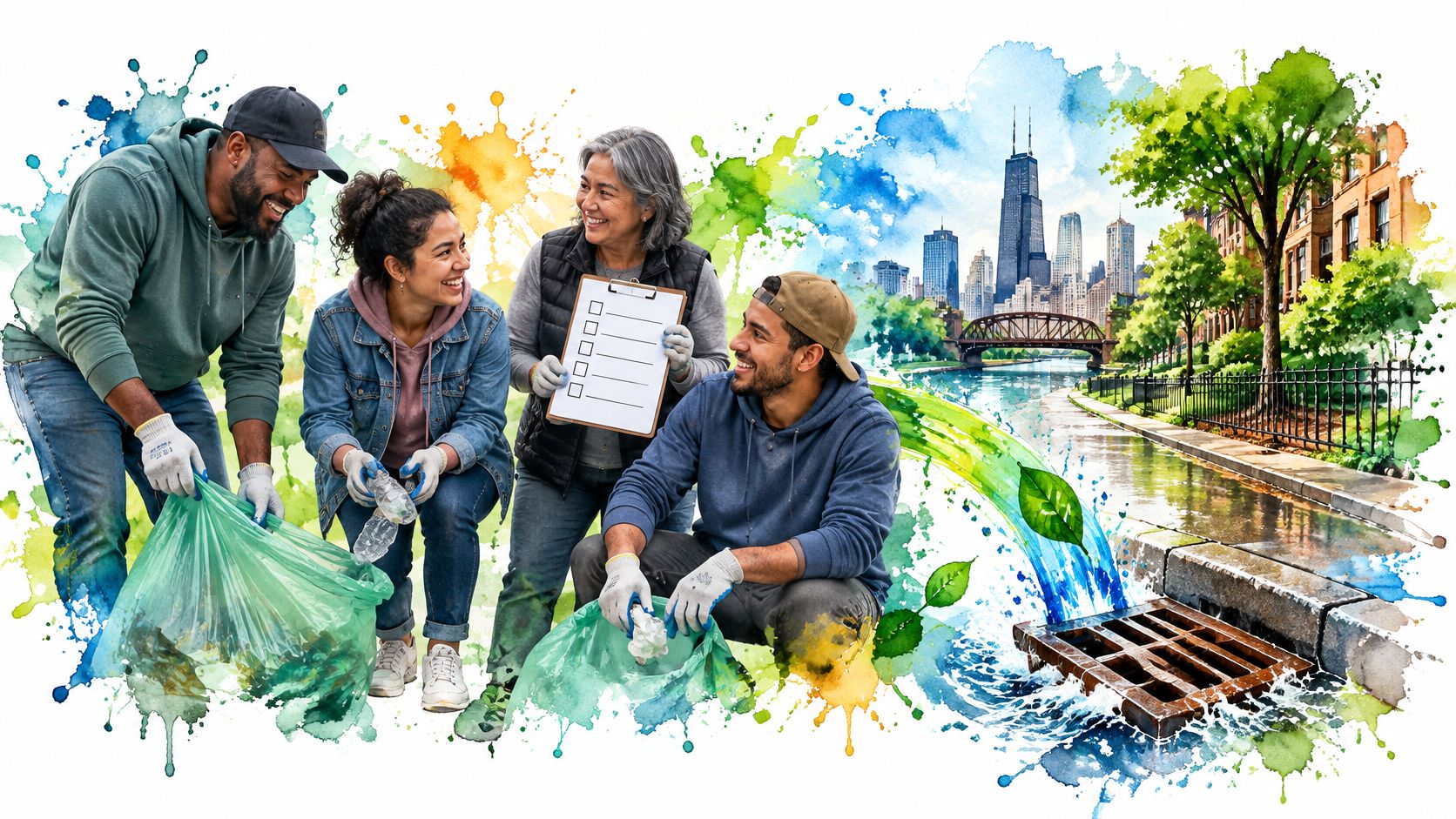
Say you stand on your corner on a Saturday morning and you know three neighbors by sight and nobody by name. You pick up trash for an hour, and you leave with a full bag and the same three faces. I want you to leave with a name you can call when heat or snow hits your block.
A Scorecard You Can Keep After Each Cleanup
I keep community health resilience plain. You build a habit on a block so people stay in touch and stay safer when heat, cold, storms, or a dirty street show up. You don't wait for a disaster to test the habit. You test the habit on a normal morning.
You copy one sheet. You fill the sheet after each cleanup. You count people first and trash last.
Five People Counts Before the Bags
You count newcomer return first. You write how many first-timers come back within four weeks. A rising number tells you people found a reason to return.
You count block or ward mix next. You write how many different blocks stand on the same corner with you. A crew from more than one block spreads warnings faster than one house can.
You count buddy reach third. You ask each person one question. Can you name one person here you would text in a heat wave or a blizzard?
You count safety stops fourth. You mark each day you shorten or cancel for heat, ice, bad air, or injury. You treat a stop as good work.
You collect a belonging note fifth. You pass a scrap of paper and you ask for yes or no, no name. Did you leave with someone you would call?
- You write fast: You finish the sheet while people drink water.
- You keep one page per month: You stack the pages and you read the trend.
- You rotate the pencil: You let a different person fill the sheet each time.
You can use our page on ways you can measure community impact on your own block when you set up your first sheet.
Why These Counts Fit Health
A 2025 scoping review found that social resources appeared in 30 of 35 studies of community resilience to health emergencies. The review names social networks, social capital, social cohesion, social support, and cultural capital. I read that in plain terms. You meet often, you build trust, and you share news and help faster.
Say a storm knocks out power on your street. You know who uses a wheelchair on the third floor. You know who has a car. You text both people in five minutes because you already traded numbers over trash bags.
You build the phone tree on a calm morning. You use the phone tree on a hard night.
You also need gear you can reuse and wash. A friend who works near water showed me an ocean cleanup collection and I use the same idea on land. You pick sturdy gloves, a grabber with a strong tip, and a bag you can rinse.
| What you count | How you count it | Healthy signal | Warning sign |
|---|---|---|---|
| Newcomer return | Share of first-timers back within 4 weeks | Share rises month to month | Almost no one returns |
| Block or ward mix | Number of different blocks present | More than the host block | The same small circle only |
| Buddy reach | Volunteers who can name a storm or heat contact | Most people name one person | Nobody names a contact |
| Safety stops | Days shortened or canceled for heat, cold, air, or injury | You stop before people get hurt | You push through dangerous weather |
| Belonging note | Anonymous yes to leaving with someone you would call | Yes answers rise over a month | Silence or falling yes answers |
| Litter removed | Bags or pounds from the same block | Litter stays lower on repeat visits | Trash returns and the people counts stay flat |
A Weak Sheet and a Strong Sheet
You see a weak sheet fast. Newcomers rarely return. Nobody names a buddy. You ran a pickup and you went home.
You see a strong sheet just as fast. People return. People trade roles. People check on each other after the bags hit the curb. You have a network you can lean on, and you have paper that shows the network grows.
Why Connection Counts as Health Work
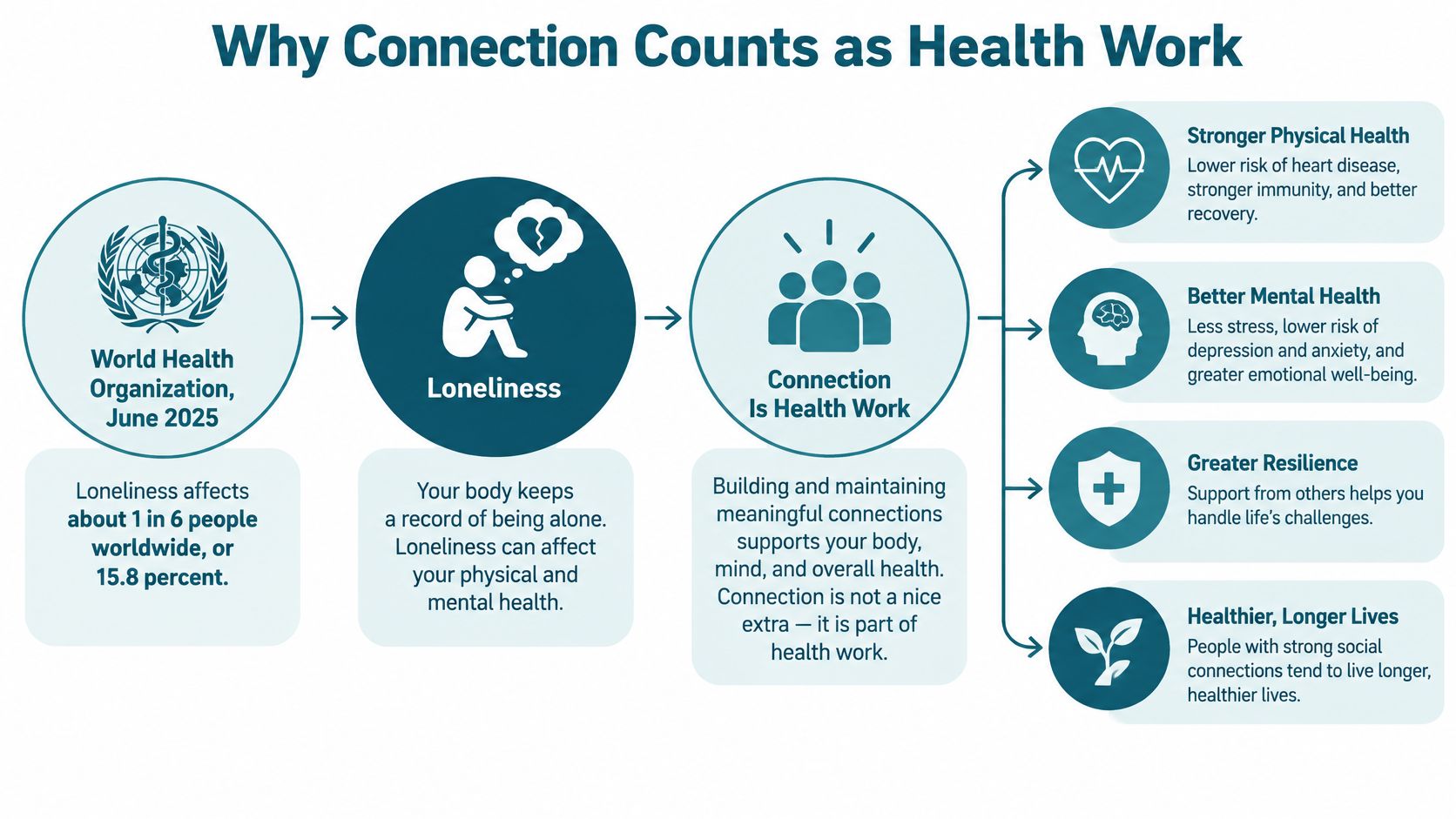
I put loneliness on the same page as litter because your body keeps a record of alone time. The World Health Organization news item from June 2025 reports that approximately 1 in 6 people globally, 15.8%, experience loneliness. The same item says about 21% of adolescents report loneliness, and the rate reaches 24.3% in low-income countries compared with 11% in high-income countries.
WHO also estimated that loneliness is associated with approximately 871,000 deaths annually, or about 100 deaths every hour. I read those numbers and I think about one kitchen table. You eat alone night after night. You skip a walk because nobody waits for you. You miss a warning because nobody texts you.
Social disconnection has links to higher risks of depression, anxiety, cardiovascular disease, stroke, type 2 diabetes, cognitive decline, and premature death. WHO says strong social ties help communities become safer and more resilient, including during disasters. I trust the plain path. You know a person, you hear news early, and you act early.
A Crew Is a Bridge You Build by Hand
You can picture a cleanup crew as a bridge. You arrive from separate lives. You share a task, you learn a name, and you leave with a person you can call.
The U.S. Office of Disease Prevention and Health Promotion summary on civic participation links volunteering with better psychological and emotional health, more social support, and fewer anxiety and depressive symptoms. One study in the summary links volunteering to lower stress measured through cortisol, a hormone your body releases during stress. The summary also says formal groups and informal groups can increase social capital and reduce social isolation.
I don't promise you a medical result from one Saturday. I promise you a repeat chance. You show up again, you see the same face, and trust has a place to grow.
You can read more on our page about health gains you may feel as a volunteer before you join a morning crew.
Contact and a Tie You Can Use
Say you pose for one photo on a clean corner and you never learn a name. You had contact. You left with a picture.
Say you work next to Maria for three weeks and she offers you a ride when your bus fails. You have a tie. You can use the tie when life gets hard.
- You ask who returned: You count repeat faces.
- You ask who made a friend: You use the anonymous note.
- You ask who feels safe asking for help: You listen for a plain yes.
You can thank health workers in the same plain way. A nurse on my block told me a small thank you lands well after a long shift, and she pointed me to a page where you can find hospital staff recognition gifts. You give thanks, you name the work, and you move on.
A name you can call beats a photo you can post.
You keep the health claim honest with those three questions. You count return, friendship, and trust. You let the body record change over weeks, one morning at a time.
Follow a Bottle From Sidewalk to Lake
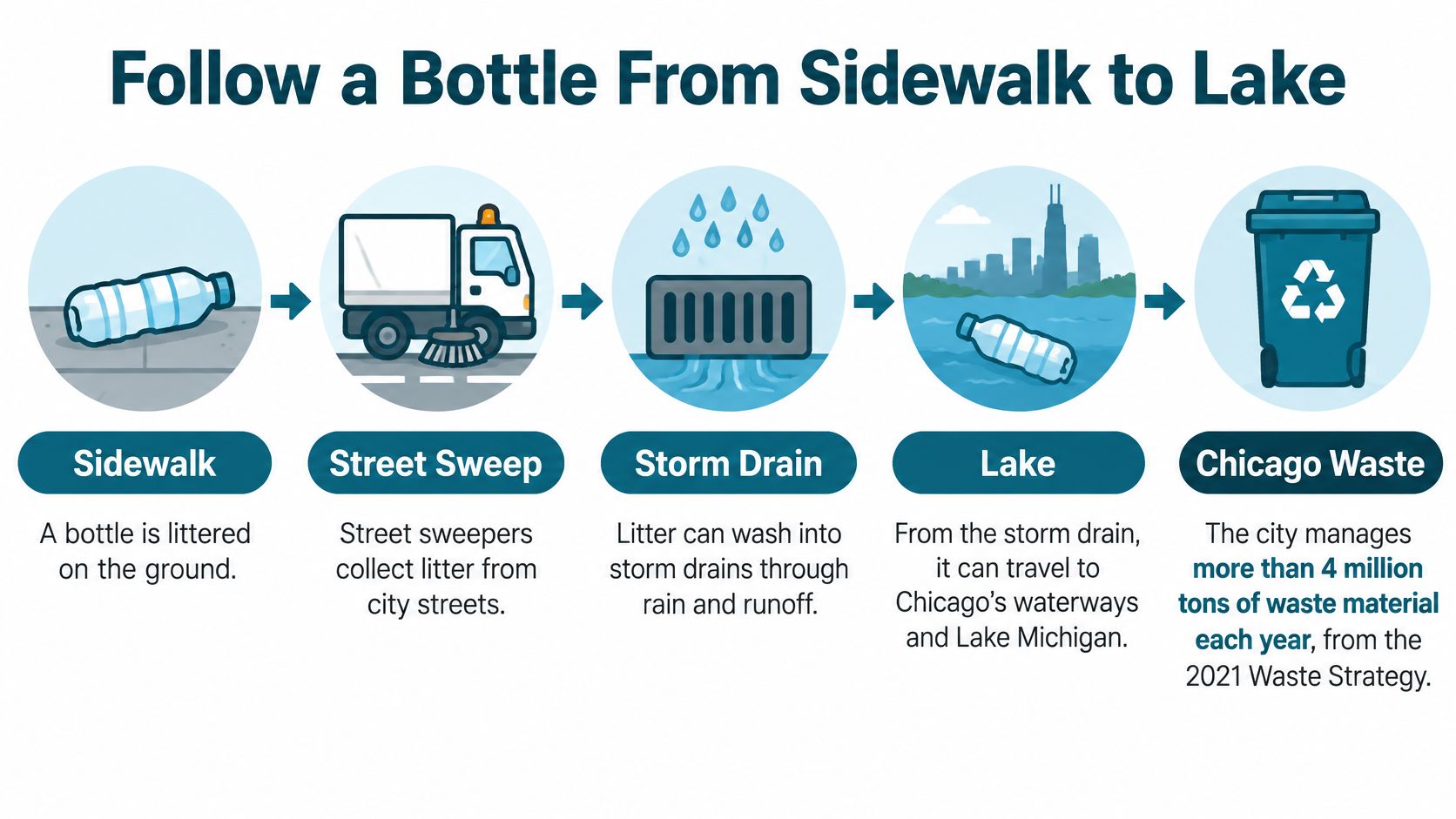
I want you to see litter as a traveler. I don't want you to see litter as a stain on a neighbor. A bottle moves when wind and water push the bottle.
Say a bottle rests by your curb on Monday. A truck wakes the bottle on Tuesday and the bottle rolls to a drain. A hard rain on Friday lifts the bottle and sends the bottle toward a river.
The Illinois Environmental Council summary of Chicago environmental policy says Chicago produces more than 4 million tons of waste material each year, from the city's 2021 Waste Strategy. The same summary says 22 million pounds of plastic enter the Great Lakes annually, with more than half reaching Lake Michigan. The summary also says Chicago stormwater can carry litter and raw sewage into rivers and, in extreme cases, Lake Michigan.
You Start Where the Bottle Starts
You walk the path first. You look at the slope of the street. You find the drain the bottle would find.
You start at the high ground and you work down. You clear the drain mouth with a grabber and you keep your hands out of dark water. You come back to the same drain next month and you see if litter stays lower.
Shops on the block shape the trash you find. Cups, lids, and bags pile up near doors. A cafe owner near me reads packaging rules for café operators and swaps one item at a time. You can ask a shop owner one kind question and you can share what you find by the drain.
Dirty water and flooded corners change how safe a block feels. Parents cross the street to avoid a flooded play lot. Older neighbors turn back when trash blocks a ramp. You clear the path and people use the street again.
| Corner type | Main risk | Crew approach |
|---|---|---|
| Roads and highway shoulders | Passing cars | Slower hands, bright clothes, step back when cars come |
| Drains and flood-prone corners | Rising water | Slower hands, step back when water rises |
| Alleys and park edges | Litter that reaches drains | Start on the path a bottle would take |
Pace Changes With the Corner
You treat a road shoulder as slow work. You face traffic, you wear bright clothes, and you step back when a car drifts close. You keep one person as a watcher and the watcher holds no bag.
You treat a drain as slow work too. You stop when water rises. You never reach into a grate for a bottle. You mark the spot and you tell the city crew.
You treat an alley as a route. You follow scraps toward the street. You learn which fence traps bags and which gate lets bags escape to the drain.
You still put people counts above the bag count. A clean corner with nobody who returns gives you a short win. A crew that returns keeps the drain clear month after month.
When the Same Neighbors Carry Too Much
I get uneasy when resilience means tired people do more unpaid work. You know this person on your block. She watches kids, checks on a parent, works nights, and still gets the call when a pipe bursts.
A page from the University of Maryland School of Public Health on community resilience shares a 2025 San Francisco Community Health Needs Assessment that found resilience can come at the expense of people with disabilities, BIPOC and LGBTQ+ communities, immigrants, and people living in poverty, particularly when language access and other systemic supports are weak. The page also shares a 2025 WHO report that names access to power, money, resources, and living conditions as drivers of avoidable health inequities.
I ask a blunt question before I hand out gloves. Does this morning make your community stronger, or does this morning move a city job onto neighbors who already carry a heavy load?
Guards You Set Before the Pep Talk
You meet where buses and wheelchairs can arrive. You pick a corner with a ramp and shade. You write the meet spot in clear words and you add a photo of the corner.
- You share the plan in more than one language: You ask a neighbor to check your words.
- You set heat and air rules: You stop when a rule trips, and you thank people for leaving.
- You offer seated roles: You let a person sort bags, hand out water, or greet newcomers from a chair.
- You offer short shifts: You let a person work twenty minutes and go home with pride.
- You help with rides: You pair drivers with riders before the morning starts.
You name what volunteers won't do. You won't give medical care. You won't run overnight crisis calls. You won't climb into drains or stand in fast traffic.
You can read our page on fair cleanup work across Chicago neighborhoods when you choose your next blocks.
Costs You Count With the Gains
You track injury on the sheet. You track burnout with one plain question each month. Do you dread Saturday now?
You track who never hears about the meetup. You ask at the laundromat, the library, and the bus stop. Silence from one building tells you your flyer misses people.
Dangerous weather is a stop rule. Dangerous weather is never a test you pass to belong.
Freezing through one hailstorm can give you one good story. A story can't heal a fall on ice. You protect people first and you tell stories second.
Say a high-need block sees volunteers each month and never sees city crews fix lights or drains. You say that fact out loud. You call a ward group or a health department and you ask the office to carry the part your crew can't carry.
Three People in a Chicago Hailstorm
I started Litter Caterpillars because my rooms were a mess and my life felt like my rooms. Each item in my home had a story and each story froze my hands. I stared at shelves and I moved nothing.
The blueberry jam from a Michigan trip sat in my fridge for years. The bag of nuts from a failed health kick sat near the jam. Each item weighed less than a pound in my hand and a ton in my head.

A Breakup and a New Circle
A long relationship with a selfish, always-partying person ended and my rooms got quiet. I sat with the quiet and I made a plan. I wanted givers around me.
Kevin Tao resolved to mindfully engineer his social circle to filter out selfish people. I write about myself in plain words here because the plan still guides my weekends. I chose cleanliness, consistency, and bravery as daily practice.
I picked weekend mornings on purpose. Morning people show up sober and ready. Givers give time early and party crowds sleep in.
Hail Under a Tree
Three of us went out for the first pickup and a Chicago spring hailstorm hit us fast. Hail bounced on the bags. Rides kept canceling on our phones.
We stood under a tree and we laughed in wet shoes. I learned three things under the tree. Other people's messes feel easier than your own mess. Work with friends can feel fun. Bad weather can add flavor to a story for one day.
Our logo comes from that first pickup. I keep the story close. I refuse to turn the story into a rule that says you must suffer to prove you care.
You can watch a short clip from a cold morning crew here and you can see the pace we keep.
Three Years of Saturdays
About three years on, we still go out each week. We work in blizzards and in heat across all 50 wards, and we visit blocks people tell you to skip. You learn a city when you clean a city with your hands.
We cleaned a highway during a bike-event shutdown. We won an empty lot at auction and we are building Caterpillar Park in Englewood. A lot that held trash can hold chairs, shade, and neighbors who know each other.
Flags, a theme song, and badges give the crew pride, the way a team jersey gives a player pride. You wear a badge and a stranger asks you a question. You answer and the stranger may join you next week.
You can come once. You can learn a few names. You can see if the circle fits your life and leave with no guilt if the circle misses your needs.
Tracking One Block Over Six Months
Say you lead a Saturday crew on one block and you meet every other week. You want proof you can read. You start with a baseline before the first cleanup.
You walk the block with a notebook. You count litter by one drain. You write who lives nearby and who may need a check-in during heat.
Month One on Paper
I use invented numbers here for practice. I don't present these numbers as results from a real crew. You copy the method and you fill your own numbers.
In month one, 6 people show up for the first time. You bag 12 pieces of litter along the same drain. Four weeks later, 2 of those 6 come back.
You write the low return down without shame. You ask one returner one question. What brought you back?
She may say she liked the coffee stop after the work. He may say he liked a clear start time. You keep the part people praise and you fix one rough part.
Month Six on Paper
By month six in this practice story, 9 regulars can name a buddy, up from 2. Block mix grows from one host block to three. One morning ends early for heat and you mark the stop with pride.
The belonging note shows yes answers rising from 3 to 7. Bag counts along the drain fall to 5 pieces. You read the trend in order, people first and trash last.
- You see litter fall and return stay flat: You have a clean corner with a short shelf life.
- You see return rise and litter stay flat: You have a network in the making and you keep working the drain.
- You see both move well: You keep the same route and you train a second leader.
You Read the Sheet Out Loud
You read the sheet to the crew in two minutes. You name one win and one fix. You let a regular suggest the next route.
A case with no baseline proves little. You write the first count even when the first count embarrasses you.
You write the trend next to your stop rules. You check if safety held while numbers rose. A strong return rate with injuries tells you to slow down.
Say you lost the first page. You say so on the new page. Honest paper beats a smooth story, and your crew trusts you more when you admit a gap.
Set Your Next Saturday Morning
I want your next move small and dated. You pick a Saturday or Sunday morning in the next two weeks. You pick one block and one friend.
You write stop rules before you buy gloves. Heat gets a line. Cold gets a line. Storms and bad air get lines too.
A Morning You Can Run
- You pack the basics: You bring water, gloves, a small first-aid kit, bright clothes, bags, and one grabber per pair.
- You pair buddies: You send nobody alone near a road, and each pair shares one phone number before you start.
- You assign every pace a role: You give a seated greeter job, a supply job, and a slow route near benches.
- You set a finish time: You stop on time even when one corner still has litter.
You greet each newcomer by name twice. You say the name at the start and you say the name at the end. A name sticks when you use the name with a smile.
Safety of the volunteers always takes first priority, and happiness of the volunteers takes second priority. I run my mornings by that order. Bags come after people, each time.
You Close With the Sheet
You fill the scorecard before people drift away. You mark who was new and who came back. You count who can name a contact.
You mark any safety stop. You collect one anonymous belonging note in a hat. You thank each person for one exact act you saw.
I won't ask you for money to prove you care. You prove care with time, care with a text after a storm, and care with a second visit. One hour on most weekends adds up across a year.
If you live in Chicago, you can join a crew that already meets this way. If you live in another town, you copy the morning, the stop rules, and the sheet, and you run the morning with your neighbors. You aim for people who can find each other when weather turns, plus a block that stays cleaner because you came back.
Pick one Saturday in the next two weeks, bring one friend, and fill one scorecard with people counts first and bags last. Litter Caterpillars runs weekly Chicago cleanups where you can learn names, trade buddy contacts, and practice clear stop rules with a friendly crew. Visit the site, choose a morning near you, and come see if you leave with someone you would call.