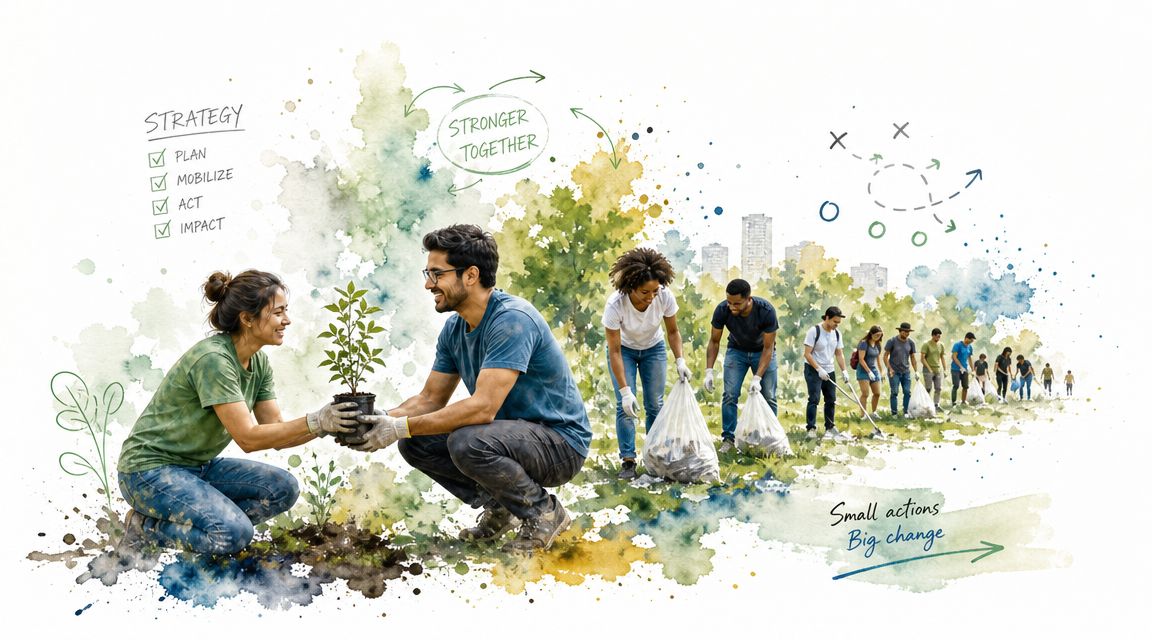
My first lesson in kindness came from a refrigerator I dreaded opening.
Old jars stacked in the back felt heavier than they were. A half-used jam I should have tossed months earlier carried a memory, so I kept it. Then another bottle. Another bag. Before long, that fridge looked like a museum of postponed decisions, and my life felt the same. Every small mess asked for courage I did not think I had.
So I borrowed courage somewhere public.
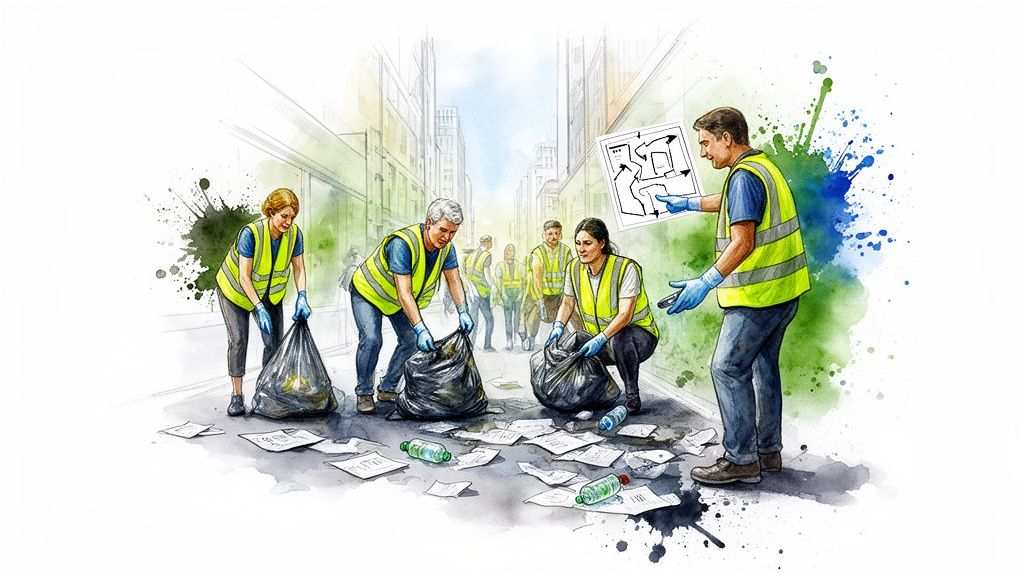
I showed up to pick litter off a sidewalk before I had any clue how to clean up my own routines. That choice surprised me. Public mess felt simpler than private mess. A curb did not argue with me. A storm drain did not carry family history. I could put on gloves, grab a soaked fast-food bag, and finish one clear task from start to end. That was kindness in action for me at first. Not a big speech. A small act with dirt on it.
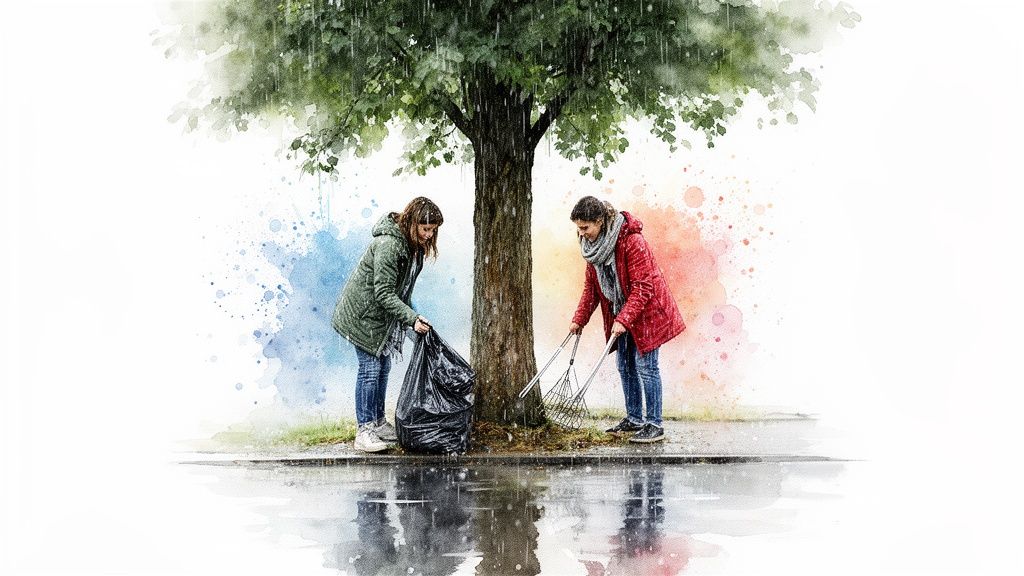
Later, standing under a tree while hail smacked our jackets and three of us laughed through a ruined morning, I started to see the bigger pattern. Kindness is not only about being nice. It is about building systems that help people show up. Pick the right hour and you attract people who came to give. Rotate neighborhoods and the work stays fair. Give volunteers a name, a song, a reason to feel proud, and they return with friends. Small acts matter. The structure around them matters too.
The American Psychiatric Association reported in its poll on small acts of kindness that many Americans had both given kindness recently and felt better after doing it. I believe that because I have felt it in my own body. Help someone else, and the knot in your chest can loosen a little.
I have also learned that goodwill alone is flimsy. Communities get stronger when kindness has a schedule, a place to stand, and a little grit. If you want one simple example of what that can look like, these volunteer trash pickup events from Litter Caterpillars show how a straightforward invitation can turn strangers into teammates.
Here are 10 examples that get past slogans and into the actual mechanics of helping.
1. Community Litter Cleanup Events
The first cleanup I joined that felt real had terrible weather. Three of us got caught in a springtime hail storm, huddled under a tree, and watched ride after ride get canceled. I should've hated it. Instead, I had fun.
That's when I learned something weird and useful. Picking up other people's trash can be a training ground for your own life. You get movement, sunlight, conversation, and a visible result in about an hour.
Why weekly beats occasional
A cleanup works best when it's regular enough that people don't need to guess. Weekend mornings are especially good if you want people who came to give, not people who drifted in because they were bored the night before. That time filter matters more than most organizers think.
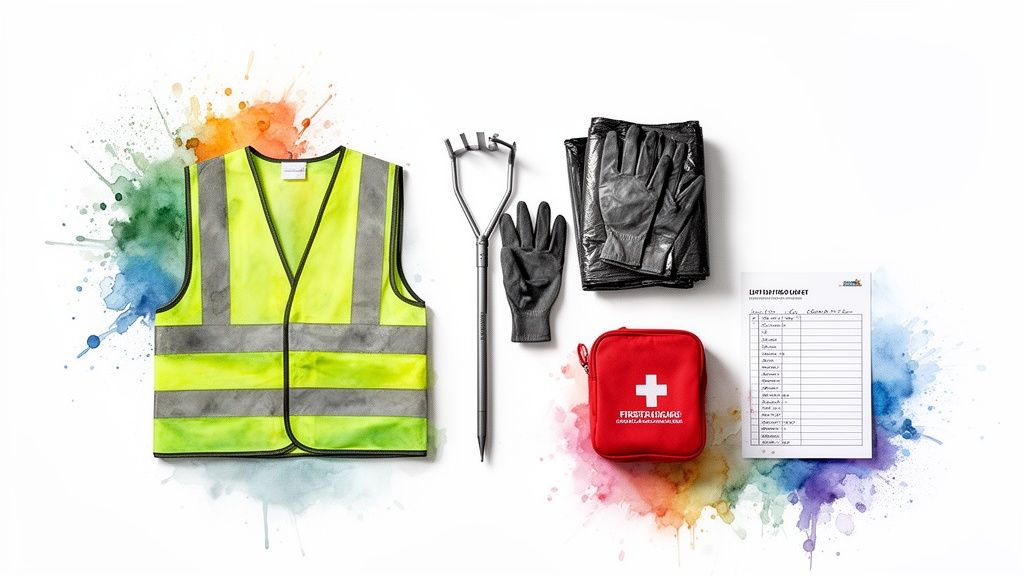
If you want a model for joining one, Litter Caterpillars volunteer trash pickup events show how simple the invitation can be. Pick a place. Pick a time. Bring bags, grabbers, and a decent attitude.
Practical rule: Start with the smallest version that still feels real. Three people on one block is enough.
I also think rotating neighborhoods helps. It keeps the work fair, keeps the group curious, and stops the same volunteers from carrying the whole load in the same place every time. A cleanup can remove litter, sure, but it can also create that rare modern thing: a room without walls where strangers become teammates fast.
2. Neighborhood Beautification Through Service
Trash pickup is often the first chapter, not the whole story. A neglected space usually needs a sweep before it needs flowers, paint, or a bench. I like that order because it's honest. You deal with what's broken before you decorate.
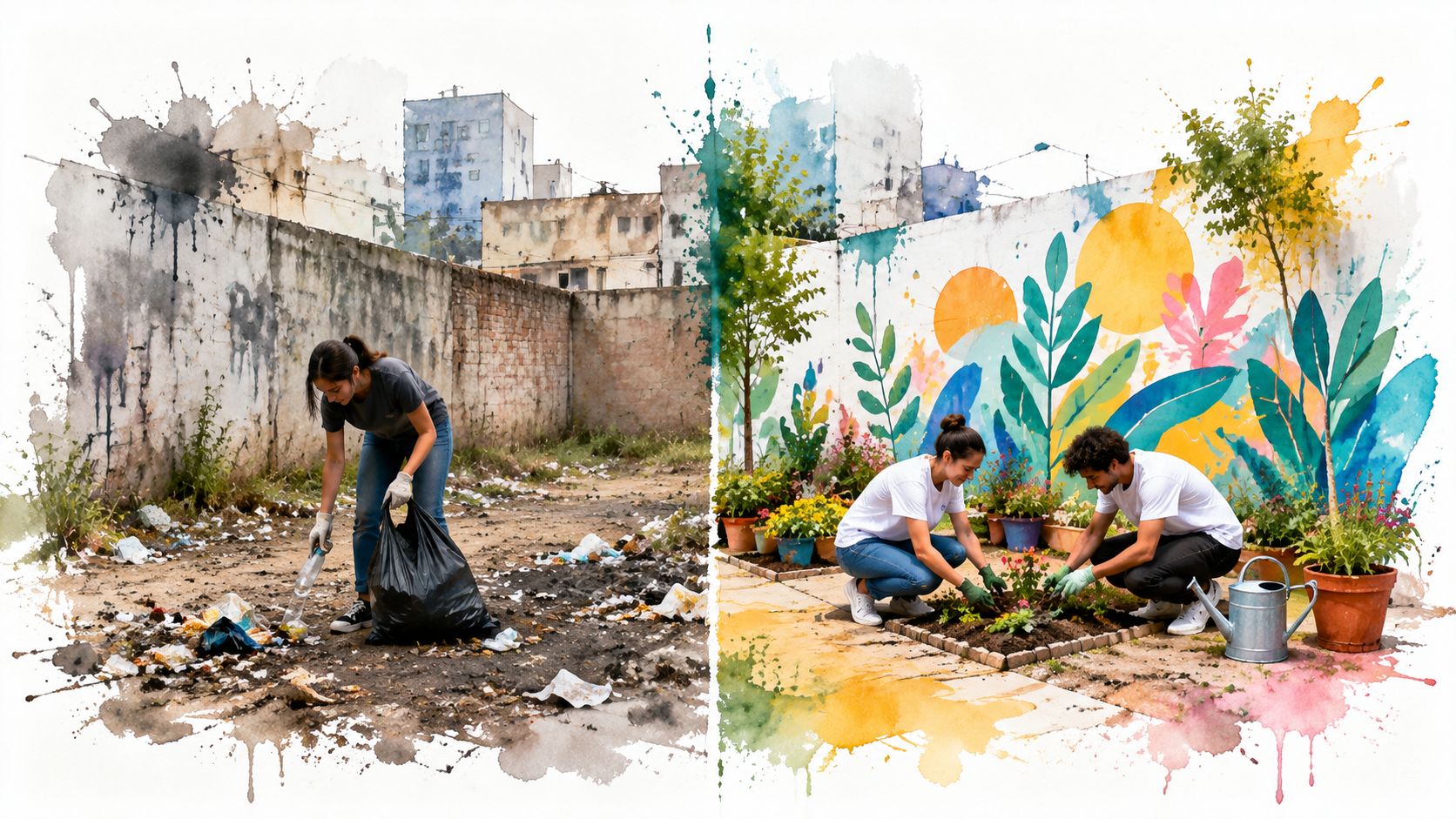
I've seen people fall in love with a place only after they put sweat into it. A lot that looked forgotten starts to feel personal once you've hauled out debris, cut back weeds, and imagined what could go there next. That's how service turns into ownership.
First clean, then build
One of my favorite examples is when a group takes an empty or ignored patch of land and turns it into a small community place people want to stand in. That could mean planting, painting, setting up signs, or making the space feel watched over instead of abandoned.
The trick is to ask local residents what they want before you start making decisions. A volunteer's vision can be energetic and still be wrong.
- Start with removal: Get the trash, broken glass, and dead clutter out first.
- Ask neighbors early: The people closest to the space should shape what comes next.
- Create a maintenance rhythm: A beautiful place falls apart fast if nobody comes back.
I like seeing this process in motion because it makes kindness visible. Cleanup changes the ground. Beautification changes the mood.
If you want to watch that kind of transformation energy, this short video captures the spirit well.
3. Building Social Circles and Intentional Community
I don't think community happens by accident as often as people claim. Usually, somebody picked a time, a place, a tone, and a set of values. That's not fake. That's care.
After a chaotic season in my own life, I became much more deliberate about who I spent time with. I wanted to be around people who'd wake up, show up, and help. A Saturday morning cleanup is a pretty strong filter for that.
Filter for the people you want beside you
A service group has a hidden gift. It lets you meet people while doing something useful, so the conversation has less pressure and more honesty. You're not trying to impress each other over drinks. You're carrying bags, joking about gross finds, and seeing who keeps their word.
I like groups that create more than one place for connection. The event matters, but the follow-up matters too. A group chat, a social post, a repeat invite next week. That's where familiarity grows.
If you're trying to build that kind of circle, these community building activities for adults give a practical starting point.
Say what your group is for. People relax when they know the values in the room.
I've found that friendship grows faster when people share why they're there. Not a polished speech. Just the truth. Maybe you're lonely. Maybe you're recovering from a hard breakup. Maybe you need a reason to get outside and stop spiraling. That's the stuff that turns a volunteer event into an actual community.
4. Volunteer Pride and Identity Building
A flag sounds silly until you're the one holding it. A badge sounds childish until someone earns one and suddenly stands taller. A theme song sounds over the top until the group starts smiling when it plays.
Service work can disappear into the background if you let it. People get dirty, tired, and anonymous. I think that's a mistake. If athletes get jerseys and teams get logos, kind people can have symbols too.

Give service a uniform, even a playful one
A visible identity helps volunteers feel like they belong to something concrete. It also gives first-timers a way to step into the mood of the group faster. You're not just "helping out." You're joining a crew.
I love this because pride can support bravery. When someone wears a pin, carries a flag, or sings the goofy song with everybody else, they stop hovering on the edge and start participating fully.
Try a few simple moves:
- Use symbols with a story: A logo means more when people know where it came from.
- Mark milestones: Badges, pins, or little traditions can reward consistency.
- Make photos fun: Group pictures help people remember that service looked good on them.
This isn't vanity. It's morale. People often need permission to feel proud of doing something decent in public.
5. Reframing Difficult Tasks as Adventures
Some jobs are ugly. Some weather is rude. Some days your gloves are soaked, your back hurts, and the alley smells like defeat. You can still decide what story you're living in.
That hail storm cleanup changed me because it made suffering funny. Not fake-funny. Real funny. We were cold, stranded, and ridiculous, and that gave the day flavor. Hardship stopped feeling like proof that we'd made a bad choice. It felt like the plot thickening.
Turn discomfort into story
I think groups last longer when they talk about tough days like adventures instead of burdens. That doesn't mean ignoring safety. It means refusing to let inconvenience become the main character.
You can build this attitude on purpose.
- Tell the stories afterward: The worst weather often creates the best memories.
- Keep inside jokes alive: Shared language bonds people fast.
- Take photos on rough days: People love evidence that they did the hard thing.
One reason this matters is emotional stamina. If every hard cleanup feels like a failure, people burn out. If a hard cleanup feels like a campfire story in progress, they come back with a grin.
I've learned to ask a strange question before difficult service days: what will be funny about this later? That question has rescued me more than once.
6. Cross-Neighborhood Equity and Inclusion
Kindness gets shallow fast if it only goes where the sidewalks already look polished. I don't trust service that keeps choosing the easiest block.
A stronger version of kindness in action moves across neighborhoods on purpose. It doesn't avoid places because people assume they're too far, too forgotten, or too uncomfortable. If a city belongs to all of us, the care should move that way too.
Go where people feel skipped over
I respect groups that make a rotation and stick to it. That kind of schedule tells residents, "You don't need to compete for our attention. We're coming." It also pushes volunteers to see more of their city than they normally would.
This matters for the people serving too. You learn humility when you leave your comfort zone. You stop talking about neighborhoods like headlines and start connecting them to faces, blocks, and conversations.
A youth-led kindness organization described in this Channel Kindness story has supported 5,068 people, donated 30,062 supplies, and helped 955 underserved families since April 2025. I take one lesson from that. Service can scale quickly when people protect the energy behind it and keep showing up where help is needed.
Every neighborhood deserves attention. You don't need a trendy zip code to earn care.
If you organize across a whole city, say the schedule out loud. Make the route public. Let people know you mean it.
7. Protective Volunteer Energy and Donation Resistance
I've seen volunteer groups make a simple mistake. They get people excited about helping, then turn around and squeeze them for money every chance they get. That changes the mood fast.
Volunteer energy is fragile. If somebody gives up their morning, travels across town, works hard, and then feels like a wallet with legs, they'll disappear. I would too.
Treat presence like the top contribution
I prefer groups that make this plain from the start. Show up. Help out. Be safe. Have a good time. If somebody wants to support financially later, fine. But don't build the relationship on pressure.
This matters even more when a group grows. A service model can move fast when people stay energized. One Atlanta kindness group has turned into a year-round effort documented on YouTube, and I think part of the lesson is consistency without draining the people who make it happen.
A few habits help:
- State the policy clearly: Tell volunteers they won't be pressured for donations.
- Ask for time first: Service groups live or die on attendance and morale.
- Find other support paths: Grants, in-kind supplies, and partnerships can carry costs.
The emotional effect is bigger than it sounds. When people know they're welcome without opening their wallets, they relax. Relaxed people make friends. Friends come back.
8. Addressing Root Causes Through Environmental Stewardship
For me, environmental stewardship started as therapy in work clothes. I couldn't throw out my own emotional junk, so I started picking up literal junk off the street. That sounds backwards, but it worked.
Cleaning a block doesn't magically solve grief, chaos, or shame. It does give your hands something honest to do while your mind catches up. Sometimes that's enough to begin.
Outer order can train inner order
The reason I care about this so much is personal. My apartment mess and my life mess fed each other. Once I started doing regular cleanup outside, I began to believe I could also create order inside my own routines.
That's one reason I like the language in this guide to environmental stewardship. It treats care for shared spaces as active responsibility, not a vague attitude.
The science on kindness also gave me language I didn't have before. A National Institutes of Health review on kindness and health reports that a meta-analysis of 27 experimental studies found a small-to-moderate positive effect on well-being for people practicing acts of kindness. That same review notes four meta-analyses covering 22, 21, 19, and 10 randomized controlled trials on kindness-based meditation, with reductions in depressive symptoms, anxiety, and stress, plus increases in compassion, self-compassion, and positive emotions.
I don't read that and think, "Great, cleaning up is medicine." I read it and think, "No wonder this helped me." Kindness in action changes your environment, and sometimes your environment changes you back.
9. Easy Participation Entry Points and Accessibility
A lot of kind projects fail at the front door. The cause is good, but the signup is clunky, the instructions are vague, and nobody knows where to stand when they arrive. People won't say that out loud. They'll just never come.
I like making participation stupidly easy. Clear time. Exact address. What to bring. What if it rains. Where the group chat lives. Whether a nervous first-timer can just walk up and join. That's the difference between a wish and a real invitation.
Remove friction before you ask for courage
The easier the logistics, the more energy people have left for service. That matters for shy people, busy people, new residents, students, and anyone who already feels awkward trying something alone.
A simple structure works well:
- Use multiple channels: Meetup, Instagram, and group chats catch different people.
- Say exactly what happens: People show up more confidently when they know the plan.
- Welcome walk-ups: Some people decide at the last minute and still become regulars.
The emotional side matters too. When someone arrives, greet them fast. Hand them supplies. Give them one easy task. Introduce them to one friendly regular. That first five minutes can decide whether they come once or keep coming all season.
Kindness in action isn't only the service itself. It's also the care you put into the doorway.
10. Consistent Show-Up Culture and Reliability Building
The strongest groups I know aren't glamorous. They're reliable.
That sounds boring until you live inside it. A fixed day and time can change people. It teaches self-trust. It tells the neighborhood that somebody will be there. It gives lonely or drifting people a recurring place to land.
Reliability is a form of kindness
I love the feeling of not having to wonder. If cleanup is every week, rain or shine, then the decision gets easier. You stop renegotiating with yourself. You just go.
That consistency can become a culture. People start telling stories about the snowy day, the hot day, the day only a few people came and it still counted. Those stories teach the group what it values.
Try building that with a few simple habits:
- Pick one recurring slot: Don't keep changing the day or time.
- Celebrate attendance, not hype: A small crew that shows up is a win.
- Let people rest without guilt: Reliability grows better when people feel free, not trapped.
I've learned that a city starts to trust you when you keep your promises in ordinary weather and ugly weather alike. That's one of the purest forms of kindness in action I know.
Kindness in Action, 10-Point Comparison
| Title | 🔄 Implementation complexity | ⚡ Resource requirements | 📊 Expected outcomes | 💡 Ideal use cases | ⭐ Key advantages |
|---|---|---|---|---|---|
| Community Litter Cleanup Events | Low–Moderate: recurring logistics and volunteer coordination | Low: volunteers, basic supplies, simple admin | Visible cleaning, habit formation, local pride | Rapidly mobilizing community volunteers for regular cleanup | Immediate visible impact; low cost; accessible |
| Neighborhood Beautification Through Service | Moderate–High: multi‑phase planning, permits, maintenance | High: materials, skilled volunteers, partner funding | Long‑term public space transformation, increased value | Revitalizing neglected lots, creating community spaces | Lasting physical legacy; attracts investment |
| Building Social Circles and Intentional Community | Moderate: values‑based recruitment and facilitation | Low material / High time: facilitation, leadership effort | Deep friendships, higher retention, mutual support | Creating trusted volunteer cohorts, reducing loneliness | Authentic connections; sustained commitment |
| Volunteer Pride and Identity Building | Low–Moderate: branding and distribution systems | Moderate: design, production, small budgets | Improved retention, higher visibility, recruitment lift | Boosting morale and social proof for volunteer groups | Increases motivation and group identity |
| Reframing Difficult Tasks as Adventures | Low: narrative framing and cultural practice | Low: storytelling, leaders modeling behavior | Higher participation in hard conditions; resilience | Tasks with unpleasant conditions or low appeal | Turns toil into memorable bonding experiences |
| Cross‑Neighborhood Equity and Inclusion | High: complex scheduling, safety and outreach protocols | Moderate–High: logistics, partnerships, training | Equitable service coverage, trust in underserved areas | City‑wide programs prioritizing underserved wards | Ensures attention reaches forgotten communities |
| Protective Volunteer Energy and Donation Resistance | Moderate: policy design and alternative funding strategy | Moderate: grant seeking, sponsor relations, admin | Preserved volunteer morale; clearer volunteer motives | Volunteer‑first organizations avoiding solicitation | Protects volunteer motivation and trust |
| Addressing Root Causes Through Environmental Stewardship | High: integrates therapy, training, and facilitation | Moderate–High: trained staff, support resources | Personal transformation, habit change, wellbeing gains | Programs linking service with mental‑health or behavior change | Deeper meaning and longer‑term individual impact |
| Easy Participation Entry Points and Accessibility | Low: multi‑platform presence and clear logistics | Low–Moderate: platform accounts, comms, coordination | Increased signups, lower friction to join | Onboarding newcomers; scaling casual participation | Dramatically lowers barriers to entry |
| Consistent Show‑Up Culture and Reliability Building | Moderate: governance, leadership continuity, backup plans | Moderate: core team, recognition systems, planning | Sustained presence, neighborhood trust, habit formation | Long‑term community presence and habit building | Builds reliability identity and long‑term momentum |
Your Adventure Starts Now
One Saturday morning, I almost stayed in the car.
The alley smelled like old beer and rain. A torn fast-food bag was wrapped around a fence. Someone else had beaten us there and started filling a black trash bag by hand because they forgot a grabber. That was the moment I remembered what kindness looks like in real life. It is rarely polished. It usually starts with somebody doing the unglamorous job first.
That kind of morning changed me more than any inspiring quote ever did. I did not begin with a grand plan. I began while my own life felt sloppy, while my apartment was cluttered, while I was still figuring out how to keep promises to myself. Picking up one block forced me to practice a better way of living in public. Then I saw the deeper lesson. Communities do not get stronger from good intentions alone. They get stronger because someone picks a time, brings extra gloves, makes the work feel welcoming, and comes back next week.
That is the part people skip.
Kindness in action is logistical. It has a calendar. It has backup supplies. It has little decisions that shape who shows up and whether they return. A Saturday cleanup at 9 a.m. attracts different people than a loose evening plan that starts whenever. A group name, a shared joke, even a dumb little theme song can turn service into identity. That sounds small until you watch volunteers stand taller because the work belongs to them now.
I have seen the mood of a street change from one visible act. A person with a bag and gloves signals that this place is worth caring for. A neighbor notices. Someone waves. Someone asks when the group is coming back. Small public acts carry weight because they interrupt the story that nobody cares.
The harder truth is that generosity needs protection. If the same reliable people do all the lifting, they burn out. If every gathering turns into a pitch for money, trust gets thin. If the work feels like punishment, people disappear. Good groups handle that head-on. They make it easy to join, they respect people's time, and they frame the ugly jobs as a shared mission people can be proud of.
Start smaller than your excuses.
Pick one block, one corner, one vacant lot, one bus stop you are tired of pretending not to see. Text one friend. Set a time. Bring one extra pair of gloves for the person who says yes at the last minute. If you live in Chicago, Litter Caterpillars is one practical place to begin. If you do not, the model still holds. Small crew. Clear task. Regular return. That is how strangers become dependable neighbors.
Look at your street with fresh eyes. Where is the neglect. Who gets left out. What would make it easier for an older neighbor, a busy parent, or a shy newcomer to join you for twenty minutes.
Go put your hands on the problem.
Then make the work feel like something worth coming back to.