Tag: volunteer cleanup guide

  • Trash Pickup Tool Guide for Cleaner Volunteer Events

    Trash Pickup Tool Guide for Cleaner Volunteer Events

    Three of us stood under a tree while spring hail smacked our sleeves. Our Uber kept canceling, our fingers were numb, and we still finished the block because each of us had a good grabber, decent gloves, and a bag that stayed open in the wind.

    Why Your Trash Pickup Tool Choice Matters More Than You Think

    That morning taught me something I still use on every cleanup. A trash pickup tool doesn't feel like a gadget when you're cold, wet, and staring at a curb packed with soggy cups, cigarette butts, and broken fast-food lids. It feels like the difference between flinching and moving.

    I started picking up litter because cleaning my own mess felt weirdly heavy. Cleaning a sidewalk felt lighter. You bend once, hear the click of the grabber, drop the trash in the bag, and your brain says, fine, I can do one more. Then one more. Then the whole block looks different.
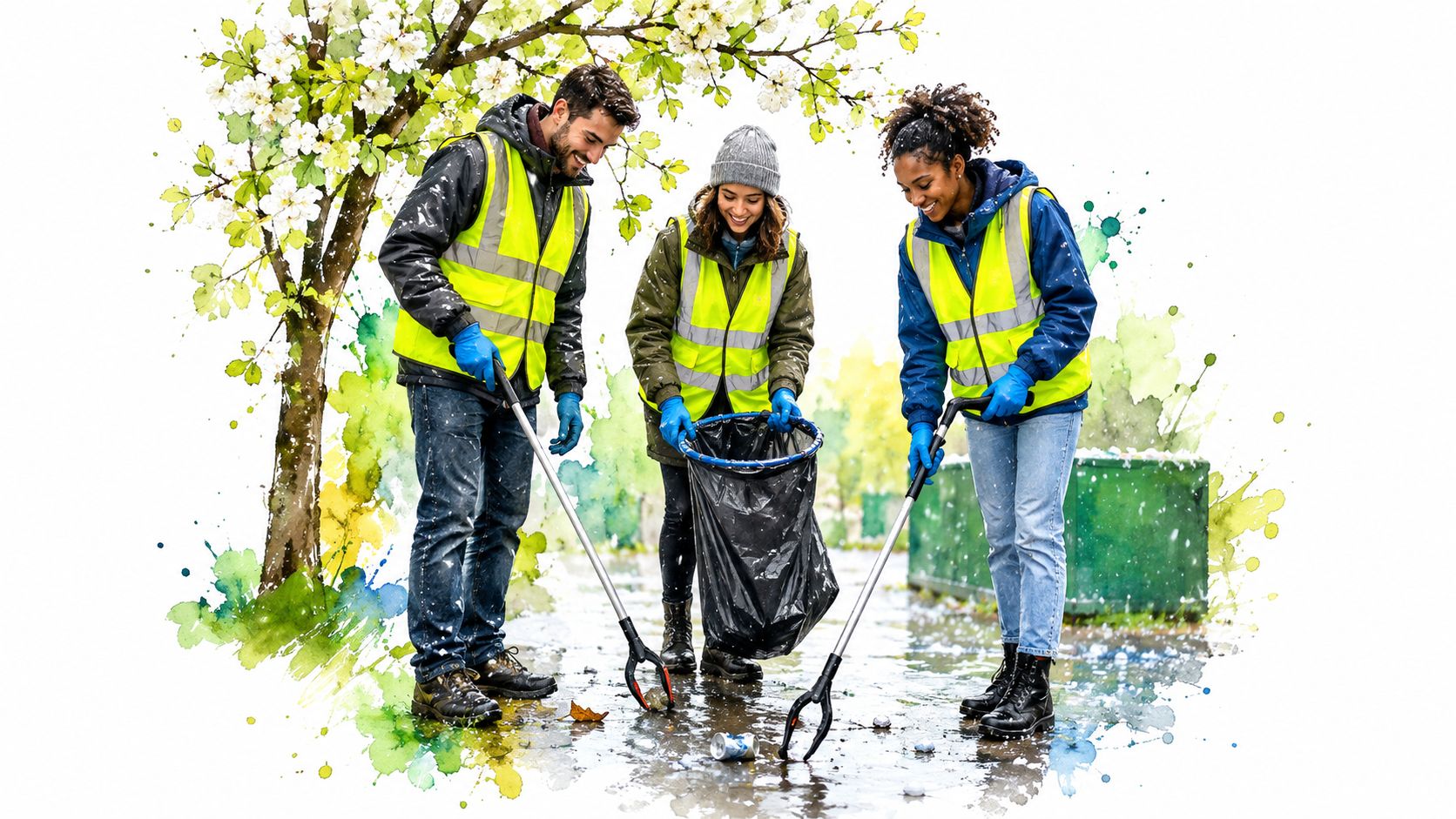
    Three volunteers wearing high-visibility vests use trash pickup tools to clean up litter in a park.

    The tool changes your mood first

    I've led cleanups in heat that made the bags stick to your leg and in wind that tried to turn every wrapper into a kite. In both cases, the volunteers who had the right tool settled in fast. They didn't hover over each piece deciding whether it was too gross or too awkward. They just worked.

    That's why I tell new people to stop thinking about "trash pickup tool" like it's one thing. A picker for dry cans on a sidewalk is one job. A tool for soggy paper in grass is another. A tool for a cigarette butt field near a bus stop is another again.

    If you're curious why so many of us keep showing up, I wrote more about that pull in why people pick up litter in the first place.

    Practical rule: If a tool makes you hesitate less, it is the right tool for that moment.

    Safety, speed, and a little joy

    Trash pickup tools have changed a lot over time. Horse-drawn trash carts gave way to motorized collection vehicles in the early 20th century, and by 1929 garbage trucks had hoppers so workers no longer had to lift bins overhead. Front-loader trucks with hydraulics became common in the 1970s, and by the mid-1990s modern trash and recycling trucks could haul up to 20 tons. You can trace a straight line there from brute lifting to smarter handling in the history of trash collection equipment.

    That same logic works at volunteer scale. You want less strain, less touching, less awkward bending, and fewer bad decisions.

    I learned that across weekly cleanups in every kind of Chicago weather. The right tool speeds up the easy stuff. More important, it tells you what not to touch. That boundary is gold. Once you know where your grabber's job ends, you clean with more confidence and a calmer head.

    How to Choose the Right Trash Pickup Tool for Your Cleanup

    On a hot Saturday in Little Village, I watched two volunteers work the same block. One had a sturdy claw grabber and cleared cups, cans, and takeout boxes in a steady rhythm. The other had a flimsy picker with weak jaws. Every crushed can slipped. Every pickup took two tries. By the end of the alley, one person was still fresh and the other was rubbing a sore wrist.

    That is how I choose a trash pickup tool. I start with the mess in front of me, then I match the tool to the hazard, the surface, and the distance I want between my hand and the item.
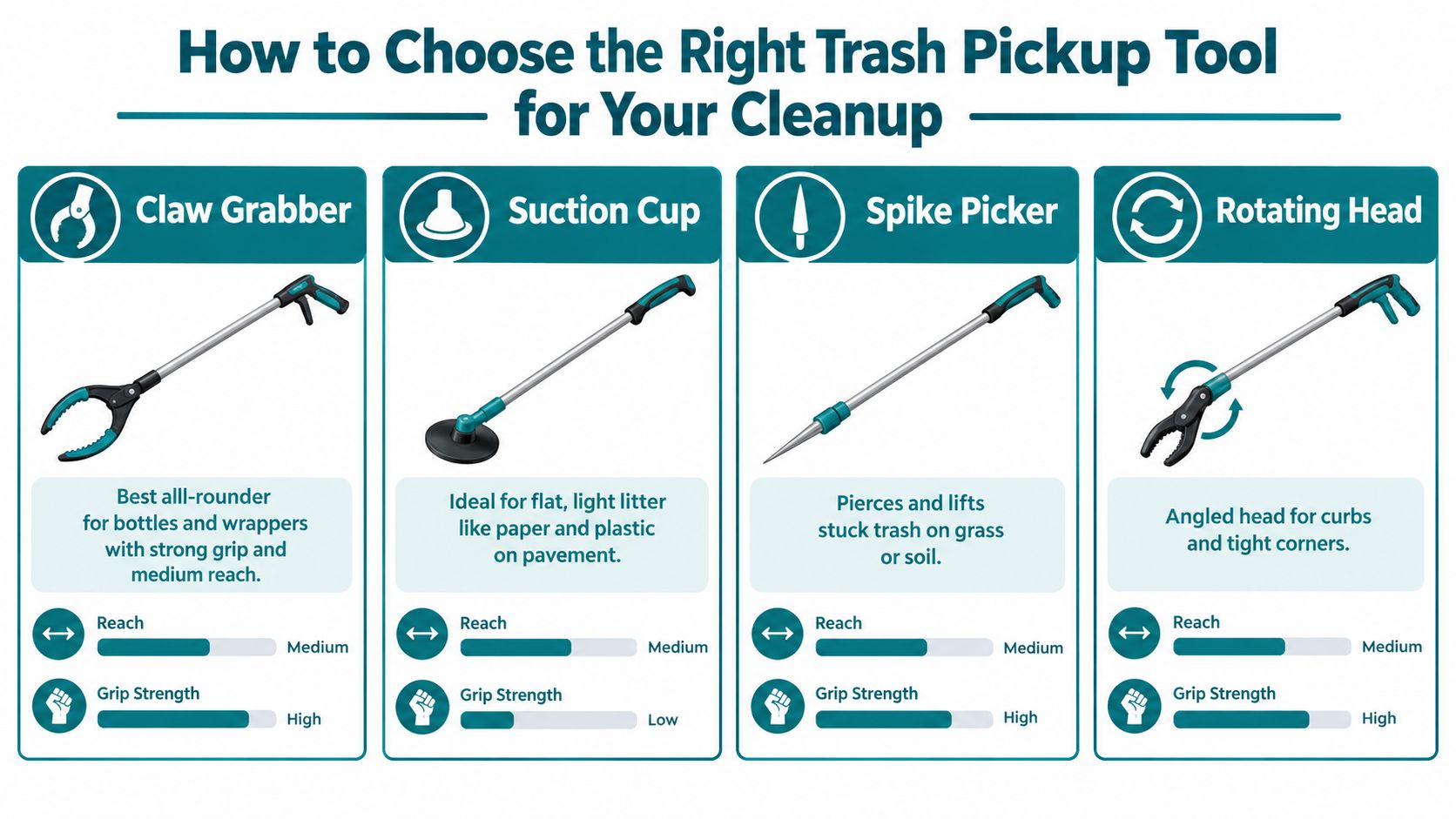
    An infographic showing four different types of trash pickup tools with descriptions for their specific uses.

    Start with the litter, not the catalog

    A typical grabber gives enough reach for sidewalk work without forcing you to bend over every few seconds. One folding model, for example, lists a 17-inch folded length and a 1.5-inch suction cup in this grabber product example. Specs like that matter, but only after you know what you are picking up.

    I sort tools into jobs:

    • Claw grabber: My default for bottles, cans, food containers, and heavier wrappers. It holds its grip when the bag is open and the wind is pushing back.
    • Suction cup style: Better for flat, light litter on smooth pavement. Flyers, napkins, and thin plastic come up faster when the ground is doing half the work.
    • Spike picker: Useful for debris stuck in grass or pressed into damp soil.
    • Rotating head grabber: Best near curbs, fence lines, hedges, and parked cars where straight-on reach is awkward.

    A weak tool slows the whole crew. A mismatched tool does something worse. It pushes volunteers to pinch with gloved fingers, kick items loose with a shoe, or reach toward something they should have left alone.

    My decision rules in the field

    I use quick rules, not brand loyalty.

    Cleanup Scenario Best Tool Type Why It Fits
    Sidewalk with cups, cans, wrappers Claw grabber Strong grip and easy drops into a bag
    Smooth pavement with paper and thin plastic Suction cup Lifts flat litter cleanly
    Park grass with stuck debris Spike picker Frees pieces caught in roots or soil
    Curbs, hedges, tight edges Rotating head Reaches odd angles without twisting your wrist
    Cigarette-butt heavy corner Fine-tip claw or spike Small-target control matters more than jaw strength
    Suspected sharps or hazardous waste No standard grabber Stop, mark the spot, report it

    That last row matters most.

    One safety guide says volunteers should use grabbers for ordinary litter, wear high-visibility clothing, gloves, and hard-soled shoes, and report large items, hazardous waste, and sharps instead of handling them directly in this litter grabber safety guidance.

    If an item could cut, puncture, leak, or spread contamination, the tool choice is simple. Do not pick it up yourself.

    I have made that call in alleys after storms, beside bus stops, and along vacant lots where the grass hides surprises. A grabber is enough for routine litter. It is not enough for needles, broken containers with residue, leaking bags, dead animals, or anything you cannot identify from a safe distance. In those cases, I flag the spot, take a photo if needed, and pass it to the city, park staff, or a trained crew.

    Cigarette butts are a good example of why scenario beats marketing copy. They are small, dirty, and often packed into cracks, mulch, or mud. A big claw that works great on bottles can feel clumsy there. Cleanup groups also run into glass and contaminated debris in the same stretch, which is why broad product claims fall apart fast. The safer approach is to match the tip shape to the target, and leave risky items for pros.

    If you want a plain-English list of what belongs in a basic cleanup setup, this trash pickup equipment guide for volunteer cleanups is a useful starting point.

    A short demo helps if you're a visual learner.

    Using Your Gear Well on Volunteer Cleanup Day

    A cleanup goes smoothly when your setup is boring. I mean that as praise. The bag stays open. The gloves fit. The grabber opens and closes without drama. Nobody is asking where to put the glass bottle or who has the extra bags.
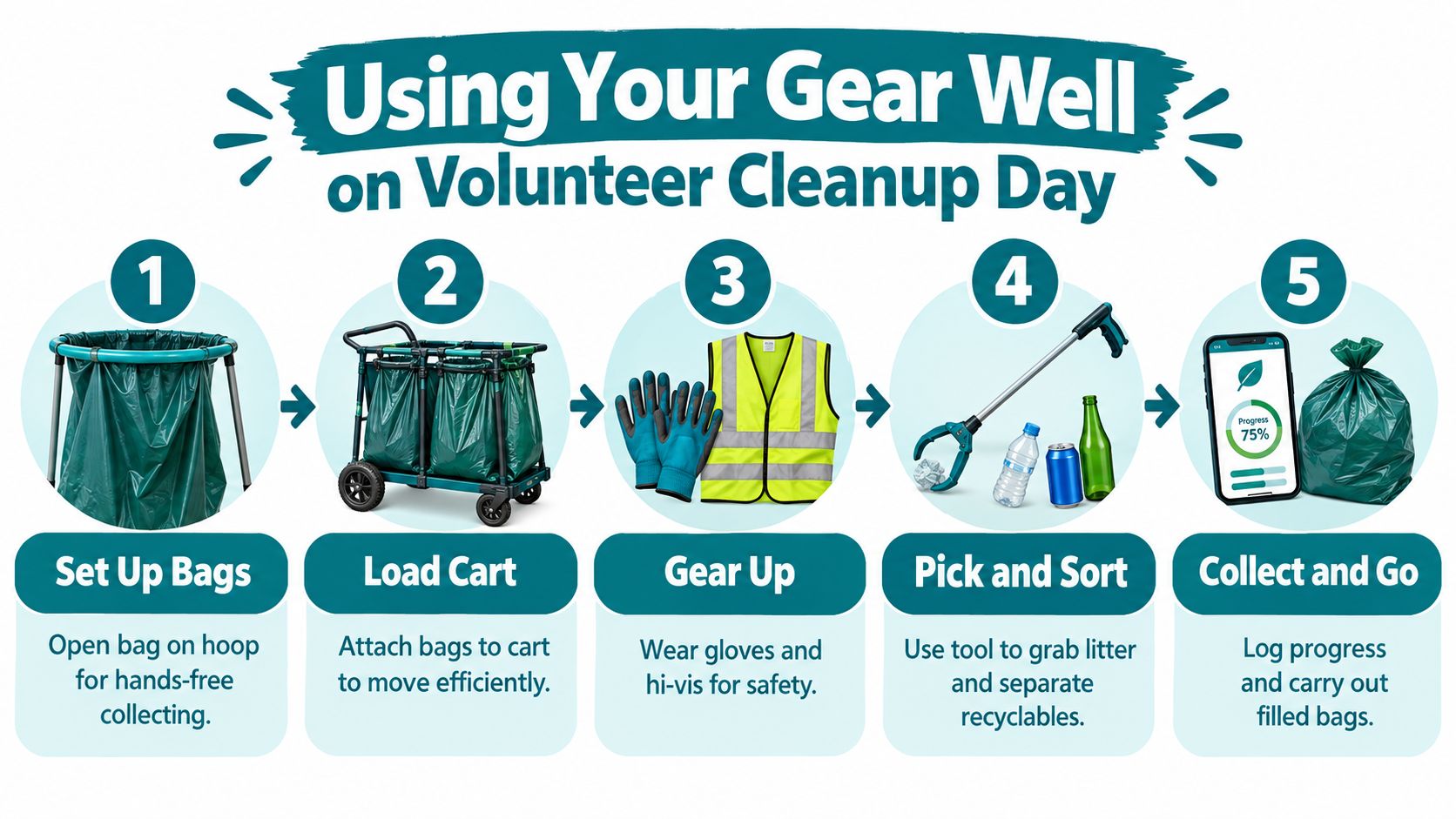
    A five-step infographic showing how to use cleanup gear efficiently for a community volunteer trash collection event.

    My field routine

    I start by staging the boring stuff first.

    1. Open the bags before you need them. A hoop keeps the mouth of the bag open so your grabber can drop trash cleanly.
    2. Load a cart or trolley if the route is long. Carrying full bags by hand burns energy fast.
    3. Put on gloves, hi-vis, and hard-soled shoes. You want protection before the first pickup, not after the first bad surprise.
    4. Sort as you go. I like one stream for organics, one for recyclables, one for garbage.
    5. Keep a phone handy. You may need photos, notes, or a report for a dangerous item.

    Volunteer kit guidance backs up that setup. It recommends bin bags, recyclable bags, gloves, a hoop to keep bags open, a cart or trolley, a mobile phone, and a first aid kit in this cleanup equipment list for volunteer groups.

    Turn a cleanup into usable data

    When I want more than a feel-good morning, I borrow a simple audit method. Use fixed survey zones. Pick up only what you can handle safely. Separate waste into categories during collection. Weigh each category after the session.

    One campus litter audit used a 3-hour collection window, waste tongs, and three bags for organics, recyclables, and garbage in this campus litter audit report. I like that model because it turns "we cleaned a lot" into something you can compare later.

    The trap is sloppy definitions. If one team counts the bus stop and another stops at the tree line, your numbers won't match. If one volunteer tosses cans into garbage and another sorts them into recycling, same problem.

    Field note: Keep the zone fixed and the sorting rules fixed, or don't pretend the results compare.

    For groups that want benchmark-style tracking over time, repeated standard surveys beat random one-off counts. The NSW litter reporting method is a good example. It surveys 1,000 sites twice yearly with a standard method and tracks both volume and item counts. That same source also warns against treating one metric as the whole truth. I agree. A block can look cleaner and still hide dense pockets of cigarette butts in the grass line.

    If you're new and want a simple walkthrough, this how to pick up trash guide covers the basics in plain language.

    Building a Volunteer Ready Kit on Any Budget

    When I pack for a group, I don't think in terms of one magic picker. I think like a cook setting up a line before dinner rush. If the knife is sharp but the pans are missing, service falls apart. Same deal here.
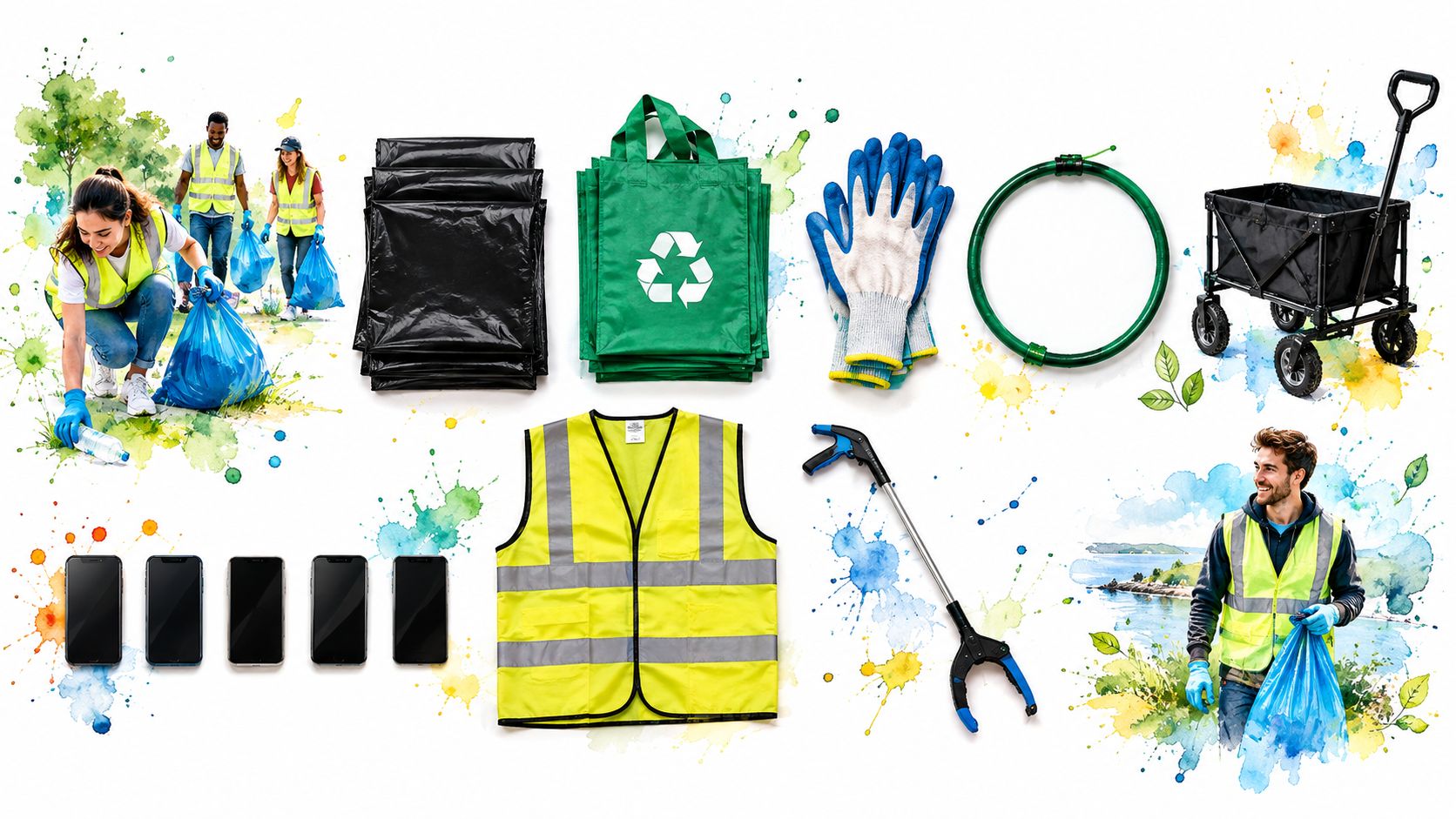
    A collage showing volunteers picking up trash with various cleanup tools and supplies on a white background.

    The kit I want at the curb

    For a small team, I want enough grabbers for the people who hate bending, extra gloves, bags that won't rip, and one way to move full loads without carrying them like dead weight. A cart changes the mood of a cleanup more than people expect. It turns the bag pile into one rolling station.

    I also standardize the kit so every site feels familiar. Same bag colors. Same spot for gloves. Same rule for where filled bags go. That way a volunteer can join in a new neighborhood and still know the rhythm within a minute.

    I keep these points in mind:

    • For hands: grabbers in a few styles, plus backup gloves
    • For sorting: separate bags that volunteers can identify quickly
    • For movement: one cart or trolley if the route is spread out
    • For safety: hi-vis, first aid basics, and a charged phone
    • For weird days: spare liners, tape, and an extra outer bag for wet or sharp-edged trash

    Why group logistics matter more than people think

    Most advice online talks about grip strength and handle comfort. Fine. But group cleanup failure usually starts with logistics. The bags won't stay open. Nobody brought enough supplies. One person is carrying everything. People walk half a block to find the right bag.

    That matters even more because the litter itself doesn't always behave the way people expect. A major U.S. litter study cited by an industry source found nearly 50 billion pieces of litter along roadways and waterways, equal to 152 items per U.S. resident and more than 2,000 pieces per mile. It also counted 25.9 billion pieces along waterways and 23.7 billion along roadways, and said cigarette butts remained the most littered item even after falling by almost 70% in the 2021 litter figures summarized here.

    Those numbers match what a lot of volunteers feel on the ground. A place can seem cleaner overall and still hand you a miserable hour of scattered bottle caps, half-buried plastic, and butt clusters around benches and curb drains.

    A group cleanup kit should solve friction first. If volunteers keep stopping to adjust, search, carry, or sort, the day gets longer fast.

    If you're on foot, pack foldable tools and split supplies across two backpacks. If you're on a bike, strap the hoop flat and carry bags inside a bin or pannier. If you're in a car, store grabbers folded and grouped so setup takes minutes, not rummaging.

    Simple Care and Safety Habits That Keep Tools Working

    Last July, a teenager on my crew used a grabber to drag a waterlogged rug out of a park hedge. The jaws twisted. The spring started clicking. By the second block, the tool would close on a bottle and drop it two steps later.

    That is the kind of failure you can prevent.

    A trash pickup tool lasts longer when you match it to the hazard and stop asking it to do a job meant for gloves, a broom, a shovel, or a city crew. Grabbers are for loose, light litter you can lift cleanly. They are poor choices for sodden fabric, sharp metal, leaking containers, and anything stuck fast in mud or ice.

    The two minute check

    Before I leave home, I give each tool a quick test in the alley. I squeeze the handle. I watch the jaws meet. I look for a loose hinge, a split rubber tip, or a bent shaft from the last cleanup. After wet or gritty events, I wipe the tool down, dry it fully, and clear the grit out of the moving parts before it hardens into a grinding paste.

    If you use a folding model, fold it and store it dry. Some compact grabbers fold to about 17 inches, which is handy for a car bin or closet shelf, but the win is keeping the hinge clean so it still locks straight next time.

    My routine stays simple:

    • Before you leave: check jaw alignment, hinge tension, and gloves
    • After rain or snow: wipe the shaft and jaws, then let the tool dry fully
    • After sand, mulch, or glassy grit: rinse or brush out the hinge and trigger area
    • Before the next event: test the grip on something small and something bulky, like a bottle cap and a can

    One fast test saves a frustrating morning.

    The line I don't cross

    I learned this one on a windy cleanup near Western Avenue. A volunteer spotted litter just past the curb and started reaching from the grass. Cars were moving too fast, and the grabber gave her a false sense of reach. I pulled her back and left the trash where it was.

    That call was right. Some public roadside guidance says not to pick litter from roads or carriageways, to avoid roads with speed limits over 30 mph, and to stay on pavements, paths, and walkways, as described in this roadside litter picking guidance.

    I give new volunteers a plain rule. If you need to step into traffic space, stretch under a guardrail, reach into blind brush, or handle something that could cut, poke, leak, or break, the grabber is no longer enough.

    Then we switch to the relay rule. Pick up the safe stuff. Mark or photograph the dangerous find if your group does that. Report sharps, chemical containers, bulky dumping, dead animals, and anything you cannot identify to the city, park staff, or another trained crew.

    A working tool is only half the job. A volunteer who knows when to stop keeps the whole cleanup safer.

    Your Next Block Is Waiting

    I like weekend mornings for this work. The city is still rubbing its eyes. The light is honest. You can hear someone's laugh from half a block away while a bag rustles and a grabber clicks like a metronome.

    That's how a habit starts. You don't need a massive route. Pick one corner store block, one bus stop stretch, one park edge. Bring one friend if you can. If nobody comes, go anyway and make it short enough that you'll want to come back next week.

    I've seen strange little victories pile up. A volunteer who was shy starts waving at strangers. Someone who came for one event comes back with gloves for a friend. A neglected patch of grass starts looking like part of the neighborhood again instead of a place people ignore. That's how friendships grow too. You're side by side, doing something plain and good, and conversation gets easier because your hands already know what to do.

    Keep the celebration simple. Take a photo. Mark the block on your map. Give the weird hailstorm, hot wind, or perfect sunrise its due. Those details are part of why you'll remember the morning and do it again.

    You don't need perfect gear. You need gear that matches the job, a few safety rules you won't bend, and the nerve to start.

    Then your block starts talking back. Cleaner curb. Fewer cans in the grass. A corner that feels cared for.

    That's enough to get going.


    If you want people to clean with, Litter Caterpillars runs volunteer trash pickup events in Chicago and provides basics like grabbers, bags, and gloves for many outings. If this guide helped you think more clearly about which trash pickup tool fits which cleanup, come join a morning and put those choices to work on a real block.
  • Litter Cleanup Volunteer Guide How to Join and Help

    Litter Cleanup Volunteer Guide How to Join and Help

    The hail started before we finished our first bag. Three of us huddled beneath a tree, shivering while our rides kept canceling, and somehow we were laughing. That was my first litter cleanup, and I learned that cleaning other people's mess can feel easier than facing your own.

    Why I Started Picking Up Trash and Why You Might Too

    For years, I could not keep my own things organized. Every object seemed to demand a memory. An old jar brought back a trip, while a forgotten snack recalled an attempt to eat better. Even a small mess became a decision I kept postponing.

    Street litter asked less of me. A bottle had no personal history, and a wrapper did not make me remember where I bought it. I could reach down with a grabber, drop the item into a bag, and keep walking.

    The first storm changed what volunteering meant to me. The weather was miserable, yet it gave the morning a shared story. We were three people trying to finish an odd little adventure, and the cold made our jokes better.

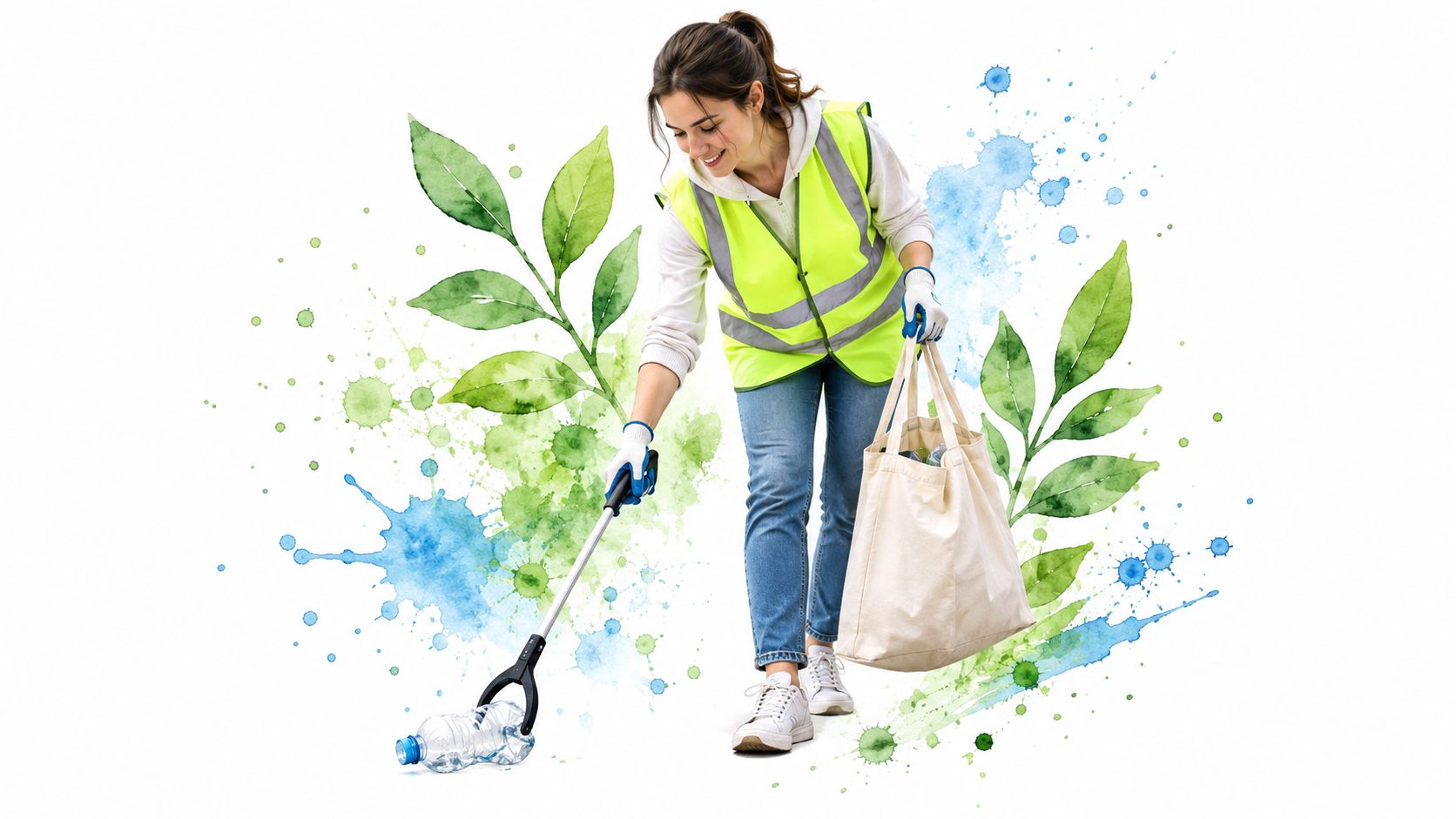
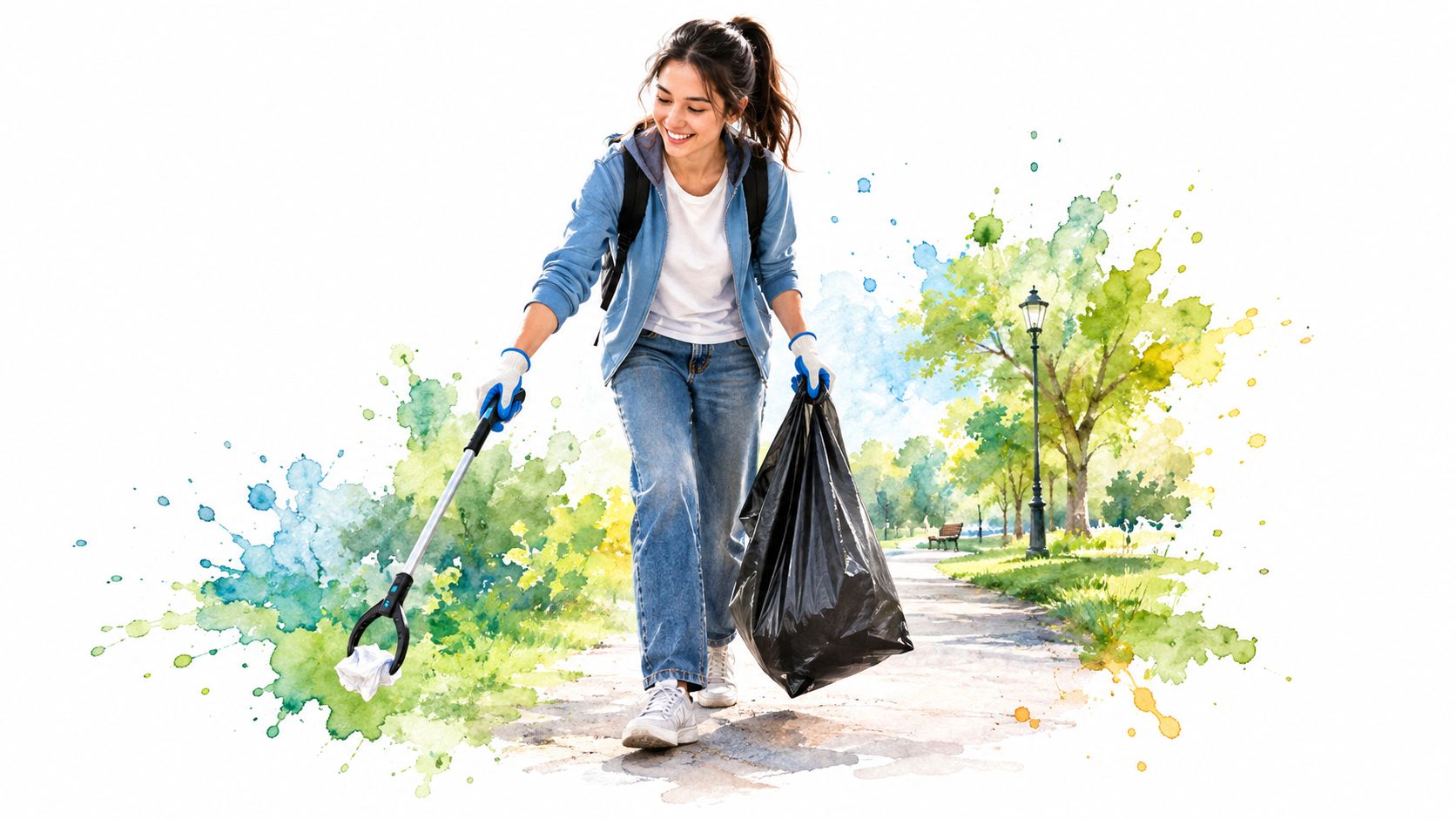
    A young female volunteer happily picks up litter in a scenic park using a grabber tool.

    Why showing up matters

    I returned because the work offered a clear promise. I could arrive, carry a bag, and leave one small place cleaner. I did not have to feel organized first. I needed gloves, some courage, and people willing to stand beside me.

    The Litter Caterpillars follow that same rhythm. The group cleans across Chicago's wards, including areas other groups may avoid, and meets on weekend mornings. Volunteers bring flags, theme songs, and badges, turning an ordinary sidewalk into a place with its own shared identity.

    Rain or shine, that routine changes people. You learn to keep showing up, and familiar faces become friends because you have sweated, shivered, and worked beside them.

    My rule: Choose one cleanup before you decide whether volunteering fits you.

    Litter cleanup also has a broad community history. Keep America Beautiful describes volunteer work spanning community events and public spaces across the United States. Its overview of litter cleanup volunteerism shows how a simple bag-and-grabber routine can connect people at a much larger scale. Keep America Beautiful describes the scale of litter cleanup volunteerism.

    You do not need to fix the whole city. Choose one morning, meet people outdoors, and let the bag fill gradually. Consistency becomes easier when friends are waiting for you, and a small act can leave you braver than when you arrived.

    How to Find and Join a Litter Cleanup Group Near You

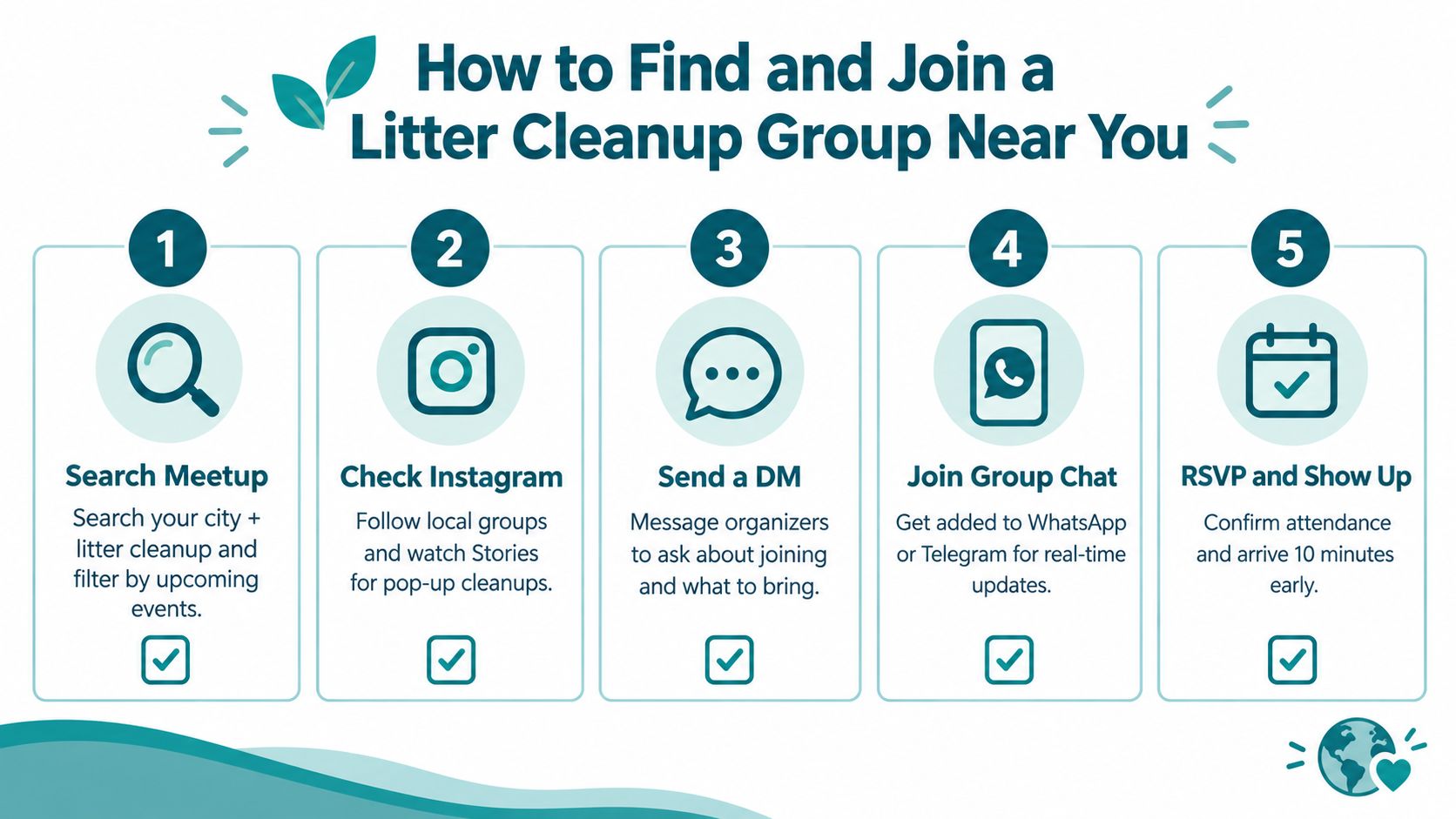
    I usually begin with Meetup, because event listings give me a date, meeting place, and host in one screen. Search your city with phrases like “litter cleanup,” “trash pickup,” or “community cleanup,” then filter for upcoming events.

    Read the listing before you RSVP. Look for the meeting point, expected pace, supplied equipment, weather plan, age rules, and contact method. A clear listing should tell you what happens after you arrive, not leave you guessing beside a park entrance.

    Use Meetup and Instagram together

    Instagram helps when groups announce smaller events quickly. Search your city name with “litter pickup” and follow local groups, parks, neighborhood associations, and environmental volunteers. Watch Stories for pop-up cleanups, route changes, and weather notices.

    Send a short direct message:

    Hi, I'm interested in joining your next litter cleanup. Is the event open to new volunteers, and should I bring anything?

    That message does enough. You don't need a personal essay. Hosts can tell you whether they provide grabbers, gloves, and bags, or whether you should bring your own.

    An infographic showing five easy steps to find and join a local litter cleanup group volunteer event.

    Choose a first event you can actually attend

    Weekend mornings work well for many volunteer groups because the schedule leaves room for service and conversation. Pick a site that feels manageable, with a clear meeting point and a host who answers questions.

    A group chat can make the first visit easier. Ask whether the organizers use WhatsApp, Telegram, or another open chat for last-minute updates. RSVP, save the address, and arrive early enough to find the host without rushing.

    If you're searching around Chicago, browse local volunteer trash pickup events near you and compare the next available meetup with your schedule. Then make the decision concrete. RSVP before you talk yourself out of it, send the host your question, and put the event on your calendar.

    What to Expect at Your First Litter Cleanup Meetup

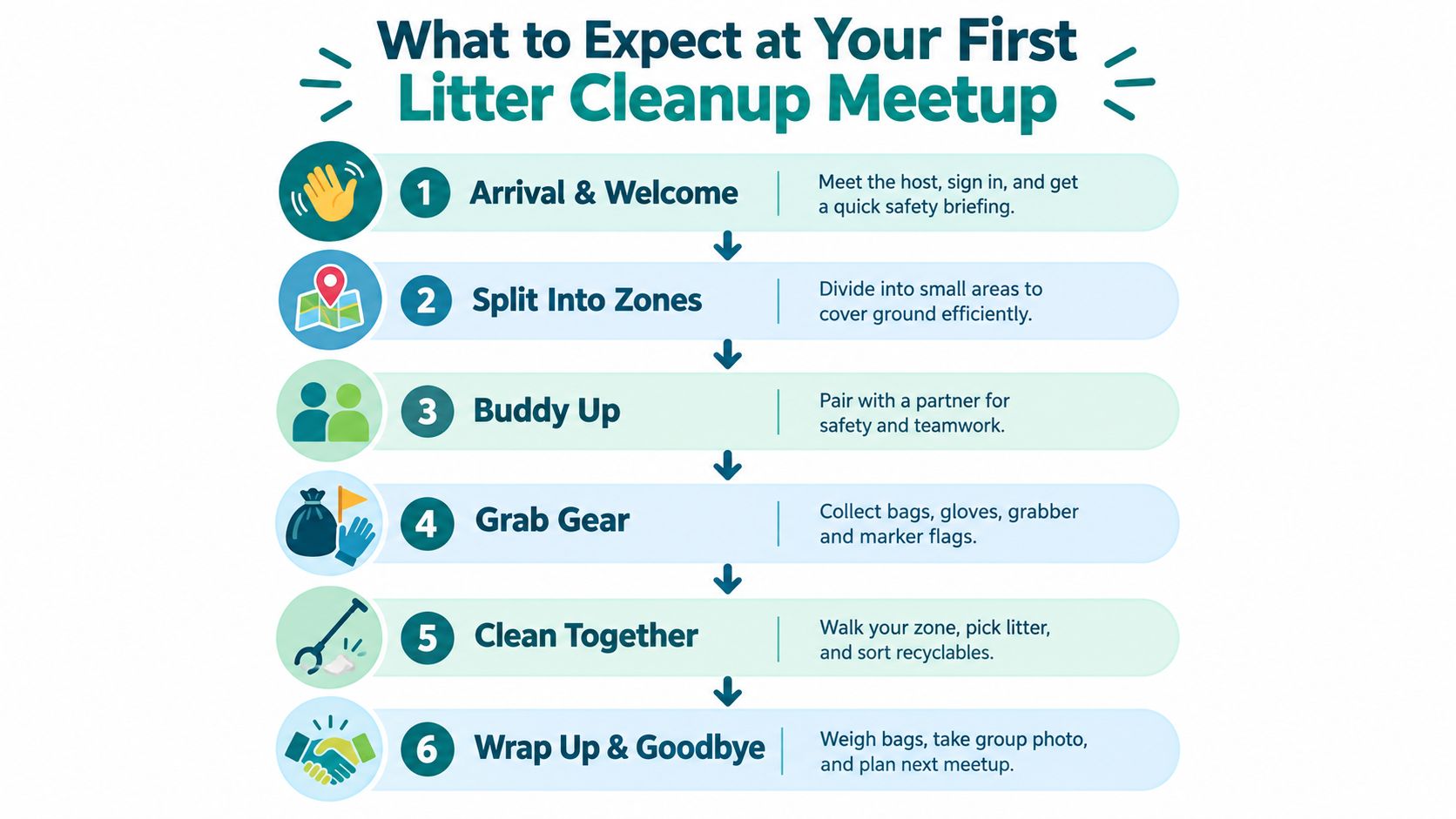
    My first calm meetup began with a small circle of people near the starting point. The host welcomed everyone, explained the route, and gave a short safety briefing. Nobody expected a speech or a perfect introduction. We signed in, collected supplies, and started talking while we prepared.

    The group split the area into small zones. That choice kept us from crowding one patch of sidewalk while another remained untouched. I paired with a buddy, took a grabber and bag, and followed the boundary of our assigned block.

    At first, I felt awkward. My buddy found a cup beneath a hedge, and I found a tangled receipt near a curb. After a few minutes, the pattern became almost meditative. Reach, squeeze, drop. Reach, squeeze, drop. Between finds, we talked about neighborhoods, pets, jobs, and whatever had happened that week.

    A simple rhythm carries the morning

    The host checked routes and kept the group together without hurrying anyone. We took breaks for water and paused when the ground, traffic, or weather made a section unsuitable. A first-time litter cleanup volunteer doesn't need to compete with anyone. A steady pace works better than a frantic one.

    You may meet students, neighbors, people new to the city, and regulars who know every shortcut around the block. Some people talk constantly. Others work without a word. Both styles fit.

    An infographic titled What to Expect at Your First Litter Cleanup Meetup, outlining six steps to follow.

    Near the end, volunteers bring filled bags to the agreed pickup point. Some groups sort recyclables or record what they find. The group may take a photo, thank everyone, and discuss the next route. The goodbye often feels warmer than the greeting because you've shared a task that leaves visible evidence.

    You don't have to arrive confident. You can borrow confidence from the person walking beside you.

    The meetup may include laughter, quiet concentration, muddy shoes, and an unexpected weather change. That mixture makes the experience memorable. You leave with cleaner streets behind you and a few names you can recognize at the next gathering.

    Safety and Gear Checklist for Litter Cleanup Volunteers

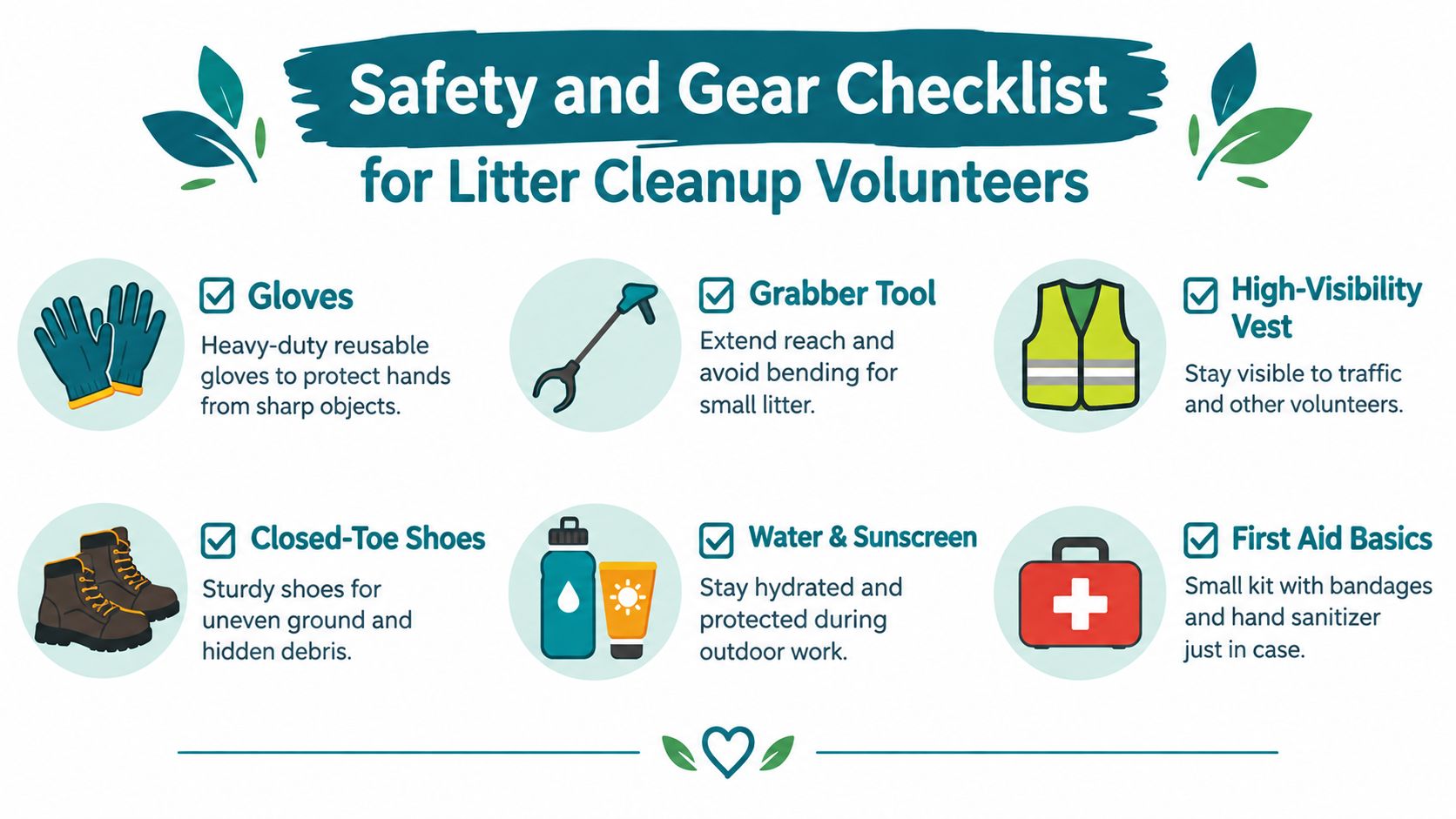
    I pack the night before because a rushed volunteer forgets the item that matters most. Start with gloves, a grabber, high-visibility clothing, closed-toe shoes, water, and sunscreen. Add layers when wind or heat may change the feel of the morning.

    Use this checklist:

    • Gloves: Wear sturdy gloves that protect your hands from hidden sharp edges. Never pick up litter with bare hands.
    • Grabber: Use a grabber instead of reaching into bushes, gaps, or piles. It keeps your hands farther from unknown objects.
    • High-visibility vest: Wear reflective gear near any traffic or parking area so drivers and teammates can see you.
    • Closed-toe footwear: Choose hard-soled shoes or work boots that handle uneven ground and concealed debris.
    • Water and sunscreen: Drink regularly, take breaks, and protect exposed skin during outdoor work.
    • Basic first aid: Carry bandages and hand sanitizer for small needs after you finish handling bags.

    See the litter cleanup equipment options used for trash pickup work before your first event.

    Follow the route, then stop for hazards

    A safe workflow starts with a site inspection. The leader checks for traffic, water, unstable ground, construction, severe weather, and other hazards. The team divides the area into small zones, works in buddy pairs, fills only manageable bags, and places tied bags at a safe pickup point.

    Stay off the roadway. Work in daylight, avoid wet or poor-visibility conditions, and never choose a busy road to collect more litter. Minnesota's Adopt a Highway guidance also tells volunteers to face oncoming traffic, avoid bridges and open water, and leave enough room for crews to tie bags shut. Read the Minnesota volunteer safety guidance.

    Some objects belong to trained responders. Leave needles, broken glass, batteries, dead animals, heavy or bulky objects, sealed containers, and unknown substances alone. Tell the group leader, who can report the item to the right authority.

    Hazard rule: If you can't identify it or lift it safely, don't touch it.

    A county roadside program requires safety training, a vest, gloves, and hard-soled shoes or work boots before participation. Review the Will County roadside terms and conditions. Texas guidance also places volunteers in a defined right-of-way workflow, asks groups to carpool, and says bags should remain tied and reachable for collection. Read the Texas cleanup safety tips.

    When you finish, wash your hands and disinfect reusable equipment. Safety keeps one enjoyable morning from becoming a reason to quit.

    A safety and gear checklist for litter cleanup volunteers featuring essential items like gloves, tools, and protective equipment.

    Cleanup Etiquette That Keeps Teams Kind and Unified

    A cleanup group works best when nobody treats the morning like a competition. I share the awkward finds, the heavy sections, and the boring stretches. Someone else may take the next bag, hold a flag, or walk with a newer volunteer who feels unsure.

    Keep your footprint light in the neighborhood. Stay aware of entrances, gardens, parked cars, and people using the sidewalk. Keep voices reasonable, leave private property alone, and let the leader handle questions from residents or tricky waste.

    Small teams make the work easier to supervise. Assign one side of a road at a time, keep buddy pairs together, and use a clear handoff for anything hazardous. Never pressure someone to work faster, lift beyond their capacity, or enter a place that feels unsafe.

    Protect the volunteer mood

    A volunteer-first group protects energy. Leaders should explain the plan, notice fatigue, and make breaks normal. Nobody should feel embarrassed for sitting out a difficult patch or leaving when the weather turns.

    Celebration helps too. A flag, a theme song, or a badge can turn a plain bag of litter into a shared achievement without turning service into a performance. I like the moment when everyone sees the same block at the end and recognizes the difference.

    • Do welcome newcomers: Introduce yourself and explain the next simple task.
    • Do share information: Tell the leader about hazards instead of trying to solve them alone.
    • Don't pressure donations: People arrive to give time, and organizers should respect that.
    • Don't shame residents: Clean the space without turning strangers into targets.
    • Do thank the team: A sincere goodbye makes returning feel easy.

    Before joining a group, read its volunteer code of conduct so you understand how it handles respect, safety, and shared work.

    How Volunteering Transforms You and Your City

    The first time hail hit during a cleanup, I nearly headed home. Then a friend tightened her hood, laughed, and kept walking. We filled bags between showers. That morning changed my idea of service. A cleanup clears one sidewalk, while returning regularly changes how you see yourself and your neighborhood.

    The Litter Caterpillars' rain-or-shine, all-wards approach makes that change visible. You learn to show up before you feel ready, work beside people you did not know, and trust a plan when the weather turns. Bravery becomes an ordinary habit, built one meetup at a time.

    Friendship grows through repetition. You meet the same people at the gathering point, follow familiar routes, and learn how someone laughs when a bag snags on a thorn. Those small moments create belonging without demanding an instant friendship.

    Chicago looks different with a grabber in your hand. Walking through its wards has led me down streets I might otherwise overlook. Projects such as Caterpillar Park in Englewood also give volunteers a place where shared work can continue beyond one cleanup morning.

    Turn one morning into a practice

    Keep the first commitment modest. RSVP for one event, bring a friend, and decide beforehand which weather would send you home. Afterward, record the next date while the experience still feels fresh.

    For another community view of waste reduction and local action, read Fillaree's guide to the top reasons Durham is zero-waste capital.

    The broader participation is encouraging. Keep Britain Tidy reports that many adults take part in litter picking regularly, and that hundreds of thousands of volunteers collected hundreds of thousands of rubbish bags in one year. The scale shows that local service can become a shared public habit.

    You do not need a heroic plan. Choose a meeting point, wear shoes you trust, and let the people beside you make the morning lighter. Return before the habit disappears.

    Litter Caterpillars organizes volunteer trash pickup events across Chicago, provides grabbers, bags, and gloves, and offers a practical way to meet people while cleaning local streets. Visit Litter Caterpillars, RSVP for a weekend cleanup, and bring a friend to your first morning.

  • How to Run Community Cleanup Events That Actually Work

    How to Run Community Cleanup Events That Actually Work

    The first time I ran a cleanup in Chicago, three of us showed up under a sky that couldn't decide between hail and snow. My gloves got wet, one Uber kept canceling, and I remember laughing because we were freezing while hauling bags of someone else's mess, like we'd stumbled into the strangest team-building exercise in the city.

    A few weeks later, I realized I wanted that feeling again. Not the cold part, obviously. The part where a block looks worse before it looks better, and then the whole crew walks away a little taller.

    Why I Started Picking Up Trash Every Weekend

    I used to think I was the kind of person who just couldn't keep order. My apartment had the usual pile-up of half-finished intentions, old takeout containers, and things I meant to deal with later. Cleaning someone else's sidewalk felt easier than cleaning my own room, and that felt weirdly honest.

    Then my life got messy in a bigger way, and I started making choices on purpose about who I let around me. I wanted more people who showed up, more people who gave, more people who didn't make every plan turn into a drain. So I kept the cleanup going, because it let me practice exactly that.

    A person collecting trash in a plastic bag on a city street during a community cleanup event.

    The first rule I learned the hard way

    The trash is never the whole point. A cleanup can begin with two friends and a bad-weather forecast, but the thing that keeps people coming back is the feeling that they're part of a crew with a shared rhythm. That's why I stopped treating it like a one-off chore and started treating it like a weekly practice.

    I've seen that same pattern in bigger cleanup movements too. World Cleanup Day and National Cleanup Day pulled in 25 million people across 190 countries and territories in 2025, which is 86% of UN member states, and earlier reporting put participation at over 20 million volunteers across 179 countries and territories, with more than 2 million volunteers in the United States alone and events in all 50 states (World Cleanup Day, Earth Day's 2024 cleanup reporting). That scale doesn't matter to me because it sounds impressive. It matters because it tells me weekend trash pickup is a normal civic habit, not some weird hobby.

    Practical rule: if the event feels like a punishment, people won't return. If it feels like a shared ritual, they will.

    The playbook I wish I'd had on day one is simple. Pick a place, get a few steady people, protect their energy, and make the whole thing feel like service with a pulse. That's how a cleanup starts changing the volunteers too.

    Planning Your First Cleanup From Scratch

    I start every event by walking the site before I ask anyone else to show up. I look for broken glass, thorny weeds, traffic noise, blind corners, and spots where people toss bags because they think nobody's watching. A park, an alley, and a highway shoulder all demand different judgment, and if you treat them the same, you'll feel it by minute twenty.

    Before the first volunteer arrives, I want four things clear in my head. Where are we cleaning, who controls the space, what can go wrong, and how do we get out if the day turns sideways? That simple discipline saves more chaos than any fancy flyer.

    I write the plan like I'm handing it to a friend

    A one-page plan is enough if it's honest. I put the site name, the date window, the lead organizer, the supply list, the pickup or haul-off plan, and the exit route in plain language. I also write down the obvious hazards, because forgetting a busy street or a hidden dump pile is how a “quick cleanup” turns into a bad afternoon.

    Here's the rhythm I use:

    • Scope the site first. Walk it in daylight and note where the trash collects, where cars move fast, and where shoes might catch on broken material.
    • Check ownership next. City land, private land, and roadside areas don't all work the same way, and each one changes what you can do.
    • Set the date with weather in mind. Weekend mornings work well for me because they filter for people who want to give their time, not just squeeze in a photo.
    • Handle permits and permissions early. If a space needs approval, I'd rather know before I invite anybody.
    • Gather supplies with an exit in mind. Gloves, bags, grabbers, water, and a place for the debris to go matter more than decorations.

    The volunteer event planning guide is one place I'd send anyone who wants a clean planning checklist without the fluff. I still keep my own version on paper because I don't want my phone to become the single point of failure.

    Practical rule: if you can't explain the plan in one minute, the plan is too big for your first cleanup.

    I also learned to respect shade and timing. Summer heat drains people faster than they expect, and a site that looks manageable at 8 a.m. can feel punishing by noon. I'd rather run a short, sharp cleanup and leave people wanting more than push them until they swear they're done forever.

    Recruiting and Keeping the Right Volunteers

    I stopped thinking of recruitment as a flyer problem. It's a design problem. If I want people who show up with a giving spirit, I make the event easy to say yes to, and I set it on a morning that already fits that kind of person's life.

    The first filter is the schedule. Weekend mornings work because they ask for a real choice. The person who shows up then usually isn't there by accident, and that matters when the work gets uncomfortable halfway through.

    Make the first touch easy

    I don't ask people to commit through a giant form. I let them tap in, ask a quick question, and get the basics fast. Meetup, Instagram, and a simple message thread all help when the tone is clear and the ask is small.

    The volunteer recruitment guide can help if you're trying to build that first wave without sounding needy. I've also found that the event description should respect time. Say what neighborhood you're cleaning, how long people will be out, what they should wear, and what kind of energy you expect.

    To keep people past week three, I do a few things on purpose:

    • Pair new people with a returning buddy. Nobody should spend the first twenty minutes feeling lost.
    • Use names fast. I try to learn every name in the first ten minutes, because people stay warmer when they feel seen.
    • End with a group photo. It gives the day a clean finish and gives people something to share.
    • Never ask for donations on site. My volunteers came to give labor and attention, not to get a fundraising pitch.

    That last part matters more than most organizers admit. People can feel when their energy is being respected. If you protect it, they come back.

    I also keep the tone friendly without making it sloppy. A simple reminder the night before, a clear arrival spot, and a real welcome at the curb all do more than a long motivational message. People don't need hype. They need to know they won't be stranded.

    Building Pride With Flags, Songs, and Badges

    The first time I brought a flag to a cleanup, it changed the mood right away. People walked up faster. Strangers asked who we were. The crew looked like a crew instead of a loose pile of individuals with trash bags.

    That's when I understood that pride is practical. A cleanup group needs a symbol the same way a sports team does. It gives people something to gather under before the first bag gets filled.

    Small rituals turn a crowd into a team

    A theme song helps too. It doesn't need to be perfect, and it definitely doesn't need to be slick. It just has to be ours. Once people hear it enough times, the song starts to mean “we're here again, we're doing the work.”

    Badges and stickers do a different job. They tell returning volunteers that the group noticed them. A thank-you email disappears into a crowded inbox, but a small badge on a jacket gets seen again and again.

    I borrowed this from the way teams and big civic movements build identity, then I made it cheap enough for a neighborhood crew. A simple logo, a two-line chant, and a named route can change the feel of the whole morning. You don't need a branding agency. You need a few visible signs that say, “We belong here together.”

    Here's what I'd do first if I were starting over:

    • Print one simple logo. Put it on a flag, a shirt, or a sticker.
    • Pick one short chant. Two lines are enough.
    • Name the route. People remember “the south block run” better than “today's cleanup.”
    • Hand out small markers of return. A badge, a sticker, or a pin is enough to make repeat help feel noticed.

    When a cleanup has culture, people relax into it. They stop asking whether they'll have fun and start acting like they already know the answer.

    Running the Day So People Come Back

    I learned to watch the first ten minutes closely. If people arrive to a table that is obvious, a check-in that moves fast, and a crew that already looks ready, they settle in faster. In Chicago weather, that matters. A windy morning off the lake, a sticky summer block, or a gray day when everyone is half-braced for rain can turn small delays into lost momentum.

    The welcome table is where the day either feels organized or feels improvised. I set gloves, bags, grabbers, and water where people can reach them without asking, and I greet each volunteer like I expected them. Then I keep the safety huddle short and specific, because nobody wants a lecture while they are standing in damp socks.

    My run-of-show stays tight

    1. Staging and sign-in. People check in, pick up supplies, and know where to leave coats, backpacks, or car keys.
    2. Five-minute safety huddle. I cover traffic, broken glass, needles, and the rule that nobody reaches into anything sharp or unknown.
    3. Site split and team assign. I divide the area into zones so nobody wanders without a purpose.
    4. Cleanup hour. People work in pairs or small groups, and I keep the route short enough that nobody feels stuck on one block too long.
    5. Wrap and thank. We bring in the bags, note what changed, and end somewhere warm if I can manage it.

    The short route rule is the one I protect most. A crew that finishes one block with energy will come back more reliably than a crew that gets dragged through an overambitious plan. If a route starts to swell, I trim it before people start dragging their feet. That habit is part of the volunteer coordinator training I point new leaders to at volunteer coordinator training, because the same lesson shows up in every season, keep the day doable and people trust the next one.

    I also build in a water break before people ask for one. That sounds minor, but it keeps the tone steady and keeps complaints from stacking up. When the route ends, I want the crew to feel like they finished a job, not like they survived a test.

    I learned another thing the hard way. A coffee shop, a church basement, or even a corner with folding chairs beats a parking lot where everyone is already peeling away. The last fifteen minutes shape whether people remember the cleanup as a one-off chore or as a place they fit into. If they leave talking to each other instead of checking the time, they are more likely to show up again.

    Measuring Impact and Following Through

    Most cleanup days feel finished the moment the bags leave the curb. I used to think that too. Then I realized the cleanup only becomes real when I check what changed afterward and write it down before memory gets lazy.

    A good report doesn't need fancy software. It needs a habit. I log what kind of trash I found, where it piled up, how long the crew worked, and what the site looked like right after we left. The field guidance I trust says to set the evaluation framework before the event and then check the area soon after, then again later, so you can tell whether the spot stayed clean or bounced back with fresh litter (field guidance on cleanup evaluation).

    What I track and why

    Metric What it tells you Example value
    Volunteers present Whether your recruitment worked 12 people
    Hours worked How much effort the crew gave 18 volunteer hours
    Bags or piles collected Whether the route was manageable 9 bags
    Trash types found What keeps returning to the site Bottles, food wrappers, broken plastic
    Problem spots Where the site needs follow-up Corner lot, bus stop, alley mouth
    Same-day site condition What changed immediately Clearer sidewalk and fewer visible piles
    Later site check Whether the area held up Still clean after a return visit

    Field results help me set my expectations. One published cleanup model removed nearly 50 kg of trash across 0.75 miles of beach coastline and 0.3 miles of trail in 1.5 hours at each site, which works out to roughly 33 kg per hour per site and about 22 kg per mile over the combined route (published model cleanup). I don't use that as a goal for every block in Chicago, because every site is different. I use it as a reminder that real cleanup output can be measured, not just felt.

    I also photograph the items we can't safely collect and write them down. Then I send a short note to whoever controls the block, because data only matters if somebody sees it. If I let the spreadsheet sit untouched, I've just turned effort into clutter.

    Scaling a Cleanup Into a Long-Term Habit

    The thing that separates a group that fades from one that lasts is boring in the best way. We show up on the same day, in bad weather, with enough familiar faces that the ritual feels intact even when the sky is ugly. That kind of repetition builds trust faster than any one heroic day ever could.

    I've watched small crews grow without turning into something stiff. The trick is to add help without losing the feel of a neighborhood job. Once a group gets too crowded to move easily, I stop adding bodies and start adding structure.

    Grow slow, keep the pulse

    If I were starting from zero, I'd keep these reminders in my head:

    • Week one. Make it easy to join, keep the route short, and end on time.
    • Week twelve. Notice who keeps returning, and give them real responsibility.
    • Week fifty-two. Protect the culture before you chase scale.

    I also say no to some expansion ideas. A bigger event isn't always better if it strips out the warmth that keeps volunteers coming back. I'd rather have a small crew that knows each other's names than a crowd that feels like a line at a festival.

    That's the honest part nobody tells you on day one. A cleanup group can become a habit, a friendship engine, and a local ritual all at once, but only if you keep the work human. If the people stay glad to show up, the blocks get cleaner too.


    If you want help turning a first cleanup into something people return to, Litter Caterpillars runs Chicago volunteer cleanups with weekend mornings, clear roles, and a volunteer-first style that keeps the focus on the crew. I'd start there if you want a real group to plug into, learn from, or model your own cleanup after.