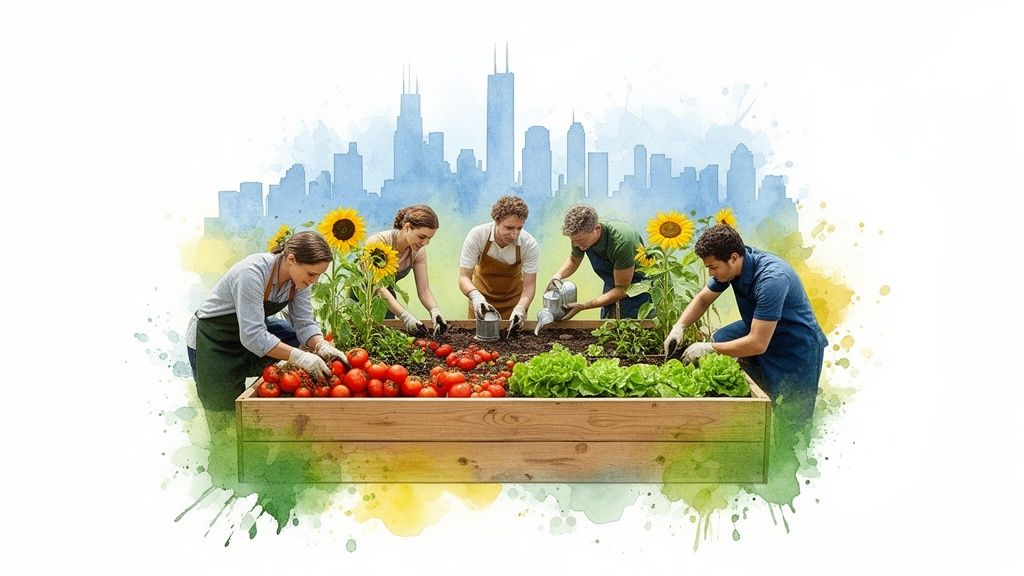
Imagine turning a forgotten patch of dirt into a place that pulses with life. A quiet corner of your neighborhood, once just dust and maybe a ghost of a plastic bag, is now exploding with tomatoes, sunflowers, and the sound of neighbors laughing. This isn't a dream. It's the real, dirt-under-your-fingernails magic happening every day across the incredible network of community gardens in Chicago, IL.
Getting involved is a lot less complicated than you think. It's not about being a perfect gardener with a flawless green thumb; it’s about the simple, brave act of showing up. It’s a lot like when we started Litter Caterpillars, shivering in a hailstorm with only three people. We discovered a powerful secret that day: tackling a big mess together is infinitely easier, and way more fun, than facing your own alone. Each weed you pull, each seed you plant, is a small act of defiance against apathy. It’s a way of telling your block, your city, and yourself: ‘I’m here. I care. Let’s grow something beautiful.’
This guide is your map to that feeling. It’s not just a list of places; it's a treasure map to finding your own power to transform things, one plot at a time. We've gathered the best platforms and resources to help you find a green space to call your own, whether you want to volunteer for a day, adopt a plot for a season, or even claim a city lot to start something brand new. Forget getting lost in a jungle of search results. Here, you’ll find direct links, screenshots, and clear, actionable steps for each resource. Let’s dig in and find your garden.
1. Litter Caterpillars
Imagine a different kind of garden. Instead of tending to seeds in soil, you are cultivating change on the sidewalks, streets, and forgotten lots of Chicago. This is the groundbreaking work of Litter Caterpillars, a citywide volunteer collective that transforms the act of picking up trash into an inspiring, community-building adventure. While not a traditional garden with plots for rent, this organization is a foundational partner for anyone invested in creating cleaner, greener, and more vibrant public spaces, making it an essential resource for the community gardens Chicago IL movement.
Litter Caterpillars is your entry point to hands-on neighborhood transformation, a way to reclaim public spaces and prepare the ground, often literally, for future greening projects. Founded by the tireless Kevin Tao, this group meets every single weekend, regardless of rain, snow, or summer heat, to clean one of Chicago's 50 wards. Their ethos is built on a powerful, simple idea: show up, be kind, and make a visible difference together.
Why Litter Caterpillars Stands Out
What makes this group exceptional is its "volunteer-first" philosophy. Joining is completely free, and the culture is intentionally low-pressure. You won’t be solicited for donations or pressured into commitments. The focus is squarely on your safety, your happiness, and the profound sense of accomplishment that comes from collaborative effort. This isn't just about cleaning; it's about building a citywide family.
The group fosters a unique and powerful identity through shared symbols like flags, badges, and even a theme song. It feels less like a chore and more like joining a team on a mission. This sense of belonging is the secret sauce that turns a one-time volunteer into a dedicated member who finds friendship and personal growth while beautifying the city.
Key Features and How You Can Get Involved
- Citywide Impact: From cleaning a shut-down highway during a bike event to winning an empty lot at auction to create Caterpillar Park in Englewood, their projects are bold and impactful. You can be part of efforts that make headlines and inspire citywide change.
- Zero-Barrier Entry: Getting involved is incredibly easy. Find their next event on Meetup, follow their journey on Instagram, or join one of their open group chats. It’s designed for anyone to jump in, whether you're a student, a newcomer, or a lifelong Chicagoan.
- Direct Support for Garden Spaces: A clean neighborhood is the first step toward a thriving garden. By clearing litter and debris from surrounding areas, Litter Caterpillars creates healthier environments for existing community gardens Chicago IL and paves the way for new ones to flourish. Their work directly combats blight and fosters a sense of stewardship that is vital for any green space.
- Adventurous Community Service: Each weekend offers a chance to explore a new corner of Chicago, from neighborhoods you know and love to areas you’ve never visited. It’s an urban adventure with a purpose.
A Note on Their Unique Model: Litter Caterpillars operates as a passionate grassroots collective. While they may not offer the formal infrastructure of a traditional nonprofit (like tax-deductible receipts), their agility and volunteer-centric model allow them to be incredibly responsive and authentic.
Practical Tips for Joining the Mission
- Check the Schedule: Visit their website or Meetup page to find the next cleanup location. They are always somewhere in the city every weekend.
- Just Show Up: No pre-registration is required for most events. Simply arrive with a positive attitude; they provide the gear (gloves, bags, grabbers).
- Dress for the Weather: Their commitment is year-round. Layer up in the winter and bring water in the summer. Being prepared ensures you can focus on the fun and the impact.
Litter Caterpillars is more than a cleanup crew; it's a movement of bravery, kindness, and unity. It’s proof that you don't need a grand plan or a lot of money to start making a monumental difference. You just need to show up.
Website: https://www.littercaterpillars.com
2. Chicago Urban Agriculture Mapping Project (CUAMP)
Imagine having a satellite view of every single sprout of community effort across Chicago, a living map that pulses with green energy. That's precisely what the Chicago Urban Agriculture Mapping Project (CUAMP) offers. It’s not a garden itself, but rather your indispensable treasure map to finding the perfect plot of soil to call your own. Think of it as the central nervous system for community gardens in Chicago, IL, connecting eager hands with open land.
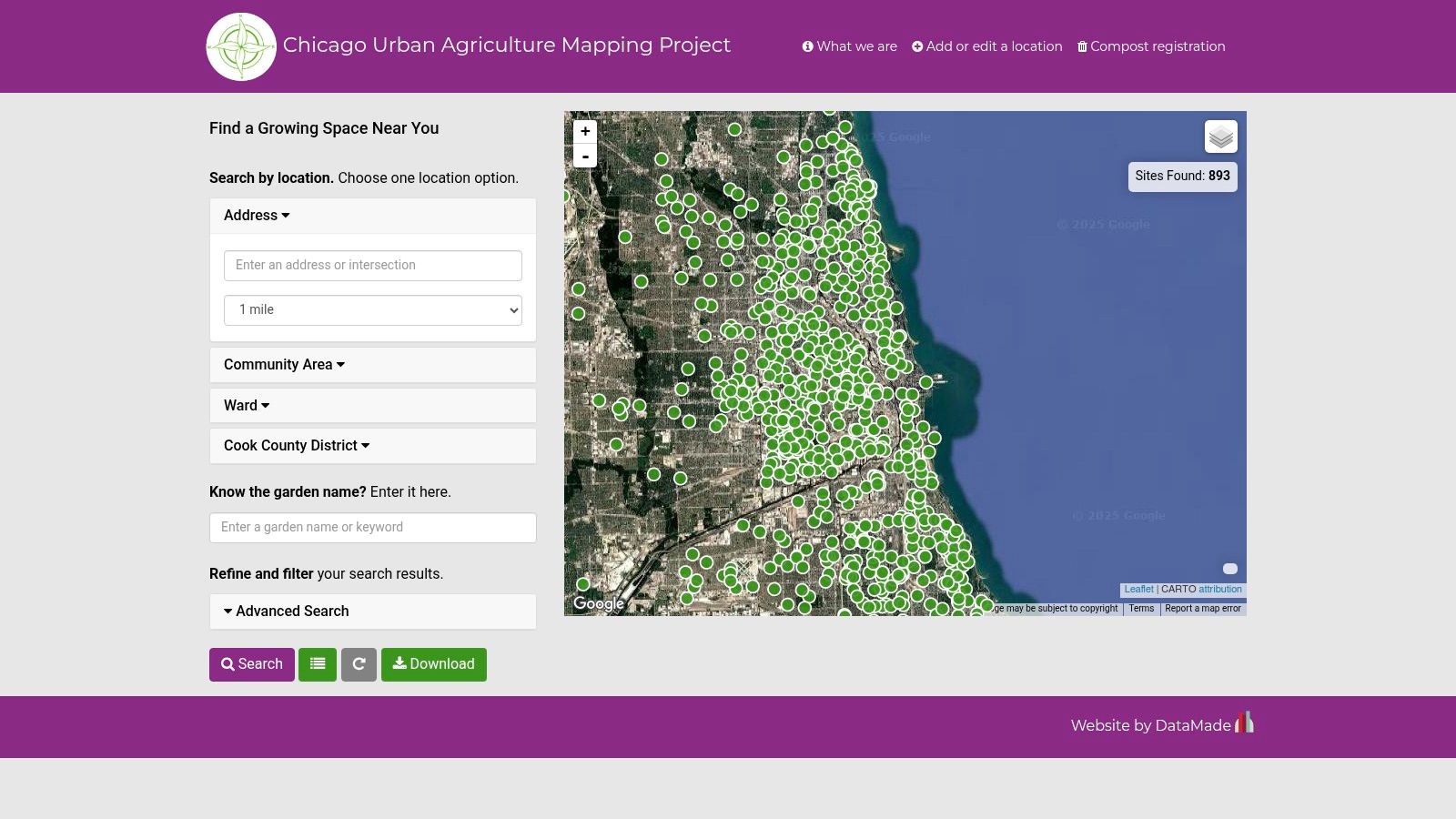
This powerful, free tool is your first and best stop for navigating the city's vast urban agriculture landscape. It’s a dynamic, interactive directory that lets you zoom into your neighborhood, search by ward, or even filter by specific needs, like finding a garden that composts. Each pin on the map is a story waiting to unfold, a community waiting to welcome you.
How to Use CUAMP to Find Your Garden
Getting started with CUAMP is as simple as dropping a pin on a map. The platform is designed for discovery, making it easy to turn your curiosity into action.
- Search Near You: Pop in your address and watch as nearby gardens appear like stars in a clear night sky. It’s the fastest way to see what’s growing just around the corner.
- Filter Your Search: Looking for something specific? Use the filters to find food-producing sites, gardens with active composting, or even identify which gardens are open versus locked. This helps you target your outreach effectively.
- Explore Site Profiles: Click on a garden pin to open its profile. Here, you’ll find contact information for the garden manager, its operational status (active, dormant), and other crucial details.
Key Insight: CUAMP empowers you to be a proactive community builder. It’s not just about finding a garden; it’s about understanding the city's green infrastructure and identifying where you can make the biggest impact.
Why It Deserves a Top Spot
CUAMP stands out because it's a collaborative, data-driven resource maintained by trusted local partners. While some listings might have slightly outdated contact info (a common challenge with volunteer-run projects), its citywide scope is unparalleled. It’s a tool built for everyone: the individual looking for a plot, the community organizer planning a cleanup, and even city planners analyzing green space.
For a group like Litter Caterpillars, CUAMP is a strategic goldmine. You can download the data to identify clusters of gardens in a specific ward, helping you plan a targeted outreach day or a neighborhood-wide cleanup event that supports multiple green spaces at once. It transforms your passion from a single act of kindness into a coordinated wave of positive change.
Website: https://cuamp.org/
3. NeighborSpace (Chicago’s community‑garden land trust)
What if a garden could last forever? Imagine a green space protected from development, a community hub guaranteed to be there for your children and your children’s children. This isn't a fantasy; it's the mission of NeighborSpace, the guardian angel for many community gardens in Chicago, IL. This organization acts as a land trust, essentially putting a permanent protective shield around community-managed gardens, ensuring they remain vibrant green spaces for generations.
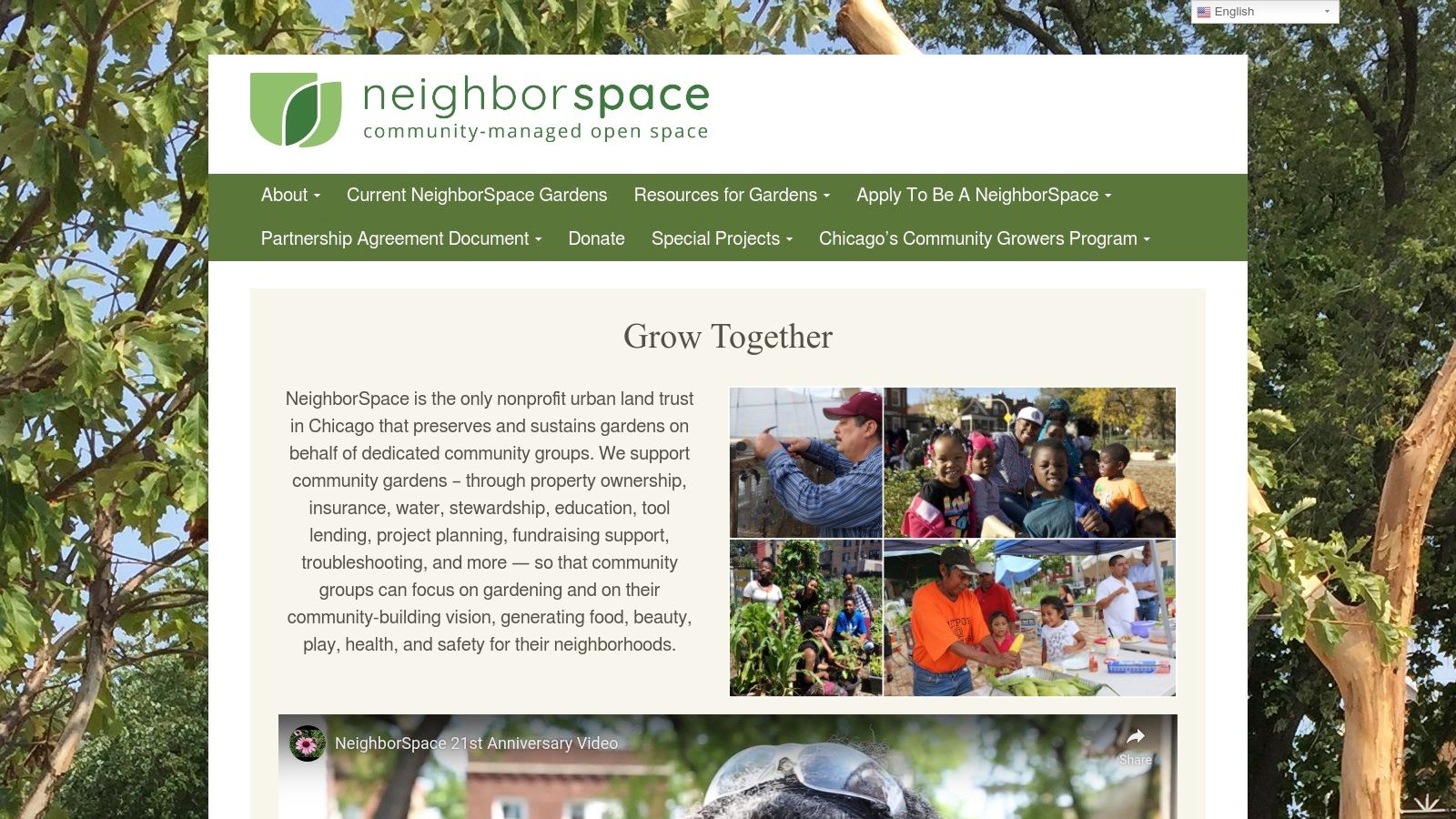
NeighborSpace is the foundational support system that lets gardeners focus on what they do best: growing. By taking on the heavy lifting of land ownership, insurance, and even water access, they remove the biggest hurdles that can cause a community project to wither. They are the soil in which stable, long-term community gardens can firmly take root and flourish without fear.
How NeighborSpace Supports the Green Community
While you won't use NeighborSpace to sign up for an individual plot, their website is a vital resource for understanding the ecosystem of protected gardens and for groups looking to secure their future.
- Find Protected Gardens: While they don't have an interactive map like CUAMP, their site profiles the gardens they protect. This is a great way to discover established, long-term gardens with strong community ties.
- Access Resources: The site provides guidance for existing gardens on everything from planning and maintenance to becoming a protected site themselves. They offer tool lending and educational resources to their member gardens.
- Understand the Trust Model: For anyone dreaming of starting a new garden, exploring NeighborSpace’s process is a masterclass in sustainability. It shows you how to build something that lasts.
Key Insight: NeighborSpace isn’t about the "how" of finding a plot today; it's about the "why" these gardens will still be here tomorrow. Supporting a NeighborSpace garden means investing in a permanent piece of your neighborhood’s green legacy.
Why It Deserves a Top Spot
NeighborSpace provides the invisible architecture that makes a thriving urban garden scene possible. They are the backbone, the quiet partner ensuring that a community’s hard work doesn’t disappear with a new property development. Their work increases garden stability, reduces overwhelming administrative burdens for volunteer leaders, and provides practical, essential support like liability insurance.
The major difference is that they don't manage the gardens directly. Each site has its own rules and plot assignment process, so you’ll still need to contact the garden managers individually. For a group like Litter Caterpillars, partnering with a NeighborSpace garden means you're helping a site that is deeply rooted and committed to its community for the long haul. Your cleanup efforts aren’t just a one-day boost; they are a contribution to an enduring local landmark.
Website: https://neighbor-space.org/
4. Chicago Park District – Community Gardens in the Parks
What if the heart of your neighborhood park, the place you already love for picnics and playgrounds, also held a space for you to grow your own food? The Chicago Park District makes this a reality, weaving edible landscapes directly into the fabric of our city’s public green spaces. This initiative isn't just a list of gardens; it's a testament to the idea that community and nature can flourish together, right in our own backyards.
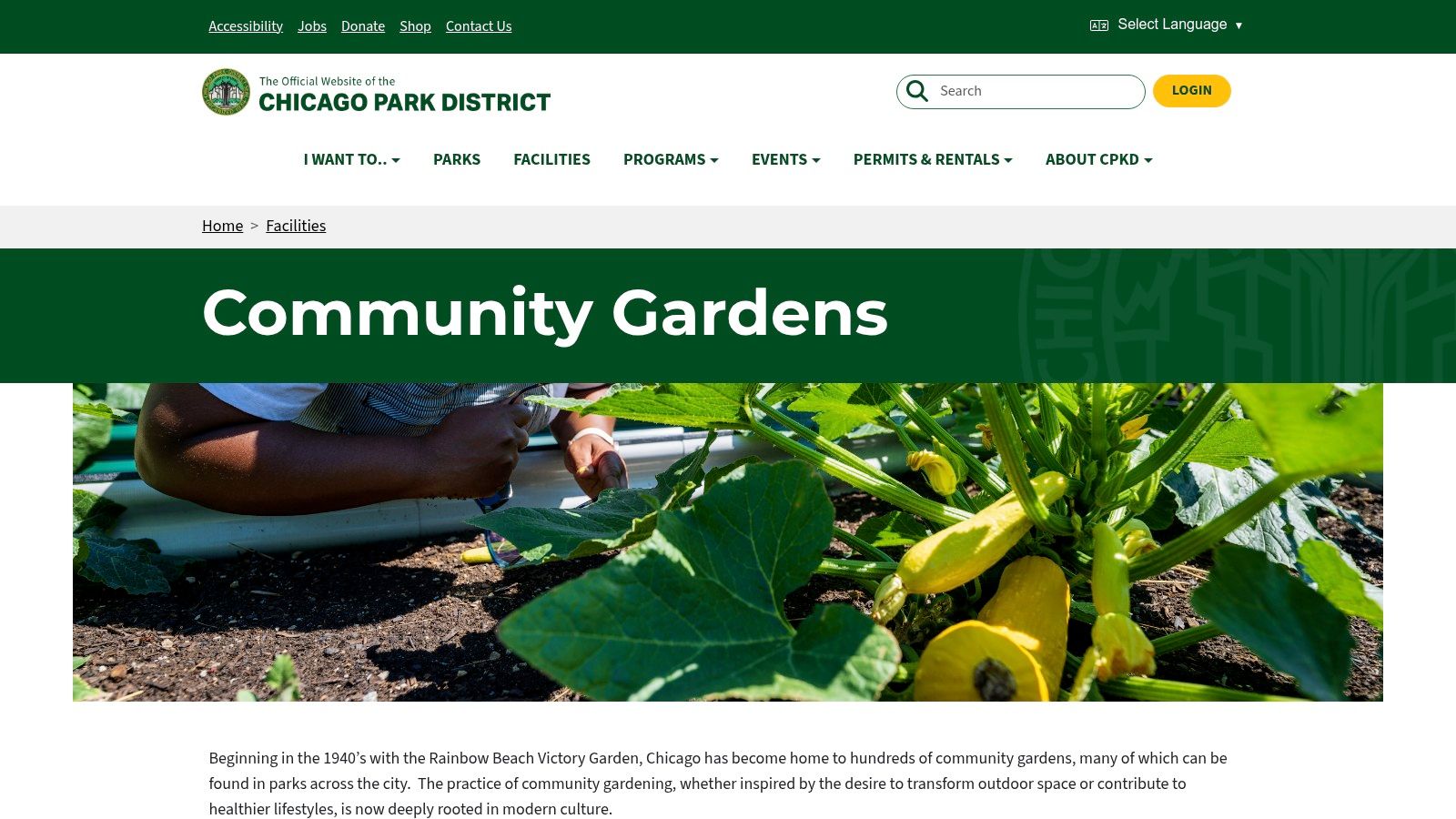
The Park District's directory lists nearly 100 gardens nestled within parks across the city, each managed by dedicated neighborhood groups. These aren't just plots of land; they are vibrant hubs of activity, learning, and connection. Think of them as open-air community centers where the price of admission is simply a willingness to get your hands dirty and share in the harvest.
How to Get Involved with Park Gardens
Navigating the Park District's system is your first step toward claiming a piece of public land for your private passion. It's about connecting with the local stewards who make these gardens bloom.
- Find a Park Near You: The website features a comprehensive list of all parks with community gardens. Browse the directory to pinpoint the green space closest to you.
- Contact the Garden Leader: Each park garden is run by a local volunteer group. The Park District page provides staff contacts who can connect you with the specific garden's coordinator to inquire about plot availability and volunteer days.
- Explore Educational Programs: Many of these park gardens host free workshops and educational events. Keep an eye on the schedule to learn new skills, from composting basics to advanced planting techniques.
Key Insight: Gardening in a public park elevates your efforts. Your work becomes a visible, inspiring part of the neighborhood, encouraging passersby to think about food, nature, and what's possible when a community comes together.
Why It Deserves a Top Spot
The Chicago Park District’s program stands out because it leverages our most accessible public assets: our parks. It removes the barrier of finding private land and provides an existing infrastructure of staff support and public visibility. While individual plot availability can be limited and requires connecting with local garden managers, the network is robust and deeply integrated into neighborhood life.
For a group like Litter Caterpillars, these park-based community gardens in Chicago, IL are perfect partners. You can organize a cleanup that not only beautifies the park but also directly supports the gardeners who are growing food for their community. By clearing away litter from the garden's perimeter, you're helping protect their hard work from pests and pollution. It’s a powerful way to contribute to a park cleanup and amplify the positive impact happening there.
Website: https://www.chicagoparkdistrict.com/node/132841
5. Urban Growers Collective – Community Garden Plots
If you're ready to stop dreaming and start digging, the Urban Growers Collective (UGC) provides a clear, direct path to claiming your own piece of Chicago's fertile ground. This isn't just about finding a garden; it's about joining a movement. UGC offers a structured, supportive way to rent a personal plot for a full growing season, turning your vision of fresh, homegrown produce into a delicious reality. Think of it as your personal launchpad into the world of urban farming, backed by one of the city's most respected food-justice organizations.
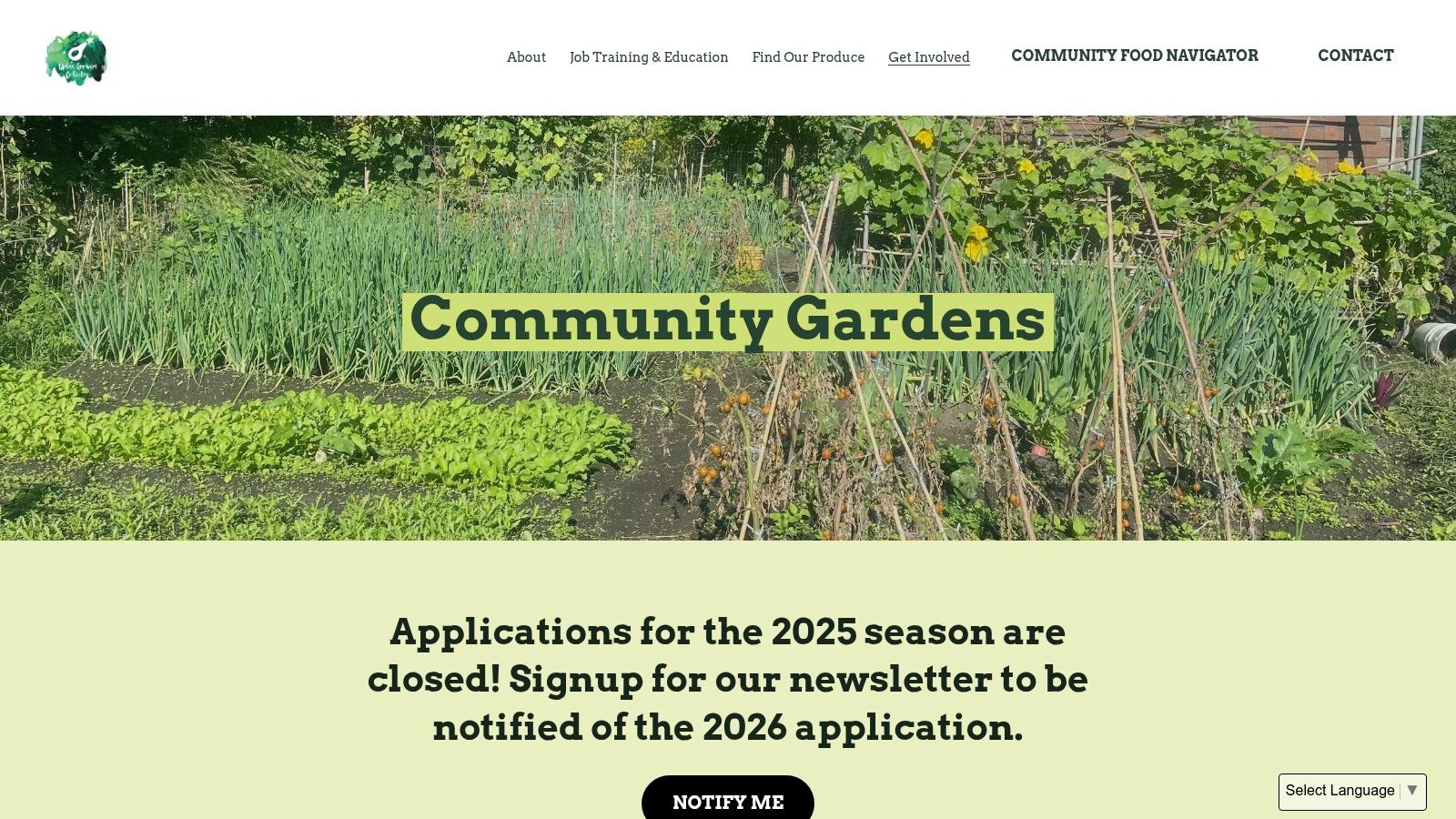
This program is perfect for those who crave a dedicated space to cultivate. With standardized plots, a defined season from April to October, and transparent pricing, UGC removes the guesswork so you can focus on the joy of growing. Their community gardens, primarily located on the South Side, are more than just soil; they are vibrant hubs of connection, learning, and nourishment.
How to Secure Your UGC Plot
Getting started with a UGC plot is a straightforward process designed to set you up for success. They ensure every gardener has the foundational knowledge to thrive.
- Check Availability: Head to their website to see which of their farm locations are offering plots for the upcoming season. Applications typically open in early spring and close quickly.
- Submit an Application: The application process is simple and outlines the costs and expectations. UGC is committed to accessibility, offering a sliding scale for those with financial need.
- Attend Orientation: All new plot holders are required to attend an orientation. This is where you’ll meet fellow gardeners, learn the rules, and get invaluable tips for a successful harvest.
Key Insight: UGC’s approach is about empowerment through structure. By providing clear guidelines and a supportive community, they make it incredibly easy for beginners to gain confidence and for experienced gardeners to flourish.
Why It Deserves a Top Spot
Urban Growers Collective stands out for its deep commitment to community and food justice. Renting a plot here means you’re not just growing food for yourself; you're investing in an ecosystem that nourishes entire neighborhoods. The process is transparent, beginner-friendly, and rooted in the mission of a powerful local nonprofit.
While plot availability is limited and highly sought after, the opportunity is transformative. For a group like Litter Caterpillars, partnering with a UGC garden for a cleanup day is a perfect fit. You can help beautify a space that is a vital source of fresh food and community pride. Beyond the garden plots, UGC offers incredible volunteer opportunities in Chicago at their larger farms and markets, allowing you to support their mission even if you don't have a plot. It's a way to connect your passion for a cleaner city with the powerful work of growing a healthier one.
Website: https://www.urbangrowerscollective.org/community-gardens
6. Chicago Public Library – Seed Libraries (multiple branches)
Before a garden can grow, there must be a seed. Imagine a library not just for books, but for the very potential of life itself, a place where the beginnings of a thousand gardens are nestled in tiny paper packets, free for the taking. This is the magic of the Seed Libraries at select Chicago Public Library branches, a quiet but powerful force supporting community gardens in Chicago, IL. It’s the starting line for your gardening adventure, whether you have a backyard, a balcony box, or a freshly claimed plot in a community space.
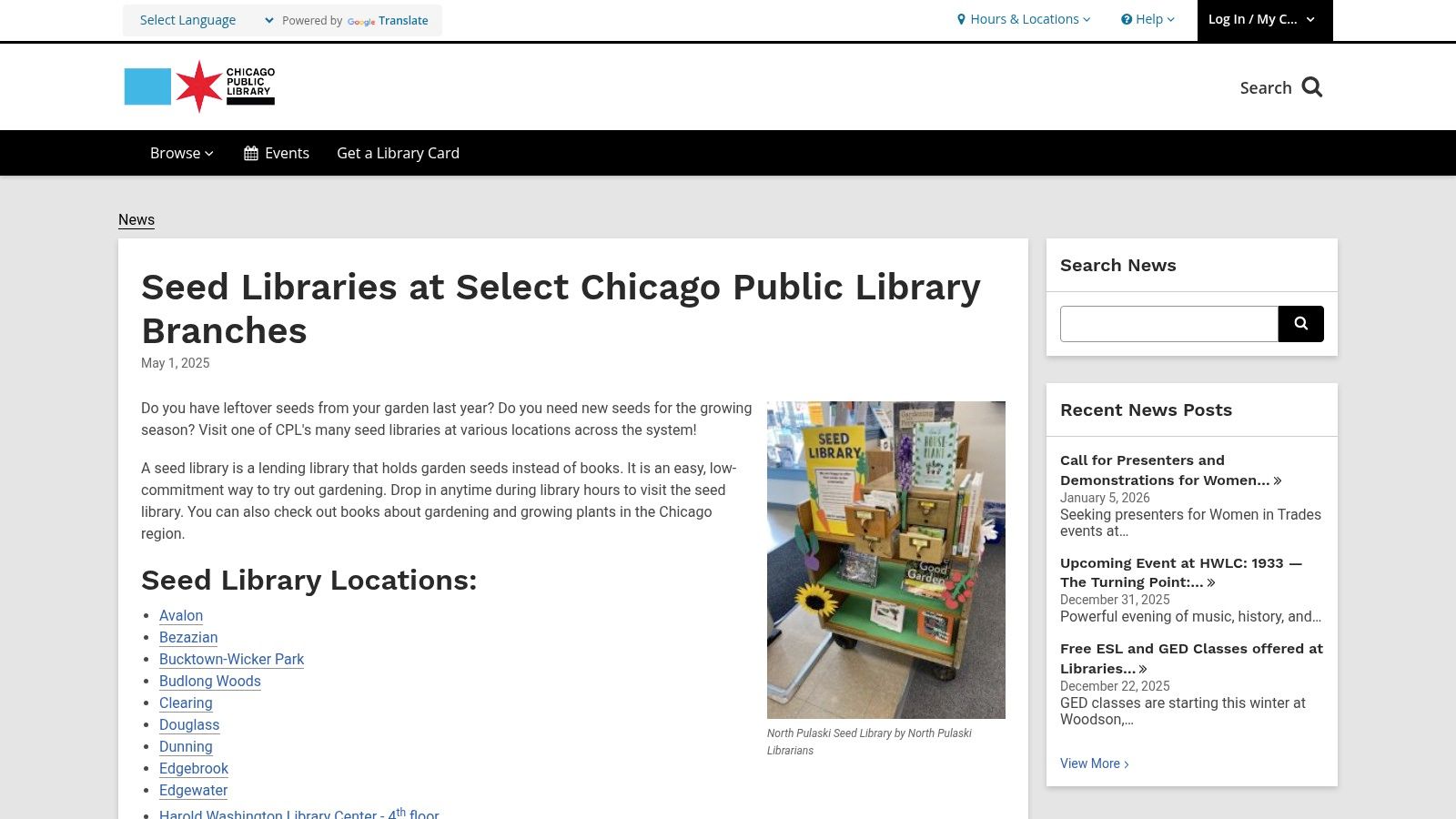
This initiative transforms your local library into an essential hub for urban agriculture. It's a completely free, grassroots resource that democratizes gardening, removing the initial cost barrier and empowering anyone to start growing. The concept is beautifully simple: take seeds to plant, and if you can, bring back seeds from your harvest to share with others next season. It's a cycle of giving that nourishes both the soil and the community spirit.
How to Use the Seed Library to Get Growing
Tapping into this resource is as easy as checking out a book. The library has made it incredibly accessible, ensuring nothing stands between you and the joy of planting.
- Visit a Participating Branch: Check the Chicago Public Library website for the list of branches with active seed libraries. Availability is seasonal, so it's a good idea to call ahead.
- Browse and Borrow: The seeds are typically displayed in old card catalogs or special cases. You can simply take the packets you need; there are no library cards required or due dates to worry about.
- Learn and Grow: While you're there, explore the library's collection of gardening books. You can also ask about related workshops or programs, like hydroponic kit giveaways, that can expand your skills.
- Share the Harvest: At the end of the season, consider saving seeds from your strongest plants to return to the library, continuing the cycle for the next wave of gardeners.
Key Insight: The Seed Library is more than just free supplies; it's an investment in a resilient, food-sovereign community. By encouraging seed saving, it helps cultivate plants that are uniquely adapted to Chicago's microclimates.
Why It Deserves a Top Spot
The Seed Library is a fundamental resource that complements every other tool on this list. While it doesn't provide land, it provides the spark of life that turns a patch of dirt into a source of food and beauty. Its zero-cost, open-access model makes it the ultimate entry point for new gardeners, school projects, and community plots operating on a shoestring budget. The selection varies, but that's part of its charm; you might discover a new variety of tomato or a beautiful native flower you'd never have thought to plant.
For a group like Litter Caterpillars, this is an incredible asset. After a big neighborhood cleanup, you can empower residents to keep the momentum going by providing them with free seed packets from the library. It's a simple, tangible way to transition a space from clean to vibrantly alive, leaving behind a legacy of growth that lasts long after the cleanup day is over.
Website: https://www.chipublib.org/news/seed-libraries-at-select-chicago-public-library-branches/
7. City of Chicago – ChiBlockBuilder (city-owned lot sales)
What if you didn't just join a garden, but created one from the ground up? Imagine transforming a forgotten, overgrown city lot into a vibrant hub of life, a permanent sanctuary for your neighborhood. That’s the powerful promise of ChiBlockBuilder, the City of Chicago's official portal for purchasing city-owned vacant land. It's more than a website; it's a doorway to lasting impact, the blueprint for building a green legacy.
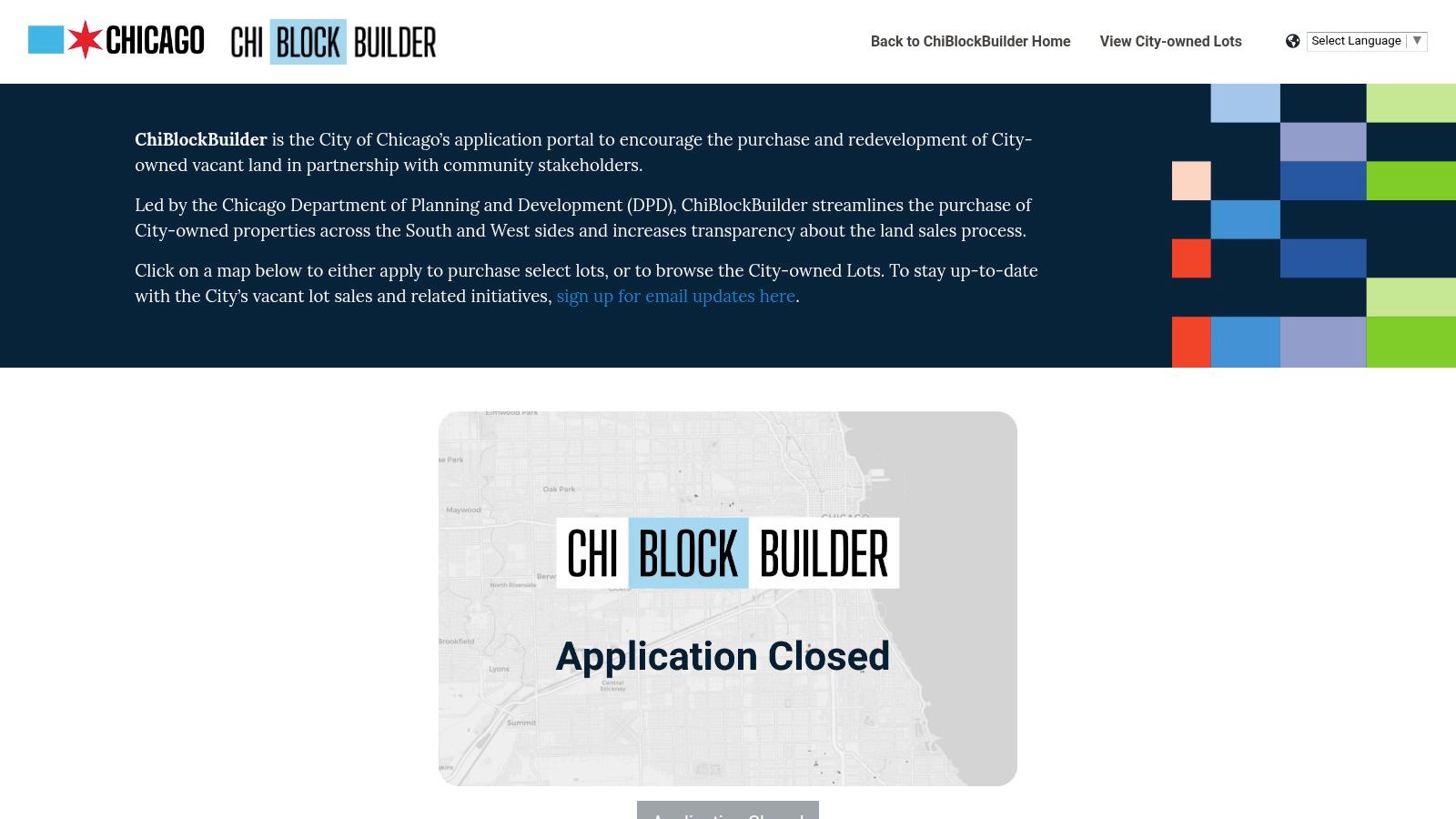
This platform isn't about finding an existing plot; it's about claiming the land to start new community gardens in Chicago, IL. It’s the direct, official channel for acquiring long-term land control, turning a dream of a permanent green space into a deed-in-hand reality. Think of it as the ultimate tool for community builders ready to put down permanent roots.
How to Use ChiBlockBuilder to Build a Legacy
Navigating the path to land ownership might seem daunting, but ChiBlockBuilder streamlines the process, making it transparent and accessible for dedicated groups. It’s your first step toward transforming forgotten land.
- Explore the Map: Use the interactive map to scout for city-owned vacant lots in your neighborhood. You can see which parcels are available, which are under review, and which might open up soon.
- Express Your Interest: Found the perfect spot, but it’s not for sale yet? Use the “I’m Interested” feature. This signals your intent to the city and ensures you're notified the moment the application window opens.
- Follow the Application Process: When a lot is available, the site provides a clear, step-by-step application guide. This formal process ensures your project is recognized and supported at the city level.
Key Insight: Owning the land is a game-changer. It provides the stability to invest in long-term infrastructure like fruit trees, perennial beds, and community structures, ensuring your garden becomes a permanent fixture for generations to come.
Why It Deserves a Top Spot
ChiBlockBuilder is fundamentally different from other resources. It empowers communities to move beyond temporary agreements and achieve land security. While the process requires commitment, including purchase costs and navigating eligibility rules, the payoff is unparalleled: a permanent asset for your neighborhood. The platform's direct-from-the-source information and transparent mapping tools demystify what was once a complex bureaucratic maze.
For a group like Litter Caterpillars, this tool offers a visionary path. You can identify a blighted lot during a cleanup event, then use ChiBlockBuilder to rally neighbors and begin the official process of transforming it forever. It's the ultimate evolution from cleaning a space to owning and cultivating it, turning a single day of service into a lifetime of community growth.
Website: https://chiblockbuilder.com/
Chicago Community Gardens — 7-Point Comparison
| Item | Implementation Complexity 🔄 | Resource Requirements ⚡ | Expected Outcomes 📊 | Ideal Use Cases 💡 | Key Advantages ⭐ |
|---|---|---|---|---|---|
| Litter Caterpillars | 🔄 Low — volunteer coordination and recurring events | ⚡ Low — volunteers, basic cleanup gear | 📊 High visible neighborhood cleanup and increased social cohesion | Residents/newcomers seeking hands‑on, low‑barrier civic action | ⭐️⭐️⭐️⭐️ Bold citywide impact, strong culture and easy joining |
| CUAMP (Chicago Urban Agriculture Mapping Project) | 🔄 Medium — data curation and map maintenance | ⚡ Medium — data partners and web hosting | 📊 High discovery value; supports planning and analysis | Garden seekers, planners, researchers needing site data | ⭐️⭐️⭐️ Comprehensive searchable map with downloadable data |
| NeighborSpace (land trust) | 🔄 Medium — legal and stewardship onboarding | ⚡ Medium — staff, insurance, tool programs | 📊 High site stability and long‑term protection for gardens | Groups needing land protection, insurance, operational support | ⭐️⭐️⭐️⭐️ Trusted land‑trust backbone with practical supports |
| Chicago Park District – Community Gardens | 🔄 Medium — park policies + garden group management | ⚡ Medium — park infrastructure and staff time | 📊 Moderate — public access gardens with variable availability | Neighborhood groups wanting park‑based plots and staff support | ⭐️⭐️⭐️ Public‑land visibility and municipal support |
| Urban Growers Collective – Community Garden Plots | 🔄 Low — standardized seasonal application process | ⚡ Medium — plot fees, orientations, nonprofit operations | 📊 High for individual plot access during season | Individuals wanting a guaranteed seasonal plot with guidance | ⭐️⭐️⭐️ Transparent pricing, nonprofit support, sliding scale access |
| Chicago Public Library – Seed Libraries | 🔄 Very low — borrow/return seed system | ⚡ Very low — free seeds, modest program support | 📊 Moderate — seed access and education for new gardeners | New gardeners or community plots needing low‑cost seed stock | ⭐️⭐️⭐️ Zero‑cost entry to seeds and related educational resources |
| ChiBlockBuilder (City lot sales) | 🔄 High — formal applications, eligibility windows | ⚡ High — purchase costs, site prep, long‑term maintenance | 📊 High long‑term land control enabling permanent gardens | Organizations/groups pursuing land acquisition for new gardens | ⭐️⭐️⭐️⭐️ Direct, official path to long‑term land ownership and development |
Final Thoughts
We’ve journeyed through a landscape bursting with green possibilities, from the sprawling digital map of CUAMP to the hyper-local seed packets at your neighborhood library. This guide wasn't just a list; it was an invitation. An invitation to see the forgotten corners of Chicago not as problems to be solved, but as canvases awaiting a brave first stroke of a paintbrush, or in this case, a shovel. The world of community gardens chicago il is a vibrant, living ecosystem of tools and people, and you are now holding the key to unlock its gates.
Think of this journey like learning to cook. At first, a well-stocked kitchen can feel overwhelming. You have spices (the seed libraries), appliances (NeighborSpace’s land trust), and recipes (the park district programs). You might feel like you can only follow one recipe perfectly. But the real magic happens when you start to combine them. You grab some seeds from the library, find a nearby lot on ChiBlockBuilder, and get land-use guidance from NeighborSpace. Suddenly, you're not just a cook; you're a chef. You’re creating something new.
Your Path to Impact: From Seed to Harvest
The tools we've explored are designed to work together, to weave a safety net of support beneath your ambition. Don't fall into the trap of thinking you need to choose just one. The most successful urban gardeners are resourceful connectors, building a toolkit that fits their specific vision.
- For the Data-Driven Planner: Start with the Chicago Urban Agriculture Mapping Project (CUAMP). Use its bird's-eye view to identify food deserts or areas with a high concentration of vacant lots. Let this data tell a story and guide your first steps.
- For the Community Organizer: NeighborSpace is your first call. They are the guardians of green space, the experts in turning a passionate idea into a legally protected, community-owned reality. They understand the human element better than anyone.
- For the Hands-On Grower: If you just want to get your hands dirty now, look to the Chicago Park District or the Urban Growers Collective. Their existing plots offer a lower barrier to entry, letting you learn the ropes and connect with veteran gardeners immediately.
The most profound takeaway is this: the gap between the city you see and the city you dream of is not as wide as you think. It's the width of a single raised garden bed. It’s the length of a conversation with a neighbor. It’s the effort it takes to fill one bag with litter, clearing the way for something beautiful to grow.
"To plant a garden is to believe in tomorrow." – Audrey Hepburn
This belief is the true currency of community change. It’s a quiet act of rebellion against cynicism, a bold declaration that you are willing to invest your time and energy into a future you can’t yet see. Every weed pulled, every seed planted, every harvest shared is a vote for a greener, kinder, more connected Chicago. The tools are here. The land is waiting. The community is ready. The only remaining question is, what will you grow?
Ready to take that very first step? A clean space is the first chapter of any community garden story. Join a Litter Caterpillars event to help clear a future garden site or organize your own neighborhood cleanup. Find your next adventure in making a difference at Litter Caterpillars.