

Two hours on a Saturday morning can turn a trash-covered block into a corner you point at when you walk past with friends. It happens in February too, wind coming off the lake, hands numb by the second block. Chicago makes this easy. Trains run early, parks sit close to campus, and there's always a crew handing out grabbers somewhere within a bus ride.
Students turn out when the door is open. The share of college students who volunteered climbed from 27.1% in 2002 to 30.2% in 2005, and the number of student volunteers grew from 2.7 million to 3.3 million, according to a Corporation for National and Community Service report.
So what makes an opportunity student-friendly? A low barrier to entry, weekend timing, and hours you can document. That's the lens for these seven picks: a cleanup crew, parks, forests, a food bank, conservation programs, a citywide project calendar, and a break-trip build. When you're ready to write the experience up, the StoryCV guide to unpaid experience shows how to frame volunteer work on a résumé.
1. Litter Caterpillars
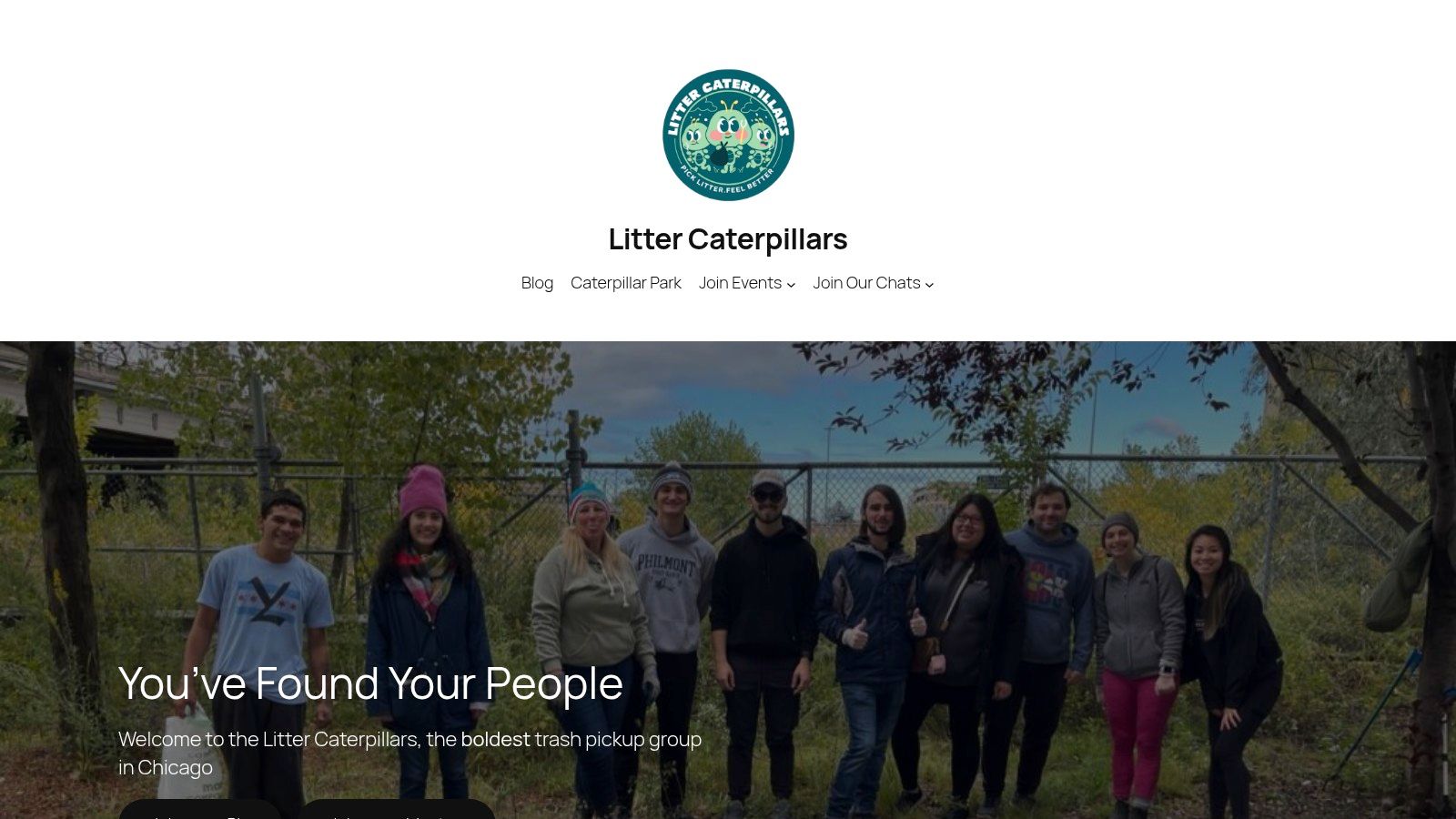
Kevin Tao started Litter Caterpillars after a spring hail storm pinned three of them under a tree with trash bags in hand. That was the first pickup. About three years later, the group still meets on weekend mornings, every single week, rain or shine.
The pitch is simple. You show up at a corner, someone hands you a grabber and a bag, and two hours later the block looks different. They work all 50 wards, including blocks other crews skip, and they take on strange projects: they cleaned a highway while it was shut down for a bike event, and they won an empty lot at auction and turned it into Caterpillar Park in Englewood.
How a Sunday actually goes
You'll find the next event on Meetup or in the Instagram group chat. The chats stay open, so you can ask what to wear and who's driving before you commit to anything. Flags, badges, and a theme song do the rest. You'll feel like part of the crew before the first block is done.
The rule that matters most here: nobody pushes you for money. Volunteer safety comes first, volunteer happiness comes second, and that order holds on every outing.
Autonomy isn't a soft detail. Longitudinal research on youth volunteering found psychological benefits for voluntary participants and linked regular high-school volunteering to more frequent volunteering five years after college, per the study in PMC.
Pros
- Friendships come built in. You work shoulder to shoulder for two hours, then you get coffee.
- Getting started takes minutes. Open chats, no application, no orientation packet.
- The projects are real. A clean highway shoulder, a park in Englewood, blocks you can name.
- You set the pace. Come once. Come weekly. Leave when you need to.
- It runs all year. The coldest days and the hottest days both make the calendar.
Cons
- Weather is part of the deal. Cold, heat, and rain show up, so dress for the block, not for the photo.
- Event details live in the chat. The website doesn't list duration, gear requirements, or whether any event carries a fee, so ask the group before your first one.
One volunteer called it "a great way to kick off a Sunday" and said they had "the best time volunteering."
Litter Caterpillars website
2. Chicago Park District Community Stewardship Program
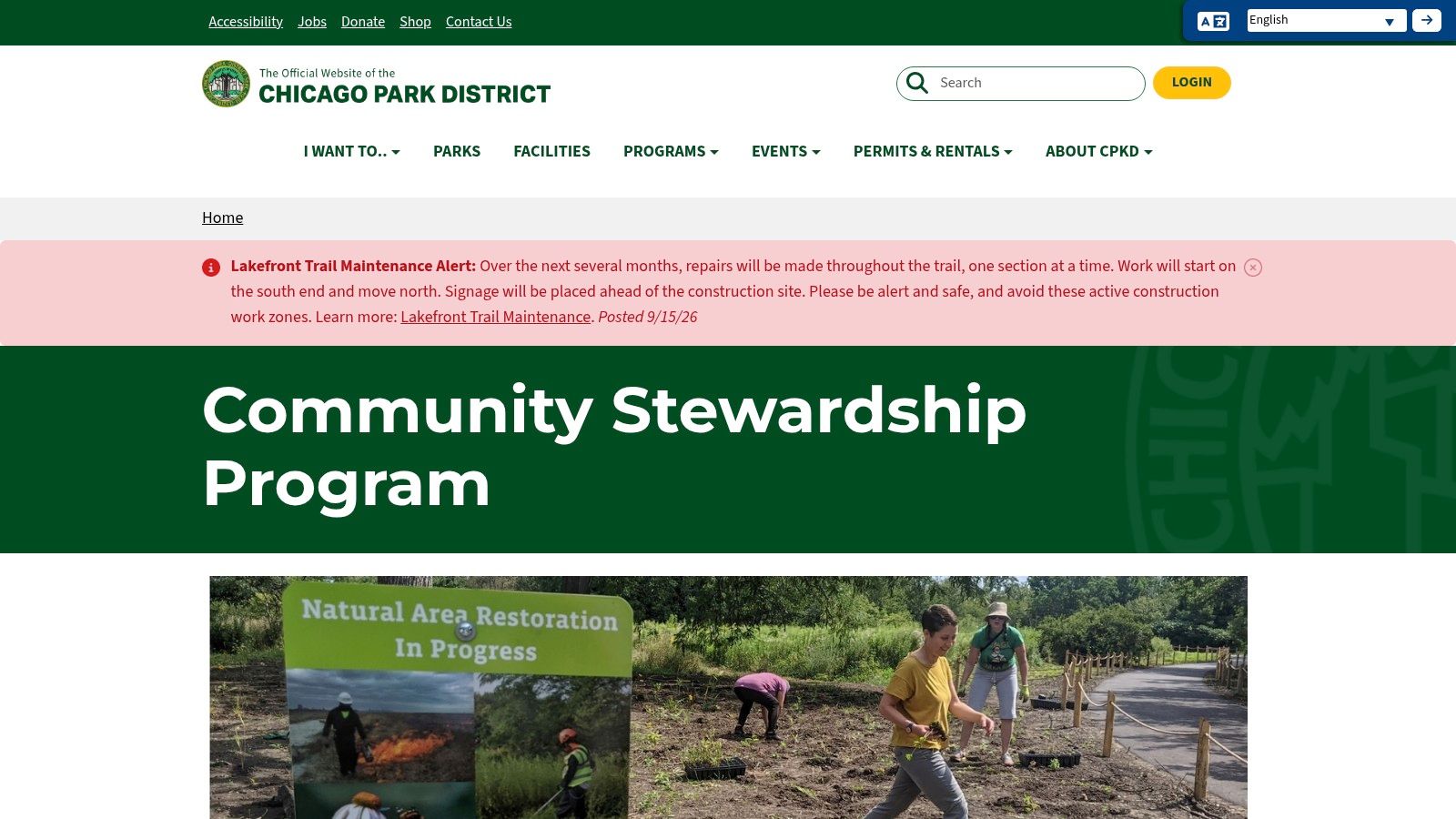
A stewardship workday feels like a field trip you signed up for on purpose. Litter pickup, planting, trail mulching, invasive plant removal, habitat monitoring. You can join a workday without applying for a formal volunteer role. No interview, no packet, no waiting for a callback.
The scale helps. More than 400 stewardship days run each year across 35-plus sites, according to the Park District, and the work changes with the season and the site. From age 16 you can look at the Apprentice Steward track if you want a role with more responsibility and some nature education attached.
The paperwork nobody warns you about
Rules apply, and they change with age and with how long you plan to stay. Every minor needs a parent or guardian to sign a waiver, children younger than 13 need a parent with them, and volunteers 13 and older must bring a parent on their first visit, per the Chicago Park District community stewardship program.
A single workday needs an online volunteer waiver completed before you start. A long-term position needs the right adult or minor application plus a background check once the Park District sends instructions. The split happens at 17: adult application for 17 and older, minor application for 16 and younger, per the Park District volunteer page.
Treat the waiver like a boarding pass. You don't get on without it, and nobody at the gate prints one for you.
Pros
- Results you can point at. The park you use all summer looks better because you showed up.
- Try it once, no strings. A public workday costs you a morning, nothing else.
- A path upward. Apprentice Steward turns a one-off into a real role.
- Seasonal variety. Spring planting and fall brush clearing are different jobs.
Cons
- Parent signature required. Under 18, you can't just roll out of bed and go.
- Schedules shift month to month. Dates, sites, and task types rotate.
- Leadership takes longer. Apprentice Steward asks for a steady commitment and extra steps.
3. Forest Preserves of Cook County Youth Volunteering
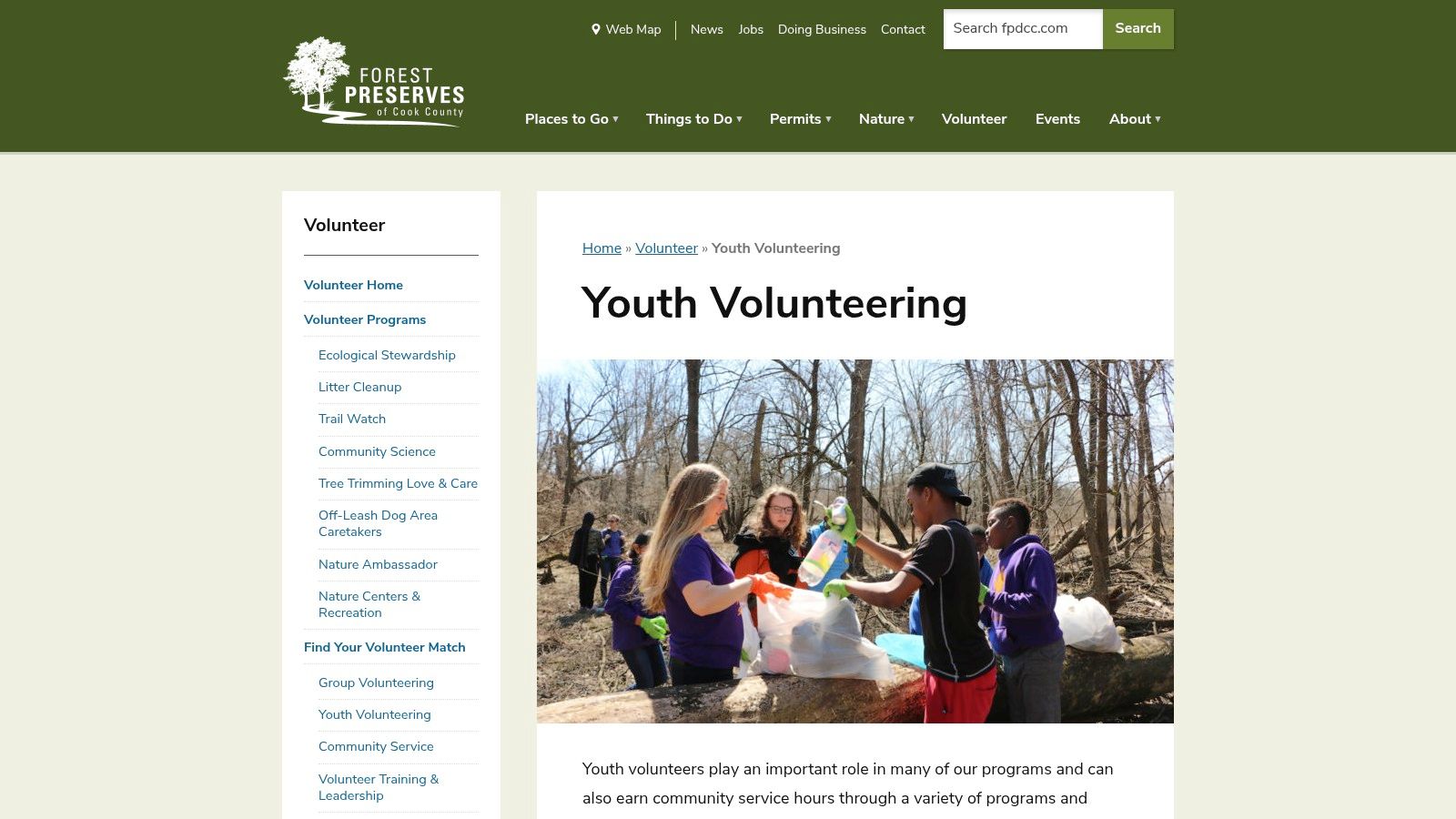
A Saturday in the woods can look very different from a park cleanup: one shift might mean pulling brush, another collecting seeds or monitoring nature. Forest Preserves of Cook County offers students hands-on restoration, litter cleanup, tree care, and community-science activities. You can log service hours and request a letter documenting them, so ask for the letter when you serve rather than scrambling near a deadline.
The activity sets the pace. Litter cleanup is open to all ages, while youth community-science monitoring requires permission and a trained adult primary volunteer on site. Check the task details before you commit, especially if you're fitting a shift around classes, a job, or a ride across town.
Is outdoor work right for you
A forest preserve may be close on a map and still take a while to reach by transit. Before signing up, check the site, travel time, and what the task involves. Under-18 volunteers may need a parent, guardian, or chaperoned group, and age requirements vary by activity and location.
Outdoor shifts can mean physical work in heat or cold, and a new volunteer may not know what to expect. Read the task description carefully, then ask about anything unclear before you go. For a closer look at forest preserve cleanup in Chicago, compare the location and activity with what fits your week.
Pros
- Conservation experience. Restoration and tree-care tasks offer a hands-on way to explore ecology and land stewardship.
- Documented hours. Request a verification letter when you serve.
- Different ways to help. Choose from restoration, litter cleanup, tree care, or eligible community-science work.
Cons
- Adult supervision may be required. Check the rules for your age and chosen activity.
- Some activities have extra requirements. Community-science monitoring needs permission and a trained adult primary volunteer on site.
- Travel takes planning. Check the preserve's location and transit options before choosing a shift.
4. Greater Chicago Food Depository Youth Volunteer Opportunities
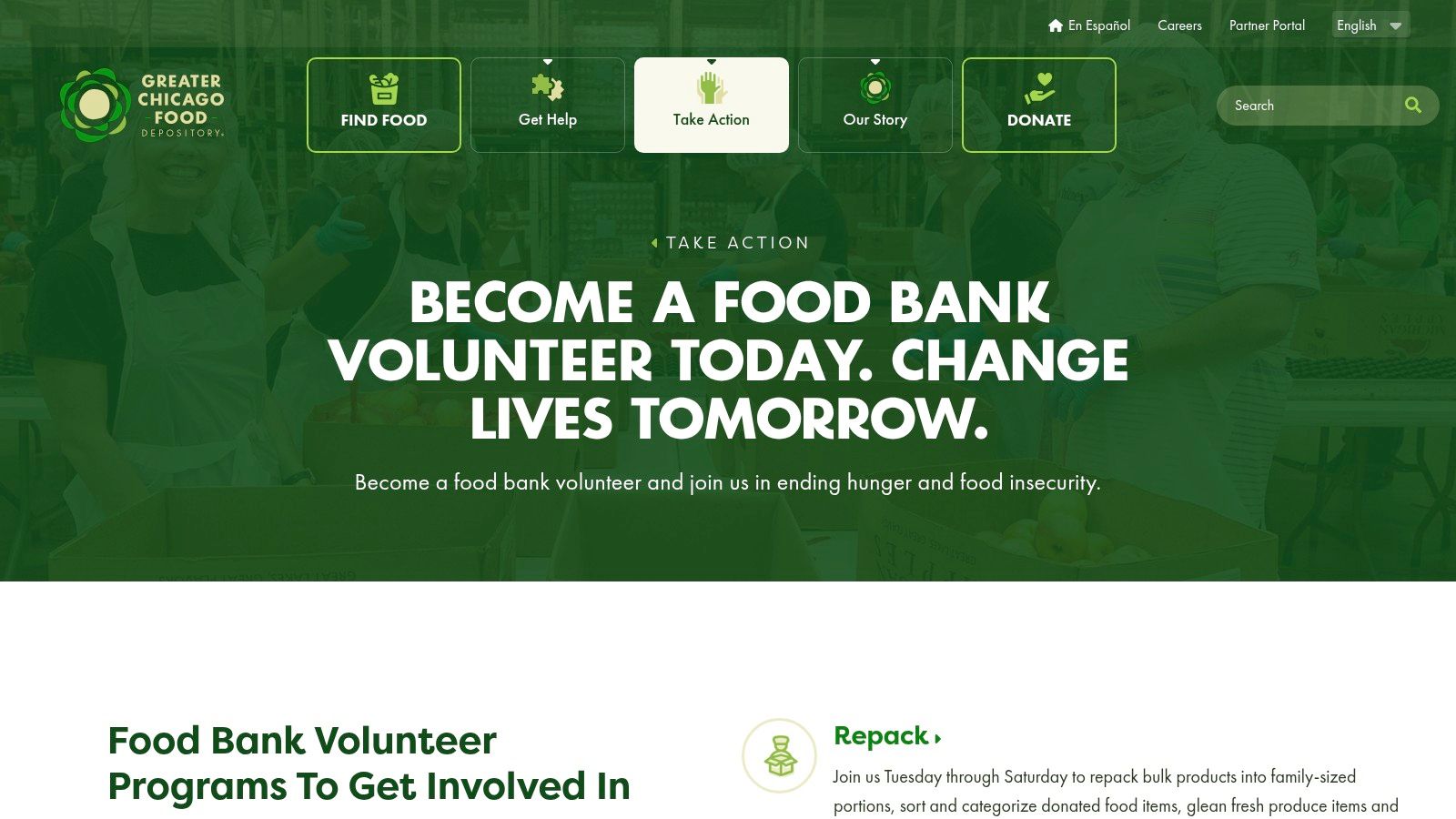
A food repack shift can fit neatly into a student's week: sort donations, portion bulk food, and help prepare it for Chicago-area households. If your classes fill the weekdays, check the available shifts and see whether one works around your weekend plans.
For a quick overview of what to expect, read this guide to Chicago food bank volunteer opportunities. Check the organization's current listings for age requirements, adult supervision rules, registration, and group arrangements. Those details can vary by session, so confirm them before you invite classmates.
Why booking early matters
Registration and session availability affect how easily a shift fits between classes, work, and other commitments. Check the listings, choose a date that works, and sign up through the stated process. If you are organizing a school or youth group, ask about arrangements before setting a date.
A student's checklist is simple: confirm the age rules, supervision requirements, location, and shift duration. Then decide whether the trip and timing make sense for your week.
Pros
- Direct community service. Repacking food supports households in the Chicago area.
- Indoor tasks. The work takes place in a warehouse setting.
- Group option. Students can ask about signing up with a school or youth group.
- Repeatable experience. Returning for another shift can make it easier to plan service around school.
Cons
- Check availability first. Your preferred date may not have an open session.
- Confirm supervision rules. Students should check what arrangements apply to their age group.
- Plan the trip. Factor in travel time when comparing a shift with classes or work.
5. Student Conservation Association Urban Green Chicago
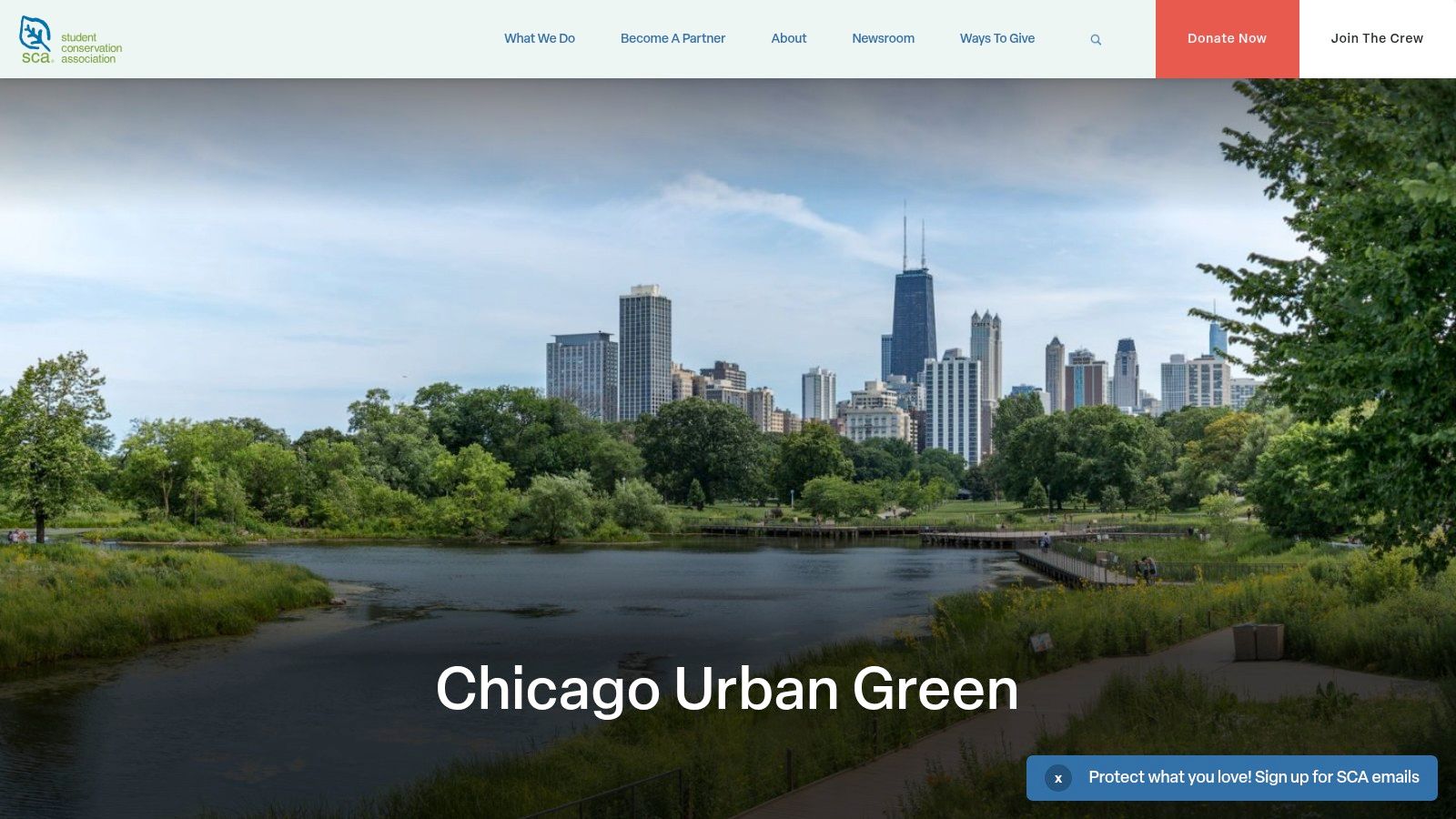
Some students want a single shift. Others want a season that looks like a career test drive. SCA's Urban Green Chicago connects teens and young adults to tree planting, habitat restoration, single-day projects, seasonal work, and internships. You build teamwork and environmental skills while someone else handles the tool logistics.
Read each listing, because they aren't the same animal. Some positions are volunteer, some are paid, and each has its own eligibility, schedule, and application requirements. Certain roles carry stipends, service hours, or academic credit depending on how they're structured.
Weekly versus casual
A concrete comparison helps more than a brochure. The National Park Service's Pullman National Historical Park in Chicago lists one volunteer path that requires applicants to be at least 16 and to work at least one four-hour shift each week, with some flexibility through the volunteer coordinator, per the Pullman volunteer page. Other assignments there tie to special events and groups.
One four-hour shift a week is sixteen hours a month. Put that next to your lab schedule, your shift at work, and your commute before you apply.
Pros
- Chicago-specific environmental work. Tree planting and restoration in your own city.
- Career exploration. Conservation trades, forestry, and nonprofit work all become visible.
- Structured training. Longer placements come with real skill building.
- Mixed funding models. Some roles pay, which changes the math on a summer.
Cons
- No always-open shift. Offerings come and go, so you check the listings regularly.
- Paid roles have selection steps. Applications, eligibility, and interviews.
- You do the vetting. Age, schedule, and location differ per listing.
6. Chicago Cares Find an Opportunity
Say your Tuesday lab runs late, but Saturday morning is free. Chicago Cares lets you browse a calendar of hands-on and virtual projects tied to community needs across the city. Some are suited to groups; others call for specific skills. Check the listings and choose a shift that fits your week.
National figures show that between 2013 and 2015, nearly 2.8 million U.S. high-school students aged 15 and older volunteered about 237 million hours a year, while nearly 3.1 million college students gave close to 331 million hours a year, according to research from the University of Maryland's Drum repository. Students contribute in large numbers, though their schedules and ways of serving differ.
A calendar for people who already volunteer
A class requirement is only one route into community service. A UCLA Higher Education Research Institute study of 22,236 college students found that 29.9% had taken part in course-based community service, 46.5% had served through another form of community service, and 23.6% reported no participation at all, per the HERI report. For students who want to volunteer between classes or on a free weekend morning, a browsable calendar makes it easier to spot a suitable project.
Pros
- A range of causes. Find food, education, senior, environmental, and virtual projects.
- Flexible formats. Remote options can work when transit takes too much time.
- Neighborhood projects. Choose a listing near home or campus.
- Group-friendly shifts. Bring a friend or look for a project with your club.
Cons
- Listings change. A project may not return the following month.
- Requirements vary. Check age limits and task details before you sign up.
- Outdoor cleanup takes filtering. To find it, use the calendar's hands-on outdoor listings.
For a quicker search, browse student volunteer opportunities near me and compare the options with your class and work schedule.
7. Habitat for Humanity Collegiate Challenge
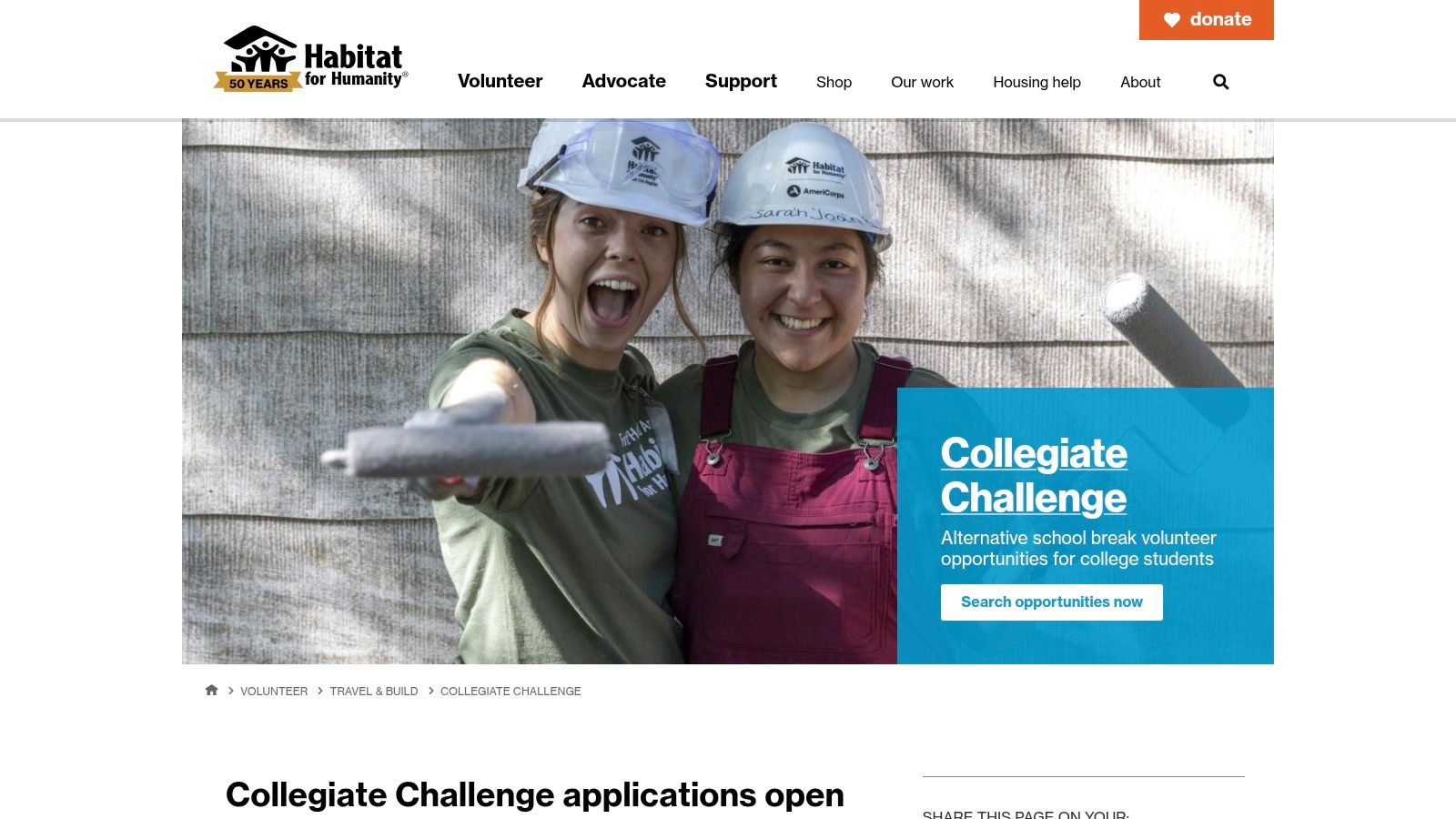
Spring break in a hard hat, or winter break on a framing crew. Collegiate Challenge organizes alternative-break trips where college student groups work with local Habitat affiliates on housing projects, often on construction sites. No prior construction experience is required. You'll learn which end of a hammer matters on day one.
Trips schedule around school breaks, year round, and you can pick one near campus or somewhere else in the U.S. Participants must be 18 or older. Each host affiliate sets its own trip contribution and logistics, so the same program looks different in two different cities.
The bigger picture for older students
If you're 18 and want proof that students do this at scale, look wider than Illinois. In 2024, 2,166 United Nations Volunteers aged 18 to 26 took part in UN volunteering programs, according to the UN Volunteers annual report. Housing builds, health work, climate projects. The habit travels.
Pros
- A team project with a housing mission. Everyone swings a hammer together.
- Built around breaks. The calendar matches the academic calendar.
- No experience needed. Training happens on site.
- Travel without a tourist itinerary. You see a city through a work site.
Cons
- 18 and older only. High-school students are out on this one.
- More planning than a Saturday. Travel, housing, and trip costs.
- Affiliate-dependent. Contributions and arrangements vary by host.
7 Ways for Students to Volunteer in Chicago at a Glance
A free Saturday morning, a gap between classes, or a school-break week can each fit a different kind of service. Use this table to compare the work, age requirements, and time commitment before you sign up.
| Opportunity | Type of Work | Minimum Age | Commitment Level |
|---|---|---|---|
| Litter Caterpillars | Neighborhood litter cleanup | Not specified | Weekend-morning events; recurring weekly, with flexible participation |
| Chicago Park District, Community Stewardship Program | Park cleanup, planting, trail care, and habitat stewardship | Under 13 needs a parent present; 13+ bring a parent on the first visit; Apprentice Steward from 16 | Public workdays are flexible; leadership roles require a longer commitment |
| Forest Preserves of Cook County, Youth Volunteering | Litter cleanup, ecological stewardship, tree care, and community science | All ages for litter cleanup; other activities vary | One-time service or specialized activities |
| Greater Chicago Food Depository, Youth Volunteer Opportunities | Food repacking, donation sorting, and related activities | 11 for regular repack sessions; 16 to volunteer independently | Scheduled shifts; registration required |
| Student Conservation Association (SCA), Urban Green Chicago | Tree planting, habitat restoration, seasonal work, and internships | Teens and young adults; set per listing | Ranges from single-day projects to seasonal roles and internships |
| Chicago Cares, Find an Opportunity | Hands-on, virtual, neighborhood, and skills-focused service | Set per project; filter listings for age limits | Flexible; options range from one-time to ongoing |
| Habitat for Humanity, Collegiate Challenge | Housing-related projects, often construction work | 18 | Multi-day trips scheduled around school breaks |
If your week is packed, a one-time workday may fit better than an ongoing role. For a regular weekend routine, Litter Caterpillars holds cleanup events on weekend mornings and has picked up trash every week for about three years, rain or shine. Check the age rules and time commitment before choosing; they'll help you find an opportunity that fits your schedule.
Pick One Saturday and Start
You don't need a plan for the whole semester. You need one Saturday and one sign-up. Pick the option that fits the month you're living in: a weekend cleanup if your calendar is chaotic, the food depository if you want a set shift and warm air, the Park District if you want to know your own park better.
Sign up before you talk yourself out of it. The gap between "I should volunteer" and "I did" is one browser tab, and it closes faster than you think.
Bring someone. A friend makes the first hour easier, and it doubles the chance you come back. Then log your hours as you go, not in a panic at the end of the term. Note the date, the site, the task, and the total time.
There's a practical reason to keep records. Service-learning can count toward high-school graduation requirements in 22 states, including Illinois, according to the Youth.gov summary of state service-learning policies, and high-quality programs pair meaningful community work with reflection over an extended period. Your school's approval process decides whether a specific shift qualifies, so ask early.
The easiest same-week start is a Litter Caterpillars weekend-morning cleanup. You meet people, watch a block change in two hours, and nobody asks you for a donation. Show up, grab a bag, and see how the rest of your Sunday feels. Your first Saturday is the only one you have to decide about.
Your first cleanup doesn't need an application, a training course, or a group of friends to go with. Litter Caterpillars runs volunteer trash pickups on weekend mornings across all 50 Chicago wards, and we hand you the gloves, bags, and grabbers when you arrive. Bring a friend or come alone, and find your first event on Meetup or the Instagram group chat.