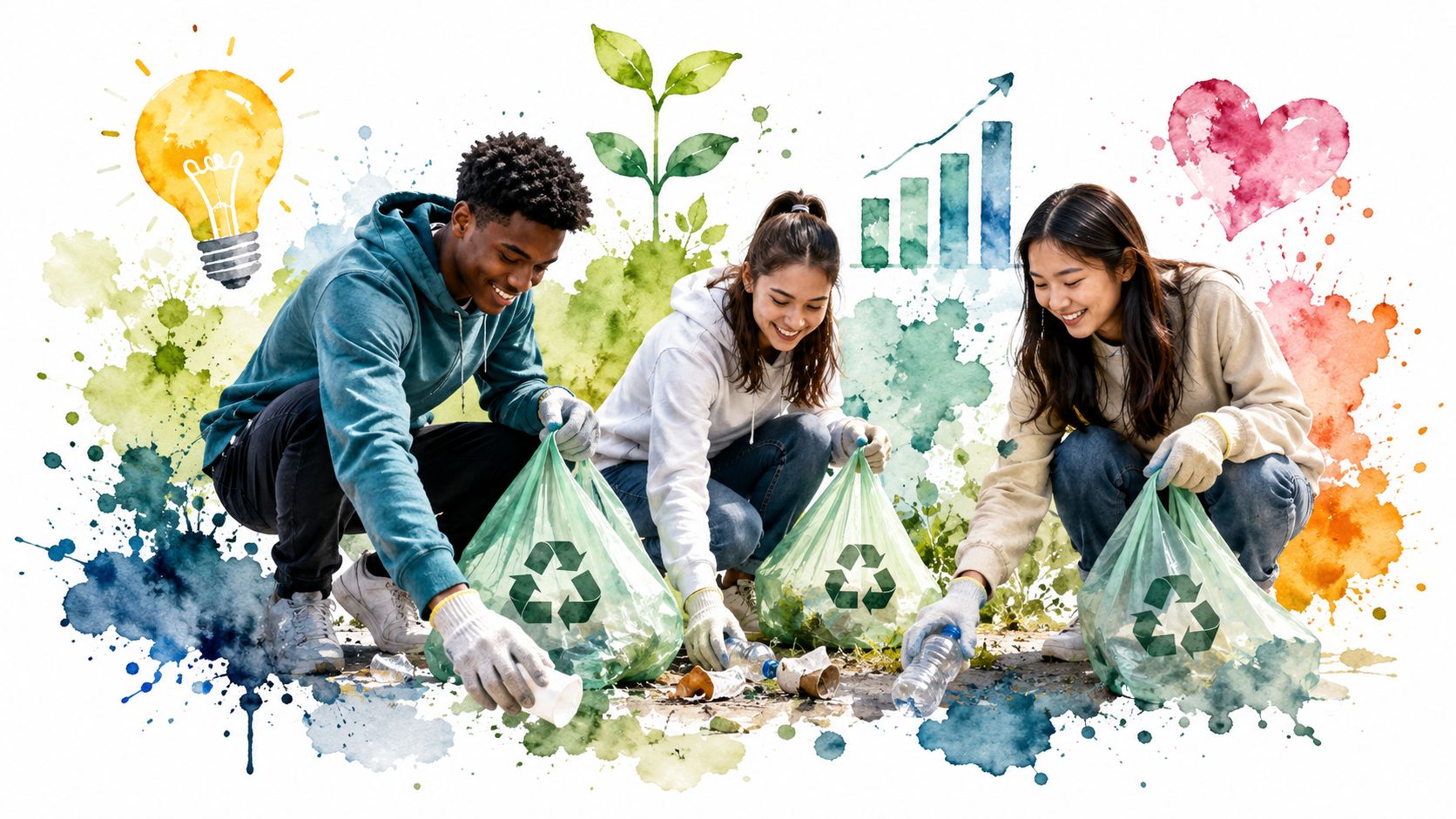
It's easier to clean someone else's mess. I learned that the hard way, standing in a freezing Chicago hailstorm with a trash bag in one hand and my own life feeling like a landfill in the other. When you pick up what other people left behind, you start noticing how much of yourself you can finally carry.
Service learning didn't feel noble to me at first. It felt wet, cold, awkward, and weirdly honest. That's why it worked. It gave me a place to do hard, physical work with other people, and that work started changing how I handled my friendships, my fear, my city, and even the way I talked to myself.
1. Building Real Friendships Through Shared Purpose
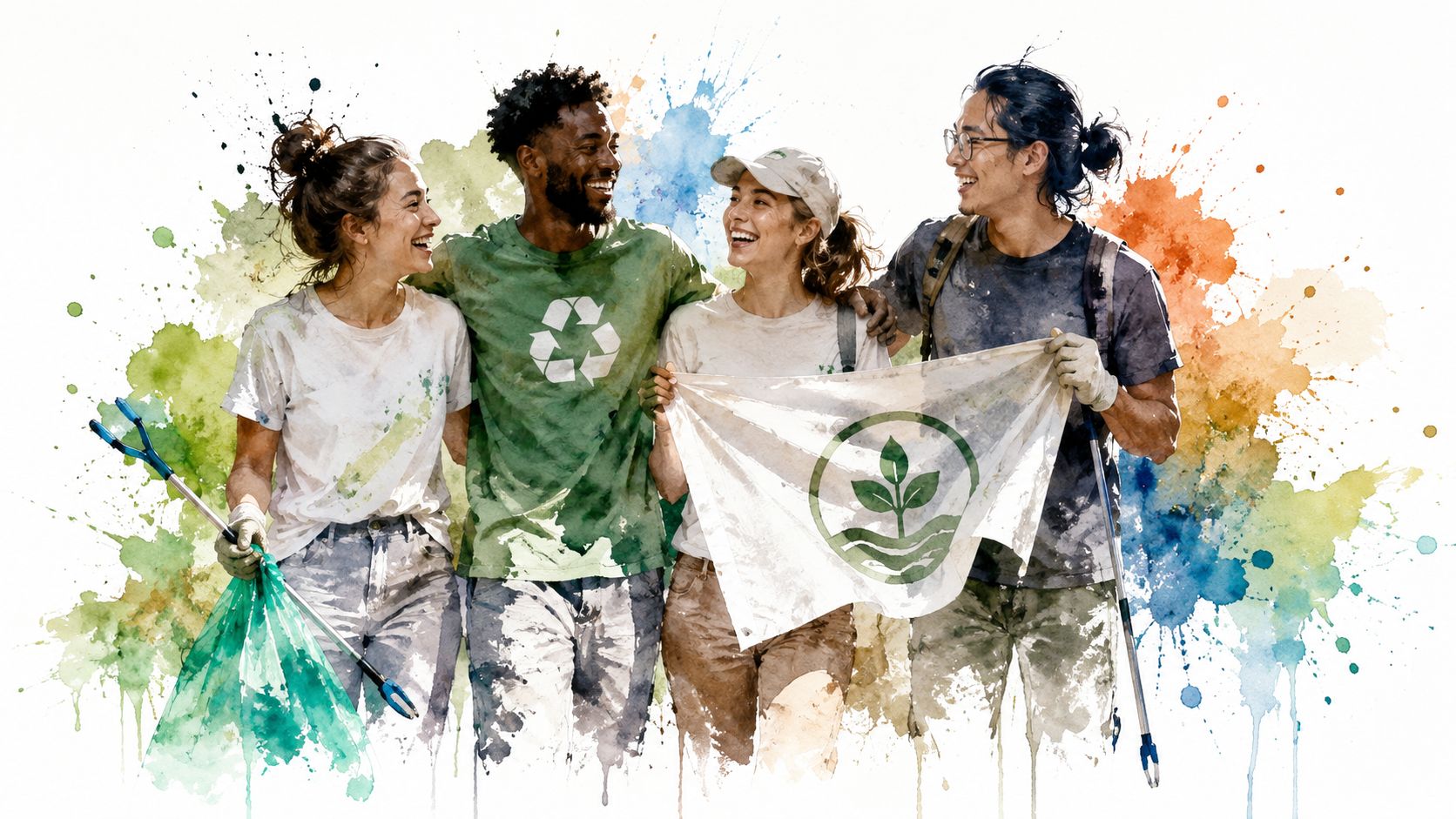
You don't build the best friendships by sitting across a polished table and trying to sound impressive. You build them when your hands are cold, your shoes are muddy, and you're both dragging the same trash bag toward the curb. That's what makes service learning benefits feel different from casual socializing, it gives you a reason to keep showing up, and that consistency does the heavy lifting.
I've seen strangers turn into the kind of people who text each other after pickups, plan side hangouts, and show up for celebrations that have nothing to do with trash. New Chicagoans often find their first real connection through weekly cleanups, because nobody cares if you're polished. They care if you're present. If you move away later, the bond can still hold. That's the kind of friendship that survives weather, schedule chaos, and ordinary life.
Say the unglamorous thing out loud
If you want real connection, stop trying to look effortless. Introduce yourself to one new person, every week, and mean it. Tell people when you're having a rough day, because honesty builds faster than polish.
Practical rule: the person who shows up in bad weather often becomes the person you trust in good weather too.
If you want a group that builds that kind of bond on purpose, the spirit behind Litter Caterpillars' community-building activities for adults is exactly that, repeated effort with real people, not fake networking.
2. Developing Personal Resilience and Grit
The first time I worked outside in a spring hailstorm, my body wanted out before my mind did. That's the moment when resilience stops being a word you nod at and turns into a fact you can feel in your fingers. You learn that discomfort isn't the boss of you.
That lesson matters because service learning asks you to stay put when the weather turns ugly, when the route feels long, and when your motivation drops off a cliff. The federal Learn and Serve America report said high-quality service learning helps school attendance, classroom engagement, and academic achievement, and it also connects students to their communities while reducing risky behaviors, which tells me grit isn't just about toughness, it's about follow-through in real life (federal Learn and Serve America report).
Hard work gives you evidence
You don't need to romanticize the cold to get the point. You need proof that you can keep moving when your mood says quit. The first time you finish a miserable pickup, you carry that evidence into everything else, a tough conversation, a job search, a bad week, a lonely stretch.
You can't always choose the weather. You can choose whether you quit in it.
That's why the gritty side of service learning benefits sticks. It gives you a body-level memory of strength. You don't just tell yourself you're capable, you've already done the thing, hands numb, bag full, and still standing.
3. Gaining Practical Civic Knowledge and Neighborhood Literacy
Three years of picking up trash across Chicago changes the way you see a city. You stop thinking of neighborhoods as names on a map and start reading them like lived-in places with patterns, habits, and pressure points. You notice what gets ignored, what gets maintained, and where people are trying anyway.
That kind of civic learning beats a lecture because your shoes are in the dirt. The service-learning model has long been tied to active civic understanding, and a national youth leadership summary says it affects civic engagement along with attitudes toward self, school, social skills, and academic performance (National Youth Leadership Council summary). You feel those categories in real time when you're talking to neighbors, watching runoff pile up, or seeing which blocks get attention and which don't.
City knowledge starts with your feet
I've watched volunteers start asking sharper questions after a few cleanups. Why does this corner flood? Why does that block look cared for while another one gets buried in litter? Those are civic questions, not just cleanup questions. They lead you toward policy, maintenance, business habits, and the way people treat shared space.
If you want to turn that attention into action, the mindset behind what is civic engagement is simple, pay attention where you stand, then act like the block belongs to you too.
4. Developing Leadership and Initiative Skills
Leadership usually gets described like a title. In real life, it looks more like a person noticing what needs doing and moving first. You grab extra bags, help a newcomer tie one off, or suggest the next street before anyone else says a word.
That's how service learning builds leadership. You don't wait for permission to care, and nobody hands you a script. The work forces you to practice initiative, especially when the group needs somebody to make a decision fast. Over time, the shy person who barely spoke on day one starts leading a team or organizing a cleanup without making a big speech about it.
The small moves count
A lot of people think leadership begins when a crowd starts listening. I think it begins when one person sees a task and does it. That could mean setting the pace, checking on a tired volunteer, or stepping up for a stretch of highway cleanup no one wanted to claim.
Leadership gets real when you stop waiting to be picked and start picking up the work yourself.
That matters because service learning benefits don't wait until you feel ready. They show up while you're still learning how to act. You become reliable by being useful, not by sounding like a leader.
5. Building Environmental Awareness and Stewardship
You don't understand litter until you've held too much of it in your hands. One fast-food wrapper is an annoyance. Hundreds of wrappers, bottles, bags, and cups tell you a story about habits, convenience, and neglect. You start seeing patterns your old self ignored.
That's where environmental stewardship gets personal. A lot of people think it starts with a speech. It usually starts with disgust, then curiosity, then responsibility. Volunteers often cut their own household waste after they've seen how much trash collects in the same places again and again. They start caring more about recycling, waste reduction, and the choices they make in their own kitchens and cars.
Your habits stop feeling abstract
Once you've cleaned a block, waste stops feeling invisible. You look at packaging differently. You notice how weather pushes trash into drains and parks. You start asking where it came from, who used it, and why it ended up where it did.
If you want that eye-opening kind of awareness to stick, the lesson behind what is environmental stewardship is blunt, you can't claim to care about a place if you never touch the mess on its ground. That's a hard truth, and it changes you.
6. Increasing Sense of Personal Agency and Control
There's a specific kind of hopelessness that hits when you look at a dirty block and think nobody's going to fix this. Then you show up anyway, and by the end of the day the place looks different because of what you did. That's agency, and it feels better than waiting around for someone else to save the day.
The booby trap for a lot of people is believing that change only counts if it comes from a big institution. Service learning cuts through that lie. You may not control the economy or city hall, but you can control your bag, your time, and your effort. That's enough to start moving your world.
The Litter Caterpillars story started with Kevin Tao feeling stuck in his own messy apartment and chaotic life, then taking a hard look at the things he avoided. That same move, from helplessness to action, is what makes service learning benefits hit so hard in the body.
Proof beats worry
You don't need to feel powerful before you act. You act, then you feel powerful because you've got evidence. Before-and-after photos help, sure, but the proof lives in you, in the way your shoulders feel after a job done and in the way your mind stops repeating the same dead-end story.
If you can clean one block, you can stop calling yourself helpless.
That's not motivational fluff. It's a training ground. Once you've seen a real change happen because you showed up, you stop treating your life like a locked room.
7. Developing Emotional Maturity and Self-Forgiveness
A lot of people bring their worst self-talk into service work. I've done it too. You show up angry, ashamed, heartbroken, or embarrassed, and then the work asks you to keep going anyway. That's where emotional maturity starts, not in a calm self-help quote, but in the middle of real discomfort.
Service learning teaches you that you don't have to be perfect to be useful. You don't have to have a spotless apartment, a clean record, or a tidy relationship history to matter to a group. You can be messy and still be welcome. You can be in progress and still be loved.
The research summary from the Texas Tech service-learning review says service learning has positive effects on personal insight and cognitive development, and another meta-analysis found gains in self-esteem, self-efficacy, educational engagement, altruism, cultural proficiency, and academic achievement versus control groups (Texas Tech service-learning meta-analysis summary, Center for Engaged Learning summary). That lines up with what I've watched happen in the field, people start softening toward themselves because they finally have somewhere to belong while they work.
You can't heal by hiding
When someone joins a cleanup group while carrying shame, the work gives them a different mirror. Other people accept them as they are, not as a polished version they invented for public use. That repeated acceptance can be a relief so deep it almost feels strange.
Self-forgiveness gets easier when your hands are busy and your people are kind.
That's one of the clearest service learning benefits I know. It turns your inner critic down a notch by giving you a place to prove you're still worth something, even on a bad day.
8. Creating Visible Community Impact and Pride
Some kinds of service happen where nobody sees them. Cleanup work doesn't hide. The block changes, the street looks different, and neighbors notice right away. Kids ask questions. Business owners say thank you. People who used to walk past the mess now see a cleaner place and a group that cared enough to do something.
That visible result matters because it gives you pride with no performance attached. You don't need applause to know the work landed. You can point to a corner, an empty lot, or a street and say, we made that better. The Litter Caterpillars' Caterpillar Park in Englewood does exactly that, turning an empty lot into a place people can use and care for.
The best service learning benefits leave a trace. They don't vanish when the volunteer shift ends. They change what people expect from a neighborhood and what they expect from themselves.
Pride gets stronger when people can see the result
Visible work also builds group identity. Flags, theme songs, badges, and before-and-after photos all matter more than people think because they tell volunteers, this effort counts, and your neighbors can see it too. That kind of public care can pull other people in without a lecture.
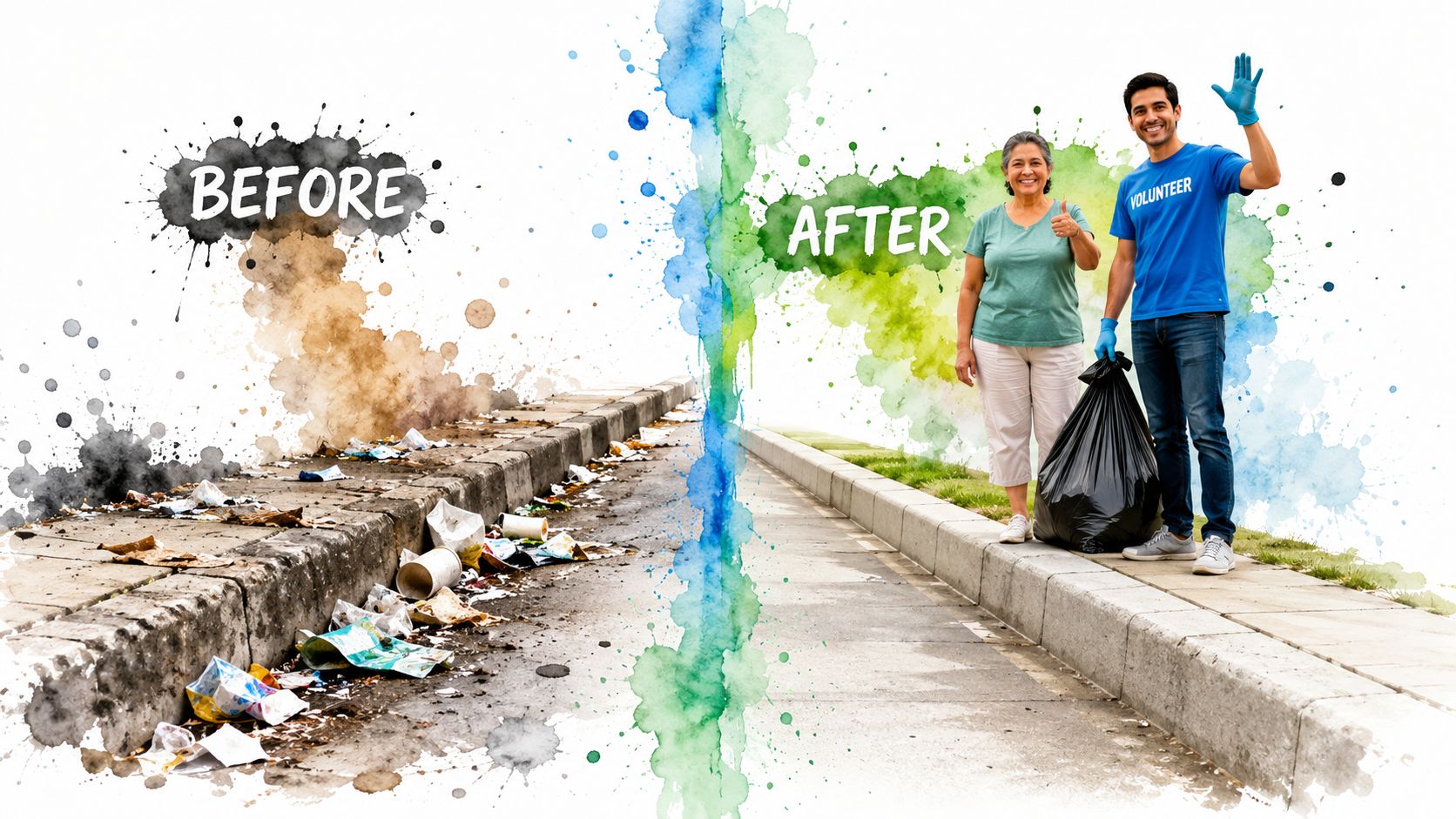
A cleaner block is more than a cleaner block. It's proof that someone stayed.
And yes, there's a video worth watching if you want to feel the rhythm of the work in motion.
8-Point Service-Learning Benefits Comparison
| Outcome | 🔄 Implementation Complexity | ⚡ Resource Requirements | 📊 Expected Outcomes | 💡 Ideal Use Cases | ⭐ Key Advantages |
|---|---|---|---|---|---|
| Building Real Friendships Through Shared Purpose | Low, regular scheduling and group coordination | Low, volunteers, basic supplies (bags, grabbers) | High social bonding; lasting friendships and trust | Newcomer integration, community cohesion, volunteer retention | Organic, durable friendships; diverse networks; mutual trust |
| Developing Personal Resilience and Grit | Medium, exposes volunteers to harsh conditions; safety planning needed | Low–Medium, weather gear, safety protocols, buddy systems | Increased grit, confidence, tolerance for discomfort | Personal growth, resilience training, preparation for stress | Builds authentic self-efficacy via real-world challenges |
| Gaining Practical Civic Knowledge and Neighborhood Literacy | Medium, broad geographic coverage and sustained engagement | Medium, travel/time, documentation, local partnerships | Deep neighborhood knowledge; civic understanding; advocacy readiness | Civic advocacy, urban planning research, community organizing | Firsthand insight into policy impacts and local dynamics |
| Developing Leadership and Initiative Skills | Low, informal roles emerge through action | Low, volunteer coordination tools, recognition tokens | Improved initiative, decision-making, team coordination | Emerging leaders, grassroots project organizers | Practice-based leadership with transferable skills |
| Building Environmental Awareness and Stewardship | Low, routine activities with observational learning | Low–Medium, sorting supplies, educational materials | Heightened stewardship; reduced personal waste; advocacy | Environmental education, behavior-change campaigns | Hands-on learning yields sustained behavior change |
| Increasing Sense of Personal Agency and Control | Low, direct action with immediate feedback loops | Low, basic tools and autonomy to choose projects | Stronger agency; motivation to initiate local change | Empowerment programs, people feeling stuck or powerless | Tangible proof of impact; boosts motivation and initiative |
| Developing Emotional Maturity and Self-Forgiveness | Medium, requires psychological safety and repeated participation | Low–Medium, supportive culture; occasional facilitation | Greater self-compassion, reduced shame, emotional growth | Mental-health support groups, recovery, belonging-focused work | Cultivates vulnerability, acceptance, and lasting self-forgiveness |
| Creating Visible Community Impact and Pride | Low, visible results but needs consistency for recognition | Low–Medium, photo documentation, outreach, symbols (flags) | Community recognition; increased local pride and engagement | Neighborhood revitalization, public awareness efforts | Immediate, visible change that inspires community participation |
So, Are You Bold Enough?
These benefits aren't theory. They show up in the cold, in the heat, and in the awkward, ordinary minutes when you decide to keep going anyway. I'm talking about real friendship, real grit, real city knowledge, real leadership, real agency, real self-forgiveness, and real pride you can point to with your own hands.
The hard truth is simple. You don't get those service learning benefits by thinking about them in bed on a Sunday night. You get them by showing up with other people, getting uncomfortable, and doing work that leaves a mark on the street and on you. That's where the story changes.
I've watched people walk in feeling stuck and walk out carrying a different posture. They stand a little straighter, talk a little more openly, and stop acting like their life is already decided. That kind of change doesn't come from waiting for confidence. It comes from earning it.
So ask yourself straight. Are you ready to stop treating your life like a mess you can't touch? Are you ready to pick up a bag, meet real people, and let hard work make you stronger? Your next version is waiting on the other side of one messy, honest Saturday.
If you want that kind of change in Chicago, Litter Caterpillars gives you a weekly place to clean, connect, and build grit with people who show up. Come for the trash pickup, stay for the friendship, the pride, and the version of you that gets built while you work.