Tag: social impact

  • Corporate Social Responsibility Examples That Drive Real Impact

    Corporate Social Responsibility Examples That Drive Real Impact

    You've seen them, right? The glossy photos. A dozen employees in matching t-shirts, awkwardly planting a single, sad-looking tree. It all feels a bit… staged. Like a box-checking exercise built for a press release. But what if corporate social responsibility wasn't about looking good? What if it was about actually being good? What if it could change not just a community, but your team, your brand, and maybe even you?

    I know it can. I’ve lived it.

    For a long time, my own life was a mess, literally and figuratively. I started a small trash pickup group right here in Chicago—we call ourselves Litter Caterpillars now—mostly to get a handle on my own issues with consistency and keeping things clean. What happened next blew my mind. We found this strange, unexpected joy in doing hard things together, even freezing our butts off in a Chicago hailstorm. I discovered that cleaning up somebody else's mess was often way easier than facing my own. That simple act of service started changing us. From the inside out.

    So this article isn't another boring list of forgettable photo-ops. I want to take you on a deep dive into 12 powerful corporate social responsibility examples, many of them inspired by the raw, real lessons we learned out on the streets. I’ll share stories from my own journey, break down exactly what makes these ideas tick, and give you stuff you can actually use to build a program with a real heart and soul. Forget the empty gestures. It's time to build something that actually matters.

    1. Community-Led Environmental Cleanup Programs

    Picture this. You’re turning a neglected, trash-strewn street corner—a place you usually hurry past—into a spot that fills the whole neighborhood with pride. That’s the magic of these community-led cleanup programs. They aren't just about picking up litter. They are potent examples of corporate social responsibility that build a tangible, visible impact right where you live. When you sponsor or join one of these events, you're directly investing in the well-being of the communities you serve.

    This is how CSR stops being some abstract idea and becomes a hands-on, team-building adventure. It’s more than just cutting a check. It’s about you, showing up. Getting your hands dirty. And creating immediate, visible change right alongside your neighbors and your team.

    Strategic Insights & Actionable Takeaways

    This whole model is like a campfire. It needs consistent fuel—that’s the community spirit—to keep burning bright. The goal isn't a one-off event. It’s a sustainable movement that makes people feel connected and gives them a sense of ownership.

    • Build a Habit: You have to be consistent. It's everything. Our Litter Caterpillars group in Chicago hosts cleanups every single week. This makes it a regular, easy-to-join thing, not some rare, special occasion. That’s how you build momentum and a crew of dedicated volunteers.
    • Create Team Identity: You need to inspire pride. A feeling of belonging. Use branded gear like t-shirts, come up with team chants, or offer little achievement badges. This transforms a simple cleanup into a shared mission.
    • Focus on Underserved Areas: You can maximize your impact by going where help is needed the most. This shows you’re genuinely committed to equity and caring for the community, not just chasing easy PR wins.
    • Prioritize People: The best programs I've seen put their volunteers' safety and happiness first. If you create a positive, supportive vibe, people will come back. They’ll become your biggest advocates.

    By partnering with a program like this, your company can grow deep community roots and show a powerful commitment to local environmental health. You can see how this all works and find ways to get involved with local cleanup events.

    2. Land Acquisition and Community Space Development

    Imagine an abandoned, overgrown lot. Now, imagine it transforming into a vibrant hub where neighbors meet, kids play, and fresh food grows right out of the ground. This is what land acquisition and community space development can do. It's one of the most lasting corporate social responsibility examples I can think of. When your organization buys and redevelops a neglected property, you’re making a permanent, physical investment in a neighborhood’s future.

    This kind of project isn't just a temporary fix. You're creating lasting assets—community gardens, little pocket parks, maybe even food forests—that become a part of the local fabric. When you help create a place like Caterpillar Park in Englewood, you're not just cleaning up a space; you're building a legacy of community health, connection, and pride.

    Strategic Insights & Actionable Takeaways

    This kind of thing is like planting a redwood. It needs a long-term vision and you have to work deeply with the community. Your goal is to create a self-sustaining space that the residents truly own and love.

    • Co-Create with the Community: The best spaces are designed with residents, not just for them. You have to host design workshops and planning sessions from day one. This makes sure the final space actually meets what people in the community need and want.
    • Plan for Longevity: A beautiful park is useless if it gets overrun with weeds a year later. You need a sustainable maintenance plan with a dedicated volunteer crew or partnerships with local groups before you even break ground.
    • Document the Journey: You have to tell the story of the transformation. Use photos and videos to show the whole process, from neglected lot to vibrant community hub. This creates amazing marketing content and shows your tangible impact.
    • Activate the Space: A park is just land until people use it. Partner with local groups to host regular events—farmers' markets, outdoor movie nights, gardening workshops. You have to make sure the space becomes a lively center of activity.

    When you invest in land, you invest in people. You can learn more about how a small group turned an auctioned lot into a beloved community asset and find inspiration by exploring the story of Caterpillar Park.

    3. Friendship, Social Connection, and Branded Identity

    What if your corporate social responsibility initiative felt less like a chore and more like joining your favorite team? That's the power you get when you build a program around friendship and a shared identity. These initiatives intentionally create deep social bonds. They turn volunteering from a one-time act into a core part of someone's community life. It's about making people feel like they belong to something bigger than themselves.

    This approach gets that the strongest movements are built on relationships, not just tasks. By fostering real connections and a proud, branded identity—with symbols like flags or team songs—you create an environment where people want to show up. It becomes a source of joy and belonging that fuels long-term engagement and turns your volunteers into passionate advocates for the mission.

    Two diverse young adults laughing, holding flags, against a vibrant watercolor splash background.

    Strategic Insights & Actionable Takeaways

    Think of social connection as your main goal, not just a nice side effect. You're trying to build a resilient community that sustains itself through a shared purpose and real friendship.

    • Create a Shared Identity: You have to go beyond just a logo. Develop traditions, symbols, and celebrations that bond your team. At Litter Caterpillars, we use a theme song, unique flags, and achievement badges to forge a powerful group identity.
    • Facilitate Social Time: You have to intentionally build in time for people to connect. Always schedule some informal social time before or after your events so relationships can form naturally.
    • Build Consistent Teams: Assign your volunteers to small, consistent groups. When people work with the same crew regularly, trust builds way faster. Acquaintances turn into real friends.
    • Celebrate People, Not Just Metrics: You have to publicly recognize personal milestones, volunteer stories, and individual growth. This shows you value the people behind the work, and that fosters deep loyalty and a positive culture.

    When you focus on building a community, you create a self-sustaining volunteer movement that is resilient, joyful, and deeply impactful. You can explore how to apply these community-building activities for adults to your own CSR programs.

    4. Volunteer-First Fundraising Model

    Imagine you join a cause you believe in. You're ready to give your time and energy, but then you're hit with constant pressure to donate money. That feeling can turn your inspiration into a sense of obligation. The volunteer-first fundraising model flips this whole script. It's one of the most powerful and authentic corporate social responsibility examples because it protects the volunteer experience by separating the act of service from the act of fundraising.

    This model is like building a great band. You find passionate musicians first, and then you find a record label to support them. You build a passionate community first. Instead of asking volunteers to open their wallets, you get your funding through corporate sponsorships, grants, and major donors. This lets everyone, no matter their financial situation, contribute in a meaningful way. For a company like yours, supporting this model means you're funding pure, uncompromised community action.

    Strategic Insights & Actionable Takeaways

    This approach is about valuing human energy as your most precious resource. Your role as a corporate partner is to fuel that energy, not to extract value from it.

    • Build Diverse Revenue Streams: Don't put all your eggs in one basket. We actively seek a mix of corporate sponsors, apply for grants, and develop partnerships to make sure our operations are sustainable without ever asking our volunteers for a dime.
    • Create Clear Sponsorship Tiers: You need to develop attractive sponsorship packages that offer clear value to businesses. This could be brand visibility on gear, social media shout-outs, or dedicated cleanup events for your employees.
    • Prioritize Transparency: You have to be open with your volunteers about how you're funded. When they know that corporate partners and grants make their work possible, it builds trust and shows them how valuable their contribution truly is.
    • Focus on Impact Metrics: Track and publicize the results of what your volunteers are doing—pounds of litter collected, number of community members engaged. These metrics are powerful tools for attracting and keeping high-impact funders who want to see real results.

    By sponsoring a volunteer-first model, your company shows a profound respect for the community and empowers people to give their best. You can see how this philosophy creates an incredible volunteer culture and explore sponsorship opportunities.

    5. All-Weather, Year-Round Service Commitment

    What does real commitment look like? I'll tell you. It’s showing up when it’s inconvenient. It’s facing a snowstorm or a heatwave and choosing to serve anyway. This is the heart of an all-weather, year-round service commitment. It's a powerful model of corporate social responsibility that proves your dedication isn't just for the sunny days. It shows that community needs don’t take a break for bad weather, and neither do you.

    This approach builds incredible credibility. It creates a culture of resilience. When your team braves the elements together, you’re not just cleaning a park; you’re forging a bond built on shared hardship and unwavering purpose. This sends a clear signal to your community, employees, and customers that your values are non-negotiable.

    Strategic Insights & Actionable Takeaways

    This model is like being a lighthouse keeper. It's built on a foundation of safety, preparation, and a culture that finds strength in adversity. It’s about being stubborn for the right reasons.

    • Embrace the Elements: You have to make resilience a core part of your identity. At Litter Caterpillars, we operate in rain, snow, and extreme heat. We never cancel an event. This unwavering consistency proves our commitment is absolute.
    • Safety Is Non-Negotiable: Create clear, weather-specific safety protocols. This could mean providing hand warmers in winter, extra water in summer, or changing routes during storms. The goal is to show up, but to do it safely.
    • Communicate and Prepare: Let your volunteers know what to expect and how to prepare. When you're transparent, you build trust and make sure everyone shows up with the right gear and the right mindset.
    • Celebrate the Grit: You have to acknowledge and honor the effort. Share photos of your team working through tough weather on social media. Frame the challenge not as a problem, but as a source of shared pride and accomplishment.

    Adopting an all-weather philosophy shows your company’s character. Your grit. It’s a tangible way to demonstrate that your commitment to the community is truly unconditional. You can see this dedication firsthand and find ways to join a mission that never stops.

    6. Neighborhood-Specific and Equity-Focused Service

    Think about your city. Think about the neighborhoods that get all the resources and the ones that are often forgotten. True corporate social responsibility examples don't just pop up in the most convenient places; they go where the need is greatest. This approach intentionally focuses on underserved and marginalized communities. It makes sure that efforts toward beautification and environmental health are distributed equitably.
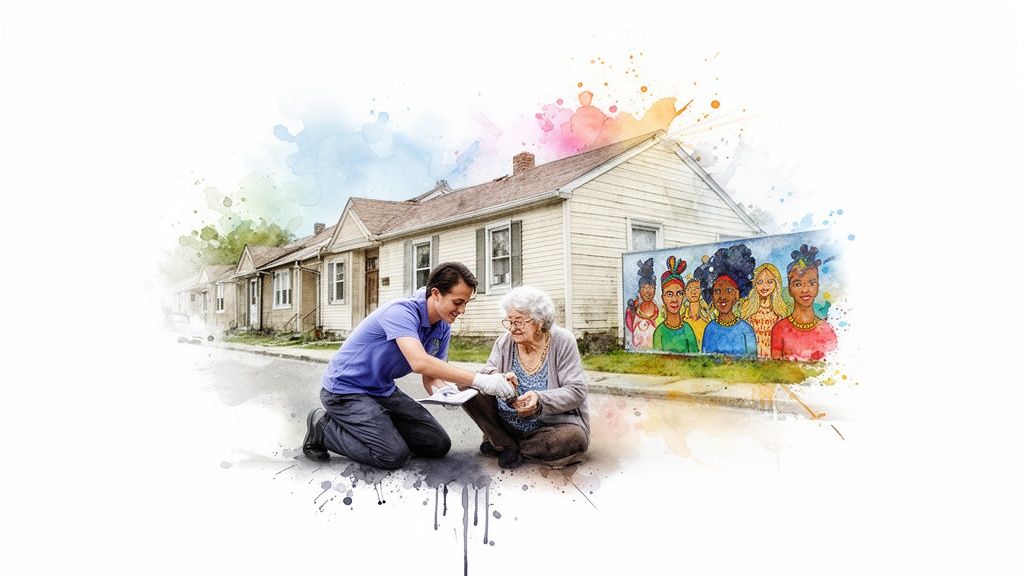
    A young man helps an elderly woman on a street with houses and a vibrant mural.

    It’s about moving beyond photo ops and tackling environmental justice head-on. When you commit to showing up in all neighborhoods, not just the ones with the best PR value, you build genuine trust. You prove your commitment is about people, not just perception. This is how you transform a volunteer program into a real force for systemic change.

    Strategic Insights & Actionable Takeaways

    This model is like being a good neighbor. It's built on trust, respect, and a long-term vision. The goal is to become a reliable partner, not just a temporary visitor. You do that by empowering the residents you serve.

    • Map for Equity: Don't just go where it's easy. You need a systematic plan to cover all neighborhoods, prioritizing those with the highest need. We're trying to do this at Litter Caterpillars by working to serve all 50 city wards, including places like Englewood that are often overlooked.
    • Hire from the Community: The most powerful leaders are the ones with lived experience. You have to hire and develop team leaders from the neighborhoods you serve to make sure your efforts are authentic and culturally resonant.
    • Listen First: When you first go into a new neighborhood, your most important job is to listen. Partner with community organizations that are already there. Let their wisdom guide your actions. Building relationships is the foundation for everything else.
    • Commit for the Long Haul: Avoid one-off events. A sustained presence shows a real investment in the community's future and helps address the root causes of neglect, not just the symptoms.

    By adopting an equity-focused strategy, your company can move beyond surface-level CSR and contribute to meaningful, lasting change where it matters most. You can see how this philosophy drives impact and find ways to join a mission-driven cleanup.

    7. Personal Transformation and Resilience Building

    What if volunteering could do more than just clean a park? What if it could help you rebuild a life? This is the core idea behind CSR programs that focus on personal transformation. These initiatives frame service not just as an act of giving, but as a journey of healing, growth, and resilience. By creating a safe and supportive space, you offer a place where overcoming challenges becomes a shared experience.

    This model elevates corporate social responsibility from a PR effort into something deeply human. It's about recognizing that your volunteers and employees come with their own stories, their own struggles. When you facilitate mentorship and create opportunities for real connection, you invest in their personal well-being just as much as you invest in the community. It’s a powerful way to show you care about people, not just productivity.

    Strategic Insights & Actionable Takeaways

    This approach is like building a support group. It's built on vulnerability, trust, and celebrating personal wins. The goal is to create a community where people feel safe enough to grow through their service.

    • Lead with Your Story: Authenticity builds trust. I openly share my personal journey of transformation as the founder of Litter Caterpillars. Sharing your own "why" creates a foundation for other people to feel safe sharing theirs.
    • Focus on Growth Milestones: Shift your focus from just service metrics to personal progress. Celebrate a volunteer's courage to lead a team for the first time or their consistency in showing up.
    • Create Spaces for Reflection: Meaningful service requires you to process it. Dedicate time after events for volunteers to reflect and share what the experience meant to them. This turns a simple cleanup into a lesson in resilience.
    • Train for Emotional Intelligence: You have to equip your leaders with skills like active listening and empathy. The goal is to create a supportive network, not just manage a task list. A leader who knows how to listen is more valuable than one who only knows how to delegate.

    By building a program that honors the journey of each individual, your company can foster profound loyalty and create an impact that goes far beyond clean streets. You can learn more about how Litter Caterpillars uses service for personal growth.

    8. Demographic-Specific Volunteer Recruitment

    What if you could design a volunteer program that speaks directly to the heart of a specific community? That’s what demographic-specific volunteer recruitment does. Instead of a one-size-fits-all approach, this strategy tailors its message, its timing, and its activities to connect with the unique motivations of a particular group. This makes it one of the most effective corporate social responsibility examples for deep engagement.

    This approach turns your CSR initiative from a generic call for help into a personal invitation. It acknowledges that different people volunteer for different reasons. Some are looking for career skills, others want friendship, and many are just seeking a sense of purpose. When you understand and address these specific desires, you create a program that feels not just welcoming, but like it was truly made for them.

    Strategic Insights & Actionable Takeaways

    This model succeeds when you move beyond assumptions and genuinely get to know your audience. The goal is to build an authentic connection that makes people feel seen, valued, and essential to your mission.

    • Understand Motivations: Don’t guess what people want. For example, we successfully engage a lot of young women by focusing on empowerment, community, and creating visible, inspiring change. You need to research what drives your target group.
    • Recruit in Their Spaces: You have to go where your audience already is. If you're targeting new professionals, connect through LinkedIn or company resource groups. For students, focus on campus events and the social media platforms they actually use.
    • Design for Their Lives: Respect their constraints. Offer weekend events for people who work 9-to-5, or flexible scheduling for parents. Your logistics should remove barriers to joining, not create new ones.
    • Center Their Voices: Feature testimonials and leaders from within the target demographic. When people see others who look like them in leadership roles, it builds trust and shows them a clear path for involvement and growth.

    By tailoring your outreach, you can build a more diverse, dedicated, and passionate volunteer base. You can find more targeted strategies and learn how to find volunteers who are a perfect fit for your cause.

    9. Digital-First Community Building and Accessibility

    What if your company’s impact wasn't limited by your physical presence? That's the power of digital-first community building. These initiatives use online platforms not just for promotion, but as the central hub for organizing, connecting, and making volunteerism accessible to everyone, no matter their schedule or social comfort level. It’s about meeting people right where they are—online—and guiding them toward real-world impact.

    This strategy transforms corporate social responsibility into an ongoing conversation. Instead of just announcing an event, you’re creating a space for questions, sharing stories, and fostering connections long before and after the work is done. It removes barriers. It makes it easy for someone just scrolling on their phone to find a purpose and a community.

    Strategic Insights & Actionable Takeaways

    A strong digital presence turns passive interest into active participation. It's like having a friendly greeter at your front door, 24/7. Your goal is to create a seamless, welcoming journey from online discovery to offline engagement.

    • Be Where Your People Are: Don't expect people to find you; you have to go to them. Groups like ours use a multi-platform approach, leveraging Instagram for visual storytelling, Meetup for event logistics, and Reddit for grassroots outreach. This ensures you reach all sorts of different people.
    • Create a Clear Path to Action: Your digital channels should make it incredibly easy to get involved. A clear link to sign up, a visible schedule, and a friendly FAQ can be the difference between a "like" and a new volunteer showing up.
    • Foster a Digital Community: Engagement shouldn't stop when an event ends. Use your platforms to celebrate volunteers, share photos, and ask for feedback. This builds a sense of belonging and keeps your mission top-of-mind.
    • Prioritize Responsiveness: In a digital world, speed matters. When you respond quickly and warmly to messages and comments, it shows you value your community’s time and interest. It builds trust and encourages people to participate.

    By adopting a digital-first mindset, your company can build a more inclusive, dynamic, and resilient volunteer program. You can see how this works and explore digital organizing in action to inspire your own strategy.

    10. Strategic Partnerships with Local Nonprofits and Institutions

    Imagine trying to build a house all by yourself versus with a team of expert carpenters, plumbers, and electricians. That's the difference between going it alone and forming strategic partnerships. This approach to corporate social responsibility is all about teaming up with established local nonprofits and institutions to amplify your impact. By joining forces, you tap into existing community trust, resources, and expertise. You turn your good intentions into powerful, coordinated action.

    This model is all about synergy. It transforms CSR from an isolated corporate project into a deeply integrated community effort. Instead of reinventing the wheel, you align with partners who already know the neighborhood, understand the needs, and have the infrastructure to make things happen. It’s about lending your unique strengths—whether it's funding, volunteers, or skills—to a mission that’s bigger than any single one of you.

    Strategic Insights & Actionable Takeaways

    A successful partnership is a two-way street. It's built on shared goals and mutual respect. Your objective is to create a combined force that achieves more than either of you could on your own.

    • Align Your Missions: Seek partners whose values mirror your own. Our partnerships with Chicago-area nonprofits and government agencies are effective because we all share a common goal: a cleaner, healthier community for everyone.
    • Formalize Expectations: Don't leave things to chance. You need to create clear agreements that outline roles, resources, and goals. This makes sure both sides are on the same page and accountable.
    • Amplify Your Story, Together: Develop a joint communications strategy. Co-branded materials and shared social media campaigns celebrate the partnership and show a united front. This strengthens both of your brands.
    • Celebrate Your Partners Publicly: You have to give credit where it's due. Highlighting your partners’ contributions builds goodwill and shows a genuine commitment to collaboration over competition.

    By forming strategic alliances, your company can move from simply funding causes to co-creating lasting community solutions. You can explore how groups like Litter Caterpillars build these powerful local partnerships to maximize their positive impact.

    11. Adventure and Exploration Through Service

    What if volunteering felt less like a chore and more like an urban expedition? This approach reframes community service as an exciting adventure. It turns a simple cleanup into a journey of discovery. By tapping into our natural curiosity, programs that blend service with exploration motivate people who are drawn to novelty and challenge. This makes your corporate social responsibility examples feel fresh and dynamic.

    This model transforms civic duty into a compelling quest. It’s not just about giving back; it's about exploring new neighborhoods, uncovering hidden gems, and seeing your city through a whole new lens. Your team gets to connect with different communities and each other, all while leaving a positive, tangible mark on every place you visit.

    Strategic Insights & Actionable Takeaways

    This strategy is like a treasure hunt. It's built on curiosity and purpose. The goal is to make every service event a unique experience that combines genuine community benefit with the thrill of exploration.

    • Map Your Adventure: Treat your service plan like an expedition map. At Litter Caterpillars, for instance, we have a goal to clean in all 50 of Chicago's wards. This turns our mission into a city-wide exploration. You can create a rotation plan to visit unique and diverse neighborhoods.
    • Narrate the Journey: Frame your work through a story of adventure. Use your recruitment messages to highlight the exploration element. Share photos and stories from each location to build excitement for the next "mission."
    • Balance Adventure with Impact: The adventure is the hook, but the service is the heart. You have to make sure the community benefit is clear and genuine. Partner with local community members or historians to deepen your team's understanding and connection to the area.
    • Equip Your Explorers: Provide tools that enhance both the service and the adventure. Think branded gear, neighborhood fact sheets, or even photo challenges. This adds a layer of fun and identity to the experience.

    By adopting an adventure-based model, your company can attract a wider range of volunteers and transform your CSR program into an ongoing story of discovery and impact. You can see how this works by following the Litter Caterpillars’ journey across Chicago.

    12. Transparent Communication of Organizational Values and Decision-Making

    Imagine knowing not just what your favorite company does, but why they do it. This is the heart of transparent communication. It's a powerful form of corporate social responsibility. It’s about pulling back the curtain and sharing the values, the motivations, and even the struggles behind your decisions. This practice builds unshakable trust with your customers, your employees, and your community partners.

    When you openly share your journey, you invite people to become part of the story, not just spectators. It transforms a business transaction into a relationship built on shared principles and mutual respect. This isn't just about public relations; it's about creating a culture of accountability and authenticity that resonates deeply with people who want to support businesses that truly stand for something.

    Strategic Insights & Actionable Takeaways

    This approach is like having an honest conversation. It's rooted in vulnerability and consistency. Your goal is to build a community that feels heard, valued, and connected to your mission because they understand the "why" behind your actions.

    • Share Your Origin Story: People connect with people. I openly share my own story and personal motivations for starting Litter Caterpillars. This creates an immediate human connection and makes the core values driving the organization crystal clear.
    • Explain the 'Why,' Not Just the 'What': When you make a decision, communicate the reasoning behind it. This invites understanding and shows respect for your stakeholders, even if they don’t agree with the outcome.
    • Embrace Imperfection: Be honest about your challenges, your failures, and what you’ve learned. Transparency isn't about being perfect; it's about being real. This builds credibility far more effectively than a flawless facade ever could.
    • Create Feedback Loops: Actively ask for input and, crucially, show how that feedback influences your decisions. This demonstrates that you don’t just listen; you act on what you hear. It makes your community a true partner.

    By embedding transparency into your company’s DNA, you can cultivate a loyal following and prove that your commitment to social responsibility is more than just a marketing slogan. It’s a core part of who you are and how you operate.

    Comparison of 12 CSR Initiatives

    Approach 🔄 Implementation Complexity ⚡ Resource Requirements 📊 Expected Outcomes 💡 Ideal Use Cases ⭐ Key Advantages
    Community-Led Environmental Cleanup Programs 🔄 Medium — recurring coordination, scheduling, permits ⚡ Low–Medium: volunteers, basic supplies, modest branding 📊 Visible local remediation, social cohesion, behavior change 💡 Neighborhood engagement, low-cost civic action, pilot projects ⭐ Strong social bonds, measurable local impact, low barrier to entry
    Land Acquisition and Community Space Development 🔄 High — legal, zoning, long-term planning ⚡ High: land purchase, construction, ongoing maintenance 📊 Lasting public assets, property value increase, long-term revitalization 💡 Legacy projects, neighborhood redevelopment, multi-stakeholder partnerships ⭐ Durable community assets, attracts investment and permanence
    Friendship, Social Connection, and Branded Identity 🔄 Medium — facilitation, cohort management, branding ⚡ Low–Medium: design materials, events, small budgets 📊 High retention, movement-building, mental-health benefits 💡 Volunteer retention, community-building, identity-driven programs ⭐ Deep volunteer loyalty and public visibility
    Volunteer-First Fundraising Model 🔄 Medium — fundraising strategy, sponsor cultivation ⚡ Medium–High: grant writing, donor relations, sponsorships 📊 Inclusive participation, sustained volunteer engagement, authenticity 💡 Programs prioritizing accessibility and volunteer experience ⭐ Protects volunteer energy; increases inclusivity
    All-Weather, Year-Round Service Commitment 🔄 Medium — safety protocols, weather adaptations ⚡ Low–Medium: PPE, insurance, training, communication 📊 Consistent service, organizational credibility, resilient volunteers 💡 Organizations valuing reliability and strong identity ⭐ Signals commitment; builds resilience and respect
    Neighborhood-Specific and Equity-Focused Service 🔄 Medium–High — cultural competency, trust-building ⚡ Medium: partnerships, training, safety planning 📊 Environmental equity, community trust, targeted impact 💡 Environmental justice work, underserved neighborhoods ⭐ Targets greatest need; fosters long-term trust
    Personal Transformation and Resilience Building 🔄 High — mentorship, reflection processes, skilled facilitation ⚡ Medium: leader training, program design time 📊 Deep personal growth, leadership development, high retention 💡 Recovery, personal-development-focused volunteering ⭐ Produces authentic leaders and durable commitment
    Demographic-Specific Volunteer Recruitment 🔄 Medium — tailored outreach, cultural nuance ⚡ Low–Medium: targeted marketing, representative leadership 📊 Efficient recruitment, peer networks, improved fit 💡 Recruiting underrepresented or affinity groups ⭐ Higher recruitment efficiency and aligned retention
    Digital-First Community Building and Accessibility 🔄 Low–Medium — platform management and moderation ⚡ Low: social platforms, content creation, coordination tools 📊 Greater accessibility, steady recruitment, persistent community 💡 Scaling outreach, remote coordination, younger audiences ⭐ Low barrier to entry; real-time coordination and documentation
    Strategic Partnerships with Local Nonprofits and Institutions 🔄 Medium — formal agreements, shared governance ⚡ Medium: partner management, joint programming resources 📊 Amplified impact, legitimacy, resource efficiency 💡 Expanding reach, accessing institutional resources ⭐ Leverages credibility and shared resources for scale
    Adventure and Exploration Through Service 🔄 Low–Medium — route planning, novelty management ⚡ Low: logistics for varied sites, storytelling resources 📊 High engagement, memorable experiences, broad geographic reach 💡 Recruiting adventurous volunteers; novelty-driven campaigns ⭐ Attracts explorers and younger demographics; high engagement
    Transparent Communication of Organizational Values and Decision-Making 🔄 Medium — reporting systems, feedback loops ⚡ Low–Medium: communications, impact reporting tools 📊 Increased trust, aligned volunteers, accountability 💡 Building credibility, value-aligned recruitment, partnership development ⭐ Builds trust, reduces conflict, attracts aligned supporters

    Your Turn to Be Brave: How to Start Small and Create Real Change

    Reading a long list of corporate social responsibility examples is the easy part. It’s inspiring. You see what companies like Patagonia, Lego, and even local Chicago heroes are doing. But inspiration without action is just a pleasant daydream. The hard part is taking that first step. I know this because I’ve lived it.

    For me, that step was picking up a single piece of trash on my block. It wasn't some grand, world-saving gesture. It was about saving myself from a cycle of frustration and inaction. It was about looking at a problem and not feeling so powerless. What I learned from that one small act, and the thousands that followed, is that bravery isn't what you see in the movies. It’s not about one single, heroic moment.

    Real bravery is quiet. It’s showing up when it's cold, rainy, and inconvenient. It's embracing a little bit of discomfort because you know that's where growth happens. It's choosing connection over comfort, purpose over passivity.

    From Ideas to Impact: Your First Brave Step

    You've seen how diverse CSR can be. It's not just about writing a check. It’s about building something real.

    • It’s about showing up consistently. Just like that all-weather commitment I talked about, your company’s impact grows from reliability, not from a single, splashy event.
    • It's about deep listening. True change comes from understanding a neighborhood's specific needs, not from imposing your own top-down solution.
    • It’s about building community. The strongest initiatives create social connection and a shared identity, turning isolated individuals into a unified force for good.

    You don't need a massive budget or a C-suite sign-off to start this journey. The most powerful movements start small. Think of it like planting a seed. You don't just throw it on the ground and expect a forest to appear. You find good soil. You plant it. You water it. You protect it. Day by day, it grows.

    Your Actionable Starting Point

    So, what’s your first step? Let's make it real. Forget about crafting the perfect press release or designing a flawless, multi-year strategy right now. Start with one simple, tangible action.

    1. Find Your People: Identify a local group already doing the work you admire. Here in Chicago, organizations like ours are on the ground every single weekend, building community through environmental cleanup. Don’t reinvent the wheel; join the people already pushing it forward.
    2. Ask, "How Can We Help?": Instead of telling them what you want to do, ask them what they need. Is it sponsoring their cleanup equipment? Is it providing snacks and coffee for their volunteers on a cold morning? Is it using your marketing skills to amplify their message?
    3. Show Up: Commit to one event. Bring a small team. Rain or shine. Experience the work firsthand. Feel the energy of the community. See the direct impact of your time and effort.

    This is how real change begins. Not with a boardroom decision. It begins with a human connection. It's built on a foundation of small, brave, consistent actions that ripple outward. The world doesn't need another perfectly polished corporate photo-op. It needs your heart. It needs your hands. It needs you.


    Ready to take that first brave step? You can see these corporate social responsibility examples in action by connecting with a grassroots movement making a real difference. Join or support Litter Caterpillars to help build cleaner, kinder, and more connected communities across Chicago. Litter Caterpillars


  • A Brave Guide to Corporate Social Responsibility Programs That Actually Matter

    A Brave Guide to Corporate Social Responsibility Programs That Actually Matter

    Corporate social responsibility programs are your company’s chance to show the world its heart. This isn’t about cutting a check for a photo op. It's about rolling up your sleeves, finding the courage to care, and weaving purpose right into the fabric of your business—uplifting communities, acting with fierce integrity, and building a brand people fall in love with.

    CSR Is Your Brand's Story Told Through Action

    A smiling man in a suit gives a small green plant to a happy young boy.

    Let’s be fearless for a second. Forget the stuffy press releases and the giant, awkward check-passing ceremonies. Real Corporate Social Responsibility (CSR) isn’t a performance. It’s about being good, not just looking good. It's a brave choice to weave kindness right into the soul of your business.

    Picture your company as a character in the world’s unfolding story. Is it the hero who steps up? The quiet mentor who lifts others? Or just another face in the crowd? CSR is your chance to stop being a background player and step into a leading role for positive change.

    And this isn't some labyrinthine strategy only giant corporations can afford. It's a deeply human adventure. A quest that kicks off with one simple, brave choice.

    Why Your Story Matters More Than Ever

    People today don't just buy products; they buy into a mission. A company that stands for something more than its bottom line earns a totally different kind of loyalty. It’s the difference between a fleeting transaction and a lifelong fan.

    True impact is born from bravery and kindness. It’s about seeing a problem—whether it’s litter on your street or a crack in your community’s foundation—and deciding, with courage, to be part of the solution. This is how you write a better story for your brand and the world.

    When what your brand does matches what it believes, you build something that can't be bought: trust. Your CSR programs become the thrilling chapters in a story people are excited to follow and proud to share. They stop seeing you as just a business and start seeing you as a neighbor, a friend.

    This single shift creates a tidal wave of goodness:

    • Deeper Customer Connection: People are drawn to brands that mirror their own values, forging a bond that laughs in the face of price tags.
    • Inspired and Engaged Teams: Employees are yearning to work for companies they believe in. A strong CSR mission fuels a wildfire of passion and pride from the inside out.
    • Stronger Communities: When businesses invest their heart and hands right where they live, they help build a more vibrant, supportive home for everyone. We talk more about this profound impact in our article on building resilient communities.

    Finding Your Brand's Authentic Voice

    Authenticity is the secret sauce. Your CSR work should feel as natural as breathing. If you're a tech company, maybe you ignite a love of code in local kids. If you're in the food business, you could wage a joyful war on hunger in your town. The only rule is that it has to feel true.

    The most breathtaking CSR programs aren't about enormous, dramatic gestures. They spring from a real desire to help, nurtured by small, consistent acts of kindness and courage. It’s about showing up, truly listening to what your community needs, and finding creative—even ridiculously fun—ways to pitch in.

    This is your shot to prove that making an impact is way easier than most people think. It all begins with one brave step, one kind act, one decision to write a new, more meaningful chapter for your brand.

    The Unstoppable Rise of Purpose-Driven Business

    Something’s different out there, isn't it? The air has changed. People aren't just buying stuff or clocking in for a paycheck anymore. They’re joining missions. They’re investing their hearts. This isn’t a fleeting trend—it's a deep, seismic shift in what we expect from the world of business.

    Think of it like this: for decades, a business was like a planet held in orbit by a single sun: profit. But now, a second sun has ignited in the sky: purpose. And it’s just as powerful. It’s creating a whole new gravitational pull, shaping everything from who buys your products to who begs to work for you. Companies ignoring this new reality are sputtering, while the ones who bravely fly toward it are soaring.

    What's driving this cosmic shift? It’s a very human hunger for meaning. We want the brands we support and the companies we work for to stand for something more than a healthy bottom line. We’re all starting to ask a brave, simple question: What good are you doing in the world?

    The Data Behind the Demand

    This isn't just a feeling; the numbers are shouting it from the rooftops. People are voting with their wallets and their careers, and they’re consistently choosing companies that reflect their own values.

    The data tells a story of a revolution. A recent analysis found that 63% of consumers would rather buy from brands that stand for something real. Even more telling, a staggering 95% of employees now believe their companies should be benefiting society, not just the shareholders. This isn't a niche market anymore. It’s the new mainstream. You can dig into these CSR trends to see for yourself how this groundswell of support is fueling the purpose-driven movement.

    "Purpose is the new currency for trust. In a world of infinite choices, what a company stands for is often the only thing that truly sets it apart. It’s your greatest competitive advantage, and it can't be copied."

    All this means that having a genuine corporate social responsibility program isn't just a "nice-to-have" bullet point in an annual report. It's the beating heart of any business that wants to grow, thrive, and stick around for the long haul.

    Winning Hearts, Minds, and Talent

    The companies that are getting this right are winning. Big time. They’re building brands that feel less like faceless corporations and more like partners in creating a kinder world. And the rewards aren’t just warm fuzzy feelings; they’re tangible business results that create a powerful, self-sustaining cycle of success.

    • Attracting Top Talent: The best people want to do meaningful work. A strong CSR program acts like a beacon for passionate, skilled individuals who are looking for more than just a salary. They want to pour their soul into a cause they believe in.
    • Building Unshakable Loyalty: When customers see you showing up for your community time and time again, they form a real emotional bond with your brand. That kind of loyalty transcends price wars, turning casual buyers into fierce advocates who will sing your praises from the mountaintops.
    • Fueling Innovation and Morale: Getting your team out of the office to solve a real-world community problem is a game-changer. It builds camaraderie and a sense of shared purpose that spills right back into the workplace, sparking creativity and boosting morale into the stratosphere.

    At the end of the day, the rise of purpose-driven business shows that doing good isn't a cost. It’s your most powerful engine for growth. It’s about understanding that kindness and bravery are just plain smart business. It’s about building a company that not only thrives financially but leaves the world a little brighter than you found it.

    And that’s a mission anyone can get behind.

    Four Powerful Ways to Build Your CSR Program

    Feeling that spark? That little whisper that says, "We could do some good here"?

    Amazing. This is where inspiration gets its hands dirty. Building a real-deal corporate social responsibility program doesn't require a ten-person department or a million-dollar budget. It starts with a single, brave choice. Then it grows, wild and beautiful.

    Think of it as a 'choose your own adventure' for making a difference. There are many paths up the mountain, but they all lead to the same breathtaking view: a business that gives back, a team that feels connected, and a community that's stronger because you're in it. This isn't about finding the one "right" way—it's about finding the path that feels true to you and your people.

    Let’s dig into four of the most common—and powerful—models. You might find one that fits like a glove, or you might mix and match a few. The goal is simple: stop just thinking about it and start doing it.

    Choosing Your Path to Impact: Four CSR Models

    Every company has its own unique spirit, so what works for a global giant might not be the right fit for a plucky startup. The beauty is, you don't have to follow a rigid formula. Below is a quick breakdown of the four main ways businesses can create an impact. Feel into your company's strengths, culture, and the change you want to see in the world.

    CSR Model What It Looks Like Best For Companies That… Real-World Example
    Philanthropy Directly donating money or resources to nonprofits and charities. Have the financial resources to make a direct impact but may lack the time for hands-on programs. Wells Fargo donates up to 1.5% of its revenue annually to thousands of nonprofits.
    Employee Volunteering Organizing opportunities for staff to donate their time and skills to community causes. Want to boost team morale, build stronger internal bonds, and leverage their team's unique talents. Disney's "VoluntEARS" program, where employees have given millions of hours to community service.
    Cause Marketing Tying product sales directly to a charitable donation or social cause. Have a strong consumer product and want to give customers a clear reason to choose their brand. TOMS Shoes' original model: for every pair of shoes bought, one pair was donated to a child in need.
    Impact Investing & Operations Integrating social and environmental goals into core business operations and investments. Are ready to make a deep, long-term commitment by aligning their entire business model with their values. Johnson & Johnson's goal to power its facilities with 100% renewable energy.

    Each of these paths offers a powerful way to connect your business to a bigger purpose. The best programs often blend elements from a few, creating a unique strategy that reflects who they are.

    1. The Heart of Giving: Philanthropy

    This is the classic approach to CSR, and for good reason. It’s direct, clear, and powerful. Philanthropy is the simple act of writing a check or transferring funds to a cause that needs it. It’s your company stepping up and saying, “We have enough, and we want to share.”

    Think of it like being the rain for a garden. You might not be the master gardener, but you can provide the life-giving water that helps dedicated experts—the nonprofits on the front lines—do their best work. This could be a one-time donation to a disaster relief fund, a recurring grant to a local food bank, or even setting up a foundation for the long haul.

    It's a brave act to give without expecting anything in return. But the truth is, the return is immense—it comes back in the form of community trust, brand integrity, and the quiet pride of knowing you helped make something better.

    This path is perfect for companies that want to make a significant financial difference but don't have the bandwidth for more hands-on initiatives.

    2. Hands-On Help: Employee Volunteering

    This is where the magic really happens. Employee volunteering is about giving your most valuable resource—the time, talent, and passion of your people. It’s about getting out from behind the desk and physically showing up for your community.

    Imagine your team is a crew of superheroes, each with a unique power. Volunteering is how you unleash those powers for good. Your accounting wizards could help a nonprofit untangle its finances. Your marketing team could design a brilliant campaign for a local shelter. Or your entire company could just spend a day laughing together while cleaning up a park. It’s about action.

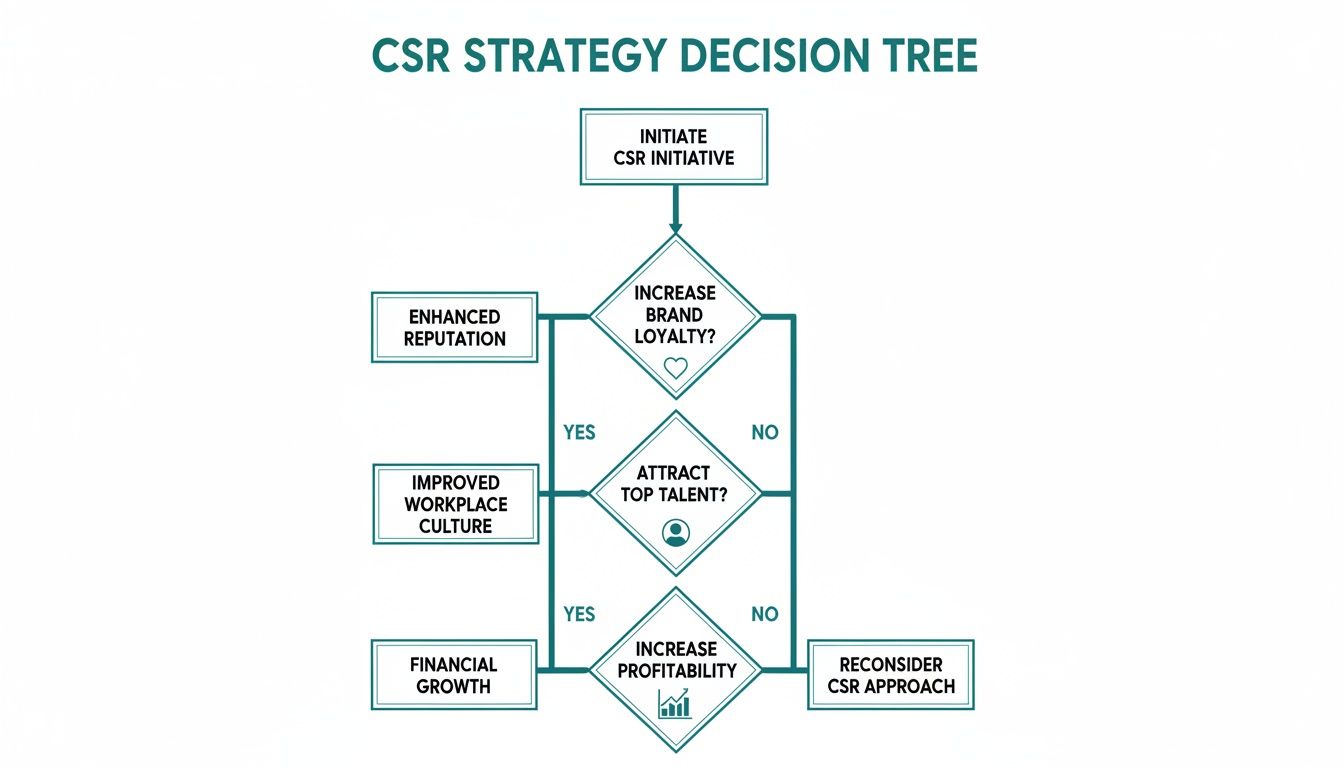
    Decision tree illustrating the CSR strategy process and potential benefits or reconsideration.

    As this decision tree shows, no matter your primary business goal, an authentic CSR program is a validated path forward.

    Volunteering is incredible for team building. It forges bonds and memories that no office happy hour ever could. It also lights a fire of purpose in people that they carry back to their day jobs. Of course, keeping that fire lit takes work, which is why exploring effective volunteer retention strategies is so important for building a program with real staying power.

    3. Business With a Cause: Cause Marketing

    Cause marketing is a beautiful dance that connects your business success directly with community impact. It's a partnership where every sale you make helps a cause you care about. You’re telling your customers, "When you support us, you’re also supporting this."

    The most famous story here is TOMS Shoes. Their original "one-for-one" model was simple and powerful: buy a pair of shoes, and they give a pair to a child in need. They’ve since shifted their model to donating a third of their profits, but the core idea remains the same. It transforms a simple purchase into an act of giving.

    This model is a true win-win. It drives sales by giving customers a compelling reason to choose you over a competitor, and it creates a steady stream of support for your chosen cause. It's about weaving purpose so deeply into your business that your growth and your impact become one and the same.

    4. Investing in a Better World: Impact Investing & Operations

    This is the most visionary approach, where you use your company's investments to create positive social and environmental outcomes. It’s about putting your money where your values are—not just in donations, but in your core financial strategy.

    Think of it as planting an entire forest instead of just picking the fruit. You’re investing in the long-term health of the whole ecosystem. This can look like:

    • Impact Investing: Directly funding companies that are solving big social or environmental problems.
    • Sustainable Operations: Investing in things like clean energy for your own facilities.
    • Ethical Supply Chains: Making sure your partners and suppliers meet high standards for how they treat people and the planet.

    This approach proves that profitability and purpose are not enemies. In fact, they can be powerful allies. It’s a deep commitment to building a business that is a force for good from the inside out.

    Building Partnerships That Create Real Impact

    Watercolor illustration of a man and woman exchanging a building drawing over a tray of plant seedlings.

    An idea without action is just a daydream. You’ve felt that spark, you've chosen a cause, but now comes the real adventure: turning that vision into dirt-under-your-fingernails reality. This is where your corporate social responsibility program truly comes alive—not in a boardroom, but right on the streets of your community.

    The secret? You don't have to go it alone. In fact, you shouldn't. The most powerful way to make a difference is by joining forces with the people already doing the work.

    Think of it less like a legal agreement and more like making a new friend. You show up, you listen with an open heart, and you find ways to help that feel right for everyone. This is about forging genuine connections that create visible, tangible change—one brave step at a time.

    The Power of Showing Up

    The world is filled with incredible grassroots organizations, often powered by pure volunteer heart, who know their community's needs inside and out. They are the heroes on the ground. Partnering with them isn't just smart; it's an act of respect. It’s a way to amplify the good they’re already doing instead of trying to reinvent the wheel.

    Your role is to be the ally, the friend who brings extra resources to the party. The goal is a relationship built on mutual respect and shared dreams, where your company’s energy lifts up the folks on the front lines.

    And here’s the good news: businesses are finally getting it. A recent industry report revealed that a surprising number of corporate social responsibility (CSR) teams reported budget increases, signaling a real commitment to making a bigger impact. While overall operational budgets stayed flat, the biggest boosts went to employee engagement programs—the very initiatives that get your team out into the community. Find out more about key trends in corporate social impact.

    Your Partnership Playbook: A Simple Guide

    Ready to make that first move? It’s easier than you think. Forget about intimidating outreach plans and just focus on being a good human. Here’s a simple playbook to get you started.

    Step 1: Listen First, Act Second
    Before you offer a single thing, do your homework. Find local groups whose mission makes your heart beat a little faster. Follow them on social media. Read their newsletters. If you can, show up to one of their events as just another volunteer. Your first job is to understand their world—their struggles and their victories.

    Step 2: Reach Out With Humility
    When you’re ready, send a simple, honest email. Introduce yourself and your company, but lead with what you admire about their work. Ask if they’d be open to a conversation about how you might be able to support them. That key phrase, "support them," changes everything. It shows you’re there to serve, not to take over.

    The best partnerships begin with a simple question: "What do you need, and how can we help?" It shifts the dynamic from a transaction to a relationship built on trust and kindness.

    Step 3: Ask What They Truly Need (It’s Not Always Money)
    While funding is almost always helpful, it’s not the only resource you have to offer. Many grassroots groups are starved for other kinds of support. During your conversation, explore all the ways you could chip in.

    You have more treasures than you realize:

    • Your Team's Skills: Can your marketing team design a flyer? Can your accountants help with bookkeeping? Offering pro bono professional services can be a total game-changer for a small nonprofit.
    • Your Physical Space: Do you have a conference room they could use for a board meeting? Or a bigger space for a volunteer training event?
    • Your Voice and Network: Can you feature their work in your company newsletter or on social media? A signal boost from you can bring in new volunteers and donors they'd never otherwise reach.
    • Your People Power: This is the big one. Can you rally a team of volunteers for their next big event? The energy of a dedicated group showing up to help is priceless.

    By offering a menu of support options, you empower the organization to choose what’s most valuable to them right now.

    Step 4: Start Small and Build Trust
    Don’t try to launch a massive, year-long campaign on day one. Start with one small, specific project. Commit to providing volunteers for their annual park cleanup. Offer your office space for one meeting.

    Then, deliver on that promise with genuine enthusiasm. Prove you’re reliable. Trust is built through small, consistent actions over time. As that relationship deepens, the opportunities for bigger, bolder collaborations will naturally appear. This is how you build a partnership that doesn't just create a press release—it creates real, lasting change.

    How Transparency in CSR Builds Unbreakable Trust

    If you do something amazing and nobody knows about it, how can it possibly inspire a movement?

    When it comes to your corporate social responsibility program, telling your story isn’t about bragging. It’s a brave act of trust-building. It’s an open invitation for others to join you on the adventure.

    Think of it like a ship’s log. A good captain doesn't just record the sunny days and smooth sailing. They document the storms, the repairs, the tough calls—all of it. That complete, honest story is what proves the journey was real.

    From Data Points to Human Stories

    For too long, CSR reporting has felt like a homework assignment: dry, dense, and packed with charts nobody really understands. But trust isn't built on spreadsheets; it's built on shared human experience. The secret weapon here is authentic, heart-centered communication.

    This isn’t about showing off. It's about showing up, fully and honestly. It’s a huge, courageous shift from saying, "Look how perfect we are," to "Look what we’re learning along the way."

    Perfection is a myth. Progress is the goal. Your community doesn't expect you to have all the answers. They just want to know your heart is in the right place and that you're genuinely trying.

    Sharing your journey—the messy, imperfect parts included—is what builds that unbreakable bond. It proves your commitment is real, not just another marketing tactic. It's the difference between a press release and a real, honest-to-goodness conversation.

    The Art of Authentic Reporting

    So, how do you actually tell your story in a way that feels real? You let the people doing the work share their own experiences. You trade the corporate jargon for kindness and courage.

    Here are a few simple ways to bring your impact to life:

    • Spotlight Your Volunteers: Share a short quote or a candid photo of a team member at a cleanup event. Let them explain in their own words why the work matters to them. Their passion is infinitely more powerful than any metric.
    • Show, Don't Just Tell: Post a quick video of your team laughing while planting trees or a before-and-after picture of a park you helped restore. Visuals connect with the heart in a way numbers never can.
    • Share the Bumps in the Road: Did a project not go as planned? Talk about it! Sharing what you learned from a setback shows humility and proves you’re committed to getting it right, not just looking good.

    This whole shift toward transparency is becoming the new standard. In fact, a whopping 91% of companies by global market capitalization now disclose sustainability-related information. This global trend shows that being open about your efforts isn't optional anymore; it's essential. You can discover more about this global corporate sustainability report and see how the biggest players are doing it.

    Your Story Is a Ripple Effect

    Every story you share does more than just report on the past; it creates the future. It inspires another company to start its own program. It encourages an employee to sign up for their first volunteer event. It shows a community that someone out there genuinely cares.

    For instance, when we share stories from a Litter Caterpillars cleanup, we're not just showing bags of trash. We're showing friendship, resilience, and the pure joy of reclaiming a neighborhood. This storytelling is part of a much larger effort, just like our commitment to finding ways to reduce plastic use in the first place.

    Your transparency becomes an act of kindness in itself. It’s a brave declaration that you believe in a better world and you’re willing to do the work—openly and honestly—to help build it.

    By sharing your journey, you give others the courage to start their own. You prove that making an impact is easier, and more fun, than anyone thinks. And that is how a single brave action transforms into a movement.

    Your First Brave Step on the Path to Purpose

    Every big, meaningful journey starts exactly where you are right now. This isn't just a summary; it's an invitation. A call to be brave, get out of your own head, and just start.

    We’ve talked about how corporate social responsibility programs are your brand’s story in action, how purpose is flipping the script on business, and how partnerships make good things happen faster. But honestly, none of that matters without one small, courageous move. Your first step.

    If there’s one thing to take away from all this, it's that real change kicks off the moment you decide to clean up a mess. It could be the litter on your block or a broken system in your industry. The scale doesn't matter. The brave decision to do something about it does.

    You don't need a grand plan to start making a difference. You just need the kindness to see a need and the bravery to do something about it. That’s it. That’s the entire secret.

    What Will Your First Step Be?

    Making an impact is simpler, more fun, and way more rewarding than you probably think. It’s not about getting it perfect; it’s about picking a direction and starting to walk. The momentum you build from that first action will carry you farther than you can imagine.

    Choose one thing you can do today:

    • Start a Conversation: Ask your team, "If we could help our community in one small way, what would it be?" Then just listen.
    • Do 15 Minutes of Research: Find one local, volunteer-driven group that genuinely inspires you. Follow them on social media. See what they're up to.
    • Take a Walk: Step outside and just look around your neighborhood with fresh eyes. What do you see that needs a little help?

    You're ready. You already have everything you need to be a force for good in your own unique way. All that's left is to take that first brave step.

    Go on. The world is waiting.

    Still Have Questions? Good.

    It's smart to ask questions. It means you're already thinking about how to do this right. Here are some of the things we hear most often from companies trying to figure out their first steps.

    We're Just a Small Business. Can We Really Make a Difference?

    Heck yes, you can. Impact isn’t about the size of your bank account; it's about the size of your heart. It’s about showing up, consistently.

    Honestly, a small team getting their hands dirty at a neighborhood cleanup creates a much bigger ripple effect—in team spirit and in the community—than some giant corporation just cutting a check from an office tower. Start with who you are and what you have. That genuine desire to help is your most powerful asset.

    How Do We Find the Right Cause to Support?

    Don't overthink it. Look for that spark—the thing that gets your team genuinely excited. The best partnerships feel natural, not like a homework assignment. Your company’s values are a good starting point, but the real magic happens when you tap into what your people are passionate about.

    What’s going on in your own backyard? What issues do your employees talk about? When you rally around a cause your team truly cares about, the energy is unstoppable. It becomes a mission, not just a program.

    "The best partnerships feel like friendship. They are built on mutual respect, shared goals, and the simple desire to help each other succeed. Listen first, then act with kindness."

    How Can We Possibly Measure the ROI on This?

    Forget "Return on Investment." Let's talk about your “Return on Impact.” This is the stuff that tells a story much deeper and more powerful than anything on a spreadsheet.

    It’s not just about the numbers, but you can still track what matters:

    • Team Vibe: Are people happier? Is the energy in the office better? Are your best people sticking around longer?
    • Hiring Magnetism: Do new recruits bring up your community work in their interviews? That's a huge tell.
    • Good Buzz: Are people sharing positive stories about your company online without you even asking?
    • Real Stories: What are your partners and volunteers saying? Collect those quotes and testimonials. That’s pure gold.

    This is the proof that you're building something real.


    At Litter Caterpillars, we're all about the power of just showing up. If you want to see how a few hours of simple, honest work can change your team and your city, come join a cleanup. We make it easy, and dare we say, fun. Find an event and see for yourself at https://www.littercaterpillars.com.

  • Building Resilient Communities: Unite Your Neighborhood and Thrive

    Building Resilient Communities: Unite Your Neighborhood and Thrive

    Here’s a secret: building a resilient community doesn't start with a five-year strategic plan or some massive grant. It starts with a simple, brave decision to just do something. Often, it comes when you realize it's way easier to tackle the chaos "out there" than the quiet chaos in your own life.

    The best part? Making a real, visible impact is much simpler—and a lot more fun—than you've been led to believe.

    The Real Starting Point for Building Resilient Communities

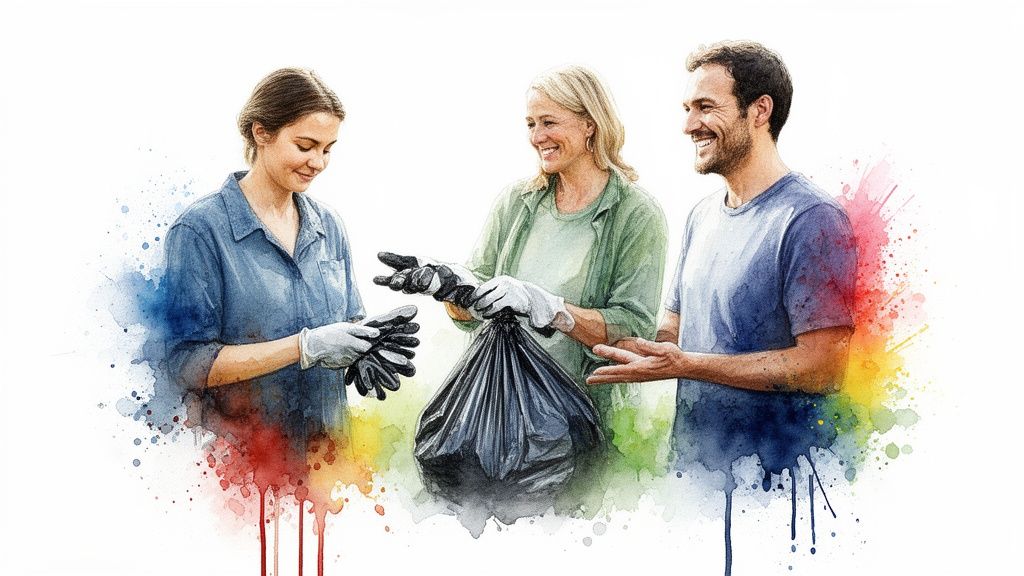
    Three happy volunteers, wearing gloves, organize collected items in a black trash bag.

    Let me tell you how Litter Caterpillars got started. It was born from a personal breaking point. My apartment was a disaster, my life felt just as messy, and I was failing hard at being consistent and brave. Every old jar of food in the back of my fridge felt like it weighed 500 pounds—each one a monument to some past failure or a faded memory I couldn't bring myself to toss.

    Cleaning my own room felt impossible. But cleaning a public park with other people? That actually sounded like an adventure.

    This whole playbook is built on that one powerful truth. It turns out, fixing the world can feel a heck of a lot easier than fixing yourself. And in a funny twist, when you start fixing things together, you accidentally start healing yourself, too. This isn't just a nice idea; it's a guide forged in Chicago's wild weather and fueled by pure, stubborn kindness.

    From Personal Chaos to Collective Action

    The very first Litter Caterpillars cleanup had just three people. And, because it's Chicago, a classic springtime hailstorm decided to crash our party. As the three of us huddled under a tree, shivering and watching Ubers cancel on us one by one, a huge lesson became crystal clear.

    • Shared struggle forges real bonds. Suffering together, even just from a little hail, creates a story. It advances the plot and turns a few strangers into a real team.
    • Action is its own permission slip. We didn't have a strategy. We didn't have funding. We just showed up. That single, small act of bravery was the only permission we ever needed.

    That day taught us that real resilience isn't just about weathering the big disasters like hurricanes or pandemics. It's built in the small, consistent habits of showing up for your city and for each other, long before any major storm hits.

    We figured out that cleaning up other people's messes is way easier than cleaning up our own. It creates this strange, new kind of "fun," and freezing in the hail? That just makes for a better story. It adds flavor.

    Why Small, Consistent Actions Matter Most

    Think of your community like a muscle. You don't get strong by hitting the gym for eight hours once a year. You build strength with regular, consistent workouts. Building resilient neighborhoods works the exact same way.

    Weekly trash pickups, no matter the weather, do more than just clean the streets. They create a rhythm of reliability. Neighbors see you out there in the sweltering heat and in the snow, and they start to believe. They see a group of people who care, consistently. That kind of visible dedication is contagious.

    This playbook isn't about waiting for perfect conditions or getting a green light from some official. We believe you don’t need permission to fix your neighborhood. It’s about taking that first brave step and trusting that the right people will show up to join you.

    It's about finding the fun in the struggle and proving, week after week, that kindness and bravery can reshape a city, one block at a time. That’s where real strength begins.

    Your Playbook for Uniting a Neighborhood

    Three friends relax on a park bench with digital shopping bags amidst colorful watercolor splashes.

    Alright, you're fired up and ready to make a difference. That’s the hardest part, and you've already done it. Forget the complicated five-year plans and strategic outlines for a second. The real secret to building a strong neighborhood is starting small, keeping it simple, and leading with your heart.

    Think of it like starting a campfire. You don't just light a huge log on fire. You start with a tiny spark and some tinder—the small stuff that catches easily. Your first community event is that spark. This guide is your tinder.

    Find Your Rhythm and Stick To It

    Consistency is everything. It’s what builds trust and turns a one-off event into a neighborhood institution. When we started Litter Caterpillars, we picked weekend mornings for a reason. That's when you find the "givers"—the kind of people willing to wake up early and do something for their city before the weekend madness kicks in.

    You need to pick a time and place that becomes your group’s heartbeat. Maybe it’s 10 AM every Saturday, right at the entrance to the park. Make it a ritual.

    • Be utterly predictable: People should be able to set their clocks by your event. That reliability creates a powerful sense of stability and trust.
    • Show up, no matter what: We’ve cleaned up in blizzards and brutal heatwaves. When you show up even when it's tough, you're sending a message that this isn't just a hobby. It's an unbreakable promise to your community.

    That kind of unwavering commitment is what turns a few volunteers into a force to be reckoned with.

    Keep It Simple and Open

    Next, make it ridiculously easy for people to join you. Your mission is to tear down every single barrier between someone's good intention and them actually showing up. Complicated sign-up forms, mandatory orientations, and long email chains? They're total enthusiasm killers.

    Just open the door. We use a simple Meetup page and an open group chat. Anyone can see what we’re up to, where we’ll be, and jump into the conversation right away. It feels less like a formal commitment and more like joining some friends for a walk.

    The easier you make it for someone to show up that first time, the more likely they are to become a regular. Your job isn't to build a complicated organization; it's to build a welcoming space for action.

    When people feel like they can just drop in without any pressure, they're far more likely to take that first step. If you want more ideas on this, check out our guide on how to find volunteers.

    Adopt a Volunteer-First Philosophy

    This is the most important rule in the entire playbook: the safety and happiness of your volunteers come first. Always. Their energy is the fuel for this whole thing. It’s a precious resource, and you have to protect it fiercely.

    This means you never, ever pressure anyone for money. It means you go out of your way to make people feel safe, seen, and valued. When a new person shows up, treat them like a hero. When someone has to leave early, thank them for the time they gave. This culture of kindness is what keeps people coming back.

    We started with just three people. We didn't need a huge crowd to make an impact. All we needed was a shared purpose and a commitment to showing up for each other.


    This framework is simple, but it's powerful. To get you started, here's a little launchpad to organize your thoughts.

    The Community Action Launchpad

    A simple framework to kickstart your own local volunteer initiative, focusing on core principles for sustainable engagement.

    Principle Why It Matters Your First Action Step
    Simple Start Big plans can be paralyzing. A small, successful first event builds momentum. Pick one specific, achievable task. (e.g., "Clean up the block around the library.")
    Radical Consistency Predictability builds trust and turns your group into a reliable community fixture. Choose a non-negotiable time and day. Announce it and stick to it for a month.
    Zero Barriers The easier it is to join, the more people will. Remove all friction. Set up a single, public way to communicate, like a Facebook group or WhatsApp chat.
    Volunteer-First Culture Happy, respected volunteers are your most valuable asset. Their energy is everything. Verbally thank every single person who shows up, and make a point to learn their names.

    These small, repeated actions, grounded in kindness, are what truly start building resilient communities. They create the strong social fabric needed to face any challenge that comes our way.

    And this isn't just some feel-good theory; it's a practical necessity. From 2015 to 2023, disasters damaged or destroyed an average of 92,199 infrastructure units every year across the globe, leading to over 1.6 million annual service disruptions. The strongest defense against this is a connected community. Your small group, built on trust and consistency, is a vital part of this global movement.

    How to Embrace Bravery and Find Fun in the Struggle

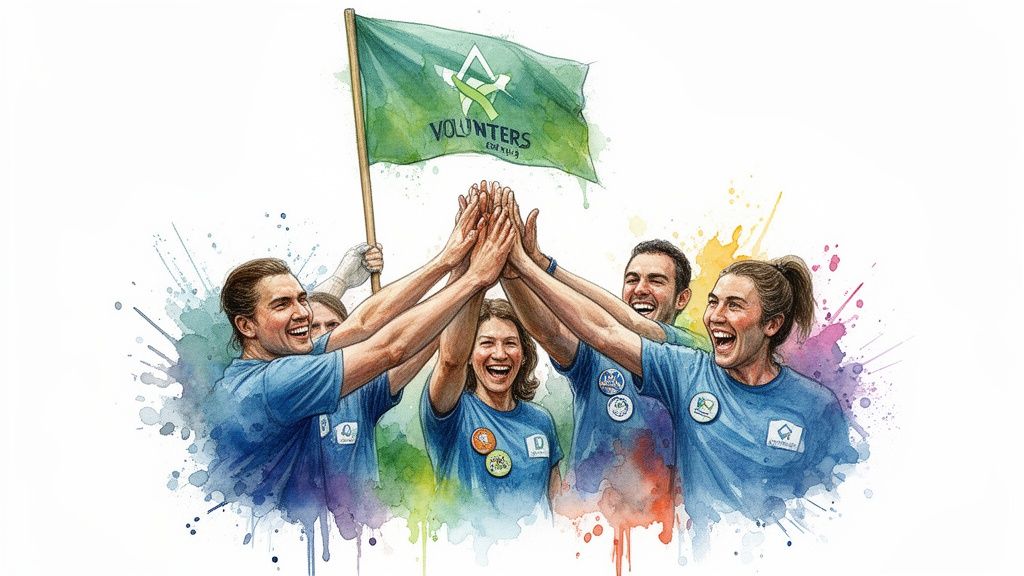
    A joyful group of diverse volunteers in blue shirts giving a high-five under a green flag.

    Let me tell you a secret most people won’t: fear is good. Failure is good. And yeah, even a little bit of shared suffering is incredibly good. It’s the secret ingredient that turns a bunch of strangers into a real team, and a chore into an adventure.

    Think about Tom Sawyer. His aunt punishes him by making him paint a fence, and what does he do? He could have sulked. Instead, he flips the script and convinces his friends that painting the fence is an exclusive, must-do activity. He made the struggle fun.

    That’s exactly what we do. We turn the hard work of cleaning our city into a game we get to play together.

    The Magic of Shared Identity

    Volunteering should never feel like a punishment or an obligation. It should feel like you just got an invitation to the coolest club in town. The real magic happens when you create a powerful sense of pride and shared identity—when you transform a cleanup crew into a team with a mission.

    And you don't need a big budget for this. You just need a little creativity and a lot of heart.

    • Fly Your Flag: A simple group flag planted in the ground at your meetup spot instantly creates a rallying point. It says, "We are here. We belong to this. And we are proud."
    • Sing Your Song: We have a theme song. Sounds silly, right? But when you hear it, you feel like you're part of something bigger. It’s an anthem for kindness.
    • Earn Your Badge: We give out custom badges for hitting milestones or surviving extra-tough cleanups. They turn sweat into achievement and become symbols of a shared story.

    These little things create a deep sense of belonging that keeps people coming back, week after week. They’re not just picking up trash anymore; they're repping their team.

    Leaning into the Storm Together

    Some of our most legendary moments happened during our toughest cleanups. I remember one day with a -15°F wind chill, where our gloves felt useless and every piece of trash was frozen solid to the ground. Another time, we were out in 95°F heat, sweat literally pouring off us as we hauled bag after bag.

    Those days were hard. But something amazing happened.

    We told more jokes. We checked on each other constantly. We shared water, hand warmers, and stories about how ridiculous the whole situation was. Those moments of shared struggle didn't break us; they fused us together.

    When you lean into discomfort with other people, you don't just clean a street; you forge character, courage, and an unbreakable bond. You build a community that isn’t afraid of a little hail.

    The stories from those days—"Hey, remember the blizzard cleanup?"—become our mythology. They're the memories that prove we can handle anything the world throws at us, together. This is the very heart of building resilient communities. It's not about avoiding hardship; it's about facing it with a team you trust.

    Resilience Is a Measurable Superpower

    This idea of bouncing back isn't just a feeling; it's a measurable outcome. Take the FM Global Resilience Index, for example. It shows that countries with strong resilience frameworks—built on things like proactive planning and strong social connections—recover over 30% faster from property losses after a disaster.

    What that proves is that the work you're doing—building trust and forging connections in your neighborhood—has real, tangible benefits. You are actively increasing your community's ability to bounce back from any shock, whether it’s a storm, an economic downturn, or a local crisis.

    Every time you show up in the cold, you're not just picking up litter. You're building the muscle memory of resilience. You're making your entire community stronger and more prepared for whatever comes next.

    The Art of Radical Kindness and Inclusivity

    Bravery gets you out the door, but it's kindness that convinces people to stay. It's our second pillar, and it’s way more than just being polite. It’s about mindfully engineering a culture of unity so strong it can weather any storm.

    For us, kindness is a strategy. It’s the glue that turns a bunch of well-meaning strangers into a real community, and that community is the bedrock of resilience.

    Building a Culture of Unity

    Think of your volunteer group like a garden. You can just toss some seeds on the ground and hope for the best, but you'll probably get a lot of weeds. To grow something that truly flourishes, you have to intentionally prepare the soil—making it safe, welcoming, and full of everything people need to thrive.

    This is what our "volunteer-first" ethos is all about. It means the physical and psychological safety of every single person is our absolute top priority. No exceptions. It means creating a space where real friendships can actually bloom, without any pressure or weirdness.

    This is why we schedule our events on weekend mornings. It's not an accident. We're mindfully engineering a social circle rooted in service, not selfishness. This simple choice naturally attracts the "givers"—the kind of people who want to start their day by putting something good into the world.

    Your Welcome Wagon Strategy

    How you greet a newcomer is everything. Seriously. That first impression is the difference between them coming back next week or ghosting you forever. Your job is to make them feel like they belong from the second they arrive.

    It’s scary showing up to a new group! So, you have to be fearless for them.

    • Be the First to Say Hello: Don’t stand there and wait for them to find you. The moment you see a new face, walk right up, flash a huge smile, introduce yourself, and thank them for being brave enough to show up.
    • Give Them a Mission (and a Buddy): Immediately give them a simple job. Saying something like, "Hey, can you help Sarah with this section? She's awesome," instantly breaks the ice and gives them a sense of purpose.
    • Celebrate Every Single Contribution: Acknowledge their effort. I don't care if someone stays for ten minutes or three hours—their contribution matters. A simple, "You did an amazing job today, thank you so much for coming," makes them feel seen. And feeling seen is everything.

    This isn't rocket science. It’s just radical, intentional kindness. You're showing people with your actions, not just your words, that they are the most important part of this whole thing.

    Kindness isn't a soft skill; it's the structural steel of a resilient community. It’s the framework that holds everyone together when things get tough.

    Unity Means Showing Up for Everyone

    True inclusivity means showing up in neighborhoods that other people drive past. It means proving with your presence—with your boots on the ground—that every block matters and every single resident deserves to live in a clean, safe place.

    This commitment to showing up for everyone, everywhere is how you build deep, authentic trust. It sends a powerful message: your group is here for the city, not just for the photo ops in the "nice" parts of town.

    We live this out with a few non-negotiable rules:

    1. Total Transparency: Our group chats are completely open. Anyone can join, ask whatever they want, and see exactly how we operate. No secrets.
    2. No Financial Pressure. Ever. We have a rock-solid policy of never asking our volunteers for money. Their time and energy are the most valuable gifts they can give, and we protect that resource fiercely.
    3. Go Where We're Needed: We make a point to clean up in all 50 wards of Chicago, especially in areas that don't always get the same love and attention.

    This approach transforms your group from a simple cleanup crew into a symbol of city-wide unity. You're not just picking up litter; you're actively building bridges and erasing the invisible lines that divide us.

    This is how you build a community so kind and strong that it becomes a force of nature in its own right—ready to face any challenge, together.

    From Clean Streets to a Community Park

    Two smiling people stand in a vibrant park with a bench, contrasting with a pile of litter.

    So, what happens when you show up every single week, through hail and blistering heat, just to pick up trash? At first, you just get clean streets. But after a while, something much more powerful emerges: you get a reputation. You build trust.

    Think of it like this: every cleanup is a small deposit into a community trust fund. For three years, we made those deposits faithfully. We weren’t trying to build a resume or impress anyone; we were just being brave and kind, week after week. That consistency, that public record of showing up, became our greatest asset.

    It’s the secret to making a bigger impact without losing your soul.

    Turning Social Capital into Concrete Change

    After years of just doing the work, an opportunity popped up. A forgotten, litter-strewn empty lot in the Englewood neighborhood went up for auction. For us, it wasn't just an abandoned piece of land. It was a canvas. We saw a park.

    This is where the magic of consistency really pays off. We weren't just some random group with a bright idea. We were the Litter Caterpillars, the people who always showed up. That reputation opened doors.

    We started talking to local business owners, city officials, and potential partners. We didn’t just show them a plan; we showed them our track record. We had hundreds of photos on our Instagram, thousands of hours of volunteer work logged, and a whole community of people who believed in what we were doing.

    You don't get support by talking about your vision. You get support by showing your work. Your past actions are the most convincing proposal you'll ever write.

    This is the heart of building resilient communities—turning the social capital you’ve earned through service into tangible, lasting assets for everyone.

    How to Build Your Alliance of Allies

    Winning that lot at auction and creating Caterpillar Park wasn't a solo mission. It was a symphony of kindness and collaboration. Here’s how you can start building your own network of supporters:

    • Document Everything: Use a platform like Instagram not as a marketing tool, but as a public journal. Post authentic photos and stories from every single event. This creates an undeniable, visual record of your impact and your reliability.
    • Engage Local Businesses Bravely: Just walk into local coffee shops, hardware stores, and restaurants. Don't ask for money. Instead, tell them your story and ask, "How can we help you?" This flips the script and builds partnerships based on mutual support, not just transactions.
    • Connect with City Officials Honestly: When you talk to your local alderperson or city departments, be direct and kind. Show them the work you're already doing. We didn’t say, “You should fix this.” We said, “We’re already fixing this. Want to help?”

    This fearless, kind approach is disarming. It turns potential bureaucrats into allies because you’re making their job easier and their districts better. If you need a playbook on how to get started, you can also check out our guide on how to clean up a park.

    Why This Work Is More Urgent Than Ever

    Transforming an empty lot into a vibrant park does more than just beautify a block. It builds economic and social strength. This kind of proactive community building is a powerful defense against future shocks.

    Globally, disasters now impose an economic burden of over $2.3 trillion a year when you factor in all the hidden costs. Building resilient communities isn't just a nice idea; it's an urgent economic necessity that reduces humanitarian needs and fosters stability. You can discover more insights about these global resilience findings from the UN.

    Our journey from weekly cleanups to creating Caterpillar Park is proof that a small, dedicated group can achieve monumental things. It shows that true resilience isn't just about withstanding shocks—it's about having the courage to actively shape a better, kinder, and more beautiful future, together.

    Your Questions on Starting a Community Movement

    So you've got that spark. That little voice in your head saying, "Someone should do something about this," and realizing that someone could be you. It's a brave feeling, but it usually comes with a million questions. We get it. Here are the real, honest answers to the things people ask us all the time.

    How Do I Get People to Show Up for the First Event?

    Don't overthink it. You don't need a marketing plan or fancy flyers. Your most powerful tool is your own fearless, genuine invitation. Seriously.

    Just tell your friends. Post it on your personal social media. Throw it up on a simple, open platform like Meetup. Your authentic excitement is way more magnetic than any paid ad.

    Frame it like an adventure, not a chore. Our very first event had exactly three people show up, and we got ambushed by a hailstorm. That chaotic, hilarious moment became our origin story.

    Don't aim for a massive crowd right away. Your real goal is to give that first, small group an unforgettable experience. Make them feel like the brave co-founders they are.

    The incredible energy from that first handful of pioneers is what will pull in the next wave of people. Just be brave enough to pick a date. The right people will find their way to you.

    What If We Have No Money for Supplies or Projects?

    You don't need a big bank account. You need bravery and a little bit of scrappiness.

    Start simple. For cleanups, just ask volunteers to bring their own work gloves and a couple of household trash bags. You’d be amazed how many local hardware stores or even city departments are happy to donate supplies if you just walk in, tell your story, and ask nicely.

    Our guiding principle is "volunteer-first." This means we will never, ever hound our community for money. Your job isn't to be a fundraiser; it's to build social capital.

    When you show up consistently and people see the difference you're making, support starts to appear out of nowhere. A local business might offer free coffee for your crew. A neighborhood association might drop off a box of trash bags. We had three years of proven, documented impact before we even thought about taking on something as big as Caterpillar Park.

    Build your reputation first. The resources will follow.

    How Do You Keep Volunteers Motivated Week After Week?

    Long-term motivation isn't about hype. It's about connection, purpose, and having a damn good time. It’s about building a community so strong that showing up becomes the highlight of someone's week.

    Here’s our secret sauce:

    • Be a reliable habit. We meet at the same time, same place, every single week—rain, shine, or blizzard. That consistency builds a powerful rhythm of trust. People know we'll be there.
    • Build real friendships. Our group chats and social meetups are just as vital as the cleanups. People come back for the community as much as they do for the cause.
    • Create a powerful identity. Our flags, our theme song, our special badges—these things give people a deep sense of pride. Facing down a blizzard together isn't a failure; it’s a bonding moment that turns into a legendary story.

    When people feel like they're part of a brave, kind team on a shared mission, motivation stops being an issue. They're not just "volunteering" anymore. They're showing up for their friends and changing their city.


    Ready to take that first brave step? Litter Caterpillars is living proof that small, consistent acts of kindness can create massive change. Join our movement and see for yourself how easy—and fun—it is to make a real impact. Find our next event at https://www.littercaterpillars.com.