
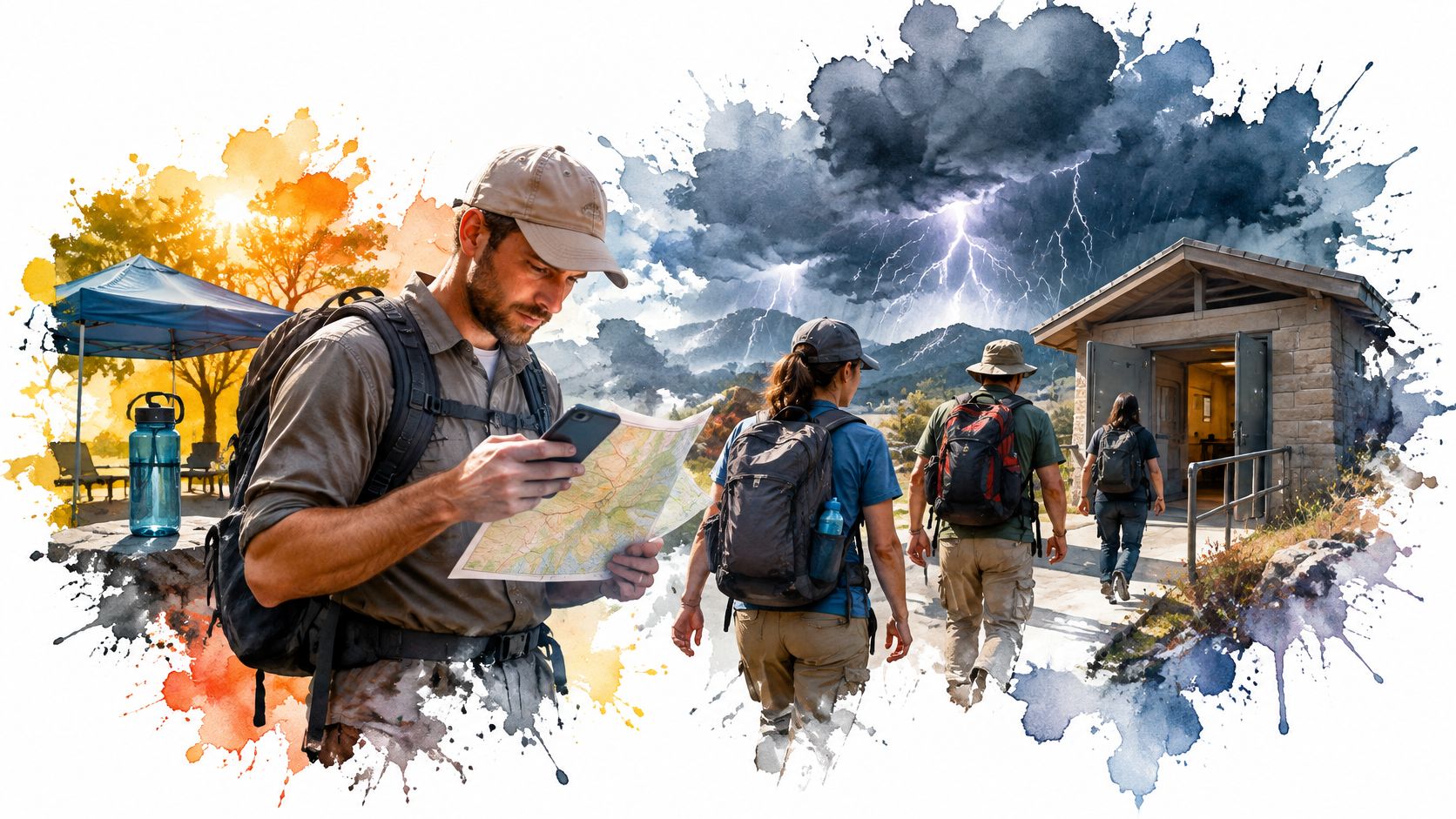
Say you're halfway through a Saturday cleanup when thunder interrupts the scrape of litter grabbers, and someone asks whether you can finish the block. Your severe weather safety plan should give you an answer before anyone asks.
Which Hazards Your Plan Must Cover
Start with the question your crew will ask first: Which hazards can reach this site, and where do we go for each one? Use a lookup table so volunteers can choose a destination without debating under a darkening sky.
Say you've spread a crew across a commercial strip when the weather turns. Without clear directions, someone heads toward a tree while someone else waits beside the supply cart. Give everyone the same destination before you hand out gloves.
Hazards, triggers and shelter choices
| Hazard | Trigger to act on | Safe place | Not safe |
|---|---|---|---|
| Lightning and thunderstorms | Any thunder, even with clear skies nearby | Substantial enclosed building or enclosed hard-topped metal vehicle | Trees, tents, picnic shelters, dugouts |
| Tornado | Tornado warning or siren | Basement or lowest floor, small interior room without windows | Vehicles, tents, temporary shelters |
| Extreme heat | Hot forecast with humid conditions or a heat advisory | Air-conditioned building, or shaded rest area with water for preventive breaks | Open lot at midday with no water |
| Winter cold | Wind chill reaching a dangerous level | Heated building or warm vehicle | Exposed work with bare skin |
| Flooding | Flash flood warning or water over the route | Higher ground away from the water | Low areas and floodwater crossings |
Give heat its own row
You may picture a tornado first, but don't leave heat in the margins. A CDC analysis counted 10,527 U.S. deaths from heat-related conditions during 2004–2018, an average of 702 annually, with approximately 90% occurring from May through September.
That warm-season concentration matters when you organize outdoor work. Put cooling access, water and an exit route beside the storm shelters on your site sheet.
During our first pickup, we got caught in a springtime hailstorm and blizzard while every Uber we called cancelled on us. We huddled under a tree, a choice you shouldn't copy as storm protection.
Practical rule: Choose your refuge before you choose your cleanup boundary.
Write every site on a single sheet, then add its hazards, nearest substantial building, entrance and walking route. Confirm access with the person who controls the door. A building you can see through a locked gate isn't a usable destination.
How to Build the Plan in Six Steps
Build your severe weather safety plan around decisions you can make with cold hands and a wet phone. At Litter Caterpillars, we always put volunteer safety first and volunteer happiness second. Use that order when you decide what to shorten, move or cancel.
NOAA's lightning safety guidance supports preassigned stop-work decisions, suitable shelter and a wait of at least 30 minutes after the last thunder before resuming. Treat that wait as a minimum, never a promise that you'll restart.
Put an owner beside every action
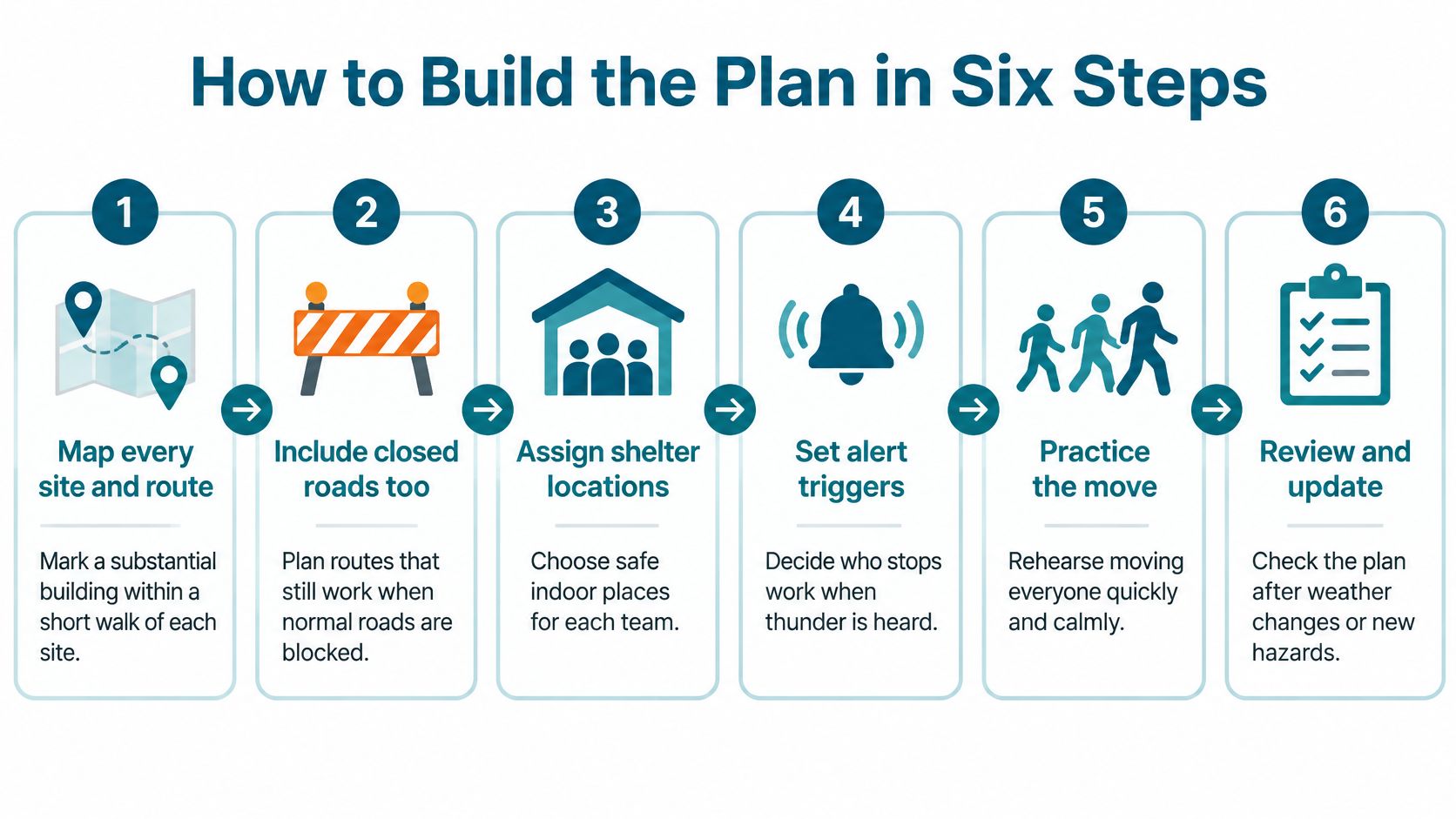
Map every site and route. Mark a substantial building within a short walk, confirm the entrance, and include detours around closed roads. We've cleaned a highway during a bike riding event shutdown, so we know a traffic-free worksite still needs an exit and shelter; watch for the mistake of treating a tree or picnic pavilion as refuge.
Assign a weather lead who can cancel, a route sweeper, a communications lead and a roster keeper, then give each person a backup and each volunteer a buddy. The slip to avoid: leaving all authority with an organizer who also manages supplies, welcomes arrivals and answers messages.
Write your stop triggers before departure. Include thunder, tornado warnings, locally chosen heat and wind chill limits, plus an evening-before cancellation deadline when forecasts justify an early decision. Don't rely on a limit that lives only in your head, and don't make volunteers travel into dangerous weather just to hear you cancel.
Test the alert chain through both a group chat and a phone tree, including a message for people already traveling. Ask everyone to acknowledge the test, because a chat invitation doesn't prove that someone joined or receives notifications.
Arrange transport before you need it. Identify drivers, available seats and a safe waiting place for volunteers without cars, including anyone who needs help after an early finish. Avoid a transport plan that ends with a stranded volunteer refreshing a ride-hailing app.
Write the restart conditions and next review date on the page, with space for the weather lead's decision. The slip to avoid: accepting brighter skies as permission to return while you still have unresolved weather, attendance or route hazards.
Use this visual as a prompt when you build your route-specific version.
Keep the working copy short
Fit the decision sheet on a page: map, roles, stop triggers, shelter instructions and contact details for the lead and deputy. Carry the current roster alongside it, rather than squeezing private emergency contacts into a public handout.
Pack the equipment that supports those decisions using the severe weather safety kit checklist. You need both the written decision and the means to carry it out.
Who Does What and How Alerts Reach People
Roles, authority and backups
| Role | Owns during a warning | Can cancel? | Backup |
|---|---|---|---|
| Weather lead | Forecasts, cancellation deadline and stop-work call | Yes | Deputy weather lead with own phone |
| Route sweeper | Walks the route and confirms everyone reached shelter | No | Second sweeper on the opposite side |
| Communications lead | Sends alerts through the group chat and phone tree | No | Co-lead who holds a copy of the templates |
| Roster keeper | Attendance list, check-ins and reply tracking | No | Any leader who holds a printed roster |
| Buddy pairs | Watch each other for heat, cold or confusion | No | Team lead assigns a new pair |
Replace role labels with actual names before departure. Anyone can raise a concern or move out of danger; the authority column assigns responsibility for the whole-event decision, not permission to protect yourself.
We put volunteer safety first and happiness second. That means the weather lead can cancel while enthusiastic volunteers still want to finish their bags.
Send a message people can act on
Use this cancellation template, and treat the reply window as an accountability deadline rather than permission to delay shelter:
[Event] is cancelled. Move to [shelter address] now. Find your buddy and count off. Reply SAFE to [roster keeper name] within 15 minutes.
The address removes guesswork. The buddy count helps you identify anyone missing, and the roster keeper follows up on unanswered messages immediately rather than assuming silence means safety.
For a restart message, write:
Weather lead all-clear for [event]. Restart at [time] from [meeting point]. Check in with [roster keeper] before leaving shelter. Stay sheltered until you receive this instruction.
Only send that message after you meet the lightning waiting period, complete the headcount and check the route. The National Weather Service's severe-weather safety guidance calls for substantial enclosed shelter or a hard-topped vehicle during lightning, so don't send people outside merely to assemble.
Keep alerts separate from conversation
If your workplace already uses Pebb to share photos across your company, keep cleanup pictures separate from urgent weather messages. You don't want volunteers hunting through a photo thread for the shelter address.
Store phone numbers offline and test the chain on a Saturday morning before the season starts. A cancellation works only when you reach the last person on the route.
Shelter Rules for Thunder, Tornadoes and Hail
Thunder means stop. Treat it like a smoke alarm: move when you hear it, even when you can still see blue sky.
Use the scene below as a reminder to move together toward real shelter, rather than gathering around the equipment.
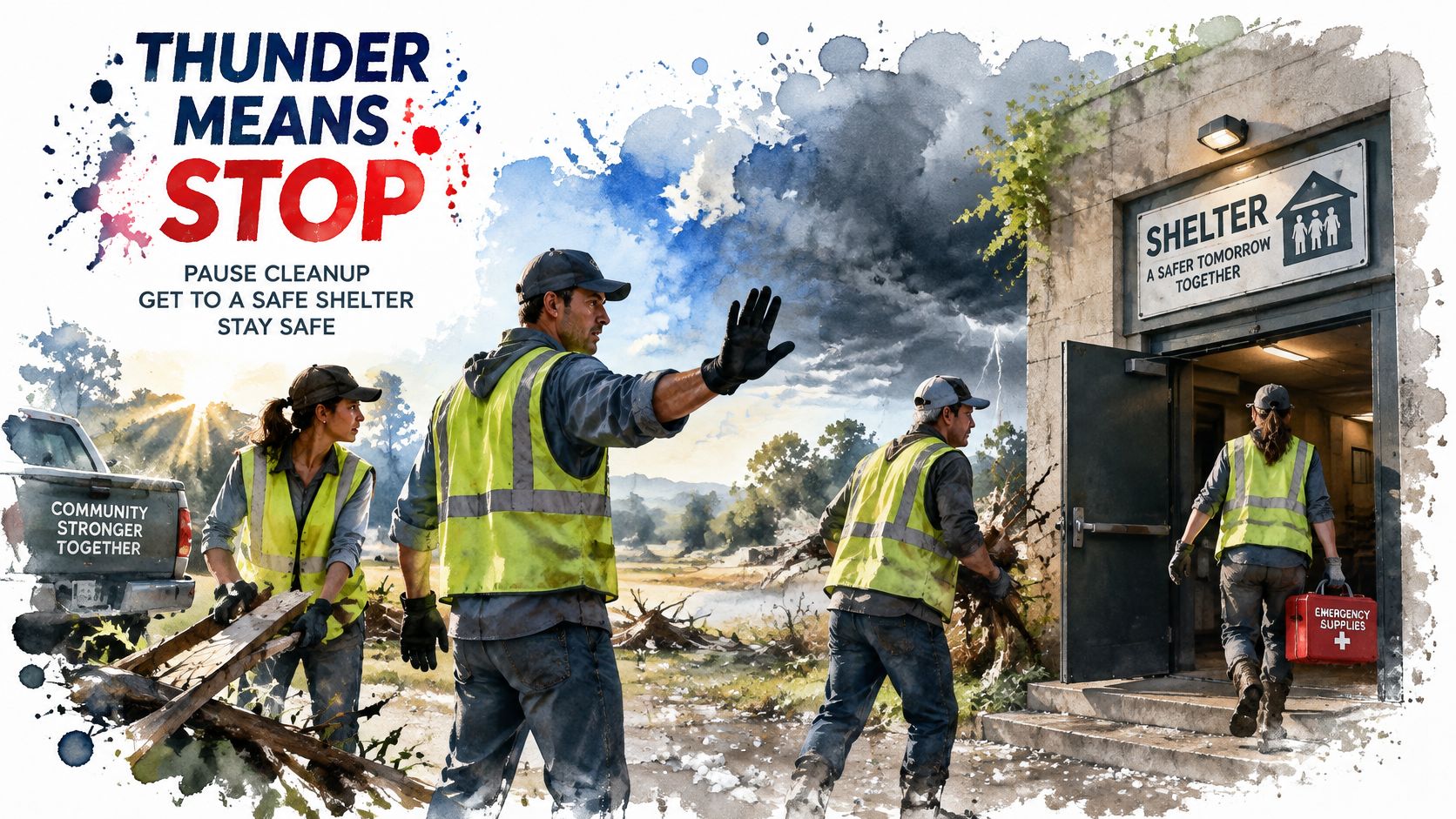
Follow the National Weather Service's lightning guidance: enter a substantial enclosed building or enclosed metal-topped vehicle immediately, and stay sheltered for at least 30 minutes after the last thunderclap. Don't substitute a tent, shed, porch, picnic pavilion, dugout or tree.
Start the clock again whenever you hear more thunder. Keep the crew together inside, and let the weather lead handle the decision instead of sending volunteers out to inspect the sky.
Change your response for a tornado
A vehicle can provide lightning shelter, but don't choose it as your main tornado refuge. Follow FEMA's shelter-in-place guidance when you choose and use a tornado shelter:
- Go low. Move to a basement or the lowest available floor of a sturdy building.
- Choose a small interior room without windows, and put as many walls as possible between you and the outside.
- Protect yourself. Crouch low and cover your head and neck with your hands or sturdy cover.
Locate that building before starting near an open lot or roadway. Don't assume the lightning destination has a suitable tornado room.
Use this video during your pre-event conversation about moving to safety.
If you get caught outside, follow the National Weather Service's outdoor storm precautions: move away from hills, water, isolated tall trees and power poles, and protect your head from hail while seeking shelter. No outdoor position provides safe lightning shelter; avoid floodwater as you move.
Carry a shelter card
Write the address, walking time, entrance and indoor meeting point on each route's card. Count off at that meeting point so nobody searches neighboring rooms or walks back outside.
Restart only after the required wait, a matching roster and headcount, and a clear route check. If you can't meet every condition, end the cleanup.
Heat and Cold Limits for Volunteers
A thermometer reading doesn't tell you how long you can work comfortably or safely. Wind, sun, clothing, effort and access to recovery all affect the decision you need to make.
At 0°F with a 15-mph wind, you face a -19°F wind chill, and exposed skin can freeze in about 30 minutes, according to the National Weather Service's winter preparedness guidance. Don't use that example as a safe shift length. Shorten or cancel work before exposure becomes dangerous, cover skin and bring spare warm layers.
We pick up trash rain or shine, including on the coldest days of winter and the hottest days of summer. You still need permission to stop, warm up or cool down without proving your toughness.
Make recovery part of the route
For hot-weather shifts, use these operating rules:
- Shorten the work. Move strenuous tasks toward cooler morning conditions and reduce afternoon exposure.
- Place supplies along the route. Put water and shade where volunteers can reach them without abandoning a buddy.
- Keep people paired. Don't allow solo work when heat or cold could impair someone.
- Ask directly. Check for dizziness, nausea or unusual fatigue instead of waiting for someone to admit trouble.
Chicago's heat guidance advises staying indoors when possible during extreme heat. Shade helps with preventive breaks, but choose indoor cooling when outdoor conditions no longer allow safe recovery.
You don't owe the route another bag when your body needs shelter.
As a starting task-rotation rule, switch jobs every hour, and rotate sooner whenever conditions or symptoms demand it. Keep a spare hat, gloves, water and phone charger in the sweep kit.
Plan for someone who feels unwell
Review heat exhaustion prevention tips before a hot-weather event. Ask whether anyone feels dizzy or nauseous, but don't treat continued sweating as proof that someone is safe.
Name a cooling location, a hospital route and someone who can help arrange a ride home or recovery space. Call emergency services for suspected heat stroke rather than treating a private ride as medical care.
Before you approve the site, ask: Can everyone cool off or warm up within a short walk?
Drills, Reviews and Your First Week
Think of a weather drill like a fire drill. You don't expect trouble every Saturday, but you need to know the door before you need to use it.
In a 2023 survey of 1,000 U.S. adults, 47% said they had created an evacuation or family preparedness plan for severe weather, according to Motorola Solutions' report based on Researchscape research. For your crew, take the next practical step: test whether you can carry out what you wrote.
Rehearse an ordinary Saturday
Set aside 20 minutes for a tabletop exercise. Use a hypothetical scenario: you hear thunder just after volunteers spread along the route, and a late arrival hasn't checked in.
Ask the weather lead to announce the stop. Have the communications lead send a clearly labeled drill message, then ask the roster keeper to track replies and identify the missing arrival.
Next, have the sweeper walk to the assigned entrance while someone checks the shelter card's walking time. If the sweeper can't make it within that time, shorten or change the route instead of stretching the promised time to fit.
A plan you've walked once beats a perfect one you leave in a folder.
Try a complication before you finish. Say the usual entrance is locked, the deputy's battery dies, or a volunteer needs help reaching shelter. Give each problem an owner and write the change onto the working copy.
Drill and review cadence
| Drill or review | How often | What it checks | Result that counts |
|---|---|---|---|
| Contact roster check | Monthly | Phone numbers, group chat membership and roster accuracy | Every volunteer confirms a working number |
| Shelter walk-through | Before each season | Walking time and door access at every shelter | Group reaches shelter within the stated walking time |
| Tabletop storm drill | Twice a year | Who calls the stop and how fast the alert spreads | Cancel decision and last reply within the set window |
| Plan review | Yearly and after any event where you use the plan | Roles, sites, contacts and triggers | You share the updated plan with every volunteer |
Give yourself a workable first week
Use the severe weather safety video to open a crew discussion, then move from watching to doing. Keep your first round manageable:
- Print the working copy. Put it in the sweep kit where the backup lead can find it.
- Walk the route. Carry the shelter card and check the actual entrance.
- Confirm authority. Name the weather lead and deputy who can cancel.
- Share the messages. Let every volunteer see the cancellation and restart templates.
- Write the next review date. Put it on the plan before you pack away the clipboard.
After a weather interruption, ask where you hesitated, who missed a message and what transport problem remained. Thank people for naming awkward details, then change the document while everyone remembers them.
Start with a site today. You can expand a tested routine much more confidently than an untried binder.
We bring Chicago neighbors together for hands-on cleanups, friendship and service, with volunteer safety first and happiness second. Visit Litter Caterpillars to find a cleanup and explore our weather-safety resources before you head out with your crew.