
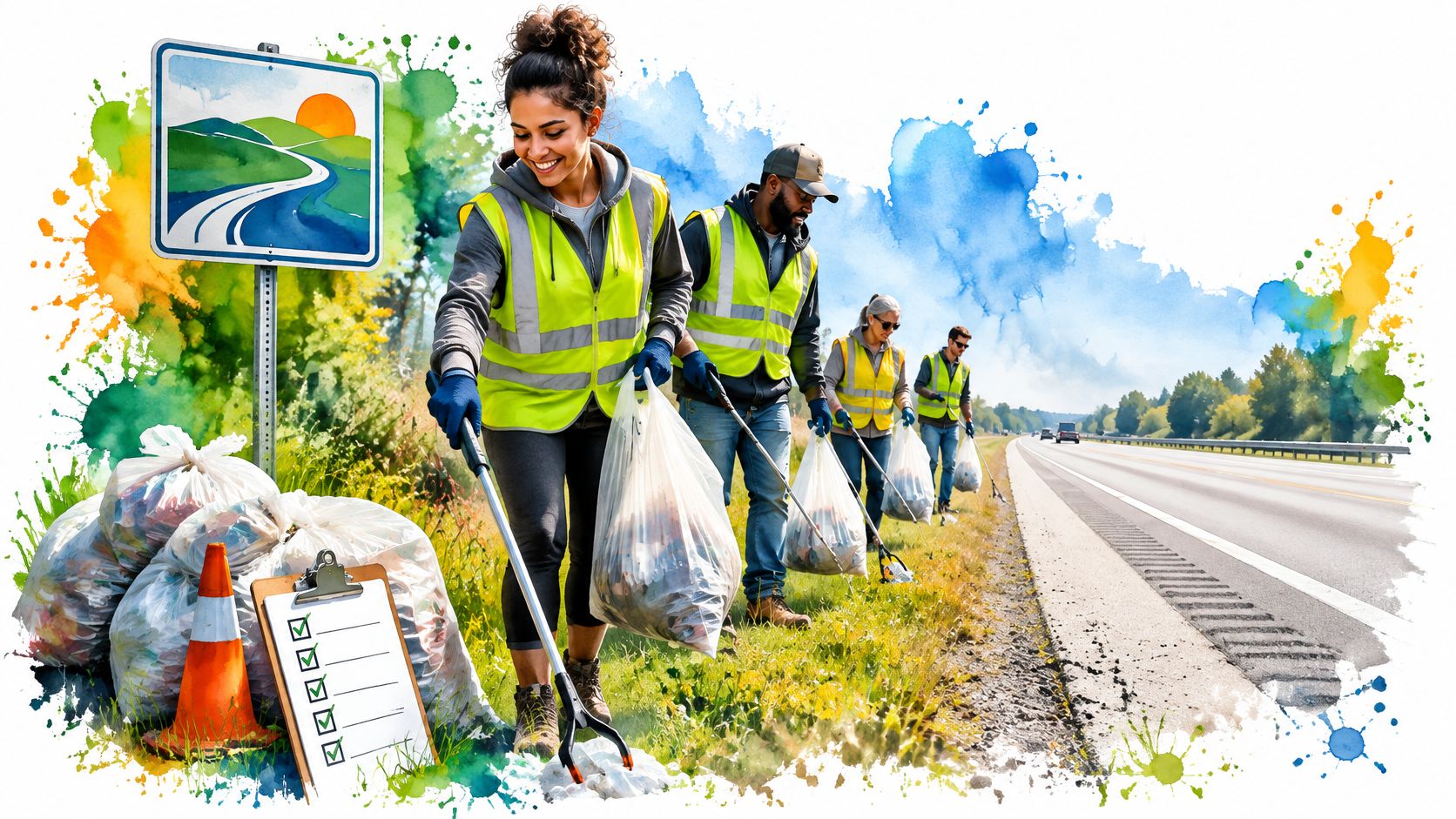
Say you pull onto a state highway shoulder on a Saturday and the grass is full of cups, wrappers, and a torn tire. You want to pick it up, and you also want to know which strip of ground is yours and which strip belongs to the cars. I treat that line as the entry point into an adopt a highway shift.
What an Adopt a Highway Program Is and Where It Began
An adopt a highway program lets your community group take responsibility for a set section of state highway. The transportation agency handles coordination, safety rules, and recognition, and your group comes back to that same stretch.
I picture it like a neighbor who waters the same row of a shared garden every week. The row stays yours. You don't wander into the next bed, and you don't invent the watering days.
I tell new volunteers the pickup-truck story. James R. "Bobby" Evans, a Texas Department of Transportation engineer, saw litter blowing out of a pickup in 1984 and proposed that community groups adopt and clean designated highway sections, as the Texas Department of Transportation history records. The Tyler Civitan Club answered first and took a two-mile stretch of U.S. Highway 69. On March 9, 1985, officials installed signs that marked that stretch as the nation's first Adopt-a-Highway project, and that date is now International Adopt-a-Highway Day. Within months, more than 50 Texas groups had joined, including garden clubs and scouting organizations.
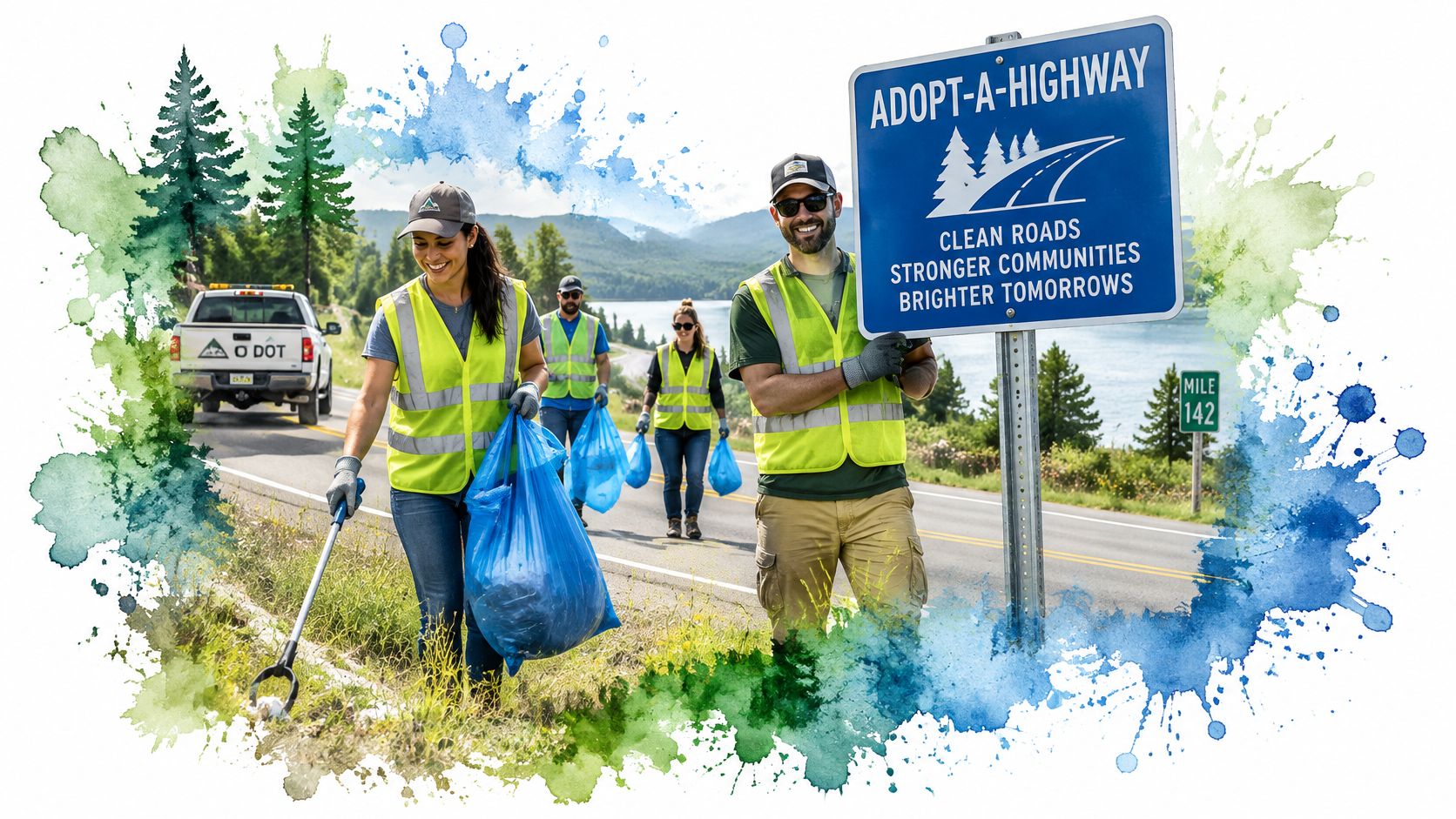
The deal is still plain.
- The agency gives you the segment, the safety rules, and the recognition sign.
- Your group gives recurring labor on that one piece of road.
- You stop where the agreement stops, even if the litter keeps going.
If you want a current picture of the bags, the Arizona Department of Transportation reported that in 2024 nearly 8,000 people from 870 Adopt a Highway volunteer groups filled more than 10,000 bags with roadside litter.
Check your own state's transportation department website before you promise a Saturday. If the program exists, the sign-up page tells you how to ask for a section.
Typical Commitment Terms by State
Say a café owner in Chicago rounds up six Saturday regulars and offers the state a clean shoulder. Before anyone signs, the form holds three lines that decide the job: how long the stretch is, how often the crew shows up, and how many years the promise lasts.
Illinois is the row Chicago-area groups meet first. You take a two-mile section, you clean it at least four times a year, and you keep that promise for two years. Count the Saturdays. Eight mornings across two years is the floor. Skip one and the crew is already under the agreement it signed.
Nebraska gives that same small crew more road and fewer required visits. A state-maintained section can run from two miles up to six. You still owe at least two pickups a year, and the minimum term is two years. Extra length means more shoulder for the same people. The walk ends at the last mile on the form.
What the big totals imply
Pennsylvania shows a two-mile habit once thousands of groups take it on. The Pennsylvania Department of Transportation Adopt-a-Highway page lists 4,670 volunteer groups and more than 129,000 registered participants who adopted 9,243 miles, and it dates the program to April 1990. Divide those miles by the groups and you get about 1.98 miles per group. Minimum visits and the length of the term are not one statewide figure. They differ by program, so confirm Pennsylvania's current requirements with the program office before you commit a calendar.
Michigan groups land near that same length. A U.S. Department of Transportation repository record notes that about 2,900 participating groups maintain more than 6,000 adopted highway miles and collect over 60,000 bags a year. Miles divided by groups comes to about two miles each. Visit counts and term length differ by program there too. Confirm both with Michigan's program office before the first signup.
| State or program | Segment length | Minimum cleanups | Term |
|---|---|---|---|
| Illinois | 2 miles | At least 4 a year | 2 years |
| Nebraska | 2 to 6 miles | 2 a year | 2 years |
| Pennsylvania (2024 average) | About 1.98 miles per group | Set by program; confirm first | Set by program; confirm first |
| Michigan | About 2 miles per group | Set by program; confirm first | Set by program; confirm first |
A crew of six to ten can cover one two-mile segment without wrecking the calendar. Write down the miles, the yearly visits, and the full term, then match them to weekends the crew can give. Those three lines are where the work starts, and they are also where it has to stop.
Safety Rules That Decide Where Volunteers Can Work
A full bag does not make a dangerous spot legal.
Say a café owner loads four Saturday regulars into a van, grabbers in the back, orange vests still in the package. They want the litter gone before the lunch rush. The first question is which strip of ground the agency will let them stand on. Ordinary litter on the safe edge is the work. Everything else goes to the agency.
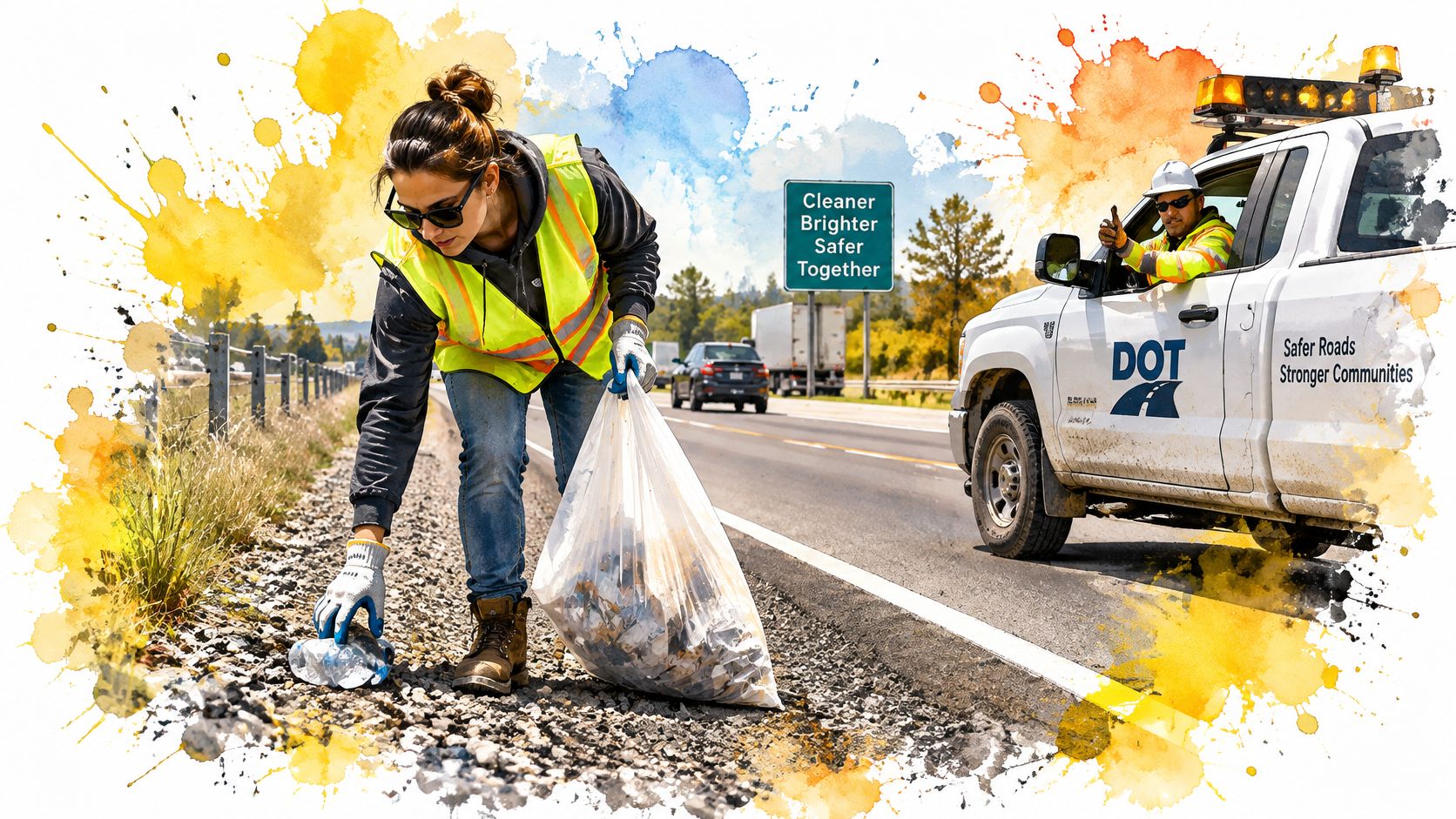
Zones you do not cross
Travel lanes, ramps, and bridges stay closed because you have no safe refuge from traffic. Medians and construction areas stay closed unless the road authority authorizes the work and controls traffic. Sightlines are short there, and other crews are already moving.
The shoulder is the zone you can use, and only with a buffer.
The Nebraska Department of Transportation Adopt-a-Highway program treats the cleanup as a controlled traffic-safety activity: the sponsor notifies the agency at least 48 hours ahead so staff can provide supplies and check for conflicting road work, and volunteers stay at least 10 feet from the pavement. You hold a safety meeting first. You wear a high-visibility vest and suitable footwear, and you face oncoming traffic. You do not approach traffic. You do not move hazardous objects. You report them to the program representative.
Daylight and weather sit on the same map. The Delaware Department of Transportation Adopt-a-Highway program keeps work in daylight and fair weather, with small groups, high-visibility clothing, hard-soled shoes, and parking entirely off the road.
Lightning, extreme heat, flooding, and unsafe wind end the shift. You pack up and you leave. A half-cleaned shoulder can wait. A storm will not.
Practical rule: If you can't name the safety lead before you leave home, you aren't ready to start.
Keep a volunteer safety checklist in the glove box: safety lead named, emergency plan written, first-aid kit packed, weather checked before you leave home.
| Zone or condition | Volunteer rule | Reason |
|---|---|---|
| Travel lanes, ramps and bridges | Off-limits | No safe refuge from traffic |
| Medians and construction areas | Off-limits unless the road authority authorizes the work | Limited sightlines and active work |
| Shoulder area | Allowed, stay at least 10 feet from pavement | Buffer from fast traffic |
| Hazardous objects | Do not move them. Report them to the program representative | The agency handles the danger |
| Lightning, extreme heat, flooding or unsafe wind | Stop work and leave | Weather danger |
| Daylight in fair weather | Work only in daylight with small groups | Visibility |
How Highway Cleanup Compares With Other Options
Pick the promise you can keep, not the one that sounds boldest on a sign-up sheet.
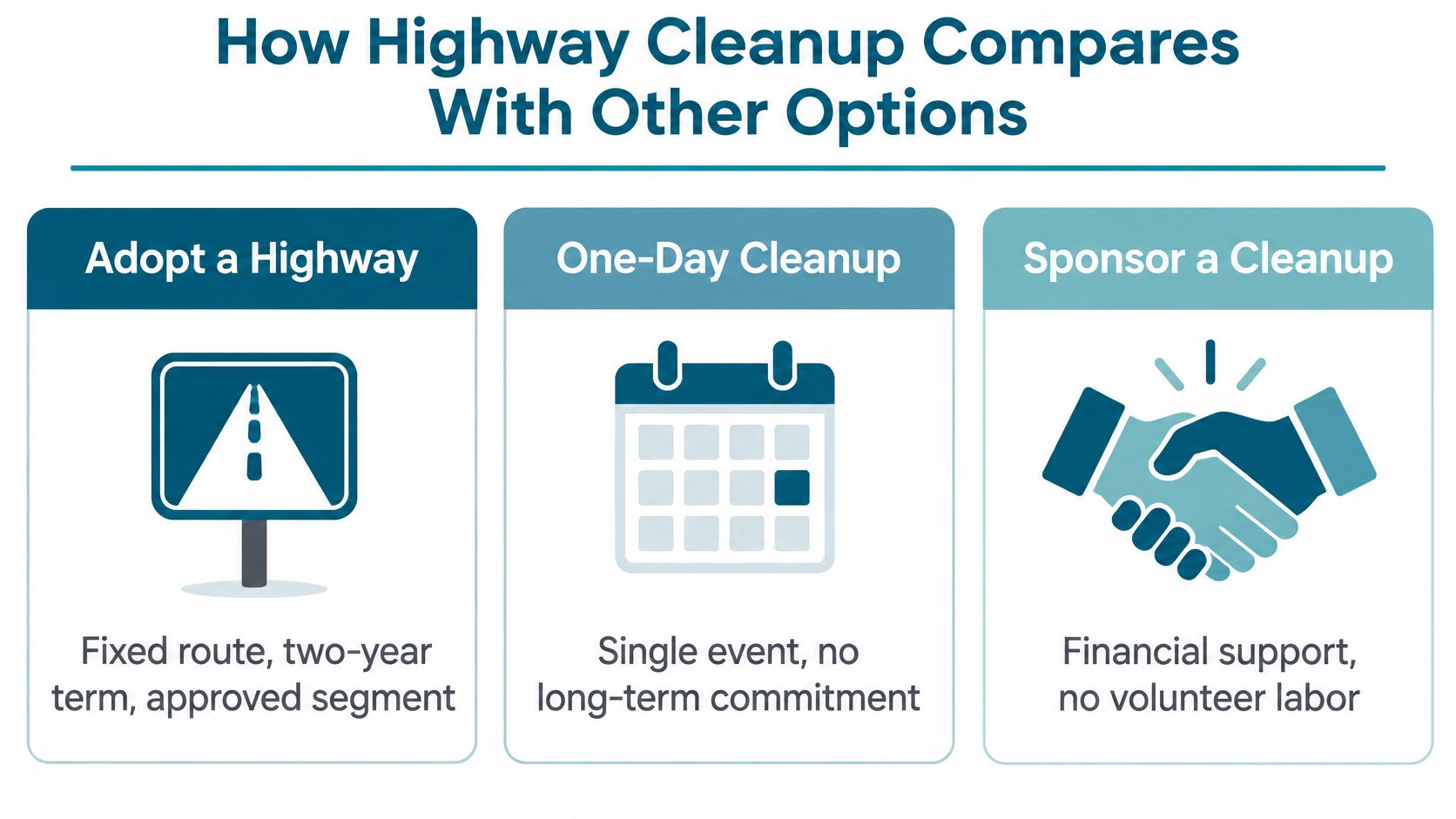
Say your book club has eight people and two free Saturdays a season. That is a one-day community cleanup. You test the work, you meet the bags, and you go home with no two-year form. Say your running club already meets every Sunday on the same blocks. A weekly neighborhood group fits you, because the friendship is already on the calendar. Say your workplace can staff four mornings a year for two years and wants its name on a roadside sign. That is the highway row.
A state adoption asks for a fixed route, a two-year term, and an approved segment. Park and beach cleanups keep you away from highway traffic, and the site host sets how often you return. Some programs also let a business pay for the work while a crew does the picking. You still read the sign rules before you assume a logo means volunteers were out there.
What I have actually done
We have picked up trash every single week. We also cleaned a highway while it was shut down for a bike riding event. The closure mattered. The lanes were not live, so the usual traffic line was not the threat it is on an open adopt a highway segment.
Highways bring a sign, a form, and a report after each visit. A neighborhood crew brings flexibility and the same faces. I choose with three questions. How often can you show up? How much road exposure will you accept? Do you want a full crew, or a smaller start?
| Option | Commitment | Traffic and hazard exposure | Best fit |
|---|---|---|---|
| Adopt a highway segment | Two years, at least four cleanups a year in Illinois | High, road traffic and state approval required | Groups that want a fixed route |
| One-day community cleanup | One morning | Set by the cleanup site | Newcomers and families |
| Weekly neighborhood group | Every week | Local streets and curbs, not highway lanes | People who want routine and friends |
| Park or beach cleanup | Set by the site host | No highway traffic | Volunteers who prefer green spaces |
Watch a short clip of a roadside crew before you lock a column. The bags look light on video. The traffic does not.
Measuring Whether Your Cleanups Make a Difference
Say a café owner sends six staff onto a Saturday shoulder and they fill a truck by noon. A month later that same stretch is speckled again. Nobody can tell whether the crew changed the road or only moved one pile.
The difference shows up when the same people return to the same segment and the count stays lower. One busy Saturday can still leave next month's shoulder looking the same.
What you write down
On every visit, log six things before the bags go in the truck.
- Segment: the exact mile markers or cross streets.
- Date and weather: so a storm weekend doesn't get compared with a calm one.
- Volunteer-hours: people times time on the shoulder.
- Bags or weight: one unit, used the same way every time.
- Hazardous items: what you reported and did not touch.
- A repeat look: the same fixed distance, counted again next visit.
Take a baseline count, then repeat it at those fixed distances. If the pieces rush back, you removed a pile and something is still feeding the road. If the count stays lower, the visits are doing the job.
The stop line belongs in that log. A needle, a chemical jug, or a dead animal gets noted and left for the agency. Skipping it is the rule, not a missed bag. The crew's reach ends where the safety rules say hands off.
Bag totals still give you a public number. The Arizona Department of Transportation said Adopt a Highway volunteers removed 10,400 bags of litter from state highways in 2024. Your count can sit beside a published total like that. One heavy illegal dump can outweigh hundreds of light wrappers, so pick one metric and stick with it. Weight on one route, bags on another. Don't treat them as the same thing.
You take away what you can see. Road design, illegal dumping, where the bins sit, and whether anyone enforces the dumping rules shape what comes back. The log doesn't have to solve those causes. It has to show what the crew removed, and where the crew was told to stop.
One log page per visit, kept in a shared folder, is enough. Next year's numbers sit beside this year's.
A short page on how to measure community impact lays out that same visit page, so a group can copy the six lines instead of inventing a new form each month.
How to Apply, Run Your First Cleanup and Decide
I use Illinois as the worked route, because a Chicago group can open the map and see real sections.
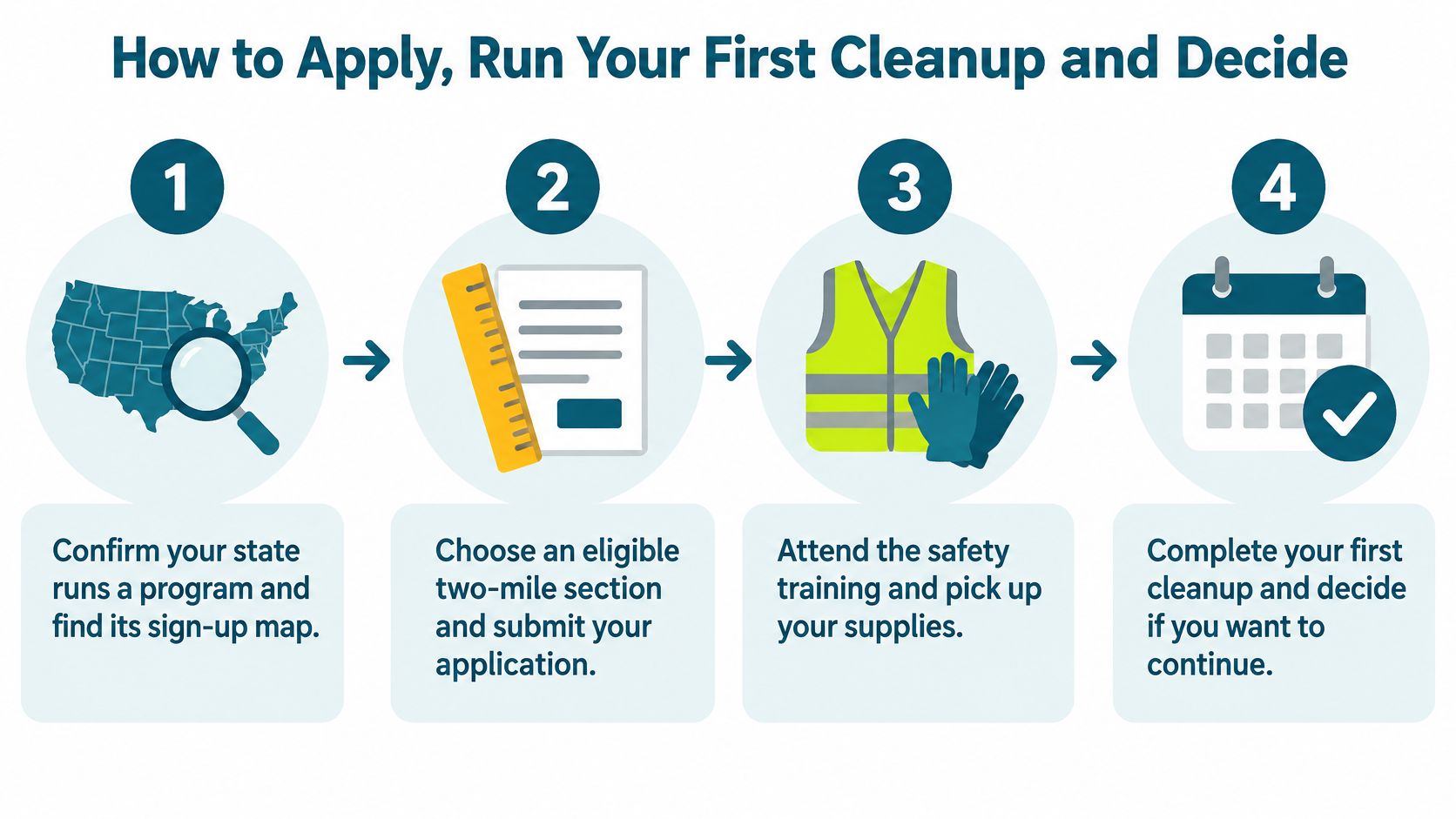
The Illinois Department of Transportation Adopt-a-Highway program uses a fixed commitment rather than a casual morning. Your group applies for a two-mile highway section through an interactive map, then agrees to remove litter at least four times each year for two years. After every cleanup, you complete an Adopt-A-Highway Clean-Up Report. I plan eight minimum visits and I put them on a shared calendar before the first bag is open.
We learned boundaries the long way. Litter Caterpillars is the first and only trash pickup group to clean up all 50 wards of Chicago, including the ones people were told to stay away from. That habit is why I want the map checked before the enthusiasm.
Walk the seven steps
- Confirm your state runs a program and find its sign-up map. You need the official page, not a rumor in a group chat. The common slip is borrowing another state's rules and discovering yours wants a different form.
- Choose an eligible two-mile section and check the zones. Avoid pavement, medians, bridges, and ramps. If you apply before you check eligibility, you can lose weeks on a segment the agency will never approve.
- Apply through the interactive map and wait for approval. The Illinois Department of Transportation decides, not your group chat. Starting early because "it's probably fine" is how people end up on a live shoulder with no agreement.
- Gather your crew, name a safety lead, and hold the meeting. I want at least four people so nobody works alone. Cover vests, footwear, and where each person stands. Skipping the meeting because everyone "already knows" is how someone faces the wrong way.
- Run the first cleanup on the scheduled date. You face oncoming traffic and you stay in the allowed zone. If the weather turns, you stop. A canceled morning is a successful safety call.
- Submit the cleanup report after every visit. The agency needs a record that you were there. Skip the report and your work doesn't exist in their file, even if your photos look great.
- Repeat across the term. In Illinois that means those eight visits over two years, on the same segment. The slip is treating month one as the whole promise.
Our volunteer event planning notes are what I use to staff the morning, name the lead, and keep the report from becoming a last-minute scramble.
What a finished first morning looks like
You leave with a dated log, a bag count, a list of hazards you reported, and a photo of the cleared shoulder. You do not leave with a needle in a personal bag or a story about stepping into a lane "just for one cup."
If the highway term feels far away, neighborhood work still counts. We are building a park called Caterpillar Park on an empty lot we won at auction, and that kind of long local care uses the same habit: show up, write it down, come back.
If your group can commit to two years and eight visits, apply for a segment. If you want a weekly routine first, start on neighborhood blocks and build toward a highway later.
If you want a Chicago crew that already treats the safety line as the start of the day, come out with Litter Caterpillars. We pick up trash with you on weekend mornings, and we stop where the road says stop. Visit Litter Caterpillars and choose a morning that fits your calendar.