
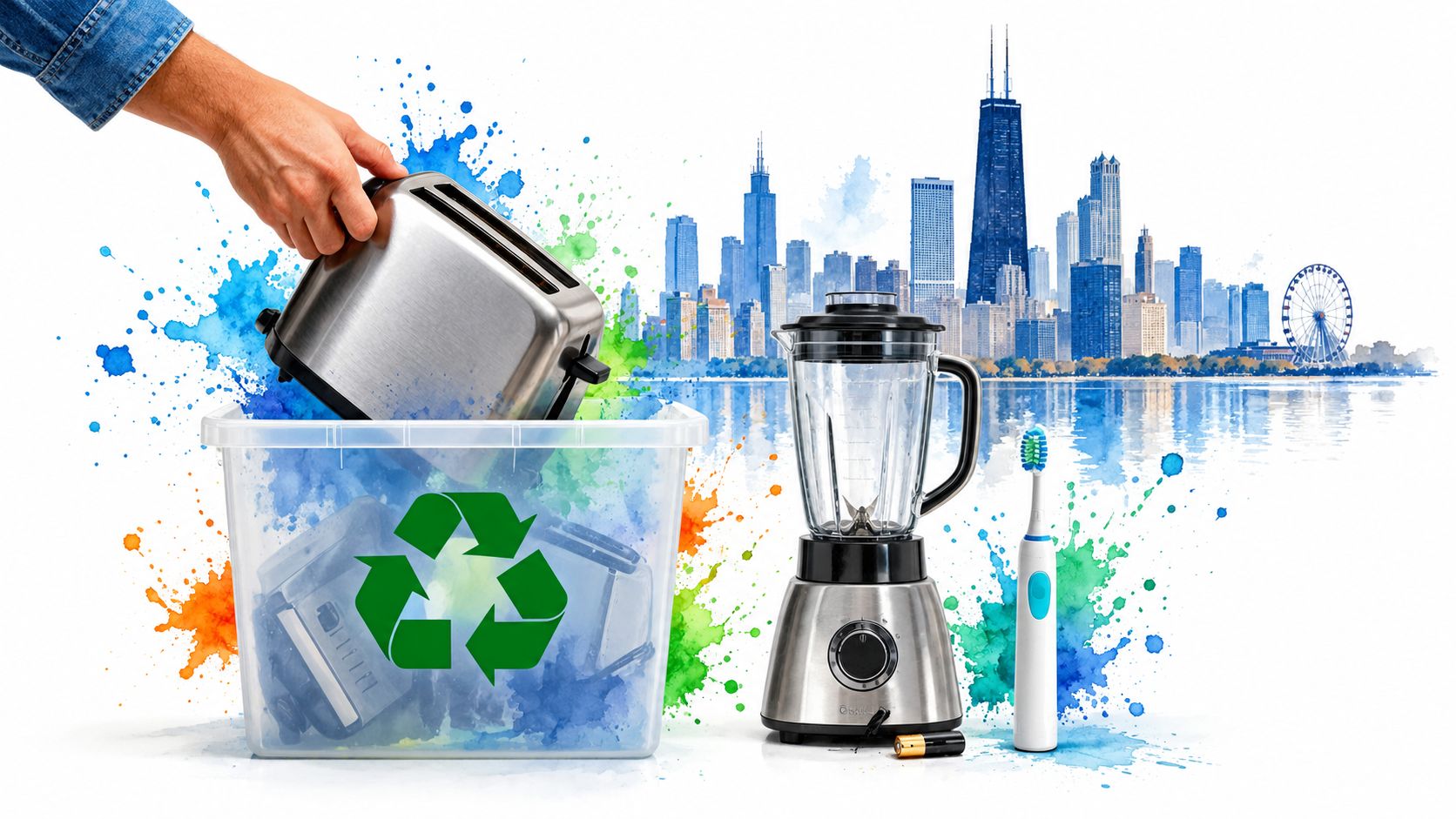
I once carried a dead blender from my kitchen to the alley and back three times because I couldn't decide where it belonged. By the fourth trip, I realized the appliance weighed less than two pounds, but the decision felt like it weighed five hundred.
The Heavy Weight of Kitchen Clutter
A broken toaster can disappear behind a cereal box for months. A cracked coffee maker can wait beneath the sink, while a blender with a burned-out motor settles into the kitchen like another piece of furniture. Each time you spot it, you think, “I need to deal with that,” and then dinner, work, or the next trash pickup takes over.
I learned that pattern in my own apartment before I started picking up litter across Chicago's wards. The appliance was never the whole problem. I did not know which facility would accept it, whether the cord changed its category, or whether it belonged in a recycling bin. In the end, uncertainty kept the clutter in place.
Start with one shelf. Set the dead kettle, the coffee grinder that stopped grinding, and the toaster with one working slot on the floor. Look at each item as a collection of materials rather than a memory from your kitchen. A plastic shell, steel frame, circuit board, cable, and possible battery may each require a different route through Chicago's disposal system.
The pile behind the pile
Small appliances form a large part of the global e-waste stream. In 2022, global e-waste reached 62 billion kilograms, and small equipment represented about 33% of that total by mass, roughly 20.4 million tonnes. The same assessment records documented collection and recycling at about 12% for small equipment, compared with 22.3% overall in 2022, and projects that the overall figure could fall to 20% by 2030 if current trends continue, according to the Global E-waste Monitor executive summary.
That category includes familiar objects such as microwave ovens, vacuum cleaners, radios, toys, and e-cigarettes. Their housings and wiring contain recoverable metals, plastics, and other materials, but those materials stay mixed together when an appliance is left in a closet or tossed into the wrong stream.
The pile usually grows without notice. One dead kettle becomes a coffee maker, a charger, and a hand mixer before you notice the shelf has disappeared.
My first rule: If an appliance has lived in your closet long enough to gather dust, give it a decision date.
Keeping a broken appliance indoors does not recover anything inside it. Recycling small household appliances begins when you claim responsibility for the pile and identify what each object contains. If one crowded cabinet feels hard to start, this guide to moving unwanted items out of your home can help you turn the mess into a manageable task.
Sorting Your Pile by Material and Hazard
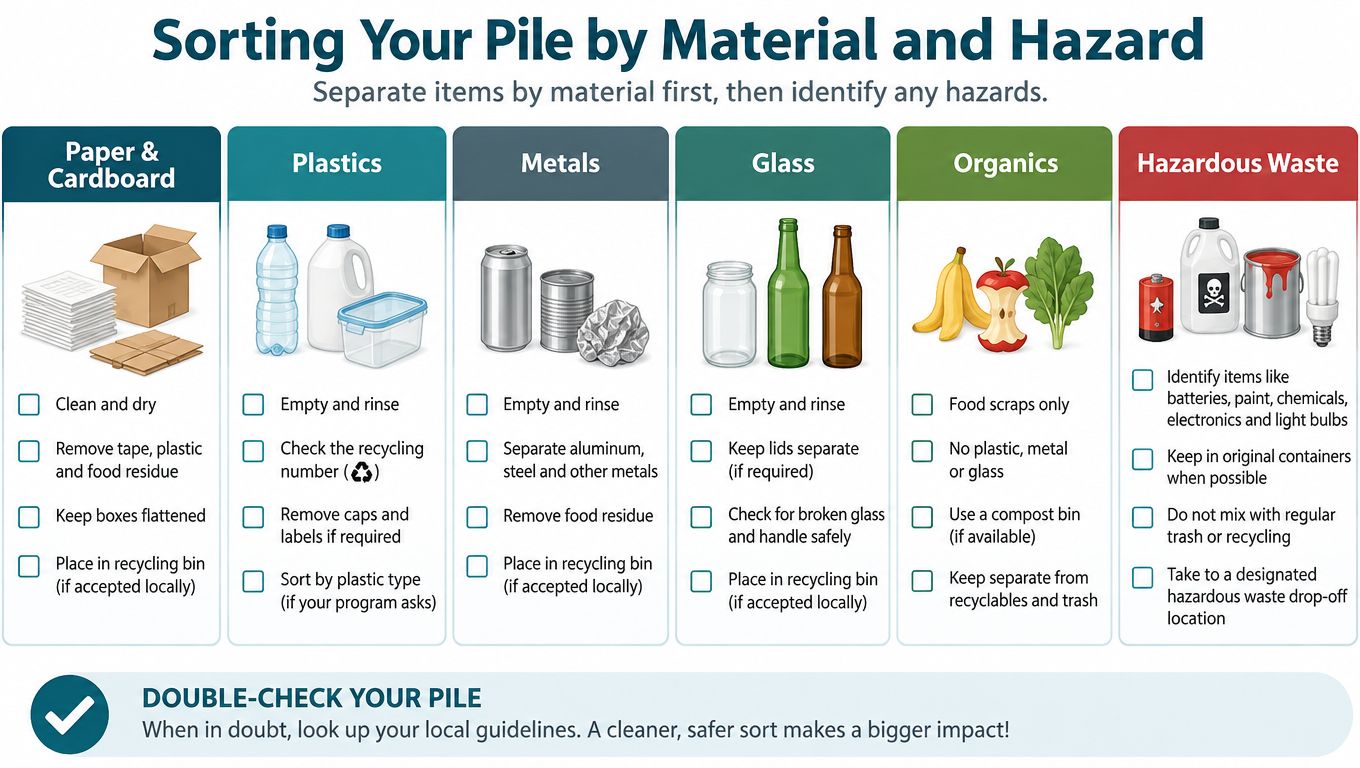
You can't treat a coffee maker, a cordless vacuum, and a metal toaster as the same object. They may all sit on the kitchen counter, but their parts can send them to different collection streams.
Start with a table or a clean patch of floor. Unplug each item, remove loose attachments, and look for labels that mention batteries, rechargeable power, refrigerant, or electronic controls. You don't need to dismantle the housing. You need enough information to describe the item accurately when you call a facility.
Four questions for every appliance
- Does it contain a rechargeable battery? Pull out the battery when the design allows it. Cordless vacuums, electric toothbrushes, shavers, and portable kitchen gadgets need extra care. If you want to understand why damaged lithium-ion cells can ignite, read this practical explanation of why li-ion batteries catch fire.
- Does it have a circuit board or programmable controls? A digital coffee maker and a basic manual can opener belong to different conversations. San Diego says programmable small appliances, including microwave ovens and many coffee pots, shouldn't go in trash or recycling bins because their circuit boards contain heavy metals. The same San Diego disposal guidance says non-programmable small appliances may go to an appliance recycling location or into the trash.
- Which material dominates? A stand mixer may contain a heavy metal body, while a hair dryer may combine plastic, wiring, and electronic parts. Put metal-heavy items in one group, electronics in another, and plastic-heavy devices in a third.
- Does it contain a special component? Refrigerant, cartridges, lamps, and sealed power units can change the route. Don't guess when a label or product manual can answer the question.
A battery removal step can prevent trouble in a recycling truck or sorting facility. Set aside removed batteries in a separate container and check Chicago's current battery recycling guidance before you travel.
Let the material decide
A common mistake involves the product name. People search for “coffee maker recycling” and expect one universal answer. In practice, the construction matters more than the name printed on the front.
Write a short note for each item: “programmable, corded, plastic body,” or “metal-heavy, no battery, manual controls.” That note gives a drop-off site useful information and keeps you from placing a device in a curbside bin just because it looks small.
Here's a short visual guide to the sorting mindset:
Prepping Devices for Safe Transport
A recycler's machinery can separate materials, but it can't make every unsafe item safe after collection. You need to do the first cleanup at home.
Licensed WEEE facilities commonly use a sequence that starts with manual pretreatment, then moves through crushing, picking, shredding, and separation. Workers remove batteries, cartridges, cables, and other problem parts before shredding because those pieces can contaminate material fractions and lower their purity, according to European WEEE processing guidance.

A clean handoff starts at home
- Disconnect the power. Unplug the appliance and let heated parts cool. Never carry a device with a damaged cord still connected to an outlet.
- Remove accessible batteries. Check the underside, handle, charging dock, and battery compartment. If the battery sits inside a sealed housing, don't force the casing open with a kitchen knife. Ask the receiving facility what it accepts.
- Protect exposed terminals. Follow the battery program's packaging directions. Keep loose cells from touching metal objects, keys, or other batteries.
- Secure the cord. Wrap a cord around the appliance and hold it with paper tape or a reusable strap. A loose cable can tangle during handling and can make a pile harder to move.
- Empty and wipe the item. Rinse a blender jar, empty a vacuum canister, and remove crumbs from a toaster oven. You don't need to polish the appliance. You do need to remove food, liquids, hair, and dust that can make manual sorting unpleasant.
- Keep parts together. Put a coffee pot with its base, a blender with its jar, and a vacuum with its charger when the facility accepts those parts together.
Watch for special hazards
Refrigerant, batteries, and electronic controls can change the process. A small appliance that looks harmless may contain a component that a general scrap operation cannot accept. Call before you load your car, describe the exact item, and ask whether the facility wants batteries, chargers, cords, and accessories separated.
Before you leave: Photograph the pile and write down every facility's acceptance answer. That small record saves a second trip when a worker asks what sits inside the box.
Pack heavier metal objects at the bottom of a sturdy container. Place small plastic parts in a separate bag so they don't disappear under a microwave or stand mixer. Keep batteries away from the main appliance pile until you confirm their route.
Finding the Right Chicago Drop-Off Option
Chicago residents need to match the appliance to the receiving stream. A facility that accepts electronics may reject a metal-heavy item. A scrap yard may want the metal but lack the process for a programmable device. A pickup service may save your back while giving you less control over the final destination.
The United States provides a useful warning. The EPA estimated that Americans generated 2.2 million tons of small appliances in 2018. Only about 5.6% entered recycling, while 18.5% went to energy recovery and 75.9% went to landfill, according to the small-appliance figures reported from EPA data.
Chicago Appliance Disposal Routes
| Method | Best For | Key Rule |
|---|---|---|
| Dedicated e-waste facility | Programmable appliances and mixed electronic devices | Confirm the accepted-items list before driving |
| Scrap metal yard | Metal-heavy appliances with simple construction | Ask whether the yard accepts complete small appliances |
| Battery collection point | Loose rechargeable batteries and battery-powered devices | Remove batteries only when the design allows safe removal |
| Scheduled municipal option | Residents who can follow local collection rules | Check the current Chicago schedule and set-out requirements |
| Reuse or donation route | Clean, working appliances | Confirm that the organization accepts the exact item |
The most convenient route isn't always the cleanest route. A dedicated e-waste facility may require a drive and a specific drop-off window, but staff can sort mixed materials with the right equipment. A scrap yard may handle steel efficiently, while a battery program can keep a loose cell away from a metal pile.
Make the call before the trip
Write down the brand, product type, power source, and condition. Say “programmable countertop microwave with cord” rather than “small appliance.” That wording helps the receiving staff answer without guessing.
You can compare local options through Chicago recycling centers and drop-off guidance. For businesses, landlords, or households clearing many devices, a specialist such as the Beyond Surplus ITAD partner may provide a more structured handoff for electronics and equipment.
Bring a box that you can lift safely. Put the fragile glass carafe somewhere it won't roll, and keep batteries separate from cords and metal objects. If a facility rejects one item, take it home rather than leaving it beside the entrance or placing it in a public bin.
Protecting Your Data and Handling Fees
A smart appliance can hold more information than its stainless-steel body suggests. A Wi-Fi coffee maker may remember a network connection. A robot vacuum may store account details, maps, or device settings. A connected slow cooker can retain setup information even when the heating element no longer works.
Before you hand over a working smart appliance, open its app and remove the device from your account. Sign out, erase saved networks, and use the factory reset option. If the appliance won't turn on, ask the recycler whether staff can handle data-bearing parts or whether you need a specialized electronics service.
A broken screen doesn't prove that a device forgot everything.
Ask about the receiving process
Many small appliances don't fit one universal recycling category. Sonoma County explains that local rules may send small appliances to e-waste, scrap metal, or garbage, depending on their construction and the local program, as described in its appliance disposal guidance.
That variation affects fees. A facility may accept a simple metal item at no charge but charge for a device that requires manual dismantling, battery handling, or special processing. A municipal event may accept only certain electronics. A private recycler may quote a handling fee after you describe the appliance.
Call and ask four direct questions:
- Does this exact model qualify?
- Do you charge for drop-off or dismantling?
- Should I remove the battery, cord, or accessory?
- Can you handle stored account information or memory chips?
Don't assume a free electronics event accepts every countertop device. Don't assume a paid service gives you documented data handling. Write down the answer, bring the confirmation if the facility provides one, and keep your items sorted when you arrive.
Joining the Movement to Keep Chicago Clean
I feel a small release each time I move a broken appliance out of a closet. The counter opens up. The cabinet closes. I can cook without shifting three dead machines out of the way first.
That change comes from making one clear decision. You looked at the appliance, identified its materials, removed what needed special care, and sent it toward a route that fits its construction. You took responsibility for one object instead of waiting for the problem to disappear.
The same habit changes how you see an alley. After you sort your own pile, a crushed can near a curb becomes easier to notice. A torn bag caught in a fence stops looking like background scenery. You start carrying gloves, a grabber, and a spare bag because you know a block can look different after someone decides to act.
Chicago gives us plenty to clean, from alleys and viaducts to parkways and vacant lots. You don't need perfect weather or a perfect schedule. You need a safe meeting point, a pair of gloves, and enough patience to pick up one piece after another.
Community work also changes the emotional weight of cleanup. A dead toaster feels private when it sits in your closet. A neighborhood cleanup turns that same feeling into motion, conversation, and a reason to step outside. You meet people who want a cleaner block, share practical habits, and leave with proof that small actions can change the place where you live.
Litter Caterpillars brings Chicago volunteers together for weekend trash pickups across all 50 wards, with safety, friendship, and service at the center. If recycling small household appliances has helped you take ownership of your home, visit Litter Caterpillars and find a cleanup where you can show up for your neighborhood.