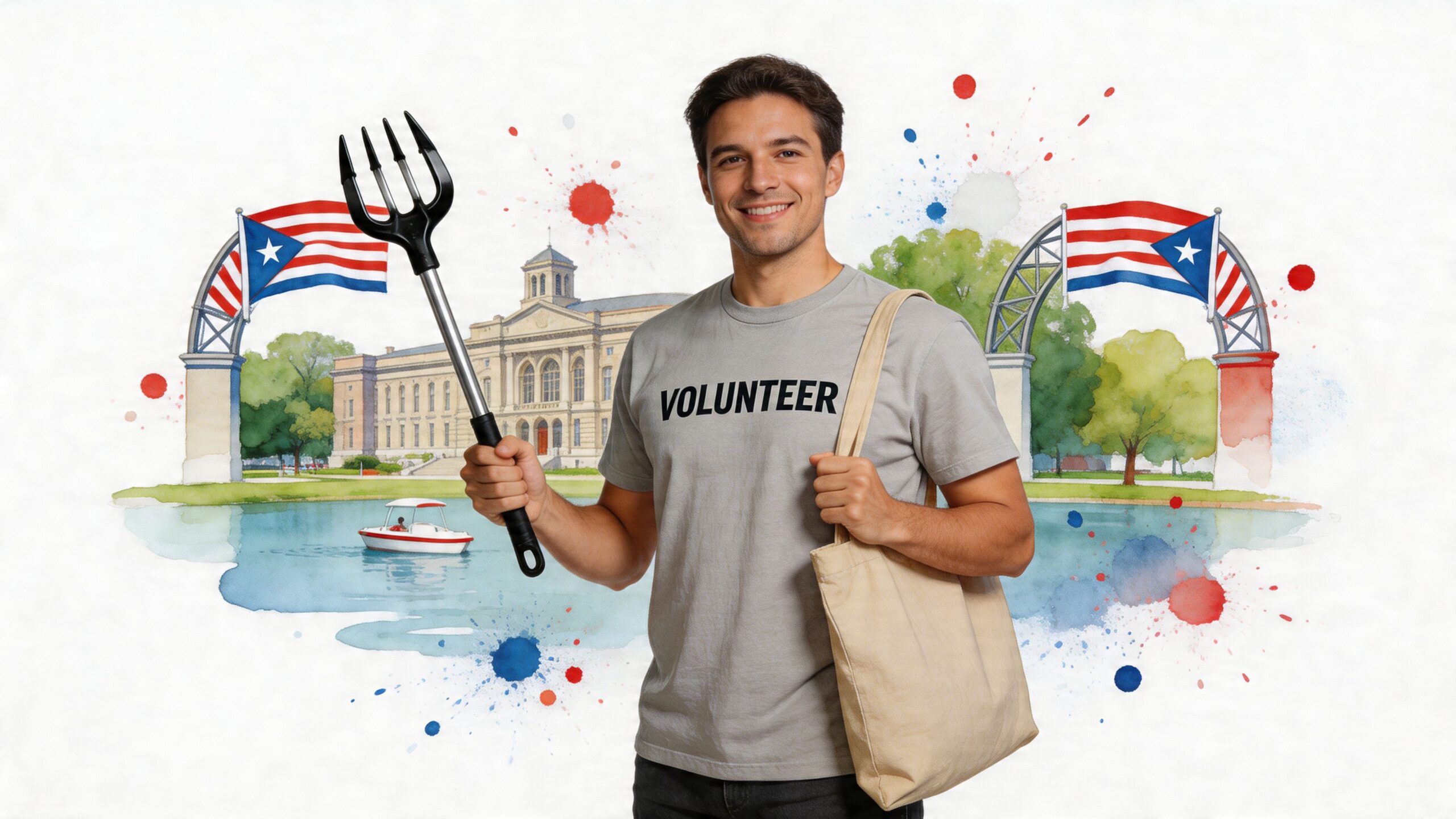
I once stood in Humboldt Park with a trash bag in one hand and a mind full of static, and I remember thinking that the path in front of me looked a lot like my apartment floor. Leaves, cups, bottle caps, wrappers. Nothing dramatic. Just enough scattered mess to make a person feel tired before they even began.
That morning changed how I think about humboldt park in chicago. Not because I suddenly became a park expert, but because I stopped moving through the neighborhood like a consumer and started moving through it like a neighbor.
More Than a Park It Is a Feeling
For a long time, my life felt like a room I couldn't reset. Papers piled up. Cables knotted themselves into little accusations. A coffee mug sat too long on a table because moving it felt heavier than it should have. I know how irrational that sounds. I also know some of you understand it immediately.
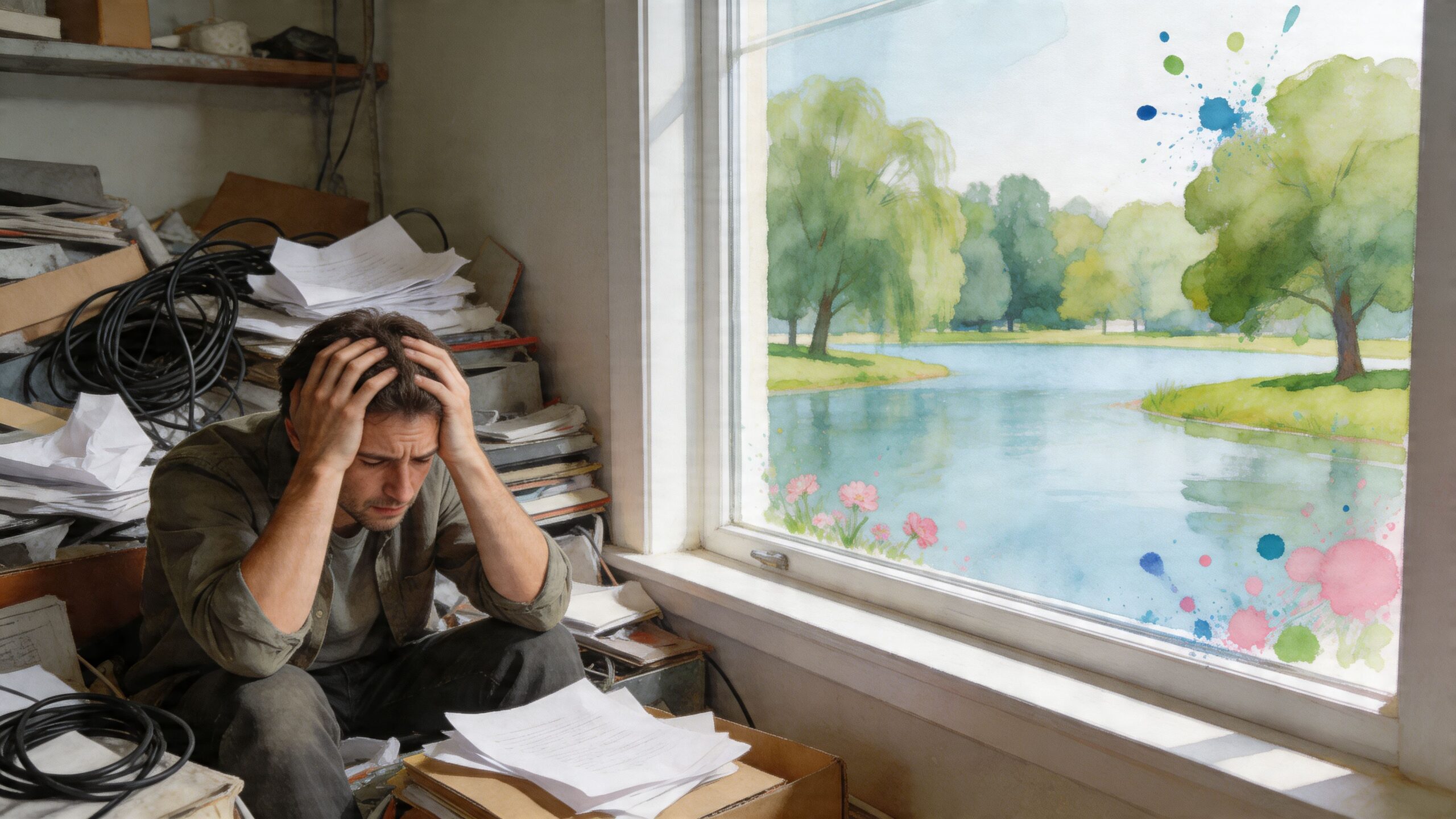
Then I started spending time in Humboldt Park, and the neighborhood met me in a way polished places never do. It didn't pretend to be neat. It felt layered, busy, proud, weathered, musical, green, and sometimes frayed at the edges. That honesty helped me breathe.
The place that mirrors you back
When you walk through Humboldt Park, you feel contradiction in the best way. Water and traffic. Gardens and basketball courts. Quiet corners and loud joy. History in stone, movement on sidewalks, families cooking, kids playing, people arguing, laughing, resting, surviving.
That mix matters to me because growth rarely looks clean when you're inside it.
You don't need a perfect life to love a place well. You just need to show up with open eyes.
I learned that exploring a neighborhood can become a form of service. You notice more when you care. You slow down. You ask who built this, who protects it, who gets pushed out, who still holds the line with music and food and memory. Humboldt Park invites those questions.
Why this neighborhood stays with you
Some places are easy to admire and easy to forget. Humboldt Park doesn't work like that. It sticks.
A few things make it linger in your chest:
- Its scale: You can feel the breadth of the green space and still sense the city pressing around it.
- Its personality: The neighborhood doesn't flatten itself for outsiders.
- Its stakes: Beauty lives here, but so do pressure, change, and struggle.
- Its invitation: You can come to look, but the place implicitly asks whether you'll help.
I think that's why Humboldt Park caught me at the right time. I needed somewhere that didn't sell escape. I needed somewhere that showed me that care is a practice. Pick up one piece. Walk one path. Learn one story. Return next week.
That is a different kind of travel. It changes the traveler too.
The Roots of Humboldt Park From Marshes to Metropolis
One Saturday morning, I watched a volunteer with a grabber and a five gallon bucket stop beside a carved monument, pick up a crushed juice pouch, and say, "Somebody wanted this place to matter." That stayed with me. If you follow the spirit behind the Litter Caterpillars' work in Chicago parks, you start to read a neighborhood differently. A path is never just a path. It is evidence that people kept showing up.
Land before identity
Long before families circled the lagoon or children raced toward the playgrounds, this ground was marshland. Humboldt Park entered Chicago's West Park System in 1869, and development picked up after the Great Chicago Fire of 1871, according to the history of Humboldt Park collected by the Humboldt Park Portal.
I come back to that beginning often because it carries a lesson the neighborhood still teaches. Cities do not rise from blank slates. They rise from wet ground, disruption, argument, labor, and hope. People saw rough land at the edge of the city and decided it could hold public life.
That choice still echoes.
A park built for relief
Early planners shaped the park as a refuge from crowding and industrial pressure. You can feel that intention even now if you slow your walk and pay attention to how open space changes your breathing.
The homes around the park multiplied as the area grew. Transit widened access. Apartments, bungalows, and two flats gathered around the green space until the park became part of daily survival, not a pretty extra pinned onto a map.
I love that history because it makes service feel practical. Relief is not abstract. Relief is shade, room, clean paths, water, benches, and a place where your mind can settle for a minute. When neighbors protect a park, they protect that relief for strangers too.
What monuments really say
The statues and monuments around Humboldt Park are records in stone. Immigrant communities, including German, Scandinavian, Polish, Italian, Ukrainian, and Russian Jewish residents, left visible marks on the neighborhood. The Alexander von Humboldt statue went up in 1892, and other cultural monuments followed, as noted in that same historical record.
I do not see those works as decoration. I see families insisting that memory deserved public space. A monument says that the people who placed it wanted their children to grow up with lineage, not just an address.
That matters in Humboldt Park because each generation inherited more than property lines. It inherited symbols, rituals, and the question of how to care for what someone else carried here first.
Built in waves, changed by people
By the 1930s and 1940s, the surrounding community had reached a peak population of 80,835 in 1930 and 79,329 in 1940, according to the same historical account. I picture crowded kitchens, workers on porches after dark, kids cutting through blocks they knew by sound as much as sight.
Here is the shape of that transformation:
| Era | What changed |
|---|---|
| Marshland period | The area existed as wetter open ground before formal park development |
| After 1869 | Chicago established the park and gave the area a civic center |
| After 1871 | Development sped up as people moved outward and built homes |
| Immigrant decades | Communities added monuments, institutions, parades, and public identity |
Later, Humboldt Park became firmly tied to Puerto Rican life, activism, and cultural defense in Chicago. That chapter did not wipe away the earlier ones. It joined them. That layering is the defining story. A neighborhood becomes itself through arrivals, losses, organizing, and return.
Why these roots matter now
When I walk through Humboldt Park, I do not just see old design choices or a sequence of historic eras. I see generations practicing the same stubborn act. They made room for community, then fought to keep that room meaningful.
That is why history here feels personal. If you come only to consume the neighborhood, you miss its strongest invitation. Humboldt Park asks you to notice what was built for public good, who kept it alive, and what kind of neighbor you want to become once you know the story.
Memory carries work inside it.
Discovering the Crown Jewel The Park and Its Treasures
The first time I tried to understand Humboldt Park, I made the mistake a lot of visitors make. I looked for the prettiest view first. Then I watched a parent steady a bike near the fieldhouse, a teenager cut across the path with a basketball under one arm, and an older man pause to pull a stray bottle away from the curb before it rolled into the grass. That small act changed my route. I stopped chasing scenery and started following use.
Start where people gather
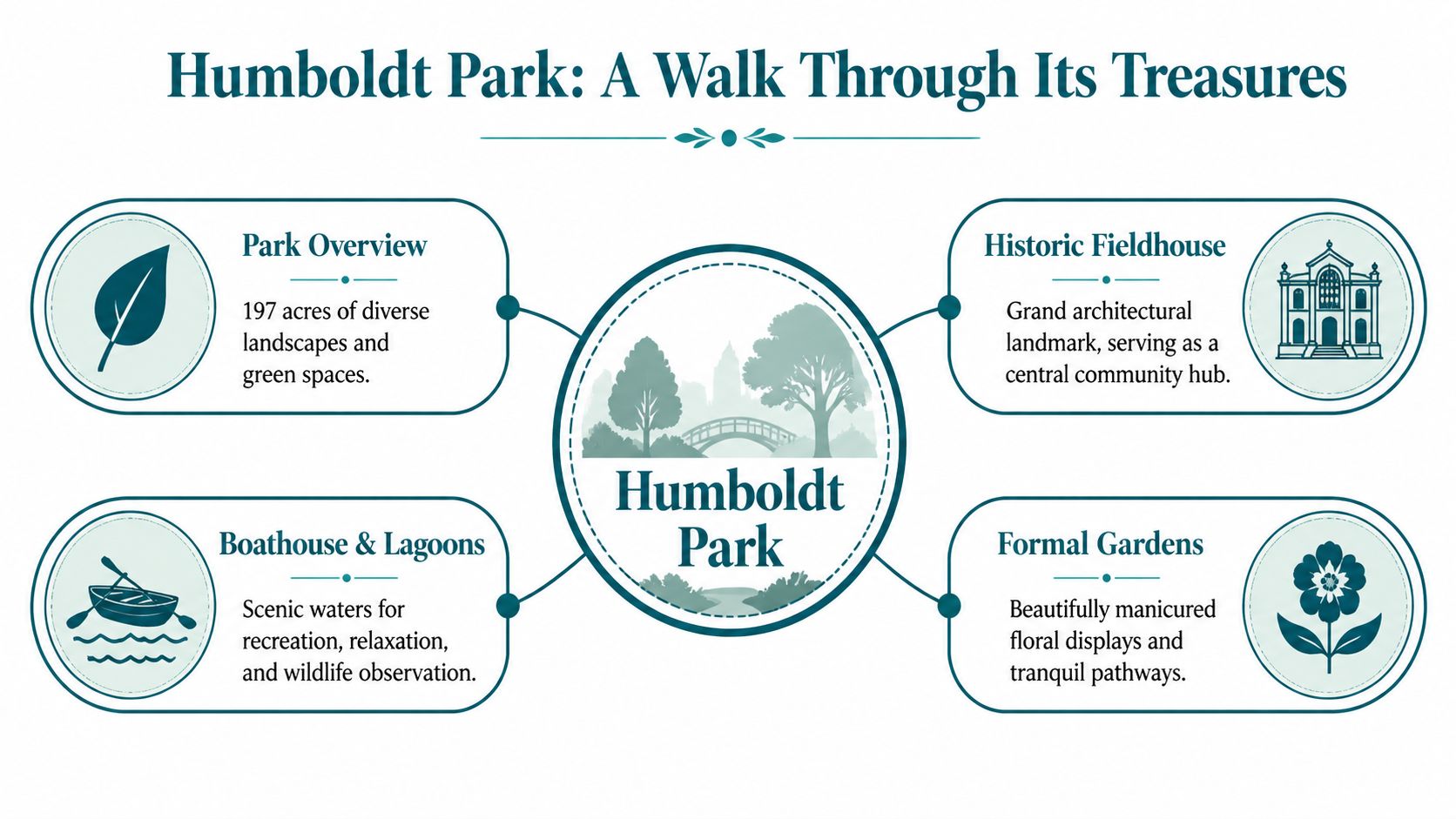
I still begin near the fieldhouse because it gives me the truth of the park right away. Humboldt Park spans 197.26 acres and includes 32 facilities, with spaces that range from an inland beach to sports fields and renovated playgrounds, according to the Chicago Park District page for Humboldt Park.
A park that large holds more than one version of public life. You can feel that within minutes. One path carries people heading somewhere specific. Another holds strollers, slow conversations, and kids zigzagging wider than the sidewalk was built for. If you want to know what a neighborhood values, watch where people return without being told.
That is where the Litter Caterpillars spirit makes sense to me. Service starts with attention. You notice who is using the space, what they need from it, and what kind of care keeps that use possible.
Follow the pressure points
Once I leave the fieldhouse area, I pay attention to the zones that absorb the most activity. Courts, benches, play areas, and the edges of fields collect the leftovers of a busy day. The Park District also notes active recreation areas such as sports courts and play spaces, and those are often the first places where wear shows up.
I do not read that as a flaw. I read it as a map.
If you have ever joined a cleanup, you know this already. A candy wrapper caught at a fence line, cups near a bench, bottles along a path curve. These are tiny signs of human traffic. They show you where joy happened, where people lingered, where maintenance needs backup from the people who love the place.
Practical rule: Start care where use is heaviest. Paths, benches, court edges, and playground perimeters usually need the first pass.
Walk the water slowly
Then I head for the lagoon and boathouse. My pace always changes there.
The water gives the park another language. The fieldhouse and courts speak in motion. The lagoon speaks in reflection, light, and patience. I have watched kids lean over the railing to look for fish, couples stop talking long enough to hear birds in the reeds, and solo walkers soften their shoulders without realizing it.
The boathouse carries real presence. It anchors the scene without asking for attention. You do not need a formal lesson to feel that this part of Humboldt Park has held memory for a long time.
When I reach the water, I usually go quiet for a minute. That pause matters. It reminds me that public space is not only for activity. It is also for repair.
Let the surprises teach you
One reason I keep bringing people here is that Humboldt Park refuses the flat version of what an urban park is supposed to be. You can find the inland beach, open green stretches, athletic spaces, play areas, formal structures, and tucked-away moments of calm in one visit, as noted by the Park District.
That variety changes how you move through the place.
- If your body needs motion, head toward the courts and fields.
- If your mind needs settling, stay near the lagoon and bridges.
- If you are with kids, let the playground energy shape the route.
- If you want to serve, scan the busiest edges first and carry a bag and gloves.
I keep this guide to Chicago parks for service-minded exploring bookmarked for that reason. It helps me treat green space as more than a backdrop. It becomes a place where a walk can turn into care.
A visit can become a practice
My favorite walks in Humboldt Park follow a simple rhythm. I begin where the neighborhood is most visible. I move toward the water when I need to listen better. I circle back through the active areas with sharper eyes than I had at the start. By the end, I am not only admiring the park. I am asking what I can do for it.
That question is indeed the treasure here.
Humboldt Park gives you beauty, room, history, and relief. It also gives you a chance to practice belonging in public. If you accept that invitation, even in a small way, your walk changes. You leave with more than photos or a pleasant hour. You leave a little more useful than when you arrived.
The Cultural Heartbeat of Paseo Boricua and Beyond
The first time I walked east from the park toward Division Street, the neighborhood stopped being scenery and started speaking directly. Not politely. Not softly. Clearly.
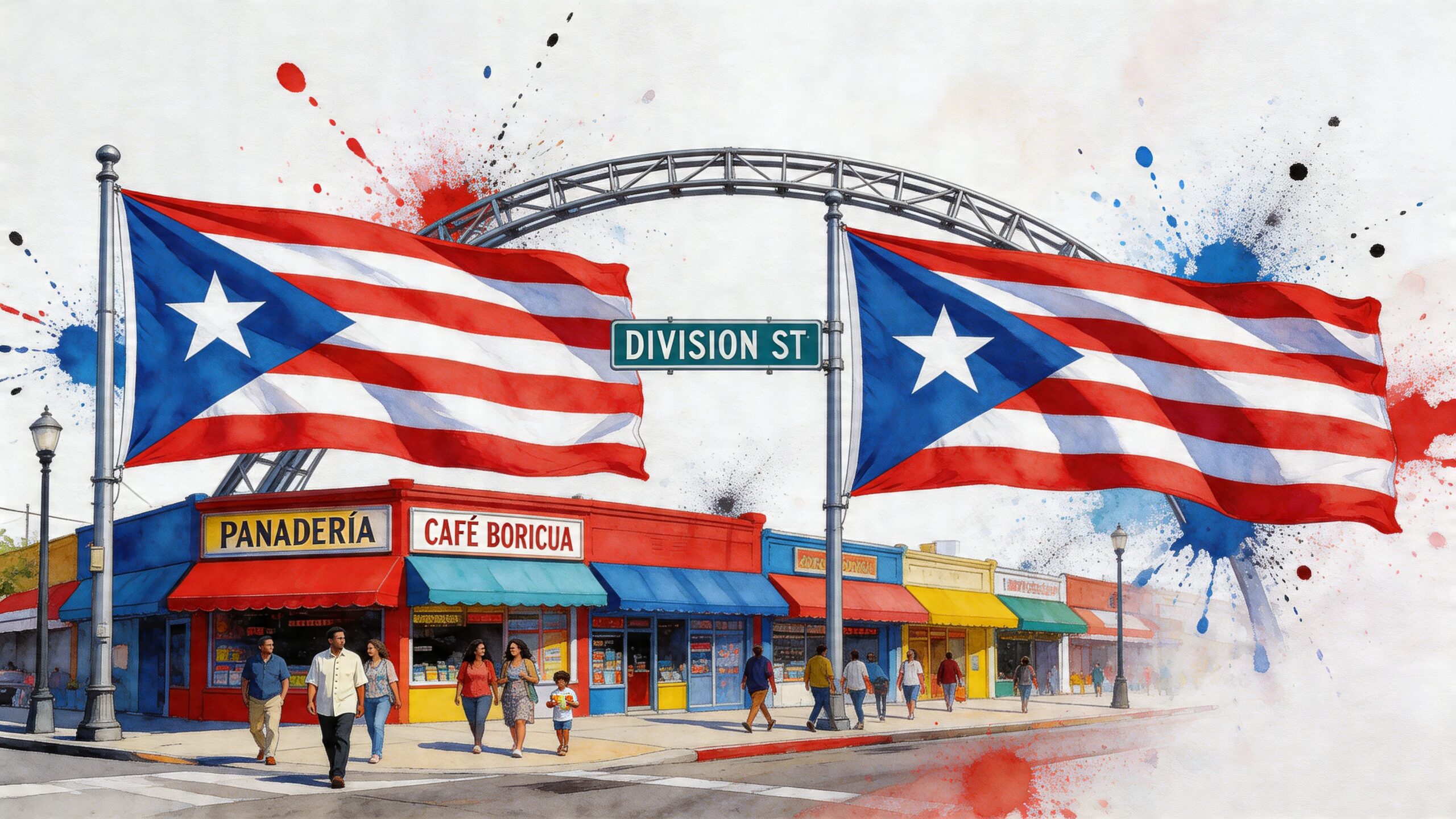
The steel Puerto Rican flags don't whisper. They announce. They arch over the street like guardians, and when you pass beneath them, you understand that identity here is public on purpose. It has been defended. It has been fought for. It refuses to shrink itself for anyone's comfort.
A street that remembers out loud
Paseo Boricua feels alive in a way that goes beyond commerce. Murals carry memory. Storefronts hold continuity. Music leaks from somewhere even when you can't locate the speaker. You can grab a coffee, a pastry, a hot meal, and if you're paying attention, you also pick up a lesson in what community looks like when people insist on staying visible.
I love places like this because they teach without lecturing. You learn by walking. You learn by eating. You learn by noticing who greets whom by name.
If you're new to Chicago and trying to build real community instead of collecting shallow experiences, I think this kind of neighborhood teaches the right instinct. It teaches you to return. It teaches you to listen. It teaches you to move slowly enough to make room for other people. That's also why guides on how to make friends in Chicago through shared activities feel more useful to me than any list of trendy spots.
Pride and pressure live on the same block
I don't think it's honest to talk about Humboldt Park's beauty without talking about strain. The neighborhood carries strong Puerto Rican cultural identity, and that identity exists under pressure.
The challenge isn't abstract. The Night Ministry's Humboldt Park community spotlight notes that gentrification is displacing longtime Puerto Rican residents, with rising rents correlating with increased litter from construction and tourism along Paseo Boricua. That burden falls hardest on lower-income parts of the community.
That sentence holds a lot. Housing pressure. Cultural pressure. Environmental pressure. They don't arrive one at a time.
A wrapper on the curb can look small until you ask why a block feels less cared for than it used to. Then you start seeing systems, not just trash.
What care looks like on a changing street
When a neighborhood changes fast, people often talk about aesthetics first. Cleaner storefronts. New paint. New menus. I think that's the shallow reading. The deeper question is who gets to remain, who gets heard, and who shoulders the mess left behind by investment that wasn't designed with them in mind.
That mess can take a few forms:
- Construction spillover: Debris and disorder around active redevelopment
- Tourism leftovers: Extra foot traffic that treats a cultural corridor like a backdrop
- Neglect by uneven attention: Some blocks get polished while others absorb the burden
I don't say that to shame visitors. I say it because I am one, too, every time I enter a place I didn't build. The point isn't guilt. The point is responsibility.
Here is a quick look at the tension I feel on Paseo Boricua:
| What you feel | What you should also notice |
|---|---|
| Celebration | The neighborhood protects cultural identity in public space |
| Warmth | Longtime residents have built that warmth over years of care |
| Excitement | New attention can bring pressure as well as visibility |
| Beauty | Beauty needs maintenance, advocacy, and respect |
This short video gives a better feel for that street-level energy and pride than a paragraph ever could.
Eat, look, and act accordingly
When I spend time in this part of Humboldt Park, I try to let my choices match my values. I eat local. I look at murals long enough to understand they were made by somebody, not produced for my feed. I throw things away properly. I notice corners that need care. I try to be the kind of visitor whose presence lightens a place, not one whose presence extracts from it.
That mindset changed my whole relationship with the neighborhood. Humboldt Park in Chicago stopped being a destination. It became a relationship.
And relationships ask something from you.
Finding Your Place How to Truly Connect and Contribute
I think a lot of us know how to consume a neighborhood. We know how to find the photo spot, the meal, the walk, the quick recommendation. Fewer of us know how to join a place without taking from it.
That shift matters most in a neighborhood like Humboldt Park, where beauty and pressure live side by side. If you care about the place, eventually you have to move from admiration to participation.
Service changes the angle of the whole day
I learned this the hard way. Cleaning my own mess at home often felt impossible. Cleaning a block with other people felt doable, even weirdly joyful. The task didn't shrink. My isolation did.
That is the strange gift of outdoor service. You stop spiraling in your own head because your hands have something clear to do. Bend down. Pick it up. Bag it. Keep walking. Say hi to the person next to you. Repeat.
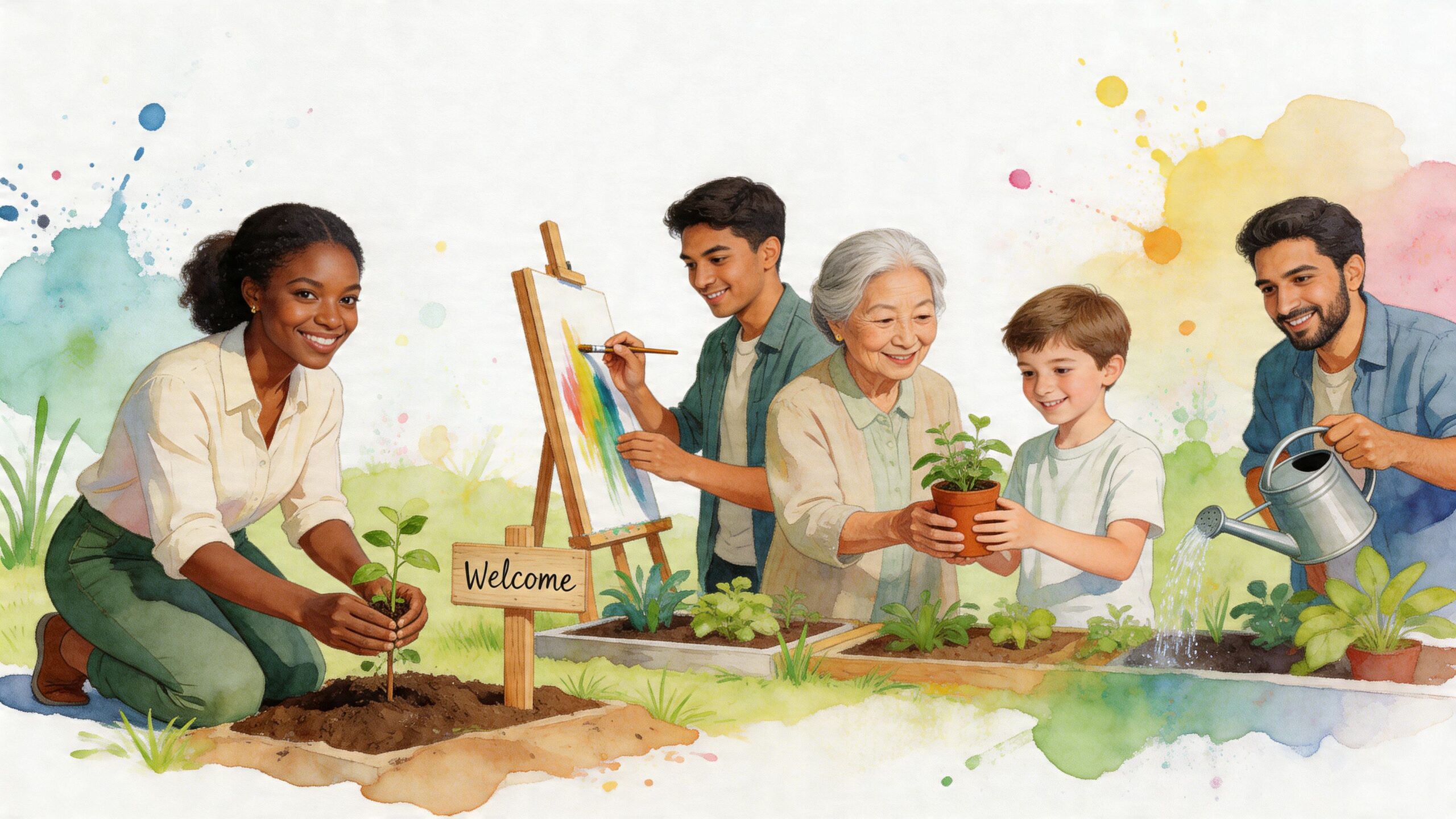
I often think of Tom Sawyer and the fence. He took a chore and turned it into shared meaning. Community cleanup can work like that. Not because we pretend hard work is easy, but because we discover that courage gets lighter in company.
Why Humboldt Park needs people who return
A lot of neighborhood guides stop at where to walk or eat. They don't say much about environmental upkeep, green space stress, or what regular people can do about the everyday wear a beloved place absorbs.
That's one reason I take seriously the point made in the Wikipedia overview of Humboldt Park, Chicago, which notes that recent environmental health trends like air quality, green space maintenance, and climate resilience are often overlooked in typical guides, and that community-led cleanups during extreme weather can help address litter and erosion risks tied to gentrification and park overuse.
I like that idea because it gives ordinary people a real role. You don't need a title to help the park hold. You need gloves, attention, and the willingness to come back.
If a neighborhood gives you shade, beauty, memory, and gathering space, returning the favor is not complicated. It is a practice.
Ways to join without overthinking it
People often hesitate because they think service has to become a giant identity shift overnight. It doesn't. You can begin small and still begin honestly.
Try one of these:
- Walk with a bag once. Take a slow lap through the area and pick up what you can safely reach.
- Choose one repeat corner. Stewardship gets real when you notice change over time.
- Bring one friend. Conversation turns a task into a ritual.
- Join an organized cleanup. Structure helps if you're new and don't want to figure everything out alone.
If you want that last option, one practical route is to browse Chicago volunteer opportunities with cleanup events. Organized groups can make the first step easier because the supplies, timing, and social awkwardness are already handled.
What to bring and how to show up
You don't need much, but a little preparation changes everything.
- Wear clothes you can move in: Comfort matters more than style on a cleanup morning.
- Use sturdy gloves: Your hands will thank you.
- Bring water: Care for the neighborhood also means care for yourself.
- Stay observant: You are not there to prove toughness. You are there to help safely.
- Keep your expectations humble: One morning won't fix everything. It will still matter.
I also think the emotional posture matters. Don't arrive as a savior. Arrive as a participant. The neighborhood already has history, leaders, protectors, and rhythms. Your job is to contribute, not take over.
The deeper reason to do it
People ask me why community cleanup feels so different from private self-improvement. I think it's because public service breaks the loop of self-obsession. Your anxieties don't disappear, but they stop being the only thing in the room.
Humboldt Park in Chicago is a strong place to learn that lesson because the neighborhood gives you immediate feedback. A path looks better. A corner feels lighter. A conversation starts. You remember what your body can do when your heart has a purpose.
That kind of morning doesn't just improve a park. It trains a person.
Your Invitation to Transformation Starts Here
So what is Humboldt Park?
It is a historic green space shaped by long memory. It is a neighborhood where culture stands in public and refuses to apologize. It is water, fieldhouses, statues, play areas, murals, food, struggle, laughter, and the stubborn dignity of people who keep showing up for where they live.
But if I leave it there, I miss the part that changed me.
A place that asks more from you
Humboldt Park in Chicago asks a better question than most destinations ask. Not just, did you enjoy yourself. It asks, how did you arrive, and what did you leave behind.
That question can sting a little. I think that's good. We need places that interrupt our habit of moving through the world as if every beautiful thing exists for our consumption. Humboldt Park pushes back against that mindset by being real. It has too much history to become a prop. It has too much community to become a fantasy.
Transformation isn't abstract here
You can see transformation everywhere in this neighborhood if you know where to look. Marshland became a major urban park. Immigrant groups turned unfamiliar ground into home. Puerto Rican Chicago turned cultural pressure into visible pride. A visitor bends down to pick up a single bottle and suddenly understands that service can reorganize the inside of a life.
That last transformation may sound small. I don't think it is.
I think many of us are waiting for a dramatic breakthrough when what we really need is a faithful practice. One walk. One returned visit. One conversation. One cleanup morning. One choice to act like a neighbor instead of a spectator.
The first honest act of care is often tiny. Its effect on your character isn't.
Why I keep coming back
I keep coming back because this neighborhood reminds me that hope is not a mood. It is maintenance. It is memory plus effort. It is people refusing to let a place become disposable.
And on a personal level, I keep coming back because I need that reminder myself. I still know what it feels like to be overwhelmed by clutter, avoidance, and the heavy little objects of daily life. Service doesn't erase that struggle. It gives it direction.
Sunlight helps. Fresh air helps. Friendship helps. Work that matters helps most.
Your next step can be simple
You do not need to master Humboldt Park. You do not need the perfect itinerary, the perfect language, the perfect volunteer résumé, or the perfect understanding of Chicago history before you begin.
You just need to start with respect.
Walk the park slowly. Look at what people built there. Eat in the neighborhood with gratitude. Learn why the flags matter. Notice what pressure looks like on the ground. And when you're ready, help carry a tiny piece of the load.
That is how a place becomes part of you. That is how you become useful to a place in return.
If this stirred something in you, take the next step with Litter Caterpillars. Join a cleanup, meet people who like doing hard good things together, and let one weekend morning in Chicago become the start of your own transformation.