
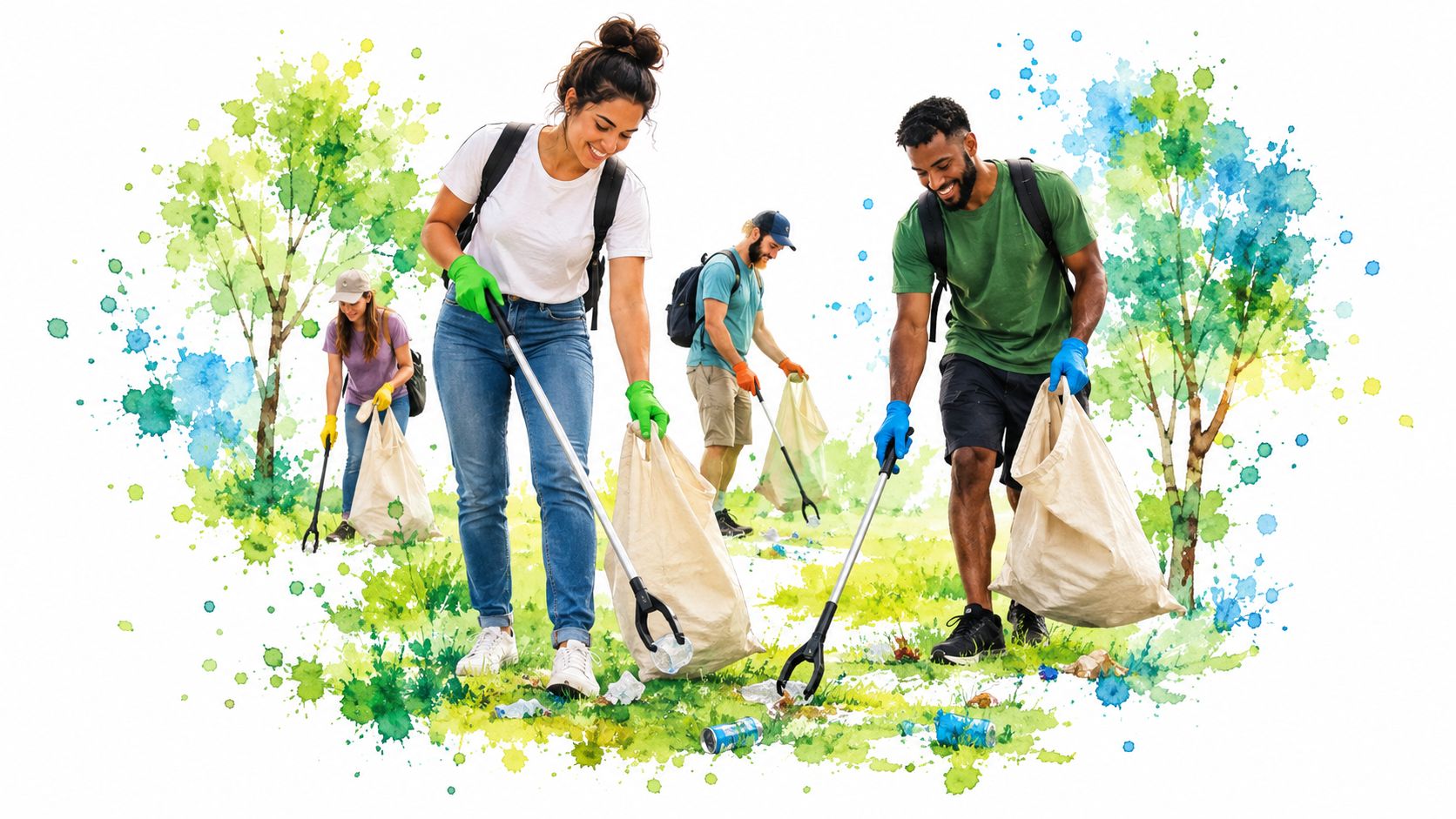
At our first Chicago pickup, three of us huddled under a tree while spring hail rattled around us and Uber drivers kept canceling. I'd started a trash crew to practice cleanliness, consistency, and bravery, and Chicago apparently wanted to administer the final exam immediately.
Why Cleaning Up Park Work Matters More Than Bags of Trash
I remember the shivering more clearly than the litter. We'd shown up to clean somebody else's mess, and suddenly we had a shared problem, a ridiculous story, and a reason to look after each other.
That tree wasn't a sensible severe-weather shelter. I wouldn't repeat that decision today. Showing up matters, but getting everybody home safely matters more.

The mess I could finally move
Before I started the crew, I struggled to clean my own home. Old food and forgotten bags carried sentimental stories, so I kept postponing decisions about them.
A wrapper beside a park bench didn't have that emotional luggage. I could grab it, bag it, and finish something. That small, complete action felt good.
Doing it beside another person felt better. Conversation didn't require a clever introduction or an impressive job title. We had a task between us, which made meeting people feel less like an audition.
I don't need you to arrive as a perfectly organized person. I need you to arrive willing to help, and willing to let somebody help you.
Give people a reason to return
I think of cleaning up park spaces as friendship with a practical assignment. You learn who checks on a cold volunteer, who carries spare supplies, and who can make a soggy morning funny without making anyone miserable.
Our weekly outings have taken us through heat and blizzards. We've also cleaned a highway during a bike-event shutdown, an unusual opportunity that doesn't turn an ordinary active highway into volunteer territory.
A corporate service day can introduce people to cleanup work. A recurring crew gives those introductions somewhere to go.
- Remember people: Learn names and ask about the conversation you started last time.
- Share responsibility: Let newcomers choose manageable tasks instead of handing them the ugliest corner.
- Protect the atmosphere: Welcome late arrivals, respect early departures, and keep donation pressure out of the morning.
I want volunteers to leave with less trash on the ground and another person they're glad to see next weekend. The bag gives us something to carry. The friendship gives us a reason to come back.
Planning Your First Park Cleanup Event
Pick a site you can understand on foot. For a new crew, I'd choose a compact park edge with a clear entrance over an enormous stretch of lakefront that requires a search party to find the organizer.
Chicago has more than 600 parks and approximately 8,800 acres of green space, according to the Chicago Public Library's Park District history. You don't need to solve that whole map on your opening morning.
Make the invitation easy to accept
I choose weekend mornings because I want to build a service-minded routine. That's my organizing preference, not a personality test for anybody who works weekends or enjoys going out.
Give people an exact meeting point: a named entrance, a fieldhouse doorway, or a recognizable intersection. Add an address and a description of how they'll recognize you. “Meet somewhere near the playground” invites confusion before anybody touches a grabber.
Call or email the park supervisor before you recruit widely. Explain your proposed area, attendance expectations, equipment, and disposal plan; ask about competing events, access, approvals, and any tasks volunteers should avoid.
- Park staff: Ask where collected waste should go and which maintenance concerns need staff attention.
- Aldermanic office: Request help identifying the appropriate city contact or coordinating neighborhood outreach.
- Nearby businesses: Ask for a specific contribution, like water, snacks, or an agreed disposal arrangement, rather than an undefined partnership.
For the event-organizing side, EventUploader's resource on planning conferences and retreats is a related reference. I'd keep a park cleanup lighter than a corporate event, with clear responsibilities and fewer moving parts.
Build a small safety net
Use a sign-up form to collect contact information, accessibility needs, and an emergency contact with consent. Keep private information out of the public volunteer chat.
Create a WhatsApp or other group chat for changes, and explain your buddy system before arrival. Choose an accessible route and a nearby substantial shelter; cancel or shorten the outing when conditions become unsafe.
A copyable pre-event timeline
- Before announcing: Walk the site, contact its manager, and settle disposal.
- When inviting: Publish the meeting point, expected finish, clothing advice, and contact method.
- The evening before: Check weather and closures, prepare supplies, and confirm who'll lead.
- Before leaving home: Send a clear go, change, or cancellation message.
I'd rather send an unglamorous update than make a newcomer stand alone beside a locked gate.
What to Bring to a Park Cleanup
Pack your kit the night before. Morning-you deserves better than a frantic search for gloves while somebody waits at the park.
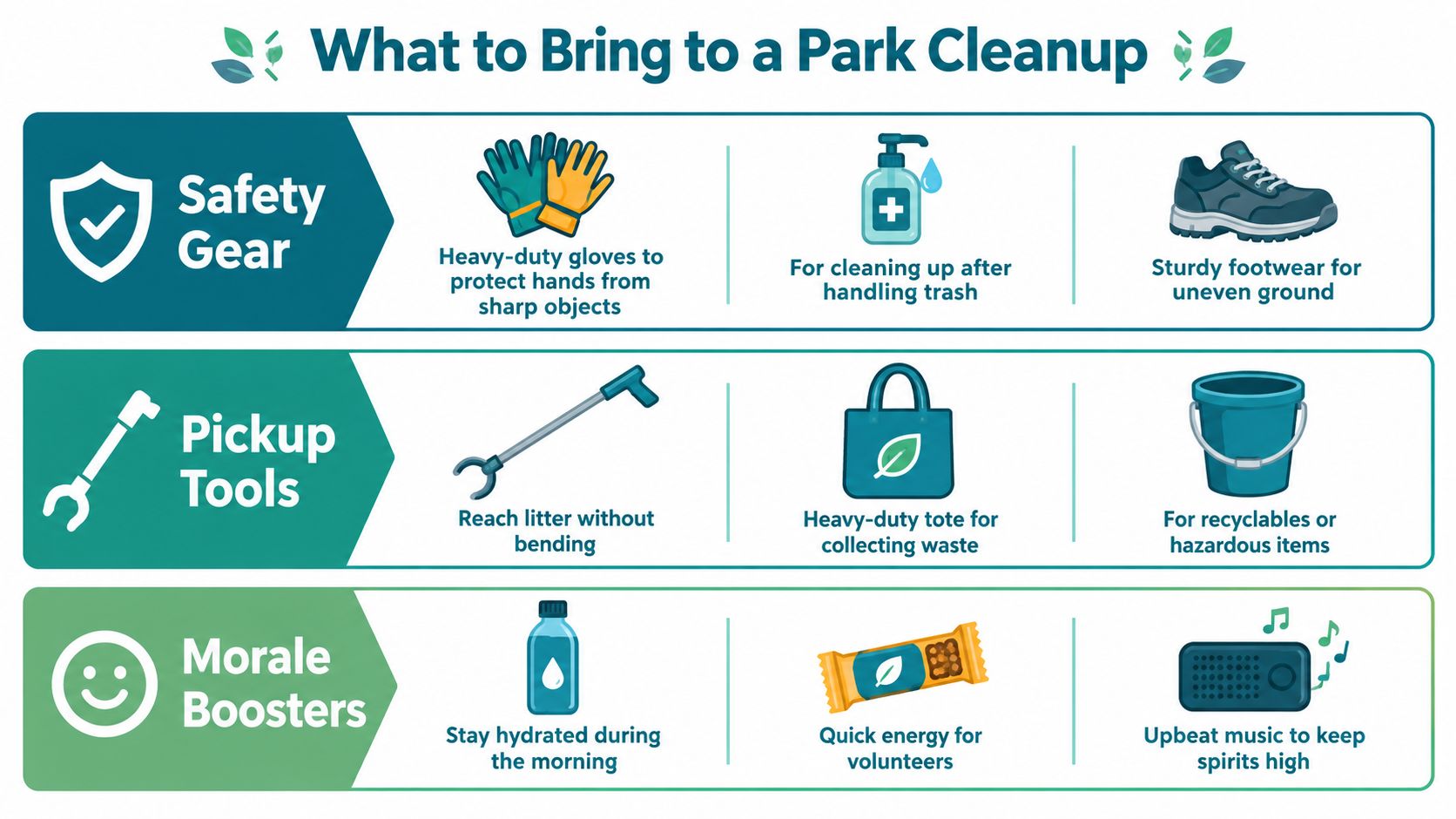
I divide supplies into safety gear, pickup tools, and morale boosters. Use this trash pickup equipment guide as a starting point, then match the kit to your site and weather.
Protect hands, feet, and attention
I prefer reusable, heavy-duty nitrile-coated work gloves over thin cotton gloves for routine litter pickup. Check the manufacturer's protection rating, and don't confuse a coated glove with permission to handle needles or sharp glass.
Wear closed-toe shoes with useful tread. In cold weather, bring layers that let you move; near road edges, choose bright outerwear or a visibility vest and stay out of traffic.
- Work gloves: Bring spare sizes, and replace damaged pairs.
- Hand hygiene supplies: Carry sanitizer for the outing, then wash your hands when you can.
- First-aid basics: Include simple supplies and identify who'll respond if someone gets hurt.
- Weather protection: Pack suitable layers, sun protection, and extra drinking water.
A grabber keeps your hands away from ordinary litter and reduces repeated bending. Try its trigger before the event, especially if you'll wear bulky gloves.
Carry tools without carrying trouble
Use sturdy bags in different sizes, a reusable tote for equipment, and a small bucket for ordinary recyclables when your disposal arrangement accepts them. Don't use that bucket to collect hazardous items, even if a checklist illustration suggests otherwise.
Leave needles, unknown chemicals, suspicious containers, and heavy dumped objects alone. Record their locations and ask the responsible agency or site manager to arrange removal.
Packing rule: If I can't explain how we'll handle an item safely and dispose of it properly, it stays out of the volunteer bag.
Bring a notebook or small trash scale if you want to record findings. Keep bags manageable rather than packing them until somebody has to wrestle them.
Snacks belong in a separate clean container. A little music, perhaps our theme song by Ella Duke, can make the morning cheerful, but keep the volume low enough to hear teammates, bikes, and park users.
Running the Cleanup Hour by Hour
Start with names, not marching orders. A newcomer should know who leads the outing, where to return, and how to stop without feeling that they've disappointed the group.
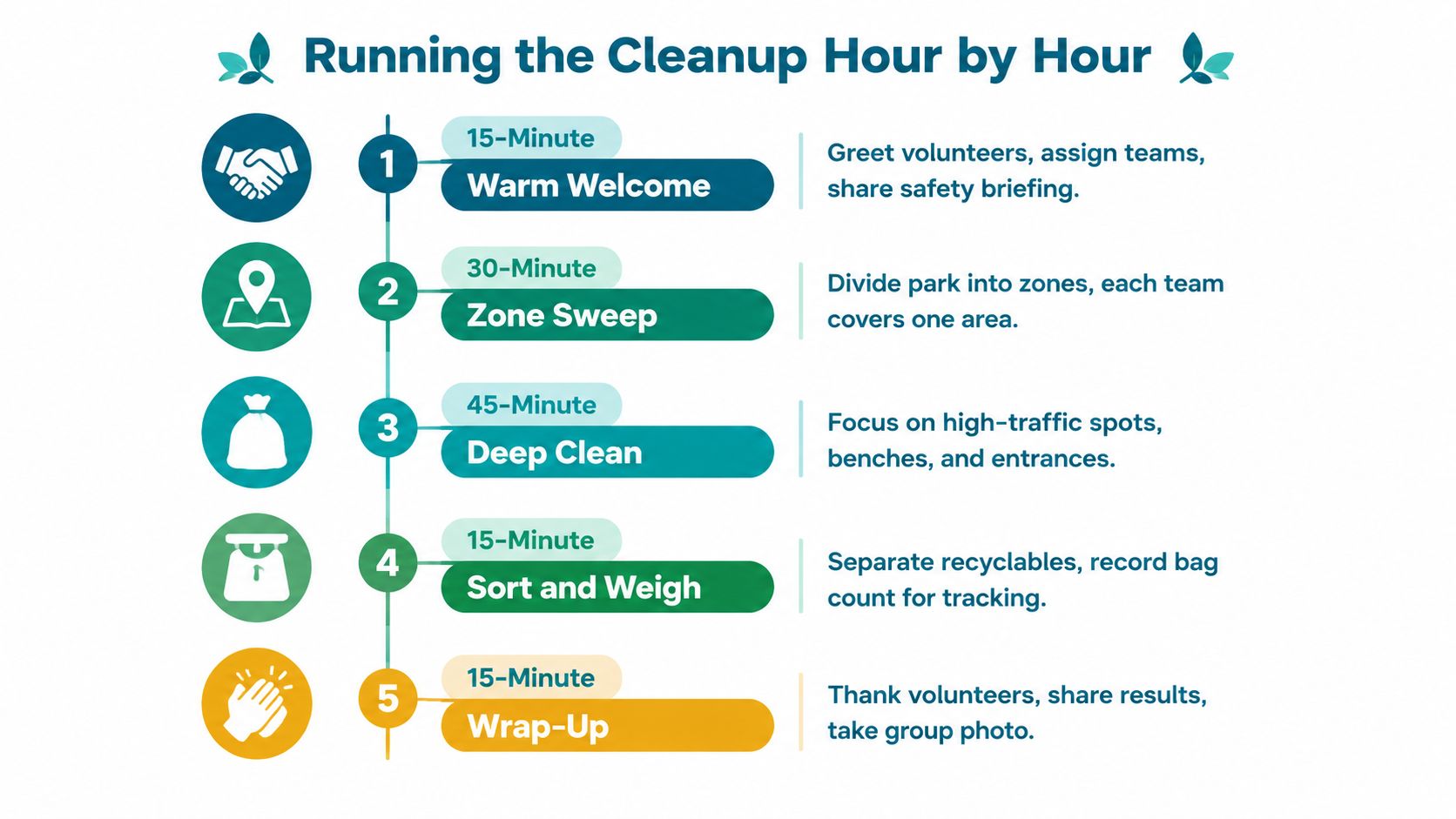
I'd use the following schedule as a sample plan, then shorten it for weather, mobility needs, or a smaller site. Nobody earns extra kindness points by staying exhausted.
Start together, then spread out
Use the opening 15 minutes for introductions, name tags, and a safety briefing. Show the boundaries, explain the disposal arrangement, identify shelter, and tell volunteers which items to leave alone.
Pair people up and give each pair a recognizable zone. Use paths, entrances, or benches as boundaries rather than vague gestures toward “over there.”
- Opening zone sweep, 30 minutes: Walk your assigned area and collect ordinary, accessible litter. Keep paths open for other park users.
- Focused cleanup, 45 minutes: Return to busy entrances, benches, and gathering areas. Don't reach into hidden spaces or pull apart dumped piles.
- Sort and record, 15 minutes: Separate accepted recyclables during collection where practical, then record bags, weights, or material categories without reopening mixed waste.
- Wrap-up, 15 minutes: Confirm disposal, retrieve equipment, and close together.
During active work, schedule water and check-ins about every 30 minutes. Treat those intervals as organizer reminders, not limits on when someone can rest.
Finish the job you started
Ask pairs to collect and carry bags without dragging them across paths. If you weigh bags, use a consistent method and record what you measured; don't guess at a result because it sounds impressive.
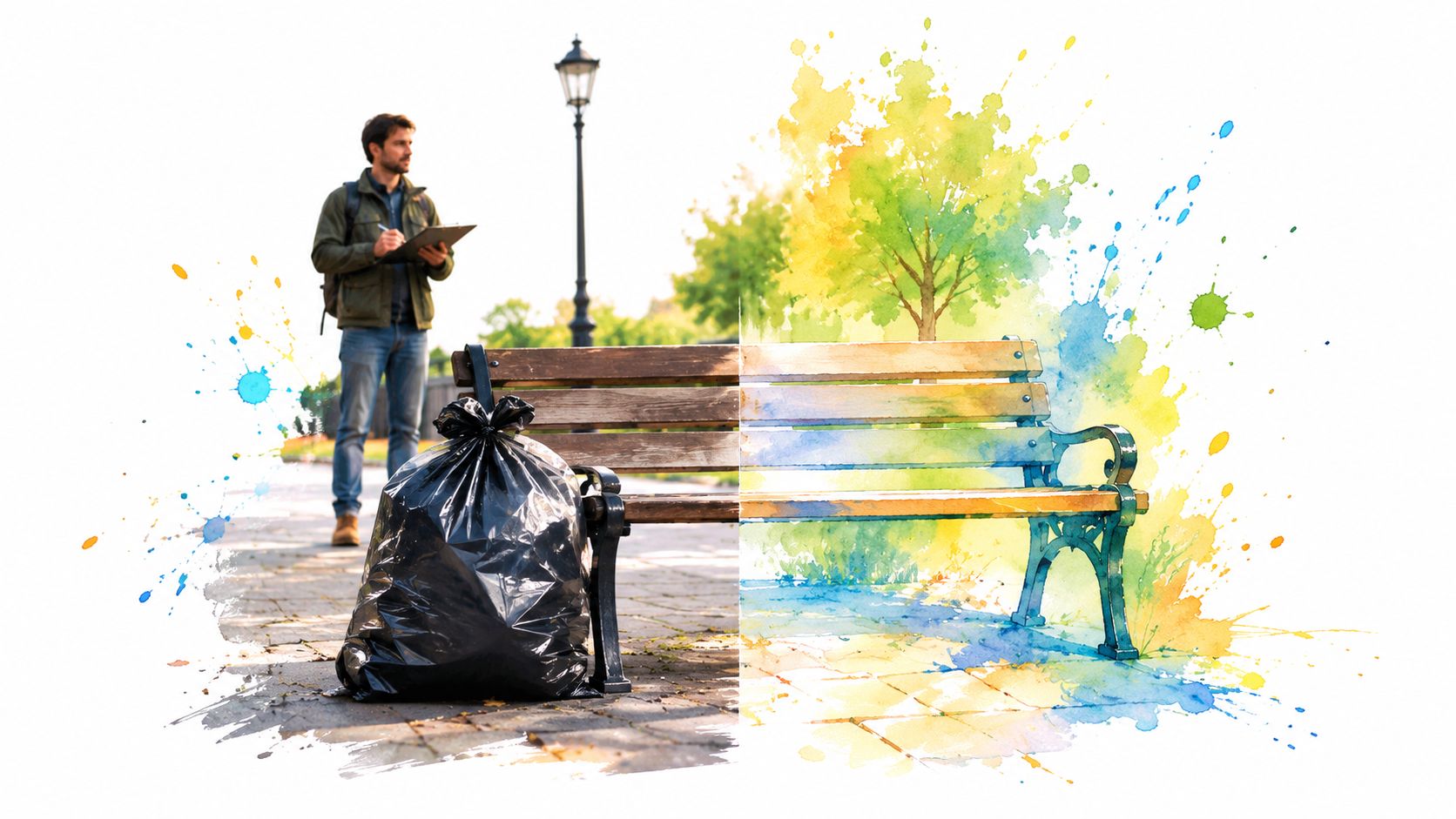
Take before-and-after photographs from the same position. Ask permission before photographing volunteers, and avoid turning nearby residents into background props.
You can always tell me you're tired, uncomfortable, or ready to leave. You don't owe the crew an explanation.
Use 10 minutes of the wrap-up for a short debrief. Ask what people found, what surprised them, and which spot needs another visit or professional attention.
Leave the remaining wrap-up time for thanks, an optional group photo, and equipment checks. Before everyone scatters, confirm that no bags, tools, or volunteers remain out in the work zones.
Picking the Right Ward and Reading City Rules
I don't choose a cleanup site by zooming out until Chicago looks manageable. I choose an address, understand the surrounding blocks, and find out who already handles maintenance there.
Chicago has 50 wards, and the city organizes street sweeping by ward and ward section; the City Services by Address dashboard lets you look up an address's ward, community area, and applicable sweeping information. Use that information to coordinate your outing rather than assuming the municipal schedule follows your volunteer calendar.
Choose a workable patch
Use this Chicago ward boundaries guide to orient yourself, then check the specific address. A ward gives you a starting area; it doesn't tell you who owns every nearby parcel.
Look separately at park property, sidewalks, road edges, and vacant lots. Ask permission before entering private property, and avoid moving a cleanup onto a busy roadway because the adjacent grass looks tidy.
The Chicago Park District Code prohibits bringing material into a park and leaving or dumping it unless you remove it or use an approved receptacle, limits access from 11:00 p.m. to 6:00 a.m., and requires permits for tents, canopies, or other structures. Confirm where your collected waste can go before anybody fills a bag.
I don't assume a park bin can accept the entire crew's haul. Ask the supervisor about capacity and approved disposal arrangements, especially if you expect bulky litter.
Know when the owner needs to act
Chicago's sanitation ordinance guidance requires owners of vacant and unimproved lots to remove litter, debris, and abandoned vehicles and keep weeds from growing above 10 inches. Document those conditions separately rather than treating everything as volunteer work.
Our crew won an empty lot at auction to develop Caterpillar Park in Englewood. Taking ownership is a different undertaking from organizing a public-park pickup; you shouldn't inherit somebody else's maintenance duties by showing up with gloves.
Chicago Cleanup Rules and What They Mean for Volunteers
| Rule | What It Says | Volunteer Takeaway |
|---|---|---|
| Park waste disposal | Remove material or use an approved receptacle. | Confirm the final destination before collecting. |
| Park access | The code limits overnight access. | Plan within permitted hours. |
| Structures | Tents, canopies, and other structures require permits. | Ask before bringing event infrastructure. |
| Vacant-lot upkeep | Owners must address litter, debris, vehicles, and excessive weeds. | Document conditions and contact the responsible party. |
Choose a place where you can finish responsibly. An abandoned bag beside an overflowing bin isn't the ending I want.
What Success Looks Like Beyond Bags Collected
A clean bench can still sit beneath a broken light. I can remove the wrapper beside it, but I can't promise that a resident will feel comfortable sitting there after dark.
In a 2025 randomized controlled trial in Montevideo public squares, researchers estimated that removing trash bins reduced measured litter by 43.5%, yet found no significant change in people's perceptions of cleanliness, according to the public-space intervention study. I wouldn't use that result to recommend removing Chicago's bins; I'd use it to question whether our bag count tells us enough.
Record what you find and what people experience
An EPA-supported Wichita study involved 70 citizen scientists at 24 cleanup events across 12 parks, who categorized 1,765 larger litter items and collected 30 gallons of smaller litter; plastic accounted for 47% of categorized items, and food-and-beverage litter accounted for 49% of the total, as documented in the EPA's litter research projects. For our crew, that's a practical reason to record materials and locations, rather than only bags.
Use a notebook entry that takes roughly 60 seconds as a suggested habit. This community impact measurement guide is another starting point for choosing what to track.
- Use: Note return visits and whether children and older adults use the space, without collecting identifying details.
- Comfort: Ask willing residents how the park feels at different times of day.
- Aftercare: Record broken lights, blocked sightlines, graffiti, overflowing bins, and damaged play equipment.
Report conditions without blaming neighbors
In an underserved neighborhood, I want our photographs to document maintenance needs, not imply that residents failed a housekeeping inspection. Volunteers can remove ordinary litter while asking municipal agencies and property owners to handle their responsibilities.
Send a plain report: location, observed condition, date, photograph if appropriate, requested action, and safe contact information. Describe an abandoned vehicle or damaged fixture without investigating it yourself, and keep the report reference for follow-up.
Ask residents what they want addressed. Their answer may have very little to do with the bag you're holding.
Show Up Next Week and Bring a Friend
I started with personal struggles and a willingness to try something uncomfortable. You can start with a park you already walk past and a friend who'll answer your message.
Keep your starter plan small enough to carry out. Choose a ward, a park, and a Saturday morning; confirm permission and disposal, then prepare gloves and grabbers.
Make your next move
- Find a crew: Check Meetup, Instagram, or neighborhood organizations for an upcoming outing.
- Start your own: Invite someone you know and give them a clear meeting point.
- Keep it kind: Respect people's limits, share easy tasks, and change plans when safety requires it.
A weekly practice gives you another chance when a morning goes sideways. I want people to return because they felt welcome, useful, and cared for, not because I talked them into ignoring the cold.
Litter Caterpillars organizes weekly volunteer trash pickups across Chicago, with bags, gloves, grabbers, and a volunteer-first approach to safety and friendship. Visit Litter Caterpillars to find an upcoming cleanup and join the group chat, then bring a friend or come ready to meet one.