
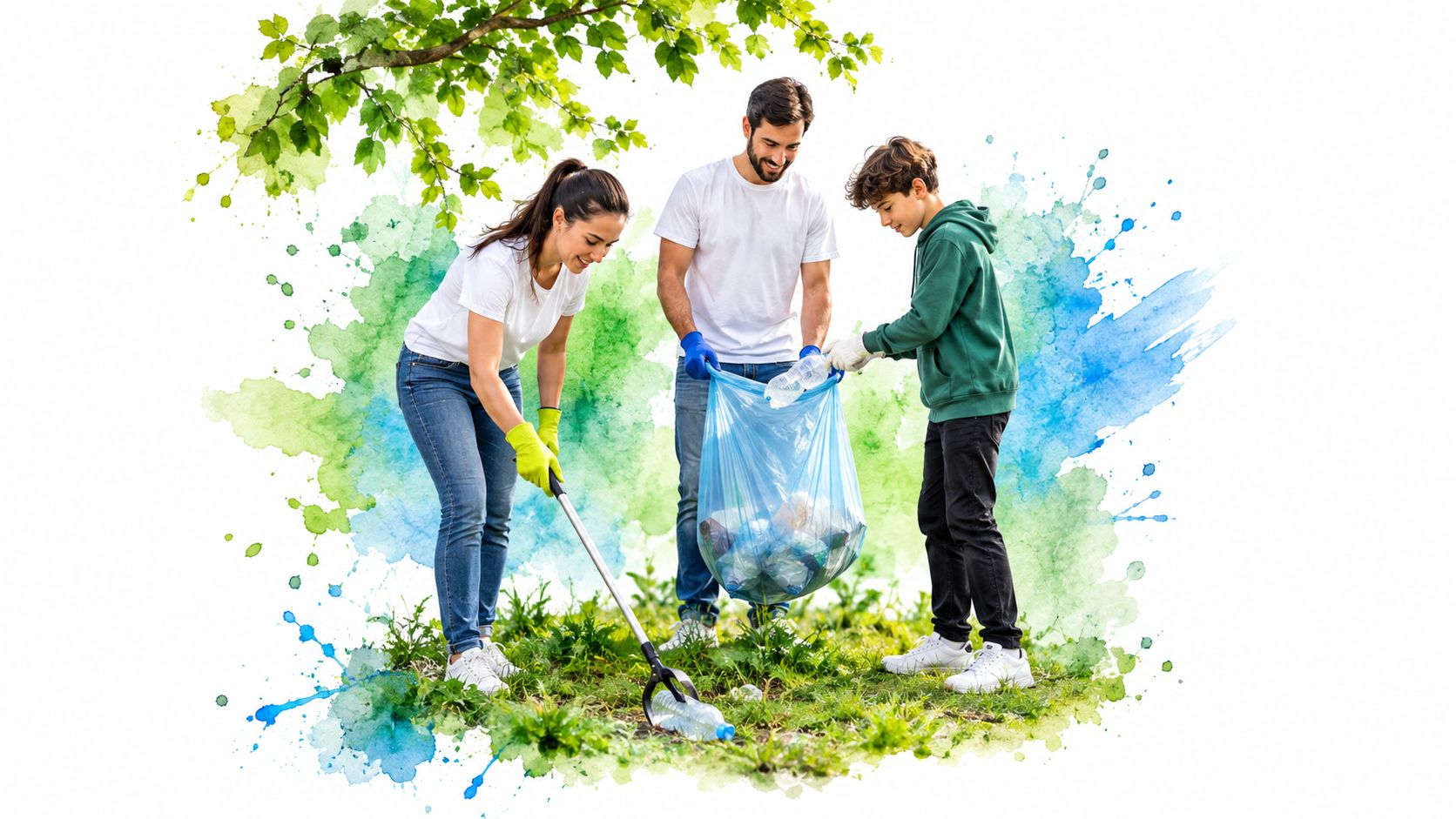
Three of us hid under one thin tree while hail bounced off our bags and our phones lit up with cancelled rides. I laughed, I shivered, and I kept picking up cups after the storm passed because the wet grass made every white wrapper easy to spot.
"The First Time We Got Caught in the Hail"
I still remember the sound first. Hail hit the metal bench, hit our buckets, hit the brim of my cap, and we squeezed under a tree that gave us almost no cover at all.
You learn a lot about people in ten cold minutes. Nobody ran for the bus. Nobody hid behind a complaint. We passed around a soggy granola bar, we joked about Chicago spring, and we watched the park turn white around the playground.
What the storm taught me
I learned that I clean another person's mess faster than I clean my own kitchen. At home, I move a jar from one shelf to another and call it progress. In a park, I grab a bottle, I drop it in the bag, and I see clean grass right away.
I also learned that hard weather gives you a story you repeat. A perfect morning fades. A hailstorm sticks in your head, and you tell a new volunteer about it while you tie your first full bag.
Cold hands and good company beat a clean living room I never start.
That morning changed how I plan. I check the sky before I check the signup list. I ask who has a car, who needs a ride, and who lives near a train stop. I also build in a warm drink stop after we finish, because people return for the people as much as they return for the park.
You build a habit the same way you build a route. You pick a place. You show up again. You bring a friend who brings another friend.
Our group grew ward by ward that way. Litter Caterpillars finished 50 trash pickups across Chicago's 50 wards in 50 weeks, and I watched strangers learn streets they had never walked before. I treat every new park like a new neighborhood introduction, and I ask locals what they notice before I open a single bag.
You need that mindset when you clean up the park the right way. You lead with care for your crew. You make the work simple. You leave the ground cleaner and you leave each other in a better mood than you found.
"Map the Park Before Anyone Picks Up a Bag"
I walk the park alone before the crew arrives. I take photos at the entrance, the playground edge, the benches, and the low spot where water drags wrappers after rain.
You need a picture of the whole job before you hand out grabbers. Without a map, five people crowd the same path and nobody touches the fence line.
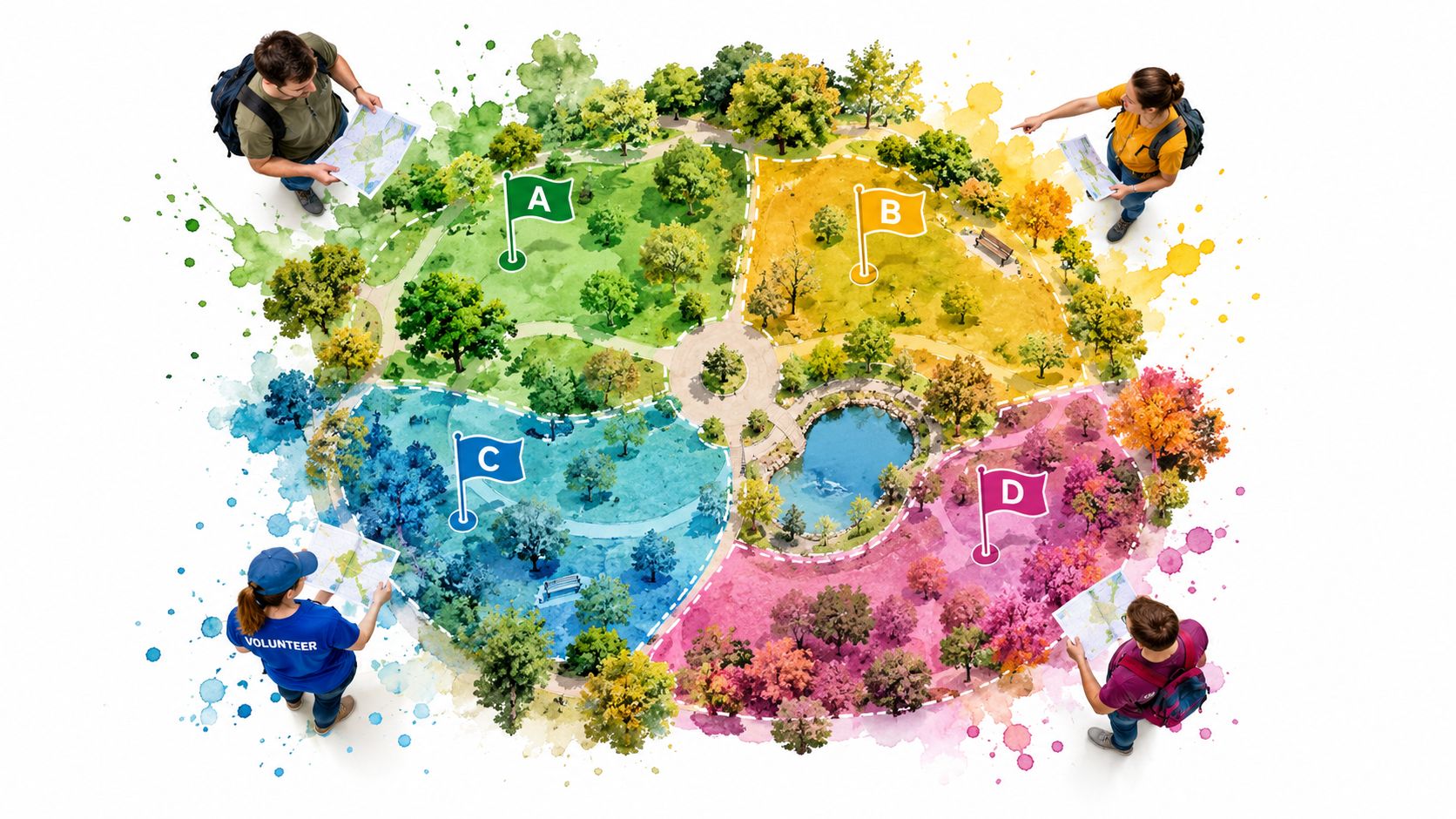
Chicago gives you a lot of ground to learn. The system began in 1837 with 20 acres of public parkland and now covers roughly 8,900 acres across more than 600 parks. I don't try to hold that scale in my head. I shrink the day down to one park, four zones, and one clear finish point.
Draw zones people can finish
I sketch the park on paper or I mark a phone map. I use landmarks a first timer can find without asking me twice.
- Zone A entrances: You sweep the gates, the sign, and the first stretch of path where cups pile up.
- Zone B play and seating: You work around benches, tables, and playground borders while you keep bags away from kids.
- Zone C paths and drainage: You follow the walking loop and you check the low lines where wind pins trash against grass.
- Zone D perimeter: You walk the fence, the alley edge, and the street curb with a buddy near traffic.
I give each team a one way route. You start at the far end and you walk back toward the bag staging spot. You skip the backtracking that wastes energy and makes clean ground dirty again under muddy shoes.
Property crews use the same habit on larger sites, and landscaping planning for property teams gives you a useful model for zones, routes, and repeat visits. You can pair that thinking with our map of cleanup areas across northeastern Illinois when you choose your next site. I like a map a new volunteer can read in thirty seconds.
I set the meeting spot near transit, a restroom if the park has one, and a hard surface where bags won't tip into mud. I note the start time, the weather, and any hazard I spot on my first walk. I take the same photos again at the end so you can prove what changed.
Watch how a simple site walk turns a loose group into a crew with a shared plan.
You save time with five quiet minutes up front. I promise you feel the difference when every team knows its corner, its route, and its way back.
"Gear You Actually Need and Where to Borrow It"
I overbought on my first solo cleanup. I carried too many bags, two kinds of gloves, and a grabber with a weak jaw that dropped every wet can.
You need less gear than you think. You need the right basics in good shape, and you need backups for the items people forget.
Pack the short list
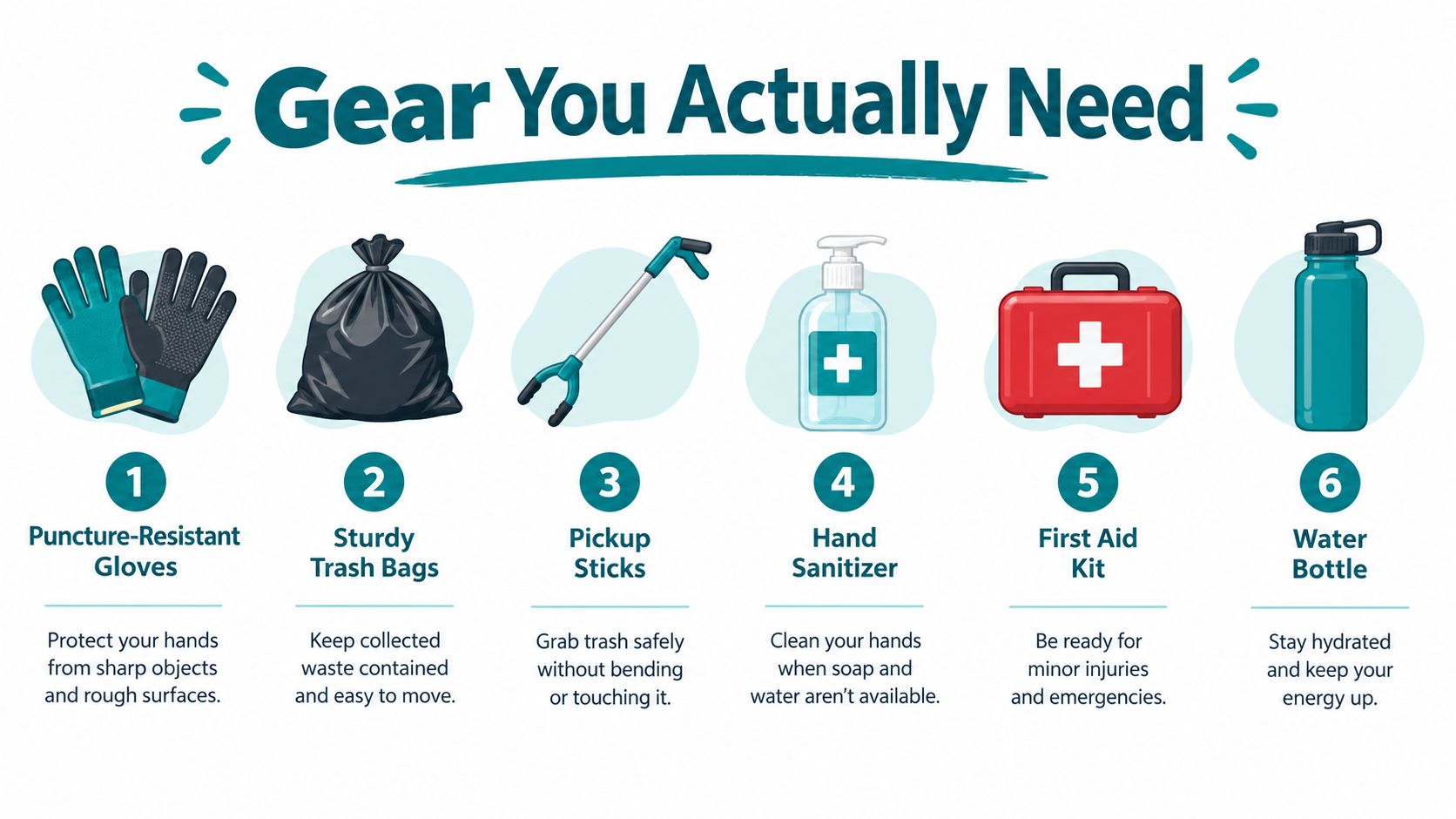
- Puncture resistant gloves: You protect your hands from thorns, rough metal edges, and mystery grime.
- Sturdy grabber: You reach into bushes without putting your face or fingers near hidden trash.
- Strong bags and a bucket: You carry sharp cans in the bucket and you keep light wrappers in the bag.
- Water and a snack: You keep your energy steady and you share with the person who forgot breakfast.
- First aid kit: You clean a small scrape on the spot and you record anything bigger for the lead.
- High visibility layer: You help drivers and cyclists spot you near a street or bike path.
I add a marker, tape, hand sanitizer, sunscreen, and a portable phone charger. I write the zone letter on each full bag. I also print two paper maps because one phone always dies at the worst moment.
You don't have to buy a full kit on week one. Friends of the Chicago River lends kits with 10 to 15 grabbers, five buckets, bags, gloves, and a safety and planning toolkit through its supply stations. I love that setup for a small crew because you borrow, you clean, you report, and you return the gear without storing a pile in your hallway.
Borrow first: You learn what your crew actually uses before you spend money on a dozen tools.
Compare your shopping list with our guide to trash pickup equipment for regular crews before you order anything fancy. I buy gloves and bags first because we use them every time. I borrow extra grabbers for big days and I replace one tool at a time when a handle cracks or a jaw bends.
Leave cologne, open toe shoes, and thin grocery bags at home. You want closed shoes, clothes you can wash, and a bag that survives a wet bottle. Simple gear keeps the morning simple.
"The Pickup Flow Bag by Bag"
I like a rhythm you can learn in two minutes. One person scans ahead, one person grabs, one person holds the bag, and everyone rotates before shoulders get sore.
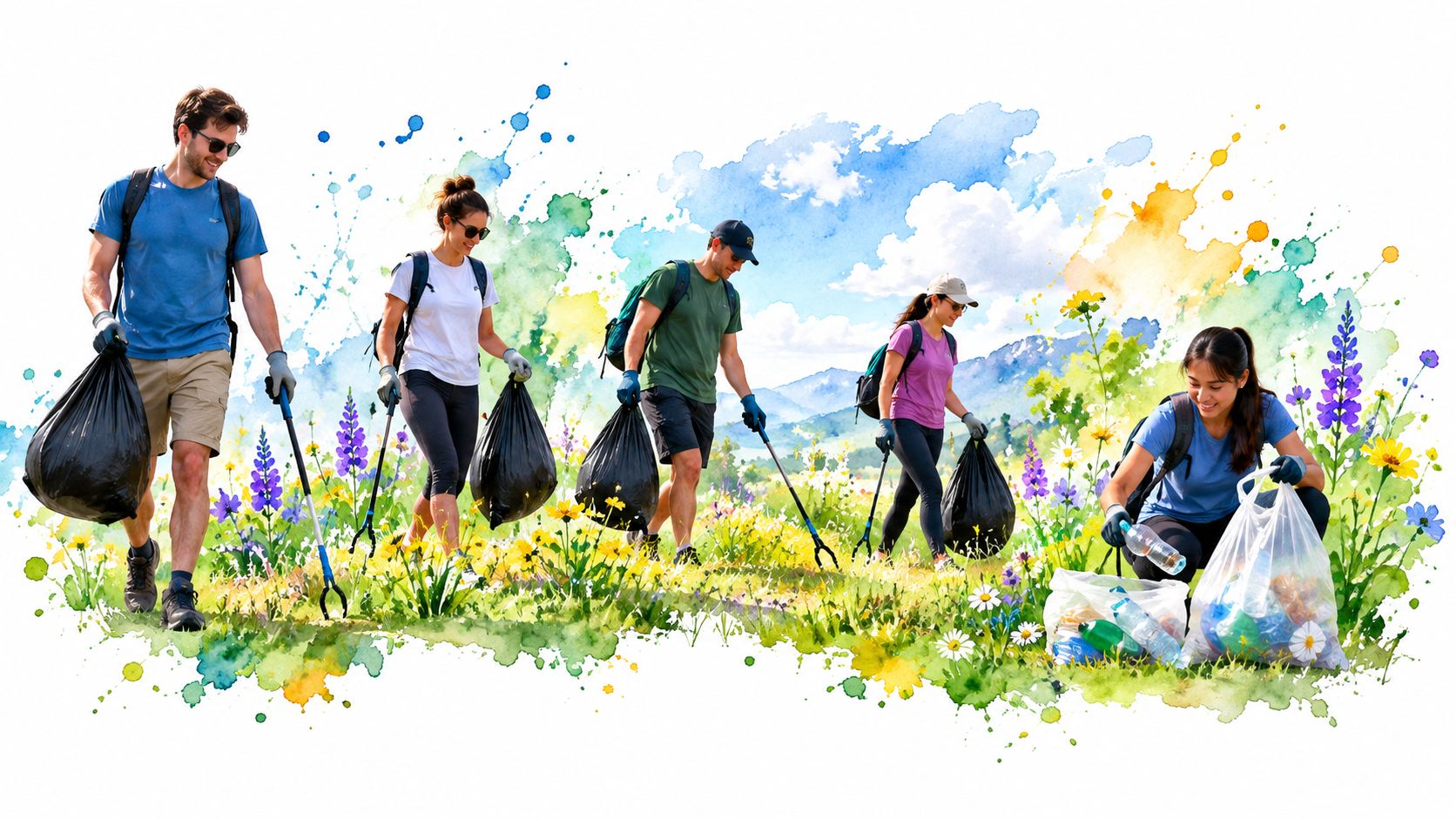
You move like a slow caterpillar across the grass. You inch forward, you clear a strip, and you don't leap around chasing the one bright wrapper fifty feet away.
Work your strip from far to near
Start at the far edge of your zone. Walk a straight line back toward the staging spot and keep your eyes on a lane about as wide as your outstretched arms. You catch more small trash that way than you catch with random wandering.
Call out what you see. I say can, bottle, wrapper, butt, and my partner knows where to aim the grabber. It sounds silly for one minute and then it feels like a game, and the bag fills faster than you expect.
Sort with care and with local rules in mind. I put clean cans and bottles aside only when I know the park or a nearby facility accepts them. I bag food soaked paper, dirty plastic, and mixed trash together as landfill waste so I don't ruin a recycling load with good intentions.
Tie a bag before it tears. I stop at a weight I can lift without twisting, I squeeze out loose air, and I carry the bag away from my legs. You save your back and you keep mystery liquid off your pants.
Know what you leave alone
This part matters more than speed. I want you proud at lunch, and I want you unhurt.
The Chicago Park District handbook tells volunteers to avoid broken glass, sharp metal, wire, needles, containers with unknown substances, and sanitary products, and it treats bags and gloves as the minimum kit. I follow that line without debate. I flag the spot with a bright bag or a stick, I take a photo, and I send the location to the team lead for a report.
- Ordinary litter: You pick up wrappers, cups, cans, bottles, cardboard, and food packaging with gloves and a grabber.
- Sharp or suspect items: You step back from needles, broken glass piles, and sanitary waste and you call the lead.
- Chemical or pressurized items: You leave unknown liquids, spray cans under pressure, batteries, and paint containers for trained handlers.
- Oversized debris: You photograph dumped furniture, tires, or construction waste and you report the exact location.
Never reach into a bush, a drain, or a closed container with your hand. Use the grabber, tap the area first, and stop if you can't see the object clearly. I use a simple script with new folks. I say, flag it, photo it, tell the lead, and move on with zero shame.
Your job is litter. Hazard work belongs to people with training, tools, and a disposal plan.
Keep full bags on a hard surface near the route the pickup crew uses. I line bags up by zone so we can count them fast at closeout. I keep them away from play areas, picnic tables, and storm drains.
Rotate jobs every fifteen or twenty minutes. The scanner grabs, the grabber bags, and the bag holder scans. You rest different muscles, you keep eyes fresh, and you give quiet people a natural way to join the conversation.
When you clean up the park with this flow, you feel calm instead of frantic. You hear birds again between the jokes. You watch a dirty corner turn back into a place where a kid can drop a backpack and run.
"When Rain or Shine Becomes a Real Decision"
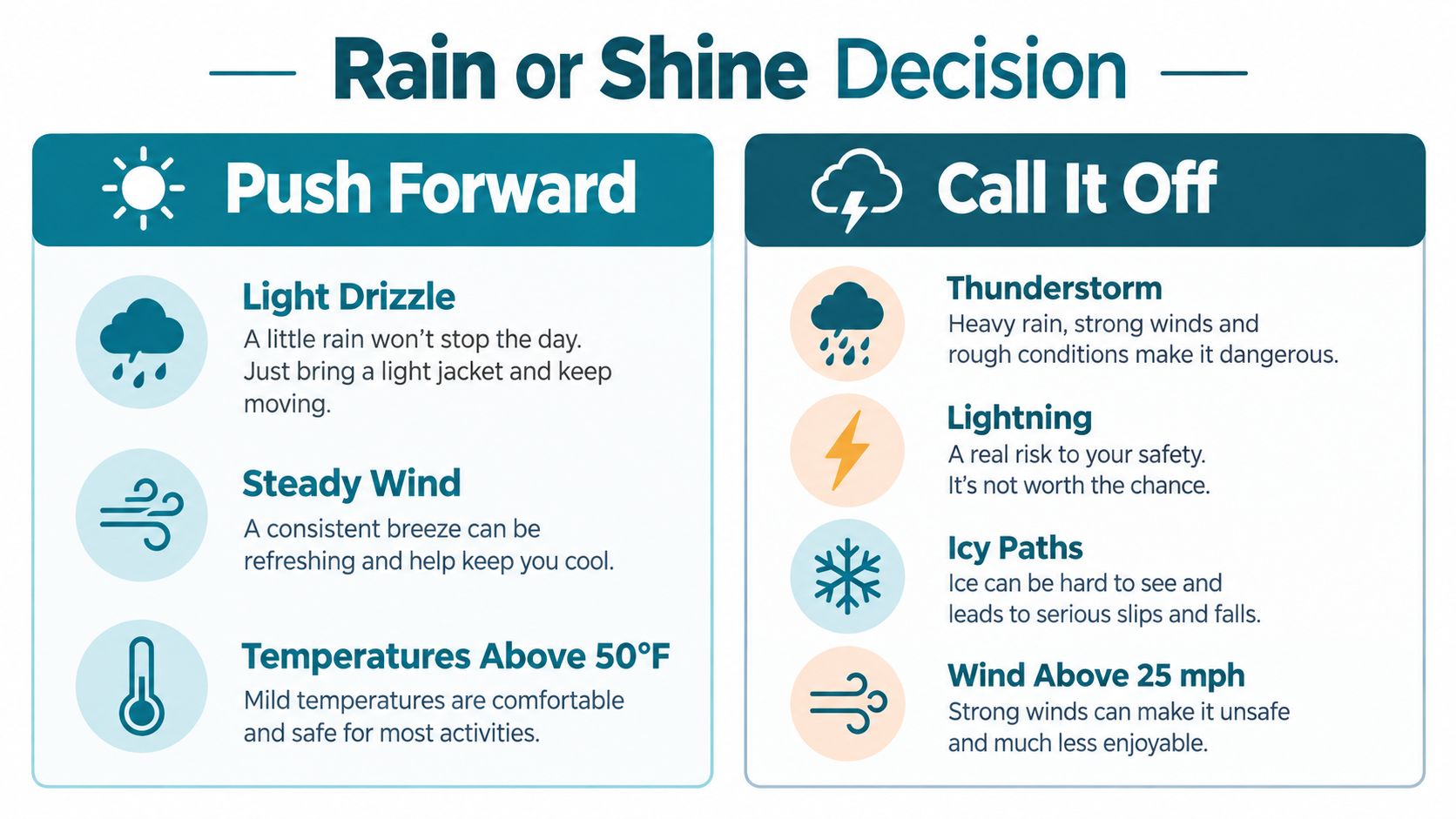
I love our rain or shine spirit. I also cancel a cleanup when the sky tells me to cancel, and I say it early so nobody rides across town for nothing.
Bravery means you show up for hard work. Bravery also means you tell a friend, we stop now, and you walk everyone to shelter without a debate.
Use a simple go or no go check
I check the forecast the night before and again at dawn. I look for lightning, flooding, high wind, ice, extreme heat, bitter cold, and poor air quality. I name one lead who can stop the event, and I back that person in front of the group.
| Signal I See | Move I Make |
|---|---|
| Light drizzle and steady footing | I shorten routes and I hand out extra bags for wet trash |
| Thunder, lightning, or flooded paths | I cancel or I move everyone to shelter and end the pickup |
| Ice on paths or poor visibility | I postpone and I offer a coffee meetup instead |
| Heat with flushed faces and heavy sweating | I force shade breaks and I cut the session short |
Heat sneaks up on people who feel fine at sign in. CDC and NIOSH guidance recommends work and rest cycles, frequent hydration, and about 8 ounces of water every 15 to 20 minutes during work over two hours. I use buddies, I ask direct questions, and I treat a dropped water bottle or a suddenly quiet volunteer as a signal to pause.
Run through our volunteer safety checklist before you leave home and share it in the group chat. I include a no penalty cancellation rule in every invite. You can stay home, you can leave early, and you still belong with us next week.
Older volunteers, first timers, and anyone with a health concern deserve that freedom. I protect the crew first and the bag count second. A park can wait one week. A person who faints on hot pavement remembers that day for the wrong reason.
"Closeout, Audit, and Why You Come Back"
I end every cleanup with a slow final walk. I carry one last bag, I revisit each zone, and I take photos from the same spots I used at the start.
You catch the cup under the bench on that walk. You also see the win with fresh eyes, and that view pulls you back next Saturday.
Run a fifteen minute closeout
Gather the bags by zone and count them out loud. Weigh bags if you carry a small scale, or record bag size and fullness in plain notes. I write down volunteer hours, weather, and any hazard reports we sent during the morning.
- Sectors cleared: You mark each zone done, partial, or still dirty.
- Material tally: You note cans, bottles, food packaging, and other repeat items.
- Hotspots: You pin the fence corner or drain line where trash built up again.
- People notes: You record near misses, small injuries, and one good moment worth repeating.
Counting sounds dull until you see a pattern. In Wichita, trained volunteers used the EPA Escaped Trash Assessment Protocol and categorized 1,765 pieces of litter larger than 4 inches. I borrow that spirit on a smaller scale. I count items by material in one sample zone, and I repeat the same count next month so we can tell whether litter returned.
A photo shows a moment. A repeat count shows a trend you can act on.
Share the results with neighbors in plain language. I post the before and after photos, the bag count, the zones we cleared, and the problems we reported for follow up. I thank people by name and I name the next date while the feeling is still warm.
Ask residents what improvement means to them. A parent may care about glass near the swings. A dog owner may care about the gate area. You earn trust when you listen first, return on schedule, and report what still needs city help.
One cleanup gives you a good morning. Repeat visits give a park a new normal, and they give you friends who know your coffee order and your worst hail story.
You can join a weekly Chicago cleanup, meet kind neighbors, and help clean up the park in a ward you have never explored. Visit Litter Caterpillars to find the next weekend meetup, grab a bag and a grabber, and start your own story with us on the grass.