
The first time I ducked into a forest preserve outside Chicago, I still had grit from the Kennedy on my shoes and a bad week sitting in my chest. I thought I was going to a park. I ended up in a place that felt half feral, half forgiving.
More Than Just Trees
I came to the preserves because I was stuck.
Not movie-stuck. Real stuck. Too much noise, too much scrolling, too many little failures piling up in my apartment and my head. In the city, you can keep moving and still go nowhere. You can bounce from train to coffee shop to grocery store and never once feel your own feet on the ground.
Then I walked into a patch of woods in Cook County and the whole script changed.
The trail wasn't polished. The mud didn't care about my schedule. Branches scratched my sleeves. I heard birds before I saw water, and then I saw water before I understood where I was. That mattered to me. Chicago teaches you to read blocks, lights, corners, crowd flow. A forest preserve chicago trail teaches you something else. It teaches you to slow down enough to notice.
The day I stopped needing everything neat
I expected picnic tables and a tidy loop. I found something rougher. I found fallen logs, wind in tall grass, and that strange feeling you get when a place doesn't perform for you.
That roughness helped me.
When your life feels overmanaged on the outside and chaotic on the inside, a little honest wildness is medicine. The preserves don't ask you to impress anybody. You show up sweaty, annoyed, sad, restless, hopeful. The land takes all of it.
You don't have to arrive balanced. You just have to arrive.
I've brought friends out there who thought they hated nature. Usually what they hated was pressure. Out in the preserves, pressure drops. You walk. You breathe. You get dirt on your shoes. Somewhere between the parking lot and the tree line, your shoulders stop trying to live near your ears.
That's why I don't talk about these places like they're just good for a casual stroll. They can be that. They can also be where you practice courage in small doses. A longer trail. A colder morning. A muddy path you almost turned away from. Sometimes bravery starts there.
What Are Chicago's Forest Preserves Anyway
The first time a friend asked me that question, we were standing at a trailhead with mud on our shoes and burrs stuck to our socks. He looked around and said, "So what is this, exactly? A park?" I told him no, not because I wanted to sound smart, but because a preserve asks something different of you. A park often gives you a tidy break. A forest preserve gives you room to work on yourself while the land keeps being itself.
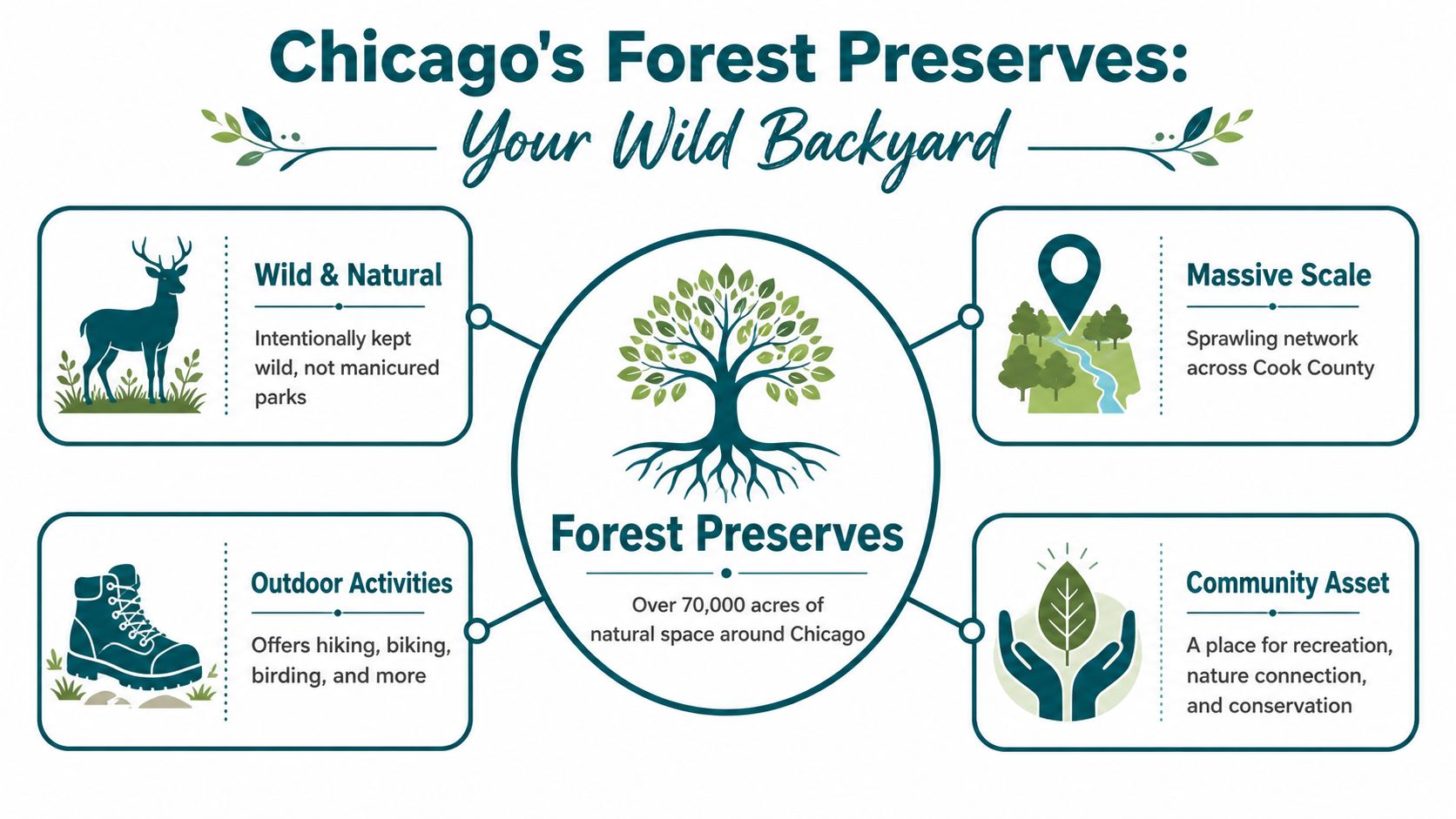
These places are protected public lands spread across Cook County. They hold woods, prairie, wetlands, creeks, bike trails, picnic groves, and quiet corners where you can hear your own thoughts again. Some areas feel welcoming right away. Others feel rough, half-hidden, and a little humbling. I like that. It reminds you that the county left space for life that does not need to entertain you.
Why that matters when your life feels too tight
You feel it fast.
One minute you're coming off a packed street, running on noise and habit. Twenty minutes later you're watching cattails move in the wind, or standing under oaks that were here before your deadlines, your landlord, your latest dumb argument, all of it. That shift is part of the point. The preserves protect habitat, yes, but they also protect a kind of honesty that city life can sand down.
I have seen that honesty change people. On Litter Caterpillars cleanup days, someone always starts a little guarded. They keep conversation safe. They joke about the smell, the bugs, the mud. Then an hour passes. They fill a few bags, sweat a little, stop performing, and settle in. A preserve will do that to you. Service helps too. You stop asking, "What can I get from this place?" and start asking, "What do I owe it, and what can it teach me?"
My plain answer
Chicago's forest preserves are shared ground we chose to keep wild enough to matter.
That means you should expect more than a flat walking loop and a bench every few yards. You might hit a shaded trail, open grassland, wet patches near the water, or a grove full of families cooking on a Sunday afternoon. You might also find restoration work, closed-off habitat areas, and signs asking you to stay on trail because the place is alive, not decorative.
If you want a good example of how a preserve can feel both challenging and welcoming, look at our guide to Waterfall Glen Forest Preserve near Chicago. That kind of place offers a complete experience. Big space. Real terrain. Enough beauty to pull you in, enough grit to keep you honest.
Here is the version I give friends before we get out of the car:
- Go in expecting real land: You are still in Cook County, but it can feel a long way from traffic and concrete.
- Expect different moods: Some preserves feel social and easy. Some feel quiet, raw, and better for solitude.
- Remember the purpose: People come to walk, bike, bird, fish, picnic, volunteer, and breathe. The land is also there for plants, animals, and long-term care.
A good preserve does not revolve around you. That is why it helps. You enter, pay attention, and earn your calm the old-fashioned way.
Your First Adventures Three Preserves to Explore
The first time I took a new volunteer out after a cleanup, he stood by the car and stared at the map like it was a test he had not studied for. City habit. Too many options, too much second-guessing. I told him the same thing I will tell you. You do not need the perfect preserve. You need a first one, then a second, then the kind of grit that comes from showing up again.
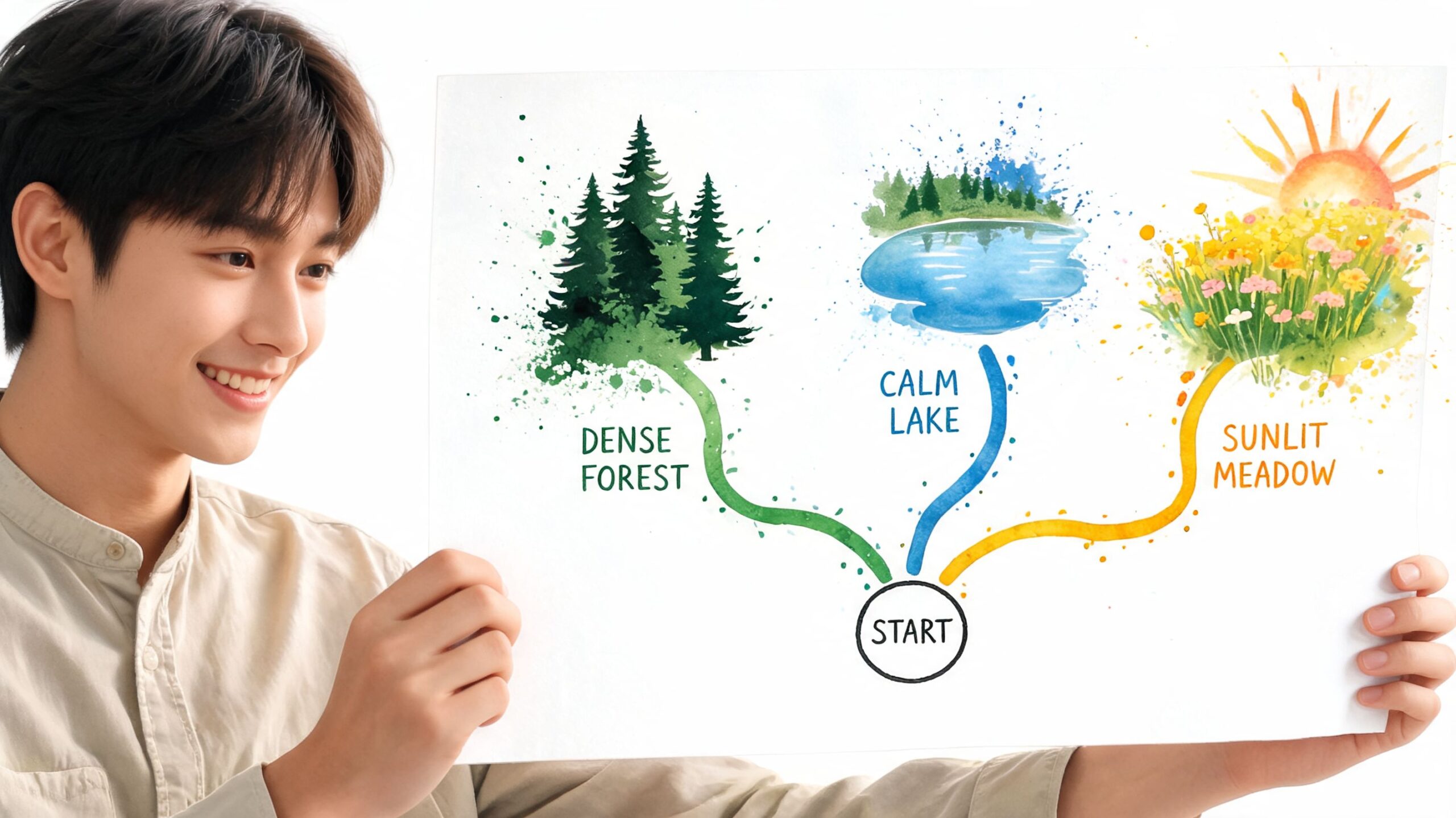
Three places. Three moods. Pick the one that fits the life you have this week.
Busse Woods is your easy first yes
Busse Woods is where I send people who want a win.
I brought my cousin there after months of hearing him say he needed to "get outside more." You know the type. Burned out, overbooked, always one more text away from changing the plan. We got out, started walking, and within ten minutes his shoulders dropped. Nothing dramatic. Just that small shift when your body remembers it was made for more than chairs, screens, and parking lots.
Busse gives you room without throwing you into the deep end. The paths feel approachable. The water changes the air. You can walk, ride, pause, and figure out what kind of day you are having without feeling judged by the place.
Go there if you need:
- A clean first outing: enough space to breathe, not so much that you feel swallowed up
- A social nature day: good for bringing a friend who is curious but cautious
- A return to yourself: good when you have let your world shrink to errands and obligations
Some trips are about ambition. Some are about rebuilding trust with your own habits. Busse Woods is good at the second one.
Waterfall Glen is the tough trainer
Waterfall Glen asks more from you, and that is why I love it.
I have gone there angry, distracted, restless, full of noise. The trail does not care. It just keeps going. Step after step, the junk in your head starts to lose its grip. You stop performing your stress and start working through it.
If you want a better sense of the route before you commit, read this Waterfall Glen trail guide from Litter Caterpillars. It gives you a grounded feel for the place from people who spend real time outdoors and do the work.
Here is what Waterfall Glen has given me over the years:
| Mood | What the preserve gives you |
|---|---|
| Restless | Distance and a steady pace |
| Doubting yourself | A hard thing you can finish |
| Mentally cluttered | Enough quiet for your thoughts to settle |
One afternoon I brought a friend there after a rough stretch at work and home. He talked nonstop for the first mile. By the middle, he got quiet. Near the end, he looked up and said, "I forgot I could feel this clear." That is what a demanding trail can do. It strips you down to breath, legs, effort, and the next honest step.
Chicago Portage is the wise old soul
Chicago Portage slows me down in a different way.
I do not go there to chase miles. I go when I need perspective. The ground carries an older kind of weight, and you can feel it if you stop rushing. Routes mattered here long before any of us started pinning locations on our phones. People crossed difficult ground because they had to. Trade, travel, survival, community. The place still holds that feeling.
That matters to me.
After enough cleanup days, enough hikes, enough mornings spent dragging bags of trash out of places that deserve better, I have stopped seeing preserves as scenery. Some places train your legs. Chicago Portage trains your sense of belonging. It reminds you that land can hold memory, labor, and responsibility all at once.
Some places steady you before they inspire you.
Chicago Portage does that. You leave with less ego and more respect, which is a pretty good trade.
Pick your preserve by the life you have right now
Keep it simple.
- If you're new and a little unsure: Go to Busse Woods.
- If you need to test yourself and clear your head: Go to Waterfall Glen.
- If you need quiet, history, and perspective: Go to Chicago Portage.
You do not need to become an outdoor person before you go. You go, you work a little, you pay attention, and little by little the wild part of you wakes back up.
Beyond the Hike What You Can Actually Do
The first time I brought a new volunteer out after a cleanup, he thought we were done once the bags hit the truck. He was smoked, sweaty, and ready to go home. I told him to sit for ten minutes first.

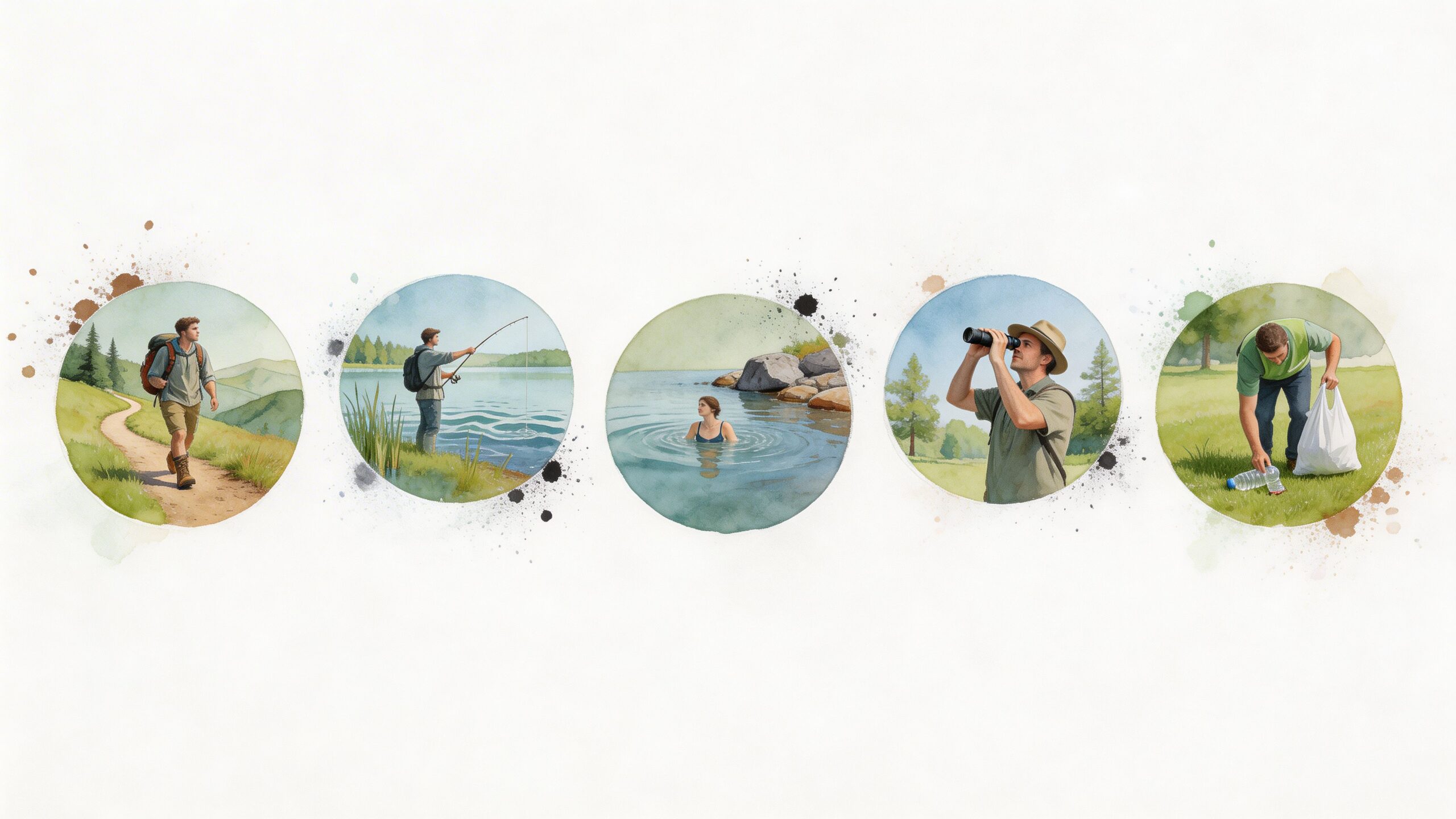
We sat near the trail, said almost nothing, and watched a rider coast past, a family spread lunch at a grove, and a bird pick through the reeds like it had all day to do one small job well. His shoulders dropped. Mine did too. That is the part people miss. A forest preserve in Chicago is not only a place to log steps. It is a place to work, recover, notice, and come back a little steadier than you arrived.
Ride when your head is too loud
I use the preserves for motion when life gets noisy.
On those days, a bike does more for me than a slow walk. You get a rhythm going. Your legs handle the argument your mind has been losing all week. Trees blur, then open field, then a stretch of water, and somewhere in that sequence you stop rehearsing conversations and start paying attention to the ground under you.
If you want a few more ideas for routes and day plans, this guide to an Illinois forest preserve outing gives you a solid starting point.
Stay still long enough to be changed by it
Birding sounded boring to me years ago. Then I learned what stillness can do.
When you watch long enough, the preserve stops being background. You catch movement in the corner of your eye. You hear one sharp call, then another. You start noticing layers. High branches, low grasses, mud line, current, wind. Patience is not soft work. It takes discipline to stand there and let the place reveal itself on its own terms.
Bring binoculars if you have them. If you do not, bring time.
Water teaches the same lesson. Sit by a riverbank, paddle if you can, or just watch the surface change with the breeze. Chicago trains you to rush. Water trains you to hold your line, adjust, and keep going without panic.
This clip gives a good feel for that shift from city tempo to preserve tempo.
Match the day to the work you need
I do not use the preserves the same way every time. You should not either.
- If you're fried: Walk slow. Leave the headphones in your pocket and let your senses come back online.
- If you're restless: Ride hard enough to earn your quiet.
- If you're lonely: Bring one good person, share food, and talk without screens between you.
- If you need courage: Go alone for an hour, pay attention, and prove to yourself you can keep good company.
- If you need perspective: Find water or an open meadow and stay put until your breathing settles.
That is what these places offer when you meet them honestly. Recreation, yes. But also practice. Practice at patience, effort, attention, and being useful. I have seen that work on cleanup crews, and I have seen it happen on an ordinary afternoon under the trees. You show up one version of yourself. You leave with a little more grit, a little more calm, and a better shot at being the kind of neighbor this city needs.
Planning Your Visit The No-Nonsense Guide
I like simple plans because simple plans happen.
If you wait for the perfect weather window, the perfect gear, the perfect group text, you'll stay home. Chicago life eats intention for breakfast. You need a basic system and a little grit.
What I actually use before leaving
I start with the Forest Preserves website for closures, maps, and rules. Then I double-check the weather on my phone and look at the route the same way I would for any unfamiliar part of the region. If I'm trying a new preserve, I screenshot the map before I leave. Signal can get flaky, and confidence drops fast when your battery does.
I also ask myself one blunt question. Am I going for effort, rest, or company? That answer changes everything.
Bring less gear than your anxious brain wants, and more water than your optimistic brain thinks you need.
My honest logistics advice
If you have a car, great. Start early, park, and beat the churn. If you don't, combine transit with a bike or pick a preserve that doesn't require a heroic multi-transfer mission. Your first trip should feel possible, not noble.
My favorite times are early morning and cooler parts of the day. Sunrise puts a different skin on everything. You hear more. You move better. You also dodge some of the crowds and most of the indecision.
A few practical habits help:
- Wear shoes you don't worship: Mud is part of the deal.
- Pack a tiny kit: Water, snack, charged phone, basic layers.
- Check group needs early: If you're planning a big picnic or event, look up permit details before inviting everybody.
Don't overplan the soul out of it
A preserve visit dies when it turns into a military operation.
Set a destination. Pick a rough time. Bring what you need. Then go. The city already gives you enough friction. Nature doesn't need your spreadsheet.
Giving Back How to Clean and Protect These Spaces
The walk is good. Picking up trash changes you faster.
I mean that. I've seen it in myself. I've seen it in people who showed up shy, annoyed, hungover, grieving, lonely, or just curious. You bend down, pick up one ugly piece of litter, and something inside you gets more honest. Service does that. It cuts through performance.

Why cleanup work hits deeper than a hike
Hiking helps me clear my head. Cleanup work makes me use my hands on a problem I can touch.
That matters because a lot of modern frustration is abstract. Bad news, bad systems, bad vibes, endless opinions. Trash is concrete. It's there. You remove it. The ground looks better. Your body knows you did something real.
I started doing this kind of work because cleaning my own mess felt weirdly impossible at times. Public litter was easier. Less emotional. Less haunted. Then I learned something almost embarrassing in its simplicity. Cleaning a shared space with other people made me stronger at facing my own life.
If you want organized ways to do that kind of work, environmental stewardship programs are one route.
Bravery is good. Preparation is better.
I respect the rain-or-shine spirit. I live by it. But I don't romanticize recklessness.
There is a real gap in public guidance for volunteer risk management during preserve cleanup events in extreme weather or tricky locations. The Forest Preserves talk about access and connection, but the practical side of volunteer safety in heat, hail, or near high-traffic edges is still thin, according to the Big City, Small Spaces overview from the Forest Preserves. If you're leading cleanups, you need your own judgment.
Here's the field logic I trust:
Before the event
- Check weather twice: Once the day before, once right before leaving. Chicago weather lies for sport.
- Know the terrain: Water edges, broken glass zones, steep banks, and roadside shoulders all change the plan.
- Keep the group small if you're new: A smaller crew is easier to watch, direct, and protect.
- Set a hard stop rule: If thunder, hail, dangerous heat, or visibility problems hit, you leave. No debate.
During the cleanup
Some people think courage means pushing through anything. That's not courage. That's ego in outdoor clothing.
I want people spread out enough to work, close enough to communicate, and alert enough to spot problems early. If someone looks overheated, distracted, shaky on uneven ground, or too eager near traffic, I pull them back. A successful cleanup includes getting everyone home in one piece.
Field note: If the weather turns ugly or the site feels off, call it early. Trash will still be there tomorrow.
What I tell first-time volunteers
I say this plain because sugarcoating gets people hurt.
| Situation | What I do |
|---|---|
| Heat and direct sun | Slow the pace, shorten the route, watch for signs people are fading |
| Hail or sudden storms | Stop immediately and seek shelter |
| Near roads or busy edges | Keep the group tight and avoid risky reaches |
| Near water or slick ground | Work farther back unless you know the footing |
Stewardship builds community fast
Cleanup work creates a certain kind of friendship. You skip the polished version of yourself. You're outside, maybe sweating, maybe freezing, maybe laughing at something gross somebody found in the weeds. It's real fast.
That honesty is part of why I keep going back to the preserves. You don't just protect a place. The place starts sanding down your excuses. You become more useful. More reliable. A little less fragile.
And yes, sometimes that growth starts with a grabber, gloves, and a trash bag on a cold Saturday morning.
Staying Safe and Respectful Out There
The first time I brought a new volunteer into the preserves, he stepped off the trail to get a better photo of wildflowers near a wet patch. I stopped him fast. Not because I wanted to kill the mood, but because that little patch was doing real work. Holding water. Feeding insects. Giving small things a place to live where boots and bikes had not crushed them yet. Out here, one careless step can be louder than you think.
That is the mindset I want you to bring. Calm. Observant. Steady. A forest preserve chicago outing goes better when you remember these places are not empty green backdrops. They are living ground, and they ask something from you.
Respect the land first
Stay on marked trails unless you are in a designated area that clearly allows more freedom. Give animals room to move. Leave plants where they are. If you pack something in, pack it back out.
You do not need a big dramatic mistake to leave damage behind. A shortcut through brush opens a path other people follow. A dog off leash can blow up a quiet morning for birds and ground-nesting animals. A tossed snack wrapper can sit in the grass long after your good mood is gone.
I have seen people soften once they understand that. They stop treating the preserves like scenery and start treating them like a place they are lucky to enter.
Keep your judgment on
The preserves can feel wild in one moment and very close to the city in the next. That mix is part of their beauty, but it also means you should act like someone who wants to come home clear-headed.
Go with a friend if you are new to a preserve or trying a longer route. Keep your phone charged. Tell someone where you are going if you plan to stay out a while. Pay attention to trail conditions, especially after rain, near water, or on leaf-covered hills where the ground can slide under you.
A few habits help a lot:
- Keep one ear on the world: If you use headphones, keep the volume low enough to hear bikes, people, and changes around you.
- Watch your footing: Roots, mud, hidden holes, and broken pavement show up fast.
- Dress for brush and bugs: Long pants and sleeves can save you a lot of regret.
- Turn around early: A shorter day is better than a dumb injury.
If something feels off, leave. You do not owe a trail your pride.
Respect other people too
These paths belong to a lot of us. Early birders with binoculars. Kids trying to spot turtles. Cyclists moving at a real clip. Older regulars who know exactly when the owls start calling. Your job is simple. Share the space without acting like you own it.
Yield where appropriate. Keep your group from spreading across the whole trail. Keep noise down in quiet areas. Clean up after yourself and your dog. If a section is posted as closed for restoration, stay out of it. Restoration crews are not being dramatic. They are trying to give damaged ground a chance to recover.
I also want you to notice the people doing the unglamorous work. Staff hauling tools. Volunteers dragging out bags of trash. Folks cutting back invasives in the cold. Give them room. Give them courtesy. Public land stays worth visiting because somebody keeps showing up to care for it.
That kind of respect is not softness. It is discipline. And discipline is what lets more people find something good out there without wrecking it for the next person.
Get Out and Find Your Wild
I don't think the preserves fix everything. I do think they strip away some lies.
They strip away the lie that you need to be fully ready before you begin. They strip away the lie that comfort is the same thing as peace. They strip away the lie that your life only changes through big dramatic moments. Sometimes change starts with mud on your ankles and a little more breath in your lungs.
I've gone into the preserves angry and come out steadier. I've gone in tired and come out cleaner in the head. I've picked up trash on days when I didn't trust myself much, and by the end of the morning I trusted myself more because I had done one simple hard thing.
That's what I want for you.
Go take the easy walk if that's what you can do. Go push yourself on the longer trail if that's what you need. Go sit near water until your thoughts stop sounding like traffic. Pick up one piece of trash on your way out. Let the place work on you a little.
There is wildness in Cook County. There is wildness in you too.
Go meet both.
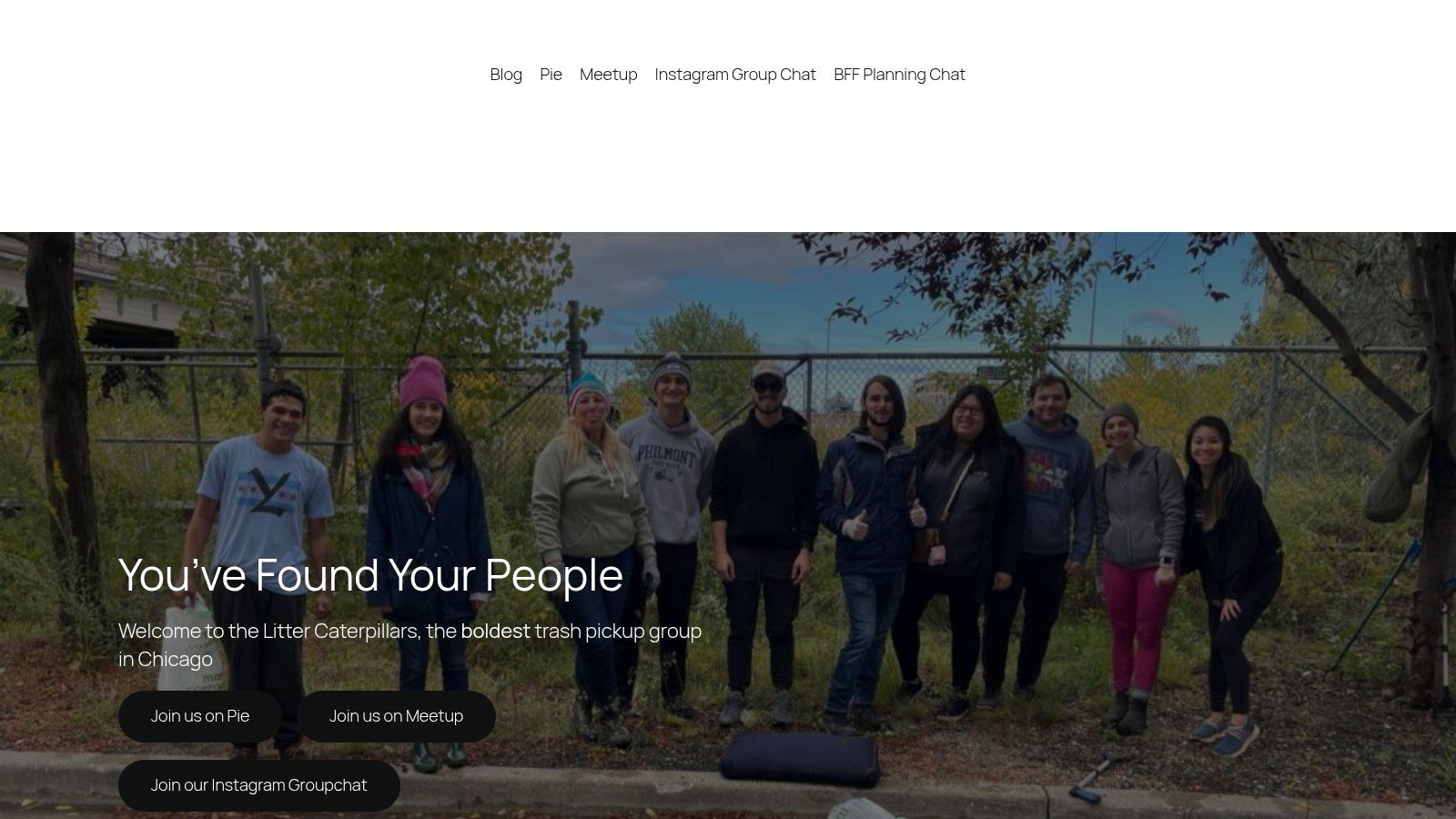
If you want a practical way to turn that energy into action, check out Litter Caterpillars. They organize volunteer trash pickups around Chicago and give people a simple way to show up, work hard, and build friendships through service.