
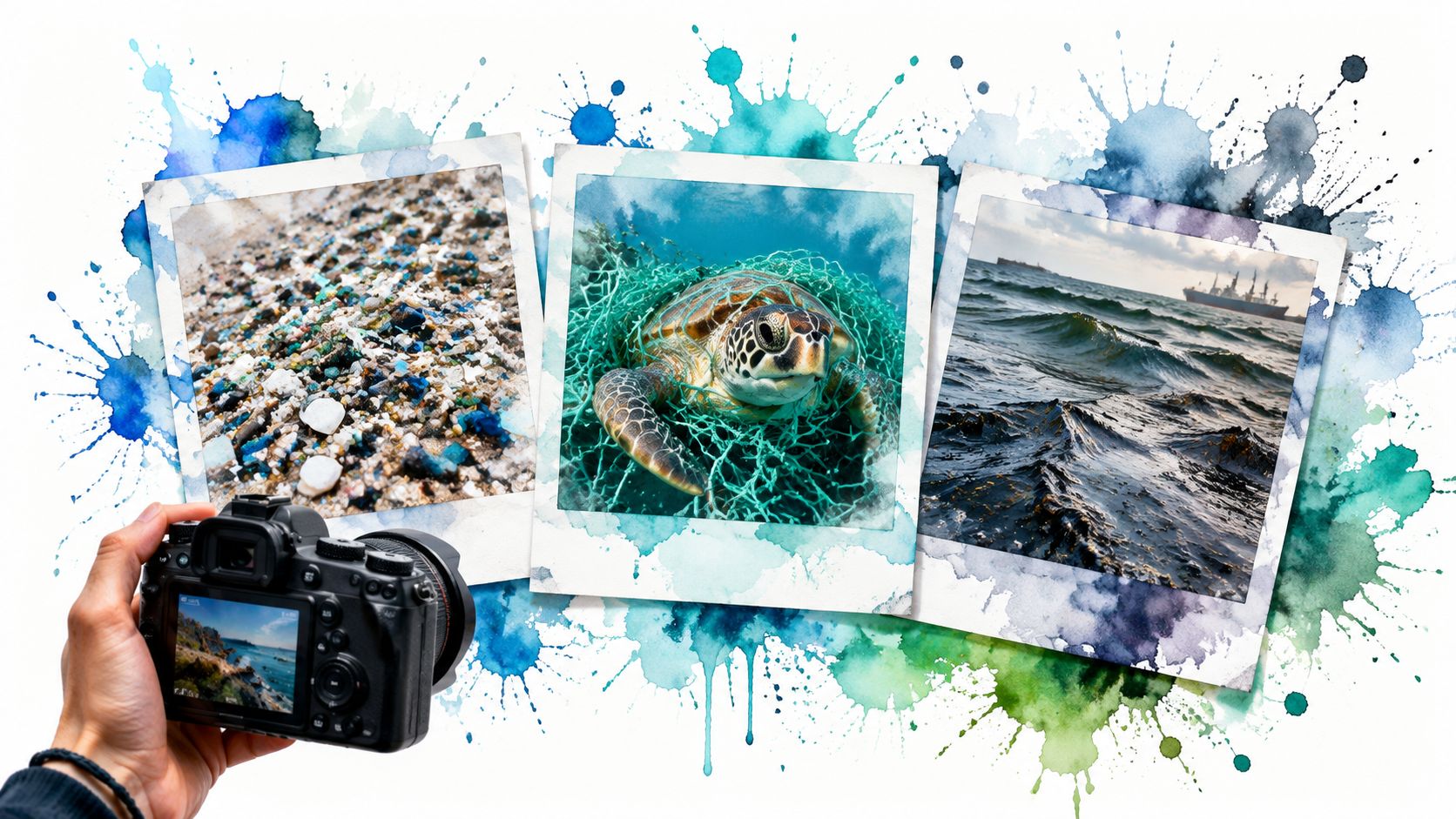
More Than Just a Sad Picture
I used to think my old jam jars and bags of nuts were just trash. But they felt heavy, like they weighed 500 pounds. Each one carried a little memory, a failed promise, a version of me I didn't know how to let go of.
Cleaning up my own mess felt impossible. Then I found something strange and freeing. Cleaning up other people's messes was easier, and somehow it helped me start cleaning up my own life. A strong image works the same way. The right ocean pollution images don't only show damage. They give you a before photo that makes someone want to help build the after. If you're trying to move people from sadness to action, the source you choose matters.
1. NOAA Marine Debris Program Photo Gallery
When I need an image that feels grounded, I usually start with NOAA's Marine Debris Program photo gallery. It feels like walking into a file cabinet run by people who care about evidence, not drama. You can move from plastics to fishing gear to microplastics to wildlife impact without getting lost in random stock-photo noise.
That matters because the most dramatic ocean pollution images can distort the story. As The Ocean Agency's plastic image archive notes, the most shareable visuals often overrepresent surface trash and underrepresent microplastics, fisheries gear, and sewage-linked pollution. I like NOAA here because the captions usually push me back toward the actual source of the mess.
Why I trust it for real campaigns
For a volunteer flyer, a school slideshow, or a neighborhood cleanup page, rights simplicity saves time and stress. Many NOAA-credited images are public domain, which is great when you don't want to spend your Saturday decoding license terms instead of making posters.
A few things I like right away:
- Public-domain potential: Many NOAA-credited photos are free to use, which is a gift for nonprofits, classrooms, and local groups.
- Strong topic grouping: You can browse by debris type, impact, research, and prevention instead of scrolling forever.
- Useful U.S. relevance: If you're telling a Chicago-to-Great-Lakes-to-ocean story, NOAA's framing fits naturally.
Practical rule: Always check the credit line on each NOAA image. Some partner photos have different rights.
This gallery isn't glossy. That's part of the appeal. It feels more like a field notebook than an ad campaign, and sometimes that honesty is exactly what your story needs.
2. NOAA Office of Response and Restoration Image Collections
Some days you don't need a perfect hero image. You need proof. You need shoreline mess, field boots, removal work, and the kind of before-and-after documentation that says, "People showed up and did something." That's when I turn to the NOAA Office of Response and Restoration marine debris image collections.
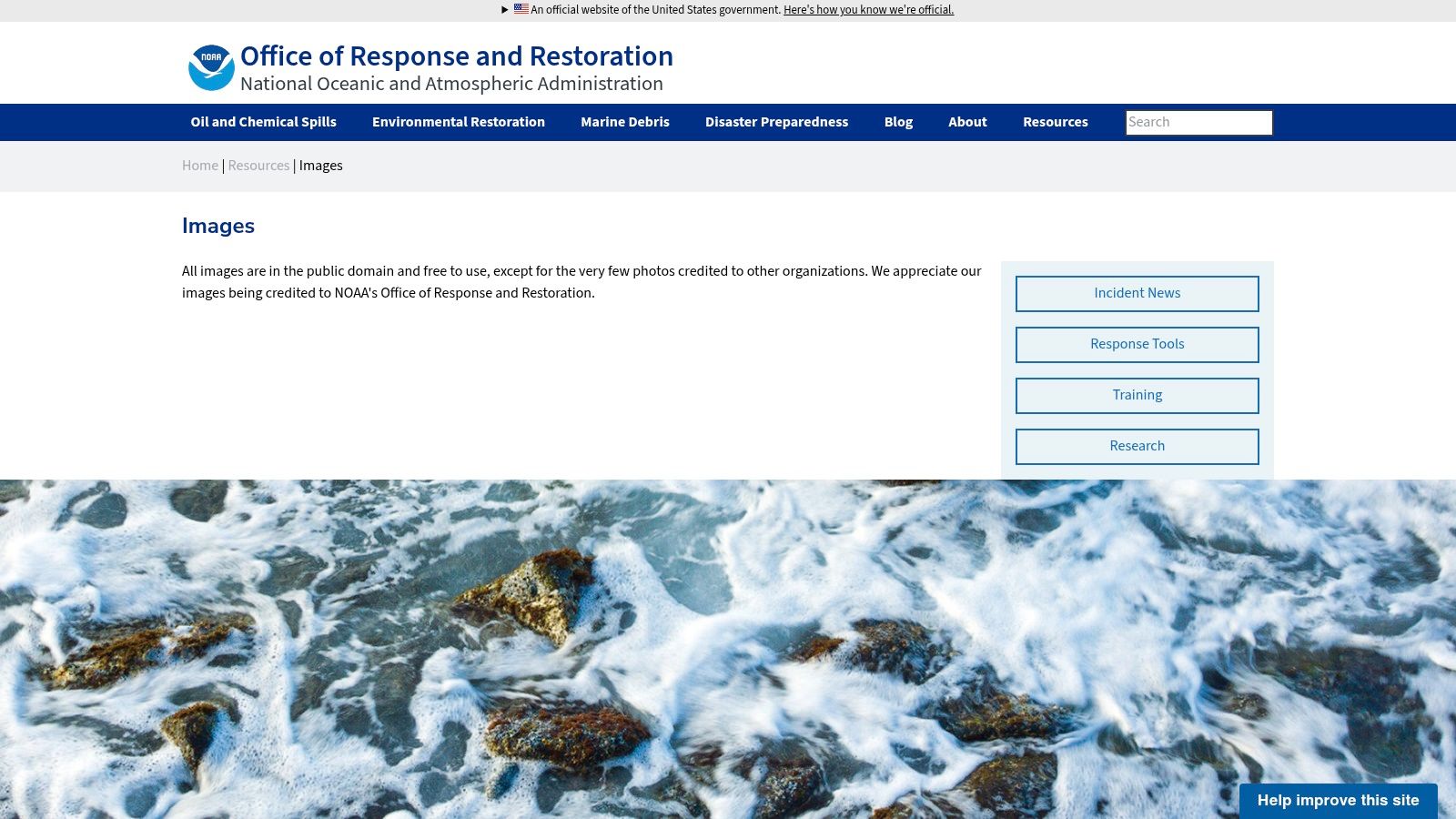
This archive has a different mood from the first NOAA library. It feels closer to response work. Storm aftermath, debris on shorelines, crews in the field. If your story is about action after impact, these images do the job.
Best for documenting the work itself
I think of this collection like work gloves. Not fancy. Very useful.
You can use it well when you need:
- Clear response scenes: Debris removal, restoration, and field conditions.
- Before-and-after framing: Good for explainers, grants, and volunteer recaps.
- Public-domain guidance: NOAA states that most images are public domain and free to use, though you still need to check details.
There's another reason these images matter. Roughly 80% of ocean pollution comes from land-based sources, according to The Ocean Cleanup's explainer. So if your photo shows trash caught in a shoreline, canal edge, or storm-battered coast, it may tell a more honest story than a generic "floating island of trash" visual.
A cleanup story gets stronger when the photo shows where the waste came from, not only where it ended up.
The downside is style. Some files feel older, some are mixed in quality, and you may need to hunt for the right resolution. Still, if you want images with dirt under the fingernails, this is a good place to dig.
3. Wikimedia Commons Marine Debris Category
Wikimedia Commons is where I go when I want range. The Marine debris category on Wikimedia Commons feels a bit like a giant community garage. You can find excellent stuff, odd stuff, very specific stuff, and a few things that need patience.
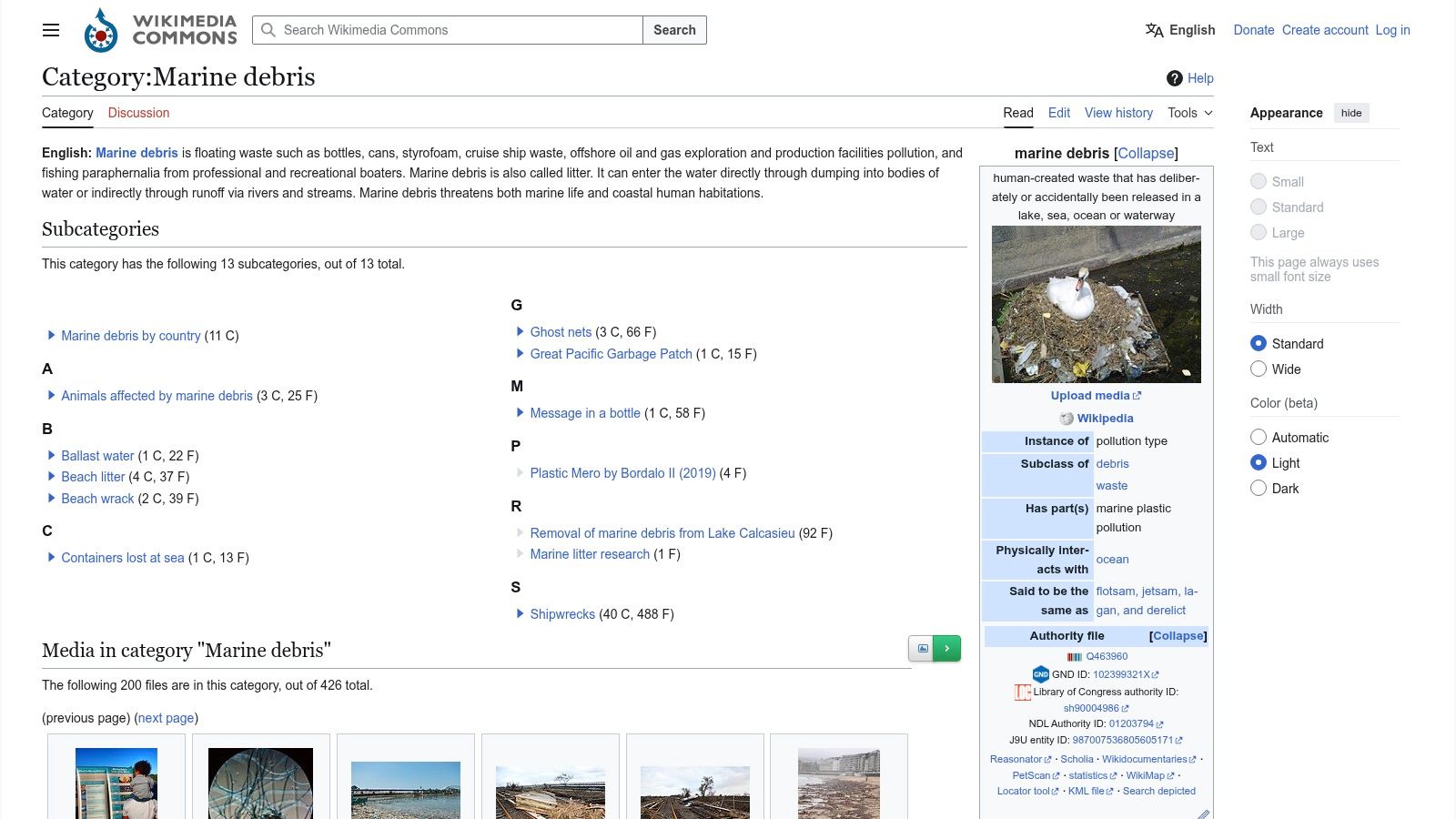
I like it because every file page forces me to slow down. Who took this? What year? What license? What am I allowed to do with it? That pause is healthy. Ocean pollution images are easy to recycle until they become generic symbols with no place, no time, and no specific problem attached.
Best when you need global variety
This is where Wikimedia shines. You can look beyond one country and one visual style. Beach litter, entanglement, cleanup work, close-up debris, wide shoreline shots. You often get mirrored institutional images too, including public-domain material from government sources.
Keep these habits in mind:
- Read each file page: Wikimedia tells you the exact license and the attribution terms.
- Curate hard: Quality varies a lot, so don't grab the first thing you see.
- Use the details: Author names, dates, and descriptions make your caption stronger.
Adobe Stock's ocean pollution search pages point to a real problem with visual repetition. Big image libraries can flatten very different problems into one vague category of "trash in water." Wikimedia helps you fight that because it pushes specificity. Plastic on a beach is not ghost gear. Ghost gear is not oil contamination. Those are different stories, and they need different solutions.
If you care about context as much as aesthetics, Wikimedia is a strong free option.
4. Unsplash Ocean Pollution Search
Last spring, I was building a cleanup sign-up page after a long beach walk that left me angry and oddly hopeful at the same time. The page needed one image. Not ten. One. I opened Unsplash's ocean pollution search, found a sharp photo of plastic scattered along a shoreline, and felt the whole message click into place. Suddenly the event was not a vague good deed. It was a response to a mess people could see.
That is why I keep Unsplash in the mix. It helps when you need an image that grabs attention fast and still feels human. The library leans polished, which can be a strength if you are making a campaign page, event header, slide deck, or social graphic that needs people to stop scrolling.
Best for clean, modern visuals that pull people in
Unsplash works well at the start of the story. You are not always trying to document every detail of the problem. Sometimes you are trying to get one neighbor, one teacher, or one tired volunteer to care enough to take the next step.
What I like most:
- Strong visual style: High-resolution images with a modern look that fits websites, presentations, and social posts.
- Easy reuse: The Unsplash License is simple for many common nonprofit and community uses.
- Good emotional range: You can find stark litter scenes, cleanup moments, and more symbolic images that set a mood.
I still slow down before I choose. Some Unsplash photos are closer to visual metaphor than field evidence. A bottle drifting underwater can be striking, but it may not help someone understand what is piling up on their local beach, where it came from, or what kind of cleanup is needed.
That gap matters.
A strong ocean pollution image should do more than signal sadness. It should give your audience a foothold. If you are working in the spirit of Litter Caterpillars, the goal is transformation. Mess into mission. Spectator into participant. The right Unsplash image can open that door, especially if you pair it with a caption that names the scene clearly and points to action.
I use Unsplash for the first spark. Then I make sure the story gets specific.
5. Pexels Ocean Pollution Search
Last spring, I was helping put together a beach cleanup flyer for a small neighborhood event. We did not need a polished campaign image. We needed a photo that would still make sense on a phone screen, on a printer at the library, and on a poster taped beside the coffee shop register. That is the kind of moment when I open Pexels' ocean pollution search.
Pexels is practical. It gives you a wide mix of free images, and I often find vertical shots, tighter crops, or simpler compositions that work better for grassroots outreach than a beautiful image that falls apart the second you resize it.
That choice shapes the story.
A cleanup poster with the wrong photo can feel distant or generic. The right one can make a local problem feel local. A bottle half-buried in sand, a volunteer lifting a bag from the shoreline, a tangle of trash caught in rocks. Those scenes give people somewhere to stand emotionally. They can see the mess, and they can see what action looks like.
Good for flyers, posts, and quick local outreach
I reach for Pexels when I need fast options and enough variety to match the format, not just the theme.
What I look for:
- Orientation variety: Strong mix of horizontal and vertical images for posters, stories, and handouts.
- Easy reuse: The Pexels License works well for many community and nonprofit projects.
- Useful range: You can find gritty cleanup photos, beach litter shots, and more composed images for simple awareness pieces.
The limit is context. Pexels usually will not give you the deeper captioning or institutional detail you would get from a scientific archive, so I treat every image as raw material for a story, not the full story itself. If a photo includes wildlife, people, logos, or branded packaging, I pause and check whether the image supports the message accurately and fits the intended use.
That matters a lot with ocean pollution work. Wildlife photos can hit hard, but shock alone rarely builds commitment. If you are working in the spirit of Litter Caterpillars, the goal is transformation. Show the harm, yes, then help people see the next step. Add a caption that names what is happening, where action is possible, and how a person can join in.
Pexels works well when your mission needs motion. It helps you get a real, usable image into the world fast, then turn that image into an invitation to act.
6. Shutterstock Ocean Plastic Pollution Search
Last spring, I helped a volunteer group pull together a sponsor deck after a muddy shoreline cleanup. We had strong photos from the day, but they did not fit together. One was raw and grey, another looked like a vacation ad with a stray bottle in the corner, and a third could not be cleared for broader campaign use. We needed visuals that felt consistent, legally usable, and strong enough to carry the story from local mess to public action. That is the moment I open Shutterstock's ocean plastic pollution results.
Shutterstock helps when the image has to do more than shock. It has to work across a banner, a slide, a paid ad, and a printed handout without sending mixed signals. The filters are a significant advantage. You can sort for commercial use, isolate illustrations from photos, choose horizontal or vertical frames, and build a set that looks like one campaign instead of a pile of unrelated downloads.
Best for polished campaigns with outside approval
I use Shutterstock when the audience includes sponsors, schools, local officials, or brand reviewers. Those projects usually need cleaner licensing terms and a more controlled visual style.
What I look for:
- Matched image sets: Easier to build a campaign that feels unified across web, print, and social.
- Commercial-friendly options: Better fit for ads, partner materials, and branded outreach.
- Precise search control: Useful when you need a specific scene, subject, or composition fast.
There is a tradeoff. Shutterstock costs money, and the license choice still matters. You have to read the usage terms and make sure the file matches the job.
I also stay alert for stock-photo drift. A polished image can look convincing while saying almost nothing. Ocean pollution storytelling breaks down fast when every visual is just a lone bottle floating in blue water. The issue gets flattened into a cliché, and people stop seeing the systems, habits, and cleanup work behind the scene.
That is where the Litter Caterpillars mindset helps me. I do not ask only, "Does this image look professional?" I ask, "Does it move the story from mess to mission?" The right Shutterstock image can do that well. A gloved hand lifting tangled line from rocks. Volunteers sorting plastic by type. A shoreline before cleanup, then after. Those images give people a way in. They show harm, but they also show change.
If your project needs polish, consistency, and fewer licensing surprises, Shutterstock earns its place. Use it to choose images that do more than decorate the message. Choose ones that help people believe cleanup is possible, and worth joining.
7. Getty Images Ocean Pollution Collection
A city council packet lands on your desk at 9 p.m. The meeting is in the morning. You need one image that can survive scrutiny from reporters, staff, and residents who will ask the hard question fast: where did this photo come from? That is when I open Getty Images' ocean pollution collection.
Getty helps when the image has to carry more than emotion. It often gives you editorial photos tied to real events, with captions that name the place, date, and situation. That context matters. A turtle wrapped in netting can stop a reader for a second. A documented photo from a harbor cleanup, a protest, or a shoreline survey can hold attention longer because it feels anchored to real life.
I learned to treat Getty like a reporting tool, not just a gallery. If I am building a policy brief, a press page, or a sponsor-facing report, I want visuals that can stand beside serious copy without feeling staged. That is where Getty earns the price.
Getty is strongest for:
- Editorial provenance: Useful for news, public affairs, and issue reporting where source details matter.
- Licensing precision: Helpful when placement, region, and usage terms need close review.
- High production quality: Good for print layouts, presentation decks, and formal publications.
The main challenge is still storytelling. A dramatic frame can pull people in, but it cannot prove every claim you make. One shoreline photo shows one shoreline. One cleanup scene shows one moment. If your copy speaks about a neighborhood, choose an image that feels rooted in a neighborhood. If your message is about systems, policy, or consumption habits, say that in the caption and supporting text.
That is the Litter Caterpillars test I come back to. Does this image leave people stranded in the mess, or does it help them see a path from mess to mission? Getty can do that well when you choose photos with human stakes and traceable context. A fisher hauling plastic from a net. Students cataloging debris after a beach survey. Residents standing beside bags of trash they removed by hand.
Those images do more than look credible. They help people believe their own work can become part of the story.
Comparison of 7 Ocean Pollution Image Sources
| Source | Complexity 🔄 | Resources ⚡ | Expected outcomes 📊 | Ideal use cases ⭐ | Key advantages 💡 |
|---|---|---|---|---|---|
| NOAA Marine Debris Program – Photo Gallery | Low, curated browsing; check credits per image | Low, public domain images; free to download | Credible, science‑based visuals for outreach and education | Nonprofits, classrooms, local storytelling (U.S. & Great Lakes) | Rights‑simple NOAA images with trusted captions; check partner credits |
| NOAA Office of Response & Restoration – Image Collections (Marine Debris) | Low–Medium, searchable taxonomy; review usage notes | Low, many images public domain; some high‑res requests possible | Documentary before/after and event imagery useful for explainers | Restoration reports, shoreline documentation, field response stories | Clear usage notes and response/restoration focus; good for real‑world documentation |
| Wikimedia Commons – Marine Debris category | Medium, license varies per file; must confirm each file page | Low, free but may require CC attribution or SA compliance | Wide geographic and topical coverage; variable image quality | Research, global examples, supplementary imagery | Large repository with explicit license metadata on each file page |
| Unsplash – Ocean Pollution collection | Low, simple search and license terms | Low, free, high‑resolution modern visuals | Visually consistent, campaign‑ready hero images | Web, slides, social campaigns, marketing | Designer‑forward aesthetic and permissive license; vet releases for endorsements |
| Pexels – Ocean Pollution searches | Low, straightforward UX and filtering | Low, free with generous license | Flexible assets in many orientations for layouts | Social posts, flyers, alternative to Unsplash | Rights‑simple alternative with varied orientations; check images with identifiable people |
| Shutterstock – Ocean Plastic/Pollution stock | Medium, select correct license (Standard/Enhanced) | High, subscription or per‑asset costs | High‑resolution, cohesive series suitable for campaigns | Advertising, sponsorships, high‑print quality campaigns | Reliable model/property releases, advanced filters, brand‑safety tools |
| Getty Images – Ocean Pollution collection | High, rights‑managed vs RF choices; licensing controls needed | High, premium per‑asset pricing and plans | High‑impact editorial visuals with documented provenance | Press, policy reporting, high‑visibility placements | Authoritative captions, detailed licensing options, strong editorial coverage |
Start Your Story, Start the Cleanup
Three volunteers. Wet gloves. A tree that barely blocked the hail.
That was one of our first cleanup mornings with Litter Caterpillars. We were cold, annoyed, and laughing anyway, watching the weather try to shut the day down. We still picked up trash. We still left with a story. That memory changed how I look at ocean pollution images, because the photo that matters most is rarely the one that only says, "things are bad." The one people remember carries grit, place, and the next step.
A gull tangled in fishing line can stop a scroll. A child holding a full trash bag on a local beach can start a plan. Both images matter. One shows the wound. The other shows what healing looks like when ordinary people show up.
That choice is the core work.
Picking a photo from NOAA, Wikimedia Commons, Unsplash, Pexels, Shutterstock, or Getty is not just filling space on a page. You are deciding what story your reader enters. Do they see a disaster so big it feels hopeless? Or do they see one shoreline, one cleanup crew, one honest mess that a community can face together?
I keep coming back to transformation. Trash on the sand is the before picture. A volunteer with muddy shoes and a tired grin is the middle. A cleaner shoreline, or even one small cleared patch, is the proof that change has started. That is the spirit behind Litter Caterpillars too. Mess can become mission, and a strong image can help someone believe that before they ever grab a bucket.
If you are building outreach for a cleanup, keep your visual story simple. Choose one image with real stakes. Add one plain sentence about where the litter comes from. Follow it with one direct invitation people can act on this week.
Make the image carry more than sadness. Let it carry momentum.
Go pick the photo that tells the truth and leaves room for courage. That is how a stranger becomes a volunteer. That is how a hard image becomes the start of a cleaner block, beach, or harbor.