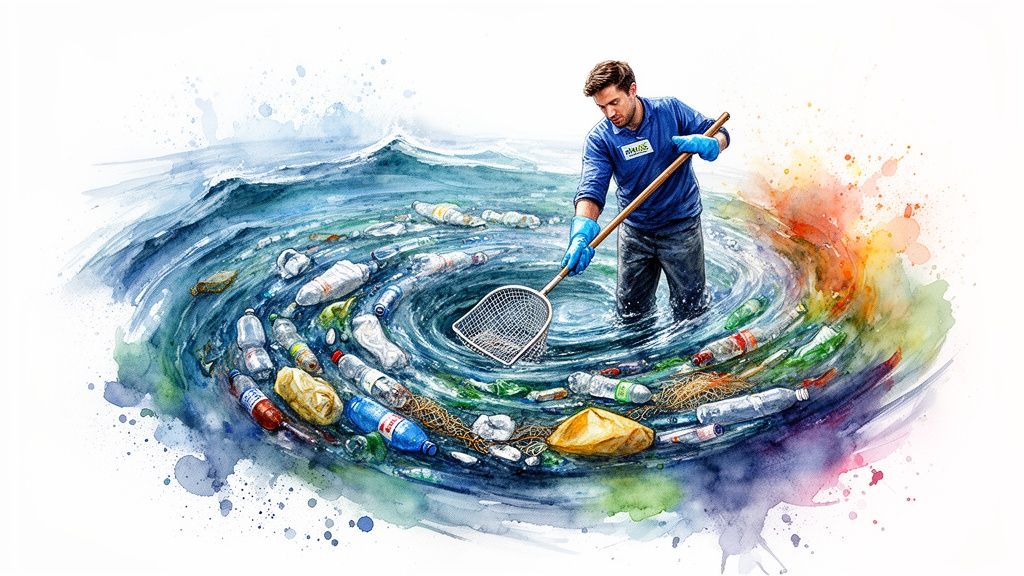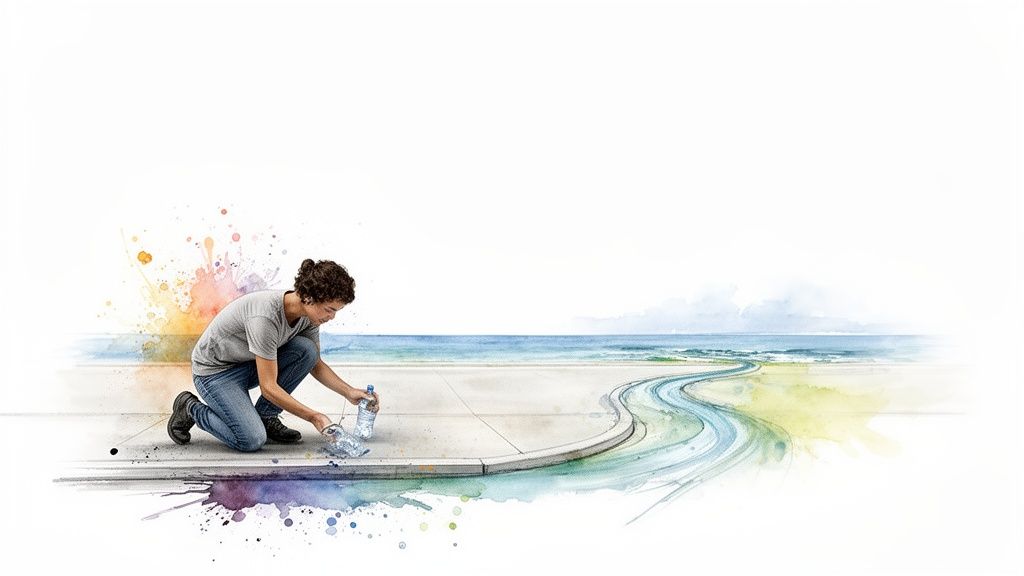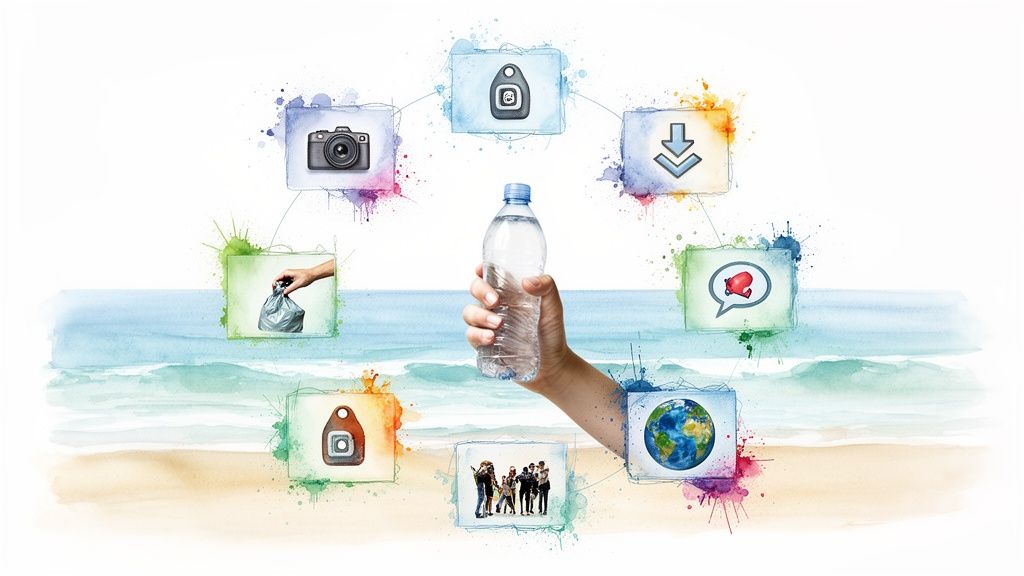
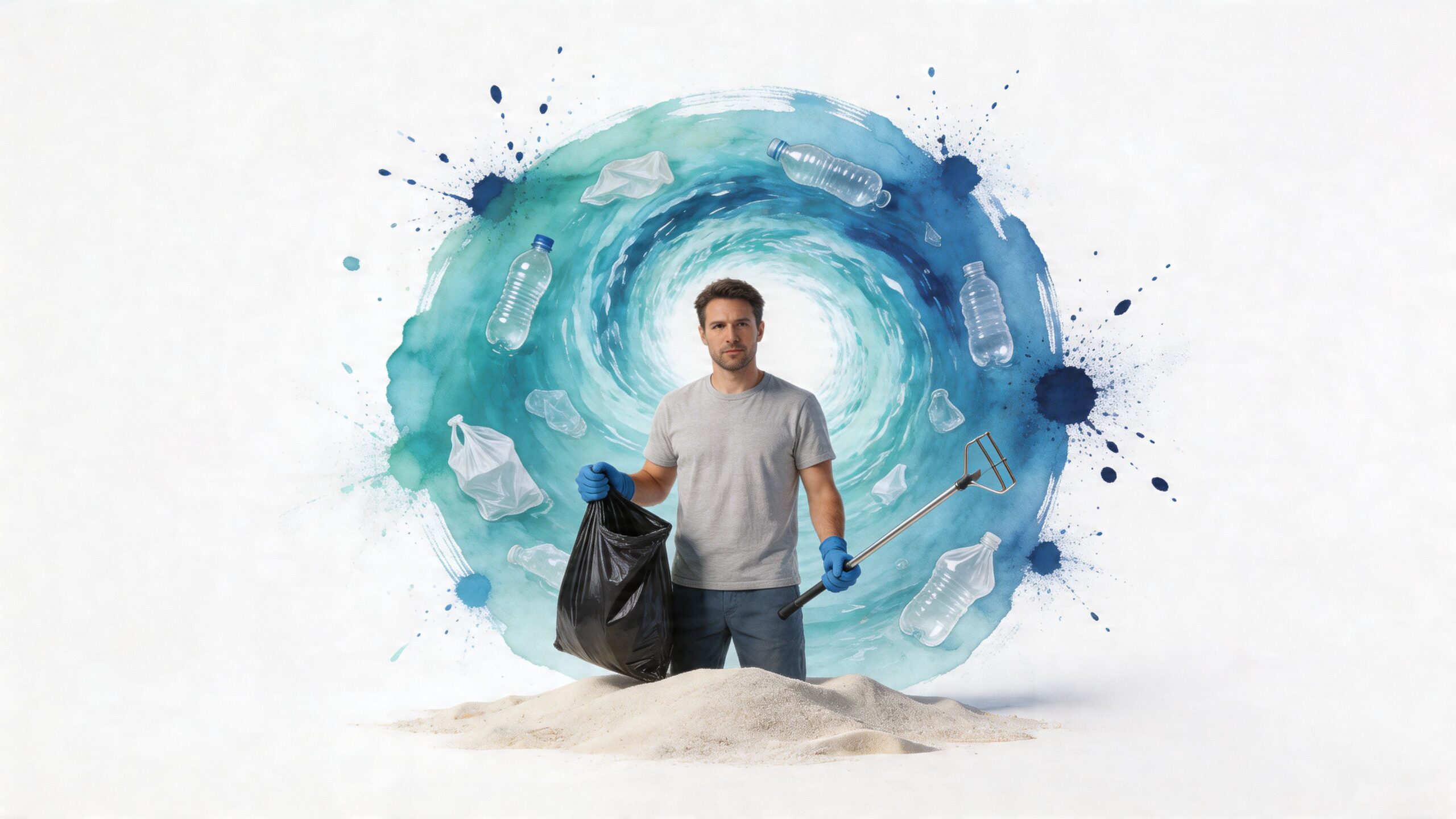
Last year, I picked up a crushed water bottle near a storm drain and felt that old familiar panic. Not because the bottle mattered by itself, but because I knew it stood for a thousand other small things we leave behind until they become an overwhelming accumulation.
From My Messy Room to Our Planet's Oceans
The first cleanup that changed me did not happen on a beach. It happened on my bedroom floor.
I remember crouching beside a pile of takeout containers, grocery bags, receipts, and plastic wrappers, holding one bottle cap in my hand like it had personally offended me. The room smelled stale. Every surface looked busy. I kept telling myself I would deal with it later, and then later turned into the kind of mess that makes you feel ashamed before you even start.
I've felt that same knot in my chest during neighborhood litter walks. You spot one cup in the gutter, then a straw by the curb, then a snack wrapper pressed into wet leaves near the storm drain. A few steps later, you stop seeing separate items. You see a pattern. You see habits. You see what happens when small acts of neglect pile up until a whole place feels harder to love.
That is how plastic pollution became real to me.

When small things become a system
A fork in the grass looks petty. A bottle by the curb looks temporary. Plastic film snagged on a fence looks like somebody else's problem.
Then it rains.
The gutter carries that forgotten scrap toward a drain. The drain carries it into a creek, or a river, or water you may never see with your own eyes. What felt local was never only local. That is the part that keeps me showing up for cleanups in my own neighborhood. The candy wrapper near my shoe and the plastic found far offshore belong to the same story.
I think that is why the 5 gyres organization matters to me on such a human level. I do not picture some distant institution speaking in charts I will never read. I picture people willing to look at an enormous, scattered, ordinary-looking mess and treat it like it matters.
Because it does.
Practical rule: If a mess feels too big to face, pick up one piece, then the next one.
That rule works in a bedroom. It works on a block. It works in a movement.
Why their work feels close to home
What drew me to 5 Gyres was not the scale of the problem alone. It was the discipline of paying attention. The same instinct that helps a local volunteer group notice cigarette butts collecting at the same bus stop or food packaging gathering beside the same storm drain also drives larger efforts to ask harder questions about where plastic goes, why it spreads, and what kind of harm follows.
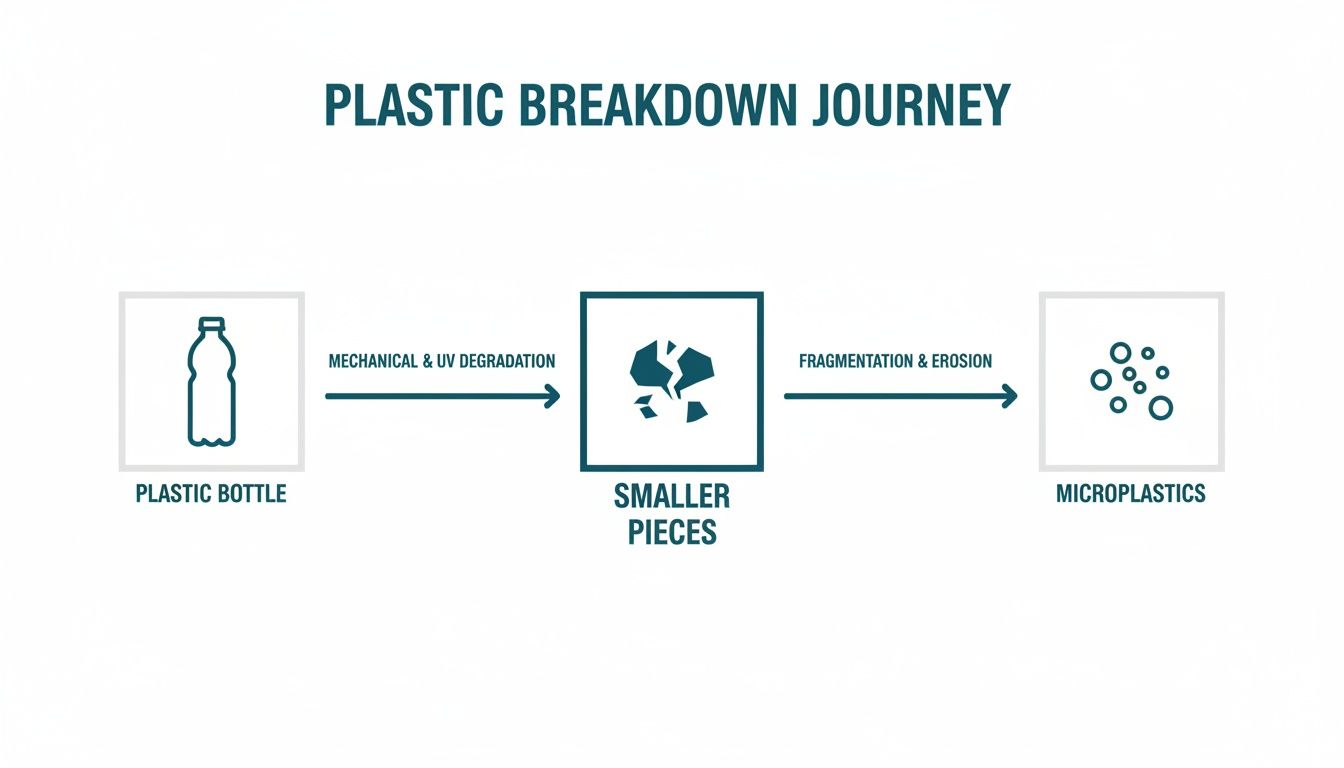
That connection matters if you have ever joined a cleanup and wondered whether your bucket of trash changed anything. It did. You removed real waste from a real place. You also trained your eyes to see systems, not just symptoms. Once you notice that litter travels, breaks apart, and becomes part of water, soil, and food chains, a Saturday cleanup stops feeling small.
It starts to feel like the front line.
For me, cleaning up my own space was practice. It taught me that avoidance feeds mess, and attention interrupts it. The same lesson scales outward. A plastic bottle on your block may look minor for an afternoon. Left alone, it becomes part of a much bigger burden that someone downstream has to carry.
The Birth of a Movement Against Plastic Smog
The first cleanup I joined as a volunteer felt small. We were working one curb, one storm drain, one weedy fence line behind a row of shops. By the end, our bags were full of bottle caps, food wrappers, foam fragments, and those brittle scraps of plastic that look too tiny to matter until you see how many there are.
That is why the beginning of 5 Gyres hits me so hard.
In 2009, Marcus Eriksen and Anna Cummins founded the organization after a sailing expedition in the North Pacific showed them something easy to miss from shore. Plastic was not sitting in one neat heap. It was already woven into ocean life, showing up in the places where animals feed and where pollution can move through the food chain.

They went looking for a trash island and found something worse
A lot of us were taught to picture ocean plastic as a giant floating garbage patch you could point at on a map. That picture sticks because it sounds concrete. It also lets us believe the problem is somewhere else.
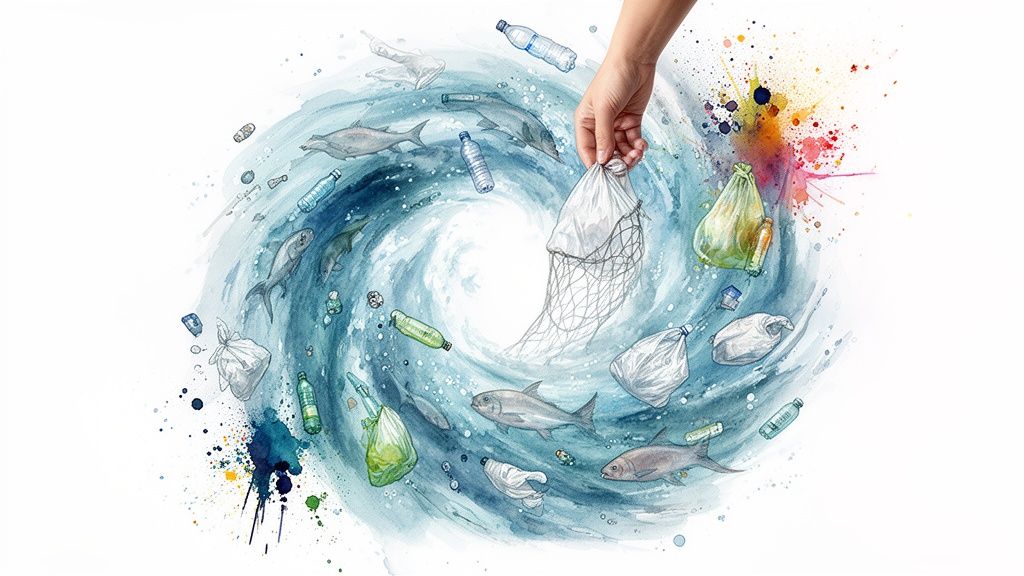
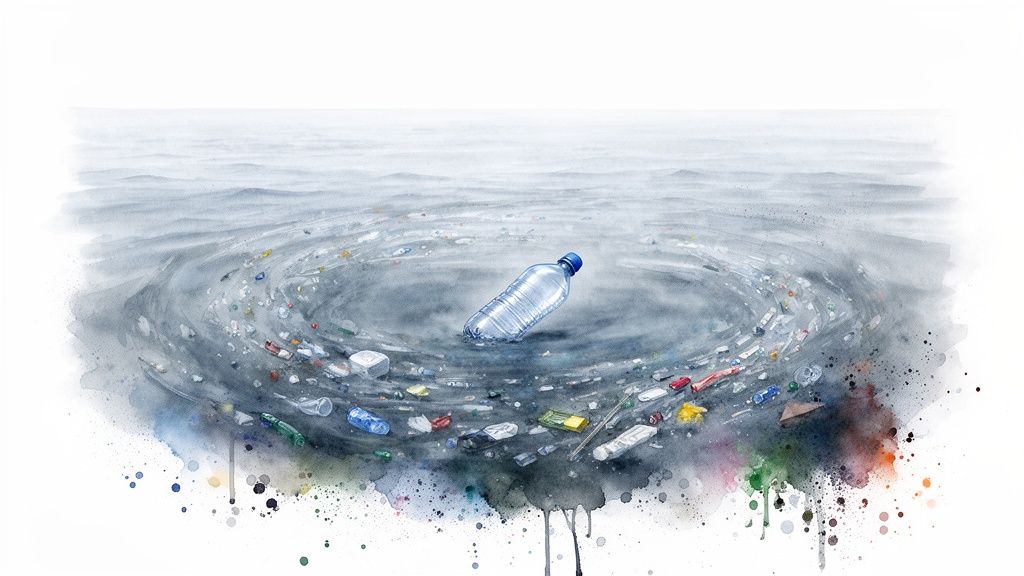
What 5 Gyres helped clarify was more unsettling. Plastic in the ocean often behaves like smog. It spreads, drifts, breaks apart, and mixes into the water column and food web until you cannot separate the pollution from the living system around it.
That idea changed my own relationship to local litter.
A cup left by the sidewalk does not stay local for long. Rain pushes it to a gutter. The gutter feeds a storm drain. The storm drain carries pieces outward. What starts as one careless toss on one block becomes part of a much larger circulating mess. The ocean version of that mess is what 5 Gyres set out to document with clarity and persistence.
What a gyre really means
The five gyres are the major subtropical ocean current systems where floating plastic tends to accumulate: the North Pacific, South Pacific, North Atlantic, South Atlantic, and Indian Ocean. I do not hear that word and think of a textbook. I think of a current-driven holding pattern. The ocean keeps returning our waste to us, just in altered form.
That matters for anyone who has ever done neighborhood cleanup work. You start to see that litter is mobile. It travels, fragments, and settles in places far from the hand that dropped it.
As noted earlier, 5 Gyres built its early work through expeditions that turned rumor into observation. Crew members collected samples, logged what they saw, and treated scattered plastic as a research problem instead of a gruesome curiosity. That choice matters. A volunteer with a bucket can show that a place is hurting. A research team at sea can show how far the harm extends and why it keeps repeating.
If you want a feel for that spirit, this short video helps.
Adventure was only the vehicle
The sailing makes a good story, but the actual story is discipline.
For years, the organization kept returning to the water, gathering evidence across long distances and different regions so plastic pollution could be studied as a planetary pattern. That is what connects a group like 5 Gyres to a local crew like Litter Caterpillars. Both start with attention. Both refuse to call the mess normal. Both understand that if you want change, you have to document what is happening, keep showing up, and make it impossible for other people to look away.
That is how movements begin. Someone sees clearly, keeps records, tells the truth, and invites the rest of us to act where we stand.
Uncovering the True Scale of Ocean Plastic
The first time I learned the garbage patch was not a solid island, I thought about the gutter at the end of my block after a storm. Bottle caps. Foam crumbs. Torn snack wrappers. Nothing dramatic on its own. Then rain carries it away, sunlight breaks it down, and suddenly the mess is harder to see and harder to stop.
That is the scale problem 5 Gyres helped bring into focus.
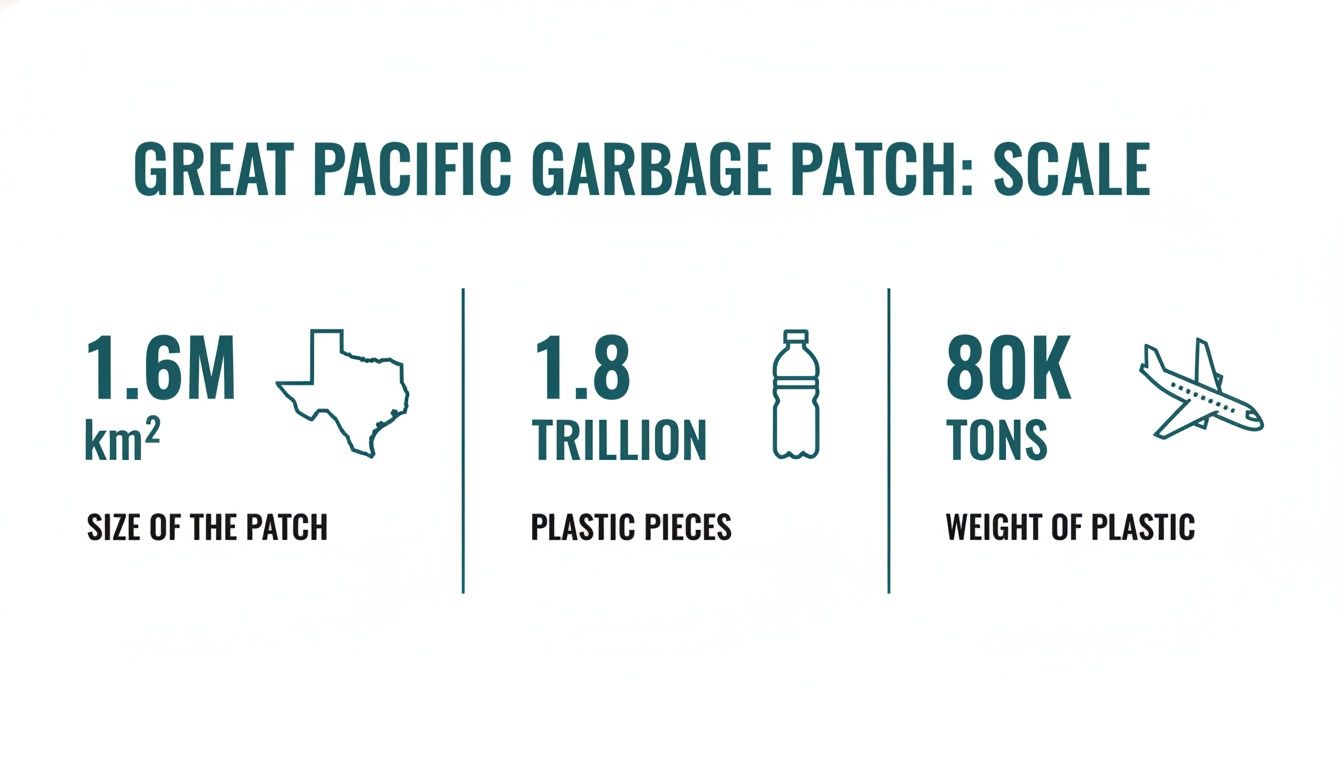
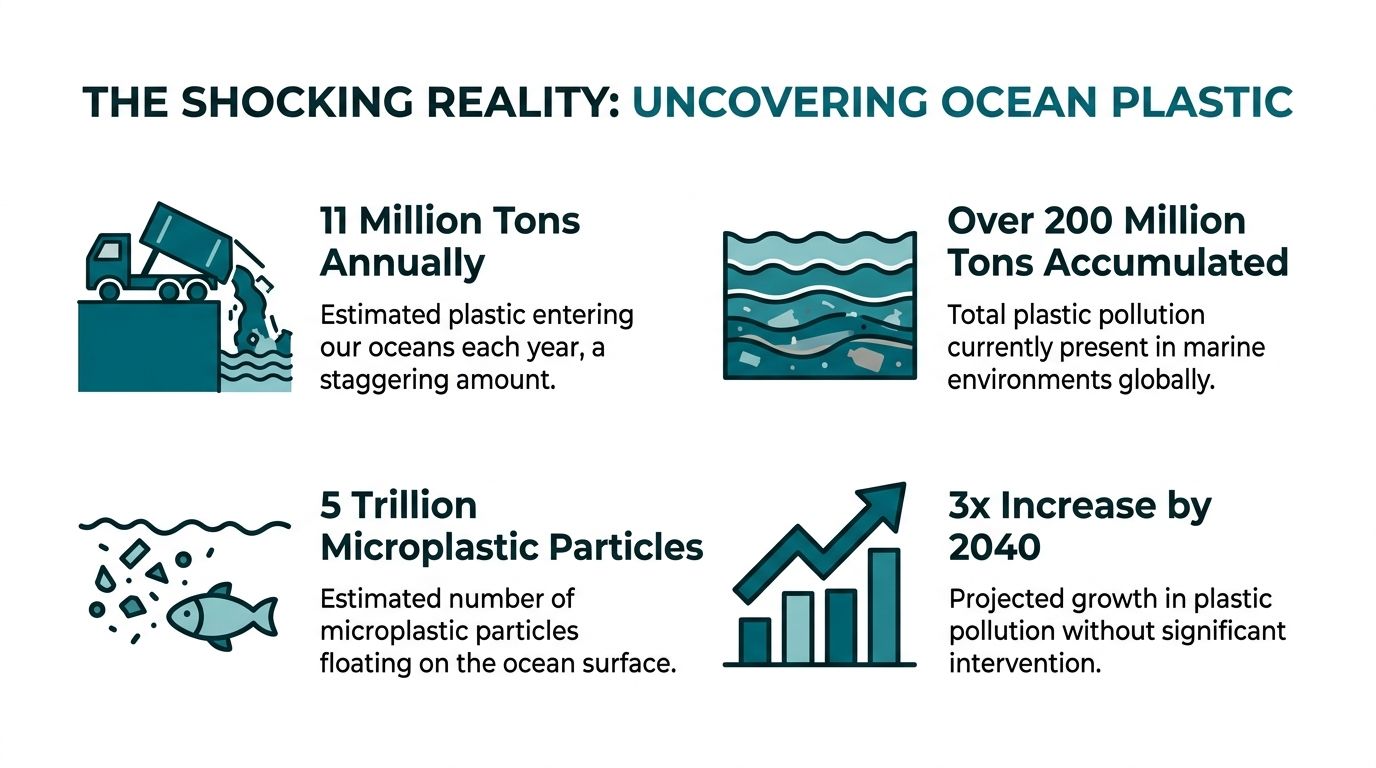
In 2014, 5 Gyres published the first global estimate of plastic floating on the ocean's surface. The numbers were staggering: 5.25 trillion plastic particles weighing 269,000 metric tons. For a lot of people, that shifted ocean plastic from a sad impression into a measured reality.
The number that changed the conversation
A number like that does something powerful. It gives organizers, teachers, reporters, and local cleanup crews a common ground to stand on. You are no longer arguing with shrugging guesses. You are pointing to documented pollution spread across the planet.
Then 5 Gyres research pushed the picture further. In 2023, the organization reported more than 170 trillion plastic particles, weighing about 2 million metric tons, floating in the world's oceans based on long-term trends. That sharp rise matters because it shows accumulation, fragmentation, and delay all happening at once.
I read those figures and think about what volunteers see on neighborhood walks. The same pattern repeats at a smaller scale. You pick up a water bottle in April. By July, the cap is gone, the label has peeled off, and brittle shards are tucked into weeds by the curb. Ocean plastic starts with ordinary litter acting exactly like that, over and over, in thousands of places.
A hard comparison to sit with
| Estimate | What 5 Gyres reported |
|---|---|
| 2014 | 5.25 trillion plastic particles, 269,000 metric tons |
| 2023 | More than 170 trillion plastic particles, about 2 million metric tons |
That table hits me in the chest.
It shows why small local action and global science belong in the same story. Researchers can map the spread across oceans. Community groups can interrupt the flow before a cup, fork, or food wrapper ever reaches a storm drain. If you want a clearer picture of why the patch is more like a diffuse soup than a floating landfill, this guide on what the Pacific Ocean garbage patch really is and how we fix it explains it well.
Why this matters on your own street
Huge numbers can make people feel helpless. I think they should make us specific.
They should make us ask what keeps showing up in schoolyards, parking lots, creek edges, and sidewalk corners. They should make us notice which items dominate every cleanup bag. They should push us to stop treating local litter as a separate issue from ocean plastic, because it is the same stream at different points in its journey.
That is what the 5 gyres organization offers to a group like Litter Caterpillars. A neighborhood cleanup gives you the close-up view. 5 Gyres gives you the wide shot. Put them together, and the connection becomes impossible to miss. The plastic on your block is part of the same planetary problem, which means your block is also one place the solution begins.
Beyond the Science Major Campaigns and Victories
At one creek cleanup in my own community, we kept pulling out the same handful of things. Snack wrappers. Bottle caps. Shredded foam. A plastic fork wedged in reeds like it had grown there. By the end, I was sweaty, annoyed, and staring at one bag of trash thinking the same thing I always think. We will be back here next week if nothing changes upstream.
That is why the work of the 5 gyres organization matters to me. They do more than document what is floating far from shore. They push the fight back to the places where plastic gets designed, sold, used once, and tossed aside. For a local group, that changes the whole mood of the work. You stop seeing cleanup as the final answer and start seeing it as evidence.
Why upstream work matters so much
Cleanup is personal. You feel it in your hands. You see the bag fill up. You watch a park, curb, or shoreline look better in an hour than it did that morning.
But cleanup alone leaves communities stuck in permanent reaction mode.
5 Gyres has kept attention on source reduction, including issues like microfiber textiles and plastic packaging alternatives, as noted earlier. That focus matters because a candy wrapper on your sidewalk and microplastics in ocean water belong to the same chain of decisions. Someone made the product. Someone chose the material. Someone profited from a throwaway design. Local volunteers are left to pick up the consequences.
That is the connection I wish more people could feel in their bones. The bottle cap in a storm drain and the plastic fragments sampled at sea are part of one story.
What their campaigns and victories actually show
Publicly available material does not offer a neat, itemized scorecard for every win tied directly to 5 Gyres. I want to stay honest about that. Still, their body of work points to a model that community groups can learn from.
They keep showing up in three places that matter.
- On the water and in the field. Their research starts with direct observation and sampling, not abstract guesses.
- In public education. They turn technical findings into language that teachers, residents, and advocates can use.
- In policy conversations. They argue for cutting plastic at the source, where prevention has more force than endless cleanup.
That combination is powerful because it mirrors what strong neighborhood organizing looks like at a smaller scale. You notice a pattern. You document it. You tell the story clearly. Then you ask for a rule, a redesign, or a local practice that stops the mess before it starts.
If you want practical examples of that bigger shift, this guide to solutions for pollution in the oceans shows how prevention, redesign, and community action fit together.
What I take from their example
I do not look at 5 Gyres and think, "That is work for scientists somewhere else."
I look at them and think about a school lunch area after dismissal. I think about the convenience store block where the same wrappers gather along the fence. I think about volunteers sorting cleanup bags and realizing half the pile came from a few predictable products. That is campaign material. That is a pattern you can photograph, count, bring to a city meeting, and use to ask better questions.
Who keeps putting these materials into circulation? Which businesses or institutions could switch to reusables? Which local rules could cut the flow?
That is the core victory inside the 5 Gyres model. They help shift people from sad witness to organized action. Science gives the problem shape. Communities give the response muscle.
A Clear-Eyed Look at Challenges and Limitations
Last spring, I stood with a few neighbors beside a storm drain after a cleanup. We had pulled out the usual suspects. Chip bags, bottle caps, takeout forks, soggy scraps of packaging. Somebody asked the question that always changes the mood: "Okay, but what keeps this from being here again next week?"
That is the question I bring to 5 Gyres, too.
I respect the organization more when I ask hard things of it. Their research has helped the world see plastic pollution more clearly. Their campaigns have pushed the conversation beyond beach cleanups and toward source reduction. But if you're a local group trying to learn from them, copy what works, or explain their impact to your own city council, some public-facing details still feel thin.
The policy gap
The broad mission is clear. The path from campaign to law is less clear in the public materials.
On the organization's advocacy page, 5 Gyres presents itself as active in policy work. What I had trouble finding were the concrete, traceable examples a neighborhood organizer wants to study. Which piece of legislation changed because of their pressure? In which place? What coalition helped get it through? What arguments persuaded decision-makers who were hesitant?
Those details matter on the ground. A volunteer group in a park, a parent speaking at a school board meeting, or a block captain dealing with repeat litter does not need applause lines. They need a playbook. They need to see how scientific credibility turns into rules, procurement changes, product redesign, or enforcement.
Without that level of specificity, "policy impact" can remain a little abstract.
The justice gap
I feel this one personally.
In plenty of neighborhoods, plastic pollution is not an ocean-only story. It is a flooding story. A rat story. A broken-bin story. A vacant-lot story. A kids-walking-past-trash-on-the-way-to-school story.
Public materials I reviewed did not make it easy to find specific programs or research centered on the unequal burden plastic pollution places on marginalized or low-income urban communities. That absence does not prove the work is not happening. It does mean the connection is not being shown clearly enough for someone like me, or for a local group trying to build trust where environmental promises have come and gone before.
A movement for cleaner oceans should show, in plain view, how it stands with communities living beside clogged drains, illegal dumping, neglected sidewalks, and chronic waste overflow.
Why this criticism matters
I am not looking for perfection. I am looking for a stronger bridge between global science and street-level reality.
Here is the plain version:
| Challenge | Why it matters |
|---|---|
| Limited public detail on policy wins | Local groups need examples they can study, adapt, and bring into city-level fights |
| Limited public detail on equity-centered community work | Neighborhoods carrying heavier waste burdens need to see how the mission includes their daily conditions |
Environmental groups often get celebrated for the parts that photograph well. The expedition. The lab work. The alarming samples. Those pieces matter. But a movement gets stronger when a person holding a trash bag on a neighborhood corner can trace a line from that moment to a bigger system change, and can see who is being protected first, not last.
From Global Gyres to Your Neighborhood Block
Here, the whole story stops feeling distant.
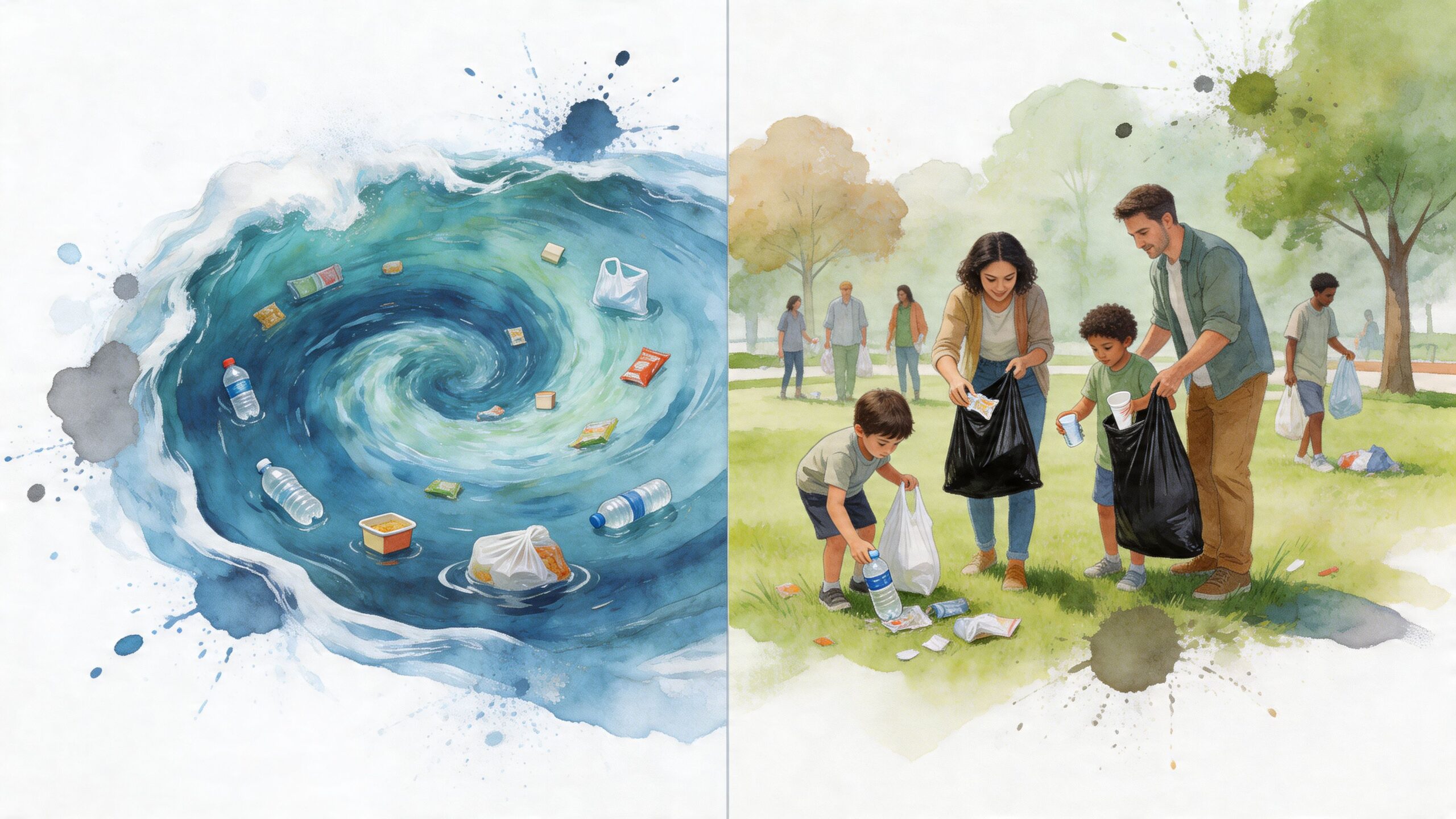
When I first learned about plastic smog, I had a weird reaction. I didn't feel smaller. I felt more responsible. Not in a guilt-heavy way. In a practical way. If plastic reaches the ocean by traveling through countless ordinary places, then ordinary places are where the defense begins.
What local action really does
A piece of litter on your sidewalk is still in an early chapter of its story. It hasn't become microplastic yet. It hasn't washed through drains and waterways yet. It hasn't entered the giant circulating systems 5 Gyres studies.
That means local action is not symbolic. It's preventive.
I think a lot of volunteers underestimate this. They think, "I'm just cleaning a park" or "I'm just grabbing a few wrappers after work." No. You're intercepting material before it spreads, shreds, and disappears into a much harder problem.
A practical way to join the same fight
If you want your daily life to line up with the mission behind the 5 gyres organization, keep it simple.
Start with your route
Don't wait for a perfect event. Walk the block you already walk. The parking lot you already cross. The bus stop you already use.Notice the repeat offenders
Some places keep trapping waste. Corners by drains. Fence lines. Fast food exits. Convenience store edges. Those are local versions of accumulation zones.Reduce what you personally feed into the system
If you want ideas that feel practical instead of preachy, this guide on how to reduce plastic use is a useful starting point.Support research and advocacy when you can
Cleanup handles today's litter. Research and policy shape tomorrow's supply.
Your neighborhood is not separate from the ocean. It's upstream from it.
What I want people to remember
You do not need to sail across the Pacific to be part of this story.
You need eyes. You need a bag. You need a little consistency. You need the willingness to treat one bottle cap on one corner like it belongs to the same planetary narrative as the samples collected at sea.
That's the bridge. That's how global science becomes local courage.
Conclusion You Are Part of the Solution
I started with a storm drain and a bottle because that is how most real change begins. Not with a grand gesture. With a moment when you finally decide the mess is not invisible.
The 5 gyres organization matters because it gives us a language for a problem many people can sense but struggle to describe. They turned floating myths into documented reality. They showed that ocean plastic isn't just a pile somewhere far away. It's a dispersed, circulating, human-made smog that starts with everyday choices and systems.
I love that their story begins with people who saw something firsthand and refused to look away. I also love that their story doesn't let me hide behind distance. If plastic on land can become plastic in the sea, then care for the ocean begins long before the shoreline.
That changes the emotional math for me.
It means cleaning up isn't only about trash. It's about identity. It's about becoming the kind of person who acts before a problem grows teeth. It's about learning that consistency beats despair. It means your small act is not laughable. It's how large systems get interrupted.
The best thing science can do is clarify the problem. The best thing community can do is answer it with action.
You don't have to solve everything. You do have to stop pretending your corner of the world is disconnected from the rest of it. It isn't. Your block touches the planet. Your habits touch the water. Your courage touches other people.
That is enough to begin.
If you want a real-world way to turn that belief into action, join Litter Caterpillars. It's a Chicago volunteer group built around bravery, friendship, and the simple power of showing up to clean one block at a time.